EP4529091A1 - System and method of securely executing iot device commands in power distribution and defense devices - Google Patents
System and method of securely executing iot device commands in power distribution and defense devices Download PDFInfo
- Publication number
- EP4529091A1 EP4529091A1 EP24201621.0A EP24201621A EP4529091A1 EP 4529091 A1 EP4529091 A1 EP 4529091A1 EP 24201621 A EP24201621 A EP 24201621A EP 4529091 A1 EP4529091 A1 EP 4529091A1
- Authority
- EP
- European Patent Office
- Prior art keywords
- command
- authorized
- iot
- pddd
- rest api
- Prior art date
- Legal status (The legal status is an assumption and is not a legal conclusion. Google has not performed a legal analysis and makes no representation as to the accuracy of the status listed.)
- Pending
Links
Images



Classifications
-
- H—ELECTRICITY
- H04—ELECTRIC COMMUNICATION TECHNIQUE
- H04L—TRANSMISSION OF DIGITAL INFORMATION, e.g. TELEGRAPHIC COMMUNICATION
- H04L63/00—Network architectures or network communication protocols for network security
- H04L63/10—Network architectures or network communication protocols for network security for controlling access to devices or network resources
- H04L63/101—Access control lists [ACL]
-
- H—ELECTRICITY
- H04—ELECTRIC COMMUNICATION TECHNIQUE
- H04L—TRANSMISSION OF DIGITAL INFORMATION, e.g. TELEGRAPHIC COMMUNICATION
- H04L63/00—Network architectures or network communication protocols for network security
- H04L63/08—Network architectures or network communication protocols for network security for authentication of entities
- H04L63/0876—Network architectures or network communication protocols for network security for authentication of entities based on the identity of the terminal or configuration, e.g. MAC address, hardware or software configuration or device fingerprint
-
- H—ELECTRICITY
- H04—ELECTRIC COMMUNICATION TECHNIQUE
- H04L—TRANSMISSION OF DIGITAL INFORMATION, e.g. TELEGRAPHIC COMMUNICATION
- H04L63/00—Network architectures or network communication protocols for network security
- H04L63/08—Network architectures or network communication protocols for network security for authentication of entities
-
- H—ELECTRICITY
- H04—ELECTRIC COMMUNICATION TECHNIQUE
- H04L—TRANSMISSION OF DIGITAL INFORMATION, e.g. TELEGRAPHIC COMMUNICATION
- H04L63/00—Network architectures or network communication protocols for network security
- H04L63/08—Network architectures or network communication protocols for network security for authentication of entities
- H04L63/083—Network architectures or network communication protocols for network security for authentication of entities using passwords
-
- H—ELECTRICITY
- H04—ELECTRIC COMMUNICATION TECHNIQUE
- H04L—TRANSMISSION OF DIGITAL INFORMATION, e.g. TELEGRAPHIC COMMUNICATION
- H04L63/00—Network architectures or network communication protocols for network security
- H04L63/10—Network architectures or network communication protocols for network security for controlling access to devices or network resources
- H04L63/108—Network architectures or network communication protocols for network security for controlling access to devices or network resources when the policy decisions are valid for a limited amount of time
-
- H—ELECTRICITY
- H04—ELECTRIC COMMUNICATION TECHNIQUE
- H04L—TRANSMISSION OF DIGITAL INFORMATION, e.g. TELEGRAPHIC COMMUNICATION
- H04L2463/00—Additional details relating to network architectures or network communication protocols for network security covered by H04L63/00
- H04L2463/082—Additional details relating to network architectures or network communication protocols for network security covered by H04L63/00 applying multi-factor authentication
-
- H—ELECTRICITY
- H04—ELECTRIC COMMUNICATION TECHNIQUE
- H04W—WIRELESS COMMUNICATION NETWORKS
- H04W12/00—Security arrangements; Authentication; Protecting privacy or anonymity
- H04W12/06—Authentication
-
- Y—GENERAL TAGGING OF NEW TECHNOLOGICAL DEVELOPMENTS; GENERAL TAGGING OF CROSS-SECTIONAL TECHNOLOGIES SPANNING OVER SEVERAL SECTIONS OF THE IPC; TECHNICAL SUBJECTS COVERED BY FORMER USPC CROSS-REFERENCE ART COLLECTIONS [XRACs] AND DIGESTS
- Y04—INFORMATION OR COMMUNICATION TECHNOLOGIES HAVING AN IMPACT ON OTHER TECHNOLOGY AREAS
- Y04S—SYSTEMS INTEGRATING TECHNOLOGIES RELATED TO POWER NETWORK OPERATION, COMMUNICATION OR INFORMATION TECHNOLOGIES FOR IMPROVING THE ELECTRICAL POWER GENERATION, TRANSMISSION, DISTRIBUTION, MANAGEMENT OR USAGE, i.e. SMART GRIDS
- Y04S40/00—Systems for electrical power generation, transmission, distribution or end-user application management characterised by the use of communication or information technologies, or communication or information technology specific aspects supporting them
- Y04S40/20—Information technology specific aspects, e.g. CAD, simulation, modelling, system security
Definitions
- the disclosed concept relates generally to a system and method of securely executing commands via a cloud server, and in particular, to a system and method of executing IoT device commands in power distribution and defense devices via the cloud server.
- Cloud computing shares computing resources that are generally accessed via the Internet.
- its infrastructure allows user to access a shared pool of computing resources, such as servers, storage devices, networks, applications, and/or other computing-based services.
- computing resources such as servers, storage devices, networks, applications, and/or other computing-based services.
- the users and clients can remotely access computing resources on demand.
- IoT (Internet of Things) or edge IoT devices are physical electronic devices that are connected to a communication network, e.g., LAN, WAN, etc. and may be configured to transmit and receive information via the network.
- IoT devices can access cloud computing services or interact with an application via cloud servers and the network.
- IoT devices may be stationary, e.g., home appliance or manufacturing equipment, or mobile, e.g., cellular phones, vehicles accessories, etc. More and more devices are becoming loT devices in consumer, industrial, energy, transportation, military and other fields.
- IoT devices become ubiquitous, they become visible over the Internet, and thus vulnerable to attacks and unauthorized accesses by hackers or misfeasors.
- the IoT devices Upon a successful attack, the IoT devices become controllable by the hackers, potentially resulting in freezing of the devices or related systems and/or other dire consequences.
- mission critical devices such as power distribution and defense devices (PDDD) including, e.g., without limitation, circuit breakers, switch gears, transfer switches, and variable frequency drives (VFDs)
- PDDD power distribution and defense devices
- VFDs variable frequency drives
- a system for remotely executing device commands includes a first end user device structured to transmit a request for a command for a target IoT PDDD based on a first user input from an authorized first end user; a facility including a plurality of Intemet-of-Things (IoT) power distribution and defense devices (PDDDs); a plurality of second end user devices structured to receive second factor authenticators based on a first tier validation of the request in a two-tiered validation and return the second factor authenticators for a second tier validation of the request based on second user inputs from corresponding authorized command approvers; and a cloud network including a REST API and a cloud server, the REST API being communicatively coupled to the IoT PDDDs, the first end user device and the second end user devices and structured to interface therewith for the two-tiered validation of the request and execution of the command, the cloud server including an IoT PDDD commands execution manager coupled to the REST API and structured to perform the two
- Another example embodiment provides a method of executing device command for a target Intemet-of-Things (IoT) power distribution and defense devices (PDDDs) via a cloud network including a REST API and a cloud server.
- the method includes transmitting, by a first end user device, a request for a command for a target IoT PDDD based on a first user input from an authorized first end user; performing, by an IoT PDDD command execution manager in the cloud server, a two-tier validation of the request includes a first tier validation of a first authentication information and a second tier validation of second factor authenticators returned from authorized command approvers via the authorized second end user devices to the REST API; and executing, by IoT PDDD command execution manager, the command requested based on a successful two-tier validation of the request.
- IoT Intemet-of-Things
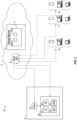
- FIGs 1-2 illustrate a system 10 for securely executing commands in Internet-of-Things (IoT) power distribution and defense devices (PDDDs) 20 via a cloud network 2 in accordance with a non-limiting embodiment of the disclosed concept.
- Figure 3 illustrates an IoT PDDD commands execution manager 1 in the cloud network 2 for the IoT PDDDs 20 in accordance with a non-limiting embodiment of the disclosed concept.
- the system 10 and its components are discussed with reference to Figures 1-3 .
- the system 10 includes a facility 4, end user devices 5, 7 and a cloud network 2.
- the facility 4 may be a power plant, a manufacturing facility, or other industrial structures and include IoT PDDDs 20 and a gateway 12.
- the loT PDDDs 20 comprise one or more of, e.g., without limitation, a circuit interrupter 21, a transfer switch 22, a switchgear 23, or a variable frequency drive (VFD) 24.
- the IoT PDDDs 20 may be communicatively coupled to the cloud network 2, particularly the REST API 3, directly in a wireless connection or indirectly via the gateway 12 in a wireless or wired connection.
- the gateway 12 may be disposed within, e.g., without limitation, LAN, WAN of the facility 4 via a wireless connection (e.g., without limitation, Internet, WiFi, etc.).
- the IoT PDDDs 20 can be remotely controlled by a cloud server 11, particularly the IoT PDDD commands execution manager 1, in the cloud network 2 via the REST API 3 over the wireless connection.
- the IoT PDDD commands execution manager 1 may change status of the circuit interrupter 21 by executing commands via the REST API 3. It may execute commands to enable or disable an arc flash reduction managing mechanism on a circuit interrupter 21 via the REST API 3. In some examples, it may execute commands to start or stop a VFD 24 via the REST API 3. In some examples, it may execute commands to switch a transfer switch 22 from one power source to another via the REST API 3.
- the end user devices comprise a first end user device 5 and a plurality of second end user devices 7. Optionally, they may also include one or more third end user device 9.
- Each end user device 5, 7, 9 includes an IoT PDDD commands execution application and communicatively coupled to the REST API (representational state transfer application programming interface) 3 in the cloud network 2 via the wireless connection. It may be any type of computing device (e.g., without limitation, a mobile phone, a laptop, a desktop, a workstation, etc.) capable of accessing and communicating the cloud server 2 via the wireless connection.
- the first end user device 5 is structured to transmit a request for a command for a target IoT PDDD 20 based on a first user input from an authorized first end user 6.
- the first user input includes the first end user 6 entering the request and user credentials over an application in the first end user device 5.
- the second end user devices 7 are structured to receive second factor authenticators based on a first tier validation of the request in a two-tiered validation and return the second factor authenticators for a second tier validation of the request based on second user inputs from corresponding authorized command approvers 8.
- Each second end user device 7 may be an authorized device of an authorized command approver 8, via which the authorized command approver 8 receives a second factor authenticator from the REST API 3 and returns the second factor authenticator to the REST API 3 as a command approval or denies the request by either not responding or rejecting the request.
- the one or more third user end devices 9 is structured to receive an escalated request including a third factor authenticator and return the third factor authenticator to the REST API 3 as an escalated command approval. While Figures 1-2 illustrate a plurality of second end user devices 6 corresponding to a plurality of command approvers 8, the system 10 may comprise a single second end user device 7 as desired or appropriate without departing from the scope of the present disclosure.
- the cloud network 2 acts as a platform that provides additional computing resources to client devices, e.g., without limitation, the IoT PDDD 20 within the facility 4.
- client users e.g., without limitation, the utility, a power management company, etc.
- the cloud network 2 includes the REST API 3 and a cloud server 11.
- the REST API 3 is communicatively coupled to the IoT PDDDs 20, the first end user device 5, the second end user devices 7, and/or the third end user devices 9.
- the REST API 3 is structured to register device signature of the end user devices 5, 7, 9 and match returned second and/or third factor authenticators with original second and/or third factor authenticators issued to the corresponding command approvers. It can be configured or modified by the client (e.g., without limitation, a power management company) or the client customers (e.g., manufacturing plants or facilities 4). As such, it can be configured to interface with the IoT PDDD command execution manager 1 to set forth authorized end users and the command approvers and predefine periods in which the command approvals are to be received as per the user configured validation rules.
- the cloud server 11 may be dedicated to a particular client of the cloud platform and include the IoT PDDD commands execution manager 1 coupled to the REST API 3 and structured to perform two-tiered validation of the request and execute the command for the target IoT PDDD 20 based on the successful two-tiered validation via the REST API 3.
- the IoT PDDD commands execution manager 1 may be a processing unit including controller 111 and a memory 100.
- the controller 111 may be a microprocessor, a microcontroller, or some other suitable processing device or circuitry. It may access the memory 100 and perform, e.g., without limitation, authentication, execution and/or escalation functions based on the instructions stored in the memory 100.
- the controller 111 may include an authentication module 112, a validation rules configuration module 113, a command execution module 114 and a lockout module 115.
- the memory 100 can be any of one or more of a variety of types of internal and/or external storage media such as, without limitation, RAM, ROM, EPROM(s), EEPROM(s), FLASH, and the like that provide a storage register, i.e., a machine readable medium, for data storage such as in the fashion of an internal storage area of a computer, and can be volatile memory or nonvolatile memory.
- the memory 100 may include a software, firmware, set of instruction to authenticate, execute commands, audit log, perform lockout or perform escalated authentication.
- the validation rules configuration module 113 is structured to configure validation rules setting forth the two-tiered validation.
- the validation rules are modifiable by authorized end users, e.g., without limitation, authorized administrator of the facility 4 via the IoT PDDD command execution application.
- the two-tiered validation includes a first tier validation of a first authentication information and a second tier validation of second factor authenticators returned from authorized command approvers 8 via the authorized second end user devices 7.
- the first authentication information includes a target IoT PDDD ID, a command ID, user credentials (e.g., without limitation, the user IDs and passwords) of the first end user 6, and device information of the first end user devices 5.
- Device information includes, e.g., without limitation, device signatures such as the MAC addresses and IP addresses of the first end user device 5 from which the request has been originated.
- a target IoT PDDD ID is a unique identifier of the target IoT PDDD 20 on which the requested command needs to be executed.
- a command ID is a unique ID that depends on a type of the command requested. For example, if the first end user 6 desires to enter a request for a command to stop a VFD 24, the first end user 6 opens the IoT PDDD command execution application on the first end user device 5 and enters user credentials, request, the VFD device ID, and the command ID for stopping the VFD 24.
- the REST API 3 receives and transmits the first authentication information to the authentication module 112.
- the authentication module 112 is structured to receive the first authentication information from the REST API 3 and validate the first authentication information based on an authentication catalog 101 stored in the memory 100. That is, the authentication module 112 accesses an authentication catalog 101 and determines if the user credentials of the first end user 5 and the device information of the first end user device 6 transmitting the request match authorized user credentials and device information of authorized first end user device corresponding to the authorized user credentials in the authentication catalog 101.
- the authentication catalog 101 includes, e.g., without limitation, a list of IoT PDDDs 20 remotely executable by the command execution module 114, a list of command IDs for each listed loT PDDD, a list of the device information of authorized first end user devices 5 that are allowed to transmit a request for a command for execution of each listed IoT PDDD, a list of user credentials of the authorized end user 6 who are allowed to make the request, and a list of the device information of authorized second end user devices 7 via which authorized command approvers are allowed to receive return respective second factor authenticators to the REST API 3.
- the authentication module 112 determines that the user credentials of the first end user 6 and device information of the first end user device 5 being used to transmit the request match authorized user credentials and device information of an authorized first end user device corresponding to the authorized user credentials, the authentication module 112 validates the first authentication information. The first tier validation is deemed successful. If the user credentials do not match, the first validation has failed and the authentication module 112 notifies the first end user 6 of the failure to validate via the REST API 3. The first end user 6 may retry the log-in. There will be a limit (e.g., without limitation, 2 or 3 retries) to a number of retry log-in attempts.
- a limit e.g., without limitation, 2 or 3 retries
- the authentication module 12 determines if the target IoT PDDD 20 is in a lockout mode for, e.g., maintenance by the lockout module 115.
- the lockout module 115 is structured to lock out or tag out an IoT PDDD 20 for a first predefined period (e.g., without limitation, 90s, 10 minutes, 1 hour, a day, etc.) based on a lockout request by an administrator.
- the authentication module 112 terminates the two-tier validation based on a determination that the target IoT PDDD is in a lockout mode and notifies the first end user 6. For locking out, an authorized administrator of the facility 4 can trigger a lockout command on an IoT PDDD 20.
- the lockout module 115 places the IoT PDDD 20 in a lockout mode such that the IoT PDDD 20 cannot be remotely executed by the command execution module 114 via the REST API 3 during the first predefined period. Upon a lapse of the first predefined period, the lockout module 115 releases the IoT PDDD 20 from the lockout mode and the remote execution may take place thereafter.
- the authentication module 112 Based on a determination that the target IoT PDDD 20 is not in a lockout mode, the authentication module 112 next identifies authorized command approvers for the request, obtains authorized command approver information for the target IoT PDDD 20, and transmits the authorized command approver information to the REST API 3.
- the authorized command approver information includes names and user credentials of the authorized command approvers and device information of the authorized second end user devices 7 via which corresponding authorized command approvers 8 are permitted to interface with the REST API 3.
- the REST API 3 then generates and transmits second factor authenticators to the authorized command approvers 8 via the corresponding authorized second end user devices 7.
- the second factor authenticators may be a one-time-passcode (e.g., without limitation, a token) that expires within a second predefined period, e.g., without limitation, 60s, 90s, 120s, etc.
- the REST API 3 waits for the second predefined period and determines if it has received all of the second factor authenticators back from the authorized command approvers 8 within the second predefined period. If it has received all of the second factor authenticators within the second predefined period, the REST API 3 determines that the second validation has been successful and informs the command execution module 114 of the successful second validation.
- the command execution module 114 then notifies the first end user 6 that the request has been approved and executes the command requested for the target IoT PDDD 20 via the REST API 3 in the wireless connection. If the REST API 3 has not received all of the second factor authenticators within the second predefined period, then the command execution module 114 notifies the first end user 6 of the failure to validate.
- a disclaimer of impact associated with the target loT PDDD 20 may be configured in the memory 100 and transmitted with the second factor authenticators.
- the REST API 3 may also request an acknowledgement of the disclaimer from the authorized command approvers 8 in terms of yes or no. The acknowledgement then may be verified by the REST API 3 or the authentication module 112.
- the two-tiered validation procedure is also discussed in detail with reference to Figure 4 .
- the IoT PDDD command execution manager 1 provides a two-tiered validation of a request for command of the target IoT PDDD 20, thereby increasing safety features for remote command execution of the IoT PDDDs 2.
- Such added safety features ensures secure execution of mission critical loT PDDDs 20 over the Internet.
- the loT PDDD command execution manager 1 may include a tracking module 116 structured to log all of requests for commands made for each IoT PDDD 20 for tracking during a validation session.
- the memory 100 may include an audit log 103 for such tracking.
- the confidential information such as the second factor authenticators and user credentials are logged with encryption for security in the audit log 103 in the memory 100.
- the audit log 103 includes user email of the command approvers who have approved or not approved the request and command execution status.
- the tracking module 116 may perform error audit in case of system errors.
- IoT PDDD command execution manager 1 may also include an escalation module 117 structured to escalate the second tier validation if the REST API 3 has not received all of the second factor authenticators from the authorized command approvers 8. Based on a determination that the REST API 3 has not received all of the second factor authenticators from the authorized command approvers 8, the escalation module 117 access an escalation matrix 102, identifies an authorized escalated command approver corresponding to a non-responsive command approver 8 and transmits the information of the authorized escalated command approver and device information of an authorized third user device 9 corresponding to the authorized escalated command approver to the REST API 3.
- an escalation module 117 structured to escalate the second tier validation if the REST API 3 has not received all of the second factor authenticators from the authorized command approvers 8. Based on a determination that the REST API 3 has not received all of the second factor authenticators from the authorized command approvers 8, the escalation module 117 access an escalation matrix 102, identifie
- the escalation matrix 102 includes information of authorized escalated command approvers for each authorized command approvers 8 and device information of authorized third user end device 9 corresponding to the authorized escalated command approver.
- the escalation matrix 102 may include further authorized escalated command approvers in case the initial escalated command approvers also fail to respond within a third predefined period, e.g., without limitation, 60s, 90s, 120s, etc.
- the escalation matrix 102 may include a plurality of escalation levels including different authorized escalated command approvers at each level in case of escalated command approvers in preceding escalation level have failed to respond.
- the escalation matrix 102 may be stored in the memory 100.
- the administrator of the facility 4 may modify the escalation matrix as desired via the IoT PDDD command execution application.
- the REST API 3 then generates an escalated request including a third factor authenticator and transmits the third factor authenticator to the authorized escalated command approver to return to the REST API 3.
- the third factor authenticator is a one-time-passcode that expired within the third predefined period.
- the REST API 3 may repeat the generation and transmitting third factor authenticators to authorized escalated command approvers until all of the escalation levels has been exhausted.
- the command execution module 114 notifies the first end user 6 of the approval and executes the command based on a determination that the REST API 3 has received the third factor authenticator from the authorized escalated command approver within the third predefined period. If the escalated request also fails or is rejected, the authentication module 112 notifies the first end user 6 the failure or rejection.
- This escalation procedure is advantageous in that a failure to execute a command of a mission critical loT PDDD 20 due to an inadvertent non-responsiveness of one or more of the authorized command approvers 8 may be prevented by immediately escalating the request to and obtaining a final approval of the request from an authorized escalated request approver of the one or more non-responsive authorized command approvers 8. Further, it allows finding best suited or available command approvers for the request at any given time.
- Figure 4 is a flow-chart for a method 4000 of securely executing a command in IoT PDDDs via a cloud server in accordance with a non-limiting embodiment of the disclosed concept.
- the method 4000 may be performed by the system 10 of Figures 1-2 and its components thereof.
- a first end user sends a request for a command for a target IoT PDDD to an IoT PDDD command execution manager in a cloud server.
- the first end user sends the request directly to the IoT PDDD command execution manager in a wireless connection or indirectly via a gateway in a wireless or wired connection.
- the IoT PDDD command execution manager receives the request via the REST API.
- the authentication module of the loT PDDD command execution manager determines if a first authentication information is to be validated based on an authentication catalog stored in a memory of the IoT PDDD command execution manager. If no, the method 4000 proceeds to 4045 at which the REST API notifies user of the failure of the first authentication information. If yes, the method 4000 proceeds to 4040.
- the authentication module determines if the target loT PDDD is in a lockout mode. If yes, the method 4000 proceeds to 4050.
- the authentication module obtains second authentication information including authorized command approver information and device information of the authorized command approvers based on the authentication catalog.
- the authentication module transmits the second authentication information to the REST API.
- the REST API generates and transmit second factor authenticators to corresponding authorized command approvers via corresponding authorized second end user devices.
- the second factor authenticator may be a one-time-passcode that expires within a predefined period, e.g., without limitation, 60s, 90s, 120, etc.
- Each second factor authenticator directed to corresponding authorized command approver may differ from other second factor authenticators directed to remaining authorized command approvers.
- the REST API determines if it has received all of the second factor authenticators within the predefined period. If yes, the method 4000 proceeds to 4090. If no, the method 4000 proceeds to 4095 at which the REST API notifies the first end user of the failure to validate the second factor authenticators.
- the command execution module of IoT PDDD command execution manager executes the command requested for the target IoT PDDD via the REST API.
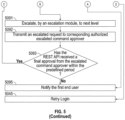
- Figure 5 is a flow-chart for a method 5000 of securely executing a command in IoT PDDDs via a cloud server in accordance with a non-limiting embodiment of the disclosed concept.
- the method 5000 may be performed by the system 10 of Figures 1-2 and its components thereof.
- a first end user sends a request for a command for a target IoT PDDD to an IoT PDDD command execution manager in a cloud server.
- the first end user sends the request directly to the IoT PDDD command execution manager in a wireless connection or indirectly via a gateway in a wireless or wired connection.
- the IoT PDDD command execution manager receives the request via the REST API.
- the authentication module of the IoT PDDD command execution manager determines if a first authentication information is to be validated based on an authentication catalog stored in a memory of the IoT PDDD command execution manager. If no, the method 5000 proceeds to 5045 at which the REST API notifies user of the failure of the first authentication information. If yes, the method 5000 proceeds to 5040.
- the authentication module determines if the target IoT PDDD is in a lockout mode. If yes, the method 5000 proceeds to 5050.
- the authentication module obtains second authorization information including authorized command approver information and device information of the authorized command approvers based on the authentication catalog.
- the authentication module transmits the second factor authentication information to the REST API.
- the REST API generates and transmit second factor authenticators to corresponding authorized command approvers via corresponding authorized second end user devices.
- the second factor authenticator may be a one-time-passcode that expires within a predefined period, e.g., without limitation, 60s, 90s, 120, etc. Each second factor authenticator directed to corresponding authorized command approver differs from other second factor authenticators directed to remaining authorized command approvers.
- the REST API determines if it has received all of the second factor authenticators within the predefined period. If yes, the method 5000 proceeds to 5090. If no, the method 5000 proceeds to 5091 at which the escalation module of the IoT PDDD command execution manager escalates to the next level of approval based on an escalation matrix stored in the memory.
- the RESTAPI transmits an escalated request to corresponding authorized escalated command approver of one or more non-responsive command approvers.
- the REST API determines if it has received final approval from the escalated command approver within the predefined period. If no, the REST API notifies the first end user of the failure to validate the second factor authenticators and the failure to receive an escalated command approval. If yes, the method 5000 proceeds to 5090.
- the command execution module of the IoT PDDD command execution manager executes the command requested for the target IoT PDDD via the REST API.
Landscapes
- Engineering & Computer Science (AREA)
- Computer Hardware Design (AREA)
- Computer Security & Cryptography (AREA)
- Computing Systems (AREA)
- General Engineering & Computer Science (AREA)
- Computer Networks & Wireless Communication (AREA)
- Signal Processing (AREA)
- Power Engineering (AREA)
- Computer And Data Communications (AREA)
- Remote Monitoring And Control Of Power-Distribution Networks (AREA)
Abstract
A system includes a facility including a plurality of IoT PDDs; a first end user device structured to transmit a request for a command for a target IoT PDDD; second end user devices structured to receive second factor authenticators based on a first tier validation of the request in a two-tiered validation and return the second factor authenticators for a second tier validation of the request based on second user inputs from corresponding authorized command approvers; and a cloud network including a REST API and a cloud server, the REST API structured to interface with the loT PDDDs, the first and second end user devices and the cloud server, the cloud server including an IoT PDDD commands execution manager coupled to the REST API and structured to perform the two-tiered validation and execute the command for the target IoT PDDD upon a successful two-tiered validation via the REST API.
Description
- The disclosed concept relates generally to a system and method of securely executing commands via a cloud server, and in particular, to a system and method of executing IoT device commands in power distribution and defense devices via the cloud server.
- Cloud computing shares computing resources that are generally accessed via the Internet. Particularly, its infrastructure allows user to access a shared pool of computing resources, such as servers, storage devices, networks, applications, and/or other computing-based services. As such, the users and clients can remotely access computing resources on demand. IoT (Internet of Things) or edge IoT devices are physical electronic devices that are connected to a communication network, e.g., LAN, WAN, etc. and may be configured to transmit and receive information via the network. IoT devices can access cloud computing services or interact with an application via cloud servers and the network. IoT devices may be stationary, e.g., home appliance or manufacturing equipment, or mobile, e.g., cellular phones, vehicles accessories, etc. More and more devices are becoming loT devices in consumer, industrial, energy, transportation, military and other fields.
- However, as the IoT devices become ubiquitous, they become visible over the Internet, and thus vulnerable to attacks and unauthorized accesses by hackers or misfeasors. Upon a successful attack, the IoT devices become controllable by the hackers, potentially resulting in freezing of the devices or related systems and/or other dire consequences. Specifically, if mission critical devices such as power distribution and defense devices (PDDD) including, e.g., without limitation, circuit breakers, switch gears, transfer switches, and variable frequency drives (VFDs), become compromised by hackers or misfeasors, that could result in a shutdown of an entire plant or facility in which the compromised loT PDDDs are located. Currently, effective security standards or mechanisms for IoT devices are lacking.
- There is room for improvement in IoT device communications.
- There is a need for an improved system and method for securely executing IoT device command in IoT PDDDs.
- A system for remotely executing device commands is provided. It includes a first end user device structured to transmit a request for a command for a target IoT PDDD based on a first user input from an authorized first end user; a facility including a plurality of Intemet-of-Things (IoT) power distribution and defense devices (PDDDs); a plurality of second end user devices structured to receive second factor authenticators based on a first tier validation of the request in a two-tiered validation and return the second factor authenticators for a second tier validation of the request based on second user inputs from corresponding authorized command approvers; and a cloud network including a REST API and a cloud server, the REST API being communicatively coupled to the IoT PDDDs, the first end user device and the second end user devices and structured to interface therewith for the two-tiered validation of the request and execution of the command, the cloud server including an IoT PDDD commands execution manager coupled to the REST API and structured to perform the two-tiered validation of the request and execute the command for the target IoT PDDD based on the successful validation via the REST API.
- Another example embodiment provides a method of executing device command for a target Intemet-of-Things (IoT) power distribution and defense devices (PDDDs) via a cloud network including a REST API and a cloud server. The method includes transmitting, by a first end user device, a request for a command for a target IoT PDDD based on a first user input from an authorized first end user; performing, by an IoT PDDD command execution manager in the cloud server, a two-tier validation of the request includes a first tier validation of a first authentication information and a second tier validation of second factor authenticators returned from authorized command approvers via the authorized second end user devices to the REST API; and executing, by IoT PDDD command execution manager, the command requested based on a successful two-tier validation of the request.
- A full understanding of the invention can be gained from the following description of the preferred embodiments when read in conjunction with the accompanying drawings in which:
-
Figure 1 is diagram of an exemplary system for securely executing device commands in Internet-of-Things (IoT) power distribution and defense devices (PDDDs) via a cloud server in accordance with a non-limiting embodiment of the disclosed concept; -
Figure 2 is a block diagram of an exemplary system for securely executing devices commands in IoT PDDDs via a cloud server in accordance with a non-limiting embodiment of the disclosed concept; -
Figure 3 is a block diagram of an exemplary IoT PDDD command execution manager in accordance with a non-limiting embodiment of the disclosed concept; -
Figure 4 is a flow-chart for a method of securely executing commands in IoT PDDDs via a cloud server in accordance with a non-limiting embodiment of the disclosed concept; and -
Figure 5 is a flow-chart for a method of securely executing commands in loT PDDDs via a cloud server in accordance with a non-limiting embodiment of the disclosed concept. - Directional phrases used herein, such as, for example, left, right, front, back, top, bottom and derivatives thereof, relate to the orientation of the elements shown in the drawings and are not limiting upon the claims unless expressly recited therein.
- As employed herein, the statement that two or more parts are "coupled" together shall mean that the parts are joined together either directly or joined through one or more intermediate parts.
-
Figures 1-2 illustrate asystem 10 for securely executing commands in Internet-of-Things (IoT) power distribution and defense devices (PDDDs) 20 via acloud network 2 in accordance with a non-limiting embodiment of the disclosed concept.Figure 3 illustrates an IoT PDDD commands execution manager 1 in thecloud network 2 for the IoTPDDDs 20 in accordance with a non-limiting embodiment of the disclosed concept. Thesystem 10 and its components are discussed with reference toFigures 1-3 . Thesystem 10 includes afacility 4,end user devices cloud network 2. Thefacility 4 may be a power plant, a manufacturing facility, or other industrial structures and include IoT PDDDs 20 and agateway 12. TheloT PDDDs 20 comprise one or more of, e.g., without limitation, acircuit interrupter 21, atransfer switch 22, aswitchgear 23, or a variable frequency drive (VFD) 24. The IoTPDDDs 20 may be communicatively coupled to thecloud network 2, particularly the RESTAPI 3, directly in a wireless connection or indirectly via thegateway 12 in a wireless or wired connection. Thegateway 12 may be disposed within, e.g., without limitation, LAN, WAN of thefacility 4 via a wireless connection (e.g., without limitation, Internet, WiFi, etc.). The IoT PDDDs 20 can be remotely controlled by acloud server 11, particularly the IoT PDDD commands execution manager 1, in thecloud network 2 via the RESTAPI 3 over the wireless connection. For example, the IoT PDDD commands execution manager 1 may change status of thecircuit interrupter 21 by executing commands via the RESTAPI 3. It may execute commands to enable or disable an arc flash reduction managing mechanism on acircuit interrupter 21 via the RESTAPI 3. In some examples, it may execute commands to start or stop a VFD 24 via the RESTAPI 3. In some examples, it may execute commands to switch atransfer switch 22 from one power source to another via the RESTAPI 3. - The end user devices comprise a first
end user device 5 and a plurality of secondend user devices 7. Optionally, they may also include one or more thirdend user device 9. Eachend user device cloud network 2 via the wireless connection. It may be any type of computing device (e.g., without limitation, a mobile phone, a laptop, a desktop, a workstation, etc.) capable of accessing and communicating thecloud server 2 via the wireless connection. The firstend user device 5 is structured to transmit a request for a command for a target IoTPDDD 20 based on a first user input from an authorizedfirst end user 6. It may be an authorized device via which an authorized first end user (e.g., without limitation, field operator) 6 sends a request for a command for a target IoTPDDDs 20 to the IoT PDDD commands execution manager 1 via the RESTAPI 3. The first user input includes thefirst end user 6 entering the request and user credentials over an application in the firstend user device 5. The secondend user devices 7 are structured to receive second factor authenticators based on a first tier validation of the request in a two-tiered validation and return the second factor authenticators for a second tier validation of the request based on second user inputs from corresponding authorizedcommand approvers 8. Each secondend user device 7 may be an authorized device of an authorized command approver 8, via which the authorizedcommand approver 8 receives a second factor authenticator from the RESTAPI 3 and returns the second factor authenticator to the RESTAPI 3 as a command approval or denies the request by either not responding or rejecting the request. The one or more thirduser end devices 9 is structured to receive an escalated request including a third factor authenticator and return the third factor authenticator to the RESTAPI 3 as an escalated command approval. WhileFigures 1-2 illustrate a plurality of secondend user devices 6 corresponding to a plurality ofcommand approvers 8, thesystem 10 may comprise a single secondend user device 7 as desired or appropriate without departing from the scope of the present disclosure. - The
cloud network 2 acts as a platform that provides additional computing resources to client devices, e.g., without limitation, the IoT PDDD 20 within thefacility 4. For example, by utilizing thecloud network 2 client users (e.g., without limitation, the utility, a power management company, etc.) can build or configure software applications or algorithms such as the IoT PDDD commands execution application to be used and/or updated by clients' customers, e.g., without limitation, personnel of thefacility 4 including theend users cloud network 2 includes the REST API 3 and acloud server 11. The RESTAPI 3 is communicatively coupled to the IoTPDDDs 20, the firstend user device 5, the secondend user devices 7, and/or the thirdend user devices 9. It is structured to interface with the IoTPDDDs 20, thecloud server 11, and theend user devices PDDD 20 from the firstend user device 5 and execution of the command based on a successful two-tiered validation. For example, the RESTAPI 3 is structured to register device signature of theend user devices - The
cloud server 11 may be dedicated to a particular client of the cloud platform and include the IoT PDDD commands execution manager 1 coupled to the RESTAPI 3 and structured to perform two-tiered validation of the request and execute the command for the target IoT PDDD 20 based on the successful two-tiered validation via the RESTAPI 3. The IoT PDDD commands execution manager 1 may be a processingunit including controller 111 and amemory 100. Thecontroller 111 may be a microprocessor, a microcontroller, or some other suitable processing device or circuitry. It may access thememory 100 and perform, e.g., without limitation, authentication, execution and/or escalation functions based on the instructions stored in thememory 100. Thecontroller 111 may include anauthentication module 112, a validation rulesconfiguration module 113, acommand execution module 114 and alockout module 115. Thememory 100 can be any of one or more of a variety of types of internal and/or external storage media such as, without limitation, RAM, ROM, EPROM(s), EEPROM(s), FLASH, and the like that provide a storage register, i.e., a machine readable medium, for data storage such as in the fashion of an internal storage area of a computer, and can be volatile memory or nonvolatile memory. Thememory 100 may include a software, firmware, set of instruction to authenticate, execute commands, audit log, perform lockout or perform escalated authentication. - The validation rules
configuration module 113 is structured to configure validation rules setting forth the two-tiered validation. The validation rules are modifiable by authorized end users, e.g., without limitation, authorized administrator of thefacility 4 via the IoT PDDD command execution application. The two-tiered validation includes a first tier validation of a first authentication information and a second tier validation of second factor authenticators returned from authorizedcommand approvers 8 via the authorized secondend user devices 7. The first authentication information includes a target IoT PDDD ID, a command ID, user credentials (e.g., without limitation, the user IDs and passwords) of thefirst end user 6, and device information of the firstend user devices 5. Device information includes, e.g., without limitation, device signatures such as the MAC addresses and IP addresses of the firstend user device 5 from which the request has been originated. A target IoT PDDD ID is a unique identifier of thetarget IoT PDDD 20 on which the requested command needs to be executed. A command ID is a unique ID that depends on a type of the command requested. For example, if thefirst end user 6 desires to enter a request for a command to stop aVFD 24, thefirst end user 6 opens the IoT PDDD command execution application on the firstend user device 5 and enters user credentials, request, the VFD device ID, and the command ID for stopping theVFD 24. TheREST API 3 receives and transmits the first authentication information to theauthentication module 112. Theauthentication module 112 is structured to receive the first authentication information from theREST API 3 and validate the first authentication information based on anauthentication catalog 101 stored in thememory 100. That is, theauthentication module 112 accesses anauthentication catalog 101 and determines if the user credentials of thefirst end user 5 and the device information of the firstend user device 6 transmitting the request match authorized user credentials and device information of authorized first end user device corresponding to the authorized user credentials in theauthentication catalog 101. - The
authentication catalog 101 includes, e.g., without limitation, a list ofIoT PDDDs 20 remotely executable by thecommand execution module 114, a list of command IDs for each listed loT PDDD, a list of the device information of authorized firstend user devices 5 that are allowed to transmit a request for a command for execution of each listed IoT PDDD, a list of user credentials of theauthorized end user 6 who are allowed to make the request, and a list of the device information of authorized secondend user devices 7 via which authorized command approvers are allowed to receive return respective second factor authenticators to theREST API 3. If theauthentication module 112 determines that the user credentials of thefirst end user 6 and device information of the firstend user device 5 being used to transmit the request match authorized user credentials and device information of an authorized first end user device corresponding to the authorized user credentials, theauthentication module 112 validates the first authentication information. The first tier validation is deemed successful. If the user credentials do not match, the first validation has failed and theauthentication module 112 notifies thefirst end user 6 of the failure to validate via theREST API 3. Thefirst end user 6 may retry the log-in. There will be a limit (e.g., without limitation, 2 or 3 retries) to a number of retry log-in attempts. - Upon validating the first authorization information, the
authentication module 12 determines if thetarget IoT PDDD 20 is in a lockout mode for, e.g., maintenance by thelockout module 115. Thelockout module 115 is structured to lock out or tag out anIoT PDDD 20 for a first predefined period (e.g., without limitation, 90s, 10 minutes, 1 hour, a day, etc.) based on a lockout request by an administrator. Theauthentication module 112 terminates the two-tier validation based on a determination that the target IoT PDDD is in a lockout mode and notifies thefirst end user 6. For locking out, an authorized administrator of thefacility 4 can trigger a lockout command on anIoT PDDD 20. Thelockout module 115 places theIoT PDDD 20 in a lockout mode such that theIoT PDDD 20 cannot be remotely executed by thecommand execution module 114 via theREST API 3 during the first predefined period. Upon a lapse of the first predefined period, thelockout module 115 releases theIoT PDDD 20 from the lockout mode and the remote execution may take place thereafter. - Based on a determination that the
target IoT PDDD 20 is not in a lockout mode, theauthentication module 112 next identifies authorized command approvers for the request, obtains authorized command approver information for thetarget IoT PDDD 20, and transmits the authorized command approver information to theREST API 3. The authorized command approver information includes names and user credentials of the authorized command approvers and device information of the authorized secondend user devices 7 via which corresponding authorizedcommand approvers 8 are permitted to interface with theREST API 3. TheREST API 3 then generates and transmits second factor authenticators to the authorizedcommand approvers 8 via the corresponding authorized secondend user devices 7. The second factor authenticators may be a one-time-passcode (e.g., without limitation, a token) that expires within a second predefined period, e.g., without limitation, 60s, 90s, 120s, etc. TheREST API 3 waits for the second predefined period and determines if it has received all of the second factor authenticators back from the authorizedcommand approvers 8 within the second predefined period. If it has received all of the second factor authenticators within the second predefined period, theREST API 3 determines that the second validation has been successful and informs thecommand execution module 114 of the successful second validation. Thecommand execution module 114 then notifies thefirst end user 6 that the request has been approved and executes the command requested for thetarget IoT PDDD 20 via theREST API 3 in the wireless connection. If theREST API 3 has not received all of the second factor authenticators within the second predefined period, then thecommand execution module 114 notifies thefirst end user 6 of the failure to validate. In some examples, a disclaimer of impact associated with thetarget loT PDDD 20 may be configured in thememory 100 and transmitted with the second factor authenticators. As such, theREST API 3 may also request an acknowledgement of the disclaimer from the authorizedcommand approvers 8 in terms of yes or no. The acknowledgement then may be verified by theREST API 3 or theauthentication module 112. The two-tiered validation procedure is also discussed in detail with reference toFigure 4 . - As such, unlike the conventional authentication process of IoT devices that provides only one tier authentication of IoT command requests, the IoT PDDD command execution manager 1 provides a two-tiered validation of a request for command of the
target IoT PDDD 20, thereby increasing safety features for remote command execution of theIoT PDDDs 2. Such added safety features ensures secure execution of missioncritical loT PDDDs 20 over the Internet. - In some examples, the loT PDDD command execution manager 1 may include a
tracking module 116 structured to log all of requests for commands made for eachIoT PDDD 20 for tracking during a validation session. Thememory 100 may include anaudit log 103 for such tracking. The confidential information such as the second factor authenticators and user credentials are logged with encryption for security in theaudit log 103 in thememory 100. Theaudit log 103 includes user email of the command approvers who have approved or not approved the request and command execution status. Thetracking module 116 may perform error audit in case of system errors. - In some examples, IoT PDDD command execution manager 1 may also include an escalation module 117 structured to escalate the second tier validation if the
REST API 3 has not received all of the second factor authenticators from the authorizedcommand approvers 8. Based on a determination that theREST API 3 has not received all of the second factor authenticators from the authorizedcommand approvers 8, the escalation module 117 access anescalation matrix 102, identifies an authorized escalated command approver corresponding to anon-responsive command approver 8 and transmits the information of the authorized escalated command approver and device information of an authorizedthird user device 9 corresponding to the authorized escalated command approver to theREST API 3. Theescalation matrix 102 includes information of authorized escalated command approvers for each authorizedcommand approvers 8 and device information of authorized thirduser end device 9 corresponding to the authorized escalated command approver. Theescalation matrix 102 may include further authorized escalated command approvers in case the initial escalated command approvers also fail to respond within a third predefined period, e.g., without limitation, 60s, 90s, 120s, etc. Theescalation matrix 102 may include a plurality of escalation levels including different authorized escalated command approvers at each level in case of escalated command approvers in preceding escalation level have failed to respond. Theescalation matrix 102 may be stored in thememory 100. The administrator of thefacility 4 may modify the escalation matrix as desired via the IoT PDDD command execution application. - The
REST API 3 then generates an escalated request including a third factor authenticator and transmits the third factor authenticator to the authorized escalated command approver to return to theREST API 3. The third factor authenticator is a one-time-passcode that expired within the third predefined period. TheREST API 3 may repeat the generation and transmitting third factor authenticators to authorized escalated command approvers until all of the escalation levels has been exhausted. Thecommand execution module 114 notifies thefirst end user 6 of the approval and executes the command based on a determination that theREST API 3 has received the third factor authenticator from the authorized escalated command approver within the third predefined period. If the escalated request also fails or is rejected, theauthentication module 112 notifies thefirst end user 6 the failure or rejection. This escalation procedure is advantageous in that a failure to execute a command of a missioncritical loT PDDD 20 due to an inadvertent non-responsiveness of one or more of the authorizedcommand approvers 8 may be prevented by immediately escalating the request to and obtaining a final approval of the request from an authorized escalated request approver of the one or more non-responsive authorizedcommand approvers 8. Further, it allows finding best suited or available command approvers for the request at any given time. -
Figure 4 is a flow-chart for amethod 4000 of securely executing a command in IoT PDDDs via a cloud server in accordance with a non-limiting embodiment of the disclosed concept. Themethod 4000 may be performed by thesystem 10 ofFigures 1-2 and its components thereof. - At 4010, a first end user sends a request for a command for a target IoT PDDD to an IoT PDDD command execution manager in a cloud server. The first end user sends the request directly to the IoT PDDD command execution manager in a wireless connection or indirectly via a gateway in a wireless or wired connection.
- At 4020, the IoT PDDD command execution manager receives the request via the REST API.
- At 4030, the authentication module of the loT PDDD command execution manager determines if a first authentication information is to be validated based on an authentication catalog stored in a memory of the IoT PDDD command execution manager. If no, the
method 4000 proceeds to 4045 at which the REST API notifies user of the failure of the first authentication information. If yes, themethod 4000 proceeds to 4040. - At 4040, the authentication module determines if the target loT PDDD is in a lockout mode. If yes, the
method 4000 proceeds to 4050. - At 4050, the authentication module obtains second authentication information including authorized command approver information and device information of the authorized command approvers based on the authentication catalog.
- At 4060, the authentication module transmits the second authentication information to the REST API.
- At 4070, the REST API generates and transmit second factor authenticators to corresponding authorized command approvers via corresponding authorized second end user devices. The second factor authenticator may be a one-time-passcode that expires within a predefined period, e.g., without limitation, 60s, 90s, 120, etc. Each second factor authenticator directed to corresponding authorized command approver may differ from other second factor authenticators directed to remaining authorized command approvers.
- At 4080, the REST API determines if it has received all of the second factor authenticators within the predefined period. If yes, the
method 4000 proceeds to 4090. If no, themethod 4000 proceeds to 4095 at which the REST API notifies the first end user of the failure to validate the second factor authenticators. - At 4090, the command execution module of IoT PDDD command execution manager executes the command requested for the target IoT PDDD via the REST API.
-
Figure 5 is a flow-chart for amethod 5000 of securely executing a command in IoT PDDDs via a cloud server in accordance with a non-limiting embodiment of the disclosed concept. Themethod 5000 may be performed by thesystem 10 ofFigures 1-2 and its components thereof. - At 5010, a first end user sends a request for a command for a target IoT PDDD to an IoT PDDD command execution manager in a cloud server. The first end user sends the request directly to the IoT PDDD command execution manager in a wireless connection or indirectly via a gateway in a wireless or wired connection.
- At 5020, the IoT PDDD command execution manager receives the request via the REST API.
- At 5030, the authentication module of the IoT PDDD command execution manager determines if a first authentication information is to be validated based on an authentication catalog stored in a memory of the IoT PDDD command execution manager. If no, the
method 5000 proceeds to 5045 at which the REST API notifies user of the failure of the first authentication information. If yes, themethod 5000 proceeds to 5040. - At 5040, the authentication module determines if the target IoT PDDD is in a lockout mode. If yes, the
method 5000 proceeds to 5050. - At 5050, the authentication module obtains second authorization information including authorized command approver information and device information of the authorized command approvers based on the authentication catalog.
- At 5060, the authentication module transmits the second factor authentication information to the REST API.
- At 5070, the REST API generates and transmit second factor authenticators to corresponding authorized command approvers via corresponding authorized second end user devices. The second factor authenticator may be a one-time-passcode that expires within a predefined period, e.g., without limitation, 60s, 90s, 120, etc. Each second factor authenticator directed to corresponding authorized command approver differs from other second factor authenticators directed to remaining authorized command approvers.
- At 5080, the REST API determines if it has received all of the second factor authenticators within the predefined period. If yes, the
method 5000 proceeds to 5090. If no, themethod 5000 proceeds to 5091 at which the escalation module of the IoT PDDD command execution manager escalates to the next level of approval based on an escalation matrix stored in the memory. At 5092, the RESTAPI transmits an escalated request to corresponding authorized escalated command approver of one or more non-responsive command approvers. At 5093, the REST API determines if it has received final approval from the escalated command approver within the predefined period. If no, the REST API notifies the first end user of the failure to validate the second factor authenticators and the failure to receive an escalated command approval. If yes, themethod 5000 proceeds to 5090. - At 5090, the command execution module of the IoT PDDD command execution manager executes the command requested for the target IoT PDDD via the REST API.
- While specific embodiments of the invention have been described in detail, it will be appreciated by those skilled in the art that various modifications and alternatives to those details could be developed in light of the overall teachings of the disclosure. Accordingly, the particular arrangements disclosed are meant to be illustrative only and not limiting as to the scope of disclosed concept which is to be given the full breadth of the claims appended and any and all equivalents thereof.
Claims (15)
- A system, comprising:a facility including a plurality of Internet-ofThings (IoT) power distribution and defense devices (PDDDs);a first end user device structured to transmit a request for a command for a target IoT PDDD based on a first user input from an authorized first end user;a plurality of second end user devices structured to receive second factor authenticators based on a first tier validation of the request in a two-tiered validation and return the second factor authenticators for a second tier validation of the request based on second user inputs from corresponding authorized command approvers; anda cloud network including a REST API and a cloud server, the REST API being communicatively coupled to the IoT PDDDs, the first end user device and the second end user devices and structured to interface therewith for the two-tiered validation of the request and execution of the command, the cloud server including an IoT PDDD commands execution manager coupled to the REST API and structured to perform the two-tiered validation of the request and execute the command for the target IoT PDDD based on the successful validation via the REST API.
- The system of claim 1, wherein the IoT PDDD comprises a memory having an authentication catalog, an authentication module, a validation rules configuration module, a command execution module and a lockout module.
- The system of claim 2, wherein the authentication catalog includes a list of IoT PDDDs executable by the IoT PDDD remotely executable by the command execution module, a list of command IDs for each listed IoT PDDD, a list of the device information of authorized first end user devices that are allowed to transmit a request for a command for execution of each listed IoT PDDD, a list of user credentials of authorized first end users who are allowed to make the request, and a list of the device information of authorized second end user devices via which authorized command approvers are allowed to receive and return respective second factor authenticators to the REST API.
- The system of claim 2, wherein the validation rules configuration module is structured to configure validation rules setting for the two-tiered validation, the two-tiered validation is modifiable by authorized end users.
- The system of claim 2, wherein the two-tiered validation includes a first validation of a first authentication information and a second validation of second factor authenticators returned from authorized command approvers via the authorized second end user devices, and the authentication module is structured to perform the two-tiered validation based on the authentication catalog.
- The system of claim 2, wherein first authentication information includes a target JoT PDDD ID, a command ID, user credentials of the first end user, and device information of the first end user device including MAC and IP addresses of the first end user device, and wherein the authentication module is structured to receive the first authentication information from the REST API and validate the first authentication information based on a determination that the user credentials of the first end user and the device information of the first end user device transmitting the request match authorized user credentials and device information of authorized first end user device corresponding to the authorized user credentials.
- The system of claim 6, wherein upon validating the first authorization information, the authentication module terminates the two-tier validation based on a determination that the target IoT PDDD is in a lockout mode.
- The system of claim 6, wherein based on a determination that the target IoT PDDD is not in a lockout mode, the authentication module identifies authorized command approvers for the request, obtains authorized command approver information for the target IoT PDDD, and transmits the authorized command approver information to the REST API, and wherein the REST API generates and transmits second factor authenticators to the authorized command approvers via corresponding authorized second end user devices.
- The system of claim 8, wherein the command execution module executes the command for the target IoT PDDD via the REST API based on a determination that the REST API has received all of the second factor authenticators back from the authorized command approvers within a predefined period.
- The system of claim 8, wherein the IoT PDDD command execution manager includes an escalation module structured to escalate the second tier validation based on a determination that the REST API has not received all of the second factor authenticators back from the authorized command approvers within a predefined period.
- The system of claim 8, wherein the escalation module accesses an escalation matrix and identifies an authorized escalated command approver corresponding to a non-responsive command approver and transmits the information of the authorized escalated command approver and device information of an authorized third user device corresponding to the authorized escalated command approver to the REST API, and wherein the REST API generates and transmits a third factor authenticator to the authorized escalated command approver and wherein the command execution module executes the command based on a determination that the REST API has received the third factor authenticator from the authorized escalated command approver within a predefined period.
- A method of executing device command for a target Internet-of-Things (IoT) power distribution and defense devices (PDDDs) via a cloud network including a REST API and a cloud server, the method comprising:transmitting, by a first end user device, a request for a command for a target IoT PDDD based on a first user input from an authorized first end user;performing, by an IoT PDDD command execution manager in the cloud server, a two-tier validation of the request includes a first tier validation of a first authentication information and a second tier validation of second factor authenticators returned from authorized command approvers via the authorized second end user devices to the REST API; andexecuting, by IoT PDDD command execution manager, the command requested based on a successful two-tier validation of the request.
- The method of claim 12, wherein the performing, by the IoT PDDD command execution manager, the two-tier validation of the request comprises:validating the first authentication information based on an authentication catalog;generating and transmitting, by the REST API, second factor authenticators to the authorized command approvers;determining if the REST API has received all of the second factor authenticators from the authorized command approvers within a first predefined period; andin response to determining that the REST API has not received all of the second factor authenticators from the authorized command approvers within the first predefined period, escalating the request.
- The method of claim 13, wherein the escalating the request comprises:accessing, by an escalation module of the IoT PDDD command execution manager, an escalation matrix including user credentials of authorized escalated command approvers corresponding to each command approver and device information of authorized third end user device corresponding to the authorized escalated command approvers;identifying an authorized escalated command approver corresponding to a non-responsive command approver based on the escalation matrix;transmitting the authorized escalated command approver information and device information of an authorized third user device corresponding to the authorized escalated command approver to the REST API;generating and transmitting, by the REST API, a third factor authenticator to the authorized escalated command approver; andexecuting, by the IoT PDDD command execution manager, the command based on a determination that the REST API has received the third factor authenticator back from the authorized escalated command approver within a second predefined period.
- The method of claim 12, further comprising:locking out, by an administrator of the facility during maintenance activity for a third predefined period; andreleasing the lock-out upon a lapse of the third predefined period.
Applications Claiming Priority (1)
| Application Number | Priority Date | Filing Date | Title |
|---|---|---|---|
| US18/370,942 US12537818B2 (en) | 2023-09-21 | 2023-09-21 | System and method of securely executing iot device commands in power distribution and defense devices |
Publications (1)
| Publication Number | Publication Date |
|---|---|
| EP4529091A1 true EP4529091A1 (en) | 2025-03-26 |
Family
ID=92894982
Family Applications (1)
| Application Number | Title | Priority Date | Filing Date |
|---|---|---|---|
| EP24201621.0A Pending EP4529091A1 (en) | 2023-09-21 | 2024-09-20 | System and method of securely executing iot device commands in power distribution and defense devices |
Country Status (3)
| Country | Link |
|---|---|
| US (1) | US12537818B2 (en) |
| EP (1) | EP4529091A1 (en) |
| CA (1) | CA3254536A1 (en) |
Families Citing this family (1)
| Publication number | Priority date | Publication date | Assignee | Title |
|---|---|---|---|---|
| US20260093713A1 (en) * | 2024-09-30 | 2026-04-02 | Amazon Technologies, Inc. | Multi-level database catalog |
Citations (2)
| Publication number | Priority date | Publication date | Assignee | Title |
|---|---|---|---|---|
| WO2023014985A1 (en) * | 2021-08-06 | 2023-02-09 | Intel Corporation | Artificial intelligence regulatory mechanisms |
| US20230188346A1 (en) * | 2020-07-31 | 2023-06-15 | Operant Networks | Configurable network security for networked energy resources, and associated systems and methods |
Family Cites Families (9)
| Publication number | Priority date | Publication date | Assignee | Title |
|---|---|---|---|---|
| US8533791B2 (en) | 2004-07-15 | 2013-09-10 | Anakam, Inc. | System and method for second factor authentication services |
| CN102780698A (en) | 2012-07-24 | 2012-11-14 | 南京邮电大学 | User terminal safety communication method in platform of Internet of Things |
| CN103139058A (en) | 2013-01-28 | 2013-06-05 | 公安部第一研究所 | Internet of things security access gateway |
| US9787690B2 (en) | 2014-12-19 | 2017-10-10 | Microsoft Technology Licensing, Llc | Security and permission architecture |
| CN104796265B (en) | 2015-05-06 | 2017-12-01 | 厦门大学 | A kind of Internet of Things identity identifying method based on Bluetooth communication access |
| US10257263B1 (en) * | 2016-12-19 | 2019-04-09 | Amazon Technologies, Inc. | Secure remote execution of infrastructure management |
| US10178187B2 (en) | 2017-04-01 | 2019-01-08 | Paul Stuart Swengler | System and methods for internet of things (IoT) device authentication and security |
| WO2022106885A1 (en) * | 2020-11-18 | 2022-05-27 | Myomega Systems Gmbh | Industrial control system |
| US20250233743A1 (en) * | 2025-03-28 | 2025-07-17 | Shaqra University | Blockchain-based authentication system and method for authenticating electric vehicles or drones in a smart city |
-
2023
- 2023-09-21 US US18/370,942 patent/US12537818B2/en active Active
-
2024
- 2024-09-05 CA CA3254536A patent/CA3254536A1/en active Pending
- 2024-09-20 EP EP24201621.0A patent/EP4529091A1/en active Pending
Patent Citations (2)
| Publication number | Priority date | Publication date | Assignee | Title |
|---|---|---|---|---|
| US20230188346A1 (en) * | 2020-07-31 | 2023-06-15 | Operant Networks | Configurable network security for networked energy resources, and associated systems and methods |
| WO2023014985A1 (en) * | 2021-08-06 | 2023-02-09 | Intel Corporation | Artificial intelligence regulatory mechanisms |
Also Published As
| Publication number | Publication date |
|---|---|
| US12537818B2 (en) | 2026-01-27 |
| CA3254536A1 (en) | 2025-05-30 |
| US20250106206A1 (en) | 2025-03-27 |
Similar Documents
| Publication | Publication Date | Title |
|---|---|---|
| US10063543B2 (en) | Computer implemented method to prevent attacks against user authentication and computer programs products thereof | |
| US7979899B2 (en) | Trusted device-specific authentication | |
| US8973122B2 (en) | Token based two factor authentication and virtual private networking system for network management and security and online third party multiple network management method | |
| Panda et al. | A blockchain based decentralized authentication framework for resource constrained iot devices | |
| US8931049B2 (en) | Trusted network connection implementing method based on tri-element peer authentication | |
| CN111193737B (en) | Cloud server access method and system, OpenVPN server and LDAP authentication system | |
| KR102012400B1 (en) | IoT CERTIFICATION SYSTEM BASED ON BLOCK CHAIN | |
| US20180322311A1 (en) | Information processing system, information processing device, server device, method of controlling information processing system, and program | |
| EP2127312A2 (en) | Self-initiated end-to-end monitoring for authentication gateway | |
| CN114301617A (en) | Identity authentication method and device for multi-cloud application gateway, computer equipment and medium | |
| US8272043B2 (en) | Firewall control system | |
| KR102362320B1 (en) | System and method for communicating of network address mutation on dynamic network security | |
| US12537818B2 (en) | System and method of securely executing iot device commands in power distribution and defense devices | |
| CN114363067B (en) | Network access control method, device, computer equipment and storage medium | |
| KR102556976B1 (en) | Apparatus and Method for Controlling Hierarchical Connection based on Token | |
| CN110875923B (en) | Method and system for providing enhanced network access control to a network | |
| Rathinavel et al. | Security concerns and countermeasures in IoT-integrated smart buildings | |
| Ferretti et al. | Authorization transparency for accountable access to IoT services | |
| CN116996305A (en) | A multi-level security authentication method, system, equipment, storage medium and entry gateway | |
| KR102150484B1 (en) | An access authentication system using onetime password for enhancing security | |
| EP2860934B1 (en) | A computer implemented method to prevent attacks against authorization systems and computer programs products thereof | |
| CN120785561A (en) | Login authentication method and information security protection device | |
| CN118118256A (en) | Remote access system and method | |
| Carter | DoD Cybersecurity Discipline Implementation Plan | |
| Lemaire et al. | Secure remote access to an industrial generator with mobile devices |
Legal Events
| Date | Code | Title | Description |
|---|---|---|---|
| PUAI | Public reference made under article 153(3) epc to a published international application that has entered the european phase |
Free format text: ORIGINAL CODE: 0009012 |
|
| STAA | Information on the status of an ep patent application or granted ep patent |
Free format text: STATUS: THE APPLICATION HAS BEEN PUBLISHED |
|
| AK | Designated contracting states |
Kind code of ref document: A1 Designated state(s): AL AT BE BG CH CY CZ DE DK EE ES FI FR GB GR HR HU IE IS IT LI LT LU LV MC ME MK MT NL NO PL PT RO RS SE SI SK SM TR |
|
| STAA | Information on the status of an ep patent application or granted ep patent |
Free format text: STATUS: REQUEST FOR EXAMINATION WAS MADE |
|
| 17P | Request for examination filed |
Effective date: 20250916 |