EP4528966A1 - Method for controlling a microgrid and associated microgrid - Google Patents
Method for controlling a microgrid and associated microgrid Download PDFInfo
- Publication number
- EP4528966A1 EP4528966A1 EP23306592.9A EP23306592A EP4528966A1 EP 4528966 A1 EP4528966 A1 EP 4528966A1 EP 23306592 A EP23306592 A EP 23306592A EP 4528966 A1 EP4528966 A1 EP 4528966A1
- Authority
- EP
- European Patent Office
- Prior art keywords
- microgrid
- voltage
- fault
- circuit breaker
- loss
- Prior art date
- Legal status (The legal status is an assumption and is not a legal conclusion. Google has not performed a legal analysis and makes no representation as to the accuracy of the status listed.)
- Pending
Links
Images

Classifications
-
- H—ELECTRICITY
- H02—GENERATION; CONVERSION OR DISTRIBUTION OF ELECTRIC POWER
- H02J—ELECTRIC POWER NETWORKS; CIRCUIT ARRANGEMENTS OR SYSTEMS FOR SUPPLYING OR DISTRIBUTING ELECTRIC POWER; SYSTEMS FOR STORING ELECTRIC ENERGY
- H02J3/00—Circuit arrangements for AC mains or AC distribution networks
- H02J3/007—Arrangements for selectively connecting one or more loads to one or more power sources or power lines
- H02J3/0073—Arrangements for selectively connecting one or more loads to one or more power sources or power lines by providing alternative feeding paths when the main path fails
-
- H—ELECTRICITY
- H02—GENERATION; CONVERSION OR DISTRIBUTION OF ELECTRIC POWER
- H02J—ELECTRIC POWER NETWORKS; CIRCUIT ARRANGEMENTS OR SYSTEMS FOR SUPPLYING OR DISTRIBUTING ELECTRIC POWER; SYSTEMS FOR STORING ELECTRIC ENERGY
- H02J3/00—Circuit arrangements for AC mains or AC distribution networks
- H02J3/001—Arrangements for handling faults or abnormalities, e.g. emergencies or contingencies
-
- H—ELECTRICITY
- H02—GENERATION; CONVERSION OR DISTRIBUTION OF ELECTRIC POWER
- H02J—ELECTRIC POWER NETWORKS; CIRCUIT ARRANGEMENTS OR SYSTEMS FOR SUPPLYING OR DISTRIBUTING ELECTRIC POWER; SYSTEMS FOR STORING ELECTRIC ENERGY
- H02J3/00—Circuit arrangements for AC mains or AC distribution networks
- H02J3/001—Arrangements for handling faults or abnormalities, e.g. emergencies or contingencies
- H02J3/0012—Arrangements for handling faults or abnormalities, e.g. emergencies or contingencies characterised by the contingency detection means in AC networks, e.g. using phasor measurement units [PMU], synchrophasors or contingency analysis
-
- H—ELECTRICITY
- H02—GENERATION; CONVERSION OR DISTRIBUTION OF ELECTRIC POWER
- H02J—ELECTRIC POWER NETWORKS; CIRCUIT ARRANGEMENTS OR SYSTEMS FOR SUPPLYING OR DISTRIBUTING ELECTRIC POWER; SYSTEMS FOR STORING ELECTRIC ENERGY
- H02J3/00—Circuit arrangements for AC mains or AC distribution networks
- H02J3/28—Arrangements for balancing of the load in networks by storage of energy
- H02J3/32—Arrangements for balancing of the load in networks by storage of energy using batteries or super capacitors with converting means
-
- H—ELECTRICITY
- H02—GENERATION; CONVERSION OR DISTRIBUTION OF ELECTRIC POWER
- H02J—ELECTRIC POWER NETWORKS; CIRCUIT ARRANGEMENTS OR SYSTEMS FOR SUPPLYING OR DISTRIBUTING ELECTRIC POWER; SYSTEMS FOR STORING ELECTRIC ENERGY
- H02J3/00—Circuit arrangements for AC mains or AC distribution networks
- H02J3/38—Arrangements for feeding a single network from two or more generators or sources in parallel; Arrangements for feeding already energised networks from additional generators or sources in parallel
- H02J3/381—Dispersed generators
-
- H—ELECTRICITY
- H02—GENERATION; CONVERSION OR DISTRIBUTION OF ELECTRIC POWER
- H02J—ELECTRIC POWER NETWORKS; CIRCUIT ARRANGEMENTS OR SYSTEMS FOR SUPPLYING OR DISTRIBUTING ELECTRIC POWER; SYSTEMS FOR STORING ELECTRIC ENERGY
- H02J3/00—Circuit arrangements for AC mains or AC distribution networks
- H02J3/38—Arrangements for feeding a single network from two or more generators or sources in parallel; Arrangements for feeding already energised networks from additional generators or sources in parallel
- H02J3/388—Arrangements for the handling of islanding, e.g. for disconnection or for avoiding the disconnection of power
Definitions
- the present invention relates to the field of microgrids for the generation and distribution of electricity. More particularly, the invention relates to a method for controlling a microgrid and to a microgrid configured to perform said method.
- a microgrid is generally a local electrical grid intended to generate and distribute electrical power in regions that are isolated and far from large electrical energy generation centres. Isolated regions are, for example, islands, mountainous regions or desert areas.
- the microgrid principle is also applicable when a building, neighbourhood, campus or other entity connected to a main grid (also called utility grid) or wide distribution grid wishes to manage the generation of its energy differently and increase its capacity for resilience.
- Microgrids are made up of various kind of energy resources that are spatially distributed and disconnected from the utility grid. Such microgrids are set up as autonomous islands for energy supply. These distributed resources may include renewable energy resources, such as photovoltaic cells, solar panels and wind turbines. They further may include engine-generator energy resources, such as fuel consuming engines or turbines. And they may comprise energy storage facilities for locally storing energy, which may include chemical type storage such as battery energy storage systems (BESS) or mechanical type storage such as flywheels.
- BESS battery energy storage systems
- microgrids can operate autonomously, i.e. in island mode, without connection to the public grid, and are located in proximity to the areas of consumption, the loads. Thus, the losses inherent to long-distance distribution grids are reduced.
- UPS Uninterrupted Power Supply system
- fault ride through Low Voltage or Fault Ride Through specification
- the fast transfer is not authorized if a photovoltaic inverter or other inverter based distributed energy resources is/are present in the microgrid.
- This object is achieved by a method for controlling a microgrid according to claim 1 and a microgrid according to claim 10.
- the method and the microgrid according to the present invention allow critical loads to be immediately isolated during grid disturbance, while distributed energy resources of the microgrid remain connected to the utility grid until the fault ride through has finished.
- the switching device can be closed to give a voltage reference to the distributed energy resources.
- the distributed energy resource's ride through settings shall be set at least as long as the utility grid requires, and more particularly more than the breaker opening time, which is typically between 30ms to 50ms plus the utility grid fault ride through requirements. Therefore, the distributed energy resources can remain in operation after the microgrid is disconnected from the utility grid.
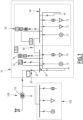
- the present application concerns a method for controlling a microgrid 10 and a microgrid 10 configured to perform said method.
- the microgrid comprises a circuit breaker 20, also called main breaker, a first busbar 30 being configured to be connected to a utility grid 100 through the circuit breaker 20, several distributed energy resources including at least a battery energy storage system 50, a second busbar 40, a switching device 60, a microgrid controller 70, non-critical loads and critical loads.
- the second busbar 40 is connected to the first busbar 30 though the switching device 60.
- the critical loads and the battery energy storage system 50 are connected to the second busbar 40.
- the microgrid 10 is configured to perform the method according to the present application.
- the utility grid 100 may comprise a dedicated medium voltage and/or low voltage transformer 110. If the microgrid 10 is small, the transformer 110 is usually owned by a utility and shared with other client grids 120.
- the distributed energy resources include the at least one battery energy storage system 50 and preferably also comprise a generator 52 and/or a photovoltaic inverter 54.
- the non-critical loads preferably comprise a heating, ventilation, and air-conditioning device (HVAC) 12 and/or other sheddable loads 14.
- HVAC heating, ventilation, and air-conditioning device
- the critical loads comprise an elevator 11, a server 13 and/or a lighting installation 15, and more generally any type of security systems.
- the first busbar 30 is connected to the circuit breaker 20 on the one end and to the second busbar 40 via the switching device 60 on the other end.
- the first busbar 30 may be referred to as the main busbar.
- the second busbar 40 may be referred to as the critical busbar.
- all critical loads of the microgrid 10 are connected to the second busbar 40 and/or all non critical loads are connected to the first busbar 30.
- the microgrid 10 preferably further comprises a measuring device 72 connected to the microgrid controller 70 and configured to measure a voltage present in the microgrid 10.
- the measuring device 72 is preferably configured to measure a voltage present on the first busbar 30 and/or the second busbar 40, and to determine if the measured voltage corresponds to a loss of voltage or a fault in the microgrid 10.
- the measuring device 72 may form part of the switching device 60.
- the microgrid 10 further comprises a protective relay 22 configured to detect the fault and/or the loss of voltage in the microgrid 10 and to open the circuit breaker 20 after the fault and/or the loss of voltage is detected.
- the protective relay 22 may also be configured to measure a voltage present in the microgrid 10.
- the protective relay 22 is preferably connected to the microgrid controller 70.
- the protective relay 22 is further configured to detect an undervoltage in the microgrid 10, an underfrequency in the microgrid 10, a reverse power in the microgrid 10, and a rate of change of frequency (ROCOF) in the microgrid 10.
- ROCOF rate of change of frequency
- the switching device 60 is a static switch.
- the switching device 60 is a hybrid breaker.
- the microgrid 10 is configured to be operated in a grid connected mode when the switching device 60 and the circuit breaker 20 are closed.
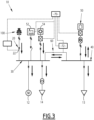
- Figure 3 depicts the operation of the microgrid 10 in grid connected mode.
- the utility grid 100 provides active and reactive power to the microgrid 10 to offset imbalances between power production and demand on the microgrid 10.
- the photovoltaic inverter 54 is configured to inject an amount of power to the first busbar 30 and second busbar 40 to be consumed by the critical and non-critical loads, to be stored or to be reinjected into the utility grid 100.
- the direction of flow of the power is depicted by arrows.
- the microgrid 10 is further configured to be operated in an islanded mode.
- the circuit breaker 20 In the islanded mode, the circuit breaker 20 is opened, and the connection to the utility grid 100 is therefore lost. If the distributed energy resources with exception of the energy storage system 50 generate more power than is being used by the critical and non-critical loads of the microgrid 10, excess power can be absorbed by the energy storage system 50.
- the battery energy storage system 50 is configured to be operated in a grid-forming mode, a virtual synchronous generator mode and/or a grid-tie mode.
- the battery energy storage system 50 may be operated in virtual synchronous generator mode or grid-tie mode.
- the battery energy storage system 50 may be operated in virtual synchronous generator mode or grid forming mode.
- Forming the grid is understood to mean supplying the grid with electrical power without having recourse to a reference electrical signal delivered by another source.
- grid forming mode the battery energy storage system 50 forms the voltage on the microgrid 10.
- battery energy storage system 50 may inject into the microgrid 10 or absorb active or reactive power from the microgrid 10. The injection and/or absorption may be controlled by the microgrid controller 70.
- the measuring device 72 is configured to measure an instantaneous output voltage between two lines of the utility grid and process the measured instantaneous output voltage to ascertain a voltage drop or sag in the utility grid. Further, the measuring device 72 is connected to the switching device 60 and is configured to open and/or close the switching device 60. The measuring device 72 is further configured to send information signals, for example information relative to the voltage loss to the microgrid controller 70.
- the microgrid controller 70 is connected to the switching device 60, configured to control the switching device 60 to open and/or close the switching device 60, connected to the circuit breaker 20 and configured to control the circuit breaker 20 to open and/or close circuit breaker 20. Further preferably, the microgrid controller 70 is connected to the protective relay 22 and configured to control the protective relay 22 to open and/or close the protective relay 22.
- the microgrid controller 70 is connected to each of the distributed energy resources and configured to control each of the distributed energy resources.
- the microgrid controller 70 is configured to set the operating mode of the distributed energy resource.
- the microgrid controller 70 may change between the grid forming mode, grid-tie mode and the virtual synchronous generator mode of the battery energy storage system 50.
- the microgrid 10 further comprises a power meter for each of the critical and non-critical loads monitoring the power consumption of the respective load, the microgrid controller 70 being connected to each of the power meters.
- the power meters can be integrated in a protective device protecting the respective load, such as a switch or a smart breaker.
- the present application further relates to a method 200 for controlling the microgrid.
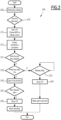
- An embodiment of the method 200 is described hereafter with respect to the flowchart of figure 2 .
- the method 200 is applied starting as the microgrid 10 being operated in a grid connected mode, maintaining the switching device 60 and the circuit breaker 20 closed.
- the method 200 comprises :
- the method therefore comprises waiting 215 a period of time equal to the fault ride through period.
- the fault ride through period is defined by the grid code of the utility grid, the grid code being dependent on local requirements, as shown in figure 4 .
- the battery energy storage system 50 becomes the voltage source for the microgrid.
- the voltage present in the microgrid 10 is measured by means of the voltage measuring device 72.
- the voltage present in the microgrid 10 may be measured by the protective relay 22.
- determining 205 if the measured voltage corresponds to a loss of voltage or a fault in the microgrid 10 is achieved by a fast detection algorithm configured to detect the loss of voltage rapidly.
- the method further comprises the following step opening 220 the circuit breaker 20, also called main breaker, if the measured voltage still corresponds to the loss of voltage or the fault in the microgrid 10 after the fault ride through period defined by the grid code has elapsed.
- the opening 220 of the circuit breaker 20 is carried if the protective relay 22 detects the fault and/or the loss of voltage in the microgrid 10 after the fault ride through period has elapsed, i.e. if the protective relay 22 is tripped.
- the switching device 60 is closed 230, the distributed energy resources supplying non-critical and critical loads in an islanded mode of the microgrid 10.
- the microgrid controller 70 may perform an energy distribution calculation 212, comprising a load shedding or a generation dispatch-down calculation.
- Both the load shedding calculation and the generation dispatch-down calculation comprise the estimation of the power consumption of the critical and non-critical loads and the estimation of the potential power supply to the microgrid 10 in islanded mode by the battery energy storage system 50, the generator 52 and/or the photovoltaic inverter 54.
- the microgrid controller 70 may individually disconnect one or several non-critical loads from the first busbar 30.
- the disconnection of said non-critical load may be achieved by opening a switch connecting the first busbar 30 to said non critical load.
- the switching device 60 is closed 240 after the voltage is synchronized.
- a waiting delay 235 is imposed, the waiting delay duration being chosen so as to allow voltage synchronization.
- the battery energy storage system 50 is operated in the grid-forming mode or the virtual synchronous generator mode when the switching device 60 is opened after the detection of the loss of voltage or fault in the microgrid 10.
- the battery energy storage system 50 is operated in the grid-tie mode or the virtual synchronous generator mode while the circuit breaker 20 and/or the switching device 60 are maintained closed and the microgrid 10 is operated in a grid connected mode.
- Figure 3 depicts the operation of the microgrid 10 in grid connected mode. The direction of flow of the power is depicted by arrows.
- grid connected mode battery energy storage system 50 is operated in the grid-tie mode or the virtual synchronous generator mode.
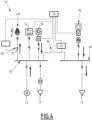
- Figure 4 depicts the operation of the microgrid 10 after the event of a grid disturbance, as for instance a loss of voltage or a fault in the microgrid 10, during the fault ride through period.
- the first busbar 30 remains connected to the utility grid during fault ride through period, while the second busbar 40 is rapidly disconnected from the first busbar 30 by the opening of the switching device 60.
- battery energy storage system 50 In grid connected mode, battery energy storage system 50 is operated in the grid-tie mode or the virtual synchronous generator mode. The power is then supplied to the critical loads by the battery energy storage system 50. Depending on the type of energy storage system 50 used, the energy storage system 50 may need to change the operation from grid tie mode to grid forming mode, or it can stay in virtual synchronous generator mode.
- the second busbar 30 can be synchronized and the switching device 60 may be closed. The microgrid 10 is then operated in grid connected mode.
- the circuit breaker 20 is opened. Once the circuit breaker 20 is opened, switching device 60 may be closed. The photovoltaic inverter 54 will sense a voltage and supply the available power to the loads. To avoid tripping of the photovoltaic inverter 54, the photovoltaic inverter's 54 ride through settings may be prolonged. The microgrid 10 is then operating in islanded mode.
- the microgrid controller 70 may synchronize the microgrid 10 to the utility grid 100 and close the circuit breaker 20.
- Figure 5 is a chart representing fault ride through requirements according to different grid codes.
- the chart represents the length of the fault ride through period dependent on the voltage level and on the grid code.
- the chart is conform to the International Transactions on Electrical Energy Systems, Volume: 30, Issue: 10, First published: 27 July 2020, DOl: (10.1002/2050-7038.12524 ).
- the method according to the present application allows for a control strategy enabling continuous operation of the microgrid 10 in case grid fault in the utility grid 100, until the fault ride through is finished.
- the distributed energy resources may remain in operation after the microgrid is disconnected from the utility grid.
Landscapes
- Engineering & Computer Science (AREA)
- Power Engineering (AREA)
- Supply And Distribution Of Alternating Current (AREA)
Abstract
The application relates to a method for controlling a microgrid (10) comprising the steps of:
• maintaining a switching device (60) connecting two busbars (30, 40) of the microgrid (10) and a circuit breaker (20) connecting the microgrid (10) to a utility grid (100) closed, the microgrid (10) being operated in a grid connected mode;
• measuring (202) a voltage present in the microgrid (10) ;
• determining (205) if the measured voltage corresponds to a loss of voltage or a fault in the microgrid (10); and
• if a the loss of voltage or fault is detected in the microgrid (10), opening (210) the switching device (60), the critical loads being supplied by the battery energy storage system (50) and the circuit breaker (20) remaining closed during (215) at least a fault ride through period.
• maintaining a switching device (60) connecting two busbars (30, 40) of the microgrid (10) and a circuit breaker (20) connecting the microgrid (10) to a utility grid (100) closed, the microgrid (10) being operated in a grid connected mode;
• measuring (202) a voltage present in the microgrid (10) ;
• determining (205) if the measured voltage corresponds to a loss of voltage or a fault in the microgrid (10); and
• if a the loss of voltage or fault is detected in the microgrid (10), opening (210) the switching device (60), the critical loads being supplied by the battery energy storage system (50) and the circuit breaker (20) remaining closed during (215) at least a fault ride through period.
Description
- The present invention relates to the field of microgrids for the generation and distribution of electricity. More particularly, the invention relates to a method for controlling a microgrid and to a microgrid configured to perform said method.
- A microgrid is generally a local electrical grid intended to generate and distribute electrical power in regions that are isolated and far from large electrical energy generation centres. Isolated regions are, for example, islands, mountainous regions or desert areas. The microgrid principle is also applicable when a building, neighbourhood, campus or other entity connected to a main grid (also called utility grid) or wide distribution grid wishes to manage the generation of its energy differently and increase its capacity for resilience.
- Microgrids are made up of various kind of energy resources that are spatially distributed and disconnected from the utility grid. Such microgrids are set up as autonomous islands for energy supply. These distributed resources may include renewable energy resources, such as photovoltaic cells, solar panels and wind turbines. They further may include engine-generator energy resources, such as fuel consuming engines or turbines. And they may comprise energy storage facilities for locally storing energy, which may include chemical type storage such as battery energy storage systems (BESS) or mechanical type storage such as flywheels.
- The main advantage of microgrids is that they can operate autonomously, i.e. in island mode, without connection to the public grid, and are located in proximity to the areas of consumption, the loads. Thus, the losses inherent to long-distance distribution grids are reduced.
- To protect the loads from disturbance Uninterrupted Power Supply system (UPS) are known. Double conversion UPS are well known to provide a reliable power supply to critical loads.
- In microgrids, some products offer the usage of battery energy storage systems to isolate rapidly from grid disturbance to secure critical loads.
- However, in order to comply with the technical specification defining the parameters how a facility is to be connected to a utility grid (grid code), all generators must remain connected for certain period in case of grid disturbance, including the inverter based distributed energy resources. This mandatory requirement is called fault ride through (Low Voltage or Fault Ride Through specification). The minimum period in which all generators must remain connected to the utility grid is called fault ride through period.
- As photovoltaic inverters are considered to be generators, the fast transfer is not authorized if a photovoltaic inverter or other inverter based distributed energy resources is/are present in the microgrid.
- In the microgrids known from prior art, during the ride through period, all loads connected to the microgrid including critical loads are interrupted from power.
- It is an object of the present invention to provide a microgrid complying with the fault ride through requirement of the utility grid for inverter-based generators while providing the resilience to critical loads powered by the microgrid.
- This object is achieved by a method for controlling a microgrid according to claim 1 and a microgrid according to
claim 10. - Optional features of the invention are set out in the dependent claims.
- The method and the microgrid according to the present invention allow critical loads to be immediately isolated during grid disturbance, while distributed energy resources of the microgrid remain connected to the utility grid until the fault ride through has finished.
- Once the fault ride through period has elapsed, the switching device can be closed to give a voltage reference to the distributed energy resources..The distributed energy resource's ride through settings shall be set at least as long as the utility grid requires, and more particularly more than the breaker opening time, which is typically between 30ms to 50ms plus the utility grid fault ride through requirements. Therefore, the distributed energy resources can remain in operation after the microgrid is disconnected from the utility grid.
- Features of the preferred embodiment described below will be apparent when read in conjunction with the drawings, wherein:
-
Fig. 1 is a single-line diagram representing a microgrid according to the preferred embodiment of the invention; -
Fig. 2 is a flowchart depicting a method for controlling the microgrid according to the preferred embodiment of the present invention; -
Fig. 3 is a single-line diagram representing the microgrids and illustrating a grid connected mode of the microgrid; -
Fig. 4 is a single-line diagram representing the microgrids and illustrating a grid disturbance event; -
Fig. 5 is a chart representing fault ride through requirements according to different grid codes. - The present application concerns a method for controlling a
microgrid 10 and amicrogrid 10 configured to perform said method. - The microgrid comprises a
circuit breaker 20, also called main breaker, afirst busbar 30 being configured to be connected to autility grid 100 through thecircuit breaker 20, several distributed energy resources including at least a batteryenergy storage system 50, asecond busbar 40, aswitching device 60, amicrogrid controller 70, non-critical loads and critical loads. - The
second busbar 40 is connected to thefirst busbar 30 though theswitching device 60. The critical loads and the batteryenergy storage system 50 are connected to thesecond busbar 40. Themicrogrid 10 is configured to perform the method according to the present application. - The
utility grid 100 may comprise a dedicated medium voltage and/orlow voltage transformer 110. If themicrogrid 10 is small, thetransformer 110 is usually owned by a utility and shared withother client grids 120. - The distributed energy resources include the at least one battery
energy storage system 50 and preferably also comprise agenerator 52 and/or aphotovoltaic inverter 54. - The non-critical loads preferably comprise a heating, ventilation, and air-conditioning device (HVAC) 12 and/or other
sheddable loads 14. As a non-limitative example, the critical loads comprise anelevator 11, aserver 13 and/or alighting installation 15, and more generally any type of security systems. - The
first busbar 30 is connected to thecircuit breaker 20 on the one end and to thesecond busbar 40 via theswitching device 60 on the other end. Thefirst busbar 30 may be referred to as the main busbar. Thesecond busbar 40 may be referred to as the critical busbar. Preferably, all critical loads of themicrogrid 10 are connected to thesecond busbar 40 and/or all non critical loads are connected to thefirst busbar 30. - The
microgrid 10 preferably further comprises ameasuring device 72 connected to themicrogrid controller 70 and configured to measure a voltage present in themicrogrid 10. - The
measuring device 72 is preferably configured to measure a voltage present on thefirst busbar 30 and/or thesecond busbar 40, and to determine if the measured voltage corresponds to a loss of voltage or a fault in themicrogrid 10. Themeasuring device 72 may form part of theswitching device 60. - Preferably, the
microgrid 10 further comprises aprotective relay 22 configured to detect the fault and/or the loss of voltage in themicrogrid 10 and to open thecircuit breaker 20 after the fault and/or the loss of voltage is detected. Theprotective relay 22 may also be configured to measure a voltage present in themicrogrid 10. Theprotective relay 22 is preferably connected to themicrogrid controller 70. - According to a preferred embodiment, the
protective relay 22 is further configured to detect an undervoltage in themicrogrid 10, an underfrequency in themicrogrid 10, a reverse power in themicrogrid 10, and a rate of change of frequency (ROCOF) in themicrogrid 10. - In a preferred embodiment, the
switching device 60 is a static switch. - According to a variant, the
switching device 60 is a hybrid breaker. - The
microgrid 10 is configured to be operated in a grid connected mode when theswitching device 60 and thecircuit breaker 20 are closed. -
Figure 3 depicts the operation of themicrogrid 10 in grid connected mode. Theutility grid 100 provides active and reactive power to themicrogrid 10 to offset imbalances between power production and demand on themicrogrid 10. Preferably, thephotovoltaic inverter 54 is configured to inject an amount of power to thefirst busbar 30 andsecond busbar 40 to be consumed by the critical and non-critical loads, to be stored or to be reinjected into theutility grid 100. Infigure 3 , the direction of flow of the power is depicted by arrows. - According to an embodiment, the
microgrid 10 is further configured to be operated in an islanded mode. In the islanded mode, thecircuit breaker 20 is opened, and the connection to theutility grid 100 is therefore lost. If the distributed energy resources with exception of theenergy storage system 50 generate more power than is being used by the critical and non-critical loads of themicrogrid 10, excess power can be absorbed by theenergy storage system 50. - The battery
energy storage system 50 is configured to be operated in a grid-forming mode, a virtual synchronous generator mode and/or a grid-tie mode. When the microgrid is operated in grid connected mode, the batteryenergy storage system 50 may be operated in virtual synchronous generator mode or grid-tie mode. When the microgrid is operated in islanded mode, the batteryenergy storage system 50 may be operated in virtual synchronous generator mode or grid forming mode. Forming the grid is understood to mean supplying the grid with electrical power without having recourse to a reference electrical signal delivered by another source. In grid forming mode, the batteryenergy storage system 50 forms the voltage on themicrogrid 10. For example, in grid-tie mode, batteryenergy storage system 50 may inject into themicrogrid 10 or absorb active or reactive power from themicrogrid 10. The injection and/or absorption may be controlled by themicrogrid controller 70. - According to an embodiment, the measuring
device 72 is configured to measure an instantaneous output voltage between two lines of the utility grid and process the measured instantaneous output voltage to ascertain a voltage drop or sag in the utility grid. Further, the measuringdevice 72 is connected to theswitching device 60 and is configured to open and/or close the switchingdevice 60. The measuringdevice 72 is further configured to send information signals, for example information relative to the voltage loss to themicrogrid controller 70. - According to an embodiment, the
microgrid controller 70 is connected to theswitching device 60, configured to control theswitching device 60 to open and/or close the switchingdevice 60, connected to thecircuit breaker 20 and configured to control thecircuit breaker 20 to open and/orclose circuit breaker 20. Further preferably, themicrogrid controller 70 is connected to theprotective relay 22 and configured to control theprotective relay 22 to open and/or close theprotective relay 22. - In a preferred embodiment, the
microgrid controller 70 is connected to each of the distributed energy resources and configured to control each of the distributed energy resources. Preferably, themicrogrid controller 70 is configured to set the operating mode of the distributed energy resource. For example, themicrogrid controller 70 may change between the grid forming mode, grid-tie mode and the virtual synchronous generator mode of the batteryenergy storage system 50. - Preferably, the
microgrid 10 further comprises a power meter for each of the critical and non-critical loads monitoring the power consumption of the respective load, themicrogrid controller 70 being connected to each of the power meters. The power meters can be integrated in a protective device protecting the respective load, such as a switch or a smart breaker. - The present application further relates to a
method 200 for controlling the microgrid. An embodiment of themethod 200 is described hereafter with respect to the flowchart offigure 2 . Themethod 200 is applied starting as themicrogrid 10 being operated in a grid connected mode, maintaining theswitching device 60 and thecircuit breaker 20 closed. Themethod 200 comprises : - measuring 202 a voltage present in the
microgrid 10 ; - determining 205 if the measured voltage corresponds to a loss of voltage or a fault in the
microgrid 10; and - if a the loss of voltage or fault is detected in the
microgrid 10, opening 210 theswitching device 60, the critical loads being supplied by the batteryenergy storage system 50 and thecircuit breaker 20 remaining closed during at least a fault ride through period. - The method therefore comprises waiting 215 a period of time equal to the fault ride through period.
- Preferably, the fault ride through period is defined by the grid code of the utility grid, the grid code being dependent on local requirements, as shown in
figure 4 . - After the
opening 210 of theswitching device 20, the batteryenergy storage system 50 becomes the voltage source for the microgrid. - Preferably, the voltage present in the
microgrid 10 is measured by means of thevoltage measuring device 72. Alternatively, the voltage present in themicrogrid 10 may be measured by theprotective relay 22. - According to a preferred embodiment, determining 205 if the measured voltage corresponds to a loss of voltage or a fault in the
microgrid 10 is achieved by a fast detection algorithm configured to detect the loss of voltage rapidly. - The method further comprises the following step opening 220 the
circuit breaker 20, also called main breaker, if the measured voltage still corresponds to the loss of voltage or the fault in themicrogrid 10 after the fault ride through period defined by the grid code has elapsed. - For example, the
opening 220 of thecircuit breaker 20 is carried if theprotective relay 22 detects the fault and/or the loss of voltage in themicrogrid 10 after the fault ride through period has elapsed, i.e. if theprotective relay 22 is tripped. - In a preferred embodiment, after the
circuit breaker 20 has been opened, the switchingdevice 60 is closed 230, the distributed energy resources supplying non-critical and critical loads in an islanded mode of themicrogrid 10. - After the
opening 210 of theswitching device 60 or simultaneously to theopening 210 of theswitching device 60, themicrogrid controller 70 may perform anenergy distribution calculation 212, comprising a load shedding or a generation dispatch-down calculation. - Both the load shedding calculation and the generation dispatch-down calculation comprise the estimation of the power consumption of the critical and non-critical loads and the estimation of the potential power supply to the
microgrid 10 in islanded mode by the batteryenergy storage system 50, thegenerator 52 and/or thephotovoltaic inverter 54. - In case the power provided to the
microgrid 10 by the batteryenergy storage system 50, thegenerator 52 and/or thephotovoltaic inverter 54 in islanded mode are below the consumption of the critical and non-critical loads, themicrogrid controller 70 may individually disconnect one or several non-critical loads from thefirst busbar 30. The disconnection of said non-critical load may be achieved by opening a switch connecting thefirst busbar 30 to said non critical load. - Preferably, after the fault ride through period has elapsed, if the voltage measured by the
voltage measuring device 72 does no longer correspond to the loss of voltage or the fault in themicrogrid 10 and/or the protective relay detects no fault or loss of voltage in themicrogrid 10, the switchingdevice 60 is closed 240 after the voltage is synchronized. For example, a waitingdelay 235 is imposed, the waiting delay duration being chosen so as to allow voltage synchronization. - The battery
energy storage system 50 is operated in the grid-forming mode or the virtual synchronous generator mode when theswitching device 60 is opened after the detection of the loss of voltage or fault in themicrogrid 10. - The battery
energy storage system 50 is operated in the grid-tie mode or the virtual synchronous generator mode while thecircuit breaker 20 and/or theswitching device 60 are maintained closed and themicrogrid 10 is operated in a grid connected mode. -
Figure 3 depicts the operation of themicrogrid 10 in grid connected mode. The direction of flow of the power is depicted by arrows. In grid connected mode, batteryenergy storage system 50 is operated in the grid-tie mode or the virtual synchronous generator mode. -
Figure 4 depicts the operation of themicrogrid 10 after the event of a grid disturbance, as for instance a loss of voltage or a fault in themicrogrid 10, during the fault ride through period. Thefirst busbar 30 remains connected to the utility grid during fault ride through period, while thesecond busbar 40 is rapidly disconnected from thefirst busbar 30 by the opening of theswitching device 60. - The direction of flow of the power is depicted by arrows. In grid connected mode, battery
energy storage system 50 is operated in the grid-tie mode or the virtual synchronous generator mode. The power is then supplied to the critical loads by the batteryenergy storage system 50. Depending on the type ofenergy storage system 50 used, theenergy storage system 50 may need to change the operation from grid tie mode to grid forming mode, or it can stay in virtual synchronous generator mode. - In a preferred embodiment, if the
protective relay 22 has not tripped after the fault ride through period has elapsed, it can be assumed that fault has been cleared. Therefore, thesecond busbar 30 can be synchronized and theswitching device 60 may be closed. Themicrogrid 10 is then operated in grid connected mode. - On the other hand, if the
protective relay 22 has tripped during the fault ride through period, thecircuit breaker 20 is opened. Once thecircuit breaker 20 is opened, switchingdevice 60 may be closed. Thephotovoltaic inverter 54 will sense a voltage and supply the available power to the loads. To avoid tripping of thephotovoltaic inverter 54, the photovoltaic inverter's 54 ride through settings may be prolonged. Themicrogrid 10 is then operating in islanded mode. - In islanded mode, depending on the control strategy, the
microgrid controller 70 may startgenerator 52 and synchronize thegenerator 52 to thefirst busbar 30, adding some reserve power to the system. This allows the sheddable loads to be reconnected to thefirst busbar 30, for example by closing the switch connecting said load to thefirst busbar 30. - When the
utility grid 100 is available again, themicrogrid controller 70 may synchronize themicrogrid 10 to theutility grid 100 and close thecircuit breaker 20. -
Figure 5 is a chart representing fault ride through requirements according to different grid codes. The chart represents the length of the fault ride through period dependent on the voltage level and on the grid code. The chart is conform to the International Transactions on Electrical Energy Systems, Volume: 30, Issue: 10, First published: 27 July 2020, DOl: (10.1002/2050-7038.12524). - The method according to the present application allows for a control strategy enabling continuous operation of the
microgrid 10 in case grid fault in theutility grid 100, until the fault ride through is finished. Advantageously, the distributed energy resources may remain in operation after the microgrid is disconnected from the utility grid.
Claims (13)
- Method for controlling a microgrid (10), the microgrid (10) comprising a circuit breaker (20), a first busbar (30) being configured to be connected to a utility grid (100) through the circuit breaker (20), several distributed energy resources including at least a battery energy storage system (50), a second busbar (40), a switching device (60), a microgrid controller (70), non-critical loads and critical loads, the second busbar (40) being connected to the first busbar (30) though the switching device (60), the critical loads and the battery energy storage system (50) being connected to the second busbar (40), the method comprising the steps of:• maintaining the switching device (60) and the circuit breaker (20) closed, the microgrid (10) being operated in a grid connected mode;• measuring (202) a voltage present in the microgrid (10) ;• determining (205) if the measured voltage corresponds to a loss of voltage or a fault in the microgrid (10); and• if the loss of voltage or fault is detected in the microgrid (10), opening (210) the switching device (60), the critical loads being supplied by the battery energy storage system (50) and the circuit breaker (20) remaining closed during (215) at least a fault ride through period.
- Method according to claim 1, wherein the voltage present in the microgrid (10) is measured by means of a voltage measuring device (72) which determines if the measured voltage correspond to a loss of voltage.
- Method according any one of the claims 1 or 2, further comprising :• opening (220) the circuit breaker (20) if the measured voltage still corresponds to the loss of voltage or the fault in the microgrid (10) after the fault ride through period has elapsed.
- Method according to any one of the claims 1 or 2, the microgrid (10) further comprising a protective relay (22) configured to detect the fault and/or the loss of voltage in the microgrid (10) and to open the circuit breaker (20) after the fault and/or the loss of voltage is detected, the method further comprising :• opening (220) the circuit breaker (20) by the protective relay (22) if the protective relay (22) detects the fault and/or the loss of voltage in the microgrid (10) after the fault ride through period has elapsed.
- Method according to any one of the claims 3 or 4, wherein, after the circuit breaker (20) has been opened, the switching device (60) is closed (230), the distributed energy resources supplying non-critical and critical loads in an islanded mode of the microgrid (10) according to a calculated energy distribution.
- Method according to any one of the claims 1 to 5, wherein the fault ride through period is longer than the opening time of the circuit breaker.
- Method according to any one of the claims 1 to 6, wherein, after the fault ride through period has elapsed (215), if the voltage measured by the voltage measuring device (72) does no longer correspond to the loss of voltage or the fault in the microgrid (10) and/or the protective relay detects no fault or loss of voltage in the microgrid (10), the switching device (60) is closed (240).
- Method according to any one of the claims 1 to 7, wherein the battery energy storage system (50) is operated in a grid-forming mode or a virtual synchronous generator mode when the switching device (60) is opened (210) after the detection of the loss of voltage or fault in the microgrid (10).
- Method according to any one of the claims 1 to 8, wherein the battery energy storage system (50) is operated in a grid-tie mode or a virtual synchronous generator mode while the circuit breaker (20) and/or the switching device (60) are maintained closed and the microgrid (10) is operated in a grid connected mode.
- Microgrid comprising a circuit breaker (20), a first busbar (30) being configured to be connected to a utility grid (100) through the circuit breaker (20), several distributed energy resources including at least a battery energy storage system (50), a second busbar (40), a switching device (60), a microgrid controller (70), non-critical loads and critical loads, the second busbar (40) being connected to the first busbar (30) though the switching device (60), the critical loads and the battery energy storage system (50) being connected to the second busbar (40), the microgrid (10) being configured to perform the method according to any one of the claims 1 to 9.
- Microgrid according to claim 10, characterized in that it further comprises voltage measuring device (72) connected to the microgrid controller (70), the voltage measuring device (72) being configured to determine if the measured voltage correspond to a loss of voltage.
- Microgrid according to any one of the claims 10 or 11, further comprising a protective relay (22) configured to detect the fault and/or the loss of voltage in the microgrid (10) and to open the circuit breaker (20) after the fault and/or the loss of voltage is detected.
- Microgrid according to any one of the claims 10 to 12, wherein the switching device (60) is a static switch or hybrid breaker.
Priority Applications (3)
| Application Number | Priority Date | Filing Date | Title |
|---|---|---|---|
| EP23306592.9A EP4528966A1 (en) | 2023-09-25 | 2023-09-25 | Method for controlling a microgrid and associated microgrid |
| US18/894,951 US20250105624A1 (en) | 2023-09-25 | 2024-09-24 | Method for controlling a microgrid and associated microgrid |
| CN202411340082.4A CN119695796A (en) | 2023-09-25 | 2024-09-25 | Method for controlling a microgrid and associated microgrid |
Applications Claiming Priority (1)
| Application Number | Priority Date | Filing Date | Title |
|---|---|---|---|
| EP23306592.9A EP4528966A1 (en) | 2023-09-25 | 2023-09-25 | Method for controlling a microgrid and associated microgrid |
Publications (1)
| Publication Number | Publication Date |
|---|---|
| EP4528966A1 true EP4528966A1 (en) | 2025-03-26 |
Family
ID=88315489
Family Applications (1)
| Application Number | Title | Priority Date | Filing Date |
|---|---|---|---|
| EP23306592.9A Pending EP4528966A1 (en) | 2023-09-25 | 2023-09-25 | Method for controlling a microgrid and associated microgrid |
Country Status (3)
| Country | Link |
|---|---|
| US (1) | US20250105624A1 (en) |
| EP (1) | EP4528966A1 (en) |
| CN (1) | CN119695796A (en) |
Family Cites Families (2)
| Publication number | Priority date | Publication date | Assignee | Title |
|---|---|---|---|---|
| US11742637B2 (en) * | 2020-10-20 | 2023-08-29 | Schneider Electric USA, Inc. | Split bus electrical panel for microgrid applications |
| WO2024243359A2 (en) * | 2023-05-23 | 2024-11-28 | Atomic Machines, Inc. | Hybrid digitally controlled circuit breaker utilizing mems relay |
-
2023
- 2023-09-25 EP EP23306592.9A patent/EP4528966A1/en active Pending
-
2024
- 2024-09-24 US US18/894,951 patent/US20250105624A1/en active Pending
- 2024-09-25 CN CN202411340082.4A patent/CN119695796A/en active Pending
Non-Patent Citations (3)
| Title |
|---|
| INTERNATIONAL TRANSACTIONS ON ELECTRICAL ENERGY SYSTEMS, vol. 30, 27 July 2020 (2020-07-27) |
| KEIICHI HIROSE ET AL: "Development of Multiple Power Quality Supply System", IEEJ TRANSACTIONS ON ELECTRICAL AND ELECTRONIC ENGINEERING, JOHN WILEY & SONS, INC, US, vol. 5, no. 5, 25 August 2010 (2010-08-25), pages 523 - 530, XP072436693, ISSN: 1931-4973, DOI: 10.1002/TEE.20568 * |
| MANISA PIPATTANASOMPORN ET AL: "Securing critical loads in a PV-based microgrid with a multi-agent system", RENEWABLE ENERGY, PERGAMON PRESS, OXFORD, GB, vol. 39, no. 1, 28 July 2011 (2011-07-28), pages 166 - 174, XP028301174, ISSN: 0960-1481, [retrieved on 20110819], DOI: 10.1016/J.RENENE.2011.07.049 * |
Also Published As
| Publication number | Publication date |
|---|---|
| US20250105624A1 (en) | 2025-03-27 |
| CN119695796A (en) | 2025-03-25 |
Similar Documents
| Publication | Publication Date | Title |
|---|---|---|
| Peng et al. | Envisioning the future renewable and resilient energy grids—A power grid revolution enabled by renewables, energy storage, and energy electronics | |
| US20230369864A1 (en) | Microgrid | |
| Alegria et al. | CERTS microgrid demonstration with large-scale energy storage and renewable generation | |
| Kroposki et al. | Making microgrids work | |
| Lopes et al. | Control strategies for microgrids emergency operation | |
| Paredes et al. | Enhancing dynamic voltage stability in resilient microgrids using FACTS devices | |
| KR20110050858A (en) | Load control method of microgrid system and stationary switch | |
| US20240405566A1 (en) | System and method for automated clean energy blackstart for backup auxiliary power, microgrid customer loads, and utility grid | |
| KR20170074631A (en) | Energy distribuition system in smart grid envirmnent | |
| Martirano et al. | Implementation of SCADA systems for a real microgrid lab testbed | |
| Cagnano et al. | A simple circuit model for the islanding transition of microgrids | |
| CN103457345A (en) | Control device and control method for supplying power to fault region in regional power grid | |
| Karimi et al. | Smart integrated adaptive centralized controller for islanded microgrids under minimized load shedding | |
| Patil et al. | Voltage stability assessment of grid connected solar PV system | |
| JP2010178611A (en) | System interconnection type photovoltaic power generating system with self-sustaining function | |
| Lotze et al. | Lowering barriers to a large-scale implementation of grid booster projects by introducing a hybrid concept | |
| EP4528966A1 (en) | Method for controlling a microgrid and associated microgrid | |
| Frack et al. | Control-strategy design for frequency control in autonomous smart microgrids | |
| KR20180090599A (en) | A method for driving energy storage system | |
| Daud et al. | A novel coordinated control strategy considering power smoothing for a hybrid photovoltaic/battery energy storage system | |
| Mattern et al. | Application of inverter-based systems for peak shaving and reactive power management | |
| Gouveia et al. | Microgrids emergency management exploiting EV, demand response and energy storage units | |
| KR101336043B1 (en) | Control circuit for switching an emergency power system with the solar system | |
| CN104065064B (en) | 110 kv substation microgrid control methods | |
| Barragan-Villarejo et al. | Improving the controllability of microgrids through DC links |
Legal Events
| Date | Code | Title | Description |
|---|---|---|---|
| PUAI | Public reference made under article 153(3) epc to a published international application that has entered the european phase |
Free format text: ORIGINAL CODE: 0009012 |
|
| STAA | Information on the status of an ep patent application or granted ep patent |
Free format text: STATUS: THE APPLICATION HAS BEEN PUBLISHED |
|
| AK | Designated contracting states |
Kind code of ref document: A1 Designated state(s): AL AT BE BG CH CY CZ DE DK EE ES FI FR GB GR HR HU IE IS IT LI LT LU LV MC ME MK MT NL NO PL PT RO RS SE SI SK SM TR |
|
| STAA | Information on the status of an ep patent application or granted ep patent |
Free format text: STATUS: REQUEST FOR EXAMINATION WAS MADE |
|
| 17P | Request for examination filed |
Effective date: 20250828 |