EP4528533A1 - Iterative natural language-based data pipeline generations and prototyping - Google Patents
Iterative natural language-based data pipeline generations and prototyping Download PDFInfo
- Publication number
- EP4528533A1 EP4528533A1 EP24162109.3A EP24162109A EP4528533A1 EP 4528533 A1 EP4528533 A1 EP 4528533A1 EP 24162109 A EP24162109 A EP 24162109A EP 4528533 A1 EP4528533 A1 EP 4528533A1
- Authority
- EP
- European Patent Office
- Prior art keywords
- data
- prompt
- use case
- dataset
- generating
- Prior art date
- Legal status (The legal status is an assumption and is not a legal conclusion. Google has not performed a legal analysis and makes no representation as to the accuracy of the status listed.)
- Pending
Links
Images
Classifications
-
- G—PHYSICS
- G06—COMPUTING OR CALCULATING; COUNTING
- G06F—ELECTRIC DIGITAL DATA PROCESSING
- G06F16/00—Information retrieval; Database structures therefor; File system structures therefor
- G06F16/20—Information retrieval; Database structures therefor; File system structures therefor of structured data, e.g. relational data
- G06F16/24—Querying
- G06F16/242—Query formulation
- G06F16/243—Natural language query formulation
-
- G—PHYSICS
- G06—COMPUTING OR CALCULATING; COUNTING
- G06F—ELECTRIC DIGITAL DATA PROCESSING
- G06F9/00—Arrangements for program control, e.g. control units
- G06F9/06—Arrangements for program control, e.g. control units using stored programs, i.e. using an internal store of processing equipment to receive or retain programs
- G06F9/30—Arrangements for executing machine instructions, e.g. instruction decode
- G06F9/30003—Arrangements for executing specific machine instructions
- G06F9/30076—Arrangements for executing specific machine instructions to perform miscellaneous control operations, e.g. NOP
- G06F9/30079—Pipeline control instructions, e.g. multicycle NOP
-
- G—PHYSICS
- G06—COMPUTING OR CALCULATING; COUNTING
- G06F—ELECTRIC DIGITAL DATA PROCESSING
- G06F16/00—Information retrieval; Database structures therefor; File system structures therefor
- G06F16/30—Information retrieval; Database structures therefor; File system structures therefor of unstructured textual data
- G06F16/33—Querying
- G06F16/3331—Query processing
- G06F16/3332—Query translation
- G06F16/3338—Query expansion
Definitions
- Certain embodiments of the present disclosure are directed to systems and methods associated with data pipelines. More particularly, some embodiments of the present disclosure provide systems and methods for evaluating, generating, and/or prototyping data pipelines.
- LLMs large language models
- AI artificial intelligence
- Users are becoming more comfortable prompting the LLM in an iterative way, such as pointing out a mistake or missed context in a previous LLM response.
- the LLM given its own previous response(s) and a new user prompt context, is able to re-generate a response that is often more accurate or applicable with the new context in mind.
- the method includes: receiving an input dataset, the input dataset including a data schema; generating a first prompt based on the input dataset and a first prompt structure having one or more text strings and one or more blanks; providing the first prompt to a language model; receiving a use case generated by the language model for the input dataset, the use case including a description of how to use the input dataset; generating a data pipeline based on the use case; and applying the data pipeline to the input dataset to generate an output dataset.
- the method is performed using one or more processors.
- the system includes one or more memories having instructions stored therein and one or more processors configured to execute the instructions and perform operations.
- the operations include: receiving an input dataset, the input dataset including a data schema; generating a first prompt based on the input dataset and a first prompt structure having one or more text strings and one or more blanks; providing the first prompt to a language model; receiving a use case generated by the language model for the input dataset, the use case including a description of how to use the input dataset; generating a data pipeline based on the use case; and applying the data pipeline to the input dataset to generate an output dataset.
- the method includes: receiving an input dataset, the input dataset including a data schema; generating a first prompt based on the input dataset and a first prompt structure having one or more text strings and one or more blanks; providing the first prompt to a language model; receiving a use case generated by the language model for the input dataset, the use case including a description of how to use the input dataset; generating a data pipeline based on the use case; applying the data pipeline to the input dataset to generate an output dataset; generating a second prompt based on a second prompt structure, the second prompt structure associated with the use case and the output dataset; providing the second prompt to the language model; receiving an evaluation function generated by the language model; and determining an evaluation metric using the evaluation function based on the use case and the output dataset.
- the generating a first prompt based on the input dataset and a first prompt structure comprises: determining text data based on the input dataset; and filling in the one or more blanks using the determined text data.
- the data schema includes one or more data field names and one or more data types; determining text data based on the input dataset comprises extracting at least one of the one or more data field names and a corresponding data type from the input dataset.
- the method is performed using one or more processors.
- the term “based on” is not meant to be restrictive, but rather indicates that a determination, identification, prediction, calculation, and/or the like, is performed by using, at least, the term following "based on” as an input. For example, predicting an outcome based on a particular piece of information may additionally, or alternatively, base the same determination on another piece of information.
- the term “receive” or “receiving” means obtaining from a data repository (e.g., database), from another system or service, from another software, or from another software component in a same software.
- the term “access” or “accessing” means retrieving data or information, and/or generating data or information.
- a standard iterative large language model (“LLM”) workflow typically includes the following steps: (1) a user provides a user input to prompt the LLM to solve a problem; (2) the user prototypes the idea that is generated by the LLM; (3) the user identifies a method to assess the idea for correctness or usefulness; and (4) the user evaluates the correctness or usefulness of the response and uses any insights generated to return to step (1) above as needed and re-prompts using the LLM with an added context. As such, there is extensive involvement of the user in order to assess the correctness or usefulness of the LLM-generated idea (solution) to the user-inputted problem.
- Various embodiments of the present disclosure can achieve benefits and/or improvements by a computing system for generating and/or evaluating data pipelines, for example, using one or more language models and/or artificial intelligence models.
- Benefits can include significant improvements in creating data applications by, for example, generating use cases and generating evaluation functions using one or more language models and/or artificial intelligence models.
- Other benefits can include improving efficiencies for finding data applications including data pipelines using known input datasets.
- Benefits further include the capability of automatically designing and implementing a data pipeline associated with a goal (e.g., a use case).
- Systems and methods can be configured to use one or more language models and one or more prompt structures to generate prompts for use cases and/or to generate prompts for evaluation functions.
- systems and methods are configured to provide one or more prompts to one or more language models (e.g., large language models (LLMs), etc.) using artificial intelligence (AI) technologies to solve technical problems, for example, problems that are often technical, specific, and require creative specificity in answer.
- the conventional systems can receive prompts, also referred to as inquiry prompts, from users.
- Systems and methods are configured to provide prompts to the one or more language models in an iterative way; pointing out a mistake or missed context in a previous LLM response.
- the LLM given its own previous response(s) and a new user prompt context, is able to re-generate an often more accurate or applicable response with the new context in mind.
- a prompt may refer to an input (e.g., a text input) instructing one or more generative AI models to generate a desired (e.g., requested) output.
- model can include any computer-based models of any type and of any level of complexity, such as any type of sequential, functional, or concurrent model. Models can further include various types of computational models, such as, for example, artificial neural networks (“ANN”), language models (e.g., large language models), artificial intelligence (“AI”) models, machine learning (“ML”) models, generative AI models, and/or the like.
- ANN artificial neural networks
- AI artificial intelligence
- ML machine learning
- generative AI models generative AI models, and/or the like.
- a language model may include an algorithm, rule, model, and/or other programmatic instructions that can predict the probability of a sequence of words.
- a language model may, given a starting text string (e.g., one or more words), predict the next word in the sequence.
- a language model may calculate the probability of different word combinations based on the patterns learned during training (based on a set of text data from books, articles, websites, audio files, etc.).
- a language model may generate many combinations of one or more next words (and/or sentences) that are coherent and contextually relevant.
- a language model can be an advanced artificial intelligence algorithm that has been trained to understand, generate, and manipulate natural language expressions (e.g., sentences, phases, essays, etc.).
- a language model can be useful for natural language processing, including receiving natural language prompts and providing natural language responses based on the text on which the model is trained.
- a language model may include an n-gram, exponential, positional, neural network, and/or other type of model.
- a large language model includes any type of language model that has been trained on a larger data set and has a larger number of training parameters compared to a regular language model.
- An LLM can understand more intricate patterns and generate text that is more coherent and contextually relevant due to its extensive training.
- An LLM may perform well on a wide range of topics and tasks.
- An LLM may comprise an artificial neural network trained using self-supervised learning.
- An LLM may include a question-answer ("QA") LLM that may be optimized for generating answers from a context.
- QA question-answer
- a language model may include an autoregressive language model, such as a Generative Pre-trained Transformer 3 (GPT-3) model, a GPT 3.5-turbo model, a Claude model, a command-xlang model, a bidirectional encoder representations from transformers (BERT) model, a pathways language model (PaLM) 2, and/or the like.
- GPT-3 Generative Pre-trained Transformer 3
- GPT 3.5-turbo model a Claude model
- a command-xlang model a bidirectional encoder representations from transformers (BERT) model
- PaLM pathways language model
- systems and methods include the process of using an LLM to iterate on creative solutions is resource intensive, time consuming, and/or technically challenging.
- LLM generated use case e.g., an idea
- systems and methods can prototype a solution (e.g., a data pipeline) for the use case, assess the efficacy of the prototype, and use the efficacy of each solution as context for the next LLM generation to improve accuracy and usefulness.
- At least some embodiments of the present disclosure are relevant to provide solutions to the technical problems of discovering creative and valuable new uses of data (e.g., one or more large datasets), for example, for data owners.
- Systems and methods can use a prompt structure, also referred to as a "cookie cutter" prompt, which is a prewritten prompt format which has made up of pre-written text, and one or more blank spots that can be filled with text specific to a specific case.
- a prompt structure includes one or more text strings and one or more blank spots that can be filled with text.
- a prompt structure includes one or more text strings providing context of prompts and one or more blank spots that can be filled with text.
- Systems and methods can generate a prompt using the prompt structure and text data specific to a use case associated with the one or more blanks.
- Systems and methods can generate a prompt automatically and/or programmatically using the prompt structure and text data specific to a use case associated with the one or more blanks.
- the AI-assisted data pipeline builder can include a technique given a natural language prompt of desired outcome and collection of one or more input datasets that is able to automatically construct a data pipeline of transforms to achieve the desired outcome.
- the pipeline builder can create a series of data transforms given some set of input datasets to create some set of output datasets.
- a data pipeline also referred to as a pipeline, can include one or more data processing elements connected in series or in parallel. An output of one data processing element can be the input of the next data processing element.
- a plurality of data processing elements of a pipeline may be executed in parallel.
- At least a part or all of the one or more data processing elements may use a platform-specific language (e.g., a language or script language for a customized platform, platform-specific expressions).
- the one or more data processing elements include, for example, selecting (e.g., filtering) a dataset, joining (e.g., aggregating) two or more datasets, selecting a set of data types (e.g., data columns), transforming data, selecting data records, removing data records (e.g., data rows), and/or the like.
- a dataset may include one or more data field names, one or more data types and/or one or more data records.
- a data record may include data of the one or more data types.
- a data pipeline may include one or more data pipeline elements.
- the one or more data pipeline elements may include one or more datasets, transforms, one or more data filters, one or more data operations (e.g., joins, aggregations, etc.), and/or one or more function-based modifications of data.
- the data pipeline elements may include one or more data processing elements.
- the data pipeline elements include an output dataset.
- Systems and methods of the present disclosure may include an iterative process of re-prompting a language model with additional context and/or clarification, for example, repeatedly to achieve a more accurate or useful result.
- Some systems may allow one or more users input to prompt the language model (e.g., the LLM) to solve a problem, one or more users prototype one or more ideas and assess ideas for correctness or usefulness, and/or evaluate the correctness or usefulness of the response.
- Systems and methods may use any insights generated by the above processes and re-prompt with LLM with added context (e.g., insights, correctness, usefulness, etc.).
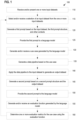
- FIG. 1 is a simplified flowchart diagram showing a method 100 for prototyping, generating, and/or evaluating a data pipeline according to certain embodiments of the present disclosure.
- the method 100 includes processes 110, 115, 120, 125, 130, 135, 140, 145, 150, 155 and 160 that can be performed using one or more processors.
- processes 110, 115, 120, 125, 130, 135, 140, 145, 150, 155 and 160 that can be performed using one or more processors.
- the above has been shown using a selected group of processes for the method, there can be many alternatives, modifications, and variations. For example, some of the processes may be expanded and/or combined. Other processes may be inserted to those noted above. Depending upon the embodiment, the sequence of processes may be interchanged with others replaced.
- some or all processes (e.g., steps) of the method 100 are performed by a system (e.g., the computing system 600). In certain examples, some or all processes (e.g., steps) of the method 100 are performed by a computer and/or a processor directed by a code.
- a computer includes a server computer and/or a client computer (e.g., a personal computer). In some examples, some or all processes (e.g., steps) of the method 100 are performed according to instructions included by a non-transitory computer-readable medium (e.g., in a computer program product, such as a computer-readable flash drive).
- a non-transitory computer-readable medium is readable by a computer including a server computer and/or a client computer (e.g., a personal computer, and/or a server rack).
- instructions included by a non-transitory computer-readable medium are executed by a processor including a processor of a server computer and/or a processor of a client computer (e.g., a personal computer, and/or server rack).
- the system receives (e.g., retrieves) and/or presents one or more input datasets, for example, via a user interface.
- an input dataset includes one or more tables and each table includes one or more rows of data.
- an input dataset includes a graph-based dataset.
- a dataset has a corresponding data schema.
- the data schema includes one or more data field names (e.g., column names) and one or more data types (e.g., the data type for a column).
- the system selects and/or receives a selection of an input dataset from the one or more input datasets.
- the system generates a first prompt (e.g., a first use case prompt) based on the input dataset and a first prompt structure and/or one or more contexts.
- the system generates the first prompt using a natural language processing model based on the input dataset and a first prompt structure and/or one or more contexts.
- the first prompt structure includes one or more text strings and one or more blanks.
- the first prompt structure includes one or more predefined text strings.
- the first prompt structure includes one or more blanks to be filled in.
- the one or more blanks are associated with the input dataset. In certain embodiments, the one or more blanks are associated with data schema corresponding to the input dataset. In some embodiments, the one or more blanks are associated with data field names (e.g., column names) and/or corresponding data types of the data schema corresponding to the input dataset. In certain embodiments, the system can determine text data from the input dataset and fill in the determined text data to the one or more blanks in the first prompt structure (e.g., a prompt structure for use cases). In some embodiments, the one or more blanks are associated with a use case (e.g., an idea), for example, blanks for one or more use case identifiers. In certain embodiments, the one or more blanks are associated with a use case (e.g., an idea) and a corresponding evaluation metric.
- a use case e.g., an idea
- an input dataset can include data associated with a data ontology.
- an ontology refers to a structural framework (e.g., data model) containing information and data related to objects and relationships of objects (e.g., functions applicable to objects, links) within a specific domain (e.g., an organization, an industry).
- the system can use the information of an ontology including, for example, data schemas, to generate the first prompt.
- the system provides the first prompt to a language model.
- the language model runs on a same processor as the prompt generation processor. In certain embodiments, the language model runs on a different processor from the prompt generation processor.
- the system generates and/or receives a use case, where the use case is generated by the language model.
- the language model can generate two or more use cases associated with the first prompt.
- a use case e.g., an idea refers to a description of how to use the data (e.g., the input dataset).
- a use case is for managing plane switching.
- a use case is to maximize the number of passengers for a flight.
- the system generates a data pipeline based on the use case.
- the system uses a language model-assisted data transform builder to prototype and/or generate the data pipeline.
- a language-model assisted data transform builder uses a language model to prototype and/or generate a data pipeline.
- the system applies the data pipeline to the input dataset to generate an output dataset.
- the output dataset has a data schema.
- the output dataset is a table-based dataset including one or more tables and one or more columns and rows in each table.
- the output dataset is a graph-based dataset.
- the output dataset includes a set of data in an ontology.
- the system generates a second prompt (e.g., a first evaluation prompt, a first prompt for evaluation, a first prompt for data pipeline evaluation) based on a second prompt structure, the second prompt structure associated with the use case and the output dataset.
- a second prompt e.g., a first evaluation prompt, a first prompt for evaluation, a first prompt for data pipeline evaluation
- the system generates the second prompt using a natural language processing model based on a second prompt structure, the second prompt structure associated with the use case and the output dataset.
- the one or more blanks in the prompt structure for evaluation are associated with the one or more output datasets.
- the one or more blanks in the prompt structure are associated with data schemas of the one or more output datasets.
- the one or more blanks are associated with data field names (e.g., column names) and/or corresponding data types of the data schema corresponding to the one or more output datasets.
- the system can determine text data from the output dataset and fill in the determined text data to the one or more blanks in the prompt structure (e.g., a prompt structure for evaluation).
- the one or more blanks are associated with a use case (e.g., an idea) describing how to use the dataset.
- the one or more blanks are associated with a goal (e.g., maximizing passengers) in the use case or associated with the use case.
- a prompt structure (e.g., for a prompt for data pipeline evaluation) is "Given the goal of [blank 1] ⁇ insert use case> and the output schema of ⁇ insert each column name and type for each output data set in corresponding pipeline>, write a function that operates on the output data that quantifies how useful the data will be at achieving the goal, as a percent.”
- the system provides the second prompt to the language model.
- the system generates and/or receives an evaluation function generated by the language model, for example, to compute correctness or usefulness for a use case.
- the evaluation function can determine an evaluation metric associated with the output dataset and the corresponding use case.
- the evaluation function and/or the evaluation metric are associated with a goal.
- the evaluation metric is a standard metric (e.g., a percentage).
- the system can determine one or more evaluation metrics, also referred to as insights, for example, the correctness or usefulness of the output dataset, using the evaluation function.
- the system can use the evaluation metrics (e.g., insights) to go back to previous processes, for example, the process 115, for example, to re-prompt the language model with this added context.
- the system can generate the prompt for use cases to include the input dataset schema, the previous use cases, corresponding evaluation metrics, and/or other contexts.
- the system can generate a plurality of data pipelines corresponding to the plurality of use cases and a plurality of evaluation metrics.
- the system can rank the plurality of data pipelines based on the evaluation metrics and the system can include the ranking information in the prompt for use cases.
- the system can generate another use case prompt based on the input dataset, the first prompt structure, the use case, and the evaluation metric. In some embodiments, the system can provide the second use case prompt to the language model. In certain embodiments, the system can generate and/or receive a second use case generated by the language model for the input dataset. In some embodiments, the system can generate a second data pipeline based on the second use case. In certain embodiments, the system can apply the second data pipeline to the input dataset and generate a second output dataset.
- the system can generate another evaluation prompt based on the second output dataset, the second prompt structure, and the second use case.
- the system can generate another evaluation prompt using a natural language processing model based on the second output dataset, the second prompt structure, and the second use case.
- the system can provide the second evaluation prompt to the language model.
- the system can generate and/or receive a second evaluation function for the second use case.
- a plurality of generated evaluation functions associated with the same input dataset has a standardized metric.
- at least two of a plurality of generated evaluation functions associated with the same input dataset include two different evaluation metrics.
- the system selects a use case from a plurality of use cases based on the corresponding evaluation metrics. In some embodiments, the system selects a use case having the highest evaluation metric. In certain embodiments, the system outputs and/or transmits the selected use case.
- the language model for generating prompts is a first language model that is different from the language model used to generate data pipelines.
- the language model for generating prompts for use cases is different from the language model for generating prompts for data pipeline evaluations.
- the language model for generating prompts for use cases is the same as the language model for generating prompts for data pipeline evaluations.
- a prompt for use case is "A set of data contains one or more tables that each have a schema of column names. Table one has schema ⁇ column 1 name> with type ⁇ column 1 type> , column2 has schema ⁇ ...> Table 2 has schema ⁇ column 1 name> with type ⁇ column 2 type>.”
- the system generates a plurality of use cases and a plurality of evaluation metrics, which can be incorporated into the prompt for use case. In certain embodiments, if an evaluation metric for a previous use case has a high evaluation score, more similar use cases may be generated and considered. In some embodiments, if an evaluation metric for a previous use case has a low evaluation score, more different use cases should be generated and considered.
- the first step of data analysis includes identifying the topic each table represents and what category that topic is.
- categories for the topic of a table are resources, containers of resources, processes, or issues, and every table fits best into one of these categories. People in this context are considered a resource.
- the second step for example, called “finding relationships”, includes, for every pair of tables and their topics and categories, if there is a connection between them, categorizes the connection as containment, is required for, or prevents; and if there is no obvious connection between a pair of tables, no actions are to be taken.
- the third step of data analysis the system considers all relationships from the previous step and generates use cases if there is any way the system can use the data in the tables and the relationships to generate business value, especially for decision making (e.g., real-time decision making).
- Some examples of use cases include, for example, to optimize containment by bin packing, a reallocation if a resource depends on another, a reallocation would result in a better outcome, and/or stopping or modifying a process when an error arises with preference toward modifying to reduce error impact if possible.
- the fourth step of data analysis called “summarizing" the system summarizes into a list of the use cases.
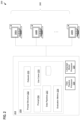
- FIG. 2 is an illustrative example of a data pipeline prototyping, generation, and/or evaluation environment 200, according to certain embodiments of the present disclosure.
- FIG. 2 is merely an example.
- the data pipeline prototyping, generation, and evaluation environment 200 includes a data pipeline system 210 and one or more user devices or third-party devices 240 (e.g., a user/third-party device 240A, a user/third-party device 240B, ... a user/third-party device 240N).
- the data pipeline system 210 includes one or more data pipeline processors 220, one or more language model processors 225, and one or more storage repositories 230.
- one or more components of the pipeline management system 210 are incorporated into the one or more user/third-party devices 240 and/or other devices.
- the one or more language model processors 225 can be hosted in a system different from the data pipeline system 210.
- the repository 230 includes one or more data repository storing one or more prompt structures 232, one or more datasets 233, one or more prompts 234, one or more use cases 235 (e.g., ideas of using data), one or more data pipelines 237 (e.g., configurations of data pipelines), one or more evaluation metrics 238.
- the data pipeline system 210 can use the prompt structure 232, information (e.g., a data schema, data field names, data types, column names, etc.) of one or more datasets 233 (e.g., an input dataset, a selected dataset), the evaluation metrics 238, and one or more contexts to generate a prompt 234 (e.g., an inquiry prompt).
- the system 210 may provide the prompt 234 to a language model run on a language model processor 225 to generate one or more use cases 235 for the dataset.
- datasets 233 are presented via a user interface (e.g., via a user device 240) to allow a selection.
- the data pipeline system 210 can receive an input dataset via a user interface or a software interface.
- the data pipeline system 210 can receive an input dataset by retrieving the dataset from the repository 230.
- the prompt structure 232 includes one or more text strings. In some embodiments, the prompt structure 232 includes one or more predefined text strings. In certain embodiments, the prompt structure 232 includes one or more blanks to be filled in. In some embodiments, the one or more blanks are associated with the input dataset. In certain embodiments, the one or more blanks are associated with data schema corresponding to the input dataset. In some embodiments, the one or more blanks are associated with data field names (e.g., column names) and/or corresponding data types of the data schema corresponding to the input dataset.
- data field names e.g., column names
- the data pipeline system 210 and/or the data pipeline processor 220 can determine text data from the input dataset and fill in the determined text data to the one or more blanks in the prompt structure 232 (e.g., a prompt structure for use cases).
- the one or more blanks are associated with a use case (e.g., an idea), for example, blanks for one or more use case identifiers.
- the one or more blanks are associated with a use case (e.g., an idea) and a corresponding evaluation metric.
- a prompt structure for generating a prompt for use case, is "Creative or useful use cases for data [blank 1] ⁇ insert each column name and type for each data set> given we have already tried [blank 2] ⁇ insert each past use case and its evaluation metric, if any>.”
- a prompt structure is "Creative or useful use cases for data of shape [blank 1] ⁇ insert each column name and type for each data set> given we have already tried [blank 2] ⁇ insert each past use case and its evaluation metric, if any>.”
- the use cases may use a subset of the input dataset or the selected dataset.
- the dataset includes four (4) tables and the use case may use three (3) of the four tables.
- the dataset includes one or more tables associated with flights, airports, pilots, planes, and/or the like.
- an input dataset can include data associated with a data ontology.
- an ontology refers to a structural framework (e.g., data model) containing information and data related to objects and relationships of objects (e.g., functions applicable to objects, links) within a specific domain (e.g., an organization, an industry).
- the data pipeline system 210 and/or the data pipeline processor 220 can use the information of an ontology including, for example, data schemas, to generate a prompt 232.
- the data pipeline system 210 and/or the data pipeline processor 220 can use the generated use cases 235 and a language-model assisted data transform builder, also referred to as a language-model powered data transform builder, to prototype and/or generate a data pipeline, also referred to as a data transform pipeline, for a use case.
- a language-model assisted data transform builder uses a language model to generate a data pipeline.
- the data pipeline system 210 and/or the data pipeline processor 220 can generate one or more output datasets using the generated data pipeline.
- the data pipeline system 210 and/or the data pipeline processor 220 can generate a second prompt 234 (e.g., a prompt for data pipeline evaluation) using a prompt structure 232 and the output dataset(s).
- the one or more blanks in the prompt structure 232 are associated with the one or more output datasets. In certain embodiments, the one or more blanks in the prompt structure 232 are associated with data schemas of the one or more output datasets. In some embodiments, the one or more blanks are associated with data field names (e.g., column names) and/or corresponding data types of the data schema corresponding to the one or more output datasets. In certain embodiments, the data pipeline system 210 and/or the data pipeline processor 220 can determine text data from the output dataset and fill in the determined text data to the one or more blanks in the prompt structure 232 (e.g., a prompt structure for evaluation.
- the data pipeline system 210 and/or the data pipeline processor 220 can determine text data from the output dataset and fill in the determined text data to the one or more blanks in the prompt structure 232 (e.g., a prompt structure for evaluation.
- the one or more blanks are associated with a use case (e.g., an idea) describing how to use the dataset.
- the one or more blanks are associated with a goal (e.g., maximizing passengers) in the use case or associated with the use case.
- a prompt structure e.g., for a prompt for data pipeline evaluation
- the output schema of ⁇ insert each column name and type for each output data set in corresponding pipeline> write a function that operates on the output data that quantifies how useful the data will be at achieving the goal, as a percent.”
- the data pipeline system 210 and/or the data pipeline processor 220 can provide the second prompt 234 to a language model run on the language model processor 225 to generate an evaluation function, for example, to compute correctness or usefulness for a use case.
- the evaluation function can determine an evaluation metric associated with the output dataset and the corresponding use case.
- the evaluation function and/or the evaluation metric is associated with a goal.
- the evaluation metric is a standard metric (e.g., a percentage).
- the data pipeline system 210 and/or the data pipeline processor 220 can determine the one or more evaluation metrics, also referred to as insights, for example, the correctness or usefulness of the output dataset (e.g., the prototype output dataset), using the evaluation function.
- the data pipeline system 210 and/or the data pipeline processor 220 can use the evaluation metrics (e.g., insights) to back to previous steps to re-prompt the language model with this added context.
- the data pipeline system 210 can generate a plurality of data pipelines corresponding to the plurality of use cases and a plurality of evaluation metrics.
- the data pipeline system 210 can rank the plurality of data pipelines based on the evaluation metrics.
- the user needs only supply the data pipeline system 210 with sufficient information (e.g., datasets with schema) to fill in the blanks of a prompt structure (e.g., a cookie cutter prompt), select how many times the user would like to iterate, and then the highest ranked data pipeline discovered, as measured by the generated evaluation metrics.
- a prompt structure e.g., a cookie cutter prompt
- different candidate use cases can have evaluation metrics (e.g., usefulness in vastly different ways). For instance, two use cases for the same dataset may be airplane switching or including as many customers per plane.
- the data pipeline system 210 and/or the data pipeline processor 220 is configured to generate a standardized metric of evaluation (e.g., a standard metric of success) that can be compared across different use cases, using a computing model, a machine learning model, a language model, and/or the like.
- a standardized metric of evaluation e.g., a standard metric of success
- a prompt for use case is "A set of data contains one or more tables that each have a schema of column names. Table one has schema ⁇ column 1 name> with type ⁇ column 1 type> , column2 has schema ⁇ ...> Table 2 has schema ⁇ column 1 name> with type ⁇ column 2 type>.”
- the data pipeline system 210 and/or the data pipeline processor 220 have a plurality of use cases and a plurality of evaluation metrics, which can be incorporated into the prompt for use case. In certain embodiments, if an evaluation metric for a previous use case has a high evaluation score, more similar use cases may be generated and considered. In some embodiments, if an evaluation metric for a previous use case has a low evaluation score, more different use cases should be generated and considered.
- the first step of data analysis includes identifying the topic each table represents and what category that topic is.
- categories for the topic of a table are resources, containers of resources, processes, or issues, and every table fits best into one of these categories. People in this context are considered a resource.
- the second step for example, called “finding relationships”, includes, for every pair of tables and their topics and categories, if there is a connection between them, categorizes the connection as containment, is required for, or prevents; and if there is no obvious connection between a pair of tables, no actions are to be taken.
- the third step of data analysis the data pipeline system 210 and/or the data pipeline processor 220 consider all relationships from the previous step and generate use cases if there is any way the system can use the data in the tables and the relationships to generate business value, especially for decision making (e.g., real-time decision making).
- Some examples of use cases include, for example, to optimize containment by bin packing, a reallocation if a resource depends on another, a reallocation would result in a better outcome, and/or stopping or modifying a process when an error arises with preference toward modifying to reduce error impact if possible.
- the fourth step of data analysis called “summarizing" the data pipeline system 210 and/or the data pipeline processor 220 summarizes into a list of the use cases.
- the data pipeline system 210 and/or the data pipeline processor 220 for example, using a pipeline builder (e.g., a language-model powered pipeline builder), is configured to receive an NL query (e.g., free-text query, a pipeline description), one or more input datasets, and/or a target dataset (e.g., one or more target datasets) from a user input or an input via a software interface.
- a pipeline builder e.g., a language-model powered pipeline builder
- receive an NL query e.g., free-text query, a pipeline description
- a target dataset e.g., one or more target datasets
- the query or description may be included in one or more input datasets.
- the user input is from a user device 240 of a user.
- the input is from a computing solution running on one or more user/third-party devices 240.
- the data pipeline system 210 and/or the data pipeline processor 220 can generate a model query by combining the NL query with the one or more input datasets and/or the one or more datasets.
- an NL query is a free-text query that the user enters via a user interface, such as, "Provide a count of people who have earned less than the US minimum wage in 2020.”
- each of the one or more input datasets include a data schema (e.g., an employee table, a department table, a payment table) and data.
- a user can select input datasets via a user interface. For example, a user can select the datasets (e.g., highlighted datasets) on a user interface.
- one or more target datasets can be defined based on a user input or an input via a software interface.
- a target dataset can include one or more target data types (e.g., data columns, data fields).
- a user can define the one or more target datasets via a user interface.
- the data pipeline system 210 and/or the data pipeline processor 220 can generate a model query based on the NL query, the one or more input datasets, and/or the target dataset.
- the model query includes the NL query and the one or more input datasets.
- the model query includes the NL query and the target dataset.
- the model query includes the NL query.
- the model query includes the target dataset.
- the model query includes the one or more input datasets and the target dataset.
- the data pipeline system 210 and/or the data pipeline processor 220 can use the target dataset to define the query.
- the data pipeline system 210 and/or the data pipeline processor 220 can incorporate one or more parameters and parameter values and/or parameter ranges to the model query. In certain embodiments, the data pipeline system 210 and/or the data pipeline processor 220 can incorporate one or more parameters and parameter values and/or parameter ranges to the model query to ensure the query generated in the following step is valid. For example, the data pipeline system 210 and/or the data pipeline processor 220 can incorporate a temperature parameter, and can set the temperature to be greater than zero.
- the data pipeline system 210 and/or the language model processor 225 generates or receives a model result generated based on the model query using one or more computing models.
- the data pipeline system 210 and/or the language model processor 225 processes the model query using one or more computing models (e.g., a natural language processing model, a model solution) to generate a query (e.g., a model result) in a standard query language (e.g., SQL).
- computing models e.g., a natural language processing model, a model solution
- a query e.g., a model result
- a standard query language e.g., SQL
- the data pipeline system 210 and/or the language model processor 225 transmits, via a software interface, the model query to a model solution (e.g., OpenAI) including one or more computing models for processing, and receives the model result (e.g., the query in the standard query language).
- a model solution e.g., OpenAI
- the one or more computing models include a natural language processing model.
- the model may include a machine-learning NL processing model.
- the model may include an autoregressive language model, such as a Generative Pre-trained Transformer 3 (GPT-3) model.
- the model may include a natural language understanding model.
- the one or more computing models are selected based on a user input or an input via a software interface.
- the model solution can be a part of the data pipeline system 210 and/or the language model processor 225.
- the model solution can run externally from the data pipeline system 210 and/or the data pipeline processor 220.
- the model solution selects the one or more computing models based on the model query.
- the data pipeline system 210 and/or the data pipeline processor 220 is configured to make sure data pipelines are accurate.
- the data pipeline system 210 and/or the data pipeline processor 220 interacts with the model solution to figure out if, given the NL query, the model solution has the right level of understanding of the concepts in the NL query. If not, the model solution, via the data pipeline system 210 and/or the data pipeline processor 220, prompt the user for an explanation, and the data pipeline system 210 and/or the data pipeline processor 220 can feed the explanation back to the model to ensure the most accurate pipeline is generated.
- the data pipeline system 210 and/or the data pipeline processor 220 can tie the explanation back to the datasets (e.g., the input datasets, the target dataset), to make sure that that the explanation (e.g., context) is stored for the pipelining attempts.
- the datasets e.g., the input datasets, the target dataset
- the explanation e.g., context
- the data pipeline system 210 and/or the data pipeline processor 220, via the model solution can generate or receive a confidence score associated with the model result (e.g., the query in the standard query language).
- the confidence score indicates whether information (e.g., concept explanation) is missing.
- the confidence score is one of one or more metrics being used.
- the confidence score can be replaced by one or more other metrics.
- the data pipeline system 210 and/or the data pipeline processor 220 and/or the model solution determines the confidence score based on one or more concepts extracted from the model query.
- the data pipeline system 210 and/or the language model processor 225 determines the confidence score based on one or more concepts extracted from the model query and the one or more input datasets. In certain embodiments, the data pipeline system 210 and/or the language model processor 225 is set to a low value (e.g., a low level) if a concept extracted from the model query does not correspond to the one or more input datasets.
- a low value e.g., a low level
- the data pipeline system 210 and/or the data pipeline processor 220 can determine whether the confidence score associated with the model result and/or the query in the standard language is higher than a predetermined threshold. In certain embodiments, if the confidence score is lower than a predetermined threshold, the data pipeline system 210 and/or the language model processor 225 can generate one or more additional NL queries.
- the data pipeline system 210 and/or the data pipeline processor 220 presents (e.g., on a user device 240) or transmits (e.g., to one or more user/third-party devices 240) the one or more additional NL queries.
- the data pipeline system 210 and/or the data pipeline processor 220 receives one or more explanations correspond to the one or more additional NL queries.
- the data pipeline system 210 and/or the data pipeline processor 220 can incorporate the one or more explanations into the model query.
- the data pipeline system 210 and/or the data pipeline processor 220 can incorporate the one or more explanations into the one or more input datasets and/or the target dataset.
- the data pipeline system 210 and/or the data pipeline processor 220 can receive an NL query (e.g., a question) that is underspecified.
- the question includes concepts (e.g., concepts used by users) that does not match to data schemas (e.g., the data model).
- data schemas e.g., the data model
- some of the data types e.g., data columns
- the data pipeline system 210 and/or the data pipeline processor 220 and/or the model solution can set low confidence, or another metric, on the NL query.
- the data pipeline system 210 and/or the data pipeline processor 220 and/or the model solution can compile clarification questions, for example, "what do you mean by certain term" where the certain term corresponds to a missing concept (e.g., an unmatched column). In certain embodiments, this approach allows filling in the gap of the information that the model is missing.
- the data pipeline system 210 and/or the data pipeline processor 220 can take all the information (e.g., NL query, one or more explanations), and re-run the one or more computing models (e.g., via the model solution), such that the generated model result has high confidence.
- the NL query includes a term that is mentioned in any column (e.g., data types).
- the data pipeline system 210 and/or the data pipeline processor 220 can generate a query execution plan based at least in part on the query in the standard query language.
- the query execution plan includes an order (e.g., a sequence, a tree structure) for a plurality of query operations to be applied to data (e.g., data repository).
- the query execution plan includes a logical plan and/or a physical plan.
- a logical plan includes a plurality of logical operators applying to data and an order of the logical operators being applied.
- a physical plan includes physical implementation information of a query plan.
- the data pipeline system 210 and/or the data pipeline processor 220 can use a query manager (e.g., a SQL manager) to generate the query execution plan.
- the query manager includes a query validator to validate the generated query in the standard query language.
- the query manager can use a software package (e.g., APACHE CALCITE).
- the data pipeline system 210 and/or the data pipeline processor 220 can generate a data pipeline based at least in part on the query execution plan.
- the data pipeline includes one or more data pipeline elements.
- the one or more data pipeline elements include one or more datasets, filters, joins, aggregations, and/or function-based modifications of data.
- the one or more data pipeline elements include one or more datasets and one or more data processing elements.
- the one or more datasets include one or more input datasets and/or one or more output datasets.
- the one or more data processing elements include filters, joins, aggregations, and/or function-based modifications of data.
- the data pipeline system 210 and/or the data pipeline processor 220 can map one or more query components of the query in the standard query language to one or more pipeline elements.
- the data pipeline system 210 and/or the data pipeline processor 220 can map, using the query execution plan, one or more query components of the query in the standard query language to one or more pipeline elements.
- the one or more query components include one or more data queries (e.g., select statements, etc.), data manipulations (e.g., inserts, updates, deletes, etc.), data definitions (e.g., schema creations, schema modifications, etc.), data access controls, and/or the like.
- the data pipeline is in one or more platform-specific expressions of a first platform (e.g., a domain).
- the computing system can convert the query execution plan (e.g., a logical plan, a physical plan) into platform-specific expressions to generate the data pipeline.
- the platform-specific expressions can include scripts.
- the platform-specific expressions are associated with a proprietary platform (e.g., a customized platform).
- the query execution plan includes a plurality of query steps
- the data pipeline includes a plurality of data pipeline elements (e.g., pipeline steps) corresponding to the plurality of query steps.
- a plurality of pipeline steps are corresponding to the plurality of query steps in one-to-one relationship.
- the target dataset can be converted into a target object, and the generated data pipeline is associated with the target object, for example, in a semantic layer, which can be reused.
- the generated data pipeline is captured in an object.
- the data pipeline system 210 and/or the data pipeline processor 220 can apply the data pipeline to the one or more input datasets to generate an output dataset. In some embodiments, if a target dataset is provided, the output dataset has a same data schema as the target dataset. In some embodiments, the data pipeline system 210 and/or the data pipeline processor 220 can apply one or more platform operations of a proprietary platform to the data pipeline. For example, the one or more platform operations include one or more of search, security, branching, data health check, data health contract, visualizations, and/or the like. In certain embodiments, the data pipeline object and/or the target object can be used in actions and decisions. In some embodiments, an action refers to one or more processing logics applied to one or more objects including, for example, creating objects, changing objects, combining objects, linking objects, deleting objects, and/or the like.
- the data repository 230 can include prompt structures, prompts, datasets, use cases, evaluation metrics, NL queries, queries in a standard query language, data pipelines, query execution plans, data pipeline descriptions, and/or the like.
- the repository 230 may be implemented using any one of the configurations described below.
- a data repository may include random access memories, flat files, XML files, and/or one or more database management systems (DBMS) executing on one or more database servers or a data center.
- DBMS database management systems
- a database management system may be a relational (RDBMS), hierarchical (HDBMS), multidimensional (MDBMS), object oriented (ODBMS or OODBMS) or object relational (ORDBMS) database management system, and the like.
- the data repository may be, for example, a single relational database.
- the data repository may include a plurality of databases that can exchange and aggregate data by data integration process or software application.
- at least part of the data repository may be hosted in a cloud data center.
- a data repository may be hosted on a single computer, a server, a storage device, a cloud server, or the like.
- a data repository may be hosted on a series of networked computers, servers, or devices.
- a data repository may be hosted on tiers of data storage devices including local, regional, and central.
- various components in the data pipeline prototyping, generation and/or evaluation environment 200 can execute software or firmware stored in non-transitory computer-readable medium to implement various processing steps.
- Various components and processors of the data pipeline prototyping, generation and/or evaluation environment 200 can be implemented by one or more computing devices including, but not limited to, circuits, a computer, a cloud-based processing unit, a processor, a processing unit, a microprocessor, a mobile computing device, and/or a tablet computer.
- various components of the data pipeline prototyping, generation and/or evaluation environment 200 e.g., the data pipeline system 210, the data pipeline processor 220, the language model processor 225, the user/third-party device 240
- a component of the data pipeline prototyping, generation and/or evaluation environment 200 can be implemented on multiple computing devices.
- various modules and components of the data pipeline prototyping, generation and/or evaluation environment 200 can be implemented as software, hardware, firmware, or a combination thereof.
- various components of the data pipeline prototyping, generation and/or evaluation environment 200 can be implemented in software or firmware executed by a computing device.
- the communication interface includes, but is not limited to, any wired or wireless short-range and long-range communication interfaces.
- the short-range communication interfaces may be, for example, local area network (LAN), interfaces conforming known communications standard, such as Bluetooth ® standard, IEEE 802 standards (e.g., IEEE 802.11), a ZigBee ® or similar specification, such as those based on the IEEE 802.15.4 standard, or other public or proprietary wireless protocol.
- the long-range communication interfaces may be, for example, wide area network (WAN), cellular network interfaces, satellite communication interfaces, etc.
- the communication interface may be either within a private computer network, such as intranet, or on a public computer network, such as the internet.
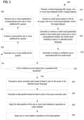
- FIG. 3 is a simplified diagram showing a method 500 for generating a data pipeline according to certain embodiments of the present disclosure.
- the method 500 for generating a data pipeline includes processes 510, 515, 520, 525, 530, 535, 540, 545, 550, 555, 560, and 565.
- processes 510, 515, 520, 525, 530, 535, 540, 545, 550, 555, 560, and 565 Although the above has been shown using a selected group of processes for the method 500 for generating a data pipeline, there can be many alternatives, modifications, and variations. For example, some of the processes may be expanded and/or combined. Other processes may be inserted into those noted above. Depending upon the embodiment, the sequence of processes may be interchanged with others replaced. Further details of these processes are found throughout the present disclosure.
- some or all processes (e.g., steps) of the method 500 are performed by a system (e.g., the computing system 600). In certain examples, some or all processes (e.g., steps) of the method 500 are performed by a computer and/or a processor directed by a code.
- a computer includes a server computer and/or a client computer (e.g., a personal computer). In some examples, some or all processes (e.g., steps) of the method 500 are performed according to instructions included by a non-transitory computer-readable medium (e.g., in a computer program product, such as a computer-readable flash drive).
- a non-transitory computer-readable medium is readable by a computer including a server computer and/or a client computer (e.g., a personal computer, and/or a server rack).
- instructions included by a non-transitory computer-readable medium are executed by a processor including a processor of a server computer and/or a processor of a client computer (e.g., a personal computer, and/or server rack).
- the computing system e.g., a pipeline management system, components of a pipeline management system
- the computing system is configured to receive an NL query (e.g., free-text query, a pipeline description), one or more input datasets, and/or a target dataset (e.g., one or more target datasets) from a user input or an input via a software interface.
- the query or description may be included in one or more input datasets.
- a software interface includes an application programming interface (API), a web service interface, retrieving information from a file, retrieving information from a data repository, and/or the like.
- API application programming interface
- the computing system can generate a model query by combining the NL query with the one or more input datasets and/or the one or more datasets.
- an NL query is a free-text query that the user enters via a user interface, such as, "Provide a count of people who have earned less than the US minimum wage in 2020.”
- each of the one or more input datasets include a data schema (e.g., an employee table, a department table, a payment table) and data.
- a user can select input datasets via a user interface. For example, a user can select the datasets (e.g., highlighted datasets) on a user interface.
- one or more target datasets can be defined based a user input or an input via a software interface.
- a target dataset can include one or more target data types (e.g., data columns, data fields).
- a user can define the one or more target datasets via a user interface.
- the computing system can generate a model query based on the NL query, the one or more input datasets, and/or the target dataset.
- the model query includes the NL query and the one or more input datasets.
- the model query includes the NL query and the target dataset.
- the model query includes the NL query.
- the model query includes the target dataset.
- the model query includes the one or more input datasets and the target dataset.
- the computing system can use the target dataset to define the query.
- the computing system can incorporate one or more parameters and parameter values and/or parameter ranges to the model query.
- the computing system can incorporate one or more parameters and parameter values and/or parameter ranges to the model query to ensure the query generated in the following step is valid.
- the computing system can incorporate a temperature parameter, and can set the temperature to be greater than zero.
- the computing system generates or receives a model result generated based on the model query using one or more computing models.
- the computing system processes the model query using one or more computing models (e.g., a natural language processing model, a model solution) to generate a query (e.g., a model result) in a standard query language (e.g., SQL).
- the computing system transmits, via a software interface, the model query to a model solution (e.g., OpenAI) including one or more computing models for processing, and receives the model result (e.g., the query in the standard query language).
- a model solution e.g., OpenAI
- a model also referred to as a computing model, includes a model to process data.
- a model includes, for example, an artificial intelligence (AI) model, a machine learning (ML) model, a deep learning (DL) model, an image processing model, an algorithm, a rule, other computing models, and/or a combination thereof.
- the one or more computing models include a natural language processing model.
- the model may include a machine-learning NL processing model.
- the model may include an autoregressive language model, such as a Generative Pre-trained Transformer 3 (GPT-3) model.
- the model may include a natural language understanding model.
- the one or more computing models are selected based on a user input or an input via a software interface.
- the model solution can be a part of the computing system.
- the model solution can run externally from the computing system.
- the model solution selects the one or more computing models based on the model query.
- the computing system is configured to make sure data pipelines are accurate.
- the computing system interacts with the model solution to figure out if, given the NL query, the model solution has the right level of understanding of the concepts in the NL query. If not, the model solution, via the computing system, prompt the user for an explanation, and the computing system can feed the explanation back to the model to ensure the most accurate pipeline is generated.
- the computing system can tie the explanation back to the datasets (e.g., the input datasets, the target dataset), to make sure that that the explanation (e.g., context) is stored for the pipelining attempts.
- the computing system, via the model solution can generate or receive a confidence score associated with the model result (e.g., the query in the standard query language).
- the confidence score indicates whether information (e.g., concept explanation) is missing.
- the confidence score is one of one or more metrics being used.
- the confidence score can be replaced by one or more other metrics.
- the computing system and/or the model solution determines the confidence score based on one or more concepts extracted from the model query.
- the computing system and/or the model solution determines the confidence score based on one or more concepts extracted from the model query and the one or more input datasets.
- the computing system and/or the model solution is set to a low value (e.g., a low level) if a concept extracted from the model query does not correspond to the one or more input datasets.
- a concept extracted from the model query does not correspond to the one or more input datasets.
- the NL query is "Provide a count of employees who made more money than the CTO in 2020”
- the model solution determines that CTO is unknown
- the confidence score is set to a low value (e.g., a low level).
- the computing system can determine whether the confidence score associated with the model result and/or the query in the standard language is higher than a predetermined threshold. In certain embodiments, if the confidence score is lower than a predetermined threshold, at process 535, the computing system and/or the model solution can generate one or more additional NL queries. In the previous example, the additional NL query of "Who is the CTO?" can be generated.
- the computing system presents or transmits (e.g., to another computing device) the one or more additional NL queries.
- the computing system receives one or more explanations corresponding to the one or more additional NL queries.
- the computing system can incorporate the one or more explanations to the model query.
- the computing system can incorporate the one or more explanations into the one or more input datasets and/or the target dataset. In the previous example, the computing system may receive an explanation of "CTO is Joe Doe" and incorporate it to the model query.
- the computing system may receive or generate the model result including an SQL query, and optionally a confidence score.
- the generated SQL query can be:
- a user may ask "What is the rate of upload for agents?"
- the model solution can identify there is a missing concept, for example, the concept of "rate of upload," in the data schema (e.g., data schema of the input datasets, data schema of the output datasets).
- the computing system can generate clarification questions corresponding to the missing concept (e.g., underspecified fragments given schemas), for example, "What do you mean by rate of upload?"
- the clarification questions can be posted to the user, and in response to the clarification questions, the computing system may receive one or more explanations corresponding to the clarification questions.
- the computing system can incorporate the explanations to the model query for generating the model result, for example, to get an accurate pipeline for the original NL query.
- the computing system can receive an NL query (e.g., a question) that is under specified.
- the question includes concepts (e.g., concepts used by users) that does not match to data schemas (e.g., the data model).
- data schemas e.g., the data model
- some of the data types e.g., data columns
- the computing system and/or the model solution can set low confidence, or other metric, on the NL query.
- the computing system and/or the model solution can compile clarification questions, for example, "what do you mean by certain term" where the certain term corresponds to a missing concept (e.g., an unmatched column).
- this approach allows filling in the gap of the information that the model is missing.
- the computing system can take all the information (e.g., NL query, one or more explanations), and re-run the one or more computing models (e.g., via the model solution), such that the generated model result has high confidence.
- the NL query includes a term that is mentioned in any column (e.g., data types).
- the computing system can generate a query execution plan based at least in part on the query in the standard query language.
- the query execution plan includes an order (e.g., a sequence, a tree structure) for a plurality of query operations to be applied to data (e.g., data repository).
- the query execution plan includes a logical plan and/or a physical plan.
- a logical plan includes a plurality of logical operators applying to data and an order of the logical operators being applied.
- a physical plan includes physical implementation information of a query plan.
- the computing system can use a query manager (e.g., a SQL manager) to generate the query execution plan.
- the query manager includes a query validator to validate the generated query in the standard query language.
- the query manager can use a software package (e.g., APACHE CALCITE).
- the computing system can generate a data pipeline based at least in part on the query execution plan and/or the model result.
- the data pipeline includes one or more data pipeline elements.
- the one or more data pipeline elements include one or more datasets, filters, joins, aggregations, and/or function-based modifications of data.
- the one or more data pipeline elements include one or more datasets and one or more data processing elements.
- the one or more datasets include one or more input datasets and/or one or more output datasets.
- the one or more data processing elements include filters, joins, aggregations, and/or function-based modifications of data.
- the computing system can map one or more query components of the query in the standard query language to one or more pipeline elements.
- the computing system can map one or more query components of the query in the standard query language, using the query execution plan to one or more pipeline elements.
- the one or more query components includes one or more data queries (e.g., select statements, etc.), data manipulations (e.g., inserts, updates, deletes, etc.), data definitions (e.g., schema creations, schema modifications, etc.), data access controls, and/or the like.
- the data pipeline in one or more platform-specific expressions of a first platform (e.g., a domain).
- the computing system can convert the query execution plan (e.g., a logical plan, a physical plan) into platform-specific expressions to generate the data pipeline.
- the platform-specific expressions can include scripts.
- the platform-specific expressions are associated with a proprietary platform (e.g., a customized platform).
- the query execution plan includes a plurality of query steps
- the data pipeline includes a plurality of data pipeline elements (e.g., pipeline steps) corresponding to the plurality of query steps.
- a plurality of pipeline steps are corresponding to the plurality of query steps in one-to-one relationship.
- the target dataset can be converted into a target object, and the generated data pipeline is associated with the target object, for example, in a semantic layer, which can be reused.
- the generated data pipeline is captured in an object.
- the computing system can apply the data pipeline to the one or more input datasets to generate an output dataset.
- the output dataset has the same data schema as the target dataset.
- the computing system can apply one or more platform operations of a platform (e.g., a proprietary platform) to the data pipeline.
- the one or more platform operations include one or more of search, security, branching, data health check, data health contract, visualizations.
- the data pipeline object and/or the target object can be used in actions and decisions.
- an action refers to one or more processing logics applied to one or more objects including, for example, creating objects, changing objects, combining objects, linking objects, deleting objects, and/or the like.
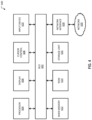
- FIG. 4 is a simplified diagram showing a computing system for implementing a system for prototyping, generating, and/or evaluating a data pipeline according to some embodiments of the present disclosure. This diagram is merely an example. One of ordinary skill in the art would recognize many variations, alternatives, and modifications.
- the computing system 600 includes a bus 602 or other communication mechanism for communicating information, a processor 604, a display 606, a cursor control component 608, an input device 610, a main memory 612, a read only memory (ROM) 614, a storage unit 616, and a network interface 618. In certain embodiments, some or all processes (e.g., steps) of the methods 100 and/or 500 are performed by the computing system 600.
- the bus 602 is coupled to the processor 604, the display 606, the cursor control component 608, the input device 610, the main memory 612, the read only memory (ROM) 614, the storage unit 616, and/or the network interface 618.
- the network interface is coupled to a network 620.
- the processor 604 includes one or more general purpose microprocessors.
- the main memory 612 e.g., random access memory (RAM), cache and/or other dynamic storage devices
- the main memory 612 is configured to store temporary variables or other intermediate information during execution of instructions to be executed by processor 604.
- the instructions when stored in the storage unit 616 accessible to processor 604, render the computing system 600 into a special-purpose machine that is customized to perform the operations specified in the instructions.
- the ROM 614 is configured to store static information and instructions for the processor 604.
- the storage unit 616 e.g., a magnetic disk, optical disk, or flash drive
- the storage unit 616 is configured to store information and instructions.
- the display 606 e.g., a cathode ray tube (CRT), an LCD display, or a touch screen
- the input device 610 e.g., alphanumeric and other keys
- the cursor control 608 e.g., a mouse, a trackball, or cursor direction keys
- additional information and commands e.g., to control cursor movements on the display 606) to the processor 604.
- a method for data pipeline evaluations comprises: receiving an input dataset, the input dataset including a data schema; generating a first prompt based on the input dataset and a first prompt structure having one or more text strings and one or more blanks; providing the first prompt to a language model; receiving a use case generated by the language model for the input dataset, the use case including a description of how to use the input dataset; generating a data pipeline based on the use case; and applying the data pipeline to the input dataset to generate an output dataset; wherein the method is performed using one or more processors.
- the method is implemented according to at least FIG. 1 , and/or FIG. 3 .
- the method further comprises generating a second prompt based on a second prompt structure, the second prompt structure associated with the use case and the output dataset; providing the second prompt to the language model; receiving an evaluation function generated by the language model; and determining an evaluation metric using the evaluation function based on the use case and the output dataset.
- the second prompt structure includes one or more second text strings and one or more second blanks, wherein the generating a second prompt based on a second prompt structure comprises: determining second text data based on the use case; and filling in the one or more second blanks using the determined second text data.
- the method further comprises generating a second prompt based on the input dataset, the first prompt structure, the use case, and the evaluation metric; providing the second prompt to the language model; receiving a second use case generated by the language model for the input dataset; and generating a second data pipeline based on the second use case.
- the use case is a first use case
- the output dataset is a first output dataset
- the data pipeline is a first data pipeline
- the method further comprises: receiving a second use case generated by the language model for the input dataset, the second use case including a second description of how to use the input dataset; generating a second data pipeline based on the second use case; and applying the second data pipeline to the input dataset to generate a second output dataset.
- the evaluation function is a first evaluation function and the evaluation metric is a first evaluation metric
- the method further comprises: generating a third prompt based on the second prompt structure, the second use case, and the second output dataset; providing the second prompt to the language model; receiving a second evaluation function generated by the language model; and determining a second evaluation metric using the second evaluation function based on the second use case and the second output dataset.
- the method further comprises: selecting a use case from the first use case and the second use case based on the first evaluation metric and the second evaluation metric.
- the language model is a first language model
- the generating a data pipeline based on the use case comprises generating the data pipeline using a data pipeline builder including a second language model different from the first language model.
- the generating a first prompt based on the input dataset and a first prompt structure comprises: determining text data based on the input dataset; and filling in the one or more blanks using the determined text data.
- the data schema includes one or more data field names and one or more data types, wherein the determining text data based on the input dataset comprises extracting at least one of the one or more data field names and a corresponding data type from the input dataset.
- the data pipeline generated based on the use case uses a subset of the input dataset.
- the receiving an input dataset comprises receiving a selection of the input dataset from one or more input datasets.
- the method includes: receiving at least one input selected from a group consisting of: one or more queries, one or more input datasets, and one or more target datasets; generating a model query based on the at least one input; and generating a query execution plan based at least in part on the model query, and the generating a data pipeline based on the use case comprises: generating the data pipeline based at least in part on the query execution plan.
- the method includes: generating, using one or more computational models, a model result based on the model query; generating a confidence score associated with the model result; determining whether the confidence score is higher than a predetermined threshold; in response to determining that the confidence score is higher than the predetermined threshold, generating the query execution plan; in response to determining that the confidence score is lower than the predetermined threshold, generating one or more second queries; and wherein the generating a model query includes generating the model query based on the one or more second queries.
- the language model includes a large language model.
- a system for data pipeline evaluations comprises one or more memories having instructions stored therein and one or more processors configured to execute the instructions and perform operations.
- the operations comprise: receiving an input dataset, the input dataset including a data schema; generating a first prompt based on the input dataset and a first prompt structure having one or more text strings and one or more blanks; providing the first prompt to a language model; receiving a use case generated by the language model for the input dataset, the use case including a description of how to use the input dataset; generating a data pipeline based on the use case; and applying the data pipeline to the input dataset to generate an output dataset.
- the system is implemented according to at least FIG. 2 , and/or FIG. 4 .
- the operations further comprise: generating a second prompt based on a second prompt structure, the second prompt structure associated with the use case and the output dataset; providing the second prompt to the language model; receiving an evaluation function generated by the language model; and determining an evaluation metric using the evaluation function based on the use case and the output dataset.
- the second prompt structure includes one or more second text strings and one or more second blanks, and in the operations, the generating a second prompt based on a second prompt structure includes: determining second text data based on the use case; and filling in the one or more second blanks using the determined second text data.
- the operations further comprise: generating a second prompt based on the input dataset, the first prompt structure, the use case, and the evaluation metric; providing the second prompt to the language model; receiving a second use case generated by the language model for the input dataset; and generating a second data pipeline based on the second use case.
- the use case is a first use case
- the output dataset is a first output dataset
- the data pipeline is a first data pipeline
- the operations further comprise: receiving a second use case generated by the language model for the input dataset, the second use case including a second description of how to use the input dataset; generating a second data pipeline based on the second use case; and applying the second data pipeline to the input dataset to generate a second output dataset.
- a method for data pipeline evaluations comprises: receiving an input dataset, the input dataset including a data schema; generating a first prompt based on the input dataset and a first prompt structure having one or more text strings and one or more blanks; providing the first prompt to a language model; receiving a use case generated by the language model for the input dataset, the use case including a description of how to use the input dataset; generating a data pipeline based on the use case; applying the data pipeline to the input dataset to generate an output dataset; generating a second prompt based on a second prompt structure, the second prompt structure associated with the use case and the output dataset; providing the second prompt to the language model; receiving an evaluation function generated by the language model; and determining an evaluation metric using the evaluation function based on the use case and the output dataset.
- the generating a first prompt based on the input dataset and a first prompt structure comprises: determining text data based on the input dataset; and filling in the one or more blanks using the determined text data.
- the data schema includes one or more data field names and one or more data types; determining text data based on the input dataset comprises extracting at least one of the one or more data field names and a corresponding data type from the input dataset; and the method is performed using one or more processors. For example, the method is implemented according to at least FIG. 1 , and/or FIG. 3 .
- the language model is a first language model, wherein the generating a data pipeline based on the use case comprises generating the data pipeline using a data pipeline builder including a second language model different from the first language model.
- the language model includes a large language model.
- some or all components of various embodiments of the present disclosure each are, individually and/or in combination with at least another component, implemented using one or more software components, one or more hardware components, and/or one or more combinations of software and hardware components.
- some or all components of various embodiments of the present disclosure each are, individually and/or in combination with at least another component, implemented in one or more circuits, such as one or more analog circuits and/or one or more digital circuits.
- the embodiments described above refer to particular features, the scope of the present disclosure also includes embodiments having different combinations of features and embodiments that do not include all of the described features.
- various embodiments and/or examples of the present disclosure can be combined.
- the methods and systems described herein may be implemented on many different types of processing devices by program code comprising program instructions that are executable by the device processing subsystem.
- the software program instructions may include source code, object code, machine code, or any other stored data that is operable to cause a processing system to perform the methods and operations described herein.
- Other implementations may also be used, however, such as firmware or even appropriately designed hardware configured to perform the methods and systems described herein.
- the systems' and methods' data may be stored and implemented in one or more different types of computer-implemented data stores, such as different types of storage devices and programming constructs (e.g., RAM, ROM, EEPROM, Flash memory, flat files, databases, programming data structures, programming variables, IF-THEN (or similar type) statement constructs, application programming interface, etc.).
- storage devices and programming constructs e.g., RAM, ROM, EEPROM, Flash memory, flat files, databases, programming data structures, programming variables, IF-THEN (or similar type) statement constructs, application programming interface, etc.
- data structures describe formats for use in organizing and storing data in databases, programs, memory, or other computer-readable media for use by a computer program.
- the systems and methods may be provided on many different types of computer-readable media including computer storage mechanisms (e.g., CD-ROM, diskette, RAM, flash memory, computer's hard drive, DVD, etc.) that contain instructions (e.g., software) for use in execution by a processor to perform the methods' operations and implement the systems described herein.
- computer storage mechanisms e.g., CD-ROM, diskette, RAM, flash memory, computer's hard drive, DVD, etc.
- instructions e.g., software
- the computer components, software modules, functions, data stores and data structures described herein may be connected directly or indirectly to each other in order to allow the flow of data needed for their operations.
- a module or processor includes a unit of code that performs a software operation and can be implemented for example as a subroutine unit of code, or as a software function unit of code, or as an object (as in an object-oriented paradigm), or as an applet, or in a computer script language, or as another type of computer code.
- the software components and/or functionality may be located on a single computer or distributed across multiple computers depending upon the situation at hand.
- the computing system can include client devices and servers.
- a client device and server are generally remote from each other and typically interact through a communication network.
- the relationship of client device and server arises by virtue of computer programs running on the respective computers and having a client device-server relationship to each other.
Landscapes
- Engineering & Computer Science (AREA)
- Theoretical Computer Science (AREA)
- Physics & Mathematics (AREA)
- General Engineering & Computer Science (AREA)
- General Physics & Mathematics (AREA)
- Software Systems (AREA)
- Computational Linguistics (AREA)
- Data Mining & Analysis (AREA)
- Databases & Information Systems (AREA)
- Mathematical Physics (AREA)
- Artificial Intelligence (AREA)
- Machine Translation (AREA)
Abstract
Description
- This application claims priority to
U.S. Provisional Application No. 63/539,180, filed September 19, 2023 - Certain embodiments of the present disclosure are directed to systems and methods associated with data pipelines. More particularly, some embodiments of the present disclosure provide systems and methods for evaluating, generating, and/or prototyping data pipelines.
- Users are becoming more comfortable prompting large language models ("LLMs") which are a type of artificial intelligence ("AI") models to solve complex problems that are often technical, specific, and require creative specificity in the answer. Users are also becoming more comfortable prompting the LLM in an iterative way, such as pointing out a mistake or missed context in a previous LLM response. The LLM, given its own previous response(s) and a new user prompt context, is able to re-generate a response that is often more accurate or applicable with the new context in mind.
- Hence it is highly desirable to improve the techniques for evaluating data pipelines in order for users to more quickly and easily discover creative and valuable new uses of their data.
- Disclosed are methods and systems for evaluating data pipelines. According to some embodiments, the method includes: receiving an input dataset, the input dataset including a data schema; generating a first prompt based on the input dataset and a first prompt structure having one or more text strings and one or more blanks; providing the first prompt to a language model; receiving a use case generated by the language model for the input dataset, the use case including a description of how to use the input dataset; generating a data pipeline based on the use case; and applying the data pipeline to the input dataset to generate an output dataset. The method is performed using one or more processors.
- According to some embodiments, the system includes one or more memories having instructions stored therein and one or more processors configured to execute the instructions and perform operations. The operations include: receiving an input dataset, the input dataset including a data schema; generating a first prompt based on the input dataset and a first prompt structure having one or more text strings and one or more blanks; providing the first prompt to a language model; receiving a use case generated by the language model for the input dataset, the use case including a description of how to use the input dataset; generating a data pipeline based on the use case; and applying the data pipeline to the input dataset to generate an output dataset.
- According to some embodiments, the method includes: receiving an input dataset, the input dataset including a data schema; generating a first prompt based on the input dataset and a first prompt structure having one or more text strings and one or more blanks; providing the first prompt to a language model; receiving a use case generated by the language model for the input dataset, the use case including a description of how to use the input dataset; generating a data pipeline based on the use case; applying the data pipeline to the input dataset to generate an output dataset; generating a second prompt based on a second prompt structure, the second prompt structure associated with the use case and the output dataset; providing the second prompt to the language model; receiving an evaluation function generated by the language model; and determining an evaluation metric using the evaluation function based on the use case and the output dataset. The generating a first prompt based on the input dataset and a first prompt structure comprises: determining text data based on the input dataset; and filling in the one or more blanks using the determined text data. The data schema includes one or more data field names and one or more data types; determining text data based on the input dataset comprises extracting at least one of the one or more data field names and a corresponding data type from the input dataset. The method is performed using one or more processors.
- Depending upon embodiment, one or more benefits may be achieved. These benefits and various additional objects, features and advantages of the present disclosure can be fully appreciated with reference to the detailed description and accompanying drawings that follow.
- The accompanying drawings are incorporated in and constitute a part of this specification and, together with the description, explain the features and principles of the disclosed embodiments. In the drawings,
-
FIG. 1 is a simplified flowchart diagram showing a method for prototyping, generating, and/or evaluating a data pipeline according to certain embodiments of the present disclosure; -
FIG. 2 is an illustrative example of a data pipeline prototyping, generation, and/or evaluation environment, according to certain embodiments of the present disclosure; -
FIG. 3 is a simplified diagram showing a method for generating a data pipeline according to certain embodiments of the present disclosure; and -
FIG. 4 is a simplified diagram showing a computing system for implementing a system for prototyping, generating, and/or evaluating a data pipeline according to some embodiments of the present disclosure. - Unless otherwise indicated, all numbers expressing feature sizes, amounts, and physical properties used in the specification and claims are to be understood as being modified in all instances by the term "about." Accordingly, unless indicated to the contrary, the numerical parameters set forth in the foregoing specification and attached claims are approximations that can vary depending upon the desired properties sought to be obtained by those skilled in the art utilizing the teachings disclosed herein. The use of numerical ranges by endpoints includes all numbers within that range (e.g., 1 to 5 includes 1, 1.5, 2, 2.75, 3, 3.80, 4, and 5) and any range within that range.
- Although illustrative methods may be represented by one or more drawings (e.g., flow diagrams, communication flows, etc.), the drawings should not be interpreted as implying any requirement of, or particular order among or between, various steps disclosed herein. However, some embodiments may require certain steps and/or certain orders between certain steps, as may be explicitly described herein and/or as may be understood from the nature of the steps themselves (e.g., the performance of some steps may depend on the outcome of a previous step). Additionally, a "set," "subset," or "group" of items (e.g., inputs, algorithms, data values, etc.) may include one or more items and, similarly, a subset or subgroup of items may include one or more items. A "plurality" means more than one.
- As used herein, the term "based on" is not meant to be restrictive, but rather indicates that a determination, identification, prediction, calculation, and/or the like, is performed by using, at least, the term following "based on" as an input. For example, predicting an outcome based on a particular piece of information may additionally, or alternatively, base the same determination on another piece of information. As used herein, the term "receive" or "receiving" means obtaining from a data repository (e.g., database), from another system or service, from another software, or from another software component in a same software. In certain embodiments, the term "access" or "accessing" means retrieving data or information, and/or generating data or information.
- Conventional systems and methods often include manual design to identify applications (e.g., valuable applications, creative applications, etc.) of data. Such systems and methods are typically resource intensive and technically challenging. Conventional systems and methods also do not allow automated (or human-less) evaluation of LLM-generated ideas to assess their correctness or usefulness. A standard iterative large language model ("LLM") workflow typically includes the following steps: (1) a user provides a user input to prompt the LLM to solve a problem; (2) the user prototypes the idea that is generated by the LLM; (3) the user identifies a method to assess the idea for correctness or usefulness; and (4) the user evaluates the correctness or usefulness of the response and uses any insights generated to return to step (1) above as needed and re-prompts using the LLM with an added context. As such, there is extensive involvement of the user in order to assess the correctness or usefulness of the LLM-generated idea (solution) to the user-inputted problem.
- Various embodiments of the present disclosure can achieve benefits and/or improvements by a computing system for generating and/or evaluating data pipelines, for example, using one or more language models and/or artificial intelligence models. Benefits can include significant improvements in creating data applications by, for example, generating use cases and generating evaluation functions using one or more language models and/or artificial intelligence models. Other benefits can include improving efficiencies for finding data applications including data pipelines using known input datasets. Benefits further include the capability of automatically designing and implementing a data pipeline associated with a goal (e.g., a use case). Systems and methods can be configured to use one or more language models and one or more prompt structures to generate prompts for use cases and/or to generate prompts for evaluation functions.
- Problems may arise, especially for large problem spaces such as in big data problems, when the process of using an LLM to iterate on creative solutions can be resource-intensive, time-consuming, and technically challenging. Given an LLM-generated idea for how to use big data, it can be resource-intensive to prototype a solution (e.g., a data pipeline), assess the efficacy of the prototype, and use the efficacy of each solution as context for the next LLM generation to improve accuracy and usefulness.
- According to aspects of the invention, systems and methods are configured to provide one or more prompts to one or more language models (e.g., large language models (LLMs), etc.) using artificial intelligence (AI) technologies to solve technical problems, for example, problems that are often technical, specific, and require creative specificity in answer. The conventional systems can receive prompts, also referred to as inquiry prompts, from users. Systems and methods are configured to provide prompts to the one or more language models in an iterative way; pointing out a mistake or missed context in a previous LLM response. The LLM, given its own previous response(s) and a new user prompt context, is able to re-generate an often more accurate or applicable response with the new context in mind. A prompt may refer to an input (e.g., a text input) instructing one or more generative AI models to generate a desired (e.g., requested) output.
- The term "model," can include any computer-based models of any type and of any level of complexity, such as any type of sequential, functional, or concurrent model. Models can further include various types of computational models, such as, for example, artificial neural networks ("ANN"), language models (e.g., large language models), artificial intelligence ("AI") models, machine learning ("ML") models, generative AI models, and/or the like.
- A language model ("LM") may include an algorithm, rule, model, and/or other programmatic instructions that can predict the probability of a sequence of words. A language model may, given a starting text string (e.g., one or more words), predict the next word in the sequence. A language model may calculate the probability of different word combinations based on the patterns learned during training (based on a set of text data from books, articles, websites, audio files, etc.). A language model may generate many combinations of one or more next words (and/or sentences) that are coherent and contextually relevant. A language model can be an advanced artificial intelligence algorithm that has been trained to understand, generate, and manipulate natural language expressions (e.g., sentences, phases, essays, etc.). A language model can be useful for natural language processing, including receiving natural language prompts and providing natural language responses based on the text on which the model is trained. A language model may include an n-gram, exponential, positional, neural network, and/or other type of model.
- According to some embodiments, a large language model ("LLM") includes any type of language model that has been trained on a larger data set and has a larger number of training parameters compared to a regular language model. An LLM can understand more intricate patterns and generate text that is more coherent and contextually relevant due to its extensive training. An LLM may perform well on a wide range of topics and tasks. An LLM may comprise an artificial neural network trained using self-supervised learning. An LLM may include a question-answer ("QA") LLM that may be optimized for generating answers from a context. A language model may include an autoregressive language model, such as a Generative Pre-trained Transformer 3 (GPT-3) model, a GPT 3.5-turbo model, a Claude model, a command-xlang model, a bidirectional encoder representations from transformers (BERT) model, a pathways language model (PaLM) 2, and/or the like.
- According to certain embodiments, systems and methods include the process of using an LLM to iterate on creative solutions is resource intensive, time consuming, and/or technically challenging. Given an LLM generated use case (e.g., an idea) for how to use big data, systems and methods can prototype a solution (e.g., a data pipeline) for the use case, assess the efficacy of the prototype, and use the efficacy of each solution as context for the next LLM generation to improve accuracy and usefulness. At least some embodiments of the present disclosure are relevant to provide solutions to the technical problems of discovering creative and valuable new uses of data (e.g., one or more large datasets), for example, for data owners.
- Systems and methods can use a prompt structure, also referred to as a "cookie cutter" prompt, which is a prewritten prompt format which has made up of pre-written text, and one or more blank spots that can be filled with text specific to a specific case. A prompt structure includes one or more text strings and one or more blank spots that can be filled with text. A prompt structure includes one or more text strings providing context of prompts and one or more blank spots that can be filled with text. Systems and methods can generate a prompt using the prompt structure and text data specific to a use case associated with the one or more blanks. Systems and methods can generate a prompt automatically and/or programmatically using the prompt structure and text data specific to a use case associated with the one or more blanks.
- Systems and methods can use AI-assisted data pipeline builder. The AI-assisted data pipeline builder can include a technique given a natural language prompt of desired outcome and collection of one or more input datasets that is able to automatically construct a data pipeline of transforms to achieve the desired outcome. The pipeline builder can create a series of data transforms given some set of input datasets to create some set of output datasets. A data pipeline, also referred to as a pipeline, can include one or more data processing elements connected in series or in parallel. An output of one data processing element can be the input of the next data processing element. A plurality of data processing elements of a pipeline may be executed in parallel. At least a part or all of the one or more data processing elements may use a platform-specific language (e.g., a language or script language for a customized platform, platform-specific expressions). In some examples, the one or more data processing elements include, for example, selecting (e.g., filtering) a dataset, joining (e.g., aggregating) two or more datasets, selecting a set of data types (e.g., data columns), transforming data, selecting data records, removing data records (e.g., data rows), and/or the like.
- A dataset may include one or more data field names, one or more data types and/or one or more data records. A data record may include data of the one or more data types. A data pipeline may include one or more data pipeline elements. The one or more data pipeline elements may include one or more datasets, transforms, one or more data filters, one or more data operations (e.g., joins, aggregations, etc.), and/or one or more function-based modifications of data. The data pipeline elements may include one or more data processing elements. The data pipeline elements include an output dataset.
- Systems and methods of the present disclosure may include an iterative process of re-prompting a language model with additional context and/or clarification, for example, repeatedly to achieve a more accurate or useful result. Some systems may allow one or more users input to prompt the language model (e.g., the LLM) to solve a problem, one or more users prototype one or more ideas and assess ideas for correctness or usefulness, and/or evaluate the correctness or usefulness of the response. Systems and methods may use any insights generated by the above processes and re-prompt with LLM with added context (e.g., insights, correctness, usefulness, etc.).
-
FIG. 1 is a simplified flowchart diagram showing amethod 100 for prototyping, generating, and/or evaluating a data pipeline according to certain embodiments of the present disclosure. This diagram is merely an example. One of ordinary skill in the art would recognize many variations, alternatives, and modifications. Themethod 100 includesprocesses - In some embodiments, some or all processes (e.g., steps) of the
method 100 are performed by a system (e.g., the computing system 600). In certain examples, some or all processes (e.g., steps) of themethod 100 are performed by a computer and/or a processor directed by a code. For example, a computer includes a server computer and/or a client computer (e.g., a personal computer). In some examples, some or all processes (e.g., steps) of themethod 100 are performed according to instructions included by a non-transitory computer-readable medium (e.g., in a computer program product, such as a computer-readable flash drive). For example, a non-transitory computer-readable medium is readable by a computer including a server computer and/or a client computer (e.g., a personal computer, and/or a server rack). As an example, instructions included by a non-transitory computer-readable medium are executed by a processor including a processor of a server computer and/or a processor of a client computer (e.g., a personal computer, and/or server rack). - According to certain embodiments, at
process 110, the system receives (e.g., retrieves) and/or presents one or more input datasets, for example, via a user interface. In some embodiments, an input dataset includes one or more tables and each table includes one or more rows of data. In certain embodiments, an input dataset includes a graph-based dataset. In some embodiments, a dataset has a corresponding data schema. In certain embodiments, the data schema includes one or more data field names (e.g., column names) and one or more data types (e.g., the data type for a column). - According to some embodiments, at
process 115, the system selects and/or receives a selection of an input dataset from the one or more input datasets. In certain embodiments, atprocess 120, the system generates a first prompt (e.g., a first use case prompt) based on the input dataset and a first prompt structure and/or one or more contexts. In some embodiments, the system generates the first prompt using a natural language processing model based on the input dataset and a first prompt structure and/or one or more contexts. In some embodiments, the first prompt structure includes one or more text strings and one or more blanks. In some embodiments, the first prompt structure includes one or more predefined text strings. In certain embodiments, the first prompt structure includes one or more blanks to be filled in. In some embodiments, the one or more blanks are associated with the input dataset. In certain embodiments, the one or more blanks are associated with data schema corresponding to the input dataset. In some embodiments, the one or more blanks are associated with data field names (e.g., column names) and/or corresponding data types of the data schema corresponding to the input dataset. In certain embodiments, the system can determine text data from the input dataset and fill in the determined text data to the one or more blanks in the first prompt structure (e.g., a prompt structure for use cases). In some embodiments, the one or more blanks are associated with a use case (e.g., an idea), for example, blanks for one or more use case identifiers. In certain embodiments, the one or more blanks are associated with a use case (e.g., an idea) and a corresponding evaluation metric. - For example, a prompt structure, for generating a prompt for use case, is "Creative or useful use cases for data [blank 1] <insert each column name and type for each data set> given we have already tried [blank 2] <insert each past use case and its evaluation metric, if any>." As an example, a prompt structure is "Creative or useful use cases for data of shape [blank 1] <insert each column name and type for each data set> given we have already tried [blank 2] <insert each past use case and its evaluation metric, if any>." In some embodiments, the use cases may use a subset of the input dataset or the selected dataset. For example, the dataset includes four (4) tables and the use case may use three (3) of the four tables. As an example, the dataset includes one or more tables associated with flights, airports, pilots, planes, and/or the like.
- In certain embodiments, an input dataset can include data associated with a data ontology. In some embodiments, an ontology refers to a structural framework (e.g., data model) containing information and data related to objects and relationships of objects (e.g., functions applicable to objects, links) within a specific domain (e.g., an organization, an industry). In certain embodiments, the system can use the information of an ontology including, for example, data schemas, to generate the first prompt.
- According to certain embodiments, at
process 125, the system provides the first prompt to a language model. In some embodiments, the language model runs on a same processor as the prompt generation processor. In certain embodiments, the language model runs on a different processor from the prompt generation processor. In some embodiments, atprocess 130, the system generates and/or receives a use case, where the use case is generated by the language model. In certain embodiments, the language model can generate two or more use cases associated with the first prompt. In some embodiments, a use case (e.g., an idea) refers to a description of how to use the data (e.g., the input dataset). For example, a use case is for managing plane switching. As an example, a use case is to maximize the number of passengers for a flight. - According to some embodiments, at
process 135, the system generates a data pipeline based on the use case. In certain embodiments, the system uses a language model-assisted data transform builder to prototype and/or generate the data pipeline. One example of the data pipeline builder process is illustrated inFIG. 3 . In certain embodiments, a language-model assisted data transform builder uses a language model to prototype and/or generate a data pipeline. In some embodiments, atprocess 140, the system applies the data pipeline to the input dataset to generate an output dataset. In certain embodiments, the output dataset has a data schema. In some embodiments, the output dataset is a table-based dataset including one or more tables and one or more columns and rows in each table. In certain embodiments, the output dataset is a graph-based dataset. In some embodiments, the output dataset includes a set of data in an ontology. - According to certain embodiments, at
process 145, the system generates a second prompt (e.g., a first evaluation prompt, a first prompt for evaluation, a first prompt for data pipeline evaluation) based on a second prompt structure, the second prompt structure associated with the use case and the output dataset. In some embodiments, the system generates the second prompt using a natural language processing model based on a second prompt structure, the second prompt structure associated with the use case and the output dataset. In some embodiments, the one or more blanks in the prompt structure for evaluation are associated with the one or more output datasets. In certain embodiments, the one or more blanks in the prompt structure are associated with data schemas of the one or more output datasets. In some embodiments, the one or more blanks are associated with data field names (e.g., column names) and/or corresponding data types of the data schema corresponding to the one or more output datasets. In certain embodiments, the system can determine text data from the output dataset and fill in the determined text data to the one or more blanks in the prompt structure (e.g., a prompt structure for evaluation). In some embodiments, the one or more blanks are associated with a use case (e.g., an idea) describing how to use the dataset. In certain embodiments, the one or more blanks are associated with a goal (e.g., maximizing passengers) in the use case or associated with the use case. For example, a prompt structure (e.g., for a prompt for data pipeline evaluation) is "Given the goal of [blank 1] <insert use case> and the output schema of <insert each column name and type for each output data set in corresponding pipeline>, write a function that operates on the output data that quantifies how useful the data will be at achieving the goal, as a percent." - According to some embodiments, at
process 150, the system provides the second prompt to the language model. In certain embodiments, atprocess 155, the system generates and/or receives an evaluation function generated by the language model, for example, to compute correctness or usefulness for a use case. In some embodiments, the evaluation function can determine an evaluation metric associated with the output dataset and the corresponding use case. In certain embodiments, the evaluation function and/or the evaluation metric are associated with a goal. In some embodiments, the evaluation metric is a standard metric (e.g., a percentage). In certain embodiments, atprocess 160, the system can determine one or more evaluation metrics, also referred to as insights, for example, the correctness or usefulness of the output dataset, using the evaluation function. In some embodiments, the system can use the evaluation metrics (e.g., insights) to go back to previous processes, for example, theprocess 115, for example, to re-prompt the language model with this added context. - According to some embodiments, the system can generate the prompt for use cases to include the input dataset schema, the previous use cases, corresponding evaluation metrics, and/or other contexts. In certain embodiments, the system can generate a plurality of data pipelines corresponding to the plurality of use cases and a plurality of evaluation metrics. In some embodiments, the system can rank the plurality of data pipelines based on the evaluation metrics and the system can include the ranking information in the prompt for use cases.
- According to certain embodiments, the system can generate another use case prompt based on the input dataset, the first prompt structure, the use case, and the evaluation metric. In some embodiments, the system can provide the second use case prompt to the language model. In certain embodiments, the system can generate and/or receive a second use case generated by the language model for the input dataset. In some embodiments, the system can generate a second data pipeline based on the second use case. In certain embodiments, the system can apply the second data pipeline to the input dataset and generate a second output dataset.
- According to some embodiments, the system can generate another evaluation prompt based on the second output dataset, the second prompt structure, and the second use case. In certain embodiments, the system can generate another evaluation prompt using a natural language processing model based on the second output dataset, the second prompt structure, and the second use case. In certain embodiments, the system can provide the second evaluation prompt to the language model. In some embodiments, the system can generate and/or receive a second evaluation function for the second use case. In certain embodiments, a plurality of generated evaluation functions associated with the same input dataset has a standardized metric. In some embodiments, at least two of a plurality of generated evaluation functions associated with the same input dataset include two different evaluation metrics.
- According to certain embodiments, the system selects a use case from a plurality of use cases based on the corresponding evaluation metrics. In some embodiments, the system selects a use case having the highest evaluation metric. In certain embodiments, the system outputs and/or transmits the selected use case.
- According to some embodiments, the language model for generating prompts is a first language model that is different from the language model used to generate data pipelines. In certain embodiments, the language model for generating prompts for use cases is different from the language model for generating prompts for data pipeline evaluations. In some embodiments, the language model for generating prompts for use cases is the same as the language model for generating prompts for data pipeline evaluations.
- As an example, a prompt for use case is "A set of data contains one or more tables that each have a schema of column names. Table one has schema <column 1 name> with type <column 1 type> , column2 has schema <...> Table 2 has schema <column 1 name> with type <column 2 type>." In some embodiments, the system generates a plurality of use cases and a plurality of evaluation metrics, which can be incorporated into the prompt for use case. In certain embodiments, if an evaluation metric for a previous use case has a high evaluation score, more similar use cases may be generated and considered. In some embodiments, if an evaluation metric for a previous use case has a low evaluation score, more different use cases should be generated and considered.
- According to certain embodiments, the first step of data analysis, for example, called "data characterizing", includes identifying the topic each table represents and what category that topic is. In certain embodiments, categories for the topic of a table are resources, containers of resources, processes, or issues, and every table fits best into one of these categories. People in this context are considered a resource. In some embodiments, the second step, for example, called "finding relationships", includes, for every pair of tables and their topics and categories, if there is a connection between them, categorizes the connection as containment, is required for, or prevents; and if there is no obvious connection between a pair of tables, no actions are to be taken.
- In certain embodiments, the third step of data analysis, called "generating value", the system considers all relationships from the previous step and generates use cases if there is any way the system can use the data in the tables and the relationships to generate business value, especially for decision making (e.g., real-time decision making). Some examples of use cases (e.g., use cases of the system might generate value) include, for example, to optimize containment by bin packing, a reallocation if a resource depends on another, a reallocation would result in a better outcome, and/or stopping or modifying a process when an error arises with preference toward modifying to reduce error impact if possible. In some embodiments, the fourth step of data analysis, called "summarizing", the system summarizes into a list of the use cases.
-
FIG. 2 is an illustrative example of a data pipeline prototyping, generation, and/orevaluation environment 200, according to certain embodiments of the present disclosure.FIG. 2 is merely an example. One of the ordinary skilled in the art would recognize many variations, alternatives, and modifications. According to certain embodiments, the data pipeline prototyping, generation, andevaluation environment 200 includes adata pipeline system 210 and one or more user devices or third-party devices 240 (e.g., a user/third-party device 240A, a user/third-party device 240B, ... a user/third-party device 240N). In some embodiments, thedata pipeline system 210 includes one or moredata pipeline processors 220, one or morelanguage model processors 225, and one ormore storage repositories 230. - In certain embodiments, one or more components of the
pipeline management system 210 are incorporated into the one or more user/third-party devices 240 and/or other devices. In some embodiments, the one or morelanguage model processors 225 can be hosted in a system different from thedata pipeline system 210. Although the above has been shown using a selected group of components in the data pipeline prototyping, generation, and/orevaluation environment 200, there can be many alternatives, modifications, and variations. For example, some of the components may be expanded and/or combined. Other components may be inserted into those noted above. Depending upon the embodiment, the arrangement of components may be interchanged with others replaced. Further details of these components are found throughout the present disclosure. - According to some embodiments, the
repository 230 includes one or more data repository storing one or moreprompt structures 232, one ormore datasets 233, one ormore prompts 234, one or more use cases 235 (e.g., ideas of using data), one or more data pipelines 237 (e.g., configurations of data pipelines), one ormore evaluation metrics 238. In certain embodiments, thedata pipeline system 210 can use theprompt structure 232, information (e.g., a data schema, data field names, data types, column names, etc.) of one or more datasets 233 (e.g., an input dataset, a selected dataset), theevaluation metrics 238, and one or more contexts to generate a prompt 234 (e.g., an inquiry prompt). - In some embodiments, the
system 210 may provide the prompt 234 to a language model run on alanguage model processor 225 to generate one or more use cases 235 for the dataset. In certain embodiments,datasets 233 are presented via a user interface (e.g., via a user device 240) to allow a selection. In some embodiments, thedata pipeline system 210 can receive an input dataset via a user interface or a software interface. In certain embodiments, thedata pipeline system 210 can receive an input dataset by retrieving the dataset from therepository 230. - According to certain embodiments, the
prompt structure 232 includes one or more text strings. In some embodiments, theprompt structure 232 includes one or more predefined text strings. In certain embodiments, theprompt structure 232 includes one or more blanks to be filled in. In some embodiments, the one or more blanks are associated with the input dataset. In certain embodiments, the one or more blanks are associated with data schema corresponding to the input dataset. In some embodiments, the one or more blanks are associated with data field names (e.g., column names) and/or corresponding data types of the data schema corresponding to the input dataset. In certain embodiments, thedata pipeline system 210 and/or thedata pipeline processor 220 can determine text data from the input dataset and fill in the determined text data to the one or more blanks in the prompt structure 232 (e.g., a prompt structure for use cases). In some embodiments, the one or more blanks are associated with a use case (e.g., an idea), for example, blanks for one or more use case identifiers. In certain embodiments, the one or more blanks are associated with a use case (e.g., an idea) and a corresponding evaluation metric. - For example, a prompt structure, for generating a prompt for use case, is "Creative or useful use cases for data [blank 1] <insert each column name and type for each data set> given we have already tried [blank 2] <insert each past use case and its evaluation metric, if any>." As an example, a prompt structure is "Creative or useful use cases for data of shape [blank 1] <insert each column name and type for each data set> given we have already tried [blank 2] <insert each past use case and its evaluation metric, if any>." In some embodiments, the use cases may use a subset of the input dataset or the selected dataset. For example, the dataset includes four (4) tables and the use case may use three (3) of the four tables. As an example, the dataset includes one or more tables associated with flights, airports, pilots, planes, and/or the like.
- In certain embodiments, an input dataset can include data associated with a data ontology. In some embodiments, an ontology refers to a structural framework (e.g., data model) containing information and data related to objects and relationships of objects (e.g., functions applicable to objects, links) within a specific domain (e.g., an organization, an industry). In certain embodiments, the
data pipeline system 210 and/or thedata pipeline processor 220 can use the information of an ontology including, for example, data schemas, to generate a prompt 232. - According to some embodiments, the
data pipeline system 210 and/or thedata pipeline processor 220 can use the generated use cases 235 and a language-model assisted data transform builder, also referred to as a language-model powered data transform builder, to prototype and/or generate a data pipeline, also referred to as a data transform pipeline, for a use case. In certain embodiments, a language-model assisted data transform builder uses a language model to generate a data pipeline. In some embodiments, thedata pipeline system 210 and/or thedata pipeline processor 220 can generate one or more output datasets using the generated data pipeline. In certain embodiments, thedata pipeline system 210 and/or thedata pipeline processor 220 can generate a second prompt 234 (e.g., a prompt for data pipeline evaluation) using aprompt structure 232 and the output dataset(s). - In some embodiments, the one or more blanks in the
prompt structure 232 are associated with the one or more output datasets. In certain embodiments, the one or more blanks in theprompt structure 232 are associated with data schemas of the one or more output datasets. In some embodiments, the one or more blanks are associated with data field names (e.g., column names) and/or corresponding data types of the data schema corresponding to the one or more output datasets. In certain embodiments, thedata pipeline system 210 and/or thedata pipeline processor 220 can determine text data from the output dataset and fill in the determined text data to the one or more blanks in the prompt structure 232 (e.g., a prompt structure for evaluation. In some embodiments, the one or more blanks are associated with a use case (e.g., an idea) describing how to use the dataset. In certain embodiments, the one or more blanks are associated with a goal (e.g., maximizing passengers) in the use case or associated with the use case. For example, a prompt structure (e.g., for a prompt for data pipeline evaluation) is "Given the goal of [blank 1] <insert use case> and the output schema of <insert each column name and type for each output data set in corresponding pipeline>, write a function that operates on the output data that quantifies how useful the data will be at achieving the goal, as a percent." - According to certain embodiments, the
data pipeline system 210 and/or thedata pipeline processor 220 can provide thesecond prompt 234 to a language model run on thelanguage model processor 225 to generate an evaluation function, for example, to compute correctness or usefulness for a use case. In some embodiments, the evaluation function can determine an evaluation metric associated with the output dataset and the corresponding use case. In certain embodiments, the evaluation function and/or the evaluation metric is associated with a goal. In some embodiments, the evaluation metric is a standard metric (e.g., a percentage). In certain embodiments, thedata pipeline system 210 and/or thedata pipeline processor 220 can determine the one or more evaluation metrics, also referred to as insights, for example, the correctness or usefulness of the output dataset (e.g., the prototype output dataset), using the evaluation function. In some embodiments, thedata pipeline system 210 and/or thedata pipeline processor 220 can use the evaluation metrics (e.g., insights) to back to previous steps to re-prompt the language model with this added context. In certain embodiments, thedata pipeline system 210 can generate a plurality of data pipelines corresponding to the plurality of use cases and a plurality of evaluation metrics. In some embodiments, thedata pipeline system 210 can rank the plurality of data pipelines based on the evaluation metrics. - According to some embodiments, from a user's perspective, the user needs only supply the
data pipeline system 210 with sufficient information (e.g., datasets with schema) to fill in the blanks of a prompt structure (e.g., a cookie cutter prompt), select how many times the user would like to iterate, and then the highest ranked data pipeline discovered, as measured by the generated evaluation metrics. In certain embodiments, for the same dataset, different candidate use cases can have evaluation metrics (e.g., usefulness in vastly different ways). For instance, two use cases for the same dataset may be airplane switching or including as many customers per plane. In certain embodiments, thedata pipeline system 210 and/or thedata pipeline processor 220 is configured to generate a standardized metric of evaluation (e.g., a standard metric of success) that can be compared across different use cases, using a computing model, a machine learning model, a language model, and/or the like. - As an example, a prompt for use case is "A set of data contains one or more tables that each have a schema of column names. Table one has schema <column 1 name> with type <column 1 type> , column2 has schema <...> Table 2 has schema <column 1 name> with type <column 2 type>." In some embodiments, the
data pipeline system 210 and/or thedata pipeline processor 220 have a plurality of use cases and a plurality of evaluation metrics, which can be incorporated into the prompt for use case. In certain embodiments, if an evaluation metric for a previous use case has a high evaluation score, more similar use cases may be generated and considered. In some embodiments, if an evaluation metric for a previous use case has a low evaluation score, more different use cases should be generated and considered. - According to certain embodiments, the first step of data analysis, for example, called "data characterizing", includes identifying the topic each table represents and what category that topic is. In certain embodiments, categories for the topic of a table are resources, containers of resources, processes, or issues, and every table fits best into one of these categories. People in this context are considered a resource. In some embodiments, the second step, for example, called "finding relationships", includes, for every pair of tables and their topics and categories, if there is a connection between them, categorizes the connection as containment, is required for, or prevents; and if there is no obvious connection between a pair of tables, no actions are to be taken.
- In certain embodiments, the third step of data analysis, called "generating value", the
data pipeline system 210 and/or thedata pipeline processor 220 consider all relationships from the previous step and generate use cases if there is any way the system can use the data in the tables and the relationships to generate business value, especially for decision making (e.g., real-time decision making). Some examples of use cases (e.g., use cases of the system might generate value) include, for example, to optimize containment by bin packing, a reallocation if a resource depends on another, a reallocation would result in a better outcome, and/or stopping or modifying a process when an error arises with preference toward modifying to reduce error impact if possible. In some embodiments, the fourth step of data analysis, called "summarizing", thedata pipeline system 210 and/or thedata pipeline processor 220 summarizes into a list of the use cases. - According to some embodiments, the
data pipeline system 210 and/or thedata pipeline processor 220, for example, using a pipeline builder (e.g., a language-model powered pipeline builder), is configured to receive an NL query (e.g., free-text query, a pipeline description), one or more input datasets, and/or a target dataset (e.g., one or more target datasets) from a user input or an input via a software interface. In some examples, the query or description may be included in one or more input datasets. In certain examples, the user input is from auser device 240 of a user. In some examples, the input is from a computing solution running on one or more user/third-party devices 240. In certain embodiments, thedata pipeline system 210 and/or thedata pipeline processor 220 can generate a model query by combining the NL query with the one or more input datasets and/or the one or more datasets. As an example, an NL query is a free-text query that the user enters via a user interface, such as, "Provide a count of people who have earned less than the US minimum wage in 2020." In some embodiments, each of the one or more input datasets include a data schema (e.g., an employee table, a department table, a payment table) and data. In certain embodiments, a user can select input datasets via a user interface. For example, a user can select the datasets (e.g., highlighted datasets) on a user interface. - In some embodiments, one or more target datasets can be defined based on a user input or an input via a software interface. In some embodiments, a target dataset can include one or more target data types (e.g., data columns, data fields). In certain embodiments, a user can define the one or more target datasets via a user interface.
- According to certain embodiments, the
data pipeline system 210 and/or thedata pipeline processor 220 can generate a model query based on the NL query, the one or more input datasets, and/or the target dataset. In some embodiments, the model query includes the NL query and the one or more input datasets. In certain embodiments, the model query includes the NL query and the target dataset. In some embodiments, the model query includes the NL query. In certain embodiments, the model query includes the target dataset. In some embodiments, the model query includes the one or more input datasets and the target dataset. In certain embodiments, thedata pipeline system 210 and/or thedata pipeline processor 220 can use the target dataset to define the query. In some embodiments, thedata pipeline system 210 and/or thedata pipeline processor 220 can incorporate one or more parameters and parameter values and/or parameter ranges to the model query. In certain embodiments, thedata pipeline system 210 and/or thedata pipeline processor 220 can incorporate one or more parameters and parameter values and/or parameter ranges to the model query to ensure the query generated in the following step is valid. For example, thedata pipeline system 210 and/or thedata pipeline processor 220 can incorporate a temperature parameter, and can set the temperature to be greater than zero. - According to some embodiments, the
data pipeline system 210 and/or thelanguage model processor 225 generates or receives a model result generated based on the model query using one or more computing models. In certain embodiments, thedata pipeline system 210 and/or thelanguage model processor 225 processes the model query using one or more computing models (e.g., a natural language processing model, a model solution) to generate a query (e.g., a model result) in a standard query language (e.g., SQL). In certain embodiments, thedata pipeline system 210 and/or thelanguage model processor 225 transmits, via a software interface, the model query to a model solution (e.g., OpenAI) including one or more computing models for processing, and receives the model result (e.g., the query in the standard query language). In some embodiments, the one or more computing models include a natural language processing model. In certain embodiments, the model may include a machine-learning NL processing model. For example, the model may include an autoregressive language model, such as a Generative Pre-trained Transformer 3 (GPT-3) model. As an example, the model may include a natural language understanding model. - In some embodiments, the one or more computing models are selected based on a user input or an input via a software interface. In certain embodiments, the model solution can be a part of the
data pipeline system 210 and/or thelanguage model processor 225. In some embodiments, the model solution can run externally from thedata pipeline system 210 and/or thedata pipeline processor 220. In certain embodiments, the model solution selects the one or more computing models based on the model query. - In certain embodiments, the
data pipeline system 210 and/or thedata pipeline processor 220 is configured to make sure data pipelines are accurate. In some embodiments, thedata pipeline system 210 and/or thedata pipeline processor 220 interacts with the model solution to figure out if, given the NL query, the model solution has the right level of understanding of the concepts in the NL query. If not, the model solution, via thedata pipeline system 210 and/or thedata pipeline processor 220, prompt the user for an explanation, and thedata pipeline system 210 and/or thedata pipeline processor 220 can feed the explanation back to the model to ensure the most accurate pipeline is generated. In certain embodiments, thedata pipeline system 210 and/or thedata pipeline processor 220 can tie the explanation back to the datasets (e.g., the input datasets, the target dataset), to make sure that that the explanation (e.g., context) is stored for the pipelining attempts. - According to certain embodiments, the
data pipeline system 210 and/or thedata pipeline processor 220, via the model solution can generate or receive a confidence score associated with the model result (e.g., the query in the standard query language). In some embodiments, the confidence score indicates whether information (e.g., concept explanation) is missing. In certain embodiments, the confidence score is one of one or more metrics being used. In some embodiments, the confidence score can be replaced by one or more other metrics. In certain embodiments, thedata pipeline system 210 and/or thedata pipeline processor 220 and/or the model solution determines the confidence score based on one or more concepts extracted from the model query. In some embodiments, thedata pipeline system 210 and/or thelanguage model processor 225 determines the confidence score based on one or more concepts extracted from the model query and the one or more input datasets. In certain embodiments, thedata pipeline system 210 and/or thelanguage model processor 225 is set to a low value (e.g., a low level) if a concept extracted from the model query does not correspond to the one or more input datasets. - According to some embodiments, the
data pipeline system 210 and/or thedata pipeline processor 220 can determine whether the confidence score associated with the model result and/or the query in the standard language is higher than a predetermined threshold. In certain embodiments, if the confidence score is lower than a predetermined threshold, thedata pipeline system 210 and/or thelanguage model processor 225 can generate one or more additional NL queries. - According to certain embodiments, the
data pipeline system 210 and/or thedata pipeline processor 220 presents (e.g., on a user device 240) or transmits (e.g., to one or more user/third-party devices 240) the one or more additional NL queries. In some embodiments, thedata pipeline system 210 and/or thedata pipeline processor 220 receives one or more explanations correspond to the one or more additional NL queries. In certain embodiments, thedata pipeline system 210 and/or thedata pipeline processor 220 can incorporate the one or more explanations into the model query. In some embodiments, thedata pipeline system 210 and/or thedata pipeline processor 220 can incorporate the one or more explanations into the one or more input datasets and/or the target dataset. - According to some embodiments, the
data pipeline system 210 and/or thedata pipeline processor 220 can receive an NL query (e.g., a question) that is underspecified. For example, the question includes concepts (e.g., concepts used by users) that does not match to data schemas (e.g., the data model). For example, some of the data types (e.g., data columns) don't reflect the same language that a user is using. In certain embodiments, instead of trying to take a guess, thedata pipeline system 210 and/or thedata pipeline processor 220 and/or the model solution can set low confidence, or another metric, on the NL query. In some embodiments, thedata pipeline system 210 and/or thedata pipeline processor 220 and/or the model solution can compile clarification questions, for example, "what do you mean by certain term" where the certain term corresponds to a missing concept (e.g., an unmatched column). In certain embodiments, this approach allows filling in the gap of the information that the model is missing. In some embodiments, thedata pipeline system 210 and/or thedata pipeline processor 220 can take all the information (e.g., NL query, one or more explanations), and re-run the one or more computing models (e.g., via the model solution), such that the generated model result has high confidence. In certain examples, the NL query includes a term that is mentioned in any column (e.g., data types). - According to certain embodiments, the
data pipeline system 210 and/or thedata pipeline processor 220 can generate a query execution plan based at least in part on the query in the standard query language. In some embodiments, the query execution plan includes an order (e.g., a sequence, a tree structure) for a plurality of query operations to be applied to data (e.g., data repository). In certain embodiments, the query execution plan includes a logical plan and/or a physical plan. In some embodiments, a logical plan includes a plurality of logical operators applying to data and an order of the logical operators being applied. In certain embodiments, a physical plan includes physical implementation information of a query plan. In certain embodiments, thedata pipeline system 210 and/or thedata pipeline processor 220 can use a query manager (e.g., a SQL manager) to generate the query execution plan. In some embodiments, the query manager includes a query validator to validate the generated query in the standard query language. In some embodiments, the query manager can use a software package (e.g., APACHE CALCITE). - According to some embodiments, the
data pipeline system 210 and/or thedata pipeline processor 220 can generate a data pipeline based at least in part on the query execution plan. In certain embodiments, the data pipeline includes one or more data pipeline elements. In some embodiments, the one or more data pipeline elements include one or more datasets, filters, joins, aggregations, and/or function-based modifications of data. In certain embodiments, the one or more data pipeline elements include one or more datasets and one or more data processing elements. In some embodiments, the one or more datasets include one or more input datasets and/or one or more output datasets. In some embodiments, the one or more data processing elements include filters, joins, aggregations, and/or function-based modifications of data. - According to certain embodiments, the
data pipeline system 210 and/or thedata pipeline processor 220 can map one or more query components of the query in the standard query language to one or more pipeline elements. In some embodiments, thedata pipeline system 210 and/or thedata pipeline processor 220 can map, using the query execution plan, one or more query components of the query in the standard query language to one or more pipeline elements. In certain embodiments, the one or more query components include one or more data queries (e.g., select statements, etc.), data manipulations (e.g., inserts, updates, deletes, etc.), data definitions (e.g., schema creations, schema modifications, etc.), data access controls, and/or the like. - In certain embodiments, the data pipeline is in one or more platform-specific expressions of a first platform (e.g., a domain). In certain embodiments, the computing system can convert the query execution plan (e.g., a logical plan, a physical plan) into platform-specific expressions to generate the data pipeline. In some embodiments, the platform-specific expressions can include scripts. In certain embodiments, the platform-specific expressions are associated with a proprietary platform (e.g., a customized platform). In certain embodiments, the query execution plan includes a plurality of query steps, and the data pipeline includes a plurality of data pipeline elements (e.g., pipeline steps) corresponding to the plurality of query steps. In some embodiments, a plurality of pipeline steps are corresponding to the plurality of query steps in one-to-one relationship. In certain embodiments, the target dataset can be converted into a target object, and the generated data pipeline is associated with the target object, for example, in a semantic layer, which can be reused. In some embodiments, the generated data pipeline is captured in an object.
- According to certain embodiments, the
data pipeline system 210 and/or thedata pipeline processor 220 can apply the data pipeline to the one or more input datasets to generate an output dataset. In some embodiments, if a target dataset is provided, the output dataset has a same data schema as the target dataset. In some embodiments, thedata pipeline system 210 and/or thedata pipeline processor 220 can apply one or more platform operations of a proprietary platform to the data pipeline. For example, the one or more platform operations include one or more of search, security, branching, data health check, data health contract, visualizations, and/or the like. In certain embodiments, the data pipeline object and/or the target object can be used in actions and decisions. In some embodiments, an action refers to one or more processing logics applied to one or more objects including, for example, creating objects, changing objects, combining objects, linking objects, deleting objects, and/or the like. - In some embodiments, the
data repository 230 can include prompt structures, prompts, datasets, use cases, evaluation metrics, NL queries, queries in a standard query language, data pipelines, query execution plans, data pipeline descriptions, and/or the like. Therepository 230 may be implemented using any one of the configurations described below. A data repository may include random access memories, flat files, XML files, and/or one or more database management systems (DBMS) executing on one or more database servers or a data center. A database management system may be a relational (RDBMS), hierarchical (HDBMS), multidimensional (MDBMS), object oriented (ODBMS or OODBMS) or object relational (ORDBMS) database management system, and the like. The data repository may be, for example, a single relational database. In some cases, the data repository may include a plurality of databases that can exchange and aggregate data by data integration process or software application. In an exemplary embodiment, at least part of the data repository may be hosted in a cloud data center. In some cases, a data repository may be hosted on a single computer, a server, a storage device, a cloud server, or the like. In some other cases, a data repository may be hosted on a series of networked computers, servers, or devices. In some cases, a data repository may be hosted on tiers of data storage devices including local, regional, and central. - In some cases, various components in the data pipeline prototyping, generation and/or
evaluation environment 200 can execute software or firmware stored in non-transitory computer-readable medium to implement various processing steps. Various components and processors of the data pipeline prototyping, generation and/orevaluation environment 200 can be implemented by one or more computing devices including, but not limited to, circuits, a computer, a cloud-based processing unit, a processor, a processing unit, a microprocessor, a mobile computing device, and/or a tablet computer. In some cases, various components of the data pipeline prototyping, generation and/or evaluation environment 200 (e.g., thedata pipeline system 210, thedata pipeline processor 220, thelanguage model processor 225, the user/third-party device 240) can be implemented on a shared computing device. Alternatively, a component of the data pipeline prototyping, generation and/orevaluation environment 200 can be implemented on multiple computing devices. In some implementations, various modules and components of the data pipeline prototyping, generation and/orevaluation environment 200 can be implemented as software, hardware, firmware, or a combination thereof. In some cases, various components of the data pipeline prototyping, generation and/orevaluation environment 200 can be implemented in software or firmware executed by a computing device. - Various components of the data pipeline prototyping, generation and/or
evaluation environment 200 can communicate via or be coupled to via a communication interface, for example, a wired or wireless interface. The communication interface includes, but is not limited to, any wired or wireless short-range and long-range communication interfaces. The short-range communication interfaces may be, for example, local area network (LAN), interfaces conforming known communications standard, such as Bluetooth® standard, IEEE 802 standards (e.g., IEEE 802.11), a ZigBee® or similar specification, such as those based on the IEEE 802.15.4 standard, or other public or proprietary wireless protocol. The long-range communication interfaces may be, for example, wide area network (WAN), cellular network interfaces, satellite communication interfaces, etc. The communication interface may be either within a private computer network, such as intranet, or on a public computer network, such as the internet. -
FIG. 3 is a simplified diagram showing amethod 500 for generating a data pipeline according to certain embodiments of the present disclosure. This diagram is merely an example. One of ordinary skill in the art would recognize many variations, alternatives, and modifications. Themethod 500 for generating a data pipeline includesprocesses method 500 for generating a data pipeline, there can be many alternatives, modifications, and variations. For example, some of the processes may be expanded and/or combined. Other processes may be inserted into those noted above. Depending upon the embodiment, the sequence of processes may be interchanged with others replaced. Further details of these processes are found throughout the present disclosure. - In some embodiments, some or all processes (e.g., steps) of the
method 500 are performed by a system (e.g., the computing system 600). In certain examples, some or all processes (e.g., steps) of themethod 500 are performed by a computer and/or a processor directed by a code. For example, a computer includes a server computer and/or a client computer (e.g., a personal computer). In some examples, some or all processes (e.g., steps) of themethod 500 are performed according to instructions included by a non-transitory computer-readable medium (e.g., in a computer program product, such as a computer-readable flash drive). For example, a non-transitory computer-readable medium is readable by a computer including a server computer and/or a client computer (e.g., a personal computer, and/or a server rack). As an example, instructions included by a non-transitory computer-readable medium are executed by a processor including a processor of a server computer and/or a processor of a client computer (e.g., a personal computer, and/or server rack). - According to some embodiments, at
process 510, the computing system (e.g., a pipeline management system, components of a pipeline management system) is configured to receive an NL query (e.g., free-text query, a pipeline description), one or more input datasets, and/or a target dataset (e.g., one or more target datasets) from a user input or an input via a software interface. In certain embodiments, the query or description may be included in one or more input datasets. In some embodiments, a software interface includes an application programming interface (API), a web service interface, retrieving information from a file, retrieving information from a data repository, and/or the like. In certain embodiments, the computing system can generate a model query by combining the NL query with the one or more input datasets and/or the one or more datasets. As an example, an NL query is a free-text query that the user enters via a user interface, such as, "Provide a count of people who have earned less than the US minimum wage in 2020." In some embodiments, each of the one or more input datasets include a data schema (e.g., an employee table, a department table, a payment table) and data. In certain embodiments, a user can select input datasets via a user interface. For example, a user can select the datasets (e.g., highlighted datasets) on a user interface. - In some embodiments, one or more target datasets can be defined based a user input or an input via a software interface. In some embodiments, a target dataset can include one or more target data types (e.g., data columns, data fields). In certain embodiments, a user can define the one or more target datasets via a user interface.
- According to certain embodiments, at
process 515, the computing system can generate a model query based on the NL query, the one or more input datasets, and/or the target dataset. In some embodiments, the model query includes the NL query and the one or more input datasets. In certain embodiments, the model query includes the NL query and the target dataset. In some embodiments, the model query includes the NL query. In certain embodiments, the model query includes the target dataset. In some embodiments, the model query includes the one or more input datasets and the target dataset. In certain embodiments, the computing system can use the target dataset to define the query. In some embodiments, the computing system can incorporate one or more parameters and parameter values and/or parameter ranges to the model query. In certain embodiments, the computing system can incorporate one or more parameters and parameter values and/or parameter ranges to the model query to ensure the query generated in the following step is valid. For example, the computing system can incorporate a temperature parameter, and can set the temperature to be greater than zero. - According to some embodiments, at
process 520, the computing system generates or receives a model result generated based on the model query using one or more computing models. In certain embodiments, the computing system processes the model query using one or more computing models (e.g., a natural language processing model, a model solution) to generate a query (e.g., a model result) in a standard query language (e.g., SQL). In certain embodiments, the computing system transmits, via a software interface, the model query to a model solution (e.g., OpenAI) including one or more computing models for processing, and receives the model result (e.g., the query in the standard query language). In some embodiments, a model, also referred to as a computing model, includes a model to process data. In certain embodiments, a model includes, for example, an artificial intelligence (AI) model, a machine learning (ML) model, a deep learning (DL) model, an image processing model, an algorithm, a rule, other computing models, and/or a combination thereof. In some embodiments, the one or more computing models include a natural language processing model. In certain embodiments, the model may include a machine-learning NL processing model. For example, the model may include an autoregressive language model, such as a Generative Pre-trained Transformer 3 (GPT-3) model. As an example, the model may include a natural language understanding model. - In some embodiments, the one or more computing models are selected based on a user input or an input via a software interface. In certain embodiments, the model solution can be a part of the computing system. In some embodiments, the model solution can run externally from the computing system. In certain embodiments, the model solution selects the one or more computing models based on the model query.
- In certain embodiments, the computing system is configured to make sure data pipelines are accurate. In some embodiments, the computing system interacts with the model solution to figure out if, given the NL query, the model solution has the right level of understanding of the concepts in the NL query. If not, the model solution, via the computing system, prompt the user for an explanation, and the computing system can feed the explanation back to the model to ensure the most accurate pipeline is generated. In certain embodiments, the computing system can tie the explanation back to the datasets (e.g., the input datasets, the target dataset), to make sure that that the explanation (e.g., context) is stored for the pipelining attempts.
- According to certain embodiments, at
process 525, the computing system, via the model solution can generate or receive a confidence score associated with the model result (e.g., the query in the standard query language). In some embodiments, the confidence score indicates whether information (e.g., concept explanation) is missing. In certain embodiments, the confidence score is one of one or more metrics being used. In some embodiments, the confidence score can be replaced by one or more other metrics. In certain embodiments, the computing system and/or the model solution determines the confidence score based on one or more concepts extracted from the model query. In some embodiments, the computing system and/or the model solution determines the confidence score based on one or more concepts extracted from the model query and the one or more input datasets. In certain embodiments, the computing system and/or the model solution is set to a low value (e.g., a low level) if a concept extracted from the model query does not correspond to the one or more input datasets. For example, the NL query is "Provide a count of employees who made more money than the CTO in 2020", the model solution determines that CTO is unknown, and the confidence score is set to a low value (e.g., a low level). - According to some embodiments, at
process 530, the computing system can determine whether the confidence score associated with the model result and/or the query in the standard language is higher than a predetermined threshold. In certain embodiments, if the confidence score is lower than a predetermined threshold, atprocess 535, the computing system and/or the model solution can generate one or more additional NL queries. In the previous example, the additional NL query of "Who is the CTO?" can be generated. - According to certain embodiments, at
process 540, the computing system presents or transmits (e.g., to another computing device) the one or more additional NL queries. In some embodiments, atprocess 545, the computing system receives one or more explanations corresponding to the one or more additional NL queries. In certain embodiments, atprocess 515, the computing system can incorporate the one or more explanations to the model query. In some embodiments, the computing system can incorporate the one or more explanations into the one or more input datasets and/or the target dataset. In the previous example, the computing system may receive an explanation of "CTO is Joe Doe" and incorporate it to the model query. - According to some embodiments, the computing system may receive or generate the model result including an SQL query, and optionally a confidence score. In the previous example, the generated SQL query can be:
SELECT first_name, last_name, salary_payment_in_us_dollars
     FROM Employees
     JOIN Payments ON Employees.employee_id = Payments.employee_id
     WHERE salary_payment _in_us_dollars > (SELECT salary_payment _in_us_dollars
             FROM Employees
             JOIN Payments ON Employees.employee_id = Payments.employee id
             WHERE first_name = 'John' AND last_name = 'Doe' AND payment_year =
             2020)
Claims (15)
- A computer-implemented method for data pipeline evaluations, the method comprising:receiving an input dataset, the input dataset including a data schema;generating a first prompt based on the input dataset and a first prompt structure having one or more text strings and one or more blanks;providing the first prompt to a language model;receiving a use case generated by the language model for the input dataset, the use case including a description of how to use the input dataset;generating a data pipeline based on the use case; andapplying the data pipeline to the input dataset to generate an output dataset.
- The method of claim 1, further comprising:generating a second prompt based on a second prompt structure, the second prompt structure associated with the use case and the output dataset;providing the second prompt to the language model;receiving an evaluation function generated by the language model; anddetermining an evaluation metric using the evaluation function based on the use case and the output dataset.
- The method of claim 2, wherein the second prompt structure includes one or more second text strings and one or more second blanks, wherein the generating a second prompt based on a second prompt structure comprises:determining second text data based on the use case; andfilling in the one or more second blanks using the determined second text data.
- The method of claim 1, further comprising:generating a second prompt based on the input dataset, the first prompt structure, the use case, and the evaluation metric;providing the second prompt to the language model;receiving a second use case generated by the language model for the input dataset; andgenerating a second data pipeline based on the second use case.
- The method of claim 2, wherein the use case is a first use case, the output dataset is a first output dataset, and the data pipeline is a first data pipeline, wherein the method further comprises:receiving a second use case generated by the language model for the input dataset, the second use case including a second description of how to use the input dataset;generating a second data pipeline based on the second use case; andapplying the second data pipeline to the input dataset to generate a second output dataset.
- The method of claim 5, wherein the evaluation function is a first evaluation function and the evaluation metric is a first evaluation metric, wherein the method further comprises:generating a third prompt based on the second prompt structure, the second use case, and the second output dataset;providing the second prompt to the language model;receiving a second evaluation function generated by the language model;determining a second evaluation metric using the second evaluation function based on the second use case and the second output dataset; andselecting a use case from the first use case and the second use case based on the first evaluation metric and the second evaluation metric.
- The method of any preceding claim, wherein the language model is a first language model, wherein the generating a data pipeline based on the use case comprises generating the data pipeline using a data pipeline builder including a second language model different from the first language model.
- The method of any preceding claim, wherein the generating a first prompt based on the input dataset and a first prompt structure comprises:determining text data based on the input dataset; andfilling in the one or more blanks using the determined text data;wherein the data schema includes one or more data field names and one or more data types;wherein the determining text data based on the input dataset comprises extracting at least one of the one or more data field names and a corresponding data type from the input dataset.
- The method of any preceding claim, wherein the data pipeline generated based on the use case uses a subset of the input dataset.
- The method of any preceding claim, wherein the receiving an input dataset comprises receiving a selection of the input dataset from one or more input datasets.
- The method of any preceding claim, further comprising:receiving at least one input selected from a group consisting of: one or more queries, one or more input datasets, and one or more target datasets;generating a model query based on the at least one input;generating a query execution plan based at least in part on the model query; wherein the generating a data pipeline based on the use case comprises:
generating the data pipeline based at least in part on the query execution plan. - The method of claim 11, further comprising:generating, using one or more computational models, a model result based on the model query;generating a confidence score associated with the model result;determining whether the confidence score is higher than a predetermined threshold;in response to determining that the confidence score is higher than the predetermined threshold, generating the query execution plan;in response to determining that the confidence score is lower than the predetermined threshold, generating one or more second queries; andwherein the generating a model query includes generating the model query based on the one or more second queries.
- The method of any preceding claim, wherein the language model includes a large language model.
- The method of claim 1 or claim 7, comprising:generating a second prompt based on a second prompt structure, the second prompt structure associated with the use case and the output dataset;providing the second prompt to the language model;receiving an evaluation function generated by the language model; anddetermining an evaluation metric using the evaluation function based on the use case and the output dataset;wherein the generating a first prompt based on the input dataset and a first prompt structure comprises:determining text data based on the input dataset; andfilling in the one or more blanks using the determined text data;wherein the data schema includes one or more data field names and one or more data types;wherein determining text data based on the input dataset comprises extracting at least one of the one or more data field names and a corresponding data type from the input dataset;wherein the method is performed using one or more processors.
- A system for data pipeline evaluations, the system comprising:one or more memories having instructions stored therein; andone or more processors configured to execute the instructions and perform the method of any preceding claim.
Applications Claiming Priority (1)
| Application Number | Priority Date | Filing Date | Title |
|---|---|---|---|
| US202363539180P | 2023-09-19 | 2023-09-19 |
Publications (1)
| Publication Number | Publication Date |
|---|---|
| EP4528533A1 true EP4528533A1 (en) | 2025-03-26 |
Family
ID=90363120
Family Applications (1)
| Application Number | Title | Priority Date | Filing Date |
|---|---|---|---|
| EP24162109.3A Pending EP4528533A1 (en) | 2023-09-19 | 2024-03-07 | Iterative natural language-based data pipeline generations and prototyping |
Country Status (2)
| Country | Link |
|---|---|
| US (1) | US20250094171A1 (en) |
| EP (1) | EP4528533A1 (en) |
Families Citing this family (2)
| Publication number | Priority date | Publication date | Assignee | Title |
|---|---|---|---|---|
| US12596755B1 (en) * | 2023-05-02 | 2026-04-07 | Hound Technology, Inc. | Query building using generative artificial intelligence |
| US20250094439A1 (en) * | 2023-09-19 | 2025-03-20 | Palantir Technologies Inc. | Large language model response optimization for data pipeline generation |
Citations (2)
| Publication number | Priority date | Publication date | Assignee | Title |
|---|---|---|---|---|
| US20200301916A1 (en) * | 2015-04-15 | 2020-09-24 | Arimo, LLC | Query Template Based Architecture For Processing Natural Language Queries For Data Analysis |
| US20230078177A1 (en) * | 2021-03-31 | 2023-03-16 | Amazon Technologies, Inc. | Multiple stage filtering for natural language query processing pipelines |
Family Cites Families (3)
| Publication number | Priority date | Publication date | Assignee | Title |
|---|---|---|---|---|
| US10275514B2 (en) * | 2016-11-22 | 2019-04-30 | International Business Machines Corporation | System and method for generating improved search queries from natural language questions |
| EP4295266A1 (en) * | 2021-02-17 | 2023-12-27 | Applica Sp. z.o.o. | Text-image-layout transformer (tilt) |
| US20250014374A1 (en) * | 2023-07-06 | 2025-01-09 | Oracle International Corporation | Out of distribution element detection for information extraction |
-
2024
- 2024-03-07 EP EP24162109.3A patent/EP4528533A1/en active Pending
- 2024-03-07 US US18/598,333 patent/US20250094171A1/en active Pending
Patent Citations (2)
| Publication number | Priority date | Publication date | Assignee | Title |
|---|---|---|---|---|
| US20200301916A1 (en) * | 2015-04-15 | 2020-09-24 | Arimo, LLC | Query Template Based Architecture For Processing Natural Language Queries For Data Analysis |
| US20230078177A1 (en) * | 2021-03-31 | 2023-03-16 | Amazon Technologies, Inc. | Multiple stage filtering for natural language query processing pipelines |
Non-Patent Citations (1)
| Title |
|---|
| JOHN ROGERS JEFFREY LEO ET AL: "DataChat: An Intuitive and Collaborative Data Analytics Platform", PROCEEDINGS OF THE 2023 CONFERENCE ON HUMAN INFORMATION INTERACTION AND RETRIEVAL, ACMPUB27, NEW YORK, NY, USA, 4 June 2023 (2023-06-04), pages 203 - 215, XP059090736, ISBN: 979-8-4007-0036-1, DOI: 10.1145/3555041.3589678 * |
Also Published As
| Publication number | Publication date |
|---|---|
| US20250094171A1 (en) | 2025-03-20 |
Similar Documents
| Publication | Publication Date | Title |
|---|---|---|
| US11727000B2 (en) | System and method for reducing resource usage in a data retrieval process | |
| US12197505B2 (en) | Data preparation using semantic roles | |
| US10970794B1 (en) | Dynamic pagination of tax return questions during preparation of electronic tax return | |
| US20200019558A1 (en) | Intelligent data ingestion system and method for governance and security | |
| US9465792B2 (en) | Computer automated organization glossary generation systems and methods | |
| US20240386060A1 (en) | Providing an object-based response to a natural language query | |
| US20160189034A1 (en) | Computer automated learning management systems and methods | |
| US20250094171A1 (en) | Systems and methods iterative natural language-based data pipeline generations and prototyping | |
| US20160189035A1 (en) | Computer automated learning management systems and methods | |
| EP3594822A1 (en) | Intelligent data ingestion system and method for governance and security | |
| US20160189036A1 (en) | Computer automated learning management systems and methods | |
| US12572542B2 (en) | Systems and methods for generating and displaying a data pipeline using a natural language query, and describing a data pipeline using natural language | |
| Priebe et al. | Business information modeling: A methodology for data-intensive projects, data science and big data governance | |
| Telnov et al. | Developing a knowledge-based system for the design of innovative product creation processes for network enterprises | |
| US20230281212A1 (en) | Generating smart automated data movement workflows | |
| EP3807778A1 (en) | Multi-source-type interoperability and/or information retrieval optimization | |
| US20250335455A1 (en) | Data preparation and modeling using artificial intelligence | |
| Sarder | The development of a design ontology for products and processes | |
| US11372863B2 (en) | Ranking filter operation for calculation scenarios | |
| Ruiz et al. | Supporting organisational evolution by means of model-driven reengineering frameworks | |
| Wang et al. | Exploring the Process Re-engineering and Effectiveness Enhancement Path of Academic Affairs Management in Colleges and Universities Empowered by Digital Transformation | |
| Tomingas et al. | Discovering Data Lineage from Data Warehouse Procedures | |
| Storey et al. | A methodology for learning across application domains for database design systems | |
| Frimpong | Ontology matching algorithms for data model alignment in big data | |
| US20260056958A1 (en) | Systems and methods for object type selections |
Legal Events
| Date | Code | Title | Description |
|---|---|---|---|
| PUAI | Public reference made under article 153(3) epc to a published international application that has entered the european phase |
Free format text: ORIGINAL CODE: 0009012 |
|
| STAA | Information on the status of an ep patent application or granted ep patent |
Free format text: STATUS: THE APPLICATION HAS BEEN PUBLISHED |
|
| AK | Designated contracting states |
Kind code of ref document: A1 Designated state(s): AL AT BE BG CH CY CZ DE DK EE ES FI FR GB GR HR HU IE IS IT LI LT LU LV MC ME MK MT NL NO PL PT RO RS SE SI SK SM TR |
|
| STAA | Information on the status of an ep patent application or granted ep patent |
Free format text: STATUS: REQUEST FOR EXAMINATION WAS MADE |
|
| 17P | Request for examination filed |
Effective date: 20250904 |
|
| RAP3 | Party data changed (applicant data changed or rights of an application transferred) |
Owner name: PALANTIR TECHNOLOGIES INC. |
|
| RAP3 | Party data changed (applicant data changed or rights of an application transferred) |
Owner name: PALANTIR TECHNOLOGIES INC. |