EP4527963A1 - High-plasticity steel and manufacturing method therefor - Google Patents
High-plasticity steel and manufacturing method therefor Download PDFInfo
- Publication number
- EP4527963A1 EP4527963A1 EP23826543.3A EP23826543A EP4527963A1 EP 4527963 A1 EP4527963 A1 EP 4527963A1 EP 23826543 A EP23826543 A EP 23826543A EP 4527963 A1 EP4527963 A1 EP 4527963A1
- Authority
- EP
- European Patent Office
- Prior art keywords
- steel
- content
- less
- equal
- mpa
- Prior art date
- Legal status (The legal status is an assumption and is not a legal conclusion. Google has not performed a legal analysis and makes no representation as to the accuracy of the status listed.)
- Pending
Links
Images

Classifications
-
- C—CHEMISTRY; METALLURGY
- C21—METALLURGY OF IRON
- C21D—MODIFYING THE PHYSICAL STRUCTURE OF FERROUS METALS; GENERAL DEVICES FOR HEAT TREATMENT OF FERROUS OR NON-FERROUS METALS OR ALLOYS; MAKING METAL MALLEABLE, e.g. BY DECARBURISATION OR TEMPERING
- C21D9/00—Heat treatment, e.g. annealing, hardening, quenching or tempering, adapted for particular articles; Furnaces therefor
- C21D9/52—Heat treatment, e.g. annealing, hardening, quenching or tempering, adapted for particular articles; Furnaces therefor for wires; for strips ; for rods of unlimited length
-
- C—CHEMISTRY; METALLURGY
- C21—METALLURGY OF IRON
- C21C—PROCESSING OF PIG-IRON, e.g. REFINING, MANUFACTURE OF WROUGHT-IRON OR STEEL; TREATMENT IN MOLTEN STATE OF FERROUS ALLOYS
- C21C7/00—Treating molten ferrous alloys, e.g. steel, not covered by groups C21C1/00 - C21C5/00
- C21C7/10—Handling in a vacuum
-
- C—CHEMISTRY; METALLURGY
- C21—METALLURGY OF IRON
- C21D—MODIFYING THE PHYSICAL STRUCTURE OF FERROUS METALS; GENERAL DEVICES FOR HEAT TREATMENT OF FERROUS OR NON-FERROUS METALS OR ALLOYS; MAKING METAL MALLEABLE, e.g. BY DECARBURISATION OR TEMPERING
- C21D1/00—General methods or devices for heat treatment, e.g. annealing, hardening, quenching or tempering
- C21D1/18—Hardening; Quenching with or without subsequent tempering
-
- C—CHEMISTRY; METALLURGY
- C21—METALLURGY OF IRON
- C21D—MODIFYING THE PHYSICAL STRUCTURE OF FERROUS METALS; GENERAL DEVICES FOR HEAT TREATMENT OF FERROUS OR NON-FERROUS METALS OR ALLOYS; MAKING METAL MALLEABLE, e.g. BY DECARBURISATION OR TEMPERING
- C21D1/00—General methods or devices for heat treatment, e.g. annealing, hardening, quenching or tempering
- C21D1/84—Controlled slow cooling
-
- C—CHEMISTRY; METALLURGY
- C21—METALLURGY OF IRON
- C21D—MODIFYING THE PHYSICAL STRUCTURE OF FERROUS METALS; GENERAL DEVICES FOR HEAT TREATMENT OF FERROUS OR NON-FERROUS METALS OR ALLOYS; MAKING METAL MALLEABLE, e.g. BY DECARBURISATION OR TEMPERING
- C21D6/00—Heat treatment of ferrous alloys
-
- C—CHEMISTRY; METALLURGY
- C21—METALLURGY OF IRON
- C21D—MODIFYING THE PHYSICAL STRUCTURE OF FERROUS METALS; GENERAL DEVICES FOR HEAT TREATMENT OF FERROUS OR NON-FERROUS METALS OR ALLOYS; MAKING METAL MALLEABLE, e.g. BY DECARBURISATION OR TEMPERING
- C21D6/00—Heat treatment of ferrous alloys
- C21D6/001—Heat treatment of ferrous alloys containing Ni
-
- C—CHEMISTRY; METALLURGY
- C21—METALLURGY OF IRON
- C21D—MODIFYING THE PHYSICAL STRUCTURE OF FERROUS METALS; GENERAL DEVICES FOR HEAT TREATMENT OF FERROUS OR NON-FERROUS METALS OR ALLOYS; MAKING METAL MALLEABLE, e.g. BY DECARBURISATION OR TEMPERING
- C21D6/00—Heat treatment of ferrous alloys
- C21D6/002—Heat treatment of ferrous alloys containing Cr
-
- C—CHEMISTRY; METALLURGY
- C21—METALLURGY OF IRON
- C21D—MODIFYING THE PHYSICAL STRUCTURE OF FERROUS METALS; GENERAL DEVICES FOR HEAT TREATMENT OF FERROUS OR NON-FERROUS METALS OR ALLOYS; MAKING METAL MALLEABLE, e.g. BY DECARBURISATION OR TEMPERING
- C21D6/00—Heat treatment of ferrous alloys
- C21D6/004—Heat treatment of ferrous alloys containing Cr and Ni
-
- C—CHEMISTRY; METALLURGY
- C21—METALLURGY OF IRON
- C21D—MODIFYING THE PHYSICAL STRUCTURE OF FERROUS METALS; GENERAL DEVICES FOR HEAT TREATMENT OF FERROUS OR NON-FERROUS METALS OR ALLOYS; MAKING METAL MALLEABLE, e.g. BY DECARBURISATION OR TEMPERING
- C21D6/00—Heat treatment of ferrous alloys
- C21D6/005—Heat treatment of ferrous alloys containing Mn
-
- C—CHEMISTRY; METALLURGY
- C21—METALLURGY OF IRON
- C21D—MODIFYING THE PHYSICAL STRUCTURE OF FERROUS METALS; GENERAL DEVICES FOR HEAT TREATMENT OF FERROUS OR NON-FERROUS METALS OR ALLOYS; MAKING METAL MALLEABLE, e.g. BY DECARBURISATION OR TEMPERING
- C21D6/00—Heat treatment of ferrous alloys
- C21D6/008—Heat treatment of ferrous alloys containing Si
-
- C—CHEMISTRY; METALLURGY
- C21—METALLURGY OF IRON
- C21D—MODIFYING THE PHYSICAL STRUCTURE OF FERROUS METALS; GENERAL DEVICES FOR HEAT TREATMENT OF FERROUS OR NON-FERROUS METALS OR ALLOYS; MAKING METAL MALLEABLE, e.g. BY DECARBURISATION OR TEMPERING
- C21D8/00—Modifying the physical properties of ferrous metals or ferrous alloys by deformation combined with, or followed by, heat treatment
- C21D8/02—Modifying the physical properties of ferrous metals or ferrous alloys by deformation combined with, or followed by, heat treatment during manufacturing of plates or strips
-
- C—CHEMISTRY; METALLURGY
- C21—METALLURGY OF IRON
- C21D—MODIFYING THE PHYSICAL STRUCTURE OF FERROUS METALS; GENERAL DEVICES FOR HEAT TREATMENT OF FERROUS OR NON-FERROUS METALS OR ALLOYS; MAKING METAL MALLEABLE, e.g. BY DECARBURISATION OR TEMPERING
- C21D8/00—Modifying the physical properties of ferrous metals or ferrous alloys by deformation combined with, or followed by, heat treatment
- C21D8/02—Modifying the physical properties of ferrous metals or ferrous alloys by deformation combined with, or followed by, heat treatment during manufacturing of plates or strips
- C21D8/021—Modifying the physical properties of ferrous metals or ferrous alloys by deformation combined with, or followed by, heat treatment during manufacturing of plates or strips involving particular fabrication steps or treatments of ingots or slabs
-
- C—CHEMISTRY; METALLURGY
- C21—METALLURGY OF IRON
- C21D—MODIFYING THE PHYSICAL STRUCTURE OF FERROUS METALS; GENERAL DEVICES FOR HEAT TREATMENT OF FERROUS OR NON-FERROUS METALS OR ALLOYS; MAKING METAL MALLEABLE, e.g. BY DECARBURISATION OR TEMPERING
- C21D8/00—Modifying the physical properties of ferrous metals or ferrous alloys by deformation combined with, or followed by, heat treatment
- C21D8/02—Modifying the physical properties of ferrous metals or ferrous alloys by deformation combined with, or followed by, heat treatment during manufacturing of plates or strips
- C21D8/0221—Modifying the physical properties of ferrous metals or ferrous alloys by deformation combined with, or followed by, heat treatment during manufacturing of plates or strips characterised by the working steps
- C21D8/0226—Hot rolling
-
- C—CHEMISTRY; METALLURGY
- C21—METALLURGY OF IRON
- C21D—MODIFYING THE PHYSICAL STRUCTURE OF FERROUS METALS; GENERAL DEVICES FOR HEAT TREATMENT OF FERROUS OR NON-FERROUS METALS OR ALLOYS; MAKING METAL MALLEABLE, e.g. BY DECARBURISATION OR TEMPERING
- C21D8/00—Modifying the physical properties of ferrous metals or ferrous alloys by deformation combined with, or followed by, heat treatment
- C21D8/02—Modifying the physical properties of ferrous metals or ferrous alloys by deformation combined with, or followed by, heat treatment during manufacturing of plates or strips
- C21D8/0247—Modifying the physical properties of ferrous metals or ferrous alloys by deformation combined with, or followed by, heat treatment during manufacturing of plates or strips characterised by the heat treatment
- C21D8/0263—Modifying the physical properties of ferrous metals or ferrous alloys by deformation combined with, or followed by, heat treatment during manufacturing of plates or strips characterised by the heat treatment following hot rolling
-
- C—CHEMISTRY; METALLURGY
- C21—METALLURGY OF IRON
- C21D—MODIFYING THE PHYSICAL STRUCTURE OF FERROUS METALS; GENERAL DEVICES FOR HEAT TREATMENT OF FERROUS OR NON-FERROUS METALS OR ALLOYS; MAKING METAL MALLEABLE, e.g. BY DECARBURISATION OR TEMPERING
- C21D9/00—Heat treatment, e.g. annealing, hardening, quenching or tempering, adapted for particular articles; Furnaces therefor
- C21D9/46—Heat treatment, e.g. annealing, hardening, quenching or tempering, adapted for particular articles; Furnaces therefor for sheet metals
-
- C—CHEMISTRY; METALLURGY
- C22—METALLURGY; FERROUS OR NON-FERROUS ALLOYS; TREATMENT OF ALLOYS OR NON-FERROUS METALS
- C22C—ALLOYS
- C22C38/00—Ferrous alloys, e.g. steel alloys
- C22C38/001—Ferrous alloys, e.g. steel alloys containing N
-
- C—CHEMISTRY; METALLURGY
- C22—METALLURGY; FERROUS OR NON-FERROUS ALLOYS; TREATMENT OF ALLOYS OR NON-FERROUS METALS
- C22C—ALLOYS
- C22C38/00—Ferrous alloys, e.g. steel alloys
- C22C38/002—Ferrous alloys, e.g. steel alloys containing In, Mg, or other elements not provided for in one single group C22C38/001 - C22C38/60
-
- C—CHEMISTRY; METALLURGY
- C22—METALLURGY; FERROUS OR NON-FERROUS ALLOYS; TREATMENT OF ALLOYS OR NON-FERROUS METALS
- C22C—ALLOYS
- C22C38/00—Ferrous alloys, e.g. steel alloys
- C22C38/02—Ferrous alloys, e.g. steel alloys containing silicon
-
- C—CHEMISTRY; METALLURGY
- C22—METALLURGY; FERROUS OR NON-FERROUS ALLOYS; TREATMENT OF ALLOYS OR NON-FERROUS METALS
- C22C—ALLOYS
- C22C38/00—Ferrous alloys, e.g. steel alloys
- C22C38/04—Ferrous alloys, e.g. steel alloys containing manganese
-
- C—CHEMISTRY; METALLURGY
- C22—METALLURGY; FERROUS OR NON-FERROUS ALLOYS; TREATMENT OF ALLOYS OR NON-FERROUS METALS
- C22C—ALLOYS
- C22C38/00—Ferrous alloys, e.g. steel alloys
- C22C38/06—Ferrous alloys, e.g. steel alloys containing aluminium
-
- C—CHEMISTRY; METALLURGY
- C22—METALLURGY; FERROUS OR NON-FERROUS ALLOYS; TREATMENT OF ALLOYS OR NON-FERROUS METALS
- C22C—ALLOYS
- C22C38/00—Ferrous alloys, e.g. steel alloys
- C22C38/08—Ferrous alloys, e.g. steel alloys containing nickel
-
- C—CHEMISTRY; METALLURGY
- C22—METALLURGY; FERROUS OR NON-FERROUS ALLOYS; TREATMENT OF ALLOYS OR NON-FERROUS METALS
- C22C—ALLOYS
- C22C38/00—Ferrous alloys, e.g. steel alloys
- C22C38/12—Ferrous alloys, e.g. steel alloys containing tungsten, tantalum, molybdenum, vanadium, or niobium
-
- C—CHEMISTRY; METALLURGY
- C22—METALLURGY; FERROUS OR NON-FERROUS ALLOYS; TREATMENT OF ALLOYS OR NON-FERROUS METALS
- C22C—ALLOYS
- C22C38/00—Ferrous alloys, e.g. steel alloys
- C22C38/14—Ferrous alloys, e.g. steel alloys containing titanium or zirconium
-
- C—CHEMISTRY; METALLURGY
- C22—METALLURGY; FERROUS OR NON-FERROUS ALLOYS; TREATMENT OF ALLOYS OR NON-FERROUS METALS
- C22C—ALLOYS
- C22C38/00—Ferrous alloys, e.g. steel alloys
- C22C38/16—Ferrous alloys, e.g. steel alloys containing copper
-
- C—CHEMISTRY; METALLURGY
- C22—METALLURGY; FERROUS OR NON-FERROUS ALLOYS; TREATMENT OF ALLOYS OR NON-FERROUS METALS
- C22C—ALLOYS
- C22C38/00—Ferrous alloys, e.g. steel alloys
- C22C38/18—Ferrous alloys, e.g. steel alloys containing chromium
- C22C38/20—Ferrous alloys, e.g. steel alloys containing chromium with copper
-
- C—CHEMISTRY; METALLURGY
- C22—METALLURGY; FERROUS OR NON-FERROUS ALLOYS; TREATMENT OF ALLOYS OR NON-FERROUS METALS
- C22C—ALLOYS
- C22C38/00—Ferrous alloys, e.g. steel alloys
- C22C38/18—Ferrous alloys, e.g. steel alloys containing chromium
- C22C38/22—Ferrous alloys, e.g. steel alloys containing chromium with molybdenum or tungsten
-
- C—CHEMISTRY; METALLURGY
- C22—METALLURGY; FERROUS OR NON-FERROUS ALLOYS; TREATMENT OF ALLOYS OR NON-FERROUS METALS
- C22C—ALLOYS
- C22C38/00—Ferrous alloys, e.g. steel alloys
- C22C38/18—Ferrous alloys, e.g. steel alloys containing chromium
- C22C38/24—Ferrous alloys, e.g. steel alloys containing chromium with vanadium
-
- C—CHEMISTRY; METALLURGY
- C22—METALLURGY; FERROUS OR NON-FERROUS ALLOYS; TREATMENT OF ALLOYS OR NON-FERROUS METALS
- C22C—ALLOYS
- C22C38/00—Ferrous alloys, e.g. steel alloys
- C22C38/18—Ferrous alloys, e.g. steel alloys containing chromium
- C22C38/26—Ferrous alloys, e.g. steel alloys containing chromium with niobium or tantalum
-
- C—CHEMISTRY; METALLURGY
- C22—METALLURGY; FERROUS OR NON-FERROUS ALLOYS; TREATMENT OF ALLOYS OR NON-FERROUS METALS
- C22C—ALLOYS
- C22C38/00—Ferrous alloys, e.g. steel alloys
- C22C38/18—Ferrous alloys, e.g. steel alloys containing chromium
- C22C38/28—Ferrous alloys, e.g. steel alloys containing chromium with titanium or zirconium
-
- C—CHEMISTRY; METALLURGY
- C22—METALLURGY; FERROUS OR NON-FERROUS ALLOYS; TREATMENT OF ALLOYS OR NON-FERROUS METALS
- C22C—ALLOYS
- C22C38/00—Ferrous alloys, e.g. steel alloys
- C22C38/18—Ferrous alloys, e.g. steel alloys containing chromium
- C22C38/32—Ferrous alloys, e.g. steel alloys containing chromium with boron
-
- C—CHEMISTRY; METALLURGY
- C22—METALLURGY; FERROUS OR NON-FERROUS ALLOYS; TREATMENT OF ALLOYS OR NON-FERROUS METALS
- C22C—ALLOYS
- C22C38/00—Ferrous alloys, e.g. steel alloys
- C22C38/18—Ferrous alloys, e.g. steel alloys containing chromium
- C22C38/34—Ferrous alloys, e.g. steel alloys containing chromium with more than 1.5% by weight of silicon
-
- C—CHEMISTRY; METALLURGY
- C22—METALLURGY; FERROUS OR NON-FERROUS ALLOYS; TREATMENT OF ALLOYS OR NON-FERROUS METALS
- C22C—ALLOYS
- C22C38/00—Ferrous alloys, e.g. steel alloys
- C22C38/18—Ferrous alloys, e.g. steel alloys containing chromium
- C22C38/38—Ferrous alloys, e.g. steel alloys containing chromium with more than 1.5% by weight of manganese
-
- C—CHEMISTRY; METALLURGY
- C22—METALLURGY; FERROUS OR NON-FERROUS ALLOYS; TREATMENT OF ALLOYS OR NON-FERROUS METALS
- C22C—ALLOYS
- C22C38/00—Ferrous alloys, e.g. steel alloys
- C22C38/18—Ferrous alloys, e.g. steel alloys containing chromium
- C22C38/40—Ferrous alloys, e.g. steel alloys containing chromium with nickel
- C22C38/44—Ferrous alloys, e.g. steel alloys containing chromium with nickel with molybdenum or tungsten
-
- C—CHEMISTRY; METALLURGY
- C22—METALLURGY; FERROUS OR NON-FERROUS ALLOYS; TREATMENT OF ALLOYS OR NON-FERROUS METALS
- C22C—ALLOYS
- C22C38/00—Ferrous alloys, e.g. steel alloys
- C22C38/18—Ferrous alloys, e.g. steel alloys containing chromium
- C22C38/40—Ferrous alloys, e.g. steel alloys containing chromium with nickel
- C22C38/46—Ferrous alloys, e.g. steel alloys containing chromium with nickel with vanadium
-
- C—CHEMISTRY; METALLURGY
- C22—METALLURGY; FERROUS OR NON-FERROUS ALLOYS; TREATMENT OF ALLOYS OR NON-FERROUS METALS
- C22C—ALLOYS
- C22C38/00—Ferrous alloys, e.g. steel alloys
- C22C38/18—Ferrous alloys, e.g. steel alloys containing chromium
- C22C38/40—Ferrous alloys, e.g. steel alloys containing chromium with nickel
- C22C38/50—Ferrous alloys, e.g. steel alloys containing chromium with nickel with titanium or zirconium
-
- C—CHEMISTRY; METALLURGY
- C22—METALLURGY; FERROUS OR NON-FERROUS ALLOYS; TREATMENT OF ALLOYS OR NON-FERROUS METALS
- C22C—ALLOYS
- C22C38/00—Ferrous alloys, e.g. steel alloys
- C22C38/18—Ferrous alloys, e.g. steel alloys containing chromium
- C22C38/40—Ferrous alloys, e.g. steel alloys containing chromium with nickel
- C22C38/54—Ferrous alloys, e.g. steel alloys containing chromium with nickel with boron
-
- C—CHEMISTRY; METALLURGY
- C22—METALLURGY; FERROUS OR NON-FERROUS ALLOYS; TREATMENT OF ALLOYS OR NON-FERROUS METALS
- C22C—ALLOYS
- C22C38/00—Ferrous alloys, e.g. steel alloys
- C22C38/18—Ferrous alloys, e.g. steel alloys containing chromium
- C22C38/40—Ferrous alloys, e.g. steel alloys containing chromium with nickel
- C22C38/58—Ferrous alloys, e.g. steel alloys containing chromium with nickel with more than 1.5% by weight of manganese
-
- C—CHEMISTRY; METALLURGY
- C23—COATING METALLIC MATERIAL; COATING MATERIAL WITH METALLIC MATERIAL; CHEMICAL SURFACE TREATMENT; DIFFUSION TREATMENT OF METALLIC MATERIAL; COATING BY VACUUM EVAPORATION, BY SPUTTERING, BY ION IMPLANTATION OR BY CHEMICAL VAPOUR DEPOSITION, IN GENERAL; INHIBITING CORROSION OF METALLIC MATERIAL OR INCRUSTATION IN GENERAL
- C23G—CLEANING OR DE-GREASING OF METALLIC MATERIAL BY CHEMICAL METHODS OTHER THAN ELECTROLYSIS
- C23G1/00—Cleaning or pickling metallic material with solutions or molten salts
- C23G1/02—Cleaning or pickling metallic material with solutions or molten salts with acid solutions
- C23G1/08—Iron or steel
-
- C—CHEMISTRY; METALLURGY
- C21—METALLURGY OF IRON
- C21D—MODIFYING THE PHYSICAL STRUCTURE OF FERROUS METALS; GENERAL DEVICES FOR HEAT TREATMENT OF FERROUS OR NON-FERROUS METALS OR ALLOYS; MAKING METAL MALLEABLE, e.g. BY DECARBURISATION OR TEMPERING
- C21D2211/00—Microstructure comprising significant phases
- C21D2211/001—Austenite
-
- C—CHEMISTRY; METALLURGY
- C21—METALLURGY OF IRON
- C21D—MODIFYING THE PHYSICAL STRUCTURE OF FERROUS METALS; GENERAL DEVICES FOR HEAT TREATMENT OF FERROUS OR NON-FERROUS METALS OR ALLOYS; MAKING METAL MALLEABLE, e.g. BY DECARBURISATION OR TEMPERING
- C21D2211/00—Microstructure comprising significant phases
- C21D2211/002—Bainite
-
- C—CHEMISTRY; METALLURGY
- C21—METALLURGY OF IRON
- C21D—MODIFYING THE PHYSICAL STRUCTURE OF FERROUS METALS; GENERAL DEVICES FOR HEAT TREATMENT OF FERROUS OR NON-FERROUS METALS OR ALLOYS; MAKING METAL MALLEABLE, e.g. BY DECARBURISATION OR TEMPERING
- C21D2211/00—Microstructure comprising significant phases
- C21D2211/005—Ferrite
Definitions
- the present invention belongs to the field of steel and manufacturing method therefor, and particularly relates to a high-plasticity steel and a manufacturing method therefor.
- Chinese Patent Application CN104233092A discloses a 780 MPa grade steel with ultra-high plasticity, whose composition is designed to have a low carbon content and a high silicon content, and a certain amount of precious alloy elements such as Cr, Mo and Nb, resulting in relatively high alloy costs.
- Chinese Patent Application CN107815593A discloses a steel with low silicon content and high aluminum content and with ultra-high plasticity, whose composition has low silicon content and high aluminum content, and a certain amount of precious element Cu.
- the production process mainly includes heat treatment in the two-phase zone for 1-3 minutes and then phase transformation in the bainite zone, to obtain 780 MPa grade heat-treated steel with ultra-high plasticity.
- the heat treatment process cannot be applied to existing hot rolling production lines.
- the objective of the present invention is to provide a high plasticity steel and a manufacturing method therefor.
- the high plasticity steel has good mechanical properties and can achieve good matching among a low yield strength, a low yield ratio, a high tensile strength and an ultra-high elongation rate.
- the steel can be widely applied to components with complex shape requirements, or other parts that require thinning while maintaining high strength, such as those in commercial or passenger vehicles.
- the present invention provides a steel comprising the following components in percentage by mass: C: 0.10-0.35%, Si: 0.8-2.0%, Mn: 1.0-3.0%, P: ⁇ 0.02%, S ⁇ 0.005%, Al: 0.1-2.0%, N: ⁇ 0.005%, with the balance being Fe and other inevitable impurities.
- the above-mentioned steel also comprises Ti, and, in percentage by mass, the content of Ti is less than or equal to 0.2%, preferably 0.05-0.2%, more preferably 0.05-0.1%.
- the above-mentioned steel also comprises one or more selected from the group consisting of Mo, Nb, V, Cu, Ni, Cr and B; wherein, in percentage by mass, the content of Mo is less than or equal to 0.5%, preferably less than or equal to 0.3%; the content of Nb is less than or equal to 0.1%, preferably less than or equal to 0.06%; the content of V is less than or equal to 0.1%, preferably less than or equal to 0.06%; the content of Cu is less than or equal to 0.5%, preferably less than or equal to 0.3%; the content of Ni is less than or equal to 0.5%, preferably less than or equal to 0.3%; the content of Cr is less than or equal to 0.5%, preferably less than or equal to 0.3%; the content of B is less than or equal to 0.001%, preferably less than or equal to 0.0005%.
- Mo is less than or equal to 0.5%, preferably less than or equal to 0.3%
- the content of Nb is less than or equal to 0.1%, preferably less than or equal to
- the inevitable impurities of the above-mentioned steel include, in percentage by mass, O ⁇ 0.003%, preferably O ⁇ 0.002%; S ⁇ 0.003%; and/or N ⁇ 0.004%.
- the composition in percentage by mass of the above-mentioned steel satisfies one or more of the following: C: 0.15 ⁇ 0.25%, Si: 1.0 ⁇ 1.6%, Mn: 1.5 ⁇ 2.5%, Al: 0.3 ⁇ 1.0%.
- Carbon is a basic element in steel, and is also one of the important elements in the present invention. Carbon expands the austenite phase region and stabilizes austenite. Carbon, as a gap atom in steel, plays a very important role in improving the strength of steel, and has the greatest impact on the yield strength and tensile strength of steel. Additionally, as an effective element for stabilizing residual austenite, carbon usually has a relatively high concentration in steel. In the present invention, in order to obtain high-strength steel having different levels of tensile strength and having a relatively stable residual austenite in the steel microstructure, the content of carbon must be greater than or equal 0.10%. However, the content of carbon cannot exceed 0.35%. Excessive content of carbon can easily lead to higher strength, reduction of elongation rate, and deterioration of welding performance. Therefore, the content of carbon is between 0.10-0.35%.
- Silicon is a basic element in steel, and is also one of the important elements in the present invention.
- the addition of silicon to steel can lower the non-recrystallization temperature of austenite, expanding the rolling process window of austenite. This allows dynamic recrystallization of the steel to be completed during the finish rolling stage, which is beneficial for improving the differences in transverse and longitudinal properties of the steel.
- Another function of adding silicon into steel is the inhibition of the formation of the cementite. In the present invention, to ensure that the steel microstructure contains a large amount of residual austenite, it is necessary to add a relatively high amount of silicon to inhibit the formation of the cementite. This inhibitory effect of silicon on carbide formation is evident when the silicon content reaches 0.8% or more.
- the content of silicon should not be too high; otherwise, the rolling force load during actual rolling process will be too large, and there will be a significant amount of red scale on the surface of steel plate, which is not conducive to stable production during rolling. Therefore, the silicon content in the steel should be 0.8-2.0%, preferably 1.0-1.6%.
- Manganese is the most fundamental elements in steel, and is also one of the most important elements in the present invention. Mn expands the austenite phase region, reduces the critical quenching rate of the steel, stabilizes austenite, refines grains, and delays the transition of austenite to pearlite. Additionally, during heat treatment process, Mn undergoes partition and diffuses from bainite into residual austenite, further stabilizing the residual austenite and increasing its content. A manganese content of at least 1.0% is required to achieve these effects. However, the content of manganese should not be too high. If the content of manganese exceeds 3.0%, it may lead to segregation in the continuous casting slab and the formation of a large amount of MnS inclusions. Therefore, the manganese content in the steel should be 1.0-3.0%, preferably 1.5-2.5%.
- Phosphorus is an impurity element in steel. P tends to segregate easily at grain boundaries. When the content of P in steel is relatively high ( ⁇ 0.1%), Fe 2 P is formed and precipitated around the grain, reducing the plasticity and toughness of the steel. Thus, the lower the content of P, the better. It is generally preferable to control the content of P to 0.02% or less, as this level does not increase the cost of steel-making.
- Sulfur is an impurity element in steel.
- S typically combines with Mn to form MnS inclusions, especially when the contents of S and Mn are both relatively high, a significant amount of MnS will be formed in the steel.
- MnS itself has a certain degree of plasticity. MnS deforms along the rolling direction during subsequent rolling process, which not only reduces the transverse plasticity of the steel, but also increases structure anisotropy, adversely affecting hole expansion performance. Therefore, the lower the content of S in steel, the better.
- the S content is required to be controlled to 0.005% or less, preferably 0.003% or less.
- Aluminum is one of the important elements in the present invention. In addition to its basic roles of deoxidation and nitrogen fixation, aluminum also has two other important functions in the present invention.
- the content of austenite-stabilizing elements such as carbon and manganese is relatively high, so that austenite has strong stability.
- austenite-stabilizing elements such as carbon and manganese
- additional aluminum is also necessary. Aluminum is added into steel for accelerating the transformation of ferrite.
- Al can not only play a role in inhibiting the formation of cementite, but also promote the diffusion of carbon atoms from bainite ferrite to residual austenite, thereby accelerating the diffusion of carbon atoms in residual austenite, increasing the carbon concentration in residual austenite, and obtaining highly stable residual austenite.
- the content of aluminum is ⁇ 0.1%, the above-mentioned various beneficial effects can be achieved.
- the content of aluminum exceeds 2.0%, its effect of promoting diffusion and enrichment of carbon becomes saturated, and the viscosity of the molten steel increases, which can easily clog the casting nozzle. Therefore, the aluminum content in the steel of the present invention should be 0.1-2.0%, preferably 0.3%-1.0%.
- Nitrogen is an impurity element in the present invention. The lower the N content, the better. However, nitrogen is an inevitable element in the steelmaking process. Although present in small amounts, nitrogen can combines with strong carbide-forming elements such as Ti to form TiN particles, which are detrimental to the performances of steel. Therefore, the content of nitrogen in the present invention is controlled to be 0.005% or less, preferably 0.004% or less.
- Titanium is one of the optional additive elements in the present invention.
- Steel with ultra-high plasticity and high-strength comprises a large amount of residual austenite, which is a soft phase with relatively low yield strength. Therefore, to improve the yield strength of the steel, microalloying elements such as titanium can be added under certain conditions. Titanium enhances yield strength through its precipitation strengthening effect in the proeutectoid ferrite. As the titanium content increases, the precipitation strengthening effect is gradually enhanced. When the titanium content reaches 0.20%, the precipitation strengthening effect of titanium becomes saturated. Therefore, the amount of titanium added can be adjusted as needed.
- the titanium content in the steel of the present invention is controlled to be 0.20% or less, preferably 0.05-0.2%, more preferably 0.05-0.1%.
- Molybdenum is one of the optional additive elements in the present invention.
- the addition of molybdenum to steel can greatly delay the phase transition of ferrite and pearlite, which is conducive to obtaining bainite structure.
- molybdenum has a strong resistance to welding softening. Since the primary objective of the present invention is to obtain a microstructure mainly consisting of ferrite, bainite, and residual austenite, and since ferrite and bainite are prone to softening after welding, the addition of an appropriate amount of molybdenum can effectively reduce the degree of welding softening. Considering that molybdenum is a precious metal, adding too much would increase the cost of the alloy. Therefore, the content of molybdenum in the present invention is 0.5% or less, preferably 0.3% or less.
- Oxygen is an inevitable element in the steelmaking process.
- the content of O in steel can generally be reduced to 0.003% or less, which does not cause any significant adverse effects on the performance of the steel plate. Therefore, in the present invention, the O content in the steel is controlled to be 0.003% or less, preferably 0.002% or less.
- Copper is one of the optional additive elements in the present invention.
- the addition of copper to steel can improve the corrosion resistance of the steel, and when combined with phosphorus, the corrosion resistance effect is even better.
- an ⁇ -Cu precipitation phase may be formed under certain conditions, which has a relatively strong precipitation strengthening effect.
- the addition of Cu tends to result in "Cu-brittleness” phenomenon during the rolling process.
- the content of Cu in the present invention is controlled to be 0.5% or less, preferably 0.3% or less.
- Nickel is one of the optional additive elements in the present invention.
- the addition of nickel to steel provides a certain level of corrosion resistance, though its corrosion resistance effect is weaker than copper.
- the addition of nickel in steel has little effect on the tensile properties of the steel, but can refine the structure and precipitation phases of steel and greatly improve the low-temperature toughness of steel.
- the addition of a small amount of nickel can inhibit the occurrence of "Cu-brittleness".
- the addition of relatively high amount of nickel does not have any significant adverse effect on the properties of the steel itself.
- both copper and nickel are added, they not only improve corrosion resistance, but also refine the structure and precipitate phases of the steel, greatly improving the low-temperature toughness.
- both copper and nickel are relatively valuable alloying elements. Therefore, to minimize the cost of alloy design, the amount of nickel added in the present invention is 0.5% or less, preferably 0.3% or less.
- Chromium is one of the optional additive elements in the present invention.
- the addition of chromium to steel can improves its strength mainly through mechanisms such as solid solution strengthening or microstructure refinement. Chromium easily dissolves into ferrite, and plays a role in strengthening ferrite. Additionally, the addition of a small amount of chromium element can also improve corrosion resistance. Therefore, the amount of chromium added in the present invention is 0.5% or less, preferably 0.3% or less.
- Niobium is one of the optional additive elements in the present invention. Similar to titanium, niobium is a strong carbide-forming element in steel. The addition of niobium to steel can greatly increase the non-recrystallization temperature of steel, allowing the formation of deformation austenite with higher dislocation density during the finish rolling stage, and refine the final phase transition structure during the subsequent transformation process. However, the amount of niobium added should not be too much. On one hand, when the amount of niobium added exceeds 0.01%, it is prone to form a relatively coarse niobium-carbonitride in the structure, which is not conducive to the low-temperature impact toughness of the steel.
- the niobium content in the steel of the present invention is 0.10% or less, preferably 0.06% or less.
- Vanadium is one of the optional additive elements in the present invention. Similar to Ti and Nb, vanadium is also a strong carbide-forming element. However, vanadium carbides have a low solubility or precipitation temperature and are typically fully solid dissolved in austenite during the finish rolling stage. Carbides of vanadium begins to form in ferrite only when the temperature decreases and phase transition starts. Since vanadium carbides have a high solid solubility in ferrite compared to niobium and titanium carbides, the size of vanadium carbides formed in ferrite is larger and vanadium carbides are prone to form at grain boundaries, which is not conducive to the toughness of steel. Therefore, the amount of vanadium added in the steel of the present invention is 0.10% or less, preferably 0.06% or less.
- Boron is one of the optional additive elements in the present invention. Boron is an element that is prone to segregation. During rolling in the austenite region, B element can segregate to the austenite grain boundaries, reducing the interfacial energy at the austenite grain boundaries and inhibiting the formation of ferrite during subsequent cooling and phase transformation. Since the desired microstructure of the present invention includes ferrite, bainite and stable residual austenite, it is necessary to strictly control the content of boron element in the steel to prevent the inhibition of ferrite formation due to excessive addition of boron. Therefore, the amount of boron added in the steel of the present invention is 0.001% or less, preferably 0.0005% or less.
- the content of elements in the steel of the present invention refer to mass fractions.
- the steel of the present invention has a microstructure includes ferrite, bainite, and residual austenite, wherein the residual austenite content is 5% or more.
- the volume fraction of ferrite in steel is between 30-50%, preferably between 35-45%; the volume fraction of bainite is between 40-60%, preferably between 45-55%; and the volume fraction of residual austenite is between 5-15%, preferably between 10-15%.
- the above-mentioned steel has a yield strength of 500 MPa or more, preferably 600 MPa or more, more preferably 700 MPa or more; a tensile strength of 780 MPa or more, preferably 980MPa or more; an elongation rate of 25% or more, preferably 30% or more.
- the above-mentioned steel has a hole expansion of 30% or more, preferably 50% or more.
- the yield strength of the steel is ⁇ 600MPa
- the tensile strength is ⁇ 780MPa
- the elongation rate is ⁇ 30%
- the hole expansion rate is ⁇ 50%
- the yield strength of the steel is ⁇ 700MPa
- the tensile strength is ⁇ 980MPa
- the elongation rate is ⁇ 25%
- the hole expansion rate is ⁇ 30%.
- the existing 780 MPa grade steel with ultra-high plasticity comprises C-Si-Mn as the main elements, with microalloying elements such as Nb and Ti added when necessary to refine the grains.
- the content of Al is 0.1% or less, mainly to utilize the deoxidation and nitrogen fixation function of Al element.
- the present invention adopts a composition design of high content Al, with the Al content of 0.1% or more.
- the main purposes of adding high content of Al are to promote transformation of ferrite and to further improve the stability of residual austenite.
- the existing 780 MPa grade steels with ultra-high plasticity have low yield strength or low yield ratio, and the residual austenite is not sufficiently stable. In case of deformation, the residual austenite in the microstructure easily transforms into martensite.
- the ultra-high plasticity steel of the present invention can have tensile properties with varying yield strengths and yield ratios. Moreover, the residual austenite in the structure is more stable, and the content of residual austenite is 5% or more. Despite the varying yield strengths, the tensile strength and elongation rate remain at a high level, making the steel more favorable for downstream processing and use. Moreover, the steel of the present invention can also have a relatively high hole expansion rate, making it particularly suitable for stamping processes involving parts with higher requirements for drawing and flanging forming.
- the method for manufacturing the aforementioned steel comprises the following steps:
- the above-mentioned method further includes step 4) pickling, wherein the hot-rolled strip steel is pickled at a running speed of 30 ⁇ 120 m/min, with a pickling temperature of 75 ⁇ 85 °C and a straightening rate of 2% or less, and then rinsed at a temperature in the range of 35 ⁇ 50 °C, and the surface of the hot-rolled strip steel is dried at a temperature of 120 ⁇ 140 °C, and oiled, to obtain a pickled steel with high-strength and ultra-high plasticity.
- the primary purpose of setting the initial rolling temperature of hot rolling at 1000 °C or higher, and performing 5-7 passes of rolling with a relatively large deformation rate of 50% or more at 1000°C or higher, is to refine the austenite grains.
- a staged cooling process is used to control the content of ferrite, bainite and residual austenite in the steel.
- the water-cooling stop temperature and air-cooling duration in the first stage cooling after rolling determine the content of ferrite, while the coiling temperature after the second cooling stage determines the contents of bainite and residual austenite.
- the content of ferrite, bainite and residual austenite can be quantitatively controlled.
- This combination of the innovative composition design and process can obtain ultra-high plasticity steel with exceptionally stable residual austenite.
- the innovation of the present invention are as follows.
- the present invention obtains hot-rolled or pickled ultra-high plasticity high-strength steel with low yield strength by a composition design of medium-to-low carbon, high silicon and high aluminum, combined with an innovative staged cooling process during hot rolling, a medium-temperature coiling process, and pickling process.
- the relatively high content of carbon is beneficial for obtaining high strength, and provides a large amount of available carbon atoms that can diffuse into the residual austenite, resulting in highly stable residual austenite.
- the main purpose of adding a relatively high silicon content is to inhibit the formation of carbides and extend the temperature range for ferrite formation.
- the addition of relatively high content of aluminum promotes the diffusion of carbon atoms from bainite ferrite to residual austenite, further improving the stability of the residual austenite.
- the present invention adds high content Ti into the steel.
- nano-sized TiC precipitates are formed within the ferrite grains during the ferrite transformation process, thereby improving the strength of ferrite, reducing the performance differences between ferrite and bainite, and increasing the hole expansion rate of steel.
- the relatively high manganese content in the steel of the present invention further improves the stability of the residual austenite.
- the microstructure of the steel of the present invention with a high hole expansion rate and ultra-high plasticity consists of ferrite, bainite and residual austenite. Bainite provides the steel with high tensile strength. Ferrite and the relatively high content of metastable residual austenite provide the steel plate with ultra-high elongation rate through the TRIP effect, with the content of residual austenite being ⁇ 5%.
- the ferrite containing nano-sized precipitates has improved yield strength through precipitation strengthening, which reduces the hardness difference between ferrite and bainite, and greatly increases its hole expansion rate while achieving ultra-high plasticity.
- the main purpose of coiling at 350-550 °C after hot rolling is to obtain bainite and highly stable residual austenite.
- the microstructure of the ultra-high plasticity steel of the present invention primarily consists of ferrite, bainite and stable residual austenite, with a content of residual austenite content of ⁇ 5%. Ferrite endows the steel plate with low yield strength, bainite endows the steel plate with high tensile strength, and stable residual austenite endows the steel plate with ultra-high elongation.
- the present invention can obtain hot-rolled or pickled ultra-high plasticity high-strength steel with low yield strength.
- the steel has a yield strength of 500MPa or more, preferably 600MPa or more, more preferably 700MPa or more, a tensile strength of 780MPa or more, preferably 980MPa or more.
- the elongation rate of the hot-rolled or pickled steel coils is greater than or equal 25%, preferably greater than or equal 30%.
- the present invention adopts a composition design of medium-to-low carbon, high silicon, and high aluminum, which is completely different from the traditional low-carbon, high-silicon or low-silicon, high-aluminum designs of conventional hot-rolled ultra-high plasticity steels.
- the present invention adopts an innovative composition design concept of medium-to-low carbon and high aluminum, which is matched with the innovative staged cooling and medium-temperature coiling processes.
- Hot-rolled and pickled ultra-high plasticity steels with high tensile strength, ultra-high elongation, and high hole expansion rate can be obtained using an existing continuous hot rolling production line.
- the high-strength and ultra-high plasticity steel manufactured by using the technology provided by the present invention has a yield strength of ⁇ 500MPa, a tensile strength of ⁇ 780MPa, a low yield ratio, and ultra-high elongation (A reaching 30% or more), exhibiting excellent combination of low yield strength, low yield ratio, high tensile strength, ultra-high plasticity, and high hole expansion rate. It can be applied to the manufacturing of various complex parts of passenger or commercial vehicles and has promising application prospects.
- compositions of the steels in the examples and comparative examples of the present invention are shown in Table 1.
- the balance in the table is Fe and other inevitable impurities.
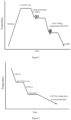
- the cooling was staged cooling. After the final rolling, the steel strip was water-cooled to a temperature between 600 ⁇ 750 °C at a cooling rate of 30 °C/s or more. After air cooling for 1 ⁇ 10 seconds, the steel strip was then cooled to a temperature between 350 ⁇ 550 °C at a cooling rate of 10 °C/s or more and coiled, and then cooled to room temperature at a cooling rate of 50 °C/h or less, to obtain a hot-rolled strip steel.
- the specific process for the pickling step is as follows. 4) Pickling: The hot-rolled strip steel was pickled at a running speed of 30 ⁇ 120 m/min, with a pickling temperature of 75 ⁇ 85 °C and a straightening rate of 2% or less, and then rinsed at a temperature in the range of 35 ⁇ 50 °C, and the surface of the hot-rolled strip steel was dried at a temperature of 120 ⁇ 140 °C, and oiled.
- the steels of Comparative Example 1-3 are from CN 104233092 A .
- Table 2 shows the specific production process parameters of the steel in the examples of the present invention, and the specific process parameters for pickling are not shown.
- Table 3 shows the performance parameters of the hot-rolled steels of Examples 1-8 and 17-24 of the present invention.
- Table 4 shows the performance parameters of the pickled steels of Examples 9-16 of the present invention.
- composition design of the comparative examples is low-carbon, high silicon and low aluminum, while the composition design of the examples of the present invention is medium-to-low carbon, high silicon and high aluminum.
- the two have completely different composition designs in terms of carbon content and aluminum content.
- the hole elongation rate of comparative examples is around 20%, while the hole elongation rate of the examples of the present invention reaches around 30%, indicating that the ultra-high plasticity steel of the present invention has a better matching of strength and ultra-high plasticity.
- the ferrite content in the microstructure of the comparative examples is 15% or less, while the ferrite content in the steel microstructure of the examples is 25% to 45%. Additionally, the bainite content in the microstructure of the comparative examples is 70% or more, while the bainite content in the microstructure of the examples is 44% to 53%, demonstrating a significant difference in microstructural design between the two.
- the hot-rolled or pickled high-strength ultra-high plasticity steel coils or plates according to the present invention have a yield strength of 500 MPa or more, up to 600 MPa or more, and even up to 700 MPa or more; a tensile strength of 780 MPa or more, up to 980 MPa or more; an elongation rate of 25% or more, up to 30% or more; and a hole expansion rate of 30% or more, and even up to 50% or more.
- the steel has good matching of yield strength, tensile strength, ultra-high plasticity and high hole expansion rate, and is especially suitable for complex forming and cold stretching parts such as automotive chassis structures and has broad application prospects.
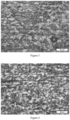
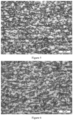
- Figures 3 to 6 show the metallographic photographs of Examples 1, 6, 10, and 14, respectively. These figures demonstrate that the composition and process design according to the present invention achieve a microstructure mainly composed of carbide-free lath bainite and retained austenite between bainitic laths.
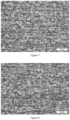
- Figures 7 to 10 show typical metallographic photographs of Examples 17, 19, 21, and 23, respectively. These figures clearly demonstrate that the composition and process design according to the present invention achieve a microstructure mainly composed of ferrite with intragranular nanoprecipitates, bainite and retained austenite. This microstructure provides a good match of low yield strength, high tensile strength, ultra-high plasticity and high hole expansion rate, resulting in excellent overall performance.
- the steel of the present invention has a good match of strength, ultra-high plasticity, and high hole expansion, making it particularly suitable for complex forming parts such as automotive chassis structures and has broad application prospects.
- Table 1 (Unit: mass percentage) C Si Mn P S Al N O Ti Mo Cu Ni Cr Nb V B Example 1, 9 0.27 1.54 2.03 0.013 0.0022 0.75 0.0025 0.0023 - 0.2 - - - 0.03 0.08 0.0005
- Example 2 10 0.16 0.81 1.03 0.009 0.0025 0.33 0.0028 0.0022 0.20 - 0.2 - 0.5 - 0.04 0.0002
- Example 3 11 0.35 1.75 1.82 0.016 0.0030 1.96 0.0022 0.0021 0.10 - - 0.1 - - - 0.0008
- 12 0.21 1.86 1.27 0.019 0.0027 0.45 0.0046 0.0030 - 0.4 - - - - - 0.0003
- Example 5 13 0.33 1.44 1.55 0.011 0.00
Landscapes
- Chemical & Material Sciences (AREA)
- Engineering & Computer Science (AREA)
- Materials Engineering (AREA)
- Metallurgy (AREA)
- Organic Chemistry (AREA)
- Mechanical Engineering (AREA)
- Thermal Sciences (AREA)
- Crystallography & Structural Chemistry (AREA)
- Physics & Mathematics (AREA)
- Chemical Kinetics & Catalysis (AREA)
- General Chemical & Material Sciences (AREA)
- Heat Treatment Of Steel (AREA)
- Heat Treatment Of Sheet Steel (AREA)
Abstract
Description
- The present invention belongs to the field of steel and manufacturing method therefor, and particularly relates to a high-plasticity steel and a manufacturing method therefor.
- At present, as one of the important pillar industries of the national economy, automotive industry has an increasingly urgent demand for advanced high-strength steel, and a rapidly growing demand for low-carbon or even zero-carbon emission products. Thinning while maintaining high strength is not only a development trend in the passenger car industry, but also progress in high-strength thinning, as well as energy conservation and emission reduction, is also gradually accelerating in the commercial vehicle field. This is not only a need for industry development, but also an inevitable requirement for the transformation and upgrading of the automotive industry. Especially, in the commercial vehicle field, traditional large-tonnage vehicles can no longer meet the increasingly stringent legislation requirements. Therefore, designers and manufacturers in the automotive industry are reexamining traditional design and production concepts, reducing weight while maintaining high strength in various aspects such as chassis, body, and seats, and even using other new materials such as aluminum alloy and carbon fiber. Moreover, the commercial vehicle industry is accelerating the process of lightweighting in terms of chassis, compartments, and upper loads. With the continuous strengthening of the enforcement of commercial vehicle policies and regulations, there is enormous potential for lightweighting in the future commercial vehicle field.
- Many parts of passenger cars and commercial vehicles, such as body, collision beams, fuel tank brackets, battery brackets, gas cylinder brackets, and bent pipes, are generally produced with low-strength thick-gauge ordinary steel such as Q235 or Q345, and the process is relatively complex, some require bolt connections and some require welding. With the development of lightweighting, many users hope to use cold stamping for the integrated forming of these parts in commercial vehicles, which reduces procedure and achieves lightweighting. Consequently, this places higher demands on the performance of hot-rolled high-strength steel, requiring it to have higher elongation and better formability while ensuring high strength. When using traditional high-strength steel for stamping parts such as fuel tank brackets, cracks are likely to occur at the large arc of the parts, making smooth stamping impossible. Therefore, it is desirable to develop new high-strength steels having high tensile strength and excellent formability. Additionally, considering the lifespan of the user's molds, the yield strength of the new high-strength steel must not be too high; otherwise, parts will be rebounded severely and be difficult to form during actual stamping.
- For the aforementioned reasons, it is desirable to develop hot-rolled or pickled high-strength steel having low yield strength, high tensile strength, and ultra-high elongation rate. This type of steel should be suitable for stamping complex parts with particularly high requirements for cold-drawing and forming, and has good manufacturability and broad application prospects.
- Many applications disclose steel with ultra-high plasticity, mostly focusing on the field of cold-rolled steel with high-strength, with some relate to hot-rolled steel with ultra-high plasticity.
- For example, Chinese Patent Application
CN104233092A discloses a 780 MPa grade steel with ultra-high plasticity, whose composition is designed to have a low carbon content and a high silicon content, and a certain amount of precious alloy elements such as Cr, Mo and Nb, resulting in relatively high alloy costs. - Chinese Patent Application
CN107815593A discloses a steel with low silicon content and high aluminum content and with ultra-high plasticity, whose composition has low silicon content and high aluminum content, and a certain amount of precious element Cu. The production process mainly includes heat treatment in the two-phase zone for 1-3 minutes and then phase transformation in the bainite zone, to obtain 780 MPa grade heat-treated steel with ultra-high plasticity. However, the heat treatment process cannot be applied to existing hot rolling production lines. - The objective of the present invention is to provide a high plasticity steel and a manufacturing method therefor. The high plasticity steel has good mechanical properties and can achieve good matching among a low yield strength, a low yield ratio, a high tensile strength and an ultra-high elongation rate. The steel can be widely applied to components with complex shape requirements, or other parts that require thinning while maintaining high strength, such as those in commercial or passenger vehicles.
- In order to achieve the above-mentioned objective, in the first aspect, the present invention provides a steel comprising the following components in percentage by mass: C: 0.10-0.35%, Si: 0.8-2.0%, Mn: 1.0-3.0%, P: ≤ 0.02%, S ≤ 0.005%, Al: 0.1-2.0%, N: ≤ 0.005%, with the balance being Fe and other inevitable impurities.
- Preferably, the above-mentioned steel also comprises Ti, and, in percentage by mass, the content of Ti is less than or equal to 0.2%, preferably 0.05-0.2%, more preferably 0.05-0.1%.
- Preferably, the above-mentioned steel also comprises one or more selected from the group consisting of Mo, Nb, V, Cu, Ni, Cr and B; wherein, in percentage by mass, the content of Mo is less than or equal to 0.5%, preferably less than or equal to 0.3%; the content of Nb is less than or equal to 0.1%, preferably less than or equal to 0.06%; the content of V is less than or equal to 0.1%, preferably less than or equal to 0.06%; the content of Cu is less than or equal to 0.5%, preferably less than or equal to 0.3%; the content of Ni is less than or equal to 0.5%, preferably less than or equal to 0.3%; the content of Cr is less than or equal to 0.5%, preferably less than or equal to 0.3%; the content of B is less than or equal to 0.001%, preferably less than or equal to 0.0005%.
- Preferably, the inevitable impurities of the above-mentioned steel include, in percentage by mass, O ≤ 0.003%, preferably O ≤ 0.002%; S ≤ 0.003%; and/or N ≤ 0.004%.
- Preferably, the composition in percentage by mass of the above-mentioned steel satisfies one or more of the following: C: 0.15~0.25%, Si: 1.0~1.6%, Mn: 1.5~2.5%, Al: 0.3~1.0%.
- The design concept of each element in the steel of the present invention is as follows.
- Carbon is a basic element in steel, and is also one of the important elements in the present invention. Carbon expands the austenite phase region and stabilizes austenite. Carbon, as a gap atom in steel, plays a very important role in improving the strength of steel, and has the greatest impact on the yield strength and tensile strength of steel. Additionally, as an effective element for stabilizing residual austenite, carbon usually has a relatively high concentration in steel. In the present invention, in order to obtain high-strength steel having different levels of tensile strength and having a relatively stable residual austenite in the steel microstructure, the content of carbon must be greater than or equal 0.10%. However, the content of carbon cannot exceed 0.35%. Excessive content of carbon can easily lead to higher strength, reduction of elongation rate, and deterioration of welding performance. Therefore, the content of carbon is between 0.10-0.35%.
- Silicon is a basic element in steel, and is also one of the important elements in the present invention. The addition of silicon to steel can lower the non-recrystallization temperature of austenite, expanding the rolling process window of austenite. This allows dynamic recrystallization of the steel to be completed during the finish rolling stage, which is beneficial for improving the differences in transverse and longitudinal properties of the steel. Another function of adding silicon into steel is the inhibition of the formation of the cementite. In the present invention, to ensure that the steel microstructure contains a large amount of residual austenite, it is necessary to add a relatively high amount of silicon to inhibit the formation of the cementite. This inhibitory effect of silicon on carbide formation is evident when the silicon content reaches 0.8% or more. However, the content of silicon should not be too high; otherwise, the rolling force load during actual rolling process will be too large, and there will be a significant amount of red scale on the surface of steel plate, which is not conducive to stable production during rolling. Therefore, the silicon content in the steel should be 0.8-2.0%, preferably 1.0-1.6%.
- Manganese is the most fundamental elements in steel, and is also one of the most important elements in the present invention. Mn expands the austenite phase region, reduces the critical quenching rate of the steel, stabilizes austenite, refines grains, and delays the transition of austenite to pearlite. Additionally, during heat treatment process, Mn undergoes partition and diffuses from bainite into residual austenite, further stabilizing the residual austenite and increasing its content. A manganese content of at least 1.0% is required to achieve these effects. However, the content of manganese should not be too high. If the content of manganese exceeds 3.0%, it may lead to segregation in the continuous casting slab and the formation of a large amount of MnS inclusions. Therefore, the manganese content in the steel should be 1.0-3.0%, preferably 1.5-2.5%.
- Phosphorus is an impurity element in steel. P tends to segregate easily at grain boundaries. When the content of P in steel is relatively high (≥0.1%), Fe2P is formed and precipitated around the grain, reducing the plasticity and toughness of the steel. Thus, the lower the content of P, the better. It is generally preferable to control the content of P to 0.02% or less, as this level does not increase the cost of steel-making.
- Sulfur is an impurity element in steel. In steel, S typically combines with Mn to form MnS inclusions, especially when the contents of S and Mn are both relatively high, a significant amount of MnS will be formed in the steel. MnS itself has a certain degree of plasticity. MnS deforms along the rolling direction during subsequent rolling process, which not only reduces the transverse plasticity of the steel, but also increases structure anisotropy, adversely affecting hole expansion performance. Therefore, the lower the content of S in steel, the better. To minimize the content of MnS, the content of S must be strictly controlled. The S content is required to be controlled to 0.005% or less, preferably 0.003% or less.
- Aluminum is one of the important elements in the present invention. In addition to its basic roles of deoxidation and nitrogen fixation, aluminum also has two other important functions in the present invention. In the present invention, the content of austenite-stabilizing elements such as carbon and manganese is relatively high, so that austenite has strong stability. As a result, it is difficult to form the required amount of ferrite during the short air-cooling stage in staged cooling process after rolling. Therefore, more aluminum than is used in conventional high-strength steel needs to be added to accelerate the transformation of ferrite and ensure sufficient amount of ferrite. On the other hand, in order to obtain highly stable residual austenite, additional aluminum is also necessary. Aluminum is added into steel for accelerating the transformation of ferrite. Besides, during the bainite transformation process, Al can not only play a role in inhibiting the formation of cementite, but also promote the diffusion of carbon atoms from bainite ferrite to residual austenite, thereby accelerating the diffusion of carbon atoms in residual austenite, increasing the carbon concentration in residual austenite, and obtaining highly stable residual austenite. When the content of aluminum is ≥ 0.1%, the above-mentioned various beneficial effects can be achieved. However, when the content of aluminum exceeds 2.0%, its effect of promoting diffusion and enrichment of carbon becomes saturated, and the viscosity of the molten steel increases, which can easily clog the casting nozzle. Therefore, the aluminum content in the steel of the present invention should be 0.1-2.0%, preferably 0.3%-1.0%.
- Nitrogen is an impurity element in the present invention. The lower the N content, the better. However, nitrogen is an inevitable element in the steelmaking process. Although present in small amounts, nitrogen can combines with strong carbide-forming elements such as Ti to form TiN particles, which are detrimental to the performances of steel. Therefore, the content of nitrogen in the present invention is controlled to be 0.005% or less, preferably 0.004% or less.
- Titanium is one of the optional additive elements in the present invention. Steel with ultra-high plasticity and high-strength comprises a large amount of residual austenite, which is a soft phase with relatively low yield strength. Therefore, to improve the yield strength of the steel, microalloying elements such as titanium can be added under certain conditions. Titanium enhances yield strength through its precipitation strengthening effect in the proeutectoid ferrite. As the titanium content increases, the precipitation strengthening effect is gradually enhanced. When the titanium content reaches 0.20%, the precipitation strengthening effect of titanium becomes saturated. Therefore, the amount of titanium added can be adjusted as needed. The titanium content in the steel of the present invention is controlled to be 0.20% or less, preferably 0.05-0.2%, more preferably 0.05-0.1%.
- Molybdenum is one of the optional additive elements in the present invention. The addition of molybdenum to steel can greatly delay the phase transition of ferrite and pearlite, which is conducive to obtaining bainite structure. In addition, molybdenum has a strong resistance to welding softening. Since the primary objective of the present invention is to obtain a microstructure mainly consisting of ferrite, bainite, and residual austenite, and since ferrite and bainite are prone to softening after welding, the addition of an appropriate amount of molybdenum can effectively reduce the degree of welding softening. Considering that molybdenum is a precious metal, adding too much would increase the cost of the alloy. Therefore, the content of molybdenum in the present invention is 0.5% or less, preferably 0.3% or less.
- Oxygen is an inevitable element in the steelmaking process. For the present invention, after deoxidation, the content of O in steel can generally be reduced to 0.003% or less, which does not cause any significant adverse effects on the performance of the steel plate. Therefore, in the present invention, the O content in the steel is controlled to be 0.003% or less, preferably 0.002% or less.
- Copper is one of the optional additive elements in the present invention. The addition of copper to steel can improve the corrosion resistance of the steel, and when combined with phosphorus, the corrosion resistance effect is even better. When the addition amount of Cu exceeds 1%, an ε-Cu precipitation phase may be formed under certain conditions, which has a relatively strong precipitation strengthening effect. However, the addition of Cu tends to result in "Cu-brittleness" phenomenon during the rolling process. To fully utilize the corrosion resistance benefits of Cu in specific applications while avoiding significant "Cu-brittleness" phenomenon, the content of Cu in the present invention is controlled to be 0.5% or less, preferably 0.3% or less.
- Nickel is one of the optional additive elements in the present invention. The addition of nickel to steel provides a certain level of corrosion resistance, though its corrosion resistance effect is weaker than copper. The addition of nickel in steel has little effect on the tensile properties of the steel, but can refine the structure and precipitation phases of steel and greatly improve the low-temperature toughness of steel. Additionally, in steel added with copper, the addition of a small amount of nickel can inhibit the occurrence of "Cu-brittleness". The addition of relatively high amount of nickel does not have any significant adverse effect on the properties of the steel itself. When both copper and nickel are added, they not only improve corrosion resistance, but also refine the structure and precipitate phases of the steel, greatly improving the low-temperature toughness. However, both copper and nickel are relatively valuable alloying elements. Therefore, to minimize the cost of alloy design, the amount of nickel added in the present invention is 0.5% or less, preferably 0.3% or less.
- Chromium is one of the optional additive elements in the present invention. The addition of chromium to steel can improves its strength mainly through mechanisms such as solid solution strengthening or microstructure refinement. Chromium easily dissolves into ferrite, and plays a role in strengthening ferrite. Additionally, the addition of a small amount of chromium element can also improve corrosion resistance. Therefore, the amount of chromium added in the present invention is 0.5% or less, preferably 0.3% or less.
- Niobium is one of the optional additive elements in the present invention. Similar to titanium, niobium is a strong carbide-forming element in steel. The addition of niobium to steel can greatly increase the non-recrystallization temperature of steel, allowing the formation of deformation austenite with higher dislocation density during the finish rolling stage, and refine the final phase transition structure during the subsequent transformation process. However, the amount of niobium added should not be too much. On one hand, when the amount of niobium added exceeds 0.01%, it is prone to form a relatively coarse niobium-carbonitride in the structure, which is not conducive to the low-temperature impact toughness of the steel. On the other hand, a large amount of niobium is easy to cause anisotropy in hot-rolled austenite structure. Therefore, the niobium content in the steel of the present invention is 0.10% or less, preferably 0.06% or less.
- Vanadium is one of the optional additive elements in the present invention. Similar to Ti and Nb, vanadium is also a strong carbide-forming element. However, vanadium carbides have a low solubility or precipitation temperature and are typically fully solid dissolved in austenite during the finish rolling stage. Carbides of vanadium begins to form in ferrite only when the temperature decreases and phase transition starts. Since vanadium carbides have a high solid solubility in ferrite compared to niobium and titanium carbides, the size of vanadium carbides formed in ferrite is larger and vanadium carbides are prone to form at grain boundaries, which is not conducive to the toughness of steel. Therefore, the amount of vanadium added in the steel of the present invention is 0.10% or less, preferably 0.06% or less.
- Boron is one of the optional additive elements in the present invention. Boron is an element that is prone to segregation. During rolling in the austenite region, B element can segregate to the austenite grain boundaries, reducing the interfacial energy at the austenite grain boundaries and inhibiting the formation of ferrite during subsequent cooling and phase transformation. Since the desired microstructure of the present invention includes ferrite, bainite and stable residual austenite, it is necessary to strictly control the content of boron element in the steel to prevent the inhibition of ferrite formation due to excessive addition of boron. Therefore, the amount of boron added in the steel of the present invention is 0.001% or less, preferably 0.0005% or less.
- Unless otherwise specified, the content of elements in the steel of the present invention refer to mass fractions.
- Preferably, the steel of the present invention has a microstructure includes ferrite, bainite, and residual austenite, wherein the residual austenite content is 5% or more. Specifically, the volume fraction of ferrite in steel is between 30-50%, preferably between 35-45%; the volume fraction of bainite is between 40-60%, preferably between 45-55%; and the volume fraction of residual austenite is between 5-15%, preferably between 10-15%.
- Preferably, the above-mentioned steel has a yield strength of 500 MPa or more, preferably 600 MPa or more, more preferably 700 MPa or more; a tensile strength of 780 MPa or more, preferably 980MPa or more; an elongation rate of 25% or more, preferably 30% or more.
- Preferably, the above-mentioned steel has a hole expansion of 30% or more, preferably 50% or more.
- Preferably, in the steel, when the Ti content is 0.05-0.2% and the C content is 0.10-0.25%, the yield strength of the steel is ≥ 600MPa, the tensile strength is ≥ 780MPa, the elongation rate is ≥ 30%, and the hole expansion rate is ≥ 50%; When the content of Ti is 0.05-0.2% and the content of C is 0.25-0.35%, the yield strength of the steel is ≥ 700MPa, the tensile strength is ≥ 980MPa, the elongation rate is ≥ 25%, and the hole expansion rate is ≥ 30%.
- The existing 780 MPa grade steel with ultra-high plasticity comprises C-Si-Mn as the main elements, with microalloying elements such as Nb and Ti added when necessary to refine the grains. In these steels, the content of Al is 0.1% or less, mainly to utilize the deoxidation and nitrogen fixation function of Al element.
- In contrast, the present invention adopts a composition design of high content Al, with the Al content of 0.1% or more. The main purposes of adding high content of Al are to promote transformation of ferrite and to further improve the stability of residual austenite.
- In terms of performances, the existing 780 MPa grade steels with ultra-high plasticity have low yield strength or low yield ratio, and the residual austenite is not sufficiently stable. In case of deformation, the residual austenite in the microstructure easily transforms into martensite.
- In contrast, the ultra-high plasticity steel of the present invention can have tensile properties with varying yield strengths and yield ratios. Moreover, the residual austenite in the structure is more stable, and the content of residual austenite is 5% or more. Despite the varying yield strengths, the tensile strength and elongation rate remain at a high level, making the steel more favorable for downstream processing and use. Moreover, the steel of the present invention can also have a relatively high hole expansion rate, making it particularly suitable for stamping processes involving parts with higher requirements for drawing and flanging forming.
- The method for manufacturing the aforementioned steel comprises the following steps:
- 1) smelting and casting
smelting the components according to the above composition in a converter or an electric furnace, then secondary refining in a vacuum furnace, and then casting it into a casting blank or a casting ingot; - 2) reheating the casting blank or the casting ingot at a heating temperature of 1100 °C or higher and holding for 1-2 hours;
- 3) hot rolling and cooling the casting blank or the casting ingot
- wherein the casting blank or the casting ingot is hot rolled at an initial rolling temperature of 1000 °C or higher, then subjected to 5-7 passes of rolling with a relatively large deformation rate of 50% or more at 1000°C or higher, then subjected to 3-7 passes of final rolling with a cumulative deformation of 70% or more after an intermediate blank reaches ≥ 950 °C, to obtain a steel strip; wherein the final rolling temperature is 800~950 °C;
- wherein the cooling is staged cooling, after the final rolling, the steel strip is water-cooled to a temperature between 600~750 °C at a cooling rate of 30 °C/s or more; after air cooling for 1~10 seconds, the steel strip is then cooled to a temperature between 350~550 °C at a cooling rate of 10 °C/s or more and coiled, and then cooled to room temperature at a cooling rate of 50 °C/h or less, to obtain a hot-rolled strip steel.
- Furthermore, the above-mentioned method further includes step 4) pickling, wherein the hot-rolled strip steel is pickled at a running speed of 30~120 m/min, with a pickling temperature of 75~85 °C and a straightening rate of 2% or less, and then rinsed at a temperature in the range of 35~50 °C, and the surface of the hot-rolled strip steel is dried at a temperature of 120~140 °C, and oiled, to obtain a pickled steel with high-strength and ultra-high plasticity.
- In the method for manufacturing the steel of the present invention:
The primary purpose of setting the initial rolling temperature of hot rolling at 1000 °C or higher, and performing 5-7 passes of rolling with a relatively large deformation rate of 50% or more at 1000°C or higher, is to refine the austenite grains. - After final rolling in the temperature range of 800-950 °C, a staged cooling process is used to control the content of ferrite, bainite and residual austenite in the steel. The water-cooling stop temperature and air-cooling duration in the first stage cooling after rolling determine the content of ferrite, while the coiling temperature after the second cooling stage determines the contents of bainite and residual austenite.
- Through the combination of the staged cooling process and the innovative composition design, the content of ferrite, bainite and residual austenite can be quantitatively controlled. This combination of the innovative composition design and process can obtain ultra-high plasticity steel with exceptionally stable residual austenite.
- The innovation of the present invention are as follows.
- The present invention obtains hot-rolled or pickled ultra-high plasticity high-strength steel with low yield strength by a composition design of medium-to-low carbon, high silicon and high aluminum, combined with an innovative staged cooling process during hot rolling, a medium-temperature coiling process, and pickling process. The relatively high content of carbon is beneficial for obtaining high strength, and provides a large amount of available carbon atoms that can diffuse into the residual austenite, resulting in highly stable residual austenite. The main purpose of adding a relatively high silicon content is to inhibit the formation of carbides and extend the temperature range for ferrite formation. The addition of relatively high content of aluminum promotes the diffusion of carbon atoms from bainite ferrite to residual austenite, further improving the stability of the residual austenite.
- Preferably, the present invention adds high content Ti into the steel. By combining this with a staged cooling process, nano-sized TiC precipitates are formed within the ferrite grains during the ferrite transformation process, thereby improving the strength of ferrite, reducing the performance differences between ferrite and bainite, and increasing the hole expansion rate of steel.
- In addition, the relatively high manganese content in the steel of the present invention further improves the stability of the residual austenite.
- The microstructure of the steel of the present invention with a high hole expansion rate and ultra-high plasticity consists of ferrite, bainite and residual austenite. Bainite provides the steel with high tensile strength. Ferrite and the relatively high content of metastable residual austenite provide the steel plate with ultra-high elongation rate through the TRIP effect, with the content of residual austenite being ≥ 5%. The ferrite containing nano-sized precipitates has improved yield strength through precipitation strengthening, which reduces the hardness difference between ferrite and bainite, and greatly increases its hole expansion rate while achieving ultra-high plasticity. Through the precise combination of the above-mentioned components and processes, an excellent balance of high tensile strength, ultra-high elongation rate and high hole expansion rate has been achieved.
- The main purpose of coiling at 350-550 °C after hot rolling is to obtain bainite and highly stable residual austenite. The microstructure of the ultra-high plasticity steel of the present invention primarily consists of ferrite, bainite and stable residual austenite, with a content of residual austenite content of ≥ 5%. Ferrite endows the steel plate with low yield strength, bainite endows the steel plate with high tensile strength, and stable residual austenite endows the steel plate with ultra-high elongation.
- Based on this innovative composition and process design, the present invention can obtain hot-rolled or pickled ultra-high plasticity high-strength steel with low yield strength. The steel has a yield strength of 500MPa or more, preferably 600MPa or more, more preferably 700MPa or more, a tensile strength of 780MPa or more, preferably 980MPa or more. The elongation rate of the hot-rolled or pickled steel coils is greater than or equal 25%, preferably greater than or equal 30%.
- Compared with prior arts, the advantages of the present invention are as follows.
- Compared with existing ultra-high plasticity steels, the present invention adopts a composition design of medium-to-low carbon, high silicon, and high aluminum, which is completely different from the traditional low-carbon, high-silicon or low-silicon, high-aluminum designs of conventional hot-rolled ultra-high plasticity steels.
- In the steel disclosed in Chinese Patent Application
CN104233092A , in addition to low carbon and high silicon, precious metal elements such as Cr, Mo, and Nb are added, resulting in relatively high alloy costs. The composition design of Chinese patentCN107815593A is low silicon and high aluminum with a certain amount of Cu. However, its process route mainly involves heat treatment in a dual-phase zone followed by phase transformation in the bainite zone, which cannot be applied to hot rolling production lines. - Therefore, the above patent applications not only differ from the present invention in terms of composition design, but also suffer from issues such as high alloy costs and process routes that cannot be adapted for hot rolling production lines.
- The present invention adopts an innovative composition design concept of medium-to-low carbon and high aluminum, which is matched with the innovative staged cooling and medium-temperature coiling processes. Hot-rolled and pickled ultra-high plasticity steels with high tensile strength, ultra-high elongation, and high hole expansion rate can be obtained using an existing continuous hot rolling production line.
- The high-strength and ultra-high plasticity steel manufactured by using the technology provided by the present invention has a yield strength of ≥ 500MPa, a tensile strength of ≥ 780MPa, a low yield ratio, and ultra-high elongation (A reaching 30% or more), exhibiting excellent combination of low yield strength, low yield ratio, high tensile strength, ultra-high plasticity, and high hole expansion rate. It can be applied to the manufacturing of various complex parts of passenger or commercial vehicles and has promising application prospects.
-
-
Figure 1 is a schematic diagram of the rolling process of the steel according to the present invention. -
Figure 2 is a schematic diagram of the cooling process of the steel according to the present invention. -
Figure 3 shows a metallographic photograph of Example 1 according to the present invention. -
Figure 4 shows a metallographic photograph of Example 6 according to the present invention. -
Figure 5 shows a metallographic photograph of Example 10 according to the present invention. -
Figure 6 shows a metallographic photograph of Example 14 according to the present invention. -
Figure 7 shows a metallographic photograph of Example 17 according to the present invention. -
Figure 8 shows a metallographic photograph of Example 19 according to the present invention. -
Figure 9 shows a metallographic photograph of Example 21 according to the present invention. -
Figure 10 shows a metallographic photograph of Example 23 according to the present invention. - The present invention is further explained below in conjunction with the examples and drawings.
- The compositions of the steels in the examples and comparative examples of the present invention are shown in Table 1. The balance in the table is Fe and other inevitable impurities.
- The process of the example of the present invention are as follows.
- 1) Smelting and casting:
According to the composition in Table 1, molten steel was smelted in a converter or an electric furnace, then secondary refined in a vacuum furnace, and then casted into a casting blank or a casting ingot. - 2) The casting blank or the casting ingot was reheated at a heating temperature of 1100 °C or higher and held for 1-2 hours.
- 3) Hot rolling and cooling the casting blank or the casting ingot:
The casting blank or the casting ingot was hot rolled at an initial rolling temperature of 1000 °C or higher, then subjected to 5-7 passes of rolling with a relatively large deformation rate of 50% or more at 1000°C or higher, then subjected to 3-7 passes of final rolling with a cumulative deformation of 70% or more after an intermediate blank reaches ≥ 950 °C, to obtain a steel strip. The final rolling temperature was 800~950 °C. - The cooling was staged cooling. After the final rolling, the steel strip was water-cooled to a temperature between 600~750 °C at a cooling rate of 30 °C/s or more. After air cooling for 1~10 seconds, the steel strip was then cooled to a temperature between 350~550 °C at a cooling rate of 10 °C/s or more and coiled, and then cooled to room temperature at a cooling rate of 50 °C/h or less, to obtain a hot-rolled strip steel.
- In Examples 1-8 and 17-24, the pickling step was not performed and hot-rolled steels were obtained. In Examples 9-16, the pickling step was performed and pickled steels were obtained.
- The specific process for the pickling step is as follows.
4) Pickling: The hot-rolled strip steel was pickled at a running speed of 30~120 m/min, with a pickling temperature of 75~85 °C and a straightening rate of 2% or less, and then rinsed at a temperature in the range of 35~50 °C, and the surface of the hot-rolled strip steel was dried at a temperature of 120~140 °C, and oiled. - The specific process of the above-mentioned step 3 is illustrated in
Figure 1 and Figure 2 . - The steels of Comparative Example 1-3 are from
CN 104233092 A . - Table 2 shows the specific production process parameters of the steel in the examples of the present invention, and the specific process parameters for pickling are not shown. Table 3 shows the performance parameters of the hot-rolled steels of Examples 1-8 and 17-24 of the present invention. Table 4 shows the performance parameters of the pickled steels of Examples 9-16 of the present invention.
- The performances of the steels in Table 3-4 were measured as follows.
- The yield strength, tensile strength, and elongation of steel were tested in accordance with GB/T 228.1-2021 "Tensile testing of metallic materials - Part 1: Room temperature test method".
- The hole expansion rate of steel were tested in accordance with GB/T 24524-2021 "Metallic Materials, Thin Plates and Strips, Test Method for Hole Expansion".
- As shown in Table 1, the composition design of the comparative examples is low-carbon, high silicon and low aluminum, while the composition design of the examples of the present invention is medium-to-low carbon, high silicon and high aluminum. The two have completely different composition designs in terms of carbon content and aluminum content.
- As can be seen from the performance comparison in Table 3, the hole elongation rate of comparative examples is around 20%, while the hole elongation rate of the examples of the present invention reaches around 30%, indicating that the ultra-high plasticity steel of the present invention has a better matching of strength and ultra-high plasticity.
- As can be seen from Tables 3 and 4, the ferrite content in the microstructure of the comparative examples is 15% or less, while the ferrite content in the steel microstructure of the examples is 25% to 45%. Additionally, the bainite content in the microstructure of the comparative examples is 70% or more, while the bainite content in the microstructure of the examples is 44% to 53%, demonstrating a significant difference in microstructural design between the two.
- As can be seen from Tables 3 and 4, the hot-rolled or pickled high-strength ultra-high plasticity steel coils or plates according to the present invention have a yield strength of 500 MPa or more, up to 600 MPa or more, and even up to 700 MPa or more; a tensile strength of 780 MPa or more, up to 980 MPa or more; an elongation rate of 25% or more, up to 30% or more; and a hole expansion rate of 30% or more, and even up to 50% or more. The steel has good matching of yield strength, tensile strength, ultra-high plasticity and high hole expansion rate, and is especially suitable for complex forming and cold stretching parts such as automotive chassis structures and has broad application prospects.
-
Figures 3 to 6 show the metallographic photographs of Examples 1, 6, 10, and 14, respectively. These figures demonstrate that the composition and process design according to the present invention achieve a microstructure mainly composed of carbide-free lath bainite and retained austenite between bainitic laths.Figures 7 to 10 show typical metallographic photographs of Examples 17, 19, 21, and 23, respectively. These figures clearly demonstrate that the composition and process design according to the present invention achieve a microstructure mainly composed of ferrite with intragranular nanoprecipitates, bainite and retained austenite. This microstructure provides a good match of low yield strength, high tensile strength, ultra-high plasticity and high hole expansion rate, resulting in excellent overall performance. The steel of the present invention has a good match of strength, ultra-high plasticity, and high hole expansion, making it particularly suitable for complex forming parts such as automotive chassis structures and has broad application prospects.Table 1 (Unit: mass percentage) C Si Mn P S Al N O Ti Mo Cu Ni Cr Nb V B Example 1, 9 0.27 1.54 2.03 0.013 0.0022 0.75 0.0025 0.0023 - 0.2 - - - 0.03 0.08 0.0005 Example 2, 10 0.16 0.81 1.03 0.009 0.0025 0.33 0.0028 0.0022 0.20 - 0.2 - 0.5 - 0.04 0.0002 Example 3, 11 0.35 1.75 1.82 0.016 0.0030 1.96 0.0022 0.0021 0.10 - - 0.1 - - - 0.0008 Example 4, 12 0.21 1.86 1.27 0.019 0.0027 0.45 0.0046 0.0030 - 0.4 - - - - - 0.0003 Example 5, 13 0.33 1.44 1.55 0.011 0.0028 1.79 0.0042 0.0025 0.02 - 0.5 - 0.3 0.05 0.10 0.0005 Example 6, 14 0.10 1.99 2.68 0.010 0.0029 0.10 0.0050 0.0028 0.14 0.3 - 0.5 - - - 0.0006 Example 7, 15 0.31 1.62 2.97 0.014 0.0028 1.28 0.0033 0.0026 - 0.5 - 0.3 - 0.10 - 0.0004 Example 8, 16 0.23 1.02 2.24 0.018 0.0024 0.58 0.0030 0.0024 0.05 - 0.3 - 0.2 - 0.05 0.0010 Example 17 0.25 1.73 1.59 0.018 0.0022 1.15 0.0041 0.0028 0.12 - - 0.1 0.3 - 0.10 - Example 18 0.20 1.48 1.86 0.014 0.0028 0.83 0.0045 0.0025 0.16 0.1 0.5 - - 0.06 - 0.0005 Example 19 0.10 1.98 2.48 0.016 0.0031 0.11 0.0037 0.0020 0.13 - - - - - - - Example 20 0.15 1.02 2.21 0.020 0.0025 0.39 0.0038 0.0030 0.20 0.5 - 0.5 0.1 - - 0.0010 Example 21 0.28 1.54 1.38 0.016 0.0044 0.68 0.0042 0.0023 0.09 0.2 0.1 - - 0.02 0.05 - Example 22 0.26 0.81 1.44 0.015 0.0023 1.50 0.0033 0.0024 0.10 - - 0.3 0.4 - - 0.0006 Example 23 0.35 1.66 1.25 0.009 0.0026 1.97 0.0035 0.0025 0.05 0.3 - - 0.2 0.04 - - Example 24 0.31 1.35 1.03 0.010 0.0050 1.74 0.0040 0.0022 0.07 - 0.3 0.2 - - 0.03 0.0008 Comparative Example 1 0.07 1.58 1.76 0.009 0.0030 0.032 - - - 0.27 - - 0.46 0.024 - - Comparative Example 2 0.09 1.41 1.65 0.008 0.0040 0.037 - - - 0.22 - - 0.35 0.031 - - Comparative Example 3 0.10 1.56 1.45 0.009 0.004 0.033 - - - 0.20 - - 0.30 0.032 - - Table 2 Heati ng tempe rature /°C Initial rollin g tempe rature /°C Cumulativ e deformatio n during rough rolling /% Temperatu re of intermediat e blank /°C Cumulativ e deformatio n during final rolling /% Final rolling temper ature /°C Cooling rate in first stage (°C/s) Air cooli ng temp eratur e /°C Air coolin g durati on /s Cooling rate in second stage (°C/s) Coilin g Temp eratur e /°C Cooling rate of steel coil (°C/h) Example 1, 9 1260 1070 75 975 94 920 55 640 3 36 450 25 Example 2, 10 1200 1140 70 985 91 800 50 750 8 51 520 50 Example 3, 11 1150 1050 55 960 93 850 70 650 1 44 400 19 Example 4, 12 1210 1060 60 970 98 810 65 630 5 25 350 11 Example 5, 13 1180 1100 66 995 93 950 40 600 10 30 500 20 Example 6, 14 1230 1150 50 980 99 860 35 660 2 47 430 37 Example 7, 15 1100 1120 72 950 94 830 30 680 4 20 380 23 Example 8, 16 1270 1080 65 965 93 880 60 700 7 28 550 16 Example 17 1200 1050 70 965 92.3 830 70 620 8 25 530 22 Example 18 1300 1100 75 950 97.6 950 120 750 1 75 550 50 Example 19 1150 1000 60 970 92.8 820 83 600 6 15 480 18 Example 20 1230 1090 55 1000 98.0 930 140 710 2 56 500 44 Example 21 1100 1030 65 980 92.6 850 30 690 3 21 350 20 Example 22 1260 1080 72 960 95.7 900 90 680 7 42 450 38 Example 23 1170 1020 50 990 93.6 800 50 640 10 10 420 14 Example 24 1280 1070 80 962 91.0 880 42 650 4 33 520 30 Table 3 Thickness of Steel Plate /mm Yield Strength /MPa Tensile Strength /MPa Elongation Rate /% Hole Expansion Rate /% Ferrite Content /% Bainite Content /% Residual Austenite Content /% Example 1 3.6 540 821 32.5 45 35 53 12 Example 2 7.0 565 813 32.0 47 45 44 11 Example 3 8.0 600 810 33.0 42 40 50 10 Example 4 2.2 612 807 31.0 48 44 44 12 Example 5 5.8 697 806 31.5 53 42 50 8 Example 6 1.5 719 811 30.5 50 41 50 9 Example 7 4.0 755 856 30.0 55 45 47 8 Example 8 6.0 609 813 31.5 49 38 49 13 Example 17 5.8 622 794 32.0 73 36 50.5 13.5 Example 18 1.5 676 833 31.0 65 31 57.4 11.6 Example 19 7.2 655 815 31.0 58 40 54.4 5.6 Example 20 2.3 629 830 30.0 53 43 49.3 7.7 Example 21 6.5 791 992 27.0 44 33 51.5 15.5 Example 22 3.2 830 1005 25.0 38 28 57.9 14.1 Example 23 8.0 814 1011 26.0 51 30 50.8 19.2 Example 24 4.5 873 1036 27.0 32 25 57.7 17.3 Comparative Example 1 4.5 512 891 18.0 - 11 78 11 Comparative Example 2 5.0 507 889 19.0 - 10 77 13 Comparative Example 3 6.0 494 873 20.5 - 12 73 15 Table 4 Thickness of Steel Plate /mm Yield Strength /MPa Tensile Strength /MPa Elongation Rate /% Ferrite Content /% Bainite Content /% Residual Austenite Content /% Example 9 3.6 651 838 31.0 35 53 12 Example 10 7.0 734 857 30.5 45 44 11 Example 11 8.0 573 821 32.5 40 50 10 Example 12 2.2 694 847 31.0 44 44 12 Example 13 5.8 554 833 31.5 42 50 8 Example 14 1.5 592 844 31.5 41 50 9 Example 15 4.0 751 862 30.0 45 47 8 Example 16 6.0 583 840 30.5 38 49 13 Comparative Example 1 4.5 512 891 18.0 11 78 11 Comparative Example 2 5.0 507 889 19.0 10 77 13 Comparative Example 3 6.0 494 873 20.5 12 73 15
Claims (11)
- A steel comprising the following components in percentage by mass: C: 0.10-0.35%, Si: 0.8-2.0%, Mn: 1.0-3.0%, P: ≤ 0.02%, S ≤ 0.005%, Al: 0.1-2.0%, N: ≤ 0.005%, with the balance being Fe and other inevitable impurities.
- The steel according to claim 1, wherein the steel further comprises Ti; in percentage by mass, the content of Ti is less than or equal to 0.2%, preferably 0.05-0.2%, more preferably 0.05-0.1%.
- The steel according to claim 1 or 2, wherein the steel further comprises one or more selected from the group consisting of Mo, Nb, V, Cu, Ni, Cr and B,wherein, in percentage by mass,the content of Mo is less than or equal to 0.5%, preferably less than or equal to 0.3%;the content of Nb is less than or equal to 0.1%, preferably less than or equal to 0.06%;the content of V is less than or equal to 0.1%, preferably less than or equal to 0.06%;the content of Cu is less than or equal to 0.5%, preferably less than or equal to 0.3%;the content of Ni is less than or equal to 0.5%, preferably less than or equal to 0.3%;the content of Cr is less than or equal to 0.5%, preferably less than or equal to 0.3%;the content of B is less than or equal to 0.001%, preferably less than or equal to 0.0005%.
- The steel according to claim 1 or 2, wherein the inevitable impurities includes, in percentage by mass, O ≤ 0.003%, preferably O ≤ 0.002%; S ≤ 0.003%; and/or N ≤ 0.004%.
- The steel according to claim 1 or 2, wherein the components of the steel satisfies one or more of the following: C: 0.15~0.25%, Si: 1.0~1.6%, Mn: 1.5~2.5%, Al: 0.3~1.0% in percentage by mass.
- The steel according to any one of claims 1 to 5, wherein the steel has a microstructure of ferrite, bainite, and residual austenite with a content of ≥ 5%.
- The steel according to any one of claims 1 to 6, wherein the steel has a yield strength of 500 MPa or more, preferably 600 MPa or more, more preferably 700 MPa or more; a tensile strength of 780 MPa or more, preferably 980 MPa or more; and an elongation rate of 25% or more, preferably 30% or more.
- The steel according to claim 2, wherein in percentage by mass, the content of C is 0.10-0.25%, the content of Ti is 0.05-0.2%, and wherein the steel has a yield strength of 600 MPa or more, a tensile strength of 780 MPa or more, an elongation rate of 30% or more, and a hole expansion rate of 50% or more; or,
wherein in percentage by mass, the content of C is 0.25-0.35%, the content of Ti is 0.05-0.2%, and wherein the steel has a yield strength of 700 MPa or more, a tensile strength of 980 MPa or more, an elongation rate of 25% or more, and a hole expansion rate of 30% or more. - The steel according to any one of claims 1 to 8, wherein the hole expansion rate of the steel is 30% or more, preferably 50% or more.
- A method for manufacturing the steel according to any one of claims 1 to 9, including the following steps:1) smelting and casting
smelting the components according to any one of claims 1-5 in a converter or an electric furnace, then secondary refining in a vacuum furnace, and then casting it into a casting blank or a casting ingot;2) reheating the casting blank or the casting ingot
heating temperature ≥ 1100 °C, holding time: 1-2 hours;3) hot rolling and cooling the casting blank or the casting ingotwherein the casting blank or the casting ingot is hot rolled at an initial rolling temperature of 1000 °C or higher, then subjected to 5-7 passes of rolling with a relatively large deformation rate of 50% or more at 1000°C or higher, then subjected to 3-7 passes of final rolling with a cumulative deformation of 70% or more after an intermediate blank reaches ≥ 950 °C, obtaining a steel strip; wherein the final rolling temperature is 800~950 °C;wherein the cooling is staged cooling, after the final rolling, the steel strip is water-cooled to a temperature between 600~750 °C at a cooling rate of 30 °C/s or more; after air cooling for 1~10 seconds, the steel strip is then cooled to a temperature between 350~550 °C at a cooling rate of 10 °C/s or more and coiled, and then cooled to room temperature at a cooling rate of 50 °C/h or less, obtaining a hot-rolled strip steel. - The method according to claim 10, wherein the method further includes step 4) pickling, wherein the hot-rolled strip steel is pickled at a running speed of 30~120 m/min, with a pickling temperature of 75~85 °C and a straightening rate of 2% or less, and then rinsed at a temperature in the range of 35~50 °C, and the surface of the hot-rolled strip steel is dried at a temperature of 120~140 °C, and oiled.
Applications Claiming Priority (3)
| Application Number | Priority Date | Filing Date | Title |
|---|---|---|---|
| CN202210714634.8A CN117305690A (en) | 2022-06-22 | 2022-06-22 | Highly expanded and ultra-high plasticity steel and its manufacturing method |
| CN202210713392.0A CN117305685A (en) | 2022-06-22 | 2022-06-22 | A kind of high-strength ultra-high plasticity steel and its manufacturing method |
| PCT/CN2023/101832 WO2023246898A1 (en) | 2022-06-22 | 2023-06-21 | High-plasticity steel and manufacturing method therefor |
Publications (2)
| Publication Number | Publication Date |
|---|---|
| EP4527963A1 true EP4527963A1 (en) | 2025-03-26 |
| EP4527963A4 EP4527963A4 (en) | 2025-12-03 |
Family
ID=89379195
Family Applications (1)
| Application Number | Title | Priority Date | Filing Date |
|---|---|---|---|
| EP23826543.3A Pending EP4527963A4 (en) | 2022-06-22 | 2023-06-21 | High-plasticity steel and manufacturing method therefor |
Country Status (5)
| Country | Link |
|---|---|
| US (1) | US20250369066A1 (en) |
| EP (1) | EP4527963A4 (en) |
| JP (1) | JP2025521326A (en) |
| KR (1) | KR20250022191A (en) |
| WO (1) | WO2023246898A1 (en) |
Family Cites Families (20)
| Publication number | Priority date | Publication date | Assignee | Title |
|---|---|---|---|---|
| JPH06228654A (en) * | 1993-01-29 | 1994-08-16 | Sumitomo Metal Ind Ltd | Production of high ductility hot rolled high tensile strength steel sheet |
| JP2000178681A (en) * | 1998-12-11 | 2000-06-27 | Nippon Steel Corp | Hot-rolled high-strength steel sheet excellent in formability and weldability with small material variation and its manufacturing method |
| JP3821036B2 (en) * | 2002-04-01 | 2006-09-13 | 住友金属工業株式会社 | Hot rolled steel sheet, hot rolled steel sheet and cold rolled steel sheet |
| EP2022865A1 (en) * | 2006-05-17 | 2009-02-11 | Nissan Motor Co., Ltd. | Ultrahigh strength steel sheet and strength part for automobile utilizing the same |
| JP5655712B2 (en) * | 2011-06-02 | 2015-01-21 | 新日鐵住金株式会社 | Manufacturing method of hot-rolled steel sheet |
| JP6241273B2 (en) * | 2013-12-26 | 2017-12-06 | 新日鐵住金株式会社 | Hot rolled steel sheet |
| CN104233092B (en) | 2014-09-15 | 2016-12-07 | 首钢总公司 | A kind of analysis of producing hot rolled TRIP and preparation method thereof |
| CN105441814A (en) * | 2014-09-26 | 2016-03-30 | 宝山钢铁股份有限公司 | Hot rolled Q&P steel with 700MPa grade yield strength and ultralow yield ratio and manufacturing method thereof |
| CN104532126B (en) * | 2014-12-19 | 2017-06-06 | 宝山钢铁股份有限公司 | A kind of super high strength hot rolled Q&P steel of low yield strength ratio and its manufacture method |
| KR101767773B1 (en) * | 2015-12-23 | 2017-08-14 | 주식회사 포스코 | Utlra high strength hot-rolled steel sheet having excellent ductility and method of manufacturing the same |
| CN105925888B (en) * | 2016-06-21 | 2017-12-26 | 宝山钢铁股份有限公司 | A kind of high reaming dual phase steel of 980MPa levels hot-rolled ferrite-bainite and its manufacture method |
| CN106119702B (en) * | 2016-06-21 | 2018-10-02 | 宝山钢铁股份有限公司 | A kind of high reaming steel of 980MPa grades of hot-rolled high-strength and its manufacturing method |
| CN105925887B (en) * | 2016-06-21 | 2018-01-30 | 宝山钢铁股份有限公司 | A kind of 980MPa levels hot-rolled ferrite-bainite dual-phase steel and its manufacture method |
| CN106119698B (en) * | 2016-06-21 | 2018-01-30 | 宝山钢铁股份有限公司 | A kind of high reaming dual phase steel of 780MPa levels hot-rolled ferrite-bainite and its manufacture method |
| CN106119700B (en) * | 2016-06-21 | 2018-06-01 | 宝山钢铁股份有限公司 | A kind of 1180MPa grades of precipitation strength type high-strength high-plasticity steel and its manufacturing method |
| CN108018498A (en) * | 2016-10-31 | 2018-05-11 | 宝山钢铁股份有限公司 | A kind of 1180MPa grades of hot-rolled ferrite-bainite dual-phase steel and its manufacture method |
| CN108018493A (en) * | 2016-10-31 | 2018-05-11 | 宝山钢铁股份有限公司 | A kind of 1180MPa grades of hot-rolled dual-phase steel and its manufacture method |
| CN107815593B (en) | 2017-11-06 | 2019-01-22 | 东北大学 | A kind of economical high-aluminum low-silicon TRIP steel for automobile and preparation method thereof |
| JP7168087B2 (en) * | 2019-07-10 | 2022-11-09 | 日本製鉄株式会社 | high strength steel plate |
| CN114107835A (en) * | 2020-08-31 | 2022-03-01 | 宝山钢铁股份有限公司 | 1180 MPa-grade high-plasticity high-hole-expansion steel and manufacturing method thereof |
-
2023
- 2023-06-21 EP EP23826543.3A patent/EP4527963A4/en active Pending
- 2023-06-21 WO PCT/CN2023/101832 patent/WO2023246898A1/en not_active Ceased
- 2023-06-21 KR KR1020257001157A patent/KR20250022191A/en active Pending
- 2023-06-21 US US18/876,887 patent/US20250369066A1/en active Pending
- 2023-06-21 JP JP2024574813A patent/JP2025521326A/en active Pending
Also Published As
| Publication number | Publication date |
|---|---|
| EP4527963A4 (en) | 2025-12-03 |
| KR20250022191A (en) | 2025-02-14 |
| JP2025521326A (en) | 2025-07-08 |
| WO2023246898A1 (en) | 2023-12-28 |
| US20250369066A1 (en) | 2025-12-04 |
Similar Documents
| Publication | Publication Date | Title |
|---|---|---|
| EP4206351A1 (en) | 980 mpa-grade bainite high hole expansion steel and manufacturing method therefor | |
| CN111979490B (en) | A kind of high ductility, high formability cold-rolled DH590 steel and production method thereof | |
| JP7594662B2 (en) | 980MPa level all-bainite type ultra-high hole expandability steel and its manufacturing method | |
| CN101008066B (en) | Hot-rolled martensitic steel plate with tensile strength higher than 1000MPa and manufacturing method thereof | |
| CN113403549A (en) | 1.2 GPa-grade fatigue-resistant high-formability ultrahigh-strength automobile steel and preparation method thereof | |
| JP7717796B2 (en) | 780MPa-class high-surface, high-performance, stable, ultra-high hole-expanding steel and its manufacturing method | |
| CN113388773A (en) | 1.5GPa grade high-formability hydrogen-embrittlement-resistant ultrahigh-strength automobile steel and preparation method thereof | |
| CN100439543C (en) | Hot-rolled ultra-high-strength martensitic steel and manufacturing method thereof | |
| CN108018493A (en) | A kind of 1180MPa grades of hot-rolled dual-phase steel and its manufacture method | |
| JP2025143410A (en) | High-strength hot-dip galvanized steel sheet with excellent ductility and formability and its manufacturing method | |
| JP7607750B2 (en) | High strength low carbon martensite high hole expandability steel and its manufacturing method | |
| JP2024541988A (en) | High-strength steel plate with excellent crashworthiness and formability and its manufacturing method | |
| JP3247908B2 (en) | High strength hot rolled steel sheet excellent in ductility and delayed fracture resistance and method for producing the same | |
| EP4527964A1 (en) | High-hole-expansion-ratio and ultrahigh-plasticity steel and manufacturing method therefor | |
| JP2025537573A (en) | Steel plate and its manufacturing method | |
| WO2024244041A1 (en) | Quenched and partitioned steel for automobiles and gradient partitioning preparation method therefor | |
| JP2025521330A (en) | High hole expansion steel and its manufacturing method | |
| JP3037767B2 (en) | Low yield ratio high strength hot-dip galvanized steel sheet and method for producing the same | |
| KR102747790B1 (en) | Cold-rolled steel sheet and method of manufacturing the same | |
| CN116497266B (en) | Hot-rolled high-strength high-plasticity steel and manufacturing method thereof | |
| US20250369066A1 (en) | High-plasticity steel and manufacturing method therefor | |
| KR20040057777A (en) | Method for Manufacturing Ultra High Strength Cold-rolled Steel Sheets for Automotive Bumper Reinforcements | |
| JPH0665685A (en) | Cold rolled sheet of ultrahigh tensile strength steel and its production | |
| CN117305690A (en) | Highly expanded and ultra-high plasticity steel and its manufacturing method | |
| CN117305685A (en) | A kind of high-strength ultra-high plasticity steel and its manufacturing method |
Legal Events
| Date | Code | Title | Description |
|---|---|---|---|
| STAA | Information on the status of an ep patent application or granted ep patent |
Free format text: STATUS: THE INTERNATIONAL PUBLICATION HAS BEEN MADE |
|
| PUAI | Public reference made under article 153(3) epc to a published international application that has entered the european phase |
Free format text: ORIGINAL CODE: 0009012 |
|
| STAA | Information on the status of an ep patent application or granted ep patent |
Free format text: STATUS: REQUEST FOR EXAMINATION WAS MADE |
|
| 17P | Request for examination filed |
Effective date: 20241219 |
|
| AK | Designated contracting states |
Kind code of ref document: A1 Designated state(s): AL AT BE BG CH CY CZ DE DK EE ES FI FR GB GR HR HU IE IS IT LI LT LU LV MC ME MK MT NL NO PL PT RO RS SE SI SK SM TR |
|
| DAV | Request for validation of the european patent (deleted) | ||
| DAX | Request for extension of the european patent (deleted) | ||
| A4 | Supplementary search report drawn up and despatched |
Effective date: 20251105 |
|
| RIC1 | Information provided on ipc code assigned before grant |
Ipc: C22C 38/00 20060101AFI20251030BHEP Ipc: C22C 38/06 20060101ALI20251030BHEP Ipc: C22C 38/38 20060101ALI20251030BHEP Ipc: C22C 38/28 20060101ALI20251030BHEP Ipc: C21D 6/00 20060101ALI20251030BHEP |
|
| STAA | Information on the status of an ep patent application or granted ep patent |
Free format text: STATUS: EXAMINATION IS IN PROGRESS |
|
| 17Q | First examination report despatched |
Effective date: 20260330 |