EP4527859A1 - Oxyethylene chain-containing polymer - Google Patents
Oxyethylene chain-containing polymer Download PDFInfo
- Publication number
- EP4527859A1 EP4527859A1 EP23807711.9A EP23807711A EP4527859A1 EP 4527859 A1 EP4527859 A1 EP 4527859A1 EP 23807711 A EP23807711 A EP 23807711A EP 4527859 A1 EP4527859 A1 EP 4527859A1
- Authority
- EP
- European Patent Office
- Prior art keywords
- integer
- alkyl group
- pmove
- containing polymer
- group
- Prior art date
- Legal status (The legal status is an assumption and is not a legal conclusion. Google has not performed a legal analysis and makes no representation as to the accuracy of the status listed.)
- Pending
Links
Images

Classifications
-
- C—CHEMISTRY; METALLURGY
- C08—ORGANIC MACROMOLECULAR COMPOUNDS; THEIR PREPARATION OR CHEMICAL WORKING-UP; COMPOSITIONS BASED THEREON
- C08F—MACROMOLECULAR COMPOUNDS OBTAINED BY REACTIONS ONLY INVOLVING CARBON-TO-CARBON UNSATURATED BONDS
- C08F8/00—Chemical modification by after-treatment
-
- C—CHEMISTRY; METALLURGY
- C08—ORGANIC MACROMOLECULAR COMPOUNDS; THEIR PREPARATION OR CHEMICAL WORKING-UP; COMPOSITIONS BASED THEREON
- C08F—MACROMOLECULAR COMPOUNDS OBTAINED BY REACTIONS ONLY INVOLVING CARBON-TO-CARBON UNSATURATED BONDS
- C08F8/00—Chemical modification by after-treatment
- C08F8/34—Introducing sulfur atoms or sulfur-containing groups
-
- C—CHEMISTRY; METALLURGY
- C08—ORGANIC MACROMOLECULAR COMPOUNDS; THEIR PREPARATION OR CHEMICAL WORKING-UP; COMPOSITIONS BASED THEREON
- C08F—MACROMOLECULAR COMPOUNDS OBTAINED BY REACTIONS ONLY INVOLVING CARBON-TO-CARBON UNSATURATED BONDS
- C08F116/00—Homopolymers of compounds having one or more unsaturated aliphatic radicals, each having only one carbon-to-carbon double bond, and at least one being terminated by an alcohol, ether, aldehydo, ketonic, acetal or ketal radical
- C08F116/12—Homopolymers of compounds having one or more unsaturated aliphatic radicals, each having only one carbon-to-carbon double bond, and at least one being terminated by an alcohol, ether, aldehydo, ketonic, acetal or ketal radical by an ether radical
- C08F116/14—Monomers containing only one unsaturated aliphatic radical
- C08F116/16—Monomers containing no hetero atoms other than the ether oxygen
- C08F116/18—Acyclic compounds
-
- C—CHEMISTRY; METALLURGY
- C08—ORGANIC MACROMOLECULAR COMPOUNDS; THEIR PREPARATION OR CHEMICAL WORKING-UP; COMPOSITIONS BASED THEREON
- C08F—MACROMOLECULAR COMPOUNDS OBTAINED BY REACTIONS ONLY INVOLVING CARBON-TO-CARBON UNSATURATED BONDS
- C08F116/00—Homopolymers of compounds having one or more unsaturated aliphatic radicals, each having only one carbon-to-carbon double bond, and at least one being terminated by an alcohol, ether, aldehydo, ketonic, acetal or ketal radical
- C08F116/12—Homopolymers of compounds having one or more unsaturated aliphatic radicals, each having only one carbon-to-carbon double bond, and at least one being terminated by an alcohol, ether, aldehydo, ketonic, acetal or ketal radical by an ether radical
- C08F116/14—Monomers containing only one unsaturated aliphatic radical
- C08F116/16—Monomers containing no hetero atoms other than the ether oxygen
- C08F116/18—Acyclic compounds
- C08F116/20—Monomers containing three or more carbon atoms in the unsaturated aliphatic radical
-
- C—CHEMISTRY; METALLURGY
- C08—ORGANIC MACROMOLECULAR COMPOUNDS; THEIR PREPARATION OR CHEMICAL WORKING-UP; COMPOSITIONS BASED THEREON
- C08F—MACROMOLECULAR COMPOUNDS OBTAINED BY REACTIONS ONLY INVOLVING CARBON-TO-CARBON UNSATURATED BONDS
- C08F216/00—Copolymers of compounds having one or more unsaturated aliphatic radicals, each having only one carbon-to-carbon double bond, and at least one being terminated by an alcohol, ether, aldehydo, ketonic, acetal or ketal radical
- C08F216/12—Copolymers of compounds having one or more unsaturated aliphatic radicals, each having only one carbon-to-carbon double bond, and at least one being terminated by an alcohol, ether, aldehydo, ketonic, acetal or ketal radical by an ether radical
- C08F216/14—Monomers containing only one unsaturated aliphatic radical
- C08F216/16—Monomers containing no hetero atoms other than the ether oxygen
- C08F216/18—Acyclic compounds
- C08F216/20—Monomers containing three or more carbon atoms in the unsaturated aliphatic radical
-
- C—CHEMISTRY; METALLURGY
- C08—ORGANIC MACROMOLECULAR COMPOUNDS; THEIR PREPARATION OR CHEMICAL WORKING-UP; COMPOSITIONS BASED THEREON
- C08F—MACROMOLECULAR COMPOUNDS OBTAINED BY REACTIONS ONLY INVOLVING CARBON-TO-CARBON UNSATURATED BONDS
- C08F8/00—Chemical modification by after-treatment
- C08F8/06—Oxidation
-
- C—CHEMISTRY; METALLURGY
- C08—ORGANIC MACROMOLECULAR COMPOUNDS; THEIR PREPARATION OR CHEMICAL WORKING-UP; COMPOSITIONS BASED THEREON
- C08F—MACROMOLECULAR COMPOUNDS OBTAINED BY REACTIONS ONLY INVOLVING CARBON-TO-CARBON UNSATURATED BONDS
- C08F8/00—Chemical modification by after-treatment
- C08F8/30—Introducing nitrogen atoms or nitrogen-containing groups
Definitions
- the present invention relates to an oxyethylene chain-containing polymer.
- a vinyl ether polymer is conventionally used as a compounding component of a chemical product such as an adhesive, coating material, or lubricant. It is known that a vinyl ether generally contains an electron-donating substituent, and thus, produces a vinyl ether polymer through cationic polymerization.
- a polymerization method of introducing a functional group into an end has been studied. For example, it is disclosed that an acetal group is introduced into an end of a vinyl ether polymer (see Patent Literature 1 and 2).
- an object of the present invention is to provide an oxyethylene chain-containing polymer having excellent biocompatibility and still having excellent reactivity.
- the present inventors have vigorously made studies to solve the above-described problem, and consequently completed the present invention through the discovery that introducing a specific highly reactive functional group into one end ( ⁇ end) of an oxyethylene chain-containing polymer can solve the above-described problem.
- the present invention provides the following inventions.
- the present invention can provide an oxyethylene chain-containing polymer having excellent biocompatibility and still having excellent reactivity.
- Such an oxyethylene chain-containing polymer has excellent reactivity, and thus, can more easily modify a base material, microparticles, or the like, and can give biocompatibility to a base material, microparticles, or the like.
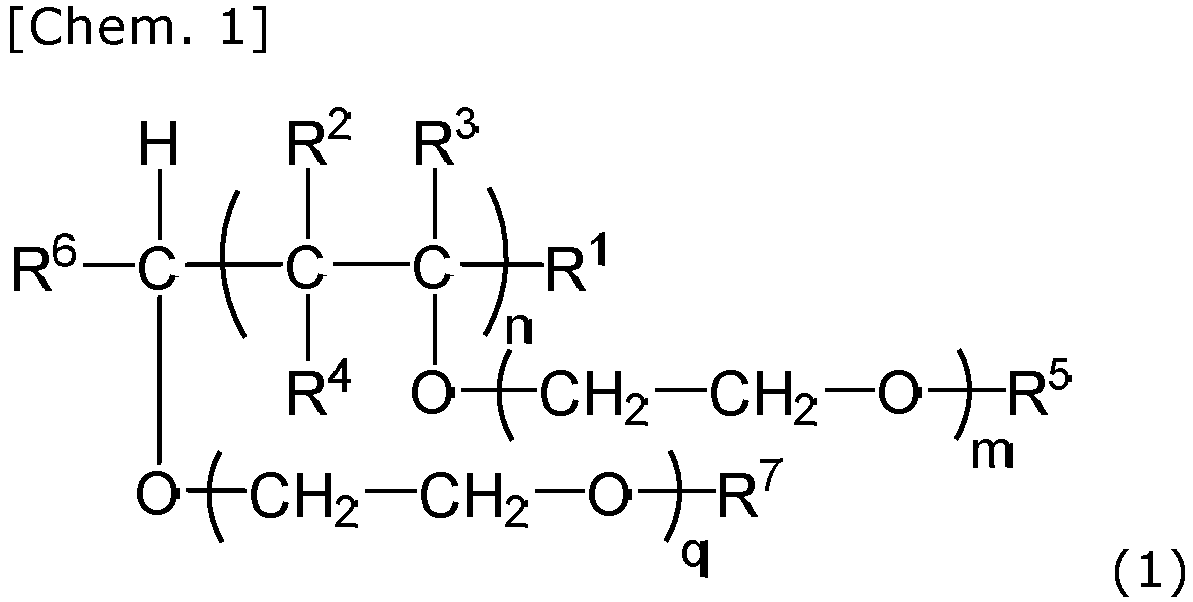
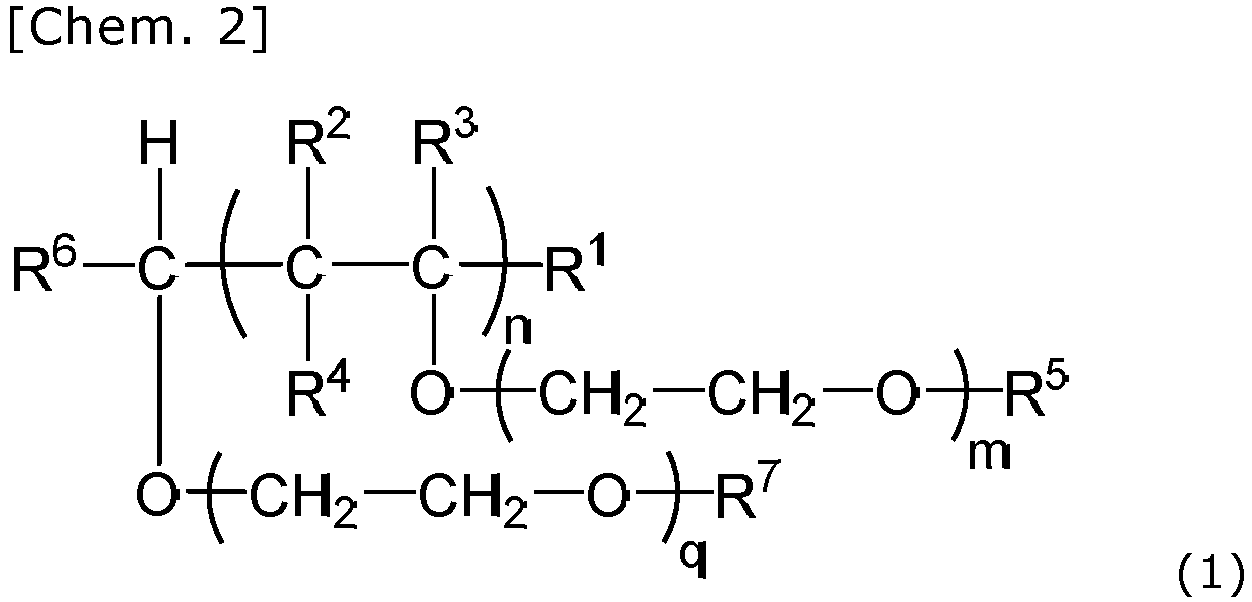
- An oxyethylene chain-containing polymer according to the present invention is represented by the following general formula (1).
- R 1 is -(CH 2 ) p -SH, -(CH 2 ) p -N 3 , -(CH 2 ) p -NH 2 , or -(CH 2 ) p -COOH.
- p is an integer of 1 to 5, preferably an integer of 1 to 3, more preferably 1 or 2.
- R 2 to R 4 are each independently hydrogen or a C 1-10 alkyl group, preferably hydrogen or a C 1-4 alkyl group, more preferably hydrogen or a C 1-3 alkyl group, still more preferably hydrogen or a C 1-2 alkyl group, still more preferably hydrogen.
- R 5 is a C 1-10 alkyl group, preferably a C 1-10 alkyl group, more preferably a C 1-4 alkyl group, still more preferably a C 1-2 alkyl group.
- R 6 is hydrogen or a C 1-5 alkyl group, preferably a C 1-2 alkyl group, more preferably a methyl group.
- R 7 is a C 1-10 alkyl group, preferably a C 1-7 alkyl group, more preferably a C 1-4 alkyl group.
- n is an integer of 5 to 1000, preferably an integer of 10 to 500, more preferably an integer of 20 to 400.
- n is an integer of 1 to 10, preferably an integer of 1 to 5, more preferably an integer of 1 to 3.
- q is an integer of 0 to 5, preferably an integer of 0 to 2, more preferably an integer of 0 to 1.
- the above-described alkyl group may be linear or branched.
- An oxyethylene chain-containing polymer according to the present invention has a highly reactive functional group introduced into one end ( ⁇ end) thereof, in which the functional group is a thiol group, azido group, amino group, or carboxyl group.
- the polymer has excellent biocompatibility and still can modify a base material, microparticles, or the like. Because of this, the polymer can give biocompatibility to a base material, microparticles, or the like.
- such a highly reactive functional group can be further converted to further enhance capabilities such as reactivity and a modifying capability.
- n is an integer of 5 to 1000, preferably an integer of 10 to 500, more preferably an integer of 20 to 400.
- the number-average molecular weight (Mn) of an oxyethylene chain-containing polymer according to the present invention is preferably 500 or more and 100,000 or less.
- the lower limit of the number-average molecular weight (Mn) is more preferably 700 or more, still more preferably 1,000 or more, still more preferably 1,500 or more, and the upper limit is more preferably 70,000 or less, still more preferably 50,000 or less, still more preferably 30,000 or less, particularly preferably 20,000 or less.
- the oxyethylene chain-containing polymer having a number-average molecular weight (Mn) in the above-described ranges has excellent biocompatibility, and in addition, can more easily modify a base material, microparticles, and the like, and more easily give biocompatibility.
- the ratio (the molecular-weight distribution, Mw/Mn) of the weight-average molecular weight (Mw) of an oxyethylene chain-containing polymer according to the present invention to the number-average molecular weight (Mn) of the polymer is preferably 1.0 or more and 3.0 or less, more preferably 1.0 or more and 2.0 or less, still more preferably 1.0 or more and 1.5 or less, still more preferably 1.0 or more and 1.3 or less.
- the oxyethylene chain-containing polymer having a molecular-weight distribution (Mw/Mn) in the above-described ranges makes it easier to keep the capability of the polymer uniformly.
- the number-average molecular weight (Mn) and the weight-average molecular weight (Mw) in the present invention can be calculated from a standard polystyrene calibration curve based on a gel permeation chromatography (GPC) method.
- an oxyethylene chain-containing polymer having a carbonyl group at one end thereof and represented by the following general formula (2) is synthesized through living cationic polymerization in the presence of a polymerization initiator.
- a small amount of water is added, so that the end cation reacts with the water, thus enabling a carbonyl group to be introduced.
- the carbonyl group at one end of the oxyethylene chain-containing polymer represented by the following general formula (2) is converted to thereby enable a reactive functional group (thiol group, azido group, amino group, or carboxyl group) to be introduced.
- R 2 to R 7 , n, m, and q in the general formula (2) are the same as R 2 to R 7 , n, m, and q in the general formula (1).
- preferable aspects of R 2 to R 7 , n, m, and q in the general formula (2) are the same as preferable aspects of R 2 to R 7 , n, m, and q in the general formula (1).
- a vinyl ether usable as a raw-material monomer is, for example, a vinyl ether represented by the following general formula (3).
- R 2 to R 5 and m in the general formula (3) are the same as R 2 to R 5 and m in the general formula (1).
- preferable aspects of R 2 to R 5 and m in the general formula (2) are the same as preferable aspects of R 2 to R 5 and m in the general formula (1).
- Examples of a vinyl ether represented by the general formula (3) include 2-methoxyethylvinyl ether (MOVE), 2-ethoxyethylvinyl ether (EOVE), diethylene glycol monoethylmonovinyl ether (EOEOVE), and triethylene glycol monomethylvinyl ether (TEGMVE).
- MOVE 2-methoxyethylvinyl ether
- EOVE 2-ethoxyethylvinyl ether
- EEEOVE diethylene glycol monoethylmonovinyl ether
- TEGMVE triethylene glycol monomethylvinyl ether
- a polymerization initiator to be used in the polymerization of an oxyethylene chain-containing polymer is not particularly limited, subject to being a polymerization initiator that advances cationic polymerization in a living manner.
- the initiator may be a conventionally known polymerization initiator.
- Examples of a polymerization initiator to be suitably used include HI/I 2 -based initiators (for example, in JP S60-228509A ) and polymerization initiators (for example, in JP3096494B2 , JP H07-002805B2 , JP S62-257910A , JP H01-108202A , and JP H01-108203A ) obtained by combining a Lewis-acid catalyst (organic aluminum compound or the like) with an additive (ether or the like) such as a base.
- HI/I 2 -based initiators for example, in JP S60-228509A
- polymerization initiators for example, in JP3096494B2 , JP H07-002805B2 , JP S62-257910A , JP H01-108202A , and JP H01-108203A
- the usage of the polymerization initiator is preferably 0.001 to 20 mol%, more preferably 0.01 to 10 mol%, particularly preferably 1 mol% or less, with respect to the total amount of the raw-material monomers.
- the living cationic polymerization reaction is preferably performed in the presence of, or may be performed in the absence of, a suitable organic solvent.
- organic solvent that is usable include aromatic hydrocarbon solvents such as benzene, toluene, and xylene; aliphatic hydrocarbon solvents such as propane, n -butane, isobutane, n -pentane, isopentane, n -hexane, n -heptane, n -octane, isooctane, decane, hexadecane, and cyclohexane; halogenated hydrocarbon solvents such as methylene chloride, ethylene chloride, and carbon tetrachloride; and ether solvents such as diethyl ether, dibutyl ether, tetrahydrofuran (THF), dioxane, and ethylene glycol diethyl ether.
- aromatic hydrocarbon solvents such
- organic solvents may be used singly or in combination of two or more kinds thereof, as necessary.
- hydrocarbon solvents such as aromatic hydrocarbon solvents and aliphatic hydrocarbon solvents are preferable, and toluene, THF, and the like are preferable.
- the polymerization temperature in the living cationic polymerization reaction depends, for example, on the kinds of a polymerization initiator, monomer, and solvent that are used, and is usually -80 to 150°C, preferably -50 to 100°C, particularly preferably -20 to 80°C.
- the polymerization time depends, for example, on the polymerization initiator, monomer, and solvent that are used and on the reaction temperature, and is usually approximately 10 minutes to 100 hours.
- the polymerization reaction may be suitably performed using any of a batch method and a continuous method. After the polymerization reaction, a purification treatment, if desired, may be performed using a known method in order to remove an unreacted monomer.
- n in PMOVE is an integer of 5 to 1000, preferably an integer of 10 to 500, more preferably an integer of 20 to 400, as in the general formula (1).
- a catalyst, polymerization initiator, solvent, and the like in the following series of reactions may be suitably selected with reference to a conventional known method.
- the polymerization reaction conditions such as a polymerization temperature and a polymerization time may be set suitably.
- the carbonyl group at one end of the PMOVE obtained as described above can be converted in accordance with the following reaction formula (II) to synthesize a PMOVE having a thiol group at one end thereof.
- reaction formula (II) Journal of Colloid and Interface Science, 428 (2014), 276-285 can be referred to.
- EtOH represents ethanol
- MsCl represents methanesulfonyl chloride
- TEA represents triethylamine
- KSAc represents potassium thioacetate
- DMSO dimethyl sulfoxide
- MeOH represents methanol
- NaOH sodium hydroxide
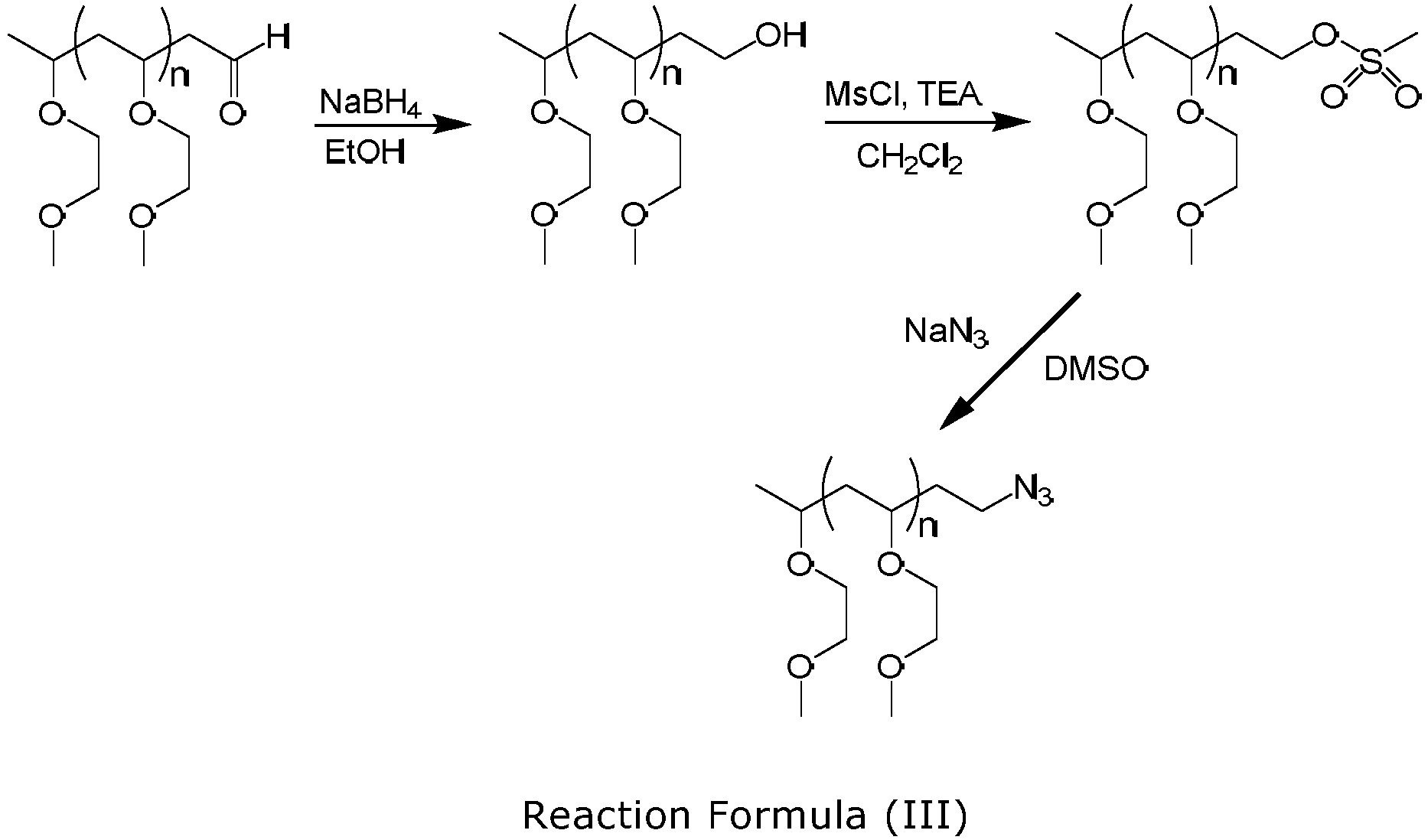
- the carbonyl group at one end of the PMOVE obtained as described above can be converted in accordance with the following reaction formula (III) to synthesize a PMOVE having an azido group at one end thereof.
- reaction formula (III) Med Chem Res (2016) 25: 824-833 can be referred to.
- NaN 3 is sodium azide
- the other abbreviations are the same as the abbreviations in the above-described reaction formula (II).
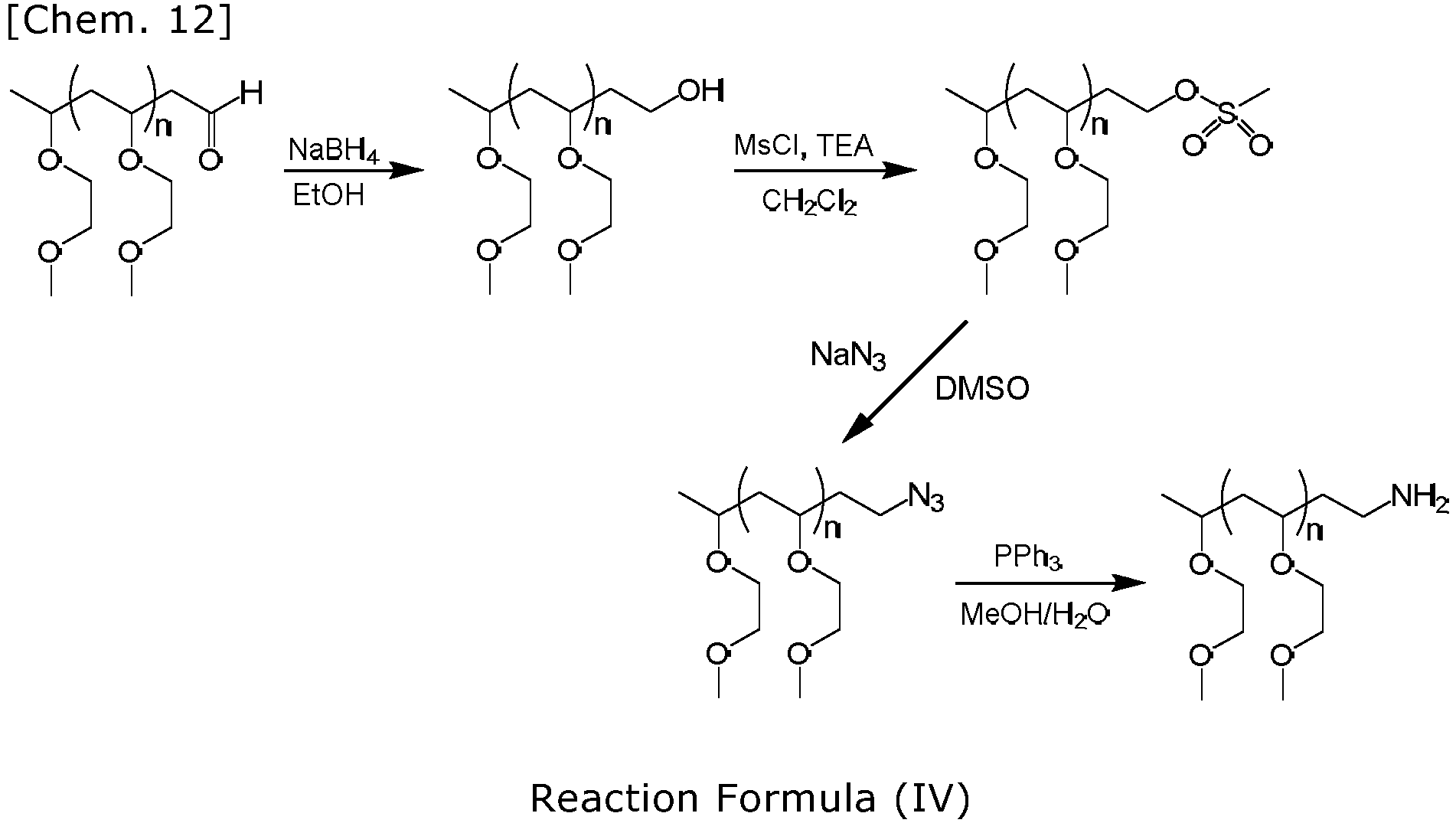
- the carbonyl group at one end of the PMOVE obtained as described above can be converted in accordance with the following reaction formula (IV) to synthesize a PMOVE having an amino group at one end thereof.
- reaction formula (IV) Med Chem Res (2016) 25: 824-833 can be referred to.
- PPh 3 is triphenylphosphine, and the other abbreviations are the same as the abbreviations in the above-described reaction formula (II).
- the carbonyl group at one end of the PMOVE obtained as described above can be converted in accordance with the following reaction formula (IV) to synthesize a PMOVE having a carboxyl group at one end thereof.
- reaction formula (V) NaClO 2 represents sodium chlorite, and NaH 2 PO 4 represents sodium dihydrogenphosphate.
- the structure of a polymer was determined from the results of 1 H-NMR analysis.
- the number-average molecular weight (Mn) and molecular-weight distribution (Mw/Mn) of a polymer were determined from the results of GPC analysis of the molecular weight (in terms of polystyrene).
- Mn number-average molecular weight
- Mw/Mn molecular-weight distribution
- polymer name-functional group name a polymer having a functional group at one end.
- the resulting solution was quenched with 1.0 M hydrochloric acid, and then, the solvent was removed.
- the resulting product was redissolved in water, and dialytically purified through a dialysis membrane having an MWCO of 3,500 to give a PMOVE-SAc.
- 500 mg of PMOVE-SAc and 12 mL of dehydrated methanol were mixed and sparged with argon.
- 20 mg of NaOH and 46 mg of dithiothreitol were mixed, and allowed to react for 1 hour.
- the resulting solution was quenched with 1.0 M hydrochloric acid, and the resulting solution was dialytically purified through a dialysis membrane having an MWCO of 3,500 at 4°C in a refrigerator to give a PMOVE-SH.
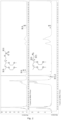
- the resulting reaction product (PMOVE-SH) and a precursor thereof (PMOVE-SAc) were subjected to a 1 H-NMR measurement under the above-described conditions to give 1 H-NMR spectra illustrated in FIG. 1 .
- the upper diagram in FIG. 1 is the spectrum of the precursor
- the lower diagram in FIG. 1 is the spectrum of the reaction product.
- the spectra were analyzed with the results as follows: in the spectrum of the precursor, the peak (*1 in the upper diagram in FIG. 1 ) derived from the methylene group (CH 2 ) adjacent to the thioacetyl group (SCOCH 3 ) was observed at the position of 2.90 ppm; and in the spectrum of the reaction product, it was observed that the peak (*3 in the lower diagram in FIG.
- Mn number-average molecular weight
- Mw/Mn molecular-weight distribution
- a PMOVE-CHO was obtained in the same manner as in Example 1. Then, the carbonyl group at one end of PMOVE was converted into an azido group in accordance with the above-described reaction formula (III). Specifically, 500 mg of PMOVE-Ms, 12 mL of dehydrated DMSO, and 39 mg of NaN 3 were mixed and allowed to react under argon at 70°C for 18 hours. The resulting solution was quenched with water, and then, the solvent was removed. The resulting product was redissolved in water, and dialytically purified through a dialysis membrane having an MWCO of 3,500 to give a PMOVE-N 3 .
- the resulting reaction product (PMOVE-N 3 ) and a precursor thereof (PMOVE-Ms) were subjected to a 1 H-NMR measurement under the above-described conditions to give 1 H-NMR spectra illustrated in FIG. 2 .
- the upper diagram in FIG. 2 is the spectrum of the precursor, and the lower diagram in FIG. 2 is the spectrum of the reaction product.
- the spectra were analyzed with the results as follows: in the spectrum of the precursor, the peak (*4 in the upper diagram in FIG.
- a PMOVE-CHO was obtained in the same manner as in Example 1. Then, the carbonyl group at one end of PMOVE was converted into an amino group in accordance with the above-described reaction formula (IV). Specifically, 500 mg of PMOVE-N 3 , 525 mg of PPh 3 , 8.7 mL of MeOH, and 3.3 mL of water were mixed, and allowed to react for 5 hours under reflux at 90°C. The resulting solution was quenched with 1.0 M hydrochloric acid, and then, the solvent was removed. The resulting product was redissolved in water, and dialytically purified through a dialysis membrane having an MWCO of 3,500 to give a PMOVE-NH 2 .
- the PMOVE-NH 2 obtained as described above was quantitated through a cation-exchange column (SP-5PW), using GPC (an RI detector: RI-2031 Plus (manufactured by JASCO Corporation); a GPC pump: PU-1580 (manufactured by JASCO Corporation; mobile phase, an aqueous solution of 2 mM NaCl).
- GPC an RI detector: RI-2031 Plus (manufactured by JASCO Corporation); a GPC pump: PU-1580 (manufactured by JASCO Corporation; mobile phase, an aqueous solution of 2 mM NaCl).
- the ratio of introduction of an amino group into one end was approximately 100%. Additionally, from this result, it is estimated that the ratio of introduction of an azido group into one end was approximately 100% also in the polymer having an azido group at one end in Example 2, in which the polymer was a precursor of the polymer having an amino group at one end in Example 3.
- Mn number-average molecular weight
- Mw/Mn molecular-weight distribution
- a PMOVE-CHO was obtained in the same manner as in Example 1. Then, the carbonyl group at one end of PMOVE was converted into a carboxyl group in accordance with the above-described reaction formula (V). Specifically, 500 mg of PMOVE-CHO, 5.5 mL of ethanol, and 0.2 mL of 2-methyl-2-butene were mixed, and cooled to 0°C with good stirring. Subsequently, 34 mg of NaClO 2 , 36 mg of NaH 2 PO 4 , and 0.9 mL of water were mixed to another flask, and stirred well. This aqueous solution was dropped into the ethanol solution, stirred for 5 minutes, and then further allowed to react at room temperature for 15 hours. The resulting solution was quenched with saturated saline, and the resulting solution was dialytically purified through a dialysis membrane having an MWCO of 3,500 to give a PMOVE-COOH.
- the PMOVE-COOH obtained as described above was subjected to measurement by 1 H-NMR, verifying that a carboxyl group had been introduced into one end.
- the ratio of introduction of a carboxyl group into one end was approximately 100%.
- Mn number-average molecular weight
- Mw/Mn molecular-weight distribution
- a PMOVE-SH was obtained in the same manner as in Example 1 except that 55.7 ⁇ L of MOEA was mixed.
- a PMOVE-SH was obtained in the same manner as in Example 1 except that 3.5 mL of MOVE, 230 ⁇ L of MOEA, 138 mL of toluene, 2.4 mL of THF, 162 ⁇ L of 2,6-di-tert-butylpyridine, 3.3 mL of ethyl aluminum sesquichloride (25% in a toluene solution), and 1.5 mL of tin chloride (IV) (1.0 M in a heptane solution) were mixed.
- Mn number-average molecular weight
- Mw/Mn molecular-weight distribution
- a PEOVE-SH was obtained in the same manner as in Example 1 except that 6.5 mL of 2-ethoxyethylvinyl ether (EOVE) as a raw-material monomer and 203 ⁇ L of EOEA namely an acetic acid adduct of EOVE as an initiator were mixed.
- EOVE 2-ethoxyethylvinyl ether
- Mn number-average molecular weight
- Mw/Mn molecular-weight distribution
- a PEOEOVE-SH was obtained in the same manner as in Example 1 except that 8.7 mL of 2-(2-ethoxy)ethoxyethylvinyl ether (EOEOVE) as a raw-material monomer and 333 ⁇ L of EOEOEA namely an acetic acid adduct of EOEOVE as an initiator were mixed.
- EOEOVE 2-(2-ethoxy)ethoxyethylvinyl ether
- Mn number-average molecular weight
- Mw/Mn molecular-weight distribution
- Mn number-average molecular weight
- Mw/Mn molecular-weight distribution
- Mn number-average molecular weight
- Mw/Mn molecular-weight distribution
- a PNBVE-SH was obtained in the same manner as in Example 1 except that n-butylvinyl ether (NBVE) as a raw-material monomer was used in place of 2-methoxyethylvinyl ether (MOVE).
- NBVE n-butylvinyl ether
- MOVE 2-methoxyethylvinyl ether
- Mn number-average molecular weight
- Mw/Mn molecular-weight distribution
- a dispersion of 150 nm gold microparticles modified with citric acid was concentrated by centrifugation, and then dispersed in 90 ⁇ L of water. Subsequently, 10 ⁇ L of the PMOVE-SH prepared at a concentration such that the average density of the polymer modification would become 1.12 pcs/nm 2 to gold microparticles was mixed. The resulting mixture was allowed to react at 60°C for 1 hour. After the reaction, the resulting solution was concentrated by centrifugation, and the supernatant liquid was removed. Then, the resulting solution was washed several times with water containing 0.25 mM sodium citrate and 0.05 v/v% Tween 20.
- the average particle diameter of the PMOVE-coated gold microparticles obtained in the above-described test was measured by dynamic light scattering using a particle diameter measurement device (Model No.: Zetasizer Nano ZS, manufactured by Malvern Panalytical Ltd.). The average particle diameter was found to have been increased to 175.6 nm. From this result, it is estimated that the surfaces of the gold microparticles were successfully modified with the PMOVE.
Landscapes
- Chemical & Material Sciences (AREA)
- Health & Medical Sciences (AREA)
- Chemical Kinetics & Catalysis (AREA)
- Medicinal Chemistry (AREA)
- Polymers & Plastics (AREA)
- Organic Chemistry (AREA)
- General Chemical & Material Sciences (AREA)
- Polyethers (AREA)
- Addition Polymer Or Copolymer, Post-Treatments, Or Chemical Modifications (AREA)
Abstract
Description
- The present invention relates to an oxyethylene chain-containing polymer.
- A vinyl ether polymer is conventionally used as a compounding component of a chemical product such as an adhesive, coating material, or lubricant. It is known that a vinyl ether generally contains an electron-donating substituent, and thus, produces a vinyl ether polymer through cationic polymerization. For the purpose of modifying a vinyl ether polymer, a polymerization method of introducing a functional group into an end has been studied. For example, it is disclosed that an acetal group is introduced into an end of a vinyl ether polymer (see Patent Literature 1 and 2).
- In addition, an oxyethylene chain-containing polymer is a material having extremely excellent biocompatibility. To utilize an oxyethylene chain-containing polymer as a biomaterial, it is vital to introduce a highly reactive functional group into the polymer. However, there is no known oxyethylene chain-containing polymer having a highly reactive functional group introduced into an end thereof. Because of this, there is a demand for development of an oxyethylene chain-containing polymer having excellent biocompatibility and still having excellent reactivity.
-
- Patent Literature 1:
JP2003-201315A - Patent Literature 2:
JP2004-244535A - Accordingly, an object of the present invention is to provide an oxyethylene chain-containing polymer having excellent biocompatibility and still having excellent reactivity.
- The present inventors have vigorously made studies to solve the above-described problem, and consequently completed the present invention through the discovery that introducing a specific highly reactive functional group into one end (ω end) of an oxyethylene chain-containing polymer can solve the above-described problem.
- That is, the present invention provides the following inventions.
- [1] An oxyethylene chain-containing polymer represented by the following general formula (1):

- (wherein, in the general formula (1), R1 is -(CH2)p-SH, -(CH2)p-N3, -(CH2)p-NH2, or -(CH2)p-COOH, and p is an integer of 1 to 5;
- R2 to R4 are each independently hydrogen or a C1-10 alkyl group;
- R5 is a C1-10 alkyl group;
- R6 is hydrogen or a C1-5 alkyl group;
- R7 is a C1-10 alkyl group;
- n is an integer of 5 to 1000;
- m is an integer of 1 to 10; and
- q is an integer of 0 to 5).
- [2] The oxyethylene chain-containing polymer according to [1],
- wherein, in the general formula (1), R1 is -(CH2)p-SH, and p is an integer of 1 to 3;
- R2 to R4 are each independently hydrogen or a C1-4 alkyl group;
- R5 is a C1-4 alkyl group;
- R6 is a C1-2 alkyl group;
- R7 is a C1-7 alkyl group;
- n is an integer of 10 to 500;
- m is an integer of 1 to 5; and
- q is an integer of 0 to 2.
- [3] The oxyethylene chain-containing polymer according to [1],
- wherein, in the general formula (1), R1 is -(CH2)p-N3, and p is an integer of 1 to 3;
- R2 to R4 are each independently hydrogen or a C1-4 alkyl group;
- R5 is a C1-4 alkyl group;
- R6 is a C1-2 alkyl group;
- R7 is a C1-7 alkyl group;
- n is an integer of 10 to 500;
- m is an integer of 1 to 5; and
- q is an integer of 0 to 2.
- [4] The oxyethylene chain-containing polymer according to [1],
- wherein, in the general formula (1), R1 is -(CH2)p-NH2, and p is an integer of 1 to 3;
- R2 to R4 are each independently hydrogen or a C1-4 alkyl group;
- R5 is a C1-4 alkyl group;
- R6 is a C1-2 alkyl group;
- R7 is a C1-7 alkyl group;
- n is an integer of 10 to 500;
- m is an integer of 1 to 5; and
- q is an integer of 0 to 2.
- [5] The oxyethylene chain-containing polymer according to [1],
- wherein, in the general formula (1), R1 is -(CH2)p-COOH, and p is an integer of 1 to 3;
- R2 to R4 are each independently hydrogen or a C1-4 alkyl group;
- R5 is a C1-4 alkyl group;
- R6 is a C1-2 alkyl group;
- R7 is a C1-7 alkyl group;
- n is an integer of 10 to 500;
- m is an integer of 1 to 5; and
- q is an integer of 0 to 2.
- [6] The oxyethylene chain-containing polymer according to any one of [1] to [5], wherein the number-average molecular weight (Mn) of the oxyethylene chain-containing polymer is 500 or more and 100,000 or less.
- [7] The oxyethylene chain-containing polymer according to any one of [1] to [6], wherein the ratio of the weight-average molecular weight (Mw) of the oxyethylene chain-containing polymer to the number-average molecular weight (Mn) of the polymer is 1.0 or more and 3.0 or less.
- The present invention can provide an oxyethylene chain-containing polymer having excellent biocompatibility and still having excellent reactivity. Such an oxyethylene chain-containing polymer has excellent reactivity, and thus, can more easily modify a base material, microparticles, or the like, and can give biocompatibility to a base material, microparticles, or the like.
-
- [
FIG. 1] FIG. 1 is 1H-NMR spectra of a reaction product (oxyethylene chain-containing polymer) and a precursor thereof that were subjected to measurement in Example 1. - [
FIG. 2] FIG. 2 is 1H-NMR spectra of a reaction product (oxyethylene chain-containing polymer) and a precursor thereof that were subjected to measurement in Example 2. - An oxyethylene chain-containing polymer according to the present invention is represented by the following general formula (1).
- In the general formula (1), R1 is -(CH2)p-SH, -(CH2)p-N3, -(CH2)p-NH2, or -(CH2)p-COOH.
- p is an integer of 1 to 5, preferably an integer of 1 to 3, more preferably 1 or 2.
- R2 to R4 are each independently hydrogen or a C1-10 alkyl group, preferably hydrogen or a C1-4 alkyl group, more preferably hydrogen or a C1-3 alkyl group, still more preferably hydrogen or a C1-2 alkyl group, still more preferably hydrogen.
- R5 is a C1-10 alkyl group, preferably a C1-10 alkyl group, more preferably a C1-4 alkyl group, still more preferably a C1-2 alkyl group.
- R6 is hydrogen or a C1-5 alkyl group, preferably a C1-2 alkyl group, more preferably a methyl group.
- R7 is a C1-10 alkyl group, preferably a C1-7 alkyl group, more preferably a C1-4 alkyl group.
- n is an integer of 5 to 1000, preferably an integer of 10 to 500, more preferably an integer of 20 to 400.
- m is an integer of 1 to 10, preferably an integer of 1 to 5, more preferably an integer of 1 to 3.
- q is an integer of 0 to 5, preferably an integer of 0 to 2, more preferably an integer of 0 to 1.
- In this regard, the above-described alkyl group may be linear or branched.
- An oxyethylene chain-containing polymer according to the present invention has a highly reactive functional group introduced into one end (ω end) thereof, in which the functional group is a thiol group, azido group, amino group, or carboxyl group. Thus, the polymer has excellent biocompatibility and still can modify a base material, microparticles, or the like. Because of this, the polymer can give biocompatibility to a base material, microparticles, or the like. In addition, such a highly reactive functional group can be further converted to further enhance capabilities such as reactivity and a modifying capability.
- Examples of a preferable embodiment of an oxyethylene chain-containing polymer represented by the general formula (1) include the below-described polymers. In the following formula, n is an integer of 5 to 1000, preferably an integer of 10 to 500, more preferably an integer of 20 to 400.


- The number-average molecular weight (Mn) of an oxyethylene chain-containing polymer according to the present invention is preferably 500 or more and 100,000 or less. The lower limit of the number-average molecular weight (Mn) is more preferably 700 or more, still more preferably 1,000 or more, still more preferably 1,500 or more, and the upper limit is more preferably 70,000 or less, still more preferably 50,000 or less, still more preferably 30,000 or less, particularly preferably 20,000 or less. The oxyethylene chain-containing polymer having a number-average molecular weight (Mn) in the above-described ranges has excellent biocompatibility, and in addition, can more easily modify a base material, microparticles, and the like, and more easily give biocompatibility.
- The ratio (the molecular-weight distribution, Mw/Mn) of the weight-average molecular weight (Mw) of an oxyethylene chain-containing polymer according to the present invention to the number-average molecular weight (Mn) of the polymer is preferably 1.0 or more and 3.0 or less, more preferably 1.0 or more and 2.0 or less, still more preferably 1.0 or more and 1.5 or less, still more preferably 1.0 or more and 1.3 or less. The oxyethylene chain-containing polymer having a molecular-weight distribution (Mw/Mn) in the above-described ranges makes it easier to keep the capability of the polymer uniformly.
- In this regard, the number-average molecular weight (Mn) and the weight-average molecular weight (Mw) in the present invention can be calculated from a standard polystyrene calibration curve based on a gel permeation chromatography (GPC) method.
- Embodiments of a method of producing an oxyethylene chain-containing polymer according to the present invention will be described. First, using a vinyl ether as a raw-material monomer, for example, an oxyethylene chain-containing polymer having a carbonyl group at one end thereof and represented by the following general formula (2) is synthesized through living cationic polymerization in the presence of a polymerization initiator. Upon completion of the polymerization, a small amount of water is added, so that the end cation reacts with the water, thus enabling a carbonyl group to be introduced. Subsequently, the carbonyl group at one end of the oxyethylene chain-containing polymer represented by the following general formula (2) is converted to thereby enable a reactive functional group (thiol group, azido group, amino group, or carboxyl group) to be introduced.


- In this regard, R2 to R7, n, m, and q in the general formula (2) are the same as R2 to R7, n, m, and q in the general formula (1).
- In addition, preferable aspects of R2 to R7, n, m, and q in the general formula (2) are the same as preferable aspects of R2 to R7, n, m, and q in the general formula (1).
- A vinyl ether usable as a raw-material monomer is, for example, a vinyl ether represented by the following general formula (3).

- R2 to R5 and m in the general formula (3) are the same as R2 to R5 and m in the general formula (1).
- In addition, preferable aspects of R2 to R5 and m in the general formula (2) are the same as preferable aspects of R2 to R5 and m in the general formula (1).
- Examples of a vinyl ether represented by the general formula (3) include 2-methoxyethylvinyl ether (MOVE), 2-ethoxyethylvinyl ether (EOVE), diethylene glycol monoethylmonovinyl ether (EOEOVE), and triethylene glycol monomethylvinyl ether (TEGMVE).
- A polymerization initiator to be used in the polymerization of an oxyethylene chain-containing polymer is not particularly limited, subject to being a polymerization initiator that advances cationic polymerization in a living manner. The initiator may be a conventionally known polymerization initiator. Examples of a polymerization initiator to be suitably used, for example, a living cationic polymerization initiator for vinyl ethers, include HI/I2-based initiators (for example, in
JP S60-228509A JP3096494B2 JP H07-002805B2 JP S62-257910A JP H01-108202A JP H01-108203A - The usage of the polymerization initiator is preferably 0.001 to 20 mol%, more preferably 0.01 to 10 mol%, particularly preferably 1 mol% or less, with respect to the total amount of the raw-material monomers.
- In addition, the living cationic polymerization reaction is preferably performed in the presence of, or may be performed in the absence of, a suitable organic solvent. Examples of an organic solvent that is usable include aromatic hydrocarbon solvents such as benzene, toluene, and xylene; aliphatic hydrocarbon solvents such as propane, n-butane, isobutane, n-pentane, isopentane, n-hexane, n-heptane, n-octane, isooctane, decane, hexadecane, and cyclohexane; halogenated hydrocarbon solvents such as methylene chloride, ethylene chloride, and carbon tetrachloride; and ether solvents such as diethyl ether, dibutyl ether, tetrahydrofuran (THF), dioxane, and ethylene glycol diethyl ether. These organic solvents may be used singly or in combination of two or more kinds thereof, as necessary. In addition, among these organic solvents, hydrocarbon solvents such as aromatic hydrocarbon solvents and aliphatic hydrocarbon solvents are preferable, and toluene, THF, and the like are preferable.
- The polymerization temperature in the living cationic polymerization reaction depends, for example, on the kinds of a polymerization initiator, monomer, and solvent that are used, and is usually -80 to 150°C, preferably -50 to 100°C, particularly preferably -20 to 80°C. In addition, the polymerization time depends, for example, on the polymerization initiator, monomer, and solvent that are used and on the reaction temperature, and is usually approximately 10 minutes to 100 hours. The polymerization reaction may be suitably performed using any of a batch method and a continuous method. After the polymerization reaction, a purification treatment, if desired, may be performed using a known method in order to remove an unreacted monomer.
- Below, one example of polymerization reaction of an oxyethylene chain-containing polymer (PMOVE) is illustrated, in which 2-methoxyethylvinyl ether (MOVE) is used as a raw-material monomer. First, a PMOVE having a carbonyl group at one end thereof is synthesized from an MOVE in the presence of a polymerization initiator in accordance with the following reaction formula (I). Upon completion of the polymerization, a small amount of water is added, so that the end cation reacts with the water, thus enabling a carbonyl group to be introduced. In respect of the polymerization reaction conditions and the like for the following reaction formula (I), J. Polym. Sci., Part A: Polym. Chem. 2005, 43, 468-472 can be referred to. In the following reaction formulae (I) to (V), n in PMOVE is an integer of 5 to 1000, preferably an integer of 10 to 500, more preferably an integer of 20 to 400, as in the general formula (1).

- Below, a method (a reaction formula) of synthesizing a PMOVE will be described in respect of each kind of reactive functional group. A catalyst, polymerization initiator, solvent, and the like in the following series of reactions may be suitably selected with reference to a conventional known method. In addition, the polymerization reaction conditions such as a polymerization temperature and a polymerization time may be set suitably.
- In a case where the reactive functional group is a thiol group, the carbonyl group at one end of the PMOVE obtained as described above can be converted in accordance with the following reaction formula (II) to synthesize a PMOVE having a thiol group at one end thereof. In respect of the polymerization reaction conditions and the like for the following reaction formula (II), Journal of Colloid and Interface Science, 428 (2014), 276-285 can be referred to. In the following reaction formula (II), EtOH represents ethanol, MsCl represents methanesulfonyl chloride, TEA represents triethylamine, KSAc represents potassium thioacetate, DMSO represents dimethyl sulfoxide, MeOH represents methanol, and NaOH represents sodium hydroxide.

- In a case where the reactive functional group is an azido group, the carbonyl group at one end of the PMOVE obtained as described above can be converted in accordance with the following reaction formula (III) to synthesize a PMOVE having an azido group at one end thereof. In respect of the polymerization reaction conditions and the like for the following reaction formula (III), Med Chem Res (2016) 25: 824-833 can be referred to. In the following reaction formula (III), NaN3 is sodium azide, and the other abbreviations are the same as the abbreviations in the above-described reaction formula (II).
- In a case where the reactive functional group is an amino group, the carbonyl group at one end of the PMOVE obtained as described above can be converted in accordance with the following reaction formula (IV) to synthesize a PMOVE having an amino group at one end thereof. In respect of the polymerization reaction conditions and the like for the following reaction formula (IV), Med Chem Res (2016) 25: 824-833 can be referred to. In the following reaction formula (IV), PPh3 is triphenylphosphine, and the other abbreviations are the same as the abbreviations in the above-described reaction formula (II).
- In a case where the reactive functional group is a carboxyl group, the carbonyl group at one end of the PMOVE obtained as described above can be converted in accordance with the following reaction formula (IV) to synthesize a PMOVE having a carboxyl group at one end thereof. In the following reaction formula (V), NaClO2 represents sodium chlorite, and NaH2PO4 represents sodium dihydrogenphosphate.

- Next, the present invention will be described in more detail with reference to Examples and Comparative Examples. The present invention should not be restricted to these Examples or the like in any way.
- In Examples and Comparative Examples, the structure of a polymer was determined from the results of 1H-NMR analysis. In addition, the number-average molecular weight (Mn) and molecular-weight distribution (Mw/Mn) of a polymer were determined from the results of GPC analysis of the molecular weight (in terms of polystyrene). The analytical device, measurement conditions, and the like in each measurement are described below.
-
- Device: Model No. ECS-400, manufactured by JEOL Ltd.
- Solvent: deuteriochloroform
- Measurement temperature: 25°C
-
- Device: "HLC-8320GPC", manufactured by Tosoh Corporation
- Detector: an RI detector
- Mobile phase: tetrahydrofuran
- Flow rate: 1 mL/min
- Column: "Shodex LF-804" × 3 columns, manufactured by Showa Denko K.K.
- Column temperature: 40°C
- Using 2-methoxyethylvinyl ether (MOVE) as a raw-material monomer, a PMOVE having a carbonyl group at one end thereof (PMOVE-CHO) was obtained in accordance with the above-described reaction formula (I). Specifically, 5.8 mL of MOVE as a raw-material monomer, 147 µL of MOEA, namely an acetic acid adduct of MOVE, as a polymerization initiator, 90 mL of toluene, 1.6 mL of THF, 108 µL of 2,6-di-tert-butylpyridine, 2.2 mL of ethyl aluminum sesquichloride (25% in a toluene solution), and 1.0 mL of tin chloride (IV) (1.0 M in a heptane solution) were mixed, and allowed to undergo polymerization reaction. Upon completion of the polymerization, 1.0 mL of water was mixed, and a carbonyl group was introduced into one end. The solvent was removed using an evaporator, the residue was redissolved in ethanol, and then purified using a 0.45 µm syringe filter. The solvent was again removed to give a PMOVE-CHO.
- Herein, a polymer having a functional group at one end is referred to as a "polymer name-functional group name".
- Then, the carbonyl group at one end of PMOVE was converted into a thiol group in accordance with the above-described reaction formula (II). Specifically, 1.0 g of PMOVE-CHO, 0.3 g of sodium borohydride, and 20 mL of ethanol were first mixed, and the resulting mixture was stirred overnight. The resulting mixture was dissolved in water, and dialytically purified through a dialysis membrane having an MWCO of 3,500 to give a PMOVE-OH. Subsequently, 500 mg of PMOVE-OH, 12 mL of CH2Cl2, 63 µL of TEA, and 23 µL of MsCl were mixed, allowed to react under argon at 0°C for 0.5 hours, and further allowed to react at room temperature for 3.5 hours. The resulting solution was washed with water and saturated saline, and the solvent was removed with an evaporator to give a PMOVE-Ms. Subsequently, 500 mg of PMOVE-Ms, 12 mL of dehydrated DMSO, and 57 mg of KSAc were mixed and allowed to react under argon at 40°C for 18 hours. The resulting solution was quenched with 1.0 M hydrochloric acid, and then, the solvent was removed. The resulting product was redissolved in water, and dialytically purified through a dialysis membrane having an MWCO of 3,500 to give a PMOVE-SAc. Finally, 500 mg of PMOVE-SAc and 12 mL of dehydrated methanol were mixed and sparged with argon. To the resulting solution, 20 mg of NaOH and 46 mg of dithiothreitol were mixed, and allowed to react for 1 hour. The resulting solution was quenched with 1.0 M hydrochloric acid, and the resulting solution was dialytically purified through a dialysis membrane having an MWCO of 3,500 at 4°C in a refrigerator to give a PMOVE-SH.
- The resulting reaction product (PMOVE-SH) and a precursor thereof (PMOVE-SAc) were subjected to a 1H-NMR measurement under the above-described conditions to give 1H-NMR spectra illustrated in
FIG. 1 . The upper diagram inFIG. 1 is the spectrum of the precursor, and the lower diagram inFIG. 1 is the spectrum of the reaction product. The spectra were analyzed with the results as follows: in the spectrum of the precursor, the peak (*1 in the upper diagram inFIG. 1 ) derived from the methylene group (CH2) adjacent to the thioacetyl group (SCOCH3) was observed at the position of 2.90 ppm; and in the spectrum of the reaction product, it was observed that the peak (*3 in the lower diagram inFIG. 1 ) derived from the methylene group adjacent to the thiol group shifted to the position of 2.60 ppm. Additionally, in the spectrum of the precursor, the peak (*2 in the upper diagram inFIG. 1 ) derived from the thioacetyl group was observed at the position of 2.30 ppm, but in the spectrum of the reaction product, the peak derived from the thioacetyl group had vanished. These results have verified that a thiol group was introduced into one end of the PMOVE. Additionally, compared with the value of integral of the peak (*A) derived from the methyl group of the α end, the ratio of introduction of a thiol group into one end was approximately 100%. - The number-average molecular weight (Mn) and molecular-weight distribution (Mw/Mn) of the PMOVE-SH obtained as described above were measured with the results as follows: Mn = 5,000; and Mw/Mn = 1.05.
- A PMOVE-CHO was obtained in the same manner as in Example 1. Then, the carbonyl group at one end of PMOVE was converted into an azido group in accordance with the above-described reaction formula (III). Specifically, 500 mg of PMOVE-Ms, 12 mL of dehydrated DMSO, and 39 mg of NaN3 were mixed and allowed to react under argon at 70°C for 18 hours. The resulting solution was quenched with water, and then, the solvent was removed. The resulting product was redissolved in water, and dialytically purified through a dialysis membrane having an MWCO of 3,500 to give a PMOVE-N3.
- The resulting reaction product (PMOVE-N3) and a precursor thereof (PMOVE-Ms) were subjected to a 1H-NMR measurement under the above-described conditions to give 1H-NMR spectra illustrated in
FIG. 2 . The upper diagram inFIG. 2 is the spectrum of the precursor, and the lower diagram inFIG. 2 is the spectrum of the reaction product. The spectra were analyzed with the results as follows: in the spectrum of the precursor, the peak (*4 in the upper diagram inFIG. 2 ) derived from the methyl group (CH3) in the methylsulfonyl group (CH3SO2) was observed at the position of 3.24 ppm, but in the spectrum of the reaction product, the peak derived from the methyl group in the methylsulfonyl group had vanished. Additionally, in the spectrum of the reaction product, the peaks (*5 and *6 in the lower diagram inFIG. 2 ) derived from the ethylene group (CH2CH2) adjacent to the azido group were observed at the positions between 3.40 and 3.50 ppm. These results have verified that an azido group was introduced into one end of the PMOVE. In addition, the value of integral of the peak (*A) derived from the methyl group of the α end was calculated, with the result that the ratio of introduction of a methylsulfonyl group into one end of the precursor was approximately 100%. - The number-average molecular weight (Mn) and molecular-weight distribution (Mw/Mn) of the PMOVE-N3 obtained as described above were measured with the results as follows: Mn = 5,000; and Mw/Mn = 1.05.
- A PMOVE-CHO was obtained in the same manner as in Example 1. Then, the carbonyl group at one end of PMOVE was converted into an amino group in accordance with the above-described reaction formula (IV). Specifically, 500 mg of PMOVE-N3, 525 mg of PPh3, 8.7 mL of MeOH, and 3.3 mL of water were mixed, and allowed to react for 5 hours under reflux at 90°C. The resulting solution was quenched with 1.0 M hydrochloric acid, and then, the solvent was removed. The resulting product was redissolved in water, and dialytically purified through a dialysis membrane having an MWCO of 3,500 to give a PMOVE-NH2.
- The PMOVE-NH2 obtained as described above was quantitated through a cation-exchange column (SP-5PW), using GPC (an RI detector: RI-2031 Plus (manufactured by JASCO Corporation); a GPC pump: PU-1580 (manufactured by JASCO Corporation; mobile phase, an aqueous solution of 2 mM NaCl). The ratio of introduction of an amino group into one end was approximately 100%. Additionally, from this result, it is estimated that the ratio of introduction of an azido group into one end was approximately 100% also in the polymer having an azido group at one end in Example 2, in which the polymer was a precursor of the polymer having an amino group at one end in Example 3.
- The number-average molecular weight (Mn) and molecular-weight distribution (Mw/Mn) of the PMOVE-NH2 obtained as described above were measured with the results as follows: Mn = 5,000; and Mw/Mn = 1.05.
- A PMOVE-CHO was obtained in the same manner as in Example 1. Then, the carbonyl group at one end of PMOVE was converted into a carboxyl group in accordance with the above-described reaction formula (V). Specifically, 500 mg of PMOVE-CHO, 5.5 mL of ethanol, and 0.2 mL of 2-methyl-2-butene were mixed, and cooled to 0°C with good stirring. Subsequently, 34 mg of NaClO2, 36 mg of NaH2PO4, and 0.9 mL of water were mixed to another flask, and stirred well. This aqueous solution was dropped into the ethanol solution, stirred for 5 minutes, and then further allowed to react at room temperature for 15 hours. The resulting solution was quenched with saturated saline, and the resulting solution was dialytically purified through a dialysis membrane having an MWCO of 3,500 to give a PMOVE-COOH.
- The PMOVE-COOH obtained as described above was subjected to measurement by 1H-NMR, verifying that a carboxyl group had been introduced into one end. In addition, the ratio of introduction of a carboxyl group into one end was approximately 100%.
- The number-average molecular weight (Mn) and molecular-weight distribution (Mw/Mn) of the PMOVE-COOH obtained as described above were measured with the results as follows: Mn = 5,000; and Mw/Mn = 1.05.
- A PMOVE-SH was obtained in the same manner as in Example 1 except that 55.7 µL of MOEA was mixed.
- The number-average molecular weight (Mn) and molecular-weight distribution (Mw/Mn) of the PMOVE-SH obtained as described above were measured with the results as follows: Mn = 12,000; and Mw/Mn = 1.04.
- A PMOVE-SH was obtained in the same manner as in Example 1 except that 3.5 mL of MOVE, 230 µL of MOEA, 138 mL of toluene, 2.4 mL of THF, 162 µL of 2,6-di-tert-butylpyridine, 3.3 mL of ethyl aluminum sesquichloride (25% in a toluene solution), and 1.5 mL of tin chloride (IV) (1.0 M in a heptane solution) were mixed.
- The number-average molecular weight (Mn) and molecular-weight distribution (Mw/Mn) of the PMOVE-SH obtained as described above were measured with the results as follows: Mn = 2,000; and Mw/Mn = 1.06.
- A PEOVE-SH was obtained in the same manner as in Example 1 except that 6.5 mL of 2-ethoxyethylvinyl ether (EOVE) as a raw-material monomer and 203 µL of EOEA namely an acetic acid adduct of EOVE as an initiator were mixed.
- The number-average molecular weight (Mn) and molecular-weight distribution (Mw/Mn) of the PEOVE-SH obtained as described above were measured with the results as follows: Mn = 5,000; and Mw/Mn = 1.08.
- A PEOEOVE-SH was obtained in the same manner as in Example 1 except that 8.7 mL of 2-(2-ethoxy)ethoxyethylvinyl ether (EOEOVE) as a raw-material monomer and 333 µL of EOEOEA namely an acetic acid adduct of EOEOVE as an initiator were mixed.
- The number-average molecular weight (Mn) and molecular-weight distribution (Mw/Mn) of the PEOEOVE-SH obtained as described above were measured with the results as follows: Mn = 5,000; and Mw/Mn = 1.06.
- A PTEGMVE-SH was obtained in the same manner as in Example 1 except that 9.6 mL of triethylene glycol monomethylvinyl ether (TEGMVE) as a raw-material monomer and 450 µL of TEGMEA namely an acetic acid adduct of TEGMVE as an initiator were mixed.
- The number-average molecular weight (Mn) and molecular-weight distribution (Mw/Mn) of the PTEGMVE-SH obtained as described above were measured with the results as follows: Mn = 5,000; and Mw/Mn = 1.08.
- A PMOVE-CHO was obtained in the same manner as in Example 1.
- The number-average molecular weight (Mn) and molecular-weight distribution (Mw/Mn) of the PMOVE-CHO obtained as described above were measured with the results as follows: Mn = 5,000; and Mw/Mn = 1.05.
- A PNBVE-SH was obtained in the same manner as in Example 1 except that n-butylvinyl ether (NBVE) as a raw-material monomer was used in place of 2-methoxyethylvinyl ether (MOVE).
- The number-average molecular weight (Mn) and molecular-weight distribution (Mw/Mn) of the PNBVE-SH obtained as described above were measured with the results as follows: Mn = 5,000; and Mw/Mn = 1.10.
- With the PMOVE-SH obtained in Example 1, gold microparticles having an average particle diameter of 150 nm were modified to give gold microparticles coated with PMOVE (PMOVE-coated gold microparticles). Specifically, the following test was performed.
- A dispersion of 150 nm gold microparticles modified with citric acid was concentrated by centrifugation, and then dispersed in 90 µL of water. Subsequently, 10 µL of the PMOVE-SH prepared at a concentration such that the average density of the polymer modification would become 1.12 pcs/nm2 to gold microparticles was mixed. The resulting mixture was allowed to react at 60°C for 1 hour. After the reaction, the resulting solution was concentrated by centrifugation, and the supernatant liquid was removed. Then, the resulting solution was washed several times with water containing 0.25 mM sodium citrate and 0.05 v/v% Tween 20.
- The average particle diameter of the PMOVE-coated gold microparticles obtained in the above-described test was measured by dynamic light scattering using a particle diameter measurement device (Model No.: Zetasizer Nano ZS, manufactured by Malvern Panalytical Ltd.). The average particle diameter was found to have been increased to 175.6 nm. From this result, it is estimated that the surfaces of the gold microparticles were successfully modified with the PMOVE.
- In accordance with the above-described testing method, an attempt was made to modify gold microparticles with the PMOVE-CHO obtained in Comparative Example 1. However, the polymer had low reactivity with gold microparticles, and thus, did not allow an end thereof to bind with gold microparticles, failing to modify the gold microparticles.
- In accordance with the above-described testing method, an attempt was made to modify gold microparticles with the PNBVE-SH obtained in Comparative Example 2. However, the polymer was hydrophobic, and thus, was condensed, failing to modify the gold microparticles.
Claims (7)
- An oxyethylene chain-containing polymer represented by the following general formula (1):
 (wherein, in the general formula (1), R1 is -(CH2)p-SH, -(CH2)p-N3, -(CH2)p-NH2, or -(CH2)p-COOH, and p is an integer of 1 to 5;R2 to R4 are each independently hydrogen or a C1-10 alkyl group;R5 is a C1-10 alkyl group;R6 is hydrogen or a C1-5 alkyl group;R7 is a C1-10 alkyl group;n is an integer of 5 to 1000;m is an integer of 1 to 10; andq is an integer of 0 to 5).
 - The oxyethylene chain-containing polymer according to claim 1, wherein, in the general formula (1), R1 is -(CH2)p-SH, and p is an integer of 1 to 3;R2 to R4 are each independently hydrogen or a C1-4 alkyl group;R5 is a C1-4 alkyl group;R6 is a C1-2 alkyl group;R7 is a C1-7 alkyl group;n is an integer of 10 to 500;m is an integer of 1 to 5; andq is an integer of 0 to 2.
- The oxyethylene chain-containing polymer according to claim 1, wherein, in the general formula (1), R1 is -(CH2)p-N3, and p is an integer of 1 to 3;R2 to R4 are each independently hydrogen or a C1-4 alkyl group;R5 is a C1-4 alkyl group;R6 is a C1-2 alkyl group;R7 is a C1-7 alkyl group;n is an integer of 10 to 500;m is an integer of 1 to 5; andq is an integer of 0 to 2.
- The oxyethylene chain-containing polymer according to claim 1, wherein, in the general formula (1), R1 is -(CH2)p-NH2, and p is an integer of 1 to 3;R2 to R4 are each independently hydrogen or a C1-4 alkyl group;R5 is a C1-4 alkyl group;R6 is a C1-2 alkyl group;R7 is a C1-7 alkyl group;n is an integer of 10 to 500;m is an integer of 1 to 5; andq is an integer of 0 to 2.
- The oxyethylene chain-containing polymer according to claim 1, wherein, in the general formula (1), R1 is -(CH2)p-COOH, and p is an integer of 1 to 3;R2 to R4 are each independently hydrogen or a C1-4 alkyl group;R5 is a C1-4 alkyl group;R6 is a C1-2 alkyl group;R7 is a C1-7 alkyl group;n is an integer of 10 to 500;m is an integer of 1 to 5; andq is an integer of 0 to 2.
- The oxyethylene chain-containing polymer according to any one of claims 1 to 5, wherein the number-average molecular weight (Mn) of the oxyethylene chain-containing polymer is 500 or more and 100,000 or less.
- The oxyethylene chain-containing polymer according to any one of claims 1 to 5, wherein the ratio of the weight-average molecular weight (Mw) of the oxyethylene chain-containing polymer to the number-average molecular weight (Mn) of the polymer is 1.0 or more and 3.0 or less.
Applications Claiming Priority (2)
| Application Number | Priority Date | Filing Date | Title |
|---|---|---|---|
| JP2022082856 | 2022-05-20 | ||
| PCT/JP2023/018694 WO2023224110A1 (en) | 2022-05-20 | 2023-05-19 | Oxyethylene chain-containing polymer |
Publications (2)
| Publication Number | Publication Date |
|---|---|
| EP4527859A1 true EP4527859A1 (en) | 2025-03-26 |
| EP4527859A4 EP4527859A4 (en) | 2026-05-20 |
Family
ID=88835654
Family Applications (1)
| Application Number | Title | Priority Date | Filing Date |
|---|---|---|---|
| EP23807711.9A Pending EP4527859A4 (en) | 2022-05-20 | 2023-05-19 | OXYETHYLENE CHAIN-CONTAINING POLYMER |
Country Status (7)
| Country | Link |
|---|---|
| US (1) | US20250101146A1 (en) |
| EP (1) | EP4527859A4 (en) |
| JP (1) | JPWO2023224110A1 (en) |
| KR (1) | KR20250007584A (en) |
| CN (1) | CN119301163A (en) |
| TW (1) | TWI868697B (en) |
| WO (1) | WO2023224110A1 (en) |
Family Cites Families (16)
| Publication number | Priority date | Publication date | Assignee | Title |
|---|---|---|---|---|
| JPS60228509A (en) | 1984-04-27 | 1985-11-13 | Toshinobu Higashimura | Production of polyalkenyl ether |
| JPH072805B2 (en) | 1986-05-06 | 1995-01-18 | 敏延 東村 | Method for producing polyalkenyl ether |
| JPH01108202A (en) | 1987-10-20 | 1989-04-25 | Toshinobu Higashimura | Manufacture of polyalkenyl ether |
| JPH01108203A (en) | 1987-10-20 | 1989-04-25 | Toshinobu Higashimura | Manufacture of polyalkenyl ether |
| JP3096494B2 (en) | 1991-04-15 | 2000-10-10 | 株式会社クラレ | Method for producing polyvinyl ether polymer and method for producing polyvinyl alcohol polymer |
| BR9306495A (en) * | 1992-06-04 | 1998-09-15 | Idemitsu Kosan Co | Composed of polyvinyl ether and a lubricating oil |
| JP3163594B2 (en) * | 1992-06-04 | 2001-05-08 | 出光興産株式会社 | Polyvinyl ether compound |
| JP3172598B2 (en) * | 1992-10-05 | 2001-06-04 | 株式会社クラレ | Polyalkenyl ether having a thiol group at the terminal |
| JP3285622B2 (en) * | 1992-10-27 | 2002-05-27 | 株式会社クラレ | Block copolymer |
| JP2003201315A (en) | 2002-01-09 | 2003-07-18 | Kyowa Yuka Co Ltd | Method for producing vinyl polymer having acetal groups at both terminals |
| JP2004244535A (en) | 2003-02-14 | 2004-09-02 | Kyowa Yuka Co Ltd | Method for producing vinyl ether polymer |
| JP4225857B2 (en) * | 2003-07-25 | 2009-02-18 | 協和発酵ケミカル株式会社 | New polyvinyl ether |
| WO2011007894A1 (en) * | 2009-07-15 | 2011-01-20 | 住友化学株式会社 | Polyvinyl ether resin |
| KR101668538B1 (en) * | 2011-08-10 | 2016-10-21 | 제이에스알 가부시끼가이샤 | New polymer, surface hydrophilizing agent containing said polymer, and manufacturing method for substrate having hydrophilic surface |
| WO2014133117A1 (en) * | 2013-03-01 | 2014-09-04 | 丸善石油化学株式会社 | Temperature-responsive polymer |
| JP7016072B2 (en) * | 2017-08-31 | 2022-02-04 | 国立大学法人福井大学 | Method for Producing Oxyethylene Chain-Containing Vinyl Ether Polymer by Radical Polymerization |
-
2023
- 2023-05-19 US US18/861,997 patent/US20250101146A1/en active Pending
- 2023-05-19 TW TW112118657A patent/TWI868697B/en active
- 2023-05-19 WO PCT/JP2023/018694 patent/WO2023224110A1/en not_active Ceased
- 2023-05-19 CN CN202380041448.5A patent/CN119301163A/en active Pending
- 2023-05-19 EP EP23807711.9A patent/EP4527859A4/en active Pending
- 2023-05-19 KR KR1020247038625A patent/KR20250007584A/en active Pending
- 2023-05-19 JP JP2024521991A patent/JPWO2023224110A1/ja active Pending
Also Published As
| Publication number | Publication date |
|---|---|
| TW202406949A (en) | 2024-02-16 |
| EP4527859A4 (en) | 2026-05-20 |
| US20250101146A1 (en) | 2025-03-27 |
| CN119301163A (en) | 2025-01-10 |
| KR20250007584A (en) | 2025-01-14 |
| TWI868697B (en) | 2025-01-01 |
| JPWO2023224110A1 (en) | 2023-11-23 |
| WO2023224110A1 (en) | 2023-11-23 |
Similar Documents
| Publication | Publication Date | Title |
|---|---|---|
| Gadwal et al. | Homopolymer bifunctionalization through sequential thiol–epoxy and esterification reactions: an optimization, quantification, and structural elucidation study | |
| Wang et al. | Facile synthesis of well-defined water-soluble polymers via atom transfer radical polymerization in aqueous media at ambient temperature | |
| Chen et al. | Synthesis and self-assembly of amphiphilic gradient copolymer via RAFT emulsifier-free emulsion polymerization | |
| Yang et al. | Phosphazene-catalyzed oxa-Michael addition click polymerization | |
| Zhang et al. | Poly (3-imidazolyl-2-hydroxypropyl methacrylate)–a new polymer with a tunable upper critical solution temperature in water | |
| Zhao et al. | Water soluble hyperbranched polymers from controlled radical homopolymerization of PEG diacrylate | |
| Zeng et al. | Synthesis and direct assembly of linear–dendritic copolymers via CuAAC click polymerization-induced self-assembly (CPISA) | |
| Li et al. | Formation of long sub-chain hyperbranched poly (methyl methacrylate) based on inhibited self-cyclization of seesaw macromonomers | |
| Rubio-Cervilla et al. | Merging of zwitterionic ROP and photoactivated thiol–Yne coupling for the synthesis of polyether single-chain nanoparticles | |
| Haldar et al. | POSS tethered hybrid “inimer” derived hyperbranched and star-shaped polymers via SCVP-RAFT technique | |
| Choi et al. | Synthesis and characterization of a series of star-branched poly (ε-caprolactone) s with the variation in arm numbers and lengths | |
| Mei et al. | Polymerization-induced self-assembly of random bottlebrush copolymers | |
| Zeng et al. | Facile synthesis of branched polyvinyl acetate via redox-initiated radical polymerization | |
| Neugebauer | Graft copolymers with hydrophilic and hydrophobic polyether side chains | |
| Strandman et al. | Star polymers synthesised with flexible resorcinarene-derived ATRP initiators | |
| US20250101146A1 (en) | Oxyethylene chain-containing polymer | |
| Guzik et al. | Direct synthesis via RAFT of amphiphilic diblock polyelectrolytes facilitated by the use of a polymerizable ionic liquid as a monomer | |
| Ding et al. | Facile synthesis of linear–hyperbranched polyphosphoesters via one‐pot tandem ROMP and ADMET polymerization and their transformation to architecturally defined nanoparticles | |
| Dag et al. | Three‐arm star ring opening metathesis polymers via alkyne‐azide click reaction | |
| Ma et al. | The power of raft for creating polymers having imbedded side-chain functionalities: Norbornenyl-functionalized polymers and their transformations via romp and thiol-ene reactions | |
| Choudhury et al. | Synthesis of Poly (styrene sulfonyl chloride) via reversible addition-fragmentation chain transfer polymerization and characterization thereof for membrane applications | |
| JPH0125490B2 (en) | ||
| Li et al. | Synthesis and branching structure detection of long-subchain hyperbranched polymers via pyrene-labelled methodology | |
| Yong et al. | Branched polystyrenes from suspension “Strathclyde” polymerization using a vulcanization accelerator as a chain transfer agent | |
| Kim et al. | Amphiphilic gradient copolymer of [poly (ethylene glycol) methyl ether] methacrylate and styrene via atom transfer radical polymerization |
Legal Events
| Date | Code | Title | Description |
|---|---|---|---|
| STAA | Information on the status of an ep patent application or granted ep patent |
Free format text: STATUS: THE INTERNATIONAL PUBLICATION HAS BEEN MADE |
|
| PUAI | Public reference made under article 153(3) epc to a published international application that has entered the european phase |
Free format text: ORIGINAL CODE: 0009012 |
|
| STAA | Information on the status of an ep patent application or granted ep patent |
Free format text: STATUS: REQUEST FOR EXAMINATION WAS MADE |
|
| 17P | Request for examination filed |
Effective date: 20241213 |
|
| AK | Designated contracting states |
Kind code of ref document: A1 Designated state(s): AL AT BE BG CH CY CZ DE DK EE ES FI FR GB GR HR HU IE IS IT LI LT LU LV MC ME MK MT NL NO PL PT RO RS SE SI SK SM TR |
|
| DAV | Request for validation of the european patent (deleted) | ||
| DAX | Request for extension of the european patent (deleted) | ||
| REG | Reference to a national code |
Ref country code: DE Ref legal event code: R079 Free format text: PREVIOUS MAIN CLASS: C08F0008000000 Ipc: C08F0008060000 |
|
| A4 | Supplementary search report drawn up and despatched |
Effective date: 20260417 |
|
| RIC1 | Information provided on ipc code assigned before grant |
Ipc: C08F 8/06 20060101AFI20260413BHEP Ipc: C08F 116/18 20060101ALI20260413BHEP |