EP4527705A1 - Method for determining vehicle driving trajectory, computer device, storage medium, and vehicle - Google Patents
Method for determining vehicle driving trajectory, computer device, storage medium, and vehicle Download PDFInfo
- Publication number
- EP4527705A1 EP4527705A1 EP23206594.6A EP23206594A EP4527705A1 EP 4527705 A1 EP4527705 A1 EP 4527705A1 EP 23206594 A EP23206594 A EP 23206594A EP 4527705 A1 EP4527705 A1 EP 4527705A1
- Authority
- EP
- European Patent Office
- Prior art keywords
- interaction
- vehicle
- scenario
- intention
- moment
- Prior art date
- Legal status (The legal status is an assumption and is not a legal conclusion. Google has not performed a legal analysis and makes no representation as to the accuracy of the status listed.)
- Granted
Links
Images



Classifications
-
- B—PERFORMING OPERATIONS; TRANSPORTING
- B60—VEHICLES IN GENERAL
- B60W—CONJOINT CONTROL OF VEHICLE SUB-UNITS OF DIFFERENT TYPE OR DIFFERENT FUNCTION; CONTROL SYSTEMS SPECIALLY ADAPTED FOR HYBRID VEHICLES; ROAD VEHICLE DRIVE CONTROL SYSTEMS FOR PURPOSES NOT RELATED TO THE CONTROL OF A PARTICULAR SUB-UNIT
- B60W30/00—Purposes of road vehicle drive control systems not related to the control of a particular sub-unit, e.g. of systems using conjoint control of vehicle sub-units
- B60W30/08—Active safety systems predicting or avoiding probable or impending collision or attempting to minimise its consequences
- B60W30/095—Predicting travel path or likelihood of collision
- B60W30/0956—Predicting travel path or likelihood of collision the prediction being responsive to traffic or environmental parameters
-
- B—PERFORMING OPERATIONS; TRANSPORTING
- B60—VEHICLES IN GENERAL
- B60W—CONJOINT CONTROL OF VEHICLE SUB-UNITS OF DIFFERENT TYPE OR DIFFERENT FUNCTION; CONTROL SYSTEMS SPECIALLY ADAPTED FOR HYBRID VEHICLES; ROAD VEHICLE DRIVE CONTROL SYSTEMS FOR PURPOSES NOT RELATED TO THE CONTROL OF A PARTICULAR SUB-UNIT
- B60W60/00—Drive control systems specially adapted for autonomous road vehicles
- B60W60/001—Planning or execution of driving tasks
- B60W60/0015—Planning or execution of driving tasks specially adapted for safety
- B60W60/0017—Planning or execution of driving tasks specially adapted for safety of other traffic participants
-
- B—PERFORMING OPERATIONS; TRANSPORTING
- B60—VEHICLES IN GENERAL
- B60W—CONJOINT CONTROL OF VEHICLE SUB-UNITS OF DIFFERENT TYPE OR DIFFERENT FUNCTION; CONTROL SYSTEMS SPECIALLY ADAPTED FOR HYBRID VEHICLES; ROAD VEHICLE DRIVE CONTROL SYSTEMS FOR PURPOSES NOT RELATED TO THE CONTROL OF A PARTICULAR SUB-UNIT
- B60W40/00—Estimation or calculation of non-directly measurable driving parameters for road vehicle drive control systems not related to the control of a particular sub unit, e.g. by using mathematical models
- B60W40/02—Estimation or calculation of non-directly measurable driving parameters for road vehicle drive control systems not related to the control of a particular sub unit, e.g. by using mathematical models related to ambient conditions
- B60W40/04—Traffic conditions
-
- B—PERFORMING OPERATIONS; TRANSPORTING
- B60—VEHICLES IN GENERAL
- B60W—CONJOINT CONTROL OF VEHICLE SUB-UNITS OF DIFFERENT TYPE OR DIFFERENT FUNCTION; CONTROL SYSTEMS SPECIALLY ADAPTED FOR HYBRID VEHICLES; ROAD VEHICLE DRIVE CONTROL SYSTEMS FOR PURPOSES NOT RELATED TO THE CONTROL OF A PARTICULAR SUB-UNIT
- B60W40/00—Estimation or calculation of non-directly measurable driving parameters for road vehicle drive control systems not related to the control of a particular sub unit, e.g. by using mathematical models
- B60W40/02—Estimation or calculation of non-directly measurable driving parameters for road vehicle drive control systems not related to the control of a particular sub unit, e.g. by using mathematical models related to ambient conditions
- B60W40/06—Road conditions
-
- B—PERFORMING OPERATIONS; TRANSPORTING
- B60—VEHICLES IN GENERAL
- B60W—CONJOINT CONTROL OF VEHICLE SUB-UNITS OF DIFFERENT TYPE OR DIFFERENT FUNCTION; CONTROL SYSTEMS SPECIALLY ADAPTED FOR HYBRID VEHICLES; ROAD VEHICLE DRIVE CONTROL SYSTEMS FOR PURPOSES NOT RELATED TO THE CONTROL OF A PARTICULAR SUB-UNIT
- B60W50/00—Details of control systems for road vehicle drive control not related to the control of a particular sub-unit, e.g. process diagnostic or vehicle driver interfaces
- B60W50/0097—Predicting future conditions
-
- B—PERFORMING OPERATIONS; TRANSPORTING
- B60—VEHICLES IN GENERAL
- B60W—CONJOINT CONTROL OF VEHICLE SUB-UNITS OF DIFFERENT TYPE OR DIFFERENT FUNCTION; CONTROL SYSTEMS SPECIALLY ADAPTED FOR HYBRID VEHICLES; ROAD VEHICLE DRIVE CONTROL SYSTEMS FOR PURPOSES NOT RELATED TO THE CONTROL OF A PARTICULAR SUB-UNIT
- B60W60/00—Drive control systems specially adapted for autonomous road vehicles
- B60W60/001—Planning or execution of driving tasks
- B60W60/0015—Planning or execution of driving tasks specially adapted for safety
-
- B—PERFORMING OPERATIONS; TRANSPORTING
- B60—VEHICLES IN GENERAL
- B60W—CONJOINT CONTROL OF VEHICLE SUB-UNITS OF DIFFERENT TYPE OR DIFFERENT FUNCTION; CONTROL SYSTEMS SPECIALLY ADAPTED FOR HYBRID VEHICLES; ROAD VEHICLE DRIVE CONTROL SYSTEMS FOR PURPOSES NOT RELATED TO THE CONTROL OF A PARTICULAR SUB-UNIT
- B60W60/00—Drive control systems specially adapted for autonomous road vehicles
- B60W60/001—Planning or execution of driving tasks
- B60W60/0027—Planning or execution of driving tasks using trajectory prediction for other traffic participants
-
- B—PERFORMING OPERATIONS; TRANSPORTING
- B60—VEHICLES IN GENERAL
- B60W—CONJOINT CONTROL OF VEHICLE SUB-UNITS OF DIFFERENT TYPE OR DIFFERENT FUNCTION; CONTROL SYSTEMS SPECIALLY ADAPTED FOR HYBRID VEHICLES; ROAD VEHICLE DRIVE CONTROL SYSTEMS FOR PURPOSES NOT RELATED TO THE CONTROL OF A PARTICULAR SUB-UNIT
- B60W60/00—Drive control systems specially adapted for autonomous road vehicles
- B60W60/001—Planning or execution of driving tasks
- B60W60/0027—Planning or execution of driving tasks using trajectory prediction for other traffic participants
- B60W60/00274—Planning or execution of driving tasks using trajectory prediction for other traffic participants considering possible movement changes
-
- B—PERFORMING OPERATIONS; TRANSPORTING
- B60—VEHICLES IN GENERAL
- B60W—CONJOINT CONTROL OF VEHICLE SUB-UNITS OF DIFFERENT TYPE OR DIFFERENT FUNCTION; CONTROL SYSTEMS SPECIALLY ADAPTED FOR HYBRID VEHICLES; ROAD VEHICLE DRIVE CONTROL SYSTEMS FOR PURPOSES NOT RELATED TO THE CONTROL OF A PARTICULAR SUB-UNIT
- B60W60/00—Drive control systems specially adapted for autonomous road vehicles
- B60W60/001—Planning or execution of driving tasks
- B60W60/0027—Planning or execution of driving tasks using trajectory prediction for other traffic participants
- B60W60/00276—Planning or execution of driving tasks using trajectory prediction for other traffic participants for two or more other traffic participants
-
- G—PHYSICS
- G06—COMPUTING OR CALCULATING; COUNTING
- G06N—COMPUTING ARRANGEMENTS BASED ON SPECIFIC COMPUTATIONAL MODELS
- G06N20/00—Machine learning
-
- G—PHYSICS
- G06—COMPUTING OR CALCULATING; COUNTING
- G06N—COMPUTING ARRANGEMENTS BASED ON SPECIFIC COMPUTATIONAL MODELS
- G06N3/00—Computing arrangements based on biological models
- G06N3/02—Neural networks
- G06N3/08—Learning methods
- G06N3/092—Reinforcement learning
-
- B—PERFORMING OPERATIONS; TRANSPORTING
- B60—VEHICLES IN GENERAL
- B60W—CONJOINT CONTROL OF VEHICLE SUB-UNITS OF DIFFERENT TYPE OR DIFFERENT FUNCTION; CONTROL SYSTEMS SPECIALLY ADAPTED FOR HYBRID VEHICLES; ROAD VEHICLE DRIVE CONTROL SYSTEMS FOR PURPOSES NOT RELATED TO THE CONTROL OF A PARTICULAR SUB-UNIT
- B60W50/00—Details of control systems for road vehicle drive control not related to the control of a particular sub-unit, e.g. process diagnostic or vehicle driver interfaces
- B60W2050/0001—Details of the control system
- B60W2050/0002—Automatic control, details of type of controller or control system architecture
- B60W2050/0013—Optimal controllers
-
- B—PERFORMING OPERATIONS; TRANSPORTING
- B60—VEHICLES IN GENERAL
- B60W—CONJOINT CONTROL OF VEHICLE SUB-UNITS OF DIFFERENT TYPE OR DIFFERENT FUNCTION; CONTROL SYSTEMS SPECIALLY ADAPTED FOR HYBRID VEHICLES; ROAD VEHICLE DRIVE CONTROL SYSTEMS FOR PURPOSES NOT RELATED TO THE CONTROL OF A PARTICULAR SUB-UNIT
- B60W50/00—Details of control systems for road vehicle drive control not related to the control of a particular sub-unit, e.g. process diagnostic or vehicle driver interfaces
- B60W2050/0001—Details of the control system
- B60W2050/0019—Control system elements or transfer functions
- B60W2050/0027—Minimum/maximum value selectors
-
- B—PERFORMING OPERATIONS; TRANSPORTING
- B60—VEHICLES IN GENERAL
- B60W—CONJOINT CONTROL OF VEHICLE SUB-UNITS OF DIFFERENT TYPE OR DIFFERENT FUNCTION; CONTROL SYSTEMS SPECIALLY ADAPTED FOR HYBRID VEHICLES; ROAD VEHICLE DRIVE CONTROL SYSTEMS FOR PURPOSES NOT RELATED TO THE CONTROL OF A PARTICULAR SUB-UNIT
- B60W50/00—Details of control systems for road vehicle drive control not related to the control of a particular sub-unit, e.g. process diagnostic or vehicle driver interfaces
- B60W2050/0001—Details of the control system
- B60W2050/0019—Control system elements or transfer functions
- B60W2050/0028—Mathematical models, e.g. for simulation
- B60W2050/0029—Mathematical model of the driver
-
- B—PERFORMING OPERATIONS; TRANSPORTING
- B60—VEHICLES IN GENERAL
- B60W—CONJOINT CONTROL OF VEHICLE SUB-UNITS OF DIFFERENT TYPE OR DIFFERENT FUNCTION; CONTROL SYSTEMS SPECIALLY ADAPTED FOR HYBRID VEHICLES; ROAD VEHICLE DRIVE CONTROL SYSTEMS FOR PURPOSES NOT RELATED TO THE CONTROL OF A PARTICULAR SUB-UNIT
- B60W2552/00—Input parameters relating to infrastructure
- B60W2552/05—Type of road, e.g. motorways, local streets, paved or unpaved roads
-
- B—PERFORMING OPERATIONS; TRANSPORTING
- B60—VEHICLES IN GENERAL
- B60W—CONJOINT CONTROL OF VEHICLE SUB-UNITS OF DIFFERENT TYPE OR DIFFERENT FUNCTION; CONTROL SYSTEMS SPECIALLY ADAPTED FOR HYBRID VEHICLES; ROAD VEHICLE DRIVE CONTROL SYSTEMS FOR PURPOSES NOT RELATED TO THE CONTROL OF A PARTICULAR SUB-UNIT
- B60W2552/00—Input parameters relating to infrastructure
- B60W2552/10—Number of lanes
-
- B—PERFORMING OPERATIONS; TRANSPORTING
- B60—VEHICLES IN GENERAL
- B60W—CONJOINT CONTROL OF VEHICLE SUB-UNITS OF DIFFERENT TYPE OR DIFFERENT FUNCTION; CONTROL SYSTEMS SPECIALLY ADAPTED FOR HYBRID VEHICLES; ROAD VEHICLE DRIVE CONTROL SYSTEMS FOR PURPOSES NOT RELATED TO THE CONTROL OF A PARTICULAR SUB-UNIT
- B60W2554/00—Input parameters relating to objects
- B60W2554/40—Dynamic objects, e.g. animals, windblown objects
- B60W2554/404—Characteristics
- B60W2554/4045—Intention, e.g. lane change or imminent movement
-
- B—PERFORMING OPERATIONS; TRANSPORTING
- B60—VEHICLES IN GENERAL
- B60W—CONJOINT CONTROL OF VEHICLE SUB-UNITS OF DIFFERENT TYPE OR DIFFERENT FUNCTION; CONTROL SYSTEMS SPECIALLY ADAPTED FOR HYBRID VEHICLES; ROAD VEHICLE DRIVE CONTROL SYSTEMS FOR PURPOSES NOT RELATED TO THE CONTROL OF A PARTICULAR SUB-UNIT
- B60W2554/00—Input parameters relating to objects
- B60W2554/40—Dynamic objects, e.g. animals, windblown objects
- B60W2554/404—Characteristics
- B60W2554/4046—Behavior, e.g. aggressive or erratic
Definitions
- a vehicle When a vehicle is controlled for autonomous driving, generally, it is necessary to perceive a surrounding environment of the vehicle, plan a driving trajectory of the vehicle based on a result of environmental perception, and control the vehicle to drive autonomously according to the driving trajectory, to ensure the driving safety and reliability of the vehicle.
- the result of environmental perception includes but is not limited to information such as a road and traffic agents in the environment.
- a conventional method for planning a vehicle driving trajectory is mainly predicting intentions of other traffic agents around a current vehicle according to preset rules, and then planning a driving trajectory of the current vehicle based on the intentions of the other traffic agents.
- a method for planning a vehicle driving trajectory is not well suitable for strong interaction scenarios and long-tail interaction scenarios.
- strong interaction scenarios there is a need to plan a driving trajectory frequently in this scenario based on the intentions of other traffic agents, but an intention of each road agent at each of the plurality of future moments may not be accurately predicted based on preset rules, and consequently a reliable and safe driving trajectory cannot be planned.
- long-tail interaction scenarios since the long-tail interaction scenarios are mainly some less frequent or special scenarios, it may not be possible to preset rules for each long-tail interaction scenario. As a result, it may not be possible to obtain accurate intentions when predicting the intentions of the other traffic agents based on preset rules, and it is also impossible to plan a reliable and safe driving trajectory.
- a method for determining a vehicle driving trajectory including:
- the sequentially simulating, based on an interaction scenario of a vehicle at a current moment by using forward driving of the vehicle as a constraint condition, an interaction scenario of the vehicle at each of a plurality of future moments includes:
- the sequentially simulating an interaction intention of the vehicle and a probability thereof when the vehicle drives forward to each of the future moments includes:
- the simulating an interaction intention of another environmental entity and a probability thereof at each of the future moments includes: simulating the interaction intention of the another environmental entity and the probability thereof at each of the future moments based on the preferred interaction intentions of the vehicle and the probabilities thereof at each of the future moments; and the obtaining the interaction scenario at each of the future moments includes: obtaining the interaction scenario at each of the future moments based on the preferred interaction intentions of the vehicle and the probabilities thereof and the interaction intention of the another environmental entity and the probability thereof at each of the future moments.
- the obtaining a scenario value of each interaction intention in the interaction scenario at each moment in the scenario tree includes:
- the obtaining an optimal interaction intention of the vehicle in the interaction scenario at each moment based on the scenario value includes: obtaining an interaction intention having a maximum scenario value of the vehicle in the interaction scenario at each moment, and using the interaction intention having the maximum scenario value as the optimal interaction intention.
- the determining a driving trajectory of the vehicle based on the optimal interaction intention includes:
- the obtaining a probability of the interaction intention of each environmental entity includes:
- a computer device in a second aspect, includes a processor and a storage apparatus adapted to store a plurality of pieces of program code, where the program code is adapted to be loaded and run by the processor to perform the method in any one of the technical solutions of the above method for determining a vehicle driving trajectory.
- a computer-readable storage medium stores a plurality of pieces of program code, where the program code is adapted to be loaded and run by a processor to perform the method in any one of the technical solutions of the above method for determining a vehicle driving trajectory.
- a vehicle including the computer device in the technical solution of the above computer device.
- the interaction scenario of the vehicle at each of the plurality of future moments may be sequentially deduced based on the interaction scenario of the vehicle at the current moment by using forward driving of the vehicle as the constraint condition, to form the scenario tree consisting of the interaction scenarios at the current moment and the future moments, where the interaction scenario may include the interaction intention of each environmental entity in the environment where the vehicle is located, and the environmental entity includes at least the vehicle and other traffic agents.
- the scenario value of each interaction intention in the interaction scenario at each moment in the scenario tree may be obtained, the scenario value being capable of representing a matching degree between the interaction intention and a human driving intention. Further, the optimal interaction intention of the vehicle in the interaction scenario at each moment in the scenario tree is obtained based on the scenario value, and the driving trajectory of the vehicle is determined based on the optimal interaction intention.
- the optimal interaction intention that better matches the human driving intention can be obtained whether in non-strong interaction scenarios, strong interaction scenarios, or long-tail interaction scenarios, such that these optimal interaction intentions are more consistent with correct driving habits of humans formed under the premise of meeting the vehicle driving safety and reliability, so that the safety and reliability of the vehicle can be ensured when the vehicle is controlled to drive autonomously according to the driving trajectory determined based on these optimal interaction intentions.
- processor may include hardware, software or a combination of both.
- the processor may be a central processing unit, a microprocessor, a graphics processing unit, a digital signal processor, or any other suitable processor.
- the processor has a data and/or signal processing function.
- the processor may be implemented in software, hardware, or a combination thereof.
- a computer-readable storage medium includes any suitable medium that can store program code, such as a magnetic disk, a hard disk, an optical disc, a flash memory, a read-only memory, or a random access memory.
- the user personal information processed in the disclosure may vary depending on specific product/service scenarios, should be based on a specific scenario in which the user uses the product/service, and may be related to account information of the user, device information, driving information, vehicle information, or other related information.
- the disclosure will treat the user personal information and processing thereof with a high degree of diligence.
- the disclosure attaches great importance to the security of user personal information, and has adopted reasonable and feasible security protection measures that comply with industry standards to protect user information and prevent personal information from unauthorized access, public disclosure, use, modification, damage or loss.
- Embodiments of a method for determining a vehicle driving trajectory are described below.
- FIG. 1 is a schematic flowchart of main steps of a method for determining a vehicle driving trajectory according to an embodiment of the disclosure. As shown in FIG. 1 , the method for determining a vehicle driving trajectory in this embodiment of the disclosure mainly includes the following steps S101 to S104.
- the first human driving behavior data may be used to perform supervised training on the reinforcement learning model, such that the trained reinforcement learning model can use a value of a reinforcement learning value function thereof to accurately evaluate the matching degree between the interaction intention and the human driving intention.
- the scenario value of the interaction intention may be obtained based on the value of the reinforcement learning value function.
- a trajectory of the vehicle formed when the vehicle drives according to a corresponding optimal interaction intention at each moment can be determined, and the driving trajectory of the vehicle can be obtained based on these trajectories.
- the driving trajectory of the vehicle at each moment may be obtained based on the optimal interaction intention of the vehicle in the interaction scenario at each moment in the scenario tree, and then the driving trajectories of the vehicle within time periods formed from the current moment to the plurality of future moments are obtained based on the driving trajectory of the vehicle at each moment in the scenario tree. In the above manner, the driving trajectories of the vehicle within the time periods formed from the current moment to the plurality of future moments can be accurately obtained.
- step S101 the interaction scenario of the vehicle at each of the future moments can be sequentially deduced through the following steps S1011 to S1013 shown in FIG. 3 .
- Step S 1011 Sequentially deduce, by using the interaction intention in the interaction scenario at the current moment as a starting point of deduction, an interaction intention of the vehicle and a probability thereof when the vehicle drives forward to each of the future moments.
- the first future moment is still used as an example.
- An interaction intention of another environmental entity at the first future moment may change due to an impact of the interaction intention of the vehicle and the probability thereof at the first future moment. For example, if the interaction intention of the vehicle at the first future moment is yielding to an environmental entity 1, an interaction intention of the environmental entity 1 may be cutting into a lane in front of the vehicle. If the interaction intention of the vehicle at the first future moment is not yielding to the environmental entity 1, the interaction intention of the environmental entity 1 may be not cutting into the lane in front of the vehicle.
- the branch of interaction intention of yielding to the another vehicle Agent (Y) at the first moment is still yielding to the another vehicle Agent (Y) at the second moment.
- the branch of interaction intention of not yielding to the another vehicle Agent (N) at the first moment includes two interaction intentions at the second moment: yielding to the another vehicle Agent (Y) and not yielding to the another vehicle Agent (N).
- Step S1013 Obtain the interaction scenario at each of the future moments based on the interaction intention of the vehicle and the probability thereof and the interaction intention of the another environmental entity and the probability thereof at each of the future moments.
- One future moment is used as an example.
- An interaction intention distribution of all interaction intentions (all the interaction intentions include the interaction intention of the vehicle and the interaction intention of the another environmental entity) at this moment may be obtained based on the interaction intention of the vehicle and the probability thereof and the interaction intention of the another environmental entity and the probability thereof at this moment, and the interaction intention distribution may be further used as the interaction scenario at this moment.
- the interaction intentions of the vehicle and the other traffic agents at each of the future moments can be accurately deduced by using the forward driving of the vehicle as the constraint condition, thereby ensuring the accuracy of determining the vehicle driving trajectory based on the interaction intentions.
- Steps S 1011 to S 1013 are further described below.
- step S1011 all interaction intentions of the vehicle and probabilities thereof when the vehicle drives forward to each of the plurality of future moments can be deduced, and a plurality of interaction intentions and probabilities thereof may be further searched for from all the interaction intentions by using a preset first search algorithm, so as to be used as preferred interaction intentions of the vehicle and probabilities thereof at the future moment.
- a preset first search algorithm so as to be used as preferred interaction intentions of the vehicle and probabilities thereof at the future moment.
- the interaction scenario at each moment may include a large number of interaction intentions that are complex, which makes the structure of the scenario tree built based on these interaction scenarios more complex, which is not conducive to quickly obtaining the optimal interaction intention at each moment from the scenario tree to determine the driving trajectory of the vehicle.
- a preset preferred search algorithm may be used in this implementation to search for some preferred interaction intentions.
- the interaction intention of the another environmental entity and the probability thereof at each of the future moments may be deduced based on the preferred interaction intention of the vehicle and the probability thereof at each of the future moments when step S 1012 is performed.
- the interaction scenario at each of the future moments is obtained based on the preferred interaction intention of the vehicle and the probability thereof and the interaction intention of the another environmental entity and the probability thereof at each of the future moments when step S 1013 is performed.
- the preferred interaction intentions may be obtained by using a conventional preferred search algorithm.
- a depth first search (DFS) algorithm may be used for searching.
- step S1011 the interaction scenario of the vehicle at the current moment can be obtained through the following steps S201 to S204 shown in FIG. 6 .
- Step S201 Obtain, based on a topological relationship of a road in an environment where the vehicle is located at the current moment, a topological relationship of each environmental entity in the environment.
- the topological relationship of the road refers to a topological structure of the road.
- the topological relationship of the environmental entity may be a topological structure of a road where the environmental entity is located.
- the topological relationship of the environmental entity may be described by using a possible traffic behavior in the topological structure of the road where the environmental entity is located.
- the topological relationship of the environmental entity may include single-lane topology, merged topology, lane-changing topology, crossing topology, etc.
- the single-lane topology refers to a topological structure where the road on which the environmental entity is located is a single lane, and a possible traffic behavior of the environmental entity under this topological structure is single-lane driving.
- the merged topology refers to a topological structure where the road on which the environmental entity is located is a plurality of lanes merging into a single lane, and a possible traffic behavior of the environmental entity under this topological structure is merging into the same single lane with environmental entities in other lanes.
- the lane-changing topology and the crossing topology are not described in detail.
- Step S202 Obtain an interaction intention of each environmental entity based on the topological relationship of the environmental entity.
- Possible traffic behaviors of environmental entities may be different depending on different topological relationships thereof. When performing respective traffic behaviors, different environmental entities may interact with other environmental entities, so that the interaction intentions of the environmental entities can be determined.
- the merged topology is used as an example.
- a possible traffic behavior of the environmental entity under this topological structure is merging into the same single lane with environmental entities in other lanes, and in this process, the environmental entity may cut into a lane where other vehicles are driving forward, and the behavior of cutting into the lane where other vehicles are driving forward is an interaction intention.
- Step S203 Obtain a probability of the interaction intention of each environmental entity based on road features of the road and entity features of the environmental entity in the environment.
- the probability of the interaction intention of each environmental entity in the environment may be obtained based on the road features of the road and the entity features of the environmental entity in the environment by using an interaction intention recognition model that is obtained by training based on second human driving behavior data, where the second human driving behavior data is marked with a human driving intention.
- the second human face driving behavior data may be used to perform supervised training on the interaction intention recognition model, such that the trained interaction intention recognition model can use the road features and the entity features to accurately obtain the probability of the interaction intention, where the probability may be used for representing a matching degree between the interaction intention and a human driving intention.
- Step S204 Obtain the interaction scenario at the current moment based on the interaction intention of each environmental entity and the probability thereof.
- an interaction intention distribution of all interaction intentions at the current moment may be obtained based on the interaction intention of each environmental entity and the probability thereof, and the interaction intention distribution may be further used as the interaction scenario at the current moment.
- an accurate interaction scenario may be obtained by comprehensively considering the topological structure of the road, road features, and entity features of the environmental entity.
- the computer program may be stored in a computer-readable storage medium, and when the computer program is executed by a processor, the steps of the above method embodiments may be implemented.
- the computer program includes computer program codes, which may be in a source code form, an object code form, an executable file form, some intermediate forms, or the like.
- the computer-readable storage medium may include: any entity or apparatus that can carry the computer program code, a medium, a USB flash drive, a removable hard disk, a magnetic disk, an optical disc, a computer memory, a read-only memory, a random access memory, an electric carrier signal, a telecommunications signal, and a software distribution medium. It should be noted that the content included in the computer-readable storage medium may be appropriately added or deleted depending on requirements of the legislation and patent practice in a jurisdiction. For example, in some jurisdictions, according to the legislation and patent practice, the computer-readable storage medium does not include an electric carrier signal and a telecommunications signal.
- the disclosure further provides a computer device.
- FIG. 7 is a schematic diagram of a main structure of a computer device according to an embodiment of the disclosure.
- the computer device in this embodiment of the disclosure mainly includes a storage apparatus and a processor.
- the storage apparatus may be configured to store a program for performing the method for determining a vehicle driving trajectory of the above method embodiments.
- the processor may be configured to execute the program in the storage apparatus, where the program includes but is not limited to a program for performing the method for determining a vehicle driving trajectory of the above method embodiments.
- the program includes but is not limited to a program for performing the method for determining a vehicle driving trajectory of the above method embodiments.
- the computer device may be a control device formed by various electronic devices.
- the computer device may include a plurality of storage apparatuses and a plurality of processors.
- the program for performing the method for determining a vehicle driving trajectory of the above method embodiments may be divided into a plurality of sections of subprogram, and each section of subprogram may be loaded and run by the processor to perform different steps of the method for determining a vehicle driving trajectory of the above method embodiments.
- each section of subprogram may be stored in a different storage apparatus, and each processor may be configured to execute programs in one or more storage apparatuses to jointly implement the method for determining a vehicle driving trajectory of the above method embodiments.
- each processor performs different steps of the method for determining a vehicle driving trajectory of the above method embodiments, to jointly implement the method for determining a vehicle driving trajectory of the above method embodiments.
- the plurality of processors may be processors deployed on a same device.
- the computer device may be a high-performance device composed of a plurality of processors, and the plurality of processors may be processors configured on the high-performance device.
- the plurality of processors may alternatively be processors deployed on different devices.
- the above computer device may be a server cluster, and the plurality of processors may be processors on different servers in the server cluster.
- the computer-readable storage medium may be configured to store a program for performing the method for determining a vehicle driving trajectory of the above method embodiments, and the program may be loaded and run by a processor to implement the above method for determining a vehicle driving trajectory.
- the computer-readable storage medium may be a storage apparatus formed by various electronic devices.
- the computer-readable storage medium in the embodiment of the disclosure is a non-transitory computer-readable storage medium.
- the disclosure further provides a vehicle.
- the vehicle may include the computer device described in the above embodiment of the computer device.
- the vehicle may be an autonomous driving vehicle, an unmanned vehicle, or the like.
- the vehicle in this embodiment can be a fuel vehicle, an electric vehicle, a hybrid vehicle in which electric energy is mixed with fuel, or a vehicle using other new energy sources.
Landscapes
- Engineering & Computer Science (AREA)
- Automation & Control Theory (AREA)
- Transportation (AREA)
- Mechanical Engineering (AREA)
- Human Computer Interaction (AREA)
- Physics & Mathematics (AREA)
- Mathematical Physics (AREA)
- Theoretical Computer Science (AREA)
- Software Systems (AREA)
- General Engineering & Computer Science (AREA)
- General Physics & Mathematics (AREA)
- Artificial Intelligence (AREA)
- Computing Systems (AREA)
- Data Mining & Analysis (AREA)
- Evolutionary Computation (AREA)
- General Health & Medical Sciences (AREA)
- Molecular Biology (AREA)
- Computational Linguistics (AREA)
- Biophysics (AREA)
- Biomedical Technology (AREA)
- Life Sciences & Earth Sciences (AREA)
- Health & Medical Sciences (AREA)
- Computer Vision & Pattern Recognition (AREA)
- Medical Informatics (AREA)
- Traffic Control Systems (AREA)
Abstract
Description
- This application claims priority to and the benefit of
Chinese Application No. 202311218812.9, titled "Method for determining vehicle driving trajectory, computer device, storage medium, and vehicle", filed on September 20, 2023 - The disclosure relates to the field of autonomous driving technologies, and specifically to a method for determining a vehicle driving trajectory, a computer device, a storage medium, and a vehicle.
- When a vehicle is controlled for autonomous driving, generally, it is necessary to perceive a surrounding environment of the vehicle, plan a driving trajectory of the vehicle based on a result of environmental perception, and control the vehicle to drive autonomously according to the driving trajectory, to ensure the driving safety and reliability of the vehicle. The result of environmental perception includes but is not limited to information such as a road and traffic agents in the environment.
- Currently, a conventional method for planning a vehicle driving trajectory is mainly predicting intentions of other traffic agents around a current vehicle according to preset rules, and then planning a driving trajectory of the current vehicle based on the intentions of the other traffic agents. However, such a method is not well suitable for strong interaction scenarios and long-tail interaction scenarios. For strong interaction scenarios, there is a need to plan a driving trajectory frequently in this scenario based on the intentions of other traffic agents, but an intention of each road agent at each of the plurality of future moments may not be accurately predicted based on preset rules, and consequently a reliable and safe driving trajectory cannot be planned. For long-tail interaction scenarios, since the long-tail interaction scenarios are mainly some less frequent or special scenarios, it may not be possible to preset rules for each long-tail interaction scenario. As a result, it may not be possible to obtain accurate intentions when predicting the intentions of the other traffic agents based on preset rules, and it is also impossible to plan a reliable and safe driving trajectory.
- Accordingly, there is a need for a new technical solution in the field to solve the problem described above.
- To overcome the above defects, the disclosure is proposed to provide a method for determining a vehicle driving trajectory, a computer device, a storage medium, and a vehicle, to solve or at least partially solve the technical problem of how to improve the reliability and safety in planning a vehicle driving trajectory in various scenarios such as strong interaction scenarios and long-tail interaction scenarios.
- In a first aspect, there is provided a method for determining a vehicle driving trajectory, including:
- sequentially simulating, based on an interaction scenario of a vehicle at a current moment by using forward driving of the vehicle as a constraint condition, an interaction scenario of the vehicle at each of a plurality of future moments, to form a scenario tree consisting of the interaction scenarios at the current moment and the future moments;
- obtaining a scenario value of each interaction intention in the interaction scenario at each moment in the scenario tree, the scenario value being capable of representing a matching degree between the interaction intention and a human driving intention;
- obtaining an optimal interaction intention of the vehicle in the interaction scenario at each moment based on the scenario value; and
- determining a driving trajectory of the vehicle based on the optimal interaction intention,
- where the interaction scenario includes an interaction intention of each environmental entity in an environment where the vehicle is located, and the environmental entity includes at least the vehicle and other traffic agents.
- In a technical solution of the above method for determining a vehicle driving trajectory, the sequentially simulating, based on an interaction scenario of a vehicle at a current moment by using forward driving of the vehicle as a constraint condition, an interaction scenario of the vehicle at each of a plurality of future moments includes:
- sequentially simulating, by using the interaction intention in the interaction scenario at the current moment as a starting point of deduction, an interaction intention of the vehicle and a probability thereof when the vehicle drives forward to each of the future moments; simulating an interaction intention of another environmental entity and a probability thereof at each of the future moments based on the interaction intention of the vehicle and the probability thereof at each of the future moments; and
- obtaining the interaction scenario at each of the future moments based on the interaction intention of the vehicle and the probability thereof and the interaction intention of the another environmental entity and the probability thereof at each of the future moments.
- In a technical solution of the above method for determining a vehicle driving trajectory, the sequentially simulating an interaction intention of the vehicle and a probability thereof when the vehicle drives forward to each of the future moments includes:
- simulating all interaction intentions of the vehicle and probabilities thereof when the vehicle drives forward to each of the plurality of future moments; and
- searching for a plurality of interaction intentions and probabilities thereof from all the interaction intentions by using a preset first search algorithm, so as to be used as preferred interaction intentions of the vehicle and probabilities thereof at the future moment.
- In a technical solution of the above method for determining a vehicle driving trajectory, the simulating an interaction intention of another environmental entity and a probability thereof at each of the future moments includes: simulating the interaction intention of the another environmental entity and the probability thereof at each of the future moments based on the preferred interaction intentions of the vehicle and the probabilities thereof at each of the future moments; and
the obtaining the interaction scenario at each of the future moments includes: obtaining the interaction scenario at each of the future moments based on the preferred interaction intentions of the vehicle and the probabilities thereof and the interaction intention of the another environmental entity and the probability thereof at each of the future moments. - In a technical solution of the above method for determining a vehicle driving trajectory, the obtaining a scenario value of each interaction intention in the interaction scenario at each moment in the scenario tree includes:
- obtaining the scenario value of each interaction intention in the interaction scenario at each moment in the scenario tree by using a reinforcement learning model that is obtained by training based on first human driving behavior data,
- wherein the first human driving behavior data is marked with a human driving intention.
- In a technical solution of the above method for determining a vehicle driving trajectory, the obtaining an optimal interaction intention of the vehicle in the interaction scenario at each moment based on the scenario value includes:
obtaining an interaction intention having a maximum scenario value of the vehicle in the interaction scenario at each moment, and using the interaction intention having the maximum scenario value as the optimal interaction intention. - In a technical solution of the above method for determining a vehicle driving trajectory, the determining a driving trajectory of the vehicle based on the optimal interaction intention includes:
- obtaining a driving trajectory of the vehicle at each moment based on the optimal interaction intention of the vehicle in the interaction scenario at each moment; and
- obtaining driving trajectories of the vehicle within time periods formed from the current moment to the plurality of future moments based on the driving trajectory of the vehicle at each moment.
- In a technical solution of the above method for determining a vehicle driving trajectory, the interaction scenario of the vehicle at the current moment is obtained in the following manner:
- obtaining, based on a topological relationship of a road in an environment where the vehicle is located at the current moment, a topological relationship of each environmental entity in the environment;
- obtaining an interaction intention of each environmental entity based on the topological relationship of the environmental entity;
- obtaining a probability of the interaction intention of each environmental entity based on road features of the road and entity features of the environmental entity in the environment; and
- obtaining the interaction scenario at the current moment based on the interaction intention of each environmental entity and the probability thereof.
- In a technical solution of the above method for determining a vehicle driving trajectory, the obtaining a probability of the interaction intention of each environmental entity includes:
- obtaining the probability of the interaction intention of each environmental entity in the environment based on the road features of the road and the entity features of the environmental entity in the environment by using an interaction intention recognition model that is obtained by training based on second human driving behavior data,
- wherein the second human driving behavior data is marked with a human driving intention.
- In a second aspect, there is provided a computer device. The computer device includes a processor and a storage apparatus adapted to store a plurality of pieces of program code, where the program code is adapted to be loaded and run by the processor to perform the method in any one of the technical solutions of the above method for determining a vehicle driving trajectory.
- In a third aspect, there is provided a computer-readable storage medium. The computer-readable storage medium stores a plurality of pieces of program code, where the program code is adapted to be loaded and run by a processor to perform the method in any one of the technical solutions of the above method for determining a vehicle driving trajectory.
- In a fourth aspect, there is provided a vehicle including the computer device in the technical solution of the above computer device.
- The above one or more technical solutions of the disclosure have at least one or more of the following beneficial effects:
In the technical solutions implementing the method for determining a vehicle driving trajectory provided in the disclosure, the interaction scenario of the vehicle at each of the plurality of future moments may be sequentially deduced based on the interaction scenario of the vehicle at the current moment by using forward driving of the vehicle as the constraint condition, to form the scenario tree consisting of the interaction scenarios at the current moment and the future moments, where the interaction scenario may include the interaction intention of each environmental entity in the environment where the vehicle is located, and the environmental entity includes at least the vehicle and other traffic agents. After the scenario tree is formed, the scenario value of each interaction intention in the interaction scenario at each moment in the scenario tree may be obtained, the scenario value being capable of representing a matching degree between the interaction intention and a human driving intention. Further, the optimal interaction intention of the vehicle in the interaction scenario at each moment in the scenario tree is obtained based on the scenario value, and the driving trajectory of the vehicle is determined based on the optimal interaction intention. According to the above method, the optimal interaction intention that better matches the human driving intention can be obtained whether in non-strong interaction scenarios, strong interaction scenarios, or long-tail interaction scenarios, such that these optimal interaction intentions are more consistent with correct driving habits of humans formed under the premise of meeting the vehicle driving safety and reliability, so that the safety and reliability of the vehicle can be ensured when the vehicle is controlled to drive autonomously according to the driving trajectory determined based on these optimal interaction intentions. - The disclosed content of the disclosure will become more readily understood with reference to the accompanying drawings. Those skilled in the art readily understand that these accompanying drawings are merely for illustrative purposes and are not intended to limit the scope of protection of the disclosure. In the drawings:
-
FIG. 1 is a schematic flowchart of main steps of a method for determining a vehicle driving trajectory according to an embodiment of the disclosure; -
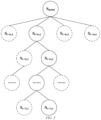
FIG. 2 is a schematic diagram of a scenario tree according to an embodiment of the disclosure; -
FIG. 3 is a schematic flowchart of main steps of a method for simulating an interaction scenario of a vehicle at each of a plurality of future moments according to an embodiment of the disclosure; -
FIG. 4 is a schematic diagram of driving of an ego vehicle and another vehicle according to an embodiment of the disclosure; -
FIG. 5 is a schematic diagram of interaction intentions of an ego vehicle and another vehicle at each of five moments according to an embodiment of the disclosure; -
FIG. 6 is a schematic flowchart of main steps of a method for obtaining an interaction scenario at a current moment according to an embodiment of the disclosure; and -
FIG. 7 is a schematic diagram of a main structure of a computer device according to an embodiment of the disclosure. - Some implementations of the disclosure are described below with reference to the accompanying drawings. Those skilled in the art should understand that these implementations are only used to explain the technical principles of the disclosure, and are not intended to limit the scope of protection of the disclosure.
- In the description of the disclosure, "processor" may include hardware, software or a combination of both. The processor may be a central processing unit, a microprocessor, a graphics processing unit, a digital signal processor, or any other suitable processor. The processor has a data and/or signal processing function. The processor may be implemented in software, hardware, or a combination thereof. A computer-readable storage medium includes any suitable medium that can store program code, such as a magnetic disk, a hard disk, an optical disc, a flash memory, a read-only memory, or a random access memory.
- Related user personal information that may be involved in the embodiments of the disclosure is processed strictly in accordance with the requirements of laws and regulations, following the principles of legality, legitimacy, and necessity, and based on reasonable purposes of service scenarios, and is personal information actively provided a user during the use of a product/service or generated due to the use of the product/service and obtained after user authorization.
- The user personal information processed in the disclosure may vary depending on specific product/service scenarios, should be based on a specific scenario in which the user uses the product/service, and may be related to account information of the user, device information, driving information, vehicle information, or other related information. The disclosure will treat the user personal information and processing thereof with a high degree of diligence.
- The disclosure attaches great importance to the security of user personal information, and has adopted reasonable and feasible security protection measures that comply with industry standards to protect user information and prevent personal information from unauthorized access, public disclosure, use, modification, damage or loss.
- Embodiments of a method for determining a vehicle driving trajectory are described below.
- Referring to
FIG. 1, FIG. 1 is a schematic flowchart of main steps of a method for determining a vehicle driving trajectory according to an embodiment of the disclosure. As shown inFIG. 1 , the method for determining a vehicle driving trajectory in this embodiment of the disclosure mainly includes the following steps S101 to S104. - Step S 101: Sequentially deduce, based on an interaction scenario of a vehicle at a current moment by using forward driving of the vehicle as a constraint condition, an interaction scenario of the vehicle at each of a plurality of future moments, to form a scenario tree consisting of the interaction scenarios at the current moment and the future moments.
- The interaction scenario may include an interaction intention of each environmental entity in an environment where the vehicle is located, the environmental entity includes at least the vehicle and other traffic agents, and the traffic agents include, but are not limited to, a vehicle, a pedestrian, a static obstacle, etc.
- An interaction intention of an environmental entity is an intention of the environmental entity to produce specific interaction behavior towards other environmental entities. For example, the vehicle and an obstacle A are used as an example, in which an interaction intention of the vehicle may be bypassing the obstacle A.
- The scenario tree is of a tree structure. The interaction scenario at the current moment is the first layer or the lowest layer of tree structure in the scenario tree. An interaction scenario at the first future moment is the second layer of tree structure. An interaction scenario at the second future moment is the third layer of tree structure, and so on for interaction scenarios at the other future moments.
- In this step, performing the deduction by using the forward driving of the vehicle as the constraint condition takes into account an impact of the vehicle driving forward according to a specific interaction intention at the current moment on interaction intentions of other traffic agents at a next moment, and the interaction intentions of the other traffic agents at the next moment may further affect an interaction intention of the vehicle at a next moment. Based on this, the interaction intentions of the vehicle and the other traffic agents at each future moment can be sequentially deduced.
- Step S 102: Obtain a scenario value of each interaction intention in the interaction scenario at each moment in the scenario tree, the scenario value being capable of representing a matching degree between the interaction intention and a human driving intention.
- The human driving intention is an intention of producing specific interaction behavior towards other traffic agents by a human when the human drives the vehicle under the premise of ensuring the driving safety and reliability of the vehicle. In other words, such an intention is autonomously decided by the human.
- There may be a positive correlation between the scenario value and the matching degree. In other words, the greater the scenario value, the higher the matching degree between the interaction intention and the human driving intention, and vice versa. In addition, a greater scenario value also indicates that the driving safety and reliability of the vehicle can be better ensured when the vehicle drives according to the interaction intention corresponding to the scenario value.
- In some implementations, the scenario value of each interaction intention in the interaction scenario at each moment in the scenario tree may be obtained by using a reinforcement learning model that is obtained by training based on first human driving behavior data, where the first human driving behavior data is marked with a human driving intention.
- Specifically, the first human driving behavior data may be used to perform supervised training on the reinforcement learning model, such that the trained reinforcement learning model can use a value of a reinforcement learning value function thereof to accurately evaluate the matching degree between the interaction intention and the human driving intention. In addition, the scenario value of the interaction intention may be obtained based on the value of the reinforcement learning value function.
- Step S103: Obtain an optimal interaction intention of the vehicle in the interaction scenario at each moment based on the scenario value.
- The greater the scenario value, the higher the matching degree between the interaction intention and the human driving intention. Therefore, an interaction intention having a greater scenario value may be selected as the optimal interaction intention. In some implementations, an interaction intention having a maximum scenario value of the vehicle in the interaction scenario at each moment may be obtained, and the interaction intention having the maximum scenario value may be used as the optimal interaction intention.
- Referring to
FIG. 2, FIG. 2 exemplarily shows a scenario tree, in which Sinitial represents the interaction scenario at the current moment. St=1s,1, St=1s,2, St=1s,2, and St=1s,2 represent the four interaction intentions in the interaction scenario at the first future moment, respectively. In the four interaction intentions, St=1s,2 has the greatest scenario value. St=2s,1 and St=2s,2 represent the two interaction intentions in the interaction scenario at the second future moment. In the two interaction intentions, St=2s,2 has the greatest scenario value. By analogy, the interaction intentions having the greatest scenario value at the seven future moments can be obtained, that is, the interaction intentions shown by the solid circles inFIG. 2 . - Step S 104: Determine a driving trajectory of the vehicle based on the optimal interaction intention.
- After the optimal interaction intention at each moment is obtained, a trajectory of the vehicle formed when the vehicle drives according to a corresponding optimal interaction intention at each moment can be determined, and the driving trajectory of the vehicle can be obtained based on these trajectories. In some implementations, the driving trajectory of the vehicle at each moment may be obtained based on the optimal interaction intention of the vehicle in the interaction scenario at each moment in the scenario tree, and then the driving trajectories of the vehicle within time periods formed from the current moment to the plurality of future moments are obtained based on the driving trajectory of the vehicle at each moment in the scenario tree. In the above manner, the driving trajectories of the vehicle within the time periods formed from the current moment to the plurality of future moments can be accurately obtained.
- According to the method described in steps S101 to S104, the optimal interaction intention of the vehicle that better matches the human driving intention at each moment can be obtained whether in non-strong interaction scenarios, strong interaction scenarios, or long-tail interaction scenarios, so that the safety and reliability of the vehicle when the vehicle drives autonomously according to these interaction intentions can be effectively ensured.
- Step S101 is further described below.
- In some implementations of step S101, the interaction scenario of the vehicle at each of the future moments can be sequentially deduced through the following steps S1011 to S1013 shown in
FIG. 3 . - Step S 1011: Sequentially deduce, by using the interaction intention in the interaction scenario at the current moment as a starting point of deduction, an interaction intention of the vehicle and a probability thereof when the vehicle drives forward to each of the future moments.
- The interaction scenario at the current moment not only includes the interaction intention of the vehicle and the probability thereof, but also includes interaction intentions of other traffic agents and probabilities thereof. The first future moment is used as an example. The interaction intention of the vehicle and the probability thereof at the first future moment when the vehicle drives to the first future moment according to the interaction intention of the vehicle and the probability thereof at the current moment is deduced in combination with the interaction intentions of the other traffic agents and the probabilities thereof at the current moment.
- Step S 1012: Deduce an interaction intention of another environmental entity and a probability thereof at each of the future moments based on the interaction intention of the vehicle and the probability thereof at each of the future moments.
- The first future moment is still used as an example. An interaction intention of another environmental entity at the first future moment may change due to an impact of the interaction intention of the vehicle and the probability thereof at the first future moment. For example, if the interaction intention of the vehicle at the first future moment is yielding to an
environmental entity 1, an interaction intention of theenvironmental entity 1 may be cutting into a lane in front of the vehicle. If the interaction intention of the vehicle at the first future moment is not yielding to theenvironmental entity 1, the interaction intention of theenvironmental entity 1 may be not cutting into the lane in front of the vehicle. - The above deduction process is described briefly below with reference to
FIG. 4 andFIG. 5 . - As shown in
FIG. 4 , in a traffic scenario, an ego vehicle and another vehicle are driving in separate lanes. It is detected from a specific moment that the another vehicle wants to cut into the lane in front of the ego vehicle.FIG. 5 shows scenario trees respectively formed by interaction intentions of the ego vehicle Ego and the another vehicle Agent at the 1st to 5th moments. In the scenario tree of the ego vehicle Ego, Y and N represent yielding to and not yielding to the another vehicle Agent, respectively. In the scenario tree of the another vehicle Agent, Cut and N represent cutting into and not cutting into the lane in front of the ego vehicle Ego, respectively. - The first moment is used as an example. Interaction intentions of the ego vehicle Ego include yielding to the another vehicle Agent (Y) and not yielding to the another vehicle Agent (N). Under this impact, interaction intentions of the another vehicle Agent include cutting into the lane in front of the ego vehicle Ego (Cut) and not cutting into the lane in front of the ego vehicle Ego (N). Probabilities of the four interaction intentions are not shown in
FIG. 5 . The four interaction intentions and probabilities thereof form the interaction scenario of the environment where the ego vehicle Ego is located at the first moment. - Continue to refer to the second moment. In the scenario tree of the ego vehicle Ego, the branch of interaction intention of yielding to the another vehicle Agent (Y) at the first moment is still yielding to the another vehicle Agent (Y) at the second moment. The branch of interaction intention of not yielding to the another vehicle Agent (N) at the first moment includes two interaction intentions at the second moment: yielding to the another vehicle Agent (Y) and not yielding to the another vehicle Agent (N). Under the impact of the interaction intention of the ego vehicle Ego at the second moment, there are three branches of interaction intention for the another vehicle Agent at the second moment: cutting into the lane in front of the ego vehicle Ego (Cut), cutting into the lane in front of the ego vehicle Ego (Cut), and not cutting into the lane in front of the ego vehicle Ego (N). The six interaction intentions and probabilities thereof form the interaction scenario of the environment where the ego vehicle Ego is located at the second moment.
- Cases for the 3rd to 5th moments can be deduced in the same manner and will not be repeated here.
- Step S1013: Obtain the interaction scenario at each of the future moments based on the interaction intention of the vehicle and the probability thereof and the interaction intention of the another environmental entity and the probability thereof at each of the future moments. One future moment is used as an example. An interaction intention distribution of all interaction intentions (all the interaction intentions include the interaction intention of the vehicle and the interaction intention of the another environmental entity) at this moment may be obtained based on the interaction intention of the vehicle and the probability thereof and the interaction intention of the another environmental entity and the probability thereof at this moment, and the interaction intention distribution may be further used as the interaction scenario at this moment.
- According to the method described in steps S1011 to S1013, the interaction intentions of the vehicle and the other traffic agents at each of the future moments can be accurately deduced by using the forward driving of the vehicle as the constraint condition, thereby ensuring the accuracy of determining the vehicle driving trajectory based on the interaction intentions.
- Steps S 1011 to S 1013 are further described below.
- In some implementations of step S1011, all interaction intentions of the vehicle and probabilities thereof when the vehicle drives forward to each of the plurality of future moments can be deduced, and a plurality of interaction intentions and probabilities thereof may be further searched for from all the interaction intentions by using a preset first search algorithm, so as to be used as preferred interaction intentions of the vehicle and probabilities thereof at the future moment. In complex traffic scenarios, there may be a relatively large number of environmental entities and a relatively complex road topology. After the interaction scenario deduction is performed according to the method described in steps S1011 to S1013, the interaction scenario at each moment may include a large number of interaction intentions that are complex, which makes the structure of the scenario tree built based on these interaction scenarios more complex, which is not conducive to quickly obtaining the optimal interaction intention at each moment from the scenario tree to determine the driving trajectory of the vehicle. In this regard, a preset preferred search algorithm may be used in this implementation to search for some preferred interaction intentions. In this way, the interaction intention of the another environmental entity and the probability thereof at each of the future moments may be deduced based on the preferred interaction intention of the vehicle and the probability thereof at each of the future moments when step S 1012 is performed. The interaction scenario at each of the future moments is obtained based on the preferred interaction intention of the vehicle and the probability thereof and the interaction intention of the another environmental entity and the probability thereof at each of the future moments when step S 1013 is performed.
- In this implementation, the preferred interaction intentions may be obtained by using a conventional preferred search algorithm. For example, in some implementations, a depth first search (DFS) algorithm may be used for searching.
- In some implementations of step S1011, the interaction scenario of the vehicle at the current moment can be obtained through the following steps S201 to S204 shown in
FIG. 6 . - Step S201: Obtain, based on a topological relationship of a road in an environment where the vehicle is located at the current moment, a topological relationship of each environmental entity in the environment.
- The topological relationship of the road refers to a topological structure of the road.
- The topological relationship of the environmental entity may be a topological structure of a road where the environmental entity is located. Alternatively, the topological relationship of the environmental entity may be described by using a possible traffic behavior in the topological structure of the road where the environmental entity is located. For example, the topological relationship of the environmental entity may include single-lane topology, merged topology, lane-changing topology, crossing topology, etc. The single-lane topology refers to a topological structure where the road on which the environmental entity is located is a single lane, and a possible traffic behavior of the environmental entity under this topological structure is single-lane driving. The merged topology refers to a topological structure where the road on which the environmental entity is located is a plurality of lanes merging into a single lane, and a possible traffic behavior of the environmental entity under this topological structure is merging into the same single lane with environmental entities in other lanes. The lane-changing topology and the crossing topology are not described in detail.
- Step S202: Obtain an interaction intention of each environmental entity based on the topological relationship of the environmental entity.
- Possible traffic behaviors of environmental entities may be different depending on different topological relationships thereof. When performing respective traffic behaviors, different environmental entities may interact with other environmental entities, so that the interaction intentions of the environmental entities can be determined. The merged topology is used as an example. A possible traffic behavior of the environmental entity under this topological structure is merging into the same single lane with environmental entities in other lanes, and in this process, the environmental entity may cut into a lane where other vehicles are driving forward, and the behavior of cutting into the lane where other vehicles are driving forward is an interaction intention.
- Step S203: Obtain a probability of the interaction intention of each environmental entity based on road features of the road and entity features of the environmental entity in the environment.
- The higher the probability of the interaction intention, the higher the matching degree between the interaction intention and the human driving intention. The human driving intention is an intention of producing specific interaction behavior towards other traffic agents by a human when the human drives the vehicle under the premise of ensuring the driving safety and reliability of the vehicle. In other words, such an intention is autonomously decided by the human.
- In some implementations, the probability of the interaction intention of each environmental entity in the environment may be obtained based on the road features of the road and the entity features of the environmental entity in the environment by using an interaction intention recognition model that is obtained by training based on second human driving behavior data, where the second human driving behavior data is marked with a human driving intention. Specifically, the second human face driving behavior data may be used to perform supervised training on the interaction intention recognition model, such that the trained interaction intention recognition model can use the road features and the entity features to accurately obtain the probability of the interaction intention, where the probability may be used for representing a matching degree between the interaction intention and a human driving intention.
- Step S204: Obtain the interaction scenario at the current moment based on the interaction intention of each environmental entity and the probability thereof. In this step, an interaction intention distribution of all interaction intentions at the current moment may be obtained based on the interaction intention of each environmental entity and the probability thereof, and the interaction intention distribution may be further used as the interaction scenario at the current moment.
- According to the method described in steps S201 to S204, an accurate interaction scenario may be obtained by comprehensively considering the topological structure of the road, road features, and entity features of the environmental entity.
- It should be noted that, although the steps are described in a specific order in the above embodiments, those skilled in the art may understand that in order to implement the effects of the disclosure, different steps are not necessarily performed in such an order, but may be performed simultaneously (in parallel) or in other orders, and these adjusted solutions and the technical solutions described in the disclosure are equivalent technical solutions, and therefore shall fall within the scope of protection of the disclosure.
- Those skilled in the art can understand that all or some of the procedures in the method of the above embodiment of the disclosure may also be implemented by a computer program instructing relevant hardware. The computer program may be stored in a computer-readable storage medium, and when the computer program is executed by a processor, the steps of the above method embodiments may be implemented. The computer program includes computer program codes, which may be in a source code form, an object code form, an executable file form, some intermediate forms, or the like. The computer-readable storage medium may include: any entity or apparatus that can carry the computer program code, a medium, a USB flash drive, a removable hard disk, a magnetic disk, an optical disc, a computer memory, a read-only memory, a random access memory, an electric carrier signal, a telecommunications signal, and a software distribution medium. It should be noted that the content included in the computer-readable storage medium may be appropriately added or deleted depending on requirements of the legislation and patent practice in a jurisdiction. For example, in some jurisdictions, according to the legislation and patent practice, the computer-readable storage medium does not include an electric carrier signal and a telecommunications signal.
- Further, the disclosure further provides a computer device.
- Referring to
FIG. 7, FIG. 7 is a schematic diagram of a main structure of a computer device according to an embodiment of the disclosure. As shown inFIG. 7 , the computer device in this embodiment of the disclosure mainly includes a storage apparatus and a processor. The storage apparatus may be configured to store a program for performing the method for determining a vehicle driving trajectory of the above method embodiments. The processor may be configured to execute the program in the storage apparatus, where the program includes but is not limited to a program for performing the method for determining a vehicle driving trajectory of the above method embodiments. For ease of description, only parts related to the embodiments of the disclosure are shown. For specific technical details that are not disclosed, reference may be made to the method part of the embodiments of the disclosure. - In the embodiments of the disclosure, the computer device may be a control device formed by various electronic devices. In some possible implementations, the computer device may include a plurality of storage apparatuses and a plurality of processors. The program for performing the method for determining a vehicle driving trajectory of the above method embodiments may be divided into a plurality of sections of subprogram, and each section of subprogram may be loaded and run by the processor to perform different steps of the method for determining a vehicle driving trajectory of the above method embodiments. Specifically, each section of subprogram may be stored in a different storage apparatus, and each processor may be configured to execute programs in one or more storage apparatuses to jointly implement the method for determining a vehicle driving trajectory of the above method embodiments. In other words, each processor performs different steps of the method for determining a vehicle driving trajectory of the above method embodiments, to jointly implement the method for determining a vehicle driving trajectory of the above method embodiments.
- The plurality of processors may be processors deployed on a same device. For example, the computer device may be a high-performance device composed of a plurality of processors, and the plurality of processors may be processors configured on the high-performance device. In addition, the plurality of processors may alternatively be processors deployed on different devices. For example, the above computer device may be a server cluster, and the plurality of processors may be processors on different servers in the server cluster.
- Further, the disclosure further provides a computer-readable storage medium.
- In an embodiment of a computer-readable storage medium according to the disclosure, the computer-readable storage medium may be configured to store a program for performing the method for determining a vehicle driving trajectory of the above method embodiments, and the program may be loaded and run by a processor to implement the above method for determining a vehicle driving trajectory. For ease of description, only parts related to the embodiments of the disclosure are shown. For specific technical details that are not disclosed, reference may be made to the method part of the embodiments of the disclosure. The computer-readable storage medium may be a storage apparatus formed by various electronic devices. Optionally, the computer-readable storage medium in the embodiment of the disclosure is a non-transitory computer-readable storage medium.
- Further, the disclosure further provides a vehicle.
- In an embodiment of the vehicle according to the disclosure, the vehicle may include the computer device described in the above embodiment of the computer device. In this embodiment, the vehicle may be an autonomous driving vehicle, an unmanned vehicle, or the like. In addition, according to types of power sources, the vehicle in this embodiment can be a fuel vehicle, an electric vehicle, a hybrid vehicle in which electric energy is mixed with fuel, or a vehicle using other new energy sources.
- Heretofore, the technical solutions of the disclosure have been described with reference to an implementation shown in the accompanying drawings. However, it would have been readily understood by those skilled in the art that the scope of protection of the disclosure is obviously not limited to these specific implementations. Those skilled in the art may make equivalent changes or substitutions to the related technical features without departing from the principle of the disclosure, and all the technical solutions with such changes or substitutions shall fall within the scope of protection of the disclosure.
Claims (12)
- A method for determining a vehicle driving trajectory, comprising:sequentially simulating, based on an interaction scenario of a vehicle at a current moment by using forward driving of the vehicle as a constraint condition, an interaction scenario of the vehicle at each of a plurality of future moments, to form a scenario tree consisting of the interaction scenarios at the current moment and the future moments;obtaining a scenario value of each interaction intention in the interaction scenario at each moment in the scenario tree, the scenario value representing a matching degree between the interaction intention and a human driving intention;obtaining an optimal interaction intention of the vehicle in the interaction scenario at each moment based on the scenario value; anddetermining a driving trajectory of the vehicle based on the optimal interaction intention,wherein the interaction scenario comprises an interaction intention of each environmental entity in an environment where the vehicle is located, and the environmental entity comprises at least the vehicle and other traffic agents.
- The method according to claim 1, wherein the sequentially simulating, based on an interaction scenario of a vehicle at a current moment by using forward driving of the vehicle as a constraint condition, an interaction scenario of the vehicle at each of a plurality of future moments comprises:sequentially simulating, by using the interaction intention in the interaction scenario at the current moment as a starting point of deduction, an interaction intention of the vehicle and a probability thereof when the vehicle drives forward to each of the future moments;simulating an interaction intention of another environmental entity and a probability thereof at each of the future moments based on the interaction intention of the vehicle and the probability thereof at each of the future moments; andobtaining the interaction scenario at each of the future moments based on the interaction intention of the vehicle and the probability thereof and the interaction intention of the another environmental entity and the probability thereof at each of the future moments.
- The method according to claim 1 or 2, wherein the sequentially simulating an interaction intention of the vehicle and a probability thereof when the vehicle drives forward to each of the future moments comprises:simulating all interaction intentions of the vehicle and probabilities thereof when the vehicle drives forward to each of the plurality of future moments; andsearching for a plurality of interaction intentions and probabilities thereof from all the interaction intentions by a predetermined first search algorithm, as preferred interaction intentions of the vehicle and probabilities thereof at the future moment.
- The method according to any one of claims 1 to 3, whereinthe simulating an interaction intention of another environmental entity and a probability thereof at each of the future moments comprises: simulating the interaction intention of the another environmental entity and the probability thereof at each of the future moments based on the preferred interaction intentions of the vehicle and the probabilities thereof at each of the future moments; andthe obtaining the interaction scenario at each of the future moments comprises: obtaining the interaction scenario at each of the future moments based on the preferred interaction intentions of the vehicle and the probabilities thereof and the interaction intention of the another environmental entity and the probability thereof at each of the future moments.
- The method according to any one of claims 1 to 4, wherein the obtaining a scenario value of each interaction intention in the interaction scenario at each moment in the scenario tree comprises:obtaining the scenario value of each interaction intention in the interaction scenario at each moment in the scenario tree using a reinforcement learning model trained based on first human driving behavior data,wherein the first human driving behavior data is labeled with a human driving intention.
- The method according to any one of claims 1 to 5, wherein the obtaining an optimal interaction intention of the vehicle in the interaction scenario at each moment based on the scenario value comprises:
obtaining an interaction intention having a maximum scenario value of the vehicle in the interaction scenario at each moment, and using the interaction intention having the maximum scenario value as the optimal interaction intention. - The method according to any one of claims 1 to 6, wherein the determining a driving trajectory of the vehicle based on the optimal interaction intention comprises:obtaining the driving trajectory of the vehicle at each moment based on the optimal interaction intention of the vehicle in the interaction scenario at each moment; andobtaining driving trajectories of the vehicle within time periods from the current moment to the plurality of future moments based on the driving trajectory of the vehicle at each moment.
- The method according to any one of claims 1 to 7, wherein the interaction scenario of the vehicle at the current moment is obtained in the following manner:obtaining, based on a topological relationship of a road in the environment where the vehicle is located at the current moment, a topological relationship of each environmental entity in the environment;obtaining an interaction intention of each environmental entity based on the topological relationship of the environmental entity;obtaining a probability of the interaction intention of each environmental entity based on road features of the road and entity features of the environmental entity in the environment; andobtaining the interaction scenario at the current moment based on the interaction intention of each environmental entity and the probability thereof.
- The method according to claim 8, wherein the obtaining a probability of the interaction intention of each environmental entity comprises:obtaining the probability of the interaction intention of each environmental entity in the environment based on the road features of the road and the entity features of the environmental entity in the environment using an interaction intention recognition model trained based on second human driving behavior data,wherein the second human driving behavior data is labeled with a human driving intention.
- A computer device, comprising a processor and a storage apparatus configured to store a plurality of pieces of program code, wherein the program code is adapted to be loaded and executed by the processor to perform a method for determining a vehicle driving trajectory according to any one of claims 1 to 9.
- A non-transitory computer-readable storage medium storing a plurality of pieces of program code, wherein the program code is adapted to be loaded and executed by a processor to perform a method for determining a vehicle driving trajectory according to any one of claims 1 to 9.
- A vehicle, comprising a computer device according to claim 10.
Applications Claiming Priority (1)
| Application Number | Priority Date | Filing Date | Title |
|---|---|---|---|
| CN202311218812.9A CN117068203A (en) | 2023-09-20 | 2023-09-20 | Method for determining vehicle driving trajectory, computer equipment, storage medium and vehicle |
Publications (2)
| Publication Number | Publication Date |
|---|---|
| EP4527705A1 true EP4527705A1 (en) | 2025-03-26 |
| EP4527705B1 EP4527705B1 (en) | 2025-12-03 |
Family
ID=88647523
Family Applications (1)
| Application Number | Title | Priority Date | Filing Date |
|---|---|---|---|
| EP23206594.6A Active EP4527705B1 (en) | 2023-09-20 | 2023-10-30 | Method for determining vehicle driving trajectory, computer device, storage medium, and vehicle |
Country Status (3)
| Country | Link |
|---|---|
| US (1) | US20250091621A1 (en) |
| EP (1) | EP4527705B1 (en) |
| CN (1) | CN117068203A (en) |
Citations (4)
| Publication number | Priority date | Publication date | Assignee | Title |
|---|---|---|---|---|
| US20190204842A1 (en) * | 2018-01-02 | 2019-07-04 | GM Global Technology Operations LLC | Trajectory planner with dynamic cost learning for autonomous driving |
| WO2022180237A1 (en) * | 2021-02-26 | 2022-09-01 | Five AI Limited | Prediction and planning for mobile robots |
| CN115675518A (en) * | 2022-08-31 | 2023-02-03 | 北京百度网讯科技有限公司 | Trajectory planning method and device and electronic equipment |
| EP4160478A1 (en) * | 2020-06-23 | 2023-04-05 | Huawei Technologies Co., Ltd. | Driving decision-making method, device, and chip |
Family Cites Families (17)
| Publication number | Priority date | Publication date | Assignee | Title |
|---|---|---|---|---|
| US10345815B2 (en) * | 2016-09-14 | 2019-07-09 | Qualcomm Incorporated | Motion planning and intention prediction for autonomous driving in highway scenarios via graphical model-based factorization |
| DE102016217645B4 (en) * | 2016-09-15 | 2023-01-19 | Volkswagen Aktiengesellschaft | Method for providing information about a probable driving intention of a vehicle |
| US11055624B1 (en) * | 2017-11-08 | 2021-07-06 | Zoox, Inc. | Probabilistic heat maps for behavior prediction |
| DE102018203070A1 (en) * | 2018-03-01 | 2019-09-05 | Honda Motor Co., Ltd. | Collision risk-prediction unit |
| US11104334B2 (en) * | 2018-05-31 | 2021-08-31 | Tusimple, Inc. | System and method for proximate vehicle intention prediction for autonomous vehicles |
| JP7140849B2 (en) * | 2018-05-31 | 2022-09-21 | ニッサン ノース アメリカ,インク | Probabilistic Object Tracking and Prediction Framework |
| US12517511B2 (en) * | 2019-02-05 | 2026-01-06 | Nvidia Corporation | Combined prediction and path planning for autonomous objects using neural networks |
| WO2022101403A1 (en) * | 2020-11-13 | 2022-05-19 | UMNAI Limited | Behavioral prediction and boundary settings, control and safety assurance of ml & ai systems |
| US11568751B2 (en) * | 2021-04-14 | 2023-01-31 | Zhejiang University | Dynamic platoon formation method under mixed autonomous vehicles flow |
| CN113792782B (en) * | 2021-09-13 | 2024-12-17 | 一汽出行科技有限公司 | Track monitoring method and device for operation vehicle, storage medium and computer equipment |
| US12012128B2 (en) * | 2021-09-24 | 2024-06-18 | Zoox, Inc. | Optimization based planning system |
| CN114613130B (en) * | 2022-02-18 | 2023-05-12 | 北京理工大学 | Driving credibility analysis method in traffic and carrying system |
| US12187324B2 (en) * | 2022-08-31 | 2025-01-07 | Zoox, Inc. | Trajectory prediction based on a decision tree |
| CN115631651B (en) * | 2022-09-23 | 2025-11-25 | 北京理工大学 | An autonomous driving decision-making and planning system and method for uncontrolled intersection environments |
| US12428032B2 (en) * | 2022-11-30 | 2025-09-30 | Zoox, Inc. | Determining prediction times for a model |
| US20240174256A1 (en) * | 2022-11-30 | 2024-05-30 | Zoox, Inc. | Vehicle trajectory tree search for off-route driving maneuvers |
| US20240182082A1 (en) * | 2022-12-01 | 2024-06-06 | Nvidia Corporation | Policy planning using behavior models for autonomous systems and applications |
-
2023
- 2023-09-20 CN CN202311218812.9A patent/CN117068203A/en active Pending
- 2023-10-30 EP EP23206594.6A patent/EP4527705B1/en active Active
- 2023-12-07 US US18/532,253 patent/US20250091621A1/en active Pending
Patent Citations (4)
| Publication number | Priority date | Publication date | Assignee | Title |
|---|---|---|---|---|
| US20190204842A1 (en) * | 2018-01-02 | 2019-07-04 | GM Global Technology Operations LLC | Trajectory planner with dynamic cost learning for autonomous driving |
| EP4160478A1 (en) * | 2020-06-23 | 2023-04-05 | Huawei Technologies Co., Ltd. | Driving decision-making method, device, and chip |
| WO2022180237A1 (en) * | 2021-02-26 | 2022-09-01 | Five AI Limited | Prediction and planning for mobile robots |
| CN115675518A (en) * | 2022-08-31 | 2023-02-03 | 北京百度网讯科技有限公司 | Trajectory planning method and device and electronic equipment |
Also Published As
| Publication number | Publication date |
|---|---|
| CN117068203A (en) | 2023-11-17 |
| EP4527705B1 (en) | 2025-12-03 |
| US20250091621A1 (en) | 2025-03-20 |
Similar Documents
| Publication | Publication Date | Title |
|---|---|---|
| CN113753077A (en) | Method, device and autonomous driving vehicle for predicting motion trajectory of obstacles | |
| An et al. | Rag llms are not safer: A safety analysis of retrieval-augmented generation for large language models | |
| US20250091619A1 (en) | Method for predicting vehicle trajectory, control apparatus, and vehicle | |
| Neelofar et al. | Identifying and explaining safety-critical scenarios for autonomous vehicles via key features | |
| CN113849400B (en) | A test scenario library generation method, device, equipment and storage medium | |
| CN115218915A (en) | Driving simulation test method and device, computer equipment and storage medium | |
| CN112700005B (en) | Abnormal event processing method and device based on Monte Carlo tree search | |
| EP4527705A1 (en) | Method for determining vehicle driving trajectory, computer device, storage medium, and vehicle | |
| CN119356310A (en) | Autonomous driving method, device, equipment and storage medium based on reinforcement learning | |
| Crespo-Rodriguez et al. | PAFOT: A position-based approach for finding optimal tests of autonomous vehicles | |
| CN114581623B (en) | Simulation scene generation method and device, storage medium and computer equipment | |
| WO2014117595A1 (en) | Method and device for determining propagation relationship of trojan horse files | |
| EP4607416A1 (en) | Method for obtaining confidence of perception object and method for autonomous driving planning and control | |
| CN116187091A (en) | Automatic driving test scene library generation method and device, storage medium | |
| KR102631402B1 (en) | Method of lane change for autonomous vehicles based deep reinforcement learning, recording medium and device for performing the method | |
| CN120892546A (en) | Intelligent agent hallucination correction method and device | |
| CN113074747B (en) | Path planning method, device, equipment and storage medium | |
| US12576873B2 (en) | System and method of captions for triggers | |
| EP4553783A1 (en) | Object association method, computer device, computer readable storage medium, and vehicle | |
| US12236778B2 (en) | Information processing method and apparatus, device, and computer-readable storage medium | |
| KR20170118555A (en) | System and method for collecting contextaware evidence | |
| Sun et al. | Test case generation for autonomous driving based on improved genetic algorithm | |
| Cai et al. | Driving with regulation: Trustworthy and interpretable decision-making for autonomous driving with retrieval-augmented reasoning | |
| RU2015119987A (en) | COMPLEX OF MEANS OF AUTOMATION OF THE SYSTEM OF MANAGEMENT OF MILITARY MEANS | |
| CN117541796A (en) | Point cloud semantic segmentation method, computer equipment, storage medium and intelligent equipment |
Legal Events
| Date | Code | Title | Description |
|---|---|---|---|
| PUAI | Public reference made under article 153(3) epc to a published international application that has entered the european phase |
Free format text: ORIGINAL CODE: 0009012 |
|
| STAA | Information on the status of an ep patent application or granted ep patent |
Free format text: STATUS: REQUEST FOR EXAMINATION WAS MADE |
|
| 17P | Request for examination filed |
Effective date: 20231127 |
|
| AK | Designated contracting states |
Kind code of ref document: A1 Designated state(s): AL AT BE BG CH CY CZ DE DK EE ES FI FR GB GR HR HU IE IS IT LI LT LU LV MC ME MK MT NL NO PL PT RO RS SE SI SK SM TR |
|
| GRAP | Despatch of communication of intention to grant a patent |
Free format text: ORIGINAL CODE: EPIDOSNIGR1 |
|
| STAA | Information on the status of an ep patent application or granted ep patent |
Free format text: STATUS: GRANT OF PATENT IS INTENDED |
|
| INTG | Intention to grant announced |
Effective date: 20250506 |
|
| GRAS | Grant fee paid |
Free format text: ORIGINAL CODE: EPIDOSNIGR3 |
|
| GRAA | (expected) grant |
Free format text: ORIGINAL CODE: 0009210 |
|
| STAA | Information on the status of an ep patent application or granted ep patent |
Free format text: STATUS: THE PATENT HAS BEEN GRANTED |
|
| AK | Designated contracting states |
Kind code of ref document: B1 Designated state(s): AL AT BE BG CH CY CZ DE DK EE ES FI FR GB GR HR HU IE IS IT LI LT LU LV MC ME MK MT NL NO PL PT RO RS SE SI SK SM TR |
|
| REG | Reference to a national code |
Ref country code: CH Ref legal event code: F10 Free format text: ST27 STATUS EVENT CODE: U-0-0-F10-F00 (AS PROVIDED BY THE NATIONAL OFFICE) Effective date: 20251203 Ref country code: GB Ref legal event code: FG4D |
|
| REG | Reference to a national code |
Ref country code: DE Ref legal event code: R096 Ref document number: 602023009259 Country of ref document: DE |
|
| REG | Reference to a national code |
Ref country code: IE Ref legal event code: FG4D |
|
| REG | Reference to a national code |
Ref country code: NL Ref legal event code: MP Effective date: 20251203 |
|
| PG25 | Lapsed in a contracting state [announced via postgrant information from national office to epo] |
Ref country code: ES Free format text: LAPSE BECAUSE OF FAILURE TO SUBMIT A TRANSLATION OF THE DESCRIPTION OR TO PAY THE FEE WITHIN THE PRESCRIBED TIME-LIMIT Effective date: 20251203 |
|
| REG | Reference to a national code |
Ref country code: LT Ref legal event code: MG9D |
|
| PG25 | Lapsed in a contracting state [announced via postgrant information from national office to epo] |
Ref country code: NO Free format text: LAPSE BECAUSE OF FAILURE TO SUBMIT A TRANSLATION OF THE DESCRIPTION OR TO PAY THE FEE WITHIN THE PRESCRIBED TIME-LIMIT Effective date: 20260303 |
|
| PG25 | Lapsed in a contracting state [announced via postgrant information from national office to epo] |
Ref country code: FI Free format text: LAPSE BECAUSE OF FAILURE TO SUBMIT A TRANSLATION OF THE DESCRIPTION OR TO PAY THE FEE WITHIN THE PRESCRIBED TIME-LIMIT Effective date: 20251203 Ref country code: HR Free format text: LAPSE BECAUSE OF FAILURE TO SUBMIT A TRANSLATION OF THE DESCRIPTION OR TO PAY THE FEE WITHIN THE PRESCRIBED TIME-LIMIT Effective date: 20251203 |
|
| PG25 | Lapsed in a contracting state [announced via postgrant information from national office to epo] |
Ref country code: RS Free format text: LAPSE BECAUSE OF FAILURE TO SUBMIT A TRANSLATION OF THE DESCRIPTION OR TO PAY THE FEE WITHIN THE PRESCRIBED TIME-LIMIT Effective date: 20260303 |
|
| PG25 | Lapsed in a contracting state [announced via postgrant information from national office to epo] |
Ref country code: PL Free format text: LAPSE BECAUSE OF FAILURE TO SUBMIT A TRANSLATION OF THE DESCRIPTION OR TO PAY THE FEE WITHIN THE PRESCRIBED TIME-LIMIT Effective date: 20251203 |
|
| PG25 | Lapsed in a contracting state [announced via postgrant information from national office to epo] |
Ref country code: LV Free format text: LAPSE BECAUSE OF FAILURE TO SUBMIT A TRANSLATION OF THE DESCRIPTION OR TO PAY THE FEE WITHIN THE PRESCRIBED TIME-LIMIT Effective date: 20251203 |