EP4527227A1 - Garment waist pocket with pocket retainer - Google Patents
Garment waist pocket with pocket retainer Download PDFInfo
- Publication number
- EP4527227A1 EP4527227A1 EP24201517.0A EP24201517A EP4527227A1 EP 4527227 A1 EP4527227 A1 EP 4527227A1 EP 24201517 A EP24201517 A EP 24201517A EP 4527227 A1 EP4527227 A1 EP 4527227A1
- Authority
- EP
- European Patent Office
- Prior art keywords
- garment
- retainer
- waistband
- implementations
- Prior art date
- Legal status (The legal status is an assumption and is not a legal conclusion. Google has not performed a legal analysis and makes no representation as to the accuracy of the status listed.)
- Granted
Links
Images







Classifications
-
- A—HUMAN NECESSITIES
- A41—WEARING APPAREL
- A41D—OUTERWEAR; PROTECTIVE GARMENTS; ACCESSORIES
- A41D27/00—Details of garments or of their making
- A41D27/20—Pockets; Making or setting-in pockets
- A41D27/207—Pockets; Making or setting-in pockets with drop-proof features
-
- A—HUMAN NECESSITIES
- A41—WEARING APPAREL
- A41D—OUTERWEAR; PROTECTIVE GARMENTS; ACCESSORIES
- A41D27/00—Details of garments or of their making
- A41D27/20—Pockets; Making or setting-in pockets
-
- A—HUMAN NECESSITIES
- A41—WEARING APPAREL
- A41D—OUTERWEAR; PROTECTIVE GARMENTS; ACCESSORIES
- A41D27/00—Details of garments or of their making
- A41D27/20—Pockets; Making or setting-in pockets
- A41D27/201—Pocket closures
-
- A—HUMAN NECESSITIES
- A41—WEARING APPAREL
- A41D—OUTERWEAR; PROTECTIVE GARMENTS; ACCESSORIES
- A41D27/00—Details of garments or of their making
- A41D27/20—Pockets; Making or setting-in pockets
- A41D27/205—Pockets adapted to receive a mobile phone or other electronic equipment
-
- A—HUMAN NECESSITIES
- A41—WEARING APPAREL
- A41F—GARMENT FASTENINGS; SUSPENDERS
- A41F9/00—Belts, girdles, or waistbands for trousers or skirts
Definitions
- Garments also known as apparel, clothing or the like, sometimes include one or more pockets. Some pockets extend along and partially about the waist of the person wearing the garment. During exercise or other activities, contents of the pockets may sometimes be dislodged and may inadvertently fall out of the pockets.
- the example garments that provide enhanced retention of articles placed within a waist pocket.
- the example garments comprise an elongate upward facing waist pocket that extends in an oval or circular fashion along and about the waistline of the garment.
- the waist pocket has an internal floor or bottom and a top opening through which articles may be placed within the waist pocket.
- the example garments further comprise a pocket retainer disposed within the upward facing waist pocket.
- the pocket retainer comprises an internal panel that forms an internal retention space within the waist pocket, wherein articles may be placed into the internal retention space through a retention space mouth.
- the pocket retainer may be sized or may be at least partially elastic to grip and engage the received articles so as to assist in retaining the articles within the waist pocket by inhibiting such articles from rising and falling out of the waist pocket through the top opening of the waist pocket.
- the pocket retainer may be especially useful for providing enhanced gripping of smaller items which may otherwise be more likely fall out of the waist pocket through the top opening.
- such pocket retainers may be well suited for assisting in the retention of a phone, keys or the like.
- those edge portions of the pocket retainer proximate to the mouth or each of the mouths of the retention space are elastic so as to resiliently close against or about any articles positioned within the retention space.
- edge portions of the pocket retainer are made from an elastic material.
- such edge portions are made elastic through the addition of an elastic strip or band secured to the pocket retainer along such edges.
- an entirety of the pocket retainer is formed from an elastic material such that the entirety of the pocket retainer resiliently stretches and grips articles positioned within the retention space.
- the retention space continuously extends along the waistband without interruption, 360 degrees around the waist of the person wearing the garment.
- selected portions of the pocket retainer may be stitched, bonded or otherwise affixed to either the waistband or portions of the panel forming an exterior of the upward facing waist pocket at vertically spaced locations such that the retention space comprises a continuous uninterrupted passage extending 360 degrees about the waist of the person wearing the garment, wherein portions of the passage may extend between the vertically spaced locations.
- the pocket retainer may be stitched, welded, bonded or otherwise affixed by vertical continuous or uninterrupted seems to either the waistband or portions of the panel forming an exterior of the upward waistband pocket such that one or both sides of the retention space are closed.
- all of the edge portions of the pocket retainer may be affixed by stitching, bonding or other methods to either the waistband or portions of the panel forming an exterior of the upward waistband pocket, wherein the pocket retainer comprises a slit through its outer face that forms or provides a mouth for insertion of articles into the retention space.
- the pocket retainer may be affixed along multiple vertical seams to form a plurality of individual, separated retention spaces along an exterior of the waistband.
- the garment may comprise multiple individual pocket retainers which are affixed to either the waistband or portions of the panel forming an exterior of the upward waistband pocket so as to provide multiple individual, separated retention spaces about the waistband.
- the pocket retainer is coupled to an exterior side of the waistband such that the retention space has closed opposite sides while being open along both its upper and lower edges. As result, articles may be inserted into and withdrawn from the retention space through either a top mouth or a bottom mouth.
- the pocket retainer is coupled to an exterior side of the waistband such that the retention space has closed opposite sides and has a closed bottom.
- the pocket retainer is coupled to the exterior side of the waistband such that the retention space has closed opposite sides and has a closed top, wherein articles are captured between the close top and the floor of the upward facing waist pocket.
- the pocket retainer is coupled to an exterior side of the waistband such that the retention space is closed along both its upper and lower edges, but is open on one or both of its lateral sides.
- the pocket retainer comprises a panel affixed along at least two edge portions (top, bottom, left side, right side) to the exterior of the waistband by stitching.
- the panel forming the pocket retainer may be affixed to the exterior of the waistband by welding, adhesives or the like.
- the edge portions affixed to the exterior of the waistband are flat.
- the edge portions affixed to the exterior of the waistband are inwardly curled against the exterior of the waistband.
- the pocket retainer comprises a folded portion of the waistband.
- the waistband may comprise a single panel or multiple panels. At least one of such panels forming the exterior the waistband may be folded outwardly and over to additionally form the pocket retainer.
- the pocket retainer is coupled to an interior side of a front pocket panel that forms an exterior front of the upward facing waist pocket such that the retention space has closed opposite sides while being open along both its upper and lower edges. As result, articles may be inserted into and drawn from the retention space through either a top mouth or a bottom mouth. In some implementations, the pocket retainer is coupled to an interior side of a front pocket panel that forms an exterior front of the upward facing waist pocket such that the retention space has closed opposite sides and has a closed bottom.
- the pocket retainer is coupled to an interior side of a front pocket panel that forms an exterior front of the upward facing waist pocket such that the retention space has closed opposite sides and has a closed top, wherein articles are captured between the close top and the floor of the upward facing waist pocket.
- the pocket retainer is coupled to an interior side of a front pocket panel that forms an exterior front of the upward facing waist pocket such that the retention space is closed along both its upper and lower edges, but is open on one or both of its lateral sides.
- the pocket retainer comprises a panel affixed along at least two edge portions (top, bottom, left side, right side) are coupled to an interior side of a front pocket panel that forms an exterior front of the upward facing waist pocket by stitching.
- the panel forming the pocket retainer is coupled to an interior side of a front panel that forms an exterior front of the upward facing waist pocket by welding, adhesives or the like.
- the edge portions coupled to an interior side of a front panel that forms an exterior front of the upward facing waist pocket are flat.
- the edge portions coupled to an interior side of a front panel that forms an exterior front of the upward facing waist pocket are inwardly curled against the exterior of the waistband.
- the pocket retainer comprises a folded portion of the front pocket panel that forms an exterior front of the upward facing waist pocket.
- the upward facing waist pocket may be formed by an outer pocket panel.
- the outer pocket panel may have an inwardly folded top edge that forms a mouth or top opening of the upward facing waist pocket, wherein the inwardly folded portion of the outer pocket panel forms the pocket retainer.
- the term "coupled” shall mean the joining of two members directly or indirectly to one another. Such joining may be stationary in nature or movable in nature. Such joining may be achieved with the two members, or the two members and any additional intermediate members being integrally formed as a single unitary body with one another or with the two members or the two members and any additional intermediate member being attached to one another. Such joining may be permanent in nature or alternatively may be removable or releasable in nature.
- the phrase “configured to” denotes an actual state of configuration that fundamentally ties the stated function/use to the physical characteristics of the feature proceeding the phrase “configured to”.
- the term “releasably” or “removably” with respect to an attachment or coupling of two structures means that the two structures may be repeatedly connected and disconnected to and from one another without material damage to either of the two structures or their functioning.
- the term “inward” refers to a radial direction towards a vertical center of waistband 24, a direction towards either the coronal plane or the sagittal plane of the person wearing garment 20.
- the term “outward” refers to a radial direction outwards away from the vertical centerline of waistband 24.
- the term “inner” refers to a side facing the vertical centerline while the term “outer” refers to a side facing away from the vertical centerline.
- the term “upward” refers to a direction towards the head of the person wearing garment 20 while the term downward refers to a direction towards the feet of the person wearing garment 20.
- the term "panel” refers to one or more layers of material.
- the term “panel” may refer to a single layer of material or multiple overlapping layers of material.
- the layers of material may themselves by separate and distinct layers or panels that are laminated to one another, stitched to one another or welded to one another.
- the layers of material may be joined to one another along their edges or at selected locations.
- a panel may be folded to form multiple overlapping layers.
- the panel may be formed from a fabric.
- the panel may be formed from a polymer.
- the panel may be imperforate.
- the panel may be perforate or breathable.
- the panel may be in the form of a mesh or a netting.
- the panel may be formed from a flexible material.
- the panel may be formed from an elastic material.
- selected portions of the panel, such as edge portions of the panel may be elastic.
- flexible edge portions of panel may be made elastic through the addition of an elastic band joined to the panel.
- FIG 1 illustrates portions of an example garment 20 for being worn about a waist of a person.
- Garment 20 comprises a piece of clothing or apparel such as a pair of shorts, a skirt, leggings, tights, a pair of pants or slacks, trousers, or other apparel worn about the waist of a person.
- garment 20 facilitates more secure retention of articles, such as, for example, a cell phone, keys, snacks, etc., in one or more pockets extending along or at least partially about the waist of the person wearing garment 20.
- Garment 20 comprises a waistband 24, a lower extension 26, an upward facing waist pocket 30 and an internal pocket retainer, examples of which are shown in Figures 2-19 .
- Waistband 24 comprises one or more panels configured to extend about the waist of a person wearing garment 20 along or about the person's waistline.
- waistband 24 may be continuous or uninterrupted, lacking ends.
- waistband 24 may comprise opposite ends which are permanently joined to one another by stitching, bonding or the like.
- a person may step into waistband 24 when donning garment 20.
- waistband 24 may comprise end portions which are releasably connected to one another by a hook and loop fastener, buttons, clasps, hooks, or a buckle, permitting waistband 24 to be opened and wrapped about the waist of the person.
- waistband 24 may comprise end portions which are releasably connected to one another by one or more zippers. In some implementations, at least portions of waistband 24 may be elastic or resiliently stretchable. In some implementations, waistband 24 may be inelastic.
- Lower extension 26 comprise one or more panels extending downwardly from a lower edge portion of waistband 24 and configured to cover at least upper portions of the groin and buttocks of the person wearing garment 20. In some implementations, lower extension 26 may extend further downward to also cover portions of the person's thighs or even greater portions of the person's legs. Lower extension 26 may have various configurations depending upon the type of garment 20. Lower extension 26 may itself comprise pockets. Lower extension 26 may include a front vertical opening that may be openable and closable with a zipper, buttons, snaps or the like. Lower extension 26 may be pleated. In some implementations, lower extension 26 may comprise a pair of leg portions in the form of sleeves for extending about or covering at least portions of the person's two legs.
- the upward facing waist pocket 30 comprises a pocket coupled to waistband 24 along an exterior of waistband 24, wherein the pocket has a waist pocket interior having a floor, a rear wall, a front wall and a top mouth or top opening 32.
- Top opening 32 facilitates access to the interior of upward facing waist pocket 30 for the insertion of articles into the interior.
- top opening 32 may comprise a closure mechanism such as a zipper, and loop fastener or other mechanisms. In other implementations, top opening 32 may omit any closure mechanism.
- upward facing waist pocket 30 continuously extends about the waist of the person wearing garment 20. In some implementations, upward facing waist pocket 30 comprises a single waist pocket having defined circumferential ends. In some implementations, upward facing waist pocket 30 is one of multiple waist pockets spaced about waistband 24.
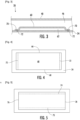
- FIGS 2-4 illustrate one example of upward facing waist pocket 30 and an example internal pocket retainer 60 within the interior of waist pocket 30.
- lower extension 26 extends downward from waistband 24 (schematically shown).
- waistband 24 is illustrated as comprising a single layer, waistband 24 may comprise multiple layers such as multiple layers of material joined to one another in an overlapping fashion or a panel that is folded to form two overlapping layers.
- lower extension 26 is joined to waistband 24 by stitching 33.
- lower extension 26 may be joined to waistband 24 by welds, adhesives or the like.
- lower extension 26 may be provided by a lower extending portion of one or more panels that also form waistband 24.
- the example upward facing waist pocket 30 comprises a pocket panel 40 coupled at a lower edge portion 42 coupled to waistband 24 and having a free end portion 44 that forms top opening 32 of pocket 30.
- Pocket panel 40 and waistband 24 form an interior 46 of pocket 30.
- lower edge portion 42 is flat and is joined to waistband 24 by stitching 48. In other implementations, lower edge portion 42 may be flat and joined to waistband 24 by adhesives, welding or other fastening techniques.
- pocket panel 40 illustrate as terminating above lower extension 26, in some implementations, pocket panel 40 may continuously extend downward, below waistband 24, to form portions of lower extension 26. In some implementations, rather than being flat, lower edge portion 42 may be inwardly turned or folded and joined to waistband 24. In some implementations, free end portion 44 may be curled or folded (inwardly or outwardly) and joined to itself to form a hem along top opening 32.
- pocket panel 40 is illustrated as comprising a single layer, in some implementations, pocket panel 40 may comprise multiple overlapping layers, whether being formed by multiple layers of material joined to one another or by a folded panel that provides multiple overlapping layers.
- Pocket retainer 60 comprises a retention panel coupled to and directly supported by waistband 24, along the exterior waistband 24 within interior 46 of upward facing waist pocket 30.
- Pocket retainer 60 forms a retention space 62 between pocket retainer 60 and waistband 24.
- Retention space 62 is closed on both opposite ends, yet is open along both its top edge and its bottom edge, forming a top mouth 66 and a bottom mouth 68 through which articles may be into and withdrawn from retention space 62.
- opposite side edge portions 70 of pocket retainer 60 are joined to waistband 24 along vertical seams or lines 72.
- line 72 are formed by stitching.
- edge portions 70 may be directly coupled to waistband 24 or indirectly coupled to waistband 24 along lines 72 in other fashions, such as with adhesives, welds or the like.
- pocket retainer 60 and retention space 62 extend along a front of waistband 24, above that portion of lower extension 26 which covers a groin of the person wearing garment 20. In some implementations, pocket retainer 60 and retention space 62 extend along a rear of waistband 24, above that portion of lower extension 26 which covers buttocks of the person wearing garment 20.
- pocket retainer 60 is entirely formed from an elastic panel of material.
- top and bottom edge portions of pocket retainer 60 are elastic.
- top and bottom edge portions of pocket retainer 60 are made elastic through the addition of an elastic band long such opposite edges and secured to the panel forming pocket retainer 60.
- the panel forming pocket retainer 60 is formed from a fabric material.
- the panel forming pocket retainer 60 is formed from a polymer.
- the panel forming pocket retainer 60 comprises a mesh or netting. The mesh or netting may itself be elastic or resiliently stretchable, or may include edges that are elastic or resiliently stretchable.
- Figures 2 and 3 illustrate panel 40 and internal pocket retainer 60 being flexed or temporarily deformed away from waistband 24 for the insertion of articles into pocket 30 and retention space 62.
- panel 40 and pocket retainer 60 may be inelastic and dimensioned so as to extend flat against waistband 24 when worn about the waist.
- panel 40 and/or pocket retainer 60 may be configured to extend flat against waistband 24 in the absence of articles within pocket 30 or retention space 62.
- panel 40 and/or pocket retainer 60 may alternatively have a default, unstretched shape or condition spaced from waistband 24 as shown in Figures 2 and 3 .
- retention space 62 may have open sides, but a closed interior top and bottom.
- pocket retainer 60 may be joined to or affixed to waistband 24 along horizontal lines 74, 75 such that the retention space 62 may be accessed through side mouths 76 which open or face in sideways directions.
- Horizontal lines 74 and 75 may be formed by stitching, welds, adhesive lines and the like.
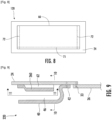
- FIGS 6-8 illustrate portions of an example garment 120.
- Garment 120 is similar to garment 20 described above except that garment 120 comprises the example upward facing waist pocket 30 containing an example internal pocket retainer 160.
- Figures 6-8 illustrate an example of how the pocket retainer may be secured to waistband to provide the retention space with a floor.
- Pocket retainer 160 is similar to pocket retainer 60 except pocket retainer 160 is additionally secured or joined to waistband 24 along a lower horizontal line 75 to form a bottom or floor for interior space 62. Horizontal line 75 may be provided by stitching, welds, adhesives or the like.
- Those components of garment 120 which correspond to components of garment 20 1 of Figures 1-4 are numbered similarly and/or are shown in Figures 1-4 .
- pocket retainer 160 and retention space 62 extend along a front of waistband 24, above that portion of lower extension 26 which covers a growing of the person wearing garment 20. In some implementations, pocket retainer 160 and retention space 62 extend along a rear of waistband 24, above that portion of lower extension 26 which covers a buttocks of the person wearing garment 20. In some implementations, pocket retainer 160 continuously extends about waistband 24. In some implementations, garment 120 comprises multiple circumferentially spaced pocket retainers. In some implementations, pocket retainer 160 may comprise a plurality of vertically spaced bands or are vertically spaced panels.
- FIGS 9-11 illustrate portions of an example garment 220.
- Garment 220 is similar to garment 20 described above except that garment 220 comprises the example upward facing waist pocket 30 containing an example internal pocket retainer 260.
- Figures 9-11 illustrate an example of how the pocket retainer may be secured to waistband to provide the retention space with a closed top so as to capture articles between the closed top and the floor of pocket 30.
- Pocket retainer 260 is similar to pocket retainer 60 except pocket retainer 260 is additionally secured or joined to waistband 24 along an upper horizontal line 74 to form a ceiling or closed top for interior space 62.
- Horizontal line 74 may be provided by stitching, welds, adhesives or the like.
- Those components of garment 220 which correspond to components of garment 20 are numbered similarly and/or are shown in Figures 1-4 .
- pocket retainer 260 and retention space 62 extend along a front of waistband 24, above that portion of lower extension 26 which covers a growing of the person wearing garment 20. In some implementations, pocket retainer 260 and retention space 62 extend along a rear of waistband 24, above that portion of lower extension 26 which covers a buttocks of the person wearing garment 20. In some implementations, pocket retainer 260 continuously extends about waistband 24. In some implementations, garment 220 comprises multiple circumferentially spaced pocket retainers. In some implementations, pocket retainer 260 may comprise a plurality of vertically spaced bands or are vertically spaced panels.
- Figure 12 is a sectional view illustrating portions of an example garment 320.
- Figure 12 illustrates an example of how a portion of the waistband may be folded outwardly to form a pocket retainer.
- Garment 320 is similar to garment 220 described above except that garment 320 comprises pocket retainer 360. Those remaining components of garment 320 which correspond to components of garments 20 and 220 are numbered similarly and/or are shown above.
- Pocket retainer 360 portion is formed from an outwardly folded portion of a panel of waistband 24.
- the panel of waistband 24 that is folded outwardly forms a top folded edge 362 extending along the perimeter of top opening 32.
- Pocket retainer 360 extends downwardly from the upper folded edge 362 towards the floor or bottom of interior 46 of pocket 30, forming retention space 62 having a closed top 363 and an open bottom 68.
- retention space 62 has closed sides, closed at lines 72 (shown in Figure 4 ). In other implementations, one or both of lines 72 may be omitted, wherein retention space 62 continuously extends around waistband 24 without interruption or continuously extends from one side of a single line 72 to the other side of a single line 72
- pocket retainer 360 and retention space 62 extend along a front of waistband 24, above that portion of lower extension 26 which covers a groin of the person wearing garment 20. In some implementations, pocket retainer 360 and retention space 62 extend along a rear of waistband 24, above that portion of lower extension 26 which covers a buttocks of the person wearing garment 20. In some implementations, pocket retainer 360 continuously extends about waistband 24 extending around the entire waistband (extending 360 degrees). In some implementations, garment 320 comprises multiple circumferentially spaced pocket retainers. In some implementations, pocket retainer 360 may comprise a plurality of vertically spaced bands and/or vertically spaced panels.
- pocket retainer 360 is formed as part of a panel forming at least a part of waistband 24, garment 320 and pocket retainer 360 may be less complicated and less costly to manufacture. Moreover, pocket retainer 360 may be more robust.
- FIGS 13-19 illustrate example garments wherein a pocket retainer is coupled to and supported by pocket panel 40 within interior 46 of pocket 30.
- Figures 13 and 14 illustrate portions of an example garment 420.
- Garment 420 is similar to garment 20 described above except that garment 420 comprises pocket retainer 460 in place of pocket retainer 60.
- Those remaining components of garment 420 which correspond to components of garment 20 are numbered similarly and such or are shown and described above with respect to Figures 1-4 .
- Pocket retainer 460 comprises a retention panel coupled to and directly supported by pocket panel 40, along the inner side of pocket panel 40 within interior 46 of upward facing waist pocket 30. Pocket retainer 460 forms a retention space 462 between pocket retainer 60 and pocket panel 40. Retention space 462 is closed on both opposite ends yet is open along both its top edge and its bottom edge, forming a top mouth 466 and a bottom mouth 468 through which articles may be inserted into and withdrawn from retention space 462.
- opposite side edge portions of pocket retainer 460 are joined to pocket panel 40 along horizontally spaced vertical seams or lines 472.
- lines 472 are formed by stitching.
- side edge portions of retainer 460 may be directly coupled to pocket panel 40 or indirectly coupled to pocket panel 40 along such horizontally spaced vertical lines in other fashions, such as with adhesives, welds or the like.
- retention space 462 may have open sides, but a closed interior top and bottom.
- pocket retainer 460 may be joined to or affixed to pocket panel 40 along horizontal lines 474, 475 such that the retention space 62 may be accessed through side mouths 476 which open or face in sideways directions.
- Horizontal lines 474 and 475 may be formed by stitching, welds, adhesive lines and the like.
- pocket retainer 460 and retention space 462 extend along a front of waistband 24, above that portion of lower extension 26 which covers a groin of the person wearing garment 420. In some implementations, pocket retainer 460 and retention space 462 extend along a rear of waistband 24, above that portion of lower extension 26 which covers a buttocks of the person wearing garment 420. In some implementations, pocket retainer 460 continuously extends about waistband 24. In some implementations, garment 420 comprises multiple circumferentially spaced pocket retainers. In some implementations, pocket retainer 460 may comprise a plurality of vertically spaced bands and/or vertically spaced panels.
- FIGs 16 and 17 illustrate portions of an example garment 520.
- Garment 520 is similar to garment 20 described above except that garment 520 comprises pocket retainer 560 in place of pocket retainer 60.
- Those remaining components of garment 520 which correspond to components of garment 20 are numbered similarly and such or are shown and described above with respect to Figures 1-4 .
- Garment 520 is similar to garment 420 described above except that garment 520 comprises with the example upward facing waist pocket 30 containing an example internal pocket retainer 560.
- Figures 16 and 17 illustrate an example of how the pocket retainer may be secured to waistband to provide the retention space with a floor.
- Pocket retainer 560 is similar to pocket retainer 460 except pocket retainer 560 is additionally secured or joined to pocket panel 40 along a lower horizontal line 475 to form a bottom or floor for interior space 462. Horizontal line 475 may be provided by stitching, welds, adhesives or the like.
- Those components of garment 520 which correspond to components of garment 420 are numbered similarly and/or are shown in Figures 1-4 and 13 .
- pocket retainer 560 and retention space 462 extend along a front of waistband 24, above that portion of lower extension 26 which covers a groin of the person wearing garment 520. In some implementations, pocket retainer 560 and retention space 462 extend along a rear of waistband 24, above that portion of lower extension 26 which covers a buttocks of the person wearing garment 520. In some implementations, pocket retainer 560 continuously extends about waistband 24. In some implementations, garment 520 comprises multiple circumferentially spaced pocket retainers. In some implementations, pocket retainer 560 may comprise a plurality of vertically spaced bands or are vertically spaced panels.
- FIGS 18 and 19 illustrate portions of an example garment 620.
- Garment 620 is similar to garment 420 described above except that garment 620 comprises the example upward facing waist pocket 30 containing an example internal pocket retainer 660.
- Figures 18 and 19 illustrate an example of how the pocket retainer may be secured to pocket panel 40 to provide the retention space 462 with a closed top so as to capture articles between the closed top and the floor of pocket 30.
- Pocket retainer 660 is similar to pocket retainer 460 except pocket retainer 660 is additionally secured or joined to pocket panel 40 along an upper horizontal line 474 to form a ceiling or closed top for interior space 462. Horizontal line 474 may be provided by stitching, welds, adhesives or the like.
- Those components of garment 620 which correspond to components of garment 420 are numbered similarly and/or are shown in Figures 1-4 and 13 .
- pocket retainer 660 and retention space 462 extend along a front of waistband 24, above that portion of lower extension 26 which covers a groin of the person wearing garment 620. In some implementations, pocket retainer 660 and retention space 462 extend along a rear of waistband 24, above that portion of lower extension 26 which covers a buttocks of the person wearing garment 620. In some implementations, pocket retainer 660 continuously extends about waistband 24. In some implementations, garment 620 comprises multiple circumferentially spaced pocket retainers. In some implementations, pocket retainer 660 may comprise a plurality of vertically spaced bands or are vertically spaced panels.
- FIGs 20, 21 and 22 illustrate portions of an example garment 720.
- Garment 720 is similar to garment 20 described above except that garment 720 comprises a pocket panel 740 that is inwardly folded along its top edge to form upward facing waist pocket 730 and pocket retainer 760.
- Those remaining components of garment 720 which correspond to components of garment 20 are numbered similarly and/or are shown in Figures 1-4 .
- pocket panel 740 has a lower portion 42 joined to waistband 24 so as to form a floor of upward facing waist pocket 730.
- Upward facing waist pocket 730 further comprises an interior 746 and a mouth or top opening 732 defined by waistband 24 and a top folded edge portion 734 of pocket panel 740.
- Pocket retainer 760 comprises that portion of pocket panel 740 extending downwardly from top folded edge portion 34 into and within interior 746. Pocket retainer 760 forms a retention space 762 bordered on opposite faces or sides by pocket retainer 760 and an inner side of pocket panel 740. Retention space 762 has a lower downward facing mouth 768 through which article may be positioned within retention space 762. Retention space 768 has a ceiling or a top provided by top folded edge 734. As result, articles positioned within retention space 762 are vertically captured and retained within retention space 762 by the mutually facing portions of top folded edge 734 and the floor of waist pocket 730. Said another way, articles within retention space 762 cannot vertically rise and exit retention space 762.
- retention space 762 may have closed lateral sides, being close along vertical lines 772.
- Vertical line 772 comprise portions where pocket retainer 760 is affixed or joined to the outermost portion of pocket panel 740.
- pocket retainer 760 may be additionally affixed or joined to waistband 24 along line 772.
- lines 772 are formed by stitching.
- lines 772 are formed by adhesives, welding or the like.
- one or both of line 772 may be omitted, wherein retention space 762 continuously extends 360° about waistband 24, either without interruption (no lines 772) or from one side of a single line 772 to another side of same single line 772. In implementations where one or both lines 772 are omitted, the retention space can extend around the waistband 24, up to 360 degrees about the waistband 24.
- pocket retainer 760 and retention space 762 extend along a front of waistband 24, above that portion of lower extension 26 which covers a groin of the person wearing garment 20. In some implementations, pocket retainer 760 and retention space 762 extend along a rear of waistband 24, above that portion of lower extension 26 which covers a buttocks of the person wearing garment 20. In some implementations, pocket retainer 760 continuously extends about waistband 24. In some implementations, garment 720 comprises multiple circumferentially spaced pocket retainers. In some implementations, pocket retainer 760 may comprise additional retention bands vertically below pocket retainer 760.
- pocket retainer 760 is formed as part of pocket panel 740, garment 720 and pocket retainer 760 may be less complicated and less costly to manufacture. Moreover, pocket retainer 760 may be more robust.
- selected portions about waistband 24 may include upward facing waist pocket 730, but omit pocket retainer 760.
- the inwardly folded portion of pocket panel 740 may be joined to itself along a horizontal line 780 so as to form a hem 782 along top opening 732.
- interior 746 may be larger, wider as seen in Figure 22 .
- line 780 may be formed by stitching.
- line 780 may be formed by welding, adhesives and the like.
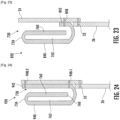
- Figure 23 is a sectional view illustrating portions of an example garment 820.
- Figure 23 illustrates an example of how a pocket panel may alternatively be coupled to waistband 24.
- Garment 820 comprises pocket panel 840 in place of pocket panel 740.
- Those components of garment 820 which correspond to components of garment 720 are numbered similarly and/or are shown in Figures 20-22 .
- Pocket panel 840 is similar to pocket panel 740 described above except that lower edge portion 842 of pocket panel 840 is upwardly folded or curled against waistband 24 and is secured to waistband 24 by stitching 848.
- lower edge portion 842 may be secured to waistband 24 by adhesives, welding or other fastening techniques. Because lower edge portion 842 curls upwardly, rather than downwardly, against waistband 24, the floor of the waistband pocket 730 may be more robust.
- Figure 24 is a sectional view illustrating portions of an example garment 920.
- Figure 24 illustrates an example of how a pocket panel may alternatively be coupled to waistband 24.
- Garment 920 comprises pocket panel 940 in place of pocket panel 840.
- Those components of garment 920 which correspond to components of garment 820 are numbered similarly and/or are shown in Figures 20-23 .
- Pocket panel 940 is similar to pocket panel 840 described above except that lower edge portion 942 of pocket panel 940 is much longer than lower edge portion 842 so as to overlap and extend in front of at least a majority of waistband 24.
- lower edge portion 942 covers substantially all of waistband 24 opposite to upward facing waist pocket 730.
- the interior 746 of pocket 730 has a uniform interior appearance, the entire interior of pocket 730 being formed from the same material of panel 940.
- the lower edge portion 942 is distanced from the floor of pocket 730, making pocket 730 more robust and less likely to separate from waistband 24.
- lower edge portion 942 is joined to waistband 24 along to stitching lines 948-1 and 948-2 (collectively referred to as lines 948).
- lower edge portion 842 may be secured to waistband 24 by adhesives, welding or other fastening techniques.
- larger surface area provided by the longer lower edge portion 942 may be better laminated, welded, fused or adhered to waistband 24.
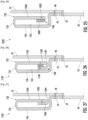
- Figures 25-27 are sectional views illustrating examples of different configurations for the pocket retainer extending downwardly into the upward facing waist pocket from the folded edge portion of the pocket panel.
- Figure 25 illustrates portions of an example garment 1020 having pocket retainer 1060 in place of pocket retainer 760. Those remaining components of garment 1020 which correspond to components of garment 720 are numbered similarly and/or are shown in Figures 20-22 .
- Pocket retainer 1060 is similar to pocket retainer 760 except that the lower end of pocket retainer 1060 is secured to an additional band 1080 by stitching 1082.
- Band 1080 extends along a lower edge or tip of retainer 1060 along the upwardly facing mouth 768 of retention space 762.
- band 1080 may alternatively be welded, laminated, bonded or otherwise joined to pocket retainer 1060.
- Band 1080 extends between retainer 1060 and the front of pocket panel 740 so as to narrow or reduce the size of mouth 768. As result, band 1080 may assist in retaining articles within retention space 762.
- retainer 1060 is flexible, but inelastic, wherein band 1080 is elastic so as to resiliently close mouth 768.
- retainer 1060 is flexible, but inelastic, wherein band 1080 is also inelastic, but wherein band 1080 has a greater degree of stiffness as compared to retainer 1060 so as to rigidify mouth 768.
- both retainer 1060 and band 1080 are elastic.
- Figure 26 illustrates portions of an example garment 1120 having pocket retainer 1160 in place of pocket retainer 760. Those remaining components of garment 1120 which correspond to components of garment 720 are numbered similarly and/or are shown in Figures 20-22 .
- Pocket retainer 1160 is similar to pocket retainer 760 except that the lower end of pocket retainer 1160 is outwardly folded or curled about an additional band 1180 by stitching 1182.
- Band 1180 extends along a lower edge or tip of retainer 1060 along the upwardly facing mouth 768 of retention space 762.
- band 1180 may alternatively be welded, laminated, bonded or otherwise joined to pocket retainer 1160 within the lower folded edge portion 1184 of retainer 1160.
- the lower folded edge portion 1184 provides a more robust lower edge for retainer 1160 and protects band 1180.
- Lower folded edge portion 1184 and band 1080 extend between the unfolded portion of retainer 1160 and the front of pocket panel 740 so as to narrow or reduce the size of mouth 768. As result, lower folded edge portion 1184 and band 1180 may assist in retaining articles within retention space 762.
- retainer 1160 is flexible, but inelastic, wherein band 1180 is elastic so as to resiliently close mouth 768.
- retainer 1160 is flexible, but inelastic, wherein band 1180 is also inelastic, but wherein band 1180 has a greater degree of stiffness as compared to retainer 1160 so as to rigidify mouth 768.
- both retainer 1160 and band 1180 are elastic.
- Figure 27 illustrates portions of an example garment 1220 having pocket retainer 1260 in place of pocket retainer 760. Those remaining components of garment 1220 which correspond to components of garment 720 are numbered similarly and/or are shown in Figures 20-22 .
- Pocket retainer 1260 is similar to pocket retainer 760 except that the lower end of pocket retainer 1160 is outwardly folded or curled end secured to itself by stitching 1282 to form a lower hem 1286.
- hem 1286 may alternatively be welded, laminated, bonded or otherwise joined to pocket retainer 1260 to form the lower folded edge portion 1284 of retainer 1260.
- the lower folded edge portion 1284 provides a more robust lower edge for retainer 1260.
- Garments 1020, 1120 and 1220 in Figures 25-27 are each illustrated as having pocket panel 740 secured to waistband 24 in the same fashion as garment 720.
- each of such garments is illustrated as having a lower end portion 42 extending downwardly and flat against waistband 24 while being secured to waistband 24 by stitching 48.
- each of such garments may alternatively have the pocket panel joined to waistband 24 in a fashion similar to that shown in Figures 23 and 24 , wherein the lower edge portion of the pocket panels upwardly folded or curled and secured along waistband 24.
- Figures 28-30 are sectional views illustrating examples of alternative pocket retainers that are affixed to the pocket panel.
- the pocket panel has a top folded edge portion, but wherein the pocket retainer is not formed by a downward extension of the pocket panel. Instead, the pocket retainer is affixed to the pocket wall at a location within the top folded edge portion.
- FIG 28 is a sectional view illustrating portions of an example garment 1320.
- Garment 1320 is similar to garment 1020 except that garment 1320 comprises pocket panel 1340 and pocket retainer 1360 in place of pocket panel 740 and pocket retainer 1060.
- Those remaining components of garment 1320 which correspond to components of garment 1020 are numbered similarly and/are our shown in Figures 20-22 and 25 .
- Pocket panel 1340 is similar to pocket panel 740 except that comprises top folded edge portion 1334 in lieu of top folded edge portions 734.
- Top folded edge portion 1324 inwardly curls or wraps about an upper portion of pocket retainer 1360, being secured to pocket retainer 1360 by stitching 1388.
- top folded edge portion 1324 may be secured to pocket retainer 1360 by welds, adhesives or other fastening techniques.
- Pocket retainer 1360 is similar to pocket retainer 1060 described above with respect to Figure 25 except that rather than comprising an integral extension of pocket panel 1340, pocket retainer 1360 has an upper end portion 1390 sandwiched within top folded edge portion 1334 of pocket panel 1340 and secured within the top folded edge portion 1334 by stitching 1388. In other implementations, in lieu of stitching 1388, welding/fusing or adhesives may be used. Those remaining components of pocket retainer 1360 which correspond to components of pocket retainer 1060 are numbered similarly. Because pocket retainer 1360 is a separate component mounted to pocket panel 1340, pocket retainer 1360 may be formed from material different than that of pocket panel 1340. For example, pocket retainer 1360 may be elastic as compared to pocket panel 1340 for providing enhanced retention of articles within retention space 762.
- FIG 29 is a sectional view illustrating portions of an example garment 1420.
- Garment 1420 is similar to garment 1320 except that garment 1420 comprises pocket retainer 1460 in lieu of pocket retainer 1360.
- Pocket retainer 1460 is similar to pocket retainer 1160 described above with respect to Figure 26 except that rather than comprising an integral extension of pocket panel 1340, pocket retainer 1460 has an upper end portion 1390 sandwiched within top folded edge portion 1334 of pocket panel 1340 and secured within the top folded edge portion 1334 by stitching 1388. In other implementations, in lieu of stitching 1388, welding/fusing or adhesives may be used. Those remaining components of pocket retainer 1460 which correspond to components of pocket retainer 1160 are numbered similarly.
- FIG 30 is a sectional view illustrating portions of an example garment 1520.
- Garment 1520 is similar to garment 1320 except that garment 1520 comprises pocket retainer 1560 in lieu of pocket retainer 1360.
- Pocket retainer 1560 is similar to pocket retainer 1260 described above with respect to Figure 27 except that rather than comprising an integral extension of pocket panel 1340, pocket retainer 1560 has an upper end portion 1390 sandwiched within top folded edge portion 1334 of pocket panel 1340 and secured within the top folded edge portion 1334 by stitching 1388. In other implementations, in lieu of stitching 1388, welding/fusing or adhesives may be used. Those remaining components of pocket retainer 1560 which correspond to components of pocket retainer 1260 are numbered similarly.
- Figures 31-33 are sectional views illustrating examples of alternative pocket retainers that are affixed to the pocket panel.
- the pocket panel has a top folded edge portion and the pocket retainer also has a top folded edge portion.
- the top folded edge portions extend along one another and are secured to one another by stitching, welding or adhesives.
- FIG 31 is a sectional view illustrating portions of an example garment 1620.
- Garment 1620 is similar to garment 1020 except that garment 1320 comprises pocket panel 1640 and pocket retainer 1660 in place of pocket panel 740 and pocket retainer 1060.
- Those remaining components of garment 1620 which correspond to components of garment 1020 are numbered similarly and/are our shown in Figures 20-22 and 25 .
- a single set of stitching 1688 joins both of folded edge portions 1634 and 1690.
- folded edge portions 1634 and 1690 may each be secured by separate stitching, wherein a third stitching joins both of the individually pre-stitched folded edge portions 1634, 1690.
- the various junctures or connection may provide bite he sieves or welding/fusing.
- the inwardly curled folded edge portions 1634 and the outwardly curled folded edge portion 1690 form a rounded, robust upper edge or border for upward facing waist pocket 730.
- the inwardly curled folded edge portions 1634 and the outwardly curled folded edge portion 1690 further cooperate to define an enlarged width for retention space 762.
- FIG 32 is a sectional view illustrating portions of an example garment 1720.
- Garment 1720 is similar to garment 1620 except that garment 1720 comprises pocket retainer 1760 in lieu of pocket retainer 1660.
- Pocket retainer 1760 is similar to pocket retainer 1160 described above with respect to Figure 26 except that rather than comprising an integral extension of pocket panel 1340, pocket retainer 1760 has an upper end portion that is outwardly folded and joined to pocket panel 1640 in a fashion similar to that described above with respect to Figure 31 .
- top folded edge portions 1690 and 1634 are joined to one another by stitching 1688. In other implementations, in lieu of stitching 1388, welding/fusing or adhesives may be used.
- Those remaining components of pocket retainer 1760 which correspond to components of pocket retainer 1160 are numbered similarly.
- FIG 33 is a sectional view illustrating portions of an example garment 1820.
- Garment 1820 is similar to garment 1620 except that garment 1820 comprises pocket retainer 1860 in lieu of pocket retainer 1660.
- Pocket retainer 1860 is similar to pocket retainer 1260 described above with respect to Figure 27 except that rather than comprising an integral extension of the pocket panel, pocket retainer 1860 has an upper end portion that is outwardly folded and joined to pocket panel 1640 in a fashion similar to that described above with respect to Figure 31 .
- top folded edge portions 1690 and 1634 are joined to one another by stitching 1688. In other implementations, in lieu of stitching 1388, welding/fusing or adhesives may be used.
- Those remaining components of pocket retainer 1860 which correspond to components of pocket retainer 1160 are numbered similarly.
- Garments 1320, 1420, 1520 1620, 1720, and 1820 in Figures 28-33 are each illustrated as having pocket panel secured to waistband 24 in the same fashion as garment 720.
- each of such garments is illustrated as having a lower end portion 42 extending downwardly and flat against waistband 24 while being secured to waistband 24 by stitching 48.
- each of such garments may alternatively have the pocket panel joined to waistband 24 in a fashion similar to that shown in Figures 23 and 24 , wherein the lower edge portion of the pocket panels upwardly folded or curled and secured along waistband 24.
- Figures 34-36 and 38-41 illustrate portions of an example garment 1920.
- Figure 34 is a right-side view of garment 1920, wherein the left side of garment 1920 is a mirror image of the right side image shown in Figure 34 .
- Figure 38 illustrates a rear view of garment 1920.
- Figure 39 illustrates a front portion of garment 1920.
- Figure 40 illustrates a cross-sectional view of a waistband 1924 of the garment 1920, and
- Figure 41 illustrates a cutaway perspective view of waistband 1924 of the garment.
- garment 1920 comprises a piece of clothing or apparel such as a pair of leggings worn about the waist of a person.
- Garment 1920 comprises a waistband 1924, a lower extension 1926, an first upward facing waist pocket 1930, a second upward facing waist pocket 1936 and a retention space 1962.
- Garment 1920 facilitates more secure retention of articles, such as a cellphone 1970, about the waistband 1924 of the garment 1920.
- the waistband 1924 includes a pair of vertical seams 1972 that, with the other components of the waistband 1924, define the first upward facing waist pocket 1930 and a second upward facing pocket 1936 and a retention space 1962.
- the first upward facing waist pocket 1930 extends from one of the vertical seams 1972 forward about or across the front of the waistband 1924 and along the front sides of the waist band 1924 to the other of the vertical seams 1972.
- the second upward facing waist pocket 1936 and the retainer space 1960 extend between the vertical seams 1972 along the rear of the waistband 1924 of the person wearing the garment.
- the retainer space is formed by a pocket panel 1940 and an internal pocket retainer 1960 that also extend between the vertical seams along the rear of the waistband 1924.
- Waistband 1924 comprises a pair of panels comprising an inner panel 1927 and an outer panel 1928 which form inner and outer layers, respectively, which are joined to one another by stitching 1929.
- Waistband 1924 like waistband 24, is configured to extend about the waist of a person wearing garment 1920 along or about the person's waistline.
- waistband 1924 may be continuous or uninterrupted, lacking ends.
- waistband 1924 may comprise opposite ends which are permanently joined to one another by stitching, bonding or the like. In implementations where waistband 24 is continuous, a person may step into waistband 1924 when donning garment 20.
- waistband 1924 may comprise end portions which are releasably connected to one another by a hook and loop fastener, buttons, clasps, hooks, or a buckle, permitting waistband 24 to be opened and wrapped about the waist of the person.
- the waistband 1924 is elastic or resiliently stretchable.
- waistband 1924 may be inelastic.
- Each of the waistbands 24 described above with respect to Figures 1-34 may have a waistband configured similar to that of waistband 1924.
- Lower extension 1926 comprises one or more panels extending downwardly from a lower edge portion of waistband 1924 and configured to cover at least upper portions of the groin and buttocks of the person wearing garment 1920. In the example illustrated, lower extension 1926 continues further to cover the person's thighs, knees, calves and shins, forming pant legs. In other implementations, lower extension 1926 may have various configurations depending upon the type of garment 1920. For example, lower extension 1926 may be shorter such as where garment 1920 comprises a pair of shorts, a skirt or the like.
- lower extension 1926 additionally comprises pockets 1931 which have mouths below the bottom edge of waistband 1924.
- lower extension 1926 may include one or more openings that may be openable and closable with a zipper, buttons, snaps or the like.
- Lower extension 1926 may be pleated.
- First upward facing waist pocket 1930 comprises a pocket coupled to waistband 1924 along an exterior of waistband 1924.
- the first and second upward facing waist pockets 1930 and 1936 continuously extends along and about waistband 1924 but for vertical seams 1972.
- Vertical seams 1972 extend on the left and right rear sides of garment 1920 and partition a top of garment 1920 into a rear portion 1990 having the second upward facing pocket 1936 and a front portion 1992 having the first upward facing pocket 1930.
- Figure 35 is a sectional view of rear portion 1990.
- Figure 40 is a sectional view of the rear portion 1990 taken about line 40 - 40 of Figure 38 and includes the cellphone 1970 as an example of an article.
- Figure 36 is a sectional view of front portion 1992.
- the second upward facing waist pocket 1936 is formed by pocket panel 1940 which is joined to lower extension 1926 and waistband 1924 by stitching 1951.
- Pocket panel 1940 extends or rises upwardly from stitching 1951, forming an outermost wall of pocket 1930.
- pocket panel 1940 continues extending inwardly into pocket 1930 from folded edge portion 1934 to form pocket retainer 1960.
- Pocket panel 1940 is folded inwardly to form top folded edge portion 1934.
- the pocket 1930 has a waist pocket interior 1946 having a floor 1947, a front or outer wall 1949, the pocket retainer 1969 and a top mouth or top opening 1932.
- Top opening 1932 facilitates access to the interior of upward facing waist pocket 1930 for the insertion of articles into the interior.
- top opening 1932 may comprise a closure mechanism such as a zipper, and loop fastener or other mechanisms. In other implementations, top opening 1932 may omit any closure mechanism.
- Pocket retainer 1960 is integrally formed as a single unitary body as part of pocket panel 1940. Pocket retainer 1960 extends from folded edge portion 1934 towards floor 1947 to form retention space 1962. The lower end 1986 of pocket retainer 1960 is outwardly curled or folded and attach to itself by stitching 1980 to form a lower hem wall along the downwardly facing mouth 1968 of retention space 1962.
- Retention space 1962 comprises volume into which articles may be inserted. In particular, articles are first inserted through top opening 1932 into the interior 1946 of pocket 1930. In instances where additional retention is desired, such articles may further be positioned into retention space 1962 through mouth 1968. As a result, articles positioned within retention space 1962 are vertically captured between top folded edge portion 1934 and floor 1947, inhibiting accidental dislodging of such articles.
- the structure along with the resilient nature of the material used to form these components helps to keep the cellphone 1970 secure when positioned within the retention space 1962.
- Vertical seams 1972 comprise stitching that extends through and joins a front of pocket panel 1940, pocket retainer 1960 and waistband 1924, closing off the sides of both pocket 1930 and retention space 1962.
- the vertical seams 1972 assist in maintaining the shape and configuration of pocket 1930 and retention space 1962 by limiting the extent that pocket panel 1940 and pocket retainer 1960 may be pulled away from waistband 1924.
- the stitching of the vertical seams 1972 is shown closing off the sides of interior 1946 of the second upward facing pocket 1936 and the retention space 1962. So, both volumes of the waistband 1924 (the interior 1946 and the retentions space 1962) are closed off at the ends by the vertical seam 1972.
- garment 1920 omits pocket retainer 1960. Instead, those portions of pocket panel 1940 extending below top folded edge portion 1934 and within interior 1946 of pocket 1930 are affixed to the outer wall of pocket panel 1940 by stitching 1980 to form an inner hem 1988 along the mouth 1932 of pocket 1930 in front portion 1992.
- the omission of pocket retainer 1960 along front portion 1992 reduces the weight and thickness of the garment 1920 about the person's waist.
- the front portion 1992 can include one or more bar tacks 1974 at the mouth 1932 of the first upward facing pocket 1930. When two or more bar tacks 1974 are employed they are positioned in a spaced-apart manner along the front portion 1992 of the waistband 1924 to separate out individual pocket entry points into the interior 1946.
- pocket retainer 1960 may alternatively also extend along front portion 1992.
- pocket retainer 1960 may provide along front portion 1992, wherein rear portion 1990 omits pocket retainer 1960.
- garment 1920 may comprise multiple enhanced article retention regions where a pocket retainer 1960s provided, wherein such regions may be separated by regions that omit a pocket retainer.
- garment 1920 may be provided with a pocket retainer continuously extending about waistband 1924.
- additional sets of vertical seams 1972 may be provided along waistband 1924.
- such panels or layers may be affixed or joined to one another by welds or adhesives.
- vertical seams 1972 extend between and connect the outer wall of pocket panel 1940 and pocket retainer 1960, independent of the inner wall of pocket 1930 provided by waistband 1924.
- the vertical seams 1972 can comprise stitching that extends through and joins the pocket panel 1940 and pocket retainer 1960 but does not also join the pocket panel 1940 and the pocket retainer 1960 to the inner and outer panels 1927 and 1928 of the waistband 1924. Rather, only the top and bottom of the inner and outer panels 1927 and 1928 can be connected to the top and bottom of the pocket panel 140 and the pocket retainer 1960 of the waistband 1924. Therefore, stitching of the vertical seam 1972 is shown closing off the sides of the retention space 1962 but not closing off the end of the interior 1946.
- the vertical seams 1972 may comprise only tacks that extend along a top portion, a bottom portion of the waistband 1924 between the in the location shown such that interior 1946 of the second upward facing pocket 1934 can be continuous with the first upward facing pocket providing a collective continuous pocket that can extend 360 degrees about the waistband 1924.
- FIG 37 is a side view illustrating portions of an example garment 2020.
- Garment 2020 is in the form of a pair of shorts. Garment 2020 is similar to garment 1920 described above except that garment 20 comprises a front portion 2092 extending from vertical seams 1972. Those remaining portions of garment 2020 which correspond to components of garment 1920 are numbered similarly and/or are shown and described above with respect to Figures 34-36 .
- Front portion 2092 has a sectional configuration similar to the section shown in Figure 35 .
- garment 2020 comprises a plurality of upwardly facing waist pockets one and rear portion 1990 and one in front portion 2092) and a plurality of corresponding pocket retainers (one in rear portion 1990 and one in front portion 2092).
- front portion 2092 additionally comprises vertical tacks 2072 and 2073.
- Tack 2072 joins an upper portion of pocket panel 1940 and an upper portion of pocket retainer 1960 to waistband 1924.
- Tack 2072 comprises stitching that extends through and between each of the layers of material forming panel 1940, pocket retainer 1960 and at least one of the layers of material forming waistband 1924.
- Tack 2072 inhibits or limits the degree to which mouth 1932 of pocket 1930 may be opened.
- Vertical tack 2073 joins a lower portion of pocket retainer 1960 to the front wall or portion of panel 1940. Vertical tack 2073 does not extend through and is not connected to waistband 1924 tack 2073 inhibits or limits the opening of mouth 1968 of retention space 1962. Without restricting the length of the interior 1946 of pocket 1930.
- tacks 2072 and 2073 may be omitted or may be replaced with a single vertical seams similar to seam 1972.
- tack 2073 may be additionally connected to waistband 1924.
- tack 2072 may not be connected to waistband 1924.
- the configurations shown with respect to garments 1920 and 2020 may be incorporated into other forms or types of garments.
- the retention space formed by the pocket retainer is configured to contain loose articles and inhibit accidental dis-lodgment of such articles from the generally larger upward facing waist pocket.
- the retention space may have an internal height of at least one inch.
- the garment of claim 1 wherein the upward facing waist pocket has a depth and wherein the internal retention space has an internal height of at least 70% percent of the depth, and in some implementations, at least 2 inches.
- the internal retention space may have a length (generally in the horizontal direction) of at least 4 inches.
- the upward facing waist pocket may have a depth, were in the internal retention space has an internal height of at least 70% of such depth.
- the internal retention space provided by the pocket retainer may have an internal height substantially equal to the depth of the upward facing waist pocket.
Landscapes
- Engineering & Computer Science (AREA)
- Textile Engineering (AREA)
- Details Of Garments (AREA)
Abstract
Description
- Garments, also known as apparel, clothing or the like, sometimes include one or more pockets. Some pockets extend along and partially about the waist of the person wearing the garment. During exercise or other activities, contents of the pockets may sometimes be dislodged and may inadvertently fall out of the pockets.
-
-
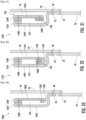
Figure 1 is a fragmentary perspective view illustrating portions of an example garment. -
Figure 2 is a sectional view of the garment ofFigure 1 taken along line 2-2. -
Figure 3 is a top view of the garment ofFigure 1 taken along line 3-3. -
Figure 4 is a side view of a portion of the garment ofFigure 2 taken along line 4-4. -
Figure 5 is a side view of a portion of another example garment, similar to the garment ofFigure 2 , taken along line 4-4. -
Figure 6 is a sectional view of an example garment taken along line 2-2 ofFigure 1 . -
Figure 7 is a top view of the garment ofFigure 6 taken along line 3-3 ofFigure 1 . -
Figure 8 is a side view of a portion of the garment ofFigure 6 taken along line 8-8. -
Figure 9 is a sectional view of an example garment taken along line 2-2 ofFigure 1 . -
Figure 10 is a bottom view of a portion of the garment ofFigure 9 taken along line 10-10. -
Figure 11 is a side view of a portion of the garment ofFigure 9 taken along line 11-11. -
Figure 12 is a sectional view of a portion of an example garment taken along line 2-2 ofFigure 1 . -
Figure 13 is a sectional view of a portion of an example garment taken along line 2-2 ofFigure 1 . -
Figure 14 is a side view of a portion of the garment ofFigure 13 taken along line 14-14. -
Figure 15 is a side view of a portion of an example garment similar to the garment ofFigure 14 taken along line 14-14. -
Figure 16 is a sectional view of a portion of an example garment taken along line 2-2 ofFigure 1 . -
Figure 17 is a side view of a portion of the garment ofFigure 16 taken along line 17-17. -
Figure 18 is a sectional view of a portion of an example garment taken along line 2-2 ofFigure 1 . -
Figure 19 is a side view of a portion of the garment ofFigure 16 taken along line 19-19. -
Figure 20 perspective view illustrating portions of an example garment. -
Figure 21 is a sectional view of the garment ofFigure 20 taken along line 21-21. -
Figure 22 is a sectional view of the garment ofFigure 20 taken along line 22-22. -
Figure 23 is a sectional view of an example garment taken along line 21-21 ofFigure 20 . -
Figure 24 is a sectional view of an example garment taken along line 21-21 ofFigure 20 . -
Figure 25 is a sectional view of an example garment taken along line 21-21 ofFigure 20 . -
Figure 26 is a sectional view of an example garment taken along line 21-21 ofFigure 20 . -
Figure 27 is a sectional view of an example garment taken along line 21-21 ofFigure 20 . -
Figure 28 is a sectional view of an example garment taken along line 21-21 ofFigure 20 . -
Figure 29 is a sectional view of an example garment taken along line 21-21 ofFigure 20 . -
Figure 30 is a sectional view of an example garment taken along line 21-21 ofFigure 20 . -
Figure 31 is a sectional view of an example garment taken along line 21-21 ofFigure 20 . -
Figure 32 is a sectional view of an example garment taken along line 21-21 ofFigure 20 . -
Figure 33 is a sectional view of an example garment taken along line 21-21 ofFigure 20 . -
Figure 34 is a right side view of an example garment. -
Figure 35 is a sectional view of a rear portion of the garment ofFigure 34 . -
Figure 36 is a sectional view of a front portion of the garment ofFigure 34 . -
Figure 37 is a right side view of an example garment. -
Figure 38 is a rear view of an example garment. -
Figure 39 is a front view of an example garment. -
Figure 40 is a sectional view of a rear portion of the garment ofFigure 38 . -
Figure 41 is a sectional view of a rear portion of the garment ofFigure 38 . -
Figure 42 is a sectional view showing another implementation of the rear portion of the garment ofFigure 38 . - Throughout the drawings, identical reference numbers designate similar, but not necessarily identical, elements. The figures are not necessarily to scale, and the size of some parts may be exaggerated to more clearly illustrate the example shown. Moreover, the drawings provide examples and/or implementations consistent with the description; however, the description is not limited to the examples and/or implementations provided in the drawings.
- Disclosed are example garments that provide enhanced retention of articles placed within a waist pocket. The example garments comprise an elongate upward facing waist pocket that extends in an oval or circular fashion along and about the waistline of the garment. The waist pocket has an internal floor or bottom and a top opening through which articles may be placed within the waist pocket.
- The example garments further comprise a pocket retainer disposed within the upward facing waist pocket. The pocket retainer comprises an internal panel that forms an internal retention space within the waist pocket, wherein articles may be placed into the internal retention space through a retention space mouth. The pocket retainer may be sized or may be at least partially elastic to grip and engage the received articles so as to assist in retaining the articles within the waist pocket by inhibiting such articles from rising and falling out of the waist pocket through the top opening of the waist pocket. The pocket retainer may be especially useful for providing enhanced gripping of smaller items which may otherwise be more likely fall out of the waist pocket through the top opening. For example, such pocket retainers may be well suited for assisting in the retention of a phone, keys or the like.
- In some implementations, those edge portions of the pocket retainer proximate to the mouth or each of the mouths of the retention space are elastic so as to resiliently close against or about any articles positioned within the retention space. In some implementations, edge portions of the pocket retainer are made from an elastic material. In some implementations, such edge portions are made elastic through the addition of an elastic strip or band secured to the pocket retainer along such edges. In some implementations, an entirety of the pocket retainer is formed from an elastic material such that the entirety of the pocket retainer resiliently stretches and grips articles positioned within the retention space.
- In some implementations, the retention space continuously extends along the waistband without interruption, 360 degrees around the waist of the person wearing the garment. In such implementations, selected portions of the pocket retainer may be stitched, bonded or otherwise affixed to either the waistband or portions of the panel forming an exterior of the upward facing waist pocket at vertically spaced locations such that the retention space comprises a continuous uninterrupted passage extending 360 degrees about the waist of the person wearing the garment, wherein portions of the passage may extend between the vertically spaced locations. In some implementations, the pocket retainer may be stitched, welded, bonded or otherwise affixed by vertical continuous or uninterrupted seems to either the waistband or portions of the panel forming an exterior of the upward waistband pocket such that one or both sides of the retention space are closed. In some implementations, all of the edge portions of the pocket retainer may be affixed by stitching, bonding or other methods to either the waistband or portions of the panel forming an exterior of the upward waistband pocket, wherein the pocket retainer comprises a slit through its outer face that forms or provides a mouth for insertion of articles into the retention space.
- In some implementations, the pocket retainer may be affixed along multiple vertical seams to form a plurality of individual, separated retention spaces along an exterior of the waistband. In some implementations, the garment may comprise multiple individual pocket retainers which are affixed to either the waistband or portions of the panel forming an exterior of the upward waistband pocket so as to provide multiple individual, separated retention spaces about the waistband.
- In some implementations, the pocket retainer is coupled to an exterior side of the waistband such that the retention space has closed opposite sides while being open along both its upper and lower edges. As result, articles may be inserted into and withdrawn from the retention space through either a top mouth or a bottom mouth. In some implementations, the pocket retainer is coupled to an exterior side of the waistband such that the retention space has closed opposite sides and has a closed bottom. In some implementations, the pocket retainer is coupled to the exterior side of the waistband such that the retention space has closed opposite sides and has a closed top, wherein articles are captured between the close top and the floor of the upward facing waist pocket. In some implementations, the pocket retainer is coupled to an exterior side of the waistband such that the retention space is closed along both its upper and lower edges, but is open on one or both of its lateral sides.
- In some implementations, the pocket retainer comprises a panel affixed along at least two edge portions (top, bottom, left side, right side) to the exterior of the waistband by stitching. In some implementations, the panel forming the pocket retainer may be affixed to the exterior of the waistband by welding, adhesives or the like. In some implementations, the edge portions affixed to the exterior of the waistband are flat. In some implementations, the edge portions affixed to the exterior of the waistband are inwardly curled against the exterior of the waistband. In some implementations, the pocket retainer comprises a folded portion of the waistband. For example, the waistband may comprise a single panel or multiple panels. At least one of such panels forming the exterior the waistband may be folded outwardly and over to additionally form the pocket retainer.
- In some implementations, the pocket retainer is coupled to an interior side of a front pocket panel that forms an exterior front of the upward facing waist pocket such that the retention space has closed opposite sides while being open along both its upper and lower edges. As result, articles may be inserted into and drawn from the retention space through either a top mouth or a bottom mouth. In some implementations, the pocket retainer is coupled to an interior side of a front pocket panel that forms an exterior front of the upward facing waist pocket such that the retention space has closed opposite sides and has a closed bottom. In some implementations, the pocket retainer is coupled to an interior side of a front pocket panel that forms an exterior front of the upward facing waist pocket such that the retention space has closed opposite sides and has a closed top, wherein articles are captured between the close top and the floor of the upward facing waist pocket. In some implementations, the pocket retainer is coupled to an interior side of a front pocket panel that forms an exterior front of the upward facing waist pocket such that the retention space is closed along both its upper and lower edges, but is open on one or both of its lateral sides.
- In some implementations, the pocket retainer comprises a panel affixed along at least two edge portions (top, bottom, left side, right side) are coupled to an interior side of a front pocket panel that forms an exterior front of the upward facing waist pocket by stitching. In some implementations, the panel forming the pocket retainer is coupled to an interior side of a front panel that forms an exterior front of the upward facing waist pocket by welding, adhesives or the like. In some implementations, the edge portions coupled to an interior side of a front panel that forms an exterior front of the upward facing waist pocket are flat. In some implementations, the edge portions coupled to an interior side of a front panel that forms an exterior front of the upward facing waist pocket are inwardly curled against the exterior of the waistband. In some implementations, the pocket retainer comprises a folded portion of the front pocket panel that forms an exterior front of the upward facing waist pocket. For example, the upward facing waist pocket may be formed by an outer pocket panel. The outer pocket panel may have an inwardly folded top edge that forms a mouth or top opening of the upward facing waist pocket, wherein the inwardly folded portion of the outer pocket panel forms the pocket retainer.
- For purposes of this disclosure, the term "coupled" shall mean the joining of two members directly or indirectly to one another. Such joining may be stationary in nature or movable in nature. Such joining may be achieved with the two members, or the two members and any additional intermediate members being integrally formed as a single unitary body with one another or with the two members or the two members and any additional intermediate member being attached to one another. Such joining may be permanent in nature or alternatively may be removable or releasable in nature.
- For purposes of this disclosure, the phrase "configured to" denotes an actual state of configuration that fundamentally ties the stated function/use to the physical characteristics of the feature proceeding the phrase "configured to".
- For purposes of this disclosure, the term "releasably" or "removably" with respect to an attachment or coupling of two structures means that the two structures may be repeatedly connected and disconnected to and from one another without material damage to either of the two structures or their functioning.
- For purposes of this disclosure, the term "inward" refers to a radial direction towards a vertical center of
waistband 24, a direction towards either the coronal plane or the sagittal plane of theperson wearing garment 20. The term "outward" refers to a radial direction outwards away from the vertical centerline ofwaistband 24. The term "inner" refers to a side facing the vertical centerline while the term "outer" refers to a side facing away from the vertical centerline. The term "upward" refers to a direction towards the head of theperson wearing garment 20 while the term downward refers to a direction towards the feet of theperson wearing garment 20. - For purposes of this disclosure, the term "panel" refers to one or more layers of material. The term "panel" may refer to a single layer of material or multiple overlapping layers of material. The layers of material may themselves by separate and distinct layers or panels that are laminated to one another, stitched to one another or welded to one another. The layers of material may be joined to one another along their edges or at selected locations. In some implementations, a panel may be folded to form multiple overlapping layers. In some implementations, the panel may be formed from a fabric. In some implementations, the panel may be formed from a polymer. In some implementations, the panel may be imperforate. In other implementations, the panel may be perforate or breathable. In some implementations, the panel may be in the form of a mesh or a netting. In some implementations, the panel may be formed from a flexible material. In some implementations, the panel may be formed from an elastic material. In some implementations, selected portions of the panel, such as edge portions of the panel, may be elastic. In some implementations, flexible edge portions of panel may be made elastic through the addition of an elastic band joined to the panel.
-
Figure 1 illustrates portions of anexample garment 20 for being worn about a waist of a person.Garment 20 comprises a piece of clothing or apparel such as a pair of shorts, a skirt, leggings, tights, a pair of pants or slacks, trousers, or other apparel worn about the waist of a person. As will be described hereafter,garment 20 facilitates more secure retention of articles, such as, for example, a cell phone, keys, snacks, etc., in one or more pockets extending along or at least partially about the waist of theperson wearing garment 20.Garment 20 comprises awaistband 24, alower extension 26, an upward facingwaist pocket 30 and an internal pocket retainer, examples of which are shown inFigures 2-19 . -
Waistband 24 comprises one or more panels configured to extend about the waist of aperson wearing garment 20 along or about the person's waistline. In some implementations,waistband 24 may be continuous or uninterrupted, lacking ends. In some implementations,waistband 24 may comprise opposite ends which are permanently joined to one another by stitching, bonding or the like. In implementations wherewaistband 24 is continuous, a person may step intowaistband 24 when donninggarment 20. In some implementations,waistband 24 may comprise end portions which are releasably connected to one another by a hook and loop fastener, buttons, clasps, hooks, or a buckle, permittingwaistband 24 to be opened and wrapped about the waist of the person. In some implementations,waistband 24 may comprise end portions which are releasably connected to one another by one or more zippers. In some implementations, at least portions ofwaistband 24 may be elastic or resiliently stretchable. In some implementations,waistband 24 may be inelastic. -
Lower extension 26 comprise one or more panels extending downwardly from a lower edge portion ofwaistband 24 and configured to cover at least upper portions of the groin and buttocks of theperson wearing garment 20. In some implementations,lower extension 26 may extend further downward to also cover portions of the person's thighs or even greater portions of the person's legs.Lower extension 26 may have various configurations depending upon the type ofgarment 20.Lower extension 26 may itself comprise pockets.Lower extension 26 may include a front vertical opening that may be openable and closable with a zipper, buttons, snaps or the like.Lower extension 26 may be pleated. In some implementations,lower extension 26 may comprise a pair of leg portions in the form of sleeves for extending about or covering at least portions of the person's two legs. - The upward
facing waist pocket 30 comprises a pocket coupled towaistband 24 along an exterior ofwaistband 24, wherein the pocket has a waist pocket interior having a floor, a rear wall, a front wall and a top mouth ortop opening 32.Top opening 32 facilitates access to the interior of upward facingwaist pocket 30 for the insertion of articles into the interior. In some implementations,top opening 32 may comprise a closure mechanism such as a zipper, and loop fastener or other mechanisms. In other implementations,top opening 32 may omit any closure mechanism. - In some implementations, upward facing
waist pocket 30 continuously extends about the waist of theperson wearing garment 20. In some implementations, upward facingwaist pocket 30 comprises a single waist pocket having defined circumferential ends. In some implementations, upward facingwaist pocket 30 is one of multiple waist pockets spaced aboutwaistband 24. -
Figures 2-4 illustrate one example of upward facingwaist pocket 30 and an exampleinternal pocket retainer 60 within the interior ofwaist pocket 30. As shown byFigure 2 ,lower extension 26 extends downward from waistband 24 (schematically shown). Althoughwaistband 24 is illustrated as comprising a single layer,waistband 24 may comprise multiple layers such as multiple layers of material joined to one another in an overlapping fashion or a panel that is folded to form two overlapping layers. In the example illustrated,lower extension 26 is joined towaistband 24 by stitching 33. In other implementations,lower extension 26 may be joined towaistband 24 by welds, adhesives or the like. In some implementations,lower extension 26 may be provided by a lower extending portion of one or more panels that also formwaistband 24. - As further shown may
Figure 2 , the example upward facingwaist pocket 30 comprises apocket panel 40 coupled at alower edge portion 42 coupled towaistband 24 and having afree end portion 44 that formstop opening 32 ofpocket 30.Pocket panel 40 andwaistband 24 form an interior 46 ofpocket 30. - In the example illustrated,
lower edge portion 42 is flat and is joined towaistband 24 by stitching 48. In other implementations,lower edge portion 42 may be flat and joined towaistband 24 by adhesives, welding or other fastening techniques. Althoughpocket panel 40 illustrate as terminating abovelower extension 26, in some implementations,pocket panel 40 may continuously extend downward, belowwaistband 24, to form portions oflower extension 26. In some implementations, rather than being flat,lower edge portion 42 may be inwardly turned or folded and joined towaistband 24. In some implementations,free end portion 44 may be curled or folded (inwardly or outwardly) and joined to itself to form a hem alongtop opening 32. Althoughpocket panel 40 is illustrated as comprising a single layer, in some implementations,pocket panel 40 may comprise multiple overlapping layers, whether being formed by multiple layers of material joined to one another or by a folded panel that provides multiple overlapping layers. -
Pocket retainer 60 comprises a retention panel coupled to and directly supported bywaistband 24, along theexterior waistband 24 withininterior 46 of upward facingwaist pocket 30.Pocket retainer 60 forms aretention space 62 betweenpocket retainer 60 andwaistband 24.Retention space 62 is closed on both opposite ends, yet is open along both its top edge and its bottom edge, forming atop mouth 66 and abottom mouth 68 through which articles may be into and withdrawn fromretention space 62. In the example illustrated, oppositeside edge portions 70 ofpocket retainer 60 are joined towaistband 24 along vertical seams or lines 72. In the example,line 72 are formed by stitching. In other implementations,edge portions 70 may be directly coupled towaistband 24 or indirectly coupled towaistband 24 alonglines 72 in other fashions, such as with adhesives, welds or the like. - In some implementations,
pocket retainer 60 andretention space 62 extend along a front ofwaistband 24, above that portion oflower extension 26 which covers a groin of theperson wearing garment 20. In some implementations,pocket retainer 60 andretention space 62 extend along a rear ofwaistband 24, above that portion oflower extension 26 which covers buttocks of theperson wearing garment 20. - In some implementations,
pocket retainer 60 is entirely formed from an elastic panel of material. In some implementations, top and bottom edge portions ofpocket retainer 60 are elastic. In some implementations, top and bottom edge portions ofpocket retainer 60 are made elastic through the addition of an elastic band long such opposite edges and secured to the panel formingpocket retainer 60. In some implementations, the panel formingpocket retainer 60 is formed from a fabric material. In some implementations, the panel formingpocket retainer 60 is formed from a polymer. In some implementations, the panel formingpocket retainer 60 comprises a mesh or netting. The mesh or netting may itself be elastic or resiliently stretchable, or may include edges that are elastic or resiliently stretchable. -
Figures 2 and3 illustratepanel 40 andinternal pocket retainer 60 being flexed or temporarily deformed away fromwaistband 24 for the insertion of articles intopocket 30 andretention space 62. In some implementations,panel 40 andpocket retainer 60 may be inelastic and dimensioned so as to extend flat againstwaistband 24 when worn about the waist. In some implementations,panel 40 and/orpocket retainer 60 may be configured to extend flat againstwaistband 24 in the absence of articles withinpocket 30 orretention space 62. In some implementations,panel 40 and/orpocket retainer 60 may alternatively have a default, unstretched shape or condition spaced fromwaistband 24 as shown inFigures 2 and3 . - As shown by
Figure 5 , in some implementations,retention space 62 may have open sides, but a closed interior top and bottom. As shown byFigure 5 ,pocket retainer 60 may be joined to or affixed towaistband 24 alonghorizontal lines retention space 62 may be accessed throughside mouths 76 which open or face in sideways directions.Horizontal lines -
Figures 6-8 illustrate portions of anexample garment 120.Garment 120 is similar togarment 20 described above except thatgarment 120 comprises the example upward facingwaist pocket 30 containing an exampleinternal pocket retainer 160.Figures 6-8 illustrate an example of how the pocket retainer may be secured to waistband to provide the retention space with a floor.Pocket retainer 160 is similar topocket retainer 60 exceptpocket retainer 160 is additionally secured or joined towaistband 24 along a lowerhorizontal line 75 to form a bottom or floor forinterior space 62.Horizontal line 75 may be provided by stitching, welds, adhesives or the like. Those components ofgarment 120 which correspond to components ofgarment 20 1 ofFigures 1-4 are numbered similarly and/or are shown inFigures 1-4 . - In some implementations,
pocket retainer 160 andretention space 62 extend along a front ofwaistband 24, above that portion oflower extension 26 which covers a growing of theperson wearing garment 20. In some implementations,pocket retainer 160 andretention space 62 extend along a rear ofwaistband 24, above that portion oflower extension 26 which covers a buttocks of theperson wearing garment 20. In some implementations,pocket retainer 160 continuously extends aboutwaistband 24. In some implementations,garment 120 comprises multiple circumferentially spaced pocket retainers. In some implementations,pocket retainer 160 may comprise a plurality of vertically spaced bands or are vertically spaced panels. -
Figures 9-11 illustrate portions of anexample garment 220.Garment 220 is similar togarment 20 described above except thatgarment 220 comprises the example upward facingwaist pocket 30 containing an exampleinternal pocket retainer 260.Figures 9-11 illustrate an example of how the pocket retainer may be secured to waistband to provide the retention space with a closed top so as to capture articles between the closed top and the floor ofpocket 30.Pocket retainer 260 is similar topocket retainer 60 exceptpocket retainer 260 is additionally secured or joined towaistband 24 along an upperhorizontal line 74 to form a ceiling or closed top forinterior space 62.Horizontal line 74 may be provided by stitching, welds, adhesives or the like. Those components ofgarment 220 which correspond to components ofgarment 20 are numbered similarly and/or are shown inFigures 1-4 . - In some implementations,
pocket retainer 260 andretention space 62 extend along a front ofwaistband 24, above that portion oflower extension 26 which covers a growing of theperson wearing garment 20. In some implementations,pocket retainer 260 andretention space 62 extend along a rear ofwaistband 24, above that portion oflower extension 26 which covers a buttocks of theperson wearing garment 20. In some implementations,pocket retainer 260 continuously extends aboutwaistband 24. In some implementations,garment 220 comprises multiple circumferentially spaced pocket retainers. In some implementations,pocket retainer 260 may comprise a plurality of vertically spaced bands or are vertically spaced panels. -
Figure 12 is a sectional view illustrating portions of anexample garment 320.Figure 12 illustrates an example of how a portion of the waistband may be folded outwardly to form a pocket retainer.Garment 320 is similar togarment 220 described above except thatgarment 320 comprisespocket retainer 360. Those remaining components ofgarment 320 which correspond to components ofgarments -
Pocket retainer 360 portion is formed from an outwardly folded portion of a panel ofwaistband 24. The panel ofwaistband 24 that is folded outwardly forms a top foldededge 362 extending along the perimeter oftop opening 32.Pocket retainer 360 extends downwardly from the upper foldededge 362 towards the floor or bottom ofinterior 46 ofpocket 30, formingretention space 62 having aclosed top 363 and anopen bottom 68. As shown byFigure 11 , in some implementations,retention space 62 has closed sides, closed at lines 72 (shown inFigure 4 ). In other implementations, one or both oflines 72 may be omitted, whereinretention space 62 continuously extends aroundwaistband 24 without interruption or continuously extends from one side of asingle line 72 to the other side of asingle line 72 - In some implementations,
pocket retainer 360 andretention space 62 extend along a front ofwaistband 24, above that portion oflower extension 26 which covers a groin of theperson wearing garment 20. In some implementations,pocket retainer 360 andretention space 62 extend along a rear ofwaistband 24, above that portion oflower extension 26 which covers a buttocks of theperson wearing garment 20. In some implementations,pocket retainer 360 continuously extends aboutwaistband 24 extending around the entire waistband (extending 360 degrees). In some implementations,garment 320 comprises multiple circumferentially spaced pocket retainers. In some implementations,pocket retainer 360 may comprise a plurality of vertically spaced bands and/or vertically spaced panels. - Because
pocket retainer 360 is formed as part of a panel forming at least a part ofwaistband 24,garment 320 andpocket retainer 360 may be less complicated and less costly to manufacture. Moreover,pocket retainer 360 may be more robust. -
Figures 13-19 illustrate example garments wherein a pocket retainer is coupled to and supported bypocket panel 40 withininterior 46 ofpocket 30.Figures 13 and14 illustrate portions of anexample garment 420.Garment 420 is similar togarment 20 described above except thatgarment 420 comprisespocket retainer 460 in place ofpocket retainer 60. Those remaining components ofgarment 420 which correspond to components ofgarment 20 are numbered similarly and such or are shown and described above with respect toFigures 1-4 . -
Pocket retainer 460 comprises a retention panel coupled to and directly supported bypocket panel 40, along the inner side ofpocket panel 40 withininterior 46 of upward facingwaist pocket 30.Pocket retainer 460 forms aretention space 462 betweenpocket retainer 60 andpocket panel 40.Retention space 462 is closed on both opposite ends yet is open along both its top edge and its bottom edge, forming atop mouth 466 and abottom mouth 468 through which articles may be inserted into and withdrawn fromretention space 462. - As shown by
Figure 14 , in the example illustrated, opposite side edge portions ofpocket retainer 460 are joined to pocketpanel 40 along horizontally spaced vertical seams or lines 472. In the example illustrated,lines 472 are formed by stitching. In other implementations, side edge portions ofretainer 460 may be directly coupled topocket panel 40 or indirectly coupled topocket panel 40 along such horizontally spaced vertical lines in other fashions, such as with adhesives, welds or the like. - As shown by
Figure 15 , in some implementations,retention space 462 may have open sides, but a closed interior top and bottom. As shown byFigure 15 ,pocket retainer 460 may be joined to or affixed to pocketpanel 40 alonghorizontal lines retention space 62 may be accessed throughside mouths 476 which open or face in sideways directions.Horizontal lines - In some implementations,
pocket retainer 460 andretention space 462 extend along a front ofwaistband 24, above that portion oflower extension 26 which covers a groin of theperson wearing garment 420. In some implementations,pocket retainer 460 andretention space 462 extend along a rear ofwaistband 24, above that portion oflower extension 26 which covers a buttocks of theperson wearing garment 420. In some implementations,pocket retainer 460 continuously extends aboutwaistband 24. In some implementations,garment 420 comprises multiple circumferentially spaced pocket retainers. In some implementations,pocket retainer 460 may comprise a plurality of vertically spaced bands and/or vertically spaced panels. -
Figures 16 and 17 illustrate portions of anexample garment 520.Garment 520 is similar togarment 20 described above except thatgarment 520 comprisespocket retainer 560 in place ofpocket retainer 60. Those remaining components ofgarment 520 which correspond to components ofgarment 20 are numbered similarly and such or are shown and described above with respect toFigures 1-4 . -
Garment 520 is similar togarment 420 described above except thatgarment 520 comprises with the example upward facingwaist pocket 30 containing an exampleinternal pocket retainer 560.Figures 16 and 17 illustrate an example of how the pocket retainer may be secured to waistband to provide the retention space with a floor.Pocket retainer 560 is similar topocket retainer 460 exceptpocket retainer 560 is additionally secured or joined to pocketpanel 40 along a lowerhorizontal line 475 to form a bottom or floor forinterior space 462.Horizontal line 475 may be provided by stitching, welds, adhesives or the like. Those components ofgarment 520 which correspond to components ofgarment 420 are numbered similarly and/or are shown inFigures 1-4 and13 . - In some implementations,
pocket retainer 560 andretention space 462 extend along a front ofwaistband 24, above that portion oflower extension 26 which covers a groin of theperson wearing garment 520. In some implementations,pocket retainer 560 andretention space 462 extend along a rear ofwaistband 24, above that portion oflower extension 26 which covers a buttocks of theperson wearing garment 520. In some implementations,pocket retainer 560 continuously extends aboutwaistband 24. In some implementations,garment 520 comprises multiple circumferentially spaced pocket retainers. In some implementations,pocket retainer 560 may comprise a plurality of vertically spaced bands or are vertically spaced panels. -
Figures 18 and 19 illustrate portions of anexample garment 620.Garment 620 is similar togarment 420 described above except thatgarment 620 comprises the example upward facingwaist pocket 30 containing an exampleinternal pocket retainer 660.Figures 18 and 19 illustrate an example of how the pocket retainer may be secured topocket panel 40 to provide theretention space 462 with a closed top so as to capture articles between the closed top and the floor ofpocket 30.Pocket retainer 660 is similar topocket retainer 460 exceptpocket retainer 660 is additionally secured or joined to pocketpanel 40 along an upperhorizontal line 474 to form a ceiling or closed top forinterior space 462.Horizontal line 474 may be provided by stitching, welds, adhesives or the like. Those components ofgarment 620 which correspond to components ofgarment 420 are numbered similarly and/or are shown inFigures 1-4 and13 . - In some implementations,
pocket retainer 660 andretention space 462 extend along a front ofwaistband 24, above that portion oflower extension 26 which covers a groin of theperson wearing garment 620. In some implementations,pocket retainer 660 andretention space 462 extend along a rear ofwaistband 24, above that portion oflower extension 26 which covers a buttocks of theperson wearing garment 620. In some implementations,pocket retainer 660 continuously extends aboutwaistband 24. In some implementations,garment 620 comprises multiple circumferentially spaced pocket retainers. In some implementations,pocket retainer 660 may comprise a plurality of vertically spaced bands or are vertically spaced panels. -
Figures 20, 21 and 22 illustrate portions of anexample garment 720.Garment 720 is similar togarment 20 described above except thatgarment 720 comprises apocket panel 740 that is inwardly folded along its top edge to form upward facingwaist pocket 730 andpocket retainer 760. Those remaining components ofgarment 720 which correspond to components ofgarment 20 are numbered similarly and/or are shown inFigures 1-4 . - As with
pocket panel 40,pocket panel 740 has alower portion 42 joined towaistband 24 so as to form a floor of upward facingwaist pocket 730. Upward facingwaist pocket 730 further comprises an interior 746 and a mouth ortop opening 732 defined bywaistband 24 and a top foldededge portion 734 ofpocket panel 740. -
Pocket retainer 760 comprises that portion ofpocket panel 740 extending downwardly from top folded edge portion 34 into and withininterior 746.Pocket retainer 760 forms aretention space 762 bordered on opposite faces or sides bypocket retainer 760 and an inner side ofpocket panel 740.Retention space 762 has a lower downward facingmouth 768 through which article may be positioned withinretention space 762.Retention space 768 has a ceiling or a top provided by top foldededge 734. As result, articles positioned withinretention space 762 are vertically captured and retained withinretention space 762 by the mutually facing portions of top foldededge 734 and the floor ofwaist pocket 730. Said another way, articles withinretention space 762 cannot vertically rise andexit retention space 762. - As shown by
Figure 20 , in some implementations,retention space 762 may have closed lateral sides, being close alongvertical lines 772.Vertical line 772 comprise portions wherepocket retainer 760 is affixed or joined to the outermost portion ofpocket panel 740. In some implementations,pocket retainer 760 may be additionally affixed or joined towaistband 24 alongline 772. In some implementations,lines 772 are formed by stitching. In other implementations,lines 772 are formed by adhesives, welding or the like. In some implementations, one or both ofline 772 may be omitted, whereinretention space 762 continuously extends 360° aboutwaistband 24, either without interruption (no lines 772) or from one side of asingle line 772 to another side of samesingle line 772. In implementations where one or bothlines 772 are omitted, the retention space can extend around thewaistband 24, up to 360 degrees about thewaistband 24. - In some implementations,
pocket retainer 760 andretention space 762 extend along a front ofwaistband 24, above that portion oflower extension 26 which covers a groin of theperson wearing garment 20. In some implementations,pocket retainer 760 andretention space 762 extend along a rear ofwaistband 24, above that portion oflower extension 26 which covers a buttocks of theperson wearing garment 20. In some implementations,pocket retainer 760 continuously extends aboutwaistband 24. In some implementations,garment 720 comprises multiple circumferentially spaced pocket retainers. In some implementations,pocket retainer 760 may comprise additional retention bands vertically belowpocket retainer 760. - Because
pocket retainer 760 is formed as part ofpocket panel 740,garment 720 andpocket retainer 760 may be less complicated and less costly to manufacture. Moreover,pocket retainer 760 may be more robust. - As shown by
Figures 20 and 22 , in the example illustrated, selected portions aboutwaistband 24 may include upward facingwaist pocket 730, but omitpocket retainer 760. For example, in those portions outside ofline 772, the inwardly folded portion ofpocket panel 740 may be joined to itself along ahorizontal line 780 so as to form ahem 782 alongtop opening 732. In such implementations, interior 746 may be larger, wider as seen inFigure 22 . In some implementations,line 780 may be formed by stitching. In someimplementation line 780 may be formed by welding, adhesives and the like. -
Figure 23 is a sectional view illustrating portions of anexample garment 820.Figure 23 illustrates an example of how a pocket panel may alternatively be coupled towaistband 24.Garment 820 comprisespocket panel 840 in place ofpocket panel 740. Those components ofgarment 820 which correspond to components ofgarment 720 are numbered similarly and/or are shown inFigures 20-22 . -
Pocket panel 840 is similar topocket panel 740 described above except thatlower edge portion 842 ofpocket panel 840 is upwardly folded or curled againstwaistband 24 and is secured towaistband 24 by stitching 848. In other implementations,lower edge portion 842 may be secured towaistband 24 by adhesives, welding or other fastening techniques. Becauselower edge portion 842 curls upwardly, rather than downwardly, againstwaistband 24, the floor of thewaistband pocket 730 may be more robust. -
Figure 24 is a sectional view illustrating portions of anexample garment 920.Figure 24 illustrates an example of how a pocket panel may alternatively be coupled towaistband 24.Garment 920 comprisespocket panel 940 in place ofpocket panel 840. Those components ofgarment 920 which correspond to components ofgarment 820 are numbered similarly and/or are shown inFigures 20-23 . -
Pocket panel 940 is similar topocket panel 840 described above except thatlower edge portion 942 ofpocket panel 940 is much longer thanlower edge portion 842 so as to overlap and extend in front of at least a majority ofwaistband 24. In the example illustrated,lower edge portion 942 covers substantially all ofwaistband 24 opposite to upward facingwaist pocket 730. As result, theinterior 746 ofpocket 730 has a uniform interior appearance, the entire interior ofpocket 730 being formed from the same material ofpanel 940. In addition, because the juncture oflower edge portion 942 andwaistband 24 is at or above foldededge portion 734, thelower edge portion 942 is distanced from the floor ofpocket 730, makingpocket 730 more robust and less likely to separate fromwaistband 24. - In the example illustrated,
lower edge portion 942, is joined towaistband 24 along to stitching lines 948-1 and 948-2 (collectively referred to as lines 948). In other implementations,lower edge portion 842 may be secured towaistband 24 by adhesives, welding or other fastening techniques. In some implementations, rather than being secured towaistband 24 by stitching lines 948, larger surface area provided by the longerlower edge portion 942 may be better laminated, welded, fused or adhered towaistband 24. -
Figures 25-27 are sectional views illustrating examples of different configurations for the pocket retainer extending downwardly into the upward facing waist pocket from the folded edge portion of the pocket panel.Figure 25 illustrates portions of anexample garment 1020 havingpocket retainer 1060 in place ofpocket retainer 760. Those remaining components ofgarment 1020 which correspond to components ofgarment 720 are numbered similarly and/or are shown inFigures 20-22 . -
Pocket retainer 1060 is similar topocket retainer 760 except that the lower end ofpocket retainer 1060 is secured to anadditional band 1080 by stitching 1082.Band 1080 extends along a lower edge or tip ofretainer 1060 along the upwardly facingmouth 768 ofretention space 762. In lieu of being joined toretainer 1060 by stitching 1082,band 1080 may alternatively be welded, laminated, bonded or otherwise joined topocket retainer 1060. -
Band 1080 extends betweenretainer 1060 and the front ofpocket panel 740 so as to narrow or reduce the size ofmouth 768. As result,band 1080 may assist in retaining articles withinretention space 762. In some implementations,retainer 1060 is flexible, but inelastic, whereinband 1080 is elastic so as to resilientlyclose mouth 768. In some implementations,retainer 1060 is flexible, but inelastic, whereinband 1080 is also inelastic, but whereinband 1080 has a greater degree of stiffness as compared toretainer 1060 so as to rigidifymouth 768. In some implementations, bothretainer 1060 andband 1080 are elastic. -
Figure 26 illustrates portions of anexample garment 1120 havingpocket retainer 1160 in place ofpocket retainer 760. Those remaining components ofgarment 1120 which correspond to components ofgarment 720 are numbered similarly and/or are shown inFigures 20-22 . -
Pocket retainer 1160 is similar topocket retainer 760 except that the lower end ofpocket retainer 1160 is outwardly folded or curled about anadditional band 1180 by stitching 1182.Band 1180 extends along a lower edge or tip ofretainer 1060 along the upwardly facingmouth 768 ofretention space 762. In lieu of being joined toretainer 1160 by stitching 1082,band 1180 may alternatively be welded, laminated, bonded or otherwise joined topocket retainer 1160 within the lower foldededge portion 1184 ofretainer 1160. - The lower folded
edge portion 1184 provides a more robust lower edge forretainer 1160 and protectsband 1180. Lower foldededge portion 1184 andband 1080 extend between the unfolded portion ofretainer 1160 and the front ofpocket panel 740 so as to narrow or reduce the size ofmouth 768. As result, lower foldededge portion 1184 andband 1180 may assist in retaining articles withinretention space 762. In some implementations,retainer 1160 is flexible, but inelastic, whereinband 1180 is elastic so as to resilientlyclose mouth 768. In some implementations,retainer 1160 is flexible, but inelastic, whereinband 1180 is also inelastic, but whereinband 1180 has a greater degree of stiffness as compared toretainer 1160 so as to rigidifymouth 768. In some implementations, bothretainer 1160 andband 1180 are elastic. -
Figure 27 illustrates portions of anexample garment 1220 havingpocket retainer 1260 in place ofpocket retainer 760. Those remaining components ofgarment 1220 which correspond to components ofgarment 720 are numbered similarly and/or are shown inFigures 20-22 . -
Pocket retainer 1260 is similar topocket retainer 760 except that the lower end ofpocket retainer 1160 is outwardly folded or curled end secured to itself by stitching 1282 to form alower hem 1286. In lieu of being joined to itself by stitching 1282,hem 1286 may alternatively be welded, laminated, bonded or otherwise joined topocket retainer 1260 to form the lower foldededge portion 1284 ofretainer 1260. The lower foldededge portion 1284 provides a more robust lower edge forretainer 1260. -
Garments Figures 25-27 are each illustrated as havingpocket panel 740 secured towaistband 24 in the same fashion asgarment 720. In particular, each of such garments is illustrated as having alower end portion 42 extending downwardly and flat againstwaistband 24 while being secured towaistband 24 by stitching 48. In other implementations, each of such garments may alternatively have the pocket panel joined towaistband 24 in a fashion similar to that shown inFigures 23 and 24 , wherein the lower edge portion of the pocket panels upwardly folded or curled and secured alongwaistband 24. -
Figures 28-30 are sectional views illustrating examples of alternative pocket retainers that are affixed to the pocket panel. In each ofFigures 28-30 , the pocket panel has a top folded edge portion, but wherein the pocket retainer is not formed by a downward extension of the pocket panel. Instead, the pocket retainer is affixed to the pocket wall at a location within the top folded edge portion. -
Figure 28 is a sectional view illustrating portions of anexample garment 1320.Garment 1320 is similar togarment 1020 except thatgarment 1320 comprisespocket panel 1340 andpocket retainer 1360 in place ofpocket panel 740 andpocket retainer 1060. Those remaining components ofgarment 1320 which correspond to components ofgarment 1020 are numbered similarly and/are our shown inFigures 20-22 and25 . -
Pocket panel 1340 is similar topocket panel 740 except that comprises top foldededge portion 1334 in lieu of top foldededge portions 734. Top folded edge portion 1324 inwardly curls or wraps about an upper portion ofpocket retainer 1360, being secured topocket retainer 1360 by stitching 1388. In other implementations, top folded edge portion 1324 may be secured topocket retainer 1360 by welds, adhesives or other fastening techniques. -
Pocket retainer 1360 is similar topocket retainer 1060 described above with respect toFigure 25 except that rather than comprising an integral extension ofpocket panel 1340,pocket retainer 1360 has anupper end portion 1390 sandwiched within top foldededge portion 1334 ofpocket panel 1340 and secured within the top foldededge portion 1334 by stitching 1388. In other implementations, in lieu ofstitching 1388, welding/fusing or adhesives may be used. Those remaining components ofpocket retainer 1360 which correspond to components ofpocket retainer 1060 are numbered similarly. Becausepocket retainer 1360 is a separate component mounted topocket panel 1340,pocket retainer 1360 may be formed from material different than that ofpocket panel 1340. For example,pocket retainer 1360 may be elastic as compared topocket panel 1340 for providing enhanced retention of articles withinretention space 762. -
Figure 29 is a sectional view illustrating portions of anexample garment 1420.Garment 1420 is similar togarment 1320 except thatgarment 1420 comprisespocket retainer 1460 in lieu ofpocket retainer 1360.Pocket retainer 1460 is similar topocket retainer 1160 described above with respect toFigure 26 except that rather than comprising an integral extension ofpocket panel 1340,pocket retainer 1460 has anupper end portion 1390 sandwiched within top foldededge portion 1334 ofpocket panel 1340 and secured within the top foldededge portion 1334 by stitching 1388. In other implementations, in lieu ofstitching 1388, welding/fusing or adhesives may be used. Those remaining components ofpocket retainer 1460 which correspond to components ofpocket retainer 1160 are numbered similarly. -
Figure 30 is a sectional view illustrating portions of anexample garment 1520.Garment 1520 is similar togarment 1320 except thatgarment 1520 comprisespocket retainer 1560 in lieu ofpocket retainer 1360.Pocket retainer 1560 is similar topocket retainer 1260 described above with respect toFigure 27 except that rather than comprising an integral extension ofpocket panel 1340,pocket retainer 1560 has anupper end portion 1390 sandwiched within top foldededge portion 1334 ofpocket panel 1340 and secured within the top foldededge portion 1334 by stitching 1388. In other implementations, in lieu ofstitching 1388, welding/fusing or adhesives may be used. Those remaining components ofpocket retainer 1560 which correspond to components ofpocket retainer 1260 are numbered similarly. -
Figures 31-33 are sectional views illustrating examples of alternative pocket retainers that are affixed to the pocket panel. In each ofFigures 31-33 , the pocket panel has a top folded edge portion and the pocket retainer also has a top folded edge portion. The top folded edge portions extend along one another and are secured to one another by stitching, welding or adhesives. -
Figure 31 is a sectional view illustrating portions of anexample garment 1620.Garment 1620 is similar togarment 1020 except thatgarment 1320 comprisespocket panel 1640 andpocket retainer 1660 in place ofpocket panel 740 andpocket retainer 1060. Those remaining components ofgarment 1620 which correspond to components ofgarment 1020 are numbered similarly and/are our shown inFigures 20-22 and25 . -
Pocket panel 1640 is similar topocket panel 740 except thatpocket panel 1640 comprises top foldededge portion 1634 in lieu of top foldededge portions 734. Top foldededge portion 1634 inwardly curls and is secured to itself by stitching 1688. In other implementations, top foldededge portion 1634 may be secured to itself by welds, adhesives or other fastening techniques. -
Pocket retainer 1660 is similar topocket retainer 1060 described above with respect toFigure 25 except that rather than comprising an integral extension of the pocket panel,pocket retainer 1660 has an upper end portion that is outwardly curled to form top foldededge portion 1690 and is secured to itself by stitching 1688. In other implementations, in lieu ofstitching 1688, welding/fusing or adhesives may be used. Those remaining components ofpocket retainer 1660 which correspond to components ofpocket retainer 1060 are numbered similarly. - In the example illustrated, a single set of
stitching 1688 joins both of foldededge portions edge portions edge portions edge portions 1634 and the outwardly curled foldededge portion 1690 form a rounded, robust upper edge or border for upward facingwaist pocket 730. The inwardly curled foldededge portions 1634 and the outwardly curled foldededge portion 1690 further cooperate to define an enlarged width forretention space 762. -
Figure 32 is a sectional view illustrating portions of anexample garment 1720.Garment 1720 is similar togarment 1620 except thatgarment 1720 comprisespocket retainer 1760 in lieu ofpocket retainer 1660.Pocket retainer 1760 is similar topocket retainer 1160 described above with respect toFigure 26 except that rather than comprising an integral extension ofpocket panel 1340,pocket retainer 1760 has an upper end portion that is outwardly folded and joined to pocketpanel 1640 in a fashion similar to that described above with respect toFigure 31 . As described above, top foldededge portions stitching 1388, welding/fusing or adhesives may be used. Those remaining components ofpocket retainer 1760 which correspond to components ofpocket retainer 1160 are numbered similarly. -
Figure 33 is a sectional view illustrating portions of anexample garment 1820.Garment 1820 is similar togarment 1620 except thatgarment 1820 comprisespocket retainer 1860 in lieu ofpocket retainer 1660.Pocket retainer 1860 is similar topocket retainer 1260 described above with respect toFigure 27 except that rather than comprising an integral extension of the pocket panel,pocket retainer 1860 has an upper end portion that is outwardly folded and joined to pocketpanel 1640 in a fashion similar to that described above with respect toFigure 31 . As described above, top foldededge portions stitching 1388, welding/fusing or adhesives may be used. Those remaining components ofpocket retainer 1860 which correspond to components ofpocket retainer 1160 are numbered similarly. -
Garments Figures 28-33 are each illustrated as having pocket panel secured towaistband 24 in the same fashion asgarment 720. In particular, each of such garments is illustrated as having alower end portion 42 extending downwardly and flat againstwaistband 24 while being secured towaistband 24 by stitching 48. In other implementations, each of such garments may alternatively have the pocket panel joined towaistband 24 in a fashion similar to that shown inFigures 23 and 24 , wherein the lower edge portion of the pocket panels upwardly folded or curled and secured alongwaistband 24. -
Figures 34-36 and38-41 illustrate portions of anexample garment 1920.Figure 34 is a right-side view ofgarment 1920, wherein the left side ofgarment 1920 is a mirror image of the right side image shown inFigure 34 .Figure 38 illustrates a rear view ofgarment 1920.Figure 39 illustrates a front portion ofgarment 1920.Figure 40 illustrates a cross-sectional view of awaistband 1924 of thegarment 1920, andFigure 41 illustrates a cutaway perspective view ofwaistband 1924 of the garment. - Referring to
Figures 34-36 and38-41 ,garment 1920 comprises a piece of clothing or apparel such as a pair of leggings worn about the waist of a person.Garment 1920 comprises awaistband 1924, alower extension 1926, an first upward facingwaist pocket 1930, a second upward facingwaist pocket 1936 and aretention space 1962.Garment 1920 facilitates more secure retention of articles, such as acellphone 1970, about thewaistband 1924 of thegarment 1920. In the implementation ofFigures 34-36 and38-41 , thewaistband 1924 includes a pair ofvertical seams 1972 that, with the other components of thewaistband 1924, define the first upward facingwaist pocket 1930 and a second upward facingpocket 1936 and aretention space 1962. The first upward facingwaist pocket 1930 extends from one of thevertical seams 1972 forward about or across the front of thewaistband 1924 and along the front sides of thewaist band 1924 to the other of thevertical seams 1972. The second upward facingwaist pocket 1936 and theretainer space 1960 extend between thevertical seams 1972 along the rear of thewaistband 1924 of the person wearing the garment. The retainer space is formed by apocket panel 1940 and aninternal pocket retainer 1960 that also extend between the vertical seams along the rear of thewaistband 1924. -
Waistband 1924 comprises a pair of panels comprising aninner panel 1927 and anouter panel 1928 which form inner and outer layers, respectively, which are joined to one another by stitching 1929.Waistband 1924, likewaistband 24, is configured to extend about the waist of aperson wearing garment 1920 along or about the person's waistline. In some implementations,waistband 1924 may be continuous or uninterrupted, lacking ends. In some implementations,waistband 1924 may comprise opposite ends which are permanently joined to one another by stitching, bonding or the like. In implementations wherewaistband 24 is continuous, a person may step intowaistband 1924 when donninggarment 20. In some implementations,waistband 1924 may comprise end portions which are releasably connected to one another by a hook and loop fastener, buttons, clasps, hooks, or a buckle, permittingwaistband 24 to be opened and wrapped about the waist of the person. In some implementations, such as the implementation ofFigures 34-36 and 38-41, thewaistband 1924 is elastic or resiliently stretchable. In some implementations,waistband 1924 may be inelastic. Each of thewaistbands 24 described above with respect toFigures 1-34 may have a waistband configured similar to that ofwaistband 1924. -
Lower extension 1926 comprises one or more panels extending downwardly from a lower edge portion ofwaistband 1924 and configured to cover at least upper portions of the groin and buttocks of theperson wearing garment 1920. In the example illustrated,lower extension 1926 continues further to cover the person's thighs, knees, calves and shins, forming pant legs. In other implementations,lower extension 1926 may have various configurations depending upon the type ofgarment 1920. For example,lower extension 1926 may be shorter such as wheregarment 1920 comprises a pair of shorts, a skirt or the like. - In the example illustrated,
lower extension 1926 additionally comprisespockets 1931 which have mouths below the bottom edge ofwaistband 1924. In some implementations,lower extension 1926 may include one or more openings that may be openable and closable with a zipper, buttons, snaps or the like.Lower extension 1926 may be pleated. - First upward facing
waist pocket 1930 comprises a pocket coupled towaistband 1924 along an exterior ofwaistband 1924. In the example illustrated, the first and second upward facing waist pockets 1930 and 1936 continuously extends along and aboutwaistband 1924 but forvertical seams 1972.Vertical seams 1972 extend on the left and right rear sides ofgarment 1920 and partition a top ofgarment 1920 into arear portion 1990 having the second upward facingpocket 1936 and afront portion 1992 having the first upward facingpocket 1930.Figure 35 is a sectional view ofrear portion 1990.Figure 40 is a sectional view of therear portion 1990 taken about line 40 - 40 ofFigure 38 and includes thecellphone 1970 as an example of an article.Figure 36 is a sectional view offront portion 1992. - As shown by
Figures 35 ,38 and40 , the second upward facingwaist pocket 1936 is formed bypocket panel 1940 which is joined tolower extension 1926 andwaistband 1924 by stitching 1951.Pocket panel 1940 extends or rises upwardly from stitching 1951, forming an outermost wall ofpocket 1930. As shown byFigures 35 and40 in therear portion 1990,pocket panel 1940 continues extending inwardly intopocket 1930 from foldededge portion 1934 to formpocket retainer 1960.Pocket panel 1940 is folded inwardly to form top foldededge portion 1934. - The
pocket 1930 has awaist pocket interior 1946 having afloor 1947, a front orouter wall 1949, the pocket retainer 1969 and a top mouth ortop opening 1932.Top opening 1932 facilitates access to the interior of upward facingwaist pocket 1930 for the insertion of articles into the interior. In some implementations,top opening 1932 may comprise a closure mechanism such as a zipper, and loop fastener or other mechanisms. In other implementations,top opening 1932 may omit any closure mechanism. -
Pocket retainer 1960 is integrally formed as a single unitary body as part ofpocket panel 1940.Pocket retainer 1960 extends from foldededge portion 1934 towardsfloor 1947 to formretention space 1962. Thelower end 1986 ofpocket retainer 1960 is outwardly curled or folded and attach to itself by stitching 1980 to form a lower hem wall along the downwardly facingmouth 1968 ofretention space 1962.Retention space 1962 comprises volume into which articles may be inserted. In particular, articles are first inserted throughtop opening 1932 into theinterior 1946 ofpocket 1930. In instances where additional retention is desired, such articles may further be positioned intoretention space 1962 throughmouth 1968. As a result, articles positioned withinretention space 1962 are vertically captured between top foldededge portion 1934 andfloor 1947, inhibiting accidental dislodging of such articles. Referring toFigure 40 , thepocket panel 1940, thepocket retainer 1960 including itslower end 1986 together with the inner andouter panels waistband 1924 secure thecellphone 1970 or other article securely and inhibit excessive movement or bouncing of thecellphone 1970 when worn by the wearer engaging in physical activities. The structure along with the resilient nature of the material used to form these components helps to keep thecellphone 1970 secure when positioned within theretention space 1962. -
Vertical seams 1972 comprise stitching that extends through and joins a front ofpocket panel 1940,pocket retainer 1960 andwaistband 1924, closing off the sides of bothpocket 1930 andretention space 1962. Thevertical seams 1972 assist in maintaining the shape and configuration ofpocket 1930 andretention space 1962 by limiting the extent thatpocket panel 1940 andpocket retainer 1960 may be pulled away fromwaistband 1924. Referring toFigure 41 , the stitching of thevertical seams 1972 is shown closing off the sides of interior 1946 of the second upward facingpocket 1936 and theretention space 1962. So, both volumes of the waistband 1924 (the interior 1946 and the retentions space 1962) are closed off at the ends by thevertical seam 1972. - As shown by
Figures 36 and39 , infront portion 1992,garment 1920 omitspocket retainer 1960. Instead, those portions ofpocket panel 1940 extending below top foldededge portion 1934 and within interior 1946 ofpocket 1930 are affixed to the outer wall ofpocket panel 1940 by stitching 1980 to form aninner hem 1988 along themouth 1932 ofpocket 1930 infront portion 1992. In the example illustrated, the omission ofpocket retainer 1960 alongfront portion 1992 reduces the weight and thickness of thegarment 1920 about the person's waist. Referring toFigure 39 , thefront portion 1992 can include one ormore bar tacks 1974 at themouth 1932 of the first upward facingpocket 1930. When two ormore bar tacks 1974 are employed they are positioned in a spaced-apart manner along thefront portion 1992 of thewaistband 1924 to separate out individual pocket entry points into the interior 1946. - In other implementations,
pocket retainer 1960 may alternatively also extend alongfront portion 1992. In some implementations,pocket retainer 1960 may provide alongfront portion 1992, whereinrear portion 1990 omitspocket retainer 1960. In some implementations,garment 1920 may comprise multiple enhanced article retention regions where a pocket retainer 1960s provided, wherein such regions may be separated by regions that omit a pocket retainer. In some implementations,garment 1920 may be provided with a pocket retainer continuously extending aboutwaistband 1924. In some implementations, additional sets ofvertical seams 1972 may be provided alongwaistband 1924. In some implementations, in lieu of the stitching shown, such panels or layers may be affixed or joined to one another by welds or adhesives. In some implementations,vertical seams 1972 extend between and connect the outer wall ofpocket panel 1940 andpocket retainer 1960, independent of the inner wall ofpocket 1930 provided bywaistband 1924. - Referring to
Figure 42 , in some implementations, thevertical seams 1972 can comprise stitching that extends through and joins thepocket panel 1940 andpocket retainer 1960 but does not also join thepocket panel 1940 and thepocket retainer 1960 to the inner andouter panels waistband 1924. Rather, only the top and bottom of the inner andouter panels pocket retainer 1960 of thewaistband 1924. Therefore, stitching of thevertical seam 1972 is shown closing off the sides of theretention space 1962 but not closing off the end of the interior 1946. - Although
vertical seams 1972 continuously extend from a top to a bottom ofwaistband 1924 connecting thepocket panel 1940 and thepocket retainer 1960 thereby closing off the ends of theretention space 1962, thevertical seams 1972 may comprise only tacks that extend along a top portion, a bottom portion of thewaistband 1924 between the in the location shown such that interior 1946 of the second upward facingpocket 1934 can be continuous with the first upward facing pocket providing a collective continuous pocket that can extend 360 degrees about thewaistband 1924. -
Figure 37 is a side view illustrating portions of anexample garment 2020.Garment 2020 is in the form of a pair of shorts.Garment 2020 is similar togarment 1920 described above except thatgarment 20 comprises afront portion 2092 extending fromvertical seams 1972. Those remaining portions ofgarment 2020 which correspond to components ofgarment 1920 are numbered similarly and/or are shown and described above with respect toFigures 34-36 . -
Front portion 2092 has a sectional configuration similar to the section shown inFigure 35 . As a result,garment 2020 comprises a plurality of upwardly facing waist pockets one andrear portion 1990 and one in front portion 2092) and a plurality of corresponding pocket retainers (one inrear portion 1990 and one in front portion 2092). In the example illustrated,front portion 2092 additionally comprisesvertical tacks -
Vertical tack 2072 joins an upper portion ofpocket panel 1940 and an upper portion ofpocket retainer 1960 towaistband 1924.Tack 2072 comprises stitching that extends through and between each of the layers ofmaterial forming panel 1940,pocket retainer 1960 and at least one of the layers ofmaterial forming waistband 1924.Tack 2072 inhibits or limits the degree to whichmouth 1932 ofpocket 1930 may be opened. -
Vertical tack 2073 joins a lower portion ofpocket retainer 1960 to the front wall or portion ofpanel 1940.Vertical tack 2073 does not extend through and is not connected towaistband 1924tack 2073 inhibits or limits the opening ofmouth 1968 ofretention space 1962. Without restricting the length of theinterior 1946 ofpocket 1930. In other implementations, tacks 2072 and 2073 may be omitted or may be replaced with a single vertical seams similar toseam 1972. In some implementations,tack 2073 may be additionally connected towaistband 1924. In some implementations,tack 2072 may not be connected towaistband 1924. The configurations shown with respect togarments - In each of the above describe garments, the retention space formed by the pocket retainer is configured to contain loose articles and inhibit accidental dis-lodgment of such articles from the generally larger upward facing waist pocket. In each of the above describe garments, the retention space may have an internal height of at least one inch.
- The garment of claim 1, wherein the upward facing waist pocket has a depth and wherein the internal retention space has an internal height of at least 70% percent of the depth, and in some implementations, at least 2 inches. In each of the above describe garments, the internal retention space may have a length (generally in the horizontal direction) of at least 4 inches. In each of the above describe garments, the upward facing waist pocket may have a depth, were in the internal retention space has an internal height of at least 70% of such depth. In some implementations, the internal retention space provided by the pocket retainer may have an internal height substantially equal to the depth of the upward facing waist pocket.
- Although the present disclosure has been described with reference to example implementations, workers skilled in the art will recognize that changes may be made in form and detail without departing from the scope of the claimed subject matter. For example, although different example implementations may have been described as including features providing benefits, it is contemplated that the described features may be interchanged with one another or alternatively be combined with one another in the described example implementations or in other alternative implementations. Because the technology of the present disclosure is relatively complex, not all changes in the technology are foreseeable. The present disclosure described with reference to the example implementations and set forth in the following claims is manifestly intended to be as broad as possible. For example, unless specifically otherwise noted, the claims reciting a single particular element also encompass a plurality of such particular elements. The terms "first", "second", "third" and so on in the claims merely distinguish different elements and, unless otherwise stated, are not to be specifically associated with a particular order or particular numbering of elements in the disclosure.
Claims (15)
- A garment (20, 120, 220, 320, 420, 520, 620, 720, 820, 920, 1020, 1120, 1220, 1320, 1420, 1520, 1620, 1720, 1820, 1920) comprising:a waistband (24, 1324, 1924);a lower extension (26, 1926) extending downward from the waistband (24, 1324, 1924);an upward facing waist pocket (30, 730, 1930) along an exterior of the waistband, the upward facing waist pocket having an interior (46, 1946) and a bottom; anda pocket retainer (60, 160, 260, 360, 460, 560, 660, 760, 860, 960, 1060, 1160, 1260, 1360, 1460, 1560, 1660, 1760, 1860, 1960) within the upward facing waist pocket and forming an internal retention space (62, 462, 762, 1962) having a retention space mouth (68, 468, 768, 1968).
- The garment (20, 120, 220, 320, 420, 520, 620, 720, 820, 920, 1020, 1120, 1220, 1320, 1420, 1520, 1620, 1720, 1820, 1920) of claim 1, wherein the retention space mouth faces in a downward direction.
- The garment (20, 120, 220, 320, 420, 520, 620, 720, 820, 920, 1020, 1120, 1220, 1320, 1420, 1520, 1620, 1720, 1820, 1920) of claim 1, wherein an upper end of the internal retention space is closed to form a downward facing interior pocket within the upward facing waist pocket.
- The garment (20, 120, 220, 320, 420, 520, 620, 720, 820, 920, 1020, 1120, 1220, 1320, 1420, 1520, 1620, 1720, 1820, 1920) of claim 3 further comprising:
a pocket panel (40, 740, 840, 940, 1340, 1640, 1940) coupled to the exterior of the waistband, the pocket panel comprising a top folded edge portion (34, 734, 1334, 1634, 1934) forming an upward facing mouth (32, 732, 1932) of the upward facing waist pocket, wherein the pocket retainer extends from the top folded edge portion within the interior toward the bottom. - The garment (20, 120, 220, 320, 420, 520, 620, 720, 820, 920, 1020, 1120, 1220, 1320, 1420, 1520, 1620, 1720, 1820, 1920) of claim 4, wherein the interior of the upward facing waist pocket is formed by an outer wall provided by the pocket panel and an inner wall (1928) and wherein a vertical seam (1972) connects side portions of the pocket retainer to the outer wall independent of the inner wall.
- The garment (20, 120, 220, 320, 420, 520, 620, 720, 820, 920, 1020, 1120, 1220, 1320, 1420, 1520, 1620, 1720, 1820, 1920) of claim 4, wherein the interior of the upward facing waist pocket is formed by an outer wall provided by the pocket panel and an inner wall (1928) and wherein a vertical seam (72, 772, 1972) connects side portions of the pocket retainer to the outer wall and the inner wall.
- The garment (20, 120, 220, 320, 420, 520, 620, 720, 820, 920, 1020, 1120, 1220, 1320, 1420, 1520, 1620, 1720, 1820, 1920) of claim 6, wherein the inner wall is provided by the exterior of the waistband.
- The garment (20, 120, 220, 320, 420, 520, 620, 720, 820, 920, 1020, 1120, 1220, 1320, 1420, 1520, 1620, 1720, 1820, 1920) of claim 6, wherein the pocket panel is folded to form the outer wall and the inner wall.
- The garment (20, 120, 220, 320, 420, 520, 620, 720, 820, 920, 1020, 1120, 1220, 1320, 1420, 1520, 1620, 1720, 1820, 1920) of claim 4, wherein the pocket panel further comprises:an outer wall (1949) extending from the top folded edge portion;an inner wall (1928) affixed to the waistband; anda bottom folded edge portion between the inner wall and the outer wall, the outer wall, the inner wall and the bottom folded edge portion forming the upward facing waist pocket.
- The garment (20, 120, 220, 320, 420, 520, 620, 720, 820, 920, 1020, 1120, 1220, 1320, 1420, 1520, 1620, 1720, 1820, 1920) of claim 4, wherein a top of an interior of the internal pocket is formed by the top folded edge portion.
- The garment (20, 120, 220, 320, 420, 520, 620, 720, 820, 920, 1020, 1120, 1220, 1320, 1420, 1520, 1620, 1720, 1820, 1920) of claim 4, wherein the pocket panel comprises a rear portion (1990) comprising the pocket retainer and a front portion (1992) comprising a hem wall extending from the top folded edge into the upward facing waist pocket, the hem wall being affixed to form a hem along a top opening of the upward facing waist pocket.
- The garment (20, 120, 220, 320, 420, 520, 620, 720, 820, 920, 1020, 1120, 1220, 1320, 1420, 1520, 1620, 1720, 1820, 1920) of claim 1, wherein the lower edge of the pocket retainer is elastic.
- The garment (20, 120, 220, 320, 420, 520, 620, 720, 820, 920, 1020, 1120, 1220, 1320, 1420, 1520, 1620, 1720, 1820, 1920) of claim 11 further comprising an elastic band 1080 affixed to and along the lower edge of the pocket retainer.
- The garment (20, 120, 220, 320, 420, 520, 620, 720, 820, 920, 1020, 1120, 1220, 1320, 1420, 1520, 1620, 1720, 1820, 1920) of claim 1, wherein the garment comprises a front (1992) and a rear (1990), wherein the pocket retainer extends along the rear of the garment.
- The garment (20, 120, 220, 320, 420, 520, 620, 720, 820, 920, 1020, 1120, 1220, 1320, 1420, 1520, 1620, 1720, 1820, 1920) of claim 1, wherein side portions of the pocket retainer are affixed along a vertical seam (1972).
Applications Claiming Priority (1)
| Application Number | Priority Date | Filing Date | Title |
|---|---|---|---|
| US18/372,530 US12582182B2 (en) | 2023-09-25 | 2023-09-25 | Garment waist pocket with pocket retainer |
Publications (2)
| Publication Number | Publication Date |
|---|---|
| EP4527227A1 true EP4527227A1 (en) | 2025-03-26 |
| EP4527227B1 EP4527227B1 (en) | 2026-02-11 |
Family
ID=92894785
Family Applications (1)
| Application Number | Title | Priority Date | Filing Date |
|---|---|---|---|
| EP24201517.0A Active EP4527227B1 (en) | 2023-09-25 | 2024-09-20 | Garment waist pocket with pocket retainer |
Country Status (3)
| Country | Link |
|---|---|
| US (1) | US12582182B2 (en) |
| EP (1) | EP4527227B1 (en) |
| CN (1) | CN120130715A (en) |
Families Citing this family (3)
| Publication number | Priority date | Publication date | Assignee | Title |
|---|---|---|---|---|
| US20250185733A1 (en) * | 2023-12-11 | 2025-06-12 | Doris J. Mukes Living Trust | Athletic shorts with pillow pocket lap compartments |
| US20250204626A1 (en) * | 2023-12-21 | 2025-06-26 | 5.11, Inc. | Pocket with elastic retention strap |
| US20260041174A1 (en) * | 2024-08-08 | 2026-02-12 | Lululemon Athletica Canada Inc. | Lower body garment with accessible pockets |
Citations (3)
| Publication number | Priority date | Publication date | Assignee | Title |
|---|---|---|---|---|
| US6772446B1 (en) * | 2002-02-15 | 2004-08-10 | Ronnell Black | Women's undergarment with sanitary pad pockets |
| US20180035736A1 (en) * | 2016-08-05 | 2018-02-08 | Under Armour, Inc. | Garment with waistband pocket |
| US20200245704A1 (en) * | 2019-01-31 | 2020-08-06 | Nike, Inc. | Loop structure with a pocket space for storage |
Family Cites Families (20)
| Publication number | Priority date | Publication date | Assignee | Title |
|---|---|---|---|---|
| US754948A (en) | 1903-08-08 | 1904-03-15 | John H White | Artificial straw. |
| US2883673A (en) * | 1957-08-26 | 1959-04-28 | Solomon Charles | Change pocket for shirts and the like |
| CN2312593Y (en) | 1997-09-26 | 1999-04-07 | 李铮 | Trousers with built-in ring-shaped pocket |
| US8028345B2 (en) | 2008-06-04 | 2011-10-04 | Rockport Recreation Co., LLC | Tennis garment with ball sleeves |
| US8321964B2 (en) | 2009-05-05 | 2012-12-04 | Sarah Jane Gernes | Garment with pocket |
| US20130048687A1 (en) | 2011-08-29 | 2013-02-28 | Mia Do | Hipband pouch |
| AU2012254915A1 (en) | 2011-11-24 | 2013-06-13 | Apparition Marketing Pty Limited | Lower torso athletic apparel with built in mobile device carrying panel |
| US20140196194A1 (en) | 2011-11-24 | 2014-07-17 | Apparition Marketing Pty Ltd | Athletic apparel outer garment |
| US9254010B2 (en) | 2012-05-17 | 2016-02-09 | Tabitha Star HEDRICK | Pocketed athletic garment |
| US9021615B2 (en) | 2013-07-02 | 2015-05-05 | Leigh Cockram | Activewear with waistband pocket |
| USD754948S1 (en) | 2014-11-19 | 2016-05-03 | Leigh Cockram | Waistband |
| US9961947B2 (en) | 2013-07-02 | 2018-05-08 | Leigh Cockram | Activewear with waistband pocket |
| US20160143424A1 (en) | 2014-11-25 | 2016-05-26 | Marlena International, Llc | Wearable elastic band with carrying pouch |
| US20160331053A1 (en) * | 2015-05-12 | 2016-11-17 | Global Trademarks, Llc | Garment having a pocket |
| CN205695808U (en) | 2016-04-06 | 2016-11-23 | 浙江博尼股份有限公司 | A kind of sport pants of built-in pocket |
| CA2988653A1 (en) | 2016-12-13 | 2018-06-13 | Kim Epp Frenette | Apparel with integrated storage |
| US11324265B2 (en) * | 2018-03-29 | 2022-05-10 | Lululemon Athletica Canada Inc. | Pocket for a garment |
| WO2020118384A1 (en) * | 2018-12-14 | 2020-06-18 | Amelia Peta Camm | Safety pocket, improved shirt with safety pocket, and method of use |
| FR3100961B1 (en) | 2019-09-19 | 2021-10-01 | Decathlon Sa | Low clothing, especially for playing sports, with a pocket |
| CN215873511U (en) | 2021-09-09 | 2022-02-22 | 赣州兴雪莱服装有限公司 | Sports pants with built-in pocket |
-
2023
- 2023-09-25 US US18/372,530 patent/US12582182B2/en active Active
-
2024
- 2024-02-02 CN CN202410148366.7A patent/CN120130715A/en active Pending
- 2024-09-20 EP EP24201517.0A patent/EP4527227B1/en active Active
Patent Citations (3)
| Publication number | Priority date | Publication date | Assignee | Title |
|---|---|---|---|---|
| US6772446B1 (en) * | 2002-02-15 | 2004-08-10 | Ronnell Black | Women's undergarment with sanitary pad pockets |
| US20180035736A1 (en) * | 2016-08-05 | 2018-02-08 | Under Armour, Inc. | Garment with waistband pocket |
| US20200245704A1 (en) * | 2019-01-31 | 2020-08-06 | Nike, Inc. | Loop structure with a pocket space for storage |
Also Published As
| Publication number | Publication date |
|---|---|
| CN120130715A (en) | 2025-06-13 |
| US12582182B2 (en) | 2026-03-24 |
| EP4527227B1 (en) | 2026-02-11 |
| US20250098802A1 (en) | 2025-03-27 |
Similar Documents
| Publication | Publication Date | Title |
|---|---|---|
| EP4527227B1 (en) | Garment waist pocket with pocket retainer | |
| US7516499B2 (en) | Garment having an adjustable waist | |
| US5561865A (en) | Outerwear garment with integral storage pouch | |
| US8898813B2 (en) | Easy access individual needs one piece garment | |
| US11071339B2 (en) | Low-profile edge pocket | |
| US9247774B2 (en) | Easy access individual needs one piece garment | |
| CN112512360A (en) | Safety bag structure | |
| CN102427743A (en) | Bottoms with secure waist integration | |
| US6199215B1 (en) | Fly closure for garment | |
| US20100281601A1 (en) | Convertible garments | |
| US20120204317A1 (en) | Dignity hospital gown | |
| US7174574B2 (en) | Garment with improved fly closure | |
| AU2016100418A4 (en) | An accessory for carrying items on a garment | |
| US20220071329A1 (en) | Garment with Integrated Belt Member | |
| US20060230503A1 (en) | Convertible closure for garments and garment utilizing the same | |
| JP7054284B1 (en) | Coverall | |
| US20100293697A1 (en) | Article of clothing | |
| JP4439367B2 (en) | Sleepwear for care recipients | |
| JP3114956U (en) | Waist size adjustable clothing | |
| US20250204617A1 (en) | Separable garment for maintaining secure duty belts with integrated stretchable straps for controlled retraction | |
| CN213908675U (en) | Novel patient trousers | |
| JP2024061596A (en) | Products whose usage can be changed between storage furniture and outerwear, bags or backpacks | |
| JP3118094U (en) | Improved structure of culottes skirt and pants | |
| JP2007138367A (en) | Tool to assist wearing clothes | |
| JP3107843U (en) | Women's kimono underwear |
Legal Events
| Date | Code | Title | Description |
|---|---|---|---|
| PUAI | Public reference made under article 153(3) epc to a published international application that has entered the european phase |
Free format text: ORIGINAL CODE: 0009012 |
|
| STAA | Information on the status of an ep patent application or granted ep patent |
Free format text: STATUS: THE APPLICATION HAS BEEN PUBLISHED |
|
| AK | Designated contracting states |
Kind code of ref document: A1 Designated state(s): AL AT BE BG CH CY CZ DE DK EE ES FI FR GB GR HR HU IE IS IT LI LT LU LV MC ME MK MT NL NO PL PT RO RS SE SI SK SM TR |
|
| STAA | Information on the status of an ep patent application or granted ep patent |
Free format text: STATUS: REQUEST FOR EXAMINATION WAS MADE |
|
| 17P | Request for examination filed |
Effective date: 20250923 |
|
| GRAP | Despatch of communication of intention to grant a patent |
Free format text: ORIGINAL CODE: EPIDOSNIGR1 |
|
| STAA | Information on the status of an ep patent application or granted ep patent |
Free format text: STATUS: GRANT OF PATENT IS INTENDED |
|
| GRAS | Grant fee paid |
Free format text: ORIGINAL CODE: EPIDOSNIGR3 |
|
| INTG | Intention to grant announced |
Effective date: 20251119 |
|
| GRAA | (expected) grant |
Free format text: ORIGINAL CODE: 0009210 |
|
| STAA | Information on the status of an ep patent application or granted ep patent |
Free format text: STATUS: THE PATENT HAS BEEN GRANTED |
|
| AK | Designated contracting states |
Kind code of ref document: B1 Designated state(s): AL AT BE BG CH CY CZ DE DK EE ES FI FR GB GR HR HU IE IS IT LI LT LU LV MC ME MK MT NL NO PL PT RO RS SE SI SK SM TR |
|
| REG | Reference to a national code |
Ref country code: CH Ref legal event code: F10 Free format text: ST27 STATUS EVENT CODE: U-0-0-F10-F00 (AS PROVIDED BY THE NATIONAL OFFICE) Effective date: 20260211 Ref country code: GB Ref legal event code: FG4D |
|
| REG | Reference to a national code |
Ref country code: DE Ref legal event code: R096 Ref document number: 602024002512 Country of ref document: DE |
|
| REG | Reference to a national code |
Ref country code: IE Ref legal event code: FG4D |