EP4525352A1 - Key exchange system, hub device, qkd device, method, and program - Google Patents
Key exchange system, hub device, qkd device, method, and program Download PDFInfo
- Publication number
- EP4525352A1 EP4525352A1 EP22941655.7A EP22941655A EP4525352A1 EP 4525352 A1 EP4525352 A1 EP 4525352A1 EP 22941655 A EP22941655 A EP 22941655A EP 4525352 A1 EP4525352 A1 EP 4525352A1
- Authority
- EP
- European Patent Office
- Prior art keywords
- hub
- key
- qkd
- apparatuses
- exchange system
- Prior art date
- Legal status (The legal status is an assumption and is not a legal conclusion. Google has not performed a legal analysis and makes no representation as to the accuracy of the status listed.)
- Pending
Links
Images



Classifications
-
- H—ELECTRICITY
- H04—ELECTRIC COMMUNICATION TECHNIQUE
- H04L—TRANSMISSION OF DIGITAL INFORMATION, e.g. TELEGRAPHIC COMMUNICATION
- H04L9/00—Cryptographic mechanisms or cryptographic arrangements for secret or secure communications; Network security protocols
- H04L9/08—Key distribution or management, e.g. generation, sharing or updating, of cryptographic keys or passwords
- H04L9/0816—Key establishment, i.e. cryptographic processes or cryptographic protocols whereby a shared secret becomes available to two or more parties, for subsequent use
- H04L9/0852—Quantum cryptography
- H04L9/0855—Quantum cryptography involving additional nodes, e.g. quantum relays, repeaters, intermediate nodes or remote nodes
-
- H—ELECTRICITY
- H04—ELECTRIC COMMUNICATION TECHNIQUE
- H04L—TRANSMISSION OF DIGITAL INFORMATION, e.g. TELEGRAPHIC COMMUNICATION
- H04L9/00—Cryptographic mechanisms or cryptographic arrangements for secret or secure communications; Network security protocols
- H04L9/08—Key distribution or management, e.g. generation, sharing or updating, of cryptographic keys or passwords
- H04L9/0816—Key establishment, i.e. cryptographic processes or cryptographic protocols whereby a shared secret becomes available to two or more parties, for subsequent use
- H04L9/0819—Key transport or distribution, i.e. key establishment techniques where one party creates or otherwise obtains a secret value, and securely transfers it to the other(s)
- H04L9/0822—Key transport or distribution, i.e. key establishment techniques where one party creates or otherwise obtains a secret value, and securely transfers it to the other(s) using key encryption key
-
- H—ELECTRICITY
- H04—ELECTRIC COMMUNICATION TECHNIQUE
- H04B—TRANSMISSION
- H04B10/00—Transmission systems employing electromagnetic waves other than radio-waves, e.g. infrared, visible or ultraviolet light, or employing corpuscular radiation, e.g. quantum communication
- H04B10/70—Photonic quantum communication
-
- H—ELECTRICITY
- H04—ELECTRIC COMMUNICATION TECHNIQUE
- H04L—TRANSMISSION OF DIGITAL INFORMATION, e.g. TELEGRAPHIC COMMUNICATION
- H04L9/00—Cryptographic mechanisms or cryptographic arrangements for secret or secure communications; Network security protocols
- H04L9/08—Key distribution or management, e.g. generation, sharing or updating, of cryptographic keys or passwords
- H04L9/0816—Key establishment, i.e. cryptographic processes or cryptographic protocols whereby a shared secret becomes available to two or more parties, for subsequent use
- H04L9/085—Secret sharing or secret splitting, e.g. threshold schemes
-
- H—ELECTRICITY
- H04—ELECTRIC COMMUNICATION TECHNIQUE
- H04L—TRANSMISSION OF DIGITAL INFORMATION, e.g. TELEGRAPHIC COMMUNICATION
- H04L9/00—Cryptographic mechanisms or cryptographic arrangements for secret or secure communications; Network security protocols
- H04L9/08—Key distribution or management, e.g. generation, sharing or updating, of cryptographic keys or passwords
- H04L9/0816—Key establishment, i.e. cryptographic processes or cryptographic protocols whereby a shared secret becomes available to two or more parties, for subsequent use
- H04L9/0852—Quantum cryptography
-
- H—ELECTRICITY
- H04—ELECTRIC COMMUNICATION TECHNIQUE
- H04L—TRANSMISSION OF DIGITAL INFORMATION, e.g. TELEGRAPHIC COMMUNICATION
- H04L9/00—Cryptographic mechanisms or cryptographic arrangements for secret or secure communications; Network security protocols
- H04L9/08—Key distribution or management, e.g. generation, sharing or updating, of cryptographic keys or passwords
- H04L9/0816—Key establishment, i.e. cryptographic processes or cryptographic protocols whereby a shared secret becomes available to two or more parties, for subsequent use
- H04L9/0852—Quantum cryptography
- H04L9/0858—Details about key distillation or coding, e.g. reconciliation, error correction, privacy amplification, polarisation coding or phase coding
-
- H—ELECTRICITY
- H04—ELECTRIC COMMUNICATION TECHNIQUE
- H04L—TRANSMISSION OF DIGITAL INFORMATION, e.g. TELEGRAPHIC COMMUNICATION
- H04L9/00—Cryptographic mechanisms or cryptographic arrangements for secret or secure communications; Network security protocols
- H04L9/08—Key distribution or management, e.g. generation, sharing or updating, of cryptographic keys or passwords
- H04L9/0861—Generation of secret information including derivation or calculation of cryptographic keys or passwords
- H04L9/0869—Generation of secret information including derivation or calculation of cryptographic keys or passwords involving random numbers or seeds
-
- H—ELECTRICITY
- H04—ELECTRIC COMMUNICATION TECHNIQUE
- H04L—TRANSMISSION OF DIGITAL INFORMATION, e.g. TELEGRAPHIC COMMUNICATION
- H04L9/00—Cryptographic mechanisms or cryptographic arrangements for secret or secure communications; Network security protocols
- H04L9/12—Transmitting and receiving encryption devices synchronised or initially set up in a particular manner
-
- H—ELECTRICITY
- H04—ELECTRIC COMMUNICATION TECHNIQUE
- H04L—TRANSMISSION OF DIGITAL INFORMATION, e.g. TELEGRAPHIC COMMUNICATION
- H04L9/00—Cryptographic mechanisms or cryptographic arrangements for secret or secure communications; Network security protocols
- H04L9/14—Cryptographic mechanisms or cryptographic arrangements for secret or secure communications; Network security protocols using a plurality of keys or algorithms
-
- H—ELECTRICITY
- H04—ELECTRIC COMMUNICATION TECHNIQUE
- H04L—TRANSMISSION OF DIGITAL INFORMATION, e.g. TELEGRAPHIC COMMUNICATION
- H04L9/00—Cryptographic mechanisms or cryptographic arrangements for secret or secure communications; Network security protocols
- H04L9/40—Network security protocols
-
- H—ELECTRICITY
- H04—ELECTRIC COMMUNICATION TECHNIQUE
- H04L—TRANSMISSION OF DIGITAL INFORMATION, e.g. TELEGRAPHIC COMMUNICATION
- H04L2209/00—Additional information or applications relating to cryptographic mechanisms or cryptographic arrangements for secret or secure communication H04L9/00
- H04L2209/34—Encoding or coding, e.g. Huffman coding or error correction
Definitions
- the present disclosure relates to a key exchange system, a hub apparatus, a QKD apparatus, a method, and a program.
- the BB84 scheme is a scheme in which 1-bit key information is expressed by polarization or a phase of one photon and transmitted/shared.
- Non Patent Literature 1 C. H. Bennett, G. Brassard, “Quantum Cryptography: Public Key Distribution and Coin Tossing", Proceedings of IEEE International Conference on Computers Systems and Signal Processing, Bangalore India, pp 175-179, December 1984 .
- the present disclosure has been made in view of the above points, and an object thereof is to provide a technology capable of performing secure key exchange by a QKD protocol.
- a key exchange system includes: a plurality of quantum key distribution (QKD) apparatuses that executes a quantum key distribution protocol including at least error correction; and a plurality of hub apparatuses that performs encrypted communication with each other, in which each of the hub apparatuses includes a key generation unit configured to generate an encryption key for performing the encrypted communication with another hub apparatus based on information received from a corresponding one of the QKD apparatuses, and each of the QKD apparatuses includes a QKD processing unit configured to execute the quantum key distribution protocol with another QKD apparatus and generate a correction key from a ciphertext of random number information, and a first transmission unit configured to transmit information representing a result of basis reconciliation in the quantum key distribution protocol to a corresponding one of the hub apparatuses.
- QKD quantum key distribution
- a technology capable of performing secure key exchange by using a QKD protocol is provided.
- a case is assumed where encrypted communication is performed between a hub apparatus (transmission node) existing in a hub on a data transmission side and a hub apparatus (reception node) existing in a hub on a data reception side.
- a QKD apparatus transmission node
- a QKD apparatus reception node
- a key (encryption key) used for the encrypted communication between the hub apparatus (transmission node) and the hub apparatus (reception node) is generated and shared by execution of the QKD protocol between the QKD apparatus (transmission node) and the QKD apparatus (reception node).
- the key is generated and shared by Procedure 1 to Procedure 7 below.
- the QKD apparatus transmission node
- the QKD apparatus reception node
- the QKD apparatus reception node
- Procedure 1 The transmitter generates random number information (a random bit string having a predetermined length).
- Procedure 2 The transmitter randomly selects a basis from two bases (+ basis and ⁇ basis), and encodes each bit of the bit string into polarization of a photon according to the basis. At this time, the transmitter encodes bits into polarization of photons according to Table 1 below. [Table 1] Bit 0 1 + Basis (Horizontal - Vertical Basis) -
- Procedure 3 The transmitter transmits a photon train to the receiver through an optical transmission line.
- Procedure 4 The receiver randomly selects a basis from two bases (+ basis and ⁇ basis), and measures each of photons (that is, decodes each of the photons with the selected basis, and determines bit values according to whether or not the photons are detected by a photon detector).
- Procedure 5 The receiver notifies the transmitter via a public communication line which basis was used to measure each of the photons.
- Procedure 6 The transmitter notifies the receiver of a portion of the bit string in which a basis selected by the transmitter matches a basis notified by the receiver (for example, a position of the bit string at which those bases match each other) through the public communication line.
- Procedure 5 and Procedure 6 described above are also referred to as basis reconciliation.
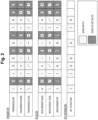
- Procedure 7 The transmitter and the receiver extract a bit string in which bases selected by the transmitter and the receiver match each other, and generate an encryption key (key information) based on the extracted bit string. For example, as illustrated in Fig. 2 , in a case where bases selected by the transmitter and the receiver match in the 1st, 5th, 7th, 10th, and 11th bits with a leading bit as the 0th bit, a bit string "1100010" is extracted, and an encryption key (key information) is generated based on the bit string. Note that this bit string is also referred to as a sifted key.
- a sifted key is obtained, a part of the sifted key is extracted as a test bit, and presence or absence of eavesdropping is evaluated from a bit error rate, and then, in a case where it is evaluated that there is no eavesdropping, error correction and privacy amplification processing are executed to generate an encryption key (key information).
- the encryption key used for the encrypted communication is shared between the QKD apparatus (transmission node) and the QKD apparatus (reception node), and the hub apparatus (transmission node) and the hub apparatus (reception node) can perform the encrypted communication by using the encryption key.
- the QKD apparatuses have the key information. For this reason, in a case where a QKD apparatus is unreliable, there is a problem that security cannot be guaranteed, and thus, in the following, a key exchange method capable of concealing the key information from the QKD apparatus is proposed.
- the unreliable QKD apparatus is, for example, a QKD apparatus having a possibility of leakage or the like of key information.
- a secret key sk is generated in a hub apparatus, and random number information encrypted by using the secret key sk is used when key information is generated in the QKD apparatus.
- the hub apparatus that has received the key information from the QKD apparatus obtains an encryption key, to be used for encrypted communication, by performing decryption by using the secret key sk. As a result, the key information can be concealed from the QKD apparatus.
- the key exchange system includes a plurality of hub apparatuses 10 and a plurality of QKD apparatuses 20.
- a hub apparatus 10 existing in a hub on the data transmission side is referred to as a "hub apparatus 10A”
- a hub apparatus 10 existing in a hub on the data reception side is referred to as a "hub apparatus 10B”.
- a QKD apparatus 20 existing in the hub on the data transmission side is referred to as a "QKD apparatus 20A”
- a QKD apparatus 20 existing in the hub on the data reception side is referred to as a "QKD apparatus 20B”.
- the hub apparatuses 10 and the QKD apparatuses 20 are communicably connected by a public communication line, and the QKD apparatuses 20 are connected by an optical transmission line.
- a hub apparatus 10 is an information processing apparatus (computer) that performs encrypted communication with a hub apparatus 10 existing in another hub.
- the hub apparatus 10 includes an inter-hub communication processing unit 101, a secret key sharing processing unit 102, a random number generation processing unit 103, an encryption processing unit 104, and a key generation processing unit 105. These units are implemented, for example, by processing that one or more programs installed in the hub apparatus 10 cause a processor such as a central processing unit (CPU) to execute.
- CPU central processing unit
- the inter-hub communication processing unit 101 executes encrypted communication with the hub apparatus 10 existing in the other hub, various types of processing for performing the encrypted communication, and the like.
- the secret key sharing processing unit 102 executes processing for generating and sharing a secret key sk (secret key of a stream encryption scheme) with the hub apparatus 10 existing in the other hub.
- the random number generation processing unit 103 generates random number information r that is a random bit string having a predetermined length.
- the encryption processing unit 104 generates a ciphertext C by encrypting the random number information r by using the secret key sk.
- inter-hub communication processing unit 101 the secret key sharing processing unit 102, the random number generation processing unit 103, the encryption processing unit 104, and the key generation processing unit 105 included in the hub apparatus 10B are referred to as an "inter-hub communication processing unit 101B", a "secret key sharing processing unit 102B", a “random number generation processing unit 103B”, an “encryption processing unit 104B”, and a “key generation processing unit 105B", respectively.
- the hub apparatus 10B does not necessarily include at least one of the random number generation processing unit 103B or the encryption processing unit 104B.
- a QKD apparatus 20 is an information processing apparatus (computer) that executes a QKD protocol (for example, the BB84 scheme or the like) with a QKD apparatus 20 existing in another hub via an optical transmission line.
- the QKD apparatus 20 includes a QKD processing unit 201.
- the QKD processing unit 201 is implemented, for example, by processing that one or more programs installed in the QKD apparatus 20 cause a processor such as a CPU to execute.
- the QKD processing unit 201 executes the QKD protocol (including error correction and the like) with the QKD apparatus 20 existing in the other hub via the optical transmission line, and generates and shares a correction key C' that is a key after error correction.
- processing executed by the key exchange system according to the present embodiment is roughly divided into key sharing in advance (steps S101), QKD key exchange (steps S102 to S109), and inter-hub communication (steps S110 to S115).
- the QKD processing unit 201B of the QKD apparatus 20B transmits, to the hub apparatus 10B, the bit numbers of the sifted key obtained by the basis reconciliation in step S106 and the correction key C' obtained in step S106 (steps S108 and S109).
- the key generation processing unit 105B of the hub apparatus 10B acquires the key r' by using the correction key C' and the bit numbers received from the QKD apparatus 20B and the secret key sk (step S111). That is, the key generation processing unit 105B decrypts the correction key C' by using the secret key sk (that is, Dec(C'; sk)), extracts a bit string of the bit numbers from a decrypted bit string (that is, a bit string representing Dec(C'; sk)), and sets the extracted bit string as the key r'.
- sk is the secret key of the stream encryption scheme, and thus Dec(C'; sk) is specifically obtained by taking an exclusive OR of C' and sk.
- the key generation processing unit 105A of the hub apparatus 10A and the key generation processing unit 105B of the hub apparatus 10B share information necessary for privacy amplification processing (step S112).
- the privacy amplification processing is processing for improving confidentiality by sacrificing one bit, and is also referred to as key distillation together with error correction and the like. Since the privacy amplification processing is an existing technique, a detailed description thereof will be omitted.
- the key generation processing unit 105A of the hub apparatus 10A performs privacy amplification processing on the key r' and generates an encryption key D (step S113). As a result, the hub apparatus 10A can obtain the encryption key D to be used for the encrypted communication.
- the key generation processing unit 105B of the hub apparatus 10B performs privacy amplification processing on the key r' to generate the encryption key D (step S114). As a result, the hub apparatus 10B can obtain the encryption key D to be used for the encrypted communication.
- the inter-hub communication processing unit 101A of the hub apparatus 10A and the inter-hub communication processing unit 101B of the hub apparatus 10B can perform the encrypted communication by using the encryption key D (step S115).
- the relay apparatus 30 between the hub apparatus 10A and the hub apparatus 10B.
- the relay apparatus 30 is connected to the hub apparatus 10A via an optical transmission line, and is also connected to the hub apparatus 10B via an optical transmission line.
- the QKD processing unit 201A of the QKD apparatus 20A encodes the ciphertext C (for example, sets a coding rate according to a previous error rate (bit error rate) and then performs encoding) (step S205), and executes the QKD protocol (including error correction and the like) with the QKD processing unit 201B of the QKD apparatus 20B via the relay apparatus 30 to generate and share a correction key C' (step S206).
- bit error rate bit error rate
- step S206 the QKD protocol
- encoding similarly to the existing BB84 scheme or the like, it is sufficient to encode each bit of a bit string representing the ciphertext C into the polarization (or phase) of a photon.
- the QKD processing unit 201A of the QKD apparatus 20A and the QKD processing unit 201B of the QKD apparatus 20B only need to obtain a sifted key by basis reconciliation, then calculate the bit error rate and evaluate the presence or absence of eavesdropping, and in a case where it is evaluated that there is no eavesdropping, perform error correction to generate and share a correction key C'.
- a method capable of setting a coding rate for example, a low density parity check code (LDPC or the like) is used.
- a hub apparatus 10, a QKD apparatus 20, and a relay apparatus 30 can be implemented by, for example, a hardware configuration of a computer 500 illustrated in Fig. 7 .
- the computer 500 illustrated in Fig. 7 includes an input device 501, a display device 502, an external I/F 503, a communication I/F 504, a random access memory (RAM) 505, a read only memory (ROM) 506, an auxiliary storage device 507, and a processor 508. These pieces of hardware are communicably connected to each other via a bus 509.
- the input device 501 is, for example, a keyboard, a mouse, a touch panel, a physical button, or the like.
- the display device 502 is, for example, a display, a display panel, or the like. Note that the computer 500 may not include at least one of the input device 501 and the display device 502, for example.
- the external I/F 503 is an interface with an external device such as a recording medium 503a.
- the computer 500 can read or write the recording medium 503a via the external I/F 503.
- Examples of the recording medium 503a include a flexible disk, a compact disc (CD), a digital versatile disk (DVD), a secure digital memory card (SD memory card), a universal serial bus (USB) memory card, and the like.
- the communication I/F 504 is an interface for connecting the computer 500 to a communication network.
- the RAM 505 is a volatile semiconductor memory (storage device) that temporarily holds programs and data.
- the ROM 506 is a non-volatile semiconductor memory (storage device) capable of holding programs and data even when the power is turned off.
- the auxiliary storage device 507 is, for example, a storage device such as a hard disk drive (HDD), a solid state drive (SSD), or a flash memory.
- the processor 508 is, for example, an arithmetic device such as a CPU.
- the hub apparatus 10, the QKD apparatus 20, and the relay apparatus 30 have, for example, the hardware configuration of the computer 500 illustrated in Fig. 7 , thereby being able to implement the above-described various types of processing.
- the hardware configuration of the computer 500 illustrated in Fig. 7 is an example, and the hardware configuration of the computer 500 is not limited thereto.
- the computer 500 may include a plurality of auxiliary storage devices 507 and a plurality of processors 508, may not include a part of the illustrated hardware, or may include various types of hardware other than the illustrated hardware.
- the secret key sk is shared between the hub apparatuses 10 and the random number information is encrypted by using the secret key sk, and then the QKD protocol (including error correction and the like) is executed between the QKD apparatuses 20 by using the encrypted random number information.
- the QKD protocol including error correction and the like
- each of the hub apparatuses 10 can obtain the encryption key D (QKD key) from the correction key C' obtained by the error correction.
- the QKD apparatuses 20 since the QKD apparatuses 20 generate the correction key C' from the encrypted random number information, it is possible to conceal the random number information (key information) from the QKD apparatuses 20. Therefore, for example, even in a case where the QKD apparatuses 20 are unreliable, the security of the entire system can be improved.
- the method of sharing the secret key sk between the hub apparatus 10A and the hub apparatus 10B is not particularly limited, and an existing key encapsulation mechanism (KEM) or the like may be used; however, for example, by using a KEM of post-quantum cryptography such as NTRU that is a type of lattice-based cryptography, it is possible to perform key sharing for a quantum computer.
- KEM key encapsulation mechanism
Landscapes
- Engineering & Computer Science (AREA)
- Computer Security & Cryptography (AREA)
- Computer Networks & Wireless Communication (AREA)
- Signal Processing (AREA)
- Physics & Mathematics (AREA)
- Electromagnetism (AREA)
- Theoretical Computer Science (AREA)
- Optics & Photonics (AREA)
- Mobile Radio Communication Systems (AREA)
- Optical Communication System (AREA)
- Storage Device Security (AREA)
Abstract
Description
- The present disclosure relates to a key exchange system, a hub apparatus, a QKD apparatus, a method, and a program.
- It is known that it becomes possible to solve a mathematical problem (a prime factorization problem or a discrete logarithm problem), that is a security basis of existing cipher, in a realistic time by practical application of a quantum computer. For this reason, there is a risk that an RSA cipher or an elliptic curve cipher that is an existing cipher may be compromised, and it is necessary to shift to encryption technology that cannot be decrypted even by a quantum computer.
- As encryption technologies that cannot be decrypted by a quantum computer, there are post-quantum cryptography (PQC) and quantum key distribution (QKD). As a representative protocol of QKD, the BB84 scheme is known (for example, Non Patent Literature 1). The BB84 scheme is a scheme in which 1-bit key information is expressed by polarization or a phase of one photon and transmitted/shared.
- Non Patent Literature 1: C. H. Bennett, G. Brassard, "Quantum Cryptography: Public Key Distribution and Coin Tossing", Proceedings of IEEE International Conference on Computers Systems and Signal Processing, Bangalore India, pp 175-179, December 1984.
- However, in the conventional BB84 scheme, since a QKD apparatus that transmits and receives photons has key information, there is a problem that security cannot be guaranteed in a case where the QKD apparatus is unreliable.
- The present disclosure has been made in view of the above points, and an object thereof is to provide a technology capable of performing secure key exchange by a QKD protocol.
- A key exchange system according to an aspect of the present disclosure includes: a plurality of quantum key distribution (QKD) apparatuses that executes a quantum key distribution protocol including at least error correction; and a plurality of hub apparatuses that performs encrypted communication with each other, in which each of the hub apparatuses includes a key generation unit configured to generate an encryption key for performing the encrypted communication with another hub apparatus based on information received from a corresponding one of the QKD apparatuses, and each of the QKD apparatuses includes a QKD processing unit configured to execute the quantum key distribution protocol with another QKD apparatus and generate a correction key from a ciphertext of random number information, and a first transmission unit configured to transmit information representing a result of basis reconciliation in the quantum key distribution protocol to a corresponding one of the hub apparatuses.
- A technology capable of performing secure key exchange by using a QKD protocol is provided.
-
- [
Fig. 1] Fig. 1 is a diagram illustrating an example of a QKD protocol. - [
Fig. 2] Fig. 2 is a diagram illustrating an example of key extraction. - [
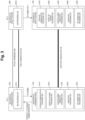
Fig. 3] Fig. 3 is a diagram illustrating an example of an overall configuration of a key exchange system according to a present embodiment. - [
Fig. 4] Fig. 4 is a sequence diagram illustrating an example of processing executed by the key exchange system according to the present embodiment. - [
Fig. 5] Fig. 5 is a diagram illustrating an application example of the overall configuration of the key exchange system according to the present embodiment. - [
Fig. 6] Fig. 6 is a sequence diagram illustrating an application example of processing executed by the key exchange system according to the present embodiment. - [
Fig. 7] Fig. 7 is a diagram illustrating an example of a hardware configuration of a computer. - Hereinafter, one embodiment of the present invention will be described.
- Hereinafter, with reference to
Fig. 1 , a case will be described where the BB84 scheme that encodes a bit (0 or 1) into polarization is assumed as an example of a QKD protocol and key exchange is performed by using the QKD protocol. Note that, for details of the BB84 scheme, refer to, for example,Non Patent Literature 1 described above. - In
Fig. 1 , a case is assumed where encrypted communication is performed between a hub apparatus (transmission node) existing in a hub on a data transmission side and a hub apparatus (reception node) existing in a hub on a data reception side. At this time, it is assumed that there is a QKD apparatus (transmission node) in the hub on the data transmission side, and there is a QKD apparatus (reception node) in the hub on the data reception side. A key (encryption key) used for the encrypted communication between the hub apparatus (transmission node) and the hub apparatus (reception node) is generated and shared by execution of the QKD protocol between the QKD apparatus (transmission node) and the QKD apparatus (reception node). - In the BB84 scheme, the key is generated and shared by
Procedure 1 to Procedure 7 below. In the following description of the BB84 scheme, the QKD apparatus (transmission node) is referred to as a "transmitter", and the QKD apparatus (reception node) is referred to as a "receiver". - Procedure 1: The transmitter generates random number information (a random bit string having a predetermined length).
- Procedure 2: The transmitter randomly selects a basis from two bases (+ basis and × basis), and encodes each bit of the bit string into polarization of a photon according to the basis. At this time, the transmitter encodes bits into polarization of photons according to Table 1 below.
[Table 1] Bit 0 1 + Basis (Horizontal - Vertical Basis) - | × Basis (45° - 135° Basis) / \ - That is, when the + basis is selected, 0 is encoded as horizontal polarization and 1 is encoded as vertically polarization. On the other hand, when the × basis is selected, 0 is encoded as 45° polarization and 1 is encoded as 135° polarization. Note that the photons are output from a light source.
- Procedure 3: The transmitter transmits a photon train to the receiver through an optical transmission line.
- Procedure 4: The receiver randomly selects a basis from two bases (+ basis and × basis), and measures each of photons (that is, decodes each of the photons with the selected basis, and determines bit values according to whether or not the photons are detected by a photon detector).
- Procedure 5: The receiver notifies the transmitter via a public communication line which basis was used to measure each of the photons.
- Procedure 6: The transmitter notifies the receiver of a portion of the bit string in which a basis selected by the transmitter matches a basis notified by the receiver (for example, a position of the bit string at which those bases match each other) through the public communication line. Procedure 5 and Procedure 6 described above are also referred to as basis reconciliation.
- Procedure 7: The transmitter and the receiver extract a bit string in which bases selected by the transmitter and the receiver match each other, and generate an encryption key (key information) based on the extracted bit string. For example, as illustrated in
Fig. 2 , in a case where bases selected by the transmitter and the receiver match in the 1st, 5th, 7th, 10th, and 11th bits with a leading bit as the 0th bit, a bit string "1100010" is extracted, and an encryption key (key information) is generated based on the bit string. Note that this bit string is also referred to as a sifted key. In general, after a sifted key is obtained, a part of the sifted key is extracted as a test bit, and presence or absence of eavesdropping is evaluated from a bit error rate, and then, in a case where it is evaluated that there is no eavesdropping, error correction and privacy amplification processing are executed to generate an encryption key (key information). - As a result, the encryption key used for the encrypted communication is shared between the QKD apparatus (transmission node) and the QKD apparatus (reception node), and the hub apparatus (transmission node) and the hub apparatus (reception node) can perform the encrypted communication by using the encryption key.
- As described above, in the conventional QKD protocol such as the BB84 scheme, the QKD apparatuses have the key information. For this reason, in a case where a QKD apparatus is unreliable, there is a problem that security cannot be guaranteed, and thus, in the following, a key exchange method capable of concealing the key information from the QKD apparatus is proposed. Note that the unreliable QKD apparatus is, for example, a QKD apparatus having a possibility of leakage or the like of key information.
- In the proposed method, to conceal key information from a QKD apparatus, a secret key sk is generated in a hub apparatus, and random number information encrypted by using the secret key sk is used when key information is generated in the QKD apparatus. On the other hand, the hub apparatus that has received the key information from the QKD apparatus obtains an encryption key, to be used for encrypted communication, by performing decryption by using the secret key sk. As a result, the key information can be concealed from the QKD apparatus.
- Hereinafter, a key exchange system that shares QKD key information by the above proposed method will be described.
- An example of an overall configuration of the key exchange system according to the present embodiment will be described with reference to
Fig. 3 . - As illustrated in
Fig. 3 , the key exchange system according to the present embodiment includes a plurality of hub apparatuses 10 and a plurality of QKD apparatuses 20. Hereinafter, a hub apparatus 10 existing in a hub on the data transmission side is referred to as a "hub apparatus 10A", and a hub apparatus 10 existing in a hub on the data reception side is referred to as a "hub apparatus 10B". Similarly, a QKD apparatus 20 existing in the hub on the data transmission side is referred to as a "QKD apparatus 20A", and a QKD apparatus 20 existing in the hub on the data reception side is referred to as a "QKD apparatus 20B". Note that the hub apparatuses 10 and the QKD apparatuses 20 are communicably connected by a public communication line, and the QKD apparatuses 20 are connected by an optical transmission line. - A hub apparatus 10 is an information processing apparatus (computer) that performs encrypted communication with a hub apparatus 10 existing in another hub. The hub apparatus 10 includes an inter-hub communication processing unit 101, a secret key sharing processing unit 102, a random number generation processing unit 103, an encryption processing unit 104, and a key
generation processing unit 105. These units are implemented, for example, by processing that one or more programs installed in the hub apparatus 10 cause a processor such as a central processing unit (CPU) to execute. - The inter-hub communication processing unit 101 executes encrypted communication with the hub apparatus 10 existing in the other hub, various types of processing for performing the encrypted communication, and the like. The secret key sharing processing unit 102 executes processing for generating and sharing a secret key sk (secret key of a stream encryption scheme) with the hub apparatus 10 existing in the other hub. The random number generation processing unit 103 generates random number information r that is a random bit string having a predetermined length. The encryption processing unit 104 generates a ciphertext C by encrypting the random number information r by using the secret key sk. The key
generation processing unit 105 uses information (bit numbers of a sifted key, or the bit numbers and a correction key C' to be described later) received from a corresponding QKD apparatus 20 to generate an encryption key D to be used for the encrypted communication with the hub apparatus 10 existing in the other hub. Hereinafter, data x encrypted by using the secret key sk is also represented as Enc(x; sk), and data obtained by decrypting data x' by using the secret key sk is also represented as Dec(x'; sk). In addition, hereinafter, the inter-hub communication processing unit 101, the secret key sharing processing unit 102, the random number generation processing unit 103, the encryption processing unit 104, and the keygeneration processing unit 105 included in thehub apparatus 10A are referred to as an "inter-hubcommunication processing unit 101A", a "secret keysharing processing unit 102A", a "random numbergeneration processing unit 103A", an "encryption processing unit 104A", and a "keygeneration processing unit 105A", respectively. Similarly, the inter-hub communication processing unit 101, the secret key sharing processing unit 102, the random number generation processing unit 103, the encryption processing unit 104, and the keygeneration processing unit 105 included in thehub apparatus 10B are referred to as an "inter-hubcommunication processing unit 101B", a "secret keysharing processing unit 102B", a "random numbergeneration processing unit 103B", an "encryption processing unit 104B", and a "keygeneration processing unit 105B", respectively. Note that thehub apparatus 10B does not necessarily include at least one of the random numbergeneration processing unit 103B or theencryption processing unit 104B. - A QKD apparatus 20 is an information processing apparatus (computer) that executes a QKD protocol (for example, the BB84 scheme or the like) with a QKD apparatus 20 existing in another hub via an optical transmission line. The QKD apparatus 20 includes a QKD processing unit 201. The QKD processing unit 201 is implemented, for example, by processing that one or more programs installed in the QKD apparatus 20 cause a processor such as a CPU to execute. The QKD processing unit 201 executes the QKD protocol (including error correction and the like) with the QKD apparatus 20 existing in the other hub via the optical transmission line, and generates and shares a correction key C' that is a key after error correction. Hereinafter, the QKD processing unit 201 included in the
QKD apparatus 20A is referred to as a "QKD processing unit 201A", and the QKD processing unit 201 included in theQKD apparatus 20A is referred to as a "QKD processing unit 201B". - An example of processing executed by the key exchange system according to the present embodiment will be described with reference to
Fig. 4 . Note that the processing executed by the key exchange system according to the present embodiment is roughly divided into key sharing in advance (steps S101), QKD key exchange (steps S102 to S109), and inter-hub communication (steps S110 to S115). - The secret key
sharing processing unit 102A of thehub apparatus 10A and the secret keysharing processing unit 102B of thehub apparatus 10B generate and share a secret key sk of the stream encryption scheme (step S101). - The random number
generation processing unit 103A of thehub apparatus 10A generates random number information r that is a random bit string having a predetermined length (step S102). - The
encryption processing unit 104A of thehub apparatus 10A encrypts the random number information r by using the secret key sk to generate a ciphertext C, that is, C = Enc(r; sk) (step S103). Note that sk is the secret key of the stream encryption scheme, and thus the ciphertext C = Enc(r; sk) is specifically obtained by taking an exclusive OR of r and sk. - The inter-hub
communication processing unit 101A of thehub apparatus 10A transmits the ciphertext C to theQKD apparatus 20A (step S104). - The
QKD processing unit 201A of theQKD apparatus 20A encodes the ciphertext C (for example, sets a coding rate according to a previous error rate (bit error rate) and then performs encoding) (step S105), and executes the QKD protocol (including error correction and the like) with theQKD processing unit 201B of theQKD apparatus 20B to generate and share a correction key C' (step S106). Note that, regarding encoding, similarly to the existing BB84 scheme or the like, it is sufficient to encode each bit of a bit string representing the ciphertext C into polarization (or phase) of a photon. In addition, similarly to the existing BB84 scheme or the like, theQKD processing unit 201A of theQKD apparatus 20A and theQKD processing unit 201B of theQKD apparatus 20B only need to obtain a sifted key by basis reconciliation, then calculate the bit error rate and evaluate the presence or absence of eavesdropping, and in a case where it is evaluated that there is no eavesdropping, perform error correction to generate and share a correction key C'. However, for the error correction, a method capable of setting a coding rate (for example, a low density parity check (LDPC) code or the like) is used. - The
QKD processing unit 201A of theQKD apparatus 20A transmits, to thehub apparatus 10A, the bit numbers of the sifted key (in other words, the bit numbers of a portion in which the selected bases match between theQKD apparatus 20A and theQKD apparatus 20B) obtained by the basis reconciliation in step S106 (step S107). - On the other hand, the
QKD processing unit 201B of theQKD apparatus 20B transmits, to thehub apparatus 10B, the bit numbers of the sifted key obtained by the basis reconciliation in step S106 and the correction key C' obtained in step S106 (steps S108 and S109). - The key
generation processing unit 105A of thehub apparatus 10A acquires a key r' by using the random number information r generated in step S102 and the bit numbers received from theQKD apparatus 20A (step S110). That is, the keygeneration processing unit 105A extracts a bit string of the bit numbers from a bit string representing the random number information r, and sets the extracted bit string as a key r'. - The key
generation processing unit 105B of thehub apparatus 10B acquires the key r' by using the correction key C' and the bit numbers received from theQKD apparatus 20B and the secret key sk (step S111). That is, the keygeneration processing unit 105B decrypts the correction key C' by using the secret key sk (that is, Dec(C'; sk)), extracts a bit string of the bit numbers from a decrypted bit string (that is, a bit string representing Dec(C'; sk)), and sets the extracted bit string as the key r'. Note that sk is the secret key of the stream encryption scheme, and thus Dec(C'; sk) is specifically obtained by taking an exclusive OR of C' and sk. - The key
generation processing unit 105A of thehub apparatus 10A and the keygeneration processing unit 105B of thehub apparatus 10B share information necessary for privacy amplification processing (step S112). Note that the privacy amplification processing is processing for improving confidentiality by sacrificing one bit, and is also referred to as key distillation together with error correction and the like. Since the privacy amplification processing is an existing technique, a detailed description thereof will be omitted. - The key
generation processing unit 105A of thehub apparatus 10A performs privacy amplification processing on the key r' and generates an encryption key D (step S113). As a result, thehub apparatus 10A can obtain the encryption key D to be used for the encrypted communication. - Similarly, the key
generation processing unit 105B of thehub apparatus 10B performs privacy amplification processing on the key r' to generate the encryption key D (step S114). As a result, thehub apparatus 10B can obtain the encryption key D to be used for the encrypted communication. - As described above, the inter-hub
communication processing unit 101A of thehub apparatus 10A and the inter-hubcommunication processing unit 101B of thehub apparatus 10B can perform the encrypted communication by using the encryption key D (step S115). - Hereinafter, as an application example of the present embodiment, a case will be described where there is a
relay apparatus 30 between the QKD apparatuses 20. Note that, in the following, description of parts similar to those in the above embodiment will be omitted, and only differences from the above embodiment will be described. - An overall configuration of a key exchange system in the application example will be described with reference to
Fig. 5 . - As illustrated in
Fig. 5 , in the key exchange system in the application example, there is therelay apparatus 30 between thehub apparatus 10A and thehub apparatus 10B. Therelay apparatus 30 is connected to thehub apparatus 10A via an optical transmission line, and is also connected to thehub apparatus 10B via an optical transmission line. - Processing executed by the key exchange system in the application example will be described with reference to
Fig. 6 . In the present application example, only the processing of steps S205 and S206 inFig. 6 is different from the sequence diagram described inFig. 4 . Thus, only the processing of steps S205 and S206 will be described below. - The
QKD processing unit 201A of theQKD apparatus 20A encodes the ciphertext C (for example, sets a coding rate according to a previous error rate (bit error rate) and then performs encoding) (step S205), and executes the QKD protocol (including error correction and the like) with theQKD processing unit 201B of theQKD apparatus 20B via therelay apparatus 30 to generate and share a correction key C' (step S206). Note that, regarding encoding, similarly to the existing BB84 scheme or the like, it is sufficient to encode each bit of a bit string representing the ciphertext C into the polarization (or phase) of a photon. In addition, similarly to the existing BB84 scheme or the like, theQKD processing unit 201A of theQKD apparatus 20A and theQKD processing unit 201B of theQKD apparatus 20B only need to obtain a sifted key by basis reconciliation, then calculate the bit error rate and evaluate the presence or absence of eavesdropping, and in a case where it is evaluated that there is no eavesdropping, perform error correction to generate and share a correction key C'. However, for the error correction, a method capable of setting a coding rate (for example, a low density parity check code (LDPC or the like)) is used. - A hub apparatus 10, a QKD apparatus 20, and a
relay apparatus 30 can be implemented by, for example, a hardware configuration of acomputer 500 illustrated inFig. 7 . - The
computer 500 illustrated inFig. 7 includes aninput device 501, adisplay device 502, an external I/F 503, a communication I/F 504, a random access memory (RAM) 505, a read only memory (ROM) 506, anauxiliary storage device 507, and aprocessor 508. These pieces of hardware are communicably connected to each other via abus 509. - The
input device 501 is, for example, a keyboard, a mouse, a touch panel, a physical button, or the like. Thedisplay device 502 is, for example, a display, a display panel, or the like. Note that thecomputer 500 may not include at least one of theinput device 501 and thedisplay device 502, for example. - The external I/
F 503 is an interface with an external device such as arecording medium 503a. Thecomputer 500 can read or write therecording medium 503a via the external I/F 503. Examples of therecording medium 503a include a flexible disk, a compact disc (CD), a digital versatile disk (DVD), a secure digital memory card (SD memory card), a universal serial bus (USB) memory card, and the like. - The communication I/
F 504 is an interface for connecting thecomputer 500 to a communication network. TheRAM 505 is a volatile semiconductor memory (storage device) that temporarily holds programs and data. TheROM 506 is a non-volatile semiconductor memory (storage device) capable of holding programs and data even when the power is turned off. Theauxiliary storage device 507 is, for example, a storage device such as a hard disk drive (HDD), a solid state drive (SSD), or a flash memory. Theprocessor 508 is, for example, an arithmetic device such as a CPU. - The hub apparatus 10, the QKD apparatus 20, and the
relay apparatus 30 according to the present embodiment have, for example, the hardware configuration of thecomputer 500 illustrated inFig. 7 , thereby being able to implement the above-described various types of processing. Note that the hardware configuration of thecomputer 500 illustrated inFig. 7 is an example, and the hardware configuration of thecomputer 500 is not limited thereto. For example, thecomputer 500 may include a plurality ofauxiliary storage devices 507 and a plurality ofprocessors 508, may not include a part of the illustrated hardware, or may include various types of hardware other than the illustrated hardware. - As described above, in the key exchange system according to the present embodiment, the secret key sk is shared between the hub apparatuses 10 and the random number information is encrypted by using the secret key sk, and then the QKD protocol (including error correction and the like) is executed between the QKD apparatuses 20 by using the encrypted random number information. As a result, each of the hub apparatuses 10 can obtain the encryption key D (QKD key) from the correction key C' obtained by the error correction. At this time, since the QKD apparatuses 20 generate the correction key C' from the encrypted random number information, it is possible to conceal the random number information (key information) from the QKD apparatuses 20. Therefore, for example, even in a case where the QKD apparatuses 20 are unreliable, the security of the entire system can be improved.
- In the above embodiment, the method of sharing the secret key sk between the
hub apparatus 10A and thehub apparatus 10B is not particularly limited, and an existing key encapsulation mechanism (KEM) or the like may be used; however, for example, by using a KEM of post-quantum cryptography such as NTRU that is a type of lattice-based cryptography, it is possible to perform key sharing for a quantum computer. - The present invention is not limited to the above-mentioned specifically disclosed embodiments, and various modifications and changes, combinations with known technologies, and the like can be made without departing from the scope of the claims.
-
- 10
- Hub apparatus
- 20
- QKD apparatus
- 30
- Relay apparatus
- 101
- Inter-hub communication processing unit
- 102
- Secret key sharing processing unit
- 103
- Random number generation processing unit
- 104
- Encryption processing unit
- 105
- Key generation processing unit
- 201
- QKD processing unit
- 500
- Computer
- 501
- Input device
- 502
- Display device
- 503
- External I/F
- 503a
- Recording medium
- 504
- Communication I/F
- 505
- RAM
- 506
- ROM
- 507
- Auxiliary storage device
- 508
- Processor
- 509
- Bus
Claims (8)
- A key exchange system comprising:a plurality of quantum key distribution (QKD) apparatuses that executes a quantum key distribution protocol including at least error correction; anda plurality of hub apparatuses that performs encrypted communication with each other, whereineach of the hub apparatuses includes
a key generation unit configured to generate an encryption key for performing the encrypted communication with another hub apparatus based on information received from a corresponding one of the QKD apparatuses, andeach of the QKD apparatuses includesa QKD processing unit configured to execute the quantum key distribution protocol with another QKD apparatus and generate a correction key from a ciphertext of random number information, anda first transmission unit configured to transmit information representing a result of basis reconciliation in the quantum key distribution protocol to a corresponding one of the hub apparatuses. - The key exchange system according to claim 1, wherein
a hub apparatus existing in a hub on a data transmission side among the plurality of hub apparatuses further includes:a secret key sharing unit configured to share a secret key with a hub apparatus existing in a hub on a data reception side;a random number generation unit configured to generate random number information that is a random bit string having a predetermined length;an encryption unit configured to generate a ciphertext by encrypting the random number information by using the secret key; anda second transmission unit configured to transmit the ciphertext to a QKD apparatus existing in the hub on the data transmission side, whereinthe key generation unit included in the hub apparatus existing in the hub on the data transmission side is configured to generate the encryption key based on the result of the basis reconciliation and the random number information. - The key exchange system according to claim 2, whereinthe first transmission unit included in the QKD apparatus existing in the hub on the data reception side among the plurality of QKD apparatuses is configured to transmit the information representing the result of the basis reconciliation and the correction key to the hub apparatus existing in the hub on the data reception side, andthe key generation unit included in the hub apparatus existing in the hub on the data reception side is configured to generate the encryption key based on the result of the basis reconciliation, the correction key, and the secret key.
- The key exchange system according to claim 2 or 3, whereinthe secret key is a key of a stream encryption scheme, andthe secret key sharing unit is configured to share the secret key with the hub apparatus existing in the hub on the data reception side by using a key encapsulation mechanism based on post-quantum cryptography.
- A hub apparatus in a key exchange system, the key exchange system including: a plurality of QKD apparatuses that executes a quantum key distribution protocol including at least error correction; and a plurality of hub apparatuses that performs encrypted communication with each other, the hub apparatus comprising:a secret key sharing unit configured to share a secret key with a hub apparatus existing in a hub on a data reception side in a case where the secret key sharing unit exists in a hub on a data transmission side;a random number generation unit configured to generate random number information that is a random bit string having a predetermined length in a case where the random number generation unit exists in the hub on the data transmission side;an encryption unit configured to encrypt the random number information by using the secret key so as to generate a ciphertext to be used for the quantum key distribution protocol in a case where the encryption unit exists in the hub on the data transmission side;a first transmission unit configured to transmit the ciphertext to a QKD apparatus existing in the hub on the data transmission side in a case where the first transmission unit exists in the hub on the data transmission side; anda key generation unit configured to generate an encryption key for performing the encrypted communication with another hub apparatus based on information received from the QKD apparatus.
- A quantum key distribution (QKD) apparatus in a key exchange system, the key exchange system including: a plurality of QKD apparatuses that executes a quantum key distribution protocol including at least error correction; and a plurality of hub apparatuses that performs encrypted communication with each other, the QKD apparatus comprising:a QKD processing unit configured to execute the quantum key distribution protocol with another QKD apparatus and generate a correction key from a ciphertext of random number information; anda first transmission unit configured to transmit information representing a result of basis reconciliation in the quantum key distribution protocol to a corresponding one of the hub apparatuses.
- A method used in a key exchange system, the key exchange system including: a plurality of quantum key distribution (QKD) apparatuses that executes a quantum key distribution protocol including at least error correction; and a plurality of hub apparatuses that performs encrypted communication with each other, the method comprising:a key generation procedure of generating, by each of the hub apparatuses, an encryption key for performing the encrypted communication with another hub apparatus based on information received from a corresponding one of the QKD apparatuses,a QKD processing procedure of executing, by each of the QKD apparatuses, the quantum key distribution protocol with another QKD apparatus and generating a correction key from a ciphertext of random number information; anda first transmission procedure of transmitting, by each of the QKD apparatuses, information representing a result of basis reconciliation in the quantum key distribution protocol to a corresponding one of the hub apparatuses.
- A program for causing a computer to function as a hub apparatus or a QKD apparatus included in the key exchange system of claim 1.
Applications Claiming Priority (1)
| Application Number | Priority Date | Filing Date | Title |
|---|---|---|---|
| PCT/JP2022/019988 WO2023218575A1 (en) | 2022-05-11 | 2022-05-11 | Key exchange system, hub device, qkd device, method, and program |
Publications (2)
| Publication Number | Publication Date |
|---|---|
| EP4525352A1 true EP4525352A1 (en) | 2025-03-19 |
| EP4525352A4 EP4525352A4 (en) | 2026-03-11 |
Family
ID=88730072
Family Applications (1)
| Application Number | Title | Priority Date | Filing Date |
|---|---|---|---|
| EP22941655.7A Pending EP4525352A4 (en) | 2022-05-11 | 2022-05-11 | KEY EXCHANGE SYSTEM, HUB DEVICE, QKD DEVICE, METHOD AND PROGRAM |
Country Status (5)
| Country | Link |
|---|---|
| US (1) | US20250300819A1 (en) |
| EP (1) | EP4525352A4 (en) |
| JP (1) | JP7848865B2 (en) |
| KR (1) | KR20250007009A (en) |
| WO (1) | WO2023218575A1 (en) |
Family Cites Families (11)
| Publication number | Priority date | Publication date | Assignee | Title |
|---|---|---|---|---|
| US7620182B2 (en) * | 2003-11-13 | 2009-11-17 | Magiq Technologies, Inc. | QKD with classical bit encryption |
| US7602919B2 (en) * | 2005-03-16 | 2009-10-13 | Magiq Technologies, Inc | Method of integrating QKD with IPSec |
| JP5424008B2 (en) | 2006-12-19 | 2014-02-26 | 日本電気株式会社 | Shared information management method and system |
| WO2011099325A1 (en) * | 2010-02-15 | 2011-08-18 | 株式会社日立製作所 | Encrypted communication system, transmitter and receiver using same |
| JP6157974B2 (en) * | 2013-07-31 | 2017-07-05 | 株式会社東芝 | TRANSMITTER, RECEIVER, QUANTUM KEY DISTRIBUTION (QKD) QUANTUM KEY DISTRIBUTION SYSTEM AND QUANTUM KEY DISTRIBUTION METHOD |
| US10291400B2 (en) * | 2016-03-14 | 2019-05-14 | Kabushiki Kaisha Toshiba | Quantum key distribution device, quantum key distribution system, and quantum key distribution method |
| KR101830339B1 (en) * | 2016-05-20 | 2018-03-29 | 한국전자통신연구원 | Apparatus for quantum key distribution on a quantum network and method using the same |
| US11316676B2 (en) * | 2017-11-29 | 2022-04-26 | Nippon Telegraph And Telephone Corporation | Quantum-proof multiparty key exchange system, quantum-proof multiparty terminal device, quantum-proof multiparty key exchange method, program, and recording medium |
| US12010223B2 (en) * | 2020-07-13 | 2024-06-11 | Arizona Board Of Regents On Behalf Of The University Of Arizona | Joint twin-field quantum key distribution cryptosystem |
| US11711210B2 (en) * | 2020-12-28 | 2023-07-25 | Mellanox Technologies, Ltd. | Quantum key distribution-based key exchange orchestration service |
| GB2608353B (en) * | 2021-05-18 | 2024-10-16 | Arqit Ltd | Random number generation in quantum key distribution |
-
2022
- 2022-05-11 JP JP2024520157A patent/JP7848865B2/en active Active
- 2022-05-11 EP EP22941655.7A patent/EP4525352A4/en active Pending
- 2022-05-11 US US18/860,876 patent/US20250300819A1/en active Pending
- 2022-05-11 KR KR1020247040947A patent/KR20250007009A/en active Pending
- 2022-05-11 WO PCT/JP2022/019988 patent/WO2023218575A1/en not_active Ceased
Also Published As
| Publication number | Publication date |
|---|---|
| JPWO2023218575A1 (en) | 2023-11-16 |
| EP4525352A4 (en) | 2026-03-11 |
| WO2023218575A1 (en) | 2023-11-16 |
| KR20250007009A (en) | 2025-01-13 |
| JP7848865B2 (en) | 2026-04-21 |
| US20250300819A1 (en) | 2025-09-25 |
Similar Documents
| Publication | Publication Date | Title |
|---|---|---|
| US8693691B2 (en) | Embedded authentication protocol for quantum key distribution systems | |
| EP3676986B1 (en) | Single node multi-party encryption | |
| US11936782B2 (en) | Secure multi-state quantum key distribution with wavelength division multiplexing | |
| US10171238B2 (en) | Secure data transmission using quantum communication | |
| JP7440108B2 (en) | Method and system for quantum key distribution | |
| US20080147820A1 (en) | Method and system for managing shared information | |
| US12034840B2 (en) | Computer implemented system and method for sharing a common secret preliminary class | |
| CN114244507B (en) | Quantum direct communication method, device, equipment and system based on single-path transmission | |
| US20140205086A1 (en) | Apparatus for encrypting data | |
| JP4696222B2 (en) | Quantum crypto protocol | |
| US20260019232A1 (en) | Communication method for quantum direct communication and quantum direct communication system | |
| US20220294618A1 (en) | Improvements to qkd methods | |
| US10756891B2 (en) | Secure data communication | |
| KR20230058685A (en) | Secure communication based on network coding | |
| US11595200B2 (en) | Quantum key distribution system and method for securely distributing quantum keys in a network | |
| EP1406412B1 (en) | Shared data refining device and shared data refining method | |
| JP7626210B2 (en) | KEY EXCHANGE SYSTEM, DEVICE, KEY EXCHANGE METHOD, AND PROGRAM | |
| TW201445902A (en) | Method for quantum communication | |
| US20250300819A1 (en) | Key exchange system, hub apparatus, qkd apparatus, method, and program | |
| US20250300820A1 (en) | Key exchange system, qkd apparatus, hub apparatus, method, and program | |
| CN116684090B (en) | Key negotiation method, device, system and electronic device | |
| CN120358031B (en) | Communication method, electronic device, and medium for quantum communication system | |
| EP4380098A1 (en) | Quantum key distribution method, communication method and communication system | |
| US20050201563A1 (en) | Quantum cryptography with fewer random numbers | |
| WO2026087649A1 (en) | Methods, data processing devices, and system for quantum key distribution |
Legal Events
| Date | Code | Title | Description |
|---|---|---|---|
| STAA | Information on the status of an ep patent application or granted ep patent |
Free format text: STATUS: THE INTERNATIONAL PUBLICATION HAS BEEN MADE |
|
| PUAI | Public reference made under article 153(3) epc to a published international application that has entered the european phase |
Free format text: ORIGINAL CODE: 0009012 |
|
| STAA | Information on the status of an ep patent application or granted ep patent |
Free format text: STATUS: REQUEST FOR EXAMINATION WAS MADE |
|
| 17P | Request for examination filed |
Effective date: 20241105 |
|
| AK | Designated contracting states |
Kind code of ref document: A1 Designated state(s): AL AT BE BG CH CY CZ DE DK EE ES FI FR GB GR HR HU IE IS IT LI LT LU LV MC MK MT NL NO PL PT RO RS SE SI SK SM TR |
|
| DAV | Request for validation of the european patent (deleted) | ||
| DAX | Request for extension of the european patent (deleted) | ||
| RAP3 | Party data changed (applicant data changed or rights of an application transferred) |
Owner name: NTT, INC. |
|
| A4 | Supplementary search report drawn up and despatched |
Effective date: 20260211 |
|
| RIC1 | Information provided on ipc code assigned before grant |
Ipc: H04L 9/12 20060101AFI20260205BHEP Ipc: H04L 9/08 20060101ALI20260205BHEP Ipc: H04B 10/70 20130101ALI20260205BHEP Ipc: H04L 9/00 20220101ALI20260205BHEP Ipc: H04L 9/14 20060101ALI20260205BHEP Ipc: H04L 9/40 20220101ALI20260205BHEP |