EP4525245A2 - Excess energy management for self-powered air conditioning systems - Google Patents
Excess energy management for self-powered air conditioning systems Download PDFInfo
- Publication number
- EP4525245A2 EP4525245A2 EP24200608.8A EP24200608A EP4525245A2 EP 4525245 A2 EP4525245 A2 EP 4525245A2 EP 24200608 A EP24200608 A EP 24200608A EP 4525245 A2 EP4525245 A2 EP 4525245A2
- Authority
- EP
- European Patent Office
- Prior art keywords
- power
- unit
- storage device
- energy storage
- controller
- Prior art date
- Legal status (The legal status is an assumption and is not a legal conclusion. Google has not performed a legal analysis and makes no representation as to the accuracy of the status listed.)
- Pending
Links
Images







Classifications
-
- H—ELECTRICITY
- H02—GENERATION; CONVERSION OR DISTRIBUTION OF ELECTRIC POWER
- H02J—ELECTRIC POWER NETWORKS; CIRCUIT ARRANGEMENTS OR SYSTEMS FOR SUPPLYING OR DISTRIBUTING ELECTRIC POWER; SYSTEMS FOR STORING ELECTRIC ENERGY
- H02J1/00—Circuit arrangements for DC mains or DC distribution networks
- H02J1/14—Balancing load and power generation in DC networks
- H02J1/16—Balancing load and power generation in DC networks using energy storage units, e.g. batteries or dynamo-electric machines coupled to flywheels
-
- F—MECHANICAL ENGINEERING; LIGHTING; HEATING; WEAPONS; BLASTING
- F24—HEATING; RANGES; VENTILATING
- F24F—AIR-CONDITIONING; AIR-HUMIDIFICATION; VENTILATION; USE OF AIR CURRENTS FOR SCREENING
- F24F11/00—Control or safety arrangements
- F24F11/89—Arrangement or mounting of control or safety devices
-
- F—MECHANICAL ENGINEERING; LIGHTING; HEATING; WEAPONS; BLASTING
- F24—HEATING; RANGES; VENTILATING
- F24F—AIR-CONDITIONING; AIR-HUMIDIFICATION; VENTILATION; USE OF AIR CURRENTS FOR SCREENING
- F24F11/00—Control or safety arrangements
- F24F11/30—Control or safety arrangements for purposes related to the operation of the system, e.g. for safety or monitoring
-
- H—ELECTRICITY
- H02—GENERATION; CONVERSION OR DISTRIBUTION OF ELECTRIC POWER
- H02J—ELECTRIC POWER NETWORKS; CIRCUIT ARRANGEMENTS OR SYSTEMS FOR SUPPLYING OR DISTRIBUTING ELECTRIC POWER; SYSTEMS FOR STORING ELECTRIC ENERGY
- H02J1/00—Circuit arrangements for DC mains or DC distribution networks
-
- H—ELECTRICITY
- H02—GENERATION; CONVERSION OR DISTRIBUTION OF ELECTRIC POWER
- H02J—ELECTRIC POWER NETWORKS; CIRCUIT ARRANGEMENTS OR SYSTEMS FOR SUPPLYING OR DISTRIBUTING ELECTRIC POWER; SYSTEMS FOR STORING ELECTRIC ENERGY
- H02J1/00—Circuit arrangements for DC mains or DC distribution networks
- H02J1/10—Parallel operation of DC sources
- H02J1/106—Parallel operation of DC sources for load balancing, symmetrisation, or sharing
-
- H—ELECTRICITY
- H02—GENERATION; CONVERSION OR DISTRIBUTION OF ELECTRIC POWER
- H02J—ELECTRIC POWER NETWORKS; CIRCUIT ARRANGEMENTS OR SYSTEMS FOR SUPPLYING OR DISTRIBUTING ELECTRIC POWER; SYSTEMS FOR STORING ELECTRIC ENERGY
- H02J1/00—Circuit arrangements for DC mains or DC distribution networks
- H02J1/14—Balancing load and power generation in DC networks
-
- H—ELECTRICITY
- H02—GENERATION; CONVERSION OR DISTRIBUTION OF ELECTRIC POWER
- H02J—ELECTRIC POWER NETWORKS; CIRCUIT ARRANGEMENTS OR SYSTEMS FOR SUPPLYING OR DISTRIBUTING ELECTRIC POWER; SYSTEMS FOR STORING ELECTRIC ENERGY
- H02J3/00—Circuit arrangements for AC mains or AC distribution networks
- H02J3/28—Arrangements for balancing of the load in networks by storage of energy
- H02J3/32—Arrangements for balancing of the load in networks by storage of energy using batteries or super capacitors with converting means
-
- H—ELECTRICITY
- H02—GENERATION; CONVERSION OR DISTRIBUTION OF ELECTRIC POWER
- H02J—ELECTRIC POWER NETWORKS; CIRCUIT ARRANGEMENTS OR SYSTEMS FOR SUPPLYING OR DISTRIBUTING ELECTRIC POWER; SYSTEMS FOR STORING ELECTRIC ENERGY
- H02J3/00—Circuit arrangements for AC mains or AC distribution networks
- H02J3/38—Arrangements for feeding a single network from two or more generators or sources in parallel; Arrangements for feeding already energised networks from additional generators or sources in parallel
-
- H—ELECTRICITY
- H02—GENERATION; CONVERSION OR DISTRIBUTION OF ELECTRIC POWER
- H02J—ELECTRIC POWER NETWORKS; CIRCUIT ARRANGEMENTS OR SYSTEMS FOR SUPPLYING OR DISTRIBUTING ELECTRIC POWER; SYSTEMS FOR STORING ELECTRIC ENERGY
- H02J3/00—Circuit arrangements for AC mains or AC distribution networks
- H02J3/38—Arrangements for feeding a single network from two or more generators or sources in parallel; Arrangements for feeding already energised networks from additional generators or sources in parallel
- H02J3/381—Dispersed generators
-
- H—ELECTRICITY
- H02—GENERATION; CONVERSION OR DISTRIBUTION OF ELECTRIC POWER
- H02J—ELECTRIC POWER NETWORKS; CIRCUIT ARRANGEMENTS OR SYSTEMS FOR SUPPLYING OR DISTRIBUTING ELECTRIC POWER; SYSTEMS FOR STORING ELECTRIC ENERGY
- H02J3/00—Circuit arrangements for AC mains or AC distribution networks
- H02J3/38—Arrangements for feeding a single network from two or more generators or sources in parallel; Arrangements for feeding already energised networks from additional generators or sources in parallel
- H02J3/46—Controlling the sharing of generated power between the generators, sources or networks
-
- H—ELECTRICITY
- H02—GENERATION; CONVERSION OR DISTRIBUTION OF ELECTRIC POWER
- H02J—ELECTRIC POWER NETWORKS; CIRCUIT ARRANGEMENTS OR SYSTEMS FOR SUPPLYING OR DISTRIBUTING ELECTRIC POWER; SYSTEMS FOR STORING ELECTRIC ENERGY
- H02J4/00—Circuit arrangements for mains or distribution networks not specified as AC or DC; Circuit arrangements for mains or distribution networks combining AC and DC sections or sub-networks
- H02J4/20—Networks integrating separated AC and DC power sections
- H02J4/25—Networks integrating separated AC and DC power sections for transfer of electric power between AC and DC networks, e.g. for supplying the DC section within a load from an AC mains system
-
- F—MECHANICAL ENGINEERING; LIGHTING; HEATING; WEAPONS; BLASTING
- F24—HEATING; RANGES; VENTILATING
- F24F—AIR-CONDITIONING; AIR-HUMIDIFICATION; VENTILATION; USE OF AIR CURRENTS FOR SCREENING
- F24F11/00—Control or safety arrangements
- F24F11/30—Control or safety arrangements for purposes related to the operation of the system, e.g. for safety or monitoring
- F24F11/46—Improving electric energy efficiency or saving
-
- H—ELECTRICITY
- H02—GENERATION; CONVERSION OR DISTRIBUTION OF ELECTRIC POWER
- H02J—ELECTRIC POWER NETWORKS; CIRCUIT ARRANGEMENTS OR SYSTEMS FOR SUPPLYING OR DISTRIBUTING ELECTRIC POWER; SYSTEMS FOR STORING ELECTRIC ENERGY
- H02J2101/00—Supply or distribution of decentralised, dispersed or local electric power generation
- H02J2101/20—Dispersed power generation using renewable energy sources
Definitions
- the embodiments described herein relate to air conditioning systems.
- Electrical energy drives a myriad of devices and equipment in commercial, industrial, residential applications, and data centers. For example, electrical energy drives lights, motors, household appliances, medical equipment, computers, air conditioning systems, electric vehicle charging stations, data centers processing and cooling needs, and many other electrical devices.
- power utilities generate and distribute electricity through an AC power grid.
- peak demand may occur as a result of a natural disaster, or during extensive times of e.g., cloudiness, if the power from the grid comes from solar energy, or wind variability, if the power from the grid comes from wind turbines.
- a hurricane or earthquake may damage the power grid and/or electric generators of the power utilities, thereby resulting in substantial loss of electric power to commercial, industrial, and residential applications. Repairs to these damaged lines and generators may take hours, days, or weeks.
- Various sites also may lose power from the power grid for other reasons, including maintenance. During these times of lost power, the sites may be unable to continue operations.
- increasing numbers of data centers significantly add to the demand of energy from the grid.
- Some energy consumers such as commercial, industrial, data centers, and residential users may be driven by factors other than cost, such as a desire to support sustainable energy options as further described below.
- an air conditioning system includes a first unit including a compressor; a controller; and one or more auxiliary DC power sources; the controller is configured to determine whether the one or more auxiliary DC power sources is producing excess power beyond a load of the first unit; when the one or more auxiliary DC power sources is not producing excess power beyond the load of the first unit, the controller supplies all power from the one or more auxiliary DC power sources to the first unit.
- the air conditioning system may include an energy storage device, wherein when the one or more auxiliary DC power sources is producing excess power beyond the load of the first unit, the controller determines if the energy storage device has a charge above a threshold; wherein when the energy storage device does not have the charge above the threshold, the controller supplies the excess power to the energy storage device.
- the air conditioning system may include a connection to an AC power grid; wherein when the one or more auxiliary DC power sources is producing excess power beyond the load of the first unit and the energy storage device has the charge above the threshold, the controller determines if export of the excess energy to the AC power grid is permitted; wherein when export of the excess energy to the AC power grid is permitted, the controller supplies the excess power to the AC power grid.
- the air conditioning system may include a DC load; wherein when the controller determines export of the excess energy to the AC power grid is not permitted, the controller supplies the excess power to the DC load.
- the DC load may comprise a component of the air conditioning system.
- the DC load may include at least one of a strip heater for a fan coil, a heater for a hot water tank, a geothermal pump and an indoor fan.
- a method of operating an air conditioning system including a first unit including a compressor, a controller and one or more auxiliary DC power sources includes determining whether the one or more auxiliary DC power sources is producing excess power beyond a load of the first unit; wherein when the one or more auxiliary DC power sources is not producing excess power beyond the load of the first unit, the controller supplies all power from the one or more auxiliary DC power sources to the first unit.
- the method may include wherein when the one or more auxiliary DC power sources is producing excess power beyond the load of the first unit, the controller determines if an energy storage device has a charge above a threshold; wherein when the energy storage device does not have the charge above the threshold, the controller supplies the excess power to the energy storage device.
- the method may include wherein when the one or more auxiliary DC power sources is producing excess power beyond the load of the first unit and the energy storage device has the charge above the threshold, the controller determines if export of the excess energy to an AC power grid is permitted; wherein when export of the excess energy to the AC power grid is permitted, the controller supplies the excess power to the AC power grid.
- the method may include wherein when the controller determines export of the excess energy to the AC power grid is not permitted, the controller supplies the excess power to a DC load.
- the DC load may comprise a component of the air conditioning system.
- the DC load may include at least one of a strip heater for a fan coil, a heater for a hot water tank, a geothermal pump and an indoor fan.
- a computer program is embodied on a computer-readable storage medium, the computer program including instructions for causing a processor to implement a process of operating an air conditioning system including an first unit including a compressor, a controller and one or more auxiliary DC power sources, the process including determining whether the one or more auxiliary DC power sources is producing excess power beyond a load of the first unit; wherein when the one or more auxiliary DC power sources is not producing excess power beyond the load of the first unit, the controller supplies all power from the one or more auxiliary DC power sources to the first unit.
- an air conditioning system includes an first unit including a compressor; a controller; one or more auxiliary DC power sources; a connection to an AC power grid; an energy storage device; a DC load; wherein the controller is configured to dynamically distribute power from the one or more auxiliary DC power sources to one or more of the AC power grid, the energy storage device and the DC load in response to one or more conditions.
- the one or more conditions may include one or more of state of charge of the energy storage device, current weather, predicted weather and cost of power from the AC power grid.
- the utility signal may be received from an electrical AC power grid, and may include an independent system operator (ISO), which may include an independent, federally regulated entity established to coordinate regional transmission in a non-discriminatory manner and ensure the safety and reliability of the electric system, or a regional transmission organization (RTO) which may operate bulk electric power systems across much of a geographic area and are generally independent, membership-based, non-profit organizations that ensure reliability and optimize supply and demand bids for wholesale electric power, or from a virtual power plant, generally considered to include a connected aggregation of distributed energy resource (DER) technologies providing integration of renewables and demand flexibility.
- ISO independent system operator
- RTO regional transmission organization
- DER distributed energy resource
- Embodiments described herein relate to an air conditioning system that includes electrical energy storage systems (e.g., batteries, supercapacitors) to provide a level of dispatchability needed to interconnect with the electrical power grid.
- electrical energy storage systems e.g., batteries, supercapacitors
- FIG. 1 depicts a system 100 in an example embodiment.
- the system 100 includes components of an air conditioning system.
- air conditioning is intended to include one or more of heating, cooling, ventilation, humidification, dehumidification, refrigeration, hot water heating, chilling water or fluid, air filtration, and other known air processing operations, or a combination of any of the above.
- the air conditioning system may include known types of systems such as heat pumps, geothermal heat pumps, chillers, split systems, packaged systems, all-in-one systems, etc.
- the air conditioning system 100 includes a first unit 200 and one or more second units 250. Depending on the nature of the air conditioning system, the first unit 200 and the second unit(s) 250 may be separately located (indoors or outdoors) or co-located (indoors or outdoors).
- the first unit 200 is an outdoor unit (e.g., compressor and heat exchanger) and the second unit(s) 250 are indoor units (e.g., expansion mechanisms, heat exchangers).
- the first unit 200 and the second unit 250 are co-located in a single footprint outside a building.
- the first unit 200 and the second unit 250 may be co-located (both indoor or outdoor) or separately located.
- Certain all-in-one systems may have the first unit 200 and the second unit 250 co-located inside a building.
- the first unit 200 may be an outdoor unit of a split system located on ground level next to a building 102, on a rooftop of the building 102 or any other location.
- the second unit(s) 250 may be located inside the building 102, as is common with split systems. It is understood that FIG. 1 is one example, and embodiments are not limited to split systems.
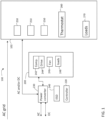
- the system 100 includes a controller 220, a power converter 230 and an energy storage device (ESD) 240.
- FIG. 1 is an example embodiment, and the location of components is not limited to that shown in FIG. 1 .
- the power converter 230, energy storage device 240 and controller 220 may be separate from the first unit 200, which houses the compressor 242, drive 244, fan 246 and load(s) 248.
- the first unit 200 may include a control unit (not shown) for controlling operation of the first unit 200. This allows components of the described embodiments to be retrofit to existing first units 200 of air conditioning systems and/or second units 250 of air conditioning systems.
- One or more of the power converter 230, energy storage device 240 and controller 220 may be located in the first unit 200.
- One or more of the power converter 230, energy storage device 240 and controller 220 may be located adjacent to or outside the first unit 200.
- One or more of the power converter 230, energy storage device 240 and controller 220 may be located in building 102.
- the first unit 200 may include a heat exchanger (not shown) that will serve as a condenser/gas cooler and/or as an evaporator, as part of a vapor compression refrigeration cycle.
- the locations of all components in the drawings are examples, and embodiments include modification of the locations of components shown in the drawings.
- components illustrated as connected to the first unit 200 may be retrofit components added to an existing first unit 200.
- elements may be joined into sub-assemblies and assemblies, anywhere in the system, indoor or outdoor, without departing from embodiments of the disclosure.
- the controller 220 may communicate with an air conditioning controller system controller and/or an energy storage device controller. In some embodiments, a single controller may implement all the functions of the controller 220, air conditioning controller and energy storage device controller.
- the controller 220 communicates with components of the described systems using wired and/or wireless connections, which are not illustrated in the drawings.
- the system of FIG. 1 allows for one or more components of the air conditioning system, and other loads not associated with the air conditioning system, to be powered solely by an AC power grid, powered solely by the energy storage device 240, and powered by both the AC power grid and the energy storage device 240, in conjunction.
- the one or more components of the air conditioning system include components in the first unit 200, components in the second unit 250.
- FIG. 2 depicts the controller 220 in accordance with an embodiment.
- the controller 220 includes a sensor interface 222 that can obtain operational parameters of the air conditioning system, such as pressures, temperatures, etc. As known in the art, the controller 220 can adjust operation of the air conditioning system based on sensed operational parameters.
- the controller 220 includes a processor 224 that controls operation of the system 100.
- the processor 224 may be implemented using a general-purpose microprocessor executing a computer program stored on a storage medium to perform the operations described herein. Alternatively, the processor 224 may be implemented in hardware (e.g., ASIC, FPGA) or in a combination of hardware/software.
- the processor 224 allows the controller 220 to perform computations locally, also referred to as edge computing.
- the processor 224 can send commands to other components of the air conditioning system 100 based on a result of the local computations.
- the controller 220 includes a memory 226 that may store a computer program executable by the processor 224, reference data, sensor data, etc.
- the memory 226 may be implemented using known devices, such as random access memory.
- the controller 220 includes a communication unit 228 which allows the controller 220 to communicate with other components of the system 100, such as first unit 200, second units 250 and a thermostat 260.
- the communication unit 228 may be implemented using wired connections (e.g., LAN, ethernet, twisted pair, etc.) and/or wireless connections (e.g., Wi-Fi, near field communications ("NFC”), Bluetooth, etc.).
- communication unit 228 may provide high-speed data communications over existing wiring systems and/or communication with newer equipment having a high-speed bus, while maintaining communications with existing equipment (e.g., having RS-485 communications bus).
- an HVAC equipment may include 4 wires used for data communications, Power, Ground, Data+, and Data-. Of these lines, Data+ and Data- are used to carry the low-speed, standard RS-485 data.
- the power line is used to power the wall control and comes from a second unit 250. This same power line is carried to the first unit 200 although it is generally not used.
- PLC Power Line Communications
- PLC technology may allow for data transmission at or near gigabit speed rates using standard 2-conductor wiring. This includes the 2 wires represented by Power and Ground of the HVAC equipment. It should be appreciated that other data transmission speeds may be possible.
- the communication unit 228 of the present disclosure may be configured such that, while the PLC high-speed communication is occurring over the Power and Ground line of the 4-wire system, the low-speed RS-485 communication can also be occurring on the Data+ and Data- lines.
- the ability to use high speed communications or a combination of high speed and low speed communications enable the controller 220 to utilize machine-learning (ML) based or artificial intelligence (AI) based, algorithms.
- ML machine-learning
- AI artificial intelligence
- the high speed and low speed communications may occur approximately simultaneously (e.g., within milliseconds of one another). This may allow the standard HVAC wire to communicate with both RS-485 controlled equipment as well as HVAC equipment which contains the additional PLC transceivers. This may be advantageous because both new high-speed HVAC equipment and existing RS-485 HVAC equipment can co-exist on existing wiring of the building.
- the power converter 230 is used to perform any necessary power conversions including one or more of AC-AC, AC-DC, DC-AC and DC-DC.
- the power converter 230 may include several power converters at different locations in the system 100.
- the power converter(s) 230 may operate in a bi-directional manner so that one or more power conversions are bi-directional.
- the power converter 230 is connected to AC and/or DC power sources and/or loads.
- the power converter 230 may also provide power to loads in the building 102, including the second units 250 (if in the building 102), the thermostat 260 and loads 270. In conventional modes, the loads in building 102 will receive AC power from the AC power grid directly.
- the controller 220 may choose whether the power will come from the AC power grid or from the power converter 230. Example embodiments of the power converter 230 are described herein.
- one or more second units 250 are positioned to condition one or more zones of the building 102.
- the second units 250 may be employed using a variety of known second units, including variable air volume (VAV) units, liquid cooled second units, fan coil units, furnaces, air handler (s), etc., which usually include heat exchangers.
- VAV variable air volume
- the second unit(s) 250 may be located outdoors and include any form of heat exchangers such as cooling towers, etc.
- an AC power grid 302 is connected to the first unit 200 through a grid disconnect 304, which is under control of the controller 220.
- the first unit 200 may also be powered by both the AC power grid 302 and the energy storage device 240 in conjunctions.
- the disconnect 304 may also be implemented as a mechanical switch controlled, for example by controller 220 or in software by the controller 220 by controlling one or more power converters.
- the AC power grid 302 is connected to indoor AC loads 308 (such as an air handler, or any fixture in residential, commercial, industrial buildings or data centers).
- the AC power grid 302 is also provided to an AC/AC converter 310 which supplies conditioned AC power to a compressor drive 244A of the compressor 242 and the fan 246.
- the AC/AC converter 310 may control the amplitude, frequency, phase, etc. of AC power provided to the compressor drive 244A of the compressor 242 and the fan 246.
- the energy storage device 240 is used to power indoor AC loads 308.
- the AC/AC converter 310, the AC/DC converter 312, the DC/DC converter 320, the DC/DC converter 316 and the AC/DC converter 347 may be implementations of the power converter 230 in FIG. 1 .
- the one or more auxiliary DC sources 314 are connected to the AC power bus 305 through a DC/AC converter (not shown).
- the one or more auxiliary power sources provide AC power, which is connected to the AC bus 305 and/or the DC bus 313 through an appropriate AC/AC converter or AC/DC converter.
- the electrical architecture of FIG. 3A allows one or more components of the air conditioning system (first unit 200 and or second unit(s) 250) to be powered exclusively by the AC power grid 302, exclusively by the energy storage device 240, or powered by both the energy storage device 240 and the AC power grid 302, in conjunction. Power supplied by the AC power grid 302 can be limited by the controller 220 controlling the various power converters. Other loads such as indoor DC loads 318 and indoor AC loads 308 can be powered exclusively by the AC power grid 302, exclusively by the energy storage device 240, or powered by both the energy storage device 240 and the AC power grid 302.
- the one or more auxiliary DC sources 314 may also power one or more components of the air conditioning system (first unit 200 and or second unit(s) 250) and/or other loads, alone or in conjunction with the AC power grid 302 and/or the energy storage device 240. Whether power is supplied from the AC power grid 302, the energy storage device 240, the one or more auxiliary DC sources 314 or a combination of thereof, is based on a variety of factors such as utility status, utility power price, status of the energy storage device 240, consumer preferences, etc. Example conditions are discussed below with reference to FIG. 9 .
- the one or more auxiliary DC sources 314 may also power one or more components of the air conditioning system (first unit 200 and or second unit(s) 250) and/or other loads, alone or in conjunction with the AC power grid 302 and/or the energy storage device 240. Whether power is supplied from the AC power grid 302, the energy storage device 240, the one or more auxiliary DC sources 314 or a combination of thereof, is based on a variety of factors such as utility status, utility power price, status of the energy storage device 240, consumer preferences, etc. Example conditions are discussed below with reference to FIG. 9 .
- the electrical architecture of FIG. 4A allows one or more components of the air conditioning system (first unit 200 and or second unit(s) 250) to be powered exclusively by the AC power grid 302, exclusively by the energy storage device 240, or powered by both the energy storage device 240 and the AC power grid 302, in conjunction.
- Power supplied by the AC power grid 302 can be limited by the controller 220 controlling the various power converters.
- Other loads such as indoor DC loads 318 and indoor AC loads 308 can be powered exclusively by the AC power grid 302, exclusively by the energy storage device 240, or powered by both the energy storage device 240 and the AC power grid 302.
- FIG. 4B depicts an electrical architecture in another example embodiment.
- the location of components in FIG. 4B is an example, and any of the components may be located as part of the first unit 200, part of the second unit(s) 250 or as separate from the first unit 200 or second unit(s) 250. This allows for retrofitting components to an existing air condition system. Although shown as separate boxes, elements may be joined into sub-assemblies and assemblies, anywhere in the system, indoor or outdoor, without departing from embodiments of the disclosure.
- the electrical architecture of FIG. 4B allows one or more components of the air conditioning system (first unit 200 and or second unit(s) 250) to be powered exclusively by the AC power grid 302, exclusively by the energy storage device 240, or powered by both the energy storage device 240 and the AC power grid 302, in conjunction.
- Power supplied by the AC power grid 302 can be limited by the controller 220 controlling the various power converters.
- Other loads such as indoor DC loads 318 and indoor AC loads 308 can be powered exclusively by the AC power grid 302, exclusively by the energy storage device 240, or powered by both the energy storage device 240 and the AC power grid 302.
- the one or more auxiliary DC sources 314 may also power one or more components of the air conditioning system (first unit 200 and or second unit(s) 250) and/or other loads, alone or in conjunction with the AC power grid 302 and/or the energy storage device 240. Whether power is supplied from the AC power grid 302, the energy storage device 240, the one or more auxiliary DC sources 314 or a combination of thereof, is based on a variety of factors such as utility status, utility power price, status of the energy storage device 240, consumer preferences, etc. Example conditions are discussed below with reference to FIG. 9 .
- FIG. 5A depicts a DC electrical architecture for a fixed speed first unit 200 in an example embodiment.
- the location of components in FIG. 5A is an example, and any of the components may be located as part of the first unit 200, part of the second unit(s) 250 or as separate from the first unit 200 or second unit(s) 250. This allows for retrofitting components to an existing air condition system. Although shown as separate boxes, elements may be joined into sub-assemblies and assemblies, anywhere in the system, indoor or outdoor, without departing from embodiments of the disclosure.
- the power converter 230 may be used in conjunction with the embodiments described above, or other embodiments.
- one or more auxiliary DC sources 314 may be connected to the energy storage device 240 (via a DC bus) to supplement power from the energy storage device 240.
- AC power from the AC power grid 302 is supplied through the grid disconnect 304 to a power converter 230.
- the power converter 230 includes an AC/DC converter 370 and a DC/AC converter 372.
- the output of the DC/AC converter 372 is provided to the compressor 242, through a compressor drive 244A.
- the compressor drive 244A may be a switch, such as a contactor or relay.
- Both the AC/DC converter 370 and the DC/AC converter 372 operate under the control of the controller 220.
- a DC link 371 that is connected to the energy storage device 240, optionally through the DC/DC converter 241.
- energy storage device 240 may be charged by the power converter 230.
- the energy storage device 240 may provide DC power to the DC link 371 to power the DC/AC converter 372 and the compressor 242.
- the AC/DC converter 370 may be bi-directional to allow the energy storage device 240 to provide power to, and be charged from, the AC power grid 302.
- the controller 220, the power converter 230, the energy storage device 240, DC ⁇ DC converters 320 and 316, and AC ⁇ DC converter 347, and the DC/DC converter 241 may be retrofit to an existing first unit 200.
- the one or more auxiliary DC sources 314 may also power one or more components of the air conditioning system (first unit 200 and or second unit(s) 250) and/or other loads, alone or in conjunction with the AC power grid 302 and/or the energy storage device 240. Whether power is supplied from the AC power grid 302, the energy storage device 240, the one or more auxiliary DC sources 314 or a combination of thereof, is based on a variety of factors such as utility status, utility power price, status of the energy storage device 240, consumer preferences, etc. Example conditions are discussed below with reference to FIG. 9 .
- FIG. 5B depicts an AC electrical architecture for a fixed speed first unit 200 in an example embodiment.
- the location of components in FIG. 5B is an example, and any of the components may be located as part of the first unit 200, part of the second unit(s) 250 or as separate from the first unit 200 or second unit(s) 250. This allows for retrofitting components to an existing air condition system. Although shown as separate boxes, elements may be joined into sub-assemblies and assemblies, anywhere in the system, indoor or outdoor, without departing from embodiments of the disclosure.
- the power converter 230 may be used in conjunction with the embodiments described above, or other embodiments.
- one or more auxiliary DC sources 314 may be connected to the energy storage device 240 (via a DC bus) to supplement power from the energy storage device 240.
- the power converter 230 includes a DC/DC converter 241 coupled to the energy storage device 240 and an AC/DC converter 370.
- the AC/DC converter 370 may be bi-directional to allow the energy storage device 240 to provide power to, and be charged from, the AC power grid 302.
- the compressor drive 244A may be a switch, such as a contactor or relay.
- the controller 220, the power converter 230, the energy storage device 240 may be retrofit to an existing first unit 200. This allows the energy storage device 240 to be added to existing air conditioning systems to enable the first unit 200 to operate independent of the AC power grid 302 or operate under power from both the AC power grid 302 and the energy storage device 240.
- the electrical architecture of FIG. 5B allows one or more components of the air conditioning system (first unit 200 and or second unit(s) 250) to be powered exclusively by the AC power grid 302, exclusively by the energy storage device 240, or powered by both the energy storage device 240 and the AC power grid 302, in conjunction.
- Power supplied by the AC power grid 302 can be limited by the controller 220 controlling the various power converters.
- Other loads such as indoor DC loads 318 and indoor AC loads 308 can be powered exclusively by the AC power grid 302, exclusively by the energy storage device 240, or powered by both the energy storage device 240 and the AC power grid 302.
- the one or more auxiliary DC sources 314 may also power one or more components of the air conditioning system (first unit 200 and or second unit(s) 250) and/or other loads, alone or in conjunction with the AC power grid 302 and/or the energy storage device 240. Whether power is supplied from the AC power grid 302, the energy storage device 240, the one or more auxiliary DC sources 314 or a combination of thereof, is based on a variety of factors such as utility status, utility power price, status of the energy storage device 240, consumer preferences, etc. Example conditions are discussed below with reference to FIG. 9 .
- FIG. 5C depicts a DC electrical architecture for a variable speed first unit 200 in an example embodiment.
- the location of components in FIG. 5C is an example, and any of the components may be located as part of the first unit 200, part of the second unit(s) 250 or as separate from the first unit 200 or second unit(s) 250. This allows for retrofitting components to an existing air condition system. Although shown as separate boxes, elements may be joined into sub-assemblies and assemblies, anywhere in the system, indoor or outdoor, without departing from embodiments of the disclosure.
- FIG. 5C is similar to FIG. 5A , with the exception that the compressor drive 244A provides for variable speed operation of the compressor 242.
- Other loads 248 of the first unit 200 may be powered from the output of the DC/AC converter 372.
- the controller 220, the power converter 230, the energy storage device 240 and the DC/DC converter 241 may be retrofit to an existing first unit 200. This allows the energy storage device 240 to be added to existing air conditioning systems to enable the first unit 200 to operate independent of the AC power grid 302 or operate under power from both the AC power grid 302 and the energy storage device 240.
- the power converter 230 may be used in conjunction with the embodiments described above, or other embodiments.
- one or more auxiliary DC sources 314 may be connected to the energy storage device 240 (via a DC bus) to supplement power from the energy storage device 240.
- the electrical architecture of FIG. 5C allows one or more components of the air conditioning system (first unit 200 and or second unit(s) 250) to be powered exclusively by the AC power grid 302, exclusively by the energy storage device 240, or powered by both the energy storage device 240 and the AC power grid 302, in conjunction.
- Power supplied by the AC power grid 302 can be limited by the controller 220 controlling the various power converters.
- Other loads such as indoor DC loads 318 and indoor AC loads 308 can be powered exclusively by the AC power grid 302, exclusively by the energy storage device 240, or powered by both the energy storage device 240 and the AC power grid 302.
- the one or more auxiliary DC sources 314 may also power one or more components of the air conditioning system (first unit 200 and or second unit(s) 250) and/or other loads, alone or in conjunction with the AC power grid 302 and/or the energy storage device 240. Whether power is supplied from the AC power grid 302, the energy storage device 240, the one or more auxiliary DC sources 314 or a combination of thereof, is based on a variety of factors such as utility status, utility power price, status of the energy storage device 240, consumer preferences, etc. Example conditions are discussed below with reference to FIG. 9 .
- FIG. 5D depicts an AC electrical architecture for a variable speed first unit 200 in an example embodiment.
- the location of components in FIG. 5D is an example, and any of the components may be located as part of the first unit 200, part of the second unit(s) 250 or as separate from the first unit 200 or second unit(s) 250. This allows for retrofitting components to an existing air condition system. Although shown as separate boxes, elements may be joined into sub-assemblies and assemblies, anywhere in the system, indoor or outdoor, without departing from embodiments of the disclosure.
- FIG. 5D is similar to FIG. 5B , with the exception that the compressor drive 244A provides for variable speed operation of the compressor 242.
- Other loads 248 of the first unit 200 may be powered from the AC power bus 305.
- the power converter 230 may be used in conjunction with the embodiments described above, or other embodiments.
- one or more auxiliary DC sources 314 may be connected to the energy storage device 240 (via a DC bus) to supplement power from the energy storage device 240.
- the controller 220, the power converter 230 and the energy storage device 240 may be retrofit to an existing first unit 200. This allows the energy storage device 240 to be added to existing air conditioning systems to enable the first unit 200 to operate independent of the AC power grid 302 or operate under power from both the AC power grid and the energy storage device 240.
- the electrical architecture of FIG. 5D allows one or more components of the air conditioning system (first unit 200 and or second unit(s) 250) to be powered exclusively by the AC power grid 302, exclusively by the energy storage device 240, or powered by both the energy storage device 240 and the AC power grid 302, in conjunction.
- Power supplied by the AC power grid 302 can be limited by the controller 220 controlling the various power converters.
- Other loads such as indoor DC loads 318 and indoor AC loads 308 can be powered exclusively by the AC power grid 302, exclusively by the energy storage device 240, or powered by both the energy storage device 240 and the AC power grid 302.
- the one or more auxiliary DC sources 314 may also power one or more components of the air conditioning system (first unit 200 and or second unit(s) 250) and/or other loads, alone or in conjunction with the AC power grid 302 and/or the energy storage device 240. Whether power is supplied from the AC power grid 302, the energy storage device 240, the one or more auxiliary DC sources 314 or a combination of thereof, is based on a variety of factors such as utility status, utility power price, status of the energy storage device 240, consumer preferences, etc. Example conditions are discussed below with reference to FIG. 9 .
- FIG. 6 depicts an electrical architecture having a variable speed compressor drive including a multilevel inverter in an example embodiment. Not all components of the first unit 200 are shown for ease of illustration and explanation. The location of components in FIG. 6 is an example, and any of the components may be located as part of the first unit 200, part of the second unit(s) 250 or as separate from the first unit 200 or second unit(s) 250. This allows for retrofitting components to an existing air condition system. Although shown as separate boxes, elements may be joined into sub-assemblies and assemblies, anywhere in the system, indoor or outdoor, without departing from embodiments of the disclosure.
- AC power from the AC power grid 302 is supplied through the grid disconnect 304 to power converter 230.
- the power converter 230 includes an AC/DC converter 380 and a multilevel inverter 382.
- the output of the multilevel inverter 382 is provided to the compressor 242.
- the output of the multilevel inverter 382 may be a multi-phase, multi-level waveform configured to drive a multi-phase motor of the compressor 242.
- the multilevel inverter 382 is a five-level, three phase inverter.
- the multilevel inverter 382 is a three-level, three phase inverter.
- the multilevel inverter 382 synthesizes a sinusoidal current waveform to run and control the compressor 242. This is done traditionally by a two-level inverter. Integration with the energy storage device 240 allows for a natural progression to higher order inverters. Three and five level inverters require independent power supplies to set the voltage levels. In the embodiment of FIG. 6 , the energy storage device 240 can set the voltage levels. The energy storage device 240 may include internal battery modules connected in series. The multilevel inverter 382 directly uses the battery modules for each requisite voltage level thereby enabling the benefits of a multilevel inverter. The multilevel inverter 382 benefits from lower harmonic output and lower dv/dt device stresses. The multilevel inverter 382 increases reliability through the ability to reconfigure to a lower number of levels after a fault has occurred, through the integration of back-to-back switches or relays, connecting or disconnecting battery modules together.
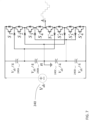
- FIG. 7 shows one phase leg of a five level, multiphase inverter in an embodiment of the multilevel inverter 382.
- the energy storage device 240 includes at least four battery modules 240A, 240B, 240C and 240D, connected in series.
- the combination of the battery modules 240A, 240B, 240C and 240D, and a neutral point, n, provides the five voltage levels used to create a sinusoidal output waveform on one phase.
- using N battery module voltages provides for an N+1 level output waveform for each phase.
- Switches S1-S4 and S1'-S4' are controlled by the controller 220 to produce a sine wave as known in the art.
- the multilevel inverter 382 can be reconfigured to fewer levels through the integration of back-to-back switches or relays, connecting or disconnecting battery modules together.
- the voltage levels used in the multilevel inverter 382 do not need to be supplied by separate battery modules.
- the voltage levels used to create the sinusoidal output waveform can be created using one battery module, with the battery voltage being split, for example, by capacitors.
- both the AC/DC converter 370 and the multilevel inverter 382 operate under the control of the controller 220.
- a DC link 381 that is connected to the energy storage device 240.
- energy storage device 240 may be charged by the power converter 230.
- the energy storage device 240 may provide DC power to the DC link 381 to power the multilevel inverter 382 and compressor 242. This allows the first unit 200 to operate independent of the AC power grid 302 or operate under power from both the AC power grid 302 and the energy storage device 240.
- the AC/DC converter 380 may be bi-directional to allow the energy storage device 240 to provide power to, and be charged from, the AC power grid.
- the electrical architecture of FIG. 6 allows one or more components of the air conditioning system (first unit 200 and or second unit(s) 250) to be powered exclusively by the AC power grid 302, exclusively by the energy storage device 240, or powered by both the energy storage device 240 and the AC power grid 302, in conjunction. Power supplied by the AC power grid 302 can be limited by the controller 220 controlling the various power converters. Other loads such as indoor DC loads 318 and indoor AC loads 308 can be powered exclusively by the AC power grid 302, exclusively by the energy storage device 240, or powered by both the energy storage device 240 and the AC power grid 302.
- the one or more auxiliary DC sources 314 may also power one or more components of the air conditioning system (first unit 200 and or second unit(s) 250) and/or other loads, alone or in conjunction with the AC power grid 302 and/or the energy storage device 240. Whether power is supplied from the AC power grid 302, the energy storage device 240, the one or more auxiliary DC sources 314 or a combination of thereof, is based on a variety of factors such as utility status, utility power price, status of the energy storage device 240, consumer preferences, etc. Example conditions are discussed below with reference to FIG. 9 .
- auxiliary DC sources 314 may be used to provide DC power.
- the one or more auxiliary DC sources 314, may include sources such as solar DC power, wind DC power, geothermal DC power, fuel cells, etc.
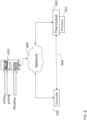
- FIG. 8 depicts communication between the controller 220, the thermostat 260 and a remote system 410 in an example embodiment.
- the controller 220 may be integrated as part of an air conditioning controller and/or a battery controller, or be independent and communicating to the air conditioning controller and/or energy storage controller.
- the controller 220 communicates with the thermostat 260 over a local link 400.
- the local link 400 may be a wired connection (e.g., twisted pair, four wire, power line communication, Modbus, CAN bus, etc.) and/or a wireless connection (e.g., WiFi, radio or Bluetooth, NFC, etc.).
- the thermostat 260 may also be implemented using a software application operating on a user device (e.g., mobile phone, tablet, laptop).
- the thermostat 260 may also provide occupancy, past performance, and weather information to the controller 220.
- the network 406 may be a long range network and may be implemented by a variety of communication protocols.
- the network 406 may be implemented via one or more networks, such as, but are not limited to, one or more of WiMax, a Local Area Network (LAN), Wireless Local Area Network (WLAN), a Personal area network (PAN), a Campus area network (CAN), a Metropolitan area network (MAN), a Wide area network (WAN), a Wireless wide area network (WWAN), or any broadband network, and further enabled with technologies such as, by way of example, Global System for Mobile Communications (GSM), Personal Communications Service (PCS), Bluetooth, Wi-Fi, Matter, Fixed Wireless Data, 2G, 2.5G, 3G (e.g., WCDMA/UMTS based 3G networks), 4G, IMT-Advanced, pre-4G, LTE Advanced, 5G, 6G, mobile WiMax, WiMax 2, WirelessMAN-Advanced networks, enhanced data rates
- the remote system 410 may be embodied as any type of processor-based computation or computer device capable of performing the functions described herein, including, without limitation, a computer, a server, a workstation, a desktop computer, a laptop computer, a notebook computer, a tablet computer, a mobile computing device, a wearable computing device, a network appliance, a web appliance, a distributed computing system (e.g., cloud computing), a processor-based system, and/or a consumer electronic device.
- the remote system 410 provides information that is used by the controller 220 and/or thermostat 260 to implement an energy management routine that controls how power is consumed by the one or more components of the air conditioning system and the loads 270.
- the information provided by the remote system 410 may include utility pricing, indicating the cost of electricity on the AC power grid 302 and weather information, which may be used to predict future utility pricing and usage of the one or more components of the air conditioning system.
- the utility pricing and weather may be pushed to, or pulled by, the remote system 410 using known networking techniques.
- the utility pricing and/or weather may be determined in real time or be forecasts of future conditions.
- the controller 220 communicates with components of the described systems using wired and/or wireless connections, which are not illustrated in the drawings.
- the controller 220 sends command signals to the various system components, (for example, AC/AC converter 310, AC/DC converter 312, AC/DC converter 347, DC/DC converter 320, DC/DC converter 316, DC/DC converter 241, AC/DC converter 370, DC/AC converter 372, AC/DC converter 380 and/or multilevel inverter 382, AC disconnect 304, etc.) to route power to one or more components of the air conditioning system, such as the first unit 200, the second unit(s) 250, along with the indoor load(s) 270, and any other loads.
- the various system components for example, AC/AC converter 310, AC/DC converter 312, AC/DC converter 347, DC/DC converter 320, DC/DC converter 316, DC/DC converter 241, AC/DC converter 370, DC/AC converter 372, AC/DC converter 380 and/or multilevel inverter 382, AC disconnect 304,
- FIG. 9 depicts an energy management process in an example embodiment.
- the process may be performed by the controller 220 and/or by the thermostat 260.
- the controller 220 determines if a request for a reduction in energy usage is present, or any other communication signal, such as a change in energy pricing, or an incentive.
- the utility provider may request a reduction in energy usage during a certain period of time to avoid a service interpretation (e.g., a brownout), or other penalty or incentive such as a change in pricing.
- the request for a reduction in energy usage may be accompanied by an incentive (e.g., $5 off next energy bill).
- the request for reduction may also originate from an energy consumer, such as a data center, where the data center needs to maintain their processing and/or cooling loads and incentivizes other users to decrease their consumption to ensure energy availability.
- a user e.g., a customer of the utility
- the approve or deny determination may be pre-established by the user and preprogrammed into the controller 220 and/or the thermostat 260. For example, the user may wish to always reduce energy consumption, regardless of the terms. The user may wish to never reduce energy consumption, regardless of the terms. The user may wish to reduce energy consumption only if the utility offers an incentive.
- the approve or deny determination at 602 may also be in real time, where the user enters an approval or denial of reduced energy consumption through the thermostat 260 or through a mobile device.
- This may entail opening the AC disconnect 304 (e.g., power from the AC power grid 302 is zero) and powering one or more components of the air conditioning system and/or other loads, using only the energy storage device 240.
- Operating one or more components of the air conditioning system and/or other loads may also include using both the AC power grid 302 and the energy storage device 240, in conjunction, to power the one or more components of the air conditioning system and/or other loads.
- the controller 220 can limit the amount of power drawn from the AC power grid 302 by controlling the various power converters 230 in the system (e.g., AC/AC converter 310, AC/DC converter 312, AC/DC converter 347, DC/DC converter 320, DC/DC converter 316, DC/DC converter 241, AC/DC converter 370, DC/AC converter 372, AC/DC converter 380 and/or multilevel inverter 382) to reduce the amount of AC power drawn from the AC power grid 302.
- the energy storage device 240 and the AC power grid 302 are used in conjunction to power one or more components of the air conditioning system and/or one or more loads.
- Operating the one or more components of the air conditioning system using the energy storage device 240 may also include limiting the amount of power used from the AC power grid 302 to a power limit (e.g., 1 kW during 2 hours).
- the controller 220 can limit the amount of power drawn from the AC power grid 302 by controlling the various power converters 230 in the system (e.g., AC/AC converter 310, AC/DC converter 312, AC/DC converter 347, DC/DC converter 320, DC/DC converter 316, DC/DC converter 241, AC/DC converter 370, DC/AC converter 372, AC/DC converter 380 and/or multilevel inverter 382) to reduce the amount of AC power drawn from the AC power grid 302.
- other loads may be powered by the energy storage device 240, including indoor load(s) 270, which may include indoor DC load(s) 318 and/or indoor AC load(s) 308. The process returns to 600.
- the energy storage device 240 will lack sufficient charge such that the one or more components of the air conditioning system will need to be powered exclusively by the AC power grid 302.
- the controller 220 can detect when a status, such as state of charge (SOC), state of health (SoH), voltage, temperature, etc., of the energy storage device 240 is not within acceptable limits to power the one or more components of the air conditioning system or other loads. If the status of the energy storage device 240 is not within acceptable limits, the one or more components of the air conditioning system and/or other loads need to be powered by the AC power grid 302. This results in discontinuing discharging the energy storage 240 and/or initiating charging the energy storage device 240.
- SOC state of charge
- SoH state of health
- the controller 220 determines if the system 100 should use power from the energy storage device 240.
- the system 100 should use power from the energy storage device 240 occurs when the utility power is at least one of at a peak price, approaching a grid capacity or at the grid capacity. This determination may be made in real time or may be made previously using forecasting and communicated to the air conditioning system from the utility. Peak price does not necessarily require that the price for electricity be at a maximum, but is generally known in the art as a period of higher than average energy costs.
- Whether the utility is at a peak price may be determined by utility pricing obtained from the remote system 410 or current or future weather information obtained from the remote system 410. This information may also be locally stored at controller 220. If the utility is at least one of at a peak price, approaching a grid capacity or at the grid capacity, flow proceeds to 604 where the one or more components of the air conditioning system and loads 270, including indoor AC loads 308 and/or other loads are powered by the energy storage device 240 alone or in conjunction with the AC power grid 302. The controller 220 can limit the amount of power drawn from the AC power grid 302 by controlling the various power converters 230 in the system, as noted above. The utility power at a peak price and grid capacity are not the only factors that may be relied on in determining that the system should use power from the energy storage device 240.
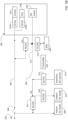
- FIG. 10 depicts an electrical architecture of an air conditioning system 800 providing excess energy management in an example embodiment.
- the air conditioning system 800 includes an AC power bus 305 connected to the AC power grid 302 (e.g., through a switch or breaker).
- the first unit 200 e.g., an outdoor unit
- the first unit 200 includes a compressor 242 and a drive including an AC/DC converter 370 and a DC/AC converter 372.
- the output of the DC/AC converter 372 is provided to the compressor 242.
- Both the AC/DC converter 370 and the DC/AC converter 372 operate under the control of the controller 220.
- Between the AC/DC converter 370 and the DC/AC converter 372 is a DC link 371 that is connected to the energy storage device 240.
- the energy storage device 240 may be charged by the AC power grid 302 through the AC/DC converter 370.
- the energy storage device 240 may provide DC power to the DC link 371 to power the DC/AC converter 372 and the first unit 200, including the compressor 242. This allows the first unit 200 to operate independent of the AC power grid 302.
- the AC/DC converter 370 may configurable into bi-directional operation, in response to a command from the controller 220, to allow the first unit 200 to feed power from the energy storage device 240 to the AC power bus 305 and the AC power grid 302.
- the DC link 371 may also be powered by one or more auxiliary DC sources 314, such as solar DC power, wind DC power, geothermal DC power, fuel cells, etc.
- a DC/DC converter 316 may be used to couple the one or more auxiliary DC sources 314 to the DC link 371.
- the one or more auxiliary DC sources 314 may be used to power the first unit 200, including the compressor 242, charge the energy storage device 240, power the DC loads 810 and feed power to the AC power grid 302.
- the DC loads 810 may include DC loads forming part of the air conditioning system 800, including one or more of a strip heater for a fan coil, a heater for a hot water tank, a geothermal pump and an indoor fan (e.g., air handler). Other DC loads may be powered by the one or more auxiliary DC sources 314, and embodiments are not limited to the elements shown in FIG. 10 .
- a switch 806 is positioned on the DC link 371 and is configured to connect the one or more auxiliary DC sources 314 to at least one of the first unit 200, including the compressor 242, the energy storage device 240, the DC loads 810 and the AC power grid 302.
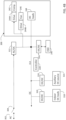
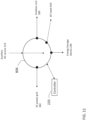
- FIG. 11 depicts the switch 806 that is used to distribute power from the one or more auxiliary DC sources 314 to various components of the air conditioning system 800.
- the switch 806 is operated under control of the controller 220.
- the switch 806 may be a multi-pole, single throw switch that can connect the one or more auxiliary DC sources 314 to one of the first unit 200, including the compressor 242, the energy storage device 240, the DC loads 810 and the AC power grid 302.
- Switch 806 may include multiple throws to connect the one or more auxiliary DC sources 314 to a plurality of the first unit 200, including the compressor 242, the energy storage device 240, the DC loads 810 and the AC power grid 302.
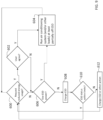
- FIG. 12 depicts a control process for managing excess energy in the air conditioning system 800 in an example embodiment.
- Excess energy refers to energy beyond the requirements of the first unit 200, including the compressor 242.
- Excess energy from the one or more auxiliary DC sources 314 is distributed throughout the air conditioning system 800 in an efficient and optimized manner.
- the process begins at 900 and flows to 902 where the controller 220 determines if the auxiliary power from the one or more auxiliary DC sources 314 is greater than the current load of the first unit 200, including the compressor 242.
- the controller 220 can determine the amount of auxiliary power from the one or more auxiliary DC sources 314, for example, using current and/or voltage sensors.
- the controller 220 can determine the load of the first unit 200, including the compressor 242, for example, using current and/or voltage sensors.
- auxiliary power from the one or more auxiliary DC sources 314 is not greater than the current load of the first unit 200, including the compressor 242, flow proceeds to 904, where all the auxiliary power from the one or more auxiliary DC sources 314 is used to power the first unit 200, including the compressor 242. In this situation, there is no excess power from the one or more auxiliary DC sources 314. Excess power refers to the ability of the one or more auxiliary DC sources 314 to power components in addition to the first unit 200, including the compressor 242. From 904, the process may return to 902.
- the controller 220 determines if the energy storage device 240 is charged above a threshold (e.g., 95% of full charge). The controller 220 can determine the charge of the energy storage device 240, for example, using voltage sensor(s). If the energy storage device 240 is not charged above the threshold, flow proceeds to 908 where the excess power from the one or more auxiliary DC sources 314 is used to charge the energy storage device 240. From 908, the process may return to 902.
- a threshold e.g. 95% of full charge.
- the controller 220 can determine the charge of the energy storage device 240, for example, using voltage sensor(s). If the energy storage device 240 is not charged above the threshold, flow proceeds to 908 where the excess power from the one or more auxiliary DC sources 314 is used to charge the energy storage device 240. From 908, the process may return to 902.
- the system 800 may direct power in a dynamic manner based on one more conditions. For example, at 906, rather than have a binary choice based whether the energy storage device 240 is charged above a threshold, the controller 220 may direct power based on other conditions, such as monetary cost of utility grid power at a given period, weather conditions (e.g., potential energy may be available for export during sunny periods, such that exporting power during periods of cloudy or poor weather conditions will be delayed).
- weather conditions e.g., potential energy may be available for export during sunny periods, such that exporting power during periods of cloudy or poor weather conditions will be delayed.
- the controller 220 can direct power from the one or more auxiliary DC sources 314 to the DC loads 810 at a current time, based on a prediction is that more power will be available later from the one or more auxiliary DC sources 314 to charge the energy storage device 240.
- the prediction may be based on predicted weather conditions (e.g., a period of sunny weather will increase available auxiliary DC power from a solar panel). Dynamically directing power may increase energy savings by reducing energy usage of the AC power grid 302.
- This may include the controller 220 configuring the AC/DC converter 370 into a bidirectional mode, so that the excess power from the one or more auxiliary DC sources 314 is converted to AC power prior to supply to the AC power grid 302. From 912, the process may return to 902.
- the DC loads may include DC loads forming part of the air conditioning system 800, including one or more of a strip heater for a fan coil, a heater for a hot water tank, a geothermal pump and an indoor fan. From 914, the process may return to 902.
- the air conditioning system 800 allows the export of excess energy to systems other than the AC power grid 302. This creates an ecosystem inside a building to allow for the most energy efficient and direct use of locally generated power to reduce energy bills and reduce carbon emissions.
- embodiments can be in the form of processor-implemented processes and devices for practicing those processes, such as a controller 220 and/or the thermostat 260.
- Embodiments can also be in the form of computer program code containing instructions embodied in tangible media, such as network cloud storage, SD cards, flash drives, floppy diskettes, CD ROMs, hard drives, or any other computer-readable storage medium, wherein, when the computer program code is loaded into and executed by a computer, the computer becomes a device for practicing the embodiments.
- Embodiments can also be in the form of computer program code, for example, whether stored in a storage medium, loaded into and/or executed by a computer, or transmitted over some transmission medium, loaded into and/or executed by a computer, or transmitted over some transmission medium, such as over electrical wiring or cabling, through fiber optics, or via electromagnetic radiation, wherein, when the computer program code is loaded into an executed by a computer, the computer becomes a device for practicing the embodiments.
- the computer program code segments configure the microprocessor to create specific logic circuits.
Landscapes
- Engineering & Computer Science (AREA)
- Power Engineering (AREA)
- Chemical & Material Sciences (AREA)
- Combustion & Propulsion (AREA)
- Mechanical Engineering (AREA)
- General Engineering & Computer Science (AREA)
- Air Conditioning Control Device (AREA)
- Supply And Distribution Of Alternating Current (AREA)
Abstract
Description
- This application claims the benefit of
US provisional patent application number 63/582,671 filed September 14, 2023 - The embodiments described herein relate to air conditioning systems.
- Electrical energy drives a myriad of devices and equipment in commercial, industrial, residential applications, and data centers. For example, electrical energy drives lights, motors, household appliances, medical equipment, computers, air conditioning systems, electric vehicle charging stations, data centers processing and cooling needs, and many other electrical devices. In most areas, power utilities generate and distribute electricity through an AC power grid. Shortages and/or increased costs associated with the use of fossil fuels, intermittency of renewable resources, power demand and supply variabilities, and increased demand of energy, among others factors, significantly impact the continuous availability and cost of electricity to consumers and businesses. In general, shortages and/or increased costs often occur during times of peak demand. Peak demand may occur based on time of day, such as in the morning or in the evening. On a more random basis, peak demand (or a demand greater than an available supply) may occur as a result of a natural disaster, or during extensive times of e.g., cloudiness, if the power from the grid comes from solar energy, or wind variability, if the power from the grid comes from wind turbines. For example, a hurricane or earthquake may damage the power grid and/or electric generators of the power utilities, thereby resulting in substantial loss of electric power to commercial, industrial, and residential applications. Repairs to these damaged lines and generators may take hours, days, or weeks. Various sites also may lose power from the power grid for other reasons, including maintenance. During these times of lost power, the sites may be unable to continue operations. Moreover, increasing numbers of data centers significantly add to the demand of energy from the grid.
- Often, electrical energy from the power grid is more expensive during times of peak demand. For example, a power utility may employ low cost electrical generators during periods of minimum demand, while further employing high cost electrical generators during periods of peak demand. Unfortunately, the existing infrastructure does not adequately address these different costs associated with peak and minimum demands. As a result, commercial, industrial, data centers and residential applications typically draw power from the power grid during times of peak demand, despite the higher costs associated with its generation.
- Some energy consumers, such as commercial, industrial, data centers, and residential users may be driven by factors other than cost, such as a desire to support sustainable energy options as further described below.
- According to a first aspect of the invention, an air conditioning system includes a first unit including a compressor; a controller; and one or more auxiliary DC power sources; the controller is configured to determine whether the one or more auxiliary DC power sources is producing excess power beyond a load of the first unit; when the one or more auxiliary DC power sources is not producing excess power beyond the load of the first unit, the controller supplies all power from the one or more auxiliary DC power sources to the first unit.
- The air conditioning system may include an energy storage device, wherein when the one or more auxiliary DC power sources is producing excess power beyond the load of the first unit, the controller determines if the energy storage device has a charge above a threshold; wherein when the energy storage device does not have the charge above the threshold, the controller supplies the excess power to the energy storage device.
- The air conditioning system may include a connection to an AC power grid; wherein when the one or more auxiliary DC power sources is producing excess power beyond the load of the first unit and the energy storage device has the charge above the threshold, the controller determines if export of the excess energy to the AC power grid is permitted; wherein when export of the excess energy to the AC power grid is permitted, the controller supplies the excess power to the AC power grid.
- The air conditioning system may include a DC load; wherein when the controller determines export of the excess energy to the AC power grid is not permitted, the controller supplies the excess power to the DC load.
- The DC load may comprise a component of the air conditioning system.
- The DC load may include at least one of a strip heater for a fan coil, a heater for a hot water tank, a geothermal pump and an indoor fan.
- According to a second aspect of the invention, a method of operating an air conditioning system including a first unit including a compressor, a controller and one or more auxiliary DC power sources includes determining whether the one or more auxiliary DC power sources is producing excess power beyond a load of the first unit; wherein when the one or more auxiliary DC power sources is not producing excess power beyond the load of the first unit, the controller supplies all power from the one or more auxiliary DC power sources to the first unit.
- The method may include wherein when the one or more auxiliary DC power sources is producing excess power beyond the load of the first unit, the controller determines if an energy storage device has a charge above a threshold; wherein when the energy storage device does not have the charge above the threshold, the controller supplies the excess power to the energy storage device.
- The method may include wherein when the one or more auxiliary DC power sources is producing excess power beyond the load of the first unit and the energy storage device has the charge above the threshold, the controller determines if export of the excess energy to an AC power grid is permitted; wherein when export of the excess energy to the AC power grid is permitted, the controller supplies the excess power to the AC power grid.
- The method may include wherein when the controller determines export of the excess energy to the AC power grid is not permitted, the controller supplies the excess power to a DC load.
- The DC load may comprise a component of the air conditioning system.
- The DC load may include at least one of a strip heater for a fan coil, a heater for a hot water tank, a geothermal pump and an indoor fan.
- According to a third aspect of the invention, a computer program is embodied on a computer-readable storage medium, the computer program including instructions for causing a processor to implement a process of operating an air conditioning system including an first unit including a compressor, a controller and one or more auxiliary DC power sources, the process including determining whether the one or more auxiliary DC power sources is producing excess power beyond a load of the first unit; wherein when the one or more auxiliary DC power sources is not producing excess power beyond the load of the first unit, the controller supplies all power from the one or more auxiliary DC power sources to the first unit.
- According to a fourth aspect of the invention, an air conditioning system includes an first unit including a compressor; a controller; one or more auxiliary DC power sources; a connection to an AC power grid; an energy storage device; a DC load; wherein the controller is configured to dynamically distribute power from the one or more auxiliary DC power sources to one or more of the AC power grid, the energy storage device and the DC load in response to one or more conditions.
- The one or more conditions may include one or more of state of charge of the energy storage device, current weather, predicted weather and cost of power from the AC power grid.
- The foregoing features and elements may be combined in various combinations without exclusivity, unless expressly indicated otherwise. These features and elements as well as the operation thereof will become more apparent in light of the following description and the accompanying drawings. It should be understood, however, that the following description and drawings are intended to be illustrative and explanatory in nature and non-limiting.
- Certain exemplary embodiments areillustrated by way of example and not limited in the accompanying figures in which like reference numerals indicate similar elements.
-
FIG. 1 depicts a system. -
FIG. 2 depicts a controller. -
FIG. 3A depicts an electrical architecture -
FIG. 3B depicts an electrical architecture. -
FIG. 4A depicts an electrical architecture. -
FIG. 4B depicts an electrical architecture. -
FIG. 5A depicts an electrical architecture for a fixed speed compressor having a DC architecture. -
FIG. 5B depicts an electrical architecture for a fixed speed compressor having an AC architecture. -
FIG. 5C depicts an electrical architecture for a variable speed compressor having a DC architecture. -
FIG. 5D depicts an electrical architecture for a variable speed compressor having an AC architecture. -
FIG. 6 depicts an electrical architecture for a compressor powered by a multilevel inverter. -
FIG. 7 depicts one phase leg of a five level, multiphase inverter. -
FIG. 8 depicts communication between a controller, a thermostat and a remote system. -
FIG. 9 depicts a control process. -
FIG. 10 depicts an electrical architecture of an air conditioning system providing excess energy management. -
FIG. 11 depicts a switch to distribute power in the air conditioning system. -
FIG. 12 depicts a control process for managing excess energy in the air conditioning system. - With current global electrification and decarbonization efforts, there are incentives to use efficient, optimized, all-electric air conditioning systems that provide comfort while being dispatchable (on-off, adjusted or variable) under different pricing conditions, or after receiving a utility signal. By way of example, the utility signal may be received from an electrical AC power grid, and may include an independent system operator (ISO), which may include an independent, federally regulated entity established to coordinate regional transmission in a non-discriminatory manner and ensure the safety and reliability of the electric system, or a regional transmission organization (RTO) which may operate bulk electric power systems across much of a geographic area and are generally independent, membership-based, non-profit organizations that ensure reliability and optimize supply and demand bids for wholesale electric power, or from a virtual power plant, generally considered to include a connected aggregation of distributed energy resource (DER) technologies providing integration of renewables and demand flexibility. Reference to a utility refers to one or more entities involved in the generation, transmission and/or distribution of electrical power.
- Embodiments described herein relate to an air conditioning system that includes electrical energy storage systems (e.g., batteries, supercapacitors) to provide a level of dispatchability needed to interconnect with the electrical power grid.
-
FIG. 1 depicts asystem 100 in an example embodiment. Thesystem 100 includes components of an air conditioning system. The phrase "air conditioning" is intended to include one or more of heating, cooling, ventilation, humidification, dehumidification, refrigeration, hot water heating, chilling water or fluid, air filtration, and other known air processing operations, or a combination of any of the above. The air conditioning system may include known types of systems such as heat pumps, geothermal heat pumps, chillers, split systems, packaged systems, all-in-one systems, etc. Theair conditioning system 100 includes afirst unit 200 and one or moresecond units 250. Depending on the nature of the air conditioning system, thefirst unit 200 and the second unit(s) 250 may be separately located (indoors or outdoors) or co-located (indoors or outdoors). For example, in a split system, thefirst unit 200 is an outdoor unit (e.g., compressor and heat exchanger) and the second unit(s) 250 are indoor units (e.g., expansion mechanisms, heat exchangers). In a packaged system (e.g., rooftop or ground), thefirst unit 200 and thesecond unit 250 are co-located in a single footprint outside a building. In a chiller, thefirst unit 200 and thesecond unit 250 may be co-located (both indoor or outdoor) or separately located. Certain all-in-one systems may have thefirst unit 200 and thesecond unit 250 co-located inside a building. - In the example shown in
FIG. 1 , thefirst unit 200 may be an outdoor unit of a split system located on ground level next to abuilding 102, on a rooftop of thebuilding 102 or any other location. The second unit(s) 250 may be located inside thebuilding 102, as is common with split systems. It is understood thatFIG. 1 is one example, and embodiments are not limited to split systems. - The
system 100 includes acontroller 220, apower converter 230 and an energy storage device (ESD) 240.FIG. 1 is an example embodiment, and the location of components is not limited to that shown inFIG. 1 . For example, thepower converter 230,energy storage device 240 andcontroller 220 may be separate from thefirst unit 200, which houses thecompressor 242, drive 244,fan 246 and load(s) 248. Thefirst unit 200 may include a control unit (not shown) for controlling operation of thefirst unit 200. This allows components of the described embodiments to be retrofit to existingfirst units 200 of air conditioning systems and/orsecond units 250 of air conditioning systems. One or more of thepower converter 230,energy storage device 240 andcontroller 220 may be located in thefirst unit 200. One or more of thepower converter 230,energy storage device 240 andcontroller 220 may be located adjacent to or outside thefirst unit 200. One or more of thepower converter 230,energy storage device 240 andcontroller 220 may be located in building 102. - The
first unit 200 may include a heat exchanger (not shown) that will serve as a condenser/gas cooler and/or as an evaporator, as part of a vapor compression refrigeration cycle. - In the FIGURES, the locations of all components in the drawings are examples, and embodiments include modification of the locations of components shown in the drawings. For example, components illustrated as connected to the
first unit 200, may be retrofit components added to an existingfirst unit 200. Although shown as separate boxes, elements may be joined into sub-assemblies and assemblies, anywhere in the system, indoor or outdoor, without departing from embodiments of the disclosure. - The
controller 220 may communicate with an air conditioning controller system controller and/or an energy storage device controller. In some embodiments, a single controller may implement all the functions of thecontroller 220, air conditioning controller and energy storage device controller. Thecontroller 220 communicates with components of the described systems using wired and/or wireless connections, which are not illustrated in the drawings. - The system of
FIG. 1 , and embodiments thereof described herein, allow for one or more components of the air conditioning system, and other loads not associated with the air conditioning system, to be powered solely by an AC power grid, powered solely by theenergy storage device 240, and powered by both the AC power grid and theenergy storage device 240, in conjunction. The one or more components of the air conditioning system include components in thefirst unit 200, components in thesecond unit 250. -
FIG. 2 depicts thecontroller 220 in accordance with an embodiment. Thecontroller 220 includes asensor interface 222 that can obtain operational parameters of the air conditioning system, such as pressures, temperatures, etc. As known in the art, thecontroller 220 can adjust operation of the air conditioning system based on sensed operational parameters. Thecontroller 220 includes aprocessor 224 that controls operation of thesystem 100. Theprocessor 224 may be implemented using a general-purpose microprocessor executing a computer program stored on a storage medium to perform the operations described herein. Alternatively, theprocessor 224 may be implemented in hardware (e.g., ASIC, FPGA) or in a combination of hardware/software. Theprocessor 224 allows thecontroller 220 to perform computations locally, also referred to as edge computing. Theprocessor 224 can send commands to other components of theair conditioning system 100 based on a result of the local computations. - The
controller 220 includes amemory 226 that may store a computer program executable by theprocessor 224, reference data, sensor data, etc. Thememory 226 may be implemented using known devices, such as random access memory. Thecontroller 220 includes acommunication unit 228 which allows thecontroller 220 to communicate with other components of thesystem 100, such asfirst unit 200,second units 250 and athermostat 260. Thecommunication unit 228 may be implemented using wired connections (e.g., LAN, ethernet, twisted pair, etc.) and/or wireless connections (e.g., Wi-Fi, near field communications ("NFC"), Bluetooth, etc.). - In some embodiments,
communication unit 228 may provide high-speed data communications over existing wiring systems and/or communication with newer equipment having a high-speed bus, while maintaining communications with existing equipment (e.g., having RS-485 communications bus). In some embodiments, an HVAC equipment may include 4 wires used for data communications, Power, Ground, Data+, and Data-. Of these lines, Data+ and Data- are used to carry the low-speed, standard RS-485 data. The power line is used to power the wall control and comes from asecond unit 250. This same power line is carried to thefirst unit 200 although it is generally not used. The ability to take advantage of the power and ground lines of the 4-wire system (referred to as "Power Line Communications" (PLC) technology) allows digital/data signals to be sent over power lines. In some embodiments, PLC technology may allow for data transmission at or near gigabit speed rates using standard 2-conductor wiring. This includes the 2 wires represented by Power and Ground of the HVAC equipment. It should be appreciated that other data transmission speeds may be possible. In some embodiments, thecommunication unit 228 of the present disclosure may be configured such that, while the PLC high-speed communication is occurring over the Power and Ground line of the 4-wire system, the low-speed RS-485 communication can also be occurring on the Data+ and Data- lines. In some embodiments, the ability to use high speed communications or a combination of high speed and low speed communications enable thecontroller 220 to utilize machine-learning (ML) based or artificial intelligence (AI) based, algorithms. In some embodiments, the high speed and low speed communications may occur approximately simultaneously (e.g., within milliseconds of one another). This may allow the standard HVAC wire to communicate with both RS-485 controlled equipment as well as HVAC equipment which contains the additional PLC transceivers. This may be advantageous because both new high-speed HVAC equipment and existing RS-485 HVAC equipment can co-exist on existing wiring of the building. - Referring to
FIG. 1 , thepower converter 230 is used to perform any necessary power conversions including one or more of AC-AC, AC-DC, DC-AC and DC-DC. Thepower converter 230 may include several power converters at different locations in thesystem 100. The power converter(s) 230 may operate in a bi-directional manner so that one or more power conversions are bi-directional. As shown inFIG. 1 , thepower converter 230 is connected to AC and/or DC power sources and/or loads. Thepower converter 230 may also provide power to loads in thebuilding 102, including the second units 250 (if in the building 102), thethermostat 260 and loads 270. In conventional modes, the loads in building 102 will receive AC power from the AC power grid directly. Thecontroller 220 may choose whether the power will come from the AC power grid or from thepower converter 230. Example embodiments of thepower converter 230 are described herein. - The
energy storage device 240 is configured to provide, under certain circumstances, at least a portion of the power to operate one or more of components of the air conditioning system, such as thefirst unit 200, the second unit(s) 250, along with the indoor load(s) 270, and any other loads. Theenergy storage device 240 may be implemented using apparatus for storing electrical energy including one or more of, for example, a battery, battery modules, battery cells, supercapacitor, etc. Thebattery 240 may include several cells in either modular form or as a stand-alone, multi-cell array. Thebattery 240 may be made of a single or multiple packaged self-contained systems, battery modules or individual cells. Thebattery 240, such as a complete plug and play battery, may include a box, wires, cells, and modules. For example, thebattery 240 may include a group of cells configured into a self-contained mechanical and electrical unit. Theenergy storage device 240 may include other components (e.g., an ESD management system (ESDMS)) that are electrically coupled to theenergy storage device 240 and may be adapted to communicate directly or through the ESDMS tocontroller 220. - The
first unit 200 also includes components used as part of the air conditioning system, and includes acompressor 242, one ormore drives 244, afan 246, andother loads 248, and a control unit (not shown). A heat exchanger (not shown) in thefirst unit 200 may act as evaporator or condenser/gas cooler. These components are described in further detail herein when relevant to embodiments. - In a split system, inside the
building 102, one or moresecond units 250 are positioned to condition one or more zones of thebuilding 102. Thesecond units 250 may be employed using a variety of known second units, including variable air volume (VAV) units, liquid cooled second units, fan coil units, furnaces, air handler (s), etc., which usually include heat exchangers. In other types of systems (e.g., packaged or chillers) the second unit(s) 250 may be located outdoors and include any form of heat exchangers such as cooling towers, etc. - An
optional thermostat 260 provides a user interface for theair conditioning system 100, and allows the user to enter operational modes of theair conditioning system 100, enter setpoints for various zones of thesystem 100, etc. Theindoor loads 270 may be supplied electrical power by thefirst unit 200. Theindoor loads 270 include a wide variety of loads, such as appliances, lighting, electric vehicle chargers, etc. Athermostat 260 is not required and other techniques may be used for control of the air conditioning system. -
FIG. 3A depicts an electrical architecture in an example embodiment. The location of components inFIG. 3A is an example, and any of the components may be located as part of thefirst unit 200, part of the second unit(s) 250 or as separate from thefirst unit 200 or second unit(s) 250. This allows for retrofitting components to an existing air condition system. Although shown as separate boxes, elements may be joined into sub-assemblies and assemblies, anywhere in the system, indoor or outdoor, without departing from embodiments of the disclosure. - As shown in
FIG. 3A , anAC power grid 302 is connected to thefirst unit 200 through agrid disconnect 304, which is under control of thecontroller 220. This allows thefirst unit 200 to be powered by theenergy storage device 240, independent of theAC power grid 302. Thefirst unit 200 may also be powered by both theAC power grid 302 and theenergy storage device 240 in conjunctions. Thedisconnect 304 may also be implemented as a mechanical switch controlled, for example bycontroller 220 or in software by thecontroller 220 by controlling one or more power converters. - The
AC power grid 302 is connected to indoor AC loads 308 (such as an air handler, or any fixture in residential, commercial, industrial buildings or data centers). TheAC power grid 302 is also provided to an AC/AC converter 310 which supplies conditioned AC power to acompressor drive 244A of thecompressor 242 and thefan 246. The AC/AC converter 310 may control the amplitude, frequency, phase, etc. of AC power provided to thecompressor drive 244A of thecompressor 242 and thefan 246. - The
AC power grid 302 may also be connected to one of a unidirectional or a bi-directional AC/DC converter 312 which interfaces theAC power bus 305 with aDC power bus 313. TheDC power bus 313 supplies power to the DC loads 248, which may be located in thefirst unit 200. Under certain conditions, theDC power bus 313 supplies power to the one or more of components of the air conditioning system (e.g.,compressor 242 and fan 246) through the bi-directional AC/DC converter 312 and the AC/AC converter 310. This allows the one or more of components of the air conditioning system to operate independent of, or in conjunction with, theAC power grid 302. The bi-directional AC/DC converter 312 also allows power from theDC bus 313 to be directed to theAC power grid 302. - The
DC power bus 313 may be powered by theenergy storage device 240. In charging mode, theDC power bus 313 is used to charge the energy storage device 240 (charger not shown). TheDC power bus 313 may also be powered by one or moreauxiliary DC sources 314, such as solar DC power, wind DC power, geothermal DC power, fuel cells, etc. A DC/DC converter 316 may be used to couple theauxiliary DC sources 314 to theDC power bus 313. TheDC power bus 313 may provide power to indoor DC loads 318. A DC/DC converter 320 may be used to couple the indoor DC loads 318 to theDC power bus 313. An AC/DC converter 347 may be used to couple theDC power bus 313 to indoor AC loads 308 through adisconnect 348. In some operating modes, theenergy storage device 240 is used to power indoor AC loads 308. The AC/AC converter 310, the AC/DC converter 312, the DC/DC converter 320, the DC/DC converter 316 and the AC/DC converter 347 may be implementations of thepower converter 230 inFIG. 1 . In some embodiments, the one or moreauxiliary DC sources 314 are connected to theAC power bus 305 through a DC/AC converter (not shown). In other embodiments, the one or more auxiliary power sources provide AC power, which is connected to theAC bus 305 and/or theDC bus 313 through an appropriate AC/AC converter or AC/DC converter. - The compressor drive 244A may be implemented in a variety of manners. In one embodiment, the
compressor drive 244A is a switch, such as a contactor or relay, that connects thecompressor 242 to the output of the AC/AC converter 310. In other embodiments, thecompressor drive 244A may be a power converter, such as an AC/AC converter or an AC/DC converter. - An optional DC/
DC converter 241 may provide power conversion between theenergy storage device 240 and theDC power bus 313. The DC/DC converter 241 may be a bi-directional converter used to step up or step down a DC voltage so that theenergy storage device 240 can power theDC power bus 313 and theDC power bus 313 can charge theenergy storage device 240. The DC/DC converter 241 may be part of theenergy storage device 240 or may be a separate component from theenergy storage device 240. - The electrical architecture of
FIG. 3A allows one or more components of the air conditioning system (first unit 200 and or second unit(s) 250) to be powered exclusively by theAC power grid 302, exclusively by theenergy storage device 240, or powered by both theenergy storage device 240 and theAC power grid 302, in conjunction. Power supplied by theAC power grid 302 can be limited by thecontroller 220 controlling the various power converters. Other loads such as indoor DC loads 318 and indoor AC loads 308 can be powered exclusively by theAC power grid 302, exclusively by theenergy storage device 240, or powered by both theenergy storage device 240 and theAC power grid 302. The one or moreauxiliary DC sources 314 may also power one or more components of the air conditioning system (first unit 200 and or second unit(s) 250) and/or other loads, alone or in conjunction with theAC power grid 302 and/or theenergy storage device 240. Whether power is supplied from theAC power grid 302, theenergy storage device 240, the one or moreauxiliary DC sources 314 or a combination of thereof, is based on a variety of factors such as utility status, utility power price, status of theenergy storage device 240, consumer preferences, etc. Example conditions are discussed below with reference toFIG. 9 . -
FIG. 3B depicts an electrical architecture in an example embodiment. The location of components inFIG. 3B is an example, and any of the components may be located as part of thefirst unit 200, part of the second unit(s) 250 or as separate from thefirst unit 200 or second unit(s) 250. This allows for retrofitting components to an existing air condition system. Although shown as separate boxes, elements may be joined into sub-assemblies and assemblies, anywhere in the system, indoor or outdoor, without departing from embodiments of the disclosure. -
FIG. 3B is similar toFIG. 3A , with the exception that the AC/AC converter 310 is eliminated. Thecompressor 242 is provided power from acompressor drive 244A. The compressor drive 244A may be a switch, such as a contactor or relay, that connects thecompressor 242 to theAC power bus 305. In other embodiments, thecompressor drive 244A may be a power converter, such as an AC/AC converter or an AC/DC converter. The compressor drive 244A may be controlled by thecontroller 220. - The
fan 246 is provided power from afan drive 244B. Thefan drive 244B may be a switch, such as a contactor or relay, that connects thefan 246 to theAC power bus 305. In other embodiments, thefan drive 244B may be a power converter, such as an AC/AC converter or an AC/DC converter. Thefan drive 244B may be controlled by thecontroller 220. - The electrical architecture of
FIG. 3B allows one or more components of the air conditioning system (first unit 200 and or second unit(s) 250) to be powered exclusively by theAC power grid 302, exclusively by theenergy storage device 240, or powered by both theenergy storage device 240 and theAC power grid 302, in conjunction. Power supplied by theAC power grid 302 can be limited by thecontroller 220 controlling the various power converters. Other loads such as indoor DC loads 318 and indoor AC loads 308 can be powered exclusively by theAC power grid 302, exclusively by theenergy storage device 240, or powered by both theenergy storage device 240 and theAC power grid 302. The one or moreauxiliary DC sources 314 may also power one or more components of the air conditioning system (first unit 200 and or second unit(s) 250) and/or other loads, alone or in conjunction with theAC power grid 302 and/or theenergy storage device 240. Whether power is supplied from theAC power grid 302, theenergy storage device 240, the one or moreauxiliary DC sources 314 or a combination of thereof, is based on a variety of factors such as utility status, utility power price, status of theenergy storage device 240, consumer preferences, etc. Example conditions are discussed below with reference toFIG. 9 . -
FIG. 4A depicts an electrical architecture in another example embodiment. The location of components inFIG. 4A is an example, and any of the components may be located as part of thefirst unit 200, part of the second unit(s) 250 or as separate from thefirst unit 200 or second unit(s) 250. This allows for retrofitting components to an existing air condition system. Although shown as separate boxes, elements may be joined into sub-assemblies and assemblies, anywhere in the system, indoor or outdoor, without departing from embodiments of the disclosure. - In
FIG. 4A , thecompressor drive 244A and thefan 246 are DC powered, and as such, there is no need for the AC/AC converter 310. The bi-directional AC/DC converter 312 allows theenergy storage device 240 to supply power to one or more components of the air conditioning system and/or feed power from theDC bus 313 to theAC power grid 302, under certain conditions. The bi-directional AC/DC converter 312 interfaces theAC power bus 305 with aDC power bus 313. - The compressor drive 244A may be a switch, such as a contactor or relay, that connects the
compressor 242 to theDC power bus 313. In other embodiments, thecompressor drive 244A may be a power converter, such as a DC/AC converter or a DC/DC converter. The compressor drive 244A may be controlled by thecontroller 220. - The electrical architecture of
FIG. 4A allows one or more components of the air conditioning system (first unit 200 and or second unit(s) 250) to be powered exclusively by theAC power grid 302, exclusively by theenergy storage device 240, or powered by both theenergy storage device 240 and theAC power grid 302, in conjunction. Power supplied by theAC power grid 302 can be limited by thecontroller 220 controlling the various power converters. Other loads such as indoor DC loads 318 and indoor AC loads 308 can be powered exclusively by theAC power grid 302, exclusively by theenergy storage device 240, or powered by both theenergy storage device 240 and theAC power grid 302. The one or moreauxiliary DC sources 314 may also power one or more components of the air conditioning system (first unit 200 and or second unit(s) 250) and/or other loads, alone or in conjunction with theAC power grid 302 and/or theenergy storage device 240. Whether power is supplied from theAC power grid 302, theenergy storage device 240, the one or moreauxiliary DC sources 314 or a combination of thereof, is based on a variety of factors such as utility status, utility power price, status of theenergy storage device 240, consumer preferences, etc. Example conditions are discussed below with reference toFIG. 9 . -
FIG. 4B depicts an electrical architecture in another example embodiment. The location of components inFIG. 4B is an example, and any of the components may be located as part of thefirst unit 200, part of the second unit(s) 250 or as separate from thefirst unit 200 or second unit(s) 250. This allows for retrofitting components to an existing air condition system. Although shown as separate boxes, elements may be joined into sub-assemblies and assemblies, anywhere in the system, indoor or outdoor, without departing from embodiments of the disclosure. -
FIG. 4B is similar toFIG. 4A , with the exception that thefan 246 includes afan drive 244B. Thefan drive 244B may be a switch, such as a contactor or relay, that connects thefan 246 to theDC power bus 313. In other embodiments, thefan drive 244B may be a power converter, such as a DC/AC converter or a DC/DC converter. Thefan drive 244B may be controlled by thecontroller 220. - The electrical architecture of
FIG. 4B allows one or more components of the air conditioning system (first unit 200 and or second unit(s) 250) to be powered exclusively by theAC power grid 302, exclusively by theenergy storage device 240, or powered by both theenergy storage device 240 and theAC power grid 302, in conjunction. Power supplied by theAC power grid 302 can be limited by thecontroller 220 controlling the various power converters. Other loads such as indoor DC loads 318 and indoor AC loads 308 can be powered exclusively by theAC power grid 302, exclusively by theenergy storage device 240, or powered by both theenergy storage device 240 and theAC power grid 302. The one or moreauxiliary DC sources 314 may also power one or more components of the air conditioning system (first unit 200 and or second unit(s) 250) and/or other loads, alone or in conjunction with theAC power grid 302 and/or theenergy storage device 240. Whether power is supplied from theAC power grid 302, theenergy storage device 240, the one or moreauxiliary DC sources 314 or a combination of thereof, is based on a variety of factors such as utility status, utility power price, status of theenergy storage device 240, consumer preferences, etc. Example conditions are discussed below with reference toFIG. 9 . -
FIG. 5A depicts a DC electrical architecture for a fixed speedfirst unit 200 in an example embodiment. The location of components inFIG. 5A is an example, and any of the components may be located as part of thefirst unit 200, part of the second unit(s) 250 or as separate from thefirst unit 200 or second unit(s) 250. This allows for retrofitting components to an existing air condition system. Although shown as separate boxes, elements may be joined into sub-assemblies and assemblies, anywhere in the system, indoor or outdoor, without departing from embodiments of the disclosure. - Not all components of the
first unit 200 are shown for ease of illustration and explanation. Thepower converter 230 may be used in conjunction with the embodiments described above, or other embodiments. For example, one or moreauxiliary DC sources 314 may be connected to the energy storage device 240 (via a DC bus) to supplement power from theenergy storage device 240. As shown inFigure 5A , AC power from theAC power grid 302 is supplied through thegrid disconnect 304 to apower converter 230. Thepower converter 230 includes an AC/DC converter 370 and a DC/AC converter 372. The output of the DC/AC converter 372 is provided to thecompressor 242, through acompressor drive 244A. As thecompressor 242 is fixed speed, thecompressor drive 244A may be a switch, such as a contactor or relay. - Both the AC/
DC converter 370 and the DC/AC converter 372 operate under the control of thecontroller 220. Between the AC/DC converter 370 and the DC/AC converter 372 is aDC link 371 that is connected to theenergy storage device 240, optionally through the DC/DC converter 241. Under this arrangement,energy storage device 240 may be charged by thepower converter 230. Alternatively, theenergy storage device 240 may provide DC power to the DC link 371 to power the DC/AC converter 372 and thecompressor 242. This allows thefirst unit 200 to operate independent of, or in conjunction with, theAC power grid 302. The AC/DC converter 370 may be bi-directional to allow theenergy storage device 240 to provide power to, and be charged from, theAC power grid 302. - The
controller 220, thepower converter 230, theenergy storage device 240, DC\DC converters \DC converter 347, and the DC/DC converter 241 may be retrofit to an existingfirst unit 200. This allows theenergy storage device 240 to be added to existing air conditioning systems to enable thefirst unit 200 to operate independent of theAC power grid 302 or operate under power from both theAC power grid 302 and theenergy storage device 240. It allows also for auxiliary power sources to be added in a modular way. - The electrical architecture of
FIG. 5A allows one or more components of the air conditioning system (first unit 200 and or second unit(s) 250) to be powered exclusively by theAC power grid 302, exclusively by theenergy storage device 240, or powered by both theenergy storage device 240 and theAC power grid 302, in conjunction. Power supplied by theAC power grid 302 can be limited by thecontroller 220 controlling the various power converters. Other loads such as indoor DC loads 318 and indoor AC loads 308 can be powered exclusively by theAC power grid 302, exclusively by theenergy storage device 240, or powered by both theenergy storage device 240 and theAC power grid 302. The one or moreauxiliary DC sources 314 may also power one or more components of the air conditioning system (first unit 200 and or second unit(s) 250) and/or other loads, alone or in conjunction with theAC power grid 302 and/or theenergy storage device 240. Whether power is supplied from theAC power grid 302, theenergy storage device 240, the one or moreauxiliary DC sources 314 or a combination of thereof, is based on a variety of factors such as utility status, utility power price, status of theenergy storage device 240, consumer preferences, etc. Example conditions are discussed below with reference toFIG. 9 . -
FIG. 5B depicts an AC electrical architecture for a fixed speedfirst unit 200 in an example embodiment. The location of components inFIG. 5B is an example, and any of the components may be located as part of thefirst unit 200, part of the second unit(s) 250 or as separate from thefirst unit 200 or second unit(s) 250. This allows for retrofitting components to an existing air condition system. Although shown as separate boxes, elements may be joined into sub-assemblies and assemblies, anywhere in the system, indoor or outdoor, without departing from embodiments of the disclosure. - Not all components of the
first unit 200 are shown for ease of illustration and explanation. Thepower converter 230 may be used in conjunction with the embodiments described above, or other embodiments. For example, one or moreauxiliary DC sources 314 may be connected to the energy storage device 240 (via a DC bus) to supplement power from theenergy storage device 240. - In
FIG. 5B , thepower converter 230 includes a DC/DC converter 241 coupled to theenergy storage device 240 and an AC/DC converter 370. The AC/DC converter 370 may be bi-directional to allow theenergy storage device 240 to provide power to, and be charged from, theAC power grid 302. As thecompressor 242 is fixed speed, thecompressor drive 244A may be a switch, such as a contactor or relay. - The
controller 220, thepower converter 230, theenergy storage device 240 may be retrofit to an existingfirst unit 200. This allows theenergy storage device 240 to be added to existing air conditioning systems to enable thefirst unit 200 to operate independent of theAC power grid 302 or operate under power from both theAC power grid 302 and theenergy storage device 240. - The electrical architecture of
FIG. 5B allows one or more components of the air conditioning system (first unit 200 and or second unit(s) 250) to be powered exclusively by theAC power grid 302, exclusively by theenergy storage device 240, or powered by both theenergy storage device 240 and theAC power grid 302, in conjunction. Power supplied by theAC power grid 302 can be limited by thecontroller 220 controlling the various power converters. Other loads such as indoor DC loads 318 and indoor AC loads 308 can be powered exclusively by theAC power grid 302, exclusively by theenergy storage device 240, or powered by both theenergy storage device 240 and theAC power grid 302. The one or moreauxiliary DC sources 314 may also power one or more components of the air conditioning system (first unit 200 and or second unit(s) 250) and/or other loads, alone or in conjunction with theAC power grid 302 and/or theenergy storage device 240. Whether power is supplied from theAC power grid 302, theenergy storage device 240, the one or moreauxiliary DC sources 314 or a combination of thereof, is based on a variety of factors such as utility status, utility power price, status of theenergy storage device 240, consumer preferences, etc. Example conditions are discussed below with reference toFIG. 9 . -
FIG. 5C depicts a DC electrical architecture for a variable speedfirst unit 200 in an example embodiment. The location of components inFIG. 5C is an example, and any of the components may be located as part of thefirst unit 200, part of the second unit(s) 250 or as separate from thefirst unit 200 or second unit(s) 250. This allows for retrofitting components to an existing air condition system. Although shown as separate boxes, elements may be joined into sub-assemblies and assemblies, anywhere in the system, indoor or outdoor, without departing from embodiments of the disclosure. -
FIG. 5C is similar toFIG. 5A , with the exception that thecompressor drive 244A provides for variable speed operation of thecompressor 242.Other loads 248 of thefirst unit 200 may be powered from the output of the DC/AC converter 372. - The
controller 220, thepower converter 230, theenergy storage device 240 and the DC/DC converter 241 may be retrofit to an existingfirst unit 200. This allows theenergy storage device 240 to be added to existing air conditioning systems to enable thefirst unit 200 to operate independent of theAC power grid 302 or operate under power from both theAC power grid 302 and theenergy storage device 240. - Not all components of the
first unit 200 are shown for ease of illustration and explanation. Thepower converter 230 may be used in conjunction with the embodiments described above, or other embodiments. For example, one or moreauxiliary DC sources 314 may be connected to the energy storage device 240 (via a DC bus) to supplement power from theenergy storage device 240. - The electrical architecture of
FIG. 5C allows one or more components of the air conditioning system (first unit 200 and or second unit(s) 250) to be powered exclusively by theAC power grid 302, exclusively by theenergy storage device 240, or powered by both theenergy storage device 240 and theAC power grid 302, in conjunction. Power supplied by theAC power grid 302 can be limited by thecontroller 220 controlling the various power converters. Other loads such as indoor DC loads 318 and indoor AC loads 308 can be powered exclusively by theAC power grid 302, exclusively by theenergy storage device 240, or powered by both theenergy storage device 240 and theAC power grid 302. The one or moreauxiliary DC sources 314 may also power one or more components of the air conditioning system (first unit 200 and or second unit(s) 250) and/or other loads, alone or in conjunction with theAC power grid 302 and/or theenergy storage device 240. Whether power is supplied from theAC power grid 302, theenergy storage device 240, the one or moreauxiliary DC sources 314 or a combination of thereof, is based on a variety of factors such as utility status, utility power price, status of theenergy storage device 240, consumer preferences, etc. Example conditions are discussed below with reference toFIG. 9 . -
FIG. 5D depicts an AC electrical architecture for a variable speedfirst unit 200 in an example embodiment. The location of components inFIG. 5D is an example, and any of the components may be located as part of thefirst unit 200, part of the second unit(s) 250 or as separate from thefirst unit 200 or second unit(s) 250. This allows for retrofitting components to an existing air condition system. Although shown as separate boxes, elements may be joined into sub-assemblies and assemblies, anywhere in the system, indoor or outdoor, without departing from embodiments of the disclosure. -
FIG. 5D is similar toFIG. 5B , with the exception that thecompressor drive 244A provides for variable speed operation of thecompressor 242.Other loads 248 of thefirst unit 200 may be powered from theAC power bus 305. - Not all components of the
first unit 200 are shown for ease of illustration and explanation. Thepower converter 230 may be used in conjunction with the embodiments described above, or other embodiments. For example, one or moreauxiliary DC sources 314 may be connected to the energy storage device 240 (via a DC bus) to supplement power from theenergy storage device 240. - The
controller 220, thepower converter 230 and theenergy storage device 240 may be retrofit to an existingfirst unit 200. This allows theenergy storage device 240 to be added to existing air conditioning systems to enable thefirst unit 200 to operate independent of theAC power grid 302 or operate under power from both the AC power grid and theenergy storage device 240. - The electrical architecture of
FIG. 5D allows one or more components of the air conditioning system (first unit 200 and or second unit(s) 250) to be powered exclusively by theAC power grid 302, exclusively by theenergy storage device 240, or powered by both theenergy storage device 240 and theAC power grid 302, in conjunction. Power supplied by theAC power grid 302 can be limited by thecontroller 220 controlling the various power converters. Other loads such as indoor DC loads 318 and indoor AC loads 308 can be powered exclusively by theAC power grid 302, exclusively by theenergy storage device 240, or powered by both theenergy storage device 240 and theAC power grid 302. The one or moreauxiliary DC sources 314 may also power one or more components of the air conditioning system (first unit 200 and or second unit(s) 250) and/or other loads, alone or in conjunction with theAC power grid 302 and/or theenergy storage device 240. Whether power is supplied from theAC power grid 302, theenergy storage device 240, the one or moreauxiliary DC sources 314 or a combination of thereof, is based on a variety of factors such as utility status, utility power price, status of theenergy storage device 240, consumer preferences, etc. Example conditions are discussed below with reference toFIG. 9 . -
FIG. 6 depicts an electrical architecture having a variable speed compressor drive including a multilevel inverter in an example embodiment. Not all components of thefirst unit 200 are shown for ease of illustration and explanation. The location of components inFIG. 6 is an example, and any of the components may be located as part of thefirst unit 200, part of the second unit(s) 250 or as separate from thefirst unit 200 or second unit(s) 250. This allows for retrofitting components to an existing air condition system. Although shown as separate boxes, elements may be joined into sub-assemblies and assemblies, anywhere in the system, indoor or outdoor, without departing from embodiments of the disclosure. - As shown in
FIG. 6 , AC power from theAC power grid 302 is supplied through thegrid disconnect 304 topower converter 230. The power converter 230includes an AC/DC converter 380 and amultilevel inverter 382. The output of themultilevel inverter 382 is provided to thecompressor 242. The output of themultilevel inverter 382 may be a multi-phase, multi-level waveform configured to drive a multi-phase motor of thecompressor 242. In an example embodiment, themultilevel inverter 382 is a five-level, three phase inverter. In another example embodiment, themultilevel inverter 382 is a three-level, three phase inverter. - The
multilevel inverter 382 synthesizes a sinusoidal current waveform to run and control thecompressor 242. This is done traditionally by a two-level inverter. Integration with theenergy storage device 240 allows for a natural progression to higher order inverters. Three and five level inverters require independent power supplies to set the voltage levels. In the embodiment ofFIG. 6 , theenergy storage device 240 can set the voltage levels. Theenergy storage device 240 may include internal battery modules connected in series. Themultilevel inverter 382 directly uses the battery modules for each requisite voltage level thereby enabling the benefits of a multilevel inverter. Themultilevel inverter 382 benefits from lower harmonic output and lower dv/dt device stresses. Themultilevel inverter 382 increases reliability through the ability to reconfigure to a lower number of levels after a fault has occurred, through the integration of back-to-back switches or relays, connecting or disconnecting battery modules together. -
FIG. 7 shows one phase leg of a five level, multiphase inverter in an embodiment of themultilevel inverter 382. Theenergy storage device 240 includes at least fourbattery modules battery modules controller 220 to produce a sine wave as known in the art. Themultilevel inverter 382 can be reconfigured to fewer levels through the integration of back-to-back switches or relays, connecting or disconnecting battery modules together. - The voltage levels used in the
multilevel inverter 382 do not need to be supplied by separate battery modules. The voltage levels used to create the sinusoidal output waveform can be created using one battery module, with the battery voltage being split, for example, by capacitors. - Referring the
FIG. 6 , both the AC/DC converter 370 and themultilevel inverter 382 operate under the control of thecontroller 220. Between the AC/DC converter 370 and themultilevel inverter 382 is aDC link 381 that is connected to theenergy storage device 240. Under this arrangement,energy storage device 240 may be charged by thepower converter 230. Alternatively, theenergy storage device 240 may provide DC power to the DC link 381 to power themultilevel inverter 382 andcompressor 242. This allows thefirst unit 200 to operate independent of theAC power grid 302 or operate under power from both theAC power grid 302 and theenergy storage device 240. The AC/DC converter 380 may be bi-directional to allow theenergy storage device 240 to provide power to, and be charged from, the AC power grid. - The electrical architecture of
FIG. 6 allows one or more components of the air conditioning system (first unit 200 and or second unit(s) 250) to be powered exclusively by theAC power grid 302, exclusively by theenergy storage device 240, or powered by both theenergy storage device 240 and theAC power grid 302, in conjunction. Power supplied by theAC power grid 302 can be limited by thecontroller 220 controlling the various power converters. Other loads such as indoor DC loads 318 and indoor AC loads 308 can be powered exclusively by theAC power grid 302, exclusively by theenergy storage device 240, or powered by both theenergy storage device 240 and theAC power grid 302. The one or moreauxiliary DC sources 314 may also power one or more components of the air conditioning system (first unit 200 and or second unit(s) 250) and/or other loads, alone or in conjunction with theAC power grid 302 and/or theenergy storage device 240. Whether power is supplied from theAC power grid 302, theenergy storage device 240, the one or moreauxiliary DC sources 314 or a combination of thereof, is based on a variety of factors such as utility status, utility power price, status of theenergy storage device 240, consumer preferences, etc. Example conditions are discussed below with reference toFIG. 9 . - In the above embodiments, one or more
auxiliary DC sources 314 may be used to provide DC power. The one or moreauxiliary DC sources 314, may include sources such as solar DC power, wind DC power, geothermal DC power, fuel cells, etc. -
FIG. 8 depicts communication between thecontroller 220, thethermostat 260 and aremote system 410 in an example embodiment. As noted above, thecontroller 220 may be integrated as part of an air conditioning controller and/or a battery controller, or be independent and communicating to the air conditioning controller and/or energy storage controller. Thecontroller 220 communicates with thethermostat 260 over alocal link 400. Thelocal link 400 may be a wired connection (e.g., twisted pair, four wire, power line communication, Modbus, CAN bus, etc.) and/or a wireless connection (e.g., WiFi, radio or Bluetooth, NFC, etc.). Thethermostat 260 may also be implemented using a software application operating on a user device (e.g., mobile phone, tablet, laptop). Thethermostat 260 may also provide occupancy, past performance, and weather information to thecontroller 220. - One or both of the
controller 220 and thethermostat 260 may be in communication with aremote system 410 over anetwork 406. Thenetwork 406 may be a long range network and may be implemented by a variety of communication protocols. The network 406 may be implemented via one or more networks, such as, but are not limited to, one or more of WiMax, a Local Area Network (LAN), Wireless Local Area Network (WLAN), a Personal area network (PAN), a Campus area network (CAN), a Metropolitan area network (MAN), a Wide area network (WAN), a Wireless wide area network (WWAN), or any broadband network, and further enabled with technologies such as, by way of example, Global System for Mobile Communications (GSM), Personal Communications Service (PCS), Bluetooth, Wi-Fi, Matter, Fixed Wireless Data, 2G, 2.5G, 3G (e.g., WCDMA/UMTS based 3G networks), 4G, IMT-Advanced, pre-4G, LTE Advanced, 5G, 6G, mobile WiMax, WiMax 2, WirelessMAN-Advanced networks, enhanced data rates for GSM evolution (EDGE), General packet radio service (GPRS), enhanced GPRS, iBurst, UMTS, HSPDA, HSUPA, HSPA, HSPA+, UMTS-TDD, 1xRTT, EV-DO, messaging protocols such as, TCP/IP, SMS, MMS, extensible messaging and presence protocol (XMPP), real time messaging protocol (RTMP), instant messaging and presence protocol (IMPP), instant messaging, USSD, IRC, or any other wireless data networks, broadband networks, or messaging protocols. - The
remote system 410 may be embodied as any type of processor-based computation or computer device capable of performing the functions described herein, including, without limitation, a computer, a server, a workstation, a desktop computer, a laptop computer, a notebook computer, a tablet computer, a mobile computing device, a wearable computing device, a network appliance, a web appliance, a distributed computing system (e.g., cloud computing), a processor-based system, and/or a consumer electronic device. Theremote system 410 provides information that is used by thecontroller 220 and/orthermostat 260 to implement an energy management routine that controls how power is consumed by the one or more components of the air conditioning system and theloads 270. The information provided by theremote system 410 may include utility pricing, indicating the cost of electricity on theAC power grid 302 and weather information, which may be used to predict future utility pricing and usage of the one or more components of the air conditioning system. The utility pricing and weather may be pushed to, or pulled by, theremote system 410 using known networking techniques. The utility pricing and/or weather may be determined in real time or be forecasts of future conditions. - In the above-described embodiments, the
controller 220 communicates with components of the described systems using wired and/or wireless connections, which are not illustrated in the drawings. Depending on the power sources used in an operation mode (e.g., one or more of AC grid power, energy storage device power, auxiliary power sources, etc.) thecontroller 220 sends command signals to the various system components, (for example, AC/AC converter 310, AC/DC converter 312, AC/DC converter 347, DC/DC converter 320, DC/DC converter 316, DC/DC converter 241, AC/DC converter 370, DC/AC converter 372, AC/DC converter 380 and/ormultilevel inverter 382,AC disconnect 304, etc.) to route power to one or more components of the air conditioning system, such as thefirst unit 200, the second unit(s) 250, along with the indoor load(s) 270, and any other loads. -
FIG. 9 depicts an energy management process in an example embodiment. The process may be performed by thecontroller 220 and/or by thethermostat 260. At 600, thecontroller 220 determines if a request for a reduction in energy usage is present, or any other communication signal, such as a change in energy pricing, or an incentive. The utility provider may request a reduction in energy usage during a certain period of time to avoid a service interpretation (e.g., a brownout), or other penalty or incentive such as a change in pricing. The request for a reduction in energy usage may be accompanied by an incentive (e.g., $5 off next energy bill). The request for reduction may also originate from an energy consumer, such as a data center, where the data center needs to maintain their processing and/or cooling loads and incentivizes other users to decrease their consumption to ensure energy availability. - If a request for a reduction in energy usage is present, flow proceeds to 602 where a user (e.g., a customer of the utility) can approve or deny the request to reduce energy usage. The approve or deny determination may be pre-established by the user and preprogrammed into the
controller 220 and/or thethermostat 260. For example, the user may wish to always reduce energy consumption, regardless of the terms. The user may wish to never reduce energy consumption, regardless of the terms. The user may wish to reduce energy consumption only if the utility offers an incentive. The approve or deny determination at 602 may also be in real time, where the user enters an approval or denial of reduced energy consumption through thethermostat 260 or through a mobile device. - If the user approves reduced energy usage at 602, flow proceeds to 604 where one or more components of the air conditioning system (if needed), and/or other loads, are powered, at least in part, by the
energy storage device 240. This may entail opening the AC disconnect 304 (e.g., power from theAC power grid 302 is zero) and powering one or more components of the air conditioning system and/or other loads, using only theenergy storage device 240. Operating one or more components of the air conditioning system and/or other loads may also include using both theAC power grid 302 and theenergy storage device 240, in conjunction, to power the one or more components of the air conditioning system and/or other loads. Thecontroller 220 can limit the amount of power drawn from theAC power grid 302 by controlling thevarious power converters 230 in the system (e.g., AC/AC converter 310, AC/DC converter 312, AC/DC converter 347, DC/DC converter 320, DC/DC converter 316, DC/DC converter 241, AC/DC converter 370, DC/AC converter 372, AC/DC converter 380 and/or multilevel inverter 382) to reduce the amount of AC power drawn from theAC power grid 302. Theenergy storage device 240 and theAC power grid 302 are used in conjunction to power one or more components of the air conditioning system and/or one or more loads. - Operating the one or more components of the air conditioning system using the
energy storage device 240 may also include limiting the amount of power used from theAC power grid 302 to a power limit (e.g., 1 kW during 2 hours). Thecontroller 220 can limit the amount of power drawn from theAC power grid 302 by controlling thevarious power converters 230 in the system (e.g., AC/AC converter 310, AC/DC converter 312, AC/DC converter 347, DC/DC converter 320, DC/DC converter 316, DC/DC converter 241, AC/DC converter 370, DC/AC converter 372, AC/DC converter 380 and/or multilevel inverter 382) to reduce the amount of AC power drawn from theAC power grid 302. At 604, other loads may be powered by theenergy storage device 240, including indoor load(s) 270, which may include indoor DC load(s) 318 and/or indoor AC load(s) 308. The process returns to 600. - At some point, the
energy storage device 240 will lack sufficient charge such that the one or more components of the air conditioning system will need to be powered exclusively by theAC power grid 302. Thecontroller 220 can detect when a status, such as state of charge (SOC), state of health (SoH), voltage, temperature, etc., of theenergy storage device 240 is not within acceptable limits to power the one or more components of the air conditioning system or other loads. If the status of theenergy storage device 240 is not within acceptable limits, the one or more components of the air conditioning system and/or other loads need to be powered by theAC power grid 302. This results in discontinuing discharging theenergy storage 240 and/or initiating charging theenergy storage device 240. - If the utility, or some other source, has not requested to reduce the energy usage at 600, flow proceeds to 606 where the
controller 220 determines if thesystem 100 should use power from theenergy storage device 240. One example of a situation where thesystem 100 should use power from theenergy storage device 240 occurs when the utility power is at least one of at a peak price, approaching a grid capacity or at the grid capacity. This determination may be made in real time or may be made previously using forecasting and communicated to the air conditioning system from the utility. Peak price does not necessarily require that the price for electricity be at a maximum, but is generally known in the art as a period of higher than average energy costs. Whether the utility is at a peak price may be determined by utility pricing obtained from theremote system 410 or current or future weather information obtained from theremote system 410. This information may also be locally stored atcontroller 220. If the utility is at least one of at a peak price, approaching a grid capacity or at the grid capacity, flow proceeds to 604 where the one or more components of the air conditioning system and loads 270, including indoor AC loads 308 and/or other loads are powered by theenergy storage device 240 alone or in conjunction with theAC power grid 302. Thecontroller 220 can limit the amount of power drawn from theAC power grid 302 by controlling thevarious power converters 230 in the system, as noted above. The utility power at a peak price and grid capacity are not the only factors that may be relied on in determining that the system should use power from theenergy storage device 240. - With respect to grid capacity, information regarding the grid capacity and current grid load can be obtained from a remote system, such as the source of the utility pricing. If the
AC power grid 302 is at grid capacity or approaching grid capacity (e.g., within a threshold range of grid capacity and, optionally, increasing), then it may be prudent to use power from theenergy storage device 240 to avoid a power disruption. - Another example of a situation where the system should use power from the
energy storage device 240 occurs when a user requests reduced energy usage. The user may use thethermostat 260 to place thesystem 100 in reduced energy usage mode (e.g., eco-friendly mode) which causes the system to use power from theenergy storage device 240 to power one or more components of the air conditioning system. - In another example, the system may use power from the
energy storage device 240 based on machine learning (ML) and/or artificial intelligence (AI) control algorithms implemented bycontroller 220 based on data from block 602 (e.g., User agree), or based on data from block 600 (e.g., Request reduced energy usage). - If at 606, the system should not use power from the
energy storage device 240, flow proceeds to 608 where theenergy storage device 240 is charged using theAC power grid 302. At 610, thecontroller 220 determines if the battery status is within acceptable limits, including state of charge (SOC), state of health (SoH), temperature, voltage, or status beyond safety and/or operational limits. If yes, flow returns to 600. At 610, thecontroller 220 can detect parameters of theenergy storage device 240, to confirm that parameters such as state of health of the battery, operating range, temperature range, voltages, capacity, etc., are within the valid limits. - It should be noted that the
energy storage device 240 may be charged even if the utility power is at a peak price. This may include failure modes, test modes, etc. Thus, charging theenergy storage device 240 is not limited to off-peak utility power price times. - If at 610, the energy storage device has a status that is not within acceptable limits, flow proceeds to 612 where the
energy storage device 240 may be charged if the SoC is low or may be disconnected completely if theenergy storage device 240 is not operating per safety and/or operational limits. - While
FIG. 9 refers to operating one or more components of the air conditioning system and/or other loads to reduce power consumption, other techniques may be used to reduce power consumption, such as using a variable speed drive to reduce compressor speed, changing a thermostat set-point, etc. In other embodiments, the utility could request an increase in energy usage. This request can be a real-time or a future request based on predicted conditions. Increasing energy usage may include charging theenergy storage device 240. - One or more operations of the process of
FIG. 9 may be performed by thethermostat 260, if thethermostat 260 is equipped with aprocessor 261. Theprocessor 261 may be implemented using a general-purpose microprocessor executing a computer program stored on a storage medium to perform the operations described herein. Alternatively, theprocessor 261 may be implemented in hardware (e.g., ASIC, FPGA) or in a combination of hardware/software. Thecontroller 220 and thermostat may perform all or some of the operations ofFIG. 9 , in conjunction or individually. - In other embodiments, the
controller 220 and/or thethermostat 260 executes a system enhancement routine to improve performance of the entire air conditioning system, based on optimization (including model predictive controls) or machine learning techniques, considering carbon impact, energy performance, energy cost, lifecycle cost, lifetime impact on equipment, reliability. The system enhancement routine may operate with or without use of information regarding weather, occupancy, historical usage, customer preferences, equipment performance maps (HVAC, battery), potential for energy outages etc. Machine learning techniques on customer preferences, usage, elasticity of decisions regarding temperature, cost, environmental issues, etc. could be used to improve controls logic, and optimization. Other control strategies such as pre-cooling and preheating, that have an advantage on cost, performance, efficiency, environment, comfort, reliability, may be implemented by thecontroller 220 and/or thethermostat 260. - One or more operations of the process of
FIG. 9 may be performed by thethermostat 260, if thethermostat 260 is equipped with aprocessor 261. Theprocessor 261 may be implemented using a general-purpose microprocessor executing a computer program stored on a storage medium to perform the operations described herein. Alternatively, theprocessor 261 may be implemented in hardware (e.g., ASIC, FPGA) or in a combination of hardware/software. Thecontroller 220 and thermostat may perform all or some of the operations ofFIG. 9 , in conjunction or individually. - In other embodiments, the
controller 220 and/or thethermostat 260 executes a system enhancement routine to improve performance of the entireair conditioning system 100, based on optimization (including model predictive controls) or machine learning techniques, considering carbon impact, energy performance, energy cost, lifecycle cost, lifetime impact on equipment, reliability. The system enhancement routine may operate with or without use of information regarding weather, occupancy, historical usage, customer preferences, equipment performance maps (HVAC, battery), potential for energy outages etc. Machine learning techniques on customer preferences, usage, elasticity of decisions regarding temperature, cost, environmental issues, etc. could be used to improve controls logic, and optimization. Other control strategies such as pre-cooling and preheating, that have an advantage on cost, performance, efficiency, environment, comfort, reliability, may be implemented by thecontroller 220 and/or thethermostat 260. -
FIG. 10 depicts an electrical architecture of anair conditioning system 800 providing excess energy management in an example embodiment. Theair conditioning system 800 includes anAC power bus 305 connected to the AC power grid 302 (e.g., through a switch or breaker). The first unit 200 (e.g., an outdoor unit) includes acompressor 242 and a drive including an AC/DC converter 370 and a DC/AC converter 372. The output of the DC/AC converter 372 is provided to thecompressor 242. Both the AC/DC converter 370 and the DC/AC converter 372 operate under the control of thecontroller 220. Between the AC/DC converter 370 and the DC/AC converter 372 is aDC link 371 that is connected to theenergy storage device 240. Under this arrangement, theenergy storage device 240 may be charged by theAC power grid 302 through the AC/DC converter 370. Alternatively, theenergy storage device 240 may provide DC power to the DC link 371 to power the DC/AC converter 372 and thefirst unit 200, including thecompressor 242. This allows thefirst unit 200 to operate independent of theAC power grid 302. The AC/DC converter 370 may configurable into bi-directional operation, in response to a command from thecontroller 220, to allow thefirst unit 200 to feed power from theenergy storage device 240 to theAC power bus 305 and theAC power grid 302. - The DC link 371 may also be powered by one or more
auxiliary DC sources 314, such as solar DC power, wind DC power, geothermal DC power, fuel cells, etc. A DC/DC converter 316 may be used to couple the one or moreauxiliary DC sources 314 to theDC link 371. The one or moreauxiliary DC sources 314 may be used to power thefirst unit 200, including thecompressor 242, charge theenergy storage device 240, power the DC loads 810 and feed power to theAC power grid 302. The DC loads 810 may include DC loads forming part of theair conditioning system 800, including one or more of a strip heater for a fan coil, a heater for a hot water tank, a geothermal pump and an indoor fan (e.g., air handler). Other DC loads may be powered by the one or moreauxiliary DC sources 314, and embodiments are not limited to the elements shown inFIG. 10 . - A
switch 806 is positioned on the DC link 371 and is configured to connect the one or moreauxiliary DC sources 314 to at least one of thefirst unit 200, including thecompressor 242, theenergy storage device 240, the DC loads 810 and theAC power grid 302. -
FIG. 11 depicts theswitch 806 that is used to distribute power from the one or moreauxiliary DC sources 314 to various components of theair conditioning system 800. Theswitch 806 is operated under control of thecontroller 220. Theswitch 806 may be a multi-pole, single throw switch that can connect the one or moreauxiliary DC sources 314 to one of thefirst unit 200, including thecompressor 242, theenergy storage device 240, the DC loads 810 and theAC power grid 302.Switch 806 may include multiple throws to connect the one or moreauxiliary DC sources 314 to a plurality of thefirst unit 200, including thecompressor 242, theenergy storage device 240, the DC loads 810 and theAC power grid 302. -
FIG. 12 depicts a control process for managing excess energy in theair conditioning system 800 in an example embodiment. Excess energy refers to energy beyond the requirements of thefirst unit 200, including thecompressor 242. Excess energy from the one or moreauxiliary DC sources 314 is distributed throughout theair conditioning system 800 in an efficient and optimized manner. - The process begins at 900 and flows to 902 where the
controller 220 determines if the auxiliary power from the one or moreauxiliary DC sources 314 is greater than the current load of thefirst unit 200, including thecompressor 242. Thecontroller 220 can determine the amount of auxiliary power from the one or moreauxiliary DC sources 314, for example, using current and/or voltage sensors. Thecontroller 220 can determine the load of thefirst unit 200, including thecompressor 242, for example, using current and/or voltage sensors. - If the auxiliary power from the one or more
auxiliary DC sources 314 is not greater than the current load of thefirst unit 200, including thecompressor 242, flow proceeds to 904, where all the auxiliary power from the one or moreauxiliary DC sources 314 is used to power thefirst unit 200, including thecompressor 242. In this situation, there is no excess power from the one or more auxiliary DC sources 314. Excess power refers to the ability of the one or moreauxiliary DC sources 314 to power components in addition to thefirst unit 200, including thecompressor 242. From 904, the process may return to 902. - If the auxiliary power from the one or more
auxiliary DC sources 314 is greater than the current load of thefirst unit 200, including thecompressor 242, flow proceeds to 906. In this situation, excess power is available. At 906, thecontroller 220 determines if theenergy storage device 240 is charged above a threshold (e.g., 95% of full charge). Thecontroller 220 can determine the charge of theenergy storage device 240, for example, using voltage sensor(s). If theenergy storage device 240 is not charged above the threshold, flow proceeds to 908 where the excess power from the one or moreauxiliary DC sources 314 is used to charge theenergy storage device 240. From 908, the process may return to 902. - In an alternate embodiment, the
system 800 may direct power in a dynamic manner based on one more conditions. For example, at 906, rather than have a binary choice based whether theenergy storage device 240 is charged above a threshold, thecontroller 220 may direct power based on other conditions, such as monetary cost of utility grid power at a given period, weather conditions (e.g., potential energy may be available for export during sunny periods, such that exporting power during periods of cloudy or poor weather conditions will be delayed). In another example, when excess energy is available from the one or moreauxiliary DC sources 314 andenergy storage device 240 is not charged above a threshold, thecontroller 220 can direct power from the one or moreauxiliary DC sources 314 to the DC loads 810 at a current time, based on a prediction is that more power will be available later from the one or moreauxiliary DC sources 314 to charge theenergy storage device 240. The prediction may be based on predicted weather conditions (e.g., a period of sunny weather will increase available auxiliary DC power from a solar panel). Dynamically directing power may increase energy savings by reducing energy usage of theAC power grid 302. - In an alternate embodiment, the
controller 220 can determine when to export excess energy based on other sensors that are present in the auxiliary DC sources. For example, thecontroller 220 may export excess energy based on feedback from a temperature sensor or pressure sensor which may be in communication with a DC load such as a hot water heater or boiler system. In another example, thecontroller 220 may act as the primary decisionmaker as to when to export to one or more auxiliary loads, or can receive export requests from a supervisory controller or a higher level energy management controller. - If at 906, the
controller 220 determines that theenergy storage device 240 is charged above the threshold, flow proceeds to 910 where thecontroller 220 determines whether export of excess power from the one or moreauxiliary DC sources 314 to theAC power grid 302 is allowed. In some locations, the export of excess power to theAC power grid 302 is not permitted to prevent grid instability. If at 910, export of excess power from the one or moreauxiliary DC sources 314 to theAC power grid 302 is allowed, flow proceeds 912 where the excess power from the one or moreauxiliary DC sources 314 is supplied to theAC power grid 302. This may include thecontroller 220 configuring the AC/DC converter 370 into a bidirectional mode, so that the excess power from the one or moreauxiliary DC sources 314 is converted to AC power prior to supply to theAC power grid 302. From 912, the process may return to 902. - If at 910, export of excess power from the one or more
auxiliary DC sources 314 to theAC power grid 302 is not allowed, flow proceeds 914 where the excess power from the one or moreauxiliary DC sources 314 is supplied to the DC loads 810. As noted above, the DC loads may include DC loads forming part of theair conditioning system 800, including one or more of a strip heater for a fan coil, a heater for a hot water tank, a geothermal pump and an indoor fan. From 914, the process may return to 902. - The
air conditioning system 800 allows the export of excess energy to systems other than theAC power grid 302. This creates an ecosystem inside a building to allow for the most energy efficient and direct use of locally generated power to reduce energy bills and reduce carbon emissions. - As described above, embodiments can be in the form of processor-implemented processes and devices for practicing those processes, such as a
controller 220 and/or thethermostat 260. Embodiments can also be in the form of computer program code containing instructions embodied in tangible media, such as network cloud storage, SD cards, flash drives, floppy diskettes, CD ROMs, hard drives, or any other computer-readable storage medium, wherein, when the computer program code is loaded into and executed by a computer, the computer becomes a device for practicing the embodiments. Embodiments can also be in the form of computer program code, for example, whether stored in a storage medium, loaded into and/or executed by a computer, or transmitted over some transmission medium, loaded into and/or executed by a computer, or transmitted over some transmission medium, such as over electrical wiring or cabling, through fiber optics, or via electromagnetic radiation, wherein, when the computer program code is loaded into an executed by a computer, the computer becomes a device for practicing the embodiments. When implemented on a general-purpose microprocessor, the computer program code segments configure the microprocessor to create specific logic circuits. - The terminology used herein is for the purpose of describing particular embodiments only and is not intended to be limiting of the present disclosure. As used herein, the singular forms "a", "an" and "the" are intended to include the plural forms as well, unless the context clearly indicates otherwise. It will be further understood that the terms "comprises" and/or "comprising," when used in this specification, specify the presence of stated features, integers, steps, operations, elements, and/or components, but do not preclude the presence or addition of one or more other features, integers, steps, operations, element components, and/or groups thereof.
- Those of skill in the art will appreciate that various example embodiments are shown and described herein, each having certain features in the particular embodiments, but the present disclosure is not thus limited. Rather, the present disclosure can be modified to incorporate any number of variations, alterations, substitutions, combinations, subcombinations, or equivalent arrangements not heretofore described, but which are commensurate with the scope of the present disclosure. Additionally, while various embodiments of the present disclosure have been described, it is to be understood that aspects of the present disclosure may include only some of the described embodiments. Accordingly, the present disclosure is not to be seen as limited by the foregoing description, but is only limited by the scope of the appended claims.
Claims (15)
- An air conditioning system (100, 800) comprising:a first unit (200) including a compressor (242);a controller (220); andone or more auxiliary DC power sources (314);wherein the controller is configured to determine whether the one or more auxiliary DC power sources is producing excess power beyond a load (242, 244, 246, 248) of the first unit;wherein when the one or more auxiliary DC power sources is not producing excess power beyond the load of the first unit, the controller supplies all power from the one or more auxiliary DC power sources to the first unit.
- The air conditioning system (100, 800) of claim 1, further comprising an energy storage device (240);wherein when the one or more auxiliary DC power sources (314) is producing excess power beyond the load (242, 244, 246, 248) of the first unit (200), the controller (220) determines if the energy storage device (240) has a charge above a threshold;wherein when the energy storage device does not have the charge above the threshold, the controller supplies the excess power to the energy storage device.
- The air conditioning system (100, 800) of claim 2, further comprising a connection to an AC power grid (302);wherein when the one or more auxiliary DC power sources (314) is producing excess power beyond the load (242, 244, 246, 248) of the first unit (200) and the energy storage device (240) has the charge above the threshold, the controller (220) determines if export of the excess energy to the AC power grid is permitted;wherein when export of the excess energy to the AC power grid is permitted, the controller supplies the excess power to the AC power grid.
- The air conditioning system (100, 800) of claim 3, further comprising a DC load (810);
wherein when the controller (220) determines export of the excess energy to the AC power grid (302) is not permitted, the controller supplies the excess power to the DC load. - The air conditioning system (100, 800) of claim 4, wherein the DC load (810) comprises a component of the air conditioning system.
- The air conditioning system (100, 800) of claim 5, wherein the DC load (810) includes at least one of a strip heater for a fan coil, a heater for a hot water tank, a geothermal pump and an indoor fan.
- A method (900) of operating an air conditioning system (100, 800) including a first unit (200) including a compressor (242), a controller (200) and one or more auxiliary DC power sources (314), the method comprising:(902) determining whether the one or more auxiliary DC power sources is producing excess power beyond a load (242, 244, 246, 248) of the first unit;(904) wherein when the one or more auxiliary DC power sources is not producing excess power beyond the load of the first unit, the controller supplies all power from the one or more auxiliary DC power sources to the first unit.
- The method (900) of claim 7, further comprising:(906) wherein when the one or more auxiliary DC power sources (314) is producing excess power beyond the load (242, 244, 246, 248) of the first unit (200), the controller (220) determines if an energy storage device (240) has a charge above a threshold;(908) wherein when the energy storage device does not have the charge above the threshold, the controller supplies the excess power to the energy storage device.
- The method (900) of claim 8, further comprising:(910) wherein when the one or more auxiliary DC power sources (314) is producing excess power beyond the load (242, 244, 246, 248) of the first unit (200) and the energy storage device (240) has the charge above the threshold, the controller (220) determines if export of the excess energy to an AC power grid (302) is permitted;(912) wherein when export of the excess energy to the AC power grid is permitted, the controller supplies the excess power to the AC power grid.
- The method (900) of claim 9, further comprising:
(914) wherein when the controller (220) determines export of the excess energy to the AC power grid (302) is not permitted, the controller supplies the excess power to a DC load (810). - The method (900) of claim 10, wherein the DC load (810) comprises a component of the air conditioning system (100, 800).
- The method (900) of claim 11, wherein the DC load (810) includes at least one of a strip heater for a fan coil, a heater for a hot water tank, a geothermal pump and an indoor fan.
- A computer program embodied on a computer-readable storage medium (226), the computer program including instructions for causing a processor (224, 261) to implement a process (900) of operating an air conditioning system (100, 800) including a first unit (200) including a compressor (242), a controller (220) and one or more auxiliary DC power sources (314), the process comprising:(902) determining whether the one or more auxiliary DC power sources is producing excess power beyond a load (242, 244, 246, 248) of the first unit;(904) wherein when the one or more auxiliary DC power sources is not producing excess power beyond the load of the first unit, the controller supplies all power from the one or more auxiliary DC power sources to the first unit.
- An air conditioning system (100, 800) comprising:a first unit (200) including a compressor (242);a controller (220);one or more auxiliary DC power sources (314);a connection to an AC power grid (302);an energy storage device (240);a DC load (810);wherein the controller is configured to dynamically distribute power from the one or more auxiliary DC power sources to one or more of the AC power grid, the energy storage device and the DC load in response to one or more conditions.
- The air conditioning system (100, 810) of claim 14 wherein the one or more conditions includes one or more of state of charge of the energy storage device (240), current weather, predicted weather and cost of power from the AC power grid (302).
Applications Claiming Priority (1)
| Application Number | Priority Date | Filing Date | Title |
|---|---|---|---|
| US202363582671P | 2023-09-14 | 2023-09-14 |
Publications (2)
| Publication Number | Publication Date |
|---|---|
| EP4525245A2 true EP4525245A2 (en) | 2025-03-19 |
| EP4525245A3 EP4525245A3 (en) | 2025-03-26 |
Family
ID=92801388
Family Applications (1)
| Application Number | Title | Priority Date | Filing Date |
|---|---|---|---|
| EP24200608.8A Pending EP4525245A3 (en) | 2023-09-14 | 2024-09-16 | Excess energy management for self-powered air conditioning systems |
Country Status (3)
| Country | Link |
|---|---|
| US (1) | US20250096560A1 (en) |
| EP (1) | EP4525245A3 (en) |
| CN (1) | CN119627834A (en) |
Families Citing this family (1)
| Publication number | Priority date | Publication date | Assignee | Title |
|---|---|---|---|---|
| EP4596990A1 (en) * | 2024-01-31 | 2025-08-06 | Carrier Corporation | Load offset in air conditioning systems |
Family Cites Families (12)
| Publication number | Priority date | Publication date | Assignee | Title |
|---|---|---|---|---|
| FR2934724B1 (en) * | 2008-07-29 | 2015-03-27 | Mobile Comfort Holding | POWER SUPPLY AND POWER MANAGEMENT SYSTEM FOR A THERMODYNAMIC DEVICE |
| WO2012169118A1 (en) * | 2011-06-06 | 2012-12-13 | パナソニック株式会社 | Operating method for heat pump, and heat pump system |
| US20130043723A1 (en) * | 2011-08-19 | 2013-02-21 | Robert Bosch Gmbh | Solar synchronized loads for photovoltaic systems |
| US9559521B1 (en) * | 2015-12-09 | 2017-01-31 | King Electric Vehicles Inc. | Renewable energy system with integrated home power |
| CN107040034A (en) * | 2016-02-03 | 2017-08-11 | 珠海格力电器股份有限公司 | Photovoltaic energy storage air conditioner and control method |
| US10247436B2 (en) * | 2016-09-07 | 2019-04-02 | Solarcity Corporation | Systems and methods for controlling operations of a heating and cooling system |
| US20200271348A1 (en) * | 2019-02-21 | 2020-08-27 | Scientific Environmental Design, Inc. | Hvac system and control methods for operation within a microgrid |
| CN111981643B (en) * | 2020-08-03 | 2022-02-11 | 珠海格力电器股份有限公司 | An energy regulation system, method and device |
| CN116195158B (en) * | 2020-08-11 | 2024-09-10 | 安泊半导体公司 | Intelligent energy monitoring and selection control system |
| CN112290597B (en) * | 2020-11-23 | 2022-05-06 | 珠海格力电器股份有限公司 | Power supply system |
| IL303532A (en) * | 2020-12-22 | 2023-08-01 | Premier Energy Holdings Inc | Converting solar photovoltaic energy to stored thermal energy through the use of a heat pump and electric resistance heating elements in a water heater |
| US12424870B2 (en) * | 2021-11-16 | 2025-09-23 | Vertiv Corporation | System and method for intelligent power converter control of fuel cells and other auxiliary power sources |
-
2024
- 2024-09-12 US US18/883,281 patent/US20250096560A1/en active Pending
- 2024-09-13 CN CN202411283253.4A patent/CN119627834A/en active Pending
- 2024-09-16 EP EP24200608.8A patent/EP4525245A3/en active Pending
Also Published As
| Publication number | Publication date |
|---|---|
| US20250096560A1 (en) | 2025-03-20 |
| EP4525245A3 (en) | 2025-03-26 |
| CN119627834A (en) | 2025-03-14 |
Similar Documents
| Publication | Publication Date | Title |
|---|---|---|
| EP4525245A2 (en) | Excess energy management for self-powered air conditioning systems | |
| EP4597811A1 (en) | Reduced topology power converters for self-powered air conditioning system | |
| EP4596983A1 (en) | Self-powered air conditioning system including thermal storage | |
| EP4530543A1 (en) | Backup power operation of self-powered air conditioning systems | |
| EP4518074A1 (en) | Power architecture for self-powered air conditioning systems | |
| US20250244036A1 (en) | Management of self-powered air conditioning systems | |
| EP4704286A1 (en) | Offsetting power used by air conditioning systems | |
| US20260110463A1 (en) | Self-powered air conditioning systems | |
| EP4692665A1 (en) | Management of an energy storage device in an air conditioning system | |
| US20260118004A1 (en) | Heating, ventilation and air-conditioning (hvac) system battery transfer switch | |
| EP4596990A1 (en) | Load offset in air conditioning systems | |
| EP4597379A1 (en) | Power electronics communication in self-powered air conditioning system | |
| EP4596992A1 (en) | Selective air conditioning in response to electricity rates | |
| US20260098667A1 (en) | Self-powered air conditioning systems | |
| US20260092719A1 (en) | Allocation of power sources in an air conditioning system | |
| EP4731939A1 (en) | Self-powered air conditioning systems | |
| EP4722610A1 (en) | Air conditioning system with electrical and thermal energy storage |
Legal Events
| Date | Code | Title | Description |
|---|---|---|---|
| PUAI | Public reference made under article 153(3) epc to a published international application that has entered the european phase |
Free format text: ORIGINAL CODE: 0009012 |
|
| STAA | Information on the status of an ep patent application or granted ep patent |
Free format text: STATUS: THE APPLICATION HAS BEEN PUBLISHED |
|
| PUAL | Search report despatched |
Free format text: ORIGINAL CODE: 0009013 |
|
| AK | Designated contracting states |
Kind code of ref document: A2 Designated state(s): AL AT BE BG CH CY CZ DE DK EE ES FI FR GB GR HR HU IE IS IT LI LT LU LV MC ME MK MT NL NO PL PT RO RS SE SI SK SM TR |
|
| AK | Designated contracting states |
Kind code of ref document: A3 Designated state(s): AL AT BE BG CH CY CZ DE DK EE ES FI FR GB GR HR HU IE IS IT LI LT LU LV MC ME MK MT NL NO PL PT RO RS SE SI SK SM TR |
|
| RIC1 | Information provided on ipc code assigned before grant |
Ipc: F24F 11/46 20180101ALI20250217BHEP Ipc: F24F 11/30 20180101ALI20250217BHEP Ipc: H02J 1/14 20060101AFI20250217BHEP |
|
| STAA | Information on the status of an ep patent application or granted ep patent |
Free format text: STATUS: REQUEST FOR EXAMINATION WAS MADE |
|
| 17P | Request for examination filed |
Effective date: 20250917 |