EP4525081A1 - Positive electrode active material and use thereof - Google Patents
Positive electrode active material and use thereof Download PDFInfo
- Publication number
- EP4525081A1 EP4525081A1 EP23899519.5A EP23899519A EP4525081A1 EP 4525081 A1 EP4525081 A1 EP 4525081A1 EP 23899519 A EP23899519 A EP 23899519A EP 4525081 A1 EP4525081 A1 EP 4525081A1
- Authority
- EP
- European Patent Office
- Prior art keywords
- positive electrode
- electrode active
- lithium
- active material
- metal oxide
- Prior art date
- Legal status (The legal status is an assumption and is not a legal conclusion. Google has not performed a legal analysis and makes no representation as to the accuracy of the status listed.)
- Pending
Links
Images


Classifications
-
- H—ELECTRICITY
- H01—ELECTRIC ELEMENTS
- H01M—PROCESSES OR MEANS, e.g. BATTERIES, FOR THE DIRECT CONVERSION OF CHEMICAL ENERGY INTO ELECTRICAL ENERGY
- H01M4/00—Electrodes
- H01M4/02—Electrodes composed of, or comprising, active material
- H01M4/36—Selection of substances as active materials, active masses, active liquids
- H01M4/48—Selection of substances as active materials, active masses, active liquids of inorganic oxides or hydroxides
- H01M4/52—Selection of substances as active materials, active masses, active liquids of inorganic oxides or hydroxides of nickel, cobalt or iron
- H01M4/525—Selection of substances as active materials, active masses, active liquids of inorganic oxides or hydroxides of nickel, cobalt or iron of mixed oxides or hydroxides containing iron, cobalt or nickel for inserting or intercalating light metals, e.g. LiNiO2, LiCoO2 or LiCoOxFy
-
- C—CHEMISTRY; METALLURGY
- C01—INORGANIC CHEMISTRY
- C01G—COMPOUNDS CONTAINING METALS NOT COVERED BY SUBCLASSES C01D OR C01F
- C01G51/00—Compounds of cobalt
- C01G51/40—Complex oxides containing cobalt and at least one other metal element
- C01G51/42—Complex oxides containing cobalt and at least one other metal element containing alkali metals, e.g. LiCoO2
-
- H—ELECTRICITY
- H01—ELECTRIC ELEMENTS
- H01M—PROCESSES OR MEANS, e.g. BATTERIES, FOR THE DIRECT CONVERSION OF CHEMICAL ENERGY INTO ELECTRICAL ENERGY
- H01M10/00—Secondary cells; Manufacture thereof
- H01M10/05—Accumulators with non-aqueous electrolyte
- H01M10/052—Li-accumulators
- H01M10/0525—Rocking-chair batteries, i.e. batteries with lithium insertion or intercalation in both electrodes; Lithium-ion batteries
-
- C—CHEMISTRY; METALLURGY
- C01—INORGANIC CHEMISTRY
- C01P—INDEXING SCHEME RELATING TO STRUCTURAL AND PHYSICAL ASPECTS OF SOLID INORGANIC COMPOUNDS
- C01P2002/00—Crystal-structural characteristics
- C01P2002/50—Solid solutions
- C01P2002/52—Solid solutions containing elements as dopants
- C01P2002/54—Solid solutions containing elements as dopants one element only
-
- C—CHEMISTRY; METALLURGY
- C01—INORGANIC CHEMISTRY
- C01P—INDEXING SCHEME RELATING TO STRUCTURAL AND PHYSICAL ASPECTS OF SOLID INORGANIC COMPOUNDS
- C01P2002/00—Crystal-structural characteristics
- C01P2002/70—Crystal-structural characteristics defined by measured X-ray, neutron or electron diffraction data
- C01P2002/72—Crystal-structural characteristics defined by measured X-ray, neutron or electron diffraction data by d-values or two theta-values, e.g. as X-ray diagram
-
- C—CHEMISTRY; METALLURGY
- C01—INORGANIC CHEMISTRY
- C01P—INDEXING SCHEME RELATING TO STRUCTURAL AND PHYSICAL ASPECTS OF SOLID INORGANIC COMPOUNDS
- C01P2004/00—Particle morphology
- C01P2004/80—Particles consisting of a mixture of two or more inorganic phases
- C01P2004/82—Particles consisting of a mixture of two or more inorganic phases two phases having the same anion, e.g. both oxidic phases
- C01P2004/84—Particles consisting of a mixture of two or more inorganic phases two phases having the same anion, e.g. both oxidic phases one phase coated with the other
-
- H—ELECTRICITY
- H01—ELECTRIC ELEMENTS
- H01M—PROCESSES OR MEANS, e.g. BATTERIES, FOR THE DIRECT CONVERSION OF CHEMICAL ENERGY INTO ELECTRICAL ENERGY
- H01M4/00—Electrodes
- H01M4/02—Electrodes composed of, or comprising, active material
- H01M2004/021—Physical characteristics, e.g. porosity, surface area
-
- H—ELECTRICITY
- H01—ELECTRIC ELEMENTS
- H01M—PROCESSES OR MEANS, e.g. BATTERIES, FOR THE DIRECT CONVERSION OF CHEMICAL ENERGY INTO ELECTRICAL ENERGY
- H01M4/00—Electrodes
- H01M4/02—Electrodes composed of, or comprising, active material
- H01M2004/026—Electrodes composed of, or comprising, active material characterised by the polarity
- H01M2004/028—Positive electrodes
-
- Y—GENERAL TAGGING OF NEW TECHNOLOGICAL DEVELOPMENTS; GENERAL TAGGING OF CROSS-SECTIONAL TECHNOLOGIES SPANNING OVER SEVERAL SECTIONS OF THE IPC; TECHNICAL SUBJECTS COVERED BY FORMER USPC CROSS-REFERENCE ART COLLECTIONS [XRACs] AND DIGESTS
- Y02—TECHNOLOGIES OR APPLICATIONS FOR MITIGATION OR ADAPTATION AGAINST CLIMATE CHANGE
- Y02E—REDUCTION OF GREENHOUSE GAS [GHG] EMISSIONS, RELATED TO ENERGY GENERATION, TRANSMISSION OR DISTRIBUTION
- Y02E60/00—Enabling technologies; Technologies with a potential or indirect contribution to GHG emissions mitigation
- Y02E60/10—Energy storage using batteries
Definitions
- the present application relates to an electrode material, especially to a positive electrode active material and use thereof, belonging to the technical field of secondary batteries.
- the level of the capacity of the positive electrode active material plays a crucial role in the capacity of lithium ion battery.
- the present application provides a positive electrode active material, which helps to improve the specific capacity and cycle performance of a battery, and especially can still make the battery perform well even under a high voltage condition.
- the present application provides a positive electrode sheet, which includes the above-described positive electrode active material, and thus contributes to improving related electrical performance of a battery.
- the present application also provides a lithium ion battery including the above-described positive electrode sheet, and thus has excellent performance in terms of specific capacity and cycle performance.
- the present application provides a positive electrode active material including a lithium metal oxide and a lithium-rich material
- the positive electrode active material has a lithium-cobalt molar ratio m1, and m1 ⁇ 0.95.
- content of the lithium-rich material in the mixture is 0.5-40% by mass, where the mixture includes the lithium metal oxide and the lithium-rich material.
- this excellent structural stability enables lithium ions to have stable deintercalation efficiency in space group Cmca of cubic crystal system, and with the increase of working voltage, the deintercalation efficiency of lithium ions can also be stably improved, promoting the improvement of cycle performance and specific capacity of lithium ion battery.
- the lithium metal oxide with the above-mentioned doping elements and crystal characteristics has a more perfect layered crystal phase structure, which can reduce or suppress the occurrence of chaotic arrangements within the crystal phase, thereby enabling the smooth deintercalation of lithium ions, especially exhibiting multiple small charging and discharging platforms in the high-voltage charging and discharging process.
- the negative electrode active material when one or more of artificial graphite, natural graphite, hard carbon, mesophase carbon microspheres, lithium titanate, silicon carbon, and silicon monoxide are selected as the negative electrode active material to prepare a negative electrode sheet, it is more conducive to improve the safety performance of the battery than a lithium metal negative electrode.
- the lithium ion battery of the present application is suitable for high-voltage systems, and specifically, has excellent energy density and cycle performance at a voltage of ⁇ 4. 50 V. Therefore, the lithium ion battery of the present application has good cycle stability and high gram capacity at higher voltages such as 4.50V, and can meet the demand for thin and light use of high-end digital products.
- the preparation method of lithium metal oxide 1 # is as follows.
- a method for preparing a lithium metal oxide 1 in the positive electrode sheet is as follows:
- FIG. 1 is a SEM diagram of lithium metal oxide 1 # of the present application. It can be seen from the diagram that the particle diameter of the material is 13-17 ⁇ m, and the actual measured particle size Dv50 of the sample is 14.7 ⁇ m.
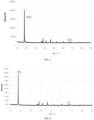
- FIG. 2 is an XRD diagram of lithium metal oxide 1 # of the present application.
- the lithium metal oxide 1 # was applied to the positive electrode active materials of examples 1-13.
- the preparation methods of lithium metal oxides 2#-6# are basically the same as the preparation method of lithium metal oxide 1#, the difference lies in the selection of different metal sources in step 1) as well as the mass of different metal sources, and the specific differences are shown in Table 1.
- lithium metal oxide 2# was applied to the positive electrode active material of Example 14 and its actually measured particle size Dv50 was 15.23 ⁇ m
- lithium metal oxide 3# was applied to the positive electrode active material of Example 15 and its actually measured particle size Dv50 was 14.92 ⁇ m
- lithium metal oxide 4# was applied to the positive electrode active material of Example 16 and its actually measured particle size Dv50 was 15.1 ⁇ m
- lithium metal oxide 5# was applied to the positive electrode active material of Example 17 and its actually measured particle size Dv50 was 14.87 ⁇ m
- lithium metal oxide 6# was applied to the positive electrode active material of Example 18 and its actually measured particle size Dv50 was 15.5 ⁇ m.
- FIG. 3 is an XRD diagram of lithium metal oxide 2# of the present application
- FIG. 4 is an XRD diagram of lithium metal oxide 4# of the present application.
- the ratio I1/I2 of the peak intensity I1 of the 002 peak and the peak intensity I2 of the 131 peak of the lithium metal oxides 1#-6# is shown in Table 3.
- Table 1 Lithium metal oxide Composition of compound containing cobalt and sodium Na 2 CO 3 Co(NO 3 ) 2 *6H 2 O H 3 BO 3 WO 2 K 2 CO 3 MgO TiO 2 Al 2 O 3 g 1#Li 0.71 Na 0.02 K 0.003 CoO 2 Na 0.69 K 0.003 CoO 2 36.56 291.05 0.21 2#Li 0.71 Na 0.02 Co 0.97 Al 0.03 O 2 Na 0.69 Co 0.97 Al 0.03 O 2 36.56296 282.3185 1.5294 3#Li 0.71 Na 0.02 K 0.005 Co 0.97 Mg 0.03 O 2 Na 0.69 K 0.005 Co 0.97 Mg 0.03 O 2 36.56296 282.3185 0.345515 1.20915 4#Li 0.71 Na 0.02 Ko 0.003 Co 0.97 Ti 0.02 O 2 Na 0.69 Ko 0.003 Co 0.97 Ti 0.03 O 2 36.56296 282.3185 0.207309 2.39601 5#Li 0.71 Na 0.02 Co 0.96 B 0.04 O 2 Na 0.69 Co
- the lithium-rich materials are commercially obtained Li 2 NiO 2 , Li 5 FeO 4 , Li 6 CoO 4 , Li 2 O, Li 3 N, LiF, Li 2 C 2 O 4 , each of which was subjected to the following crushing pretreatment: weighing 1 kg of the lithium-rich material, placing it into high-speed mixing equipment, setting a mixing program as mixing the material at 300 rpm for 3 minutes, mixing the material at 500 rpm for 5 minutes, and then mixing the material at 1000 rpm for 10 minutes and then taking it out, stirring the material with a sample spoon to make the material turn over again, repeating the above procedure for mixing it once more to obtain the lithium-rich material with median particle diameter Dv50 of 2-12 ⁇ m, ready for use.
- the positive electrode active material of this example was prepared as follows: Weigh 100 g of lithium metal oxide 1#Li 0.71 Na 0.02 K 0.003 CoO 2 and also 19.94 g of lithium-rich material Li 2 NiO 2 subjected to the above crushing pretreatment, put them into high-speed mixing equipment, set a mixing program as mixing the materials at 300 rpm for 1 minute, mixing the materials at 500 rpm for 2 minutes, and then mixing the materials at 1000 rpm for 10 minutes, then take out the mixed material and after confirming that the mixed material is uniform, consider the mixed material being mixed uniformly, take out the mixed material, to obtain the positive electrode active material of Example 1.
- Table 2 includes the relevant parameters of the positive electrode active material, where m1 theory is a lithium-cobalt molar ratio calculated from respective masses of raw materials including the lithium metal oxide and the lithium-rich material when preparing the positive electrode active material, m1 actual is a lithium-cobalt molar ratio obtained by ICP detection of the finally obtained positive electrode active material.
- the positive electrode active material of this example was prepared as follows: Weigh 100 g of lithium metal oxide 1#Li 0.71 Na 0.02 K 0.003 CoO 2 and also 21.08 g of lithium-rich material Li 2 NiO 2 subjected to the above crushing pretreatment, put them into high-speed mixing equipment, set a mixing program as mixing the materials at 300 rpm for 1 minute, mixing the materials at 500 rpm for 2 minutes, and then mixing the materials at 1,000 rpm for 10 minutes, then take out the mixture and after confirming that the mixture is uniform, consider the mixture being mixed uniformly; take out the mixture to obtain the positive electrode active material of Example 2.
- the relevant parameters are shown in Table 2.
- the positive electrode active material of the present example was prepared as follows: Weigh 100 g of lithium metal oxide 1# Li 0.71 Na 0.02 K 0.003 CoO 2 and also 20.32 g of lithium-rich material Li 2 NiO 2 subjected to the above crushing pretreatment, put them into high-speed mixing equipment, set a mixing program as mixing the materials at 300 rpm for 1 minute, mixing the materials at 500 rpm for 2 minutes, and then mixing the materials at 1,000 rpm for 10 minutes, then take out the mixture and after confirming that the mixture is uniform, consider the mixture being mixed uniformly; take out the mixture to obtain the positive electrode active material of Example 2.
- the relevant parameters are shown in Table 2.
- the positive electrode active material of the present example was prepared as follows: Weigh 100 g of lithium metal oxide 1# Li 0.71 Na 0.02 K 0.003 CoO 2 and also 9.86 g of lithium-rich material Li 5 FeO 4 subjected to the above crushing pretreatment, put them into high-speed mixing equipment, set a mixing program as mixing the materials at 300 rpm for 1 minute, mixing the materials at 500 rpm for 2 minutes, and then mixing the materials at 1,000 rpm for 10 minutes, then take out the mixture and after confirming that the mixture is uniform, consider the mixture being mixed uniformly; take out the mixture to obtain the positive electrode active material of Example 4.
- the relevant parameters are shown in Table 2.
- the positive electrode active material of the present example was prepared as follows: Weigh 100 g of lithium metal oxide 1#Li 0.71 Na 0.02 K 0.003 CoO 2 and also 10.39 g of lithium-rich material Li 5 FeO 4 subjected to the above crushing pretreatment, put them into high-speed mixing equipment, set a mixing program as mixing the materials at 300 rpm for 1 minute, mixing the materials at 500 rpm for 2 minutes, and then mixing the materials at 1,000 rpm for 10 minutes, then take out the mixture and after confirming that the mixture is uniform, consider the mixture being mixed uniformly; take out the mixture to obtain the positive electrode active material of Example 5.
- the relevant parameters are shown in Table 2.
- the positive electrode active material of the present example was prepared as follows: Weigh 100 g of lithium metal oxide 1#Li 0.71 Na 0.02 K 0.003 CoO 2 and also 10.56 g of lithium-rich material Li 5 FeO 4 subjected to the above crushing pretreatment, put them into high-speed mixing equipment, set a mixing program as mixing the materials at 300 rpm for 1 minute, mixing the materials at 500 rpm for 2 minutes, and then mixing the materials at 1,000 rpm for 10 minutes, then take out the mixture and after confirming that the mixture is uniform, consider the mixture being mixed uniformly; take out the mixture to obtain the positive electrode active material of Example 6.
- Table 2 The relevant parameters are shown in Table 2.
- the positive electrode active material of the present example was prepared as follows: Weigh 100 g of lithium metal oxide 1#Li 0.71 Na 0.02 K 0.003 CoO 2 and also 17.2 g of lithium-rich material Li 6 CoO 4 subjected to the above crushing pretreatment, put them into high-speed mixing equipment, set a mixing program as mixing the materials at 300 rpm for 1 minute, mixing the materials at 500 rpm for 2 minutes, and then mixing the materials at 1,000 rpm for 10 minutes, then take out the mixture and after confirming that the mixture is uniform, consider the mixture being mixed uniformly; take out the mixture to obtain the positive electrode active material of Example 7.
- Table 2 The relevant parameters are shown in Table 2.
- the positive electrode active material of the present example was prepared as follows: Weigh 100 g of lithium metal oxide 1# Li 0.71 Na 0.02 K 0.003 CoO 2 and also 17.99 g of lithium-rich material Li 6 CoO 4 subjected to the above crushing pretreatment, put them into high-speed mixing equipment, set a mixing program as mixing the materials at 300 rpm for 1 minute, mixing the materials at 500 rpm for 2 minutes, and then mixing the materials at 1,000 rpm for 10 minutes, then take out the mixture and after confirming that the mixture is uniform, consider the mixture being mixed uniformly; take out the mixture to obtain the positive electrode active material of Example 8.
- the positive electrode active material of the present example was prepared as follows: Weigh 100 g of lithium metal oxide 1#Li 0.71 Na 0.02 K 0.003 CoO 2 and also 17.34 g of lithium-rich material Li 6 CoO 4 subjected to the above crushing pretreatment, put them into high-speed mixing equipment, set a mixing program as mixing the materials at 300 rpm for 1 minute, mixing the materials at 500 rpm for 2 minutes, and then mixing the materials at 1,000 rpm for 10 minutes, then take out the mixture and after confirming that the mixture is uniform, consider the mixture being mixed uniformly; take out the mixture to obtain the positive electrode active material of Example 9.
- the relevant parameters are shown in Table 2.
- the positive electrode active material of the present example was prepared as follows: Weigh 100 g of lithium metal oxide 1#Li 0.71 Na 0.02 K 0.003 CoO 2 and also 9.94 g of lithium-rich material Li 2 O subjected to the above crushing pretreatment, put them into high-speed mixing equipment, set a mixing program as mixing the materials at 300 rpm for 1 minute, mixing the materials at 500 rpm for 2 minutes, and then mixing the materials at 1,000 rpm for 10 minutes, then take out the mixture and after confirming that the mixture is uniform, consider the mixture being mixed uniformly; take out the mixture to obtain the positive electrode active material of Example 10.
- Table 2 The relevant parameters are shown in Table 2.
- the positive electrode active material of the present example was prepared as follows: Weigh 100 g of lithium metal oxide 1#Li 0.71 Na 0.02 K 0.003 CoO 2 and also 5.84 g of lithium-rich material Li 3 N subjected to the above crushing pretreatment, put them into high-speed mixing equipment, set a mixing program as mixing the materials at 300 rpm for 1 minute, mixing the materials at 500 rpm for 2 minutes, and then mixing the materials at 1,000 rpm for 10 minutes, then take out the mixture and after confirming that the mixture is uniform, consider the mixture being mixed uniformly; take out the mixture to obtain the positive electrode active material of Example 11.
- the relevant parameters are shown in Table 2.
- the positive electrode active material of the present example was prepared as follows: Weigh 100 g of lithium metal oxide 1#Li 0.71 Na 0.02 K 0.003 CoO 2 and also 14.73 g of lithium-rich material LiF subjected to the above crushing pretreatment, put them into high-speed mixing equipment, set a mixing program as mixing the materials at 300 rpm for 1 minute, mixing the materials at 500 rpm for 2 minutes, and then mixing the materials at 1,000 rpm for 10 minutes, then take out the mixture and after confirming that the mixture is uniform, consider the mixture being mixed uniformly; take out the mixture to obtain the positive electrode active material of Example 12.
- the relevant parameters are shown in Table 2.
- the positive electrode active material of the present example was prepared as follows: Weigh 100 g of lithium metal oxide 1#Li 0.71 Na 0.02 K 0.003 CoO 2 and also 13.04 g of lithium-rich material Li 2 C 2 O 4 subjected to the above crushing pretreatment, put them into high-speed mixing equipment, set a mixing program as mixing the materials at 300 rpm for 1 minute, mixing the materials at 500 rpm for 2 minutes, and then mixing the materials at 1,000 rpm for 10 minutes, then take out the mixture and after confirming that the mixture is uniform, consider the mixture being mixed uniformly; take out the mixture to obtain the positive electrode active material of Example 13.
- the relevant parameters are shown in Table 2.
- the positive electrode active material of the present example was prepared as follows: Weigh 100 g of lithium metal oxide 2#Li 0.71 Na 0.02 C 0.97 Al 0.03 O 2 and also 9.35 g of lithium-rich material Li 5 FeO 4 subjected to the above crushing pretreatment, put them into high-speed mixing equipment, set a mixing program as mixing the materials at 300 rpm for 1 minute, mixing the materials at 500 rpm for 2 minutes, and then mixing the materials at 1,000 rpm for 10 minutes, then take out the mixture and after confirming that the mixture is uniform, consider the mixture being mixed uniformly; take out the mixture to obtain the positive electrode active material of Example 14.
- the relevant parameters are shown in Table 2.
- the positive electrode active material of the example was prepared as follows: Weigh 100 g of lithium metal oxide 3# Li 0.71 Na 0.02 K 0.005 Co 0.97 Mg 0.03 O 2 and also 9.36 g of lithium-rich material Li 5 FeO 4 subjected to the above crushing pretreatment, put them into high-speed mixing equipment, set a mixing program as mixing the materials at 300 rpm for 1 minute, mixing the materials at 500 rpm for 2 minutes, and then mixing the materials at 1,000 rpm for 10 minutes, then take out the mixture and after confirming that the mixture is uniform, consider the mixture being mixed uniformly; take out the mixture to obtain the positive electrode active material of Example 15.
- the relevant parameters are shown in Table 2.
- the positive electrode active material of the present example was prepared as follows: Weigh 100 g of lithium metal oxide 4# Li 0.71 Na 0.02 K 0.003 Co 0.97 Ti 0.03 O 2 and also 9.51 g of lithium-rich material Li 5 FeO 4 subjected to the above crushing pretreatment, put them into high-speed mixing equipment, set a mixing program as mixing the materials at 300 rpm for 1 minute, mixing the materials at 500 rpm for 2 minutes, and then mixing the materials at 1,000 rpm for 10 minutes, then take out the mixture and after confirming that the mixture is uniform, consider the mixture being mixed uniformly; take out the mixture to obtain the positive electrode active material of Example 16.
- the relevant parameters are shown in Table 2.
- the positive electrode active material of the present example was prepared as follows: Weigh 100 g of lithium metal oxide 5# Li 0.71 Na 0.02 Co 0.96 W 0.04 O 2 and also 9.61 g of lithium-rich material Li 5 FeO 4 subjected to the above crushing pretreatment, put them into high-speed mixing equipment, set a mixing program as mixing the materials at 300 rpm for 1 minute, mixing the materials at 500 rpm for 2 minutes, and then mixing the materials at 1,000 rpm for 10 minutes, then take out the mixture and after confirming that the mixture is uniform, consider the mixture being mixed uniformly; take out the mixture to obtain the positive electrode active material of Example 17.
- the relevant parameters are shown in Table 2.
- the positive electrode active material of the present example was prepared as follows: Weigh 100 g of lithium metal oxide 6# Li 0.71 Na 0.02 Co 0.96 W 0.04 O 2 and also 9.42 g of lithium-rich material Li 5 FeO 4 subjected to the above crushing pretreatment, put them into high-speed mixing equipment, set a mixing program as mixing the materials at 300 rpm for 1 minute, mixing the materials at 500 rpm for 2 minutes, and then mixing the materials at 1,000 rpm for 10 minutes, then take out the mixture and after confirming that the mixture is uniform, consider the mixture being mixed uniformly; take out the mixture to obtain the positive electrode active material of Example 18.
- the relevant parameters are shown in Table 2.
- the positive electrode active material of the example was prepared as follows: Weigh 100 g of lithium metal oxide 1# Li 0.71 Na 0.02 K 0.003 CoO 2 and also 0.3 g of lithium-rich material Li 5 FeO 4 subjected to the above crushing pretreatment, put them into high-speed mixing equipment, set a mixing program as mixing the materials at 300 rpm for 1 minute, mixing the materials at 500 rpm for 2 minutes, and then mixing the materials at 1,000 rpm for 10 minutes, then take out the mixture and after confirming that the mixture is uniform, consider the mixture being mixed uniformly; take out the mixture to obtain the positive electrode active material of Example 19.
- the relevant parameters are shown in Table 2.
- the positive electrode active material of the present comparative example is lithium metal oxide 1 #.
- the relevant parameters are shown in Table 2.
- the positive electrode active material of the present comparative example was prepared as follows: Weigh 100 g of lithium metal oxide 1 # Li 0.71 Na 0.02 K 0.003 CoO 2 and 12.0 g of Li 2 CO 3 , put them into high-speed mixing equipment, set a mixing program as mixing the materials at 300 rpm for 1 minute, mixing the materials at 500 rpm for 2 minutes, and then mixing the materials at 1,000 rpm for 10 minutes, then take out the mixture and after confirming that the mixture is uniform, consider the mixture being mixed uniformly; take out the mixture to obtain the positive electrode active material of Comparative example 2.
- the relevant parameters are shown in Table 2.
- Example 2 Lithium metal oxide Lithium-rich material Ratio of lithium-rich material to mixture by mass m1 theory m1 actual Example 1 Li 0.71 Na 0.02 K 0.003 CoO 2 Li 2 NiO 2 0.1994 1.0773 1.0725 Example 2 Li 0.71 Na 0.02 K 0.003 CoO 2 Li 2 NiO 2 0.2108 1.0983 1.0993 Example 3 Li 0.71 Na 0.02 K 0.003 CoO 2 Li 2 NiO 2 0.2032 1.0843 1.0856 Example 4 Li 0.71 Na 0.02 K 0.003 CoO 2 Li 5 FeO 4 0.0986 1.0174 1.0112 Example 5 Li 0.71 Na 0.02 K 0.003 CoO 2 Li 5 FeO 4 0.1039 1.0337 1.0286 Example 6 Li 0.71 Na 0.02 K 0.003 CoO 2 Li 5 FeO 4 0.1056 1.0392 1.0346 Example 7 Li 0.71 Na 0.02 K 0.003 CoO 2 Li 6 CoO 4 0.1702 1.1891 1.1932 Example 8 Li 0.71 Na 0.02 K 0.003 CoO 2 Li 6 Co
- the method includes: Each lithium metal oxide was mixed with conductive carbon black (SP) and PVDF at a weight ratio of 80%:10%:10%, and a positive electrode slurry was obtained by dispersing. The slurry was coated on an aluminum foil current collector, and roll-pressed to obtain a positive electrode sheet. Then, the positive electrode sheet was punched with a mould to form a small disc with a diameter of 12 mm. After drying and weighing, it was assembled together with a 2025 button cell case, Li metal disc as negative electrode and a conventional high voltage lithium cobaltate as electrolyte in a glove box under Ar protective atmosphere to obtain the button cell.
- SP conductive carbon black
- PVDF a positive electrode slurry was obtained by dispersing.
- the slurry was coated on an aluminum foil current collector, and roll-pressed to obtain a positive electrode sheet.
- the positive electrode sheet was punched with a mould to form a small disc with a diameter of 12 mm. After drying and weighing, it was assembled together with a 20
- Each obtained button cell was left to standing for 4 h in a conventional environment, and then was subjected to a charge and discharge capacity test for first time.
- the test conditions are as below: charging to 4.55 V at 0.1 C, constant voltage charging to 0.025 C and cutting off, standing for 3 minutes, and then discharging to 3.0 V at 0.1 C.
- discharge capacity C1 of 4.4-4.55V, discharge capacity C2 of 3.7-3.8V, and full capacity C0 of first-time discharge were recorded respectively.
- the discharge capacity ratio C1/C0 in the first stage and the discharge capacity ratio C2/C0 in the second stage were calculated. The results are shown in Table 3.
- the button cell was subjected to discharge cycle test at 0.5 C in the range of 3.0 - 4.55 V, and the capacity retention rate Q1 after 50T was tested. The results are shown in Table 3.
- the method includes:
- the electrolyte is a conventional electrolyte known in the art, in which ethylene carbonate (abbreviated as EC), diethyl carbonate (abbreviated as DEC) and propylene carbonate (abbreviated as PC) were mixed in a mass ratio of 2:5:3, and then fluoroethylene carbonate (abbreviated as FEC) accounting for 5% of the total mass of the electrolyte, lithium hexafluorophosphate (abbreviated as LiPF 6 ) accounting for 13% of the total mass of the electrolyte, and an additive represented by Formula T were further added, where a content of the additive is 2% of the total mass of the electrolyte.
- EC ethylene carbonate
- DEC diethyl carbonate
- PC propylene carbonate
- FEC fluoroethylene carbonate
- LiPF 6 lithium hexafluorophosphate
- Formula T an additive represented by Formula T were further added, where a content of the additive is 2% of the total mass
- Capacity retention rate Q2 (Discharge capacity at 500th cycle)/(Discharge capacity at first cycle) * 100%.
- the method includes:
- the positive electrode active materials in the Examples and Comparative examples were each mixed with conductive carbon black (SP) and PVDF at a weight ratio of 80%: 10%: 10%, respectively, and dispersed to obtain a positive electrode slurry.
- the slurry was coated on an aluminum foil current collector, and roll-pressed to prepare a positive electrode sheet.
- the positive electrode sheet was punched with a mould to form a small disc with a diameter of 12 mm. After drying and weighing treatment, it was assembled together with a 2025 button cell case, Li metal disc as negative electrode and conventional high voltage lithium cobaltate as electrolyte in a glove box under Ar protective atmosphere to obtain the button cell.
- FIG. 5 is a charge-discharge curve of a button cell assembled from the positive electrode active material of Example 1 according to the present application.
- the lithium ion battery in Test example 1 without cycling (after chemical formation) was discharged at a current of 1/10 of a rated capacity to 3 .0 V, and then its voltage was tested and found to be 3.0-3.6 V. Then the lithium ion battery was disassembled, the positive electrode sheet was removed, soaked by using dimethyl carbonate (DMC) for 3h, dried naturally in a drying room, and then placed in a muffle furnace and calcinated for 3h at 300°C, then a sample powder was obtained after sieving at 200 mesh. The contents of Li element and Co element in the Examples and Comparative examples were measured by ICP to obtain a lithium-cobalt molar ratio m2 actual . The results are shown in Table 4.
- DMC dimethyl carbonate
Landscapes
- Chemical & Material Sciences (AREA)
- Engineering & Computer Science (AREA)
- Chemical Kinetics & Catalysis (AREA)
- Electrochemistry (AREA)
- General Chemical & Material Sciences (AREA)
- Inorganic Chemistry (AREA)
- Materials Engineering (AREA)
- Manufacturing & Machinery (AREA)
- Organic Chemistry (AREA)
- Battery Electrode And Active Subsutance (AREA)
Abstract
Description
- This application claims priority to
Chinese Patent Application No. 202211557834.3, filed with the China National Intellectual Property Administration on December 6, 2022 - The present application relates to an electrode material, especially to a positive electrode active material and use thereof, belonging to the technical field of secondary batteries.
- With the development and advancement of lithium ion battery technology, higher and higher requirements are put forward on its capacity. In the composition of lithium ion battery, the level of the capacity of the positive electrode active material plays a crucial role in the capacity of lithium ion battery.
- In order to improve the capacity of lithium ion battery, a most commonly used method is to increase its charging and discharging voltage. However, with the increase of voltage, the positive electrode active material will experience a phenomenon of collapse of crystal structure, which in turn leads to a series of problems such as rapid capacity degradation and a significant reduction in the cycle performance of the battery.
- Therefore, development of a positive electrode active material for lithium ion battery with high specific capacity and good cycle performance is a technical problem to be solved in this field.
- The present application provides a positive electrode active material, which helps to improve the specific capacity and cycle performance of a battery, and especially can still make the battery perform well even under a high voltage condition.
- The present application provides a positive electrode sheet, which includes the above-described positive electrode active material, and thus contributes to improving related electrical performance of a battery.
- The present application also provides a lithium ion battery including the above-described positive electrode sheet, and thus has excellent performance in terms of specific capacity and cycle performance.
- The present application provides a positive electrode active material including a lithium metal oxide and a lithium-rich material;
- the lithium metal oxide has a molecular formula represented by Formula 1 or Formula 2, and in an X-ray diffraction pattern, the lithium metal oxide is a space group Cmca of a cubic crystal system, and has a 002 peak at 2θ of 17.9°-18.1° and a 131 peak at 2θ of 67.0°-67.5°;
Lin1-y1Nay1Co1-a1-b1M1b1M2a1O2 Formula 1
Lin2-y2-b2Nay2Co1-a2M1b2M2a2O2 Formula 2
- in formula 1, 0.6 ≤ n1 ≤ 0.8, 0 < y1 ≤ 0.05, 0 ≤ al ≤ 0.1, 0< b1 ≤ 0.1, 0 < b1/1-a1-b1 < 0.1;
- in formula 2, 0.6 ≤ n2 ≤ 0.8, 0 < y2 ≤ 0. 05, 0 ≤ a2 ≤ 0.1, 0 < b2 ≤ 0. 02,
- where M1 includes at least one of Te, W, Al, B, P, and K; and M2 is a doping element different from M1;
- the lithium-rich material includes at least one of Li2NiO2, Li6FeO6, Li2MoO3, Li6CoO4, Li2CuO2, Li2O, Li3N, LiF, Li5AlO4, Li5FeO4, Li2C2O4.
- In the positive electrode active material as described above, the positive electrode active material has a lithium-cobalt molar ratio m1, and m1 ≥ 0.95.
- In the positive electrode active material as described above, 0.95≤m1≤1.5.
- In the positive electrode active material as described above, content of the lithium-rich material in the mixture is 0.5-40% by mass, where the mixture includes the lithium metal oxide and the lithium-rich material.
- In the positive electrode active material as described above, content of the lithium-rich material in the mixture is 5-25% by mass.
- In the positive electrode active material as described above, the lithium-rich material is at least one of Li2NiO2, Li6FeO6.
- In the positive electrode active material as described above, content of the lithium-rich material in the mixture is 9%-20% by mass.
- In the positive electrode active material as described above, in the lithium metal oxide, a peak intensity of the 002 peak is I1, a peak intensity of the 131 peak is I2, I1/I2 ≥ 3.
- In the positive electrode active material as described above, I1/I2 ≥ 4.
- In the positive electrode active material as described above, I1/I2 ≥ 6.
- In the positive electrode active material as described above, a surface of the lithium metal oxide is at least partially covered with a coating layer.
- In the positive electrode active material as described above, the positive electrode active material has a Dv50 of 12- 20 µm.
- In the positive electrode active material as described above, the lithium metal oxide has a median particle diameter Dv50 of 12-20 µm.
- In the positive electrode active material as described above, the lithium-rich material has a median particle diameter Dv50 of 3-12 µm.
- In the positive electrode active material as described above, a half-cell containing the lithium metal oxide has a discharge capacity ratio of C1/C0 ≥ 9% in a first stage and a discharge capacity ratio of C2/C0 ≥ 25% in a second stage;
where C0 is a discharge capacity of the half-cell containing the lithium metal oxide when a discharge treatment is performed at a voltage of 3.0 to 4.55 V; in the discharge treatment, a capacity discharged by the half-cell when the half-cell is discharged from an initial discharge voltage to 4.4 V is defined as C1, and a capacity discharged by the half-cell when the half-cell is discharged from 3.8 V to 3.7 V is defined as C2. - In the positive electrode active material as described above, a lithium-cobalt molar ratio of the positive electrode active material after charged and discharged is m2, m2 ≥ 0. 85.
- In the positive electrode active material as described above, 0.85 ≤ m2 ≤ 1.1.
- The present application provides a positive electrode sheet including the positive electrode active material according to any one of the above items.
- In the positive electrode sheet as described above, a compacted density of a positive electrode active layer in the positive electrode sheet is greater than or equal to 3.5 g/cm3.
- The present application also provides a lithium ion battery including the above-described positive electrode active material or positive electrode sheet.
- In the lithium ion battery as described above, the negative electrode sheet in the lithium ion battery includes a stacked negative electrode current collector; and a negative electrode active layer and a lithium material layer, both of which are disposed on at least one surface of the negative electrode current collector, and the negative electrode active layer is adjacent to the negative electrode current collector.
- In the lithium ion battery as described above, the negative electrode sheet further includes lithium metal.
- In the lithium ion battery as described above, the working voltage of the lithium ion battery is >4.50 V.
- The positive electrode active material of the present application includes a lithium-rich material and a lithium metal oxide having a special crystal phase structure and chemical composition, where the lithium-rich material can provide a sufficient lithium source to help improve the specific capacity of the lithium ion battery, and the lithium metal oxide can improve the structural stability of the positive electrode active material, which not only promotes the optimization of the cycle performance of the lithium ion battery, but also further improves the specific capacity of the lithium ion battery under high pressure conditions. Therefore, the positive electrode active material of the present application can significantly improve the cycle performance and gram capacity of the lithium ion battery, and even under high voltage conditions of 4.5 V or more, the lithium ion battery using the positive electrode active material can still maintain the excellent performance of related electrical properties, and the problem of structural collapse due to poor voltage resistance of the positive electrode active material will not occur.
-
-
FIG. 1 is an SEM diagram of lithium metal oxide 1 # of the present application. -
FIG. 2 is an XRD diagram of lithium metal oxide 1 # of the present application. -
FIG. 3 is an XRD diagram of lithium metal oxide 2 # of the present application. -
FIG. 4 is an XRD diagram of lithium metal oxide 4 # of the present application. -
FIG. 5 is a charge-discharge curve of a button cell assembled from the positive electrode active material of Example 1 according to the present application. - In order to make the purpose, technical solutions, and advantages of the present application more clear, the technical solutions in the embodiments of the present application will be clearly and completely described below in conjunction with the examples of the present application, and it is obvious that the described embodiments are some of the embodiments of the present application, but not all of the embodiments. Based on the embodiments in the present application, all other embodiments obtained by those skilled in the art without creative work fall within the scope of protection of the present application.
- A first aspect of the present application provides a positive electrode active material including a lithium metal oxide and a lithium-rich material;
- the lithium metal oxide has a molecular formula shown in Formula 1, and in an X-ray diffraction pattern, the lithium metal oxide is a space group Cmca of a cubic crystal system, and has a 002 peak at 20 of 17.9°-18.1° and a 131 peak at 2θ of 67.0°-67.5°;
Lin1-y1Nay1Co1-a1-b1M1b1M2a1O2 Formula 1
Lin2-y2-b2Nay2Co1-a2M1b2M2a2O2 Formula 2
- in formula 1, 0.6 ≤ n1 ≤ 0.8, 0 < y1 ≤ 0.05, 0 ≤ a1 ≤ 0.1, 0 < b1 ≤ 0.1, 0 < b1/1-a1-b1 < 0.1;
- in the formula 2, 0.6 ≤ n2 ≤ 0. 8, 0 < y2 ≤ 0. 05, 0 ≤ a2 ≤ 0. 1, 0 < b2 ≤ 0. 02,
- where M1 includes at least one of Te, W, Al, B, P, and K; and M2 is a doping element different from M1;
- the lithium-rich material includes at least one of Li2NiO2, Li6FeO6, Li2MoO3, Li6CoO4, Li2CuO2, Li2O, Li3N, LiF, Li5AlO4, Li5FeO4, and Li2C2O4.
- The lithium metal oxide described in the present application is a compound having a T2 phase packing structure, and specifically an oxide containing at least cobalt, lithium, sodium, and M1. Further, it may be doped with M2, and the present application does not limit the specific selection of M2, and M2 may be a common doping element in the art. For example, it may be at least one of elements W, Mg, Ti, Mn, Al, Te, Ni, Nb, Zr, La, F, Ce, Sr, Y, K, B, and P.
- In the present application, y1, y2, al, a2, bl, b2, etc. within the above-mentioned limits are not excessively limited.
- For example, in Formula 1, y1 is 0.001, 0.002, 0.003, 0.004, 0.005, 0.006, 0.007, 0.008, 0.010, 0.012, 0.015, 0.018, 0.020, 0.022, 0.024, 0.025, 0.026, 0.028, 0.03, 0.04, or 0.05; a1 is 0.001, 0.002, 0.003, 0.004, 0.005, 0.006, 0.007, 0.008, 0.010, 0.012, 0.015, 0.018, 0.020, 0.022, 0.024, 0.025, 0.026, 0.028, 0.030, 0.032, 0.034, 0.035, 0.04, 0.045, 0.05, 0.055, 0.06, 0.065, 0.07, 0.075, 0.08, 0.085, 0.09 or 0.095; b1 is 0.001, 0.002, 0.003, 0.004, 0.005, 0.006, 0.007, 0.008, 0.010, 0.012, 0.015, 0.018, 0.020, 0.022, 0.024, 0.025, 0.026, 0.028, 0.030, 0.032, 0.034, 0.035, 0.04, 0.045, 0.05, 0.055, 0.06, 0.065, 0.07, 0.075, 0.08, 0.085, 0.09 or 0.095; b1/1-a1-b1 is 0.005, 0.01, 0.02, 0.03, 0.04, 0.06, 0.08, 0.09, 0.095 or 0.1;
in Formula 2, y2 is 0.001, 0.002, 0.003, 0.004, 0.005, 0.006, 0.007, 0.008, 0.010, 0.012, 0.015, 0.018, 0.020, 0.022, 0.024, 0.025, 0.026, 0.028, 0.03, 0.04, or 0.05; a2 is 0.001, 0.002, 0.003, 0.004, 0.005, 0.006, 0.007, 0.008, 0.010, 0.012, 0.015, 0.018, 0.020, 0.022, 0.024, 0.025, 0.026, 0.028, 0.030, 0.032, 0.034, 0.035, 0.04, 0.045, 0.05, 0.055, 0.06, 0.065, 0.07, 0.075, 0.08, 0.085, 0.09 or 0.095; b2 is 0.001, 0.002, 0.003, 0.004, 0.005, 0.006, 0.007, 0.008, 0.010, 0.012, 0.015, 0.018, 0.02. - It should be emphasized that n1 and n2 are parameters related to the lithium content in the positive electrode active material that has not been subjected to any charge/discharge treatment. It can be understood that after the positive electrode active material is applied to a lithium ion battery and subjected to any charge/discharge treatment, the molar amount of lithium per unit mole of lithium metal oxide is different under different charge/discharge mechanisms and charge/discharge nodes, and thus n1 and n2 will also change, and even not be within the above-mentioned limits.
- The lithium-rich material described above of the present application specifically includes at least one of Li2NiO2, Li6FeO6, Li2MoO3, Li6CoO4, Li2CuO2, Li2O, Li3N, LiF, Li2C2O4, Li5AlO4, Li5FeO4 and other compounds.
- According to the above solution provided in the present application, compared with other positive electrode active materials, after the positive electrode active material including the above-described lithium metal oxide and the lithium-rich material is applied to the lithium ion battery, the specific capacity and cycle performance of the lithium ion battery are significantly improved compared with a conventionally used high-voltage positive electrode material such as lithium cobalt oxide, and the electrical performance of the lithium ion battery does not deteriorate even under high-voltage operating conditions. The inventor analyzed this phenomenon, and believed that it may be: on one hand, lithium metal oxide has a more perfect T2 structure, part of sodium element plays a supporting role in the structure, and the doping of M1 helps to further support the structure of lithium metal oxide. Therefore, regardless of normal pressure or high pressure working environment, this excellent structural stability enables lithium ions to have stable deintercalation efficiency in space group Cmca of cubic crystal system, and with the increase of working voltage, the deintercalation efficiency of lithium ions can also be stably improved, promoting the improvement of cycle performance and specific capacity of lithium ion battery. On the other hand, the lithium metal oxide with the above-mentioned doping elements and crystal characteristics has a more perfect layered crystal phase structure, which can reduce or suppress the occurrence of chaotic arrangements within the crystal phase, thereby enabling the smooth deintercalation of lithium ions, especially exhibiting multiple small charging and discharging platforms in the high-voltage charging and discharging process.
- In addition, the characteristic of sufficient lithium source of the lithium-rich material can also increase the number of lithium ions for deintercalation in lithium ion battery, and also significantly promote the improvement of the specific capacity and cycle performance of lithium ion battery. It can be understood that when the positive electrode active material includes the above-described at least one lithium-rich material, it is certain that characteristic peaks of the lithium-rich materials can be detected by performing XRD detection on the positive electrode active material.
- Further, a lithium-cobalt molar ratio of the positive electrode active material is m1, and m1 is ≥ 0. 95, further, m1 ≤ 1. 5. When the positive electrode active material is prepared and the lithium-cobalt molar ratio m1 is between 0.95 and 1.5, with the increase of the lithium-cobalt molar ratio, the improvement effect of specific capacity and cycle performance of lithium ion battery is more significant.
- The lithium-cobalt molar ratio m1 in the present application refers to a ratio of an amount of substance of all lithium elements to an amount of substance of all cobalt elements in the active material of the positive electrode sheet during the process of preparing the positive electrode active material (or when there is no any charge/discharge treatment) (which can be calculated by the composition of the material at the time of preparation, or by performing ICP detection on the positive electrode active material after the completion of the preparation).
- In a specific implementation of the present application, a mass content of the lithium-rich material in the mixture including the lithium-rich material and the lithium metal oxide is generally controlled to be 0.5% or more. The inventors found that as an amount of the lithium-rich material increases within a certain range, the first charge and discharge efficiency, specific capacity and cycle performance of the lithium ion battery all show an increasing trend first, and then basically remain unchanged. Therefore, for economic reasons, the mass content of the lithium-rich material in the mixture is generally 0.5%-40%.
- Of course, when different lithium-rich materials, lithium metal oxides, and even different negative electrode materials and electrolytes are used, the cycle performance and specific capacity of the lithium ion battery will be affected. Therefore, generally speaking, for the above-mentioned different lithium-rich materials, lithium metal oxides, negative electrode materials, electrolytes, etc., when the mass content of the lithium-rich materials in the mixture is controlled to 5%-25%, especially when the lithium-rich materials are Li2NiO2, Li6FeO6, their contents are controlled at 9%-20%, which basically enables the lithium ion battery to have the optimal performance in terms of the specific capacity and cycle performance.
- In an embodiment, in the lithium metal oxide, the peak intensity of the 002 peak is I1, the peak intensity of the 131 peak is I2, with I1/I2 ≥ 3. At this time, an internal crystal structure of the lithium metal oxide is more perfect, thus contributing to the improvement of cycle performance of the battery. Further, it is I1/I2 ≥ 4, and still further, I1/I2 ≥ 6.
- In addition to the positive promotion effect of the lithium metal oxide on the electrical properties related to the battery as described above, the performance of the battery is further improved when the surface of the lithium metal oxide is at least partially covered with a coating layer. By providing a coating layer, the positive electrode active material has a core-shell structure including the lithium metal oxide as inner core, and the coating layer covering the inner core. The coating layer helps to reduce or suppress the side reaction between the lithium metal oxide and the electrolyte, and even when the battery is operated in a high-pressure environment, a stable interface can still be formed between the lithium metal oxide and the electrolyte, so that the cycle performance of the battery can be improved by avoiding dissolution of transition metal ions from the positive electrode active ions and avoiding the phenomenon of liquid shortage. At the same time, the suppression or reduction of the side reaction can also reduce the gas production inside the battery, thereby ensuring the safety performance of the battery.
- The present application does not limit the selection of material of the coating layer as long as side reactions can be suppressed and normal migration of lithium ions can be ensured. In order to further improve the conductivity of lithium ions, materials such as carbon-containing compounds and fast ion conductors can be used for the coating layer.
- The positive electrode active material of the present application may have a single crystal morphology or a polycrystalline morphology, and the specific morphology is related to the selection and proportion of doping elements therein. Specifically, when it is in polycrystalline morphology, it is a spherical or spherical-like particle; when it is in single crystal morphology, it may be whisker, flake, or any other irregular shape. In a specific embodiment, the positive electrode active material has a Dv50 of 12-20 µm.
- Further, a median particle diameter Dv50 of the lithium metal oxide is 12-20 µm, for example, 14 µm, 15 µm, 16 µm, 17 µm, 18 µm, 19 µm, or 20 µm;
- Further, a median particle diameter Dv50 of the lithium-rich material is 3-12 µm, for example, 3 µm, 4 µm, 5 µm, 8 µm, 9 µm, 10 µm, or 20 µm.
- The inventor found that when the median particle diameter of the lithium metal oxide or the lithium-rich material meets the above requirements, on one hand, their corresponding specific surface areas can satisfy the deintercalation of more lithium ions; on the other hand, the agglomeration phenomenon between the positive electrode active materials is effectively controlled, so that the positive electrode active materials can be stably dispersed in a slurry in preparation of the slurry. Exemplarily, the median particle diameter Dv50 may be detected by a laser particle size analyzer.
- It needs to be explained that the lithium metal oxide having Dv50 of 12-20 µm refers to a lithium metal oxide satisfying Formula 1, or a core-shell structure in which the surface of the lithium metal oxide represented by Formula 1 is at least partially coated with a coating layer.
- The inventor found that when the lithium metal oxide satisfies the doping and doping ratio of a specific element M1, a plurality of discharge platforms in the charging and discharging process of a half-cell including the lithium metal oxide all exhibit a relatively excellent discharge capacity.
- In a specific embodiment, a half-cell including lithium metal oxide has a discharge capacity ratio of C1/C0 ≥ 9% in a first stage and a discharge capacity ratio of C2/C0 ≥ 25% in a second stage; where C0 is discharge capacity of the half-cell including the lithium metal oxide when a discharge treatment is performed at a voltage of 3.0 to 4.55 V; in the discharge treatment, a capacity discharged by the half-cell when the half-cell is discharged from an initial discharge voltage to 4.4 V is defined as C1, and a capacity discharged by the half-cell when the half-cell is discharged from 3.8 V to 3.7 V is defined as C2. Further, it is C1/CO ≥ 11%, and the discharge capacity ratio is C2/C0 ≥ 28% in the second stage.
- It should be explained that the above discharge capacity is carried out under a special discharge mechanism. Specifically, a half-cell formed by a positive electrode sheet having the lithium metal oxide as a positive electrode active material and a lithium metal negative electrode is charged to an SOC of 100% (the charging mechanism is not particularly limited), and then a discharge treatment is performed at 0.1 C at 3.0 to 4.55 V. Where, when discharging from 4.55V at 0.1C to 4.4V, an amount of electricity released is C1, and when continuously discharging from 3.8V to 3.7V, an amount of electricity released in this voltage reduction stage is C2, and when continuously discharging to 3.0V (SOC is 0 at this time), a total amount of electricity released from the initial discharge is C0.
- Obviously, in the discharge treatment in a high-voltage environment, the discharge capacity ratio in the first stage and the discharge capacity ratio in the second stage both perform well. Therefore, the lithium metal oxide in the positive electrode active material of the present application has strong voltage resistance, so that the specific capacity of the lithium ion battery can be increased by a voltage boost treatment.
- As described above, in the lithium metal oxide that has not been subjected to any charge/discharge treatment, n is between 0.6 and 0.8, and in the positive electrode active material including the lithium metal oxide and the lithium-rich material, the molar ratio m1 of Li/Co is greater than or equal to 0.95, and further is 0.95-1.5. Where n and m1 can be calculated according to the composition of the material, or can be obtained by measuring and analyzing the prepared positive electrode active material by atomic absorption spectrometry (ICP).
- After a positive electrode sheet including a positive electrode active material and a corresponding lithium-free negative electrode sheet are assembled into a half-cell and then charged and discharged, or a full battery assembled from the positive electrode sheet is discharged to 3.0 V at a rate of 0.1 C (voltage range is 3.0 to 3.6 V) after chemical formation (all without limiting the charging mechanism), a molar content ratio of Li/Co in the positive electrode sheet is m2, m2 ≥ 0. 85, further m2 is 0.85-1.1. Specifically, before discharging to 3.0 V at a rate of 0.1 C, the number of cycles of the full battery after chemical formation is not more than 10 cycles, further, no more than 5 cycles.
- Specifically, in the full battery, the composition of the positive electrode active material including the above lithium metal oxide and the above lithium rich material will change after the charge and discharge application. The reason is that the lithium metal oxide with the above-mentioned crystalline structure has some vacancies, so when it is used for charging and discharging application, its vacancies can accept the lithium-rich material with sufficient lithium source. However, since lithium-deficient or a small amount of lithium-supplemented negative electrode material is commonly used in the negative electrode, some lithium ions are lost due to film formation when lithium passes through the negative electrode, and thus the molar amount of lithium ions is reduced compared with that before charging and discharging application. In the present application, by mixing the lithium metal oxide compound with the lithium-rich compound, the application range of the negative electrode material can be further expanded; at the same time, since the negative electrode material does not require the use of the lithium metal compound, the safety and expansion of the lithium ion battery including the positive electrode active material can be significantly improved.
- When detecting the lithium-cobalt molar ratio in the positive electrode sheet of the battery after charging and discharging, the discharged battery is disassembled and the positive electrode sheet is taken out, the positive electrode sheet is immersed in dimethyl carbonate (DMC) for 1-3h or rinsed with DMC, naturally dried in a drying room, and placed in a muffle furnace at 300-600 °C for 2-5h, and then the active layer falls off from the current collector , sieved with 200 mesh to obtain a powder to be detected, and then the metal element in the powder to be detected is detected by ICP, to calculate the lithium-cobalt molar ratio.
- The present application does not limit the method for producing the lithium metal oxide, and in a specific embodiment, the lithium metal oxide of the present application can be produced by a method in which a sodium metal oxide represented by formula 1a or 2a and a lithium compound are mixed and ion exchange treatment is performed:
Nax1Co1-a1-b1M1b1M2a1O2 Formula 1a Nax2Co1-a2M1b2M2a1O2 Formula 2a
in formula 1a, 0.68 < x1 < 0.74, 0 < b1 < 0.1, 0 ≤ a < 0.10, 0 < b1/1-a1 < 0.05; and in formula 2a, 0.68 < x2 < 0.74, 0 < b2 < 0.02, and 0 ≤ a2 < 0.1. - The ion exchange treatment is a heat treatment process, and specifically, it refers to a heat treatment of no more than 10h at 80°C-300°C after mixing the sodium metal oxide and the lithium compound. After the ion exchange treatment, the system after ion exchange is washed and dried to finally obtain the lithium metal oxide. Where the drying temperature is 80-180°C, and the drying time is at least 10 h. The equipment for performing the ion exchange treatment and the drying equipment are not limited, for example, the equipment for the ion exchange treatment may be closed container equipment with a sealing function and a stirring ability, such as wet coating reaction equipment, co-precipitation reaction equipment, etc.; the drying equipment may be a blast oven, a vacuum drying oven, a rotary kiln, a tray drier, a baking oven, etc.
- The lithium compound described above may be a lithium source compound commonly used in the art, and for example, at least one of lithium carbonate, lithium chloride, lithium bromide, lithium iodide, lithium nitrate, lithium hydroxide, and lithium fluoride. In the ion exchange treatment, the mass ratio of the lithium compound and the sodium metal oxide is not less than 1:1, preferably (1-3):1.
- Further, when it is necessary to prepare a positive electrode active material having a lithium metal oxide covered with a coating layer, it is necessary to add a coating layer raw material in addition to raw materials including a sodium metal oxide and a lithium compound in the ion exchange treatment.
- For example, the sodium metal compound represented by Formula 1a or Formula 2a can be prepared by a method including the following procedures:
at least a cobalt source and a sodium source are mixed in a target ratio, and then calcined to obtain a sodium metal compound represented by formula 1a or formula 2a. - Specifically, the temperature of the calcination is 700-900 °C and the time of the calcination is 8-50 h, and the calcination may be performed in an oxygen or air atmosphere. Equipment for calcination may be, for example, a muffle furnace, a tunnel furnace, a roller kiln, a tube furnace and other high temperature calcinating equipment.
- The mixing of the sources described above can be performed by a high-speed mixing apparatus, a sand milling apparatus, a ball milling apparatus, a coulter mixing apparatus, an inclined mixing apparatus, etc. It should be noted that when a sand milling apparatus or a ball milling apparatus is used and a solvent (water, ethanol, or other solvent medium) is added during the ball milling or sand milling process, the mixed system needs to be dried after completion of the mixing process. Generally, the mixing time is not more than 4 h.
- The present application does not limit the specific selection of a cobalt source, a sodium source, a M1 source, and a M2 source. Exemplarily, the cobalt source is selected from one or more of cobalt hydroxide, tricobalt tetraoxide, doped tricobalt tetraoxide, cobaltous oxide, cobalt oxyhydroxide, cobalt nitrate, cobalt sulfate, etc.; the sodium source is selected from one or more of sodium carbonate, sodium nitrate, sodium hydroxide, sodium bicarbonate, sodium sulfate, etc.; the M1 source may be an oxide of M1, and when M1 is W, the source of M1 is, for example, tungstic acid and/or sodium tungstate; when M1 is Te, the M1 source is, for example, telluric acid and/or sodium tellurate, etc.; when M1 is Al, the M1 source is, for example, one or more of aluminum sulfate, aluminum nitrate, aluminum hydroxide, etc.; when M1 is B, the M1 source is, for example, boric acid and/or sodium borate, etc.; when M1 is P, the M1 source is, for example, phosphoric acid and/or sodium phosphate, etc.; when M1 is K, the M1 source is, for example, one or more of potassium carbonate, potassium nitrate, potassium hydroxide, potassium bicarbonate, potassium sulfate, etc.; the M2 source may be an oxide of M2, for example, one or more of basic magnesium carbonate, magnesium hydroxide, zirconia, yttria, lanthanum oxide, lanthanum fluoride, nickel oxide, niobium oxide, etc.
- A second aspect of the present application provides a positive electrode sheet including the positive electrode active material according to the first aspect.
- Based on the characteristics of the positive electrode active material of the first aspect, the positive electrode sheet of the present application contributes to improving cycle performance and specific capacity of the lithium ion battery.
- The present application does not limit a specific structure of the positive electrode sheet. For example, the positive electrode sheet of the present application includes a positive electrode current collector and a positive electrode active layer provided on at least one surface of the positive electrode current collector, and the positive electrode active layer includes the above-described positive electrode active material. It can be understood that in addition to the positive electrode active material, the positive active layer also includes a conductive agent and a binder. Exemplarily, the positive electrode active layer includes 70-99 wt% of the positive electrode active material, 0.5-15 wt% of the conductive agent, and 0.5-15 wt% of the binder; and further, it includes 80-98 wt% of the positive electrode active material, 1-10 wt% of the conductive agent, and 1-10 wt% of the binder.
- The selections of the conductive agent and the binder are not specially limited, and can be a conventional selection in this field. For example, the conductive agent is selected from at least one of conductive carbon black, acetylene black, Ketjen black, conductive graphite, conductive carbon fiber, carbon nanotube, single-walled carbon nanotube, multi-walled carbon nanotube, and carbon fiber, and the binder is selected from at least one of polyvinylidene fluoride (PVDF), polytetrafluoroethylene (PTFE), and lithium polyacrylate (PAALi).
- Further, in order to improve the safety performance, a safety layer may be disposed between the positive electrode active layer and the current collector. A material of the safety layer is generally a non-conductive safety material, such as iron-containing compound (such as lithium iron phosphate, lithium phosphate, etc.), aluminum-containing compound (such as ceramic alumina), etc. Of course, an adhesive is also included in the safety layer, and a ratio of the adhesive to the safety material can be determined according to specific need.
- In some embodiments of the present application, the cycle performance and specific capacity of the battery can be further improved when the positive active layer has a compaction density of greater than or equal to 3.5 g/cm3.
- A third aspect of the present application provides a lithium ion battery including the positive electrode active material of the first aspect or the positive electrode sheet of the second aspect, and thus the lithium ion battery exhibits outstanding cycle performance and specific capacity.
- The present application does not limit a specific structure of the lithium ion battery, and for example, the lithium ion battery may be a square case battery, a cylindrical battery, etc.
- In addition to the positive electrode sheet, the lithium ion battery of the present application further includes a negative electrode sheet, a separator, and an electrolyte.
- Exemplarily, the electrolyte is a conventional electrolyte known in the art including a lithium salt and a solvent containing ethylene carbonate (abbreviated as EC), diethyl carbonate (abbreviated as DEC), propylene carbonate (abbreviated as PC), fluoroethylene carbonate (abbreviated as FEC). Further, it also includes an additive shown in Formula T, whose mass percentage content in the electrolyte is 0.1-10%, etc.

- Exemplarily, the negative electrode sheet includes a stacked negative electrode current collector and a negative electrode active layer provided on one or both sides of the negative electrode current collector. In a specific embodiment, the negative electrode active layer includes 70-99 wt% of negative electrode active material, 0.5-15 wt% of conductive agent, 0.5-15 wt% of binder according to mass percentage; and further it includes 80-98 wt% of negative electrode active material, 1-10 wt% of conductive agent, 1-10 wt% of binder. Where the negative electrode active material is selected from one or more of artificial graphite, natural graphite, hard carbon, mesocarbon microbeads, lithium titanate, silicon carbon, and silicon monoxide.
- Further, the negative electrode sheet may be a lithium metal negative electrode including lithium metal.
- In a specific implementation, based on the lithium replenishment characteristics of the lithium-rich material in the positive electrode active material, when one or more of artificial graphite, natural graphite, hard carbon, mesophase carbon microspheres, lithium titanate, silicon carbon, and silicon monoxide are selected as the negative electrode active material to prepare a negative electrode sheet, it is more conducive to improve the safety performance of the battery than a lithium metal negative electrode.
- Exemplarily, the separator is a polypropylene based material, or an adhesive coated separator coated with ceramic on one or both sides of the polypropylene based material.
- The lithium ion battery of the present application is suitable for high-voltage systems, and specifically, has excellent energy density and cycle performance at a voltage of ≥ 4. 50 V. Therefore, the lithium ion battery of the present application has good cycle stability and high gram capacity at higher voltages such as 4.50V, and can meet the demand for thin and light use of high-end digital products.
- Hereinafter, the technical solutions of the present application will be further explained and illustrated with reference to specific examples.
- The preparation method of lithium metal oxide 1 # is as follows.
- In examples 1 to 13 of the present application, a method for preparing a lithium metal oxide 1 in the positive electrode sheet is as follows:
- 1) Weight 36.56 kg of sodium carbonate powder, 0.21 kg of potassium carbonate powder and 291.05 kg of cobalt nitrate hexahydrate powder, put them into high-speed mixing equipment, set a mixing program as mixing at 300rpm for 3 minutes, mixing at 500rpm for 5 minutes, and then mixing at 1000rpm for 10 minutes, take out the mixture, and when confirming that there is no white sodium carbonate spot in the mixture, the mixture is considered to be uniform;
- 2) Take about 30kg of the uniformly mixed mixture, uniformly load it into a ceramic crucible in batches; use a pit-type muffle furnace with equipment model VBF-1200X for high-temperature sintering, with temperature rise curve of the sintering being 5°C/min, and when temperature rising to 750°C, constant-temperature sintering for 10h; naturally lower the temperature to normal temperature after sintering, and then take out the sample to obtain a sintered compound Na0.69K0.003CoO2 containing cobalt and sodium;
- 3) Weigh 1.049 g of lithium hydroxide monohydrate and 34.47 g of lithium nitrate particles, respectively add the two lithium compounds into a reaction vessel; weight 10g of the compound Na0.69K0.003CoO2 containing cobalt and sodium synthesized in step 2), pour it into the reaction vessel for preliminary mixing, and then perform ion exchange at 280 °C for 0.5 h to obtain a crude product; and
- 4) wash the crude product by suction filtration for 3 times with deionized water, dry it in a blast drying oven set at 90°C for 8h to obtain the lithium metal oxide 1#, which corresponds to the chemical formula Li0.71Na0.02K0.003CoO2.
-
FIG. 1 is a SEM diagram of lithium metal oxide 1 # of the present application. It can be seen from the diagram that the particle diameter of the material is 13-17 µm, and the actual measured particle size Dv50 of the sample is 14.7 µm. -
FIG. 2 is an XRD diagram of lithium metal oxide 1 # of the present application. - The lithium metal oxide 1 # was applied to the positive electrode active materials of examples 1-13.
- The preparation methods of lithium metal oxides 2#-6# are basically the same as the preparation method of lithium metal oxide 1#, the difference lies in the selection of different metal sources in step 1) as well as the mass of different metal sources, and the specific differences are shown in Table 1. Where, lithium metal oxide 2# was applied to the positive electrode active material of Example 14 and its actually measured particle size Dv50 was 15.23 µm,
lithium metal oxide 3# was applied to the positive electrode active material of Example 15 and its actually measured particle size Dv50 was 14.92 µm, lithium metal oxide 4# was applied to the positive electrode active material of Example 16 and its actually measured particle size Dv50 was 15.1 µm, lithium metal oxide 5# was applied to the positive electrode active material of Example 17 and its actually measured particle size Dv50 was 14.87 µm, and lithium metal oxide 6# was applied to the positive electrode active material of Example 18 and its actually measured particle size Dv50 was 15.5 µm. -
FIG. 3 is an XRD diagram of lithium metal oxide 2# of the present application, andFIG. 4 is an XRD diagram of lithium metal oxide 4# of the present application. In addition, the ratio I1/I2 of the peak intensity I1 of the 002 peak and the peak intensity I2 of the 131 peak of the lithium metal oxides 1#-6# is shown in Table 3.Table 1 Lithium metal oxide Composition of compound containing cobalt and sodium Na2CO3 Co(NO3)2*6H2O H3BO3 WO2 K2CO3 MgO TiO2 Al2O3 g 1#Li0.71Na0.02K0.003CoO2 Na0.69K0.003CoO2 36.56 291.05 0.21 2#Li0.71Na0.02Co0.97Al0.03O2 Na0.69Co0.97Al0.03O2 36.56296 282.3185 1.5294 3#Li0.71Na0.02K0.005Co0.97Mg0.03O2 Na0.69K0.005Co0.97Mg0.03O2 36.56296 282.3185 0.345515 1.20915 4#Li0.71Na0.02Ko0.003Co0.97Ti0.02O2 Na0.69Ko0.003Co0.97Ti0.03O2 36.56296 282.3185 0.207309 2.39601 5#Li0.71Na0.02Co0.96B0.04O2 Na0.69Co0.96B0.04O2 36.563 279.408 2.472 6#Li0.71Na0.02Co0.96W0.04O2 Na0.69Co0.96W0.04O2 36.563 279.408 8.63356 - The lithium-rich materials are commercially obtained Li2NiO2, Li5FeO4, Li6CoO4, Li2O, Li3N, LiF, Li2C2O4, each of which was subjected to the following crushing pretreatment: weighing 1 kg of the lithium-rich material, placing it into high-speed mixing equipment, setting a mixing program as mixing the material at 300 rpm for 3 minutes, mixing the material at 500 rpm for 5 minutes, and then mixing the material at 1000 rpm for 10 minutes and then taking it out, stirring the material with a sample spoon to make the material turn over again, repeating the above procedure for mixing it once more to obtain the lithium-rich material with median particle diameter Dv50 of 2-12µm, ready for use.
- The positive electrode active material of this example was prepared as follows:
Weigh 100 g of lithium metal oxide 1#Li0.71Na0.02K0.003CoO2 and also 19.94 g of lithium-rich material Li2NiO2 subjected to the above crushing pretreatment, put them into high-speed mixing equipment, set a mixing program as mixing the materials at 300 rpm for 1 minute, mixing the materials at 500 rpm for 2 minutes, and then mixing the materials at 1000 rpm for 10 minutes, then take out the mixed material and after confirming that the mixed material is uniform, consider the mixed material being mixed uniformly, take out the mixed material, to obtain the positive electrode active material of Example 1. Table 2 includes the relevant parameters of the positive electrode active material, where m1theory is a lithium-cobalt molar ratio calculated from respective masses of raw materials including the lithium metal oxide and the lithium-rich material when preparing the positive electrode active material, m1actual is a lithium-cobalt molar ratio obtained by ICP detection of the finally obtained positive electrode active material. - The positive electrode active material of this example was prepared as follows:
Weigh 100 g of lithium metal oxide 1#Li0.71Na0.02K0.003CoO2 and also 21.08 g of lithium-rich material Li2NiO2 subjected to the above crushing pretreatment, put them into high-speed mixing equipment, set a mixing program as mixing the materials at 300 rpm for 1 minute, mixing the materials at 500 rpm for 2 minutes, and then mixing the materials at 1,000 rpm for 10 minutes, then take out the mixture and after confirming that the mixture is uniform, consider the mixture being mixed uniformly; take out the mixture to obtain the positive electrode active material of Example 2. The relevant parameters are shown in Table 2. - The positive electrode active material of the present example was prepared as follows:
Weigh 100 g of lithium metal oxide 1# Li0.71Na0.02K0.003CoO2 and also 20.32 g of lithium-rich material Li2NiO2 subjected to the above crushing pretreatment, put them into high-speed mixing equipment, set a mixing program as mixing the materials at 300 rpm for 1 minute, mixing the materials at 500 rpm for 2 minutes, and then mixing the materials at 1,000 rpm for 10 minutes, then take out the mixture and after confirming that the mixture is uniform, consider the mixture being mixed uniformly; take out the mixture to obtain the positive electrode active material of Example 2. The relevant parameters are shown in Table 2. - The positive electrode active material of the present example was prepared as follows:
Weigh 100 g of lithium metal oxide 1# Li0.71Na0.02K0.003CoO2 and also 9.86 g of lithium-rich material Li5FeO4 subjected to the above crushing pretreatment, put them into high-speed mixing equipment, set a mixing program as mixing the materials at 300 rpm for 1 minute, mixing the materials at 500 rpm for 2 minutes, and then mixing the materials at 1,000 rpm for 10 minutes, then take out the mixture and after confirming that the mixture is uniform, consider the mixture being mixed uniformly; take out the mixture to obtain the positive electrode active material of Example 4. The relevant parameters are shown in Table 2. - The positive electrode active material of the present example was prepared as follows:
Weigh 100 g of lithium metal oxide 1#Li0.71Na0.02K0.003CoO2 and also 10.39 g of lithium-rich material Li5FeO4 subjected to the above crushing pretreatment, put them into high-speed mixing equipment, set a mixing program as mixing the materials at 300 rpm for 1 minute, mixing the materials at 500 rpm for 2 minutes, and then mixing the materials at 1,000 rpm for 10 minutes, then take out the mixture and after confirming that the mixture is uniform, consider the mixture being mixed uniformly; take out the mixture to obtain the positive electrode active material of Example 5. The relevant parameters are shown in Table 2. - The positive electrode active material of the present example was prepared as follows:
Weigh 100 g of lithium metal oxide 1#Li0.71Na0.02K0.003CoO2 and also 10.56 g of lithium-rich material Li5FeO4 subjected to the above crushing pretreatment, put them into high-speed mixing equipment, set a mixing program as mixing the materials at 300 rpm for 1 minute, mixing the materials at 500 rpm for 2 minutes, and then mixing the materials at 1,000 rpm for 10 minutes, then take out the mixture and after confirming that the mixture is uniform, consider the mixture being mixed uniformly; take out the mixture to obtain the positive electrode active material of Example 6. The relevant parameters are shown in Table 2. - The positive electrode active material of the present example was prepared as follows:
Weigh 100 g of lithium metal oxide 1#Li0.71Na0.02K0.003CoO2 and also 17.2 g of lithium-rich material Li6CoO4 subjected to the above crushing pretreatment, put them into high-speed mixing equipment, set a mixing program as mixing the materials at 300 rpm for 1 minute, mixing the materials at 500 rpm for 2 minutes, and then mixing the materials at 1,000 rpm for 10 minutes, then take out the mixture and after confirming that the mixture is uniform, consider the mixture being mixed uniformly; take out the mixture to obtain the positive electrode active material of Example 7. The relevant parameters are shown in Table 2. - The positive electrode active material of the present example was prepared as follows:
Weigh 100 g of lithium metal oxide 1# Li0.71Na0.02K0.003CoO2 and also 17.99 g of lithium-rich material Li6CoO4 subjected to the above crushing pretreatment, put them into high-speed mixing equipment, set a mixing program as mixing the materials at 300 rpm for 1 minute, mixing the materials at 500 rpm for 2 minutes, and then mixing the materials at 1,000 rpm for 10 minutes, then take out the mixture and after confirming that the mixture is uniform, consider the mixture being mixed uniformly; take out the mixture to obtain the positive electrode active material of Example 8. - The positive electrode active material of the present example was prepared as follows:
Weigh 100 g of lithium metal oxide 1#Li0.71Na0.02K0.003CoO2 and also 17.34 g of lithium-rich material Li6CoO4 subjected to the above crushing pretreatment, put them into high-speed mixing equipment, set a mixing program as mixing the materials at 300 rpm for 1 minute, mixing the materials at 500 rpm for 2 minutes, and then mixing the materials at 1,000 rpm for 10 minutes, then take out the mixture and after confirming that the mixture is uniform, consider the mixture being mixed uniformly; take out the mixture to obtain the positive electrode active material of Example 9. The relevant parameters are shown in Table 2. - The positive electrode active material of the present example was prepared as follows:
Weigh 100 g of lithium metal oxide 1#Li0.71Na0.02K0.003CoO2 and also 9.94 g of lithium-rich material Li2O subjected to the above crushing pretreatment, put them into high-speed mixing equipment, set a mixing program as mixing the materials at 300 rpm for 1 minute, mixing the materials at 500 rpm for 2 minutes, and then mixing the materials at 1,000 rpm for 10 minutes, then take out the mixture and after confirming that the mixture is uniform, consider the mixture being mixed uniformly; take out the mixture to obtain the positive electrode active material of Example 10. The relevant parameters are shown in Table 2. - The positive electrode active material of the present example was prepared as follows:
Weigh 100 g of lithium metal oxide 1#Li0.71Na0.02K0.003CoO2 and also 5.84 g of lithium-rich material Li3N subjected to the above crushing pretreatment, put them into high-speed mixing equipment, set a mixing program as mixing the materials at 300 rpm for 1 minute, mixing the materials at 500 rpm for 2 minutes, and then mixing the materials at 1,000 rpm for 10 minutes, then take out the mixture and after confirming that the mixture is uniform, consider the mixture being mixed uniformly; take out the mixture to obtain the positive electrode active material of Example 11. The relevant parameters are shown in Table 2. - The positive electrode active material of the present example was prepared as follows:
Weigh 100 g of lithium metal oxide 1#Li0.71Na0.02K0.003CoO2 and also 14.73 g of lithium-rich material LiF subjected to the above crushing pretreatment, put them into high-speed mixing equipment, set a mixing program as mixing the materials at 300 rpm for 1 minute, mixing the materials at 500 rpm for 2 minutes, and then mixing the materials at 1,000 rpm for 10 minutes, then take out the mixture and after confirming that the mixture is uniform, consider the mixture being mixed uniformly; take out the mixture to obtain the positive electrode active material of Example 12. The relevant parameters are shown in Table 2. - The positive electrode active material of the present example was prepared as follows:
Weigh 100 g of lithium metal oxide 1#Li0.71Na0.02K0.003CoO2 and also 13.04 g of lithium-rich material Li2C2O4 subjected to the above crushing pretreatment, put them into high-speed mixing equipment, set a mixing program as mixing the materials at 300 rpm for 1 minute, mixing the materials at 500 rpm for 2 minutes, and then mixing the materials at 1,000 rpm for 10 minutes, then take out the mixture and after confirming that the mixture is uniform, consider the mixture being mixed uniformly; take out the mixture to obtain the positive electrode active material of Example 13. The relevant parameters are shown in Table 2. - The positive electrode active material of the present example was prepared as follows:
Weigh 100 g of lithium metal oxide 2#Li0.71Na0.02C0.97Al0.03O2 and also 9.35 g of lithium-rich material Li5FeO4 subjected to the above crushing pretreatment, put them into high-speed mixing equipment, set a mixing program as mixing the materials at 300 rpm for 1 minute, mixing the materials at 500 rpm for 2 minutes, and then mixing the materials at 1,000 rpm for 10 minutes, then take out the mixture and after confirming that the mixture is uniform, consider the mixture being mixed uniformly; take out the mixture to obtain the positive electrode active material of Example 14. The relevant parameters are shown in Table 2. - The positive electrode active material of the example was prepared as follows:
Weigh 100 g oflithium metal oxide 3# Li0.71Na0.02K0.005Co0.97Mg0.03O2 and also 9.36 g of lithium-rich material Li5FeO4 subjected to the above crushing pretreatment, put them into high-speed mixing equipment, set a mixing program as mixing the materials at 300 rpm for 1 minute, mixing the materials at 500 rpm for 2 minutes, and then mixing the materials at 1,000 rpm for 10 minutes, then take out the mixture and after confirming that the mixture is uniform, consider the mixture being mixed uniformly; take out the mixture to obtain the positive electrode active material of Example 15. The relevant parameters are shown in Table 2. - The positive electrode active material of the present example was prepared as follows:
Weigh 100 g of lithium metal oxide 4# Li0.71Na0.02K0.003Co0.97Ti0.03O2 and also 9.51 g of lithium-rich material Li5FeO4 subjected to the above crushing pretreatment, put them into high-speed mixing equipment, set a mixing program as mixing the materials at 300 rpm for 1 minute, mixing the materials at 500 rpm for 2 minutes, and then mixing the materials at 1,000 rpm for 10 minutes, then take out the mixture and after confirming that the mixture is uniform, consider the mixture being mixed uniformly; take out the mixture to obtain the positive electrode active material of Example 16. The relevant parameters are shown in Table 2. - The positive electrode active material of the present example was prepared as follows:
Weigh 100 g of lithium metal oxide 5# Li0.71Na0.02Co0.96W0.04O2 and also 9.61 g of lithium-rich material Li5FeO4 subjected to the above crushing pretreatment, put them into high-speed mixing equipment, set a mixing program as mixing the materials at 300 rpm for 1 minute, mixing the materials at 500 rpm for 2 minutes, and then mixing the materials at 1,000 rpm for 10 minutes, then take out the mixture and after confirming that the mixture is uniform, consider the mixture being mixed uniformly; take out the mixture to obtain the positive electrode active material of Example 17. The relevant parameters are shown in Table 2. - The positive electrode active material of the present example was prepared as follows:
Weigh 100 g of lithium metal oxide 6# Li0.71Na0.02Co0.96W0.04O2 and also 9.42 g of lithium-rich material Li5FeO4 subjected to the above crushing pretreatment, put them into high-speed mixing equipment, set a mixing program as mixing the materials at 300 rpm for 1 minute, mixing the materials at 500 rpm for 2 minutes, and then mixing the materials at 1,000 rpm for 10 minutes, then take out the mixture and after confirming that the mixture is uniform, consider the mixture being mixed uniformly; take out the mixture to obtain the positive electrode active material of Example 18. The relevant parameters are shown in Table 2. - The positive electrode active material of the example was prepared as follows:
Weigh 100 g of lithium metal oxide 1# Li0.71Na0.02K0.003CoO2 and also 0.3 g of lithium-rich material Li5FeO4 subjected to the above crushing pretreatment, put them into high-speed mixing equipment, set a mixing program as mixing the materials at 300 rpm for 1 minute, mixing the materials at 500 rpm for 2 minutes, and then mixing the materials at 1,000 rpm for 10 minutes, then take out the mixture and after confirming that the mixture is uniform, consider the mixture being mixed uniformly; take out the mixture to obtain the positive electrode active material of Example 19. The relevant parameters are shown in Table 2. - The positive electrode active material of the present comparative example is lithium metal oxide 1 #. The relevant parameters are shown in Table 2.
- The positive electrode active material of the present comparative example was prepared as follows:
Weigh 100 g of lithium metal oxide 1 # Li0.71Na0.02K0.003CoO2 and 12.0 g of Li2CO3, put them into high-speed mixing equipment, set a mixing program as mixing the materials at 300 rpm for 1 minute, mixing the materials at 500 rpm for 2 minutes, and then mixing the materials at 1,000 rpm for 10 minutes, then take out the mixture and after confirming that the mixture is uniform, consider the mixture being mixed uniformly; take out the mixture to obtain the positive electrode active material of Comparative example 2. The relevant parameters are shown in Table 2.Table 2 Lithium metal oxide Lithium-rich material Ratio of lithium-rich material to mixture by mass m1theory m1actual Example 1 Li0.71Na0.02K0.003CoO2 Li2NiO2 0.1994 1.0773 1.0725 Example 2 Li0.71Na0.02K0.003CoO2 Li2NiO2 0.2108 1.0983 1.0993 Example 3 Li0.71Na0.02K0.003CoO2 Li2NiO2 0.2032 1.0843 1.0856 Example 4 Li0.71Na0.02K0.003CoO2 Li5FeO4 0.0986 1.0174 1.0112 Example 5 Li0.71Na0.02K0.003CoO2 Li5FeO4 0.1039 1.0337 1.0286 Example 6 Li0.71Na0.02K0.003CoO2 Li5FeO4 0.1056 1.0392 1.0346 Example 7 Li0.71Na0.02K0.003CoO2 Li6CoO4 0.1702 1.1891 1.1932 Example 8 Li0.71Na0.02K0.003CoO2 Li6CoO4 0.1799 1.2139 1.2178 Example 9 Li0.71Na0.02K0.003CoO2 Li6CoO4 0.1734 1.1974 1.1995 Example 10 Li0.71Na0.02K0.003CoO2 Li2O 0.0994 1.3508 1.2706 Example 11 Li0.71Na0.02K0.003CoO2 Li3N 0.0584 1.1944 1.1928 Example 12 Li0.71Na0.02K0.003CoO2 LiF 0.1473 1.2570 1.2503 Example 13 Li0.71Na0.02K0.003CoO2 Li2C2O4 0.1304 0.9565 0.9589 Example 14 Li0.71Na0.02Co0.97Al0.03O2 Li5FeO4 0.0935 0.9984 0.9907 Example 15 Li0.71Na0.02K0.005Co0.97Mg0 .03O2 Li5FeO4 0.0936 0.9991 0.9935 Example 16 Li0.71Na0.02K0.003Co0.97Ti0.0 3O2 Li5FeO4 0.0951 1.0056 1.0004 Example 17 Li0.71Na0.02Co0.96W0.04O2 Li5FeO4 0.0960 1.0032 1.0067 Example 18 Li0.71Na0.02Co0.96W0.04O2 Li5FeO4 0.0942 1.0188 1.0182 Example 19 Li0.71Na0.02K0.003CoO2 Li5FeO4 0.003 0.7193 0.7138 Comparative example 1 Li0.71Na0.02K0.003CoO2 / / 0.71 0.7138 Comparative example 2 Li0.71Na0.02K0.003CoO2 Li2CO3 0.12 1.0228 1.0183 - After the lithium metal oxides 1#-6# each were made into a positive electrode sheet, and then were assembled together with a negative electrode sheet, an electrolyte and a separator in accordance with the following method to obtain a button cell. The method includes:
Each lithium metal oxide was mixed with conductive carbon black (SP) and PVDF at a weight ratio of 80%:10%:10%, and a positive electrode slurry was obtained by dispersing. The slurry was coated on an aluminum foil current collector, and roll-pressed to obtain a positive electrode sheet. Then, the positive electrode sheet was punched with a mould to form a small disc with a diameter of 12 mm. After drying and weighing, it was assembled together with a 2025 button cell case, Li metal disc as negative electrode and a conventional high voltage lithium cobaltate as electrolyte in a glove box under Ar protective atmosphere to obtain the button cell. - Each obtained button cell was left to standing for 4 h in a conventional environment, and then was subjected to a charge and discharge capacity test for first time. The test conditions are as below: charging to 4.55 V at 0.1 C, constant voltage charging to 0.025 C and cutting off, standing for 3 minutes, and then discharging to 3.0 V at 0.1 C. During the discharge process, discharge capacity C1 of 4.4-4.55V, discharge capacity C2 of 3.7-3.8V, and full capacity C0 of first-time discharge were recorded respectively. The discharge capacity ratio C1/C0 in the first stage and the discharge capacity ratio C2/C0 in the second stage were calculated. The results are shown in Table 3.
- In addition, the button cell was subjected to discharge cycle test at 0.5 C in the range of 3.0 - 4.55 V, and the capacity retention rate Q1 after 50T was tested. The results are shown in Table 3.
- After the positive electrode active materials in all the Examples and Comparative examples were each made into a positive electrode sheet, and then were assembled together with a negative electrode sheet, an electrolyte, and a separator according to the following method to obtain a lithium ion battery. The method includes:
- 1) The positive electrode active materials in the Examples and Comparative examples were each mixed with conductive carbon black and PVDF at a weight ratio of 96%: 2%:2%, respectively, and dispersed to obtain a positive electrode slurry. The slurry was coated on an aluminum foil current collector and roll-pressed at a positive electrode compaction density of 4.12 g/cm3 to obtain a positive electrode sheet;
- 2) Artificial graphite, styrene butadiene rubber (SBR), sodium carboxymethyl cellulose, and conductive carbon black were mixed in a weight ratio of 94%:3%:2%:1%, and the mixture was dispersed in water and mixed by double planetary mixer to obtain a negative electrode slurry. The slurry was coated onto a copper current collector, followed by roll-pressing and drying; and
- 3) Then the positive electrode sheet, the negative electrode sheet and the separator were assembled into a lithium ion battery, into which a non-aqueous electrolyte was injected.
- Where, the electrolyte is a conventional electrolyte known in the art, in which ethylene carbonate (abbreviated as EC), diethyl carbonate (abbreviated as DEC) and propylene carbonate (abbreviated as PC) were mixed in a mass ratio of 2:5:3, and then fluoroethylene carbonate (abbreviated as FEC) accounting for 5% of the total mass of the electrolyte, lithium hexafluorophosphate (abbreviated as LiPF6) accounting for 13% of the total mass of the electrolyte, and an additive represented by Formula T were further added, where a content of the additive is 2% of the total mass of the electrolyte.
- The capacity retention rate of each lithium ion battery obtained was tested as follows: at 25°C, charge to 4.50V at constant current at a charging rate of 1C, then charge to 4.50V at constant voltage at a charging rate of 0.05C, and then discharge to 3.0V at a discharging rate of 1C, and then repeat this charging and discharging cycle for 500 times, and then measure a discharging capacity at the first cycle and a discharging capacity at 500th cycle, and calculate a capacity retention rate Q2 after 500 cycles according to the following formula. The results are shown in Table 4.
Capacity retention rate Q2 = (Discharge capacity at 500th cycle)/(Discharge capacity at first cycle) * 100%. - After the positive electrode active materials in all the Examples and Comparative examples were each made into a positive electrode sheet, and then were assembled together with a negative electrode sheet, an electrolyte, and a separator according to the following method to obtain a button cell. The method includes:
- The positive electrode active materials in the Examples and Comparative examples were each mixed with conductive carbon black (SP) and PVDF at a weight ratio of 80%: 10%: 10%, respectively, and dispersed to obtain a positive electrode slurry. The slurry was coated on an aluminum foil current collector, and roll-pressed to prepare a positive electrode sheet. Then, the positive electrode sheet was punched with a mould to form a small disc with a diameter of 12 mm. After drying and weighing treatment, it was assembled together with a 2025 button cell case, Li metal disc as negative electrode and conventional high voltage lithium cobaltate as electrolyte in a glove box under Ar protective atmosphere to obtain the button cell.
- Each obtained button cell was was left to standing for 4 h in a conventional environment, and then was subjected to a charge and discharge capacity test for first time. The test conditions are as below: charging to 4.55 V at 0.1 C, constant voltage charging to 0.025 C and cutting off, standing for 3 minutes, and then discharging to 3.0 V at 0.1 C. During the discharge process, discharge gram capacity C0 for first time and charge gram capacity for first time were recorded respectively, and first-time efficiency was calculated. The results are shown in Table 4.
FIG. 5 is a charge-discharge curve of a button cell assembled from the positive electrode active material of Example 1 according to the present application. - The lithium ion battery in Test example 1 without cycling (after chemical formation) was discharged at a current of 1/10 of a rated capacity to 3 .0 V, and then its voltage was tested and found to be 3.0-3.6 V. Then the lithium ion battery was disassembled, the positive electrode sheet was removed, soaked by using dimethyl carbonate (DMC) for 3h, dried naturally in a drying room, and then placed in a muffle furnace and calcinated for 3h at 300°C, then a sample powder was obtained after sieving at 200 mesh. The contents of Li element and Co element in the Examples and Comparative examples were measured by ICP to obtain a lithium-cobalt molar ratio m2actual . The results are shown in Table 4.
Table 3 Lithium metal oxide Composition of compound containing cobalt and sodium I1/I2 C1/C0 C2/C0 Q1 % 1 #Li0.71Na0.02K0.003CoO2 Na0.69K0.003CoO2 9.89 11.35 29.86 97.3 2#Li0.71Na0.02Co0.97Al0.03O2 Na0.69Co0.97Al0.03O2 8.39 11.38 29.67 97.9 3#Li0.71Na0.02K0.005Co0.97Mg0.03O2 Na0.69K0.005Co0.97Mg0.03O2 7.59 12.01 30.68 98.1 4#Li0.71Na0.02K0.003Co0.97Ti0.03O2 Na0.69K0.003Co0.97Ti0.03O2 8.05 11.24 29.59 97.9 5#Li0.71Na0.02Co0.96B0.04O2 Na0.69Co0.96B0.04O2 11.63 11.15 29.54 98.3 6#Li0.71Na0.02Co0.96W0.04O2 Na0.69Co0.96W0.04O2 7.99 12.04 30.35 97.76 Table 4 Charge Gram Capacity (mAh/g) Discharge Gram Capacity C0 (mAh/g) First-time efficiency (%) Q2 m2actual Example 1 267.7 231 86.3% 91.23% 0.9455 Example 2 272.4 234 85.9% 90.27% 0.9621 Example 3 269.3 232 86.2% 90.89% 0.9510 Example 4 254.0 235 92.5% 89.94% 0.8944 Example 5 257.6 238 92.4% 89.05% 0.9072 Example 6 258.8 239 92.4% 88.92% 0.9114 Example 7 265.5 231 87.0% 90.07% 0.9372 Example 8 270.0 234 86.7% 88.24% 0.9534 Example 9 267.0 232 86.9% 88.71% 0.9426 Example 10 264.0 234 88.6% 87.12% 0.9314 Example 11 296.7 234 78.9% 86.89% 1.0511 Example 12 251.6 234 93.0% 87.75% 0.8857 Example 13 252.2 234 92.8% 85.83% 0.8882 Example 14 251.4 233 92.7% 90.86% 0.8853 Example 15 253.5 235 92.7% 90.79% 0.8927 Example 16 250.5 232 92.6% 91.03% 0.8822 Example 17 252.2 233.5 92.6% 91.22% 0.8880 Example 18 249.9 231.5 92.6% 90.99% 0.8801 Example 19 188.1 179.3 95.3% 67.3% 0.6318 Comparative example 1 186.7 177.4 95.0% 23.54% 0.6237 Comparative example 2 186.5 177.5 95.2% 34.56% 0.9704 - From Tables 2-4, it can be seen that the positive electrode active materials of the present application are beneficial to improving the discharge capacity and cycle performance of lithium ion batteries.
- Finally, it should be noted that the above examples are merely used to illustrate the technical solutions of the present application, and are not intended to limit them; although the present application has been described in detail with reference to the above-described examples, those skilled in the art should understand that the technical solutions described in the above-described examples can still be modified, or equivalently substituted for some or all of the technical features therein; such modification or substitutions shall not make the essence of the corresponding technical solutions depart from the scope of the technical solutions of the examples of the present application.
Claims (23)
- A positive electrode active material, wherein the positive electrode active material comprises a lithium metal oxide and a lithium-rich material;the lithium metal oxide has a molecular formula represented by Formula 1 or Formula 2, and in an X-ray diffraction pattern, the lithium metal oxide is a space group Cmca of a cubic crystal system, and has a 002 peak at 2θ of 17.9°- 18.1° and a 131 peak at 2θ of 67.0° to 67.5°;
Lin1-y1Nay1Co1-a1-b1M1b1M2a1O2 Formula 1
Lin2-y2-b2Nay2Co1-a2M1b2M2a2O2 Formula 2
in the formula 1, 0.6 ≤ n1 ≤ 0.8, 0 < y1 ≤ 0.05, 0 ≤ a1 ≤ 0.1, 0 < b1 ≤ 0.1, 0 < bl/1-al-bl < 0.1;in the formula 2, 0.6 ≤ n2 ≤ 0. 8, 0 < y2 ≤ 0. 05, 0 ≤ a2 ≤ 0. 1, 0 < b2 ≤ 0. 02,wherein M1 comprises at least one of Te, W, Al, B, P, and K, and M2 is a doping element different from M1; andthe lithium-rich material comprises at least one of Li2NiO2, Li6FeO6, Li2MoO3, Li6CoO4, Li2CuO2, Li2O, Li3N, LiF, Li5AlO4, Li5FeO4, and Li2C2O4. - The positive electrode active material according to claim 1, wherein the positive electrode active material has a lithium-cobalt molar ratio m1 and m1 ≥ 0. 95.
- The positive electrode active material according to claim 2, wherein 0.95 ≤ m1 ≤ 1. 5.
- The positive electrode active material according to any one of claims 1-3, wherein a content of the lithium-rich material in a mixture is 0.5-40% by mass, and the mixture comprises the lithium metal oxide and the lithium-rich material.
- The positive electrode active material according to claim 4, wherein the content of the lithium-rich material in the mixture is 5-25% by mass.
- The positive electrode active material according to claim 4 or 5, wherein the lithium-rich material comprises at least one of Li2NiO2 and Li6FeO6.
- The positive electrode active material according to claim 5 or 6, wherein the content of the lithium-rich material in the mixture is 9%-20% by mass.
- The positive electrode active material according to any one of claims 1-7, wherein in the lithium metal oxide, a peak intensity of the 002 peak is I1, a peak intensity of the 131 peak is I2, and I1/I2 ≥ 3.
- The positive electrode active material according to claim 8, wherein I1/I2 ≥ 4.
- The positive electrode active material according to claim 8 or 9, wherein I1/I2 ≥ 6.
- The positive electrode active material according to any one of claims 1-10, wherein a surface of the lithium metal oxide is at least partially covered with a coating layer.
- The positive electrode active material according to any one of claims 1-111, wherein the positive electrode active material has a Dv50 of 12-20µm.
- The positive electrode active material according to any one of claims 1-12, wherein the lithium metal oxide has a median particle diameter Dv50 of 12-20 µm.
- The positive electrode active material according to any one of claims 1-13, wherein the lithium-rich material has a median particle diameter Dv50 of 3-12 µm.
- The positive electrode active material according to any one of claims 1-14, whereina half-cell comprising the lithium metal oxide has a discharge capacity ratio of C1/C0 ≥ 9% in a first stage and a discharge capacity ratio of C2/C0 ≥ 25% in a second stage;wherein C0 is a discharge capacity of the half-cell comprising the lithium metal oxide when a discharge treatment is performed at a voltage of 3.0 to 4.55 V; and in the discharge treatment, a capacity discharged by the half-cell when the half-cell is discharged from an initial discharge voltage to 4.4 V is defined as C1, and a capacity discharged by the half-cell when the half-cell is discharged from 3.8 V to 3.7 V is defined as C2.
- The positive electrode active material according to any one of claims 1-3, wherein a lithium-cobalt molar ratio of the positive electrode active material after being charged and discharged is m2, and m2 ≥ 0. 85.
- The positive electrode active material according to claim 16, wherein 0.85 ≤ m2 ≤ 1.1.
- A positive electrode sheet, comprising the positive electrode active material according to any one of claims 1-17.
- The positive electrode sheet according to claim 18, wherein the positive electrode active layer has a compaction density of greater than or equal to 3.5 g/cm3.
- A lithium ion battery, comprising the positive electrode active material according to any one of claims 1-17 or the positive electrode sheet according to claim 18 or 19.
- The lithium ion battery according to claim 20, wherein a negative electrode sheet in the lithium ion battery comprises a stacked negative electrode current collector, and also a negative electrode active layer and a lithium material layer, both of which are disposed on at least one surface of the negative electrode current collector, and the negative electrode active layer is adjacent to the negative electrode current collector.
- The lithium ion battery according to claim 21, wherein the negative electrode sheet further comprises lithium metal.
- The lithium ion battery according to any one of claims 20-22, wherein an operating voltage of the lithium ion battery is ≥ 4.50 V.
Applications Claiming Priority (2)
| Application Number | Priority Date | Filing Date | Title |
|---|---|---|---|
| CN202211557834.3A CN115732661A (en) | 2022-12-06 | 2022-12-06 | Positive active material and application thereof |
| PCT/CN2023/117910 WO2024119936A1 (en) | 2022-12-06 | 2023-09-11 | Positive electrode active material and use thereof |
Publications (2)
| Publication Number | Publication Date |
|---|---|
| EP4525081A1 true EP4525081A1 (en) | 2025-03-19 |
| EP4525081A4 EP4525081A4 (en) | 2025-10-29 |
Family
ID=85300314
Family Applications (1)
| Application Number | Title | Priority Date | Filing Date |
|---|---|---|---|
| EP23899519.5A Pending EP4525081A4 (en) | 2022-12-06 | 2023-09-11 | POSITIVE ELECTRODE ACTIVE MATERIAL AND USE OF IT |
Country Status (4)
| Country | Link |
|---|---|
| US (1) | US20250070157A1 (en) |
| EP (1) | EP4525081A4 (en) |
| CN (1) | CN115732661A (en) |
| WO (1) | WO2024119936A1 (en) |
Families Citing this family (5)
| Publication number | Priority date | Publication date | Assignee | Title |
|---|---|---|---|---|
| EP4525079A4 (en) * | 2022-09-02 | 2025-08-27 | Zhuhai Cosmx Battery Co Ltd | POSITIVE ELECTRODE ACTIVE MATERIAL AND USE THEREOF |
| CN115732661A (en) * | 2022-12-06 | 2023-03-03 | 珠海冠宇电池股份有限公司 | Positive active material and application thereof |
| EP4648135A1 (en) * | 2023-04-18 | 2025-11-12 | Zhuhai CosMX Battery Co., Ltd. | Positive active material and application thereof |
| CN116666582B (en) * | 2023-05-16 | 2024-10-01 | 广州凌顶能源科技有限公司 | Metal oxide coated lithium oxide composite positive electrode material, preparation method thereof, positive electrode plate containing positive electrode material and battery |
| CN116598463A (en) * | 2023-06-14 | 2023-08-15 | 珠海冠宇电池股份有限公司 | A kind of cathode active material, cathode sheet and lithium ion battery |
Family Cites Families (6)
| Publication number | Priority date | Publication date | Assignee | Title |
|---|---|---|---|---|
| WO2009001557A1 (en) * | 2007-06-25 | 2008-12-31 | Sanyo Electric Co., Ltd. | Nonaqueous electrolyte secondary battery and method for producing positive electrode |
| JP5732351B2 (en) * | 2010-09-02 | 2015-06-10 | 日本化学工業株式会社 | Method for producing lithium cobalt oxide |
| CN108232343B (en) * | 2018-01-04 | 2020-02-14 | 中南大学 | Lithium supplement additive for lithium ion battery, lithium supplement anode, and preparation and application of lithium supplement additive and lithium supplement anode |
| CN114975900A (en) * | 2021-03-04 | 2022-08-30 | 孚能科技(赣州)股份有限公司 | Cathode composite material for supplementing lithium, charging and discharging method for supplementing lithium and application thereof |
| CN113540591B (en) * | 2021-09-17 | 2021-12-17 | 中航锂电科技有限公司 | Lithium ion battery lithium supplementing method |
| CN115732661A (en) * | 2022-12-06 | 2023-03-03 | 珠海冠宇电池股份有限公司 | Positive active material and application thereof |
-
2022
- 2022-12-06 CN CN202211557834.3A patent/CN115732661A/en active Pending
-
2023
- 2023-09-11 WO PCT/CN2023/117910 patent/WO2024119936A1/en not_active Ceased
- 2023-09-11 EP EP23899519.5A patent/EP4525081A4/en active Pending
-
2024
- 2024-11-12 US US18/945,403 patent/US20250070157A1/en active Pending
Also Published As
| Publication number | Publication date |
|---|---|
| WO2024119936A1 (en) | 2024-06-13 |
| EP4525081A4 (en) | 2025-10-29 |
| US20250070157A1 (en) | 2025-02-27 |
| CN115732661A (en) | 2023-03-03 |
Similar Documents
| Publication | Publication Date | Title |
|---|---|---|
| EP4525081A1 (en) | Positive electrode active material and use thereof | |
| JP7561973B2 (en) | Positive Electrode and Electrochemical Device | |
| JP7808063B2 (en) | Cathode materials, batteries and electronic devices | |
| EP4447156B1 (en) | Ternary positive electrode material, preparation method therefor, and secondary battery | |
| EP4625514A1 (en) | Lithium ion battery | |
| EP4542678A1 (en) | Positive electrode material, positive electrode sheet comprising same, and battery | |
| CN113571679A (en) | Spinel oxide coated lithium-rich manganese-based positive electrode material | |
| US20230307632A1 (en) | Positive electrode piece, battery and electronic device | |
| CN111916730A (en) | Preparation method of WO3 modified nickel-rich ternary lithium ion battery positive electrode material | |
| CN110459764B (en) | A kind of positive electrode material of lithium ion battery and its preparation method and application | |
| CN118248865A (en) | Sodium ion battery high entropy layered positive electrode material, preparation method and battery | |
| WO2024239832A1 (en) | Sodium nickel iron manganese oxide composite material coated with hydrophobic coating and preparation method therefor | |
| CN117059782A (en) | Lithium-rich manganese-based electrode material and preparation method and application thereof | |
| CN115995550A (en) | A kind of cathode active material and application thereof | |
| EP4542704A2 (en) | Positive electrode active material, positive electrode sheet and lithium-ion battery | |
| CN113753972A (en) | Multi-component metal oxide coating modified nickel-cobalt-manganese ternary positive electrode material and its preparation method and application | |
| WO2025200449A1 (en) | Positive electrode material and preparation method therefor, positive electrode sheet and secondary battery | |
| CN119008906A (en) | Surface-coated high-voltage sodium ion battery positive electrode material and preparation method thereof | |
| WO2024045937A1 (en) | Positive electrode active material and use thereof | |
| JP2006196293A (en) | Method for producing positive electrode active material for non-aqueous electrolyte secondary battery, positive electrode active material for non-aqueous electrolyte secondary battery, and non-aqueous electrolyte secondary battery | |
| EP4525079A1 (en) | Positive electrode active material and use thereof | |
| CN115275171B (en) | Positive electrode active material and application thereof | |
| CN115295789B (en) | Positive electrode active material and application thereof | |
| CN119503897B (en) | A facet-sharing layered structure lithium-ion battery positive electrode layered oxide and its preparation method and application | |
| CN114956207B (en) | A primary grain-textured manganese-free high-nickel cathode material and its preparation method and application |
Legal Events
| Date | Code | Title | Description |
|---|---|---|---|
| STAA | Information on the status of an ep patent application or granted ep patent |
Free format text: STATUS: THE INTERNATIONAL PUBLICATION HAS BEEN MADE |
|
| PUAI | Public reference made under article 153(3) epc to a published international application that has entered the european phase |
Free format text: ORIGINAL CODE: 0009012 |
|
| STAA | Information on the status of an ep patent application or granted ep patent |
Free format text: STATUS: REQUEST FOR EXAMINATION WAS MADE |
|
| 17P | Request for examination filed |
Effective date: 20241208 |
|
| AK | Designated contracting states |
Kind code of ref document: A1 Designated state(s): AL AT BE BG CH CY CZ DE DK EE ES FI FR GB GR HR HU IE IS IT LI LT LU LV MC ME MK MT NL NO PL PT RO RS SE SI SK SM TR |
|
| A4 | Supplementary search report drawn up and despatched |
Effective date: 20250925 |
|
| RIC1 | Information provided on ipc code assigned before grant |
Ipc: H01M 4/36 20060101AFI20250919BHEP Ipc: H01M 4/485 20100101ALI20250919BHEP Ipc: H01M 4/525 20100101ALI20250919BHEP Ipc: H01M 4/131 20100101ALI20250919BHEP Ipc: H01M 10/0525 20100101ALI20250919BHEP Ipc: C01G 51/42 20250101ALI20250919BHEP Ipc: C01G 51/80 20250101ALI20250919BHEP |
|
| STAA | Information on the status of an ep patent application or granted ep patent |
Free format text: STATUS: EXAMINATION IS IN PROGRESS |
|
| 17Q | First examination report despatched |
Effective date: 20260210 |
|
| DAV | Request for validation of the european patent (deleted) | ||
| DAX | Request for extension of the european patent (deleted) |