EP4524948A1 - A method of compensating a colour intensity of an illumination unit of a vehicle display apparatus - Google Patents
A method of compensating a colour intensity of an illumination unit of a vehicle display apparatus Download PDFInfo
- Publication number
- EP4524948A1 EP4524948A1 EP24199949.9A EP24199949A EP4524948A1 EP 4524948 A1 EP4524948 A1 EP 4524948A1 EP 24199949 A EP24199949 A EP 24199949A EP 4524948 A1 EP4524948 A1 EP 4524948A1
- Authority
- EP
- European Patent Office
- Prior art keywords
- colour
- pixel
- display
- display panel
- sub
- Prior art date
- Legal status (The legal status is an assumption and is not a legal conclusion. Google has not performed a legal analysis and makes no representation as to the accuracy of the status listed.)
- Pending
Links
Images


Classifications
-
- G—PHYSICS
- G09—EDUCATION; CRYPTOGRAPHY; DISPLAY; ADVERTISING; SEALS
- G09G—ARRANGEMENTS OR CIRCUITS FOR CONTROL OF INDICATING DEVICES USING STATIC MEANS TO PRESENT VARIABLE INFORMATION
- G09G3/00—Control arrangements or circuits, of interest only in connection with visual indicators other than cathode-ray tubes
- G09G3/20—Control arrangements or circuits, of interest only in connection with visual indicators other than cathode-ray tubes for presentation of an assembly of a number of characters, e.g. a page, by composing the assembly by combination of individual elements arranged in a matrix no fixed position being assigned to or needed to be assigned to the individual characters or partial characters
- G09G3/34—Control arrangements or circuits, of interest only in connection with visual indicators other than cathode-ray tubes for presentation of an assembly of a number of characters, e.g. a page, by composing the assembly by combination of individual elements arranged in a matrix no fixed position being assigned to or needed to be assigned to the individual characters or partial characters by control of light from an independent source
- G09G3/36—Control arrangements or circuits, of interest only in connection with visual indicators other than cathode-ray tubes for presentation of an assembly of a number of characters, e.g. a page, by composing the assembly by combination of individual elements arranged in a matrix no fixed position being assigned to or needed to be assigned to the individual characters or partial characters by control of light from an independent source using liquid crystals
- G09G3/3607—Control arrangements or circuits, of interest only in connection with visual indicators other than cathode-ray tubes for presentation of an assembly of a number of characters, e.g. a page, by composing the assembly by combination of individual elements arranged in a matrix no fixed position being assigned to or needed to be assigned to the individual characters or partial characters by control of light from an independent source using liquid crystals for displaying colours or for displaying grey scales with a specific pixel layout, e.g. using sub-pixels
-
- G—PHYSICS
- G09—EDUCATION; CRYPTOGRAPHY; DISPLAY; ADVERTISING; SEALS
- G09G—ARRANGEMENTS OR CIRCUITS FOR CONTROL OF INDICATING DEVICES USING STATIC MEANS TO PRESENT VARIABLE INFORMATION
- G09G3/00—Control arrangements or circuits, of interest only in connection with visual indicators other than cathode-ray tubes
- G09G3/20—Control arrangements or circuits, of interest only in connection with visual indicators other than cathode-ray tubes for presentation of an assembly of a number of characters, e.g. a page, by composing the assembly by combination of individual elements arranged in a matrix no fixed position being assigned to or needed to be assigned to the individual characters or partial characters
- G09G3/34—Control arrangements or circuits, of interest only in connection with visual indicators other than cathode-ray tubes for presentation of an assembly of a number of characters, e.g. a page, by composing the assembly by combination of individual elements arranged in a matrix no fixed position being assigned to or needed to be assigned to the individual characters or partial characters by control of light from an independent source
- G09G3/3406—Control of illumination source
- G09G3/3413—Details of control of colour illumination sources
-
- G—PHYSICS
- G09—EDUCATION; CRYPTOGRAPHY; DISPLAY; ADVERTISING; SEALS
- G09G—ARRANGEMENTS OR CIRCUITS FOR CONTROL OF INDICATING DEVICES USING STATIC MEANS TO PRESENT VARIABLE INFORMATION
- G09G3/00—Control arrangements or circuits, of interest only in connection with visual indicators other than cathode-ray tubes
- G09G3/20—Control arrangements or circuits, of interest only in connection with visual indicators other than cathode-ray tubes for presentation of an assembly of a number of characters, e.g. a page, by composing the assembly by combination of individual elements arranged in a matrix no fixed position being assigned to or needed to be assigned to the individual characters or partial characters
- G09G3/34—Control arrangements or circuits, of interest only in connection with visual indicators other than cathode-ray tubes for presentation of an assembly of a number of characters, e.g. a page, by composing the assembly by combination of individual elements arranged in a matrix no fixed position being assigned to or needed to be assigned to the individual characters or partial characters by control of light from an independent source
- G09G3/3406—Control of illumination source
- G09G3/342—Control of illumination source using several illumination sources separately controlled corresponding to different display panel areas, e.g. along one dimension such as lines
- G09G3/3426—Control of illumination source using several illumination sources separately controlled corresponding to different display panel areas, e.g. along one dimension such as lines the different display panel areas being distributed in two dimensions, e.g. matrix
-
- G—PHYSICS
- G09—EDUCATION; CRYPTOGRAPHY; DISPLAY; ADVERTISING; SEALS
- G09G—ARRANGEMENTS OR CIRCUITS FOR CONTROL OF INDICATING DEVICES USING STATIC MEANS TO PRESENT VARIABLE INFORMATION
- G09G2320/00—Control of display operating conditions
- G09G2320/02—Improving the quality of display appearance
- G09G2320/0233—Improving the luminance or brightness uniformity across the screen
-
- G—PHYSICS
- G09—EDUCATION; CRYPTOGRAPHY; DISPLAY; ADVERTISING; SEALS
- G09G—ARRANGEMENTS OR CIRCUITS FOR CONTROL OF INDICATING DEVICES USING STATIC MEANS TO PRESENT VARIABLE INFORMATION
- G09G2320/00—Control of display operating conditions
- G09G2320/02—Improving the quality of display appearance
- G09G2320/0242—Compensation of deficiencies in the appearance of colours
-
- G—PHYSICS
- G09—EDUCATION; CRYPTOGRAPHY; DISPLAY; ADVERTISING; SEALS
- G09G—ARRANGEMENTS OR CIRCUITS FOR CONTROL OF INDICATING DEVICES USING STATIC MEANS TO PRESENT VARIABLE INFORMATION
- G09G2320/00—Control of display operating conditions
- G09G2320/04—Maintaining the quality of display appearance
-
- G—PHYSICS
- G09—EDUCATION; CRYPTOGRAPHY; DISPLAY; ADVERTISING; SEALS
- G09G—ARRANGEMENTS OR CIRCUITS FOR CONTROL OF INDICATING DEVICES USING STATIC MEANS TO PRESENT VARIABLE INFORMATION
- G09G2320/00—Control of display operating conditions
- G09G2320/06—Adjustment of display parameters
- G09G2320/0626—Adjustment of display parameters for control of overall brightness
- G09G2320/0646—Modulation of illumination source brightness and image signal correlated to each other
-
- G—PHYSICS
- G09—EDUCATION; CRYPTOGRAPHY; DISPLAY; ADVERTISING; SEALS
- G09G—ARRANGEMENTS OR CIRCUITS FOR CONTROL OF INDICATING DEVICES USING STATIC MEANS TO PRESENT VARIABLE INFORMATION
- G09G2320/00—Control of display operating conditions
- G09G2320/06—Adjustment of display parameters
- G09G2320/0666—Adjustment of display parameters for control of colour parameters, e.g. colour temperature
-
- G—PHYSICS
- G09—EDUCATION; CRYPTOGRAPHY; DISPLAY; ADVERTISING; SEALS
- G09G—ARRANGEMENTS OR CIRCUITS FOR CONTROL OF INDICATING DEVICES USING STATIC MEANS TO PRESENT VARIABLE INFORMATION
- G09G2320/00—Control of display operating conditions
- G09G2320/06—Adjustment of display parameters
- G09G2320/0693—Calibration of display systems
-
- G—PHYSICS
- G09—EDUCATION; CRYPTOGRAPHY; DISPLAY; ADVERTISING; SEALS
- G09G—ARRANGEMENTS OR CIRCUITS FOR CONTROL OF INDICATING DEVICES USING STATIC MEANS TO PRESENT VARIABLE INFORMATION
- G09G2360/00—Aspects of the architecture of display systems
- G09G2360/16—Calculation or use of calculated indices related to luminance levels in display data
-
- G—PHYSICS
- G09—EDUCATION; CRYPTOGRAPHY; DISPLAY; ADVERTISING; SEALS
- G09G—ARRANGEMENTS OR CIRCUITS FOR CONTROL OF INDICATING DEVICES USING STATIC MEANS TO PRESENT VARIABLE INFORMATION
- G09G2380/00—Specific applications
- G09G2380/10—Automotive applications
-
- G—PHYSICS
- G09—EDUCATION; CRYPTOGRAPHY; DISPLAY; ADVERTISING; SEALS
- G09G—ARRANGEMENTS OR CIRCUITS FOR CONTROL OF INDICATING DEVICES USING STATIC MEANS TO PRESENT VARIABLE INFORMATION
- G09G3/00—Control arrangements or circuits, of interest only in connection with visual indicators other than cathode-ray tubes
- G09G3/04—Control arrangements or circuits, of interest only in connection with visual indicators other than cathode-ray tubes for presentation of a single character by selection from a plurality of characters, or by composing the character by combination of individual elements, e.g. segments using a combination of such display devices for composing words, rows or the like, in a frame with fixed character positions
- G09G3/16—Control arrangements or circuits, of interest only in connection with visual indicators other than cathode-ray tubes for presentation of a single character by selection from a plurality of characters, or by composing the character by combination of individual elements, e.g. segments using a combination of such display devices for composing words, rows or the like, in a frame with fixed character positions by control of light from an independent source
-
- G—PHYSICS
- G09—EDUCATION; CRYPTOGRAPHY; DISPLAY; ADVERTISING; SEALS
- G09G—ARRANGEMENTS OR CIRCUITS FOR CONTROL OF INDICATING DEVICES USING STATIC MEANS TO PRESENT VARIABLE INFORMATION
- G09G3/00—Control arrangements or circuits, of interest only in connection with visual indicators other than cathode-ray tubes
- G09G3/20—Control arrangements or circuits, of interest only in connection with visual indicators other than cathode-ray tubes for presentation of an assembly of a number of characters, e.g. a page, by composing the assembly by combination of individual elements arranged in a matrix no fixed position being assigned to or needed to be assigned to the individual characters or partial characters
- G09G3/2003—Display of colours
-
- G—PHYSICS
- G09—EDUCATION; CRYPTOGRAPHY; DISPLAY; ADVERTISING; SEALS
- G09G—ARRANGEMENTS OR CIRCUITS FOR CONTROL OF INDICATING DEVICES USING STATIC MEANS TO PRESENT VARIABLE INFORMATION
- G09G3/00—Control arrangements or circuits, of interest only in connection with visual indicators other than cathode-ray tubes
- G09G3/20—Control arrangements or circuits, of interest only in connection with visual indicators other than cathode-ray tubes for presentation of an assembly of a number of characters, e.g. a page, by composing the assembly by combination of individual elements arranged in a matrix no fixed position being assigned to or needed to be assigned to the individual characters or partial characters
- G09G3/2007—Display of intermediate tones
-
- G—PHYSICS
- G09—EDUCATION; CRYPTOGRAPHY; DISPLAY; ADVERTISING; SEALS
- G09G—ARRANGEMENTS OR CIRCUITS FOR CONTROL OF INDICATING DEVICES USING STATIC MEANS TO PRESENT VARIABLE INFORMATION
- G09G5/00—Control arrangements or circuits for visual indicators common to cathode-ray tube indicators and other visual indicators
- G09G5/02—Control arrangements or circuits for visual indicators common to cathode-ray tube indicators and other visual indicators characterised by the way in which colour is displayed
Definitions
- This disclosure relates to display apparatus, and in particular illumination module for vehicular display apparatus.
- Another challenge may be due to unevenness of display panels during manufacturing process, which causes the colour wavelength to change at certain areas of the active display areas, affecting the performance of display apparatus and may lead to manufacturing wastage.
- Yet another challenge may be caused by stress introduced during manufacturing process thus causing the birefringence affected to the LCD material that changes the backlight polarization angle, which may cause affect the overall performance of the display product due to undesirable change of polarization angle and light propagation direction, thus affecting quality of images displayed.
- a purpose of this disclosure is to ameliorate the problem as presented above, by providing the subject-matter of the independent claims.
- the objective of this disclosure is solved by a method of compensating a colour intensity of a vehicle display apparatus, the method comprising:
- An advantage of the above described aspect of this disclosure yields a method of controlling a colour intensity of a sub-pixel of a display pixel of a vehicle display apparatus by using a colour controller to calibrate or compensate a colour intensity to achieve a white point colour. Further, the method disclosed herein has an additional advantage of calibrating a colour intensity of each display pixel to yield image quality displayed. More advantageously, the method of controlling colour intensity of vehicle display apparatus yields lower rejection rate.
- the advantage of the above aspect of this disclosure is to determine an input colour signal, such as a RGB signal to calibrate a change in a desired colour of a sub-pixel of a display pixel of a vehicle display apparatus to yield high contrast ratio of images displayed.
- the advantage of the above aspect of this disclosure is to inspect pixel colour reproduction and using the results of the pixel colour inspection, such that manufacturing characteristics variation such as light sources, for example light emitting diode (LED) produced from different bin, liquid crystal display (LCD) materials and birefringence affect caused by manufacturing characteristics variation may be detected.
- manufacturing characteristics variation such as light sources, for example light emitting diode (LED) produced from different bin, liquid crystal display (LCD) materials and birefringence affect caused by manufacturing characteristics variation may be detected.
- the colour reproduction command further comprises: reprogramming, by way of the colour controller, a colour channel weight for display pixel processing.
- the advantage of the above aspect of this disclosure is to reprogram the colour compensation colour channel weights for processed pixel colour intensity, such that manufacturing characteristics variation such as light sources, for example light emitting diode (LED) produced from different bin, liquid crystal display (LCD) materials and birefringence affect caused by manufacturing characteristics variation may be fine-tuned in response to optical inspection results.
- manufacturing characteristics variation such as light sources, for example light emitting diode (LED) produced from different bin, liquid crystal display (LCD) materials and birefringence affect caused by manufacturing characteristics variation may be fine-tuned in response to optical inspection results.
- the colour compensation command further comprises: determining a colour value for calibrating a colour channel of at least one of the multiple light sources for illuminating light rays through at least a sub-pixel of a display pixel of the display panel;
- the advantage of the above aspect of this disclosure is to identify a determining factor, i.e. a colour value that is required for calibrating at least one of the light sources from the multiple light source module to compensate a colour intensity showing on the display panel, such that contrast ratio can be adjusted.
- the colour value may be a grayscale, to compensate colour intensity viewed by a user a displaying area of the vehicle display apparatus.
- determining the colour value of the colour channel further comprises: comparing, by way of the colour controller,
- the advantage of the above aspect of this disclosure is to construct a map illustrating a position of each LED or light source displaced on the multiple light source module according to a colour bin during assembling of the multiple light source module such that each light source position is identifiable according to the colour bin.
- This map constructed can be stored in a memory of the colour controller and retrieved for comparing against an actual position of each of the light sources displaced in the multiple light source module of the vehicle display apparatus disclosed herein.
- the colour controller is operable to determine to which of the colour bins each of the light source corresponds to the display pixel.
- a colour channel weights for the processed pixel can be determined.
- Preferred is a method as described above or as described above as being preferred, in which: the colour value of the colour channel of a sub-pixel of a display pixelis selected from a colour bin of the light sources.
- the advantage of the above aspect of this disclosure is determine a colour value of the colour channel of the display pixel based on the coordinates of each processed display pixel, the colour controller is operable to determine to which of the colour bins each of the light source corresponds to the display pixel. In response to the determination of the colour bins of each of the light sources, a colour channel weights for the processed pixel can be determined.
- a vehicle display apparatus comprising:
- An advantage of the above described aspect of this disclosure yields a vehicle display apparatus including a colour controller operable to execute a colour compensation algorithm to calibrate or adjust a white point calibration and/or a colour reproduction algorithm to calibrate each display pixel to represent a target image colour to be displayed through a display panel of the vehicle display apparatus.
- the colour controller in response to the input colour signal received, is operable to execute the colour compensation algorithm to individually calibrate a colour channel of at least one of the light sources to illuminate light rays through at least a sub-pixel of a display pixel of the display panel.
- the advantage of the above aspect of this disclosure is to yield a vehicle display apparatus including a colour controller operable to execute the colour compensation algorithm by individually calibrating a colour channel of at least one of the light sources of the multiple light source module.
- the advantage of the above aspect of this disclosure is to individually calibrate a desired colour intensity of each display pixel of the display panel according to an colour signal, for example a RGB signal.
- the colour controller is embedded in a processing unit selected from a group consisting of:
- the display panel is an active matrix display panel.
- the advantage of the above aspect of this disclosure is to yield a vehicle display apparatus as disclosed herein having an active matrix display panel.
- An advantage of the above described aspect of this disclosure yields a computer program for executing a set of instructions for a colour compensation algorithm and/or a colour reproduction algorithm in response to an input colour signal received, the input colour signal for monitoring a colour intensity of each display pixel of the display panel of the vehicle display apparatus.
- the colour controller reprograms a colour channel for display pixel processing in response to a result of the optical process from step 112.
- the vehicle display apparatus 200 includes a display panel 208 having comprising a plurality of display pixels, each display pixel (n) is operable to independently emit at least a first colour intensity; a second colour intensity and a third colour intensity, each colour intensity operable to emit at a different value of intensity, and a multiple light source module (210), each light source is operable to illuminate light rays through the display panel.
- the vehicle display apparatus 200 includes a colour controller 202, which is operable to receive an input colour signal for each display pixel (n) of the display panel 208. In response to in response to the input colour signal received, the colour controller (202) is further operable to execute a set of instructions in relation to a colour compensation algorithm (106) as explained in step 106 above, and/or a colour reproduction algorithm (108) as explained in step 108 above.
- a main advantage of the apparatus disclosed herein is to use a colour controller operable to control a colour intensity of a sub-pixel of a display pixel of a display panel by using a colour controller operable to execute (a) a colour compensation algorithm to individually calibrate a colour channel through adjustment of a colour channel of at least one LED of the backlight to achieve white point colour or white point compensation, i.e. at step 106 as explained above.
- the colour controller operable to is further operable to execute a colour reproduction algorithm to (b) individually calibrate an input colour signal to change a colour intensity of at least a sub-pixel of a display pixel to tune each pixel's colour to represent the actual image colour, i.e. at step 108.
- the vehicle display apparatus 200 may further include a display control unit 204 for controlling the display panel 208, in particular for driving the display.
- the display may further include a scanner 206, a light source driver 212 for driving the multiple light source module 210 and a processor or processing unit for controlling local diming of the multiple light source module 210 but not limited thereto, to configure a vehicle display apparatus 200. It shall be apparent to a skilled practitioner other technical feature may be necessary to configure a vehicle display apparatus 200.
- the colour controller 202 is operable to execute the colour reproduction algorithm to individually calibrate a colour signal to change a colour intensity of at least a sub-pixel of a display pixel of the display panel 208.
- the colour controller 202 if the white point given by a video in data illuminating an existing current pixel is shifted towards a blue colour according to light source white point bin the colour controller 202 generates a weight for the blue channel of a current pixel a weight for the blue channel that is slightly lower than one while the weights for the green and red channels are kept constant at one.
- a combination between the slightly bluer backlight and the pixel with a reduced amplitude on the blue channel generates a white point value which is close to the target value, i.e. a desired value of colour intensity.
- RGB signal of (0,0,139) will entered colour compensation block. If certain area of the display panel materials for example the foils has been contaminated that caused some of the active area to produce navy blue (0,0,128), the colour compensation block may be able to calibrate the RGB signal to this active area pixels for example (0,0,205) to change back the colour to the dark blue. This determination may be done using a statistical approach - that is, based on the typical colour coordinates produce by the product due to limitation on manufacturing capability.
- the colour controller 202 is an independent processing unit with a memory.
- processing unit used herein may broadly encompass a general-purpose processor, a central processing unit (CPU), a microprocessor, a digital signal processor (DSP), a controller, a microcontroller, a state machine, and so forth. Under some circumstances, a “processing unit” may refer to an application specific integrated circuit (ASIC), a programmable logic device (PLD), a field programmable gate array (FPGA), etc.
- ASIC application specific integrated circuit
- PLD programmable logic device
- FPGA field programmable gate array
- processing unit may refer to a combination of processing devices, e.g., a combination of a DSP and a microprocessor, a plurality of microprocessors, one or more microprocessors in conjunction with a DSP core, or any other such configuration.
- the "processing unit” may include a memory, for loading a sequence of instruction, causing the “processing unit” to perform steps of actions.
- memory should be interpreted broadly to encompass any electronic component capable of storing electronic information.
- memory may refer to various types of processor-readable media such as random access memory (RAM), read-only memory (ROM), non-volatile random access memory (NVRAM), programmable read-only memory (PROM), erasable programmable read only memory (EPROM), electrically erasable PROM (EEPROM), flash memory, magnetic or optical data storage, registers, etc.
- RAM random access memory
- ROM read-only memory
- NVRAM non-volatile random access memory
- PROM programmable read-only memory
- EPROM erasable programmable read only memory
- EEPROM electrically erasable PROM
- flash memory magnetic or optical data storage, registers, etc.
- processing unit may also be taken to sed herein may broadly encompass a general-purpose processor, a central processing unit (CPU), a microprocessor, a digital signal processor (DSP), a controller, a microcontroller, a state machine, and so forth.
- a “processor” may refer to an application specific integrated circuit (ASIC), a programmable logic device (PLD), a field programmable gate array (FPGA), etc.
- ASIC application specific integrated circuit
- PLD programmable logic device
- FPGA field programmable gate array
- processor may refer to a combination of processing devices, for example, a single hardware component or two or more hardware components may be implemented by a single processor, or two or more processors, or a processor and a controller.
- One or more hardware components may be implemented by one or more processors, or a processor and a controller, and one or more other hardware components may be implemented by one or more other processors, or another processor and another controller.
- One or more processors, or a processor and a controller may implement a single hardware component, or two or more hardware components.
- a hardware component may have any one or more of different processing configurations, examples of which include a single processor, independent processors, parallel processors, single-instruction single-data (SISD) multiprocessing, single-instruction multiple-data (SIMD) multiprocessing, multiple-instruction single-data (MISD) multiprocessing, and multiple-instruction multiple-data (MIMD) multiprocessing.
- SISD single-instruction single-data
- SIMD single-instruction multiple-data
- MIMD multiple-instruction multiple-data
- the "processor” may include a memory, for loading a sequence of instruction, causing the “processor” to perform steps of actions.
- the term “memory” should be interpreted broadly to encompass any electronic component capable of storing electronic information.
- the term “memory” may refer to various types of processor-readable media such as random access memory (RAM), read-only memory (ROM), non-volatile random access memory (NVRAM), programmable read-only memory (PROM), erasable programmable read only memory (EPROM), electrically erasable PROM (EEPROM), flash memory, magnetic or optical data storage, registers, etc.
- RAM random access memory
- ROM read-only memory
- NVRAM non-volatile random access memory
- PROM programmable read-only memory
- EPROM erasable programmable read only memory
- EEPROM electrically erasable PROM
- flash memory magnetic or optical data storage, registers, etc.
- processor may also be taken to encompass “system on chip” (SoC) which uses a single integrated circuit (IC) chip that contains multiple resources, computational units, processors and/or cores integrated on a single substrate.
- SoC system on chip
- a single SOC may contain circuitry for digital, analog, mixed-signal, and radio-frequency functions, as well as any number of general purpose and/or specialized processors (digital signal processors, modem processors, video processors, etc.), memory blocks (e.g., ROM, RAM, Flash, etc.).
- the "processor” is not limited to any specific combination of hardware circuitry and software, nor to any particular source for the instructions executed by the processing unit.
- the singular term "processor” or “computer” may be used in the description of the examples described in this disclosure, but in other examples multiple processors or computers may be used, or a processor or computer may include multiple processing elements, or multiple types of processing elements, or both.
- the colour controller 202 may be embedded to a control unit of the multiple light source module 210 or a time controller integrated circuit IC. In another embodiment, the colour controller 202 is embedded in a single SoC.
- Method flowchart 102 Receiving input colour signal for each display pixel 104 Illuminating light rays 106 Execute colour compensation command 108 Execute colour reproduction command 110 Determining input colour signal for coordinating colour intensity 112 Execute optical inspection process 114 Reprogramming a colour channel weight 116 Determining colour value for calibrating colour channel 200 Vehicle display apparatus block diagram 202 Colour controller 204 Display control unit 206 Scanner 208 Display panel 210 Multiple light source illumination module 212 LED driver 214 Local dimming processor 300 Display panel showing display pixels 400 Multiple light source module 402,402", 402" Light source
Landscapes
- Engineering & Computer Science (AREA)
- Physics & Mathematics (AREA)
- Computer Hardware Design (AREA)
- General Physics & Mathematics (AREA)
- Theoretical Computer Science (AREA)
- Chemical & Material Sciences (AREA)
- Crystallography & Structural Chemistry (AREA)
- Control Of Indicators Other Than Cathode Ray Tubes (AREA)
Abstract
Disclosed is a vehicle display apparatus and a method of compensating a colour intensity of a vehicle display apparatus. The method includes receiving, by way of a colour controller, an input colour signal for each display pixel of a display panel of a vehicle display apparatus; and illuminating, by way of a multiple light source module, light rays through the display panel. In response to the input colour signal received, the colour controller is further operable for executing a set of instructions stored thereon comprising: (a) a colour compensation command for individually calibrating a colour channel of at least one of the multiple light sources for illuminating light rays through at least a sub-pixel of a sub-pixel of a display pixel of the display panel; and/or (b) a colour reproduction command for individually calibrating an input colour signal for changing a colour intensity of at least a sub-pixel of a sub-pixel of a display pixel of the display panel.
Description
- This disclosure relates to display apparatus, and in particular illumination module for vehicular display apparatus.
- Display technologies are increasing used in motor vehicles to enhance visualization of amongst others, vehicular information. A display apparatus includes a display panel and an illumination source to transmit light rays through the display panel towards a viewer, such that information displayed can be viewed by the viewer on the display screen.
- To achieve high-definition display images, liquid crystal displays (LCD) technology may be applied to automotive applications over conventionally more costly display technology such as organic light emitting diode (OLED). While it is possible to use OLED technology in automotive, due to the material cost difference between LCD and OLED technology, OLED display apparatus are usually found in high-end, luxurious automotive only. To compensate the lack of OLED standards of high-definition display images using LCD technology, a known method involves designing the illumination source also known as a backlight unit, to yield near OLED contrast ratio through 'local dimming', to improve the overall image quality. To achieve 'local dimming' effect, the backlight unit is configured into multiple zones, such that each individual light source can be controlled independently, for example, to dim each individual light source to achieve a 'local dimming' effect.
- Nonetheless, it is often challenging to design a backlight unit which yields high contrast ratio. Colour of display pixels and illumination uniformity are example of other parameters which will affect the quality of display images and such variations in the performance of display apparatus may also be affected by hardware or electronic components selection.
- By way of an example, selection of light sources such as light emitting diode (LED) for designing backlight unit may influence colour variation performance of the display apparatus produced, and a simple way is to ensure LEDs mounted on a single backlight unit circuitry belongs to the same LED bin during manufacturing process. However, this approach is impractical since electronic components are separated and reeled for storage and shipment, thus it is almost impossible to determine if all LEDs in the same reel belongs to the same bin or may even lead to wastage of materials.
- Another challenge may be due to unevenness of display panels during manufacturing process, which causes the colour wavelength to change at certain areas of the active display areas, affecting the performance of display apparatus and may lead to manufacturing wastage.
- Yet another challenge may be caused by stress introduced during manufacturing process thus causing the birefringence affected to the LCD material that changes the backlight polarization angle, which may cause affect the overall performance of the display product due to undesirable change of polarization angle and light propagation direction, thus affecting quality of images displayed.
- There is therefore a need to provide a vehicle display apparatus that overcomes, or at least ameliorates, the problems described above. Furthermore, other desirable features and characteristics will become apparent from the subsequent detailed description and the appended claims, taking in conjunction with the accompanying drawings and this background of the disclosure.
- The background description provided herein is for the purpose of generally presenting the context of the disclosure. Work of the presently named inventors, to the extent it is described in this background section, as well as aspects of the description that may not otherwise qualify as prior art at the time of filing, are neither expressly nor impliedly admitted as prior art against the present disclosure.
- A purpose of this disclosure is to ameliorate the problem as presented above, by providing the subject-matter of the independent claims.
- Further purposes of this disclosure are set out in the accompanying dependent claims.
- The objective of this disclosure is solved by a method of compensating a colour intensity of a vehicle display apparatus, the method comprising:
- receiving, by way of a colour controller, an input colour signal for each display pixel of a display panel of a vehicle display apparatus;
and - illuminating, by way of a multiple light source module, light rays through the display panel,
- a colour compensation command for individually calibrating a colour channel of at least one of the multiple light sources for illuminating light rays through at least a sub-pixel of a sub-pixel of a display pixel of the display panel;
- a colour reproduction command for individually calibrating an input colour signal for changing a colour intensity of at least a sub-pixel of a display pixel of the display panel,
- An advantage of the above described aspect of this disclosure yields a method of controlling a colour intensity of a sub-pixel of a display pixel of a vehicle display apparatus by using a colour controller to calibrate or compensate a colour intensity to achieve a white point colour. Further, the method disclosed herein has an additional advantage of calibrating a colour intensity of each display pixel to yield image quality displayed. More advantageously, the method of controlling colour intensity of vehicle display apparatus yields lower rejection rate.
- Preferred is a method as described above or as described above as being preferred, in which:
- the colour reproduction command further comprises:
determining, by way of the colour controller, the input colour signal for coordinating the colour intensity of at least- a first colour intensity;
- a second colour intensity; and/or
- a third colour intensity
- of at least a sub-pixel of a display pixel of the display panel.
- The advantage of the above aspect of this disclosure is to determine an input colour signal, such as a RGB signal to calibrate a change in a desired colour of a sub-pixel of a display pixel of a vehicle display apparatus to yield high contrast ratio of images displayed.
- Preferred is method as described above or as described above as being preferred, in which:
in response to executing the colour reproduction command,
executing, by way of the colour controller, an optical inspection process for inspecting a colour intensity reproduced on at least a sub-pixel of a display pixel of the display panel. - The advantage of the above aspect of this disclosure is to inspect pixel colour reproduction and using the results of the pixel colour inspection, such that manufacturing characteristics variation such as light sources, for example light emitting diode (LED) produced from different bin, liquid crystal display (LCD) materials and birefringence affect caused by manufacturing characteristics variation may be detected.
- Preferred is a method as described above or as described above as being preferred, in which:
the colour reproduction command further comprises:
reprogramming, by way of the colour controller, a colour channel weight for display pixel processing. - The advantage of the above aspect of this disclosure is to reprogram the colour compensation colour channel weights for processed pixel colour intensity, such that manufacturing characteristics variation such as light sources, for example light emitting diode (LED) produced from different bin, liquid crystal display (LCD) materials and birefringence affect caused by manufacturing characteristics variation may be fine-tuned in response to optical inspection results.
- Preferred is a method as described above or as described above as being preferred, in which:
the colour compensation command further comprises:
determining a colour value for calibrating a colour channel of at least one of the multiple light sources for illuminating light rays through at least a sub-pixel of a display pixel of the display panel; - The advantage of the above aspect of this disclosure is to identify a determining factor, i.e. a colour value that is required for calibrating at least one of the light sources from the multiple light source module to compensate a colour intensity showing on the display panel, such that contrast ratio can be adjusted. By way of an example, the colour value may be a grayscale, to compensate colour intensity viewed by a user a displaying area of the vehicle display apparatus. By calibrating or adjusting the grayscale of a selected light source which does not match a target value, i.,e. a white point calibration in this example, the target intensity value can be achieved through such calibration using colour value.
- Preferred is a method as described above or as described above as being preferred, in which:
determining the colour value of the colour channel further comprises:
comparing, by way of the colour controller, - a position of each of the light sources displaced in the multiple light source illumination module, and
- a light source position map stored thereon, the light source position map representing a position of the each light source of the multiple light source module, according to a colour bin of the light sources.
- The advantage of the above aspect of this disclosure is to construct a map illustrating a position of each LED or light source displaced on the multiple light source module according to a colour bin during assembling of the multiple light source module such that each light source position is identifiable according to the colour bin. This map constructed can be stored in a memory of the colour controller and retrieved for comparing against an actual position of each of the light sources displaced in the multiple light source module of the vehicle display apparatus disclosed herein. In this way, based on the coordinates of each processed display pixel, the colour controller is operable to determine to which of the colour bins each of the light source corresponds to the display pixel. In response to the determination of the colour bins of each of the light sources, a colour channel weights for the processed pixel can be determined.
- Preferred is a method as described above or as described above as being preferred, in which:
the colour value of the colour channel of a sub-pixel of a display pixelis selected from a colour bin of the light sources. - The advantage of the above aspect of this disclosure is determine a colour value of the colour channel of the display pixel based on the coordinates of each processed display pixel, the colour controller is operable to determine to which of the colour bins each of the light source corresponds to the display pixel. In response to the determination of the colour bins of each of the light sources, a colour channel weights for the processed pixel can be determined.
- The objective of this disclosure is solved by a vehicle display apparatus comprising:
- a display panel comprising a plurality of display pixels, each display pixel is operable to independently emit at least a first colour intensity; a second colour intensity and a third colour intensity, each colour intensity operable to emit at a different value of intensity; and
- a multiple light source module, each light source is operable to illuminate light rays through the display panel;
- to receive an input colour signal for each display pixel of the display panel;
and - ∘ a colour compensation algorithm;
- ∘ a colour reproduction algorithm;
- An advantage of the above described aspect of this disclosure yields a vehicle display apparatus including a colour controller operable to execute a colour compensation algorithm to calibrate or adjust a white point calibration and/or a colour reproduction algorithm to calibrate each display pixel to represent a target image colour to be displayed through a display panel of the vehicle display apparatus.
- Preferred is a vehicle display apparatus as described above or as described above as being preferred, in which:
in response to the input colour signal received,
the colour controller is operable to execute the colour compensation algorithm to individually calibrate a colour channel of at least one of the light sources to illuminate light rays through at least a sub-pixel of a display pixel of the display panel. - The advantage of the above aspect of this disclosure is to yield a vehicle display apparatus including a colour controller operable to execute the colour compensation algorithm by individually calibrating a colour channel of at least one of the light sources of the multiple light source module.
- Preferred is a vehicle display apparatus as described above or as described above as being preferred, in which:
in response to the input colour signal received,
the colour controller is operable to execute the colour reproduction algorithm to individually calibrate a colour signal to change a colour intensity of at least a sub-pixel of a display pixel signal of the display panel. - The advantage of the above aspect of this disclosure is to individually calibrate a desired colour intensity of each display pixel of the display panel according to an colour signal, for example a RGB signal.
- Preferred is a vehicle display apparatus as described above or as described above as being preferred, in which:
the colour controller is embedded in a processing unit selected from a group consisting of: - a system on chip (SoC);
- a general processing unit (GPU);
- a multiple light source control unit; or
- a timing controller integrated circuit.
- The advantage of the above aspect of this disclosure yields different ways to implement the feature of the colour controller.
- Preferred is a vehicle display apparatus as described above or as described above as being preferred, in which:
the display panel is an active matrix display panel. - The advantage of the above aspect of this disclosure is to yield a vehicle display apparatus as disclosed herein having an active matrix display panel.
- The objective of this disclosure is solved by a computer program product comprising instructions to cause the system as disclosed above to execute the steps of the method disclosed above.
- An advantage of the above described aspect of this disclosure yields a computer program for executing a set of instructions for a colour compensation algorithm and/or a colour reproduction algorithm in response to an input colour signal received, the input colour signal for monitoring a colour intensity of each display pixel of the display panel of the vehicle display apparatus.
- The objective of this disclosure is solved by a computer-readable medium having stored on the computer program as disclosed herein.
- An advantage of the above-described aspect of this disclosure yields a computer-readable medium for executing the computer program as disclosed.
- Other objects and aspects of this disclosure will become apparent from the following description of embodiments with reference to the accompanying drawings in which:
-
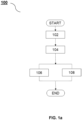
FIG. 1a shows a flowchart according to an exemplary embodiment. -
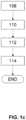
FIG. 1b shows a flowchart according to an exemplary embodiment. -
FIG. 1c shows a flowchart according to an exemplary embodiment. -
FIG. 2 shows a block diagram according to an exemplary embodiment. -
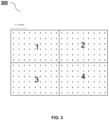
FIG. 3 shows an exemplary display with sub-pixels. -
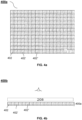
FIG. 4a and 4b shows an exemplary illumination module. - In various embodiments described by reference to the above figures, like reference signs refer to like components in several perspective views and/or configurations.
- The following detailed description is merely exemplary in nature and is not intended to limit the disclosure or the application and uses of the disclosure. Furthermore, there is no intention to be bound by any theory presented in the preceding background of the disclosure or the following detailed description. It is the intent of this disclosure to present a method of controlling a colour intensity of a sub-pixel of a display pixel of a vehicle display apparatus by using a colour controller to calibrate or compensate a colour intensity to achieve a white point colour.
- Hereinafter, the term "local dimming" refers to dimming of a part or parts of a display screen and keeping part or parts of the display screen lit, such that the lit part or parts of the screen appears to be bright when view and the part or parts that are dimmed appears dark, to improve contrast ratio of display screen. "Local dimming" may be achieved by array of light sources, such as an array of individual light emitting diodes (LED) displaced adjacent to a display panel, such that all light sources point towards the display panel, to illuminate the display panel. In the context herein, "a multiple light source module" refers to an array of individual LED.
- The term "first", "second", "third" and the like used in the context of this disclosure may refer to modification of different elements in accordance with various exemplary embodiments, but not limited thereto. The expressions may be used to distinguish one element from another element, regardless of sequence of importance. By way of an example, "a first sub-pixel" and "a second sub-pixel" may indicate different sub-pixels regardless of order or importance. On a similar note, a first sub-pixel may be referred to as the second sub-pixel and vice versa without departing from the scope of this disclosure.
- The term "pixel" or "display pixel" refers to a smallest element or unit of a digital display. Each "display pixel" contains "sub-pixels" which may also be referred to as "coloured pixels" or "coloured pixel components", representing a primary single colour factor, typically showing red, green, blue, plus yellow, white or cyan, that a displayed on a display screen or viewed by a viewer when an image or content is showing on the display screen, and each "display pixel" contains at least three "sub-pixels", each "sub-pixel" emits the primary single colour factor. Henceforth in the context used herein, "a first colour intensity", "a second colour intensity" and "a third colour intensity" may be inter-switchably used to refer to sub-pixels representing RBG.
- The term "colour intensity" refers to a brightness or dullness of a "display pixel" or "sub-pixel". In the context of RGB colour model which emits the primary single colour factor, red, blue, green, the "colour intensity" is controllable by emitting light rays. The term "colour channel" refers to a layer of colour information that represents an amount of light required to create a specific colour and a "colour channel" can be viewed in grayscale to show the intensity of the colour. Both "colour intensity" and "colour channel" creates contrast ratio. The term "contrast ratio" refers to a measurement to determine a difference between a maximum and minimum degree of brightness. It refers to a difference between whitest possible white and darkest possible black.
- For clarity and brevity,
FIG. 3 of the accompanying drawings shows an example of adisplay panel 300 with display pixels containing at least three sub-pixels represented by RGB. Each displaying zone, '1', '2', '3' and '4' may be controlled by an illumination module or a multiple light source module as shown inFIG. 4a , of which multiple light sources represented by 402, 402' and 402" are assembled in an array format. As shown inFIG. 4B , each of thelight sources display panel 208, to illuminate thedisplay panel 208. - Referring to
FIG. 1a of the accompanying drawings which shows a flowchart illustrating a method (100) of compensating a colour intensity of an illumination unit of a vehicle display apparatus as disclosed herein. - At
step 102, a colour controller as disclose herein receives an input colour signal for each display pixel of a display panel of a vehicle display apparatus. A purpose ofstep 102 is to track input colour signal received for each display pixel. The input colour signal comprises a first colour intensity, a second colour intensity and a third colour intensity, each colour intensity representative of sub-pixels, i.e. red, blue, green (RGB) of a display pixel. - At
step 104, a multiple light source module illuminates light rays through each of the light source through to the display panel. The purpose of an illumination module, also known as backlight, is to supply light rays to the display such that images or content can be viewed from a displaying side of the display apparatus, thereby achieving local dimming effect. - At
step 106, the colour controller executes a colour compensation command for individually calibrating a colour channel of at least one of the multiple light sources for illuminating light rays through at list a sub-pixel of a display pixel of the display panel. In an exemplary embodiment, calibrating a colour channel may be an adjustment of grayscale to achieve compensation of white colour in the multiple light source module. - At
step 108, the colour controller executes a colour reproduction command for individually calibrating an input colour signal for changing a colour intensity of at least a sub-pixel of a display pixel of the display panel. - Thus, it can be seen from the above exemplary embodiment, a main advantage of the method disclosed herein is to control a colour intensity of a sub-pixel of a display pixel of a display panel by using a colour controller operable to (a) individually calibrate a colour channel through adjustment of a colour channel of at least one LED of the backlight to achieve white point colour or white point compensation, i.e. at
step 106 as explained above. The colour controller operable to is further operable to (b) individually calibrate an input colour signal to change a colour intensity of at least a sub-pixel of a display pixel to tune each pixel's colour to represent the actual image colour, i.e. atstep 108. -
FIG. 1b shows a flowchart illustrating a process of a colour reproduction command or algorithm. - In response to the colour controller executes a colour reproduction command for individually calibrating an input colour signal for changing a colour intensity of at least a sub-pixel of a display pixel of the display panel at
step 108, the colour controller executes atstep 110, for determining the input colour signal for coordinating the colour intensity of at least a first colour intensity, a second colour intensity and/or a third colour intensity of at least one of the sub-pixels of a display pixel, of which a display pixel comprises at least a first sub-pixel, a second sub-pixel and a third sub-pixel of a display pixel. - In a
next step 112, the colour controller executes an optical inspection process for inspecting a colour intensity reproduced on at least a sub-pixel of a display pixel of the display panel. - At
step 114, the colour controller reprograms a colour channel for display pixel processing in response to a result of the optical process fromstep 112. - A main advantage of the colour reproduction command or colour reproduction algorithm is achieve producing light spectra at a desired colour, to address the issues caused by variation due to LED bin, display panel variation and birefringence.
-
FIG. 1c shows a flowchart illustrating a process of a colour compensation command or algorithm. - In a next step after
step 106 as explained above, the colour value of the colour channel may include in step 116, comparing a position of each of the light sources displaced in the multiple light source illumination module, against a light source position map stored and retrieve from the colour controller. The light source position map represents a position of each light source in the multiple light source module, which is preferably mapped according to a colour bin of the light sources. The light source position may be based on the coordinates of each processed pixel, thus the colour controller is able to determine which of the colour bins each light source corresponds to a current display pixel assembled in the vehicle display apparatus. Advantageously, this enables the colour controller to determine a colour channel weight for the processed pixel. - For clarity and brevity, the following article explains concept of LED binning or colour bin, and it shall be understood by a skilled practitioner, how a clour bin is applied in illumination technology:
- "A Look at the Past and Future of LED Binning - Lumenpulse" - www.lumenpulse.com/knowledge/led-binning
- Referring to
FIG. 2 which shows a block diagram of avehicle display apparatus 200 according to an exemplary embodiment. - The
vehicle display apparatus 200 includes adisplay panel 208 having comprising a plurality of display pixels, each display pixel (n) is operable to independently emit at least a first colour intensity; a second colour intensity and a third colour intensity, each colour intensity operable to emit at a different value of intensity, and a multiple light source module (210), each light source is operable to illuminate light rays through the display panel. - The
vehicle display apparatus 200 includes acolour controller 202, which is operable to receive an input colour signal for each display pixel (n) of thedisplay panel 208. In response to in response to the input colour signal received, the colour controller (202) is further operable to execute a set of instructions in relation to a colour compensation algorithm (106) as explained instep 106 above, and/or a colour reproduction algorithm (108) as explained instep 108 above. - A main advantage of the apparatus disclosed herein is to use a colour controller operable to control a colour intensity of a sub-pixel of a display pixel of a display panel by using a colour controller operable to execute (a) a colour compensation algorithm to individually calibrate a colour channel through adjustment of a colour channel of at least one LED of the backlight to achieve white point colour or white point compensation, i.e. at
step 106 as explained above. The colour controller operable to is further operable to execute a colour reproduction algorithm to (b) individually calibrate an input colour signal to change a colour intensity of at least a sub-pixel of a display pixel to tune each pixel's colour to represent the actual image colour, i.e. atstep 108. - For clarity and brevity, the
vehicle display apparatus 200 may further include adisplay control unit 204 for controlling thedisplay panel 208, in particular for driving the display. Optionally, the display may further include ascanner 206, alight source driver 212 for driving the multiplelight source module 210 and a processor or processing unit for controlling local diming of the multiplelight source module 210 but not limited thereto, to configure avehicle display apparatus 200. It shall be apparent to a skilled practitioner other technical feature may be necessary to configure avehicle display apparatus 200. - Turning back to the concept of this disclosure, in response to the input colour signal received, the
colour controller 202 is operable to execute the colour compensation algorithm to individually calibrate a colour channel of at least one of the light sources to illuminate light rays through at last a sub-pixel of a display pixel (n) of thedisplay panel 208. - In response to the input colour signal received, the
colour controller 202 is operable to execute the colour reproduction algorithm to individually calibrate a colour signal to change a colour intensity of at least a sub-pixel of a display pixel of thedisplay panel 208. - As explained above, the white point compensation is achieved by calibrating individually the colour channels of a selected sub-pixel, for example red, blue or green.
- In an exemplary embodiment, if the white point given by a video in data illuminating an existing current pixel is shifted towards a blue colour according to light source white point bin the
colour controller 202 generates a weight for the blue channel of a current pixel a weight for the blue channel that is slightly lower than one while the weights for the green and red channels are kept constant at one. - A combination between the slightly bluer backlight and the pixel with a reduced amplitude on the blue channel generates a white point value which is close to the target value, i.e. a desired value of colour intensity. The same concept applies to colour reproduction, for example in case of dark blue colour is needed on the screen AA, RGB signal of (0,0,139) will entered colour compensation block. If certain area of the display panel materials for example the foils has been contaminated that caused some of the active area to produce navy blue (0,0,128), the colour compensation block may be able to calibrate the RGB signal to this active area pixels for example (0,0,205) to change back the colour to the dark blue. This determination may be done using a statistical approach - that is, based on the typical colour coordinates produce by the product due to limitation on manufacturing capability.
- In various embodiments, the
colour controller 202 is an independent processing unit with a memory. The term "processing unit" used herein may broadly encompass a general-purpose processor, a central processing unit (CPU), a microprocessor, a digital signal processor (DSP), a controller, a microcontroller, a state machine, and so forth. Under some circumstances, a "processing unit" may refer to an application specific integrated circuit (ASIC), a programmable logic device (PLD), a field programmable gate array (FPGA), etc. The term "processing unit" may refer to a combination of processing devices, e.g., a combination of a DSP and a microprocessor, a plurality of microprocessors, one or more microprocessors in conjunction with a DSP core, or any other such configuration. The "processing unit" may include a memory, for loading a sequence of instruction, causing the "processing unit" to perform steps of actions. The term "memory" should be interpreted broadly to encompass any electronic component capable of storing electronic information. The term "memory" may refer to various types of processor-readable media such as random access memory (RAM), read-only memory (ROM), non-volatile random access memory (NVRAM), programmable read-only memory (PROM), erasable programmable read only memory (EPROM), electrically erasable PROM (EEPROM), flash memory, magnetic or optical data storage, registers, etc. "Memory" is said to be in electronic communication with a processor if the processor can read information from and/or write information to the memory. Memory that is integral to a processor is in electronic communication with the processor. Henceforth, the term "processing unit" may also be taken to sed herein may broadly encompass a general-purpose processor, a central processing unit (CPU), a microprocessor, a digital signal processor (DSP), a controller, a microcontroller, a state machine, and so forth. Under some circumstances, a "processor" may refer to an application specific integrated circuit (ASIC), a programmable logic device (PLD), a field programmable gate array (FPGA), etc. The term "processor" may refer to a combination of processing devices, for example, a single hardware component or two or more hardware components may be implemented by a single processor, or two or more processors, or a processor and a controller. One or more hardware components may be implemented by one or more processors, or a processor and a controller, and one or more other hardware components may be implemented by one or more other processors, or another processor and another controller. One or more processors, or a processor and a controller, may implement a single hardware component, or two or more hardware components. A hardware component may have any one or more of different processing configurations, examples of which include a single processor, independent processors, parallel processors, single-instruction single-data (SISD) multiprocessing, single-instruction multiple-data (SIMD) multiprocessing, multiple-instruction single-data (MISD) multiprocessing, and multiple-instruction multiple-data (MIMD) multiprocessing. The "processor" may include a memory, for loading a sequence of instruction, causing the "processor" to perform steps of actions. The term "memory" should be interpreted broadly to encompass any electronic component capable of storing electronic information. The term "memory" may refer to various types of processor-readable media such as random access memory (RAM), read-only memory (ROM), non-volatile random access memory (NVRAM), programmable read-only memory (PROM), erasable programmable read only memory (EPROM), electrically erasable PROM (EEPROM), flash memory, magnetic or optical data storage, registers, etc. "Memory" is said to be in electronic communication with a processor if the processor can read information from and/or write information to the memory. Memory that is integral to a processor is in electronic communication with the processor. Henceforth, the term "processor" may also be taken to encompass "system on chip" (SoC) which uses a single integrated circuit (IC) chip that contains multiple resources, computational units, processors and/or cores integrated on a single substrate. A single SOC may contain circuitry for digital, analog, mixed-signal, and radio-frequency functions, as well as any number of general purpose and/or specialized processors (digital signal processors, modem processors, video processors, etc.), memory blocks (e.g., ROM, RAM, Flash, etc.). Unless otherwise specifically stated, the "processor" is not limited to any specific combination of hardware circuitry and software, nor to any particular source for the instructions executed by the processing unit. For simplicity, the singular term "processor" or "computer" may be used in the description of the examples described in this disclosure, but in other examples multiple processors or computers may be used, or a processor or computer may include multiple processing elements, or multiple types of processing elements, or both. - In another embodiment, the
colour controller 202 may be embedded to a control unit of the multiplelight source module 210 or a time controller integrated circuit IC. In another embodiment, thecolour controller 202 is embedded in a single SoC. - The foregoing description shall be interpreted as illustrative and not be limited thereto. One of ordinary skill in the art would understand that certain modifications may come within the scope of this disclosure. Although the different non-limiting embodiments are illustrated as having specific components or steps, the embodiments of this disclosure are not limited to those combinations. Some of the components or features from any of the non-limiting embodiments may be used in combination with features or components from any of the other non-limiting embodiments. For these reasons, the appended claims should be studied to determine the true scope and content of this disclosure.
-
100 Method flowchart 102 Receiving input colour signal for each display pixel 104 Illuminating light rays 106 Execute colour compensation command 108 Execute colour reproduction command 110 Determining input colour signal for coordinating colour intensity 112 Execute optical inspection process 114 Reprogramming a colour channel weight 116 Determining colour value for calibrating colour channel 200 Vehicle display apparatus block diagram 202 Colour controller 204 Display control unit 206 Scanner 208 Display panel 210 Multiple light source illumination module 212 LED driver 214 Local dimming processor 300 Display panel showing display pixels 400 Multiple light source module 402,402", 402" Light source
in response to the input colour signal received, the colour controller is further operable for executing a set of instructions stored thereon comprising:
the vehicle display apparatus further comprises
a colour controller operable
Claims (14)
- A method (100) of compensating a colour intensity of an illumination unit of a vehicle display apparatus, the method comprising:receiving (102), by way of a colour controller, an input colour signal for each display pixel of a display panel of a vehicle display apparatus;
andilluminating (104), by way of a multiple light source module, light rays through the display panel,characterised by that
in response to the input colour signal received, the colour controller is further operable for executing a set of instructions stored thereon comprising:• a colour compensation command (106) for individually calibrating a colour channel of at least one of the multiple light sources for illuminating light rays through at least a sub-pixel of a sub-pixel of a display pixel of the display panel;• a colour reproduction command (108) for individually calibrating an input colour signal for changing a colour intensity of at least a sub-pixel of a sub-pixel of a display pixel of the display panel,or combination thereof. - The method (100) according to claim 1, characterised by that the colour reproduction command (108) further comprises:
determining, by way of the colour controller, the input colour signal for coordinating the colour intensity of at least• a first colour intensity;• a second colour intensity; and/or• a third colour intensityof at least a sub-pixel of a display pixel of the display panel. - The method (100) according to claim 1 - 2, characterised by that:
in response to executing the colour reproduction command (108),
executing (112), by way of the colour controller, an optical inspection process for inspecting a colour intensity reproduced on at least a sub-pixel of a display pixel of the display panel. - The method (100) according to claims 1 - 3, characterised by that the colour reproduction command (108) further comprises:
reprogramming (114), by way of the colour controller, a colour channel weight for display pixel processing. - The method (100) according to claim 1, characterised by that the colour compensation command (106) further comprises:
determining (116) a colour value for calibrating a colour channel of at least one of the multiple light sources for illuminating light rays through at least a sub-pixel of a display pixel of the display panel. - The method (100) according to claim 5, characterised in that determining (116) the colour value of the colour channel further comprises:
comparing, by way of the colour controller,• a position of each of the light sources displaced in the multiple light source illumination module, and• a light source position map stored thereon, the light source position map representing a position of each light source of the multiple light source module, according to a colour bin of the light sources. - The method (100) according to claim 5, characterised by that the colour value of the colour channel of a sub-pixel of a sub-pixel of a display pixel is selected from a colour bin of the light sources.
- A vehicle display apparatus (200) comprising:a display panel (208) comprising a plurality of display pixels, each display pixel is operable to independently emit at least a first colour intensity; a second colour intensity and a third colour intensity, each colour intensity operable to emit at a different value of intensity; anda multiple light source module (210), each light source is operable to illuminate light rays through the display panel;characterized in that
the vehicle display apparatus (200) further comprises
a colour controller (202) operable• to receive an input colour signal for each display pixel of the display panel (208);in response to the input colour signal received, the colour controller (202) is further operable to execute a set of instructions stored thereon comprising:
and∘ a colour compensation algorithm (106);∘ a colour reproduction algorithm (108);or combination thereof. - The vehicle display apparatus (200) according to claim 8, characterised in that:
in response to the input colour signal received,
the colour controller (202) is operable to execute the colour compensation algorithm to individually calibrate a colour channel of at least one of the light sources to illuminate light rays through at last a sub-pixel of a display pixel (n) of the display panel (208). - The vehicle display apparatus (200) according to claim 8, characterised in that:
in response to the input colour signal received,
the colour controller (202) is operable to execute the colour reproduction algorithm to individually calibrate a colour signal to change a colour intensity of at least a sub-pixel of a display pixel of the display panel (208). - The vehicle display apparatus (200) according to claims 8-10, characterised in that:
the colour controller (202) is embedded in a processing unit (204') selected from a group consisting of:• a system on chip (SoC);• a general processing unit (GPU);• a multiple light source control unit; or• a timing controller integrated circuit. - The vehicle display apparatus (200) according to claims 9-11, characterised in that:
the display panel (208) is an active matrix display panel. - A computer program product comprising instructions to cause the apparatus (200) of claims 8 - 12 to execute the steps (100) of claim 1 - 7.
- A computer-readable medium having stored thereon the computer program of claims 1 - 7.
Applications Claiming Priority (1)
| Application Number | Priority Date | Filing Date | Title |
|---|---|---|---|
| GB2313884.5A GB2633560A (en) | 2023-09-12 | 2023-09-12 | A method of compensating a colour intensity of an illumination unit of a vehicle display apparatus |
Publications (1)
| Publication Number | Publication Date |
|---|---|
| EP4524948A1 true EP4524948A1 (en) | 2025-03-19 |
Family
ID=88412796
Family Applications (1)
| Application Number | Title | Priority Date | Filing Date |
|---|---|---|---|
| EP24199949.9A Pending EP4524948A1 (en) | 2023-09-12 | 2024-09-12 | A method of compensating a colour intensity of an illumination unit of a vehicle display apparatus |
Country Status (2)
| Country | Link |
|---|---|
| EP (1) | EP4524948A1 (en) |
| GB (1) | GB2633560A (en) |
Citations (3)
| Publication number | Priority date | Publication date | Assignee | Title |
|---|---|---|---|---|
| US20100007599A1 (en) * | 2008-07-10 | 2010-01-14 | Louis Joseph Kerofsky | Methods and Systems for Color Preservation with a Color-Modulated Backlight |
| US20220415271A1 (en) * | 2021-06-25 | 2022-12-29 | Apple Inc. | Displays with Reduced Color Non-Uniformity |
| US20230120576A1 (en) * | 2021-10-14 | 2023-04-20 | Dell Products L.P. | Systems and methods for increasing backlight uniformity for backlit display panels |
Family Cites Families (5)
| Publication number | Priority date | Publication date | Assignee | Title |
|---|---|---|---|---|
| JP4594510B2 (en) * | 2000-11-02 | 2010-12-08 | 三菱電機株式会社 | Transmission type image display device and driving method of transmission type image display device |
| CN101622657B (en) * | 2007-06-11 | 2012-05-09 | 夏普株式会社 | Liquid crystal display |
| JP2016133640A (en) * | 2015-01-20 | 2016-07-25 | キヤノン株式会社 | Display device and method of controlling the same |
| JP2018092082A (en) * | 2016-12-07 | 2018-06-14 | キヤノン株式会社 | Information processing apparatus, display apparatus, and information processing method |
| US11776492B1 (en) * | 2022-09-22 | 2023-10-03 | Apple Inc. | Dynamic backlight color shift compensation systems and methods |
-
2023
- 2023-09-12 GB GB2313884.5A patent/GB2633560A/en active Pending
-
2024
- 2024-09-12 EP EP24199949.9A patent/EP4524948A1/en active Pending
Patent Citations (3)
| Publication number | Priority date | Publication date | Assignee | Title |
|---|---|---|---|---|
| US20100007599A1 (en) * | 2008-07-10 | 2010-01-14 | Louis Joseph Kerofsky | Methods and Systems for Color Preservation with a Color-Modulated Backlight |
| US20220415271A1 (en) * | 2021-06-25 | 2022-12-29 | Apple Inc. | Displays with Reduced Color Non-Uniformity |
| US20230120576A1 (en) * | 2021-10-14 | 2023-04-20 | Dell Products L.P. | Systems and methods for increasing backlight uniformity for backlit display panels |
Also Published As
| Publication number | Publication date |
|---|---|
| GB2633560A (en) | 2025-03-19 |
| GB202313884D0 (en) | 2023-10-25 |
Similar Documents
| Publication | Publication Date | Title |
|---|---|---|
| US8830158B2 (en) | Method of local dimming a light source, light source apparatus for performing the method, and display apparatus having the light source apparatus | |
| TWI479469B (en) | Backlight unit and method | |
| EP2148318B1 (en) | Method of boosting a display image, controller unit for performing the method, and display apparatus having the controller unit | |
| EP1158483A2 (en) | Solid-state display with reference pixel | |
| US8766893B2 (en) | Method for compensating for poor uniformity of liquid crystal display having non-uniform backlight and display that exhibits non-uniformity compensating function | |
| US20080238860A1 (en) | Liquid crystal display apparatus | |
| US20090262066A1 (en) | Display device | |
| US9335214B2 (en) | Apparatus and methods for selecting light emitters | |
| US10475366B2 (en) | Display device and method for driving display device | |
| US20060164407A1 (en) | Method and apparatus for defect correction in a display | |
| US20100002027A1 (en) | Display device and method | |
| US10762858B2 (en) | Display device and driving method of display device | |
| US20090243982A1 (en) | Backlight unit assembly, liquid crystal display having the same, and dimming method thereof | |
| CN101673518A (en) | Liquid crystal display device and driving method thereof | |
| KR20110013925A (en) | LCD and its driving method | |
| US9570022B2 (en) | Liquid crystal display device | |
| US20070257866A1 (en) | Method and apparatus for defect correction in a display | |
| JP5965103B2 (en) | Apparatus and method for selecting a light emitter for a transmissive display | |
| US12142233B1 (en) | Color compensation for panel display device using light source array for backlighting | |
| CN102385838B (en) | Image display apparatus and information processing apparatus | |
| CN110930955A (en) | Display and brightness adjusting method thereof | |
| GB2633560A (en) | A method of compensating a colour intensity of an illumination unit of a vehicle display apparatus | |
| US20150123956A1 (en) | Image display apparatus, control method of image display apparatus, light source apparatus, and control method of light source apparatus | |
| US20230120576A1 (en) | Systems and methods for increasing backlight uniformity for backlit display panels | |
| US20090189840A1 (en) | Display apparatus and method for driving the same |
Legal Events
| Date | Code | Title | Description |
|---|---|---|---|
| PUAI | Public reference made under article 153(3) epc to a published international application that has entered the european phase |
Free format text: ORIGINAL CODE: 0009012 |
|
| STAA | Information on the status of an ep patent application or granted ep patent |
Free format text: STATUS: THE APPLICATION HAS BEEN PUBLISHED |
|
| AK | Designated contracting states |
Kind code of ref document: A1 Designated state(s): AL AT BE BG CH CY CZ DE DK EE ES FI FR GB GR HR HU IE IS IT LI LT LU LV MC ME MK MT NL NO PL PT RO RS SE SI SK SM TR |
|
| STAA | Information on the status of an ep patent application or granted ep patent |
Free format text: STATUS: REQUEST FOR EXAMINATION WAS MADE |
|
| 17P | Request for examination filed |
Effective date: 20250919 |
|
| RAP3 | Party data changed (applicant data changed or rights of an application transferred) |
Owner name: AUMOVIO GERMANY GMBH |