EP4524920A1 - Building access using a mobile device - Google Patents
Building access using a mobile device Download PDFInfo
- Publication number
- EP4524920A1 EP4524920A1 EP24195890.9A EP24195890A EP4524920A1 EP 4524920 A1 EP4524920 A1 EP 4524920A1 EP 24195890 A EP24195890 A EP 24195890A EP 4524920 A1 EP4524920 A1 EP 4524920A1
- Authority
- EP
- European Patent Office
- Prior art keywords
- user
- mobile device
- door
- current location
- imei
- Prior art date
- Legal status (The legal status is an assumption and is not a legal conclusion. Google has not performed a legal analysis and makes no representation as to the accuracy of the status listed.)
- Pending
Links
Images


Classifications
-
- G—PHYSICS
- G07—CHECKING-DEVICES
- G07C—TIME OR ATTENDANCE REGISTERS; REGISTERING OR INDICATING THE WORKING OF MACHINES; GENERATING RANDOM NUMBERS; VOTING OR LOTTERY APPARATUS; ARRANGEMENTS, SYSTEMS OR APPARATUS FOR CHECKING NOT PROVIDED FOR ELSEWHERE
- G07C9/00—Individual registration on entry or exit
- G07C9/20—Individual registration on entry or exit involving the use of a pass
- G07C9/28—Individual registration on entry or exit involving the use of a pass the pass enabling tracking or indicating presence
-
- G—PHYSICS
- G07—CHECKING-DEVICES
- G07C—TIME OR ATTENDANCE REGISTERS; REGISTERING OR INDICATING THE WORKING OF MACHINES; GENERATING RANDOM NUMBERS; VOTING OR LOTTERY APPARATUS; ARRANGEMENTS, SYSTEMS OR APPARATUS FOR CHECKING NOT PROVIDED FOR ELSEWHERE
- G07C9/00—Individual registration on entry or exit
- G07C9/00174—Electronically operated locks; Circuits therefor; Nonmechanical keys therefor, e.g. passive or active electrical keys or other data carriers without mechanical keys
-
- G—PHYSICS
- G07—CHECKING-DEVICES
- G07C—TIME OR ATTENDANCE REGISTERS; REGISTERING OR INDICATING THE WORKING OF MACHINES; GENERATING RANDOM NUMBERS; VOTING OR LOTTERY APPARATUS; ARRANGEMENTS, SYSTEMS OR APPARATUS FOR CHECKING NOT PROVIDED FOR ELSEWHERE
- G07C9/00—Individual registration on entry or exit
- G07C9/00174—Electronically operated locks; Circuits therefor; Nonmechanical keys therefor, e.g. passive or active electrical keys or other data carriers without mechanical keys
- G07C9/00309—Electronically operated locks; Circuits therefor; Nonmechanical keys therefor, e.g. passive or active electrical keys or other data carriers without mechanical keys operated with bidirectional data transmission between data carrier and locks
-
- H—ELECTRICITY
- H04—ELECTRIC COMMUNICATION TECHNIQUE
- H04W—WIRELESS COMMUNICATION NETWORKS
- H04W4/00—Services specially adapted for wireless communication networks; Facilities therefor
- H04W4/02—Services making use of location information
- H04W4/023—Services making use of location information using mutual or relative location information between multiple location based services [LBS] targets or of distance thresholds
-
- H—ELECTRICITY
- H04—ELECTRIC COMMUNICATION TECHNIQUE
- H04W—WIRELESS COMMUNICATION NETWORKS
- H04W8/00—Network data management
- H04W8/18—Processing of user or subscriber data, e.g. subscribed services, user preferences or user profiles; Transfer of user or subscriber data
- H04W8/20—Transfer of user or subscriber data
- H04W8/205—Transfer to or from user equipment or user record carrier
-
- H—ELECTRICITY
- H04—ELECTRIC COMMUNICATION TECHNIQUE
- H04W—WIRELESS COMMUNICATION NETWORKS
- H04W8/00—Network data management
- H04W8/26—Network addressing or numbering for mobility support
-
- G—PHYSICS
- G07—CHECKING-DEVICES
- G07C—TIME OR ATTENDANCE REGISTERS; REGISTERING OR INDICATING THE WORKING OF MACHINES; GENERATING RANDOM NUMBERS; VOTING OR LOTTERY APPARATUS; ARRANGEMENTS, SYSTEMS OR APPARATUS FOR CHECKING NOT PROVIDED FOR ELSEWHERE
- G07C9/00—Individual registration on entry or exit
- G07C9/00174—Electronically operated locks; Circuits therefor; Nonmechanical keys therefor, e.g. passive or active electrical keys or other data carriers without mechanical keys
- G07C2009/00753—Electronically operated locks; Circuits therefor; Nonmechanical keys therefor, e.g. passive or active electrical keys or other data carriers without mechanical keys operated by active electrical keys
- G07C2009/00769—Electronically operated locks; Circuits therefor; Nonmechanical keys therefor, e.g. passive or active electrical keys or other data carriers without mechanical keys operated by active electrical keys with data transmission performed by wireless means
-
- G—PHYSICS
- G07—CHECKING-DEVICES
- G07C—TIME OR ATTENDANCE REGISTERS; REGISTERING OR INDICATING THE WORKING OF MACHINES; GENERATING RANDOM NUMBERS; VOTING OR LOTTERY APPARATUS; ARRANGEMENTS, SYSTEMS OR APPARATUS FOR CHECKING NOT PROVIDED FOR ELSEWHERE
- G07C2209/00—Indexing scheme relating to groups G07C9/00 - G07C9/38
- G07C2209/60—Indexing scheme relating to groups G07C9/00174 - G07C9/00944
- G07C2209/63—Comprising locating means for detecting the position of the data carrier, i.e. within the vehicle or within a certain distance from the vehicle
-
- G—PHYSICS
- G07—CHECKING-DEVICES
- G07C—TIME OR ATTENDANCE REGISTERS; REGISTERING OR INDICATING THE WORKING OF MACHINES; GENERATING RANDOM NUMBERS; VOTING OR LOTTERY APPARATUS; ARRANGEMENTS, SYSTEMS OR APPARATUS FOR CHECKING NOT PROVIDED FOR ELSEWHERE
- G07C9/00—Individual registration on entry or exit
- G07C9/20—Individual registration on entry or exit involving the use of a pass
- G07C9/29—Individual registration on entry or exit involving the use of a pass the pass containing active electronic elements, e.g. smartcards
Definitions
- the present disclosure pertains generally to methods of gaining access to a controlled space and more particularly to methods of using mobile devices in gaining access to a controlled space.
- Physical access control systems are designed to provide access to buildings and/or specific areas of a building for individuals who are authorized to access such areas and to deny access to buildings and/or specific areas of the building to individuals who are not authorized to access such areas. For example, certain individuals may be authorized to access a secure area of a building, whereas other individuals may not be allowed to access the secure area. In another example, certain individuals may be authorized to access a first building but not a second building, whereas other individuals may not be allowed to access either building. In some cases, access may be granted only during certain times.
- This disclosure is directed to providing and/or managing access control, and more particularly to methods and systems for using a user's mobile device as an access credential to gain access to one or more authorized areas.
- An example may be found in a method of controlling access through a door of a facility having a door lock that can be electrically locked and unlocked.
- the illustrative method includes establishing a wireless communication between one or more wireless access points and a user's mobile device.
- the user's mobile device determining a current location of the user's mobile device based at least in part on one or more characteristics of one or more signals received by the user's mobile device from one or more of the wireless access points.
- One or more of the wireless access points wirelessly receives from the user's mobile device the current location of the user's mobile device and an International Mobile Equipment Identity (IMEI) based identifier that is unique to the user's mobile device.
- the IMEI based identifier may operate as a user credential.
- a determination is made as to when the current location of the user's mobile device is within a predetermined proximity to the door.
- a determination is made as to when the wirelessly received IMEI based identifier of the user's mobile device is associated with a user that has access rights to access through the door.
- the door is electrically unlocked when the current location of the user's mobile device is within the predetermined proximity to the door and the wirelessly received IMEI based identifier of the user's mobile device is associated with a user that has access rights to access through the door.
- the illustrative access control system includes one or more wireless access points, a user's mobile device, and a door lock for locking and unlocking the door of the facility.
- the user's mobile device is configured to establish wireless communication with one or more of the wireless access points and to determine a current location of the user's mobile device based at least in part on one or more characteristics of one or more signals received by the user's mobile device from one or more of the wireless access points.
- the user's mobile device is configured to wirelessly send the determined current location of the user's mobile device and to wirelessly send an IMEI based identifier that is unique to the user's mobile device.
- One of the wireless access points is configured to wirelessly receive from the user's mobile device the current location of the user's mobile device and the IMEI based identifier that is unique to the user's mobile device.
- An access controller is operatively coupled to the one of the wireless access points and is configured to receive the current location of the user's mobile device and the IMEI based identifier that is unique to the user's mobile device.
- the access controller is configured to determine when the current location of the user's mobile device is within a predetermined proximity to the door, determine when the IMEI based identifier of the user's mobile device is associated with a user that has access rights to access through the door, and unlock the door via the door lock when the current location of the user's mobile device is within the predetermined proximity to the door and the IMEI based identifier of the user's mobile device is associated with a user that has access rights to access through the door.
- the illustrative method includes establishing a wireless communication between one or more wireless 5G millimeter-wave routers and a user's mobile device.
- the user's mobile device determines a current location of the user's mobile device based at least in part on one or more characteristics of one or more signals received by the user's mobile device from one or more of the wireless 5G millimeter-wave routers.
- One or more of the wireless 5G millimeter-wave routers wirelessly receive from the user's mobile device the current location of the user's mobile device and an IMEI based identifier that is unique to the user's mobile device.
- the method includes determining when the current location of the user's mobile device is within a predetermined proximity to the door and determining when the wirelessly received IMEI based identifier of the user's mobile device is associated with a user that has access rights to access through the door.
- the door is electrically unlocked when the current location of the user's mobile device is within the predetermined proximity to the door and the wirelessly received IMEI based identifier of the user's mobile device is associated with a user that has access rights to access through the door.
- a location service of a mobile device may determine a current location of the mobile device.
- the location service may use, for example, global positioning system (GPS) signals, cellular signals, Ultra-Wide-Band (UWB) signals, WiFi signals, Bluetooth signals, and/or other signals, to determine the currently location of the mobile device.
- GPS global positioning system
- UWB Ultra-Wide-Band
- WiFi signals Wireless Fidelity
- Bluetooth signals Wireless Fidelity
- a communication service of the mobile device may be used to communicate with one or more remote devices, and to pass information between the mobile device and one or more remote devices.
- embodiments of the present disclosure allow a user's mobile device to perform the function of an access card, sometimes without requiring the download of a corresponding application from an application store. It is contemplated that embodiments of the present disclosure may be utilized with a variety of access systems. In some cases, embodiments of the present disclosure may be used with or in place of systems with door access card readers (those with and/or without Bluetooth ® capabilities). Alternatively, or additionally, embodiments of the present disclosure may be used with systems that only include an actuatable lock mechanism (e.g., no card readers present).
- the present disclosure is generally directed towards methods and systems for allowing secure access to one or more access points (e.g. door, gate, corridor, etc.) using a mobile device. It is contemplated that the system may allow a user to access two different buildings having two different access control providers using the same mobile device. In some cases, the buildings may belong to the same entity (e.g., company and/or corporation) or the buildings may belong to different entities. Generally, access points may be tagged with a geographic location (e.g., latitude, longitude, and/or altitude) and a door name. These access points may be selectively made available to users via the user's mobile device. Actuation of an unlock button on the mobile device may result in the unlocking of the door.
- a geographic location e.g., latitude, longitude, and/or altitude
- the door may unlock automatically when the mobile device is in proximity to the door, and in some cases the mobile device is moved in a predetermined way adjacent the door (i.e. turns toward the door), without requiring the user to activate an unlock button or the like via the user interface of the mobile device.
- Embodiments of the present disclosure can reduce the need to issue a physical badge for every location or facility that a person (e.g., an employee, a contractor, a repair person, etc.) needs to access.
- a person e.g., an employee, a contractor, a repair person, etc.
- embodiments of the present disclosure can be retrofit to existing access control systems with and/or without smart reader systems without having to add additional hardware. Further, embodiments of the present disclosure may streamline or facilitate access requests for access to facilities and/or locations.
- FIG. 1 is a schematic block diagram showing an illustrative access control system 10 for controlling access through a door 12 of a facility.
- the illustrative access control system 10 includes one or more wireless access points 14 (only one is shown), a user's mobile device 16 and a door lock 18 that is configured to lock and unlock the door 12 of the facility.
- the door lock 18 is configured to be locked and unlocked electronically.
- the one or more wireless access points 14 include a beacon.
- the one or more wireless access points 14 include a wireless 5G millimeter-wave access point (e.g. wireless 5G millimeter-wave router or a 5G cellular tower) or a UWB access point (e.g. wireless UWB router).
- the user's mobile device 16 includes an operating system 16a that is configured to determine a current location 16b of the user's mobile device 16, such as through a location service of the operating system 16a.
- the user's mobile device 16 includes an IMEI-based identifier 16c that is unique to the user's mobile device 16.
- the IMEI-based identifier 16c is actually the IMEI number for that mobile device 16.
- the IMEI-based identifier 16c may be derived from the IMEI number of the mobile device.
- the IMEI number of the user's mobile device may be hashed with a sim card serial number of the user's mobile device to derive the IMEI-based identifier 16c.
- the hashed value may be encrypted to derive the IMEI-based identifier 16c.
- the IMEI-based identifier 16c operates as a user credential for the access control system.
- the operating system 16a of the user's mobile device 16 may be configured to wirelessly send the determined current location 16b of the user's mobile device 16 and the IMEI-based identifier 16c that is unique to the user's mobile device 16 without first being prompted by an application program running on the user's mobile device 16.
- the operating system 16a of the user's mobile device 16 may only transmit the current location of the user's mobile device 16 and the IMEI-based identifier 16c when the user is currently signed in to the mobile device 16, or after the user has unlocked the mobile device 16. Unlocking the user's mobile device 16 may entail entering a pin, or using bio-information such as face recognition or a thumbprint, for example. In some instances, the user may be required to unlock their mobile device 16 each time the user desires entry through a locked door. In some instances, the operating system 16a of the mobile device 16 may transmit the current location of the user's mobile device 16 and the IMEI-based identifier 16c regardless of whether the user's mobile device 16 has been signed into or otherwise unlocked.
- the user's mobile device 16 is configured to establish wireless communication with one or more of the wireless access points 14 and to determine a current location of the user's mobile device based at least in part on one or more characteristics of one or more signals received by the user's mobile device 16 from one or more of the wireless access points 14.
- the one or more signals received by the user's mobile device 16 from one or more of the wireless access points 14 may include, for example, cellular signals, Ultra-Wide-Band (UWB) signals, WiFi signals, Bluetooth signals, and/or other signals, to help in determining the current location of the user's mobile device.
- a location service of the operating system 16a of the user's mobile device 16 may determine the current location of the user's mobile device.
- the user's mobile device 16 is configured to wirelessly send the determined current location 16b of the user's mobile device 16 and to wirelessly send the IMEI-based identifier 16c that is unique to the user's mobile device 16.
- One of the wireless access points 14 is configured to wirelessly receive from the user's mobile device 16 the current location 16b of the user's mobile device 16 and the IMEI-based identifier 16c that is unique to the user's mobile device 16.
- the access control system 10 includes an access controller 20 that is operatively coupled to the one of the wireless access points and is configured to wirelessly receive the current location 16b of the user's mobile device 16 and the IMEI-based identifier 16c that is unique to the user's mobile device 16.
- the access controller 20 is configured to determine when the current location 16b of the user's mobile device 16 is within a predetermined proximity to the door 12 and to determine when the IMEI-based identifier 16c of the user's mobile device 16 is associated with a user that has access rights to access through the door 12.
- the access controller 20 is configured to unlock the door 12 via the door lock 18 when the current location 16b of the user's mobile device 16 is within the predetermined proximity to the door 12 and the IMEI-based identifier of the user's mobile device 16 is associated with a user that has access rights to access through the door 12.
- the access controller 20 may be operatively coupled to the one of the wireless access points 14 that are configured to wirelessly receive the current location 16b of the user's mobile device 16 and the IMEI-based identifier 16c that is unique to the user's mobile device 16 via a network 22 (wired and/or wireless network).
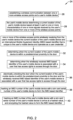
- FIG. 2 is a flow diagram showing an illustrative method 24 of controlling access through an access point (such as door 12) of a facility having a door lock (such as the door lock 18) that can be electrically locked and unlocked.
- the illustrative method 24 includes establishing a wireless communication between one or more wireless access points and a user's mobile device, as indicated at block 26.
- the one or more wireless access points include a 5G millimeter-wave access point, and the wireless communication includes sending and receiving one or more 5G millimeter-wave signals.
- the one or more wireless access points include an Ultra-Wide Band (UWB) access point, and the wireless communication includes sending and receiving one or more UWB signals.
- the one or more of the wireless access points may include at least one wireless 5G millimeter-wave router.
- the one or more of the wireless access points may include at least one wireless 5G cellular tower.
- the user's mobile device determines a current location of the user's mobile device based at least in part on one or more characteristics of one or more signals received by the user's mobile device from one or more of the wireless access points, as indicated at block 28. In some instances, the user's mobile device determines the current location of the user's mobile device based at least in part on one or more characteristics of one or more of the 5G millimeter-wave signals received by the user's mobile device from one or more of the wireless access points. In some instances, the user's mobile device determines the current location of the user's mobile device based at least in part on one or more characteristics of one or more of the UWB signals received by the user's mobile device from one or more of the wireless access points.
- the user's mobile device determines the current location of the user's mobile device based at least in part on one or more characteristics of one or more of the Bluetooth or Wifi signals received by the user's mobile device from one or more of the wireless access points (e.g. beacons).
- the wireless access points e.g. beacons
- One or more of the wireless access points then wirelessly receives from the user's mobile device the current location of the user's mobile device and an IMEI-based identifier that is unique to the user's mobile device, as indicated at block 30.
- the IMEI-based identifier operates as a user credential.
- the user's mobile device includes an operating system that sends the current location of the user's mobile device and the IMEI based identifier to one or more of the wireless access points without first being prompted by an application program running on the user's mobile device (e.g. without requiring the download of a corresponding application to the user's mobile device from an application store).
- the illustrative method 24 includes determining when the current location of the user's mobile device is within a predetermined proximity to the door, as indicated at block 32.
- the method 24 includes determining when the wirelessly received IMEI based identifier of the user's mobile device is associated with a user that has access rights to access through the door, as indicated at block 34.
- the door is electrically unlocked when the current location of the user's mobile device is within the predetermined proximity to the door and the wirelessly received IMEI based identifier of the user's mobile device is associated with a user that has access rights to access through the door, as indicated at block 36.
- electrically unlocking the door may include sending an unlock signal from one of the one or more wireless access points to the door lock.
- electrically unlocking the door may include sending via the router the unlock signal from one of the one or more wireless access points that include a router to the door lock across at least part of the network of the facility.
- one or more of the wireless access points include a router, and wherein one of the wireless access points that include the router may send via the router one or more of the current location of the user's mobile device and the IMEI based identifier of the user's mobile device to an access controller (such as access controller 20).
- the access controller may determine one or more of when the current location of the user's mobile device is within the predetermined proximity to the door and when the wirelessly received IMEI based identifier of the user's mobile device is associated with a user that has access rights to access through the door.
- electrically unlocking the door includes having the access controller send an unlock signal from the access controller to the door lock.
- the method 24 includes hashing an IMEI number of the user's mobile device with a sim card serial number of the user's mobile device to form the IMEI based identifier, as indicated at block 38.
- the method 24 may include hashing the IMEI number of the user's mobile device with a sim card serial number of the user's mobile device to arrive at a hashed value, and then encrypting the hashed value to form the IMEI based identifier, as indicated at block 40. These are just examples.
- FIG 3 is a flow diagram showing an illustrative method 42 of controlling access through an access point (such as the door 12) of a facility having a door lock (such as the door lock 18) that can be electrically locked and unlocked.
- the illustrative method 42 includes establishing a wireless communication between one or more wireless 5G millimeter-wave routers and a user's mobile device, as indicated at block 44.
- the user's mobile device determines a current location of the user's mobile device based at least in part on one or more characteristics of one or more signals received by the user's mobile device from one or more of the wireless 5G millimeter-wave routers, as indicated at block 46.
- One or more of the wireless 5G millimeter-wave routers wirelessly receives from the user's mobile device the current location of the user's mobile device, and an IMEI-based identifier that is unique to the user's mobile device, as indicated at block 48.
- an operating system running on the user's mobile device will send the current location of the user's mobile device and the IMEI-based identifier to one or more of the wireless 5G millimeter-wave routers without first being prompted by an application program running on the user's mobile device.
- a determination is made as to when the current location of the user's mobile device is within a predetermined proximity to the door, as indicated at block 50.
- determining when the current location of the user's mobile device is within a predetermined proximity to the door includes determining when the current location of the user's mobile device remains within the predetermined proximity to the door for at least a threshold period of time. In some instances, determining when the current location of the user's mobile device is within a predetermined proximity to the door includes determining when the current location of the user's mobile device remains within the predetermined proximity to the door for at least a threshold period of time and the user's mobile device is moved in a predetermined way adjacent the door (i.e. turns toward the door and/or makes some other predetermined gesture adjacent the door).
- the door is electrically unlocked when the current location of the user's mobile device is within the predetermined proximity to the door and the wirelessly received IMEI-based identifier of the user's mobile device is associated with a user that has access rights to access through the door, as indicated at block 54.
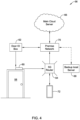
- FIG. 4 is a schematic block diagram showing an illustrative access control system 56.
- the illustrative access control system 56 may be considered as being an example of the access control system 10.
- a door 58 includes a door lock 60.
- the door lock 60 may be configured to communicate via UWB, 5G, WiFi, Bluetooth or any other suitable wireless protocol.
- the illustrative access control system 56 includes a door IO box 62, a wireless 5G millimeter-wave router 64, a main cloud server 66 and a backup local server 68. Each of the door IO box 62, the wireless 5G millimeter-wave router 64, the main cloud server 66 and the backup local server 68 each communicate via a network 70.
- the door IO box 62 provides a wired or wireless connection between the door lock 60 and the network 70.
- a user is holding a mobile device 72.
- the mobile device 72 determines its location, and thus its position relative to the door 58, and communicates its location to the wireless 5G millimeter-wave router 64.
- the information is shared with the main cloud server 66 via the network 70. Assuming the user with the mobile device 72 is close enough to the door 58 (e.g. is in a predetermined proximity to the door 58), and is authorized to gain access through the door 58, the main cloud server 66 will instruct the door lock 60 to unlock the door 58.
- the door lock 60 may be wireless. In this case, the IO box 62 is not included. Instead, the mobile device 72 communicates with the wireless 5G millimeter-wave router 64, which then communicates directly with the door lock 60. In some instances, the wireless 5G millimeter-wave router 64 may itself track the distance between the user's mobile device 72 and the door 58, and may itself decide when to grant access through the door 58. If the door lock 60 is wireless and the wireless 5G millimeter-wave router 64 is down, the mobile device 72 may be able to communicate directly with the door lock 60 and unlock the door 58 when appropriate. In some instances, if the main cloud server 66 fails, the backup local server 68 will be engaged.
- the user's mobile device 72 may communicate directly with the door lock 60, which will share details via the door IO box 62 with the network 70 and thus with the main cloud server 66. These are just examples.
Landscapes
- Engineering & Computer Science (AREA)
- Computer Networks & Wireless Communication (AREA)
- Signal Processing (AREA)
- Physics & Mathematics (AREA)
- General Physics & Mathematics (AREA)
- Databases & Information Systems (AREA)
- Lock And Its Accessories (AREA)
- Telephonic Communication Services (AREA)
Abstract
A mobile device determines a current location based at least in part on one or more characteristics of one or more signals received from a wireless access point. The wireless access point receives from the mobile device the current location of the mobile device and an International Mobile Equipment Identity (IMEI)-based identifier that is unique to the user's mobile device. The door is electrically unlocked when the current location of the user's mobile device is determined to be within a predetermined proximity to the door and the wirelessly received IMEI based identifier of the user's mobile device is associated with a user that has access rights to access through the door.
Description
- The present disclosure pertains generally to methods of gaining access to a controlled space and more particularly to methods of using mobile devices in gaining access to a controlled space.
- Physical access control systems are designed to provide access to buildings and/or specific areas of a building for individuals who are authorized to access such areas and to deny access to buildings and/or specific areas of the building to individuals who are not authorized to access such areas. For example, certain individuals may be authorized to access a secure area of a building, whereas other individuals may not be allowed to access the secure area. In another example, certain individuals may be authorized to access a first building but not a second building, whereas other individuals may not be allowed to access either building. In some cases, access may be granted only during certain times.
- Current approaches to physical access control systems often rely on users (e.g., employees) carrying physical access cards (e.g., physical badge) to gain entry to areas of a building. For example, a user can swipe a physical access card in an access card reader at a security door to gain entry to an area of a building. However, issuing and managing physical access card can be time consuming, cumbersome and error prone. What would be desirable is a system which allows a user's mobile device to act as an access credential for building access systems.
- This disclosure is directed to providing and/or managing access control, and more particularly to methods and systems for using a user's mobile device as an access credential to gain access to one or more authorized areas. An example may be found in a method of controlling access through a door of a facility having a door lock that can be electrically locked and unlocked. The illustrative method includes establishing a wireless communication between one or more wireless access points and a user's mobile device. The user's mobile device determining a current location of the user's mobile device based at least in part on one or more characteristics of one or more signals received by the user's mobile device from one or more of the wireless access points. One or more of the wireless access points wirelessly receives from the user's mobile device the current location of the user's mobile device and an International Mobile Equipment Identity (IMEI) based identifier that is unique to the user's mobile device. The IMEI based identifier may operate as a user credential. A determination is made as to when the current location of the user's mobile device is within a predetermined proximity to the door. A determination is made as to when the wirelessly received IMEI based identifier of the user's mobile device is associated with a user that has access rights to access through the door. The door is electrically unlocked when the current location of the user's mobile device is within the predetermined proximity to the door and the wirelessly received IMEI based identifier of the user's mobile device is associated with a user that has access rights to access through the door.
- Another example may be found in an access control system for controlling access through a door of a facility. The illustrative access control system includes one or more wireless access points, a user's mobile device, and a door lock for locking and unlocking the door of the facility. The user's mobile device is configured to establish wireless communication with one or more of the wireless access points and to determine a current location of the user's mobile device based at least in part on one or more characteristics of one or more signals received by the user's mobile device from one or more of the wireless access points. The user's mobile device is configured to wirelessly send the determined current location of the user's mobile device and to wirelessly send an IMEI based identifier that is unique to the user's mobile device. One of the wireless access points is configured to wirelessly receive from the user's mobile device the current location of the user's mobile device and the IMEI based identifier that is unique to the user's mobile device. An access controller is operatively coupled to the one of the wireless access points and is configured to receive the current location of the user's mobile device and the IMEI based identifier that is unique to the user's mobile device. The access controller is configured to determine when the current location of the user's mobile device is within a predetermined proximity to the door, determine when the IMEI based identifier of the user's mobile device is associated with a user that has access rights to access through the door, and unlock the door via the door lock when the current location of the user's mobile device is within the predetermined proximity to the door and the IMEI based identifier of the user's mobile device is associated with a user that has access rights to access through the door.
- Another example may be found in a method of controlling access through a door of a facility having a door lock that can be electrically locked and unlocked. The illustrative method includes establishing a wireless communication between one or more wireless 5G millimeter-wave routers and a user's mobile device. The user's mobile device determines a current location of the user's mobile device based at least in part on one or more characteristics of one or more signals received by the user's mobile device from one or more of the wireless 5G millimeter-wave routers. One or more of the wireless 5G millimeter-wave routers wirelessly receive from the user's mobile device the current location of the user's mobile device and an IMEI based identifier that is unique to the user's mobile device. The method includes determining when the current location of the user's mobile device is within a predetermined proximity to the door and determining when the wirelessly received IMEI based identifier of the user's mobile device is associated with a user that has access rights to access through the door. The door is electrically unlocked when the current location of the user's mobile device is within the predetermined proximity to the door and the wirelessly received IMEI based identifier of the user's mobile device is associated with a user that has access rights to access through the door.
- The preceding summary is provided to facilitate an understanding of some of the features of the present disclosure and is not intended to be a full description. A full appreciation of the disclosure can be gained by taking the entire specification, claims, drawings, and abstract as a whole.
- The disclosure may be more completely understood in consideration of the following detailed description of various embodiments in connection with the accompanying drawings, in which:
-
Figure 1 is a schematic block diagram showing an illustrative access control system; -
Figure 2 is a flow diagram showing an illustrative method of controlling access through a door of a facility having an electronically controlled door lock; -
Figure 3 is a flow diagram showing an illustrative method of controlling access through a door of a facility having an electronically controlled door lock; and -
Figure 4 is a schematic block diagram showing an illustrative access control system. - While the disclosure is amenable to various modifications and alternative forms, specifics thereof have been shown by way of example in the drawings and will be described in detail. It should be understood, however, that the intention is not to limit aspects of the disclosure to the particular embodiments described. On the contrary, the intention is to cover all modifications, equivalents, and alternatives falling within the spirit and scope of the disclosure.
- For the following defined terms, these definitions shall be applied, unless a different definition is given in the claims or elsewhere in this specification.
- All numeric values are herein assumed to be modified by the term "about", whether or not explicitly indicated. The term "about" generally refers to a range of numbers that one of skill in the art would consider equivalent to the recited value (i.e., having the same function or result). In many instances, the term "about" may be indicative as including numbers that are rounded to the nearest significant figure.
- The recitation of numerical ranges by endpoints includes all numbers within that range (e.g., 1 to 5 includes 1, 1.5, 2, 2.75, 3, 3.80, 4, and 5).
- Although some suitable dimensions ranges and/or values pertaining to various components, features and/or specifications are disclosed, one of skill in the art, incited by the present disclosure, would understand desired dimensions, ranges and/or values may deviate from those expressly disclosed.
- As used in this specification and the appended claims, the singular forms "a", "an", and "the" include plural referents unless the content clearly dictates otherwise. As used in this specification and the appended claims, the term "or" is generally employed in its sense including "and/or" unless the content clearly dictates otherwise.
- The following description should be read with reference to the drawings in which similar elements in different drawings are numbered the same. The drawings show by way of illustration how one or more embodiments of the disclosure may be practiced. The illustrative embodiments depicted are intended only as exemplary. Selected features of any illustrative embodiment may be incorporated into an additional embodiment unless clearly stated to the contrary.
- User interaction with a door access control system can be streamlined using capabilities offered by mobile devices. For example, in some embodiments, a location service of a mobile device may determine a current location of the mobile device. The location service may use, for example, global positioning system (GPS) signals, cellular signals, Ultra-Wide-Band (UWB) signals, WiFi signals, Bluetooth signals, and/or other signals, to determine the currently location of the mobile device. In another example, a communication service of the mobile device may be used to communicate with one or more remote devices, and to pass information between the mobile device and one or more remote devices. Thus, in some cases, rather than physically presenting a card (or other device) to an access card reader to gain access to an area or facility, the user may simply move within a particular distance of a door and be automatically presented with an option to unlock the door. That is, rather than using "card readers", embodiments of the present disclosure allow a user's mobile device to perform the function of an access card, sometimes without requiring the download of a corresponding application from an application store. It is contemplated that embodiments of the present disclosure may be utilized with a variety of access systems. In some cases, embodiments of the present disclosure may be used with or in place of systems with door access card readers (those with and/or without Bluetooth® capabilities). Alternatively, or additionally, embodiments of the present disclosure may be used with systems that only include an actuatable lock mechanism (e.g., no card readers present).
- The present disclosure is generally directed towards methods and systems for allowing secure access to one or more access points (e.g. door, gate, corridor, etc.) using a mobile device. It is contemplated that the system may allow a user to access two different buildings having two different access control providers using the same mobile device. In some cases, the buildings may belong to the same entity (e.g., company and/or corporation) or the buildings may belong to different entities. Generally, access points may be tagged with a geographic location (e.g., latitude, longitude, and/or altitude) and a door name. These access points may be selectively made available to users via the user's mobile device. Actuation of an unlock button on the mobile device may result in the unlocking of the door. In some cases, the door may unlock automatically when the mobile device is in proximity to the door, and in some cases the mobile device is moved in a predetermined way adjacent the door (i.e. turns toward the door), without requiring the user to activate an unlock button or the like via the user interface of the mobile device.
- Embodiments of the present disclosure can reduce the need to issue a physical badge for every location or facility that a person (e.g., an employee, a contractor, a repair person, etc.) needs to access. In some cases, embodiments of the present disclosure can be retrofit to existing access control systems with and/or without smart reader systems without having to add additional hardware. Further, embodiments of the present disclosure may streamline or facilitate access requests for access to facilities and/or locations.
-
Figure 1 is a schematic block diagram showing an illustrativeaccess control system 10 for controlling access through adoor 12 of a facility. The illustrativeaccess control system 10 includes one or more wireless access points 14 (only one is shown), a user'smobile device 16 and adoor lock 18 that is configured to lock and unlock thedoor 12 of the facility. In some instances, thedoor lock 18 is configured to be locked and unlocked electronically. In some instances, the one or morewireless access points 14 include a beacon. In some instances, the one or morewireless access points 14 include awireless 5G millimeter-wave access point (e.g. wireless 5G millimeter-wave router or a 5G cellular tower) or a UWB access point (e.g. wireless UWB router). - The user's
mobile device 16 includes anoperating system 16a that is configured to determine acurrent location 16b of the user'smobile device 16, such as through a location service of theoperating system 16a. The user'smobile device 16 includes an IMEI-basedidentifier 16c that is unique to the user'smobile device 16. In some instances, the IMEI-basedidentifier 16c is actually the IMEI number for thatmobile device 16. In some cases, the IMEI-basedidentifier 16c may be derived from the IMEI number of the mobile device. For example, in some cases, the IMEI number of the user's mobile device may be hashed with a sim card serial number of the user's mobile device to derive the IMEI-basedidentifier 16c. In some cases, the hashed value may be encrypted to derive the IMEI-basedidentifier 16c. These are just examples. In any event, the IMEI-basedidentifier 16c operates as a user credential for the access control system. In some instances, theoperating system 16a of the user'smobile device 16 may be configured to wirelessly send the determinedcurrent location 16b of the user'smobile device 16 and the IMEI-basedidentifier 16c that is unique to the user'smobile device 16 without first being prompted by an application program running on the user'smobile device 16. - In some instances, the
operating system 16a of the user'smobile device 16 may only transmit the current location of the user'smobile device 16 and the IMEI-basedidentifier 16c when the user is currently signed in to themobile device 16, or after the user has unlocked themobile device 16. Unlocking the user'smobile device 16 may entail entering a pin, or using bio-information such as face recognition or a thumbprint, for example. In some instances, the user may be required to unlock theirmobile device 16 each time the user desires entry through a locked door. In some instances, theoperating system 16a of themobile device 16 may transmit the current location of the user'smobile device 16 and the IMEI-basedidentifier 16c regardless of whether the user'smobile device 16 has been signed into or otherwise unlocked. - In one, the user's
mobile device 16 is configured to establish wireless communication with one or more of thewireless access points 14 and to determine a current location of the user's mobile device based at least in part on one or more characteristics of one or more signals received by the user'smobile device 16 from one or more of the wireless access points 14. The one or more signals received by the user'smobile device 16 from one or more of thewireless access points 14 may include, for example, cellular signals, Ultra-Wide-Band (UWB) signals, WiFi signals, Bluetooth signals, and/or other signals, to help in determining the current location of the user's mobile device. In some cases, a location service of theoperating system 16a of the user'smobile device 16 may determine the current location of the user's mobile device. - The user's
mobile device 16 is configured to wirelessly send the determinedcurrent location 16b of the user'smobile device 16 and to wirelessly send the IMEI-basedidentifier 16c that is unique to the user'smobile device 16. One of the wireless access points 14 is configured to wirelessly receive from the user'smobile device 16 thecurrent location 16b of the user'smobile device 16 and the IMEI-basedidentifier 16c that is unique to the user'smobile device 16. - In the example shown, the
access control system 10 includes anaccess controller 20 that is operatively coupled to the one of the wireless access points and is configured to wirelessly receive thecurrent location 16b of the user'smobile device 16 and the IMEI-basedidentifier 16c that is unique to the user'smobile device 16. Theaccess controller 20 is configured to determine when thecurrent location 16b of the user'smobile device 16 is within a predetermined proximity to thedoor 12 and to determine when the IMEI-basedidentifier 16c of the user'smobile device 16 is associated with a user that has access rights to access through thedoor 12. Theaccess controller 20 is configured to unlock thedoor 12 via thedoor lock 18 when thecurrent location 16b of the user'smobile device 16 is within the predetermined proximity to thedoor 12 and the IMEI-based identifier of the user'smobile device 16 is associated with a user that has access rights to access through thedoor 12. In some instances, theaccess controller 20 may be operatively coupled to the one of thewireless access points 14 that are configured to wirelessly receive thecurrent location 16b of the user'smobile device 16 and the IMEI-basedidentifier 16c that is unique to the user'smobile device 16 via a network 22 (wired and/or wireless network). -
Figure 2 is a flow diagram showing anillustrative method 24 of controlling access through an access point (such as door 12) of a facility having a door lock (such as the door lock 18) that can be electrically locked and unlocked. Theillustrative method 24 includes establishing a wireless communication between one or more wireless access points and a user's mobile device, as indicated atblock 26. In some instances, the one or more wireless access points include a 5G millimeter-wave access point, and the wireless communication includes sending and receiving one or more 5G millimeter-wave signals. In some instances, the one or more wireless access points include an Ultra-Wide Band (UWB) access point, and the wireless communication includes sending and receiving one or more UWB signals. In some instances, the one or more of the wireless access points may include at least onewireless 5G millimeter-wave router. In some instances, the one or more of the wireless access points may include at least onewireless 5G cellular tower. - The user's mobile device determines a current location of the user's mobile device based at least in part on one or more characteristics of one or more signals received by the user's mobile device from one or more of the wireless access points, as indicated at
block 28. In some instances, the user's mobile device determines the current location of the user's mobile device based at least in part on one or more characteristics of one or more of the 5G millimeter-wave signals received by the user's mobile device from one or more of the wireless access points. In some instances, the user's mobile device determines the current location of the user's mobile device based at least in part on one or more characteristics of one or more of the UWB signals received by the user's mobile device from one or more of the wireless access points. In some instances, the user's mobile device determines the current location of the user's mobile device based at least in part on one or more characteristics of one or more of the Bluetooth or Wifi signals received by the user's mobile device from one or more of the wireless access points (e.g. beacons). - One or more of the wireless access points then wirelessly receives from the user's mobile device the current location of the user's mobile device and an IMEI-based identifier that is unique to the user's mobile device, as indicated at
block 30. The IMEI-based identifier operates as a user credential. In some instances, the user's mobile device includes an operating system that sends the current location of the user's mobile device and the IMEI based identifier to one or more of the wireless access points without first being prompted by an application program running on the user's mobile device (e.g. without requiring the download of a corresponding application to the user's mobile device from an application store). - The
illustrative method 24 includes determining when the current location of the user's mobile device is within a predetermined proximity to the door, as indicated atblock 32. Themethod 24 includes determining when the wirelessly received IMEI based identifier of the user's mobile device is associated with a user that has access rights to access through the door, as indicated atblock 34. The door is electrically unlocked when the current location of the user's mobile device is within the predetermined proximity to the door and the wirelessly received IMEI based identifier of the user's mobile device is associated with a user that has access rights to access through the door, as indicated atblock 36. In some instances, electrically unlocking the door may include sending an unlock signal from one of the one or more wireless access points to the door lock. In some instances, when one or more of the wireless access points includes a router that is in communication with a network of the facility, electrically unlocking the door may include sending via the router the unlock signal from one of the one or more wireless access points that include a router to the door lock across at least part of the network of the facility. - In some instances, one or more of the wireless access points include a router, and wherein one of the wireless access points that include the router may send via the router one or more of the current location of the user's mobile device and the IMEI based identifier of the user's mobile device to an access controller (such as access controller 20). The access controller may determine one or more of when the current location of the user's mobile device is within the predetermined proximity to the door and when the wirelessly received IMEI based identifier of the user's mobile device is associated with a user that has access rights to access through the door. In some instances, electrically unlocking the door includes having the access controller send an unlock signal from the access controller to the door lock.
- In some instances, the
method 24 includes hashing an IMEI number of the user's mobile device with a sim card serial number of the user's mobile device to form the IMEI based identifier, as indicated atblock 38. In some instances, themethod 24 may include hashing the IMEI number of the user's mobile device with a sim card serial number of the user's mobile device to arrive at a hashed value, and then encrypting the hashed value to form the IMEI based identifier, as indicated atblock 40. These are just examples. -
Figure 3 is a flow diagram showing anillustrative method 42 of controlling access through an access point (such as the door 12) of a facility having a door lock (such as the door lock 18) that can be electrically locked and unlocked. Theillustrative method 42 includes establishing a wireless communication between one ormore wireless 5G millimeter-wave routers and a user's mobile device, as indicated atblock 44. The user's mobile device determines a current location of the user's mobile device based at least in part on one or more characteristics of one or more signals received by the user's mobile device from one or more of thewireless 5G millimeter-wave routers, as indicated at block 46. - One or more of the
wireless 5G millimeter-wave routers wirelessly receives from the user's mobile device the current location of the user's mobile device, and an IMEI-based identifier that is unique to the user's mobile device, as indicated atblock 48. In some instances, an operating system running on the user's mobile device will send the current location of the user's mobile device and the IMEI-based identifier to one or more of thewireless 5G millimeter-wave routers without first being prompted by an application program running on the user's mobile device. A determination is made as to when the current location of the user's mobile device is within a predetermined proximity to the door, as indicated atblock 50. In some instances, determining when the current location of the user's mobile device is within a predetermined proximity to the door includes determining when the current location of the user's mobile device remains within the predetermined proximity to the door for at least a threshold period of time. In some instances, determining when the current location of the user's mobile device is within a predetermined proximity to the door includes determining when the current location of the user's mobile device remains within the predetermined proximity to the door for at least a threshold period of time and the user's mobile device is moved in a predetermined way adjacent the door (i.e. turns toward the door and/or makes some other predetermined gesture adjacent the door). - A determination is also made as to when the wirelessly received IMEI based identifier of the user's mobile device is associated with a user that has access rights to access through the door, as indicated at
block 52. The door is electrically unlocked when the current location of the user's mobile device is within the predetermined proximity to the door and the wirelessly received IMEI-based identifier of the user's mobile device is associated with a user that has access rights to access through the door, as indicated atblock 54. -
Figure 4 is a schematic block diagram showing an illustrativeaccess control system 56. The illustrativeaccess control system 56 may be considered as being an example of theaccess control system 10. Adoor 58 includes adoor lock 60. In some instances, thedoor lock 60 may be configured to communicate via UWB, 5G, WiFi, Bluetooth or any other suitable wireless protocol. The illustrativeaccess control system 56 includes adoor IO box 62, awireless 5G millimeter-wave router 64, amain cloud server 66 and a backuplocal server 68. Each of thedoor IO box 62, thewireless 5G millimeter-wave router 64, themain cloud server 66 and the backuplocal server 68 each communicate via anetwork 70. In the example shown, thedoor IO box 62 provides a wired or wireless connection between thedoor lock 60 and thenetwork 70. A user is holding amobile device 72. In some instances, themobile device 72 determines its location, and thus its position relative to thedoor 58, and communicates its location to thewireless 5G millimeter-wave router 64. The information is shared with themain cloud server 66 via thenetwork 70. Assuming the user with themobile device 72 is close enough to the door 58 (e.g. is in a predetermined proximity to the door 58), and is authorized to gain access through thedoor 58, themain cloud server 66 will instruct thedoor lock 60 to unlock thedoor 58. - In some instances, the
door lock 60 may be wireless. In this case, theIO box 62 is not included. Instead, themobile device 72 communicates with thewireless 5G millimeter-wave router 64, which then communicates directly with thedoor lock 60. In some instances, thewireless 5G millimeter-wave router 64 may itself track the distance between the user'smobile device 72 and thedoor 58, and may itself decide when to grant access through thedoor 58. If thedoor lock 60 is wireless and thewireless 5G millimeter-wave router 64 is down, themobile device 72 may be able to communicate directly with thedoor lock 60 and unlock thedoor 58 when appropriate. In some instances, if themain cloud server 66 fails, the backuplocal server 68 will be engaged. In some instances, when thedoor lock 60 is wired, and if thewireless 5G millimeter-wave router 64 fails, the user'smobile device 72 may communicate directly with thedoor lock 60, which will share details via thedoor IO box 62 with thenetwork 70 and thus with themain cloud server 66. These are just examples. - Those skilled in the art will recognize that the present disclosure may be manifested in a variety of forms other than the specific embodiments described and contemplated herein. Accordingly, departure in form and detail may be made without departing from the scope and spirit of the present disclosure as described in the appended claims.
Claims (15)
- A method of controlling access through a door of a facility having a door lock that can be electrically locked and unlocked, the method comprising:establishing a wireless communication between one or more wireless access points and a user's mobile device;the user's mobile device determining a current location of the user's mobile device based at least in part on one or more characteristics of one or more signals received by the user's mobile device from one or more of the wireless access points;one or more of the wireless access points wirelessly receiving from the user's mobile device the current location of the user's mobile device and an International Mobile Equipment Identity (IMEI)-based identifier that is unique to the user's mobile device and operates as a user credential;determining when the current location of the user's mobile device is within a predetermined proximity to the door;determining when the wirelessly received IMEI-based identifier of the user's mobile device is associated with a user that has access rights to access through the door; andelectrically unlocking the door when the current location of the user's mobile device is within the predetermined proximity to the door and the wirelessly received IMEI-based identifier of the user's mobile device is associated with a user that has access rights to access through the door.
- The method of claim 1, wherein the one or more wireless access points include a 5G millimeter-wave access point, and the wireless communication includes sending and receiving one or more 5G millimeter-wave signals.
- The method of claim 2, wherein:
the user's mobile device determining the current location of the user's mobile device based at least in part on one or more characteristics of one or more of the 5G millimeter-wave signals received by the user's mobile device from one or more of the wireless access points. - The method of claim 1, wherein the one or more wireless access points include an Ultra-Wide Band (UWB) access point, and the wireless communication includes sending and receiving one or more UWB signals.
- The method of claim 4, wherein:
the user's mobile device determining the current location of the user's mobile device based at least in part on one or more characteristics of one or more of the UWB signals received by the user's mobile device from one or more of the wireless access points. - The method of claim 1, wherein electrically unlocking the door includes sending an unlock signal from one of the one or more wireless access points to the door lock.
- The method of claim 6, wherein one or more of the wireless access points includes a router that is in communication with a network of the facility, wherein electrically unlocking the door includes sending via the router the unlock signal from one of the one or more wireless access points that include a router to the door lock across at least part of the network of the facility.
- The method of claim 1, wherein one or more of the wireless access points include a router, and wherein one of the wireless access points that include the router sending via the router one or more of the current location of the user's mobile device and the IMEI-based identifier of the user's mobile device to an access controller, the access controller determining one or more of:when the current location of the user's mobile device is within the predetermined proximity to the door;when the wirelessly received IMEI-based identifier of the user's mobile device is associated with a user that has access rights to access through the door; andwherein electrically unlocking the door includes sending an unlock signal from the access controller to the door lock.
- The method of claim 1, further comprising hashing an IMEI number of the user's mobile device with a sim card serial number of the user's mobile device to form the IMEI based identifier.
- The method of claim 1, further comprising hashing an IMEI number of the user's mobile device with a sim card serial number of the user's mobile device to arrive at a hashed value, and encrypting the hashed value to form the IMEI-based identifier.
- The method of claim 1, wherein the user's mobile device includes on Operating System (OS), the OS sending the current location of the user's mobile device and the IMEI-based identifier to one or more of the wireless access points without first being prompted by an application program running on the user's mobile device.
- The method of claim 1, wherein the one or more of the wireless access points comprise at least one wireless 5G millimeter-wave router.
- The method of claim 1, wherein the one or more of the wireless access points comprise at least one wireless 5G cellular tower.
- An access control system for controlling access through a door of a facility, the access control system comprising:one or more wireless access points;a user's mobile device;a door lock for locking and unlocking the door of the facility;the user's mobile device is configured to:establish wireless communication with one or more of the wireless access points;determine a current location of the user's mobile device based at least in part on one or more characteristics of one or more signals received by the user's mobile device from one or more of the wireless access points;wirelessly send the determined current location of the user's mobile device;wirelessly send an International Mobile Equipment Identity (IMEI)-based identifier that is unique to the user's mobile device;one of the wireless access points is configured to:wirelessly receive from the user's mobile device the current location of the user's mobile device and the International Mobile Equipment Identity (IMEI)-based identifier that is unique to the user's mobile device;an access controller operatively coupled to the one of the wireless access points that is configured to wirelessly receive the current location of the user's mobile device and the International Mobile Equipment Identity (IMEI)-based identifier that is unique to the user's mobile device, the access controller configured to:determine when the current location of the user's mobile device is within a predetermined proximity to the door;determine when the IMEI-based identifier of the user's mobile device is associated with a user that has access rights to access through the door; andunlock the door via the door lock when the current location of the user's mobile device is within the predetermined proximity to the door and the IMEI-based identifier of the user's mobile device is associated with a user that has access rights to access through the door.
- The access control system of claim 14, wherein the one or more wireless access points include a 5G millimeter-wave access point or a UWB access point.
Applications Claiming Priority (1)
| Application Number | Priority Date | Filing Date | Title |
|---|---|---|---|
| US18/466,628 US12620281B2 (en) | 2023-09-13 | 2023-09-13 | Building access using a mobile device |
Publications (1)
| Publication Number | Publication Date |
|---|---|
| EP4524920A1 true EP4524920A1 (en) | 2025-03-19 |
Family
ID=92538762
Family Applications (1)
| Application Number | Title | Priority Date | Filing Date |
|---|---|---|---|
| EP24195890.9A Pending EP4524920A1 (en) | 2023-09-13 | 2024-08-22 | Building access using a mobile device |
Country Status (3)
| Country | Link |
|---|---|
| US (1) | US12620281B2 (en) |
| EP (1) | EP4524920A1 (en) |
| CN (1) | CN119672831A (en) |
Citations (4)
| Publication number | Priority date | Publication date | Assignee | Title |
|---|---|---|---|---|
| US20170154483A1 (en) * | 2014-08-21 | 2017-06-01 | Peter Alexander Cordiner | An electronic locking system |
| EP3496054A1 (en) * | 2017-12-08 | 2019-06-12 | Carrier Corporation | Secure seamless access control |
| GB2608692A (en) * | 2019-11-28 | 2023-01-11 | Paxton Access Ltd | Access control system and method |
| WO2023283484A2 (en) * | 2021-07-09 | 2023-01-12 | Schlage Lock Company Llc | Ultra-wideband accessory devices for radio frequency intent detection in access control systems |
Family Cites Families (99)
| Publication number | Priority date | Publication date | Assignee | Title |
|---|---|---|---|---|
| US4672654A (en) | 1984-12-12 | 1987-06-09 | At&T Company | PBX security system for monitoring security guard tours |
| GB8625491D0 (en) | 1986-10-24 | 1986-11-26 | Bespak Plc | Discharge pump assembly |
| DE4409167C1 (en) * | 1994-03-17 | 1995-06-29 | Siemens Ag | Remote-controlled centralised locking system for automobile |
| US5640139A (en) | 1995-09-14 | 1997-06-17 | Egeberg; Gerald W. | Wireless control of electronic door locking devices for trailers |
| US6384709B2 (en) | 1997-05-30 | 2002-05-07 | Intellikey Corporation | Access control system for mobile platform using electronic key-embedded location verification data |
| US6677851B1 (en) * | 1999-09-24 | 2004-01-13 | Siemens Vdo Automotive Corporation | Remote keyless entry system with advanced activation features |
| WO2001041075A1 (en) | 1999-11-30 | 2001-06-07 | Bording Data A/S | An access control system |
| US20030179073A1 (en) | 2002-03-20 | 2003-09-25 | Ohanes Ghazarian | Electronic secure locking system |
| US7098794B2 (en) | 2004-04-30 | 2006-08-29 | Kimberly-Clark Worldwide, Inc. | Deactivating a data tag for user privacy or tamper-evident packaging |
| KR20060011267A (en) | 2004-07-29 | 2006-02-03 | 김주형 | Access control system and method using GPS |
| SE530279C8 (en) | 2005-03-18 | 2008-06-03 | Phoniro Ab | Method of unlocking a lock with a locking device capable of wireless short distance data communication in accordance with a communication standard, and an associated locking device |
| FI20055344A0 (en) | 2005-06-23 | 2005-06-23 | Jouni Koljonen | Data transfer system for passage control |
| CA2640261A1 (en) | 2006-01-26 | 2007-08-09 | Imprivata, Inc. | Systems and methods for multi-factor authentication |
| EP2140411A1 (en) | 2007-03-22 | 2010-01-06 | Deutsche Post AG | Monitoring device for a tracking system |
| DK2085934T3 (en) | 2008-01-31 | 2013-10-21 | Bekey As | Method and system for registering a mobile device used as an electronic access key |
| EP2106106B1 (en) | 2008-02-29 | 2011-07-27 | Research In Motion Limited | Notification of access control request and explanation indicative of the access control request on a communication device |
| US20090249433A1 (en) | 2008-03-28 | 2009-10-01 | Janardan Misra | System and method for collaborative monitoring of policy violations |
| US7969302B2 (en) | 2008-06-09 | 2011-06-28 | Honeywell International Inc. | System and method for dynamic association of security levels and enforcement of physical security procedures |
| CH699096A2 (en) | 2008-07-08 | 2010-01-15 | Gilles Rooss | Adaptive tracking system pilot the environment. |
| US8126450B2 (en) * | 2008-09-24 | 2012-02-28 | Embarq Holdings Company Llc | System and method for key free access to a vehicle |
| GB0821482D0 (en) | 2008-11-25 | 2008-12-31 | Rockwell Automation Ltd | Access control |
| US20100201536A1 (en) | 2009-02-10 | 2010-08-12 | William Benjamin Robertson | System and method for accessing a structure using a mobile device |
| WO2011150405A2 (en) | 2010-05-28 | 2011-12-01 | Suridx, Inc. | Wireless encrypted control of physical access systems |
| US20120092294A1 (en) | 2010-10-18 | 2012-04-19 | Qualcomm Mems Technologies, Inc. | Combination touch, handwriting and fingerprint sensor |
| WO2012070251A1 (en) | 2010-11-25 | 2012-05-31 | パナソニック株式会社 | Communication device |
| US8941465B2 (en) | 2010-12-02 | 2015-01-27 | Viscount Security Systems Inc. | System and method for secure entry using door tokens |
| US8560839B2 (en) | 2010-12-20 | 2013-10-15 | Microsoft Corporation | Tamper proof location services |
| US20120169461A1 (en) * | 2010-12-31 | 2012-07-05 | Schneider Electric Buildings Ab | Electronic physical access control with remote authentication |
| KR20120103929A (en) | 2011-03-11 | 2012-09-20 | 삼성전자주식회사 | Apparatus and method for short range communication in mobile terminal |
| US9336637B2 (en) | 2011-03-17 | 2016-05-10 | Unikey Technologies Inc. | Wireless access control system and related methods |
| US20140084059A1 (en) | 2011-05-11 | 2014-03-27 | Joseph Sierchio | Universal interactive smart card device |
| US8624719B2 (en) | 2011-06-03 | 2014-01-07 | Bosch Automotive Service Solutions Llc | Smart phone control and notification for an electric vehicle charging station |
| US8725112B2 (en) * | 2011-06-05 | 2014-05-13 | Apple Inc. | Activation solution |
| EP2549452B1 (en) | 2011-07-21 | 2019-09-25 | Nxp B.V. | Location-based tracking |
| US8793776B1 (en) | 2011-09-12 | 2014-07-29 | Google Inc. | Location as a second factor for authentication |
| WO2013126675A2 (en) | 2012-02-24 | 2013-08-29 | Identive Group, Inc. | Method and system for providing identity, authentication, and access services |
| US20130257589A1 (en) | 2012-03-29 | 2013-10-03 | Mohammad MOHIUDDIN | Access control using an electronic lock employing short range communication with mobile device |
| EP2648386B1 (en) | 2012-04-08 | 2021-08-25 | Samsung Electronics Co., Ltd. | Management Server and Method for Controlling Device, User Terminal Apparatus and Method for Controlling Device, and User Terminal Apparatus and Control Method Thereof |
| KR20130128924A (en) | 2012-05-18 | 2013-11-27 | 삼성전자주식회사 | Apparatus and method for charging a product in a near field communication device |
| US9400902B2 (en) | 2012-05-22 | 2016-07-26 | Trimble Navigation Limited | Multi-modal entity tracking and display |
| US10185957B2 (en) | 2012-06-12 | 2019-01-22 | Square, Inc. | Software pin entry |
| US9508206B2 (en) | 2012-08-16 | 2016-11-29 | Schlage Lock Company Llc | Usage of GPS on door security |
| US9472034B2 (en) | 2012-08-16 | 2016-10-18 | Schlage Lock Company Llc | Electronic lock system |
| AU2013302374B2 (en) | 2012-08-16 | 2017-01-05 | Schlage Lock Company Llc | Wireless reader system |
| US9292985B2 (en) | 2012-08-16 | 2016-03-22 | Schlage Lock Company Llc | Operation communication system |
| US8943187B1 (en) | 2012-08-30 | 2015-01-27 | Microstrategy Incorporated | Managing electronic keys |
| US20140082713A1 (en) | 2012-09-18 | 2014-03-20 | Broadcom Corporation | System and Method for Location-Based Authentication |
| TWI609343B (en) | 2012-09-21 | 2017-12-21 | Mobile financial trading system and method | |
| US8792936B2 (en) | 2012-10-01 | 2014-07-29 | Xerox Corporation | Establishing communication between devices using close proximity protocol |
| US9585228B2 (en) | 2012-11-30 | 2017-02-28 | Enlighted, Inc. | Associating information with an asset or a physical space |
| US20140189880A1 (en) | 2012-12-31 | 2014-07-03 | Gemalto Sa | System and method for administrating access control rules on a secure element |
| US8839361B2 (en) | 2013-02-04 | 2014-09-16 | Honeywell International Inc. | Access control system and method with GPS location validation |
| US9058702B2 (en) | 2013-03-12 | 2015-06-16 | Qualcomm Incorporated | Method for securely delivering indoor positioning data and applications |
| US9123244B2 (en) | 2013-03-15 | 2015-09-01 | Denso International America, Inc. | Vehicle tracking of personal devices with response system |
| US9528296B1 (en) | 2013-03-15 | 2016-12-27 | August Home, Inc. | Off center drive mechanism for thumb turning lock system for intelligent door system |
| US9382739B1 (en) | 2013-03-15 | 2016-07-05 | August Home, Inc. | Determining right or left hand side door installation |
| US20160319571A1 (en) | 2014-03-12 | 2016-11-03 | August Home Inc. | Intelligent door lock system with optical sensor |
| US10181232B2 (en) | 2013-03-15 | 2019-01-15 | August Home, Inc. | Wireless access control system and methods for intelligent door lock system |
| US9704314B2 (en) | 2014-08-13 | 2017-07-11 | August Home, Inc. | BLE/WiFi bridge that detects signal strength of Bluetooth LE devices at an exterior of a dwelling |
| US9916746B2 (en) | 2013-03-15 | 2018-03-13 | August Home, Inc. | Security system coupled to a door lock system |
| US10270748B2 (en) | 2013-03-22 | 2019-04-23 | Nok Nok Labs, Inc. | Advanced authentication techniques and applications |
| US10706132B2 (en) | 2013-03-22 | 2020-07-07 | Nok Nok Labs, Inc. | System and method for adaptive user authentication |
| US9887983B2 (en) | 2013-10-29 | 2018-02-06 | Nok Nok Labs, Inc. | Apparatus and method for implementing composite authenticators |
| US9514469B2 (en) | 2013-04-21 | 2016-12-06 | International Business Machines Corporation | Identification of consumers based on a unique device ID |
| DE102014106364A1 (en) | 2013-05-13 | 2014-11-13 | Hakan Orcan | System for checking access authorization for a locking device |
| US9485607B2 (en) | 2013-05-14 | 2016-11-01 | Nokia Technologies Oy | Enhancing the security of short-range communication in connection with an access control device |
| US10395452B2 (en) | 2013-06-20 | 2019-08-27 | Honeywell International Inc. | Systems and methods for enabling access control via mobile devices |
| US9437063B2 (en) | 2014-01-04 | 2016-09-06 | Latchable, Inc. | Methods and systems for multi-unit real estate management |
| US9444805B1 (en) | 2014-01-27 | 2016-09-13 | Microstrategy Incorporated | Context-aware validation |
| US20150227969A1 (en) | 2014-02-11 | 2015-08-13 | Stubhub, Inc. | Systems and methods for managing seating locations and preferences |
| CA2956067C (en) * | 2014-06-02 | 2023-02-28 | Schlage Lock Company Llc | System and method for signifying intent for lock operation |
| US20160019734A1 (en) * | 2014-07-15 | 2016-01-21 | Lear Corporation | Hands-free trunk release and vehicle entry |
| CN104144497B (en) | 2014-07-28 | 2017-12-26 | 北京升哲科技有限公司 | User based on Bluetooth beacon equipment passes in and out the detection method and system in region |
| US9600949B2 (en) | 2014-07-30 | 2017-03-21 | Master Lock Company Llc | Wireless key management for authentication |
| KR102494560B1 (en) | 2014-12-02 | 2023-01-31 | 인벤티오 아게 | Method for providing a visitor controlled access into a building |
| DE102014119003A1 (en) | 2014-12-18 | 2016-06-23 | Skidata Ag | Method for configuring access control devices of an access control system |
| US9691205B2 (en) | 2015-05-08 | 2017-06-27 | Shane Wesley Robinson | Cloud controlled common access entry point locking system and method |
| US9589403B2 (en) | 2015-05-15 | 2017-03-07 | Honeywell International Inc. | Access control via a mobile device |
| US9713002B2 (en) | 2015-05-15 | 2017-07-18 | Honeywell International Inc. | Access control via a mobile device |
| US10606224B2 (en) | 2015-09-14 | 2020-03-31 | Tyco Integrated Security, LLC | Device enabled identity authentication |
| US10182309B2 (en) | 2016-03-30 | 2019-01-15 | Honeywell International Inc. | Magnetic fingerprinting for proximity-based systems |
| US11164411B2 (en) | 2016-04-11 | 2021-11-02 | Carrier Corporation | Capturing personal user intent when interacting with multiple access controls |
| CH712541A1 (en) | 2016-06-14 | 2017-12-15 | Kaba Ag | Methods and apparatus for configuring access control devices at an installation site. |
| CN109716724A (en) * | 2016-07-11 | 2019-05-03 | 泰利特通讯股份公司 | Method and system for dual network authentication of communication device communicating with server |
| CN206557866U (en) | 2016-08-31 | 2017-10-13 | 北京厚文知识产权顾问有限公司 | A kind of gate control system based on GPS location |
| US10096182B2 (en) | 2016-09-08 | 2018-10-09 | Honeywell International Inc. | Using a light up feature of a mobile device to trigger door access |
| EP3510752A4 (en) | 2016-09-08 | 2020-05-27 | Honeywell International Inc. | CONTROL OF ACCESS TO A DOOR THROUGH A MOBILE DEVICE |
| US10186098B2 (en) | 2016-11-18 | 2019-01-22 | Honeywell International Inc. | Access control via a mobile device |
| US10815717B2 (en) * | 2016-11-28 | 2020-10-27 | Honda Motor Co., Ltd. | System and method for providing hands free operation of at least one vehicle door |
| WO2018213253A1 (en) * | 2017-05-16 | 2018-11-22 | Carrier Corporation | Access control system with wireless communication |
| US11450160B2 (en) * | 2018-12-13 | 2022-09-20 | Carrier Corporation | Wireless access control using an electromagnet |
| US10878650B1 (en) | 2019-06-12 | 2020-12-29 | Honeywell International Inc. | Access control system using mobile device |
| JP7411789B2 (en) | 2019-09-26 | 2024-01-11 | アッサ アブロイ アーベー | Ultra-wideband antenna configuration for physical access control systems |
| US11122431B2 (en) | 2019-10-17 | 2021-09-14 | Cisco Technology, Inc. | Integrating CBRS-enabled devices and intent-based networking |
| CN112211502A (en) | 2020-09-21 | 2021-01-12 | 王龙飞 | Intelligent door based on 5G |
| US11749045B2 (en) | 2021-03-01 | 2023-09-05 | Honeywell International Inc. | Building access using a mobile device |
| US12238091B1 (en) * | 2021-03-29 | 2025-02-25 | Oura Health Oy | Methods and apparatus for facilitating distribution of authenticated data with reduced hardware requirements |
| US12416713B2 (en) * | 2022-06-27 | 2025-09-16 | Schlage Lock Company Llc | UWB-based side of door detection for intent analysis |
| EP4627554A1 (en) * | 2022-11-28 | 2025-10-08 | Schlage Lock Company LLC | Uwb-based modes of entry |
-
2023
- 2023-09-13 US US18/466,628 patent/US12620281B2/en active Active
-
2024
- 2024-08-22 EP EP24195890.9A patent/EP4524920A1/en active Pending
- 2024-08-30 CN CN202411209563.1A patent/CN119672831A/en active Pending
Patent Citations (4)
| Publication number | Priority date | Publication date | Assignee | Title |
|---|---|---|---|---|
| US20170154483A1 (en) * | 2014-08-21 | 2017-06-01 | Peter Alexander Cordiner | An electronic locking system |
| EP3496054A1 (en) * | 2017-12-08 | 2019-06-12 | Carrier Corporation | Secure seamless access control |
| GB2608692A (en) * | 2019-11-28 | 2023-01-11 | Paxton Access Ltd | Access control system and method |
| WO2023283484A2 (en) * | 2021-07-09 | 2023-01-12 | Schlage Lock Company Llc | Ultra-wideband accessory devices for radio frequency intent detection in access control systems |
Also Published As
| Publication number | Publication date |
|---|---|
| CN119672831A (en) | 2025-03-21 |
| US20250087036A1 (en) | 2025-03-13 |
| US12620281B2 (en) | 2026-05-05 |
Similar Documents
| Publication | Publication Date | Title |
|---|---|---|
| US20240284171A1 (en) | Access control via a mobile device | |
| US20240062599A1 (en) | Method and system for managing door access using beacon signal | |
| US9424699B2 (en) | Electronic access control and location tracking system | |
| US9367975B2 (en) | System for permitting secure access to a restricted area | |
| US11887424B2 (en) | Access control system using mobile device | |
| US20180012432A1 (en) | Method and system for managing door access using beacon signal | |
| US20200357212A1 (en) | System and Method for Controlling the Access of Persons | |
| US20200342699A1 (en) | Access control via a mobile device | |
| US7496948B1 (en) | Method for controlling access to a target application | |
| CN114999047B (en) | Building entry using mobile devices | |
| EP3584769A1 (en) | Improved access control system and a method thereof controlling access of persons into restricted areas | |
| US20220014388A1 (en) | Virtual security guard | |
| US10339737B1 (en) | Automated attendee monitoring and guidance system | |
| US11004287B2 (en) | Seamless hands-free reader route to a destination | |
| CN110612556B (en) | Access control system with wireless communication | |
| EP4621743A1 (en) | Method and system for controlling building access using a mobile device | |
| US12620281B2 (en) | Building access using a mobile device | |
| KR101717572B1 (en) | Location-based Method and system for remotely controlling operation of client terminal | |
| US20260004623A1 (en) | System and methods for location aware access | |
| KR102099847B1 (en) | Baggage password automatic storage system and baggage password automatic storage method | |
| US20240144754A1 (en) | Systems and techniques for managing access control | |
| EP4424035B1 (en) | A method for controlling people flow within a control area | |
| US20240127654A1 (en) | Systems and techniques for accessing multiple access points within a facility using a single authentication instance | |
| KR102330466B1 (en) | Vehicle boarding management device and method using high precision low power bluetooth signal encryption | |
| KR20180064325A (en) | Smart Device Security System by using Mobile Beacon |
Legal Events
| Date | Code | Title | Description |
|---|---|---|---|
| PUAI | Public reference made under article 153(3) epc to a published international application that has entered the european phase |
Free format text: ORIGINAL CODE: 0009012 |
|
| STAA | Information on the status of an ep patent application or granted ep patent |
Free format text: STATUS: REQUEST FOR EXAMINATION WAS MADE |
|
| 17P | Request for examination filed |
Effective date: 20240822 |
|
| AK | Designated contracting states |
Kind code of ref document: A1 Designated state(s): AL AT BE BG CH CY CZ DE DK EE ES FI FR GB GR HR HU IE IS IT LI LT LU LV MC ME MK MT NL NO PL PT RO RS SE SI SK SM TR |