EP4524672A1 - Assembly control with authentication of control system - Google Patents
Assembly control with authentication of control system Download PDFInfo
- Publication number
- EP4524672A1 EP4524672A1 EP24200408.3A EP24200408A EP4524672A1 EP 4524672 A1 EP4524672 A1 EP 4524672A1 EP 24200408 A EP24200408 A EP 24200408A EP 4524672 A1 EP4524672 A1 EP 4524672A1
- Authority
- EP
- European Patent Office
- Prior art keywords
- attached
- nameplate information
- attached modular
- nameplate
- modular components
- Prior art date
- Legal status (The legal status is an assumption and is not a legal conclusion. Google has not performed a legal analysis and makes no representation as to the accuracy of the status listed.)
- Pending
Links
Images


Classifications
-
- G—PHYSICS
- G05—CONTROLLING; REGULATING
- G05B—CONTROL OR REGULATING SYSTEMS IN GENERAL; FUNCTIONAL ELEMENTS OF SUCH SYSTEMS; MONITORING OR TESTING ARRANGEMENTS FOR SUCH SYSTEMS OR ELEMENTS
- G05B23/00—Testing or monitoring of control systems or parts thereof
- G05B23/02—Electric testing or monitoring
- G05B23/0205—Electric testing or monitoring by means of a monitoring system capable of detecting and responding to faults
- G05B23/0259—Electric testing or monitoring by means of a monitoring system capable of detecting and responding to faults characterized by the response to fault detection
- G05B23/0286—Modifications to the monitored process, e.g. stopping operation or adapting control
- G05B23/0289—Reconfiguration to prevent failure, e.g. usually as a reaction to incipient failure detection
-
- G—PHYSICS
- G05—CONTROLLING; REGULATING
- G05B—CONTROL OR REGULATING SYSTEMS IN GENERAL; FUNCTIONAL ELEMENTS OF SUCH SYSTEMS; MONITORING OR TESTING ARRANGEMENTS FOR SUCH SYSTEMS OR ELEMENTS
- G05B19/00—Program-control systems
- G05B19/02—Program-control systems electric
- G05B19/18—Numerical control [NC], i.e. automatically operating machines, in particular machine tools, e.g. in a manufacturing environment, so as to execute positioning, movement or co-ordinated operations by means of program data in numerical form
- G05B19/4155—Numerical control [NC], i.e. automatically operating machines, in particular machine tools, e.g. in a manufacturing environment, so as to execute positioning, movement or co-ordinated operations by means of program data in numerical form characterised by program execution, i.e. part program or machine function execution, e.g. selection of a program
-
- G—PHYSICS
- G05—CONTROLLING; REGULATING
- G05B—CONTROL OR REGULATING SYSTEMS IN GENERAL; FUNCTIONAL ELEMENTS OF SUCH SYSTEMS; MONITORING OR TESTING ARRANGEMENTS FOR SUCH SYSTEMS OR ELEMENTS
- G05B2219/00—Program-control systems
- G05B2219/30—Nc systems
- G05B2219/31—From computer integrated manufacturing till monitoring
- G05B2219/31044—Assembly of modular products, variant configurability
Definitions
- This application relates to a control for an assembly that utilizes modules and/or nodes, and wherein there is an authentication process.
- Modern assemblies are being provided with more and more complex controls.
- One example is an aircraft having gas turbine engines.
- a main control for the gas turbine engine is known as a full authority digital electronic controller (“FADEC").
- FADEC's have historically been a complete control that was not subject to easy modification.
- modules can be included to provide execution or feedback on specific functions.
- nodes may communicate from outside into the control, and also are provided with function.
- the nameplate information is encrypted.
- the attached modular components include modules within the embedded processing system communicating outwardly to effectors on a controlled system, and receive sensed values from sensors associated with the controlled system.
- the attached components also include nodes being control systems for auxiliary devices on the controlled system, and the nodes communicate into the embedded processing system, but are located outwardly of the embedded processing system.
- At least one of the attached modular components is manufactured by a supplier other than a manufacturer of the controlled system
- a control algorithm is updated to report to all other attached modular components on a reconfiguration that does not rely upon the fault detected attached modular component.
- At least one of the attached modular components is manufactured by a supplier other than a manufacturer of a controlled system.
- a method which includes attaching a plurality of attached modular components to an embedded processing system.
- the attached modular components are each provided with a nameplate including at least part and serial number data.
- the embedded processing system receives the nameplate information from each of the attached modular components and compares the received nameplate information with stored nameplate information for the particular attached component, communicating with the attached modular component if the received nameplate information matches the stored nameplate information and identifying a fault if the received nameplate information conflicts with the stored nameplate information.
- the nameplate information is encrypted.
- the attached modular components include modules within the embedded processing system communicating outwardly to effectors on a controlled system, and receives sensed values from sensors associated with the controlled system.
- the attached components also include nodes being control systems for auxiliary devices on the controlled system, and the nodes communicating into the embedded processing system, but are located outwardly of the embedded processing system.
- At least one of the attached is manufactured by a supplier other than a manufacturer of the controlled system.
- a control algorithm is updated to report to all other attached modular components on a reconfiguration that does not rely upon the fault detected attached component.
- At least one of the attached modular components is manufactured by a supplier other than a manufacturer of a controlled system.
- an assembly which includes a plurality of effectors and sensors and an embedded processing system.
- the embedded processing system has processing circuitry, a memory system and a plurality of attached modular components.
- the attached modular components are each provided with an encrypted nameplate including at least part and serial number data.
- the processing circuitry is operable to receive the nameplate information from each of the attached modular components and compare the received nameplate information with stored nameplate information for the particular attached modular component.
- the processing circuitry is operable to communicate with the attached modular component if the received nameplate information matches the stored nameplate information and identify a fault if the received nameplate information conflicts with the stored nameplate information.
- the attached modular components include modules within the embedded processing system communicating outwardly to the effectors, and receiving sensed values from the sensors.
- the attached components include nodes being control systems for auxiliary devices on a controlled system, and the nodes communicate into the embedded processing system, but are located outwardly of the embedded processing system.
- At least one of the attached modular components is manufactured by a supplier other than a manufacturer of the controlled system.
- the assembly is an aircraft and the embedded processing system controls a gas turbine engine for the aircraft.
- the present disclosure may include any one or more of the individual features disclosed above and/or below alone or in any combination thereof.
- FIG. 1A schematically shows an assembly 90.
- assembly 90 may be an aircraft.
- a gas turbine engine 91 is shown as associated with the aircraft 90.
- Gas turbine engine 91 has a fan 96, a compressor section 98, a combustor section 97 and a turbine section 99. It should be understood that this is a highly schematic description. While a gas turbine engine and aircraft are disclosed as the assemblies and the associated control, other assemblies and controls may benefit from this disclosure.
- an embedded processing system 102 communicates with a control 94 on the aircraft 90.
- the embedded processing system 102 may be a full authority digital electronic controller or FADEC for engine 91.
- Figure 1B shows details of a system 100 including the embedded processing system 102 and the controlled system 104.
- the controlled system 104 may include systems on the gas turbine engine of Figure 1A .
- the Figure 1B system includes the embedded processing system 102 and a controlled system.
- the controlled system 104 can be any type of physical system that includes one or more effectors 106 controlled by one or more effector commands 108.
- the effector commands 108 are received from a module 140 associated with the embedded processing system 100.
- effectors can include one or more motors, solenoids, valves, relays, pumps, heaters and/or other such actuation control components.
- a plurality of sensors 110 can capture state data associated with the controlled system 104 and provide sensed values 112 as feedback to a module 142 in the embedded processing system 102 to enable closed-loop control of the controlled system 104 according to one or more control laws.
- sensors can include one or more temperature sensors, pressure sensors, strain gauges, level sensors, accelerometers, rate sensors, and the like.
- controlled assembly is disclosed as a gas turbine engine, it can be other types of engines, a vehicle, a heating ventilating and air conditioning (“HVAC”) system, an elevator system, industrial machinery, or the like.
- HVAC heating ventilating and air conditioning
- embodiments are primarily described with respect to a gas turbine engine system for an aircraft 90 as the controlled system, and in particular, the gas turbine engine 91.
- the embedded processing system 102 includes processing circuitry 114 and a memory system 116 configured to store a plurality of configuration items, where at least one of the configuration items includes a sequence of computer executable instructions for execution by the processing circuitry 114.
- Types of configuration items can include data, such as constants, configurable data, and/or fault data.
- Examples of computer executable instructions can include software, operating system software, and/or application software.
- the executable instructions can be stored or organized in any manner and at any level of abstraction, such as in connection with controlling and/or monitoring operation of the controlled system 104.
- the processing circuitry can be any type or combination of central processing unit (“CPU"), including one or more of a microprocessor, a digital signal processor, a microcontroller, an application specific integrated circuit, a field programmable gate array, or the like.
- the memory system may include volatile memory 118 such as random access memory, and non-volatile memory 120, such as flash memory, read only memory, and/or other electronic, optical, magnetic, or any other computer readable medium onto which is stored data and algorithms in a non-transitory form.
- volatile memory 118 such as random access memory
- non-volatile memory 120 such as flash memory, read only memory, and/or other electronic, optical, magnetic, or any other computer readable medium onto which is stored data and algorithms in a non-transitory form.
- the embedded processing system 102 can also include one or more of an input/output interface 122, a communication interface 124, a reprogramming control 126, and/or other elements.
- a reset signal 130 may also be internally induced as a result of a loss of power detected by power conditioning circuitry, and by specific hardware or software direction.
- the communication interface 124 can be coupled to a communication system 132, which can include one or more direct or network communication links to systems such as a reprogramming system 134, a data repository 136, or another system.
- the communication system 132 may also communicate with the control 94 on the associated aircraft 90.
- modules or nodes may include additional wired or wireless communication interfaces or input/output devices that are remote to optimize environmental considerations such as envelope, weight, thermal, and/or power.
- a module is a control system that is within the embedded processing system 102, whereas a node is outside the system 102, but communicating with it.
- Modular processing systems must be able to be updated to have modules and/or nodes replaced from time to time, and it would be desirable to be able to ensure the propriety and integrity of the replaced modules and controls. That is, detect any counterfeits or incorrect modules/nodes. In addition, it would be desirable to identify a fault with any of the modules and/or nodes.
- modules 140-142 and nodes 140-146 are provided with an enrollment algorithm including unique cryptographic information provided to a supplier of the module and/or node from the manufacturer of the embedded processing system 102, the control system 104, or the vehicle 90.
- each of the modules and nodes (collectively “connected components") has a "nameplate,” or configuration data captured and encrypted.
- Such data desirably contains part and serial number data, and is digitally signed, and optionally encrypted.
- the processing circuitry 114 receives the nameplate information from each of the modules and nodes. If any module or node fails authentication, or does not provide appropriate information, a fault detection process is entered.
- step 152 the system asks if there is a loss of any nodule and/or node. If so, a fault is confirmed and isolated and a system reset initiated at step 154. At step 156, all of the nodes and modules must be re-enrolled after the system reset, such as authenticating their nameplate information again.
- revalidated configuration data is utilized to meet supply chain risk management intent.
- Supply chain risk management is utilized to identify against counterfeit module and/or node insert. Further, it is utilized to protect against physical tamper attacks. In step 160, configuration status/information is reported.
- Strict controls are utilized on the erasure of any encrypted data at step 164.
- the processing circuitry 114 is provided with new information as to the current operating state or the controlled system 104 and embedded processing system 102. As an example, if the fault occurs during a flight of the associated aircraft, the flight must be completed. Thus, by updating the processing circuitry to accommodate the controls to best affect operation without the faulted attached components the aircraft can still fly.
- step 166 a system key is generated using re-enrollment data and "owner" unique cryptographic information.
- Each attached component updates its ledger to include the current configuration block.
- Figure 4 shows a plurality of nameplates 151A, 151B, and 151C for the modules and nodes. Such are encrypted at first step 170 and the encrypted nameplate is encrypted at a second step 171.
- the double encrypted information is stored in the non-volatile memory 120. This re-enrollment data is solely utilized for accommodation, step 156, in the event of a module/node loss of communication failure.
- the embedded processing system 102 receives the nameplate, or configuration data from each attached component at initialization or in real-time.
- step 176 If step 176 is answered in the affirmative, the flowchart moves to step 180. After 178, the flowchart also returns to step 180. At 180, the configuration data is reported to a supply chain risk management system. As an example, this could be the control 94 on the associated aircraft 90.
- the system generates cryptographic system keys with owner unique cryptographic information.
Landscapes
- Engineering & Computer Science (AREA)
- Physics & Mathematics (AREA)
- General Physics & Mathematics (AREA)
- Automation & Control Theory (AREA)
- Human Computer Interaction (AREA)
- Manufacturing & Machinery (AREA)
- Chemical & Material Sciences (AREA)
- Chemical Kinetics & Catalysis (AREA)
- Testing And Monitoring For Control Systems (AREA)
- Safety Devices In Control Systems (AREA)
Abstract
An embedded processing system includes processing circuitry (114), a memory system (116), and a plurality of attached modular components. The attached modular components are each provided with a nameplate including at least part and serial number data. The processing circuitry is operable to receive the nameplate information from each of the attached modular components and compare the received nameplate information with stored nameplate information for the particular attached modular component. The processing circuitry is operable to communicate with the attached modular component if the received nameplate information matches the stored nameplate information and identify a fault if the received nameplate information conflicts with the stored nameplate information. A method and an assembly (90) are also disclosed.
Description
- This application relates to a control for an assembly that utilizes modules and/or nodes, and wherein there is an authentication process.
- Modern assemblies are being provided with more and more complex controls. One example is an aircraft having gas turbine engines. A main control for the gas turbine engine is known as a full authority digital electronic controller ("FADEC"). FADEC's have historically been a complete control that was not subject to easy modification.
- However, more recently, the controls are becoming modular. In a modular control, modules can be included to provide execution or feedback on specific functions. Moreover, nodes may communicate from outside into the control, and also are provided with function.
- According to a first aspect of the invention there is provided an embedded processing system which includes processing circuitry, a memory system, and a plurality of attached modular components. The attached modular components are each provided with a nameplate including at least part and serial number data. The processing circuitry is operable to receive the nameplate information from each of the attached modular components and compare the received nameplate information with stored nameplate information for the particular attached modular component. The processing circuitry is operable to communicate with the attached modular component if the received nameplate information matches the stored nameplate information and identify a fault if the received nameplate information conflicts with the stored nameplate information.
- Optionally, the nameplate information is encrypted.
- Optionally, the attached modular components include modules within the embedded processing system communicating outwardly to effectors on a controlled system, and receive sensed values from sensors associated with the controlled system.
- Optionally, the attached components also include nodes being control systems for auxiliary devices on the controlled system, and the nodes communicate into the embedded processing system, but are located outwardly of the embedded processing system.
- Optionally, at least one of the attached modular components is manufactured by a supplier other than a manufacturer of the controlled system
- Optionally, if a fault is detected on one of the attached modular component, a control algorithm is updated to report to all other attached modular components on a reconfiguration that does not rely upon the fault detected attached modular component.
- Optionally, at least one of the attached modular components is manufactured by a supplier other than a manufacturer of a controlled system.
- According to a second aspect of the invention there is provided a method which includes attaching a plurality of attached modular components to an embedded processing system. The attached modular components are each provided with a nameplate including at least part and serial number data. The embedded processing system receives the nameplate information from each of the attached modular components and compares the received nameplate information with stored nameplate information for the particular attached component, communicating with the attached modular component if the received nameplate information matches the stored nameplate information and identifying a fault if the received nameplate information conflicts with the stored nameplate information.
- Optionally, the nameplate information is encrypted.
- Optionally, the attached modular components include modules within the embedded processing system communicating outwardly to effectors on a controlled system, and receives sensed values from sensors associated with the controlled system.
- Optionally, the attached components also include nodes being control systems for auxiliary devices on the controlled system, and the nodes communicating into the embedded processing system, but are located outwardly of the embedded processing system.
- Optionally, at least one of the attached is manufactured by a supplier other than a manufacturer of the controlled system.
- Optionally, if a fault is detected on one of the attached modular component, a control algorithm is updated to report to all other attached modular components on a reconfiguration that does not rely upon the fault detected attached component.
- Optionally, at least one of the attached modular components is manufactured by a supplier other than a manufacturer of a controlled system.
- According to a third aspect of the invention there is provided, an assembly which includes a plurality of effectors and sensors and an embedded processing system. The embedded processing system has processing circuitry, a memory system and a plurality of attached modular components. The attached modular components are each provided with an encrypted nameplate including at least part and serial number data. The processing circuitry is operable to receive the nameplate information from each of the attached modular components and compare the received nameplate information with stored nameplate information for the particular attached modular component. The processing circuitry is operable to communicate with the attached modular component if the received nameplate information matches the stored nameplate information and identify a fault if the received nameplate information conflicts with the stored nameplate information.
- Optionally, the attached modular components include modules within the embedded processing system communicating outwardly to the effectors, and receiving sensed values from the sensors.
- Optionally, the attached components include nodes being control systems for auxiliary devices on a controlled system, and the nodes communicate into the embedded processing system, but are located outwardly of the embedded processing system.
- Optionally, at least one of the attached modular components is manufactured by a supplier other than a manufacturer of the controlled system.
- Optionally, if a fault is detected on one of the attached modular component, a control algorithm is updated to report to all other the attached modular components on a reconfiguration that does not rely upon the fault detected attached modular component.
- Optionally, the assembly is an aircraft and the embedded processing system controls a gas turbine engine for the aircraft.
- The present disclosure may include any one or more of the individual features disclosed above and/or below alone or in any combination thereof.
- These and other features of the present invention can be best understood from the following specification and drawings, the following of which is a brief description.
- Certain exemplary embodiments will now be described in greater detail by way of example only and with reference to the accompanying drawings in which:
-
Figure 1A schematically shows a gas turbine engine on an aircraft. -
Figure 1B is a block diagram of a control system. -
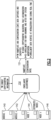
Figure 2 shows an enrollment step for modules and/or nodes. -
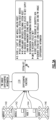
Figure 3A shows an occurrence wherein there is a failure or a fault detection. -
Figure 3B is a flowchart showing the response to a detected fault. -
Figure 4 shows a nameplate storage system. -
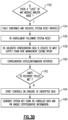
Figure 5 is a flowchart of an overall authentication system. -
Figure 1A schematically shows anassembly 90. In a disclosedembodiment assembly 90 may be an aircraft. Agas turbine engine 91 is shown as associated with theaircraft 90.Gas turbine engine 91 has afan 96, acompressor section 98, a combustor section 97 and aturbine section 99. It should be understood that this is a highly schematic description. While a gas turbine engine and aircraft are disclosed as the assemblies and the associated control, other assemblies and controls may benefit from this disclosure. - As shown, an embedded
processing system 102 communicates with acontrol 94 on theaircraft 90. The embeddedprocessing system 102 may be a full authority digital electronic controller or FADEC forengine 91. -
Figure 1B shows details of asystem 100 including the embeddedprocessing system 102 and the controlledsystem 104. Here, the controlledsystem 104 may include systems on the gas turbine engine ofFigure 1A . - The
Figure 1B system includes the embeddedprocessing system 102 and a controlled system. The controlledsystem 104 can be any type of physical system that includes one or more effectors 106 controlled by one ormore effector commands 108. Theeffector commands 108 are received from amodule 140 associated with the embeddedprocessing system 100. - Examples of effectors can include one or more motors, solenoids, valves, relays, pumps, heaters and/or other such actuation control components.
- A plurality of
sensors 110 can capture state data associated with the controlledsystem 104 and provide sensed values 112 as feedback to amodule 142 in the embeddedprocessing system 102 to enable closed-loop control of the controlledsystem 104 according to one or more control laws. - Examples of the sensors can include one or more temperature sensors, pressure sensors, strain gauges, level sensors, accelerometers, rate sensors, and the like.
- While the controlled assembly is disclosed as a gas turbine engine, it can be other types of engines, a vehicle, a heating ventilating and air conditioning ("HVAC") system, an elevator system, industrial machinery, or the like.
- For purposes of explanation, embodiments are primarily described with respect to a gas turbine engine system for an
aircraft 90 as the controlled system, and in particular, thegas turbine engine 91. - In the
Figure 1B example, the embeddedprocessing system 102 includesprocessing circuitry 114 and amemory system 116 configured to store a plurality of configuration items, where at least one of the configuration items includes a sequence of computer executable instructions for execution by theprocessing circuitry 114. Types of configuration items can include data, such as constants, configurable data, and/or fault data. Examples of computer executable instructions can include software, operating system software, and/or application software. The executable instructions can be stored or organized in any manner and at any level of abstraction, such as in connection with controlling and/or monitoring operation of the controlledsystem 104. The processing circuitry can be any type or combination of central processing unit ("CPU"), including one or more of a microprocessor, a digital signal processor, a microcontroller, an application specific integrated circuit, a field programmable gate array, or the like. - In embodiments, the memory system may include
volatile memory 118 such as random access memory, andnon-volatile memory 120, such as flash memory, read only memory, and/or other electronic, optical, magnetic, or any other computer readable medium onto which is stored data and algorithms in a non-transitory form. - The embedded
processing system 102 can also include one or more of an input/output interface 122, acommunication interface 124, areprogramming control 126, and/or other elements. - The input/
output interface 122 can include support circuitry for interfacing with the effectors 106 andsensors 110, such as filters, amplifiers, digital-to-analog converters, analog-to-digital converters, and other such circuits to support digital and/or analog interfaces. Further, the input/output interface 122 can receive or output signals to/from other sources. As one example,discrete inputs 128 can be input to the input/output interface to establish an operating mode of the embeddedprocessing system 102, or to trigger actions by the embeddedprocessing system 102. - A
reset signal 130 may also be internally induced as a result of a loss of power detected by power conditioning circuitry, and by specific hardware or software direction. Thecommunication interface 124 can be coupled to acommunication system 132, which can include one or more direct or network communication links to systems such as areprogramming system 134, adata repository 136, or another system. Thecommunication system 132 may also communicate with thecontrol 94 on the associatedaircraft 90. - The
reprogramming system 134 can be any type of computer system operable to load new/updated configuration items to the embeddedprocessing system 102 for storage in thememory system 116. Thereprogramming system 134 can interface to thecommunication system 132 to a wired, wireless, optical, or magnetic coupling. Thedata repository 136 can serve as a data source for updating thememory system 116, for instance, with control system data, or as a data sync to offload and clear data from the memory systems, such as fault data, history data, and the like. - As also shown,
systems control nodes processing system 102. As an example, thesystem 145 may be an anti-ice system. - Other examples of modules or nodes may include additional wired or wireless communication interfaces or input/output devices that are remote to optimize environmental considerations such as envelope, weight, thermal, and/or power.
- In general, a module is a control system that is within the embedded
processing system 102, whereas a node is outside thesystem 102, but communicating with it. Modular processing systems must be able to be updated to have modules and/or nodes replaced from time to time, and it would be desirable to be able to ensure the propriety and integrity of the replaced modules and controls. That is, detect any counterfeits or incorrect modules/nodes. In addition, it would be desirable to identify a fault with any of the modules and/or nodes. - As shown in
Figure 2 , in an enrollment process, during production modules 140-142 and nodes 140-146 are provided with an enrollment algorithm including unique cryptographic information provided to a supplier of the module and/or node from the manufacturer of the embeddedprocessing system 102, thecontrol system 104, or thevehicle 90. Thus, each of the modules and nodes (collectively "connected components") has a "nameplate," or configuration data captured and encrypted. Such data desirably contains part and serial number data, and is digitally signed, and optionally encrypted. - As shown in
Figure 3A , theprocessing circuitry 114 receives the nameplate information from each of the modules and nodes. If any module or node fails authentication, or does not provide appropriate information, a fault detection process is entered. - Thus, as shown in
Figure 3B , atstep 152 the system asks if there is a loss of any nodule and/or node. If so, a fault is confirmed and isolated and a system reset initiated atstep 154. Atstep 156, all of the nodes and modules must be re-enrolled after the system reset, such as authenticating their nameplate information again. - At
step 158, revalidated configuration data is utilized to meet supply chain risk management intent. - Supply chain risk management is utilized to identify against counterfeit module and/or node insert. Further, it is utilized to protect against physical tamper attacks. In
step 160, configuration status/information is reported. - As an example, in
step 162, there may be a limit to the number of recovery recycles. - Strict controls are utilized on the erasure of any encrypted data at
step 164. - If the faulted module and/or node does not come back on line within the limit of recovery cycles, then the
processing circuitry 114 is provided with new information as to the current operating state or the controlledsystem 104 and embeddedprocessing system 102. As an example, if the fault occurs during a flight of the associated aircraft, the flight must be completed. Thus, by updating the processing circuitry to accommodate the controls to best affect operation without the faulted attached components the aircraft can still fly. - In
step 166, a system key is generated using re-enrollment data and "owner" unique cryptographic information. - Each attached component updates its ledger to include the current configuration block.
-
Figure 4 shows a plurality ofnameplates first step 170 and the encrypted nameplate is encrypted at asecond step 171. The double encrypted information is stored in thenon-volatile memory 120. This re-enrollment data is solely utilized for accommodation,step 156, in the event of a module/node loss of communication failure. - A flowchart for overall operation of the system is shown in
Figure 5 . Atstep 172, the embeddedprocessing system 102 receives the nameplate, or configuration data from each attached component at initialization or in real-time. - At
step 174, each nameplate is authenticated to ensure appropriate configuration data. - At
step 176, the system asks if the data matches the stored configuration nameplate information. If not, then the particular attached component is identified as a faulted component at step 178. The system may then reconfigure as explained with regard toFigure 3B . - If
step 176 is answered in the affirmative, the flowchart moves to step 180. After 178, the flowchart also returns to step 180. At 180, the configuration data is reported to a supply chain risk management system. As an example, this could be thecontrol 94 on the associatedaircraft 90. - At 182, the system generates cryptographic system keys with owner unique cryptographic information.
- Although embodiments of this disclosure have been shown, a worker of ordinary skill in this art would recognize that modifications would come within the scope of this disclosure. For that reason, the following claims should be studied to determine the true scope and content of this disclosure. The scope of the invention is defined by the appended claims.
Claims (15)
- An embedded processing system (102) comprising:processing circuitry (114);a memory system (116);a plurality of attached modular components, the attached modular components each being provided with a nameplate including at least part and serial number data; andthe processing circuitry being operable to receive the nameplate information from each of the attached modular components and compare the received nameplate information with stored nameplate information for the particular attached modular component, andthe processing circuitry being operable to communicate with the attached modular component if the received nameplate information matches the stored nameplate information and identify a fault if the received nameplate information conflicts with the stored nameplate information.
- The system as set forth in claim 1, wherein the nameplate information is encrypted.
- The system as set forth in claim 2, wherein the attached modular components include modules (140-142) within the embedded processing system communicating outwardly to effectors (106) on a controlled system (104), and receiving sensed values (112) from sensors associated with the controlled system.
- The system as set forth in claim 3, wherein the attached components also include nodes (140-146) being control systems for auxiliary devices on the controlled system, and the nodes communicating into the embedded processing system, but being located outwardly of the embedded processing system.
- The system as set forth in claim 3, wherein at least one of the attached modular components is manufactured by a supplier other than a manufacturer of the controlled system.
- The system as set forth in claim 1, wherein if a fault is detected on one of said attached modular component, a control algorithm is updated to report to all other attached modular components on a reconfiguration that does not rely upon the fault detected attached modular component;
wherein at least one of the attached modular components is manufactured by a supplier other than a manufacturer of a controlled system. - A method comprising:attaching a plurality of attached modular components to an embedded processing system (102), the attached modular components each being provided with a nameplate including at least part and serial number data; andthe embedded processing system receiving the nameplate information from each of the attached modular components and comparing the received nameplate information with stored nameplate information for the particular attached component, andcommunicating with the attached modular component if the received nameplate information matches the stored nameplate information and identifying a fault if the received nameplate information conflicts with the stored nameplate information.
- The method as set forth in claim 7, wherein the nameplate information is encrypted.
- The method as set forth in claim 8, wherein the attached modular components include modules within the embedded processing system communicating outwardly to effectors (106) on a controlled system (104), and receiving sensed values from sensors associated with the controlled system.
- The method as set forth in claim 9, wherein the attached components also include nodes (140-146) being control systems for auxiliary devices on the controlled system, and the nodes communicating into the embedded processing system, but being located outwardly of the embedded processing system; or
wherein at least one of the attached is manufactured by a supplier other than a manufacturer of the controlled system. - The method as set forth in claim 7, wherein if a fault is detected on one of said attached modular component, a control algorithm is updated to report to all other attached modular components on a reconfiguration that does not rely upon the fault detected attached component; or
wherein at least one of the attached modular components is manufactured by a supplier other than a manufacturer of a controlled system. - An assembly (90) comprising:a plurality of effectors (106) and sensors and an embedded processing system (102);the embedded processing system having:processing circuitry;a memory system;a plurality of attached modular components, the attached modular components each being provided with an encrypted nameplate including at least part and serial number data; andthe processing circuitry being operable to receive the nameplate information from each of the attached modular components and compare the received nameplate information with stored nameplate information for the particular attached modular component, andthe processing circuitry being operable to communicate with the attached modular component if the received nameplate information matches the stored nameplate information and identify a fault if the received nameplate information conflicts with the stored nameplate information.
- The assembly as set forth in claim 12, wherein the attached modular components include modules within the embedded processing system communicating outwardly to the effectors, and receiving sensed values from the sensors; and, optionally
wherein the attached components include nodes (140-146) being control systems for auxiliary devices on a controlled system (104), and the nodes communicating into the embedded processing system, but being located outwardly of the embedded processing system. - The assembly as set forth in claim 12, wherein at least one of the attached modular components is manufactured by a supplier other than a manufacturer of the controlled system; or
wherein if a fault is detected on one of said attached modular component, a control algorithm is updated to report to all other said attached modular components on a reconfiguration that does not rely upon the fault detected attached modular component. - The assembly set forth in claim 12, wherein the assembly is an aircraft (90) and the embedded processing system controls a gas turbine engine (91) for the aircraft.
Applications Claiming Priority (1)
| Application Number | Priority Date | Filing Date | Title |
|---|---|---|---|
| US18/468,347 US20250093849A1 (en) | 2023-09-15 | 2023-09-15 | Assembly control with authentication of control system |
Publications (1)
| Publication Number | Publication Date |
|---|---|
| EP4524672A1 true EP4524672A1 (en) | 2025-03-19 |
Family
ID=92800362
Family Applications (1)
| Application Number | Title | Priority Date | Filing Date |
|---|---|---|---|
| EP24200408.3A Pending EP4524672A1 (en) | 2023-09-15 | 2024-09-13 | Assembly control with authentication of control system |
Country Status (2)
| Country | Link |
|---|---|
| US (1) | US20250093849A1 (en) |
| EP (1) | EP4524672A1 (en) |
Citations (2)
| Publication number | Priority date | Publication date | Assignee | Title |
|---|---|---|---|---|
| US20180093762A1 (en) * | 2008-10-03 | 2018-04-05 | Bell Helicopter Textron Inc. | Method and apparatus for aircraft sensor and actuator failure protection using reconfigurable flight control laws |
| US20210058460A1 (en) * | 2018-04-09 | 2021-02-25 | Siemens Aktiengesellschaft | Securing an automation component |
Family Cites Families (2)
| Publication number | Priority date | Publication date | Assignee | Title |
|---|---|---|---|---|
| FR2957164B1 (en) * | 2010-03-03 | 2012-05-11 | Airbus Operations Sas | METHODS AND DEVICES FOR CONFIDURING VALIDATION OF A COMPLEX MULTICLEUM SYSTEM |
| US20120295592A1 (en) * | 2011-05-17 | 2012-11-22 | General Motors Llc | Vehicle Component Identification and Configuration Registry Reporting System |
-
2023
- 2023-09-15 US US18/468,347 patent/US20250093849A1/en active Pending
-
2024
- 2024-09-13 EP EP24200408.3A patent/EP4524672A1/en active Pending
Patent Citations (2)
| Publication number | Priority date | Publication date | Assignee | Title |
|---|---|---|---|---|
| US20180093762A1 (en) * | 2008-10-03 | 2018-04-05 | Bell Helicopter Textron Inc. | Method and apparatus for aircraft sensor and actuator failure protection using reconfigurable flight control laws |
| US20210058460A1 (en) * | 2018-04-09 | 2021-02-25 | Siemens Aktiengesellschaft | Securing an automation component |
Non-Patent Citations (1)
| Title |
|---|
| SLIMAN L ET AL: "A security policy framework for context-aware and user preferences in e-services", JOURNAL OF SYSTEMS ARCHITECTURE, ELSEVIER BV, NL, vol. 55, no. 4, 1 April 2009 (2009-04-01), pages 275 - 288, XP026034708, ISSN: 1383-7621, [retrieved on 20081231], DOI: 10.1016/J.SYSARC.2008.12.001 * |
Also Published As
| Publication number | Publication date |
|---|---|
| US20250093849A1 (en) | 2025-03-20 |
Similar Documents
| Publication | Publication Date | Title |
|---|---|---|
| US11456891B2 (en) | Apparatus and methods for authenticating cyber secure control system configurations using distributed ledgers | |
| EP1577721A2 (en) | Model predictive controller with life extending control | |
| US9882893B2 (en) | System and method for secured password management for industrial devices | |
| EP3726480B1 (en) | Remote updates of a gas turbine engine | |
| EP3726481A1 (en) | Engine gateway with engine data storage | |
| CN102483252B (en) | Equipment control device | |
| US12430412B2 (en) | Embedded processing system with multi-stage authentication | |
| US20120022671A1 (en) | Method for determining a safety step and safety manager | |
| US10764334B2 (en) | Communication system, moving object, and communication method | |
| JP2020502650A (en) | Method for performing software update in a cloud gateway, computer program on which the method is implemented, and processing unit for executing the method | |
| CN105339855A (en) | Programmable controller | |
| US8239339B2 (en) | Library synchronization between definitions and instances | |
| US9582378B2 (en) | Control signal protection device | |
| US20250093849A1 (en) | Assembly control with authentication of control system | |
| KR102723144B1 (en) | Method for confirm software compatibility and update | |
| US20070036021A1 (en) | Data reprogramming method and system | |
| CN104820642A (en) | Facility controlling system, controller, downloading method, and software changing method | |
| EP3845984B1 (en) | Secure network of safety plcs for industrial plants | |
| US11022948B2 (en) | Safety control device and method for changing a range of functions of a safety control device | |
| JP5012548B2 (en) | Programmable controller | |
| EP4524799A1 (en) | Assembly control with authentication of user | |
| WO2007088605A1 (en) | Component information restoring method, component information managing method and electronic apparatus | |
| EP3991080B1 (en) | Data configuration management system for an engine | |
| US20240275634A1 (en) | Diagnostic system for engine management system | |
| US7546171B2 (en) | Method, apparatus and system for recovery of a controller with known-compatible configuration and run-time data |
Legal Events
| Date | Code | Title | Description |
|---|---|---|---|
| PUAI | Public reference made under article 153(3) epc to a published international application that has entered the european phase |
Free format text: ORIGINAL CODE: 0009012 |
|
| STAA | Information on the status of an ep patent application or granted ep patent |
Free format text: STATUS: THE APPLICATION HAS BEEN PUBLISHED |
|
| AK | Designated contracting states |
Kind code of ref document: A1 Designated state(s): AL AT BE BG CH CY CZ DE DK EE ES FI FR GB GR HR HU IE IS IT LI LT LU LV MC ME MK MT NL NO PL PT RO RS SE SI SK SM TR |
|
| STAA | Information on the status of an ep patent application or granted ep patent |
Free format text: STATUS: REQUEST FOR EXAMINATION WAS MADE |
|
| 17P | Request for examination filed |
Effective date: 20250919 |