EP4524234A1 - Genetically engineered bacterium using glucose as substrate for de novo synthesis of vanillin and application thereof - Google Patents

Genetically engineered bacterium using glucose as substrate for de novo synthesis of vanillin and application thereof Download PDF

Info

Publication number
EP4524234A1
EP4524234A1 EP24167534.7A EP24167534A EP4524234A1 EP 4524234 A1 EP4524234 A1 EP 4524234A1 EP 24167534 A EP24167534 A EP 24167534A EP 4524234 A1 EP4524234 A1 EP 4524234A1
Authority
EP
European Patent Office
Prior art keywords
gene
seq
derived
corynebacterium glutamicum
vanillin
Prior art date
Legal status (The legal status is an assumption and is not a legal conclusion. Google has not performed a legal analysis and makes no representation as to the accuracy of the status listed.)
Pending
Application number
EP24167534.7A
Other languages
German (de)
French (fr)
Inventor
Tianwei Tan
Yingyue Yu
Haowen ZHU
Jianyu Long
Current Assignee (The listed assignees may be inaccurate. Google has not performed a legal analysis and makes no representation or warranty as to the accuracy of the list.)
Beijing University of Chemical Technology
Original Assignee
Beijing University of Chemical Technology
Priority date (The priority date is an assumption and is not a legal conclusion. Google has not performed a legal analysis and makes no representation as to the accuracy of the date listed.)
Filing date
Publication date
Application filed by Beijing University of Chemical Technology filed Critical Beijing University of Chemical Technology
Publication of EP4524234A1 publication Critical patent/EP4524234A1/en
Pending legal-status Critical Current

Links

Images

Classifications

    • CCHEMISTRY; METALLURGY
    • C12BIOCHEMISTRY; BEER; SPIRITS; WINE; VINEGAR; MICROBIOLOGY; ENZYMOLOGY; MUTATION OR GENETIC ENGINEERING
    • C12NMICROORGANISMS OR ENZYMES; COMPOSITIONS THEREOF; PROPAGATING, PRESERVING, OR MAINTAINING MICROORGANISMS; MUTATION OR GENETIC ENGINEERING; CULTURE MEDIA
    • C12N1/00Microorganisms; Compositions thereof; Processes of propagating, maintaining or preserving microorganisms or compositions thereof; Processes of preparing or isolating a composition containing a microorganism; Culture media therefor
    • C12N1/20Bacteria; Culture media therefor
    • CCHEMISTRY; METALLURGY
    • C12BIOCHEMISTRY; BEER; SPIRITS; WINE; VINEGAR; MICROBIOLOGY; ENZYMOLOGY; MUTATION OR GENETIC ENGINEERING
    • C12NMICROORGANISMS OR ENZYMES; COMPOSITIONS THEREOF; PROPAGATING, PRESERVING, OR MAINTAINING MICROORGANISMS; MUTATION OR GENETIC ENGINEERING; CULTURE MEDIA
    • C12N1/00Microorganisms; Compositions thereof; Processes of propagating, maintaining or preserving microorganisms or compositions thereof; Processes of preparing or isolating a composition containing a microorganism; Culture media therefor
    • C12N1/20Bacteria; Culture media therefor
    • C12N1/205Bacterial isolates
    • CCHEMISTRY; METALLURGY
    • C12BIOCHEMISTRY; BEER; SPIRITS; WINE; VINEGAR; MICROBIOLOGY; ENZYMOLOGY; MUTATION OR GENETIC ENGINEERING
    • C12NMICROORGANISMS OR ENZYMES; COMPOSITIONS THEREOF; PROPAGATING, PRESERVING, OR MAINTAINING MICROORGANISMS; MUTATION OR GENETIC ENGINEERING; CULTURE MEDIA
    • C12N15/00Mutation or genetic engineering; DNA or RNA concerning genetic engineering, vectors, e.g. plasmids, or their isolation, preparation or purification; Use of hosts therefor
    • C12N15/09Recombinant DNA-technology
    • C12N15/11DNA or RNA fragments; Modified forms thereof; Non-coding nucleic acids having a biological activity
    • C12N15/52Genes encoding for enzymes or proenzymes
    • CCHEMISTRY; METALLURGY
    • C12BIOCHEMISTRY; BEER; SPIRITS; WINE; VINEGAR; MICROBIOLOGY; ENZYMOLOGY; MUTATION OR GENETIC ENGINEERING
    • C12NMICROORGANISMS OR ENZYMES; COMPOSITIONS THEREOF; PROPAGATING, PRESERVING, OR MAINTAINING MICROORGANISMS; MUTATION OR GENETIC ENGINEERING; CULTURE MEDIA
    • C12N9/00Enzymes; Proenzymes; Compositions thereof; Processes for preparing, activating, inhibiting, separating or purifying enzymes
    • C12N9/0004Oxidoreductases (1.)
    • C12N9/0006Oxidoreductases (1.) acting on CH-OH groups as donors (1.1)
    • CCHEMISTRY; METALLURGY
    • C12BIOCHEMISTRY; BEER; SPIRITS; WINE; VINEGAR; MICROBIOLOGY; ENZYMOLOGY; MUTATION OR GENETIC ENGINEERING
    • C12NMICROORGANISMS OR ENZYMES; COMPOSITIONS THEREOF; PROPAGATING, PRESERVING, OR MAINTAINING MICROORGANISMS; MUTATION OR GENETIC ENGINEERING; CULTURE MEDIA
    • C12N9/00Enzymes; Proenzymes; Compositions thereof; Processes for preparing, activating, inhibiting, separating or purifying enzymes
    • C12N9/0004Oxidoreductases (1.)
    • C12N9/0008Oxidoreductases (1.) acting on the aldehyde or oxo group of donors (1.2)
    • CCHEMISTRY; METALLURGY
    • C12BIOCHEMISTRY; BEER; SPIRITS; WINE; VINEGAR; MICROBIOLOGY; ENZYMOLOGY; MUTATION OR GENETIC ENGINEERING
    • C12NMICROORGANISMS OR ENZYMES; COMPOSITIONS THEREOF; PROPAGATING, PRESERVING, OR MAINTAINING MICROORGANISMS; MUTATION OR GENETIC ENGINEERING; CULTURE MEDIA
    • C12N9/00Enzymes; Proenzymes; Compositions thereof; Processes for preparing, activating, inhibiting, separating or purifying enzymes
    • C12N9/10Transferases (2.)
    • CCHEMISTRY; METALLURGY
    • C12BIOCHEMISTRY; BEER; SPIRITS; WINE; VINEGAR; MICROBIOLOGY; ENZYMOLOGY; MUTATION OR GENETIC ENGINEERING
    • C12NMICROORGANISMS OR ENZYMES; COMPOSITIONS THEREOF; PROPAGATING, PRESERVING, OR MAINTAINING MICROORGANISMS; MUTATION OR GENETIC ENGINEERING; CULTURE MEDIA
    • C12N9/00Enzymes; Proenzymes; Compositions thereof; Processes for preparing, activating, inhibiting, separating or purifying enzymes
    • C12N9/10Transferases (2.)
    • C12N9/1003Transferases (2.) transferring one-carbon groups (2.1)
    • C12N9/1007Methyltransferases (general) (2.1.1.)
    • CCHEMISTRY; METALLURGY
    • C12BIOCHEMISTRY; BEER; SPIRITS; WINE; VINEGAR; MICROBIOLOGY; ENZYMOLOGY; MUTATION OR GENETIC ENGINEERING
    • C12NMICROORGANISMS OR ENZYMES; COMPOSITIONS THEREOF; PROPAGATING, PRESERVING, OR MAINTAINING MICROORGANISMS; MUTATION OR GENETIC ENGINEERING; CULTURE MEDIA
    • C12N9/00Enzymes; Proenzymes; Compositions thereof; Processes for preparing, activating, inhibiting, separating or purifying enzymes
    • C12N9/10Transferases (2.)
    • C12N9/1022Transferases (2.) transferring aldehyde or ketonic groups (2.2)
    • CCHEMISTRY; METALLURGY
    • C12BIOCHEMISTRY; BEER; SPIRITS; WINE; VINEGAR; MICROBIOLOGY; ENZYMOLOGY; MUTATION OR GENETIC ENGINEERING
    • C12NMICROORGANISMS OR ENZYMES; COMPOSITIONS THEREOF; PROPAGATING, PRESERVING, OR MAINTAINING MICROORGANISMS; MUTATION OR GENETIC ENGINEERING; CULTURE MEDIA
    • C12N9/00Enzymes; Proenzymes; Compositions thereof; Processes for preparing, activating, inhibiting, separating or purifying enzymes
    • C12N9/10Transferases (2.)
    • C12N9/1025Acyltransferases (2.3)
    • C12N9/1029Acyltransferases (2.3) transferring groups other than amino-acyl groups (2.3.1)
    • CCHEMISTRY; METALLURGY
    • C12BIOCHEMISTRY; BEER; SPIRITS; WINE; VINEGAR; MICROBIOLOGY; ENZYMOLOGY; MUTATION OR GENETIC ENGINEERING
    • C12NMICROORGANISMS OR ENZYMES; COMPOSITIONS THEREOF; PROPAGATING, PRESERVING, OR MAINTAINING MICROORGANISMS; MUTATION OR GENETIC ENGINEERING; CULTURE MEDIA
    • C12N9/00Enzymes; Proenzymes; Compositions thereof; Processes for preparing, activating, inhibiting, separating or purifying enzymes
    • C12N9/10Transferases (2.)
    • C12N9/1085Transferases (2.) transferring alkyl or aryl groups other than methyl groups (2.5)
    • CCHEMISTRY; METALLURGY
    • C12BIOCHEMISTRY; BEER; SPIRITS; WINE; VINEGAR; MICROBIOLOGY; ENZYMOLOGY; MUTATION OR GENETIC ENGINEERING
    • C12NMICROORGANISMS OR ENZYMES; COMPOSITIONS THEREOF; PROPAGATING, PRESERVING, OR MAINTAINING MICROORGANISMS; MUTATION OR GENETIC ENGINEERING; CULTURE MEDIA
    • C12N9/00Enzymes; Proenzymes; Compositions thereof; Processes for preparing, activating, inhibiting, separating or purifying enzymes
    • C12N9/10Transferases (2.)
    • C12N9/12Transferases (2.) transferring phosphorus containing groups, e.g. kinases (2.7)
    • C12N9/1288Transferases for other substituted phosphate groups (2.7.8)
    • CCHEMISTRY; METALLURGY
    • C12BIOCHEMISTRY; BEER; SPIRITS; WINE; VINEGAR; MICROBIOLOGY; ENZYMOLOGY; MUTATION OR GENETIC ENGINEERING
    • C12NMICROORGANISMS OR ENZYMES; COMPOSITIONS THEREOF; PROPAGATING, PRESERVING, OR MAINTAINING MICROORGANISMS; MUTATION OR GENETIC ENGINEERING; CULTURE MEDIA
    • C12N9/00Enzymes; Proenzymes; Compositions thereof; Processes for preparing, activating, inhibiting, separating or purifying enzymes
    • C12N9/14Hydrolases (3)
    • CCHEMISTRY; METALLURGY
    • C12BIOCHEMISTRY; BEER; SPIRITS; WINE; VINEGAR; MICROBIOLOGY; ENZYMOLOGY; MUTATION OR GENETIC ENGINEERING
    • C12NMICROORGANISMS OR ENZYMES; COMPOSITIONS THEREOF; PROPAGATING, PRESERVING, OR MAINTAINING MICROORGANISMS; MUTATION OR GENETIC ENGINEERING; CULTURE MEDIA
    • C12N9/00Enzymes; Proenzymes; Compositions thereof; Processes for preparing, activating, inhibiting, separating or purifying enzymes
    • C12N9/88Lyases (4.)
    • CCHEMISTRY; METALLURGY
    • C12BIOCHEMISTRY; BEER; SPIRITS; WINE; VINEGAR; MICROBIOLOGY; ENZYMOLOGY; MUTATION OR GENETIC ENGINEERING
    • C12NMICROORGANISMS OR ENZYMES; COMPOSITIONS THEREOF; PROPAGATING, PRESERVING, OR MAINTAINING MICROORGANISMS; MUTATION OR GENETIC ENGINEERING; CULTURE MEDIA
    • C12N9/00Enzymes; Proenzymes; Compositions thereof; Processes for preparing, activating, inhibiting, separating or purifying enzymes
    • C12N9/93Ligases (6)
    • CCHEMISTRY; METALLURGY
    • C12BIOCHEMISTRY; BEER; SPIRITS; WINE; VINEGAR; MICROBIOLOGY; ENZYMOLOGY; MUTATION OR GENETIC ENGINEERING
    • C12PFERMENTATION OR ENZYME-USING PROCESSES TO SYNTHESISE A DESIRED CHEMICAL COMPOUND OR COMPOSITION OR TO SEPARATE OPTICAL ISOMERS FROM A RACEMIC MIXTURE
    • C12P7/00Preparation of oxygen-containing organic compounds
    • C12P7/02Preparation of oxygen-containing organic compounds containing a hydroxy group
    • C12P7/22Preparation of oxygen-containing organic compounds containing a hydroxy group aromatic
    • CCHEMISTRY; METALLURGY
    • C12BIOCHEMISTRY; BEER; SPIRITS; WINE; VINEGAR; MICROBIOLOGY; ENZYMOLOGY; MUTATION OR GENETIC ENGINEERING
    • C12PFERMENTATION OR ENZYME-USING PROCESSES TO SYNTHESISE A DESIRED CHEMICAL COMPOUND OR COMPOSITION OR TO SEPARATE OPTICAL ISOMERS FROM A RACEMIC MIXTURE
    • C12P7/00Preparation of oxygen-containing organic compounds
    • C12P7/24Preparation of oxygen-containing organic compounds containing a carbonyl group
    • CCHEMISTRY; METALLURGY
    • C12BIOCHEMISTRY; BEER; SPIRITS; WINE; VINEGAR; MICROBIOLOGY; ENZYMOLOGY; MUTATION OR GENETIC ENGINEERING
    • C12YENZYMES
    • C12Y201/00Transferases transferring one-carbon groups (2.1)
    • C12Y201/01Methyltransferases (2.1.1)
    • CCHEMISTRY; METALLURGY
    • C12BIOCHEMISTRY; BEER; SPIRITS; WINE; VINEGAR; MICROBIOLOGY; ENZYMOLOGY; MUTATION OR GENETIC ENGINEERING
    • C12RINDEXING SCHEME ASSOCIATED WITH SUBCLASSES C12C - C12Q, RELATING TO MICROORGANISMS
    • C12R2001/00Microorganisms ; Processes using microorganisms
    • C12R2001/01Bacteria or Actinomycetales ; using bacteria or Actinomycetales
    • C12R2001/15Corynebacterium
    • CCHEMISTRY; METALLURGY
    • C12BIOCHEMISTRY; BEER; SPIRITS; WINE; VINEGAR; MICROBIOLOGY; ENZYMOLOGY; MUTATION OR GENETIC ENGINEERING
    • C12RINDEXING SCHEME ASSOCIATED WITH SUBCLASSES C12C - C12Q, RELATING TO MICROORGANISMS
    • C12R2001/00Microorganisms ; Processes using microorganisms
    • C12R2001/01Bacteria or Actinomycetales ; using bacteria or Actinomycetales
    • C12R2001/265Micrococcus
    • C12R2001/28Micrococcus glutamicus ; Corynebacterium glutamicum
    • CCHEMISTRY; METALLURGY
    • C12BIOCHEMISTRY; BEER; SPIRITS; WINE; VINEGAR; MICROBIOLOGY; ENZYMOLOGY; MUTATION OR GENETIC ENGINEERING
    • C12YENZYMES
    • C12Y102/00Oxidoreductases acting on the aldehyde or oxo group of donors (1.2)
    • C12Y102/99Oxidoreductases acting on the aldehyde or oxo group of donors (1.2) with other acceptors (1.2.99)
    • C12Y102/99006Carboxylate reductase (1.2.99.6)
    • CCHEMISTRY; METALLURGY
    • C12BIOCHEMISTRY; BEER; SPIRITS; WINE; VINEGAR; MICROBIOLOGY; ENZYMOLOGY; MUTATION OR GENETIC ENGINEERING
    • C12YENZYMES
    • C12Y201/00Transferases transferring one-carbon groups (2.1)
    • C12Y201/01Methyltransferases (2.1.1)
    • C12Y201/010145-Methyltetrahydropteroyltriglutamate--homocysteine S-methyltransferase (2.1.1.14)
    • CCHEMISTRY; METALLURGY
    • C12BIOCHEMISTRY; BEER; SPIRITS; WINE; VINEGAR; MICROBIOLOGY; ENZYMOLOGY; MUTATION OR GENETIC ENGINEERING
    • C12YENZYMES
    • C12Y202/00Transferases transferring aldehyde or ketonic groups (2.2)
    • C12Y202/01Transketolases and transaldolases (2.2.1)
    • C12Y202/01001Transketolase (2.2.1.1)
    • CCHEMISTRY; METALLURGY
    • C12BIOCHEMISTRY; BEER; SPIRITS; WINE; VINEGAR; MICROBIOLOGY; ENZYMOLOGY; MUTATION OR GENETIC ENGINEERING
    • C12YENZYMES
    • C12Y203/00Acyltransferases (2.3)
    • C12Y203/01Acyltransferases (2.3) transferring groups other than amino-acyl groups (2.3.1)
    • C12Y203/01031Homoserine O-acetyltransferase (2.3.1.31)
    • CCHEMISTRY; METALLURGY
    • C12BIOCHEMISTRY; BEER; SPIRITS; WINE; VINEGAR; MICROBIOLOGY; ENZYMOLOGY; MUTATION OR GENETIC ENGINEERING
    • C12YENZYMES
    • C12Y205/00Transferases transferring alkyl or aryl groups, other than methyl groups (2.5)
    • C12Y205/01Transferases transferring alkyl or aryl groups, other than methyl groups (2.5) transferring alkyl or aryl groups, other than methyl groups (2.5.1)
    • C12Y205/01006Methionine adenosyltransferase (2.5.1.6), i.e. adenosylmethionine synthetase
    • CCHEMISTRY; METALLURGY
    • C12BIOCHEMISTRY; BEER; SPIRITS; WINE; VINEGAR; MICROBIOLOGY; ENZYMOLOGY; MUTATION OR GENETIC ENGINEERING
    • C12YENZYMES
    • C12Y205/00Transferases transferring alkyl or aryl groups, other than methyl groups (2.5)
    • C12Y205/01Transferases transferring alkyl or aryl groups, other than methyl groups (2.5) transferring alkyl or aryl groups, other than methyl groups (2.5.1)
    • C12Y205/010543-Deoxy-7-phosphoheptulonate synthase (2.5.1.54)
    • CCHEMISTRY; METALLURGY
    • C12BIOCHEMISTRY; BEER; SPIRITS; WINE; VINEGAR; MICROBIOLOGY; ENZYMOLOGY; MUTATION OR GENETIC ENGINEERING
    • C12YENZYMES
    • C12Y207/00Transferases transferring phosphorus-containing groups (2.7)
    • C12Y207/08Transferases for other substituted phosphate groups (2.7.8)
    • C12Y207/08007Holo-[acyl-carrier-protein] synthase (2.7.8.7)
    • CCHEMISTRY; METALLURGY
    • C12BIOCHEMISTRY; BEER; SPIRITS; WINE; VINEGAR; MICROBIOLOGY; ENZYMOLOGY; MUTATION OR GENETIC ENGINEERING
    • C12YENZYMES
    • C12Y303/00Hydrolases acting on ether bonds (3.3)
    • C12Y303/01Thioether and trialkylsulfonium hydrolases (3.3.1)
    • C12Y303/01001Adenosylhomocysteinase (3.3.1.1)

Definitions

  • the present invention relates to the technical field of gene recombination and metabolic engineering, and more particularly to a genetically engineered bacterium using glucose as a substrate for de novo synthesis of vanillin and an application thereof.
  • Vanillin is an aromatic compound with hydroxyl, aldehyde and oxymethyl substituent groups; and the CAS number is 121-33-5 , the molecular formula is C 8 H 8 O 3 , and the molecular weight is 152.15.
  • the vanillin is usually a white or light yellow crystal with a melting point of 81-83°C and a boiling point of 284-285°C, and is difficult to dissolve in water and soluble in organic solvents such as methanol.
  • the vanillin is wide in use.
  • the vanillin can not only be used as a food additive for a variety of foods in life, but also can be used in cosmetics such as perfume and daily necessities such as soap and toothpaste to stabilize and enhance fragrance.
  • the vanillin is also used for producing products such as plastics, rubber sterilizing agents, electroplating agents, conductive agents and the like in industry.
  • the vanillin has been widely used in the medical field to produce various pharmaceutical intermediates, and vanillin may become the most valuable aromatic compound in the medical field.
  • the annual demand of the vanillin in China reaches 2350 tons, and the demand still increases year by year.
  • the vanillin produced in China is not only for domestic use, but also is exported to Europe, America, Southeast Asia and other countries, enjoying a good reputation in the world.
  • producing the vanillin by biological fermentation is a promising production method, which can more efficiently obtain the compound from cheap sugar. It is already reported in multiple literatures that the vanillin is synthesized by microbial fermentation, but the microbial fermentation has the defect of low yield.
  • the present invention provides a genetically engineered bacterium using glucose as a substrate for de novo synthesis of vanillin and an application thereof, which researches and develops an efficient pathway of biological de novo synthesis of vanillin for problems of the existing biological de novo synthesis of vanillin, and constructs a non-toxic food safe engineered strain capable of using cheap substrates such as glucose to produce the natural vanillin.
  • a purpose of the present invention is to provide a genetically engineered bacterium for synthesizing vanillin.
  • the strain is safe and non-toxic and can use a microbial fermentation method to produce the vanillin, which has low production cost.
  • a genetically engineered bacterium using glucose as the substrate for de novo synthesis of vanillin is provided; and the genetically engineered bacterium is a recombinant Corynebacterium glutamicum modified by genome and including a vanillin synthesis module and a methyl cyclic regeneration module.
  • chassis microorganism The modification of chassis microorganism is to take Corynebacterium glutamicum as an original strain to knock out pcaHG (protocatechuate 3,4-dioxygenase subunit, protocatechuate 3,4-dioxygenase subunit beta (pcaH), protocatechuate 3,4-dioxygenase subunit alpha (pcaG)), van (vanillate demethylase), vdh (vanillin dehydrogenase) and fud (alcohol dehydrogenase (NADP+), and Zn-dependent alcohol dehydrogenases) genes.
  • pcaHG protocatechuate 3,4-dioxygenase subunit, protocatechuate 3,4-dioxygenase subunit beta (pcaH), protocatechuate 3,4-dioxygenase subunit alpha (pcaG)
  • van vanillate demethylase
  • vdh vanillin dehydrogenase
  • the vanillin synthesis module expresses a transketolase gene, a 3-deoxy-7-phosphoheptulonate synthase gene, an O-methyltransferase gene, a Carboxylic acid reductase gene and a 4'-phosphopantetheinyl transferase gene.
  • the transketolase can efficiently enhance the synthesis of E4P in an HMP pathway, and increase the yield of DAHP.
  • the 3-deoxy-7-phosphoheptulonate synthase helps PEP and E4P to synthesize DAHP.
  • the O-methyltransferase catalyzes protocatechuic acid to generate vanillic acid.
  • the Carboxylic acid reductase catalyzes the vanillic acid to be reduced into vanillin. Because the carboxylic acid reductase expressed by Corynebacterium glutamicum is an apoenzyme, the carboxylic acid reductase becomes a whole enzyme under the translational phosphorylation modification of 4'-phosphopantetheinyl transferase.
  • the methyl cyclic regeneration module expresses a 5-methyltetrahydropteroyltriglutamate-homocysteine methyltransferase gene, an S-adenosylmethionine synthase gene, a homoserine O-acetyltransferase gene and an adenosylhomocysteinase gene.
  • the homoserine O-acetyltransferase transfers acyl groups of coenzyme A (CoA) or succinyl-CoA to hydroxyl oxygen of homoserine, so that the homoserine is acetylated to form O-acetyl-1-homoserine, preparing for subsequent vulcanization.
  • the strain transforms O-acetyl-l-homoserine to L-homocysteine.
  • the 5-methyltetrahydropteroyltriglutamate-homocysteine methyltransferase helps catalyze the transfer of methyl from 5- methyltetrahydrofolate to L-homocysteine, leading to the formation of methionine, and catalyze the reaction between 5- methyl tetrahydropteroyl tri -L- glutamic acid and L-homocysteine to generate L-methionine and tetrahydropteroyl tri-L-glutamic acid.
  • the S-adenosylmethionine synthase ATP catalyzes the reaction between ATP and water and L-methionine to generate diphosphate, phosphate and S-adenosyl-L-methionine.
  • the adenosylhomocysteinase catalyzes the reaction between water and S-adenosyl-L-homocystein to generate adenosine and L-homocysteine.
  • transketolase gene includes an endogenous Corynebacterium glutamicum transketolase gene tktA and an optional exogenous transketolase gene.
  • the 3-deoxy-7-phosphoheptulonate synthase gene includes an endogenous Corynebacterium glutamicum 3-deoxy-7-phosphoheptulonate synthase gene aroG and an optional exogenous 3-deoxy-7-phosphoheptulonate synthase gene.
  • the O-methyltransferase gene includes an O-methyltransferase gene comt from Arabidopsis thaliana ( Mouseear cress) , an O-methyltransferase gene comt from Coffea canephora (Robusta coffee ), an O-methyltransferase gene comt from Homo sapiens (Human ), an O-methyltransferase gene comt from Rattus norvegicus (rat) , an O-methyltransferase gene comt from Mus musculus (mouse) , and an optional O-methyltransferase gene comt.
  • the carboxylic acid reductase gene includes a carboxylic acid reductase gene car from Nocardia iowensis and a carboxylic acid reductase gene car from Mycobacterium marinum.
  • the 4'-phosphopantetheinyl transferase gene includes a 4'-phosphopantetheinyl transferase gene sfp from Nocardia iowensis , a 4'-phosphopantetheinyl transferase gene sfp from Mycobacterium marinum, and a 4'-phosphopantetheinyl transferase gene sfp from Bacillus subtilis.
  • the 5-methyltetrahydropteroyltriglutamate-homocysteine methyltransferase gene includes an endogenous Corynebacterium glutamicum 5-methyltetrahydropteroyltriglutamate-homocysteine methyltransferase gene metE , and an optional exogenous 5-methyltetrahydropteroyltriglutamate-homocysteine methyltransferase gene.
  • the S-adenosylmethionine synthase gene includes an endogenous Corynebacterium glutamicum S-adenosylmethionine synthase gene metK and an optional exogenous S-adenosylmethionine synthase gene.
  • the adenosylhomocysteinase gene includes an endogenous Corynebacterium glutamicum adenosylhomocysteinase gene ahcY and an optional exogenous adenosylhomocysteinase gene.
  • the nucleotide sequence of the endogenous Corynebacterium glutamicum transketolase gene tktA is as shown by SEQ ID NO. 83.
  • the nucleotide sequence of the endogenous Corynebacterium glutamicum 3-deoxy-7-phosphoheptulonate synthase gene aroG is as shown by SEQ ID NO. 84.
  • the nucleotide sequence of the O-methyltransferase gene comt from Arabidopsis thaliana is as shown by SEQ ID NO. 85; the nucleotide sequence of the O-methyltransferase gene comt from Coffea canephora is as shown by SEQ ID NO. 122; the nucleotide sequence of the O-methyltransferase gene comt from Homo sapiens is as shown by SEQ ID NO. 105; the nucleotide sequence of the O-methyltransferase gene comt from Rattus norvegicus is as shown by SEQ ID NO. 46; and the nucleotide sequence of the O-methyltransferase gene comt from Mus musculus is as shown by SEQ ID NO. 137.
  • nucleotide sequence of the carboxylic acid reductase gene car from Nocardia iowensis is as shown by SEQ ID NO. 47; and the nucleotide sequence of the carboxylic acid reductase gene car from Mycobacterium marinum is as shown by SEQ ID NO. 86.
  • the nucleotide sequence of the 4'-phosphopantetheinyl transferase gene sfp from Nocardia iowensis is as shown by SEQ ID NO. 87; and the nucleotide sequence of the 4'-phosphopantetheinyl transferase gene sfp from Mycobacterium marinum is as shown by SEQ ID NO. 48; and the nucleotide sequence of the 4'-phosphopantetheinyl transferase gene sfp from Bacillus subtilis is as shown by SEQ ID NO. 106.
  • the nucleotide sequence of the endogenous Corynebacterium glutamicum 5-methyltetrahydropteroyltriglutamate-homocysteine methyltransferase gene metE is as shown by SEQ ID NO. 49.
  • the nucleotide sequence of the endogenous Corynebacterium glutamicum S-adenosylmethionine synthase gene metK is as shown by SEQ ID NO. 50.
  • the nucleotide sequence of the endogenous Corynebacterium glutamicum homoserine O-acetyltransferase gene metX is as shown by SEQ ID NO. 51.
  • the nucleotide sequence of the endogenous Corynebacterium glutamicum adenosylhomocysteinase gene ahcY is as shown by SEQ ID NO. 52.
  • exogenous transketolase gene is derived from Escherichia coli K12 ( tktA , Gene ID: 947420), Saccharomyces cerevisiae S288C ( tk11 , Gene ID: 856188) or Bacillus subtilis 168 ( tktA , Gene ID: 937377).
  • the exogenous 3-deoxy-7-phosphoheptulonate synthase gene is derived from Escherichia coli K12 (the nucleotide sequence is as shown by SEQ ID NO. 45), Saccharomyces cerevisiae S288C ( aro4 , Gene ID: 852551) or Bacillus subtilis 168 ( aroX , Gene ID: 937853).
  • the exogenous homoserine O-acetyltransferase gene is derived from Saccharomyces cerevisiae S288C ( met2 , Gene ID: 855444) or Bacillus subtilis 168 ( metAA , Gene ID: 939083).
  • the exogenous transketolase gene is derived from Escherichia coli K12.
  • the carboxylic acid reductase gene is derived from Nocardia iowensis.
  • the 4'-phosphopantetheinyl transferase gene is derived from Mycobacterium marinum.
  • the S-adenosylmethionine synthase gene is derived from the endogenous Corynebacterium glutamicum.
  • the homoserine O-acetyltransferase gene is derived from the endogenous Corynebacterium glutamicum.
  • the adenosylhomocysteinase gene is derived from the endogenous Corynebacterium glutamicum.
  • a method for constructing a genetically engineered bacterium using glucose as a substrate for de novo synthesis of vanillin includes the following steps:
  • Another purpose of the present invention is to provide an application of the genetically engineered bacterium for synthesizing vanillin in synthesis of vanillin.
  • the present invention provides an application of the genetically engineered bacterium or the method in producing vanillin.
  • the present invention provides an application of the genetically engineered bacterium or the method in increasing a yield of vanillin.
  • a method for producing the vanillin uses the genetically engineered bacterium or the genetically engineered bacterium constructed by the method for fermentation.
  • the present invention provides a pathway for biosynthesis of vanillin ( Fig. 1 ), which includes:
  • Corynebacterium glutamicum is used as an original strain to knock out pcaHG , van , vdh and fud genes with specific steps as follows:
  • pcaHG is a protocatechuate 3,4-dioxygenase subunit
  • the Corynebacterium glutamicum has a pathway of ⁇ -ketoadipic acid, and uses several aromatic compounds such as PCA as an exclusive source of carbon and energy
  • the degradation of protocatechuic acid is initiated by protocatechuate 3,4-dioxygenase ( PcaGH ), which consists of two subunits coded by pcaG and pcaH located in a pcaHGBC operon; and knocking out pcaHG can prevent the consumption of the protocatechuic acid ⁇ -ketoadipic acid pathway.
  • PcaGH protocatechuate 3,4-dioxygenase
  • Van is vanillic demethylase and contains vanillic demethylase subunit ABK, which can catalyze the transformation of vanillic acid to protocatechuic acid; and knocking out van can prevent demethylation from vanillic acid to protocatechuic acid, thereby promoting the utilization of the protocatechuic acid.
  • Fud is an alcoholdehydrogenase, which uses NADPH (not NADH) as a cofactor to transform vanillin into vanillyl alcohol; and knocking out Fud can significantly reduce the process of reducing vanillin to vanillyl alcohol.
  • the genetically engineered bacterium constructed by the present invention is safe and non-toxic, can use the microbiological fermentation method to produce the vanillin with the glucose as the substrate, and is simple in culture medium components, stable in batches, and low in production cost.
  • LBHIS liquid culture medium peptone 5.0 g/L, yeast powder 2.5 g/L, NaCL 5.0 g/L, brain heart infusion (BHI) 18.5 g/L, and sorbitol 91.0 g/L. 1.8%-2% of agar is added to the corresponding LBHIS solid culture medium is added with The LBHIS culture medium is mainly used for culturing Corynebacterium glutamicum in a test tube and a solid plate.
  • EPO liquid culture medium peptone 10.0 g/L, yeast powder 5.0 g/L, NaCL 10.0 g/L, glycine 30.0 g/L, and Tween80 10.0 g/L.
  • the EPO culture medium is mainly used for preparing Corynebacterium glutamicum competent cells.
  • sucrose culture medium 30% sucrose culture medium: peptone 10.0 g/L, yeast powder 5.0 g/L, NaCL 10.0 g/L, and sucrose 300.0 g/L.
  • sucrose solid culture medium peptone 10.0 g/L, yeast powder 5.0 g/L, NaCL 10.0 g/L, sucrose 200.0 g/L, and agar 15.0 g/L.
  • LB-suc culture medium (30% sucrose culture medium, and 20% sucrose solid culture medium) is mainly used for homologous recombination and screening in a Corynebacterium glutamicum gene knockout experiment.
  • LBG culture medium peptone 10.0 g/L, yeast powder 5.0 g/L, NaCL 10.0 g/L and glucose 20.0 g/L.
  • the LBG culture medium is mainly used as a seed culture medium in fermentation of Corynebacterium glutamicum.
  • Fermentation culture medium glucose 65.0 g/L, urea 5.0 g/L, maize extract powder 8.0 g/L, biotin 4 ⁇ 10 -4 g/L, VB 1 biotin 4 ⁇ 10 -4 g/L, K 2 HPO 4 1.0 g/L, KH 2 PO 4 1.0 g/L, CaCl 2 •2H 2 O 29.4 mg/L, MgSO 4 •7H 2 O 1.2325 g/L, and trace element solution 0.2%.
  • a preparation method of the trace element solution measuring 1 g of FeSO 4 ⁇ 7H 2 O, 1g of MnSO 4 ⁇ H 2 O, 0.1g of ZnSO 4 ⁇ 7H 2 O, 0.2g of CuSO 4 , and 0.002g of NiCl 2 ⁇ 6H 2 O, adding water to fix the volume at 100 mL, adding 100 ⁇ l of concentrated hydrochloric acid to adjust pH, then filtering bacteria, and adding 0.2% in a fermentation culture medium system).
  • the fermentation culture medium is mainly used for the shake-flask fermentation of Corynebacterium glutamicum.
  • a method for constructing a genetically engineered bacterium using glucose as a substrate for de novo synthesis of vanillin includes the following steps:
  • Gene amplification system 25 ⁇ L of Primestar (Takara), 2 ⁇ L of each of upstream and downstream primers, 1 ⁇ L of template, and 20 ⁇ L of ddH 2 O.
  • Gene amplification procedure predegenation at 98°C for 3 min; degeneration at 98°C for 10 se; annealing at 55°C for 30 s; extension 10 s/kb for 35 cycles at 72°C; and extension at 72°C for 10 min.
  • a correct single colony is selected, and named Escherichia coli WJ001; and after propagation and plasmid extraction, WJ001 plasmid is obtained.
  • the Escherichia coli WJ001 plasmid is electrotransformed into competence of Corynebacterium glutamicum ATCC13032.
  • the mixed solution is immediately added to 800 ⁇ L LBHIS liquid culture medium and slightly mixed, then the mixed solution is sucked into a 1.5 mL centrifugal tube for water bath or metal bath for 6 min at 46°C, and then cultured at 30°C for 2-3 h; and the mixed solution is centrifuged for 1.5 min at 8000 rpm, supernatant is removed, and about 100-200 ⁇ l of bacterial solution is preserved and uniformly mixed and coated on a LBHIS solid culture medium plate containing 50 ⁇ g/mL kanamycin and cultured at 30°C for 24-36 h.
  • the whole knock-out plasmid may fall off from the genome, so as to achieve the purpose of knock-out, so that the colony with the second recombination may no longer contain sacB genes; the bacteria that is verified by the verification primers to succeed in knock-out are inoculated in the LBHIS liquid medium for culture, and then streaked on the LBHIS solid medium plate for purification and re-verification; and after confirmation, the bacteria can be preserved for use, and cgATCC13032 ⁇ pcaHG is named Corynebacterium glutamicum CG001.
  • van-L (as shown by SEQ ID NO.15) is amplified with primers van-L-up/van-L-down
  • van-R (as shown by SEQ ID NO. 16) is amplified with primers van-R-up/van-R-down to obtain an upstream and a downstream homologous arms with all van deleted.
  • the primer sequences are as follows:
  • the plasmid vector PK-JL is linearized with the primers pk-van-F and pk-van-R to obtain a pk-van vector, and the primer sequences are as follows:
  • vdh-L (as shown by SEQ ID NO.25) is amplified with primers vdh-L-up/vdh-L-down
  • vdh-R (as shown by SEQ ID NO. 26) is amplified with primers vdh-R-up/vdh-R-down to obtain an upstream and a downstream homologous arms with all vdh deleted.
  • the primer sequences are as follows:
  • the plasmid vector PK-JL is linearized with primers pk-vdh-F and pk-vdh-R to obtain a pk-vdh vector, and the primer sequences are as follows:
  • the Escherichia coli WJ003 plasmid is electrotransformed into competence of Corynebacterium glutamicum CG002.
  • the competence preparation, electrotransformation, sacB verification, and culture with sucrose culture medium are the same as above, and the vdh verification (the size band is 3653 bp) primers are as follows:
  • fud-L (as shown by SEQ ID NO. 35) is amplified with primers fud-L-up/fud-L-down
  • fud-R (as shown by SEQ ID NO. 36) is amplified with primers fud-R-up/fud-R-down to obtain an upstream and a downstream homologous arms of fud.
  • the primer sequences are as follows:
  • the plasmid vector PK-JL is linearized with primers pk-fud-F and pk-fud-R to obtain a pk-fud vector, and the primer sequences are as follows:
  • the gene amplification system and the gene amplification procedure are the same as above, and fud-L, fud-R and pk-fud vectors are obtained; the verification method of ligation and transformation is the same as above, and Escherichia coli WJ004 is obtained; and after propagation and plasmid extraction, WJ004 plasmid is obtained.
  • the Escherichia coli WJ004 plasmid is electrotransformed into competence of Corynebacterium glutamicum CG003.
  • the competence preparation, electrotransformation, sacB verification, and culture with sucrose culture medium are the same as above, and the fud verification (the size band is 3431 bp) primers are as follows:
  • the bacteria that are verified with verification primers to succeed in knock-out are inoculated in LBHIS liquid medium for culture, and then streaked on LBHIS solid medium plate for purification and re-verification; and after confirmation, the bacteria can be preserved for use, and cgATCC13032 ⁇ pcaHG ⁇ van ⁇ vdh ⁇ fud is named Corynebacterium glutamicum CG004.
  • tktA (Gene ID: 947420) is amplified with primers tktA-up/tktA-down to obtain the tktA fragment derived from Escherichia coli with a seamless coloning homologous arm and a ribosome bind site (RBS) ligated with aroG.
  • RBS ribosome bind site
  • a base A on a 436 th site of an aroG gene sequence derived from Escherichia coli k12 is mutated to a base G, and a feedback-resistant suppressor gene sequence (as shown by SEQ ID NO. 45) is obtained; and with feedback-resistant suppressor gene sequence as a template, the fragment aroG is amplified with primers aroG-up/aroG-down to obtain an aroG fragment derived from the Escherichia coli with a seamless coloning homologous arm and RBS ligated with plasmid.
  • the fragment comt is amplified with primers comt-up/comt-down to obtain the comt fragment derived from Rattus norvegicus with a seamless coloning homologous arm and RBS ligated with tktA.
  • the fragment sfp is amplified with primers sfp-up/sfp-down to obtain the sfp fragment derived from Mycobacterium marinum with a seamless coloning homologous arm and RBS ligated with car and plasmid.
  • the fragment metK (as shown by SEQ ID NO. 50) is amplified with primers metK-up/metK-down to obtain a metK fragment derived from Corynebacterium glutamicum with a seamless coloning homologous arm and RBS ligated with plasmid.
  • the fragment metX (as shown by SEQ ID NO. 51) is amplified with primers metX-up/metX-down to obtain a metX fragment derived from Corynebacterium glutamicum with a seamless coloning homologous arm and RBS ligated with metK.
  • the fragment ahcY (as shown by SEQ ID NO. 52) is amplified with primers ahcY-up/ahcY-down to obtain an ahcY fragment derived from Corynebacterium glutamicum with a seamless coloning homologous arm and RBS ligated with comt.
  • the gene amplification system and the gene amplification procedure are the same as above.
  • PCR products are subjected to agarose gel electrophoresis and product recovery to obtain corresponding gene products from different sources, such as tktA , aroG , comt , car , sfp , metE , metK , metX and ahcY.
  • the plasmid vector pEC-XK99E is linearized with the primers pec-F and pec-R to obtain a pec vector, and the primer sequences are as follows:
  • the amplification system and procedure is the same as the gene amplification system and procedure.
  • the plasmid vector pXMJ19 is linearized with the primers px-F and px-R to obtain a pxmj vector, and the primer sequences are as follows:
  • 1.5 ⁇ l of tktA vector, 2.5 ⁇ l of aroG vector, 1.0 ⁇ l of comt vector, 1.5 ⁇ l of metE vector, 1.5 ⁇ l of ahcY vector, and 2.0 ⁇ l of pec vector from different sources, and 10.0 ⁇ l of Gibson enzyme are added into a PCR tube.
  • the ligation temperature is 50°C
  • the ligation time is 15 min
  • a whole system is 20 ⁇ L.
  • a correct single colony is selected, and named Escherichia coli WJ101; and after propagation and plasmid extraction, WJ101 plasmid is obtained.
  • 3.0 ⁇ l of car vector, 1.0 ⁇ l of sfp vector, 2.0 ⁇ l of metK vector, 2.0 ⁇ l of metX vector , 2.0 ⁇ l of pxmj vector, and 10.0 ⁇ l of Gibson enzyme are added into a PCR tube.
  • the ligation temperature is 50°C
  • the ligation time is 15 min
  • a whole system is 20 ⁇ L.
  • the single colony growing on the plate is selected to verify kana and cm genes, and only the colony that can grow on a kana and chloramphenicol resistant plate and also can amplify kana and cm genes is a target strain, which is named Corynebacterium glutamicum CG101, and the verification primers are as follows:
  • Corynebacterium glutamicum CG101 a genetically engineered strain of Corynebacterium glutamicum, is subjected to 50 mL system fermentation verification, an LBG culture medium is used for culturing seeds, and fermentation culture medium solution is used for fermentation.
  • the fermentation of the Corynebacterium glutamicum CG101 includes three steps:
  • Test tube inoculation 100 ⁇ L of Corynebacterium glutamicum CG101 that is preserved at the temperature of -80°C is collected and transferred into a test tube containing 4 mL of LBHIS liquid culture (containing 50 ⁇ g/mL kanamycin and 5 ⁇ g/mL chloramphenicol) and cultured at 30°C for 12 h-14 h.
  • LBHIS liquid culture containing 50 ⁇ g/mL kanamycin and 5 ⁇ g/mL chloramphenicol
  • Seed inoculation the test tube after cultured for 12-14 h is taken out, 1 mL of bacterial solution in the test tube is transferred into the LBG liquid culture medium of a 20 mL system (a 100 mL baffle-free conical bottle is used as a container, which contains 50 ⁇ g/mL kanamycin and 5 ⁇ g/mL chloramphenicol), and cultivated in a constant temperature shaker at 30°C and 200 rpm for 12-14 h.
  • Inoculation of fermentation culture medium a seed weight inoculated in the fermentation solution of 50 mL system (250 mL conical bottle with a baffle is used as a container, and the fermentation culture medium contains 50 ⁇ g/mL kanamycin and 5 ⁇ g/mL chloramphenicol) is 5% of the total fermentation system, the pH of the fermentation solution is regulated by strong ammonia water, the fermentation solution is cultured in the constant temperature shaker at 30°C and 200 rpm for 96 h (0.8 mM IPTG is added for induction after culture for 3 h), every 24 h is a sampling point in the fermentation process, and OD 600 and a vanillin concentration of a target product are detected.
  • Detection of OD 600 the fermentation solution is charged into a cuvette, and diluted 50 times with deionized water, and then a light absorption value (600 nm) is measured by an ultraviolet spectrophotometer, and the OD 600 is determined.
  • the vanillin in the fermentation solution is detected by a UltiMate 3000 high performance liquid chromatograph (HPLC, Thermo Fisher Scientific); and the detection method includes: a flow phase includes a phase A (0.1% formic acid aqueous solution) and a phase B (pure methanol); ZORBAX SB-C18 reversed column is used as the chromatographic column, a column temperature is set at 28°C, a flow rate of the flow phase is set at 1.0 mL/min, an ultraviolet detector is used for detection, and an ultraviolet absorption wavelength is set at 260 nm; and finally, contents of products and other metabolites are calculated from data peaks of different fermentation samples according to the standard curves drawn by standard samples.
  • HPLC UltiMate 3000 high performance liquid chromatograph
  • a method for constructing a genetically engineered bacterium using glucose as a substrate for de novo synthesis of vanillin includes the following steps: With the genome DNA of Corynebacterium glutamicum ATCC13032 as a template, a fragment tktA (as shown by SEQ ID NO. 83) is amplified with primers tktA-up2/tktA-down2 obtain a tktA fragment derived from Corynebacterium glutamicum with a seamless coloning homologous arm and ribosome bind site (RBS) ligated with aroG.
  • a fragment aroG (as shown by SEQ ID NO. 84) is amplified with primers aroG-up2/aroG-down2 to obtain an aroG fragment derived from Corynebacterium glutamicum with a seamless coloning homologous arm and RBS ligated with plasmid.
  • the fragment comt is amplified with primers comt-up2/comt-down2 to obtain the comt fragment derived from Arabidopsis thaliana with a seamless coloning homologous arm and RBS ligated with tktA.
  • the fragment car is amplified with primers car-up2/car-down2 to obtain the car fragment derived from Mycobacterium marinum with a seamless coloning homologous arm and RBS ligated with met2.
  • the fragment sfp is amplified with primers sfp-up2/sfp-down2 to obtain the sfp fragment drived from Nocardia iowensis with a seamless coloning homologous arm and RBS ligated with car and plasmid.
  • a fragment metE (Gene ID: 948323) is amplified with primers met E-up2/metE-down2 to obtain the metE fragment derived from Escherichia coli with a seamless coloning homologous arm and RBS ligated with ahcY and plasmid.
  • a fragment metK (Gene ID: 945389) is amplified with primers metK-up2/metK-down2 to obtain the metK fragment derived from Escherichia coli with a seamless coloning homologous arm and RBS ligated with plasmid.
  • a fragment met2 (Gene ID: 855444) is amplified with primers met2-up2/met2-down2 to obtain the met2 fragment derived from Saccharomyces cerevisiae S288C with a seamless coloning homologous arm and RBS ligated with metK.
  • the fragment ahcY (as shown by SEQ ID NO. 52) is amplified with primers ahcY-up2/ahcY-down2 to obtain an ahcY fragment derived from Corynebacterium glutamicum with a seamless coloning homologous arm and RBS ligated with comt.
  • the primer sequences are as follows:
  • the gene amplification system and the gene amplification procedure are the same as above.
  • the fragment sfp is amplified with primers sfp-up3/sfp-down3 to obtain a sfp fragment derived from Bacillus subtilis with a seamless coloning homologous arm and RBS ligated with car and plasmid.
  • a fragment met6 (Gene ID: 856825) is amplified with primers met6-up3/met6-down3 to obtain a met6 fragment derived from Saccharomyces cerevisiae S288C with a seamless coloning homologous arm and RBS ligated with ahcY and plasmid.
  • the gene amplification system and the gene amplification procedure are the same as above.
  • PCR products are subjected to agarose gel electrophoresis and product recovery to obtain corresponding gene products from different sources, such as tkl1, aro4, comt , car , sfp , met6 , SAM2 , met2 and ahcY.
  • the ligation system, procedure, transformation and verification are the same as embodiment 1.
  • a correct single colony is selected, and named Escherichia coli WJ103; and after propagation and plasmid extraction, WJ103 plasmid is obtained.
  • the plasmid vector pXMJ19 is linearized with the primers px-F and px-R to obtain a pxmj vector, the same as embodiment 1.
  • the ligation system, procedure, transformation and verification are the same as embodiment 1.
  • a correct single colony is selected, and named Escherichia coli WJ203; and after propagation and plasmid extraction, WJ203 plasmid is obtained.
  • the Escherichia coli WJ103 plasmid and the Escherichia coli WJ203 plasmid are electrotransformed into competence of Corynebacterium glutamicum CG004 at the same time (prepared in a same way as Embodiment 1), and named Corynebacterium glutamicum CG103.
  • the competence preparation, electrotransformation, verification and fermentation are the same as Embodiment 1. Results are shown in Table 3 and Fig. 4 .
  • a fragment aroX (Gene ID: 937853) is amplified with primers aroX-up4/aroX-down4 to obtain an aroX fragment derived from Bacillus subtilis 168 with a seamless coloning homologous arm and RBS ligated with plasmid.
  • the fragment comt is amplified with primers comt-up4/comt-down4 to obtain a comt fragment derived from Coffea canephora with a seamless coloning homologous arm and RBS ligated with tktA.
  • the fragment car is amplified with primers car-up4/car-down4 to obtain a car fragment derived from Nocardia iowensis with a seamless coloning homologous arm and RBS ligated with metAA.
  • the fragment sfp is amplified with primers sfp-up4/sfp-down4 to obtain a sfp fragment derived from Mycobacterium marinum with a seamless coloning homologous arm and RBS ligated with car and plasmid.
  • the fragment metE (Gene ID: 936480) is amplified with primers metE-up4/metE-down4 to obtain a metE fragment derived from Bacillus subtilis 168 with a seamless coloning homologous arm and RBS ligated with ahcY and plasmid.
  • the fragment metK (Gene ID: 937090) is amplified with primers metK-up4/metK-down4 to obtain a metK fragment derived from Bacillus subtilis 168 with a seamless coloning homologous arm and RBS ligated with plasmid.
  • the fragment metAA (Gene ID: 939083) is amplified with primers metAA-up4/metAA-down4 to obtain a metAA fragment derived from Bacillus subtilis 168 with a seamless coloning homologous arm and RBS ligated with metK.
  • the fragment ahcY (as shown by SEQ ID NO. 52) is amplified with primers ahcY-up4/ahcY-down4 to obtain a ahcY fragment derived from Corynebacterium glutamicum with a seamless coloning homologous arm and RBS ligated with comt.
  • the primer sequences are as follows:
  • the gene amplification system and the gene amplification procedure are the same as above.
  • PCR products are subjected to agarose gel electrophoresis and product recovery to obtain corresponding gene products from different sources, such as tktA , aroX , comt , car , sfp , metE , metK , metAA and ahcY.
  • the plasmid vector pEC-XK99E is linearized with the primers pec-F and pec-R to obtain a pec vector, the same as embodiment 1.
  • the ligation system, procedure, transformation and verification are the same as embodiment 1.
  • a correct single colony is selected, and named Escherichia coli WJ104; and after propagation and plasmid extraction, WJ104 plasmid is obtained.
  • the plasmid vector pXMJ19 is linearized with the primers px-F and px-R to obtain a pxmj vector, the same as embodiment 1.
  • the ligation system, procedure, transformation and verification are the same as embodiment 1.
  • a correct single colony is selected, and named Escherichia coli WJ204; and after propagation and plasmid extraction, WJ204 plasmid is obtained.
  • the Escherichia coli WJ104 plasmid and the Escherichia coli WJ204 plasmid are electrotransformed into competence of Corynebacterium glutamicum CG104 at the same time (prepared in a same way as embodiment 1), and named Corynebacterium glutamicum CG104.
  • the competence preparation, electrotransformation, verification and fermentation are the same as embodiment 1. Results are shown in Table 4 and Fig. 5 .
  • a method for constructing a genetically engineered bacterium using glucose as a substrate for de novo synthesis of vanillin includes the following steps: With a codon-optimized comt fragment (as shown by SEQ ID NO. 137) of Mus musculus synthesized by Beijing Genomics Institute is as a template, the fragment comt is amplified with primers comt-up5/comt-down4 to obtain a comt fragment derived from Mus musculus with a seamless coloning homologous arm and RBS ligated with tktA.
  • the primer sequences are as follows:
  • the gene amplification system and the gene amplification procedure are the same as above.
  • PCR products are subjected to agarose gel electrophoresis and product recovery to obtain corresponding gene products from different sources, such as tktA , aroG , comt , car , sfp , metE , metK , metX and ahcY.
  • the plasmid vector pEC-XK99E is linearized with the primers pec-F and pec-R to obtain a pec vector, the same as embodiment 1.
  • the ligation system, procedure, transformation and verification are the same as embodiment 1.
  • a correct single colony is selected, and named Escherichia coli WJ105; and after propagation and plasmid extraction, WJ105 plasmid is obtained.
  • the Escherichia coli WJ105 plasmid and the Escherichia coli WJ201 plasmid are electrotransformed into competence of Corynebacterium glutamicum CG004 at the same time (prepared in a same way as embodiment 1), and named Corynebacterium glutamicum CG105.
  • the competence preparation, electrotransformation, verification and fermentation are the same as embodiment 1. Results are shown in Table 5 and Fig. 6 .

Landscapes

  • Chemical & Material Sciences (AREA)
  • Life Sciences & Earth Sciences (AREA)
  • Health & Medical Sciences (AREA)
  • Organic Chemistry (AREA)
  • Engineering & Computer Science (AREA)
  • Genetics & Genomics (AREA)
  • Wood Science & Technology (AREA)
  • Zoology (AREA)
  • Bioinformatics & Cheminformatics (AREA)
  • General Engineering & Computer Science (AREA)
  • Biochemistry (AREA)
  • General Health & Medical Sciences (AREA)
  • Biotechnology (AREA)
  • Microbiology (AREA)
  • Biomedical Technology (AREA)
  • Molecular Biology (AREA)
  • Medicinal Chemistry (AREA)
  • Chemical Kinetics & Catalysis (AREA)
  • General Chemical & Material Sciences (AREA)
  • Tropical Medicine & Parasitology (AREA)
  • Virology (AREA)
  • Plant Pathology (AREA)
  • Biophysics (AREA)
  • Physics & Mathematics (AREA)
  • Preparation Of Compounds By Using Micro-Organisms (AREA)
  • Micro-Organisms Or Cultivation Processes Thereof (AREA)

Abstract

The present invention discloses a genetically engineered bacterium using glucose as a substrate for de novo synthesis of vanillin and an application thereof, which belongs to the technical field of gene recombination and metabolic engineering. The genetically engineered bacterium using the glucose as the substrate for de novo synthesis of vanillin disclosed by the present invention is recombinant Corynebacterium glutamicum modified by chassis microorganisms and including a vanillin synthesis module and a methyl cyclic regeneration module. The genetically engineered bacteria constructed by the present invention are safe and non-toxic, can use the glucose for de novo synthesis of natural vanillin, and is low in production cost, high in yield, and promising in application prospect.

Description

    TECHNICAL FIELD
  • The present invention relates to the technical field of gene recombination and metabolic engineering, and more particularly to a genetically engineered bacterium using glucose as a substrate for de novo synthesis of vanillin and an application thereof.
  • BACKGROUND
  • Vanillin is an aromatic compound with hydroxyl, aldehyde and oxymethyl substituent groups; and the CAS number is 121-33-5, the molecular formula is C8H8O3, and the molecular weight is 152.15. The vanillin is usually a white or light yellow crystal with a melting point of 81-83°C and a boiling point of 284-285°C, and is difficult to dissolve in water and soluble in organic solvents such as methanol. As an important aromatic compound, the vanillin is wide in use. The vanillin can not only be used as a food additive for a variety of foods in life, but also can be used in cosmetics such as perfume and daily necessities such as soap and toothpaste to stabilize and enhance fragrance. Furthermore, the vanillin is also used for producing products such as plastics, rubber sterilizing agents, electroplating agents, conductive agents and the like in industry. In recent years, the vanillin has been widely used in the medical field to produce various pharmaceutical intermediates, and vanillin may become the most valuable aromatic compound in the medical field.
  • As a big producer and user of vanillin, the annual demand of the vanillin in China reaches 2350 tons, and the demand still increases year by year. The vanillin produced in China is not only for domestic use, but also is exported to Europe, America, Southeast Asia and other countries, enjoying a good reputation in the world. Based on the above situation, producing the vanillin by biological fermentation is a promising production method, which can more efficiently obtain the compound from cheap sugar. It is already reported in multiple literatures that the vanillin is synthesized by microbial fermentation, but the microbial fermentation has the defect of low yield. The biological de novo synthesis of vanillin was first reported in the de novo synthesis of vanillin in Schizosaccharomyces pombe and Saccharomyces cerevisiae with protocatechuic acid as an intermediate, but the yield of the vanillin was only 65 mg/L and 45 mg/L (Hansen EH, et al. De novo biosynthesis of vanillin in fission yeast (Schizosaccharomyces pombe) and baker's yeast (Saccharomyces cerevisiae).[J].Applied & Environmental Microbiology, 2009, 75(9):2765-74.). It was reported by Ni, et al. that 19.3 mg/L vanillin was synthesized de novo in Escherichia coli with ferulic acid as an intermediate and glucose as a substrate, but the yield of vanillin was still very low. (Ni J, et al. Mimicking a natural pathway for de novo biosynthesis: natural vanillin production from accessible carbon sources[J]. Rep, 2015, 5(1):13670.). Chen Z, et al. reported that 240.69 mg/L of vanillyl alcohol was synthesized de novo in Escherichia coli (Chen Z, et al. Establishing an Artificial Pathway for De Novo Biosynthesis of Vanillyl Alcohol in Escherichia coli[J]. Acs Synthetic Biology, 2017: acssynbio.7b00129.). Then Yang et al. reported that 559.4 mg/L of vanillyl alcohol was synthesized de novo in a shake flask with glucose as a substrate in a way of Escherichia coli mix (Yang M, Meng H, Li X, et al. Coculture engineering for efficient production of vanillyl alcohol in Escherichia coli[J].aBIOTECH, 2022, 3(4):9.), but the vanillyl alcohol is an aldehyde reduction product of vanillin, and has quite different product characteristics from vanillin. In recent years, Kim et al. reported that 310 mg/L vanillin was synthesized de novo in Corynebacterium glutamicum from glucose via an intermediate hydroxybenzoic acid, the de novo synthesis yield of vanillin was greatly increased (Kim H S, et al. Engineered Corynebacterium glutamicum as the Platform for the Production of Aromatic Aldehydes[J]. Frontiers in Bioengineering and Biotechnology, 2022, 10: 880277.), but there is still a certain gap from industrial scale-up production.
  • Therefore, providing a genetically engineered bacterium using glucose as a substrate for de novo synthesis of vanillin and an application thereof is an urgent problem to be solved by those skilled in the art.
  • SUMMARY
  • In view of this, the present invention provides a genetically engineered bacterium using glucose as a substrate for de novo synthesis of vanillin and an application thereof, which researches and develops an efficient pathway of biological de novo synthesis of vanillin for problems of the existing biological de novo synthesis of vanillin, and constructs a non-toxic food safe engineered strain capable of using cheap substrates such as glucose to produce the natural vanillin.
  • A purpose of the present invention is to provide a genetically engineered bacterium for synthesizing vanillin. The strain is safe and non-toxic and can use a microbial fermentation method to produce the vanillin, which has low production cost.
  • Specifically, a genetically engineered bacterium using glucose as the substrate for de novo synthesis of vanillin is provided; and the genetically engineered bacterium is a recombinant Corynebacterium glutamicum modified by genome and including a vanillin synthesis module and a methyl cyclic regeneration module.
  • The modification of chassis microorganism is to take Corynebacterium glutamicum as an original strain to knock out pcaHG (protocatechuate 3,4-dioxygenase subunit, protocatechuate 3,4-dioxygenase subunit beta (pcaH), protocatechuate 3,4-dioxygenase subunit alpha (pcaG)), van (vanillate demethylase), vdh (vanillin dehydrogenase) and fud (alcohol dehydrogenase (NADP+), and Zn-dependent alcohol dehydrogenases) genes.
  • The vanillin synthesis module expresses a transketolase gene, a 3-deoxy-7-phosphoheptulonate synthase gene, an O-methyltransferase gene, a Carboxylic acid reductase gene and a 4'-phosphopantetheinyl transferase gene.
  • The transketolase can efficiently enhance the synthesis of E4P in an HMP pathway, and increase the yield of DAHP. The 3-deoxy-7-phosphoheptulonate synthase helps PEP and E4P to synthesize DAHP. The O-methyltransferase catalyzes protocatechuic acid to generate vanillic acid. The Carboxylic acid reductase catalyzes the vanillic acid to be reduced into vanillin. Because the carboxylic acid reductase expressed by Corynebacterium glutamicum is an apoenzyme, the carboxylic acid reductase becomes a whole enzyme under the translational phosphorylation modification of 4'-phosphopantetheinyl transferase.
  • The methyl cyclic regeneration module expresses a 5-methyltetrahydropteroyltriglutamate-homocysteine methyltransferase gene, an S-adenosylmethionine synthase gene, a homoserine O-acetyltransferase gene and an adenosylhomocysteinase gene.
  • The homoserine O-acetyltransferase transfers acyl groups of coenzyme A (CoA) or succinyl-CoA to hydroxyl oxygen of homoserine, so that the homoserine is acetylated to form O-acetyl-1-homoserine, preparing for subsequent vulcanization. The strain transforms O-acetyl-l-homoserine to L-homocysteine. The 5-methyltetrahydropteroyltriglutamate-homocysteine methyltransferase helps catalyze the transfer of methyl from 5- methyltetrahydrofolate to L-homocysteine, leading to the formation of methionine, and catalyze the reaction between 5- methyl tetrahydropteroyl tri -L- glutamic acid and L-homocysteine to generate L-methionine and tetrahydropteroyl tri-L-glutamic acid. The S-adenosylmethionine synthase ATP catalyzes the reaction between ATP and water and L-methionine to generate diphosphate, phosphate and S-adenosyl-L-methionine. The adenosylhomocysteinase catalyzes the reaction between water and S-adenosyl-L-homocystein to generate adenosine and L-homocysteine.
  • Further, the transketolase gene includes an endogenous Corynebacterium glutamicum transketolase gene tktA and an optional exogenous transketolase gene.
  • The 3-deoxy-7-phosphoheptulonate synthase gene includes an endogenous Corynebacterium glutamicum3-deoxy-7-phosphoheptulonate synthase gene aroG and an optional exogenous 3-deoxy-7-phosphoheptulonate synthase gene.
  • The O-methyltransferase gene includes an O-methyltransferase gene comt from Arabidopsis thaliana (Mouseear cress), an O-methyltransferase gene comt from Coffea canephora (Robusta coffee), an O-methyltransferase gene comt from Homo sapiens (Human), an O-methyltransferase gene comt from Rattus norvegicus (rat), an O-methyltransferase gene comt from Mus musculus (mouse), and an optional O-methyltransferase gene comt.
  • The carboxylic acid reductase gene includes a carboxylic acid reductase gene car from Nocardia iowensis and a carboxylic acid reductase gene car from Mycobacterium marinum.
  • The 4'-phosphopantetheinyl transferase gene includes a 4'-phosphopantetheinyl transferase gene sfp from Nocardia iowensis, a 4'-phosphopantetheinyl transferase gene sfp from Mycobacterium marinum, and a 4'-phosphopantetheinyl transferase gene sfp from Bacillus subtilis.
  • The 5-methyltetrahydropteroyltriglutamate-homocysteine methyltransferase gene includes an endogenous Corynebacterium glutamicum 5-methyltetrahydropteroyltriglutamate-homocysteine methyltransferase gene metE, and an optional exogenous 5-methyltetrahydropteroyltriglutamate-homocysteine methyltransferase gene.
  • The S-adenosylmethionine synthase gene includes an endogenous Corynebacterium glutamicum S-adenosylmethionine synthase gene metK and an optional exogenous S-adenosylmethionine synthase gene.
  • The homoserine O-acetyltransferase gene includes an endogenous Corynebacterium glutamicum homoserine O-acetyltransferase gene metX and an optional exogenous homoserine O-acetyltransferase gene.
  • The adenosylhomocysteinase gene includes an endogenous Corynebacterium glutamicum adenosylhomocysteinase gene ahcY and an optional exogenous adenosylhomocysteinase gene.
  • The nucleotide sequence of the endogenous Corynebacterium glutamicum transketolase gene tktA is as shown by SEQ ID NO. 83.
  • The nucleotide sequence of the endogenous Corynebacterium glutamicum 3-deoxy-7-phosphoheptulonate synthase gene aroG is as shown by SEQ ID NO. 84.
  • The nucleotide sequence of the O-methyltransferase gene comt from Arabidopsis thaliana is as shown by SEQ ID NO. 85; the nucleotide sequence of the O-methyltransferase gene comt from Coffea canephora is as shown by SEQ ID NO. 122; the nucleotide sequence of the O-methyltransferase gene comt from Homo sapiens is as shown by SEQ ID NO. 105; the nucleotide sequence of the O-methyltransferase gene comt from Rattus norvegicus is as shown by SEQ ID NO. 46; and the nucleotide sequence of the O-methyltransferase gene comt from Mus musculus is as shown by SEQ ID NO. 137.
  • The nucleotide sequence of the carboxylic acid reductase gene car from Nocardia iowensis is as shown by SEQ ID NO. 47; and the nucleotide sequence of the carboxylic acid reductase gene car from Mycobacterium marinum is as shown by SEQ ID NO. 86.
  • The nucleotide sequence of the 4'-phosphopantetheinyl transferase gene sfp from Nocardia iowensis is as shown by SEQ ID NO. 87; and the nucleotide sequence of the 4'-phosphopantetheinyl transferase gene sfp from Mycobacterium marinum is as shown by SEQ ID NO. 48; and the nucleotide sequence of the 4'-phosphopantetheinyl transferase gene sfp from Bacillus subtilis is as shown by SEQ ID NO. 106.
  • The nucleotide sequence of the endogenous Corynebacterium glutamicum 5-methyltetrahydropteroyltriglutamate-homocysteine methyltransferase gene metE is as shown by SEQ ID NO. 49.
  • The nucleotide sequence of the endogenous Corynebacterium glutamicum S-adenosylmethionine synthase gene metK is as shown by SEQ ID NO. 50.
  • The nucleotide sequence of the endogenous Corynebacterium glutamicum homoserine O-acetyltransferase gene metX is as shown by SEQ ID NO. 51.
  • The nucleotide sequence of the endogenous Corynebacterium glutamicum adenosylhomocysteinase gene ahcY is as shown by SEQ ID NO. 52.
  • Further, the exogenous transketolase gene is derived from Escherichia coli K12 (tktA, Gene ID: 947420), Saccharomyces cerevisiae S288C (tk11, Gene ID: 856188) or Bacillus subtilis 168 (tktA, Gene ID: 937377).
  • The exogenous 3-deoxy-7-phosphoheptulonate synthase gene is derived from Escherichia coli K12 (the nucleotide sequence is as shown by SEQ ID NO. 45), Saccharomyces cerevisiae S288C (aro4, Gene ID: 852551) or Bacillus subtilis 168 (aroX, Gene ID: 937853).
  • The exogenous 5-methyltetrahydropteroyltriglutamate-homocysteine methyltransferase gene is derived from Escherichia coli K12 (metE, Gene ID: 948323), Saccharomyces cerevisiae S288C (met6, Gene ID: 856825) or Bacillus subtilis 168 (metE, Gene ID: 936480).
  • The exogenous S-adenosylmethionine synthase gene is derived from Escherichia coli K12 (metK, Gene ID: 948323), Saccharomyces cerevisiae S288C (SAM2, Gene ID: 852113) or Bacillus subtilis 168 (metK, Gene ID: 937090);
  • The exogenous homoserine O-acetyltransferase gene is derived from Saccharomyces cerevisiae S288C (met2, Gene ID: 855444) or Bacillus subtilis 168 (metAA, Gene ID: 939083).
  • Preferably, the exogenous transketolase gene is derived from Escherichia coli K12.
  • The exogenous 3-deoxy-7-phosphoheptulonate synthase gene is derived from Escherichia coli K12.
  • The O-methyltransferase gene is derived from Rattus norvegicus.
  • The carboxylic acid reductase gene is derived from Nocardia iowensis.
  • The 4'-phosphopantetheinyl transferase gene is derived from Mycobacterium marinum.
  • The 5-methyltetrahydropteroyltriglutamate-homocysteine methyltransferase gene is derived from endogenous Corynebacterium glutamicum.
  • The S-adenosylmethionine synthase gene is derived from the endogenous Corynebacterium glutamicum.
  • The homoserine O-acetyltransferase gene is derived from the endogenous Corynebacterium glutamicum.
  • The adenosylhomocysteinase gene is derived from the endogenous Corynebacterium glutamicum.
  • Further, a method for constructing a genetically engineered bacterium using glucose as a substrate for de novo synthesis of vanillin includes the following steps:
    1. (1) using Corynebacterium glutamicum as an original strain to knock out pcaHG, van, vdh and fud genes, and obtaining modified Corynebacterium glutamicum;
    2. (2) expressing the vanillin synthesis module and the methyl cyclic regeneration module in the modified Corynebacterium glutamicum.
  • Another purpose of the present invention is to provide an application of the genetically engineered bacterium for synthesizing vanillin in synthesis of vanillin.
  • Specifically, the present invention provides an application of the genetically engineered bacterium or the method in producing vanillin.
  • Specifically, the present invention provides an application of the genetically engineered bacterium or the method in increasing a yield of vanillin.
  • Specifically, a method for producing the vanillin uses the genetically engineered bacterium or the genetically engineered bacterium constructed by the method for fermentation.
  • Therefore, the present invention provides a pathway for biosynthesis of vanillin (Fig. 1), which includes:
    1. (1) glucose generates phosphoenolpyruvate (PEP) under the action of a glycolytic pathway of microorganisms, and generates erythrose 4-phosphate (E4P) under the action of a pentose phosphate pathway of microorganisms;
    2. (2) transketolase tktA catalyzes reversible transfer of dicarbonyl groups from 7-heptose phosphate to glyceraldehyde 3-phosphate to generate 5-phosphoxylose and ribose 5-phosphate;
    3. (3) the phosphoenolpyruvate (PEP) and the erythrose 4-phosphate (E4P) are catalyzed by 3-deoxy-D-arabinoheptulose-7-phosphate synthase aroG to generate 3-deoxy-D-arabinoheptulose-7-phosphate (DAHP);
    4. (4) Corynebacterium glutamicum generates protocatechuic acid (PCA) in a pathway of own shikimic acid;
    5. (5) the protocatechuic acid (PCA) is catalyzed by O-methyltransferase comt to generate vanillic acid;
    6. (6) the vanillic acid is catalyzed by carboxylic acid reductase car to generate vanillin;
    7. (7) the carboxylic acid reductase car is transformed into a whole enzyme by post-translational modification of catalytic phosphorylation of 4'-phosphopantetheinyl transferase sfp;
      the above is the vanillin synthesis module.
    8. (8) strain endogenously generates homoserine;
    9. (9) homoserine O-acetyltransferase metX transfers an acetyl group from coenzyme A to l-homoserine to form O-acetyl-l-homoserine;
    10. (10) the strain transforms O-acetyl-l-homoserine to L-homocysteine;
    11. (11) the 5-methyltetrahydropteroyltriglutamate-homocysteine methyltransferase metE catalyzes the transfer of a methyl group from 5-methyltetrahydrofolate to homocysteine to form methionine;
    12. (12) the L-methionine is catalyzed by S-adenosylmethionine synthase metK to generate S-adenosyl-L-methionine (SAM);
    13. (13) the S-adenosyl-L-methionine is catalyzed by O-methyltransferase comt to provide a methyl group for protocatechuic acid to generate S-adenosyl-L-homocystein (SAH) and vanillic acid;
    14. (14) the S-adenosyl-L-homocystein is catalyzed by adenosylhomocysteinase ahcY to generate adenosine and L-homocysteine;
      the above is the methyl cyclic regeneration module.
  • Modification of chassis microorganisms: Corynebacterium glutamicum is used as an original strain to knock out pcaHG, van, vdh and fud genes with specific steps as follows:
  • pcaHG is a protocatechuate 3,4-dioxygenase subunit; the Corynebacterium glutamicum has a pathway of β -ketoadipic acid, and uses several aromatic compounds such as PCA as an exclusive source of carbon and energy; the degradation of protocatechuic acid is initiated by protocatechuate 3,4-dioxygenase (PcaGH), which consists of two subunits coded by pcaG and pcaH located in a pcaHGBC operon; and knocking out pcaHG can prevent the consumption of the protocatechuic acid β -ketoadipic acid pathway.
  • Van is vanillic demethylase and contains vanillic demethylase subunit ABK, which can catalyze the transformation of vanillic acid to protocatechuic acid; and knocking out van can prevent demethylation from vanillic acid to protocatechuic acid, thereby promoting the utilization of the protocatechuic acid.
  • vdh catalyzes the oxidation of vanillin to generate vanillic acid, which has an obvious oxidation effect on 3,4-dihydroxybenzaldehyde (protocatechuic aldehyde) and 4-hydroxybenzaldehyde, and also has activities of NAD+ and NADP+. Due to the toxicity of vanillin for cells, vdh catalyzes the transformation of vanillin to vanillic acid; and knocking out vdh can reduce the oxidation of vanillin and increase the accumulation of vanillin.
  • Fud is an alcoholdehydrogenase, which uses NADPH (not NADH) as a cofactor to transform vanillin into vanillyl alcohol; and knocking out Fud can significantly reduce the process of reducing vanillin to vanillyl alcohol.
  • It may be seen from the above technical solution that compared with the prior art, the present invention discloses the genetically engineered bacterium using the glucose as the substrate for de novo synthesis of vanillin and the application thereof, which modifies the Corynebacterium glutamicum in three aspects, including construction and enhancement of a vanillin synthesis pathway (involving tktA, aroG, comt and car), enhancement of a methyl regeneration system (involving metE, metK, metX, and ahcY), knocking out of a vanillin catabolism pathway and a byproduct metabolism pathway (involving pcaHG, van, vdh and fud); and finally a recombinant Corynebacterium glutamicum for efficiently synthesizing the vanillin is constructed.
  • The host Corynebacterium glutamicum used in the present invention is a food-grade microorganism, which has no pathogenicity to humans and animals, has better growth advantages under the same culture conditions, and can accumulate higher concentration of vanillin than other strains. Repeated experiments show that the highest concentration of vanillin produced by the shaking flask fermentation of recombinant Corynebacterium glutamicum can reach 765.85 mg/L, which is the highest yield of vanillin of de novo biosynthesis in the reported related research at present, and has great industrial application prospects in the biological production of vanillin with high yield.
  • The genetically engineered bacterium constructed by the present invention is safe and non-toxic, can use the microbiological fermentation method to produce the vanillin with the glucose as the substrate, and is simple in culture medium components, stable in batches, and low in production cost.
  • DESCRIPTION OF DRAWINGS
  • To more clearly describe the technical solutions in the embodiments of the present invention or in the prior art, the drawings required to be used in the description of the embodiments or the prior art will be simply presented below. Apparently, the drawings in the following description are merely embodiments of the present invention, and for those ordinary skilled in the art, other drawings can also be obtained according to the provided drawings without contributing creative labor.
    • Fig. 1 is a pathway of biological synthesis of vanillin according to the present invention.
    • Fig. 2 shows a yield and biomass OD600 of vanillin synthesized by genetically engineered bacteria constructed in embodiment 1 of the present invention by shaking flask fermentation with glucose as substrate at different times.
    • Fig. 3 shows a yield and biomass OD600 of vanillin synthesized by genetically engineered bacteria constructed in embodiment 2 of the present invention by shaking flask fermentation with glucose as substrate at different times.
    • Fig. 4 shows a yield and biomass OD600 of vanillin synthesized by genetically engineered bacteria constructed in embodiment 3 of the present invention by shaking flask fermentation with glucose as substrate at different times.
    • Fig. 5 shows a yield and biomass OD600 of vanillin synthesized by genetically engineered bacteria constructed in embodiment 4 of the present invention by shaking flask fermentation with glucose as substrate at different times.
    • Fig. 6 shows a yield and biomass OD600 of vanillin synthesized by genetically engineered bacteria constructed in embodiment 5 of the present invention by shaking flask fermentation with glucose as substrate at different times.
    DETAILED DESCRIPTION
  • Technical solutions in the embodiments of the present invention are described clearly and fully below in combination with the drawings in the embodiments of the present invention. Apparently, the described embodiments are merely part of the embodiments of the present invention, not all of the embodiments. Based on the embodiments in the present invention, all other embodiments obtained by those ordinary skilled in the art without contributing creative labor will belong to the protection scope of the present invention.
  • LBHIS liquid culture medium: peptone 5.0 g/L, yeast powder 2.5 g/L, NaCL 5.0 g/L, brain heart infusion (BHI) 18.5 g/L, and sorbitol 91.0 g/L. 1.8%-2% of agar is added to the corresponding LBHIS solid culture medium is added with The LBHIS culture medium is mainly used for culturing Corynebacterium glutamicum in a test tube and a solid plate.
  • EPO liquid culture medium: peptone 10.0 g/L, yeast powder 5.0 g/L, NaCL 10.0 g/L, glycine 30.0 g/L, and Tween80 10.0 g/L. The EPO culture medium is mainly used for preparing Corynebacterium glutamicum competent cells.
  • 30% sucrose culture medium: peptone 10.0 g/L, yeast powder 5.0 g/L, NaCL 10.0 g/L, and sucrose 300.0 g/L.
  • 20% sucrose solid culture medium: peptone 10.0 g/L, yeast powder 5.0 g/L, NaCL 10.0 g/L, sucrose 200.0 g/L, and agar 15.0 g/L. LB-suc culture medium (30% sucrose culture medium, and 20% sucrose solid culture medium) is mainly used for homologous recombination and screening in a Corynebacterium glutamicum gene knockout experiment.
  • LBG culture medium: peptone 10.0 g/L, yeast powder 5.0 g/L, NaCL 10.0 g/L and glucose 20.0 g/L. The LBG culture medium is mainly used as a seed culture medium in fermentation of Corynebacterium glutamicum.
  • Fermentation culture medium: glucose 65.0 g/L, urea 5.0 g/L, maize extract powder 8.0 g/L, biotin 4×10⁻⁴ g/L, VB1 biotin 4×10⁻⁴ g/L, K2HPO4 1.0 g/L, KH2PO4 1.0 g/L, CaCl2•2H2O 29.4 mg/L, MgSO4•7H2O 1.2325 g/L, and trace element solution 0.2%. (A preparation method of the trace element solution: measuring 1 g of FeSO4·7H2O, 1g of MnSO4·H2O, 0.1g of ZnSO4·7H2O, 0.2g of CuSO4, and 0.002g of NiCl2·6H2O, adding water to fix the volume at 100 mL, adding 100 µl of concentrated hydrochloric acid to adjust pH, then filtering bacteria, and adding 0.2% in a fermentation culture medium system). The fermentation culture medium is mainly used for the shake-flask fermentation of Corynebacterium glutamicum.
  • Embodiment 1
  • A method for constructing a genetically engineered bacterium using glucose as a substrate for de novo synthesis of vanillin includes the following steps:
  • With genome DNA of Corynebacterium glutamicum ATCC13032 as a template, pcaHG-L (as shown by SEQ ID NO.1) is amplified with primers pcaHG-L-up/pcaHG-L-down, and pcaHG-R (as shown by SEQ ID NO. 2) is amplified with primers pcaHG-R-up/pcaHG-R-down to obtain an upstream and a downstream homologous arms with all pcaHG deleted. The primer sequences are as follows:
    • pcaHG-L-up: 5'-ATGATTACGCCATCGCATTGCCGAAAAGC-3'; SEQ ID NO. 3;
    • pcaHG-L-down: 5'-GGTCAATGCGAGACCTTTCTGCGTC-3'; SEQ ID NO. 4;
    • pcaHG-R-up: 5'-AAAGGTCTCGCATTGACCCGATCTTTATACTCCGAC-3'; SEQ ID NO. 5;
    • pcaHG-R-down: 5'-CTCAACGTTGACGGTGATGCCA-3'; SEQ ID NO. 6.
  • Gene amplification system: 25 µL of Primestar (Takara), 2µL of each of upstream and downstream primers, 1 µL of template, and 20 µL of ddH2O.
  • Gene amplification procedure: predegenation at 98°C for 3 min; degeneration at 98°C for 10 se; annealing at 55°C for 30 s; extension 10 s/kb for 35 cycles at 72°C; and extension at 72°C for 10 min.
  • PCR products are subjected to agarose gel electrophoresis and product recovery to obtain gene fragments pcaHG-L and pcaHG-R.
  • Plasmid vector pk18mobsacb is linearized with the primers pk-pcaHG-F and pk-pcaHG-R to obtain a pk-pcaHG vector, and the primer sequences are as follows:
    • pk-pcaHG-F: 5'-ATCACCGTCAACGTTGAGCTCGGTAGATCCTCTAGAGT-3'; SEQ ID NO. 7;
    • pk-pcaHG-R:5'-AATGCGATGGCGTAATCATGTCATAGCTGTTTCCTG-3'; SEQ ID NO. 8.
  • 3 µL of pcaHG-L vector, 3 µL of pcaHG-R vector, 4 µL of pk-pcaHG vector and 10.0 µl of Gibson ligase are added into a PCR tube, wherein the ligation temperature is 50°C, the ligation time is 15 min, and the total system is 20 µL.
  • 20 µl of total ligation system of Gibson ligation is transformed to E.coli Trans10 commercial competence (TransGen Biotech) for culture and preservation. The transformation operation is strictly carried out according to instructions; after cultured at 37°C for 1 h, the whole system is coated on an LB plate (containing 50µg/mL kanamycin), then the whole system is cultured at 37°C for 12 h, and about 10 to 20 single colonies are selected for colony PCR amplification and DNA sequencing verification. Primers for colony PCR amplification and DNA sequencing are as follows:
    • Pklj-F: 5'-GCGGATAACAATTTCACACAGGA-3'; SEQ ID NO. 9;
    • Pklj-R: 5'-cgggcctcttcgctattac-3'; SEQ ID NO. 10.
  • A correct single colony is selected, and named Escherichia coli WJ001; and after propagation and plasmid extraction, WJ001 plasmid is obtained. The Escherichia coli WJ001 plasmid is electrotransformed into competence of Corynebacterium glutamicum ATCC13032.
  • Competence cells of Corynebacterium glutamicum ATCC13032 are prepared as follows: glycerol preserved strains of Corynebacterium glutamicum ATCC13032 are selected, streaked and inoculated onto an LBHIS plate and cultured for about 24-30 h in an incubator at 30°C; colonies are selected from the plate and inoculated into a test tube with LBHIS liquid culture medium to be cultured for 12 h, and inoculated into 20 ml EPO culture medium at a certain inoculation amount, so that an initial OD600 is about 0.3, the colonies are subjected to shake-flask culture for about 3-5 h at 30°C, and when OD600 reaches about 0.9, bacterial solution is collected and placed into a centrifugal tube, and subjected to ice-bath for 15 min to cool the bacteria cells to 0°C; after frozen centrifuging for 10 min at 4500 rpm and 4°C, the bacterial cells are collected (split charged in 1.5 mL centrifugal tubes), supernatant is removed, and the bacterial cells are re-suspended with 100µL of pre-cooled 10% sterile glycerol (three tubes of bacterial cells are mixed into one); the previous step is repeated three times; after washing, the bacterial cells are re-suspended by 100 µL of sterile glycerol, and then split charged and directly used for electrotransformation.
  • The electrotransformation method is as follows: 2-4 µL of plasmid is added into each tube of competent cells, uniformly mixed and ice-bathed for 5-10 min; and the mixed solution is transferred into a pre-cooled 0.2 cm electric shock cup for electric shock for 5 ms with 1.8 kv, 50µF and 100Ω. After the electric shock, the mixed solution is immediately added to 800µL LBHIS liquid culture medium and slightly mixed, then the mixed solution is sucked into a 1.5 mL centrifugal tube for water bath or metal bath for 6 min at 46°C, and then cultured at 30°C for 2-3 h; and the mixed solution is centrifuged for 1.5 min at 8000 rpm, supernatant is removed, and about 100-200 µl of bacterial solution is preserved and uniformly mixed and coated on a LBHIS solid culture medium plate containing 50µg/mL kanamycin and cultured at 30°C for 24-36 h.
  • The single colony growing on the plate is selected to verify a sacB gene, and only the colony that can grow on a Kana-resistant plate and also can amplify sacB gene (a band size is 999 bp) is the strain with the first homologous recombination. The verification primers are as follows:
    • sac-F: 5'-CCCATATTACACGCCATGATATGCT-3'; SEQ ID NO. 11;
    • sac-R: 5'-GCATGTAAATATCGTTAGACGTAATGCCG-3'; SEQ ID NO. 12.
  • The strain that is verified to be correct is selected and inoculated into 30% sucrose culture medium to be cultured for 24 h, and after the bacterial solution is turbid, the bacterial solution is streaked on the 20% sucrose solid culture medium; the single colony on the plate is selected for colony PCR of sacB genes; and the single colonies that do not amplify the sacB genes are subjected to secondary colony PCR with verification primers, and the pcaHG verification (the band size is 3376 bp) primers are as follows:
    • pcaHG-verification-F: 5'-CGCGACTTGCCATCACATC-3'; SEQ ID NO. 13;
    • pcaHG-verification-R: 5'-GTCAAGCAGGCTAAACCGGAG-3'; SEQ ID NO. 14.
  • According to the knock-out principle of Corynebacterium glutamicum, after the second homologous recombination, the whole knock-out plasmid may fall off from the genome, so as to achieve the purpose of knock-out, so that the colony with the second recombination may no longer contain sacB genes; the bacteria that is verified by the verification primers to succeed in knock-out are inoculated in the LBHIS liquid medium for culture, and then streaked on the LBHIS solid medium plate for purification and re-verification; and after confirmation, the bacteria can be preserved for use, and cgATCC13032ΔpcaHG is named Corynebacterium glutamicum CG001.
  • (2) With genome DNA of Corynebacterium glutamicum ATCC13032 as a template, van-L (as shown by SEQ ID NO.15) is amplified with primers van-L-up/van-L-down, and van-R (as shown by SEQ ID NO. 16) is amplified with primers van-R-up/van-R-down to obtain an upstream and a downstream homologous arms with all van deleted. The primer sequences are as follows:
    • van-L-up:5'-AACAGCTATGACATGATTACGATAAGCTGCTCATGCTTGGC-3'; SEQ ID NO. 17;
    • van-L-down:5'-CTGATATCTCGACATTGCTGAGTTAATGTCAGCTGGGGTC TC-3'; SEQ ID NO. 18;
    • van-R-up: 5'-CAGCAATGTCGAGATATCAGTGG-3'; SEQ ID NO. 19;
    • van-R-down:5'-AGAGGATCTACCGAGCTCTCATCAGTGTGTTTCGGGAGC-3'; SEQ ID NO. 20.
  • The plasmid vector PK-JL is linearized with the primers pk-van-F and pk-van-R to obtain a pk-van vector, and the primer sequences are as follows:
    • pk-van-F: 5'-GAGCTCGGTAGATCCTCTAGAGT-3'; SEQ ID NO. 21;
    • pk-van-R: 5'-CGTAATCATGTCATAGCTGTTTCCTG-3'; SEQ ID NO. 22.
  • The gene amplification system and the gene amplification procedure are the same as above, and van-L, van-R and pk-van vectors are obtained; the verification method of ligation and transformation is the same as above, and Escherichia coli WJ002 is obtained; and after propagation and plasmid extraction, WJ002 plasmid is obtained.
  • The Escherichia coli WJ002 plasmid is electrotransformed into competence of Corynebacterium glutamicum CG001. The competence preparation, electrotransformation, sacB verification, and culture with sucrose culture medium are the same as above, and the partial deletion van verification (the size band is 4459 bp) primers are as follows:
    • van-verification-F: 5'-TTGATGGTGTCCGCAAAATCG-3; SEQ ID NO. 23;
    • van-verification-R: 5'-ACCGACACGACCCATACCAA-3; SEQ ID NO. 24.
  • The bacteria that are verified with the verification primers to succeed in knock-out are inoculated in LBHIS liquid medium for culture, and then streaked on LBHIS solid medium plate for purification and re-verification; and after confirmation, the bacteria can be preserved for use, and cgATCC13032ΔpcaHGΔvan is named Corynebacterium glutamicum CG002.
  • (3) With genome DNA of Corynebacterium glutamicum ATCC13032 as a template, vdh-L (as shown by SEQ ID NO.25) is amplified with primers vdh-L-up/vdh-L-down, and vdh-R (as shown by SEQ ID NO. 26) is amplified with primers vdh-R-up/vdh-R-down to obtain an upstream and a downstream homologous arms with all vdh deleted. The primer sequences are as follows:
    • vdh-L-up:5'-AACAGCTATGACATGATTACGCGACGGTATTCCTGCAGATG A-3'; SEQ ID NO. 27;
    • vdh-L-down:5'-CTTTAGGAGACCTTCGCTAATCCGCTGAACAGG-3'; SEQ ID NO. 28;
    • vdh-R-up: 5'-GATTAGCGAAGGTCTCCTAAAGTTGATTGTGGATAC-3'; SEQ ID NO. 29;
    • vdh-R-down: 5'-AGCTCAGTATGGGAAGCATTGCTTGC-3'; SEQ ID NO. 30.
  • The plasmid vector PK-JL is linearized with primers pk-vdh-F and pk-vdh-R to obtain a pk-vdh vector, and the primer sequences are as follows:
    • pk-vdh-F:5'-AATGCTTCCCATACTGAGCTCGGTAGATCCTCTAGAGT-3'; SEQ ID NO. 31;
    • pk-vdh -R: 5'-CGTAATCATGTCATAGCTGTTTCCTG-3'; SEQ ID NO. 32.
  • The gene amplification system and the gene amplification procedure are the same as above, and vdh-L, vdh-R and pk-vdh vectors are obtained; the verification method of ligation and transformation is the same as above, and Escherichia coli WJ003 is obtained; and after propagation and plasmid extraction, WJ003 plasmid is obtained.
  • The Escherichia coli WJ003 plasmid is electrotransformed into competence of Corynebacterium glutamicum CG002. The competence preparation, electrotransformation, sacB verification, and culture with sucrose culture medium are the same as above, and the vdh verification (the size band is 3653 bp) primers are as follows:
    • vdh-verification-F: 5'-GTGAATCAATCATTGCTGATTACCTTGTC-3';SEQ ID NO. 33;
    • vdh-verification-R: 5'-CTTATGCCTTTGCGTAATGTTGATAGAAC-3; SEQ ID NO. 34.
  • The bacteria that are verified with the verification primers to succeed in knock-out are inoculated in LBHIS liquid medium for culture, and then streaked on LBHIS solid medium plate for purification and re-verification; and after confirmation, the bacteria can be preserved for use, and cgATCC13032ΔpcaHGΔvanΔvdh is named Corynebacterium glutamicum CG003.
  • (4) Wwith genome DNA of Corynebacterium glutamicum ATCC13032 as a template, fud-L (as shown by SEQ ID NO. 35) is amplified with primers fud-L-up/fud-L-down, and fud-R (as shown by SEQ ID NO. 36) is amplified with primers fud-R-up/fud-R-down to obtain an upstream and a downstream homologous arms of fud. The primer sequences are as follows:
    • fud-L-up:5'-TTACGAATTCGAGCTCGGTAAAGCCACCGGATTTAGCGC-3'; SEQ ID NO. 37;
    • fud-L-down: 5'-CCCAGTTAGCCTACCGAAAAATCAA-3'; SEQ ID NO. 38;
    • fud-R-up: 5'-TTCGGTAGGCTAACTGGGCCCTGGCTTTGGAGAGTTACT-3'; SEQ ID NO. 39;
    • fud-R-down: 5'-TCGACTCTAGAACACGATTCTCAAGCTTACTGCG-3'; SEQ ID NO. 40.
  • The plasmid vector PK-JL is linearized with primers pk-fud-F and pk-fud-R to obtain a pk-fud vector, and the primer sequences are as follows:
    • pk-fud-F: 5'-AGAATCGTGTTCTAGAGTCGACCTGCAGGC-3'; SEQ ID NO. 41;
    • pk-fud -R: 5'-TTTACCGAGCTCGAATTCGTAATCATGT-3'; SEQ ID NO. 42.
  • The gene amplification system and the gene amplification procedure are the same as above, and fud-L, fud-R and pk-fud vectors are obtained; the verification method of ligation and transformation is the same as above, and Escherichia coli WJ004 is obtained; and after propagation and plasmid extraction, WJ004 plasmid is obtained.
  • The Escherichia coli WJ004 plasmid is electrotransformed into competence of Corynebacterium glutamicum CG003. The competence preparation, electrotransformation, sacB verification, and culture with sucrose culture medium are the same as above, and the fud verification (the size band is 3431 bp) primers are as follows:
    • fud-verification-F: 5'-CTTTCTTGGGAAAGGCCCG-3'; SEQ ID NO. 43;
    • fud-verification-R: 5'-TGGCACCTACAACCTCACCAA-3'; SEQ ID NO. 44.
  • The bacteria that are verified with verification primers to succeed in knock-out are inoculated in LBHIS liquid medium for culture, and then streaked on LBHIS solid medium plate for purification and re-verification; and after confirmation, the bacteria can be preserved for use, and cgATCC13032ΔpcaHGΔvanΔvdhΔfud is named Corynebacterium glutamicum CG004.
  • (5) With genome DNA of Escherichia coli k12 as a template, a fragment tktA (Gene ID: 947420) is amplified with primers tktA-up/tktA-down to obtain the tktA fragment derived from Escherichia coli with a seamless coloning homologous arm and a ribosome bind site (RBS) ligated with aroG.
  • A base A on a 436th site of an aroG gene sequence derived from Escherichia coli k12 is mutated to a base G, and a feedback-resistant suppressor gene sequence (as shown by SEQ ID NO. 45) is obtained; and with feedback-resistant suppressor gene sequence as a template, the fragment aroG is amplified with primers aroG-up/aroG-down to obtain an aroG fragment derived from the Escherichia coli with a seamless coloning homologous arm and RBS ligated with plasmid.
  • With a codon-optimized comt fragment (as shown by SEQ ID NO. 46) of Rattus norvegicus synthesized by Beijing Genomics Institute as a template, the fragment comt is amplified with primers comt-up/comt-down to obtain the comt fragment derived from Rattus norvegicus with a seamless coloning homologous arm and RBS ligated with tktA.
  • With a codon-optimized car gene fragment of Nocardia iowensis synthesized by Beijing Genomics Institute (as shown by SEQ ID NO. 47) as a template, the fragment car is amplified with primers car-up/car-down to obtain the car fragment derived from Nocardia iowensis with a seamless coloning homologous arm and RBS ligated with metX.
  • With a codon-optimized sfp fragment (as shown by SEQ ID NO. 48) of Mycobacterium marinum synthesized by Beijing Genomics Institute as a template, the fragment sfp is amplified with primers sfp-up/sfp-down to obtain the sfp fragment derived from Mycobacterium marinum with a seamless coloning homologous arm and RBS ligated with car and plasmid.
  • With the genome DNA of Corynebacterium glutamicum ATCC13032 as a template, the fragment metE (as shown by SEQ ID NO. 49) is amplified with primers metE-up/metE-down to obtain a metE fragment derived from Corynebacterium glutamicum with a seamless coloning homologous arm and RBS ligated with ahcY and plasmid.
  • With the genome DNA of Corynebacterium glutamicum ATCC13032 as a template, the fragment metK (as shown by SEQ ID NO. 50) is amplified with primers metK-up/metK-down to obtain a metK fragment derived from Corynebacterium glutamicum with a seamless coloning homologous arm and RBS ligated with plasmid.
  • With the genome DNA of Corynebacterium glutamicum ATCC13032 as a template, the fragment metX (as shown by SEQ ID NO. 51) is amplified with primers metX-up/metX-down to obtain a metX fragment derived from Corynebacterium glutamicum with a seamless coloning homologous arm and RBS ligated with metK.
  • With the genome DNA of Corynebacterium glutamicum ATCC13032 as a template, the fragment ahcY (as shown by SEQ ID NO. 52) is amplified with primers ahcY-up/ahcY-down to obtain an ahcY fragment derived from Corynebacterium glutamicum with a seamless coloning homologous arm and RBS ligated with comt.
  • The primer sequences are as follows:
    • tktA-up:5'-TAAAAGCGCGTCGCGGGTAAAAGGAGGATATACATATGTCCT CACGTAAAGAGCTTGC-3'; SEQ ID NO. 53;
    • tktA-down: 5'-TTACAGCAGTTCTTTTGCTTTCGC-3'; SEQ ID NO. 54;
    • aroG-up:5'-GGAAACAGACCATGGAATTCAAGGAGGATATACATATGAAT TATCAGAACGACGATTTACGC-3'; SEQ ID NO. 55;
    • aroG-down: 5'-TTACCCGCGACGCGCTTTTA-3'; SEQ ID NO. 56;
    • comt-up:5'-AAAGCAAAAGAACTGCTGTAAAAGGAGGATATACATATGGG TGATACCAAAGAACAGCG-3'; SEQ ID NO. 57;
    • comt-down: 5'-TTAAGATTTATCAGGGCTACTAGGTCCC-3'; SEQ ID NO. 58;
    • car-up:5'-CATCGAGTTCTACATCTAATCTAGAAAGGAGGATATACATATG GCAGTGGATTCCCCAG-3'; SEQ ID NO. 59;
    • car-down: 5'-TTACAGCAGCTGCAGCAGTTC-3'; SEQ ID NO. 60;
    • sfp-up:5'-AACTGCTGCAGCTGCTGTAAGGATCCCCAAGGAGGATATACAT ATGACCGTGGGCACTCTG-3'; SEQ ID NO. 61;
    • sfp-down:5'-CGCCAAAACAGCCAAGCTGAATTCGAGCTCGGTACCCTTAC AGCACGATTGCAGTCAG-3'; SEQ ID NO. 62;
    • metE-up:5'-CGGAGCACTACCGCTACTAAAAGGAGGATATACATATGACT TCCAACTTTTCTTCCACTG-3'; SEQ ID NO. 63;
    • metE-down:5'-TCTAGAGGATCCCCGGGTACCGAGCTCTTAGATAGTTGCT CCGATTTTCTCACG-3'; SEQ ID NO. 64;
    • metK-up:5'-TTAAGCTTGCATGCCTGCAGGTCGACAAGGAGGATATACAT GTGGCTCAGCCAACCG-3'; SEQ ID NO. 65;
    • metK-down: 5'-TTAGGCCAACTTGAGGGCTG-3'; SEQ ID NO. 66;
    • metX-up:5'-CAGCCCTCAAGTTGGCCTAAAAGGAGGATATACATATGCCC ACCCTCGCG-3'; SEQ ID NO. 67;
    • metX-down: 5'-TCTAGATTAGATGTAGAACTCGATGTAGGTCG-3'; SEQ ID NO. 68;
    • ahcY-up:5'-CCTAGTAGCCCTGATAAATCTTAAAAGGAGGATATACATATG GACTTCAAGGTTGCCGA-3'; SEQ ID NO. 69;
    • ahcY-down: 5'-TTAGTAGCGGTAGTGCTCCG-3'; SEQ ID NO. 70.
  • The gene amplification system and the gene amplification procedure are the same as above.
  • PCR products are subjected to agarose gel electrophoresis and product recovery to obtain corresponding gene products from different sources, such as tktA, aroG, comt, car, sfp, metE, metK, metX and ahcY.
  • The plasmid vector pEC-XK99E is linearized with the primers pec-F and pec-R to obtain a pec vector, and the primer sequences are as follows:
    • pec-F: 5'-TACCCGGGGATCCTCTAGAGTC-3'; SEQ ID NO. 71;
    • pec-R: 5'-GAATTCCATGGTCTGTTTCCTGTG-3'; SEQ ID NO. 72.
  • The amplification system and procedure is the same as the gene amplification system and procedure.
  • The plasmid vector pXMJ19 is linearized with the primers px-F and px-R to obtain a pxmj vector, and the primer sequences are as follows:
    • px-F: 5'-CGAATTCAGCTTGGCTGTTTTGGCG-3'; SEQ ID NO. 73;
    • px-R: 5'-TGCAGGCATGCAAGCTTAATTAATT-3'; SEQ ID NO. 74.
  • 1.5 µl of tktA vector, 2.5 µl of aroG vector, 1.0 µl of comt vector, 1.5 µl of metE vector, 1.5 µl of ahcY vector, and 2.0 µl of pec vector from different sources, and 10.0 µl of Gibson enzyme are added into a PCR tube.
  • The ligation temperature is 50°C, the ligation time is 15 min, and a whole system is 20 µL.
  • 20 µl of total ligation system of Gibson ligation is transformed into E.coli Trans10 commercial competence for culture and preservation. The transformation operation is strictly carried out according to instructions; after cultured at 37°C for 1 h, the whole system is coated on an LB plate (containing 50µg/mL kanamycin), then the whole system is cultured at 37°C for 12 h, and about 10 to 20 single colonies are selected for colony PCR amplification and DNA sequencing verification. Primers for colony PCR amplification and DNA sequencing are as follows:
    • Pec-F1: 5'-GGCTGTGCAGGTCGTAAATCAC-3'; SEQ ID NO. 75;
    • Pec-R1: 5'-AGTTCCCTACTCTCGCATGGG-3'; SEQ ID NO. 76.
  • A correct single colony is selected, and named Escherichia coli WJ101; and after propagation and plasmid extraction, WJ101 plasmid is obtained.
  • 3.0 µl of car vector, 1.0 µl of sfp vector, 2.0 µl of metK vector, 2.0 µl of metX vector, 2.0 µl of pxmj vector, and 10.0 µl of Gibson enzyme are added into a PCR tube.
  • The ligation temperature is 50°C, the ligation time is 15 min, and a whole system is 20 µL.
  • 20 µl of total ligation system of Gibson ligation is transformed into E.coli Trans10 commercial competence (TransGen Biotech) for culture and reservation. The transformation operation is strictly carried out according to instructions; after cultured at 37°C for 1 h, the whole system is coated on an LB plate (containing 50µg/mL kanamycin), then the whole system is cultured at 37°C for 12 h, and about 10 to 20 single colonies are selected for colony PCR amplification and DNA sequencing verification. Primers for colony PCR amplification and DNA sequencing are as follows:
    • Pxmj-F: 5'-CTGTGGTATGGCTGTGCAGGTC-3'; SEQ ID NO. 77;
    • Pxmj-R: 5'-ATGCCTGGCAGTTCCCTACT-3'; SEQ ID NO. 78.
  • A correct single colony is selected, and named Escherichia coli WJ201; and after propagation and plasmid extraction, WJ201 plasmid is obtained.
  • 2.0 µl of Escherichia coli WJ101 plasmid and 2.0 µl of Escherichia coli WJ201 plasmid are electrotransformed into competence of Corynebacterium glutamicum CG004 at the same time. The competence preparation and electrotransformation are the same as above. The plasmid is uniformly coated on the LBHIS solid culture medium plate containing 50 µg/mL kanamycin and 5 µg/mL chloramphenicol and cultured at 30°C for 24-36 h.
  • The single colony growing on the plate is selected to verify kana and cm genes, and only the colony that can grow on a kana and chloramphenicol resistant plate and also can amplify kana and cm genes is a target strain, which is named Corynebacterium glutamicum CG101, and the verification primers are as follows:
    • kana-F: 5'-ATGATTGAACAAGATGGATTGCACG-3'; SEQ ID NO. 79;
    • kana-R: 5'-TCAGAAGAACTCGTCAAGAAGGC-3'; SEQ ID NO. 80;
    • Cm-R: 5'-CCTGCCACTCATCGCAGTAC-3'; SEQ ID NO. 81;
    • Cm-F: 5'-ATGGAGAAAAAAATCACTGGATATACCACC-3'; SEQ ID NO. 82.
  • The Corynebacterium glutamicum CG101, a genetically engineered strain of Corynebacterium glutamicum, is subjected to 50 mL system fermentation verification, an LBG culture medium is used for culturing seeds, and fermentation culture medium solution is used for fermentation.
  • The fermentation of the Corynebacterium glutamicum CG101 includes three steps:
  • Test tube inoculation: 100 µL of Corynebacterium glutamicum CG101 that is preserved at the temperature of -80°C is collected and transferred into a test tube containing 4 mL of LBHIS liquid culture (containing 50 µg/mL kanamycin and 5 µg/mL chloramphenicol) and cultured at 30°C for 12 h-14 h.
  • Seed inoculation: the test tube after cultured for 12-14 h is taken out, 1 mL of bacterial solution in the test tube is transferred into the LBG liquid culture medium of a 20 mL system (a 100 mL baffle-free conical bottle is used as a container, which contains 50 µg/mL kanamycin and 5 µg/mL chloramphenicol), and cultivated in a constant temperature shaker at 30°C and 200 rpm for 12-14 h.
  • Inoculation of fermentation culture medium: a seed weight inoculated in the fermentation solution of 50 mL system (250 mL conical bottle with a baffle is used as a container, and the fermentation culture medium contains 50 µg/mL kanamycin and 5 µg/mL chloramphenicol) is 5% of the total fermentation system, the pH of the fermentation solution is regulated by strong ammonia water, the fermentation solution is cultured in the constant temperature shaker at 30°C and 200 rpm for 96 h (0.8 mM IPTG is added for induction after culture for 3 h), every 24 h is a sampling point in the fermentation process, and OD600 and a vanillin concentration of a target product are detected. (1) Detection of OD600: the fermentation solution is charged into a cuvette, and diluted 50 times with deionized water, and then a light absorption value (600 nm) is measured by an ultraviolet spectrophotometer, and the OD600 is determined. (2) Determination of vanillin concentration in the fermentation solution: the vanillin in the fermentation solution is detected by a UltiMate 3000 high performance liquid chromatograph (HPLC, Thermo Fisher Scientific); and the detection method includes: a flow phase includes a phase A (0.1% formic acid aqueous solution) and a phase B (pure methanol); ZORBAX SB-C18 reversed column is used as the chromatographic column, a column temperature is set at 28°C, a flow rate of the flow phase is set at 1.0 mL/min, an ultraviolet detector is used for detection, and an ultraviolet absorption wavelength is set at 260 nm; and finally, contents of products and other metabolites are calculated from data peaks of different fermentation samples according to the standard curves drawn by standard samples. Results are shown in Table 1 and Fig. 2. Table 1
    Time (h) Vanillin (mg/L) OD 600
    0 0 0.464
    24 282.53 61.9
    48 702.82 42.3
    72 765.85 42.2
    96 756.87 43.9
  • Embodiment 2
  • A method for constructing a genetically engineered bacterium using glucose as a substrate for de novo synthesis of vanillin includes the following steps:
    With the genome DNA of Corynebacterium glutamicum ATCC13032 as a template, a fragment tktA (as shown by SEQ ID NO. 83) is amplified with primers tktA-up2/tktA-down2 obtain a tktA fragment derived from Corynebacterium glutamicum with a seamless coloning homologous arm and ribosome bind site (RBS) ligated with aroG.
  • With the genome DNA of Corynebacterium glutamicum ATCC13032 as a template, a fragment aroG (as shown by SEQ ID NO. 84) is amplified with primers aroG-up2/aroG-down2 to obtain an aroG fragment derived from Corynebacterium glutamicum with a seamless coloning homologous arm and RBS ligated with plasmid.
  • With a codon-optimized comt fragment (as shown by SEQ ID NO. 85) of Arabidopsis thaliana synthesized by Beijing Genomics Institute as a template, the fragment comt is amplified with primers comt-up2/comt-down2 to obtain the comt fragment derived from Arabidopsis thaliana with a seamless coloning homologous arm and RBS ligated with tktA.
  • With a codon-optimized car gene fragment (as shown by SEQ ID NO. 86) of Mycobacterium marinum synthesized by Beijing Genomics Institute as a template, the fragment car is amplified with primers car-up2/car-down2 to obtain the car fragment derived from Mycobacterium marinum with a seamless coloning homologous arm and RBS ligated with met2.
  • With a codon-optimized sfp fragment (as shown by SEQ ID NO. 87) of Nocardia iowensis synthesized by Beijing Genomics Institute as a template, the fragment sfp is amplified with primers sfp-up2/sfp-down2 to obtain the sfp fragment drived from Nocardia iowensis with a seamless coloning homologous arm and RBS ligated with car and plasmid.
  • With the genome DNA of Escherichia coli k12 as a template, a fragment metE (Gene ID: 948323) is amplified with primers met E-up2/metE-down2 to obtain the metE fragment derived from Escherichia coli with a seamless coloning homologous arm and RBS ligated with ahcY and plasmid.
  • With the genome DNA of Escherichia coli k12 as a template, a fragment metK (Gene ID: 945389) is amplified with primers metK-up2/metK-down2 to obtain the metK fragment derived from Escherichia coli with a seamless coloning homologous arm and RBS ligated with plasmid.
  • With the genome DNA of Saccharomyces cerevisiae S288C as a template, a fragment met2 (Gene ID: 855444) is amplified with primers met2-up2/met2-down2 to obtain the met2 fragment derived from Saccharomyces cerevisiae S288C with a seamless coloning homologous arm and RBS ligated with metK.
  • With the genome DNA of Corynebacterium glutamicum ATCC13032 as a template, the fragment ahcY (as shown by SEQ ID NO. 52) is amplified with primers ahcY-up2/ahcY-down2 to obtain an ahcY fragment derived from Corynebacterium glutamicum with a seamless coloning homologous arm and RBS ligated with comt.
  • The primer sequences are as follows:
    • tktA-up2:5'-ACGCCGAGCAGCAGCCAAGTAAAAGGAGGATATACATGTGG ACACCAAGGCTGTAGA-3'; SEQ ID NO. 88;
    • tktA-down2: 5'-TTAACCGTTAATGGAGTCCTTGG-3'; SEQ ID NO. 89;
    • aroG-up2:5'-GGAAACAGACCATGGAATTCAAGGAGGATATACATATGAG TTCTCCAGTCTCACTCG-3'; SEQ ID NO. 90;
    • aroG-down2: 5'-TTACTTGGCTGCTGCTCG-3'; SEQ ID NO. 91;
    • comt-up2:5'-CCAAGGACTCCATTAACGGTTAAAAGGAGGATATACATATG GGTAGCACCGCGG-3'; SEQ ID NO. 92;
    • comt-down2: 5'-TTACAGTTTTTTCAGCAGTTCAATCAGG-3'; SEQ ID NO. 93;
    • car-up2:5'-AAGAAGTTACCAACTGGTAGtctagaAAGGAGGATATACATATG TCCCCAATCACCCGC-3'; SEQ ID NO. 94;
    • Car-down2: 5'-TTGGATCCTTACAGCAGGCCCAGCAGG-3'; SEQ ID NO. 95;
    • sfp-up2:5'-CTGCTGGGCCTGCTGTAAggatccAAGGAGGATATACATATGAT CGAAACCATCCTG-3'; SEQ ID NO. 96;
    • sfp-down2:5'-CGCCAAAACAGCCAAGCTGAATTCGAGCTCGGTACCCTTA TGCGTATGCGATTGCGGTC-3'; SEQ ID NO. 97;
    • metE-up2:5'-CGGAGCACTACCGCTACTAAAAGGAGGATATACATATGAC AATATTGAATCACACCCTCG-3'; SEQ ID NO. 98;
    • metE-down2:5'-GACTCTAGAGGATCCCCGGGTACCGAGCTCTTACCCCCG ACGCAAGTTC-3'; SEQ ID NO. 99;
    • metK-up2:5'-TTAATTAAGCTTGCATGCCTGCAGGTCGACAAGGAGGATAT ACATATGGCAAAACACCTTTTTACGTC-3'; SEQ ID NO. 100;
    • metK-down2: 5'-TTACTTCAGACCGGCAGCA-3'; SEQ ID NO. 101;
    • met2-up2:5'-GCTGCCGGTCTGAAGTAAAAGGAGGATATACATATGTCGCA TACTTTAAAATCGAAAACG-3'; SEQ ID NO. 102;
    • met2-down2: 5'-CTACCAGTTGGTAACTTCTTCGG-3'; SEQ ID NO. 103;
    • ahcY-up2:5'-ATTGAACTGCTGAAAAAACTGTAAAAGGAGGATATACATAT GGACTTCAAGGTTGCCGA-3'; SEQ ID NO. 104;
    • ahcY-down2: same as ahcY-down.
  • The gene amplification system and the gene amplification procedure are the same as above.
  • PCR products are subjected to agarose gel electrophoresis and product recovery to obtain corresponding gene products from different sources, such as tkt, aroG, comt, car, sfp, metE, metK, metX and ahcY.
  • The plasmid vector pEC-XK99E is linearized with the primers pec-F and pec-R to obtain a pec vector, the same as embodiment 1.
  • The ligation system, procedure, transformation and verification are the same as Embodiment 1. A correct single colony is selected, and named Escherichia coli WJ102; and after propagation and plasmid extraction, WJ102 plasmid is obtained.
  • The plasmid vector pXMJ19 is linearized with the primers px-F and px-R to obtain a pxmj vector, the same as embodiment 1.
  • The ligation system, procedure, transformation and verification are the same as embodiment 1. A correct single colony is selected, and named Escherichia coli WJ202; and after propagation and plasmid extraction, WJ202 plasmid is obtained.
  • The Escherichia coli WJ102 plasmid and the Escherichia coli WJ202 plasmid are electrotransformed into competence of Corynebacterium glutamicum CG004 at the same time (prepared in a same way as embodiment 1), and named Corynebacterium glutamicum CG102. The competence preparation, electrotransformation, verification and fermentation are the same as embodiment 1. Results are shown in Table 2 and Fig. 3. Table 2
    Time (h) Vanillin (mg/L) OD 600
    0 0 0.468
    24 252.87 72.8
    48 616.60 44.4
    72 531.45 44.7
    96 566.96 43.7
  • Embodiment 3
  • A method for constructing a genetically engineered bacterium using glucose as a substrate for de novo synthesis of vanillin includes the following steps:
    With the genome DNA of Saccharomyces cerevisiae S288C as a template, a fragment tk11 (Gene ID: 856188) is amplified with primers tkl1up3/ tkl1-down3 to obtain atkl1 fragment derived from Saccharomyces cerevisiae S288C with a seamless coloning homologous arm and RBS ligated with aro4.
  • With the genome DNA of Saccharomyces cerevisiae S288C as a template, a fragment aro4 (Gene ID: 852551) is amplified with primers aro4-up3/aro4-down3 to obtain a aro4 fragment derived from Saccharomyces cerevisiae S288C with a seamless coloning homologous arm and RBS ligated with plasmid.
  • With a codon-optimized comt fragment (as shown by SEQ ID NO.105) of Homo sapiens synthesized by Beijing Genomics Institute as a template, the fragment comt is amplified with primers comt-up3/comt-down3 to obtain a comt fragment derived from Homo sapiens with a seamless coloning homologous arm and RBS ligated with tkl1.
  • With a codon-optimized car gene fragment (as shown by SEQ ID NO.47) of Nocardia iowensis synthesized by Beijing Genomics Institute as a template, the fragment car is amplified with primers car-up3/car-down3 to obtain a car fragment derived from Nocardia iowensis with a seamless coloning homologous arm and RBS ligated with met2.
  • With a codon-optimized sfp gene fragment (as shown by SEQ ID NO. 106) of Bacillus subtilis synthesized by Beijing Genomics Institute as a template, the fragment sfp is amplified with primers sfp-up3/sfp-down3 to obtain a sfp fragment derived from Bacillus subtilis with a seamless coloning homologous arm and RBS ligated with car and plasmid.
  • With the genome DNA of Saccharomyces cerevisiae S288C as a template, a fragment met6 (Gene ID: 856825) is amplified with primers met6-up3/met6-down3 to obtain a met6 fragment derived from Saccharomyces cerevisiae S288C with a seamless coloning homologous arm and RBS ligated with ahcY and plasmid.
  • With the genome DNA of Saccharomyces cerevisiae S288C as a template, the fragment SAM2 (Gene ID: 852113) is amplified with primers SAM2-up3/ SAM2-down3 to obtain a SAM2 fragment derived from Saccharomyces cerevisiae S288C with a seamless coloning homologous arm and RBS ligated with plasmid.
  • With the genome DNA of Saccharomyces cerevisiae S288C as a template, the fragment met2 (Gene ID: 855444) is amplified with primers met2-up3/met2-down3 to obtain a met2 fragment derived from Saccharomyces cerevisiae S288C with a seamless coloning homologous arm and RBS ligated with SAM2.
  • With the genome DNA of Corynebacterium glutamicum ATCC13032 as a template, the fragment ahcY (as shown by SEQ ID NO. 52) is amplified with primers ahcY-up3/ahcY-down3 to obtain an ahcY fragment derived from Corynebacterium glutamicum with a seamless coloning homologous arm and RBS ligated with comt.
  • The primer sequences are as follows:
    • tkl1up3:5'-AGAGAAGTTAACAAGAAATAGAAGGAGGATATACATATGAC TCAATTCACTGACATTGATAAGC-3'; SEQ ID NO. 107;
    • tkl1-down3: 5'-TTAGAAAGCTTTTTTCAAAGGAGAAATTAGC-3'; SEQ ID NO. 108;
    • aro4-up3:5'-GGAAACAGACCATGGAATTCAAGGAGGATATACATATGAGT GAATCTCCAATGTTCGC-3'; SEQ ID NO. 109;
    • aro4-down3: 5'-CTATTTCTTGTTAACTTCTCTTCTTTGTCTG-3'; SEQ ID NO. 110;
    • comt-up3:5'-CTCCTTTGAAAAAAGCTTTCTAAAAGGAGGATATACATATG CCGGAAGCCCCG-3'; SEQ ID NO. 111;
    • comt-down3: 5'-TTACGGACCCGCTTCACTACC-3'; SEQ ID NO. 112;
    • car-up3:5'-AAGAAGTTACCAACTGGTAGTCTAGAAAGGAGGATATACATA TGGCAGTGGATTCCCCAG-3'; SEQ ID NO. 113;
    • car-down3: same as car-down;
    • sfp-up3:5'-CTGCTGCAGCTGCTGTAAGGATCCCCAAGGAGGATATACATA TGAAGATCTACGGCATC-3'; SEQ ID NO. 114;
    • sfp-down3:5'-CTGAATTCGAGCTCGGTACCCTTACAGCAGTTCTTCGTAGG ACAC-3'; SEQ ID NO. 115;
    • met6-up3:5'-CGGAGCACTACCGCTACTAAAAGGAGGATATACATATGGTT CAATCTGCTGTCTTAGG-3'; SEQ ID NO. 116;
    • met6-down3:5'-TCTAGAGGATCCCCGGGTACCGAGCTCTTAATTCTTGTAT TGTTCACGGAAGTACTTG-3'; SEQ ID NO. 117;
    • SAM2-up3:5'-TTAAGCTTGCATGCCTGCAGGTCGACAAGGAGGATATACA TATGTCCAAGAGCAAAACTTTCTTAT-3'; SEQ ID NO. 118;
    • SAM2-down3: 5'-TTAAAATTCCAATTTCTTTGGTTTTTCCC-3'; SEQ ID NO. 119;
    • met2-up3:5'-CCAAAGAAATTGGAATTTTAAAAGGAGGATATACATATGTC GCATACTTTAAAATCGAAAACG-3'; SEQ ID NO. 120;
    • met2-down3: same as met2-down2;
    • ahcY-up3:5'-GGTAGTGAAGCGGGTCCGTAAAAGGAGGATATACATATGG ACTTCAAGGTTGCCGA-3'; SEQ ID NO. 121;
    • ahcY-down3: same as ahcY-down.
  • The gene amplification system and the gene amplification procedure are the same as above.
  • PCR products are subjected to agarose gel electrophoresis and product recovery to obtain corresponding gene products from different sources, such as tkl1, aro4, comt, car, sfp, met6, SAM2, met2 and ahcY.
  • The plasmid vector pEC-XK99E is linearized with the primers pec-F and pec-R to obtain a pec vector, the same as embodiment 1.
  • The ligation system, procedure, transformation and verification are the same as embodiment 1. A correct single colony is selected, and named Escherichia coli WJ103; and after propagation and plasmid extraction, WJ103 plasmid is obtained.
  • The plasmid vector pXMJ19 is linearized with the primers px-F and px-R to obtain a pxmj vector, the same as embodiment 1.
  • The ligation system, procedure, transformation and verification are the same as embodiment 1. A correct single colony is selected, and named Escherichia coli WJ203; and after propagation and plasmid extraction, WJ203 plasmid is obtained.
  • The Escherichia coli WJ103 plasmid and the Escherichia coli WJ203 plasmid are electrotransformed into competence of Corynebacterium glutamicum CG004 at the same time (prepared in a same way as Embodiment 1), and named Corynebacterium glutamicum CG103. The competence preparation, electrotransformation, verification and fermentation are the same as Embodiment 1. Results are shown in Table 3 and Fig. 4. Table 3
    Time (h) Vanillin (mg/L) OD 600
    0 0 0.466
    24 224.83 69.9
    48 397.38 47.5
    72 454.82 47.6
    96 370.38 48.1
  • Embodiment 4
  • A method for constructing a genetically engineered bacterium using glucose as a substrate for de novo synthesis of vanillin includes the following steps:
    With the genome DNA of Bacillus subtilis 168 as a template, a fragment tktA (Gene ID: 937377) is amplified with primers tktA-up4/tktA-down4 to obtain a tktA fragment derived from Bacillus subtilis 168 with a seamless coloning homologous arm and ribosome bind site (RBS) ligated with aroX.
  • With the genome DNA of Bacillus subtilis168 as a template, a fragment aroX (Gene ID: 937853) is amplified with primers aroX-up4/aroX-down4 to obtain an aroX fragment derived from Bacillus subtilis 168 with a seamless coloning homologous arm and RBS ligated with plasmid.
  • With a codon-optimized comt fragment (as shown by SEQ ID NO. 122) of Coffea canephora (Robusta coffee) synthesized by Beijing Genomics Institute as a template, the fragment comt is amplified with primers comt-up4/comt-down4 to obtain a comt fragment derived from Coffea canephora with a seamless coloning homologous arm and RBS ligated with tktA.
  • With a codon-optimized car gene fragment (as shown by SEQ ID NO. 47) of Nocardia iowensis synthesized by Beijing Genomics Institute as a template, the fragment car is amplified with primers car-up4/car-down4 to obtain a car fragment derived from Nocardia iowensis with a seamless coloning homologous arm and RBS ligated with metAA.
  • With a codon-optimized sfp fragment (as shown in SEQ ID NO. 48) of Mycobacterium marinum synthesized by Beijing Genomics Institute as a template, the fragment sfp is amplified with primers sfp-up4/sfp-down4 to obtain a sfp fragment derived from Mycobacterium marinum with a seamless coloning homologous arm and RBS ligated with car and plasmid.
  • With the genome DNA of Bacillus subtilis168 as a template, the fragment metE (Gene ID: 936480) is amplified with primers metE-up4/metE-down4 to obtain a metE fragment derived from Bacillus subtilis 168 with a seamless coloning homologous arm and RBS ligated with ahcY and plasmid.
  • With the genome DNA of Bacillus subtilis168 as a template, the fragment metK (Gene ID: 937090) is amplified with primers metK-up4/metK-down4 to obtain a metK fragment derived from Bacillus subtilis 168 with a seamless coloning homologous arm and RBS ligated with plasmid.
  • With the genome DNA of Bacillus subtilis168 as a template, the fragment metAA (Gene ID: 939083) is amplified with primers metAA-up4/metAA-down4 to obtain a metAA fragment derived from Bacillus subtilis 168 with a seamless coloning homologous arm and RBS ligated with metK.
  • With the genome DNA of Corynebacterium glutamicum ATCC13032 as a template, the fragment ahcY (as shown by SEQ ID NO. 52) is amplified with primers ahcY-up4/ahcY-down4 to obtain a ahcY fragment derived from Corynebacterium glutamicum with a seamless coloning homologous arm and RBS ligated with comt.
  • The primer sequences are as follows:
    • tktA-up4:5'-CAATGGTGAAAGTCAACGCTTAAAAGGAGGATATACATATG GATACAATTGAAAAGAAATCAGTTGC-3'; SEQ ID NO. 123;
    • tktA-down4: 5'-TTACTTATTGATTAATGCCTTAACTCGATTC-3'; SEQ ID NO. 124;
    • aroX-up4:5'-GGAAACAGACCATGGAATTCAAGGAGGATATACATATGAG CAACACAGAGTTAGAGC-3'; SEQ ID NO. 125;
    • aroX-down4: 5'-TTAAGCGTTGACTTTCACCATTG-3'; SEQ ID NO. 126;
    • comt-up4:5'-AGGCATTAATCAATAAGTAAAAGGAGGATATACATATGGCC GAAGAAGAAGCATG-3'; SEQ ID NO. 127;
    • comt-down4: 5'-TTATTTACACAGTTCCATAATCCAGGTATTC-3'; SEQ ID NO. 128;
    • car-up4:
      Figure imgb0001
    • car-down4: same as car-down1;
    • sfp-up4: same as sfp-up 1;
    • sfp-down4: same as sfp-down 1;
    • metE-up4:5'-CGGAGCACTACCGCTACTAAAAGGAGGATATACATATGAC AACCATCAAAACATCGAAT-3'; SEQ ID NO. 130;
    • metE-down4:
      5'-TCTAGAGGATCCCCGGGTACCGAGCTCTTATACTAGCTGTGTCTGCTGTGC-3'; SEQ ID NO. 131;
    • metK-up4:5'-TTAAGCTTGCATGCCTGCAGGTCGACAAGGAGGATATACAT ATGAGTAAAAATCGTCGTTTATTTACATC-3'; SEQ ID NO. 132;
    • metK-down4: 5'-TTATTCTCCTAACGCTTCTTTACGC-3'; SEQ ID NO. 133;
    • metAA-up4:5'-AAGAAGCGTTAGGAGAATAAAAGGAGGATATACATTTGC CTATTAATATACCAACACACCTG-3'; SEQ ID NO. 134;
    • metAA-down4: 5'-TTAGTCCCATTCATAAGGAGTTTCTTG-3'; SEQ ID NO. 135;
    • ahcY-up4:
      Figure imgb0002
    • ahcY-down4: same as ahcY-down.
  • The gene amplification system and the gene amplification procedure are the same as above.
  • PCR products are subjected to agarose gel electrophoresis and product recovery to obtain corresponding gene products from different sources, such as tktA, aroX, comt, car, sfp, metE, metK, metAA and ahcY.
  • The plasmid vector pEC-XK99E is linearized with the primers pec-F and pec-R to obtain a pec vector, the same as embodiment 1.
  • The ligation system, procedure, transformation and verification are the same as embodiment 1. A correct single colony is selected, and named Escherichia coli WJ104; and after propagation and plasmid extraction, WJ104 plasmid is obtained.
  • The plasmid vector pXMJ19 is linearized with the primers px-F and px-R to obtain a pxmj vector, the same as embodiment 1.
  • The ligation system, procedure, transformation and verification are the same as embodiment 1. A correct single colony is selected, and named Escherichia coli WJ204; and after propagation and plasmid extraction, WJ204 plasmid is obtained.
  • The Escherichia coli WJ104 plasmid and the Escherichia coli WJ204 plasmid are electrotransformed into competence of Corynebacterium glutamicum CG104 at the same time (prepared in a same way as embodiment 1), and named Corynebacterium glutamicum CG104. The competence preparation, electrotransformation, verification and fermentation are the same as embodiment 1. Results are shown in Table 4 and Fig. 5. Table 4
    Time (h) Vanillin (mg/L) OD 600
    0 0 0.464
    24 464.72 61.7
    48 495.19 52.1
    72 477.08 50.6
    96 497.08 49.9
  • Embodiment 5
  • A method for constructing a genetically engineered bacterium using glucose as a substrate for de novo synthesis of vanillin includes the following steps:
    With a codon-optimized comt fragment (as shown by SEQ ID NO. 137) of Mus musculus synthesized by Beijing Genomics Institute is as a template, the fragment comt is amplified with primers comt-up5/comt-down4 to obtain a comt fragment derived from Mus musculus with a seamless coloning homologous arm and RBS ligated with tktA.
  • The primer sequences are as follows:
    • comt-up5:5'-AAAGCAAAAGAACTGCTGTAAAAGGAGGATATACATATGC TGCTGGCGGCC-3'; SEQ ID NO. 138;
    • comt-down4: 5'-TTAGCTTTTAACCGGGCTGCT-3'; SEQ ID NO. 139;
    • ahcY-up5:5'-AGCAGCCCGGTTAAAAGCTAAAAGGAGGATATACATATGG ACTTCAAGGTTGCCGA-3'; SEQ ID NO. 140.
  • Other genes and primers are the same as embodiment 1.
  • The gene amplification system and the gene amplification procedure are the same as above.
  • PCR products are subjected to agarose gel electrophoresis and product recovery to obtain corresponding gene products from different sources, such as tktA, aroG, comt, car, sfp, metE, metK, metX and ahcY.
  • The plasmid vector pEC-XK99E is linearized with the primers pec-F and pec-R to obtain a pec vector, the same as embodiment 1.
  • The ligation system, procedure, transformation and verification are the same as embodiment 1. A correct single colony is selected, and named Escherichia coli WJ105; and after propagation and plasmid extraction, WJ105 plasmid is obtained.
  • The Escherichia coli WJ105 plasmid and the Escherichia coli WJ201 plasmid are electrotransformed into competence of Corynebacterium glutamicum CG004 at the same time (prepared in a same way as embodiment 1), and named Corynebacterium glutamicum CG105. The competence preparation, electrotransformation, verification and fermentation are the same as embodiment 1. Results are shown in Table 5 and Fig. 6. Table 5
    Time (h) Vanillin (mg/L) OD 600
    0 0 0.470
    24 246.97 60.53
    48 601.81 43.19
    72 590.10 42.18
    96 633.39 44.27
  • The peak time of HPLC detection results of vanillin specimen is 17.231 min, the peak time of fermentation culture products of genetically engineered strains prepared in Embodiments 1-5 is 17.233 min, and the peak time of fermentation samples of engineered strains is the same as that of the vanillin specimen, which proves that the fermentation products of engineered strains are the target product-vanillin.
  • The above description of the disclosed embodiments enables those skilled in the art to implement or use the present invention. Various modifications to these embodiments are apparent for those skilled in the art. The general principles defined herein may be implemented in other embodiments without departing from the spirit or scope of the present invention. Therefore, the present invention will not be limited to these embodiments described herein, but shall conform to the widest scope consistent with the principles and novel characteristics disclosed herein.
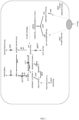
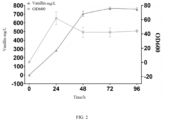
Claims (8)

  1. A genetically engineered bacterium using glucose as a substrate for de novo synthesis of vanillin, wherein
    the genetically engineered bacterium is a recombinant Corynebacterium glutamicum modified by chassis microorganisms and comprising a vanillin synthesis module and a methyl cyclic regeneration module;
    the modification of chassis microorganism is to take Corynebacterium glutamicum ATCC13032 as an original strain to knock out pcaHG, van, vdh and fud genes;
    the vanillin synthesis module expresses a transketolase gene, a 3-deoxy-7-phosphoheptulonate synthase gene, an O-methyltransferase gene, a Carboxylic acid reductase gene and a 4'-phosphopantetheinyl transferase gene;
    the methyl cyclic regeneration module expresses a 5-methyltetrahydropteroyltriglutamate-homocysteine methyltransferase gene, an S-adenosylmethionine synthase gene, a homoserine O-acetyltransferase gene and an adenosylhomocysteinase gene.
  2. The genetically engineered bacterium using glucose as the substrate for de novo synthesis of vanillin according to claim 1, wherein
    the transketolase gene comprises an endogenous Corynebacterium glutamicum transketolase gene or an exogenous transketolase gene;
    the 3-deoxy-7-phosphoheptulonate synthase gene comprises an endogenous Corynebacterium glutamicum3-deoxy-7-phosphoheptulonate synthase gene or an exogenous 3-deoxy-7-phosphoheptulonate synthase gene;
    the O-methyltransferase gene comprises an O-methyltransferase gene from Arabidopsis thaliana (Mouseear cress), an O-methyltransferase gene from Coffea canephora (Robusta coffee), an O-methyltransferase gene from Homo sapiens (Human), an O-methyltransferase gene from Rattus norvegicus (rat), and an O-methyltransferase gene from Mus musculus (mouse);
    the carboxylic acid reductase gene comprises a carboxylic acid reductase gene from Nocardia iowensis and a carboxylic acid reductase gene from Mycobacterium marinum; the 4'-phosphopantetheinyl transferase gene comprises a 4'-phosphopantetheinyl transferase gene from Nocardia iowensis, a 4'-phosphopantetheinyl transferase gene from Mycobacterium marinum, and a 4'-phosphopantetheinyl transferase gene from Bacillus subtilis;
    the 5-methyltetrahydropteroyltriglutamate-homocysteine methyltransferase gene comprises an endogenous Corynebacterium glutamicum 5-methyltetrahydropteroyltriglutamate-homocysteine methyltransferase gene, or an exogenous 5-methyltetrahydropteroyltriglutamate-homocysteine methyltransferase gene;
    the S-adenosylmethionine synthase gene comprises an endogenous Corynebacterium glutamicum S-adenosylmethionine synthase gene and an optional exogenous S-adenosylmethionine synthase gene;
    the homoserine O-acetyltransferase gene comprises an endogenous Corynebacterium glutamicum homoserine O-acetyltransferase gene and an optional exogenous homoserine O-acetyltransferase gene;
    the adenosylhomocysteinase gene comprises an endogenous Corynebacterium glutamicum adenosylhomocysteinase gene and an optional exogenous adenosylhomocysteinase gene; the nucleotide sequence of the endogenous Corynebacterium glutamicum transketolase gene is as shown by SEQ ID NO.83;
    the nucleotide sequence of the endogenous Corynebacterium glutamicum 3-deoxy-7-phosphoheptulonate synthase gene is as shown by SEQ ID NO. 84;
    the nucleotide sequence of the O-methyltransferase gene from Arabidopsis thaliana is as shown by SEQ ID NO. 85; the nucleotide sequence of the O-methyltransferase gene from Coffea canephora is as shown by SEQ ID NO. 122; the nucleotide sequence of the O-methyltransferase gene from Homo sapiens is as shown by SEQ ID NO. 105; the nucleotide sequence of the O-methyltransferase gene from Rattus norvegicus is as shown by SEQ ID NO. 46; and the nucleotide sequence of the O-methyltransferase gene from Mus musculus is as shown by SEQ ID NO. 137;
    the nucleotide sequence of the carboxylic acid reductase gene from Nocardia iowensis is as shown by SEQ ID NO. 47; and the nucleotide sequence of the carboxylic acid reductase gene from Mycobacterium marinum is as shown by SEQ ID NO. 86;
    the nucleotide sequence of the 4'-phosphopantetheinyl transferase gene from Nocardia iowensis is as shown by SEQ ID NO. 87; the nucleotide sequence of the 4'-phosphopantetheinyl transferase gene from Mycobacterium marinum is as shown by SEQ ID NO. 48; and the nucleotide sequence of the 4'-phosphopantetheinyl transferase gene from Bacillus subtilis is as shown by SEQ ID NO. 106;
    the nucleotide sequence of the endogenous Corynebacterium glutamicum 5-methyltetrahydropteroyltriglutamate-homocysteine methyltransferase gene is as shown by SEQ ID NO. 49;
    the nucleotide sequence of the endogenous Corynebacterium glutamicum S-adenosylmethionine synthase gene is as shown by SEQ ID NO. 50;
    the nucleotide sequence of the endogenous Corynebacterium glutamicum homoserine O-acetyltransferase gene is as shown by SEQ ID NO. 51;
    the nucleotide sequence of the endogenous Corynebacterium glutamicum adenosylhomocysteinase gene is as shown by SEQ ID NO. 52.
  3. The genetically engineered bacterium using glucose as the substrate for de novo synthesis of vanillin according to claim 2, wherein
    the exogenous transketolase gene is derived from Escherichia coli K12, Saccharomyces cerevisiae S288C or Bacillus subtilis 168; the transketolase gene derived from Escherichia coli K12: Gene ID: 947420; the transketolase gene derived from Saccharomyces cerevisiae S288C: Gene ID: 856188); the transketolase gene derived from Bacillus subtilis 168: Gene ID: 937377;
    the exogenous 3-deoxy-7-phosphoheptulonate synthase gene is derived from Escherichia coli K12, Saccharomyces cerevisiae S288C or Bacillus subtilis 168; the nucleotide sequence of the 3-deoxy-7-phosphoheptulonate synthase gene derived from Escherichia coli K12 is as shown by SEQ ID NO. 45; the 3-deoxy-7-phosphoheptulonate synthase gene derived from Saccharomyces cerevisiae S288C: Gene ID: 852551; and the 3-deoxy-7-phosphoheptulonate synthase gene derived from Bacillus subtilis 168: Gene ID: 937853;
    the exogenous 5-methyltetrahydropteroyltriglutamate-homocysteine methyltransferase gene is derived from Escherichia coli K12, Saccharomyces cerevisiae S288C or Bacillus subtilis 168; the 5-methyltetrahydropteroyltriglutamate-homocysteine methyltransferase gene derived from Escherichia coli K12: Gene ID: 948323; the 5-methyltetrahydropteroyltriglutamate-homocysteine methyltransferase gene derived from Saccharomyces cerevisiae S288C: Gene ID: 856825; and the 5-methyltetrahydropteroyltriglutamate-homocysteine methyltransferase gene derived from Bacillus subtilis 168: Gene ID: 936480;
    the exogenous S-adenosylmethionine synthase gene is derived from Escherichia coli K12, Saccharomyces cerevisiae S288C or Bacillus subtilis 168; the S-adenosylmethionine synthase gene derived from Escherichia coli K12: Gene ID: 948323; the S-adenosylmethionine synthase gene derived from Saccharomyces cerevisiae S288C: Gene ID: 852113; and the S-adenosylmethionine synthase gene derived from Bacillus subtilis 168: Gene ID: 937090;
    the exogenous homoserine O-acetyltransferase gene is derived from Saccharomyces cerevisiae S288C or Bacillus subtilis 168; the homoserine O-acetyltransferase gene derived from Saccharomyces cerevisiae S288C: Gene ID: 855444; and the homoserine O-acetyltransferase gene derived from Bacillus subtilis 168: Gene ID: 939083.
  4. The genetically engineered bacterium using glucose as the substrate for de novo synthesis of vanillin according to claim 3, wherein
    the exogenous transketolase gene is derived from Escherichia coli K12;
    the exogenous 3-deoxy-7-phosphoheptulonate synthase gene is derived from Escherichia coli K12;
    the O-methyltransferase gene is derived from Rattus norvegicus;
    the carboxylic acid reductase gene is derived from Nocardia iowensis;
    the 4'-phosphopantetheinyl transferase gene is derived from Mycobacterium marinum;
    the 5-methyltetrahydropteroyltriglutamate-homocysteine methyltransferase gene is derived from endogenous Corynebacterium glutamicum;
    the S-adenosylmethionine synthase gene is derived from the endogenous Corynebacterium glutamicum;
    the homoserine O-acetyltransferase gene is derived from the endogenous Corynebacterium glutamicum;
    the adenosylhomocysteinase gene is derived from the endogenous Corynebacterium glutamicum.
  5. A method for constructing a genetically engineered bacterium using glucose as a substrate for de novo synthesis of vanillin, comprising the following steps:
    (1) using Corynebacterium glutamicum ATCC13032 as an original strain to knock out pcaHG, van, vdh and fud genes, and obtaining modified Corynebacterium glutamicum;
    (2) expressing the vanillin synthesis module and the methyl cyclic regeneration module in claim 1 in the modified Corynebacterium glutamicum.
  6. An application of the genetically engineered bacterium of any one of claims 1-4 or the method of claim 5 in producing vanillin.
  7. An application of the genetically engineered bacterium of any one of claims 1-4 or the method of claim 5 in increasing a yield of vanillin.
  8. A method for producing vanillin, using the genetically engineered bacterium of any one of claims 1-4 or the genetically engineered bacterium constructed by the method of claim 5 for fermentation.
EP24167534.7A 2023-09-14 2024-03-28 Genetically engineered bacterium using glucose as substrate for de novo synthesis of vanillin and application thereof Pending EP4524234A1 (en)

Applications Claiming Priority (1)

Application Number Priority Date Filing Date Title
CN202311181895.9A CN117004544B (en) 2023-09-14 2023-09-14 Genetically engineered bacterium for synthesizing vanillin from head by taking glucose as substrate and application thereof

Publications (1)

Publication Number Publication Date
EP4524234A1 true EP4524234A1 (en) 2025-03-19

Family

ID=88576457

Family Applications (1)

Application Number Title Priority Date Filing Date
EP24167534.7A Pending EP4524234A1 (en) 2023-09-14 2024-03-28 Genetically engineered bacterium using glucose as substrate for de novo synthesis of vanillin and application thereof

Country Status (4)

Country Link
US (1) US20240318209A1 (en)
EP (1) EP4524234A1 (en)
CN (1) CN117004544B (en)
WO (1) WO2025055194A1 (en)

Families Citing this family (2)

* Cited by examiner, † Cited by third party
Publication number Priority date Publication date Assignee Title
CN117004544B (en) * 2023-09-14 2023-12-12 北京化工大学 Genetically engineered bacterium for synthesizing vanillin from head by taking glucose as substrate and application thereof
CN118853777B (en) * 2024-07-15 2025-05-23 陕西海斯夫生物工程有限公司 Recombinant amycolatopsis for total synthesis of vanillin from glucose, construction method and application thereof

Citations (2)

* Cited by examiner, † Cited by third party
Publication number Priority date Publication date Assignee Title
WO2018079705A1 (en) * 2016-10-27 2018-05-03 Ajinomoto Co., Inc. Method for producing aldehyde
US20220275405A1 (en) * 2021-02-26 2022-09-01 Northwestern University Production of vanillin-glucoside from lignin-derived carbon

Family Cites Families (9)

* Cited by examiner, † Cited by third party
Publication number Priority date Publication date Assignee Title
CN102443551B (en) * 2011-08-19 2013-08-07 甘肃省商业科技研究所 Bacillus subtilis and method for producing vanillin with ferulic acid biotransformed by bacillus subtilis
CN106032538B (en) * 2015-03-20 2019-09-06 爱普香料集团股份有限公司 One plant of metabolic engineering bacteria and its application in utilization a variety of substrates production vanillic aldehyde
CN106947727B (en) * 2017-02-20 2019-08-16 波顿(上海)生物技术有限公司 A kind of method of genetic engineering bacterium and its construction method and production vanillic aldehyde
WO2019195592A1 (en) * 2018-04-04 2019-10-10 The University Of Chicago Genetically-engineered microbes and compositions thereof
CN110257312B (en) * 2019-05-06 2021-04-06 浙江工业大学 Recombinant gene engineering bacterium and application thereof in producing vanillin by fermentation
CA3147424A1 (en) * 2019-08-01 2021-02-04 Amyris, Inc. Modified host cells for high efficiency production of vanillin
CN114181877B (en) * 2021-12-08 2024-06-07 北京化工大学 Genetically engineered bacteria for synthesizing vanillin and its application
CN115927152B (en) * 2022-12-09 2025-06-10 深圳中科欣扬生物科技有限公司 Synthesis and accumulation of vanillin in genetically engineered Escherichia coli
CN117004544B (en) * 2023-09-14 2023-12-12 北京化工大学 Genetically engineered bacterium for synthesizing vanillin from head by taking glucose as substrate and application thereof

Patent Citations (2)

* Cited by examiner, † Cited by third party
Publication number Priority date Publication date Assignee Title
WO2018079705A1 (en) * 2016-10-27 2018-05-03 Ajinomoto Co., Inc. Method for producing aldehyde
US20220275405A1 (en) * 2021-02-26 2022-09-01 Northwestern University Production of vanillin-glucoside from lignin-derived carbon

Non-Patent Citations (7)

* Cited by examiner, † Cited by third party
Title
CANKAR KATARINA ET AL: "Functional food additives/ingredients production by engineered Corynebacterium glutamicum", vol. 3, no. 1, 14 October 2022 (2022-10-14), pages 110 - 121, XP093045810, ISSN: 2662-7655, Retrieved from the Internet <URL:https://link.springer.com/article/10.1007/s43393-022-00141-4/fulltext.html> DOI: 10.1007/s43393-022-00141-4 *
CHEN Z ET AL.: "Establishing an Artificial Pathway for De Novo Biosynthesis of Vanillyl Alcohol in Escherichia coli[J", ACS SYNTHETIC BIOLOGY, 2017
HANSEN EH ET AL.: "De novo biosynthesis of vanillin in fission yeast (Schizosaccharomyces pombe) and baker's yeast (Saccharomyces cerevisiae).[J]", APPLIED & ENVIRONMENTAL MICROBIOLOGY, vol. 75, no. 121-33-5, 2009, pages 2765 - 74, XP002666446, DOI: 10.1128/aem.02681-08
KIM H S ET AL.: "Engineered Corynebacterium glutamicum as the Platform for the Production of Aromatic Aldehydes[J", FRONTIERS IN BIOENGINEERING AND BIOTECHNOLOGY, vol. 10, 2022, pages 880277
KIM HYUN-SONG ET AL: "Engineered Corynebacterium glutamicum as the Platform for the Production of Aromatic Aldehydes", FRONTIERS IN BIOENGINEERING AND BIOTECHNOLOGY, vol. 10, 12 May 2022 (2022-05-12), CH, XP093226347, ISSN: 2296-4185, DOI: 10.3389/fbioe.2022.880277 *
NI ET AL.: "Mimicking a natural pathway for de novo biosynthesis: natural vanillin production from accessible carbon sources[J", REP, vol. 5, no. 1, 2015, pages 13670, XP055688506, DOI: 10.1038/srep13670
YANG MMENG HLI X ET AL.: "Coculture engineering for efficient production of vanillyl alcohol in Escherichia coli[J", ABIOTECH, vol. 3, no. 4, 2022, pages 9

Also Published As

Publication number Publication date
CN117004544A (en) 2023-11-07
WO2025055194A1 (en) 2025-03-20
US20240318209A1 (en) 2024-09-26
CN117004544B (en) 2023-12-12

Similar Documents

Publication Publication Date Title
EP4524234A1 (en) Genetically engineered bacterium using glucose as substrate for de novo synthesis of vanillin and application thereof
Blombach et al. Corynebacterium glutamicum tailored for high-yield L-valine production
JP5805202B2 (en) Microorganism producing O-phosphoserine and method for producing L-cysteine or a derivative thereof from O-phosphoserine using the same
US9005953B2 (en) Recombinant microorganism having butanol production capacity and butanol production method
EP2379730B1 (en) Method for the preparation of diols
KR101596605B1 (en) Microorganism having carbon dioxide fixation pathway introduced thereinto
CN102016006B (en) Coryneform bacterial transformants capable of producing isopropanol
CN107435049B (en) Recombinant escherichia coli for producing salidroside, construction method and application
US8524472B2 (en) Method for producing 2-butanol and recombinant microorganism having 2-butanol production capacity
EP3504318B1 (en) Method of improving methyltransferase activity
US9663768B2 (en) Precursor-directed biosynthesis of 5-hydroxytryptophan
CN109295113A (en) A kind of method for producing hydroxytyrosol
JP7731802B2 (en) Production of chemicals from renewable resources
EP3875590A1 (en) Method for producing organic compound and coryneform bacterium
EP3158069B1 (en) Improved selectivity of the production of vanilloids in a recombinant unicellular host
TWI883169B (en) Method for producing sulfated polysaccharide and method for producing paps
Zhao et al. Impact of deletion of the genes encoding acetate kinase on production of L-tryptophan by Escherichia coli
CN113755415B (en) Novel recombinant microorganism with NMN synthesis path and production method thereof
KR20130034116A (en) Synthesis of chlorogenic acid using transformant
JP2016503650A (en) Genetically engineered bacteria that produce DL-alanine, and methods for producing DL-alanine by using the genetically engineered bacteria
JP5858463B2 (en) Lactic acid producing bacteria
Nie et al. Metabolic engineering Corynebacterium glutamicum for efficient production of gastrodin
KR101859137B1 (en) Recombination vectors for producing Pinostilbene or Pterostilbene
CN120988961A (en) A genetically engineered bacterium that synthesizes vanillin from glucose and its applications
CN121780345A (en) An engineered brewing yeast and its application in the synthesis of 2-phenylethanol

Legal Events

Date Code Title Description
PUAI Public reference made under article 153(3) epc to a published international application that has entered the european phase

Free format text: ORIGINAL CODE: 0009012

STAA Information on the status of an ep patent application or granted ep patent

Free format text: STATUS: REQUEST FOR EXAMINATION WAS MADE

17P Request for examination filed

Effective date: 20240328

AK Designated contracting states

Kind code of ref document: A1

Designated state(s): AL AT BE BG CH CY CZ DE DK EE ES FI FR GB GR HR HU IE IS IT LI LT LU LV MC ME MK MT NL NO PL PT RO RS SE SI SK SM TR

STAA Information on the status of an ep patent application or granted ep patent

Free format text: STATUS: EXAMINATION IS IN PROGRESS

17Q First examination report despatched

Effective date: 20251211