EP4524137A2 - Heterobifunctional compounds as degraders of hpk1 - Google Patents
Heterobifunctional compounds as degraders of hpk1 Download PDFInfo
- Publication number
- EP4524137A2 EP4524137A2 EP24222311.3A EP24222311A EP4524137A2 EP 4524137 A2 EP4524137 A2 EP 4524137A2 EP 24222311 A EP24222311 A EP 24222311A EP 4524137 A2 EP4524137 A2 EP 4524137A2
- Authority
- EP
- European Patent Office
- Prior art keywords
- optionally substituted
- alkyl
- membered
- cycloalkyl
- independently selected
- Prior art date
- Legal status (The legal status is an assumption and is not a legal conclusion. Google has not performed a legal analysis and makes no representation as to the accuracy of the status listed.)
- Pending
Links
Images






Classifications
-
- A—HUMAN NECESSITIES
- A61—MEDICAL OR VETERINARY SCIENCE; HYGIENE
- A61K—PREPARATIONS FOR MEDICAL, DENTAL OR TOILETRY PURPOSES
- A61K31/00—Medicinal preparations containing organic active ingredients
- A61K31/33—Heterocyclic compounds
- A61K31/395—Heterocyclic compounds having nitrogen as a ring hetero atom, e.g. guanethidine or rifamycins
- A61K31/435—Heterocyclic compounds having nitrogen as a ring hetero atom, e.g. guanethidine or rifamycins having six-membered rings with one nitrogen as the only ring hetero atom
- A61K31/47—Quinolines; Isoquinolines
- A61K31/472—Non-condensed isoquinolines, e.g. papaverine
- A61K31/4725—Non-condensed isoquinolines, e.g. papaverine containing further heterocyclic rings
-
- A—HUMAN NECESSITIES
- A61—MEDICAL OR VETERINARY SCIENCE; HYGIENE
- A61K—PREPARATIONS FOR MEDICAL, DENTAL OR TOILETRY PURPOSES
- A61K31/00—Medicinal preparations containing organic active ingredients
- A61K31/33—Heterocyclic compounds
- A61K31/395—Heterocyclic compounds having nitrogen as a ring hetero atom, e.g. guanethidine or rifamycins
- A61K31/495—Heterocyclic compounds having nitrogen as a ring hetero atom, e.g. guanethidine or rifamycins having six-membered rings with two or more nitrogen atoms as the only ring heteroatoms, e.g. piperazine or tetrazines
- A61K31/505—Pyrimidines; Hydrogenated pyrimidines, e.g. trimethoprim
- A61K31/519—Pyrimidines; Hydrogenated pyrimidines, e.g. trimethoprim ortho- or peri-condensed with heterocyclic rings
-
- A—HUMAN NECESSITIES
- A61—MEDICAL OR VETERINARY SCIENCE; HYGIENE
- A61K—PREPARATIONS FOR MEDICAL, DENTAL OR TOILETRY PURPOSES
- A61K39/00—Medicinal preparations containing antigens or antibodies
- A61K39/395—Antibodies; Immunoglobulins; Immune serum, e.g. antilymphocytic serum
- A61K39/39533—Antibodies; Immunoglobulins; Immune serum, e.g. antilymphocytic serum against materials from animals
- A61K39/3955—Antibodies; Immunoglobulins; Immune serum, e.g. antilymphocytic serum against materials from animals against proteinaceous materials, e.g. enzymes, hormones, lymphokines
-
- A—HUMAN NECESSITIES
- A61—MEDICAL OR VETERINARY SCIENCE; HYGIENE
- A61K—PREPARATIONS FOR MEDICAL, DENTAL OR TOILETRY PURPOSES
- A61K47/00—Medicinal preparations characterised by the non-active ingredients used, e.g. carriers or inert additives; Targeting or modifying agents chemically bound to the active ingredient
- A61K47/50—Medicinal preparations characterised by the non-active ingredients used, e.g. carriers or inert additives; Targeting or modifying agents chemically bound to the active ingredient the non-active ingredient being chemically bound to the active ingredient, e.g. polymer-drug conjugates
- A61K47/51—Medicinal preparations characterised by the non-active ingredients used, e.g. carriers or inert additives; Targeting or modifying agents chemically bound to the active ingredient the non-active ingredient being chemically bound to the active ingredient, e.g. polymer-drug conjugates the non-active ingredient being a modifying agent
- A61K47/54—Medicinal preparations characterised by the non-active ingredients used, e.g. carriers or inert additives; Targeting or modifying agents chemically bound to the active ingredient the non-active ingredient being chemically bound to the active ingredient, e.g. polymer-drug conjugates the non-active ingredient being a modifying agent the modifying agent being an organic compound
- A61K47/545—Heterocyclic compounds
-
- A—HUMAN NECESSITIES
- A61—MEDICAL OR VETERINARY SCIENCE; HYGIENE
- A61K—PREPARATIONS FOR MEDICAL, DENTAL OR TOILETRY PURPOSES
- A61K47/00—Medicinal preparations characterised by the non-active ingredients used, e.g. carriers or inert additives; Targeting or modifying agents chemically bound to the active ingredient
- A61K47/50—Medicinal preparations characterised by the non-active ingredients used, e.g. carriers or inert additives; Targeting or modifying agents chemically bound to the active ingredient the non-active ingredient being chemically bound to the active ingredient, e.g. polymer-drug conjugates
- A61K47/51—Medicinal preparations characterised by the non-active ingredients used, e.g. carriers or inert additives; Targeting or modifying agents chemically bound to the active ingredient the non-active ingredient being chemically bound to the active ingredient, e.g. polymer-drug conjugates the non-active ingredient being a modifying agent
- A61K47/54—Medicinal preparations characterised by the non-active ingredients used, e.g. carriers or inert additives; Targeting or modifying agents chemically bound to the active ingredient the non-active ingredient being chemically bound to the active ingredient, e.g. polymer-drug conjugates the non-active ingredient being a modifying agent the modifying agent being an organic compound
- A61K47/55—Medicinal preparations characterised by the non-active ingredients used, e.g. carriers or inert additives; Targeting or modifying agents chemically bound to the active ingredient the non-active ingredient being chemically bound to the active ingredient, e.g. polymer-drug conjugates the non-active ingredient being a modifying agent the modifying agent being an organic compound the modifying agent being also a pharmacologically or therapeutically active agent, i.e. the entire conjugate being a codrug
-
- A—HUMAN NECESSITIES
- A61—MEDICAL OR VETERINARY SCIENCE; HYGIENE
- A61P—SPECIFIC THERAPEUTIC ACTIVITY OF CHEMICAL COMPOUNDS OR MEDICINAL PREPARATIONS
- A61P15/00—Drugs for genital or sexual disorders; Contraceptives
-
- A—HUMAN NECESSITIES
- A61—MEDICAL OR VETERINARY SCIENCE; HYGIENE
- A61P—SPECIFIC THERAPEUTIC ACTIVITY OF CHEMICAL COMPOUNDS OR MEDICINAL PREPARATIONS
- A61P25/00—Drugs for disorders of the nervous system
- A61P25/28—Drugs for disorders of the nervous system for treating neurodegenerative disorders of the central nervous system, e.g. nootropic agents, cognition enhancers, drugs for treating Alzheimer's disease or other forms of dementia
-
- A—HUMAN NECESSITIES
- A61—MEDICAL OR VETERINARY SCIENCE; HYGIENE
- A61P—SPECIFIC THERAPEUTIC ACTIVITY OF CHEMICAL COMPOUNDS OR MEDICINAL PREPARATIONS
- A61P31/00—Antiinfectives, i.e. antibiotics, antiseptics, chemotherapeutics
-
- A—HUMAN NECESSITIES
- A61—MEDICAL OR VETERINARY SCIENCE; HYGIENE
- A61P—SPECIFIC THERAPEUTIC ACTIVITY OF CHEMICAL COMPOUNDS OR MEDICINAL PREPARATIONS
- A61P35/00—Antineoplastic agents
-
- A—HUMAN NECESSITIES
- A61—MEDICAL OR VETERINARY SCIENCE; HYGIENE
- A61P—SPECIFIC THERAPEUTIC ACTIVITY OF CHEMICAL COMPOUNDS OR MEDICINAL PREPARATIONS
- A61P35/00—Antineoplastic agents
- A61P35/02—Antineoplastic agents specific for leukemia
-
- A—HUMAN NECESSITIES
- A61—MEDICAL OR VETERINARY SCIENCE; HYGIENE
- A61P—SPECIFIC THERAPEUTIC ACTIVITY OF CHEMICAL COMPOUNDS OR MEDICINAL PREPARATIONS
- A61P35/00—Antineoplastic agents
- A61P35/04—Antineoplastic agents specific for metastasis
-
- C—CHEMISTRY; METALLURGY
- C07—ORGANIC CHEMISTRY
- C07D—HETEROCYCLIC COMPOUNDS
- C07D401/00—Heterocyclic compounds containing two or more hetero rings, having nitrogen atoms as the only ring hetero atoms, at least one ring being a six-membered ring with only one nitrogen atom
- C07D401/14—Heterocyclic compounds containing two or more hetero rings, having nitrogen atoms as the only ring hetero atoms, at least one ring being a six-membered ring with only one nitrogen atom containing three or more hetero rings
-
- C—CHEMISTRY; METALLURGY
- C07—ORGANIC CHEMISTRY
- C07D—HETEROCYCLIC COMPOUNDS
- C07D403/00—Heterocyclic compounds containing two or more hetero rings, having nitrogen atoms as the only ring hetero atoms, not provided for by group C07D401/00
- C07D403/14—Heterocyclic compounds containing two or more hetero rings, having nitrogen atoms as the only ring hetero atoms, not provided for by group C07D401/00 containing three or more hetero rings
-
- C—CHEMISTRY; METALLURGY
- C07—ORGANIC CHEMISTRY
- C07D—HETEROCYCLIC COMPOUNDS
- C07D417/00—Heterocyclic compounds containing two or more hetero rings, at least one ring having nitrogen and sulfur atoms as the only ring hetero atoms, not provided for by group C07D415/00
- C07D417/14—Heterocyclic compounds containing two or more hetero rings, at least one ring having nitrogen and sulfur atoms as the only ring hetero atoms, not provided for by group C07D415/00 containing three or more hetero rings
-
- C—CHEMISTRY; METALLURGY
- C07—ORGANIC CHEMISTRY
- C07D—HETEROCYCLIC COMPOUNDS
- C07D487/00—Heterocyclic compounds containing nitrogen atoms as the only ring hetero atoms in the condensed system, not provided for by groups C07D451/00 - C07D477/00
- C07D487/02—Heterocyclic compounds containing nitrogen atoms as the only ring hetero atoms in the condensed system, not provided for by groups C07D451/00 - C07D477/00 in which the condensed system contains two hetero rings
- C07D487/04—Ortho-condensed systems
-
- C—CHEMISTRY; METALLURGY
- C07—ORGANIC CHEMISTRY
- C07K—PEPTIDES
- C07K5/00—Peptides containing up to four amino acids in a fully defined sequence; Derivatives thereof
- C07K5/04—Peptides containing up to four amino acids in a fully defined sequence; Derivatives thereof containing only normal peptide links
- C07K5/06—Dipeptides
- C07K5/06008—Dipeptides with the first amino acid being neutral
- C07K5/06017—Dipeptides with the first amino acid being neutral and aliphatic
- C07K5/06034—Dipeptides with the first amino acid being neutral and aliphatic the side chain containing 2 to 4 carbon atoms
Definitions
- This disclosure relates to bivalent compounds (e.g., heterobifunctional compounds) which degrade and/or disrupt Hematopoietic Progenitor Kinase 1 (HPK1), compositions comprising one or more of the bivalent compounds, and methods of use thereof for the treatment of HPK1-mediated diseases in a subject in need thereof.
- the disclosure also relates to methods for designing such bivalent compounds.
- heterobifunctional compounds also known as proteolysis-targeted chimeras (PROTACs)
- PROTACs proteolysis-targeted chimeras
- bind and induce degradation of the enzyme thus eliminating potential scaffolding functions of the protein, in addition to inhibiting its enzymatic activity (Buckley and Crews, 2014).
- the HPK1 degraders disclosed herein offer a novel mechanism for treating HPK1-mediated diseases. Additionally, the ability of the degraders to target HPK1 for degradation, as opposed to inhibiting the catalytic activity of HPK1, is expected to overcome resistance, regardless of whether due to the drugs used in prior treatments or whether acquired resistance was caused by gene mutation, amplification or otherwise.
- Lewis Thomas and Frank Macfarlane Burnet are the first to introduce the concept that the immune system constantly surveil the host for the emergence of nascent cancer cells and eliminate them before they become tumors (Burnet, 1970). While several lines of evidence suggested that our immune system could accomplish such task (Corthay, 2014), the most direct support of such concept comes from the development of immuno-oncological drugs that target the inhibitory molecules that hinder the anti-tumor immunity effort, allowing immune system to vigorously engage and eliminate previously difficult to treat cancers. (Ribas and Wolchok, 2018) The success of the immune checkpoint inhibitor approach provides the roadmap as to how the exhausted immune systems could be provoked to re-engage the cancer cells. This theoretical framework spurs the search for novel immune checkpoint receptors that could serve as novel immune checkpoint targets.
- Hematopoietic Progenitor Kinase 1 also known as MAP4K1
- TCR T cell antigen receptor
- HPK1 transcripts are detected in all embryonic tissues examined, but its expression profile shifts to a hematopoietic cell-restricted pattern post-partum at neonatal day 1 (Kiefer et al., 1996), leading to the speculation that HPK1 may perform a specialized function in hematopoietic cells.
- This cytosolic Ste20 kinase is recruited to the TCR complex (Ling et al., 2001) and its kinase activity is induced upon the engagement of the TCR (Liou et al., 2000).
- HPK1 Overexpression of HPK1 suppresses TCR-induced activation of AP-1-dependent gene transcription in a kinase dependent manner, suggesting that the kinase activity of HPK1 is required to inhibit the Erk MAPK pathway (Liou et al., 2000). This blockage of the Erk MAPK pathway is thought to be the inhibitory mechanism that negatively regulates TCR-induced IL-2 gene transcription.
- the present disclosure relates generally to bivalent compounds (e.g., bi-functional compounds) which degrade and/or disrupt HPK1 and to methods for the treatment of HPK1-mediated diseases (i.e., a disease which depends on HPK1; overexpresses HPK1; depends on HPK1 activity; or includes elevated levels of HPK1 activity relative to a wild-type tissue of the same species and tissue type).
- HPK1-mediated diseases i.e., a disease which depends on HPK1; overexpresses HPK1; depends on HPK1 activity; or includes elevated levels of HPK1 activity relative to a wild-type tissue of the same species and tissue type.
- HPK1 degraders/disruptors have dual functions (enzyme inhibition plus protein degradation/disruption)
- the bivalent compounds of the present disclosure can be significantly more effective therapeutic agents than currently available HPK1 inhibitors, which inhibit the enzymatic activity of HPK1, but do not affect HPK1 protein levels.
- the present disclosure further provides methods
- the present disclosure provides a bivalent compound including a HPK1 ligand conjugated to a degradation/disruption tag.
- the HPK1 degraders/disruptors have the form "PI-linker-EL", as shown below: wherein PI (protein of interest) comprises an HPK1 ligand ( e.g., an HPK1 inhibitor) and EL (E3 ligase) comprises a degradation/disruption tag (e.g., E3 ligase ligand).
- HPK1 ligand e.g., an HPK1 inhibitor
- EL E3 ligase
- PI protein of interest
- EL E3 ligase
- Exemplary HPK1 ligands (PI), exemplary degradation/disruption tags (EL), and exemplary linkers (Linker) are illustrated below:
- (HPK1) ligands include a moiety according to FORMULA 1A: wherein,
- (HPK1) ligands include a moiety according to FORMULA 3A: wherein
- (HPK1) ligands include a moiety according to FORMULA 3B: wherein
- (HPK1) ligands include a moiety according to FORMULA 1: wherein
- (HPK1) ligands include a moiety according to FORMULA 1A: wherein,
- (HPK1) ligands include a moiety according to FORMULA 1B: wherein
- (HPK1) ligands include a moiety according to FORMULA 1C: wherein;
- (HPK1) ligands include a moiety according to FORMULA 2: wherein
- (HPK1) ligands include a moiety according to FORMULA 2A or 2B: wherein
- (HPK1) ligands include a moiety according to FORMULA 2C or 2D: wherein
- (HPK1) ligands include a moiety according to FORMULA 2E or 2F: wherein
- (HPK1) ligands include a moiety according to FORMULA 2G or 2H: wherein
- (HPK1) ligands include a moiety according to FORMULA 2K, 2L, 2M and 2N: wherein
- (HPK1) ligands include a moiety according to FORMULA 3: wherein
- (HPK1) ligands include a moiety according to FORMULA 3A: wherein
- (HPK1) ligands include a moiety according to FORMULA 3B: wherein
- (HPK1) ligands include a moiety according to FORMULA 4B: wherein
- (HPK1) ligands include a moiety according to FORMULA 7: wherein
- (HPK1) ligands include a moiety according to FORMULA 7A: wherein
- (HPK1) ligands include a moiety according to FORMULA 9: wherein
- (HPK1) ligands are selected from the group consisting of: and pharmaceutically acceptable salts thereof.
- degradation/disruption tags include a moiety according to one of FORMULAE 12E, 12F, 12G, 12H, and 12I: wherein
- degradation/disruption tags include a moiety according to FORMULA 13 A: wherein
- degradation/disruption tags include a moiety according to FORMULAE 13B, 13C, 13D, 13E and 13F: wherein
- degradation/disruption tags include a moiety according to FORMULA 14A: wherein
- degradation/disruption tags include a moiety according to FORMULA 14B: wherein
- degradation/disruption tags are selected from the group consisting of: and pharmaceutically acceptable salts thereof.
- the HPK1 ligand can be conjugated to the degradation/disruption tag through a linker.
- the linker can include, e.g., acyclic or cyclic saturated or unsaturated carbon, ethylene glycol, amide, amino, ether, urea, carbamate, aromatic, heteroaromatic, heterocyclic, and/or carbonyl containing groups with different lengths.
- the linker is a moiety according to FORMULA 16: wherein
- the linker is a moiety according to FORMULA 16A: wherein
- the linker is a moiety according to FORMULA 16B: wherein
- the linker is a moiety according to FORMULA 16C: wherein
- the linker is selected from the group consisting of a ring selected from the group consisting of a 3 to 13 membered ring; a 3 to 13 membered fused ring; a 3 to 13 membered bridged ring; and a 3 to 13 membered spiro ring; and pharmaceutically acceptable salts thereof.
- the linker is a moiety according to one of FORMULAE C1, C2, C3, C4 and C5: and pharmaceutically acceptable salts thereof.
- the bivalent compound according to the present invention is selected from the group consisting of: HC58-18, HC58-19, HC58-20, HC58-22, HC58-23, HC58-24, HC58-25, HC58-26, HC58-27, HC58-28, HC58-29, HC58-30, HC58-31, HC58-32, HC58-33, HC58-34, HC58-35, HC58-36, HC58-37, HC58-38, HC58-39, HC58-40, HC58-41, HC58-43, HC58-44, HC58-45, HC58-46, HC58-53, HC58-57, HC58-58, HC58-59, HC58-60, HC58-63, HC58-64, HC58-65, HC58-66, HC58-67, HC58-68, HC58-69, HC58-70, HC
- the bivalent compound according to the present invention is selected from the group consisting of HC58-18, HC58-19, HC58-20, HC58-22, HC58-23, HC58-24, HC58-25, HC58-26, HC58-27, HC58-28, HC58-29, HC58-30, HC58-31, HC58-32, HC58-33, HC58-34, HC58-35, HC58-36, HC58-37, HC58-38, HC58-39, HC58-40, HC58-41, HC58-43, HC58-44, HC58-45, HC58-46, HC58-53, HC58-57, HC58-58, HC58-59, HC58-60, HC58-63, HC58-64, HC58-65, HC58-66, HC58-67, HC58-68, HC58-69, HC58-70, HC58
- the bivalent compound according to the present invention is selected from the group consisting of: HC65-175, HC65-183, HC65-184, HC65-185, HC65-186, HC75-1, HC75-2, HC75-3, HC75-4, HC75-5, HC75-6, HC75-7, HC75-8, HC75-9, HC75-10, HC75-11, HC75-12, HC75-13, HC75-14, HC75-15, HC75-16, HC75-17, HC75-18, HC75-18, HC75-20, HC75-21, HC75-22, HC75-23, HC75-24, HC75-29, HC75-31, HC75-34, HC75-35, HC75-36, HC75-37, HC75-38, HC75-39, HC75-40, HC75-41, HC75-42, HC75-43, HC75-44, HC75-45,
- the bivalent compound according to the present invention is selected from the group consisting of: HC90-33, HC90-34, HC90-35, HC90-36, HC90-37, HC90-41, HC90-42, HC90-43, HC90-44, HC90-45, HC90-46, HC90-47, HC90-49, HC90-50, HC90-51, HC90-52, HC90-53, HC90-54, HC90-55, HC90-56, HC90-57, HC90-58, HC90-59, HC90-61, HC90-66, HC90-69, HC90-70, HC90-71, HC90-72, HC90-73, HC90-74, HC90-84, HC90-85, HC90-86, HC90-87, HC90-88, HC90-89, HC90-90, HC90-91,
- preferred compounds according to the present invention include:
- this disclosure provides a method of treating the HPK1-mediated diseases, the method including administering to a subject in need thereof with an HPK1-mediated disease one or more bivalent compounds including an HPK1 ligand conjugated to a degradation/disruption tag.
- the HPK1-mediated diseases may be a disease resulting from HPK1 amplification.
- the HPK1-mediated diseases can have elevated HPK1 enzymatic activity relative to a wild-type tissue of the same species and tissue type.
- Non-limiting examples of HPK1-mediated diseases or diseases whose clinical symptoms could be treated by HPK1 degraders/disruptors-mediated therapy include: all solid and liquid cancer, chronic infections that produce exhausted immune response, infection-mediated immune suppression, age-related decline in immune response, age-related decline in cognitive function and infertility.
- Exemplary types of cancer that could prevented, or therapeutically treated by manipulation of HPK1 level by degraders/disruptors should include all solid and liquid cancers, including, but not limited to, cancers of the breast, respiratory tract, brain, reproductive organs, digestive tract, urinary tract, eye, liver, skin, head and neck, thyroid, parathyroid and their distant metastases.
- Examples of liquid cancers include lymphomas, sarcomas, and leukaemias. Listed below are the type of cancers that immunotherapy using HPK1 degraders/disruptors should be able to prevent or treat.
- breast cancers include, but are not limited to, triple negative breast cancer, invasive ductal carcinoma, invasive lobular carcinoma, ductal carcinoma in situ, and lobular carcinoma in situ.
- cancers of the respiratory tract include, but are not limited to, small-cell and non- small-cell lung carcinoma, as well as bronchial adenoma and pleuropulmonary blastoma.
- brain cancers include, but are not limited to, brain stem and hypophtalmic glioma, cerebellar and cerebral astrocytoma, glioblastoma, medulloblastoma, ependymoma, as well as neuroectodermal and pineal tumor.
- Tumors of the male reproductive organs include, but are not limited to, prostate and testicular cancer.
- Tumors of the female reproductive organs include, but are not limited to, endometrial, cervical, ovarian, vaginal, and vulvar cancer, as well as sarcoma of the uterus.
- ovarian cancer examples include, but are not limited to, serous tumor, endometrioid tumor, mucinous cystadenocarcinoma, granulosa cell tumor, Sertoli-Leydig cell tumor and arrhenoblastoma.
- cervical cancer examples include, but are not limited to, squamous cell carcinoma, adenocarcinoma, adenosquamous carcinoma, small cell carcinoma, neuroendocrine tumor, glassy cell carcinoma and villoglandular adenocarcinoma.
- Tumors of the digestive tract include, but are not limited to, anal, colon, colorectal, esophageal, gallbladder, gastric, pancreatic, rectal, small-intestine, and salivary gland cancers.
- esophageal cancer examples include, but are not limited to, esophageal cell carcinomas and adenocarcinomas, as well as squamous cell carcinomas, leiomyosarcoma, malignant melanoma, rhabdomyosarcoma and lymphoma.
- gastric cancer examples include, but are not limited to, intestinal type and diffuse type gastric adenocarcinoma.
- pancreatic cancer examples include, but are not limited to, ductal adenocarcinoma, adenosquamous carcinomas and pancreatic endocrine tumors.
- Example of tumors of the urinary tract include, but are not limited to, bladder, penile, kidney, renal pelvis, ureter, urethral and human papillary renal cancers.
- kidney cancer examples include, but are not limited to, renal cell carcinoma, urothelial cell carcinoma, juxtaglomerular cell tumor (reninoma), angiomyolipoma, renal oncocytoma, Bellini duct carcinoma, clear-cell sarcoma of the kidney, mesoblastic nephroma and Wilms' tumor.
- bladder cancer examples include, but are not limited to, transitional cell carcinoma, squamous cell carcinoma, adenocarcinoma, sarcoma and small cell carcinoma.
- Eye cancers include, but are not limited to, intraocular melanoma and retinoblastoma.
- liver cancers include, but are not limited to, hepatocellular carcinoma (liver cell carcinomas with or without fibrolamellar variant), cholangiocarcinoma (intrahepatic bile duct carcinoma), and mixed hepatocellular cholangiocarcinoma.
- Example of skin cancers include, but are not limited to, squamous cell carcinoma, Kaposi's sarcoma, malignant melanoma, Merkel cell skin cancer, and non-melanoma skin cancer.
- Example of head-and-neck cancers include, but are not limited to, squamous cell cancer of the head and neck, laryngeal, hypopharyngeal, nasopharyngeal, oropharyngeal cancer, salivary gland cancer, lip and oral cavity cancer and squamous cell.
- lymphomas include, but are not limited to, AIDS-related lymphoma, non-Hodgkin's lymphoma, cutaneous T-cell lymphoma, Burkitt lymphoma, Hodgkin's disease, and lymphoma of the central nervous system.
- sarcomas include, but are not limited to, sarcoma of the soft tissue, osteosarcoma, malignant fibrous histiocytoma, lymphosarcoma, and rhabdomyosarcoma.
- leukemias include, but are not limited to, acute myeloid leukemia, acute lymphoblastic leukemia, chronic lymphocytic leukemia, chronic myelogenous leukemia, and hairy cell leukemia.
- HPK1 degraders/disruptors should be able to treat the above cancer types as stand alone agents or used as an agent in combination with existing standards of treatment therapy and other FDA-approved cancer therapy.
- HPK1 extends to include diseases and therapies that are amenable to treatment by stimulation/augmentation of immune response, including the prolongation of immune responses during vaccination for immunizable diseases such as influenza and coronaviruses, including Covid 19. Also, because HPK1 is expressed at high level in two other anatomical locations - brain and testes - the HPK1 degraders/disruptors should be able to treat or prevent diseases related to brain and testes that were caused by HPK1 or could be treated by HPK1 degraders/disruptors. These potential diseases include, but are not limited to, Alzheimer's disease, age-related dementia and infertility, regardless whether these possible diseases were caused by HPK1 or by other etiological causes.
- HPK1 further extends to include therapies involving ex vivo treatment of immune cells, including, but not limited to, all T cell subsets, genetically engineered T cells, Chimeric Antigen Receptor (CAR) T cells, tumor infiltrating lymphocytes, dendritic cells, macrophage, mast cells, granulocytes (include basophils, eosinophils, and neutrophils), natural killer cells, NK T cells and B cells.
- CAR Chimeric Antigen Receptor
- the sources of cells for such ex vivo treatment include, but are not limited to, the autologous bone marrow cells from the patient him/herself, or from the patient's frozen banked cord blood stem cells, peripheral blood or bone marrow stem cells from MHC-matched or MHC-mismatched donors.
- Treating patients by administering specific immune cells that had been treated with HPK1 degraders offers many added advantages over in vivo use.
- specific immune cells type with HPK1 degraders ex vivo, it is possible to specifically target the immune cell type that would receive the benefit of having the endogenous HPK1 level reduced by HPK1 degraders while sparing the HPK1 expression level in other immune cell types that are not involved in the disease condition.
- This therapeutic approach would provide cell type-specific targeting of immune cells in a way that is not possible with the use of HPK1 degrader in the in vivo setting.
- the ex vivo approach would likely limit potential toxicity that may result from reduction of HPK1 level in immune cell types that do not benefit from a reduction in HPK1 levels.
- HPK1 is also expressed in non-hematopoietically-derived tissues such as the brain and testes. Because of this tissue-specific expression pattern of HPK1, HPK1 degraders might be able to treat or prevent diseases related to the brain and testes that were caused by HPK1. These potential treatments include, but are not limited to, treatment of Alzheimer's disease, age-related dementia and infertility, irrespective to whether these possible diseases were caused by HPK1 or by other etiological causes.
- HPK1 expression status of the tumor as the biomarker would enable stratification of patients into appropriate therapeutic groups that would receive HPK1 degraders in vivo or ex vivo, based on HPK1 expression in the tumors.
- HPK1 degraders in an ex vivo setting offers additional advantages over gene-editing approaches such as CRISPR in that it allows therapeutic use of HPK1 degraders as a non-permanent treatment that allows a therapeutic regimen to be adjusted temporally through dosing levels and through alteration of the administration schedule.
- HPK1 degraders could be used in settings whereby stimulation/augmentation of the immune response is required, or when the prolongation of immune responses is needed. Improving immune response to vaccination is one of the settings in which HPK1 degraders could be used therapeutically. HPK1 degraders could also be used to enhance the antigen presentation capability of dendritic cell-based cancer vaccines.
- HPK1 degraders include treatment of dendritic cells with HPK1 degraders to increase resistance to maturation-induced apoptosis, thus increasing the yield of dendritic cell production.
- HPK1 degraders of the present invention may be employed in combination with treatments using checkpoint inhibitors, including, but not limited to anti-programmed cell death protein (anti-PD-1) and anti-programmed death ligand-1 (anti-PD-L1).
- checkpoint inhibitors including, but not limited to anti-programmed cell death protein (anti-PD-1) and anti-programmed death ligand-1 (anti-PD-L1).
- anti-PD-1 and anti-PD-L1 agents include monoclonal antibodies that target either PD-1 or PD-L1.
- Such antibodies include, but are not limited to pembrolizumab (Keytruda), nivolumab (Opdivo), and cemiplimab (Libtayo) (PD-1 inhibitors); and atezolizumab (Tecentriq), avelumab (Bavencio), and durvalumab (Imfinzi) (PD-L1 inhibitors).
- Use of such anti-PD1 and/or anti-PD-L1 agents in immunotherapy, particularly cancer immunotherapy may be enhanced by concomitant therapy with HPK1 degraders of the present invention.
- Such combination therapy of anti-PD-1 agents with HPK1 degraders of the present invention is particularly useful in the treatment of melanoma, lung cancer, renal cell carcinoma, Hodgkin lymphoma, head and neck cancer, colon cancer and liver cancer.
- Such combination therapy of anti-PD-L 1 agents with HPK1 degraders of the present invention are particularly useful in the treatment of non-small cell lung carcinoma, multiple myeloma, urothelial cancer and head and neck cancer. (Hernandez 2018).
- Similar combination therapy may employ HPK1 degraders of the present invention with an anti-CTLA-4 (cytotoxic T-lymphocyte-associated protein 4) agent, such as the monoclonal antibody ilimumab, particularly for the treatment of melanoma, lung cancer, renal cell carcinoma, glioblastoma, hepatocellular carcinoma large B cell lymphoma, Hodgkin lymphoma, head and neck cancer, colon cancer and liver cancer.
- CTLA-4 cytotoxic T-lymphocyte-associated protein 4
- the HPK1 degraders of the present invention may be used in the treatment of tumor types having elevated expression of cyclooxygenase-2 (COX-2). COX-2 elevation leads to over production of prostaglandin E2 (PGE2). PGE2 made by these tumors is known to inhibit the anti-tumor immune response. T cells lacking HPK1 are resistant to PGE2-mediated inhibition. (Alzabin 2010). Cancer types known to have high expression levels of COX-2 include, but not are not limited to colon cancer, lung cancer, sarcoma and breast cancer.
- the bivalent compounds can be HC58-18, HC58-19, HC58-20, HC58-22, HC58-23, HC58-24, HC58-25, HC58-26, HC58-27, HC58-28, HC58-29, HC58-30, HC58-31, HC58-32, HC58-33, HC58-34, HC58-35, HC58-36, HC58-37, HC58-38, HC58-39, HC58-40, HC58-41, HC58-43, HC58-44, HC58-45, HC58-46, HC58-53, HC58-57, HC58-58, HC58-59, HC58-60, HC58-63, HC58-64, HC58-65, HC58-66, HC58-67, HC58-68, HC58-69, HC58-70, HC58-71, HC
- the bivalent compounds can be administered by any of several routes of administration including, e.g., orally, parenterally, intradermally, subcutaneously, topically, and/or rectally.
- any of the above-described methods can further include treating the subject with one or more additional therapeutic regimens for treating cancer.
- the one or more additional therapeutic regimens for treating cancer can be, e.g., one or more of surgery, chemotherapy, radiation therapy, hormone therapy, or immunotherapy.
- This disclosure additionally provides a method for identifying a bivalent compound which mediates degradation/disruption of HPK1, the method including providing a heterobifunctional test compound including a HPK1 ligand conjugated to a degradation/disruption tag, contacting the heterobifunctional test compound with a cell (e.g., a cancer cell such as a HPK1-mediated cancer cell) including a ubiquitin ligase and HPK1.
- a cell e.g., a cancer cell such as a HPK1-mediated cancer cell
- the present disclosure is based, in part, on the discovery that novel heterobifunctional molecules which degrade HPK1, HPK1 fusion proteins, and/or HPK1 mutant proteins are useful in the treatment of HPK1-mediated diseases.
- HPK1-mediated diseases or diseases whose clinical symptoms could be treated by HPK1 degraders/disruptors-mediated therapy include: all solid and liquid cancer, chronic infections that produce exhausted immune response, infection-mediated immune suppression, age-related decline in immune response, age-related decline in cognitive function and infertility
- Exemplary type of cancers that could be prevented, or therapeutically treated by manipulation of HPK1 level by degraders/disruptors should include all solid and liquid cancers, including, but not limited to, cancers of the breast, respiratory tract, brain, reproductive organs, digestive tract, urinary tract, eye, liver, skin, head and neck, thyroid, parathyroid and their distant metastases.
- Examples of liquid cancers include lymphomas, sarcomas, and leukaemias. Listed below are the type of cancers that immunotherapy using HPK1 degraders/disruptors should be able to prevent or treat.
- breast cancers include, but are not limited to, triple negative breast cancer, invasive ductal carcinoma, invasive lobular carcinoma, ductal carcinoma in situ, and lobular carcinoma in situ.
- cancers of the respiratory tract include, but are not limited to, small-cell and non- small-cell lung carcinoma, as well as bronchial adenoma and pleuropulmonary blastoma.
- brain cancers include, but are not limited to, brain stem and hypophtalmic glioma, cerebellar and cerebral astrocytoma, glioblastoma, medulloblastoma, ependymoma, as well as neuroectodermal and pineal tumor.
- Tumors of the male reproductive organs include, but are not limited to, prostate and testicular cancer.
- Tumors of the female reproductive organs include, but are not limited to, endometrial, cervical, ovarian, vaginal, and vulvar cancer, as well as sarcoma of the uterus.
- ovarian cancer examples include, but are not limited to, serous tumor, endometrioid tumor, mucinous cystadenocarcinoma, granulosa cell tumor, Sertoli-Leydig cell tumor and arrhenoblastoma.
- cervical cancer examples include, but are not limited to, squamous cell carcinoma, adenocarcinoma, adenosquamous carcinoma, small cell carcinoma, neuroendocrine tumor, glassy cell carcinoma and villoglandular adenocarcinoma.
- Tumors of the digestive tract include, but are not limited to, anal, colon, colorectal, esophageal, gallbladder, gastric, pancreatic, rectal, small-intestine, and salivary gland cancers.
- esophageal cancer examples include, but are not limited to, esophageal cell carcinomas and adenocarcinomas, as well as squamous cell carcinomas, leiomyosarcoma, malignant melanoma, rhabdomyosarcoma and lymphoma.
- gastric cancer examples include, but are not limited to, intestinal type and diffuse type gastric adenocarcinoma.
- pancreatic cancer examples include, but are not limited to, ductal adenocarcinoma, adenosquamous carcinomas and pancreatic endocrine tumors.
- Example of tumors of the urinary tract include, but are not limited to, bladder, penile, kidney, renal pelvis, ureter, urethral and human papillary renal cancers.
- kidney cancer examples include, but are not limited to, renal cell carcinoma, urothelial cell carcinoma, juxtaglomerular cell tumor (reninoma), angiomyolipoma, renal oncocytoma, Bellini duct carcinoma, clear-cell sarcoma of the kidney, mesoblastic nephroma and Wilms' tumor.
- bladder cancer examples include, but are not limited to, transitional cell carcinoma, squamous cell carcinoma, adenocarcinoma, sarcoma and small cell carcinoma.
- Eye cancers include, but are not limited to, intraocular melanoma and retinoblastoma.
- liver cancers include, but are not limited to, hepatocellular carcinoma (liver cell carcinomas with or without fibrolamellar variant), cholangiocarcinoma (intrahepatic bile duct carcinoma), and mixed hepatocellular cholangiocarcinoma.
- Example of skin cancers include, but are not limited to, squamous cell carcinoma, Kaposi's sarcoma, malignant melanoma, Merkel cell skin cancer, and non-melanoma skin cancer.
- Example of head-and-neck cancers include, but are not limited to, squamous cell cancer of the head and neck, laryngeal, hypopharyngeal, nasopharyngeal, oropharyngeal cancer, salivary gland cancer, lip and oral cavity cancer and squamous cell.
- lymphomas include, but are not limited to, AIDS-related lymphoma, non-Hodgkin's lymphoma, cutaneous T-cell lymphoma, Burkitt lymphoma, Hodgkin's disease, and lymphoma of the central nervous system.
- sarcomas include, but are not limited to, sarcoma of the soft tissue, osteosarcoma, malignant fibrous histiocytoma, lymphosarcoma, and rhabdomyosarcoma.
- leukemias include, but are not limited to, acute myeloid leukemia, acute lymphoblastic leukemia, chronic lymphocytic leukemia, chronic myelogenous leukemia, and hairy cell leukemia.
- HPK1 degraders/disruptors should be able to treat the above cancer type as stand alone agent or used as agent in combination with existing standard of treatment therapy and other FDA-approved cancer therapy.
- HPK1 uses of HPK1 include diseases and therapies that are amenable to treatment by stimulation/augmentation of immune response, including the prolongation of immune responses during vaccination for immunizable diseases. Also, because HPK1 is expressed at high level in two other anatomical locations - brain and testes - the HPK1 degraders/disruptors should be able to treat or prevent diseases related to brain and testes that were caused by HPK1 or could be treated by HPK1 degraders/disruptors. These potential diseases include, but is not limited to, Alzheimer's disease, age-related dementia and infertility, regardless whether these possible diseases were caused by HPK1 or by other etiological causes.
- Successful strategies for selective degradation/disruption of the target protein induced by a bifunctional molecule include recruiting an E3 ubiquitin ligase and mimicking protein misfolding with a hydrophobic tag (Buckley and Crews, 2014).
- PROTACs PROteolysis TArgeting Chimeras
- the induced proximity leads to selective ubiquitination of the target followed by its degradation at the proteasome.
- the degrader technology has been successfully applied to degradation of multiple targets (Bondeson et al., 2015; Buckley et al., 2015; Lai et al., 2016; Lu et al., 2015; Winter et al., 2015; Zengerle et al., 2015), but not to degradation of HPK1.
- a hydrophobic tagging approach which utilizes a bulky and hydrophobic adamantyl group, has been developed to mimic protein misfolding, leading to the degradation of the target protein by proteasome (Buckley and Crews, 2014).
- This approach has also been successfully applied to selective degradation of the pseudokinase Her3 (Xie et al., 2014), but not to degradation of HPK1 proteins.
- this disclosure provides specific examples of novel HPK1 degraders/disruptors, and examined the effect of exemplary degraders/disruptors on reducing HPK1 protein levels, inhibiting/disrupting HPK1 activity and increasing the TCR-induced IL-2 production by Jurkat T cells.
- Exemplary type of cancers that could be prevented, or therapeutically treated by manipulation of HPK1 level by degraders/disruptors should include all solid and liquid cancers, including, but not limited to, cancers of the breast, respiratory tract, brain, reproductive organs, digestive tract, urinary tract, eye, liver, skin, head and neck, thyroid, parathyroid and their distant metastases.
- liquid cancers include lymphomas, sarcomas, and leukaemias. Listed below are the type of cancers that immunotherapy using HPK1 degraders/disruptors should be able to prevent or treat as mentioned above.
- BET protein degradation has also been induced via another E3 ligase, VHL (Zengerle et al., 2015). Partial degradation of the Her3 protein has been induced using an adamantane-modified compound (Xie et al., 2014).
- VHL E3 ligase
- Partial degradation of the Her3 protein has been induced using an adamantane-modified compound (Xie et al., 2014).
- RNA interference Unlike gene knockout or knockdown, this chemical approach provides an opportunity to study dose and time dependency in a disease model by varying the concentrations and frequencies of administration of the relevant compound.
- This disclosure includes all stereoisomers, geometric isomers, tautomers and isotopes of the structures depicted and compounds named herein. This disclosure also includes compounds described herein, regardless of how they are prepared, e.g., synthetically, through biological process (e.g., metabolism or enzyme conversion), or a combination thereof.
- HPK1 ligand protein arginine methyltransferase 5 (HPK1) ligand
- HPK1 ligand protein arginine methyltransferase 5 (HPK1) ligand
- HPK1 targeting moiety can be, for example, a small molecule compound (i.e., a molecule of molecular weight less than about 1.5 kilodaltons (kDa)), a peptide or polypeptide, nucleic acid or oligonucleotide, carbohydrate such as oligosaccharides, or an antibody or fragment thereof.
- kDa kilodaltons
- degradation/disruption tag refers to a compound, which associates with or binds to a ubiquitin ligase for recruitment of the corresponding ubiquitination machinery to HPK1 or induces HPK1 protein misfolding and subsequent degradation at the proteasome or loss of function.
- the degradation/disruption tags of the present disclosure include, e.g., thalidomide, pomalidomide, lenalidomide, VHL-1, adamantane, 1-((4,4,5,5,5-pentafluoropentyl)sulfinyl)nonane, nutlin-3a, RG7112, RG7338, AMG232, AA-115, bestatin, MV-1, LCL161, and/or analogs thereof.
- linker is a bond, molecule, or group of molecules that binds two separate entities to one another. Linkers can provide for optimal spacing of the two entities.
- the term “linker” in some aspects refers to any agent or molecule that bridges the HPK1 ligand to the degradation/disruption tag.
- sites on the HPK1 ligand or the degradation/disruption tag which are not necessary for the function of the degraders of the present disclosure, are ideal sites for attaching a linker, provided that the linker, once attached to the conjugate of the present disclosure, does not interfere with the function of the degrader, i.e., its ability to target HPK1 and its ability to recruit a ubiquitin ligase.
- the bivalent compounds disclosed herein can increasing the TCR-induced IL-2 production by Jurkat T cells.
- the HPK1 degraders/disruptors have the form "PI-linker-EL", as shown below: wherein PI (protein of interest) comprises an HPK1 ligand ( e.g., an HPK1 inhibitor) and EL ( E 3 ligase) comprises a degradation/disruption tag ( e.g., E3 ligase ligand).
- HPK1 ligand e.g., an HPK1 inhibitor
- EL E 3 ligase
- PI protein of interest
- EL E 3 ligase
- PI protein of interest
- EL E 3 ligase
- exemplary linkers (Linker) are illustrated below:
- (HPK1) ligands include a moiety according to FORMULA 1A: wherein,
- (HPK1) ligands include a moiety according to FORMULA 1: wherein
- (HPK1) ligands include a moiety according to FORMULA 1A: wherein,
- (HPK1) ligands include a moiety according to FORMULA 1B: wherein
- (HPK1) ligands include a moiety according to FORMULA 1C: wherein;
- (HPK1) ligands include a moiety according to FORMULA 2: wherein
- (HPK1) ligands include a moiety according to FORMULA 2A or 2B: wherein
- (HPK1) ligands include a moiety according to FORMULA 2C or 2D: wherein
- (HPK1) ligands include a moiety according to FORMULA 2E or 2F: wherein
- (HPK1) ligands include a moiety according to FORMULA 2G or 2H: wherein
- (HPK1) ligands include a moiety according to FORMULA 2K, 2L, 2M and 2N: wherein
- (HPK1) ligands include a moiety according to FORMULA 2O or 2P: wherein
- (HPK1) ligands include a moiety according to FORMULA 3: wherein
- (HPK1) ligands include a moiety according to FORMULA 3A: wherein
- (HPK1) ligands include a moiety according to FORMULA 3B: wherein
- (HPK1) ligands include a moiety according to FORMULAE 3C, 3D and 3E: wherein
- (HPK1) ligands include a moiety according to FORMULA 3F or 3G: wherein
- (HPK1) ligands include a moiety according to FORMULA 3H or 3K: wherein
- (HPK1) ligands include a moiety according to FORMULA 3L: wherein
- (HPK1) ligands include a moiety according to FORMULA 3M: wherein
- (HPK1) ligands include a moiety according to FORMULA 4: wherein
- (HPK1) ligands include a moiety according to FORMULA 4A: wherein
- (HPK1) ligands include a moiety according to FORMULA 4B: wherein
- (HPK1) ligands include a moiety according to FORMULA 5: wherein
- (HPK1) ligands include a moiety according to FORMULA 6:
- (HPK1) ligands include a moiety according to FORMULA 7: wherein
- (HPK1) ligands include a moiety according to FORMULA 7A: wherein
- (HPK1) ligands include a moiety according to FORMULA 8: wherein
- (HPK1) ligands include a moiety according to FORMULA 8A: wherein
- (HPK1) ligands include a moiety according to FORMULA 8B: wherein
- (HPK1) ligands include a moiety according to FORMULA 9: wherein
- (HPK1) ligands include a moiety according to FORMULA 10: wherein
- (HPK1) ligands include a moiety according to FORMULA 11: wherein
- (HPK1) ligands are selected from the group consisting of: and pharmaceutically acceptable salts thereof.
- Degradation/Disruption tags include, but are not limited to:
- degradation/disruption tags include a moiety according to FORMULAE 12A, 12B, 12C and 12D: wherein
- degradation/disruption tags include a moiety according to one of FORMULAE 12E, 12F, 12G, 12H, and 121: wherein
- degradation/disruption tags include a moiety according to FORMULA 13A: wherein
- degradation/disruption tags include a moiety according to FORMULAE 13B, 13C, 13D, 13E and 13F: wherein
- degradation/disruption tags include a moiety according to FORMULA 14A: wherein
- degradation/disruption tags include a moiety according to FORMULA 14B: wherein
- degradation/disruption tags are selected from the group consisting of and pharmaceutically acceptable salts thereof.
- the HPK1 ligand can be conjugated to the degradation/disruption tag through a linker.
- the linker can include, e.g., acyclic or cyclic saturated or unsaturated carbon, ethylene glycol, amide, amino, ether, urea, carbamate, aromatic, heteroaromatic, heterocyclic, and/or carbonyl containing groups with different lengths.
- suitable subjects include, for example, subjects who have or had a condition or disease but that resolved the disease or an aspect thereof, present reduced symptoms of disease (e.g., relative to other subjects ( e.g., the majority of subjects) with the same condition or disease), or that survive for extended periods of time with the condition or disease ( e.g., relative to other subjects ( e.g., the majority of subjects) with the same condition or disease), e.g ., in an asymptomatic state ( e.g., relative to other subjects ( e.g., the majority of subjects) with the same condition or disease).
- exhibition of a positive immune response towards a condition or disease can be made from patient records, family history, or detecting an indication of a positive immune response.
- treatment can promote or result in, for example, a decrease in the number of tumor cells (e.g., in a subject) relative to the number of tumor cells prior to treatment; a decrease in the viability (e.g., the average/mean viability) of tumor cells ( e.g., in a subject) relative to the viability of tumor cells prior to treatment; a decrease in the rate of growth of tumor cells; a decrease in the rate of local or distant tumor metastasis; or reductions in one or more symptoms associated with one or more tumors in a subject relative to the subject's symptoms prior to treatment.
- a decrease in the number of tumor cells e.g., in a subject
- a decrease in the viability e.g., the average/mean viability
- the rate of growth of tumor cells e.g., the rate of local or distant tumor metastasis
- reductions in one or more symptoms associated with one or more tumors in a subject relative to the subject's symptoms prior to treatment e.g., in
- brain cancers include, but are not limited to, brain stem and hypophtalmic glioma, cerebellar and cerebral astrocytoma, glioblastoma, medulloblastoma, ependymoma, as well as neuroectodermal and pineal tumor.
- cervical cancer examples include, but are not limited to, squamous cell carcinoma, adenocarcinoma, adenosquamous carcinoma, small cell carcinoma, neuroendocrine tumor, glassy cell carcinoma and villoglandular adenocarcinoma.
- Tumors of the digestive tract include, but are not limited to, anal, colon, colorectal, esophageal, gallbladder, gastric, pancreatic, rectal, small-intestine, and salivary gland cancers.
- esophageal cancer examples include, but are not limited to, esophageal cell carcinomas and adenocarcinomas, as well as squamous cell carcinomas, leiomyosarcoma, malignant melanoma, rhabdomyosarcoma and lymphoma.
- gastric cancer examples include, but are not limited to, intestinal type and diffuse type gastric adenocarcinoma.
- Example of tumors of the urinary tract include, but are not limited to, bladder, penile, kidney, renal pelvis, ureter, urethral and human papillary renal cancers.
- kidney cancer examples include, but are not limited to, renal cell carcinoma, urothelial cell carcinoma, juxtaglomerular cell tumor (reninoma), angiomyolipoma, renal oncocytoma, Bellini duct carcinoma, clear-cell sarcoma of the kidney, mesoblastic nephroma and Wilms' tumor.
- bladder cancer examples include, but are not limited to, transitional cell carcinoma, squamous cell carcinoma, adenocarcinoma, sarcoma and small cell carcinoma.
- Eye cancers include, but are not limited to, intraocular melanoma and retinoblastoma.
- liver cancers include, but are not limited to, hepatocellular carcinoma (liver cell carcinomas with or without fibrolamellar variant), cholangiocarcinoma (intrahepatic bile duct carcinoma), and mixed hepatocellular cholangiocarcinoma.
- Example of skin cancers include, but are not limited to, squamous cell carcinoma, Kaposi's sarcoma, malignant melanoma, Merkel cell skin cancer, and non-melanoma skin cancer.
- Example of head-and-neck cancers include, but are not limited to, squamous cell cancer of the head and neck, laryngeal, hypopharyngeal, nasopharyngeal, oropharyngeal cancer, salivary gland cancer, lip and oral cavity cancer and squamous cell.
- lymphomas include, but are not limited to, AIDS-related lymphoma, non-Hodgkin's lymphoma, cutaneous T-cell lymphoma, Burkitt lymphoma, Hodgkin's disease, and lymphoma of the central nervous system.
- sarcomas include, but are not limited to, sarcoma of the soft tissue, osteosarcoma, malignant fibrous histiocytoma, lymphosarcoma, and rhabdomyosarcoma.
- leukemias include, but are not limited to, acute myeloid leukemia, acute lymphoblastic leukemia, chronic lymphocytic leukemia, chronic myelogenous leukemia, and hairy cell leukemia.
- HPK1 degraders/disruptors should be able to treat the above cancer type as stand alone agent or used as agent in combination with existing standard of treatment therapy and other FDA-approved cancer therapy.
- HPK1 uses of HPK1 include diseases and therapies that are amenable to treatment by stimulation/augmentation of immune response, including the prolongation of immune responses during vaccination for immunizable diseases. Also, because HPK1 is expressed at high level in two other anatomical locations - brain and testes - the HPK1 degraers/disruptors should be able to treat or prevent diseases related to brain and testes that were caused by HPK1 or could be treated by HPK1 degraders/disruptors. These potential diseases include, but is not limited to, Alzheimer's disease, age-related dementia and infertility, regarless whether these possible diseases were caused by HPK1 or by other eithiological causes.
- the term "preventing a disease” in a subject means for example, to stop the development of one or more symptoms of a disease in a subject before they occur or are detectable, e.g., by the patient or the patient's doctor.
- a blood test that measure the level of HPK1 in each of the immune cell sub-types, which could be achieved by intracellular staining by anti-HPK1 antibody and analyze by clinical FACS analysis. Such detection method could identify immune cell type possess aberrant level of HPK1 and may signify that such patient might be a good candidate for HPK1 degraders/disruptors-based therapy.
- This detection of aberrant expression level of HPK1 may be an early warning biomarker that may indicate which patient may respond well to their disease conditions if HPK1 degraders/disruptors were to used as stand alone or as part of combination therapy.
- the disease e.g., cancer
- the disease does not develop at all, i.e., no symptoms of the disease are detectable.
- it can also mean delaying or slowing of the development of one or more symptoms of the disease.
- it can mean decreasing the severity of one or more subsequently developed symptoms.
- Specific dosage and treatment regimens for any particular patient will depend upon a variety of factors, including the activity of the specific compound employed, the age, body weight, general health status, sex, diet, time of administration, rate of excretion, drug combination, the severity and course of the disease, condition or symptoms, the patient's disposition to the disease, condition or symptoms, and the judgment of the treating physician.
- An effective amount can be administered in one or more administrations, applications or dosages.
- a therapeutically effective amount of a therapeutic compound depends on the therapeutic compounds selected.
- treatment of a subject with a therapeutically effective amount of the compounds or compositions described herein can include a single treatment or a series of treatments.
- effective amounts can be administered at least once.
- the compositions can be administered one from one or more times per day to one or more times per week; including once every other day. The skilled artisan will appreciate that certain factors can influence the dosage and timing required to effectively treat a subject, including but not limited to the severity of the disease or disorder, previous treatments, the general health or age of the subject, and other diseases present.
- the subject can be evaluated to detect, assess, or determine their level of disease.
- treatment can continue until a change (e.g., reduction) in the level of disease in the subject is detected.
- a maintenance dose of a compound, or composition disclosed herein can be administered, if necessary.
- the dosage or frequency of administration, or both can be reduced, e.g., as a function of the symptoms, to a level at which the improved condition is retained.
- Patients may, however, require intermittent treatment on a long-term basis upon any recurrence of disease symptoms.
- HPK1 degraders/disruptors disclosed herein include pure enantiomers, mixtures of enantiomers, pure diastereoisomers, mixtures of diastereoisomers, diastereoisomeric racemates, mixtures of diastereoisomeric racemates and the meso-form and pharmaceutically acceptable salts, solvent complexes, morphological forms, or deuterated and fluoro derivatives thereof.
- HC58-19 was synthesized following the standard procedure for preparing HC58-18 from Intermediate 2 (13.0 mg, 0.024 mmol, 1.2 equiv), 3-(3-((( S )-1-((2 S ,4 R )-4-hydroxy-2-((4-(4-methylthiazol-5-yl)benzyl)carbamoyl)pyrrolidin-1-yl)-3,3-dimethyl-1-oxobutan-2-yl)amino)-3-oxopropoxy)propanoic acid (11.5 mg, 0.02 mmol, 1.0 equiv), EDCI (5.8 mg, 0.03 mmol, 1.5 equiv), HOAt (4.1 mg, 0.03 mmol, 1.5 equiv), and NMM (6.1 mg, 0.06 mmol, 3.0 equiv) in DMSO (1 mL).
- HC58-20 was synthesized following the standard procedure for preparing HC58-18 from Intermediate 2 (13.0 mg, 0.024 mmol, 1.2 equiv), 2-(2-(2-((( S )-1-((2 S ,4 R )-4-hydroxy-2-((4-(4-methylthiazol-5-yl)benzyl)carbamoyl)pyrrolidin-1-yl)-3,3-dimethyl-1-oxobutan-2-yl)amino)-2-oxoethoxy)ethoxy)acetic acid (11.8 mg, 0.02 mmol, 1.0 equiv), EDCI (5.8 mg, 0.03 mmol, 1.5 equiv), HOAt (4.1 mg, 0.03 mmol, 1.5 equiv), and NMM (6.1 mg, 0.06 mmol, 3.0 equiv) in DMSO (1 mL).
- HC58-22 was synthesized following the standard procedure for preparing HC58-18 from Intermediate 2 (13.0 mg, 0.024 mmol, 1.2 equiv), ( S )-13-((2 S ,4 R )-4-hydroxy-2-((4-(4-methylthiazol-5-yl)benzyl)carbamoyl)pyrrolidine-1-carbonyl)-14,14-dimethyl-11-oxo-3,6,9-trioxa-12-azapentadecanoic acid (12.7 mg, 0.02 mmol, 1.0 equiv), EDCI (5.8 mg, 0.03 mmol, 1.5 equiv), HOAt (4.1 mg, 0.03 mmol, 1.5 equiv), and NMM (6.1 mg, 0.06 mmol, 3.0 equiv) in DMSO (1 mL).
- HC58-23 was synthesized following the standard procedure for preparing HC58-18 from Intermediate 2 (13.0 mg, 0.024 mmol, 1.2 equiv), ( S )-15-((2 S ,4 R )-4-hydroxy-2-((4-(4-methylthiazol-5-yl)benzyl)carbamoyl)pyrrolidine-1-carbonyl)-16,16-dimethyl-13-oxo-4,7,10-trioxa-14-azaheptadecanoic acid (13.3 mg, 0.02 mmol, 1.0 equiv), EDCI (5.8 mg, 0.03 mmol, 1.5 equiv), HOAt (4.1 mg, 0.03 mmol, 1.5 equiv), and NMM (6.1 mg, 0.06 mmol, 3.0 equiv) in DMSO (1 mL).
- HC58-24 was synthesized following the standard procedure for preparing HC58-18 from Intermediate 2 (13.0 mg, 0.024 mmol, 1.2 equiv), ( S )-18-((2 S ,4 R )-4-hydroxy-2-((4-(4-methylthiazol-5-yl)benzyl)carbamoyl)pyrrolidine-1-carbonyl)-19,19-dimethyl-16-oxo-4,7,10,13-tetraoxa-17-azaicosanoic acid (14.1 mg, 0.02 mmol, 1.0 equiv), EDCI (5.8 mg, 0.03 mmol, 1.5 equiv), HOAt (4.1 mg, 0.03 mmol, 1.5 equiv), and NMM (6.1 mg, 0.06 mmol, 3.0 equiv) in DMSO (1 mL).
- HC58-25 was synthesized following the standard procedure for preparing HC58-18 from Intermediate 2 (13.0 mg, 0.024 mmol, 1.2 equiv), ( S )-19-((2 S ,4 R )-4-hydroxy-2-((4-(4-methylthiazol-5-yl)benzyl)carbamoyl)pyrrolidine-1-carbonyl)-20, 20-dimethyl-17-oxo-3,6,9,12,15-pentaoxa-18-azahenicosanoic acid (14.5 mg, 0.02 mmol, 1.0 equiv), EDCI (5.8 mg, 0.03 mmol, 1.5 equiv), HOAt (4.1 mg, 0.03 mmol, 1.5 equiv), and NMM (6.1 mg, 0.06 mmol, 3.0 equiv) in DMSO (1 mL).
- HC58-26 was synthesized following the standard procedure for preparing HC58-18 from Intermediate 2 (13.0 mg, 0.024 mmol, 1.2 equiv), ( S )-21-((2 S ,4 R )-4-hydroxy-2-((4-(4-methylthiazol-5-yl)benzyl)carbamoyl)pyrrolidine-1-carbonyl)-22,22-dimethyl-19-oxo-4,7,10,13,16-pentaoxa-20-azatricosanoic acid (15.0 mg, 0.02 mmol, 1.0 equiv), EDCI (5.8 mg, 0.03 mmol, 1.5 equiv), HOAt (4.1 mg, 0.03 mmol, 1.5 equiv), and NMM (6.1 mg, 0.06 mmol, 3.0 equiv) in DMSO (1 mL).
- HC58-27 was synthesized following the standard procedure for preparing HC58-18 from Intermediate 2 (13.0 mg, 0.024 mmol, 1.2 equiv), 4-((( S )-1-((2 S ,4 R )-4-hydroxy-2-((4-(4-methylthiazol-5-yl)benzyl)carbamoyl)pyrrolidin-1-yl)-3,3-dimethyl-1-oxobutan-2-yl)amino)-4-oxobutanoic acid (10.6 mg, 0.02 mmol, 1.0 equiv), EDCI (5.8 mg, 0.03 mmol, 1.5 equiv), HOAt (4.1 mg, 0.03 mmol, 1.5 equiv), and NMM (6.1 mg, 0.06 mmol, 3.0 equiv) in DMSO (1 mL).
- HC58-28 was synthesized following the standard procedure for preparing HC58-18 from Intermediate 2 (13.0 mg, 0.024 mmol, 1.2 equiv), 5-(( S )-1-((2 S ,4 R )-4-hydroxy-2-((4-(4-methylthiazol-5-yl)benzyl)carbamoyl)pyrrolidin-1-yl)-3,3-dimethyl-1-oxobutan-2-yl)amino)-5-oxopentanoic acid (10.9 mg, 0.02 mmol, 1.0 equiv), EDCI (5.8 mg, 0.03 mmol, 1.5 equiv), HOAt (4.1 mg, 0.03 mmol, 1.5 equiv), and NMM (6.1 mg, 0.06 mmol, 3.0 equiv) in DMSO (1 mL).
- HC58-29 was synthesized following the standard procedure for preparing HC58-18 from Intermediate 2 (13.0 mg, 0.024 mmol, 1.2 equiv), 6-((( S )-1-((2 S ,4 R )-4-hydroxy-2-((4-(4-methylthiazol-5-yl)benzyl)carbamoyl)pyrrolidin-1-yl)-3,3-dimethyl-1-oxobutan-2-yl)amino)-6-oxohexanoic acid (11.2 mg, 0.02 mmol, 1.0 equiv), EDCI (5.8 mg, 0.03 mmol, 1.5 equiv), HOAt (4.1 mg, 0.03 mmol, 1.5 equiv), and NMM (6.1 mg, 0.06 mmol, 3.0 equiv) in DMSO (1 mL).
- HC58-30 was synthesized following the standard procedure for preparing HC58-18 from Intermediate 2 (13.0 mg, 0.024 mmol, 1.2 equiv), 7-((( S )-1-((2 S ,4 R )-4-hydroxy-2-((4-(4-methylthiazol-5-yl)benzyl)carbamoyl)pyrrolidin-1-yl)-3,3-dimethyl-1-oxobutan-2-yl)amino)-7-oxoheptanoic acid (11.5 mg, 0.02 mmol, 1.0 equiv), EDCI (5.8 mg, 0.03 mmol, 1.5 equiv), HOAt (4.1 mg, 0.03 mmol, 1.5 equiv), and NMM (6.1 mg, 0.06 mmol, 3.0 equiv) in DMSO (1 mL).
- HC58-31 was synthesized following the standard procedure for preparing HC58-18 from Intermediate 2 (13.0 mg, 0.024 mmol, 1.2 equiv), 8-((( S )-1-((2 S ,4 R )-4-hydroxy-2-((4-(4-methylthiazol-5-yl)benzyl)carbamoyl)pyrrolidin-1-yl)-3,3-dimethyl-1-oxobutan-2-yl)amino)-8-oxooctanoic acid (11.7 mg, 0.02 mmol, 1.0 equiv), EDCI (5.8 mg, 0.03 mmol, 1.5 equiv), HOAt (4.1 mg, 0.03 mmol, 1.5 equiv), and NMM (6.1 mg, 0.06 mmol, 3.0 equiv) in DMSO (1 mL).
- HC58-32 was synthesized following the standard procedure for preparing HC58-18 from Intermediate 2 (13.0 mg, 0.024 mmol, 1.2 equiv), 9-((( S )-1-((2 S ,4 R )-4-hydroxy-2-((4-(4-methylthiazol-5-yl)benzyl)carbamoyl)pyrrolidin-1-yl)-3,3-dimethyl-1-oxobutan-2-yl)amino)-9-oxononanoic acid (12.0 mg, 0.02 mmol, 1.0 equiv), EDCI (5.8 mg, 0.03 mmol, 1.5 equiv), HOAt (4.1 mg, 0.03 mmol, 1.5 equiv), and NMM (6.1 mg, 0.06 mmol, 3.0 equiv) in DMSO (1 mL).
- HC58-33 was synthesized following the standard procedure for preparing HC58-18 from Intermediate 2 (13.0 mg, 0.024 mmol, 1.2 equiv), 10-((( S )-1-((2 S ,4 R )-4-hydroxy-2-((4-(4-methylthiazol-5-yl)benzyl)carbamoyl)pyrrolidin-1 -yl)-3,3-dimethyl-1 -oxobutan-2-yl)amino)-10-oxodecanoic acid (12.3 mg, 0.02 mmol, 1.0 equiv), EDCI (5.8 mg, 0.03 mmol, 1.5 equiv), HOAt (4.1 mg, 0.03 mmol, 1.5 equiv), and NMM (6.1 mg, 0.06 mmol, 3.0 equiv) in DMSO (1 mL).
- HC58-34 was synthesized following the standard procedure for preparing HC58-18 from Intermediate 2 (13.0 mg, 0.024 mmol, 1.2 equiv), 11-((( S )-1-((2 S ,4 R )-4-hydroxy-2-((4-(4-methylthiazol-5-yl)benzyl)carbamoyl)pyrrolidin-1-yl)-3,3-dimethyl-1-oxobutan-2-yl)amino)-11-oxoundecanoic acid (12.6 mg, 0.02 mmol, 1.0 equiv), EDCI (5.8 mg, 0.03 mmol, 1.5 equiv), HOAt (4.1 mg, 0.03 mmol, 1.5 equiv), and NMM (6.1 mg, 0.06 mmol, 3.0 equiv) in DMSO (1 mL).
- HC58-35 was synthesized following the standard procedure for preparing HC58-18 from Intermediate 2 (13.0 mg, 0.024 mmol, 1.2 equiv), (2-(2,6-dioxopiperidin-3-yl)-1,3-dioxoisoindolin-4-yl)glycine (6.6 mg, 0.02 mmol, 1.0 equiv), EDCI (5.8 mg, 0.03 mmol, 1.5 equiv), HOAt (4.1 mg, 0.03 mmol, 1.5 equiv), and NMM (6.1 mg, 0.06 mmol, 3.0 equiv) in DMSO (1 mL). HC58-35 was obtained as yellow solid in TFA salt form (9.7 mg, 57%).
- HC58-36 was synthesized following the standard procedure for preparing HC58-18 from Intermediate 2 (13.0 mg, 0.024 mmol, 1.2 equiv), 3-((2-(2,6-dioxopiperidin-3-yl)-1,3-dioxoisoindolin-4-yl)amino)propanoic acid (6.9 mg, 0.02 mmol, 1.0 equiv), EDCI (5.8 mg, 0.03 mmol, 1.5 equiv), HOAt (4.1 mg, 0.03 mmol, 1.5 equiv), and NMM (6.1 mg, 0.06 mmol, 3.0 equiv) in DMSO (1 mL).
- HC58-37 was synthesized following the standard procedure for preparing HC58-18 from Intermediate 2 (13.0 mg, 0.024 mmol, 1.2 equiv), 4-((2-(2,6-dioxopiperidin-3-yl)-1,3-dioxoisoindolin-4-yl)amino)butanoic acid (7.2 mg, 0.02 mmol, 1.0 equiv), EDCI (5.8 mg, 0.03 mmol, 1.5 equiv), HOAt (4.1 mg, 0.03 mmol, 1.5 equiv), and NMM (6.1 mg, 0.06 mmol, 3.0 equiv) in DMSO (1 mL).
- HC58-39 was synthesized following the standard procedure for preparing HC58-18 from Intermediate 2 (13.0 mg, 0.024 mmol, 1.2 equiv), 6-((2-(2,6-dioxopiperidin-3-yl)-1,3-dioxoisoindolin-4-yl)amino)hexanoic acid (7.8 mg, 0.02 mmol, 1.0 equiv), EDCI (5.8 mg, 0.03 mmol, 1.5 equiv), HOAt (4.1 mg, 0.03 mmol, 1.5 equiv), and NMM (6.1 mg, 0.06 mmol, 3.0 equiv) in DMSO (1 mL).
- HC58-40 was synthesized following the standard procedure for preparing HC58-18 from Intermediate 2 (13.0 mg, 0.024 mmol, 1.2 equiv), 7-((2-(2,6-dioxopiperidin-3-yl)-1,3-dioxoisoindolin-4-yl)amino)heptanoic acid (8.0 mg, 0.02 mmol, 1.0 equiv), EDCI (5.8 mg, 0.03 mmol, 1.5 equiv), HOAt (4.1 mg, 0.03 mmol, 1.5 equiv), and NMM (6.1 mg, 0.06 mmol, 3.0 equiv) in DMSO (1 mL).
- HC58-41 was synthesized following the standard procedure for preparing HC58-18 from Intermediate 2 (13.0 mg, 0.024 mmol, 1.2 equiv), 8-((2-(2,6-dioxopiperidin-3-yl)-1,3-dioxoisoindolin-4-yl)amino)octanoic acid (8.3 mg, 0.02 mmol, 1.0 equiv), EDCI (5.8 mg, 0.03 mmol, 1.5 equiv), HOAt (4.1 mg, 0.03 mmol, 1.5 equiv), and NMM (6.1 mg, 0.06 mmol, 3.0 equiv) in DMSO (1 mL).
- HC58-43 was synthesized following the standard procedure for preparing HC58-18 from Intermediate 2 (13.0 mg, 0.024 mmol, 1.2 equiv), 3-(2-(2-((2-(2,6-dioxopiperidin-3-yl)-1,3-dioxoisoindolin-4-yl)amino)ethoxy)ethoxy)propanoic acid (8.7 mg, 0.02 mmol, 1.0 equiv), EDCI (5.8 mg, 0.03 mmol, 1.5 equiv), HOAt (4.1 mg, 0.03 mmol, 1.5 equiv), and NMM (6.1 mg, 0.06 mmol, 3.0 equiv) in DMSO (1 mL).
- HC58-44 was synthesized following the standard procedure for preparing HC58-18 from Intermediate 2 (13.0 mg, 0.024 mmol, 1.2 equiv), 3-(2-(2-(2-((2-(2,6-dioxopiperidin-3-yl)-1,3-dioxoisoindolin-4-yl)amino)ethoxy)ethoxy)ethoxy)propanoic acid (9.6 mg, 0.02 mmol, 1.0 equiv), EDCI (5.8 mg, 0.03 mmol, 1.5 equiv), HOAt (4.1 mg, 0.03 mmol, 1.5 equiv), and NMM (6.1 mg, 0.06 mmol, 3.0 equiv) in DMSO (1 mL).
- HC58-45 was synthesized following the standard procedure for preparing HC58-18 from Intermediate 2 (13.0 mg, 0.024 mmol, 1.2 equiv), 1-((2-(2,6-dioxopiperidin-3-yl)-1,3-dioxoisoindolin-4-yl)amino)-3,6,9,12-tetraoxapentadecan-15-oic acid (10.4 mg, 0.02 mmol, 1.0 equiv), EDCI (5.8 mg, 0.03 mmol, 1.5 equiv), HOAt (4.1 mg, 0.03 mmol, 1.5 equiv), and NMM (6.1 mg, 0.06 mmol, 3.0 equiv) in DMSO (1 mL).
- HC58-46 was synthesized following the standard procedure for preparing HC58-18 from Intermediate 2 (13.0 mg, 0.024 mmol, 1.2 equiv), 1-((2-(2,6-dioxopiperidin-3-yl)-1,3-dioxoisoindolin-4-yl)amino)-3,6,9,12,15-pentaoxaoctadecan-18-oic acid (11.3 mg, 0.02 mmol, 1.0 equiv), EDCI (5.8 mg, 0.03 mmol, 1.5 equiv), HOAt (4.1 mg, 0.03 mmol, 1.5 equiv), and NMM (6.1 mg, 0.06 mmol, 3.0 equiv) in DMSO (1 mL).
- HC58-57 was synthesized following the standard procedure for preparing HC58-53 from Intermediate 3 (14.2 mg, 0.02 mmol, 1.0 equiv), (2 S ,4 R )-1-(( S )-2-(2-aminoacetamido)-'3,3-dimethylbutanoyl)-4-hydroxy-N-(4-(4-methylthiazol-5-yl)benzyl)pyrrolidine-2-carboxamide (14.3 mg, 0.02 mmol, 1.0 equiv), EDCI (5.8 mg, 0.03 mmol, 1.5 equiv), HOAt (4.1 mg, 0.03 mmol, 1.5 equiv), and NMM (12.1 mg, 0.12 mmol, 6.0 equiv) in DMSO (1 mL).
- HC58-58 was synthesized following the standard procedure for preparing HC58-53 from Intermediate 3 (14.2 mg, 0.02 mmol, 1.0 equiv), (2 S ,4 R )-1-(( S )-2-(3-aminopropanamido)-3,3-dimethylbutanoyl)-4-hydroxy- N -(4-(4-methylthiazol-5-yl)benzyl)pyrrolidine-2-carboxamide (14.6 mg, 0.02 mmol, 1.0 equiv), EDCI (5.8 mg, 0.03 mmol, 1.5 equiv), HOAt (4.1 mg, 0.03 mmol, 1.5 equiv), and NMM (12.1 mg, 0.12 mmol, 6.0 equiv) in DMSO (1 mL).
- HC58-59 was synthesized following the standard procedure for preparing HC58-53 from Intermediate 3 (14.2 mg, 0.02 mmol, 1.0 equiv), (2 S ,4 R )-1-(( S )-2-(4-aminobutanamido)-3,3-dimethylbutanoyl)-4-hydroxy-N-(4-(4-methylthiazol-5-yl)benzyl)pyrrolidine-2-carboxamide (14.9 mg, 0.02 mmol, 1.0 equiv), EDCI (5.8 mg, 0.03 mmol, 1.5 equiv), HOAt (4.1 mg, 0.03 mmol, 1.5 equiv), and NMM (12.1 mg, 0.12 mmol, 6.0 equiv) in DMSO (1 mL).
- HC58-60 was synthesized following the standard procedure for preparing HC58-53 from Intermediate 3 (14.2 mg, 0.02 mmol, 1.0 equiv), (2 S, 4 R )-1-(( S )-2-(5-aminopentanamido)-3,3-dimethylbutanoyl)-4-hydroxy-N-(4-(4-methylthiazol-5-yl)benzyl)pyrrolidine-2-carboxamide (11.3 mg, 0.02 mmol, 1.0 equiv), EDCI (5.8 mg, 0.03 mmol, 1.5 equiv), HOAt (4.1 mg, 0.03 mmol, 1.5 equiv), and NMM (12.1 mg, 0.12 mmol, 6.0 equiv) in DMSO (1 mL).
- HC58-63 was synthesized following the standard procedure for preparing HC58-53 from Intermediate 3 (14.2 mg, 0.02 mmol, 1.0 equiv), (2 S ,4 R )-1-(( S )-2-(8-aminooctanamido)-3,3-dimethylbutanoyl)-4-hydroxy- N -(4-(4-methylthiazol-5-yl)benzyl)pyrrolidine-2-carboxamide (16.0 mg, 0.02 mmol, 1.0 equiv), EDCI (5.8 mg, 0.03 mmol, 1.5 equiv), HOAt (4.1 mg, 0.03 mmol, 1.5 equiv), and NMM (12.1 mg, 0.12 mmol, 6.0 equiv) in DMSO (1 mL).
- HC58-64 was synthesized following the standard procedure for preparing HC58-53 from Intermediate 3 (14.2 mg, 0.02 mmol, 1.0 equiv), (2 S ,4 R )-1-(( S )-2-(9-aminononanamido)-3,3-dimethylbutanoyl)-4-hydroxy- N -(4-(4-methylthiazol-5-yl)benzyl)pyrrolidine-2-carboxamide (12.4 mg, 0.02 mmol, 1.0 equiv), EDCI (5.8 mg, 0.03 mmol, 1.5 equiv), HOAt (4.1 mg, 0.03 mmol, 1.5 equiv), and NMM (12.1 mg, 0.12 mmol, 6.0 equiv) in DMSO (1 mL).
- HC58-65 was synthesized following the standard procedure for preparing HC58-53 from Intermediate 3 (14.2 mg, 0.02 mmol, 1.0 equiv), (2 S ,4 R )-1-(( S )-2-(10-aminodecanamido)-3,3-dimethylbutanoyl)-4-hydroxy- N -(4-(4-methylthiazol-5-yl)benzyl)pyrrolidine-2-carboxamide (16.6 mg, 0.02 mmol, 1.0 equiv), EDCI (5.8 mg, 0.03 mmol, 1.5 equiv), HOAt (4.1 mg, 0.03 mmol, 1.5 equiv), and NMM (12.1 mg, 0.12 mmol, 6.0 equiv) in DMSO (1 mL).
- HC58-66 was synthesized following the standard procedure for preparing HC58-53 from Intermediate 3 (14.2 mg, 0.02 mmol, 1.0 equiv), (2 S ,4 R )-1-(( S )-2-(11-aminoundecanamido)-3,3-dimethylbutanoyl)-4-hydroxy- N -(4-(4-methylthiazol-5-yl)benzyl)pyrrolidine-2-carboxamide (14.3 mg, 0.02 mmol, 1.0 equiv), EDCI (5.8 mg, 0.03 mmol, 1.5 equiv), HOAt (4.1 mg, 0.03 mmol, 1.5 equiv), and NMM (12.1 mg, 0.12 mmol, 6.0 equiv) in DMSO (1 mL).
- HC58-67 was synthesized following the standard procedure for preparing HC58-53 from Intermediate 3 (14.2 mg, 0.02 mmol, 1.0 equiv), 4-((2-(2-aminoethoxy)ethyl)amino)-2-(2,6-dioxopiperidin-3-yl)isoindoline-1,3-dione (9.5 mg, 0.02 mmol, 1.0 equiv), EDCI (5.8 mg, 0.03 mmol, 1.5 equiv), HOAt (4.1 mg, 0.03 mmol, 1.5 equiv), and NMM (12.1 mg, 0.12 mmol, 6.0 equiv) in DMSO (1 mL).
- HC58-68 was synthesized following the standard procedure for preparing HC58-53 from Intermediate 3 (14.2 mg, 0.02 mmol, 1.0 equiv), 4-((2-(2-(2-aminoethoxy)ethoxy)ethyl)amino)-2-(2,6-dioxopiperidin-3-yl)isoindoline-1,3-dione (10.4 mg, 0.02 mmol, 1.0 equiv), EDCI (5.8 mg, 0.03 mmol, 1.5 equiv), HOAt (4.1 mg, 0.03 mmol, 1.5 equiv), and NMM (12.1 mg, 0.12 mmol, 6.0 equiv) in DMSO (1 mL).
- HC58-69 was synthesized following the standard procedure for preparing HC58-53 from Intermediate 3 (14.2 mg, 0.02 mmol, 1.0 equiv), 4-((2-(2-(2-(2-aminoethoxy)ethoxy)ethoxy)ethyl)amino)-2-(2,6-dioxopiperidin-3-yl)isoindoline-1,3-dione (11.2 mg, 0.02 mmol, 1.0 equiv), EDCI (5.8 mg, 0.03 mmol, 1.5 equiv), HOAt (4.1 mg, 0.03 mmol, 1.5 equiv), and NMM (12.1 mg, 0.12 mmol, 6.0 equiv) in DMSO (1 mL).
- HC58-70 was synthesized following the standard procedure for preparing HC58-53 from Intermediate 3 (14.2 mg, 0.02 mmol, 1.0 equiv), 4-((14-amino-3,6,9,12-tetraoxatetradecyl)amino)-2-(2,6-dioxopiperidin-3-yl)isoindoline-1,3-dione (11.3 mg, 0.02 mmol, 1.0 equiv), EDCI (5.8 mg, 0.03 mmol, 1.5 equiv), HOAt (4.1 mg, 0.03 mmol, 1.5 equiv), and NMM (12.1 mg, 0.12 mmol, 6.0 equiv) in DMSO (1 mL).
- HC58-71 was synthesized following the standard procedure for preparing HC58-53 from Intermediate 3 (14.2 mg, 0.02 mmol, 1.0 equiv), 4-((17-amino-3,6,9,12,15-pentaoxaheptadecyl)amino)-2-(2,6-dioxopiperidin-3-yl)isoindoline-1,3-dione (12.2 mg, 0.02 mmol, 1.0 equiv), EDCI (5.8 mg, 0.03 mmol, 1.5 equiv), HOAt (4.1 mg, 0.03 mmol, 1.5 equiv), and NMM (12.1 mg, 0.12 mmol, 6.0 equiv) in DMSO (1 mL).
- HC58-73 was synthesized following the standard procedure for preparing HC58-53 from Intermediate 3 (14.2 mg, 0.02 mmol, 1.0 equiv), 4-((3-aminopropyl)amino)-2-(2,6-dioxopiperidin-3-yl)isoindoline-1,3-dione (8.9 mg, 0.02 mmol, 1.0 equiv), EDCI (5.8 mg, 0.03 mmol, 1.5 equiv), HOAt (4.1 mg, 0.03 mmol, 1.5 equiv), and NMM (12.1 mg, 0.12 mmol, 6.0 equiv) in DMSO (1 mL).
- HC58-74 was synthesized following the standard procedure for preparing HC58-53 from Intermediate 3 (14.2 mg, 0.02 mmol, 1.0 equiv), 4-((4-aminobutyl)amino)-2-(2,6-dioxopiperidin-3-yl)isoindoline-1,3-dione (9.2 mg, 0.02 mmol, 1.0 equiv), EDCI (5.8 mg, 0.03 mmol, 1.5 equiv), HOAt (4.1 mg, 0.03 mmol, 1.5 equiv), and NMM (12.1 mg, 0.12 mmol, 6.0 equiv) in DMSO (1 mL).
- HC58-75 was synthesized following the standard procedure for preparing HC58-53 from Intermediate 3 (14.2 mg, 0.02 mmol, 1.0 equiv), 4-((5-aminopentyl)amino)-2-(2,6-dioxopiperidin-3-yl)isoindoline-1,3-dione (9.5 mg, 0.02 mmol, 1.0 equiv), EDCI (5.8 mg, 0.03 mmol, 1.5 equiv), HOAt (4.1 mg, 0.03 mmol, 1.5 equiv), and NMM (12.1 mg, 0.12 mmol, 6.0 equiv) in DMSO (1 mL).
- HC58-76 was synthesized following the standard procedure for preparing HC58-53 from Intermediate 3 (14.2 mg, 0.02 mmol, 1.0 equiv), 4-((6-aminohexyl)amino)-2-(2,6-dioxopiperidin-3-yl)isoindoline-1,3-dione (8.2 mg, 0.02 mmol, 1.0 equiv), EDCI (5.8 mg, 0.03 mmol, 1.5 equiv), HOAt (4.1 mg, 0.03 mmol, 1.5 equiv), and NMM (12.1 mg, 0.12 mmol, 6.0 equiv) in DMSO (1 mL).
- HC58-77 was synthesized following the standard procedure for preparing HC58-53 from Intermediate 3 (14.2 mg, 0.02 mmol, 1.0 equiv), 4-((7-aminoheptyl)amino)-2-(2,6-dioxopiperidin-3-yl)isoindoline-1,3-dione (10.0 mg, 0.02 mmol, 1.0 equiv), EDCI (5.8 mg, 0.03 mmol, 1.5 equiv), HOAt (4.1 mg, 0.03 mmol, 1.5 equiv), and NMM (12.1 mg, 0.12 mmol, 6.0 equiv) in DMSO (1 mL).
- HC58-78 was synthesized following the standard procedure for preparing HC58-53 from Intermediate 3 (14.2 mg, 0.02 mmol, 1.0 equiv), 4-((8-aminooctyl)amino)-2-(2,6-dioxopiperidin-3-yl)isoindoline-1,3-dione (10.3 mg, 0.02 mmol, 1.0 equiv), EDCI (5.8 mg, 0.03 mmol, 1.5 equiv), HOAt (4.1 mg, 0.03 mmol, 1.5 equiv), and NMM (12.1 mg, 0.12 mmol, 6.0 equiv) in DMSO (1 mL).
- HC58-134 was synthesized following the standard procedure for preparing HC58-133 from Intermediate 4 (16.2 mg, 0.02 mmol, 1.0 equiv), 3-((2-(2,6-dioxopiperidin-3-yl)-1,3-dioxoisoindolin-4-yl)amino)propanoic acid (6.9 mg, 0.02 mmol, 1.0 equiv), EDCI (5.8 mg, 0.03 mmol, 1.5 equiv), HOAt (4.1 mg, 0.03 mmol, 1.5 equiv), and NMM (12.1 mg, 0.12 mmol, 6.0 equiv) in DMSO (1 mL).
- HC58-135 was synthesized following the standard procedure for preparing HC58-133 from Intermediate 4 (16.2 mg, 0.02 mmol, 1.0 equiv), 4-((2-(2,6-dioxopiperidin-3-yl)-1,3-dioxoisoindolin-4-yl)amino)butanoic acid (7.2 mg, 0.02 mmol, 1.0 equiv), EDCI (5.8 mg, 0.03 mmol, 1.5 equiv), HOAt (4.1 mg, 0.03 mmol, 1.5 equiv), and NMM (12.1 mg, 0.12 mmol, 6.0 equiv) in DMSO (1 mL).
- HC58-136 was synthesized following the standard procedure for preparing HC58-133 from Intermediate 4 (16.2 mg, 0.02 mmol, 1.0 equiv), 5-((2-(2,6-dioxopiperidin-3-yl)-1,3-dioxoisoindolin-4-yl)amino)pentanoic acid (7.5 mg, 0.02 mmol, 1.0 equiv), EDCI (5.8 mg, 0.03 mmol, 1.5 equiv), HOAt (4.1 mg, 0.03 mmol, 1.5 equiv), and NMM (12.1 mg, 0.12 mmol, 6.0 equiv) in DMSO (1 mL).
- HC58-137 was synthesized following the standard procedure for preparing HC58-133 from Intermediate 4 (16.2 mg, 0.02 mmol, 1.0 equiv), 6-((2-(2,6-dioxopiperidin-3-yl)-1,3-dioxoisoindolin-4-yl)amino)hexanoic acid (7.8 mg, 0.02 mmol, 1.0 equiv), EDCI (5.8 mg, 0.03 mmol, 1.5 equiv), HOAt (4.1 mg, 0.03 mmol, 1.5 equiv), and NMM (12.1 mg, 0.12 mmol, 6.0 equiv) in DMSO (1 mL).
- HC58-138 was synthesized following the standard procedure for preparing HC58-133 from Intermediate 4 (16.2 mg, 0.02 mmol, 1.0 equiv), 7-((2-(2,6-dioxopiperidin-3-yl)-1,3-dioxoisoindolin-4-yl)amino)heptanoic acid (8.0 mg, 0.02 mmol, 1.0 equiv), EDCI (5.8 mg, 0.03 mmol, 1.5 equiv), HOAt (4.1 mg, 0.03 mmol, 1.5 equiv), and NMM (12.1 mg, 0.12 mmol, 6.0 equiv) in DMSO (1 mL).
- HC58-139 was synthesized following the standard procedure for preparing HC58-133 from Intermediate 4 (16.2 mg, 0.02 mmol, 1.0 equiv), 8-((2-(2,6-dioxopiperidin-3-yl)-1,3-dioxoisoindolin-4-yl)amino)octanoic acid (8.3 mg, 0.02 mmol, 1.0 equiv), EDCI (5.8 mg, 0.03 mmol, 1.5 equiv), HOAt (4.1 mg, 0.03 mmol, 1.5 equiv), and NMM (12.1 mg, 0.12 mmol, 6.0 equiv) in DMSO (1 mL).
- HC58-145 was synthesized following the standard procedure for preparing HC58-144 from Intermediate 5 (14.8 mg, 0.02 mmol, 1.0 equiv), 4-((3-aminopropyl)amino)-2-(2,6-dioxopiperidin-3-yl)isoindoline-1,3-dione (9.8 mg, 0.022 mmol, 1.1 equiv), EDCI (5.8 mg, 0.03 mmol, 1.5 equiv), HOAt (4.1 mg, 0.03 mmol, 1.5 equiv), and NMM (10.1 mg, 0.1 mmol, 5.0 equiv) in DMSO (1 mL).
- HC58-146 was synthesized following the standard procedure for preparing HC58-144 from Intermediate 5 (14.8 mg, 0.02 mmol, 1.0 equiv), 4-((4-aminobutyl)amino)-2-(2,6-dioxopiperidin-3-yl)isoindoline-1,3-dione (10.0 mg, 0.022 mmol, 1.1 equiv), EDCI (5.8 mg, 0.03 mmol, 1.5 equiv), HOAt (4.1 mg, 0.03 mmol, 1.5 equiv), and NMM (10.1 mg, 0.1 mmol, 5.0 equiv) in DMSO (1 mL).
- HC58-147 was synthesized following the standard procedure for preparing HC58-144 from Intermediate 5 (14.8 mg, 0.02 mmol, 1.0 equiv), 4-((5-aminopentyl)amino)-2-(2,6-dioxopiperidin-3-yl)isoindoline-1,3-dione (11.0 mg, 0.022 mmol, 1.1 equiv), EDCI (5.8 mg, 0.03 mmol, 1.5 equiv), HOAt (4.1 mg, 0.03 mmol, 1.5 equiv), and NMM (10.1 mg, 0.1 mmol, 5.0 equiv) in DMSO (1 mL).
- HC58-148 was synthesized following the standard procedure for preparing HC58-144 from Intermediate 5 (14.8 mg, 0.02 mmol, 1.0 equiv), 4-((6-aminohexyl)amino)-2-(2,6-dioxopiperidin-3-yl)isoindoline-1,3-dione (9.0 mg, 0.022 mmol, 1.1 equiv), EDCI (5.8 mg, 0.03 mmol, 1.5 equiv), HOAt (4.1 mg, 0.03 mmol, 1.5 equiv), and NMM (10.1 mg, 0.1 mmol, 5.0 equiv) in DMSO (1 mL).
- HC58-149 was synthesized following the standard procedure for preparing HC58-144 from Intermediate 5 (14.8 mg, 0.02 mmol, 1.0 equiv), 4-((7-aminoheptyl)amino)-2-(2,6-dioxopiperidin-3-yl)isoindoline-1,3-dione (11.0 mg, 0.022 mmol, 1.1 equiv), EDCI (5.8 mg, 0.03 mmol, 1.5 equiv), HOAt (4.1 mg, 0.03 mmol, 1.5 equiv), and NMM (10.1 mg, 0.1 mmol, 5.0 equiv) in DMSO (1 mL).
- HC58-150 was synthesized following the standard procedure for preparing HC58-144 from Intermediate 5 (14.8 mg, 0.02 mmol, 1.0 equiv), 4-((8-aminooctyl)amino)-2-(2,6-dioxopiperidin-3-yl)isoindoline-1,3-dione (11.3 mg, 0.022 mmol, 1.1 equiv), EDCI (5.8 mg, 0.03 mmol, 1.5 equiv), HOAt (4.1 mg, 0.03 mmol, 1.5 equiv), and NMM (10.1 mg, 0.1 mmol, 5.0 equiv) in DMSO (1 mL).
- HC58-158 was synthesized following the standard procedure for preparing HC58-53 from Intermediate 3 (12.0 mg, 0.017 mmol, 1.0 equiv), 4-((5-aminopentyl)oxy)-2-(2,6-dioxopiperidin-3-yl)isoindoline-1,3-dione (9.5 mg, 0.02 mmol, 1.2 equiv), EDCI (5.0 mg, 0.026 mmol, 1.5 equiv), HOAt (4.0 mg, 0.026 mmol, 1.5 equiv), and NMM (8.6 mg, 0.085 mmol, 5.0 equiv) in DMSO (1 mL).
- HC58-159 was synthesized following the standard procedure for preparing HC58-53 from Intermediate 3 (12.0 mg, 0.017 mmol, 1.0 equiv), 4-((6-aminohexyl)oxy)-2-(2,6-dioxopiperidin-3-yl)isoindoline-1,3-dione (9.7 mg, 0.02 mmol, 1.2 equiv), EDCI (5.0 mg, 0.026 mmol, 1.5 equiv), HOAt (4.0 mg, 0.026 mmol, 1.5 equiv), and NMM (8.6 mg, 0.085 mmol, 5.0 equiv) in DMSO (1 mL).
- HC58-160 was synthesized following the standard procedure for preparing HC58-53 from Intermediate 3 (5.9 mg, 0.0083 mmol, 1.0 equiv), 4-((8-aminooctyl)oxy)-2-(2,6-dioxopiperidin-3-yl)isoindoline-1,3-dione (4.7 mg, 0.009 mmol, 1.1 equiv), EDCI (2.3 mg, 0.012 mmol, 1.5 equiv), HOAt (2.0 mg, 0.012 mmol, 1.5 equiv), and NMM (4.2 mg, 0.042 mmol, 5.0 equiv) in DMSO (0.6 mL).
- HC58-161 was synthesized following the standard procedure for preparing HC58-53 from Intermediate 3 (12.0 mg, 0.017 mmol, 1.0 equiv), 4-((5-aminopentyl)oxy)-2-(2,6-dioxopiperidin-3-yl)isoindoline-1,3-dione (9.4 mg, 0.018 mmol, 1.1 equiv), EDCI (5.0 mg, 0.026 mmol, 1.5 equiv), HOAt (4.0 mg, 0.026 mmol, 1.5 equiv), and NMM (8.6 mg, 0.085 mmol, 5.0 equiv) in DMSO (1 mL).
- HC58-164 was synthesized following the standard procedure for preparing HC58-53 from Intermediate 3 (14.0 mg, 0.02 mmol, 1.0 equiv), 3-(4-((5-aminopentyl)amino)-1-oxoisoindolin-2-yl)piperidine-2,6-dione (10.0 mg, 0.022 mmol, 1.1 equiv), EDCI (5.8 mg, 0.03mmol, 1.5 equiv), HOAt (4.1 mg, 0.03 mmol, 1.5 equiv), and NMM (10.1 mg, 0.1 mmol, 5.0 equiv) in DMSO (1 mL).
- HC58-165 was synthesized following the standard procedure for preparing HC58-53 from Intermediate 3 (5.7 mg, 0.0085 mmol, 1.0 equiv), 3-(4-((6-aminohexyl)amino)-1-oxoisoindolin-2-yl)piperidine-2,6-dione (4.0 mg, 0.0085 mmol, 1.0 equiv), EDCI (2.5 mg, 0.013 mmol, 1.5 equiv), HOAt (2.0 mg, 0.013 mmol, 1.5 equiv), and NMM (4.3 mg, 0.043 mmol, 5.0 equiv) in DMSO (0.6 mL).
- HC58-167 was synthesized following the standard procedure for preparing HC58-53 from Intermediate 3 (11.4 mg, 0.016 mmol, 1.0 equiv), 3-(4-((8-aminooctyl)amino)-1-oxoisoindolin-2-yl)piperidine-2,6-dione (9.0 mg, 0.018 mmol, 1.1 equiv), EDCI (4.6 mg, 0.024 mmol, 1.5 equiv), HOAt (3.3 mg, 0.024 mmol, 1.5 equiv), and NMM (8.1 mg, 0.08 mmol, 5.0 equiv) in DMSO (1 mL).
- HC58-178 was synthesized following the standard procedure for preparing HC58-53 from Intermediate 3 (12.0 mg, 0.017 mmol, 1.0 equiv), 4-(7-aminoheptyl)-2-(2,6-dioxopiperidin-3-yl)isoindoline-1,3-dione (9.7 mg, 0.02 mmol, 1.2 equiv), EDCI (5.0 mg, 0.026 mmol, 1.5 equiv), HOAt (4.0 mg, 0.026 mmol, 1.5 equiv), and NMM (8.6 mg, 0.085 mmol, 5.0 equiv) in DMSO (1 mL).
- HC58-180 was synthesized following the standard procedure for preparing HC58-179 from Intermediate 7 (7.0 mg, 0.0129 mmol, 1.0 equiv), 4-((3-aminopropyl)amino)-2-(2,6-dioxopiperidin-3-yl)isoindoline-1,3-dione (6.4 mg, 0.0143 mmol, 1.1 equiv), EDCI (1-ethyl-3-(3-dimethylaminopropyl)carbodiimide) (4.0 mg, 0.02 mmol, 1.5 equiv), HO At (1-hydroxy-7-azabenzo-triazole) (3.0 mg, 0.02 mmol, 1.5 equiv), and NMM (N-Methylmorpholine) (5.3 mg, 0.052 mmol, 4.0 equiv) in DMSO (1 mL).
- HC58-181 was synthesized following the standard procedure for preparing HC58-179 from Intermediate 7 (7.0 mg, 0.0129 mmol, 1.0 equiv), 4-((4-aminobutyl)amino)-2-(2,6-dioxopiperidin-3-yl)isoindoline-1,3-dione (6.6 mg, 0.0143 mmol, 1.1 equiv), EDCI (1-ethyl-3-(3-dimethylaminopropyl)carbodiimide) (4.0 mg, 0.02 mmol, 1.5 equiv), HO At (1-hydroxy-7-azabenzo-triazole) (3.0 mg, 0.02 mmol, 1.5 equiv), and NMM (N-Methylmorpholine) (5.3 mg, 0.052 mmol, 4.0 equiv) in DMSO (1 mL).
- HC58-182 was synthesized following the standard procedure for preparing HC58-179 from Intermediate 7 (7.0 mg, 0.0129 mmol, 1.0 equiv), 4-((5-aminopentyl)amino)-2-(2,6-dioxopiperidin-3-yl)isoindoline-1,3-dione (6.8 mg, 0.0143 mmol, 1.1 equiv), EDCI (1-ethyl-3-(3-dimethylaminopropyl)carbodiimide) (4.0 mg, 0.02 mmol, 1.5 equiv), HO At (1-hydroxy-7-azabenzo-triazole) (3.0 mg, 0.02 mmol, 1.5 equiv), and NMM (N-Methylmorpholine) (5.3 mg, 0.052 mmol, 4.0 equiv) in DMSO (1 mL).
- HC58-183 was synthesized following the standard procedure for preparing HC58-179 from Intermediate 7 (7.0 mg, 0.0129 mmol, 1.0 equiv), 4-((6-aminohexyl)amino)-2-(2,6-dioxopiperidin-3-yl)isoindoline-1,3-dione (5.9 mg, 0.0143 mmol, 1.1 equiv), EDCI (1-ethyl-3-(3-dimethylaminopropyl)carbodiimide) (4.0 mg, 0.02 mmol, 1.5 equiv), HO At (1-hydroxy-7-azabenzo-triazole) (3.0 mg, 0.02 mmol, 1.5 equiv), and NMM (N-Methylmorpholine) (5.3 mg, 0.052 mmol, 4.0 equiv) in DMSO (1 mL).
- HC58-184 was synthesized following the standard procedure for preparing HC58-179 from Intermediate 7 (7.0 mg, 0.0129 mmol, 1.0 equiv), 4-((7-aminoheptyl)amino)-2-(2,6-dioxopiperidin-3-yl)isoindoline-1,3-dione (7.2 mg, 0.0143 mmol, 1.1 equiv), EDCI (1-ethyl-3-(3-dimethylaminopropyl)carbodiimide) (4.0 mg, 0.02 mmol, 1.5 equiv), HO At (1-hydroxy-7-azabenzo-triazole) (3.0 mg, 0.02 mmol, 1.5 equiv), and NMM (N-Methylmorpholine) (5.3 mg, 0.052 mmol, 4.0 equiv) in DMSO (1 mL).
- HC58-185 was synthesized following the standard procedure for preparing HC58-179 from Intermediate 7 (7.0 mg, 0.0129 mmol, 1.0 equiv), 4-((8-aminooctyl)amino)-2-(2,6-dioxopiperidin-3-yl)isoindoline-1,3-dione (7.4 mg, 0.0143 mmol, 1.1 equiv), EDCI (1-ethyl-3-(3-dimethylaminopropyl)carbodiimide) (4.0 mg, 0.02 mmol, 1.5 equiv), HOAt (1-hydroxy-7-azabenzo-triazole) (3.0 mg, 0.02 mmol, 1.5 equiv), and NMM (N-Methylmorpholine) (5.3 mg, 0.052 mmol, 4.0 equiv) in DMSO (1 mL).
- HC65-3 was synthesized following the standard procedure for preparing HC65-2 from Intermediate 8 (10 mg, 0.0156 mmol, 1.1 equiv), 3-((2-(2,6-dioxopiperidin-3-yl)-1,3-dioxoisoindolin-4-yl)amino)propanoic acid (5.1 mg, 0.0149 mmol, 1.0 equiv), EDCI (1-ethyl-3-(3-dimethylaminopropyl)carbodiimide) (4.3 mg, 0.0225 mmol, 1.5 equiv), HOAt (1-hydroxy-7-azabenzo-triazole) (3.1 mg, 0.0225 mmol, 1.5 equiv), and NMM (N-Methylmorpholine) (6.1 mg, 0.06 mmol, 4.0 equiv) in DMSO (1 mL).
- HC65-4 was synthesized following the standard procedure for preparing HC65-2 from Intermediate 8 (10 mg, 0.0156 mmol, 1.1 equiv), 4-((2-(2,6-dioxopiperidin-3-yl)-1,3-dioxoisoindolin-4-yl)amino)butanoic acid (5.4 mg, 0.0149 mmol, 1.0 equiv), EDCI (1-ethyl-3-(3-dimethylaminopropyl)carbodiimide) (4.3 mg, 0.0225 mmol, 1.5 equiv), HOAt (1-hydroxy-7-azabenzo-triazole) (3.1 mg, 0.0225 mmol, 1.5 equiv), and NMM (N-Methylmorpholine) (6.1 mg, 0.06 mmol, 4.0 equiv) in DMSO (1 mL).
- HC65-5 was synthesized following the standard procedure for preparing HC65-2 from Intermediate 8 (10 mg, 0.0156 mmol, 1.1 equiv), 5-((2-(2,6-dioxopiperidin-3-yl)-1,3-dioxoisoindolin-4-yl)amino)pentanoic acid (5.6 mg, 0.0149 mmol, 1.0 equiv), EDCI (1-ethyl-3-(3-dimethylaminopropyl)carbodiimide) (4.3 mg, 0.0225 mmol, 1.5 equiv), HOAt (1-hydroxy-7-azabenzo-triazole) (3.1 mg, 0.0225 mmol, 1.5 equiv), and NMM (N-Methylmorpholine) (6.1 mg, 0.06 mmol, 4.0 equiv) in DMSO (1 mL).
- HC65-6 was synthesized following the standard procedure for preparing HC65-2 from Intermediate 8 (10 mg, 0.0156 mmol, 1.1 equiv), 6-((2-(2,6-dioxopiperidin-3-yl)-1,3-dioxoisoindolin-4-yl)amino)hexanoic acid (5.8 mg, 0.0149 mmol, 1.0 equiv), EDCI (1-ethyl-3-(3-dimethylaminopropyl)carbodiimide) (4.3 mg, 0.0225 mmol, 1.5 equiv), HOAt (1-hydroxy-7-azabenzo-triazole) (3.1 mg, 0.0225 mmol, 1.5 equiv), and NMM (N-Methylmorpholine) (6.1 mg, 0.06 mmol, 4.0 equiv) in DMSO (1 mL).
- HC65-7 was synthesized following the standard procedure for preparing HC65-2 from Intermediate 8 (10 mg, 0.0156 mmol, 1.1 equiv), 7-((2-(2,6-dioxopiperidin-3-yl)-1,3-dioxoisoindolin-4-yl)amino)heptanoic acid (6.0 mg, 0.0149 mmol, 1.0 equiv), EDCI (1-ethyl-3-(3-dimethylaminopropyl)carbodiimide) (4.3 mg, 0.0225 mmol, 1.5 equiv), HOAt (1-hydroxy-7-azabenzo-triazole) (3.1 mg, 0.0225 mmol, 1.5 equiv), and NMM (N-Methylmorpholine) (6.1 mg, 0.06 mmol, 4.0 equiv) in DMSO (1 mL).
- HC65-8 was synthesized following the standard procedure for preparing HC65-2 from Intermediate 8 (10 mg, 0.0156 mmol, 1.1 equiv), 8-((2-(2,6-dioxopiperidin-3-yl)-1,3-dioxoisoindolin-4-yl)amino)octanoic acid (6.2 mg, 0.0149 mmol, 1.0 equiv), EDCI (1-ethyl-3-(3-dimethylaminopropyl)carbodiimide) (4.3 mg, 0.0225 mmol, 1.5 equiv), HO At (1-hydroxy-7-azabenzo-triazole) (3.1 mg, 0.0225 mmol, 1.5 equiv), and NMM (N-Methylmorpholine) (6.1 mg, 0.06 mmol, 4.0 equiv) in DMSO (1 mL).
- HC65-14 was synthesized following the standard procedure for preparing HC65-13 from Intermediate 9 (7 mg, 0.01 mmol, 1.1 equiv), 4-((3-aminopropyl)amino)-2-(2,6-dioxopiperidin-3-yl)isoindoline-1,3-dione (4.9 mg, 0.011 mmol, 1.1 equiv), EDCI (1-ethyl-3-(3-dimethylaminopropyl)carbodiimide) (2.9 mg, 0.015 mmol, 1.5 equiv), HOAt (1-hydroxy-7-azabenzo-triazole) (2.0 mg, 0.015 mmol, 1.5 equiv), and NMM (N-Methylmorpholine) (5.0 mg, 0.05 mmol, 5.0 equiv) in DMSO (1 mL).
- HC65-15 was synthesized following the standard procedure for preparing HC65-13 from Intermediate 9 (7 mg, 0.01 mmol, 1.1 equiv), 4-((4-aminobutyl)amino)-2-(2,6-dioxopiperidin-3-yl)isoindoline-1,3-dione (5.1 mg, 0.011 mmol, 1.1 equiv), EDCI (1-ethyl-3-(3-dimethylaminopropyl)carbodiimide) (2.9 mg, 0.015 mmol, 1.5 equiv), HOAt (1-hydroxy-7-azabenzo-triazole) (2.0 mg, 0.015 mmol, 1.5 equiv), and NMM (N-Methylmorpholine) (5.0 mg, 0.05 mmol, 5.0 equiv) in DMSO (1 mL).
- HC65-16 was synthesized following the standard procedure for preparing HC65-13 from Intermediate 9 (7 mg, 0.01 mmol, 1.1 equiv), 4-((5-aminopentyl)amino)-2-(2,6-dioxopiperidin-3-yl)isoindoline-1,3-dione (5.2 mg, 0.011 mmol, 1.1 equiv), EDCI (1-ethyl-3-(3-dimethylaminopropyl)carbodiimide) (2.9 mg, 0.015 mmol, 1.5 equiv), HOAt (1-hydroxy-7-azabenzo-triazole) (2.0 mg, 0.015 mmol, 1.5 equiv), and NMM (N-Methylmorpholine) (5.0 mg, 0.05 mmol, 5.0 equiv) in DMSO (1 mL).
- HC65-17 was synthesized following the standard procedure for preparing HC65-13 from Intermediate 9 (7 mg, 0.01 mmol, 1.1 equiv), 4-((6-aminohexyl)amino)-2-(2,6-dioxopiperidin-3-yl)isoindoline-1,3-dione (4.5 mg, 0.011 mmol, 1.1 equiv), EDCI (1-ethyl-3-(3-dimethylaminopropyl)carbodiimide) (2.9 mg, 0.015 mmol, 1.5 equiv), HOAt (1-hydroxy-7-azabenzo-triazole) (2.0 mg, 0.015 mmol, 1.5 equiv), and NMM (N-Methylmorpholine) (5.0 mg, 0.05 mmol, 5.0 equiv) in DMSO (1 mL).
- HC65-18 was synthesized following the standard procedure for preparing HC65-13 from Intermediate 9 (7 mg, 0.01 mmol, 1.1 equiv), 4-((7-aminoheptyl)amino)-2-(2,6-dioxopiperidin-3-yl)isoindoline-1,3-dione (5.5 mg, 0.011 mmol, 1.1 equiv), EDCI (1-ethyl-3-(3-dimethylaminopropyl)carbodiimide) (2.9 mg, 0.015 mmol, 1.5 equiv), HOAt (1-hydroxy-7-azabenzo-triazole) (2.0 mg, 0.015 mmol, 1.5 equiv), and NMM (N-Methylmorpholine) (5.0 mg, 0.05 mmol, 5.0 equiv) in DMSO (1 mL).
- HC65-19 was synthesized following the standard procedure for preparing HC65-13 from Intermediate 9 (7 mg, 0.01 mmol, 1.1 equiv), 4-((8-aminooctyl)amino)-2-(2,6-dioxopiperidin-3-yl)isoindoline-1,3-dione (5.7 mg, 0.011 mmol, 1.1 equiv), EDCI (1-ethyl-3-(3-dimethylaminopropyl)carbodiimide) (2.9 mg, 0.015 mmol, 1.5 equiv), HOAt (1-hydroxy-7-azabenzo-triazole) (2.0 mg, 0.015 mmol, 1.5 equiv), and NMM (N-Methylmorpholine) (5.0 mg, 0.05 mmol, 5.0 equiv) in DMSO (1 mL).
- HC65-25 was synthesized following the standard procedure for preparing HC65-24 from Intermediate 10 (9.5 mg, 0.0148 mmol, 1.06 equiv), 3-((2-(2,6-dioxopiperidin-3-yl)-1,3-dioxoisoindolin-4-yl)amino)propanoic acid (4.9 mg, 0.014 mmol, 1.0 equiv), EDCI (1-ethyl-3-(3-dimethylaminopropyl)carbodiimide) (4.0 mg, 0.021 mmol, 1.5 equiv), HOAt (1-hydroxy-7-azabenzo-triazole) (2.9 mg, 0.021 mmol, 1.5 equiv), and NMM (N-Methylmorpholine) (5.7 mg, 0.056 mmol, 4.0 equiv) in DMSO (1 mL).
- HC65-26 was synthesized following the standard procedure for preparing HC65-24 from Intermediate 10 (11.0 mg, 0.0172 mmol, 1.06 equiv), 4-((2-(2,6-dioxopiperidin-3-yl)-1,3-dioxoisoindolin-4-yl)amino)butanoic acid (5.8 mg, 0.016 mmol, 1.0 equiv), EDCI (1-ethyl-3-(3-dimethylaminopropyl)carbodiimide) (4.6 mg, 0.024 mmol, 1.5 equiv), HOAt (1-hydroxy-7-azabenzo-triazole) (3.3 mg, 0.024 mmol, 1.5 equiv), and NMM (N-Methylmorpholine) (8.1 mg, 0.08 mmol, 5.0 equiv) in DMSO (1 mL).
- HC65-27 was synthesized following the standard procedure for preparing HC65-24 from Intermediate 10 (11.0 mg, 0.0172 mmol, 1.06 equiv), 5-((2-(2,6-dioxopiperidin-3-yl)-1,3-dioxoisoindolin-4-yl)amino)pentanoic acid (6.0 mg, 0.016 mmol, 1.0 equiv), EDCI (1-ethyl-3-(3-dimethylaminopropyl)carbodiimide) (4.6 mg, 0.024 mmol, 1.5 equiv), HOAt (1-hydroxy-7-azabenzo-triazole) (3.3 mg, 0.024 mmol, 1.5 equiv), and NMM (N-Methylmorpholine) (8.1 mg, 0.08 mmol, 5.0 equiv) in DMSO (1 mL).
- HC65-28 was synthesized following the standard procedure for preparing HC65-24 from Intermediate 10 (11.0 mg, 0.0172 mmol, 1.06 equiv), 6-((2-(2,6-dioxopiperidin-3-yl)-1,3-dioxoisoindolin-4-yl)amino)hexanoic acid (6.2 mg, 0.016 mmol, 1.0 equiv), EDCI (1-ethyl-3-(3-dimethylaminopropyl)carbodiimide) (4.6 mg, 0.024 mmol, 1.5 equiv), HOAt (1-hydroxy-7-azabenzo-triazole) (3.3 mg, 0.024 mmol, 1.5 equiv), and NMM (N-Methylmorpholine) (8.1 mg, 0.08 mmol, 5.0 equiv) in DMSO (1 mL).
- HC65-29 was synthesized following the standard procedure for preparing HC65-24 from Intermediate 10 (11.0 mg, 0.0172 mmol, 1.06 equiv), 7-((2-(2,6-dioxopiperidin-3-yl)-1,3-dioxoisoindolin-4-yl)amino)heptanoic acid (6.4 mg, 0.016 mmol, 1.0 equiv), EDCI (1-ethyl-3-(3-dimethylaminopropyl)carbodiimide) (4.6 mg, 0.024 mmol, 1.5 equiv), HOAt (1-hydroxy-7-azabenzo-triazole) (3.3 mg, 0.024 mmol, 1.5 equiv), and NMM (N-Methylmorpholine) (8.1 mg, 0.08 mmol, 5.0 equiv) in DMSO (1 mL).
- HC65-30 was synthesized following the standard procedure for preparing HC65-24 from Intermediate 10 (11.0 mg, 0.0172 mmol, 1.06 equiv), 8-((2-(2,6-dioxopiperidin-3-yl)-1,3-dioxoisoindolin-4-yl)amino)octanoic acid (6.7 mg, 0.016 mmol, 1.0 equiv), EDCI (1-ethyl-3-(3-dimethylaminopropyl)carbodiimide) (4.6 mg, 0.024 mmol, 1.5 equiv), HOAt (1-hydroxy-7-azabenzo-triazole) (3.3 mg, 0.024 mmol, 1.5 equiv), and NMM (N-Methylmorpholine) (8.1 mg, 0.08 mmol, 5.0 equiv) in DMSO (1 mL).
- HC65-33 was synthesized following the standard procedure for preparing HC58-53 from Intermediate 3 (10.0 mg, 0.014 mmol, 1.0 equiv), 5-((5-aminopentyl)amino)-2-(2,6-dioxopiperidin-3-yl)isoindoline-1,3-dione (7.1 mg, 0.015 mmol, 1.1 equiv), EDCI (4.0 mg, 0.021 mmol, 1.5 equiv), HOAt (3.0 mg, 0.021 mmol, 1.5 equiv), and NMM (7.1 mg, 0.07 mmol, 5.0 equiv) in DMSO (1 mL).
- HC65-34 was synthesized following the standard procedure for preparing HC58-53 from Intermediate 3 (10.0 mg, 0.014 mmol, 1.0 equiv), 5-((6-aminohexyl)amino)-2-(2,6-dioxopiperidin-3-yl)isoindoline-1,3-dione (7.3 mg, 0.015 mmol, 1.1 equiv), EDCI (4.0 mg, 0.021 mmol, 1.5 equiv), HOAt (3.0 mg, 0.021 mmol, 1.5 equiv), and NMM (7.1 mg, 0.07 mmol, 5.0 equiv) in DMSO (1 mL).
- HC65-35 was synthesized following the standard procedure for preparing HC58-53 from Intermediate 3 (10.0 mg, 0.014 mmol, 1.0 equiv), 5-((8-aminooctyl)amino)-2-(2,6-dioxopiperidin-3-yl)isoindoline-1,3-dione (7.7 mg, 0.015 mmol, 1.1 equiv), EDCI (4.0 mg, 0.021 mmol, 1.5 equiv), HOAt (3.0 mg, 0.021 mmol, 1.5 equiv), and NMM (7.1 mg, 0.07 mmol, 5.0 equiv) in DMSO (1 mL).
- HC65-37 was synthesized following the standard procedure for preparing HC58-53 from Intermediate 3 (12.0 mg, 0.0169 mmol, 1.0 equiv), 4-(6-aminohexyl)-2-(2,6-dioxopiperidin-3-yl)isoindoline-1,3-dione (8.9 mg, 0.0185 mmol, 1.1 equiv), EDCI (4.9 mg, 0.0255 mmol, 1.5 equiv), HOAt (3.5 mg, 0.0255 mmol, 1.5 equiv), and NMM (8.6 mg, 0.085mmol, 5.0 equiv) in DMSO (1 mL).
- HC65-74 was synthesized following the standard procedure for preparing HC58-53 from Intermediate 3 (12.0 mg, 0.0169 mmol, 1.0 equiv), 4-((5-aminopentyl)amino)-2-(1-methyl-2,6-dioxopiperidin-3-yl)isoindoline-1,3-dione (9.0 mg, 0.0185 mmol, 1.1 equiv), EDCI (4.9 mg, 0.0255 mmol, 1.5 equiv), HOAt (3.5 mg, 0.0255 mmol, 1.5 equiv), and NMM (8.5 mg, 0.085mmol, 5.0 equiv) in DMSO (1 mL).
- HC65-75 was synthesized following the standard procedure for preparing HC58-53 from Intermediate 3 (12.0 mg, 0.0169 mmol, 1.0 equiv), 4-((8-aminooctyl)amino)-2-(1-methyl-2,6-dioxopiperidin-3-yl)isoindoline-1,3-dione (9.9 mg, 0.0185 mmol, 1.1 equiv), EDCI (4.9 mg, 0.0255 mmol, 1.5 equiv), HOAt (3.5 mg, 0.0255 mmol, 1.5 equiv), and NMM (8.6 mg, 0.085mmol, 5.0 equiv) in DMSO (1 mL).
- Step 1 N-tert-butoxycarbonyl-N-(4-methyl-5-bromo-3-pyridyl)carbamate
- Step 2 tert-butyl N-tert-butoxycarbonyl-N-[4-methyl-5-(4,4,5,5-tetramethyl-1,3,2-dioxaborolan-2-yl)-3-pyridyl]carbamate
- Step 4 8-chloro-7 -fluoro-6-iodoisoquinolin-3-amine
- Step 5 tert-butyl N-[5-(3-amino-8-chloro-7-fluoro-6-isoquinolyl)-4-methyl-3-pyridyl]-N-tert-butoxycarbonyl-carbamate
- Step 6 tert-butyl (5-(3-(3-(((benzyloxy)carbonyl)amino)propanamido)-8-chloro-7-fluoroisoquinolin-6-yl)-4-methylpyridin-3-yl)(tert-butoxycarbonyl)carbamate
- Step 7 tert -butyl (5-(3-(3-(((benzyloxy)carbonyl)amino)propanamido)-8-(( tert- butoxycarbonyl)amino)-7-fluoroisoquinolin-6-yl)-4-methylpyridin-3-yl)( tert- butoxycarbonyl)carbamate
- Step 1 methyl 5-((6-(5-(bis( tert -butoxycarbonyl)amino)-4-methylpyridin-3-yl)-8-chloro-7-fluoroisoquinolin-3-yl)amino)-5-oxopentanoate
- Step 2 methyl 5-((6-(5-(bis( tert -butoxycarbonyl)amino)-4-methylpyridin-3-yl)-8-(( tert- butoxycarbonyl)amino)-7-fluoroisoquinolin-3-yl)amino)-5-oxopentanoate
- HC65-183 was synthesized following the standard procedure for preparing HC65-175 from Intermediate 11 (9.1 mg, 0.013 mmol, 1.0 equiv), (2-(2,6-dioxopiperidin-3-yl)-1,3-dioxoisoindolin-4-yl)glycine (4.3 mg, 0.013 mmol, 1.0 equiv), EDCI (3.8 mg, 0.02 mmol, 1.5 equiv), HOAt (2.7 mg, 0.02 mmol, 1.5 equiv), and NMM (6.6 mg, 0.065 mmol, 5.0 equiv) in DMSO (1 mL). HC65-183 was obtained as yellow solid in TFA salt form (5.8 mg, 50%).
- HC65-184 was synthesized following the standard procedure for preparing HC65-175 from Intermediate 11 (9.1 mg, 0.013 mmol, 1.0 equiv), 3-((2-(2,6-dioxopiperidin-3-yl)-1,3-dioxoisoindolin-4-yl)amino)propanoic acid (4.5 mg, 0.013 mmol, 1.0 equiv), EDCI (3.8 mg, 0.02 mmol, 1.5 equiv), HOAt (2.7 mg, 0.02 mmol, 1.5 equiv), and NMM (6.6 mg, 0.065 mmol, 5.0 equiv) in DMSO (1 mL).
- HC65-185 was synthesized following the standard procedure for preparing HC65-175 from Intermediate 11 (9.1 mg, 0.013 mmol, 1.0 equiv), 4-((2-(2,6-dioxopiperidin-3-yl)-1,3-dioxoisoindolin-4-yl)amino)butanoic acid (4.7 mg, 0.013 mmol, 1.0 equiv), EDCI (3.8 mg, 0.02 mmol, 1.5 equiv), HOAt (2.7 mg, 0.02 mmol, 1.5 equiv), and NMM (6.6 mg, 0.065 mmol, 5.0 equiv) in DMSO (1 mL).
- HC65-186 was synthesized following the standard procedure for preparing HC65-175 from Intermediate 11 (9.1 mg, 0.013 mmol, 1.0 equiv), 5-((2-(2,6-dioxopiperidin-3-yl)-1,3-dioxoisoindolin-4-yl)amino)pentanoic acid (4.9 mg, 0.013 mmol, 1.0 equiv), EDCI (3.8 mg, 0.02 mmol, 1.5 equiv), HOAt (2.7 mg, 0.02 mmol, 1.5 equiv), and NMM (6.6 mg, 0.065 mmol, 5.0 equiv) in DMSO (1 mL).
- HC75-1 was synthesized following the standard procedure for preparing HC65-175 from Intermediate 11 (9.1 mg, 0.013 mmol, 1.0 equiv), 6-((2-(2,6-dioxopiperidin-3-yl)-1,3-dioxoisoindolin-4-yl)amino)hexanoic acid (5.1 mg, 0.013 mmol, 1.0 equiv), EDCI (3.8 mg, 0.02 mmol, 1.5 equiv), HOAt (2.7 mg, 0.02 mmol, 1.5 equiv), and NMM (6.6 mg, 0.065 mmol, 5.0 equiv) in DMSO (1 mL).
- HC75-2 was synthesized following the standard procedure for preparing HC65-175 from Intermediate 11 (9.1 mg, 0.013 mmol, 1.0 equiv), 7-((2-(2,6-dioxopiperidin-3-yl)-1,3-dioxoisoindolin-4-yl)amino)heptanoic acid (5.2 mg, 0.013 mmol, 1.0 equiv), EDCI (3.8 mg, 0.02 mmol, 1.5 equiv), HOAt (2.7 mg, 0.02 mmol, 1.5 equiv), and NMM (6.6 mg, 0.065 mmol, 5.0 equiv) in DMSO (1 mL).
- HC75-3 was synthesized following the standard procedure for preparing HC65-175 from Intermediate 11 (11.0 mg, 0.015 mmol, 1.0 equiv), 3-(2-((2-(2,6-dioxopiperidin-3-yl)-1,3-dioxoisoindolin-4-yl)amino)ethoxy)propanoic acid (6.0 mg, 0.015 mmol, 1.0 equiv), EDCI (4.3 mg, 0.0225 mmol, 1.5 equiv), HOAt (3.1 mg, 0.0225 mmol, 1.5 equiv), and NMM (7.6 mg, 0.075 mmol, 5.0 equiv) in DMSO (1 mL).
- HC75-4 was synthesized following the standard procedure for preparing HC65-175 from Intermediate 11 (11.0 mg, 0.015 mmol, 1.0 equiv), 3-(2-(2-((2-(2,6-dioxopiperidin-3-yl)-1,3-dioxoisoindolin-4-yl)amino)ethoxy)ethoxy)propanoic acid (6.5 mg, 0.015 mmol, 1.0 equiv), EDCI (4.3 mg, 0.0225 mmol, 1.5 equiv), HOAt (3.1 mg, 0.0225 mmol, 1.5 equiv), and NMM (7.6 mg, 0.075 mmol, 5.0 equiv) in DMSO (1 mL).
- HC75-5 was synthesized following the standard procedure for preparing HC65-175 from Intermediate 11 (11.0 mg, 0.015 mmol, 1.0 equiv), 3-(2-(2-(2-((2-(2,6-dioxopiperidin-3-yl)-1,3-dioxoisoindolin-4-yl)amino)ethoxy)ethoxy)ethoxy)propanoic acid (7.2 mg, 0.015 mmol, 1.0 equiv), EDCI (4.3 mg, 0.0225 mmol, 1.5 equiv), HOAt (3.1 mg, 0.0225 mmol, 1.5 equiv), and NMM (7.6 mg, 0.075 mmol, 5.0 equiv) in DMSO (1 mL).
- HC75-6 was synthesized following the standard procedure for preparing HC65-175 from Intermediate 11 (11.0 mg, 0.015 mmol, 1.0 equiv), 1-((2-(2,6-dioxopiperidin-3-yl)-1,3-dioxoisoindolin-4-yl)amino)-3,6,9,12-tetraoxapentadecan-15-oic acid (7.8 mg, 0.015 mmol, 1.0 equiv), EDCI (4.3 mg, 0.0225 mmol, 1.5 equiv), HOAt (3.1 mg, 0.0225 mmol, 1.5 equiv), and NMM (7.6 mg, 0.075 mmol, 5.0 equiv) in DMSO (1 mL).
- HC75-7 was synthesized following the standard procedure for preparing HC65-175 from Intermediate 11 (11.0 mg, 0.015 mmol, 1.0 equiv), 1-((2-(2,6-dioxopiperidin-3-yl)-1,3-dioxoisoindolin-4-yl)amino)-3,6,9,12,15-pentaoxaoctadecan-18-oic acid (8.5 mg, 0.015 mmol, 1.0 equiv), EDCI (4.3 mg, 0.0225 mmol, 1.5 equiv), HOAt (3.1 mg, 0.0225 mmol, 1.5 equiv), and NMM (7.6 mg, 0.075 mmol, 5.0 equiv) in DMSO (1 mL).
- HC75-8 was synthesized following the standard procedure for preparing HC65-175 from Intermediate 11 (11.0 mg, 0.015 mmol, 1.0 equiv), 2-(2-((( S )-1-((2 S ,4 R )-4-hydroxy-2-((4-(4-methylthiazol-5-yl)benzyl)carbamoyl)pyrrolidin-1-yl)-3,3-dimethyl-1-oxobutan-2-yl)amino)-2-oxoethoxy)acetic acid (8.2 mg, 0.015 mmol, 1.0 equiv), EDCI (4.3 mg, 0.0225 mmol, 1.5 equiv), HOAt (3.1 mg, 0.0225 mmol, 1.5 equiv), and NMM (7.6 mg, 0.075 mmol, 5.0 equiv) in DMSO (1 mL).
Landscapes
- Health & Medical Sciences (AREA)
- Chemical & Material Sciences (AREA)
- Organic Chemistry (AREA)
- Medicinal Chemistry (AREA)
- Life Sciences & Earth Sciences (AREA)
- General Health & Medical Sciences (AREA)
- Animal Behavior & Ethology (AREA)
- Veterinary Medicine (AREA)
- Public Health (AREA)
- Pharmacology & Pharmacy (AREA)
- Engineering & Computer Science (AREA)
- Bioinformatics & Cheminformatics (AREA)
- Epidemiology (AREA)
- Chemical Kinetics & Catalysis (AREA)
- General Chemical & Material Sciences (AREA)
- Nuclear Medicine, Radiotherapy & Molecular Imaging (AREA)
- Endocrinology (AREA)
- Oncology (AREA)
- Mycology (AREA)
- Microbiology (AREA)
- Immunology (AREA)
- Biomedical Technology (AREA)
- Neurosurgery (AREA)
- Neurology (AREA)
- Biochemistry (AREA)
- Communicable Diseases (AREA)
- Hospice & Palliative Care (AREA)
- Molecular Biology (AREA)
- Genetics & Genomics (AREA)
- Psychiatry (AREA)
- Reproductive Health (AREA)
- Proteomics, Peptides & Aminoacids (AREA)
- Biophysics (AREA)
- Hematology (AREA)
- Pharmaceuticals Containing Other Organic And Inorganic Compounds (AREA)
- Plural Heterocyclic Compounds (AREA)
- Medicinal Preparation (AREA)
- Medicines Containing Material From Animals Or Micro-Organisms (AREA)
- Nitrogen Condensed Heterocyclic Rings (AREA)
- Medicines Containing Antibodies Or Antigens For Use As Internal Diagnostic Agents (AREA)
Abstract
Description
- This disclosure relates to bivalent compounds (e.g., heterobifunctional compounds) which degrade and/or disrupt Hematopoietic Progenitor Kinase 1 (HPK1), compositions comprising one or more of the bivalent compounds, and methods of use thereof for the treatment of HPK1-mediated diseases in a subject in need thereof. The disclosure also relates to methods for designing such bivalent compounds.
- Unlike traditional enzyme inhibitors, which only inhibit the catalytic activity of the target enzyme, heterobifunctional compounds, also known as proteolysis-targeted chimeras (PROTACs), bind and induce degradation of the enzyme, thus eliminating potential scaffolding functions of the protein, in addition to inhibiting its enzymatic activity (Buckley and Crews, 2014). The HPK1 degraders disclosed herein offer a novel mechanism for treating HPK1-mediated diseases. Additionally, the ability of the degraders to target HPK1 for degradation, as opposed to inhibiting the catalytic activity of HPK1, is expected to overcome resistance, regardless of whether due to the drugs used in prior treatments or whether acquired resistance was caused by gene mutation, amplification or otherwise.
- Lewis Thomas and Frank Macfarlane Burnet are the first to introduce the concept that the immune system constantly surveil the host for the emergence of nascent cancer cells and eliminate them before they become tumors (Burnet, 1970). While several lines of evidence suggested that our immune system could accomplish such task (Corthay, 2014), the most direct support of such concept comes from the development of immuno-oncological drugs that target the inhibitory molecules that hinder the anti-tumor immunity effort, allowing immune system to vigorously engage and eliminate previously difficult to treat cancers. (Ribas and Wolchok, 2018) The success of the immune checkpoint inhibitor approach provides the roadmap as to how the exhausted immune systems could be provoked to re-engage the cancer cells. This theoretical framework spurs the search for novel immune checkpoint receptors that could serve as novel immune checkpoint targets.
- Hematopoietic Progenitor Kinase 1 (HPK1, also known as MAP4K1), an intracellular negative regulator of the T cell antigen receptor (TCR) signal transduction pathways is a member of the KHS subfamily of Ste20 serine/threonine kinases (Hu et al., 1996; Kiefer et al., 1996). It is a multimodular-domain protein comprising proline-rich motifs and a C-terminal citron homology domain, in addition to its kinase domain. These additional domains suggest that HPK1 could perform functions other than its kinase function. HPK1 transcripts are detected in all embryonic tissues examined, but its expression profile shifts to a hematopoietic cell-restricted pattern post-partum at neonatal day 1 (Kiefer et al., 1996), leading to the speculation that HPK1 may perform a specialized function in hematopoietic cells. This cytosolic Ste20 kinase is recruited to the TCR complex (Ling et al., 2001) and its kinase activity is induced upon the engagement of the TCR (Liou et al., 2000). Overexpression of HPK1 suppresses TCR-induced activation of AP-1-dependent gene transcription in a kinase dependent manner, suggesting that the kinase activity of HPK1 is required to inhibit the Erk MAPK pathway (Liou et al., 2000). This blockage of the Erk MAPK pathway is thought to be the inhibitory mechanism that negatively regulates TCR-induced IL-2 gene transcription.
- The present disclosure relates generally to bivalent compounds (e.g., bi-functional compounds) which degrade and/or disrupt HPK1 and to methods for the treatment of HPK1-mediated diseases (i.e., a disease which depends on HPK1; overexpresses HPK1; depends on HPK1 activity; or includes elevated levels of HPK1 activity relative to a wild-type tissue of the same species and tissue type). It is important to note, because the HPK1 degraders/disruptors have dual functions (enzyme inhibition plus protein degradation/disruption), the bivalent compounds of the present disclosure can be significantly more effective therapeutic agents than currently available HPK1 inhibitors, which inhibit the enzymatic activity of HPK1, but do not affect HPK1 protein levels. The present disclosure further provides methods for identifying HPK1 degraders/disruptors as described herein.
- More specifically, the present disclosure provides a bivalent compound including a HPK1 ligand conjugated to a degradation/disruption tag.
- In some aspects, the HPK1 degraders/disruptors have the form "PI-linker-EL", as shown below:

- In an embodiment, (HPK1) ligands include a moiety according to FORMULA 1A:

- the "Linker" moiety of the bivalent compound is attached to Z;
- X is selected from O or S; [not previously defined for FORMULA 1A; presume this is correct based on FORMULA 1]
- R1, R2, R3, R4, R7, and R8 are selected from hydrogen, halogen, oxo, CN, NO2, OR11, SR11, NR11R12, C(O)R11, C(O)OR11, C(O)NR11R12, S(O)R11, S(O)2R11, S(O)2NR11R12, NR13C(O)OR11, NR13C(O)R11, NR13C(O)NR11R12, NR13S(O)R11, NR13S(O)2R11, NR13S(O)2NR11R12 optionally substituted C1-C8 alkyl, optionally substituted C2-C8 alkenyl, optionally substituted C2-C8 alkynyl, optionally substituted C1-C8 alkoxy, optionally substituted C1-C8alkoxyC1-C8alkyl, optionally substituted C1-C8alkylaminoC1-C8alkyl, optionally substituted 3-8 membered cycloalkyl, optionally substituted C3-C8 cycloalkoxy, optionally substituted 3-8 membered heterocyclyl, optionally substituted aryl, and optionally substituted heteroaryl; wherein
- R11, R12, and R13 are independently selected from hydrogen, optionally substituted C1-C8 alkyl, optionally substituted C1-C8alkoxyC1-C8alkyl, optionally substituted C1-C8alkylaminoC1-Csalkyl, optionally substituted C3-C10 cycloalkyl, optionally substituted 3-20 membered heterocyclyl, optionally substituted C2-C8 alkenyl, optionally substituted C2-C8 alkynyl, optionally substituted aryl, and optionally substituted heteroaryl, or
- R11 and R12, R11 and R13, R12 and R13 together with the atom to which they are connected form an optionally substituted 3-20 membered cycloalkyl or heterocyclyl ring;
- R5 and R6 are independently selected from hydrogen, optionally substituted C1-C8 alkyl, optionally substituted C2-C8 alkenyl, optionally substituted C2-C8 alkynyl, optionally substituted C1-C8 alkoxy, optionally substituted C1-C8alkoxyC1-C8alkyl, optionally substituted C1-C8alkylaminoC1-C8alkyl, optionally substituted 3-8 membered cycloalkyl, optionally substituted C3-C8 cycloalkoxy, optionally substituted 4-8 membered heterocyclyl, optionally substituted aryl, and optionally substituted heteroaryl;
- R17, R18, R19, and R20, at each occurrence, are independently selected from hydrogen, halogen, CN, OH, NH2, optionally substituted C1-C8 alkyl, optionally substituted C3-C8 cycloalkyl, optionally substituted C3-C8 cycloalkoxy, optionally substituted C1-C8alkoxyC1-C8alkyl, optionally substituted C1-C8alkylaminoC1-C8alkyl, optionally substituted 3-8 membered membered heterocyclyl, optionally substituted C1-C8 alkoxy, optionally substituted C1-C8 alkoxyalkyl, optionally substituted C1-C8 haloalkyl, optionally substituted C1-C8 hydroxyalkyl, optionally substituted C1-C8 alkylamino, and optionally substituted C1-C8 alkylaminoC1-C8 alkyl;
- m, n, are independently selected from 0, 1, 2, 3, and 4; and
- W, Q, and Z, at each occurrence, are independently selected from null, CO, CO2, CH2, NH, NH-CO, CO-NH, CH2-NH-CO, CH2-CO-NH, NH-CO-CH2, CO-NH-CH2, CH2-NH-CH2-CO-NH, CH2-NH-CH2-NH-CO, -CO-NH, CO-NH- CH2-NH-CH2, CH2-NH-CH2, CR21R22, C(O)NR21, C(S)NR21, O, S, SO, SO2, SO2NR21, NR21, NR21CO, NR121CONR22, NR21C(S), optionally substituted C1-C8 alkyl, optionally substituted C1-C8 alkoxy, optionally substituted C1-C8alkoxyC1-C8alkyl, optionally substituted C1-C8 haloalkyl, optionally substituted C1-C8 hydroxyalkyl, optionally substituted C2-C8 alkenyl, optionally substituted C2-C8 alkynyl, optionally substituted 3-8 membered cycloalkyl, optionally substituted C3-C8 cycloalkoxy, optionally substituted 3-8 membered heterocyclyl, optionally substituted aryl, optionally substituted heteroaryl, optionally substituted C3-C13 fused cycloalkyl, optionally substituted C3-C13 fused heterocyclyl, optionally substituted C3-C13 bridged cycloalkyl, optionally substituted C3-C13 bridged heterocyclyl, optionally substituted C3-C13 spiro cycloalkyl, and optionally substituted C3-C13 spiro heterocyclyl; wherein
R21 and R22 are independently selected from hydrogen, optionally substituted C1-C8 alkyl, optionally substituted 3-8 membered cycloalkyl, optionally substituted C3-C8 cycloalkoxy, optionally substituted 3-8 membered heterocyclyl, optionally substituted C1-C8 alkoxy, optionally substituted C1-C8 alkoxyalkyl, optionally substituted C1-C8 haloalkyl, optionally substituted C1-C8 hydroxyalkyl, optionally substituted C1-C8 alkylamino, and optionally substituted C1-C8alkylaminoC1-C8alkyl; - and pharmaceutically acceptable salts thereof.
- In an embodiment, (HPK1) ligands include a moiety according to FORMULA 3A:
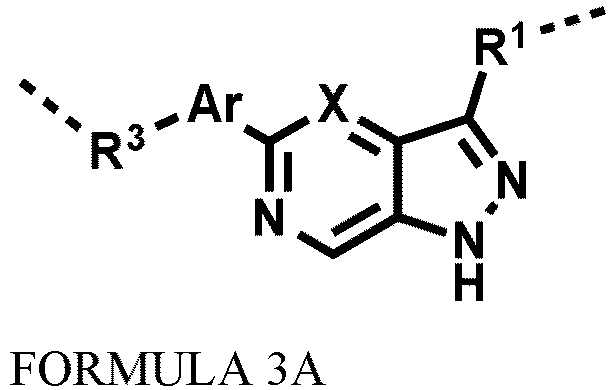
- the "Linker" moiety of the bivalent compound is attached independently to R1 or R3;
- X is selected from CR2 or N;
- R1 is selected from null, hydrogen, C(O)R6, C(O)OR6, C(O)NR6R7, S(O)R6, S(O)2R6, S(O)2NR6R7, NR8C(O)OR6, NR8C(O)R6, NR8C(O)NR6R7, NR8S(O)R6, NR8S(O)2R6, NR8S(O)2NR6R7 , optionally substituted C1-C8 alkyl, optionally substituted C2-C8 alkenyl, optionally substituted C2-Cs alkynyl, optionally substituted C1-C8 alkoxy, optionally substituted C1-C8alkoxyC1-C8alkyl, optionally substituted C1-C8alkylaminoC1-C8alkyl, optionally substituted 3-8 membered cycloalkyl, optionally substituted C3-C8 cycloalkoxy, optionally substituted 3-8 membered heterocyclyl, optionally substituted aryl, and optionally substituted heteroaryl; wherein
- R6 is null, or a bivalent moiety selected from optionally substituted C1-C8 alkyl, optionally substituted C2-C8 alkenyl, optionally substituted C2-C8 alkynyl, optionally substituted C1-C8 alkoxy, optionally substituted C1-C8alkoxyC1-C8alkyl, optionally substituted C1-C8alkylaminoC1-C8alkyl, optionally substituted 3-8 membered cycloalkyl, optionally substituted C3-C8 cycloalkoxy, optionally substituted 3-8 membered heterocyclyl, optionally substituted aryl, and optionally substituted heteroaryl;
- R2 is independently selected from hydrogen, halogen, oxo, CN, NO2, OR9, SR9, NR9R10, C(O)R9, C(O)OR9, C(O)NR9R10, S(O)R9, S(O)2R9, S(O)2NR9R10, NR11C(O)OR9, NR11C(O)R9, NR11C(O)NR9R10, NR11S(O)R9, NR11S(O)2R9, NR11S(O)2NR9R10 , optionally substituted C1-C8 alkyl, optionally substituted C2-C8 alkenyl, optionally substituted C2-C8 alkynyl, optionally substituted C1-C8 alkoxy, optionally substituted C1-C8alkoxyC1-C8alkyl, optionally substituted C1-C8alkylaminoC1-C8alkyl, optionally substituted 3-8 membered cycloalkyl, optionally substituted C3-C8 cycloalkoxy, optionally substituted 3-8 membered heterocyclyl, optionally substituted aryl, and optionally substituted heteroaryl; wherein
- R9, R10, and R11 are independently selected from hydrogen, optionally substituted C1-C8 alkyl, optionally substituted C1-C8alkoxyC1-C8alkyl, optionally substituted C1-C8alkylaminoC1-C8alkyl, optionally substituted C3-C10 cycloalkyl, optionally substituted 3-20 membered heterocyclyl, optionally substituted C2-C8 alkenyl, optionally substituted C2-C8 alkynyl, optionally substituted aryl, and optionally substituted heteroaryl; or
- R9 and R10, R9 and R11, R10 and R11 together with the atom to which they are connected form an optionally substituted 3-20 membered cycloalkyl or heterocyclyl ring;
- Ar is selected from null, aryl and heteroaryl, each of which is substituted with R3 and optionally substituted with one or more substituents independently selected from hydrogen, halogen, oxo, CN, NO2, OR12, SR12, NR12R13, OCOR12, OCO2R12, OCONR12R13, COR12, CO2R12, CONR12R13, SOR12, SO2R12, SO2NR12R13, NR14CO2R12, NR14COR12, NR14C(O)NR12R13, NR14SOR12, NR14SO2R12, NR14SO2NR12R13, optionally substituted C1-C8 alkyl, optionally substituted C2-C8 alkenyl, optionally substituted C2-C8 alkynyl, optionally substituted C1-C8 alkoxy, optionally substituted C1-C8alkoxyC1-C8alkyl, optionally substituted C1-C8alkylaminoC1-C8alkyl, optionally substituted 3-8 membered cycloalkyl, optionally substituted C3-C8cycloalkoxy, optionally substituted 4-8 membered heterocyclyl, optionally substituted aryl, and optionally substituted heteroaryl; wherein
- R12, R13, and R14 are independently selected from hydrogen, optionally substituted C1-C8 alkyl, optionally substituted C2-C8 alkenyl, optionally substituted C2-C8 alkynyl, optionally substituted C1-C8 alkoxy, optionally substituted C1-C8alkoxyC1-C8alkyl, optionally substituted C1-C8alkylaminoC1-C8alkyl, optionally substituted 3-8 membered cycloalkyl, optionally substituted C3-C8 cycloalkoxy, optionally substituted 4-8 membered heterocyclyl, optionally substituted aryl, and optionally substituted heteroaryl; or
- R12 and R13, R12 and R13 together with the atom to which they are connected form a 4-20 membered heterocyclyl ring;
- R3 is is selected from null, OR15, SR15, NR15R16, OC(O)R15, OC(O)OR15, OCONR15R16, C(O)R15, C(O)OR15, CONR15R16, S(O)R15, S(O)2R15, SO2NR15R16, NR17C(O)OR15, NR17C(O)R15, NR17C(O)NR15R16, NR14S(O)R15, NR17S(O)2R15, NR17S(O)2NR15R16, optionally substituted C1-Cs alkylenyl, optionally substituted C2-C8 alkenylene, optionally substituted C2-C8 alkynylene, optionally substituted C3-C8 cycloalkylene, optionally substituted 3-8 membered heterocyclylene, optionally substituted aryl, and optionally substituted heteroaryl; wherein
- R15 is null, or a bivalent moiety selected from optionally substituted C1-C8 alkylenyl, optionally substituted C2-C8 alkenylene, optionally substituted C2-C8 alkynylene, optionally substituted C3-C8 cycloalkylene, optionally substituted 3-8 membered heterocyclylene, optionally substituted aryl, and optionally substituted heteroaryl;
- R16and R17 are independently selected from optionally substituted C1-C8 alkyl, optionally substituted C1-C8alkoxyC1-C8alkyl, optionally substituted C1-C8alkylaminoC1-C8alkyl, optionally substituted C3-C8 cycloalkyl, optionally substituted 3-8 membered heterocyclyl, optionally substituted C2-C8 alkenyl, optionally substituted C2-C8 alkynyl, optionally substituted aryl, and optionally substituted heteroaryl; or
- R15 and R16, R15band R17, R16 and R17 together with the atom to which they are connected form a 3-20 membered cycloalkyl or heterocyclyl ring;
- and pharmaceutically acceptable salts thereof.
- In an embodiment, (HPK1) ligands include a moiety according to FORMULA 3B:

- the "Linker" moiety of the bivalent compound is attached independently to R1 or R3;
- X is selected from CR2 or N;
- R1 and R3 are independently selected from null, hydrogen, C(O)R6, C(O)OR6, C(O)NR6R7, S(O)R6, S(O)2R6, S(O)2NR6R7, NR8C(O)OR6, NR8C(O)R6, NR8C(O)NR6R7, NR8S(O)R6, NR8S(O)2R6, NR8S(O)2NR6R7 , optionally substituted C1-C8 alkyl, optionally substituted C2-C8 alkenyl, optionally substituted C2-C8 alkynyl, optionally substituted C1-C8 alkoxy, optionally substituted C1-C8alkoxyC1-C8alkyl, optionally substituted C1-C8alkylaminoC1-C8alkyl, optionally substituted 3-8 membered cycloalkyl, optionally substituted C3-C8 cycloalkoxy, optionally substituted 3-8 membered heterocyclyl, optionally substituted aryl, and optionally substituted heteroaryl; wherein
- R6 is null, or a bivalent moiety selected from optionally substituted C1-C8 alkyl, optionally substituted C2-C8 alkenyl, optionally substituted C2-C8 alkynyl, optionally substituted C1-C8 alkoxy, optionally substituted C1-C8alkoxyC1-C8alkyl, optionally substituted C1-C8alkylaminoC1-Csalkyl, optionally substituted 3-8 membered cycloalkyl, optionally substituted C3-C8 cycloalkoxy, optionally substituted 3-8 membered heterocyclyl, optionally substituted aryl, and optionally substituted heteroaryl;
- R7, and R8 are independently selected from hydrogen, optionally substituted C1-C8 alkyl, optionally substituted C1-C8alkoxyC1-C8alkyl, optionally substituted C1-C8alkylaminoC1-C8alkyl, optionally substituted C3-C10 cycloalkyl, optionally substituted 3-20 membered heterocyclyl, optionally substituted C2-C8 alkenyl, optionally substituted C2-C8 alkynyl, optionally substituted aryl, and optionally substituted heteroaryl; or
- R6 and R7 together with the atom to which they are connected form an optionally substituted 3-20 membered cycloalkyl or heterocyclyl ring;
- R2 is independently selected from hydrogen, halogen, oxo, CN, NO2, OR9, SR9, NR9R10, C(O)R9, C(O)OR9, C(O)NR9R10, S(O)R9, S(O)2R9, S(O)2NR9R10, NR11C(O)OR9, NR11C(O)R9, NR11C(O)NR9R10, NR11S(O)R9, NR11S(O)2R9, NR11S(O)2NR9R10 , optionally substituted C1-C8 alkyl, optionally substituted C2-C8 alkenyl, optionally substituted C2-C8 alkynyl, optionally substituted C1-C8 alkoxy, optionally substituted C1-C8alkoxyC1-C8alkyl, optionally substituted C1-C8alkylaminoC1-C8alkyl, optionally substituted 3-8 membered cycloalkyl, optionally substituted C3-C8 cycloalkoxy, optionally substituted 3-8 membered heterocyclyl, optionally substituted aryl, and optionally substituted heteroaryl; wherein
- R9, R10, and R11 are independently selected from hydrogen, optionally substituted C1-C8 alkyl, optionally substituted C1-C8alkoxyC1-C8alkyl, optionally substituted C1-C8alkylaminoC1-C8alkyl, optionally substituted C3-C10 cycloalkyl, optionally substituted 3-20 membered heterocyclyl, optionally substituted C2-C8 alkenyl, optionally substituted C2-C8 alkynyl, optionally substituted aryl, and optionally substituted heteroaryl; or
- R9 and R10, R9 and R11, R10 and R11 together with the atom to which they are connected form an optionally substituted 3-20 membered cycloalkyl or heterocyclyl ring;
- each R4 is independently selected from null, hydrogen, halogen, oxo, CN, NOz, OR18, SR18, NR18R19, OCOR18, OCO2R18, OCONR18R19, COR18, CO2R18, CONR18R19, SOR18, SO2R18, SO2NR18R19, NR20CO2R18, NR20COR18, NR20C(O)NR18R19, NR20SOR18, NR20SO2R18, NR7SO2NR5R6, optionally substituted C1-C8 alkyl, optionally substituted C2-C8 alkenyl, optionally substituted C2-C8 alkynyl, optionally substituted C1-C8 alkoxy, optionally substituted C1-C8alkoxyC1-C8alkyl, optionally substituted C1-C8alkylaminoC1-C8alkyl, optionally substituted 3-8 membered cycloalkyl, optionally substituted C3-C8 cycloalkoxy, optionally substituted 4-8 membered heterocyclyl, optionally substituted aryl, and optionally substituted heteroaryl; wherein
- R18, R19 and R20 are independently selected from hydrogen, optionally substituted C1-C8 alkyl, optionally substituted C2-C8 alkenyl, optionally substituted C2-C8 alkynyl, optionally substituted C1-C8 alkoxy, optionally substituted C1-C8alkoxyC1-C8alkyl, optionally substituted C1-C8alkylaminoC1-C8alkyl, optionally substituted 3-8 membered cycloalkyl, optionally substituted C3-C8 cycloalkoxy, optionally substituted 4-8 membered heterocyclyl, optionally substituted aryl, and optionally substituted heteroaryl; or
- R18 and R19, R18 and R20 together with the atom to which they are connected form a 4-20 membered heterocyclyl ring; and
- n is independently selected from 0, 1, 2, 3, 4 and 5;
and pharmaceutically acceptable salts thereof. - In an embodiment, (HPK1) ligands include a moiety according to FORMULA 1:
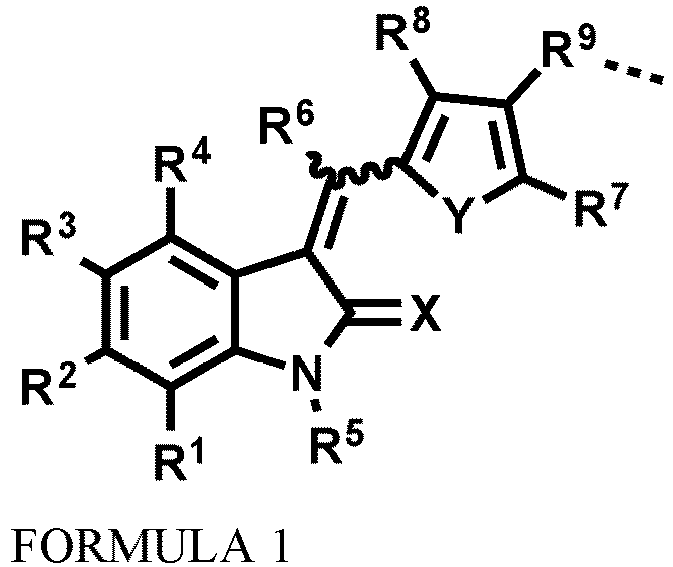
- the "Linker" moiety of the bivalent compound is attached to R9;
- X is selected from O or S;
- Y is selected from O, S, NR10; wherein
R10 is independently selected from hydrogen, optionally substituted C1-C8 alkyl, optionally substituted C1-C8alkoxyC1-C8alkyl, optionally substituted C1-C8alkylaminoC1-C8alkyl, optionally substituted C3-C10 cycloalkyl, optionally substituted 3-20 membered heterocyclyl, optionally substituted C2-C8 alkenyl, optionally substituted C2-C8 alkynyl, optionally substituted aryl, and optionally substituted heteroaryl; - R1, R2, R3, R4, R7, and R8 are selected from hydrogen, halogen, oxo, CN, NOz, OR11, SR11, NR11R12, C(O)R11, C(O)OR11, C(O)NR11R12, S(O)R11, S(O)2R11, S(O)2NR11R12, NR13C(O)OR11, NR13C(O)R11, NR13C(O)NR11R12, NR13S(O)R11, NR13S(O)2R11, NR13S(O)2NR11R12 optionally substituted C1-C8 alkyl, optionally substituted C2-C8 alkenyl, optionally substituted C2-C8 alkynyl, optionally substituted C1-C8 alkoxy, optionally substituted C1-C8alkoxyC1-C8alkyl, optionally substituted C1-C8alkylaminoC1-C8alkyl, optionally substituted 3-8 membered cycloalkyl, optionally substituted C3-C8 cycloalkoxy, optionally substituted 3-8 membered heterocyclyl, optionally substituted aryl, and optionally substituted heteroaryl; wherein
- R11, R12, and R13 are independently selected from hydrogen, optionally substituted C1-C8 alkyl, optionally substituted C1-C8alkoxyC1-C8alkyl, optionally substituted C1-C8alkylaminoC1-C8alkyl, optionally substituted C3-C10 cycloalkyl, optionally substituted 3-20 membered heterocyclyl, optionally substituted C2-C8 alkenyl, optionally substituted C2-C8 alkynyl, optionally substituted aryl, and optionally substituted heteroaryl, or
- R11 and R12, R11 and R13, R12 and R13 together with the atom to which they are connected form an optionally substituted 3-20 membered cycloalkyl or heterocyclyl ring;
- R5 and R6 are independently selected from hydrogen, optionally substituted C1-C8 alkyl, optionally substituted C2-C8 alkenyl, optionally substituted C2-C8 alkynyl, optionally substituted C1-C8 alkoxy, optionally substituted C1-C8alkoxyC1-C8alkyl, optionally substituted C1-C8alkylaminoC1-Csalkyl, optionally substituted 3-8 membered cycloalkyl, optionally substituted C3-C8 cycloalkoxy, optionally substituted 4-8 membered heterocyclyl, optionally substituted aryl, and optionally substituted heteroaryl;
- R9 is selected from OR14, SR14, NR14R15, C(O)R14, C(O)OR14, C(O)NR14R15, S(O)R14, S(O)2R14, S(O)2NR14R15, NR16C(O)OR14, NR16C(O)R14, NR16C(O)NR14R15, NR16S(O)R14, NR16S(O)2R14, NR16S(O)2NR14R15 optionally substituted C1-C8 alkyl, optionally substituted C2-C8 alkenyl, optionally substituted C2-C8 alkynyl, optionally substituted C1-C8 alkoxy, optionally substituted C1-C8alkoxyC1-C8alkyl, optionally substituted C1-C8alkylaminoC1-C8alkyl , optionally substituted 3-8 membered cycloalkyl, optionally substituted C3-C8 cycloalkoxy, optionally substituted 3-8 membered heterocyclyl, optionally substituted aryl, and optionally substituted heteroaryl; wherein
- R14 is null, or a bivalent moiety selected from optionally substituted C1-C8 alkylenyl, optionally substituted C2-C8 alkenylene, optionally substituted C2-C8 alkynylene, optionally substituted C3-C8 cycloalkylene, optionally substituted 3-8 membered heterocyclylene, optionally substituted aryl, and optionally substituted heteroaryl;
- R15 and R16 are independently selected from optionally substituted C1-C8 alkyl, optionally substituted C1-C8alkoxyC1-C8alkyl, optionally substituted C1-C8alkylaminoC1-C8alkyl, optionally substituted C3-C8 cycloalkyl, optionally substituted 3-8 membered heterocyclyl, optionally substituted C2-C8 alkenyl, optionally substituted C2-C8 alkynyl, optionally substituted aryl, and optionally substituted heteroaryl; or
- R14 and R15, R14 and R16, R15 and R16 together with the atom to which they are connected form a 3-20 membered cycloalkyl or heterocyclyl ring.
- In an embodiment, (HPK1) ligands include a moiety according to FORMULA 1A:

- the "Linker" moiety of the bivalent compound is attached to Z;
- the definitions of R1, R2, R3, R4, R5, R6, R7 and R8 are the same as for
FORMULA 1; - R17, R18, R19, and R20, at each occurrence, are independently selected from hydrogen, halogen, CN, OH, NH2, optionally substituted C1-C8 alkyl, optionally substituted C3-C8 cycloalkyl, optionally substituted C3-C8 cycloalkoxy, optionally substituted C1-C8alkoxyC1-C8alkyl, optionally substituted C1 -C8alkylaminoC1-C8alkyl, optionally substituted 3-8 membered membered heterocyclyl, optionally substituted C1-C8 alkoxy, optionally substituted C1-C8 alkoxyalkyl, optionally substituted C1-C8 haloalkyl, optionally substituted C1-C8 hydroxyalkyl, optionally substituted C1-C8 alkylamino, and optionally substituted C1-C8 alkylaminoC1-C8 alkyl;
- m, n, are independently selected from 0, 1, 2, 3, and 4; and
- W, Q, and Z, at each occurrence, are independently selected from null, CO, CO2, CH2, NH, NH-CO, CO-NH, CH2-NH-CO, CH2-CO-NH, NH-CO-CH2, CO-NH-CH2, CH2-NH-CH2-CO-NH, CH2-NH-CH2-NH-CO, -CO-NH, CO-NH- CH2-NH-CH2, CH2-NH-CH2, CR21R22, C(O)NR21, C(S)NR21, O, S, SO, SOz, SO2NR21, NR21, NR21CO, NR121CONR22, NR21C(S), optionally substituted C1-C8 alkyl, optionally substituted C1-C8 alkoxy, optionally substituted C1-C8alkoxyC1-C8alkyl, optionally substituted C1-C8 haloalkyl, optionally substituted C1-C8 hydroxyalkyl, optionally substituted C2-C8 alkenyl, optionally substituted C2-C8 alkynyl, optionally substituted 3-8 membered cycloalkyl, optionally substituted C3-C8 cycloalkoxy, optionally substituted 3-8 membered heterocyclyl, optionally substituted aryl, optionally substituted heteroaryl, optionally substituted C3-C13 fused cycloalkyl, optionally substituted C3-C13 fused heterocyclyl, optionally substituted C3-C13 bridged cycloalkyl, optionally substituted C3-C13 bridged heterocyclyl, optionally substituted C3-C13 spiro cycloalkyl, and optionally substituted C3-C13 spiro heterocyclyl; wherein
R21 and R22 are independently selected from hydrogen, optionally substituted C1-C8 alkyl, optionally substituted 3-8 membered cycloalkyl, optionally substituted C3-C8 cycloalkoxy, optionally substituted 3-8 membered heterocyclyl, optionally substituted C1-C8 alkoxy, optionally substituted C1-C8 alkoxyalkyl, optionally substituted C1-C8 haloalkyl, optionally substituted C1-C8 hydroxyalkyl, optionally substituted C1-C8 alkylamino, and optionally substituted C1-C8alkylaminoC1-C8alkyl. - In an embodiment, (HPK1) ligands include a moiety according to FORMULA 1B:

- the definitions of X, Y, W, Q, R1, R2, R3, R4, R5, R6, R7, R8 , R17, R18, R19 and R20 are the same as for FORMULA 1A;
- the "Linker" moiety of the bivalent compound is attached to terminal N;
- m, n, are independently selected from 0, 1, 2, 3, and 4;
- R23 and R24 at each occurrence, are independently selected from hydrogen, halogen, CN, OH, NH2, optionally substituted C1-C8 alkyl, optionally substituted C3-C8 cycloalkyl, optionally substituted C3-C8 cycloalkoxy, optionally substituted 3-8 membered membered heterocyclyl, optionally substituted C1-C8 alkoxy, optionally substituted C1-C8 alkoxyalkyl, optionally substituted C1-C8 haloalkyl, optionally substituted C1-C8 hydroxyalkyl, optionally substituted C1-Cs alkylamino, and optionally substituted C1-C8 alkylaminoC1-C8 alkyl.
- In an embodiment, (HPK1) ligands include a moiety according to FORMULA 1C:

- the definitions of X, Y, W, Q, R1, R2, R3, R4, R5, R6, R7, R8, R17, R18, R19, R20 and R23 are the same as for FORMULA 1B;
- the "Linker" moiety of the bivalent compound is attached to Z;
- m, n, are independently selected from 0, 1, 2, 3, and 4;
- Z are independently selected from CR25 or N; and
- R25 is independently selected from null, hydrogen, C(O)R26, C(O)OR26, C(O)NR26R27, S(O)R26, S(O)2R26, S(O)2NR26R27, NR28C(O)OR26, NR28C(O)R26, NR28C(O)NR26R27, NR28S(O)R26, NR28S(O)2R26, NR28S(O)2NR26R27 , optionally substituted C1-C8 alkyl, optionally substituted C2-Cs alkenyl, optionally substituted C2-C8 alkynyl, optionally substituted C1-C8 alkoxy, optionally substituted C1-C8alkoxyC1-C8alkyl, optionally substituted C1-C8alkylaminoC1-C8alkyl, optionally substituted 3-8 membered cycloalkyl, optionally substituted C3-C8 cycloalkoxy, optionally substituted 3-8 membered heterocyclyl, optionally substituted aryl, and optionally substituted heteroaryl; wherein
- R26 is null, or a bivalent moiety selected from optionally substituted C1-C8 alkyl, optionally substituted C2-C8 alkenyl, optionally substituted C2-C8 alkynyl, optionally substituted C1-C8 alkoxy, optionally substituted C1-C8alkoxyC1-C8alkyl, optionally substituted C1-C8alkylaminoC1-Csalkyl, optionally substituted 3-8 membered cycloalkyl, optionally substituted C3-C8 cycloalkoxy, optionally substituted 3-8 membered heterocyclyl, optionally substituted aryl, and optionally substituted heteroaryl;
- R27, and R28 are independently selected from hydrogen, optionally substituted C1-C8 alkyl, optionally substituted C1-C8alkoxyC1-C8alkyl, optionally substituted C1-C8alkylaminoC1-C8alkyl, optionally substituted C3-C10 cycloalkyl, optionally substituted 3-20 membered heterocyclyl, optionally substituted C2-C8 alkenyl, optionally substituted C2-C8 alkynyl, optionally substituted aryl, and optionally substituted heteroaryl; or
- R26 and R27 together with the atom to which they are connected form an optionally substituted 3-20 membered cycloalkyl or heterocyclyl ring; and
- pharmaceutically acceptable salts thereof.
- In an embodiment, (HPK1) ligands include a moiety according to FORMULA 2:

- the "Linker" moiety of the bivalent compound is attached to R1 or R4;
- X is selected from CR5 or N;
- R1, and R2 are independently selected from null, hydrogen, C(O)R6, C(O)OR6, C(O)NR6R7, S(O)R6, S(O)2R6, S(O)2NR6R7, NR8C(O)OR6, NR8C(O)R6, NR8C(O)NR6R7, NR8S(O)R6, NR8S(O)2R6, NR8S(O)2NR6R7 , optionally substituted C1-C8 alkyl, optionally substituted C2-C8 alkenyl, optionally substituted C2-C8 alkynyl, optionally substituted C1-C8 alkoxy, optionally substituted C1-C8alkoxyC1-C8alkyl, optionally substituted C1-C8alkylaminoC1-C8alkyl, optionally substituted 3-8 membered cycloalkyl, optionally substituted C3-C8 cycloalkoxy, optionally substituted 3-8 membered heterocyclyl, optionally substituted aryl, and optionally substituted heteroaryl; wherein
- R6 is null, or a bivalent moiety selected from optionally substituted C1-C8 alkyl, optionally substituted C2-C8 alkenyl, optionally substituted C2-C8 alkynyl, optionally substituted C1-C8 alkoxy, optionally substituted C1-C8alkoxyC1-C8alkyl, optionally substituted C1-C8alkylaminoC1-C8alkyl, optionally substituted 3-8 membered cycloalkyl, optionally substituted C3-C8 cycloalkoxy, optionally substituted 3-8 membered heterocyclyl, optionally substituted aryl, and optionally substituted heteroaryl;
- R7, and R8 are independently selected from hydrogen, optionally substituted C1-C8 alkyl, optionally substituted C1-C8alkoxyC1-C8alkyl, optionally substituted C1-C8alkylaminoC1-C8alkyl, optionally substituted C3-C10 cycloalkyl, optionally substituted 3-20 membered heterocyclyl, optionally substituted C2-C8 alkenyl, optionally substituted C2-C8 alkynyl, optionally substituted aryl, and optionally substituted heteroaryl; or
- R6 and R7 together with the atom to which they are connected form an optionally substituted 3-20 membered cycloalkyl or heterocyclyl ring; and
- R3, R4 and R5 are independently selected from hydrogen, halogen, oxo, CN, NOz, OR9, SR9, NR10R11, C(O)R9, C(O)OR9, C(O)NR10R11 S(O)R9, S(O)2R9, S(O)2NR10R11, NR12C(O)OR10, NR9C(O)R10, NR9C(O)NR10R11, NR9S(O)R10, NR9S(O)2R10, NR9S(O)2NR10R11 optionally substituted C1-C8 alkyl, optionally substituted C2-C8 alkenyl, optionally substituted C2-C8 alkynyl, optionally substituted C1-C8 alkoxy, optionally substituted 3-8 membered cycloalkyl, optionally substituted C3-C8 cycloalkoxy, optionally substituted 3-8 membered heterocyclyl, optionally substituted aryl, and optionally substituted heteroaryl; wherein
- R9, R10, and R11 are independently selected from hydrogen, optionally substituted C1-C8 alkyl, optionally substituted C1-C8alkoxyC1-C8alkyl, optionally substituted C1-C8alkylaminoC1-C8alkyl, optionally substituted C3-C10 cycloalkyl, optionally substituted 3-20 membered heterocyclyl, optionally substituted C2-C8 alkenyl, optionally substituted C2-C8 alkynyl, optionally substituted aryl, and optionally substituted heteroaryl, or
- R9 and R10, R10 and R11 together with the atom to which they are connected form an optionally substituted 3-20 membered cycloalkyl or heterocyclyl ring.
- In an embodiment, (HPK1) ligands include a moiety according to FORMULA 2A or 2B:
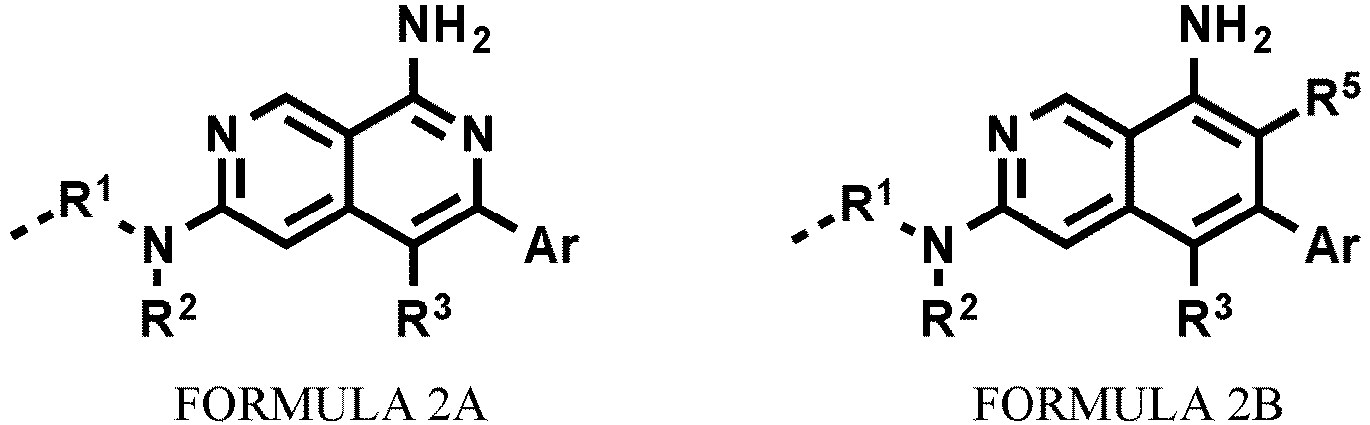
- the "Linker" moiety of the bivalent compound is attached to R1;
- the definitions of R1, R2, R3 and R5 are the same as for
FORMULA 2; - Ar is selected from null, aryl and heteroaryl, each of which is optionally substituted with one or more substituents independently selected from hydrogen, halogen, oxo, CN, NOz, OR12, SR12, NR12R13, OCOR12, OCO2R12, OCONR12R13, COR12, CO2R12, CONR12R13, SOR12, SO2R12, SO2NR12R13, NR14CO2R12, NR14COR12, NR14C(O)NR12R13, NR14SOR12, NR14SO2R12, NR14SO2NR12R13, optionally substituted C1-C8 alkyl, optionally substituted C2-C8 alkenyl, optionally substituted C2-C8 alkynyl, optionally substituted C1-C8 alkoxy, optionally substituted C1-C8alkoxyC1-C8alkyl, optionally substituted C1-C8alkylaminoC1-C8alkyl, optionally substituted 3-8 membered cycloalkyl, optionally substituted C3-C8 cycloalkoxy, optionally substituted 4-8 membered heterocyclyl, optionally substituted aryl, and optionally substituted heteroaryl; wherein
- R12, R13, and R14 are independently selected from hydrogen, optionally substituted C1-C8 alkyl, optionally substituted C2-C8 alkenyl, optionally substituted C2-C8 alkynyl, optionally substituted C1-C8 alkoxy, optionally substituted C1-C8alkoxyC1-C8alkyl, optionally substituted C1-C8alkylaminoC1-C8alkyl, optionally substituted 3-8 membered cycloalkyl, optionally substituted C3-C8 cycloalkoxy, optionally substituted 4-8 membered heterocyclyl, optionally substituted aryl, and optionally substituted heteroaryl; or
- R12 and R13, R13 and R14 together with the atom to which they are connected form a 3-20 membered heterocyclyl ring.
- In an embodiment, (HPK1) ligands include a moiety according to FORMULA 2C or 2D:

- the "Linker" moiety of the bivalent compound is attached to R1;
- the definitions of R1, R2, R3 and R5 are the same as for
FORMULA 2; - R15, R16, R17 and R18 are independently selected hydrogen, halogen, oxo, CN, NOz, OR19, SR19, NR20R21, OCOR19, OCO2R19, OCONR20R21, COR19, CO2R19, CONR20R21, SOR19, SO2R19, SO2NR20R21, NR19CO2R20, NR19COR20, NR19C(O)NR20R21, NR19SOR20, NR19SO2R20, NR19SO2NR20R21, optionally substituted C1-C8 alkyl, optionally substituted C2-C8 alkenyl, optionally substituted C2-C8 alkynyl, optionally substituted C1-C8 alkoxy, optionally substituted C1-C8alkoxyC1-C8alkyl, optionally substituted C1-C8alkylaminoC1-C8alkyl, optionally substituted 3-8 membered cycloalkyl, optionally substituted C3-C8 cycloalkoxy, optionally substituted 4-8 membered heterocyclyl, optionally substituted aryl, and optionally substituted heteroaryl; wherein
- R19, R20, and R21 are independently selected from hydrogen, optionally substituted C1-C8 alkyl, optionally substituted C2-C8 alkenyl, optionally substituted C2-C8 alkynyl, optionally substituted C1-C8 alkoxy, optionally substituted C1-C8alkoxyC1-C8alkyl, optionally substituted C1-C8alkylaminoC1-C8alkyl, optionally substituted 3-8 membered cycloalkyl, optionally substituted C3-C8 cycloalkoxy, optionally substituted 4-8 membered heterocyclyl, optionally substituted aryl, and optionally substituted heteroaryl; or
- R19 and R20, R20 and R21 together with the atom to which they are connected form a 3-20 membered heterocyclyl ring; and
- R15 and R16, R16 and R17 together with the atom to which they are connected form an optionally substituted 4-20 membered cycloalkyl or heterocyclyl ring.
- In an embodiment, (HPK1) ligands include a moiety according to FORMULA 2E or 2F:

- the "Linker" moiety of the bivalent compound is attached to R1;
- the definitions of R1, R2, R3, R5, R15, R16, R17 and R18 are the same as for FORMULA 2C and 2D. R22 is independently selected from hydrogen, halogen, oxo, aryl, CN, NOz, OR23, SR23, NR24R25, C(O)R23, C(O)OR23, C(O)NR24R25, S(O)R23, S(O)2R23, S(O)2NR24R25, NR24C(O)OR23, NR24C(O)R23, NR23C(O)NR24R25, NR24S(O)R23, NR24S(O)2R23, NR23S(O)2NR24R2 optionally substituted C1-C8 alkyl, optionally substituted C2-C8 alkenyl, optionally substituted C2-C8 alkynyl, optionally substituted C1-C8 alkoxy, optionally substituted 3-8 membered cycloalkyl, optionally substituted C3-C8 cycloalkoxy, optionally substituted 3-8 membered heterocyclyl, optionally substituted aryl, and optionally substituted heteroaryl; wherein
- R23, R24, and R25 are independently selected from hydrogen, optionally substituted C1-C8 alkyl, optionally substituted C1-C8alkoxyC1-C8alkyl, optionally substituted C1-C8alkylaminoC1-C8alkyl, optionally substituted C3-C10 cycloalkyl, optionally substituted 3-20 membered heterocyclyl, optionally substituted C2-C8 alkenyl, optionally substituted C2-C8 alkynyl, optionally substituted aryl, and optionally substituted heteroaryl; or
- R23 and R24, R23 and R25 together with the atom to which they are connected form an optionally substituted 3-20 membered cycloalkyl or heterocyclyl ring; and
- R15 and R16, R16 and R17 together with the atom to which they are connected form an optionally substituted 4-20 membered cycloalkyl or heterocyclyl ring.
- In an embodiment, (HPK1) ligands include a moiety according to FORMULA 2G or 2H:

- the "Linker" moiety of the bivalent compound is attached to R1;
- the definitions of R1, R2, R3, R5, R15, R16, R17 and R18 are the same as for FORMULA 2C and 2D. X is CO, CH2 or SO2;
- n is 0 to 1;
- R26 and R27 are independently selected from hydrogen, halogen, optionally substituted C1-C8 alkyl, optionally substituted C1-C8alkoxyC1-C8alkyl, optionally substituted C1-C8alkylaminoC1-C8alkyl, optionally substituted C3-C10 cycloalkyl, optionally substituted 3-20 membered heterocyclyl, optionally substituted C2-C8 alkenyl, optionally substituted C2-C8 alkynyl, optionally substituted aryl, and optionally substituted heteroaryl; or
R26 and R27 together with the atom to which they are connected form an optionally substituted 3-20 membered cycloalkyl or heterocyclyl ring; and - R15 and R16, R16 and R17 together with the atom to which they are connected form an optionally substituted 4-20 membered cycloalkyl or heterocyclyl ring.
- In an embodiment, (HPK1) ligands include a moiety according to FORMULA 2K, 2L, 2M and 2N:


- the "Linker" moiety of the bivalent compound is attached to R9;
- the definitions of R1, R2, R3, R5, R15, R16 , R17 and R18 are the same as for FORMULA 2C and 2D; n and m are independently selected from 1, 2 and 3;
- R28 , R29 and R30 are independently selected from hydrogen, halogen, optionally substituted C1-C8 alkyl, optionally substituted C1-C8alkoxyC1-C8alkyl, optionally substituted C1-C8alkylaminoC1-C8alkyl, optionally substituted C3-C10 cycloalkyl, optionally substituted 3-20 membered heterocyclyl, optionally substituted C2-C8 alkenyl, optionally substituted C2-C8 alkynyl, optionally substituted aryl, and optionally substituted heteroaryl, or
R29 and R30 together with the atom to which they are connected form an optionally substituted 3-20 membered cycloalkyl or heterocyclyl ring; and - R15 and R16, R16 and R17 together with the atom to which they are connected form an optionally substituted 4-20 membered cycloalkyl or heterocyclyl ring.
- In an embodiment, (HPK1) ligands include a moiety according to FORMULA 2O or 2P:

- the "Linker" moiety of the bivalent compound is attached to Z;
- the definitions of R1, R2, R3, R5, R15, R16, R17 and R18 are the same as for FORMULA 2C and 2D; W, Q, and Z, at each occurrence, are independently selected from null, CO, CO2, CH2, NH, NH-CO, CO-NH, CH2-NH-CO, CH2-CO-NH, NH-CO-CH2, CO-NH-CH2, CH2-NH-CH2-CO-NH, CH2-NH-CH2-NH-CO, -CO-NH, CO-NH- CH2-NH-CH2, CH2-NH-CH2, CR35R36, C(O)NR35, C(S)NR35, O, S, SO, SO2, SO2NR35, NR35, NR35CO, NR35CONR36 NR35C(S), optionally substituted C1-C8 alkyl, optionally substituted C1-C8 alkoxy, optionally substituted C1-C8alkoxyC1-C8alkyl, optionally substituted C1-C8 haloalkyl, optionally substituted C1-C8 hydroxyalkyl, optionally substituted C2-C8 alkenyl, optionally substituted C2-C8 alkynyl, optionally substituted 3-8 membered cycloalkyl, optionally substituted C3-C8 cycloalkoxy, optionally substituted 3-8 membered heterocyclyl, optionally substituted aryl, optionally substituted heteroaryl, optionally substituted C3-C13 fused cycloalkyl, optionally substituted C3-C13 fused heterocyclyl, optionally substituted C3-C13 bridged cycloalkyl, optionally substituted C3-C13 bridged heterocyclyl, optionally substituted C3-C13 spiro cycloalkyl, and optionally substituted C3-C13 spiro heterocyclyl, wherein
R35 and R36 are independently selected from hydrogen, optionally substituted C1-C8 alkyl, optionally substituted 3-8 membered cycloalkyl, optionally substituted C3-C8 cycloalkoxy, optionally substituted 3-8 membered heterocyclyl, optionally substituted C1-C8 alkoxy, optionally substituted C1-C8 alkoxyalkyl, optionally substituted C1-C8 haloalkyl, optionally substituted C1-C8 hydroxyalkyl, optionally substituted C1-C8 alkylamino, and optionally substituted C1-C8alkylaminoC1-C8alkyl; - R31 , R32, R33 , and R34 are independently selected from hydrogen, halogen, optionally substituted C1-C8 alkyl, optionally substituted C1-C8alkoxyC1-C8alkyl, optionally substituted C1-C8alkylaminoC1-C8alkyl, optionally substituted C3-C10 cycloalkyl, optionally substituted 3-20 membered heterocyclyl, optionally substituted C2-C8 alkenyl, optionally substituted C2-C8 alkynyl, optionally substituted aryl, and optionally substituted heteroaryl; or
- R31 and R32, R33 and R34 are together with the atom to which they are connected form an optionally substituted 3-20 membered cycloalkyl or heterocyclyl ring;
- R15 and R16, R16 and R17 together with the atom to which they are connected form an optionally substituted 4-20 membered cycloalkyl or heterocyclyl ring; and
- m, n, are independently selected from 0, 1, 2, 3, and 4; and
- pharmaceutically acceptable salts thereof.
- In an embodiment, (HPK1) ligands include a moiety according to FORMULA 3:

- the "Linker" moiety of the bivalent compound is attached independently to R1 or R3;
- X is selected from CR2 or N;
- R1 and R3 are independently selected from null, hydrogen, C(O)R6, C(O)OR6, C(O)NR6R7, S(O)R6, S(O)2R6, S(O)2NR6R7, NR8C(O)OR6, NR8C(O)R6, NR8C(O)NR6R7, NR8S(O)R6, NR8S(O)2R6, NR8S(O)2NR6R7 , optionally substituted C1-C8 alkyl, optionally substituted C2-C8 alkenyl, optionally substituted C2-C8 alkynyl, optionally substituted C1-C8 alkoxy, optionally substituted C1-C8alkoxyC1-C8alkyl, optionally substituted C1-C8alkylaminoC1-C8alkyl, optionally substituted 3-8 membered cycloalkyl, optionally substituted C3-C8 cycloalkoxy, optionally substituted 3-8 membered heterocyclyl, optionally substituted aryl, and optionally substituted heteroaryl; wherein
- R6 is null, or a bivalent moiety selected from optionally substituted C1-C8 alkyl, optionally substituted C2-C8 alkenyl, optionally substituted C2-C8 alkynyl, optionally substituted C1-C8 alkoxy, optionally substituted C1-C8alkoxyC1-C8alkyl, optionally substituted C1-C8alkylaminoC1-C8alkyl, optionally substituted 3-8 membered cycloalkyl, optionally substituted C3-C8 cycloalkoxy, optionally substituted 3-8 membered heterocyclyl, optionally substituted aryl, and optionally substituted heteroaryl;
- R7, and R8 are independently selected from hydrogen, optionally substituted C1-C8 alkyl, optionally substituted C1-C8alkoxyC1-C8alkyl, optionally substituted C1-C8alkylaminoC1-C8alkyl, optionally substituted C3-C10 cycloalkyl, optionally substituted 3-20 membered heterocyclyl, optionally substituted C2-C8 alkenyl, optionally substituted C2-C8 alkynyl, optionally substituted aryl, and optionally substituted heteroaryl; or
- R6 and R7 together with the atom to which they are connected form an optionally substituted 3-20 membered cycloalkyl or heterocyclyl ring;
- R2 is independently selected from hydrogen, halogen, oxo, CN, NO2, OR9, SR9, NR9R10, C(O)R9, C(O)OR9, C(O)NR9R10, S(O)R9, S(O)2R9, S(O)2NR9R10, NR11C(O)OR9, NR11C(O)R9, NR11C(O)NR9R10, NR11S(O)R9, NR11S(O)2R9, NR11S(O)2NR9R10, optionally substituted C1-C8 alkyl, optionally substituted C2-C8 alkenyl, optionally substituted C2-C8 alkynyl, optionally substituted C1-C8 alkoxy, optionally substituted C1-C8alkoxyC1-C8alkyl, optionally substituted C1-C8alkylaminoC1-C8alkyl, optionally substituted 3-8 membered cycloalkyl, optionally substituted C3-C8 cycloalkoxy, optionally substituted 3-8 membered heterocyclyl, optionally substituted aryl, and optionally substituted heteroaryl; wherein
- R9, R10, and R11 are independently selected from hydrogen, optionally substituted C1-C8 alkyl, optionally substituted C1-C8alkoxyC1-C8alkyl, optionally substituted C1-C8alkylaminoC1-C8alkyl, optionally substituted C3-C10 cycloalkyl, optionally substituted 3-20 membered heterocyclyl, optionally substituted C2-C8 alkenyl, optionally substituted C2-C8 alkynyl, optionally substituted aryl, and optionally substituted heteroaryl; or
- R9 and R10, R9 and R11, R10 and R11 together with the atom to which they are connected form an optionally substituted 3-20 membered cycloalkyl or heterocyclyl ring.
- In an embodiment, (HPK1) ligands include a moiety according to FORMULA 3A:
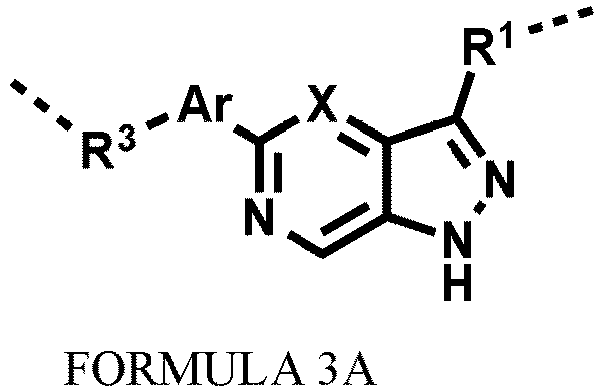
- the "Linker" moiety of the bivalent compound is attached independently to R1 or R3;
- X is selected from CR2 or N;
- the definitions of R1 and R2 are the same as for
FORMULA 3; - Ar is selected from null, aryl and heteroaryl, each of which is substituted with R3 and optionally substituted with one or more substituents independently selected from hydrogen, halogen, oxo, CN, NO2, OR12, SR12, NR12R13, OCOR12, OCO2R12, OCONR12R13, COR12, CO2R12, CONR12R13, SOR12, SO2R12, SO2NR12R13, NR14CO2R12, NR14COR12, NR14C(O)NR12R13, NR14SOR1 2, NR14SO2R12, NR14SO2NR12R13, optionally substituted C1-C8 alkyl, optionally substituted C2-C8 alkenyl, optionally substituted C2-C8 alkynyl, optionally substituted C1-C8 alkoxy, optionally substituted C1-C8alkoxyC1-C8alkyl, optionally substituted C1-C8alkylaminoC1-C8alkyl, optionally substituted 3-8 membered cycloalkyl, optionally substituted C3-C8 cycloalkoxy, optionally substituted 4-8 membered heterocyclyl, optionally substituted aryl, and optionally substituted heteroaryl; wherein
- R12, R13, and R14 are independently selected from hydrogen, optionally substituted C1-C8 alkyl, optionally substituted C2-C8 alkenyl, optionally substituted C2-C8 alkynyl, optionally substituted C1-C8 alkoxy, optionally substituted C1-C8alkoxyC1-C8alkyl, optionally substituted C1-C8alkylaminoC1-C8alkyl, optionally substituted 3-8 membered cycloalkyl, optionally substituted C3-C8 cycloalkoxy, optionally substituted 4-8 membered heterocyclyl, optionally substituted aryl, and optionally substituted heteroaryl; or
- R12 and R13, R12 and R13 together with the atom to which they are connected form a 4-20 membered heterocyclyl ring;
- R3 is is selected from null, OR15, SR15, NR15R16, OC(O)R15, OC(O)OR15, OCONR15R16, C(O)R15, C(O)OR15, CONR15R16, S(O)R15, S(O)2R15, SO2NR15R16, NR17C(O)OR15, NR17C(O)R15, NR17C(O)NR15R16, NR14S(O)R15, NR17S(O)2R15, NR17S(O)2NR15R16, optionally substituted C1-Cs alkylenyl, optionally substituted C2-C8 alkenylene, optionally substituted C2-C8 alkynylene, optionally substituted C3-C8 cycloalkylene, optionally substituted 3-8 membered heterocyclylene, optionally substituted aryl, and optionally substituted heteroaryl; wherein
- R15 is null, or a bivalent moiety selected from optionally substituted C1-C8 alkylenyl, optionally substituted C2-C8 alkenylene, optionally substituted C2-C8 alkynylene, optionally substituted C3-C8 cycloalkylene, optionally substituted 3-8 membered heterocyclylene, optionally substituted aryl, and optionally substituted heteroaryl;
- R16and R17 are independently selected from optionally substituted C1-C8 alkyl, optionally substituted C1-C8alkoxyC1-C8alkyl, optionally substituted C1-C8alkylaminoC1-C8alkyl, optionally substituted C3-C8 cycloalkyl, optionally substituted 3-8 membered heterocyclyl, optionally substituted C2-C8 alkenyl, optionally substituted C2-C8 alkynyl, optionally substituted aryl, and optionally substituted heteroaryl; or
- R15 and R16, R15band R17, R16 and R17 together with the atom to which they are connected form a 3-20 membered cycloalkyl or heterocyclyl ring.
- In an embodiment, (HPK1) ligands include a moiety according to FORMULA 3B:

- the "Linker" moiety of the bivalent compound is attached independently to R1 or R3;
- X is selected from CR2 or N;
- the definitions of R1, R2 and R3 are the same as for
FORMULA 3; - each R4 is independently selected from null, hydrogen, halogen, oxo, CN, NO2, OR18, SR18, NR18R19, OCOR18, OCO2R18, OCONR18R19, COR18, CO2R18, CONR18R19, SOR18, SO2R18, SO2NR18R19, NR20CO2R18, NR20COR18, NR20C(O)NR18R19, NR20SOR18, NR20SO2R18, NR7SO2NR5R6, optionally substituted C1-C8 alkyl, optionally substituted C2-C8 alkenyl, optionally substituted C2-C8 alkynyl, optionally substituted C1-C8 alkoxy, optionally substituted C1-C8alkoxyC1-C8alkyl, optionally substituted C1-C8alkylaminoC1-C8alkyl, optionally substituted 3-8 membered cycloalkyl, optionally substituted C3-C8 cycloalkoxy, optionally substituted 4-8 membered heterocyclyl, optionally substituted aryl, and optionally substituted heteroaryl; wherein
- R18, R19 and R20 are independently selected from hydrogen, optionally substituted C1-C8 alkyl, optionally substituted C2-C8 alkenyl, optionally substituted C2-C8 alkynyl, optionally substituted C1-C8 alkoxy, optionally substituted C1-C8alkoxyC1-C8alkyl, optionally substituted C1-C8alkylaminoC1-C8alkyl, optionally substituted 3-8 membered cycloalkyl, optionally substituted C3-C8 cycloalkoxy, optionally substituted 4-8 membered heterocyclyl, optionally substituted aryl, and optionally substituted heteroaryl; or
- R18 and R19, R18 and R20 together with the atom to which they are connected form a 4-20 membered heterocyclyl ring; and
- n is independently selected from 0, 1, 2, 3, 4 and 5.
- In an embodiment, (HPK1) ligands include a moiety according to FORMULAE 3C, 3D and 3E:
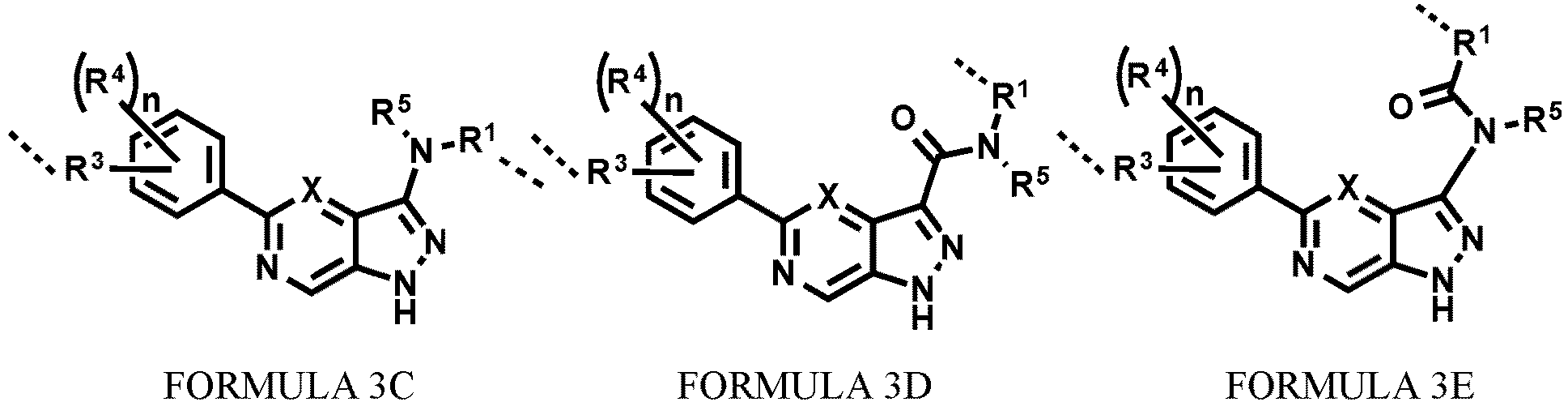
- the "Linker" moiety of the bivalent compound is attached independently to R1 or R3;
- X is selected from CR2 or N;
- the definitions of R1, R2, R3 and R4 are the same as for FORMULA 3B;
- R5 at each occurrence, is independently selected from hydrogen, C(O)R21, C(O)OR21, C(O)NR21R22, S(O)R21, S(O)2R21, S(O)2NR21R22, NR21 NR23C(O)R21, NR23C(O)NR21R22, NR23S(O)R21, NR23S(O)2R21, NR23S(O)2NR21R22, optionally substituted C1-Cs alkyl, optionally substituted C2-C8 alkenyl, optionally substituted C2-C8 alkynyl, optionally substituted C1-C8 alkoxy, optionally substituted C1-C8alkoxyC1-C8alkyl, optionally substituted C1-C8alkylaminoC1-C8alkyl, optionally substituted 3-8 membered cycloalkyl, optionally substituted C3-C8 cycloalkoxy, optionally substituted 3-8 membered heterocyclyl, optionally substituted aryl, and optionally substituted heteroaryl; wherein
- R21, R22 and R23 are independently selected from hydrogen, optionally substituted C1-C8 alkyl, optionally substituted C2-C8 alkenyl, optionally substituted Cz-Cs alkynyl, optionally substituted C1-C8 alkoxy, optionally substituted C1-C8alkoxyC1-C8alkyl, optionally substituted C1-C8alkylaminoC1-C8alkyl, optionally substituted 3-8 membered cycloalkyl, optionally substituted C3-C8 cycloalkoxy, optionally substituted 4-8 membered heterocyclyl, optionally substituted aryl, and optionally substituted heteroaryl; or
- R21 and R22, R21 and R23 together with the atom to which they are connected form a 3-20 membered heterocyclyl ring; and
- n is independently selected from 0, 1, 2, 3, 4 and 5.
- In an embodiment, (HPK1) ligands include a moiety according to FORMULA 3F or 3G:
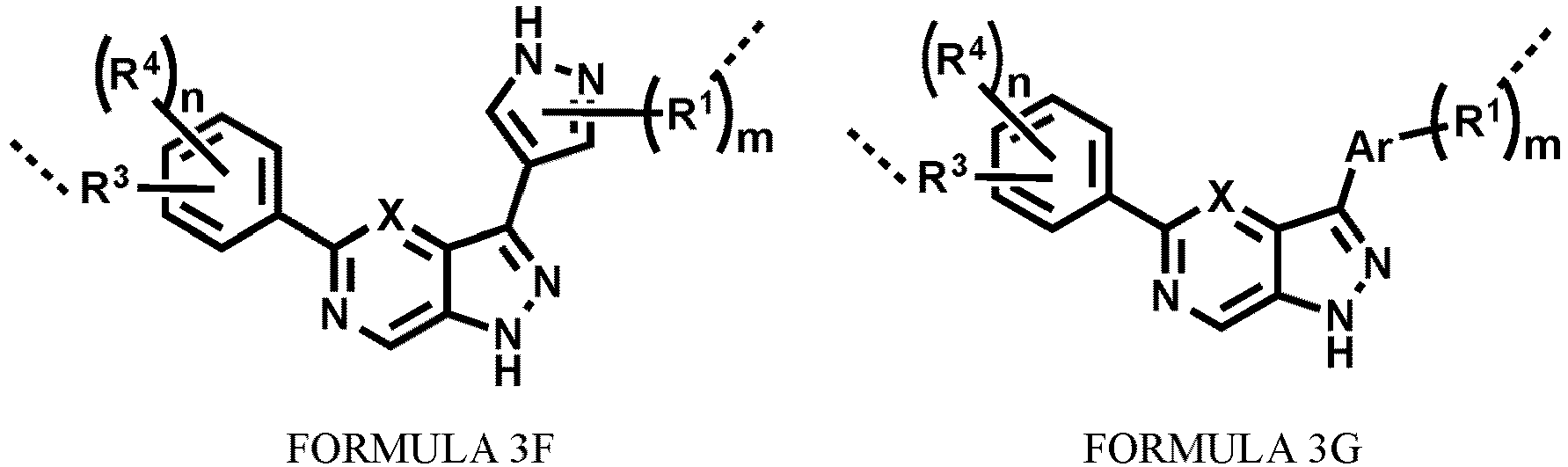
- the "Linker" moiety of the bivalent compound is attached independently to R3 or independently to one of the R1;
- X is selected from CR2 or N;
- the definitions of R1, R2, R3 and R4 are the same as for FORMULA 3B.
- Ar is selected from null, aryl and heteroaryl, each of which is substituted with R1;
- n and m are independently selected from 0, 1, 2, 3, 4 and 5.
- In an embodiment, (HPK1) ligands include a moiety according to FORMULA 3H or 3K:
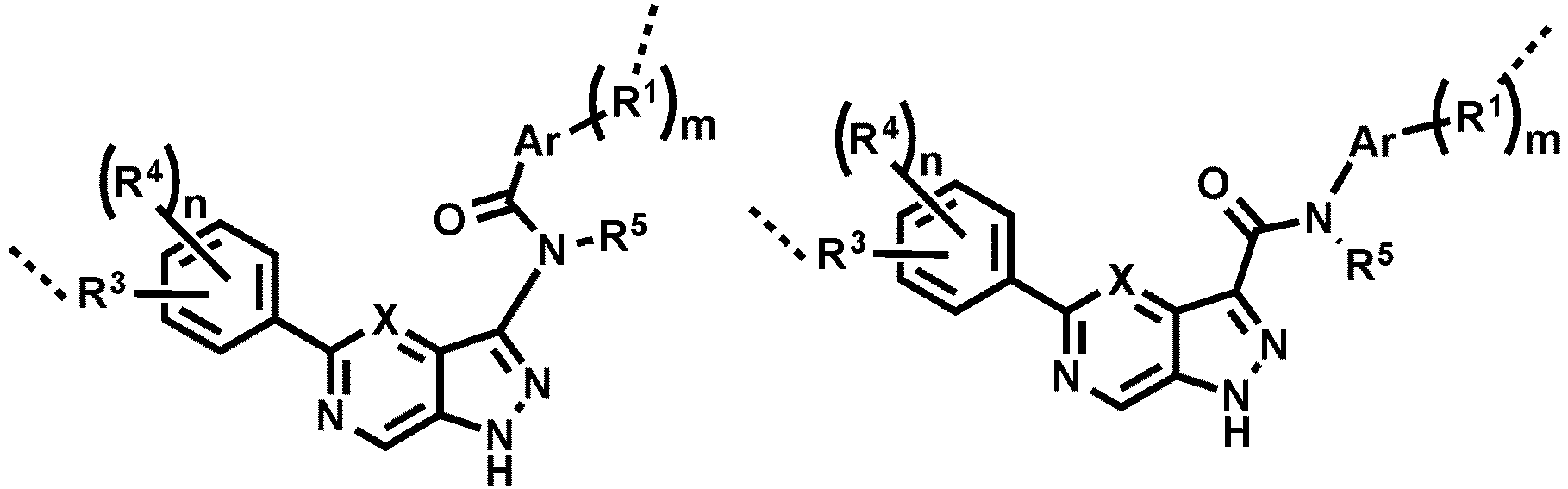

- the "Linker" moiety of the bivalent compound is attached independently to R1 or R3;
- X is selected from CR2 or N;
- the definitions of R1, R2, R3, R4 and R5 are the same as for FORMULA 3C, 3D, 3E;
- Ar is selected from null, aryl and heteroaryl, each of which is substituted with R1;
- n and m are independently selected from 0, 1, 2, 3, 4 and 5.
- In an embodiment, (HPK1) ligands include a moiety according to FORMULA 3L:

- the "Linker" moiety of the bivalent compound is attached independently to R1 or R3;
- X is selected from CR2 or N;
- the definitions of R1, R2, R3 and R4 are the same as for FORMULA 3B;
- Ar is selected from null, aryl and heteroaryl;
- n is independently selected from 0, 1, 2, 3, 4 and 5;
- Y, Z at each occurrence, are independently selected from null, CO, COz, CH2, CR24R25, C(O)NR24, C(S)NR24, O, S, SO, SO2, SO2NR24, NR24, NR24CO, NR24CONR24, NR24C(S), optionally substituted C1-C8 alkyl, optionally substituted C1-C8 alkoxy, optionally substituted C1-C8alkoxyC1-C8alkyl, optionally substituted C1-C8 haloalkyl, optionally substituted C1-C8 hydroxyalkyl, optionally substituted C2-C8 alkenyl, optionally substituted C2-C8 alkynyl, optionally substituted 3-8 membered cycloalkyl, optionally substituted C3-C8 cycloalkoxy, optionally substituted 3-8 membered heterocyclyl, optionally substituted aryl, optionally substituted heteroaryl, optionally substituted C3-C13 fused cycloalkyl, optionally substituted C3-C13 fused heterocyclyl, optionally substituted C3-C13 bridged cycloalkyl, optionally substituted C3-C13 bridged heterocyclyl, optionally substituted C3-C13 spiro cycloalkyl, and optionally substituted C3-C13 spiro heterocyclyl; wherein
R24 and R25 are independently selected from hydrogen, optionally substituted C1-C8 alkyl, optionally substituted 3-8 membered cycloalkyl, optionally substituted C3-C8 cycloalkoxy, optionally substituted 3-8 membered heterocyclyl, optionally substituted C1-C8 alkoxy, optionally substituted C1-C8 alkoxyalkyl, optionally substituted C1-C8 haloalkyl, optionally substituted C1-C8 hydroxyalkyl, optionally substituted C1-C8 alkylamino, and optionally substituted C1-C8alkylaminoC1-C8alkyl; - W, at each occurrence, is independently selected from null, CO, , CH2, (CH2)m CR26R27, (CR26R27)m, SO, SO2
- wherein
R26 and R27 are independently selected from hydrogen, optionally substituted C1-C8 alkyl, optionally substituted 3-8 membered cycloalkyl, optionally substituted C3-C8 cycloalkoxy, optionally substituted 3-8 membered heterocyclyl, optionally substituted C1-C8 alkoxy, optionally substituted C1-C8 alkoxyalkyl, optionally substituted C1-C8 haloalkyl, optionally substituted C1-C8 hydroxyalkyl, optionally substituted C1-C8 alkylamino, and optionally substituted C1-C8alkylaminoC1-C8alkyl;
and - m = 0-5.
- In an embodiment, (HPK1) ligands include a moiety according to FORMULA 3M:

- the "Linker" moiety of the bivalent compound is attached independently to R1 or R3; X is selected from CR2 or N;
- the definitions of W, R1, R2, R3 and R4 are the same as for FORMULA 3L.
- n is independently selected from 0, 1, 2, 3, 4 and 5; and
pharmaceutically acceptable salts thereof. - In an embodiment, (HPK1) ligands include a moiety according to FORMULA 4:

- the "Linker" moiety of the bivalent compound is attached to R3;
- X is selected from CR2 or N;
- Y is selected from CR7 or N;
- each R1 is independently selected from null, hydrogen, halogen, oxo, CN, NOz, OR8, SR8, NR8R9, OCOR8, OCO2R8, OCONR8R9, COR8, CO2R8, CONR8R9, SOR8, SO2R8, SO2NR8R9, NR10CO2R8, NR10COR8, NR10C(O)NR8R9,NR10SOR8, NR10SO2R8, NR10SO2NR8R9, optionally substituted C1-Cs alkyl, optionally substituted C2-C8 alkenyl, optionally substituted C2-C8 alkynyl, optionally substituted C1-C8 alkoxy, optionally substituted C1-C8alkoxyC1-C8alkyl, optionally substituted C1-C8alkylaminoC1-C8alkyl, optionally substituted 3-8 membered cycloalkyl, optionally substituted C3-C8 cycloalkoxy, optionally substituted 4-8 membered heterocyclyl, optionally substituted aryl, and optionally substituted heteroaryl; wherein
- R8, R9 and R10 are independently selected from hydrogen, optionally substituted C1-C8 alkyl, optionally substituted C2-C8 alkenyl, optionally substituted C2-C8 alkynyl, optionally substituted C1-C8 alkoxy, optionally substituted C1-C8alkoxyC1-C8alkyl, optionally substituted C1-C8alkylaminoC1-C8alkyl, optionally substituted 3-8 membered cycloalkyl, optionally substituted C3-C8 cycloalkoxy, optionally substituted 4-8 membered heterocyclyl, optionally substituted aryl, and optionally substituted heteroaryl; or
- R8 and R9, R8 and R10 together with the atom to which they are connected form a 4-20 membered heterocyclyl ring; and
- n is independently selected from 0, 1, 2, 3, 4 and 5;
- R2 and R7 are independently selected from hydrogen, halogen, oxo, CN, NOz, OR11, SR11, NR11R12, C(O)R11, C(O)OR11, C(O)NR11R12, S(O)R11, S(O)2R11, S(O)2NR11R12, NR13C(O)OR10, NR13C(O)R11, NR13C(O)NR11R12, NR13S(O)R11, NR13S(O)2R11, NR13S(O)2NR11R12, optionally substituted C1-C8 alkyl, optionally substituted C2-C8 alkenyl, optionally substituted C2-C8 alkynyl, optionally substituted C1-C8 alkoxy, optionally substituted C1-C8alkoxyC1-C8alkyl, optionally substituted C1-C8alkylaminoC1-C8alkyl, optionally substituted 3-8 membered cycloalkyl, optionally substituted C3-C8 cycloalkoxy, optionally substituted 3-8 membered heterocyclyl, optionally substituted aryl, and optionally substituted heteroaryl; wherein
- R11, R12, and R13 are independently selected from hydrogen, optionally substituted C1-C8 alkyl, optionally substituted C1-C8alkoxyC1-C8alkyl, optionally substituted C1-C8alkylaminoC1-Csalkyl, optionally substituted C3-C10 cycloalkyl, optionally substituted 3-20 membered heterocyclyl, optionally substituted C2-C8 alkenyl, optionally substituted C2-C8 alkynyl, optionally substituted aryl, and optionally substituted heteroaryl; or
- R11 and R12, R11 and R12, R12 and R13 together with the atom to which they are connected form an optionally substituted 3-20 membered cycloalkyl or heterocyclyl ring;
- R3 is selected from null, hydrogen, C(O)R14, C(O)OR14, C(O)NR14R15, S(O)R14, S(O)2R14, S(O)2NR14R15, NR16C(O)OR14, NR16C(O)R14, NR16C(O)NR14R15, NR16S(O)R14, NR16S(O)2R14, NR16S(O)2NR14R15 , optionally substituted C1-C8 alkyl, optionally substituted C2-C8 alkenyl, optionally substituted C2-C8 alkynyl, optionally substituted C1-C8 alkoxy, optionally substituted C1-C8alkoxyC1-C8alkyl, optionally substituted C1-C8alkylaminoC1-C8alkyl, optionally substituted 3-8 membered cycloalkyl, optionally substituted C3-C8 cycloalkoxy, optionally substituted 3-8 membered heterocyclyl, optionally substituted aryl, and optionally substituted heteroaryl; wherein R14 is null, or a bivalent moiety selected from optionally substituted C1-C8 alkyl, optionally substituted C2-C8 alkenyl, optionally substituted C2-C8 alkynyl, optionally substituted C1-C8 alkoxy, optionally substituted C1-C8alkoxyC1-C8alkyl, optionally substituted C1-C8alkylaminoC1-C8alkyl, optionally substituted 3-8 membered cycloalkyl, optionally substituted C3-C8 cycloalkoxy, optionally substituted 3-8 membered heterocyclyl, optionally substituted aryl, and optionally substituted heteroaryl;
- R15, and R16 are independently selected from hydrogen, optionally substituted C1-C8 alkyl, optionally substituted C1-C8alkoxyC1-C8alkyl, optionally substituted C1-C8alkylaminoC1-C8alkyl, optionally substituted C3-C10 cycloalkyl, optionally substituted 3-20 membered heterocyclyl, optionally substituted C2-C8 alkenyl, optionally substituted C2-C8 alkynyl, optionally substituted aryl, and optionally substituted heteroaryl; or
- R14 and R15 together with the atom to which they are connected form an optionally substituted 3-20 membered cycloalkyl or heterocyclyl ring;
- R4, R5 and R6 are independently selected hydrogen, halogen, oxo, CN, NOz, OR17, SR17, NR18R19, OCOR17, OCO2R17, OCONR18R19, COR17, CO2R17, CONR18R19, SOR17, SO2R17, SO2NR18R19, NR17CO2R18, NR17COR18, NR17C(O)NR18R19, NR17SOR18, NR17SO2R18, NR17SO2NR18R19, optionally substituted C1-C8 alkyl, optionally substituted C2-C8 alkenyl, optionally substituted C2-Cs alkynyl, optionally substituted C1-C8 alkoxy, optionally substituted C1-C8alkoxyC1-C8alkyl, optionally substituted C1-C8alkylaminoC1-C8alkyl, optionally substituted 3-8 membered cycloalkyl, optionally substituted C3-C8 cycloalkoxy, optionally substituted 4-8 membered heterocyclyl, optionally substituted aryl, and optionally substituted heteroaryl; wherein
- R17, R18, and R19 are independently selected from hydrogen, optionally substituted C1-C8 alkyl, optionally substituted C2-C8 alkenyl, optionally substituted C2-C8 alkynyl, optionally substituted C1-C8 alkoxy, optionally substituted C1-C8alkoxyC1-C8alkyl, optionally substituted C1-C8alkylaminoC1-C8alkyl, optionally substituted 3-8 membered cycloalkyl, optionally substituted C3-C8 cycloalkoxy, optionally substituted 4-8 membered heterocyclyl, optionally substituted aryl, and optionally substituted heteroaryl; or
- R17 and R18, R18 and R19 together with the atom to which they are connected form a 3-20 membered heterocyclyl ring.
- In an embodiment, (HPK1) ligands include a moiety according to FORMULA 4A:

- the "Linker" moiety of the bivalent compound is attached to R3;
- X is selected from CR2 or N;
- Y is selected from CR7 or N;
- the definitions of R1, R2 R3, R4, R5, R6 and R7 are the same as for
FORMULA 4. - In an embodiment, (HPK1) ligands include a moiety according to FORMULA 4B:

- the "Linker" moiety of the bivalent compound is attached to R3;
- X is selected from CR2 or N;
- Y is selected from CR7 or N; and
- the definitions of R2, R3, R4, R5, and R7 are the same as for
FORMULA 4; and - pharmaceutically acceptable salts thereof.
- In an embodiment, (HPK1) ligands include a moiety according to FORMULA 5:

- the "Linker" moiety of the bivalent compound is attached to independently to R3 or R7;
- X is selected from CRor N;
- each R1 is independently selected from null, hydrogen, halogen, oxo, CN, NO2, OR8, SR8, NR8R9, OCOR8, OCO2R8, OCONR8R9, COR8, CO2R8, CONR8R9, SOR8, SO2R8, SO2NR8R9, NR10CO2R8, NR10COR8, NR10C(O)NR8R9, NR10SOR8, NR10SO2R8, NR10SO2NR8R9, optionally substituted C1-Cs alkyl, optionally substituted C2-C8 alkenyl, optionally substituted C2-C8 alkynyl, optionally substituted C1-C8 alkoxy, optionally substituted C1-C8alkoxyC1-C8alkyl, optionally substituted C1-C8alkylaminoC1-C8alkyl, optionally substituted 3-8 membered cycloalkyl, optionally substituted C3-C8 cycloalkoxy, optionally substituted 4-8 membered heterocyclyl, optionally substituted aryl, and optionally substituted heteroaryl; wherein
- R8, R9 and R10 are independently selected from hydrogen, optionally substituted C1-C8 alkyl, optionally substituted C2-C8 alkenyl, optionally substituted C2-C8 alkynyl, optionally substituted C1-C8 alkoxy, optionally substituted C1-C8alkoxyC1-C8alkyl, optionally substituted C1-C8alkylaminoC1-C8alkyl, optionally substituted 3-8 membered cycloalkyl, optionally substituted C3-C8 cycloalkoxy, optionally substituted 4-8 membered heterocyclyl, optionally substituted aryl, and optionally substituted heteroaryl; or
- R8 and R9, R8 and R10 together with the atom to which they are connected form a 4-20 membered heterocyclyl ring; and
- n is independently selected from 0, 1, 2, 3, 4 and 5;
- R2 is selected from hydrogen, halogen, oxo, CN, NO2, OR11, SR11, NR11R12, C(O)R11, C(O)OR11, C(O)NR11R12, S(O)R11, S(O)2R11, S(O)2NR11R12, NR13C(O)OR10, NR13C(O)R11, NR13C(O)NR11R12, NR13S(O)R11, NR13S(O)2R11, NR13S(O)2NR11R12 , optionally substituted C1-Cs alkyl, optionally substituted C2-C8 alkenyl, optionally substituted C2-C8 alkynyl, optionally substituted C1-C8 alkoxy, optionally substituted C1-C8alkoxyC1-C8alkyl, optionally substituted C1-C8alkylaminoC1-C8alkyl, optionally substituted 3-8 membered cycloalkyl, optionally substituted C3-C8 cycloalkoxy, optionally substituted 3-8 membered heterocyclyl, optionally substituted aryl, and optionally substituted heteroaryl; wherein
- R11, R12, and R13 are independently selected from hydrogen, optionally substituted C1-C8 alkyl, optionally substituted C1-C8alkoxyC1-C8alkyl, optionally substituted C1-C8alkylaminoC1-Csalkyl, optionally substituted C3-C10 cycloalkyl, optionally substituted 3-20 membered heterocyclyl, optionally substituted C2-C8 alkenyl, optionally substituted C2-C8 alkynyl, optionally substituted aryl, and optionally substituted heteroaryl; or
- R11 and R12, R11 and R12, R12 and R13 together with the atom to which they are connected form an optionally substituted 3-20 membered cycloalkyl or heterocyclyl ring;
- R3 and R7 are independently selected from null, hydrogen, C(O)R14, C(O)OR14, C(O)NR14R15, S(O)R14, S(O)2R14, S(O)2NR14R15, NR16C(O)OR14, NR16C(O)R14, NR16C(O)NR14R15, NR16S(O)R14, NR16S(O)2R14, NR16S(O)2NR14R15 , optionally substituted C1-C8 alkyl, optionally substituted C2-C8 alkenyl, optionally substituted C2-C8 alkynyl, optionally substituted C1-C8 alkoxy, optionally substituted C1-C8alkoxyC1-C8alkyl, optionally substituted C1-C8alkylaminoC1-Csalkyl, optionally substituted 3-8 membered cycloalkyl, optionally substituted C3-C8 cycloalkoxy, optionally substituted 3-8 membered heterocyclyl, optionally substituted aryl, and optionally substituted heteroaryl; wherein
- R14 is null, or a bivalent moiety selected from optionally substituted C1-C8 alkyl, optionally substituted C2-C8 alkenyl, optionally substituted C2-C8 alkynyl, optionally substituted C1-C8 alkoxy, optionally substituted C1-C8alkoxyC1-C8alkyl, optionally substituted C1-C8alkylaminoC1-Csalkyl, optionally substituted 3-8 membered cycloalkyl, optionally substituted C3-C8 cycloalkoxy, optionally substituted 3-8 membered heterocyclyl, optionally substituted aryl, and optionally substituted heteroaryl;
- R15, and R16 are independently selected from hydrogen, optionally substituted C1-C8 alkyl, optionally substituted C1-C8alkoxyC1-C8alkyl, optionally substituted C1-C8alkylaminoC1-C8alkyl, optionally substituted C3-C10 cycloalkyl, optionally substituted 3-20 membered heterocyclyl, optionally substituted C2-C8 alkenyl, optionally substituted C2-C8 alkynyl, optionally substituted aryl, and optionally substituted heteroaryl; or
- R14 and R15 together with the atom to which they are connected form an optionally substituted 3-20 membered cycloalkyl or heterocyclyl ring;
- R4, R5 and R6 are independently selected hydrogen, halogen, oxo, CN, NO2, OR17, SR17, NR18R19, OCOR17, OCO2R17, OCONR18R19, COR17, CO2R17, CONR18R19, SOR17, SO2R17, SO2NR18R19, NR17CO2R18, NR17COR18, NR17C(O)NR18R19, NR17SOR18, NR17SO2R18, NR17SO2NR18R19, optionally substituted C1-C8 alkyl, optionally substituted C2-C8 alkenyl, optionally substituted C2-Cs alkynyl, optionally substituted C1-C8 alkoxy, optionally substituted C1-C8alkoxyC1-C8alkyl, optionally substituted C1-C8alkylaminoC1-C8alkyl, optionally substituted 3-8 membered cycloalkyl, optionally substituted C3-C8 cycloalkoxy, optionally substituted 4-8 membered heterocyclyl, optionally substituted aryl, and optionally substituted heteroaryl; wherein
- R17, R18, and R19 are independently selected from hydrogen, optionally substituted C1-C8 alkyl, optionally substituted C2-C8 alkenyl, optionally substituted C2-C8 alkynyl, optionally substituted C1-C8 alkoxy, optionally substituted C1-C8alkoxyC1-C8alkyl, optionally substituted C1-C8alkylaminoC1-C8alkyl, optionally substituted 3-8 membered cycloalkyl, optionally substituted C3-C8 cycloalkoxy, optionally substituted 4-8 membered heterocyclyl, optionally substituted aryl, and optionally substituted heteroaryl; or
- R17 and R18, R18 and R19 together with the atom to which they are connected form a 3-20 membered heterocyclyl ring; and
- pharmaceutically acceptable salts thereof.
- In an embodiment, (HPK1) ligands include a moiety according to FORMULA 6:

- the "Linker" moiety of the bivalent compound is attached to independently to R3 or R8;
- X is selected from CR2 or N;
- Y is selected from CR6 or N;
- Z is selected from CR7 or N or S;
- each R1 is independently selected from null, hydrogen, halogen, oxo, CN, NOz, OR9, SR9, NR9R10, OCOR9, OCO2R9, OCONR9R10, COR9, CO2R9, CONR9R10, SOR9, SO2R9, SO2NR9R10, NR11CO2R9, NR11COR9, NR11C(O)NR9R10, NR11SOR9, NR11 SO2R9. NR11SO2NR9R10, optionally substituted C1-C8 alkyl, optionally substituted C2-C8 alkenyl, optionally substituted C2-C8 alkynyl, optionally substituted C1-C8 alkoxy, optionally substituted C1-C8alkoxyC1-C8alkyl, optionally substituted C1-C8alkylaminoC1-C8alkyl, optionally substituted 3-8 membered cycloalkyl, optionally substituted C3-C8 cycloalkoxy, optionally substituted 4-8 membered heterocyclyl, optionally substituted aryl, and optionally substituted heteroaryl; wherein
- R9, R10 and R11 are independently selected from hydrogen, optionally substituted C1-C8 alkyl, optionally substituted C2-C8 alkenyl, optionally substituted C2-C8 alkynyl, optionally substituted C1-C8 alkoxy, optionally substituted C1-C8alkoxyC1-C8alkyl, optionally substituted C1-C8alkylaminoC1-C8alkyl, optionally substituted 3-8 membered cycloalkyl, optionally substituted C3-C8 cycloalkoxy, optionally substituted 4-8 membered heterocyclyl, optionally substituted aryl, and optionally substituted heteroaryl; or
- R9 and R10, R9 and R11 together with the atom to which they are connected form a 4-20 membered heterocyclyl ring; and n is independently selected from 0, 1, 2, 3, 4 and 5;
- R2, R6 and R7 are independently selected from hydrogen, halogen, oxo, CN, NO2, OR12, SR12, NR12R13, C(O)R12, C(O)OR12, C(O)NR12R13, S(O)R12, S(O)2R12, S(O)2NR12R13, NR14C(O)OR11, NR14C(O)R12, NR14C(O)NR12R13, NR14S(O)R12, NR14S(O)2R12, NR14S(O)2NR12R13 optionally substituted C1-C8 alkyl, optionally substituted C2-C8 alkenyl, optionally substituted C2-C8 alkynyl, optionally substituted C1-C8 alkoxy, optionally substituted C1-C8alkoxyC1-C8alkyl, optionally substituted C1-C8alkylaminoC1-C8alkyl, optionally substituted 3-8 membered cycloalkyl, optionally substituted C3-C8 cycloalkoxy, optionally substituted 3-8 membered heterocyclyl, optionally substituted aryl, and optionally substituted heteroaryl; wherein
- R12, R13, and R14 are independently selected from hydrogen, optionally substituted C1-C8 alkyl, optionally substituted C1-C8alkoxyC1-C8alkyl, optionally substituted C1-C8alkylaminoC1-Csalkyl, optionally substituted C3-C10 cycloalkyl, optionally substituted 3-20 membered heterocyclyl, optionally substituted C2-C8 alkenyl, optionally substituted C2-C8 alkynyl, optionally substituted aryl, and optionally substituted heteroaryl; or
- R12 and R13, R12 and R13, R13 and R14 together with the atom to which they are connected form an optionally substituted 3-20 membered cycloalkyl or heterocyclyl ring;
- R3 and R8 are independently selected from null, hydrogen, C(O)R13, C(O)OR15, C(O)NR15R16, S(O)R15, S(O)2R15, S(O)2NR15R16, NR17C(O)OR15, NR16C(O)R15, NR17C(O)NR15R16, NR17S(O)R15, NR17S(O)2R15, NR17S(O)2NR15R16 , optionally substituted C1-C8 alkyl, optionally substituted C2-C8 alkenyl, optionally substituted C2-C8 alkynyl, optionally substituted C1-C8 alkoxy, optionally substituted C1-C8alkoxyC1-C8alkyl, optionally substituted C1-C8alkylaminoC1-Csalkyl, optionally substituted 3-8 membered cycloalkyl, optionally substituted C3-C8 cycloalkoxy, optionally substituted 3-8 membered heterocyclyl, optionally substituted aryl, and optionally substituted heteroaryl; wherein
- R15 is null, or a bivalent moiety selected from optionally substituted C1-C8 alkyl, optionally substituted C2-C8 alkenyl, optionally substituted C2-C8 alkynyl, optionally substituted C1-C8 alkoxy, optionally substituted C1-C8alkoxyC1-C8alkyl, optionally substituted C1-C8alkylaminoC1-Csalkyl, optionally substituted 3-8 membered cycloalkyl, optionally substituted C3-C8 cycloalkoxy, optionally substituted 3-8 membered heterocyclyl, optionally substituted aryl, and optionally substituted heteroaryl;
- R16, and R17 are independently selected from hydrogen, optionally substituted C1-C8 alkyl, optionally substituted C1-C8alkoxyC1-C8alkyl, optionally substituted C1-C8alkylaminoC1-C8alkyl, optionally substituted C3-C10 cycloalkyl, optionally substituted 3-20 membered heterocyclyl, optionally substituted C2-C8 alkenyl, optionally substituted C2-C8 alkynyl, optionally substituted aryl, and optionally substituted heteroaryl; or
- R15 and R16 together with the atom to which they are connected form an optionally substituted 3-20 membered cycloalkyl or heterocyclyl ring;
- R4 and R5 are independently selected hydrogen, halogen, oxo, CN, NOz, OR18, SR18, NR19R20, OCOR18, OCO2R18, OCONR19R20, COR18, CO2R18, CONR19R20, SOR18, SO2R18, SO2NR19R20, NR18CO2R19, NR18COR19, NR18C(O)NR19R20, NR18SOR19, NR18SO2R19, NR19SO2NR19R20, optionally substituted C1-C8 alkyl, optionally substituted C2-C8 alkenyl, optionally substituted C2-Cs alkynyl, optionally substituted C1-C8 alkoxy, optionally substituted C1-C8alkoxyC1-C8alkyl, optionally substituted C1-C8alkylaminoC1-C8alkyl, optionally substituted 3-8 membered cycloalkyl, optionally substituted C3-C8 cycloalkoxy, optionally substituted 4-8 membered heterocyclyl, optionally substituted aryl, and optionally substituted heteroaryl; wherein
- R18, R19, and R20 are independently selected from hydrogen, optionally substituted C1-C8 alkyl, optionally substituted C2-C8 alkenyl, optionally substituted C2-C8 alkynyl, optionally substituted C1-C8 alkoxy, optionally substituted C1-C8alkoxyC1-C8alkyl, optionally substituted C1-C8alkylaminoC1-C8alkyl, optionally substituted 3-8 membered cycloalkyl, optionally substituted C3-C8 cycloalkoxy, optionally substituted 4-8 membered heterocyclyl, optionally substituted aryl, and optionally substituted heteroaryl; or
- R18 and R19, R19 and R20 together with the atom to which they are connected form a 3-20 membered heterocyclyl ring; and
- pharmaceutically acceptable salts thereof.
- In an embodiment, (HPK1) ligands include a moiety according to FORMULA 7:

- the "Linker" moiety of the bivalent compound is attached to independently to R2 or R5;
- X is selected from CR3 or N;
- each R1 an d R4 are independently selected from null, hydrogen, halogen, oxo, CN, NO2, OR6, SR6, NR6R7, OCOR6, OCO2R6, OCONR6R7, COR6, CO2R6, CONR6R7, SOR6, SO2R6, SO2NR6R7, NR8CO2R6, NR8COR6, NR8C(O)NR6R7, NR8SOR6, NR8SO2R6, NR8SO2NR6 R 7, optionally substituted C1-C8 alkyl, optionally substituted C2-C8 alkenyl, optionally substituted C2-C8 alkynyl, optionally substituted C1-C8 alkoxy, optionally substituted C1-C8alkoxyC1-C8alkyl, optionally substituted C1-C8alkylaminoC1-C8alkyl, optionally substituted 3-8 membered cycloalkyl, optionally substituted C3-C8 cycloalkoxy, optionally substituted 4-8 membered heterocyclyl, optionally substituted aryl, and optionally substituted heteroaryl; wherein
- R6, R7 and R8 are independently selected from hydrogen, optionally substituted C1-C8 alkyl, optionally substituted C2-C8 alkenyl, optionally substituted C2-C8 alkynyl, optionally substituted C1-C8 alkoxy, optionally substituted C1-C8alkoxyC1-C8alkyl, optionally substituted C1-C8alkylaminoC1-C8alkyl, optionally substituted 3-8 membered cycloalkyl, optionally substituted C3-C8 cycloalkoxy, optionally substituted 4-8 membered heterocyclyl, optionally substituted aryl, and optionally substituted heteroaryl; or
- R6 and R7, R6 and R8 together with the atom to which they are connected form a 4-20 membered heterocyclyl ring; and
- n is independently selected from 0, 1, 2, 3, 4 and 5;
- R2 and R5 are independently selected from null, hydrogen, C(O)R12, C(O)OR12, C(O)NR12R13, S(O)R12, S(O)2R12, S(O)2NR12R13, NR14C(O)OR12, NR13C(O)R12, NR14C(O)NR12R13, NR14S(O)R12, NR14S(O)2R12, NR14S(O)2NR12R13 , optionally substituted C1-C8 alkyl, optionally substituted C2-C8 alkenyl, optionally substituted C2-C8 alkynyl, optionally substituted C1-C8 alkoxy, optionally substituted C1-C8alkoxyC1-C8alkyl, optionally substituted C1-C8alkylaminoC1-C8alkyl, optionally substituted 3-8 membered cycloalkyl, optionally substituted C3-C8 cycloalkoxy, optionally substituted 3-8 membered heterocyclyl, optionally substituted aryl, and optionally substituted heteroaryl; wherein
- R12 is null, or a bivalent moiety selected from optionally substituted C1-C8 alkyl, optionally substituted C2-C8 alkenyl, optionally substituted C2-C8 alkynyl, optionally substituted C1-C8 alkoxy, optionally substituted C1-C8alkoxyC1-C8alkyl, optionally substituted C1-C8alkylaminoC1-C8alkyl, optionally substituted 3-8 membered cycloalkyl, optionally substituted C3-C8 cycloalkoxy, optionally substituted 3-8 membered heterocyclyl, optionally substituted aryl, and optionally substituted heteroaryl;
- R13, and R14 are independently selected from hydrogen, optionally substituted C1-C8 alkyl, optionally substituted C1-C8alkoxyC1-C8alkyl, optionally substituted C1-C8alkylaminoC1-C8alkyl, optionally substituted C3-C10 cycloalkyl, optionally substituted 3-20 membered heterocyclyl, optionally substituted C2-C8 alkenyl, optionally substituted C2-C8 alkynyl, optionally substituted aryl, and optionally substituted heteroaryl; or
- R12 and R13 together with the atom to which they are connected form an optionally substituted 3-20 membered cycloalkyl or heterocyclyl ring;
- R3 is selected from hydrogen, halogen, oxo, CN, NO2, OR14, SR14, NR14R15, C(O)R14, C(O)OR14, C(O)NR14R15, S(O)R14, S(O)2R14, S(O)2NR14R15, NR16C(O)OR14, NR16C(O)R14, NR16C(O)NR14R15, NR16S(O)R14, NR16S(O)2R14, NR16S(O)2NR14R15 , optionally substituted C1-C8 alkyl, optionally substituted C2-C8 alkenyl, optionally substituted C2-C8 alkynyl, optionally substituted C1-C8 alkoxy, optionally substituted C1-C8alkoxyC1-C8alkyl, optionally substituted C1-C8alkylaminoC1-C8alkyl, optionally substituted 3-8 membered cycloalkyl, optionally substituted C3-C8 cycloalkoxy, optionally substituted 3-8 membered heterocyclyl, optionally substituted aryl, and optionally substituted heteroaryl; wherein
- R14, R15, and R16 are independently selected from hydrogen, optionally substituted C1-C8 alkyl, optionally substituted C1-C8alkoxyC1-C8alkyl, optionally substituted C1-C8alkylaminoC1-Csalkyl, optionally substituted C3-C10 cycloalkyl, optionally substituted 3-20 membered heterocyclyl, optionally substituted C2-C8 alkenyl, optionally substituted C2-C8 alkynyl, optionally substituted aryl, and optionally substituted heteroaryl;, or
- R14 and R15, R14 and R15, R15 and R16 together with the atom to which they are connected form an optionally substituted 3-20 membered cycloalkyl or heterocyclyl ring.
- In an embodiment, (HPK1) ligands include a moiety according to FORMULA 7A:

- the "Linker" moiety of the bivalent compound is attached to R2 or R5;
- X is selected from CR3 or N; and
- the definitions of R1, R2, R3, R4, and R5 are the same as for FORMULA 7; and
- pharmaceutically acceptable salts thereof.
- In an embodiment, (HPK1) ligands include a moiety according to FORMULA 8:


- the "Linker" moiety of the bivalent compound is attached to R2 or X;
- X is C3-12 cycloalkyl, 3- to 14- membered heterocyclyl, C6-14 aryl or 5- to- 14-membered heteroaryl, wherein C3-12 cycloalkyl, 3- to 14- membered heterocyclyl, C6-14 aryl or 5- to- 14-membered heteroaryl of X are each optionally substituted with 1, 2, 3, 4 or 5 substituents independently selected from R5;
- R1 is selected from hydrogen, halogen, optionally substituted C1-C8 alkyl, optionally substituted C1-C8alkoxyC1-C8alkyl, optionally substituted C1-C8alkylaminoC1-C8alkyl, optionally substituted C3-C10 cycloalkyl, optionally substituted 3-20 membered heterocyclyl, optionally substituted C2-Cs alkenyl, optionally substituted C2-C8 alkynyl, optionally substituted aryl, and optionally substituted heteroaryl;
- R2 is selected from null, hydrogen, C(O)R7, C(O)OR7, C(O)NR7R8, S(O)R7, S(O)2R7, S(O)2NR7R8, NR9C(O)OR7, NR8C(O)R7, NR9C(O)NR7R8, NR9S(O)R7, NR9S(O)2R7, NR9S(O)2NR7R8 , optionally substituted C1-C8 alkyl, optionally substituted C2-C8 alkenyl, optionally substituted C2-Cs alkynyl, optionally substituted C1-C8 alkoxy, optionally substituted C1-C8alkoxyC1-C8alkyl, optionally substituted C1-C8alkylaminoC1-C8alkyl, optionally substituted 3-8 membered cycloalkyl, optionally substituted C3-C8 cycloalkoxy, optionally substituted 3-8 membered heterocyclyl, optionally substituted aryl, and optionally substituted heteroaryl; wherein
- R7 is null, or a bivalent moiety selected from optionally substituted C1-C8 alkyl, optionally substituted C2-C8 alkenyl, optionally substituted C2-C8 alkynyl, optionally substituted C1-C8 alkoxy, optionally substituted C1-C8alkoxyC1-C8alkyl, optionally substituted C1-C8alkylaminoC1-Csalkyl, optionally substituted 3-8 membered cycloalkyl, optionally substituted C3-C8 cycloalkoxy, optionally substituted 3-8 membered heterocyclyl, optionally substituted aryl, and optionally substituted heteroaryl;
- R8, and R9 are independently selected from hydrogen, optionally substituted C1-C8 alkyl, optionally substituted C1-C8alkoxyC1-C8alkyl, optionally substituted C1-C8alkylaminoC1-C8alkyl, optionally substituted C3-C10 cycloalkyl, optionally substituted 3-20 membered heterocyclyl, optionally substituted C2-C8 alkenyl, optionally substituted C2-C8 alkynyl, optionally substituted aryl, and optionally substituted heteroaryl; or
- R7 and R8 together with the atom to which they are connected form an optionally substituted 3-20 membered cycloalkyl or heterocyclyl ring;
- R3 and R4 and R5 are independently selected from null, hydrogen, halogen, oxo, CN, NO2, OR10, SR10, NR10R11, OCOR10, OCO2R10, OCONR10R11, COR10, CO2R10, CONR10R11, SOR10, SO2R10, SO2NR10R11, NR12CO2R10, NR12COR10, NR12C(O)NR10R11, NR12SOR10, NR12SO2R10, NR12SO2NR10R11, optionally substituted C1-C8 alkyl, optionally substituted C2-C8 alkenyl, optionally substituted C2-C8 alkynyl, optionally substituted C1-C8 alkoxy, optionally substituted C1-C8alkoxyC1-C8alkyl, optionally substituted C1-C8alkylaminoC1-C8alkyl, optionally substituted 3-8 membered cycloalkyl, optionally substituted C3-C8 cycloalkoxy, optionally substituted 4-8 membered heterocyclyl, optionally substituted aryl, and optionally substituted heteroaryl; wherein
- R10, R11 and R12 are independently selected from hydrogen, optionally substituted C1-C8 alkyl, optionally substituted C2-C8 alkenyl, optionally substituted C2-C8 alkynyl, optionally substituted C1-C8 alkoxy, optionally substituted C1-C8alkoxyC1-C8alkyl, optionally substituted C1-C8alkylaminoC1-C8alkyl, optionally substituted 3-8 membered cycloalkyl, optionally substituted C3-C8 cycloalkoxy, optionally substituted 4-8 membered heterocyclyl, optionally substituted aryl, and optionally substituted heteroaryl; or
- R10 and R11, R10 and R12 together with the atom to which they are connected form a 4-20 membered heterocyclyl ring.
- In an embodiment, (HPK1) ligands include a moiety according to FORMULA 8A:

- the "Linker" moiety of the bivalent compound is attached to R2 or X;
- the definitions of X, R1, R2, R3, R4, and R5 are the same as
FORMULA 8; - Ar is selected from null, aryl and heteroaryl, each of which is substituted with R2 and optionally substituted with one or more substituents independently selected from hydrogen, halogen, oxo, CN, NO2, OR13, SR13, NR13R14, OCOR13, OCO2R13, OCONR13R14, COR13, CO2R13, CONR13R14, SOR13, SO2R13, SO2NR13R14, NR15CO2R13, NR15COR13, NR14C(O)NR13R14, NR15SOR13, NR15SO2R13, NR15SO2NR13R14, optionally substituted C1-C8 alkyl, optionally substituted C2-C8 alkenyl, optionally substituted C2-C8 alkynyl, optionally substituted C1-C8 alkoxy, optionally substituted C1-C8alkoxyC1-C8alkyl, optionally substituted C1-C8alkylaminoC1-C8alkyl, optionally substituted 3-8 membered cycloalkyl, optionally substituted C3-C8 cycloalkoxy, optionally substituted 4-8 membered heterocyclyl, optionally substituted aryl, and optionally substituted heteroaryl; wherein
- R13, R14, and R15 are independently selected from hydrogen, optionally substituted C1-C8 alkyl, optionally substituted C2-C8 alkenyl, optionally substituted C2-C8 alkynyl, optionally substituted C1-C8 alkoxy, optionally substituted C1-C8alkoxyC1-C8alkyl, optionally substituted C1-C8alkylaminoC1-C8alkyl, optionally substituted 3-8 membered cycloalkyl, optionally substituted C3-C8 cycloalkoxy, optionally substituted 4-8 membered heterocyclyl, optionally substituted aryl, and optionally substituted heteroaryl; or
- R13 and R14, R13 and R15 together with the atom to which they are connected form a 4-20 membered heterocyclyl ring.
- In an embodiment, (HPK1) ligands include a moiety according to FORMULA 8B:

- the "Linker" moiety of the bivalent compound is attached to R2 or X;
- the definitions of X, R1, R2, R3, R4, and R5 are the same as
FORMULA 8; - Each R6 is independently selected from null, hydrogen, halogen, oxo, CN, NO2, OR16, SR16, NR16R17, OCOR16, OCO2R16, OCONR16R17, COR16, CO2R16, CONR16R17, SOR16, SO2R16, SO2NR16R17, NR18CO2R16, NR18COR16, NR18C(O)NR16R17, NR18SOR16, NR18SO2R16, NR18SO2NR16R17, optionally substituted C1-C8 alkyl, optionally substituted C2-C8 alkenyl, optionally substituted C2-C8 alkynyl, optionally substituted C1-C8 alkoxy, optionally substituted C1-C8alkoxyC1-C8alkyl, optionally substituted C1-C8alkylaminoC1-C8alkyl, optionally substituted 3-8 membered cycloalkyl, optionally substituted C3-C8 cycloalkoxy, optionally substituted 4-8 membered heterocyclyl, optionally substituted aryl, and optionally substituted heteroaryl; wherein
- R16, R17 and R18 are independently selected from hydrogen, optionally substituted C1-C8 alkyl, optionally substituted C2-C8 alkenyl, optionally substituted C2-C8 alkynyl, optionally substituted C1-C8 alkoxy, optionally substituted C1-C8alkoxyC1-C8alkyl, optionally substituted C1-C8alkylaminoC1-C8alkyl, optionally substituted 3-8 membered cycloalkyl, optionally substituted C3-C8 cycloalkoxy, optionally substituted 4-8 membered heterocyclyl, optionally substituted aryl, and optionally substituted heteroaryl; or
- R16 and R17, R16 and R18 together with the atom to which they are connected form a 4-20 membered heterocyclyl ring; and
- n is independently selected from 0, 1, 2, 3, 4 and 5; and
- pharmaceutically acceptable salts thereof.
- In an embodiment, (HPK1) ligands include a moiety according to FORMULA 9:

- the "Linker" moiety of the bivalent compound is attached independently to Y or independently one of the R1;
- each of R1 is selected from null, OR12, SR12, NR12R13, OC(O)R12, OC(O)OR12, OCONR12R13, C(O)R12, C(O)OR12, CONR12R13, S(O)R12, S(O)2R12, SO2NR12R13, NR14C(O)OR12, NR14C(O)R12, NR14C(O)NR12R13, NR14S(O)R12, NR14S(O)2R12, NR14S(O)2NR12R13, P(O)R12R13, P(O)(OR12), optionally substituted C1-C8 alkylenyl, optionally substituted C2-C8 alkenylene, optionally substituted C2-C8 alkynylene, optionally substituted C3-C8 cycloalkylene, optionally substituted 3-8 membered heterocyclylene, optionally substituted aryl, and optionally substituted heteroaryl; wherein
- R12 is null, or a bivalent moiety selected from optionally substituted C1-C8 alkylenyl, optionally substituted C2-C8 alkenylene, optionally substituted C2-C8 alkynylene, optionally substituted C3-C8 cycloalkylene, optionally substituted 3-8 membered heterocyclylene, optionally substituted aryl, and optionally substituted heteroaryl;
- R13 and R14 are independently selected from optionally substituted C1-C8 alkyl, optionally substituted C1-C8alkoxyC1-C8alkyl, optionally substituted C1-C8alkylaminoC1-C8alkyl, optionally substituted C3-C8 cycloalkyl, optionally substituted 3-8 membered heterocyclyl, optionally substituted C2-C8 alkenyl, optionally substituted C2-C8 alkynyl, optionally substituted aryl, and optionally substituted heteroaryl; or
- R12 and R13, R12 and R14, R13 and R14 together with the atom to which they are connected form a 3-20 membered cycloalkyl or heterocyclyl ring;
- n and m are independently selected from 0, 1, 2, 3, 4 and 5;
- Ar is selected from null, aryl and heteroaryl, each of which optinally is substituted with R1;
- R2, R3, R5 and R6 are independently selected from hydrogen, halogen, OR15, SR15, NR16R17, COR15, CO2R15, C(O)NR16R17, SOR15, SO2R15, SO2NR16R17, NR15C(O)R16, NR15C(O)NR16R17, NR15SOR16, NR15SO2R16, optionally substituted C1-C8 alkyl, optionally substituted C2-C8 alkenyl, optionally substituted C2-C8 alkynyl, optionally substituted C1-C8 alkoxy, optionally substituted 3-8 membered cycloalkyl, optionally substituted C3-C8 cycloalkoxy, optionally substituted 3-8 membered heterocyclyl, optionally substituted aryl, and optionally substituted heteroaryl; wherein
- R15, R16, and R17 are independently selected from hydrogen, optionally substituted C1-C8 alkyl, optionally substituted C1-C8alkoxyC1-C8alkyl, optionally substituted C1-C8alkylaminoC1-Csalkyl, optionally substituted C3-C10 cycloalkyl, optionally substituted 3-10 membered heterocyclyl, optionally substituted C2-C8 alkenyl, optionally substituted C2-C8 alkynyl, optionally substituted aryl, and optionally substituted heteroaryl; or
- R15 and R16, R16 and R17 together with the atom to which they are connected form an optionally substituted 3-20 membered cycloalkyl or heterocyclyl ring;
- R7, R8, R9, and R10 are independently selected from null, hydrogen, halogen, OR18, NR19R20, optionally substituted C1-C8 alkyl, optionally substituted C1-C8 alkoxy, optionally substituted C3-Cs cycloalkyl, optionally substituted C3-C8 cycloalkoxy; wherein
- R18, R19, and R20 are independently selected from hydrogen, optionally substituted C1-C8 alkyl, optionally substituted C1-C8alkoxyC1-C8alkyl, optionally substituted C1-C8alkylaminoC1-Csalkyl, optionally substituted C3-C10 cycloalkyl, optionally substituted 3-10 membered heterocyclyl, optionally substituted C2-C8 alkenyl, optionally substituted C2-C8 alkynyl; or
- R19 and R20 together with the atom to which they are connected form an an optionally substituted 3-20 membered cycloalkyl or heterocyclyl ring;
- R11 at each occurrence, is independently selected from hydrogen, C(O)R21, C(O)OR21, C(O)NR21R22, S(O)R21, S(O)2R21, S(O)2NR21R22, NR23C(O)OR21, NR23C(O)R21, NR23C(O)NR21R22, NR23S(O)R21, NR23S(O)2R21, NR23S(O)2NR21R22, optionally substituted C1-C8 alkyl, optionally substituted C2-C8 alkenyl, optionally substituted C2-C8 alkynyl, optionally substituted C1-C8 alkoxy, optionally substituted C1-C8alkoxyC1-C8alkyl, optionally substituted C1-C8alkylaminoC1-C8alkyl, optionally substituted 3-8 membered cycloalkyl, optionally substituted C3-C8 cycloalkoxy, optionally substituted 3-8 membered heterocyclyl, optionally substituted aryl, and optionally substituted heteroaryl; wherein
- R21, R22 and R23 are independently selected from hydrogen, optionally substituted C1-C8 alkyl, optionally substituted C2-C8 alkenyl, optionally substituted C2-C8 alkynyl, optionally substituted C1-C8 alkoxy, optionally substituted C1-C8alkoxyC1-C8alkyl, optionally substituted C1-C8alkylaminoC1-CAalkyl, optionally substituted 3-8 membered cycloalkyl, optionally substituted C3-C8 cycloalkoxy, optionally substituted 4-8 membered heterocyclyl, optionally substituted aryl, and optionally substituted heteroaryl; or
- R21 and R22, R21 and R23 together with the atom to which they are connected form a 3-20 membered heterocyclyl ring; and
- X, Y at each occurrence, are independently selected from null, CO, CO2, CH2, CR24R25, C(O)NR24, C(S)NR24, O, S, SO, SO2, SO2NR24, NR24, NR24CO, NR24CONR21, NR24C(S), optionally substituted C1-C8 alkyl, optionally substituted C1-C8 alkoxy, optionally substituted C1-C8alkoxyC1-C8alkyl, optionally substituted C1-C8 haloalkyl, optionally substituted C1-C8 hydroxyalkyl, optionally substituted C2-C8 alkenyl, optionally substituted C2-C8 alkynyl, optionally substituted 3-8 membered cycloalkyl, optionally substituted C3-C8 cycloalkoxy, optionally substituted 3-8 membered heterocyclyl, optionally substituted aryl, optionally substituted heteroaryl, optionally substituted C3-C13 fused cycloalkyl, optionally substituted C3-C13 fused heterocyclyl, optionally substituted C3-C13 bridged cycloalkyl, optionally substituted C3-C13 bridged heterocyclyl, optionally substituted C3-C13 spiro cycloalkyl, and optionally substituted C3-C13 spiro heterocyclyl; wherein
R24 and R25 are independently selected from hydrogen, optionally substituted C1-C8 alkyl, optionally substituted 3-8 membered cycloalkyl, optionally substituted C3-C8 cycloalkoxy, optionally substituted 3-8 membered heterocyclyl, optionally substituted C1-C8 alkoxy, optionally substituted C1-C8 alkoxyalkyl, optionally substituted C1-C8 haloalkyl, optionally substituted C1-C8 hydroxyalkyl, optionally substituted C1-C8 alkylamino, and optionally substituted C1-C8alkylaminoC1-C8alkyl; and - A and B are independently selected from C or N; and
- pharmaceutically acceptable salts thereof.
- In an embodiment, (HPK1) ligands include a moiety according to FORMULA 10:

- the "Linker" moiety of the bivalent compound is attached independently to R1 or R5;
- R1 and R5 are independently selected from null, hydrogen, C(O)R6, C(O)OR6, C(O)NR6R7, S(O)R6, S(O)2R6, S(O)2NR6R7, NR8C(O)OR6, NR8C(O)R6, NR8C(O)NR6R7, NR8S(O)R6, NR8S(O)2R6, NR8S(O)2NR6R7 , optionally substituted C1-C8 alkyl, optionally substituted C2-C8 alkenyl, optionally substituted C2-C8 alkynyl, optionally substituted C1-C8 alkoxy, optionally substituted C1-C8alkoxyC1-C8alkyl, optionally substituted C1-C8alkylaminoC1-C8alkyl, optionally substituted 3-8 membered cycloalkyl, optionally substituted C3-C8 cycloalkoxy, optionally substituted 3-8 membered heterocyclyl, optionally substituted aryl, and optionally substituted heteroaryl; wherein
- R6 is null, or a bivalent moiety selected from optionally substituted C1-C8 alkyl, optionally substituted C2-C8 alkenyl, optionally substituted C2-C8 alkynyl, optionally substituted C1-C8 alkoxy, optionally substituted C1-C8alkoxyC1-C8alkyl, optionally substituted C1-C8alkylaminoC1-Csalkyl, optionally substituted 3-8 membered cycloalkyl, optionally substituted C3-C8 cycloalkoxy, optionally substituted 3-8 membered heterocyclyl, optionally substituted aryl, and optionally substituted heteroaryl;
- R7, and R8 are independently selected from hydrogen, optionally substituted C1-C8 alkyl, optionally substituted C1-C8alkoxyC1-C8alkyl, optionally substituted C1-C8alkylaminoC1-C8alkyl, optionally substituted C3-C10 cycloalkyl, optionally substituted 3-20 membered heterocyclyl, optionally substituted C2-C8 alkenyl, optionally substituted C2-C8 alkynyl, optionally substituted aryl, and optionally substituted heteroaryl; or
- R6 and R7 together with the atom to which they are connected form an optionally substituted 3-20 membered cycloalkyl or heterocyclyl ring;
- R2 and R3 at each occurrence, is independently selected from hydrogen, C(O)R9, C(O)OR9, C(O)NR9R10, S(O)R21, S(O)2R9, S(O)2NR9R10, NR11C(O)OR9, NR11C(O)R9, NR11C(O)NR9R10, NR11S(O)R9, NR11S(O)2R9, NR11S(O)2NR9R10 , optionally substituted C1-C8 alkyl, optionally substituted C2-C8 alkenyl, optionally substituted C2-C8 alkynyl, optionally substituted C1-C8 alkoxy, optionally substituted C1-C8alkoxyC1-C8alkyl, optionally substituted C1-C8alkylaminoC1-Csalkyl, optionally substituted 3-8 membered cycloalkyl, optionally substituted C3-C8 cycloalkoxy, optionally substituted 3-8 membered heterocyclyl, optionally substituted aryl, and optionally substituted heteroaryl; wherein
- R9, R10 and R11 are independently selected from hydrogen, optionally substituted C1-C8 alkyl, optionally substituted C2-C8 alkenyl, optionally substituted C2-C8 alkynyl, optionally substituted C1-C8 alkoxy, optionally substituted C1-C8alkoxyC1-C8alkyl, optionally substituted C1-C8alkylaminoC1-C8alkyl, optionally substituted 3-8 membered cycloalkyl, optionally substituted C3-C8 cycloalkoxy, optionally substituted 4-8 membered heterocyclyl, optionally substituted aryl, and optionally substituted heteroaryl; or
- R9 and R10, R9 and R11 together with the atom to which they are connected form a 3-20 membered heterocyclyl ring;
- each of R4 is selected from null, OR12, SR12, NR12R13, OC(O)R12, OC(O)OR12, OCONR12R13, C(O)R12, C(O)OR12, CONR12R13, S(O)R12, S(O)2R12, SO2NR12R13, NR14C(O)OR12, NR14C(O)R12, NR14C(O)NR12R13, NR14S(O)R12, NR14S(O)2R12, NR14S(O)2NR12R13, optionally substituted C1-C8 alkylenyl, optionally substituted C2-C8 alkenylene, optionally substituted C2-C8 alkynylene, optionally substituted C3-C8 cycloalkylene, optionally substituted 3-8 membered heterocyclylene, optionally substituted aryl, and optionally substituted heteroaryl; wherein
- R12 is null, or a bivalent moiety selected from optionally substituted C1-C8 alkylenyl, optionally substituted C2-C8 alkenylene, optionally substituted C2-C8 alkynylene, optionally substituted C3-C8 cycloalkylene, optionally substituted 3-8 membered heterocyclylene, optionally substituted aryl, and optionally substituted heteroaryl;
- R13 and R14 are independently selected from optionally substituted C1-C8 alkyl, optionally substituted C1-C8alkoxyC1-C8alkyl, optionally substituted C1-C8alkylaminoC1-C8alkyl, optionally substituted C3-C8 cycloalkyl, optionally substituted 3-8 membered heterocyclyl, optionally substituted C2-C8 alkenyl, optionally substituted C2-C8 alkynyl, optionally substituted aryl, and optionally substituted heteroaryl; or
- R12 and R13, R12 and R14, R13 and R14 together with the atom to which they are connected form a 3-20 membered cycloalkyl or heterocyclyl ring;
- n is independently selected from 0, 1, 2, 3, 4 and 5;
- one of A, B and C is S, the other two are each independently selected from CR15 or N
- Wherein R15 is independently selected from null, hydrogen, halogen, oxo, CN, NO2, OR16, SR16, NR16R17, OCOR16, OCO2R16, OCONR16R17, COR16, CO2R16, CONR16R17, SOR16, SO2R16, SO2NR16R17, NR18CO2R16, NR18COR16, NR18C(O)NR16R17, NR18SOR16, NR18SO2R16, NR18SO2NR16R17, optionally substituted C1-C8 alkyl, optionally substituted C2-C8 alkenyl, optionally substituted C2-C8 alkynyl, optionally substituted C1-C8 alkoxy, optionally substituted C1-C8alkoxyC1-C8alkyl, optionally substituted C1-C8alkylaminoC1-C8alkyl, optionally substituted 3-8 membered cycloalkyl, optionally substituted C3-C8 cycloalkoxy, optionally substituted 4-8 membered heterocyclyl, optionally substituted aryl, and optionally substituted heteroaryl; wherein
- R16, R17 and R18 are independently selected from hydrogen, optionally substituted C1-C8 alkyl, optionally substituted C2-C8 alkenyl, optionally substituted C2-C8 alkynyl, optionally substituted C1-C8 alkoxy, optionally substituted C1-C8alkoxyC1-C8alkyl, optionally substituted C1-C8alkylaminoC1-C8alkyl, optionally substituted 3-8 membered cycloalkyl, optionally substituted C3-C8 cycloalkoxy, optionally substituted 4-8 membered heterocyclyl, optionally substituted aryl, and optionally substituted heteroaryl; or
- R16 and R17, R16 and R18 together with the atom to which they are connected form a 4-20 membered heterocyclyl ring; and
- pharmaceutically acceptable salts thereof.
- In an embodiment, (HPK1) ligands include a moiety according to FORMULA 11:

- the "Linker" moiety of the bivalent compound is attached independently to R1 or R5;
- R1 and R5 are independently selected from null, hydrogen, C(O)R6, C(O)OR6, C(O)NR6R7, S(O)R6, S(O)2R6, S(O)2NR6R7, NR8C(O)OR6, NR8C(O)R6, NR8C(O)NR6R7, NR8S(O)R6, NR8S(O)2R6, NR8S(O)2NR6R7 , optionally substituted C1-C8 alkyl, optionally substituted C2-C8 alkenyl, optionally substituted C2-C8 alkynyl, optionally substituted C1-C8 alkoxy, optionally substituted C1-C8alkoxyC1-C8alkyl, optionally substituted C1-C8alkylaminoC1-C8alkyl, optionally substituted 3-8 membered cycloalkyl, optionally substituted C3-C8 cycloalkoxy, optionally substituted 3-8 membered heterocyclyl, optionally substituted aryl, and optionally substituted heteroaryl; wherein
- R6 is null, or a bivalent moiety selected from optionally substituted C1-C8 alkyl, optionally substituted C2-C8 alkenyl, optionally substituted C2-C8 alkynyl, optionally substituted C1-C8 alkoxy, optionally substituted C1-C8alkoxyC1-C8alkyl, optionally substituted C1-C8alkylaminoC1-Csalkyl, optionally substituted 3-8 membered cycloalkyl, optionally substituted C3-C8 cycloalkoxy, optionally substituted 3-8 membered heterocyclyl, optionally substituted aryl, and optionally substituted heteroaryl;
- R7, and R8 are independently selected from hydrogen, optionally substituted C1-C8 alkyl, optionally substituted C1-C8alkoxyC1-C8alkyl, optionally substituted C1-C8alkylaminoC1-C8alkyl, optionally substituted C3-C10 cycloalkyl, optionally substituted 3-20 membered heterocyclyl, optionally substituted C2-C8 alkenyl, optionally substituted C2-C8 alkynyl, optionally substituted aryl, and optionally substituted heteroaryl; or
- R6 and R7 together with the atom to which they are connected form an optionally substituted 3-20 membered cycloalkyl or heterocyclyl ring;
- R2, R3 and R4 at each occurrence, is independently selected from hydrogen, C(O)R9, C(O)OR9, C(O)NR9R10, S(O)R21, S(O)2R9, S(O)2NR9R10, NR11C(O)OR9, NR11C(O)R9, NR11C(O)NR9R10, NR11S(O)R9, NR11S(O)2R9, NR11S(O)2NR9R10 , optionally substituted C1-C8 alkyl, optionally substituted C2-C8 alkenyl, optionally substituted C2-C8 alkynyl, optionally substituted C1-C8 alkoxy, optionally substituted C1-C8alkoxyC1-C8alkyl, optionally substituted C1-C8alkylaminoC1-Csalkyl, optionally substituted 3-8 membered cycloalkyl, optionally substituted C3-C8 cycloalkoxy, optionally substituted 3-8 membered heterocyclyl, optionally substituted aryl, and optionally substituted heteroaryl; wherein
- R9, R10 and R11 are independently selected from hydrogen, optionally substituted C1-C8 alkyl, optionally substituted C2-C8 alkenyl, optionally substituted C2-C8 alkynyl, optionally substituted C1-C8 alkoxy, optionally substituted C1-C8alkoxyC1-C8alkyl, optionally substituted C1-C8alkylaminoC1-C8alkyl, optionally substituted 3-8 membered cycloalkyl, optionally substituted C3-C8 cycloalkoxy, optionally substituted 4-8 membered heterocyclyl, optionally substituted aryl, and optionally substituted heteroaryl; or
- R9 and R10, R9 and R11 together with the atom to which they are connected form a 3-20 membered heterocyclyl ring;
- A, B and C each independently selected from N or CR6 ;
- each of R6 is independently selected from null, hydrogen , halogen, OR12, SR12, NR12R13, OC(O)R12, OC(O)OR12, OCONR12R13, C(O)R12, C(O)OR12, CONR12R13, S(O)R12, S(O)2R12, SO2NR12R13, NR14C(O)OR12, NR14C(O)R12, NR14C(O)NR12R13, NR14S(O)R12, NR14S(O)R12, NR14S(O)2NR12R13, optionally substituted C1-C8 alkylenyl, optionally substituted C2-C8 alkenylene, optionally substituted C2-C8 alkynylene, optionally substituted C3-C8 cycloalkylene, optionally substituted 3-8 membered heterocyclylene, optionally substituted aryl, and optionally substituted heteroaryl, wherein;
- R12, R13 and R14 are independently selected from optionally substituted C1-C8 alkyl, optionally substituted C1-C8alkoxyC1-C8alkyl, optionally substituted C1-C8alkylaminoC1-C8alkyl, optionally substituted C3-C8 cycloalkyl, optionally substituted 3-8 membered heterocyclyl, optionally substituted C2-C8 alkenyl, optionally substituted C2-C8 alkynyl, optionally substituted aryl, and optionally substituted heteroaryl; or
- R12 and R13, R12 and R14, R13 and R14 together with the atom to which they are connected form a 3-20 membered cycloalkyl or heterocyclyl ring; and
- n is independently selected from 0, 1, 2, 3, 4 and 5; and
- pharmaceutically acceptable salts thereof.
- In an embodiment, (HPK1) ligands are selected from the group consisting of:

- Degradation/Disruption tags (EL) include, but are not limited to:
- In an embodiment, degradation/disruption tags include a moiety according to FORMULAE 12A, 12B, 12C and 12D:

- V, W, and X are independently selected from CR2 and N;
- Y is selected from CO, CR3R4, and N=N;
- Z is selected from null, CO, CR5R6, NR5, O, optionally substituted C1-C10 alkylene, optionally substituted C1-C10 alkenylene, optionally substituted C1-C10 alkynylene, optionally substituted 3-10 membered carbocyclyl, optionally substituted 4-10 membered heterocyclyl, optionally substituted C3-C13 fused cycloalkyl, optionally substituted C3-C13 fused heterocyclyl, optionally substituted C3-C13 bridged cycloalkyl, optionally substituted C3-C13 bridged heterocyclyl, optionally substituted C3-C13 spiro cycloalkyl, optionally substituted C3-C13 spiro heterocyclyl, optionally substituted aryl, and optionally substituted heteroaryl; preferly, Z is selected from null, CH2, CH=CH, C=C, NH and O;
- R1, and R2 are independently selected from hydrogen, halogen, cyano, nitro, optionally substituted C1-C6 alkyl, optionally substituted 3 to 6 membered carbocyclyl, and optionally substituted 4 to 6 membered heterocyclyl;
- R3, and R4 are independently selected from hydrogen, halogen, cyano, nitro, optionally substituted C1-C6 alkyl, optionally substituted 3 to 6 membered carbocyclyl, and optionally substituted 4 to 6 membered heterocyclyl; or R3 and R4 together with the atom to which they are connected form a 3-6 membered carbocyclyl, or 4-6 membered heterocyclyl; and
- R5 and R6 are independently selected from null, hydrogen, halogen, oxo, hydroxyl, amino, cyano, nitro, optionally substituted C1-C6 alkyl, optionally substituted 3 to 6 membered carbocyclyl, and optionally substituted 4 to 6 membered heterocyclyl; or R5 and R6 together with the atom to which they are connected form a 3-6 membered carbocyclyl, or 4-6 membered heterocyclyl.
- In an embodiment, degradation/disruption tags include a moiety according to one of FORMULAE 12E, 12F, 12G, 12H, and 12I:


- U, V, W, and X are independently selected from CR2 and N;
- Y is selected from CR3R4, NR3 and O; preferably, Y is selected from CH2, NH, NCH3 and O;
- Z is selected from null, CO, CR5R6, NR5, O, optionally substituted C1-C10 alkylene, optionally substituted C1-C10 alkenylene, optionally substituted C1-C10 alkynylene, optionally substituted 3-10 membered carbocyclyl, optionally substituted 4-10 membered heterocyclyl, optionally substituted C3-C13 fused cycloalkyl, optionally substituted C3-C13 fused heterocyclyl, optionally substituted C3-C13 bridged cycloalkyl, optionally substituted C3-C13 bridged heterocyclyl, optionally substituted C3-C13 spiro cycloalkyl, optionally substituted C3-C13 spiro heterocyclyl, optionally substituted aryl, and optionally substituted heteroaryl; preferably, Z is selected from null, CH2, CH=CH, C=C, NH and O;
- R1, and R2 are independently selected from hydrogen, halogen, cyano, nitro, optionally substituted C1-C6 alkyl, optionally substituted 3 to 6 membered carbocyclyl, and optionally substituted 4 to 6 membered heterocyclyl;
- R3, and R4 are independently selected from hydrogen, halogen, cyano, nitro, optionally substituted C1-C6 alkyl, optionally substituted 3 to 6 membered carbocyclyl, and optionally substituted 4 to 6 membered heterocyclyl; or R3 and R4 together with the atom to which they are connected form a 3-6 membered carbocyclyl, or 4-6 membered heterocyclyl; and
- R5 and R6 are independently selected from null, hydrogen, halogen, oxo, hydroxyl, amino, cyano, nitro, optionally substituted C1-C6 alkyl, optionally substituted 3 to 6 membered carbocyclyl, and optionally substituted 4 to 6 membered heterocyclyl; or R5 and R6 together with the atom to which they are connected form a 3-6 membered carbocyclyl, or 4-6 membered heterocyclyl; and
pharmaceutically acceptable salts thereof. - In an embodiment, degradation/disruption tags include a moiety according to FORMULA 13 A:

- R1 and R2 are independently selected from hydrogen, optionally substituted C1-C8 alkyl, optionally substituted C1-C8alkoxyC1-C8alkyl, optionally substituted C1-C8 haloalkyl, optionally substituted C1-C8 hydroxyalkyl, optionally substituted C1-C8 aminoalkyl, optionally substituted C1-C8alkylaminoC1-C8alkyl, optionally substituted C3-C7 cycloalkyl, optionally substituted 3-7 membered heterocyclyl, optionally substituted C2-C8 alkenyl, and optionally substituted C2-C8 alkynyl; and
- R3 is hydrogen, optionally substituted C(O)C1-C8 alkyl, optionally substituted C(O)C1-C8alkoxyC1-C8alkyl, optionally substituted C(O)C1-C8 haloalkyl, optionally substituted C(O)C1-C8 hydroxyalkyl, optionally substituted C(O)C1-C8 aminoalkyl, optionally substituted C(O)C1-C8alkylaminoC1-C8alkyl, optionally substituted C(O)C3-C7 cycloalkyl, optionally substituted C(O)(3-7 membered heterocyclyl), optionally substituted C(O)C2-C8 alkenyl, optionally substituted C(O)C2-C8 alkynyl, optionally substituted C(O)OC1-C8alkoxyC1-C8alkyl, optionally substituted C(O)OC1-C8 haloalkyl, optionally substituted C(O)OC1-C8 hydroxyalkyl, optionally substituted C(O)OC1-C8 aminoalkyl, optionally substituted C(O)OC1-C8alkylaminoC1-C8alkyl, optionally substituted C(O)OC3-C7 cycloalkyl, optionally substituted C(O)O(3-7 membered heterocyclyl), optionally substituted C(O)OC2-C8 alkenyl, optionally substituted C(O)OC2-C8 alkynyl, optionally substituted C(O)NC1-C8alkoxyC1-C8alkyl, optionally substituted C(O)NC1-C8 haloalkyl, optionally substituted C(O)NC1-C8 hydroxyalkyl, optionally substituted C(O)NC1-C8 aminoalkyl, optionally substituted C(O)NC1-C8alkylaminoC1-C8alkyl, optionally substituted C(O)NC3-C7 cycloalkyl, optionally substituted C(O)N(3-7 membered heterocyclyl), optionally substituted C(O)NC2-C8 alkenyl, optionally substituted C(O)NC2-C8 alkynyl, optionally substituted P(O)(OH)2, optionally substituted P(O)(OC1-C8 alkyl)2, and optionally substituted P(O)(OC1-C8 aryl)2.
- In an embodiment, degradation/disruption tags include a moiety according to FORMULAE 13B, 13C, 13D, 13E and 13F:


- R1 and R2 are independently selected from hydrogen, halogen, OH, NH2, CN, optionally substituted C1-C8 alkyl, optionally substituted C1-C8alkoxyC1-C8alkyl, optionally substituted C1-Cs haloalkyl, optionally substituted C1-C8 hydroxyalkyl, optionally substituted C1-C8 aminoalkyl, optionally substituted C1-C8alkylaminoC1-C8alkyl, optionally substituted C3-C7 cycloalkyl, optionally substituted 3-7 membered heterocyclyl, optionally substituted C2-C8 alkenyl, and optionally substituted C2-C8 alkynyl; (preferably, R1 is selected from iso-propyl or tert-butyl; and R2 is selected from hydrogen or methyl);
- R3 is hydrogen, optionally substituted C(O)C1-C8 alkyl, optionally substituted C(O)C1-C8alkoxyC1-C8alkyl, optionally substituted C(O)C1-C8 haloalkyl, optionally substituted C(O)C1-C8 hydroxyalkyl, optionally substituted C(O)C1-C8 aminoalkyl, optionally substituted C(O)C1-C8alkylaminoC1-C8alkyl, optionally substituted C(O)C3-C7 cycloalkyl, optionally substituted C(O)(3-7 membered heterocyclyl), optionally substituted C(O)C2-C8 alkenyl, optionally substituted C(O)C2-C8 alkynyl, optionally substituted C(O)OC1-C8alkoxyC1-C8alkyl, optionally substituted C(O)OC1-C8 haloalkyl, optionally substituted C(O)OC1-C8 hydroxyalkyl, optionally substituted C(O)OC1-C8 aminoalkyl, optionally substituted C(O)OC1-C8alkylaminoC1-C8alkyl, optionally substituted C(O)OC3-C7 cycloalkyl, optionally substituted C(O)O(3-7 membered heterocyclyl), optionally substituted C(O)OC2-C8 alkenyl, optionally substituted C(O)OC2-C8 alkynyl, optionally substituted C(O)NC1-C8alkoxyC1-C8alkyl, optionally substituted C(O)NC1-C8 haloalkyl, optionally substituted C(O)NC1-C8 hydroxyalkyl, optionally substituted C(O)NC1-C8 aminoalkyl, optionally substituted C(O)NC1-C8alkylaminoC1-C8alkyl, optionally substituted C(O)NC3-C7 cycloalkyl, optionally substituted C(O)N(3-7 membered heterocyclyl), optionally substituted C(O)NC2-C8 alkenyl, optionally substituted C(O)NC2-C8 alkynyl, optionally substituted P(O)(OH)2, optionally substituted P(O)(OC1-C8 alkyl)2, and optionally substituted P(O)(OC1-C8 aryl)2; and
- R4 and R5 are independently selected from hydrogen, COR6, CO2R6, CONR6R7, SOR6, SO2R6, SO2NR6R7, optionally substituted C1-C8 alkyl, optionally substituted C1-C8alkoxyC1-C8alkyl, optionally substituted C1-C8alkylaminoC1-C8alkyl, optionally substituted 3-8 membered cycloalkyl, optionally substituted 3-8 membered heterocyclyl, optionally substituted aryl, and optionally substituted heteroaryl; wherein
- R6 and R7 are independently selected from hydrogen, optionally substituted C1-C8 alkyl, optionally substituted C1-C8 alkoxy, optionally substituted C1-C8alkoxyC1-C8alkyl, optionally substituted C1-C8alkylaminoC1-C8alkyl, optionally substituted 3-8 membered cycloalkyl, optionally substituted 3-8 membered heterocyclyl, optionally substituted aryl, and optionally substituted heteroaryl; or
- R4 and R5; R6 and R7 together with the atom to which they are connected form a 4-8 membered cycloalkyl or heterocyclyl ring;
- Ar is selected from aryl and heteroaryl, each of which is optionally substituted with one or more substituents independently selected from F, Cl, CN, NO2, OR8, NR8R9, COR8, CO2R8, CONR8R9, SORg, SO2R8, SO2NR9R10, NR9COR10, NR8C(O)NR9R10, NR9SOR10, NR9SO2R10, optionally substituted C1-C6 alkyl, optionally substituted C1-C6 alkoxyalkyl, optionally substituted C1-C6 haloalkyl, optionally substituted C1-C6 hydroxyalkyl, optionally substituted C1-C6alkylaminoC1-C6alkyl, optionally substituted C3-C7 cycloalkyl, optionally substituted 3-7 membered heterocyclyl, optionally substituted C2-C6 alkenyl, optionally substituted C2-C6 alkynyl, optionally substituted aryl, and optionally substituted C4-C5 heteroaryl; wherein
- R8, R9, and R10 are independently selected from null, hydrogen, optionally substituted C1-C8 alkyl, optionally substituted C2-C6 alkenyl, optionally substituted C2-C6 alkynyl, optionally substituted C3-C7 cycloalkyl, optionally substituted 3-7 membered heterocyclyl, optionally substituted aryl, and optionally substituted heteroaryl; or
- R8 and R9; R9 and R10 together with the atom to which they are connected form a 4-8 membered cycloalkyl or heterocyclyl ring; and
- pharmaceutically acceptable salts thereof.
- In an embodiment, degradation/disruption tags include a moiety according to FORMULA 14A:

- V, W, X, and Z are independently selected from CR4 and N;
- R1, R2, R3, and R4 are independently selected from hydrogen, optionally substituted C1-C8 alkyl, optionally substituted C1-C8alkoxyC1-C8alkyl, optionally substituted C1-C8 haloalkyl, optionally substituted C1-C8 hydroxyalkyl, optionally substituted C3-C7 cycloalkyl, optionally substituted 3-7 membered heterocyclyl, optionally substituted C2-C8 alkenyl, and optionally substituted C2-C8 alkynyl.
- In an embodiment, degradation/disruption tags include a moiety according to FORMULA 14B:

- R1, R2, and R3 are independently selected from hydrogen, halogene, optionally substituted C1-C8 alkyl, optionally substituted C1-C8alkoxyC1-C8alkyl, optionally substituted C1-C8 haloalkyl, optionally substituted C1-C8 hydroxyalkyl, optionally substituted C3-C7 cycloalkyl, optionally substituted 3-7 membered heterocyclyl, optionally substituted C2-C8 alkenyl, and optionally substituted C2-C8 alkynyl;
- R4 and R5 are independently selected from hydrogen, COR6, CO2R6, CONR6R7, SOR6, SO2R6, SO2NR6R7, optionally substituted C1-C8 alkyl, optionally substituted C1-C8alkoxyC1-C8alkyl, optionally substituted C1-C8alkylaminoC1-C8alkyl, optionally substituted aryl-C1-C8alkyl, optionally substituted 3-8 membered cycloalkyl, optionally substituted 3-8 membered heterocyclyl, optionally substituted aryl, and optionally substituted heteroaryl; wherein
- R6 and R7 are independently selected from hydrogen, optionally substituted C1-C8 alkyl, optionally substituted C1-C8alkoxyC1-C8alkyl, optionally substituted C1-C8alkylaminoC1-Csalkyl, optionally substituted 3-8 membered cycloalkyl, optionally substituted 3-8 membered heterocyclyl, optionally substituted aryl, and optionally substituted heteroaryl; or
- R6 and R7 together with the atom to which they are connected form a 4-8 membered cycloalkyl or heterocyclyl ring; and
- pharmaceutically acceptable salts thereof.
- In an embodiment, degradation/disruption tags are selected from the group consisting of:


- In any of the above-described compounds, the HPK1 ligand can be conjugated to the degradation/disruption tag through a linker. The linker can include, e.g., acyclic or cyclic saturated or unsaturated carbon, ethylene glycol, amide, amino, ether, urea, carbamate, aromatic, heteroaromatic, heterocyclic, and/or carbonyl containing groups with different lengths.
- In an embodiment, the linker is a moiety according to FORMULA 16:
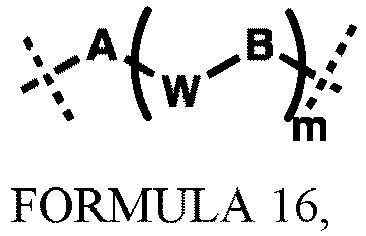
- A, W, and B, at each occurrence, are independently selected from null, CO, CO2, C(O)NR1, C(S)NR1, O, S, SO, SO2, SO2NR1, NR1, NR1CO, NR1CONR2, NR1C(S), optionally substituted C1-C8 alkyl, optionally substituted C1-C8 alkoxy, optionally substituted C1-C8alkoxyC1-C8alkyl, optionally substituted C1-C8 haloalkyl, optionally substituted C1-C8 hydroxyalkyl, optionally substituted C2-C8 alkenyl, optionally substituted C2-C8 alkynyl, optionally substituted 3-8 membered cycloalkyl, optionally substituted C3-C8 cycloalkoxy, optionally substituted 3-8 membered heterocyclyl, optionally substituted aryl, optionally substituted heteroaryl, optionally substituted C3-C13 fused cycloalkyl, optionally substituted C3-C13 fused heterocyclyl, optionally substituted C3-C13 bridged cycloalkyl, optionally substituted C3-C13 bridged heterocyclyl, optionally substituted C3-C13 spiro cycloalkyl, and optionally substituted C3-C13 spiro heterocyclyl; wherein
- R1 and R2 are independently selected from hydrogen, optionally substituted C1-C8 alkyl, optionally substituted C3-C8 cycloalkyl, optionally substituted 3-8 membered cycloalkoxy, optionally substituted 3-8 membered heterocyclyl, optionally substituted C1-C8 alkoxy, optionally substituted C1-C8 alkoxyalkyl, optionally substituted C1-C8 haloalkyl, optionally substituted C1-C8 hydroxyalkyl, optionally substituted C1-C8 alkylamino, and optionally substituted C1-C8alkylaminoC1-C8alkyl; and
- m is 0 to 15.
- In an embodiment, the linker is a moiety according to FORMULA 16A:

- R1, R2, R3, and R4, at each occurrence, are independently selected from hydrogen, halogen, CN, OH, NH2, optionally substituted C1-C8 alkyl, optionally substituted C3-C8 cycloalkyl, optionally substituted C3-C8 cycloalkoxy, optionally substituted 3-8 membered membered heterocyclyl, optionally substituted C1-C8 alkoxy, optionally substituted C1-C8 alkoxyalkyl, optionally substituted C1-C8 haloalkyl, optionally substituted C1-C8 hydroxyalkyl, optionally substituted C1-C8 alkylamino, and optionally substituted C1-C8 alkylaminoC1-C8 alkyl;
- A, W, and B, at each occurrence, are independently selected from null, CO, CO2, C(O)NR5, C(S)NR5, O, S, SO, SO2, SO2NR5, NR5, NR5CO, NR5CONR6, NR5C(S), optionally substituted C1-C8 alkyl, optionally substituted C1-C8 alkoxy, optionally substituted C1-C8alkoxyC1-C8alkyl, optionally substituted C1-C8 haloalkyl, optionally substituted C1-C8 hydroxyalkyl, optionally substituted C2-C8 alkenyl, optionally substituted C2-C8 alkynyl, optionally substituted 3-8 membered cycloalkyl, optionally substituted C3-C8 cycloalkoxy, optionally substituted 3-8 membered heterocyclyl, optionally substituted aryl, optionally substituted heteroaryl, optionally substituted C3-C13 fused cycloalkyl, optionally substituted C3-C13 fused heterocyclyl, optionally substituted C3-C13 bridged cycloalkyl, optionally substituted C3-C13 bridged heterocyclyl, optionally substituted C3-C13 spiro cycloalkyl, and optionally substituted C3-C13 spiro heterocyclyl; wherein
R5 and R6 are independently selected from hydrogen, optionally substituted C1-C8 alkyl, optionally substituted 3-8 membered cycloalkyl, optionally substituted C3-C8 cycloalkoxy, optionally substituted 3-8 membered heterocyclyl, optionally substituted C1-C8 alkoxy, optionally substituted C1-C8 alkoxyalkyl, optionally substituted C1-C8 haloalkyl, optionally substituted C1-C8 hydroxyalkyl, optionally substituted C1-C8 alkylamino, and optionally substituted C1-C8alkylaminoC1-C8alkyl; - m is 0 to 15;
- n, at each occurrence, is 0 to 15;
- o is 0 to 15,
- In an embodiment, the linker is a moiety according to FORMULA 16B:

- R1 and R2, at each occurrence, are independently selected from hydrogen, halogen, CN, OH, NH2, and optionally substituted C1-C8 alkyl, optionally substituted 3-8 membered cycloalkyl, optionally substituted C3-C8 cycloalkoxy, optionally substituted 3-8 membered heterocyclyl, optionally substituted C1-C8 alkoxy, optionally substituted C1-C8 alkoxyalkyl, optionally substituted C1-C8 haloalkyl, optionally substituted C1-C8 hydroxyalkyl, optionally substituted C1-C8 alkylamino, or C1-C8alkylaminoC1-C8alkyl;
- A and B, at each occurrence, are independently selected from null, CO, CO2, C(O)NR3, C(S)NR3, O, S, SO, SO2, SO2NR3, NR3, NR3CO, NR3CONR4, NR3C(S), and optionally substituted C1-C8 alkyl, optionally substituted C1-C8 alkoxy, optionally substituted C1-C8alkoxyC1-C8alkyl, optionally substituted C1-C8 haloalkyl, optionally substituted C1-C8 hydroxyalkyl, optionally substituted C2-C8 alkenyl, optionally substituted C2-C8 alkynyl, optionally substituted 3-8 membered cycloalkyl, optionally substituted C3-C8 cycloalkoxy, optionally substituted 3-8 membered heterocyclyl, optionally substituted aryl, optionally substituted heteroaryl, optionally substituted C3-C13 fused cycloalkyl, optionally substituted C3-C13 fused heterocyclyl, optionally substituted C3-C13 bridged cycloalkyl, optionally substituted C3-C13 bridged heterocyclyl, optionally substituted C3-C13 spiro cycloalkyl, or C3-C13 spiro heterocyclyl; wherein
- R3 and R4 are independently selected from hydrogen, and optionally substituted C1-C8 alkyl, optionally substituted 3-8 membered cycloalkyl, optionally substituted C3-C8 cycloalkoxy, optionally substituted 3-8 membered heterocyclyl, optionally substituted C1-C8 alkoxy, optionally substituted C1-C8 alkoxyalkyl, optionally substituted C1-C8 haloalkyl, optionally substituted C1-C8 hydroxyalkyl, optionally substituted C1-C8 alkylamino, or C1-C8alkylaminoC1-C8alkyl;
- each m is 0 to 15; and
- n is 0 to 15.
- In an embodiment, the linker is a moiety according to FORMULA 16C:

- X is selected from O, NH, and NR7;
- R1, R2, R3, R4, R5, and R6, at each occurrence, are independently selected from hydrogen, halogen, CN, OH, NH2, optionally substituted C1-C8 alkyl, optionally substituted 3-8 membered cycloalkyl, optionally substituted C3-C8 cycloalkoxy, optionally substituted 3-8 membered heterocyclyl, optionally substituted C1-C8 alkoxy, optionally substituted C1-C8 alkoxyalkyl, optionally substituted C1-C8 haloalkyl, optionally substituted C1-C8 hydroxyalkyl, optionally substituted C1-C8 alkylamino, and optionally substituted C1-C8 alkylaminoC1-C8 alkyl;
- A and B, at each occurrence, are independently selected from null, CO, NH, NH-CO, CO-NH, CH2-NH-CO, CH2-CO-NH, NH-CO-CH2, CO-NH-CH2, CH2-NH-CH2-CO-NH, CH2-NH-CH2-NH-CO, -CO-NH, CO-NH- CH2-NH-CH2, CH2-NH-CH2, CO2, C(O)NR7, C(S)NR7, O, S, SO, SO2, SO2NR7, NR7, NR7CO, NR7CONR8, NR7C(S), optionally substituted C1-C8 alkyl, optionally substituted C1-C8 alkoxy, optionally substituted C1-C8alkoxyC1-C8alkyl, optionally substituted C1-C8 haloalkyl, optionally substituted C1-C8 hydroxyalkyl, optionally substituted C2-C8 alkenyl, optionally substituted C2-C8 alkynyl, optionally substituted 3-8 membered cycloalkyl, optionally substituted C3-C8 cycloalkoxy, optionally substituted 3-8 membered heterocyclyl, optionally substituted aryl, optionally substituted heteroaryl, optionally substituted C3-C13 fused cycloalkyl, optionally substituted C3-C13 fused heterocyclyl, optionally substituted C3-C13 bridged cycloalkyl, optionally substituted C3-C13 bridged heterocyclyl, optionally substituted C3-C13 spiro cycloalkyl, and optionally substituted C3-C13 spiro heterocyclyl; wherein
- R7 and R8 are independently selected from hydrogen, optionally substituted C1-C8 alkyl, optionally substituted 3-8 membered cycloalkyl, optionally substituted C3-C8 cycloalkoxy, optionally substituted 3-8 membered heterocyclyl, optionally substituted C1-C8 alkoxy, optionally substituted C1-C8 alkoxyalkyl, optionally substituted C1-C8 haloalkyl, optionally substituted C1-C8 hydroxyalkyl, optionally substituted C1-C8 alkylamino, and optionally substituted C1-C8 alkylaminoC1-C8 alkyl;
- m, at each occurrence, is 0 to 15;
- n, at each occurrence, is 0 to 15;
- o is 0 to 15; and
- p is 0 to 15; and
- pharmaceutically acceptable salts thereof.
- In an embodiment, the linker is selected from the group consisting of a ring selected from the group consisting of a 3 to 13 membered ring; a 3 to 13 membered fused ring; a 3 to 13 membered bridged ring; and a 3 to 13 membered spiro ring; and pharmaceutically acceptable salts thereof.
- In an embodiment, the linker is a moiety according to one of FORMULAE C1, C2, C3, C4 and C5:


- In an embodiment, the bivalent compound according to the present invention is selected from the group consisting of:
HC58-18, HC58-19, HC58-20, HC58-22, HC58-23, HC58-24, HC58-25, HC58-26, HC58-27, HC58-28, HC58-29, HC58-30, HC58-31, HC58-32, HC58-33, HC58-34, HC58-35, HC58-36, HC58-37, HC58-38, HC58-39, HC58-40, HC58-41, HC58-43, HC58-44, HC58-45, HC58-46, HC58-53, HC58-57, HC58-58, HC58-59, HC58-60, HC58-63, HC58-64, HC58-65, HC58-66, HC58-67, HC58-68, HC58-69, HC58-70, HC58-71, HC58-73, HC58-74, HC58-75, HC58-76, HC58-77, HC58-78, HC58-133, HC58-134, HC58-135, HC58-136, HC58-137, HC58-138, HC58-139, HC58-144, HC58-145, HC58-146, HC58-147, HC58-148, HC58-149, HC58-150, HC58-158, HC58-159, HC58-160, HC58-161, HC58-164, HC58-165, HC58-167, HC58-178, HC58-179, HC58-180, HC58-181, HC58-182, HC58-183, HC58-184, HC58-185, HC65-2, HC65-3, HC65-4, HC65-5, HC65-6, HC65-7, HC65-8, HC65-13, HC65-14, HC65-15, HC65-16, HC65-17, HC65-18, HC65-19, HC65-24, HC65-25, HC65-26, HC65-27, HC65-28, HC65-29, HC65-30, HC65-33, HC65-34, HC65-35, HC65-37, HC65-175, HC65-183, HC65-184, HC65-185, HC65-186, HC75-1, HC75-2, HC75-3, HC75-4, HC75-5, HC75-6, HC75-7, HC75-8, HC75-9, HC75-10, HC75-11, HC75-12, HC75-13, HC75-14, HC75-15, HC75-16, HC75-17, HC75-18, HC75-18, HC75-20, HC75-21, HC75-22, HC75-23, HC75-24, HC75-29, HC75-31, HC75-34, HC75-35, HC75-36, HC75-37, HC75-38, HC75-39, HC75-40, HC75-41, HC75-42, HC75-43, HC75-44, HC75-45, HC75-46, HC75-47, HC75-48, HC75-49, HC75-50, HC75-52, HC75-53, HC75-54, HC75-55, HC75-56, HC75-57, HC75-58, HC75-59, HC75-60, HC75-61, HC75-62, HC90-33, HC90-34, HC90-35, HC90-36, HC90-37, HC90-41, HC90-42, HC90-43, HC90-44, HC90-45, HC90-46, HC90-47, HC90-49, HC90-50, HC90-51, HC90-52, HC90-53, HC90-54, HC90-55, HC90-56, HC90-57, HC90-58, HC90-59, HC90-61, HC90-66, HC90-69, HC90-70, HC90-71, HC90-72, HC90-73, HC90-74, HC90-84, HC90-85, HC90-86, HC90-87, HC90-88, HC90-89, HC90-90, HC90-91, HC90-92, HC90-93, HC90-94, HC90-95, HC90-96, HC90-97, HC90-102, HC90-103, HC90-104, HC90-105, HC90-106, HC90-107, HC90-108, HC90-109, HC90-110, HC90-111, HC90-112, HC90-113, HC90-117, HC90-119, HC90-120, HC90-121, HC90-122, HC90-123, HC90-124, HC90-125, HC90-126, HC90-127, HC90-128, HC90-129, HC90-130, HC90-131, HC90-132, HC90-133, HC90-134, HC90-135, HC90-136, HC90-60, HC90-62, HC90-63, HC90-64, HC90-65, HC90-67 and HC90-68 or analogs thereof; and pharmaceutically acceptable salts thereof. - In an embodiment, the bivalent compound according to the present invention is selected from the group consisting of HC58-18, HC58-19, HC58-20, HC58-22, HC58-23, HC58-24, HC58-25, HC58-26, HC58-27, HC58-28, HC58-29, HC58-30, HC58-31, HC58-32, HC58-33, HC58-34, HC58-35, HC58-36, HC58-37, HC58-38, HC58-39, HC58-40, HC58-41, HC58-43, HC58-44, HC58-45, HC58-46, HC58-53, HC58-57, HC58-58, HC58-59, HC58-60, HC58-63, HC58-64, HC58-65, HC58-66, HC58-67, HC58-68, HC58-69, HC58-70, HC58-71, HC58-73, HC58-74, HC58-75, HC58-76, HC58-77, HC58-78, HC58-133, HC58-134, HC58-135, HC58-136, HC58-137, HC58-138, HC58-139, HC58-144, HC58-145, HC58-146, HC58-147, HC58-148, HC58-149, HC58-150, HC58-158, HC58-159, HC58-160, HC58-161, HC58-164, HC58-165, HC58-167, HC58-178, HC58-179, HC58-180, HC58-181, HC58-182, HC58-183, HC58-184,HC58-185, HC65-2, HC65-3, HC65-4, HC65-5, HC65-6, HC65-7, HC65-8, HC65-13, HC65-14, HC65-15, HC65-16, HC65-17, HC65-18, HC65-19, HC65-24, HC65-25, HC65-26, HC65-27, HC65-28, HC65-29, HC65-30, HC65-33, HC65-34, HC65-35 and HC65-37; and pharmaceutically acceptable salts thereof.
- In an embodiment, the bivalent compound according to the present invention is selected from the group consisting of: HC65-175, HC65-183, HC65-184, HC65-185, HC65-186, HC75-1, HC75-2, HC75-3, HC75-4, HC75-5, HC75-6, HC75-7, HC75-8, HC75-9, HC75-10, HC75-11, HC75-12, HC75-13, HC75-14, HC75-15, HC75-16, HC75-17, HC75-18, HC75-18, HC75-20, HC75-21, HC75-22, HC75-23, HC75-24, HC75-29, HC75-31, HC75-34, HC75-35, HC75-36, HC75-37, HC75-38, HC75-39, HC75-40, HC75-41, HC75-42, HC75-43, HC75-44, HC75-45, HC75-46, HC75-47, HC75-48, HC75-49, HC75-50, HC75-52, HC75-53, HC75-54, HC75-55, HC75-56, HC75-57, HC75-58, HC75-59, HC75-60, HC75-61 and HC75-62; and pharmaceutically acceptable salts thereof.
- In an embodiment, the bivalent compound according to the present invention is selected from the group consisting of:
HC90-33, HC90-34, HC90-35, HC90-36, HC90-37, HC90-41, HC90-42, HC90-43, HC90-44, HC90-45, HC90-46, HC90-47, HC90-49, HC90-50, HC90-51, HC90-52, HC90-53, HC90-54, HC90-55, HC90-56, HC90-57, HC90-58, HC90-59, HC90-61, HC90-66, HC90-69, HC90-70, HC90-71, HC90-72, HC90-73, HC90-74, HC90-84, HC90-85, HC90-86, HC90-87, HC90-88, HC90-89, HC90-90, HC90-91, HC90-92, HC90-93, HC90-94, HC90-95, HC90-96, HC90-97, HC90-102, HC90-103, HC90-104, HC90-105, HC90-106, HC90-107, HC90-108, HC90-109, HC90-110, HC90-111, HC90-112, HC90-113, HC90-117, HC90-119, HC90-120, HC90-121, HC90-122, HC90-123, HC90-124, HC90-125, HC90-126, HC90-127, HC90-128, HC90-129, HC90-130, HC90-131, HC90-132, HC90-133, HC90-134, HC90-135, HC90-136, HC90-60, HC90-62, HC90-63, HC90-64, HC90-65, HC90-67 and HC90-68; and pharmaceutically acceptable salts thereof. - In one embodiment, preferred compounds according to the present invention include:
- a. (Z)-N-(3-(4-(5-((2-(2,6-dioxopiperidin-3-yl)-1,3-dioxoisoindolin-4-yl)amino)pentanoyl)piperazin-1-yl)propyl)-5-((5-fluoro-2-oxoindolin-3-ylidene)methyl)-2,4-dimethyl-1H-pyrrole-3-carboxamide (HC58-38);
- b. (Z)-N-(3-(4-(2-((5-((2-(2,6-dioxopiperidin-3-yl)-1,3-dioxoisoindolin-4-yl)amino)pentyl)amino)-2-oxoethyl)piperazin-1-yl)propyl)-5-((5-fluoro-2-oxoindolin-3-ylidene)methyl)-2,4-dimethyl-1H-pyrrole-3-carboxamide (HC58-75);
- c. (Z)-N-(3-(4-(2-((6-((2-(2,6-dioxopiperidin-3-yl)-1,3-dioxoisoindolin-4-yl)amino)hexyl)amino)-2-oxoethyl)piperazin-1-yl)propyl)-5-((5-fluoro-2-oxoindolin-3-ylidene)methyl)-2,4-dimethyl-1H-pyrrole-3-carboxamide (HC58-76); and
- d. (Z)-N-(3-(4-(2-((8-((2-(2,6-dioxopiperidin-3-yl)-1,3-dioxoisoindolin-4-yl)amino)octyl)amino)-2-oxoethyl)piperazin-1-yl)propyl)-5-((5-fluoro-2-oxoindolin-3-ylidene)methyl)-2,4-dimethyl-1H-pyrrole-3-carboxamide (HC58-78);
- e. 2-(2,6-dioxopiperidin-3-yl)-4-((3-(4-(4-(5-(2-fluoro-6-methoxyphenyl)-1H-pyrazolo[4,3-d]pyrimidin-3-yl)phenyl)piperazin-1-yl)-3-oxopropyl)amino)isoindoline-1,3-dione (HC90-50); and
- f. 2-(2,6-dioxopiperidin-3-yl)-4-((4-(4-(4-(5-(2-fluoro-6-methoxyphenyl)-1H-pyrazolo[4,3-d]pyrimidin-3-yl)phenyl)piperazin-1-yl)-4-oxobutyl)amino)isoindoline-1,3-dione (HC90-51), and pharmaceutically acceptable salts thereof.
- In some aspects, this disclosure provides a method of treating the HPK1-mediated diseases, the method including administering to a subject in need thereof with an HPK1-mediated disease one or more bivalent compounds including an HPK1 ligand conjugated to a degradation/disruption tag. The HPK1-mediated diseases may be a disease resulting from HPK1 amplification. The HPK1-mediated diseases can have elevated HPK1 enzymatic activity relative to a wild-type tissue of the same species and tissue type. Non-limiting examples of HPK1-mediated diseases or diseases whose clinical symptoms could be treated by HPK1 degraders/disruptors-mediated therapy include: all solid and liquid cancer, chronic infections that produce exhausted immune response, infection-mediated immune suppression, age-related decline in immune response, age-related decline in cognitive function and infertility.
- Exemplary types of cancer that could prevented, or therapeutically treated by manipulation of HPK1 level by degraders/disruptors should include all solid and liquid cancers, including, but not limited to, cancers of the breast, respiratory tract, brain, reproductive organs, digestive tract, urinary tract, eye, liver, skin, head and neck, thyroid, parathyroid and their distant metastases. Examples of liquid cancers include lymphomas, sarcomas, and leukaemias. Listed below are the type of cancers that immunotherapy using HPK1 degraders/disruptors should be able to prevent or treat.
- Examples of breast cancers include, but are not limited to, triple negative breast cancer, invasive ductal carcinoma, invasive lobular carcinoma, ductal carcinoma in situ, and lobular carcinoma in situ.
- Examples of cancers of the respiratory tract include, but are not limited to, small-cell and non- small-cell lung carcinoma, as well as bronchial adenoma and pleuropulmonary blastoma.
- Examples of brain cancers include, but are not limited to, brain stem and hypophtalmic glioma, cerebellar and cerebral astrocytoma, glioblastoma, medulloblastoma, ependymoma, as well as neuroectodermal and pineal tumor.
- Tumors of the male reproductive organs include, but are not limited to, prostate and testicular cancer.
- Tumors of the female reproductive organs include, but are not limited to, endometrial, cervical, ovarian, vaginal, and vulvar cancer, as well as sarcoma of the uterus.
- Examples of ovarian cancer include, but are not limited to, serous tumor, endometrioid tumor, mucinous cystadenocarcinoma, granulosa cell tumor, Sertoli-Leydig cell tumor and arrhenoblastoma.
- Examples of cervical cancer include, but are not limited to, squamous cell carcinoma, adenocarcinoma, adenosquamous carcinoma, small cell carcinoma, neuroendocrine tumor, glassy cell carcinoma and villoglandular adenocarcinoma. Tumors of the digestive tract include, but are not limited to, anal, colon, colorectal, esophageal, gallbladder, gastric, pancreatic, rectal, small-intestine, and salivary gland cancers.
- Examples of esophageal cancer include, but are not limited to, esophageal cell carcinomas and adenocarcinomas, as well as squamous cell carcinomas, leiomyosarcoma, malignant melanoma, rhabdomyosarcoma and lymphoma.
- Examples of gastric cancer include, but are not limited to, intestinal type and diffuse type gastric adenocarcinoma.
- Examples of pancreatic cancer include, but are not limited to, ductal adenocarcinoma, adenosquamous carcinomas and pancreatic endocrine tumors.
- Example of tumors of the urinary tract include, but are not limited to, bladder, penile, kidney, renal pelvis, ureter, urethral and human papillary renal cancers.
- Examples of kidney cancer include, but are not limited to, renal cell carcinoma, urothelial cell carcinoma, juxtaglomerular cell tumor (reninoma), angiomyolipoma, renal oncocytoma, Bellini duct carcinoma, clear-cell sarcoma of the kidney, mesoblastic nephroma and Wilms' tumor.
- Examples of bladder cancer include, but are not limited to, transitional cell carcinoma, squamous cell carcinoma, adenocarcinoma, sarcoma and small cell carcinoma. Eye cancers include, but are not limited to, intraocular melanoma and retinoblastoma.
- Examples of liver cancers include, but are not limited to, hepatocellular carcinoma (liver cell carcinomas with or without fibrolamellar variant), cholangiocarcinoma (intrahepatic bile duct carcinoma), and mixed hepatocellular cholangiocarcinoma.
- Example of skin cancers include, but are not limited to, squamous cell carcinoma, Kaposi's sarcoma, malignant melanoma, Merkel cell skin cancer, and non-melanoma skin cancer.
- Example of head-and-neck cancers include, but are not limited to, squamous cell cancer of the head and neck, laryngeal, hypopharyngeal, nasopharyngeal, oropharyngeal cancer, salivary gland cancer, lip and oral cavity cancer and squamous cell.
- Example of lymphomas include, but are not limited to, AIDS-related lymphoma, non-Hodgkin's lymphoma, cutaneous T-cell lymphoma, Burkitt lymphoma, Hodgkin's disease, and lymphoma of the central nervous system.
- Example of sarcomas include, but are not limited to, sarcoma of the soft tissue, osteosarcoma, malignant fibrous histiocytoma, lymphosarcoma, and rhabdomyosarcoma.
- Eample of leukemias include, but are not limited to, acute myeloid leukemia, acute lymphoblastic leukemia, chronic lymphocytic leukemia, chronic myelogenous leukemia, and hairy cell leukemia.
- The HPK1 degraders/disruptors should be able to treat the above cancer types as stand alone agents or used as an agent in combination with existing standards of treatment therapy and other FDA-approved cancer therapy.
- Therapeutic use of HPK1 extends to include diseases and therapies that are amenable to treatment by stimulation/augmentation of immune response, including the prolongation of immune responses during vaccination for immunizable diseases such as influenza and coronaviruses, including Covid 19. Also, because HPK1 is expressed at high level in two other anatomical locations - brain and testes - the HPK1 degraders/disruptors should be able to treat or prevent diseases related to brain and testes that were caused by HPK1 or could be treated by HPK1 degraders/disruptors. These potential diseases include, but are not limited to, Alzheimer's disease, age-related dementia and infertility, regardless whether these possible diseases were caused by HPK1 or by other etiological causes.
- Therapeutic use of HPK1 further extends to include therapies involving ex vivo treatment of immune cells, including, but not limited to, all T cell subsets, genetically engineered T cells, Chimeric Antigen Receptor (CAR) T cells, tumor infiltrating lymphocytes, dendritic cells, macrophage, mast cells, granulocytes (include basophils, eosinophils, and neutrophils), natural killer cells, NK T cells and B cells. Such cells would be therapeutically treated by HPK1 degraders and then re-introduced back to the patient being treated for conditions that would benefit from reduction in HPK1 expression. The sources of cells for such ex vivo treatment include, but are not limited to, the autologous bone marrow cells from the patient him/herself, or from the patient's frozen banked cord blood stem cells, peripheral blood or bone marrow stem cells from MHC-matched or MHC-mismatched donors.
- Treating patients by administering specific immune cells that had been treated with HPK1 degraders offers many added advantages over in vivo use. By treating specific immune cells type with HPK1 degraders ex vivo, it is possible to specifically target the immune cell type that would receive the benefit of having the endogenous HPK1 level reduced by HPK1 degraders while sparing the HPK1 expression level in other immune cell types that are not involved in the disease condition.
- This therapeutic approach would provide cell type-specific targeting of immune cells in a way that is not possible with the use of HPK1 degrader in the in vivo setting. Thus, the ex vivo approach would likely limit potential toxicity that may result from reduction of HPK1 level in immune cell types that do not benefit from a reduction in HPK1 levels.
- Furthermore, by administering HPK1 degraders in the ex vivo cell setting, the risk of patients experiencing the toxicity or undesirable outcome that might occur should the HPK1 degraders were to be administered systemically would be eliminated.
- It is known that HPK1 is also expressed in non-hematopoietically-derived tissues such as the brain and testes. Because of this tissue-specific expression pattern of HPK1, HPK1 degraders might be able to treat or prevent diseases related to the brain and testes that were caused by HPK1. These potential treatments include, but are not limited to, treatment of Alzheimer's disease, age-related dementia and infertility, irrespective to whether these possible diseases were caused by HPK1 or by other etiological causes.
- The use of HPK1 expression status of the tumor as the biomarker would enable stratification of patients into appropriate therapeutic groups that would receive HPK1 degraders in vivo or ex vivo, based on HPK1 expression in the tumors.
- Furthermore, using HPK1 degraders in an ex vivo setting offers additional advantages over gene-editing approaches such as CRISPR in that it allows therapeutic use of HPK1 degraders as a non-permanent treatment that allows a therapeutic regimen to be adjusted temporally through dosing levels and through alteration of the administration schedule.
- In addition, HPK1 degraders could be used in settings whereby stimulation/augmentation of the immune response is required, or when the prolongation of immune responses is needed. Improving immune response to vaccination is one of the settings in which HPK1 degraders could be used therapeutically. HPK1 degraders could also be used to enhance the antigen presentation capability of dendritic cell-based cancer vaccines.
- Other utilities of HPK1 degraders include treatment of dendritic cells with HPK1 degraders to increase resistance to maturation-induced apoptosis, thus increasing the yield of dendritic cell production.
- In an embodiment, HPK1 degraders of the present invention may be employed in combination with treatments using checkpoint inhibitors, including, but not limited to anti-programmed cell death protein (anti-PD-1) and anti-programmed death ligand-1 (anti-PD-L1). Examples of anti-PD-1 and anti-PD-L1 agents include monoclonal antibodies that target either PD-1 or PD-L1. Such antibodies include, but are not limited to pembrolizumab (Keytruda), nivolumab (Opdivo), and cemiplimab (Libtayo) (PD-1 inhibitors); and atezolizumab (Tecentriq), avelumab (Bavencio), and durvalumab (Imfinzi) (PD-L1 inhibitors). Use of such anti-PD1 and/or anti-PD-L1 agents in immunotherapy, particularly cancer immunotherapy, may be enhanced by concomitant therapy with HPK1 degraders of the present invention. Such combination therapy of anti-PD-1 agents with HPK1 degraders of the present invention is particularly useful in the treatment of melanoma, lung cancer, renal cell carcinoma, Hodgkin lymphoma, head and neck cancer, colon cancer and liver cancer. Such combination therapy of anti-PD-
L 1 agents with HPK1 degraders of the present invention are particularly useful in the treatment of non-small cell lung carcinoma, multiple myeloma, urothelial cancer and head and neck cancer. (Hernandez 2018). - Similar combination therapy may employ HPK1 degraders of the present invention with an anti-CTLA-4 (cytotoxic T-lymphocyte-associated protein 4) agent, such as the monoclonal antibody ilimumab, particularly for the treatment of melanoma, lung cancer, renal cell carcinoma, glioblastoma, hepatocellular carcinoma large B cell lymphoma, Hodgkin lymphoma, head and neck cancer, colon cancer and liver cancer.
- In an embodiment, the HPK1 degraders of the present invention may be used in the treatment of tumor types having elevated expression of cyclooxygenase-2 (COX-2). COX-2 elevation leads to over production of prostaglandin E2 (PGE2). PGE2 made by these tumors is known to inhibit the anti-tumor immune response. T cells lacking HPK1 are resistant to PGE2-mediated inhibition. (Alzabin 2010). Cancer types known to have high expression levels of COX-2 include, but not are not limited to colon cancer, lung cancer, sarcoma and breast cancer.
In any of the above-described methods, the bivalent compounds can be HC58-18, HC58-19, HC58-20, HC58-22, HC58-23, HC58-24, HC58-25, HC58-26, HC58-27, HC58-28, HC58-29, HC58-30, HC58-31, HC58-32, HC58-33, HC58-34, HC58-35, HC58-36, HC58-37, HC58-38, HC58-39, HC58-40, HC58-41, HC58-43, HC58-44, HC58-45, HC58-46, HC58-53, HC58-57, HC58-58, HC58-59, HC58-60, HC58-63, HC58-64, HC58-65, HC58-66, HC58-67, HC58-68, HC58-69, HC58-70, HC58-71, HC58-73, HC58-74, HC58-75, HC58-76, HC58-77, HC58-78, HC58-133, HC58-134, HC58-135, HC58-136, HC58-137, HC58-138, HC58-139, HC58-144, HC58-145, HC58-146, HC58-147, HC58-148, HC58-149, HC58-150, HC58-158, HC58-159, HC58-160, HC58-161, HC58-164, HC58-165, HC58-167, HC58-178, HC58-179, HC58-180, HC58-181, HC58-182, HC58-183, HC58-184, HC58-185, HC65-2, HC65-3, HC65-4, HC65-5, HC65-6, HC65-7, HC65-8, HC65-13, HC65-14, HC65-15, HC65-16, HC65-17, HC65-18, HC65-19, HC65-24, HC65-25, HC65-26, HC65-27, HC65-28, HC65-29, HC65-30, HC65-33, HC65-34, HC65-35, HC65-37, HC65-175, HC65-183, HC65-184, HC65-185, HC65-186, HC75-1, HC75-2, HC75-3, HC75-4, HC75-5, HC75-6, HC75-7, HC75-8, HC75-9, HC75-10, HC75-11, HC75-12, HC75-13, HC75-14, HC75-15, HC75-16, HC75-17, HC75-18, HC75-18, HC75-20, HC75-21, HC75-22, HC75-23, HC75-24, HC75-29, HC75-31, HC75-34, HC75-35, HC75-36, HC75-37, HC75-38, HC75-39, HC75-40, HC75-41, HC75-42, HC75-43, HC75-44, HC75-45, HC75-46, HC75-47, HC75-48, HC75-49, HC75-50, HC75-52, HC75-53, HC75-54, HC75-55, HC75-56, HC75-57, HC75-58, HC75-59, HC75-60, HC75-61, HC75-62, HC90-33, HC90-34, HC90-35, HC90-36, HC90-37, HC90-41, HC90-42, HC90-43, HC90-44, HC90-45, HC90-46, HC90-47, HC90-49, HC90-50, HC90-51, HC90-52, HC90-53, HC90-54, HC90-55, HC90-56, HC90-57, HC90-58, HC90-59, HC90-61, HC90-66, HC90-69, HC90-70, HC90-71, HC90-72, HC90-73, HC90-74, HC90-84, HC90-85, HC90-86, HC90-87, HC90-88, HC90-89, HC90-90, HC90-91, HC90-92, HC90-93, HC90-94, HC90-95, HC90-96, HC90-97, HC90-102, HC90-103, HC90-104, HC90-105, HC90-106, HC90-107, HC90-108, HC90-109, HC90-110, HC90-111, HC90-112, HC90-113, HC90-117, HC90-119, HC90-120, HC90-121, HC90-122, HC90-123, HC90-124, HC90-125, HC90-126, HC90-127, HC90-128, HC90-129, HC90-130, HC90-131, HC90-132, HC90-133, HC90-134, HC90-135, HC90-136, HC90-60, HC90-62, HC90-63, HC90-64, HC90-65, HC90-67, HC90-68 or analogs thereof. - In some aspects of the disclosed methods, the bivalent compounds can be administered by any of several routes of administration including, e.g., orally, parenterally, intradermally, subcutaneously, topically, and/or rectally.
- Any of the above-described methods can further include treating the subject with one or more additional therapeutic regimens for treating cancer. The one or more additional therapeutic regimens for treating cancer can be, e.g., one or more of surgery, chemotherapy, radiation therapy, hormone therapy, or immunotherapy.
- This disclosure additionally provides a method for identifying a bivalent compound which mediates degradation/disruption of HPK1, the method including providing a heterobifunctional test compound including a HPK1 ligand conjugated to a degradation/disruption tag, contacting the heterobifunctional test compound with a cell (e.g., a cancer cell such as a HPK1-mediated cancer cell) including a ubiquitin ligase and HPK1.
- As used herein, the terms "about" and "approximately" are defined as being within plus or minus 10% of a given value or state, preferably within plus or minus 5% of said value or state. Unless otherwise defined, all technical and scientific terms used herein have the same meaning as commonly understood by one of ordinary skill in the art to which this invention belongs. Methods and materials are described herein for use in the present invention; other, suitable methods and materials known in the art can also be used. The materials, methods, and examples are illustrative only and not intended to be limiting. All publications, patent applications, patents, sequences, database entries, and other references mentioned herein are incorporated by reference in their entirety. In case of conflict, the present specification, including definitions, will control.
- Other features and advantages of the invention will be apparent from the following detailed description and figures, and from the claims.
-
-
Figure 1 is a series of graphs of screening of HC58 Series HPK1 Degraders for the enhancement of TCR-induced IL-2 production. -
Figure 2 is a Western blot analysis showing that HC58 series degraders could reduce the endogenous level of HPK1 in Jurkat T cells. -
Figure 3 is a Western blot analysis showing that the HC58 series degraders, HC58-75 and HC58-78 could reduce the endogenous level of HPK1 in Jurkat T cells on multiple day post exposure to HC58 series. -
Figure 4 is a Western blot analysis revealed that the HC58 series degraders could reduce the endogenous level of HPK1 in Jurkat T cells, relative to DMSO and other controls. (A) Amounts of IL-2 produced in response to TCR engagement. (B) Fold IL-2 increase after Degrader treatment. -
Figure 5 is a set of graphs showing that treating primary T cells with the lead HPK1 degraders from the HC58 series conferred murine primary T cells with elevated IL-2 response, as well as an enhanced proliferative response to the anti-CD28 X anti-CD28 mAb-mediated receptor crosslinking. -
Figure 6 is a graph showing CD28-independent IL-2 production by HC58-75-treated CD4+ T cells upon being stimulated by a fixed concentration of plate-bound anti-CD3ε and varying concentrations of soluble anti-CD28 mAb. -
Figure 7 is a graph showing treating primary GFP+ Tregs with the HC58-78 HPK1 degrader conferred Tregs with an elevated IL-2 production in response to the stimulation by TCR engagement. -
Figure 8 is a set of graphs showing screening the HC90 HPK1 degrader series for compounds that could elicit superior IL-2 production when compared to the level elicited by the lead HC58 series compounds. -
Figure 9 is a graph showing IL-2 response profiles elicited by varying concentrations of the lead HC90 compounds in Jurkat T cells. -
Figure 10 is a graph showing IL-2 produced by HC58-78-treated or HC90-50-treated human PBMC, shown as fold differences in IL-2 produced by the degrader-treated cells relative to IL-2 produced by the DMSO-treated cells. -
Figure 11 is a schematic depiction of how HPK1 degraders might be used as therapeutic agents to directly or indirectly treat various disease states. -
Figure 12 is a series of blots showing HPK1 degraders could effectively degrade endogenous HPK1 in murine T cells, murin TCR transgenic T cells and inhuman DC 1 dendritic cells. -
Figure 13 is a set of graphs showing HPK1 degraders could effectively enhance Blinatumomab-mediated killing of the human CD19+ B Cell Acute Lymphoblastic Leukemia cells, Raji. -
Figure 14 is a set of graphs showing HPK1 degraders could effectively pro-inflammatory cytokine produced by the Blinatumomab-treated PBMC cells. (A) A representative intracellular cytokine staining pattern for the expression of IFNγ and TNFα by HPK1 degrader/Blinatumomab-treated PBMC cells. (B) Averaged percentage of cells that are stained positive for both IFNγ and TNFα in HPK1 degrader/Blinatumomab-treated PBMC cells. - The present disclosure is based, in part, on the discovery that novel heterobifunctional molecules which degrade HPK1, HPK1 fusion proteins, and/or HPK1 mutant proteins are useful in the treatment of HPK1-mediated diseases.
- Non-limiting examples of HPK1-mediated diseases or diseases whose clinical symptoms could be treated by HPK1 degraders/disruptors-mediated therapy include: all solid and liquid cancer, chronic infections that produce exhausted immune response, infection-mediated immune suppression, age-related decline in immune response, age-related decline in cognitive function and infertility
- Exemplary type of cancers that could be prevented, or therapeutically treated by manipulation of HPK1 level by degraders/disruptors should include all solid and liquid cancers, including, but not limited to, cancers of the breast, respiratory tract, brain, reproductive organs, digestive tract, urinary tract, eye, liver, skin, head and neck, thyroid, parathyroid and their distant metastases. Examples of liquid cancers include lymphomas, sarcomas, and leukaemias. Listed below are the type of cancers that immunotherapy using HPK1 degraders/disruptors should be able to prevent or treat.
- Examples of breast cancers include, but are not limited to, triple negative breast cancer, invasive ductal carcinoma, invasive lobular carcinoma, ductal carcinoma in situ, and lobular carcinoma in situ.
- Examples of cancers of the respiratory tract include, but are not limited to, small-cell and non- small-cell lung carcinoma, as well as bronchial adenoma and pleuropulmonary blastoma.
- Examples of brain cancers include, but are not limited to, brain stem and hypophtalmic glioma, cerebellar and cerebral astrocytoma, glioblastoma, medulloblastoma, ependymoma, as well as neuroectodermal and pineal tumor.
- Tumors of the male reproductive organs include, but are not limited to, prostate and testicular cancer.
- Tumors of the female reproductive organs include, but are not limited to, endometrial, cervical, ovarian, vaginal, and vulvar cancer, as well as sarcoma of the uterus.
- Examples of ovarian cancer include, but are not limited to, serous tumor, endometrioid tumor, mucinous cystadenocarcinoma, granulosa cell tumor, Sertoli-Leydig cell tumor and arrhenoblastoma.
- Examples of cervical cancer include, but are not limited to, squamous cell carcinoma, adenocarcinoma, adenosquamous carcinoma, small cell carcinoma, neuroendocrine tumor, glassy cell carcinoma and villoglandular adenocarcinoma. Tumors of the digestive tract include, but are not limited to, anal, colon, colorectal, esophageal, gallbladder, gastric, pancreatic, rectal, small-intestine, and salivary gland cancers.
- Examples of esophageal cancer include, but are not limited to, esophageal cell carcinomas and adenocarcinomas, as well as squamous cell carcinomas, leiomyosarcoma, malignant melanoma, rhabdomyosarcoma and lymphoma.
- Examples of gastric cancer include, but are not limited to, intestinal type and diffuse type gastric adenocarcinoma.
- Examples of pancreatic cancer include, but are not limited to, ductal adenocarcinoma, adenosquamous carcinomas and pancreatic endocrine tumors.
- Example of tumors of the urinary tract include, but are not limited to, bladder, penile, kidney, renal pelvis, ureter, urethral and human papillary renal cancers.
- Examples of kidney cancer include, but are not limited to, renal cell carcinoma, urothelial cell carcinoma, juxtaglomerular cell tumor (reninoma), angiomyolipoma, renal oncocytoma, Bellini duct carcinoma, clear-cell sarcoma of the kidney, mesoblastic nephroma and Wilms' tumor.
- Examples of bladder cancer include, but are not limited to, transitional cell carcinoma, squamous cell carcinoma, adenocarcinoma, sarcoma and small cell carcinoma. Eye cancers include, but are not limited to, intraocular melanoma and retinoblastoma.
- Examples of liver cancers include, but are not limited to, hepatocellular carcinoma (liver cell carcinomas with or without fibrolamellar variant), cholangiocarcinoma (intrahepatic bile duct carcinoma), and mixed hepatocellular cholangiocarcinoma.
- Example of skin cancers include, but are not limited to, squamous cell carcinoma, Kaposi's sarcoma, malignant melanoma, Merkel cell skin cancer, and non-melanoma skin cancer.
- Example of head-and-neck cancers include, but are not limited to, squamous cell cancer of the head and neck, laryngeal, hypopharyngeal, nasopharyngeal, oropharyngeal cancer, salivary gland cancer, lip and oral cavity cancer and squamous cell.
- Example of lymphomas include, but are not limited to, AIDS-related lymphoma, non-Hodgkin's lymphoma, cutaneous T-cell lymphoma, Burkitt lymphoma, Hodgkin's disease, and lymphoma of the central nervous system.
- Example of sarcomas include, but are not limited to, sarcoma of the soft tissue, osteosarcoma, malignant fibrous histiocytoma, lymphosarcoma, and rhabdomyosarcoma.
- Eample of leukemias include, but are not limited to, acute myeloid leukemia, acute lymphoblastic leukemia, chronic lymphocytic leukemia, chronic myelogenous leukemia, and hairy cell leukemia.
- The HPK1 degraders/disruptors should be able to treat the above cancer type as stand alone agent or used as agent in combination with existing standard of treatment therapy and other FDA-approved cancer therapy.
- Therapeutic uses of HPK1 include diseases and therapies that are amenable to treatment by stimulation/augmentation of immune response, including the prolongation of immune responses during vaccination for immunizable diseases. Also, because HPK1 is expressed at high level in two other anatomical locations - brain and testes - the HPK1 degraders/disruptors should be able to treat or prevent diseases related to brain and testes that were caused by HPK1 or could be treated by HPK1 degraders/disruptors. These potential diseases include, but is not limited to, Alzheimer's disease, age-related dementia and infertility, regardless whether these possible diseases were caused by HPK1 or by other etiological causes.
- Successful strategies for selective degradation/disruption of the target protein induced by a bifunctional molecule include recruiting an E3 ubiquitin ligase and mimicking protein misfolding with a hydrophobic tag (Buckley and Crews, 2014). PROTACs (PROteolysis TArgeting Chimeras) are bivalent molecules with one moiety that binds an E3 ubiquitin ligase and another moiety that binds the protein target of interest (Buckley and Crews, 2014). The induced proximity leads to selective ubiquitination of the target followed by its degradation at the proteasome. Several types of high affinity small-molecule E3 ligase ligands have been identified/developed: They include (1) immunomodulatory drugs (IMiDs) such as thalidomide and pomalidomide, which bind cereblon (CRBN or CRL4CRBN), a component of a cullin-RING ubiquitin ligase (CRL) complex (Bondeson et al., 2015; Chamberlain et al., 2014; Fischer et al., 2014; Ito et al., 2010; Winter et al., 2015); (2) VHL-1, a hydroxyproline-containing ligand, which binds van Hippel-Lindau protein (VHL or CRL2VHL), a component of another CRL complex (Bondeson et al., 2015; Buckley et al., 2012a; Buckley et al., 2012b; Galdeano et al., 2014; Zengerle et al., 2015); (3) compound 7,which selectively binds KEAPI, a component of a CRL3 complex (Davies et al., 2016); (4) AMG232, which selectively binds MDM2, a heterodimeric RING E3 ligase (Sun et al., 2014); and (5) LCL161, which selectively binds IAP, a homodimeric RING E3 ligase (Ohoka et al., 2017; Okuhira et al, 2011; Shibata et al., 2017). The degrader technology has been successfully applied to degradation of multiple targets (Bondeson et al., 2015; Buckley et al., 2015; Lai et al., 2016; Lu et al., 2015; Winter et al., 2015; Zengerle et al., 2015), but not to degradation of HPK1. In addition, a hydrophobic tagging approach, which utilizes a bulky and hydrophobic adamantyl group, has been developed to mimic protein misfolding, leading to the degradation of the target protein by proteasome (Buckley and Crews, 2014). This approach has also been successfully applied to selective degradation of the pseudokinase Her3 (Xie et al., 2014), but not to degradation of HPK1 proteins.
- As discussed in the following examples, this disclosure provides specific examples of novel HPK1 degraders/disruptors, and examined the effect of exemplary degraders/disruptors on reducing HPK1 protein levels, inhibiting/disrupting HPK1 activity and increasing the TCR-induced IL-2 production by Jurkat T cells. The results indicated that these novel compounds can be beneficial in treating cancer. Exemplary type of cancers that could be prevented, or therapeutically treated by manipulation of HPK1 level by degraders/disruptors should include all solid and liquid cancers, including, but not limited to, cancers of the breast, respiratory tract, brain, reproductive organs, digestive tract, urinary tract, eye, liver, skin, head and neck, thyroid, parathyroid and their distant metastases. Examples of liquid cancers include lymphomas, sarcomas, and leukaemias. Listed below are the type of cancers that immunotherapy using HPK1 degraders/disruptors should be able to prevent or treat as mentioned above.
- Current compounds targeting HPK1 generally focus on inhibition of its catalytic activity. In the present disclosure a different approach was taken: to develop compounds that directly and selectively target not only the catalytic function of HPK1, but also its protein level in cells. Strategies for inducing protein degradation include recruiting E3 ubiquitin ligases, mimicking protein misfolding with hydrophobic tags, and inhibiting chaperones. For example, a thalidomide-JQ1 bivalent compound has been used to hijack the cereblon E3 ligase, inducing highly selective BET protein degradation in vitro and in vivo and resulting in a demonstrated delay in leukemia progression in mice (Winter et al., 2015). Similarly, BET protein degradation has also been induced via another E3 ligase, VHL (Zengerle et al., 2015). Partial degradation of the Her3 protein has been induced using an adamantane-modified compound (Xie et al., 2014). Such an approach, based on the use of bivalent molecules, permits more flexible regulation of protein levels in vitro and in vivo compared with techniques such as gene knockout or knockdown via RNA interference. Unlike gene knockout or knockdown, this chemical approach provides an opportunity to study dose and time dependency in a disease model by varying the concentrations and frequencies of administration of the relevant compound.
- This disclosure includes all stereoisomers, geometric isomers, tautomers and isotopes of the structures depicted and compounds named herein. This disclosure also includes compounds described herein, regardless of how they are prepared, e.g., synthetically, through biological process (e.g., metabolism or enzyme conversion), or a combination thereof.
- This disclosure includes pharmaceutically acceptable salts of the structures depicted and compounds named herein.
- One or more constituent atoms of the compounds presented herein can be replaced or substituted with isotopes of the atoms in natural or non-natural abundance. In some embodiments, the compound includes at least one deuterium atom In some embodiments, the compound includes two or more deuterium atoms. In some embodiments, the compound includes 1-2, 1-3, 1-4, 1-5, or 1-6 deuterium atoms. In some embodiments, all of the hydrogen atoms m a compound can be replaced or substituted by deuterium atoms. In some embodiments, the compound includes at least one fluorine atom In some embodiments, the compound includes two or more fluorine atoms. In some embodiments, the compound includes 1-2, 1-3, 1-4, 1-5, or 1-6 fluorine atoms. In some embodiments, all of the hydrogen atoms in a compound can be replaced or substituted by fluorine atoms.
- In some aspects, the present disclosure provides bivalent compounds, also referred to herein as degarders, comprising a HPK1 ligand (or targeting moiety) conjugated to a degradation tag. Linkage of the HPK1 ligand to the degradation tag can be direct, or indirect via a linker.
- As used herein, the terms "protein arginine methyltransferase 5 (HPK1) ligand" or "HPK1 ligand" or "HPK1 targeting moiety" are to be construed broadly, and encompass a wide variety of molecules ranging from small molecules to large proteins that associate with or bind to HPK1. The HPK1 ligand or targeting moiety can be, for example, a small molecule compound (i.e., a molecule of molecular weight less than about 1.5 kilodaltons (kDa)), a peptide or polypeptide, nucleic acid or oligonucleotide, carbohydrate such as oligosaccharides, or an antibody or fragment thereof.
- The HPK1 ligand or targeting moiety can be derived from a HPK1 inhibitor (e.g., sutent and analogs thereof), which is capable of interfering with the enzymatic activity of HPK1. As used herein, an "inhibitor" refers to an agent that restrains, retards, or otherwise causes inhibition of a physiological, chemical or enzymatic action or function. As used herein an inhibitor causes a decrease in enzyme activity of at least 5%. An inhibitor can also or alternatively refer to a drug, compound, or agent that prevents or reduces the expression, transcription, or translation of a gene or protein. An inhibitor can reduce or prevent the function of a protein, e.g., by binding to or activating/inactivating another protein or receptor.
- Exemplary HPK1 ligands include, but are not limited to, the compounds listed below:

- As used herein, the term "degradation/disruption tag" refers to a compound, which associates with or binds to a ubiquitin ligase for recruitment of the corresponding ubiquitination machinery to HPK1 or induces HPK1 protein misfolding and subsequent degradation at the proteasome or loss of function.
- In some aspects, the degradation/disruption tags of the present disclosure include, e.g., thalidomide, pomalidomide, lenalidomide, VHL-1, adamantane, 1-((4,4,5,5,5-pentafluoropentyl)sulfinyl)nonane, nutlin-3a, RG7112, RG7338, AMG232, AA-115, bestatin, MV-1, LCL161, and/or analogs thereof.
- As used herein, a "linker" is a bond, molecule, or group of molecules that binds two separate entities to one another. Linkers can provide for optimal spacing of the two entities. The term "linker" in some aspects refers to any agent or molecule that bridges the HPK1 ligand to the degradation/disruption tag. One of ordinary skill in the art recognizes that sites on the HPK1 ligand or the degradation/disruption tag, which are not necessary for the function of the degraders of the present disclosure, are ideal sites for attaching a linker, provided that the linker, once attached to the conjugate of the present disclosure, does not interfere with the function of the degrader, i.e., its ability to target HPK1 and its ability to recruit a ubiquitin ligase.
- The length of the linker of the bivalent compound can be adjusted to minimize the molecular weight of the disruptors/degraders and avoid any potential clash of the HPK1 ligand or targeting moiety with either the ubiquitin ligase or the induction of HPK1 misfolding by the hydrophobic tag at the same time.
- In some aspects, the degradation/disruption tags of the present disclosure include, for example, thalidomide, pomalidomide, lenalidomide, VHL-1, adamantane, 1-((4,4,5,5,5-pentafluoropentyl)sulfinyl)nonane, nutlin-3a, RG7112, RG7338, AMG 232, AA-115, bestatin, MV-1, LCL161, and analogs thereof. The degradation/disruption tags can be attached to any portion of the structure of a HPK1 ligand or targeting moiety (e.g., sutent) with linkers of different types and lengths in order to generate effective bivalent compounds. In particular, attaching VHL1, pomalidomide, or LCL161 to any portion of the molecule can recruit the E3 ligase to HPK1.
- The bivalent compounds disclosed herein can increasing the TCR-induced IL-2 production by Jurkat T cells.
- Additional bivalent compounds (i.e., HPK1 degraders/disruptors) can be developed using the principles and methods disclosed herein. For example, other linkers, degradation tags, and HPK1 binding/inhibiting moieties can be synthesized and tested. Non-limiting examples of HPK1 disruptors/degraders (e.g., bivalent compounds) are shown in Table 1 (below). The left portion of each HPK1 disruptors/degrader compound as shown binds to HPK1 (as sutent (sunitinib) do), and the right portion of each compound recruits for the ubiquitination machinery to HPK1, which induces the poly-ubiquitination and degradation of HPK1 at the proteasome.
- More specifically, the present disclosure provides a bivalent compound including a HPK1 ligand conjugated to a degradation/disruption tag.
- In some aspects, the HPK1 degraders/disruptors have the form "PI-linker-EL", as shown below:

- In an embodiment, (HPK1) ligands include a moiety according to FORMULA 1A:


- the "Linker" moiety of the bivalent compound is attached to Z;
- X is selected from O or S; [not previously defined for FORMULA 1A; presume this is correct based on FORMULA 1]
- R1, R2, R3, R4, R7, and R8 are selected from hydrogen, halogen, oxo, CN, NO2, OR11, SR11, NR11R12, C(O)R11, C(O)OR11, C(O)NR11R12, S(O)R11, S(O)2R11, S(O)2NR11R12, NR13C(O)OR11, NR13C(O)R11, NR13C(O)NR11R12, NR13S(O)R11, NR13 NR13S(O)2NR11R12 optionally substituted C1-C8 alkyl, optionally substituted C2-C8 alkenyl, optionally substituted C2-C8 alkynyl, optionally substituted C1-C8 alkoxy, optionally substituted C1-C8alkoxyC1-C8alkyl, optionally substituted C1-C8alkylaminoC1-C8alkyl, optionally substituted 3-8 membered cycloalkyl, optionally substituted C3-C8 cycloalkoxy, optionally substituted 3-8 membered heterocyclyl, optionally substituted aryl, and optionally substituted heteroaryl; wherein
- R11, R12, and R13 are independently selected from hydrogen, optionally substituted C1-C8 alkyl, optionally substituted C1-C8alkoxyC1-C8alkyl, optionally substituted C1-C8alkylaminoC1-Csalkyl, optionally substituted C3-C10 cycloalkyl, optionally substituted 3-20 membered heterocyclyl, optionally substituted C2-C8 alkenyl, optionally substituted C2-C8 alkynyl, optionally substituted aryl, and optionally substituted heteroaryl, or
- R11 and R12, R11 and R13, R12 and R13 together with the atom to which they are connected form an optionally substituted 3-20 membered cycloalkyl or heterocyclyl ring;
- R5 and R6 are independently selected from hydrogen, optionally substituted C1-C8 alkyl, optionally substituted C2-C8 alkenyl, optionally substituted C2-C8 alkynyl, optionally substituted C1-C8 alkoxy, optionally substituted C1-C8alkoxyC1-C8alkyl, optionally substituted C1-C8alkylaminoC1-Csalkyl, optionally substituted 3-8 membered cycloalkyl, optionally substituted C3-C8 cycloalkoxy, optionally substituted 4-8 membered heterocyclyl, optionally substituted aryl, and optionally substituted heteroaryl;
- R17 , R18, R19, and R20, at each occurrence, are independently selected from hydrogen, halogen, CN, OH, NH2, optionally substituted C1-C8 alkyl, optionally substituted C3-C8 cycloalkyl, optionally substituted C3-C8 cycloalkoxy, optionally substituted C1-C8alkoxyC1-C8alkyl, optionally substituted C1-C8alkylaminoC1-C8alkyl, optionally substituted 3-8 membered membered heterocyclyl, optionally substituted C1-C8 alkoxy, optionally substituted C1-C8 alkoxyalkyl, optionally substituted C1-C8 haloalkyl, optionally substituted C1-C8 hydroxyalkyl, optionally substituted C1-C8 alkylamino, and optionally substituted C1-C8 alkylaminoC1-C8 alkyl;
- m, n, are independently selected from 0, 1, 2, 3, and 4; and
- W, Q, and Z, at each occurrence, are independently selected from null, CO, CO2, CH2, NH, NH-CO, CO-NH, CH2-NH-CO, CH2-CO-NH, NH-CO-CH2, CO-NH-CH2, CH2-NH-CH2-CO-NH, CH2-NH-CH2-NH-CO, -CO-NH, CO-NH- CH2-NH-CH2, CH2-NH-CH2, CR21R22, C(O)NR21, C(S)NR21, O, S, SO, SO2, SO2NR21, NR21, NR21CO, NR121CONR22, NR21C(S), optionally substituted C1-C8 alkyl, optionally substituted C1-C8 alkoxy, optionally substituted C1-C8alkoxyC1-C8alkyl, optionally substituted C1-C8 haloalkyl, optionally substituted C1-C8 hydroxyalkyl, optionally substituted C2-C8 alkenyl, optionally substituted C2-C8 alkynyl, optionally substituted 3-8 membered cycloalkyl, optionally substituted C3-C8 cycloalkoxy, optionally substituted 3-8 membered heterocyclyl, optionally substituted aryl, optionally substituted heteroaryl, optionally substituted C3-C13 fused cycloalkyl, optionally substituted C3-C13 fused heterocyclyl, optionally substituted C3-C13 bridged cycloalkyl, optionally substituted C3-C13 bridged heterocyclyl, optionally substituted C3-C13 spiro cycloalkyl, and optionally substituted C3-C13 spiro heterocyclyl; wherein
R21 and R22 are independently selected from hydrogen, optionally substituted C1-C8 alkyl, optionally substituted 3-8 membered cycloalkyl, optionally substituted C3-C8 cycloalkoxy, optionally substituted 3-8 membered heterocyclyl, optionally substituted C1-C8 alkoxy, optionally substituted C1-C8 alkoxyalkyl, optionally substituted C1-C8 haloalkyl, optionally substituted C1-C8 hydroxyalkyl, optionally substituted C1-C8 alkylamino, and optionally substituted C1-C8alkylaminoC1-C8alkyl; - and pharmaceutically acceptable salts thereof.
- In an embodiment, (HPK1) ligands include a moiety according to FORMULA 3A:
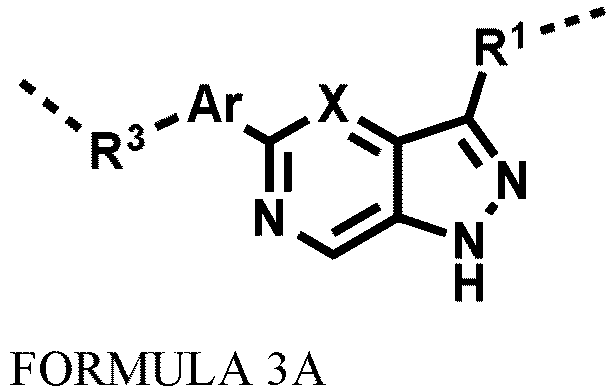
- the "Linker" moiety of the bivalent compound is attached independently to R1 or R3;
- X is selected from CR2 or N;
- R1 is selected from null, hydrogen, C(O)R6, C(O)OR6, C(O)NR6R7, S(O)R6, S(O)2R6, S(O)2NR6R7, NR8C(O)OR6, NR8C(O)R6, NR8C(O)NR6R7, NR8S(O)R6, NR8S(O)2R6, NR8S(O)2NR6R7 , optionally substituted C1-C8 alkyl, optionally substituted C2-C8 alkenyl, optionally substituted C2-C8 alkynyl, optionally substituted C1-C8 alkoxy, optionally substituted C1-C8alkoxyC1-C8alkyl, optionally substituted C1-C8alkylaminoC1-C8alkyl, optionally substituted 3-8 membered cycloalkyl, optionally substituted C3-C8 cycloalkoxy, optionally substituted 3-8 membered heterocyclyl, optionally substituted aryl, and optionally substituted heteroaryl; wherein
- R6 is null, or a bivalent moiety selected from optionally substituted C1-C8 alkyl, optionally substituted C2-C8 alkenyl, optionally substituted C2-C8 alkynyl, optionally substituted C1-C8 alkoxy, optionally substituted C1-C8alkoxyC1-C8alkyl, optionally substituted C1-CsalkylaminoC1-Csalkyl, optionally substituted 3-8 membered cycloalkyl, optionally substituted C3-C8 cycloalkoxy, optionally substituted 3-8 membered heterocyclyl, optionally substituted aryl, and optionally substituted heteroaryl;
- R2 is independently selected from hydrogen, halogen, oxo, CN, NO2, OR9, SR9, NR9R10, C(O)R9, C(O)OR9, C(O)NR9R10, S(O)R9, S(O)2R9, S(O)2NR9R10, NR11C(O)OR9, NR11C(O)R9, NR11C(O)NR9R10, NR11S(O)R9, NR11S(O)2R9, NR11S(O)2NR9R10 , optionally substituted C1-C8 alkyl, optionally substituted C2-C8 alkenyl, optionally substituted C2-C8 alkynyl, optionally substituted C1-C8 alkoxy, optionally substituted C1-C8alkoxyC1-C8alkyl, optionally substituted C1-C8alkylaminoC1-C8alkyl, optionally substituted 3-8 membered cycloalkyl, optionally substituted C3-C8 cycloalkoxy, optionally substituted 3-8 membered heterocyclyl, optionally substituted aryl, and optionally substituted heteroaryl; wherein
- R9, R10, and R11 are independently selected from hydrogen, optionally substituted C1-C8 alkyl, optionally substituted C1-C8alkoxyC1-C8alkyl, optionally substituted C1-C8alkylaminoC1-Csalkyl, optionally substituted C3-C10 cycloalkyl, optionally substituted 3-20 membered heterocyclyl, optionally substituted C2-C8 alkenyl, optionally substituted C2-C8 alkynyl, optionally substituted aryl, and optionally substituted heteroaryl; or
- R9 and R10, R9 and R11, R10 and R11 together with the atom to which they are connected form an optionally substituted 3-20 membered cycloalkyl or heterocyclyl ring;
- Ar is selected from null, aryl and heteroaryl, each of which is substituted with R3 and optionally substituted with one or more substituents independently selected from hydrogen, halogen, oxo, CN, NO2, OR12, SR12, NR12R13, OCOR12, OCO2R12, OCONR12R13, COR12, CO2R12, CONR12R13, SOR12, SO2R12, SO2NR12R13, NR14CO2R12, NR14COR12, NR14C(O)NR12R13, NR14SOR12, NR14SO2R12, NR14SO2NR12R13, optionally substituted C1-C8 alkyl, optionally substituted C2-C8 alkenyl, optionally substituted C2-C8 alkynyl, optionally substituted C1-C8 alkoxy, optionally substituted C1-C8alkoxyC1-C8alkyl, optionally substituted C1-C8alkylaminoC1-C8alkyl, optionally substituted 3-8 membered cycloalkyl, optionally substituted C3-C8 cycloalkoxy, optionally substituted 4-8 membered heterocyclyl, optionally substituted aryl, and optionally substituted heteroaryl; wherein
- R12, R13, and R14 are independently selected from hydrogen, optionally substituted C1-C8 alkyl, optionally substituted C2-C8 alkenyl, optionally substituted C2-C8 alkynyl, optionally substituted C1-C8 alkoxy, optionally substituted C1-C8alkoxyC1-C8alkyl, optionally substituted C1-C8alkylaminoC1-C8alkyl, optionally substituted 3-8 membered cycloalkyl, optionally substituted C3-C8 cycloalkoxy, optionally substituted 4-8 membered heterocyclyl, optionally substituted aryl, and optionally substituted heteroaryl; or
- R12 and R13, R12 and R13 together with the atom to which they are connected form a 4-20 membered heterocyclyl ring;
- R3 is is selected from null, OR15, SR15, NR15R16, OC(O)R15, OC(O)OR15, OCONR15R16, C(O)R15, C(O)OR15, CONR15R16, S(O)R15, S(O)2R15, SO2NR15R16, NR17C(O)OR15, NR17C(O)R15, NR17C(O)NR15R16, NR14S(O)R15, NR17S(O)2R15, NR17S(O)2NR15R16, optionally substituted C1-C8 alkylenyl, optionally substituted C2-C8 alkenylene, optionally substituted C2-C8 alkynylene, optionally substituted C3-C8 cycloalkylene, optionally substituted 3-8 membered heterocyclylene, optionally substituted aryl, and optionally substituted heteroaryl; wherein
- R15 is null, or a bivalent moiety selected from optionally substituted C1-C8 alkylenyl, optionally substituted C2-C8 alkenylene, optionally substituted C2-C8 alkynylene, optionally substituted C3-C8 cycloalkylene, optionally substituted 3-8 membered heterocyclylene, optionally substituted aryl, and optionally substituted heteroaryl;
- R16and R17 are independently selected from optionally substituted C1-C8 alkyl, optionally substituted C1-C8alkoxyC1-C8alkyl, optionally substituted C1-C8alkylaminoC1-C8alkyl, optionally substituted C3-C8 cycloalkyl, optionally substituted 3-8 membered heterocyclyl, optionally substituted C2-C8 alkenyl, optionally substituted C2-C8 alkynyl, optionally substituted aryl, and optionally substituted heteroaryl; or
- R15 and R16, R15band R17, R16 and R17 together with the atom to which they are connected form a 3-20 membered cycloalkyl or heterocyclyl ring;
- In an embodiment, (HPK1) ligands include a moiety according to FORMULA 3B:
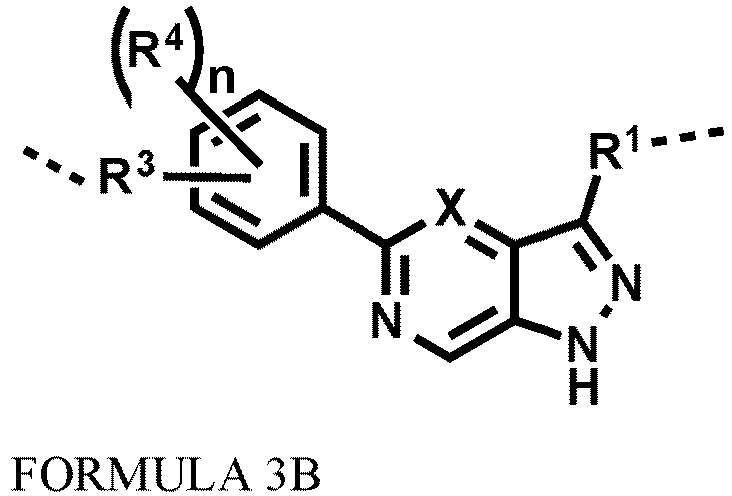
- wherein
- the "Linker" moiety of the bivalent compound is attached independently to R1 or R3; X is selected from CR2 or N;
- R1 and R3 are independently selected from null, hydrogen, C(O)R6, C(O)OR6, C(O)NR6R7, S(O)R6, S(O)2R6, S(O)2NR6R7, NR8C(O)OR6, NR8C(O)R6, NR8C(O)NR6R7, NR8S(O)R6, NR8S(O)2R6, NR8S(O)2NR6R7 , optionally substituted C1-C8 alkyl, optionally substituted C2-C8 alkenyl, optionally substituted C2-C8 alkynyl, optionally substituted C1-C8 alkoxy, optionally substituted C1-C8alkoxyC1-C8alkyl, optionally substituted C1-C8alkylaminoC1-C8alkyl, optionally substituted 3-8 membered cycloalkyl, optionally substituted C3-C8 cycloalkoxy, optionally substituted 3-8 membered heterocyclyl, optionally substituted aryl, and optionally substituted heteroaryl; wherein
- R6 is null, or a bivalent moiety selected from optionally substituted C1-C8 alkyl, optionally substituted C2-C8 alkenyl, optionally substituted C2-C8 alkynyl, optionally substituted C1-C8 alkoxy, optionally substituted C1-C8alkoxyC1-C8alkyl, optionally substituted C1-C8alkylaminoC1-Csalkyl, optionally substituted 3-8 membered cycloalkyl, optionally substituted C3-C8 cycloalkoxy, optionally substituted 3-8 membered heterocyclyl, optionally substituted aryl, and optionally substituted heteroaryl;
- R7, and R8 are independently selected from hydrogen, optionally substituted C1-C8 alkyl, optionally substituted C1-C8alkoxyC1-C8alkyl, optionally substituted C1-C8alkylaminoC1-C8alkyl, optionally substituted C3-C10 cycloalkyl, optionally substituted 3-20 membered heterocyclyl, optionally substituted C2-C8 alkenyl, optionally substituted C2-C8 alkynyl, optionally substituted aryl, and optionally substituted heteroaryl; or
- R6 and R7 together with the atom to which they are connected form an optionally substituted 3-20 membered cycloalkyl or heterocyclyl ring;
- R2 is independently selected from hydrogen, halogen, oxo, CN, NO2, OR9, SR9, NR9R10, C(O)R9, C(O)OR9, C(O)NR9R10, S(O)R9, S(O)2R9, S(O)2NR9R10, NR11C(O)OR9, NR11C(O)R9, NR11C(O)NR9R10, NR11S(O)R9, NR11S(O)2R9, NR11S(O)2NR9R10 , optionally substituted C1-C8 alkyl, optionally substituted C2-C8 alkenyl, optionally substituted C2-C8 alkynyl, optionally substituted C1-C8 alkoxy, optionally substituted C1-C8alkoxyC1-C8alkyl, optionally substituted C1-C8alkylaminoC1-C8alkyl, optionally substituted 3-8 membered cycloalkyl, optionally substituted C3-C8 cycloalkoxy, optionally substituted 3-8 membered heterocyclyl, optionally substituted aryl, and optionally substituted heteroaryl; wherein
- R9, R10, and R11 are independently selected from hydrogen, optionally substituted C1-C8 alkyl, optionally substituted C1-C8alkoxyC1-C8alkyl, optionally substituted C1-C8alkylaminoCi-C8alkyl, optionally substituted C3-C10 cycloalkyl, optionally substituted 3-20 membered heterocyclyl, optionally substituted C2-C8 alkenyl, optionally substituted C2-C8 alkynyl, optionally substituted aryl, and optionally substituted heteroaryl; or
- R9 and R10, R9 and R11, R10 and R11 together with the atom to which they are connected form an optionally substituted 3-20 membered cycloalkyl or heterocyclyl ring;
- each R4 is independently selected from null, hydrogen, halogen, oxo, CN, NO2, OR18, SR18, NR18R19, OCOR18, OCO2R18, OCONR18R19, COR18, CO2R18, CONR18R19, SOR18, SO2R18, SO2NR18R19, NR20CO2R18, NR20COR18, NR20C(O)NR18R19, NR20SOR18, NR20SO2R18, NR7SO2NR5R6, optionally substituted C1-C8 alkyl, optionally substituted C2-C8 alkenyl, optionally substituted C2-C8 alkynyl, optionally substituted C1-C8 alkoxy, optionally substituted C1-C8alkoxyC1-C8alkyl, optionally substituted C1-C8alkylaminoC1-C8alkyl, optionally substituted 3-8 membered cycloalkyl, optionally substituted C3-C8 cycloalkoxy, optionally substituted 4-8 membered heterocyclyl, optionally substituted aryl, and optionally substituted heteroaryl; wherein
- R18, R19 and R20 are independently selected from hydrogen, optionally substituted C1-C8 alkyl, optionally substituted C2-C8 alkenyl, optionally substituted C2-C8 alkynyl, optionally substituted C1-C8 alkoxy, optionally substituted C1-C8alkoxyC1-C8alkyl, optionally substituted C1-C8alkylaminoC1-C8alkyl, optionally substituted 3-8 membered cycloalkyl, optionally substituted C3-C8 cycloalkoxy, optionally substituted 4-8 membered heterocyclyl, optionally substituted aryl, and optionally substituted heteroaryl; or
- R18 and R19, R18 and R20 together with the atom to which they are connected form a 4-20 membered heterocyclyl ring; and
- n is independently selected from 0, 1, 2, 3, 4 and 5;
and pharmaceutically acceptable salts thereof. - In an embodiment, (HPK1) ligands include a moiety according to FORMULA 1:

- the "Linker" moiety of the bivalent compound is attached to R9;
- X is selected from O or S;
- Y is selected from O, S, NR10; wherein
R10 is independently selected from hydrogen, optionally substituted C1-C8 alkyl, optionally substituted C1-C8alkoxyC1-C8alkyl, optionally substituted C1-C8alkylaminoC1-C8alkyl, optionally substituted C3-C10 cycloalkyl, optionally substituted 3-20 membered heterocyclyl, optionally substituted C2-C8 alkenyl, optionally substituted C2-C8 alkynyl, optionally substituted aryl, and optionally substituted heteroaryl; - R1, R2, R3, R4, R7, and R8 are selected from hydrogen, halogen, oxo, CN, NO2, OR11, SR11, NR11R12, C(O)R11, C(O)OR11, C(O)NR11R12, S(O)R11, S(O)2R11, S(O)2NR11R12, NR13C(O)OR11, NR13C(O)R11, NR13C(O)NR11R12, NR13S(O)R11, NR13S(O)2R11, NR13S(O)2NR11R12 optionally substituted C1-C8 alkyl, optionally substituted C2-C8 alkenyl, optionally substituted C2-C8 alkynyl, optionally substituted C1-C8 alkoxy, optionally substituted C1-C8alkoxyC1-C8alkyl, optionally substituted C1-C8alkylaminoC1-C8alkyl, optionally substituted 3-8 membered cycloalkyl, optionally substituted C3-C8 cycloalkoxy, optionally substituted 3-8 membered heterocyclyl, optionally substituted aryl, and optionally substituted heteroaryl; wherein
- R11, R12, and R13 are independently selected from hydrogen, optionally substituted C1-C8 alkyl, optionally substituted C1-C8alkoxyC1-C8alkyl, optionally substituted C1-C8alkylaminoC1-Csalkyl, optionally substituted C3-C10 cycloalkyl, optionally substituted 3-20 membered heterocyclyl, optionally substituted C2-C8 alkenyl, optionally substituted C2-C8 alkynyl, optionally substituted aryl, and optionally substituted heteroaryl, or
- R11 and R12, R11 and R13, R12 and R13 together with the atom to which they are connected form an optionally substituted 3-20 membered cycloalkyl or heterocyclyl ring;
- R5 and R6 are independently selected from hydrogen, optionally substituted C1-C8 alkyl, optionally substituted C2-C8 alkenyl, optionally substituted C2-C8 alkynyl, optionally substituted C1-C8 alkoxy, optionally substituted C1-C8alkoxyC1-C8alkyl, optionally substituted C1-C8alkylaminoC1-Csalkyl, optionally substituted 3-8 membered cycloalkyl, optionally substituted C3-C8 cycloalkoxy, optionally substituted 4-8 membered heterocyclyl, optionally substituted aryl, and optionally substituted heteroaryl;
- R9 is selected from OR14, SR14, NR14R15, C(O)R14, C(O)OR14, C(O)NR14R15, S(O)R14, S(O)2R14, S(O)2NR14R15, NR16C(O)OR14, NR16C(O)R14, NR16C(O)NR14R15, NR16S(O)R14, NR16S(O)2R14, NR16S(O)2NR14R15 optionally substituted C1-C8 alkyl, optionally substituted C2-C8 alkenyl, optionally substituted C2-C8 alkynyl, optionally substituted C1-C8 alkoxy, optionally substituted C1-C8alkoxyC1-C8alkyl, optionally substituted C1-C8alkylaminoC1-C8alkyl , optionally substituted 3-8 membered cycloalkyl, optionally substituted C3-C8 cycloalkoxy, optionally substituted 3-8 membered heterocyclyl, optionally substituted aryl, and optionally substituted heteroaryl; wherein
- R14 is null, or a bivalent moiety selected from optionally substituted C1-C8 alkylenyl, optionally substituted C2-C8 alkenylene, optionally substituted C2-C8 alkynylene, optionally substituted C3-C8 cycloalkylene, optionally substituted 3-8 membered heterocyclylene, optionally substituted aryl, and optionally substituted heteroaryl;
- R15 and R16 are independently selected from optionally substituted C1-C8 alkyl, optionally substituted C1-C8alkoxyC1-C8alkyl, optionally substituted C1-C8alkylaminoC1-C8alkyl, optionally substituted C3-C8 cycloalkyl, optionally substituted 3-8 membered heterocyclyl, optionally substituted C2-C8 alkenyl, optionally substituted C2-C8 alkynyl, optionally substituted aryl, and optionally substituted heteroaryl; or
- R14 and R13, R14 and R16, R15 and R16 together with the atom to which they are connected form a 3-20 membered cycloalkyl or heterocyclyl ring.
- In an embodiment, (HPK1) ligands include a moiety according to FORMULA 1A:

- the "Linker" moiety of the bivalent compound is attached to Z;
- the definitions of R1, R2, R3, R4, R5, R6, R7 and R8 are the same as for
FORMULA 1; - R17, R18, R19, and R20, at each occurrence, are independently selected from hydrogen, halogen, CN, OH, NH2, optionally substituted C1-C8 alkyl, optionally substituted C3-C8 cycloalkyl, optionally substituted C3-C8 cycloalkoxy, optionally substituted C1-C8alkoxyC1-C8alkyl, optionally substituted C1-C8alkylaminoC1-C8alkyl, optionally substituted 3-8 membered membered heterocyclyl, optionally substituted C1-C8 alkoxy, optionally substituted C1-C8 alkoxyalkyl, optionally substituted C1-C8 haloalkyl, optionally substituted C1-C8 hydroxyalkyl, optionally substituted C1-C8 alkylamino, and optionally substituted C1-C8 alkylaminoC1-C8 alkyl;
- m, n, are independently selected from 0, 1, 2, 3, and 4; and
- W, Q, and Z, at each occurrence, are independently selected from null, CO, CO2, CH2, NH, NH-CO, CO-NH, CH2-NH-CO, CH2-CO-NH, NH-CO-CH2, CO-NH-CH2, CH2-NH-CH2-CO-NH, CH2-NH-CH2-NH-CO, -CO-NH, CO-NH- CH2-NH-CH2, CH2-NH-CH2, CR21R22, C(O)NR21, C(S)NR21, O, S, SO, SO2, SO2NR21, NR21, NR21CO, NR121CONR22, NR21C(S), optionally substituted C1-C8 alkyl, optionally substituted C1-C8 alkoxy, optionally substituted C1-C8alkoxyC1-C8alkyl, optionally substituted C1-C8 haloalkyl, optionally substituted C1-C8 hydroxyalkyl, optionally substituted C2-C8 alkenyl, optionally substituted C2-C8 alkynyl, optionally substituted 3-8 membered cycloalkyl, optionally substituted C3-C8 cycloalkoxy, optionally substituted 3-8 membered heterocyclyl, optionally substituted aryl, optionally substituted heteroaryl, optionally substituted C3-C13 fused cycloalkyl, optionally substituted C3-C13 fused heterocyclyl, optionally substituted C3-C13 bridged cycloalkyl, optionally substituted C3-C13 bridged heterocyclyl, optionally substituted C3-C13 spiro cycloalkyl, and optionally substituted C3-C13 spiro heterocyclyl; wherein
- R21 and R22 are independently selected from hydrogen, optionally substituted C1-C8 alkyl, optionally substituted 3-8 membered cycloalkyl, optionally substituted C3-C8 cycloalkoxy, optionally substituted 3-8 membered heterocyclyl, optionally substituted C1-C8 alkoxy, optionally substituted C1-C8 alkoxyalkyl, optionally substituted C1-C8 haloalkyl, optionally substituted C1-C8 hydroxyalkyl, optionally substituted C1-C8 alkylamino, and optionally substituted C1-CsalkylaminoCi-Csalkyl.
- In an embodiment, (HPK1) ligands include a moiety according to FORMULA 1B:

- the definitions of X, Y, W, Q, R1, R2, R3, R4, R5, R6, R7, R8, R17, R18, R19 and R20 are the same as for FORMULA 1A;
- the "Linker" moiety of the bivalent compound is attached to terminal N;
- m, n, are independently selected from 0, 1, 2, 3, and 4;
- R23 and R24 at each occurrence, are independently selected from hydrogen, halogen, CN, OH, NH2, optionally substituted C1-C8 alkyl, optionally substituted C3-C8 cycloalkyl, optionally substituted C3-C8 cycloalkoxy, optionally substituted 3-8 membered membered heterocyclyl, optionally substituted C1-C8 alkoxy, optionally substituted C1-C8 alkoxyalkyl, optionally substituted C1-C8 haloalkyl, optionally substituted C1-C8 hydroxyalkyl, optionally substituted C1-C8 alkylamino, and optionally substituted C1-C8 alkylaminoC1-C8 alkyl.
- In an embodiment, (HPK1) ligands include a moiety according to FORMULA 1C:


- the definitions of X, Y, W, Q, R1, R2, R3, R4, R5, R6, R7, R8, R17, R18, R19, R20 and R23 are the same as for FORMULA 1B;
- the "Linker" moiety of the bivalent compound is attached to Z;
- m, n, are independently selected from 0, 1, 2, 3, and 4;
- Z are independently selected from CR25 or N; and
- R25 is independently selected from null, hydrogen, C(O)R26, C(O)OR26, C(0)NR26R27, S(O)R26, S(O)2R26, S(O)2NR26R27, NR28C(O)OR26, NR28C(O)R26, NR28C(O)NR26R27, NR28S(O)R26, NR28S(O)2R26, NR28S(O)2NR26R27 , optionally substituted C1-C8 alkyl, optionally substituted C2-C8 alkenyl, optionally substituted C2-C8 alkynyl, optionally substituted C1-C8 alkoxy, optionally substituted C1-C8alkoxyC1-C8alkyl, optionally substituted C1-C8alkylaminoC1-C8alkyl, optionally substituted 3-8 membered cycloalkyl, optionally substituted C3-C8 cycloalkoxy, optionally substituted 3-8 membered heterocyclyl, optionally substituted aryl, and optionally substituted heteroaryl; wherein
- R26 is null, or a bivalent moiety selected from optionally substituted C1-C8 alkyl, optionally substituted C2-C8 alkenyl, optionally substituted C2-C8 alkynyl, optionally substituted C1-C8 alkoxy, optionally substituted C1-C8alkoxyC1-C8alkyl, optionally substituted C1-C8alkylaminoC1-C8alkyl, optionally substituted 3-8 membered cycloalkyl, optionally substituted C3-C8 cycloalkoxy, optionally substituted 3-8 membered heterocyclyl, optionally substituted aryl, and optionally substituted heteroaryl;
- R27, and R28 are independently selected from hydrogen, optionally substituted C1-C8 alkyl, optionally substituted C1-C8alkoxyC1-C8alkyl, optionally substituted C1-C8alkylaminoC1-C8alkyl, optionally substituted C3-C10 cycloalkyl, optionally substituted 3-20 membered heterocyclyl, optionally substituted C2-C8 alkenyl, optionally substituted C2-C8 alkynyl, optionally substituted aryl, and optionally substituted heteroaryl; or
- R26 and R27 together with the atom to which they are connected form an optionally substituted 3-20 membered cycloalkyl or heterocyclyl ring; and
pharmaceutically acceptable salts thereof. - In an embodiment, (HPK1) ligands include a moiety according to FORMULA 2:

- the "Linker" moiety of the bivalent compound is attached to R1 or R4,
- X is selected from CR5 or N;
- R1, and R2 are independently selected from null, hydrogen, C(O)R6, C(O)OR6, C(O)NR6R7, S(O)R6, S(O)2R6, S(O)2NR6R7, NR8C(O)OR6, NR8C(O)R6, NR8C(O)NR6R7, NR8S(O)R6, NR8S(O)2R6, NR8S(O)2NR6R7 , optionally substituted C1-C8 alkyl, optionally substituted C2-C8 alkenyl, optionally substituted C2-C8 alkynyl, optionally substituted C1-C8 alkoxy, optionally substituted C1-C8alkoxyC1-C8alkyl, optionally substituted C1-C8alkylaminoC1-C8alkyl, optionally substituted 3-8 membered cycloalkyl, optionally substituted C3-C8 cycloalkoxy, optionally substituted 3-8 membered heterocyclyl, optionally substituted aryl, and optionally substituted heteroaryl; wherein
- R6 is null, or a bivalent moiety selected from optionally substituted C1-C8 alkyl, optionally substituted C2-C8 alkenyl, optionally substituted C2-C8 alkynyl, optionally substituted C1-C8 alkoxy, optionally substituted C1-C8alkoxyC1-C8alkyl, optionally substituted C1-C8alkylaminoC1-Csalkyl, optionally substituted 3-8 membered cycloalkyl, optionally substituted C3-C8 cycloalkoxy, optionally substituted 3-8 membered heterocyclyl, optionally substituted aryl, and optionally substituted heteroaryl;
- R7, and R8 are independently selected from hydrogen, optionally substituted C1-C8 alkyl, optionally substituted C1-C8alkoxyC1-C8alkyl, optionally substituted C1-C8alkylaminoC1-C8alkyl, optionally substituted C3-C10 cycloalkyl, optionally substituted 3-20 membered heterocyclyl, optionally substituted C2-C8 alkenyl, optionally substituted C2-C8 alkynyl, optionally substituted aryl, and optionally substituted heteroaryl; or
- R6 and R7 together with the atom to which they are connected form an optionally substituted 3-20 membered cycloalkyl or heterocyclyl ring; and
- R3, R4 and R5 are independently selected from hydrogen, halogen, oxo, CN, NO2, OR9, SR9, NR10R11, C(O)R9, C(O)OR9, C(O)NR10R11, S(O)R9, S(O)2R9, S(O)2NR10R11, NR12C(O)OR10, NR9C(O)R10, NR9C(O)NR10R11, NR9S(O)R10, NR9S(O)2R10, NR9S(O)2NR10R11 optionally substituted C1-C8 alkyl, optionally substituted C2-C8 alkenyl, optionally substituted C2-C8 alkynyl, optionally substituted C1-C8 alkoxy, optionally substituted 3-8 membered cycloalkyl, optionally substituted C3-C8 cycloalkoxy, optionally substituted 3-8 membered heterocyclyl, optionally substituted aryl, and optionally substituted heteroaryl; wherein
- R9, R10, and R11 are independently selected from hydrogen, optionally substituted C1-C8 alkyl, optionally substituted C1-C8alkoxyC1-C8alkyl, optionally substituted C1-C8alkylaminoC1-Csalkyl, optionally substituted C3-C10 cycloalkyl, optionally substituted 3-20 membered heterocyclyl, optionally substituted C2-C8 alkenyl, optionally substituted C2-C8 alkynyl, optionally substituted aryl, and optionally substituted heteroaryl, or
- R9 and R10, R10 and R11 together with the atom to which they are connected form an optionally substituted 3-20 membered cycloalkyl or heterocyclyl ring.
- In an embodiment, (HPK1) ligands include a moiety according to FORMULA 2A or 2B:

- the "Linker" moiety of the bivalent compound is attached to R1;
- the definitions of R1, R2, R3 and R5 are the same as for
FORMULA 2; - Ar is selected from null, aryl and heteroaryl, each of which is optionally substituted with one or more substituents independently selected from hydrogen, halogen, oxo, CN, NO2, OR12, SR12, NR12R13, OCOR12, OCO2R12, OCONR12R13, COR12, CO2R12, CONR12R13, SOR12, SO2R12, SO2NR12R13, NR14CO2R12, NR14COR12, NR14C(O)NR12R13, NR14SOR12, NR14SO2R12, NR14SO2NR12R13, optionally substituted C1-C8 alkyl, optionally substituted C2-C8 alkenyl, optionally substituted C2-C8 alkynyl, optionally substituted C1-C8 alkoxy, optionally substituted C1-C8alkoxyC1-C8alkyl, optionally substituted C1-C8alkylaminoC1-C8alkyl, optionally substituted 3-8 membered cycloalkyl, optionally substituted C3-C8 cycloalkoxy, optionally substituted 4-8 membered heterocyclyl, optionally substituted aryl, and optionally substituted heteroaryl; wherein
- R12, R13, and R14 are independently selected from hydrogen, optionally substituted C1-C8 alkyl, optionally substituted C2-C8 alkenyl, optionally substituted C2-C8 alkynyl, optionally substituted C1-C8 alkoxy, optionally substituted C1-C8alkoxyC1-C8alkyl, optionally substituted C1-C8alkylaminoC1-C8alkyl, optionally substituted 3-8 membered cycloalkyl, optionally substituted C3-C8 cycloalkoxy, optionally substituted 4-8 membered heterocyclyl, optionally substituted aryl, and optionally substituted heteroaryl; or
- R12 and R13, R13 and R14 together with the atom to which they are connected form a 3-20 membered heterocyclyl ring.
- In an embodiment, (HPK1) ligands include a moiety according to FORMULA 2C or 2D:

- the "Linker" moiety of the bivalent compound is attached to R1;
- the definitions of R1, R2, R3 and R5 are the same as for
FORMULA 2; - R15, R16, R17 and R18 are independently selected hydrogen, halogen, oxo, CN, NO2, OR19, SR19, NR20R21, OCOR19, OCO2R19, OCONR20R21, COR19, CO2R19, CONR20R21, SOR19, SO2R19, SO2NR20R21, NR19CO2R20, NR19COR20, NR19C(O)NR20R21, NR19SOR20, NR19SO2R20, NR19SO2NR20R21, optionally substituted C1-C8 alkyl, optionally substituted C2-C8 alkenyl, optionally substituted C2-C8 alkynyl, optionally substituted C1-C8 alkoxy, optionally substituted C1-C8alkoxyC1-C8alkyl, optionally substituted C1-C8alkylaminoC1-C8alkyl, optionally substituted 3-8 membered cycloalkyl, optionally substituted C3-C8 cycloalkoxy, optionally substituted 4-8 membered heterocyclyl, optionally substituted aryl, and optionally substituted heteroaryl; wherein
- R19, R20, and R21 are independently selected from hydrogen, optionally substituted C1-C8 alkyl, optionally substituted C2-C8 alkenyl, optionally substituted C2-C8 alkynyl, optionally substituted C1-C8 alkoxy, optionally substituted C1-C8alkoxyC1-C8alkyl, optionally substituted C1-C8alkylaminoC1-C8alkyl, optionally substituted 3-8 membered cycloalkyl, optionally substituted C3-C8 cycloalkoxy, optionally substituted 4-8 membered heterocyclyl, optionally substituted aryl, and optionally substituted heteroaryl; or
- R19 and R20, R20 and R21 together with the atom to which they are connected form a 3-20 membered heterocyclyl ring; and
- R15 and R16, R16 and R17 together with the atom to which they are connected form an optionally substituted 4-20 membered cycloalkyl or heterocyclyl ring.
- In an embodiment, (HPK1) ligands include a moiety according to FORMULA 2E or 2F:

- the "Linker" moiety of the bivalent compound is attached to R1;
- the definitions of R1, R2, R3, R5, R15, R16, R17 and R18 are the same as for FORMULA 2C and 2D. R22 is independently selected from hydrogen, halogen, oxo, aryl, CN, NO2, OR23, SR23, NR24R25, C(O)R23, C(O)OR23, C(O)NR24R25, S(O)R23, S(O)2R23, S(O)2NR24R25, NR24C(O)OR23, NR24C(O)R23, NR23C(O)NR24R25, NR24S(O)R23, NR24S(O)2R23, NR23S(O)2NR24R2 optionally substituted C1-C8 alkyl, optionally substituted C2-C8 alkenyl, optionally substituted C2-C8 alkynyl, optionally substituted C1-C8 alkoxy, optionally substituted 3-8 membered cycloalkyl, optionally substituted C3-C8 cycloalkoxy, optionally substituted 3-8 membered heterocyclyl, optionally substituted aryl, and optionally substituted heteroaryl; wherein
- R13, R24, and R25 are independently selected from hydrogen, optionally substituted C1-C8 alkyl, optionally substituted C1-C8alkoxyC1-C8alkyl, optionally substituted C1-C8alkylaminoC1-Csalkyl, optionally substituted C3-C10 cycloalkyl, optionally substituted 3-20 membered heterocyclyl, optionally substituted C2-C8 alkenyl, optionally substituted C2-C8 alkynyl, optionally substituted aryl, and optionally substituted heteroaryl; or
- R23 and R24, R23 and R25 together with the atom to which they are connected form an optionally substituted 3-20 membered cycloalkyl or heterocyclyl ring; and
- R15 and R16, R16 and R17 together with the atom to which they are connected form an optionally substituted 4-20 membered cycloalkyl or heterocyclyl ring.
- In an embodiment, (HPK1) ligands include a moiety according to FORMULA 2G or 2H:

- the "Linker" moiety of the bivalent compound is attached to R1;
- the definitions of R1, R2, R3, R5, R15, R16, R17 and R18 are the same as for FORMULA 2C and 2D. X is CO, CH2 or SO2;
- n is 0 to 1;
- R16 and R27 are independently selected from hydrogen, halogen, optionally substituted C1-C8 alkyl, optionally substituted C1-C8alkoxyC1-C8alkyl, optionally substituted C1-C8alkylaminoC1-C8alkyl, optionally substituted C3-C10 cycloalkyl, optionally substituted 3-20 membered heterocyclyl, optionally substituted C2-C8 alkenyl, optionally substituted C2-C8 alkynyl, optionally substituted aryl, and optionally substituted heteroaryl; or
R26 and R27 together with the atom to which they are connected form an optionally substituted 3-20 membered cycloalkyl or heterocyclyl ring; and - R15 and R16, R16 and R17 together with the atom to which they are connected form an optionally substituted 4-20 membered cycloalkyl or heterocyclyl ring.
- In an embodiment, (HPK1) ligands include a moiety according to FORMULA 2K, 2L, 2M and 2N:


- the "Linker" moiety of the bivalent compound is attached to R9;
- the definitions of R1, R2, R3, R5, R15, R16, R17 and R18 are the same as for FORMULA 2C and 2D;
- n and m are independently selected from 1, 2 and 3;
- R28 , R29 and R30 are independently selected from hydrogen, halogen, optionally substituted C1-C8 alkyl, optionally substituted C1-C8alkoxyC1-C8alkyl, optionally substituted C1-C8alkylaminoC1-C8alkyl, optionally substituted C3-C10 cycloalkyl, optionally substituted 3-20 membered heterocyclyl, optionally substituted C2-C8 alkenyl, optionally substituted C2-C8 alkynyl, optionally substituted aryl, and optionally substituted heteroaryl, or
R29 and R30 together with the atom to which they are connected form an optionally substituted 3-20 membered cycloalkyl or heterocyclyl ring; and - R15 and R16, R16 and R17 together with the atom to which they are connected form an optionally substituted 4-20 membered cycloalkyl or heterocyclyl ring.
- In an embodiment, (HPK1) ligands include a moiety according to FORMULA 2O or 2P:

- the "Linker" moiety of the bivalent compound is attached to Z;
- the definitions of R1, R2, R3, R5, R15, R16, R17 and R18 are the same as for FORMULA 2C and 2D; W, Q, and Z, at each occurrence, are independently selected from null, CO, CO2, CH2, NH, NH-CO, CO-NH, CH2-NH-CO, CH2-CO-NH, NH-CO-CH2, CO-NH-CH2, CH2-NH-CH2-CO-NH, CH2-NH-CH2-NH-CO, -CO-NH, CO-NH- CH2-NH-CH2, CH2-NH-CH2, CR35R36, C(O)NR35, C(S)NR35, O, S, SO, SO2, SO2NR35, NR35, NR35CO, NR35CONR36, NR35C(S), optionally substituted C1-C8 alkyl, optionally substituted C1-C8 alkoxy, optionally substituted C1-C8alkoxyC1-C8alkyl, optionally substituted C1-C8 haloalkyl, optionally substituted C1-C8 hydroxyalkyl, optionally substituted C2-C8 alkenyl, optionally substituted C2-C8 alkynyl, optionally substituted 3-8 membered cycloalkyl, optionally substituted C3-C8 cycloalkoxy, optionally substituted 3-8 membered heterocyclyl, optionally substituted aryl, optionally substituted heteroaryl, optionally substituted C3-C13 fused cycloalkyl, optionally substituted C3-C13 fused heterocyclyl, optionally substituted C3-C13 bridged cycloalkyl, optionally substituted C3-C13 bridged heterocyclyl, optionally substituted C3-C13 spiro cycloalkyl, and optionally substituted C3-C13 spiro heterocyclyl, wherein
R35 and R36 are independently selected from hydrogen, optionally substituted C1-C8 alkyl, optionally substituted 3-8 membered cycloalkyl, optionally substituted C3-C8 cycloalkoxy, optionally substituted 3-8 membered heterocyclyl, optionally substituted C1-C8 alkoxy, optionally substituted C1-C8 alkoxyalkyl, optionally substituted C1-C8 haloalkyl, optionally substituted C1-C8 hydroxyalkyl, optionally substituted C1-C8 alkylamino, and optionally substituted C1-C8alkylaminoC1-C8alkyl; - R31 , R32, R33 , and R34 are independently selected from hydrogen, halogen, optionally substituted C1-C8 alkyl, optionally substituted C1-C8alkoxyC1-C8alkyl, optionally substituted C1-C8alkylaminoC1-C8alkyl, optionally substituted C3-C10 cycloalkyl, optionally substituted 3-20 membered heterocyclyl, optionally substituted C2-C8 alkenyl, optionally substituted C2-C8 alkynyl, optionally substituted aryl, and optionally substituted heteroaryl; or
- R31 and R32, R33 and R34 are together with the atom to which they are connected form an optionally substituted 3-20 membered cycloalkyl or heterocyclyl ring;
- R15 and R16, R16 and R17 together with the atom to which they are connected form an optionally substituted 4-20 membered cycloalkyl or heterocyclyl ring; and
- m, n, are independently selected from 0, 1, 2, 3, and 4; and
- pharmaceutically acceptable salts thereof.
- In an embodiment, (HPK1) ligands include a moiety according to FORMULA 3:

- the "Linker" moiety of the bivalent compound is attached independently to R1 or R3;
- X is selected from CR2 or N;
- R1 and R3 are independently selected from null, hydrogen, C(O)R6, C(O)OR6, C(O)NR6R7, S(O)R6, S(O)2R6, S(O)2NR6R7, NR8C(O)OR6, NR8C(O)R6, NR8C(O)NR6R7, NR8S(O)R6, NR8S(O)2R6, NR8S(O)2NR6R7 , optionally substituted C1-C8 alkyl, optionally substituted C2-C8 alkenyl, optionally substituted C2-C8 alkynyl, optionally substituted C1-C8 alkoxy, optionally substituted C1-C8alkoxyC1-C8alkyl, optionally substituted C1-C8alkylaminoC1-C8alkyl, optionally substituted 3-8 membered cycloalkyl, optionally substituted C3-C8 cycloalkoxy, optionally substituted 3-8 membered heterocyclyl, optionally substituted aryl, and optionally substituted heteroaryl; wherein
- R6 is null, or a bivalent moiety selected from optionally substituted C1-C8 alkyl, optionally substituted C2-C8 alkenyl, optionally substituted C2-C8 alkynyl, optionally substituted C1-C8 alkoxy, optionally substituted C1-C8alkoxyC1-C8alkyl, optionally substituted C1-C8alkylaminoC1-C8alkyl, optionally substituted 3-8 membered cycloalkyl, optionally substituted C3-C8 cycloalkoxy, optionally substituted 3-8 membered heterocyclyl, optionally substituted aryl, and optionally substituted heteroaryl;
- R7, and R8 are independently selected from hydrogen, optionally substituted C1-C8 alkyl, optionally substituted C1-C8alkoxyC1-C8alkyl, optionally substituted C1-C8alkylaminoC1-C8alkyl, optionally substituted C3-C10 cycloalkyl, optionally substituted 3-20 membered heterocyclyl, optionally substituted C2-C8 alkenyl, optionally substituted C2-C8 alkynyl, optionally substituted aryl, and optionally substituted heteroaryl; or
- R6 and R7 together with the atom to which they are connected form an optionally substituted 3-20 membered cycloalkyl or heterocyclyl ring;
- R2 is independently selected from hydrogen, halogen, oxo, CN, NO2, OR9, SR9, NR9R10, C(O)R9, C(O)OR9, C(O)NR9R10, S(O)R9, S(O)2R9, S(O)2NR9R10, NR11C(O)OR9, NR11C(O)R9, NR11C(O)NR9R10, NR11S(O)R9, NR11S(O)2R9, NR11S(O)2NR9R10 , optionally substituted C1-C8 alkyl, optionally substituted C2-C8 alkenyl, optionally substituted C2-C8 alkynyl, optionally substituted C1-C8 alkoxy, optionally substituted C1-C8alkoxyC1-C8alkyl, optionally substituted C1-C8alkylaminoC1-C8alkyl, optionally substituted 3-8 membered cycloalkyl, optionally substituted C3-C8 cycloalkoxy, optionally substituted 3-8 membered heterocyclyl, optionally substituted aryl, and optionally substituted heteroaryl; wherein
- R9, R10, and R11 are independently selected from hydrogen, optionally substituted C1-C8 alkyl, optionally substituted C1-C8alkoxyC1-C8alkyl, optionally substituted C1-C8alkylaminoC1-C8alkyl, optionally substituted C3-C10 cycloalkyl, optionally substituted 3-20 membered heterocyclyl, optionally substituted C2-C8 alkenyl, optionally substituted C2-C8 alkynyl, optionally substituted aryl, and optionally substituted heteroaryl; or
- R9 and R10, R9 and R11, R10 and R11 together with the atom to which they are connected form an optionally substituted 3-20 membered cycloalkyl or heterocyclyl ring.
- In an embodiment, (HPK1) ligands include a moiety according to FORMULA 3A:

- the "Linker" moiety of the bivalent compound is attached independently to R1 or R3;
- X is selected from CR2 or N;
- the definitions of R1 and R2 are the same as for
FORMULA 3; - Ar is selected from null, aryl and heteroaryl, each of which is substituted with R3 and optionally substituted with one or more substituents independently selected from hydrogen, halogen, oxo, CN, NO2, OR12, SR12, NR12R13, OCOR12, OCO2R12, OCONR12R13, COR12, CO2R12, CONR12R13, SOR12, SO2R12, SO2NR12R13, NR14CO2R12, NR14COR12, NR14C(O)NR12R13, NR14SOR12, NR14SO2R12, NR14SO2NR12R13, optionally substituted C1-C8 alkyl, optionally substituted C2-C8 alkenyl, optionally substituted C2-C8 alkynyl, optionally substituted C1-C8 alkoxy, optionally substituted C1-C8alkoxyC1-C8alkyl, optionally substituted C1-C8alkylaminoC1-C8alkyl, optionally substituted 3-8 membered cycloalkyl, optionally substituted C3-C8 cycloalkoxy, optionally substituted 4-8 membered heterocyclyl, optionally substituted aryl, and optionally substituted heteroaryl; wherein
- R12, R13, and R14 are independently selected from hydrogen, optionally substituted C1-C8 alkyl, optionally substituted C2-C8 alkenyl, optionally substituted C2-C8 alkynyl, optionally substituted C1-C8 alkoxy, optionally substituted C1-C8alkoxyC1-C8alkyl, optionally substituted C1-C8alkylaminoC1-C8alkyl, optionally substituted 3-8 membered cycloalkyl, optionally substituted C3-C8 cycloalkoxy, optionally substituted 4-8 membered heterocyclyl, optionally substituted aryl, and optionally substituted heteroaryl; or
- R12 and R13, R12 and R13 together with the atom to which they are connected form a 4-20 membered heterocyclyl ring;
- R3 is is selected from null, OR15, SR15, NR15R16, OC(O)R15, OC(O)OR15, OCONR15R16, C(O)R15, C(O)OR15, CONR15R16, S(O)R15, S(O)2R15, SO2NR15R16, NR17C(O)OR15, NR17C(O)R15, NR17C(O)NR15R16, NR14S(O)R15, NR17S(O)2R15, NR17S(O)2NR15R16, optionally substituted C1-Cs alkylenyl, optionally substituted C2-C8 alkenylene, optionally substituted C2-C8 alkynylene, optionally substituted C3-C8 cycloalkylene, optionally substituted 3-8 membered heterocyclylene, optionally substituted aryl, and optionally substituted heteroaryl; wherein
- R15 is null, or a bivalent moiety selected from optionally substituted C1-C8 alkylenyl, optionally substituted C2-C8 alkenylene, optionally substituted C2-C8 alkynylene, optionally substituted C3-C8 cycloalkylene, optionally substituted 3-8 membered heterocyclylene, optionally substituted aryl, and optionally substituted heteroaryl;
- R16and R17 are independently selected from optionally substituted C1-C8 alkyl, optionally substituted C1-C8alkoxyC1-C8alkyl, optionally substituted C1-C8alkylaminoC1-C8alkyl, optionally substituted C3-C8 cycloalkyl, optionally substituted 3-8 membered heterocyclyl, optionally substituted C2-C8 alkenyl, optionally substituted C2-C8 alkynyl, optionally substituted aryl, and optionally substituted heteroaryl; or
- R15 and R16, R15band R17, R16 and R17 together with the atom to which they are connected form a 3-20 membered cycloalkyl or heterocyclyl ring.
- In an embodiment, (HPK1) ligands include a moiety according to FORMULA 3B:

- the "Linker" moiety of the bivalent compound is attached independently to R1 or R3; X is selected from CR2 or N;
- the definitions of R1, R2 and R3 are the same as for
FORMULA 3; - each R4 is independently selected from null, hydrogen, halogen, oxo, CN, NO2, OR18, SR18, NR18R19, OCOR18, OCO2R18, OCONR18R19, COR18, CO2R18, CONR18R19, SOR18, SO2R18, SO2NR18R19, NR20CO2R18, NR20COR18, NR20C(O)NR18R19, NR20SOR18, NR20SO2R18, NR7SO2NR5R6, optionally substituted C1-C8 alkyl, optionally substituted C2-C8 alkenyl, optionally substituted C2-C8 alkynyl, optionally substituted C1-C8 alkoxy, optionally substituted C1-C8alkoxyC1-C8alkyl, optionally substituted C1-C8alkylaminoC1-C8alkyl, optionally substituted 3-8 membered cycloalkyl, optionally substituted C3-C8 cycloalkoxy, optionally substituted 4-8 membered heterocyclyl, optionally substituted aryl, and optionally substituted heteroaryl; wherein
- R18, R19 and R20 are independently selected from hydrogen, optionally substituted C1-C8 alkyl, optionally substituted C2-C8 alkenyl, optionally substituted C2-C8 alkynyl, optionally substituted C1-C8 alkoxy, optionally substituted C1-C8alkoxyC1-C8alkyl, optionally substituted C1-C8alkylaminoC1-C8alkyl, optionally substituted 3-8 membered cycloalkyl, optionally substituted C3-C8 cycloalkoxy, optionally substituted 4-8 membered heterocyclyl, optionally substituted aryl, and optionally substituted heteroaryl; or
- R18 and R19, R18 and R20 together with the atom to which they are connected form a 4-20 membered heterocyclyl ring; and
- n is independently selected from 0, 1, 2, 3, 4 and 5.
- In an embodiment, (HPK1) ligands include a moiety according to FORMULAE 3C, 3D and 3E:

- the "Linker" moiety of the bivalent compound is attached independently to R1 or R3;
- X is selected from CR2 or N;
- the definitions of R1, R2, R3 and R4 are the same as for FORMULA 3B;
- R5 at each occurrence, is independently selected from hydrogen, C(O)R21, C(O)OR21, C(O)NR21R22, S(O)R21, S(O)2R21, S(O)2NR21R22, NR23C(O)OR21, NR23C(O)R21, NR23C(O)NR21R22, NR23S(O)R21, NR23S(O)2R21, NR23S(O)2NR21R22 , optionally substituted C1-Cs alkyl, optionally substituted C2-C8 alkenyl, optionally substituted C2-C8 alkynyl, optionally substituted C1-C8 alkoxy, optionally substituted C1-C8alkoxyC1-C8alkyl, optionally substituted C1-C8alkylaminoC1-C8alkyl, optionally substituted 3-8 membered cycloalkyl, optionally substituted C3-C8 cycloalkoxy, optionally substituted 3-8 membered heterocyclyl, optionally substituted aryl, and optionally substituted heteroaryl; wherein
- R21, R22 and R23 are independently selected from hydrogen, optionally substituted C1-C8 alkyl, optionally substituted C2-C8 alkenyl, optionally substituted C2-C8 alkynyl, optionally substituted C1-C8 alkoxy, optionally substituted C1-C8alkoxyC1-C8alkyl, optionally substituted C1-C8alkylaminoC1-C8alkyl, optionally substituted 3-8 membered cycloalkyl, optionally substituted C3-C8 cycloalkoxy, optionally substituted 4-8 membered heterocyclyl, optionally substituted aryl, and optionally substituted heteroaryl; or
- R21 and R22, R21 and R23 together with the atom to which they are connected form a 3-20 membered heterocyclyl ring; and
- n is independently selected from 0, 1, 2, 3, 4 and 5.
- In an embodiment, (HPK1) ligands include a moiety according to FORMULA 3F or 3G:

- the "Linker" moiety of the bivalent compound is attached independently to R3 or independently to one of the R1;
- X is selected from CR2 or N;
- the definitions of R1, R2, R3 and R4 are the same as for FORMULA 3B.
- Ar is selected from null, aryl and heteroaryl, each of which is substituted with R1;
- n and m are independently selected from 0, 1, 2, 3, 4 and 5.
- In an embodiment, (HPK1) ligands include a moiety according to FORMULA 3H or 3K:

- the "Linker" moiety of the bivalent compound is attached independently to R1 or R3;
- X is selected from CR2 or N;
- the definitions of R1, R2, R3, R4 and R5 are the same as for FORMULA 3C, 3D, 3E;
- Ar is selected from null, aryl and heteroaryl, each of which is substituted with R1;
- n and m are independently selected from 0, 1, 2, 3, 4 and 5.
- In an embodiment, (HPK1) ligands include a moiety according to FORMULA 3L:

- the "Linker" moiety of the bivalent compound is attached independently to R1 or R3;
- X is selected from CR2 or N;
- the definitions of R1, R2, R3 and R4 are the same as for FORMULA 3B;
- Ar is selected from null, aryl and heteroaryl;
- n is independently selected from 0, 1, 2, 3, 4 and 5;
- Y, Z at each occurrence, are independently selected from null, CO, CO2, CH2, CR24R25, C(O)NR24, C(S)NR24, O, S, SO, SO2, SO2NR24, NR24, NR24CO, NR24CONR24, NR24C(S), optionally substituted C1-C8 alkyl, optionally substituted C1-C8 alkoxy, optionally substituted C1-C8alkoxyC1-C8alkyl, optionally substituted C1-C8 haloalkyl, optionally substituted C1-C8 hydroxyalkyl, optionally substituted C2-C8 alkenyl, optionally substituted C2-C8 alkynyl, optionally substituted 3-8 membered cycloalkyl, optionally substituted C3-C8 cycloalkoxy, optionally substituted 3-8 membered heterocyclyl, optionally substituted aryl, optionally substituted heteroaryl, optionally substituted C3-C13 fused cycloalkyl, optionally substituted C3-C13 fused heterocyclyl, optionally substituted C3-C13 bridged cycloalkyl, optionally substituted C3-C13 bridged heterocyclyl, optionally substituted C3-C13 spiro cycloalkyl, and optionally substituted C3-C13 spiro heterocyclyl; wherein
R24 and R25 are independently selected from hydrogen, optionally substituted C1-C8 alkyl, optionally substituted 3-8 membered cycloalkyl, optionally substituted C3-C8 cycloalkoxy, optionally substituted 3-8 membered heterocyclyl, optionally substituted C1-C8 alkoxy, optionally substituted C1-C8 alkoxyalkyl, optionally substituted C1-C8 haloalkyl, optionally substituted C1-C8 hydroxyalkyl, optionally substituted C1-C8 alkylamino, and optionally substituted C1-C8alkylaminoC1-C8alkyl; - W, at each occurrence, is independently selected from null, CO, , CH2, (CH2)m CR26R27, (CR26R27)m, SO, SO2
- wherein
R26 and R27 are independently selected from hydrogen, optionally substituted C1-C8 alkyl, optionally substituted 3-8 membered cycloalkyl, optionally substituted C3-C8 cycloalkoxy, optionally substituted 3-8 membered heterocyclyl, optionally substituted C1-C8 alkoxy, optionally substituted C1-C8 alkoxyalkyl, optionally substituted C1-C8 haloalkyl, optionally substituted C1-C8 hydroxyalkyl, optionally substituted C1-C8 alkylamino, and optionally substituted C1-C8alkylaminoC1-C8alkyl;
and - m = 0-5.
- In an embodiment, (HPK1) ligands include a moiety according to FORMULA 3M:


- the "Linker" moiety of the bivalent compound is attached independently to R1 or R3; X is selected from CR2 or N;
- the definitions of W, R1, R2, R3 and R4 are the same as for FORMULA 3L.
- n is independently selected from 0, 1, 2, 3, 4 and 5; and
pharmaceutically acceptable salts thereof. - In an embodiment, (HPK1) ligands include a moiety according to FORMULA 4:

- the "Linker" moiety of the bivalent compound is attached to R3;
- X is selected from CR2 or N;
- Y is selected from CR7 or N;
- each R1 is independently selected from null, hydrogen, halogen, oxo, CN, NO2, OR8, SR8, NR8R9, OCOR8, OCO2R8, OCONR8R9, COR8, CO2R8, CONR8R9, SOR8, SO2R8, SO2NR8R9, NR10CO2R8, NR10COR8, NR10C(O)NR8R9, NR10SOR8, NR10SO2R8, NR10SO2NR8R9, optionally substituted C1-Cs alkyl, optionally substituted C2-C8 alkenyl, optionally substituted C2-C8 alkynyl, optionally substituted C1-C8 alkoxy, optionally substituted C1-C8alkoxyC1-C8alkyl, optionally substituted C1-C8alkylaminoC1-C8alkyl, optionally substituted 3-8 membered cycloalkyl, optionally substituted C3-C8 cycloalkoxy, optionally substituted 4-8 membered heterocyclyl, optionally substituted aryl, and optionally substituted heteroaryl; wherein
- R8, R9 and R10 are independently selected from hydrogen, optionally substituted C1-C8 alkyl, optionally substituted C2-C8 alkenyl, optionally substituted C2-C8 alkynyl, optionally substituted C1-C8 alkoxy, optionally substituted C1-C8alkoxyC1-C8alkyl, optionally substituted C1-C8alkylaminoC1-C8alkyl, optionally substituted 3-8 membered cycloalkyl, optionally substituted C3-C8 cycloalkoxy, optionally substituted 4-8 membered heterocyclyl, optionally substituted aryl, and optionally substituted heteroaryl; or
- R8 and R9, R8 and R10 together with the atom to which they are connected form a 4-20 membered heterocyclyl ring; and
- n is independently selected from 0, 1, 2, 3, 4 and 5;
- R2 and R7 are independently selected from hydrogen, halogen, oxo, CN, NO2, OR11, SR11, NR11R12, C(O)R11, C(O)OR11, C(O)NR11R12, S(O)R11, S(O)2R11, S(O)2NR11R12, NR13C(O)OR10, NR13C(O)R11, NR13C(O)NR11R12, NR13S(O)R11, NR13S(O)2R11, NR13S(O)2NR11R12, optionally substituted C1-C8 alkyl, optionally substituted C2-C8 alkenyl, optionally substituted C2-C8 alkynyl, optionally substituted C1-C8 alkoxy, optionally substituted C1-C8alkoxyC1-C8alkyl, optionally substituted C1-C8alkylaminoC1-C8alkyl, optionally substituted 3-8 membered cycloalkyl, optionally substituted C3-C8 cycloalkoxy, optionally substituted 3-8 membered heterocyclyl, optionally substituted aryl, and optionally substituted heteroaryl; wherein
- R11, R12, and R13 are independently selected from hydrogen, optionally substituted C1-C8 alkyl, optionally substituted C1-C8alkoxyC1-C8alkyl, optionally substituted C1-C8alkylaminoC1-Csalkyl, optionally substituted C3-C10 cycloalkyl, optionally substituted 3-20 membered heterocyclyl, optionally substituted C2-C8 alkenyl, optionally substituted C2-C8 alkynyl, optionally substituted aryl, and optionally substituted heteroaryl; or
- R11 and R12, R11 and R12, R12 and R13 together with the atom to which they are connected form an optionally substituted 3-20 membered cycloalkyl or heterocyclyl ring;
- R3 is selected from null, hydrogen, C(O)R14, C(O)OR14, C(O)NR14R15, S(O)R14, S(O)2R14, S(O)2NR14R15, NR16C(O)OR14, NR16C(O)R14, NR16C(O)NR14R15, NR16S(O)R14, NR16S(O)2R14, NR16S(O)2NR14R15 , optionally substituted C1-C8 alkyl, optionally substituted C2-C8 alkenyl, optionally substituted C2-C8 alkynyl, optionally substituted C1-C8 alkoxy, optionally substituted C1-C8alkoxyC1-C8alkyl, optionally substituted C1-C8alkylaminoC1-C8alkyl, optionally substituted 3-8 membered cycloalkyl, optionally substituted C3-C8 cycloalkoxy, optionally substituted 3-8 membered heterocyclyl, optionally substituted aryl, and optionally substituted heteroaryl; wherein R14 is null, or a bivalent moiety selected from optionally substituted C1-C8 alkyl, optionally substituted C2-C8 alkenyl, optionally substituted C2-C8 alkynyl, optionally substituted C1-C8 alkoxy, optionally substituted C1-C8alkoxyC1-C8alkyl, optionally substituted C1-C8alkylaminoC1-Csalkyl, optionally substituted 3-8 membered cycloalkyl, optionally substituted C3-C8 cycloalkoxy, optionally substituted 3-8 membered heterocyclyl, optionally substituted aryl, and optionally substituted heteroaryl;
- R15, and R16 are independently selected from hydrogen, optionally substituted C1-C8 alkyl, optionally substituted C1-C8alkoxyC1-C8alkyl, optionally substituted C1-C8alkylaminoC1-C8alkyl, optionally substituted C3-C10 cycloalkyl, optionally substituted 3-20 membered heterocyclyl, optionally substituted C2-C8 alkenyl, optionally substituted C2-C8 alkynyl, optionally substituted aryl, and optionally substituted heteroaryl; or
- R14 and R15 together with the atom to which they are connected form an optionally substituted 3-20 membered cycloalkyl or heterocyclyl ring;
- R4, R5 and R6 are independently selected hydrogen, halogen, oxo, CN, NO2, OR17, SR17, NR18R19, OCOR17, OCO2R17, OCONR18R19, COR17, CO2R17, CONR18R19, SOR17, SO2R17, SO2NR18R19, NR17CO2R18, NR17COR18, NR17C(O)NR18R19, NR17SOR18, NR17SO2R18, NR17SO2NR18R19, optionally substituted C1-C8 alkyl, optionally substituted C2-C8 alkenyl, optionally substituted C2-Cs alkynyl, optionally substituted C1-C8 alkoxy, optionally substituted C1-C8alkoxyC1-C8alkyl, optionally substituted C1-C8alkylaminoC1-C8alkyl, optionally substituted 3-8 membered cycloalkyl, optionally substituted C3-C8 cycloalkoxy, optionally substituted 4-8 membered heterocyclyl, optionally substituted aryl, and optionally substituted heteroaryl; wherein
- R17, R18, and R19 are independently selected from hydrogen, optionally substituted C1-C8 alkyl, optionally substituted C2-C8 alkenyl, optionally substituted C2-C8 alkynyl, optionally substituted C1-C8 alkoxy, optionally substituted C1-C8alkoxyC1-C8alkyl, optionally substituted C1-C8alkylaminoC1-C8alkyl, optionally substituted 3-8 membered cycloalkyl, optionally substituted C3-C8 cycloalkoxy, optionally substituted 4-8 membered heterocyclyl, optionally substituted aryl, and optionally substituted heteroaryl; or
- R17 and R18, R18 and R19 together with the atom to which they are connected form a 3-20 membered heterocyclyl ring.
- In an embodiment, (HPK1) ligands include a moiety according to FORMULA 4A:

- the "Linker" moiety of the bivalent compound is attached to R3;
- X is selected from CR2 or N;
- Y is selected from CR7 or N;
- the definitions of R1, R2, R3, R4, R5, R6 and R7 are the same as for
FORMULA 4. - In an embodiment, (HPK1) ligands include a moiety according to FORMULA 4B:

- the "Linker" moiety of the bivalent compound is attached to R3;
- X is selected from CR2 or N;
- Y is selected from CR or N; and
- the definitions of R2, R3, R4, R5, and R7 are the same as for
FORMULA 4; and - pharmaceutically acceptable salts thereof.
- In an embodiment, (HPK1) ligands include a moiety according to FORMULA 5:

- the "Linker" moiety of the bivalent compound is attached to independently to R3 or R7;
- X is selected from CR2 or N;
- each R1 is independently selected from null, hydrogen, halogen, oxo, CN, NO2, OR8, SR8, NR8R9, OCOR8, OCO2R8, OCONR8R9, COR8, CO2R8, CONR8R9, SOR8, SO2R8, SO2NR8R9, NR10CO2R8, NR10COR8, NR10C(O)NR8R9,NR10SOR8, NR10SO2R8, NR10SO2NR8R9, optionally substituted C1-Cs alkyl, optionally substituted C2-C8 alkenyl, optionally substituted C2-C8 alkynyl, optionally substituted C1-C8 alkoxy, optionally substituted C1-C8alkoxyC1-C8alkyl, optionally substituted C1-C8alkylaminoC1-C8alkyl, optionally substituted 3-8 membered cycloalkyl, optionally substituted C3-C8 cycloalkoxy, optionally substituted 4-8 membered heterocyclyl, optionally substituted aryl, and optionally substituted heteroaryl; wherein
- R8, R9 and R10 are independently selected from hydrogen, optionally substituted C1-C8 alkyl, optionally substituted C2-C8 alkenyl, optionally substituted C2-C8 alkynyl, optionally substituted C1-C8 alkoxy, optionally substituted C1-C8alkoxyC1-C8alkyl, optionally substituted C1-C8alkylaminoC1-C8alkyl, optionally substituted 3-8 membered cycloalkyl, optionally substituted C3-C8 cycloalkoxy, optionally substituted 4-8 membered heterocyclyl, optionally substituted aryl, and optionally substituted heteroaryl; or
- R8 and R9, R8 and R10 together with the atom to which they are connected form a 4-20 membered heterocyclyl ring; and
- n is independently selected from 0, 1, 2, 3, 4 and 5;
- R2 is selected from hydrogen, halogen, oxo, CN, NO2, OR11, SR11, NR11R12, C(O)R11, C(O)OR11, C(O)NR11R12, S(O)R11, S(O)2R11, S(O)2NR11R12, NR13C(O)OR10, NR13C(O)R11, NR13C(O)NR11R12, NR13S(O)R11, NR13S(O)2R11, NR13S(O)2NR11R12 , optionally substituted C1-Cs alkyl, optionally substituted C2-C8 alkenyl, optionally substituted C2-C8 alkynyl, optionally substituted C1-C8 alkoxy, optionally substituted C1-C8alkoxyC1-C8alkyl, optionally substituted C1-C8alkylaminoC1-C8alkyl, optionally substituted 3-8 membered cycloalkyl, optionally substituted C3-C8 cycloalkoxy, optionally substituted 3-8 membered heterocyclyl, optionally substituted aryl, and optionally substituted heteroaryl; wherein
- R11, R12, and R13 are independently selected from hydrogen, optionally substituted C1-C8 alkyl, optionally substituted C1-C8alkoxyC1-C8alkyl, optionally substituted C1-C8alkylaminoC1-Csalkyl, optionally substituted C3-C10 cycloalkyl, optionally substituted 3-20 membered heterocyclyl, optionally substituted C2-C8 alkenyl, optionally substituted C2-C8 alkynyl, optionally substituted aryl, and optionally substituted heteroaryl; or
- R11 and R12, R11 and R12, R12 and R13 together with the atom to which they are connected form an optionally substituted 3-20 membered cycloalkyl or heterocyclyl ring;
- R3 and R7 are independently selected from null, hydrogen, C(O)R14, C(O)OR14, C(O)NR14R15, S(O)R14, S(O)2R14, S(O)2NR14R15, NR16C(O)OR14, NR16C(O)R14, NR16C(O)NR14R15, NR16S(O)R14, NR16S(O)2R14, NR16S(O)2NR14R15 , optionally substituted C1-C8 alkyl, optionally substituted C2-C8 alkenyl, optionally substituted C2-C8 alkynyl, optionally substituted C1-C8 alkoxy, optionally substituted C1-C8alkoxyC1-C8alkyl, optionally substituted C1-C8alkylaminoC1-Csalkyl, optionally substituted 3-8 membered cycloalkyl, optionally substituted C3-C8 cycloalkoxy, optionally substituted 3-8 membered heterocyclyl, optionally substituted aryl, and optionally substituted heteroaryl; wherein
- R14 is null, or a bivalent moiety selected from optionally substituted C1-C8 alkyl, optionally substituted C2-C8 alkenyl, optionally substituted C2-C8 alkynyl, optionally substituted C1-C8 alkoxy, optionally substituted C1-C8alkoxyC1-C8alkyl, optionally substituted C1-C8alkylaminoC1-Csalkyl, optionally substituted 3-8 membered cycloalkyl, optionally substituted C3-C8 cycloalkoxy, optionally substituted 3-8 membered heterocyclyl, optionally substituted aryl, and optionally substituted heteroaryl;
- R15, and R16 are independently selected from hydrogen, optionally substituted C1-C8 alkyl, optionally substituted C1-C8alkoxyC1-C8alkyl, optionally substituted C1-C8alkylaminoC1-C8alkyl, optionally substituted C3-C10 cycloalkyl, optionally substituted 3-20 membered heterocyclyl, optionally substituted C2-C8 alkenyl, optionally substituted C2-C8 alkynyl, optionally substituted aryl, and optionally substituted heteroaryl; or
- R14 and R15 together with the atom to which they are connected form an optionally substituted 3-20 membered cycloalkyl or heterocyclyl ring;
- R4, R5 and R6 are independently selected hydrogen, halogen, oxo, CN, NO2, OR17, SR17, NR18R19, OCOR17, OCO2R17, OCONR18R19, COR17, CO2R17, CONR18R19, SOR17, SO2R17, SO2NR18R19, NR17CO2R18, NR17COR18, NR17C(O)NR18R19, NR17SOR18, NR17SO2R18, NR17SO2NR18R19, optionally substituted C1-C8 alkyl, optionally substituted C2-C8 alkenyl, optionally substituted C2-Cs alkynyl, optionally substituted C1-C8 alkoxy, optionally substituted C1-C8alkoxyC1-C8alkyl, optionally substituted C1-C8alkylaminoC1-C8alkyl, optionally substituted 3-8 membered cycloalkyl, optionally substituted C3-C8 cycloalkoxy, optionally substituted 4-8 membered heterocyclyl, optionally substituted aryl, and optionally substituted heteroaryl; wherein
- R17, R18, and R19 are independently selected from hydrogen, optionally substituted C1-C8 alkyl, optionally substituted C2-C8 alkenyl, optionally substituted C2-C8 alkynyl, optionally substituted C1-C8 alkoxy, optionally substituted C1-C8alkoxyC1-C8alkyl, optionally substituted C1-C8alkylaminoC1-C8alkyl, optionally substituted 3-8 membered cycloalkyl, optionally substituted C3-C8 cycloalkoxy, optionally substituted 4-8 membered heterocyclyl, optionally substituted aryl, and optionally substituted heteroaryl; or
- R17 and R18, R18 and R19 together with the atom to which they are connected form a 3-20 membered heterocyclyl ring; and
- pharmaceutically acceptable salts thereof.
- In an embodiment, (HPK1) ligands include a moiety according to FORMULA 6:

- wherein
- the "Linker" moiety of the bivalent compound is attached to independently to R3 or R8;
- X is selected from CR2 or N;
- Y is selected from CR6 or N;
- Z is selected from CR7 or N or S;
- each R1 is independently selected from null, hydrogen, halogen, oxo, CN, NO2, OR9, SR9, NR9R10, OCOR9, OCO2R9, OCONR9R10, COR9, CO2R9, CONR9R10, SOR9, SO2R9, SO2NR9R10, NR11CO2R9, NR11COR9, NR11C(O)NR9R10,NR11SOR9, NR11SO2R9, NR11SO2NR9R10, optionally substituted C1-C8 alkyl, optionally substituted C2-C8 alkenyl, optionally substituted C2-C8 alkynyl, optionally substituted C1-C8 alkoxy, optionally substituted C1-C8alkoxyC1-C8alkyl, optionally substituted C1-C8alkylaminoC1-C8alkyl, optionally substituted 3-8 membered cycloalkyl, optionally substituted C3-C8 cycloalkoxy, optionally substituted 4-8 membered heterocyclyl, optionally substituted aryl, and optionally substituted heteroaryl; wherein
- R9, R10 and R11 are independently selected from hydrogen, optionally substituted C1-C8 alkyl, optionally substituted C2-C8 alkenyl, optionally substituted C2-C8 alkynyl, optionally substituted C1-C8 alkoxy, optionally substituted C1-C8alkoxyC1-C8alkyl, optionally substituted C1-C8alkylaminoC1-C8alkyl, optionally substituted 3-8 membered cycloalkyl, optionally substituted C3-C8 cycloalkoxy, optionally substituted 4-8 membered heterocyclyl, optionally substituted aryl, and optionally substituted heteroaryl; or
- R9 and R10, R9 and R11 together with the atom to which they are connected form a 4-20 membered heterocyclyl ring; and
- n is independently selected from 0, 1, 2, 3, 4 and 5;
- R2, R6 and R7 are independently selected from hydrogen, halogen, oxo, CN, NO2, OR12, SR12, NR12R13, C(O)R12, C(O)OR12, C(O)NR12R13, S(O)R12, S(O)2R12, S(O)2NR12R13, NR14C(O)OR11, NR14C(O)R12, NR14C(O)NR12R13, NR14S(O)R12, NR14S(O)2R12, NR14S(O)2NR12R13 , optionally substituted C1-C8 alkyl, optionally substituted C2-C8 alkenyl, optionally substituted C2-C8 alkynyl, optionally substituted C1-C8 alkoxy, optionally substituted C1-C8alkoxyC1-C8alkyl, optionally substituted C1-C8alkylaminoC1-C8alkyl, optionally substituted 3-8 membered cycloalkyl, optionally substituted C3-C8 cycloalkoxy, optionally substituted 3-8 membered heterocyclyl, optionally substituted aryl, and optionally substituted heteroaryl; wherein
- R12, R13, and R14 are independently selected from hydrogen, optionally substituted C1-C8 alkyl, optionally substituted C1-C8alkoxyC1-C8alkyl, optionally substituted C1-C8alkylaminoC1-Csalkyl, optionally substituted C3-C10 cycloalkyl, optionally substituted 3-20 membered heterocyclyl, optionally substituted C2-C8 alkenyl, optionally substituted C2-C8 alkynyl, optionally substituted aryl, and optionally substituted heteroaryl; or
- R12 and R13, R12 and R13, R13 and R14 together with the atom to which they are connected form an optionally substituted 3-20 membered cycloalkyl or heterocyclyl ring;
- R3 and R8 are independently selected from null, hydrogen, C(O)R15, C(O)OR15, C(O)NR15R16, S(O)R15, S(O)2R15, S(O)2NR15R16, NR17C(O)OR15, NR16C(O)R15, NR17C(O)NR15R16, NR17S(O)R15, NR17S(O)2R15, NR17S(O)2NR15R16 , optionally substituted C1-C8 alkyl, optionally substituted C2-C8 alkenyl, optionally substituted C2-C8 alkynyl, optionally substituted C1-C8 alkoxy, optionally substituted C1-C8alkoxyC1-C8alkyl, optionally substituted C1-C8alkylaminoC1-Csalkyl, optionally substituted 3-8 membered cycloalkyl, optionally substituted C3-C8 cycloalkoxy, optionally substituted 3-8 membered heterocyclyl, optionally substituted aryl, and optionally substituted heteroaryl; wherein
- R15 is null, or a bivalent moiety selected from optionally substituted C1-C8 alkyl, optionally substituted C2-C8 alkenyl, optionally substituted C2-C8 alkynyl, optionally substituted C1-C8 alkoxy, optionally substituted C1-C8alkoxyC1-C8alkyl, optionally substituted C1-C8alkylaminoC1-Csalkyl, optionally substituted 3-8 membered cycloalkyl, optionally substituted C3-C8 cycloalkoxy, optionally substituted 3-8 membered heterocyclyl, optionally substituted aryl, and optionally substituted heteroaryl;
- R16, and R17 are independently selected from hydrogen, optionally substituted C1-C8 alkyl, optionally substituted C1-C8alkoxyC1-C8alkyl, optionally substituted C1-C8alkylaminoC1-C8alkyl, optionally substituted C3-C10 cycloalkyl, optionally substituted 3-20 membered heterocyclyl, optionally substituted C2-C8 alkenyl, optionally substituted C2-C8 alkynyl, optionally substituted aryl, and optionally substituted heteroaryl; or
- R15 and R16 together with the atom to which they are connected form an optionally substituted 3-20 membered cycloalkyl or heterocyclyl ring;
- R4 and R5 are independently selected hydrogen, halogen, oxo, CN, NO2, OR18, SR18, NR19R20, OCOR18, OCO2R18, OCONR19R20, COR18, CO2R18, CONR19R20, SOR18, SO2R18, SO2NR19R20, NR18CO2R19, NR18COR19, NR18C(O)NR19R20, NR18SOR19, NR18SO2R19, NR19SO2NR19R20, optionally substituted C1-C8 alkyl, optionally substituted C2-C8 alkenyl, optionally substituted C2-Cs alkynyl, optionally substituted C1-C8 alkoxy, optionally substituted C1-C8alkoxyC1-C8alkyl, optionally substituted C1-C8alkylaminoC1-C8alkyl, optionally substituted 3-8 membered cycloalkyl, optionally substituted C3-C8 cycloalkoxy, optionally substituted 4-8 membered heterocyclyl, optionally substituted aryl, and optionally substituted heteroaryl; wherein
- R18, R19, and R20 are independently selected from hydrogen, optionally substituted C1-C8 alkyl, optionally substituted C2-C8 alkenyl, optionally substituted C2-C8 alkynyl, optionally substituted C1-C8 alkoxy, optionally substituted C1-C8alkoxyC1-C8alkyl, optionally substituted C1-C8alkylaminoC1-C8alkyl, optionally substituted 3-8 membered cycloalkyl, optionally substituted C3-C8 cycloalkoxy, optionally substituted 4-8 membered heterocyclyl, optionally substituted aryl, and optionally substituted heteroaryl; or
- R18 and R19, R19 and R20 together with the atom to which they are connected form a 3-20 membered heterocyclyl ring; and
- pharmaceutically acceptable salts thereof.
- In an embodiment, (HPK1) ligands include a moiety according to FORMULA 7:

- the "Linker" moiety of the bivalent compound is attached to independently to R2 or R5;
- X is selected from CR3 or N;
- each R1 an d R4 are independently selected from null, hydrogen, halogen, oxo, CN, NO2, OR6, SR6, NR6R7, OCOR6, OCO2R6, OCONR6R7, COR6, CO2R6, CONR6R7, SOR6, SO2R6, SO2NR6R7, NR8CO2R6, NR8COR6, NR8C(O)NR6R7, NR8SOR6, NR8SO2R6, NR8SO2NR6R7, optionally substituted C1-C8 alkyl, optionally substituted C2-C8 alkenyl, optionally substituted C2-C8 alkynyl, optionally substituted C1-C8 alkoxy, optionally substituted C1-C8alkoxyC1-C8alkyl, optionally substituted C1-C8alkylaminoC1-C8alkyl, optionally substituted 3-8 membered cycloalkyl, optionally substituted C3-C8 cycloalkoxy, optionally substituted 4-8 membered heterocyclyl, optionally substituted aryl, and optionally substituted heteroaryl; wherein
- R6, R7 and R8 are independently selected from hydrogen, optionally substituted C1-C8 alkyl, optionally substituted C2-C8 alkenyl, optionally substituted C2-C8 alkynyl, optionally substituted C1-C8 alkoxy, optionally substituted C1-C8alkoxyC1-C8alkyl, optionally substituted C1-C8alkylaminoC1-C8alkyl, optionally substituted 3-8 membered cycloalkyl, optionally substituted C3-C8 cycloalkoxy, optionally substituted 4-8 membered heterocyclyl, optionally substituted aryl, and optionally substituted heteroaryl; or
- R6 and R7, R6 and R8 together with the atom to which they are connected form a 4-20 membered heterocyclyl ring; and
- n is independently selected from 0, 1, 2, 3, 4 and 5;
- R2 and R5 are independently selected from null, hydrogen, C(O)R12, C(O)OR12, C(O)NR12R13, S(O)R12, S(O)2R12, S(O)2NR12R13, NR14C(O)OR12, NR13C(O)R12, NR14C(O)NR12R13, NR14S(O)R12, NR14S(O)2R12, NR14S(O)2NR12R13 , optionally substituted C1-C8 alkyl, optionally substituted C2-C8 alkenyl, optionally substituted C2-C8 alkynyl, optionally substituted C1-C8 alkoxy, optionally substituted C1-C8alkoxyC1-C8alkyl, optionally substituted C1-C8alkylaminoC1-Csalkyl, optionally substituted 3-8 membered cycloalkyl, optionally substituted C3-C8 cycloalkoxy, optionally substituted 3-8 membered heterocyclyl, optionally substituted aryl, and optionally substituted heteroaryl; wherein
- R12 is null, or a bivalent moiety selected from optionally substituted C1-C8 alkyl, optionally substituted C2-C8 alkenyl, optionally substituted C2-C8 alkynyl, optionally substituted C1-C8 alkoxy, optionally substituted C1-C8alkoxyC1-C8alkyl, optionally substituted C1-C8alkylaminoC1-Csalkyl, optionally substituted 3-8 membered cycloalkyl, optionally substituted C3-C8 cycloalkoxy, optionally substituted 3-8 membered heterocyclyl, optionally substituted aryl, and optionally substituted heteroaryl;
- R13, and R14 are independently selected from hydrogen, optionally substituted C1-C8 alkyl, optionally substituted C1-C8alkoxyC1-C8alkyl, optionally substituted C1-C8alkylaminoC1-C8alkyl, optionally substituted C3-C10 cycloalkyl, optionally substituted 3-20 membered heterocyclyl, optionally substituted C2-C8 alkenyl, optionally substituted C2-C8 alkynyl, optionally substituted aryl, and optionally substituted heteroaryl; or
- R12 and R13 together with the atom to which they are connected form an optionally substituted 3-20 membered cycloalkyl or heterocyclyl ring;
- R3 is selected from hydrogen, halogen, oxo, CN, NO2, OR14, SR14, NR14R15, C(O)R14, C(O)OR14, C(O)NR14R15, S(O)R14, S(O)2R14, S(O)2NR14R15, NR16C(O)OR14, NR16C(O)R14, NR16C(O)NR14R15, NR16S(O)R14, NR16S(O)2R14, NR16S(O)2NR14R15 , optionally substituted C1-Cs alkyl, optionally substituted C2-C8 alkenyl, optionally substituted C2-C8 alkynyl, optionally substituted C1-C8 alkoxy, optionally substituted C1-C8alkoxyC1-C8alkyl, optionally substituted C1-C8alkylaminoC1-C8alkyl, optionally substituted 3-8 membered cycloalkyl, optionally substituted C3-C8 cycloalkoxy, optionally substituted 3-8 membered heterocyclyl, optionally substituted aryl, and optionally substituted heteroaryl; wherein
- R14, R15, and R16 are independently selected from hydrogen, optionally substituted C1-C8 alkyl, optionally substituted C1-C8alkoxyC1-C8alkyl, optionally substituted C1-C8alkylaminoC1-Csalkyl, optionally substituted C3-C10 cycloalkyl, optionally substituted 3-20 membered heterocyclyl, optionally substituted C2-C8 alkenyl, optionally substituted C2-C8 alkynyl, optionally substituted aryl, and optionally substituted heteroaryl;, or
- R14 and R15, R14 and R15, R15 and R16 together with the atom to which they are connected form an optionally substituted 3-20 membered cycloalkyl or heterocyclyl ring.
- In an embodiment, (HPK1) ligands include a moiety according to FORMULA 7A:

- the "Linker" moiety of the bivalent compound is attached to R2 or R5;
- X is selected from CR3 or N; and
- the definitions of R1, R2, R3, R4, and R5 are the same as for FORMULA 7; and
- pharmaceutically acceptable salts thereof.
- In an embodiment, (HPK1) ligands include a moiety according to FORMULA 8:
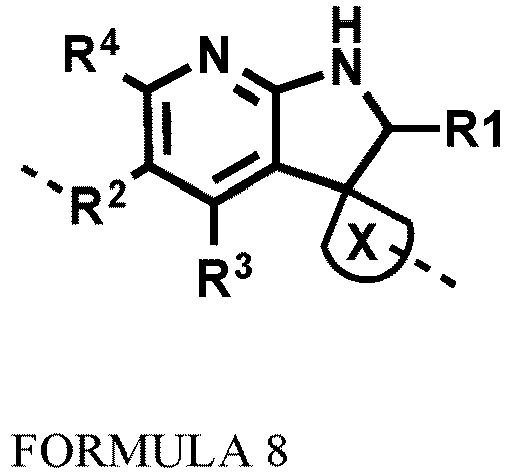
- the "Linker" moiety of the bivalent compound is attached to R2 or X;
- X is C3-12 cycloalkyl, 3- to 14- membered heterocyclyl, C6-14 aryl or 5- to- 14-membered heteroaryl, wherein C3-12 cycloalkyl, 3- to 14- membered heterocyclyl, C6-14 aryl or 5- to- 14-membered heteroaryl of X are each optionally substituted with 1, 2, 3, 4 or 5 substituents independently selected from R5;
- R1 is selected from hydrogen, halogen, optionally substituted C1-C8 alkyl, optionally substituted C1-C8alkoxyC1-C8alkyl, optionally substituted C1-C8alkylaminoC1-C8alkyl, optionally substituted C3-C10 cycloalkyl, optionally substituted 3-20 membered heterocyclyl, optionally substituted C2-Cs alkenyl, optionally substituted C2-C8 alkynyl, optionally substituted aryl, and optionally substituted heteroaryl;
- R2is selected from null, hydrogen, C(O)R7, C(O)OR7, C(O)NR7R8, S(O)R7, S(O)2R7, S(O)2NR7R8, NR9C(O)OR7, NR8C(O)R7, NR9C(O)NR7R8, NR9S(O)R7, NR9S(O)2R7, NR9S(O)2NR7R8 , optionally substituted C1-C8 alkyl, optionally substituted C2-C8 alkenyl, optionally substituted C2-Cs alkynyl, optionally substituted C1-C8 alkoxy, optionally substituted C1-C8alkoxyC1-C8alkyl, optionally substituted C1-C8alkylaminoC1-C8alkyl, optionally substituted 3-8 membered cycloalkyl, optionally substituted C3-C8 cycloalkoxy, optionally substituted 3-8 membered heterocyclyl, optionally substituted aryl, and optionally substituted heteroaryl; wherein
- R7 is null, or a bivalent moiety selected from optionally substituted C1-C8 alkyl, optionally substituted C2-C8 alkenyl, optionally substituted C2-C8 alkynyl, optionally substituted C1-C8 alkoxy, optionally substituted C1-C8alkoxyC1-C8alkyl, optionally substituted C1-C8alkylaminoC1-C8alkyl, optionally substituted 3-8 membered cycloalkyl, optionally substituted C3-C8 cycloalkoxy, optionally substituted 3-8 membered heterocyclyl, optionally substituted aryl, and optionally substituted heteroaryl;
- R8, and R9 are independently selected from hydrogen, optionally substituted C1-C8 alkyl, optionally substituted C1-C8alkoxyC1-C8alkyl, optionally substituted C1-C8alkylaminoC1-C8alkyl, optionally substituted C3-C10 cycloalkyl, optionally substituted 3-20 membered heterocyclyl, optionally substituted C2-C8 alkenyl, optionally substituted C2-C8 alkynyl, optionally substituted aryl, and optionally substituted heteroaryl; or
- R7 and R8 together with the atom to which they are connected form an optionally substituted 3-20 membered cycloalkyl or heterocyclyl ring;
- R3 and R4 and R5 are independently selected from null, hydrogen, halogen, oxo, CN, NO2, OR10, SR10, NR10R11, OCOR10, OCO2R10, OCONR10R11, COR10, CO2R10, CONR10R11, SOR10, SO2R10, SO2NR10R11, NR12CO2R10, NR12COR10, NR12C(O)NR10R11, NR12SOR10, NR12SO2R10, NR12SO2NR10R11, optionally substituted C1-C8 alkyl, optionally substituted C2-C8 alkenyl, optionally substituted C2-C8 alkynyl, optionally substituted C1-C8 alkoxy, optionally substituted C1-C8alkoxyC1-C8alkyl, optionally substituted C1-C8alkylaminoC1-C8alkyl, optionally substituted 3-8 membered cycloalkyl, optionally substituted C3-C8 cycloalkoxy, optionally substituted 4-8 membered heterocyclyl, optionally substituted aryl, and optionally substituted heteroaryl; wherein
- R10, R11 and R12 are independently selected from hydrogen, optionally substituted C1-C8 alkyl, optionally substituted C2-C8 alkenyl, optionally substituted C2-C8 alkynyl, optionally substituted C1-C8 alkoxy, optionally substituted C1-C8alkoxyC1-C8alkyl, optionally substituted C1-C8alkylaminoC1-C8alkyl, optionally substituted 3-8 membered cycloalkyl, optionally substituted C3-C8 cycloalkoxy, optionally substituted 4-8 membered heterocyclyl, optionally substituted aryl, and optionally substituted heteroaryl; or
- R10 and R11, R10 and R12 together with the atom to which they are connected form a 4-20 membered heterocyclyl ring.
- In an embodiment, (HPK1) ligands include a moiety according to FORMULA 8A:

- the "Linker" moiety of the bivalent compound is attached to R2 or X;
- the definitions of X, R1, R2, R3, R4, and R5 are the same as
FORMULA 8; - Ar is selected from null, aryl and heteroaryl, each of which is substituted with R2 and optionally substituted with one or more substituents independently selected from hydrogen, halogen, oxo, CN, NO2, OR13, SR13, NR13R14, OCOR13, OCO2R13, OCONR13R14, COR13, CO2R13, CONR13R14, SOR13, SO2R13, SO2NR13R14, NR15CO2R13, NR15COR13, NR14C(O)NR13R14, NR15SOR13, NR15SO2R13, NR15SO2NR13R14, optionally substituted C1-C8 alkyl, optionally substituted C2-C8 alkenyl, optionally substituted C2-C8 alkynyl, optionally substituted C1-C8 alkoxy, optionally substituted C1-C8alkoxyC1-C8alkyl, optionally substituted C1-C8alkylaminoC1-C8alkyl, optionally substituted 3-8 membered cycloalkyl, optionally substituted C3-C8 cycloalkoxy, optionally substituted 4-8 membered heterocyclyl, optionally substituted aryl, and optionally substituted heteroaryl; wherein
- R13, R14, and R15 are independently selected from hydrogen, optionally substituted C1-C8 alkyl, optionally substituted C2-C8 alkenyl, optionally substituted C2-C8 alkynyl, optionally substituted C1-C8 alkoxy, optionally substituted C1-C8alkoxyC1-C8alkyl, optionally substituted C1-C8alkylaminoC1-C8alkyl, optionally substituted 3-8 membered cycloalkyl, optionally substituted C3-C8 cycloalkoxy, optionally substituted 4-8 membered heterocyclyl, optionally substituted aryl, and optionally substituted heteroaryl; or
- R13 and R14, R13 and R15 together with the atom to which they are connected form a 4-20 membered heterocyclyl ring.
- In an embodiment, (HPK1) ligands include a moiety according to FORMULA 8B:

- the "Linker" moiety of the bivalent compound is attached to R2 or X;
- the definitions of X, R1, R2, R3, R4, and R5 are the same as
FORMULA 8; - Each R6 is independently selected from null, hydrogen, halogen, oxo, CN, NO2, OR16, SR16, NR16R17, OCOR16, OCO2R16, OCONR16R17, COR16, CO2R16, CONR16R17, SOR16, SO2R16, SO2NR16R17, NR18CO2R16, NR18COR16, NR18C(O)NR16R17, NR18SOR16, NR18SO2R16, NR18SO2NR16R17, optionally substituted C1-C8 alkyl, optionally substituted C2-C8 alkenyl, optionally substituted C2-C8 alkynyl, optionally substituted C1-C8 alkoxy, optionally substituted C1-C8alkoxyC1-C8alkyl, optionally substituted C1-C8alkylaminoC1-C8alkyl, optionally substituted 3-8 membered cycloalkyl, optionally substituted C3-C8 cycloalkoxy, optionally substituted 4-8 membered heterocyclyl, optionally substituted aryl, and optionally substituted heteroaryl; wherein
- R16, R17 and R18 are independently selected from hydrogen, optionally substituted C1-C8 alkyl, optionally substituted C2-C8 alkenyl, optionally substituted C2-C8 alkynyl, optionally substituted C1-C8 alkoxy, optionally substituted C1-C8alkoxyC1-C8alkyl, optionally substituted C1-C8alkylaminoC1-C8alkyl, optionally substituted 3-8 membered cycloalkyl, optionally substituted C3-C8 cycloalkoxy, optionally substituted 4-8 membered heterocyclyl, optionally substituted aryl, and optionally substituted heteroaryl; or
- R16 and R17, R16 and R18 together with the atom to which they are connected form a 4-20 membered heterocyclyl ring; and
- n is independently selected from 0, 1, 2, 3, 4 and 5; and
- pharmaceutically acceptable salts thereof.
- In an embodiment, (HPK1) ligands include a moiety according to FORMULA 9:

- the "Linker" moiety of the bivalent compound is attached independently to Y or independently one of the R1;
- each of R1 is selected from null, OR12, SR12, NR12R13, OC(O)R12, OC(O)OR12, OCONR12R13, C(O)R12, C(O)OR12, CONR12R13, S(O)R12, S(O)2R12, SO2NR12R13, NR14C(O)OR12, NR14C(O)R12, NR14C(O)NR12R13, NR14S(O)R12, NR14S(O)2R12, NR14S(O)2NR12R13, P(O)R12R13, P(O)(OR12), optionally substituted C1-C8 alkylenyl, optionally substituted C2-C8 alkenylene, optionally substituted C2-C8 alkynylene, optionally substituted C3-C8 cycloalkylene, optionally substituted 3-8 membered heterocyclylene, optionally substituted aryl, and optionally substituted heteroaryl; wherein
- R12 is null, or a bivalent moiety selected from optionally substituted C1-C8 alkylenyl, optionally substituted C2-C8 alkenylene, optionally substituted C2-C8 alkynylene, optionally substituted C3-C8 cycloalkylene, optionally substituted 3-8 membered heterocyclylene, optionally substituted aryl, and optionally substituted heteroaryl;
- R13 and R14 are independently selected from optionally substituted C1-C8 alkyl, optionally substituted C1-C8alkoxyC1-C8alkyl, optionally substituted C1-C8alkylaminoC1-C8alkyl, optionally substituted C3-C8 cycloalkyl, optionally substituted 3-8 membered heterocyclyl, optionally substituted C2-C8 alkenyl, optionally substituted C2-C8 alkynyl, optionally substituted aryl, and optionally substituted heteroaryl; or
- R12 and R13, R12 and R14, R13 and R14 together with the atom to which they are connected form a 3-20 membered cycloalkyl or heterocyclyl ring;
- n and m are independently selected from 0, 1, 2, 3, 4 and 5;
- Ar is selected from null, aryl and heteroaryl, each of which optinally is substituted with R1;
- R2, R3, R5 and R6 are independently selected from hydrogen, halogen, OR15, SR15, NR16R17, COR15, CO2R15, C(O)NR16R17, SOR15, SO2R15, SO2NR16R17, NR15C(O)R16, NR15C(O)NR16R17, NR15SOR16, NR15SO2R16, optionally substituted C1-C8 alkyl, optionally substituted C2-C8 alkenyl, optionally substituted C2-C8 alkynyl, optionally substituted C1-C8 alkoxy, optionally substituted 3-8 membered cycloalkyl, optionally substituted C3-C8 cycloalkoxy, optionally substituted 3-8 membered heterocyclyl, optionally substituted aryl, and optionally substituted heteroaryl; wherein
- R15, R16, and R17 are independently selected from hydrogen, optionally substituted C1-C8 alkyl, optionally substituted C1-C8alkoxyC1-C8alkyl, optionally substituted C1-C8alkylaminoC1-Csalkyl, optionally substituted C3-C10 cycloalkyl, optionally substituted 3-10 membered heterocyclyl, optionally substituted C2-C8 alkenyl, optionally substituted C2-C8 alkynyl, optionally substituted aryl, and optionally substituted heteroaryl; or
- R15 and R16, R16 and R17 together with the atom to which they are connected form an optionally substituted 3-20 membered cycloalkyl or heterocyclyl ring;
- R7, R8, R9, and R10 are independently selected from null, hydrogen, halogen, OR18, NR19R20, optionally substituted C1-C8 alkyl, optionally substituted C1-C8 alkoxy, optionally substituted C3-C8 cycloalkyl, optionally substituted C3-C8 cycloalkoxy; wherein
- R18, R19, and R20 are independently selected from hydrogen, optionally substituted C1-C8 alkyl, optionally substituted C1-C8alkoxyC1-C8alkyl, optionally substituted C1-C8alkylaminoC1-C8alkyl, optionally substituted C3-C10 cycloalkyl, optionally substituted 3-10 membered heterocyclyl, optionally substituted C2-C8 alkenyl, optionally substituted C2-C8 alkynyl; or
- R19 and R20 together with the atom to which they are connected form an an optionally substituted 3-20 membered cycloalkyl or heterocyclyl ring;
- R11 at each occurrence, is independently selected from hydrogen, C(O)R21, C(O)OR21, C(O)NR21R22, S(O)R21, S(O)2R21, S(O)2NR21R22, NR23C(O)OR21, NR23C(O)R21, NR23C(O)NR21R22, NR23S(O)R21, NR23S(O)2R21, NR23S(O)2NR21R22 , optionally substituted C1-C8 alkyl, optionally substituted C2-C8 alkenyl, optionally substituted C2-C8 alkynyl, optionally substituted C1-C8 alkoxy, optionally substituted C1-C8alkoxyC1-C8alkyl, optionally substituted C1-C8alkylaminoC1-C8alkyl, optionally substituted 3-8 membered cycloalkyl, optionally substituted C3-C8 cycloalkoxy, optionally substituted 3-8 membered heterocyclyl, optionally substituted aryl, and optionally substituted heteroaryl; wherein
- R21, R22 and R23 are independently selected from hydrogen, optionally substituted C1-C8 alkyl, optionally substituted C2-C8 alkenyl, optionally substituted C2-C8 alkynyl, optionally substituted C1-C8 alkoxy, optionally substituted C1-C8alkoxyC1-C8alkyl, optionally substituted C1-C8alkylaminoC1-C8alkyl, optionally substituted 3-8 membered cycloalkyl, optionally substituted C3-C8 cycloalkoxy, optionally substituted 4-8 membered heterocyclyl, optionally substituted aryl, and optionally substituted heteroaryl; or
- R21 and R22, R21 and R23 together with the atom to which they are connected form a 3-20 membered heterocyclyl ring; and
- X, Y at each occurrence, are independently selected from null, CO, CO2, CH2, CR24R25, C(O)NR24, C(S)NR24, O, S, SO, SO2, SO2NR24, NR24, NR24CO, NR24CONR21, NR24C(S), optionally substituted C1-C8 alkyl, optionally substituted C1-C8 alkoxy, optionally substituted C1-C8alkoxyC1-C8alkyl, optionally substituted C1-C8 haloalkyl, optionally substituted C1-C8 hydroxyalkyl, optionally substituted C2-C8 alkenyl, optionally substituted C2-C8 alkynyl, optionally substituted 3-8 membered cycloalkyl, optionally substituted C3-C8 cycloalkoxy, optionally substituted 3-8 membered heterocyclyl, optionally substituted aryl, optionally substituted heteroaryl, optionally substituted C3-C13 fused cycloalkyl, optionally substituted C3-C13 fused heterocyclyl, optionally substituted C3-C13 bridged cycloalkyl, optionally substituted C3-C13 bridged heterocyclyl, optionally substituted C3-C13 spiro cycloalkyl, and optionally substituted C3-C13 spiro heterocyclyl; wherein
R24 and R25 are independently selected from hydrogen, optionally substituted C1-C8 alkyl, optionally substituted 3-8 membered cycloalkyl, optionally substituted C3-C8 cycloalkoxy, optionally substituted 3-8 membered heterocyclyl, optionally substituted C1-C8 alkoxy, optionally substituted C1-C8 alkoxyalkyl, optionally substituted C1-C8 haloalkyl, optionally substituted C1-C8 hydroxyalkyl, optionally substituted C1-C8 alkylamino, and optionally substituted C1-C8alkylaminoC1-C8alkyl; and - A and B are independently selected from C or N; and
- pharmaceutically acceptable salts thereof.
- In an embodiment, (HPK1) ligands include a moiety according to FORMULA 10:

- the "Linker" moiety of the bivalent compound is attached independently to R1 or R5;
- R1 and R5 are independently selected from null, hydrogen, C(O)R6, C(O)OR6, C(O)NR6R7, S(O)R6, S(O)2R6, S(O)2NR6R7, NR8C(O)OR6, NR8C(O)R6, NR8C(O)NR6R7, NR8S(O)R6, NR8S(O)2R6, NR8S(O)2NR6R7 , optionally substituted C1-C8 alkyl, optionally substituted C2-C8 alkenyl, optionally substituted C2-C8 alkynyl, optionally substituted C1-C8 alkoxy, optionally substituted C1-C8alkoxyC1-C8alkyl, optionally substituted C1-C8alkylaminoC1-C8alkyl, optionally substituted 3-8 membered cycloalkyl, optionally substituted C3-C8 cycloalkoxy, optionally substituted 3-8 membered heterocyclyl, optionally substituted aryl, and optionally substituted heteroaryl; wherein
- R6 is null, or a bivalent moiety selected from optionally substituted C1-C8 alkyl, optionally substituted C2-C8 alkenyl, optionally substituted C2-C8 alkynyl, optionally substituted C1-C8 alkoxy, optionally substituted C1-C8alkoxyC1-C8alkyl, optionally substituted C1-C8alkylaminoC1-Csalkyl, optionally substituted 3-8 membered cycloalkyl, optionally substituted C3-C8 cycloalkoxy, optionally substituted 3-8 membered heterocyclyl, optionally substituted aryl, and optionally substituted heteroaryl;
- R7, and R8 are independently selected from hydrogen, optionally substituted C1-C8 alkyl, optionally substituted C1-C8alkoxyC1-C8alkyl, optionally substituted C1-C8alkylaminoC1-C8alkyl, optionally substituted C3-C10 cycloalkyl, optionally substituted 3-20 membered heterocyclyl, optionally substituted C2-C8 alkenyl, optionally substituted C2-C8 alkynyl, optionally substituted aryl, and optionally substituted heteroaryl; or
- R6 and R7 together with the atom to which they are connected form an optionally substituted 3-20 membered cycloalkyl or heterocyclyl ring;
- R2 and R3 at each occurrence, is independently selected from hydrogen, C(O)R9, C(O)OR9, C(O)NR9R10, S(O)R21, S(O)2R9, S(O)2NR9R10, NR11C(O)OR9, NR11C(O)R9, NR11C(O)NR9R10, NR11S(O)R9, NR11S(O)2R9, NR11S(O)2NR9R10 , optionally substituted C1-C8 alkyl, optionally substituted C2-C8 alkenyl, optionally substituted C2-C8 alkynyl, optionally substituted C1-C8 alkoxy, optionally substituted C1-C8alkoxyC1-C8alkyl, optionally substituted C1-C8alkylaminoC1-Csalkyl, optionally substituted 3-8 membered cycloalkyl, optionally substituted C3-C8 cycloalkoxy, optionally substituted 3-8 membered heterocyclyl, optionally substituted aryl, and optionally substituted heteroaryl; wherein
- R9, R10 and R11 are independently selected from hydrogen, optionally substituted C1-C8 alkyl, optionally substituted C2-C8 alkenyl, optionally substituted C2-C8 alkynyl, optionally substituted C1-C8 alkoxy, optionally substituted C1-C8alkoxyC1-C8alkyl, optionally substituted C1-C8alkylaminoC1-C8alkyl, optionally substituted 3-8 membered cycloalkyl, optionally substituted C3-C8 cycloalkoxy, optionally substituted 4-8 membered heterocyclyl, optionally substituted aryl, and optionally substituted heteroaryl; or
- R9 and R10, R9 and R11 together with the atom to which they are connected form a 3-20 membered heterocyclyl ring;
- each of R4 is selected from null, OR12, SR12, NR12R13, OC(O)R12, OC(O)OR12, OCONR12R13, C(O)R12, C(O)OR12, CONR12R13, S(O)R12, S(O)2R12, SO2NR12R13, NR14C(O)OR12, NR14C(O)R12, NR14C(O)NR12R13, NR14S(O)2R12, NR14S(O)2R12, NR14S(O)2NR12R13, optionally substituted C1-C8 alkylenyl, optionally substituted C2-C8 alkenylene, optionally substituted C2-C8 alkynylene, optionally substituted C3-C8 cycloalkylene, optionally substituted 3-8 membered heterocyclylene, optionally substituted aryl, and optionally substituted heteroaryl; wherein
- R12 is null, or a bivalent moiety selected from optionally substituted C1-C8 alkylenyl, optionally substituted C2-C8 alkenylene, optionally substituted C2-C8 alkynylene, optionally substituted C3-C8 cycloalkylene, optionally substituted 3-8 membered heterocyclylene, optionally substituted aryl, and optionally substituted heteroaryl;
- R13 and R14 are independently selected from optionally substituted C1-C8 alkyl, optionally substituted C1-C8alkoxyC1-C8alkyl, optionally substituted C1-C8alkylaminoC1-C8alkyl, optionally substituted C3-C8 cycloalkyl, optionally substituted 3-8 membered heterocyclyl, optionally substituted C2-C8 alkenyl, optionally substituted C2-C8 alkynyl, optionally substituted aryl, and optionally substituted heteroaryl; or
- R12 and R13, R12 and R14, R13 and R14 together with the atom to which they are connected form a 3-20 membered cycloalkyl or heterocyclyl ring;
- n is independently selected from 0, 1, 2, 3, 4 and 5;
- one of A, B and C is S, the other two are each independently selected from CR15 or N
- Wherein R15 is independently selected from null, hydrogen, halogen, oxo, CN, NO2, OR16, SR16, NR16R17, OCOR16, OCO2R16, OCONR16R17, COR16, CO2R16, CONR16R17, SOR16, SO2R16, SO2NR16R17, NR18CO2R16, NR18COR16, NR18C(O)NR16R17, NR18SOR16, NR18SO2R16, NR18SO2NR16R17, optionally substituted C1-C8 alkyl, optionally substituted C2-C8 alkenyl, optionally substituted C2-C8 alkynyl, optionally substituted C1-C8 alkoxy, optionally substituted C1-C8alkoxyC1-C8alkyl, optionally substituted C1-C8alkylaminoC1-C8alkyl, optionally substituted 3-8 membered cycloalkyl, optionally substituted C3-C8 cycloalkoxy, optionally substituted 4-8 membered heterocyclyl, optionally substituted aryl, and optionally substituted heteroaryl; wherein
- R16, R17 and R18 are independently selected from hydrogen, optionally substituted C1-C8 alkyl, optionally substituted C2-C8 alkenyl, optionally substituted C2-C8 alkynyl, optionally substituted C1-C8 alkoxy, optionally substituted C1-C8alkoxyC1-C8alkyl, optionally substituted C1-C8alkylaminoC1-C8alkyl, optionally substituted 3-8 membered cycloalkyl, optionally substituted C3-C8 cycloalkoxy, optionally substituted 4-8 membered heterocyclyl, optionally substituted aryl, and optionally substituted heteroaryl; or
- R16 and R17, R16 and R18 together with the atom to which they are connected form a 4-20 membered heterocyclyl ring; and
- pharmaceutically acceptable salts thereof.
- In an embodiment, (HPK1) ligands include a moiety according to FORMULA 11:

- the "Linker" moiety of the bivalent compound is attached independently to R1 or R5;
- R1 and R5 are independently selected from null, hydrogen, C(O)R6, C(O)OR6, C(O)NR6R7, S(O)R6, S(O)2R6, S(O)2NR6R7, NR8C(O)OR6, NR8C(O)R6, NR8C(O)NR6R7, NR8S(O)R6, NR8S(O)2R6, NR8S(O)2NR6R7 , optionally substituted C1-C8 alkyl, optionally substituted C2-C8 alkenyl, optionally substituted C2-C8 alkynyl, optionally substituted C1-C8 alkoxy, optionally substituted C1-C8alkoxyC1-C8alkyl, optionally substituted C1-C8alkylaminoC1-C8alkyl, optionally substituted 3-8 membered cycloalkyl, optionally substituted C3-C8 cycloalkoxy, optionally substituted 3-8 membered heterocyclyl, optionally substituted aryl, and optionally substituted heteroaryl; wherein
- R6 is null, or a bivalent moiety selected from optionally substituted C1-C8 alkyl, optionally substituted C2-C8 alkenyl, optionally substituted C2-C8 alkynyl, optionally substituted C1-C8 alkoxy, optionally substituted C1-C8alkoxyC1-C8alkyl, optionally substituted C1-C8alkylaminoC1-Csalkyl, optionally substituted 3-8 membered cycloalkyl, optionally substituted C3-C8 cycloalkoxy, optionally substituted 3-8 membered heterocyclyl, optionally substituted aryl, and optionally substituted heteroaryl;
- R7, and R8 are independently selected from hydrogen, optionally substituted C1-C8 alkyl, optionally substituted C1-C8alkoxyC1-C8alkyl, optionally substituted C1-C8alkylaminoC1-C8alkyl, optionally substituted C3-C10 cycloalkyl, optionally substituted 3-20 membered heterocyclyl, optionally substituted C2-C8 alkenyl, optionally substituted C2-C8 alkynyl, optionally substituted aryl, and optionally substituted heteroaryl; or
- R6 and R7 together with the atom to which they are connected form an optionally substituted 3-20 membered cycloalkyl or heterocyclyl ring;
- R2, R3and R4 at each occurrence, is independently selected from hydrogen, C(O)R9, C(O)OR9, C(O)NR9R10, S(O)R21, S(O)2R9, S(O)2NR9R10, NR11C(O)OR9, NR11C(O)R9, NR11C(O)NR9R10, NR11S(O)R9, NR11S(O)2R9, NR11S(O)2NR9R10 , optionally substituted C1-C8 alkyl, optionally substituted C2-C8 alkenyl, optionally substituted C2-C8 alkynyl, optionally substituted C1-C8 alkoxy, optionally substituted C1-C8alkoxyC1-C8alkyl, optionally substituted C1-C8alkylaminoC1-C8alkyl, optionally substituted 3-8 membered cycloalkyl, optionally substituted C3-C8 cycloalkoxy, optionally substituted 3-8 membered heterocyclyl, optionally substituted aryl, and optionally substituted heteroaryl; wherein
- R9, R10 and R11 are independently selected from hydrogen, optionally substituted C1-C8 alkyl, optionally substituted C2-C8 alkenyl, optionally substituted C2-C8 alkynyl, optionally substituted C1-C8 alkoxy, optionally substituted C1-C8alkoxyC1-C8alkyl, optionally substituted C1-C8alkylaminoC1-C8alkyl, optionally substituted 3-8 membered cycloalkyl, optionally substituted C3-C8 cycloalkoxy, optionally substituted 4-8 membered heterocyclyl, optionally substituted aryl, and optionally substituted heteroaryl; or
- R9 and R10, R9 and R" together with the atom to which they are connected form a 3-20 membered heterocyclyl ring;
- A, B and C each independently selected from N or CR6 ;
- each of R6 is independently selected from null, hydrogen , halogen, OR12, SR12, NR12R13, OC(O)R12, OC(O)OR12, OCONR12R13, C(O)R12, C(O)OR12, CONR12R13, S(O)R12, S(O)2R12, SO2NR12R13, NR14S(O)2R12, NR14S(O)2R12, NR14C(O)NR12R13, NR14S(O)2R12, NR14S(O)2R12, NR14S(O)2NR12R13, optionally substituted C1-C8 alkylenyl, optionally substituted C2-C8 alkenylene, optionally substituted C2-C8 alkynylene, optionally substituted C3-C8 cycloalkylene, optionally substituted 3-8 membered heterocyclylene, optionally substituted aryl, and optionally substituted heteroaryl, wherein;
- R12, R13 and R14 are independently selected from optionally substituted C1-C8 alkyl, optionally substituted C1-C8alkoxyC1-C8alkyl, optionally substituted C1-C8alkylaminoC1-C8alkyl, optionally substituted C3-C8 cycloalkyl, optionally substituted 3-8 membered heterocyclyl, optionally substituted C2-C8 alkenyl, optionally substituted C2-C8 alkynyl, optionally substituted aryl, and optionally substituted heteroaryl; or
- R12 and R13, R12 and R14, R13 and R14 together with the atom to which they are connected form a 3-20 membered cycloalkyl or heterocyclyl ring; and
- n is independently selected from 0, 1, 2, 3, 4 and 5; and
- pharmaceutically acceptable salts thereof.
- In an embodiment, (HPK1) ligands are selected from the group consisting of:

- Degradation/Disruption tags (EL) include, but are not limited to:
In an embodiment, degradation/disruption tags include a moiety according to FORMULAE 12A, 12B, 12C and 12D:
- V, W, and X are independently selected from CR2 and N;
- Y is selected from CO, CR3R4, and N=N;
- Z is selected from null, CO, CR5R6, NR5, O, optionally substituted C1-C10 alkylene, optionally substituted C1-C10 alkenylene, optionally substituted C1-C10 alkynylene, optionally substituted 3-10 membered carbocyclyl, optionally substituted 4-10 membered heterocyclyl, optionally substituted C3-C13 fused cycloalkyl, optionally substituted C3-C13 fused heterocyclyl, optionally substituted C3-C13 bridged cycloalkyl, optionally substituted C3-C13 bridged heterocyclyl, optionally substituted C3-C13 spiro cycloalkyl, optionally substituted C3-C13 spiro heterocyclyl, optionally substituted aryl, and optionally substituted heteroaryl; preferly, Z is selected from null, CH2, CH=CH, C=C, NH and O;
- R1, and R2 are independently selected from hydrogen, halogen, cyano, nitro, optionally substituted C1-C6 alkyl, optionally substituted 3 to 6 membered carbocyclyl, and optionally substituted 4 to 6 membered heterocyclyl;
- R3, and R4 are independently selected from hydrogen, halogen, cyano, nitro, optionally substituted C1-C6 alkyl, optionally substituted 3 to 6 membered carbocyclyl, and optionally substituted 4 to 6 membered heterocyclyl; or R3 and R4 together with the atom to which they are connected form a 3-6 membered carbocyclyl, or 4-6 membered heterocyclyl; and
- R5 and R6 are independently selected from null, hydrogen, halogen, oxo, hydroxyl, amino, cyano, nitro, optionally substituted C1-C6 alkyl, optionally substituted 3 to 6 membered carbocyclyl, and optionally substituted 4 to 6 membered heterocyclyl; or R5 and R6 together with the atom to which they are connected form a 3-6 membered carbocyclyl, or 4-6 membered heterocyclyl.
- In an embodiment, degradation/disruption tags include a moiety according to one of FORMULAE 12E, 12F, 12G, 12H, and 121:


- U, V, W, and X are independently selected from CR2 and N;
- Y is selected from CR3R4, NR3 and O; preferably, Y is selected from CH2, NH, NCH3 and O;
- Z is selected from null, CO, CR5R6, NR5, O, optionally substituted C1-C10 alkylene, optionally substituted C1-C10 alkenylene, optionally substituted C1-C10 alkynylene, optionally substituted 3-10 membered carbocyclyl, optionally substituted 4-10 membered heterocyclyl, optionally substituted C3-C13 fused cycloalkyl, optionally substituted C3-C13 fused heterocyclyl, optionally substituted C3-C13 bridged cycloalkyl, optionally substituted C3-C13 bridged heterocyclyl, optionally substituted C3-C13 spiro cycloalkyl, optionally substituted C3-C13 spiro heterocyclyl, optionally substituted aryl, and optionally substituted heteroaryl; preferably, Z is selected from null, CH2, CH=CH, C=C, NH and O;
- R1, and R2 are independently selected from hydrogen, halogen, cyano, nitro, optionally substituted C1-C6 alkyl, optionally substituted 3 to 6 membered carbocyclyl, and optionally substituted 4 to 6 membered heterocyclyl;
- R3, and R4 are independently selected from hydrogen, halogen, cyano, nitro, optionally substituted C1-C6 alkyl, optionally substituted 3 to 6 membered carbocyclyl, and optionally substituted 4 to 6 membered heterocyclyl; or R3 and R4 together with the atom to which they are connected form a 3-6 membered carbocyclyl, or 4-6 membered heterocyclyl; and
- R5 and R6 are independently selected from null, hydrogen, halogen, oxo, hydroxyl, amino, cyano, nitro, optionally substituted C1-C6 alkyl, optionally substituted 3 to 6 membered carbocyclyl, and optionally substituted 4 to 6 membered heterocyclyl; or R5 and R6 together with the atom to which they are connected form a 3-6 membered carbocyclyl, or 4-6 membered heterocyclyl; and
pharmaceutically acceptable salts thereof. - In an embodiment, degradation/disruption tags include a moiety according to FORMULA 13A:

- R1 and R2 are independently selected from hydrogen, optionally substituted C1-C8 alkyl, optionally substituted C1-C8alkoxyC1-C8alkyl, optionally substituted C1-C8 haloalkyl, optionally substituted C1-C8 hydroxyalkyl, optionally substituted C1-C8 aminoalkyl, optionally substituted C1-C8alkylaminoC1-C8alkyl, optionally substituted C3-C7 cycloalkyl, optionally substituted 3-7 membered heterocyclyl, optionally substituted C2-C8 alkenyl, and optionally substituted C2-C8 alkynyl; and
- R3 is hydrogen, optionally substituted C(O)C1-C8 alkyl, optionally substituted C(O)C1-C8alkoxyC1-C8alkyl, optionally substituted C(O)C1-C8 haloalkyl, optionally substituted C(O)C1-Cs hydroxyalkyl, optionally substituted C(O)C1-C8 aminoalkyl, optionally substituted C(O)C1-C8alkylaminoC1-C8alkyl, optionally substituted C(O)C3-C7 cycloalkyl, optionally substituted C(O)(3-7 membered heterocyclyl), optionally substituted C(O)C2-C8 alkenyl, optionally substituted C(O)C2-C8 alkynyl, optionally substituted C(O)OC1-C8alkoxyC1-C8alkyl, optionally substituted C(O)OC1-C8 haloalkyl, optionally substituted C(O)OC1-C8 hydroxyalkyl, optionally substituted C(O)OC1-C8 aminoalkyl, optionally substituted C(O)OC1-C8alkylaminoC1-C8alkyl, optionally substituted C(O)OC3-C7 cycloalkyl, optionally substituted C(O)O(3-7 membered heterocyclyl), optionally substituted C(O)OC2-C8 alkenyl, optionally substituted C(O)OC2-C8 alkynyl, optionally substituted C(O)NC1-C8alkoxyC1-C8alkyl, optionally substituted C(O)NC1-C8 haloalkyl, optionally substituted C(O)NC1-C8 hydroxyalkyl, optionally substituted C(O)NC1-C8 aminoalkyl, optionally substituted C(O)NC1-C8alkylaminoC1-C8alkyl, optionally substituted C(O)NC3-C7 cycloalkyl, optionally substituted C(O)N(3-7 membered heterocyclyl), optionally substituted C(O)NC2-C8 alkenyl, optionally substituted C(O)NC2-C8 alkynyl, optionally substituted P(O)(OH)2, optionally substituted P(O)(OC1-C8 alkyl)2, and optionally substituted P(O)(OC1-C8 aryl)2.
- In an embodiment, degradation/disruption tags include a moiety according to FORMULAE 13B, 13C, 13D, 13E and 13F:


- R1 and R2 are independently selected from hydrogen, halogen, OH, NH2, CN, optionally substituted C1-C8 alkyl, optionally substituted C1-C8alkoxyC1-C8alkyl, optionally substituted C1-C8 haloalkyl, optionally substituted C1-C8 hydroxyalkyl, optionally substituted C1-C8 aminoalkyl, optionally substituted C1-C8alkylaminoC1-C8alkyl, optionally substituted C3-C7 cycloalkyl, optionally substituted 3-7 membered heterocyclyl, optionally substituted C2-C8 alkenyl, and optionally substituted C2-C8 alkynyl; (preferably, R1 is selected from iso-propyl or tert-butyl; and R2 is selected from hydrogen or methyl);
- R3 is hydrogen, optionally substituted C(O)C1-C8 alkyl, optionally substituted C(O)C1-C8alkoxyC1-C8alkyl, optionally substituted C(O)C1-C8 haloalkyl, optionally substituted C(O)C1-C8 hydroxyalkyl, optionally substituted C(O)C1-C8 aminoalkyl, optionally substituted C(O)C1-C8alkylaminoC1-C8alkyl, optionally substituted C(O)C3-C7 cycloalkyl, optionally substituted C(O)(3-7 membered heterocyclyl), optionally substituted C(O)C2-C8 alkenyl, optionally substituted C(O)C2-C8 alkynyl, optionally substituted C(O)OC1-C8alkoxyC1-C8alkyl, optionally substituted C(O)OC1-C8 haloalkyl, optionally substituted C(O)OC1-C8 hydroxyalkyl, optionally substituted C(O)OC1-C8 aminoalkyl, optionally substituted C(O)OC1-C8alkylaminoC1-C8alkyl, optionally substituted C(O)OC3-C7 cycloalkyl, optionally substituted C(O)O(3-7 membered heterocyclyl), optionally substituted C(O)OC2-C8 alkenyl, optionally substituted C(O)OC2-C8 alkynyl, optionally substituted C(O)NC1-C8alkoxyC1-C8alkyl, optionally substituted C(O)NC1-C8 haloalkyl, optionally substituted C(O)NC1-C8 hydroxyalkyl, optionally substituted C(O)NC1-C8 aminoalkyl, optionally substituted C(O)NC1-C8alkylaminoC1-C8alkyl, optionally substituted C(O)NC3-C7 cycloalkyl, optionally substituted C(O)N(3-7 membered heterocyclyl), optionally substituted C(O)NC2-C8 alkenyl, optionally substituted C(O)NC2-C8 alkynyl, optionally substituted P(O)(OH)2, optionally substituted P(O)(OC1-C8 alkyl)2, and optionally substituted P(O)(OC1-C8 aryl)2; and
- R4 and R5 are independently selected from hydrogen, COR6, CO2R6, CONR6R7, SOR6, SO2R6, SO2NR6R7, optionally substituted C1-C8 alkyl, optionally substituted C1-C8alkoxyC1-C8alkyl, optionally substituted C1-C8alkylaminoC1-C8alkyl, optionally substituted 3-8 membered cycloalkyl, optionally substituted 3-8 membered heterocyclyl, optionally substituted aryl, and optionally substituted heteroaryl; wherein
- R6 and R7 are independently selected from hydrogen, optionally substituted C1-C8 alkyl, optionally substituted C1-C8 alkoxy, optionally substituted C1-C8alkoxyC1-C8alkyl, optionally substituted C1-C8alkylaminoC1-C8alkyl, optionally substituted 3-8 membered cycloalkyl, optionally substituted 3-8 membered heterocyclyl, optionally substituted aryl, and optionally substituted heteroaryl; or
- R4 and R5; R6 and R7 together with the atom to which they are connected form a 4-8 membered cycloalkyl or heterocyclyl ring;
- Ar is selected from aryl and heteroaryl, each of which is optionally substituted with one or more substituents independently selected from F, Cl, CN, NO2, OR8, NR8R9, COR8, CO2R8, CONR8R9, SOR8, SO2R8, SO2NR9R10, NR9COR10, NR8C(O)NR9R10, NR9SOR10, NR9SO2R10, optionally substituted C1-C6 alkyl, optionally substituted C1-C6 alkoxyalkyl, optionally substituted C1-C6 haloalkyl, optionally substituted C1-C6 hydroxyalkyl, optionally substituted C1-C6alkylaminoC1-C6alkyl, optionally substituted C3-C7 cycloalkyl, optionally substituted 3-7 membered heterocyclyl, optionally substituted C2-C6 alkenyl, optionally substituted C2-C6 alkynyl, optionally substituted aryl, and optionally substituted C4-C5 heteroaryl; wherein
- R8, R9, and R10 are independently selected from null, hydrogen, optionally substituted C1-C6 alkyl, optionally substituted C2-C6 alkenyl, optionally substituted C2-C6 alkynyl, optionally substituted C3-C7 cycloalkyl, optionally substituted 3-7 membered heterocyclyl, optionally substituted aryl, and optionally substituted heteroaryl; or
- R8 and R9; R9 and R10 together with the atom to which they are connected form a 4-8 membered cycloalkyl or heterocyclyl ring; and
- pharmaceutically acceptable salts thereof.
- In an embodiment, degradation/disruption tags include a moiety according to FORMULA 14A:

- V, W, X, and Z are independently selected from CR4 and N;
- R1, R2, R3, and R4 are independently selected from hydrogen, optionally substituted C1-C8 alkyl, optionally substituted C1-C8alkoxyC1-C8alkyl, optionally substituted C1-C8 haloalkyl, optionally substituted C1-C8 hydroxyalkyl, optionally substituted C3-C7 cycloalkyl, optionally substituted 3-7 membered heterocyclyl, optionally substituted C2-C8 alkenyl, and optionally substituted C2-C8 alkynyl.
- In an embodiment, degradation/disruption tags include a moiety according to FORMULA 14B:
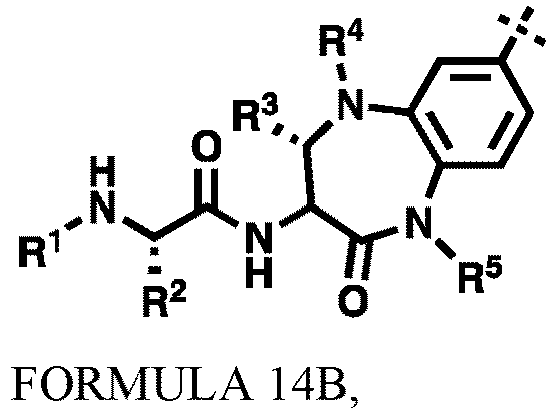
- R1, R2, and R3 are independently selected from hydrogen, halogene, optionally substituted C1-C8 alkyl, optionally substituted C1-C8alkoxyC1-C8alkyl, optionally substituted C1-C8 haloalkyl, optionally substituted C1-C8 hydroxyalkyl, optionally substituted C3-C7 cycloalkyl, optionally substituted 3-7 membered heterocyclyl, optionally substituted C2-C8 alkenyl, and optionally substituted C2-C8 alkynyl;
- R4 and R5 are independently selected from hydrogen, COR6, CO2R6, CONR6R7, SOR6, SO2R6, SO2NR6R7, optionally substituted C1-C8 alkyl, optionally substituted C1-C8alkoxyC1-C8alkyl, optionally substituted C1-C8alkylaminoC1-C8alkyl, optionally substituted aryl-C1-C8alkyl, optionally substituted 3-8 membered cycloalkyl, optionally substituted 3-8 membered heterocyclyl, optionally substituted aryl, and optionally substituted heteroaryl; wherein
- R6 and R7 are independently selected from hydrogen, optionally substituted C1-C8 alkyl, optionally substituted C1-C8alkoxyC1-C8alkyl, optionally substituted C1-C8alkylaminoC1-C8alkyl, optionally substituted 3-8 membered cycloalkyl, optionally substituted 3-8 membered heterocyclyl, optionally substituted aryl, and optionally substituted heteroaryl; or
- R6 and R7 together with the atom to which they are connected form a 4-8 membered cycloalkyl or heterocyclyl ring; and
- pharmaceutically acceptable salts thereof.
- In an embodiment, degradation/disruption tags are selected from the group consisting of


- In any of the above-described compounds, the HPK1 ligand can be conjugated to the degradation/disruption tag through a linker. The linker can include, e.g., acyclic or cyclic saturated or unsaturated carbon, ethylene glycol, amide, amino, ether, urea, carbamate, aromatic, heteroaromatic, heterocyclic, and/or carbonyl containing groups with different lengths.
- In an embodiment, the linker is a moiety according to FORMULA 16:

- A, W, and B, at each occurrence, are independently selected from null, CO, CO2, C(O)NR1, C(S)NR1, O, S, SO, SO2, SO2NR1, NR1, NR1CO, NR1CONR2, NR1C(S), optionally substituted C1-C8 alkyl, optionally substituted C1-C8 alkoxy, optionally substituted C1-C8alkoxyC1-C8alkyl, optionally substituted C1-C8 haloalkyl, optionally substituted C1-C8 hydroxyalkyl, optionally substituted C2-C8 alkenyl, optionally substituted C2-C8 alkynyl, optionally substituted 3-8 membered cycloalkyl, optionally substituted C3-C8 cycloalkoxy, optionally substituted 3-8 membered heterocyclyl, optionally substituted aryl, optionally substituted heteroaryl, optionally substituted C3-C13 fused cycloalkyl, optionally substituted C3-C13 fused heterocyclyl, optionally substituted C3-C13 bridged cycloalkyl, optionally substituted C3-C13 bridged heterocyclyl, optionally substituted C3-C13 spiro cycloalkyl, and optionally substituted C3-C13 spiro heterocyclyl; wherein
- R1 and R2 are independently selected from hydrogen, optionally substituted C1-C8 alkyl, optionally substituted C3-C8 cycloalkyl, optionally substituted 3-8 membered cycloalkoxy, optionally substituted 3-8 membered heterocyclyl, optionally substituted C1-C8 alkoxy, optionally substituted C1-C8 alkoxyalkyl, optionally substituted C1-C8 haloalkyl, optionally substituted C1-C8 hydroxyalkyl, optionally substituted C1-C8 alkylamino, and optionally substituted C1-C8alkylaminoC1-C8alkyl; and
- m is 0 to 15,
- In an embodiment, the linker is a moiety according to FORMULA 16A:

- R1, R2, R3, and R4, at each occurrence, are independently selected from hydrogen, halogen, CN, OH, NH2, optionally substituted C1-C8 alkyl, optionally substituted C3-C8 cycloalkyl, optionally substituted C3-C8 cycloalkoxy, optionally substituted 3-8 membered membered heterocyclyl, optionally substituted C1-C8 alkoxy, optionally substituted C1-C8 alkoxyalkyl, optionally substituted C1-C8 haloalkyl, optionally substituted C1-C8 hydroxyalkyl, optionally substituted C1-C8 alkylamino, and optionally substituted C1-C8 alkylaminoC1-C8 alkyl;
- A, W, and B, at each occurrence, are independently selected from null, CO, CO2, C(O)NR5, C(S)NR5, O, S, SO, SO2, SO2NR5, NR5, NR5CO, NR5CONR6, NR5C(S), optionally substituted C1-C8 alkyl, optionally substituted C1-C8 alkoxy, optionally substituted C1-C8alkoxyC1-C8alkyl, optionally substituted C1-C8 haloalkyl, optionally substituted C1-C8 hydroxyalkyl, optionally substituted C2-C8 alkenyl, optionally substituted C2-C8 alkynyl, optionally substituted 3-8 membered cycloalkyl, optionally substituted C3-C8 cycloalkoxy, optionally substituted 3-8 membered heterocyclyl, optionally substituted aryl, optionally substituted heteroaryl, optionally substituted C3-C13 fused cycloalkyl, optionally substituted C3-C13 fused heterocyclyl, optionally substituted C3-C13 bridged cycloalkyl, optionally substituted C3-C13 bridged heterocyclyl, optionally substituted C3-C13 spiro cycloalkyl, and optionally substituted C3-C13 spiro heterocyclyl; wherein
R5 and R6 are independently selected from hydrogen, optionally substituted C1-C8 alkyl, optionally substituted 3-8 membered cycloalkyl, optionally substituted C3-C8 cycloalkoxy, optionally substituted 3-8 membered heterocyclyl, optionally substituted C1-C8 alkoxy, optionally substituted C1-C8 alkoxyalkyl, optionally substituted C1-C8 haloalkyl, optionally substituted C1-C8 hydroxyalkyl, optionally substituted C1-C8 alkylamino, and optionally substituted C1-C8alkylaminoC1-C8alkyl; - m is 0 to 15;
- n, at each occurrence, is 0 to 15;
- o is 0 to 15.
- In an embodiment, the linker is a moiety according to FORMULA 16B:

- R1 and R2, at each occurrence, are independently selected from hydrogen, halogen, CN, OH, NH2, and optionally substituted C1-C8 alkyl, optionally substituted 3-8 membered cycloalkyl, optionally substituted C3-C8 cycloalkoxy, optionally substituted 3-8 membered heterocyclyl, optionally substituted C1-C8 alkoxy, optionally substituted C1-C8 alkoxyalkyl, optionally substituted C1-C8 haloalkyl, optionally substituted C1-C8 hydroxyalkyl, optionally substituted C1-C8 alkylamino, or C1-C8alkylaminoC1-C8alkyl;
- A and B, at each occurrence, are independently selected from null, CO, CO2, C(O)NR3, C(S)NR3, O, S, SO, SO2, SO2NR3, NR3, NR3CO, NR3CONR4, NR3C(S), and optionally substituted C1-C8 alkyl, optionally substituted C1-C8 alkoxy, optionally substituted C1-C8alkoxyC1-C8alkyl, optionally substituted C1-C8 haloalkyl, optionally substituted C1-C8 hydroxyalkyl, optionally substituted C2-C8 alkenyl, optionally substituted C2-C8 alkynyl, optionally substituted 3-8 membered cycloalkyl, optionally substituted C3-C8 cycloalkoxy, optionally substituted 3-8 membered heterocyclyl, optionally substituted aryl, optionally substituted heteroaryl, optionally substituted C3-C13 fused cycloalkyl, optionally substituted C3-C13 fused heterocyclyl, optionally substituted C3-C13 bridged cycloalkyl, optionally substituted C3-C13 bridged heterocyclyl, optionally substituted C3-C13 spiro cycloalkyl, or C3-C13 spiro heterocyclyl; wherein R3 and R4 are independently selected from hydrogen, and optionally substituted C1-C8 alkyl, optionally substituted 3-8 membered cycloalkyl, optionally substituted C3-C8 cycloalkoxy, optionally substituted 3-8 membered heterocyclyl, optionally substituted C1-C8 alkoxy, optionally substituted C1-C8 alkoxyalkyl, optionally substituted C1-C8 haloalkyl, optionally substituted C1-C8 hydroxyalkyl, optionally substituted C1-C8 alkylamino, or C1-C8alkylaminoC1-C8alkyl;
- each m is 0 to 15; and
- n is 0 to 15.
- In an embodiment, the linker is a moiety according to FORMULA 16C:

- X is selected from O, NH, and NR7;
- R1, R2, R3, R4, R5, and R6, at each occurrence, are independently selected from hydrogen, halogen, CN, OH, NH2, optionally substituted C1-C8 alkyl, optionally substituted 3-8 membered cycloalkyl, optionally substituted C3-C8 cycloalkoxy, optionally substituted 3-8 membered heterocyclyl, optionally substituted C1-C8 alkoxy, optionally substituted C1-C8 alkoxyalkyl, optionally substituted C1-C8 haloalkyl, optionally substituted C1-C8 hydroxyalkyl, optionally substituted C1-C8 alkylamino, and optionally substituted C1-C8 alkylaminoC1-C8 alkyl;
- A and B, at each occurrence, are independently selected from null, CO, NH, NH-CO, CO-NH, CH2-NH-CO, CH2-CO-NH, NH-CO-CH2, CO-NH-CH2, CH2-NH-CH2-CO-NH, CH2-NH-CH2-NH-CO, -CO-NH, CO-NH- CH2-NH-CH2, CH2-NH-CH2, CO2, C(O)NR7, C(S)NR7, O, S, SO, SO2, SO2NR7, NR7, NR7CO, NR7CONR8, NR7C(S), optionally substituted C1-C8 alkyl, optionally substituted C1-C8 alkoxy, optionally substituted C1-C8alkoxyC1-C8alkyl, optionally substituted C1-C8 haloalkyl, optionally substituted C1-C8 hydroxyalkyl, optionally substituted C2-C8 alkenyl, optionally substituted C2-C8 alkynyl, optionally substituted 3-8 membered cycloalkyl, optionally substituted C3-C8 cycloalkoxy, optionally substituted 3-8 membered heterocyclyl, optionally substituted aryl, optionally substituted heteroaryl, optionally substituted C3-C13 fused cycloalkyl, optionally substituted C3-C13 fused heterocyclyl, optionally substituted C3-C13 bridged cycloalkyl, optionally substituted C3-C13 bridged heterocyclyl, optionally substituted C3-C13 spiro cycloalkyl, and optionally substituted C3-C13 spiro heterocyclyl; wherein
- R7 and R8 are independently selected from hydrogen, optionally substituted C1-C8 alkyl, optionally substituted 3-8 membered cycloalkyl, optionally substituted C3-C8 cycloalkoxy, optionally substituted 3-8 membered heterocyclyl, optionally substituted C1-C8 alkoxy, optionally substituted C1-C8 alkoxyalkyl, optionally substituted C1-C8 haloalkyl, optionally substituted C1-C8 hydroxyalkyl, optionally substituted C1-C8 alkylamino, and optionally substituted C1-C8 alkylaminoC1-C8 alkyl;
- m, at each occurrence, is 0 to 15;
- n, at each occurrence, is 0 to 15;
- o is 0 to 15; and
- p is 0 to 15; and
- pharmaceutically acceptable salts thereof.
- In an embodiment, the linker is selected from the group consisting of a ring selected from the group consisting of a 3 to 13 membered ring; a 3 to 13 membered fused ring; a 3 to 13 membered bridged ring; and a 3 to 13 membered spiro ring; and pharmaceutically acceptable salts thereof.
- In an embodiment, the linker is a moiety according to one of FORMULAE C1, C2, C3, C4 and C5:


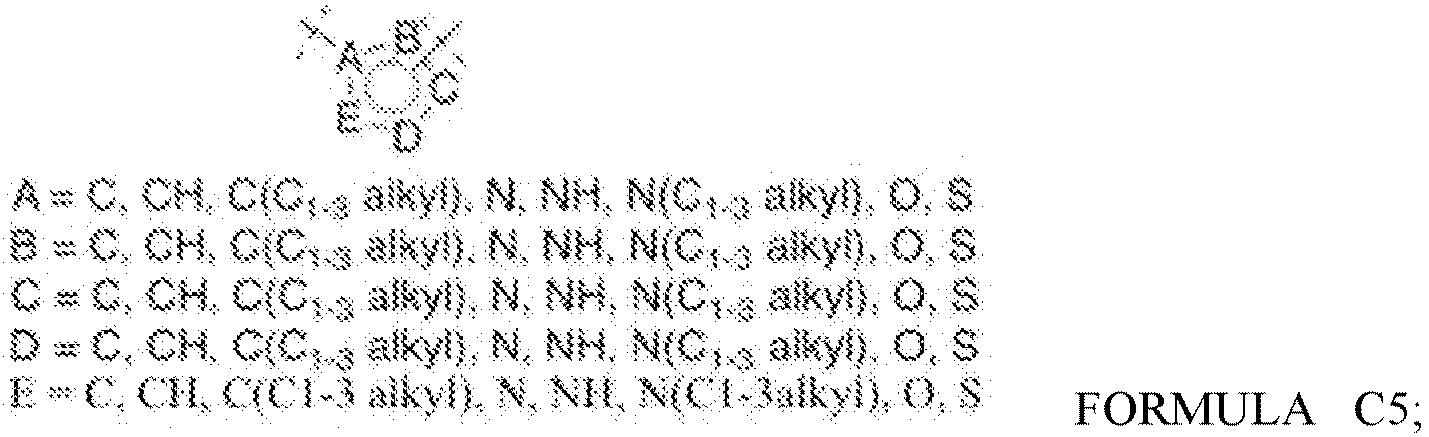
- The binding affinity of novel synthesized bivalent compounds (i.e., HPK1 degraders/disruptors) can be assessed using standard biophysical assays known in the art (e.g., isothermal titration calorimetry (ITC)). Cellular assays can then be used to assess the bivalent compound's ability to induce HPK1 degradation and inhibit cancer cell proliferation. Besides evaluating bivalent compound's -induced changes in the protein expression of HPK1, enzymatic activity can also be assessed. Assays suitable for use in any or all of these steps are known in the art, and include, e.g., Western blotting, quantitative mass spectrometry (MS) analysis, flow cytometry, enzymatic inhibition, ITC, SPR, cell growth inhibition and xenograft and PDX models. Suitable cell lines for use in any or all of these steps are known in the art and include, e.g.,.HPK1-deficient Jurkat clone that had been created by CRISPR-mediated frameshift mutation that resulted in the loss of HPK1 expression in Jurkat T cells. Such line could serve as a platform for counter screening the lead HPK1 degraders/disruptors for non-HPK1-specific effects. By way of non-limiting example, detailed synthesis protocols are described in the Examples for specific exemplary HPK1 degraders/disruptors.
- Pharmaceutically acceptable isotopic variations of the compounds disclosed herein are contemplated and can be synthesized using conventional methods known in the art or methods corresponding to those described in the Examples (substituting appropriate reagents with appropriate isotopic variations of those reagents). Specifically, an isotopic variation is a compound in which at least one atom is replaced by an atom having the same atomic number, but an atomic mass different from the atomic mass usually found in nature. Useful isotopes are known in the art and include, for example, isotopes of hydrogen, carbon, nitrogen, oxygen, phosphorus, sulfur, fluorine, and chlorine. Exemplary isotopes thus include, e.g., 2H, 3H, 13C, 14C, 15N, 17O, 18O, 32P, 35S, 18F, and 36Cl.
- Isotopic variations (e.g., isotopic variations containing 2H) can provide therapeutic advantages resulting from greater metabolic stability, e.g., increased in vivo half-life or reduced dosage requirements. In addition, certain isotopic variations (particularly those containing a radioactive isotope) can be used in drug or substrate tissue distribution studies. The radioactive isotopes tritium (3H) and carbon-14 (14C) are particularly useful for this purpose in view of their ease of incorporation and ready means of detection.
- Pharmaceutically acceptable solvates of the compounds disclosed herein are contemplated. A solvate can be generated, e.g., by substituting a solvent used to crystallize a compound disclosed herein with an isotopic variation (e.g., D2O in place of H2O, d 6-acetone in place of acetone, or d 6-DMSO in place of DMSO).
- Pharmaceutically acceptable fluorinated variations of the compounds disclosed herein are contemplated and can be synthesized using conventional methods known in the art or methods corresponding to those described in the Examples (substituting appropriate reagents with appropriate fluorinated variations of those reagents). Specifically, a fluorinated variation is a compound in which at least one hydrogen atom is replaced by a fluoro atom. Fluorinated variations can provide therapeutic advantages resulting from greater metabolic stability, e.g., increased in vivo half-life or reduced dosage requirements
- Specific exemplary HPK1 degraders/disruptors were characterized using (
Figures 1-14 ). HC58-38, HC58-75, HC58-76, HC58-78, HC90-50, and HC90-51 in particular were found to be especially effective in reducing HPK1 protein levels. - As used herein, the terms "comprising" and "including" are used in their open, non-limiting sense.
- "Alkyl" refers to a straight or branched hydrocarbon chain radical consisting solely of carbon and hydrogen atoms, containing no unsaturation. An alkyl may comprise one, two, three, four, five, six, seven, eight, nine, ten, eleven, twelve, thirteen, fourteen, fifteen, or sixteen carbon atoms. In certain embodiments, an alkyl comprises one to fifteen carbon atoms (e.g., C1-C15 alkyl). In certain embodiments, an alkyl comprises one to thirteen carbon atoms (e.g., C1-C13 alkyl). In certain embodiments, an alkyl comprises one to eight carbon atoms (e.g., C1-C8 alkyl). In other embodiments, an alkyl comprises five to fifteen carbon atoms (e.g., C5-C15 alkyl). In other embodiments, an alkyl comprises five to eight carbon atoms (e.g., Cs-Cs alkyl). The alkyl is attached to the rest of the molecule by a single bond, for example, methyl (Me), ethyl (Et), n-propyl, 1-methylethyl (iso-propyl), n-butyl, n-pentyl, 1,1-dimethylethyl (t-butyl), pentyl, 3-methylhexyl, 2-methylhexyl, and the like.
- "Alkenyl" refers to a straight or branched hydrocarbon chain radical group consisting solely of carbon and hydrogen atoms, containing at least one double bond. An alkenyl may comprise two, three, four, five, six, seven, eight, nine, ten, eleven, twelve, thirteen, fourteen, fifteen, or sixteen carbon atoms. In certain embodiments, an alkenyl comprises two to twelve carbon atoms (e.g., C2-C12 alkenyl). In certain embodiments, an alkenyl comprises two to eight carbon atoms (e.g., C2-C8 alkenyl). In certain embodiments, an alkenyl comprises two to six carbon atoms (e.g., C2-C6 alkenyl). In other embodiments, an alkenyl comprises two to four carbon atoms (e.g., C2-C4 alkenyl). The alkenyl is attached to the rest of the molecule by a single bond, for example, ethenyl (i.e., vinyl), prop-1-enyl (i.e., allyl), but-1-enyl, pent-1-enyl, penta-1,4-dienyl, and the like.
- The term "allyl," as used herein, means a -CH2CH=CH2 group.
- As used herein, the term "alkynyl" refers to a straight or branched hydrocarbon chain radical group consisting solely of carbon and hydrogen atoms, containing at least one triple bond. An alkynyl may comprise two, three, four, five, six, seven, eight, nine, ten, eleven, twelve, thirteen, fourteen, fifteen, or sixteen carbon atoms. In certain embodiments, an alkynyl comprises two to twelve carbon atoms (e.g., C2-C12 alkynyl). In certain embodiments, an alkynyl comprises two to eight carbon atoms (e.g., C2-C8 alkynyl). In other embodiments, an alkynyl has two to six carbon atoms (e.g., C2-C6 alkynyl). In other embodiments, an alkynyl has two to four carbon atoms (e.g., C2-C4 alkynyl). The alkynyl is attached to the rest of the molecule by a single bond. Examples of such groups include, but are not limited to, ethynyl, propynyl, 1-butynyl, 2-butynyl, 1-pentynyl, 2-pentynyl, 1-hexynyl, 2-hexynyl, 3-hexynyl, and the like.
- The term " alkoxy", as used herein, means an alkyl group as defined herein witch is attached to the rest of the molecule via an oxygen atom. Examples of such groups include, but are not limited to, methoxy, ethoxy, n-propyloxy, iso-propyloxy, n-butoxy, iso-butoxy, tert-butoxy, pentyloxy, hexyloxy, and the like.
- The term "aryl", as used herein, " refers to a radical derived from an aromatic monocyclic or multicyclic hydrocarbon ring system by removing a hydrogen atom from a ring carbon atom. The aromatic monocyclic or multicyclic hydrocarbon ring system contains only hydrogen and carbon atoms. An aryl may comprise from six to eighteen carbon atoms, where at least one of the rings in the ring system is fully unsaturated, i.e., it contains a cyclic, delocalized (4n+2) π-electron system in accordance with the Hückel theory. In certain embodiments, an aryl comprises six to fourteen carbon atoms (C6-C14 aryl). In certain embodiments, an aryl comprises six to ten carbon atoms (C6-C10 aryl). Examples of such groups include, but are not limited to, phenyl, fluorenyl and naphthyl. The terms "Ph" and "phenyl," as used herein, mean a -C6H5 group.
- The term "heteroaryl", refers to a radical derived from a 3- to 18-membered aromatic ring radical that comprises two to seventeen carbon atoms and from one to six heteroatoms selected from nitrogen, oxygen and sulfur. As used herein, the heteroaryl radical may be a monocyclic, bicyclic, tricyclic or tetracyclic ring system, wherein at least one of the rings in the ring system is fully unsaturated, i.e., it contains a cyclic, delocalized (4n+2) π-electron system in accordance with the Hückel theory. Heteroaryl includes fused or bridged ring systems. The heteroatom(s) in the heteroaryl radical is optionally oxidized. One or more nitrogen atoms, if present, are optionally quaternized. The heteroaryl is attached to the rest of the molecule through any atom of the ring(s). Examples of such groups include, but not limited to, pyridinyl, imidazolyl, pyrimidinyl, pyrazolyl, triazolyl,pyrazinyl, tetrazolyl, furyl, thienyl, isoxazolyl, thiazolyl, oxazolyl, isothiazolyl, pyrrolyl, quinolinyl, isoquinolinyl, indolyl, benzimidazolyl, benzofuranyl, cinnolinyl, indazolyl, indolizinyl, phthalazinyl, pyridazinyl, triazinyl, isoindolyl, pteridinyl, purinyl, oxadiazolyl, thiadiazolyl, furazanyl, benzofurazanyl, benzothiophenyl, benzothiazolyl, benzoxazolyl, quinazolinyl, quinoxalinyl, naphthyridinyl, furopyridinyl, and the like. In certain embodiments, an heteroaryl is attached to the rest of the molecule via a ring carbon atom. In certain embodiments, an heteroaryl is attached to the rest of the molecule via a nitrogen atom (N-attached) or a carbon atom (C-attached). For instance, a group derived from pyrrole may be pyrrol-1-yl (N-attached) or pyrrol-3-yl (C-attached). Further, a group derived from imidazole may be imidazol-1-yl (N-attached) or imidazol-3-yl (C-attached).
- The term "heterocyclyl", as used herein, means a non-aromatic, monocyclic, bicyclic, tricyclic, or tetracyclic radical having a total of from 4, 5, 6, 7, 8, 9, 10, 11, 12, or 13 atoms in its ring system, and containing from 3 to 12 carbon atoms and from 1 to 4 heteroatoms each independently selected from O, S and N, and with the proviso that the ring of said group does not contain two adjacent O atoms or two adjacent S atoms. A heterocyclyl group may include fused, bridged or spirocyclic ring systems. In certain embodiments, a hetercyclyl group comprises 3 to 10 ring atoms (3-10 membered heterocyclyl). In certain embodiments, a hetercyclyl group comprises 3 to 8 ring atoms (3-8 membered heterocyclyl). In certain embodiments, a hetercyclyl group comprises 4 to 8 ring atoms (4-8 membered heterocyclyl). In certain embodiments, a hetercyclyl group comprises 3 to 6 ring atoms (3-6 membered heterocyclyl). A heterocyclyl group may contain an oxo substituent at any available atom that will result in a stable compound. For example, such a group may contain an oxo atom at an available carbon or nitrogen atom. Such a group may contain more than one oxo substituent if chemically feasible. In addition, it is to be understood that when such a heterocyclyl group contains a sulfur atom, said sulfur atom may be oxidized with one or two oxygen atoms to afford either a sulfoxide or sulfone. An example of a 4 membered heterocyclyl group is azetidinyl (derived from azetidine). An example of a 5 membered cycloheteroalkyl group is pyrrolidinyl. An example of a 6 membered cycloheteroalkyl group is piperidinyl. An example of a 9 membered cycloheteroalkyl group is indolinyl. An example of a 10 membered cycloheteroalkyl group is 4H-quinolizinyl. Further examples of such heterocyclyl groups include, but are not limited to, tetrahydrofuranyl, dihydrofuranyl, tetrahydrothienyl, tetrahydropyranyl, dihydropyranyl, tetrahydrothiopyranyl, piperidino, morpholino, thiomorpholino, thioxanyl, piperazinyl, azetidinyl, oxetanyl, thietanyl, homopiperidinyl, oxepanyl, thiepanyl, oxazepinyl, diazepinyl, thiazepinyl, 1,2,3,6-tetrahydropyridinyl, 2-pyrrolinyl, 3-pyrrolinyl, indolinyl, 2H-pyranyl, 4H-pyranyl, dioxanyl, 1,3-dioxolanyl, pyrazolinyl, dithianyl, dithiolanyl, dihydropyranyl, dihydrothienyl, dihydrofuranyl, pyrazolidinyl, imidazolinyl, imidazolidinyl, 3-azabicyclo[3.1.0]hexanyl, 3-azabicyclo[4.1.0]heptanyl, 3H-indolyl, quinolizinyl, 3-oxopiperazinyl, 4-methylpiperazinyl, 4-ethylpiperazinyl, and 1-oxo-2,8,diazaspiro[4.5]dec-8-yl. A heteroaryl group may be attached to the rest of molecular via a carbon atom (C-attached) or a nitrogen atom (N-attached). For instance, a group derived from piperazine may be piperazin-1-yl (N-attached) or piperazin-2-yl (C-attached).
- The term " cycloalkyl" means a saturated, monocyclic, bicyclic, tricyclic, or tetracyclic radical having a total of from 4, 5, 6, 7, 8, 9, 10, 11, 12, or 13 carbon atoms in its ring system. A cycloalkyl may be fused, bridged or spirocyclic. In certain embodiments, a cycloalkyl comprises 3 to 8 carbon ring atoms (C3-C8 cycloalkyl). In certain embodiments, a cycloalkyl comprises 3 to 6 carbon ring atoms (C3-C6 cycloalkyl). Examples of such groups include, but are not limited to, cyclopropyl, cyclobutyl, cyclopentyl, cyclopentenyl, cyclohexyl, cycloheptyl, adamantyl, and the like.
- The term "cycloalkylene" is a bidentate radical obtained by removing a hydrogen atom from a cycloalkyl ring as defined above. Examples of such groups include, but are not limited to, cyclopropylene, cyclobutylene, cyclopentylene, cyclopentenylene, cyclohexylene, cycloheptylene, and the like.
- The term "spirocyclic" as used herein has its conventional meaning, that is, any ring system containing two or more rings wherein two of the rings have one ring carbon in common. Each ring of the spirocyclic ring system, as herein defined, independently comprises 3 to 20 ring atoms. Preferably, they have 3 to 10 ring atoms. Non-limiting examples of a spirocyclic system include spiro[3.3]heptane, spiro[3.4]octane, and spiro[4.5]decane.
- The term cyano" refers to a -C=N group.
- An "aldehyde" group refers to a -C(O)H group.
- An "alkoxy" group refers to both an -O-alkyl, as defined herein.
- An "alkoxycarbonyl" refers to a -C(O)-alkoxy, as defined herein.
- An "alkylaminoalkyl" group refers to an -alkyl-NR-alkyl group, as defined herein.
- An "alkylsulfonyl" group refer to a -SO2alkyl, as defined herein.
- An "amino" group refers to an optionally substituted -NH2,
- An "aminoalkyl" group refers to an -alky-amino group, as defined herein.
- An "aminocarbonyl" refers to a -C(O)-amino, as defined herein.
- An "arylalkyl" group refers to -alkylaryl, where alkyl and aryl are defined herein.
- An "aryloxy" group refers to both an -O-aryl and an -O-heteroaryl group, as defined herein.
- An "aryloxycarbonyl" refers to -C(O)-aryloxy, as defined herein.
- An "arylsulfonyl" group refers to a -SO2aryl, as defined herein.
- A "carbonyl" group refers to a -C(O)- group, as defined herein.
- A "carboxylic acid" group refers to a -C(O)OH group.
- A "cycloalkoxy" refers to a -O-cycloalkyl group, as defined herein.
- A "halo" or "halogen" group refers to fluorine, chlorine, bromine or iodine.
- A "haloalkyl" group refers to an alkyl group substituted with one or more halogen atoms.
- A "hydroxy" group refers to an -OH group.
- A "nitro" group refers to a -NO2 group.
- An "oxo" group refers to the =O substituent.
- A "trihalomethyl" group refers to a methyl substituted with three halogen atoms.
- The term "substituted," means that the specified group or moiety bears one or more substituents independently selected from C1-C4 alkyl, aryl, heteroaryl, aryl-C1-C4 alkyl-, heteroaryl-C1-C4 alkyl-, C1-C4 haloalkyl, -OC1-C4 alkyl, -OC1-C4 alkylphenyl, -C1-C4 alkyl-OH, -OC1-C4 haloalkyl, halo, -OH, -NH2, -C1-C4 alkyl-NH2, -N(C1-C4 alkyl)(C1-C4 alkyl), -NH(C1-C4 alkyl), -N(C1-C4 alkyl)(C1-C4 alkylphenyl), -NH(C1-C4 alkylphenyl), cyano, nitro, oxo, -CO2H, -C(O)OC1-C4 alkyl, -CON(C1-C4 alkyl)(C1-C4 alkyl), -CONH(C1-C4 alkyl), -CONH2, -NHC(O)(C1-C4 alkyl), -NHC(O)(phenyl), -N(C1-C4 alkyl)C(O)(C1-C4 alkyl), -N(C1-C4 alkyl)C(O)(phenyl), -C(O)C1-C4 alkyl, -C(O)C1-C4 alkylphenyl, -C(O)C1-C4 haloalkyl, -OC(O)C1-C4 alkyl, -SO2(C1-C4 alkyl), -SO2(phenyl), -SO2(C1-C4 haloalkyl), -SO2NH2, -SO2NH(C1-C4 alkyl), -SO2NH(phenyl), -NHSO2(C1-C4 alkyl), -NHSO2(phenyl), and -NHSO2(C1-C4 haloalkyl).
- The term "optionally substituted" means that the specified group may be either unsubstituted or substituted by one or more substituents as defined herein. It is to be understood that in the compounds of the present invention when a group is said to be "unsubstituted," or is "substituted" with fewer groups than would fill the valencies of all the atoms in the compound, the remaining valencies on such a group are filled by hydrogen. For example, if a C6 aryl group, also called "phenyl" herein, is substituted with one additional substituent, one of ordinary skill in the art would understand that such a group has 4 open positions left on carbon atoms of the C6 aryl ring (6 initial positions, minus one at which the remainder of the compound of the present invention is attached to and an additional substituent, remaining 4 positions open). In such cases, the remaining 4 carbon atoms are each bound to one hydrogen atom to fill their valencies. Similarly, if a C6 aryl group in the present compounds is said to be "disubstituted," one of ordinary skill in the art would understand it to mean that the C6 aryl has 3 carbon atoms remaining that are unsubstituted. Those three unsubstituted carbon atoms are each bound to one hydrogen atom to fill their valencies.
- "Pharmaceutically acceptable salt" includes both acid and base addition salts. A pharmaceutically acceptable salt of any one of the bivalent compounds described herein is intended to encompass any and all pharmaceutically suitable salt forms. Preferred pharmaceutically acceptable salts of the compounds described herein are pharmaceutically acceptable acid addition salts and pharmaceutically acceptable base addition salts.
- "Pharmaceutically acceptable acid addition salt" refers to those salts which retain the biological effectiveness and properties of the free bases, which are not biologically or otherwise undesirable, and which are formed with inorganic acids such as hydrochloric acid, hydrobromic acid, sulfuric acid, nitric acid, phosphoric acid, hydroiodic acid, hydrofluoric acid, phosphorous acid, and the like. Also included are salts that are formed with organic acids such as aliphatic mono- and dicarboxylic acids, phenyl-substituted alkanoic acids, hydroxy alkanoic acids, alkanedioic acids, aromatic acids, aliphatic and. aromatic sulfonic acids, etc. and include, for example, acetic acid, trifluoroacetic acid, propionic acid, glycolic acid, pyruvic acid, oxalic acid, maleic acid, malonic acid, succinic acid, fumaric acid, tartaric acid, citric acid, benzoic acid, cinnamic acid, mandelic acid, methanesulfonic acid, ethanesulfonic acid, p-toluenesulfonic acid, salicylic acid, and the like. Exemplary salts thus include sulfates, pyrosulfates, bisulfates, sulfites, bisulfites, nitrates, phosphates, monohydrogenphosphates, dihydrogenphosphates, metaphosphates, pyrophosphates, chlorides, bromides, iodides, acetates, trifluoroacetates, propionates, caprylates, isobutyrates, oxalates, malonates, succinate suberates, sebacates, fumarates, maleates, mandelates, benzoates, chlorobenzoates, methylbenzoates, dinitrobenzoates, phthalates, benzenesulfonates, toluenesulfonates, phenylacetates, citrates, lactates, malates, tartrates, methanesulfonates, and the like. Also contemplated are salts of amino acids, such as arginates, gluconates, and galacturonates (see, for example, Berge S.M. et al., "Pharmaceutical Salts," Journal of Pharmaceutical Science, 66:1-19 (1997), which is hereby incorporated by reference in its entirety). Acid addition salts of basic compounds may be prepared by contacting the free base forms with a sufficient amount of the desired acid to produce the salt according to methods and techniques with which a skilled artisan is familiar.
- "Pharmaceutically acceptable base addition salt" refers to those salts that retain the biological effectiveness and properties of the free acids, which are not biologically or otherwise undesirable. These salts are prepared from addition of an inorganic base or an organic base to the free acid. Pharmaceutically acceptable base addition salts may be formed with metals or amines, such as alkali and alkaline earth metals or organic amines. Salts derived from inorganic bases include, but are not limited to, sodium, potassium, lithium, ammonium, calcium, magnesium, iron, zinc, copper, manganese, aluminum salts and the like. Salts derived from organic bases include, but are not limited to, salts of primary, secondary, and tertiary amines, substituted amines including naturally occurring substituted amines, cyclic amines and basic ion exchange resins, for example, isopropylamine, trimethylamine, diethylamine, triethylamine, tripropylamine, ethanolamine, diethanolamine, 2-dimethylaminoethanol, 2-diethylaminoethanol, dicyclohexylamine, lysine, arginine, histidine, caffeine, procaine, N,N-dibenzylethylenediamine, chloroprocaine, hydrabamine, choline, betaine, ethylenediamine, ethylenedianiline, N-methylglucamine, glucosamine, methylglucamine, theobromine, purines, piperazine, piperidine, N-ethylpiperidine, polyamine resins and the like. See Berge et al., supra.
- In some aspects, the compositions and methods described herein include the manufacture and use of pharmaceutical compositions and medicaments that include one or more bivalent compounds as disclosed herein. Also included are the pharmaceutical compositions themselves.
- In some aspects, the compositions disclosed herein can include other compounds, drugs, or agents used for the treatment of cancer. For example, in some instances, pharmaceutical compositions disclosed herein can be combined with one or more (e.g., one, two, three, four, five, or less than ten) compounds. Such additional compounds can include, e.g., conventional chemotherapeutic agents known in the art. When co-administered, HPK1 degraders/disruptors disclosed herein can operate in conjunction with conventional chemotherapeutic agents to produce mechanistically additive or synergistic therapeutic effects.
- In some aspects, the pH of the compositions disclosed herein can be adjusted with pharmaceutically acceptable acids, bases, or buffers to enhance the stability of the HPK1 degraders/disruptor or its delivery form.
- Pharmaceutical compositions typically include a pharmaceutically acceptable carrier, adjuvant, or vehicle. As used herein, the phrase "pharmaceutically acceptable" refers to molecular entities and compositions that are generally believed to be physiologically tolerable and do not typically produce an allergic or similar untoward reaction, such as gastric upset, dizziness and the like, when administered to a human. A pharmaceutically acceptable carrier, adjuvant, or vehicle is a composition that can be administered to a patient, together with a compound of the invention, and which does not destroy the pharmacological activity thereof and is nontoxic when administered in doses sufficient to deliver a therapeutic amount of the compound. Exemplary conventional nontoxic pharmaceutically acceptable carriers, adjuvants, and vehicles include saline, solvents, dispersion media, coatings, antibacterial and antifungal agents, isotonic and absorption delaying agents, and the like, compatible with pharmaceutical administration.
- In particular, pharmaceutically acceptable carriers, adjuvants, and vehicles that can be used in the pharmaceutical compositions of this invention include, but are not limited to, ion exchangers, alumina, aluminum stearate, lecithin, self-emulsifying drug delivery systems (SEDDS) such as d-α-
tocopherol polyethylene glycol 1000 succinate, surfactants used in pharmaceutical dosage forms such as Tweens or other similar polymeric delivery matrices, serum proteins, such as human serum albumin, buffer substances such as phosphates, glycine, sorbic acid, potassium sorbate, partial glyceride mixtures of saturated vegetable fatty acids, water, salts or electrolytes, such as protamine sulfate, disodium hydrogen phosphate, potassium hydrogen phosphate, sodium chloride, zinc salts, colloidal silica, magnesium trisilicate, polyvinyl pyrrolidone, cellulose-based substances, polyethylene glycol, sodium carboxymethylcellulose, polyacrylates, waxes, polyethylene-polyoxypropylene-block polymers, polyethylene glycol and wool fat. Cyclodextrins such as α-, β-, and γ-cyclodextrin, may also be advantageously used to enhance delivery of compounds of the formulae described herein.
As used herein, the HPK1 degraders/disruptors disclosed herein are defined to include pharmaceutically acceptable derivatives or prodrugs thereof. A "pharmaceutically acceptable derivative" means any pharmaceutically acceptable salt, solvate, or prodrug, e.g., carbamate, ester, phosphate ester, salt of an ester, or other derivative of a compound or agent disclosed herein, which upon administration to a recipient is capable of providing (directly or indirectly) a compound described herein, or an active metabolite or residue thereof. Particularly favored derivatives and prodrugs are those that increase the bioavailability of the compounds disclosed herein when such compounds are administered to a mammal (e.g., by allowing an orally administered compound to be more readily absorbed into the blood) or which enhance delivery of the parent compound to a biological compartment (e.g., the brain or lymphatic system) relative to the parent species. Preferred prodrugs include derivatives where a group that enhances aqueous solubility or active transport through the gut membrane is appended to the structure of formulae described herein. Such derivatives are recognizable to those skilled in the art without undue experimentation. Nevertheless, reference is made to the teaching of Burger's Medicinal Chemistry and Drug Discovery, 5th Edition, Vol. 1: Principles and Practice, which is incorporated herein by reference to the extent of teaching such derivatives. - The HPK1 degraders/disruptors disclosed herein include pure enantiomers, mixtures of enantiomers, pure diastereoisomers, mixtures of diastereoisomers, diastereoisomeric racemates, mixtures of diastereoisomeric racemates and the meso-form and pharmaceutically acceptable salts, solvent complexes, morphological forms, or deuterated derivative thereof.
- In particular, pharmaceutically acceptable salts of the HPK1 degraders/disruptors disclosed herein include, e.g., those derived from pharmaceutically acceptable inorganic and organic acids and bases. Examples of suitable acid salts include acetate, adipate, benzoate, benzenesulfonate, butyrate, citrate, digluconate, dodecylsulfate, formate, fumarate, glycolate, hemisulfate, heptanoate, hexanoate, hydrochloride, hydrobromide, hydroiodide, lactate, maleate, malonate, methane sulfonate, 2-naphthalenesulfonate, nicotinate, nitrate, palmoate, phosphate, picrate, pivalate, propionate, salicylate, succinate, sulfate, tartrate, tosylate, trifluoromethylsulfonate, and undecanoate. Salts derived from appropriate bases include, e.g., HPK1 alkali metal (e.g., sodium), HPK1 alkaline earth metal (e.g., magnesium), ammonium and N-(HPK1yl)4+ salts. The invention also envisions the quaternization of any basic nitrogen-containing groups of the HPK1 degraders/disruptors disclosed herein. Water or oil-soluble or dispersible products can be obtained by such quaternization.
- In some aspects, the pharmaceutical compositions disclosed herein can include an effective amount of one or more HPK1 degraders/disruptors. The terms "effective amount" and "effective to treat," as used herein, refer to an amount or a concentration of one or more compounds or a pharmaceutical composition described herein utilized for a period of time (including acute or chronic administration and periodic or continuous administration) that is effective within the context of its administration for causing an intended effect or physiological outcome (e.g., treatment or prevention of cell growth, cell proliferation, or cancer). In some aspects, pharmaceutical compositions can further include one or more additional compounds, drugs, or agents used for the treatment of cancer (e.g., conventional chemotherapeutic agents) in amounts effective for causing an intended effect or physiological outcome (e.g., treatment or prevention of cell growth, cell proliferation, or cancer).
- In some aspects, the pharmaceutical compositions disclosed herein can be formulated for sale in the United States, import into the United States, or export from the United States.
- The pharmaceutical compositions disclosed herein can be formulated or adapted for administration to a subject via any route, e.g., any route approved by the Food and Drug Administration (FDA). Exemplary methods are described in the FDA Data Standards Manual (DSM) (available at http://www.fda.gov/Drugs/DevelopmentApprovalProcess/ FormsSubmissionRequirements/ElectronicSubmissions/DataStandardsManualmonographs). In particular, the pharmaceutical compositions can be formulated for and administered via oral, parenteral, or transdermal delivery. The term "parenteral" as used herein includes subcutaneous, intracutaneous, intravenous, intramuscular, intraperitoneal, intra-articular, intra-arterial, intrasynovial, intrasternal, intrathecal, intralesional, and intracranial injection or infusion techniques.
- For example, the pharmaceutical compositions disclosed herein can be administered, e.g., topically, rectally, nasally (e.g., by inhalation spray or nebulizer), buccally, vaginally, subdermally (e.g., by injection or via an implanted reservoir), or ophthalmically.
- For example, pharmaceutical compositions of this invention can be orally administered in any orally acceptable dosage form including, but not limited to, capsules, tablets, emulsions and aqueous suspensions, dispersions and solutions. In the case of tablets for oral use, carriers which are commonly used include lactose and corn starch. Lubricating agents, such as magnesium stearate, are also typically added. For oral administration in a capsule form, useful diluents include lactose and dried corn starch. When aqueous suspensions or emulsions are administered orally, the active ingredient may be suspended or dissolved in an oily phase is combined with emulsifying or suspending agents. If desired, certain sweetening, flavoring, or coloring agents can be added.
- For example, the pharmaceutical compositions of this invention can be administered in the form of suppositories for rectal administration. These compositions can be prepared by mixing a compound of this invention with a suitable non-irritating excipient which is solid at room temperature but liquid at the rectal temperature and therefore will melt in the rectum to release the active components. Such materials include, but are not limited to, cocoa butter, beeswax, and polyethylene glycols.
- For example, the pharmaceutical compositions of this invention can be administered by nasal aerosol or inhalation. Such compositions are prepared according to techniques well-known in the art of pharmaceutical formulation and can be prepared as solutions in saline, employing benzyl alcohol or other suitable preservatives, absorption promoters to enhance bioavailability, fluorocarbons, or other solubilizing or dispersing agents known in the art.
- For example, the pharmaceutical compositions of this invention can be administered by injection (e.g., as a solution or powder). Such compositions can be formulated according to techniques known in the art using suitable dispersing or wetting agents (such as, for example, Tween 80) and suspending agents. The sterile injectable preparation may also be a sterile injectable solution or suspension in a non-toxic parenterally acceptable diluent or solvent, e.g., as a solution in 1,3-butanediol. Among the acceptable vehicles and solvents that may be employed are mannitol, water, Ringer's solution, and isotonic sodium chloride solution. In addition, sterile, fixed oils are conventionally employed as a solvent or suspending medium. For this purpose, any bland fixed oil can be employed, including synthetic mono- or diglycerides. Fatty acids, such as oleic acid and its glyceride derivatives are useful in the preparation of injectables, as are natural pharmaceutically-acceptable oils, e.g., olive oil or castor oil, especially in their polyoxyethylated versions. These oil solutions or suspensions can also contain a long-chain alcohol diluent or dispersant, or carboxymethyl cellulose or similar dispersing agents which are commonly used in the formulation of pharmaceutically acceptable dosage forms such as emulsions and or suspensions. Other commonly used surfactants such as Tweens, Spans, or other similar emulsifying agents or bioavailability enhancers which are commonly used in the manufacture of pharmaceutically acceptable solid, liquid, or other dosage forms can also be used for the purposes of formulation.
- In some aspects, an effective dose of a pharmaceutical composition of this invention can include, but is not limited to, e.g., about 0.00001, 0.0001, 0.001, 0.01, 0.02, 0.03, 0.04, 0.05, 0.06, 0.07, 0.08, 0.09, 0.1, 0.15, 0.2, 0.25, 0.3, 0.35, 0.4, 0.45, 0.5, 0.55, 0.6, 0.65, 0.7, 0.75, 0.8, 0.85, 0.9, 0.95, 1, 1.25, 1.5, 1.75, 2, 2.5, 3, 4, 5, 6, 7, 8, 9, 10, 15, 20, 30, 40, 50, 60, 70, 80, 90, 100, 200, 300, 400, 500, 600, 700, 800, 900, 1000, 2500, 5000, or 10000 mg/kg/day, or according to the requirements of the particular pharmaceutical composition.
- When the pharmaceutical compositions disclosed herein include a combination of a compound of the formulae described herein (e.g., a HPK1 degraders/disruptors) and one or more additional compounds (e.g., one or more additional compounds, drugs, or agents used for the treatment of cancer or any other condition or disease, including conditions or diseases known to be associated with or caused by cancer), both the compound and the additional compound should be present at dosage levels of between about 1 to 100%, and more preferably between about 5 to 95% of the dosage normally administered in a monotherapy regimen. The additional agents can be administered separately, as part of a multiple dose regimen, from the compounds of this invention. Alternatively, those agents can be part of a single dosage form, mixed together with the compounds of this invention in a single composition.
- In some aspects, the pharmaceutical compositions disclosed herein can be included in a container, pack, or dispenser together with instructions for administration.
- The methods disclosed herein contemplate administration of an effective amount of a compound or composition to achieve the desired or stated effect. Typically, the compounds or compositions of the invention will be administered from about 1 to about 6 times per day or, alternately or in addition, as a continuous infusion. Such administration can be used as a chronic or acute therapy. The amount of active ingredient that can be combined with the carrier materials to produce a single dosage form will vary depending upon the host treated and the particular mode of administration. A typical preparation will contain from about 5% to about 95% active compound (w/w). Alternatively, such preparations can contain from about 20% to about 80% active compound.
- In some aspects, the present disclosure provides methods for using a composition comprising a HPK1 degrader/disruptor, including pharmaceutical compositions (indicated below as 'X') disclosed herein in the following methods:
Substance X for use as a medicament in the treatment of one or more diseases or conditions disclosed herein (e.g., cancer, referred to in the following examples as 'Y'). Use of substance X for the manufacture of a medicament for the treatment of Y; and substance X for use in the treatment of Y. - In some aspects, the methods disclosed include the administration of a therapeutically effective amount of one or more of the compounds or compositions described herein to a subject (e.g., a mammalian subject, e.g., a human subject) who is in need of, or who has been determined to be in need of, such treatment. In some aspects, the methods disclosed include selecting a subject and administering to the subject an effective amount of one or more of the compounds or compositions described herein, and optionally repeating administration as required for the prevention or treatment of cancer.
- In some aspects, subject selection can include obtaining a sample from a subject (e.g., a candidate subject) and testing the sample for an indication that the subject is suitable for selection. In some aspects, the subject can be confirmed or identified, e.g. by a health care professional, as having had or having a condition or disease. In some aspects, suitable subjects include, for example, subjects who have or had a condition or disease but that resolved the disease or an aspect thereof, present reduced symptoms of disease (e.g., relative to other subjects (e.g., the majority of subjects) with the same condition or disease), or that survive for extended periods of time with the condition or disease (e.g., relative to other subjects (e.g., the majority of subjects) with the same condition or disease), e.g., in an asymptomatic state (e.g., relative to other subjects (e.g., the majority of subjects) with the same condition or disease). In some aspects, exhibition of a positive immune response towards a condition or disease can be made from patient records, family history, or detecting an indication of a positive immune response. In some aspects, multiple parties can be included in subject selection. For example, a first party can obtain a sample from a candidate subject and a second party can test the sample. In some aspects, subjects can be selected or referred by a medical practitioner (e.g., a general practitioner). In some aspects, subject selection can include obtaining a sample from a selected subject and storing the sample or using the in the methods disclosed herein. Samples can include, e.g., cells or populations of cells.
- In some aspects, methods of treatment can include a single administration, multiple administrations, and repeating administration of one or more compounds disclosed herein as required for the prevention or treatment of the disease or condition from which the subject is suffering (e.g., an HPK1-mediated cancer). In some aspects, methods of treatment can include assessing a level of disease in the subject prior to treatment, during treatment, or after treatment. In some aspects, treatment can continue until a decrease in the level of disease in the subject is detected.
- The term "subject," as used herein, refers to any animal. In some instances, the subject is a mammal. In some instances, the term "subject," as used herein, refers to a human (e.g., a man, a woman, or a child).
- The terms "administer," "administering," or "administration," as used herein, refer to implanting, ingesting, injecting, inhaling, or otherwise absorbing a compound or composition, regardless of form. For example, the methods disclosed herein include administration of an effective amount of a compound or composition to achieve the desired or stated effect.
- The terms "treat", "treating," or "treatment," as used herein, refer to partially or completely alleviating, inhibiting, ameliorating, or relieving the disease or condition from which the subject is suffering. This means any manner in which one or more of the symptoms of a disease or disorder (e.g., cancer) are ameliorated or otherwise beneficially altered. As used herein, amelioration of the symptoms of a particular disorder (e.g., cancer) refers to any lessening, whether permanent or temporary, lasting or transient that can be attributed to or associated with treatment by the compositions and methods of the present invention. In some aspects, treatment can promote or result in, for example, a decrease in the number of tumor cells (e.g., in a subject) relative to the number of tumor cells prior to treatment; a decrease in the viability (e.g., the average/mean viability) of tumor cells (e.g., in a subject) relative to the viability of tumor cells prior to treatment; a decrease in the rate of growth of tumor cells; a decrease in the rate of local or distant tumor metastasis; or reductions in one or more symptoms associated with one or more tumors in a subject relative to the subject's symptoms prior to treatment.
- As used herein, the term "treating cancer" means causing a partial or complete decrease in the rate of growth of a tumor, and/or in the size of the tumor and/or in the rate of local or distant tumor metastasis, and/or the overall tumor burden in a subject, and/or any decrease in tumor survival, in the presence of a degrader/disruptor (e.g., an HPK1 degrader/disruptor) described herein.
- The terms "prevent," "preventing," and "prevention," as used herein, shall refer to a decrease in the occurrence of a disease or decrease in the risk of acquiring a disease or its associated symptoms in a subject. The prevention may be complete, e.g., the total absence of disease or pathological cells in a subject. The prevention may also be partial, such that the occurrence of the disease or pathological cells in a subject is less than, occurs later than, or develops more slowly than that which would have occurred without the present invention.
- Exemplary type of cancers that could be prevented, or therapeutically treated by manipulation of HPK1 level by degraders/disruptors should include all solid and liquid cancers, including, but not limited to, cancers of the breast, respiratory tract, brain, reproductive organs, digestive tract, urinary tract, eye, liver, skin, head and neck, thyroid, parathyroid and their distant metastases. Examples of liquid cancers include lymphomas, sarcomas, and leukaemias. Listed below are the type of cancers that immunotherapy using HPK1 degraders/disruptors should be able to prevent or treat.
- Examples of breast cancers include, but are not limited to, triple negative breast cancer, invasive ductal carcinoma, invasive lobular carcinoma, ductal carcinoma in situ, and lobular carcinoma in situ.
- Examples of cancers of the respiratory tract include, but are not limited to, small-cell and non- small-cell lung carcinoma, as well as bronchial adenoma and pleuropulmonary blastoma.
- Examples of brain cancers include, but are not limited to, brain stem and hypophtalmic glioma, cerebellar and cerebral astrocytoma, glioblastoma, medulloblastoma, ependymoma, as well as neuroectodermal and pineal tumor.
- Tumors of the male reproductive organs include, but are not limited to, prostate and testicular cancer.
- Tumors of the female reproductive organs include, but are not limited to, endometrial, cervical, ovarian, vaginal, and vulvar cancer, as well as sarcoma of the uterus.
- Examples of ovarian cancer include, but are not limited to, serous tumor, endometrioid tumor, mucinous cystadenocarcinoma, granulosa cell tumor, Sertoli-Leydig cell tumor and arrhenoblastoma.
- Examples of cervical cancer include, but are not limited to, squamous cell carcinoma, adenocarcinoma, adenosquamous carcinoma, small cell carcinoma, neuroendocrine tumor, glassy cell carcinoma and villoglandular adenocarcinoma. Tumors of the digestive tract include, but are not limited to, anal, colon, colorectal, esophageal, gallbladder, gastric, pancreatic, rectal, small-intestine, and salivary gland cancers.
- Examples of esophageal cancer include, but are not limited to, esophageal cell carcinomas and adenocarcinomas, as well as squamous cell carcinomas, leiomyosarcoma, malignant melanoma, rhabdomyosarcoma and lymphoma.
- Examples of gastric cancer include, but are not limited to, intestinal type and diffuse type gastric adenocarcinoma.
- Examples of pancreatic cancer include, but are not limited to, ductal adenocarcinoma, adenosquamous carcinomas and pancreatic endocrine tumors.
- Example of tumors of the urinary tract include, but are not limited to, bladder, penile, kidney, renal pelvis, ureter, urethral and human papillary renal cancers.
- Examples of kidney cancer include, but are not limited to, renal cell carcinoma, urothelial cell carcinoma, juxtaglomerular cell tumor (reninoma), angiomyolipoma, renal oncocytoma, Bellini duct carcinoma, clear-cell sarcoma of the kidney, mesoblastic nephroma and Wilms' tumor.
- Examples of bladder cancer include, but are not limited to, transitional cell carcinoma, squamous cell carcinoma, adenocarcinoma, sarcoma and small cell carcinoma. Eye cancers include, but are not limited to, intraocular melanoma and retinoblastoma.
- Examples of liver cancers include, but are not limited to, hepatocellular carcinoma (liver cell carcinomas with or without fibrolamellar variant), cholangiocarcinoma (intrahepatic bile duct carcinoma), and mixed hepatocellular cholangiocarcinoma.
- Example of skin cancers include, but are not limited to, squamous cell carcinoma, Kaposi's sarcoma, malignant melanoma, Merkel cell skin cancer, and non-melanoma skin cancer.
- Example of head-and-neck cancers include, but are not limited to, squamous cell cancer of the head and neck, laryngeal, hypopharyngeal, nasopharyngeal, oropharyngeal cancer, salivary gland cancer, lip and oral cavity cancer and squamous cell.
- Example of lymphomas include, but are not limited to, AIDS-related lymphoma, non-Hodgkin's lymphoma, cutaneous T-cell lymphoma, Burkitt lymphoma, Hodgkin's disease, and lymphoma of the central nervous system.
- Example of sarcomas include, but are not limited to, sarcoma of the soft tissue, osteosarcoma, malignant fibrous histiocytoma, lymphosarcoma, and rhabdomyosarcoma.
- Eample of leukemias include, but are not limited to, acute myeloid leukemia, acute lymphoblastic leukemia, chronic lymphocytic leukemia, chronic myelogenous leukemia, and hairy cell leukemia.
- The HPK1 degraders/disruptors should be able to treat the above cancer type as stand alone agent or used as agent in combination with existing standard of treatment therapy and other FDA-approved cancer therapy.
- Therapeutic uses of HPK1 include diseases and therapies that are amenable to treatment by stimulation/augmentation of immune response, including the prolongation of immune responses during vaccination for immunizable diseases. Also, because HPK1 is expressed at high level in two other anatomical locations - brain and testes - the HPK1 degraers/disruptors should be able to treat or prevent diseases related to brain and testes that were caused by HPK1 or could be treated by HPK1 degraders/disruptors. These potential diseases include, but is not limited to, Alzheimer's disease, age-related dementia and infertility, regarless whether these possible diseases were caused by HPK1 or by other eithiological causes.
- As used herein, the term "preventing a disease" (e.g., preventing cancer) in a subject means for example, to stop the development of one or more symptoms of a disease in a subject before they occur or are detectable, e.g., by the patient or the patient's doctor. A blood test that measure the level of HPK1 in each of the immune cell sub-types, which could be achieved by intracellular staining by anti-HPK1 antibody and analyze by clinical FACS analysis. Such detection method could identify immune cell type possess aberrant level of HPK1 and may signify that such patient might be a good candidate for HPK1 degraders/disruptors-based therapy. This detection of aberrant expression level of HPK1 may be an early warning biomarker that may indicate which patient may respond well to their disease conditions if HPK1 degraders/disruptors were to used as stand alone or as part of combination therapy. Preferably, the disease (e.g., cancer) does not develop at all, i.e., no symptoms of the disease are detectable. However, it can also mean delaying or slowing of the development of one or more symptoms of the disease. Alternatively, or in addition, it can mean decreasing the severity of one or more subsequently developed symptoms.
- Specific dosage and treatment regimens for any particular patient will depend upon a variety of factors, including the activity of the specific compound employed, the age, body weight, general health status, sex, diet, time of administration, rate of excretion, drug combination, the severity and course of the disease, condition or symptoms, the patient's disposition to the disease, condition or symptoms, and the judgment of the treating physician.
- An effective amount can be administered in one or more administrations, applications or dosages. A therapeutically effective amount of a therapeutic compound (i.e., an effective dosage) depends on the therapeutic compounds selected. Moreover, treatment of a subject with a therapeutically effective amount of the compounds or compositions described herein can include a single treatment or a series of treatments. For example, effective amounts can be administered at least once. The compositions can be administered one from one or more times per day to one or more times per week; including once every other day. The skilled artisan will appreciate that certain factors can influence the dosage and timing required to effectively treat a subject, including but not limited to the severity of the disease or disorder, previous treatments, the general health or age of the subject, and other diseases present.
- Following administration, the subject can be evaluated to detect, assess, or determine their level of disease. In some instances, treatment can continue until a change (e.g., reduction) in the level of disease in the subject is detected. Upon improvement of a patient's condition (e.g., a change (e.g., decrease) in the level of disease in the subject), a maintenance dose of a compound, or composition disclosed herein can be administered, if necessary. Subsequently, the dosage or frequency of administration, or both, can be reduced, e.g., as a function of the symptoms, to a level at which the improved condition is retained. Patients may, however, require intermittent treatment on a long-term basis upon any recurrence of disease symptoms.
- The HPK1 degraders/disruptors disclosed herein include pure enantiomers, mixtures of enantiomers, pure diastereoisomers, mixtures of diastereoisomers, diastereoisomeric racemates, mixtures of diastereoisomeric racemates and the meso-form and pharmaceutically acceptable salts, solvent complexes, morphological forms, or deuterated and fluoro derivatives thereof.
- The following Examples describe the synthesis of exemplary HPK1 degrader/disrupter compounds according to the present invention.
-

- To a solution of Intermediate 1 (926 mg, 3.09 mmol) in DMSO (20 mL) were added tert-butyl 4-(3-aminopropyl)piperazine-1-carboxylate (899 mg, 3.70 mmol, 1.2 equiv), EDCI (1-ethyl-3-(3-dimethylaminopropyl)carbodiimide) (888 mg, 4.63 mmol, 1.5 equiv), HOAt (1-hydroxy-7-azabenzo-triazole) (630 mg, 4.63 mmol, 1.5 equiv), and NMM (N-Methylmorpholine) (625 mg, 6.18 mmol, 2.0 equiv). After being stirred overnight at room temperature, H2O (100 mL) was added to the solution and precipitates was filtered. The solid was washed with water and dried under vacuum. The obtained solid was dissolved in DCM (10 mL). To the resulting solution was added TFA (5 ml). After being stirred for 1 h at room temperature, the reaction mixture was concentrated and the residue was purified by reverse phase C18 column (10% - 100% methanol / 0.1% TFA in H2O) to afford intermediate 2 as yellow solid in TFA salt form (1.117 g, 55% yield for two step). 1H NMR (600 MHz, DMSO-d 6) δ 13.72 (s, 1H), 10.93 (s, 1H), 7.80 - 7.75 (m, 2H), 7.73 (s, 1H), 6.94 (td, J = 9.1, 2.6 Hz, 1H), 6.86 (dd, J = 8.5, 4.5 Hz, 1H), 3.41 - 3.25 (m, 8H), 3.13 - 2.97 (m, 4H), 2.45 (s, 3H), 2.43 (s, 3H), 1.93 - 1.81 (m, 2H). ESI m/z =426.2 [M + H+].
-

-

- HC58-19 was synthesized following the standard procedure for preparing HC58-18 from Intermediate 2 (13.0 mg, 0.024 mmol, 1.2 equiv), 3-(3-(((S)-1-((2S,4R)-4-hydroxy-2-((4-(4-methylthiazol-5-yl)benzyl)carbamoyl)pyrrolidin-1-yl)-3,3-dimethyl-1-oxobutan-2-yl)amino)-3-oxopropoxy)propanoic acid (11.5 mg, 0.02 mmol, 1.0 equiv), EDCI (5.8 mg, 0.03 mmol, 1.5 equiv), HOAt (4.1 mg, 0.03 mmol, 1.5 equiv), and NMM (6.1 mg, 0.06 mmol, 3.0 equiv) in DMSO (1 mL). HC58-19 was obtained as yellow solid in TFA salt form (13.8 mg, 63%). 1H NMR (600 MHz, Methanol-d4) δ 13.69 (s, 1H), 8.94 (s, 1H), 7.56 (s, 1H), 7.42 (dt, J = 11.3, 7.2 Hz, 5H), 6.97 - 6.79 (m, 2H), 4.67 (s, 1H), 4.56 (t, J = 8.5 Hz, 1H), 4.51 (s, 1H), 4.47 (d, J = 15.5 Hz, 1H), 4.40 (d, J = 15.4 Hz, 1H), 3.91 (d, J = 11.0 Hz, 1H), 3.81 (dd, J = 11.0, 3.9 Hz, 1H), 3.79 - 3.57 (m, 8H), 3.53 (t, J = 6.5 Hz, 2H), 3.30 (t, J = 7.6 Hz, 3H), 3.23 - 2.98 (m, 4H), 2.55 (t, J = 5.8 Hz, 2H), 2.50 (s, 3H), 2.49 - 2.45 (m, 7H), 2.27 - 2.22 (m, 1H), 2.16 - 2.04 (m, 3H), 1.05 (s, 9H). HRMS calcd for C51H65FN9O8S [M + H+] 982.4661, found 982.4669.
-

- HC58-20 was synthesized following the standard procedure for preparing HC58-18 from Intermediate 2 (13.0 mg, 0.024 mmol, 1.2 equiv), 2-(2-(2-(((S)-1-((2S,4R)-4-hydroxy-2-((4-(4-methylthiazol-5-yl)benzyl)carbamoyl)pyrrolidin-1-yl)-3,3-dimethyl-1-oxobutan-2-yl)amino)-2-oxoethoxy)ethoxy)acetic acid (11.8 mg, 0.02 mmol, 1.0 equiv), EDCI (5.8 mg, 0.03 mmol, 1.5 equiv), HOAt (4.1 mg, 0.03 mmol, 1.5 equiv), and NMM (6.1 mg, 0.06 mmol, 3.0 equiv) in DMSO (1 mL). HC58-20 was obtained as yellow solid in TFA salt form (10.7 mg, 48%). 1H NMR (600 MHz, Methanol-d 4) δ 13.65 (s, 1H), 8.92 (s, 1H), 7.71 (d, J = 9.5 Hz, 1H), 7.52 (s, 1H), 7.46 - 7.33 (m, 6H), 6.95 - 6.78 (m, 2H), 4.76 - 4.70 (m, 1H), 4.62 - 4.55 (m, 1H), 4.51 (s, 1H), 4.42 (s, 2H), 4.08 (s, 2H), 3.90 (d, J = 11.1 Hz, 1H), 3.82 (dd, J = 11.1, 3.6 Hz, 1H), 3.80 - 3.72 (m, 6H), 3.68 - 3.45 (m, 6H), 3.31 - 3.02 (m, 6H), 2.49 (s, 3H), 2.47 (s, 3H), 2.44 (s, 3H), 2.29 - 2.22 (m, 1H), 2.16 - 2.03 (m, 3H), 1.06 (s, 9H). HRMS calcd for C51H65FN9O9S [M + H+] 998.4610, found 998.4625.
-

- HC58-22 was synthesized following the standard procedure for preparing HC58-18 from Intermediate 2 (13.0 mg, 0.024 mmol, 1.2 equiv), (S)-13-((2S,4R)-4-hydroxy-2-((4-(4-methylthiazol-5-yl)benzyl)carbamoyl)pyrrolidine-1-carbonyl)-14,14-dimethyl-11-oxo-3,6,9-trioxa-12-azapentadecanoic acid (12.7 mg, 0.02 mmol, 1.0 equiv), EDCI (5.8 mg, 0.03 mmol, 1.5 equiv), HOAt (4.1 mg, 0.03 mmol, 1.5 equiv), and NMM (6.1 mg, 0.06 mmol, 3.0 equiv) in DMSO (1 mL). HC58-22 was obtained as yellow solid in TFA salt form (9.9 mg, 43%). 1H NMR (600 MHz, Methanol-d 4) δ 13.68 (s, 1H), 8.98 (s, 1H), 7.71 (d, J = 9.3 Hz, 1H), 7.56 (s, 1H), 7.45 (d, J = 8.2 Hz, 2H), 7.43 - 7.39 (m, 3H), 6.89 - 6.83 (m, 2H), 4.72 - 4.68 (m, 1H), 4.62 - 4.49 (m, 3H), 4.39 (d, J = 15.4 Hz, 1H), 4.36 - 4.21 (m, 2H), 4.09 (s, 2H), 3.90 (d, J = 11.1 Hz, 1H), 3.81 (dd, J = 11.0, 3.7 Hz, 1H), 3.78 - 3.45 (m, 14H), 3.28 (t, J = 7.6 Hz, 2H), 3.24 - 3.03 (m, 4H), 2.51 (s, 3H), 2.49 (s, 3H), 2.47 (s, 3H), 2.29 - 2.22 (m, 1H), 2.10 (tt, J = 8.4, 4.3 Hz, 3H), 1.06 (d, J = 2.1 Hz, 9H). HRMS calcd for C53H69FN9O10S [M + H+] 1042.4872, found 1042.4868.
-

- HC58-23 was synthesized following the standard procedure for preparing HC58-18 from Intermediate 2 (13.0 mg, 0.024 mmol, 1.2 equiv), (S)-15-((2S,4R)-4-hydroxy-2-((4-(4-methylthiazol-5-yl)benzyl)carbamoyl)pyrrolidine-1-carbonyl)-16,16-dimethyl-13-oxo-4,7,10-trioxa-14-azaheptadecanoic acid (13.3 mg, 0.02 mmol, 1.0 equiv), EDCI (5.8 mg, 0.03 mmol, 1.5 equiv), HOAt (4.1 mg, 0.03 mmol, 1.5 equiv), and NMM (6.1 mg, 0.06 mmol, 3.0 equiv) in DMSO (1 mL). HC58-23 was obtained as yellow solid in TFA salt form (9.9 mg, 43%). 1H NMR (600 MHz, Methanol-d 4) δ 13.69 (s, 1H), 8.95 (s, 1H), 7.93 (d, J = 8.9 Hz, 1H), 7.57 (d, J = 2.7 Hz, 1H), 7.46 (d, J = 8.2 Hz, 2H), 7.43 - 7.39 (m, 3H), 6.93 - 6.83 (m, 2H), 4.65 (s, 1H), 4.61 - 4.53 (m, 1H), 4.53 - 4.49 (m, 2H), 4.37 (d, J = 15.5 Hz, 1H), 3.90 (d, J = 10.9 Hz, 1H), 3.81 (dd, J = 11.0, 3.9 Hz, 1H), 3.79 - 3.71 (m, 4H), 3.69 - 3.57 (m, 13H), 3.53 (t, J = 6.6 Hz, 2H), 3.28 (dd, J = 10.8, 4.6 Hz, 2H), 3.24 - 2.98 (m, 4H), 2.59 (ddd, J = 15.0, 7.1, 5.5 Hz, 1H), 2.55 - 2.45 (m, 11H), 2.28 - 2.20 (m, 1H), 2.17 - 2.06 (m, 3H), 1.05 (s, 9H). HRMS calcd for C55H73FN9O10S [M + H+] 1070.5185, found 1070.5197.
-

- HC58-24 was synthesized following the standard procedure for preparing HC58-18 from Intermediate 2 (13.0 mg, 0.024 mmol, 1.2 equiv), (S)-18-((2S,4R)-4-hydroxy-2-((4-(4-methylthiazol-5-yl)benzyl)carbamoyl)pyrrolidine-1-carbonyl)-19,19-dimethyl-16-oxo-4,7,10,13-tetraoxa-17-azaicosanoic acid (14.1 mg, 0.02 mmol, 1.0 equiv), EDCI (5.8 mg, 0.03 mmol, 1.5 equiv), HOAt (4.1 mg, 0.03 mmol, 1.5 equiv), and NMM (6.1 mg, 0.06 mmol, 3.0 equiv) in DMSO (1 mL). HC58-24 was obtained as yellow solid in TFA salt form (9.6 mg, 39%). 1H NMR (600 MHz, Methanol-d 4) δ 13.70 (s, 1H), 8.95 (s, 1H), 7.58 (s, 1H), 7.47 (d, J = 8.2 Hz, 2H), 7.44 - 7.38 (m, 3H), 6.91 - 6.83 (m, 2H), 4.65 (s, 1H), 4.61 - 4.49 (m, 3H), 4.37 (d, J = 15.6 Hz, 1H), 3.90 (d, J = 10.8 Hz, 1H), 3.84 - 3.55 (m, 21H), 3.53 (t, J = 6.5 Hz, 2H), 3.28 (t, J = 7.6 Hz, 2H), 3.23 - 2.96 (m, 4H), 2.64 - 2.56 (m, 2H), 2.54 - 2.45 (m, 11H), 2.28 - 2.20 (m, 1H), 2.15 - 2.05 (m, 3H), 1.05 (s, 9H). HRMS calcd for C57H77FN9O11S [M + H+] 1114.5447, found 1114.5456.
-

- HC58-25 was synthesized following the standard procedure for preparing HC58-18 from Intermediate 2 (13.0 mg, 0.024 mmol, 1.2 equiv), (S)-19-((2S,4R)-4-hydroxy-2-((4-(4-methylthiazol-5-yl)benzyl)carbamoyl)pyrrolidine-1-carbonyl)-20, 20-dimethyl-17-oxo-3,6,9,12,15-pentaoxa-18-azahenicosanoic acid (14.5 mg, 0.02 mmol, 1.0 equiv), EDCI (5.8 mg, 0.03 mmol, 1.5 equiv), HOAt (4.1 mg, 0.03 mmol, 1.5 equiv), and NMM (6.1 mg, 0.06 mmol, 3.0 equiv) in DMSO (1 mL). HC58-25 was obtained as yellow solid in TFA salt form (8.9 mg, 36%). 1H NMR (600 MHz, Methanol-d4) δ 13.67 (s, 1H), 9.00 (s, 1H), 7.88 (d, J = 8.6 Hz, 1H), 7.54 (s, 1H), 7.48 - 7.36 (m, 5H), 6.91 - 6.81 (m, 2H), 4.67 -4.50 (m, 4H), 4.36 (d, J = 15.5 Hz, 1H), 4.18 - 4.06 (m, 2H), 3.89 (d, J = 10.9 Hz, 1H), 3.84 - 3.58 (m, 23H), 3.51 (t, J = 6.7 Hz, 2H), 3.31 - 2.98 (m, 6H), 2.50 (s, 3H), 2.48 (s, 3H), 2.46 (s, 3H), 2.26 (dd, J = 13.2, 7.4 Hz, 1H), 2.16 - 2.05 (m, 3H), 1.07 (s, 9H). HRMS calcd for C57H77FN9O12S [M + H+] 1130.5396, found 1130.5401.
-

- HC58-26 was synthesized following the standard procedure for preparing HC58-18 from Intermediate 2 (13.0 mg, 0.024 mmol, 1.2 equiv), (S)-21-((2S,4R)-4-hydroxy-2-((4-(4-methylthiazol-5-yl)benzyl)carbamoyl)pyrrolidine-1-carbonyl)-22,22-dimethyl-19-oxo-4,7,10,13,16-pentaoxa-20-azatricosanoic acid (15.0 mg, 0.02 mmol, 1.0 equiv), EDCI (5.8 mg, 0.03 mmol, 1.5 equiv), HOAt (4.1 mg, 0.03 mmol, 1.5 equiv), and NMM (6.1 mg, 0.06 mmol, 3.0 equiv) in DMSO (1 mL). HC58-26 was obtained as yellow solid in TFA salt form (12.2 mg, 48%). 1H NMR (600 MHz, Methanol-d 4) δ 13.68 (s, 1H), 9.01 (s, 1H), 7.95 (d, J = 9.0 Hz, 1H), 7.55 (s, 1H), 7.50 - 7.34 (m, 5H), 6.92 - 6.80 (m, 2H), 4.65 (d, J = 2.6 Hz, 1H), 4.61 - 4.49 (m, 3H), 4.36 (d, J = 15.5 Hz, 1H), 3.90 (d, J = 10.8 Hz, 1H), 3.84 - 3.56 (m, 25H), 3.52 (t, J = 6.6 Hz, 2H), 3.28 (t, J = 7.6 Hz, 2H), 3.24 - 2.99 (m, 4H), 2.64 - 2.55 (m, 2H), 2.53 - 2.43 (m, 11H), 2.28 - 2.20 (m, 1H), 2.10 (ddt, J = 17.4, 9.2, 5.2 Hz, 3H), 1.05 (s, 9H). HRMS calcd for C59H81FN9O12S [M + H+] 1158.5709, found 1158.5704.
-

- HC58-27 was synthesized following the standard procedure for preparing HC58-18 from Intermediate 2 (13.0 mg, 0.024 mmol, 1.2 equiv), 4-(((S)-1-((2S,4R)-4-hydroxy-2-((4-(4-methylthiazol-5-yl)benzyl)carbamoyl)pyrrolidin-1-yl)-3,3-dimethyl-1-oxobutan-2-yl)amino)-4-oxobutanoic acid (10.6 mg, 0.02 mmol, 1.0 equiv), EDCI (5.8 mg, 0.03 mmol, 1.5 equiv), HOAt (4.1 mg, 0.03 mmol, 1.5 equiv), and NMM (6.1 mg, 0.06 mmol, 3.0 equiv) in DMSO (1 mL). HC58-27 was obtained as yellow solid in TFA salt form (11.2 mg, 53%).1H NMR (600 MHz, Methanol-d4) δ 13.68 (s, 1H), 8.91 (s, 1H), 7.97 (d, J = 8.7 Hz, 1H), 7.56 (s, 1H), 7.47 - 7.39 (m, 5H), 6.96 - 6.79 (m, 2H), 4.63 - 4.56 (m, 2H), 4.56 - 4.47 (m, 2H), 4.36 (d, J = 15.6 Hz, 1H), 3.92 (d, J = 11.0 Hz, 1H), 3.81 (dd, J = 10.9, 3.9 Hz, 1H), 3.73 - 3.44 (m, 6H), 3.31 - 3.00 (m, 6H), 2.75 - 2.59 (m, 4H), 2.51 (s, 3H), 2.48 (s, 3H), 2.47 (s, 3H), 2.32 - 2.20 (m, 1H), 2.16 - 2.05 (m, 3H), 1.06 (s, 9H). HRMS calcd for C49H61FN9O7S [M + H+] 938.4399, found 938.4408.
-

- HC58-28 was synthesized following the standard procedure for preparing HC58-18 from Intermediate 2 (13.0 mg, 0.024 mmol, 1.2 equiv), 5-((S)-1-((2S,4R)-4-hydroxy-2-((4-(4-methylthiazol-5-yl)benzyl)carbamoyl)pyrrolidin-1-yl)-3,3-dimethyl-1-oxobutan-2-yl)amino)-5-oxopentanoic acid (10.9 mg, 0.02 mmol, 1.0 equiv), EDCI (5.8 mg, 0.03 mmol, 1.5 equiv), HOAt (4.1 mg, 0.03 mmol, 1.5 equiv), and NMM (6.1 mg, 0.06 mmol, 3.0 equiv) in DMSO (1 mL). HC58-28 was obtained as yellow solid in TFA salt form (11.9 mg, 56%). 1H NMR (600 MHz, Methanol-d 4) δ 13.68 (s, 1H), 8.90 (s, 1H), 7.94 (d, J = 8.7 Hz, 1H), 7.56 (s, 1H), 7.49 - 7.37 (m, 5H), 6.97 - 6.83 (m, 2H), 4.64 - 4.61 (m, 1H), 4.57 (dd, J = 9.3, 7.4 Hz, 1H), 4.53 - 4.47 (m, 2H), 4.36 (d, J = 15.5 Hz, 1H), 3.95 (d, J = 11.0 Hz, 1H), 3.82 (dd, J = 10.9, 3.8 Hz, 1H), 3.72 - 3.46 (m, 6H), 3.30 - 2.95 (m, 6H), 2.54 - 2.44 (m, 11H), 2.38 (t, J = 7.1 Hz, 2H), 2.29 - 2.21 (m, 1H), 2.16 - 2.07 (m, 3H), 1.93 (p, J = 7.3 Hz, 2H), 1.06 (s, 9H). HRMS calcd for C50H63FN9O7S [M + H+] 952.4555, found 952.4568.
-

-

- HC58-30 was synthesized following the standard procedure for preparing HC58-18 from Intermediate 2 (13.0 mg, 0.024 mmol, 1.2 equiv), 7-(((S)-1-((2S,4R)-4-hydroxy-2-((4-(4-methylthiazol-5-yl)benzyl)carbamoyl)pyrrolidin-1-yl)-3,3-dimethyl-1-oxobutan-2-yl)amino)-7-oxoheptanoic acid (11.5 mg, 0.02 mmol, 1.0 equiv), EDCI (5.8 mg, 0.03 mmol, 1.5 equiv), HOAt (4.1 mg, 0.03 mmol, 1.5 equiv), and NMM (6.1 mg, 0.06 mmol, 3.0 equiv) in DMSO (1 mL). HC58-30 was obtained as yellow solid in TFA salt form (8.3 mg, 38%). 1H NMR (600 MHz, Methanol-d 4) δ 13.69 (s, 1H), 8.98 (d, J = 2.5 Hz, 1H), 7.85 (d, J = 8.6 Hz, 1H), 7.57 (d, J = 2.7 Hz, 1H), 7.49 - 7.45 (m, 2H), 7.45 - 7.39 (m, 3H), 7.01 - 6.76 (m, 2H), 4.65 (d, J = 2.7 Hz, 1H), 4.61 - 4.49 (m, 3H), 4.38 (dd, J = 15.4, 2.6 Hz, 1H), 3.92 (d, J = 10.9 Hz, 1H), 3.84 - 3.80 (m, 1H), 3.75 - 3.46 (m, 6H), 3.28 (t, J = 7.1 Hz, 2H), 3.16 (d, J = 61.8 Hz, 4H), 2.58 - 2.44 (m, 11H), 2.37 - 2.27 (m, 2H), 2.26 - 2.20 (m, 1H), 2.16 - 2.05 (m, 3H), 1.72 - 1.60 (m, 4H), 1.47 - 1.36 (m, 2H), 1.05 (s, 9H). HRMS calcd for C52H67FN9O7S [M + H+] 980.4868, found 980.4880.
-

-

-

-

-

- HC58-35 was synthesized following the standard procedure for preparing HC58-18 from Intermediate 2 (13.0 mg, 0.024 mmol, 1.2 equiv), (2-(2,6-dioxopiperidin-3-yl)-1,3-dioxoisoindolin-4-yl)glycine (6.6 mg, 0.02 mmol, 1.0 equiv), EDCI (5.8 mg, 0.03 mmol, 1.5 equiv), HOAt (4.1 mg, 0.03 mmol, 1.5 equiv), and NMM (6.1 mg, 0.06 mmol, 3.0 equiv) in DMSO (1 mL). HC58-35 was obtained as yellow solid in TFA salt form (9.7 mg, 57%). 1H NMR (600 MHz, DMSO-d 6) δ 13.73 (d, J = 3.5 Hz, 1H), 11.13 (s, 1H), 10.94 (s, 1H), 7.81 (t, J = 5.8 Hz, 1H), 7.79 - 7.76 (m, 1H), 7.73 (s, 1H), 7.64 (dd, J = 8.5, 7.1 Hz, 1H), 7.11 (t, J = 7.4 Hz, 2H), 7.03 (t, J = 4.6 Hz, 1H), 6.94 (td, J = 9.1, 2.6 Hz, 1H), 6.86 (dd, J = 8.4, 4.6 Hz, 1H), 5.08 (dd, J = 12.8, 5.5 Hz, 1H), 4.49 (s, 1H), 4.38 - 4.06 (m, 3H), 3.57 (s, 2H), 3.32 (q, J = 6.3 Hz, 2H), 3.24 - 3.12 (m, 2H), 3.11 - 2.97 (m, 4H), 2.89 (ddd, J = 17.0, 13.9, 5.4 Hz, 1H), 2.65 - 2.52 (m, 2H), 2.46 (s, 3H), 2.44 (s, 3H), 2.07 - 2.01 (m, 1H), 1.99 - 1.87 (m, 2H). HRMS calcd for C38H40FN8O7 [M + H+] 739.3004, found 739.3017.
-

- HC58-36 was synthesized following the standard procedure for preparing HC58-18 from Intermediate 2 (13.0 mg, 0.024 mmol, 1.2 equiv), 3-((2-(2,6-dioxopiperidin-3-yl)-1,3-dioxoisoindolin-4-yl)amino)propanoic acid (6.9 mg, 0.02 mmol, 1.0 equiv), EDCI (5.8 mg, 0.03 mmol, 1.5 equiv), HOAt (4.1 mg, 0.03 mmol, 1.5 equiv), and NMM (6.1 mg, 0.06 mmol, 3.0 equiv) in DMSO (1 mL). HC58-36 was obtained as yellow solid in TFA salt form (9.0 mg, 52%). 1HNMR(600 MHz, DMSO-d6) δ 13.72 (s, 1H), 11.11 (s, 1H), 10.93 (s, 1H), 7.79 - 7.75 (m, 2H), 7.73 (s, 1H), 7.64 - 7.55 (m, 1H), 7.16 (d, J = 8.6 Hz, 1H), 7.04 (d, J = 7.0 Hz, 1H), 6.94 (td, J = 9.1, 2.6 Hz, 1H), 6.86 (dd, J = 8.4, 4.5 Hz, 1H), 6.78 (t, J = 6.3 Hz, 1H), 5.05 (dd, J = 12.9, 5.5 Hz, 1H), 4.50 (s, 1H), 4.08 (d, J = 6.9 Hz, 1H), 3.63 - 3.34 (m, 7H), 3.32 - 3.26 (m, 2H), 3.22 - 2.92 (m, 5H), 2.88 (ddd, J = 17.1, 13.9, 5.4 Hz, 1H), 2.72 (s, 2H), 2.64 - 2.57 (m, 1H), 2.56 - 2.47 (m, 1H), 2.45 (s, 3H), 2.43 (s, 3H), 2.07 - 2.00 (m, 1H), 1.96 - 1.85 (m, 2H). HRMS calcd for C39H42FN8O7 [M + H+] 753.3160, found 753.3178.
-

- HC58-37 was synthesized following the standard procedure for preparing HC58-18 from Intermediate 2 (13.0 mg, 0.024 mmol, 1.2 equiv), 4-((2-(2,6-dioxopiperidin-3-yl)-1,3-dioxoisoindolin-4-yl)amino)butanoic acid (7.2 mg, 0.02 mmol, 1.0 equiv), EDCI (5.8 mg, 0.03 mmol, 1.5 equiv), HOAt (4.1 mg, 0.03 mmol, 1.5 equiv), and NMM (6.1 mg, 0.06 mmol, 3.0 equiv) in DMSO (1 mL). HC58-37 was obtained as yellow solid in TFA salt form (11.3 mg, 64%). 1H NMR (600 MHz, DMSO-d 6) δ 13.73 (s, 1H), 11.11 (s, 1H), 10.93 (s, 1H), 7.85 - 7.75 (m, 2H), 7.73 (s, 1H), 7.60 (t, J = 7.8 Hz, 1H), 7.18 (d, J = 8.6 Hz, 1H), 7.04 (d, J = 7.0 Hz, 1H), 6.94 (td, J = 9.1, 2.6 Hz, 1H), 6.86 (dd, J = 8.5, 4.5 Hz, 1H), 6.68 (t, J = 6.2 Hz, 1H), 5.06 (dd, J= 12.8, 5.4 Hz, 1H), 4.56 - 4.44 (m, 1H), 4.17 - 4.01 (m, 1H), 3.51 (s, 2H), 3.43 - 3.27 (m, 7H), 3.19 - 3.10 (m, 2H), 3.10 - 3.00 (m, 1H), 3.00 - 2.84 (m, 3H), 2.63 - 2.57 (m, 1H), 2.57 - 2.52 (m, 1H), 2.46 (s, 3H), 2.43 (s, 3H), 2.07 - 1.99 (m, 1H), 1.96 - 1.86 (m, 2H), 1.85 - 1.76 (m, 2H). HRMS calcd for C40H44FN8O7 [M + H+] 767.3317, found 767.3332.
-

- HC58-38 was synthesized following the standard procedure for preparing HC58-18 from Intermediate 2 (13.0 mg, 0.024 mmol, 1.2 equiv), 5-((2-(2,6-dioxopiperidin-3-yl)-1,3-dioxoisoindolin-4-yl)amino)pentanoic acid (7.5 mg, 0.02 mmol, 1.0 equiv), EDCI (5.8 mg, 0.03 mmol, 1.5 equiv), HOAt (4.1 mg, 0.03 mmol, 1.5 equiv), and NMM (6.1 mg, 0.06 mmol, 3.0 equiv) in DMSO (1 mL). HC58-38 was obtained as yellow solid in TFA salt form (11.5 mg, 61%). 1H NMR (600 MHz, DMSO-d 6) δ 13.72 (s, 1H), 11.11 (s, 1H), 10.93 (s, 1H), 7.86 - 7.74 (m, 2H), 7.73 (s, 1H), 7.64 - 7.54 (m, 1H), 7.11 (d, J = 8.6 Hz, 1H), 7.03 (d, J = 7.0 Hz, 1H), 6.94 (td, J = 9.1, 2.7 Hz, 1H), 6.86 (dd, J = 8.4, 4.5 Hz, 1H), 6.57 (t, J = 5.9 Hz, 1H), 5.06 (dd, J = 12.9, 5.4 Hz, 1H), 4.48 (s, 1H), 4.18 - 3.98 (m, 1H), 3.62 - 3.24 (m, 7H), 3.16 (d, J = 15.7 Hz, 2H), 3.05 (s, 1H), 2.99 - 2.83 (m, 3H), 2.64 - 2.56 (m, 1H), 2.53 (d, J = 4.6 Hz, 3H), 2.45 (s, 3H), 2.43 (s, 3H), 2.08 - 2.00 (m, 1H), 1.97 - 1.87 (m, 2H), 1.66 - 1.52 (m, 4H). HRMS calcd for C41H46FN8O7 [M + H+] 781.3473, found 781.3478.
-

- HC58-39 was synthesized following the standard procedure for preparing HC58-18 from Intermediate 2 (13.0 mg, 0.024 mmol, 1.2 equiv), 6-((2-(2,6-dioxopiperidin-3-yl)-1,3-dioxoisoindolin-4-yl)amino)hexanoic acid (7.8 mg, 0.02 mmol, 1.0 equiv), EDCI (5.8 mg, 0.03 mmol, 1.5 equiv), HOAt (4.1 mg, 0.03 mmol, 1.5 equiv), and NMM (6.1 mg, 0.06 mmol, 3.0 equiv) in DMSO (1 mL). HC58-39 was obtained as yellow solid in TFA salt form (9.8 mg, 54%). 1H NMR (600 MHz, DMSO-d 6) δ 13.72 (s, 1H), 11.11 (s, 1H), 10.93 (s, 1H), 7.84 - 7.76 (m, 2H), 7.73 (s, 1H), 7.59 (t, J = 7.8 Hz, 1H), 7.10 (d, J = 8.6 Hz, 1H), 7.03 (d, J = 7.0 Hz, 1H), 6.94 (td, J = 9.0, 2.6 Hz, 1H), 6.86 (dd, J = 8.4, 4.5 Hz, 1H), 6.54 (d, J = 5.9 Hz, 1 H), 5.05 (dd, J = 12.9, 5.5 Hz, 1H), 4.55 - 4.42 (m, 1H), 4.16 - 4.04 (m, 1H), 3.57 - 3.42 (m, 2H), 3.40 - 3.26 (m, 5H), 3.20 - 3.10 (m, 2H), 3.09 - 2.99 (m, 1H), 2.98 - 2.84 (m, 3H), 2.64 - 2.57 (m, 1H), 2.56 - 2.50 (m, 1H), 2.45 (s, 3H), 2.43 (s, 3H), 2.40 - 2.34 (m, 2H), 2.06 - 1.99 (m, 1H), 1.92 (p, J = 7.0 Hz, 2H), 1.66 - 1.50 (m, 4H), 1.37 (p, J = 7.8 Hz, 2H). HRMS calcd for C42H48FN8O7 [M + H+] 795.3630, found 795.3645.
-

- HC58-40 was synthesized following the standard procedure for preparing HC58-18 from Intermediate 2 (13.0 mg, 0.024 mmol, 1.2 equiv), 7-((2-(2,6-dioxopiperidin-3-yl)-1,3-dioxoisoindolin-4-yl)amino)heptanoic acid (8.0 mg, 0.02 mmol, 1.0 equiv), EDCI (5.8 mg, 0.03 mmol, 1.5 equiv), HOAt (4.1 mg, 0.03 mmol, 1.5 equiv), and NMM (6.1 mg, 0.06 mmol, 3.0 equiv) in DMSO (1 mL). HC58-40 was obtained as yellow solid in TFA salt form (7.8 mg, 42%). 1H NMR (600 MHz, DMSO-d 6) δ 13.73 (s, 1H), 11.11 (s, 1H), 10.93 (s, 1H), 7.84 - 7.76 (m, 2H), 7.73 (s, 1H), 7.58 (dd, J = 9.2, 6.5 Hz, 1H), 7.10 (d, J = 8.6 Hz, 1H), 7.03 (d, J = 7.0 Hz, 1H), 6.94 (td, J = 8.9, 2.5 Hz, 1H), 6.86 (dd, J = 8.4, 4.5 Hz, 1H), 6.54 (s, 1H), 5.05 (dd, J = 12.9, 5.5 Hz, 1H), 4.47 (s, 1H), 4.08 (d, J = 14.3 Hz, 1H), 3.30 (p, J = 6.1 Hz, 7H), 3.21 - 3.11 (m, 2H), 3.09 - 3.00 (m, 1H), 2.98 - 2.84 (m, 3H), 2.64 - 2.51 (m, 2H), 2.46 (s, 3H), 2.43 (s, 3H), 2.40 - 2.31 (m, 2H), 2.07 - 1.99 (m, 1H), 1.96 - 1.87 (m, 2H), 1.64 - 1.45 (m, 4H), 1.34 (d, J = 10.1 Hz, 4H). HRMS calcd for C43H50FN8O7 [M + H+] 809.3786, found 809.3796.
-

- HC58-41 was synthesized following the standard procedure for preparing HC58-18 from Intermediate 2 (13.0 mg, 0.024 mmol, 1.2 equiv), 8-((2-(2,6-dioxopiperidin-3-yl)-1,3-dioxoisoindolin-4-yl)amino)octanoic acid (8.3 mg, 0.02 mmol, 1.0 equiv), EDCI (5.8 mg, 0.03 mmol, 1.5 equiv), HOAt (4.1 mg, 0.03 mmol, 1.5 equiv), and NMM (6.1 mg, 0.06 mmol, 3.0 equiv) in DMSO (1 mL). HC58-41 was obtained as yellow solid in TFA salt form (8.1 mg, 43%). 1H NMR (600 MHz, Methanol-d 4) δ 13.60 (s, 1H), 7.86 (s, 1H), 7.56 - 7.52 (m, 2H), 7.40 - 7.36 (m, 1H), 7.03 (d, J = 7.1 Hz, 1H), 7.01 (d, J = 8.6 Hz, 1H), 6.87 - 6.84 (m, 2H), 5.05 (dd, J= 12.7, 5.5 Hz, 1H), 4.60 (s, 2H), 3.62 (s, 2H), 3.56 (t, J = 5.2 Hz, 2H), 3.44 (t, J = 6.8 Hz, 2H), 3.33 - 3.28 (m, 6H), 2.86 (ddd, J = 17.3, 13.9, 5.2 Hz, 1H), 2.79 - 2.68 (m, 2H), 2.53 (t, J = 7.3 Hz, 2H), 2.49 (s, 3H), 2.45 (s, 3H), 2.39 (t, J = 7.6 Hz, 2H), 2.16 - 2.09 (m, 1H), 1.86 (p, J = 7.0 Hz, 2H), 1.67 (p, J = 7.0 Hz, 2H), 1.64 - 1.57 (m, 2H), 1.49 - 1.35 (m, 4H). HRMS calcd for C44H52FN8O7 [M + H+] 823.3943, found 823.3952.
-

- HC58-43 was synthesized following the standard procedure for preparing HC58-18 from Intermediate 2 (13.0 mg, 0.024 mmol, 1.2 equiv), 3-(2-(2-((2-(2,6-dioxopiperidin-3-yl)-1,3-dioxoisoindolin-4-yl)amino)ethoxy)ethoxy)propanoic acid (8.7 mg, 0.02 mmol, 1.0 equiv), EDCI (5.8 mg, 0.03 mmol, 1.5 equiv), HOAt (4.1 mg, 0.03 mmol, 1.5 equiv), and NMM (6.1 mg, 0.06 mmol, 3.0 equiv) in DMSO (1 mL). HC58-43 was obtained as yellow solid in TFA salt form (6.9 mg, 36%). 1H NMR (600 MHz, DMSO-d 6) δ 13.72 (s, 1H), 11.11 (s, 1H), 10.93 (s, 1H), 7.84 - 7.75 (m, 2H), 7.73 (s, 1H), 7.59 (dd, J = 8.6, 7.1 Hz, 1H), 7.15 (d, J = 8.6 Hz, 1H), 7.05 (d, J = 7.0 Hz, 1H), 6.94 (td, J = 9.0, 2.6 Hz, 1H), 6.86 (dd, J = 8.5, 4.5 Hz, 1H), 6.61 (s, 1H), 5.06 (dd, J = 12.9, 5.5 Hz, 1H), 4.51 - 4.42 (m, 1H), 4.09 (d, J = 14.6 Hz, 1 H), 3.68 - 3.59 (m, 4H), 3.59 - 3.27 (m, 11H), 3.18 -3.10 (m, 2H), 3.07 - 2.98 (m, 1H), 2.96 - 2.83 (m, 3H), 2.71 - 2.47 (m, 4H), 2.45 (s, 3H), 2.43 (s, 3H), 2.08 - 2.00 (m, 1H), 1.96 - 1.86 (m, 2H). HRMS calcd for C43H50FN8O9 [M + H+] 841.3685, found 841.3692.
-

- HC58-44 was synthesized following the standard procedure for preparing HC58-18 from Intermediate 2 (13.0 mg, 0.024 mmol, 1.2 equiv), 3-(2-(2-(2-((2-(2,6-dioxopiperidin-3-yl)-1,3-dioxoisoindolin-4-yl)amino)ethoxy)ethoxy)ethoxy)propanoic acid (9.6 mg, 0.02 mmol, 1.0 equiv), EDCI (5.8 mg, 0.03 mmol, 1.5 equiv), HOAt (4.1 mg, 0.03 mmol, 1.5 equiv), and NMM (6.1 mg, 0.06 mmol, 3.0 equiv) in DMSO (1 mL). HC58-44 was obtained as yellow solid in TFA salt form (90 mg, 45%). 1H NMR (600 MHz, DMSO-d 6) δ 13.72 (s, 1H), 11.11 (s, 1H), 10.93 (s, 1H), 7.82 - 7.75 (m, 2H), 7.73 (s, 1H), 7.58 (dd, J = 8.5, 7.1 Hz, 1H), 7.14 (d, J = 8.6 Hz, 1H), 7.04 (d, J = 7.0 Hz, 1H), 6.94 (td, J = 9.1, 2.6 Hz, 1H), 6.86 (dd, J = 8.4, 4.5 Hz, 1H), 6.60 (s, 1H), 5.06 (dd, J = 12.9, 5.4 Hz, 1H), 4.47 (s, 1H), 4.11 (d, J = 14.4 Hz, 1H), 3.72 - 3.26 (m, 19H), 3.19 - 3.11 (m, 2H), 3.10 - 3.00 (m, 1H), 2.98 - 2.84 (m, 3H), 2.70 - 2.49 (m, 4H), 2.45 (s, 3H), 2.43 (s, 3H), 2.08 - 1.99 (m, 1H), 1.98 - 1.87 (m, 2H). HRMS calcd for C45H54FN8O10 [M + H+] 885.3947, found 885.3955.
-

- HC58-45 was synthesized following the standard procedure for preparing HC58-18 from Intermediate 2 (13.0 mg, 0.024 mmol, 1.2 equiv), 1-((2-(2,6-dioxopiperidin-3-yl)-1,3-dioxoisoindolin-4-yl)amino)-3,6,9,12-tetraoxapentadecan-15-oic acid (10.4 mg, 0.02 mmol, 1.0 equiv), EDCI (5.8 mg, 0.03 mmol, 1.5 equiv), HOAt (4.1 mg, 0.03 mmol, 1.5 equiv), and NMM (6.1 mg, 0.06 mmol, 3.0 equiv) in DMSO (1 mL). HC58-45 was obtained as yellow solid in TFA salt form (6.9 mg, 33%). 1H NMR (600 MHz, DMSO-d 6) δ 13.72 (s, 1H), 11.11 (s, 1H), 10.93 (s, 1H), 7.82 - 7.75 (m, 2H), 7.73 (s, 1H), 7.58 (t, J = 7.8 Hz, 1H), 7.14 (d, J = 8.6 Hz, 1H), 7.04 (d, J = 7.0 Hz, 1H), 6.94 (td, J = 9.1, 2.5 Hz, 1H), 6.86 (dd, J = 8.5, 4.5 Hz, 1H), 6.60 (s, 1H), 5.06 (dd, J = 12.9, 5.4 Hz, 1H), 4.47 (s, 1H), 4.12 (d, J = 14.6 Hz, 1H), 3.65 - 3.42 (m, 20H), 3.42 - 3.26 (m, 3H), 3.19 - 3.12 (m, 2H), 3.09 - 2.98 (m, 1H), 2.98 - 2.83 (m, 3H), 2.73 - 2.52 (m, 4H), 2.45 (s, 3H), 2.43 (s, 3H), 2.06 - 1.99 (m, 1H), 1.96- 1.87 (m, 2H). HRMS calcd for C47H58FN8O11 [M + H+] 929.4209, found 929.4216.
-

- HC58-46 was synthesized following the standard procedure for preparing HC58-18 from Intermediate 2 (13.0 mg, 0.024 mmol, 1.2 equiv), 1-((2-(2,6-dioxopiperidin-3-yl)-1,3-dioxoisoindolin-4-yl)amino)-3,6,9,12,15-pentaoxaoctadecan-18-oic acid (11.3 mg, 0.02 mmol, 1.0 equiv), EDCI (5.8 mg, 0.03 mmol, 1.5 equiv), HOAt (4.1 mg, 0.03 mmol, 1.5 equiv), and NMM (6.1 mg, 0.06 mmol, 3.0 equiv) in DMSO (1 mL). HC58-46 was obtained as yellow solid in TFA salt form (8.9 mg, 41%). 1H NMR (600 MHz, DMSO-d 6) δ 13.72 (s, 1H), 11.11 (s, 1H), 10.93 (s, 1H), 7.82- 7.75 (m, 2H), 7.73 (s, 1H), 7.58 (dd, J = 8.6, 7.0 Hz, 1H), 7.14 (d, J = 8.7 Hz, 1H), 7.04 (d, J = 7.1 Hz, 1H), 6.96 - 6.90 (m, 1H), 6.86 (dd, J = 8.4, 4.6 Hz, 1H), 6.60 (t, J = 5.9 Hz, 1H), 5.06 (dd, J = 12.9, 5.5 Hz, 1H), 4.47 (s, 1H), 4.12 (d, J = 14.5 Hz, 1H), 3.62 (td, J = 6.0, 5.4, 3.9 Hz, 4H), 3.59 - 3.34 (m, 21H), 3.30 (q, J = 6.5 Hz, 2H), 3.21 - 3.11 (m, 2H), 3.09 - 2.99 (m, 1H), 2.98 - 2.84 (m, 3H), 2.71 - 2.51 (m, 4H), 2.45 (s, 3H), 2.43 (s, 3H), 2.09 - 1.98 (m, 1H), 1.97 - 1.88 (m, 2H). HRMS calcd for C49H62FN8O12 [M + H+] 973.4471, found 973.4479.
-

- To a solution of intermediate 2 (540 mg, 0.83 mmol) in DMF (10 mL) was added potassium carbonate (280 mg, 2.03 mmol, 2.4 equiv) and ethyl bromoacetate (334 mg, 2.00 mmol, 2.41 equiv). Then the mixture was stirred at 50 °C overnight. Water (20 mL) was added to quench the reaction. The mixture was extracted with ethyl acetate (3 x 20 mL). The organic layer was combined and washed with brine. Dried over Na2SO4, filtered and evaporated. The resulting residue was purified by reverse phase C18 column (10% - 100% methanol / 0.1% TFA in H2O) to afford yellow solid in TFA salt form. The obtained yellow solid was dissolved in EtOH/H2O (5:1). To the resulting solution was added lithium hydroxide (60 mg, 2.5 mmol, 3 equiv). After being stirred overnight at room temperature, the reaction mixture was concentrated and the residue was purified by reverse phase C18 column (10% - 100% methanol / 0.1% TFA in H2O) to afford intermediate 3 as yellow solid in TFA salt form (395 mg, 67% yield for two steps). 1H NMR (600 MHz, Methanol-d 4) δ 13.73 (s, 1H), 7.63 (s, 1H), 7.46 (d, J = 8.9 Hz, 1H), 6.93 - 6.85 (m, 2H), 3.51 (t, J = 6.6 Hz, 2H), 3.45 (s, 2H), 3.26 - 3.19 (m, 2H), 3.30 - 2.80 (m, 8H), 2.53 (s, 3H), 2.49 (s, 3H), 2.11 - 2.03 (m, 2H). ESI m/z =512.3 [M + H+].
-

- To a solution of Intermediate 3 (14.2 mg, 0.02 mmol, 1.0 equiv) in DMSO (1 mL) were added (2S,4R)-1-((S)-14-amino-2-(tert-butyl)-4-oxo-6,9,12-trioxa-3-azatetradecanoyl)-4-hydroxy-N-(4-(4-methylthiazol-5-yl)benzyl)pyrrolidine-2-carboxamide (16.9 mg, 0.02 mmol, 1.0 equiv), EDCI (1-ethyl-3-(3-dimethylaminopropyl)carbodiimide) (5.8 mg, 0.03 mmol, 1.5 equiv), HOAt (1-hydroxy-7-azabenzo-triazole) (4.1 mg, 0.03 mmol, 1.5 equiv), and NMM (N-Methylmorpholine) (12.1 mg, 0.12 mmol, 6.0 equiv). After being stirred overnight at room temperature, the resulting mixture was purified by preparative HPLC (10%-100% methanol / 0.1% TFA in H2O) to afford HC58-53 as yellow solid in TFA salt form (11.8 mg, 45%). 1H NMR (600 MHz, Methanol-d 4) δ 13.68 (s, 1H), 8.97 (s, 1H), 7.69 (d, J = 9.3 Hz, 1H), 7.56 (s, 1H), 7.47 - 7.38 (m, 5H), 6.97 - 6.79 (m, 2H), 4.74 -4.67 (m, 1H), 4.59 (dd, J= 9.4, 7.5 Hz, 1H), 4.55 - 4.48 (m, 2H), 4.38 (d, J = 15.4 Hz, 1H), 4.12 - 4.06 (m, 2H), 3.89 (d, J = 11.1 Hz, 1H), 3.81 (dt, J = 11.0, 3.2 Hz, 1H), 3.77 - 3.60 (m, 10H), 3.59 - 3.39 (m, 8H), 3.31 - 3.20 (m, 4H), 3.12 - 2.86 (m, 4H), 2.50 (s, 3H), 2.49 (s, 3H), 2.47 (s, 3H), 2.31-2.22 (m, 1H), 2.09 (tdd, J = 13.2, 9.7, 4.1 Hz, 3H), 1.06 (d, J = 1.7 Hz, 9H). HRMS calcd for C55H74FN10O10S [M + H+] 1085.5294, found 1085.5299.
-

- HC58-57 was synthesized following the standard procedure for preparing HC58-53 from Intermediate 3 (14.2 mg, 0.02 mmol, 1.0 equiv), (2S,4R)-1-((S)-2-(2-aminoacetamido)-'3,3-dimethylbutanoyl)-4-hydroxy-N-(4-(4-methylthiazol-5-yl)benzyl)pyrrolidine-2-carboxamide (14.3 mg, 0.02 mmol, 1.0 equiv), EDCI (5.8 mg, 0.03 mmol, 1.5 equiv), HOAt (4.1 mg, 0.03 mmol, 1.5 equiv), and NMM (12.1 mg, 0.12 mmol, 6.0 equiv) in DMSO (1 mL). HC58-57 was obtained as yellow solid in TFA salt form (10.2 mg, 43%). 1H NMR (600 MHz, Methanol-d 4) δ 13.67 (s, 1H), 9.07 (s, 1H), 7.96 (s, 1H), 7.55 (s, 1H), 7.51 - 7.37 (m, 5H), 6.96 - 6.80 (m, 2H), 4.67 - 4.63 (m, 1H), 4.57 (t, J = 8.2 Hz, 1H), 4.54 - 4.48 (m, 2H), 4.38 (d, J = 15.5 Hz, 1H), 4.03 (d, J = 16.8 Hz, 1H), 4.00 - 3.95 (m, 1H), 3.89 (d, J = 10.9 Hz, 1H), 3.81 (dd, J = 11.0, 3.8 Hz, 1H), 3.56 - 3.38 (m, 8H), 3.25 (t, J = 7.6 Hz, 2H), 3.14 - 2.90 (m, 4H), 2.50 (s, 3H), 2.49 (s, 3H), 2.47 (s, 3H), 2.29 - 2.21 (m, 1H), 2.14 - 2.01 (m, 3H), 1.06 (s, 9H). HRMS calcd for C49H62FN10O7S [M + H+] 953.4508, found 953.4516.
-

- HC58-58 was synthesized following the standard procedure for preparing HC58-53 from Intermediate 3 (14.2 mg, 0.02 mmol, 1.0 equiv), (2S,4R)-1-((S)-2-(3-aminopropanamido)-3,3-dimethylbutanoyl)-4-hydroxy-N-(4-(4-methylthiazol-5-yl)benzyl)pyrrolidine-2-carboxamide (14.6 mg, 0.02 mmol, 1.0 equiv), EDCI (5.8 mg, 0.03 mmol, 1.5 equiv), HOAt (4.1 mg, 0.03 mmol, 1.5 equiv), and NMM (12.1 mg, 0.12 mmol, 6.0 equiv) in DMSO (1 mL). HC58-58 was obtained as yellow solid in TFA salt form (12.2 mg, 51%). 1H NMR (600 MHz, Methanol-d 4) δ 13.68 (s, 1H), 9.01 (s, 1H), 8.00 (d, J = 8.6 Hz, 1H), 7.55 (s, 1H), 7.50 - 7.38 (m, 5H), 6.94 - 6.82 (m, 2H), 4.65 - 4.56 (m, 2H), 4.54 - 4.48 (m, 2H), 4.37 (d, J = 15.5 Hz, 1H), 3.95 (d, J = 10.9 Hz, 1H), 3.81 (dd, J = 10.8, 3.9 Hz, 1H), 3.58 - 3.36 (m, 8H), 3.29 - 3.20 (m, 4H), 3.14 - 2.81 (m, 4H), 2.58 - 2.51 (m, 2H), 2.50 (s, 3H), 2.48 (s, 3H), 2.46 (s, 3H), 2.32 - 2.23 (m, 1H), 2.14 - 2.05 (m, 3H), 1.06 (s, 9H). HRMS calcd for C50H64FN10O7S [M + H+] 967.4664, found 967.4672.
-

- HC58-59 was synthesized following the standard procedure for preparing HC58-53 from Intermediate 3 (14.2 mg, 0.02 mmol, 1.0 equiv), (2S,4R)-1-((S)-2-(4-aminobutanamido)-3,3-dimethylbutanoyl)-4-hydroxy-N-(4-(4-methylthiazol-5-yl)benzyl)pyrrolidine-2-carboxamide (14.9 mg, 0.02 mmol, 1.0 equiv), EDCI (5.8 mg, 0.03 mmol, 1.5 equiv), HOAt (4.1 mg, 0.03 mmol, 1.5 equiv), and NMM (12.1 mg, 0.12 mmol, 6.0 equiv) in DMSO (1 mL). HC58-59 was obtained as yellow solid in TFA salt form (8.9 mg, 37%). 1H NMR (600 MHz, Methanol-d 4) δ 13.68 (s, 1H), 9.03 (s, 1H), 7.57 (s, 1H), 7.47 (d, J = 8.0 Hz, 2H), 7.44 - 7.38 (m, 3H), 6.92 - 6.84 (m, 2H), 4.64 (s, 1H), 4.59 (dd, J = 9.1, 7.6 Hz, 1H), 4.56 - 4.49 (m, 2H), 4.38 (d, J = 15.5 Hz, 1H), 3.93 (d, J = 11.0 Hz, 1H), 3.82 (dd, J = 11.0, 3.9 Hz, 1H), 3.51 (t, J = 6.4 Hz, 2H), 3.49 - 3.39 (m, 4H), 3.31 - 3.21 (m, 6H), 3.09 - 2.90 (m, 4H), 2.51 (s, 3H), 2.49 (s, 3H), 2.47 (s, 3H), 2.41 - 2.28 (m, 2H), 2.27 - 2.22 (m, 1H), 2.13 - 2.05 (m, 3H), 1.91 - 1.78 (m, 2H), 1.06 (s, 9H). HRMS calcd for C51H66FN10O7S [M + H+] 981.4821, found 981.4833.
-

- HC58-60 was synthesized following the standard procedure for preparing HC58-53 from Intermediate 3 (14.2 mg, 0.02 mmol, 1.0 equiv), (2S,4R)-1-((S)-2-(5-aminopentanamido)-3,3-dimethylbutanoyl)-4-hydroxy-N-(4-(4-methylthiazol-5-yl)benzyl)pyrrolidine-2-carboxamide (11.3 mg, 0.02 mmol, 1.0 equiv), EDCI (5.8 mg, 0.03 mmol, 1.5 equiv), HOAt (4.1 mg, 0.03 mmol, 1.5 equiv), and NMM (12.1 mg, 0.12 mmol, 6.0 equiv) in DMSO (1 mL). HC58-60 was obtained as yellow solid in TFA salt form (11.7 mg, 48%). 1H NMR (600 MHz, Methanol-d 4) δ 13.71 (s, 1H), 8.94 (s, 1H), 7.87 (d, J = 8.9 Hz, 1H), 7.59 (s, 1H), 7.46 (d, J = 8.2 Hz, 2H), 7.45 - 7.40 (m, 3H), 6.95 - 6.79 (m, 2H), 4.66 - 4.62 (m, 1H), 4.57 (t, J = 8.3 Hz, 1H), 4.54 - 4.48 (m, 2H), 4.37 (d, J = 15.4 Hz, 1H), 3.91 (d, J = 11.0 Hz, 1H), 3.82 (dd, J = 10.9, 3.9 Hz, 1H), 3.57 - 3.35 (m, 6H), 3.29 - 3.21 (m, 6H), 3.11 - 2.83 (m, 4H), 2.52 (s, 3H), 2.48 (s, 3H), 2.48 (s, 3H), 2.36 - 2.29 (m, 2H), 2.26 - 2.20 (m, 1H), 2.14 - 2.05 (m, 3H), 1.74 - 1.60 (m, 2H), 1.59 - 1.52 (m, 2H), 1.05 (s, 9H). HRMS calcd for C52H68FN10O7S [M + H+] 995.4977, found 995.4990.
-

- HC58-63 was synthesized following the standard procedure for preparing HC58-53 from Intermediate 3 (14.2 mg, 0.02 mmol, 1.0 equiv), (2S,4R)-1-((S)-2-(8-aminooctanamido)-3,3-dimethylbutanoyl)-4-hydroxy-N-(4-(4-methylthiazol-5-yl)benzyl)pyrrolidine-2-carboxamide (16.0 mg, 0.02 mmol, 1.0 equiv), EDCI (5.8 mg, 0.03 mmol, 1.5 equiv), HOAt (4.1 mg, 0.03 mmol, 1.5 equiv), and NMM (12.1 mg, 0.12 mmol, 6.0 equiv) in DMSO (1 mL). HC58-63 was obtained as yellow solid in TFA salt form (8.3 mg, 33%). 1H NMR (600 MHz, Methanol-d4) δ 13.70 (s, 1H), 8.90 (s, 1H), 7.83 (d, J = 9.0 Hz, 1H), 7.59 (s, 1H), 7.47 (d, J = 8.1 Hz, 2H), 7.45 - 7.40 (m, 3H), 6.96 - 6.81 (m, 2H), 4.69 - 4.63 (m, 1H), 4.61 - 4.49 (m, 3H), 4.37 (d, J = 15.4 Hz, 1H), 3.92 (d, J = 11.0 Hz, 1H), 3.82 (dd, J = 10.9, 3.9 Hz, 1H), 3.51 (t, J = 6.6 Hz, 2H), 3.49 - 3.36 (m, 4H), 3.28 - 2.89 (m, 10H), 2.52 (s, 3H), 2.48 (s, 6H), 2.34 - 2.20 (m, 3H), 2.14 - 2.05 (m, 3H), 1.69 - 1.58 (m, 2H), 1.57 - 1.50 (m, 2H), 1.42 - 1.29 (m, 6H), 1.05 (s, 9H). HRMS calcd for C55H74FN10O7S [M + H+] 1037.5447, found 1037.5449.
-

- HC58-64 was synthesized following the standard procedure for preparing HC58-53 from Intermediate 3 (14.2 mg, 0.02 mmol, 1.0 equiv), (2S,4R)-1-((S)-2-(9-aminononanamido)-3,3-dimethylbutanoyl)-4-hydroxy-N-(4-(4-methylthiazol-5-yl)benzyl)pyrrolidine-2-carboxamide (12.4 mg, 0.02 mmol, 1.0 equiv), EDCI (5.8 mg, 0.03 mmol, 1.5 equiv), HOAt (4.1 mg, 0.03 mmol, 1.5 equiv), and NMM (12.1 mg, 0.12 mmol, 6.0 equiv) in DMSO (1 mL). HC58-64 was obtained as yellow solid in TFA salt form (10.2 mg, 39%). 1H NMR (600 MHz, Methanol-d 4) δ 13.70 (s, 1H), 8.91 (s, 1H), 7.84 (d, J = 9.0 Hz, 0H), 7.58 (s, 1H), 7.47 (d, J = 8.2 Hz, 2H), 7.44 - 7.40 (m, 3H), 6.92 - 6.83 (m, 2H), 4.67 - 4.63 (m, 1H), 4.62 - 4.49 (m, 3H), 4.37 (d, J = 15.5 Hz, 1H), 3.92 (d, J = 11.0 Hz, 1H), 3.82 (dd, J = 10.9, 3.9 Hz, 1H), 3.59 - 3.37 (m, 6H), 3.28 - 3.19 (m, 6H), 3.07 - 2.78 (m, 4H), 2.55 - 2.45 (m, 9H), 2.36 - 2.21 (m, 3H), 2.13 - 2.05 (m, 3H), 1.67 - 1.58 (m, 2H), 1.57 - 1.48 (m, 2H), 1.34 (s, 8H), 1.05 (s, 9H). HRMS calcd for C56H76FN10O7S [M + H+] 1051.5603, found 1051.5620.
-

- HC58-65 was synthesized following the standard procedure for preparing HC58-53 from Intermediate 3 (14.2 mg, 0.02 mmol, 1.0 equiv), (2S,4R)-1-((S)-2-(10-aminodecanamido)-3,3-dimethylbutanoyl)-4-hydroxy-N-(4-(4-methylthiazol-5-yl)benzyl)pyrrolidine-2-carboxamide (16.6 mg, 0.02 mmol, 1.0 equiv), EDCI (5.8 mg, 0.03 mmol, 1.5 equiv), HOAt (4.1 mg, 0.03 mmol, 1.5 equiv), and NMM (12.1 mg, 0.12 mmol, 6.0 equiv) in DMSO (1 mL). HC58-65 was obtained as yellow solid in TFA salt form (10.9 mg, 42%). 1H NMR (600 MHz, Methanol-d 4) δ 13.71 (s, 1H), 8.91 (s, 1H), 7.84 (d, J = 9.0 Hz, 1H), 7.59 (s, 1H), 7.47 (d, J = 8.3 Hz, 2H), 7.45 - 7.39 (m, 3H), 6.98 - 6.83 (m, 2H), 4.67 -4.64 (m, 1H), 4.61 -4.49 (m, 3H), 4.37 (d, J = 15.4 Hz, 1H), 3.92 (d, J = 11.0 Hz, 1H), 3.82 (dd, J = 10.9, 3.9 Hz, 1H), 3.58 - 3.37 (m, 6H), 3.23 (dd, J = 12.7, 5.3 Hz, 6H), 3.04 - 2.76 (m, 4H), 2.52 (s, 3H), 2.48 (s, 6H), 2.35 - 2.20 (m, 3H), 2.15 - 2.05 (m, 3H), 1.66 - 1.57 (m, 2H), 1.56 - 1.50 (m, 2H), 1.33 (s, 10H), 1.05 (s, 9H). HRMS calcd for C57H78FN10O7S [M + H+] 1065.5760, found 1065.5767.
-

- HC58-66 was synthesized following the standard procedure for preparing HC58-53 from Intermediate 3 (14.2 mg, 0.02 mmol, 1.0 equiv), (2S,4R)-1-((S)-2-(11-aminoundecanamido)-3,3-dimethylbutanoyl)-4-hydroxy-N-(4-(4-methylthiazol-5-yl)benzyl)pyrrolidine-2-carboxamide (14.3 mg, 0.02 mmol, 1.0 equiv), EDCI (5.8 mg, 0.03 mmol, 1.5 equiv), HOAt (4.1 mg, 0.03 mmol, 1.5 equiv), and NMM (12.1 mg, 0.12 mmol, 6.0 equiv) in DMSO (1 mL). HC58-66 was obtained as yellow solid in TFA salt form (8.4 mg, 32%). 1H NMR (600 MHz, Methanol-d 4) δ 13.73 (s, 1H), 8.89 (s, 1H), 7.83 (d, J = 9.0 Hz, 1H), 7.62 (s, 1H), 7.49 - 7.41 (m, 5H), 6.95 - 6.85 (m, 2H), 4.69 - 4.63 (m, 1H), 4.60 - 4.49 (m, 3H), 4.37 (d, J = 15.4 Hz, 1H), 3.92 (d, J = 10.8 Hz, 1H), 3.82 (dd, J = 10.9, 3.9 Hz, 1H), 3.65 - 3.55 (m, 4H), 3.51 (t, J = 6.5 Hz, 2H), 3.28 - 3.18 (m, 6H), 3.16 - 3.05 (m, 4H), 2.53 (s, 3H), 2.49 (s, 3H), 2.48 (s, 3H), 2.36 - 2.20 (m, 3H), 2.13 - 2.04 (m, 3H), 1.62 (s, 2H), 1.56 - 1.49 (m, 2H), 1.37 - 1.27 (m, 12H), 1.05 (s, 9H). HRMS calcd for C58H80FN10O7S [M + H+] 1079.5916, found 1079.5928.
-

- HC58-67 was synthesized following the standard procedure for preparing HC58-53 from Intermediate 3 (14.2 mg, 0.02 mmol, 1.0 equiv), 4-((2-(2-aminoethoxy)ethyl)amino)-2-(2,6-dioxopiperidin-3-yl)isoindoline-1,3-dione (9.5 mg, 0.02 mmol, 1.0 equiv), EDCI (5.8 mg, 0.03 mmol, 1.5 equiv), HOAt (4.1 mg, 0.03 mmol, 1.5 equiv), and NMM (12.1 mg, 0.12 mmol, 6.0 equiv) in DMSO (1 mL). HC58-67 was obtained as yellow solid in TFA salt form (11.0 mg, 52%). 1H NMR (600 MHz, Methanol-d 4) δ 13.68 (s, 1H), 7.59 - 7.54 (m, 2H), 7.42 (dd, J = 8.9, 2.3 Hz, 1H), 7.10 (d, J = 8.6 Hz, 1H), 7.07 (d, J = 7.0 Hz, 1H), 6.91 - 6.84 (m, 2H), 5.06 (dd, J = 12.8, 5.5 Hz, 1H), 3.73 (t, J = 5.1 Hz, 2H), 3.63 (t, J = 5.2 Hz, 2H), 3.49 (dt, J = 13.9, 5.1 Hz, 6H), 3.41 - 3.31 (m, 4H), 3.25 (s, 2H), 3.17 (t, J = 7.5 Hz, 2H), 3.02-2.80 (m, 5H), 2.79 -2.69 (m, 2H), 2.50 (s, 3H), 2.46 (s, 3H), 2.16 - 2, 10 (m, 1H), 2.07 - 1.99 (m, 2H). HRMS calcd for C42H49FN9O8 [M + H+] 826.3688, found 826.3697.
-

- HC58-68 was synthesized following the standard procedure for preparing HC58-53 from Intermediate 3 (14.2 mg, 0.02 mmol, 1.0 equiv), 4-((2-(2-(2-aminoethoxy)ethoxy)ethyl)amino)-2-(2,6-dioxopiperidin-3-yl)isoindoline-1,3-dione (10.4 mg, 0.02 mmol, 1.0 equiv), EDCI (5.8 mg, 0.03 mmol, 1.5 equiv), HOAt (4.1 mg, 0.03 mmol, 1.5 equiv), and NMM (12.1 mg, 0.12 mmol, 6.0 equiv) in DMSO (1 mL). HC58-68 was obtained as yellow solid in TFA salt form (10.8 mg, 49%). 1H NMR (600 MHz, Methanol-d 4) δ 13.64 (s, 1H), 7.56 - 7.51 (m, 2H), 7.40 (dd, J = 8.9, 2.3 Hz, 1H), 7.06 (d, J = 8.6 Hz, 1H), 7.03 (d, J = 7.0 Hz, 1H), 6.90 - 6.83 (m, 2H), 5.07 (dd, J = 12.7, 5.4 Hz, 1H), 3.73 (t, J = 5.1 Hz, 2H), 3.69 - 3.63 (m, 4H), 3.59 (t, J = 5.3 Hz, 2H), 3.52 - 3.39 (m, 6H), 3.39 - 3.28 (m, 4H), 3.21 (d, J = 2.6 Hz, 2H), 3.17 (t, J = 7.5 Hz, 2H), 3.01 - 2.81 (m, 5H), 2.80 - 2.67 (m, 2H), 2.49 (s, 3H), 2.44 (s, 3H), 2.17 - 2.10 (m, 1H), 2.04 (p, J = 6.7 Hz, 2H). HRMS calcd for C44H53FN9O9 [M + H+] 870.3950, found 870.3958.
-

- HC58-69 was synthesized following the standard procedure for preparing HC58-53 from Intermediate 3 (14.2 mg, 0.02 mmol, 1.0 equiv), 4-((2-(2-(2-(2-aminoethoxy)ethoxy)ethoxy)ethyl)amino)-2-(2,6-dioxopiperidin-3-yl)isoindoline-1,3-dione (11.2 mg, 0.02 mmol, 1.0 equiv), EDCI (5.8 mg, 0.03 mmol, 1.5 equiv), HOAt (4.1 mg, 0.03 mmol, 1.5 equiv), and NMM (12.1 mg, 0.12 mmol, 6.0 equiv) in DMSO (1 mL). HC58-69 was obtained as yellow solid in TFA salt form (13.2 mg, 58%). 1H NMR (600 MHz, Methanol-d 4) δ 13.65 (s, 1H), 7.55 - 7.50 (m, 2H), 7.40 (dd, J = 9.0, 2.3 Hz, 1H), 7.05 (d, J = 8.5 Hz, 1H), 7.01 (d, J = 7.1 Hz, 1H), 6.90 - 6.82 (m, 2H), 5.06 (dd, J = 12.7, 5.5 Hz, 1H), 3.71 (t, J = 5.2 Hz, 2H), 3.68 - 3.63 (m, 6H), 3.60 (dt, J = 6.4, 2.2 Hz, 2H), 3.56 (t, J = 5.4 Hz, 2H), 3.52 - 3.46 (m, 4H), 3.42 (t, J = 5.3 Hz, 2H), 3.41 - 3.35 (m, 4H), 3.26 - 3.19 (m, 4H), 3.04 - 2.81 (m, 5H), 2.79 - 2.66 (m, 2H), 2.49 (s, 3H), 2.45 (s, 3H), 2.15 - 2.10 (m, 1H), 2.06 (p, J = 6.7 Hz, 2H). HRMS calcd for C46H57FN9O10 [M + H+] 914.4212, found 914.4226.
-

- HC58-70 was synthesized following the standard procedure for preparing HC58-53 from Intermediate 3 (14.2 mg, 0.02 mmol, 1.0 equiv), 4-((14-amino-3,6,9,12-tetraoxatetradecyl)amino)-2-(2,6-dioxopiperidin-3-yl)isoindoline-1,3-dione (11.3 mg, 0.02 mmol, 1.0 equiv), EDCI (5.8 mg, 0.03 mmol, 1.5 equiv), HOAt (4.1 mg, 0.03 mmol, 1.5 equiv), and NMM (12.1 mg, 0.12 mmol, 6.0 equiv) in DMSO (1 mL). HC58-70 was obtained as yellow solid in TFA salt form (11.9 mg, 50%). 1H NMR (600 MHz, Methanol-d 4) δ 13.68 (s, 1H), 7.56 (s, 1H), 7.52 (dd, J = 8.6, 7.1 Hz, 1H), 7.41 (dd, J = 8.9, 2.4 Hz, 1H), 7.05 (d, J = 8.6 Hz, 1H), 7.02 (d, J = 7.0 Hz, 1H), 6.91 - 6.83 (m, 2H), 5.06 (dd, J = 12.7, 5.5 Hz, 1H), 3.71 (t, J = 5.2 Hz, 2H), 3.68 - 3.58 (m, 12H), 3.56 (t, J = 5.3 Hz, 2H), 3.50 (t, J = 6.5 Hz, 2H), 3.47 (t, J = 5.2 Hz, 2H), 3.45 - 3.36 (m, 6H), 3.27 - 3.19 (m, 4H), 3.05 - 2.80 (m, 5H), 2.78 - 2.67 (m, 2H), 2.51 (s, 3H), 2.46 (s, 3H), 2.17 - 2.03 (m, 3H). HRMS calcd for C48H61FN9O11 [M + H+] 958.4475, found 958.4488.
-

- HC58-71 was synthesized following the standard procedure for preparing HC58-53 from Intermediate 3 (14.2 mg, 0.02 mmol, 1.0 equiv), 4-((17-amino-3,6,9,12,15-pentaoxaheptadecyl)amino)-2-(2,6-dioxopiperidin-3-yl)isoindoline-1,3-dione (12.2 mg, 0.02 mmol, 1.0 equiv), EDCI (5.8 mg, 0.03 mmol, 1.5 equiv), HOAt (4.1 mg, 0.03 mmol, 1.5 equiv), and NMM (12.1 mg, 0.12 mmol, 6.0 equiv) in DMSO (1 mL). HC58-71 was obtained as yellow solid in TFA salt form (11.8 mg, 48%). 1H NMR (600 MHz, Methanol-d 4) δ 13.65 (s, 1H), 7.54 - 7.49 (m, 2H), 7.39 (dd, J = 8.9, 2.4 Hz, 1H), 7.04 (d, J = 8.6 Hz, 1H), 7.01 (d, J = 7.0 Hz, 1H), 6.90 - 6.82 (m, 3H), 5.05 (dd, J = 12.8, 5.5 Hz, 1H), 3.70 (t, J = 5.2 Hz, 2H), 3.67 - 3.59 (m, 16H), 3.56 (t, J = 5.3 Hz, 2H), 3.50 (t, J = 6.4 Hz, 2H), 3.48 - 3.38 (m, 8H), 3.28 - 3.21 (m, 4H), 3.08 - 2.82 (m, 5H), 2.79 - 2.66 (m, 2H), 2.49 (s, 3H), 2.45 (s, 3H), 2.17 - 2.04 (m, 3H). HRMS calcd for C50H65FN9O12 [M + H+] 1002.4737, found 1002.4752.
-

- HC58-73 was synthesized following the standard procedure for preparing HC58-53 from Intermediate 3 (14.2 mg, 0.02 mmol, 1.0 equiv), 4-((3-aminopropyl)amino)-2-(2,6-dioxopiperidin-3-yl)isoindoline-1,3-dione (8.9 mg, 0.02 mmol, 1.0 equiv), EDCI (5.8 mg, 0.03 mmol, 1.5 equiv), HOAt (4.1 mg, 0.03 mmol, 1.5 equiv), and NMM (12.1 mg, 0.12 mmol, 6.0 equiv) in DMSO (1 mL). HC58-73 was obtained as yellow solid in TFA salt form (13.9 mg, 68%). 1H NMR (600 MHz, Methanol-d 4) δ 13.67 (s, 1H), 7.57 - 7.53 (m, 2H), 7.40 (dd, J = 8.9, 2.4 Hz, 1H), 7.06 (d, J = 5.6 Hz, 1H), 7.04 (d, J = 4.1 Hz, 1H), 6.91 - 6.83 (m, 2H), 5.06 (dd, J = 12.7, 5.5 Hz, 1H), 3.50 (t, J = 6.5 Hz, 2H), 3.43 - 3.36 (m, 8H), 3.28 (s, 2H), 3.22 (dd, J = 8.5, 6.6 Hz, 2H), 3.05 - 2.81 (m, 5H), 2.78 - 2.67 (m, 2H), 2.50 (s, 3H), 2.46 (s, 3H), 2.16 - 2.03 (m, 3H), 1.89 (p, J = 6.6 Hz, 2H). HRMS calcd for C41H47FN9O7 [M + H+] 796.3582, found 796.3590.
-

- HC58-74 was synthesized following the standard procedure for preparing HC58-53 from Intermediate 3 (14.2 mg, 0.02 mmol, 1.0 equiv), 4-((4-aminobutyl)amino)-2-(2,6-dioxopiperidin-3-yl)isoindoline-1,3-dione (9.2 mg, 0.02 mmol, 1.0 equiv), EDCI (5.8 mg, 0.03 mmol, 1.5 equiv), HOAt (4.1 mg, 0.03 mmol, 1.5 equiv), and NMM (12.1 mg, 0.12 mmol, 6.0 equiv) in DMSO (1 mL). HC58-74 was obtained as yellow solid in TFA salt form (14.9 mg, 72%). 1H NMR (600 MHz, Methanol-d 4) δ 13.67 (s, 1H), 7.59 - 7.52 (m, 2H), 7.41 (dd, J = 8.9, 2.3 Hz, 1H), 7.08 - 7.02 (m, 2H), 6.91 - 6.83 (m, 2H), 5.05 (dd, J = 12.7, 5.5 Hz, 1H), 3.50 (t, J = 6.6 Hz, 2H), 3.40 - 3.31 (m, 8H), 3.24 (s, 2H), 3.21 (t, J = 7.6 Hz, 2H), 3.01 - 2.80 (m, 5H), 2.79 - 2.68 (m, 2H), 2.50 (s, 3H), 2.46 (s, 3H), 2.16 - 2.01 (m, 3H), 1.73 - 1.62 (m, 4H). HRMS calcd for C42H49FN9O7 [M + H+] 810.3739, found 810.3745.
-

- HC58-75 was synthesized following the standard procedure for preparing HC58-53 from Intermediate 3 (14.2 mg, 0.02 mmol, 1.0 equiv), 4-((5-aminopentyl)amino)-2-(2,6-dioxopiperidin-3-yl)isoindoline-1,3-dione (9.5 mg, 0.02 mmol, 1.0 equiv), EDCI (5.8 mg, 0.03 mmol, 1.5 equiv), HOAt (4.1 mg, 0.03 mmol, 1.5 equiv), and NMM (12.1 mg, 0.12 mmol, 6.0 equiv) in DMSO (1 mL). HC58-75 was obtained as yellow solid in TFA salt form (12.2 mg, 58%). 1H NMR (600 MHz, Methanol-d 4) δ 13.69 (s, 1H), 7.58 (s, 1H), 7.55 (dd, J = 8.6, 7.1 Hz, 1H), 7.43 (dd, J= 8.9, 2.3 Hz, 1H), 7.05 (d, J = 6.4 Hz, 1H), 7.04 (d, J = 4.9 Hz, 1H), 6.91 - 6.84 (m, 2H), 5.05 (dd, J = 12.7, 5.5 Hz, 1H), 3.50 (t, J = 6.5 Hz, 2H), 3.37 - 3.33 (m, 6H), 3.29 (t, J = 6.8 Hz, 2H), 3.23 - 3.18 (m, 4H), 3.01 - 2.80 (m, 5H), 2.78 - 2.67 (m, 2H), 2.51 (s, 3H), 2.47 (s, 3H), 2.16 - 2.03 (m, 3H), 1.71 (p, J = 6.9 Hz, 2H), 1.61 (p, J = 7.0 Hz, 2H), 1.52 - 1.43 (m, 2H). HRMS calcd for C43H51FN9O7 [M + H+] 824.3895, found 824.3898.
-

- HC58-76 was synthesized following the standard procedure for preparing HC58-53 from Intermediate 3 (14.2 mg, 0.02 mmol, 1.0 equiv), 4-((6-aminohexyl)amino)-2-(2,6-dioxopiperidin-3-yl)isoindoline-1,3-dione (8.2 mg, 0.02 mmol, 1.0 equiv), EDCI (5.8 mg, 0.03 mmol, 1.5 equiv), HOAt (4.1 mg, 0.03 mmol, 1.5 equiv), and NMM (12.1 mg, 0.12 mmol, 6.0 equiv) in DMSO (1 mL). HC58-76 was obtained as yellow solid in TFA salt form (10.0 mg, 47%). 1H NMR (600 MHz, Methanol-d 4) δ 13.71 (s, 1H), 7.59 (s, 1H), 7.55 (dd, J = 8.6, 7.1 Hz, 1H), 7.44 (dd, J = 8.9, 2.3 Hz, 1H), 7.04 (dd, J = 7.8, 4.2 Hz, 2H), 6.93 - 6.84 (m, 2H), 5.06 (dd, J = 12.7, 5.5 Hz, 1H), 3.51 (t, J = 6.5 Hz, 2H), 3.39 - 3.32 (m, 6H), 3.26 (t, J = 6.8 Hz, 2H), 3.23 - 3.19 (m, 4H), 3.01 - 2.81 (m, 5H), 2.79 - 2.66 (m, 2H), 2.52 (s, 3H), 2.48 (s, 3H), 2.16 - 2.02 (m, 3H), 1.69 (p, J = 7.1 Hz, 2H), 1.57 (p, J = 7.2 Hz, 2H), 1.48 (p, J = 7.1 Hz, 2H), 1.45 - 1.37 (m, 2H). HRMS calcd for C44H53FN9O7 [M + H+] 838.4052, found 838.4030.
-

- HC58-77 was synthesized following the standard procedure for preparing HC58-53 from Intermediate 3 (14.2 mg, 0.02 mmol, 1.0 equiv), 4-((7-aminoheptyl)amino)-2-(2,6-dioxopiperidin-3-yl)isoindoline-1,3-dione (10.0 mg, 0.02 mmol, 1.0 equiv), EDCI (5.8 mg, 0.03 mmol, 1.5 equiv), HOAt (4.1 mg, 0.03 mmol, 1.5 equiv), and NMM (12.1 mg, 0.12 mmol, 6.0 equiv) in DMSO (1 mL). HC58-77 was obtained as yellow solid in TFA salt form (9.7 mg, 45%). 1H NMR (600 MHz, Methanol-d 4) δ 13.70 (s, 1H), 7.58 (s, 1H), 7.54 (dd, J = 8.6, 7.1 Hz, 1H), 7.43 (dd, J = 9.0, 2.3 Hz, 1H), 7.03 (dd, J = 7.8, 3.1 Hz, 2H), 6.92 - 6.85 (m, 2H), 5.06 (dd, J = 12.7, 5.5 Hz, 1H), 3.51 (t, J = 6.6 Hz, 2H), 3.33 - 3.29 (m, 6H), 3.27 - 3.19 (m, 6H), 3.02 - 2.81 (m, 5H), 2.78 - 2.66 (m, 2H), 2.52 (s, 3H), 2.48 (s, 3H), 2.16 - 2.04 (m, 3H), 1.67 (p, J = 6.9 Hz, 2H), 1.55 (q, J = 7.2 Hz, 2H), 1.48 - 1.33 (m, 6H). HRMS calcd for C45H55FN9O7 [M + H+] 852.4208, found 852.4201.
-

- HC58-78 was synthesized following the standard procedure for preparing HC58-53 from Intermediate 3 (14.2 mg, 0.02 mmol, 1.0 equiv), 4-((8-aminooctyl)amino)-2-(2,6-dioxopiperidin-3-yl)isoindoline-1,3-dione (10.3 mg, 0.02 mmol, 1.0 equiv), EDCI (5.8 mg, 0.03 mmol, 1.5 equiv), HOAt (4.1 mg, 0.03 mmol, 1.5 equiv), and NMM (12.1 mg, 0.12 mmol, 6.0 equiv) in DMSO (1 mL). HC58-78 was obtained as yellow solid in TFA salt form (12.5 mg, 57%). 1H NMR (600 MHz, Methanol-d 4) δ 13.69 (s, 1H), 7.58 (s, 1H), 7.54 (dd, J = 8.6, 7.1 Hz, 1H), 7.42 (dd, J = 8.9, 2.3 Hz, 1H), 7.05 - 7.00 (m, 2H), 6.92 - 6.84 (m, 2H), 5.06 (dd, J = 12.8, 5.5 Hz, 1H), 3.51 (t, J = 6.6 Hz, 2H), 3.33 - 3.29 (m, 6H), 3.23 (dd, J = 15.3, 8.1 Hz, 6H), 3.04 - 2.81 (m, 5H), 2.80 - 2.68 (m, 2H), 2.52 (s, 3H), 2.47 (s, 3H), 2.15 - 2.05 (m, 3H), 1.66 (p, J = 7.1 Hz, 2H), 1.57 - 1.50 (m, 2H), 1.48 - 1.30 (m, 8H). HRMS calcd for C46H57FN9O7 [M + H+] 866.4365, found 866.4346.
-

- To a solution of intermediate 2 (196 mg, 0.3 mmol, 1.0 equiv) in DMF (4 mL) was added potassium carbonate (124 mg, 0.9 mmol, 3.0 equiv) and tert-butyl (2-bromoethyl)carbamate (140 mg, 0.6 mmol, 2.0 equiv). Then the mixture was stirred at 50 °C overnight. Water (10 mL) was added to quench the reaction. The mixture was extracted with ethyl acetate (3 x 15 mL). The organic layer was combined and washed with brine. Dried over Na2SO4, filtered, evaporated and afforded oil. The obtained oil was treated with DCM/TFA (2:1). After being stirred for 1 h at room temperature, the reaction mixture was concentrated and the residue was purified by reverse phase C18 column (10% - 100% methanol / 0.1% TFA in H2O) to afford intermediate 4 as yellow solid in TFA salt form (164 mg, 67% yield for two steps). 1H NMR (600 MHz, DMSO-d 6) δ 13.73 (s, 1H), 10.93 (s, 1H), 7.81 (t, J = 5.9 Hz, 1H), 7.77 (dd, J = 9.4, 2.6 Hz, 1H), 7.73 (s, 1H), 6.98 - 6.92 (m, 1H), 6.86 (dd, J = 8.5, 4.6 Hz, 1H), 3.54 - 3.27 (m, 10H), 3.17 - 3.11 (m, 2H), 3.02 - 2.92 (m, 4H), 2.46 (s, 3H), 2.43 (s, 3H), 1.96 - 1.87 (m, 2H). ESI m/z =469.3 [M + H+].
-

- To a solution of Intermediate 4 (16.2 mg, 0.02 mmol, 1.0 equiv) in DMSO (1 mL) were added (2-(2,6-dioxopiperidin-3-yl)-1,3-dioxoisoindolin-4-yl)glycine (6.6 mg, 0.02 mmol, 1.0 equiv), EDCI (1-ethyl-3-(3-dimethylaminopropyl)carbodiimide) (5.8 mg, 0.03 mmol, 1.5 equiv), HOAt (1-hydroxy-7-azabenzo-triazole) (4.1 mg, 0.03 mmol, 1.5 equiv), and NMM (N-Methylmorpholine) (12.1 mg, 0.12 mmol, 6.0 equiv). After being stirred overnight at room temperature, the resulting mixture was purified by preparative HPLC (10%-100% MeCN/ 0.1% TFA in H2O) to afford HC58-133 as yellow solid in TFA salt form (11.3 mg, 56%). 1H NMR (600 MHz, Methanol-d 4) δ 13.65 (s, 1H), 7.63 - 7.57 (m, 1H), 7.55 (s, 1H), 7.40 (d, J = 8.7 Hz, 1H), 7.15 (d, J = 7.1 Hz, 1H), 6.93 (d, J = 8.6 Hz, 1H), 6.90 - 6.78 (m, 2H), 5.08 (dd, J = 12.6, 5.5 Hz, 1H), 4.04 (s, 2H), 3.54 - 3.41 (m, 6H), 3.36 - 3.22 (m, 4H), 3.17 (t, J = 7.6 Hz, 2H), 3.11 - 2.92 (m, 4H), 2.87 - 2.70 (m, 3H), 2.50 (s, 3H), 2.46 (s, 3H), 2.18 - 2.07 (m, 1H), 2.08 - 1.96 (m, 2H). HRMS calcd for C40H45FN9O7 [M + H+] 782.3426, found 782.3418.
-

- HC58-134 was synthesized following the standard procedure for preparing HC58-133 from Intermediate 4 (16.2 mg, 0.02 mmol, 1.0 equiv), 3-((2-(2,6-dioxopiperidin-3-yl)-1,3-dioxoisoindolin-4-yl)amino)propanoic acid (6.9 mg, 0.02 mmol, 1.0 equiv), EDCI (5.8 mg, 0.03 mmol, 1.5 equiv), HOAt (4.1 mg, 0.03 mmol, 1.5 equiv), and NMM (12.1 mg, 0.12 mmol, 6.0 equiv) in DMSO (1 mL). HC58-134 was obtained as yellow solid in TFA salt form (8.6 mg, 42%). 1H NMR (600 MHz, Methanol-d 4) δ 13.64 (s, 1H), 7.57 (dd, J = 8.6, 7.1 Hz, 1H), 7.54 (s, 1H), 7.41 - 7.36 (m, 1H), 7.12 (d, J = 8.5 Hz, 1H), 7.06 (d, J = 7.1 Hz, 1H), 6.85 (q, J = 5.0, 3.8 Hz, 2H), 5.06 (dd, J = 12.7, 5.5 Hz, 1H), 3.66 (t, J = 6.1 Hz, 2H), 3.52 - 3.35 (m, 8H), 3.27 - 3.12 (m, 6H), 2.92 (t, J = 6.0 Hz, 2H), 2.84 (ddd, J = 17.4, 13.9, 5.3 Hz, 1H), 2.77 - 2.67 (m, 2H), 2.57 (t, J = 6.1 Hz, 2H), 2.50 (s, 3H), 2.46 (s, 3H), 2.14 - 2.08 (m, 1H), 2.04 (p, J = 6.6 Hz, 2H). HRMS calcd for C41H47FN9O7 [M + H+] 796.3582, found 796.3598.
-

- HC58-135 was synthesized following the standard procedure for preparing HC58-133 from Intermediate 4 (16.2 mg, 0.02 mmol, 1.0 equiv), 4-((2-(2,6-dioxopiperidin-3-yl)-1,3-dioxoisoindolin-4-yl)amino)butanoic acid (7.2 mg, 0.02 mmol, 1.0 equiv), EDCI (5.8 mg, 0.03 mmol, 1.5 equiv), HOAt (4.1 mg, 0.03 mmol, 1.5 equiv), and NMM (12.1 mg, 0.12 mmol, 6.0 equiv) in DMSO (1 mL). HC58-135 was obtained as yellow solid in TFA salt form (12.9 mg, 62%). 1H NMR (600 MHz, Methanol-d 4) δ 13.65 (s, 1H), 7.59 - 7.52 (m, 2H), 7.40 (d, J = 8.9 Hz, 1H), 7.07 (d, J = 8.6 Hz, 1H), 7.04 (d, J = 7.1 Hz, 1H), 6.91 - 6.82 (m, 2H), 5.06 (ddd, J = 12.8, 5.5, 1.9 Hz, 1H), 3.49 (t, J = 6.4 Hz, 2H), 3.45 - 3.36 (m, 4H), 3.36 - 3.28 (m, 4H), 3.18 - 3.02 (m, 6H), 2.88 - 2.82 (m, 2H), 2.79 - 2.67 (m, 3H), 2.49 (s, 3H), 2.45 (s, 3H), 2.38 - 2.32 (m, 2H), 2.16 - 2.08 (m, 1H), 2.08 - 1.94 (m, 4H). HRMS calcd for C42H49FN9O7 [M + H+] 810.3739, found 810.3728.
-

- HC58-136 was synthesized following the standard procedure for preparing HC58-133 from Intermediate 4 (16.2 mg, 0.02 mmol, 1.0 equiv), 5-((2-(2,6-dioxopiperidin-3-yl)-1,3-dioxoisoindolin-4-yl)amino)pentanoic acid (7.5 mg, 0.02 mmol, 1.0 equiv), EDCI (5.8 mg, 0.03 mmol, 1.5 equiv), HOAt (4.1 mg, 0.03 mmol, 1.5 equiv), and NMM (12.1 mg, 0.12 mmol, 6.0 equiv) in DMSO (1 mL). HC58-136 was obtained as yellow solid in TFA salt form (9.9 mg, 47%). 1H NMR (600 MHz, Acetone-d 6) δ 13.54 (s, 1H), 9.80 (s, 1H), 9.74 (s, 1H), 7.51 - 7.44 (m, 2H), 7.34 (dd, J = 9.1, 6.6 Hz, 1H), 7.30 (dd, J = 9.1, 2.3 Hz, 1H), 7.04 (t, J = 6.0 Hz, 1H), 6.84 (d, J = 8.5 Hz, 1H), 6.79 (d, J = 7.0 Hz, 1H), 6.70 (dd, J = 8.4, 4.5 Hz, 1H), 6.68 - 6.63 (m, 1H), 6.20 (s, 1H), 4.85 (dd, J = 12.4, 5.4 Hz, 1H), 3.62 - 3.45 (m, 8H), 3.43 (q, J = 5.8 Hz, 2H), 3.31 (q, J = 6.3 Hz, 2H), 3.19 - 3.03 (m, 6H), 2.78 - 2.67 (m, 1H), 2.59 - 2.48 (m, 2H), 2.29 (s, 3H), 2.25 (s, 3H), 2.03 (t, J = 6.8 Hz, 2H), 2.00 - 1.88 (m, 3H), 1.55 - 1.41 (m, 4H). HRMS calcd for C43H51FN9O7 [M + H+] 824.3895, found 824.3889.
-

- HC58-137 was synthesized following the standard procedure for preparing HC58-133 from Intermediate 4 (16.2 mg, 0.02 mmol, 1.0 equiv), 6-((2-(2,6-dioxopiperidin-3-yl)-1,3-dioxoisoindolin-4-yl)amino)hexanoic acid (7.8 mg, 0.02 mmol, 1.0 equiv), EDCI (5.8 mg, 0.03 mmol, 1.5 equiv), HOAt (4.1 mg, 0.03 mmol, 1.5 equiv), and NMM (12.1 mg, 0.12 mmol, 6.0 equiv) in DMSO (1 mL). HC58-137 was obtained as yellow solid in TFA salt form (11.3 mg, 53%). 1H NMR (600 MHz, Acetone-d 6) δ 13.78 (s, 1H), 10.03 (s, 1H), 9.98 (s, 1H), 7.74 - 7.67 (m, 2H), 7.58 (dd, J = 8.6, 7.0 Hz, 1H), 7.54 (dd, J = 9.2, 2.5 Hz, 1H), 7.31 - 7.25 (m, 1H), 7.08 (d, J = 8.5 Hz, 1H), 7.03 (d, J = 7.0 Hz, 1H), 6.94 (dd, J = 8.4, 4.5 Hz, 1H), 6.90 (td, J = 8.9, 2.5 Hz, 1H), 6.40 (s, 1H), 5.08 (dd, J = 12.5, 5.5 Hz, 1H), 3.90 - 3.71 (m, 8H), 3.70 - 3.63 (m, 2H), 3.60 - 3.52 (m, 2H), 3.41 - 3.30 (m, 6H), 3.03 - 2.91 (m, 1H), 2.83 - 2.72 (m, 2H), 2.53 (s, 3H), 2.49 (s, 3H), 2.27 - 2.13 (m, 5H), 1.74 - 1.62 (m, 4H), 1.50 - 1.40 (m, 2H). HRMS calcd for C44H53FN9O7 [M + H+] 838.4052, found 838.4070.
-

- HC58-138 was synthesized following the standard procedure for preparing HC58-133 from Intermediate 4 (16.2 mg, 0.02 mmol, 1.0 equiv), 7-((2-(2,6-dioxopiperidin-3-yl)-1,3-dioxoisoindolin-4-yl)amino)heptanoic acid (8.0 mg, 0.02 mmol, 1.0 equiv), EDCI (5.8 mg, 0.03 mmol, 1.5 equiv), HOAt (4.1 mg, 0.03 mmol, 1.5 equiv), and NMM (12.1 mg, 0.12 mmol, 6.0 equiv) in DMSO (1 mL). HC58-138 was obtained as yellow solid in TFA salt form (11.7 mg, 54%). 1H NMR (600 MHz, Acetone-d 6) δ 13.78 (s, 1H), 10.01 (s, 1H), 9.98 (s, 1H), 7.71 (s, 1H), 7.61 - 7.5 3 (m, 2H), 7.24 (t, J = 6.0 Hz, 1H), 7.09 (d, J = 8.6 Hz, 1H), 7.03 (d, J = 7.0 Hz, 1H), 6.94 (dd, J = 8.4, 4.5 Hz, 1H), 6.90 (td, J = 8.9, 2.5 Hz, 1H), 6.41 (s, 1H), 5.08 (dd, J = 12.5, 5.5 Hz, 1H), 3.67 - 3.44 (m, 12H), 3.37 (t, J = 7.1 Hz, 2H), 3.25 (t, J= 7.7 Hz, 2H), 3.14 (t, J= 5.8 Hz, 2H), 3.02 - 2.92 (m, 1H), 2.84 - 2.72 (m, 2H), 2.53 (s, 3H), 2.50 (s, 3H), 2.28 - 2.15 (m, 3H), 2.15 - 2.10 (m, 2H), 1.69 (p, J = 7.3 Hz, 2H), 1.61 (p, J = 7.5 Hz, 2H), 1.45 (p, J = 7.1 Hz, 2H), 1.41 - 1.34 (m, 2H). HRMS calcd for C45H55FN9O7 [M + H+] 852.4208, found 852.4224.
-

- HC58-139 was synthesized following the standard procedure for preparing HC58-133 from Intermediate 4 (16.2 mg, 0.02 mmol, 1.0 equiv), 8-((2-(2,6-dioxopiperidin-3-yl)-1,3-dioxoisoindolin-4-yl)amino)octanoic acid (8.3 mg, 0.02 mmol, 1.0 equiv), EDCI (5.8 mg, 0.03 mmol, 1.5 equiv), HOAt (4.1 mg, 0.03 mmol, 1.5 equiv), and NMM (12.1 mg, 0.12 mmol, 6.0 equiv) in DMSO (1 mL). HC58-139 was obtained as yellow solid in TFA salt form (11.8 mg, 54%). 1H NMR (600 MHz, Acetone-d 6) δ 13.79 (s, 1H), 9.99 (s, 1H), 9.96 (s, 1H), 7.71 (s, 1H), 7.64 - 7.52 (m, 2H), 7.26 (s, 1H), 7.09 (d, J = 8.6 Hz, 1H), 7.03 (d, J = 7.1 Hz, 1H), 6.97 - 6.87 (m, 2H), 6.41 (s, 1H), 5.15 - 4.99 (m, 1H), 3.81 - 3.67 (m, 8H), 3.66 - 3.61 (m, 2H), 3.58 - 3.52 (m, 2H), 3.39 - 3.32 (m, 4H), 3.31 - 3.23 (m, 2H), 3.01 - 2.92 (m, 1H), 2.84 - 2.72 (m, 2H), 2.53 (s, 3H), 2.50 (s, 3H), 2.26 - 2.12 (m, 5H), 1.75 - 1.64 (m, 2H), 1.63 - 1.55 (m, 2H), 1.49 - 1.29 (m, 6H). HRMS calcd for C46H57FN9O7 [M + H+] 866.4365, found 866.4380.
-

- To a solution of intermediate 2 (196 mg, 0.3 mmol, 1.0 equiv) in DMF (4 mL) was added potassium carbonate (124 mg, 0.9 mmol, 3.0 equiv) and methyl 4-bromobutanoate (109 mg, 0.6 mmol, 2.0 equiv). Then the mixture was stirred at 60 °C overnight. Water (10 mL) was added to quench the reaction. The mixture was extracted with ethyl acetate (3 x 15 mL). The organic layer was combined and washed with brine. Dried over Na2SO4, filtered, evaporated and afforded solid. The obtained solid was dissolved in MeOH/H2O (2:1). To the solution was added LiOH (22 mg, 0.9 mmol, 3 equiv). After stirring overnight at room temperature, the reaction mixture was concentrated and the residue was purified by reverse phase C18 column (10% - 100% methanol / 0.1% TFA in H2O) to afford intermediate 5 as yellow solid in TFA salt form (154 mg, 69% yield for two steps). 1H NMR (600 MHz, Methanol-d 4) δ 7.59 (s, 1H), 7.42 (d, J = 8.3 Hz, 1H), 6.92 - 6.85 (m, 2H), 3.51 (t, J = 6.6 Hz, 2H), 3.48 - 3.36 (m, 8H), 3.15 (t, J = 7.5 Hz, 2H), 3.09 (t, J = 7.9 Hz, 2H), 2.52 (s, 3H), 2.50 - 2.44 (m, 5H), 2.09 - 1.96 (m, 4H).
- ESI m/z =512.3 [M + H+].
-

- To a solution of Intermediate 5 (14.8 mg, 0.02 mmol, 1.0 equiv) in DMSO (1 mL) were added 4-((2-aminoethyl)amino)-2-(2,6-dioxopiperidin-3-yl)isoindoline-1,3-dione (9.5 mg, 0.022 mmol, 1.1 equiv), EDCI (1-ethyl-3-(3-dimethylaminopropyl)carbodiimide) (5.8 mg, 0.03 mmol, 1.5 equiv), HOAt (1-hydroxy-7-azabenzo-triazole) (4.1 mg, 0.03 mmol, 1.5 equiv), and NMM (N-Methylmorpholine) (10.1 mg, 0.1 mmol, 5.0 equiv). After being stirred overnight at room temperature, the resulting mixture was purified by preparative HPLC (10%-100% MeOH/ 0.1% TFA in H2O) to afford HC58-144 as yellow solid in TFA salt form (11.6 mg, 56%). 1H NMR (600 MHz, Acetone-d 6) δ 13.82 (s, 1H), 10.10 (s, 1H), 9.95 (s, 1H), 7.99 (s, 1H), 7.72 (s, 1H), 7.60 (dd, J = 8.6, 7.0 Hz, 1H), 7.55 (dd, J= 9.1, 2.5 Hz, 1H), 7.35 (s, 1H), 7.16 (d, J= 8.5 Hz, 1H), 7.06 (d, J = 7.0 Hz, 1H), 7.00 - 6.86 (m, 2H), 5.11 (dd, J = 12.7, 5.5 Hz, 1H), 3.99 - 3.72 (m, 8H), 3.64 - 3.50 (m, 6H), 3.49 - 3.38 (m, 4H), 3.02 - 2.91 (m, 1H), 2.81 - 2.71 (m, 2H), 2.54 (s, 3H), 2.51 (s, 3H), 2.27 - 2.16 (m, 2H), 2.14 - 2.01 (m, 5H). HRMS calcd for C42H49FN9O7 [M + H+] 810.3739, found 810.3747.
-

- HC58-145 was synthesized following the standard procedure for preparing HC58-144 from Intermediate 5 (14.8 mg, 0.02 mmol, 1.0 equiv), 4-((3-aminopropyl)amino)-2-(2,6-dioxopiperidin-3-yl)isoindoline-1,3-dione (9.8 mg, 0.022 mmol, 1.1 equiv), EDCI (5.8 mg, 0.03 mmol, 1.5 equiv), HOAt (4.1 mg, 0.03 mmol, 1.5 equiv), and NMM (10.1 mg, 0.1 mmol, 5.0 equiv) in DMSO (1 mL). HC58-145 was obtained as yellow solid in TFA salt form (10.3 mg, 49%). 1H NMR (600 MHz, Acetone-d 6) δ 13.77 (s, 1H), 10.07 (s, 1H), 10.00 (s, 1H), 7.70 (s, 1H), 7.63 (s, 1H), 7.58 (dd, J= 8.6, 7.0 Hz, 1H), 7.54 (dd, J = 9.1, 2.5 Hz, 1H), 7.24 - 7.18 (m, 1H), 7.09 (d, J = 8.6 Hz, 1H), 7.03 (d, J = 7.1 Hz, 1H), 6.94 (dd, J = 8.5, 4.5 Hz, 1H), 6.90 (td, J = 8.9, 2.5 Hz, 1H), 6.61 (s, 1H), 5.09 (dd, J = 12.5, 5.6 Hz, 1H), 3.65 - 3.48 (m, 10H), 3.46 - 3.40 (m, 2H), 3.38 - 3.32 (m, 2H), 3.23 (t, J = 7.7 Hz, 2H), 3.18 (t, J = 7.4 Hz, 2H), 2.96 (ddd, J = 14.8, 10.5, 7.4 Hz, 1H), 2.82 - 2.71 (m, 2H), 2.52 (s, 3H), 2.49 (s, 3H), 2.41 (t, J = 6.8 Hz, 2H), 2.26 - 2.18 (m, 1H), 2.12 - 2.08 (m, 4H), 1.89 - 1.77 (m, 2H). HRMS calcd for C43H51FN9O7 [M + H+] 824.3895, found 824.3889.
-

- HC58-146 was synthesized following the standard procedure for preparing HC58-144 from Intermediate 5 (14.8 mg, 0.02 mmol, 1.0 equiv), 4-((4-aminobutyl)amino)-2-(2,6-dioxopiperidin-3-yl)isoindoline-1,3-dione (10.0 mg, 0.022 mmol, 1.1 equiv), EDCI (5.8 mg, 0.03 mmol, 1.5 equiv), HOAt (4.1 mg, 0.03 mmol, 1.5 equiv), and NMM (10.1 mg, 0.1 mmol, 5.0 equiv) in DMSO (1 mL). HC58-146 was obtained as yellow solid in TFA salt form (8.3 mg, 39%). 1H NMR (600 MHz, Acetone-d 6) δ 13.77 (s, 1H), 10.06 (s, 1H), 10.00 (s, 1H), 7.70 (s, 1H), 7.62 - 7.56 (m, 1H), 7.54 (dd, J = 9.2, 2.5 Hz, 1H), 7.48 (t, J = 5.8 Hz, 1H), 7.23 (t, J = 6.0 Hz, 1H), 7.10 (d, J = 8.6 Hz, 1H), 7.03 (d, J = 7.1 Hz, 1H), 6.94 (dd, J = 8.4, 4.5 Hz, 1H), 6.90 (td, J = 9.0, 2.5 Hz, 1H), 6.42 (s, 1H), 5.09 (dd, J = 12.5, 5.5 Hz, 1H), 3.68 - 3.49 (m, 10H), 3.40 (t, J = 7.1 Hz, 2H), 3.28 - 3.20 (m, 4H), 3.15 (t, J = 7.5 Hz, 2H), 2.97 (ddd, J = 18.8, 14.7, 5.2 Hz, 1H), 2.83 - 2.72 (m, 2H), 2.52 (s, 3H), 2.49 (s, 3H), 2.36 (t, J = 6.9 Hz, 2H), 2.21 (dt, J = 10.8, 5.3 Hz, 1H), 2.14 - 2.02 (m, 4H), 1.72 (p, J= 7.1 Hz, 2H), 1.63 (p, J= 7.0 Hz, 2H). HRMS calcd for C44H53FN9O7 [M + H+] 838.4052, found 838.4068.
-

- HC58-147 was synthesized following the standard procedure for preparing HC58-144 from Intermediate 5 (14.8 mg, 0.02 mmol, 1.0 equiv), 4-((5-aminopentyl)amino)-2-(2,6-dioxopiperidin-3-yl)isoindoline-1,3-dione (11.0 mg, 0.022 mmol, 1.1 equiv), EDCI (5.8 mg, 0.03 mmol, 1.5 equiv), HOAt (4.1 mg, 0.03 mmol, 1.5 equiv), and NMM (10.1 mg, 0.1 mmol, 5.0 equiv) in DMSO (1 mL). HC58-147 was obtained as yellow solid in TFA salt form (9.5 mg, 44%). 1H NMR (600 MHz, Acetone-d 6) δ 13.79 (s, 1H), 10.02 (s, 1H), 9.97 (s, 1H), 7.72 (s, 1H), 7.59 (dd, J = 8.6, 7.0 Hz, 1H), 7.55 (dd, J= 9.2, 2.5 Hz, 1H), 7.42 - 7.36 (m, 1H), 7.25 - 7.18 (m, 1H), 7.09 (d, J= 8.5 Hz, 1H), 7.04 (d, J= 7.1 Hz, 1H), 6.94 (dd, J = 8.4, 4.5 Hz, 1H), 6.90 (td, J = 8.9, 2.5 Hz, 1H), 6.41 (s, 1H), 5.09 (dd, J = 12.5, 5.4 Hz, 1H), 3.74 - 3.49 (m, 10H), 3.37 (t, J= 7.1 Hz, 2H), 3.28 - 3.20 (m, 4H), 3.17 (t, J = 7.5 Hz, 2H), 2.97 (ddd, J= 18.1, 14.8, 5.3 Hz, 1H), 2.84 - 2.73 (m, 2H), 2.53 (s, 3H), 2.50 (s, 3H), 2.36 (t, J = 6.8 Hz, 2H), 2.25 - 2.19 (m, 1H), 2.15 - 2.06 (m, 4H), 1.78 - 1.67 (m, 2H), 1.63 - 1.53 (m, 2H), 1.51 - 1.43 (m, 2H). HRMS calcd for C45H55FN9O7 [M + H+] 852.4208, found 852.4201.
-

- HC58-148 was synthesized following the standard procedure for preparing HC58-144 from Intermediate 5 (14.8 mg, 0.02 mmol, 1.0 equiv), 4-((6-aminohexyl)amino)-2-(2,6-dioxopiperidin-3-yl)isoindoline-1,3-dione (9.0 mg, 0.022 mmol, 1.1 equiv), EDCI (5.8 mg, 0.03 mmol, 1.5 equiv), HOAt (4.1 mg, 0.03 mmol, 1.5 equiv), and NMM (10.1 mg, 0.1 mmol, 5.0 equiv) in DMSO (1 mL). HC58-148 was obtained as yellow solid in TFA salt form (9.2 mg, 42%).1H NMR (600 MHz, Acetone-d 6) δ 13.78 (s, 1H), 10.02 (s, 1H), 10.00 (s, 1H), 7.71 (s, 1H), 7.59 (dd, J = 8.5, 7.1 Hz, 1H), 7.55 (dd, J = 9.2, 2.5 Hz, 1H), 7.35 (s, 1H), 7.20 (t, J = 5.9 Hz, 1H), 7.09 (d, J= 8.5 Hz, 1H), 7.03 (d, J = 7.1 Hz, 1H), 6.94 (dd, J= 8.4, 4.5 Hz, 1H), 6.90 (td, J= 9.0, 2.5 Hz, 1H), 6.42 (s, 1H), 5.08 (dd, J = 12.4, 5.5 Hz, 1H), 3.59 - 3.43 (m, 10H), 3.40 - 3.34 (m, 2H), 3.23 - 3.15 (m, 4H), 3.08 (t, J = 7.5 Hz, 2H), 2.97 (ddd, J = 18.5, 15.0, 5.2 Hz, 1H), 2.82 - 2.72 (m, 2H), 2.53 (s, 3H), 2.50 (s, 3H), 2.33 (t, J = 6.9 Hz, 2H), 2.26 - 2.18 (m, 1H), 2.11 - 2.07 (m, 2H), 2.04 - 1.99 (m, 2H), 1.69 (p, J = 7.2 Hz, 2H), 1.55 - 1.35 (m, 6H). HRMS calcd for C46H57FN9O7 [M + H+] 866.4365, found 866.4381.
-

- HC58-149 was synthesized following the standard procedure for preparing HC58-144 from Intermediate 5 (14.8 mg, 0.02 mmol, 1.0 equiv), 4-((7-aminoheptyl)amino)-2-(2,6-dioxopiperidin-3-yl)isoindoline-1,3-dione (11.0 mg, 0.022 mmol, 1.1 equiv), EDCI (5.8 mg, 0.03 mmol, 1.5 equiv), HOAt (4.1 mg, 0.03 mmol, 1.5 equiv), and NMM (10.1 mg, 0.1 mmol, 5.0 equiv) in DMSO (1 mL). HC58-149 was obtained as yellow solid in TFA salt form (9.8 mg, 44%). 1H NMR (600 MHz, Acetone-d 6) δ 13.78 (s, 1H), 10.02 (s, 1H), 9.99 (s, 1H), 7.71 (s, 1H), 7.59 (t, J = 7.8 Hz, 1H), 7.55 (dd, J = 9.1, 2.4 Hz, 1H), 7.34 (s, 1H), 7.20 (s, 1H), 7.09 (d, J = 8.5 Hz, 1H), 7.03 (d, J = 7.0 Hz, 1H), 6.94 (dd, J = 8.5, 4.5 Hz, 1H), 6.90 (td, J= 9.0, 2.5 Hz, 1H), 6.41 (s, 1H), 5.08 (dd, J = 12.4, 5.4 Hz, 1H), 3.60 - 3.43 (m, 10H), 3.37 (t, J= 7.2 Hz, 2H), 3.22 - 3.16 (m, 4H), 3.09 (t, J = 7.6 Hz, 2H), 2.97 (ddd, J = 19.7, 15.2, 5.3 Hz, 1H), 2.84 - 2.72 (m, 2H), 2.53 (s, 3H), 2.50 (s, 3H), 2.33 (t, J = 6.9 Hz, 2H), 2.22 (dt, J = 10.9, 5.8 Hz, 1H), 2.11 - 2.00 (m, 4H), 1.69 (p, J = 7.3 Hz, 2H), 1.53 - 1.31 (m, 8H). HRMS calcd for C47H59FN9O7 [M + H+] 880.4521, found 880.4529.
-

- HC58-150 was synthesized following the standard procedure for preparing HC58-144 from Intermediate 5 (14.8 mg, 0.02 mmol, 1.0 equiv), 4-((8-aminooctyl)amino)-2-(2,6-dioxopiperidin-3-yl)isoindoline-1,3-dione (11.3 mg, 0.022 mmol, 1.1 equiv), EDCI (5.8 mg, 0.03 mmol, 1.5 equiv), HOAt (4.1 mg, 0.03 mmol, 1.5 equiv), and NMM (10.1 mg, 0.1 mmol, 5.0 equiv) in DMSO (1 mL). HC58-150 was obtained as yellow solid in TFA salt form (8.5 mg, 38%). 1H NMR (600 MHz, Acetone-d 6) δ 13.78 (s, 1H), 10.02 (s, 1H), 10.00 (s, 1H), 7.71 (s, 1H), 7.59 (dd, J = 8.6, 7.0 Hz, 1H), 7.55 (dd, J= 9.2, 2.5 Hz, 1H), 7.34 (s, 1H), 7.20 (t, J = 5.9 Hz, 1H), 7.09 (d, J = 8.5 Hz, 1H), 7.03 (d, J = 7.0 Hz, 1H), 6.95 (dd, J= 8.5, 4.5 Hz, 1H), 6.90 (td, J = 9.0, 2.5 Hz, 1H), 6.42 (s, 1H), 5.08 (dd, J= 12.6, 5.5 Hz, 1H), 3.56 - 3.32 (m, 12H), 3.21 - 3.13 (m, 4H), 3.07 (t, J= 7.5 Hz, 2H), 3.01 - 2.92 (m, 1H), 2.83 - 2.73 (m, 2H), 2.53 (s, 3H), 2.50 (s, 3H), 2.33 (t, J = 6.9 Hz, 2H), 2.27 - 2.19 (m, 1H), 2.13 - 2.06 (m, 2H), 2.01 (p, J= 7.0 Hz, 2H), 1.69 (p, J= 7.2 Hz, 2H), 1.53 - 1.28 (m, 10H). HRMS calcd for C48H61FN9O7 [M + H+] 894.4678, found 894.4689.
-

- HC58-158 was synthesized following the standard procedure for preparing HC58-53 from Intermediate 3 (12.0 mg, 0.017 mmol, 1.0 equiv), 4-((5-aminopentyl)oxy)-2-(2,6-dioxopiperidin-3-yl)isoindoline-1,3-dione (9.5 mg, 0.02 mmol, 1.2 equiv), EDCI (5.0 mg, 0.026 mmol, 1.5 equiv), HOAt (4.0 mg, 0.026 mmol, 1.5 equiv), and NMM (8.6 mg, 0.085 mmol, 5.0 equiv) in DMSO (1 mL). HC58-158 was obtained as yellow solid in TFA salt form (8.2 mg, 46%). 1H NMR (600 MHz, Methanol-d 4) δ 13.63 (s, 1H), 7.74 (dd, J= 8.4, 7.3 Hz, 1H), 7.51 (s, 1H), 7.43 - 7.35 (m, 3H), 6.89 - 6.81 (m, 2H), 5.10 (dd, J = 12.7, 5.5 Hz, 1H), 4.20 (t, J = 6.1 Hz, 2H), 3.49 (t, J= 6.6 Hz, 2H), 3.44 - 3.29 (m, 8H), 3.22 (t, J = 7.5 Hz, 2H), 3.07 - 2.91 (m, 4H), 2.87 (ddd, J = 17.3, 13.9, 5.4 Hz, 1H), 2.79 - 2.68 (m, 2H), 2.48 (s, 3H), 2.44 (s, 3H), 2.19 - 2.10 (m, 1H), 2.06 (p, J = 6.7 Hz, 2H), 1.87 (p, J = 6.3 Hz, 2H), 1.68 - 1.55 (m, 4H). HRMS calcd for C43H50FN8O8 [M + H+] 825.3736, found 825.3749.
-

-

- HC58-160 was synthesized following the standard procedure for preparing HC58-53 from Intermediate 3 (5.9 mg, 0.0083 mmol, 1.0 equiv), 4-((8-aminooctyl)oxy)-2-(2,6-dioxopiperidin-3-yl)isoindoline-1,3-dione (4.7 mg, 0.009 mmol, 1.1 equiv), EDCI (2.3 mg, 0.012 mmol, 1.5 equiv), HOAt (2.0 mg, 0.012 mmol, 1.5 equiv), and NMM (4.2 mg, 0.042 mmol, 5.0 equiv) in DMSO (0.6 mL). HC58-160 was obtained as yellow solid in TFA salt form (4.5 mg, 49%). 1H NMR (600 MHz, Methanol-d 4) δ 13.68 (s, 1H), 7.76 - 7.72 (m, 1H), 7.57 (s, 1H), 7.44 - 7.39 (m, 3H), 6.90 - 6.84 (m, 2H), 5.11 (dd, J = 12.8, 5.5 Hz, 1H), 4.20 (t, J= 6.3 Hz, 2H), 3.50 (t, J = 6.5 Hz, 2H), 3.47 - 3.36 (m, 4H), 3.29 - 3.21 (m, 6H), 3.08 - 2.84 (m, 5H), 2.79 - 2.66 (m, 2H), 2.50 (s, 3H), 2.46 (s, 3H), 2.16 - 2.05 (m, 3H), 1.84 (p, J = 6.5 Hz, 2H), 1.59 - 1.49 (m, 4H), 1.46 - 1.34 (m, 6H). HRMS calcd for C46H56FN8O8 [M + H+] 867.4205, found 867.4221.
-

- HC58-161 was synthesized following the standard procedure for preparing HC58-53 from Intermediate 3 (12.0 mg, 0.017 mmol, 1.0 equiv), 4-((5-aminopentyl)oxy)-2-(2,6-dioxopiperidin-3-yl)isoindoline-1,3-dione (9.4 mg, 0.018 mmol, 1.1 equiv), EDCI (5.0 mg, 0.026 mmol, 1.5 equiv), HOAt (4.0 mg, 0.026 mmol, 1.5 equiv), and NMM (8.6 mg, 0.085 mmol, 5.0 equiv) in DMSO (1 mL). HC58-161 was obtained as yellow solid in TFA salt form (6.5 mg, 35%). 1H NMR (600 MHz, Methanol-d 4) δ 13.66 (s, 1H), 7.71 - 7.67 (m, 2H), 7.62 - 7.58 (m, 1H), 7.53 (s, 1H), 7.39 (dd, J= 8.9, 2.4 Hz, 1H), 6.90 - 6.82 (m, 2H), 5.13 (dd, J= 12.7, 5.5 Hz, 1H), 3.55 - 3.39 (m, 6H), 3.28 - 3.21 (m, 4H), 3.14 - 2.95 (m, 6H), 2.89 (ddd, J = 17.3, 13.8, 5.3 Hz, 1H), 2.80 - 2.69 (m, 2H), 2.50 (s, 3H), 2.46 (s, 3H), 2.19 - 2.04 (m, 3H), 1.65 (p, J = 7.5 Hz, 2H), 1.57 - 1.49 (m, 2H), 1.43 - 1.27 (m, 12H), HRMS calcd for C47H58FN8O7 [M + H+] 865.4412, found 865.4430.
-

- HC58-164 was synthesized following the standard procedure for preparing HC58-53 from Intermediate 3 (14.0 mg, 0.02 mmol, 1.0 equiv), 3-(4-((5-aminopentyl)amino)-1-oxoisoindolin-2-yl)piperidine-2,6-dione (10.0 mg, 0.022 mmol, 1.1 equiv), EDCI (5.8 mg, 0.03mmol, 1.5 equiv), HOAt (4.1 mg, 0.03 mmol, 1.5 equiv), and NMM (10.1 mg, 0.1 mmol, 5.0 equiv) in DMSO (1 mL). HC58-164 was obtained as yellow solid in TFA salt form (8.9 mg, 35%). 1H NMR (600 MHz, Methanol-d 4) δ 13.70 (s, 1H), 7.58 (s, 1H), 7.46 - 7.41 (m, 2H), 7.39 (d, J = 7.3 Hz, 1H), 7.20 - 7.15 (m, 1H), 6.92 - 6.84 (m, 2H), 5.17 (dd, J= 13.5, 5.2 Hz, 1H), 4.46 (d, J = 16.9 Hz, 1H), 4.38 (d, J= 16.9 Hz, 1H), 3.86 - 3.73 (m, 2H), 3.51 - 3.44 (m, 2H), 3.40 - 3.21 (m, 8H), 3.15 (t, J= 7.6 Hz, 2H), 3.06 - 2.88 (m, 7H), 2.51 (s, 3H), 2.48 (s, 3H), 2.24 - 2.16 (m, 1H), 2.02 (p,J = 6.4 Hz, 2H), 1.65 - 1.51 (m, 4H), 1.39 - 1.27 (m, 2H). HRMS calcd for C43H53FN9O6 [M + H+] 810.4103, found 810.4119.
-

- HC58-165 was synthesized following the standard procedure for preparing HC58-53 from Intermediate 3 (5.7 mg, 0.0085 mmol, 1.0 equiv), 3-(4-((6-aminohexyl)amino)-1-oxoisoindolin-2-yl)piperidine-2,6-dione (4.0 mg, 0.0085 mmol, 1.0 equiv), EDCI (2.5 mg, 0.013 mmol, 1.5 equiv), HOAt (2.0 mg, 0.013 mmol, 1.5 equiv), and NMM (4.3 mg, 0.043 mmol, 5.0 equiv) in DMSO (0.6 mL). HC58-165 was obtained as yellow solid in TFA salt form (3.4 mg, 38%). 1H NMR (600 MHz, Methanol-d 4) δ 13.73 (s, 1H), 7.62 (s, 1H), 7.48 - 7.43 (m, 1H), 7.32 (t, J = 7.7 Hz, 1H), 7.20 (d, J= 7.4 Hz, 1H), 7.00 (d, J = 7.8 Hz, 1H), 6.95 - 6.85 (m, 2H), 5.15 (dd, J= 13.5, 5.1 Hz, 1H), 4.38 (d, J= 16.7 Hz, 1H), 4.29 (d, J= 16.8 Hz, 1H), 3.85 - 3.75 (m, 2H), 3.50 (t, J= 6.6 Hz, 2H), 3.41 - 3.33 (m, 4H), 3.26 (t, J = 6.6 Hz, 2H), 3.22 - 3.16 (m, 4H), 3.03 - 2.79 (m, 7H), 2.53 (s, 3H), 2.49 (s, 3H), 2.24 - 2.17 (m, 1H), 2.10 - 2.02 (m, 2H), 1.63 - 1.50 (m, 4H), 1.45 - 1.28 (m, 4H). HRMS calcd for C44H55FN9O6 [M + H+] 824.4259, found 824.4267.
-

- HC58-167 was synthesized following the standard procedure for preparing HC58-53 from Intermediate 3 (11.4 mg, 0.016 mmol, 1.0 equiv), 3-(4-((8-aminooctyl)amino)-1-oxoisoindolin-2-yl)piperidine-2,6-dione (9.0 mg, 0.018 mmol, 1.1 equiv), EDCI (4.6 mg, 0.024 mmol, 1.5 equiv), HOAt (3.3 mg, 0.024 mmol, 1.5 equiv), and NMM (8.1 mg, 0.08 mmol, 5.0 equiv) in DMSO (1 mL). HC58-167 was obtained as yellow solid in TFA salt form (9.3 mg, 54%). 1H NMR (600 MHz, Methanol-d 4) δ 13.69 (s, 1H), 7.57 (s, 1H), 7.45 - 7.40 (m, 1H), 7.40 - 7.34 (m, 1H), 7.33 - 7.29 (m, 1H), 7.10 (d, J = 8.0 Hz, 1H), 6.93 - 6.83 (m, 2H), 5.15 (dd, J = 13.3, 5.1 Hz, 1H), 4.41 (d, J = 16.5 Hz, 1H), 4.33 (d, J= 17.3 Hz, 1H), 3.83 - 3.69 (m, 2H), 3.56 - 3.28 (m, 8H), 3.27 - 3.20 (m, 4H), 3.10 - 2.87 (m, 7H), 2.51 (s, 3H), 2.47 (s, 3H), 2.24 - 2.14 (m, 1H), 2.12 - 2.01 (m, 2H), 1.53 (s, 4H), 1.45 - 1.26 (m, 8H). HRMS calcd for C46H59FN9O6 [M + H+] 852.4572, found 852.4561.
-

- HC58-178 was synthesized following the standard procedure for preparing HC58-53 from Intermediate 3 (12.0 mg, 0.017 mmol, 1.0 equiv), 4-(7-aminoheptyl)-2-(2,6-dioxopiperidin-3-yl)isoindoline-1,3-dione (9.7 mg, 0.02 mmol, 1.2 equiv), EDCI (5.0 mg, 0.026 mmol, 1.5 equiv), HOAt (4.0 mg, 0.026 mmol, 1.5 equiv), and NMM (8.6 mg, 0.085 mmol, 5.0 equiv) in DMSO (1 mL). HC58-178 was obtained as yellow solid in TFA salt form (6.8 mg, 38%). 1H NMR (600 MHz, Methanol-d4) δ 13.65 (s, 1H), 7.71 - 7.67 (m, 2H), 7.63 - 7.59 (m, 1H), 7.53 (s, 1H), 7.39 (dd, J = 9.0, 2.4 Hz, 1H), 6.89 - 6.82 (m, 2H), 5.13 (dd, J = 12.8, 5.5 Hz, 1H), 3.51 (t, J = 6.5 Hz, 2H), 3.47 - 3.37 (m, 4H), 3.27 - 3.21 (m, 4H), 3.12 - 2.94 (m, 6H), 2.88 (ddd, J = 17.4, 13.9, 5.3 Hz, 1H), 2.80 - 2.69 (m, 2H), 2.50 (s, 3H), 2.45 (s, 3H), 2.18 - 2.04 (m, 3H), 1.71 - 1.62 (m, 2H), 1.52 (p, J = 7.3 Hz, 2H), 1.44 - 1.30 (m, 8H). HRMS calcd for C45H54FN8O7 [M + H+] 837.4099, found 837.4112.
-

- To a solution of Intermediate 1 (150 mg, 0.5 mmol) in DMSO (5 mL) were added tert-butyl (2-aminoethyl)(ethyl)carbamate (141.2 mg, 0.75 mmol, 1.5 equiv), EDCI (1-ethyl-3-(3-dimethylaminopropyl)carbodiimide) (144 mg, 0.75 mmol, 1.5 equiv), HOAt (1-hydroxy-7-azabenzo-triazole) (102 mg, 0.75 mmol, 1.5 equiv), and NMM (N-Methylmorpholine) (152 mg, 1.5 mmol, 3.0 equiv). After being stirred overnight at room temperature, the resulting mixture was purified by preparative HPLC (10%-100% methanol / 0.1% TFA in H2O) to afford yellow solid in TFA salt form. The obtained solid was dissolved in DCM (4 mL). To the resulting solution was added TFA (2 ml). After being stirred for 1 h at room temperature, the reaction mixture was concentrated and the residue was purified preparative HPLC (10%-100% methanol / 0.1% TFA in H2O) to afford intermediate 6 as yellow solid in TFA salt form (138 mg, 57% yield for two step). ESI m/z =371.2 [M + H+]. To a solution of intermediate 6 (70 mg, 0.145 mmol) in DMF (2 mL) was added potassium carbonate (40 mg, 0.29 mmol, 2.0 equiv) and ethyl bromoacetate (48.3 mg, 0.29 mmol, 2.0 equiv). Then the mixture was stirred at 70 °C for 3h. Water (20 mL) was added to quench the reaction. The mixture was extracted with ethyl acetate (3 x 20 mL). The organic layer was combined and washed with brine. Dried over Na2SO4, filtered and evaporated to afford yellow solid. The obtained yellow solid was dissolved in EtOH/H2O (2.5 mL/0.5 mL). To the resulting solution was added lithium hydroxide (11 mg, 0.46 mmol, 3 equiv). After being stirred overnight at room temperature, the reaction mixture was concentrated and the residue was purified by preparative HPLC (10% - 100% methanol / 0.1% TFA in H2O) to afford intermediate 7 as yellow solid in TFA salt form (58.7 mg, 75% yield for two steps). 1H NMR (600 MHz, Methanol-d 4) δ 7.60 - 7.54 (m, 1H), 7.44 - 7.38 (m, 1H), 6.92 - 6.83 (m, 2H), 4.08 (s, 2H), 3.81 - 3.72 (m, 2H), 3.51 - 3.43 (m, 4H), 2.53 (s, 3H), 2.49 (s, 3H), 1.44 (t, J= 7.2 Hz, 3H). ESI m/z =429.2 [M + H+].
-

- To a solution of Intermediate 7 (7.0 mg, 0.0129 mmol, 1.0 equiv) in DMSO (1 mL) were added 4-((2-aminoethyl)amino)-2-(2,6-dioxopiperidin-3-yl)isoindoline-1,3-dione (6.2 mg, 0.0143 mmol, 1.1 equiv), EDCI (1-ethyl-3-(3-dimethylaminopropyl)carbodiimide) (4.0 mg, 0.02 mmol, 1.5 equiv), HOAt (1-hydroxy-7-azabenzo-triazole) (3.0 mg, 0.02 mmol, 1.5 equiv), and NMM (N-Methylmorpholine) (5.3 mg, 0.052 mmol, 4.0 equiv). After being stirred overnight at room temperature, the resulting mixture was purified by preparative HPLC (10%-100% MeOH/ 0.1% TFA in H2O) to afford HC58-179 as yellow solid in TFA salt form (4.7 mg, 43%). 1H NMR (600 MHz, Methanol-d4) δ 13.63 (s, 1H), 7.52 - 7.47 (m, 2H), 7.37 (dd, J = 8.9, 2.3 Hz, 1H), 7.10 (d, J = 8.5 Hz, 1H), 6.97 (d, J = 7.1 Hz, 1H), 6.90 - 6.82 (m, 2H), 5.04 (dd, J = 12.8, 5.5 Hz, 1H), 4.16 - 3.94 (m, 2H), 3.93 - 3.75 (m, 1H), 3.73 - 3.34 (m, 9H), 2.84 (ddd, J = 18.4, 13.7, 5.3 Hz, 1H), 2.78 - 2.62 (m, 2H), 2.47 (s, 3H), 2.42 (s, 3H), 2.14 - 2.04 (m, 1H), 1.41 (t, J = 7.2 Hz, 3H). HRMS calcd for C37H40FN8O7 [M + H+] 727.3004, found 727.3013.
-

- HC58-180 was synthesized following the standard procedure for preparing HC58-179 from Intermediate 7 (7.0 mg, 0.0129 mmol, 1.0 equiv), 4-((3-aminopropyl)amino)-2-(2,6-dioxopiperidin-3-yl)isoindoline-1,3-dione (6.4 mg, 0.0143 mmol, 1.1 equiv), EDCI (1-ethyl-3-(3-dimethylaminopropyl)carbodiimide) (4.0 mg, 0.02 mmol, 1.5 equiv), HO At (1-hydroxy-7-azabenzo-triazole) (3.0 mg, 0.02 mmol, 1.5 equiv), and NMM (N-Methylmorpholine) (5.3 mg, 0.052 mmol, 4.0 equiv) in DMSO (1 mL). HC58-180 was obtained as yellow solid in TFA salt form (6.0 mg, 54%). 1H NMR (600 MHz, Methanol-d4) δ 13.64 (s, 1H), 7.51 - 7.45 (m, 2H), 7.37 (d, J = 8.9 Hz, 1H), 7.00 (d, J = 8.5 Hz, 1H), 6.94 - 6.83 (m, 3H), 5.05 (dd, J = 12.8, 5.4 Hz, 1H), 4.18 - 3.98 (m, 2H), 3.91 - 3.77 (m, 1H), 3.73 - 3.61 (m, 1H), 3.58 - 3.40 (m, 8H), 2.86 (ddd, J = 19.1, 14.0, 5.3 Hz, 1H), 2.79 - 2.68 (m, 2H), 2.53 (s, 3H), 2.46 (s, 3H), 2.19 - 2.10 (m, 1H), 1.93 - 1.79 (m, 2H), 1.44 (t, J = 7.2 Hz, 3H). HRMS calcd for C38H42FN8O7 [M + H+] 741.3160, found 741.3152.
-

- HC58-181 was synthesized following the standard procedure for preparing HC58-179 from Intermediate 7 (7.0 mg, 0.0129 mmol, 1.0 equiv), 4-((4-aminobutyl)amino)-2-(2,6-dioxopiperidin-3-yl)isoindoline-1,3-dione (6.6 mg, 0.0143 mmol, 1.1 equiv), EDCI (1-ethyl-3-(3-dimethylaminopropyl)carbodiimide) (4.0 mg, 0.02 mmol, 1.5 equiv), HO At (1-hydroxy-7-azabenzo-triazole) (3.0 mg, 0.02 mmol, 1.5 equiv), and NMM (N-Methylmorpholine) (5.3 mg, 0.052 mmol, 4.0 equiv) in DMSO (1 mL). HC58-181 was obtained as yellow solid in TFA salt form (3.6 mg, 32%). 1H NMR (600 MHz, Methanol-d 4) δ 13.64 (s, 1H), 7.52 - 7.44 (m, 2H), 7.40 - 7.32 (m, 1H), 7.02 - 6.91 (m, 2H), 6.89 - 6.76 (m, 2H), 5.12 - 5.00 (m, 1H), 4.17 - 3.96 (m, 2H), 3.92 - 3.58 (m, 2H), 3.43 (s, 4H), 3.33 - 3.25 (m, 4H), 2.84 (ddd, J = 18.0, 13.9, 5.3 Hz, 1H), 2.77 - 2.66 (m, 2H), 2.51 (s, 3H), 2.45 (s, 3H), 2.17 - 2.05 (m, 1H), 1.66 (s, 4H), 1.46 - 1.39 (m, 3H). HRMS calcd for C39H44FN8O7 [M + H+] 755.3317, found 755.3332.
-

- HC58-182 was synthesized following the standard procedure for preparing HC58-179 from Intermediate 7 (7.0 mg, 0.0129 mmol, 1.0 equiv), 4-((5-aminopentyl)amino)-2-(2,6-dioxopiperidin-3-yl)isoindoline-1,3-dione (6.8 mg, 0.0143 mmol, 1.1 equiv), EDCI (1-ethyl-3-(3-dimethylaminopropyl)carbodiimide) (4.0 mg, 0.02 mmol, 1.5 equiv), HO At (1-hydroxy-7-azabenzo-triazole) (3.0 mg, 0.02 mmol, 1.5 equiv), and NMM (N-Methylmorpholine) (5.3 mg, 0.052 mmol, 4.0 equiv) in DMSO (1 mL). HC58-182 was obtained as yellow solid in TFA salt form (4.5 mg, 40%). 1H NMR (600 MHz, Methanol-d 4) δ 13.62 (s, 1H), 7.48 - 7.42 (m, 2H), 7.35 (dd, J = 8.9, 2.4 Hz, 1H), 6.96 - 6.92 (m, 2H), 6.89 - 6.79 (m, 2H), 5.04 (dd, J = 12.7, 5.5 Hz, 1H), 4.17 - 3.97 (m, 2H), 3.86 (s, 1H), 3.63 (s, 1H), 3.57 - 3.37 (m, 4H), 3.25 (t, J= 6.9 Hz, 4H), 2.85 (ddd, J = 17.0, 13.7, 5.2 Hz, 1H), 2.78 - 2.66 (m, 2H), 2.51 (s, 3H), 2.45 (s, 3H), 2.15 - 2.05 (m, 1H), 1.71 - 1.56 (m, 4H), 1.49 - 1.38 (m, 5H). HRMS calcd for C40H46FN8O7 [M + H+] 769.3473, found 769.3489.
-

- HC58-183 was synthesized following the standard procedure for preparing HC58-179 from Intermediate 7 (7.0 mg, 0.0129 mmol, 1.0 equiv), 4-((6-aminohexyl)amino)-2-(2,6-dioxopiperidin-3-yl)isoindoline-1,3-dione (5.9 mg, 0.0143 mmol, 1.1 equiv), EDCI (1-ethyl-3-(3-dimethylaminopropyl)carbodiimide) (4.0 mg, 0.02 mmol, 1.5 equiv), HO At (1-hydroxy-7-azabenzo-triazole) (3.0 mg, 0.02 mmol, 1.5 equiv), and NMM (N-Methylmorpholine) (5.3 mg, 0.052 mmol, 4.0 equiv) in DMSO (1 mL). HC58-183 was obtained as yellow solid in TFA salt form (5.9 mg, 51%). 1H NMR (600 MHz, Methanol-d 4) δ 13.66 (s, 1H), 7.50 (s, 1H), 7.46 - 7.43 (m, 1H), 7.37 (dd, J = 9.0, 2.5 Hz, 1H), 6.93 (s, 1H), 6.91 (s, 1H), 6.88 - 6.80 (m, 2H), 5.04 (dd, J = 12.8, 5.4 Hz, 1H), 4.17 - 3.95 (m, 2H), 3.87 (s, 1H), 3.63 (s, 1H), 3.57 - 3.37 (m, 4H), 3.27 - 3.17 (m, 4H), 2.92 - 2.81 (m, 1H), 2.77 - 2.64 (m, 2H), 2.53 (s, 3H), 2.46 (s, 3H), 2.16 - 2.07 (m, 1H), 1.67 - 1.51 (m, 4H), 1.48 - 1.36 (m, 7H). HRMS calcd for C41H48FN8O7 [M + H+] 783.3630, found 783.3639.
-

- HC58-184 was synthesized following the standard procedure for preparing HC58-179 from Intermediate 7 (7.0 mg, 0.0129 mmol, 1.0 equiv), 4-((7-aminoheptyl)amino)-2-(2,6-dioxopiperidin-3-yl)isoindoline-1,3-dione (7.2 mg, 0.0143 mmol, 1.1 equiv), EDCI (1-ethyl-3-(3-dimethylaminopropyl)carbodiimide) (4.0 mg, 0.02 mmol, 1.5 equiv), HO At (1-hydroxy-7-azabenzo-triazole) (3.0 mg, 0.02 mmol, 1.5 equiv), and NMM (N-Methylmorpholine) (5.3 mg, 0.052 mmol, 4.0 equiv) in DMSO (1 mL). HC58-184 was obtained as yellow solid in TFA salt form (4.8 mg, 41%). 1H NMR (600 MHz, Methanol-d 4) δ 13.64 (s, 1H), 7.49 - 7.42 (m, 2H), 7.34 (dd, J= 8.7, 2.7 Hz, 1H), 6.94 (dd, J= 7.3, 2.9 Hz, 1H), 6.91 (dd, J= 8.7, 2.8 Hz, 1H), 6.87 - 6.77 (m, 2H), 5.08 - 5.02 (m, 1H), 4.13 - 3.96 (m, 2H), 3.86 (s, 1H), 3.63 (s, 1H), 3.56- 3.36 (m, 4H), 3.30 - 3.15 (m, 4H), 2.91 - 2.81 (m, 1H), 2.78 - 2.65 (m, 2H), 2.52 (s, 3H), 2.45 (s, 3H), 2.16 - 2.07 (m, 1H), 1.56 (d, J= 30.8 Hz, 4H), 1.49 - 1.30 (m, 9H). HRMS calcd for C42H50FN8O7 [M + H+] 797.3786, found 797.3774.
-

- HC58-185 was synthesized following the standard procedure for preparing HC58-179 from Intermediate 7 (7.0 mg, 0.0129 mmol, 1.0 equiv), 4-((8-aminooctyl)amino)-2-(2,6-dioxopiperidin-3-yl)isoindoline-1,3-dione (7.4 mg, 0.0143 mmol, 1.1 equiv), EDCI (1-ethyl-3-(3-dimethylaminopropyl)carbodiimide) (4.0 mg, 0.02 mmol, 1.5 equiv), HOAt (1-hydroxy-7-azabenzo-triazole) (3.0 mg, 0.02 mmol, 1.5 equiv), and NMM (N-Methylmorpholine) (5.3 mg, 0.052 mmol, 4.0 equiv) in DMSO (1 mL). HC58-185 was obtained as yellow solid in TFA salt form (5.6 mg, 47%). 1H NMR (600 MHz, Methanol-d 4) δ 13.67 (s, 1H), 7.50 (s, 1H), 7.46 (dd, J = 8.6, 7.1 Hz, 1H), 7.36 (dd, J= 8.9, 2.4 Hz, 1H), 6.95 (d, J = 7.1 Hz, 1H), 6.91 (d, J = 8.6 Hz, 1H), 6.87 - 6.78 (m, 2H), 5.04 (dd, J = 12.8, 5.5 Hz, 1H), 4.14 - 3.98 (m, 2H), 3.87 (s, 1H), 3.63 (s, 1H), 3.56 - 3.37 (m, 4H), 3.29 - 3.17 (m, 4H), 2.85 (ddd, J = 17.6, 14.0, 5.3 Hz, 1H), 2.78 - 2.65 (m, 2H), 2.53 (s, 3H), 2.47 (s, 3H), 2.15 - 2.05 (m, 1H), 1.61 - 1.50 (m, 4H), 1.43 (t, J= 7.2 Hz, 3H), 1.41 - 1.26 (m, 8H). HRMS calcd for C43H52FN8O7 [M + H+] 811.3943, found 811.3959.
-

- To a solution of intermediate 1 (150 mg, 0.5 mmol) in DMSO (5 mL) were added tert-butyl 4-(2-aminoethyl)piperazine-1-carboxylate (149 mg, 0.65 mmol, 1.3 equiv), EDCI (1-ethyl-3-(3-dimethylaminopropyl)carbodiimide) (144 mg, 0.75 mmol, 1.5 equiv), HOAt (1-hydroxy-7-azabenzo-triazole) (102 mg, 0.75 mmol, 1.5 equiv), and NMM (N-Methylmorpholine) (152 mg, 1.5 mmol, 3.0 equiv). After being stirred overnight at room temperature, the resulting mixture was purified by preparative HPLC (10%-100% methanol / 0.1% TFA in H2O) to afford yellow solid in TFA salt form. The obtained solid was dissolved in DCM (4 mL). To the resulting solution was added TFA (2 ml). After being stirred for 1 h at room temperature, the reaction mixture was concentrated and the residue was purified preparative HPLC (10%-100% methanol / 0.1% TFA in H2O) to afford intermediate 8 as yellow solid in TFA salt form (170 mg, 53% yield for two step). 1H NMR (600 MHz, Methanol-d 4) δ 7.60 (s, 1H), 7.46 - 7.42 (m, 1H), 6.93 - 6.86 (m, 2H), 3.62 (t, J = 6.2 Hz, 2H), 3.39 - 3.34 (m, 4H), 3.05 (s, 4H), 2.94 - 2.87 (m, 2H), 2.53 (s, 3H), 2.49 (s, 3H). ESI m/z =412.2 [M + H+].
-

- To a solution of Intermediate 8 (10 mg, 0.0156 mmol, 1.1 equiv) in DMSO (1 mL) were added (2-(2,6-dioxopiperidin-3-yl)-1,3-dioxoisoindolin-4-yl)glycine (4.9 mg, 0.0149 mmol, 1.0 equiv), EDCI (1-ethyl-3-(3-dimethylaminopropyl)carbodiimide) (4.3 mg, 0.0225 mmol, 1.5 equiv), HOAt (1-hydroxy-7-azabenzo-triazole) (3.1 mg, 0.0225 mmol, 1.5 equiv), and NMM (N-Methylmorpholine) (6.1 mg, 0.06 mmol, 4.0 equiv). After being stirred overnight at room temperature, the resulting mixture was purified by preparative HPLC (10%-100% MeOH/ 0.1% TFA in H2O) to afford HC65-2 as yellow solid in TFA salt form (7.0 mg, 56%). 1H NMR (600 MHz, Acetone-d 6) δ 13.84 (s, 1H), 10.01 (s, 1H), 9.97 (s, 1H), 7.73 (s, 1H), 7.68 (s, 1H), 7.62 - 7.52 (m, 2H), 7.18 (s, 1H), 7.08 - 7.01 (m, 2H), 6.97 - 6.89 (m, 2H), 5.11 (dd, J = 12.7, 5.4 Hz, 1H), 4.52 - 4.21 (m, 6H), 4.01 - 3.68 (m, 6H), 3.64 - 3.53 (m, 2H), 2.99 (ddd, J= 17.4, 14.4, 5.8 Hz, 1H), 2.86 - 2.75 (m, 2H), 2.55 (s, 3H), 2.52 (s, 3H), 2.27 - 2.22 (m, 1H). HRMS calcd for C37H38FN8O7 [M + H+] 725.2847, found 725.2842.
-

- HC65-3 was synthesized following the standard procedure for preparing HC65-2 from Intermediate 8 (10 mg, 0.0156 mmol, 1.1 equiv), 3-((2-(2,6-dioxopiperidin-3-yl)-1,3-dioxoisoindolin-4-yl)amino)propanoic acid (5.1 mg, 0.0149 mmol, 1.0 equiv), EDCI (1-ethyl-3-(3-dimethylaminopropyl)carbodiimide) (4.3 mg, 0.0225 mmol, 1.5 equiv), HOAt (1-hydroxy-7-azabenzo-triazole) (3.1 mg, 0.0225 mmol, 1.5 equiv), and NMM (N-Methylmorpholine) (6.1 mg, 0.06 mmol, 4.0 equiv) in DMSO (1 mL). HC65-3 was obtained as yellow solid in TFA salt form (7.4 mg, 58%). 1H NMR (600 MHz, Acetone-d 6) δ 13.83 (s, 1H), 10.04 (s, 1H), 9.98 (s, 1H), 7.71 (s, 1H), 7.63 - 7.53 (m, 2H), 7.15 (d, J = 8.5 Hz, 1H), 7.04 (d, J = 7.0 Hz, 1H), 6.98 - 6.87 (m, 2H), 6.73 (s, 1H), 5.09 (dd, J = 12.5, 5.4 Hz, 1H), 4.50 - 4.02 (m, 8H), 4.00 - 3.81 (m, 2H), 3.70 (s, 2H), 3.55 (s, 2H), 2.97 (ddd, J = 18.1, 14.8, 5.0 Hz, 1H), 2.86 (s, 2H), 2.82 - 2.71 (m, 2H), 2.54 (s, 3H), 2.50 (s, 3H), 2.28 - 2.17 (m, 1H). HRMS calcd for C38H40FN8O7 [M + H+] 739.3004, found 739.3021.
-

- HC65-4 was synthesized following the standard procedure for preparing HC65-2 from Intermediate 8 (10 mg, 0.0156 mmol, 1.1 equiv), 4-((2-(2,6-dioxopiperidin-3-yl)-1,3-dioxoisoindolin-4-yl)amino)butanoic acid (5.4 mg, 0.0149 mmol, 1.0 equiv), EDCI (1-ethyl-3-(3-dimethylaminopropyl)carbodiimide) (4.3 mg, 0.0225 mmol, 1.5 equiv), HOAt (1-hydroxy-7-azabenzo-triazole) (3.1 mg, 0.0225 mmol, 1.5 equiv), and NMM (N-Methylmorpholine) (6.1 mg, 0.06 mmol, 4.0 equiv) in DMSO (1 mL). HC65-4 was obtained as yellow solid in TFA salt form (6.5 mg, 50%). 1H NMR (600 MHz, Acetone-d 6) δ 13.84 (s, 1H), 10.04 (s, 1H), 9.97 (s, 1H), 7.74 (s, 1H), 7.70 (s, 1H), 7.64 - 7.55 (m, 2H), 7.19 (d, J= 8.5 Hz, 1H), 7.05 (d, J= 7.1 Hz, 1H), 6.98 - 6.88 (m, 2H), 6.53 (s, 1H), 5.09 (dd, J= 12.6, 5.4 Hz, 1H), 4.02 - 3.72 (m, 10H), 3.58 - 3.51 (m, 2H), 3.45 (t, J = 7.0 Hz, 2H), 3.01 - 2.93 (m, 1H), 2.83 - 2.71 (m, 2H), 2.61 (s, 2H), 2.55 (s, 3H), 2.52 (s, 3H), 2.25 - 2.19 (m, 1H), 2.02 - 1.98 (m, 2H). HRMS calcd for C39H42FN8O7 [M + H+] 753.3160, found 753.3167.
-

- HC65-5 was synthesized following the standard procedure for preparing HC65-2 from Intermediate 8 (10 mg, 0.0156 mmol, 1.1 equiv), 5-((2-(2,6-dioxopiperidin-3-yl)-1,3-dioxoisoindolin-4-yl)amino)pentanoic acid (5.6 mg, 0.0149 mmol, 1.0 equiv), EDCI (1-ethyl-3-(3-dimethylaminopropyl)carbodiimide) (4.3 mg, 0.0225 mmol, 1.5 equiv), HOAt (1-hydroxy-7-azabenzo-triazole) (3.1 mg, 0.0225 mmol, 1.5 equiv), and NMM (N-Methylmorpholine) (6.1 mg, 0.06 mmol, 4.0 equiv) in DMSO (1 mL). HC65-5 was obtained as yellow solid in TFA salt form (5.0 mg, 38%). 1H NMR (600 MHz, Acetone-d 6) δ 13.85 (s, 1H), 10.04 (s, 1H), 9.98 (s, 1H), 7.73 (d, J = 8.8 Hz, 1H), 7.62 - 7.52 (m, 2H), 7.10 (d, J= 8.5 Hz, 1H), 7.04 (d, J= 6.9 Hz, 1H), 6.98 - 6.88 (m, 2H), 5.10 (dd, J = 12.7, 5.4 Hz, 1H), 4.08 - 3.64 (m, 6H), 3.61 - 3.51 (m, 2H), 3.47 - 3.08 (m, 6H), 3.02 - 2.91 (m, 1H), 2.81 - 2.70 (m, 4H), 2.55 (s, 3H), 2.52 (s, 3H), 2.28 - 2.18 (m, 1H), 1.81 - 1.70 (m, 4H). HRMS calcd for C40H44FN8O7 [M + H+] 767.3317, found 767.3331.
-

- HC65-6 was synthesized following the standard procedure for preparing HC65-2 from Intermediate 8 (10 mg, 0.0156 mmol, 1.1 equiv), 6-((2-(2,6-dioxopiperidin-3-yl)-1,3-dioxoisoindolin-4-yl)amino)hexanoic acid (5.8 mg, 0.0149 mmol, 1.0 equiv), EDCI (1-ethyl-3-(3-dimethylaminopropyl)carbodiimide) (4.3 mg, 0.0225 mmol, 1.5 equiv), HOAt (1-hydroxy-7-azabenzo-triazole) (3.1 mg, 0.0225 mmol, 1.5 equiv), and NMM (N-Methylmorpholine) (6.1 mg, 0.06 mmol, 4.0 equiv) in DMSO (1 mL). HC65-6 was obtained as yellow solid in TFA salt form (5.7 mg, 43%). 1H NMR (600 MHz, Acetone-d6) δ 13.85 (s, 1H), 10.02 (s, 1H), 9.98 (s, 1H), 7.74 (s, 1H), 7.73 - 7.68 (m, 1H), 7.62 - 7.55 (m, 2H), 7.10 (d, J = 8.5 Hz, 1H), 7.04 (d, J = 7.0 Hz, 1H), 6.97 - 6.88 (m, 2H), 5.09 (dd, J = 12.7, 5.5 Hz, 1H), 3.99 - 3.66 (m, 6H), 3.56 (t, J = 5.6 Hz, 2H), 3.39 (t, J = 7.0 Hz, 2H), 3.34 - 3.10 (m, 4H), 3.04 - 2.92 (m, 1H), 2.83 - 2.73 (m, 2H), 2.55 (s, 3H), 2.52 (s, 3H), 2.48 (t, J = 7.3 Hz, 2H), 2.27 - 2.19 (m, 1H), 1.79 - 1.63 (m, 4H), 1.49 (p, J = 7.7 Hz, 2H). HRMS calcd for C41H46FN8O7 [M + H+] 781.3473, found 781.3465.
-

- HC65-7 was synthesized following the standard procedure for preparing HC65-2 from Intermediate 8 (10 mg, 0.0156 mmol, 1.1 equiv), 7-((2-(2,6-dioxopiperidin-3-yl)-1,3-dioxoisoindolin-4-yl)amino)heptanoic acid (6.0 mg, 0.0149 mmol, 1.0 equiv), EDCI (1-ethyl-3-(3-dimethylaminopropyl)carbodiimide) (4.3 mg, 0.0225 mmol, 1.5 equiv), HOAt (1-hydroxy-7-azabenzo-triazole) (3.1 mg, 0.0225 mmol, 1.5 equiv), and NMM (N-Methylmorpholine) (6.1 mg, 0.06 mmol, 4.0 equiv) in DMSO (1 mL). HC65-7 was obtained as yellow solid in TFA salt form (6.6 mg, 49%). 1H NMR (600 MHz, Acetone-d 6) δ 13.86 (s, 1H), 10.01 (s, 1H), 9.98 (s, 1H), 7.75 (s, 1H), 7.71 (s, 1H), 7.62 - 7.56 (m, 2H), 7.10 (d, J = 8.5 Hz, 1H), 7.04 (d, J= 7.0 Hz, 1H), 6.98 - 6.89 (m, 2H), 5.09 (dd, J= 12.6, 5.5 Hz, 1H), 3.94 - 3.86 (m, 2H), 3.83 - 3.61 (m, 4H), 3.57 (s, 2H), 3.38 (t, J = 7.0 Hz, 2H), 3.32 - 3.07 (m, 4H), 2.97 (ddd, J = 17.9, 14.8, 5.3 Hz, 1H), 2.84 - 2.73 (m, 2H), 2.55 (s, 3H), 2.52 (s, 3H), 2.45 (t, J = 7.4 Hz, 2H), 2.26 - 2.18 (m, 1H), 1.70 (p, J = 7.2 Hz, 2H), 1.63 (p, J = 7.4 Hz, 2H), 1.52 - 1.37 (m, 4H). HRMS calcd for C42H48FN8O7 [M + H+] 795.3630, found 795.3642.
-

- HC65-8 was synthesized following the standard procedure for preparing HC65-2 from Intermediate 8 (10 mg, 0.0156 mmol, 1.1 equiv), 8-((2-(2,6-dioxopiperidin-3-yl)-1,3-dioxoisoindolin-4-yl)amino)octanoic acid (6.2 mg, 0.0149 mmol, 1.0 equiv), EDCI (1-ethyl-3-(3-dimethylaminopropyl)carbodiimide) (4.3 mg, 0.0225 mmol, 1.5 equiv), HO At (1-hydroxy-7-azabenzo-triazole) (3.1 mg, 0.0225 mmol, 1.5 equiv), and NMM (N-Methylmorpholine) (6.1 mg, 0.06 mmol, 4.0 equiv) in DMSO (1 mL). HC65-8 was obtained as yellow solid in TFA salt form (7.3 mg, 53%). 1H NMR (600 MHz, Acetone-d 6) δ 13.86 (s, 1H), 9.99 (s, 1H), 9.98 (s, 1H), 7.75 (s, 1H), 7.71 (t, J = 5.6 Hz, 1H), 7.63 - 7.55 (m, 2H), 7.10 (d, J = 8.6 Hz, 1H), 7.04 (d, J = 7.0 Hz, 1H), 6.98 - 6.88 (m, 2H), 5.09 (dd, J= 12.6, 5.5 Hz, 1H), 3.92 (q, J= 5.5 Hz, 6H), 3.58 (t, J= 5.6 Hz, 2H), 3.38 (t, J= 7.1 Hz, 2H), 3.34 - 3.15 (m, 4H), 2.97 (ddd, J = 18.0, 14.7, 5.2 Hz, 1H), 2.83 - 2.73 (m, 2H), 2.55 (s, 3H), 2.52 (s, 3H), 2.44 (t, J= 7.5 Hz, 2H), 2.28 - 2.19 (m, 1H), 1.70 (p, J = 7.2 Hz, 2H), 1.61 (p, J = 7.5 Hz, 2H), 1.48 - 1.34 (m, 6H). HRMS calcd for C43H50FN8O7 [M + H+] 809.3786, found 809.3799.
-

- To a solution of intermediate 8 (80 mg, 0.125 mmol, 1.0 equiv) in DMF (2 mL) was added potassium carbonate (52 mg, 0.375 mmol, 3.0 equiv) and ethyl bromoacetate (42 mg, 0.25 mmol, 2.0 equiv). Then the mixture was stirred at 60 °C for 3h. Water (10 mL) was added to quench the reaction. The mixture was extracted with ethyl acetate (3 x 10 mL). The organic layer was combined and washed with brine. Dried over Na2SO4. filtered and evaporated to afford yellow solid. The obtained yellow solid was dissolved in EtOH/H2O (2.5 mL/0.5 mL). To the resulting solution was added lithium hydroxide (9 mg, 0.375 mmol, 3 equiv). After being stirred overnight at room temperature, the reaction mixture was concentrated and the residue was purified by preparative HPLC (10% - 100% methanol / 0.1% TFA in H2O) to afford intermediate 9 as yellow solid in TFA salt form (54.2 mg, 62% yield for two steps). 1H NMR (600 MHz, Methanol-d 4) δ 7.61 (s, 1H), 7.44 (dd, J = 8.8, 2.2 Hz, 1H), 6.93 - 6.85 (m, 2H), 3.73 (t, J = 6.1 Hz, 2H), 3.60 (s, 2H), 3.36 (s, 4H), 3.26 (t, J = 6.0 Hz, 2H), 3.12 (s, 4H), 2.54 (s, 3H), 2.50 (s, 3H). ESI m/z =470.2 [M + H+].
-

- To a solution of Intermediate 9 (7 mg, 0.01 mmol, 1.1 equiv) in DMSO (1 mL) were added 4-((2-aminoethyl)amino)-2-(2,6-dioxopiperidin-3-yl)isoindoline-1,3-dione (4.8 mg, 0.011 mmol, 1.1 equiv), EDCI (1-ethyl-3-(3-dimethylaminopropyl)carbodiimide) (2.9 mg, 0.015 mmol, 1.5 equiv), HOAt (1-hydroxy-7-azabenzo-triazole) (2.0 mg, 0.015 mmol, 1.5 equiv), and NMM (N-Methylmorpholine) (5.0 mg, 0.05 mmol, 5.0 equiv). After being stirred overnight at room temperature, the resulting mixture was purified by preparative HPLC (10%-100% MeOH/ 0.1% TFA in H2O) to afford HC65-13 as yellow solid in TFA salt form (5.8 mg, 58%). 1H NMR (600 MHz, Methanol-d 4) δ 13.70 (s, 1H), 7.60 - 7.55 (m, 2H), 7.43 (d, J = 8.4 Hz, 1H), 7.14 (dd, J = 8.7, 3.1 Hz, 1H), 7.08 (dd, J = 7.1, 3.1 Hz, 1H), 6.92 - 6.84 (m, 2H), 5.17 - 5.06 (m, 1H), 3.80 - 3.70 (m, 2H), 3.60 - 3.51 (m, 2H), 3.46 - 3.28 (m, 10H), 3.02 - 2.80 (m, 5H), 2.79 - 2.61 (m, 2H), 2.52 (s, 3H), 2.47 (s, 3H), 2.21 - 2.08 (m, 1H). HRMS calcd for C39H43FN9O7 [M + H+] 768.3269, found 768.3282.
-

- HC65-14 was synthesized following the standard procedure for preparing HC65-13 from Intermediate 9 (7 mg, 0.01 mmol, 1.1 equiv), 4-((3-aminopropyl)amino)-2-(2,6-dioxopiperidin-3-yl)isoindoline-1,3-dione (4.9 mg, 0.011 mmol, 1.1 equiv), EDCI (1-ethyl-3-(3-dimethylaminopropyl)carbodiimide) (2.9 mg, 0.015 mmol, 1.5 equiv), HOAt (1-hydroxy-7-azabenzo-triazole) (2.0 mg, 0.015 mmol, 1.5 equiv), and NMM (N-Methylmorpholine) (5.0 mg, 0.05 mmol, 5.0 equiv) in DMSO (1 mL). HC65-14 was obtained as yellow solid in TFA salt form (5.1 mg, 51%). 1H NMR (600 MHz, Methanol-d 4) δ 13.70 (s, 1H), 7.59 - 7.53 (m, 2H), 7.42 (d, J = 8.9 Hz, 1H), 7.08 - 7.02 (m, 2H), 6.93 - 6.84 (m, 2H), 5.09 - 5.04 (m, 1H), 3.77 - 3.69 (m, 2H), 3.50 - 3.27 (m, 12H), 3.02 (s, 4H), 2.90 - 2.81 (m, 1H), 2.79 - 2.66 (m, 2H), 2.52 (s, 3H), 2.47 (s, 1H), 2.17 - 2.07 (m, 1H), 1.95 - 1.84 (m, 2H). HRMS calcd for C40H45FN9O7 [M + H+] 782.3426, found 782.3421.
-

- HC65-15 was synthesized following the standard procedure for preparing HC65-13 from Intermediate 9 (7 mg, 0.01 mmol, 1.1 equiv), 4-((4-aminobutyl)amino)-2-(2,6-dioxopiperidin-3-yl)isoindoline-1,3-dione (5.1 mg, 0.011 mmol, 1.1 equiv), EDCI (1-ethyl-3-(3-dimethylaminopropyl)carbodiimide) (2.9 mg, 0.015 mmol, 1.5 equiv), HOAt (1-hydroxy-7-azabenzo-triazole) (2.0 mg, 0.015 mmol, 1.5 equiv), and NMM (N-Methylmorpholine) (5.0 mg, 0.05 mmol, 5.0 equiv) in DMSO (1 mL). HC65-15 was obtained as yellow solid in TFA salt form (4.6 mg, 45%). 1H NMR (600 MHz, Methanol-d 4) δ 13.73 (s, 1H), 7.62 - 7.54 (m, 2H), 7.46 - 7.41 (m, 1H), 7.10 - 7.02 (m, 2H), 6.92 - 6.85 (m, 2H), 5.07 (dd, J = 12.7, 5.7 Hz, 1H), 3.73 (t, J = 6.0 Hz, 2H), 3.48 - 3.33 (m, 12H), 3.08 - 2.81 (m, 5H), 2.78 - 2.66 (m, 2H), 2.53 (s, 3H), 2.49 (s, 3H), 2.17 - 2.09 (m, 1H), 1.79 - 1.62 (m, 4H). HRMS calcd for C41H47FN9O7 [M + H+] 796.3582, found 796.3595.
-

- HC65-16 was synthesized following the standard procedure for preparing HC65-13 from Intermediate 9 (7 mg, 0.01 mmol, 1.1 equiv), 4-((5-aminopentyl)amino)-2-(2,6-dioxopiperidin-3-yl)isoindoline-1,3-dione (5.2 mg, 0.011 mmol, 1.1 equiv), EDCI (1-ethyl-3-(3-dimethylaminopropyl)carbodiimide) (2.9 mg, 0.015 mmol, 1.5 equiv), HOAt (1-hydroxy-7-azabenzo-triazole) (2.0 mg, 0.015 mmol, 1.5 equiv), and NMM (N-Methylmorpholine) (5.0 mg, 0.05 mmol, 5.0 equiv) in DMSO (1 mL). HC65-16 was obtained as yellow solid in TFA salt form (5.1 mg, 49%). 1H NMR (600 MHz, Methanol-d 4) δ 13.72 (s, 1H), 7.58 (s, 1H), 7.55 (dd, J= 8.6, 7.1 Hz, 1H), 7.43 (dd, J = 8.9, 2.4 Hz, 1H), 7.05 (d, J = 4.7 Hz, 1H), 7.03 (d, J = 3.2 Hz, 1H), 6.91 - 6.84 (m, 2H), 5.05 (dd, J= 12.8, 5.5 Hz, 1H), 3.73 (t, J = 6.0 Hz, 2H), 3.48 - 3.34 (m, 8H), 3.32 - 3.26 (m, 4H), 3.01 (s, 4H), 2.85 (ddd, J = 17.6, 14.0, 5.3 Hz, 1H), 2.79 - 2.68 (m, 2H), 2.53 (s, 3H), 2.48 (s, 3H), 2.16 - 2.07 (m, 1H), 1.70 (p, J = 6.9 Hz, 2H), 1.61 (p, J = 7.0 Hz, 2H), 1.52 - 1.42 (m, 2H). HRMS calcd for C42H49FN9O7 [M + H+] 810.3739, found 810.3747.
-

- HC65-17 was synthesized following the standard procedure for preparing HC65-13 from Intermediate 9 (7 mg, 0.01 mmol, 1.1 equiv), 4-((6-aminohexyl)amino)-2-(2,6-dioxopiperidin-3-yl)isoindoline-1,3-dione (4.5 mg, 0.011 mmol, 1.1 equiv), EDCI (1-ethyl-3-(3-dimethylaminopropyl)carbodiimide) (2.9 mg, 0.015 mmol, 1.5 equiv), HOAt (1-hydroxy-7-azabenzo-triazole) (2.0 mg, 0.015 mmol, 1.5 equiv), and NMM (N-Methylmorpholine) (5.0 mg, 0.05 mmol, 5.0 equiv) in DMSO (1 mL). HC65-17 was obtained as yellow solid in TFA salt form (4.7 mg, 45%). 1H NMR (600 MHz, Methanol-d 4) δ 13.74 (s, 1H), 7.60 (s, 1H), 7.58 - 7.53 (m, 1H), 7.49 - 7.42 (m, 1H), 7.11 - 7.00 (m, 2H), 6.95 - 6.85 (m, 2H), 5.12 - 5.03 (m, 1H), 3.79 - 3.70 (m, 2H), 3.52 - 3.24 (m, 12H), 3.00 (s, 4H), 2.90 - 2.82 (m, 1H), 2.80 - 2.68 (m, 2H), 2.53 (s, 3H), 2.49 (d, J = 1.4 Hz, 3H), 2.19 - 2.04 (m, 1H), 1.76 - 1.65 (m, 2H), 1.62 - 1.53 (m, 2H), 1.53 - 1.38 (m, 4H). HRMS calcd for C43H51FN9O7 [M + H+] 824.3895, found 824.3888.
-

- HC65-18 was synthesized following the standard procedure for preparing HC65-13 from Intermediate 9 (7 mg, 0.01 mmol, 1.1 equiv), 4-((7-aminoheptyl)amino)-2-(2,6-dioxopiperidin-3-yl)isoindoline-1,3-dione (5.5 mg, 0.011 mmol, 1.1 equiv), EDCI (1-ethyl-3-(3-dimethylaminopropyl)carbodiimide) (2.9 mg, 0.015 mmol, 1.5 equiv), HOAt (1-hydroxy-7-azabenzo-triazole) (2.0 mg, 0.015 mmol, 1.5 equiv), and NMM (N-Methylmorpholine) (5.0 mg, 0.05 mmol, 5.0 equiv) in DMSO (1 mL). HC65-18 was obtained as yellow solid in TFA salt form (4.2 mg, 39%). 1H NMR (600 MHz, Methanol-d 4) δ 13.71 (s, 1H), 7.58 (s, 1H), 7.56 - 7.52 (m, 1H), 7.43 (dd, J = 8.9, 2.4 Hz, 1H), 7.03 (s, 1H), 7.02 (s, 1H), 6.92 - 6.84 (m, 2H), 5.06 (dd, J = 12.8, 5.5 Hz, 1H), 3.74 (t, J = 6.0 Hz, 2H), 3.43 (s, 4H), 3.39 - 3.28 (m, 6H), 3.25 (t, J = 7.0 Hz, 2H), 3.02 (s, 4H), 2.86 (ddd, J= 17.5, 13.9, 5.3 Hz, 1H), 2.79 - 2.67 (m, 2H), 2.52 (s, 3H), 2.48 (s, 3H), 2.1 6 - 2.08 (m, 1H), 1.67 (p, J = 7.0 Hz, 2H), 1.55 (p, J = 7.1 Hz, 2H), 1.48 - 1.34 (m, 6H). HRMS calcd for C44H53FN9O7 [M + H+] 838.4052, found 838.4069.
-

- HC65-19 was synthesized following the standard procedure for preparing HC65-13 from Intermediate 9 (7 mg, 0.01 mmol, 1.1 equiv), 4-((8-aminooctyl)amino)-2-(2,6-dioxopiperidin-3-yl)isoindoline-1,3-dione (5.7 mg, 0.011 mmol, 1.1 equiv), EDCI (1-ethyl-3-(3-dimethylaminopropyl)carbodiimide) (2.9 mg, 0.015 mmol, 1.5 equiv), HOAt (1-hydroxy-7-azabenzo-triazole) (2.0 mg, 0.015 mmol, 1.5 equiv), and NMM (N-Methylmorpholine) (5.0 mg, 0.05 mmol, 5.0 equiv) in DMSO (1 mL). HC65-19 was obtained as yellow solid in TFA salt form (5.9 mg, 46%). 1H NMR (600 MHz, Methanol-d 4) δ 13.74 (s, 1H), 7.60 (s, 1H), 7.57 - 7.52 (m, 1H), 7.45 (dd, J= 8.9, 2.5 Hz, 1H), 7.03 (s, 1H), 7.02 (s, 2H), 6.92 - 6.84 (m, 2H), 5.07 (dd, J = 12.7, 5.5 Hz, 1H), 3.73 (t, J = 6.1 Hz, 2H), 3.51 - 3.27 (m, 10H), 3.24 (t, J = 7.1 Hz, 2H), 3.01 (s, 4H), 2.91-2.83 (m, 1H), 2.80 - 2.67 (m, 2H), 2.53 (s, 3H), 2.49 (s, 3H), 2.19-2.07 (m, 1H), 1.72 - 1.61 (m, 2H), 1.59 - 1.50 (m, 2H), 1.48 - 1.31 (m, 8H). HRMS calcd for C45H55FN9O7 [M + H+] 852.4208, found 852.4216.
-

- To a solution of intermediate 6 (60 mg, 0.124 mmol, 1.0 equiv) in DCM (2 mL) were added Et3N (19 mg, 0.186 mmol, 1.5 equiv), tert-butyl (2-oxoethyl)carbamate (30 mg, 0.186 mmol, 1.5 equiv), NaH(OAc)3 (1-ethyl-3-(3-dimethylaminopropyl)carbodiimide) (144 mg, 0.75 mmol, 1.5 equiv), HOAt (1-hydroxy-7-azabenzo-triazole) (102 mg, 0.75 mmol, 1.5 equiv), and NMM (N-Methylmorpholine) (52 mg, 0.248 mmol, 2.0 equiv). After being stirred overnight at room temperature for 3 h, the reaction was quenched with water (1 mL) and concentrated under vaccum. the resulting mixture was purified by preparative HPLC (10%-100% methanol / 0.1% TFA in H2O) to afford yellow solid in TFA salt form. The obtained solid was dissolved in DCM (4 mL). To the resulting solution was added TFA (2 ml). After being stirred for 1 h at room temperature, the reaction mixture was concentrated and the residue was purified preparative HPLC (10%-100% methanol / 0.1% TFA in H2O) to afford intermediate 10 as yellow solid in TFA salt form (51 mg, 64% yield for two step). 1H NMR (600 MHz, Methanol-d 4) δ 7.61 (s, 1H), 7.45 (dd, J = 8.8, 2.1 Hz, 1H), 6.94 - 6.86 (m, 2H), 3.76 (t, J = 6.2 Hz, 2H), 3.55 (s, 2H), 3.50 - 3.35 (m, 6H), 2.55 (s, 3H), 2.51 (s, 3H), 1.40 (t, J= 7.2 Hz, 3H), ESI m/z =414.2 [M + H+].
-

- To a solution of Intermediate 10 (9.5 mg, 0.0148 mmol, 1.06 equiv) in DMSO (1 mL) were added (2-(2,6-dioxopiperidin-3-yl)-1,3-dioxoisoindolin-4-yl)glycine (4.6 mg, 0.014 mmol, 1.0 equiv), EDCI (1-ethyl-3-(3-dimethylaminopropyl)carbodiimide) (4.0 mg, 0.021 mmol, 1.5 equiv), HOAt (1-hydroxy-7-azabenzo-triazole) (2.9 mg, 0.021 mmol, 1.5 equiv), and NMM (N-Methylmorpholine) (5.7 mg, 0.056 mmol, 4.0 equiv). After being stirred overnight at room temperature, the resulting mixture was purified by preparative HPLC (10%-100% MeOH/ 0.1% TFA in H2O) to afford HC65-24 as yellow solid in TFA salt form (7.4 mg, 63%). 1H NMR (600 MHz, Methanol-d 4) δ 13.47 (s, 1H), 7.36 (t, J = 7.8 Hz, 1H), 7.33 - 7.27 (m, 2H), 6.87 (dtd, J = 19.1, 8.6, 3.3 Hz, 2H), 6.73 - 6.66 (m, 2H), 5.04 - 4.99 (m, 1H), 3.86 (s, 2H), 3.79 - 3.61 (m, 4H), 3.59 - 3.38 (m, 6H), 2.93 - 2.83 (m, 1H), 2.81 - 2.69 (m, 2H), 2.53 (s, 3H), 2.41 (s, 3H), 2.30 - 2.21 (m, 1H), 1.46 (t, J= 7.2 Hz, 3H). HRMS calcd for C37H40FN8O7 [M + H+] 727.3004, found 727.3013.
-

- HC65-25 was synthesized following the standard procedure for preparing HC65-24 from Intermediate 10 (9.5 mg, 0.0148 mmol, 1.06 equiv), 3-((2-(2,6-dioxopiperidin-3-yl)-1,3-dioxoisoindolin-4-yl)amino)propanoic acid (4.9 mg, 0.014 mmol, 1.0 equiv), EDCI (1-ethyl-3-(3-dimethylaminopropyl)carbodiimide) (4.0 mg, 0.021 mmol, 1.5 equiv), HOAt (1-hydroxy-7-azabenzo-triazole) (2.9 mg, 0.021 mmol, 1.5 equiv), and NMM (N-Methylmorpholine) (5.7 mg, 0.056 mmol, 4.0 equiv) in DMSO (1 mL). HC65-25 was obtained as yellow solid in TFA salt form (8.0 mg, 67%). 1H NMR (600 MHz, Methanol-d 4) δ 13.62 (s, 1H), 7.43 (s, 1H), 7.37 - 7.30 (m, 2H), 6.92 - 6.81 (m, 3H), 6.77 - 6.72 (m, 1H), 5.03 (d, J= 13.2 Hz, 1H), 3.81 - 3.67 (m, 2H), 3.67 - 3.55 (m, 2H), 3.52 - 3.35 (m, 8H), 2.92 - 2.81 (m, 1H), 2.79 - 2.64 (m, 2H), 2.61 - 2.55 (m, 2H), 2.51 (s, 3H), 2.44 (s, 3H), 2.19 - 2.09 (m, 1H), 1.40 (t, J= 7.2 Hz, 3H). HRMS calcd for C38H42FN8O7 [M + H+] 741.3160, found 741.3168.
-

- HC65-26 was synthesized following the standard procedure for preparing HC65-24 from Intermediate 10 (11.0 mg, 0.0172 mmol, 1.06 equiv), 4-((2-(2,6-dioxopiperidin-3-yl)-1,3-dioxoisoindolin-4-yl)amino)butanoic acid (5.8 mg, 0.016 mmol, 1.0 equiv), EDCI (1-ethyl-3-(3-dimethylaminopropyl)carbodiimide) (4.6 mg, 0.024 mmol, 1.5 equiv), HOAt (1-hydroxy-7-azabenzo-triazole) (3.3 mg, 0.024 mmol, 1.5 equiv), and NMM (N-Methylmorpholine) (8.1 mg, 0.08 mmol, 5.0 equiv) in DMSO (1 mL). HC65-26 was obtained as yellow solid in TFA salt form (7.9 mg, 57%). 1H NMR (600 MHz, Methanol-d 4) δ 13.65 (s, 1H), 7.44 (s, 1H), 7.39 - 7.31 (m, 2H), 6.90 - 6.78 (m, 4H), 5.03 (dd, J = 12.7, 5.4 Hz, 1H), 3.79 - 3.70 (m, 2H), 3.63 - 3.55 (m, 2H), 3.52 - 3.32 (m, 6H), 3.17 - 3.09 (m, 2H), 2.86 (ddd, J = 18.5, 13.8, 5.3 Hz, 1H), 2.79 - 2.64 (m, 2H), 2.53 (s, 3H), 2.47 (s, 3H), 2.36 - 2.30 (m, 2H), 2.16 - 2.08 (m, 1H), 1.88 - 1.69 (m, 2H), 1.47 - 1.36 (m, 3H). HRMS calcd for C39H44FN8O7 [M + H+] 755.3317, found 755.3312.
-

- HC65-27 was synthesized following the standard procedure for preparing HC65-24 from Intermediate 10 (11.0 mg, 0.0172 mmol, 1.06 equiv), 5-((2-(2,6-dioxopiperidin-3-yl)-1,3-dioxoisoindolin-4-yl)amino)pentanoic acid (6.0 mg, 0.016 mmol, 1.0 equiv), EDCI (1-ethyl-3-(3-dimethylaminopropyl)carbodiimide) (4.6 mg, 0.024 mmol, 1.5 equiv), HOAt (1-hydroxy-7-azabenzo-triazole) (3.3 mg, 0.024 mmol, 1.5 equiv), and NMM (N-Methylmorpholine) (8.1 mg, 0.08 mmol, 5.0 equiv) in DMSO (1 mL). HC65-27 was obtained as yellow solid in TFA salt form (5.4 mg, 38%). 1H NMR (600 MHz, Methanol-d 4) δ 13.70 (s, 1H), 7.48 (s, 1H), 7.36 - 7.29 (m, 2H), 6.82 (td, J = 8.9, 2.5 Hz, 1H), 6.80 - 6.74 (m, 4H), 5.05 (dd, J= 12.7, 5.6 Hz, 1H), 3.82 - 3.70 (m, 2H), 3.65 - 3.50 (m, 2H), 3.49 - 3.34 (m, 6H), 3.08 - 3.00 (m, 2H), 2.88 (ddd, J= 17.0, 13.8, 5.2 Hz, 1H), 2.81 - 2.68 (m, 2H), 2.55 (s, 3H), 2.49 (s, 3H), 2.27 (t, J = 7.0 Hz, 2H), 2.18 - 2.10 (m, 1H), 1.64 - 1.46 (m, 4H), 1.40 (t, J= 7.2 Hz, 3H). HRMS calcd for C40H46FN8O7 [M + H+] 769.3473, found 769.3489.
-

- HC65-28 was synthesized following the standard procedure for preparing HC65-24 from Intermediate 10 (11.0 mg, 0.0172 mmol, 1.06 equiv), 6-((2-(2,6-dioxopiperidin-3-yl)-1,3-dioxoisoindolin-4-yl)amino)hexanoic acid (6.2 mg, 0.016 mmol, 1.0 equiv), EDCI (1-ethyl-3-(3-dimethylaminopropyl)carbodiimide) (4.6 mg, 0.024 mmol, 1.5 equiv), HOAt (1-hydroxy-7-azabenzo-triazole) (3.3 mg, 0.024 mmol, 1.5 equiv), and NMM (N-Methylmorpholine) (8.1 mg, 0.08 mmol, 5.0 equiv) in DMSO (1 mL). HC65-28 was obtained as yellow solid in TFA salt form (6.9 mg, 48%). 1H NMR (600 MHz, Methanol-d 4) δ 13.72 (s, 1H), 7.50 (s, 1H), 7.38 (dd, J= 8.5, 7.1 Hz, 1H), 7.33 (d, J= 9.0 Hz, 1H), 6.86 (d, J= 7.1 Hz, 1H), 6.83 - 6.72 (m, 3H), 5.05 (dd, J= 12.7, 5.5 Hz, 1H), 3.74 (t, J= 5.3 Hz, 2H), 3.66 - 3.53 (m, 3H), 3.52 - 3.30 (m, 5H), 3.05 (t, J = 7.2 Hz, 2H), 2.87 (ddd, J= 17.2, 13.8, 5.3 Hz, 1H), 2.80 - 2.66 (m, 2H), 2.56 (s, 3H), 2.50 (s, 3H), 2.23 (t, J = 7.6 Hz, 2H), 2.18 - 2.10 (m, 1H), 1.60 - 1.43 (m, 4H), 1.41 (t, J = 7.2 Hz, 3H), 1.34 - 1.25 (m, 2H). HRMS calcd for C41H48FN8O7 [M + H+] 783.3630, found 783.3639.
-

- HC65-29 was synthesized following the standard procedure for preparing HC65-24 from Intermediate 10 (11.0 mg, 0.0172 mmol, 1.06 equiv), 7-((2-(2,6-dioxopiperidin-3-yl)-1,3-dioxoisoindolin-4-yl)amino)heptanoic acid (6.4 mg, 0.016 mmol, 1.0 equiv), EDCI (1-ethyl-3-(3-dimethylaminopropyl)carbodiimide) (4.6 mg, 0.024 mmol, 1.5 equiv), HOAt (1-hydroxy-7-azabenzo-triazole) (3.3 mg, 0.024 mmol, 1.5 equiv), and NMM (N-Methylmorpholine) (8.1 mg, 0.08 mmol, 5.0 equiv) in DMSO (1 mL). HC65-29 was obtained as yellow solid in TFA salt form (7.7 mg, 53%). 1H NMR (600 MHz, Methanol-d4) δ 13.75 (s, 1H), 7.55 (s, 1H), 7.41 - 7.35 (m, 2H), 6.92 - 6.87 (m, 1H), 6.82 - 6.73 (m, 3H), 5.06 (dd, J = 12.8, 5.5 Hz, 1H), 3.80 - 3.68 (m, 2H), 3.67 - 3.52 (m, 1H), 3.52 - 3.32 (m, 7H), 3.05 (t, J = 7.1 Hz, 2H), 2.88 (ddd, J = 17.5, 14.0, 5.3 Hz, 1H), 2.80 - 2.68 (m, 2H), 2.56 (s, 3H), 2.50 (s, 3H), 2.21 (t, J = 7.7 Hz, 2H), 2.16 - 2.10 (m, 1H), 1.56 - 1.43 (m, 4H), 1.40 (t, J = 7.2 Hz, 3H), 1.30 - 1.20 (m, 4H). HRMS calcd for C42H50FN8O7 [M + H+] 797.3786, found 797.3798.
-

- HC65-30 was synthesized following the standard procedure for preparing HC65-24 from Intermediate 10 (11.0 mg, 0.0172 mmol, 1.06 equiv), 8-((2-(2,6-dioxopiperidin-3-yl)-1,3-dioxoisoindolin-4-yl)amino)octanoic acid (6.7 mg, 0.016 mmol, 1.0 equiv), EDCI (1-ethyl-3-(3-dimethylaminopropyl)carbodiimide) (4.6 mg, 0.024 mmol, 1.5 equiv), HOAt (1-hydroxy-7-azabenzo-triazole) (3.3 mg, 0.024 mmol, 1.5 equiv), and NMM (N-Methylmorpholine) (8.1 mg, 0.08 mmol, 5.0 equiv) in DMSO (1 mL). HC65-30 was obtained as yellow solid in TFA salt form (6.2 mg, 42%). 1H NMR (600 MHz, Methanol-d 4) δ 13.75 (s, 1H), 7.55 (s, 1H), 7.44 (dd, J = 8.6, 7.1 Hz, 1H), 7.37 (dd, J = 8.9, 2.4 Hz, 1H), 6.95 (d, J = 7.1 Hz, 1H), 6.82 (d, J = 8.6 Hz, 1H), 6.81 - 6.74 (m, 2H), 5.06 (dd, J= 12.8, 5.5 Hz, 1H), 3.74 (t, J = 5.4 Hz, 2H), 3.60 (dd, J = 13.9, 9.0 Hz, 1H), 3.52 - 3.30 (m, 7H), 3.07 (t, J= 7.2 Hz, 2H), 2.88 (ddd, J = 17.6, 13.9, 5.3 Hz, 1H), 2.81 - 2.66 (m, 2H), 2.55 (s, 3H), 2.50 (s, 3H), 2.20 (t, J= 7.7 Hz, 2H), 2.16 - 2.10 (m, 1H), 1.55 - 1.42 (m, 4H), 1.40 (t, J = 7.2 Hz, 3H), 1.29 - 1.17 (m, 6H). HRMS calcd for C43H52FN8O7 [M + H+] 811.3943, found 811.3939.
-

- HC65-33 was synthesized following the standard procedure for preparing HC58-53 from Intermediate 3 (10.0 mg, 0.014 mmol, 1.0 equiv), 5-((5-aminopentyl)amino)-2-(2,6-dioxopiperidin-3-yl)isoindoline-1,3-dione (7.1 mg, 0.015 mmol, 1.1 equiv), EDCI (4.0 mg, 0.021 mmol, 1.5 equiv), HOAt (3.0 mg, 0.021 mmol, 1.5 equiv), and NMM (7.1 mg, 0.07 mmol, 5.0 equiv) in DMSO (1 mL). HC65-33 was obtained as yellow solid in TFA salt form (8.7 mg, 59%). 1H NMR (600 MHz, Methanol-d 4) δ 13.67 (s, 1H), 7.60 - 7.51 (m, 2H), 7.40 (d, J = 8.3 Hz, 1H), 6.95 (s, 1H), 6.90 - 6.79 (m, 4H), 5.04 (dd, J = 12.8, 6.3 Hz, 1H), 3.62 - 3.35 (m, 6H), 3.31 - 3.17 (m, 8H), 2.99 (s, 4H), 2.90 - 2.80 (m, 1H), 2.79 - 2.65 (m, 2H), 2.50 (s, 3H), 2.46 (s, 3H), 2.15 - 2.03 (m, 3H), 1.77 - 1.65 (m, 2H), 1.63 - 1.54 (m, 2H), 1.52 - 1.39 (m, 2H). HRMS calcd for C43H51FN9O7 [M + H+] 824.3895, found 824.3889.
-

- HC65-34 was synthesized following the standard procedure for preparing HC58-53 from Intermediate 3 (10.0 mg, 0.014 mmol, 1.0 equiv), 5-((6-aminohexyl)amino)-2-(2,6-dioxopiperidin-3-yl)isoindoline-1,3-dione (7.3 mg, 0.015 mmol, 1.1 equiv), EDCI (4.0 mg, 0.021 mmol, 1.5 equiv), HOAt (3.0 mg, 0.021 mmol, 1.5 equiv), and NMM (7.1 mg, 0.07 mmol, 5.0 equiv) in DMSO (1 mL). HC65-34 was obtained as yellow solid in TFA salt form (7.4 mg, 50%). 1H NMR (600 MHz, Methanol-d 4) δ 13.65 (s, 1H), 7.56 - 7.51 (m, 2H), 7.42 - 7.36 (m, 1H), 6.94 (d, J= 2.1 Hz, 1H), 6.91 - 6.83 (m, 2H), 6.81 (dd, J = 8.4, 2.1 Hz, 1H), 5.04 (dd, J = 12.8, 5.5 Hz, 1H), 3.59 - 3.37 (m, 8H), 3.29 - 3.22 (m, 4H), 3.19 (t, J= 7.0 Hz, 2H), 3.03 (s, 4H), 2.85 (ddd, J = 18.6, 14.1, 5.3 Hz, 1H), 2.77 - 2.65 (m, 2H), 2.50 (s, 3H), 2.46 (s, 3H), 2.15 - 2.04 (m, 3H), 1.66 (p, J= 7.2 Hz, 2H), 1.57 (p, J= 7.2 Hz, 2H), 1.51 - 1.34 (m, 4H). HRMS calcd for C44H53FN9O7 [M + H+] 838.4052, found 838.4064.
-

- HC65-35 was synthesized following the standard procedure for preparing HC58-53 from Intermediate 3 (10.0 mg, 0.014 mmol, 1.0 equiv), 5-((8-aminooctyl)amino)-2-(2,6-dioxopiperidin-3-yl)isoindoline-1,3-dione (7.7 mg, 0.015 mmol, 1.1 equiv), EDCI (4.0 mg, 0.021 mmol, 1.5 equiv), HOAt (3.0 mg, 0.021 mmol, 1.5 equiv), and NMM (7.1 mg, 0.07 mmol, 5.0 equiv) in DMSO (1 mL). HC65-35 was obtained as yellow solid in TFA salt form (6.6 mg, 43%). 1H NMR (600 MHz, Methanol-d 4) δ 13.66 (s, 1H), 7.55 - 7.51 (m, 2H), 7.39 (dd, J = 8.8, 2.3 Hz, 1H), 6.93 (d, J = 2.2 Hz, 1H), 6.89 - 6.83 (m, 2H), 6.80 (dd, J = 8.4, 2.2 Hz, 1H), 5.04 (dd, J = 12.8, 5.5 Hz, 1H), 3.57 - 3.37 (m, 8H), 3.29 - 3.21 (m, 4H), 3.18 (t, J = 7.1 Hz, 2H), 3.10 (s, 4H), 2.85 (ddd, J = 17.6, 14.0, 5.3 Hz, 1H), 2.79 - 2.64 (m, 2H), 2.50 (s, 3H), 2.46 (s, 3H), 2.14 - 2.05 (m, 3H), 1.64 (p, J = 7.1 Hz, 2H), 1.54 (p, J = 6.9 Hz, 2H), 1.40 (d, J = 39.7 Hz, 8H). HRMS calcd for C46H57FN9O7 [M + H+] 866.4365, found 866.4379.
-

- HC65-37 was synthesized following the standard procedure for preparing HC58-53 from Intermediate 3 (12.0 mg, 0.0169 mmol, 1.0 equiv), 4-(6-aminohexyl)-2-(2,6-dioxopiperidin-3-yl)isoindoline-1,3-dione (8.9 mg, 0.0185 mmol, 1.1 equiv), EDCI (4.9 mg, 0.0255 mmol, 1.5 equiv), HOAt (3.5 mg, 0.0255 mmol, 1.5 equiv), and NMM (8.6 mg, 0.085mmol, 5.0 equiv) in DMSO (1 mL). HC65-37 was obtained as yellow solid in TFA salt form (9.3 mg, 52%). 1H NMR (600 MHz, Methanol-d 4) δ 13.64 (s, 1H), 7.70 (d, J = 4.4 Hz, 2H), 7.61 (t, J = 4.4 Hz, 1H), 7.52 (d, J= 3.2 Hz, 1H), 7.38 (dd, J = 8.9, 2.3 Hz, 1H), 6.91 - 6.81 (m, 2H), 5.13 (dd, J = 12.8, 5.5 Hz, 1H), 3.55 - 3.37 (m, 6H), 3.24 (t, J = 7.2 Hz, 4H), 3.13 - 2.97 (m, 6H), 2.88 (ddd, J = 18.7, 13.9, 5.3 Hz, 1H), 2.81 - 2.67 (m, 2H), 2.48 (s, 3H), 2.44 (s, 3H), 2.19 - 2.00 (m, 3H), 1.67 (p, J = 7.3 Hz, 2H), 1.54 (p, J = 7.1 Hz, 2H), 1.40 (dt, J= 9.8, 5.7 Hz, 6H). HRMS calcd for C44H52FN8O7 [M + H+] 823.3943, found 823.3954.
-

- HC65-74 was synthesized following the standard procedure for preparing HC58-53 from Intermediate 3 (12.0 mg, 0.0169 mmol, 1.0 equiv), 4-((5-aminopentyl)amino)-2-(1-methyl-2,6-dioxopiperidin-3-yl)isoindoline-1,3-dione (9.0 mg, 0.0185 mmol, 1.1 equiv), EDCI (4.9 mg, 0.0255 mmol, 1.5 equiv), HOAt (3.5 mg, 0.0255 mmol, 1.5 equiv), and NMM (8.5 mg, 0.085mmol, 5.0 equiv) in DMSO (1 mL). HC65-74 was obtained as yellow solid in TFA salt form (14.8 mg, 82%). 1H NMR (600 MHz, Acetone-d 6) δ 13.57 (s, 1H), 9.68 (s, 1H), 7.50 - 7.40 (m, 2H), 7.29 (dd, J= 8.5, 7.0 Hz, 1H), 7.25 (dd, J = 9.2, 2.2 Hz, 1H), 7.20 (t, J= 6.0 Hz, 1H), 6.79 (d, J= 8.5 Hz, 1H), 6.73 (d, J= 7.0 Hz, 1H), 6.67 - 6.59 (m, 2H), 4.79 (dd, J = 13.0, 5.4 Hz, 1H), 3.45 - 3.23 (m, 8H), 3.16 - 3.04 (m, 8H), 2.98 (q, J= 6.6 Hz, 2H), 2.79 (s, 3H), 2.69 (ddd, J = 18.6, 13.8, 5.3 Hz, 1H), 2.58 (dt, J = 17.3, 3.6 Hz, 1H), 2.43 (qd, J = 13.1, 4.5 Hz, 1H), 2.26 (s, 3H), 2.22 (s, 3H), 1.95 - 1.85 (m, 3H), 1.42 (p, J = 7.3 Hz, 2H), 1.29 (p, J = 7.2 Hz, 2H), 1.17 (p, J = 7.7 Hz, 2H). HRMS calcd for C44H53FN9O7 [M + H+] 838.4052, found 838.4059.
-

- HC65-75 was synthesized following the standard procedure for preparing HC58-53 from Intermediate 3 (12.0 mg, 0.0169 mmol, 1.0 equiv), 4-((8-aminooctyl)amino)-2-(1-methyl-2,6-dioxopiperidin-3-yl)isoindoline-1,3-dione (9.9 mg, 0.0185 mmol, 1.1 equiv), EDCI (4.9 mg, 0.0255 mmol, 1.5 equiv), HOAt (3.5 mg, 0.0255 mmol, 1.5 equiv), and NMM (8.6 mg, 0.085mmol, 5.0 equiv) in DMSO (1 mL). HC65-75 was obtained as yellow solid in TFA salt form (13.0 mg, 69%). 1H NMR (600 MHz, Acetone-d 6) δ 13.86 (s, 1H), 9.98 (s, 1H), 7.78 - 7.66 (m, 2H), 7.64 - 7.53 (m, 2H), 7.51 - 7.45 (m, 1H), 7.12 - 7.06 (m, 1H), 7.05 - 6.99 (m, 1H), 6.97 - 6.88 (m, 2H), 5.15 - 5.05 (m, 1H), 3.81 - 3.49 (m, 8H), 3.47 - 3.30 (m, 8H), 3.27 - 3.19 (m, 2H), 3.09 (s, 3H), 3.03 - 2.94 (m, 1H), 2.92 - 2.84 (m, 1H), 2.80 - 2.69 (m, 1H), 2.56 (s, 3H), 2.52 (s, 3H), 2.28 - 2.14 (m, 3H), 1.74 - 1.65 (m, 2H), 1.55 - 1.26 (m, 10H). HRMS calcd for C47H59FN9O7 [M + H+] 880.4521, found 880.4533.
-

- To a solution of 5-bromo-4-methylpyridin-3-amine (1.88 g, 10 mmol, 1.0 equiv) in MeCN (20 mL) were added DMAP (122 mg, 1.0 mmol, 0.1 equiv), di-tert-butyl dicarbonate (6.55 g, 30 mmol, 3.0 equiv). The mixture was heated to 60 °C and stirred overnight. The reaction was quenched with water (20 mL) and extracted with ethyl acetate (3 x 20 mL), dried over Na2SO4, filtered and evaporated. The resulting residue was purified by silica gel column (hexane/ ethyl acetate = 4:1) to afford N-tert-butoxycarbonyl-N-(4-methyl-5-bromo-3-pyridyl)carbamate (2.383 g, 62%). ESI m/z =387.2 [M + H+].
- Dissolved the obtained N-tert-butoxycarbonyl-N-(4-methyl-5-bromo-3-pyridyl)carbamate (2.383 g, 6.16 mmol, 1 equiv) in dimethyl acetamide (24 mL). To the solution were added Bis(pinacolato)diboron (7.823 g, 30.8 mmol, 5 equiv), KOAc (1.813 g, 18.5 mmol, 3 equiv) and Pd(dppf)Cl2 (454 mg, 0.62 mmol, 0.1 equiv) under N2. The mixture was heated to 90 °C and stirred for 2 h. Cooled to room temperature, quenched with water (20 mL) and extracted with ethyl acetate (3 x 20 mL). Combined the organic layers, dried over Na2SO4, filtered and evaporated. The resulting residue was purified by silica gel column (hexane/ ethyl acetate = 1:2) to afford tert-butyl N-tert-butoaycarbonyl-N-[4-methyl-5-(4,4,5,5-tetramethyl-1,3,2-dioxaborolan-2-yl)-3-pyridyl]carbamate (2.077 g, 78%). ESI m/z =353.2 [M(Corresponding boric acid) + H+].
-
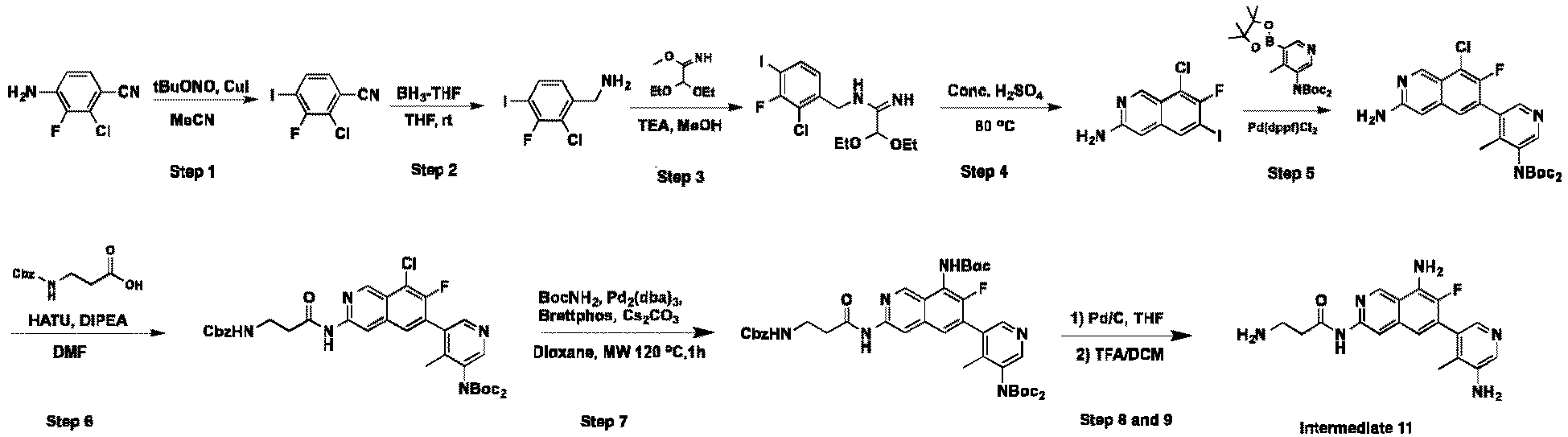
- To a suspension of CuI (9.24 g, 49 mmol) in acetonitrile (200 mL) was dropwise added 90% tert-butyl nitrite (6.95 mg, 60 mmol) at 65 °C. The mixture was stirred at 65 °C for 10 minutes. Then 4-amino-2-chloro-3-fluorobenzonitrile (6.9 g, 40.4 mmol) was added to the reaction mixture for 1 h. The mixture was stirred at 65 °C for 2 h. The mixture was quenched with saturated aqueous Na2S2O4 and extracted with ethyl acetate (3 x 300 mL). The combined organic layers was washed with brine, dried over Na2SO4 and filtered. The filtrate was concentrated to give crude product, which was purified by silica gel column (hexane/ ethyl acetate = 9:1) to give 2-chloro-3-fluoro-4-iodo-benzonitrile (6.66 g, 59%) as a yellow solid. 1H NMR (500 MHz, Chloroform-d) δ 7.82 (dd, J = 8.3, 5.5 Hz, 1H), 7.24 (dd, J= 8.3, 1.4 Hz, 1H).
- 2-Chloro-3-fluoro-4-iodobenzonitrile (2 g, 7 mmol) was added to a solution of borane-THF (35mL, 1 M in THF, 35 mmol) in THF (20 mL) at 0 °C. The mixture was then warmed to room temperature and stirred overnight. The reaction solution was quenched by the dropwise addition of a solution of HCl (3 M, 8 mL). The mixture was neutralized with an aqueous solution of NaHCO3 to pH=8 and extracted with dichloromethane (2 x 200 mL). The combined organic layer was washed with water and brine, dried over Na2SO4, filtered and concentrated to give (2-chloro-3-fluoro-4-iodophenyl)methanamine (1.287 g, crude yield 65%), which was used directly in the next step without further purification. ESI m/z =285.9 [M + H+].
- To a solution of
methyl 2,2-diethoxyacetimidate (1 g, 6.4 mmol) in methanol (15 mL) was added (2-chloro-3-fluoro-4-iodophenyl)methanamine (1.287 mg, 4.5 mmol). The reaction mixture was stirred at room temperature for 1 hours, and then concentrated to dryness. The residue was diluted with DCM (50 mL), washed with water (50 mL) and brine (50 mL), dried over Na2SO4, filtered and concentrated to give N-(2-chloro-3-fluoro-4-iodobenzyl)-2,2-diethoxyacetimidamide as a yellow solid. It was directly used to the next step without purification. ESI m/z =415.0 [M + H+]. - A solution of N-(2-chloro-3-fluoro-4-iodobenzyl)-2,2-diethoxyacetimidamide (from Step 3) and cone. H2SO4 (8 mL) was stirred at 60 °C for overnight. The mixture was cooled to 0 °C and NaOH was added to adjust to pH=9. The residue was extracted with dichloromethane (4 x 80 mL). The combined organic layers were washed with brine, dried over Na2SO4, filtered and concentrated to give 8-chloro-7-fluoro-6-iodoisoquinolin-3-amine (1.01 g, 70% for two steps) as a yellow solid, which was directly used to the next step. ESI m/z =322.9 [M + H+].
- A mixture of 8-chloro-7-fluoro-6-iodo-isoquinolin-3-amine (636 mg, 2 mmol, 1.0 equiv), tert-butyl N-tert-butoxycarbonyl-N-[4-methyl-5-(4,4,5,5-tetramethyl-1,3,2-dioxaborolan-2-yl)-3-pyridyl]carbamate (1.04 g, 2.4 mmol, 1.2 equiv), Pd(dppf)Cl2 (0.29 g, 0.4 mmol, 0.2 equiv), potassium carbonate (830 mg, 6 mmol, 3 equiv) in 1,4-dioxane (10 mL) and water (5 mL) was stirred at 80 °C (Microwave) for 30 min. The reaction was filtered. The product was extracted with ethyl acetate. The combined organic extracts were combined and concentrated under vacuum. The residue was purified by silica gel column (hexane/ ethyl acetate = 1:4) to give the tert-butyl N-[5-(3-amino-8-chloro-7-fluoro-6-isoquinolyl)-4-methy1-3-pyridy1]-N-tert-butoxycarbony1-carbamate as a yellow solid (690 mg, 62%). ESI m/z =503.2 [M + H+].
- A mixture of tert-butyl N-[5-(3-amino-8-chloro-7-fluoro-6-isoquinolyl)-4-methyl-3-pyridyl]-N-tert-butoxycarbonyl-carbamate (300 mg, 0.6 mmol, 1.0 equiv), 3-(((benzyloxy)carbonyl)amino)propanoic acid (201 mg, 0.9 mmol, 1.5 equiv), HATU (342 mg, 0.9 mmol, 1.5 equiv) and DIPEA (232.2 mg, 1.8 mmol, 3 equiv) in DMF (6 mL) was stirred at 50 °C overnight. Cooled down and the mixture was purified preparative HPLC (10%-100% methanol / 0.1% TFA in H2O) to afford tert-butyl (5-(3-(3-(((benzyloxy)carbonyl)amino)propanamido)-8-chloro-7-fluoroisoquinolin-6-yl)-4-methylpyridin-3-yl)(tert-butoxycarbonyl)carbamate as yellow solid in TFA salt form (346 mg, 62%). ESI m/z =708.3 [M + H+].
- A mixture of tert-butyl (5-(3-(3-(((benzyloxy)carbonyl)amino)propanamido)-8-chloro-7-fluoroisoquinolin-6-yl)-4-methylpyridin-3-yl)(tert-butoxycarbonyl)carbamate (276 mg, 0.3 mmol, 1.0 equiv), tert-butyl carbamate (518 mg, 4.4 mmol, 15 equiv), Pd2(dba)2 (61 mg, 0.06 mmol, 0.2 equiv), Brettphos (64 mg, 0.12 mmol, 0.4 equiv), cesium carbonate (482 mg, 1.5 mmol, 5 equiv) in 1,4-dioxane (10 mL) was stirred at 120 °C (Microwave) for 1 h. Cooled to room temperature and water was added. The product was extracted with ethyl acetate. The combined organic extracts were combined and concentrated under vacuum. The residue was purified by silica gel column (hexane/ ethyl acetate = 1:4) to give the tert-butyl (5-(3-(3-(((benzyloxy)carbonyl)amino)propanamido)-8-((tert-butoxycarbonyl)amino)-7-fluoroisoquinolin-6-yl)-4-methylpyridin-3-yl)(tert-butoxycarbonyl)carbamate as a yellow solid (114 mg, 48%). ESI m/z =789.4 [M + H+].
- A mixture of tert-butyl (5-(3-(3-(((benzyloxy)carbonyl)amino)propanamido)-8-((tert-butoxycarbonyl)amino)-7-fluoroisoquinolin-6-yl)-4-methylpyridin-3-yl)(tert-butoxycarbonyl)carbamate (553 mg, 0.7 mmol, 1 equiv) and Pd/C (55 mg, 0.1 equiv) in THF (10 mL) under H2 was stirred at room temperature overnight. Filtered and concentrated under vacuum to give a yellow solid. ESI m/z =655.3 [M + H+]. Dissolved the obtained solid in DCM (4 mL). To the solution was added TFA (2 mL). Stirred at room temperature for 1 h and concentrated under vacuum. The residue was purified preparative HPLC (10%-100% methanol / 0.1% TFA in H2O) to afford intermediate 11 as a yellow solid (395 mg, 81% for two steps) in TFA salt form. 1H NMR (600 MHz, Methanol-d 4) δ 9.41 (s, 1H), 8.38 (s, 1H), 8.12 (s, 1H), 8.02 (s, 1H), 7.10 (d, J = 5.9 Hz, 1H), 3.37 - 3.34 (m, 2H), 2.97 (t, J = 6.4 Hz, 2H), 2.26 (s, 3H). ESI m/z =355.2 [M + H+].
-

- A mixture of tert-butyl N-[5-(3-amino-8-chloro-7-fluoro-6-isoquinolyl)-4-methyl-3-pyridyl]-N-tert-butoxycarbonyl-carbamate (800 mg, 1.6 mmol, 1.0 equiv), 5-methoxy-5-oxopentanoic acid (701 mg, 4.8 mmol, 3 equiv), HATU (1.82 g, 4.8 mmol, 3 equiv) and DIPEA (1.03 g, 8.0 mmol, 5 equiv) in DMF (8 mL) was stirred at room temperature overnight. Cooled down and the mixture was purified preparative HPLC (10%-100% methanol / 0.1% TFA in H2O) to afford methyl 5-((6-(5-(bis(tert-butoxycarbonyl)amino)-4-methylpyridin-3-yl)-8-chloro-7-fluoroisoηuinolin-3-yl)amino)-5-oxopentanoate as yellow solid in TFA salt form (864 mg, 63%). ESI m/z =631.2 [M + H+].
- A mixture of methyl 5-((6-(5-(bis(tert-butoxycarbonyl)amino)-4-methylpyridin-3-yl)-8-chloro-7-fluoroisoquinolin-3-yl)amino)-5-oxopentanoate (864 mg, 1 mmol, 1.0 equiv), tert-butyl carbamate (1.76 mg, 15 mmol, 15 equiv), Pd2(dba)2 -chloroform (207 mg, 0.2 mmol, 0.2 equiv), Brettphos (215 mg, 0.4 mmol, 0.4 equiv), cesium carbonate (1.63 mg, 5 mmol, 5 equiv) in 1,4-dioxane (15 mL) was stirred at 120 °C (Microwave) for 1 h. Cooled to room temperature and water was added. The product was extracted with ethyl acetate. The combined organic extracts were combined and concentrated under vacuum. The residue was purified by silica gel column (hexane/ ethyl acetate = 1:3) to give the methyl 5-((6-(5-(bis(tert-butoxycarbonyl)amino)-4-methylpyridin-3-yl)-8-((tert-butoxycarbonyl)amino)-7-fluoroisoquinolin-3-yl)amino)-5-oxopentanoate as a yellow solid (442 mg, 62%). ESI m/z =712.3 [M + H+].
- To a solution of methyl 5-((6-(5-(bis(tert-butoxycarbonyl)amino)-4-methylpyridin-3-yl)-8-((tert-butoxycarbonyl)amino)-7-fluoroisoquinolin-3-yl)amino)-5-oxopentanoate (442 mg, 0.62 mmol, 1 equiv) in THF (10 mL) was added TFA (5 mL) and stirred at room temperature for 1 h. Concentrated under vacuum to remove all of the solvents and afforded yellow oil. ESI m/z =412.2 [M + H+]. Dissolved the obtained solid in THF/H2O (4:2 mL). To the solution was added NaOH (124 mg, 3.1 mmol, 5 equiv). Stirred at room temperature for 2 h and concentrated under vacuum. The residue was purified preparative HPLC (10%-100% MeCN / 0.1% TFA in H2O) to afford intermediate 12 as a yellow solid (302 mg, 78% for two steps) in TFA salt form. 1H NMR (600 MHz, Methanol-d 4) δ 9.39 (s, 1H), 8.28 (s, 1H), 8.11 (s, 1H), 8.03 (s, 1H), 7.11 (d, J = 5.9 Hz, 1H), 2.60 (t, J = 7.5 Hz, 2H), 2.46 (t, J = 7.4 Hz, 2H), 2.26 (s, 3H), 2.04 (p, J = 7.4 Hz, 2H), ESI m/z =398.2 [M + H+].
-

- To a solution of Intermediate 11 (11 mg, 0.0158 mmol, 1.0 equiv) in DMSO (1 mL) were added 8-((2-(2,6-dioxopiperidin-3-yl)-1,3-dioxoisoindolin-4-yl)amino)octanoic acid (6.5 mg, 0.0158 mmol, 1.0 equiv), EDCI (1-ethyl-3-(3-dimethylaminopropyl)carbodiimide) (4.6 mg, 0.024 mmol, 1.5 equiv), HOAt (1-hydroxy-7-azabenzo-triazole) (3.2 mg, 0.024 mmol, 1.5 equiv), and NMM (N-Methylmorpholine) (8.0 mg, 0.079 mmol, 5.0 equiv). After being stirred overnight at room temperature, the resulting mixture was purified by preparative HPLC (10%-100% MeOH/ 0.1% TFA in H2O) to afford HC65-175 as yellow solid in TFA salt form (7.6 mg, 49%). 1H NMR (600 MHz, Methanol-d 4) δ 9.35 (s, 1H), 8.34 (s, 1H), 8.06 (s, 1H), 7.98 (s, 1H), 7.50 (t, J= 7.8 Hz, 1H), 7.05 (d, J = 5.8 Hz, 1H), 6.98 (d, J= 7.1 Hz, 1H), 6.91 (d, J = 8.6 Hz, 1H), 5.06 (dd, J = 12.7, 5.5 Hz, 1H), 3.63 - 3.54 (m, 2H), 3.14 (t, J = 7.1 Hz, 2H), 2.91 - 2.82 (m, 1H), 2.81 - 2.64 (m, 4H), 2.20 (s, 5H), 2.15 - 2.07 (m, 1H), 1.61 (t, J = 7.0 Hz, 2H), 1.53 (t, J= 6.9 Hz, 2H), 1.34 - 1.27 (m, 6H). HRMS calcd for C39H43FN9O6 [M + H+] 752.3320, found 752.3328.
-

- HC65-183 was synthesized following the standard procedure for preparing HC65-175 from Intermediate 11 (9.1 mg, 0.013 mmol, 1.0 equiv), (2-(2,6-dioxopiperidin-3-yl)-1,3-dioxoisoindolin-4-yl)glycine (4.3 mg, 0.013 mmol, 1.0 equiv), EDCI (3.8 mg, 0.02 mmol, 1.5 equiv), HOAt (2.7 mg, 0.02 mmol, 1.5 equiv), and NMM (6.6 mg, 0.065 mmol, 5.0 equiv) in DMSO (1 mL). HC65-183 was obtained as yellow solid in TFA salt form (5.8 mg, 50%). 1H NMR (600 MHz, Methanol-d 4) δ 9.34 (s, 1H), 8.09 (s, 1H), 8.06 (s, 1H), 8.03 (s, 1H), 7.36 - 7.24 (m, 1H), 6.99 (d, J= 5.7 Hz, 1H), 6.80 (d, J= 8.5 Hz, 1H), 6.69 (d, J= 19.9 Hz, 1H), 5.02 (dd, J = 12.9, 5.4 Hz, 1H), 4.00 (s, 2H), 3.71 - 3.56 (m, 2H), 2.85 (ddd, J = 18.4, 13.9, 5.3 Hz, 1H), 2.79 - 2.63 (m, 4H), 2.27 (s, 3H), 2.12 - 2.04 (m, 1H). HRMS calcd for C33H31FN9O6 [M + H+] 668.2381, found 668.2388.
-

- HC65-184 was synthesized following the standard procedure for preparing HC65-175 from Intermediate 11 (9.1 mg, 0.013 mmol, 1.0 equiv), 3-((2-(2,6-dioxopiperidin-3-yl)-1,3-dioxoisoindolin-4-yl)amino)propanoic acid (4.5 mg, 0.013 mmol, 1.0 equiv), EDCI (3.8 mg, 0.02 mmol, 1.5 equiv), HOAt (2.7 mg, 0.02 mmol, 1.5 equiv), and NMM (6.6 mg, 0.065 mmol, 5.0 equiv) in DMSO (1 mL). HC65-184 was obtained as yellow solid in TFA salt form (2.2 mg, 19%). 1H NMR (600 MHz, Methanol-d 4) δ 9.30 (s, 1H), 8.31 (s, 1H), 8.09 (s, 0H), 8.04 (s, 1H), 7.52 (t, J = 7.8 Hz, 1H), 7.08 (d, J = 8.6 Hz, 1H), 7.02 (d, J = 5.9 Hz, 1H), 6.97 (d, J = 7.1 Hz, 1H), 5.07 (dd, J = 12.8, 5.4 Hz, 1H), 3.67 - 3.64 (m, 3H), 3.52 - 3.47 (m, 1H), 2.87 (ddd, J = 18.4, 13.8, 5.3 Hz, 1H), 2.80 - 2.67 (m, 1H), 2.71 - 2.68 (m, 3H), 2.62 - 2.49 (m, 2H), 2.26 (s, 3H), 2.13 - 2.07 (m, 1H). HRMS calcd for C34H33FN9O6 [M + H+] 682.2538, found 682.2551.
-

- HC65-185 was synthesized following the standard procedure for preparing HC65-175 from Intermediate 11 (9.1 mg, 0.013 mmol, 1.0 equiv), 4-((2-(2,6-dioxopiperidin-3-yl)-1,3-dioxoisoindolin-4-yl)amino)butanoic acid (4.7 mg, 0.013 mmol, 1.0 equiv), EDCI (3.8 mg, 0.02 mmol, 1.5 equiv), HOAt (2.7 mg, 0.02 mmol, 1.5 equiv), and NMM (6.6 mg, 0.065 mmol, 5.0 equiv) in DMSO (1 mL). HC65-185 was obtained as yellow solid in TFA salt form (4.1 mg, 34%). 1H NMR (600 MHz, Methanol-d 4) δ 9.30 (s, 1H), 8.24 (s, 1H), 8.09 (s, 1H), 8.01 (s, 1H), 7.40 (dd, J = 8.5, 7.1 Hz, 1H), 6.97 (d, J = 6.1 Hz, 1H), 6.95 (d, J = 8.6 Hz, 1H), 6.87 (d, J = 7.0 Hz, 1H), 5.04 (dd, J = 12.7, 5.4 Hz, 1H), 3.64 - 3.56 (m, 2H), 3.30 (t, J = 7.1 Hz, 2H), 2.85 (ddd, J = 17.2, 13.8, 5.2 Hz, 1H), 2.79 - 2.65 (m, 4H), 2.33 (t, J= 6.9 Hz, 2H), 2.24 (s, 3H), 2.14 - 2.06 (m, 1H), 1.95 (p, J = 7.0 Hz, 2H). HRMS calcd for C35H35FN9O6 [M + H+] 696.2694, found 696.2688.
-

- HC65-186 was synthesized following the standard procedure for preparing HC65-175 from Intermediate 11 (9.1 mg, 0.013 mmol, 1.0 equiv), 5-((2-(2,6-dioxopiperidin-3-yl)-1,3-dioxoisoindolin-4-yl)amino)pentanoic acid (4.9 mg, 0.013 mmol, 1.0 equiv), EDCI (3.8 mg, 0.02 mmol, 1.5 equiv), HOAt (2.7 mg, 0.02 mmol, 1.5 equiv), and NMM (6.6 mg, 0.065 mmol, 5.0 equiv) in DMSO (1 mL). HC65-186 was obtained as yellow solid in TFA salt form (5.5 mg, 45%). 1H NMR (600 MHz, Methanol-d 4) δ 9.31 (s, 1H), 8.27 (s, 1H), 8.09 (s, 1H), 8.00 (s, 1H), 7.45 (t, J = 7.8 Hz, 1H), 7.00 (d, J = 5.8 Hz, 1H), 6.91 (d, J = 2.3 Hz, 1H), 6.90 (d, J = 3.7 Hz, 1H), 5.05 (dd, J= 12.7, 5.5 Hz, 1H), 3.61 (t, J = 6.5 Hz, 2H), 3.22 (t, J = 7.0 Hz, 2H), 2.86 (ddd, J = 18.3, 13.7, 5.3 Hz, 1H), 2.80 - 2.63 (m, 4H), 2.28 (t, J = 7.0 Hz, 2H), 2.22 (s, 3H), 2.17 - 2.04 (m, 1H), 1.74 (p, J = 7.0 Hz, 2H), 1.66 (p, J = 7.1 Hz, 2H). HRMS calcd for C36H37FN9O6 [M + H+] 710.2851, found 710.2867.
-

- HC75-1 was synthesized following the standard procedure for preparing HC65-175 from Intermediate 11 (9.1 mg, 0.013 mmol, 1.0 equiv), 6-((2-(2,6-dioxopiperidin-3-yl)-1,3-dioxoisoindolin-4-yl)amino)hexanoic acid (5.1 mg, 0.013 mmol, 1.0 equiv), EDCI (3.8 mg, 0.02 mmol, 1.5 equiv), HOAt (2.7 mg, 0.02 mmol, 1.5 equiv), and NMM (6.6 mg, 0.065 mmol, 5.0 equiv) in DMSO (1 mL). HC75-1 was obtained as yellow solid in TFA salt form (7.1 mg, 51%). 1H NMR (600 MHz, Methanol-d 4) δ 9.33 (s, 1H), 8.27 (s, 1H), 8.08 (s, 1H), 8.00 (s, 1H), 7.45 (t, J = 7.8 Hz, 1H), 7.03 (d, J = 5.8 Hz, 1H), 6.93 (d, J = 7.1 Hz, 1H), 6.87 (d, J = 8.5 Hz, 1H), 5.05 (dd, J = 12.8, 5.4 Hz, 1H), 3.60 (t, J = 6.4 Hz, 2H), 3.17 (t, J = 7.0 Hz, 2H), 2.85 (ddd, J = 18.6, 14.0, 5.3 Hz, 1H), 2.72 (ddt, J = 37.1, 13.5, 6.4 Hz, 4H), 2.24 (t, J = 7.1 Hz, 2H), 2.21 (s, 3H), 2.15 - 2.06 (m, 1H), 1.68 (p, J = 7.2 Hz, 2H), 1.61 (p, J= 7.2 Hz, 2H), 1.45 - 1.37 (m, 2H). HRMS calcd for C37H39FN9O6 [M + H+] 724.3007, found 724.3016.
-

- HC75-2 was synthesized following the standard procedure for preparing HC65-175 from Intermediate 11 (9.1 mg, 0.013 mmol, 1.0 equiv), 7-((2-(2,6-dioxopiperidin-3-yl)-1,3-dioxoisoindolin-4-yl)amino)heptanoic acid (5.2 mg, 0.013 mmol, 1.0 equiv), EDCI (3.8 mg, 0.02 mmol, 1.5 equiv), HOAt (2.7 mg, 0.02 mmol, 1.5 equiv), and NMM (6.6 mg, 0.065 mmol, 5.0 equiv) in DMSO (1 mL). HC75-2 was obtained as yellow solid in TFA salt form (4.5 mg, 36%). 1H NMR (600 MHz, Methanol-d 4) δ 9.32 (s, 1H), 8.34 (s, 1H), 8.07 (s, 1H), 7.99 (s, 1H), 7.47 (dd, J = 8.5, 7.0 Hz, 1H), 7.03 (d, J = 5.8 Hz, 1H), 6.96 (d, J = 7.0 Hz, 1H), 6.89 (d, J = 8.5 Hz, 1H), 5.06 (dd, J = 12.7, 5.4 Hz, 1H), 3.60 (t, J = 6.4 Hz, 2H), 3.17 (t, J= 7.0 Hz, 2H), 2.87 (ddd, J = 17.0, 13.8, 5.2 Hz, 1H), 2.80 - 2.66 (m, 4H), 2.25 - 2.18 (m, 5H), 2.16 - 2.06 (m, 1H), 1.68 - 1.59 (m, 2H), 1.59 - 1.52 (m, 2H), 1.38 (h, J = 5.4, 4.5 Hz, 4H). HRMS calcd for C38H41FN9O6 [M + H+] 738.3164, found 738.3172.
-

- HC75-3 was synthesized following the standard procedure for preparing HC65-175 from Intermediate 11 (11.0 mg, 0.015 mmol, 1.0 equiv), 3-(2-((2-(2,6-dioxopiperidin-3-yl)-1,3-dioxoisoindolin-4-yl)amino)ethoxy)propanoic acid (6.0 mg, 0.015 mmol, 1.0 equiv), EDCI (4.3 mg, 0.0225 mmol, 1.5 equiv), HOAt (3.1 mg, 0.0225 mmol, 1.5 equiv), and NMM (7.6 mg, 0.075 mmol, 5.0 equiv) in DMSO (1 mL). HC75-3 was obtained as yellow solid in TFA salt form (3.6 mg, 25%). 1H NMR (600 MHz, Methanol-d4) δ 9.24 (s, 1H), 8.26 (s, 1H), 8.09 (s, 1H), 8.04 (s, 1H), 7.38 (t, J = 7.9 Hz, 1H), 6.99 (s, 1H), 6.90 (d, J = 8.6 Hz, 1H), 6.80 (s, 1H), 5.07 (dd, J = 12.8, 5.5 Hz, 1H), 3.85 - 3.74 (m, 2H), 3.74 - 3.56 (m, 4H), 3.48 - 3.40 (m, 2H), 2.86 (ddd, J = 17.5, 14.0, 5.4 Hz, 1H), 2.80 - 2.63 (m, 4H), 2.49 (s, 2H), 2.23 (s, 3H), 2.19 - 2.05 (m, 1H). HRMS calcd for C36H37FN9O7 [M + H+] 726.2800, found 726.2810.
-

- HC75-4 was synthesized following the standard procedure for preparing HC65-175 from Intermediate 11 (11.0 mg, 0.015 mmol, 1.0 equiv), 3-(2-(2-((2-(2,6-dioxopiperidin-3-yl)-1,3-dioxoisoindolin-4-yl)amino)ethoxy)ethoxy)propanoic acid (6.5 mg, 0.015 mmol, 1.0 equiv), EDCI (4.3 mg, 0.0225 mmol, 1.5 equiv), HOAt (3.1 mg, 0.0225 mmol, 1.5 equiv), and NMM (7.6 mg, 0.075 mmol, 5.0 equiv) in DMSO (1 mL). HC75-4 was obtained as yellow solid in TFA salt form (10.1 mg, 67%). 1H NMR (600 MHz, Methanol-d 4) δ 9.31 (s, 1H), 8.15 (s, 1H), 8.10 (s, 1H), 8.04 (s, 1H), 7.41 (t, J = 7.9 Hz, 1H), 7.07 - 7.02 (m, 1H), 6.93 (d, J = 8.5 Hz, 1H), 6.88 - 6.75 (m, 1H), 5.05 (dd, J = 12.7, 5.5 Hz, 1H), 3.78 - 3.68 (m, 4H), 3.68 - 3.57 (m, 6H), 3.42 (t, J = 5.4 Hz, 2H), 2.87 (ddd, J = 17.5, 13.8, 5.3 Hz, 1H), 2.80 - 2.69 (m, 4H), 2.54 - 2.41 (m, 2H), 2.23 (s, 3H), 2.18 -2.09 (m, 1H). HRMS calcd for C38H41FN9O8 [M + H+] 770.3062, found 770.3073.
-

- HC75-5 was synthesized following the standard procedure for preparing HC65-175 from Intermediate 11 (11.0 mg, 0.015 mmol, 1.0 equiv), 3-(2-(2-(2-((2-(2,6-dioxopiperidin-3-yl)-1,3-dioxoisoindolin-4-yl)amino)ethoxy)ethoxy)ethoxy)propanoic acid (7.2 mg, 0.015 mmol, 1.0 equiv), EDCI (4.3 mg, 0.0225 mmol, 1.5 equiv), HOAt (3.1 mg, 0.0225 mmol, 1.5 equiv), and NMM (7.6 mg, 0.075 mmol, 5.0 equiv) in DMSO (1 mL). HC75-5 was obtained as yellow solid in TFA salt form (10.5 mg, 67%). 1H NMR (600 MHz, Methanol-d 4) δ 9.34 (s, 1H), 8.16 (s, 1H), 8.09 (s, 1H), 8.03 (s, 1H), 7.44 (t, J = 7.7 Hz, 1H), 7.11 - 7.04 (m, 1H), 6.97 (d, J = 8.6 Hz, 1H), 6.92 - 6.84 (m, 1H), 5.05 (dd, J = 12.8, 5.5 Hz, 1H), 3.76 - 3.64 (m, 8H), 3.64 - 3.55 (m, 6H), 3.45 (q, J = 4.8 Hz, 2H), 2.87 (ddd, J = 17.5, 13.8, 5.4 Hz, 1H), 2.80 - 2.66 (m, 4H), 2.44 (t, J = 5.9 Hz, 2H), 2.23 (s, 3H), 2.17 - 2.08 (m, 1H). HRMS calcd for C40H45FN9O9 [M + H+] 814.3324, found 814.3318.
-

- HC75-6 was synthesized following the standard procedure for preparing HC65-175 from Intermediate 11 (11.0 mg, 0.015 mmol, 1.0 equiv), 1-((2-(2,6-dioxopiperidin-3-yl)-1,3-dioxoisoindolin-4-yl)amino)-3,6,9,12-tetraoxapentadecan-15-oic acid (7.8 mg, 0.015 mmol, 1.0 equiv), EDCI (4.3 mg, 0.0225 mmol, 1.5 equiv), HOAt (3.1 mg, 0.0225 mmol, 1.5 equiv), and NMM (7.6 mg, 0.075 mmol, 5.0 equiv) in DMSO (1 mL). HC75-6 was obtained as yellow solid in TFA salt form (9.3 mg, 57%). 1H NMR (600 MHz, Methanol-d 4) δ 9.35 (s, 1H), 8.19 (s, 1H), 8.09 (s, 1H), 8.03 (s, 1H), 7.46 (t, J = 7.8 Hz, 1H), 7.08 (d, J = 5.7 Hz, 1H), 6.98 (d, J = 8.5 Hz, 1H), 6.92 (d, J = 7.0 Hz, 1H), 5.05 (dd, J = 12.8, 5.5 Hz, 1H), 3.71 (q, J = 5.7 Hz, 4H), 3.67 (s, 4H), 3.65 - 3.57 (m, 6H), 3.55 (s, 4H), 3.49 - 3.40 (m, 2H), 2.87 (ddd, J = 18.4, 13.8, 5.3 Hz, 1H), 2.80 - 2.65 (m, 4H), 2.45 (t, J= 5.9 Hz, 2H), 2.23 (s, 3H), 2.16 - 2.07 (m, 1H). HRMS calcd for C42H49FN9O10 [M + H+] 858.3586, found 858.3597.
-

- HC75-7 was synthesized following the standard procedure for preparing HC65-175 from Intermediate 11 (11.0 mg, 0.015 mmol, 1.0 equiv), 1-((2-(2,6-dioxopiperidin-3-yl)-1,3-dioxoisoindolin-4-yl)amino)-3,6,9,12,15-pentaoxaoctadecan-18-oic acid (8.5 mg, 0.015 mmol, 1.0 equiv), EDCI (4.3 mg, 0.0225 mmol, 1.5 equiv), HOAt (3.1 mg, 0.0225 mmol, 1.5 equiv), and NMM (7.6 mg, 0.075 mmol, 5.0 equiv) in DMSO (1 mL). HC75-7 was obtained as yellow solid in TFA salt form (11.0 mg, 65%). 1H NMR (600 MHz, Methanol-d 4) δ 9.35 (s, 1H), 8.26 (s, 1H), 8.09 (s, 1H), 8.03 (s, 1H), 7.49 (t, J = 7.6 Hz, 1H), 7.07 (d, J = 5.8 Hz, 1H), 7.00 (d, J = 8.6 Hz, 1H), 6.96 (d, J = 7.0 Hz, 1H), 5.06 (dd, J = 12.7, 5.5 Hz, 1H), 3.71 (td, J = 6.6, 5.3, 2.8 Hz, 4H), 3.68 - 3.59 (m, 9H), 3.56 (ddt, J = 9.9, 6.2, 3.6 Hz, 9H), 3.44 (t, J = 5.1 Hz, 2H), 2.87 (ddd, J = 18.3, 13.9, 5.3 Hz, 1H), 2.79 - 2.66 (m, 4H), 2.51 - 2.41 (m, 2H), 2.23 (s, 3H), 2.15 - 2.09 (m, 1H). HRMS calcd for C44H53FN9O11 [M + H+] 902.3849, found 902.3860.
-

- HC75-8 was synthesized following the standard procedure for preparing HC65-175 from Intermediate 11 (11.0 mg, 0.015 mmol, 1.0 equiv), 2-(2-(((S)-1-((2S,4R)-4-hydroxy-2-((4-(4-methylthiazol-5-yl)benzyl)carbamoyl)pyrrolidin-1-yl)-3,3-dimethyl-1-oxobutan-2-yl)amino)-2-oxoethoxy)acetic acid (8.2 mg, 0.015 mmol, 1.0 equiv), EDCI (4.3 mg, 0.0225 mmol, 1.5 equiv), HOAt (3.1 mg, 0.0225 mmol, 1.5 equiv), and NMM (7.6 mg, 0.075 mmol, 5.0 equiv) in DMSO (1 mL). HC75-8 was obtained as yellow solid in TFA salt form (11.2 mg, 67%). 1H NMR (600 MHz, Methanol-d 4) δ 9.37 (s, 1H), 8.98 (s, 1H), 8.22 (s, 1H), 8.10 (s, 1H), 7.99 (s, 1H), 7.45 (d, J = 8.3 Hz, 2H), 7.38 (d, J = 7.9 Hz, 2H), 7.02 (d, J = 5.8 Hz, 1H), 4.72 (s, 1H), 4.66 - 4.56 (m, 2H), 4.53 (d, J = 4.0 Hz, 1H), 4.32 (d, J = 15.6 Hz, 1H), 4.21 - 4.11 (m, 2H), 4.10 (s, 2H), 3.92 (d, J = 11.0 Hz, 1H), 3.82 (dd, J = 11.0, 3.8 Hz, 1H), 3.74 - 3.62 (m, 2H), 2.84 - 2.74 (m, 2H), 2.46 (s, 3H), 2.33 - 2.26 (m, 1H), 2.23 (s, 3H), 2.11 (ddd, J = 13.4, 9.5, 4.4 Hz, 1H), 1.03 (s, 9H). HRMS calcd for C44H52FN10O7S [M + H+] 883.3725, found 883.3733.
-

- HC75-9 was synthesized following the standard procedure for preparing HC65-175 from Intermediate 11 (11.0 mg, 0.015 mmol, 1.0 equiv), 3-(3-(((S)-1-((2S,4R)-4-hydroxy-2-((4-(4-methylthiazol-5-yl)benzyl)carbamoyl)pyrrolidin-1-yl)-3, 3-dimethyl-1-oxobutan-2-yl)amino)-3-oxopropoxy)propanoic acid (8.6 mg, 0.015 mmol, 1.0 equiv), EDCI (4.3 mg, 0.0225 mmol, 1.5 equiv), HOAt (3.1 mg, 0.0225 mmol, 1.5 equiv), and NMM (7.6 mg, 0.075 mmol, 5.0 equiv) in DMSO (1 mL). HC75-9 was obtained as yellow solid in TFA salt form (8.9 mg, 52%). 1H NMR (600 MHz, Methanol-d 4) δ 9.46 (s, 1H), 9.13 (s, 1H), 8.14 (s, 1H), 8.11 (s, 1H), 8.02 (s, 1H), 7.47 (d, J = 7.7 Hz, 2H), 7.39 (d, J = 8.0 Hz, 2H), 7.09 (d, J= 5.7 Hz, 1H), 4.68 (d, J= 3.6 Hz, 1H), 4.59 (d, J = 15.6 Hz, 1H), 4.54 (s, 1H), 4.34 (d, J = 15.5 Hz, 1H), 3.95 (d, J = 11.1 Hz, 1H), 3.83 (dd, J= 11.0, 3.9 Hz, 1H), 3.74 - 3.66 (m, 5H), 3.60 (t, J = 6.4 Hz, 2H), 2.83 - 2.70 (m, 2H), 2.56 - 2.41 (m, 7H), 2.33 - 2.22 (m, 4H), 2.16 - 2.06 (m, 1H), 1.05 (s, 9H). HRMS calcd for C46H56FN10O7S [M + H+] 911.4038, found 911.4049.
-

- HC75-10 was synthesized following the standard procedure for preparing HC65-175 from Intermediate 11 (11.0 mg, 0.015 mmol, 1.0 equiv), 2-(2-(2-(((S)-1-((2S,4R)-4-hydroxy-2-((4-(4-methylthiazol-5-yl)benzyl)carbamoyl)pyrrolidin-1-yl)-3,3-dimethyl-1-oxobutan-2-yl)amino)-2-oxoethoxy)ethoxy)acetic acid (8.9 mg, 0.015 mmol, 1.0 equiv), EDCI (4.3 mg, 0.0225 mmol, 1.5 equiv), HOAt (3.1 mg, 0.0225 mmol, 1.5 equiv), and NMM (7.6 mg, 0.075 mmol, 5.0 equiv) in DMSO (1 mL). HC75-10 was obtained as yellow solid in TFA salt form (10.8 mg, 62%). 1H NMR (600 MHz, Methanol-d 4) δ 9.44 (s, 1H), 9.14 (s, 1H), 8.17 (s, 1H), 8.11 (s, 1H), 8.03 (s, 1H), 7.46 (d, J = 8.4 Hz, 2H), 7.41 (d, J = 8.0 Hz, 2H), 7.11 (d, J = 5.7 Hz, 1H), 4.72 (s, 1H), 4.58 (d, J = 22.0 Hz, 1H), 4.53 (d, J= 8.1 Hz, 2H), 4.40 (d, J= 15.4 Hz, 1H), 4.12 - 4.05 (m, 2H), 4.00 (d, J = 15.5 Hz, 1H), 3.88 (d, J = 11.4 Hz, 1H), 3.82 (dd, J = 11.0, 3.9 Hz, 1H), 3.79 - 3.60 (m, 7H), 2.84 - 2.70 (m, 2H), 2.49 (s, 3H), 2.30 - 2.20 (m, 4H), 2.11 (ddd, J = 13.3, 9.2, 4.5 Hz, 1H), 1.04 (s, 9H). HRMS calcd for C46H56FN10O8S [M + H+] 927.3987, found 927.3978.
-

- HC75-11 was synthesized following the standard procedure for preparing HC65-175 from Intermediate 11 (11.0 mg, 0.015 mmol, 1.0 equiv), 3-(2-(3-(((S)-1-((2S,4R)-4-hydroxy-2-((4-(4-methylthiazol-5-yl)benzyl)carbamoyl)pyrrolidin-1-yl)-3,3-dimethyl-1-oxobutan-2-yl)amino)-3-oxopropoxy)ethoxy)propanoic acid (9.3 mg, 0.015 mmol, 1.0 equiv), EDCI (4.3 mg, 0.0225 mmol, 1.5 equiv), HOAt (3.1 mg, 0.0225 mmol, 1.5 equiv), and NMM (7.6 mg, 0.075 mmol, 5.0 equiv) in DMSO (1 mL). HC75-11 was obtained as yellow solid in TFA salt form (9.9 mg, 56%). 1H NMR (600 MHz, Methanol-d 4) δ 9.42 (s, 1H), 9.04 (s, 1H), 8.26 (s, 1H), 8.10 (s, 1H), 8.01 (s, 1H), 7.48 (d, J = 7.9 Hz, 2H), 7.40 (d, J = 7.9 Hz, 2H), 7.08 (d, J = 5.8 Hz, 1H), 4.71 (s, 1H), 4.63 (t, J = 8.4 Hz, 1H), 4.57 (d, J= 15.5 Hz, 1H), 4.55 - 4.51 (m, 1H), 4.38 (d, J = 15.5 Hz, 1H), 3.93 (d, J = 11.0 Hz, 1H), 3.83 (dd, J = 11.0, 3.9 Hz, 1H), 3.77 - 3.65 (m, 4H), 3.62 - 3.52 (m, 6H), 2.79 (dt, J = 15.6, 6.7 Hz, 1H), 2.67 (d, J = 15.8 Hz, 1H), 2.56 - 2.38 (m, 7H), 2.30 - 2.22 (m, 4H), 2.11 (ddd, J = 13.3, 9.2, 4.5 Hz, 1H), 1.05 (s, 9H). HRMS calcd for C48H60FN10O8S [M + H+] 955.4300, found 955.4313.
-

- HC75-12 was synthesized following the standard procedure for preparing HC65-175 from Intermediate 11 (11.0 mg, 0.015 mmol, 1.0 equiv), (S)-13-((2S,4R)-4-hydroxy-2-((4-(4-methylthiazol-5-yl)benzyl)carbamoyl)pyrrolidine-1-carbonyl)-14,14-dimethyl-11-oxo-3,6,9-trioxa-12-azapentadecanoic acid (9.5 mg, 0.015 mmol, 1.0 equiv), EDCI (4.3 mg, 0.0225 mmol, 1.5 equiv), HOAt (3.1 mg, 0.0225 mmol, 1.5 equiv), and NMM (7.6 mg, 0.075 mmol, 5.0 equiv) in DMSO (1 mL). HC75-12 was obtained as yellow solid in TFA salt form (10.5 mg, 58%). 1H NMR (600 MHz, Methanol-d 4) δ 9.40 (s, 1H), 9.02 (s, 1H), 8.27 (s, 1H), 8.10 (s, 1H), 8.02 (s, 1H), 7.47 (d, J = 7.8 Hz, 2H), 7.40 (d, J = 8.2 Hz, 2H), 7.07 (d, J = 5.8 Hz, 1H), 4.71 (d, J = 3.6 Hz, 1H), 4.65 - 4.60 (m, 1H), 4.58 (d, J = 15.3 Hz, 1H), 4.53 (s, 1H), 4.35 (d, J = 15.5 Hz, 1H), 4.04 (d, J = 12.1 Hz, 1H), 3.98 (d, J= 11.4 Hz, 1H), 3.90 (d, J = 11.0 Hz, 1H), 3.82 (dd, J = 11.0, 3.8 Hz, 1H), 3.75 - 3.62 (m, 12H), 2.82 - 2.72 (m, 2H), 2.47 (s, 3H), 2.29 - 2.21 (m, 4H), 2.12 (ddd, J = 13.4, 9.4, 4.3 Hz, 1H), 1.04 (s, 9H). HRMS calcd for C48H60FN10O9S [M + H+] 971.4249, found 971.4262.
-

- HC75-13 was synthesized following the standard procedure for preparing HC65-175 from Intermediate 11 (11.0 mg, 0.015 mmol, 1.0 equiv), (S)-15-((2S,4R)-4-hydroxy-2-((4-(4-methylthiazol-5-yl)benzyl)carbamoyl)pyrrolidine-1-carbonyl)-16,16-dimethy1-13-oxo-4,7,10-trioxa-14-azaheptadecanoic acid (9.9 mg, 0.015 mmol, 1.0 equiv), EDCI (4.3 mg, 0.0225 mmol, 1.5 equiv), HOAt (3.1 mg, 0.0225 mmol, 1.5 equiv), and NMM (7.6 mg, 0.075 mmol, 5.0 equiv) in DMSO (1 mL). HC75-13 was obtained as yellow solid in TFA salt form (8.4 mg, 46%).1H NMR (600 MHz, Methanol-d 4) δ 9.44 (s, 1H), 9.08 (s, 1H), 8.22 (s, 1H), 8.11 (s, 1H), 8.01 (s, 1H), 7.48 (d, J = 7.9 Hz, 2H), 7.40 (d, J = 8.3 Hz, 2H), 7.09 (d, J = 5.8 Hz, 1H), 4.69 (s, 1H), 4.63 - 4.60 (m, 1H), 4.58 (d, J= 15.7 Hz, 1H), 4.54 - 4.50 (m, 1H), 4.37 (d, J = 15.5 Hz, 1H), 3.92 (d, J = 11.0 Hz, 1H), 3.83 (dd, J= 11.0, 3.8 Hz, 1H), 3.75 - 3.67 (m, 4H), 3.62 - 3.54 (m, 10H), 2.75 (t, J = 6.7 Hz, 2H), 2.62 - 2.53 (m, 1H), 2.52 - 2.43 (m, 6H), 2.30 - 2.22 (m, 4H), 2.10 (ddd, J = 13.3, 9.3, 4.4 Hz, 1H), 1.05 (s, 9H). HRMS calcd for C50H64FN10O9S [M + H+] 999.4562, found 999.4569.
-

- HC75-14 was synthesized following the standard procedure for preparing HC65-175 from Intermediate 11 (11.0 mg, 0.015 mmol, 1.0 equiv), (S)-18-((2S,4R)-4-hydroxy-2-((4-(4-methylthiazol-5-yl)benzyl)carbamoyl)pyrrolidine-1-carbonyl)-19,19-dimethyl-16-oxo-4,7,10,13-tetraoxa-17-azaicosanoic acid (11.0 mg, 0.015 mmol, 1.0 equiv), EDCI (4.3 mg, 0.0225 mmol, 1.5 equiv), HOAt (3.1 mg, 0.0225 mmol, 1.5 equiv), and NMM (7.6 mg, 0.075 mmol, 5.0 equiv) in DMSO (1 mL). HC75-14 was obtained as yellow solid in TFA salt form (6.4 mg, 34%). 1H NMR (600 MHz, Methanol-d 4) δ 9.41 (s, 1H), 9.00 (s, 1H), 8.29 (s, 1H), 8.10 (s, 1H), 8.01 (s, 1H), 7.48 (d, J = 7.9 Hz, 2H), 7.41 (d, J = 8.2 Hz, 2H), 7.07 (d, J= 5.9 Hz, 1H), 4.68 (s, 1H), 4.61 (d, J = 7.5 Hz, 1H), 4.57 (d, J = 16.0 Hz, 1H), 4.54 - 4.51 (m, 1H), 4.37 (d, J = 15.4 Hz, 1H), 3.91 (d, J = 11.0 Hz, 1H), 3.82 (dd, J= 11.0, 3.8 Hz, 1H), 3.71 (td, J = 5.9, 3.2 Hz, 4H), 3.63 - 3.55 (m, 14H), 2.74 (t, J = 6.6 Hz, 2H), 2.57 (ddd, J = 14.9, 7.2, 5.4 Hz, 1H), 2.51 - 2.43 (m, 6H), 2.30 - 2.22 (m, 4H), 2.10 (ddd, J = 13.4, 9.2, 4.5 Hz, 1H), 1.05 (s, 9H). HRMS calcd for C52H68FN10O10S [M + H+] 1043.4825, found 1043.4839.
-

- HC75-15 was synthesized following the standard procedure for preparing HC65-175 from Intermediate 11 (11.0 mg, 0.015 mmol, 1.0 equiv), (S)-19-((2S,4R)-4-hydroxy-2-((4-(4-methylthiazol-5-yl)benzyl)carbamoyl)pyrrolidine-1-carbonyl)-20,20-dimethyl-17-oxo-3,6,9,12,15-pentaoxa-18-azahenicosanoic acid (11 mg, 0.015 mmol, 1.0 equiv), EDCI (4.3 mg, 0.0225 mmol, 1.5 equiv), HOAt (3.1 mg, 0.0225 mmol, 1.5 equiv), and NMM (7.6 mg, 0.075 mmol, 5.0 equiv) in DMSO (1 mL). HC75-15 was obtained as yellow solid in TFA salt form (9.8 mg, 51%). 1H NMR (600 MHz, Methanol-d 4) δ 9.46 (s, 1H), 9.15 (s, 1H), 8.19 (s, 1H), 8.12 (s, 1H), 8.01 (s, 1H), 7.49 (d, J= 8.0 Hz, 2H), 7.43 (d, J= 7.9 Hz, 2H), 7.11 (d, J= 5.7 Hz, 1H), 4.71 (s, 1H), 4.61 (t, J= 8.4 Hz, 1H), 4.57 (d, J= 15.5 Hz, 1H), 4.54 - 4.51 (m, 1H), 4.38 (d, J= 15.5 Hz, 1H), 4.06 (d, J= 15.6 Hz, 1H), 4.02 (d, J= 16.7 Hz, 1H), 3.91 (d, J = 11.0 Hz, 1H), 3.82 (dd, J = 11.0, 3.8 Hz, 1H), 3.70 - 3.60 (m, 20H), 2.79 (t, J = 6.5 Hz, 2H), 2.50 (s, 3H), 2.29 - 2.21 (m, 4H), 2.11 (ddd, J = 13.4, 9.4, 4.4 Hz, 1H), 1.05 (s, 9H). HRMS calcd for C52H68FN10O11S [M + H+] 1059.4774, found 1059.4788.
-

- HC75-16 was synthesized following the standard procedure for preparing HC65-175 from Intermediate 11 (11.0 mg, 0.015 mmol, 1.0 equiv), (S)-21-((2S,4R)-4-hydroxy-2-((4-(4-methylthiazol-5-yl)benzyl)carbamoyl)pyrrolidine-1-carbonyl)-22, 22-dimethyl-19-oxo-4,7,10,13,16-pentaoxa-20-azatricosanoic acid (11.3 mg, 0.015 mmol, 1.0 equiv), EDCI (4.3 mg, 0.0225 mmol, 1.5 equiv), HOAt (3.1 mg, 0.0225 mmol, 1.5 equiv), and NMM (7.6 mg, 0.075 mmol, 5.0 equiv) in DMSO (1 mL). HC75-16 was obtained as yellow solid in TFA salt form (8.9 mg, 45%). 1H NMR (600 MHz, Methanol-d 4) δ 9.44 (s, 1H), 9.06 (s, 1H), 8.25 (s, 1H), 8.11 (s, 1H), 8.02 (s, 1H), 7.49 (d, J= 7.9 Hz, 2H), 7.42 (d, J= 7.9 Hz, 2H), 7.10 (d, J= 5.8 Hz, 1H), 4.68 (s, 1H), 4.60 (dd, J = 9.4, 7.7 Hz, 1H), 4.57 (d, J= 15.5 Hz, 1H), 4.54 - 4.50 (m, 1H), 4.38 (d, J = 15.6 Hz, 1H), 3.92 (d, J= 11.0 Hz, 1H), 3.82 (dd, J = 11.0, 3.9 Hz, 1H), 3.76 - 3.67 (m, 4H), 3.62 - 3.55 (m, 18H), 2.75 (t, J = 6.5 Hz, 2H), 2.57 (ddd, J= 15.0, 7.6, 5.2 Hz, 1H), 2.52 - 2.43 (m, 6H), 2.25 (s, 4H), 2.10 (ddd, J = 13.4, 9.3, 4.5 Hz, 1H), 1.05 (s, 9H). HRMS calcd for C54H72FN10O11S [M + H+] 1087.5087, found 1087.5096.
-

- HC75-17 was synthesized following the standard procedure for preparing HC65-175 from Intermediate 11 (11.0 mg, 0.015 mmol, 1.0 equiv), 4-(((S)-1-((2S,4R)-4-hydroxy-2-((4-(4-methylthiazol-5-yl)benzyl)carbamoyl)pyrrolidin-1-yl)-3,3-dimethyl-1-oxobutan-2-yl)amino)-4-oxobutanoic acid (8.0 mg, 0.015 mmol, 1.0 equiv), EDCI (4.3 mg, 0.0225 mmol, 1.5 equiv), HOAt (3.1 mg, 0.0225 mmol, 1.5 equiv), and NMM (7.6 mg, 0.075 mmol, 5.0 equiv) in DMSO (1 mL). HC75-17 was obtained as yellow solid in TFA salt form (9.6 mg, 58%). 1H NMR (600 MHz, Methanol-d 4) δ 9.42 (s, 1H), 9.04 (s, 1H), 8.25 (s, 1H), 8.11 (s, 1H), 8.02 (s, 1H), 7.48 (d, J= 8.0 Hz, 2H), 7.40 (d, J= 8.0 Hz, 2H), 7.08 (d, J = 5.8 Hz, 1H), 4.65 - 4.54 (m, 3H), 4.53 - 4.49 (m, 1H), 4.36 (d, J = 15.5 Hz, 1H), 3.93 (d, J = 11.0 Hz, 1H), 3.80 (dd, J = 11.0, 3.9 Hz, 1H), 3.61 (dt, J= 13.5, 6.5 Hz, 1H), 3.54 (dt, J = 13.4, 6.5 Hz, 1H), 2.76 - 2.70 (m, 2H), 2.63 - 2.55 (m, 2H), 2.52 - 2.46 (m, 5H), 2.24 (d, J= 5.1 Hz, 4H), 2.10 (ddd, J = 13.4, 9.3, 4.4 Hz, 1H), 1.05 (s, 9H). HRMS calcd for C44H52FN10O6S [M + H+] 867.3776, found 867.3789.
-

- HC75-18 was synthesized following the standard procedure for preparing HC65-175 from Intermediate 11 (11.0 mg, 0.015 mmol, 1.0 equiv), 5-(((S)-1-((2S,4R)-4-hydroxy-2-((4-(4-methylthiazol-5-yl)benzyl)carbamoyl)pyrrolidin-1-yl)-3,3-dimethyl-1-oxobutan-2-yl)amino)-5-oxopentanoic acid (8.2 mg, 0.015 mmol, 1.0 equiv), EDCI (4.3 mg, 0.0225 mmol, 1.5 equiv), HOAt (3.1 mg, 0.0225 mmol, 1.5 equiv), and NMM (7.6 mg, 0.075 mmol, 5.0 equiv) in DMSO (1 mL). HC75-18 was obtained as yellow solid in TFA salt form (9.1 mg, 55%). 1H NMR (600 MHz, Methanol-d 4) δ 9.45 (s, 1H), 9.10 (s, 1H), 8.17 (s, 1H), 8.11 (s, 0H), 8.01 (s, 1H), 7.47 (d, J = 7.9 Hz, 2H), 7.38 (d, J = 7.9 Hz, 1H), 7.09 (d, J = 5.8 Hz, 1H), 4.66 (s, 1H), 4.64 - 4.56 (m, 2H), 4.55 - 4.51 (m, 1H), 4.36 (d, J = 15.5 Hz, 1H), 3.95 (d, J = 11.0 Hz, 1H), 3.83 (dd, J = 11.0, 3.8 Hz, 1H), 3.68 - 3.61 (m, 1H), 3.59 - 3.51 (m, 1H), 2.79 - 2.69 (m, 2H), 2.47 (s, 3H), 2.37 - 2.20 (m, 8H), 2.11 (ddd, J = 13.4, 9.4, 4.4 Hz, 1H), 1.91 (p, J = 7.3 Hz, 2H), 1.05 (s, 9H). HRMS calcd for C45H54FN10O6S [M + H+] 881.3933, found 881.3949.
-

- HC75-19 was synthesized following the standard procedure for preparing HC65-175 from Intermediate 11 (11.0 mg, 0.015 mmol, 1.0 equiv), 6-(((S)-1-((2S,4R)-4-hydroxy-2-((4-(4-methylthiazol-5-yl)benzyl)carbamoyl)pyrrolidin-1-yl)-3,3-dimethyl-1-oxobutan-2-yl)amino)-6-oxohexanoic acid (8.4 mg, 0.015 mmol, 1.0 equiv), EDCI (4.3 mg, 0.0225 mmol, 1.5 equiv), HOAt (3.1 mg, 0.0225 mmol, 1.5 equiv), and NMM (7.6 mg, 0.075 mmol, 5.0 equiv) in DMSO (1 mL). HC75-19 was obtained as yellow solid in TFA salt form (8.1 mg, 48%). 1H NMR (600 MHz, Methanol-d 4) δ 9.43 (s, 1H), 9.01 (s, 1H), 8.26 (s, 1H), 8.11 (s, 1H), 8.03 (s, 1H), 7.48 (d, J= 7.9 Hz, 2H), 7.38 (d, J= 8.0 Hz, 2H), 7.06 (d, J= 5.6 Hz, 1H), 4.71 - 4.62 (m, 2H), 4.59 (d, J = 15.4 Hz, 1H), 4.54 - 4.50 (m, 1H), 4.34 (d, J = 15.5 Hz, 1H), 3.95 (d, J= 11.0 Hz, 1H), 3.84 (dd, J = 11.0, 3.9 Hz, 1H), 3.62 - 3.52 (m, 2H), 2.82 (dt, J = 14.3, 6.9 Hz, 1H), 2.60 (d, J = 14.4 Hz, 1H), 2.46 (s, 3H), 2.36 - 2.16 (m, 8H), 2.11 (ddd, J = 13.3, 9.3, 4.5 Hz, 1H), 1.69 - 1.54 (m, 4H), 1.06 (s, 9H). HRMS calcd for C46H56FN10O6S [M + H+] 895.4089, found 895.4096.
-

- HC75-20 was synthesized following the standard procedure for preparing HC65-175 from Intermediate 11 (11.0 mg, 0.015 mmol, 1.0 equiv), 7-(((S)-1-((2S,4R)-4-hydroxy-2-((4-(4-methylthiazol-5-yl)benzyl)carbamoyl)pyrrolidin-1-yl)-3,3-dimethyl-1-oxobutan-2-yl)amino)-7-oxoheptanoic acid (8.6 mg, 0.015 mmol, 1.0 equiv), EDCI (4.3 mg, 0.0225 mmol, 1.5 equiv), HOAt (3.1 mg, 0.0225 mmol, 1.5 equiv), and NMM (7.6 mg, 0.075 mmol, 5.0 equiv) in DMSO (1 mL). HC75-20 was obtained as yellow solid in TFA salt form (9.5 mg, 56%). 1H NMR (600 MHz, Methanol-d 4) δ 9.47 (s, 1H), 9.15 (s, 1H), 8.20 (s, 1H), 8.11 (s, 1H), 8.03 (s, 1H), 7.50 (d, J = 7.9 Hz, 2H), 7.42 (d, J = 8.2 Hz, 2H), 7.11 (d, J = 5.8 Hz, 1H), 4.67 (s, 1H), 4.62 (dd, J = 9.3, 7.4 Hz, 1H), 4.58 (d, J = 15.5 Hz, 1H), 4.54 - 4.50 (m, 1H), 4.37 (d, J = 15.5 Hz, 1H), 3.94 (d, J = 11.0 Hz, 1H), 3.83 (dd, J = 11.0, 3.9 Hz, 1H), 3.58 (t, J = 6.5 Hz, 2H), 2.85 - 2.74 (m, 1H), 2.71 - 2.64 (m, 1H), 2.49 (s, 3H), 2.34 - 2.16 (m, 8H), 2.11 (ddd, J = 13.3, 9.2, 4.5 Hz, 1H), 1.66 - 1.57 (m, 4H), 1.32 (p, J = 7.8 Hz, 2H), 1.05 (s, 9H). HRMS calcd for C47H58FN10O6S [M + H+] 909.4246, found 909.4258.
-

- HC75-21 was synthesized following the standard procedure for preparing HC65-175 from Intermediate 11 (11.0 mg, 0.015 mmol, 1.0 equiv), 8-(((S)-1-((2S,4R)-4-hydroxy-2-((4-(4-methylthiazol-5-yl)benzyl)carbamoyl)pyrrolidin-1-yl)-3,3-dimethyl-1-oxobutan-2-yl)amino)-8-oxooctanoic acid (8.8 mg, 0.015 mmol, 1.0 equiv), EDCI (4.3 mg, 0.0225 mmol, 1.5 equiv), HOAt (3.1 mg, 0.0225 mmol, 1.5 equiv), and NMM (7.6 mg, 0.075 mmol, 5.0 equiv) in DMSO (1 mL). HC75-21 was obtained as yellow solid in TFA salt form (9.4 mg, 54%). 1H NMR (600 MHz, Methanol-d 4) δ 9.43 (s, 1H), 9.04 (s, 1H), 8.29 (s, 1H), 8.10 (s, 1H), 8.02 (s, 1H), 7.49 (d, J = 7.9 Hz, 2H), 7.42 (d, J = 8.0 Hz, 2H), 7.08 (d, J = 5.8 Hz, 1H), 4.69 (s, 1H), 4.65 - 4.61 (m, 1H), 4.57 (d, J= 15.5 Hz, 1H), 4.54 - 4.49 (m, 1H), 4.39 (d, J= 15.5 Hz, 1H), 3.94 (d, J= 10.9 Hz, 1H), 3.83 (dd, J = 10.9, 3.9 Hz, 1H), 3.56 (t, J = 6.4 Hz, 2H), 2.79 (dt, J = 14.1, 6.7 Hz, 1H), 2.66 - 2.59 (m, 1H), 2.48 (s, 3H), 2.33 - 2.15 (m, 8H), 2.10 (ddd, J = 13.4, 9.2, 4.5 Hz, 1H), 1.70 - 1.51 (m, 4H), 1.33 - 1.23 (m, 4H), 1.06 (s, 9H). HRMS calcd for C48H60FN10O6S [M + H+] 923.4402, found 923.4415.
-

- HC75-22 was synthesized following the standard procedure for preparing HC65-175 from Intermediate 11 (11.0 mg, 0.015 mmol, 1.0 equiv), 9-(((S)-1-((2S,4R)-4-hydroxy-2-((4-(4-methylthiazol-5-yl)benzyl)carbamoyl)pyrrolidin-1-yl)-3,3-dimethyl-1-oxobutan-2-yl)amino)-9-oxononanoic acid (9.0 mg, 0.015 mmol, 1.0 equiv), EDCI (4.3 mg, 0.0225 mmol, 1.5 equiv), HOAt (3.1 mg, 0.0225 mmol, 1.5 equiv), and NMM (7.6 mg, 0.075 mmol, 5.0 equiv) in DMSO (1 mL). HC75-22 was obtained as yellow solid in TFA salt form (7.8 mg, 45%). 1H NMR (600 MHz, Methanol-d 4) δ 9.45 (s, 1H), 9.09 (s, 1H), 8.27 (s, 1H), 8.11 (s, 1H), 8.02 (s, 1H), 7.50 (d, J = 7.8 Hz, 2H), 7.45 - 7.42 (m, 2H), 7.10 (d, J = 5.2 Hz, 1H), 4.69 (s, 1H), 4.62 (t, J= 8.5 Hz, 1H), 4.58 (d, J = 15.9 Hz, 1H), 4.53 (s, 1H), 4.41 - 4.37 (m, 1H), 3.95 (d, J = 10.9 Hz, 1H), 3.83 (dd, J = 11.0, 3.6 Hz, 1H), 3.56 (q, J = 9.5, 6.9 Hz, 2H), 2.80 (dt, J = 14.6, 6.9 Hz, 1H), 2.65 - 2.58 (m, 1H), 2.49 (d, J= 3.0 Hz, 3H), 2.30 - 2.15 (m, 8H), 2.10 (ddt, J= 13.1, 8.3, 3.8 Hz, 1H), 1.64 - 1.48 (m, 4H), 1.34 - 1.19 (m, 6H), 1.06 (s, 9H). HRMS calcd for C49H62FN10O6S [M + H+] 937.4559, found 937.4567.
-

- HC75-23 was synthesized following the standard procedure for preparing HC65-175 from Intermediate 11 (11.0 mg, 0.015 mmol, 1.0 equiv), 10-(((S)-1-((2S,4R)-4-hydroxy-2-((4-(4-methylthiazol-5-yl)benzyl)carbamoyl)pyrrolidin-1-yl)-3,3-dimethyl-1-oxobutan-2-yl)amino)-10-oxodecanoic acid (9.2 mg, 0.015 mmol, 1.0 equiv), EDCI (4.3 mg, 0.0225 mmol, 1.5 equiv), HOAt (3.1 mg, 0.0225 mmol, 1.5 equiv), and NMM (7.6 mg, 0.075 mmol, 5.0 equiv) in DMSO (1 mL). HC75-23 was obtained as yellow solid in TFA salt form (8.0 mg, 45%). 1H NMR (600 MHz, Methanol-d 4) δ 9.43 (s, 1H), 9.02 (s, 1H), 8.35 (s, 1H), 8.10 (s, 1H), 8.02 (s, 1H), 7.50 (d, J= 8.0 Hz, 2H), 7.43 (d, J= 8.0 Hz, 2H), 7.08 (d, J= 5.8 Hz, 1H), 4.74 (s, 1H), 4.65 - 4.57 (m, 2H), 4.56 - 4.52 (m, 1H), 4.39 (d, J = 15.4 Hz, 1H), 3.95 (d, J = 11.0 Hz, 1H), 3.85 (dd, J = 10.9, 3.9 Hz, 1H), 3.52 (t, J = 6.3 Hz, 2H), 2.84 (dt, J = 15.6, 6.8 Hz, 1H), 2.58 - 2.51 (m, 1H), 2.47 (s, 3H), 2.32 - 2.15 (m, 8H), 2.12 (ddd, J = 13.3, 9.0, 4.5 Hz, 1H), 1.71 - 1.44 (m, 4H), 1.31 - 1.15 (m, 8H), 1.08 (s, 9H). HRMS calcd for C50H64FN10O6S [M + H+] 951.4715, found 951.4730.
-

- HC75-24 was synthesized following the standard procedure for preparing HC65-175 from Intermediate 11 (11.0 mg, 0.015 mmol, 1.0 equiv), 11-(((S)-1-((2S,4R)-4-hydroxy-2-((4-(4-methylthiazol-5-yl)benzyl)carbamoyl)pyrrolidin-1 -yl)-3,3 -dimethyl-1 -oxobutan-2-yl)amino)-11 - oxoundecanoic acid (9.4 mg, 0.015 mmol, 1.0 equiv), EDCI (4.3 mg, 0.0225 mmol, 1.5 equiv), HOAt (3.1 mg, 0.0225 mmol, 1.5 equiv), and NMM (7.6 mg, 0.075 mmol, 5.0 equiv) in DMSO (1 mL). HC75-24 was obtained as yellow solid in TFA salt form (9.1 mg, 51%). 1H NMR (600 MHz, Methanol-d 4) δ 9.42 (s, 1H), 9.05 (s, 1H), 8.28 (s, 1H), 8.10 (s, 1H), 8.02 (s, 1H), 7.49 (d, J = 8.0 Hz, 2H), 7.43 (d, J = 8.1 Hz, 2H), 7.09 (d, J = 5.8 Hz, 1H), 4.66 (s, 1H), 4.63 - 4.55 (m, 2H), 4.54 - 4.51 (m, 1H), 4.37 (d, J = 15.5 Hz, 1H), 3.93 (d, J = 11.0 Hz, 1H), 3.83 (dd, J = 11.0, 3.9 Hz, 1H), 3.57 (t, J = 6.5 Hz, 2H), 2.81 - 2.69 (m, 2H), 2.49 (s, 3H), 2.33 - 2.15 (m, 8H), 2.11 (ddd, J = 13.4, 9.2, 4.5 Hz, 1H), 1.63 - 1.50 (m, 4H), 1.33 - 1.16 (m, 10H), 1.05 (s, 9H). HRMS calcd for C51H66FN10O6S [M + H+] 965.4872, found 965.4881.
-

- To a solution of Intermediate 12 (12 mg, 0.0192 mmol, 1.0 equiv) in DMSO (1 mL) were added 4-((2-aminoethyl)amino)-2-(2,6-dioxopiperidin-3-yl)isoindoline-1,3-dione (9.5 mg, 0.022 mmol, 1.0 equiv), EDCI (1-ethyl-3-(3-dimethylaminopropyl)carbodiimide) (5.8 mg, 0.03 mmol, 1.5 equiv), HOAt (1-hydroxy-7-azabenzo-triazole) (4.1 mg, 0.03 mmol, 1.5 equiv), and NMM (N-Methylmorpholine) (10.2 mg, 0.1 mmol, 5.0 equiv). After being stirred overnight at room temperature, the resulting mixture was purified by preparative HPLC (10%-100% MeOH/ 0.1% TFA in H2O) to afford HC75-29 as yellow solid in TFA salt form (8.1 mg, 58%). 1H NMR (600 MHz, Methanol-d 4) δ 9.37 (s, 1H), 8.19 (s, 1H), 8.10 (s, 1H), 8.05 (s, 1H), 7.52 (t, J = 7.8 Hz, 1H), 7.12 - 7.05 (m, 2H), 6.96 (d, J= 7.1 Hz, 1H), 5.04 (dd, J = 12.3, 5.4 Hz, 1H), 3.48 (s, 4H), 2.86 - 2.75 (m, 1H), 2.74 - 2.64 (m, 2H), 2.55 (t, J = 7.4 Hz, 2H), 2.34 (t, J = 7.1 Hz, 2H), 2.25 (s, 3H), 2.13 - 2.00 (m, 3H). HRMS calcd for C35H35FN9O6 [M + H+] 696.2694, found 696.2687.
-

- HC75-31 was synthesized following the standard procedure for preparing HC75-29 from Intermediate 12 (6.6 mg, 0.011 mmol, 1.0 equiv), 4-((3-aminopropyl)amino)-2-(2,6-dioxopiperidin-3-yl)isoindoline-1,3-dione (5.2 mg, 0.012 mmol, 1.1equiv), EDCI (3.2 mg, 0.0165 mmol, 1.5 equiv), HOAt (2.2 mg, 0.0165 mmol, 1.5 equiv), and NMM (5.6 mg, 0.055 mmol, 5.0 equiv) in DMSO (0.8 mL). HC75-31 was obtained as yellow solid in TFA salt form (6.9 mg, 67%). 1H NMR (600 MHz, Methanol-d 4) δ 9.38 (s, 1H), 8.19 (s, 1H), 8.10 (s, 1H), 8.03 (s, 1H), 7.50 (dd, J = 8.6, 7.0 Hz, 1H), 7.08 (d, J = 5.8 Hz, 1H), 7.01 (d, J = 8.6 Hz, 1H), 6.97 (d, J = 7.1 Hz, 1H), 5.06 (dd, J = 12.8, 5.5 Hz, 1H), 3.38 (t, J = 6.7 Hz, 2H), 3.33 (s, 2H), 2.86 (ddd, J = 17.5, 13.9, 5.4 Hz, 1H), 2.79 - 2.66 (m, 2H), 2.58 (t, J = 7.2 Hz, 2H), 2.36 (t, J= 7.3 Hz, 2H), 2.24 (s, 3H), 2.16 - 2.02 (m, 3H), 1.85 (p, J= 6.6 Hz, 2H). HRMS calcd for C36H37FN9O6 [M + H+] 710.2851, found 710.2859.
-

- HC75-34 was synthesized following the standard procedure for preparing HC75-29 from Intermediate 12 (9.0 mg, 0.0144 mmol, 1.0 equiv), 4-((2-(2-aminoethoxy)ethyl)amino)-2-(2,6-dioxopiperidin-3-yl)isoindoline-1,3-dione (7.6 mg, 0.016 mmol, 1.1equiv), EDCI (4.2 mg, 0.0216 mmol, 1.5 equiv), HOAt (3.0 mg, 0.0216 mmol, 1.5 equiv), and NMM (9.0 mg, 0.0864 mmol, 6.0 equiv) in DMSO (1 mL). HC75-34 was obtained as yellow solid in TFA salt form (7.7 mg, 55%). 1H NMR (600 MHz, Methanol-d 4) δ 9.21 (s, 1H), 8.30 (s, 1H), 8.10 (s, 1H), 8.06 (s, 1H), 7.41 (t, J = 7.8 Hz, 1H), 7.05 - 6.89 (m, 2H), 6.76 (s, 1H), 5.05 (dd, J = 12.7, 5.5 Hz, 1H), 3.82 - 3.72 (m, 2H), 3.66 (t, J = 5.0 Hz, 2H), 3.35 - 3.60 (m, 4H), 2.89 (ddd, J = 17.5, 13.9, 5.4 Hz, 1H), 2.82 - 2.66 (m, 2H), 2.54 (t, J = 7.0 Hz, 2H), 2.40 (s, 2H), 2.24 (s, 3H), 2.12 - 1.99 (m, 3H). HRMS calcd for C37H39FN9O7 [M + H+] 740.2956, found 740.2965.
-

- HC75-35 was synthesized following the standard procedure for preparing HC75-29 from Intermediate 12 (9.0 mg, 0.0144 mmol, 1.0 equiv), 4-((2-(2-(2-aminoethoxy)ethoxy)ethyl)amino)-2-(2,6-dioxopiperidin-3-yl)isoindoline-1,3-dione (8.3 mg, 0.016 mmol, 1.1equiv), EDCI (4.2 mg, 0.0216 mmol, 1.5 equiv), HOAt (3.0 mg, 0.0216 mmol, 1.5 equiv), and NMM (9.0 mg, 0.0864 mmol, 6.0 equiv) in DMSO (1 mL). HC75-35 was obtained as yellow solid in TFA salt form (9.7 mg, 67%). 1H NMR (600 MHz, Methanol-d 4) δ 9.29 (s, 1H), 8.24 (s, 1H), 8.09 (s, 1H), 8.03 (s, 1H), 7.45 (t, J = 7.8 Hz, 1H), 7.02 (d, J= 5.8 Hz, 1H), 6.98 (d, J= 8.5 Hz, 1H), 6.89 (d, J= 7.0 Hz, 1H), 5.05 (dd, J = 12.7, 5.5 Hz, 1H), 3.77 - 3.70 (m, 2H), 3.70 - 3.63 (m, 4H), 3.59 (t, J= 5.3 Hz, 2H), 3.47 (t, J = 5.2 Hz, 2H), 3.39 (t, J = 5.3 Hz, 2H), 2.88 (ddd, J = 18.6, 13.8, 5.4 Hz, 1H), 2.81 - 2.66 (m, 2H), 2.55 (t, J = 7.3 Hz, 2H), 2.33 (t, J = 7.3 Hz, 2H), 2.23 (s, 3H), 2.17 - 2.10 (m, 1H), 2.05 (p, J = 7.3 Hz, 2H). HRMS calcd for C39H43FN9O8 [M + H+] 784.3219, found 784.3211.
-

- HC75-36 was synthesized following the standard procedure for preparing HC75-29 from Intermediate 12 (9.0 mg, 0.0144 mmol, 1.0 equiv), 4-((2-(2-(2-(2-aminoethoxy)ethoxy)ethoxy)ethyl)amino)-2-(2,6-dioxopiperidin-3-yl)isoindoline-1,3-dione (9.0 mg, 0.016 mmol, 1.1 equiv), EDCI (4.2 mg, 0.0216 mmol, 1.5 equiv), HOAt (3.0 mg, 0.0216 mmol, 1.5 equiv), and NMM (9.0 mg, 0.0864 mmol, 6.0 equiv) in DMSO (1 mL). HC75-36 was obtained as yellow solid in TFA salt form (9.6 mg, 63%). 1H NMR (600 MHz, Methanol-d 4) δ 9.36 (s, 1H), 8.15 (s, 1H), 8.10 (s, 1H), 8.03 (s, 1H), 7.47 (t, J = 7.8 Hz, 1H), 7.07 (s, 1H), 6.99 (d, J = 8.5 Hz, 1H), 6.93 (s, 1H), 5.06 (dd, J = 12.8, 5.5 Hz, 1H), 3.71 (t, J = 5.2 Hz, 2H), 3.69 - 3.64 (m, 6H), 3.64 - 3.60 (m, 2H), 3.55 (t, J = 5.3 Hz, 2H), 3.46 (t, J = 5.2 Hz, 2H), 3.40 - 3.36 (m, 2H), 2.88 (ddd, J = 18.5, 13.9, 5.4 Hz, 1H), 2.80 - 2.65 (m, 2H), 2.58 (s, 2H), 2.35 (t, J= 7.2 Hz, 2H), 2.23 (s, 3H), 2.16 - 2.10 (m, 1H), 2.06 (t, J = 7.3 Hz, 2H). HRMS calcd for C41H47FN9O9 [M + H+] 828.3481, found 828.3488.
-

- HC75-37 was synthesized following the standard procedure for preparing HC75-29 from Intermediate 12 (9.0 mg, 0.0144 mmol, 1.0 equiv), 4-((14-amino-3,6,9,12-tetraoxatetradecyl)amino)-2-(2,6-dioxopiperidin-3-yl)isoindoline-1,3-dione (9.0 mg, 0.016 mmol, 1.1equiv), EDCI (4.2 mg, 0.0216 mmol, 1.5 equiv), HOAt (3.0 mg, 0.0216 mmol, 1.5 equiv), and NMM (9.0 mg, 0.0864 mmol, 6.0 equiv) in DMSO (1 mL). HC75-37 was obtained as yellow solid in TFA salt form (5.6 mg, 35%). 1H NMR (600 MHz, Methanol-d 4) δ 9.34 (s, 1H), 8.27 (s, 1H), 8.08 (s, 1H), 8.02 (s, 1H), 7.50 (t, J = 7.8 Hz, 1H), 7.08 - 7.00 (m, 2H), 6.97 (d, J = 7.0 Hz, 1H), 5.06 (dd, J = 12.7, 5.5 Hz, 1H), 3.71 (t, J = 5.1 Hz, 2H), 3.67 - 3.57 (m, 12H), 3.55 (t, J = 5.2 Hz, 2H), 3.46 (t, J = 5.2 Hz, 2H), 3.38 (t, J = 5.2 Hz, 2H), 2.87 (ddd, J = 18.3, 13.9, 5.3 Hz, 1H), 2.80 - 2.66 (m, 2H), 2.57 (s, 2H), 2.36 (s, 2H), 2.23 (s, 3H), 2.16 - 2.09 (m, 1H), 2.09 - 2.00 (m, 2H). HRMS calcd for C43H51FN9O10 [M + H+] 872.3743, found 872.3749.
-

- HC75-38 was synthesized following the standard procedure for preparing HC75-29 from Intermediate 12 (9.0 mg, 0.0144 mmol, 1.0 equiv), 4-((4-aminobutyl)amino)-2-(2,6-dioxopiperidin-3-yl)isoindoline-1,3-dione (7.4 mg, 0.016 mmol, 1.1equiv), EDCI (4.2 mg, 0.0216 mmol, 1.5 equiv), HOAt (3.0 mg, 0.0216 mmol, 1.5 equiv), and NMM (9.0 mg, 0.0864 mmol, 6.0 equiv) in DMSO (1 mL). HC75-38 was obtained as yellow solid in TFA salt form (8.1 mg, 59%). 1H NMR (600 MHz, Methanol-d 4) δ 9.37 (s, 1H), 8.23 (s, 1H), 8.10 (s, 1H), 8.03 (s, 1H), 7.51 (dd, J = 8.6, 7.1 Hz, 1H), 7.08 (d, J = 5.8 Hz, 1H), 7.02 (d, J = 8.5 Hz, 1H), 6.96 (d, J = 7.1 Hz, 1H), 5.04 (dd, J = 12.7, 5.5 Hz, 1H), 3.35 - 3.31 (m, 2H), 3.26 (t, J = 6.6 Hz, 2H), 2.85 (ddd, J = 17.4, 13.9, 5.3 Hz, 1H), 2.79 - 2.63 (m, 2H), 2.55 (t, J = 7.4 Hz, 2H), 2.34 (t, J = 7.2 Hz, 2H), 2.24 (s, 3H), 2.14 - 2.00 (m, 3H), 1.74 - 1.59 (m, 4H). HRMS calcd for C37H39FN9O6 [M + H+] 724.3007, found 724.3014.
-

- HC75-39 was synthesized following the standard procedure for preparing HC75-29 from Intermediate 12 (9.0 mg, 0.0144 mmol, 1.0 equiv), 4-((5-aminopentyl)amino)-2-(2,6-dioxopiperidin-3-yl)isoindoline-1,3-dione (7.6 mg, 0.016 mmol, 1.1equiv), EDCI (4.2 mg, 0.0216 mmol, 1.5 equiv), HOAt (3.0 mg, 0.0216 mmol, 1.5 equiv), and NMM (9.0 mg, 0.0864 mmol, 6.0 equiv) in DMSO (1 mL). HC75-39 was obtained as yellow solid in TFA salt form (9.6 mg, 69%). 1H NMR (600 MHz, Methanol-d 4) δ 9.36 (s, 1H), 8.24 (s, 1H), 8.10 (s, 1H), 8.03 (s, 1H), 7.52 - 7.48 (m, 1H), 7.07 (d, J = 5.8 Hz, 1H), 6.99 (d, J = 8.6 Hz, 1H), 6.95 (d, J = 7.1 Hz, 1H), 5.05 (dd, J = 12.8, 5.5 Hz, 1H), 3.30 (t, J = 6.9 Hz, 2H), 3.23 (t, J = 6.8 Hz, 2H), 2.86 (ddd, J = 17.7, 14.0, 5.4 Hz, 1H), 2.79 - 2.67 (m, 2H), 2.55 (t, J = 7.4 Hz, 2H), 2.33 (t, J = 7.3 Hz, 2H), 2.24 (s, 3H), 2.15 - 2.09 (m, 1H), 2.05 (p, J = 7.4 Hz, 2H), 1.68 (p, J = 7.1 Hz, 2H), 1.58 (p, J = 7.0 Hz, 2H), 1.52 - 1.40 (m, 2H). HRMS calcd for C38H41FN9O6 [M + H+] 738.3164, found 738.3169.
-

- HC75-40 was synthesized following the standard procedure for preparing HC75-29 from Intermediate 12 (9.0 mg, 0.0144 mmol, 1.0 equiv), 4-((6-aminohexyl)amino)-2-(2,6-dioxopiperidin-3-yl)isoindoline-1,3-dione (6.5 mg, 0.016 mmol, 1.1equiv), EDCI (4.2 mg, 0.0216 mmol, 1.5 equiv), HOAt (3.0 mg, 0.0216 mmol, 1.5 equiv), and NMM (9.0 mg, 0.0864 mmol, 6.0 equiv) in DMSO (1 mL). HC75-40 was obtained as yellow solid in TFA salt form (9.8 mg, 69%). 1H NMR (600 MHz, Methanol-d 4) δ 9.40 (s, 1H), 8.17 (s, 1H), 8.10 (s, 1H), 8.03 (s, 1H), 7.55 - 7.46 (m, 1H), 7.09 (d, J = 5.9 Hz, 1H), 6.99 (d, J = 8.6 Hz, 1H), 6.95 (d, J = 7.0 Hz, 1H), 5.05 (dd, J = 12.6, 5.5 Hz, 1H), 3.29 (t, J = 7.1 Hz, 2H), 3.21 (t, J = 6.9 Hz, 2H), 2.87 (ddd, J = 18.2, 13.8, 5.4 Hz, 1H), 2.80 - 2.66 (m, 2H), 2.57 (t, J = 7.4 Hz, 2H), 2.34 (t, J = 7.2 Hz, 2H), 2.24 (s, 3H), 2.16 - 2.09 (m, 1H), 2.06 (p, J = 7.4 Hz, 2H), 1.66 (p, J = 7.1 Hz, 2H), 1.59 - 1.49 (m, 2H), 1.49 - 1.33 (m, 4H). HRMS calcd for C39H43FN9O6 [M + H+] 752.3320, found 752.3329.
-

- HC75-41 was synthesized following the standard procedure for preparing HC75-29 from Intermediate 12 (9.0 mg, 0.0144 mmol, 1.0 equiv), 4-((7-aminoheptyl)amino)-2-(2,6-dioxopiperidin-3-yl)isoindoline-1,3-dione (8.0 mg, 0.016 mmol, 1.1equiv), EDCI (4.2 mg, 0.0216 mmol, 1.5 equiv), HOAt (3.0 mg, 0.0216 mmol, 1.5 equiv), and NMM (9.0 mg, 0.0864 mmol, 6.0 equiv) in DMSO (1 mL). HC75-41 was obtained as yellow solid in TFA salt form (5.3 mg, 37%). 1H NMR (600 MHz, Methanol-d 4) δ 9.36 (s, 1H), 8.26 (s, 1H), 8.09 (s, 1H), 8.02 (s, 1H), 7.54 - 7.46 (m, 1H), 7.07 (d, J = 5.8 Hz, 1H), 6.98 (d, J = 8.6 Hz, 1H), 6.96 (d, J = 7.1 Hz, 1H), 5.06 (dd, J = 12.7, 5.5 Hz, 1H), 3.28 (t, J= 7.0 Hz, 2H), 3.20 (t, J = 6.9 Hz, 2H), 2.87 (ddd, J = 17.4, 13.9, 5.3 Hz, 1H), 2.79 - 2.66 (m, 2H), 2.56 (t, J = 7.4 Hz, 2H), 2.33 (t, J = 7.3 Hz, 2H), 2.24 (s, 3H), 2.16 - 2.09 (m, 1H), 2.05 (p, J = 7.4 Hz, 2H), 1.66 (p, J = 7.1 Hz, 2H), 1.52 (p, J = 7.0 Hz, 2H), 1.47 - 1.32 (m, 6H). HRMS calcd for C40H45FN9O6 [M + H+] 766.3477, found 766.3489.
-

- HC75-42 was synthesized following the standard procedure for preparing HC75-29 from Intermediate 12 (9.0 mg, 0.0144 mmol, 1.0 equiv), 4-((8-aminooctyl)amino)-2-(2,6-dioxopiperidin-3-yl)isoindoline-1,3-dione (8.2 mg, 0.016 mmol, 1.1equiv), EDCI (4.2 mg, 0.0216 mmol, 1.5 equiv), HOAt (3.0 mg, 0.0216 mmol, 1.5 equiv), and NMM (9.0 mg, 0.0864 mmol, 6.0 equiv) in DMSO (1 mL). HC75-42 was obtained as yellow solid in TFA salt form (9.9 mg, 68%). 1H NMR (600 MHz, Methanol-d 4) δ 9.40 (s, 1H), 8.17 (s, 1H), 8.10 (s, 1H), 8.02 (s, 1H), 7.50 (t, J = 7.8 Hz, 1H), 7.09 (d, J = 5.8 Hz, 1H), 7.00 - 6.94 (m, 2H), 5.06 (dd, J = 12.7, 5.5 Hz, 1H), 3.28 (t, J = 7.0 Hz, 2H), 3.19 (t, J = 6.9 Hz, 2H), 2.87 (ddd, J = 18.2, 13.7, 5.5 Hz, 1H), 2.80 - 2.65 (m, 2H), 2.58 (t, J = 7.4 Hz, 2H), 2.34 (t, J = 7.3 Hz, 2H), 2.24 (s, 3H), 2.17 - 2.09 (m, 1H), 2.06 (p, J = 7.5 Hz, 2H), 1.63 (p, J = 7.1 Hz, 2H), 1.56 - 1.49 (m, 2H), 1.46 - 1.30 (m, 8H). HRMS calcd for C41H47FN9O6 [M + H+] 780.3633, found 780.3639.
-

- HC75-43 was synthesized following the standard procedure for preparing HC75-29 from Intermediate 12 (9.0 mg, 0.0144 mmol, 1.0 equiv), (2S,4R)-1-((S)-2-(2-(2-aminoethoxy)acetamido)-3,3-dimethylbutanoyl)-4-hydroxy-N-(4-(4-methylthiazol-5-yl)benzyl)pyrrolidine-2-carboxamide (8.1 mg, 0.016 mmol, 1.1equiv), EDCI (4.2 mg, 0.0216 mmol, 1.5 equiv), HOAt (3.0 mg, 0.0216 mmol, 1.5 equiv), and NMM (9.0 mg, 0.0864 mmol, 6.0 equiv) in DMSO (1 mL). HC75-43 was obtained as yellow solid in TFA salt form (4.9 mg, 30%). 1H NMR (600 MHz, Methanol-d 4) δ 9.36 (s, 1H), 8.95 (s, 1H), 8.28 (s, 1H), 8.09 (s, 1H), 7.99 (s, 1H), 7.45 (d, J = 7.4 Hz, 2H), 7.40 (d, J = 8.0 Hz, 2H), 7.01 (d, J = 5.9 Hz, 1H), 4.72 (s, 1H), 4.62 (dd, J = 9.3, 7.6 Hz, 1H), 4.57 -4.51 (m, 2H), 4.35 (d, J = 15.6 Hz, 1H), 4.09 (d, J = 15.3 Hz, 1H), 4.00 (d, J = 15.2 Hz, 1H), 3.90 (d, J = 11.1 Hz, 1H), 3.82 (dd, J = 11.0, 3.8 Hz, 1H), 3.71 - 3.57 (m, 2H), 3.54 - 3.39 (m, 2H), 2.59 - 2.52 (m, 2H), 2.46 (s, 3H), 2.38 (t, J = 7.4 Hz, 2H), 2.30 - 2.22 (m, 4H), 2.11 (ddd, J = 13.4, 9.4, 4.4 Hz, 1H), 2.07 - 2.01 (m, 2H), 1.04 (s, 9H). HRMS calcd for C46H56FN10O7S [M + H+] 911.4038, found 911.4047.
-

- HC75-44 was synthesized following the standard procedure for preparing HC75-29 from Intermediate 12 (9.0 mg, 0.0144 mmol, 1.0 equiv), (2S,4R)-1-((S)-2-(3-(2-aminoethoxy)propanamido)-3,3-dimethylbutanoyl)-4-hydroxy-N-(4-(4-methylthiazol-5-yl)benzyl)pyrrolidine-2-carboxamide (12.4 mg, 0.016 mmol, 1.1 equiv), EDCI (4.2 mg, 0.0216 mmol, 1.5 equiv), HOAt (3.0 mg, 0.0216 mmol, 1.5 equiv), and NMM (9.0 mg, 0.0864 mmol, 6.0 equiv) in DMSO (1 mL). HC75-44 was obtained as yellow solid in TFA salt form (11 mg, 73%). 1H NMR (600 MHz, Methanol-d 4) δ 9.41 (s, 1H), 9.01 (s, 1H), 8.24 (s, 1H), 8.10 (s, 1H), 8.00 (s, 1H), 7.46 (d, J = 7.8 Hz, 2H), 7.39 (d, J = 8.2 Hz, 2H), 7.06 (d, J = 5.8 Hz, 1H), 4.70 (s, 1H), 4.63 (dd, J = 9.2, 7.6 Hz, 1H), 4.57 - 4.49 (m, 2H), 4.40 (d, J = 15.4 Hz, 1H), 3.92 (d, J = 11.1 Hz, 1H), 3.82 (dd, J = 11.0, 3.9 Hz, 1H), 3.78 - 3.69 (m, 2H), 3.59 - 3.51 (m, 2H), 3.46 - 3.35 (m, 2H), 2.62 - 2.51 (m, 4H), 2.47 (s, 3H), 2.35 (t, J = 7.2 Hz, 2H), 2.30 - 2.21 (m, 4H), 2.09 (ddd, J = 13.3, 9.3, 4.4 Hz, 1H), 2.06 - 1.99 (m, 2H), 1.05 (s, 9H). HRMS calcd for C47H58FN10O7S [M + H+] 925.4195, found 925.4191.
-

- HC75-45 was synthesized following the standard procedure for preparing HC75-29 from Intermediate 12 (9.0 mg, 0.0144 mmol, 1.0 equiv), (2S,4R)-1-((S)-2-(2-(2-(2-aminoethoxy)ethoxγ)acetamido)-3,3-dimethylbutanoyl)-4-hydroxy-N (4-(4-methylthiazol-5-yl)benzyl)pyrrolidine-2-carboxamide (9.8 mg, 0.016 mmol, 1.1 equiv), EDCI (4.2 mg, 0.0216 mmol, 1.5 equiv), HOAt (3.0 mg, 0.0216 mmol, 1.5 equiv), and NMM (9.0 mg, 0.0864 mmol, 6.0 equiv) in DMSO (1 mL). HC75-45 was obtained as yellow solid in TFA salt form (10.7 mg, 63%). 1H NMR (600 MHz, Methanol-d 4) δ 9.43 (s, 1H), 9.10 (s, 1H), 8.17 (s, 1H), 8.11 (s, 1H), 8.02 (s, 1H), 7.46 (d, J = 8.2 Hz, 2H), 7.41 (d, J = 8.0 Hz, 2H), 7.10 (d, J = 5.8 Hz, 1H), 4.78 (s, 1H), 4.65 (t, J = 8.2 Hz, 1H), 4.59 - 4.50 (m, 2H), 4.38 (d, J = 15.5 Hz, 1H), 4.10 - 3.97 (m, 2H), 3.88 (d, J = 11.0 Hz, 1H), 3.83 (dd, J = 11.0, 3.8 Hz, 1H), 3.75 - 3.52 (m, 8H), 3.32 - 3.26 (m, 1H), 2.55 (t, J = 7.3 Hz, 2H), 2.50 (s, 3H), 2.43 - 2.21 (m, 6H), 2.14 - 1.97 (m, 3H), 1.07 (s, 9H). HRMS calcd for C48H60FN10O8S [M + H+] 955.4300, found 955.4308.
-

- HC75-46 was synthesized following the standard procedure for preparing HC75-29 from Intermediate 12 (9.0 mg, 0.0144 mmol, 1.0 equiv), (2S,4R)-1-((S)-2-(3-(2-(2-aminoethoxy)ethoxy)propanamido)-3,3-dimethylbutanoyl)-4-hydroxy-N-(4-(4-methylthiazol-5-yl)benzyl)pyrrolidine-2-carboxamide (13.1 mg, 0.016 mmol, 1.1 equiv), EDCI (4.2 mg, 0.0216 mmol, 1.5 equiv), HOAt (3.0 mg, 0.0216 mmol, 1.5 equiv), and NMM (9.0 mg, 0.0864 mmol, 6.0 equiv) in DMSO (1 mL). HC75-46 was obtained as yellow solid in TFA salt form (7.1 mg, 41%). 1H NMR (600 MHz, Methanol-d 4) δ 9.42 (s, 1H), 9.02 (s, 1H), 8.23 (s, 1H), 8.10 (s, 1H), 8.01 (s, 1H), 7.48 (d, J = 8.0 Hz, 2H), 7.40 (d, J = 8.2 Hz, 2H), 7.08 (d, J = 5.8 Hz, 1H), 4.70 (s, 1H), 4.61 (dd, J = 9.2, 7.5 Hz, 1H), 4.56 (d, J = 15.5 Hz, 1H), 4.53 - 4.50 (m, 1H), 4.38 (d, J = 15.5 Hz, 1H), 3.92 (d, J = 11.0 Hz, 1H), 3.82 (dd, J = 11.0, 3.9 Hz, 1H), 3.75 (t, J = 5.9 Hz, 2H), 3.62 (s, 4H), 3.56 (t, J = 5.5 Hz, 2H), 3.45 - 3.35 (m, 2H), 2.63 - 2.46 (m, 7H), 2.39 - 2.31 (m, 2H), 2.29 - 2.22 (m, 4H), 2.10 (ddd, J = 13.4, 9.2, 4.5 Hz, 1H), 2.03 (p, J = 7.9, 7.4 Hz, 2H), 1.05 (s, 9H). HRMS calcd for C49H62FN10O8S [M + H+] 969.4457, found 969.4451.
-

- HC75-47 was synthesized following the standard procedure for preparing HC75-29 from Intermediate 12 (9.0 mg, 0.0144 mmol, 1.0 equiv), (2S,4R)-1-((S)-14-amino-2-(tert-butyl)-4-oxo-6,9,12-trioxa-3-azatetradecanoyl)-4-hydroxy-A-(4-(4-methylthiazol-5-yl)benzyl)pyrrolidine-2-carboxamide (13.6 mg, 0.016 mmol, 1.1 equiv), EDCI (4.2 mg, 0.0216 mmol, 1.5 equiv), HOAt (3.0 mg, 0.0216 mmol, 1.5 equiv), and NMM (9.0 mg, 0.0864 mmol, 6.0 equiv) in DMSO (1 mL). HC75-47 was obtained as yellow solid in TFA salt form (9.8 mg, 55%). 1H NMR (600 MHz, Methanol-d 4) δ 9.42 (s, 1H), 9.04 (s, 1H), 8.23 (s, 1H), 8.11 (s, 1H), 8.01 (s, 1H), 7.48 (d, J = 8.0 Hz, 2H), 7.42 (d, J = 8.1 Hz, 2H), 7.09 (d, J = 5.8 Hz, 1H), 4.72 (s, 1H), 4.64 - 4.59 (m, 1H), 4.57 - 4.50 (m, 2H), 4.38 (d, J = 15.5 Hz, 1H), 4.11 - 4.01 (m, 2H), 3.90 (d, J = 11.1 Hz, 1H), 3.82 (dd, J = 11.0, 3.8 Hz, 1H), 3.75 - 3.61 (m, 8H), 3.54 (t, J = 5.4 Hz, 2H), 3.39 - 3.35 (m, 2H), 2.56 (t, J = 7.5 Hz, 2H), 2.49 (s, 3H), 2.34 (t, J = 7.5 Hz, 2H), 2.30 - 2.22 (m, 4H), 2.11 (ddd, J = 13.4, 9.3, 4.4 Hz, 1H), 2.04 (p, J = 7.4 Hz, 2H), 1.05 (s, 9H). HRMS calcd for C50H64FN10O9S [M + H+] 999.4562, found 999.4575.
-

- HC75-48 was synthesized following the standard procedure for preparing HC75-29 from Intermediate 12 (9.0 mg, 0.0144 mmol, 1.0 equiv), (2S,4R)-1-((S)-1-amino-14-(tert-butyl)-12-oxo-3,6,9-trioxa-13-azapentadecan-15-oyl)-4-hydroxy-N-(4-(4-methylthiazol-5-yl)benzyl)pyrrolidine-2-carboxamide (13.8 mg, 0.016 mmol, 1.1equiv), EDCI (4.2 mg, 0.0216 mmol, 1.5 equiv), HOAt (3.0 mg, 0.0216 mmol, 1.5 equiv), and NMM (9.0 mg, 0.0864 mmol, 6.0 equiv) in DMSO (1 mL). HC75-48 was obtained as yellow solid in TFA salt form (6.5 mg, 36%). 1H NMR (600 MHz, Methanol-d 4) δ 9.42 (s, 1H), 9.02 (s, 1H), 8.25 (s, 1H), 8.10 (s, 1H), 8.01 (s, 1H), 7.48 (d, J = 8.0 Hz, 2H), 7.41 (d, J = 8.1 Hz, 2H), 7.08 (d, J = 5.9 Hz, 1H), 4.68 (s, 1H), 4.60 (dd, J = 9.3, 7.5 Hz, 1H), 4.57 (d, J = 15.5 Hz, 1H), 4.53 - 4.50 (m, 1H), 4.37 (d, J = 15.5 Hz, 1H), 3.92 (d, J = 10.9 Hz, 1H), 3.82 (dd, J = 11.0, 3.9 Hz, 1H), 3.75 - 3.70 (m, 2H), 3.68 - 3.59 (m, 8H), 3.56 (t, J = 5.4 Hz, 2H), 3.40 - 3.36 (m, 2H), 2.62 - 2.53 (m, 3H), 2.54 - 2.44 (m, 4H), 2.35 (t, J = 7.3 Hz, 2H), 2.25 (s, 4H), 2.10 (ddd, J = 13.3, 9.2, 4.4 Hz, 1H), 2.07 - 2.00 (m, 2H), 1.05 (s, 9H). HRMS calcd for C51H66FN10O9S [M + H+] 1013.4719, found 1013.4727.
-

- HC75-49 was synthesized following the standard procedure for preparing HC75-29 from Intermediate 12 (9.0 mg, 0.0144 mmol, 1.0 equiv), (2S,4R)-1-((S)-1-amino-17-(tert-butyl)-15-oxo-3,6,9,12-tetraoxa-16-azaoctadecan-18-oyl)-4-hydroxy-N-(4-(4-methylthiazol-5-yl)benzyl)pyrrolidine-2-carboxamide (11.5 mg, 0.016 mmol, 1.1equiv), EDCI (4.2 mg, 0.0216 mmol, 1.5 equiv), HOAt (3.0 mg, 0.0216 mmol, 1.5 equiv), and NMM (9.0 mg, 0.0864 mmol, 6.0 equiv) in DMSO (1 mL). HC75-49 was obtained as yellow solid in TFA salt form (9.3 mg, 50%). 1H NMR (600 MHz, Methanol-d 4) δ 9.43 (s, 1H), 9.05 (s, 1H), 8.22 (s, 1H), 8.11 (s, 1H), 8.01 (s, 1H), 7.49 (d, J = 8.1 Hz, 2H), 7.42 (d, J = 8.0 Hz, 2H), 7.10 (d, J = 5.9 Hz, 1H), 4.67 (s, 1H), 4.63 - 4.50 (m, 3H), 4.38 (d, J = 15.5 Hz, 1H), 3.92 (d, J = 11.0 Hz, 1H), 3.82 (dd, J = 11.0, 3.9 Hz, 1H), 3.77 - 3.68 (m, 2H), 3.66 - 3.58 (m, 12H), 3.56 (t, J = 5.4 Hz, 2H), 3.39 (t, J = 5.4 Hz, 2H), 2.62 - 2.54 (m, 3H), 2.53 - 2.45 (m, 4H), 2.35 (t, J = 7.3 Hz, 2H), 2.25 (s, 4H), 2.16 - 2.00 (m, 3H), 1.05 (s, 9H). HRMS calcd for C53H70FN10O10S [M + H+] 1057.4981, found 1057.4987.
-

- HC75-50 was synthesized following the standard procedure for preparing HC75-29 from Intermediate 12 (9.0 mg, 0.0144 mmol, 1.0 equiv), (2S,4R)-1-((S)-1-amino-20-(tert-butyl)-18-oxo-3,6,9,12,15-pentaoxa-19-azahenicosan-21-oyl)-4-hydroxy-N-(4-(4-methylthiazol-5-yl)benzyl)pyrrolidine-2-carboxamide (15.2 mg, 0.016 mmol, 1.1equiv), EDCI (4.2 mg, 0.0216 mmol, 1.5 equiv), HOAt (3.0 mg, 0.0216 mmol, 1.5 equiv), and NMM (9.0 mg, 0.0864 mmol, 6.0 equiv) in DMSO (1 mL). HC75-50 was obtained as yellow solid in TFA salt form (6.8 mg, 36%). 1H NMR (600 MHz, Methanol-d 4) δ 9.45 (s, 1H), 9.11 (d, J = 8.1 Hz, 1H), 8.19 (s, 1H), 8.11 (s, 1H), 8.02 (s, 1H), 7.49 (d, J = 8.0 Hz, 2H), 7.43 (d, J = 7.9 Hz, 2H), 7.11 (d, J = 5.7 Hz, 1H), 4.67 (s, 1H), 4.62 - 4.50 (m, 3H), 4.38 (d, J = 15.6 Hz, 1H), 3.92 (d, J = 10.9 Hz, 1H), 3.82 (dd, J = 11.0, 3.9 Hz, 1H), 3.74 (ddq, J = 19.4, 10.1, 4.7 Hz, 2H), 3.62 (dd, J = 9.5, 6.3 Hz, 16H), 3.56 (t, J = 5.4 Hz, 2H), 3.39 (t, J = 5.4 Hz, 2H), 2.62 - 2.54 (m, 3H), 2.54 - 2.43 (m, 4H), 2.36 (t, J = 7.2 Hz, 2H), 2.29 - 2.21 (m, 4H), 2.15 - 2.01 (m, 3H), 1.05 (s, 9H). HRMS calcd for C55H74FN10O11S [M + H+] 1101.5243, found 1101.5252.
-

- HC75-52 was synthesized following the standard procedure for preparing HC75-29 from Intermediate 12 (9.0 mg, 0.0144 mmol, 1.0 equiv), (2S,4R)-1-((S)-2-(2-aminoacetamido)-3,3-dimethylbutanoyl)-4-hydroxy-N-(4-(4-methylthiazol-5-yl)benzyl)pyrrolidine-2-carboxamide (10.3 mg, 0.016 mmol, 1.1 equiv), EDCI (4.2 mg, 0.0216 mmol, 1.5 equiv), HOAt (3.0 mg, 0.0216 mmol, 1.5 equiv), and NMM (9.0 mg, 0.0864 mmol, 6.0 equiv) in DMSO (1 mL). HC75-52 was obtained as yellow solid in TFA salt form (4.3 mg, 27%). 1H NMR (600 MHz, Methanol-d 4) δ 9.40 (s, 1H), 9.02 (s, 1H), 8.21 (s, 1H), 8.10 (s, 1H), 8.01 (s, 1H), 7.43 (d, J = 8.1 Hz, 2H), 7.37 (d, J = 8.2 Hz, 2H), 7.08 (d, J = 5.9 Hz, 1H), 4.72 - 4.64 (m, 2H), 4.60 - 4.50 (m, 2H), 4.34 (d, J = 15.4 Hz, 1H), 4.01 - 3.91 (m, 2H), 3.90 - 3.82 (m, 2H), 2.67 - 2.54 (m, 2H), 2.49 - 2.37 (m, 5H), 2.30 - 2.21 (m, 4H), 2.19 - 2.06 (m, 3H), 1.07 (s, 9H). HRMS calcd for C44H52FN10O6S [M + H+] 867.3776, found 867.3788.
-

- HC75-53 was synthesized following the standard procedure for preparing HC75-29 from Intermediate 12 (9.0 mg, 0.0144 mmol, 1.0 equiv), (2S,4R)-1-((S)-2-(3-aminopropanamido)-3,3-dimethylbutanoyl)-4-hydroxy-N-(4-(4-methylthiazol-5-yl)benzyl)pyrrolidine-2-carboxamide (10.5 mg, 0.016 mmol, 1.1equiv), EDCI (4.2 mg, 0.0216 mmol, 1.5 equiv), HOAt (3.0 mg, 0.0216 mmol, 1.5 equiv), and NMM (9.0 mg, 0.0864 mmol, 6.0 equiv) in DMSO (1 mL). HC75-53 was obtained as yellow solid in TFA salt form (4.9 mg, 31%). 1H NMR (600 MHz, Methanol-d 4) δ 9.38 (s, 1H), 8.97 (s, 1H), 8.25 (s, 1H), 8.09 (s, 1H), 8.00 (s, 1H), 7.45 (d, J = 7.7 Hz, 2H), 7.36 (d, J = 8.2 Hz, 2H), 7.01 (d, J = 5.8 Hz, 1H), 4.69 - 4.51 (m, 4H), 4.35 (d, J = 15.8 Hz, 1H), 3.98 (d, J = 11.1 Hz, 1H), 3.81 (dd, J = 11.0, 3.9 Hz, 1H), 3.56 - 3.48 (m, 1H), 3.45 - 3.37 (m, 1H), 2.57 - 2.43 (m, 7H), 2.33 - 2.29 (m, 2H), 2.28 - 2.21 (m, 4H), 2.16 - 1.98 (m, 3H), 1.06 (s, 9H). HRMS calcd for C45H54FN10O6S [M + H+] 881.3933, found 881.3939.
-

- HC75-54 was synthesized following the standard procedure for preparing HC75-29 from Intermediate 12 (9.0 mg, 0.0144 mmol, 1.0 equiv), (2S,4R)-1-((S)-2-(4-aminobutanamido)-3,3-dimethylbutanoyl)-4-hydroxy-N-(4-(4-methylthiazol-5-yl)benzyl)pyrrolidine-2-carboxamide (10.7 mg, 0.016 mmol, 1.1equiv), EDCI (4.2 mg, 0.0216 mmol, 1.5 equiv), HOAt (3.0 mg, 0.0216 mmol, 1.5 equiv), and NMM (9.0 mg, 0.0864 mmol, 6.0 equiv) in DMSO (1 mL). HC75-54 was obtained as yellow solid in TFA salt form (5.6 mg, 35%). 1H NMR (600 MHz, Methanol-d 4) δ 9.40 (s, 1H), 9.00 (s, 1H), 8.25 (s, 1H), 8.10 (d, J = 1.1 Hz, 1H), 8.01 (s, 1H), 7.47 (d, J = 8.1 Hz, 2H), 7.40 (d, J = 8.3 Hz, 2H), 7.07 (d, J = 5.9 Hz, 1H), 4.66 (s, 1H), 4.61 (dd, J = 9.3, 7.5 Hz, 1H), 4.56 (d, J = 15.6 Hz, 1H), 4.54 - 4.50 (m, 1H), 4.36 (d, J = 15.5 Hz, 1H), 3.94 (d, J = 11.0 Hz, 1H), 3.83 (dd, J = 11.0, 4.0 Hz, 1H), 3.23 (t, J = 6.8 Hz, 2H), 2.57 (d, J = 8.7 Hz, 2H), 2.47 (s, 3H), 2.39 - 2.30 (m, 4H), 2.26 - 2.21 (m, 4H), 2.15 - 2.02 (m, 3H), 1.85 - 1.76 (m, 2H), 1.06 (s, 9H). HRMS calcd for C46H56FN10O6S [M + H+] 895.4089, found 895.4098.
-

- HC75-55 was synthesized following the standard procedure for preparing HC75-29 from Intermediate 12 (9.0 mg, 0.0144 mmol, 1.0 equiv), (2S,4R)-1-((S)-2-(5-aminopentanamido)-3,3-dimethylbutanoyl)-4-hydroxy-N-(4-(4-methylthiazol-5-yl)benzyl)pyrrolidine-2-carboxamide (8.5 mg, 0.016 mmol, 1.1equiv), EDCI (4.2 mg, 0.0216 mmol, 1.5 equiv), HOAt (3.0 mg, 0.0216 mmol, 1.5 equiv), and NMM (9.0 mg, 0.0864 mmol, 6.0 equiv) in DMSO (1 mL). HC75-55 was obtained as yellow solid in TFA salt form (3.7 mg, 23%). 1H NMR (600 MHz, Methanol-d 4) δ 9.41 (s, 1H), 9.02 (s, 1H), 8.26 (s, 1H), 8.10 (d, J = 1.2 Hz, 1H), 8.02 (s, 1H), 7.51 - 7.46 (m, 2H), 7.42 (d, J = 8.2 Hz, 2H), 7.08 (d, J = 5.9 Hz, 1H), 4.67 (s, 1H), 4.63 - 4.49 (m, 3H), 4.37 (d, J = 15.5 Hz, 1H), 3.92 (d, J = 10.9 Hz, 1H), 3.82 (dd, J = 10.9, 3.9 Hz, 1H), 3.26 - 3.15 (m, 2H), 2.60 - 2.51 (m, 2H), 2.49 (s, 3H), 2.35 - 2.28 (m, 4H), 2.25 (d, J = 1.5 Hz, 4H), 2.14 - 1.99 (m, 3H), 1.70 - 1.62 (m, 2H), 1.53 (p, J = 7.1 Hz, 2H), 1.05 (s, 9H). HRMS calcd for C47H58FN10O6S [M + H+] 909.4246, found 909.4257.
-

- HC75-56 was synthesized following the standard procedure for preparing HC75-29 from Intermediate 12 (9.0 mg, 0.0144 mmol, 1.0 equiv), (2S,4R)-1-((S)-2-(6-aminohexanamido)-3,3-dimethylbutanoyl)-4-hydroxy-N-(4-(4-methylthiazol-5-yl)benzyl)pyrrolidine-2-carboxamide (8.7 mg, 0.016 mmol, 1. 1equiv), EDCI (4.2 mg, 0.0216 mmol, 1.5 equiv), HOAt (3.0 mg, 0.0216 mmol, 1.5 equiv), and NMM (9.0 mg, 0.0864 mmol, 6.0 equiv) in DMSO (1 mL). HC75-56 was obtained as yellow solid in TFA salt form (4.7 mg, 28%). 1H NMR (600 MHz, Methanol-d 4) δ 9.43 (s, 1H), 9.05 (s, 1H), 8.26 (s, 1H), 8.10 (s, 1H), 8.02 (d, J = 3.2 Hz, 1H), 7.49 (d, J = 7.9 Hz, 2H), 7.42 (d, J = 7.9 Hz, 2H), 7.09 (d, J = 5.8 Hz, 1H), 4.70 (s, 1H), 4.66 - 4.61 (m, 1H), 4.56 (d, J = 15.5 Hz, 1H), 4.52 (s, 1H), 4.39 (d, J = 15.4 Hz, 1H), 3.95 (d, J = 11.0 Hz, 1H), 3.82 (dd, J = 10.9, 3.9 Hz, 1H), 3.28 - 3.22 (m, 1H), 3.19 - 3.11 (m, 1H), 2.65 - 2.56 (m, 1H), 2.49 (s, 4H), 2.38 - 2.22 (m, 8H), 2.10 (ddd, J = 13.3, 9.2, 4.4 Hz, 1H), 2.06 - 1.99 (m, 2H), 1.69 - 1.60 (m, 2H), 1.56 - 1.47 (m, 2H), 1.41 - 1.29 (m, 2H), 1.06 (s, 9H). HRMS calcd for C48H60FN10O6S [M + H+] 923.4402, found 923.4410.
-

- HC75-57 was synthesized following the standard procedure for preparing HC75-29 from Intermediate 12 (9.0 mg, 0.0144 mmol, 1.0 equiv), (2S,4R)-1-((S)-2-(7-aminoheptanamido)-3,3-dimethylbutanoyl)-4-hydroxy-N-(4-(4-methylthiazol-5-yl)benzyl)pyrrolidine-2-carboxamide (9.0 mg, 0.016 mmol, 1.1 equiv), EDCI (4.2 mg, 0.0216 mmol, 1.5 equiv), HOAt (3.0 mg, 0.0216 mmol, 1.5 equiv), and NMM (9.0 mg, 0.0864 mmol, 6.0 equiv) in DMSO (1 mL). HC75-57 was obtained as yellow solid in TFA salt form (3.1 mg, 18%). 1H NMR (600 MHz, Methanol-d 4) δ 9.38 (s, 1H), 8.95 (s, 1H), 8.32 (s, 1H), 8.09 (s, 1H), 8.01 (s, 1H), 7.48 (d, J = 8.0 Hz, 2H), 7.41 (d, J = 8.2 Hz, 2H), 7.06 (d, J = 5.9 Hz, 1H), 4.66 (s, 1H), 4.61 (dd, J = 9.1, 7.5 Hz, 1H), 4.56 (d, J = 15.4 Hz, 1H), 4.52 (s, 1H), 4.37 (d, J = 15.5 Hz, 1H), 3.93 (d, J = 11.0 Hz, 1H), 3.82 (dd, J = 10.9, 3.9 Hz, 1H), 3.24 - 3.13 (m, 2H), 2.59 - 2.49 (m, 2H), 2.48 (s, 3H), 2.35 - 2.21 (m, 8H), 2.10 (ddd, J = 13.3, 9.1, 4.4 Hz, 1H), 2.03 (p, J = 7.4 Hz, 2H), 1.68 - 1.59 (m, 2H), 1.55 - 1.47 (m, 2H), 1.40 - 1.30 (m, 4H), 1.05 (s, 9H). HRMS calcd for C49H62FN10O6S [M + H+] 937.4559, found 937.4568.
-

- HC75-58 was synthesized following the standard procedure for preparing HC75-29 from Intermediate 12 (9.0 mg, 0.0144 mmol, 1.0 equiv), (2S,4R)-1-((S)-2-(8-aminooctanamido)-3,3-dimethylbutanoyl)-4-hydroxy-N-(4-(4-methylthiazol-5-yl)benzyl)pyrrolidine-2-carboxamide (11.5 mg, 0.016 mmol, 1. 1equiv), EDCI (4.2 mg, 0.0216 mmol, 1.5 equiv), HOAt (3.0 mg, 0.0216 mmol, 1.5 equiv), and NMM (9.0 mg, 0.0864 mmol, 6.0 equiv) in DMSO (1 mL). HC75-58 was obtained as yellow solid in TFA salt form (4.2 mg, 25%). 1H NMR (600 MHz, Methanol-d 4) δ 9.42 (s, 1H), 9.01 (s, 1H), 8.26 (s, 1H), 8.10 (s, 1H), 8.03 (s, 1H), 7.50 (d, J = 8.2 Hz, 2H), 7.41 (d, J = 8.3 Hz, 2H), 7.07 (d, J = 5.8 Hz, 1H), 4.71 (s, 1H), 4.65 (dd, J = 9.1, 7.5 Hz, 1H), 4.61 (d, J = 15.5 Hz, 1H), 4.55 - 4.50 (m, 1H), 4.36 (d, J = 15.5 Hz, 1H), 3.94 (d, J = 11.0 Hz, 1H), 3.83 (dd, J = 11.0, 3.9 Hz, 1H), 3.32 - 3.25 (m, 1H), 3.10 (dt, J = 13.4, 6.9 Hz, 1H), 2.60 - 2.52 (m, 1H), 2.52 - 2.42 (m, 4H), 2.40 - 2.22 (m, 8H), 2.10 (ddd, J = 13.3, 9.2, 4.4 Hz, 1H), 2.03 - 1.97 (m, 2H), 1.66 - 1.57 (m, 2H), 1.54 - 1.42 (m, 2H), 1.37 - 1.26 (m, 6H), 1.06 (s, 9H). HRMS calcd for C50H64FN10O6S [M + H+] 951.4715, found 951.4719.
-

- HC75-59 was synthesized following the standard procedure for preparing HC75-29 from Intermediate 12 (9.0 mg, 0.0144 mmol, 1.0 equiv), (2S,4R)-1-((S)-2-(9-aminononanamido)-3,3-dimethylbutanoyl)-4-hydroxy-N-(4-(4-methylthiazol-5-yl)benzyl)pyrrolidine-2-carboxamide (9.3 mg, 0.016 mmol, 1. 1equiv), EDCI (4.2 mg, 0.0216 mmol, 1.5 equiv), HOAt (3.0 mg, 0.0216 mmol, 1.5 equiv), and NMM (9.0 mg, 0.0864 mmol, 6.0 equiv) in DMSO (1 mL). HC75-59 was obtained as yellow solid in TFA salt form (5.9 mg, 34%). 1H NMR (600 MHz, Methanol-d 4) δ 9.41 (s, 1H), 9.01 (s, 1H), 8.26 (s, 1H), 8.10 (s, 1H), 8.02 (s, 1H), 7.49 (d, J = 8.0 Hz, 2H), 7.46 - 7.37 (m, 2H), 7.08 (d, J = 5.9 Hz, 1H), 4.67 (s, 1H), 4.64 - 4.54 (m, 2H), 4.54 - 4.51 (m, 1H), 4.37 (d, J = 15.5 Hz, 1H), 3.93 (d, J = 11.0 Hz, 1H), 3.83 (dd, J = 11.0, 3.9 Hz, 1H), 3.24 - 3.14 (m, 2H), 2.60 - 2.51 (m, 2H), 2.48 (s, 3H), 2.37 - 2.20 (m, 8H), 2.10 (ddd, J = 13.3, 9.2, 4.5 Hz, 1H), 2.06 - 1.98 (m, 2H), 1.66 - 1.56 (m, 2H), 1.54 - 1.47 (m, 2H), 1.38 - 1.28 (m, 8H), 1.05 (s, 9H). HRMS calcd for C51H66FN10O6S [M + H+] 965.4872, found 965.4884.
-

- HC75-60 was synthesized following the standard procedure for preparing HC75-29 from Intermediate 12 (9.0 mg, 0.0144 mmol, 1.0 equiv), (2S,4R)-1-((S)-2-(10-aminodecanamido)-3,3-dimethylbutanoyl)-4-hydroxy-N-(4-(4-methylthiazol-5-yl)benzyl)pyrrolidine-2-carboxamide (11.9 mg, 0.016 mmol, 1.1equiv), EDCI (4.2 mg, 0.0216 mmol, 1.5 equiv), HOAt (3.0 mg, 0.0216 mmol, 1.5 equiv), and NMM (9.0 mg, 0.0864 mmol, 6.0 equiv) in DMSO (1 mL). HC75-60 was obtained as yellow solid in TFA salt form (4.3 mg, 25%). 1H NMR (600 MHz, Methanol-d 4) δ 9.43 (s, 1H), 9.05 (s, 1H), 8.24 (s, 1H), 8.10 (s, 1H), 8.02 (s, 1H), 7.50 (d, J = 8.1 Hz, 2H), 7.43 (d, J = 8.2 Hz, 2H), 7.09 (d, J = 5.9 Hz, 1H), 4.67 (s, 1H), 4.63 - 4.55 (m, 2H), 4.54 - 4.49 (m, 1H), 4.37 (d, J = 15.6 Hz, 1H), 3.93 (d, J = 11.0 Hz, 1H), 3.83 (dd, J = 11.0, 3.9 Hz, 1H), 3.25 - 3.12 (m, 2H), 2.55 (t, J = 7.3 Hz, 2H), 2.49 (s, 3H), 2.38 - 2.20 (m, 8H), 2.10 (ddd, J= 13.2, 9.1, 4.5 Hz, 1H), 2.03 (p, J = 7.4 Hz, 2H), 1.65 - 1.56 (m, 2H), 1.55 - 1.45 (m, 2H), 1.38 - 1.25 (m, 10H), 1.06 (s, 9H). HRMS calcd for C52H68FN10O6S [M + H+] 979.5028, found 979.5042.
-

- HC75-61 was synthesized following the standard procedure for preparing HC75-29 from Intermediate 12 (9.0 mg, 0.0144 mmol, 1.0 equiv), (2S,4R)-1-((S)-2-(11-aminoundecanamido)-3,3-dimethylbutanoyl)-4-hydroxy-N-(4-(4-methylthiazol-5-yl)benzyl)pyrrolidine-2-carboxamide (9.8 mg, 0.016 mmol, 1.1 equiv), EDCI (4.2 mg, 0.0216 mmol, 1.5 equiv), HOAt (3.0 mg, 0.0216 mmol, 1.5 equiv), and NMM (9.0 mg, 0.0864 mmol, 6.0 equiv) in DMSO (1 mL). HC75-61 was obtained as yellow solid in TFA salt form (6.3 mg, 36%). 1H NMR (600 MHz, Methanol-d 4) δ 9.42 (s, 1H), 9.04 (s, 1H), 8.25 (s, 1H), 8.10 (s, 1H), 8.02 (s, 1H), 7.49 (d, J = 8.0 Hz, 2H), 7.43 (d, J = 8.2 Hz, 2H), 7.10 (d, J = 5.8 Hz, 1H), 4.66 (s, 1H), 4.63 - 4.54 (m, 2H), 4.54 - 4.49 (m, 1H), 4.37 (d, J = 15.5 Hz, 1H), 3.93 (d, J = 11.0 Hz, 1H), 3.82 (dd, J = 11.0, 3.9 Hz, 1H), 3.22 - 3.13 (m, 2H), 2.56 (t, J = 7.4 Hz, 2H), 2.50 (s, 3H), 2.35 - 2.21 (m, 8H), 2.10 (ddd, J = 13.3, 9.2, 4.5 Hz, 1H), 2.06 - 2.00 (m, 2H), 1.65 - 1.56 (m, 2H), 1.54 - 1.47 (m, 2H), 1.37 - 1.26 (m, 12H), 1.05 (s, 9H). HRMS calcd for C53H70FN10O6S [M + H+] 993.5185, found 993.5189.
-

- HC75-62 was synthesized following the standard procedure for preparing HC75-29 from Intermediate 12 (9.0 mg, 0.0144 mmol, 1.0 equiv), 4-((17-amino-3,6,9,12,15-pentaoxaheptadecyl)amino)-2-(2,6-dioxopiperidin-3-yl)isoindoline-1,3-dione (10.4 mg, 0.016 mmol, 1.1equiv), EDCI (4.2 mg, 0.0216 mmol, 1.5 equiv), HOAt (3.0 mg, 0.0216 mmol, 1.5 equiv), and NMM (9.0 mg, 0.0864 mmol, 6.0 equiv) in DMSO (1 mL). HC75-62 was obtained as yellow solid in TFA salt form (8.2 mg, 48%). 1H NMR (600 MHz, Methanol-d 4) δ 9.35 (s, 1H), 8.24 (s, 1H), 8.09 (s, 1H), 8.03 (s, 1H), 7.50 (dd, J = 8.5, 7.0 Hz, 1H), 7.07 (d, J = 5.8 Hz, 1H), 7.02 (d, J = 8.6 Hz, 1H), 6.97 (d, J = 7.0 Hz, 1H), 5.06 (dd, J = 12.7, 5.5 Hz, 1H), 3.71 (t, J = 5.2 Hz, 2H), 3.65 (s, 4H), 3.64 - 3.58 (m, 12H), 3.55 (t, J = 5.4 Hz, 2H), 3.46 (t, J = 5.2 Hz, 2H), 3.38 (t, J = 5.4 Hz, 2H), 2.88 (ddd, J = 17.1, 13.8, 5.3 Hz, 1H), 2.81 - 2.65 (m, 2H), 2.57 (t, J = 7.4 Hz, 2H), 2.35 (t, J = 7.3 Hz, 2H), 2.23 (d, J = 1.5 Hz, 3H), 2.16 - 2.09 (m, 1H), 2.05 (p, J = 7.3 Hz, 2H). HRMS calcd for C45H55FN9O11 [M + H+] 916.4005, found 916.4016.
-

- A mixture of 5-chloro-3-iodo-1-((2-(trimethylsilyl)ethoxy)methyl)-1H-pyrazolo[4,3-d]pyrimidine (411 mg, 1 mmol, 1.0 equiv), (4-(4-(tert-butoxycarbonyl)piperazin-1-yl)phenyl)boronic acid (306 mg, 1 mmol, 1.0 equiv), Pd(dppf)Cl2 (110 mg, 0.15 mmol, 0.15 equiv), K3PO4 (424 mg, 2.0 mmol, 2.0 equiv) in 1,4-dioxane (8 mL) and water (1.3 mL) was stirred at 90 °C for 5 h. The reaction was filtered and extracted with ethyl acetate. The combined organic extracts were combined and concentrated under vacuum. The residue was purified by silica gel column (hexane/ ethyl acetate = 3:2) to give the tert-butyl 4-(4-(5-chloro-1-((2-(trimethylsilyl)ethoxy)methyl)-1H-pyrazolo[4,3-d]pyrimidin-3-yl)phenyl)piperazine-1-carboxylate as a yellow solid (345 mg, 63%). ESI m/z =545.3 [M + H+].
- A mixture of tert-butyl 4-(4-(5-chloro-1-((2-(trimethylsilyl)ethoxy)methyl)-1H-pyrazolo[4,3-d]pyrimidin-3-yl)phenyl)piperazine-1-carboxylate (345 mg, 0.63 mmol, 1.0 equiv), (2-fluoro-6-methoxyphenyl)boronic acid (306 mg, 1 mmol, 1.0 equiv), XphosPd G2 (50 mg, 0.06 mmol, 0.1 equiv), K3PO4 (400 mg, 1.9 mmol, 3.0 equiv) in 1,4-dioxane (6.4 mL) and water (0.8 mL) was stirred at 90 °C for 1.5 h. The reaction was filtered and extracted with ethyl acetate. The combined organic extracts were combined and concentrated under vacuum. The obtained residue was dissolved in DCM (4 mL). To the solution was added TFA (2 mL). Stirred at room temperature for 1 h and concentrated under vacuum. The residue was purified preparative HPLC (10%-100% methanol / 0.1% TFA in H2O) to afford intermediate 13 as a yellow solid (280 mg, 86% for two steps) in TFA salt form. 1H NMR (800 MHz, Methanol-d 4) δ 9.32 (s, 1H), 8.43 (d, J = 8.4 Hz, 2H), 7.50 (q, J = 7.9 Hz, 1H), 7.17 (d, J = 8.4 Hz, 2H), 7.02 (d, J = 8.5 Hz, 1H), 6.90 (t, J = 8.6 Hz, 1H), 3.81 (s, 3H), 3.53 (t, J = 5.2 Hz, 4H), 3.41 (t, J = 5.2 Hz, 4H). ESI m/z =405.3 [M + H+].
-

- To a solution of Intermediate 13 (7.8 mg, 0.015 mmol, 1.0 equiv) in DMSO (1 mL) were added 3-(2-((2-(2,6-dioxopiperidin-3-yl)-1,3-dioxoisoindolin-5-yl)amino)ethoxy)propanoic acid (7.6 mg, 0.015 mmol, 1.0 equiv), EDCI (1-ethyl-3-(3-dimethylaminopropyl)carbodiimide) (4.2 mg, 0.0225 mmol, 1.5 equiv), HOAt (1-hydroxy-7-azabenzo-triazole) (3.1 mg, 0.0225 mmol, 1.5 equiv), and NMM (N-Methylmorpholine) (6.1 mg, 0.06 mmol, 4.0 equiv). After being stirred overnight at room temperature, the resulting mixture was purified by preparative HPLC (10%-100% methanol / 0.1% TFA in H2O) to afford HC90-33 as yellow solid in TFA salt form (8.2 mg, 61%). 1H NMR (600 MHz, Acetone-d 6) δ 9.88 (s, 1H), 9.41 (s, 1H), 8.45 (d, J = 8.9 Hz, 2H), 7.57 (d, J = 8.3 Hz, 1H), 7.50 (td, J = 8.5, 6.7 Hz, 1H), 7.11 (d, J = 8.9 Hz, 2H), 7.08 (d, J= 2.1 Hz, 1H), 7.02 (d, J = 8.5 Hz, 1H), 6.99 (dd, J = 8.3, 2.2 Hz, 1H), 6.91 (t, J = 8.7 Hz, 1H), 5.05 (dd, J = 12.6, 5.4 Hz, 1H), 3.90 - 3.71 (m, 11H), 3.45 (t, J = 5.2 Hz, 2H), 3.33 (dd, J = 6.4, 4.0 Hz, 2H), 3.28 (t, J = 5.3 Hz, 2H), 3.00 - 2.90 (m, 1H), 2.82 - 2.69 (m, 4H), 2.20 - 2.13 (m, 1H). HRMS calcd for C40H39FN9O7 + [M + H+] 776.2951, found 776.2940.
-

- HC90-34 was synthesized following the standard procedure for preparing HC90-33 from Intermediate 13 (7.8 mg, 0.015 mmol, 1.0 equiv), 3-(2-(2-((2-(2,6-dioxopiperidin-3-yl)-1,3-dioxoisoindolin-5-yl)amino)ethoxy)ethoxy)propanoic acid (8.2 mg, 0.015 mmol, 1.0 equiv), EDCI (4.2 mg, 0.0225 mmol, 1.5 equiv), HOAt (3.1 mg, 0.0225 mmol, 1.5 equiv), and NMM (6.1 mg, 0.06 mmol, 4.0 equiv) in DMSO (1 mL). HC90-34 was obtained as yellow solid in TFA salt form (8.4 mg, 60%).1H NMR (600 MHz, Acetone-d 6) δ 9.89 (s, 1H), 9.41 (s, 1H), 8.45 (d, J = 8.9 Hz, 2H), 7.55 (d, J = 8.3 Hz, 1H), 7.50 (td, J = 8.5, 6.7 Hz, 1H), 7.14 (d, J = 8.9 Hz, 2H), 7.10 (d, J = 2.1 Hz, 1H), 7.02 (d, J = 8.5 Hz, 1H), 6.98 (dd, J = 8.3, 2.2 Hz, 1H), 6.91 (t, J = 8.7 Hz, 1H), 5.05 (dd, J = 12.7, 5.4 Hz, 1H), 3.84 - 3.73 (m, 9H), 3.72 (t, J = 5.2 Hz, 2H), 3.66 - 3.57 (m, 4H), 3.44 (t, J = 5.3 Hz, 2H), 3.35 (t, J = 5.2 Hz, 2H), 3.28 (t, J = 5.3 Hz, 2H), 2.99 - 2.91 (m, 1H), 2.82 - 2.71 (m, 2H), 2.68 (t, J = 6.3 Hz, 2H), 2.19 - 2.14 (m, 1H). HRMS calcd for C42H43FN9O8 + [M + H+] 820.3213, found 820.3201.
-

- HC90-35 was synthesized following the standard procedure for preparing HC90-33 from Intermediate 13 (7.8 mg, 0.015 mmol, 1.0 equiv), 3-(2-(2-(2-((2-(2,6-dioxopiperidin-3-yl)-1,3-dioxoisoindolin-5-yl)amino)ethoxy)ethoxy)ethoxy)propanoic acid (8.9 mg, 0.015 mmol, 1.0 equiv), EDCI (4.2 mg, 0.0225 mmol, 1.5 equiv), HOAt (3.1 mg, 0.0225 mmol, 1.5 equiv), and NMM (6.1 mg, 0.06 mmol, 4.0 equiv) in DMSO (1 mL). HC90-35 was obtained as yellow solid in TFA salt form (9.6 mg, 74%). 1H NMR (600 MHz, Acetone-d 6) δ 9.89 (s, 1H), 9.42 (s, 1H), 8.46 (d, J = 8.9 Hz, 2H), 7.55 (d, J = 8.3 Hz, 1H), 7.50 (td, J = 8.4, 6.6 Hz, 1H), 7.15 (d, J = 8.9 Hz, 2H), 7.06 (d, J = 2.2 Hz, 1H), 7.03 (d, J = 8.5 Hz, 1H), 6.95 (dd, J = 8.3, 2.2 Hz, 1H), 6.91 (t, J = 8.7 Hz, 1H), 5.06 (dd, J = 12.7, 5.5 Hz, 1H), 3.81 - 3.73 (m, 9H), 3.70 (t, J = 5.4 Hz, 2H), 3.60 (s, 8H), 3.44 (t, J = 5.4 Hz, 2H), 3.35 (t, J = 5.2 Hz, 2H), 3.28 (t, J = 5.2 Hz, 2H), 3.00 - 2.89 (m, 1H), 2.83 - 2.72 (m, 2H), .68 (t, J = 6.5 Hz, 2H), 2.25 - 2.13 (m, 1H). HRMS calcd for C44H47FN9O9 + [M + H+] 864.3475, found 864.3458.
-

- HC90-36 was synthesized following the standard procedure for preparing HC90-33 from Intermediate 13 (7.8 mg, 0.015 mmol, 1.0 equiv), 1-((2-(2,6-dioxopiperidin-3-yl)-1,3-dioxoisoindolin-5-yl)amino)-3,6,9,12-tetraoxapentadecan-15-oic acid (9.5 mg, 0.015 mmol, 1.0 equiv), EDCI (4.2 mg, 0.0225 mmol, 1.5 equiv), HOAt (3.1 mg, 0.0225 mmol, 1.5 equiv), and NMM (6.1 mg, 0.06 mmol, 4.0 equiv) in DMSO (1 mL). HC90-36 was obtained as yellow solid in TFA salt form (9.5 mg, 62%). 1H NMR (600 MHz, Acetone-d 6) δ 9.89 (s, 1H), 9.41 (s, 1H), 8.46 (d, J = 8.9 Hz, 2H), 7.57 (d, J = 8.3 Hz, 1H), 7.50 (td, J = 8.5, 6.7 Hz, 1H), 7.13 (d, J = 9.0 Hz, 2H), 7.07 (d, J = 2.1 Hz, 1H), 7.02 (d, J = 8.5 Hz, 1H), 6.96 (dd, J = 8.3, 2.2 Hz, 1H), 6.93 - 6.89 (m, 1H), 5.06 (dd, J = 12.7, 5.4 Hz, 1H), 3.79 (s, 3H), 3.77 - 3.70 (m, 8H), 3.62 - 3.57 (m, 12H), 3.46 (t, J = 5.3 Hz, 2H), 3.34 (t, J = 5.1 Hz, 2H), 3.27 (t, J = 5.2 Hz, 2H), 3.00 - 2.92 (m, 1H), 2.82 - 2.72 (m, 2H), 2.67 (t, J = 6.5 Hz, 2H), 2.20 - 2.14 (m, 1H). HRMS calcd for C46H5iFN9Oio+ [M + H+] 908.3737, found 908.3721.
-

- HC90-37 was synthesized following the standard procedure for preparing HC90-33 from Intermediate 13 (7.8 mg, 0.015 mmol, 1.0 equiv), 1-((2-(2,6-dioxopiperidin-3-yl)-1,3-dioxoisoindolin-5-yl)amino)-3,6,9,12,15-pentaoxaoctadecan-18-oic acid (10.2 mg, 0.015 mmol, 1.0 equiv), EDCI (4.2 mg, 0.0225 mmol, 1.5 equiv), HOAt (3.1 mg, 0.0225 mmol, 1.5 equiv), and NMM (6.1 mg, 0.06 mmol, 4.0 equiv) in DMSO (1 mL). HC90-37 was obtained as yellow solid in TFA salt form (8.9 mg, 56%). 1H NMR (600 MHz, Acetone-d 6) δ 9.90 (s, 1H), 9.40 (s, 1H), 8.46 (d, J = 9.0 Hz, 2H), 7.57 (d, J = 8.3 Hz, 1H), 7.49 (td, J = 8.5, 6.7 Hz, 1H), 7.13 (d, J = 9.0 Hz, 2H), 7.07 (d, J = 2.2 Hz, 1H), 7.02 (d, J = 8.5 Hz, 1H), 6.97 (dd, J = 8.3, 2.2 Hz, 1H), 6.91 (t, J = 8.7 Hz, 1H), 5.06 (dd, J= 12.6, 5.5 Hz, 1H), 3.79 (s, 3H), 3.77 - 3.71 (m, 8H), 3.63 - 3.56 (m, 16H), 3.46 (t, J = 5.3 Hz, 2H), 3.34 (t, J = 5.2 Hz, 2H), 3.27 (t, J = 5.4 Hz, 2H), 3.02 - 2.92 (m, 1H), 2.84 - 2.73 (m, 2H), 2.68 (t, J = 6.4 Hz, 2H), 2.23 - 2.14 (m, 1H). HRMS calcd for C4sHssFN9011 + [M + H+] 952.4000, found 952.3988.
-

- HC90-41 was synthesized following the standard procedure for preparing HC90-33 from Intermediate 13 (6.5 mg, 0.0125 mmol, 1.0 equiv), (2-(2,6-dioxopiperidin-3-yl)-1,3-dioxoisoindolin-5-yl)glycine (5.6 mg, 0.0125 mmol, 1.0 equiv), EDCI (3.6 mg, 0.019 mmol, 1.5 equiv), HOAt (2.6 mg, 0.019 mmol, 1.5 equiv), and NMM (5.0 mg, 0.05 mmol, 4.0 equiv) in DMSO (1 mL). HC90-41 was obtained as yellow solid in TFA salt form (4.8 mg, 46%). 1H NMR (800 MHz, Acetone-d 6) δ 9.40 (s, 1H), 8.47 (d, J = 8.2 Hz, 2H), 7.62 (d, J = 8.1 Hz, 1H), 7.50 (q, J = 8.3 Hz, 1H), 7.20 (s, 1H), 7.18 - 7.11 (m, 3H), 7.03 (d, J = 8.4 Hz, 1H), 6.91 (t, J = 8.5 Hz, 1H), 5.07 (dd, J = 12.9, 5.8 Hz, 1H), 4.30 (s, 3H), 3.91 - 3.76 (m, 6H), 3.43 (t, J = 5.1 Hz, 2H), 3.39 - 3.31 (m, 2H), 3.05 - 2.92 (m, 1H), 2.85 - 2.74 (m, 2H), 2.27 - 2.1 8 (m, 1H). HRMS calcd for C37H33FN9O6 + [M + H+] 718.2532, found 718.2514.
-

- HC90-42 was synthesized following the standard procedure for preparing HC90-33 from Intermediate 13 (6.5 mg, 0.0125 mmol, 1.0 equiv), 3-((2-(2,6-dioxopiperidin-3-yl)-1,3-dioxoisoindolin-5-yl)amino)propanoic acid (5.7 mg, 0.0125 mmol, 1.0 equiv), EDCI (3.6 mg, 0.019 mmol, 1.5 equiv), HOAt (2.6 mg, 0.019 mmol, 1.5 equiv), and NMM (5.0 mg, 0.05 mmol, 4.0 equiv) in DMSO (1 mL). HC90-42 was obtained as yellow solid in TFA salt form (3.3 mg, 28%). 1H NMR (800 MHz, Acetone-d 6) δ 9.40 (s, 1H), 8.45 (d, J = 8.5 Hz, 2H), 7.59 (d, J = 8.3 Hz, 1H), 7.50 (q, J = 8.0 Hz, 1H), 7.11 (d, J = 8.5 Hz, 2H), 7.08 (s, 1H), 7.03 (d, J = 8.5 Hz, 1H), 7.00 (d, J = 8.6 Hz, 1H), 6.91 (t, J = 8.6 Hz, 1H), 5.06 (dd, J = 12.7, 5.7 Hz, 1H), 3.79 (s, 3H), 3.78 - 3.71 (m, 4H), 3.65 (t, J = 6.3 Hz, 2H), 3.35 - 3.29 (m, 2H), 3.27 (t, J = 5.4 Hz, 2H), 2.98 - 2.74 (m, 5H), 2.20 - 2.14 (m, 1H). HRMS calcd for C38H35FN9O6 + [M + H+] 732.2689, found 732.2672.
-

- HC90-43 was synthesized following the standard procedure for preparing HC90-33 from Intermediate 13 (6.5 mg, 0.0125 mmol, 1.0 equiv), 4-((2-(2,6-dioxopiperidin-3-yl)-1,3-dioxoisoindolin-5-yl)amino)butanoic acid (5.9 mg, 0.0125 mmol, 1.0 equiv), EDCI (3.6 mg, 0.019 mmol, 1.5 equiv), HOAt (2.6 mg, 0.019 mmol, 1.5 equiv), and NMM (5.0 mg, 0.05 mmol, 4.0 equiv) in DMSO (1 mL). HC90-43 was obtained as yellow solid in TFA salt form (3.6 mg, 33%). 1H NMR (600 MHz, Acetone-d 6) δ 9.87 (s, 1H), 9.41 (d, J = 1.7 Hz, 1H), 8.45 (d, J = 7.7 Hz, 2H), 7.61 - 7.56 (m, 1H), 7.53 - 7.46 (m, 1H), 7.11 (d, J = 7.1 Hz, 2H), 7.06 - 7.01 (m, 2H), 6.99 - 6.95 (m, 1H), 6.91 (t, J = 8.6 Hz, 1H), 6.52 (s, 1H), 5.04 (dd, J = 12.7, 5.6 Hz, 1H), 3.79 (s, 3H), 3.77 - 3.72 (m, 4H), 3.42 - 3.37 (m, 2H), 3.32 - 3.25 (m, 4H), 2.81 - 2.71 (m, 3H), 2.62 (t, J = 6.9 Hz, 2H), 2.20 - 2.13 (m, 1H), 2.04 - 1.99 (m, 2H). HRMS calcd for C39H37FN9O6 + [M + H+] 746.2845, found 746.2832.
-

- HC90-44 was synthesized following the standard procedure for preparing HC90-33 from Intermediate 13 (6.5 mg, 0.0125 mmol, 1.0 equiv), 5-((2-(2,6-dioxopiperidin-3-yl)-1,3-dioxoisoindolin-5-yl)amino)pentanoic acid (6.1 mg, 0.0125 mmol, 1.0 equiv), EDCI (3.6 mg, 0.019 mmol, 1.5 equiv), HOAt (2.6 mg, 0.019 mmol, 1.5 equiv), and NMM (5.0 mg, 0.05 mmol, 4.0 equiv) in DMSO (1 mL). HC90-44 was obtained as yellow solid in TFA salt form (5.2 mg, 46%). 1H NMR (800 MHz, Acetone-d 6) δ 9.40 (s, 1H), 8.46 (d, J = 8.3 Hz, 1H), 7.58 (d, J = 8.4 Hz, 1H), 7.50 (q, J = 8.3 Hz, 1H), 7.12 (d, J = 8.3 Hz, 2H), 7.06 - 7.01 (m, 3H), 6.96 (d, J = 8.0 Hz, 1H), 6.91 (t, J = 8.5 Hz, 1H), 5.05 (dd, J = 12.6, 5.7 Hz, 1H), 3.79 (s, 3H), 3.76 - 3.69 (m, 4H), 3.40 - 3.30 (m, 4H), 3.26 (t, J = 5.6 Hz, 2H), 3.01 - 2.92 (m, 1H), 2.84 - 2.73 (m, 2H), 2.53 (t, J = 6.6 Hz, 2H), 2.21 - 2.15 (m, 1H), 1.84 - 1.74 (m, 4H). HRMS calcd for C40H39FN9O6 + [M + H+] 760.3002, found 760.2988.
-

- HC90-45 was synthesized following the standard procedure for preparing HC90-33 from Intermediate 13 (6.5 mg, 0.0125 mmol, 1.0 equiv), 6-((2-(2,6-dioxopiperidin-3-yl)-1,3-dioxoisoindolin-5-yl)amino)hexanoic acid (6.3 mg, 0.0125 mmol, 1.0 equiv), EDCI (3.6 mg, 0.019 mmol, 1.5 equiv), HOAt (2.6 mg, 0.019 mmol, 1.5 equiv), and NMM (5.0 mg, 0.05 mmol, 4.0 equiv) in DMSO (1 mL). HC90-45 was obtained as yellow solid in TFA salt form (5.8 mg, 52%). 1H NMR (800 MHz, Acetone-d 6) δ 9.40 (s, 1H), 8.46 (d, J = 8.4 Hz, 2H), 7.58 (d, J = 8.2 Hz, 1H), 7.54 - 7.46 (m, 1H), 7.12 (d, J = 8.3 Hz, 2H), 7.07 - 7.01 (m, 2H), 6.95 (d, J = 8.3 Hz, 1H), 6.91 (t, J = 8.4 Hz, 1H), 5.05 (dd, J = 12.8, 5.7 Hz, 1H), 3.79 (s, 3H), 3.76 - 3.71 (m, 4H), 3.36 - 3.29 (m, 4H), 3.29 - 3.24 (m, 2H), 3.02 - 2.93 (m, 1H), 2.82 - 2.73 (m, 2H), 2.46 (t, J = 7.3 Hz, 2H), 2.22 - 2.15 (m, 1H), 1.72 (dq, J = 28.5, 7.3 Hz, 4H), 1.52 (t, J = 7.7 Hz, 2H). HRMS calcd for C41H41FN9O6 + [M + H+] 774.3158, found 774.3144.
-

- HC90-46 was synthesized following the standard procedure for preparing HC90-33 from Intermediate 13 (6.5 mg, 0.0125 mmol, 1.0 equiv), 7-((2-(2,6-dioxopiperidin-3-yl)-1,3-dioxoisoindolin-5-yl)amino)heptanoic acid (6.4 mg, 0.0125 mmol, 1.0 equiv), EDCI (3.6 mg, 0.019 mmol, 1.5 equiv), HOAt (2.6 mg, 0.019 mmol, 1.5 equiv), and NMM (5.0 mg, 0.05 mmol, 4.0 equiv) in DMSO (1 mL). HC90-46 was obtained as yellow solid in TFA salt form (4.7 mg, 42%). 1H NMR (600 MHz, Acetone-d 6) δ 9.87 (s, 1H), 9.41 (s, 1H), 8.46 (d, J = 8.9 Hz, 2H), 7.58 (d, J = 8.4 Hz, 1H), 7.50 (td, J = 8.5, 6.7 Hz, 1H), 7.13 (d, J = 9.0 Hz, 2H), 7.03 (dd, J = 5.3, 3.2 Hz, 2H), 6.94 (dd, J = 8.4, 2.2 Hz, 1H), 6.91 (t, J = 8.7 Hz, 1H), 5.05 (dd, J = 12.7, 5.5 Hz, 1H), 3.79 (s, 3H), 3.75 - 3.69 (m, 4H), 3.34 - 3.22 (m, 6H), 3.01 - 2.92 (m, 1H), 2.82 - 2.73 (m, 2H), 2.44 (t, J = 7.4 Hz, 2H), 2.22 - 2.14 (m, 1H), 1.72 (p, J = 7.2 Hz, 2H), 1.66 (p, J = 7.5 Hz, 2H), 1.51 (p, J = 7.2 Hz, 2H), 1.47 - 1.41 (m, 2H). HRMS calcd for C42H43FN9O6 + [M + H+] 788.3315, found 788.3302.
-

- HC90-47 was synthesized following the standard procedure for preparing HC90-33 from Intermediate 13 (6.5 mg, 0.0125 mmol, 1.0 equiv), 8-((2-(2,6-dioxopiperidin-3-yl)-1,3-dioxoisoindolin-5-yl)amino)octanoic acid (6.6 mg, 0.0125 mmol, 1.0 equiv), EDCI (3.6 mg, 0.019 mmol, 1.5 equiv), HOAt (2.6 mg, 0.019 mmol, 1.5 equiv), and NMM (5.0 mg, 0.05 mmol, 4.0 equiv) in DMSO (1 mL). HC90-47 was obtained as yellow solid in TFA salt form (4.2 mg, 37%). 1H NMR (800 MHz, Acetone-d 6) δ 9.40 (s, 1H), 8.46 (d, J = 8.5 Hz, 2H), 7.57 (d, J = 8.2 Hz, 1H), 7.50 (q, J = 8.0 Hz, 1H), 7.13 (d, J = 8.5 Hz, 2H), 7.07 - 7.01 (m, 2H), 6.98 - 6.89 (m, 2H), 5.06 (dd, J = 12.8, 5.7 Hz, 1H), 3.79 (s, 3H), 3.76 - 3.70 (m, 4H), 3.36 - 3.24 (m, 6H), 3.01 - 2.93 (m, 1H), 2.81 - 2.73 (m, 2H), 2.43 (t, J = 7.4 Hz, 2H), 2.22 - 2.15 (m, 1H), 1.71 (t, J = 7.5 Hz, 2H), 1.64 (t, J = 7.3 Hz, 2H), 1.48 (t, J = 7.6 Hz, 2H), 1.45 - 1.39 (m, 4H). HRMS calcd for C43H45FN9O6 + [M + H+] 802.3471, found 802.3457.
-

- HC90-49 was synthesized following the standard procedure for preparing HC90-33 from Intermediate 13 (6.5 mg, 0.0125 mmol, 1.0 equiv), (2-(2,6-dioxopiperidin-3-yl)-1,3-dioxoisoindolin-4-yl)glycine (4.2 mg, 0.0125 mmol, 1.0 equiv), EDCI (3.6 mg, 0.019 mmol, 1.5 equiv), HOAt (2.6 mg, 0.019 mmol, 1.5 equiv), and NMM (5.0 mg, 0.05 mmol, 4.0 equiv) in DMSO (1 mL). HC90-49 was obtained as yellow solid in TFA salt form (5.3 mg, 51%). 1H NMR (800 MHz, Acetone-d 6) δ 9.40 (s, 1H), 8.47 (d, J = 8.4 Hz, 2H), 7.62 (t, J = 7.7 Hz, 1H), 7.50 (q, J = 7.9 Hz, 1H), 7.21 - 7.12 (m, 3H), 7.09 (d, J = 6.9 Hz, 1H), 7.03 (d, J = 8.4 Hz, 1H), 6.92 (t, J = 8.6 Hz, 1H), 5.11 (dd, J = 12.6, 5.7 Hz, 1H), 4.35 (s, 2H), 3.87 - 3.77 (m, 7H), 3.43 (t, J = 5.5 Hz, 2H), 3.36 (t, J = 5.5 Hz, 2H), 3.03 - 2.96 (m, 1H), 2.88 - 2.76 (m, 2H), 2.31 - 2.20 (m, 1H). HRMS calcd for C37H33FN9O6 + [M + H+] 718.2532, found 718.2520.
-

- HC90-50 was synthesized following the standard procedure for preparing HC90-33 from Intermediate 13 (6.5 mg, 0.0125 mmol, 1.0 equiv), 3-((2-(2,6-dioxopiperidin-3-yl)-1,3-dioxoisoindolin-4-yl)amino)propanoic acid (4.4 mg, 0.0125 mmol, 1.0 equiv), EDCI (3.6 mg, 0.019 mmol, 1.5 equiv), HOAt (2.6 mg, 0.019 mmol, 1.5 equiv), and NMM (5.0 mg, 0.05 mmol, 4.0 equiv) in DMSO (1 mL). HC90-50 was obtained as yellow solid in TFA salt form (6.4 mg, 61%). 1H NMR (800 MHz, Acetone-d 6) δ 9.40 (s, 1H), 8.45 (d, J = 8.5 Hz, 2H), 7.61 (t, J = 7.8 Hz, 1H), 7.54 - 7.46 (m, 1H), 7.18 (d, J = 8.6 Hz, 1H), 7.12 (d, J = 8.4 Hz, 2H), 7.08 - 7.00 (m, 2H), 6.91 (t, J = 8.6 Hz, 1H), 5.06 (dd, J = 12.9, 5.7 Hz, 1H), 3.84 - 3.69 (m, 9H), 3.31 (t, J = 5.4 Hz, 2H), 3.27 (t, J = 5.5 Hz, 2H), 3.00 - 2.91 (m, 1H), 2.85 (t, J = 6.3 Hz, 2H), 2.81 - 2.72 (m, 2H), 2.26 - 2.16 (m, 1H). HRMS calcd for C38H35FN9O6+ [M + H+] 732.2689, found 732.2671.
-

- HC90-51 was synthesized following the standard procedure for preparing HC90-33 from Intermediate 13 (6.5 mg, 0.0125 mmol, 1.0 equiv), 4-((2-(2,6-dioxopiperidin-3-yl)-1,3-dioxoisoindolin-4-yl)amino)butanoic acid (4.5 mg, 0.0125 mmol, 1.0 equiv), EDCI (3.6 mg, 0.019 mmol, 1.5 equiv), HOAt (2.6 mg, 0.019 mmol, 1.5 equiv), and NMM (5.0 mg, 0.05 mmol, 4.0 equiv) in DMSO (1 mL). HC90-51 was obtained as yellow solid in TFA salt form (6.8 mg, 63%). 1H NMR (800 MHz, Acetone-d 6) δ 9.40 (s, 1H), 8.46 (d, J = 8.4 Hz, 2H), 7.61 (t, J = 7.8 Hz, 1H), 7.54 - 7.45 (m, 1H), 7.23 (d, J = 8.6 Hz, 1H), 7.12 (d, J = 8.4 Hz, 2H), 7.07 - 7.00 (m, 2H), 6.91 (t, J = 8.6 Hz, 1H), 5.08 (dd, J = 12.8, 5.8 Hz, 1H), 3.79 (s, 3H), 3.78 - 3.71 (m, 4H), 3.48 (t, J = 7.2 Hz, 2H), 3.34 - 3.23 (m, 4H), 3.00 - 2.91 (m, 1H), 2.84 - 2.77 (m, 2H), 2.59 (t, J = 6.8 Hz, 2H), 2.24 - 2.19 (m, 1H), 2.02 (t, J = 7.0 Hz, 2H). HRMS calcd for C39H37FN9O6 + [M + H+] 746.2845, found 746.2828.
-

- HC90-52 was synthesized following the standard procedure for preparing HC90-33 from Intermediate 13 (6.5 mg, 0.0125 mmol, 1.0 equiv), 5-((2-(2,6-dioxopiperidin-3-yl)-1,3-dioxoisoindolin-4-yl)amino)pentanoic acid (4.7 mg, 0.0125 mmol, 1.0 equiv), EDCI (3.6 mg, 0.019 mmol, 1.5 equiv), HOAt (2.6 mg, 0.019 mmol, 1.5 equiv), and NMM (5.0 mg, 0.05 mmol, 4.0 equiv) in DMSO (1 mL). HC90-52 was obtained as yellow solid in TFA salt form (6.2 mg, 57%). 1H NMR (800 MHz, Acetone-d 6) δ 9.40 (s, 1H), 8.46 (d, J = 8.4 Hz, 2H), 7.60 (t, J = 7.8 Hz, 1H), 7.50 (q, J = 8.4 Hz, 1H), 7.17 - 7.09 (m, 3H), 7.07 - 7.00 (m, 2H), 6.91 (t, J = 8.7 Hz, 1H), 5.07 (dd, J = 12.7, 5.7 Hz, 1H), 3.79 (s, 3H), 3.76 - 3.70 (m, 4H), 3.48 - 3.42 (m, 2H), 3.35 - 3.29 (m, 2H), 3.29 - 3.22 (m, 2H), 3.00 - 2.92 (m, 1H), 2.81 - 2.74 (m, 2H), 2.57 - 2.50 (m, 2H), 2.24 - 2.19 (m, 1H), 1.84 - 1.75 (m, 4H). HRMS calcd for C40H39FN9O6 + [M + H+] 760.3002, found 760.2988.
-

- HC90-53 was synthesized following the standard procedure for preparing HC90-33 from Intermediate 13 (6.5 mg, 0.0125 mmol, 1.0 equiv), 6-((2-(2,6-dioxopiperidin-3-yl)-1,3-dioxoisoindolin-4-yl)amino)hexanoic acid (4.9 mg, 0.0125 mmol, 1.0 equiv), EDCI (3.6 mg, 0.019 mmol, 1.5 equiv), HOAt (2.6 mg, 0.019 mmol, 1.5 equiv), and NMM (5.0 mg, 0.05 mmol, 4.0 equiv) in DMSO (1 mL). HC90-53 was obtained as yellow solid in TFA salt form (4.9 mg, 44%). 1H NMR (800 MHz, Acetone-d 6) δ 9.40 (s, 1H), 8.46 (d, J = 8.4 Hz, 2H), 7.60 (t, J = 7.8 Hz, 1H), 7.50 (q, J = 8.3 Hz, 1H), 7.19 - 7.10 (m, 3H), 7.03 (t, J = 8.2 Hz, 2H), 6.91 (t, J = 8.6 Hz, 1H), 5.08 (dd, J = 12.8, 5.7 Hz, 1H), 3.79 (s, 3H), 3.75 - 3.70 (m, 4H), 3.41 (t, J = 7.1 Hz, 2H), 3.35 - 3.29 (m, 2H), 3.28 - 3.23 (m, 2H), 3.00 - 2.92 (m, 1H), 2.83 - 2.75 (m, 2H), 2.47 (t, J = 7.4 Hz, 2H), 2.27 - 2.19 (m, 1H), 1.80 - 1.70 (m, 4H), 1.57 - 1.50 (m, 2H). HRMS calcd for C41H41FN9O6 +
- [M + H+] 774.3158, found 774.3141.
-

- HC90-54 was synthesized following the standard procedure for preparing HC90-33 from Intermediate 13 (6.5 mg, 0.0125 mmol, 1.0 equiv), 7-((2-(2,G-dioxopiperidin-3-yl)-1,3-dioxoisoindolin-4-yl)amino)heptanoic acid (5.1 mg, 0.0125 mmol, 1.0 equiv), EDCI (3.6 mg, 0.019 mmol, 1.5 equiv), HOAt (2.6 mg, 0.019 mmol, 1.5 equiv), and NMM (5.0 mg, 0.05 mmol, 4.0 equiv) in DMSO (1 mL). HC90-54 was obtained as yellow solid in TFA salt form (5.5 mg, 49%). 1H NMR (800 MHz, Acetone-d 6) δ 9.40 (s, 1H), 8.46 (d, J = 8.5 Hz, 2H), 7.60 (t, J = 7.8 Hz, 1H), 7.50 (d, J = 7.7 Hz, 1H), 7.16 - 7.09 (m, 3H), 7.07 - 7.01 (m, 2H), 6.91 (t, J = 8.6 Hz, 1H), 5.08 (dd, J = 12.8, 5.8 Hz, 1H), 3.79 (s, 3H), 3.75 - 3.70 (m, 4H), 3.40 (t, J = 7.1 Hz, 2H), 3.34 - 3.29 (m, 2H), 3.28 - 3.23 (m, 2H), 3.00 - 2.94 (m, 1H), 2.81 - 2.76 (m, 2H), 2.44 (t, J = 7.4 Hz, 2H), 2.23 - 2.20 (m, 1H), 1.77 - 1.71 (m, 2H), 1.67 (t, J = 7.5 Hz, 2H), 1.54 - 1.45 (m, 4H). HRMS calcd for C42H43FN9O6 + [M + H+] 788.3315, found 788.3301.
-

- HC90-55 was synthesized following the standard procedure for preparing HC90-33 from Intermediate 13 (6.5 mg, 0.0125 mmol, 1.0 equiv), 3-(2-((2-(2,6-dioxopiperidin-3-yl)-1,3-dioxoisoindolin-4-yl)amino)ethoxy)propanoic acid (4.9 mg, 0.0125 mmol, 1.0 equiv), EDCI (3.6 mg, 0.019 mmol, 1.5 equiv), HOAt (2.6 mg, 0.019 mmol, 1.5 equiv), and NMM (5.0 mg, 0.05 mmol, 4.0 equiv) in DMSO (1 mL). HC90-55 was obtained as yellow solid in TFA salt form (5.4 mg, 49%). 1H NMR (800 MHz, Acetone-d 6) δ 9.40 (s, 1H), 8.43 (d, J = 8.4 Hz, 2H), 7.58 (t, J = 7.8 Hz, 1H), 7.55 - 7.48 (m, 1H), 7.13 (d, J = 8.6 Hz, 1H), 7.07 (d, J = 8.3 Hz, 2H), 7.03 (dd, J = 7.9, 4.3 Hz, 2H), 6.92 (t, J = 8.5 Hz, 1H), 5.07 (dd, J = 12.9, 5.7 Hz, 1H), 3.83 (t, J = 6.4 Hz, 2H), 3.80 (s, 3H), 3.77 - 3.72 (m, 6H), 3.59 - 3.54 (m, 2H), 3.32 - 3.23 (m, 4H), 2.96 - 2.90 (m, 1H), 2.82 - 2.69 (m, 4H), 2.23 - 2.18 (m, 1H). HRMS calcd for C40H39FN9O7 + [M + H+] 776.2951, found 776.2935.
-

- HC90-56 was synthesized following the standard procedure for preparing HC90-33 from Intermediate 13 (6.5 mg, 0.0125 mmol, 1.0 equiv), 3-(2-(2-((2-(2,6-dioxopiperidin-3-yl)-1,3-dioxoisoindolin-4-yl)amino)ethoxy)ethoxy)propanoic acid (5.5 mg, 0.0125 mmol, 1.0 equiv), EDCI (3.6 mg, 0.019 mmol, 1.5 equiv), HOAt (2.6 mg, 0.019 mmol, 1.5 equiv), and NMM (5.0 mg, 0.05 mmol, 4.0 equiv) in DMSO (1 mL). HC90-56 was obtained as yellow solid in TFA salt form (6.7 mg, 57%). 1H NMR (600 MHz, Acetone-d 6) δ 9.94 (s, 1H), 9.39 (s, 1H), 8.47 - 8.41 (m, 2H), 7.61 - 7.52 (m, 1H), 7.52 - 7.46 (m, 1H), 7.17 - 7.06 (m, 2H), 7.02 (dd, J = 7.8, 4.3 Hz, 2H), 6.91 (t, J = 8.4 Hz, 1H), 6.62 (s, 1H), 5.19 - 5.05 (m, 1H), 3.79 (s, 3H), 3.77 - 3.69 (m, 8H), 3.68 - 3.59 (m, 4H), 3.54 - 3.47 (m, 2H), 3.38 - 3.19 (m, 4H), 2.99 - 2.92 (m, 1H), 2.84 - 2.71 (m, 2H), 2.69 - 2.62 (m, 2H), 2.28 - 2.17 (m, 1H). HRMS calcd for C42H43FN9O8 + [M + H+] 820.3213, found 820.3201.
-

- HC90-57 was synthesized following the standard procedure for preparing HC90-33 from Intermediate 13 (6.5 mg, 0.0125 mmol, 1.0 equiv), 3-(2-(2-(2-((2-(2,6-dioxopiperidin-3-yl)-1,3-dioxoisoindolin-4-yl)amino)ethoxy)ethoxy)ethoxy)propanoic acid (6.0 mg, 0.0125 mmol, 1.0 equiv), EDCI (3.6 mg, 0.019 mmol, 1.5 equiv), HOAt (2.6 mg, 0.019 mmol, 1.5 equiv), and NMM (5.0 mg, 0.05 mmol, 4.0 equiv) in DMSO (1 mL). HC90-57 was obtained as yellow solid in TFA salt form (6.1 mg, 57%). 1H NMR (800 MHz, Acetone-d 6) δ 9.39 (s, 1H), 8.45 (d, J = 8.5 Hz, 2H), 7.56 (t, J = 7.8 Hz, 1H), 7.50 (q, J = 8.0 Hz, 1H), 7.16 - 7.08 (m, 3H), 7.03 (t, J = 7.4 Hz, 2H), 6.91 (t, J = 8.6 Hz, 1H), 5.09 (dd, J = 13.0, 5.7 Hz, 1H), 3.79 (s, 3H), 3.78 - 3.70 (m, 8H), 3.65 - 3.57 (m, 8H), 3.50 (t, J = 5.4 Hz, 2H), 3.37 - 3.30 (m, 2H), 3.25 (t, J = 5.4 Hz, 2H), 3.01 - 2.94 (m, 1H), 2.84 - 2.74 (m, 2H), 2.66 (t, J = 6.5 Hz, 2H), 2.26 - 2.20 (m, 1H). HRMS calcd for C44H47FN9O9 + [M + H+] 864.3475, found 864.3459.
-

- HC90-58 was synthesized following the standard procedure for preparing HC90-33 from Intermediate 13 (6.5 mg, 0.0125 mmol, 1.0 equiv), 1-((2-(2,6-dioxopiperidin-3-yl)-1,3-dioxoisoindolin-4-yl)amino)-3,6,9,12-tetraoxapentadecan-15-oic acid (6.6 mg, 0.0125 mmol, 1.0 equiv), EDCI (3.6 mg, 0.019 mmol, 1.5 equiv), HOAt (2.6 mg, 0.019 mmol, 1.5 equiv), and NMM (5.0 mg, 0.05 mmol, 4.0 equiv) in DMSO (1 mL). HC90-58 was obtained as yellow solid in TFA salt form (6.5 mg, 51%). 1H NMR (600 MHz, Acetone-d 6) δ 9.95 (s, 1H), 9.40 (s, 1H), 8.45 (d, J = 8.8 Hz, 2H), 7.59 - 7.55 (m, 1H), 7.53 - 7.47 (m, 1H), 7.14 - 7.09 (m, 2H), 7.07 - 7.01 (m, 2H), 6.91 (t, J = 8.7 Hz, 1H), 6.61 (s, 1H), 5.08 (dd, J = 12.8, 5.5 Hz, 1H), 3.79 (s, 3H), 3.77 - 3.48 (m, 22H), 3.33 (d, J = 5.9 Hz, 2H), 3.24 (t, J = 5.3 Hz, 2H), 3.01 - 2.92 (m, 1H), 2.84 - 2.74 (m, 2H), 2.68 (t, J = 6.4 Hz, 2H), 2.29 - 2.19 (m, 1H). HRMS calcd for C46H51FN9O10 + [M + H+] 908.3737, found 908.3721.
-

- HC90-59 was synthesized following the standard procedure for preparing HC90-33 from Intermediate 13 (6.5 mg, 0.0125 mmol, 1.0 equiv), 1-((2-(2,6-dioxopiperidin-3-yl)-1,3-dioxoisoindolin-4-yl)amino)-3,6,9,12,15-pentaoxaoctadecan-18-oic acid (6.6 mg, 0.0125 mmol, 1.0 equiv), EDCI (3.6 mg, 0.019 mmol, 1.5 equiv), HOAt (2.6 mg, 0.019 mmol, 1.5 equiv), and NMM (5.0 mg, 0.05 mmol, 4.0 equiv) in DMSO (1 mL). HC90-59 was obtained as yellow solid in TFA salt form (5.9 mg, 44%). 1H NMR (800 MHz, Acetone-d 6) δ 9.40 (s, 1H), 8.45 (d, J = 8.5 Hz, 2H), 7.58 (t, J = 7.8 Hz, 1H), 7.54 - 7.48 (m, 1H), 7.12 (t, J = 9.7 Hz, 3H), 7.07 - 7.02 (m, 2H), 6.91 (t, J = 8.4 Hz, 1H), 5.09 (dd, J = 12.6, 5.7 Hz, 1H), 3.79 (s, 3H), 3.78 - 3.72 (m, 8H), 3.69 - 3.52 (m, 18H), 3.37 - 3.31 (m, 2H), 3.30 - 3.24 (m, 2H), 3.01 - 2.92 (m, 1H), 2.85 - 2.75 (m, 2H), 2.69 (t, J = 6.4 Hz, 2H), 2.27 - 2.20 (m, 1H). HRMS calcd for C48H55FN9O11 + [M + H+] 952.4000, found 952.3983.
-

- HC90-61 was synthesized following the standard procedure for preparing HC90-33 from Intermediate 13 (6.5 mg, 0.0125 mmol, 1.0 equiv), 3-(3-(((S)-1-((2S,4R)-4-hydroxy-2-((4-(4-methylthiazol-5-yl)benzyl)carbamoyl)pyrrolidin-1-yl)-3,3-dimethyl-1-oxobutan-2-yl)amino)-3-oxopropoxy)propanoic acid (7.2 mg, 0.0125 mmol, 1.0 equiv), EDCI (3.6 mg, 0.019 mmol, 1.5 equiv), HOAt (2.6 mg, 0.019 mmol, 1.5 equiv), and NMM (5.0 mg, 0.05 mmol, 4.0 equiv) in DMSO (1 mL). HC90-61 was obtained as yellow solid in TFA salt form (7.1 mg, 53%). 1H NMR (800 MHz, Methanol-d 4) δ 9.29 (s, 1H), 8.84 (s, 1H), 8.36 (d, J = 8.3 Hz, 2H), 7.49 (q, J = 7.8 Hz, 1H), 7.40 (d, J = 7.9 Hz, 2H), 7.34 (d, J = 7.8 Hz, 2H), 7.08 (d, J = 8.5 Hz, 2H), 7.00 (d, J = 8.4 Hz, 1H), 6.89 (t, J = 8.5 Hz, 1H), 4.68 (s, 1H), 4.57 (t, J = 8.4 Hz, 1H), 4.51 (s, 2H), 4.48 (d, J = 15.4 Hz, 1H), 4.32 (d, J = 15.4 Hz, 1H), 3.90 (d, J = 11.1 Hz, 1H), 3.83 - 3.70 (m, 10H), 3.31 - 3.23 (m, 2H), 2.74 (t, J = 6.2 Hz, 2H), 2.59 - 2.50 (m, 2H), 2.43 (s, 3H), 2.26 - 2.19 (m, 1H), 2.48 (ddd, J = 13.2, 9.1, 4.6 Hz, 1H), 1.05 (s, 9H). HRMS calcd for C50H58FN10O7S+ [M + H+] 961.4189, found 961.4172.
-

- HC90-66 was synthesized following the standard procedure for preparing HC90-33 from Intermediate 13 (6.5 mg, 0.0125 mmol, 1.0 equiv), (S)-18-((2S,4R)-4-hydroxy-2-((4-(4-methylthiazol-5-yl)benzyl)carbamoyl)pyrrolidine-1-carbonyl)-19,19-dimethyl-16-oxo-4,7,10,13-tetraoxa-17-azaicosanoic acid (8.9 mg, 0.0125 mmol, 1.0 equiv), EDCI (3.6 mg, 0.019 mmol, 1.5 equiv), HOAt (2.6 mg, 0.019 mmol, 1.5 equiv), and NMM (5.0 mg, 0.05 mmol, 4.0 equiv) in DMSO (1 mL). HC90-66 was obtained as yellow solid in TFA salt form (7.5 mg, 50%).
- 1H NMR (800 MHz, Methanol-d 4) δ 9.29 (s, 1H), 8.90 (s, 1H), 8.38 (d, J = 8.3 Hz, 2H), 7.53 - 7.48 (m, 1H), 7.47 (d, J = 8.0 Hz, 2H), 7.41 (d, J = 7.8 Hz, 2H), 7.12 (d, J = 8.4 Hz, 3H), 7.00 (d, J = 8.4 Hz, 1H), 6.89 (t, J = 8.6 Hz, 1H), 4.65 (s, 1H), 4.60 - 4.57 (m, 1H), 4.55 (d, J = 15.3 Hz, 1H), 4.51 (s, 1H), 4.35 (d, J = 15.4 Hz, 1H), 3.90 (d, J = 11.2 Hz, 2H), 3.85 - 3.76 (m, 6H), 3.72 - 3.52 (m, 21H), 2.72 (t, J = 6.1 Hz, 2H), 2.55 (ddd, J = 13.7, 7.8, 4.7 Hz, 1H), 2.49 - 2.44 (m, 4H), 2.23 (t, J = 10.4 Hz, 1H), 2.09 (ddd, J = 13.2, 8.8, 4.4 Hz, 1H), 1.04 (s, 9H). HRMS calcd for C56H70FN10O10S+ [M + H+] 1093.4976, found 1093.4960.
-

- HC90-69 was synthesized following the standard procedure for preparing HC90-33 from Intermediate 13 (6.5 mg, 0.0125 mmol, 1.0 equiv), 4-(((S)-1-((2S,4R)-4-hydroxy-2-((4-(4-methylthiazol-5-yl)benzyl)carbamoyl)pyrrolidin-1 -yl)-3,3 -dimethyl-1 -oxobutan-2-yl)amino)-4-oxobutanoic acid (6.7 mg, 0.0125 mmol, 1.0 equiv), EDCI (3.6 mg, 0.019 mmol, 1.5 equiv), HOAt (2.6 mg, 0.019 mmol, 1.5 equiv), and NMM (5.0 mg, 0.05 mmol, 4.0 equiv) in DMSO (1 mL). HC90-69 was obtained as yellow solid in TFA salt form (6.8 mg, 53%). 1H NMR (800 MHz, Methanol-d 4) δ 9.29 (s, 1H), 8.90 (s, 1H), 8.37 (d, J = 8.4 Hz, 2H), 7.48 (d, J = 8.3 Hz, 1H), 7.45 (d, J = 8.1 Hz, 2H), 7.41 (d, J = 7.8 Hz, 2H), 7.11 (d, J = 8.5 Hz, 2H), 7.01 (d, J = 8.5 Hz, 1H), 6.90 (t, J = 8.6 Hz, 1H), 4.62 (s, 1H), 4.59 - 4.49 (m, 3H), 4.36 (d, J = 15.4 Hz, 1H), 3.92 (d, J = 11.0 Hz, 1H), 3.83 - 3.77 (m, 4H), 3.75 - 3.71 (m, 4H), 3.33 - 3.26 (m, 4H), 2.79 - 2.70 (m, 2H), 2.69 - 2.58 (m, 2H), 2.49 (s, 3H), 2.28 - 2.20 (m, 1H), 2.13 - 2.04 (m, 1H), 1.06 (s, 9H). HRMS calcd for C48H54FN10O6S+ [M + H+] 917.3927, found 917.3911.
-

- HC90-70 was synthesized following the standard procedure for preparing HC90-33 from Intermediate 13 (6.5 mg, 0.0125 mmol, 1.0 equiv), 5-(((S)-1-((2S,4R)-4-hydroxy-2-((4-(4-methylthiazol-5-yl)benzyl)carbamoyl)pyrrolidin-1-yl)-3,3-dimethyl-1-oxobutan-2-yl)amino)-5-oxopentanoic acid (6.8 mg, 0.0125 mmol, 1.0 equiv), EDCI (3.6 mg, 0.019 mmol, 1.5 equiv), HOAt (2.6 mg, 0.019 mmol, 1.5 equiv), and NMM (5.0 mg, 0.05 mmol, 4.0 equiv) in DMSO (1 mL). HC90-70 was obtained as yellow solid in TFA salt form (6.8 mg, 52%). 1H NMR (800 MHz, Methanol-d 4) δ 9.29 (s, 1H), 8.89 (s, 1H), 8.36 (d, J = 8.4 Hz, 2H), 7.51 - 7.48 (m, 1H), 7.44 (d, J = 7.8 Hz, 2H), 7.38 (d, J = 7.8 Hz, 2H), 7.08 (d, J = 8.4 Hz, 2H), 7.01 (d, J = 8.4 Hz, 1H), 6.90 (t, J = 8.5 Hz, 1H), 4.64 (s, 1H), 4.57 - 4.49 (m, 3H), 4.33 (d, J = 15.5 Hz, 1H), 3.96 (d, J = 11.2 Hz, 1H), 3.86 - 3.79 (m, 4H), 3.76 - 3.68 (m, 4H), 3.32 - 3.26 (m, 4H), 2.53 - 2.47 (m, 2H), 2.46 (s, 3H), 2.38 (t, J = 7.1 Hz, 2H), 2.24 (dd, J = 12.2, 7.6 Hz, 1H), 2.12 - 2.05 (m, 1H), 2.00 - 1.90 (m, 2H), 1.07 (s, 9H). HRMS calcd for C49H56FN10O6S+ [M + H+] 931.4084, found 931.4071.
-

- HC90-71 was synthesized following the standard procedure for preparing HC90-33 from Intermediate 13 (6.5 mg, 0.0125 mmol, 1.0 equiv), 6-(((S)-1-((2S,4R)-4-hydroxy-2-((4-(4-methylthiazol-5-yl)benzyl)carbamoyl)pyrrolidin-1-yl)-3,3 -dimethyl-1-oxobutan-2-yl)amino)-6-oxohexanoic acid (7.0 mg, 0.0125 mmol, 1.0 equiv), EDCI (3.6 mg, 0.019 mmol, 1.5 equiv), HOAt (2.6 mg, 0.019 mmol, 1.5 equiv), and NMM (5.0 mg, 0.05 mmol, 4.0 equiv) in DMSO (1 mL). HC90-71 was obtained as yellow solid in TFA salt form (9.2 mg, 69%). 1H NMR (800 MHz, Methanol-d 4) δ 9.29 (s, 1H), 8.90 (s, 1H), 8.38 (d, J = 8.4 Hz, 2H), 7.54 - 7.47 (m, 1H), 7.45 (d, J = 7.7 Hz, 2H), 7.39 (d, J = 7.8 Hz, 2H), 7.11 (d, J = 8.4 Hz, 2H), 7.00 (d, J = 8.4 Hz, 1H), 6.89 (t, J = 8.5 Hz, 1H), 4.64 (s, 1H), 4.57 (t, J = 8.4 Hz, 1H), 4.54 - 4.50 (m, 2H), 4.35 (d, J = 15.4 Hz, 1H), 3.92 (d, J = 10.8 Hz, 1H), 3.83 - 3.78 (m, 4H), 3.78 - 3.69 (m, 4H), 3.32 - 3.25 (m, 4H), 2.50 - 2.44 (m, 5H), 2.38 - 2.30 (m, 2H), 2.23 (dd, J = 13.3, 7.3 Hz, 1H), 2.08 (ddd, J = 13.7, 9.3, 4.9 Hz, 1H), 1.74 - 1.62 (m, 4H), 1.05 (s, 9H). HRMS calcd for C50H58FN10O6S+ [M + H+] 945.4240, found 945.4222.
-

- HC90-72 was synthesized following the standard procedure for preparing HC90-33 from Intermediate 13 (6.5 mg, 0.0125 mmol, 1.0 equiv), 7-(((S)-1-((2S,4R)-4-hydroxy-2-((4-(4-methylthiazol-5-yl)benzyl)carbamoyl)pyrrolidin-1-yl)-3, 3-dimethyl-1-oxobutan-2-yl)amino)-7-oxoheptanoic acid (7.2 mg, 0.0125 mmol, 1.0 equiv), EDCI (3.6 mg, 0.019 mmol, 1.5 equiv), HOAt (2.6 mg, 0.019 mmol, 1.5 equiv), and NMM (5.0 mg, 0.05 mmol, 4.0 equiv) in DMSO (1 mL). HC90-72 was obtained as yellow solid in TFA salt form (7.2 mg, 54%). 1H NMR (800 MHz, Methanol-d 4) δ 9.30 (s, 1H), 8.89 (s, 1H), 8.38 (d, J = 8.4 Hz, 2H), 7.51 - 7.45 (m, 3H), 7.41 (d, J = 7.9 Hz, 2H), 7.11 (d, J = 8.6 Hz, 2H), 7.00 (d, J = 8.4 Hz, 1H), 6.89 (t, J = 8.6 Hz, 1H), 4.65 (s, 1H), 4.58 (t, J = 8.3 Hz, 1H), 4.54 (d, J = 15.4 Hz, 1H), 4.52 - 4.50 (m, 1H), 4.36 (d, J = 15.3 Hz, 1H), 3.95 - 3.90 (m, 1H), 3.86 - 3.78 (m, 4H), 3.78 - 3.71 (m, 4H), 3.32 - 3.23 (m, 4H), 2.49 - 2.44 (m, 5H), 2.36 - 2.28 (m, 2H), 2.23 (dd, J = 13.4, 7.4 Hz, 1H), 2.12 - 2.06 (m, 1H), 1.67 (hept, J = 7.1 Hz, 4H), 1.41 (p, J = 7.8 Hz, 2H), 1.05 (s, 9H). HRMS calcd for C51H60FN10O6S+ [M + H+] 959.4397, found 959.4381.
-

- HC90-73 was synthesized following the standard procedure for preparing HC90-33 from Intermediate 13 (6.5 mg, 0.0125 mmol, 1.0 equiv), 8-(((S)-1-((2S,4R)-4-hydroxy-2-((4-(4-methylthiazol-5-yl)benzyl)carbamoyl)pyrrolidin-1-yl)-3,3-dimethyl-1-oxobutan-2-yl)amino)-8-oxooctanoic acid (7.4 mg, 0.0125 mmol, 1.0 equiv), EDCI (3.6 mg, 0.019 mmol, 1.5 equiv), HOAt (2.6 mg, 0.019 mmol, 1.5 equiv), and NMM (5.0 mg, 0.05 mmol, 4.0 equiv) in DMSO (1 mL). HC90-73 was obtained as yellow solid in TFA salt form (7.4 mg, 54%). 1H NMR (800 MHz, Methanol-d 4) δ 9.30 (s, 1H), 8.90 (s, 1H), 8.38 (d, J = 8.4 Hz, 2H), 7.52 - 7.46 (m, 3H), 7.42 (d, J = 7.9 Hz, 2H), 7.11 (d, J = 8.6 Hz, 2H), 7.00 (d, J = 8.4 Hz, 1H), 6.89 (t, J = 8.6 Hz, 1H), 4.65 (s, 1H), 4.59 (t, J = 8.2 Hz, 1H), 4.55 (d, J = 15.4 Hz, 1H), 4.51 (s, 1H), 4.36 (d, J = 15.4 Hz, 1H), 3.93 (d, J = 11.1 Hz, 1H), 3.85 - 3.79 (m, 4H), 3.77 - 3.71 (m, 4H), 3.31 - 3.24 (m, 4H), 2.49 - 2.43 (m, 5H), 2.34 - 2.26 (m, 2H), 2.24 - 2.21 (m, 1H), 2.13 - 2.07 (m, 1H), 1.68 - 1.61 (m, 4H), 1.45 - 1.34 (m, 4H), 1.05 (s, 9H). HRMS calcd for C52H62FN10O6S+ [M + H+] 973.4553, found 973.4538.
-

- HC90-74 was synthesized following the standard procedure for preparing HC90-33 from Intermediate 13 (6.5 mg, 0.0125 mmol, 1.0 equiv), 10-(((S)-1-((2S,4R)-4-hydroxy-2-((4-(4-methylthiazol-5-yl)benzyl)carbamoyl)pyrrolidin-1-yl)-3,3-dimethyl-1-oxobutan-2-yl)amino)-10-oxodecanoic acid (7.7 mg, 0.0125 mmol, 1.0 equiv), EDCI (3.6 mg, 0.019 mmol, 1.5 equiv), HOAt (2.6 mg, 0.019 mmol, 1.5 equiv), and NMM (5.0 mg, 0.05 mmol, 4.0 equiv) in DMSO (1 mL). HC90-74 was obtained as yellow solid in TFA salt form (5.5 mg, 39%). 1H NMR (800 MHz, Methanol-d 4) δ 9.30 (s, 1H), 8.90 (s, 1H), 8.38 (d, J = 8.4 Hz, 2H), 7.52 - 7.46 (m, 3H), 7.43 (d, J = 7.8 Hz, 2H), 7.11 (d, J = 8.6 Hz, 2H), 7.01 (d, J = 8.6 Hz, 1H), 6.90 (t, J = 8.6 Hz, 1H), 4.66 (s, 1H), 4.59 (t, J = 8.7 Hz, 1H), 4.55 (d, J = 15.5 Hz, 1H), 4.51 (s, 1H), 4.37 (d, J = 15.6 Hz, 1H), 3.92 (d, J = 11.0 Hz, 1H), 3.85 - 3.79 (m, 4H), 3.78 - 3.71 (m, 4H), 3.32 - 3.22 (m, 4H), 2.52 - 2.43 (m, 5H), 2.34 - 2.21 (m, 3H), 2.10 (ddd, J = 13.1, 8.7, 4.4 Hz, 1H), 1.68 - 1.60 (m, 4H), 1.44 - 1.32 (m, 8H), 1.05 (s, 9H). HRMS calcd for C54H66FN10O6S+ [M + H+] 1001.4866, found 1001.4850.
-

- HC90-84 was synthesized following the standard procedure for preparing HC90-33 from Intermediate 13 (6.5 mg, 0.0125 mmol, 1.0 equiv), 9-(((S)-1-((2S,4R)-4-hydroxy-2-((4-(4-methylthiazol-5-yl)benzyl)carbamoyl)pyrrolidin-1 -yl)-3,3 -dimethyl-1 -oxobutan-2-yl)amino)-9-oxononanoic acid (7.5 mg, 0.0125 mmol, 1.0 equiv), EDCI (3.6 mg, 0.019 mmol, 1.5 equiv), HOAt (2.6 mg, 0.019 mmol, 1.5 equiv), and NMM (5.0 mg, 0.05 mmol, 4.0 equiv) in DMSO (1 mL). HC90-84 was obtained as yellow solid in TFA salt form (7.2 mg, 50%). 1H NMR (800 MHz, Methanol-d 4) δ 9.30 (s, 1H), 8.92 (s, 1H), 8.38 (d, J = 8.2 Hz, 2H), 7.51 - 7.47 (m, 3H), 7.42 (d, J = 8.0 Hz, 2H), 7.10 (d, J = 8.5 Hz, 2H), 7.00 (d, J = 8.5 Hz, 1H), 6.90 (t, J = 8.5 Hz, 1H), 4.65 (s, 1H), 4.60 (t, J = 8.4 Hz, 1H), 4.55 (d, J = 15.3 Hz, 1H), 4.51 (s, 1H), 4.37 (d, J = 15.4 Hz, 1H), 3.92 (d, J = 10.9 Hz, 1H), 3.85 - 3.79 (m, 4H), 3.78 - 3.70 (m, 4H), 3.32 - 3.21 (m, 4H), 2.54 - 2.40 (m, 5H), 2.37 - 2.21 (m, 3H), 2.10 (ddd, J = 13.3, 9.2, 4.7 Hz, 1H), 1.69 - 1.60 (m, 4H), 1.42 - 1.33 (m, 6H), 1.05 (s, 9H). HRMS calcd for C53H64FN10O6S+ [M + H+] 987.4710, found 987.4693.
-

- HC90-85 was synthesized following the standard procedure for preparing HC90-33 from Intermediate 13 (6.5 mg, 0.0125 mmol, 1.0 equiv), 11-(((S)-1-((2S,4R)-4-hydroxy-2-((4-(4-methylthiazol-5-yl)benzyl)carbamoyl)pyrrolidin-1-yl)-3,3-dimethyl-1-oxobutan-2-yl)amino)-11-oxoundecanoic acid (7.8 mg, 0.0125 mmol, 1.0 equiv), EDCI (3.6 mg, 0.019 mmol, 1.5 equiv), HOAt (2.6 mg, 0.019 mmol, 1.5 equiv), and NMM (5.0 mg, 0.05 mmol, 4.0 equiv) in DMSO (1 mL). HC90-85 was obtained as yellow solid in TFA salt form (4.3 mg, 30%). 1H NMR (800 MHz, Methanol-d 4) δ 9.30 (s, 1H), 8.91 (s, 1H), 8.38 (d, J = 8.4 Hz, 2H), 7.52 - 7.46 (m, 3H), 7.43 (d, J = 7.8 Hz, 2H), 7.12 (d, J = 8.3 Hz, 2H), 7.01 (d, J = 8.6 Hz, 1H), 6.90 (t, J = 8.6 Hz, 1H), 4.66 (s, 1H), 4.59 (t, J = 8.0 Hz, 1H), 4.55 (d, J = 15.3 Hz, 1H), 4.51 (s, 1H), 4.37 (d, J = 15.6 Hz, 1H), 3.92 (d, J= 10.9 Hz, 1H), 3.85 - 3.79 (m, 4H), 3.78 - 3.73 (m, 4H), 3.33 - 3.23 (m, 4H), 2.49 (s, 3H), 2.46 (t, J = 7.6 Hz, 2H), 2.31 (dt, J = 14.9, 7.5 Hz, 1H), 2.29 - 2.20 (m, 2H), 2.10 (ddd, J = 13.2, 8.9, 4.6 Hz, 1H), 1.69 - 1.60 (m, 4H), 1.43 - 1.29 (m, 10H), 1.05 (s, 9H). HRMS calcd for C55H68FN10O6S+ [M + H+] 1015.5023, found 1015.5009.
-


- To a solution of 1-(4-Bromophenyl)piperazine hydrochloride (813 mg, 2.93 mmol, 1.0 equiv) in DMF (8 mL) was added potassium carbonate (1.7 g, 11.72 mmol, 4.0 equiv) and tert-butyl bromoacetate (686 mg, 3.52 mmol, 1.2 equiv). Then the mixture was stirred at 40 °C for 2h. Water (20 mL) was added to quench the reaction. The mixture was extracted with ethyl acetate (3 x 20 mL). The organic layer was combined and washed with brine. Dried over Na2SO4, filtered and evaporated to afford oil. ESI m/z =355.1 [M + H+]. The oil was not further purified and directly used in next step.
- A mixture of tert-butyl 2-(4-(4-bromophenyl)piperazin-1-yl)acetate (3.0 mmol, 1.0 equiv), 4,4,4',4',5,5,5',5'-octamethyl-2,2'-bi(1,3,2-dioxaborolane) (4.6 g, 18 mmol, 6.0 equiv), Pd(dppf)Cl2 (330 mg, 0.45 mmol, 0.15 equiv), KOAc (1.2 mg, 12 mmol, 4.0 equiv) in DMA (10 mL) was stirred at 90 °C for 18 h. The mixture was purified preparative HPLC (10%-100% methanol / 0.1% TFA in H2O) to afford tert-butyl 2-(4-(4-(4,4,5,_5-tetramethyl-1,3,2-dioxaborolan-2-yl)phenyl)piperazin-1-yl)acetate as a white solid (1.43 g, 91% for two steps) in TFA salt form. ESI m/z =403.4 [M + H+].
- A mixture of 5-chloro-3-iodo-1-((2-(trimethylsilyl)ethoxy)methyl)-1H-pyrazolo[4,3-d]pyrimidine (411 mg, 1 mmol, 1.0 equiv), tert-butyl 2-(4-(4-(4,4,5,5-tetramethyl-1,3,2-dioxaborolan-2-yl)phenyl)piperazin-1-yl)acetate (516 mg, 1 mmol, 1.0 equiv), Pd(dppf)Cl2 (110 mg, 0.15 mmol, 0.15 equiv), K3PO4 (530 mg, 2.5 mmol, 2.5 equiv) in 1,4-dioxane (8 mL) and water (1.3 mL) was stirred at 90 °C for 18 h. The reaction was filtered and extracted with ethyl acetate. The combined organic extracts were combined and concentrated under vacuum. The residue was purified by silica gel column (hexane/ ethyl acetate = 3:2) to give tert-butyl 2-(4-(4-(5-chloro-1-((2-(trimethylsilyl)ethoxy)methyl)-1H-pyrazolo[4,3-d]pyrimidin-3-yl)phenyl)piperazin-1-yl)acetate as a yellow solid (306mg, 55%). ESI m/z =559.3 [M + H+].
- A mixture of tert-butyl 2-(4-(4-(5-chloro-1-((2-(trimethylsilyl)ethoxy)methyl)-1H-pyrazolo[4,3-d]pyrimidin-3-yl)phenyl)piperazin-1-yl)acetate (207 mg, 0.31 mmol, 1.0 equiv), (2-fluoro-6-methoxyphenyl)boronic acid (105 mg, 0.62 mmol, 2.0 equiv), XphosPd G2 (37 mg, 0.05 mmol, 0.15 equiv), K3PO4 (255 mg, 1.2 mmol, 4.0 equiv) in 1,4-dioxane (4.0 mL) and water (0.5 mL) was stirred at 90 °C for 1.5 h. The reaction was filtered and extracted with ethyl acetate. The combined organic extracts were combined and concentrated under vacuum. The obtained residue was dissolved in DCM (4 mL). To the solution was added TFA (2 mL). Stirred at room temperature for 3 h and concentrated under vacuum. The residue was purified preparative HPLC (10%-100% acetonitrile/ 0.1% TFA in H2O) to afford intermediate 14 as a yellow solid (154 mg, 86% for two steps) in TFA salt form. 1H NMR (800 MHz, Methanol-d4) δ 9.32 (s, 1H), 8.43 (d, J = 8.3 Hz, 2H), 7.50 (q, J = 7.9 Hz, 1H), 7.18 (d, J = 8.4 Hz, 2H), 7.02 (d, J = 8.5 Hz, 1H), 6.90 (t, J = 8.6 Hz, 1H), 4.20 (s, 2H), 3.81 (s, 3H), 3.74 - 3.49 (m, 8H). ESI m/z =463.3 [M + H+].
-

- To a solution of Intermediate 14 (5.8 mg, 0.01 mmol, 1.0 equiv) in DMSO (1 mL) were added 5-((2-aminoethyl)amino)-2-(2,6-dioxopiperidin-3-yl)isoindoline-1,3-dione (4.8 mg, 0.011 mmol, 1.1 equiv), EDCI (1-ethyl-3-(3-dimethylaminopropyl)carbodiimide) (3.8 mg, 0.02 mmol, 2.0 equiv), HOAt (1-hydroxy-7-azabenzo-triazole) (2.7 mg, 0.02 mmol, 2.0 equiv), and NMM (N-Methylmorpholine) (5.1 mg, 0.05 mmol, 5.0 equiv). After being stirred overnight at room temperature, the resulting mixture was purified by preparative HPLC (10%-100% methanol / 0.1% TFA in H2O) to afford HC90-86 as yellow solid in TFA salt form (5.3 mg, 61%). 1H NMR (800 MHz, Methanol-d 4) δ 9.32 (s, 1H), 8.42 (d, J = 8.3 Hz, 2H), 7.62 (d, J = 8.3 Hz, 1H), 7.50 (q, J = 7.9 Hz, 1H), 7.15 (d, J = 8.4 Hz, 2H), 7.08 (s, 1H), 7.01 (d, J = 8.5 Hz, 1H), 6.94 (d, J = 8.5 Hz, 1H), 6.90 (t, J = 8.6 Hz, 1H), 5.06 (dd, J = 12.5, 5.3 Hz, 1H), 3.93 - 3.88 (m, 2H), 3.81 (s, 3H), 3.54 (t, J = 6.0 Hz, 2H), 3.51 - 3.40 (m, 10H), 2.89 - 2.80 (m, 1H), 2.76 - 2.68 (m, 2H), 2.13 - 2.05 (m, 1H). HRMS calcd for C39H38FN10O6 + [M + H+] 761.2954, found 761.2940.
-

- HC90-87 was synthesized following the standard procedure for preparing HC90-86 from Intermediate 14 (5.8 mg, 0.01 mmol, 1.0 equiv), 5-((3-aminopropyl)amino)-2-(2,6-dioxopiperidin-3-yl)isoindoline-1,3-dione (4.9 mg, 0.011 mmol, 1.1 equiv), EDCI (3.8 mg, 0.02 mmol, 2.0 equiv), HOAt (2.7 mg, 0.02 mmol, 2.0 equiv), and NMM (5.1 mg, 0.05 mmol, 5.0 equiv) in DMSO (1 mL). HC90-87 was obtained as yellow solid in TFA salt form (5.9 mg, 66%). 1H NMR (800 MHz, Methanol-d 4) δ 9.32 (s, 1H), 8.42 (d, J = 8.3 Hz, 2H), 7.60 (d, J = 8.3 Hz, 1H), 7.50 (q, J = 7.9 Hz, 1H), 7.15 (d, J = 8.4 Hz, 2H), 7.03 - 7.00 (m, 2H), 6.96 - 6.86 (m, 2H), 5.06 (dd, J = 12.9, 5.4 Hz, 1H), 4.03 - 3.96 (m, 2H), 3.81 (s, 3H), 3.57 - 3.38 (m, 10H), 3.32 (t, J = 7.2 Hz, 2H), 2.89 - 2.80 (m, 1H), 2.76 - 2.67 (m, 2H), 2.13 - 2.07 (m, 1H), 1.92 (p, J = 7.2 Hz, 2H). HRMS calcd for C40H40FN10O6 + [M + H+] 775.3111, found 775.3096.
-

- HC90-88 was synthesized following the standard procedure for preparing HC90-86 from Intermediate 14 (5.8 mg, 0.01 mmol, 1.0 equiv), 5-((4-aminobutyl)amino)-2-(2,6-dioxopiperidin-3-yl)isoindoline-1,3-dione (5.1 mg, 0.011 mmol, 1.1 equiv), EDCI (3.8 mg, 0.02 mmol, 2.0 equiv), HOAt (2.7 mg, 0.02 mmol, 2.0 equiv), and NMM (5.1 mg, 0.05 mmol, 5.0 equiv) in DMSO (1 mL). HC90-88 was obtained as yellow solid in TFA salt form (5.9 mg, 65%). 1H NMR (800 MHz, Methanol-d 4) δ 9.32 (s, 1H), 8.42 (d, J = 8.3 Hz, 2H), 7.59 (d, J = 8.3 Hz, 1H), 7.50 (q, J = 8.0 Hz, 1H), 7.16 (d, J = 8.4 Hz, 2H), 7.03 - 6.99 (m, 2H), 6.90 (t, J = 8.6 Hz, 1H), 6.87 (d, J = 8.5 Hz, 1H), 5.05 (dd, J = 12.4, 5.4 Hz, 1H), 3.98 (s, 2H), 3.81 (s, 3H), 3.56 - 3.43 (m, 8H), 3.37 (t, J = 6.6 Hz, 2H), 3.30 (t, J = 6.7 Hz, 2H), 2.87 - 2.78 (m, 1H), 2.76 - 2.65 (m, 2H), 2.12 - 2.05 (m, 1H), 1.78 - 1.67 (m, 4H). HRMS calcd for C41H42FN10O6 + [M + H+] 789.3267, found 789.3251.
-

- HC90-89 was synthesized following the standard procedure for preparing HC90-86 from Intermediate 14 (5.8 mg, 0.01 mmol, 1.0 equiv), 5-((5-aminopentyl)amino)-2-(2,6-dioxopiperidin-3-yl)isoindoline-1,3-dione (5.2 mg, 0.011 mmol, 1.1 equiv), EDCI (3.8 mg, 0.02 mmol, 2.0 equiv), HOAt (2.7 mg, 0.02 mmol, 2.0 equiv), and NMM (5.1 mg, 0.05 mmol, 5.0 equiv) in DMSO (1 mL). HC90-89 was obtained as yellow solid in TFA salt form (4.2 mg, 46%). 1H NMR (800 MHz, Methanol-d 4) δ 9.32 (s, 1H), 8.42 (d, J = 8.3 Hz, 2H), 7.59 (d, J = 8.3 Hz, 1H), 7.50 (q, J = 7.9 Hz, 1H), 7.16 (d, J= 8.4 Hz, 2H), 7.08 - 6.98 (m, 2H), 6.90 (t, J = 8.6 Hz, 1H), 6.87 (d, J = 8.6 Hz, 1H), 5.05 (dd, J = 12.8, 5.3 Hz, 1H), 3.92 (s, 2H), 3.81 (s, 3H), 3.67 - 3.33 (m, 10H), 3.26 (t, J = 7.1 Hz, 2H), 2.86 - 2.79 (m, 1H), 2.76 - 2.66 (m, 2H), 2.11 - 2.04 (m, 1H), 1.73 (p, J = 7.2 Hz, 2H), 1.64 (p, J = 7.3 Hz, 2H), 1.52 (q, J = 7.9 Hz, 2H). HRMS calcd for C42H44FN10O6 + [M + H+] 803.3424, found 803.3410.
-

- HC90-90 was synthesized following the standard procedure for preparing HC90-86 from Intermediate 14 (5.8 mg, 0.01 mmol, 1.0 equiv), 5-((6-aminohexyl)amino)-2-(2,6-dioxopiperidin-3-yl)isoindoline-1,3-dione (5.4 mg, 0.011 mmol, 1.1 equiv), EDCI (3.8 mg, 0.02 mmol, 2.0 equiv), HOAt (2.7 mg, 0.02 mmol, 2.0 equiv), and NMM (5.1 mg, 0.05 mmol, 5.0 equiv) in DMSO (1 mL). HC90-90 was obtained as yellow solid in TFA salt form (7.1 mg, 76%). 1H NMR (800 MHz, Methanol-d 4) δ 9.32 (s, 1H), 8.42 (d, J = 8.3 Hz, 2H), 7.58 (d, J = 8.3 Hz, 1H), 7.50 (q, J = 8.0 Hz, 1H), 7.16 (d, J = 8.4 Hz, 2H), 7.01 (d, J = 8.5 Hz, 1H), 6.99 (s, 1H), 6.90 (t, J = 8.6 Hz, 1H), 6.86 (d, J = 8.5 Hz, 1H), 5.05 (dd, J = 12.9, 5.3 Hz, 1H), 4.00 (s, 2H), 3.81 (s, 3H), 3.62 - 3.45 (m, 8H), 3.31 (t, J = 7.2 Hz, 2H), 3.24 (t, J = 7.1 Hz, 2H), 2.88 - 2.80 (m, 1H), 2.76 - 2.65 (m, 2H), 2.12 - 2.06 (m, 1H), 1.70 (p, J = 7.3 Hz, 2H), 1.60 (p, J = 7.3 Hz, 2H), 1.54 - 1.42 (m, 4H). HRMS calcd for C43H46FN10O6 + [M + H+] 817.3580, found 817.3566.
-

- HC90-91 was synthesized following the standard procedure for preparing HC90-86 from Intermediate 14 (5.8 mg, 0.01 mmol, 1.0 equiv), 5-((7-aminoheptyl)amino)-2-(2,6-dioxopiperidin-3-yl)isoindoline-1,3-dione (5.5 mg, 0.011 mmol, 1.1 equiv), EDCI (3.8 mg, 0.02 mmol, 2.0 equiv), HOAt (2.7 mg, 0.02 mmol, 2.0 equiv), and NMM (5.1 mg, 0.05 mmol, 5.0 equiv) in DMSO (1 mL). HC90-91 was obtained as yellow solid in TFA salt form (6.4 mg, 68%). 1H NMR (800 MHz, Methanol-d 4) δ 9.32 (s, 1H), 8.42 (d, J = 8.3 Hz, 2H), 7.58 (d, J = 8.3 Hz, 1H), 7.50 (q, J = 8.0 Hz, 1H), 7.17 (d, J = 8.4 Hz, 2H), 7.02 (d, J = 8.5 Hz, 1H), 7.00 (s, 1H), 6.90 (t, J = 8.6 Hz, 1H), 6.85 (d, J = 8.5 Hz, 1H), 5.05 (dd, J = 12.8, 5.4 Hz, 1H), 3.99 (s, 2H), 3.81 (s, 3H), 3.63 - 3.39 (m, 8H), 3.30 (t, J = 7.2 Hz, 2H), 3.24 (t, J = 7.1 Hz, 2H), 2.92 - 2.81 (m, 1H), 2.79 - 2.66 (m, 2H), 2.14 - 2.07 (m, 1H), 1.69 (p, J = 7.2 Hz, 2H), 1.59 (p, J = 7.3 Hz, 2H), 1.52 - 1.38 (m, 6H). HRMS calcd for C44H48FN10O6 + [M + H+] 831.3737, found 831.3721.
-

- HC90-92 was synthesized following the standard procedure for preparing HC90-86 from Intermediate 14 (5.8 mg, 0.01 mmol, 1.0 equiv), 5-((8-aminooctyl)amino)-2-(2,6-dioxopiperidin-3-yl)isoindoline-1,3-dione (5.7 mg, 0.011 mmol, 1.1 equiv), EDCI (3.8 mg, 0.02 mmol, 2.0 equiv), HOAt (2.7 mg, 0.02 mmol, 2.0 equiv), and NMM (5.1 mg, 0.05 mmol, 5.0 equiv) in DMSO (1 mL). HC90-92 was obtained as yellow solid in TFA salt form (5.3 mg, 55%). 1H NMR (800 MHz, Methanol-d 4) δ 9.31 (s, 1H), 8.42 (d, J = 8.3 Hz, 2H), 7.57 (d, J = 8.3 Hz, 1H), 7.50 (q, J = 7.9 Hz, 1H), 7.16 (d, J = 8.4 Hz, 2H), 7.02 (d, J = 8.5 Hz, 1H), 6.99 (s, 1H), 6.90 (t, J = 8.6 Hz, 1H), 6.85 (d, J = 8.4 Hz, 1H), 5.05 (dd, J = 12.9, 5.3 Hz, 1H), 3.95 (s, 2H), 3.81 (s, 3H), 3.60 - 3.40 (m, 8H), 3.29 (t, J = 7.2 Hz, 2H), 3.23 (t, J = 7.1 Hz, 2H), 2.92 - 2.81 (m, 1H), 2.78 - 2.66 (m, 2H), 2.18 - 2.04 (m, 1H), 1.69 (p, J = 7.2 Hz, 2H), 1.57 (t, J = 7.0 Hz, 2H), 1.47 (t, J = 7.4 Hz, 2H), 1.41 (q, J = 7.3, 5.1 Hz, 6H). HRMS calcd for C45H50FN10O6 + [M + H+] 845.3893, found 845.3879.
-

- HC90-93 was synthesized following the standard procedure for preparing HC90-86 from Intermediate 14 (5.8 mg, 0.01 mmol, 1.0 equiv), 5-((2-(2-aminoethoxy)ethyl)amino)-2-(2,6-dioxopiperidin-3-yl)isoindoline-1,3-dione (5.2 mg, 0.011 mmol, 1.1 equiv), EDCI (3.8 mg, 0.02 mmol, 2.0 equiv), HOAt (2.7 mg, 0.02 mmol, 2.0 equiv), and NMM (5.1 mg, 0.05 mmol, 5.0 equiv) in DMSO (1 mL). HC90-93 was obtained as yellow solid in TFA salt form (7.4 mg, 81%).
- 1H NMR (800 MHz, Methanol-d 4) δ 9.32 (s, 1H), 8.41 (d, J = 8.3 Hz, 2H), 7.61 (d, J = 8.3 Hz, 1H), 7.50 (q, J = 7.9 Hz, 1H), 7.13 (d, J = 8.4 Hz, 2H), 7.11 (s, 1H), 7.01 (d, J = 8.5 Hz, 1H), 6.93 (d, J = 8.4 Hz, 1H), 6.90 (t, J = 8.6 Hz, 1H), 5.03 (dd, J = 12.8, 5.5 Hz, 1H), 3.98 (s, 2H), 3.81 (s, 3H), 3.73 (t, J = 5.2 Hz, 2H), 3.63 (t, J = 5.2 Hz, 2H), 3.56 - 3.42 (m, 12H), 2.85 - 2.74 (m, 1H), 2.72 - 2.62 (m, 2H), 2.14 - 2.00 (m, 1H). HRMS calcd for C41H42FN10O7 + [M + H+] 805.3216, found 805.3202.
-

- HC90-94 was synthesized following the standard procedure for preparing HC90-86 from Intermediate 14 (5.8 mg, 0.01 mmol, 1.0 equiv), 5-((2-(2-(2-aminoethoxy)ethoxy)ethyl)amino)-2-(2,6-dioxopiperidin-3-yl)isoindoline-1,3-dione (5.7 mg, 0.011 mmol, 1.1 equiv), EDCI (3.8 mg, 0.02 mmol, 2.0 equiv), HOAt (2.7 mg, 0.02 mmol, 2.0 equiv), and NMM (5.1 mg, 0.05 mmol, 5.0 equiv) in DMSO (1 mL). HC90-94 was obtained as yellow solid in TFA salt form (7.1 mg, 74%). 1H NMR (800 MHz, Methanol-d 4) δ 9.32 (s, 1H), 8.41 (d, J = 8.4 Hz, 2H), 7.58 (d, J = 8.3 Hz, 1H), 7.50 (q, J = 7.9 Hz, 1H), 7.14 (d, J = 8.4 Hz, 2H), 7.07 (s, 1H), 7.01 (d, J = 8.6 Hz, 1H), 6.95 - 6.86 (m, 2H), 5.03 (dd, J = 12.9, 5.4 Hz, 1H), 3.98 (s, 2H), 3.81 (s, 3H), 3.73 (t, J = 5.3 Hz, 2H), 3.70 - 3.66 (m, 4H), 3.61 (t, J = 5.3 Hz, 2H), 3.53 - 3.41 (m, 12H), 2.85 - 2.77 (m, 1H), 2.74 - 2.65 (m, 2H), 2.20 - 1.92 (m, 1H). HRMS calcd for C43H46FN10O8 + [M + H+] 849.3479, found 849.3463.
-

- HC90-95 was synthesized following the standard procedure for preparing HC90-86 from Intermediate 14 (5.8 mg, 0.01 mmol, 1.0 equiv), 5-((2-(2-(2-(2-aminoethoxy)ethoxy)ethoxy)ethyl)amino)-2-(2,6-dioxopiperidin-3-yl)isoindoline-1,3-dione (6.2 mg, 0.011 mmol, 1.1 equiv), EDCI (3.8 mg, 0.02 mmol, 2.0 equiv), HOAt (2.7 mg, 0.02 mmol, 2.0 equiv), and NMM (5.1 mg, 0.05 mmol, 5.0 equiv) in DMSO (1 mL). HC90-95 was obtained as yellow solid in TFA salt form (6.5 mg, 65%). 1H NMR (800 MHz, Methanol-d 4) δ 9.31 (s, 1H), 8.40 (d, J = 8.4 Hz, 2H), 7.55 (d, J = 8.3 Hz, 1H), 7.50 (q, J = 7.9 Hz, 1H), 7.14 (d, J = 8.4 Hz, 2H), 7.04 (s, 1H), 7.01 (d, J = 8.5 Hz, 1H), 6.90 (t, J = 8.6 Hz, 1H), 6.87 (d, J = 8.5 Hz, 1H), 5.04 (dd, J = 12.8, 5.4 Hz, 1H), 3.93 (s, 2H), 3.81 (s, 3H), 3.70 (t, J = 5.3 Hz, 2H), 3.69 - 3.63 (m, 8H), 3.60 (t, J = 5.3 Hz, 2H), 3.48 (t, J = 5.3 Hz, 2H), 3.46 - 3.43 (m, 8H), 3.41 (t, J = 5.3 Hz, 2H), 2.82 (ddd, J= 18.5, 13.8, 5.3 Hz, 1H), 2.75 - 2.65 (m, 2H), 2.13 - 2.05 (m, 1H). HRMS calcd for C45H50FN10O9 + [M + H+] 893.3741, found 893.3730.
-

- HC90-96 was synthesized following the standard procedure for preparing HC90-86 from Intermediate 14 (5.8 mg, 0.01 mmol, 1.0 equiv), 5-((14-amino-3,6,9,12-tetraoxatetradecyl)amino)-2-(2,6-dioxopiperidin-3-yl)isoindoline-1,3-dione (6.7 mg, 0.011 mmol, 1.1 equiv), EDCI (3.8 mg, 0.02 mmol, 2.0 equiv), HOAt (2.7 mg, 0.02 mmol, 2.0 equiv), and NMM (5.1 mg, 0.05 mmol, 5.0 equiv) in DMSO (1 mL). HC90-96 was obtained as yellow solid in TFA salt form (6.7 mg, 64%). 1H NMR (800 MHz, Methanol-d 4) δ 9.31 (s, 1H), 8.40 (d, J = 8.3 Hz, 2H), 7.55 (d, J = 8.3 Hz, 1H), 7.50 (q, J = 7.9 Hz, 1H), 7.14 (d, J = 8.4 Hz, 2H), 7.02 (s, 1H), 7.01 (d, J = 8.6 Hz, 1H), 6.90 (t, J = 8.6 Hz, 1H), 6.86 (d, J = 8.4 Hz, 1H), 5.04 (dd, J = 12.9, 5.4 Hz, 1H), 3.98 (s, 2H), 3.81 (s, 3H), 3.68 (t, J= 5.2 Hz, 2H), 3.67 - 3.63 (m, 12H), 3.59 (t, J = 5.2 Hz, 2H), 3.53 - 3.44 (m, 10H), 3.39 (t, J = 5.3 Hz, 2H), 2.83 (ddd, J = 18.5, 13.9, 5.4 Hz, 1H), 2.76 - 2.62 (m, 2H), 2.18 - 1.99 (m, 1H). HRMS calcd for C47H54FN10O10 + [M + H+] 937.4003, found 937.3987.
-

- HC90-97 was synthesized following the standard procedure for preparing HC90-86 from Intermediate 14 (5.8 mg, 0.01 mmol, 1.0 equiv), 5-((17-amino-3,6,9,12,15-pentaoxaheptadecyl)amino)-2-(2,6-dioxopiperidin-3-yl)isoindoline-1,3-dione (7.2 mg, 0.011 mmol, 1.1 equiv), EDCI (3.8 mg, 0.02 mmol, 2.0 equiv), HOAt (2.7 mg, 0.02 mmol, 2.0 equiv), and NMM (5.1 mg, 0.05 mmol, 5.0 equiv) in DMSO (1 mL). HC90-97 was obtained as yellow solid in TFA salt form (6.8 mg, 62%). 1H NMR (800 MHz, Methanol-d 4) δ 9.31 (s, 1H), 8.41 (d, J = 8.4 Hz, 2H), 7.55 (d, J = 8.3 Hz, 1H), 7.50 (q, J = 8.0 Hz, 1H), 7.14 (d, J = 8.4 Hz, 2H), 7.02 (s, 1H), 7.01 (d, J = 8.6 Hz, 1H), 6.90 (t, J = 8.6 Hz, 1H), 6.86 (d, J = 8.5 Hz, 1H), 5.05 (dd, J = 13.0, 5.3 Hz, 1H), 4.00 (s, 2H), 3.81 (s, 3H), 3.68 (t, J = 5.3 Hz, 2H), 3.64 (d, J = 6.4 Hz, 16H), 3.60 (t, J = 5.2 Hz, 2H), 3.52 - 3.44 (m, 10H), 3.38 (t, J = 5.3 Hz, 2H), 2.84 (ddd, J = 18.6, 14.0, 5.3 Hz, 1H), 2.78 - 2.60 (m, 2H), 2.18 - 1.95 (m, 1H). HRMS calcd for C49H58FN10O11 + [M + H+] 981.4265, found 981.4250.
-

- HC90-102 was synthesized following the standard procedure for preparing HC90-86 from Intermediate 14 (5.8 mg, 0.01 mmol, 1.0 equiv), 4-((2-aminoethyl)amino)-2-(2,6-dioxopiperidin-3-yl)isoindoline-1,3-dione (4.8 mg, 0.011 mmol, 1.1 equiv), EDCI (3.8 mg, 0.02 mmol, 2.0 equiv), HOAt (2.7 mg, 0.02 mmol, 2.0 equiv), and NMM (5.1 mg, 0.05 mmol, 5.0 equiv) in DMSO (1 mL). HC90-102 was obtained as yellow solid in TFA salt form (5.7 mg, 65%). 1H NMR (800 MHz, Methanol-d 4) δ 9.32 (s, 1H), 8.42 (d, J = 8.3 Hz, 2H), 7.61 (t, J = 7.8 Hz, 1H), 7.50 (q, J = 7.9 Hz, 1H), 7.18 (d, J = 8.5 Hz, 1H), 7.15 (d, J = 8.4 Hz, 2H), 7.12 (d, J = 7.2 Hz, 1H), 7.01 (d, J = 8.5 Hz, 1H), 6.90 (t, J = 8.6 Hz, 1H), 5.09 (dd, J = 12.9, 5.4 Hz, 1H), 3.98 (s, 2H), 3.81 (s, 3H), 3.62 - 3.58 (m, 2H), 3.57 - 3.54 (m, 2H), 3.52 - 3.42 (m, 8H), 2.86 (ddd, J = 18.4, 13.8, 5.4 Hz, 1H), 2.78 -2.62 (m, 2H), 2.18 -2.04 (m, 1H). HRMS calcd for C39H38FN10O6 + [M + H+] 761.2954, found 761.2939.
-

- HC90-103 was synthesized following the standard procedure for preparing HC90-86 from Intermediate 14 (5.8 mg, 0.01 mmol, 1.0 equiv), 4-((3-aminopropyl)amino)-2-(2,6-dioxopiperidin-3-yl)isoindoline-1,3-dione (4.9 mg, 0.011 mmol, 1.1 equiv), EDCI (3.8 mg, 0.02 mmol, 2.0 equiv), HOAt (2.7 mg, 0.02 mmol, 2.0 equiv), and NMM (5.1 mg, 0.05 mmol, 5.0 equiv) in DMSO (1 mL). HC90-103 was obtained as yellow solid in TFA salt form (4.4 mg, 50%). 1H NMR (800 MHz, Methanol-d 4) δ 9.32 (s, 1H), 8.42 (d, J = 8.3 Hz, 2H), 7.60 (t, J = 7.8 Hz, 1H), 7.50 (q, J = 7.9 Hz, 1H), 7.16 (d, J = 8.4 Hz, 2H), 7.10 (d, J = 7.9 Hz, 2H), 7.02 (d, J = 8.5 Hz, 1H), 6.90 (t, J = 8.6 Hz, 1H), 5.09 (dd, J = 12.9, 5.5 Hz, 1H), 3.96 (s, 2H), 3.81 (s, 3H), 3.56 - 3.39 (m, 12H), 2.86 (ddd, J = 18.5, 13.9, 5.4 Hz, 1H), 2.79 - 2.67 (m, 2H), 2.15 - 2.10 (m, 1H), 1.98 - 1.89 (m, 2H). HRMS calcd for C40H40FN10O6 + [M + H+] 775.3111, found 775.3094.
-

- HC90-104 was synthesized following the standard procedure for preparing HC90-86 from Intermediate 14 (5.8 mg, 0.01 mmol, 1.0 equiv), 4-((4-aminobutyl)amino)-2-(2,6-dioxopiperidin-3-yl)isoindoline-1,3-dione (5.1 mg, 0.011 mmol, 1.1 equiv), EDCI (3.8 mg, 0.02 mmol, 2.0 equiv), HOAt (2.7 mg, 0.02 mmol, 2.0 equiv), and NMM (5.1 mg, 0.05 mmol, 5.0 equiv) in DMSO (1 mL). HC90-104 was obtained as yellow solid in TFA salt form (6.1 mg, 68%). 1H NMR (800 MHz, Methanol-d 4) δ 9.32 (s, 1H), 8.42 (d, J = 8.3 Hz, 2H), 7.58 (t, J = 7.8 Hz, 1H), 7.50 (q, J = 7.9 Hz, 1H), 7.16 (d, J = 8.4 Hz, 2H), 7.12 - 7.06 (m, 2H), 7.01 (d, J = 8.5 Hz, 1H), 6.90 (t, J = 8.6 Hz, 1H), 5.07 (dd, J= 12.8, 5.4 Hz, 1H), 3.98 (s, 2H), 3.81 (s, 3H), 3.58 - 3.44 (m, 8H), 3.40 (t, J = 6.7 Hz, 2H), 3.36 (t, J = 6.7 Hz, 2H), 2.85 (ddd, J= 18.3, 13.7, 5.4 Hz, 1H), 2.78 - 2.68 (m, 2H), 2.14 - 2.08 (m, 1H), 1.77 - 1.68 (m, 4H). HRMS calcd for C41H42FN10O6 + [M + H+] 789.3267, found 789.3251.
-

- HC90-105 was synthesized following the standard procedure for preparing HC90-86 from Intermediate 14 (5.8 mg, 0.01 mmol, 1.0 equiv), 4-((5-aminopentyl)amino)-2-(2,6-dioxopiperidin-3-yl)isoindoline-1,3-dione (5.2 mg, 0.011 mmol, 1.1 equiv), EDCI (3.8 mg, 0.02 mmol, 2.0 equiv), HOAt (2.7 mg, 0.02 mmol, 2.0 equiv), and NMM (5.1 mg, 0.05 mmol, 5.0 equiv) in DMSO (1 mL). HC90-105 was obtained as yellow solid in TFA salt form (6.9 mg, 75%). 1H NMR (800 MHz, Methanol-d 4) δ 9.32 (s, 1H), 8.43 (d, J = 8.4 Hz, 2H), 7.57 (t, J = 7.8 Hz, 1H), 7.50 (q, J = 7.9 Hz, 1H), 7.17 (d, J = 8.4 Hz, 2H), 7.09 - 7.05 (m, 2H), 7.01 (d, J = 8.5 Hz, 1H), 6.90 (t, J = 8.6 Hz, 1H), 5.18 - 4.97 (m, 1H), 3.98 (q, J = 15.3 Hz, 2H), 3.81 (s, 3H), 3.61 - 3.45 (m, 8H), 3.42 - 3.32 (m, 4H), 2.79 - 2.65 (m, 3H), 2.15 - 2.05 (m, 1H), 1.79 - 1.70 (m, 2H), 1.67 - 1.58 (m, 2H), 1.57 - 1.45 (m, 2H). HRMS calcd for C42H44FN10O6 + [M + H+] 803.3424, found 803.3411.
-

- HC90-106 was synthesized following the standard procedure for preparing HC90-86 from Intermediate 14 (5.8 mg, 0.01 mmol, 1.0 equiv), 4-((6-aminohexyl)amino)-2-(2,6-dioxopiperidin-3-yl)isoindoline-1,3-dione (5.4 mg, 0.011 mmol, 1.1 equiv), EDCI (3.8 mg, 0.02 mmol, 2.0 equiv), HOAt (2.7 mg, 0.02 mmol, 2.0 equiv), and NMM (5.1 mg, 0.05 mmol, 5.0 equiv) in DMSO (1 mL). HC90-106 was obtained as yellow solid in TFA salt form (6.2 mg, 67%). 1H NMR (800 MHz, Methanol-d 4) δ 9.32 (s, 1H), 8.42 (d, J = 8.3 Hz, 2H), 7.57 (t, J = 7.8 Hz, 1H), 7.50 (q, J = 7.9 Hz, 1H), 7.16 (d, J = 8.4 Hz, 2H), 7.09 - 7.04 (m, 2H), 7.01 (d, J = 8.5 Hz, 1H), 6.90 (t, J = 8.6 Hz, 1H), 5.07 (dd, J = 12.9, 5.3 Hz, 1H), 3.98 (s, 2H), 3.81 (s, 3H), 3.56 - 3.45 (m, 8H), 3.36 (t, J = 7.1 Hz, 2H), 3.30 (t, J = 7.1 Hz, 2H), 2.86 (ddd, J = 18.4, 13.8, 5.4 Hz, 1H), 2.78 - 2.69 (m, 2H), 2.17 - 2.09 (m, 1H), 1.75 - 1.67 (m, 2H), 1.64 - 1.57 (m, 2H), 1.54 - 1.43 (m, 4H). HRMS calcd for C43H46FN10O6 + [M + H+] 817.3580, found 817.3567.
-

- HC90-107 was synthesized following the standard procedure for preparing HC90-86 from Intermediate 14 (5.8 mg, 0.01 mmol, 1.0 equiv), 4-((7-aminoheptyl)amino)-2-(2,6-dioxopiperidin-3-yl)isoindoline-1,3-dione (5.5 mg, 0.011 mmol, 1.1 equiv), EDCI (3.8 mg, 0.02 mmol, 2.0 equiv), HOAt (2.7 mg, 0.02 mmol, 2.0 equiv), and NMM (5.1 mg, 0.05 mmol, 5.0 equiv) in DMSO (1 mL). HC90-107 was obtained as yellow solid in TFA salt form (6.6 mg, 70%). 1H NMR (800 MHz, Methanol-d 4) δ 9.32 (s, 1H), 8.42 (d, J= 8.3 Hz, 2H), 7.56 (t, J = 7.8 Hz, 1H), 7.50 (q, J = 7.8 Hz, 1H), 7.16 (d, J = 8.4 Hz, 2H), 7.08 - 7.03 (m, 2H), 7.01 (d, J = 8.5 Hz, 1H), 6.90 (t, J = 8.6 Hz, 1H), 5.05 (dd, J = 12.2, 5.1 Hz, 1H), 3.98 (s, 2H), 3.81 (s, 3H), 3.63 - 3.43 (m, 8H), 3.35 (t, J = 7.3 Hz, 2H), 3.29 (t, J = 7.1 Hz, 2H), 2.83 (ddd, J = 18.8, 13.9, 5.3 Hz, 1H), 2.77 - 2.67 (m, 2H), 2.18 - 2.05 (m, 1H), 1.75 - 1.66 (m, 2H), 1.61 - 1.55 (m, 2H), 1.52 - 1.37 (m, 6H). HRMS calcd for C44H48FN10O6 + [M + H+] 831.3737, found 831.3725.
-

- HC90-108 was synthesized following the standard procedure for preparing HC90-86 from Intermediate 14 (5.8 mg, 0.01 mmol, 1.0 equiv), 4-((8-aminooctyl)amino)-2-(2,6-dioxopiperidin-3-yl)isoindoline-1,3-dione (5.7 mg, 0.011 mmol, 1.1 equiv), EDCI (3.8 mg, 0.02 mmol, 2.0 equiv), HOAt (2.7 mg, 0.02 mmol, 2.0 equiv), and NMM (5.1 mg, 0.05 mmol, 5.0 equiv) in DMSO (1 mL). HC90-108 was obtained as yellow solid in TFA salt form (5.9 mg, 62%). 1H NMR (800 MHz, Methanol-d 4) δ 9.31 (s, 1H), 8.42 (d, J = 8.3 Hz, 2H), 7.55 (t, J = 7.8 Hz, 1H), 7.50 (q, J = 7.9 Hz, 1H), 7.16 (d, J = 8.4 Hz, 2H), 7.04 (d, J= 7.8 Hz, 2H), 7.01 (d, J= 8.5 Hz, 1H), 6.90 (t, J = 8.6 Hz, 1H), 5.07 (dd, J= 12.9, 5.3 Hz, 1H), 3.97 (s, 2H), 3.81 (s, 3H), 3.60 - 3.42 (m, 8H), 3.36 - 3.33 (m, 2H), 3.29 (t, J = 7.1 Hz, 2H), 2.86 (ddd, J = 18.5, 13.8, 5.4 Hz, 1H), 2.80 - 2.68 (m, 2H), 2.16 - 2.06 (m, 1H), 1.69 (p, J = 7.2 Hz, 2H), 1.57 (t, J = 7.0 Hz, 2H), 1.47 (t, J = 7.5 Hz, 2H), 1.44 - 1.36 (m, 6H). HRMS calcd for C45H50FN10O6 + [M + H+] 845.3893, found 845.3881.
-

- HC90-109 was synthesized following the standard procedure for preparing HC90-86 from Intermediate 14 (5.8 mg, 0.01 mmol, 1.0 equiv), 4-((2-(2-aminoethoxy)ethyl)amino)-2-(2,6-dioxopiperidin-3-yl)isoindoline-1,3-dione (5.2 mg, 0.011 mmol, 1.1 equiv), EDCI (3.8 mg, 0.02 mmol, 2.0 equiv), HOAt (2.7 mg, 0.02 mmol, 2.0 equiv), and NMM (5.1 mg, 0.05 mmol, 5.0 equiv) in DMSO (1 mL). HC90-109 was obtained as yellow solid in TFA salt form (5.5 mg, 60%). 1H NMR (800 MHz, Methanol-d 4) δ 9.32 (s, 1H), 8.41 (d, J = 8.3 Hz, 2H), 7.59 (t, J = 7.8 Hz, 1H), 7.50 (q, J = 7.9 Hz, 1H), 7.14 (d, J = 8.6 Hz, 2H), 7.12 (d, J = 8.7 Hz, 1H), 7.09 (d, J = 7.1 Hz, 1H), 7.01 (d, J = 8.5 Hz, 1H), 6.90 (t, J = 8.6 Hz, 1H), 5.05 (dd, J = 12.5, 5.5 Hz, 1H), 3.96 (s, 2H), 3.81 (s, 3H), 3.75 (t, J= 5.0 Hz, 2H), 3.66 (t, J = 5.2 Hz, 2H), 3.58 - 3.40 (m, 12H), 2.78 (ddd, J = 18.7, 14.8, 6.0 Hz, 1H), 2.73 - 2.66 (m, 2H), 2.12 - 2.07 (m, 1H). HRMS calcd for C41H42FN10O7 + [M + H+] 805.3216, found 805.3201.
-

- HC90-110 was synthesized following the standard procedure for preparing HC90-86 from Intermediate 14 (5.8 mg, 0.01 mmol, 1.0 equiv), 4-((2-(2-(2-aminoethoxy)ethoxy)ethyl)amino)-2-(2,6-dioxopiperidin-3-yl)isoindoline-1,3-dione (5.7 mg, 0.011 mmol, 1.1 equiv), EDCI (3.8 mg, 0.02 mmol, 2.0 equiv), HOAt (2.7 mg, 0.02 mmol, 2.0 equiv), and NMM (5.1 mg, 0.05 mmol, 5.0 equiv) in DMSO (1 mL). HC90-110 was obtained as yellow solid in TFA salt form (6.8 mg, 71%). 1H NMR (800 MHz, Methanol-d 4) δ 9.32 (s, 1H), 8.40 (d, J = 8.3 Hz, 2H), 7.54 (t, J = 7.8 Hz, 1H), 7.50 (q, J = 7.9 Hz, 1H), 7.13 (d, J = 8.4 Hz, 2H), 7.08 (d, J = 8.5 Hz, 1H), 7.05 (d, J = 7.2 Hz, 1H), 7.01 (d, J = 8.5 Hz, 1H), 6.90 (t, J = 8.6 Hz, 1H), 5.07 (dd, J = 12.9, 5.4 Hz, 1H), 3.95 (s, 2H), 3.81 (s, 3H), 3.75 (t, J = 5.1 Hz, 2H), 3.71 - 3.67 (m, 4H), 3.63 (t, J = 5.3 Hz, 2H), 3.54 - 3.42 (m, 12H), 2.85 (ddd, J= 18.7, 13.9, 5.4 Hz, 1H), 2.78 - 2.68 (m, 2H), 2.18 - 2.10 (m, 1H). HRMS calcd for C43H46FN10O8 + [M + H+] 849.3479, found 849.3465.
-

- HC90-111 was synthesized following the standard procedure for preparing HC90-86 from Intermediate 14 (5.8 mg, 0.01 mmol, 1.0 equiv), 4-((2-(2-(2-(2-aminoethoxy)ethoxy)ethoxy)ethyl)amino)-2-(2,6-dioxopiperidin-3-yl)isoindoline-1,3-dione (6.2 mg, 0.011 mmol, 1.1 equiv), EDCI (3.8 mg, 0.02 mmol, 2.0 equiv), HOAt (2.7 mg, 0.02 mmol, 2.0 equiv), and NMM (5.1 mg, 0.05 mmol, 5.0 equiv) in DMSO (1 mL). HC90-111 was obtained as yellow solid in TFA salt form (8.6 mg, 85%). 1H NMR (800 MHz, Methanol-d 4) δ 9.32 (s, 1H), 8.39 (d, J = 8.3 Hz, 2H), 7.52 - 7.47 (m, 2H), 7.11 (d, J = 8.4 Hz, 2H), 7.06 - 7.02 (m, 2H), 7.01 (d, J = 8.6 Hz, 1H), 6.90 (t, J = 8.6 Hz, 1H), 5.06 (dd, J = 12.7, 5.4 Hz, 1H), 3.99 (s, 2H), 3.81 (s, 3H), 3.72 (t, J = 5.1 Hz, 2H), 3.68 (d, J = 7.9 Hz, 6H), 3.65 - 3.63 (m, 2H), 3.59 (t, J = 5.2 Hz, 2H), 3.53 - 3.41 (m, 12H), 2.86 (ddd, J= 18.1, 13.7, 5.3 Hz, 1H), 2.78 - 2.68 (m, 2H), 2.15 - 2.09 (m, 1H). HRMS calcd for C45H50FN10O9 + [M + H+] 893.3741, found 893.3724.
-

- HC90-112 was synthesized following the standard procedure for preparing HC90-86 from Intermediate 14 (5.8 mg, 0.01 mmol, 1.0 equiv), 4-((14-amino-3,6,9,12-tetraoxatetradecyl)amino)-2-(2,6-dioxopiperidin-3-yl)isoindoline-1,3-dione (6.7 mg, 0.011 mmol, 1.1 equiv), EDCI (3.8 mg, 0.02 mmol, 2.0 equiv), HOAt (2.7 mg, 0.02 mmol, 2.0 equiv), and NMM (5.1 mg, 0.05 mmol, 5.0 equiv) in DMSO (1 mL). HC90-112 was obtained as yellow solid in TFA salt form (4.8 mg, 46%). 1H NMR (800 MHz, Methanol-d 4) δ 9.32 (s, 1H), 8.38 (d, J = 8.3 Hz, 2H), 7.55 - 7.46 (m, 2H), 7.11 (d, J = 8.4 Hz, 2H), 7.05 - 7.00 (m, 3H), 6.90 (t, J = 8.6 Hz, 1H), 5.06 (dd, J = 12.8, 5.3 Hz, 1H), 4.01 (s, 2H), 3.81 (s, 3H), 3.72 - 3.62 (m, 14H), 3.60 (t, J = 5.2 Hz, 2H), 3.51 - 3.44 (m, 12H), 2.85 (ddd, J = 18.1, 13.7, 5.3 Hz, 1H), 2.80 - 2.66 (m, 2H), 2.17 - 2.07 (m, 1H). HRMS calcd for C47H54FN10O10 + [M + H+] 937.4003, found 937.3991.
-

- HC90-113 was synthesized following the standard procedure for preparing HC90-86 from Intermediate 14 (5.8 mg, 0.01 mmol, 1.0 equiv), 4-((17-amino-3,6,9,12,15-pentaoxaheptadecyl)amino)-2-(2,6-dioxopiperidin-3-yl)isoindoline-1,3-dione (7.2 mg, 0.011 mmol, 1.1 equiv), EDCI (3.8 mg, 0.02 mmol, 2.0 equiv), HOAt (2.7 mg, 0.02 mmol, 2.0 equiv), and NMM (5.1 mg, 0.05 mmol, 5.0 equiv) in DMSO (1 mL). HC90-113 was obtained as yellow solid in TFA salt form (5.7 mg, 52%). 1H NMR (800 MHz, Methanol-d 4) δ 9.31 (s, 1H), 8.38 (d, J = 8.3 Hz, 2H), 7.53 - 7.45 (m, 2H), 7.11 (d, J = 8.4 Hz, 2H), 7.06 - 6.99 (m, 3H), 6.90 (t, J = 8.6 Hz, 1H), 5.06 (dd, J = 12.7, 5.4 Hz, 1H), 4.03 (s, 2H), 3.81 (s, 3H), 3.69 (t, J = 5.1 Hz, 2H), 3.65 (d, J = 7.9 Hz, 16H), 3.61 (t, J = 5.2 Hz, 2H), 3.51 - 3.43 (m, 12H), 2.85 (ddd, J = 18.1, 13.7, 5.3 Hz, 1H), 2.79 - 2.64 (m, 2H), 2.16 - 2.08 (m, 1H). HRMS calcd for C49H58FN10O11 + [M + H+] 981.4265, found 981.4251.
-

- HC90-117 was synthesized following the standard procedure for preparing HC90-33 from Intermediate 13 (6.5 mg, 0.0125 mmol, 1.0 equiv), 8-((2-(2,6-dioxopiperidin-3-yl)-1,3-dioxoisoindolin-4-yl)amino)octanoic acid (6.6 mg, 0.0125 mmol, 1.0 equiv), EDCI (3.6 mg, 0.019 mmol, 1.5 equiv), HOAt (2.6 mg, 0.019 mmol, 1.5 equiv), and NMM (5.0 mg, 0.05 mmol, 4.0 equiv) in DMSO (1 mL). HC90-117 was obtained as yellow solid in TFA salt form (4.2 mg, 37%). 1H NMR (800 MHz, Acetone-d 6) δ 9.40 (s, 1H), 8.46 (d, J = 8.4 Hz, 2H), 7.60 (t, J = 7.8 Hz, 1H), 7.50 (q, J = 8.1 Hz, 1H), 7.12 (t, J = 8.9 Hz, 3H), 7.07 - 7.00 (m, 2H), 6.91 (t, J = 8.7 Hz, 1H), 5.08 (dd, J = 12.8, 5.6 Hz, 1H), 3.79 (s, 3H), 3.76 - 3.64 (m, 4H), 3.40 (t, J = 7.1 Hz, 2H), 3.32 (s, 2H), 3.26 (s, 2H), 2.88 - 2.76 (m, 3H), 2.43 (t, J = 7.5 Hz, 2H), 2.29 - 2.20 (m, 1H), 1.73 (t, J = 7.3 Hz, 2H), 1.65 (t, J = 7.2 Hz, 2H), 1.54 - 1.37 (m, 6H). HRMS calcd for C43H45FN9O6 + [M + H+] 802.3471, found 802.3456.
-

- HC90-119 was synthesized following the standard procedure for preparing HC90-86 from Intermediate 14 (5.8 mg, 0.01 mmol, 1.0 equiv), (2S,4R)-1-((S)-2-(2-(2-aminoethoxy)acetamido)-3,3-dimethylbutanoyl)-4-hydroxy-N-(4-(4-methylthiazol-5-yl)benzyl)pyrrolidine-2-carboxamide (7.1 mg, 0.011 mmol, 1.1 equiv), EDCI (3.8 mg, 0.02 mmol, 2.0 equiv), HOAt (2.7 mg, 0.02 mmol, 2.0 equiv), and NMM (5.1 mg, 0.05 mmol, 5.0 equiv) in DMSO (1 mL). HC90-119 was obtained as yellow solid in TFA salt form (5.8 mg, 53%). 1H NMR (800 MHz, Methanol-d 4) δ 9.31 (s, 1H), 8.85 (s, 1H), 8.41 (d, J= 8.2 Hz, 2H), 7.52 - 7.45 (m, 1H), 7.32 (s, 4H), 7.14 (d, J = 8.4 Hz, 2H), 7.01 (d, J = 8.5 Hz, 1H), 6.89 (t, J = 8.6 Hz, 1H), 4.77 (s, 1H), 4.58 (t, J = 8.3 Hz, 1H), 4.52 (t, J = 3.6 Hz, 1H), 4.43 (d, J= 15.4 Hz, 1H), 4.29 (d, J = 15.4 Hz, 1H), 4.15 - 4.10 (m, 3H), 4.01 (d, J= 15.3 Hz, 1H), 3.93 (d, J= 11.1 Hz, 1H), 3.85 (dd, J = 11.2, 3.8 Hz, 1H), 3.79 (s, 3H), 3.73 (dd, J= 10.3, 3.9 Hz, 1H), 3.68 - 3.55 (m, 10H), 3.48 (dd, J = 11.7, 5.6 Hz, 1H), 2.41 (s, 3H), 2.30 (dd, J = 12.8, 8.0 Hz, 1H), 2.08 (ddd, J = 13.3, 9.0, 4.4 Hz, 1H), 1.10 (s, 9H). HRMS calcd for C50H59FN11O7S+ [M + H+] 976.4298, found 976.4273.
-

- HC90-120 was synthesized following the standard procedure for preparing HC90-86 from Intermediate 14 (5.8 mg, 0.01 mmol, 1.0 equiv), (2S,4R)-1-((S)-2-(3-(2-aminoethoxy)propanamido)-3,3-dimethylbutanoyl)-4-hydroxy-N-(4-(4-methylthiazol-5-yl)benzyl)pyrrolidine-2-carboxamide (8.5 mg, 0.011 mmol, 1.1 equiv), EDCI (3.8 mg, 0.02 mmol, 2.0 equiv), HOAt (2.7 mg, 0.02 mmol, 2.0 equiv), and NMM (5.1 mg, 0.05 mmol, 5.0 equiv) in DMSO (1 mL). HC90-120 was obtained as yellow solid in TFA salt form (8.2 mg, 74%). 1H NMR (800 MHz, Methanol-d 4) δ 9.31 (s, 1H), 8.88 (s, 1H), 8.42 (d, J = 8.4 Hz, 2H), 7.50 (q, J = 7.9 Hz, 1H), 7.42 (d, J = 8.7 Hz, 2H), 7.39 (d, J = 7.9 Hz, 2H), 7.15 (d, J = 8.4 Hz, 2H), 7.01 (d, J = 8.5 Hz, 1H), 6.90 (t, J = 8.6 Hz, 1H), 4.69 (s, 1H), 4.59 (t, J = 8.4 Hz, 1H), 4.52 (s, 1H), 4.46 (d, J = 15.4 Hz, 1H), 4.41 (d, J = 15.4 Hz, 1H), 4.06 (s, 2H), 3.94 (d, J = 11.0 Hz, 1H), 3.84 (dd, J= 11.0, 3.8 Hz, 1H), 3.80 (s, 3H), 3.77 - 3.74 (m, 2H), 3.66 - 3.46 (m, 12H), 2.61 - 2.52 (m, 2H), 2.46 (s, 3H), 2.27 (dd, J = 13.2, 7.6 Hz, 1H), 2.10 (ddd, J = 13.4, 9.2, 4.5 Hz, 1H), 1.07 (s, 9H). HRMS calcd for C51H61FN11O7S+ [M + H+] 990.4455, found 990.4441.
-

- HC90-121 was synthesized following the standard procedure for preparing HC90-86 from Intermediate 14 (5.8 mg, 0.01 mmol, 1.0 equiv), (2S,4R)-1-((S)-2-(2-(2-(2-aminoethoxy)ethoxy)acetamido)-3,3-dimethylbutanoyl)-4-hydroxy-N-(4-(4-methylthiazol-5-yl)benzyl)pyrrolidine-2-carboxamide (6.7 mg, 0.011 mmol, 1.1 equiv), EDCI (3.8 mg, 0.02 mmol, 2.0 equiv), HOAt (2.7 mg, 0.02 mmol, 2.0 equiv), and NMM (5.1 mg, 0.05 mmol, 5.0 equiv) in DMSO (1 mL). HC90-121 was obtained as yellow solid in TFA salt form (7.5 mg, 66%). 1H NMR (800 MHz, Methanol-d 4) δ 9.31 (s, 1H), 8.89 (s, 1H), 8.42 (d, J = 8.3 Hz, 2H), 7.50 (q, J = 7.9, 7.3 Hz, 1H), 7.41 (d, J = 8.0 Hz, 2H), 7.39 (d, J = 8.0 Hz, 2H), 7.15 (d, J = 8.4 Hz, 2H), 7.01 (d, J = 8.5 Hz, 1H), 6.90 (t, J = 8.6 Hz, 1H), 4.79 (s, 1H), 4.56 (t, J = 8.7 Hz, 1H), 4.52 (t, J = 3.5 Hz, 1H), 4.45 (d, J = 15.3 Hz, 1H), 4.41 (d, J = 15.4 Hz, 1H), 4.15 - 4.06 (m, 4H), 3.92 (d, J = 11.2 Hz, 1H), 3.86 (dd, J = 11.1, 3.7 Hz, 1H), 3.81 (s, 3H), 3.76 - 3.38 (m, 16H), 2.47 (s, 3H), 2.30 (dd, J = 13.4, 7.5 Hz, 1H), 2.14 - 2.07 (m, 1H), 1.07 (s, 9H). HRMS calcd for C52H63FN11O8S+ [M + H+] 1020.4560, found 1020.4549.
-

- HC90-122 was synthesized following the standard procedure for preparing HC90-86 from Intermediate 14 (5.8 mg, 0.01 mmol, 1.0 equiv), (2S,4R)-1-((S)-2-(3-(2-(2-aminoethoxy)ethoxy)propanamido)-3,3-dimethylbutanoyl)-4-hydroxy-N (4-(4-methylthiazol-5-yl)benzyl)pyrrolidine-2-carboxamide (9.0 mg, 0.011 mmol, 1.1 equiv), EDCI (3.8 mg, 0.02 mmol, 2.0 equiv), HOAt (2.7 mg, 0.02 mmol, 2.0 equiv), and NMM (5.1 mg, 0.05 mmol, 5.0 equiv) in DMSO (1 mL). HC90-122 was obtained as yellow solid in TFA salt form (8.9 mg, 78%). 1H NMR (800 MHz, Methanol-d 4) δ 9.32 (s, 1H), 8.89 (s, 1H), 8.42 (d, J= 8.4 Hz, 2H), 7.50 (q, J= 7.9 Hz, 1H), 7.45 (d, J= 7.8 Hz, 2H), 7.41 (d, J= 7.8 Hz, 2H), 7.16 (d, J= 8.4 Hz, 2H), 7.01 (d, J = 8.5 Hz, 1H), 6.90 (t, J = 8.6 Hz, 1H), 4.68 (s, 1H), 4.57 (t, J = 8.4 Hz, 1H), 4.53 - 4.48 (m, 1H), 4.40 (d, J = 15.4 Hz, 1H), 4.06 (s, 1H), 3.92 (d, J= 10.9 Hz, 1H), 3.85 - 3.74 (m, 6H), 3.70 - 3.46 (m, 18H), 2.63 - 2.58 (m, 1H), 2.55 - 2.50 (m, 1H), 2.47 (s, 3H), 2.25 (dd, J= 13.1, 7.6 Hz, 1H), 2.09 (ddd, J = 13.3, 9.0, 4.5 Hz, 1H), 1.06 (s, 9H). HRMS calcd for C53H65FN11O8S+ [M + H+] 1034.4717, found1034.4707.
-

- HC90-123 was synthesized following the standard procedure for preparing HC90-86 from Intermediate 14 (5.8 mg, 0.01 mmol, 1.0 equiv), (2S,4R)-1-((S)-14-amino-2-(tert-butyl)-4-oxo-6,9,12-trioxa-3-azatetradecanoyl)-4-hydroxy-N-(4-(4-methylthiazol-5-yl)benzyl)pyrrolidine-2-carboxamide (9.3 mg, 0.011 mmol, 1.1 equiv), EDCI (3.8 mg, 0.02 mmol, 2.0 equiv), HOAt (2.7 mg, 0.02 mmol, 2.0 equiv), and NMM (5.1 mg, 0.05 mmol, 5.0 equiv) in DMSO (1 mL). HC90-123 was obtained as yellow solid in TFA salt form (7.3 mg, 62%). 1H NMR (800 MHz, Methanol-d 4) δ 9.31 (s, 1H), 8.90 (s, 1H), 8.42 (d, J = 8.4 Hz, 2H), 7.50 (q, J = 8.0 Hz, 1H), 7.45 (d, J = 7.9 Hz, 2H), 7.41 (d, J = 7.9 Hz, 2H), 7.16 (d, J = 8.4 Hz, 2H), 7.01 (d, J = 8.5 Hz, 1H), 6.90 (t, J = 8.6 Hz, 1H), 4.71 (s, 1H), 4.61 - 4.56 (m, 1H), 4.54 - 4.48 (m, 2H), 4.40 (d, J= 15.4 Hz, 1H), 4.15 - 4.07 (m, 2H), 4.05 (s, 2H), 3.89 (d, J = 10.9 Hz, 1H), 3.83 - 3.79 (m, 4H), 3.75 (t, J = 4.4 Hz, 2H), 3.74 - 3.71 (m, 2H), 3.70 - 3.68 (m, 2H), 3.67 - 3.64 (m, 2H), 3.63 - 3.44 (m, 12H), 2.48 (s, 3H), 2.26 (dd, J = 13.4, 7.6 Hz, 1H), 2.09 (ddd, J= 13.4, 9.3, 4.5 Hz, 1H), 1.06 (s, 9H). HRMS calcd for C54H67FN11O9S+ [M + H+] 1064.4822, found1064.4808.
-

- HC90-124 was synthesized following the standard procedure for preparing HC90-86 from Intermediate 14 (5.8 mg, 0.01 mmol, 1.0 equiv), (2S,4R)-1-((S)-1-amino-14-(tert-butyl)-12-oxo-3,6,9-trioxa-13-azapentadecan-15-oyl)-4-hydroxy-N-(4-(4-methylthiazol-5-yl)benzyl)pyrrolidine-2-carboxamide (9.5 mg, 0.011 mmol, 1.1 equiv), EDCI (3.8 mg, 0.02 mmol, 2.0 equiv), HOAt (2.7 mg, 0.02 mmol, 2.0 equiv), and NMM (5.1 mg, 0.05 mmol, 5.0 equiv) in DMSO (1 mL). HC90-124 was obtained as yellow solid in TFA salt form (7.4 mg, 62%). 1H NMR (800 MHz, Methanol-d 4) δ 9.31 (s, 1H), 8.90 (s, 1H), 8.42 (d, J = 8.3 Hz, 2H), 7.50 (q, J = 8.0 Hz, 1H), 7.45 (d, J = 7.9 Hz, 2H), 7.41 (d, J = 7.8 Hz, 2H), 7.16 (d, J = 8.4 Hz, 2H), 7.01 (d, J = 8.5 Hz, 1H), 6.90 (t, J= 8.6 Hz, 1H), 4.67 (s, 1H), 4.58 (t, J= 8.3 Hz, 1H), 4.54 - 4.48 (m, 2H), 4.38 (d, J = 15.4 Hz, 1H), 4.05 (s, 2H), 3.91 (d, J = 11.0 Hz, 1H), 3.84 - 3.73 (m, 6H), 3.70 - 3.46 (m, 20H), 2.64 - 2.59 (m, 1H), 2.53 - 2.45 (m, 4H), 2.27 -2.22 (m, 1H), 2.09 (ddd, J= 13.3, 9.1, 4.6 Hz, 1H), 1.06 (s, 10H). HRMS calcd for C55H69FN11O9S+ [M + H+] 1078.4979, found 1078.4966.
-

- HC90-125 was synthesized following the standard procedure for preparing HC90-86 from Intermediate 14 (5.8 mg, 0.01 mmol, 1.0 equiv), (2S,4R)-1-((S)-1-amino-17-(tert-butyl)-15-oxo-3,6,9,12-tetraoxa-16-azaoctadecan-18-oyl)-4-hydroxy-N- (4-(4-methylthiazol-5-yl)benzyl)pyrrolidine-2-carboxamide (8.0 mg, 0.011 mmol, 1.1 equiv), EDCI (3.8 mg, 0.02 mmol, 2.0 equiv), HO At (2.7 mg, 0.02 mmol, 2.0 equiv), and NMM (5.1 mg, 0.05 mmol, 5.0 equiv) in DMSO (1 mL). HC90-125 was obtained as yellow solid in TFA salt form (9.8 mg, 79%). 1H NMR (800 MHz, Methanol-d 4) δ 9.31 (s, 1H), 8.90 (s, 1H), 8.42 (d, J = 8.4 Hz, 2H), 7.50 (q, J = 8.0 Hz, 1H), 7.46 (d, J = 7.8 Hz, 2H), 7.41 (d, J = 7.8 Hz, 2H), 7.17 (d, J = 8.4 Hz, 2H), 7.01 (d, J = 8.5 Hz, 1H), 6.90 (t, J= 8.6 Hz, 1H), 4.67 (s, 1H), 4.58 (t, J= 8.3 Hz, 1H), 4.54 - 4.50 (m, 2H), 4.38 (d, J = 15.4 Hz, 1H), 4.05 (s, 2H), 3.91 (d, J = 11.0 Hz, 1H), 3.83 - 3.78 (m, 4H), 3.74 (ddd, J = 16.0, 8.7, 4.6 Hz, 2H), 3.69 - 3.56 (m, 22H), 3.49 (t, J= 5.2 Hz, 2H), 2.64 - 2.56 (m, 1H), 2.51 - 2.46 (m, 4H), 2.24 (dd, J= 13.3, 7.6 Hz, 1H), 2.09 (ddd, J= 13.3, 9.0, 4.5 Hz, 1H), 1.05 (s, 9H). HRMS calcd for C57H73FN11O10S+ [M + H+] 1122.5241, found 1122.5230.
-

- HC90-126 was synthesized following the standard procedure for preparing HC90-86 from Intermediate 14 (5.8 mg, 0.01 mmol, 1.0 equiv), (2S,4R)-1-((S)-1-amino-20-(tert-butyl)-18-oxo-3,6,9,12,15-pentaoxa-19-azahenicosan-21-oyl)-4-hydroxy-N-(4-(4-methylthiazol-5-yl)benzyl)pyrrolidine-2-carboxamide (10.5 mg, 0.011 mmol, 1.1 equiv), EDCI (3.8 mg, 0.02 mmol, 2.0 equiv), HOAt (2.7 mg, 0.02 mmol, 2.0 equiv), and NMM (5.1 mg, 0.05 mmol, 5.0 equiv) in DMSO (1 mL). HC90-126 was obtained as yellow solid in TFA salt form (6.3 mg, 49%). 1H NMR (800 MHz, Methanol-d 4) δ 9.31 (s, 1H), 8.90 (s, 1H), 8.43 (d, J= 8.4 Hz, 2H), 7.50 (q, J = 8.0 Hz, 1H), 7.46 (d, J = 7.8 Hz, 2H), 7.41 (d, J = 7.8 Hz, 2H), 7.17 (d, J = 8.5 Hz, 2H), 7.01 (d, J = 8.5 Hz, 1H), 6.90 (t, J = 8.6 Hz, 1H), 4.67 (s, 1H), 4.58 (t, J = 8.5 Hz, 1H), 4.53 (d, J = 15.8 Hz, 1H), 4.52 - 4.50 (m, 1H), 4.38 (d, J = 15.4 Hz, 1H), 4.06 (s, 2H), 3.91 (d, J = 11.1 Hz, 1H), 3.81 - 3.78 (m, 4H), 3.74 (ddt, J = 19.3, 9.9, 4.1 Hz, 2H), 3.69 - 3.54 (m, 26H), 3.49 (t, J = 5.2 Hz, 2H), 2.59 (dt, J = 13.5, 6.6 Hz, 1H), 2.52 - 2.46 (m, 4H), 2.24 (dd, J = 13.2, 7.7 Hz, 1H), 2.09 (ddd, J = 13.2, 8.8, 4.5 Hz, 1H), 1.05 (s, 9H). HRMS calcd for C59H77FN11O11S+ [M + H+] 1166.5503, found 1166.5491.
-

- HC90-127 was synthesized following the standard procedure for preparing HC90-86 from Intermediate 14 (5.8 mg, 0.01 mmol, 1.0 equiv), (2S,4R)-1-((S)-2-(2-aminoacetamido)-3,3-dimethylbutanoyl)-4-hydroxy-N-(4-(4-methylthiazol-5-yl)benzyl)pyrrolidine-2-carboxamide (7.9 mg, 0.011 mmol, 1.1 equiv), EDCI (3.8 mg, 0.02 mmol, 2.0 equiv), HOAt (2.7 mg, 0.02 mmol, 2.0 equiv), and NMM (5.1 mg, 0.05 mmol, 5.0 equiv) in DMSO (1 mL). HC90-127 was obtained as yellow solid in TFA salt form (6.1 mg, 58%). 1H NMR (800 MHz, Methanol-d 4) δ 9.32 (s, 1H), 8.89 (s, 1H), 8.41 (d, J = 8.3 Hz, 2H), 7.49 (dd, J = 21.6, 7.6 Hz, 3H), 7.41 (d, J = 7.8 Hz, 2H), 7.11 (d, J = 8.4 Hz, 2H), 7.01 (d, J = 8.5 Hz, 1H), 6.90 (t, J = 8.6 Hz, 1H), 4.69 (s, 1H), 4.61 - 4.55 (m, 2H), 4.54 (d, J= 4.3 Hz, 1H), 4.36 (d, J= 15.4 Hz, 1H), 4.13 - 4.02 (m, 4H), 3.90 (d, J = 10.9 Hz, 1H), 3.84 (dd, J = 11.1, 3.9 Hz, 1H), 3.81 (s, 3H), 3.67 - 3.49 (m, 8H), 2.46 (s, 3H), 2.25 (dd, J = 13.2, 7.8 Hz, 1H), 2.12 (ddd, J = 13.2, 8.9, 4.5 Hz, 1H), 1.08 (s, 9H). HRMS calcd for C48H55FN11O6S+ [M + H+] 932.4036, found 932.4026.
-

- HC90-128 was synthesized following the standard procedure for preparing HC90-86 from Intermediate 14 (5.8 mg, 0.01 mmol, 1.0 equiv), (2S,4R)-1-((S)-2-(3-aminopropanamido)-3,3-dimethylbutanoyl)-4-hydroxy-N-(4-(4-methylthiazol-5-yl)benzyl)pyrrolidine-2-carboxamide (8.1 mg, 0.011 mmol, 1.1 equiv), EDCI (3.8 mg, 0.02 mmol, 2.0 equiv), HOAt (2.7 mg, 0.02 mmol, 2.0 equiv), and NMM (5.1 mg, 0.05 mmol, 5.0 equiv) in DMSO (1 mL). HC90-128 was obtained as yellow solid in TFA salt form (7.2 mg, 68%). 1H NMR (800 MHz, Methanol-d 4) δ 9.31 (s, 1H), 8.86 (s, 1H), 8.40 (d, J = 8.3 Hz, 2H), 7.53 - 7.46 (m, 1H), 7.41 (d, J = 7.8 Hz, 2H), 7.36 (d, J = 7.8 Hz, 2H), 7.12 (d, J = 8.4 Hz, 2H), 7.01 (d, J = 8.3 Hz, 1H), 6.90 (t, J = 8.4 Hz, 1H), 4.64 (s, 1H), 4.60 - 4.53 (m, 2H), 4.48 (d, J= 15.5 Hz, 1H), 4.34 (d, J = 15.2 Hz, 1H), 4.03 - 3.93 (m, 3H), 3.84 - 3.78 (m, 4H), 3.68 - 3.41 (m, 10H), 2.70 - 2.60 (m, 1H), 2.53 - 2.48 (m, 1H), 2.44 (s, 3H), 2.31 - 2.24 (m, 1H), 2.15 - 2.08 (m, 1H), 1.08 (s, 9H). HRMS calcd for C49H57FN11O6S+ [M + H+] 946.4193, found 946.4182.
-

- HC90-129 was synthesized following the standard procedure for preparing HC90-86 from Intermediate 14 (5.8 mg, 0.01 mmol, 1.0 equiv), (2S,4R)-1-((S)-2-(4-aminobutanamido)-3,3-dimethylbutanoyl)-4-hydroxy-N-(4-(4-methylthiazol-5-yl)benzyl)pyrrolidine-2-carboxamide (8.2 mg, 0.011 mmol, 1.1 equiv), EDCI (3.8 mg, 0.02 mmol, 2.0 equiv), HOAt (2.7 mg, 0.02 mmol, 2.0 equiv), and NMM (5.1 mg, 0.05 mmol, 5.0 equiv) in DMSO (1 mL). HC90-129 was obtained as yellow solid in TFA salt form (5.8 mg, 54%). 1H NMR (800 MHz, Methanol-d 4) δ 9.32 (s, 1H), 8.88 (s, 1H), 8.42 (d, J= 8.3 Hz, 2H), 7.50 (q, J= 8.3 Hz, 1H), 7.46 (d, J= 7.8 Hz, 2H), 7.41 (d, J = 7.8 Hz, 2H), 7.15 (d, J = 8.4 Hz, 2H), 7.01 (d, J = 8.6 Hz, 1H), 6.90 (t, J = 8.6 Hz, 1H), 4.65 (s, 1H), 4.61 - 4.57 (m, 1H), 4.56 - 4.51 (m, 2H), 4.37 (d, J = 15.5 Hz, 1H), 4.03 (s, 2H), 3.95 (d, J= 11.0 Hz, 1H), 3.84 (dd, J = 10.9, 3.8 Hz, 1H), 3.81 (s, 3H), 3.70 - 3.42 (m, 10H), 2.47 (s, 3H), 2.41 - 2.32 (m, 2H), 2.29 - 2.22 (m, 1H), 2.11 (ddd, J = 13.3, 8.9, 4.5 Hz, 1H), 1.92 - 1.82 (m, 2H), 1.08 (s, 9H). HRMS calcd for C50H59FN11O6S+ [M + H+] 960.4349, found 960.4336.
-

- HC90-130 was synthesized following the standard procedure for preparing HC90-86 from Intermediate 14 (5.8 mg, 0.01 mmol, 1.0 equiv), (2S,4R)-1-(S)-2-(5-aminopentanamido)-3,3-dimethylbutanoyl)-4-hydroxy-N-(4-(4-methylthiazol-5-yl)benzyl)pyrrolidine-2-carboxamide (7.1 mg, 0.011 mmol, 1.1 equiv), EDCI (3.8 mg, 0.02 mmol, 2.0 equiv), HOAt (2.7 mg, 0.02 mmol, 2.0 equiv), and NMM (5.1 mg, 0.05 mmol, 5.0 equiv) in DMSO (1 mL). HC90-130 was obtained as yellow solid in TFA salt form (6.0 mg, 55%). 1H NMR (800 MHz, Methanol-d 4) δ 9.31 (s, 1H), 8.87 (s, 1H), 8.42 (d, J= 8.5 Hz, 2H), 7.50 (q, J= 7.9 Hz, 1H), 7.45 (d, J= 7.8 Hz, 2H), 7.40 (d, J = 7.9 Hz, 2H), 7.16 (d, J = 8.4 Hz, 2H), 7.01 (dd, J = 8.4, 3.8 Hz, 1H), 6.89 (t, J = 8.6 Hz, 1H), 4.66 (s, 1H), 4.60 -4.56 (m, 1H), 4.54 -4.52 (m, 1H), 4.49 (d, J = 15.6 Hz, 1H), 4.39 (d, J = 15.5 Hz, 1H), 4.01 (s, 2H), 3.93 (d, J= 11.0 Hz, 1H), 3.83 (dd, J= 11.2, 3.9 Hz, 1H), 3.81 (d, J= 4.3 Hz, 3H), 3.62 - 3.44 (m, 8H), 3.33 - 3.28 (m, 2H), 2.47 (s, 3H), 2.39 - 2.31 (m, 2H), 2.26 (dd, J = 12.7, 7.5 Hz, 1H), 2.10 (ddd, J = 13.2, 8.8, 4.4 Hz, 1H), 1.74 - 1.55 (m, 4H), 1.07 (s, 9H). HRMS calcd for C51H61FN11O6S+ [M + H+] 974.4506, found 974.4498.
-

- HC90-131 was synthesized following the standard procedure for preparing HC90-86 from Intermediate 14 (5.8 mg, 0.01 mmol, 1.0 equiv), (2S,4R)-1-((S)-2-(6-aminohexanamido)-3,3-dimethylbutanoyl)-4-hydroxy-N-(4-(4-methylthiazol-5-yl)benzyl)pyrrolidine-2-carboxamide (7.3 mg, 0.011 mmol, 1.1 equiv), EDCI (3.8 mg, 0.02 mmol, 2.0 equiv), HOAt (2.7 mg, 0.02 mmol, 2.0 equiv), and NMM (5.1 mg, 0.05 mmol, 5.0 equiv) in DMSO (1 mL). HC90-131 was obtained as yellow solid in TFA salt form (7.7 mg, 70%). 1H NMR (800 MHz, Methanol-d 4) δ 9.31 (s, 1H), 8.88 (s, 1H), 8.42 (d, J = 8.3 Hz, 2H), 7.55 - 7.48 (m, 1H), 7.46 (d, J = 7.7 Hz, 2H), 7.41 (d, J = 7.8 Hz, 2H), 7.16 (d, J = 8.4 Hz, 2H), 7.01 (d, J = 8.5 Hz, 1H), 6.90 (t, J = 8.6 Hz, 1H), 4.66 (s, 1H), 4.59 (t, J = 8.3 Hz, 1H), 4.55 - 4.50 (m, 2H), 4.38 (d, J= 15.5 Hz, 1H), 4.02 (s, 2H), 3.93 (d, J= 11.0 Hz, 1H), 3.85 - 3.78 (m, 4H), 3.64 - 3.45 (m, 8H), 3.32 - 3.28 (m, 2H), 2.48 (s, 3H), 2.37 - 2.28 (m, 2H), 2.25 (dd, J= 13.4, 7.7 Hz, 1H), 2.11 (ddd, J= 13.3, 9.0, 4.6 Hz, 1H), 1.67 (p, J= 7.5 Hz, 2H), 1.59 (p, J = 7.1 Hz, 2H), 1.40 (p, J = 7.7 Hz, 2H), 1.06 (s, 9H). HRMS calcd for C52H63FN11O6S+ [M + H+] 988.4662, found 988.4649.
-

- HC90-132 was synthesized following the standard procedure for preparing HC90-86 from Intermediate 14 (5.8 mg, 0.01 mmol, 1.0 equiv), (2S,4R)-1-((S)-2-(7-aminoheptanamido)-3,3-dimethylbutanoyl)-4-hydroxy-N-(4-(4-methylthiazol-5-yl)benzyl)pyrrolidine-2-carboxamide (7.4 mg, 0.011 mmol, 1.1 equiv), EDCI (3.8 mg, 0.02 mmol, 2.0 equiv), HOAt (2.7 mg, 0.02 mmol, 2.0 equiv), and NMM (5.1 mg, 0.05 mmol, 5.0 equiv) in DMSO (1 mL). HC90-132 was obtained as yellow solid in TFA salt form (4.3 mg, 39%). 1H NMR (800 MHz, Methanol-d 4) δ 9.31 (s, 1H), 8.89 (s, 1H), 8.42 (d, J= 8.3 Hz, 2H), 7.50 (q, J= 8.1 Hz, 1H), 7.47 (d, J= 7.9 Hz, 2H), 7.42 (d, J = 7.9 Hz, 2H), 7.16 (d, J = 8.5 Hz, 2H), 7.01 (d, J = 8.5 Hz, 1H), 6.90 (t, J = 8.6 Hz, 1H), 4.67 (s, 1H), 4.59 (t, J = 8.3 Hz, 1H), 4.55 - 4.51 (m, 2H), 4.39 (d, J = 15.5 Hz, 1H), 4.00 (s, 2H), 3.93 (d, J = 10.9 Hz, 1H), 3.83 (dd, J= 10.9, 3.8 Hz, 1H), 3.81 (s, 3H), 3.62 - 3.42 (m, 8H), 3.31 -3.28 (m, 2H), 2.48 (s, 3H), 2.36 - 2.27 (m, 2H), 2.27 - 2.21 (m, 1H), 2.11 (ddd, J = 13.2, 8.9, 4.4 Hz, 1H), 1.71 - 1.62 (m, 2H), 1.58 (t, J = 7.3 Hz, 2H), 1.39 (d, J = 5.8 Hz, 4H), 1.06 (s, 9H). HRMS calcd for C53H65FN11O6S+ [M + H+] 1002.4819, found 1002.4808.
-

- HC90-133 was synthesized following the standard procedure for preparing HC90-86 from Intermediate 14 (5.8 mg, 0.01 mmol, 1.0 equiv), (2S,4R)-1-((S)-2-(8-aminooctanamido)-3,3-dimethylbutanoyl)-4-hydroxy-N-(4-(4-methylthiazol-5-yl)benzyl)pyrrolidine-2-carboxamide (7.5 mg, 0.011 mmol, 1.1 equiv), EDCI (3.8 mg, 0.02 mmol, 2.0 equiv), HOAt (2.7 mg, 0.02 mmol, 2.0 equiv), and NMM (5.1 mg, 0.05 mmol, 5.0 equiv) in DMSO (1 mL). HC90-133 was obtained as yellow solid in TFA salt form (4.7 mg, 42%). 1H NMR (800 MHz, Methanol-d 4) δ 9.31 (s, 1H), 8.89 (s, 1H), 8.43 (d, J= 8.3 Hz, 2H), 7.50 (q, J= 8.2 Hz, 1H), 7.47 (d, J= 7.8 Hz, 2H), 7.42 (d, J = 7.9 Hz, 2H), 7.17 (d, J = 8.5 Hz, 2H), 7.01 (d, J = 8.5 Hz, 1H), 6.90 (t, J = 8.7 Hz, 1H), 4.66 (s, 1H), 4.58 (t, J = 8.1 Hz, 1H), 4.56 - 4.51 (m, 2H), 4.38 (d, J = 15.5 Hz, 1H), 4.01 (s, 2H), 3.92 (d, J = 10.9 Hz, 1H), 3.85 - 3.79 (m, 4H), 3.65 - 3.43 (m, 8H), 3.30 (t, J = 7.1 Hz, 2H), 2.48 (s, 3H), 2.36 - 2.21 (m, 3H), 2.10 (ddd, J= 13.4, 9.1, 4.5 Hz, 1H), 1.69 - 1.61 (m, 2H), 1.61 - 1.54 (m, 2H), 1.38 (s, 6H), 1.05 (s, 9H). HRMS calcd for C54H67FN11O6S+ [M + H+] 1016.4975, found 1016.4961.
-

- HC90-134 was synthesized following the standard procedure for preparing HC90-86 from Intermediate 14 (5.8 mg, 0.01 mmol, 1.0 equiv), (2S,4R)-1-((S)-2-(9-aminononanamido)-3,3-dimethylbutanoyl)-4-hydroxy-N-(4-(4-methylthiazol-5-yl)benzyl)pyrrolidine-2-carboxamide (7.7 mg, 0.011 mmol, 1.1 equiv), EDCI (3.8 mg, 0.02 mmol, 2.0 equiv), HOAt (2.7 mg, 0.02 mmol, 2.0 equiv), and NMM (5.1 mg, 0.05 mmol, 5.0 equiv) in DMSO (1 mL). HC90-134 was obtained as yellow solid in TFA salt form (9.5mg, 83%). 1H NMR (800 MHz, Methanol-d 4) δ 9.31 (s, 1H), 8.89 (s, 1H), 8.42 (d, J = 8.3 Hz, 2H), 7.50 (q, J = 7.9 Hz, 1H), 7.47 (d, J = 8.0 Hz, 2H), 7.42 (d, J = 7.8 Hz, 2H), 7.16 (d, J = 8.3 Hz, 2H), 7.01 (d, J = 8.5 Hz, 1H), 6.90 (t, J = 8.6 Hz, 1H), 4.67 (s, 1H), 4.59 (t, J = 8.3 Hz, 1H), 4.56 - 4.50 (m, 2H), 4.38 (d, J = 15.4 Hz, 1H), 4.02 (s, 2H), 3.92 (d, J = 11.0 Hz, 1H), 3.83 (dd, J= 11.5, 3.9 Hz, 1H), 3.81 (s, 3H), 3.63 - 3.48 (m, 8H), 3.29 (t, J = 7.2 Hz, 2H), 2.48 (s, 3H), 2.37 - 2.29 (m, 1H), 2.29 - 2.22 (m, 2H), 2.10 (ddd, J= 13.4, 9.1, 4.6 Hz, 1H), 1.68 - 1.60 (m, 2H), 1.59 - 1.54 (m, 2H), 1.37 (s, 8H), 1.06 (s, 9H). HRMS calcd for C55H69FN11O6S+ [M + H+] 1030.5132, found 1030.5119.
-

- HC90-135 was synthesized following the standard procedure for preparing HC90-86 from Intermediate 14 (5.8 mg, 0.01 mmol, 1.0 equiv), (2S,4R)-1-((S)-2-(10-aminodecanamido)-3,3-dimethylbutanoyl)-4-hydroxy-N-(4-(4-methylthiazol-5-yl)benzyl)pyrrolidine-2-carboxamide (7.8 mg, 0.011 mmol, 1.1 equiv), EDCI (3.8 mg, 0.02 mmol, 2.0 equiv), HOAt (2.7 mg, 0.02 mmol, 2.0 equiv), and NMM (5.1 mg, 0.05 mmol, 5.0 equiv) in DMSO (1 mL). HC90-135 was obtained as yellow solid in TFA salt form (8.1 mg, 70%). 1H NMR (800 MHz, Methanol-d 4) δ 9.31 (s, 1H), 8.90 (s, 1H), 8.43 (d, J = 8.3 Hz, 2H), 7.54 - 7.45 (m, 3H), 7.42 (d, J= 7.8 Hz, 2H), 7.17 (d, J = 8.4 Hz, 2H), 7.01 (d, J = 8.5 Hz, 1H), 6.90 (t, J = 8.6 Hz, 1H), 4.66 (s, 1H), 4.59 (t, J = 8.4 Hz, 1H), 4.55 (d, J = 15.5 Hz, 1H), 4.53 - 4.50 (m, 1H), 4.38 (d, J = 15.4 Hz, 1H), 4.02 (s, 2H), 3.92 (d, J = 11.0 Hz, 1H), 3.86 - 3.78 (m, 4H), 3.67 - 3.42 (m, 8H), 3.29 (t, J = 7.2 Hz, 2H), 2.49 (s, 3H), 2.37 - 2.29 (m, 1H), 2.29 - 2.21 (m, 2H), 2.10 (ddd, J = 13.2, 8.9, 4.5 Hz, 1H), 1.68 - 1.53 (m, 4H), 1.41 - 1.32 (m, 10H), 1.06 (s, 9H). HRMS calcd for C56H71FN11O6S+ [M + H+] 1044.5288, found 1044.5279.
-

- HC90-136 was synthesized following the standard procedure for preparing HC90-86 from Intermediate 14 (5.8 mg, 0.01 mmol, 1.0 equiv), (2S,4R)-1-((S)-2-(11-aminoundecanamido)-3,3-dimethylbutanoyl)-4-hydroxy-N-(4-(4-methylthiazol-5-yl)benzyl)pyrrolidine-2-carboxamide (8.0 mg, 0.011 mmol, 1.1 equiv), EDCI (3.8 mg, 0.02 mmol, 2.0 equiv), HOAt (2.7 mg, 0.02 mmol, 2.0 equiv), and NMM (5.1 mg, 0.05 mmol, 5.0 equiv) in DMSO (1 mL). HC90-136 was obtained as yellow solid in TFA salt form (9.1 mg, 78%). 1H NMR (800 MHz, Methanol-d 4) δ 9.31 (s, 1H), 8.90 (s, 1H), 8.43 (d, J = 8.3 Hz, 2H), 7.53 - 7.46 (m, 3H), 7.42 (d, J = 7.8 Hz, 2H), 7.17 (d, J = 8.4 Hz, 2H), 7.01 (d, J= 8.5 Hz, 1H), 6.90 (t, J = 8.6 Hz, 1H), 4.66 (s, 1H), 4.59 (t, J= 8.3 Hz, 1H), 4.55 (d, J = 15.4 Hz, 1H), 4.52 (s, 1H), 4.38 (d, J = 15.4 Hz, 1H), 4.02 (s, 2H), 3.92 (d, J = 10.9 Hz, 1H), 3.83 (dd, J= 11.2, 4.0 Hz, 1H), 3.81 (s, 3H), 3.66 - 3.44 (m, 8H), 3.29 (t, J= 7.2 Hz, 2H), 2.49 (s, 3H), 2.36 - 2.29 (m, 1H), 2.30 - 2.22 (m, 2H), 2.11 (ddd, J= 13.3, 9.1, 4.6 Hz, 1H), 1.59 (dtd, J = 52.8, 15.7, 8.2 Hz, 4H), 1.41 - 1.29 (m, 12H), 1.06 (s, 9H). HRMS calcd for C57H73FN11O6S+ [M + H+] 1058.5445, found 1058.5434.
-

- HC90-60 was synthesized following the standard procedure for preparing HC90-33 from Intermediate 13 (6.5 mg, 0.0125 mmol, 1.0 equiv), 2-(2-(((S)-1-((2S,4R)-4-hydroxy-2-((4-(4-methylthiazol-5-yl)benzyl)carbamoyl)pyrrolidin-1-yl)-3,3-dimethyl-1-oxobutan-2-yl)amino)-2-oxoethoxy)acetic acid (6.9 mg, 0.0125 mmol, 1.0 equiv), EDCI (3.6 mg, 0.019 mmol, 1.5 equiv), HOAt (2.6 mg, 0.019 mmol, 1.5 equiv), and NMM (5.0 mg, 0.05 mmol, 4.0 equiv) in DMSO (1 mL). HC90-60 was obtained as yellow solid in TFA salt form (7.4 mg, 57%). HRMS calcd for C48H54FN10O7S+ [M + H+] 933.3876, found 933.3865.
-

- HC90-62 was synthesized following the standard procedure for preparing HC90-33 from Intermediate 13 (6.5 mg, 0.0125 mmol, 1.0 equiv), 2-(2-(2-(((S)-1-((2S,4R)-4-hydroxy-2-((4-(4-methylthiazol-5-yl)benzyl)carbamoyl)pyrrolidin-1-yl)-3,3-dimethyl-1-oxobutan-2-yl)amino)-2-oxoethoxy)ethoxy)acetic acid (7.4 mg, 0.0125 mmol, 1.0 equiv), EDCI (3.6 mg, 0.019 mmol, 1.5 equiv), HOAt (2.6 mg, 0.019 mmol, 1.5 equiv), and NMM (5.0 mg, 0.05 mmol, 4.0 equiv) in DMSO (1 mL). HC90-62 was obtained as yellow solid in TFA salt form (8.0 mg, 59%). HRMS calcd for C50H58FN10O8S+ [M + H+] 977.4138, found 977.4129.
-

- HC90-63 was synthesized following the standard procedure for preparing HC90-33 from Intermediate 13 (6.5 mg, 0.0125 mmol, 1.0 equiv), 3-(2-(3-(((S)-1-((2S,4R)-4-hydroxy-2-((4-(4-methylthiazol-5-yl)benzyl)carbamoyl)pyrrolidin-1-yl)-3,3 -dimethyl-1-oxobutan-2-yl)amino)-3-oxopropoxy)ethoxy)propanoic acid (7.8 mg, 0.0125 mmol, 1.0 equiv), EDCI (3.6 mg, 0.019 mmol, 1.5 equiv), HOAt (2.6 mg, 0.019 mmol, 1.5 equiv), and NMM (5.0 mg, 0.05 mmol, 4.0 equiv) in DMSO (1 mL). HC90-63 was obtained as yellow solid in TFA salt form (6.6 mg, 47%). HRMS calcd for C52H62FN10O8S+ [M + H+] 1005.4451, found 1005.4440.
-

- HC90-64 was synthesized following the standard procedure for preparing HC90-33 from Intermediate 13 (6.5 mg, 0.0125 mmol, 1.0 equiv), (S)-13-((2S,4R)-4-hydroxy-2-((4-(4-methylthiazol-5-yl)benzyl)carbamoyl)pyrrolidine-1-carbonyl)-14,14-dimethyl-11-oxo-3,6,9-trioxa-12-azapentadecanoic acid (8.0 mg, 0.0125 mmol, 1.0 equiv), EDCI (3.6 mg, 0.019 mmol, 1.5 equiv), HOAt (2.6 mg, 0.019 mmol, 1.5 equiv), and NMM (5.0 mg, 0.05 mmol, 4.0 equiv) in DMSO (1 mL). HC90-64 was obtained as yellow solid in TFA salt form (8.8 mg, 62%). HRMS calcd for C52H62FN10O9S+ [M + H+] 1021.4400, found 1021.4388.
-

- HC90-65 was synthesized following the standard procedure for preparing HC90-33 from Intermediate 13 (6.5 mg, 0.0125 mmol, 1.0 equiv), (S)-15-((2S,4R)-4-hydroxy-2-((4-(4-methylthiazol-5-yl)benzyl)carbamoyl)pyrrolidine-1-carbonyl)-16, 16-dimethyl-13-oxo-4, 7,10-trioxa-14-azaheptadecanoic acid (8.3 mg, 0.0125 mmol, 1.0 equiv), EDCI (3.6 mg, 0.019 mmol, 1.5 equiv), HOAt (2.6 mg, 0.019 mmol, 1.5 equiv), and NMM (5.0 mg, 0.05 mmol, 4.0 equiv) in DMSO (1 mL). HC90-65 was obtained as yellow solid in TFA salt form (7.2 mg, 50%). HRMS calcd for C54H66FN10O9S+ [M + H+] 1049.4713, found 1049.4703.
-

- HC90-67 was synthesized following the standard procedure for preparing HC90-33 from Intermediate 13 (6.5 mg, 0.0125 mmol, 1.0 equiv), (S)-19-((2S,4R)-4-hydroxy-2-((4-(4-methylthiazol-5-yl)benzyl)carbamoyl)pyrrolidine-1-carbonyl)-20,20-dimethyl-1 7-oxo-3,6,9,12, 15-pentaoxa-18-azahenicosanoic acid (9.1 mg, 0.0125 mmol, 1.0 equiv), EDCI (3.6 mg, 0.019 mmol, 1.5 equiv), HOAt (2.6 mg, 0.019 mmol, 1.5 equiv), and NMM (5.0 mg, 0.05 mmol, 4.0 equiv) in DMSO (1 mL). HC90-67 was obtained as yellow solid in TFA salt form (9.4 mg, 61%). HRMS calcd for C56H70FN10O11S+ [M + H+] 1109.4925, found 1109.4918.
-

- HC90-68 was synthesized following the standard procedure for preparing HC90-33 from Intermediate 13 (6.5 mg, 0.0125 mmol, 1.0 equiv), (S)-21-((2S,4R)-4-hydroxy-2-((4-(4-methylthiazol-5-yl)benzyl)carbamoyl)pyrrolidine-1-carbonyl)-22, 22-dimethyl-19-oxo-4,7,10,13,16-pentaoxa-20-azatricosanoic acid (9.4 mg, 0.0125 mmol, 1.0 equiv), EDCI (3.6 mg, 0.019 mmol, 1.5 equiv), HOAt (2.6 mg, 0.019 mmol, 1.5 equiv), and NMM (5.0 mg, 0.05 mmol, 4.0 equiv) in DMSO (1 mL). HC90-68 was obtained as yellow solid in TFA salt form (8.8 mg, 56%). HRMS calcd for C58H74FN10O11S+ [M + H+] 1137.5238, found 1137.5229.
-

- A solution of 5-fluoro-1-methylindolin-2-one (82 mg, 0.5 mmol, 1.0 eq), 5-formyl-2,4-dimethyl-1H-pyrrole-3-carboxylic acid (84 g, 0.5 mmol, 1.0 eq), and pyrrolidine (71 mg, 1.0 mmol, 2.0 eq) in ethanol (2 mL) was heated to 80 °C for 3 h. Upon cooling to room temperature, HCl (1M, 1.5 mL) was added to the suspension and the resulted crude precipitate was recovered by suction filtration, washed with ethanol (2 mL) and petroleum ether (10 mL) to afford (Z)-5-((5-fluoro-1-methyl-2-oxoindolin-3-ylidene)methyl)-2,4-dimethyl-1H-pyrrole-3-carboxylic acid as a yellow powder (155 mg, 99% yield). ESI m/z =315.1 [M + H+].
- To a solution of (Z)-5-((5-fluoro-1-methyl-2-oxoindolin-3-ylidene)methyl)-2,4-dimethyl-1H-pyrrole-3-carboxylic acid (79 mg, 0.25 mmol, 1.0 equiv) in DMSO (2 mL) were added tert-butyl 4-(3-aminopropyl)piperazine-1-carboxylate (73 mg, 0.30 mmol, 1.2 equiv), EDCI (1-ethyl-3-(3-dimethylaminopropyl)carbodiimide) (96 mg, 0.50 mmol, 2.0 equiv), HOAt (1-hydroxy-7-azabenzo-triazole) (68 mg, 0.50 mmol, 2.0 equiv), and NMM (N-Methylmorpholine) (101 mg, 1.00 mmol, 4.0 equiv). After being stirred overnight at room temperature, H2O (10 mL) was added to the solution and precipitates was filtered. The solid was washed with water and dried under vacuum. The obtained solid was dissolved in DCM (4 mL). To the resulting solution was added TFA (2 ml). After being stirred for 1 h at room temperature, the reaction mixture was concentrated and the residue was purified by reverse phase C18 column (10% - 100% methanol / 0.1% TFA in H2O) to afford (Z)-5-((5-fluoro-1-methyl-2-oxoindolin-3-ylidene)methyl)-2,4-dimethyl-N-(3-(piperazin-1-yl)propyl)-1H-pyrrole-3-carboxamide as yellow solid in TFA salt form (127 mg, 76% for two steps). ESI m/z =440.2 [M + H+].
- To a solution of (Z)-5-((5-fluoro-1-methyl-2-oxoindolin-3-ylidene)methyl)-2,4-dimethyl-N-(3-(piperazin-1-yl)propyl)-1H-pyrrole-3-carboxamide (127 mg, 0.19 mmol, 1.0 equiv) in DMF (2 mL) was added potassium carbonate (131 mg, 0.95 mmol, 5.0 equiv) and tert-butyl bromoacetate (44 mg, 0.23 mmol, 1.2 equiv). Then the mixture was stirred at 40 °C for 2 h. Water (10 mL) was added to quench the reaction. The mixture was extracted with ethyl acetate (3 x 10 mL). The organic layer was combined and washed with brine. Dried over Na2SO4, filtered and evaporated to afford oil. The obtained residue was dissolved in DCM (4 mL). To the solution was added TFA (2 mL). Stirred at room temperature for 1 h and concentrated under vacuum. The residue was purified preparative HPLC (10%-100% acetonitrile/ 0.1% TFA in H2O) to afford intermediate 15 as a yellow solid (82 mg, 59% for two steps) in TFA salt form. 1H NMR (600 MHz, Methanol-d 4) δ 7.64 (s, 1H), 7.51 (d, J= 8.8 Hz, 1H), 7.04 - 6.95 (m, 2H), 3.51 (t, J= 6.5 Hz, 2H), 3.46 (s, 2H), 3.38 (s, 3H), 3.35 - 3.26 (m, 8H), 3.22 (t, J= 7.5 Hz, 2H), 2.55 (s, 3H), 2.50 (s, 3H), 2.12 - 2.04 (m, 2H). ESI m/z =498.3 [M + H+].
-

- HC90-114 was synthesized following the standard procedure for preparing HC58-53 from Intermediate 15 (9.4 mg, 0.013 mmol, 1.0 equiv), 4-((5-aminooctyl)amino)-2-(2,6-dioxopiperidin-3-yl)isoindoline-1,3-dione (6.8 mg, 0.0143 mmol, 1.1 equiv), EDCI (5.0 mg, 0.026 mmol, 2.0 equiv), HOAt (3.5 mg, 0.026 mmol, 2.0 equiv), and NMM (8.0 mg, 0.078 mmol, 6.0 equiv) in DMSO (1 mL). HC90-114 was obtained as yellow solid in TFA salt form (8.9 mg, 64%). 1H NMR (600 MHz, Methanol-d 4) δ 7.58 - 7.53 (m, 2H), 7.45 (dd, J = 8.9, 2.2 Hz, 1H), 7.04 (t, J = 7.5 Hz, 2H), 6.98 - 6.92 (m, 2H), 5.06 (dd, J = 12.7, 5.5 Hz, 1H), 3.51 (t, J = 6.5 Hz, 2H), 3.39 - 3.31 (m, 13H), 3.29 (t, J = 6.7 Hz, 2H), 3.24 - 3.19 (m, 4H), 2.85 (ddd, J = 17.5, 13.9, 5.3 Hz, 1H), 2.79 - 2.66 (m, 2H), 2.53 (s, 3H), 2.47 (s, 3H), 2.15 - 2.02 (m, 3H), 1.71 (p, J = 6.9 Hz, 2H), 1.62 (p, J = 7.0 Hz, 2H), 1.52 - 1.43 (m, 2H). HRMS calcd for C44H53FN9O7 + [M + H+] 838.4046, found 838.4037.
-

- HC90-115 was synthesized following the standard procedure for preparing HC58-53 from Intermediate 15 (9.4 mg, 0.013 mmol, 1.0 equiv), 4-((8-aminooctyl)amino)-2-(2,6-dioxopiperidin-3-yl)isoindoline-1,3-dione (7.4 mg, 0.0143 mmol, 1.1 equiv), EDCI (5.0 mg, 0.026 mmol, 2.0 equiv), HOAt (3.5 mg, 0.026 mmol, 2.0 equiv), and NMM (8.0 mg, 0.078 mmol, 6.0 equiv) in DMSO (1 mL). HC90-115 was obtained as yellow solid in TFA salt form (9.3 mg, 65%). 1H NMR (600 MHz, Methanol-d 4) δ 7.57 - 7.48 (m, 2H), 7.43 (dd, J = 8.8, 2.3 Hz, 1H), 7.01 (dd, J = 7.8, 2.4 Hz, 2H), 6.97 - 6.88 (m, 2H), 5.06 (dd, J = 12.8, 5.5 Hz, 1H), 3.51 (t, J = 6.6 Hz, 2H), 3.37 (s, 3H), 3.34 - 3.28 (m, 10H), 3.26 - 3.19 (m, 6H), 2.87 (ddd, J = 17.5, 13.9, 5.3 Hz, 1H), 2.80 - 2.69 (m, 2H), 2.51 (s, 3H), 2.46 (s, 3H), 2.15 - 2.05 (m, 3H), 1.66 (p, J = 7.1 Hz, 2H), 1.54 (p, J = 7.1 Hz, 2H), 1.47 - 1.29 (m, 8H). HRMS calcd for C47H59FN9O7 + [M + H+] 880.4516, found 880.4515.
-

- To a solution of (Z)-5-((5-fluoro-1-methyl-2-oxoindolin-3-ylidene)methyl)-2,4-dimethyl-1H-pyrrole-3-carboxylic acid (9.4 mg, 0.03 mmol, 1.0 equiv) in DMSO (1 mL) were added N 1,N 1-diethylethane-1,2-diamine (7.0 mg, 0.06 mmol, 2.0 equiv), EDCI (1-ethyl-3-(3-dimethylaminopropyl)carbodiimide) (11.5 mg, 0.06 mmol, 2.0 equiv), HOAt (1-hydroxy-7-azabenzo-triazole) (8.2 mg, 0.06 mmol, 2.0 equiv), and NMM (N-Methylmorpholine) (9.1 mg, 0.09 mmol, 3.0 equiv). After being stirred overnight at room temperature, the resulting mixture was purified by preparative HPLC (10%-100% methanol / 0.1% TFA in H2O) to afford HC90-118 as yellow solid in TFA salt form (12.0 mg, 76%). 1H NMR (600 MHz, Acetone-d 6) δ 10.67 (s, 1H), 7.89 (s, 1H), 7.74 (s, 1H), 7.67 - 7.54 (m, 1H), 7.02 - 6.98 (m, 2H), 3.90 (q, J = 5.5 Hz, 2H), 3.61 - 3.54 (m, 2H), 3.52 - 3.44 (m, 4H), 3.36 (s, 3H), 2.59 (s, 3H), 2.53 (s, 3H), 1.44 (t, J = 7.2 Hz, 6H). ESI m/z =413.2 [M + H+].
-

- HC90-168 was synthesized following the standard procedure for preparing HC90-33 from Intermediate 13 (5.2 mg, 0.01 mmol, 1.0 equiv), 3-((2-(1-methyl-2,6-dioxopiperidin-3-yl)-1,3-dioxoisoindolin-4-yl)amino)propanoic acid (3.6 mg, 0.01 mmol, 1.0 equiv), EDCI (3.8 mg, 0.02 mmol, 2.0 equiv), HOAt (2.7 mg, 0.02 mmol, 2.0 equiv), and NMM (4.0 mg, 0.04 mmol, 4.0 equiv) in DMSO (1 mL). HC90-168 was obtained as yellow solid in TFA salt form (4.8 mg, 64%). 1H NMR (600 MHz, Acetone-d 6) δ 9.40 (s, 1H), 8.45 (d, J = 8.9 Hz, 2H), 7.61 (dd, J = 8.6, 7.1 Hz, 1H), 7.50 (td, J = 8.5, 6.7 Hz, 1H), 7.18 (d, J= 8.6 Hz, 1H), 7.15 - 7.09 (m, 2H), 7.08 - 7.00 (m, 2H), 6.91 (t, J = 8.7 Hz, 1H), 5.07 (dd, J = 13.1, 5.4 Hz, 1H), 3.79 (s, 3H), 3.77 - 3.68 (m, 6H), 3.31 (t, J = 5.3 Hz, 2H), 3.27 (t, J = 5.3 Hz, 2H), 3.09 (s, 3H), 2.97 (ddd, J = 17.3, 14.0, 5.3 Hz, 1H), 2.90 - 2.83 (m, 3H), 2.73 (qd, J = 13.2, 4.6 Hz, 1H), 2.23 - 2.13 (m, 1H). HRMS calcd for C39H37FN9O6 + [M + H+] 746.2845, found 746.2834.
-

- HC90-169 was synthesized following the standard procedure for preparing HC90-33 from Intermediate 13 (5.2 mg, 0.01 mmol, 1.0 equiv), 4-((2-(1-methyl-2,6-dioxopiperidin-3-yl)-1,3-dioxoisoindolin-4-yl)amino)butanoic acid (3.8 mg, 0.01 mmol, 1.0 equiv), EDCI (3.8 mg, 0.02 mmol, 2.0 equiv), HOAt (2.7 mg, 0.02 mmol, 2.0 equiv), and NMM (4.0 mg, 0.04 mmol, 4.0 equiv) in DMSO (1 mL). HC90-169 was obtained as yellow solid in TFA salt form (4.7 mg, 54%). 1H NMR (600 MHz, Acetone-d 6) δ 9.41 (s, 1H), 8.48 - 8.44 (m, 2H), 7.61 (ddd, I = 8.4, 6.9, 1.2 Hz, 1H), 7.50 (dt, J= 9.4, 7.6 Hz, 1H), 7.23 (d, J = 8.5 Hz, 1H), 7.13 (d, J = 8.4 Hz, 2H), 7.03 (t, J = 7.3 Hz, 2H), 6.91 (t, J = 8.7 Hz, 1H), 5.08 (dd, J = 13.0, 5.4 Hz, 1H), 3.79 (s, 3H), 3.77 - 3.72 (m, 4H), 3.49 (t, J = 7.1 Hz, 2H), 3.34 - 3.25 (m, 4H), 3.10 (s, 3H), 2.99 (ddd, J = 18.6, 13.9, 5.3 Hz, 1H), 2.89 (dt, J = 17.4, 3.5 Hz, 1H), 2.75 (qd, J = 13.3, 4.5 Hz, 1H), 2.60 (t, J = 6.8 Hz, 2H), 2.24 - 2.15 (m, 1H), 2.02 (p, J = 7.0 Hz, 2H). HRMS calcd for C40H39FN9O6 + [M + H+] 760.3002, found 760.2991.
- Certain compounds disclosed herein have the structures shown in Table 1.
Table 1 Example s Compound code Structure Chemical Name 2 HC58-18 
5-(((Z)-5-fluoro-2-oxoindolin-3-ylidene)methyl)-N-(3-(4-(2-(2-(((S)-1-((2S,4R)-4-hydroxy-2-((4-(4-methylthiazol-5-yl)benzyl)carbamoyl)pyrrolidin-1-yl)-3,3-dimethyl-1-oxobutan-2-yl)amino)-2-oxoethoxy)acetyl)piperazin-1-yl)propyl)-2,4-dimethyl-1H-pyrrole-3-carboxamide 3 HC58-19 
5-(((Z)-5-fluoro-2-oxoindolin-3-ylidene)methyl)-N-(3-(4-(3-(3-(((S)-1-((2S,4R)-4-hydroxy-2-((4-(4-methylthiazol-5-yl)benzyl)carbamoyl)pyrrolidin-1-yl)-3,3-dimethyl-1-oxobutan-2-yl)amino)-3-oxopropoxy)propanoyl)piperazin-1-yl)propyl)-2,4-dimethyl-1H-pyrrole-3-carboxamide 4 HC58-20 
5-(((Z)-5-fluoro-2-oxoindolin-3-ylidene)methyl)-N-(3-(4-(2-(2-(2-(((S)-1-((2S,4R)-4-hydroxy-2-((4-(4-methylthiazol-5-yl)benzyl)carbamoyl)pyrrolidin-1-yl)-3,3-dimethyl-1-oxobutan-2-yl)amino)-2-oxoethoxy)ethoxy)acetyl)pi perazin -1-yl)propyl)-2,4-dimethyl-1H-pyrrole-3-carboxamide 5 HC58-22 
5-(((Z)-5-fluoro-2-oxoindolin-3-ylidene)methyl)-N-(3-(4-((S)-13-((2S,4R)-4-hydroxy-2-((4-(4-methylthiazol-5-yl)benzyl)carbamoyl)pyrrolidine-1-carbonyl)-14,14-dimethyl-11-oxo-3,6,9-trioxa-12-azapentadecanoyl)piperazin-1-yl)propyl)-2,4-dimethyl-1H-pyrrole-3-carboxamide 6 HC58-23 
5-(((Z)-5-fluoro-2-oxoindolin-3-ylidene)methyl)-N-(3-(4-((S)-15-((2S,4R)-4-hydroxy-2-((4-(4-methylthiazol-5-yl)benzyl)carbamoyl)pyrrolidine-1-carbonyl)-16,16-dimethyl-13-oxo-4,7,10-trioxa-14-azaheptadecanoyl)piperazin-1-yl)propyl)-2,4-dimethyl-1H-pyrrole-3-carboxamide 7 HC58-24 
5-(((Z)-5-fluoro-2-oxoindolin-3-ylidene)methyl)-N-(3-(4-((S)-18-((2S,4R)-4-hydroxy-2-((4-(4-methylthiazol-5-yl)benzyl)carbamoyl)pyrrolidine-1-carbonyl)-19,19-dimethyl-16-oxo-4,7,10,13-tetraoxa-17-azaicosanoyl)piperazin-1-yl)propyl)-2,4-dimethyl-1H-pyrrole-3-carboxamide 8 HC58-25 
5-(((Z)-5-fluoro-2-oxoindolin-3-ylidene)methyl)-N-(3-(4-((S)-19-((2S,4R)-4-hydroxy-2-((4-(4-methylthiazol-5-yl)benzyl)carbamoyl)pyrrolidine-1-carbonyl)-20,20-dimethyl-17-oxo-3,6,9,12,15-pentaoxa-18-azahenicosanoyl)piperazin-1-yl)propyl)-2,4-dimethyl-1H-pyrrole-3-carboxamide 9 HC58-26 
5-(((Z)-5-fluoro-2-oxoindolin-3-ylidene)methyl)-N-(3-(4-((S)-21-((2S,4R)-4-hydroxy-2-((4-(4-methylthiazol-5-yl)benzyl)carbamoyl)pyrrolidine-1-carbonyl)-22,22-dimethyl-19-oxo-4,7,10,13,16-pentaoxa-20-azatricosanoyl)piperazin-1-yl)propyl)-2,4-dimethyl-1/7-pyrrole-3-carboxamide 10 HC58-27 
5-(((Z)-5-fluoro-2-oxoindolin-3-ylidene)methyl)-N-(3-(4-(4-(((S)-1-((2S,4R)-4-hydroxy-2-((4-(4-methylthiazol-5-yl)benzyl)carbamoyl)pyrrolidin-1-yl)-3,3-dimethyl-1-oxobutan-2-yl)amino)-4-oxobutanoyl)piperazin-1-yl)propyl)-2,4-dimethyl-1H-pyrrole-3-carboxamide 11 HC58-28 
5-(((Z)-5-fluoro-2-oxoindolin-3-ylidene)methyl)-N-(3-(4-(5-(((S)-1-((2S,4R)-4-hydroxy-2-((4-(4-methylthiazol-5-yl)benzyl)carbamoyl)pyrrolidin-1-yl)-3,3-dimethyl-1-oxobutan-2-yl)amino)-5-oxopentanoyl)piperazin-1-yl)propyl)-2,4-dimethyl-1H-pyrrole-3-carboxamide 12 HC58-29 
5-(((Z)-5-fluoro-2-oxoindolin-3-ylidene)methyl)-N-(3-(4-(6-(((S)-1-((2S,4R)-4-hydroxy-2-((4-(4-methylthiazol-5-yl)benzyl)carbamoyl)pyrrolidin-1-yl)-3,3-dimethyl-1-oxobutan-2-yl)amino)-6-oxohexanoyl)piperazin-1-yl)propyl)-2,4-dimethyl-1H-pyrrole-3-carboxamide 13 HC58-30 
5-(((Z)-5-fluoro-2-oxoindolin-3-ylidene)methyl)-N-(3-(4-(7-(((S)-1-((2S,4R)-4-hydroxy-2-((4-(4-methylthiazol-5-yl)benzyl)carbamoyl)pyrrolidin-1-yl)-3,3-dimethyl-1-oxobutan-2-yl)amino)-7-oxoheptanoyl)piperazin-1-yl)propyl)-2,4-dimethyl-1H-pyrrole-3-carboxamide 14 HC58-31 
5-(((Z)-5-fluoro-2-oxoindolin-3-ylidene)methyl)-N-(3-(4-(8-(((S)-1-((2S,4R)-4-hydroxy-2-((4-(4-methylthiazol-5-yl)benzyl)carbamoyl)pyrrolidin-1-yl)-3,3-dimethyl-1-oxobutan-2-yl)amino)-8-oxooctanoyl)piperazin-1-yl)propyl)-2,4-dimethyl-1H-pyrrole-3-carboxamide 15 HC58-32 
5-(((Z)-5-fluoro-2-oxoindolin-3-ylidene)methyl)-N-(3-(4-(9-(((S)-1-((2S,4R)-4-hydroxy-2-((4-(4-methylthiazol-5-yl)benzyl)carbamoyl)pyrrolidin-1-yl)-3,3-dimethyl-1-oxobutan-2-yl)amino)-9-oxononanoyl)piperazin-1-yl)propyl)-2,4-dimethyl-1H-pyrrole-3-carboxamide 16 HC58-33 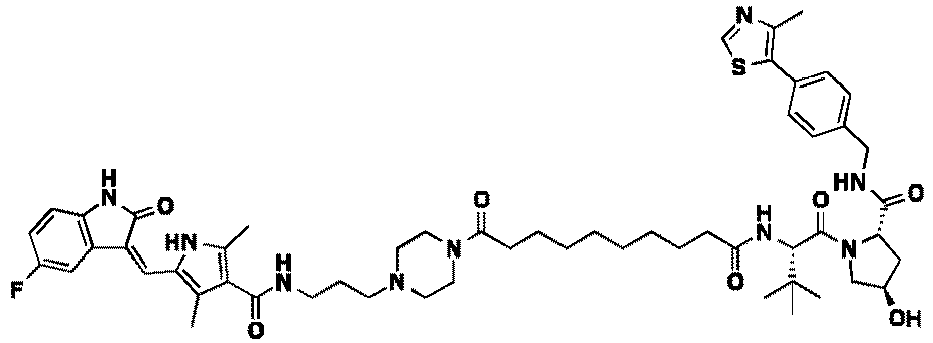
5-(((Z)-5-fluoro-2-oxoindolin-3-ylidene)methyl)-N-(3-(4-(10-(((S)-1-((2S,4R)-4-hyd roxy-2-((4-(4-methylthiazol-5-yl)benzyl)carbamoyl)pyrrolidin-1-yl)-3,3-dimethyl-1-oxobutan-2-yl)amino)-10-oxodecanoyl)piperazin-1-yl)propyl)-2,4-dimethyl-1H-pyrrole-3-carboxamide 17 HC58-34 
5-(((Z)-5-fluoro-2-oxoindolin-3-ylidene)methyl)-N-(3-(4-(11-(((S)-1 -((2S,4R)-4-hydroxy-2-((4-(4-methylthiazol-5-yl)benzyl)carbamoyl)pyrrolidin-1-yl)-3,3-dimethyl-1-oxobutan-2-yl)amino)-11-oxoundecanoyl)piperazin-1-yl)propyl)-2,4-dimethyl-1H-pyrrole-3-carboxamide 18 HC58-35 
(Z)-N-(3-(4-((2-(2,6-dioxopiperidin-3-yl)-1,3-dioxoisoindolin-4-yl)glycyl)piperazin-1-yl)propyl)-5-((5-fluoro-2-oxoindolin-3-ylidene)methyl)-2,4-dimethyl-1H-pyrrole-3-carboxamide 19 HC58-36 
(Z)-N-(3-(4-(3-((2-(2,6-dioxopiperidin-3-yl)-1,3-dioxoisoindolin-4-yl)amino)propanoyl)piperazin-1-yl)propyl)-5-((5-fluoro-2-oxoindolin-3-ylidene)methyl)-2,4-dimethyl-1H-pyrrole-3-carboxamide 20 HC58-37 
(Z)-N-(3-(4-(4-((2-(2,6-dioxopiperidin-3-yl)-1,3-dioxoisoindolin-4-yl)amino)butanoyl)piperazin-1-yl)propyl)-5-((5-fluoro-2-oxoindolin-3-ylidene)methyl)-2,4-dimethyl-1H-pyrrole-3-carboxamide 21 HC58-38 
(Z)-N-(3-(4-(5-((2-(2,6-dioxopiperidin-3-yl)-1,3-dioxoisoindolin-4-yl)amino)pentanoyl)piperazin-1-yl)propyl)-5-((5-fluoro-2-oxoindolin-3-ylidene)methyl)-2,4-dimethyl-1H-pyrrole-3-carboxamide 22 HC58-39 
(Z)-N-(3-(4-(6-((2-(2,6-dioxopiperidin-3-yl)-1,3-dioxoisoindolin-4-yl)amino)hexanoyl)piperazin-1-yl)propyl)-5-((5-fluoro-2-oxoindolin-3-ylidene)methyl)-2,4-dimethyl-1H-pyrrole-3-carboxamide 23 HC58-40 
(Z)-N-(3-(4-(7-((2-(2,6-dioxopiperidin-3-yl)-1,3-dioxoisoindolin-4-yl)amino)heptanoyl)piperazin-1-yl)propyl)-5-((5-fluoro-2-oxoindolin-3-ylidene)methyl)-2,4-dimethyl-1H-pyrrole-3-carboxamide 24 HC58-41 
(Z)-N-(3-(4-(8-((2-(2,6-dioxopiperidin-3-yl)-1,3-dioxoisoindolin-4-yl)amino)octanoyl)piperazin-1-yl)propyl)-5-((5-fluoro-2-oxoindolin-3-ylidene)methyl)-2,4-dimethyl-1H-pyrrole-3-carboxamide 25 HC58-43 
(Z)-N-(3-(4-(3-(2-(2-((2-(2,6-dioxopiperidin-3-yl)-1,3-dioxoisoindolin-4-yl)amino)ethoxy)ethoxy)propanoyl) piperazin-1-yl)propyl)-5-((5-fluoro-2-oxoindolin-3-ylidene)methyl)-2,4-dimethyl-1H-pyrrole-3-carboxamide 26 HC58-44 
(Z)-N-(3-(4-(3-(2-(2-(2-((2-(2,6-dioxopiperidin-3-yl)-1,3-dioxoisoindolin-4-yl)amino)ethoxy)ethoxy)ethoxy)pro panoyl)piperazin-1-yl)propyl)-5-((5-fluoro-2-oxoindolin-3-ylidene)methyl)-2,4-dimethyl-1H-pyrrole-3-carboxamide 27 HC58-45 
(Z)-N-(3-(4-(1-((2-(2,6-dioxopiperidin-3-yl)-1,3-dioxoisoindolin-4-yl)amino)-3,6,9,12-tetraoxapentadecan-15-oyl)piperazin-1-yl)propyl)-5-((5-fluoro-2-oxoindolin-3-ylidene)methyl)-2,4-dimethyl-1H-pyrrole-3-carboxamide 28 HC58-46 
(Z)-N-(3-(4-(1-((2-(2,6-dioxopiperidin-3-yl)-1,3-dioxoisoindolin-4-yl)amino)-3,6,9,12,15-pentaoxaoctadecan-18-oyl)piperazin-1-yl)propyl)-5-((5-fluoro-2-oxoindolin-3-ylidene)methyl)-2,4-dimethyl-1H-pyrrole-3-carboxamide 30 HC58-53 
5-(((Z)-5-fluoro-2-oxoindolin-3-ylidene)methyl)-N-(3-(4-((S)-16-((2S,4R)-4-hydroxy-2-((4-(4-methylthiazol-5-yl)benzyl)carbamoyl)pyrrolidine-1-carbonyl)-17,17-dimethyl-2,14-dioxo-6,9,12-trioxa-3,15-diazaoctadecyl)piperazin-1-yl)propyl)-2,4-dimethyl-1H-pyrrole-3-carboxamide 31 HC58-57 
5-(((Z)-5-fluoro-2-oxoindolin-3-ylidene)methyl)-N-(3-(4-(2-((2-(((S)-1-((2S,4R)-4-hydroxy-2-((4-(4-methylthiazol-5-yl)benzyl)carbamoyl)pyrrolidin-1-yl)-3,3-dimethyl-1-oxobutan-2-yl)amino)-2-oxoethyl)amino)-2-oxoethyl)piperazin-1-yl)propyl)-2,4-dimethyl-1H-pyrrole-3-carboxamide 32 HC58-58 
5-(((Z)-5-fluoro-2-oxoindolin-3-ylidene)methyl)-N-(3-(4-(2-((3-(((S)-1-((2S,4R)-4-hydroxy-2-((4-(4-methylthiazol-5-yl)benzyl)carbamoyl)pyrrolidin-1-yl)-3,3-dimethyl-1-oxobutan-2-yl)amino)-3-oxopropyl)amino)-2-oxoethyl)piperazin-1-yl)propyl)-2,4-dimethyl-1H-pyrrole-3-carboxamide 33 HC58-59 
5-(((Z)-5-fluoro-2-oxoindolin-3-ylidene)methyl)-N-(3-(4-(2-((4-(((S)-1-((2S,4R)-4-hydroxy-2-((4-(4-methylthiazol-5-yl)benzyl)carbamoyl)pyrrolidin-1-yl)-3,3-dimethyl-1-oxobutan-2-yl)amino)-4-oxobutyl)amino)-2-oxoethyl)piperazin-1-yl)propyl)-2,4-dimethyl-1H-pyrrole-3-carboxamide 34 HC58-60 
5-(((Z)-5-fluoro-2-oxoindolin-3-ylidene)methyl)-N-(3-(4-(2-((5-(((S)-1-((2S,4R)-4-hydroxy-2-((4-(4-methylthiazol-5-yl)benzyl)carbamoyl)pyrrolidin-1-yl)-3,3-dimethyl-1-oxobutan-2-yl)amino)-5-oxopentyl)amino)-2-oxoethyl)piperazin-1-yl)propyl)-2,4-dimethyl-1H-pyrrole-3-carboxamide 35 HC58-63 
5-(((Z)-5-fluoro-2-oxoindolin-3-ylidene)methyl)-N-(3-(4-(2-((8-(((S)-1-((2S,4R)-4-hydroxy-2-((4-(4-methylthiazol-5-yl)benzyl)carbamoyl)pyrrolidin-1-yl)-3,3-dimethyl-1-oxobutan-2-yl)amino)-8-oxooctyl)amino)-2-oxoethyl)piperazin-1-yl)propyl)-2,4-dimethyl-1H-pyrrole-3-carboxamide 36 HC58-64 
5-(((Z)-5-fluoro-2-oxoindolin-3-ylidene)methyl)-N-(3-(4-(2-((9-(((S)-1-((2S,4R)-4-hydroxy-2-((4-(4-methylthiazol-5-yl)benzyl)carbamoyl)pyrrolidin-1-yl)-3,3-dimethyl-1-oxobutan-2-yl)amino)-9-oxononyl)amino)-2-oxoethyl)piperazin-1-yl)propyl)-2,4-dimethyl-1H-pyrrole-3-carboxamide 37 HC58-65 
5-(((Z)-5-fluoro-2-oxoindolin-3-ylidene)methyl)-N-(3-(4-(2-((10-(((S)-1-((2S,4R)-4-hydroxy-2-((4-(4-methylthiazol-5-yl)benzyl)carbamoyl)pyrrolidin-1-yl)-3,3-dimethyl-1-oxobutan-2-yl)amino)-10-oxodecyl)amino)-2-oxoethyl)piperazin-1-yl)propyl)-2,4-dimethyl-1H-pyrrole-3-carboxamide 38 HC58-66 
5-(((Z)-5-fluoro-2-oxoindolin-3-ylidene)methyl)-N-(3-(4-(2-((11-(((S)-1-((2S,4R)-4-hydroxy-2-((4-(4-methylthiazol-5-yl)benzyl)carbamoyl)pyrrolidin-1-yl)-3,3-dimethyl-1-oxobutan-2-yl)amino)-11-oxoundecyl)amino)-2-oxoethyl)piperazin-1-yl)propyl)-2,4-dimethyl-1H-pyrrole-3-carboxamide 39 HC58-67 
(Z)-N-(3-(4-(2-((2-(2-((2-(2,6-dioxopiperidin-3-yl)-1,3-dioxoisoindolin-4-yl)amino)ethoxy)ethyl)amino)-2-oxoethyl)piperazin-1-yl)propyl)-5-((5-fluoro-2-oxoindolin-3-ylidene)methyl)-2,4-dimethyl-1H-pyrrole-3-carboxamide 40 HC58-68 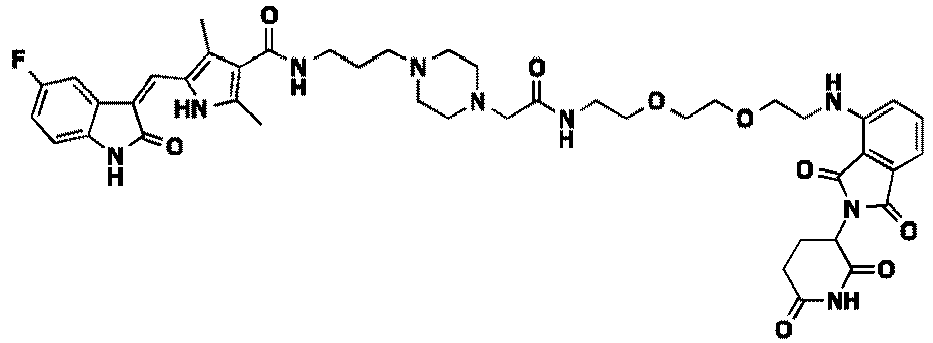
(Z)-N-(3-(4-(2-((2-(2-(2-((2-(2,6-dioxopiperidin-3-yl)-1,3-dioxoisoindolin-4-yl)amino)ethoxy)ethoxy)ethyl)amin o)-2-oxoethyl)piperazin-1-yl)propyl)-5-((5-fluoro-2-oxoindolin-3-ylidene)methyl)-2,4-dimethyl-1H-pyrrole-3-carboxamide 41 HC58-69 
(Z)-N(3-(4-(14-((2-(2,6-dioxopiperidin-3-yl)-1,3-dioxoisoindolin-4-yl)amino)-2-oxo-6,9,12-trioxa-3-azatetradecyl)piperazin-1-yl)propyl)-5-((5-fluoro-2-oxoindolin-3-ylidene)methyl)-2,4-dimethyl-1H-pyrrole-3-carboxamide 42 HC58-70 
(Z)-N-(3-(4-(17-((2-(2,6-dioxopiperidin-3-yl)-1,3-dioxoisoindolin-4-yl)amino)-2-oxo-6,9,12,15-tetraoxa-3-azaheptadecyl)piperazin-1-yl)propyl)-5-((5-fluoro-2-oxoindolin-3-ylidene)methyl)-2,4-dimethyl-1H-pyrrole-3-carboxamide 43 HC58-71 
(Z)-N-(3-(4-(20-((2-(2,6-dioxopiperidin-3-yl)-1,3-dioxoisoindolin-4-yl)amino)-2-oxo-6,9,12,15,18-pentaoxa-3-azaicosyl)piperazin-1-yl)propyl)-5-((5-fluoro-2-oxoindolin-3-ylidene)methyl)-2,4-dimethyl-1H-pyrrole-3-carboxamide 44 HC58-73 
(Z)-N-(3-(4-(2-((3-((2-(2,6-dioxopiperidin-3-yl)-1,3-dioxoisoindolin-4-yl)amino)propyl)amino)-2-oxoethyl)piperazin-1-yl)propyl)-5-((5-fluoro-2-oxoindolin-3-ylidene)methyl)-2,4-dimethyl-1H-pyrrole-3-carboxamide 45 HC58-74 
(Z)-N-(3-(4-(2-((4-((2-(2,6-dioxopiperidin-3-yl)-1,3-dioxoisoindolin-4-yl)amino)butyl)amino)-2-oxoethyl)piperazin-1-yl)propyl)-5-((5-fluoro-2-oxoindolin-3-ylidene)methyl)-2,4-dimethyl-1H-pyrrole-3-carboxamide 46 HC58-75 
(Z)-N-(3-(4-(2-((5-((2-(2,6-dioxopiperidin-3-yl)-1,3-dioxoisoindolin-4-yl)amino)pentyl)amino)-2-oxoethyl)piperazin-1-yl)propyl)-5-((5-fluoro-2-oxoindolin-3-ylidene)methyl)-2,4-dimethyl-1H-pyrrole-3-carboxamide 47 HC58-76 
(Z)-N-(3-(4-(2-((6-((2-(2,6-dioxopiperidin-3-yl)-1,3-dioxoisoindolin-4-yl)amino)hexyl)amino)-2-oxoethyl)piperazin-1-yl)propyl)-5-((5-fluoro-2-oxoindolin-3-ylidene)methyl)-2,4-dimethyl-1H-pyrrole-3-carboxamide 48 HC58-77 
(Z)-N-(3-(4-(2-((7-((2-(2,6-dioxopiperidin-3-yl)-1,3-dioxoisoindolin-4-yl)amino)heptyl)amino)-2-oxoethyl)piperazin-1-yl)propyl)-5-((5-fluoro-2-oxoindolin-3-ylidene)methyl)-2,4-dimethyl-1H-pyrrole-3-carboxamide 49 HC58-78 
(Z)-N-(3-(4-(2-((8-((2-(2,6-dioxopiperidin-3-yl)-1,3-dioxoisoindolin-4-yl)amino)octyl)amino)-2-oxoethyl)piperazin-1-yl)propyl)-5-((5-fluoro-2-oxoindolin-3-ylidene)methyl)-2,4-dimethyl-1H-pyrrole-3-carboxamide 51 HC58-133 
(Z)-N-(3-(4-(2-(2-((2-(2,6-dioxopiperidin-3-yl)-1,3-dioxoisoindolin-4-yl)amino)acetamido)ethyl)piperazi n-1 -yl)propyl)-5-((5-fluoro-2-oxoindolin-3-ylidene)methyl)-2,4-dimethyl-1H-pyrrole-3-carboxamide 52 HC58-134 
(Z)-N-(3-(4-(2-(3-((2-(2,6-dioxopiperidin-3-yl)-1,3-dioxoisoindolin-4-yl)amino)propanamido)ethyl)piper azin-1-yl)propyl)-5-((5-fluoro-2-oxoindolin-3-ylidene)methyl)-2,4-dimethyl-1H-pyrrole-3-carboxamide 53 HC58-135 
(Z)-N-(3-(4-(2-(4-((2-(2,6-dioxopiperidin-3-yl)-1,3-dioxoisoindolin-4-yl)amino)butanamido)ethyl)piperaz in-1-yl)propyl)-5-((5-fluoro-2-oxoindolin-3-ylidene)methyl)-2,4-dimethyl-1H-pyrrole-3-carboxamide 54 HC58-136 
(Z)-N-(3-(4-(2-(5-((2-(2,6-dioxopiperidin-3-yl)-1,3-dioxoisoindolin-4-yl)amino)pentanamido)ethyl)piper azin-1-yl)propyl)-5-((5-fluoro-2-oxoindolin-3-ylidene)methyl)-2,4-dimethyl-1H-pyrrole-3-carboxamide 55 HC58-137 
(Z)-N-(3-(4-(2-(6-((2-(2,6-dioxopiperidin-3-yl)-1,3-dioxoisoindolin-4-yl)amino)hexanamido)ethyl)pipera zin-1-yl)propyl)-5-((5-fluoro-2-oxoindolin-3-ylidene)methyl)-2,4-dimethyl-1H-pyrrole-3-carboxamide 56 HC58-138 
(Z)-N-(3-(4-(2-(7-((2-(2,6-dioxopiperidin-3-yl)-1,3-dioxoisoindolin-4-yl)amino)heptanamido)ethyl)piper azin-1-yl)propyl)-5-((5-fluoro-2-oxoindolin-3-ylidene)methyl)-2,4-dimethyl-1H-pyrrole-3-carboxamide 57 HC58-139 
(Z)-N-(3-(4-(2-(8-((2-(2,6-dioxopiperidin-3-yl)-1,3-dioxoisoindolin-4-yl)amino)octanamido)ethyl)piperaz in-1-yl)propyl)-5-((5-fluoro-2-oxoindolin-3-ylidene)methyl)-2,4-dimethyl-1H-pyrrole-3-carboxamide 59 HC58-144 
(Z)-N-(3-(4-(4-((2-((2-(2,6-dioxopiperidin-3-yl)-1,3-dioxoisoindolin-4-yl)amino)ethyl)amino)-4-oxobutyl)piperazin-1-yl)propyl)-5-((5-fluoro-2-oxoindolin-3-ylidene)methyl)-2,4-dimethyl-1H-pyrrole-3-carboxamide 60 HC58-145 
(Z)-N-(3-(4-(4-((3-((2-(2,6-dioxopiperidin-3-yl)-1,3-dioxoisoindolin-4-yl)amino)propyl)amino)-4-oxobutyl)piperazin-1-yl)propyl)-5-((5-fluoro-2-oxoindolin-3-ylidene)methyl)-2,4-dimethyl-1H-pyrrole-3-carboxamide 61 HC58-146 
(Z)-N-(3-(4-(4-((4-((2-(2,6-dioxopiperidin-3-yl)-1,3-dioxoisoindolin-4-yl)amino)butyl)amino)-4-oxobutyl)piperazin-1-yl)propyl)-5-((5-fluoro-2-oxoindolin-3-ylidene)methyl)-2,4-dimethyl-1H-pyrrole-3-carboxamide 62 HC58-147 
(Z)-N-(3-(4-(4-((5-((2-(2,6-dioxopiperidin-3-yl)-1,3-dioxoisoindolin-4-yl)amino)pentyl)amino)-4-oxobutyl)piperazin-1-yl)propyl)-5-((5-fluoro-2-oxoindolin-3-ylidene)methyl)-2,4-dimethyl-1H-pyrrole-3-carboxamide 63 HC58-148 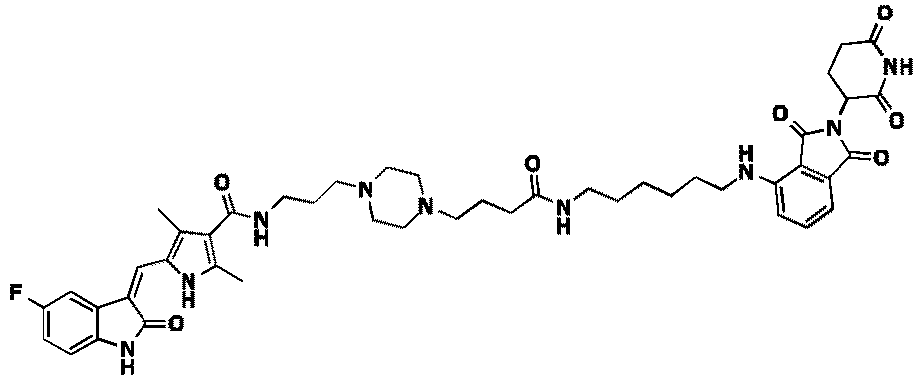
(Z)-N-(3-(4-(4-((6-((2-(2,6-dioxopiperidin-3-yl)-1,3-dioxoisoindolin-4-yl)amino)hexyl)amino)-4-oxobutyl)piperazin-1-yl)propyl)-5-((5-fluoro-2-oxoindolin-3-ylidene)methyl)-2,4-dimethyl-1H-pyrrole-3-carboxamide 64 HC58-149 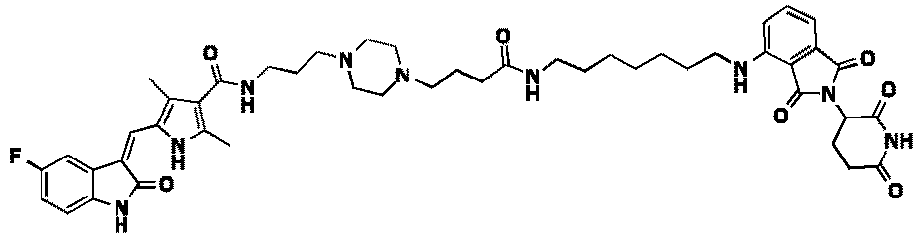
(Z)-N-(3-(4-(4-((7-((2-(2,6-dioxopiperidin-3-yl)-1,3-dioxoisoindolin-4-yl)amino)heptyl)amino)-4-oxobutyl)piperazin-1-yl)propyl)-5-((5-fluoro-2-oxoindolin-3-ylidene)methyl)-2,4-dimethyl-1H-pyrrole-3-carboxamide 65 HC58-150 
(Z)-N-(3-(4-(4-((8-((2-(2,6-dioxopiperidin-3-yl)-1,3-dioxoisoindolin-4-yl)amino)octyl)amino)-4-oxobutyl)piperazin-1-yl)propyl)-5-((5-fluoro-2-oxoindolin-3-ylidene)methyl)-2,4-dimethyl-1H-pyrrole-3-carboxamide 66 HC58-158 
(Z)-N-(3-(4-(2-((5-((2-(2,6-dioxopiperidin-3-yl)-1,3-dioxoisoindolin-4-yl)oxy)pentyl)amino)-2-oxoethyl)piperazin-1-yl)propyl)-5-((5-fluoro-2-oxoindolin-3-ylidene)methyl)-2,4-dimethyl-1H-pyrrole-3-carboxamide 67 HC58-159 
(Z)-N-(3-(4-(2-((6-((2-(2,6-dioxopiperidin-3-yl)-1,3-dioxoisoindolin-4-yl)oxy)hexyl)amino)-2-oxoethyl)piperazin-1-yl)propyl)-5-((5-fluoro-2-oxoindolin-3-ylidene)methyl)-2,4-dimethyl-1H-pyrrole-3-carboxamide 68 HC58-160 
(Z)-N-(3-(4-(2-((8-((2-(2,6-dioxopiperidin-3-yl)-1,3-dioxoisoindolin-4-yl)oxy)octyl)amino)-2-oxoethyl)piperazin-1-yl)propyl)-5-((5-fluoro-2-oxoindolin-3-ylidene)methyl)-2,4-dimethyl-1H-pyrrole-3-carboxamide 69 HC58-161 
(Z)-N-(3-(4-(2-((9-(2-(2,6-dioxopiperidin-3-yl)-1,3-dioxoisoindolin-4-yl)nonyl)amino)-2-oxoethyl)piperazin-1-yl)propyl)-5-((5-fluoro-2-oxoindolin-3-ylidene)methyl)-2,4-dimethyl-1H-pyrrole-3-carboxamide 70 HC58-164 
(Z)-N-(3-(4-(2-((5-((2-(2,6-dioxopiperidin-3-yl)-1-oxoisoindolin-4-yl)amino)pentyl)amino)-2-oxoethyl)piperazin-1-yl)propyl)-5-((5-fluoro-2-oxoindolin-3-ylidene)methyl)-2,4-dimethyl-1H-pyrrole-3-carboxamide 71 HC58-165 
(Z)-N-(3-(4-(2-((6-((2-(2,6-dioxopiperidin-3-yl)-1-oxoisoindolin-4-yl)amino)hexyl)amino)-2-oxoethyl)piperazin-1-yl)propyl)-5-((5-fluoro-2-oxoindolin-3-ylidene)methyl)-2,4-dimethyl-1H-pyrrole-3-carboxamide 72 HC58-167 
(Z)-N-(3-(4-(2-((8-((2-(2,6-dioxopiperidin-3-yl)-1-oxoisoindolin-4-yl)amino)octyl)amino)-2-oxoethyl)piperazin-1-yl)propyl)-5-((5-fluoro-2-oxoindolin-3-ylidene)methyl)-2,4-dimethyl-1H-pyrrole-3-carboxamide 73 HC58-178 
(Z)-N-(3-(4-(2-((7-(2-(2,6-dioxopiperidin-3-yl)-1,3-dioxoisoindolin-4-yl)heptyl)amino)-2-oxoethyl)piperazin-1-yl)propyl)-5-((5-fluoro-2-oxoindolin-3-ylidene)methyl)-2,4-dimethyl-1H-pyrrole-3-carboxamide 75 HC58-179 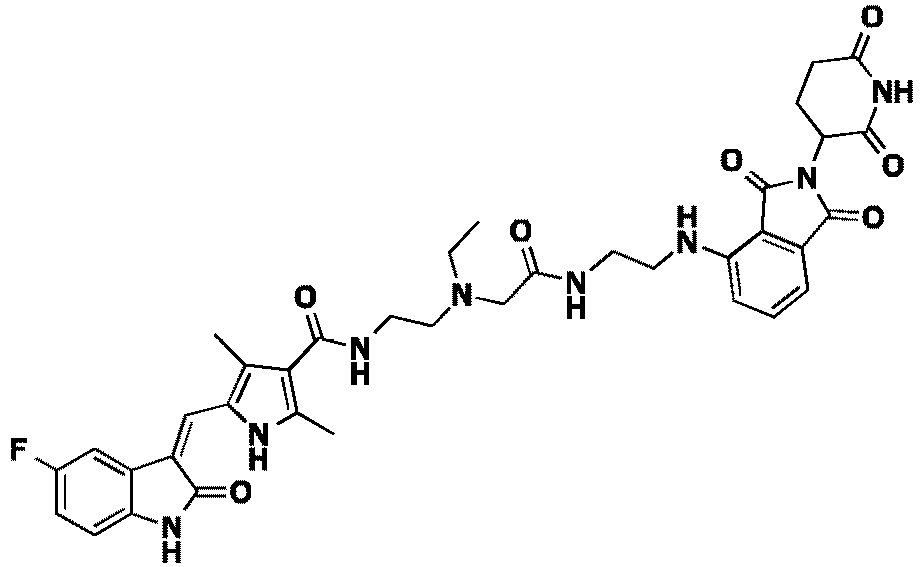
(Z)-N-(2-((2-((2-((2-(2,6-dioxopiperidin-3-yl)-1,3-dioxoisoindolin-4-yl)amino)ethyl)amino)-2-oxoethyl)(ethyl)amino)ethyl)-5-((5-fluoro-2-oxoindolin-3-ylidene)methyl)-2,4-dimethyl-1H-pyrrole-3-carboxamide 76 HC58-180 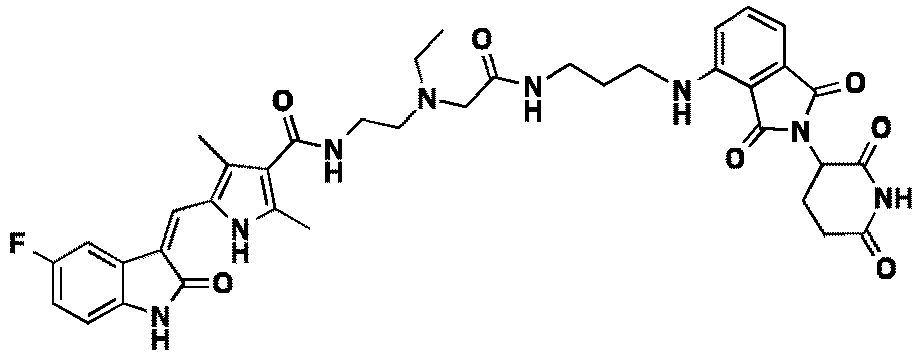
(Z)-N-(2-((2-((3-((2-(2,6-dioxopiperidin-3-yl)-1,3-dioxoisoindolin-4-yl)amino)propyl)amino)-2-oxoethyl)(ethyl)amino)ethyl)-5-((5-fluoro-2-oxoindolin-3-ylidene)methyl)-2,4-dimethyl-1H-pyrrole-3-carboxamide 77 HC58-181 
(Z)-N-(2-((2-((4-((2-(2,6-dioxopiperidin-3-yl)-1,3-dioxoisoindolin-4-yl)amino)butyl)amino)-2-oxoethyl)(ethyl)amino)ethyl)-5-((5-fluoro-2-oxoindolin-3-ylidene)methyl)-2,4-dimethyl-1H-pyrrole-3-carboxamide 78 HC58-182 
(Z)-N-(2-((2-((5-((2-(2,6-dioxopiperidin-3-yl)-1,3-dioxoisoindolin-4-yl)amino)pentyl)amino)-2-oxoethyl)(ethyl)amino)ethyl)-5-((5-fluoro-2-oxoindolin-3-ylidene)methyl)-2,4-dimethyl-1H-pyrrole-3-carboxamide 79 HC58-183 
(Z)-N-(2-((2-((6-((2-(2,6-dioxopiperidin-3-yl)-1,3-dioxoisoindolin-4-yl)amino)hexyl)amino)-2-oxoethyl)(ethyl)amino)ethyl)-5-((5-fluoro-2-oxoindolin-3-ylidene)methyl)-2,4-dimethyl-1H-pyrrole-3-carboxamide 80 HC58-184 
(Z)-/V-(2-((2-((7-((2-(2,6-dioxopiperidin-3-yl)-1,3-dioxoisoindolin-4-yl)amino)heptyl)amino)-2-oxoethyl)(ethyl)amino)ethyl)-5-((5-fluoro-2-oxoindolin-3-ylidene)methyl)-2,4-dimethyl-1H-pyrrole-3-carboxamide 81 HC58-185 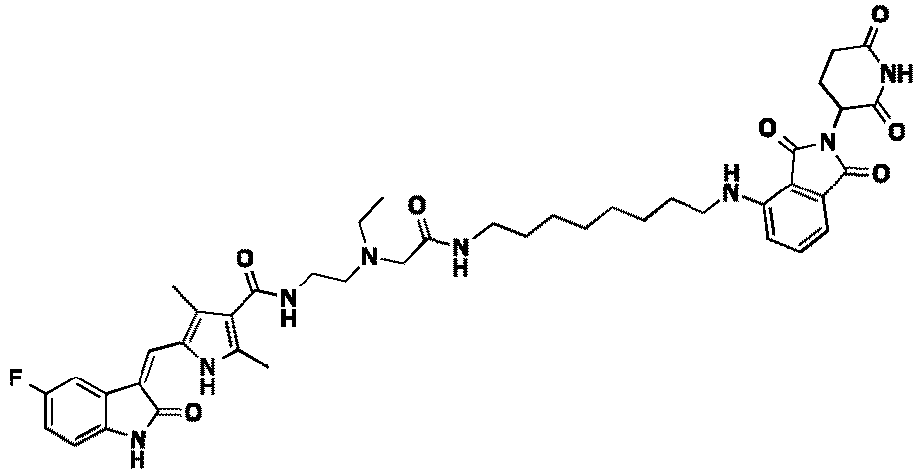
(Z)-N-(2-((2-((8-((2-(2,6-dioxopiperidin-3-yl)-1,3-dioxoisoindolin-4-yl)amino)octyl)amino)-2-oxoethyl)(ethyl)amino)ethyl)-5-((5-fluoro-2-oxoindolin-3-ylidene)methyl)-2,4-dimethyl-1H-pyrrole-3-carboxamide 83 HC65-2 
(Z)-N-(2-(4-((2-(2,6-dioxopiperidin-3-yl)-1,3-dioxoisoindolin-4-yl)glycyl)piperazin-1-yl)ethyl)-5-((5-fluoro-2-oxoindolin-3-ylidene)methyl)-2,4-dimethyl-1H-pyrrole-3-carboxamide 84 HC65-3 
(Z)-N-(2-(4-(3-((2-(2,6-dioxopiperidin-3-yl)-1,3-dioxoisoindolin-4-yl)amino)propanoyl)piperazin-1-yl)ethyl)-5-((5-fluoro-2-oxoindolin-3-ylidene)methyl)-2,4-dimethyl-1H-pyrrole-3-carboxamide 85 HC65-4 
(Z)-N-(2-(4-(4-((2-(2,6-dioxopiperidin-3-yl)-1,3-dioxoisoindolin-4-yl)amino)butanoyl)piperazin-1-yl)ethyl)-5-((5-fluoro-2-oxoindolin-3-ylidene)methyl)-2,4-dimethyl-1H-pyrrole-3-carboxamide 86 HC65-5 
(Z)-/V-(2-(4-(5-((2-(2,6-dioxopiperidin-3-yl)-1,3-dioxoisoindolin-4-yl)amino)pentanoyl)piperazin-1-yl)ethyl)-5-((5-fluoro-2-oxoindolin-3-ylidene)methyl)-2,4-dimethyl-1H-pyrrole-3-carboxamide 87 HC65-6 
(Z)-/V-(2-(4-(6-((2-(2,6-dioxopiperidin-3-yl)-1,3-dioxoisoindolin-4-yl)amino)hexanoyl)piperazin-1-yl)ethyl)-5-((5-fluoro-2-oxoindolin-3-ylidene)methyl)-2,4-dimethyl-1H-pyrrole-3-carboxamide 88 HC65-7 
(Z)-/V-(2-(4-(7-((2-(2,6-dioxopiperidin-3-yl)-1,3-dioxoisoindolin-4-yl)amino)heptanoyl)piperazin-1-yl)ethyl)-5-((5-fluoro-2-oxoindolin-3-ylidene)methyl)-2,4-dimethyl-1H-pyrrole-3-carboxamide 89 HC65-8 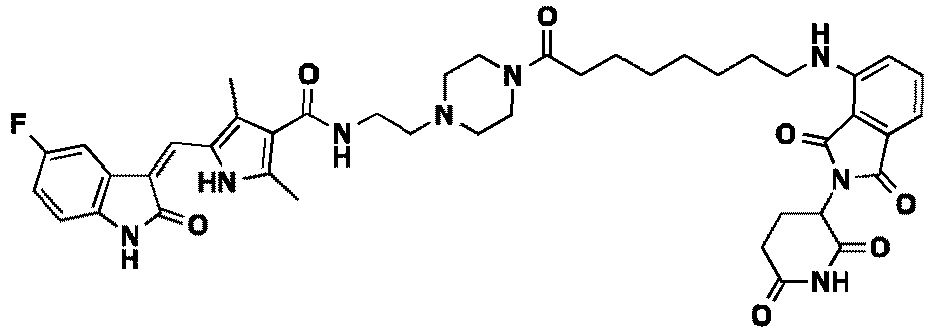
(Z)-N-(2-(4-(8-((2-(2,6-dioxopiperidin-3-yl)-1,3-dioxoisoindolin-4-yl)amino)octanoyl)piperazin-1-yl)ethyl)-5-((5-fluoro-2-oxoindolin-3-ylidene)methyl)-2,4-dimethyl-1H-pyrrole-3-carboxamide 91 HC65-13 
(Z)-N-(2-(4-(2-((2-((2-(2,6-dioxopiperidin-3-yl)-1,3-dioxoisoindolin-4-yl)amino)ethyl)amino)-2-oxoethyl)piperazin-1-yl)ethyl)-5-((5-fluoro-2-oxoindolin-3-ylidene)methyl)-2,4-dimethyl-1H-pyrrole-3-carboxamide 92 HC65-14 
(Z)-N-(2-(4-(2-((3-((2-(2,6-dioxopiperidin-3-yl)-1,3-dioxoisoindolin-4-yl)amino)propyl)amino)-2-oxoethyl)piperazin-1-yl)ethyl)-5-((5-fluoro-2-oxoindolin-3-ylidene)methyl)-2,4-dimethyl-1H-pyrrole-3-carboxamide 93 HC65-15 
(Z)-N-(2-(4-(2-((4-((2-(2,6-dioxopiperidin-3-yl)-1,3-dioxoisoindolin-4-yl)amino)butyl)amino)-2-oxoethyl)piperazin-1-yl)ethyl)-5-((5-fluoro-2-oxoindolin-3-ylidene)methyl)-2,4-dimethyl-1H-pyrrole-3-carboxamide 94 HC65-16 
(Z)-N-(2-(4-(2-((5-((2-(2,6-dioxopiperidin-3-yl)-1,3-dioxoisoindolin-4-yl)amino)pentyl)amino)-2-oxoethyl)piperazin-1-yl)ethyl)-5-((5-fluoro-2-oxoindolin-3-ylidene)methyl)-2,4-dimethyl-1H-pyrrole-3-carboxamide 95 HC65-17 
(Z)-N-(2-(4-(2-((6-((2-(2,6-dioxopiperidin-3-yl)-1,3-dioxoisoindolin-4-yl)amino)hexyl)amino)-2-oxoethyl)piperazin-1-yl)ethyl)-5-((5-fluoro-2-oxoindolin-3-ylidene)methyl)-2,4-dimethyl-1H-pyrrole-3-carboxamide 96 HC65-18 
(Z)-/V-(2-(4-(2-((7-((2-(2,6-dioxopiperidin-3-yl)-1,3-dioxoisoindolin-4-yl)amino)heptyl)amino)-2-oxoethyl)piperazin-1-yl)ethyl)-5-((5-fluoro-2-oxoindolin-3-ylidene)methyl)-2,4-dimethyl-1H-pyrrole-3-carboxamide 97 HC65-19 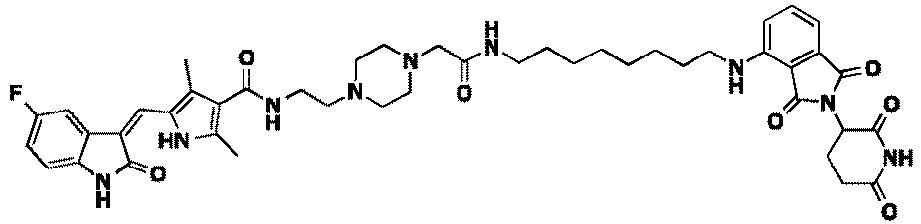
(Z)-N-(2-(4-(2-((8-((2-(2,6-dioxopiperidin-3-yl)-1,3-dioxoisoindolin-4-yl)amino)octyl)amino)-2-oxoethyl)piperazin-1-yl)ethyl)-5-((5-fluoro-2-oxoindolin-3-ylidene)methyl)-2,4-dimethyl-1H-pyrrole-3-carboxamide 99 HC65-24 
(Z)-N-(2-((2-(2-((2-(2,6-dioxopiperidin-3-yl)-1,3-dioxoisoindolin-4-yl)amino)acetamido)ethyl)(ethyl)a mino)ethyl)-5-((5-fluoro-2-oxoindolin-3-ylidene)methyl)-2,4-dimethyl-1H-pyrrole-3-carboxamide 100 HC65-25 
(Z)-N-(2-((2-(3-((2-(2,6-dioxopiperidin-3-yl)-1,3-dioxoisoindolin-4-yl)amino)propanamido)ethyl)(ethyl )amino)ethyl)-5-((5-fluoro-2-oxoindolin-3-ylidene)methyl)-2,4-dimethyl-1H-pyrrole-3-carboxamide 101 HC65-26 
(Z)-N-(2-((2-(4-((2-(2,6-dioxopiperidin-3-yl)-1,3-dioxoisoindolin-4-yl)amino)butanamido)ethyl)(ethyl) amino)ethyl)-5-((5-fluoro-2-oxoindolin-3-ylidene)methyl)-2,4-dimethyl-1H-pyrrole-3-carboxamide 102 HC65-27 
(Z)-N-(2-((2-(5-((2-(2,6-dioxopiperidin-3-yl)-1,3-dioxoisoindolin-4-yl)amino)pentanamido)ethyl)(ethyl )amino)ethyl)-5-((5-fluoro-2-oxoindolin-3-ylidene)methyl)-2,4-dimethyl-1H-pyrrole-3-carboxamide 103 HC65-28 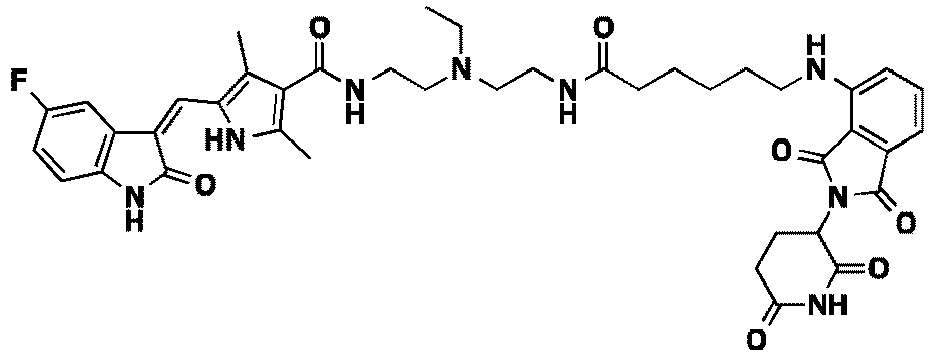
(Z)-N-(2-((2-(6-((2-(2,6-dioxopiperidin-3-yl)-1,3-dioxoisoindolin-4-yl)amino)hexanamido)ethyl)(ethyl) amino)ethyl)-5-((5-fluoro-2-oxoindolin-3-ylidene)methyl)-2,4-dimethyl-1H-pyrrole-3-carboxamide 104 HC65-29 
(Z)-/V-(2-((2-(7-((2-(2,6-dioxopiperidin-3-yl)-1,3-dioxoisoindolin-4-yl)amino)heptanamido)ethyl)(ethyl )amino)ethyl)-5-((5-fluoro-2-oxoindolin-3-ylidene)methyl)-2,4-dimethyl-1H-pyrrole-3-carboxamide 105 HC65-30 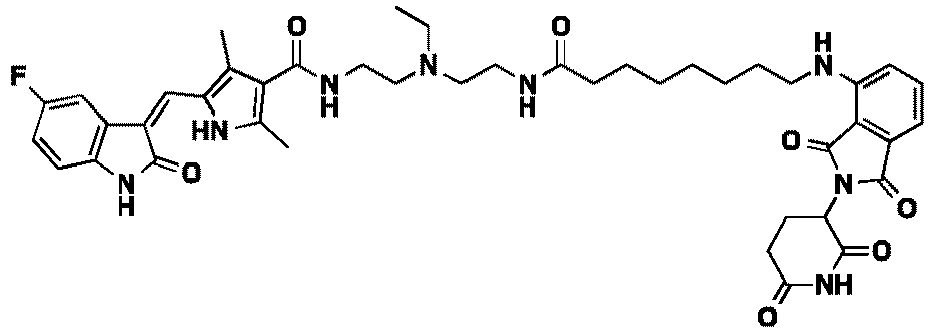
(Z)-N-(2-((2-(8-((2-(2,6-dioxopiperidin-3-yl)-1,3-dioxoisoindolin-4-yl)amino)octanamido)ethyl)(ethyl)a mino)ethyl)-5-((5-fluoro-2-oxoindolin-3-ylidene)methyl)-2,4-dimethyl-1H-pyrrole-3-carboxamide 106 HC65-33 
(Z)-N-(3-(4-(2-((5-((2-(2,6-dioxopiperidin-3-yl)-1,3-dioxoisoindolin-5-yl)amino)pentyl)amino)-2-oxoethyl)piperazin-1-yl)propyl)-5-((5-fluoro-2-oxoindolin-3-ylidene)methyl)-2,4-dimethyl-1H-pyrrole-3-carboxamide 107 HC65-34 
(Z)-N-(3-(4-(2-((6-((2-(2,6-dioxopiperidin-3-yl)-1,3-dioxoisoindolin-5-yl)amino)hexyl)amino)-2-oxoethyl)piperazin-1-yl)propyl)-5-((5-fluoro-2-oxoindolin-3-ylidene)methyl)-2,4-dimethyl-1H-pyrrole-3-carboxamide 108 HC65-35 
(Z)-N-(3-(4-(2-((8-((2-(2,6-dioxopiperidin-3-yl)-1,3-dioxoisoindolin-5-yl)amino)octyl)amino)-2-oxoethyl)piperazin-1-yl)propyl)-5-((5-fluoro-2-oxoindolin-3-ylidene)methyl)-2,4-dimethyl-1H-pyrrole-3-carboxamide 109 HC65-37 
(Z)-N-(3-(4-(2-((6-(2-(2,6-dioxopiperidin-3-yl)-1,3-dioxoisoindolin-4-yl)hexyl)amino)-2-oxoethyl)piperazin-1-yl)propyl)-5-((5-fluoro-2-oxoindolin-3-ylidene)methyl)-2,4-dimethyl-1H-pyrrole-3-carboxamide 110 HC65-74 
(Z)-5-((5-fluoro-2-oxoindolin-3-ylidene)methyl)-2,4-dimethyl-N-(3-(4-(2-((5-((2-(1-methyl-2,6-dioxopiperidin-3-yl)-1,3-dioxoisoindolin-4-yl)amino)pentyl)amino)-2-oxoethyl)piperazin-1-yl)propyl)-1H-pyrrole-3-carboxamide 111 HC65-75 
(Z)-5-((5-fluoro-2-oxoindolin-3-ylidene)methyl)-2,4-dimethyl-N-(3-(4-(2-((8-((2-(1-methyl-2,6-dioxopiperidin-3-yl)-1,3-dioxoisoindolin-4-yl)amino)octyl)amino)-2-oxoethyl)piperazin-1-yl)propyl)-1H-pyrrole-3-carboxamide 115 HC65-175 
N-(3-((8-amino-6-(5-amino-4-methylpyridin-3-yl)-7-fluoroisoquinolin-3-yl)amino)-3-oxopropyl)-8-((2-(2,6-dioxopiperidin-3-yl)-1,3-dioxoisoindolin-4-yl)amino)octanamide 116 HC65-183 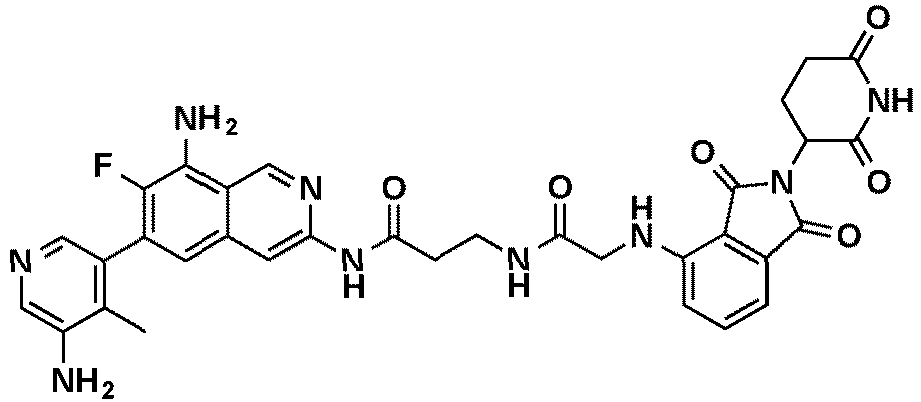
N-(8-amino-6-(5-amino-4-methylpyridin-3-yl)-7-fluoroisoquinolin-3-yl)-3-(2-((2-(2,6-dioxopiperidin-3-yl)-1,3-dioxoisoindolin-4-yl)amino)acetamido)propanamide 117 HC65-184 
N-(8-amino-6-(5-amino-4-methylpyridin-3-yl)-7-fluoroisoquinolin-3-yl)-3-(3-((2-(2,6-dioxopiperidin-3-yl)-1,3-dioxoisoindolin-4-yl)amino)propanamido)propanami de 118 HC65-185 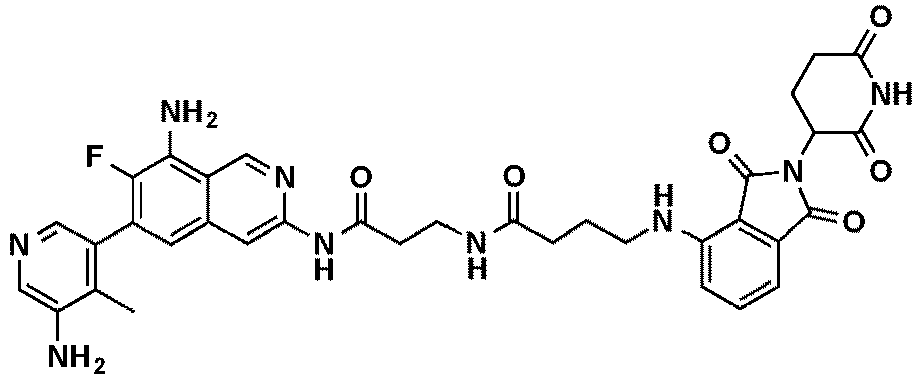
N-(3-((8-amino-6-(5-amino-4-methylpyridin-3-yl)-7-fluoroisoquinolin-3-yl)amino)-3-oxopropyl)-4-((2-(2,6-dioxopiperidin-3-yl)-1,3-dioxoisoindolin-4-yl)amino)butanamide 119 HC65-186 
N-(3-((8-amino-6-(5-amino-4-methylpyridin-3-yl)-7-fluoroisoquinolin-3-yl)amino)-3-oxopropyl)-5-((2-(2,6-dioxopiperidin-3-yl)-1,3-dioxoisoindolin-4-yl)amino)pentanamide 120 HC75-1 
N-(3-((8-amino-6-(5-amino-4-methylpyridin-3-yl)-7-fluoroisoquinolin-3-yl)amino)-3-oxopropyl)-6-((2-(2,6-dioxopiperidin-3-yl)-1,3-dioxoisoindolin-4-yl)amino)hexanamide 121 HC75-2 
N-(3-((8-amino-6-(5-amino-4-methylpyridin-3-yl)-7-fluoroisoquinolin-3-yl)amino)-3-oxopropyl)-7-((2-(2,6-dioxopiperidin-3-yl)-1,3-dioxoisoindolin-4-yl)amino)heptanamide 122 HC75-3 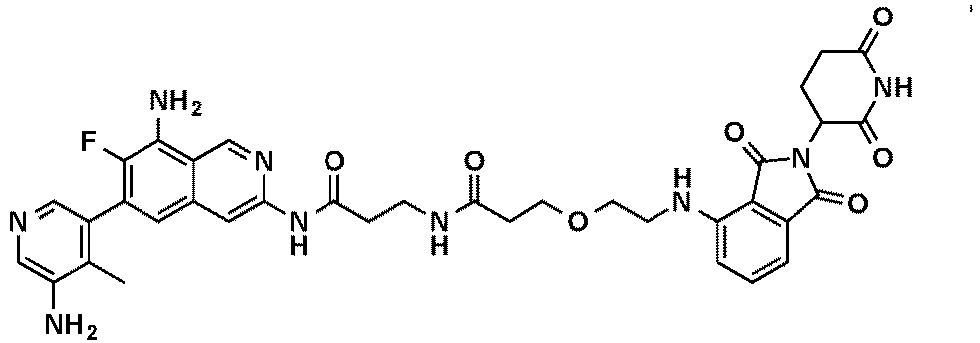
/V-(8-amino-6-(5-amino-4-methylpyridin-3-yl)-7-fluoroisoquinolin-3-yl)-3-(3-(2-((2-(2,6-dioxopiperidin-3-yl)-1,3-dioxoisoindolin-4-yl)amino)ethoxy)propanamido)pro panamide 123 HC75-4 
N-(8-amino-6-(5-amino-4-methylpyridin-3-yl)-7-fluoroisoquinolin-3-yl)-3-(3-(2-(2-((2-(2,6-dioxopiperidin-3-yl)-1,3-dioxoisoindolin-4-yl)amino)ethoxy)ethoxy)propanami do)propanamide 124 HC75-5 
N-(8-amino-6-(5-amino-4-methylpyridin-3-yl)-7-fluoroisoquinolin-3-yl)-3-(3-(2-(2-(2-((2-(2,6-dioxopiperidin-3-yl)-1,3-dioxoisoindolin-4-yl)amino)ethoxy)ethoxy)ethoxy)pro panamido)propanamide 125 HC75-6 
N-(3-((8-amino-6-(5-amino-4-methylpyridin-3-yl)-7-fluoroisoquinolin-3-yl)amino)-3-oxopropyl)-1-((2-(2,6-dioxopiperidin-3-yl)-1,3-dioxoisoindolin-4-yl)amino)-3,6,9,12-tetraoxapentadecan-15-amide 126 HC75-7 
N-(3-((8-amino-6-(5-amino-4-methylpyridin-3-yl)-7-fluoroisoquinolin-3-yl)amino)-3-oxopropyl)-1-((2-(2,6-dioxopiperidin-3-yl)-1,3-dioxoisoindolin-4-yl)amino)-3,6,9,12,15-pentaoxaoctadecan-18-amide 127 HC75-8 
(2S,4R)-1-((S)-2-(2-(2-((3-((8-amino-6-(5-amino-4-methylpyridin-3-yl)-7-fluoroisoquinolin-3-yl)amino)-3-oxopropyl)amino)-2-oxoethoxy)acetamido)-3,3-dimethylbutanoyl)-4-hydroxy-N-(4-(4-methylthiazol-5-yl)benzyl)pyrrolidine-2-carboxamide 128 HC75-9 
(2S,4R)-1-((S)-2-(3-(3-((3-((8-amino-6-(5-amino-4-methylpyridin-3-yl)-7-fluoroisoquinolin-3-yl)amino)-3-oxopropyl)amino)-3-oxopropoxy)propanamido)-3,3-dimethylbutanoyl)-4-hydroxy-N-(4-(4-methylthiazol-5-yl)benzyl)pyrrolidine-2-carboxamide 129 HC75-10 
(2S,4R)-1-((S)-15-((8-amino-6-(5-amino-4-methylpyridin-3-yl)-7-fluoroisoquinolin-3-yl)amino)-2-(tert-butyl)-4,11,15-trioxo-6, 9-dioxa-3,12-diazapentadecanoyl)-4-hydroxy-N-(4-(4-methylthiazol-5-yl)benzyl)pyrrolidine-2-carboxamide 130 HC75-11 
(2S,4R)-1-((S)-17-((8-amino-6-(5-amino-4-methylpyridin-3-yl)-7-fluoroisoquinolin-3-yl)amino)-2-(tert-butyl)-4,13,17-trioxo-7,10-dioxa-3,14-diazaheptadecanoyl)-4-hydroxy-N-(4-(4-methylthiazol-5-yl)benzyl)pyrrolidine-2-carboxamide 131 HC75-12 
(2S,4R)-1-((S)-18-((8-amino-6-(5-amino-4-methylpyridin-3-yl)-7-fluoroisoquinolin-3-yl)amino)-2-(tert-butyl)-4, 14, 18-trioxo-6, 9, 12-trioxa-3,15-diazaoctadecanoyl)-4-hydroxy-N-(4-(4-methylthiazol-5-yl)benzyl)pyrrolidine-2-carboxamide 132 HC75-13 
(2S,4R)-1-((S)-20-((8-amino-6-(5-amino-4-methylpyridin-3-yl)-7-fluoroisoquinolin-3-yl)amino)-2-(tert-butyl)-4,16,20-trioxo-7,10,13-trioxa-3,17-diazaicosanoyl)-4-hydroxy-N-(4-(4-methylthiazol-5-yl)benzyl)pyrrolidine-2-carboxamide 133 HC75-14 
N 1-(3-((8-amino-6-(5-amino-4-methylpyridin-3-yl)-7-fluoroisoquinolin-3-yl)amino)-3-oxopropyl)-N 16-((S)-1-((2S,4R)-4-hydroxy-2-((4-(4-methylthiazol-5-yl)benzyl)carbamoyl)pyrrolidin-1-yl)-3,3-dimethyl-1-oxobutan-2-yl)-4,7,10,13-tetraoxahexadecanediamide 134 HC75-15 
N 1-(3-((8-amino-6-(5-amino-4-methylpyridin-3-yl)-7-fluoroisoquinolin-3-yl)amino)-3-oxopropyl)-N 17-((S)-1-((2S,4R)-4-hydroxy-2-((4-(4-methylthiazol-5-yl)benzyl)carbamoyl)pyrrolidin-1-yl)-3,3-dimethyl-1-oxobutan-2-yl)-3,6,9,12,15-pentaoxaheptadeca nediamide 135 HC75-16 
N 1-(3-((8-amino-6-(5-amino-4-methylpyridin-3-yl)-7-fluoroisoquinolin-3-yl)amino)-3-oxopropyl)-N 19-((S)-1-((2S,4R)-4-hydroxy-2-((4-(4-methylthiazol-5-yl)benzyl)carbamoyl)pyrrolidin-1-yl)-3,3-dimethyl-1-oxobutan-2-yl)-4,7,10,13,16-pentaoxanonadecanediamide 136 HC75-17 
N 1-(3-((8-amino-6-(5-amino-4-methylpyridin-3-yl)-7-fluoroisoquinolin-3-yl)amino)-3-oxopropyl)-N 4-((S)-1-((2S,4R)-4-hydroxy-2-((4-(4-methylthiazol-5-yl)benzyl)carbamoyl)pyrrolidin-1-yl)-3,3-dimethyl-1-oxobutan-2-yl)succinamide 137 HC75-18 
N 1-(3-((8-amino-6-(5-amino-4-methylpyridin-3-yl)-7-fluoroisoquinolin-3-yl)amino)-3-oxopropyl)-N-5-((S)-1-((2S,4R)-4-hydroxy-2-((4-(4-methylthiazol-5-yl)benzyl)carbamoyl)pyrrolidin-1-yl)-3,3-dimethyl-1-oxobutan-2-yl)glutaramide 138 HC75-19 
N 1-(3-((8-amino-6-(5-amino-4-methylpyridin-3-yl)-7-fluoroisoquinolin-3-yl)amino)-3-oxopropyl)-N 6-((S)-1-((2S,4R)-4-hydroxy-2-((4-(4-methylthiazol-5-yl)benzyl)carbamoyl)pyrrolidin-1-yl)-3,3-dimethyl-1-oxobutan-2-yl)adipamide 139 HC75-20 
N 1-(3-((8-amino-6-(5-amino-4-methylpyridin-3-yl)-7-fluoroisoquinolin-3-yl)amino)-3-oxopropyl)-N 7-((S)-1-((2S,4R)-4-hydroxy-2-((4-(4-methylthiazol-5-yl)benzyl)carbamoyl)pyrrolidin-1-yl)-3,3-dimethyl-1-oxobutan-2-yl)heptanediamide 140 HC75-21 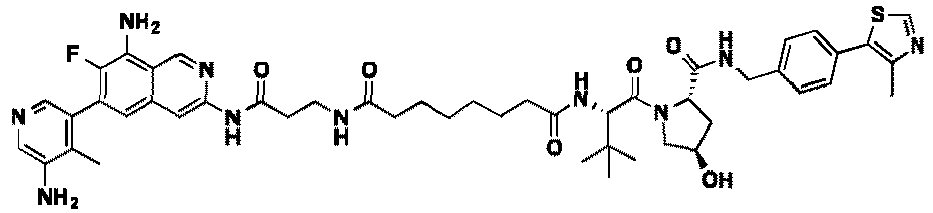
N 1-(3-((8-amino-6-(5-amino-4-methylpyridin-3-yl)-7-fluoroisoquinolin-3-yl)amino)-3-oxopropyl)-N 8-((S)-1-((2S,4R)-4-hydroxy-2-((4-(4-methylthiazol-5-yl)benzyl)carbamoyl)pyrrolidin-1-yl)-3,3-dimethyl-1-oxobutan-2-yl)octanediamide 141 HC75-22 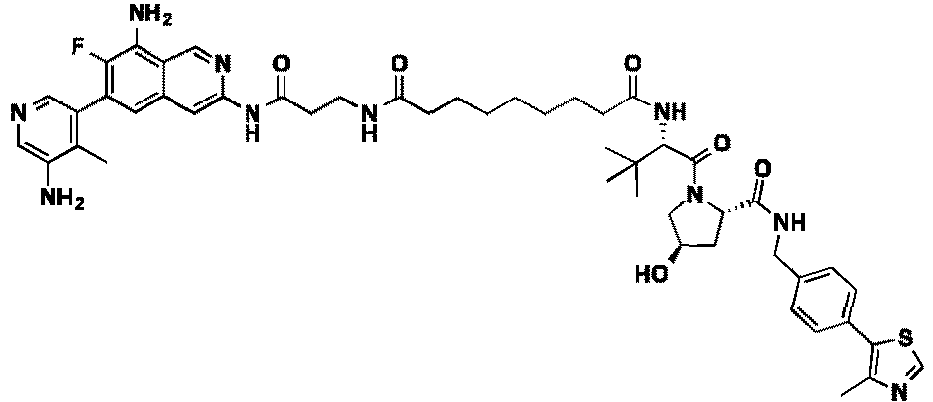
N 1-(3-((8-amino-6-(5-amino-4-methylpyridin-3-yl)-7-fluoroisoquinolin-3-yl)amino)-3-oxopropyl)-N 9-((S)-1-((2S,4R)-4-hydroxy-2-((4-(4-methylthiazol-5-yl)benzyl)carbamoyl)pyrrolidin-1-yl)-3,3-dimethyl-1-oxobutan-2-yl)nonanediamide 142 HC75-23 
N 1-(3-((8-amino-6-(5-amino-4-methylpyridin-3-yl)-7-fluoroisoquinolin-3-yl)amino)-3-oxopropyl)-N 10-((S)-1-((2S,4R)-4-hydroxy-2-((4-(4-methylthiazol-5-yl)benzyl)carbamoyl)pyrrolidin-1-yl)-3,3-dimethyl-1-oxobutan-2-yl)decanediamide 143 HC75-24 
N 1-(3-((8-amino-6-(5-amino-4-methylpyridin-3-yl)-7-fluoroisoquinolin-3-yl)amino)-3-oxopropyl)-N 11-((S)-1-((2S,4R)-4-hydroxy-2-((4-(4-methylthiazol-5-yl)benzyl)carbamoyl)pyrrolidin-1-yl)-3,3-dimethyl-1-oxobutan-2-yl)undecanediamide 144 HC75-29 
N 1-(8-amino-6-(5-amino-4-methylpyridin-3-yl)-7-fluoroisoquinolin-3-yl)-N 5-(2-((2-(2,6-dioxopiperidin-3-yl)-1,3-dioxoisoindolin-4-yl)amino)ethyl)glutaramide 145 HC75-31 
N 1-(8-amino-6-(5-amino-4-methylpyridin-3-yl)-7-filuoroisoquinolin-3-yl)-N 5-(3-((2-(2,6-dioxopiperidin-3-yl)-1,3-dioxoisoindolin-4-yl)amino)propyl)glutaramide 146 HC75-34 
N 1-(8-amino-6-(5-amino-4-methylpyridin-3-yl)-7-fluoroisoquinolin-3-yl)-N 5-(2-(2-((2-(2,6-dioxopiperidin-3-yl)-1,3-dioxoisoindolin-4-yl)amino)ethoxy)ethyl)glutaramide 147 HC75-35 
N 1-(8-amino-6-(5-amino-4-methylpyridin-3-yl)-7-fluoroisoquinolin-3-yl)-N 5-(2-(2-(2-((2-(2,6-dioxopiperidin-3-yl)-1,3-dioxoisoindolin-4-yl)amino)ethoxy)ethoxy)ethyl)gluta ramide 148 HC75-36 
N 1-(8-amino-6-(5-amino-4-methylpyridin-3-yl)-7-fluoroisoquinolin-3-yl)-N 5-(2-(2-(2-(2-((2-(2,6-dioxopiperidin-3-yl)-1,3-dioxoisoindolin-4-yl)amino)ethoxy)ethoxy)ethoxy)eth yl)qlutaramide 149 HC75-37 
N 1-(8-amino-6-(5-amino-4-methylpyridin-3-yl)-7-fluoroisoquinolin-3-yl)-N 5-(14-((2-(2,6-dioxopiperidin-3-yl)-1,3-dioxoisoindolin-4-yl)amino)-3,6,9,12-tetraoxatetradecyl) glutaramide 150 HC75-38 
N 1-(8-amino-6-(5-amino-4-methylpyridin-3-yl)-7-fluoroisoquinolin-3-yl)-N 5-(4-((2-(2,6-dioxopiperidin-3-yl)-1,3-dioxoisoindolin-4-yl)amino)butyl)glutaramide 151 HC75-39 
N 1-(8-amino-6-(5-amino-4-methylpyridin-3-yl)-7-fluoroisoquinolin-3-yl)-N 5-(5-((2-(2,6-dioxopiperidin-3-yl)-1,3-dioxoisoindolin-4-yl)amino)pentyl)glutaramide 152 HC75-40 
N 1-(8-amino-6-(5-amino-4-methylpyridin-3-yl)-7-fluoroisoquinolin-3-yl)-N 5-(6-((2-(2,6-dioxopiperidin-3-yl)-1,3-dioxoisoindolin-4-yl)amino)hexyl)glutaramide 153 HC75-41 
N 1-(8-amino-6-(5-amino-4-methylpyridin-3-yl)-7-fluoroisoquinolin-3-yl)-N 5-(7-((2-(2,6-dioxopiperidin-3-yl)-1,3-dioxoisoindolin-4-yl)amino)heptyl)glutaramide 154 HC75-42 
N 1-(8-amino-6-(5-amino-4-methylpyridin-3-yl)-7-fluoroisoquinolin-3-yl)-N 5-(8-((2-(2,6-dioxopiperidin-3-yl)-1,3-dioxoisoindolin-4-yl)amino)octyl)glutaramide 155 HC75-43 
N 1-(8-amino-6-(5-amino-4-methylpyridin-3-yl)-7-fluoroisoquinolin-3-yl)-N 5-(2-(2-(((S)-1-((2S,4R)-4-hydroxy-2-((4-(4-methylthiazol-5-yl)benzyl)carbamoyl)pyrrolidin-1-yl)-3,3-dimethyl-1-oxobutan-2-yl)amino)-2-oxoethoxy)ethyl)glutaramide 156 HC75-44 
N 1-(8-amino-6-(5-amino-4-methylpyridin-3-yl)-7-fluoroisoquinolin-3-yl)-N 5-(2-(3-(((S)-1-((2S,4R)-4-hydroxy-2-((4-(4-methylthiazol-5-yl)benzyl)carbamoyl)pyrrolidin-1-yl)-3,3-dimethyl-1-oxobutan-2-yl)amino)-3-oxopropoxy)ethyl)glutaramide 157 HC75-45 
N 1-(8-amino-6-(5-amino-4-methylpyridin-3-yl)-7-fluoroisoquinolin-3-yl)-N 5-(2-(2-(2-(((S)-1-((2S,4R)-4-hydroxy-2-((4-(4-methylthiazol-5-yl)benzyl)carbamoyl)pyrrolidin-1-yl)-3,3-dimethyl-1-oxobutan-2-yl)amino)-2-oxoethoxy)ethoxy)ethyl)glutaramid e 158 HC75-46 
N 1-(8-amino-6-(5-amino-4-methylpyridin-3-yl)-7-fluoroisoquinolin-3-yl)-N 5-(2-(2-(3-(((S)-1-((2S,4R)-4-hydroxγ-2-((4-(4-methylthiazol-5-yl)benzyl)carbamoyl)pyrrolidin-1-yl)-3,3-dimethyl-1-oxobutan-2-yl)amino)-3-oxopropoxy)ethoxy)ethyl)glutarami de 159 HC75-47 
N 1-(8-amino-6-(5-amino-4-methylpyridin-3-yl)-7-fluoroisoquinolin-3-yl)-N 5-((S)-13-((2S,4R)-4-hydroxy-2-((4-(4-methylthiazol-5-yl)benzyl)carbamoyl)pyrrolidine-1-carbonyl)-14,14-dimethyl-11-oxo-3,6,9-trioxa-12-azapentadecyl)glutaramide 160 HC75-48 
N 1-(8-amino-6-(5-amino-4-methylpyridin-3-yl)-7-fluoroisoquinolin-3-yl)-N 5-((S)-14-((2S,4R)-4-hydroxy-2-((4-(4-methylthiazol-5-yl)benzyl)carbamoyl)pyrrolidine-1-carbonyl)-15,15-dimethyl-12-oxo-3,6,9-trioxa-13-azahexadecyl)glutaramide 161 HC75-49 
N 1-(8-amino-6-(5-amino-4-methylpyridin-3-yl)-7-fluoroisoquinolin-3-yl)-N 5-((S)-17-((2S,4R)-4-hydroxy-2-((4-(4-methylthiazol-5-yl)benzyl)carbamoyl)pyrrolidine-1-carbonyl)-18,18-dimethyl-15-oxo-3,6,9,12-tetraoxa-16-azanonadecyl)qlutaramide 162 HC75-50 
N 1-(8-amino-6-(5-amino-4-methylpyridin-3-yl)-7-fluoroisoquinolin-3-yl)-N 5-((S)-20-((2S,4R)-4-hydroxy-2-((4-(4-methylthiazol-5-yl)benzyl)carbamoyl)pyrrolidine-1-carbonyl)-21,21-dimethyl-18-oxo-3,6,9,12,15-pentaoxa-19-azadocosyl)glutaramide 163 HC75-52 
N 1-(8-amino-6-(5-amino-4-methylpyridin-3-yl)-7-fluoroisoquinolin-3-yl)-N 5-(2-(((S)-1 -((2S,4R)-4-hydroxy-2-((4-(4-methylthiazol-5-yl)benzyl)carbamoyl)pyrrolidin-1-yl)-3,3-dimethyl-1-oxobutan-2-yl)amino)-2-oxoethyl)glutaramide 164 HC75-53 
N 1-(8-amino-6-(5-amino-4-methylpyridin-3-yl)-7-fluoroisoquinolin-3-yl)-N 5-(3-(((S)-1 -((2S,4R)-4-hydroxy-2-((4-(4-methylthiazol-5-yl)benzyl)carbamoyl)pyrrolidin-1-yl)-3,3-dimethyl-1-oxobutan-2-yl)amino)-3-oxopropyl)glutaramide 165 HC75-54 
N 1-(8-amino-6-(5-amino-4-methylpyridin-3-yl)-7-fluoroisoquinolin-3-yl)-N 5-(4-(((S)-1 -((2S,4R)-4-hydroxy-2-((4-(4-methylthiazol-5-yl)benzyl)carbamoyl)pyrrolidin-1-yl)-3,3-dimethyl-1-oxobutan-2-yl)amino)-4-oxobutyl)glutaramide 166 HC75-55 
N 1-(8-amino-6-(5-amino-4-methylpyridin-3-yl)-7-fluoroisoquinolin-3-yl)-N 5-(5-(((S)-1-((2S,4R)-4-hydroxy-2-((4-(4-methylthiazol-5-yl)benzyl)carbamoyl)pyrrolidin-1-yl)-3,3-dimethyl-1-oxobutan-2-yl)amino)-5-oxopentyl)glutaramide 167 HC75-56 
N 1-(8-amino-6-(5-amino-4-methylpyridin-3-yl)-7-fluoroisoquinolin-3-yl)-N 5-(6-(((S)-1-((2S,4R)-4-hydroxy-2-((4-(4-methylthiazol-5-yl)benzyl)carbamoyl)pyrrolidin-1-yl)-3,3-dimethyl-1-oxobutan-2-yl)amino)-6-oxohexyl)glutaramide 168 HC75-57 
N 1-(8-amino-6-(5-amino-4-methylpyridin-3-yl)-7-fluoroisoquinolin-3-yl)-N 5-(7-(((S)-1-((2S,4R)-4-hydroxy-2-((4-(4-methylthiazol-5-yl)benzyl)carbamoyl)pyrrolidin-1-yl)-3,3-dimethyl-1-oxobutan-2-yl)amino)-7-oxoheptyl)glutaramide 169 HC75-58 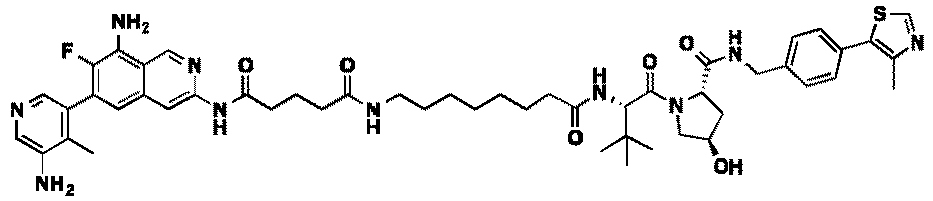
N 1-(8-amino-6-(5-amino-4-methylpyridin-3-yl)-7-fluoroisoquinolin-3-yl)-N 5-(8-(((S)-1-((2S,4R)-4-hydroxy-2-((4-(4-methylthiazol-5-yl)benzyl)carbamoyl)pyrrolidin-1-yl)-3,3-dimethyl-1-oxobutan-2-yl)amino)-8-oxooctyl)glutaramide 170 HC75-59 
N 1-(8-amino-6-(5-amino-4-methylpyridin-3-yl)-7-fluoroisoquinolin-3-yl)-N 5-(9-(((S)-1-((2S,4R)-4-hydroxy-2-((4-(4-methylthiazol-5-yl)benzyl)carbamoyl)pyrrolidin-1-yl)-3,3-dimethyl-1-oxobutan-2-yl)amino)-9-oxononyl)glutaramide 171 HC75-60 
N 1-(8-amino-6-(5-amino-4-methylpyridin-3-yl)-7-fluoroisoquinolin-3-yl)-N 5-(10-(((S)-1-((2S,4R)-4-hydroxy-2-((4-(4-methylthiazol-5-yl)benzyl)carbamoyl)pyrrolidin-1-yl)-3,3-dimethyl-1-oxobutan-2-yl)amino)-10-oxodecyl)glutaramide 172 HC75-61 
N 1-(8-amino-6-(5-amino-4-methylpyridin-3-yl)-7-fluoroisoquinolin-3-yl)-N 5-(11-(((S)-1-((2S,4R)-4-hydroxy-2-((4-(4-methylthiazol-5-yl)benzyl)carbamoyl)pyrrolidin-1-yl)-3,3-dimethyl-1-oxobutan-2-yl)amino)-11-oxoundecyl)glutaramide 173 HC75-62 
N 1-(8-amino-6-(5-amino-4-methylpyridin-3-yl)-7-fluoroisoquinolin-3-yl)-N 5-(17-((2-(2,6-dioxopiperidin-3-yl)-1,3-dioxoisoindolin-4-yl)amino)-3,6,9,12,15-pentaoxaheptadecyl)glutaramide Table 1 continued Examples Compound Code Structure Chemical Name 175 HC90-33 
2-(2,6-dioxopiperidin-3-yl)-5-((2-(3-(4-(4-(5-(2-fluoro-6-methoxyphenyl)-1H-pyrazolo[4,3-d]pyrimidin-3-yl)phenyl)piperazin-1-yl)-3-oxopropoxy)ethyl)amino)isoindoli ne-1,3-dione 176 HC90-34 
2-(2,6-dioxopiperidin-3-yl)-5-((2-(2-(3-(4-(4-(5-(2-fluoro-6-methoxyphenyl)-1H-pyrazolo[4,3-d]pyrimidin-3-yl)phenyl)piperazin-1-yl)-3-oxopropoxy)ethoxy)ethyl)amino)i soindoline-1,3-dione 177 HC90-35 
2-(2,6-dioxopiperidin-3-yl)-5-((2-(2-(2-(3-(4-(4-(5-(2-fluoro-6-methoxyphenyl)-1H-pyrazolo[4,3-d]pyrimidin-3-yl)phenyl)piperazin-1-yl)-3-oxopropoxy)ethoxy)ethoxy)ethyl) amino)isoindoline-1,3-dione 178 HC90-36 
2-(2,6-dioxopiperidin-3-yl)-5-((15-(4-(4-(5-(2-fluoro-6-methoxyphenyl)-1H-pyrazolo[4,3-d]pyrimidin-3-yl)phenyl)piperazin-1-yl)-15-oxo-3,6,9,12-tetraoxapentadecyl)amino)isoind oline-1,3-dione 179 HC90-37 
2-(2,6-dioxopiperidin-3-yl)-5-((18-(4-(4-(5-(2-fluoro-6-methoxyphenyl)-1H-pyrazolo[4,3-d]pyrimidin-3-yl)phenyl)piperazin-1-yl)-18-oxo-3, 6, 9,12,15-pentaoxaoctadecyl)amino)isoindo line-1,3-dione 180 HC90-41 
2-(2,6-dioxopiperidin-3-yl)-5-((2-(4-(4-(5-(2-fluoro-6-methoxyphenyl)-1H-pyrazolo[4,3-d]pyrimidin-3-yl)phenyl)piperazin-1-yl)-2-oxoethyl)amino)isoindoline-1,3-dione 181 HC90-42 
2-(2,6-dioxopiperidin-3-yl)-5-((3-(4-(4-(5-(2-fluoro-6-methoxyphenyl)-1H-pyrazolo[4,3-d]pyrimidin-3-yl)phenyl)piperazin-1-yl)-3-oxopropyl)amino)isoindoline-1,3-dione 182 HC90-43 
2-(2,6-dioxopiperidin-3-yl)-5-((4-(4-(4-(5-(2-fluoro-6-methoxyphenyl)-1H-pyrazolo[4,3-d]pyrimidin-3-yl)phenyl)piperazin-1-yl)-4-oxobutyl)amino)isoindoline-1,3-dione 183 HC90-44 
2-(2,6-dioxopiperidin-3-yl)-5-((5-(4-(4-(5-(2-fluoro-6-methoxyphenyl)-1H-pyrazolo[4,3-d]pyrimidin-3-yl)phenyl)piperazin-1-yl)-5-oxopentyl)amino)isoindoline-1,3-dione 184 HC90-45 
2-(2,6-dioxopiperidin-3-yl)-5-((6-(4-(4-(5-(2-fluoro-6-methoxyphenyl)-1H-pyrazolo[4,3-d]pyrimidin-3-yl)phenyl)piperazin-1-yl)-6-oxohexyl)amino)isoindoline-1,3-dione 185 HC90-46 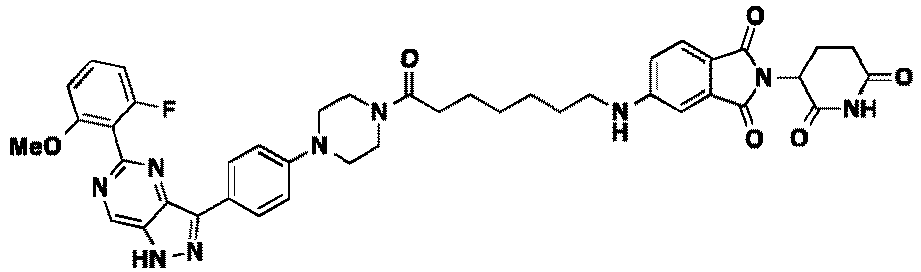
2-(2,6-dioxopiperidin-3-yl)-5-((7-(4-(4-(5-(2-fluoro-6-methoxyphenyl)-1H-pyrazolo[4,3-d]pyrimidin-3-yl)phenyl)piperazin-1-yl)-7-oxoheptyl)amino)isoindoline-1,3-dione 186 HC90-47 
2-(2,6-dioxopiperidin-3-yl)-5-((8-(4-(4-(5-(2-fluoro-6-methoxyphenyl)-1H-pyrazolo[4,3-d]pyrimidin-3-yl)phenyl)piperazin-1-yl)-8-oxooctyl)amino)isoindoline-1,3-dione 187 HC90-49 
2-(2,6-dioxopiperidin-3-yl)-4-((2-(4-(4-(5-(2-fluoro-6-methoxyphenyl)-1H-pyrazolo[4,3-d]pyrimidin-3-yl)phenyl)piperazin-1-yl)-2-oxoethyl)amino)isoindoline-1,3-dione 188 HC90-50 
2-(2,6-dioxopiperidin-3-yl)-4-((3-(4-(4-(5-(2-fluoro-6-methoxyphenyl)-1H-pyrazolo[4,3-d]pyrimidin-3-yl)phenyl)piperazin-1-yl)-3-oxopropyl)amino)isoindoline-1,3-dione 189 HC90-51 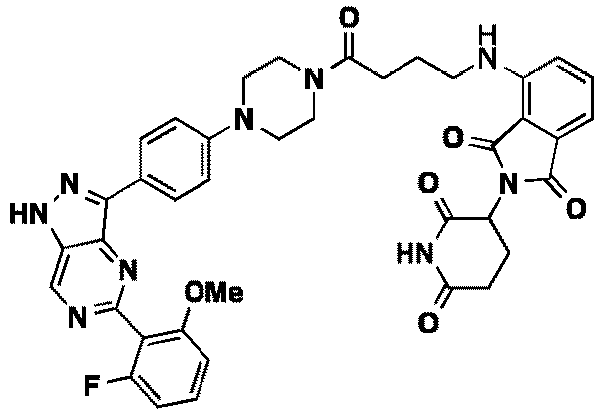
2-(2,6-dioxopiperidin-3-yl)-4-((4-(4-(4-(5-(2-fluoro-6-methoxyphenyl)-1H-pyrazolo[4,3-d]pyrimidin-3-yl)phenyl)piperazin-1-yl)-4-oxobutyl)amino)isoindoline-1,3-dione 190 HC90-52 
2-(2,6-dioxopiperidin-3-yl)-4-((5-(4-(4-(5-(2-fluoro-6-methoxyphenyl)-1H-pyrazolo[4,3-d]pyrimidin-3-yl)phenyl)piperazin-1-yl)-5-oxopentyl)amino)isoindoline-1,3-dione 191 HC90-53 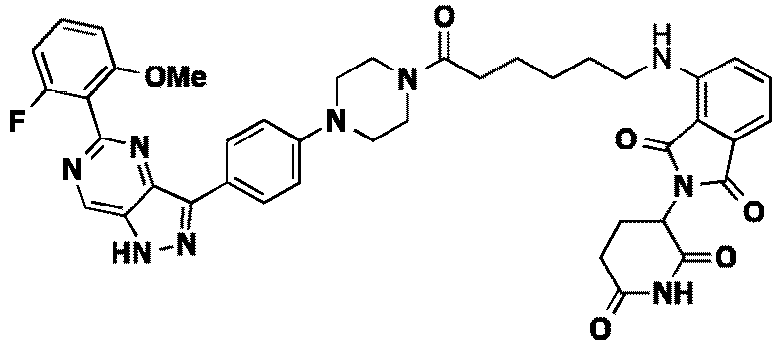
2-(2,6-dioxopiperidin-3-yl)-4-((6-(4-(4-(5-(2-fluoro-6-methoxyphenyl)-1H-pyrazolo[4,3-d]pyrimidin-3-yl)phenyl)piperazin-1-yl)-6-oxohexyl)amino)isoindoline-1,3-dione 192 HC90-54 
2-(2,6-dioxopiperidin-3-yl)-4-((7-(4-(4-(5-(2-fluoro-6-methoxyphenyl)-1H-pyrazolo[4,3-d]pyrimidin-3-yl)phenyl)piperazin-1-yl)-7-oxoheptyl)amino)isoindoline-1,3-dione 193 HC90-55 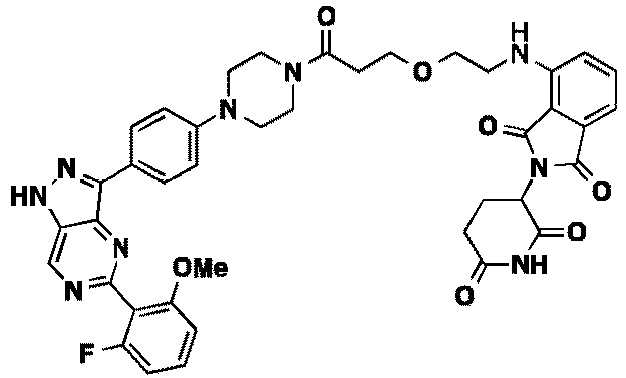
2-(2,6-dioxopiperidin-3-yl)-4-((2-(3-(4-(4-(5-(2-fluoro-6-methoxyphenyl)-1H-pyrazolo[4,3-d]pyrimidin-3-yl)phenyl)piperazin-1-yl)-3-oxopropoxy)ethyl)amino)isoindoli ne-1,3-dione 194 HC90-56 
2-(2,6-dioxopiperidin-3-yl)-4-((2-(2-(3-(4-(4-(5-(2-fluoro-6-methoxyphenyl)-1H-pyrazolo[4,3-d]pyrimidin-3-yl)phenyl)piperazin-1-yl)-3-oxopropoxy)ethoxy)ethyl)amino)i soindoline-1,3-dione 195 HC90-57 
2-(2,6-dioxopiperidin-3-yl)-4-((2-(2-(2-(3-(4-(4-(5-(2-fluoro-6-methoxyphenyl)-1H-pyrazolo[4,3-d]pyrimidin-3-yl)phenyl)piperazin-1-yl)-3-oxopropoxy)ethoxy)ethoxy)ethyl) amino)isoindoline-1,3-dione 196 HC90-58 
2-(2,6-dioxopiperidin-3-yl)-4-((15-(4-(4-(5-(2-fluoro-6-methoxyphenyl)-1H-pyrazolo[4,3-d]pyrimidin-3-yl)phenyl)piperazin-1-yl)-15-oxo-3,6,9,12-tetraoxapentadecyl)amino)isoind oline-1,3-dione 197 HC90-59 
2-(2,6-dioxopiperidin-3-yl)-4-((18-(4-(4-(5-(2-fluoro-6-methoxyphenyl)-1H-pyrazolo[4,3-d]pyrimidin-3-yl)phenyl)piperazin-1-yl)-18-oxo-3, 6, 9,12,15-pentaoxaoctadecyl)amino)isoindo line-1,3-dione 198 HC90-61 
(2S,4R)-1-((S)-2-(3-(3-(4-(4-(5-(2-fluoro-6-methoxyphenyl)-1H-pyrazolo[4,3-d]pyrimidin-3-yl)phenyl)piperazin-1-yl)-3-oxopropoxy)propanamido)-3,3-dimethylbutanoyl)-4-hydroxy-N-(4-(4-methylthiazol-5-yl)benzyl)pyrrolidine-2-carboxamide 199 HC90-66 
(2S,4R)-1-((S)-2-(tert-butyl)-19-(4-(4-(5-(2-fluoro-6-methoxyphenyl)-1H-pyrazolo[4,3-d]pyrimidin-3-yl)phenyl)piperazin-1-yl)-4,19-dioxo-7,10,13,16-tetraoxa-3-azanonadecanoyl)-4-hydroxy-N-(4-(4-methylthiazol-5-yl)benzyl)pyrrolidine-2- carboxamide 200 HC90-69 
(2S,4R)-1-((S)-2-(4-(4-(4-(5-(2-fluoro-6-methoxyphenyl)-1H-pyrazolo[4,3-d]pyrimidin-3-yl)phenyl)piperazin-1 -yl)-4-oxobutanamido)-3,3-dimethylbutanoyl)-4-hydroxy-N-(4-(4-methylthiazol-5-yl)benzyl)pyrrolidine-2-carboxamide 201 HC90-70 
(2S,4R)-1-((S)-2-(5-(4-(4-(5-(2-fluoro-6-methoxyphenyl)-1H-pyrazolo[4,3-d]pyrimidin-3-yl)phenyl)piperazin-1-yl)-5-oxopentanamido)-3,3-dimethylbutanoyl)-4-hydroxy-N-(4-(4-methylthiazol-5-yl)benzyl)pyrrolidine-2-carboxamide 202 HC90-71 
(2S,4R)-1-((S)-2-(6-(4-(4-(5-(2-fluoro-6-methoxyphenyl)-1H-pyrazolo[4,3-d]pyrimidin-3-yl)phenyl)piperazin-1-yl)-6-oxohexanamido)-3,3-dimethylbutanoyl)-4-hydroxy-N-(4-(4-methylthiazol-5-yl)benzyl)pyrrolidine-2-carboxamide 203 HC90-72 
(2S,4R)-1-((S)-2-(7-(4-(4-(5-(2-fluoro-6-methoxyphenyl)-1H-pyrazolo[4,3-d]pyrimidin-3-yl)phenyl)piperazin-1-yl)-7-oxoheptanamido)-3,3-dimethylbutanoyl)-4-hydroxy-N-(4-(4-methylthiazol-5-yl)benzyl)pyrrolidine-2-carboxamide 204 HC90-73 
(2S,4R)-1-((S)-2-(8-(4-(4-(5-(2-fluoro-6-methoxyphenyl)-1H-pyrazolo[4,3-d]pyrimidin-3-yl)phenyl)piperazin-1-yl)-8-oxooctanamido)-3,3-dimethylbutanoyl)-4-hydroxy-N-(4-(4-methylthiazol-5-yl)benzyl)pyrrolidine-2-carboxamide 205 HC90-74 
(2S,4R)-1-((S)-2-(10-(4-(4-(5-(2-fluoro-6-methoxyphenyl)-1H-pyrazolo[4,3-d]pyrimidin-3-yl)phenyl)piperazin-1-yl)-10-oxodecanamido)-3,3-dimethylbutanoyl)-4-hydroxy-N-(4-(4-methylthiazol-5-yl)benzyl)pyrrolidine-2-carboxamide 206 HC90-84 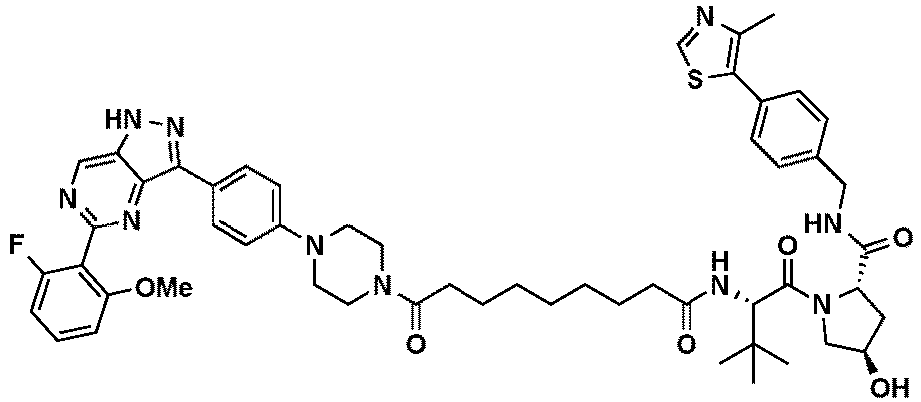
(2S,4R)-1-((S)-2-(9-(4-(4-(5-(2-fluoro-6-methoxyphenyl)-1H-pyrazolo[4,3-d]pyrimidin-3-yl)phenyl)piperazin-1 -yl)-9-oxononanamido)-3,3-dimethylbutanoyl)-4-hydroxy-N-(4-(4-methylthiazol-5-yl)benzyl)pyrrolidine-2-carboxamide 207 HC90-85 
(2S,4R)-1-((S)-2-(11-(4-(4-(5-(2-fluoro-6-methoxyphenyl)-1H-pyrazolo[4,3-d]pyrimidin-3-yl)phenyl)piperazin-1-yl)-11-oxoundecanamido)-3,3-dimethylbutanoyl)-4-hydroxy-N-(4-(4-methylthiazol-5-yl)benzyl)pyrrolidine-2-carboxamide 209 HC90-86 
N-(2-((2-(2,6-dioxopiperidin-3-yl)-1,3-dioxoisoindolin-5-yl)amino)ethyl)-2-(4-(4-(5-(2-fluoro-6-methoxyphenyl)-1H-pyrazolo[4,3-d]pyrimidin-3-yl)phenyl)piperazin-1-yl)acetamide 210 HC90-87 
N-(3-((2-(2,6-dioxopiperidin-3-yl)-1,3-dioxoisoindolin-5-yl)amino)propyl)-2-(4-(4-(5-(2-fluoro-6-methoxyphenyl)-1H-pyrazolo[4,3-d]pyrimidin-3-yl)phenyl)piperazin-1-yl)acetamide 211 HC90-88 
N-(4-((2-(2,6-dioxopiperidin-3-yl)-1,3-dioxoisoindolin-5-yl)amino)butyl)-2-(4-(4-(5-(2-fluoro-6-methoxyphenyl)-1H-pyrazolo[4,3-d]pyrimidin-3-yl)phenyl)piperazin-1-yl)acetamide 212 HC90-89 
N-(5-((2-(2,6-dioxopiperidin-3-yl)-1,3-dioxoisoindolin-5-yl)amino)pentyl)-2-(4-(4-(5-(2-fluoro-6-methoxyphenyl)-1H-pyrazolo[4,3-d]pyrimidin-3-yl)phenyl)piperazin-1-yl)acetamide 213 HC90-90 
N-(6-((2-(2,6-dioxopiperidin-3-yl)-1,3-dioxoisoindolin-5-yl)amino)hexyl)-2-(4-(4-(5-(2-fluoro-6-methoxyphenyl)-1H-pyrazolo[4,3-d]pyrimidin-3-yl)phenyl)piperazin-1-yl)acetamide 214 HC90-91 
N-(7-((2-(2,6-dioxopiperidin-3-yl)-1,3-dioxoisoindolin-5-yl)amino)heptyl)-2-(4-(4-(5-(2-fluoro-6-methoxyphenyl)-1H-pyrazolo[4,3-d]pyrimidin-3-yl)phenyl)piperazin-1-yl)acetamide 215 HC90-92 
N-(8-((2-(2,6-dioxopiperidin-3-yl)-1,3-dioxoisoindolin-5-yl)amino)octyl)-2-(4-(4-(5-(2-fluoro-6-methoxyphenyl)-1H-pyrazolo[4,3-d]pyrimidin-3-yl)phenyl)piperazin-1-yl)acetamide 216 HC90-93 
N-(2-(2-((2-(2,6-dioxopiperidin-3-yl)-1,3-dioxoisoindolin-5-yl)amino)ethoxy)ethyl)-2-(4-(4-(5-(2-fluoro-6-methoxyphenyl)-1H-pyrazolo[4,3-d]pyrimidin-3-yl)phenyl)piperazin-1-yl)acetamide 217 HC90-94 
N-(2-(2-(2-((2-(2,6-dioxopiperidin-3-yl)-1,3-dioxoisoindolin-5-yl)amino)ethoxy)ethoxy)ethyl)-2-(4-(4-(5-(2-fluoro-6-methoxyphenyl)-1H-pyrazolo[4,3-d]pyrimidin-3-yl)phenyl)piperazin-1-yl)acetamide 218 HC90-95 
N-(2-(2-(2-(2-((2-(2,6-dioxopiperidin-3-yl)-1,3-dioxoisoindolin-5-yl)amino)ethoxy)ethoxy)ethoxy)et hyl)-2-(4-(4-(5-(2-fluoro-6-methoxyphenyl)-1H-pyrazolo[4,3-d]pyrimidin-3-yl)phenyl)piperazin-1-yl)acetamide 219 HC90-96 
N-(14-((2-(2,6-dioxopiperidin-3-yl)-1,3-dioxoisoindolin-5-yl)amino)-3,6,9,12-tetraoxatetradecyl)-2-(4-(4-(5-(2-fluoro-6-methoxyphenyl)-1H-pyrazolo[4,3-d]pyrimidin-3-yl)phenyl)piperazin-1-yl)acetamide 220 HC90-97 
N-(17-((2-(2,6-dioxopiperidin-3-yl)-1,3-dioxoisoindolin-5-yl)amino)-3,6,9,12,15-pentaoxaheptadecyl)-2-(4-(4-(5-(2-fluoro-6-methoxyphenyl)-1H-pyrazolo[4,3-d]pyrimidin-3-yl)phenyl)piperazin-1-yl)acetamide 221 HC90-102 
N-(2-((2-(2,6-dioxopiperidin-3-yl)-1,3-dioxoisoindolin-4-yl)amino)ethyl)-2-(4-(4-(5-(2-fluoro-6-methoxyphenyl)-1H-pyrazolo[4,3-d]pyrimidin-3-yl)phenyl)piperazin-1-yl)acetamide 222 HC90-103 
N-(3-((2-(2,6-dioxopiperidin-3-yl)-1,3-dioxoisoindolin-4-yl)amino)propyl)-2-(4-(4-(5-(2-fluoro-6-methoxyphenyl)-1H-pyrazolo[4,3-d]pyrimidin-3-yl)phenyl)piperazin-1-yl)acetamide 223 HC90-104 
N-(4-((2-(2,6-dioxopiperidin-3-yl)-1,3-dioxoisoindolin-4-yl)amino)butyl)-2-(4-(4-(5-(2-fluoro-6-methoxyphenyl)-1H-pyrazolo[4,3-d]pyrimidin-3-yl)phenyl)piperazin-1-yl)acetamide 224 HC90-105 
N-(5-((2-(2,6-dioxopiperidin-3-yl)-1,3-dioxoisoindolin-4-yl)amino)pentyl)-2-(4-(4-(5-(2-fluoro-6-methoxyphenyl)-1H-pyrazolo[4,3-d]pyrimidin-3-yl)phenyl)piperazin-1-yl)acetamide 225 HC90-106 
N-(6-((2-(2,6-dioxopiperidin-3-yl)-1,3-dioxoisoindolin-4-yl)amino)hexyl)-2-(4-(4-(5-(2-fluoro-6-methoxyphenyl)-1H-pyrazolo[4,3-d]pyrimidin-3-yl)phenyl)piperazin-1-yl)acetamide 226 HC90-107 
N-(7-((2-(2,6-dioxopiperidin-3-yl)-1,3-dioxoisoindolin-4-yl)amino)heptyl)-2-(4-(4-(5-(2-fluoro-6-methoxyphenyl)-1H-pyrazolo[4,3-d]pyrimidin-3-yl)phenyl)piperazin-1-yl)acetamide 227 HC90-108 
N-(8-((2-(2,6-dioxopiperidin-3-yl)-1,3-dioxoisoindolin-4-yl)amino)octyl)-2-(4-(4-(5-(2-fluoro-6-methoxyphenyl)-1H-pyrazolo[4,3-d]pyrimidin-3-yl)phenyl)piperazin-1-yl)acetamide 228 HC90-109 
N-(2-(2-((2-(2,6-dioxopiperidin-3-yl)-1,3-dioxoisoindolin-4-yl)amino)ethoxy)ethyl)-2-(4-(4-(5-(2-fluoro-6-methoxyphenyl)-1H-pyrazolo[4,3-d]pyrimidin-3-yl)phenyl)piperazin-1-yl)acetamide 229 HC90-110 
N-(2-(2-(2-((2-(2,6-dioxopiperidin-3-yl)-1,3-dioxoisoindolin-4-yl)amino)ethoxy)ethoxy)ethyl)-2-(4-(4-(5-(2-fluoro-6-methoxyphenyl)-1H-pyrazolo[4,3-d]pyrimidin-3-yl)phenyl)piperazin-1-yl)acetamide 230 HC90-111 
N-(2-(2-(2-(2-((2-(2,6-dioxopiperidin-3-yl)-1,3-dioxoisoindolin-4-yl)amino)ethoxy)ethoxy)ethoxy)et hyl)-2-(4-(4-(5-(2-fluoro-6-methoxyphenyl)-1H-pyrazolo[4,3-d]pyrimidin-3-yl)phenyl)piperazin-1-yl)acetamide 231 HC90-112 
N-(14-((2-(2,6-dioxopiperidin-3-yl)-1,3-dioxoisoindolin-4-yl)amino)-3,6,9,12-tetraoxatetradecyl)-2-(4-(4-(5-(2-fluoro-6-methoxyphenyl)-1H-pyrazolo[4,3-d]pyrimidin-3-yl)phenyl)piperazin-1-yl)acetamide 232 HC90-113 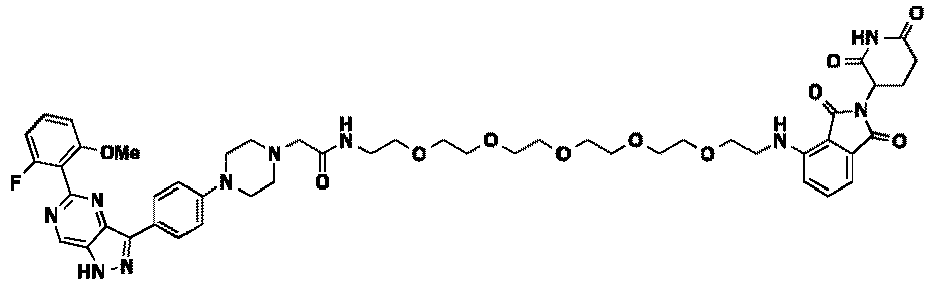
N-(17-((2-(2,6-dioxopiperidin-3-yl)-1,3-dioxoisoindolin-4-yl)amino)-3,6,9,12,15-pentaoxaheptadecyl)-2-(4-(4-(5-(2-fluoro-6-methoxyphenyl)-1H-pyrazolo[4,3-d]pyrimidin-3-yl)phenyl)piperazin-1-yl)acetamide 233 HC90-117 
2-(2,6-dioxopiperidin-3-yl)-4-((8-(4-(4-(5-(2-fluoro-6-methoxyphenyl)-1H-pyrazolo[4,3-d]pyrimidin-3-yl)phenyl)piperazin-1-yl)-8-oxooctyl)amino)isoindoline-1,3-dione 234 HC90-119 
(2S,4R)-1-((S)-2-(2-(2-(2-(4-(4-(5-(2-fluoro-6-methoxyphenyl)-1H-pyrazolo[4,3-d]pyrimidin-3-yl)phenyl)piperazin-1-yl)acetamido)ethoxy)acetamido)-3,3-dimethylbutanoyl)-4-hydroxy-N-(4-(4-methylthiazol-5-yl)benzyl)pyrrolidine-2-carboxamide 235 HC90-120 
(2S,4R)-1-((S)-2-(3-(2-(2-(4-(4-(5-(2-fluoro-6-methoxyphenyl)-1H- pyrazolo[4,3-d]pyrimidin-3-yl)phenyl)piperazin-1-yl)acetamido)ethoxy)propanamid o)-3,3-dimethylbutanoyl)-4-hydroxy-N-(4-(4-methylthiazol-5-yl)benzyl)pyrrolidine-2-carboxamide 236 HC90-121 
(2S,4R)-1-((S)-2-(tert-butyl)-14-(4-(4-(5-(2-fluoro-6-methoxyphenyl)-1H-pyrazolo[4,3-d]pyrimidin-3-yl)phenyl)piperazin-1-yl)-4,13-dioxo-6,9-dioxa-3,12-diazatetradecanoyl)-4-hydroxy-N-(4-(4-methylthiazol-5-yl)benzyl)pyrrolidine-2-carboxamide 237 HC90-122 
(2S,4R)-1-((S)-14-(tert-butyl)-1-(4-(4-(5-(2-fluoro-6-methoxyphenyl)-1H-pyrazolo[4,3-d]pyrimidin-3-yl)phenyl)piperazin-1-yl)-2,12-dioxo-6,9-dioxa-3,13-diazapentadecan-15-oyl)-4-hydroxy-N-(4-(4-methylthiazol-5-yl)benzyl)pyrrolidine-2-carboxamide 238 HC90-123 
(2S,4R)-1-((S)-2-(tert-butyl)-17-(4-(4-(5-(2-fluoro-6-methoxyphenyl)-1H-pyrazolo[4,3-d]pyrimidin-3-yl)phenyl)piperazin-1-yl)-4, 16-dioxo-6, 9, 12-trioxa-3,15-diazaheptadecanoyl)-4-hydroxy-N-(4-(4-methylthiazol-5-yl)benzyl)pyrrolidine-2-carboxamide 239 HC90-124 
(2S,4R)-1-((S)-17-(tert-butyl)-1-(4-(4-(5-(2-fluoro-6-methoxyphenyl)-1H-pyrazolo[4,3-d]pyrimidin-3-yl)phenyl)piperazin-1-yl)-2,15-dioxo-6,9,12-trioxa-3,16-diazaoctadecan-18-oyl)-4-hydroxy-N-(4-(4-methylthiazol-5-yl)benzyl)pyrrolidine-2-carboxamide 240 HC90-125 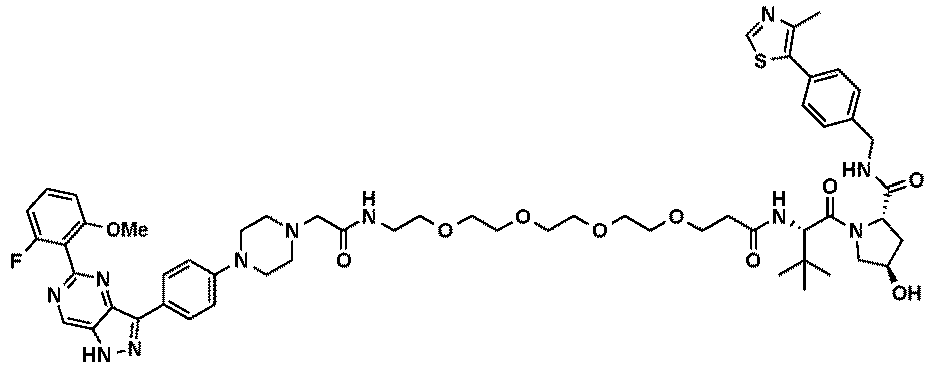
(2S,4R)-1-((S)-20-(tert-butyl)-1-(4-(4-(5-(2-fluoro-6-methoxyphenyl)-1H-pyrazolo[4,3-d]pyrimidin-3-yl)phenyl)piperazin-1-yl)-2, 18-dioxo-6, 9, 12, 15-tetraoxa-3,19-diazahenicosan-21-oyl)-4-hydroxy-N-(4-(4-methylthiazol-5-yl)benzyl)pyrrolidine-2-carboxamide 241 HC90-126 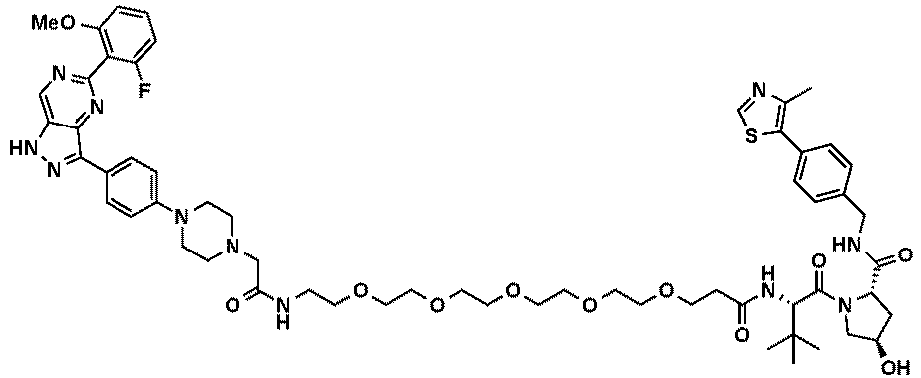
(2S,4R)-1-((S)-23-(tert-butyl)-1-(4-(4-(5-(2-fluoro-6-methoxyphenyl)-1H-pyrazolo[4,3-d]pyrimidin-3-yl)phenyl)piperazin-1-yl)-2,21-dioxo-6, 9, 12, 15, 18-pentaoxa-3,22-diazatetracosan-24-oyl)-4-hydroxy-N-(4-(4-methylthiazol-5-yl)benzyl)pyrrolidine-2-carboxamide 242 HC90-127 
(2S,4R)-1-((S)-2-(2-(2-(4-(4-(5-(2-fluoro-6-methoxyphenyl)-1H-pyrazolo[4,3-d]pyrimidin-3-yl)phenyl)piperazin-1-yl)acetamido)acetamido)-3,3-dimethylbutanoyl)-4-hydroxy-N-(4-(4-methylthiazol-5-yl)benzyl)pyrrolidine-2-carboxamide 243 HC90-128 
(2S,4R)-1-((S)-2-(3-(2-(4-(4-(5-(2-fluoro-6-methoxyphenyl)-1H-pyrazolo[4,3-d]pyrimidin-3-yl)phenyl)piperazin-1-yl)acetamido)propanamido)-3,3-dimethylbutanoyl)-4-hydroxy-N-(4-(4-methylthiazol-5-yl)benzyl)pyrrolidine-2-carboxamide 244 HC90-129 
(2S,4R)-1-((S)-2-(4-(2-(4-(4-(5-(2-fluoro-6-methoxyphenyl)-1H-pyrazolo[4,3-d]pyrimidin-3-yl)phenyl)piperazin-1-yl)acetamido)butanamido)-3,3-dimethylbutanoyl)-4-hydroxy-N-(4-(4-methylthiazol-5-yl)benzyl)pyrrolidine-2-carboxamide 245 HC90-130 
(2S,4R)-1-((S)-2-(5-(2-(4-(4-(5-(2-fluoro-6-methoxyphenyl)-1H-pyrazolo[4,3-d]pyrimidin-3-yl)phenyl)piperazin-1-yl)acetamido)pentanamido)-3,3-dimethylbutanoyl)-4-hydroxy-N-(4-(4-methylthiazol-5-yl)benzyl)pyrrolidine-2-carboxamide 246 HC90-131 
(2S,4R)-1-((S)-2-(6-(2-(4-(4-(5-(2-fluoro-6-methoxyphenyl)-1H-pyrazolo[4,3-d]pyrimidin-3-yl)phenyl)piperazin-1-yl)acetamido)hexanamido)-3,3-dimethylbutanoyl)-4-hydroxy-N-(4-(4-methylthiazol-5-yl)benzyl)pyrrolidine-2-carboxamide 247 HC90-132 
(2S,4R)-1-((S)-2-(7-(2-(4-(4-(5-(2-fluoro-6-methoxyphenyl)-1H-pyrazolo[4,3-d]pyrimidin-3-yl)phenyl)piperazin-1-yl)acetamido)heptanamido)-3,3-dimethylbutanoyl)-4-hydroxy-N-(4-(4-methylthiazol-5-yl)benzyl)pyrrolidine-2-carboxamide 248 HC90-133 
(2S,4R)-1-((S)-2-(8-(2-(4-(4-(5-(2-fluoro-6-methoxyphenyl)-1H-pyrazolo[4,3-d]pyrimidin-3-yl)phenyl)piperazin-1-yl)acetamido)octanamido)-3,3-dimethylbutanoyl)-4-hydroxy-N-(4-(4-methylthiazol-5-yl)benzyl)pyrrolidine-2-carboxamide 249 HC90-134 
(2S,4R)-1-((S)-2-(9-(2-(4-(4-(5-(2-fluoro-6-methoxyphenyl)-1H-pyrazolo[4,3-d]pyrimidin-3-yl)phenyl)piperazin-1-yl)acetamido)nonanamido)-3,3-dimethylbutanoyl)-4-hydroxy-N-(4-(4-methylthiazol-5-yl)benzyl)pyrrolidine-2- carboxamide 250 HC90-135 
(2S,4R)-1-((S)-2-(10-(2-(4-(4-(5-(2-fluoro-6-methoxyphenyl)-1H-pyrazolo[4,3-d]pyrimidin-3-yl)phenyl)piperazin-1-yl)acetamido)decanamido)-3,3-dimethylbutanoyl)-4-hydroxy-N-(4-(4-methylthiazol-5-yl)benzyl)pyrrolidine-2-carboxamide 251 HC90-136 
(2S,4R)-1-((S)-2-(11-(2-(4-(4-(5-(2-fluoro-6-methoxyphenyl)-1H-pyrazolo[4,3-d]pyrimidin-3-yl)phenyl)piperazin-1-yl)acetamido)undecanamido)-3,3-dimethylbutanoyl)-4-hydroxy-N-(4-(4-methylthiazol-5-yl)benzyl)pyrrolidine-2-carboxamide 252 HC90-60 
(2S,4R)-1-((S)-2-(2-(2-(4-(4-(5-(2-fluoro-6-methoxyphenyl)-1H-pyrazolo[4,3-d]pyrimidin-3-yl)phenyl)piperazin-1-yl)-2-oxoethoxy)acetamido)-3,3-dimethylbutanoyl)-4-hydroxy-N-(4-(4-methylthiazol-5-yl)benzyl)pyrrolidine-2-carboxamide 253 HC90-62 
(2S,4R)-1-((S)-2-(2-(2-(2-(4-(4-(5-(2-fluoro-6-methoxyphenyl)-1H-pyrazolo[4,3-d]pyrimidin-3-yl)phenyl)piperazin-1 -yl)-2-oxoethoxy)ethoxy)acetamido)-3,3-dimethylbutanoyl)-4-hydroxy-N-(4-(4-methylthiazol-5-yl)benzyl)pyrrolidine-2-carboxamide 254 HC90-63 
(2S,4R)-1-((S)-2-(3-(2-(3-(4-(4-(5-(2-fluoro-6-methoxyphenyl)-1H-pyrazolo[4,3-d]pyrimidin-3-yl)phenyl)piperazin-1-yl)-3-oxopropoxy)ethoxy)propanamido )-3,3-dimethylbutanoyl)-4-hydroxy-N-(4-(4-methylthiazol-5-yl)benzyl)pyrrolidine-2-carboxamide 255 HC90-64 
(2S,4R)-1-((S)-2-(tert-butyl)-14-(4-(4-(5-(2-fluoro-6-methoxyphenyl)-1H-pyrazolo[4,3-d]pyrimidin-3-yl)phenyl)piperazin-1-yl)-4, 14-dioxo-6, 9, 12-trioxa-3-azatetradecanoyl)-4-hydroxy-N-(4-(4-methylthiazol-5-yl)benzyl)pyrrolidine-2-carboxamide 256 HC90-65 
(2S,4R)-1-((S)-2-(tert-butyl)-16-(4-(4-(5-(2-fluoro-6-methoxyphenyl)-1H-pyrazolo[4,3-d]pyrimidin-3-yl)phenyl)piperazin-1-yl)-4,16-dioxo-7,10,13-trioxa-3-azahexadecanoyl)-4-hydroxy-N-(4-(4-methylthiazol-5-yl)benzyl)pyrrolidine-2-carboxamide 257 HC90-67 
(2S,4R)-1-((S)-2-(tert-butyl)-20-(4-(4-(5-(2-fluoro-6-methoxyphenyl)-1H-pyrazolo[4,3-d]pyrimidin-3-yl)phenyl)piperazin-1-yl)-4,20-dioxo-6, 9, 12, 15, 18-pentaoxa-3-azaicosanoyl)-4-hydroxy-N-(4-(4-methylthiazol-5-yl)benzyl)pyrrolidine-2-carboxamide 258 HC90-68 
(2S,4R)-1-((S)-2-(tert-butyl)-22-(4-(4-(5-(2-fluoro-6-methoxyphenyl)-1H-pyrazolo[4,3-d]pyrimidin-3-yl)phenyl)piperazin-1-yl)-4,22-dioxo-7,10,13,16,19-pentaoxa-3-azadocosanoyl)-4-hydroxy-N-(4-(4-methylthiazol-5-yl)benzyl)pyrrolidine-2-carboxamide 260 HC90-114 
(Z)-N-(3-(4-(2-((5-((2-(2,6-dioxopiperidin-3-yl)-1,3-dioxoisoindolin-4-yl)amino)pentyl)amino)-2-oxoethyl)piperazin-1-yl)propyl)-5-((5-fluoro-1-methyl-2-oxoindolin-3-ylidene)methyl)-2,4-dimethyl-1H-pyrrole-3-carboxamide 261 HC90-115 
(Z)-N-(3-(4-(2-((8-((2-(2,6-dioxopiperidin-3-yl)-1,3-dioxoisoindolin-4-yl)amino)octyl)amino)-2-oxoethyl)piperazin-1-yl)propyl)-5-((5-fluoro-1-methyl-2-oxoindolin-3-ylidene)methyl)-2,4-dimethyl-1H-pyrrole-3-carboxamide 263 HC90-168 
4-((3-(4-(4-(5-(2-fluoro-6-methoxyphenyl)-1H-pyrazolo[4,3-d]pyrimidin-3-yl)phenyl)piperazin-1-yl)-3-oxopropyl)amino)-2-(1-methyl-2,6-dioxopiperidin-3-yl)isoindoline-1,3-dione 264 HC90-169 
4-((4-(4-(4-(5-(2-fluoro-6-methoxyphenyl)-1H-pyrazolo[4,3-d]pyrimidin-3-yl)phenyl)piperazin-1-yl)-4-oxobutyl)amino)-2-(1-methyl-2,6-dioxopiperidin-3-yl)isoindoline-1,3-dione Table 2. Example s Structure Chemical Name 265 
N-(4-(4-cyanopyridin-3-yl)-2-(4-(3-(2-((2-(2,6-dioxopiperidin-3-yl)-1,3-dioxoisoindolin-5-yl)amino)ethoxy)propanoyl)pi perazin-1-yl)phenyl)-2-(2-fluoro-6-methoxyphenyl)pyrimidine-4-carboxamide 266 
N-(4-(4-cyanopyridin-3-yl)-2-(4-(3-(2-(2-((2-(2,6-dioxopiperidin-3-yl)-1,3-dioxoisoindolin-5-yl)amino)ethoxy)ethoxy)prop anoyl)piperazin-1-yl)phenyl)-2-(2-fluoro-6-methoxyphenyl)pyrimidine-4-carboxamide 267 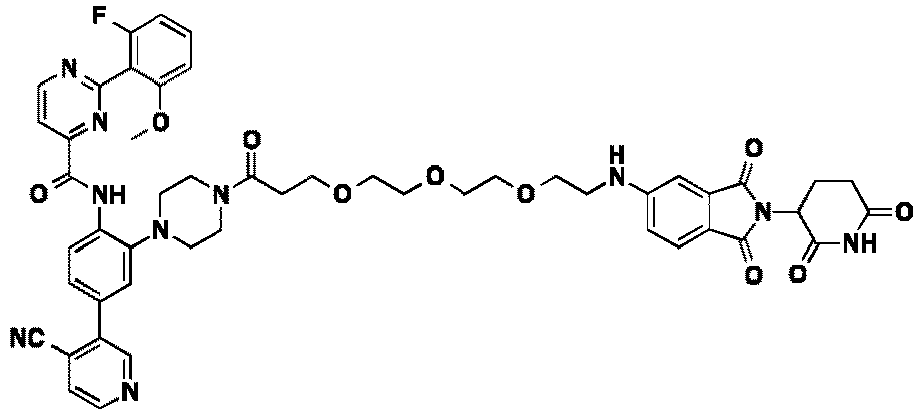
N-(4-(4-cyanopyridin-3-yl)-2-(4-(3-(2-(2-(2-((2-(2,6-dioxopiperidin-3-yl)-1,3-dioxoisoindolin-5-yl)amino)ethoxy)ethoxy)etho xy)propanoyl)piperazin-1-yl)phenyl)-2-(2-fluoro-6-methoxyphenyl)pyrimidine-4-carboxamide 268 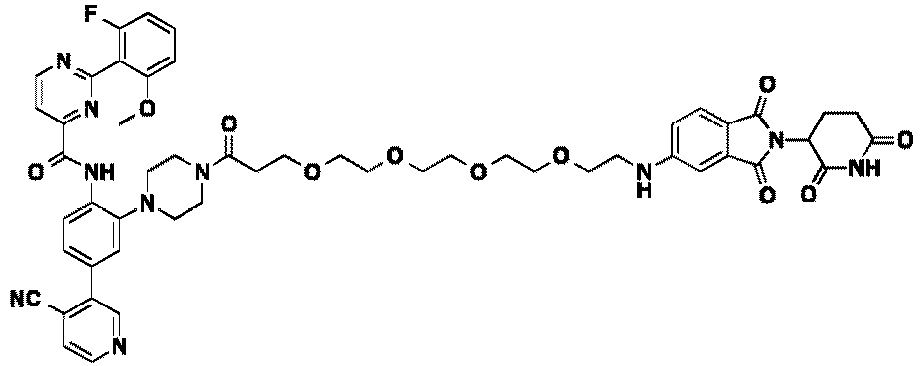
N-(4-(4-cyanopyridin-3-yl)-2-(4-(1-((2-(2,6-dioxopiperidin-3-yl)-1,3-dioxoisoindolin-5-yl)amino)-3,6,9,12-tetraoxapentadecan-15-oyl)piperazin-1-yl)phenyl)-2-(2-fluoro-6-methoxyphenyl)pyrimidine-4-carboxamide 269 
N-(4-(4-cyanopyridin-3-yl)-2-(4-(1-((2-(2,6-dioxopiperidin-3-yl)-1,3-dioxoisoindolin-5-yl)amino)-3,6,9,12,15-pentaoxaoctadecan-18-oyl)piperazin-1-yl)phenyl)-2-(2-fluoro-6-methoxyphenyl)pyrimidine-4-carboxamide 270 
N-(4-(4-cyanopyridin-3-yl)-2-(4-((2-(2,6-dioxopiperidin-3-yl)-1,3-dioxoisoindolin-5-yl)glycyl)piperazin-1-yl)phenyl)-2-(2-fluoro-6-methoxyphenyl)pyrimidine-4-carboxamide 271 
N-(4-(4-cyanopyridin-3-yl)-2-(4-(3-((2-(2,6-dioxopiperidin-3-yl)-1,3-dioxoisoindolin-5-yl)amino)propanoyl)piperazin -1-yl)phenyl)-2-(2-fluoro-6-methoxyphenyl)pyrimidine-4-carboxamide 272 
N-(4-(4-cyanopyridin-3-yl)-2-(4-(4-((2-(2,6-dioxopiperidin-3-yl)-1,3-dioxoisoindolin-5-yl)amino)butanoyl)piperazin-1-yl)phenyl)-2-(2-fluoro-6-methoxyphenyl)pyrimidine-4-carboxamide 273 
N-(4-(4-cyanopyridin-3-yl)-2-(4-(5-((2-(2,6-dioxopiperidin-3-yl)-1,3-dioxoisoindolin-5-yl)amino)pentanoyl)piperazin -1-yl)phenyl)-2-(2-fluoro-6-methoxyphenyl)pyrimidine-4-carboxamide 274 
N-(4-(4-cyanopyridin-3-yl)-2-(4-(6-((2-(2,6-dioxopiperidin-3-yl)-1,3-dioxoisoindolin-5-yl)amino)hexanoyl)piperazin-1-yl)phenyl)-2-(2-fluoro-6-methoxyphenyl)pyrimidine-4-carboxamide 275 
N-(4-(4-cyanopyridin-3-yl)-2-(4-(7-((2-(2,6-dioxopiperidin-3-yl)-1,3-dioxoisoindolin-5-yl)amino)heptanoyl)piperazin -1-yl)phenyl)-2-(2-fluoro-6-methoxyphenyl)pyrimidine-4-carboxamide 276 
N-(4-(4-cyanopyridin-3-yl)-2-(4-(8-((2-(2,6-dioxopiperidin-3-yl)-1,3-dioxoisoindolin-5-yl)amino)octanoyl)piperazin-1-yl)phenyl)-2-(2-fluoro-6-methoxyphenyl)pyrimidine-4-carboxamide 277 
N-(4-(4-cyanopyridin-3-yl)-2-(4-((2-(2,6-dioxopiperidin-3-yl)-1,3-dioxoisoindolin-4-yl)glycyl)piperazin-1-yl)phenyl)-2-(2-fluoro-6-methoxyphenyl)pyrimidine-4-carboxamide 278 
N-(4-(4-cyanopyridin-3-yl)-2-(4-(3-((2-(2,6-dioxopiperidin-3-yl)-1,3-dioxoisoindolin-4-yl)amino)propanoyl)piperazin -1-yl)phenyl)-2-(2-fluoro-6-methoxyphenyl)pyrimidine-4-carboxamide 279 
N-(4-(4-cyanopyridin-3-yl)-2-(4-(4-((2-(2,6-dioxopiperidin-3-yl)-1,3-dioxoisoindolin-4-yl)amino)butanoyl)piperazin-1-yl)phenyl)-2-(2-fluoro-6-methoxyphenyl)pyrimidine-4-carboxamide 280 
N-(4-(4-cyanopyridin-3-yl)-2-(4-(5-((2-(2,6-dioxopiperidin-3-yl)-1,3-dioxoisoindolin-4-yl)amino)pentanoyl)piperazin -1-yl)phenyl)-2-(2-fluoro-6-methoxyphenyl)pyrimidine-4-carboxamide 281 
N-(4-(4-cyanopyridin-3-yl)-2-(4-(6-((2-(2,6-dioxopiperidin-3-yl)-1,3-dioxoisoindolin-4-yl)amino)hexanoyl)piperazin-1-yl)phenyl)-2-(2-fluoro-6-methoxyphenyl)pyrimidine-4-carboxamide 282 
N-(4-(4-cyanopyridin-3-yl)-2-(4-(7-((2-(2,6-dioxopiperidin-3-yl)-1,3-dioxoisoindolin-4-yl)amino)heptanoyl)piperazin -1-yl)phenyl)-2-(2-fluoro-6-methoxyphenyl)pyrimidine-4-carboxamide 283 
N-(4-(4-cyanopyridin-3-yl)-2-(4-(8-((2-(2,6-dioxopiperidin-3-yl)-1,3-dioxoisoindolin-4-yl)amino)octanoyl)piperazin-1-yl)phenyl)-2-(2-fluoro-6-methoxyphenyl)pyrimidine-4-carboxamide 284 
N-(4-(4-cyanopyridin-3-yl)-2-(4-(3-(2-((2-(2,6-dioxopiperidin-3-yl)-1,3-dioxoisoindolin-4-yl)amino)ethoxy)propanoyl)pi perazin-1-yl)phenyl)-2-(2-fluoro-6-methoxyphenyl)pyrimidine-4-carboxamide 285 
N-(4-(4-cyanopyridin-3-yl)-2-(4-(3-(2-(2-((2-(2,6-dioxopiperidin-3-yl)-1,3-dioxoisoindolin-4-yl)amino)ethoxy)ethoxy)prop anoyl)piperazin-1-yl)phenyl)-2-(2-fluoro-6-methoxyphenyl)pyrimidine-4-carboxamide 286 
N-(4-(4-cyanopyridin-3-yl)-2-(4-(3-(2-(2-(2-((2-(2,6-dioxopiperidin-3-yl)-1,3-dioxoisoindolin-4-yl)amino)ethoxy)ethoxy)etho xy)propanoyl)piperazin-1-yl)phenyl)-2-(2-fluoro-6-methoxyphenyl)pyrimidine-4-carboxamide 287 
N-(4-(4-cyanopyridin-3-yl)-2-(4-(1-((2-(2,6-dioxopiperidin-3-yl)-1,3-dioxoisoindolin-4-yl)amino)-3,6,9,12-tetraoxapentadecan-15-oyl)piperazin-1-yl)phenyl)-2-(2-fluoro-6-methoxyphenyl)pyrimidine-4-carboxamide 288 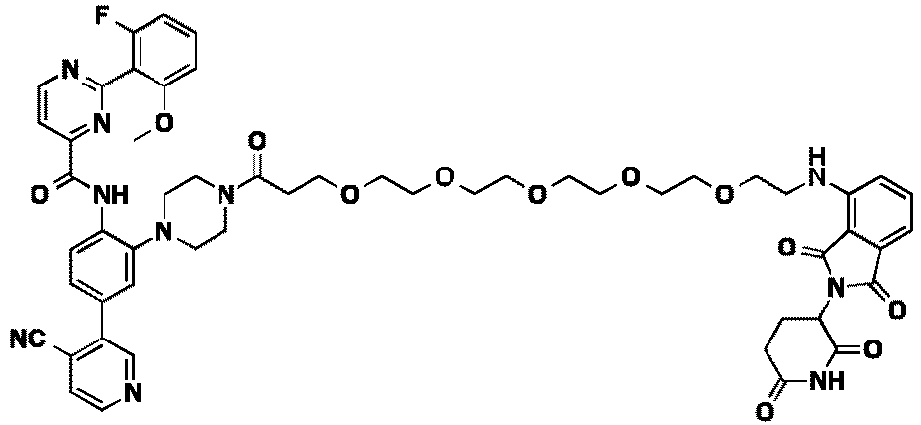
N-(4-(4-cyanopyridin-3-yl)-2-(4-(1-((2-(2,6-dioxopiperidin-3-yl)-1,3-dioxoisoindolin-4-yl)amino)-3,6,9,12,15-pentaoxaoctadecan-18-oyl)piperazin-1-yl)phenyl)-2-(2-fluoro-6-methoxyphenyl)pyrimidine-4-carboxamide 289 
N-(4-(4-cyanopyridin-3-yl)-2-(4-(2-(2-(((S)-1-((2S,4R)-4-hydroxy-2-((4-(4-methylthiazol-5-yl)benzyl)carbamoyl)pyrrolidi n-1-yl)-3,3-dimethyl-1-oxobutan-2-yl)amino)-2-oxoethoxy)acetyl)piperazin-1-yl)phenyl)-2-(2-fluoro-6-methoxyphenyl)pyrimidine-4-carboxamide 290 
N-(4-(4-cyanopyridin-3-yl)-2-(4-(3-(3-(((S)-1-((2S,4R)-4-hydroxy-2-((4-(4-methylthiazol-5-yl)benzyl)carbamoyl)pyrrolidi n-1-yl)-3,3-dimethyl-1-oxobutan-2-yl)amino)-3-oxopropoxy)propanoyl)pipera zin-1-yl)phenyl)-2-(2-fluoro-6-methoxyphenyl)pyrimidine-4-carboxamide 291 
N-(4-(4-cyanopyridin-3-yl)-2-(4-(2-(2-(2-(((S)-1-((2S,4R)-4-hydroxy-2-((4-(4-methylthiazol-5-yl)benzyl)carbamoyl)pyrrolidi n-1-yl)-3,3-dimethyl-1-oxobutan-2-yl)amino)-2-oxoethoxy)ethoxy)acetyl)pipe razin-1-yl)phenyl)-2-(2-fluoro-6-methoxyphenyl)pyrimidine-4-carboxamide 292 
N-(4-(4-cyanopyridin-3-yl)-2-(4-(3-(2-(3-(((S)-1-((2S,4R)-4-hydroxy-2-((4-(4-methylthiazol-5-yl)benzyl)carbamoyl)pyrrolidi n-1-yl)-3,3-dimethyl-1-oxobutan-2-yl)amino)-3-oxopropoxy)ethoxy)propanoy l)piperazin-1-yl)phenyl)-2-(2-fluoro-6-methoxyphenyl)pyrimidine-4-carboxamide 293 
N-(4-(4-cyanopyridin-3-yl)-2-(4-((S)-13-((2S,4R)-4-hydroxy-2-((4-(4-methylthiazol-5-yl)benzyl)carbamoyl)pyrrolidi ne-1-carbonyl)-14,14-dimethyl-11-oxo-3,6,9-trioxa-12-azapentadecanoyl)piperazin-1-yl)phenyl)-2-(2-fluoro-6-methoxyphenyl)pyrimidine-4-carboxamide 294 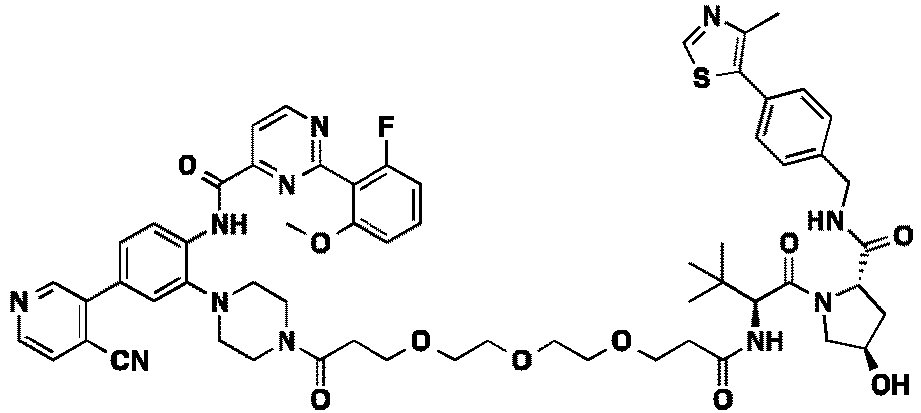
N-(4-(4-cyanopyridin-3-yl)-2-(4-((S)-15-((2S,4R)-4-hydroxy-2-((4-(4-methylthiazol-5-yl)benzyl)carbamoyl)pyrrolidi ne-1-carbonyl)-16,16-dimethyl-13-oxo-4,7,10-trioxa-14-azaheptadecanoyl)piperazin-1-yl)phenyl)-2-(2-fluoro-6-methoxyphenyl)pyrimidine-4-carboxamide 295 
N-(4-(4-cyanopyridin-3-yl)-2-(4-((S)-18-((2S,4R)-4-hydroxy-2-((4-(4-methylthiazol-5-yl)benzyl)carbamoyl)pyrrolidi ne-1-carbonyl)-19,19-dimethyl-16-oxo-4,7,10,13-tetraoxa-17-azaicosanoyl)piperazin-1-yl)phenyl)-2-(2-fluoro-6-methoxyphenyl)pyrimidine-4-carboxamide 296 
N-(4-(4-cyanopyridin-3-yl)-2-(4-((S)-19-((2S,4R)-4-hydroxy-2-((4-(4-methylthiazol-5-yl)benzyl)carbamoyl)pyrrolidi ne-1-carbonyl)-20,20-dimethyl-17-oxo-3,6,9,12,15-pentaoxa-18-azahenicosanoyl)piperazin-1-yl)phenyl)-2-(2-fluoro-6-methoxyphenyl)pyrimidine-4-carboxamide 297 
N-(4-(4-cyanopyridin-3-yl)-2-(4-((S)-21-((2S,4R)-4-hydroxy-2-((4-(4-methylthiazol-5-yl)benzyl)carbamoyl)pyrrolidi ne-1-carbonyl)-22,22-dimethyl-19-oxo-4,7,10,13,16-pentaoxa-20-azatricosanoyl)piperazin-1-yl)phenyl)-2-(2-fluoro-6-methoxyphenyl)pyrimidine-4-carboxamide 298 
N-(4-(4-cyanopyridin-3-yl)-2-(4-(4-(((S)-1-((2S,4R)-4-hydroxy-2-((4-(4-methylthiazol-5-yl)benzyl)carbamoyl)pyrrolidi n-1-yl)-3,3-dimethyl-1-oxobutan-2-yl)amino)-4-oxobutanoyl)piperazin-1 - yl)phenyl)-2-(2-fluoro-6-methoxyphenyl)pyrimidine-4-carboxamide 299 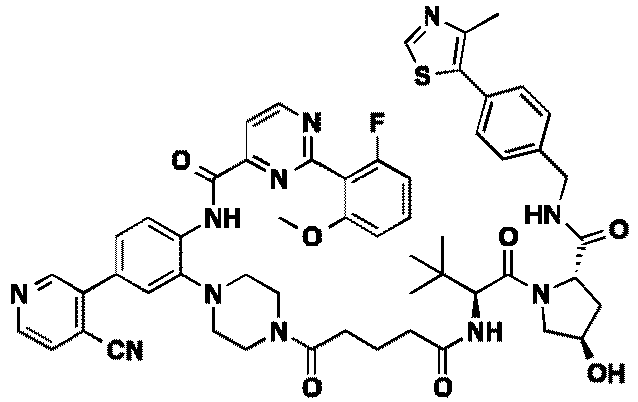
N-(4-(4-cyanopyridin-3-yl)-2-(4-(5-(((S)-1-((2S,4R)-4-hydroxy-2-((4-(4-methylthiazol-5-yl)benzyl)carbamoyl)pyrrolidi n-1-yl)-3,3-dimethyl-1-oxobutan-2-yl)amino)-5-oxopentanoyl)piperazin-1-yl)phenyl)-2-(2-fluoro-6-methoxyphenyl)pyrimidine-4-carboxamide 300 
N-(4-(4-cyanopyridin-3-yl)-2-(4-(6-(((S)-1-((2S,4R)-4-hydroxy-2-((4-(4-methylthiazol-5-yl)benzyl)carbamoyl)pyrrolidi n-1-yl)-3,3-dimethyl-1-oxobutan-2-yl)amino)-6-oxohexanoyl)piperazin-1 - yl)phenyl)-2-(2-fluoro-6-methoxyphenyl)pyrimidine-4-carboxamide 301 
N-(4-(4-cyanopyridin-3-yl)-2-(4-(7-(((S)-1-((2S,4R)-4-hydroxy-2-((4-(4-methylthiazol-5-yl)benzyl)carbamoyl)pyrrolidi n-1-yl)-3,3-dimethyl-1-oxobutan-2-yl)amino)-7-oxoheptanoyl)piperazin-1-yl)phenyl)-2-(2-fluoro-6-methoxyphenyl)pyrimidine-4-carboxamide 302 
N-(4-(4-cyanopyridin-3-yl)-2-(4-(8-(((S)-1-((2S,4R)-4-hydroxy-2-((4-(4-methylthiazol-5-yl)benzyl)carbamoyl)pyrrolidi n-1-yl)-3,3-dimethyl-1-oxobutan-2-yl)amino)-8-oxooctanoyl)piperazin-1-yl)phenyl)-2-(2-fluoro-6-methoxyphenyl)pyrimidine-4-carboxamide 303 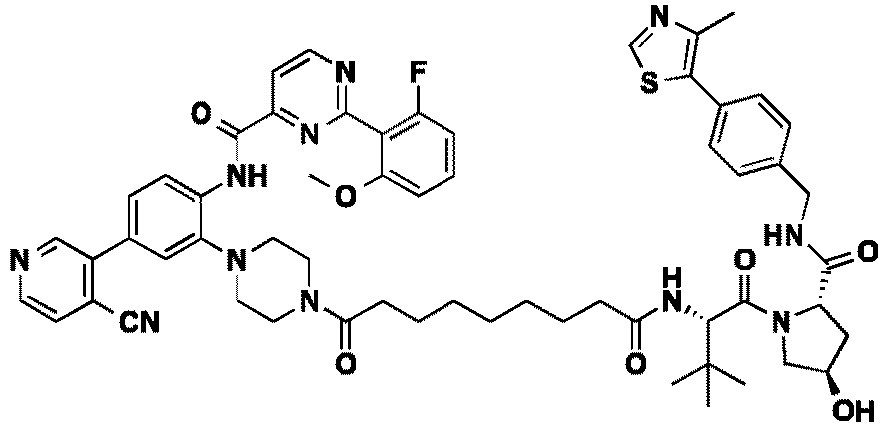
N-(4-(4-cyanopyridin-3-yl)-2-(4-(9-(((S)-1-((2S,4R)-4-hydroxy-2-((4-(4-methylthiazol-5-yl)benzyl)carbamoyl)pyrrolidi n-1-yl)-3,3-dimethyl-1-oxobutan-2-yl)amino)-9-oxononanoyl)piperazin-1-yl)phenyl)-2-(2-fluoro-6-methoxyphenyl)pyrimidine-4-carboxamide 304 
N-(4-(4-cyanopyridin-3-yl)-2-(4-(10-(((S)-1-((2S,4R)-4-hydroxy-2-((4-(4-methylthiazol-5-yl)benzyl)carbamoyl)pyrrolidi n-1-yl)-3,3-dimethyl-1-oxobutan-2-yl)amino)-10-oxodecanoyl)piperazin-1-yl)phenyl)-2-(2-fluoro-6-methoxyphenyl)pyrimidine-4-carboxamide 305 
N-(4-(4-cyanopyridin-3-yl)-2-(4-(11-(((S)-1-((2S,4R)-4-hydroxy-2-((4-(4-methylthiazol-5-yl)benzyl)carbamoyl)pyrrolidi n-1-yl)-3,3-dimethyl-1-oxobutan-2-yl)amino)-11-oxoundecanoyl)piperazin-1-yl)phenyl)-2-(2-fluoro-6-methoxyphenyl)pyrimidine-4-carboxamide 306 
N-(4-(4-cyanopyridin-3-yl)-2-(4-(2-((2-((2-(2,6-dioxopiperidin-3-yl)-1,3-dioxoisoindolin-5-yl)amino)ethyl)amino)-2-oxoethyl)piperazin-1-yl)phenyl)-2-(2-fluoro-6-methoxyphenyl)pyrimidine-4-carboxamide 307 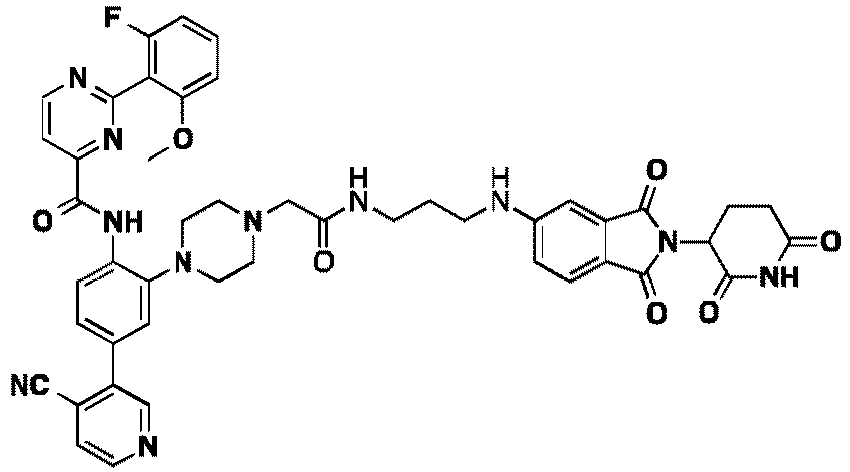
N-(4-(4-cyanopyridin-3-yl)-2-(4-(2-((3-((2-(2,6-dioxopiperidin-3-yl)-1,3-dioxoisoindolin-5-yl)amino)propyl)amino)-2-oxoethyl)piperazin-1 - yl)phenyl)-2-(2-fluoro-6-methoxyphenyl)pyrimidine-4-carboxamide 308 
N-(4-(4-cyanopyridin-3-yl)-2-(4-(2-((4-((2-(2,6-dioxopiperidin-3-yl)-1,3-dioxoisoindolin-5-yl)amino)butyl)amino)-2-oxoethyl)piperazin-1-yl)phenyl)-2-(2-fluoro-6-methoxyphenyl)pyrimidine-4-carboxamide 309 
N-(4-(4-cyanopyridin-3-yl)-2-(4-(2-((5-((2-(2,6-dioxopiperidin-3-yl)-1,3-dioxoisoindolin-5-yl)amino)pentyl)amino)-2-oxoethyl)piperazin-1-yl)phenyl)-2-(2-fluoro-6-methoxyphenyl)pyrimidine-4-carboxamide 310 
N-(4-(4-cyanopyridin-3-yl)-2-(4-(2-((6-((2-(2,6-dioxopiperidin-3-yl)-1,3-dioxoisoindolin-5-yl)amino)hexyl)amino)-2-oxoethyl)piperazin-1-yl)phenyl)-2-(2-fluoro-6-methoxyphenyl)pyrimidine-4-carboxamide 311 
N-(4-(4-cyanopyridin-3-yl)-2-(4-(2-((7-((2-(2,6-dioxopiperidin-3-yl)-1,3-dioxoisoindolin-5-yl)amino)heptyl)amino)-2-oxoethyl)piperazin-1-yl)phenyl)-2-(2-fluoro-6-methoxyphenyl)pyrimidine-4-carboxamide 312 
N-(4-(4-cyanopyridin-3-yl)-2-(4-(2-((8-((2-(2,6-dioxopiperidin-3-yl)-1,3-dioxoisoindolin-5-yl)amino)octyl)amino)-2-oxoethyl)piperazin-1-yl)phenyl)-2-(2-fluoro-6-methoxyphenyl)pyrimidine-4-carboxamide 313 
N-(4-(4-cyanopyridin-3-yl)-2-(4-(2-((2-(2-((2-(2,6-dioxopiperidin-3-yl)-1,3-dioxoisoindolin-5-yl)amino)ethoxy)ethyl)amino) -2-oxoethyl)piperazin-1 - yl)phenyl)-2-(2-fluoro-6-methoxyphenyl)pyrimidine-4-carboxamide 314 
N-(4-(4-cyanopyridin-3-yl)-2-(4-(2-((2-(2-(2-((2-(2,6-dioxopiperidin-3-yl)-1,3-dioxoisoindolin-5-yl)amino)ethoxy)ethoxy)ethyl )amino)-2-oxoethyl)piperazin-1-yl)phenyl)-2-(2-fluoro-6-methoxyphenyl)pyrimidine-4-carboxamide 315 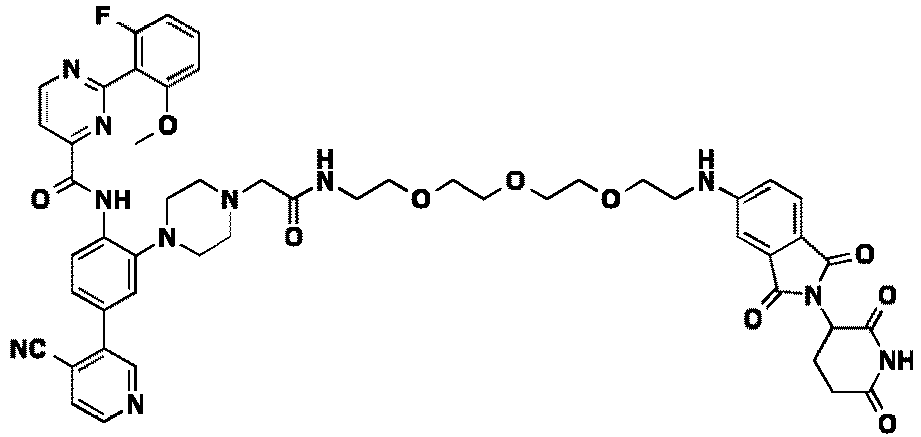
N-(4-(4-cyanopyridin-3-yl)-2-(4-(14-((2-(2,6-dioxopiperidin-3-yl)-1,3-dioxoisoindolin-5-yl)amino)-2-oxo-6,9,12-trioxa-3-azatetradecyl)piperazin-1-yl)phenyl)-2-(2-fluoro-6-methoxyphenyl)pyrimidine-4-carboxamide 316 
N-(4-(4-cyanopyridin-3-yl)-2-(4-(17-((2-(2,6-dioxopiperidin-3-yl)-1,3-dioxoisoindolin-5-yl)amino)-2-oxo-6,9,12,15-tetraoxa-3-azaheptadecyl)piperazin-1-yl)phenyl)-2-(2-fluoro-6-methoxyphenyl)pyrimidine-4-carboxamide 317 
N-(4-(4-cyanopyridin-3-yl)-2-(4-(20-((2-(2,6-dioxopiperidin-3-yl)-1,3-dioxoisoindolin-5-yl)amino)-2-oxo-6,9,12,15,18-pentaoxa-3-azaicosyl)piperazin-1-yl)phenyl)-2-(2-fluoro-6-methoxyphenyl)pyrimidine-4-carboxamide 318 
N-(4-(4-cyanopyridin-3-yl)-2-(4-(2-((2-((2-(2,6-dioxopiperidin-3-yl)-1,3-dioxoisoindolin-4-yl)amino)ethyl)amino)-2-oxoethyl)piperazin-1-yl)phenyl)-2-(2-fluoro-6-methoxyphenyl)pyrimidine-4-carboxamide 319 
N-(4-(4-cyanopyridin-3-yl)-2-(4-(2-((3-((2-(2,6-dioxopiperidin-3-yl)-1,3-dioxoisoindolin-4-yl)amino)propyl)amino)-2-oxoethyl)piperazin-1- yl)phenyl)-2-(2-fluoro-6-methoxyphenyl)pyrimidine-4-carboxamide 320 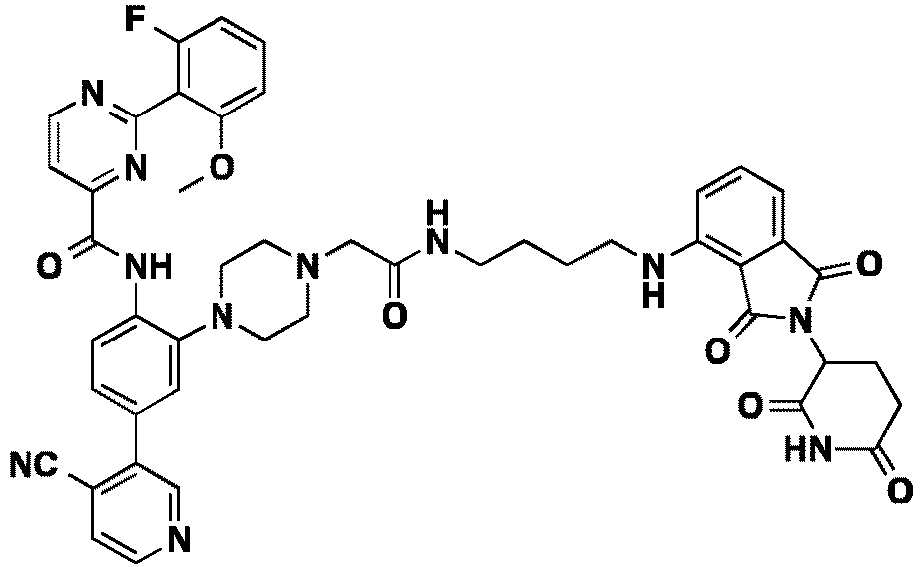
N-(4-(4-cyanopyridin-3-yl)-2-(4-(2-((4-((2-(2,6-dioxopiperidin-3-yl)-1,3-dioxoisoindolin-4-yl)amino)butyl)amino)-2-oxoethyl)piperazin-1-yl)phenyl)-2-(2-fluoro-6-methoxyphenyl)pyrimidine-4-carboxamide 321 
N-(4-(4-cyanopyridin-3-yl)-2-(4-(2-((5-((2-(2,6-dioxopiperidin-3-yl)-1,3-dioxoisoindolin-4-yl)amino)pentyl)amino)-2-oxoethyl)piperazin-1-yl)phenyl)-2-(2-fluoro-6-methoxyphenyl)pyrimidine-4-carboxamide 322 
N-(4-(4-cyanopyridin-3-yl)-2-(4-(2-((6-((2-(2,6-dioxopiperidin-3-yl)-1,3-dioxoisoindolin-4-yl)amino)hexyl)amino)-2-oxoethyl)piperazin-1-yl)phenyl)-2-(2-fluoro-6-methoxyphenyl)pyrimidine-4-carboxamide 323 
N-(4-(4-cyanopyridin-3-yl)-2-(4-(2-((7-((2-(2,6-dioxopiperidin-3-yl)-1,3-dioxoisoindolin-4-yl)amino)heptyl)amino)-2-oxoethyl)piperazin-1-yl)phenyl)-2-(2-fluoro-6-methoxyphenyl)pyrimidine-4-carboxamide 324 
N-(4-(4-cyanopyridin-3-yl)-2-(4-(2-((8-((2-(2,6-dioxopiperidin-3-yl)-1,3-dioxoisoindolin-4-yl)amino)octyl)amino)-2-oxoethyl)piperazin-1-yl)phenyl)-2-(2-fluoro-6-methoxyphenyl)pyrimidine-4-carboxamide 325 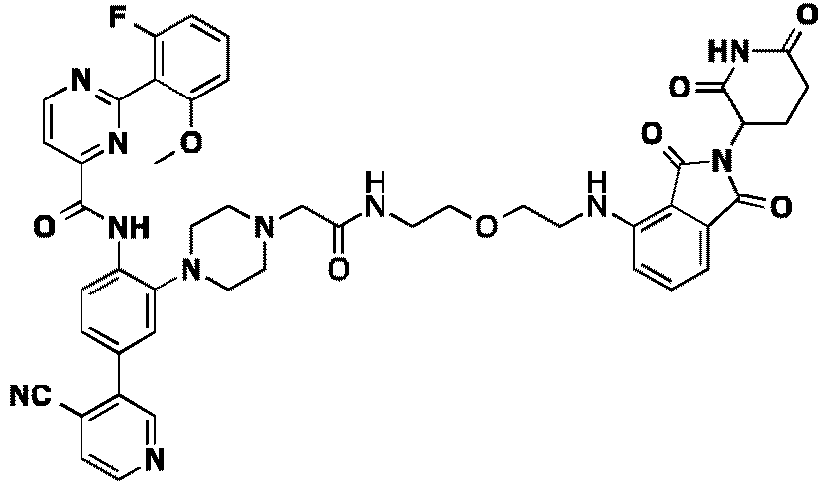
N-(4-(4-cyanopyridin-3-yl)-2-(4-(2-((2-(2-((2-(2,6-dioxopiperidin-3-yl)-1,3-dioxoisoindolin-4-yl)amino)ethoxy)ethyl)amino) -2-oxoethyl)piperazin-1-yl)phenyl)-2-(2-fluoro-6-methoxyphenyl)pyrimidine-4-carboxamide 326 
N-(4-(4-cyanopyridin-3-yl)-2-(4-(2-((2-(2-(2-((2-(2,6-dioxopiperidin-3-yl)-1,3-dioxoisoindolin-4-yl)amino)ethoxy)ethoxy)ethyl )amino)-2-oxoethyl)piperazin-1-yl)phenyl)-2-(2-fluoro-6-methoxyphenyl)pyrimidine-4-carboxamide 327 
N-(4-(4-cyanopyridin-3-yl)-2-(4-(14-((2-(2,6-dioxopiperidin-3-yl)-1,3-dioxoisoindolin-4-yl)amino)-2-oxo-6,9,12-trioxa-3-azatetradecyl)piperazin-1-yl)phenyl)-2-(2-fluoro-6-methoxyphenyl)pyrimidine-4-carboxamide 328 
N-(4-(4-cyanopyridin-3-yl)-2-(4-(17-((2-(2,6-dioxopiperidin-3-yl)-1,3-dioxoisoindolin-4-yl)amino)-2-oxo-6,9,12,15-tetraoxa-3-azaheptadecyl)piperazin-1-yl)phenyl)-2-(2-fluoro-6-methoxyphenyl)pyrimidine-4-carboxamide 329 
N-(4-(4-cyanopyridin-3-yl)-2-(4-(20-((2-(2,6-dioxopiperidin-3-yl)-1,3-dioxoisoindolin-4-yl)amino)-2-oxo-6,9,12,15,18-pentaoxa-3-azaicosyl)piperazin-1-yl)phenyl)-2-(2-fluoro-6-methoxyphenyl)pyrimidine-4-carboxamide 330 
N-(4-(4-cyanopyridin-3-yl)-2-(4-(2-((2-(2-(((S)-1-((2S,4R)-4-hydroxy-2-((4-(4-methylthiazol-5-yl)benzyl)carbamoyl)pyrrolidi n-1-yl)-3,3-dimethyl-1-oxobutan-2-yl)amino)-2-oxoethoxy)ethyl)amino)-2-oxoethyl)piperazin-1-yl)phenyl)-2-(2-fluoro-6-methoxyphenyl)pyrimidine-4-carboxamide 331 
N-(4-(4-cyanopyridin-3-yl)-2-(4-(2-((2-(3-(((S)-1-((2S,4R)-4-hydroxy-2-((4-(4-methylthiazol-5-yl)benzyl)carbamoyl)pyrrolidi n-1-yl)-3,3-dimethyl-1-oxobutan-2-yl)amino)-3-oxopropoxy)ethyl)amino)-2-oxoethyl)piperazin-1-yl)phenyl)-2-(2-fluoro-6-methoxyphenyl)pyrimidine-4-carboxamide 332 
N-(4-(4-cyanopyridin-3-yl)-2-(4-((S)-13-((2S,4R)-4-hydroxy-2-((4-(4-methylthiazol-5-yl)benzyl)carbamoyl)pyrrolidi ne-1-carbonyl)-14,14-dimethyl-2,11-dioxo-6,9-dioxa-3,12-diazapentadecyl)piperazin-1-yl)phenyl)-2-(2-fluoro-6-methoxyphenyl)pyrimidine-4-carboxamide 333 
N-(4-(4-cyanopyridin-3-yl)-2-(4-((S)-14-((2S,4R)-4-hydroxy-2-((4-(4-methylthiazol-5-yl)benzyl)carbamoyl)pyrrolidi ne-1-carbonyl)-15,15-dimethyl-2,12-dioxo-6,9-dioxa-3,13-diazahexadecyl)piperazin-1-yl)phenyl)-2-(2-fluoro-6-methoxyphenyl)pyrimidine-4-carboxamide 334 
N-(4-(4-cyanopyridin-3-yl)-2-(4-((S)-16-((2S,4R)-4-hydroxy-2-((4-(4-methylthiazol-5-yl)benzyl)carbamoyl)pyrrolidi ne-1-carbonyl)-17, 17-dimethyl-2,14-dioxo-6,9,12-trioxa-3,15-diazaoctadecyl)piperazin-1-yl)phenyl)-2-(2-fluoro-6-methoxyphenyl)pyrimidine-4-carboxamide 335 
N-(4-(4-cyanopyridin-3-yl)-2-(4-((S)-17-((2S,4R)-4-hydroxy-2-((4-(4-methylthiazol-5-yl)benzyl)carbamoyl)pyrrolidi ne-1-carbonyl)-18,18-dimethyl-2,15-dioxo-6,9,12-trioxa-3,16-diazanonadecyl)piperazin-1-yl)phenyl)-2-(2-fluoro-6-methoxyphenyl)pyrimidine-4-carboxamide 336 
N-(4-(4-cyanopyridin-3-yl)-2-(4-((S)-20-((2S,4R)-4-hydroxy-2-((4-(4-methylthiazol-5-yl)benzyl)carbamoyl)pyrrolidi ne-1-carbonyl)-21,21-dimethyl-2,18-dioxo-6,9,12,15-tetraoxa-3,19-diazadocosyl)piperazin-1-yl)phenyl)-2-(2-fluoro-6-methoxyphenyl)pyrimidine-4-carboxamide 337 
N-(4-(4-cyanopyridin-3-yl)-2-(4-((S)-23-((2S,4R)-4-hydroxy-2-((4-(4-methylthiazol-5-yl)benzyl)carbamoyl)pyrrolidi ne-1-carbonyl)-24,24-dimethyl-2,21-dioxo-6,9,12,15,18-pentaoxa-3,22-diazapentacosyl)piperazin-1-yl)phenyl)-2-(2-fluoro-6-methoxyphenyl)pyrimidine-4-carboxamide 338 
N-(4-(4-cyanopyridin-3-yl)-2-(4-(2-((2-(((S)-1-((2S,4R)-4-hydroxy-2-((4-(4-methylthiazol-5-yl)benzyl)carbamoyl)pyrrolidi n-1-yl)-3,3-dimethyl-1-oxobutan-2-yl)amino)-2-oxoethyl)amino)-2-oxoethyl)piperazin-1- yl)phenyl)-2-(2-fluoro-6-methoxyphenyl)pyrimidine-4-carboxamide 339 
N-(4-(4-cyanopyridin-3-yl)-2-(4-(2-((3-(((S)-1-((2S,4R)-4-hydroxy-2-((4-(4-methylthiazol-5-yl)benzyl)carbamoyl)pyrrolidi n-1-yl)-3,3-dimethyl-1-oxobutan-2-yl)amino)-3-oxopropyl)amino)-2-oxoethyl)piperazin-1-yl)phenyl)-2-(2-fluoro-6-methoxyphenyl)pyrimidine-4-carboxamide 340 
N-(4-(4-cyanopyridin-3-yl)-2-(4-(2-((4-(((S)-1-((2S,4R)-4-hydroxy-2-((4-(4-methylthiazol-5-yl)benzyl)carbamoyl)pyrrolidi n-1-yl)-3,3-dimethyl-1-oxobutan-2-yl)amino)-4-oxobutyl)amino)-2-oxoethyl)piperazin-1-yl)phenyl)-2-(2-fluoro-6-methoxyphenyl)pyrimidine-4-carboxamide 341 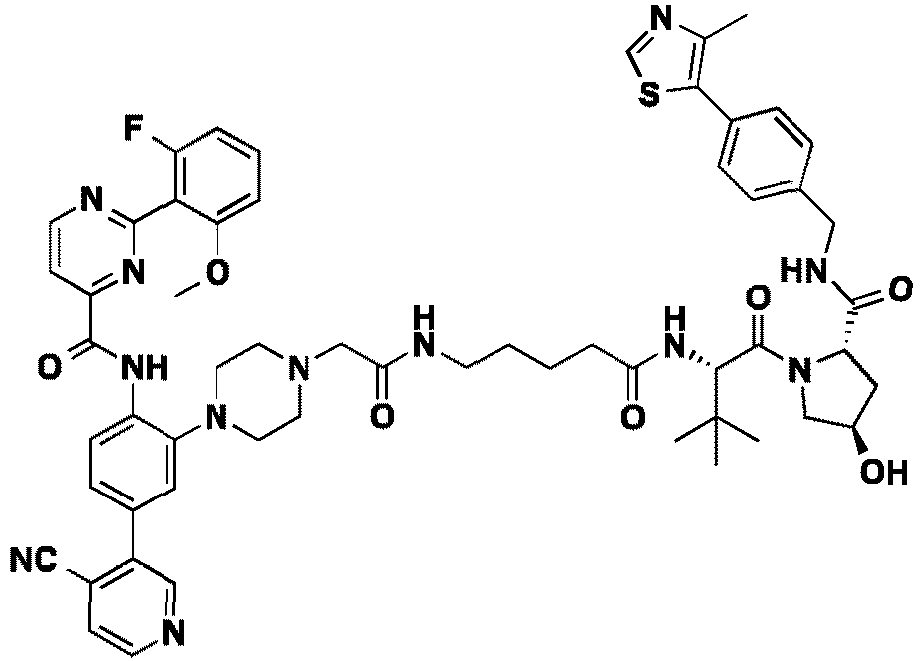
N-(4-(4-cyanopyridin-3-yl)-2-(4-(2-((5-(((S)-1-((2S,4R)-4-hydroxy-2-((4-(4-methylthiazol-5-yl)benzyl)carbamoyl)pyrrolidi n-1-yl)-3,3-dimethyl-1-oxobutan-2-yl)amino)-5-oxopentyl)amino)-2-oxoethyl)piperazin-1- yl)phenyl)-2-(2-fluoro-6-methoxyphenyl)pyrimidine-4-carboxamide 342 
N-(4-(4-cyanopyridin-3-yl)-2-(4-(2-((6-(((S)-1-((2S,4R)-4-hydroxy-2-((4-(4-methylthiazol-5-yl)benzyl)carbamoyl)pyrrolidi n-1-yl)-3,3-dimethyl-1-oxobutan-2-yl)amino)-6-oxohexyl)amino)-2-oxoethyl)piperazin-1-yl)phenyl)-2-(2-fluoro-6-methoxyphenyl)pyrimidine-4-carboxamide 343 
N-(4-(4-cyanopyridin-3-yl)-2-(4-(2-((7-(((S)-1-((2S,4R)-4-hydroxy-2-((4-(4-methylthiazol-5-yl)benzyl)carbamoyl)pyrrolidi n-1-yl)-3,3-dimethyl-1-oxobutan-2-yl)amino)-7-oxoheptyl)amino)-2-oxoethyl)piperazin-1-yl)phenyl)-2-(2-fluoro-6-methoxyphenyl)pyrimidine-4-carboxamide 344 
N-(4-(4-cyanopyridin-3-yl)-2-(4-(2-((8-(((S)-1-((2S,4R)-4-hydroxy-2-((4-(4-methylthiazol-5-yl)benzyl)carbamoyl)pyrrolidi n-1-yl)-3,3-dimethyl-1-oxobutan-2-yl)amino)-8-oxooctyl)amino)-2-oxoethyl)piperazin-1- yl)phenyl)-2-(2-fluoro-6-methoxyphenyl)pyrimidine-4-carboxamide 345 
N-(4-(4-cyanopyridin-3-yl)-2-(4-(2-((9-(((S)-1-((2S,4R)-4-hydroxy-2-((4-(4-methylthiazol-5-yl)benzyl)carbamoyl)pyrrolidi n-1-yl)-3,3-dimethyl-1-oxobutan-2-yl)amino)-9-oxononyl)amino)-2-oxoethyl)piperazin-1- yl)phenyl)-2-(2-fluoro-6-methoxyphenyl)pyrimidine-4-carboxamide 346 
N-(4-(4-cyanopyridin-3-yl)-2-(4-(2-((10-(((S)-1-((2S,4R)-4-hydroxy-2-((4-(4-methylthiazol-5-yl)benzyl)carbamoyl)pyrrolidi n-1-yl)-3,3-dimethyl-1-oxobutan-2-yl)amino)-10-oxodecyl)amino)-2-oxoethyl)piperazin-1- yl)phenyl)-2-(2-fluoro-6-methoxyphenyl)pyrimidine-4-carboxamide 347 
N-(4-(4-cyanopyridin-3-yl)-2-(4-(2-((11-(((S)-1-((2S,4R)-4-hydroxy-2-((4-(4-methylthiazol-5-yl)benzyl)carbamoyl)pyrrolidi n-1-yl)-3,3-dimethyl-1-oxobutan-2-yl)amino)-11-oxoundecyl)amino)-2-oxoethyl)piperazin-1- yl)phenyl)-2-(2-fluoro-6-methoxyphenyl)pyrimidine-4-carboxamide - In Table 1 and Table 2, the left portion of the structure of the HPK1 disruptors/degraders binds to HPK1 and the right portion of the structure recruits the ubiquitination machinery to HPK1, which induces poly-ubiquitination and degradation of HPK1 at the proteasome.
- Compounds corresponding to Examples 1- 264 have been synthesized and final compounds are provided with a Compound Code in Table 1. Compounds in Table 2 corresponding to Examples 265 - 347 have not been synthesized and are not provided with a Compound Code. These compounds may be synthesized according to the schemes set forth above.
- As used herein, in case of discrepancy between the structure and chemical name provided for a particular compound, the given structure shall control.
- EXAMPLE 348. Several compounds according to the present invention employing the indolin-2-one HPK1 binding base, (which henceforth shall be referred to as the HC58 series, the HC65 series and the HC75 series) were assessed on their abilities to degrade HPK1 and produce an elevated IL-2 response profile upon stimulation by anti-CD3- and anti-CD28-mAb-mediated (CD3XCD28) stimulation (
Figures 1-4 ). The elevated IL-2 response profile induced by TCR engagement after exposure to HC58 series of HPK1 degraders is shown inFigure 1 . Western blot analysis revealed that some degraders were able to reduce the expression level of HPK1 protein in Jurkat T cell line by approximately 75% (Figures 2 and 3 ). Furthermore, Jurkat cells treated with these HPK1 degraders also exhibited elevated TCR-induced IL-2 response profile - nearly 10 fold higher than the DMSO treated control - that is similar to the profile observed in HPK1 -/- T cells (Figure 4 ). A select sub-set of the lead HPK1 degraders from the HC58 series were further characterized to determine whether they could degrade primary mouse T cells. Evidence was found which suggests that either 300 nM HC58-76 or 300 nM HC58-78 HPK1 degraders could degrade more HPK1 protein in primary T cells than in Jurkat T cells (Figure 5A ). Both the HC58-75- and HC58-78-treated T cells produced more IL-2 than the DMSO-treated counterpart (Figure 5B ). Lastly, HC58-78 could induce primary murine T cells to proliferate much more quickly than the DMSO-treated counterpart (Figure 5C ). Similar results were found in HC58-75-treated T cells (data not shown). - EXAMPLE 349. I was observed that HPK1-1- T cells, unlike their wild type counterparts, could readily produce IL-2 in response to CD3 □ crosslinking alone (data not shown). To assess whether HPK1 degraders could confer the same ability to produce IL-2 in a CD28-independent manner, CD4+ primary murine T cells prepared as described in
Figure 5 were treated with 500 nM of HC58-75 HPK1 degrader or DMSO or Pomalidomide as controls. Their abilities to produce IL-2 in response a fixed concentration of plate-bound anti-CD3 □ mAb (5 µg/mL) in conjunction with varying soluble concentration of anti-CD28 mAb was then assessed. Quantitative IL-2 ELISA analysis revealed that the HC58-75-treated T cells could produce IL-2 without the help of CD28 co-receptor engagement, which is similar to the IL-2 response produced by HPK1 -/- T cells (Figure 6 and data not shown). - EXAMPLE 350. It was observed that HPK1 -/- regulatory T cells (Treg), unlike their wild type counterparts, could readily produce IL-2 in response to CD3XCD28 stimulation. Taking advantage of the FoxP3-driven eGFP reporter mice that express eGFP only in the FoxP3+ regulatory T cells (Tregs), bonafide Tregs were purified from spleens and lymph nodes by FACS-assisted sorting of CD4+eGFP+ Tregs and used as the source of ex vivo functional studies. The ability of the wild type Treg, the HPK1 -/- Tregs and the HC58-78-treated wild type Tregs to produce IL-2 in response to CD3XCD28 stimulation was compared. Analysis of quantitative IL-2 ELISA revealed that the HC58-78-treated Tregs produced IL-2 at level comparable to that produced by HPK1 -/- Tregs (
Figure 7 , the black and grey histogram bars and data not shown). Wild type regulatory T cells could not produce the IL-2 in response to the same stimulation due to the transcriptional repression of the IL-2 locus by the FoxP3 transcription factor (Figure 7 , the white histogram bar). - EXAMPLE 351. In an effort to improve the potency of HPK1 degraders, additional HPK1 degraders that utilize a different HPK1 binding scaffold (pyrazolo-pyrimidine) were designed and synthesized (referred to as the HC90 series). Jurkat cells that were pre-treated with each member of the HC90 HPK1 degrader series (500 nM) were screened for the amount of IL-2 produced in response CD3XCD28 stimulation. The levels of IL-2 produced were compared to the level produced by T cells that were treated by selected compounds from the HC58 series (
Figure 8 ). Compounds that endowed Jurkat cells with either comparable or superior IL-2 response profiles when compared to the lead HC58 compounds (Figure 8 , red histogram bars) were selected for confirmatory assessment in the presence of a wider ranges of compound concentrations (Figure 9 ). The top two compounds from the HC90 series, the HC90-50 and HC90-51 (Figure 9 , black triangle and black square) were selected as lead compounds for the HC90 series and were subjected to additional analysis. Furthermore, compound HC58-78 and HC90-50 were also assessed for their abilities to enhance the CD3XCD28-induced IL-2 response by primary human PBMC (Figure 10 ). - EXAMPLE 352. In an aspect, this disclosure provides several methods of treating HPK1-mediated diseases or diseases that could be controlled by the reduction of HPK1 expression level through administration of the compounds (HPK1 degraders) described herein. Compounds that could alter the expression level of HPK1 could be administered in vivo systematically alone, or in conjunction with other drugs, to directly or indirectly address the disease state. Alternatively, the HPK1 degraders could be administered externally to the ex vivo cells that had been prepared for therapeutic use, and then returned to the patients to address the disease state in vivo. These therapeutic concepts are schematically depicted in
Figure 11 . - EXAMPLE 353. HPK1 is expressed in all hematopoietic cells examined to date, including T cells, B cells, dendritic cells and neutrophils. Because the breath of therapeutic approaches might involve the use of Chimeric Antigen Receptor (CAR) T cells, dendritic cells, TCR transgenic T cells and Tumor Infiltrating Lymphocytes (TILs), selected HPK1 degraders were evaluated to determine whether they could degrade HPK1 effectively in some of these cell types.
Figure 12 revealed that HPK1 degraders could degrade HPK1 in murine primary T cells and in the JEDI TCR transgenic T cells as well. Potent degradation of HPK1 by HPK1 degraders was also observed in the human DC1 dendritic cells. - EXAMPLE 354. One of the approaches schematically depicted in
Figure 11 is the use of HPK1 degraders in conjunction with other drugs. The ability of HPK1 degraders to enhance the T cell-mediated killing of CD19+ B-Cell Acute Lymphoblastic Leukemia treated with blinatumomab was assessed.. It was demonstrated that human PBMC that were treated with HPK1 degraders could aid blinatumomab in killing more human CD19+ B Cell Acute Lymphoblastic Leukemia cells, Raji (Figure 13 ). - EXAMPLE 355. One of the mechanisms employed by PBMC to kill their target cells is by releasing IFNγ and TNFα production. These inflammatory cytokines are known have potent cytolytic effects on cancer cells. FACS analysis of anti-IFNγ and TNFα intracellular staining revealed that combining either HC58-78 or HC90-50 with blinatumomab significantly increased the percentage of human PBMCs that express high level of IFNγ and TNFα (
Figure 14A and 14B ). These data suggest that the elevated level of IFNγ and TNFα produced by blinatumomab-treated PBMC might be responsible for the more effective killing of the CD19+ B Cell Acute Lymphoblastic Leukemia cells. Mediated PBMC killing of the Raji cells is most evident at PBMC:Raji ratio of 5:1 (Figure 13 ). - For the synthesis of intermediates and examples (1-89) below, HPLC spectra for all compounds were acquired using an Agilent 1200 Series system with DAD detector. Chromatography was performed on a 2.1 × 150 mm Zorbax 300SB-
C18 5 µm column with water containing 0.1% formic acid as solvent A and acetonitrile containing 0.1% formic acid as solvent B at a flow rate of 0.4 ml/min. The gradient program was as follows: 1% B (0-1 min), 1-99% B (1-4 min), and 99% B (4-8 min). High-resolution mass spectra (HRMS) data were acquired in positive ion mode using an Agilent G1969A API-TOF with an electrospray ionization (ESI) source. Nuclear Magnetic Resonance (NMR) spectra were acquired on a Bruker DRX-600 spectrometer with 600 MHz for proton (1H NMR) and 150 MHz for carbon (13C NMR); chemical shifts are reported in (δ). Preparative HPLC was performed on Agilent Prep 1200 series with UV detector set to 254 nm. Samples were injected onto a Phenomenex Luna 250 × 30 mm, 5 µm, C18 column at room temperature. The flow rate was 40 ml/min. A linear gradient was used with 10% (or 50%) of MeOH (A) in H2O (with 0.1 % TFA) (B) to 100% of MeOH (A). HPLC was used to establish the purity of target compounds. All final compounds had > 95% purity using the HPLC methods described above. - The Jurkat (sub-clone E6-1 [ATCC® TIB-152™]) is a human acute T cell leukemia cell line that was established from the peripheral blood of a 14 year old boy. (Weiss 1984) (Gillis 1980). Schneider U, et al. Characterization of EBV-genome negative "null" and "T" cell lines derived from children with acute lymphoblastic leukemia and leukemic transformed non-Hodgkin lymphoma. Int. J. Cancer 19: 621-626, 1977. PubMed: 68013. Clone E6-1 cells is a preferred cellular platform for studying T cell activation in response to T cell receptor engagement because it produces the cytokine IL-2, which could be used as proxy readout for the level of T cell activation. While the Jurkat cell would produce IL-2 when stimulated with phorbol esters and either lectins or monoclonal antibodies CD3ε itself, the stimulation that most mimic T cell activation in vivo is to use anti-CD3ε monoclonal antibody in conjunction with anti-CD28 monoclonal antibody. It is this activation method that was used to stimulate Jurkat T cells to that had been treated with degraders of interest. Specifically, the anti-CD3ε monoclonal antibody (OKT3 clone, 5 µg per mL) is absorbed onto 96-well polystyrene tissue culture plate to form a planar surface that mimics the surface of antigen presentating cells. Excess non-absorbed antibody is washed off with
phosphate buffer saline 3 times and would be used to intiate stimulation of Jurkat T cells that had been pre-treated with indicated concentration of the degraders. Jurkat cells were resuspended in culture medium (RPMI-1640, 10% FCS, 1 X L-glutamine and 1 X penicillin and streptomycin). Fifty thousands Jurkat cells were added to each well in duplicate, in the presence of (5 µg per mL of anti-CD28 monoclonal antibody). The plate is then placed into a humidity controlled, 5% CO2 incubator for 24 hours. The indicated concentration of degrader is maintained through out the stimulation period of 24 hours. Supernatant from Jukat cells were collected and the amount of IL-2 present in the supernatant was assessed by standard anti-human IL-2 ELISA. - The ability of degraders to degrade HPK protein level in treated Jukat cels was determined by Western blot, using anti-human HPK1 polyclonal antibody as probe (CSL). Degrader-treated Jurkat cells were lysed in standard NP-40 lysis buffer and lysate equalvalent to 1
X 106 Jurkat cells were loaded into each well of the 10% poly-acrylamide gel and subjected to electrophoretic separation by SDS-PAGE. Proteins in lysates that had been resolved by SDS-PAGE were transferred to PVDF support matrix, blocked by 4% BSA containing solution and probed with anti-human HPK1 antibody, using standard Western blotting procedure. - To determine the number of CD19+ Raji cells killed by human PBMC that were activated by the Blinatumomab-mediated activation, we used CountBright cell counting beads to estimate the number of cells remained after 72 hours of co-culturing of PBMC and Raji. As for the intracellular staining of the TNFα and the IFNγ, the standard para-formaldehyde-based "fix and perm" procedure was used in order to quantitate the amount of intracellular cytokine trapped inside the cells by brefeldin A. FACS analysis of stained cells is performed by BD's LSR II FACS .
- It is to be understood that while the invention has been described in conjunction with the detailed description thereof, the foregoing description is intended to illustrate and not limit the scope of the invention, which is defined by the scope of the appended claims. Other aspects, advantages, and modifications are within the scope of the following claims.
-
- Alzabin, S., Bhardwaj, N., Kiefer, F., Sawasdikosol, S., and Burakoff, S. (2009). .
- Alzabin, S., Pyarajan, S., Yee, H., Kiefer, F., Suzuki, A., Burakoff, S., and Sawasdikosol, S. (2010). .
- Bondeson, D.P., Mares, A., Smith, I.E., Ko, E., Campos, S., Miah, A.H., Mulholland, K.E., Routly, N., Buckley, D.L., Gustafson, J.L., et al. (2015). Catalytic in vivo protein knockdown by small-molecule PROTACs. Nat Chem Biol 11, 611-617.
- Buckley, D.L., and Crews, C.M. (2014). Small-molecule control of intracellular protein levels through modulation of the ubiquitin proteasome system. Angew Chem Int Ed Engl 53, 2312-2330.
- Buckley, D.L., Gustafson, J.L., Van Molle, I., Roth, A.G., Tae, H.S., Gareiss, P.C., Jorgensen, W.L., Ciulli, A., and Crews, C.M. (2012a). Small-molecule inhibitors of the interaction between the E3 ligase VHL and HIFlalpha. Angew Chem Int Ed Engl 51, 11463-11467.
- Buckley, D.L., Raina, K., Darricarrere, N., Hines, J., Gustafson, J.L., Smith, I.E., Miah, A.H., Harling, J.D., and Crews, C.M. (2015). HaloPROTACS: Use of Small Molecule PROTACs to Induce Degradation of HaloTag Fusion Proteins. .
- Buckley, D.L., Van Molle, I., Gareiss, P.C., Tae, H.S., Michel, J., Noblin, D.J., Jorgensen, W.L., Ciulli, A., and Crews, C.M. (2012b). Targeting the von Hippel-Lindau E3 ubiquitin ligase using small molecules to disrupt the VHL/HIF-1alpha interaction. J Am Chem Soc 134, 4465-4468.
- Burnet, F.M. (1970). The concept of immunological surveillance. Progress in experimental tumor research 13, 1-27.
- Chamberlain, P.P., Lopez-Girona, A., Miller, K., Carmel, G., Pagarigan, B., Chie-Leon, B., Rychak, E., Corral, L.G., Ren, Y.J., Wang, M., et al. (2014). Structure of the human Cereblon-DDB1-lenalidomide complex reveals basis for responsiveness to thalidomide analogs. Nat Struct Mol Biol 21, 803-809.
- Corthay, A. (2014). Does the immune system naturally protect against cancer? Frontiers in .
- Davies, T.G., Wixted, W.E., Coyle, lE., Griffiths-Jones, C., Heam, K., Mcl\fonamin, R., Norton,
- D., Rich, S.J., Richardson, C., Saxty, G., et al. (2016). Monoacidic Inhibitors of the Kelch-like ECH-Associated Protein 1: Nuclear Factor Erythroid 2-Related Factor 2 (KEAP1:NRF2) Protein-Protein Interaction with High Cell Potency Identified by Fragment-Based Discovery. J Med Chem 59, 3991-4006.
- Fischer, E.S., Bohm, K., Lydeard, J.R., Yang, H., Stadler, M.B., Cavadini, S., Nagel, J., Serluca, F., Acker, V., Lingaraju, G.M., et al. (2014). Structure of the DDB1-CRBN E3 ubiquitin ligase in complex with thalidomide. Nature 512, 49-53.
- Galdeano, C., Gadd, M.S., Soares, P., Scaffidi, S., Van Molle, I., Birced, I., Hewitt, S., Dias, D.M., and Ciulli, A. (2014). Structure-guided design and optimization of small molecules targeting the protein-protein interaction between the von Hippel-Lindau (VHL) E3 ubiquitin ligase and the hypoxia inducible factor (HIF) alpha subunit with in vitro nanomolar affinities. J Med Chem 57, 8657-8663.
- Gillis, S., and J. Watson. 1980. Biochemical and biological characterization of lymphocyte regulatory molecules. V. Identification of an interleukin 2-producing human leukemia T cell line. The Journal of experimental medicine 152: 1709-1719.
- Hernandez, S., Qing, J., Thibodeau, R.H., Du, X., Park, S., Lee, H.M., Xu, M., Oh, S., Navarro, A., Roose-Girma, M., et al. (2018). The Kinase Activity of .
- Hu, M.C., Qiu, W.R., Wang, X., Meyer, C.F., and Tan, T.H. (1996). Human HPK1, a novel human hematopoietic progenitor kinase that activates the JNK/SAPK kinase cascade. .
- Ito, T., Ando, H., Suzuki, T., Ogura, T., Hotta, K., Imamura, Y., Yamaguchi, Y., and Handa, H. (2010). Identification of a primary target of thalidomide teratogenicity. Science 327, 1345-1350. Kiefer, F., Tibbles, L.A., Anafi, M., Janssen, A., Zanke, B.W., Lassam, N., Pawson, T., Woodgett, J.R., and Iscove, N.N. (1996). HPK1, a hematopoietic protein kinase activating the SAPK/JNK pathway. .
- Lai, A.C., Toure, M., Hellerschmied, D., Salami, J., Jaime-Figueroa, S., Ko, E., Hines, J., and Crews, C.M. (2016). Modular PROTAC Design for the Degradation of Oncogenic BCR-ABL. Angew Chem Int Ed Engl 55, 807-810.
- Ling, P., Meyer, C.F., Redmond, L.P., Shui, J.W., Davis, B., Rich, R.R., Hu, M.C., Wange, R.L., and Tan, T.H. (2001). Involvement of .
- Liou, J., Kiefer, F., Dang, A., Hashimoto, A., Cobb, M.H., Kurosaki, T., and Weiss, A. (2000). HPK1 is activated by lymphocyte antigen receptors and negatively regulates AP-1. Immunity 12, 399-408.
- Liu, J., Curtin, J., You, D., Hillerman, S., Li-Wang, B., Eraslan, R., Xie, J., Swanson, J., Ho, C.P., Oppenheimer, S., et al. (2019). Critical role of kinase activity of .
- Lu, J., Qian, Y., Altieri, M., Dong, H., Wang, J., Raina, K., Hines, J., Winkler, J.D., Crew, A.P., Coleman, K., et al. (2015). Hijacking the E3 Ubiquitin Ligase Cereblon to Efficiently Target BRD4. Chemistry & biology 22, 755-763.
- Ohoka, N, Okuhira, K., Ito, M, Nagai, K, Shibata, N., Hattori, T., Ujikawa, O, Shimokawa, K., Sano, O., Koyama, R., et al (2017). In Vivo Knockdown of Pathogenic Proteins via Specific and Nongenetic Inhibitor of Apoptosis Protein (IAP)-dependent Protein Erasers (SNIPERs). J Biol Chem 292, 4556-4570.
- Okuhira, K., Ohoka, N., Sai, K., Nishimaki-Mogami, T., Itoh, Y., Ishikawa, M., Hashimoto, Y., and Naito, M. (2011). Specific degradation of CRABP-II via cIAPl-mediated ubiquitylationinduced by hybrid molecules that crosslink clAPl and the target protein. FEBS Lett 585, 1147-1152.
- Ribas, A., and Wolchok, J.D. (2018). Cancer immunotherapy using checkpoint blockade. Science (New York, NY 359, 1350-1355.
- Sawasdikosol, S., Pyarajan, S., Alzabin, S., Matejovic, G., and Burakoff, S.J. (2007). Prostaglandin E2 activates HPK1 kinase activity via a PKA-dependent pathway. The Journal of biological chemistry 282, 34693-34699.
- Sawasdikosol, S., Russo, K.M., and Burakoff, S.J. (2003). Hematopoietic progenitor kinase 1 (HPK1) regulates prostaglandin E2-induced fos gene transcription. . Sawasdikosol, S., Zha, R., Yang, B., and Burakoff, S. (2012). HPK1 as a novel target for cancer immunotherapy. Immunologic research 54, 262-265.
- Shibata, N., Miyamoto, N., Nagai, K., Shimokawa, K., Sameshima, T., Ohoka, N., Hattori, T., Imaeda, Y, Nara, H., Cho, N., et al. (2017). Development of protein degradation inducers of oncogenic BCR-ABL protein by conjugation of ABL kinase inhibitors and IAP ligands. Cancer Sci 108, 1657-1666.
- Shui, J.W., Boomer, J.S., Han, J., Xu, J., Dement, G.A., Zhou, G., and Tan, T.H. (2007). .
- Sun, D., Li, Z, Rew, Y., Gribble, M, Bartberger, M.D., Beck, H.P., Canon, J., Chen, A., Chen, X, Chow, D., et al. (2014). Discovery of AMG 232, a potent, selective, and orally bioavailable MDM2-p53 inhibitor in clinical development. J Med Chem 57, 1454-1472.
- Weiss, A., R. L. Wiskocil, and J. D. Stobo. 1984. The role of T3 surface molecules in the activation of human T cells: a two-stimulus requirement for .
- Winter, G.E., Buckley, D.L., Paulk, J., Roberts, J.M., Souza, A., Dhe-Paganon, S., and Bradner, J.E. (2015). Phthalimide conjugation as a strategy for in vivo target protein degradation. Science 348, 1376-1381.
- Xie, T., Lim, S.M., Westover, K.D., Dodge, M.E., Ercan, D., Ficarro, S.B., Udayakumar, D., Gurbani, D., Tae, H.S., Riddle, S.M., et al. (2014). Pharmacological targeting of the pseudokinase Her3. .
- Zengerle, M., Chan, K.H., and Ciulli, A. (2015). Selective Small Molecule Induced Degradation of the BET Bromodomain Protein BRD4. .
- The invention is further embodied by the following items:
- 1. A compound selected from the group consisting of:
- g. (Z)-N-(3-(4-(5-((2-(2,6-dioxopiperidin-3-yl)-1,3-dioxoisoindolin-4-yl)amino)pentanoyl)piperazin-1-yl)propyl)-5-((5-fluoro-2-oxoindolin-3-ylidene)methyl)-2,4-dimethyl-1H-pyrrole-3-carboxamide (HC58-38);
- h. (Z)-N-(3 -(4-(2-((5-((2-(2,6-dioxopiperidin-3-yl)-1,3-dioxoisoindolin-4-yl)amino)pentyl)amino)-2-oxoethyl)piperazin-1-yl)propyl)-5-((5-fluoro-2-oxoindolin-3-ylidene)methyl)-2,4-dimethyl-1H-pyrrole-3-carboxamide (HC58-75);
- i. (Z)-N-(3-(4-(2-((6-((2-(2,6-dioxopiperidin-3-yl)-1,3-dioxoisoindolin-4-yl)amino)hexyl)amino)-2-oxoethyl)piperazin-1-yl)propyl)-5-((5-fluoro-2-oxoindolin-3-ylidene)methyl)-2,4-dimethyl-1H-pyrrole-3-carboxamide (HC58-76); and
- j. (Z)-N-(3-(4-(2-((8-((2-(2,6-dioxopiperidin-3-yl)-1,3-dioxoisoindolin-4-yl)amino)octyl)amino)-2-oxoethyl)piperazin-1-yl)propyl)-5-((5-fluoro-2-oxoindolin-3-ylidene)methyl)-2,4-dimethyl-1H-pyrrole-3-carboxamide (HC58-78), and
- 2. A compound selected from the group consisting of:
- a. 2-(2,6-dioxopiperidin-3-yl)-4-((3-(4-(4-(5-(2-fluoro-6-methoxyphenyl)-1H-pyrazolo[4,3-d]pyrimidin-3-yl)phenyl)piperazin-1-yl)-3-oxopropyl)amino)isoindoline-1,3-dione (HC90-50); and
- b. 2-(2,6-dioxopiperidin-3-yl)-4-((4-(4-(4-(5-(2-fluoro-6-methoxyphenyl)-1H-pyrazolo[4,3-d]pyrimidin-3-yl)phenyl)piperazin-1-yl)-4-oxobutyl)amino)isoindoline-1,3-dione (HC90-51), and
- 3. A bivalent compound comprising a hematopoietic progenitor kinase 1 (HPK1) ligand conjugated to a degradation/disruption tag, wherein the bivalent compound has the structure:

- (1) a moiety according to FORMULA 1A:

- the "Linker" moiety of the bivalent compound is attached to Z;
- X is selected from O or S; [not previously defined for FORMULA 1A; presume this is correct based on FORMULA 1]
- R1, R2, R3, R4, R7, and R8 are selected from hydrogen, halogen, oxo, CN, NO2, OR11, SR11, NR11R12, C(O)R11, C(O)OR11, C(O)NR11R12, S(O)R11, S(O)2R11, S(O)2NR11R12, NR13C(O)OR11, NR13C(O)R11, NR13C(O)NR11R12, NR13S(O)R11, NR13S(O)2R11, NR13S(O)2NR11R12 optionally substituted C1-C8 alkyl, optionally substituted C2-C8 alkenyl, optionally substituted C2-C8 alkynyl, optionally substituted C1-C8 alkoxy, optionally substituted C1-C8alkoxyC1-C8alkyl, optionally substituted C1-C8alkylaminoC1-C8alkyl, optionally substituted 3-8 membered cycloalkyl, optionally substituted C3-C8 cycloalkoxy, optionally substituted 3-8 membered heterocyclyl, optionally substituted aryl, and optionally substituted heteroaryl; wherein
- R11, R12, and R13 are independently selected from hydrogen, optionally substituted C1-C8 alkyl, optionally substituted C1-C8alkoxyC1-C8alkyl, optionally substituted C1-C8alkylaminoC1-Csalkyl, optionally substituted C3-C10 cycloalkyl, optionally substituted 3-20 membered heterocyclyl, optionally substituted C2-C8 alkenyl, optionally substituted C2-C8 alkynyl, optionally substituted aryl, and optionally substituted heteroaryl, or
- R11 and R12, R11 and R13, R12 and R13 together with the atom to which they are connected form an optionally substituted 3-20 membered cycloalkyl or heterocyclyl ring;
- R5 and R6 are independently selected from hydrogen, optionally substituted C1-C8 alkyl, optionally substituted C2-C8 alkenyl, optionally substituted C2-C8 alkynyl, optionally substituted C1-C8 alkoxy, optionally substituted C1-C8alkoxyC1-C8alkyl, optionally substituted C1-C8alkylaminoC1-C8alkyl, optionally substituted 3-8 membered cycloalkyl, optionally substituted C3-C8 cycloalkoxy, optionally substituted 4-8 membered heterocyclyl, optionally substituted aryl, and optionally substituted heteroaryl;
- R17, R18, R19, and R20, at each occurrence, are independently selected from hydrogen, halogen, CN, OH, NH2, optionally substituted C1-C8 alkyl, optionally substituted C3-C8 cycloalkyl, optionally substituted C3-C8 cycloalkoxy, optionally substituted C1-C8alkoxyC1-C8alkyl, optionally substituted C1-C8alkylaminoC1-C8alkyl, optionally substituted 3-8 membered membered heterocyclyl, optionally substituted C1-C8 alkoxy, optionally substituted C1-C8 alkoxyalkyl, optionally substituted C1-C8 haloalkyl, optionally substituted C1-C8 hydroxyalkyl, optionally substituted C1-C8 alkylamino, and optionally substituted Ci-Cs alkylaminoCi-Cs alkyl;
- m, n, are independently selected from 0, 1, 2, 3, and 4; and
- W, Q, and Z, at each occurrence, are independently selected from null, CO, CO2, CH2, NH, NH-CO, CO-NH, CH2-NH-CO, CH2-CO-NH, NH-CO-CH2, CO-NH-CH2, CH2-NH-CH2-CO-NH, CH2-NH-CH2-NH-CO, -CO-NH, CO-NH- CH2-NH-CH2, CH2-NH-CH2, CR21R22, C(O)NR21, C(S)NR21, O, S, SO, SO2, SO2NR21, NR21, NR21CO, NR 121 CONR 22, NR21C(S), optionally substituted C1-C8 alkyl, optionally substituted C1-C8 alkoxy, optionally substituted C1-C8alkoxyC1-C8alkyl, optionally substituted C1-C8 haloalkyl, optionally substituted C1-C8 hydroxyalkyl, optionally substituted C2-C8 alkenyl, optionally substituted C2-C8 alkynyl, optionally substituted 3-8 membered cycloalkyl, optionally substituted C3-C8 cycloalkoxy, optionally substituted 3-8 membered heterocyclyl, optionally substituted aryl, optionally substituted heteroaryl, optionally substituted C3-C13 fused cycloalkyl, optionally substituted C3-C13 fused heterocyclyl, optionally substituted C3-C13 bridged cycloalkyl, optionally substituted C3-C13 bridged heterocyclyl, optionally substituted C3-C13 spiro cycloalkyl, and optionally substituted C3-C13 spiro heterocyclyl; wherein
R21 and R22 are independently selected from hydrogen, optionally substituted C1-C8 alkyl, optionally substituted 3-8 membered cycloalkyl, optionally substituted C3-C8 cycloalkoxy, optionally substituted 3-8 membered heterocyclyl, optionally substituted C1-C8 alkoxy, optionally substituted C1-C8 alkoxyalkyl, optionally substituted C1-C8 haloalkyl, optionally substituted C1-C8 hydroxyalkyl, optionally substituted Ci-Cs alkylamino, and optionally substituted C1-C8alkylaminoC1-C8alkyl; - and pharmaceutically acceptable salts thereof.
- (1) a moiety according to FORMULA 1A:
- 4. A bivalent compound comprising a hematopoietic progenitor kinase 1 (HPK1) ligand conjugated to a degradation/disruption tag, wherein the bivalent compound has the structure:

- (1) a moiety according to FORMULA 3A:

- the "Linker" moiety of the bivalent compound is attached independently to R1 or R3;
- X is selected from CR2 or N;
- R1 is selected from null, hydrogen, C(O)R6, C(O)OR6, C(O)NR6R7, S(O)R6, S(O)2R6, S(O)2NR6R7, NR8C(O)OR6, NR8C(O)R6, NR8C(O)NR6R7, NR8S(O)R6, NR8S(O)2R6, NR8S(O)2NR6R7, optionally substituted Ci-Cs alkyl, optionally substituted C2-C8 alkenyl, optionally substituted C2-C8 alkynyl, optionally substituted C1-C8 alkoxy, optionally substituted C1-C8alkoxyC1-C8alkyl, optionally substituted C1-C8alkylaminoC1-C8alkyl, optionally substituted 3-8 membered cycloalkyl, optionally substituted C3-C8 cycloalkoxy, optionally substituted 3-8 membered heterocyclyl, optionally substituted aryl, and optionally substituted heteroaryl; wherein
- R6 is null, or a bivalent moiety selected from optionally substituted Ci-Cs alkyl, optionally substituted C2-C8 alkenyl, optionally substituted C2-C8 alkynyl, optionally substituted C1-C8 alkoxy, optionally substituted C1-C8alkoxyC1-C8alkyl, optionally substituted C1-CsalkylaminoCi-Csalkyl, optionally substituted 3-8 membered cycloalkyl, optionally substituted C3-C8 cycloalkoxy, optionally substituted 3-8 membered heterocyclyl, optionally substituted aryl, and optionally substituted heteroaryl;
- R2 is independently selected from hydrogen, halogen, oxo, CN, NO2, OR9, SR9, NR9R10, C(O)R9, C(O)OR9, C(O)NR9R10, S(O)R9, S(O)2R9, S(O)2NR9R10, NR11C(O)OR9, NR11C(O)R9, NR11C(O)NR9R10, NR11S(O)R9, NR11S(O)2R9, NR11S(O)2NR9R10, optionally substituted C1-C8 alkyl, optionally substituted C2-C8 alkenyl, optionally substituted C2-C8 alkynyl, optionally substituted C1-C8 alkoxy, optionally substituted C1-C8alkoxyC1-C8alkyl, optionally substituted C1-C8alkylaminoC1-C8alkyl, optionally substituted 3-8 membered cycloalkyl, optionally substituted C3-C8 cycloalkoxy, optionally substituted 3-8 membered heterocyclyl, optionally substituted aryl, and optionally substituted heteroaryl; wherein
- R9, R10, and R11 are independently selected from hydrogen, optionally substituted C1-C8 alkyl, optionally substituted C1-C8alkoxyC1-C8alkyl, optionally substituted C1-C8alkylaminoC1-C8alkyl, optionally substituted C3-C10 cycloalkyl, optionally substituted 3-20 membered heterocyclyl, optionally substituted C2-C8 alkenyl, optionally substituted C2-C8 alkynyl, optionally substituted aryl, and optionally substituted heteroaryl; or
- R9 and R10, R9 and R11, R10 and R11 together with the atom to which they are connected form an optionally substituted 3-20 membered cycloalkyl or heterocyclyl ring;
- Ar is selected from null, aryl and heteroaryl, each of which is substituted with R3 and optionally substituted with one or more substituents independently selected from hydrogen, halogen, oxo, CN, NO2, OR12, SR12, NR12R13, OCOR12, OCO2R12, OCONR12R13, COR12, CO2R12, CONR12R13, SOR12, SO2R12, SO2NR12R13, NR14CO2R12, NR14COR12, NR14C(O)NR12R13, NR14SOR12, NR14SO2R12, NR14SO2NR12R13, optionally substituted Ci-Cs alkyl, optionally substituted C2-C8 alkenyl, optionally substituted C2-C8 alkynyl, optionally substituted C1-C8 alkoxy, optionally substituted C1-C8alkoxyC1-C8alkyl, optionally substituted C1-C8alkylaminoC1-C8alkyl, optionally substituted 3-8 membered cycloalkyl, optionally substituted C3-C8 cycloalkoxy, optionally substituted 4-8 membered heterocyclyl, optionally substituted aryl, and optionally substituted heteroaryl; wherein
- R12, R13, and R14 are independently selected from hydrogen, optionally substituted C1-C8 alkyl, optionally substituted C2-C8 alkenyl, optionally substituted C2-C8 alkynyl, optionally substituted C1-C8 alkoxy, optionally substituted C1-C8alkoxyC1-C8alkyl, optionally substituted C1-C8alkylaminoC1-C8alkyl, optionally substituted 3-8 membered cycloalkyl, optionally substituted C3-C8 cycloalkoxy, optionally substituted 4-8 membered heterocyclyl, optionally substituted aryl, and optionally substituted heteroaryl; or
- R12 and R13, R12 and R13 together with the atom to which they are connected form a 4-20 membered heterocyclyl ring;
- R3 is is selected from null, OR15, SR15, NR15R16, OC(O)R15, OC(O)OR15, OCONR15R16, C(O)R15, C(O)OR15, CONR15R16, S(O)R15, S(O)2R15, SO2NR15R16, NRI7C(O)OR15, NR17C(O)R15, NR17C(O)NR15R16, NR14S(O)R15, NR17S(O)2R15, NR17S(O)2NR15R16, optionally substituted C1-C8 alkylenyl, optionally substituted C2-C8 alkenylene, optionally substituted C2-C8 alkynylene, optionally substituted C3-C8 cycloalkylene, optionally substituted 3-8 membered heterocyclylene, optionally substituted aryl, and optionally substituted heteroaryl; wherein
- R15 is null, or a bivalent moiety selected from optionally substituted C1-C8 alkylenyl, optionally substituted C2-C8 alkenylene, optionally substituted C2-C8 alkynylene, optionally substituted C3-C8 cycloalkylene, optionally substituted 3-8 membered heterocyclylene, optionally substituted aryl, and optionally substituted heteroaryl;
- R16 and R17 are independently selected from optionally substituted Ci-Cs alkyl, optionally substituted C1-C8alkoxyC1-C8alkyl, optionally substituted C1-C8alkylaminoC1-C8alkyl, optionally substituted C3-C8 cycloalkyl, optionally substituted 3-8 membered heterocyclyl, optionally substituted C2-C8 alkenyl, optionally substituted C2-C8 alkynyl, optionally substituted aryl, and optionally substituted heteroaryl; or
- R15 and R16, R15band R17, R16 and R17 together with the atom to which they are connected form a 3-20 membered cycloalkyl or heterocyclyl ring;
- (1) a moiety according to FORMULA 3A:
- 5. A bivalent compound comprising a hematopoietic progenitor kinase 1 (HPK1) ligand conjugated to a degradation/disruption tag, wherein the bivalent compound has the structure:

- (1) a moiety according to FORMULA 3B:

- the "Linker" moiety of the bivalent compound is attached independently to R1 or R3;
- X is selected from CR2 or N;
- R1 and R3 are independently selected from null, hydrogen, C(O)R6, C(O)OR6, C(O)NR6R7, S(O)R6, S(O)2R6, S(O)2NR6R7, NR8C(O)OR6, NR8C(O)R6, NR8C(O)NR6R7, NR8S(O)R6, NR8S(O)2R6, NR8S(O)2NR6R7, optionally substituted Ci-Cs alkyl, optionally substituted C2-C8 alkenyl, optionally substituted C2-C8 alkynyl, optionally substituted Ci-Cs alkoxy, optionally substituted C1-C8alkoxyC1-C8alkyl, optionally substituted C1-C8alkylaminoC1-C8alkyl, optionally substituted 3-8 membered cycloalkyl, optionally substituted C3-C8 cycloalkoxy, optionally substituted 3-8 membered heterocyclyl, optionally substituted aryl, and optionally substituted heteroaryl; wherein
- R6 is null, or a bivalent moiety selected from optionally substituted Ci-Cs alkyl, optionally substituted C2-C8 alkenyl, optionally substituted C2-C8 alkynyl, optionally substituted C1-C8 alkoxy, optionally substituted C1-C8alkoxyC1-C8alkyl, optionally substituted C1-C8alkylaminoC1-C8alkyl, optionally substituted 3-8 membered cycloalkyl, optionally substituted C3-C8 cycloalkoxy, optionally substituted 3-8 membered heterocyclyl, optionally substituted aryl, and optionally substituted heteroaryl;
- R7, and R8 are independently selected from hydrogen, optionally substituted C1-C8 alkyl, optionally substituted C1-C8alkoxyC1-C8alkyl, optionally substituted C1-C8alkylaminoC1-C8alkyl, optionally substituted C3-C10 cycloalkyl, optionally substituted 3-20 membered heterocyclyl, optionally substituted C2-C8 alkenyl, optionally substituted C2-C8 alkynyl, optionally substituted aryl, and optionally substituted heteroaryl; or
- R6 and R7 together with the atom to which they are connected form an optionally substituted 3-20 membered cycloalkyl or heterocyclyl ring;
- R2 is independently selected from hydrogen, halogen, oxo, CN, NO2, OR9, SR9, NR9R10, C(O)R9, C(O)OR9, C(O)NR9R10, S(O)R9, S(O)2R9, S(O)2NR9R10, NR11C(O)OR9, NR11C(O)R9, NR11C(O)NR9R10, NR11S(O)R9, NR11S(O)2R9, NR11S(O)2NR9R10 , optionally substituted C1-C8 alkyl, optionally substituted C2-C8 alkenyl, optionally substituted C2-C8 alkynyl, optionally substituted C1-C8 alkoxy, optionally substituted C1-C8alkoxyC1-C8alkyl, optionally substituted C1-C8alkylaminoC1-C8alkyl, optionally substituted 3-8 membered cycloalkyl, optionally substituted C3-C8 cycloalkoxy, optionally substituted 3-8 membered heterocyclyl, optionally substituted aryl, and optionally substituted heteroaryl; wherein
- R9, R10, and R11 are independently selected from hydrogen, optionally substituted C1-C8 alkyl, optionally substituted C1-C8alkoxyC1-C8alkyl, optionally substituted Ci-CsalkylaminoCi-Csalkyl, optionally substituted C3-C10 cycloalkyl, optionally substituted 3-20 membered heterocyclyl, optionally substituted C2-C8 alkenyl, optionally substituted C2-C8 alkynyl, optionally substituted aryl, and optionally substituted heteroaryl; or
- R9 and R10, R9 and R11, R10 and R11 together with the atom to which they are connected form an optionally substituted 3-20 membered cycloalkyl or heterocyclyl ring;
- each R4 is independently selected from null, hydrogen, halogen, oxo, CN, NO2, OR18, SR18, NR18R19, OCOR18, OCO2R18, OCONR18R19, COR18, CO2R18, CONR18R19, SOR18, SO2R18, SO2NR18R19, NR20CO2R18, NR20COR18, NR20C(O)NR18R19, NR20SOR18, NR20SO2R18, NR7SO2NR5R6, optionally substituted C1-C8 alkyl, optionally substituted C2-C8 alkenyl, optionally substituted C2-C8 alkynyl, optionally substituted C1-C8 alkoxy, optionally substituted C1-C8alkoxyC1-C8alkyl, optionally substituted C1-C8alkylaminoC1-C8alkyl, optionally substituted 3-8 membered cycloalkyl, optionally substituted C3-C8 cycloalkoxy, optionally substituted 4-8 membered heterocyclyl, optionally substituted aryl, and optionally substituted heteroaryl; wherein
- R18, R19 and R20 are independently selected from hydrogen, optionally substituted Ci-Cs alkyl, optionally substituted C2-C8 alkenyl, optionally substituted C2-C8 alkynyl, optionally substituted Ci-Cs alkoxy, optionally substituted C1-C8alkoxyC1-C8alkyl, optionally substituted C1-C8alkylaminoC1-C8alkyl, optionally substituted 3-8 membered cycloalkyl, optionally substituted C3-C8 cycloalkoxy, optionally substituted 4-8 membered heterocyclyl, optionally substituted aryl, and optionally substituted heteroaryl; or
- R18 and R19, R18 and R20 together with the atom to which they are connected form a 4-20 membered heterocyclyl ring; and
- n is independently selected from 0, 1, 2, 3, 4 and 5;
and pharmaceutically acceptable salts thereof.
- (1) a moiety according to FORMULA 3B:
- 6. A bivalent compound comprising a hematopoietic progenitor kinase 1 (HPK1) ligand conjugated to a degradation/disruption tag, wherein the bivalent compound has the structure:

- (1) a moiety according to FORMULA 1:

- the "Linker" moiety of the bivalent compound is attached to R9;
- X is selected from O or S;
- Y is selected from O, S, NR10; wherein
R10 is independently selected from hydrogen, optionally substituted C1-C8 alkyl, optionally substituted C1-C8alkoxyC1-C8alkyl, optionally substituted C1-C8alkylaminoC1-Csalkyl, optionally substituted C3-C10 cycloalkyl, optionally substituted 3-20 membered heterocyclyl, optionally substituted C2-C8 alkenyl, optionally substituted C2-C8 alkynyl, optionally substituted aryl, and optionally substituted heteroaryl; - R1, R2, R3, R4, R7, and R8 are selected from hydrogen, halogen, oxo, CN, NO2, OR11, SR11, NR11R12, C(O)R11, C(O)OR11, C(O)NR11R12, S(O)R11, S(O)2R11, S(O)2NR11R12, NR13C(O)OR11, NR13C(O)R11, NR13C(O)NR11R12, NR13S(O)R11, NR13S(O)2R11, NR13S(O)2NR11R12 optionally substituted C1-C8 alkyl, optionally substituted C2-C8 alkenyl, optionally substituted C2-C8 alkynyl, optionally substituted C1-C8 alkoxy, optionally substituted C1-C8alkoxyC1-C8alkyl, optionally substituted C1-C8alkγlaminoC1-C8alkyl, optionally substituted 3-8 membered cycloalkyl, optionally substituted C3-C8 cycloalkoxy, optionally substituted 3-8 membered heterocyclyl, optionally substituted aryl, and optionally substituted heteroaryl; wherein
- R11, R12, and R13 are independently selected from hydrogen, optionally substituted C1-C8 alkyl, optionally substituted C1-C8alkoxyC1-C8alkyl, optionally substituted C1-C8alkylaminoC1-Csalkyl, optionally substituted C3-C10 cycloalkyl, optionally substituted 3-20 membered heterocyclyl, optionally substituted C2-C8 alkenyl, optionally substituted C2-C8 alkynyl, optionally substituted aryl, and optionally substituted heteroaryl, or
- R11 and R12, R11 and R13, R12 and R13 together with the atom to which they are connected form an optionally substituted 3-20 membered cycloalkyl or heterocyclyl ring;
- R5 and R6 are independently selected from hydrogen, optionally substituted C1-C8 alkyl, optionally substituted C2-C8 alkenyl, optionally substituted C2-C8 alkynyl, optionally substituted C1-C8 alkoxy, optionally substituted C1-C8alkoxyC1-C8alkyl, optionally substituted C1-C8alkylaminoC1-C8alkyl, optionally substituted 3-8 membered cycloalkyl, optionally substituted C3-C8 cycloalkoxy, optionally substituted 4-8 membered heterocyclyl, optionally substituted aryl, and optionally substituted heteroaryl;
- R9 is selected from OR14, SR14, NR14R15, C(O)R14, C(O)OR14, C(O)NR14R15, S(O)R14, S(O)2R14, S(O)2NR14R15, NR16C(O)OR14, NR16C(O)R14, NR16C(O)NR14R15, NR16S(O)R14. NR16S(O)2R14, NR16S(O)2NR14R15 optionally substituted C1-C8 alkyl, optionally substituted C2-C8 alkenyl, optionally substituted C2-C8 alkynyl, optionally substituted C1-C8 alkoxy, optionally substituted C1-C8alkoxyC1-C8alkyl, optionally substituted C1-C8alkylaminoC1-C8alkyl , optionally substituted 3-8 membered cycloalkyl, optionally substituted C3-C8 cycloalkoxy, optionally substituted 3-8 membered heterocyclyl, optionally substituted aryl, and optionally substituted heteroaryl; wherein
- R14 is null, or a bivalent moiety selected from optionally substituted C1-C8 alkylenyl, optionally substituted C2-C8 alkenylene, optionally substituted C2-C8 alkynylene, optionally substituted C3-C8 cycloalkylene, optionally substituted 3-8 membered heterocyclylene, optionally substituted aryl, and optionally substituted heteroaryl;
- R15 and R16 are independently selected from optionally substituted C1-C8 alkyl, optionally substituted C1-C8alkoxyC1-C8alkyl, optionally substituted C1-C8alkylaminoC1-C8alkyl, optionally substituted C3-C8 cycloalkyl, optionally substituted 3-8 membered heterocyclyl, optionally substituted C2-C8 alkenyl, optionally substituted C2-C8 alkynyl, optionally substituted aryl, and optionally substituted heteroaryl; or
- R14 and R15, R14 and R16, R15 and R16 together with the atom to which they are connected form a 3-20 membered cycloalkyl or heterocyclyl ring;
- (2) a moiety according to FORMULA 1A:

- the "Linker" moiety of the bivalent compound is attached to Z;
- the definitions of R1, R2, R3, R4, R5, R6, R7 and R8 are the same as for
FORMULA 1; - R17, R18, R19, and R20, at each occurrence, are independently selected from hydrogen, halogen, CN, OH, NH2, optionally substituted Ci-Cs alkyl, optionally substituted C3-C8 cycloalkyl, optionally substituted C3-C8 cycloalkoxy, optionally substituted C1-C8alkoxyC1-C8alkyl, optionally substituted C1-C8alkylaminoC1-C8alkyl, optionally substituted 3-8 membered membered heterocyclyl, optionally substituted Ci-Cs alkoxy, optionally substituted C1-C8 alkoxyalkyl, optionally substituted C1-C8 haloalkyl, optionally substituted C1-C8 hydroxyalkyl, optionally substituted C1-C8 alkylamino, and optionally substituted C1-C8 alkylaminoC1-C8 alkyl; m, n, are independently selected from 0, 1, 2, 3, and 4; and
- W, Q, and Z, at each occurrence, are independently selected from null, CO, CO2, CH2, NH, NH-CO, CO-NH, CH2-NH-CO, CH2-CO-NH, NH-CO-CH2, CO-NH-CH2, CH2-NH-CH2-CO-NH, CH2 -NH-CH2-NH-CO, -CO-NH, CO-NH- CH2-NH-CH2, CH2-NH-CH2, CR21R22, C(O)NR21, C(S)NR21, O, S, SO, SO2, SO2NR21, NR21, NR21CO, NR121CONR22, NR21C(S), optionally substituted C1-C8 alkyl, optionally substituted C1-C8 alkoxy, optionally substituted C1-C8alkoxyC1-C8alkyl, optionally substituted C1-C8 haloalkyl, optionally substituted C1-C8 hydroxyalkyl, optionally substituted C2-C8 alkenyl, optionally substituted C2-C8 alkynyl, optionally substituted 3-8 membered cycloalkyl, optionally substituted C3-C8 cycloalkoxy, optionally substituted 3-8 membered heterocyclyl, optionally substituted aryl, optionally substituted heteroaryl, optionally substituted C3-C13 fused cycloalkyl, optionally substituted C3-C13 fused heterocyclyl, optionally substituted C3-C13 bridged cycloalkyl, optionally substituted C3-C13 bridged heterocyclyl, optionally substituted C3-C13 spiro cycloalkyl, and optionally substituted C3-C13 spiro heterocyclyl; wherein
R21 and R22 are independently selected from hydrogen, optionally substituted C1-C8 alkyl, optionally substituted 3-8 membered cycloalkyl, optionally substituted C3-C8 cycloalkoxy, optionally substituted 3-8 membered heterocyclyl, optionally substituted Ci-Cs alkoxy, optionally substituted C1-C8 alkoxyalkyl, optionally substituted C1-C8 haloalkyl, optionally substituted C1-C8 hydroxyalkyl, optionally substituted C1-C8 alkylamino, and optionally substituted C1-C8alkylaminoC1-C8alkyl;
- (2) a moiety according to FORMULA IB:

- the definitions of X, Y, W, Q, R1, R2, R3, R4, R5, R6, R1, R8, R17, R18, R19 and R20 are the same as for FORMULA 1A;
- the "Linker" moiety of the bivalent compound is attached to terminal N;
- m, n, are independently selected from 0, 1, 2, 3, and 4;
- R23 and R24 at each occurrence, are independently selected from hydrogen, halogen, CN, OH, NH2, optionally substituted C1-C8 alkyl, optionally substituted C3-C8 cycloalkyl, optionally substituted C3-C8 cycloalkoxy, optionally substituted 3-8 membered membered heterocyclyl, optionally substituted C1-C8 alkoxy, optionally substituted C1-C8 alkoxyalkyl, optionally substituted C1-C8 haloalkyl, optionally substituted C1-C8 hydroxyalkyl, optionally substituted C1-Cs alkylamino, and optionally substituted Ci-Cs alkylaminoC1-C8 alkyl;
- (3) a moiety according to FORMULA 1C:

- the definitions of X, Y, W, Q, R1, R2, R3, R4, R5, R6, R7, R8, R17, R18, R19, R20 and R23 are the same as for FORMULA IB;
- the "Linker" moiety of the bivalent compound is attached to Z;
- m, n, are independently selected from 0, 1, 2, 3, and 4;
- Z are independently selected from CR25 or N; and
- R25 is independently selected from null, hydrogen, C(O)R26, C(O)OR26, C(O)NR26R27, S(O)R26, S(O)2R26, S(O)2NR26R27, NR28C(O)OR26, NR28C(O)R26, NR28C(O)NR26R27, NR28S(O)R26, NR28S(O)2R26, NR28S(O)2NR26R27, optionally substituted Ci-Cs alkyl, optionally substituted C2-Cs alkenyl, optionally substituted C2-C8 alkynyl, optionally substituted C1-C8 alkoxy, optionally substituted C1-C8alkoxyC1-C8alkyl, optionally substituted C1-C8alkylaminoC1-C8alkyl, optionally substituted 3-8 membered cycloalkyl, optionally substituted C1-C8 cycloalkoxy, optionally substituted 3-8 membered heterocyclyl, optionally substituted aryl, and optionally substituted heteroaryl; wherein
- R26 is null, or a bivalent moiety selected from optionally substituted C1-C8 alkyl, optionally substituted C2-C8 alkenyl, optionally substituted C2-C8 alkynyl, optionally substituted C1-C8 alkoxy, optionally substituted C1-C8alkoxyC1-C8alkyl, optionally substituted C1-C8alkylaminoC1-C8alkyl, optionally substituted 3-8 membered cycloalkyl, optionally substituted C3-C8 cycloalkoxy, optionally substituted 3-8 membered heterocyclyl, optionally substituted aryl, and optionally substituted heteroaryl;
- R27, and R28 are independently selected from hydrogen, optionally substituted C1-C8 alkyl, optionally substituted C1-C8alkoxyC1-C8alkyl, optionally substituted C1-C8alkylaminoC1-C8alkyl, optionally substituted C3-C10 cycloalkyl, optionally substituted 3-20 membered heterocyclyl, optionally substituted C2-C8 alkenyl, optionally substituted C2-C8 alkynyl, optionally substituted aryl, and optionally substituted heteroaryl; or
- R26 and R27 together with the atom to which they are connected form an optionally substituted 3-20 membered cycloalkyl or heterocyclyl ring; and
- pharmaceutically acceptable salts thereof.
- (1) a moiety according to FORMULA 1:
- 7. A bivalent compound comprising a hematopoietic progenitor kinase 1 (HPK1) ligand conjugated to a degradation/disruption tag, wherein the bivalent compound has the structure:

- (1) a moiety according to FORMULA 2:

- the "Linker" moiety of the bivalent compound is attached to R1 or R4;
- X is selected from CR5 or N;
- R1, and R2 are independently selected from null, hydrogen, C(O)R6, C(O)OR6, C(O)NR6R7, S(O)R6, S(O)2R6, S(O)2NR6R7, NR8C(O)OR6, NR8C(O)R6, NR8C(O)NR6R7, NR8S(O)R6, NR8S(O)2R6, NR8S(O)2NR6R7, optionally substituted C1-C8 alkyl, optionally substituted C2-C8 alkenyl, optionally substituted C2-C8 alkynyl, optionally substituted C1-C8 alkoxy, optionally substituted C1-C8alkoxyC1-C8alkyl, optionally substituted C1-C8alkylaminoC1-C8alkyl, optionally substituted 3-8 membered cycloalkyl, optionally substituted C3-C8 cycloalkoxy, optionally substituted 3-8 membered heterocyclyl, optionally substituted aryl, and optionally substituted heteroaryl; wherein
- R6 is null, or a bivalent moiety selected from optionally substituted C1-C8 alkyl, optionally substituted C2-C8 alkenyl, optionally substituted C2-C8 alkynyl, optionally substituted C1-C8 alkoxy, optionally substituted C1-C8alkoxyC1-C8alkyl, optionally substituted C1-C8alkylaminoC1-C8alkyl, optionally substituted 3-8 membered cycloalkyl, optionally substituted C3-C8 cycloalkoxy, optionally substituted 3-8 membered heterocyclyl, optionally substituted aryl, and optionally substituted heteroaryl;
- R7, and R8 are independently selected from hydrogen, optionally substituted C1-C8 alkyl, optionally substituted C1-C8alkoxyC1-C8alkyl, optionally substituted C1-C8alkylaminoC1-Csalkyl, optionally substituted C3-C10 cycloalkyl, optionally substituted 3-20 membered heterocyclyl, optionally substituted C2-C8 alkenyl, optionally substituted C2-C8 alkynyl, optionally substituted aryl, and optionally substituted heteroaryl; or
- R6 and R7 together with the atom to which they are connected form an optionally substituted 3-20 membered cycloalkyl or heterocyclyl ring; and
- R3, R4 and R5 are independently selected from hydrogen, halogen, oxo, CN, NO2, OR9, SR9, NR10R11, C(O)R9, C(O)OR9, C(O)NR10R11, S(O)R9, S(O)2R9, S(O)2NR10R11, NR12C(O)OR10, NR9C(O)R10, NR9C(O)NR10R11, NR9S(O)R10, NR9S(O)2R10, NR9S(O)2NR10R11 optionally substituted C1-C8 alkyl, optionally substituted C2-C8 alkenyl, optionally substituted C2-C8 alkynyl, optionally substituted C1-C8 alkoxy, optionally substituted 3-8 membered cycloalkyl, optionally substituted C3-C8 cycloalkoxy, optionally substituted 3-8 membered heterocyclyl, optionally substituted aryl, and optionally substituted heteroaryl; wherein
- R9, R10, and R11 are independently selected from hydrogen, optionally substituted Ci-Cs alkyl, optionally substituted C1-C8alkoxyC1-C8alkyl, optionally substituted C1-C8alkylaminoC1-Csalkyl, optionally substituted C3-C10 cycloalkyl, optionally substituted 3-20 membered heterocyclyl, optionally substituted C2-C8 alkenyl, optionally substituted C2-C8 alkynyl, optionally substituted aryl, and optionally substituted heteroaryl, or
- R9 and R10, R10 and R11 together with the atom to which they are connected form an optionally substituted 3-20 membered cycloalkyl or heterocyclyl ring;
- (2) a moiety according to FORMULA 2A or 2B:

- the "Linker" moiety of the bivalent compound is attached to R1;
- the definitions of R1, R2, R3 and R5 are the same as for
FORMULA 2; - Ar is selected from null, aryl and heteroaryl, each of which is optionally substituted with one or more substituents independently selected from hydrogen, halogen, oxo, CN, NO2, OR12, SR12, NR12R13, OCOR12, OCO2R12, OCONR12R13, COR12, CO2R12, CONR12R13, SOR12, SO2R12, SO2NR12R13, NR14CO2R12, NR14COR12, NR14C(O)NR12R13, NR14SOR12, NR14SO2R12, NR14SO2NR12R13, optionally substituted C1-C8 alkyl, optionally substituted C2-C8 alkenyl, optionally substituted C2-C8 alkynyl, optionally substituted C1-C8 alkoxy, optionally substituted C1-C8alkoxyC1-C8alkyl, optionally substituted C1-C8alkylaminoC1-C8alkyl, optionally substituted 3-8 membered cycloalkyl, optionally substituted C3-C8 cycloalkoxy, optionally substituted 4-8 membered heterocyclyl, optionally substituted aryl, and optionally substituted heteroaryl; wherein
- R12, R13, and R14 are independently selected from hydrogen, optionally substituted C1-C8 alkyl, optionally substituted C2-C8 alkenyl, optionally substituted C2-C8 alkynyl, optionally substituted Ci-Cs alkoxy, optionally substituted C1-C8alkoxyC1-C8alkyl, optionally substituted C1-C8alkylaminoC1-C8alkyl, optionally substituted 3-8 membered cycloalkyl, optionally substituted C3-C8 cycloalkoxy, optionally substituted 4-8 membered heterocyclyl, optionally substituted aryl, and optionally substituted heteroaryl; or
- R12 and R13, R13 and R14 together with the atom to which they are connected form a 3-20 membered heterocyclyl ring;
- (3) a moiety according to FORMULA 2C or 2D:

- the "Linker" moiety of the bivalent compound is attached to R1;
- the definitions of R1, R2, R3 and R5 are the same as for
FORMULA 2; - R15, R16, R17 and R18 are independently selected hydrogen, halogen, oxo, CN, NO2, OR19, SR19, NR20R21, OCOR19, OCO2R19, OCONR20R21, COR19, CO2R19, CONR20R21, SOR19, SO2R19, SO2NR20R21, NR19CO2R20, NR19COR20, NR19C(O)NR20R21, NR19SOR20, NR19SO2R20, NR19SO2NR20R21, optionally substituted C1-C8 alkyl, optionally substituted C2-C8 alkenyl, optionally substituted C2-C8 alkynyl, optionally substituted C1-C8 alkoxy, optionally substituted C1-C8alkoxyC1-C8alkyl, optionally substituted C1-C8alkylaminoC1-C8alkyl, optionally substituted 3-8 membered cycloalkyl, optionally substituted C3-C8 cycloalkoxy, optionally substituted 4-8 membered heterocyclyl, optionally substituted aryl, and optionally substituted heteroaryl; wherein
- R19, R20, and R21 are independently selected from hydrogen, optionally substituted C1-C8 alkyl, optionally substituted C2-C8 alkenyl, optionally substituted C2-C8 alkynyl, optionally substituted Ci-Cs alkoxy, optionally substituted C1-C8alkoxyC1-C8alkyl, optionally substituted C1-C8alkylaminoC1-C8alkyl, optionally substituted 3-8 membered cycloalkyl, optionally substituted C3-C8 cycloalkoxy, optionally substituted 4-8 membered heterocyclyl, optionally substituted aryl, and optionally substituted heteroaryl; or
- R19 and R20, R20 and R21 together with the atom to which they are connected form a 3-20 membered heterocyclyl ring; and
- R15 and R16, R16 and R17 together with the atom to which they are connected form an optionally substituted 4-20 membered cycloalkyl or heterocyclyl ring;
- (4) a moiety according to FORMULA 2E or 2F:

- the "Linker" moiety of the bivalent compound is attached to R1;
- the definitions of R1, R2, R3, R5, R15, R16 , R17 and R18 are the same as for FORMULA 2C and 2D. R12 is independently selected from hydrogen, halogen, oxo, aryl, CN, NO2, OR23, SR23, NR24R25, C(O)R23, C(O)OR23, C(O)NR24R25, S(O)R23, S(O)2R23, S(O)2NR24R25, NR24C(O)OR23, NR24C(O)R23, NR23C(O)NR24R25, NR24S(O)R23, NR24S(O)2R23, NR23S(O)2NR24R2 optionally substituted C1-C8 alkyl, optionally substituted C2-C8 alkenyl, optionally substituted C2-C8 alkynyl, optionally substituted Ci-Cs alkoxy, optionally substituted 3-8 membered cycloalkyl, optionally substituted C3-C8 cycloalkoxy, optionally substituted 3-8 membered heterocyclyl, optionally substituted aryl, and optionally substituted heteroaryl; wherein
- R23, R24, and R25 are independently selected from hydrogen, optionally substituted C1-C8 alkyl, optionally substituted C1-C8alkoxyC1-C8alkyl, optionally substituted C1-C8alkylaminoC1-C8alkyl, optionally substituted C3-C10 cycloalkyl, optionally substituted 3-20 membered heterocyclyl, optionally substituted C2-C8 alkenyl, optionally substituted C2-C8 alkynyl, optionally substituted aryl, and optionally substituted heteroaryl; or
- R23 and R24, R23 and R25 together with the atom to which they are connected form an optionally substituted 3-20 membered cycloalkyl or heterocyclyl ring; and
- R15 and R16, R16 and R17 together with the atom to which they are connected form an optionally substituted 4-20 membered cycloalkyl or heterocyclyl ring;
- (5) a moiety according to FORMULA 2G or 2H:

- the "Linker" moiety of the bivalent compound is attached to R1;
- the definitions of R1, R2, R3, R5, R15, R16, R17 and R18 are the same as for FORMULA 2C and 2D. X is CO, CH2 or SO2;
- n is 0 to 1;
- R26 and R27 are independently selected from hydrogen, halogen, optionally substituted C1-C8 alkyl, optionally substituted C1-C8alkoxyC1-C8alkyl, optionally substituted C1-C8alkylaminoC1-C8alkyl, optionally substituted C3-C10 cycloalkyl, optionally substituted 3-20 membered heterocyclyl, optionally substituted C2-C8 alkenyl, optionally substituted C2-C8 alkynyl, optionally substituted aryl, and optionally substituted heteroaryl; or
R26 and R27 together with the atom to which they are connected form an optionally substituted 3-20 membered cycloalkyl or heterocyclyl ring; and - R15 and R16, R16 and R17 together with the atom to which they are connected form an optionally substituted 4-20 membered cycloalkyl or heterocyclyl ring;
- (6) a moiety according to one of FORMULA 2K, 2L, 2M and 2N:


- the "Linker" moiety of the bivalent compound is attached to R9;
- the definitions of R1, R2, R3, R5, R15, R16, R17 and R18 are the same as for FORMULA 2C and 2D;
- n and m are independently selected from 1, 2 and 3;
- R28 , R29 and R30 are independently selected from hydrogen, halogen, optionally substituted C1-C8 alkyl, optionally substituted C1-C8alkoxyC1-C8alkyl, optionally substituted C1-C8alkylaminoC1-C8alkyl, optionally substituted C3-C10 cycloalkyl, optionally substituted 3-20 membered heterocyclyl, optionally substituted C2-C8 alkenyl, optionally substituted C2-C8 alkynyl, optionally substituted aryl, and optionally substituted heteroaryl, or
R29 and R30 together with the atom to which they are connected form an optionally substituted 3-20 membered cycloalkyl or heterocyclyl ring; and - R15 and R16, R16 and R17 together with the atom to which they are connected form an optionally substituted 4-20 membered cycloalkyl or heterocyclyl ring;
- (7) a moiety according to FORMULA 2O or 2P:

- the "Linker" moiety of the bivalent compound is attached to Z;
- the definitions of R1, R2, R3, R5, R15, R16, R17 and R18 are the same as for FORMULA 2C and 2D;
- W, Q, and Z, at each occurrence, are independently selected from null, CO, CO2, CH2, NH, NH-CO, CO-NH, CH2-NH-CO, CH2-CO-NH, NH-CO-CH2, CO-NH-CH2, CH2-NH-CH2-CO-NH, CH2-NH-CH2-NH-CO, -CO-NH, CO-NH- CH2-NH-CH2, CH2-NH-CH2, CR35R36, C(O)NR35, C(S)NR35, O, S, SO, SO2, SO2NR35, NR35, NR35CO, NR35CONR36, NR35C(S), optionally substituted C1-C8 alkyl, optionally substituted C1-C8 alkoxy, optionally substituted C1-C8alkoxyC1-C8alkyl, optionally substituted Ci-Cs haloalkyl, optionally substituted C1-C8 hydroxyalkyl, optionally substituted C2-C8 alkenyl, optionally substituted C2-C8 alkynyl, optionally substituted 3-8 membered cycloalkyl, optionally substituted C3-C8 cycloalkoxy, optionally substituted 3-8 membered heterocyclyl, optionally substituted aryl, optionally substituted heteroaryl, optionally substituted C3-C13 fused cycloalkyl, optionally substituted C3-C13 fused heterocyclyl, optionally substituted C3-C13 bridged cycloalkyl, optionally substituted C3-C13 bridged heterocyclyl, optionally substituted C3-C13 spiro cycloalkyl, and optionally substituted C3-C13 spiro heterocyclyl, wherein
R35 and R36are independently selected from hydrogen, optionally substituted C1-C8 alkyl, optionally substituted 3-8 membered cycloalkyl, optionally substituted C3-C8 cycloalkoxy, optionally substituted 3-8 membered heterocyclyl, optionally substituted C1-C8 alkoxy, optionally substituted C1-C8 alkoxyalkyl, optionally substituted Ci-Cs haloalkyl, optionally substituted C1-C8 hydroxyalkyl, optionally substituted C1-C8 alkylamino, and optionally substituted C1-C8alkylaminoC1-C8alkyl; - R31 , R32, R33 , and R34 are independently selected from hydrogen, halogen, optionally substituted C1-C8 alkyl, optionally substituted C1-C8alkoxyC1-C8alkyl, optionally substituted C1-C8alkylaminoC1-C8alkyl, optionally substituted C3-C10 cycloalkyl, optionally substituted 3-20 membered heterocyclyl, optionally substituted C2-C8 alkenyl, optionally substituted C2-C8 alkynyl, optionally substituted aryl, and optionally substituted heteroaryl; or R31 and R32, R33 and R34 are together with the atom to which they are connected form an optionally substituted 3-20 membered cycloalkyl or heterocyclyl ring;
- R15 and R16, R16 and R17 together with the atom to which they are connected form an optionally substituted 4-20 membered cycloalkyl or heterocyclyl ring; and
- m, n, are independently selected from 0, 1, 2, 3, and 4; and
- pharmaceutically acceptable salts thereof.
- (1) a moiety according to FORMULA 2:
- 8. A bivalent compound comprising a hematopoietic progenitor kinase 1 (HPK1) ligand conjugated to a degradation/disruption tag, wherein the bivalent compound has the structure:

- (1) a moiety according to FORMULA 3:

- the "Linker" moiety of the bivalent compound is attached independently to R1 or R3;
- X is selected from CR2 or N;
- R1 and R3 are independently selected from null, hydrogen, C(O)R6, C(O)OR6, C(O)NR6R7, S(O)R6, S(O)2R6, S(O)2NR6R7, NR8C(O)OR6, NR8C(O)R6, NR8C(O)NR6R7, NR8S(O)R6, NR8S(O)2R6, NR8S(O)2NR6R7, optionally substituted Ci-Cs alkyl, optionally substituted C2-C8 alkenyl, optionally substituted C2-C8 alkynyl, optionally substituted C1-C8 alkoxy, optionally substituted C1-C8alkoxyC1-C8alkyl, optionally substituted C1-C8alkylaminoC1-C8alkyl, optionally substituted 3-8 membered cycloalkyl, optionally substituted C3-C8 cycloalkoxy, optionally substituted 3-8 membered heterocyclyl, optionally substituted aryl, and optionally substituted heteroaryl; wherein
- R6 is null, or a bivalent moiety selected from optionally substituted Ci-Cs alkyl, optionally substituted C2-C8 alkenyl, optionally substituted C2-C8 alkynyl, optionally substituted C1-C8 alkoxy, optionally substituted C1-C8alkoxyC1-C8alkyl, optionally substituted C1-C8alkylaminoC1-C8alkyl, optionally substituted 3-8 membered cycloalkyl, optionally substituted C3-C8 cycloalkoxy, optionally substituted 3-8 membered heterocyclyl, optionally substituted aryl, and optionally substituted heteroaryl;
- R7, and R8 are independently selected from hydrogen, optionally substituted C1-C8 alkyl, optionally substituted C1-CsalkoxyC1-C8alkyl, optionally substituted C1-C8alkylaminoC1-C8alkyl, optionally substituted C3-C10 cycloalkyl, optionally substituted 3-20 membered heterocyclyl, optionally substituted C2-C8 alkenyl, optionally substituted C2-C8 alkynyl, optionally substituted aryl, and optionally substituted heteroaryl; or
- R6 and R7 together with the atom to which they are connected form an optionally substituted 3-20 membered cycloalkyl or heterocyclyl ring;
- R2 is independently selected from hydrogen, halogen, oxo, CN, NO2, OR9, SR9, NR9R10, C(O)R9, C(O)OR9, C(O)NR9R10, S(O)R9, S(O)2R9, S(O)2NR9R10, NR11C(O)OR9, NR11C(O)R9, NR11C(O)NR9R10, NR11S(O)R9, NR11S(O)2R9, NR11S(O)2NR9R10, optionally substituted C1-C8 alkyl, optionally substituted C2-C8 alkenyl, optionally substituted C2-C8 alkynyl, optionally substituted C1-C8 alkoxy, optionally substituted C1-C8alkoxyC1-C8alkyl, optionally substituted C1-C8alkylaminoC1-C8alkyl, optionally substituted 3-8 membered cycloalkyl, optionally substituted C3-C8 cycloalkoxy, optionally substituted 3-8 membered heterocyclyl, optionally substituted aryl, and optionally substituted heteroaryl; wherein
- R9, R10, and R11 are independently selected from hydrogen, optionally substituted C1-C8 alkyl, optionally substituted C1-C8alkoxyC1-C8alkyl, optionally substituted Ci-CsalkylaminoCi-C8alkyl, optionally substituted C3-C10 cycloalkyl, optionally substituted 3-20 membered heterocyclyl, optionally substituted C2-C8 alkenyl, optionally substituted C2-C8 alkynyl, optionally substituted aryl, and optionally substituted heteroaryl; or
- R9 and R10, R9 and R11, R10 and R11 together with the atom to which they are connected form an optionally substituted 3-20 membered cycloalkyl or heterocyclyl ring;
- (2) a moiety according to FORMULA 3A:


- the "Linker" moiety of the bivalent compound is attached independently to R1 or R3;
- X is selected from CR2 or N;
- the definitions of R1 and R2 are the same as for
FORMULA 3; - Ar is selected from null, aryl and heteroaryl, each of which is substituted with R3 and optionally substituted with one or more substituents independently selected from hydrogen, halogen, oxo, CN, NO2, OR12, SR12, NR12R13, OCOR12, OCO2R12, OCONR12R13, COR12, CO2R12, CONR12R13, SOR12, SO2R12, SO2NR12R13, NR14CO2R12, NR14COR12, NR14C(O)NR12R13, NR14SOR12, NR14SO2R12, NR14SO2NR12R13, optionally substituted C1-C8 alkyl, optionally substituted C2-C8 alkenyl, optionally substituted C2-C8 alkynyl, optionally substituted C1-C8 alkoxy, optionally substituted C1-C8alkoxyC1-C8alkyl, optionally substituted C1-C8alkylaminoC1-C8alkyl, optionally substituted 3-8 membered cycloalkyl, optionally substituted C3-C8 cycloalkoxy, optionally substituted 4-8 membered heterocyclyl, optionally substituted aryl, and optionally substituted heteroaryl; wherein
- R12, R13, and R14 are independently selected from hydrogen, optionally substituted C1-C8 alkyl, optionally substituted C2-C8 alkenyl, optionally substituted C2-C8 alkynyl, optionally substituted C1-C8 alkoxy, optionally substituted C1-C8alkoxyC1-C8alkyl, optionally substituted C1-C8alkylaminoC1-C8alkyl, optionally substituted 3-8 membered cycloalkyl, optionally substituted C3-C8 cycloalkoxy, optionally substituted 4-8 membered heterocyclyl, optionally substituted aryl, and optionally substituted heteroaryl; or
- R12 and R13, R12 and R13 together with the atom to which they are connected form a 4-20 membered heterocyclyl ring;
- R3 is is selected from null, OR15, SR15, NR15R16, OC(O)R15, OC(O)OR15, OCONR15R16, C(O)R15, C(O)OR15, CONR15R16, S(O)R15, S(O)2R15, SO2NR15R16, NR17C(O)OR15, NR17C(O)R15, NR17C(O)NR15R16, NR14S(O)R15, NR17S(O)2R15, NR17S(O)2NR15R16, optionally substituted C1-C8 alkylenyl, optionally substituted C2-C8 alkenylene, optionally substituted C2-C8 alkynylene, optionally substituted C3-C8 cycloalkylene, optionally substituted 3-8 membered heterocyclylene, optionally substituted aryl, and optionally substituted heteroaryl; wherein
- R15 is null, or a bivalent moiety selected from optionally substituted C1-C8 alkylenyl, optionally substituted C2-C8 alkenylene, optionally substituted C2-C8 alkynylene, optionally substituted C3-C8 cycloalkylene, optionally substituted 3-8 membered heterocyclylene, optionally substituted aryl, and optionally substituted heteroaryl;
- R16and R17 are independently selected from optionally substituted Ci-Cs alkyl, optionally substituted C1-C8alkoxyC1-C8alkyl, optionally substituted C1-C8alkylaminoC1-C8alkyl, optionally substituted C3-C8 cycloalkyl, optionally substituted 3-8 membered heterocyclyl, optionally substituted C2-C8 alkenyl, optionally substituted C2-C8 alkynyl, optionally substituted aryl, and optionally substituted heteroaryl; or
- R15 and R16, R15band R17, R16 and R17 together with the atom to which they are connected form a 3-20 membered cycloalkyl or heterocyclyl ring;
- (3) a moiety according to FORMULA 3B:

- the "Linker" moiety of the bivalent compound is attached independently to R1 or R3;
- X is selected from CR2 or N;
- the definitions of R1, R2 and R3 are the same as for
FORMULA 3; - each R4 is independently selected from null, hydrogen, halogen, oxo, CN, NO2, OR18, SR18, NR18R19, OCOR18, OCO2R18, OCONR18R19, COR18, CO2R18, CONR18R19, SOR18, SO2R18, SO2NR18R19, NR20CO2R18, NR20COR18, NR20C(O)NR18R19, NR20SOR18, NR20SO2R18, NR7SO2NR5R6, optionally substituted C1-C8 alkyl, optionally substituted C2-C8 alkenyl, optionally substituted C2-C8 alkynyl, optionally substituted C1-C8 alkoxy, optionally substituted C1-C8alkoxyC1-C8alkyl, optionally substituted C1-C8alkylaminoC1-C8alkyl, optionally substituted 3-8 membered cycloalkyl, optionally substituted C3-C8 cycloalkoxy, optionally substituted 4-8 membered heterocyclyl, optionally substituted aryl, and optionally substituted heteroaryl; wherein
- R18, R19 and R20 are independently selected from hydrogen, optionally substituted C1-C8 alkyl, optionally substituted C2-C8 alkenyl, optionally substituted C2-C8 alkynyl, optionally substituted C1-C8 alkoxy, optionally substituted C1-C8alkoxyC1-C8alkyl, optionally substituted C1-C8alkylaminoC1-C8alkyl, optionally substituted 3-8 membered cycloalkyl, optionally substituted C3-C8 cycloalkoxy, optionally substituted 4-8 membered heterocyclyl, optionally substituted aryl, and optionally substituted heteroaryl; or
- R18 and R19, R18 and R20 together with the atom to which they are connected form a 4-20 membered heterocyclyl ring; and
- n is independently selected from 0, 1, 2, 3, 4 and 5;
- (4) a moiety according to one of FORMULAE 3C, 3D and 3E:

- the "Linker" moiety of the bivalent compound is attached independently to R1 or R3; X is selected from CR2 or N;
- the definitions of R1, R2, R3 and R4 are the same as for FORMULA 3B;
- R5 at each occurrence, is independently selected from hydrogen, C(O)R21, C(O)OR21, C(O)NR21R22, S(O)R21, S(O)2R21, S(O)2NR21R22, NR23C(O)OR21, NR23C(O)R21, NR23C(O)NR21R22, NR23S(O)R21, NR23S(O)2R21, NR23S(O)2NR21R22, optionally substituted C1-C8 alkyl, optionally substituted C2-C8 alkenyl, optionally substituted C2-C8 alkynyl, optionally substituted C1-C8 alkoxy, optionally substituted C1-C8alkoxyC1-C8alkyl, optionally substituted C1-C8alkylaminoC1-C8alkyl, optionally substituted 3-8 membered cycloalkyl, optionally substituted C3-C8 cycloalkoxy, optionally substituted 3-8 membered heterocyclyl, optionally substituted aryl, and optionally substituted heteroaryl; wherein
- R21, R22 and R23 are independently selected from hydrogen, optionally substituted C1-C8 alkyl, optionally substituted C2-C8 alkenyl, optionally substituted C2-C8 alkynyl, optionally substituted C1-C8 alkoxy, optionally substituted C1-C8alkoxyC1-C8alkyl, optionally substituted C1-C8alkylaminoC1-C8alkyl, optionally substituted 3-8 membered cycloalkyl, optionally substituted C3-C8 cycloalkoxy, optionally substituted 4-8 membered heterocyclyl, optionally substituted aryl, and optionally substituted heteroaryl; or
- R21 and R22, R21 and R23 together with the atom to which they are connected form a 3-20 membered heterocyclyl ring; and
- n is independently selected from 0, 1, 2, 3, 4 and 5;
- (5) a moiety according to FORMULA 3F or 3G:

- the "Linker" moiety of the bivalent compound is attached independently to R3 or independently to one of the R1;
- X is selected from CR2 or N;
- the definitions of R1, R2, R3 and R4 are the same as for FORMULA 3B.
- Ar is selected from null, aryl and heteroaryl, each of which is substituted with R1;
- n and m are independently selected from 0, 1, 2, 3, 4 and 5;
- (6) a moiety according to FORMULA 3H or 3K:
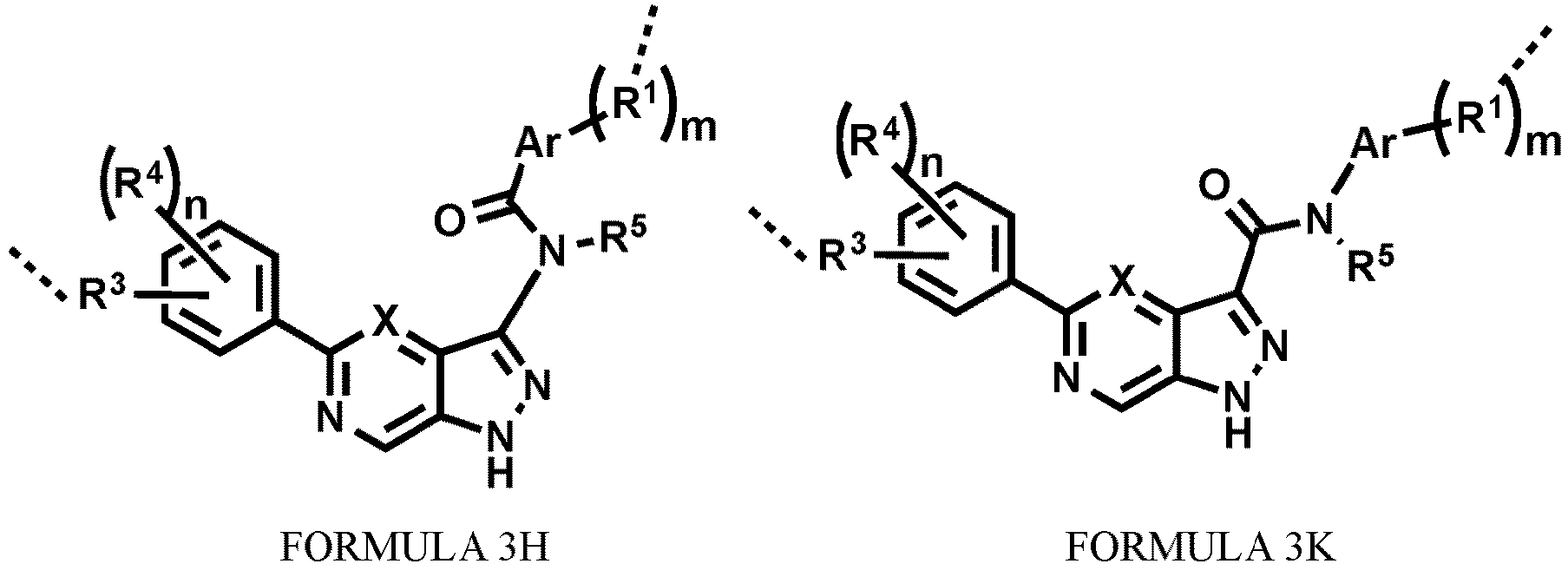
- the "Linker" moiety of the bivalent compound is attached independently to R1 or R3; X is selected from CR2 or N;
- the definitions of R1, R2, R3, R4 and R5 are the same as for FORMULA 3C, 3D, 3E;
- Ar is selected from null, aryl and heteroaryl, each of which is substituted with R1;
- n and m are independently selected from 0, 1, 2, 3, 4 and 5;
- (7) a moiety according to FORMULA 3L:

- the "Linker" moiety of the bivalent compound is attached independently to R1 or R3;
- X is selected from CR2 or N;
- the definitions of R1, R2, R3 and R4 are the same as for FORMULA 3B;
- Ar is selected from null, aryl and heteroaryl;
- n is independently selected from 0, 1, 2, 3, 4 and 5;
- Y, Z at each occurrence, are independently selected from null, CO, CO2, CH2, CR24R25, C(O)NR24, C(S)NR24, O, S, SO, SO2, SO2NR24, NR24, NR24CO, NR24CONR24, NR24C(S), optionally substituted C1-C8 alkyl, optionally substituted C1-C8 alkoxy, optionally substituted C1-C8alkoxyC1-C8alkyl, optionally substituted C1-C8 haloalkyl, optionally substituted C1-C8 hydroxyalkyl, optionally substituted C2-C8 alkenyl, optionally substituted C2-C8 alkynyl, optionally substituted 3-8 membered cycloalkyl, optionally substituted C3-C8 cycloalkoxy, optionally substituted 3-8 membered heterocyclyl, optionally substituted aryl, optionally substituted heteroaryl, optionally substituted C3-C13 fused cycloalkyl, optionally substituted C3-C13 fused heterocyclyl, optionally substituted C3-C13 bridged cycloalkyl, optionally substituted C3-C13 bridged heterocyclyl, optionally substituted C3-C13 spiro cycloalkyl, and optionally substituted C3-C13 spiro heterocyclyl; wherein
R24 and R25 are independently selected from hydrogen, optionally substituted C1-C8 alkyl, optionally substituted 3-8 membered cycloalkyl, optionally substituted C3-C8 cycloalkoxy, optionally substituted 3-8 membered heterocyclyl, optionally substituted C1-C8 alkoxy, optionally substituted C1-C8 alkoxyalkyl, optionally substituted C1-C8 haloalkyl, optionally substituted C1-C8 hydroxyalkyl, optionally substituted C1-C8 alkylamino, and optionally substituted C1-C8alkylaminoC1-C8alkyl; - W, at each occurrence, is independently selected from null, CO, , CH2, (CH2)m CR26R27, (CR26R27)m, SO, SO2
- wherein
R26 and R27 are independently selected from hydrogen, optionally substituted C1-C8 alkyl, optionally substituted 3-8 membered cycloalkyl, optionally substituted C3-C8 cycloalkoxy, optionally substituted 3-8 membered heterocyclyl, optionally substituted C1-C8 alkoxy, optionally substituted C1-C8 alkoxyalkyl, optionally substituted C1-C8 haloalkyl, optionally substituted C1-C8 hydroxyalkyl, optionally substituted C1-C8 alkylamino, and optionally substituted C1-C8alkylaminoC1-C8alkyl;
and - m = 0-5;
- (8) a moiety according to FORMULA 3M:

- the "Linker" moiety of the bivalent compound is attached independently to R1 or R3;
- X is selected from CR2 or N;
- the definitions of W, R1, R2, R3 and R4 are the same as for FORMULA 3L.
- n is independently selected from 0, 1, 2, 3, 4 and 5; and
pharmaceutically acceptable salts thereof.
- (1) a moiety according to FORMULA 3:
- 9. A bivalent compound comprising a hematopoietic progenitor kinase 1 (HPK1) ligand conjugated to a degradation/disruption tag, wherein the bivalent compound has the structure:

- (1) a moiety of FORMULA 4:

- the "Linker" moiety of the bivalent compound is attached to R3;
- X is selected from CR2 or N;
- Y is selected from CR7 or N;
- each R1 is independently selected from null, hydrogen, halogen, oxo, CN, NO2, OR8, SR8, NR8R9, OCOR8, OCO2R8, OCONR8R9, COR8, CO2R8, CONR8R9, SOR8, SO2R8, SO2NR8R9, NR10CO2R8, NR10COR8, NR10C(O)NR8R9, NR10SOR8, NR10SO2R8, NR10SO2NR8R9, optionally substituted C1-C8 alkyl, optionally substituted C2-C8 alkenyl, optionally substituted C2-C8 alkynyl, optionally substituted C1-C8 alkoxy, optionally substituted C1-C8alkoxyC1-C8alkyl, optionally substituted C1-C8alkylaminoC1-C8alkyl, optionally substituted 3-8 membered cycloalkyl, optionally substituted C3-C8 cycloalkoxy, optionally substituted 4-8 membered heterocyclyl, optionally substituted aryl, and optionally substituted heteroaryl; wherein
- R8, R9 and R10 are independently selected from hydrogen, optionally substituted C1-C8 alkyl, optionally substituted C2-C8 alkenyl, optionally substituted C2-C8 alkynyl, optionally substituted C1-C8 alkoxy, optionally substituted C1-C8alkoxyC1-C8alkyl, optionally substituted C1-C8alkylaminoC1-C8alkyl, optionally substituted 3-8 membered cycloalkyl, optionally substituted C3-C8 cycloalkoxy, optionally substituted 4-8 membered heterocyclyl, optionally substituted aryl, and optionally substituted heteroaryl; or
- R8 and R9, R8 and R10 together with the atom to which they are connected form a 4-20 membered heterocyclyl ring; and
- n is independently selected from 0, 1, 2, 3, 4 and 5;
- R2 and R7 are independently selected from hydrogen, halogen, oxo, CN, NO2, OR11, SR11, NR11R12, C(O)R11, C(O)OR11, C(O)NR11R12, S(O)R11, S(O)2R11, S(O)2NR11R12, NR13C(O)OR10, NR13C(O)R11, NR13C(O)NR11R12, NR13S(O)R11, NR13S(O)2R11, NR13S(O)2NR11R12, optionally substituted C1-C8 alkyl, optionally substituted C2-C8 alkenyl, optionally substituted C2-C8 alkynyl, optionally substituted C1-C8 alkoxy, optionally substituted C1-C8alkoxyC1-C8alkyl, optionally substituted C1-C8alkylaminoC1-C8alkyl, optionally substituted 3-8 membered cycloalkyl, optionally substituted C3-C8 cycloalkoxy, optionally substituted 3-8 membered heterocyclyl, optionally substituted aryl, and optionally substituted heteroaryl; wherein
- R11, R12, and R13 are independently selected from hydrogen, optionally substituted C1-C8 alkyl, optionally substituted C1-C8alkoxyC1-C8alkyl, optionally substituted C1-C8alkylaminoC1-C8alkyl, optionally substituted C3-C10 cycloalkyl, optionally substituted 3-20 membered heterocyclyl, optionally substituted C2-C8 alkenyl, optionally substituted C2-C8 alkynyl, optionally substituted aryl, and optionally substituted heteroaryl; or
- R11 and R12, R11 and R12, R12 and R13 together with the atom to which they are connected form an optionally substituted 3-20 membered cycloalkyl or heterocyclyl ring;
- R3 is selected from null, hydrogen, C(O)R14, C(O)OR14, C(O)NR14R15, S(O)R14, S(O)2R14, S(O)2NR14R15, NR16C(O)OR14, NR16C(O)R14, NR16C(O)NR14R15, NR16S(O)R14, NR16S(O)2R14, NR16S(O)2NR14R15, optionally substituted C1-C8 alkyl, optionally substituted C2-C8 alkenyl, optionally substituted C2-C8 alkynyl, optionally substituted C1-C8 alkoxy, optionally substituted C1-C8alkoxyC1-C8alkyl, optionally substituted C1-C8alkylaminoC1-C8alkyl, optionally substituted 3-8 membered cycloalkyl, optionally substituted C3-C8 cycloalkoxy, optionally substituted 3-8 membered heterocyclyl, optionally substituted aryl, and optionally substituted heteroaryl; wherein
- R14 is null, or a bivalent moiety selected from optionally substituted C1-C8 alkyl, optionally substituted C2-C8 alkenyl, optionally substituted C2-C8 alkynyl, optionally substituted C1-C8 alkoxy, optionally substituted C1-C8alkoxyC1-C8alkyl, optionally substituted C1-C8alkylaminoC1-C8alkyl, optionally substituted 3-8 membered cycloalkyl, optionally substituted C3-C8 cycloalkoxy, optionally substituted 3-8 membered heterocyclyl, optionally substituted aryl, and optionally substituted heteroaryl;
- R15, and R16 are independently selected from hydrogen, optionally substituted C1-C8 alkyl, optionally substituted C1-C8alkoxyC1-C8alkyl, optionally substituted C1-C8alkylaminoC1-C8alkyl, optionally substituted C3-C10 cycloalkyl, optionally substituted 3-20 membered heterocyclyl, optionally substituted C2-C8 alkenyl, optionally substituted C2-C8 alkynyl, optionally substituted aryl, and optionally substituted heteroaryl; or
- R14 and R15 together with the atom to which they are connected form an optionally substituted 3-20 membered cycloalkyl or heterocyclyl ring;
- R4, R5 and R6 are independently selected hydrogen, halogen, oxo, CN, NO2, OR17, SR17, NR18R19, OCOR17, OCO2R17, OCONR18R19, COR17, CO2R17, CONR18R19, SOR17, SO2R17, SO2NR18R19, NR17CO2R18, NR17COR18, NR17C(O)NR18R19, NR17SOR18, NR17SO2R18, NR17SO2NR18R19, optionally substituted C1-C8 alkyl, optionally substituted C2-C8 alkenyl, optionally substituted C2-C8 alkynyl, optionally substituted C1-C8 alkoxy, optionally substituted C1-C8alkoxyC1-C8alkyl, optionally substituted C1-C8alkylaminoC1-C8alkyl, optionally substituted 3-8 membered cycloalkyl, optionally substituted C3-C8 cycloalkoxy, optionally substituted 4-8 membered heterocyclyl, optionally substituted aryl, and optionally substituted heteroaryl; wherein
- R17, R18, and R19 are independently selected from hydrogen, optionally substituted C1-C8 alkyl, optionally substituted C2-C8 alkenyl, optionally substituted C2-C8 alkynyl, optionally substituted C1-C8 alkoxy, optionally substituted C1-C8alkoxyC1-C8alkyl, optionally substituted C1-C8alkylaminoC1-C8alkyl, optionally substituted 3-8 membered cycloalkyl, optionally substituted C3-C8 cycloalkoxy, optionally substituted 4-8 membered heterocyclyl, optionally substituted aryl, and optionally substituted heteroaryl; or
- R17 and R18, R18 and R19 together with the atom to which they are connected form a 3-20 membered heterocyclyl ring;
- (2) a moiety of FORMULA 4A:

- the "Linker" moiety of the bivalent compound is attached to R3;
- X is selected from CR2 or N;
- Y is selected from CR7 or N;
- the definitions of R1, R2, R3, R4, R5, R6 and R7 are the same as for
FORMULA 4; and
- (3) a moiety of FORMULA 4B:

- the "Linker" moiety of the bivalent compound is attached to R3;
- X is selected from CR2 or N;
- Y is selected from CR7 or N; and
- the definitions of R2, R3, R4, R5, and R7 are the same as for
FORMULA 4; and pharmaceutically acceptable salts thereof.
- (1) a moiety of FORMULA 4:
- 10. A bivalent compound comprising a hematopoietic progenitor kinase 1 (HPK1) ligand conjugated to a degradation/disruption tag, wherein the bivalent compound has the structure:


- the "Linker" moiety of the bivalent compound is attached to independently to R3 or R7;
- X is selected from CR2 or N;
- each R1 is independently selected from null, hydrogen, halogen, oxo, CN, NO2, OR8, SR8, NR8R9, OCOR8, OCO2R8, OCONR8R9, COR8, CO2R8, CONR8R9, SOR8, SO2R8, SO2NR8R9, NR10CO2R8, NR10COR8, NR10C(O)NR8R9, NR10SOR8, NR10SO2R8, NR10SO2NR8R9, optionally substituted C1-C8 alkyl, optionally substituted C2-C8 alkenyl, optionally substituted C2-C8 alkynyl, optionally substituted C1-C8 alkoxy, optionally substituted C1-C8alkoxyC1-C8alkyl, optionally substituted C1-C8alkylaminoC1-C8alkyl, optionally substituted 3-8 membered cycloalkyl, optionally substituted C3-C8 cycloalkoxy, optionally substituted 4-8 membered heterocyclyl, optionally substituted aryl, and optionally substituted heteroaryl; wherein
- R8, R9 and R10 are independently selected from hydrogen, optionally substituted C1-C8 alkyl, optionally substituted C2-C8 alkenyl, optionally substituted C2-C8 alkynyl, optionally substituted C1-C8 alkoxy, optionally substituted C1-C8alkoxyC1-C8alkyl, optionally substituted C1-C8alkylaminoC1-C8alkyl, optionally substituted 3-8 membered cycloalkyl, optionally substituted C3-C8 cycloalkoxy, optionally substituted 4-8 membered heterocyclyl, optionally substituted aryl, and optionally substituted heteroaryl; or
- R8 and R9, R8 and R10 together with the atom to which they are connected form a 4-20 membered heterocyclyl ring; and
- n is independently selected from 0, 1, 2, 3, 4 and 5;
- R2 is selected from hydrogen, halogen, oxo, CN, NO2, OR11, SR11, NR11R12, C(O)R11, C(O)OR11, C(O)NR11R12, S(O)R11, S(O)2R11, S(O)2NR11R12, NR13C(O)OR10, NR13C(O)R11, NR13C(O)NR11R12, NR13S(O)R11, NR13S(O)2R11, NR13S(O)2NR11R12, optionally substituted C1-C8 alkyl, optionally substituted C2-C8 alkenyl, optionally substituted C2-C8 alkynyl, optionally substituted C1-C8 alkoxy, optionally substituted C1-C8alkoxyC1-C8alkyl, optionally substituted C1-C8alkylaminoC1-C8alkyl, optionally substituted 3-8 membered cycloalkyl, optionally substituted C3-C8 cycloalkoxy, optionally substituted 3-8 membered heterocyclyl, optionally substituted aryl, and optionally substituted heteroaryl; wherein
- R11, R12, and R13 are independently selected from hydrogen, optionally substituted C1-C8 alkyl, optionally substituted C1-C8alkoxyC1-C8alkyl, optionally substituted C1-C8alkylaminoC1-C8alkyl, optionally substituted C3-C10 cycloalkyl, optionally substituted 3-20 membered heterocyclyl, optionally substituted C2-C8 alkenyl, optionally substituted C2-C8 alkynyl, optionally substituted aryl, and optionally substituted heteroaryl; or
- R11 and R12, R11 and R12, R12 and R13 together with the atom to which they are connected form an optionally substituted 3-20 membered cycloalkyl or heterocyclyl ring;
- R3 and R7 are independently selected from null, hydrogen, C(O)R14, C(O)OR14, C(O)NR14R15, S(O)R14, S(O)2R14, S(O)2NR14R15, NR16C(O)OR14, NR16C(O)R14, NR16C(O)NR14R15, NR16S(O)R14, NR16S(O)2R14, NR16S(O)2NR14R15 , optionally substituted C1-C8 alkyl, optionally substituted C2-C8 alkenyl, optionally substituted C2-C8 alkynyl, optionally substituted C1-C8 alkoxy, optionally substituted C1-C8alkoxyC1-C8alkyl, optionally substituted C1-C8alkylaminoC1-C8alkyl, optionally substituted 3-8 membered cycloalkyl, optionally substituted C3-C8 cycloalkoxy, optionally substituted 3-8 membered heterocyclyl, optionally substituted aryl, and optionally substituted heteroaryl; wherein
- R14 is null, or a bivalent moiety selected from optionally substituted C1-C8 alkyl, optionally substituted C2-C8 alkenyl, optionally substituted C2-C8 alkynyl, optionally substituted C1-C8 alkoxy, optionally substituted C1-C8alkoxyC1-C8alkyl, optionally substituted C1-C8alkylaminoC1-C8alkyl, optionally substituted 3-8 membered cycloalkyl, optionally substituted C3-C8 cycloalkoxy, optionally substituted 3-8 membered heterocyclyl, optionally substituted aryl, and optionally substituted heteroaryl;
- R15, and R16 are independently selected from hydrogen, optionally substituted C1-C8 alkyl, optionally substituted C1-C8alkoxyC1-C8alkyl, optionally substituted C1-C8alkylaminoC1-C8alkyl, optionally substituted C3-C10 cycloalkyl, optionally substituted 3-20 membered heterocyclyl, optionally substituted C2-C8 alkenyl, optionally substituted C2-C8 alkynyl, optionally substituted aryl, and optionally substituted heteroaryl; or
- R14 and R15 together with the atom to which they are connected form an optionally substituted 3-20 membered cycloalkyl or heterocyclyl ring;
- R4, R5 and R6 are independently selected hydrogen, halogen, oxo, CN, NO2, OR17, SR17, NR18R19, OCOR17, OCO2R17, OCONR18R19, COR17, CO2R17, CONR18R19, SOR17, SO2R17, SO2NR18R19, NR17CO2R18, NR17COR18, NR17C(O)NR18R19, NR17SOR18, NR17SO2R18, NR17SO2NR18R19, optionally substituted C1-C8 alkyl, optionally substituted C2-C8 alkenyl, optionally substituted C2-C8 alkynyl, optionally substituted C1-C8 alkoxy, optionally substituted C1-C8alkoxyC1-C8alkyl, optionally substituted C1-C8alkylaminoC1-C8alkyl, optionally substituted 3-8 membered cycloalkyl, optionally substituted C3-C8 cycloalkoxy, optionally substituted 4-8 membered heterocyclyl, optionally substituted aryl, and optionally substituted heteroaryl; wherein
- R17, R18, and R19 are independently selected from hydrogen, optionally substituted C1-C8 alkyl, optionally substituted C2-C8 alkenyl, optionally substituted C2-C8 alkynyl, optionally substituted C1-C8 alkoxy, optionally substituted C1-C8alkoxyC1-C8alkyl, optionally substituted C1-C8alkylaminoC1-C8alkyl, optionally substituted 3-8 membered cycloalkyl, optionally substituted C3-C8 cycloalkoxy, optionally substituted 4-8 membered heterocyclyl, optionally substituted aryl, and optionally substituted heteroaryl; or
- R17 and R18, R18 and R19 together with the atom to which they are connected form a 3-20 membered heterocyclyl ring; and
- pharmaceutically acceptable salts thereof.
- 11. A bivalent compound comprising a hematopoietic progenitor kinase 1 (HPK1) ligand conjugated to a degradation/disruption tag, wherein the bivalent compound has the structure:


- the "Linker" moiety of the bivalent compound is attached to independently to R3 or R8;
- X is selected from CR2 or N;
- Y is selected from CR6 or N;
- Z is selected from CR7 or N or S;
- each R1 is independently selected from null, hydrogen, halogen, oxo, CN, NO2, OR9, SR9, NR9R10, OCOR9, OCO2R9, OCONR9R10, COR9, CO2R9, CONR9R10, SOR9, SO2R9, SO2NR9R10, NR11CO2R9, NR11COR9, NR11C(O)NR9R10,NR11SOR9, NR11SO2R9, NR11SO2NR9R10, optionally substituted C1-C8 alkyl, optionally substituted C2-C8 alkenyl, optionally substituted C2-C8 alkynyl, optionally substituted C1-C8 alkoxy, optionally substituted C1-C8alkoxyC1-C8alkyl, optionally substituted C1-C8alkylaminoC1-C8alkyl, optionally substituted 3-8 membered cycloalkyl, optionally substituted C3-C8 cycloalkoxy, optionally substituted 4-8 membered heterocyclyl, optionally substituted aryl, and optionally substituted heteroaryl; wherein
- R9, R10 and R11 are independently selected from hydrogen, optionally substituted C1-C8 alkyl, optionally substituted C2-C8 alkenyl, optionally substituted C2-C8 alkynyl, optionally substituted C1-C8 alkoxy, optionally substituted C1-C8alkoxyC1-C8alkyl, optionally substituted C1-C8alkylaminoC1-C8alkyl, optionally substituted 3-8 membered cycloalkyl, optionally substituted C3-C8 cycloalkoxy, optionally substituted 4-8 membered heterocyclyl, optionally substituted aryl, and optionally substituted heteroaryl; or
- R9 and R10, R9 and R11 together with the atom to which they are connected form a 4-20 membered heterocyclyl ring; and
- n is independently selected from 0, 1, 2, 3, 4 and 5;
- R2, R6 and R7 are independently selected from hydrogen, halogen, oxo, CN, NO2, OR12, SR12, NR12R13, C(O)R12, C(O)OR12, C(O)NR12R13, S(O)R12, S(O)2R12, S(O)2NR12R13, NR14C(O)OR11, NR14C(O)R12, NR14C(O)NR12R13, NR14S(O)R12, NR14S(O)2R12, NR14S(O)2NR12R13, optionally substituted C1-C8 alkyl, optionally substituted C2-C8 alkenyl, optionally substituted C2-C8 alkynyl, optionally substituted C1-C8 alkoxy, optionally substituted C1-C8alkoxyC1-C8alkyl, optionally substituted C1-C8alkylaminoC1-C8alkyl, optionally substituted 3-8 membered cycloalkyl, optionally substituted C3-C8 cycloalkoxy, optionally substituted 3-8 membered heterocyclyl, optionally substituted aryl, and optionally substituted heteroaryl; wherein
- R12, R13, and R14 are independently selected from hydrogen, optionally substituted C1-C8 alkyl, optionally substituted C1-C8alkoxyC1-C8alkyl, optionally substituted C1-C8alkylaminoC1-C8alkyl, optionally substituted C3-C10 cycloalkyl, optionally substituted 3-20 membered heterocyclyl, optionally substituted C2-C8 alkenyl, optionally substituted C2-C8 alkynyl, optionally substituted aryl, and optionally substituted heteroaryl; or
- R12 and R13, R12 and R13, R13 and R14 together with the atom to which they are connected form an optionally substituted 3-20 membered cycloalkyl or heterocyclyl ring;
- R3 and R8 are independently selected from null, hydrogen, C(O)R15, C(O)OR15, C(O)NR15R16, S(O)R15, S(O)2R15, S(O)2NR15R16, NR17C(O)OR15, NR16C(O)R15, NR17C(O)NR15R16, NR17S(O)R15, NR17S(O)2R15, NR17S(O)2NR15R16, optionally substituted C1-C8 alkyl, optionally substituted C2-C8 alkenyl, optionally substituted C2-C8 alkynyl, optionally substituted C1-C8 alkoxy, optionally substituted C1-C8alkoxyC1-C8alkyl, optionally substituted C1-C8alkylaminoC1-C8alkyl, optionally substituted 3-8 membered cycloalkyl, optionally substituted C3-C8 cycloalkoxy, optionally substituted 3-8 membered heterocyclyl, optionally substituted aryl, and optionally substituted heteroaryl; wherein
- R15 is null, or a bivalent moiety selected from optionally substituted C1-C8 alkyl, optionally substituted C2-C8 alkenyl, optionally substituted C2-C8 alkynyl, optionally substituted C1-C8 alkoxy, optionally substituted C1-C8alkoxyC1-C8alkyl, optionally substituted C1-C8alkylaminoC1-C8alkyl, optionally substituted 3-8 membered cycloalkyl, optionally substituted C3-C8 cycloalkoxy, optionally substituted 3-8 membered heterocyclyl, optionally substituted aryl, and optionally substituted heteroaryl;
- R16, and R17 are independently selected from hydrogen, optionally substituted C1-C8 alkyl, optionally substituted C1-C8alkoxyC1-C8alkyl, optionally substituted C1-C8alkylaminoC1-C8alkyl, optionally substituted C3-C10 cycloalkyl, optionally substituted 3-20 membered heterocyclyl, optionally substituted C2-C8 alkenyl, optionally substituted C2-C8 alkynyl, optionally substituted aryl, and optionally substituted heteroaryl; or
- R15 and R16 together with the atom to which they are connected form an optionally substituted 3-20 membered cycloalkyl or heterocyclyl ring;
- R4 and R5 are independently selected hydrogen, halogen, oxo, CN, NO2, OR18, SR18, NR19R20, OCOR18, OCO2R18, OCONR19R20, COR18, CO2R18, CONR19R20, SOR18, SO2R18, SO2NR19R20, NR18CO2R19, NR18COR19, NR18C(O)NR19R20, NR18SOR19, NR18SO2R19, NR19SO2NR19R20, optionally substituted C1-C8 alkyl, optionally substituted C2-C8 alkenyl, optionally substituted C2-C8 alkynyl, optionally substituted C1-C8 alkoxy, optionally substituted C1-C8alkoxyC1-C8alkyl, optionally substituted C1-C8alkylaminoC1-C8alkyl, optionally substituted 3-8 membered cycloalkyl, optionally substituted C3-C8 cycloalkoxy, optionally substituted 4-8 membered heterocyclyl, optionally substituted aryl, and optionally substituted heteroaryl; wherein
- R18, R19, and R20 are independently selected from hydrogen, optionally substituted C1-C8 alkyl, optionally substituted C2-C8 alkenyl, optionally substituted C2-C8 alkynyl, optionally substituted C1-C8 alkoxy, optionally substituted C1-C8alkoxyC1-C8alkyl, optionally substituted C1-C8alkylaminoC1-C8alkyl, optionally substituted 3-8 membered cycloalkyl, optionally substituted C3-C8 cycloalkoxy, optionally substituted 4-8 membered heterocyclyl, optionally substituted aryl, and optionally substituted heteroaryl; or
- R18 and R19, R19 and R20 together with the atom to which they are connected form a 3-20 membered heterocyclyl ring; and
- pharmaceutically acceptable salts thereof.
- 12. A bivalent compound comprising a hematopoietic progenitor kinase 1 (HPK1) ligand conjugated to a degradation/disruption tag, wherein the bivalent compound has the structure:

- (1) a moiety according to FORMULA 7:

- the "Linker" moiety of the bivalent compound is attached to independently to R2 or R5;
- X is selected from CR3 or N;
- each R1 an d R4 are independently selected from null, hydrogen, halogen, oxo, CN, NO2, OR6, SR6, NR6R7, OCOR6, OCO2R6, OCONR6R7, COR6, CO2R6, CONR6R7, SOR6, SO2R6, SO2NR6R7, NR8CO2R6, NR8COR6, NR8C(O)NR6R7, NR8SOR6, NR8SO2R6, NR8SO2NR6R7, optionally substituted C1-C8 alkyl, optionally substituted C2-C8 alkenyl, optionally substituted C2-C8 alkynyl, optionally substituted C1-C8 alkoxy, optionally substituted C1-C8alkoxyC1-C8alkyl, optionally substituted C1-C8alkylaminoC1-C8alkyl, optionally substituted 3-8 membered cycloalkyl, optionally substituted C3-C8 cycloalkoxy, optionally substituted 4-8 membered heterocyclyl, optionally substituted aryl, and optionally substituted heteroaryl; wherein
- R6, R7 and R8 are independently selected from hydrogen, optionally substituted C1-C8 alkyl, optionally substituted C2-C8 alkenyl, optionally substituted C2-C8 alkynyl, optionally substituted C1-C8 alkoxy, optionally substituted C1-C8alkoxyC1-C8alkyl, optionally substituted C1-C8alkylaminoC1-C8alkyl, optionally substituted 3-8 membered cycloalkyl, optionally substituted C3-C8 cycloalkoxy, optionally substituted 4-8 membered heterocyclyl, optionally substituted aryl, and optionally substituted heteroaryl; or
- R6 and R7, R6 and R8 together with the atom to which they are connected form a 4-20 membered heterocyclyl ring; and
- n is independently selected from 0, 1, 2, 3, 4 and 5;
- R2 and R5 are independently selected from null, hydrogen, C(O)R12, C(O)OR12, C(O)NR12R13, S(O)R12, S(O)2R12, S(O)2NR12R13, NR14C(O)OR12, NR13C(O)R12, NR14C(O)NR12R13, NR14S(O)R12, NR14S(O)2R12, NR14S(O)2NR12R13 , optionally substituted C1-C8 alkyl, optionally substituted C2-C8 alkenyl, optionally substituted C2-C8 alkynyl, optionally substituted C1-C8 alkoxy, optionally substituted C1-C8alkoxyC1-C8alkyl, optionally substituted C1-C8alkylaminoC1-C8alkyl, optionally substituted 3-8 membered cycloalkyl, optionally substituted C3-C8 cycloalkoxy, optionally substituted 3-8 membered heterocyclyl, optionally substituted aryl, and optionally substituted heteroaryl; wherein
- R12 is null, or a bivalent moiety selected from optionally substituted C1-C8 alkyl, optionally substituted C2-C8 alkenyl, optionally substituted C2-C8 alkynyl, optionally substituted C1-C8 alkoxy, optionally substituted C1-C8alkoxyC1-C8alkyl, optionally substituted C1-C8alkylaminoC1-C8alkyl, optionally substituted 3-8 membered cycloalkyl, optionally substituted C3-C8 cycloalkoxy, optionally substituted 3-8 membered heterocyclyl, optionally substituted aryl, and optionally substituted heteroaryl;
- R13, and R14 are independently selected from hydrogen, optionally substituted C1-C8 alkyl, optionally substituted C1-C8alkoxyC1-C8alkyl, optionally substituted C1-C8alkylaminoC1-C8alkyl, optionally substituted C3-C10 cycloalkyl, optionally substituted 3-20 membered heterocyclyl, optionally substituted C2-C8 alkenyl, optionally substituted C2-C8 alkynyl, optionally substituted aryl, and optionally substituted heteroaryl; or
- R12 and R13 together with the atom to which they are connected form an optionally substituted 3-20 membered cycloalkyl or heterocyclyl ring;
- R3 is selected from hydrogen, halogen, oxo, CN, NO2, OR14, SR14, NR14R15, C(O)R14, C(O)OR14, C(O)NR14R15, S(O)R14, S(O)2R14, S(O)2NR14R15, NR16C(O)OR14, NR16C(O)R14, NR16C(O)NR14R15, NR16S(O)R14, NR16S(O)2R14, NR16S(O)2NR14R15, optionally substituted C1-C8 alkyl, optionally substituted C2-C8 alkenyl, optionally substituted C2-C8 alkynyl, optionally substituted C1-C8 alkoxy, optionally substituted C1-C8alkoxyC1-C8alkyl, optionally substituted C1-C8alkylaminoC1-C8alkyl, optionally substituted 3-8 membered cycloalkyl, optionally substituted C3-C8 cycloalkoxy, optionally substituted 3-8 membered heterocyclyl, optionally substituted aryl, and optionally substituted heteroaryl; wherein
- R14, R15, and R16 are independently selected from hydrogen, optionally substituted C1-C8 alkyl, optionally substituted C1-C8alkoxyC1-C8alkyl, optionally substituted C1-C8alkylaminoC1-C8alkyl, optionally substituted C3-C10 cycloalkyl, optionally substituted 3-20 membered heterocyclyl, optionally substituted C2-C8 alkenyl, optionally substituted C2-C8 alkynyl, optionally substituted aryl, and optionally substituted heteroaryl;, or
- R14 and R15, R14 and R15, R15 and R16 together with the atom to which they are connected form an optionally substituted 3-20 membered cycloalkyl or heterocyclyl ring; and
- (2) a moiety according to FORMULA 7A:

- the "Linker" moiety of the bivalent compound is attached to R2 or R5;
- X is selected from CR3 or N; and the definitions of R1, R2, R3, R4, and R5 are the same as for FORMULA 7; and pharmaceutically acceptable salts thereof.
- (1) a moiety according to FORMULA 7:
- 13. A bivalent compound comprising a hematopoietic progenitor kinase 1 (HPK1) ligand conjugated to a degradation/disruption tag, wherein the bivalent compound has the structure:

- (1) a moiety according to FORMULA 8:

- the "Linker" moiety of the bivalent compound is attached to R2 or X;
- X is C3-12 cycloalkyl, 3- to 14- membered heterocyclyl, C6-14 aryl or 5- to- 14-membered heteroaryl, wherein C3-12 cycloalkyl, 3- to 14- membered heterocyclyl, C6-14 aryl or 5- to- 14-membered heteroaryl of X are each optionally substituted with 1, 2, 3, 4 or 5 substituents independently selected from R5;
- R1 is selected from hydrogen, halogen, optionally substituted C1-C8 alkyl, optionally substituted C1-C8alkoxyC1-C8alkyl, optionally substituted C1-C8alkylaminoC1-C8alkyl, optionally substituted C3-C10 cycloalkyl, optionally substituted 3-20 membered heterocyclyl, optionally substituted C2-C8 alkenyl, optionally substituted C2-C8 alkynyl, optionally substituted aryl, and optionally substituted heteroaryl;
- R2 is selected from null, hydrogen, C(O)R7, C(O)OR7, C(O)NR7R8, S(O)R7, S(O)2R7, S(O)2NR7R8, NR9C(O)OR7, NR8C(O)R7, NR9C(O)NR7R8, NR9S(O)R7, NR9S(O)2R7, NR9S(O)2NR7R8, optionally substituted C1-C8 alkyl, optionally substituted C2-C8 alkenyl, optionally substituted C2-C8 alkynyl, optionally substituted C1-C8 alkoxy, optionally substituted C1-C8alkoxyC1-C8alkyl, optionally substituted C1-C8alkylaminoC1-C8alkyl, optionally substituted 3-8 membered cycloalkyl, optionally substituted C3-C8 cycloalkoxy, optionally substituted 3-8 membered heterocyclyl, optionally substituted aryl, and optionally substituted heteroaryl; wherein
- R7 is null, or a bivalent moiety selected from optionally substituted C1-C8 alkyl, optionally substituted C2-C8 alkenyl, optionally substituted C2-C8 alkynyl, optionally substituted C1-C8 alkoxy, optionally substituted C1-C8alkoxyC1-C8alkyl, optionally substituted C1-C8alkylaminoC1-C8alkyl, optionally substituted 3-8 membered cycloalkyl, optionally substituted C3-C8 cycloalkoxy, optionally substituted 3-8 membered heterocyclyl, optionally substituted aryl, and optionally substituted heteroaryl;
- R8, and R9 are independently selected from hydrogen, optionally substituted C1-C8 alkyl, optionally substituted C1-C8alkoxyC1-C8alkyl, optionally substituted C1-C8alkylaminoC1-C8alkyl, optionally substituted C3-C10 cycloalkyl, optionally substituted 3-20 membered heterocyclyl, optionally substituted C2-C8 alkenyl, optionally substituted C2-C8 alkynyl, optionally substituted aryl, and optionally substituted heteroaryl; or
- R7 and R8 together with the atom to which they are connected form an optionally substituted 3-20 membered cycloalkyl or heterocyclyl ring;
- R3 and R4 and R5 are independently selected from null, hydrogen, halogen, oxo, CN, NO2, OR10, SR10, NR10R11, OCOR10, OCO2R10, OCONR10R11, COR10, CO2R10, CONR10R11, SOR10, SO2R10, SO2NR10R11, NR12CO2R10, NR12COR10, NR12C(O)NR10R11, NR12SOR10, NR12SO2R10, NR12SO2NR10R11, optionally substituted C1-C8 alkyl, optionally substituted C2-C8 alkenyl, optionally substituted C2-C8 alkynyl, optionally substituted C1-C8 alkoxy, optionally substituted C1-C8alkoxyC1-C8alkyl, optionally substituted C1-C8alkylaminoC1-C8alkyl, optionally substituted 3-8 membered cycloalkyl, optionally substituted C3-C8 cycloalkoxy, optionally substituted 4-8 membered heterocyclyl, optionally substituted aryl, and optionally substituted heteroaryl; wherein
- R10, R11 and R12 are independently selected from hydrogen, optionally substituted C1-C8 alkyl, optionally substituted C2-C8 alkenyl, optionally substituted C2-C8 alkynyl, optionally substituted C1-C8 alkoxy, optionally substituted C1-C8alkoxyC1-C8alkyl, optionally substituted C1-C8alkylaminoC1-C8alkyl, optionally substituted 3-8 membered cycloalkyl, optionally substituted C3-C8 cycloalkoxy, optionally substituted 4-8 membered heterocyclyl, optionally substituted aryl, and optionally substituted heteroaryl; or
- R10 and R11, R10 and R12 together with the atom to which they are connected form a 4-20 membered heterocyclyl ring;
- (2) a moiety according to FORMULA 8A:

- the "Linker" moiety of the bivalent compound is attached to R2 or X;
- the definitions of X, R1, R2, R3, R4, and R5 are the same as
FORMULA 8; - Ar is selected from null, aryl and heteroaryl, each of which is substituted with R2 and optionally substituted with one or more substituents independently selected from hydrogen, halogen, oxo, CN, NO2, OR13, SR13, NR13R14, OCOR13, OCO2R13, OCONR13R14, COR13, CO2R13, CONR13R14, SOR13, SO2R13, SO2NR13R14, NR15CO2R13, NR15COR13, NR14C(O)NR13R14 NR15SOR13, NR15SO2R13, NR15SO2NR13R14, optionally substituted C1-C8 alkyl, optionally substituted C2-C8 alkenyl, optionally substituted C2-C8 alkynyl, optionally substituted C1-C8 alkoxy, optionally substituted C1-C8alkoxyC1-C8alkyl, optionally substituted C1-C8alkylaminoC1-C8alkyl, optionally substituted 3-8 membered cycloalkyl, optionally substituted C3-C8 cycloalkoxy, optionally substituted 4-8 membered heterocyclyl, optionally substituted aryl, and optionally substituted heteroaryl; wherein
- R13, R14, and R15 are independently selected from hydrogen, optionally substituted C1-C8 alkyl, optionally substituted C2-C8 alkenyl, optionally substituted C2-C8 alkynyl, optionally substituted C1-C8 alkoxy, optionally substituted C1-C8alkoxyC1-C8alkyl, optionally substituted C1-C8alkylaminoC1-C8alkyl, optionally substituted 3-8 membered cycloalkyl, optionally substituted C3-C8 cycloalkoxy, optionally substituted 4-8 membered heterocyclyl, optionally substituted aryl, and optionally substituted heteroaryl; or
- R13 and R14, R13 and R15 together with the atom to which they are connected form a 4-20 membered heterocyclyl ring; and
- (3) a moiety according to FORMULA 8B:

- the "Linker" moiety of the bivalent compound is attached to R2 or X;
- the definitions of X, R1, R2, R3, R4, and R5 are the same as
FORMULA 8; - Each R6 is independently selected from null, hydrogen, halogen, oxo, CN, NO2, OR16, SR16, NR16R17, OCOR16, OCO2R16, OCONR16R17, COR16, CO2R16, CONR16R17, SOR16, SO2R16, SO2NR16R17, NR18CO2R16, NR18COR16, NR18C(O)NR16R17, NR18SOR16, NR18SO2R16, NR18SO2NR16R17, optionally substituted C1-C8 alkyl, optionally substituted C2-C8 alkenyl, optionally substituted C2-C8 alkynyl, optionally substituted C1-C8 alkoxy, optionally substituted C1-C8alkoxyC1-C8alkyl, optionally substituted C1-C8alkylaminoC1-C8alkyl, optionally substituted 3-8 membered cycloalkyl, optionally substituted C3-C8 cycloalkoxy, optionally substituted 4-8 membered heterocyclyl, optionally substituted aryl, and optionally substituted heteroaryl; wherein
- R16, R17 and R18 are independently selected from hydrogen, optionally substituted C1-C8 alkyl, optionally substituted C2-C8 alkenyl, optionally substituted C2-C8 alkynyl, optionally substituted C1-C8 alkoxy, optionally substituted C1-C8alkoxyC1-C8alkyl, optionally substituted C1-C8alkylaminoC1-C8alkyl, optionally substituted 3-8 membered cycloalkyl, optionally substituted C3-C8 cycloalkoxy, optionally substituted 4-8 membered heterocyclyl, optionally substituted aryl, and optionally substituted heteroaryl; or
- R16 and R17, R16 and R18 together with the atom to which they are connected form a 4-20 membered heterocyclyl ring; and
- n is independently selected from 0, 1, 2, 3, 4 and 5; and
- pharmaceutically acceptable salts thereof.
- (1) a moiety according to FORMULA 8:
- 14. A bivalent compound comprising a hematopoietic progenitor kinase 1 (HPK1) ligand conjugated to a degradation/disruption tag, wherein the bivalent compound has the structure:


- the "Linker" moiety of the bivalent compound is attached independently to Y or independently one of the R1;
- each of R1 is selected from null, OR12, SR12, NR12R13, OC(O)R12, OC(O)OR12, OCONR12R13, C(O)R12, C(O)OR12, CONR12R13, S(O)R12, S(O)2R12, SO2NR12R13, NR14C(O)OR12, NR14C(O)R12, NR14C(O)NR12R13, NR14S(O)R12, NR14S(O)2R12, NR14S(O)2NR12R13, P(O)R12R13, P(O)(OR12), optionally substituted C1-C8 alkylenyl, optionally substituted C2-C8 alkenylene, optionally substituted C2-C8 alkynylene, optionally substituted C3-C8 cycloalkylene, optionally substituted 3-8 membered heterocyclylene, optionally substituted aryl, and optionally substituted heteroaryl; wherein
- R12 is null, or a bivalent moiety selected from optionally substituted C1-C8 alkylenyl, optionally substituted C2-C8 alkenylene, optionally substituted C2-C8 alkynylene, optionally substituted C3-C8 cycloalkylene, optionally substituted 3-8 membered heterocyclylene, optionally substituted aryl, and optionally substituted heteroaryl;
- R13 and R14 are independently selected from optionally substituted C1-C8 alkyl, optionally substituted C1-C8alkoxyC1-C8alkyl, optionally substituted C1-C8alkylaminoC1-C8alkyl, optionally substituted C3-C8 cycloalkyl, optionally substituted 3-8 membered heterocyclyl, optionally substituted C2-C8 alkenyl, optionally substituted C2-C8 alkynyl, optionally substituted aryl, and optionally substituted heteroaryl; or
- R12 and R13, R12 and R14, R13 and R14 together with the atom to which they are connected form a 3-20 membered cycloalkyl or heterocyclyl ring;
- n and m are independently selected from 0, 1, 2, 3, 4 and 5;
- Ar is selected from null, aryl and heteroaryl, each of which optinally is substituted with R1;
- R2, R3, R5 and R6 are independently selected from hydrogen, halogen, OR15, SR15, NR16R17, COR15, CO2R15, C(O)NR16R17, SOR15, SO2R15, SO2NR16R17, NR15C(O)R16, NR15C(O)NR16R17, NR15SOR16, NR15SO2R16, optionally substituted C1-C8 alkyl, optionally substituted C2-C8 alkenyl, optionally substituted C2-C8 alkynyl, optionally substituted C1-C8 alkoxy, optionally substituted 3-8 membered cycloalkyl, optionally substituted C3-C8 cycloalkoxy, optionally substituted 3-8 membered heterocyclyl, optionally substituted aryl, and optionally substituted heteroaryl; wherein
- R15, R16, and R17 are independently selected from hydrogen, optionally substituted C1-C8 alkyl, optionally substituted C1-C8alkoxyC1-C8alkyl, optionally substituted C1-C8alkylaminoC1-C8alkyl, optionally substituted C3-C10 cycloalkyl, optionally substituted 3-10 membered heterocyclyl, optionally substituted C2-C8 alkenyl, optionally substituted C2-C8 alkynyl, optionally substituted aryl, and optionally substituted heteroaryl; or
- R15 and R16, R16 and R17 together with the atom to which they are connected form an optionally substituted 3-20 membered cycloalkyl or heterocyclyl ring;
- R7, R8, R9, and R10 are independently selected from null, hydrogen, halogen, OR18, NR19R20, optionally substituted C1-C8 alkyl, optionally substituted C1-C8 alkoxy, optionally substituted C3-C8 cycloalkyl, optionally substituted C3-C8 cycloalkoxy; wherein
- R18, R19, and R20 are independently selected from hydrogen, optionally substituted C1-C8 alkyl, optionally substituted C1-C8alkoxyC1-C8alkyl, optionally substituted C1-C8alkylaminoC1-C8alkyl, optionally substituted C3-C10 cycloalkyl, optionally substituted 3-10 membered heterocyclyl, optionally substituted C2-C8 alkenyl, optionally substituted C2-C8 alkynyl; or
- R19 and R20 together with the atom to which they are connected form an an optionally substituted 3-20 membered cycloalkyl or heterocyclyl ring;
- R11 at each occurrence, is independently selected from hydrogen, C(O)R21, C(O)OR21, C(O)NR21R22, S(O)R21, S(O)2R21, S(O)2NR21R22, NR23C(O)OR21, NR23C(O)R21, NR23C(O)NR21R22, NR23S(O)R21, NR23S(O)2R21, NR23S(O)2NR21R22 , optionally substituted C1-C8 alkyl, optionally substituted C2-C8 alkenyl, optionally substituted C2-C8 alkynyl, optionally substituted C1-C8 alkoxy, optionally substituted C1-C8alkoxyC1-C8alkyl, optionally substituted C1-C8alkylaminoC1-C8alkyl, optionally substituted 3-8 membered cycloalkyl, optionally substituted C3-C8 cycloalkoxy, optionally substituted 3-8 membered heterocyclyl, optionally substituted aryl, and optionally substituted heteroaryl; wherein
- R21, R22 and R23 are independently selected from hydrogen, optionally substituted C1-C8 alkyl, optionally substituted C2-C8 alkenyl, optionally substituted C2-C8 alkynyl, optionally substituted C1-C8 alkoxy, optionally substituted C1-C8alkoxyC1-C8alkyl, optionally substituted C1-C8alkylaminoC1-C8alkyl, optionally substituted 3-8 membered cycloalkyl, optionally substituted C3-C8 cycloalkoxy, optionally substituted 4-8 membered heterocyclyl, optionally substituted aryl, and optionally substituted heteroaryl; or
- R21 and R22, R21 and R23 together with the atom to which they are connected form a 3-20 membered heterocyclyl ring; and
- X, Y at each occurrence, are independently selected from null, CO, CO2, CH2, CR24R25, C(O)NR24, C(S)NR24, O, S, SO, SO2, SO2NR24, NR24, NR24CO, NR24CONR21, NR24C(S), optionally substituted C1-C8 alkyl, optionally substituted C1-C8 alkoxy, optionally substituted C1-C8alkoxyC1-C8alkyl, optionally substituted C1-C8 haloalkyl, optionally substituted C1-C8 hydroxyalkyl, optionally substituted C2-C8 alkenyl, optionally substituted C2-C8 alkynyl, optionally substituted 3-8 membered cycloalkyl, optionally substituted C3-C8 cycloalkoxy, optionally substituted 3-8 membered heterocyclyl, optionally substituted aryl, optionally substituted heteroaryl, optionally substituted C3-C13 fused cycloalkyl, optionally substituted C3-C13 fused heterocyclyl, optionally substituted C3-C13 bridged cycloalkyl, optionally substituted C3-C13 bridged heterocyclyl, optionally substituted C3-C13 spiro cycloalkyl, and optionally substituted C3-C13 spiro heterocyclyl; wherein R24 and R25 are independently selected from hydrogen, optionally substituted C1-C8 alkyl, optionally substituted 3-8 membered cycloalkyl, optionally substituted C3-C8 cycloalkoxy, optionally substituted 3-8 membered heterocyclyl, optionally substituted C1-C8 alkoxy, optionally substituted C1-C8 alkoxyalkyl, optionally substituted C1-C8 haloalkyl, optionally substituted C1-C8 hydroxyalkyl, optionally substituted C1-C8 alkylamino, and optionally substituted C1-C8alkylaminoC1-C8alkyl; and
- A and B are independently selected from C or N; and
- Pharmaceutically acceptable salts thereof.
- 15. A bivalent compound comprising a hematopoietic progenitor kinase 1 (HPK1) ligand conjugated to a degradation/disruption tag, wherein the bivalent compound has the structure:


- the "Linker" moiety of the bivalent compound is attached independently to R1 or R5;
- R1 and R5 are independently selected from null, hydrogen, C(O)R6, C(O)OR6, C(O)NR6R7, S(O)R6, S(O)2R6, S(O)2NR6R7, NR8C(O)OR6, NR8C(O)R6, NR8C(O)NR6R7, NR8S(O)R6, NR8S(O)2R6, NR8S(O)2NR6R7, optionally substituted C1-C8 alkyl, optionally substituted C2-C8 alkenyl, optionally substituted C2-C8 alkynyl, optionally substituted C1-C8 alkoxy, optionally substituted C1-C8alkoxyC1-C8alkyl, optionally substituted C1-C8alkylaminoC1-C8alkyl, optionally substituted 3-8 membered cycloalkyl, optionally substituted C3-C8 cycloalkoxy, optionally substituted 3-8 membered heterocyclyl, optionally substituted aryl, and optionally substituted heteroaryl; wherein
- R6 is null, or a bivalent moiety selected from optionally substituted C1-C8 alkyl, optionally substituted C2-C8 alkenyl, optionally substituted C2-C8 alkynyl, optionally substituted C1-C8 alkoxy, optionally substituted C1-C8alkoxyC1-C8alkyl, optionally substituted C1-C8alkylaminoC1-C8alkyl, optionally substituted 3-8 membered cycloalkyl, optionally substituted C3-C8 cycloalkoxy, optionally substituted 3-8 membered heterocyclyl, optionally substituted aryl, and optionally substituted heteroaryl;
- R7, and R8 are independently selected from hydrogen, optionally substituted C1-C8 alkyl, optionally substituted C1-C8alkoxyC1-C8alkyl, optionally substituted C1-C8alkylaminoC1-C8alkyl, optionally substituted C3-C10 cycloalkyl, optionally substituted 3-20 membered heterocyclyl, optionally substituted C2-C8 alkenyl, optionally substituted C2-C8 alkynyl, optionally substituted aryl, and optionally substituted heteroaryl; or
- R6 and R7 together with the atom to which they are connected form an optionally substituted 3-20 membered cycloalkyl or heterocyclyl ring;
- R2 and R3 at each occurrence, is independently selected from hydrogen, C(O)R9, C(O)OR9, C(O)NR9R10, S(O)R21, S(O)2R9, S(O)2NR9R10), NR11C(O)OR9, NR11C(O)R9, NR11C(O)NR9R10, NR11S(O)R9, NR11S(O)2R9, NR11S(O)2NR9R10, optionally substituted C1-C8 alkyl, optionally substituted C2-C8 alkenyl, optionally substituted C2-C8 alkynyl, optionally substituted C1-C8 alkoxy, optionally substituted C1-C8alkoxyC1-C8alkyl, optionally substituted C1-C8alkylaminoC1-C8alkyl, optionally substituted 3-8 membered cycloalkyl, optionally substituted C3-C8 cycloalkoxy, optionally substituted 3-8 membered heterocyclyl, optionally substituted aryl, and optionally substituted heteroaryl; wherein
- R9, R10 and R11 are independently selected from hydrogen, optionally substituted C1-C8 alkyl, optionally substituted C2-C8 alkenyl, optionally substituted C2-C8 alkynyl, optionally substituted C1-C8 alkoxy, optionally substituted C1-C8alkoxyC1-C8alkyl, optionally substituted C1-C8alkylaminoC1-C8alkyl, optionally substituted 3-8 membered cycloalkyl, optionally substituted C3-C8 cycloalkoxy, optionally substituted 4-8 membered heterocyclyl, optionally substituted aryl, and optionally substituted heteroaryl; or
- R9 and R10, R9 and R11 together with the atom to which they are connected form a 3-20 membered heterocyclyl ring;
- each of R4 is selected from null, OR12, SR12, NR12R13, OC(O)R12, OC(O)OR12, OCONR12R13, C(O)R12, C(O)OR12, CONR12R13, S(O)R12, S(O)2R12, SO2NR12R13, NR14C(O)OR12, NR14C(O)R12, NR14C(O)NR12R13, NR14S(O)R12, NR14S(O)2R12, NR14S(O)2NR12R13, optionally substituted C1-C8 alkylenyl, optionally substituted C2-C8 alkenylene, optionally substituted C2-C8 alkynylene, optionally substituted C3-C8 cycloalkylene, optionally substituted 3-8 membered heterocyclylene, optionally substituted aryl, and optionally substituted heteroaryl; wherein
- R12 is null, or a bivalent moiety selected from optionally substituted C1-C8 alkylenyl, optionally substituted C2-C8 alkenylene, optionally substituted C2-C8 alkynylene, optionally substituted C3-C8 cycloalkylene, optionally substituted 3-8 membered heterocyclylene, optionally substituted aryl, and optionally substituted heteroaryl;
- R13 and R14 are independently selected from optionally substituted C1-C8 alkyl, optionally substituted C1-C8alkoxyC1-C8alkyl, optionally substituted C1-C8alkylaminoC1-C8alkyl, optionally substituted C3-C8 cycloalkyl, optionally substituted 3-8 membered heterocyclyl, optionally substituted C2-C8 alkenyl, optionally substituted C2-C8 alkynyl, optionally substituted aryl, and optionally substituted heteroaryl; or
- R12 and R13, R12 and R14, R13 and R14 together with the atom to which they are connected form a 3-20 membered cycloalkyl or heterocyclyl ring;
- n is independently selected from 0, 1, 2, 3, 4 and 5;
- one of A, B and C is S, the other two are each independently selected from CR15 or N
- Wherein R15 is independently selected from null, hydrogen, halogen, oxo, CN, NO2, OR16, SR16, NR16R17, OCOR16, OCO2R16, OCONR16R17, COR16, CO2R16, CONR16R17, SOR16, SO2R16, SO2NR16R17, NR18CO2R16, NR18COR16, NR18C(O)NR16R17, NR18SOR16, NR18SO2R16, NR18SO2NR16R17, optionally substituted C1-C8 alkyl, optionally substituted C2-C8 alkenyl, optionally substituted C2-C8 alkynyl, optionally substituted C1-C8 alkoxy, optionally substituted C1-C8alkoxyC1-C8alkyl, optionally substituted C1-C8alkylaminoC1-C8alkyl, optionally substituted 3-8 membered cycloalkyl, optionally substituted C3-C8 cycloalkoxy, optionally substituted 4-8 membered heterocyclyl, optionally substituted aryl, and optionally substituted heteroaryl; wherein
- R16, R17 and R18 are independently selected from hydrogen, optionally substituted C1-C8 alkyl, optionally substituted C2-C8 alkenyl, optionally substituted C2-C8 alkynyl, optionally substituted C1-C8 alkoxy, optionally substituted C1-C8alkoxyC1-C8alkyl, optionally substituted C1-C8alkylaminoC1-C8alkyl, optionally substituted 3-8 membered cycloalkyl, optionally substituted C3-C8 cycloalkoxy, optionally substituted 4-8 membered heterocyclyl, optionally substituted aryl, and optionally substituted heteroaryl; or
- R16 and R17, R16 and R18 together with the atom to which they are connected form a 4-20 membered heterocyclyl ring; and
- 16. A bivalent compound comprising a hematopoietic progenitor kinase 1 (HPK1) ligand conjugated to a degradation/disruption tag, wherein the bivalent compound has the structure:


- the "Linker" moiety of the bivalent compound is attached independently to R1 or R5;
- R1 and R5 are independently selected from null, hydrogen, C(O)R6, C(O)OR6, C(O)NR6R7, S(O)R6, S(O)2R6, S(O)2NR6R7, NR8C(O)OR6, NR8C(O)R6, NR8C(O)NR6R7, NR8S(O)R6, NR8S(O)2R6, NR8S(O)2NR6R7, optionally substituted C1-C8 alkyl, optionally substituted C2-C8 alkenyl, optionally substituted C2-C8 alkynyl, optionally substituted C1-C8 alkoxy, optionally substituted C1-C8alkoxyC1-C8alkyl, optionally substituted C1-C8alkylaminoC1-C8alkyl, optionally substituted 3-8 membered cycloalkyl, optionally substituted C3-C8 cycloalkoxy, optionally substituted 3-8 membered heterocyclyl, optionally substituted aryl, and optionally substituted heteroaryl; wherein
- R6 is null, or a bivalent moiety selected from optionally substituted C1-C8 alkyl, optionally substituted C2-C8 alkenyl, optionally substituted C2-C8 alkynyl, optionally substituted C1-C8 alkoxy, optionally substituted C1-C8alkoxyC1-C8alkyl, optionally substituted C1-C8alkylaminoC1-C8alkyl, optionally substituted 3-8 membered cycloalkyl, optionally substituted C3-C8 cycloalkoxy, optionally substituted 3-8 membered heterocyclyl, optionally substituted aryl, and optionally substituted heteroaryl;
- R7, and R8 are independently selected from hydrogen, optionally substituted C1-C8 alkyl, optionally substituted C1-C8alkoxyC1-C8alkyl, optionally substituted C1-C8alkylaminoC1-C8alkyl, optionally substituted C3-C10 cycloalkyl, optionally substituted 3-20 membered heterocyclyl, optionally substituted C2-C8 alkenyl, optionally substituted C2-C8 alkynyl, optionally substituted aryl, and optionally substituted heteroaryl; or
- R6 and R7 together with the atom to which they are connected form an optionally substituted 3-20 membered cycloalkyl or heterocyclyl ring;
- R2, R3and R4 at each occurrence, is independently selected from hydrogen, C(O)R9, C(O)OR9, C(O)NR9R10, S(O)R21, S(O)2R9, S(O)2NR9R10, NR11C(O)OR9, NR11C(O)R9, NR11C(O)NR9R10, NR11S(O)R9, NRIlS(O)2R9, NR11S(O)2NR9R10, optionally substituted C1-C8 alkyl, optionally substituted C2-C8 alkenyl, optionally substituted C2-C8 alkynyl, optionally substituted C1-C8 alkoxy, optionally substituted C1-C8alkoxyC1-C8alkyl, optionally substituted C1-C8alkylaminoC1-C8alkyl, optionally substituted 3-8 membered cycloalkyl, optionally substituted C3-C8 cycloalkoxy, optionally substituted 3-8 membered heterocyclyl, optionally substituted aryl, and optionally substituted heteroaryl; wherein
- R9, R10 and R11 are independently selected from hydrogen, optionally substituted C1-C8 alkyl, optionally substituted C2-C8 alkenyl, optionally substituted C2-C8 alkynyl, optionally substituted C1-C8 alkoxy, optionally substituted C1-C8alkoxyC1-C8alkyl, optionally substituted C1-C8alkylaminoC1-C8alkyl, optionally substituted 3-8 membered cycloalkyl, optionally substituted C3-C8 cycloalkoxy, optionally substituted 4-8 membered heterocyclyl, optionally substituted aryl, and optionally substituted heteroaryl; or
- R9 and R10, R9 and R11 together with the atom to which they are connected form a 3-20 membered heterocyclyl ring;
- A, B and C each independently selected from Nor CR6 ;
- each of R6 is independently selected from null, hydrogen, halogen, OR12, SR12, NR12R13, OC(O)R12, OC(O)OR12, OCONR12R13, C(O)R12, C(O)OR12, CONR12R13, S(O)R12, S(O)2R12, SO2NR12R13, NR14C(O)OR12, NR14C(O)R12, NR14C(O)NR12R13, NR14S(O)R12, NR14S(O)2R12, NR14S(O)2NR12R13, optionally substituted C1-C8 alkylenyl, optionally substituted C2-C8 alkenylene, optionally substituted C2-C8 alkynylene, optionally substituted C3-C8 cycloalkylene, optionally substituted 3-8 membered heterocyclylene, optionally substituted aryl, and optionally substituted heteroaryl, wherein;
- R12, R13 and R14 are independently selected from optionally substituted C1-C8 alkyl, optionally substituted C1-C8alkoxyC1-C8alkyl, optionally substituted C1-C8alkylaminoC1-C8alkyl, optionally substituted C3-C8 cycloalkyl, optionally substituted 3-8 membered heterocyclyl, optionally substituted C2-C8 alkenyl, optionally substituted C2-C8 alkynyl, optionally substituted aryl, and optionally substituted heteroaryl; or
- R12 and R13, R12 and R14, R13 and R14 together with the atom to which they are connected form a 3-20 membered cycloalkyl or heterocyclyl ring; and
- n is independently selected from 0, 1, 2, 3, 4 and 5; and
- pharmaceutically acceptable salts thereof.
- 17. A bivalent compound comprising a hematopoietic progenitor kinase 1 (HPK1) ligand conjugated to a degradation/disruption tag, wherein the bivalent compound has the structure:


- 18. A bivalent compound comprising a hematopoietic progenitor kinase 1 (HPK1) ligand conjugated to a degradation/disruption tag, wherein the bivalent compound has the structure:

- (1) a moiety according to FORMULAE 12A, 12B, 12C and 12D:

- V, W, and X are independently selected from CR2 and N;
- Y is selected from CO, CR3R4, and N=N;
- Z is selected from null, CO, CR5R6, NR5, O, optionally substituted C1-C10 alkylene, optionally substituted C1-C10 alkenylene, optionally substituted C1-C10 alkynylene, optionally substituted 3-10 membered carbocyclyl, optionally substituted 4-10 membered heterocyclyl, optionally substituted C3-C13 fused cycloalkyl, optionally substituted C3-C13 fused heterocyclyl, optionally substituted C3-C13 bridged cycloalkyl, optionally substituted C3-C13 bridged heterocyclyl, optionally substituted C3-C13 spiro cycloalkyl, optionally substituted C3-C13 spiro heterocyclyl, optionally substituted aryl, and optionally substituted heteroaryl; preferly, Z is selected from null, CH2, CH=CH, C=C, NH and O;
- R1, and R2 are independently selected from hydrogen, halogen, cyano, nitro, optionally substituted C1-C6 alkyl, optionally substituted 3 to 6 membered carbocyclyl, and optionally substituted 4 to 6 membered heterocyclyl;
- R3, and R4 are independently selected from hydrogen, halogen, cyano, nitro, optionally substituted C1-C6 alkyl, optionally substituted 3 to 6 membered carbocyclyl, and optionally substituted 4 to 6 membered heterocyclyl; or R3 and R4 together with the atom to which they are connected form a 3-6 membered carbocyclyl, or 4-6 membered heterocyclyl; and R5 and R6 are independently selected from null, hydrogen, halogen, oxo, hydroxyl, amino, cyano, nitro, optionally substituted C1-C6 alkyl, optionally substituted 3 to 6 membered carbocyclyl, and optionally substituted 4 to 6 membered heterocyclyl; or R5 and R6 together with the atom to which they are connected form a 3-6 membered carbocyclyl, or 4-6 membered heterocyclyl; and
- (2) a moiety according to one of FORMULAE 12E, 12F, 12G, 12H, and 121:


- U, V, W, and X are independently selected from CR2 and N;
- Y is selected from CR3R4, NR3 and O; preferly, Y is selected from CH2, NH, NCH3 and O;
- Z is selected from null, CO, CR5R6, NR5, O, optionally substituted C1-C10 alkylene, optionally substituted C1-C10 alkenylene, optionally substituted C1-C10 alkynylene, optionally substituted 3-10 membered carbocyclyl, optionally substituted 4-10 membered heterocyclyl, optionally substituted C3-C13 fused cycloalkyl, optionally substituted C3-C13 fused heterocyclyl, optionally substituted C3-C13 bridged cycloalkyl, optionally substituted C3-C13 bridged heterocyclyl, optionally substituted C3-C13 spiro cycloalkyl, optionally substituted C3-C13 spiro heterocyclyl, optionally substituted aryl, and optionally substituted heteroaryl; preferably, Z is selected from null, CH2, CH=CH, C=C, NH and O;
- R1, and R2 are independently selected from hydrogen, halogen, cyano, nitro, optionally substituted C1-C6 alkyl, optionally substituted 3 to 6 membered carbocyclyl, and optionally substituted 4 to 6 membered heterocyclyl;
- R3, and R4 are independently selected from hydrogen, halogen, cyano, nitro, optionally substituted C1-C6 alkyl, optionally substituted 3 to 6 membered carbocyclyl, and optionally substituted 4 to 6 membered heterocyclyl; or R3 and R4 together with the atom to which they are connected form a 3-6 membered carbocyclyl, or 4-6 membered heterocyclyl; and
- R5 and R6 are independently selected from null, hydrogen, halogen, oxo, hydroxyl, amino, cyano, nitro, optionally substituted C1-C6 alkyl, optionally substituted 3 to 6 membered carbocyclyl, and optionally substituted 4 to 6 membered heterocyclyl; or R5 and R6 together with the atom to which they are connected form a 3-6 membered carbocyclyl, or 4-6 membered heterocyclyl; and
pharmaceutically acceptable salts thereof.
- (1) a moiety according to FORMULAE 12A, 12B, 12C and 12D:
- 19. A bivalent compound comprising a hematopoietic progenitor kinase 1 (HPK1) ligand conjugated to a degradation/disruption tag, wherein the bivalent compound has the structure:

- (1) a moiety according to FORMULA 13A:
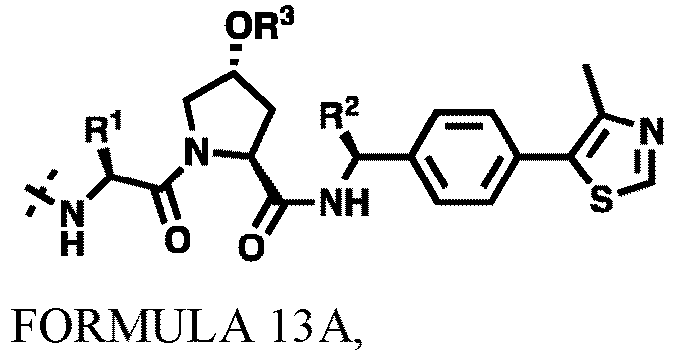
- R1 and R2 are independently selected from hydrogen, optionally substituted C1-C8 alkyl, optionally substituted C1-C8alkoxyC1-C8alkyl, optionally substituted C1-C8 haloalkyl, optionally substituted C1-C8 hydroxyalkyl, optionally substituted C1-C8 aminoalkyl, optionally substituted C1-C8alkylaminoC1-C8alkyl, optionally substituted C3-C7 cycloalkyl, optionally substituted 3-7 membered heterocyclyl, optionally substituted C2-C8 alkenyl, and optionally substituted C2-C8 alkynyl; and
- R3 is hydrogen, optionally substituted C(O)C1-C8 alkyl, optionally substituted C(O)C1-C8alkoxyC1-C8alkyl, optionally substituted C(O)C1-C8 haloalkyl, optionally substituted C(O)C1-C8 hydroxyalkyl, optionally substituted C(O)C1-C8 aminoalkyl, optionally substituted C(O)C1-C8alkylaminoC1-C8alkyl, optionally substituted C(O)C3-C7 cycloalkyl, optionally substituted C(O)(3-7 membered heterocyclyl), optionally substituted C(O)C2-C8 alkenyl, optionally substituted C(O)C2-C8 alkynyl, optionally substituted C(O)OC1-C8alkoxyC1-C8alkyl, optionally substituted C(O)OC1-C8 haloalkyl, optionally substituted C(O)OC1-C8 hydroxyalkyl, optionally substituted C(O)OC1-C8 aminoalkyl, optionally substituted C(O)OC1-C8alkylaminoC1-C8alkyl, optionally substituted C(O)OC3-C7 cycloalkyl, optionally substituted C(O)O(3-7 membered heterocyclyl), optionally substituted C(O)OC2-C8 alkenyl, optionally substituted C(O)OC2-C8 alkynyl, optionally substituted C(O)NC1-C8alkoxyC1-C8alkyl, optionally substituted C(O)NC1-C8 haloalkyl, optionally substituted C(O)NC1-C8 hydroxyalkyl, optionally substituted C(O)NC1-C8 aminoalkyl, optionally substituted C(O)NC1-C8alkylaminoC1-C8alkyl, optionally substituted C(O)NC3-C7 cycloalkyl, optionally substituted C(O)N(3-7 membered heterocyclyl), optionally substituted C(O)NC2-C8 alkenyl, optionally substituted C(O)NC2-C8 alkynyl, optionally substituted P(O)(OH)2, optionally substituted P(O)(OC1-C8 alkyl)2, and optionally substituted P(O)(OC1-C8 aryl)2; and
- (2) a moiety according to FORMULAE 13B, 13C, 13D, 13E and 13F:


- R1 and R2 are independently selected from hydrogen, halogen, OH, NH2, CN, optionally substituted C1-C8 alkyl, optionally substituted C1-C8alkoxyC1-C8alkyl, optionally substituted C1-C8 haloalkyl, optionally substituted C1-C8 hydroxyalkyl, optionally substituted C1-C8 aminoalkyl, optionally substituted C1-C8alkylaminoC1-C8alkyl, optionally substituted C3-C7 cycloalkyl, optionally substituted 3-7 membered heterocyclyl, optionally substituted C2-C8 alkenyl, and optionally substituted C2-C8 alkynyl; (preferably, R1 is selected from iso-propyl or tert-butyl; and R2 is selected from hydrogen or methyl);
- R3 is hydrogen, optionally substituted C(O)C1-C8 alkyl, optionally substituted C(O)C1-C8alkoxyC1-C8alkyl, optionally substituted C(O)C1-C8 haloalkyl, optionally substituted C(O)C1-C8 hydroxyalkyl, optionally substituted C(O)C1-C8 aminoalkyl, optionally substituted C(O)C1-C8alkylaminoC1-C8alkyl, optionally substituted C(O)C3-C7 cycloalkyl, optionally substituted C(O)(3-7 membered heterocyclyl), optionally substituted C(O)C2-C8 alkenyl, optionally substituted C(O)C2-C8 alkynyl, optionally substituted C(O)OC1-C8alkoxyC1-C8alkyl, optionally substituted C(O)OC1-C8 haloalkyl, optionally substituted C(O)OC1-C8 hydroxyalkyl, optionally substituted C(O)OC1-C8 aminoalkyl, optionally substituted C(O)OC1-C8alkylaminoC1-C8alkyl, optionally substituted C(O)OC3-C7 cycloalkyl, optionally substituted C(O)O(3-7 membered heterocyclyl), optionally substituted C(O)OC2-C8 alkenyl, optionally substituted C(O)OC2-C8 alkynyl, optionally substituted C(O)NC1-C8alkoxyC1-C8alkyl, optionally substituted C(O)NC1-C8 haloalkyl, optionally substituted C(O)NC1-C8 hydroxyalkyl, optionally substituted C(O)NC1-C8 aminoalkyl, optionally substituted C(O)NC1-C8alkylaminoC1-C8alkyl, optionally substituted C(O)NC3-C7 cycloalkyl, optionally substituted C(O)N(3-7 membered heterocyclyl), optionally substituted C(O)NC2-C8 alkenyl, optionally substituted C(O)NC2-C8 alkynyl, optionally substituted P(O)(OH)2, optionally substituted P(O)(OC1-C8 alkyl)2, and optionally substituted P(O)(OC1-C8 aryl)2; and
- R4 and R5 are independently selected from hydrogen, COR6, CO2R6, CONR6R7, SOR6, SO2R6, SO2NR6R7, optionally substituted C1-C8 alkyl, optionally substituted C1-C8alkoxyC1-C8alkyl, optionally substituted C1-C8alkylaminoC1-C8alkyl, optionally substituted 3-8 membered cycloalkyl, optionally substituted 3-8 membered heterocyclyl, optionally substituted aryl, and optionally substituted heteroaryl; wherein
- R6 and R7 are independently selected from hydrogen, optionally substituted C1-C8 alkyl, optionally substituted C1-C8 alkoxy, optionally substituted C1-C8alkoxyC1-C8alkyl, optionally substituted C1-8alkylaminoC1-C8alkyl, optionally substituted 3-8 membered cycloalkyl, optionally substituted 3-8 membered heterocyclyl, optionally substituted aryl, and optionally substituted heteroaryl; or
- R4 and R5; R6 and R7 together with the atom to which they are connected form a 4-8 membered cycloalkyl or heterocyclyl ring;
- Ar is selected from aryl and heteroaryl, each of which is optionally substituted with one or more substituents independently selected from F, C1, CN, NO2, OR8, NR8R9, COR8, CO2R8, CONR8R9, SOR8, SO2R8, SO2NR9R10, NR9COR10, NR8C(O)NR9R10, NR9SOR10, NR9SO2R10, optionally substituted C1-C6 alkyl, optionally substituted C1-C6 alkoxyalkyl, optionally substituted C1-C6 haloalkyl, optionally substituted C1-C8 hydroxyalkyl, optionally substituted C1-C6alkylaminoC1-C6alkyl, optionally substituted C3-C7 cycloalkyl, optionally substituted 3-7 membered heterocyclyl, optionally substituted C2-C6 alkenyl, optionally substituted C2-C6 alkynyl, optionally substituted aryl, and optionally substituted C4-C5 heteroaryl; wherein
- R8, R9, and R10 are independently selected from null, hydrogen, optionally substituted C1-C6 alkyl, optionally substituted C2-C6 alkenyl, optionally substituted C2-C6 alkynyl, optionally substituted C3-C7 cycloalkyl, optionally substituted 3-7 membered heterocyclyl, optionally substituted aryl, and optionally substituted heteroaryl; or
- R8 and R9; R9 and R10 together with the atom to which they are connected form a 4-8 membered cycloalkyl or heterocyclyl ring; and
- pharmaceutically acceptable salts thereof.
- (1) a moiety according to FORMULA 13A:
- 20. A bivalent compound comprising a hematopoietic progenitor kinase 1 (HPK1) ligand conjugated to a degradation/disruption tag, wherein the bivalent compound has the structure:

- (1) A moiety according to FORMULA 14A:

- V, W, X, and Z are independently selected from CR4 and N;
- R1, R2, R3, and R4 are independently selected from hydrogen, optionally substituted C1-C8 alkyl, optionally substituted C1-C8alkoxyC1-C8alkyl, optionally substituted C1-C8 haloalkyl, optionally substituted C1-C8 hydroxyalkyl, optionally substituted C3-C7 cycloalkyl, optionally substituted 3-7 membered heterocyclyl, optionally substituted C2-C8 alkenyl, and optionally substituted C2-C8 alkynyl; and
- (2) a moiety according to FORMULA 14B:

- R1, R2, and R3 are independently selected from hydrogen, halogene, optionally substituted C1-C8 alkyl, optionally substituted C1-C8alkoxyC1-C8alkyl, optionally substituted C1-C8 haloalkyl, optionally substituted C1-C8 hydroxyalkyl, optionally substituted C3-C7 cycloalkyl, optionally substituted 3-7 membered heterocyclyl, optionally substituted C2-C8 alkenyl, and optionally substituted C2-C8 alkynyl;
- R4 and R5 are independently selected from hydrogen, COR6, CO2R6, CONR6R7, SOR6, SO2R6, SO2NR6R7, optionally substituted C1-C8 alkyl, optionally substituted C1-C8alkoxyC1-C8alkyl, optionally substituted C1-C8alkylaminoC1-C8alkyl, optionally substituted aryl-C1-C8alkyl, optionally substituted 3-8 membered cycloalkyl, optionally substituted 3-8 membered heterocyclyl, optionally substituted aryl, and optionally substituted heteroaryl; wherein
- R6 and R7 are independently selected from hydrogen, optionally substituted C1-C8 alkyl, optionally substituted C1-C8alkoxyC1-C8alkyl, optionally substituted C1-C8alkylaminoC1-C8alkyl, optionally substituted 3-8 membered cycloalkyl, optionally substituted 3-8 membered heterocyclyl, optionally substituted aryl, and optionally substituted heteroaryl; or
- R6 and R7 together with the atom to which they are connected form a 4-8 membered cycloalkyl or heterocyclyl ring; and
- pharmaceutically acceptable salts thereof.
- R1, R2, and R3 are independently selected from hydrogen, halogene, optionally substituted C1-C8 alkyl, optionally substituted C1-C8alkoxyC1-C8alkyl, optionally substituted C1-C8 haloalkyl, optionally substituted C1-C8 hydroxyalkyl, optionally substituted C3-C7 cycloalkyl, optionally substituted 3-7 membered heterocyclyl, optionally substituted C2-C8 alkenyl, and optionally substituted C2-C8 alkynyl;
- (1) A moiety according to FORMULA 14A:
- 21. A bivalent compound comprising a hematopoietic progenitor kinase 1 (HPK1) ligand conjugated to a degradation/disruption tag, wherein the bivalent compound has the structure:





- 22. A bivalent compound comprising a hematopoietic progenitor kinase 1 (HPK1) ligand conjugated to a degradation/disruption tag, wherein the bivalent compound has the structure:

- (1) a moiety according to FORMULA 16

- A, W, and B, at each occurrence, are independently selected from null, CO, CO2, C(O)NR1, C(S)NR1, O, S, SO, SO2, SO2NR1, NR1, NR1CO, NR1CONR2, NR1C(S), optionally substituted C1-C8 alkyl, optionally substituted C1-C8 alkoxy, optionally substituted C1-C8alkoxyC1-C8alkyl, optionally substituted C1-C8 haloalkyl, optionally substituted C1-C8 hydroxyalkyl, optionally substituted C2-C8 alkenyl, optionally substituted C2-C8 alkynyl, optionally substituted 3-8 membered cycloalkyl, optionally substituted C3-C8 cycloalkoxy,optionally substituted 3-8 membered heterocyclyl, optionally substituted aryl, optionally substituted heteroaryl, optionally substituted C3-C13 fused cycloalkyl, optionally substituted C3-C13 fused heterocyclyl, optionally substituted C3-C13 bridged cycloalkyl, optionally substituted C3-C13 bridged heterocyclyl, optionally substituted C3-C13 spiro cycloalkyl, and optionally substituted C3-C13 spiro heterocyclyl; wherein
- R1 and R2 are independently selected from hydrogen, optionally substituted C1-C8 alkyl, optionally substituted C3-C8 cycloalkyl, optionally substituted 3-8 membered cycloalkoxy, optionally substituted 3-8 membered heterocyclyl, optionally substituted C1-C8 alkoxy, optionally substituted C1-C8 alkoxyalkyl, optionally substituted C1-C8 haloalkyl, optionally substituted C1-C8 hydroxyalkyl, optionally substituted C1-C8 alkylamino, and optionally substituted C1-C8alkylaminoC1-C8alkyl; and
- m is 0 to 15;
- (2) a moiety according to FORMULA 16A:

- R1, R2, R3, and R4, at each occurrence, are independently selected from hydrogen, halogen, CN, OH, NH2, optionally substituted C1-C8 alkyl, optionally substituted C3-C8 cycloalkyl, optionally substituted C3-C8 cycloalkoxy, optionally substituted 3-8 membered membered heterocyclyl, optionally substituted C1-C8 alkoxy, optionally substituted C1-C8 alkoxyalkyl, optionally substituted C1-C8 haloalkyl, optionally substituted C1-C8 hydroxyalkyl, optionally substituted C1-C8 alkylamino, and optionally substituted C1-C8 alkylaminoC1-C8 alkyl;
- A, W, and B, at each occurrence, are independently selected from null, CO, CO2, C(O)NR5, C(S)NR5, O, S, SO, SO2, SO2NR5, NR5, NR5CO, NR5CONR6, NR5C(S), optionally substituted C1-C8 alkyl, optionally substituted C1-C8 alkoxy, optionally substituted C1-C8alkoxyC1-C8alkyl, optionally substituted C1-C8 haloalkyl, optionally substituted C1-C8 hydroxyalkyl, optionally substituted C2-C8 alkenyl, optionally substituted C2-C8 alkynyl, optionally substituted 3-8 membered cycloalkyl, optionally substituted C3-C8 cycloalkoxy, optionally substituted 3-8 membered heterocyclyl, optionally substituted aryl, optionally substituted heteroaryl, optionally substituted C3-C13 fused cycloalkyl, optionally substituted C3-C13 fused heterocyclyl, optionally substituted C3-C13 bridged cycloalkyl, optionally substituted C3-C13 bridged heterocyclyl, optionally substituted C3-C13 spiro cycloalkyl, and optionally substituted C3-C13 spiro heterocyclyl; wherein
R5 and R6 are independently selected from hydrogen, optionally substituted C1-C8 alkyl, optionally substituted 3-8 membered cycloalkyl, optionally substituted C3-C8 cycloalkoxy, optionally substituted 3-8 membered heterocyclyl, optionally substituted C1-C8 alkoxy, optionally substituted C1-C8 alkoxyalkyl, optionally substituted C1-C8 haloalkyl, optionally substituted C1-C8 hydroxyalkyl, optionally substituted C1-C8 alkylamino, and optionally substituted C1-C8alkylaminoC1-C8alkyl; - m is 0 to 15;
- n, at each occurrence, is 0 to 15; and
- o is 0 to 15;
- (3) a moiety according to FORMULA 16B:

- R1 and R2, at each occurrence, are independently selected from hydrogen, halogen, CN, OH, NH2, and optionally substituted C1-C8 alkyl, optionally substituted 3-8 membered cycloalkyl, optionally substituted C3-C8 cycloalkoxy, optionally substituted 3-8 membered heterocyclyl, optionally substituted C1-C8 alkoxy, optionally substituted C1-C8 alkoxyalkyl, optionally substituted C1-C8 haloalkyl, optionally substituted C1-C8 hydroxyalkyl, optionally substituted C1-C8 alkylamino, or C1-C8alkylaminoC1-C8alkyl;
- A and B, at each occurrence, are independently selected from null, CO, CO2, C(O)NR3, C(S)NR3, O, S, SO, SO2, SO2NR3, NR3, NR3CO, NR3CONR4, NR3C(S), and optionally substituted C1-C8 alkyl, optionally substituted C1-C8 alkoxy, optionally substituted C1-C8alkoxyC1-C8alkyl, optionally substituted C1-C8 haloalkyl, optionally substituted C1-C8 hydroxyalkyl, optionally substituted C2-C8 alkenyl, optionally substituted C2-C8 alkynyl, optionally substituted 3-8 membered cycloalkyl, optionally substituted C3-C8 cycloalkoxy, optionally substituted 3-8 membered heterocyclyl, optionally substituted aryl, optionally substituted heteroaryl, optionally substituted C3-C13 fused cycloalkyl, optionally substituted C3-C13 fused heterocyclyl, optionally substituted C3-C13 bridged cycloalkyl, optionally substituted C3-C13 bridged heterocyclyl, optionally substituted C3-C13 spiro cycloalkyl, or C3-C13 spiro heterocyclyl; wherein
- R3 and R4 are independently selected from hydrogen, and optionally substituted C1-C8 alkyl, optionally substituted 3-8 membered cycloalkyl, optionally substituted C3-C8 cycloalkoxy, optionally substituted 3-8 membered heterocyclyl, optionally substituted C1-C8 alkoxy, optionally substituted C1-C8 alkoxyalkyl, optionally substituted C1-C8 haloalkyl, optionally substituted C1-C8 hydroxyalkyl, optionally substituted C1-C8 alkylamino, or C1-C8alkylaminoC1-Csalkyl;
- each m is 0 to 15; and
- n is 0 to 15;
- (4) a moiety according to FORMULA 16C:

- X is selected from O, NH, and NR7;
- R1, R2, R3, R4, R5, and R6, at each occurrence, are independently selected from hydrogen, halogen, CN, OH, NH2, optionally substituted C1-C8 alkyl, optionally substituted 3-8 membered cycloalkyl, optionally substituted C3-C8 cycloalkoxy, optionally substituted 3-8 membered heterocyclyl, optionally substituted C1-C8 alkoxy, optionally substituted C1-C8 alkoxyalkyl, optionally substituted C1-C8 haloalkyl, optionally substituted C1-C8 hydroxyalkyl, optionally substituted C1-C8 alkylamino, and optionally substituted C1-C8 alkylaminoC1-C8 alkyl;
- A and B, at each occurrence, are independently selected from null, CO, NH, NH-CO, CO-NH, CH2-NH-CO, CH2-CO-NH, NH-CO-CH2, CO-NH-CH2, CH2-NH-CH2-CO-NH, CH2-NH-CH2-NH-CO, -CO-NH, CO-NH- CH2-NH-CH2, CH2-NH-CH2, CO2, C(O)NR7, C(S)NR7, O, S, SO, SO2, SO2NR7, NR7, NR7CO, NR7CONR8, NR7C(S), optionally substituted C1-C8 alkyl, optionally substituted C1-C8 alkoxy, optionally substituted C1-C8alkoxyC1-C8alkyl, optionally substituted C1-C8 haloalkyl, optionally substituted C1-C8 hydroxyalkyl, optionally substituted C2-C8 alkenyl, optionally substituted C2-C8 alkynyl, optionally substituted 3-8 membered cycloalkyl, optionally substituted C3-C8 cycloalkoxy, optionally substituted 3-8 membered heterocyclyl, optionally substituted aryl, optionally substituted heteroaryl, optionally substituted C3-C13 fused cycloalkyl, optionally substituted C3-C13 fused heterocyclyl, optionally substituted C3-C13 bridged cycloalkyl, optionally substituted C3-C13 bridged heterocyclyl, optionally substituted C3-C13 spiro cycloalkyl, and optionally substituted C3-C13 spiro heterocyclyl; wherein R7 and R8 are independently selected from hydrogen, optionally substituted C1-C8 alkyl, optionally substituted 3-8 membered cycloalkyl, optionally substituted C3-C8 cycloalkoxy, optionally substituted 3-8 membered heterocyclyl, optionally substituted C1-C8 alkoxy, optionally substituted C1-C8 alkoxyalkyl, optionally substituted C1-C8 haloalkyl, optionally substituted C1-C8 hydroxyalkyl, optionally substituted C1-C8 alkylamino, and optionally substituted C1-C8 alkylaminoC1-C8 alkyl;
- m, at each occurrence, is 0 to 15;
- n, at each occurrence, is 0 to 15;
- o is 0 to 15; and
- p is 0 to 15; and
- pharmaceutically acceptable salts thereof.
- (1) a moiety according to FORMULA 16
- 23. A bivalent compound comprising a hematopoietic progenitor kinase 1 (HPK1) ligand conjugated to a degradation/disruption tag, wherein the bivalent compound has the structure:

- 24. A bivalent compound comprising a hematopoietic progenitor kinase 1 (HPK1) ligand conjugated to a degradation/disruption tag, wherein the bivalent compound has the structure:

- (1) a moiety according to one of FORMULAE C1, C2, C3, C4 and C5:


- (1) a moiety according to one of FORMULAE C1, C2, C3, C4 and C5:
- 25. A bivalent compound selected from the group consisting of HC58-18, HC58-19, HC58-20, HC58-22, HC58-23, HC58-24, HC58-25, HC58-26, HC58-27, HC58-28, HC58-29, HC58-30, HC58-31, HC58-32, HC58-33, HC58-34, HC58-35, HC58-36, H3C58-37, HC58-38, HC58-39, HC58-40, HC58-41, HC58-43, HC58-44, H3C58-45, HC58-46, HC58-53, HC58-57, HC58-58, HC58-59, HC58-60, HC58-63, HC58-64, HC58-65, HC58-66, HC58-67, HC58-68, HC58-69, HC58-70, HC58-71, HC58-73, HC58-74, HC58-75, HC58-76, H3C58-77, HC58-78, HC58-133, HC58-134, HC58-135, HC58-136, HC58-137, HC58-138, HC58-139, HC58-144, HC58-145, HC58-146, HC58-147, HC58-148, HC58-149, HC58-150, HC58-158, HC58-159, HC58-160, HC58-161, HC58-164, HC58-165, HC58-167, HC58-178, HC58-179, HC58-180, HC58-181, HC58-182, HC58-183, HC58-184, HC58-185, HC65-2, HC65-3, HC65-4, HC65-5, HC65-6, HC65-7, HC65-8, HC65-13, HC65-14, HC65-15, HC65-16, HC65-17, HC65-18, HC65-19, HC65-24, HC65-25, HC65-26, HC65-27, HC65-28, HC65-29, HC65-30, HC65-33, HC65-34, HC65-35, HC65-37, HC65-175, HC65-183, HC65-184, HC65-185, HC65-186, HC75-1, HC75-2, HC75-3, HC75-4, HC75-5, HC75-6, HC75-7, HC75-8, HC75-9, HC75-10, HC75-11, HC75-12, HC75-13, HC75-14, HC75-15, HC75-16, HC75-17, HC75-18, HC75-18, HC75-20, HC75-21, HC75-22, HC75-23, HC75-24, HC75-29, HC75-31, HC75-34, HC75-35, HC75-36, HC75-37, HC75-38, HC75-39, HC75-40, HC75-41, HC75-42, HC75-43, HC75-44, HC75-45, HC75-46, HC75-47, HC75-48, HC75-49, HC75-50, HC75-52, HC75-53, HC75-54, HC75-55, HC75-56, HC75-57, HC75-58, HC75-59, HC75-60, HC75-61, HC75-62, HC90-33, HC90-34, HC90-35, HC90-36, HC90-37, HC90-41, HC90-42, HC90-43, HC90-44, HC90-45, HC90-46, HC90-47, HC90-49, HC90-50, HC90-51, HC90-52, HC90-53, HC90-54, HC90-55, HC90-56, HC90-57, HC90-58, HC90-59, HC90-61, HC90-66, HC90-69, HC90-70, HC90-71, HC90-72, HC90-73, HC90-74, HC90-84, HC90-85, HC90-86, HC90-87, HC90-88, HC90-89, HC90-90, HC90-91, HC90-92, HC90-93, HC90-94, HC90-95, HC90-96, HC90-97, HC90-102, HC90-103, HC90-104, HC90-105, HC90-106, HC90-107, HC90-108, HC90-109, HC90-110, HC90-111, HC90-112, HC90-113, HC90-117, HC90-119, HC90-120, HC90-121, HC90-122, HC90-123, HC90-124, HC90-125, HC90-126, HC90-127, HC90-128, HC90-129, HC90-130, HC90-131, HC90-132, HC90-133, HC90-134, HC90-135, HC90-136, HC90-60, HC90-62, HC90-63, HC90-64, HC90-65, HC90-67 and HC90-68 or analogs thereof; and pharmaceutically acceptable salts thereof.
- 26. A bivalent compound selected from the group consisting of HC58-18, HC58-19, HC58-20, HC58-22, HC58-23, HC58-24, HC58-25, HC58-26, HC58-27, HC58-28, HC58-29, HC58-30, HC58-31, HC58-32, HC58-33, HC58-34, HC58-35, HC58-36, HC58-37, HC58-38, HC58-39, HC58-40, HC58-41, HC58-43, HC58-44, HC58-45, HC58-46, HC58-53, HC58-57, HC58-58, HC58-59, HC58-60, HC58-63, HC58-64, HC58-65, HC58-66, HC58-67, HC58-68, HC58-69, HC58-70, HC58-71, HC58-73, HC58-74, HC58-75, HC58-76, HC58-77, HC58-78, HC58-133, HC58-134, HC58-135, HC58-136, HC58-137, HC58-138, HC58-139, HC58-144, HC58-145, HC58-146, HC58-147, HC58-148, HC58-149, HC58-150, HC58-158, HC58-159, HC58-160, HC58-161, HC58-164, HC58-165, HC58-167, HC58-178, HC58-179, HC58-180, HC58-181, HC58-182, HC58-183, HC58-184,HC58-185, HC65-2, HC65-3, HC65-4, HC65-5, HC65-6, HC65-7, HC65-8, HC65-13, HC65-14, HC65-15, HC65-16, HC65-17, HC65-18, HC65-19, HC65-24, HC65-25, HC65-26, HC65-27, HC65-28, HC65-29, HC65-30, HC65-33, HC65-34, HC65-35 and HC65-37; and pharmaceutically acceptable salts thereof,
- 27. A bivalent compound selected from the group consisting of HC65-175, HC65-183, HC65-184, HC65-185, HC65-186, HC75-1, HC75-2, HC75-3, HC75-4, HC75-5, HC75-6, HC75-7, HC75-8, HC75-9, HC75-10, HC75-11, HC75-12, HC75-13, HC75-14, HC75-15, HC75-16, HC75-17, HC75-18, HC75-18, HC75-20, HC75-21, HC75-22, HC75-23, HC75-24, HC75-29, HC75-31, HC75-34, HC75-35, HC75-36, HC75-37, HC75-38, HC75-39, HC75-40, HC75-41, HC75-42, HC75-43, HC75-44, HC75-45, HC75-46, HC75-47, HC75-48, HC75-49, HC75-50, HC75-52, HC75-53, HC75-54, HC75-55, HC75-56, HC75-57, HC75-58, HC75-59, HC75-60, HC75-61 and HC75-62; and pharmaceutically acceptable salts thereof.
- 28. A bivalent compound selected from the group consisting of HC90-33, HC90-34, HC90-35, HC90-36, HC90-37, HC90-41, HC90-42, HC90-43, HC90-44, HC90-45, HC90-46, HC90-47, HC90-49, HC90-50, HC90-51, HC90-52, HC90-53, HC90-54, HC90-55, HC90-56, HC90-57, HC90-58, HC90-59, HC90-61, HC90-66, HC90-69, HC90-70, HC90-71, HC90-72, HC90-73, HC90-74, HC90-84, HC90-85, HC90-86, HC90-87, HC90-88, HC90-89, HC90-90, HC90-91, HC90-92, HC90-93, HC90-94, HC90-95, HC90-96, HC90-97, HC90-102, HC90-103, HC90-104, HC90-105, HC90-106, HC90-107, HC90-108, HC90-109, HC90-110, HC90-111, HC90-112, HC90-113, HC90-117, HC90-119, HC90-120, HC90-121, HC90-122, HC90-123, HC90-124, HC90-125, HC90-126, HC90-127, HC90-128, HC90-129, HC90-130, HC90-131, HC90-132, HC90-133, HC90-134, HC90-135, HC90-136, HC90-60, HC90-62, HC90-63, HC90-64, HC90-65, HC90-67 and HC90-68; and pharmaceutically acceptable salts thereof.
- 29. A method of treating an HPK1-mediated disease in a subject in need thereof, comprising:
administering to a subject having an HPKI-mediated disease, a bivalent compound according to any one of items 1 - 28. - 30. A method of treating an HPK1-mediated disease in a subject in need thereof, comprising:
administering to a subject having an HPKI-mediated disease, a pharmaceutical composition including a bivalent compound according to any one of items 1 - 28, and a pharmaceutically acceptable carrier. - 31. The method of item 29, wherein the HPK1-mediated disease is selected from the group consisting of cancer, chronic infections that produce exhausted immune response, infection-mediated immune suppression, age-related decline in immune response, age-related decline in cognitive function and infertility.
- 32. The method of item 31, wherein cancer is selected from the group consisting of cancers of the breast, respiratory tract, brain, reproductive organs, digestive tract, urinary tract, eye, liver, skin, head and neck, thyroid, parathyroid and their distant metastases, lymphomas, sarcomas, and leukaemias.
- 33. A method of reducing expression of HPK1 expression in cells, comprising:
- isolating cells from the body of subject;
- treating the cells with a bivalent compound according to any one of
items 1 to 28; and - reintroducing the treated cells to the body of the subject.
- 34. The method of item 33, wherein the cells are selected from the group consisting of autologous bone marrow cells, cord blood stem cells and peripheral blood or bone marrow stem cells.
- 35. The method of item 33, wherein the cells are immune cells selected from the group consisting of T cells, genetically engineered T cells, Chimeric Antigen Receptor (CAR) T cells, tumor infiltrating lymphocytes, dendritic cells, macrophage, mast cells, granulocytes (include basophils, eosinophils, and neutrophils), natural killer cells, NK T cells and B cells.
- 36. A method for increasing secretion of interleukin-2 from T cells, comprising:
- isolating T cells from the body of the subject;
treating the T cells with a bivalent compound according to any one of items 1 - 28; and reintroducing the T cells into the body of the subject.
- isolating T cells from the body of the subject;
- 37. A method of treating cancer in a subject in need thereof, comprising:
administering to a subject having cancer,- a pharmaceutical composition including a bivalent compound according to any one of items 1 - 28, and a pharmaceutically acceptable carrier, and
- a pharmaceutical composition including a checkpoint inhibitor and a pharmaceutically acceptable carrier.
- 38. The method of item 37, wherein the checkpoint inhibitor is selected from the group consisting of anti-PD-1, anti-PD-L1 and anti-CTLA-4.
- 39. The method of
item 38, wherein the checkpoint inhibitor is anti-PD-1. - 40. The method of item 39, wherein the anti-PD-1 is selected from the group consisting of pembrolizumab, nivolumab and cemiplimab.
- 41. The method of
item 40, wherein the cancer is selected from the group consisting of melanoma, lung cancer, renal cell carcinoma, Hodgkin lymphoma, head and neck cancer, colon cancer and liver cancer. - 42. The method of
item 38, wherein the checkpoint inhibitor is anti-PD-L1. - 43. The method of item 42, wherein the anti-PD-L1 is selected from the group consisting of atezolizumab, avelumab and durvalumab.
- 44. The method of item 43, wherein the cancer is selected from the group consisting of non-small cell lung carcinoma, multiple myeloma, urothelial cancer and head and neck cancer.
- 45. The method of
item 38, wherein the checkpoint inhibitor is anti-CDLA-4. - 46. The method of item 45, wherein the anti-CDLA-4 is selected from the group consisting of pembrolizumab, nivolumab and cemiplimab.
- 47. The method of
item 40, wherein the cancer is selected from the group consisting of melanoma, lung cancer, renal cell carcinoma, glioblastoma, hepatocellular carcinoma large B cell lymphoma, Hodgkin lymphoma, head and neck cancer, colon cancer and liver cancer. - 48. A method of treating cancer with an elevated expression of cyclooxygenase-2, in a subject in need thereof, comprising:
administering to a subject having cancer with an elevated expression of cyclooxygenase-2 a pharmaceutical composition including a bivalent compound according to any one of items 1 - 28, and a pharmaceutically acceptable carrier. - 49. The method of item 48, wherein the cancer is selected from the group consisting of colon cancer, lung cancer, sarcoma and breast cancer.
- 50. The method of item 37, wherein the two compositions are administered simultaneously.
- 51. The method of item 37, wherein the two compositions are administered sequentially.
Claims (15)
- A bivalent compound comprising a hematopoietic progenitor kinase 1 (HPK1) ligand conjugated to a degradation/disruption tag, wherein the bivalent compound has the structure:
 (I) wherein PI comprises an HPK1 ligand and EL comprises a degradation/disruption tag, wherein PI is a moiety selected from the group consisting of:(I-A) a moiety according to FORMULA 1:
 the "Linker" moiety of the bivalent compound is attached to R9;X is selected from O or S;Y is selected from O, S, NR10; wherein
R10 is independently selected from hydrogen, optionally substituted C1-C8 alkyl, optionally substituted C1-C8alkoxyC1-C8alkyl, optionally substituted C1-C8alkylaminoC1-Csalkyl, optionally substituted C3-C10 cycloalkyl, optionally substituted 3-20 membered heterocyclyl, optionally substituted C2-C8 alkenyl, optionally substituted C2-C8 alkynyl, optionally substituted aryl, and optionally substituted heteroaryl;R1, R2, R3, R4, R7, and R8 are selected from hydrogen, halogen, oxo, CN, NO2, OR11, SR11, NR11R12, C(O)R11, C(O)OR11, C(O)NR11R12, S(O)R11, S(O)2R11, S(O)2NR11R12, NR13C(O)OR11, NR13C(O)R11, NR13C(O)NR11R12, NR13S(O)R11, NR13S(O)2R11, NR13S(O)2NR11R12 optionally substituted C1-C8 alkyl, optionally substituted C2-C8 alkenyl, optionally substituted C2-C8 alkynyl, optionally substituted C1-C8 alkoxy, optionally substituted C1-C8alkoxyC1-C8alkyl, optionally substituted C1-C8alkylaminoC1-C8alkyl, optionally substituted 3-8 membered cycloalkyl, optionally substituted C3-C8 cycloalkoxy, optionally substituted 3-8 membered heterocyclyl, optionally substituted aryl, and optionally substituted heteroaryl; whereinR11, R12, and R13 are independently selected from hydrogen, optionally substituted C1-C8 alkyl, optionally substituted C1-C8alkoxyC1-C8alkyl, optionally substituted C1-C8alkylaminoC1-C8alkyl, optionally substituted C3-C10 cycloalkyl, optionally substituted 3-20 membered heterocyclyl, optionally substituted C2-C8 alkenyl, optionally substituted C2-C8 alkynyl, optionally substituted aryl, and optionally substituted heteroaryl, orR11 and R12, R11 and R13, R12 and R13 together with the atom to which they are connected form an optionally substituted 3-20 membered cycloalkyl or heterocyclyl ring;R5 and R6 are independently selected from hydrogen, optionally substituted C1-C8 alkyl, optionally substituted C2-C8 alkenyl, optionally substituted C2-C8 alkynyl, optionally substituted C1-C8 alkoxy, optionally substituted C1-C8alkoxyC1-C8alkyl, optionally substituted C1-C8alkylaminoC1-C8alkyl, optionally substituted 3-8 membered cycloalkyl, optionally substituted C3-C8 cycloalkoxy, optionally substituted 4-8 membered heterocyclyl, optionally substituted aryl, and optionally substituted heteroaryl;R9 is selected from OR14, SR14, NR14R15, C(O)R14, C(O)OR14, C(O)NR14R15, S(O)R14, S(O)2R14, S(O)2NR14R15, NR16C(O)OR14, NR16C(O)R14, NR16C(O)NR14R15, NR16S(O)R14, NR16S(O)2R14, NR16S(O)2NR14R15 optionally substituted C1-C8 alkyl, optionally substituted C2-C8 alkenyl, optionally substituted C2-C8 alkynyl, optionally substituted C1-C8 alkoxy, optionally substituted C1-C8alkoxyC1-C8alkyl, optionally substituted C1-C8alkylaminoC1-C8alkyl , optionally substituted 3-8 membered cycloalkyl, optionally substituted C3-C8 cycloalkoxy, optionally substituted 3-8 membered heterocyclyl, optionally substituted aryl, and optionally substituted heteroaryl; whereinR14 is null, or a bivalent moiety selected from optionally substituted C1-C8 alkylenyl, optionally substituted C2-C8 alkenylene, optionally substituted C2-C8 alkynylene, optionally substituted C3-C8 cycloalkylene, optionally substituted 3-8 membered heterocyclylene, optionally substituted aryl, and optionally substituted heteroaryl;R15 and R16 are independently selected from optionally substituted C1-C8 alkyl, optionally substituted C1-C8alkoxyC1-C8alkyl, optionally substituted C1-C8alkylaminoC1-Csalkyl, optionally substituted C3-C8 cycloalkyl, optionally substituted 3-8 membered heterocyclyl, optionally substituted C2-C8 alkenyl, optionally substituted C2-C8 alkynyl, optionally substituted aryl, and optionally substituted heteroaryl; orR14 and R15, R14 and R16, R15 and R16 together with the atom to which they are connected form a 3-20 membered cycloalkyl or heterocyclyl ring;(I-B) a moiety according to FORMULA 1A: the "Linker" moiety of the bivalent compound is attached to Z;the definitions of R1, R2, R3, R4, R5, R6, R7 and R8 are the same as for FORMULA 1;R17, R18, R19, and R20, at each occurrence, are independently selected from hydrogen, halogen, CN, OH, NH2, optionally substituted C1-C8 alkyl, optionally substituted C3-C8 cycloalkyl, optionally substituted C3-C8 cycloalkoxy, optionally substituted C1-C8alkoxyC1-Csalkyl, optionally substituted C1-C8alkylaminoC1-C8alkyl, optionally substituted 3-8 membered membered heterocyclyl, optionally substituted C1-C8 alkoxy, optionally substituted C1-C8 alkoxyalkyl, optionally substituted C1-C8 haloalkyl, optionally substituted C1-C8 hydroxyalkyl, optionally substituted C1-C8 alkylamino, and optionally substituted C1-C8 alkylaminoC1-C8 alkyl;m, n, are independently selected from 0, 1, 2, 3, and 4; andW, Q, and Z, at each occurrence, are independently selected from null, CO, CO2, CH2, NH, NH-CO, CO-NH, CH2-NH-CO, CH2-CO-NH, NH-CO-CH2, CO-NH-CH2, CH2-NH-CH2-CO-NH, CH2-NH-CH2-NH-CO, -CO-NH, CO-NH- CH2-NH-CH2, CH2-NH-CH2, CR21R22, C(O)NR21, C(S)NR21, O, S, SO, SO2, SO2NR21, NR21, NR21CO, NR121CONR22, NR21C(S), optionally substituted C1-C8 alkyl, optionally substituted C1-C8 alkoxy, optionally substituted C1-C8alkoxyC1-C8alkyl, optionally substituted C1-C8 haloalkyl, optionally substituted C1-C8 hydroxyalkyl, optionally substituted C2-C8 alkenyl, optionally substituted C2-C8 alkynyl, optionally substituted 3-8 membered cycloalkyl, optionally substituted C3-C8 cycloalkoxy, optionally substituted 3-8 membered heterocyclyl, optionally substituted aryl, optionally substituted heteroaryl, optionally substituted C3-C13 fused cycloalkyl, optionally substituted C3-C13 fused heterocyclyl, optionally substituted C3-C13 bridged cycloalkyl, optionally substituted C3-C13 bridged heterocyclyl, optionally substituted C3-C13 spiro cycloalkyl, and optionally substituted C3-C13 spiro heterocyclyl; wherein
R21 and R22 are independently selected from hydrogen, optionally substituted C1-C8 alkyl, optionally substituted 3-8 membered cycloalkyl, optionally substituted C3-C8 cycloalkoxy, optionally substituted 3-8 membered heterocyclyl, optionally substituted C1-C8 alkoxy, optionally substituted C1-C8 alkoxyalkyl, optionally substituted C1-C8 haloalkyl, optionally substituted C1-C8 hydroxyalkyl, optionally substituted C1-C8 alkylamino, and optionally substituted C1-C8alkylaminoC1-C8alkyl;(I-C) a moiety according to FORMULA 1B: the definitions of X, Y, W, Q, R1, R2, R3, R4, R5, R6, R7, R8, R17, R18, R19 and R20 are the same as for FORMULA 1A;the "Linker" moiety of the bivalent compound is attached to terminal N;m, n, are independently selected from 0, 1, 2, 3, and 4;R23 and R24 at each occurrence, are independently selected from hydrogen, halogen, CN, OH, NH2, optionally substituted C1-C8 alkyl, optionally substituted C3-C8 cycloalkyl, optionally substituted C3-C8 cycloalkoxy, optionally substituted 3-8 membered membered heterocyclyl, optionally substituted C1-C8 alkoxy, optionally substituted C1-C8 alkoxyalkyl, optionally substituted C1-C8 haloalkyl, optionally substituted C1-C8 hydroxyalkyl, optionally substituted C1-C8 alkylamino, and optionally substituted C1-C8 alkylaminoC1-C8 alkyl;(I-D) a moiety according to FORMULA 1C:
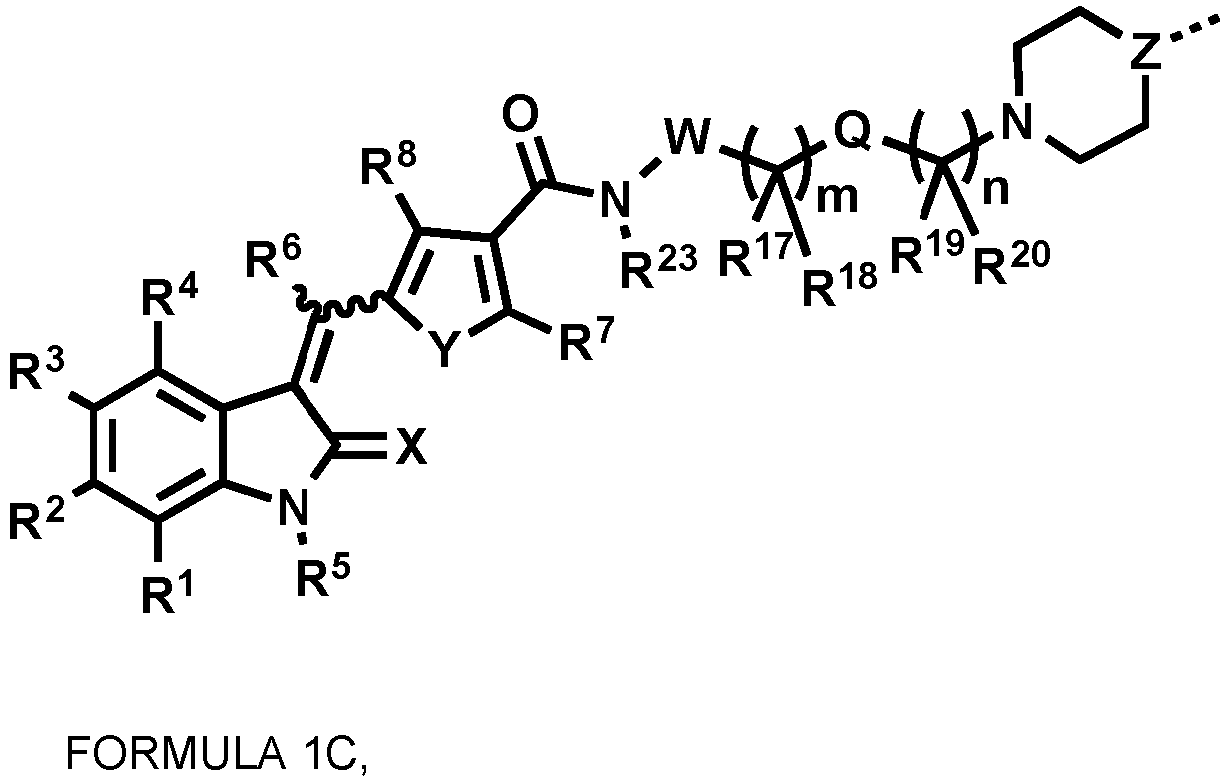 the definitions of X, Y, W, Q, R1, R2, R3, R4, R5, R6, R7, R8, R17, R18, R19, R20 and R23 are the same as for FORMULA 1B;the "Linker" moiety of the bivalent compound is attached to Z;m, n, are independently selected from 0, 1, 2, 3, and 4;Z are independently selected from CR25 or N; andR25 is independently selected from null, hydrogen, C(O)R26, C(O)OR26, C(O)NR26R27, S(O)R26, S(O)2R26, S(O)2NR26R27, NR28C(O)OR26, NR28C(O)R26, NR28C(O)NR26R27, NR28S(O)R26, NR28S(O)2R26, NR28S(O)2NR26R27, optionally substituted C1-C8 alkyl, optionally substituted C2-C8 alkenyl, optionally substituted C2-C8 alkynyl, optionally substituted C1-C8 alkoxy, optionally substituted C1-C8alkoxyC1-C8alkyl, optionally substituted C1-C8alkylaminoC1-C8alkyl, optionally substituted 3-8 membered cycloalkyl, optionally substituted C3-C8 cycloalkoxy, optionally substituted 3-8 membered heterocyclyl, optionally substituted aryl, and optionally substituted heteroaryl; whereinR26 is null, or a bivalent moiety selected from optionally substituted C1-C8 alkyl, optionally substituted C2-C8 alkenyl, optionally substituted C2-C8 alkynyl, optionally substituted C1-C8 alkoxy, optionally substituted C1-C8alkoxyC1-C8alkyl, optionally substituted C1-C8alkylaminoC1-C8alkyl, optionally substituted 3-8 membered cycloalkyl, optionally substituted C3-C8 cycloalkoxy, optionally substituted 3-8 membered heterocyclyl, optionally substituted aryl, and optionally substituted heteroaryl;R27, and R28 are independently selected from hydrogen, optionally substituted C1-C8 alkyl, optionally substituted C1-C8alkoxyC1-C8alkyl, optionally substituted C1-C8alkylaminoC1-Csalkyl, optionally substituted C3-C10 cycloalkyl, optionally substituted 3-20 membered heterocyclyl, optionally substituted C2-C8 alkenyl, optionally substituted C2-C8 alkynyl, optionally substituted aryl, and optionally substituted heteroaryl; orR26 and R27 together with the atom to which they are connected form an optionally substituted 3-20 membered cycloalkyl or heterocyclyl ring;(I-E) a moiety according to FORMULA 2:
 the "Linker" moiety of the bivalent compound is attached to R1 or R4;X is selected from CR5 or N;R1, and R2 are independently selected from null, hydrogen, C(O)R6, C(O)OR6, C(O)NR6R7, S(O)R6, S(O)2R6, S(O)2NR6R7, NR8C(O)OR6, NR8C(O)R6, NR8C(O)NR6R7, NR8S(O)R6, NR8S(O)2R6, NR8S(O)2NR6R7 , optionally substituted C1-C8 alkyl, optionally substituted C2-C8 alkenyl, optionally substituted C2-C8 alkynyl, optionally substituted C1-C8 alkoxy, optionally substituted C1-C8alkoxyC1-C8alkyl, optionally substituted C1-C8alkylaminoC1-C8alkyl, optionally substituted 3-8 membered cycloalkyl, optionally substituted C3-C8 cycloalkoxy, optionally substituted 3-8 membered heterocyclyl, optionally substituted aryl, and optionally substituted heteroaryl; whereinR6 is null, or a bivalent moiety selected from optionally substituted C1-C8 alkyl, optionally substituted C2-C8 alkenyl, optionally substituted C2-C8 alkynyl, optionally substituted C1-C8 alkoxy, optionally substituted C1-C8alkoxyC1-C8alkyl, optionally substituted C1-C8alkylaminoC1-C8alkyl, optionally substituted 3-8 membered cycloalkyl, optionally substituted C3-C8 cycloalkoxy, optionally substituted 3-8 membered heterocyclyl, optionally substituted aryl, and optionally substituted heteroaryl;R7, and R8 are independently selected from hydrogen, optionally substituted C1-C8 alkyl, optionally substituted C1-C8alkoxyC1-C8alkyl, optionally substituted C1-C8alkylaminoC1-Csalkyl, optionally substituted C3-C10 cycloalkyl, optionally substituted 3-20 membered heterocyclyl, optionally substituted C2-C8 alkenyl, optionally substituted C2-C8 alkynyl, optionally substituted aryl, and optionally substituted heteroaryl; orR6 and R7 together with the atom to which they are connected form an optionally substituted 3-20 membered cycloalkyl or heterocyclyl ring; andR3, R4 and R5 are independently selected from hydrogen, halogen, oxo, CN, NO2, OR9, SR9, NR10R11, C(O)R9, C(O)OR9, C(O)NR10R11, S(O)R9, S(O)2R9, S(O)2NR10R11, NR12C(O)OR10, NR9C(O)R10, NR9C(O)NR10R11, NR9S(O)R10, NR9S(O)2R10, NR9S(O)2NR10R11 optionally substituted C1-C8 alkyl, optionally substituted C2-C8 alkenyl, optionally substituted C2-C8 alkynyl, optionally substituted C1-C8 alkoxy, optionally substituted 3-8 membered cycloalkyl, optionally substituted C3-C8 cycloalkoxy, optionally substituted 3-8 membered heterocyclyl, optionally substituted aryl, and optionally substituted heteroaryl; whereinR9, R10, and R11 are independently selected from hydrogen, optionally substituted C1-C8 alkyl, optionally substituted C1-C8alkoxyC1-C8alkyl, optionally substituted C1-C8alkylaminoC1-C8alkyl, optionally substituted C3-C10 cycloalkyl, optionally substituted 3-20 membered heterocyclyl, optionally substituted C2-C8 alkenyl, optionally substituted C2-C8 alkynyl, optionally substituted aryl, and optionally substituted heteroaryl, orR9 and R10, R10 and R11 together with the atom to which they are connected form an optionally substituted 3-20 membered cycloalkyl or heterocyclyl ring;(I-F) a moiety according to FORMULA 2A or 2B:
 the "Linker" moiety of the bivalent compound is attached to R1;the definitions of R1, R2, R3 and R5 are the same as for FORMULA 2;Ar is selected from null, aryl and heteroaryl, each of which is optionally substituted with one or more substituents independently selected from hydrogen, halogen, oxo, CN, NO2, OR12, SR12, NR12R13, OCOR12, OCO2R12, OCONR12R13, COR12, CO2R12, CONR12R13, SOR12, SO2R12, SO2NR12R13, NR14CO2R12, NR14COR12, NR14C(O)NR12R13, NR14SOR12, NR14SO2R12, NR14SO2NR12R13, optionally substituted C1-C8 alkyl, optionally substituted C2-C8 alkenyl, optionally substituted C2-C8 alkynyl, optionally substituted C1-C8 alkoxy, optionally substituted C1-C8alkoxyC1-C8alkyl, optionally substituted C1-C8alkylaminoC1-C8alkyl, optionally substituted 3-8 membered cycloalkyl, optionally substituted C3-C8 cycloalkoxy, optionally substituted 4-8 membered heterocyclyl, optionally substituted aryl, and optionally substituted heteroaryl; whereinR12, R13, and R14 are independently selected from hydrogen, optionally substituted C1-C8 alkyl, optionally substituted C2-C8 alkenyl, optionally substituted C2-C8 alkynyl, optionally substituted C1-C8 alkoxy, optionally substituted C1-C8alkoxyC1-C8alkyl, optionally substituted C1-C8alkylaminoC1-C8alkyl, optionally substituted 3-8 membered cycloalkyl, optionally substituted C3-C8 cycloalkoxy, optionally substituted 4-8 membered heterocyclyl, optionally substituted aryl, and optionally substituted heteroaryl; orR12 and R13, R13 and R14 together with the atom to which they are connected form a 3-20 membered heterocyclyl ring;(I-G) a moiety according to FORMULA 2C or 2D:
 the "Linker" moiety of the bivalent compound is attached to R1;the definitions of R1, R2, R3 and R5 are the same as for FORMULA 2;R15, R16, R17 and R18 are independently selected hydrogen, halogen, oxo, CN, NO2, OR19, SR19, NR20R21, OCOR19, OCO2R19, OCONR20R21, COR19, CO2R19, CONR20R21, SOR19, SO2R19, SO2NR20R21, NR19CO2R20, NR19COR20, NR19C(O)NR20R21, NR19SOR20, NR19SO2R20, NR19SO2NR20R21, optionally substituted C1-C8 alkyl, optionally substituted C2-C8 alkenyl, optionally substituted C2-C8 alkynyl, optionally substituted C1-C8 alkoxy, optionally substituted C1-C8alkoxyC1-C8alkyl, optionally substituted C1-C8alkylaminoC1-C8alkyl, optionally substituted 3-8 membered cycloalkyl, optionally substituted C3-C8 cycloalkoxy, optionally substituted 4-8 membered heterocyclyl, optionally substituted aryl, and optionally substituted heteroaryl; whereinR19, R20, and R21 are independently selected from hydrogen, optionally substituted C1-C8 alkyl, optionally substituted C2-C8 alkenyl, optionally substituted C2-C8 alkynyl, optionally substituted C1-C8 alkoxy, optionally substituted C1-C8alkoxyC1-C8alkyl, optionally substituted C1-C8alkylaminoC1-C8alkyl, optionally substituted 3-8 membered cycloalkyl, optionally substituted C3-C8 cycloalkoxy, optionally substituted 4-8 membered heterocyclyl, optionally substituted aryl, and optionally substituted heteroaryl; orR19 and R20, R20 and R21 together with the atom to which they are connected form a 3-20 membered heterocyclyl ring; andR15 and R16, R16 and R17 together with the atom to which they are connected form an optionally substituted 4-20 membered cycloalkyl or heterocyclyl ring;(I-H) a moiety according to FORMULA 2E or 2F:
 the "Linker" moiety of the bivalent compound is attached to R1;the definitions of R1, R2, R3, R5, R15, R16, R17 and R18 are the same as for FORMULA 2C and 2D.R22 is independently selected from hydrogen, halogen, oxo, aryl, CN, NO2, OR23, SR23, NR24R25, C(O)R23, C(O)OR23, C(O)NR24R25, S(O)R23, S(O)2R23, S(O)2NR24R25, NR24C(O)OR23, NR24C(O)R23, NR23C(O)NR24R25, NR24S(O)R23, NR24S(O)2R23, NR23S(O)2NR24R2 optionally substituted C1-C8 alkyl, optionally substituted C2-C8 alkenyl, optionally substituted C2-C8 alkynyl, optionally substituted C1-C8 alkoxy, optionally substituted 3-8 membered cycloalkyl, optionally substituted C3-C8 cycloalkoxy, optionally substituted 3-8 membered heterocyclyl, optionally substituted aryl, and optionally substituted heteroaryl; whereinR23, R24, and R25 are independently selected from hydrogen, optionally substituted C1-C8 alkyl, optionally substituted C1-C8alkoxyC1-C8alkyl, optionally substituted C1-C8alkylaminoC1-C8alkyl, optionally substituted C3-C10 cycloalkyl, optionally substituted 3-20 membered heterocyclyl, optionally substituted C2-C8 alkenyl, optionally substituted C2-C8 alkynyl, optionally substituted aryl, and optionally substituted heteroaryl; orR23 and R24, R23 and R25 together with the atom to which they are connected form an optionally substituted 3-20 membered cycloalkyl or heterocyclyl ring; andR15 and R16, R16 and R17 together with the atom to which they are connected form an optionally substituted 4-20 membered cycloalkyl or heterocyclyl ring;(I-I) a moiety according to FORMULA 2G or 2H:
 the "Linker" moiety of the bivalent compound is attached to R1;the definitions of R1, R2, R3, R5, R15, R16, R17 and R18 are the same as for FORMULA 2C and 2D.X is CO, CH2 or SO2;n is 0 to 1;R26 and R27 are independently selected from hydrogen, halogen, optionally substituted C1-C8 alkyl, optionally substituted C1-C8alkoxyC1-C8alkyl, optionally substituted C1-C8alkylaminoC1-Csalkyl, optionally substituted C3-C10 cycloalkyl, optionally substituted 3-20 membered heterocyclyl, optionally substituted C2-C8 alkenyl, optionally substituted C2-C8 alkynyl, optionally substituted aryl, and optionally substituted heteroaryl; or
R26 and R27 together with the atom to which they are connected form an optionally substituted 3-20 membered cycloalkyl or heterocyclyl ring; andR15 and R16, R16 and R17 together with the atom to which they are connected form an optionally substituted 4-20 membered cycloalkyl or heterocyclyl ring;(I-J) a moiety according to one of FORMULA 2K, 2L, 2M and 2N:
 the "Linker" moiety of the bivalent compound is attached to R9;the definitions of R1, R2, R3, R5, R15, R16, R17 and R18 are the same as for FORMULA 2C and 2D;n and m are independently selected from 1, 2 and 3;R28 , R29 and R30 are independently selected from hydrogen, halogen, optionally substituted C1-C8 alkyl, optionally substituted C1-C8alkoxyC1-C8alkyl, optionally substituted C1-C8alkylaminoC1-C8alkyl, optionally substituted C3-C10 cycloalkyl, optionally substituted 3-20 membered heterocyclyl, optionally substituted C2-C8 alkenyl, optionally substituted C2-C8 alkynyl, optionally substituted aryl, and optionally substituted heteroaryl, or
R29 and R30 together with the atom to which they are connected form an optionally substituted 3-20 membered cycloalkyl or heterocyclyl ring; andR15 and R16, R16 and R17 together with the atom to which they are connected form an optionally substituted 4-20 membered cycloalkyl or heterocyclyl ring;(I-K) a moiety according to FORMULA 2O or 2P: the "Linker" moiety of the bivalent compound is attached to Z;the definitions of R1, R2, R3, R5, R15, R16, R17 and R18 are the same as for FORMULA 2C and 2D;W, Q, and Z, at each occurrence, are independently selected from null, CO, CO2, CH2, NH, NH-CO, CO-NH, CH2-NH-CO, CH2-CO-NH, NH-CO-CH2, CO-NH-CH2, CH2-NH-CH2-CO-NH, CH2-NH-CH2-NH-CO, -CO-NH, CO-NH- CH2-NH-CH2, CH2-NH-CH2, CR35R36, C(O)NR35, C(S)NR35, O, S, SO, SO2, SO2NR35, NR35, NR35CO, NR35CONR36, NR35C(S), optionally substituted C1-C8 alkyl, optionally substituted C1-C8 alkoxy, optionally substituted C1-C8alkoxyC1-C8alkyl, optionally substituted C1-C8 haloalkyl, optionally substituted C1-C8 hydroxyalkyl, optionally substituted C2-C8 alkenyl, optionally substituted C2-C8 alkynyl, optionally substituted 3-8 membered cycloalkyl, optionally substituted C3-C8 cycloalkoxy, optionally substituted 3-8 membered heterocyclyl, optionally substituted aryl, optionally substituted heteroaryl, optionally substituted C3-C13 fused cycloalkyl, optionally substituted C3-C13 fused heterocyclyl, optionally substituted C3-C13 bridged cycloalkyl, optionally substituted C3-C13 bridged heterocyclyl, optionally substituted C3-C13 spiro cycloalkyl, and optionally substituted C3-C13 spiro heterocyclyl, wherein
R35 and R36 are independently selected from hydrogen, optionally substituted C1-C8 alkyl, optionally substituted 3-8 membered cycloalkyl, optionally substituted C3-C8 cycloalkoxy, optionally substituted 3-8 membered heterocyclyl, optionally substituted C1-C8 alkoxy, optionally substituted C1-C8 alkoxyalkyl, optionally substituted C1-C8 haloalkyl, optionally substituted C1-C8 hydroxyalkyl, optionally substituted C1-C8 alkylamino, and optionally substituted C1-C8alkylaminoC1-C8alkyl;R31 , R32, R33 , and R34 are independently selected from hydrogen, halogen, optionally substituted C1-C8 alkyl, optionally substituted C1-C8alkoxyC1-C8alkyl, optionally substituted C1-C8alkylaminoC1-C8alkyl, optionally substituted C3-C10 cycloalkyl, optionally substituted 3-20 membered heterocyclyl, optionally substituted C2-C8 alkenyl, optionally substituted C2-C8 alkynyl, optionally substituted aryl, and optionally substituted heteroaryl; orR31 and R32, R33 and R34 are together with the atom to which they are connected form an optionally substituted 3-20 membered cycloalkyl or heterocyclyl ring;R15 and R16, R16 and R17 together with the atom to which they are connected form an optionally substituted 4-20 membered cycloalkyl or heterocyclyl ring; andm, n, are independently selected from 0, 1, 2, 3, and 4;(I-L) a moiety according to FORMULA 3: the "Linker" moiety of the bivalent compound is attached independently to R1 or R3;X is selected from CR2 or N;R1 and R3 are independently selected from null, hydrogen, C(O)R6, C(O)OR6, C(O)NR6R7, S(O)R6, S(O)2R6, S(O)2NR6R7, NR8C(O)OR6, NR8C(O)R6, NR8C(O)NR6R7, NR8S(O)R6, NR8S(O)2R6, NR8S(O)2NR6R7 , optionally substituted C1-C8 alkyl, optionally substituted C2-C8 alkenyl, optionally substituted C2-C8 alkynyl, optionally substituted C1-C8 alkoxy, optionally substituted C1-C8alkoxyC1-C8alkyl, optionally substituted C1-C8alkylaminoC1-C8alkyl, optionally substituted 3-8 membered cycloalkyl, optionally substituted C3-C8 cycloalkoxy, optionally substituted 3-8 membered heterocyclyl, optionally substituted aryl, and optionally substituted heteroaryl; whereinR6 is null, or a bivalent moiety selected from optionally substituted C1-C8 alkyl, optionally substituted C2-C8 alkenyl, optionally substituted C2-C8 alkynyl, optionally substituted C1-C8 alkoxy, optionally substituted C1-C8alkoxyC1-C8alkyl, optionally substituted C1-C8alkylaminoC1-C8alkyl, optionally substituted 3-8 membered cycloalkyl, optionally substituted C3-C8 cycloalkoxy, optionally substituted 3-8 membered heterocyclyl, optionally substituted aryl, and optionally substituted heteroaryl;R7, and R8 are independently selected from hydrogen, optionally substituted C1-C8 alkyl, optionally substituted C1-C8alkoxyC1-C8alkyl, optionally substituted C1-C8alkylaminoC1-Csalkyl, optionally substituted C3-C10 cycloalkyl, optionally substituted 3-20 membered heterocyclyl, optionally substituted C2-C8 alkenyl, optionally substituted C2-C8 alkynyl, optionally substituted aryl, and optionally substituted heteroaryl; orR6 and R7 together with the atom to which they are connected form an optionally substituted 3-20 membered cycloalkyl or heterocyclyl ring;R2 is independently selected from hydrogen, halogen, oxo, CN, NO2, OR9, SR9, NR9R10, C(O)R9, C(O)OR9, C(O)NR9R10, S(O)R9, S(O)2R9, S(O)2NR9R10, NR11C(O)OR9, NR11C(O)R9, NR11C(O)NR9R10, NR11S(O)R9, NR11S(O)2R9, NR11S(O)2NR9R10, optionally substituted C1-C8 alkyl, optionally substituted C2-C8 alkenyl, optionally substituted C2-C8 alkynyl, optionally substituted C1-C8 alkoxy, optionally substituted C1-C8alkoxyC1-C8alkyl, optionally substituted C1-C8alkylaminoC1-C8alkyl, optionally substituted 3-8 membered cycloalkyl, optionally substituted C3-C8 cycloalkoxy, optionally substituted 3-8 membered heterocyclyl, optionally substituted aryl, and optionally substituted heteroaryl; whereinR9, R10, and R11 are independently selected from hydrogen, optionally substituted C1-C8 alkyl, optionally substituted C1-C8alkoxyC1-C8alkyl, optionally substituted C1-C8alkylaminoC1-C8alkyl, optionally substituted C3-C10 cycloalkyl, optionally substituted 3-20 membered heterocyclyl, optionally substituted C2-C8 alkenyl, optionally substituted C2-C8 alkynyl, optionally substituted aryl, and optionally substituted heteroaryl; orR9 and R10, R9 and R11, R10 and R11 together with the atom to which they are connected form an optionally substituted 3-20 membered cycloalkyl or heterocyclyl ring;(I-M) a moiety according to FORMULA 3A:
 the "Linker" moiety of the bivalent compound is attached independently to R1 or R3; X is selected from CR2 or N;the definitions of R1 and R2 are the same as for FORMULA 3;Ar is selected from null, aryl and heteroaryl, each of which is substituted with R3 and optionally substituted with one or more substituents independently selected from hydrogen, halogen, oxo, CN, NO2, OR12, SR12, NR12R13, OCOR12, OCO2R12, OCONR12R13, COR12, CO2R12, CONR12R13, SOR12, SO2R12, SO2NR12R13, NR14CO2R12, NR14COR12, NR14C(O)NR12R13, NR14SOR12, NR14SO2R12, NR14SO2NR12R13, optionally substituted C1-C8 alkyl, optionally substituted C2-C8 alkenyl, optionally substituted C2-C8 alkynyl, optionally substituted C1-C8 alkoxy, optionally substituted C1-C8alkoxyC1-C8alkyl, optionally substituted C1-C8alkylaminoC1-C8alkyl, optionally substituted 3-8 membered cycloalkyl, optionally substituted C3-C8 cycloalkoxy, optionally substituted 4-8 membered heterocyclyl, optionally substituted aryl, and optionally substituted heteroaryl; whereinR12, R13, and R14 are independently selected from hydrogen, optionally substituted C1-Cs alkyl, optionally substituted C2-C8 alkenyl, optionally substituted C2-C8 alkynyl, optionally substituted C1-C8 alkoxy, optionally substituted C1-C8alkoxyC1-C8alkyl, optionally substituted C1-C8alkylaminoC1-C8alkyl, optionally substituted 3-8 membered cycloalkyl, optionally substituted C3-C8 cycloalkoxy, optionally substituted 4-8 membered heterocyclyl, optionally substituted aryl, and optionally substituted heteroaryl; orR12 and R13, R12 and R13 together with the atom to which they are connected form a 4-20 membered heterocyclyl ring;R3 is is selected from null, OR15, SR15, NR15R16, OC(O)R15, OC(O)OR15, OCONR15R16, C(O)R15, C(O)OR15, CONR15R16, S(O)R15, S(O)2R15, SO2NR15R16, NR17C(O)OR15, NR17C(O)R15, NR17C(O)NR15R16, NR14S(O)R15, NR17S(O)2R15, NR17S(O)2NR15R16, optionally substituted C1-C8 alkylenyl, optionally substituted C2-C8 alkenylene, optionally substituted C2-Cs alkynylene, optionally substituted C3-C8 cycloalkylene, optionally substituted 3-8 membered heterocyclylene, optionally substituted aryl, and optionally substituted heteroaryl; whereinR15 is null, or a bivalent moiety selected from optionally substituted C1-C8 alkylenyl, optionally substituted C2-C8 alkenylene, optionally substituted C2-C8 alkynylene, optionally substituted C3-C8 cycloalkylene, optionally substituted 3-8 membered heterocyclylene, optionally substituted aryl, and optionally substituted heteroaryl;R16 and R17 are independently selected from optionally substituted C1-C8 alkyl, optionally substituted C1-C8alkoxyC1-C8alkyl, optionally substituted C1-C8alkylaminoC1-Csalkyl, optionally substituted C3-C8 cycloalkyl, optionally substituted 3-8 membered heterocyclyl, optionally substituted C2-C8 alkenyl, optionally substituted C2-C8 alkynyl, optionally substituted aryl, and optionally substituted heteroaryl; orR15 and R16, R15band R17, R16 and R17 together with the atom to which they are connected form a 3-20 membered cycloalkyl or heterocyclyl ring;(I-N) a moiety according to FORMULA 3B:
 the "Linker" moiety of the bivalent compound is attached independently to R1 or R3;X is selected from CR2 or N;the definitions of R1, R2and R3 are the same as for FORMULA 3;each R4 is independently selected from null, hydrogen, halogen, oxo, CN, NO2, OR18, SR18, NR18R19, OCOR18 , OCO2R18, OCONR18R19, COR18, CO2R18, CONR18R19, SOR18, SO2R18, SO2NR18R19, NR20CO2R18, NR20COR18, NR20C(O)NR18R19, NR20SOR18, NR20SO2R18, NR7SO2NR5R6, optionally substituted C1-C8 alkyl, optionally substituted C2-C8 alkenyl, optionally substituted C2-C8 alkynyl, optionally substituted C1-C8 alkoxy, optionally substituted C1-C8alkoxyC1-C8alkyl, optionally substituted C1-C8alkylaminoC1-C8alkyl, optionally substituted 3-8 membered cycloalkyl, optionally substituted C3-C8 cycloalkoxy, optionally substituted 4-8 membered heterocyclyl, optionally substituted aryl, and optionally substituted heteroaryl; whereinR18, R19 and R20 are independently selected from hydrogen, optionally substituted C1-Cs alkyl, optionally substituted C2-C8 alkenyl, optionally substituted C2-C8 alkynyl, optionally substituted C1-C8 alkoxy, optionally substituted C1-C8alkoxyC1-C8alkyl, optionally substituted C1-C8alkylaminoC1-C8alkyl, optionally substituted 3-8 membered cycloalkyl, optionally substituted C3-C8 cycloalkoxy, optionally substituted 4-8 membered heterocyclyl, optionally substituted aryl, and optionally substituted heteroaryl; orR18 and R19, R18 and R20 together with the atom to which they are connected form a 4-20 membered heterocyclyl ring; andn is independently selected from 0, 1, 2, 3, 4 and 5;(I-O) a moiety according to one of FORMULAE 3C, 3D and 3E:
 the "Linker" moiety of the bivalent compound is attached independently to R1 or R3;X is selected from CR2 or N;the definitions of R1, R2, R3 and R4 are the same as for FORMULA 3B;R5 at each occurrence, is independently selected from hydrogen, C(O)R21, C(O)OR21, C(O)NR21R22, S(O)R21, S(O)2R21, S(O)2NR21R22, NR23C(O)OR21, NR23C(O)R21, NR23C(O)NR21R22, NR23S(O)R21, NR23S(O)2R21, NR23S(O)2NR21R22, optionally substituted C1-Cs alkyl, optionally substituted C2-C8 alkenyl, optionally substituted C2-C8 alkynyl, optionally substituted C1-C8 alkoxy, optionally substituted C1-C8alkoxyC1-C8alkyl, optionally substituted C1-C8alkylaminoC1-C8alkyl, optionally substituted 3-8 membered cycloalkyl, optionally substituted C3-C8 cycloalkoxy, optionally substituted 3-8 membered heterocyclyl, optionally substituted aryl, and optionally substituted heteroaryl; whereinR21, R22 and R23 are independently selected from hydrogen, optionally substituted C1-Cs alkyl, optionally substituted C2-C8 alkenyl, optionally substituted C2-C8 alkynyl, optionally substituted C1-C8 alkoxy, optionally substituted C1-C8alkoxyC1-C8alkyl, optionally substituted C1-C8alkylaminoC1-C8alkyl, optionally substituted 3-8 membered cycloalkyl, optionally substituted C3-C8 cycloalkoxy, optionally substituted 4-8 membered heterocyclyl, optionally substituted aryl, and optionally substituted heteroaryl; orR21 and R22, R21 and R23 together with the atom to which they are connected form a 3-20 membered heterocyclyl ring; andn is independently selected from 0, 1, 2, 3, 4 and 5;(I-P) a moiety according to FORMULA 3F or 3G:
 the "Linker" moiety of the bivalent compound is attached independently to R3 or independently to one of the R1;X is selected from CR2 or N;the definitions of R1, R2, R3 and R4 are the same as for FORMULA 3B.Ar is selected from null, aryl and heteroaryl, each of which is substituted with R1;n and m are independently selected from 0, 1, 2, 3, 4 and 5;(I-Q) a moiety according to FORMULA 3H or 3K:
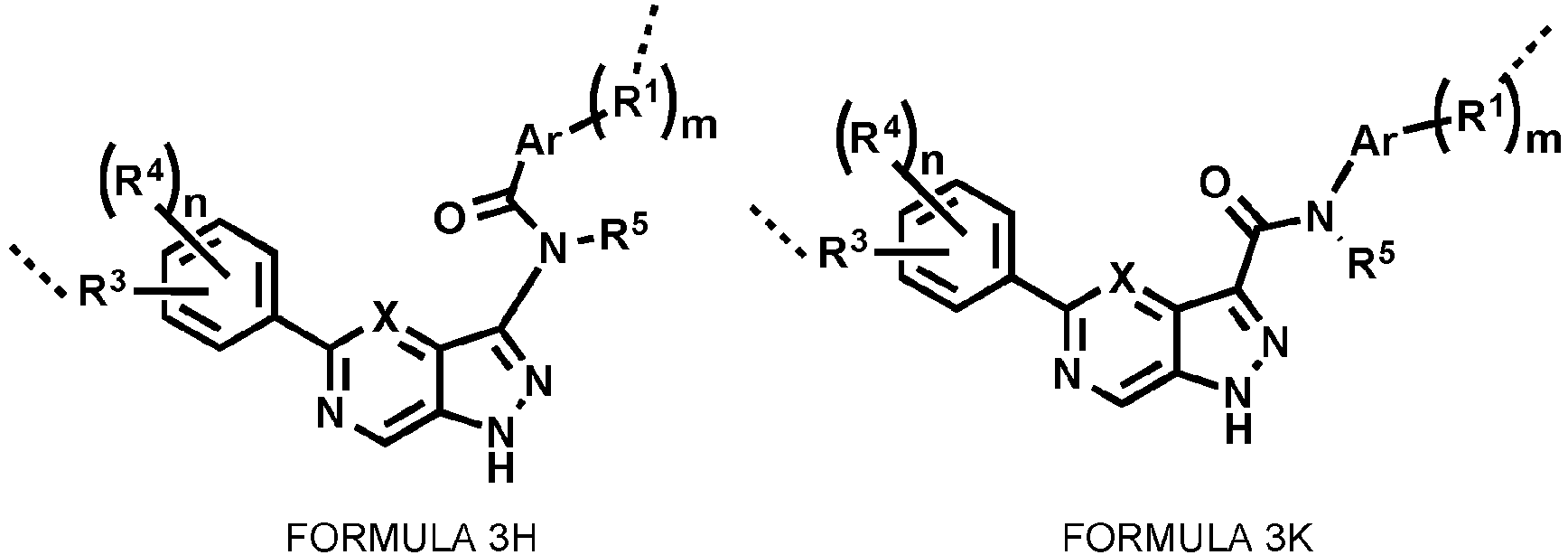 the "Linker" moiety of the bivalent compound is attached independently to R1 or R3; X is selected from CR2 or N;the definitions of R1, R2, R3, R4 and R5 are the same as for FORMULA 3C, 3D, 3E;Ar is selected from null, aryl and heteroaryl, each of which is substituted with R1;n and m are independently selected from 0, 1, 2, 3, 4 and 5;(I-R) a moiety according to FORMULA 3L:
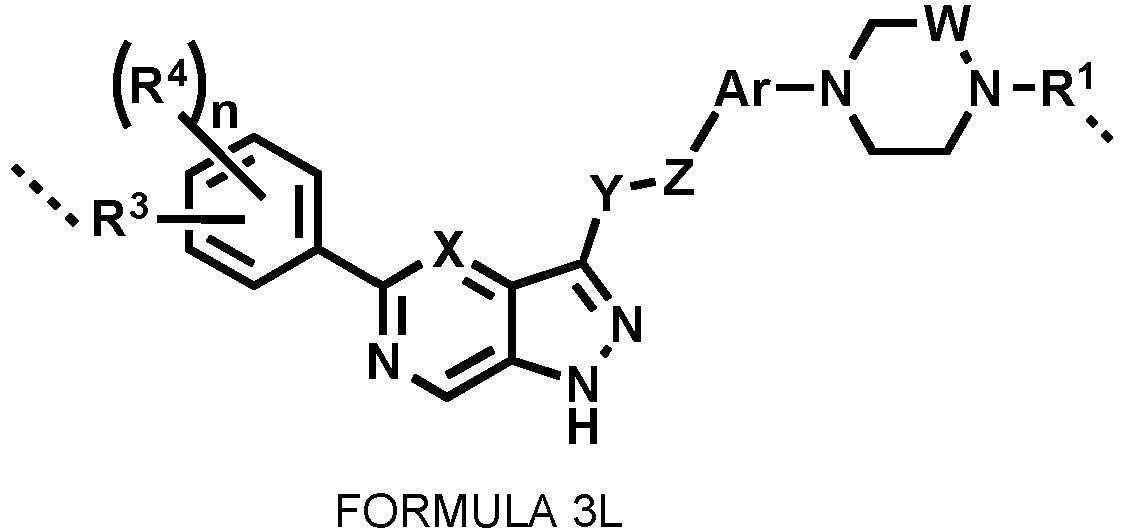 the "Linker" moiety of the bivalent compound is attached independently to R1 or R3;X is selected from CR2 or N;the definitions of R1, R2, R3 and R4 are the same as for FORMULA 3B;Ar is selected from null, aryl and heteroaryl;n is independently selected from 0, 1, 2, 3, 4 and 5;Y, Z at each occurrence, are independently selected from null, CO, CO2, CH2, CR24R25, C(O)NR24, C(S)NR24, O, S, SO, SO2, SO2NR24, NR24, NR24CO, NR24CONR24, NR24C(S), optionally substituted C1-C8 alkyl, optionally substituted C1-C8 alkoxy, optionally substituted C1-C8alkoxyC1-C8alkyl, optionally substituted C1-C8 haloalkyl, optionally substituted C1-C8 hydroxyalkyl, optionally substituted C2-C8 alkenyl, optionally substituted C2-C8 alkynyl, optionally substituted 3-8 membered cycloalkyl, optionally substituted C3-C8 cycloalkoxy, optionally substituted 3-8 membered heterocyclyl, optionally substituted aryl, optionally substituted heteroaryl, optionally substituted C3-C13 fused cycloalkyl, optionally substituted C3-C13 fused heterocyclyl, optionally substituted C3-C13 bridged cycloalkyl, optionally substituted C3-C13 bridged heterocyclyl, optionally substituted C3-C13 spiro cycloalkyl, and optionally substituted C3-C13 spiro heterocyclyl; wherein
R24 and R25 are independently selected from hydrogen, optionally substituted C1-C8 alkyl, optionally substituted 3-8 membered cycloalkyl, optionally substituted C3-C8 cycloalkoxy, optionally substituted 3-8 membered heterocyclyl, optionally substituted C1-C8 alkoxy, optionally substituted C1-C8 alkoxyalkyl, optionally substituted C1-C8 haloalkyl, optionally substituted C1-C8 hydroxyalkyl, optionally substituted C1-C8 alkylamino, and optionally substituted C1-C8alkylaminoC1-C8alkyl;W, at each occurrence, is independently selected from null, CO, , CH2, (CH2)m CR26R27, (CR26R27)m, SO, SO2wherein
R26 and R27 are independently selected from hydrogen, optionally substituted C1-C8 alkyl, optionally substituted 3-8 membered cycloalkyl, optionally substituted C3-C8 cycloalkoxy, optionally substituted 3-8 membered heterocyclyl, optionally substituted C1-C8 alkoxy, optionally substituted C1-C8 alkoxyalkyl, optionally substituted C1-C8 haloalkyl, optionally substituted C1-C8 hydroxyalkyl, optionally substituted C1-C8 alkylamino, and optionally substituted C1-C8alkylaminoC1-C8alkyl;
andm = 0-5;(I-S) a moiety according to FORMULA 3M: the "Linker" moiety of the bivalent compound is attached independently to R1 or R3;X is selected from CR2 or N;the definitions of W, R1, R2, R3 and R4 are the same as for FORMULA 3L;n is independently selected from 0, 1, 2, 3, 4 and 5;(I-T) a moiety of FORMULA 4:
 the "Linker" moiety of the bivalent compound is attached to R3;X is selected from CR2 or N;Y is selected from CR7 or N;each R1 is independently selected from null, hydrogen, halogen, oxo, CN, NO2, OR8, SR8, NR8R9, OCOR8, OCO2R8, OCONR8R9, COR8, CO2R8, CONR8R9, SOR8, SO2R8, SO2NR8R9, NR10CO2R8, NR10COR8, NR10C(O)NR8R9, NR10SOR8, NR10SO2R8, NR10SO2NR8R9, optionally substituted C1-C8 alkyl, optionally substituted C2-C8 alkenyl, optionally substituted C2-C8 alkynyl, optionally substituted C1-C8 alkoxy, optionally substituted C1-C8alkoxyC1-C8alkyl, optionally substituted C1-C8alkylaminoC1-C8alkyl, optionally substituted 3-8 membered cycloalkyl, optionally substituted C3-C8 cycloalkoxy, optionally substituted 4-8 membered heterocyclyl, optionally substituted aryl, and optionally substituted heteroaryl; whereinR8, R9 and R10 are independently selected from hydrogen, optionally substituted C1-C8 alkyl, optionally substituted C2-C8 alkenyl, optionally substituted C2-C8 alkynyl, optionally substituted C1-C8 alkoxy, optionally substituted C1-C8alkoxyC1-C8alkyl, optionally substituted C1-C8alkylaminoC1-C8alkyl, optionally substituted 3-8 membered cycloalkyl, optionally substituted C3-C8 cycloalkoxy, optionally substituted 4-8 membered heterocyclyl, optionally substituted aryl, and optionally substituted heteroaryl; orR8 and R9, R8 and R10 together with the atom to which they are connected form a 4-20 membered heterocyclyl ring; andn is independently selected from 0, 1, 2, 3, 4 and 5;R2 and R7 are independently selected from hydrogen, halogen, oxo, CN, NO2, OR11, SR11, NR11R12, C(O)R11, C(O)OR11, C(O)NR11R12, S(O)R11, S(O)2R11, S(O)2NR11R12, NR13C(O)OR10, NR13C(O)R11, NR13C(O)NR11R12, NR13S(O)R11, NR13S(O)2R11, NR13S(O)2NR11R12 , optionally substituted C1-C8 alkyl, optionally substituted C2-C8 alkenyl, optionally substituted C2-C8 alkynyl, optionally substituted C1-C8 alkoxy, optionally substituted C1-C8alkoxyC1-C8alkyl, optionally substituted C1-C8alkylaminoC1-C8alkyl, optionally substituted 3-8 membered cycloalkyl, optionally substituted C3-C8 cycloalkoxy, optionally substituted 3-8 membered heterocyclyl, optionally substituted aryl, and optionally substituted heteroaryl; whereinR11, R12, and R13 are independently selected from hydrogen, optionally substituted C1-Cs alkyl, optionally substituted C1-C8alkoxyC1-C8alkyl, optionally substituted C1-C8alkylaminoC1-C8alkyl, optionally substituted C3-C10 cycloalkyl, optionally substituted 3-20 membered heterocyclyl, optionally substituted C2-C8 alkenyl, optionally substituted C2-C8 alkynyl, optionally substituted aryl, and optionally substituted heteroaryl; orR11 and R12, R11 and R12, R12 and R13 together with the atom to which they are connected form an optionally substituted 3-20 membered cycloalkyl or heterocyclyl ring;R3 is selected from null, hydrogen, C(O)R14, C(O)OR14, C(O)NR14R15, S(O)R14, S(O)2R14, S(O)2NR14R15, NR16C(O)OR14, NR16C(O)R14, NR16C(O)NR14R15, NR16S(O)R14, NR16S(O)2R14, NR16S(O)2NR14R15 , optionally substituted C1-C8 alkyl, optionally substituted C2-C8 alkenyl, optionally substituted C2-C8 alkynyl, optionally substituted C1-C8 alkoxy, optionally substituted C1-C8alkoxyC1-C8alkyl, optionally substituted C1-C8alkylaminoC1-C8alkyl, optionally substituted 3-8 membered cycloalkyl, optionally substituted C3-C8 cycloalkoxy, optionally substituted 3-8 membered heterocyclyl, optionally substituted aryl, and optionally substituted heteroaryl; whereinR14 is null, or a bivalent moiety selected from optionally substituted C1-C8 alkyl, optionally substituted C2-C8 alkenyl, optionally substituted C2-C8 alkynyl, optionally substituted C1-C8 alkoxy, optionally substituted C1-C8alkoxyC1-C8alkyl, optionally substituted C1-C8alkylaminoC1-C8alkyl, optionally substituted 3-8 membered cycloalkyl, optionally substituted C3-C8 cycloalkoxy, optionally substituted 3-8 membered heterocyclyl, optionally substituted aryl, and optionally substituted heteroaryl;R15, and R16 are independently selected from hydrogen, optionally substituted C1-C8 alkyl, optionally substituted C1-C8alkoxyC1-C8alkyl, optionally substituted C1-C8alkylaminoC1-Csalkyl, optionally substituted C3-C10 cycloalkyl, optionally substituted 3-20 membered heterocyclyl, optionally substituted C2-C8 alkenyl, optionally substituted C2-C8 alkynyl, optionally substituted aryl, and optionally substituted heteroaryl; orR14 and R15 together with the atom to which they are connected form an optionally substituted 3-20 membered cycloalkyl or heterocyclyl ring;R4, R5 and R6 are independently selected hydrogen, halogen, oxo, CN, NO2, OR17, SR17, NR18R19, OCOR17, OCO2R17, OCONR18R19, COR17, CO2R17, CONR18R19, SOR17, SO2R17, SO2NR18R19, NR17CO2R18, NR17COR18, NR17C(O)NR18R19, NR17SOR18, NR17SO2R18, NR17SO2NR18R19, optionally substituted C1-C8 alkyl, optionally substituted C2-C8 alkenyl, optionally substituted C2-C8 alkynyl, optionally substituted C1-C8 alkoxy, optionally substituted C1-C8alkoxyC1-C8alkyl, optionally substituted C1-C8alkylaminoC1-C8alkyl, optionally substituted 3-8 membered cycloalkyl, optionally substituted C3-C8 cycloalkoxy, optionally substituted 4-8 membered heterocyclyl, optionally substituted aryl, and optionally substituted heteroaryl; whereinR17, R18, and R19 are independently selected from hydrogen, optionally substituted C1-Cs alkyl, optionally substituted C2-C8 alkenyl, optionally substituted C2-C8 alkynyl, optionally substituted C1-C8 alkoxy, optionally substituted C1-C8alkoxyC1-C8alkyl, optionally substituted C1-C8alkylaminoC1-C8alkyl, optionally substituted 3-8 membered cycloalkyl, optionally substituted C3-C8 cycloalkoxy, optionally substituted 4-8 membered heterocyclyl, optionally substituted aryl, and optionally substituted heteroaryl; orR17 and R18, R18 and R19 together with the atom to which they are connected form a 3-20 membered heterocyclyl ring;(I-U) a moiety of FORMULA 4A:
 the "Linker" moiety of the bivalent compound is attached to R3;X is selected from CR2 or N;Y is selected from CR7 or N;the definitions of R1, R2, R3, R4, R5, R6 and R7 are the same as for FORMULA 4; or(I-V) a moiety of FORMULA 4B:
 the "Linker" moiety of the bivalent compound is attached to R3;X is selected from CR2 or N;Y is selected from CR7 or N; andthe definitions of R2, R3, R4, R5, and R7are the same as for FORMULA 4;(I-W) a moiety according to FORMULA 5:
 the "Linker" moiety of the bivalent compound is attached to independently to R3 or R7;X is selected from CR2 or N;each R1 is independently selected from null, hydrogen, halogen, oxo, CN, NO2, OR8, SR8, NR8R9, OCOR8, OCO2R8, OCONR8R9, COR8, CO2R8, CONR8R9, SOR8, SO2R8, SO2NR8R9, NR10CO2R8, NR10COR8, NR10C(O)NR8R9, NR10SOR8, NR10SO2R8, NR10SO2NR8R9, optionally substituted C1-C8 alkyl, optionally substituted C2-C8 alkenyl, optionally substituted C2-C8 alkynyl, optionally substituted C1-C8 alkoxy, optionally substituted C1-C8alkoxyC1-C8alkyl, optionally substituted C1-C8alkylaminoC1-C8alkyl, optionally substituted 3-8 membered cycloalkyl, optionally substituted C3-C8 cycloalkoxy, optionally substituted 4-8 membered heterocyclyl, optionally substituted aryl, and optionally substituted heteroaryl; whereinR8, R9 and R10 are independently selected from hydrogen, optionally substituted C1-C8 alkyl, optionally substituted C2-C8 alkenyl, optionally substituted C2-C8 alkynyl, optionally substituted C1-C8 alkoxy, optionally substituted C1-C8alkoxyC1-C8alkyl, optionally substituted C1-C8alkylaminoC1-C8alkyl, optionally substituted 3-8 membered cycloalkyl, optionally substituted C3-C8 cycloalkoxy, optionally substituted 4-8 membered heterocyclyl, optionally substituted aryl, and optionally substituted heteroaryl; orR8 and R9, R8 and R10 together with the atom to which they are connected form a 4-20 membered heterocyclyl ring; andn is independently selected from 0, 1, 2, 3, 4 and 5;R2 is selected from hydrogen, halogen, oxo, CN, NO2, OR11, SR11, NR11R12, C(O)R11, C(O)OR11, C(O)NR11R12, S(O)R11, S(O)2R11, S(O)2NR11R12, NR13C(O)OR10, NR13C(O)R11, NR13C(O)NR11R12, NR13S(O)R11, NR13S(O)2R11, NR13S(O)2NR11R12, optionally substituted C1-Cs alkyl, optionally substituted C2-C8 alkenyl, optionally substituted C2-C8 alkynyl, optionally substituted C1-C8 alkoxy, optionally substituted C1-C8alkoxyC1-C8alkyl, optionally substituted C1-C8alkylaminoC1-C8alkyl, optionally substituted 3-8 membered cycloalkyl, optionally substituted C3-C8 cycloalkoxy, optionally substituted 3-8 membered heterocyclyl, optionally substituted aryl, and optionally substituted heteroaryl; whereinR11, R12, and R13 are independently selected from hydrogen, optionally substituted C1-Cs alkyl, optionally substituted C1-C8alkoxyC1-C8alkyl, optionally substituted C1-C8alkylaminoC1-C8alkyl, optionally substituted C3-C10 cycloalkyl, optionally substituted 3-20 membered heterocyclyl, optionally substituted C2-C8 alkenyl, optionally substituted C2-C8 alkynyl, optionally substituted aryl, and optionally substituted heteroaryl; orR11 and R12, R11 and R12, R12 and R13 together with the atom to which they are connected form an optionally substituted 3-20 membered cycloalkyl or heterocyclyl ring;R3 and R7 are independently selected from null, hydrogen, C(O)R14, C(O)OR14, C(O)NR14R15, S(O)R14, S(O)2R14, S(O)2NR14R15, NR16C(O)OR14, NR16C(O)R14, NR16C(O)NR14R15, NR16S(O)R14, NR16S(O)2R14, NR16S(O)2NR14R15 , optionally substituted C1-C8 alkyl, optionally substituted C2-C8 alkenyl, optionally substituted C2-C8 alkynyl, optionally substituted C1-C8 alkoxy, optionally substituted C1-C8alkoxyC1-C8alkyl, optionally substituted C1-C8alkylaminoC1-C8alkyl, optionally substituted 3-8 membered cycloalkyl, optionally substituted C3-C8 cycloalkoxy, optionally substituted 3-8 membered heterocyclyl, optionally substituted aryl, and optionally substituted heteroaryl; whereinR14 is null, or a bivalent moiety selected from optionally substituted C1-C8 alkyl, optionally substituted C2-C8 alkenyl, optionally substituted C2-C8 alkynyl, optionally substituted C1-C8 alkoxy, optionally substituted C1-C8alkoxyC1-C8alkyl, optionally substituted C1-C8alkylaminoC1-C8alkyl, optionally substituted 3-8 membered cycloalkyl, optionally substituted C3-C8 cycloalkoxy, optionally substituted 3-8 membered heterocyclyl, optionally substituted aryl, and optionally substituted heteroaryl;R15, and R16 are independently selected from hydrogen, optionally substituted C1-C8 alkyl, optionally substituted C1-C8alkoxyC1-C8alkyl, optionally substituted C1-C8alkylaminoC1-Csalkyl, optionally substituted C3-C10 cycloalkyl, optionally substituted 3-20 membered heterocyclyl, optionally substituted C2-C8 alkenyl, optionally substituted C2-C8 alkynyl, optionally substituted aryl, and optionally substituted heteroaryl; orR14 and R15 together with the atom to which they are connected form an optionally substituted 3-20 membered cycloalkyl or heterocyclyl ring;R4, R5 and R6 are independently selected hydrogen, halogen, oxo, CN, NO2, OR17, SR17, NR18R19, OCOR17, OCO2R17, OCONR18R19, COR17, CO2R17, CONR18R19, SOR17, SO2R17, SO2NR18R19, NR17CO2R18, NR17COR18, NR17C(O)NR18R19, NR17SOR18, NR17SO2R18, NR17SO2NR18R19, optionally substituted C1-C8 alkyl, optionally substituted C2-C8 alkenyl, optionally substituted C2-C8 alkynyl, optionally substituted C1-C8 alkoxy, optionally substituted C1-C8alkoxyC1-C8alkyl, optionally substituted C1-C8alkylaminoC1-C8alkyl, optionally substituted 3-8 membered cycloalkyl, optionally substituted C3-C8 cycloalkoxy, optionally substituted 4-8 membered heterocyclyl, optionally substituted aryl, and optionally substituted heteroaryl; wherein
R17, R18, and R19 are independently selected from hydrogen, optionally substituted C1-Cs alkyl, optionally substituted C2-C8 alkenyl, optionally substituted C2-C8 alkynyl, optionally substituted C1-C8 alkoxy, optionally substituted C1-C8alkoxyC1-C8alkyl, optionally substituted C1-C8alkylaminoC1-C8alkyl, optionally substituted 3-8 membered cycloalkyl, optionally substituted C3-C8 cycloalkoxy, optionally substituted 4-8 membered heterocyclyl, optionally substituted aryl, and optionally substituted heteroaryl; or
R17 and R18, R18 and R19 together with the atom to which they are connected form a 3-20 membered heterocyclyl ring;(I-X) a moiety according to FORMULA 6: the "Linker" moiety of the bivalent compound is attached to independently to R3 or R8;X is selected from CR2 or N;Y is selected from CR6 or N;Z is selected from CR7 or N or S;each R1 is independently selected from null, hydrogen, halogen, oxo, CN, NO2, OR9, SR9, NR9R10, OCOR9, OCO2R9, OCONR9R10, COR9, CO2R9, CONR9R10, SOR9, SO2R9, SO2NR9R10, NR11CO2R9, NR11COR9, NR11C(O)NR9R10, NR11SOR9, NR11SO2R9, NR11SO2NR9R10, optionally substituted C1-C8 alkyl, optionally substituted C2-C8 alkenyl, optionally substituted C2-C8 alkynyl, optionally substituted C1-C8 alkoxy, optionally substituted C1-C8alkoxyC1-C8alkyl, optionally substituted C1-C8alkylaminoC1-C8alkyl, optionally substituted 3-8 membered cycloalkyl, optionally substituted C3-C8 cycloalkoxy, optionally substituted 4-8 membered heterocyclyl, optionally substituted aryl, and optionally substituted heteroaryl; whereinR9, R10 and R11 are independently selected from hydrogen, optionally substituted C1-Cs alkyl, optionally substituted C2-C8 alkenyl, optionally substituted C2-C8 alkynyl, optionally substituted C1-C8 alkoxy, optionally substituted C1-C8alkoxyC1-C8alkyl, optionally substituted C1-C8alkylaminoC1-C8alkyl, optionally substituted 3-8 membered cycloalkyl, optionally substituted C3-C8 cycloalkoxy, optionally substituted 4-8 membered heterocyclyl, optionally substituted aryl, and optionally substituted heteroaryl; orR9 and R10, R9 and R11 together with the atom to which they are connected form a 4-20 membered heterocyclyl ring; andn is independently selected from 0, 1, 2, 3, 4 and 5;R2, R6 and R7 are independently selected from hydrogen, halogen, oxo, CN, NO2, OR12, SR12, NR12R13, C(O)R12, C(O)OR12, C(O)NR12R13, S(O)R12, S(O)2R12, S(O)2NR12R13, NR14C(O)OR11, NR14C(O)R12, NR14C(O)NR12R13, NR14S(O)R12, NR14S(O)2R12, NR14S(O)2NR12R13 , optionally substituted C1-C8 alkyl, optionally substituted C2-C8 alkenyl, optionally substituted C2-C8 alkynyl, optionally substituted C1-C8 alkoxy, optionally substituted C1-C8alkoxyC1-C8alkyl, optionally substituted C1-C8alkylaminoC1-C8alkyl, optionally substituted 3-8 membered cycloalkyl, optionally substituted C3-C8 cycloalkoxy, optionally substituted 3-8 membered heterocyclyl, optionally substituted aryl, and optionally substituted heteroaryl; whereinR12, R13, and R14 are independently selected from hydrogen, optionally substituted C1-Cs alkyl, optionally substituted C1-C8alkoxyC1-C8alkyl, optionally substituted C1-C8alkylaminoC1-C8alkyl, optionally substituted C3-C10 cycloalkyl, optionally substituted 3-20 membered heterocyclyl, optionally substituted C2-C8 alkenyl, optionally substituted C2-C8 alkynyl, optionally substituted aryl, and optionally substituted heteroaryl; orR12 and R13, R12 and R13, R13 and R14 together with the atom to which they are connected form an optionally substituted 3-20 membered cycloalkyl or heterocyclyl ring;R3 and R8 are independently selected from null, hydrogen, C(O)R15, C(O)OR15, C(O)NR15R16, S(O)R15, S(O)2R15, S(O)2NR15R16, NR17C(O)OR15, NR16C(O)R15, NR17C(O)NR15R16, NR17S(O)R15, NR17S(O)2R15, NR17S(O)2NR15R16 , optionally substituted C1-C8 alkyl, optionally substituted C2-C8 alkenyl, optionally substituted C2-C8 alkynyl, optionally substituted C1-C8 alkoxy, optionally substituted C1-C8alkoxyC1-C8alkyl, optionally substituted C1-C8alkylaminoC1-C8alkyl, optionally substituted 3-8 membered cycloalkyl, optionally substituted C3-C8 cycloalkoxy, optionally substituted 3-8 membered heterocyclyl, optionally substituted aryl, and optionally substituted heteroaryl; whereinR15 is null, or a bivalent moiety selected from optionally substituted C1-C8 alkyl, optionally substituted C2-C8 alkenyl, optionally substituted C2-C8 alkynyl, optionally substituted C1-C8 alkoxy, optionally substituted C1-C8alkoxyC1-C8alkyl, optionally substituted C1-C8alkylaminoC1-C8alkyl, optionally substituted 3-8 membered cycloalkyl, optionally substituted C3-C8 cycloalkoxy, optionally substituted 3-8 membered heterocyclyl, optionally substituted aryl, and optionally substituted heteroaryl;R16, and R17 are independently selected from hydrogen, optionally substituted C1-C8 alkyl, optionally substituted C1-C8alkoxyC1-C8alkyl, optionally substituted C1-C8alkylaminoC1-C8alkyl, optionally substituted C3-C10 cycloalkyl, optionally substituted 3-20 membered heterocyclyl, optionally substituted C2-C8 alkenyl, optionally substituted C2-C8 alkynyl, optionally substituted aryl, and optionally substituted heteroaryl; orR15 and R16 together with the atom to which they are connected form an optionally substituted 3-20 membered cycloalkyl or heterocyclyl ring;R4 and R5 are independently selected hydrogen, halogen, oxo, CN, NO2, OR18, SR18, NR19R20, OCOR18, OCO2R18, OCONR19R20, COR18, CO2R18, CONR19R20, SOR18, SO2R18, SO2NR19R20, NR18CO2R19, NR18COR19, NR18C(O)NR19R20, NR18SOR19, NR18SO2R19, NR19SO2NR19R20, optionally substituted C1-C8 alkyl, optionally substituted C2-C8 alkenyl, optionally substituted C2-C8 alkynyl, optionally substituted C1-C8 alkoxy, optionally substituted C1-C8alkoxyC1-Csalkyl, optionally substituted C1-C8alkylaminoC1-C8alkyl, optionally substituted 3-8 membered cycloalkyl, optionally substituted C3-C8 cycloalkoxy, optionally substituted 4-8 membered heterocyclyl, optionally substituted aryl, and optionally substituted heteroaryl; wherein
R18, R19, and R20 are independently selected from hydrogen, optionally substituted C1-Cs alkyl, optionally substituted C2-C8 alkenyl, optionally substituted C2-C8 alkynyl, optionally substituted C1-C8 alkoxy, optionally substituted C1-C8alkoxyC1-C8alkyl, optionally substituted C1-C8alkylaminoC1-C8alkyl, optionally substituted 3-8 membered cycloalkyl, optionally substituted C3-C8 cycloalkoxy, optionally substituted 4-8 membered heterocyclyl, optionally substituted aryl, and optionally substituted heteroaryl; or
R18 and R19, R19 and R20 together with the atom to which they are connected form a 3-20 membered heterocyclyl ring;(I-Y) a moiety according to FORMULA 7: the "Linker" moiety of the bivalent compound is attached to independently to R2 or R5;X is selected from CR3 or N;each R1 an d R4 are independently selected from null, hydrogen, halogen, oxo, CN, NO2, OR6, SR6, NR6R7, OCOR6, OCO2R6, OCONR6R7, COR6, CO2R6, CONR6R7, SOR6, SO2R6, SO2NR6R7, NR8CO2R6, NR$COR6, NR8C(O)NR6R7, NR$SOR6, NR8SO2R6, NR8SO2NR6R7, optionally substituted C1-C8 alkyl, optionally substituted C2-C8 alkenyl, optionally substituted C2-C8 alkynyl, optionally substituted C1-C8 alkoxy, optionally substituted C1-C8alkoxyC1-Csalkyl, optionally substituted C1-C8alkylaminoC1-C8alkyl, optionally substituted 3-8 membered cycloalkyl, optionally substituted C3-C8 cycloalkoxy, optionally substituted 4-8 membered heterocyclyl, optionally substituted aryl, and optionally substituted heteroaryl; whereinR6, R7 and R8 are independently selected from hydrogen, optionally substituted C1-C8 alkyl, optionally substituted C2-C8 alkenyl, optionally substituted C2-C8 alkynyl, optionally substituted C1-C8 alkoxy, optionally substituted C1-C8alkoxyC1-C8alkyl, optionally substituted C1-C8alkylaminoC1-C8alkyl, optionally substituted 3-8 membered cycloalkyl, optionally substituted C3-C8 cycloalkoxy, optionally substituted 4-8 membered heterocyclyl, optionally substituted aryl, and optionally substituted heteroaryl; orR6 and R7, R6 and R8 together with the atom to which they are connected form a 4-20 membered heterocyclyl ring; andn is independently selected from 0, 1, 2, 3, 4 and 5;R2 and R5 are independently selected from null, hydrogen, C(O)R12, C(O)OR12, C(O)NR12R13, S(O)R12, S(O)2R12, S(O)2NR12R13, NR14C(O)OR12, NR13C(O)R12, NR14C(O)NR12R13, NR14S(O)R12, NR14S(O)2R12, NR14S(O)2NR12R13 , optionally substituted C1-C8 alkyl, optionally substituted C2-C8 alkenyl, optionally substituted C2-C8 alkynyl, optionally substituted C1-C8 alkoxy, optionally substituted C1-C8alkoxyC1-C8alkyl, optionally substituted C1-C8alkylaminoC1-C8alkyl, optionally substituted 3-8 membered cycloalkyl, optionally substituted C3-C8 cycloalkoxy, optionally substituted 3-8 membered heterocyclyl, optionally substituted aryl, and optionally substituted heteroaryl; whereinR12 is null, or a bivalent moiety selected from optionally substituted C1-C8 alkyl, optionally substituted C2-C8 alkenyl, optionally substituted C2-C8 alkynyl, optionally substituted C1-C8 alkoxy, optionally substituted C1-C8alkoxyC1-C8alkyl, optionally substituted C1-C8alkylaminoC1-C8alkyl, optionally substituted 3-8 membered cycloalkyl, optionally substituted C3-C8 cycloalkoxy, optionally substituted 3-8 membered heterocyclyl, optionally substituted aryl, and optionally substituted heteroaryl;R13, and R14 are independently selected from hydrogen, optionally substituted C1-C8 alkyl, optionally substituted C1-C8alkoxyC1-C8alkyl, optionally substituted C1-C8alkylaminoC1-Csalkyl, optionally substituted C3-C10 cycloalkyl, optionally substituted 3-20 membered heterocyclyl, optionally substituted C2-C8 alkenyl, optionally substituted C2-C8 alkynyl, optionally substituted aryl, and optionally substituted heteroaryl; orR12 and R13 together with the atom to which they are connected form an optionally substituted 3-20 membered cycloalkyl or heterocyclyl ring;R3 is selected from hydrogen, halogen, oxo, CN, NO2, OR14, SR14, NR14R15, C(O)R14, C(O)OR14, C(O)NR14R15, S(O)R14, S(O)2R14, S(O)2NR14R15, NR16C(O)OR'14, NR16C(O)R14, NR16C(O)NR14R15, NR16S(O)R14, NR16S(O)2R14, NR16S(O)2NR14R15, optionally substituted C1-Cs alkyl, optionally substituted C2-C8 alkenyl, optionally substituted C2-C8 alkynyl, optionally substituted C1-C8 alkoxy, optionally substituted C1-C8alkoxyC1-C8alkyl, optionally substituted C1-C8alkylaminoC1-C8alkyl, optionally substituted 3-8 membered cycloalkyl, optionally substituted C3-C8 cycloalkoxy, optionally substituted 3-8 membered heterocyclyl, optionally substituted aryl, and optionally substituted heteroaryl; whereinR14, R15, and R16 are independently selected from hydrogen, optionally substituted C1-Cs alkyl, optionally substituted C1-C8alkoxyC1-C8alkyl, optionally substituted C1-C8alkylaminoC1-C8alkyl, optionally substituted C3-C10 cycloalkyl, optionally substituted 3-20 membered heterocyclyl, optionally substituted C2-C8 alkenyl, optionally substituted C2-C8 alkynyl, optionally substituted aryl, and optionally substituted heteroaryl;, orR14 and R15, R14 and R15, R15 and R16 together with the atom to which they are connected form an optionally substituted 3-20 membered cycloalkyl or heterocyclyl ring;(I-Z) a moiety according to FORMULA 7A:
 the "Linker" moiety of the bivalent compound is attached to R2 or R5;X is selected from CR3 or N; andthe definitions of R1, R2, R3, R4, and R5 are the same as for FORMULA 7; andpharmaceutically acceptable salts thereof;(I-AA) a moiety according to FORMULA 8:
 the "Linker" moiety of the bivalent compound is attached to R2 or X;X is C3-12 cycloalkyl, 3- to 14- membered heterocyclyl, C6-14 aryl or 5- to- 14-membered heteroaryl, wherein C3-12 cycloalkyl, 3- to 14- membered heterocyclyl, C6-14 aryl or 5- to- 14-membered heteroaryl of X are each optionally substituted with 1, 2, 3, 4 or 5 substituents independently selected from R5;R1 is selected from hydrogen, halogen, optionally substituted C1-C8alkyl, optionally substituted C1-C8alkoxyC1-C8alkyl, optionally substituted C1-C8alkylaminoC1-C8alkyl, optionally substituted C3-C10 cycloalkyl, optionally substituted 3-20 membered heterocyclyl, optionally substituted C2-C8 alkenyl, optionally substituted C2-C8 alkynyl, optionally substituted aryl, and optionally substituted heteroaryl;R2 is selected from null, hydrogen, C(O)R7, C(O)OR7, C(O)NR7R8, S(O)R7, S(O)2R7, S(O)2NR7R8, NR9C(O)OR7, NR8C(O)R7, NR9C(O)NR7R8, NR9S(O)R7, NR9S(O)2R7, NR9S(O)2NR7R8 , optionally substituted C1-C8 alkyl, optionally substituted C2-C8 alkenyl, optionally substituted C2-C8 alkynyl, optionally substituted C1-C8 alkoxy, optionally substituted C1-C8alkoxyC1-C8alkyl, optionally substituted C1-C8alkylaminoC1-C8alkyl, optionally substituted 3-8 membered cycloalkyl, optionally substituted C3-C8 cycloalkoxy, optionally substituted 3-8 membered heterocyclyl, optionally substituted aryl, and optionally substituted heteroaryl; whereinR7 is null, or a bivalent moiety selected from optionally substituted C1-C8 alkyl, optionally substituted C2-C8 alkenyl, optionally substituted C2-C8 alkynyl, optionally substituted C1-C8 alkoxy, optionally substituted C1-C8alkoxyC1-C8alkyl, optionally substituted C1-C8alkylaminoC1-C8alkyl, optionally substituted 3-8 membered cycloalkyl, optionally substituted C3-C8 cycloalkoxy, optionally substituted 3-8 membered heterocyclyl, optionally substituted aryl, and optionally substituted heteroaryl;R8, and R9 are independently selected from hydrogen, optionally substituted C1-C8 alkyl, optionally substituted C1-C8alkoxyC1-C8alkyl, optionally substituted C1-C8alkylaminoC1-Csalkyl, optionally substituted C3-C10 cycloalkyl, optionally substituted 3-20 membered heterocyclyl, optionally substituted C2-C8 alkenyl, optionally substituted C2-C8 alkynyl, optionally substituted aryl, and optionally substituted heteroaryl; orR7 and R8 together with the atom to which they are connected form an optionally substituted 3-20 membered cycloalkyl or heterocyclyl ring;R3 and R"and R5 are independently selected from null, hydrogen, halogen, oxo, CN, NO2, OR10, SR10, NR10R11, OCOR10, OCO2R10, OCONR10R11, COR10, CO2R10, CONR10R11, SOR10, SO2R10, SO2NR10R11, NR12CO2R10, NR12COR10, NR12C(O)NR10R11, NR12SOR10, NR12SO2R10, NR12SO2NR10R11, optionally substituted C1-C8 alkyl, optionally substituted C2-C8 alkenyl, optionally substituted C2-C8 alkynyl, optionally substituted C1-C8 alkoxy, optionally substituted C1-C8alkoxyC1-C8alkyl, optionally substituted C1-C8alkylaminoC1-C8alkyl, optionally substituted 3-8 membered cycloalkyl, optionally substituted C3-C8 cycloalkoxy, optionally substituted 4-8 membered heterocyclyl, optionally substituted aryl, and optionally substituted heteroaryl; whereinR10, R11 and R12 are independently selected from hydrogen, optionally substituted C1-Cs alkyl, optionally substituted C2-C8 alkenyl, optionally substituted C2-C8 alkynyl, optionally substituted C1-C8 alkoxy, optionally substituted C1-C8alkoxyC1-C8alkyl, optionally substituted C1-C8alkylaminoC1-C8alkyl, optionally substituted 3-8 membered cycloalkyl, optionally substituted C3-C8 cycloalkoxy, optionally substituted 4-8 membered heterocyclyl, optionally substituted aryl, and optionally substituted heteroaryl; orR10 and R11, R10 and R12 together with the atom to which they are connected form a 4-20 membered heterocyclyl ring;(I-BB) a moiety according to FORMULA 8A:
 the "Linker" moiety of the bivalent compound is attached to R2 or X;the definitions of X, R1, R2, R3, R4, and R5 are the same as FORMULA 8;Ar is selected from null, aryl and heteroaryl, each of which is substituted with R2 and optionally substituted with one or more substituents independently selected from hydrogen, halogen, oxo, CN, NO2, OR13, SR13, NR13R14, OCOR13, OCO2R13, OCONR13R14, COR13, CO2R13, CONR13R14, SOR13, SO2R13, SO2NR13R14, NR15CO2R13, NR15COR13, NR14C(O)NR13R14, NR15SOR13, NR15SO2R13, NR15SO2NR13R14, optionally substituted C1-C8 alkyl, optionally substituted C2-C8 alkenyl, optionally substituted C2-C8 alkynyl, optionally substituted C1-C8 alkoxy, optionally substituted C1-C8alkoxyC1-C8alkyl, optionally substituted C1-C8alkylaminoC1-C8alkyl, optionally substituted 3-8 membered cycloalkyl, optionally substituted C3-C8 cycloalkoxy, optionally substituted 4-8 membered heterocyclyl, optionally substituted aryl, and optionally substituted heteroaryl; whereinR13, R14, and R15 are independently selected from hydrogen, optionally substituted C1-Cs alkyl, optionally substituted C2-C8 alkenyl, optionally substituted C2-C8 alkynyl, optionally substituted C1-C8 alkoxy, optionally substituted C1-C8alkoxyC1-C8alkyl, optionally substituted C1-C8alkylaminoC1-C8alkyl, optionally substituted 3-8 membered cycloalkyl, optionally substituted C3-C8 cycloalkoxy, optionally substituted 4-8 membered heterocyclyl, optionally substituted aryl, and optionally substituted heteroaryl; orR13 and R14, R13 and R15 together with the atom to which they are connected form a 4-20 membered heterocyclyl ring;(I-CC) a moiety according to FORMULA 8B:
 the "Linker" moiety of the bivalent compound is attached to R2 or X;the definitions of X, R1, R2, R3, R4, and R5 are the same as FORMULA 8;Each R6 is independently selected from null, hydrogen, halogen, oxo, CN, NO2, OR16, SR16, NR16R17, OCOR16, OCO2R16, OCONR16R17, COR16, CO2R16, CONR16R17, SOR16, SO2R16, SO2NR16R17, NR18CO2R16, NR18COR16, NR18C(O)NR16R17, NR18SOR16, NR18SO2R16, NR18SO2NR16R17, optionally substituted C1-C8 alkyl, optionally substituted C2-C8 alkenyl, optionally substituted C2-C8 alkynyl, optionally substituted C1-C8 alkoxy, optionally substituted C1-C8alkoxyC1-C8alkyl, optionally substituted C1-C8alkylaminoC1-C8alkyl, optionally substituted 3-8 membered cycloalkyl, optionally substituted C3-C8 cycloalkoxy, optionally substituted 4-8 membered heterocyclyl, optionally substituted aryl, and optionally substituted heteroaryl; whereinR16, R17 and R18 are independently selected from hydrogen, optionally substituted C1-Cs alkyl, optionally substituted C2-C8 alkenyl, optionally substituted C2-C8 alkynyl, optionally substituted C1-C8 alkoxy, optionally substituted C1-C8alkoxyC1-C8alkyl, optionally substituted C1-C8alkylaminoC1-C8alkyl, optionally substituted 3-8 membered cycloalkyl, optionally substituted C3-C8 cycloalkoxy, optionally substituted 4-8 membered heterocyclyl, optionally substituted aryl, and optionally substituted heteroaryl; orR16 and R17, R16 and R18 together with the atom to which they are connected form a 4-20 membered heterocyclyl ring; andn is independently selected from 0, 1, 2, 3, 4 and 5; andpharmaceutically acceptable salts thereof;(I-DD) a moiety according to FORMULA 9:
 the "Linker" moiety of the bivalent compound is attached independently to Y or independently one of the R1;each of R1 is selected from null, OR12, SR12, NR12R13, OC(O)R12, OC(O)OR12, OCONR12R13, C(O)R12, C(O)OR12, CONR12R13, S(O)R12, S(O)2R12, SO2NR12R13, NR14C(O)OR12, NR14C(O)R12, NR14C(O)NR12R13, NR14S(O)R12, NR14S(O)2R12, NR14S(O)2NR12R13, P(O)R12R13, P(O)(OR12), optionally substituted C1-C8 alkylenyl, optionally substituted C2-C8 alkenylene, optionally substituted C2-C8 alkynylene, optionally substituted C3-C8 cycloalkylene, optionally substituted 3-8 membered heterocyclylene, optionally substituted aryl, and optionally substituted heteroaryl; whereinR12 is null, or a bivalent moiety selected from optionally substituted C1-C8 alkylenyl, optionally substituted C2-C8 alkenylene, optionally substituted C2-C8 alkynylene, optionally substituted C3-C8 cycloalkylene, optionally substituted 3-8 membered heterocyclylene, optionally substituted aryl, and optionally substituted heteroaryl;R13 and R14 are independently selected from optionally substituted C1-C8 alkyl, optionally substituted C1-C8alkoxyC1-C8alkyl, optionally substituted C1-C8alkylaminoC1-Csalkyl, optionally substituted C3-C8 cycloalkyl, optionally substituted 3-8 membered heterocyclyl, optionally substituted C2-C8 alkenyl, optionally substituted C2-C8 alkynyl, optionally substituted aryl, and optionally substituted heteroaryl; orR12 and R13, R12 and R14, R13 and R14 together with the atom to which they are connected form a 3-20 membered cycloalkyl or heterocyclyl ring;n and m are independently selected from 0, 1, 2, 3, 4 and 5;Ar is selected from null, aryl and heteroaryl, each of which optinally is substituted with R1; R2, R3, R5 and R6 are independently selected from hydrogen, halogen, OR15, SR15, NR16R17, COR15, CO2R15, C(O)NR16R17, SOR15, SO2R15, SO2NR16R17, NR15C(O)R16, NR15C(O)NR16R17, NR15SOR16, NR15SO2R16, optionally substituted C1-C8 alkyl, optionally substituted C2-C8 alkenyl, optionally substituted C2-C8 alkynyl, optionally substituted C1-C8 alkoxy, optionally substituted 3-8 membered cycloalkyl, optionally substituted C3-C8 cycloalkoxy, optionally substituted 3-8 membered heterocyclyl, optionally substituted aryl, and optionally substituted heteroaryl; whereinR15, R16, and R17 are independently selected from hydrogen, optionally substituted C1-Cs alkyl, optionally substituted C1-C8alkoxyC1-C8alkyl, optionally substituted C1-C8alkylaminoC1-C8alkyl, optionally substituted C3-C10 cycloalkyl, optionally substituted 3-10 membered heterocyclyl, optionally substituted C2-C8 alkenyl, optionally substituted C2-C8 alkynyl, optionally substituted aryl, and optionally substituted heteroaryl; orR15 and R16, R16 and R17 together with the atom to which they are connected form an optionally substituted 3-20 membered cycloalkyl or heterocyclyl ring;R7, R8, R9, and R10 are independently selected from null, hydrogen, halogen, OR18, NR19R20, optionally substituted C1-C8 alkyl, optionally substituted C1-C8 alkoxy, optionally substituted C3-C8 cycloalkyl, optionally substituted C3-C8 cycloalkoxy; whereinR18, R19, and R20 are independently selected from hydrogen, optionally substituted C1-Cs alkyl, optionally substituted C1-C8alkoxyC1-C8alkyl, optionally substituted C1-C8alkylaminoC1-C8alkyl, optionally substituted C3-C10 cycloalkyl, optionally substituted 3-10 membered heterocyclyl, optionally substituted C2-C8 alkenyl, optionally substituted C2-C8 alkynyl; orR19 and R20 together with the atom to which they are connected form an an optionally substituted 3-20 membered cycloalkyl or heterocyclyl ring;R11 at each occurrence, is independently selected from hydrogen, C(O)R21, C(O)OR21, C(O)NR21R22, S(O)R21, S(O)2R21, S(O)2NR21R22, NR23C(O)OR21, NR23C(O)R21, NR23C(O)NR21R22, NR23S(O)R21, NR23S(O)2R21, NR23S(O)2NR21R22, optionally substituted C1-Cs alkyl, optionally substituted C2-C8 alkenyl, optionally substituted C2-C8 alkynyl, optionally substituted C1-C8 alkoxy, optionally substituted C1-C8alkoxyC1-C8alkyl, optionally substituted C1-C8alkylaminoC1-C8alkyl, optionally substituted 3-8 membered cycloalkyl, optionally substituted C3-C8 cycloalkoxy, optionally substituted 3-8 membered heterocyclyl, optionally substituted aryl, and optionally substituted heteroaryl; whereinR21, R22 and R23 are independently selected from hydrogen, optionally substituted C1-Cs alkyl, optionally substituted C2-C8 alkenyl, optionally substituted C2-C8 alkynyl, optionally substituted C1-C8 alkoxy, optionally substituted C1-C8alkoxyC1-C8alkyl, optionally substituted C1-C8alkylaminoC1-C8alkyl, optionally substituted 3-8 membered cycloalkyl, optionally substituted C3-C8 cycloalkoxy, optionally substituted 4-8 membered heterocyclyl, optionally substituted aryl, and optionally substituted heteroaryl; orR21 and R22, R21 and R23 together with the atom to which they are connected form a 3-20 membered heterocyclyl ring; andX, Y at each occurrence, are independently selected from null, CO, CO2, CH2, CR24R25, C(O)NR24, C(S)NR24, O, S, SO, SO2, SO2NR24, NR24, NR24CO, NR24CONR21, NR24C(S), optionally substituted C1-C8 alkyl, optionally substituted C1-C8 alkoxy, optionally substituted C1-C8alkoxyC1-C8alkyl, optionally substituted C1-C8 haloalkyl, optionally substituted C1-C8 hydroxyalkyl, optionally substituted C2-C8 alkenyl, optionally substituted C2-C8 alkynyl, optionally substituted 3-8 membered cycloalkyl, optionally substituted C3-C8 cycloalkoxy, optionally substituted 3-8 membered heterocyclyl, optionally substituted aryl, optionally substituted heteroaryl, optionally substituted C3-C13 fused cycloalkyl, optionally substituted C3-C13 fused heterocyclyl, optionally substituted C3-C13 bridged cycloalkyl, optionally substituted C3-C13 bridged heterocyclyl, optionally substituted C3-C13 spiro cycloalkyl, and optionally substituted C3-C13 spiro heterocyclyl; wherein
R24 and R25 are independently selected from hydrogen, optionally substituted C1-C8 alkyl, optionally substituted 3-8 membered cycloalkyl, optionally substituted C3-C8 cycloalkoxy, optionally substituted 3-8 membered heterocyclyl, optionally substituted C1-C8 alkoxy, optionally substituted C1-C8 alkoxyalkyl, optionally substituted C1-C8 haloalkyl, optionally substituted C1-C8 hydroxyalkyl, optionally substituted C1-C8 alkylamino, and optionally substituted C1-C8alkylaminoC1-C8alkyl; andA and B are independently selected from C or N; andpharmaceutically acceptable salts thereof;(I-EE) a moiety according to FORMULA 10: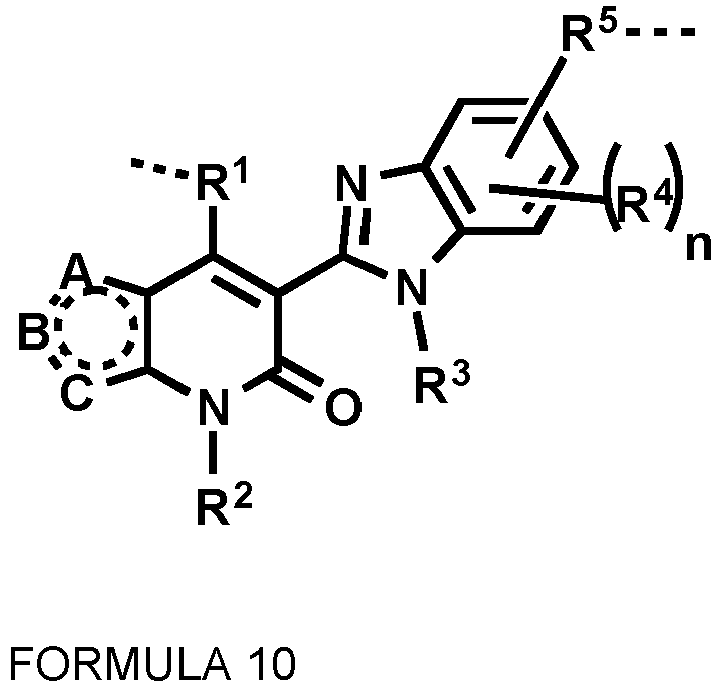 the "Linker" moiety of the bivalent compound is attached independently to R1 or R5;R1 and R5 are independently selected from null, hydrogen, C(O)R6, C(O)OR6, C(O)NR6R7, S(O)R6, S(O)2R6, S(O)2NR6R7, NR8C(O)OR6, NR8C(O)R6, NR8C(O)NR6R7, NR8S(O)R6, NR8S(O)2R6, NR8S(O)2NR6R7 , optionally substituted C1-C8 alkyl, optionally substituted C2-C8 alkenyl, optionally substituted C2-C8 alkynyl, optionally substituted C1-C8 alkoxy, optionally substituted C1-C8alkoxyC1-C8alkyl, optionally substituted C1-C8alkylaminoC1-C8alkyl, optionally substituted 3-8 membered cycloalkyl, optionally substituted C3-C8 cycloalkoxy, optionally substituted 3-8 membered heterocyclyl, optionally substituted aryl, and optionally substituted heteroaryl; whereinR6 is null, or a bivalent moiety selected from optionally substituted C1-C8 alkyl, optionally substituted C2-C8 alkenyl, optionally substituted C2-C8 alkynyl, optionally substituted C1-C8 alkoxy, optionally substituted C1-C8alkoxyC1-C8alkyl, optionally substituted C1-C8alkylaminoC1-C8alkyl, optionally substituted 3-8 membered cycloalkyl, optionally substituted C3-C8 cycloalkoxy, optionally substituted 3-8 membered heterocyclyl, optionally substituted aryl, and optionally substituted heteroaryl;R7, and R8 are independently selected from hydrogen, optionally substituted C1-C8 alkyl, optionally substituted C1-C8alkoxyC1-C8alkyl, optionally substituted C1-C8alkylaminoC1-Csalkyl, optionally substituted C3-C10 cycloalkyl, optionally substituted 3-20 membered heterocyclyl, optionally substituted C2-C8 alkenyl, optionally substituted C2-C8 alkynyl, optionally substituted aryl, and optionally substituted heteroaryl; orR6 and R7 together with the atom to which they are connected form an optionally substituted 3-20 membered cycloalkyl or heterocyclyl ring;R2 and R3 at each occurrence, is independently selected from hydrogen, C(O)R9, C(O)OR9, C(O)NR9R10, S(O)R21, S(O)2R9, S(O)2NR9R10, NR11C(O)OR9, NR11C(O)R9, NR11C(O)NR9R10, NR11S(O)R9, NR11S(O)2R9, NR11S(O)2NR9R10 , optionally substituted C1-C8 alkyl, optionally substituted C2-C8 alkenyl, optionally substituted C2-C8 alkynyl, optionally substituted C1-C8 alkoxy, optionally substituted C1-C8alkoxyC1-C8alkyl, optionally substituted C1-C8alkylaminoC1-C8alkyl, optionally substituted 3-8 membered cycloalkyl, optionally substituted C3-C8 cycloalkoxy, optionally substituted 3-8 membered heterocyclyl, optionally substituted aryl, and optionally substituted heteroaryl; whereinR9, R10 and R11 are independently selected from hydrogen, optionally substituted C1-Cs alkyl, optionally substituted C2-C8 alkenyl, optionally substituted C2-C8 alkynyl, optionally substituted C1-C8 alkoxy, optionally substituted C1-C8alkoxyC1-C8alkyl, optionally substituted C1-C8alkylaminoC1-C8alkyl, optionally substituted 3-8 membered cycloalkyl, optionally substituted C3-C8 cycloalkoxy, optionally substituted 4-8 membered heterocyclyl, optionally substituted aryl, and optionally substituted heteroaryl; orR9 and R10, R9 and R11 together with the atom to which they are connected form a 3-20 membered heterocyclyl ring;each of R4 is selected from null, OR12, SR12, NR12R13, OC(O)R12, OC(O)OR12, OCONR12R13, C(O)R12, C(O)OR12, CONR12R13, S(O)R12, S(O)2R12, SO2NR12R13, NR14C(O)OR12, NR14C(O)R12, NR14C(O)NR12R13, NR14S(O)R12, NR14S(O)2R12, NR14S(O)2NR12R13, optionally substituted C1-C8 alkylenyl, optionally substituted C2-C8 alkenylene, optionally substituted C2-Cs alkynylene, optionally substituted C3-C8 cycloalkylene, optionally substituted 3-8 membered heterocyclylene, optionally substituted aryl, and optionally substituted heteroaryl; whereinR12 is null, or a bivalent moiety selected from optionally substituted C1-C8 alkylenyl, optionally substituted C2-C8 alkenylene, optionally substituted C2-C8 alkynylene, optionally substituted C3-C8 cycloalkylene, optionally substituted 3-8 membered heterocyclylene, optionally substituted aryl, and optionally substituted heteroaryl;R13 and R14 are independently selected from optionally substituted C1-C8 alkyl, optionally substituted C1-C8alkoxyC1-C8alkyl, optionally substituted C1-C8alkylaminoC1-Csalkyl, optionally substituted C3-C8 cycloalkyl, optionally substituted 3-8 membered heterocyclyl, optionally substituted C2-C8 alkenyl, optionally substituted C2-C8 alkynyl, optionally substituted aryl, and optionally substituted heteroaryl; orR12 and R13, R12 and R14, R13 and R14 together with the atom to which they are connected form a 3-20 membered cycloalkyl or heterocyclyl ring;n is independently selected from 0, 1, 2, 3, 4 and 5;one of A, B and C is S, the other two are each independently selected from CR15 or N Wherein R15 is independently selected from null, hydrogen, halogen, oxo, CN, NO2, OR16, SR16, NR16R17, OCOR16, OCO2R16, OCONR16R17, COR16, CO2R16, CONR16R17, SOR16, SO2R16, SO2NR16R17, NR18CO2R16, NR18COR16, NR18C(O)NR16R17, NR18SOR16, NR18SO2R16, NR18SO2NR16R17, optionally substituted C1-C8 alkyl, optionally substituted C2-C8 alkenyl, optionally substituted C2-C8 alkynyl, optionally substituted C1-C8 alkoxy, optionally substituted C1-C8alkoxyC1-C8alkyl, optionally substituted C1-C8alkylaminoC1-C8alkyl, optionally substituted 3-8 membered cycloalkyl, optionally substituted C3-C8 cycloalkoxy, optionally substituted 4-8 membered heterocyclyl, optionally substituted aryl, and optionally substituted heteroaryl; wherein
R16, R17 and R18 are independently selected from hydrogen, optionally substituted C1-Cs alkyl, optionally substituted C2-C8 alkenyl, optionally substituted C2-C8 alkynyl, optionally substituted C1-C8 alkoxy, optionally substituted C1-C8alkoxyC1-C8alkyl, optionally substituted C1-C8alkylaminoC1-C8alkyl, optionally substituted 3-8 membered cycloalkyl, optionally substituted C3-C8 cycloalkoxy, optionally substituted 4-8 membered heterocyclyl, optionally substituted aryl, and optionally substituted heteroaryl; or
R16 and R17, R16 and R18 together with the atom to which they are connected form a 4-20 membered heterocyclyl ring;(I-FF) a moiety according to FORMULA 11: the "Linker" moiety of the bivalent compound is attached independently to R1 or R5;R1 and R5 are independently selected from null, hydrogen, C(O)R6, C(O)OR6, C(O)NR6R7, S(O)R6, S(O)2R6, S(O)2NR6R7, NR8C(O)OR6, NR8C(O)R6, NR8C(O)NR6R7, NR8S(O)R6, NR8S(O)2R6, NR8S(O)2NR6R7 , optionally substituted C1-C8 alkyl, optionally substituted C2-C8 alkenyl, optionally substituted C2-C8 alkynyl, optionally substituted C1-C8 alkoxy, optionally substituted C1-C8alkoxyC1-C8alkyl, optionally substituted C1-C8alkylaminoC1-C8alkyl, optionally substituted 3-8 membered cycloalkyl, optionally substituted C3-C8 cycloalkoxy, optionally substituted 3-8 membered heterocyclyl, optionally substituted aryl, and optionally substituted heteroaryl; whereinR6 is null, or a bivalent moiety selected from optionally substituted C1-C8 alkyl, optionally substituted C2-C8 alkenyl, optionally substituted C2-C8 alkynyl, optionally substituted C1-C8 alkoxy, optionally substituted C1-C8alkoxyC1-C8alkyl, optionally substituted C1-C8alkylaminoC1-C8alkyl, optionally substituted 3-8 membered cycloalkyl, optionally substituted C3-C8 cycloalkoxy, optionally substituted 3-8 membered heterocyclyl, optionally substituted aryl, and optionally substituted heteroaryl;R7, and R8 are independently selected from hydrogen, optionally substituted C1-C8 alkyl, optionally substituted C1-C8alkoxyC1-C8alkyl, optionally substituted C1-C8alkylaminoC1-Csalkyl, optionally substituted C3-C10 cycloalkyl, optionally substituted 3-20 membered heterocyclyl, optionally substituted C2-C8 alkenyl, optionally substituted C2-C8 alkynyl, optionally substituted aryl, and optionally substituted heteroaryl; orR6 and R7 together with the atom to which they are connected form an optionally substituted 3-20 membered cycloalkyl or heterocyclyl ring;R2, R3 and R4 at each occurrence, is independently selected from hydrogen, C(O)R9, C(O)OR9, C(O)NR9R10, S(O)R21, S(O)2R9, S(O)2NR9R10, NR11C(O)OR9, NR11C(O)R9, NR11C(O)NR9R10, NR11S(O)R9, NR11S(O)2R9, NR11S(O)2NR9R10 , optionally substituted C1-C8 alkyl, optionally substituted C2-C8 alkenyl, optionally substituted C2-C8 alkynyl, optionally substituted C1-C8 alkoxy, optionally substituted C1-C8alkoxyC1-C8alkyl, optionally substituted C1-C8alkylaminoC1-C8alkyl, optionally substituted 3-8 membered cycloalkyl, optionally substituted C3-C8 cycloalkoxy, optionally substituted 3-8 membered heterocyclyl, optionally substituted aryl, and optionally substituted heteroaryl; whereinR9, R10 and R11 are independently selected from hydrogen, optionally substituted C1-Cs alkyl, optionally substituted C2-C8 alkenyl, optionally substituted C2-C8 alkynyl, optionally substituted C1-C8 alkoxy, optionally substituted C1-C8alkoxyC1-C8alkyl, optionally substituted C1-C8alkylaminoC1-C8alkyl, optionally substituted 3-8 membered cycloalkyl, optionally substituted C3-C8 cycloalkoxy, optionally substituted 4-8 membered heterocyclyl, optionally substituted aryl, and optionally substituted heteroaryl; orR9 and R10, R9 and R11 together with the atom to which they are connected form a 3-20 membered heterocyclyl ring;A, B and C each independently selected from N or CR6;each of R6 is independently selected from null, hydrogen , halogen, OR12, SR12, NR12R13, OC(O)R12, OC(O)OR12, OCONR12R13, C(O)R12, C(O)OR12, CONR12R13, S(O)R12, S(O)2R12, SO2NR12R13, NR14C(O)OR12, NR14C(O)R12, NR14C(O)NR12R13, NR14S(O)R12, NR14S(O)2R12, NR14S(O)2NR12R13, optionally substituted C1-C8 alkylenyl, optionally substituted C2-C8 alkenylene, optionally substituted C2-C8 alkynylene, optionally substituted C3-C8 cycloalkylene, optionally substituted 3-8 membered heterocyclylene, optionally substituted aryl, and optionally substituted heteroaryl, wherein;R12, R13 and R14 are independently selected from optionally substituted C1-C8 alkyl, optionally substituted C1-C8alkoxyC1-C8alkyl, optionally substituted C1-C8alkylaminoC1-Csalkyl, optionally substituted C3-C8 cycloalkyl, optionally substituted 3-8 membered heterocyclyl, optionally substituted C2-C8 alkenyl, optionally substituted C2-C8 alkynyl, optionally substituted aryl, and optionally substituted heteroaryl; orR12 and R13, R12 and R14, R13 and R14 together with the atom to which they are connected form a 3-20 membered cycloalkyl or heterocyclyl ring; andn is independently selected from 0, 1, 2, 3, 4 and 5;and pharmaceutically acceptable salts thereof;(II) wherein EL is a moiety selected from the group consisting of:(II-A) a moiety according to FORMULAE 12A, 12B, 12C and 12D:
 V, W, and X are independently selected from CR2 and N;Y is selected from CO, CR3R4, and N=N;Z is selected from null, CO, CR5R6, NR5, O, optionally substituted C1-C10 alkylene, optionally substituted C1-C10 alkenylene, optionally substituted C1-C10 alkynylene, optionally substituted 3-10 membered carbocyclyl, optionally substituted 4-10 membered heterocyclyl, optionally substituted C3-C13 fused cycloalkyl, optionally substituted C3-C13 fused heterocyclyl, optionally substituted C3-C13 bridged cycloalkyl, optionally substituted C3-C13 bridged heterocyclyl, optionally substituted C3-C13 spiro cycloalkyl, optionally substituted C3-C13 spiro heterocyclyl, optionally substituted aryl, and optionally substituted heteroaryl; preferably, Z is selected from null, CH2, CH=CH, C=C, NH and O;R1, and R2 are independently selected from hydrogen, halogen, cyano, nitro, optionally substituted C1-C6 alkyl, optionally substituted 3 to 6 membered carbocyclyl, and optionally substituted 4 to 6 membered heterocyclyl;R3, and R4 are independently selected from hydrogen, halogen, cyano, nitro, optionally substituted C1-C6 alkyl, optionally substituted 3 to 6 membered carbocyclyl, and optionally substituted 4 to 6 membered heterocyclyl; or R3 and R4 together with the atom to which they are connected form a 3-6 membered carbocyclyl, or 4-6 membered heterocyclyl; andR5 and R6 are independently selected from null, hydrogen, halogen, oxo, hydroxyl, amino, cyano, nitro, optionally substituted C1-C6 alkyl, optionally substituted 3 to 6 membered carbocyclyl, and optionally substituted 4 to 6 membered heterocyclyl; or R5 and R6 together with the atom to which they are connected form a 3-6 membered carbocyclyl, or 4-6 membered heterocyclyl;(II-B) a moiety according to one of FORMULAE 12E, 12F, 12G, 12H, and 12I:
 U, V, W, and X are independently selected from CR2 and N;Y is selected from CR3R4, NR3 and O; preferably, Y is selected from CH2, NH, NCH3 and O; Z is selected from null, CO, CR5R6, NR5, O, optionally substituted C1-C10 alkylene, optionally substituted C1-C10 alkenylene, optionally substituted C1-C10 alkynylene, optionally substituted 3-10 membered carbocyclyl, optionally substituted 4-10 membered heterocyclyl, optionally substituted C3-C13 fused cycloalkyl, optionally substituted C3-C13 fused heterocyclyl, optionally substituted C3-C13 bridged cycloalkyl, optionally substituted C3-C13 bridged heterocyclyl, optionally substituted C3-C13 spiro cycloalkyl, optionally substituted C3-C13 spiro heterocyclyl, optionally substituted aryl, and optionally substituted heteroaryl; preferably, Z is selected from null, CH2, CH=CH, C=C, NH and O;R1, and R2 are independently selected from hydrogen, halogen, cyano, nitro, optionally substituted C1-C6 alkyl, optionally substituted 3 to 6 membered carbocyclyl, and optionally substituted 4 to 6 membered heterocyclyl;R3, and R4 are independently selected from hydrogen, halogen, cyano, nitro, optionally substituted C1-C6 alkyl, optionally substituted 3 to 6 membered carbocyclyl, and optionally substituted 4 to 6 membered heterocyclyl; or R3 and R4 together with the atom to which they are connected form a 3-6 membered carbocyclyl, or 4-6 membered heterocyclyl; andR5 and R6 are independently selected from null, hydrogen, halogen, oxo, hydroxyl, amino, cyano, nitro, optionally substituted C1-C6 alkyl, optionally substituted 3 to 6 membered carbocyclyl, and optionally substituted 4 to 6 membered heterocyclyl; or R5 and R6 together with the atom to which they are connected form a 3-6 membered carbocyclyl, or 4-6 membered heterocyclyl;(II-C) a moiety according to FORMULA 13A:
 R1 and R2 are independently selected from hydrogen, optionally substituted C1-C8 alkyl, optionally substituted C1-C8alkoxyC1-C8alkyl, optionally substituted C1-C8 haloalkyl, optionally substituted C1-C8 hydroxyalkyl, optionally substituted C1-C8 aminoalkyl, optionally substituted C1-C8alkylaminoC1-C8alkyl, optionally substituted C3-C7 cycloalkyl, optionally substituted 3-7 membered heterocyclyl, optionally substituted C2-C8 alkenyl, and optionally substituted C2-C8 alkynyl; andR3 is hydrogen, optionally substituted C(O)C1-C8 alkyl, optionally substituted C(O)C1-C8alkoxyC1-C8alkyl, optionally substituted C(O)C1-C8 haloalkyl, optionally substituted C(O)C1-Cs hydroxyalkyl, optionally substituted C(O)C1-C8 aminoalkyl, optionally substituted C(O)C1-C8alkylaminoC1-C8alkyl, optionally substituted C(O)C3-C7 cycloalkyl, optionally substituted C(O)(3-7 membered heterocyclyl), optionally substituted C(O)C2-C8 alkenyl, optionally substituted C(O)C2-C8 alkynyl, optionally substituted C(O)OC1-C8alkoxyC1-C8alkyl, optionally substituted C(O)OC1-C8 haloalkyl, optionally substituted C(O)OC1-C8 hydroxyalkyl, optionally substituted C(O)OC1-C8 aminoalkyl, optionally substituted C(O)OC1-C8alkylaminoC1-C8alkyl, optionally substituted C(O)OC3-C7 cycloalkyl, optionally substituted C(O)O(3-7 membered heterocyclyl), optionally substituted C(O)OC2-C8 alkenyl, optionally substituted C(O)OC2-C8 alkynyl, optionally substituted C(O)NC1-C8alkoxyC1-C8alkyl, optionally substituted C(O)NC1-Cs haloalkyl, optionally substituted C(O)NC1-C8 hydroxyalkyl, optionally substituted C(O)NC1-Cs aminoalkyl, optionally substituted C(O)NC1-C8alkylaminoC1-C8alkyl, optionally substituted C(O)NC3-C7 cycloalkyl, optionally substituted C(O)N(3-7 membered heterocyclyl), optionally substituted C(O)NC2-C8 alkenyl, optionally substituted C(O)NC2-C8 alkynyl, optionally substituted P(O)(OH)2, optionally substituted P(O)(OC1-C8 alkyl)2, and optionally substituted P(O)(OC1-C8 aryl)2;(II-D) a moiety according to FORMULAE 13B, 13C, 13D, 13E and 13F:
 R1 and R2 are independently selected from hydrogen, halogen, OH, NH2, CN, optionally substituted C1-C8 alkyl, optionally substituted C1-C8alkoxyC1-C8alkyl, optionally substituted C1-Cs haloalkyl, optionally substituted C1-C8 hydroxyalkyl, optionally substituted C1-C8 aminoalkyl, optionally substituted C1-C8alkylaminoC1-C8alkyl, optionally substituted C3-C7 cycloalkyl, optionally substituted 3-7 membered heterocyclyl, optionally substituted C2-C8 alkenyl, and optionally substituted C2-C8 alkynyl; (preferably, R1 is selected from iso-propyl or tert-butyl; and R2 is selected from hydrogen or methyl);R3 is hydrogen, optionally substituted C(O)C1-C8 alkyl, optionally substituted C(O)C1-C8alkoxyC1-C8alkyl, optionally substituted C(O)C1-C8 haloalkyl, optionally substituted C(O)C1-Cs hydroxyalkyl, optionally substituted C(O)C1-C8 aminoalkyl, optionally substituted C(O)C1-C8alkylaminoC1-C8alkyl, optionally substituted C(O)C3-C7 cycloalkyl, optionally substituted C(O)(3-7 membered heterocyclyl), optionally substituted C(O)C2-C8 alkenyl, optionally substituted C(O)C2-C8 alkynyl, optionally substituted C(O)OC1-C8alkoxyC1-C8alkyl, optionally substituted C(O)OC1-C8 haloalkyl, optionally substituted C(O)OC1-C8 hydroxyalkyl, optionally substituted C(O)OC1-C8 aminoalkyl, optionally substituted C(O)OC1-C8alkylaminoC1-C8alkyl, optionally substituted C(O)OC3-C7 cycloalkyl, optionally substituted C(O)O(3-7 membered heterocyclyl), optionally substituted C(O)OC2-C8 alkenyl, optionally substituted C(O)OC2-C8 alkynyl, optionally substituted C(O)NC1-C8alkoxyC1-C8alkyl, optionally substituted C(O)NC1-Cs haloalkyl, optionally substituted C(O)NC1-C8 hydroxyalkyl, optionally substituted C(O)NC1-Cs aminoalkyl, optionally substituted C(O)NC1-C8alkylaminoC1-C8alkyl, optionally substituted C(O)NC3-C7 cycloalkyl, optionally substituted C(O)N(3-7 membered heterocyclyl), optionally substituted C(O)NC2-C8 alkenyl, optionally substituted C(O)NC2-C8 alkynyl, optionally substituted P(O)(OH)2, optionally substituted P(O)(OC1-C8 alkyl)2, and optionally substituted P(O)(OC1-C8 aryl)2; andR4 and R5 are independently selected from hydrogen, COR6, CO2R6, CONR6R7, SOR6, SO2R6, SO2NR6R7, optionally substituted C1-C8 alkyl, optionally substituted C1-C8alkoxyC1-C8alkyl, optionally substituted C1-C8alkylaminoC1-C8alkyl, optionally substituted 3-8 membered cycloalkyl, optionally substituted 3-8 membered heterocyclyl, optionally substituted aryl, and optionally substituted heteroaryl; whereinR6 and R7 are independently selected from hydrogen, optionally substituted C1-C8 alkyl, optionally substituted C1-C8 alkoxy, optionally substituted C1-C8alkoxyC1-C8alkyl, optionally substituted C1-C8alkylaminoC1-C8alkyl, optionally substituted 3-8 membered cycloalkyl, optionally substituted 3-8 membered heterocyclyl, optionally substituted aryl, and optionally substituted heteroaryl; orR4 and R5; R6 and R7 together with the atom to which they are connected form a 4-8 membered cycloalkyl or heterocyclyl ring;Ar is selected from aryl and heteroaryl, each of which is optionally substituted with one or more substituents independently selected from F, Cl, CN, NO2, OR8, NR8R9, COR8, CO2R8, CONR8R9, SOR8, SO2R8, SO2NR9R10, NR9COR10, NR8C(O)NR9R10, NR9SOR10, NR9SO2R10, optionally substituted C1-C6 alkyl, optionally substituted C1-C6 alkoxyalkyl, optionally substituted C1-C6 haloalkyl, optionally substituted C1-C6 hydroxyalkyl, optionally substituted C1-C6alkylaminoC1-C6alkyl, optionally substituted C3-C7 cycloalkyl, optionally substituted 3-7 membered heterocyclyl, optionally substituted C2-C6 alkenyl, optionally substituted C2-C6 alkynyl, optionally substituted aryl, and optionally substituted C4-C5 heteroaryl; whereinR8, R9, and R10 are independently selected from null, hydrogen, optionally substituted C1-C6 alkyl, optionally substituted C2-C6 alkenyl, optionally substituted C2-C6 alkynyl, optionally substituted C3-C7 cycloalkyl, optionally substituted 3-7 membered heterocyclyl, optionally substituted aryl, and optionally substituted heteroaryl; orR8 and R9; R9 and R10 together with the atom to which they are connected form a 4-8 membered cycloalkyl or heterocyclyl ring; or(II-E) a moiety selected from the group consisting of:


 (III) wherein the linker is:(III-A) a moiety selected from the group consisting of:(III-A-a) a moiety according to FORMULA 16:
 A, W, and B, at each occurrence, are independently selected from null, CO, CO2, C(O)NR', C(S)NR1, O, S, SO, SO2, SO2NR1, NR1, NR1CO, NR1CONR2, NR1C(S), optionally substituted C1-C8 alkyl, optionally substituted C1-C8 alkoxy, optionally substituted C1-C8alkoxyC1-C8alkyl, optionally substituted C1-C8 haloalkyl, optionally substituted C1-C8 hydroxyalkyl, optionally substituted C2-C8 alkenyl, optionally substituted C2-C8 alkynyl, optionally substituted 3-8 membered cycloalkyl, optionally substituted C3-C8 cycloalkoxy,optionally substituted 3-8 membered heterocyclyl, optionally substituted aryl, optionally substituted heteroaryl, optionally substituted C3-C13 fused cycloalkyl, optionally substituted C3-C13 fused heterocyclyl, optionally substituted C3-C13 bridged cycloalkyl, optionally substituted C3-C13 bridged heterocyclyl, optionally substituted C3-C13 spiro cycloalkyl, and optionally substituted C3-C13 spiro heterocyclyl; whereinR1 and R2 are independently selected from hydrogen, optionally substituted C1-C8 alkyl, optionally substituted C3-C8 cycloalkyl, optionally substituted 3-8 membered cycloalkoxy, optionally substituted 3-8 membered heterocyclyl, optionally substituted C1-C8 alkoxy, optionally substituted C1-C8 alkoxyalkyl, optionally substituted C1-C8 haloalkyl, optionally substituted C1-C8 hydroxyalkyl, optionally substituted C1-C8 alkylamino, and optionally substituted C1-C8alkylaminoC1-C8alkyl; andm is 0 to 15;(III-A-b) a moiety according to FORMULA 16A:
 R1, R2, R3, and R4, at each occurrence, are independently selected from hydrogen, halogen, CN, OH, NH2, optionally substituted C1-C8 alkyl, optionally substituted C3-C8 cycloalkyl, optionally substituted C3-C8 cycloalkoxy, optionally substituted 3-8 membered membered heterocyclyl, optionally substituted C1-C8 alkoxy, optionally substituted C1-C8 alkoxyalkyl, optionally substituted C1-C8 haloalkyl, optionally substituted C1-C8 hydroxyalkyl, optionally substituted C1-C8 alkylamino, and optionally substituted C1-C8 alkylaminoC1-C8 alkyl;A, W, and B, at each occurrence, are independently selected from null, CO, CO2, C(O)NR5, C(S)NR5, O, S, SO, SO2, SO2NR5, NR5, NR5CO, NR5CONR6, NR5C(S), optionally substituted C1-C8 alkyl, optionally substituted C1-C8 alkoxy, optionally substituted C1-C8alkoxyC1-C8alkyl, optionally substituted C1-C8 haloalkyl, optionally substituted C1-C8 hydroxyalkyl, optionally substituted C2-C8 alkenyl, optionally substituted C2-C8 alkynyl, optionally substituted 3-8 membered cycloalkyl, optionally substituted C3-C8 cycloalkoxy, optionally substituted 3-8 membered heterocyclyl, optionally substituted aryl, optionally substituted heteroaryl, optionally substituted C3-C13 fused cycloalkyl, optionally substituted C3-C13 fused heterocyclyl, optionally substituted C3-C13 bridged cycloalkyl, optionally substituted C3-C13 bridged heterocyclyl, optionally substituted C3-C13 spiro cycloalkyl, and optionally substituted C3-C13 spiro heterocyclyl; whereinR5 and R6 are independently selected from hydrogen, optionally substituted C1-C8 alkyl, optionally substituted 3-8 membered cycloalkyl, optionally substituted C3-C8 cycloalkoxy, optionally substituted 3-8 membered heterocyclyl, optionally substituted C1-C8 alkoxy, optionally substituted C1-C8 alkoxyalkyl, optionally substituted C1-C8 haloalkyl, optionally substituted C1-C8 hydroxyalkyl, optionally substituted C1-C8 alkylamino, and optionally substituted C1-C8alkylaminoC1-C8alkyl;m is 0 to 15;n, at each occurrence, is 0 to 15; ando is 0 to 15;(III-A-c) a moiety according to FORMULA 16B:
 R1 and R2, at each occurrence, are independently selected from hydrogen, halogen, CN, OH, NH2, and optionally substituted C1-C8 alkyl, optionally substituted 3-8 membered cycloalkyl, optionally substituted C3-C8 cycloalkoxy, optionally substituted 3-8 membered heterocyclyl, optionally substituted C1-C8 alkoxy, optionally substituted C1-C8 alkoxyalkyl, optionally substituted C1-C8 haloalkyl, optionally substituted C1-C8 hydroxyalkyl, optionally substituted C1-C8 alkylamino, or C1-C8alkylaminoC1-C8alkyl;A and B, at each occurrence, are independently selected from null, CO, CO2, C(O)NR3, C(S)NR3, O, S, SO, SO2, SO2NR3, NR3, NR3CO, NR3CONR4, NR3C(S), and optionally substituted C1-C8 alkyl, optionally substituted C1-C8 alkoxy, optionally substituted C1-C8alkoxyC1-C8alkyl, optionally substituted C1-C8 haloalkyl, optionally substituted C1-C8 hydroxyalkyl, optionally substituted C2-C8 alkenyl, optionally substituted C2-C8 alkynyl, optionally substituted 3-8 membered cycloalkyl, optionally substituted C3-C8 cycloalkoxy, optionally substituted 3-8 membered heterocyclyl, optionally substituted aryl, optionally substituted heteroaryl, optionally substituted C3-C13 fused cycloalkyl, optionally substituted C3-C13 fused heterocyclyl, optionally substituted C3-C13 bridged cycloalkyl, optionally substituted C3-C13 bridged heterocyclyl, optionally substituted C3-C13 spiro cycloalkyl, or C3-C13 spiro heterocyclyl; whereinR3 and R4 are independently selected from hydrogen, and optionally substituted C1-C8 alkyl, optionally substituted 3-8 membered cycloalkyl, optionally substituted C3-C8 cycloalkoxy, optionally substituted 3-8 membered heterocyclyl, optionally substituted C1-C8 alkoxy, optionally substituted C1-C8 alkoxyalkyl, optionally substituted C1-C8 haloalkyl, optionally substituted C1-C8 hydroxyalkyl, optionally substituted C1-C8 alkylamino, or C1-C8alkylaminoC1-C8alkyl;each m is 0 to 15; andn is 0 to 15;(III-A-d) a moiety according to FORMULA 16C:and pharmaceutically acceptable salts thereof; or
 X is selected from O, NH, and NR7;R1, R2, R3, R4, R5, and R6, at each occurrence, are independently selected from hydrogen, halogen, CN, OH, NH2, optionally substituted C1-C8 alkyl, optionally substituted 3-8 membered cycloalkyl, optionally substituted C3-C8 cycloalkoxy, optionally substituted 3-8 membered heterocyclyl, optionally substituted C1-C8 alkoxy, optionally substituted C1-C8 alkoxyalkyl, optionally substituted C1-C8 haloalkyl, optionally substituted C1-C8 hydroxyalkyl, optionally substituted C1-C8 alkylamino, and optionally substituted C1-C8 alkylaminoC1-C8 alkyl;A and B, at each occurrence, are independently selected from null, CO, NH, NH-CO, CO-NH, CH2-NH-CO, CH2-CO-NH, NH-CO-CH2, CO-NH-CH2, CH2-NH-CH2-CO-NH, CH2-NH-CH2-NH-CO, -CO-NH, CO-NH- CH2-NH-CH2, CH2-NH-CH2, CO2, C(O)NR7, C(S)NR7, O, S, SO, SO2, SO2NR7, NR7, NR7CO, NR7CONR8, NR7C(S), optionally substituted C1-C8 alkyl, optionally substituted C1-C8 alkoxy, optionally substituted C1-C8alkoxyC1-C8alkyl, optionally substituted C1-C8 haloalkyl, optionally substituted C1-C8 hydroxyalkyl, optionally substituted C2-C8 alkenyl, optionally substituted C2-C8 alkynyl, optionally substituted 3-8 membered cycloalkyl, optionally substituted C3-C8 cycloalkoxy, optionally substituted 3-8 membered heterocyclyl, optionally substituted aryl, optionally substituted heteroaryl, optionally substituted C3-C13 fused cycloalkyl, optionally substituted C3-C13 fused heterocyclyl, optionally substituted C3-C13 bridged cycloalkyl, optionally substituted C3-C13 bridged heterocyclyl, optionally substituted C3-C13 spiro cycloalkyl, and optionally substituted C3-C13 spiro heterocyclyl; whereinR7 and R8 are independently selected from hydrogen, optionally substituted C1-C8 alkyl, optionally substituted 3-8 membered cycloalkyl, optionally substituted C3-C8 cycloalkoxy, optionally substituted 3-8 membered heterocyclyl, optionally substituted C1-C8 alkoxy, optionally substituted C1-C8 alkoxyalkyl, optionally substituted C1-C8 haloalkyl, optionally substituted C1-C8 hydroxyalkyl, optionally substituted C1-C8 alkylamino, and optionally substituted C1-C8 alkylaminoC1-C8 alkyl;m, at each occurrence, is 0 to 15;n, at each occurrence, is 0 to 15;o is 0 to 15; andp is 0 to 15;(III-B) a moiety selected from the group consisting of: a ring selected from the group consisting of a 3 to 13 membered ring; a 3 to 13 membered fused ring; a 3 to 13 membered bridged ring; and a 3 to13 membered spiro ring; and pharmaceutically acceptable salts thereof; or(III-C) a moiety selected from the group consisting of one of FORMULAE C1, C2, C3, C4 and C5:and pharmaceutically acceptable salts thereof.


- The compound of claim 1, wherein the compound is selected from the group consisting of:a. (Z)-N-(3-(4-(5-((2-(2,6-dioxopiperidin-3-yl)-1,3-dioxoisoindolin-4-yl)amino)pentanoyl)piperazin-1-yl)propyl)-5-((5-fluoro-2-oxoindolin-3-ylidene)methyl)-2,4-dimethyl-1H-pyrrole-3-carboxamide (HC58-38);b. (Z)-N-(3-(4-(2-((5-((2-(2,6-dioxopiperidin-3-yl)-1,3-dioxoisoindolin-4-yl)amino)pentyl)amino)-2-oxoethyl)piperazin-1-yl)propyl)-5-((5-fluoro-2-oxoindolin-3-ylidene)methyl)-2,4-dimethyl-1H-pyrrole-3-carboxamide (HC58-75);c. (Z)-N-(3-(4-(2-((6-((2-(2,6-dioxopiperidin-3-yl)-1,3-dioxoisoindolin-4-yl)amino)hexyl)amino)-2-oxoethyl)piperazin-1-yl)propyl)-5-((5-fluoro-2-oxoindolin-3-ylidene)methyl)-2,4-dimethyl-1H-pyrrole-3-carboxamide (HC58-76); andd. (Z)-N-(3-(4-(2-((8-((2-(2,6-dioxopiperidin-3-yl)-1,3-dioxoisoindolin-4-yl)amino)octyl)amino)-2-oxoethyl)piperazin-1-yl)propyl)-5-((5-fluoro-2-oxoindolin-3-ylidene)methyl)-2,4-dimethyl-1H-pyrrole-3-carboxamide (HC58-78), andpharmaceutically acceptable salts thereof.
- The compound of claim 1, wherein the compound is selected from the group consisting of:a. 2-(2,6-dioxopiperidin-3-yl)-4-((3-(4-(4-(5-(2-fluoro-6-methoxyphenyl)-1H-pyrazolo[4,3-d]pyrimidin-3-yl)phenyl)piperazin-1-yl)-3-oxopropyl)amino)isoindoline-1,3-dione (HC90-50); andb. 2-(2,6-dioxopiperidin-3-yl)-4-((4-(4-(4-(5-(2-fluoro-6-methoxyphenyl)-1H-pyrazolo[4,3-d]pyrimidin-3-yl)phenyl)piperazin-1-yl)-4-oxobutyl)amino)isoindoline-1,3-dione (HC90-51), andpharmaceutically acceptable salts thereof.
- The bivalent compound of claim 1, wherein PI is selected from the group consisting of:

pharmaceutically acceptable salts thereof. - The bivalent compound of claim 1(II-A)-(II-B), wherein EL is a moiety selected from the group consisting of:





- The bivalent compound of claim 1, wherein the compound is selected from the group consisting of:2-(2,6-dioxopiperidin-3-yl)-5-((2-(3-(4-(4-(5-(2-fluoro-6-methoxyphenyl)-1H-pyrazolo[4,3-d]pyrimidin-3-yl)phenyl)piperazin-1-yl)-3-oxopropoxy)ethyl)amino)isoindoline-1,3-dione (HC90-33);2-(2,6-dioxopiperidin-3-yl)-5-((2-(2-(3-(4-(4-(5-(2-fluoro-6-methoxyphenyl)-1H-pyrazolo[4,3-d]pyrimidin-3-yl)phenyl)piperazin-1-yl)-3-oxopropoxy)ethoxy)ethyl)amino)isoindoline-1,3-dione (HC90-34);2-(2,6-dioxopiperidin-3-yl)-5-((2-(2-(2-(3-(4-(4-(5-(2-fluoro-6-methoxyphenyl)-1H-pyrazolo[4,3-d]pyrimidin-3-yl)phenyl)piperazin-1-yl)-3-oxopropoxy)ethoxy)ethoxy)ethyl)amino)isoindoline-1,3-dione (HC90-35);2-(2,6-dioxopiperidin-3-yl)-5-((15-(4-(4-(5-(2-fluoro-6-methoxyphenyl)-1H-pyrazolo[4,3-d]pyrimidin-3-yl)phenyl)piperazin-1-yl)-15-oxo-3,6,9,12-tetraoxapentadecyl)amino)isoindoline-1,3-dione (HC90-36);2-(2,6-dioxopiperidin-3-yl)-5-((18-(4-(4-(5-(2-fluoro-6-methoxyphenyl)-1H-pyrazolo[4,3-d]pyrimidin-3-yl)phenyl)piperazin-1-yl)-18-oxo-3,6,9,12,15-pentaoxaoctadecyl)amino)isoindoline-1,3-dione (HC90-37);2-(2,6-dioxopiperidin-3-yl)-5-((2-(4-(4-(5-(2-fluoro-6-methoxyphenyl)-1H-pyrazolo[4,3-d]pyrimidin-3-yl)phenyl)piperazin-1-yl)-2-oxoethyl)amino)isoindoline-1,3-dione (HC90-41);2-(2,6-dioxopiperidin-3-yl)-5-((3-(4-(4-(5-(2-fluoro-6-methoxyphenyl)-1H-pyrazolo[4,3-d]pyrimidin-3-yl)phenyl)piperazin-1-yl)-3-oxopropyl)amino)isoindoline-1,3-dione (HC90-42);2-(2,6-dioxopiperidin-3-yl)-5-((4-(4-(4-(5-(2-fluoro-6-methoxyphenyl)-1H-pyrazolo[4,3-d]pyrimidin-3-yl)phenyl)piperazin-1-yl)-4-oxobutyl)amino)isoindoline-1,3-dione (HC90-43);2-(2,6-dioxopiperidin-3-yl)-5-((5-(4-(4-(5-(2-fluoro-6-methoxyphenyl)-1H-pyrazolo[4,3-d]pyrimidin-3-yl)phenyl)piperazin-1-yl)-5-oxopentyl)amino)isoindoline-1,3-dione (HC90-44);2-(2,6-dioxopiperidin-3-yl)-5-((6-(4-(4-(5-(2-fluoro-6-methoxyphenyl)-1H-pyrazolo[4,3-d]pyrimidin-3-yl)phenyl)piperazin-1-yl)-6-oxohexyl)amino)isoindoline-1,3-dione (HC90-45);2-(2,6-dioxopiperidin-3-yl)-5-((7-(4-(4-(5-(2-fluoro-6-methoxyphenyl)-1H-pyrazolo[4,3-d]pyrimidin-3-yl)phenyl)piperazin-1-yl)-7-oxoheptyl)amino)isoindoline-1,3-dione (HC90-46);2-(2,6-dioxopiperidin-3-yl)-5-((8-(4-(4-(5-(2-fluoro-6-methoxyphenyl)-1H-pyrazolo[4,3-d]pyrimidin-3-yl)phenyl)piperazin-1-yl)-8-oxooctyl)amino)isoindoline-1,3-dione (HC90-47);2-(2,6-dioxopiperidin-3-yl)-4-((2-(4-(4-(5-(2-fluoro-6-methoxyphenyl)-1H-pyrazolo[4,3-d]pyrimidin-3-yl)phenyl)piperazin-1-yl)-2-oxoethyl)amino)isoindoline-1,3-dione (HC90-49);2-(2,6-dioxopiperidin-3-yl)-4-((3-(4-(4-(5-(2-fluoro-6-methoxyphenyl)-1H-pyrazolo[4,3-d]pyrimidin-3-yl)phenyl)piperazin-1-yl)-3-oxopropyl)amino)isoindoline-1,3-dione (HC90-50);2-(2,6-dioxopiperidin-3-yl)-4-((4-(4-(4-(5-(2-fluoro-6-methoxyphenyl)-1H-pyrazolo[4,3-d]pyrimidin-3-yl)phenyl)piperazin-1-yl)-4-oxobutyl)amino)isoindoline-1,3-dione (HC90-51);2-(2,6-dioxopiperidin-3-yl)-4-((5-(4-(4-(5-(2-fluoro-6-methoxyphenyl)-1H-pyrazolo[4,3-d]pyrimidin-3-yl)phenyl)piperazin-1-yl)-5-oxopentyl)amino)isoindoline-1,3-dione (HC90-52);2-(2,6-dioxopiperidin-3-yl)-4-((6-(4-(4-(5-(2-fluoro-6-methoxyphenyl)-1H-pyrazolo[4,3-d]pyrimidin-3-yl)phenyl)piperazin-1-yl)-6-oxohexyl)amino)isoindoline-1,3-dione (HC90-53);_2-(2,6-dioxopiperidin-3-yl)-4-((7-(4-(4-(5-(2-fluoro-6-methoxyphenyl)-1H-pyrazolo[4,3-d]pyrimidin-3-yl)phenyl)piperazin-1-yl)-7-oxoheptyl)amino)isoindoline-1,3-dione (HC90-54);2-(2,6-dioxopiperidin-3-yl)-4-((2-(3-(4-(4-(5-(2-fluoro-6-methoxyphenyl)-1H-pyrazolo[4,3-d]pyrimidin-3-yl)phenyl)piperazin-1-yl)-3-oxopropoxy)ethyl)amino)isoindoline-1,3-dione (HC90-55);2-(2,6-dioxopiperidin-3-yl)-4-((2-(2-(3-(4-(4-(5-(2-fluoro-6-methoxyphenyl)-1H-pyrazolo[4,3-d]pyrimidin-3-yl)phenyl)piperazin-1-yl)-3-oxopropoxy)ethoxy)ethyl)amino)isoindoline-1,3-dione (HC90-56);2-(2,6-dioxopiperidin-3-yl)-4-((2-(2-(2-(3-(4-(4-(5-(2-fluoro-6-methoxyphenyl)-1H-pyrazolo[4,3-d]pyrimidin-3-yl)phenyl)piperazin-1-yl)-3-oxopropoxy)ethoxy)ethoxy)ethyl)amino)isoindoline-1,3-dione (HC90-57);2-(2,6-dioxopiperidin-3-yl)-4-((15-(4-(4-(5-(2-fluoro-6-methoxyphenyl)-1H-pyrazolo[4,3-d]pyrimidin-3-yl)phenyl)piperazin-1-yl)-15-oxo-3,6,9,12-tetraoxapentadecyl)amino)isoindoline-1,3-dione (HC90-58);2-(2,6-dioxopiperidin-3-yl)-4-((18-(4-(4-(5-(2-fluoro-6-methoxyphenyl)-1H-pyrazolo[4,3-d]pyrimidin-3-yl)phenyl)piperazin-1-yl)-18-oxo-3,6,9,12,15-pentaoxaoctadecyl)amino)isoindoline-1,3-dione (HC90-59);(2S,4R)-1-((S)-2-(3-(3-(4-(4-(5-(2-fluoro-6-methoxyphenyl)-1H-pyrazolo[4,3-d]pyrimidin-3-yl)phenyl)piperazin-1-yl)-3-oxopropoxy)propanamido)-3,3-dimethylbutanoyl)-4-hydroxy-N-(4-(4-methylthiazol-5-yl)benzyl)pyrrolidine-2-carboxamide (HC90-61);(2S,4R)-1-((S)-2-(tert-butyl)-19-(4-(4-(5-(2-fluoro-6-methoxyphenyl)-1H-pyrazolo[4,3-d]pyrimidin-3-yl)phenyl)piperazin-1-yl)-4,19-dioxo-7,10,13,16-tetraoxa-3-azanonadecanoyl)-4-hydroxy-N-(4-(4-methylthiazol-5-yl)benzyl)pyrrolidine-2-carboxamide (HC90-66);(2S,4R)-1-((S)-2-(4-(4-(4-(5-(2-fluoro-6-methoxyphenyl)-1H-pyrazolo[4,3-d]pyrimidin-3-yl)phenyl)piperazin-1-yl)-4-oxobutanamido)-3,3-dimethylbutanoyl)-4-hydroxy-N-(4-(4-methylthiazol-5-yl)benzyl)pyrrolidine-2-carboxamide (HC90-69);(2S,4R)-1-((S)-2-(5-(4-(4-(5-(2-fluoro-6-methoxyphenyl)-1H-pyrazolo[4,3-d]pyrimidin-3-yl)phenyl)piperazin-1-yl)-5-oxopentanamido)-3,3-dimethylbutanoyl)-4-hydroxy-N-(4-(4-methylthiazol-5-yl)benzyl)pyrrolidine-2-carboxamide (HC90-70);(2S,4R)-1-((S)-2-(6-(4-(4-(5-(2-fluoro-6-methoxyphenyl)-1H-pyrazolo[4,3-d]pyrimidin-3-yl)phenyl)piperazin-1-yl)-6-oxohexanamido)-3,3-dimethylbutanoyl)-4-hydroxy-N-(4-(4-methylthiazol-5-yl)benzyl)pyrrolidine-2-carboxamide (HC90-71);(2S,4R)-1-((S)-2-(7-(4-(4-(5-(2-fluoro-6-methoxyphenyl)-1H-pyrazolo[4,3-d]pyrimidin-3-yl)phenyl)piperazin-1-yl)-7-oxoheptanamido)-3,3-dimethylbutanoyl)-4-hydroxy-N-(4-(4-methylthiazol-5-yl)benzyl)pyrrolidine-2-carboxamide (HC90-72);(2S,4R)-1-((S)-2-(8-(4-(4-(5-(2-fluoro-6-methoxyphenyl)-1H-pyrazolo[4,3-d]pyrimidin-3-yl)phenyl)piperazin-1-yl)-8-oxooctanamido)-3,3-dimethylbutanoyl)-4-hydroxy-N-(4-(4-methylthiazol-5-yl)benzyl)pyrrolidine-2-carboxamide (HC90-73);(2S,4R)-1-((S)-2-(10-(4-(4-(5-(2-fluoro-6-methoxyphenyl)-1H-pyrazolo[4,3-d]pyrimidin-3-yl)phenyl)piperazin-1-yl)-10-oxodecanamido)-3,3-dimethylbutanoyl)-4-hydroxy-N-(4-(4-methylthiazol-5-yl)benzyl)pyrrolidine-2-carboxamide (HC90-74);(2S,4R)-1-((S)-2-(9-(4-(4-(5-(2-fluoro-6-methoxyphenyl)-1H-pyrazolo[4,3-d]pyrimidin-3-yl)phenyl)piperazin-1-yl)-9-oxononanamido)-3,3-dimethylbutanoyl)-4-hydroxy-N-(4-(4-methylthiazol-5-yl)benzyl)pyrrolidine-2-carboxamide (HC90-84);(2S,4R)-1-((S)-2-(11-(4-(4-(5-(2-fluoro-6-methoxyphenyl)-1H-pyrazolo[4,3-d]pyrimidin-3-yl)phenyl)piperazin-1-yl)-11-oxoundecanamido)-3,3-dimethylbutanoyl)-4-hydroxy-N-(4-(4-methylthiazol-5-yl)benzyl)pyrrolidine-2-carboxamide (HC90-85);N-(2-((2-(2,6-dioxopiperidin-3-yl)-1,3-dioxoisoindolin-5-yl)amino)ethyl)-2-(4-(4-(5-(2-fluoro-6-methoxyphenyl)-1H-pyrazolo[4,3-d]pyrimidin-3-yl)phenyl)piperazin-1-yl)acetamide (HC90-86) ;N-(3-((2-(2,6-dioxopiperidin-3-yl)-1,3-dioxoisoindolin-5-yl)amino)propyl)-2-(4-(4-(5-(2-fluoro-6-methoxyphenyl)-1H-pyrazolo[4,3-d]pyrimidin-3-yl)phenyl)piperazin-1-yl)acetamide (HC90-87) ;N-(4-((2-(2,6-dioxopiperidin-3-yl)-1,3-dioxoisoindolin-5-yl)amino)butyl)-2-(4-(4-(5-(2-fluoro-6-methoxyphenyl)-1H-pyrazolo[4,3-d]pyrimidin-3-yl)phenyl)piperazin-1-yl)acetamide (HC90-88) ;N-(5-((2-(2,6-dioxopiperidin-3-yl)-1,3-dioxoisoindolin-5-yl)amino)pentyl)-2-(4-(4-(5-(2-fluoro-6-methoxyphenyl)-1H-pyrazolo[4,3-d]pyrimidin-3-yl)phenyl)piperazin-1-yl)acetamide (HC90-89) ;N-(6-((2-(2,6-dioxopiperidin-3-yl)-1,3-dioxoisoindolin-5-yl)amino)hexyl)-2-(4-(4-(5-(2-fluoro-6-methoxyphenyl)-1H-pyrazolo[4,3-d]pyrimidin-3-yl)phenyl)piperazin-1-yl)acetamide (HC90-90) ;N-(7-((2-(2,6-dioxopiperidin-3-yl)-1,3-dioxoisoindolin-5-yl)amino)heptyl)-2-(4-(4-(5-(2-fluoro-6-methoxyphenyl)-1H-pyrazolo[4,3-d]pyrimidin-3-yl)phenyl)piperazin-1-yl)acetamide (HC90-91);N-(8-((2-(2,6-dioxopiperidin-3-yl)-1,3-dioxoisoindolin-5-yl)amino)octyl)-2-(4-(4-(5-(2-fluoro-6-methoxyphenyl)-1H-pyrazolo[4,3-d]pyrimidin-3-yl)phenyl)piperazin-1-yl)acetamide (HC90-92) ;N-(2-(2-((2-(2,6-dioxopiperidin-3-yl)-1,3-dioxoisoindolin-5-yl)amino)ethoxy)ethyl)-2-(4-(4-(5-(2-fluoro-6-methoxyphenyl)-1H-pyrazolo[4,3-d]pyrimidin-3-yl)phenyl)piperazin-1-yl)acetamide (HC90-93);N-(2-(2-(2-((2-(2,6-dioxopiperidin-3-yl)-1,3-dioxoisoindolin-5-yl)amino)ethoxy)ethoxy)ethyl)-2-(4-(4-(5-(2-fluoro-6-methoxyphenyl)-1H-pyrazolo[4,3-d]pyrimidin-3-yl)phenyl)piperazin-1-yl)acetamide (HC90-94);N-(2-(2-(2-(2-((2-(2,6-dioxopiperidin-3-yl)-1,3-dioxoisoindolin-5-yl)amino)ethoxy)ethoxy)ethoxy)ethyl)-2-(4-(4-(5-(2-fluoro-6-methoxyphenyl)-1H-pyrazolo[4,3-d]pyrimidin-3-yl)phenyl)piperazin-1-yl)acetamide (HC90-95);N-(14-((2-(2,6-dioxopiperidin-3-yl)-1,3-dioxoisoindolin-5-yl)amino)-3,6,9,12-tetraoxatetradecyl)-2-(4-(4-(5-(2-fluoro-6-methoxyphenyl)-1H-pyrazolo[4,3-d]pyrimidin-3-yl)phenyl)piperazin-1-yl)acetamide (HC90-96);N-(17-((2-(2,6-dioxopiperidin-3-yl)-1,3-dioxoisoindolin-5-yl)amino)-3,6,9,12,15-pentaoxaheptadecyl)-2-(4-(4-(5-(2-fluoro-6-methoxyphenyl)-1H-pyrazolo[4,3-d]pyrimidin-3-yl)phenyl)piperazin-1-yl)acetamide (HC90-97);N-(2-((2-(2,6-dioxopiperidin-3-yl)-1,3-dioxoisoindolin-4-yl)amino)ethyl)-2-(4-(4-(5-(2-fluoro-6-methoxyphenyl)-1H-pyrazolo[4,3-d]pyrimidin-3-yl)phenyl)piperazin-1-yl)acetamide (HC90-102);N-(3-((2-(2,6-dioxopiperidin-3-yl)-1,3-dioxoisoindolin-4-yl)amino)propyl)-2-(4-(4-(5-(2-fluoro-6-methoxyphenyl)-1H-pyrazolo[4,3-d]pyrimidin-3-yl)phenyl)piperazin-1-yl)acetamide (HC90-103);N-(4-((2-(2,6-dioxopiperidin-3-yl)-1,3-dioxoisoindolin-4-yl)amino)butyl)-2-(4-(4-(5-(2-fluoro-6-methoxyphenyl)-1H-pyrazolo[4,3-d]pyrimidin-3-yl)phenyl)piperazin-1-yl)acetamide (HC90-104);N-(5-((2-(2,6-dioxopiperidin-3-yl)-1,3-dioxoisoindolin-4-yl)amino)pentyl)-2-(4-(4-(5-(2-fluoro-6-methoxyphenyl)-1H-pyrazolo[4,3-d]pyrimidin-3-yl)phenyl)piperazin-1-yl)acetamide (HC90-105);N-(6-((2-(2,6-dioxopiperidin-3-yl)-1,3-dioxoisoindolin-4-yl)amino)hexyl)-2-(4-(4-(5-(2-fluoro-6-methoxyphenyl)-1H-pyrazolo[4,3-d]pyrimidin-3-yl)phenyl)piperazin-1-yl)acetamide (HC90-106);N-(7-((2-(2,6-dioxopiperidin-3-yl)-1,3-dioxoisoindolin-4-yl)amino)heptyl)-2-(4-(4-(5-(2-fluoro-6-methoxyphenyl)-1H-pyrazolo[4,3-d]pyrimidin-3-yl)phenyl)piperazin-1-yl)acetamide (HC90-107);N-(8-((2-(2,6-dioxopiperidin-3-yl)-1,3-dioxoisoindolin-4-yl)amino)octyl)-2-(4-(4-(5-(2-fluoro-6-methoxyphenyl)-1H-pyrazolo[4,3-d]pyrimidin-3-yl)phenyl)piperazin-1-yl)acetamide (HC90-108);N-(2-(2-((2-(2,6-dioxopiperidin-3-yl)-1,3-dioxoisoindolin-4-yl)amino)ethoxy)ethyl)-2-(4-(4-(5-(2-fluoro-6-methoxyphenyl)-1H-pyrazolo[4,3-d]pyrimidin-3-yl)phenyl)piperazin-1-yl)acetamide (HC90-109);N-(2-(2-(2-((2-(2,6-dioxopiperidin-3-yl)-1,3-dioxoisoindolin-4-yl)amino)ethoxy)ethoxy)ethyl)-2-(4-(4-(5-(2-fluoro-6-methoxyphenyl)-1H-pyrazolo[4,3-d]pyrimidin-3-yl)phenyl)piperazin-1-yl)acetamide (HC90-110);N-(2-(2-(2-(2-((2-(2,6-dioxopiperidin-3-yl)-1,3-dioxoisoindolin-4-yl)amino)ethoxy)ethoxy)ethoxy)ethyl)-2-(4-(4-(5-(2-fluoro-6-methoxyphenyl)-1H-pyrazolo[4,3-d]pyrimidin-3-yl)phenyl)piperazin-1-yl)acetamide (HC90-111);N-(14-((2-(2,6-dioxopiperidin-3-yl)-1,3-dioxoisoindolin-4-yl)amino)-3,6,9,12-tetraoxatetradecyl)-2-(4-(4-(5-(2-fluoro-6-methoxyphenyl)-1H-pyrazolo[4,3-d]pyrimidin-3-yl)phenyl)piperazin-1-yl)acetamide (HC90-112);N-(17-((2-(2,6-dioxopiperidin-3-yl)-1,3-dioxoisoindolin-4-yl)amino)-3,6,9,12,15-pentaoxaheptadecyl)-2-(4-(4-(5-(2-fluoro-6-methoxyphenyl)-1H-pyrazolo[4,3-d]pyrimidin-3-yl)phenyl)piperazin-1-yl)acetamide (HC90-113);2-(2,6-dioxopiperidin-3-yl)-4-((8-(4-(4-(5-(2-fluoro-6-methoxyphenyl)-1H-pyrazolo[4,3-d]pyrimidin-3-yl)phenyl)piperazin-1-yl)-8-oxooctyl)amino)isoindoline-1,3-dione (HC90-117);(2S,4R)-1-((S)-2-(2-(2-(2-(4-(4-(5-(2-fluoro-6-methoxyphenyl)-1H-pyrazolo[4,3-d]pyrimidin-3-yl)phenyl)piperazin-1-yl)acetamido)ethoxy)acetamido)-3,3-dimethylbutanoyl)-4-hydroxy-N-(4-(4-methylthiazol-5-yl)benzyl)pyrrolidine-2-carboxamide (HC90-119);(2S,4R)-1-((S)-2-(3-(2-(2-(4-(4-(5-(2-fluoro-6-methoxyphenyl)-1H-pyrazolo[4,3-d]pyrimidin-3-yl)phenyl)piperazin-1-yl)acetamido)ethoxy)propanamido)-3,3-dimethylbutanoyl)-4-hydroxy-N-(4-(4-methylthiazol-5-yl)benzyl)pyrrolidine-2-carboxamide (HC90-120);(2S,4R)-1-((S)-2-(tert-butyl)-14-(4-(4-(5-(2-fluoro-6-methoxyphenyl)-1H-pyrazolo[4,3-d]pyrimidin-3-yl)phenyl)piperazin-1-yl)-4,13-dioxo-6,9-dioxa-3,12-diazatetradecanoyl)-4-hydroxy-N-(4-(4-methylthiazol-5-yl)benzyl)pyrrolidine-2-carboxamide (HC90-121);(2S,4R)-1-((S)-14-(tert-butyl)-1-(4-(4-(5-(2-fluoro-6-methoxyphenyl)-1H-pyrazolo[4,3-d]pyrimidin-3-yl)phenyl)piperazin-1-yl)-2,12-dioxo-6,9-dioxa-3,13-diazapentadecan-15-oyl)-4-hydroxy-N-(4-(4-methylthiazol-5-yl)benzyl)pyrrolidine-2-carboxamide (HC90-122);(2S,4R)-1-((S)-2-(tert-butyl)-17-(4-(4-(5-(2-fluoro-6-methoxyphenyl)-1H-pyrazolo[4,3-d]pyrimidin-3-yl)phenyl)piperazin-1-yl)-4,16-dioxo-6,9,12-trioxa-3,15-diazaheptadecanoyl)-4-hydroxy-N-(4-(4-methylthiazol-5-yl)benzyl)pyrrolidine-2-carboxamide (HC90-123);(2S,4R)-1-((S)-17-(tert-butyl)-1-(4-(4-(5-(2-fluoro-6-methoxyphenyl)-1H-pyrazolo[4,3-d]pyrimidin-3-yl)phenyl)piperazin-1-yl)-2,15-dioxo-6,9,12-trioxa-3,16-diazaoctadecan-18-oyl)-4-hydroxy-N-(4-(4-methylthiazol-5-yl)benzyl)pyrrolidine-2-carboxamide (HC90-124);(2S,4R)-1-((S)-20-(tert-butyl)-1-(4-(4-(5-(2-fluoro-6-methoxyphenyl)-1H-pyrazolo[4,3-d]pyrimidin-3-yl)phenyl)piperazin-1-yl)-2,18-dioxo-6,9,12,15-tetraoxa-3,19-diazahenicosan-21-oyl)-4-hydroxy-N-(4-(4-methylthiazol-5-yl)benzyl)pyrrolidine-2-carboxamide (HC90-125);(2S,4R)-1-((S)-23-(tert-butyl)-1-(4-(4-(5-(2-fluoro-6-methoxyphenyl)-1H-pyrazolo[4,3-d]pyrimidin-3-yl)phenyl)piperazin-1-yl)-2,21-dioxo-6,9,12,15,18-pentaoxa-3,22-diazatetracosan-24-oyl)-4-hydroxy-N-(4-(4-methylthiazol-5-yl)benzyl)pyrrolidine-2-carboxamide (HC90-126);(2S,4R)-1-((S)-2-(2-(2-(4-(4-(5-(2-fluoro-6-methoxyphenyl)-1H-pyrazolo[4,3-d]pyrimidin-3-yl)phenyl)piperazin-1-yl)acetamido)acetamido)-3,3-dimethylbutanoyl)-4-hydroxy-N-(4-(4-methylthiazol-5-yl)benzyl)pyrrolidine-2-carboxamide (HC90-127);(2S,4R)-1-((S)-2-(3-(2-(4-(4-(5-(2-fluoro-6-methoxyphenyl)-1H-pyrazolo[4,3-d]pyrimidin-3-yl)phenyl)piperazin-1-yl)acetamido)propanamido)-3,3-dimethylbutanoyl)-4-hydroxy-N-(4-(4-methylthiazol-5-yl)benzyl)pyrrolidine-2-carboxamide (HC90-128);(2S,4R)-1-((S)-2-(4-(2-(4-(4-(5-(2-fluoro-6-methoxyphenyl)-1H-pyrazolo[4,3-d]pyrimidin-3-yl)phenyl)piperazin-1-yl)acetamido)butanamido)-3,3-dimethylbutanoyl)-4-hydroxy-N-(4-(4-methylthiazol-5-yl)benzyl)pyrrolidine-2-carboxamide (HC90-129);(2S,4R)-1-((S)-2-(5-(2-(4-(4-(5-(2-fluoro-6-methoxyphenyl)-1H-pyrazolo[4,3-d]pyrimidin-3-yl)phenyl)piperazin-1-yl)acetamido)pentanamido)-3,3-dimethylbutanoyl)-4-hydroxy-N-(4-(4-methylthiazol-5-yl)benzyl)pyrrolidine-2-carboxamide (HC90-130);(2S,4R)-1-((S)-2-(6-(2-(4-(4-(5-(2-fluoro-6-methoxyphenyl)-1H-pyrazolo[4,3-d]pyrimidin-3-yl)phenyl)piperazin-1-yl)acetamido)hexanamido)-3,3-dimethylbutanoyl)-4-hydroxy-N-(4-(4-methylthiazol-5-yl)benzyl)pyrrolidine-2-carboxamide (HC90-131);(2S,4R)-1-((S)-2-(7-(2-(4-(4-(5-(2-fluoro-6-methoxyphenyl)-1H-pyrazolo[4,3-d]pyrimidin-3-yl)phenyl)piperazin-1-yl)acetamido)heptanamido)-3,3-dimethylbutanoyl)-4-hydroxy-N-(4-(4-methylthiazol-5-yl)benzyl)pyrrolidine-2-carboxamide (HC90-132);(2S,4R)-1-((S)-2-(8-(2-(4-(4-(5-(2-fluoro-6-methoxyphenyl)-1H-pyrazolo[4,3-d]pyrimidin-3-yl)phenyl)piperazin-1-yl)acetamido)octanamido)-3,3-dimethylbutanoyl)-4-hydroxy-N-(4-(4-methylthiazol-5-yl)benzyl)pyrrolidine-2-carboxamide (HC90-133);(2S,4R)-1-((S)-2-(9-(2-(4-(4-(5-(2-fluoro-6-methoxyphenyl)-1H-pyrazolo[4,3-d]pyrimidin-3-yl)phenyl)piperazin-1-yl)acetamido)nonanamido)-3,3-dimethylbutanoyl)-4-hydroxy-N-(4-(4-methylthiazol-5-yl)benzyl)pyrrolidine-2-carboxamide (HC90-134);(2S,4R)-1-((S)-2-(10-(2-(4-(4-(5-(2-fluoro-6-methoxyphenyl)-1H-pyrazolo[4,3-d]pyrimidin-3-yl)phenyl)piperazin-1-yl)acetamido)decanamido)-3,3-dimethylbutanoyl)-4-hydroxy-N-(4-(4-methylthiazol-5-yl)benzyl)pyrrolidine-2-carboxamide (HC90-135);(2S,4R)-1-((S)-2-(11-(2-(4-(4-(5-(2-fluoro-6-methoxyphenyl)-1H-pyrazolo[4,3-d]pyrimidin-3-yl)phenyl)piperazin-1-yl)acetamido)undecanamido)-3,3-dimethylbutanoyl)-4-hydroxy-N-(4-(4-methylthiazol-5-yl)benzyl)pyrrolidine-2-carboxamide (HC90-136);(2S,4R)-1-((S)-2-(2-(2-(4-(4-(5-(2-fluoro-6-methoxyphenyl)-1H-pyrazolo[4,3-d]pyrimidin-3-yl)phenyl)piperazin-1-yl)-2-oxoethoxy)acetamido)-3,3-dimethylbutanoyl)-4-hydroxy-N-(4-(4-methylthiazol-5-yl)benzyl)pyrrolidine-2-carboxamide (HC90-60);(2S,4R)-1-((S)-2-(2-(2-(2-(4-(4-(5-(2-fluoro-6-methoxyphenyl)-1H-pyrazolo[4,3-d]pyrimidin-3-yl)phenyl)piperazin-1-yl)-2-oxoethoxy)ethoxy)acetamido)-3,3-dimethylbutanoyl)-4-hydroxy-N-(4-(4-methylthiazol-5-yl)benzyl)pyrrolidine-2-carboxamide (HC90-62);(2S,4R)-1-((S)-2-(3-(2-(3-(4-(4-(5-(2-fluoro-6-methoxyphenyl)-1H-pyrazolo[4,3-d]pyrimidin-3-yl)phenyl)piperazin-1-yl)-3-oxopropoxy)ethoxy)propanamido)-3,3-dimethylbutanoyl)-4-hydroxy-N-(4-(4-methylthiazol-5-yl)benzyl)pyrrolidine-2-carboxamide (HC90-63);(2S,4R)-1-((S)-2-(tert-butyl)-14-(4-(4-(5-(2-fluoro-6-methoxyphenyl)-1H-pyrazolo[4,3-d]pyrimidin-3-yl)phenyl)piperazin-1-yl)-4,14-dioxo-6,9,12-trioxa-3-azatetradecanoyl)-4-hydroxy-N-(4-(4-methylthiazol-5-yl)benzyl)pyrrolidine-2-carboxamide (HC90-64);(2S,4R)-1-((S)-2-(tert-butyl)-16-(4-(4-(5-(2-fluoro-6-methoxyphenyl)-1H-pyrazolo[4,3-d]pyrimidin-3-yl)phenyl)piperazin-1-yl)-4,16-dioxo-7,10,13-trioxa-3-azahexadecanoyl)-4-hydroxy-N-(4-(4-methylthiazol-5-yl)benzyl)pyrrolidine-2-carboxamide (HC90-65);(2S,4R)-1-((S)-2-(tert-butyl)-20-(4-(4-(5-(2-fluoro-6-methoxyphenyl)-1H-pyrazolo[4,3-d]pyrimidin-3-yl)phenyl)piperazin-1-yl)-4,20-dioxo-6,9,12,15,18-pentaoxa-3-azaicosanoyl)-4-hydroxy-N-(4-(4-methylthiazol-5-yl)benzyl)pyrrolidine-2-carboxamide (HC90-67); and(2S,4R)-1-((S)-2-(tert-butyl)-22-(4-(4-(5-(2-fluoro-6-methoxyphenyl)-1H-pyrazolo[4,3-d]pyrimidin-3-yl)phenyl)piperazin-1-yl)-4,22-dioxo-7,10,13,16,19-pentaoxa-3-azadocosanoyl)-4-hydroxy-N-(4-(4-methylthiazol-5-yl)benzyl)pyrrolidine-2-carboxamide (HC90-68);and pharmaceutically acceptable salts thereof.
- The bivalent compound of any one of claims 1-6 for use in a method of treating an HPK1-mediated disease in a subject in need thereof,preferably the HPK1-mediated disease is selected from the group consisting of cancer, chronic infections that produce exhausted immune response, infection-mediated immune suppression, age-related decline in immune response, age-related decline in cognitive function and infertility,more preferably the cancer is selected from the group consisting of cancers of the breast, respiratory tract, brain, reproductive organs, digestive tract, urinary tract, eye, liver, skin, head and neck, thyroid, parathyroid and their distant metastases, lymphomas, sarcomas, and leukaemias.
- A pharmaceutical composition including the bivalent compound of any one of claims 1-6 for use in a method of treating an HPK1-mediated disease in a subject in need thereof.
- The bivalent compound according to any one of claims 1-6 for use in a method of reducing HPK1 expression in cells, wherein the method comprises:isolating cells from the body of a subject;treating the cells with the bivalent compound; andreintroducing the treated cells to the body of the subject,preferably(i) the cells are selected from the group consisting of autologous bone marrow cells, cord blood stem cells and peripheral blood or bone marrow stem cells, or(ii) the cells are immune cells selected from the group consisting of T cells, genetically engineered T cells, Chimeric Antigen Receptor (CAR) T cells, tumor infiltrating lymphocytes, dendritic cells, macrophage, mast cells, granulocytes (include basophils, eosinophils, and neutrophils), natural killer cells, NK T cells and B cells.
- The bivalent compound of any one of claims 1-6 for use in a method for increasing secretion of interleukin-2 from T cells, wherein the method comprises:isolating T cells from the body of a subject;treating the T cells with the bivalent compound; andreintroducing the T cells into the body of the subject.
- A pharmaceutical composition including the bivalent compound of any one of claims 1-6 for use in a method of treating cancer in a subject in need thereof, wherein the method comprises:
administering to a subject having cancer,the pharmaceutical composition and a pharmaceutically acceptable carrier, anda pharmaceutical composition including a checkpoint inhibitor and a pharmaceutically acceptable carrier. - The pharmaceutical composition for use according to claim 11, wherein the checkpoint inhibitor is selected from the group consisting of anti-PD-1, anti-PD-L1 and anti-CTLA-4.
- The pharmaceutical composition for use according to claim 12,(i) wherein the checkpoint inhibitor is anti-PD-1, preferably the anti-PD-1 is selected from the group consisting of pembrolizumab, nivolumab and cemiplimab, more preferably the anti-PD-1 is selected from the group consisting of pembrolizumab, nivolumab and cemiplimab and the cancer is selected from the group consisting of melanoma, lung cancer, renal cell carcinoma, Hodgkin lymphoma, head and neck cancer, colon cancer and liver cancer;(ii) wherein the checkpoint inhibitor is anti-PD-L1, preferably the anti-PD-L1 is selected from the group consisting of atezolizumab, avelumab and durvalumab, more preferably the anti-PD-L1 is selected from the group consisting of atezolizumab, avelumab and durvalumab and the cancer is selected from the group consisting of non-small cell lung carcinoma, multiple myeloma, urothelial cancer and head and neck cancer; or(iii) wherein the checkpoint inhibitor is anti-CTLA-4, preferably the anti-CTLA-4 is selected from the group consisting of pembrolizumab, nivolumab and cemiplimab, more preferably the anti-CTLA-4 is selected from the group consisting of pembrolizumab, nivolumab and cemiplimab and the cancer is selected from the group consisting of melanoma, lung cancer, renal cell carcinoma, glioblastoma, hepatocellular carcinoma large B cell lymphoma, Hodgkin lymphoma, head and neck cancer, colon cancer and liver cancer.
- A pharmaceutical composition including the bivalent compound of any one of claims 1-6 for use in a method of treating cancer with an elevated expression of cyclooxygenase-2 in a subject in need thereof, wherein the method comprises:administering to a subject having cancer with an elevated expression ofcyclooxygenase-2 the pharmaceutical composition and a pharmaceuticallyacceptable carrier,preferably the cancer is selected from the group consisting of colon cancer, lung cancer, sarcoma and breast cancer.
- The pharmaceutical composition for use according to claim 11, wherein the two compositions are administered simultaneously or sequentially.
Applications Claiming Priority (3)
| Application Number | Priority Date | Filing Date | Title |
|---|---|---|---|
| US201962843816P | 2019-05-06 | 2019-05-06 | |
| EP20802303.6A EP3965824B1 (en) | 2019-05-06 | 2020-05-05 | Heterobifunctional compounds as degraders of hpk1 |
| PCT/US2020/031527 WO2020227325A1 (en) | 2019-05-06 | 2020-05-05 | Heterobifunctional compounds as degraders of hpk1 |
Related Parent Applications (1)
| Application Number | Title | Priority Date | Filing Date |
|---|---|---|---|
| EP20802303.6A Division EP3965824B1 (en) | 2019-05-06 | 2020-05-05 | Heterobifunctional compounds as degraders of hpk1 |
Publications (2)
| Publication Number | Publication Date |
|---|---|
| EP4524137A2 true EP4524137A2 (en) | 2025-03-19 |
| EP4524137A3 EP4524137A3 (en) | 2025-04-30 |
Family
ID=73051660
Family Applications (2)
| Application Number | Title | Priority Date | Filing Date |
|---|---|---|---|
| EP20802303.6A Active EP3965824B1 (en) | 2019-05-06 | 2020-05-05 | Heterobifunctional compounds as degraders of hpk1 |
| EP24222311.3A Pending EP4524137A3 (en) | 2019-05-06 | 2020-05-05 | Heterobifunctional compounds as degraders of hpk1 |
Family Applications Before (1)
| Application Number | Title | Priority Date | Filing Date |
|---|---|---|---|
| EP20802303.6A Active EP3965824B1 (en) | 2019-05-06 | 2020-05-05 | Heterobifunctional compounds as degraders of hpk1 |
Country Status (6)
| Country | Link |
|---|---|
| US (2) | US12465648B2 (en) |
| EP (2) | EP3965824B1 (en) |
| JP (2) | JP7503851B2 (en) |
| CN (2) | CN118908962A (en) |
| CA (1) | CA3137916A1 (en) |
| WO (1) | WO2020227325A1 (en) |
Families Citing this family (31)
| Publication number | Priority date | Publication date | Assignee | Title |
|---|---|---|---|---|
| AU2017348322B8 (en) | 2016-10-28 | 2021-12-23 | Icahn School Of Medicine At Mount Sinai | Compositions and methods for treating EZH2-mediated cancer |
| CA3104298A1 (en) | 2018-06-21 | 2019-12-26 | Icahn School Of Medicine At Mount Sinai | Wd40 repeat domain protein 5 (wdr5) degradation / disruption compounds and methods of use |
| PE20211655A1 (en) | 2018-10-31 | 2021-08-24 | Gilead Sciences Inc | 6-AZABENZIMIDAZOLE COMPOUNDS SUBSTITUTED AS HPK1 INHIBITORS |
| WO2020092528A1 (en) | 2018-10-31 | 2020-05-07 | Gilead Sciences, Inc. | Substituted 6-azabenzimidazole compounds having hpk1 inhibitory activity |
| US12465648B2 (en) | 2019-05-06 | 2025-11-11 | Icahn School Of Medicine At Mount Sinai | Heterobifunctional compounds as degraders of HPK1 |
| TWI826690B (en) | 2019-05-23 | 2023-12-21 | 美商基利科學股份有限公司 | Substituted eneoxindoles and uses thereof |
| TWI848141B (en) * | 2019-07-04 | 2024-07-11 | 英屬開曼群島商百濟神州有限公司 | PYRROLO[2,3-b]PYRAZINES AS HPK1 INHIBITOR AND THE USE THEREOF |
| CN112239473B (en) | 2019-07-17 | 2023-12-08 | 百济神州(北京)生物科技有限公司 | Preparation method of tricyclic compounds as HPK1 inhibitors |
| JP7857232B2 (en) * | 2020-05-06 | 2026-05-12 | ニューリックス セラピューティクス,インコーポレイテッド | Bifunctional degradation products of hematopoietic precursor kinases and their therapeutic use |
| US12103924B2 (en) | 2020-06-01 | 2024-10-01 | Icahn School Of Medicine At Mount Sinai | Mitogen-activated protein kinase kinase (MEK) degradation compounds and methods of use |
| JP2024504932A (en) | 2021-01-13 | 2024-02-02 | モンテ ローザ セラピューティクス, インコーポレイテッド | isoindolinone compound |
| WO2022199652A1 (en) * | 2021-03-24 | 2022-09-29 | Impact Therapeutics (Shanghai) , Inc | Five-membered heteroaryl-pyrimidine compounds as usp1 inhibitors and the use thereof |
| EP4373817B1 (en) | 2021-07-20 | 2025-05-21 | Astrazeneca AB | Substituted pyrazine-2-carboxamides as hpk1 inhibitors for the treatment of cancer |
| WO2023006063A1 (en) * | 2021-07-30 | 2023-02-02 | Beigene, Ltd. | PYRROLO [2, 3-b] PYRAZINE-BASED BIFUNCTIONAL COMPOUNDS AS HPK1 DEGRADERS AND THE USE THEREOF |
| WO2023023941A1 (en) * | 2021-08-24 | 2023-03-02 | Biofront Ltd (Cayman) | Hpk1 degraders, compositions comprising the hpki degrader, and methods of using the same |
| AU2022388571A1 (en) * | 2021-11-10 | 2024-05-09 | Gilead Sciences, Inc. | Bifunctional degraders of hematopoietic progenitor kinase and therapeutic uses thereof |
| CN118804913A (en) * | 2021-11-23 | 2024-10-18 | 西奈山伊坎医学院 | Heterobifunctional compounds as HPK1 degraders |
| WO2023137406A1 (en) * | 2022-01-12 | 2023-07-20 | Shenzhen Ionova Life Science Co., Ltd. | Heteroaryl compounds as hpk1 inhibitors and methods of using same |
| WO2023151559A1 (en) * | 2022-02-08 | 2023-08-17 | 和径医药科技(上海)有限公司 | Heterocyclic compound, pharmaceutical composition containing same, and anti-tumor use thereof |
| CN119233974A (en) * | 2022-07-22 | 2024-12-31 | 康百达(四川)生物医药科技有限公司 | Indolone derivative and application thereof |
| WO2024027755A1 (en) * | 2022-08-05 | 2024-02-08 | 杭州中美华东制药有限公司 | Protac chimeric compound, preparation method therefor and use thereof |
| GEAP202516802A (en) * | 2022-12-16 | 2025-11-10 | Hangzhou Zhongmeihuadong Pharmaceutical Co Ltd | Protac chimeric compound, preparation method thereof and use thereof |
| WO2024188282A1 (en) * | 2023-03-14 | 2024-09-19 | 康百达(四川)生物医药科技有限公司 | Indolone derivative and use thereof in medicine |
| CN116444495B (en) * | 2023-04-21 | 2025-05-13 | 南京中医药大学 | A type of indole ketone FLT3 protein degrading agent, its preparation method and medical use |
| WO2025029995A1 (en) * | 2023-08-01 | 2025-02-06 | Arvinas Operations, Inc. | Hpk1 targeting compounds and uses thereof |
| CN120058709A (en) * | 2023-11-28 | 2025-05-30 | 杭州和正医药有限公司 | Polyaryl derivative and application thereof |
| WO2025163390A2 (en) * | 2024-01-29 | 2025-08-07 | Merck Patent Gmbh | Heterobifunctional compounds for the degradation of hpk1 |
| TW202606687A (en) * | 2024-06-12 | 2026-02-16 | 大陸商杭州中美華東製藥有限公司 | Pharmaceutically acceptable salt of PROTAC chimeric compound and crystalline form thereof, and preparation method therefor and pharmaceutical composition and use thereof |
| WO2025256555A1 (en) * | 2024-06-12 | 2025-12-18 | 杭州中美华东制药有限公司 | Preparation method for protac chimeric compound and synthetic intermediate thereof |
| WO2025256556A1 (en) * | 2024-06-12 | 2025-12-18 | 杭州中美华东制药有限公司 | Solid form of protac chimeric compound, preparation method therefor, and pharmaceutical composition and use thereof |
| CN119613482A (en) * | 2024-12-09 | 2025-03-14 | 中国药科大学 | Compound with terminal amino structure, preparation method, pharmaceutical composition and application thereof |
Family Cites Families (81)
| Publication number | Priority date | Publication date | Assignee | Title |
|---|---|---|---|---|
| US5691147A (en) | 1994-06-02 | 1997-11-25 | Mitotix, Inc. | CDK4 binding assay |
| US6486214B1 (en) | 1997-09-10 | 2002-11-26 | Rutgers, The State University Of New Jersey | Polyanhydride linkers for production of drug polymers and drug polymer compositions produced thereby |
| AR034118A1 (en) * | 2000-02-15 | 2004-02-04 | Sugen Inc | COMPOUNDS OF 2-INDOLINONES REPLACED WITH PROTEINQUINASE INHIBITING PIRROLS; YOUR PHARMACEUTICAL AND INTERMEDIARY SYNTHESIS COMPOSITIONS |
| US20050130954A1 (en) | 2003-11-21 | 2005-06-16 | Mitchell Ian S. | AKT protein kinase inhibitors |
| US7994172B2 (en) | 2004-12-28 | 2011-08-09 | Exelixis, Inc. | [1H-pyrazolo[3, 4-D]pyrimidin-4-yl]-piperidine or -piperazine compounds as serine-theoronine kinase modulators (P70s6k, Atk1 and Atk2) for the treatment of immunological, inflammatory and proliferative diseases |
| UA95641C2 (en) | 2006-07-06 | 2011-08-25 | Эррей Биофарма Инк. | HYDROXYLATED PYRIMIDYL CYCLOPENTANE AS AKT PROTEIN KINASE INHIBITORS |
| WO2008006032A1 (en) | 2006-07-06 | 2008-01-10 | Array Biopharma Inc. | Cyclopenta [d] pyrimidines as akt protein kinase inhibitors |
| WO2008033567A1 (en) | 2006-09-15 | 2008-03-20 | Celgene Corporation | N-methylaminomethyl isoindole compounds and compositions comprising and methods of using the same |
| WO2008109104A1 (en) | 2007-03-07 | 2008-09-12 | The Regents Of The University Of California | Bivalent inhibitors of akt protein kinase |
| US8618097B2 (en) | 2007-07-05 | 2013-12-31 | Array Biopharma, Inc. | Pyrimidyl cyclopentanes as AKT protein kinase inhibitors |
| SI2173723T1 (en) | 2007-07-05 | 2011-12-30 | Array Biopharma Inc | Pyrimidyl cyclopentanes as akt protein kinase inhibitors |
| WO2009134418A2 (en) | 2008-04-30 | 2009-11-05 | Fox Chase Cancer Center | Assay for identifying agents that modulate epigenetic silencing, and agents identified thereby |
| US8993552B2 (en) | 2009-09-04 | 2015-03-31 | The Regents Of The University Of Michigan | Compositions and methods for treatment of leukemia |
| SG10201501062SA (en) | 2010-02-11 | 2015-04-29 | Celgene Corp | Arylmethoxy isoindoline derivatives and compositions comprising and methods of using the same |
| CN103189067A (en) | 2010-06-16 | 2013-07-03 | 密执安大学评议会 | Inhibition and treatment of the interaction of WDR5 with its binding partners |
| US20140031325A1 (en) | 2010-12-06 | 2014-01-30 | Celgene Corporation | Combination therapy with lenalidomide and a cdk inhibitor for treating multiple myeloma |
| JO3363B1 (en) | 2011-04-13 | 2019-03-13 | Epizyme Inc | Heterocyclic benzene compounds with aryl or aryl |
| JP2015508414A (en) | 2012-01-12 | 2015-03-19 | イエール ユニバーシティ | Compounds and methods for enhanced degradation of target proteins and other polypeptides by E3 ubiquitin ligase |
| US20150119435A1 (en) | 2012-05-11 | 2015-04-30 | Yale University | Compounds useful for promoting protein degradation and methods using same |
| US9758522B2 (en) | 2012-10-19 | 2017-09-12 | Dana-Farber Cancer Institute, Inc. | Hydrophobically tagged small molecules as inducers of protein degradation |
| US8993555B2 (en) | 2012-12-21 | 2015-03-31 | Epizyme, Inc. | PRMT5 inhibitors and uses thereof |
| EP3083602A1 (en) | 2013-12-20 | 2016-10-26 | Pfizer Limited | N-acylpiperidine ether tropomyosin-related kinase inhibitors |
| CA2935103C (en) | 2013-12-31 | 2018-08-28 | Xuanzhu Pharma Co., Ltd. | Kinase inhibitor and use thereof |
| WO2015104677A1 (en) | 2014-01-10 | 2015-07-16 | Piramal Enterprises Limited | Heterocyclic compounds as ezh2 inhibitors |
| CN119591582A (en) | 2014-04-14 | 2025-03-11 | 阿尔维纳斯运营股份有限公司 | Imide-based proteolytic modulators and related methods of use |
| WO2015192123A1 (en) | 2014-06-13 | 2015-12-17 | Trustees Of Tufts College | Fap-activated therapeutic agents, and uses related thereto |
| US10653693B2 (en) | 2014-08-04 | 2020-05-19 | Epizyme, Inc. | PRMT5 inhibitors and uses thereof |
| WO2016073956A1 (en) | 2014-11-06 | 2016-05-12 | Dana-Farber Cancer Institute, Inc. | Ezh2 inhibitors and uses thereof |
| WO2016089883A1 (en) | 2014-12-01 | 2016-06-09 | Novartis Ag | Compositions and methods for diagnosis and treatment of prostate cancer |
| JP6815318B2 (en) | 2014-12-23 | 2021-01-20 | ダナ−ファーバー キャンサー インスティテュート,インコーポレイテッド | How to Induce Targeted Proteolysis by Bifunctional Molecules |
| WO2016106518A1 (en) | 2014-12-29 | 2016-07-07 | 深圳市日上光电股份有限公司 | Conducting line integrated illumination lamp box |
| TWI698436B (en) | 2014-12-30 | 2020-07-11 | 美商佛瑪治療公司 | Pyrrolo and pyrazolopyrimidines as ubiquitin-specific protease 7 inhibitors |
| EP3244927A1 (en) | 2015-01-16 | 2017-11-22 | Vedantra Pharmaceuticals Inc. | Multilamellar lipid vesicle compositions including a conjugated anaplastic lymphoma kinase (alk) variant and uses thereof |
| JP7269731B2 (en) | 2015-03-18 | 2023-05-09 | アルビナス・オペレーションズ・インコーポレイテッド | Compounds and methods for enhancing target protein degradation |
| CN108137593B (en) | 2015-04-21 | 2021-01-05 | 上海交通大学医学院附属瑞金医院 | Preparation and use of protein kinase inhibitors |
| US10988737B2 (en) | 2015-04-28 | 2021-04-27 | Universite De Strasbourg | Clinical gene signature-based human cell culture model and uses thereof |
| KR20240119196A (en) | 2015-06-04 | 2024-08-06 | 아비나스 오퍼레이션스, 인코포레이티드 | Imide-based modulators of proteolysis and associated methods of use |
| KR20180015160A (en) | 2015-06-22 | 2018-02-12 | 오노 야꾸힝 고교 가부시키가이샤 | Brk inhibiting compounds |
| CN105085620B (en) | 2015-06-25 | 2018-05-08 | 中山大学附属第一医院 | Compound for targeted ubiquitination degradation of Smad3 |
| WO2017007612A1 (en) | 2015-07-07 | 2017-01-12 | Dana-Farber Cancer Institute, Inc. | Methods to induce targeted protein degradation through bifunctional molecules |
| CN108137507A (en) | 2015-07-10 | 2018-06-08 | 阿尔维纳斯股份有限公司 | Proteolysis conditioning agent and relevant application method based on MDM2 |
| CA2988436A1 (en) | 2015-07-13 | 2017-01-19 | Arvinas, Inc. | Alanine-based modulators of proteolysis and associated methods of use |
| CN105175284B (en) | 2015-07-21 | 2017-06-16 | 中国药科大学 | Amides compound, preparation method and its medical usage |
| AU2016301196B2 (en) | 2015-08-06 | 2022-09-08 | Dana-Farber Cancer Institute, Inc. | Tunable endogenous protein degradation |
| WO2017024317A2 (en) | 2015-08-06 | 2017-02-09 | Dana-Farber Cancer Institute, Inc. | Methods to induce targeted protein degradation through bifunctional molecules |
| US9809603B1 (en) | 2015-08-18 | 2017-11-07 | Deuterx, Llc | Deuterium-enriched isoindolinonyl-piperidinonyl conjugates and oxoquinazolin-3(4H)-yl-piperidinonyl conjugates and methods of treating medical disorders using same |
| CA2996685A1 (en) | 2015-09-03 | 2017-03-09 | Aileron Therapeutics, Inc. | Peptidomimetic macrocycles and uses thereof |
| GB201516243D0 (en) | 2015-09-14 | 2015-10-28 | Glaxosmithkline Ip Dev Ltd | Novel compounds |
| AU2016349781A1 (en) * | 2015-11-02 | 2018-05-10 | Yale University | Proteolysis targeting chimera compounds and methods of preparing and using same |
| DK3423451T3 (en) | 2016-03-01 | 2022-11-28 | Propellon Therapeutics Inc | INHIBITORS OF WDR5 PROTEIN-PROTEIN BINDING |
| CA3015417A1 (en) | 2016-03-01 | 2017-09-08 | Propellon Therapeutics Inc. | Inhibitors of wdr5 protein-protein binding |
| WO2017185031A1 (en) | 2016-04-22 | 2017-10-26 | Dana-Farber Cancer Institute, Inc. | Degradation of cyclin-dependent kinase 4/6 (cdk4/6) by conjugation of cdk4/6 inhibitors with e3 ligase ligand and methods of use |
| CN109562107A (en) | 2016-05-10 | 2019-04-02 | C4医药公司 | Heterocycle degron body for target protein degradation |
| EP3455219A4 (en) | 2016-05-10 | 2019-12-18 | C4 Therapeutics, Inc. | AMINE-LINKED C3-GLUTARIMIDE DEGRONIMERS FOR THE DEGRADATION OF TARGET PROTEINS |
| IL292977A (en) | 2016-09-09 | 2022-07-01 | Incyte Corp | Pyrazolopyridine derivatives as hpk1 modulators and uses thereof for the treatment of cancer |
| AR109595A1 (en) * | 2016-09-09 | 2018-12-26 | Incyte Corp | PIRAZOLOPIRIMIDINE COMPOUNDS AND USES OF THESE AS HPK1 INHIBITORS |
| US10160763B2 (en) | 2016-09-13 | 2018-12-25 | Vanderbilt University | WDR5 inhibitors and modulators |
| AU2017348322B8 (en) | 2016-10-28 | 2021-12-23 | Icahn School Of Medicine At Mount Sinai | Compositions and methods for treating EZH2-mediated cancer |
| WO2018098280A1 (en) | 2016-11-22 | 2018-05-31 | Dana-Farber Cancer Institute, Inc. | Degradation of protein kinases by conjugation of protein kinase inhibitors with e3 ligase ligand and methods of use |
| AU2017370694A1 (en) * | 2016-12-08 | 2019-07-25 | Icahn School Of Medicine At Mount Sinai | Compositions and methods for treating CDK4/6-mediated cancer |
| US11052091B2 (en) | 2016-12-21 | 2021-07-06 | Ono Pharmaceutical Co., Ltd. | BRK inhibitory compound |
| RU2019121527A (en) | 2016-12-23 | 2021-01-15 | Эрвинэс Оперейшнс, Инк. | CHIMERIC MOLECULES TARGETING EGFR PROTEOLYSIS AND RELATED APPLICATIONS |
| EP3577109A4 (en) | 2017-01-31 | 2020-11-18 | Arvinas Operations, Inc. | CEREBLON LIGANDS AND BIFUNCTIONAL CONNECTIONS THEREOF |
| WO2019084030A1 (en) | 2017-10-24 | 2019-05-02 | Genentech, Inc. | (4-hydroxypyrrolidin-2-yl)-hydroxamate compounds and methods of use thereof |
| WO2019113071A1 (en) | 2017-12-05 | 2019-06-13 | Icahn School Of Medicine At Mount Sinai | Compositions and methods for treating alk-mediated cancer |
| EP3743069B1 (en) * | 2018-01-22 | 2025-08-06 | BioVentures, LLC | Bcl-2 proteins degraders for cancer treatment |
| US20210261538A1 (en) | 2018-02-22 | 2021-08-26 | Icahn School Of Medicine At Mount Sinai | Protein arginine methyltransferase 5 (prmt5) degradation / disruption compounds and methods of use |
| WO2019173516A1 (en) | 2018-03-06 | 2019-09-12 | Icahn School Of Medicine At Mount Sinai | Serine threonine kinase (akt) degradation / disruption compounds and methods of use |
| US20210186972A1 (en) | 2018-05-15 | 2021-06-24 | The United States Of America,As Represented By The Secretary,Department Of Health And Human Services | Formulations and methods for the prevention and treatment of tumor metastasis and tumorigenesis |
| CA3104298A1 (en) | 2018-06-21 | 2019-12-26 | Icahn School Of Medicine At Mount Sinai | Wd40 repeat domain protein 5 (wdr5) degradation / disruption compounds and methods of use |
| JP2021529807A (en) | 2018-07-05 | 2021-11-04 | アイカーン スクール オブ メディスン アット マウント シナイ | Protein Tyrosine Kinase 6 (PTK6) Degradation / Disruption Compound and Usage |
| US12465648B2 (en) | 2019-05-06 | 2025-11-11 | Icahn School Of Medicine At Mount Sinai | Heterobifunctional compounds as degraders of HPK1 |
| CN114269749B (en) | 2019-06-10 | 2024-10-01 | 苏特罗生物制药公司 | 5H-pyrrolo[3,2-d]pyrimidine-2,4-diamino compounds and antibody conjugates thereof |
| US20220274980A1 (en) | 2019-07-30 | 2022-09-01 | The Scripps Research Institute | Pharmacological inhibitors of the enl yeats domain |
| CN112552293A (en) | 2019-09-25 | 2021-03-26 | 珠海宇繁生物科技有限责任公司 | PROTAC small molecular compound and application thereof |
| JP7857232B2 (en) | 2020-05-06 | 2026-05-12 | ニューリックス セラピューティクス,インコーポレイテッド | Bifunctional degradation products of hematopoietic precursor kinases and their therapeutic use |
| US12103924B2 (en) | 2020-06-01 | 2024-10-01 | Icahn School Of Medicine At Mount Sinai | Mitogen-activated protein kinase kinase (MEK) degradation compounds and methods of use |
| WO2022086937A1 (en) | 2020-10-21 | 2022-04-28 | Icahn School Of Medicine At Mount Sinai | Heterobifunctional compounds as degraders of enl |
| CN112778303A (en) | 2020-12-31 | 2021-05-11 | 武汉九州钰民医药科技有限公司 | Preparation method of CDK4/6 kinase inhibitor SHR6390 |
| WO2023006063A1 (en) | 2021-07-30 | 2023-02-02 | Beigene, Ltd. | PYRROLO [2, 3-b] PYRAZINE-BASED BIFUNCTIONAL COMPOUNDS AS HPK1 DEGRADERS AND THE USE THEREOF |
| CN118804913A (en) | 2021-11-23 | 2024-10-18 | 西奈山伊坎医学院 | Heterobifunctional compounds as HPK1 degraders |
-
2020
- 2020-05-05 US US17/604,636 patent/US12465648B2/en active Active
- 2020-05-05 EP EP20802303.6A patent/EP3965824B1/en active Active
- 2020-05-05 CA CA3137916A patent/CA3137916A1/en active Pending
- 2020-05-05 EP EP24222311.3A patent/EP4524137A3/en active Pending
- 2020-05-05 CN CN202410867813.4A patent/CN118908962A/en active Pending
- 2020-05-05 JP JP2021565854A patent/JP7503851B2/en active Active
- 2020-05-05 WO PCT/US2020/031527 patent/WO2020227325A1/en not_active Ceased
- 2020-05-05 CN CN202080049386.9A patent/CN114423463B/en active Active
-
2024
- 2024-06-04 JP JP2024090345A patent/JP2024113032A/en active Pending
-
2025
- 2025-10-23 US US19/367,644 patent/US20260115297A1/en active Pending
Non-Patent Citations (2)
| Title |
|---|
| "Burger's Medicinal Chemistry and Drug Discovery", vol. 1 |
| ERGE S.M. ET AL.: "Pharmaceutical Salts", JOURNAL OF PHARMACEUTICAL SCIENCE, vol. 66, 1997, pages 1 - 19 |
Also Published As
| Publication number | Publication date |
|---|---|
| WO2020227325A1 (en) | 2020-11-12 |
| EP3965824B1 (en) | 2025-01-08 |
| EP3965824A4 (en) | 2023-01-25 |
| CN114423463B (en) | 2025-09-26 |
| JP2024113032A (en) | 2024-08-21 |
| EP4524137A3 (en) | 2025-04-30 |
| CA3137916A1 (en) | 2020-11-12 |
| US20260115297A1 (en) | 2026-04-30 |
| US12465648B2 (en) | 2025-11-11 |
| CN114423463A (en) | 2022-04-29 |
| JP2022531446A (en) | 2022-07-06 |
| EP3965824A1 (en) | 2022-03-16 |
| CN118908962A (en) | 2024-11-08 |
| JP7503851B2 (en) | 2024-06-21 |
| US20230022524A1 (en) | 2023-01-26 |
| EP3965824C0 (en) | 2025-01-08 |
Similar Documents
| Publication | Publication Date | Title |
|---|---|---|
| EP3965824B1 (en) | Heterobifunctional compounds as degraders of hpk1 | |
| EP3841098B1 (en) | Tropomyosin receptor kinase (trk) degradation compounds and methods of use | |
| EP3725771B1 (en) | Alk protein degradation agent and anti-tumor application thereof | |
| EP3762381B1 (en) | Bivalent agents comprising a serine threonine kinase (akt) ligand covalently linked to a degradation/disruption moiety for the treatment of cancer | |
| US12110295B2 (en) | WD40 repeat domain protein 5 (WDR5) degradation/disruption compounds and methods of use | |
| EP3778590A1 (en) | Protein degradation targeting compound, anti-tumor application, intermediate thereof and use of intermediate | |
| KR20210018291A (en) | Anticancer nuclear hormone receptor-targeting compounds | |
| JP2021532077A (en) | A dimeric immunomodulatory compound that opposes the cereblon mechanism | |
| EP3559005A1 (en) | Thienopyrrole derivatives for use in targeting proteins, compositions, methods, and uses thereof | |
| US20230391765A1 (en) | Heterobifunctional compounds as degraders of enl | |
| CN111548343B (en) | A kind of preparation method of highly active CSF1R inhibitor compound | |
| CN112714646A (en) | Protein tyrosine kinase 6(PTK6) degradation/disruption compounds and methods of use | |
| US20250136589A1 (en) | Heterobifunctional compounds as hpk1 degraders | |
| EP4596544A1 (en) | Ep300/cbp regulator, and preparation method therefor and use thereof | |
| JP2023502889A (en) | EED INHIBITOR, METHOD OF MANUFACTURE THEREOF AND USE THEREOF | |
| HK40070738A (en) | Heterobifunctional compounds as degraders of hpk1 | |
| HK40070738B (en) | Heterobifunctional compounds as degraders of hpk1 | |
| WO2025124544A1 (en) | 3,4-dihydro-2h-benzo[b][1,4]dioxepane compound, and preparation method therefor and pharmaceutical use thereof | |
| WO2025101571A1 (en) | Tetrahydroisoquinoline heterobifunctional bcl-x l degraders | |
| HK40045723A (en) | Wd40 repeat domain protein 5 (wdr5) degradation / disruption compounds and methods of use | |
| HK40045520A (en) | Protein degradation targeting compound, anti-tumor application, intermediate thereof and use of intermediate |
Legal Events
| Date | Code | Title | Description |
|---|---|---|---|
| PUAI | Public reference made under article 153(3) epc to a published international application that has entered the european phase |
Free format text: ORIGINAL CODE: 0009012 |
|
| STAA | Information on the status of an ep patent application or granted ep patent |
Free format text: STATUS: REQUEST FOR EXAMINATION WAS MADE |
|
| 17P | Request for examination filed |
Effective date: 20241220 |
|
| AC | Divisional application: reference to earlier application |
Ref document number: 3965824 Country of ref document: EP Kind code of ref document: P |
|
| AK | Designated contracting states |
Kind code of ref document: A2 Designated state(s): AL AT BE BG CH CY CZ DE DK EE ES FI FR GB GR HR HU IE IS IT LI LT LU LV MC MK MT NL NO PL PT RO RS SE SI SK SM TR |
|
| REG | Reference to a national code |
Ref country code: DE Ref legal event code: R079 Free format text: PREVIOUS MAIN CLASS: C07D0403140000 Ipc: C07D0209340000 |
|
| PUAL | Search report despatched |
Free format text: ORIGINAL CODE: 0009013 |
|
| AK | Designated contracting states |
Kind code of ref document: A3 Designated state(s): AL AT BE BG CH CY CZ DE DK EE ES FI FR GB GR HR HU IE IS IT LI LT LU LV MC MK MT NL NO PL PT RO RS SE SI SK SM TR |
|
| RIC1 | Information provided on ipc code assigned before grant |
Ipc: A61P 35/00 20060101ALI20250325BHEP Ipc: A61K 47/55 20170101ALI20250325BHEP Ipc: C07D 487/04 20060101ALI20250325BHEP Ipc: C07D 417/14 20060101ALI20250325BHEP Ipc: C07D 401/14 20060101ALI20250325BHEP Ipc: C07D 403/14 20060101ALI20250325BHEP Ipc: C07D 401/04 20060101ALI20250325BHEP Ipc: C07D 209/34 20060101AFI20250325BHEP |
|
| STAA | Information on the status of an ep patent application or granted ep patent |
Free format text: STATUS: EXAMINATION IS IN PROGRESS |
|
| 17Q | First examination report despatched |
Effective date: 20251128 |