EP4523954A1 - Vehicle battery assessment system - Google Patents
Vehicle battery assessment system Download PDFInfo
- Publication number
- EP4523954A1 EP4523954A1 EP23803545.5A EP23803545A EP4523954A1 EP 4523954 A1 EP4523954 A1 EP 4523954A1 EP 23803545 A EP23803545 A EP 23803545A EP 4523954 A1 EP4523954 A1 EP 4523954A1
- Authority
- EP
- European Patent Office
- Prior art keywords
- battery
- information
- vehicle
- unit
- assessment
- Prior art date
- Legal status (The legal status is an assumption and is not a legal conclusion. Google has not performed a legal analysis and makes no representation as to the accuracy of the status listed.)
- Pending
Links
Images


Classifications
-
- B—PERFORMING OPERATIONS; TRANSPORTING
- B60—VEHICLES IN GENERAL
- B60L—PROPULSION OF ELECTRICALLY-PROPELLED VEHICLES; SUPPLYING ELECTRIC POWER FOR AUXILIARY EQUIPMENT OF ELECTRICALLY-PROPELLED VEHICLES; ELECTRODYNAMIC BRAKE SYSTEMS FOR VEHICLES IN GENERAL; MAGNETIC SUSPENSION OR LEVITATION FOR VEHICLES; MONITORING OPERATING VARIABLES OF ELECTRICALLY-PROPELLED VEHICLES; ELECTRIC SAFETY DEVICES FOR ELECTRICALLY-PROPELLED VEHICLES
- B60L58/00—Methods or circuit arrangements for monitoring or controlling batteries or fuel cells, specially adapted for electric vehicles
- B60L58/10—Methods or circuit arrangements for monitoring or controlling batteries or fuel cells, specially adapted for electric vehicles for monitoring or controlling batteries
- B60L58/16—Methods or circuit arrangements for monitoring or controlling batteries or fuel cells, specially adapted for electric vehicles for monitoring or controlling batteries responding to battery ageing, e.g. to the number of charging cycles or the state of health [SoH]
-
- G—PHYSICS
- G01—MEASURING; TESTING
- G01R—MEASURING ELECTRIC VARIABLES; MEASURING MAGNETIC VARIABLES
- G01R31/00—Arrangements for testing electric properties; Arrangements for locating electric faults; Arrangements for electrical testing characterised by what is being tested not provided for elsewhere
- G01R31/36—Arrangements for testing, measuring or monitoring the electrical condition of accumulators or electric batteries, e.g. capacity or state of charge [SoC]
- G01R31/392—Determining battery ageing or deterioration, e.g. state of health
-
- B—PERFORMING OPERATIONS; TRANSPORTING
- B60—VEHICLES IN GENERAL
- B60L—PROPULSION OF ELECTRICALLY-PROPELLED VEHICLES; SUPPLYING ELECTRIC POWER FOR AUXILIARY EQUIPMENT OF ELECTRICALLY-PROPELLED VEHICLES; ELECTRODYNAMIC BRAKE SYSTEMS FOR VEHICLES IN GENERAL; MAGNETIC SUSPENSION OR LEVITATION FOR VEHICLES; MONITORING OPERATING VARIABLES OF ELECTRICALLY-PROPELLED VEHICLES; ELECTRIC SAFETY DEVICES FOR ELECTRICALLY-PROPELLED VEHICLES
- B60L3/00—Electric devices on electrically-propelled vehicles for safety purposes; Monitoring operating variables, e.g. speed, deceleration or energy consumption
- B60L3/12—Recording operating variables ; Monitoring of operating variables
-
- B—PERFORMING OPERATIONS; TRANSPORTING
- B60—VEHICLES IN GENERAL
- B60L—PROPULSION OF ELECTRICALLY-PROPELLED VEHICLES; SUPPLYING ELECTRIC POWER FOR AUXILIARY EQUIPMENT OF ELECTRICALLY-PROPELLED VEHICLES; ELECTRODYNAMIC BRAKE SYSTEMS FOR VEHICLES IN GENERAL; MAGNETIC SUSPENSION OR LEVITATION FOR VEHICLES; MONITORING OPERATING VARIABLES OF ELECTRICALLY-PROPELLED VEHICLES; ELECTRIC SAFETY DEVICES FOR ELECTRICALLY-PROPELLED VEHICLES
- B60L53/00—Methods of charging batteries, specially adapted for electric vehicles; Charging stations or on-board charging equipment therefor; Exchange of energy storage elements in electric vehicles
- B60L53/60—Monitoring or controlling charging stations
- B60L53/65—Monitoring or controlling charging stations involving identification of vehicles or their battery types
-
- B—PERFORMING OPERATIONS; TRANSPORTING
- B60—VEHICLES IN GENERAL
- B60L—PROPULSION OF ELECTRICALLY-PROPELLED VEHICLES; SUPPLYING ELECTRIC POWER FOR AUXILIARY EQUIPMENT OF ELECTRICALLY-PROPELLED VEHICLES; ELECTRODYNAMIC BRAKE SYSTEMS FOR VEHICLES IN GENERAL; MAGNETIC SUSPENSION OR LEVITATION FOR VEHICLES; MONITORING OPERATING VARIABLES OF ELECTRICALLY-PROPELLED VEHICLES; ELECTRIC SAFETY DEVICES FOR ELECTRICALLY-PROPELLED VEHICLES
- B60L58/00—Methods or circuit arrangements for monitoring or controlling batteries or fuel cells, specially adapted for electric vehicles
- B60L58/10—Methods or circuit arrangements for monitoring or controlling batteries or fuel cells, specially adapted for electric vehicles for monitoring or controlling batteries
- B60L58/12—Methods or circuit arrangements for monitoring or controlling batteries or fuel cells, specially adapted for electric vehicles for monitoring or controlling batteries responding to state of charge [SoC]
-
- G—PHYSICS
- G01—MEASURING; TESTING
- G01R—MEASURING ELECTRIC VARIABLES; MEASURING MAGNETIC VARIABLES
- G01R31/00—Arrangements for testing electric properties; Arrangements for locating electric faults; Arrangements for electrical testing characterised by what is being tested not provided for elsewhere
- G01R31/36—Arrangements for testing, measuring or monitoring the electrical condition of accumulators or electric batteries, e.g. capacity or state of charge [SoC]
- G01R31/382—Arrangements for monitoring battery or accumulator variables, e.g. SoC
-
- G—PHYSICS
- G06—COMPUTING OR CALCULATING; COUNTING
- G06Q—INFORMATION AND COMMUNICATION TECHNOLOGY [ICT] SPECIALLY ADAPTED FOR ADMINISTRATIVE, COMMERCIAL, FINANCIAL, MANAGERIAL OR SUPERVISORY PURPOSES; SYSTEMS OR METHODS SPECIALLY ADAPTED FOR ADMINISTRATIVE, COMMERCIAL, FINANCIAL, MANAGERIAL OR SUPERVISORY PURPOSES, NOT OTHERWISE PROVIDED FOR
- G06Q10/00—Administration; Management
- G06Q10/20—Administration of product repair or maintenance
-
- G—PHYSICS
- G06—COMPUTING OR CALCULATING; COUNTING
- G06Q—INFORMATION AND COMMUNICATION TECHNOLOGY [ICT] SPECIALLY ADAPTED FOR ADMINISTRATIVE, COMMERCIAL, FINANCIAL, MANAGERIAL OR SUPERVISORY PURPOSES; SYSTEMS OR METHODS SPECIALLY ADAPTED FOR ADMINISTRATIVE, COMMERCIAL, FINANCIAL, MANAGERIAL OR SUPERVISORY PURPOSES, NOT OTHERWISE PROVIDED FOR
- G06Q10/00—Administration; Management
- G06Q10/30—Administration of product recycling or disposal
-
- G—PHYSICS
- G06—COMPUTING OR CALCULATING; COUNTING
- G06Q—INFORMATION AND COMMUNICATION TECHNOLOGY [ICT] SPECIALLY ADAPTED FOR ADMINISTRATIVE, COMMERCIAL, FINANCIAL, MANAGERIAL OR SUPERVISORY PURPOSES; SYSTEMS OR METHODS SPECIALLY ADAPTED FOR ADMINISTRATIVE, COMMERCIAL, FINANCIAL, MANAGERIAL OR SUPERVISORY PURPOSES, NOT OTHERWISE PROVIDED FOR
- G06Q50/00—Information and communication technology [ICT] specially adapted for implementation of business processes of specific business sectors, e.g. utilities or tourism
- G06Q50/06—Energy or water supply
-
- G—PHYSICS
- G06—COMPUTING OR CALCULATING; COUNTING
- G06Q—INFORMATION AND COMMUNICATION TECHNOLOGY [ICT] SPECIALLY ADAPTED FOR ADMINISTRATIVE, COMMERCIAL, FINANCIAL, MANAGERIAL OR SUPERVISORY PURPOSES; SYSTEMS OR METHODS SPECIALLY ADAPTED FOR ADMINISTRATIVE, COMMERCIAL, FINANCIAL, MANAGERIAL OR SUPERVISORY PURPOSES, NOT OTHERWISE PROVIDED FOR
- G06Q50/00—Information and communication technology [ICT] specially adapted for implementation of business processes of specific business sectors, e.g. utilities or tourism
- G06Q50/40—Business processes related to the transportation industry
-
- H—ELECTRICITY
- H01—ELECTRIC ELEMENTS
- H01M—PROCESSES OR MEANS, e.g. BATTERIES, FOR THE DIRECT CONVERSION OF CHEMICAL ENERGY INTO ELECTRICAL ENERGY
- H01M10/00—Secondary cells; Manufacture thereof
- H01M10/42—Methods or arrangements for servicing or maintenance of secondary cells or secondary half-cells
- H01M10/48—Accumulators combined with arrangements for measuring, testing or indicating the condition of cells, e.g. the level or density of the electrolyte
-
- B—PERFORMING OPERATIONS; TRANSPORTING
- B60—VEHICLES IN GENERAL
- B60L—PROPULSION OF ELECTRICALLY-PROPELLED VEHICLES; SUPPLYING ELECTRIC POWER FOR AUXILIARY EQUIPMENT OF ELECTRICALLY-PROPELLED VEHICLES; ELECTRODYNAMIC BRAKE SYSTEMS FOR VEHICLES IN GENERAL; MAGNETIC SUSPENSION OR LEVITATION FOR VEHICLES; MONITORING OPERATING VARIABLES OF ELECTRICALLY-PROPELLED VEHICLES; ELECTRIC SAFETY DEVICES FOR ELECTRICALLY-PROPELLED VEHICLES
- B60L2240/00—Control parameters of input or output; Target parameters
- B60L2240/40—Drive Train control parameters
- B60L2240/54—Drive Train control parameters related to batteries
- B60L2240/545—Temperature
-
- B—PERFORMING OPERATIONS; TRANSPORTING
- B60—VEHICLES IN GENERAL
- B60L—PROPULSION OF ELECTRICALLY-PROPELLED VEHICLES; SUPPLYING ELECTRIC POWER FOR AUXILIARY EQUIPMENT OF ELECTRICALLY-PROPELLED VEHICLES; ELECTRODYNAMIC BRAKE SYSTEMS FOR VEHICLES IN GENERAL; MAGNETIC SUSPENSION OR LEVITATION FOR VEHICLES; MONITORING OPERATING VARIABLES OF ELECTRICALLY-PROPELLED VEHICLES; ELECTRIC SAFETY DEVICES FOR ELECTRICALLY-PROPELLED VEHICLES
- B60L2240/00—Control parameters of input or output; Target parameters
- B60L2240/40—Drive Train control parameters
- B60L2240/54—Drive Train control parameters related to batteries
- B60L2240/547—Voltage
-
- B—PERFORMING OPERATIONS; TRANSPORTING
- B60—VEHICLES IN GENERAL
- B60L—PROPULSION OF ELECTRICALLY-PROPELLED VEHICLES; SUPPLYING ELECTRIC POWER FOR AUXILIARY EQUIPMENT OF ELECTRICALLY-PROPELLED VEHICLES; ELECTRODYNAMIC BRAKE SYSTEMS FOR VEHICLES IN GENERAL; MAGNETIC SUSPENSION OR LEVITATION FOR VEHICLES; MONITORING OPERATING VARIABLES OF ELECTRICALLY-PROPELLED VEHICLES; ELECTRIC SAFETY DEVICES FOR ELECTRICALLY-PROPELLED VEHICLES
- B60L2240/00—Control parameters of input or output; Target parameters
- B60L2240/40—Drive Train control parameters
- B60L2240/54—Drive Train control parameters related to batteries
- B60L2240/549—Current
-
- B—PERFORMING OPERATIONS; TRANSPORTING
- B60—VEHICLES IN GENERAL
- B60L—PROPULSION OF ELECTRICALLY-PROPELLED VEHICLES; SUPPLYING ELECTRIC POWER FOR AUXILIARY EQUIPMENT OF ELECTRICALLY-PROPELLED VEHICLES; ELECTRODYNAMIC BRAKE SYSTEMS FOR VEHICLES IN GENERAL; MAGNETIC SUSPENSION OR LEVITATION FOR VEHICLES; MONITORING OPERATING VARIABLES OF ELECTRICALLY-PROPELLED VEHICLES; ELECTRIC SAFETY DEVICES FOR ELECTRICALLY-PROPELLED VEHICLES
- B60L2260/00—Operating Modes
- B60L2260/40—Control modes
- B60L2260/46—Control modes by self learning
-
- G—PHYSICS
- G01—MEASURING; TESTING
- G01R—MEASURING ELECTRIC VARIABLES; MEASURING MAGNETIC VARIABLES
- G01R31/00—Arrangements for testing electric properties; Arrangements for locating electric faults; Arrangements for electrical testing characterised by what is being tested not provided for elsewhere
- G01R31/36—Arrangements for testing, measuring or monitoring the electrical condition of accumulators or electric batteries, e.g. capacity or state of charge [SoC]
- G01R31/367—Software therefor, e.g. for battery testing using modelling or look-up tables
-
- G—PHYSICS
- G01—MEASURING; TESTING
- G01R—MEASURING ELECTRIC VARIABLES; MEASURING MAGNETIC VARIABLES
- G01R31/00—Arrangements for testing electric properties; Arrangements for locating electric faults; Arrangements for electrical testing characterised by what is being tested not provided for elsewhere
- G01R31/36—Arrangements for testing, measuring or monitoring the electrical condition of accumulators or electric batteries, e.g. capacity or state of charge [SoC]
- G01R31/396—Acquisition or processing of data for testing or for monitoring individual cells or groups of cells within a battery
-
- H—ELECTRICITY
- H01—ELECTRIC ELEMENTS
- H01M—PROCESSES OR MEANS, e.g. BATTERIES, FOR THE DIRECT CONVERSION OF CHEMICAL ENERGY INTO ELECTRICAL ENERGY
- H01M2220/00—Batteries for particular applications
- H01M2220/20—Batteries in motive systems, e.g. vehicle, ship, plane
-
- Y—GENERAL TAGGING OF NEW TECHNOLOGICAL DEVELOPMENTS; GENERAL TAGGING OF CROSS-SECTIONAL TECHNOLOGIES SPANNING OVER SEVERAL SECTIONS OF THE IPC; TECHNICAL SUBJECTS COVERED BY FORMER USPC CROSS-REFERENCE ART COLLECTIONS [XRACs] AND DIGESTS
- Y02—TECHNOLOGIES OR APPLICATIONS FOR MITIGATION OR ADAPTATION AGAINST CLIMATE CHANGE
- Y02E—REDUCTION OF GREENHOUSE GAS [GHG] EMISSIONS, RELATED TO ENERGY GENERATION, TRANSMISSION OR DISTRIBUTION
- Y02E60/00—Enabling technologies; Technologies with a potential or indirect contribution to GHG emissions mitigation
- Y02E60/10—Energy storage using batteries
Definitions
- Patent Literature 1 discloses a configuration in which deterioration states of multiple battery units that constitute a battery installed in a vehicle are assessed, and based on the deterioration states, remaining lives of the battery units are displayed on multiple screens so that each of a vehicle manufacturer, a dealer, a vehicle user, and the like can each check it.
- Patent Literature 1 JP 2010-111276 A
- Patent Literature 1 uses battery voltages and resistance values of the battery units to assess the deterioration states in a short period of time, but does not take into account vehicle information including how the vehicle is used, such as an area in which the vehicle installed with the battery is used and a mileage of the vehicle. As a result, the accuracy of deterioration information is low, and the accuracy of the assessment of the remaining life is also low. Therefore, there is room for improvement in assessing a remaining life with high accuracy.
- the present disclosure provides a vehicle battery assessment system capable of assessing a life of a battery installed in a vehicle with high accuracy.
- An aspect of the present disclosure is a vehicle battery assessment system for assessing a remaining life of a battery installed in a vehicle.
- the vehicle battery assessment system includes an information acquisition unit configured to acquire information including at least vehicle information of the vehicle and usage history information of the battery, a learned model acquisition unit configured to acquire a learned model that is created in advance by setting at least the vehicle information of the vehicle installed with the battery and the usage history information of the battery as explanatory variables and setting the remaining life of the battery as a target variable, a remaining life assessment unit configured to assess the remaining life of the battery based on the vehicle information and the usage history information acquired by the information acquisition unit and the learned model, and an assessment result output unit configured to output an assessment result of the remaining life assessment unit.
- the vehicle battery assessment system capable of assessing the remaining life of the battery installed in the vehicle with high accuracy.
- a vehicle battery assessment system 1 of a first embodiment is for assessing a remaining life of a battery 11 installed in a vehicle 10.
- the vehicle battery assessment system 1 includes an information acquisition unit 101, a learned model acquisition unit 103, a remaining life assessment unit 105, and an assessment result output unit 106.
- the information acquisition unit 101 acquires at least vehicle information of the vehicle and usage history information of the battery 11.
- the learned model acquisition unit 103 acquires a learned model that has been created in advance by setting at least the vehicle information of the vehicle 10 installed with the battery 11 and the usage history information of the battery 11 as explanatory variables, and setting the remaining life of the battery 11 as a target variable.
- the remaining life assessment unit 105 assesses the remaining life of the battery 11 based on the vehicle information and the usage history information acquired by the information acquisition unit 101 and the learned model.
- the assessment result output unit 106 outputs the assessment result of the remaining life assessment unit 105.
- the vehicle battery assessment system 1 of the present embodiment will be described in detail below.
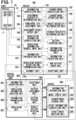
- the vehicle battery assessment system 1 is configured to include a dealer 100, a server 200, and a central repair shop 300, as shown in FIG. 1 .
- each component is not necessarily limited to be provided in the dealer 100, the server 200, and the central repair shop 300 shown in FIG. 1 , and each component may be provided in any of the dealer 100, the server 200, and the central repair shop 300.
- all of the components constituting the vehicle battery assessment system 1 are not limited to be provided in the dealer 100, the server 200 and the central repair shop 300, but may be provided in a terminal or cloud connected via communication means.
- the battery 11 that is a subject of an assessment by the vehicle battery assessment system 1 is installed in the vehicle 10 owned by a user.
- the battery 11 is a rechargeable secondary battery, and includes a battery composed of a single cell or a plurality of cells.
- a battery pack 12 is formed by electrically connecting a plurality of batteries 11 to each other.
- Each of the batteries 11 constitutes a module that can be individually attached to and detached from the battery pack 12.
- the battery 11 is not limited to a specific type as a secondary battery, and any battery suitable for the vehicle 10 can be adopted.
- the information acquisition unit 101 at least the vehicle information of the vehicle 10 and the usage history information of the battery 11. In the first embodiment, the information acquisition unit 101 further acquires battery characteristics of the battery 11.
- the vehicle information is information related to the vehicle 10, and examples of the vehicle information include a model, a date of manufacture, a period of use, a mileage, and an area of use of the vehicle 10.
- the date of manufacture does not necessarily have to be specified down to the day, but may be specified down to the year or the month.
- the vehicle information can be acquired from a storage device (not shown) provided in the vehicle 10.
- the usage history information of the battery 11 may be maximum values, minimum values, average values, cumulative values, and the like over a predetermined period, such as the charging and discharging of the battery 11, a battery temperature, a battery voltage, capacity, SOC (state of charge), or a usage period of an apparatus in which the battery 11 is installed.
- the predetermined period can be any period up to the present, and may be the entire period from the manufacture of the secondary battery to the present.
- the usage history information of the battery 11 can be obtained from a BMU (Battery Management Unit) provided in the battery 11.
- the battery characteristics of the battery 11 include information on the current battery temperature, the current battery voltage, the current capacity, the current SOC, the current internal resistance, and the like of the battery 11. These can also be obtained from the BMU provided in the battery 11.
- the assessment feasibility determination unit 102 determines whether an assessment of the remaining life of the battery 11 is feasible based on the above-described information acquired by the information acquisition unit 101. For example, if the SOC, the voltage, or a remaining capacity of the battery 11 is below a predetermined value, or if the internal resistance, the number of charge/discharge cycles, the date of manufacture of the vehicle 10, the period of use, or the mileage is above a predetermined value, the assessment feasibility determination unit 102 can determine that the assessment of the battery 11 is not feasible.
- the assessment feasibility determination unit 102 may determine whether the assessment of the battery 11 is feasible based on whether the above-described information acquired by the information acquisition unit 101 is included in a valid range of the learned model that is preset in the learned model acquired by the learned model acquisition unit 103 described below.
- the valid range of the learned model can be set, for example, based on training data of each learned model. For example, in a data group of training data for each learned model, the valid range is a range in which a data distance from a data center is within a predetermined reference value.
- the assessment feasibility determination unit 102 can determine whether the assessment is feasible after the learned model extraction unit 104 extracts the learned model, or can perform the determination simultaneously with the learned model extraction unit 104 extracting the learned model.
- the battery 11 for which the assessment feasibility determination unit 102 determines that assessment is not feasible is obviously not reusable even without the need for assessment described below, so an arithmetic load can be reduced by eliminating the battery 11 before the assessment described below is performed.
- the battery 11 for which it is determined that the assessment is not feasible can be discarded or disassembled to recycle parts.
- a learned model corresponding to that specific vehicle model can be extracted.
- the learned model can be extracted based on the data distance between the information acquired by the information acquisition unit 101 and each data center in the data group of training data for each learned model.
- the remaining life assessment unit 105 assesses the remaining life of the battery 11 for which the assessment feasibility determination unit 102 determines that the assessment is feasible, based on the above-described information acquired by the information acquisition unit 101 and the learned model.
- the optimal learned model extracted by the learned model extraction unit 104 is used as the learned model. Accordingly, the remaining life can be assessed with higher accuracy.
- the assessment result of the remaining life assessment unit 105 is stored in an information integration unit 201 of the server 200, which will be described later.
- the information integration unit 201 may store information for each of the batteries 11 that have been assessed, and may store the above-described information acquired by the information acquisition unit 101 for each of the batteries 11 together with the assessment result of the remaining life.
- the update necessity determination unit 107 determines whether the battery 11 is necessary for updating the learned model stored in the server 200 described later. Although the criteria used by the update necessity determination unit 107 are not limited, in the first embodiment, it is determined that the update is necessary when any one of the following four criteria is satisfied.
- the data distortion can be calculated, for example, based on a degree of deformation of an outer shape of a data range in a data space where the data distance D from the data center Ct of all the training data is within a reference value.
- the data density can be calculated, for example, as the number of data items present per unit area of a target data range in the data space.
- the update necessity determination unit 107 determines that an update of the learned model is necessary if the information acquired by the information acquisition unit 101 satisfies any of the first to fourth update criteria.
- the storage necessity determination unit 108 determines whether the battery 11 needs to be stored for rebuilding at the central repair shop 300 described below.
- the term "rebuilding” refers to packing used assembled batteries into a used battery pack for reuse.
- used assembled batteries are disassembled into modules or cells, and are stored in a warehouse after being stratified according to ranks assigned based on the degree of deterioration and the like, and the modules or cells corresponding to the required rank are extracted from the warehouse, reassembled, and packed, thereby rebuilding the assembled batteries. It is not necessary to disassemble and separate used assembled batteries. Instead, a battery stack, which is an assembly of the battery cells or modules, can be made by removing a circuit boards, a wiring, and a casing, and the battery stack can be used as is in a new pack to rebuild an assembled battery.
- the rebuilding order estimation Rb1 has two peaks, and correspondingly, the storage target Rb2 also has two peaks.
- the storage criterion for rebuilding is defined based on the storage target Rb2, similarly to the case of (a) in FIG. 3 .
- the batteries stored in the battery storage unit 306 in the central repair shop 300 are ranked based on the assessment results of the batteries 11, and the stock information includes the number of batteries for each rank.
- the storage criterion for rebuilding also stipulate the number of batteries for each rank. In other words, the storage criterion for rebuilding is determined based on the stock status in the battery storage unit 306 and the assessment results of the batteries 11.
- the battery information in the association information may be, for example, a battery voltage of the battery 11.
- the association information acquisition unit 109 may acquire the association information immediately after removal from the vehicle 10, or may acquire the association information a predetermined period of time after removal from the vehicle 10.
- the battery information in the association information can be corrected taking into account changes in the battery information over time, and the association information can be acquired using the corrected data.
- the battery shipping unit 110 ships the battery 11 to the central repair shop 300, which will be described later.
- the battery 11 to be shipped is one that has been determined by the update necessity determination unit 107 as being necessary for updating the learned model, and one that has been determined by the storage necessity determination unit 108 as being necessary to be stored for rebuilding.
- the rebuilding information request input unit 120 allows the user to input a rebuilding information request after checking the output result of the assessment result output unit 106, for example, whether the battery 11 needs to be replaced, if the user requests information regarding rebuilding of the battery pack 12 of the vehicle 10.
- the information transmission unit 121 transmits the input result to the central repair shop 300 described below.
- the information reception unit 122 receives rebuilding information transmitted from the central repair shop 300, which will be described below, and the received information is presented to the user by the information presentation unit 123.
- the information can be presented by displaying it on a display unit (not shown), printing it on paper, or notifying it by voice.
- the rebuilding information includes information such as a delivery time and a cost in the case of rebuilding. In addition, a delivery time and a cost of parts required to replace the battery 11 may also be included.
- the rebuilding request reception and transmission unit 124 receives the rebuilding request and transmits the request to the central repair shop 300.
- the acceptance unit 125 accepts a rebuilt battery pack shipped from the central repair shop 300, and the assembly unit 126 incorporates the rebuilt battery pack into the battery pack 12 of the user. Then, the battery pack 12 is installed in the vehicle 10. If the user requests to replace the battery with a new battery rather than a rebuilt battery, the rebuilding request reception and transmission unit 124 can receive this request and place an order for the new battery via a new battery order unit 127.
- the server 200 is connected to the dealer 100 and the central repair shop 300 described below via network lines.
- the server 200 can be provided on a cloud via an internet line.
- the server 200 includes an information integration unit 201, a model update unit 202, the learned model storage unit 203, a stock information acquisition unit 204, and a stock target creation unit 205. These components can be configured by one or more processors (not shown).
- the information integration unit 201 integrates the information acquired by the information acquisition unit 101 of the dealer 100, the assessment results of the remaining life assessment unit 105, and assessment results of a battery assessment unit 305 in the central repair shop 300 described below.
- the stock information acquisition unit 204 acquires stock information on batteries 11 stored as rebuilt batteries 11 in a battery storage unit 306 in the central repair shop 300 described below.
- the stock target creation unit 205 creates the storage target based on rebuilding order prediction within a predetermined period.
- the stock target can be created, for example, as shown in the examples of FIG. 3 .
- the information reception unit 301 receives input information of the rebuilding request transmitted from the information transmission unit 121 of the dealer 100.
- the rebuilding information creation unit 302 creates the rebuilding information, including the delivery date and the cost of the rebuilt battery, in response to the input information of the rebuilding request.
- the created rebuilding information is transmitted by the information transmission unit 303 to the dealer 100 and received by the information reception unit 122.
- the acceptance unit 304 accepts the battery 11 shipped by the battery shipping unit 110 of the dealer 100.
- the received battery 11 is assessed by the battery assessment unit 305.
- the assessment by the battery assessment unit 305 is more detailed than the assessment by the remaining life assessment unit 105 of the dealer 100 and includes more assessment items. In order to improve the accuracy of the assessment, it is also possible to carry out the assessment after the temperature of the battery 11 is set to a predetermined state. Therefore, it takes more time to obtain the assessment results than the assessment by the remaining life assessment unit 105 at the dealer 100.
- the assessment method used by the battery assessment unit 305 is not limited, and any method capable of performing detailed assessment may be used.
- battery characteristics relating to a transition of a battery state over a specified voltage range can be acquired for the battery 11, and the degree of deterioration can be determined based on the battery characteristics or a battery characteristic relation value calculated based on the battery characteristics, and the value of the battery 11 can be evaluated and ranked.
- the rebuilding unit 307 receives the rebuilding request from the rebuilding request reception and transmission unit 124 of the dealer 100, and rebuilds the battery in accordance with the request.
- the rebuilt battery is then shipped to the dealer 100 by the rebuilt battery shipping unit 308 and accepted by the acceptance unit 125.
- step S1 shown in FIG. 4 the information acquisition unit 101 of the dealer 100 acquires the vehicle information of the vehicle 10, the usage history information of the battery 11, and the voltage of the battery 11 as the battery characteristic.
- the acquired information is stored in the information integration unit 201 of the server 200.
- step S2 the update necessity determination unit 107 determines whether the information acquired by the information acquisition unit 101 satisfies the first update criterion. If it is determined that the acquired information satisfies the first update criterion, that is, if it is determined that the acquired information is information belonging to the unlearned domain L1 in the latest learned model stored in the learned model storage unit 203 of the server 200, the process proceeds to Yes in step S2, and it is determined in step S3 that the association process is to be performed, and the preliminary determination process is ended.
- step S2 if the update necessity determination unit 107 of the dealer 100 determines that the information acquired by the information acquisition unit 101 does not satisfy the first update criterion, the process proceeds to No in step S2, and in step S4, it is determined whether the information acquired by the information acquisition unit 101 satisfies any one of the second to fourth update criteria described above. If it is determined that the acquired information satisfies any one of the second to fourth update criteria, the process proceeds to Yes in step S4, it is determined in the above-described step S3 that the association process is to be performed, and the preliminary determination process is ended.
- step S4 If it is determined in step S4 that the acquired information does not satisfy any of the second to fourth update criteria, the process proceeds to No in step S4. Then, in step S5, the storage necessity determination unit 108 of the dealer 100 determines whether the storage criterion for rebuilding is satisfied. If it is determined that the storage criterion for rebuilding is satisfied, the process proceeds to Yes in step S5, and it is determined in the above-described step S3 that the association process is to be performed, and the preliminary determination process is ended.
- step S5 if it is determined in step S5 that the storage criterion for rebuilding is not satisfied, the process proceeds to No in step S5, and it is determined in step S6 that a discard or recycling process is to be performed, and the preliminary determination process is ended.
- the post preliminary determination process includes parallel processes of steps S7 to S8, step S9, and step S10.
- step S7 which is a first parallel process
- the battery 11 determined to be treated with the association process in step S3 described above is removed from the vehicle, and then the association process, which will be described later, is performed. Thereafter, in step S8, the battery 11 is shipped to the central repair shop 300.
- step S9 which is a second parallel process
- the battery 11 determined to be recycled in step S6 described above is removed from the vehicle, and the parts are taken out by disassembly or the like, and the recycling process is carried out to reuse the parts.
- step S10 which is a third parallel process
- the battery 11 determined to be discarded in step S6 described above is removed from the vehicle and discarded.
- the model update process begins with step S11 in which the central repair shop 300 accepts the battery 11 that satisfies any one of the first to fourth update criteria from the dealer 100. Thereafter, in step S12, the battery assessment unit 305 of the central repair shop 300 performs the detailed assessment of the battery 11. The result of the detailed assessment is stored in the information integration unit 201 of the server 200. In the first embodiment, the degree of deterioration of the battery 11 is calculated as an assessment result to assess the remaining life. Then, in step S13, the model update unit 202 updates the learned model based on the assessment result, and the model update process is ended.
- the model update process begins with step S15, in which the central repair shop 300 accepts the battery 11 that satisfies the storage criterion for rebuilding from the dealer 100. Thereafter, in step S16, the battery 11 is stored in the battery storage unit 306 of the central repair shop 300 as a stock for rebuilding. Then, in step S17, the stock information acquisition unit 204 of the server 200 acquires the stock information from the battery storage unit 306 and updates the stock information. Based on the stock information, the stock target creation unit 205 creates the stock target, updates the storage criterion for rebuilding, and ends the stock update process.
- a determination may be made as to whether the batteries 11 satisfy the storage criterion for rebuilding in step S5 shown in FIG. 4 , and if the batteries 11 satisfy the storage criterion for rebuilding, the stock update process shown in FIG. 7 may be applied, and the batteries 11 may be stored in the battery storage unit 306 as stock for rebuilding as necessary.
- step S15 the batteries 11 that satisfy the storage criterion for rebuilding and are shipped to the central repair shop 300 may also be treated with the detailed assessment by the remaining life assessment unit 105, and the batteries 11 may be stored in the battery storage unit 306 with a ranking based on the results of the detailed assessment.
- step S1 shown in FIG. 4 after the information acquisition unit 101 of the dealer 100 acquires the vehicle information of the vehicle 10, the usage history information of the battery 11, and the battery characteristics of the battery 11, and the process proceeds to step S20 in FIG. 8 .
- step S20 the assessment feasibility determination unit 102 determines whether the assessment of the battery 11 is feasible based on the above-described information acquired by the information acquisition unit 101. If it is determined that the assessment of the battery 11 is not feasible, the process proceeds to No in step S20, and the flow ends.
- step S20 determines whether the assessment of the battery 11 is feasible. If it is determined in step S20 that the assessment of the battery 11 is feasible, the process proceeds to Yes in step S20. Then, in step S21, the learned model extraction unit 104 extracts the optimal learned model.
- step S22 the remaining life assessment unit 105 of the dealer 100 assesses the remaining life of the battery 11 in a state where the battery 11 is installed in the vehicle based on the information acquired by the information acquisition unit 101 and the optimal learned model. Then, in step S23, the assessment result output unit 106 outputs the assessment result to the display unit (not shown) and also transmits it to the information integration unit 201 of the server 200.
- step S24 the rebuilding information request input unit 120 of the dealer 100 determines whether there is a request from the user for rebuilding information that will serve as a basis for deciding whether to order a rebuilt battery. If there is the request for the rebuilding information, the process proceeds to Yes in step S24, and in step S25, the rebuilding information creation unit 302 of the central repair shop 300 creates the rebuilding information, and the information transmission unit 303 transmits the rebuilding information to the dealer 100.
- the rebuilding information also includes information on the delivery time and the cost when using a new battery in place of the rebuilt battery.
- the information reception unit 122 of the dealer 100 receives the rebuilding information, and the information presentation unit 123 presents the rebuilding information to the user. The user can decide whether to rebuild the battery by taking into consideration the delivery time and the cost of the rebuilt battery contained in the rebuilding information.
- step S26 the rebuilding request reception and transmission unit 124 of the dealer 100 determines whether a rebuilding request indicating an intention to carry out rebuilding has been input by the user. If the rebuilding request has been input by the user, the process proceeds to Yes in step S26, and the rebuilding request is transmitted to the central repair shop 300.
- step S27 the battery corresponding to the rebuilding request is extracted from the plurality of batteries stored in the battery storage unit 306 in the central repair shop 300, and a rebuilt battery is created based on this battery.
- a number of rebuilt batteries of various ranks may be created in advance by combining a number of batteries that have been determined to be stored in the battery storage unit 306, and these rebuilt batteries may be stored in the battery storage unit 306, and from these stored rebuilt batteries, the rebuilt battery corresponding to the rebuilding requirement may be extracted. Thereafter, in step S28, the created or extracted rebuilt battery is shipped by the rebuilt battery shipping unit 308 from the central repair shop 300 to the dealer 100.
- the assembly unit 126 of the dealer 100 forms a battery pack 12 using the rebuilt battery and assembles the battery pack 12 into the vehicle 10 in step S29. Then, this processing flow is ended.
- step S30 the rebuilding request reception and transmission unit 124 determines whether the user requests to replace the battery with a new battery. If the user requests to replace the battery with a new battery, the process proceeds to Yes in step S30, and in step S31, the new battery order unit 127 of the dealer 100 places an order for a new battery to a battery manufacturer (not shown). After the new battery arrives at the dealer 100, the new battery is accepted by the acceptance unit 125, and the assembly unit 126 forms the battery pack 12 using the new battery and assembles the battery pack 12 into the vehicle 10. Then, this processing flow is ended. If, in step S30, the user does not request to replace the battery with a new battery, the process proceeds to No in step S30, and it is determined in S32 that the battery 11 will not be replaced, and this processing flow is ended.
- step S24 if there is no request for rebuilding information from the user, the process proceeds to No in step S24, and it is determined in step S32 that the battery 11 will not be replaced, and this processing flow is ended.
- the battery stored in the battery storage unit 306 is used in response to the rebuilding request from the user.
- the battery 11 initially installed in vehicle 10 of the user may be sent to the central repair shop 300, a part of the battery 11 may be replaced and repaired, and then the battery 11 may returned to the user as a rebuilt battery.
- step S7 shown in FIG. 4 will be described with reference to FIG. 9 .
- step S22 shown in FIG. 8 the remaining life assessment unit 105 of the dealer 100 assesses the remaining life of the battery 11 in the state where the battery 11 is installed in the vehicle 10, and stores the assessment result in the information integration unit 201 of the server 200.
- step S40 the association information acquisition unit 109 of the dealer 100 acquires the battery identification information of the battery 11 removed from the vehicle 10.
- step S41 the battery voltage of the removed battery 11 is directly measured and obtained as a direct battery characteristic.
- step S42 in order to take into account a change in the battery voltage as the direct battery characteristic that occurs over time from when the battery 11 is removed from the vehicle 10 to when the battery voltage is measured, the battery voltage as the direct battery characteristic is corrected in accordance with elapse of time. If the elapsed time is shorter than a predetermined reference value, the change in the battery voltage that accompanies the elapse of time may be ignored and step S42 may not be performed.
- step S43 the battery voltage before removal and after removal or correction are compared to determine whether they match. If it is determined that they match, the process proceeds to Yes in step S43, and in step S44, it is associated that the information obtained before removal from the vehicle 10 match the information of the battery 11 after removal, and then this processing flow is ended.
- step S43 if it is determined in step S43 that the battery voltage before removal and the battery voltage after removal or correction do not match, the information obtained before removal from the vehicle 10 does not match the information of the battery 11 after removal, so the two are not associated, the process returns to step S41 where the battery voltage after removal is acquired again, and the battery voltage after removal is corrected in step S42. Then, in step S43, the corrected battery voltage after removal is compared with the battery voltage before removal of the battery 11 other than the battery previously compared, to determine whether the battery voltages match. Based on the result of the comparison, step S44 or step S41 and subsequent steps are carried out again as described above.
- the remaining life of the battery 11 installed in the vehicle 10 is assessed based on at least the information about the vehicle 10 in which the battery 11 is installed, the usage history information of the battery 11, and the learned model that is created in advance. This makes it possible to assess the remaining life of the battery 11 with high accuracy in a short period of time.
- the assessment feasibility determination unit 102 that determines whether the remaining life of the battery 11 is feasible is provided, and the remaining life assessment unit 105 assesses the remaining life of the battery 11 for which it is determined by the assessment feasibility determination unit 102 that the assessment is feasible. This makes it possible to avoid assessing the remaining life of the battery 11 that us an excessively deteriorated or damaged, thereby improving the efficiency of the arithmetic processing.
- the vehicle battery assessment system 1 includes the update necessity determination unit 107 that determines whether the battery 11 is necessary for updating the learned model. Accordingly, the detailed assessment is performed only on the battery11 that is required for updating, and the efficiency of arithmetic processing can be improved.
- the update necessity determination unit 107 determines that an update of the learned model is necessary when at least one of the following criteria is satisfied: when the information acquired by the information acquisition unit is information belonging to an unlearned domain in a learned model; when the information belongs to a learned domain in the learned model, and a data distance between a data center calculated from information within a predetermined period from the latest model update and a data center calculated from all information in the learned domain is equal to or greater than a reference value; when the information belongs to the learned domain in the learned model, and a difference between a data distortion calculated from information within a predetermined period from the latest model update and a data distortion calculated from all the information in the learned domain is equal to or greater than a reference value; and when the information belongs to the learned domain in the learned model, and a difference between a data density calculated from information within a predetermined period from the latest model update and a data density calculated from all the information in the learned domain is equal to or greater than a reference value.
- the storage necessity determination unit 108 determines whether the battery 11 needs to be rebuilt based on the stock target calculated according to the stock information of the batteries stored as the stock for rebuilding. This makes it possible to efficiently acquire and store batteries having battery characteristics that are in short supply in the stock for rebuilding, while also restricting excess stock and optimizing stock management.
- the batteries stored in the battery storage unit 306 in the central repair shop 300 are ranked based on the assessment results of the batteries 11, and the stock information includes the number of batteries for each rank.
- the storage criterion for rebuilding which is the criterion for determining whether a battery should be stored in the stock for rebuilding, also stipulate the number of batteries for each rank.
- the storage criterion for rebuilding is stipulated based on the stock status in the battery storage unit 306 and the assessment results of the batteries 11. As a result, the battery stock management can be performed taking into consideration the rank of the batteries 11, making it possible to further optimize the stock management.
- the information acquisition unit 101 further acquires the battery characteristics of the battery 11 as the above-described information. Accordingly, the remaining life can be assessed with taking into account the battery characteristics. Thus, the accuracy of the assessment can be further improved.
- the vehicle battery assessment system 1 further includes the association information acquisition unit 109 that compares the battery characteristic acquired by the information acquisition unit 101 from the battery 11 in a state of being installed in the vehicle 10 with the direct battery characteristic acquired by directing measuring the battery characteristic of the battery 11 removed from the vehicle 10, and associates the information acquired by the information acquisition unit 101 with the battery identification information of the battery 11. Accordingly, it is possible to ensure that the information acquired from the battery 11 in the state of being installed in the vehicle 10, where it is difficult to physically identify the battery 11, is the information about the battery 11 in question, thereby preventing mix-ups of the batteries 11 and improving the reliability of the assessment results.
- the association information acquisition unit 109 uses, as the direct battery characteristic, the battery characteristic obtained by directly measuring the battery 11 and corrected based on the elapsed time from when the battery 11 is removed from the vehicle 10 to when the battery 11 is directly measured. Accordingly, it is possible to improve the accuracy of the association even when using the battery characteristic obtained some time after removal from the vehicle 10, thereby mix-ups of the batteries 11 and improving the reliability of the assessment results.
- the vehicle battery assessment system 1 capable of assessing the remaining life of the battery 11 installed on the vehicle 10 with high accuracy.
- an information acquisition unit (101) configured to acquire information including at least vehicle information of the vehicle and usage history information of the battery
- a learned model acquisition unit (103) configured to acquire a learned model that is created in advance by setting at least the vehicle information of the vehicle in which the battery is installed and the usage history information of the battery as explanatory variables and setting the
- the vehicle battery assessment system further includes an assessment feasibility determination unit (102) configured to determine whether an assessment of the remaining life of the battery is feasible.
- the remaining life assessment unit is configured to assess the remaining life of the battery for which the assessment feasibility determination unit determines that the assessment is feasible.
- the learned model acquisition unit is configured to acquire a plurality of learned models created in advance.
- the vehicle battery assessment system further includes a learned model extraction unit (104) configured to extract at least one of the plurality of learned models acquired by the learned model acquisition unit based on the information acquired by the information acquisition unit.
- the remaining life assessment unit is configured to use, as the learned model, the at least one of the plurality of learned models extracted by the learned model extraction unit.
- the vehicle battery assessment system according to any one of items 1 or 3 further includes a model update unit (202) configured to update the learned model based on the information acquired by the information acquisition unit.
- the vehicle battery assessment system further includes an update necessity determination unit (107) configured to determine whether the battery is necessary for updating the learned model.
- the update necessity determination unit is configured to determine that updating of the learned model is necessary when the information acquired by the information acquisition unit satisfies at least one of following criteria:
- the vehicle battery assessment system further includes a storage necessity determination unit (108) configured to determine whether the battery is necessary to be stored in a stock for rebuilding the battery.
- the storage necessity determination unit is configured to determine whether the battery is necessary for rebuilding based on a stock target calculated according to stock information of the battery stored as the stock for rebuilding.
- the information acquisition unit further acquires a battery characteristic of the battery.
- the vehicle battery assessment system further includes an association information acquisition unit (109) configured to compare the battery characteristic acquired by the information acquisition unit from the battery in a state of being installed in the vehicle with a direct battery characteristic acquired by removing the battery from the vehicle and directly measuring the battery, and associate the information acquired by the information acquisition unit with battery identification information of the battery.
- an association information acquisition unit (109) configured to compare the battery characteristic acquired by the information acquisition unit from the battery in a state of being installed in the vehicle with a direct battery characteristic acquired by removing the battery from the vehicle and directly measuring the battery, and associate the information acquired by the information acquisition unit with battery identification information of the battery.
- the association information acquisition unit is configured to use, as the direct battery characteristic, a battery characteristic acquired by directly measuring the battery and corrected based on a elapsed time from when the battery is removed from the vehicle to when the battery is directly measured.
Landscapes
- Engineering & Computer Science (AREA)
- Business, Economics & Management (AREA)
- Physics & Mathematics (AREA)
- General Physics & Mathematics (AREA)
- Human Resources & Organizations (AREA)
- Power Engineering (AREA)
- Mechanical Engineering (AREA)
- Transportation (AREA)
- Sustainable Development (AREA)
- Life Sciences & Earth Sciences (AREA)
- Economics (AREA)
- Sustainable Energy (AREA)
- General Business, Economics & Management (AREA)
- Marketing (AREA)
- Theoretical Computer Science (AREA)
- Strategic Management (AREA)
- Tourism & Hospitality (AREA)
- Health & Medical Sciences (AREA)
- Operations Research (AREA)
- Quality & Reliability (AREA)
- Entrepreneurship & Innovation (AREA)
- General Health & Medical Sciences (AREA)
- Primary Health Care (AREA)
- Public Health (AREA)
- Water Supply & Treatment (AREA)
- Manufacturing & Machinery (AREA)
- Chemical & Material Sciences (AREA)
- Chemical Kinetics & Catalysis (AREA)
- Electrochemistry (AREA)
- General Chemical & Material Sciences (AREA)
- Secondary Cells (AREA)
Abstract
Description
- This application is based on
Japanese Patent Application No. 2022-079294 filed on May 13, 2022 - The present disclosure relates to a vehicle battery assessment system.
- Conventionally, as a configuration for assessing and checking a life of a battery installed in a vehicle, for example,
Patent Literature 1 discloses a configuration in which deterioration states of multiple battery units that constitute a battery installed in a vehicle are assessed, and based on the deterioration states, remaining lives of the battery units are displayed on multiple screens so that each of a vehicle manufacturer, a dealer, a vehicle user, and the like can each check it. - Patent Literature 1:
JP 2010-111276 A - The configuration disclosed in
Patent Literature 1 uses battery voltages and resistance values of the battery units to assess the deterioration states in a short period of time, but does not take into account vehicle information including how the vehicle is used, such as an area in which the vehicle installed with the battery is used and a mileage of the vehicle. As a result, the accuracy of deterioration information is low, and the accuracy of the assessment of the remaining life is also low. Therefore, there is room for improvement in assessing a remaining life with high accuracy. - The present disclosure provides a vehicle battery assessment system capable of assessing a life of a battery installed in a vehicle with high accuracy.
- An aspect of the present disclosure is a vehicle battery assessment system for assessing a remaining life of a battery installed in a vehicle. The vehicle battery assessment system includes an information acquisition unit configured to acquire information including at least vehicle information of the vehicle and usage history information of the battery, a learned model acquisition unit configured to acquire a learned model that is created in advance by setting at least the vehicle information of the vehicle installed with the battery and the usage history information of the battery as explanatory variables and setting the remaining life of the battery as a target variable, a remaining life assessment unit configured to assess the remaining life of the battery based on the vehicle information and the usage history information acquired by the information acquisition unit and the learned model, and an assessment result output unit configured to output an assessment result of the remaining life assessment unit.
- In the vehicle battery assessment system described above, the remaining life of the battery installed in the vehicle is assessed based on at least the vehicle information of the vehicle installed with the battery, the usage history information of the battery, and the learned model created in advance. Accordingly, it is possible to assess the remaining life of the battery with high accuracy in a short period of time.
- As described above, according to the above aspect, it is possible to provide the vehicle battery assessment system capable of assessing the remaining life of the battery installed in the vehicle with high accuracy.
- The reference numerals in parentheses described in claims indicate the correspondence relationship with specific means described in embodiments described later, and do not limit the technical scope of the present disclosure.
- The above and other objects, features and advantages of the present disclosure will become more apparent from the following detailed description made with reference to the accompanying drawings. In the drawings:
-
FIG. 1 is a block diagram showing a configuration of a vehicle battery assessment system according to a first embodiment; -
FIG. 2 is a conceptual diagram showing a feature space of a learned model in the first embodiment; -
FIG. 3 is a conceptual diagram showing the relationship between the amount of collected batteries, a rebuilding order estimation, and a stock target in the first embodiment; -
FIG. 4 is a flow diagram of a preliminary determination process in the first embodiment; -
FIG. 5 is a flow diagram of a post preliminary determination process in the first embodiment; -
FIG. 6 is a flow diagram of a model update process in the first embodiment; -
FIG. 7 is a flow diagram of a stock update process in the first embodiment; -
FIG. 8 is a flow diagram of a remaining life assessment process and a rebuilding process in the first embodiment; and -
FIG. 9 is a flowchart of an association process in the first embodiment. - An embodiment of a vehicle battery assessment system will be described with reference to
FIGS. 1 to 9 . A vehiclebattery assessment system 1 of a first embodiment is for assessing a remaining life of abattery 11 installed in avehicle 10. As shown inFIG. 1 , the vehiclebattery assessment system 1 includes aninformation acquisition unit 101, a learnedmodel acquisition unit 103, a remaininglife assessment unit 105, and an assessmentresult output unit 106. Theinformation acquisition unit 101 acquires at least vehicle information of the vehicle and usage history information of thebattery 11. The learnedmodel acquisition unit 103 acquires a learned model that has been created in advance by setting at least the vehicle information of thevehicle 10 installed with thebattery 11 and the usage history information of thebattery 11 as explanatory variables, and setting the remaining life of thebattery 11 as a target variable. The remaininglife assessment unit 105 assesses the remaining life of thebattery 11 based on the vehicle information and the usage history information acquired by theinformation acquisition unit 101 and the learned model. The assessmentresult output unit 106 outputs the assessment result of the remaininglife assessment unit 105. - The vehicle
battery assessment system 1 of the present embodiment will be described in detail below. - In the first embodiment, the vehicle
battery assessment system 1 is configured to include adealer 100, aserver 200, and acentral repair shop 300, as shown inFIG. 1 . In addition, each component is not necessarily limited to be provided in thedealer 100, theserver 200, and thecentral repair shop 300 shown inFIG. 1 , and each component may be provided in any of thedealer 100, theserver 200, and thecentral repair shop 300. Furthermore, all of the components constituting the vehiclebattery assessment system 1 are not limited to be provided in thedealer 100, theserver 200 and thecentral repair shop 300, but may be provided in a terminal or cloud connected via communication means. - The
battery 11 that is a subject of an assessment by the vehiclebattery assessment system 1 is installed in thevehicle 10 owned by a user. Thebattery 11 is a rechargeable secondary battery, and includes a battery composed of a single cell or a plurality of cells. Abattery pack 12 is formed by electrically connecting a plurality ofbatteries 11 to each other. Each of thebatteries 11 constitutes a module that can be individually attached to and detached from thebattery pack 12. Thebattery 11 is not limited to a specific type as a secondary battery, and any battery suitable for thevehicle 10 can be adopted. - As shown in
FIG. 1 , thedealer 100 includes theinformation acquisition unit 101, an assessmentfeasibility determination unit 102, the learnedmodel acquisition unit 103, a learnedmodel extraction unit 104, the remaininglife assessment unit 105, the assessmentresult output unit 106, an updatenecessity determination unit 107, a storagenecessity determination unit 108, an associationinformation acquisition unit 109, abattery shipping unit 110, a rebuilding informationrequest input unit 120, aninformation transmission unit 121, aninformation reception unit 122, aninformation presentation unit 123, a rebuilding request reception andtransmission unit 124, anacceptance unit 125, and anassembly unit 126. Among these units, thebattery shipping unit 110 can be configured by a shipping system not shown, theinformation presentation unit 123 can be configured by a display device (not shown), and the other units can be configured by one or more processors (not shown). - The
information acquisition unit 101 at least the vehicle information of thevehicle 10 and the usage history information of thebattery 11. In the first embodiment, theinformation acquisition unit 101 further acquires battery characteristics of thebattery 11. First, the vehicle information is information related to thevehicle 10, and examples of the vehicle information include a model, a date of manufacture, a period of use, a mileage, and an area of use of thevehicle 10. The date of manufacture does not necessarily have to be specified down to the day, but may be specified down to the year or the month. The vehicle information can be acquired from a storage device (not shown) provided in thevehicle 10. - The usage history information of the
battery 11 may be maximum values, minimum values, average values, cumulative values, and the like over a predetermined period, such as the charging and discharging of thebattery 11, a battery temperature, a battery voltage, capacity, SOC (state of charge), or a usage period of an apparatus in which thebattery 11 is installed. The predetermined period can be any period up to the present, and may be the entire period from the manufacture of the secondary battery to the present. The usage history information of thebattery 11 can be obtained from a BMU (Battery Management Unit) provided in thebattery 11. The battery characteristics of thebattery 11 include information on the current battery temperature, the current battery voltage, the current capacity, the current SOC, the current internal resistance, and the like of thebattery 11. These can also be obtained from the BMU provided in thebattery 11. - Typically, the
information acquisition unit 101 acquires the above-described information from thebattery 11 installed in thevehicle 10 brought to thedealer 100 by the user. Therefore, among the battery information obtained from thebattery 11, the battery temperature and other battery information will not typically be the same values among a plurality ofbatteries 11 installed in thevehicle 10, and will typically include values that are different from each other. - Next, the assessment
feasibility determination unit 102 determines whether an assessment of the remaining life of thebattery 11 is feasible based on the above-described information acquired by theinformation acquisition unit 101. For example, if the SOC, the voltage, or a remaining capacity of thebattery 11 is below a predetermined value, or if the internal resistance, the number of charge/discharge cycles, the date of manufacture of thevehicle 10, the period of use, or the mileage is above a predetermined value, the assessmentfeasibility determination unit 102 can determine that the assessment of thebattery 11 is not feasible. - In addition, the assessment
feasibility determination unit 102 may determine whether the assessment of thebattery 11 is feasible based on whether the above-described information acquired by theinformation acquisition unit 101 is included in a valid range of the learned model that is preset in the learned model acquired by the learnedmodel acquisition unit 103 described below. The valid range of the learned model can be set, for example, based on training data of each learned model. For example, in a data group of training data for each learned model, the valid range is a range in which a data distance from a data center is within a predetermined reference value. If it is determined for the above-described information acquired by theinformation acquisition unit 101 that any of data distances from each data center in the training data of multiple learned models is within a predetermined reference value, it can be determined that the assessment is feasible, and if not, it can be determined that the assessment is not feasible. The assessmentfeasibility determination unit 102 can determine whether the assessment is feasible after the learnedmodel extraction unit 104 extracts the learned model, or can perform the determination simultaneously with the learnedmodel extraction unit 104 extracting the learned model. - The
battery 11 for which the assessmentfeasibility determination unit 102 determines that assessment is not feasible is obviously not reusable even without the need for assessment described below, so an arithmetic load can be reduced by eliminating thebattery 11 before the assessment described below is performed. Thebattery 11 for which it is determined that the assessment is not feasible can be discarded or disassembled to recycle parts. - The learned
model acquisition unit 103 acquires the learned model from theserver 200 described below. In the learned model, the above-described information acquired by theinformation acquisition unit 101 is set as the explanatory variables and the remaining life of thebattery 11 is set as the target variable. The learned model can be created using machine learning with training data. The learned model can be updated by operating the vehiclebattery assessment system 1 of the first embodiment as described below. Then, the learnedmodel acquisition unit 103 can acquire the latest learned model that is updated. In addition, multiple learned models can be prepared as described below, and in the first embodiment, the learnedmodel acquisition unit 103 acquires multiple learned models. - The learned
model extraction unit 104 extracts the optimal model from the multiple learned models acquired by the learnedmodel acquisition unit 103. The extraction can be performed based on the information acquired by theinformation acquisition unit 101. For example, if the battery temperature in the information acquired by theinformation acquisition unit 101 is lower than a predetermined reference value, a learned model corresponding to the battery temperature can be extracted. For example, if the average value of the battery temperature history is lower than a predetermined reference value, or if the frequency of the battery temperature history at low temperatures is high, it can be estimated that thebattery 11 was used in a cold region, and the learnedmodel acquisition unit 103 can extract a learned model corresponding to this estimation. If the information acquired by theinformation acquisition unit 101 indicates that thebattery 11 is of a specific vehicle model, a learned model corresponding to that specific vehicle model can be extracted. The learned model can be extracted based on the data distance between the information acquired by theinformation acquisition unit 101 and each data center in the data group of training data for each learned model. - The remaining
life assessment unit 105 assesses the remaining life of thebattery 11 for which the assessmentfeasibility determination unit 102 determines that the assessment is feasible, based on the above-described information acquired by theinformation acquisition unit 101 and the learned model. In the first embodiment, the optimal learned model extracted by the learnedmodel extraction unit 104 is used as the learned model. Accordingly, the remaining life can be assessed with higher accuracy. The assessment result of the remaininglife assessment unit 105 is stored in aninformation integration unit 201 of theserver 200, which will be described later. Theinformation integration unit 201 may store information for each of thebatteries 11 that have been assessed, and may store the above-described information acquired by theinformation acquisition unit 101 for each of thebatteries 11 together with the assessment result of the remaining life. - The assessment
result output unit 106 outputs the assessment result by the remaininglife assessment unit 105. An output form is not limited, and the assessment result may be displayed on a display unit, may be printed on paper, or may be notified by voice. Output contents may include other items in addition to the remaining life. The output contents for the user and the output contents for the dealer may be different. For example, the remaining life of thebattery 11 along with other detailed information may be displayed to the dealer while only the necessity of replacement of thebattery 11 is displayed to the user. - The update
necessity determination unit 107 determines whether thebattery 11 is necessary for updating the learned model stored in theserver 200 described later. Although the criteria used by the updatenecessity determination unit 107 are not limited, in the first embodiment, it is determined that the update is necessary when any one of the following four criteria is satisfied. - A first update criterion is whether the above-described information acquired by the
information acquisition unit 101 for thebattery 11 is information belonging to an unlearned domain in the latest learned model stored in a learnedmodel storage unit 203 of theserver 200. For example, in the learned model shown inFIG. 2 , in a feature space defined by feature A and feature B in the training data, it is determined whether the information is in an unlearned domain L1, which is an unknown range other than a learned domain Lt, which is a known range in the training data. The learned domain Lt is within a predetermined distance from a center position Ct in a data space of the training data used in the latest learned model, and the other range is the unlearned domain L1. The distance between data can be defined based on the Mahalanobis distance, the Euclidean distance, the Manhattan distance, the Chebyshev distance, and the like. - A second update criterion is whether the information belongs to the learned domain Lt in the learned model, and a data distance between a data center calculated from information within a predetermined period from the latest model update and a data center calculated from all information in the learned domain Lt is equal to or greater than a reference value. For example, as shown in
FIG. 2 , it is determined whether a data distance D between a data center C2 in a data space of a data range L2 of N=100 training data most recently added to the latest learned model and a data center Ct of all the training data in the latest learned model is equal to or greater than a reference value. - A third update criterion is whether the information belongs to the leaning domain Lt in the learned model, and a difference between a data distortion calculated from information within a predetermined period from the latest model update and a data distortion calculated from all the information in the learned domain Lt is equal to or greater than a reference value. For example, as shown in
FIG. 2 , it is determined whether a difference between a data distortion in a data space of a data range L3 of N=100 training data most recently added to the latest learned model and a data distortion calculated from all the information in the learned domain Lt is equal to or greater than a reference value. The data distortion can be calculated, for example, based on a degree of deformation of an outer shape of a data range in a data space where the data distance D from the data center Ct of all the training data is within a reference value. - A fourth update criterion is whether the information belongs to the learned domain Lt in the learned model, and a difference between a data density calculated from information within a predetermined period from the latest model update and a data density calculated from all the information in the learned domain Lt is equal to or greater than a reference value. For example, as shown in
FIG. 2 , it is determined whether a difference between a data density in a data space of data ranges L4a and L4b of N=100 training data most recently added to the latest learned model and a data density calculated from all the information in the learned domain Lt is equal to or greater than a reference value. The data density can be calculated, for example, as the number of data items present per unit area of a target data range in the data space. - The update
necessity determination unit 107 determines that an update of the learned model is necessary if the information acquired by theinformation acquisition unit 101 satisfies any of the first to fourth update criteria. - The storage
necessity determination unit 108 determines whether thebattery 11 needs to be stored for rebuilding at thecentral repair shop 300 described below. The term "rebuilding" refers to packing used assembled batteries into a used battery pack for reuse. For example, at thecentral repair shop 300, used assembled batteries are disassembled into modules or cells, and are stored in a warehouse after being stratified according to ranks assigned based on the degree of deterioration and the like, and the modules or cells corresponding to the required rank are extracted from the warehouse, reassembled, and packed, thereby rebuilding the assembled batteries. It is not necessary to disassemble and separate used assembled batteries. Instead, a battery stack, which is an assembly of the battery cells or modules, can be made by removing a circuit boards, a wiring, and a casing, and the battery stack can be used as is in a new pack to rebuild an assembled battery. - A storage criterion for rebuilding, which is a determination criterion in the storage
necessity determination unit 108, is defined based on a stock target received from theserver 200, which will be described later. For example, in an example shown in (a) inFIG. 3 , a relationship between the number of collectedbatteries 11 and values, for example, capacities of thebatteries 11 is shown as collected batteries B. A relationship between the number of batteries estimated to be required for rebuilding within a predetermined period in the future and a value rank can be shown by a rebuilding order estimation Rb1. A storage target Rb2 is set as the number with a certain degree of leeway corresponding to the rebuilding order estimation Rb1. In addition, in a relationship between the stock target Rb2 and the collected batteries B, whether the battery falls within a region B1 surrounded by the stock target Rb2, the collected batteries B, and the horizontal axis is the storage criterion for rebuilding in the storagenecessity determination unit 108. - Based on the storage criterion for rebuilding,
batteries 11 that fall within the region B1 are determined to need to be stored for rebuilding, whilebatteries 11 that do not fall within the region B1 are determined not to need to be stored. In particular, in (a) ofFIG. 3 , among the collected batteries B,batteries 11 that fall within a region B2 above the storage target Rb2 on the page are determined to be surplus batteries and therefore not to need to be stored for rebuilding. It should be noted that, in cases where there are multiple uses for thebatteries 11, the rebuilding order estimation Rb1 may accordingly have a shape with multiple peaks in the graph showing the relationship between the value rank and the number of batteries. For example, as shown in the example of (b) inFIG. 3 , the rebuilding order estimation Rb1 has two peaks, and correspondingly, the storage target Rb2 also has two peaks. In this case as well, the storage criterion for rebuilding is defined based on the storage target Rb2, similarly to the case of (a) inFIG. 3 . - As described below, in the first embodiment, the batteries stored in the
battery storage unit 306 in thecentral repair shop 300 are ranked based on the assessment results of thebatteries 11, and the stock information includes the number of batteries for each rank. Based on this, the storage criterion for rebuilding also stipulate the number of batteries for each rank. In other words, the storage criterion for rebuilding is determined based on the stock status in thebattery storage unit 306 and the assessment results of thebatteries 11. - The association
information acquisition unit 109 compares the battery information acquired by theinformation acquisition unit 101 from thebattery 11 in a state of being installed in the vehicle with the battery information acquired from thebattery 11 in a state of being removed from the vehicle, confirms that both are acquired from thesame battery 11, and then acquires association information which is information that associates these with battery identification information of thebattery 11. The form of the battery identification information is not limited, and may be a number, a symbol, a one-dimensional barcode, a two-dimensional barcode, or a combination of these. - The battery information in the association information may be, for example, a battery voltage of the
battery 11. The associationinformation acquisition unit 109 may acquire the association information immediately after removal from thevehicle 10, or may acquire the association information a predetermined period of time after removal from thevehicle 10. When acquiring the association information after the predetermined period of time has elapsed, the battery information in the association information can be corrected taking into account changes in the battery information over time, and the association information can be acquired using the corrected data. - The
battery shipping unit 110 ships thebattery 11 to thecentral repair shop 300, which will be described later. Thebattery 11 to be shipped is one that has been determined by the updatenecessity determination unit 107 as being necessary for updating the learned model, and one that has been determined by the storagenecessity determination unit 108 as being necessary to be stored for rebuilding. - Next, the rebuilding information
request input unit 120 allows the user to input a rebuilding information request after checking the output result of the assessmentresult output unit 106, for example, whether thebattery 11 needs to be replaced, if the user requests information regarding rebuilding of thebattery pack 12 of thevehicle 10. When the rebuilding information request is input, theinformation transmission unit 121 transmits the input result to thecentral repair shop 300 described below. Then, theinformation reception unit 122 receives rebuilding information transmitted from thecentral repair shop 300, which will be described below, and the received information is presented to the user by theinformation presentation unit 123. The information can be presented by displaying it on a display unit (not shown), printing it on paper, or notifying it by voice. The rebuilding information includes information such as a delivery time and a cost in the case of rebuilding. In addition, a delivery time and a cost of parts required to replace thebattery 11 may also be included. - If the user checks the rebuilding information and then requests a rebuilt battery pack, the rebuilding request reception and
transmission unit 124 receives the rebuilding request and transmits the request to thecentral repair shop 300. Theacceptance unit 125 accepts a rebuilt battery pack shipped from thecentral repair shop 300, and theassembly unit 126 incorporates the rebuilt battery pack into thebattery pack 12 of the user. Then, thebattery pack 12 is installed in thevehicle 10. If the user requests to replace the battery with a new battery rather than a rebuilt battery, the rebuilding request reception andtransmission unit 124 can receive this request and place an order for the new battery via a newbattery order unit 127. - As shown in
FIG. 1 , theserver 200 is connected to thedealer 100 and thecentral repair shop 300 described below via network lines. Theserver 200 can be provided on a cloud via an internet line. Theserver 200 includes aninformation integration unit 201, amodel update unit 202, the learnedmodel storage unit 203, a stock information acquisition unit 204, and a stock target creation unit 205. These components can be configured by one or more processors (not shown). - The
information integration unit 201 integrates the information acquired by theinformation acquisition unit 101 of thedealer 100, the assessment results of the remaininglife assessment unit 105, and assessment results of abattery assessment unit 305 in thecentral repair shop 300 described below. - The
model update unit 202 updates the learned model based on the information from theinformation integration unit 201. The updated learned model is stored in the learnedmodel storage unit 203. The learned model can be a model created by machine learning with setting the information acquired by theinformation acquisition unit 101 as the explanatory variable and setting the remaining life as the target variable. As the learned model, a prediction model such as a regression equation can be used, and for example, linear regression, Lasso regression, Ridge regression, decision tree, and support vector regression can be used. It is also possible to configure a neural network or XGBoost (eXtreme Gradient Boosting / gradient boosting regression tree). - The stock information acquisition unit 204 acquires stock information on
batteries 11 stored as rebuiltbatteries 11 in abattery storage unit 306 in thecentral repair shop 300 described below. The stock target creation unit 205 creates the storage target based on rebuilding order prediction within a predetermined period. The stock target can be created, for example, as shown in the examples ofFIG. 3 . - The
central repair shop 300 performs repairs upon request from a plurality ofdealers 100. Thecentral repair shop 300 includes aninformation reception unit 301, a rebuildinginformation creation unit 302, aninformation transmission unit 303, anacceptance unit 304, thebattery assessment unit 305, thebattery storage unit 306, arebuilding unit 307, and a rebuiltbattery shipping unit 308. Of these units, theinformation reception unit 301, the rebuildinginformation creation unit 302, theinformation transmission unit 303, theacceptance unit 304 and thebattery assessment unit 305 can be configured by a processor (not shown). - The
information reception unit 301 receives input information of the rebuilding request transmitted from theinformation transmission unit 121 of thedealer 100. The rebuildinginformation creation unit 302 creates the rebuilding information, including the delivery date and the cost of the rebuilt battery, in response to the input information of the rebuilding request. The created rebuilding information is transmitted by theinformation transmission unit 303 to thedealer 100 and received by theinformation reception unit 122. - The
acceptance unit 304 accepts thebattery 11 shipped by thebattery shipping unit 110 of thedealer 100. The receivedbattery 11 is assessed by thebattery assessment unit 305. The assessment by thebattery assessment unit 305 is more detailed than the assessment by the remaininglife assessment unit 105 of thedealer 100 and includes more assessment items. In order to improve the accuracy of the assessment, it is also possible to carry out the assessment after the temperature of thebattery 11 is set to a predetermined state. Therefore, it takes more time to obtain the assessment results than the assessment by the remaininglife assessment unit 105 at thedealer 100. The assessment method used by thebattery assessment unit 305 is not limited, and any method capable of performing detailed assessment may be used. For example, battery characteristics relating to a transition of a battery state over a specified voltage range can be acquired for thebattery 11, and the degree of deterioration can be determined based on the battery characteristics or a battery characteristic relation value calculated based on the battery characteristics, and the value of thebattery 11 can be evaluated and ranked. - The
battery storage unit 306 is configured as a warehouse where thebatteries 11 can be stored. A storage status of thebatteries 11 in thebattery storage unit 306, that is, stock information including the number of storedbatteries 11 and battery information of thesebatteries 11, is transmitted to theserver 200 and acquired by the stock information acquisition unit 204. In the first embodiment, thebatteries 11 are stored in thebattery storage unit 306 in a predetermined ranked state based on the assessment results by thebattery assessment unit 305. The stock information also includes information on the number of batteries for each rank. - The rebuilding
unit 307 receives the rebuilding request from the rebuilding request reception andtransmission unit 124 of thedealer 100, and rebuilds the battery in accordance with the request. The rebuilt battery is then shipped to thedealer 100 by the rebuiltbattery shipping unit 308 and accepted by theacceptance unit 125. - Next, in a control flow of the vehicle
battery assessment system 1, first, a preliminary determination process shown inFIG. 4 will be described. In the preliminary determination process, in step S1 shown inFIG. 4 , theinformation acquisition unit 101 of thedealer 100 acquires the vehicle information of thevehicle 10, the usage history information of thebattery 11, and the voltage of thebattery 11 as the battery characteristic. The acquired information is stored in theinformation integration unit 201 of theserver 200. - Thereafter, in step S2, the update
necessity determination unit 107 determines whether the information acquired by theinformation acquisition unit 101 satisfies the first update criterion. If it is determined that the acquired information satisfies the first update criterion, that is, if it is determined that the acquired information is information belonging to the unlearned domain L1 in the latest learned model stored in the learnedmodel storage unit 203 of theserver 200, the process proceeds to Yes in step S2, and it is determined in step S3 that the association process is to be performed, and the preliminary determination process is ended. - On the other hand, in step S2, if the update
necessity determination unit 107 of thedealer 100 determines that the information acquired by theinformation acquisition unit 101 does not satisfy the first update criterion, the process proceeds to No in step S2, and in step S4, it is determined whether the information acquired by theinformation acquisition unit 101 satisfies any one of the second to fourth update criteria described above. If it is determined that the acquired information satisfies any one of the second to fourth update criteria, the process proceeds to Yes in step S4, it is determined in the above-described step S3 that the association process is to be performed, and the preliminary determination process is ended. - If it is determined in step S4 that the acquired information does not satisfy any of the second to fourth update criteria, the process proceeds to No in step S4. Then, in step S5, the storage
necessity determination unit 108 of thedealer 100 determines whether the storage criterion for rebuilding is satisfied. If it is determined that the storage criterion for rebuilding is satisfied, the process proceeds to Yes in step S5, and it is determined in the above-described step S3 that the association process is to be performed, and the preliminary determination process is ended. - On the other hand, if it is determined in step S5 that the storage criterion for rebuilding is not satisfied, the process proceeds to No in step S5, and it is determined in step S6 that a discard or recycling process is to be performed, and the preliminary determination process is ended.
- Next, a post preliminary determination process in the control flow of the vehicle
battery assessment system 1 will be described. As shown inFIG. 5 , the post preliminary determination process includes parallel processes of steps S7 to S8, step S9, and step S10. In step S7, which is a first parallel process, thebattery 11 determined to be treated with the association process in step S3 described above is removed from the vehicle, and then the association process, which will be described later, is performed. Thereafter, in step S8, thebattery 11 is shipped to thecentral repair shop 300. In step S9, which is a second parallel process, thebattery 11 determined to be recycled in step S6 described above is removed from the vehicle, and the parts are taken out by disassembly or the like, and the recycling process is carried out to reuse the parts. In step S10, which is a third parallel process, thebattery 11 determined to be discarded in step S6 described above is removed from the vehicle and discarded. - Next, a model update process in the control flow of the vehicle
battery assessment system 1 will be described. As shown inFIG. 6 , the model update process begins with step S11 in which thecentral repair shop 300 accepts thebattery 11 that satisfies any one of the first to fourth update criteria from thedealer 100. Thereafter, in step S12, thebattery assessment unit 305 of thecentral repair shop 300 performs the detailed assessment of thebattery 11. The result of the detailed assessment is stored in theinformation integration unit 201 of theserver 200. In the first embodiment, the degree of deterioration of thebattery 11 is calculated as an assessment result to assess the remaining life. Then, in step S13, themodel update unit 202 updates the learned model based on the assessment result, and the model update process is ended. - Next, a stock update process in the control flow of the vehicle
battery assessment system 1 will be described. As shown inFIG. 7 , the model update process begins with step S15, in which thecentral repair shop 300 accepts thebattery 11 that satisfies the storage criterion for rebuilding from thedealer 100. Thereafter, in step S16, thebattery 11 is stored in thebattery storage unit 306 of thecentral repair shop 300 as a stock for rebuilding. Then, in step S17, the stock information acquisition unit 204 of theserver 200 acquires the stock information from thebattery storage unit 306 and updates the stock information. Based on the stock information, the stock target creation unit 205 creates the stock target, updates the storage criterion for rebuilding, and ends the stock update process. - It should be noted that, for the
batteries 11 shipped to thecentral repair shop 300 for the model update process shown inFIG. 6 , a determination may be made as to whether thebatteries 11 satisfy the storage criterion for rebuilding in step S5 shown inFIG. 4 , and if thebatteries 11 satisfy the storage criterion for rebuilding, the stock update process shown inFIG. 7 may be applied, and thebatteries 11 may be stored in thebattery storage unit 306 as stock for rebuilding as necessary. - In addition, in step S15, the
batteries 11 that satisfy the storage criterion for rebuilding and are shipped to thecentral repair shop 300 may also be treated with the detailed assessment by the remaininglife assessment unit 105, and thebatteries 11 may be stored in thebattery storage unit 306 with a ranking based on the results of the detailed assessment. - A remaining life assessment process and a rebuilding process in the control flow of the vehicle
battery assessment system 1 will be described below. In step S1 shown inFIG. 4 , after theinformation acquisition unit 101 of thedealer 100 acquires the vehicle information of thevehicle 10, the usage history information of thebattery 11, and the battery characteristics of thebattery 11, and the process proceeds to step S20 inFIG. 8 . - Then, in step S20, the assessment
feasibility determination unit 102 determines whether the assessment of thebattery 11 is feasible based on the above-described information acquired by theinformation acquisition unit 101. If it is determined that the assessment of thebattery 11 is not feasible, the process proceeds to No in step S20, and the flow ends. - On the other hand, if it is determined in step S20 that the assessment of the
battery 11 is feasible, the process proceeds to Yes in step S20. Then, in step S21, the learnedmodel extraction unit 104 extracts the optimal learned model. - Then, in step S22, the remaining
life assessment unit 105 of thedealer 100 assesses the remaining life of thebattery 11 in a state where thebattery 11 is installed in the vehicle based on the information acquired by theinformation acquisition unit 101 and the optimal learned model. Then, in step S23, the assessmentresult output unit 106 outputs the assessment result to the display unit (not shown) and also transmits it to theinformation integration unit 201 of theserver 200. - Thereafter, in step S24, the rebuilding information
request input unit 120 of thedealer 100 determines whether there is a request from the user for rebuilding information that will serve as a basis for deciding whether to order a rebuilt battery. If there is the request for the rebuilding information, the process proceeds to Yes in step S24, and in step S25, the rebuildinginformation creation unit 302 of thecentral repair shop 300 creates the rebuilding information, and theinformation transmission unit 303 transmits the rebuilding information to thedealer 100. The rebuilding information also includes information on the delivery time and the cost when using a new battery in place of the rebuilt battery. Theinformation reception unit 122 of thedealer 100 receives the rebuilding information, and theinformation presentation unit 123 presents the rebuilding information to the user. The user can decide whether to rebuild the battery by taking into consideration the delivery time and the cost of the rebuilt battery contained in the rebuilding information. - Then, in step S26, the rebuilding request reception and
transmission unit 124 of thedealer 100 determines whether a rebuilding request indicating an intention to carry out rebuilding has been input by the user. If the rebuilding request has been input by the user, the process proceeds to Yes in step S26, and the rebuilding request is transmitted to thecentral repair shop 300. When the rebuilding request is received by the rebuildingunit 307 of thecentral repair shop 300, in step S27, the battery corresponding to the rebuilding request is extracted from the plurality of batteries stored in thebattery storage unit 306 in thecentral repair shop 300, and a rebuilt battery is created based on this battery. Alternatively, a number of rebuilt batteries of various ranks may be created in advance by combining a number of batteries that have been determined to be stored in thebattery storage unit 306, and these rebuilt batteries may be stored in thebattery storage unit 306, and from these stored rebuilt batteries, the rebuilt battery corresponding to the rebuilding requirement may be extracted. Thereafter, in step S28, the created or extracted rebuilt battery is shipped by the rebuiltbattery shipping unit 308 from thecentral repair shop 300 to thedealer 100. - Then, at the
dealer 100, after theacceptance unit 125 receives the rebuilt battery, theassembly unit 126 of thedealer 100 forms abattery pack 12 using the rebuilt battery and assembles thebattery pack 12 into thevehicle 10 in step S29. Then, this processing flow is ended. - On the other hand, if there is no rebuilding request input from the user in step S26, the process proceeds to No in step S26, and in step S30, the rebuilding request reception and
transmission unit 124 determines whether the user requests to replace the battery with a new battery. If the user requests to replace the battery with a new battery, the process proceeds to Yes in step S30, and in step S31, the newbattery order unit 127 of thedealer 100 places an order for a new battery to a battery manufacturer (not shown). After the new battery arrives at thedealer 100, the new battery is accepted by theacceptance unit 125, and theassembly unit 126 forms thebattery pack 12 using the new battery and assembles thebattery pack 12 into thevehicle 10. Then, this processing flow is ended. If, in step S30, the user does not request to replace the battery with a new battery, the process proceeds to No in step S30, and it is determined in S32 that thebattery 11 will not be replaced, and this processing flow is ended. - In step S24, if there is no request for rebuilding information from the user, the process proceeds to No in step S24, and it is determined in step S32 that the
battery 11 will not be replaced, and this processing flow is ended. - In the first embodiment, the battery stored in the
battery storage unit 306 is used in response to the rebuilding request from the user. However, instead of this example, thebattery 11 initially installed invehicle 10 of the user may be sent to thecentral repair shop 300, a part of thebattery 11 may be replaced and repaired, and then thebattery 11 may returned to the user as a rebuilt battery. - Next, the association Process in step S7 shown in
FIG. 4 will be described with reference toFIG. 9 . First, in step S22 shown inFIG. 8 , the remaininglife assessment unit 105 of thedealer 100 assesses the remaining life of thebattery 11 in the state where thebattery 11 is installed in thevehicle 10, and stores the assessment result in theinformation integration unit 201 of theserver 200. After that, the process proceeds to step S40 inFIG. 9 as indicated by symbol B. Then, in step S40, the associationinformation acquisition unit 109 of thedealer 100 acquires the battery identification information of thebattery 11 removed from thevehicle 10. - Then, in step S41, the battery voltage of the removed
battery 11 is directly measured and obtained as a direct battery characteristic. Then, in step S42, in order to take into account a change in the battery voltage as the direct battery characteristic that occurs over time from when thebattery 11 is removed from thevehicle 10 to when the battery voltage is measured, the battery voltage as the direct battery characteristic is corrected in accordance with elapse of time. If the elapsed time is shorter than a predetermined reference value, the change in the battery voltage that accompanies the elapse of time may be ignored and step S42 may not be performed. - Thereafter, in step S43, the battery voltage before removal and after removal or correction are compared to determine whether they match. If it is determined that they match, the process proceeds to Yes in step S43, and in step S44, it is associated that the information obtained before removal from the
vehicle 10 match the information of thebattery 11 after removal, and then this processing flow is ended. - On the other hand, if it is determined in step S43 that the battery voltage before removal and the battery voltage after removal or correction do not match, the information obtained before removal from the
vehicle 10 does not match the information of thebattery 11 after removal, so the two are not associated, the process returns to step S41 where the battery voltage after removal is acquired again, and the battery voltage after removal is corrected in step S42. Then, in step S43, the corrected battery voltage after removal is compared with the battery voltage before removal of thebattery 11 other than the battery previously compared, to determine whether the battery voltages match. Based on the result of the comparison, step S44 or step S41 and subsequent steps are carried out again as described above. - In the present embodiment, the association process in step S7 is performed at the
dealer 100, but the present disclosure is not limited to the above example, and the association process may be performed at thecentral repair shop 300 after thebattery 11 is shipped from thedealer 100 to thecentral repair shop 300. - Next, the effects of the vehicle
battery assessment system 1 according to the first embodiment will be described in detail. In the vehiclebattery assessment system 1 of the first embodiment, the remaining life of thebattery 11 installed in thevehicle 10 is assessed based on at least the information about thevehicle 10 in which thebattery 11 is installed, the usage history information of thebattery 11, and the learned model that is created in advance. This makes it possible to assess the remaining life of thebattery 11 with high accuracy in a short period of time. - In addition, in the first embodiment, the assessment
feasibility determination unit 102 that determines whether the remaining life of thebattery 11 is feasible is provided, and the remaininglife assessment unit 105 assesses the remaining life of thebattery 11 for which it is determined by the assessmentfeasibility determination unit 102 that the assessment is feasible. This makes it possible to avoid assessing the remaining life of thebattery 11 that us an excessively deteriorated or damaged, thereby improving the efficiency of the arithmetic processing. - In addition, in the first embodiment, the learned
model acquisition unit 103 acquires multiple learned models that have been created in advance. The vehiclebattery assessment system 1 also includes the learnedmodel extraction unit 104 that extracts at least one learned model from the multiple learned models acquired by the learnedmodel acquisition unit 103 based on the information acquired by theinformation acquisition unit 101. Furthermore, the remaininglife assessment unit 105 uses the learned model extracted by the learnedmodel extraction unit 104 as the learned model. This allows the remaininglife assessment unit 105 to assess the remaining life based on the optimal learned model corresponding to the information acquired by theinformation acquisition unit 101, thereby improving the accuracy of the assessment. - In addition, in the first embodiment, the vehicle
battery assessment system 1 includes themodel update unit 202 that updates the learned model based on the information acquired by theinformation acquisition unit 101. As a result, even if the deterioration trend of thebattery 11 changes, the learned model is updated accordingly. Thus, the remaining life can be assessed with higher accuracy. - In addition, in the first embodiment, the vehicle
battery assessment system 1 includes the updatenecessity determination unit 107 that determines whether thebattery 11 is necessary for updating the learned model. Accordingly, the detailed assessment is performed only on the battery11 that is required for updating, and the efficiency of arithmetic processing can be improved. - In addition, in the first embodiment, the update
necessity determination unit 107 determines that an update of the learned model is necessary when at least one of the following criteria is satisfied: when the information acquired by the information acquisition unit is information belonging to an unlearned domain in a learned model; when the information belongs to a learned domain in the learned model, and a data distance between a data center calculated from information within a predetermined period from the latest model update and a data center calculated from all information in the learned domain is equal to or greater than a reference value; when the information belongs to the learned domain in the learned model, and a difference between a data distortion calculated from information within a predetermined period from the latest model update and a data distortion calculated from all the information in the learned domain is equal to or greater than a reference value; and when the information belongs to the learned domain in the learned model, and a difference between a data density calculated from information within a predetermined period from the latest model update and a data density calculated from all the information in the learned domain is equal to or greater than a reference value. This makes it possible to optimize the extraction of thebattery 11 required to update the learned model, thereby further improving the accuracy of the assessment of the remaining life. - Moreover, in the first embodiment, the vehicle
battery assessment system 1 includes the storagenecessity determination unit 108 that determines whether thebattery 11 should be stored in the stock for rebuilding thebattery 11. This makes it possible to restrict surplus batteries from being stored for rebuilding. - Furthermore, in the first embodiment, the storage
necessity determination unit 108 determines whether thebattery 11 needs to be rebuilt based on the stock target calculated according to the stock information of the batteries stored as the stock for rebuilding. This makes it possible to efficiently acquire and store batteries having battery characteristics that are in short supply in the stock for rebuilding, while also restricting excess stock and optimizing stock management. - Furthermore, in the first embodiment, the batteries stored in the
battery storage unit 306 in thecentral repair shop 300 are ranked based on the assessment results of thebatteries 11, and the stock information includes the number of batteries for each rank. The storage criterion for rebuilding, which is the criterion for determining whether a battery should be stored in the stock for rebuilding, also stipulate the number of batteries for each rank. In other words, the storage criterion for rebuilding is stipulated based on the stock status in thebattery storage unit 306 and the assessment results of thebatteries 11. As a result, the battery stock management can be performed taking into consideration the rank of thebatteries 11, making it possible to further optimize the stock management. - In the first embodiment, the
information acquisition unit 101 further acquires the battery characteristics of thebattery 11 as the above-described information. Accordingly, the remaining life can be assessed with taking into account the battery characteristics. Thus, the accuracy of the assessment can be further improved. - In addition, in the first embodiment, the vehicle
battery assessment system 1 further includes the associationinformation acquisition unit 109 that compares the battery characteristic acquired by theinformation acquisition unit 101 from thebattery 11 in a state of being installed in thevehicle 10 with the direct battery characteristic acquired by directing measuring the battery characteristic of thebattery 11 removed from thevehicle 10, and associates the information acquired by theinformation acquisition unit 101 with the battery identification information of thebattery 11. Accordingly, it is possible to ensure that the information acquired from thebattery 11 in the state of being installed in thevehicle 10, where it is difficult to physically identify thebattery 11, is the information about thebattery 11 in question, thereby preventing mix-ups of thebatteries 11 and improving the reliability of the assessment results. - In addition, in the first embodiment, the association
information acquisition unit 109 uses, as the direct battery characteristic, the battery characteristic obtained by directly measuring thebattery 11 and corrected based on the elapsed time from when thebattery 11 is removed from thevehicle 10 to when thebattery 11 is directly measured. Accordingly, it is possible to improve the accuracy of the association even when using the battery characteristic obtained some time after removal from thevehicle 10, thereby mix-ups of thebatteries 11 and improving the reliability of the assessment results. - As described above, according to the first embodiment, it is possible to provide the vehicle
battery assessment system 1 capable of assessing the remaining life of thebattery 11 installed on thevehicle 10 with high accuracy. - The present disclosure is not limited to each of the above embodiments, and can be applied to various embodiments without departing from the gist thereof.
- Features of the present disclosure will be described below.
- A vehicle battery assessment system (1) for assessing a remaining life of a battery installed in a vehicle (10), includes an information acquisition unit (101) configured to acquire information including at least vehicle information of the vehicle and usage history information of the battery, a learned model acquisition unit (103) configured to acquire a learned model that is created in advance by setting at least the vehicle information of the vehicle in which the battery is installed and the usage history information of the battery as explanatory variables and setting the remaining life of the battery as a target variable, a remaining life assessment unit (105) configured to assess the remaining life of the battery based on the vehicle information and the usage history information acquired by the information acquisition unit and the learned model, and an assessment result output unit (106) configured to output an assessment result of the remaining life assessment unit.
- The vehicle battery assessment system according to
item 1 further includes an assessment feasibility determination unit (102) configured to determine whether an assessment of the remaining life of the battery is feasible. The remaining life assessment unit is configured to assess the remaining life of the battery for which the assessment feasibility determination unit determines that the assessment is feasible. - In the vehicle battery assessment system according to
item - The vehicle battery assessment system according to any one of
items - The vehicle battery assessment system according to item 4 further includes an update necessity determination unit (107) configured to determine whether the battery is necessary for updating the learned model.
- In the vehicle battery assessment system according to item 5, the update necessity determination unit is configured to determine that updating of the learned model is necessary when the information acquired by the information acquisition unit satisfies at least one of following criteria:
- when the information belongs to an unlearned domain in the learned model;
- when the information belongs to a learned domain in the learned model, and a data distance between a data center calculated from information within a predetermined period from a latest model update and a data center calculated from all information in the learned domain is equal to or greater than a reference value;
- when the information belongs to the learned domain in the learned model, and a difference between a data distortion calculated from information within a predetermined period from the latest model update and a data distortion calculated from all the information in the learned domain is equal to or greater than a reference value; and
- when the information belongs to the learned domain in the learned model, and a difference between a data density calculated from information within a predetermined period from the latest model update and a data density calculated from all the information in the learned domain is equal to or greater than a reference value.
- The vehicle battery assessment system according to any one of
items 1 to 6 further includes a storage necessity determination unit (108) configured to determine whether the battery is necessary to be stored in a stock for rebuilding the battery. - In the vehicle battery assessment system according to
item 7, the storage necessity determination unit is configured to determine whether the battery is necessary for rebuilding based on a stock target calculated according to stock information of the battery stored as the stock for rebuilding. - In the vehicle battery assessment system according to any one of
items 1 to 8, the information acquisition unit further acquires a battery characteristic of the battery. - The vehicle battery assessment system according to
item 9, further includes an association information acquisition unit (109) configured to compare the battery characteristic acquired by the information acquisition unit from the battery in a state of being installed in the vehicle with a direct battery characteristic acquired by removing the battery from the vehicle and directly measuring the battery, and associate the information acquired by the information acquisition unit with battery identification information of the battery. - In the vehicle battery assessment system according to
item 10, the association information acquisition unit is configured to use, as the direct battery characteristic, a battery characteristic acquired by directly measuring the battery and corrected based on a elapsed time from when the battery is removed from the vehicle to when the battery is directly measured. - Although the present disclosure has been described in accordance with the embodiments, it is understood that the present disclosure is not limited to such embodiments or structures. The present disclosure also includes various modified embodiments and a modification within an equivalent scope. In addition, while various combinations and configurations, which are preferred, other combinations and configurations including further only a single element, more or less, are also within the spirit and scope of the present disclosure.
Claims (11)
- A vehicle battery assessment system (1) for assessing a remaining life of a battery installed in a vehicle (10), comprising:an information acquisition unit (101) configured to acquire information including at least vehicle information of the vehicle and usage history information of the battery;a learned model acquisition unit (103) configured to acquire a learned model that is created in advance by setting at least the vehicle information of the vehicle in which the battery is installed and the usage history information of the battery as explanatory variables and setting the remaining life of the battery as a target variable;a remaining life assessment unit (105) configured to assess the remaining life of the battery based on the vehicle information and the usage history information acquired by the information acquisition unit and the learned model; andan assessment result output unit (106) configured to output an assessment result of the remaining life assessment unit.
- The vehicle battery assessment system according to claim 1, further comprising an assessment feasibility determination unit (102) configured to determine whether an assessment of the remaining life of the battery is feasible, wherein
the remaining life assessment unit is configured to assess the remaining life of the battery for which the assessment feasibility determination unit determines that the assessment is feasible. - The vehicle battery assessment system according to claim 1 or 2, whereinthe learned model acquisition unit is configured to acquire a plurality of learned models created in advance,the vehicle battery assessment system further comprising a learned model extraction unit (104) configured to extract at least one of the plurality of learned models acquired by the learned model acquisition unit based on the information acquired by the information acquisition unit, whereinthe remaining life assessment unit is configured to use, as the learned model, the at least one of the plurality of learned models extracted by the learned model extraction unit.
- The vehicle battery assessment system according to claim 1 or 2, further comprising a model update unit (202) configured to update the learned model based on the information acquired by the information acquisition unit.
- The vehicle battery assessment system according to claim 4, further comprising an update necessity determination unit (107) configured to determine whether the battery is necessary for updating the learned model.
- The vehicle battery assessment system according to claim 5, wherein the update necessity determination unit is configured to determine that updating of the learned model is necessary when the information acquired by the information acquisition unit satisfies at least one of following criteria:when the information belongs to an unlearned domain in the learned model;when the information belongs to a learned domain in the learned model, and a data distance between a data center calculated from information within a predetermined period from a latest model update and a data center calculated from all information in the learned domain is equal to or greater than a reference value;when the information belongs to the learned domain in the learned model, and a difference between a data distortion calculated from information within a predetermined period from the latest model update and a data distortion calculated from all the information in the learned domain is equal to or greater than a reference value; andwhen the information belongs to the learned domain in the learned model, and a difference between a data density calculated from information within a predetermined period from the latest model update and a data density calculated from all the information in the learned domain is equal to or greater than a reference value.
- The vehicle battery assessment system according to claim 1 or 2, further comprising a storage necessity determination unit (108) configured to determine whether the battery is necessary to be stored in a stock for rebuilding the battery.
- The vehicle battery assessment system according to claim 7, wherein the storage necessity determination unit is configured to determine whether the battery is necessary for rebuilding based on a stock target calculated according to stock information of the battery stored as the stock for rebuilding.
- The vehicle battery assessment system according to claim 1 or 2, wherein the information acquisition unit further acquires a battery characteristic of the battery.
- The vehicle battery assessment system according to claim 9, further comprising an association information acquisition unit (109) configured to compare the battery characteristic acquired by the information acquisition unit from the battery in a state of being installed in the vehicle with a direct battery characteristic acquired by removing the battery from the vehicle and directly measuring the battery, and associate the information acquired by the information acquisition unit with battery identification information of the battery.
- The vehicle battery assessment system according to claim 10, wherein the association information acquisition unit is configured to use, as the direct battery characteristic, a battery characteristic acquired by directly measuring the battery and corrected based on a elapsed time from when the battery is removed from the vehicle to when the battery is directly measured.
Applications Claiming Priority (2)
| Application Number | Priority Date | Filing Date | Title |
|---|---|---|---|
| JP2022079294 | 2022-05-13 | ||
| PCT/JP2023/017350 WO2023219068A1 (en) | 2022-05-13 | 2023-05-09 | Vehicle battery assessment system |
Publications (2)
| Publication Number | Publication Date |
|---|---|
| EP4523954A1 true EP4523954A1 (en) | 2025-03-19 |
| EP4523954A4 EP4523954A4 (en) | 2025-09-17 |
Family
ID=88730546
Family Applications (1)
| Application Number | Title | Priority Date | Filing Date |
|---|---|---|---|
| EP23803545.5A Pending EP4523954A4 (en) | 2022-05-13 | 2023-05-09 | VEHICLE BATTERY ASSESSMENT SYSTEM |
Country Status (5)
| Country | Link |
|---|---|
| US (1) | US20250067812A1 (en) |
| EP (1) | EP4523954A4 (en) |
| JP (1) | JP7747190B2 (en) |
| CN (1) | CN119343266A (en) |
| WO (1) | WO2023219068A1 (en) |
Family Cites Families (6)
| Publication number | Priority date | Publication date | Assignee | Title |
|---|---|---|---|---|
| JP5453769B2 (en) | 2008-11-06 | 2014-03-26 | トヨタ自動車株式会社 | Vehicle battery diagnosis system and vehicle battery diagnosis method |
| JP5413087B2 (en) * | 2009-09-25 | 2014-02-12 | トヨタ自動車株式会社 | Information management system and information management method |
| US10197631B2 (en) * | 2015-06-01 | 2019-02-05 | Verizon Patent And Licensing Inc. | Systems and methods for determining vehicle battery health |
| US11691518B2 (en) * | 2017-07-21 | 2023-07-04 | Quantumscape Battery, Inc. | Predictive model for estimating battery states |
| KR102923138B1 (en) * | 2020-06-18 | 2026-02-06 | 현대자동차주식회사 | System for providing battery management information of vehicl and method thereof |
| JP2022052373A (en) * | 2020-09-23 | 2022-04-04 | 株式会社Gsユアサ | Information processor, information processing method, and computer program |
-
2023
- 2023-05-09 JP JP2024520449A patent/JP7747190B2/en active Active
- 2023-05-09 CN CN202380039743.7A patent/CN119343266A/en active Pending
- 2023-05-09 WO PCT/JP2023/017350 patent/WO2023219068A1/en not_active Ceased
- 2023-05-09 EP EP23803545.5A patent/EP4523954A4/en active Pending
-
2024
- 2024-11-08 US US18/941,226 patent/US20250067812A1/en active Pending
Also Published As
| Publication number | Publication date |
|---|---|
| JP7747190B2 (en) | 2025-10-01 |
| JPWO2023219068A1 (en) | 2023-11-16 |
| WO2023219068A1 (en) | 2023-11-16 |
| CN119343266A (en) | 2025-01-21 |
| US20250067812A1 (en) | 2025-02-27 |
| EP4523954A4 (en) | 2025-09-17 |
Similar Documents
| Publication | Publication Date | Title |
|---|---|---|
| JP7536850B2 (en) | Remanufacturing support server, battery collection support server, battery database management server, vendor computer, and user computer | |
| CN113657495A (en) | Insurance product recommendation method, device and equipment based on probability prediction model | |
| CN115330275B (en) | Echelon utilization method and device for retired battery | |
| CN114399059A (en) | Information processing method and information processing apparatus | |
| JP2019192517A (en) | Battery information processing system, battery pack, capacity calculation method of battery module, and manufacturing method of battery pack | |
| JP7244589B2 (en) | Information processing method, program and information processing device | |
| US11803822B2 (en) | Information management apparatus | |
| JP7617866B2 (en) | Information processing method, information processing device, and information processing system | |
| CN118070082B (en) | New energy automobile motor noise testing method and system | |
| JP7596983B2 (en) | Server and external terminal for used secondary battery module management system, and used secondary battery module management system | |
| CN118396598B (en) | Smart industrial park monitoring safety management method, system, electronic equipment and medium | |
| EP4523954A1 (en) | Vehicle battery assessment system | |
| CN114930608A (en) | Determination device, deterioration determination system, work support device, deterioration determination method, and computer program | |
| US11561260B2 (en) | Used secondary battery module management system server, used secondary battery module management system external terminal, and used secondary battery module management system | |
| CN115856694B (en) | Battery life prediction method, device, computer equipment and storage medium | |
| JP7170104B1 (en) | Information processing method, program and information processing device | |
| JP7516469B2 (en) | Information processing method and information processing device | |
| CN113595174A (en) | Battery management method, device, equipment and server | |
| JP7231686B2 (en) | Information processing method and information processing device | |
| JP7228635B2 (en) | Information processing method, program and information processing device | |
| JP7249385B2 (en) | Information processing method, program and information processing device | |
| KR20240077618A (en) | Residual value reading method and residual value reading device for determining whether battery cells can be reused after use | |
| CN115858502B (en) | Equipment management method and device based on big data analysis | |
| CN119834392B (en) | Recycling system of retired storage battery | |
| CN112907290B (en) | Data processing method, device, equipment and storage medium |
Legal Events
| Date | Code | Title | Description |
|---|---|---|---|
| STAA | Information on the status of an ep patent application or granted ep patent |
Free format text: STATUS: THE INTERNATIONAL PUBLICATION HAS BEEN MADE |
|
| PUAI | Public reference made under article 153(3) epc to a published international application that has entered the european phase |
Free format text: ORIGINAL CODE: 0009012 |
|
| STAA | Information on the status of an ep patent application or granted ep patent |
Free format text: STATUS: REQUEST FOR EXAMINATION WAS MADE |
|
| 17P | Request for examination filed |
Effective date: 20241126 |
|
| AK | Designated contracting states |
Kind code of ref document: A1 Designated state(s): AL AT BE BG CH CY CZ DE DK EE ES FI FR GB GR HR HU IE IS IT LI LT LU LV MC ME MK MT NL NO PL PT RO RS SE SI SK SM TR |
|
| REG | Reference to a national code |
Ref country code: DE Ref legal event code: R079 Free format text: PREVIOUS MAIN CLASS: B60L0058100000 Ipc: B60L0003120000 |
|
| DAV | Request for validation of the european patent (deleted) | ||
| DAX | Request for extension of the european patent (deleted) | ||
| STAA | Information on the status of an ep patent application or granted ep patent |
Free format text: STATUS: EXAMINATION IS IN PROGRESS |
|
| A4 | Supplementary search report drawn up and despatched |
Effective date: 20250819 |
|
| RIC1 | Information provided on ipc code assigned before grant |
Ipc: B60L 3/12 20060101AFI20250812BHEP Ipc: G06Q 10/20 20230101ALI20250812BHEP Ipc: G06Q 10/30 20230101ALI20250812BHEP Ipc: G06Q 50/06 20240101ALI20250812BHEP Ipc: G06Q 50/40 20240101ALI20250812BHEP Ipc: B60L 58/10 20190101ALI20250812BHEP Ipc: B60L 3/00 20190101ALI20250812BHEP Ipc: B60L 50/60 20190101ALI20250812BHEP Ipc: B60L 53/65 20190101ALI20250812BHEP Ipc: B60L 53/80 20190101ALI20250812BHEP Ipc: B60L 58/16 20190101ALI20250812BHEP Ipc: G06Q 10/04 20230101ALI20250812BHEP Ipc: H01M 10/48 20060101ALI20250812BHEP Ipc: H02J 13/00 20060101ALI20250812BHEP Ipc: B60L 58/12 20190101ALI20250812BHEP |
|
| 17Q | First examination report despatched |
Effective date: 20250829 |