EP4521736A1 - Projection system, projection device and control method thereof - Google Patents
Projection system, projection device and control method thereof Download PDFInfo
- Publication number
- EP4521736A1 EP4521736A1 EP24197778.4A EP24197778A EP4521736A1 EP 4521736 A1 EP4521736 A1 EP 4521736A1 EP 24197778 A EP24197778 A EP 24197778A EP 4521736 A1 EP4521736 A1 EP 4521736A1
- Authority
- EP
- European Patent Office
- Prior art keywords
- player
- control code
- projection device
- allocation module
- parameter
- Prior art date
- Legal status (The legal status is an assumption and is not a legal conclusion. Google has not performed a legal analysis and makes no representation as to the accuracy of the status listed.)
- Pending
Links
Images





Classifications
-
- H—ELECTRICITY
- H04—ELECTRIC COMMUNICATION TECHNIQUE
- H04N—PICTORIAL COMMUNICATION, e.g. TELEVISION
- H04N9/00—Details of colour television systems
- H04N9/12—Picture reproducers
- H04N9/31—Projection devices for colour picture display, e.g. using electronic spatial light modulators [ESLM]
- H04N9/3179—Video signal processing therefor
-
- H—ELECTRICITY
- H04—ELECTRIC COMMUNICATION TECHNIQUE
- H04N—PICTORIAL COMMUNICATION, e.g. TELEVISION
- H04N21/00—Selective content distribution, e.g. interactive television or video on demand [VOD]
- H04N21/40—Client devices specifically adapted for the reception of or interaction with content, e.g. set-top-box [STB]; Operations thereof
- H04N21/43—Processing of content or additional data, e.g. demultiplexing additional data from a digital video stream; Elementary client operations, e.g. monitoring of home network or synchronising decoder's clock; Client middleware
- H04N21/432—Content retrieval operation from a local storage medium, e.g. hard-disk
- H04N21/4325—Content retrieval operation from a local storage medium, e.g. hard-disk by playing back content from the storage medium
-
- G—PHYSICS
- G06—COMPUTING OR CALCULATING; COUNTING
- G06F—ELECTRIC DIGITAL DATA PROCESSING
- G06F3/00—Input arrangements for transferring data to be processed into a form capable of being handled by the computer; Output arrangements for transferring data from processing unit to output unit, e.g. interface arrangements
- G06F3/16—Sound input; Sound output
- G06F3/167—Audio in a user interface, e.g. using voice commands for navigating, audio feedback
-
- H—ELECTRICITY
- H04—ELECTRIC COMMUNICATION TECHNIQUE
- H04N—PICTORIAL COMMUNICATION, e.g. TELEVISION
- H04N21/00—Selective content distribution, e.g. interactive television or video on demand [VOD]
- H04N21/20—Servers specifically adapted for the distribution of content, e.g. VOD servers; Operations thereof
- H04N21/25—Management operations performed by the server for facilitating the content distribution or administrating data related to end-users or client devices, e.g. end-user or client device authentication, learning user preferences for recommending movies
- H04N21/258—Client or end-user data management, e.g. managing client capabilities, user preferences or demographics, processing of multiple end-users preferences to derive collaborative data
- H04N21/25866—Management of end-user data
- H04N21/25891—Management of end-user data being end-user preferences
-
- H—ELECTRICITY
- H04—ELECTRIC COMMUNICATION TECHNIQUE
- H04N—PICTORIAL COMMUNICATION, e.g. TELEVISION
- H04N21/00—Selective content distribution, e.g. interactive television or video on demand [VOD]
- H04N21/40—Client devices specifically adapted for the reception of or interaction with content, e.g. set-top-box [STB]; Operations thereof
- H04N21/41—Structure of client; Structure of client peripherals
- H04N21/4104—Peripherals receiving signals from specially adapted client devices
- H04N21/4122—Peripherals receiving signals from specially adapted client devices additional display device, e.g. video projector
-
- H—ELECTRICITY
- H04—ELECTRIC COMMUNICATION TECHNIQUE
- H04N—PICTORIAL COMMUNICATION, e.g. TELEVISION
- H04N21/00—Selective content distribution, e.g. interactive television or video on demand [VOD]
- H04N21/40—Client devices specifically adapted for the reception of or interaction with content, e.g. set-top-box [STB]; Operations thereof
- H04N21/41—Structure of client; Structure of client peripherals
- H04N21/422—Input-only peripherals, i.e. input devices connected to specially adapted client devices, e.g. global positioning system [GPS]
- H04N21/42203—Input-only peripherals, i.e. input devices connected to specially adapted client devices, e.g. global positioning system [GPS] sound input device, e.g. microphone
-
- H—ELECTRICITY
- H04—ELECTRIC COMMUNICATION TECHNIQUE
- H04N—PICTORIAL COMMUNICATION, e.g. TELEVISION
- H04N21/00—Selective content distribution, e.g. interactive television or video on demand [VOD]
- H04N21/40—Client devices specifically adapted for the reception of or interaction with content, e.g. set-top-box [STB]; Operations thereof
- H04N21/43—Processing of content or additional data, e.g. demultiplexing additional data from a digital video stream; Elementary client operations, e.g. monitoring of home network or synchronising decoder's clock; Client middleware
- H04N21/436—Interfacing a local distribution network, e.g. communicating with another STB or one or more peripheral devices inside the home
- H04N21/43615—Interfacing a Home Network, e.g. for connecting the client to a plurality of peripherals
-
- H—ELECTRICITY
- H04—ELECTRIC COMMUNICATION TECHNIQUE
- H04N—PICTORIAL COMMUNICATION, e.g. TELEVISION
- H04N9/00—Details of colour television systems
- H04N9/12—Picture reproducers
- H04N9/31—Projection devices for colour picture display, e.g. using electronic spatial light modulators [ESLM]
- H04N9/3191—Testing thereof
- H04N9/3194—Testing thereof including sensor feedback
Definitions
- the disclosure relates to a display technique, and particularly relates to a projection system, a projection device and a control method thereof.
- a current method of playing specific media by a projector is implemented by a user by manually operating the projector or manually operating an electronic device which is a data source of the media, so that the conventional operation of playing media through the projector is quite inconvenient.
- the disclosure is directed to a projection system, a projection device and a control method thereof, which are adapted to receive instructions of a user to control the projection device to play media files.
- an embodiment of the disclosure provides a control method of a projection device including following steps: receiving a standard instruction; converting the standard instruction into an original control code through a definition module of the projection device; determining whether the original control code meets at least one necessary parameter through an allocation module of the projection device; in response to the original control code meeting the at least one necessary parameter, enabling a player of at least one player to play a media file of at least one media file by the allocation module according to the original control code; and in response to the original control code not meeting the at least one necessary parameter, generating a supplementary control code by the allocation module, and enabling the player of the at least one player to play the media file of the at least one media file by the allocation module according to at least one of the original control code and the supplementary control code.
- the step of receiving the standard instruction may include: receiving an original instruction from a sound collecting device by a cloud communication module; generating the standard instruction based on the original instruction and a rule instruction through a natural language model; and receiving the standard instruction from the natural language model by using the cloud communication module.
- the step of receiving the standard instruction may include: receiving an original instruction by a terminal device; generating the standard instruction according to the original instruction and a rule instruction through a natural language model; receiving the standard instruction from the natural language model by a cloud communication module of the terminal device; and receiving the standard instruction from the terminal device by a terminal device communication module of the projection device.
- the at least one necessary parameter may include a file-specific parameter and a player-specific parameter.
- the step of in response to the original control code not meeting the at least one necessary parameter may include: in response to the original control code including the file-specific parameter but not including the player-specific parameter, generating the supplementary control code for specifying a player by the allocation module, so that the allocation module selects the player with a highest priority from the at least one player; and using the player with the highest priority to play the corresponding media file according to the file-specific parameter.
- the step of selecting the player with the highest priority by the allocation module may include: determining whether there is an activated player in the projection device by the allocation module; in response to the allocation module determining that there is the activated player and the activated player is a streaming player, and the projection device is in a network connected status, the streaming player being the player with the highest priority; in response to the allocation module determining that there is the activated player and the activated player is a non-streaming player, and the projection device is connected to at least one hard disk, the non-streaming player being the player with the highest priority; and in response to the allocation module determining that there is the activated player and the activated player is the streaming player, and the projection device is in a non-network connected status, using the allocation module to switch the activated player to the non-streaming player with the highest priority.
- the step of selecting the player with the highest priority by the allocation module may include: determining a network connection status of the projection device by the allocation module; and in response to the network connection status being the non-network connected status and the projection device being connected to at least one hard disk, selecting the player with the highest priority as a non-streaming player by the allocation module.
- control method may further include: in response to the projection device being connected to a hard disk of at least one hard disk, enabling the non-streaming player to play the corresponding media file according to the file-specific parameter by the allocation module by reading the hard disk; and in response to the projection device being connected to a plurality hard disks of the at least one hard disk, using the allocation module to enable the non-streaming player to play the corresponding media file according to the file-specific parameter by reading a hard disk with the highest priority from the hard disks.
- the step of in response to the original control code not meeting the at least one necessary parameter may include: in response to the original control code including the player-specific parameter but not including the file-specific parameter, generating the supplementary control code for specifying to play a media file by the allocation module, so that the allocation module selects the media file with the highest priority from the at least one media file; and executing the corresponding player according to the player-specific parameter by the allocation module, and playing the corresponding media file according to the supplementary control code.
- the step of in response to the original control code not meeting the at least one necessary parameter may include: in response to the original control code not including the player-specific parameter and the file-specific parameter, generating the supplementary control code by the allocation module, where the supplementary control code includes a player-specific supplementary parameter and a file-specific supplementary parameter; in response to the player-specific supplementary parameter being configured to specify a non-streaming player, determining whether the projection device is connected to a hard disk by the allocation module; in response to the projection device being connected to the hard disk, enabling the non-streaming player to play the corresponding media file by reading the hard disk based on the file-specific supplementary parameter by the allocation module according to the player-specific supplementary parameter; and in response to the projection device being not connected to the hard disk, generating a prompt message by the projection device.
- the step of in response to the original control code not meeting the at least one necessary parameter may include: in response to the player-specific supplementary parameter being configured to specify a streaming player, determining a network connection status of the projection device by the allocation module; in response to the network connection status being a network connected status, enabling the streaming player to play the corresponding media file based on the file-specific supplementary parameter by the allocation module according to the player-specific supplementary parameter; and in response to the network connection status being a non-network connected status, generating the prompt message by the projection device.
- control method may further include: in response to the original control code including the player-specific parameter, the player-specific parameter being used to specify a streaming player, and the projection device being in a non-network connected status, generating a prompt message by the projection device; and in response to the original control code including the player-specific parameter, the player-specific parameter being used to specify a non-streaming player, and the projection device being not connected to a hard disk, generating the prompt message by the projection device.
- an embodiment of the disclosure provides a projection system including a cloud server and a projection device.
- the projection device is configured to receive a standard instruction generated by the cloud server.
- the projection device includes at least one player, a definition module, and an allocation module.
- the definition module is configured to convert the standard instruction to an original control code.
- the allocation module is configured to determine whether the original control code meets at least one necessary parameter. In response to the original control code meeting the at least one necessary parameter, the allocation module is configured to enable a player of the at least one player to play a media file of at least one media file according to the original control code.
- the allocation module is configured to generate a supplementary control code, and the allocation module enables the player of the at least one player to play the media file of the at least one media file according to at least one of the original control code and the supplementary control code.
- the projection system may further include a sound collecting device.
- the sound collecting device may be coupled to the projection device.
- the projection device may further include a cloud communication module.
- the cloud communication module may be coupled to the definition module and the cloud server.
- the cloud communication module may be configured to receive an original instruction from the sound collecting device.
- the cloud communication module may generate the standard instruction based on the original instruction and a rule instruction through a natural language model of the cloud server.
- the cloud communication module may receive the standard instruction from the cloud server.
- the projection system may further include a terminal device.
- the terminal device may be coupled to the projection device and is configured to receive an original instruction.
- the terminal device may include a cloud communication module.
- the cloud communication module may be coupled to the cloud server, and the cloud communication module may generate the standard instruction according to the original instruction and a rule instruction through a natural language model of the cloud server.
- the projection device may further include a terminal device communication module.
- the terminal device communication module may be coupled to the allocation module and the terminal device, and may be configured to receive the standard instruction from the terminal device.
- the at least one necessary parameter may include a file-specific parameter and a player-specific parameter.
- the operation of in response to the original control code not meeting the at least one necessary parameter may include: in response to the original control code including the file-specific parameter but not including the player-specific parameter, the allocation module generates the supplementary control code for specifying a player, so that the allocation module selects the player with a highest priority from the at least one player, and the player with the highest priority plays the corresponding media file according to the file-specific parameter.
- the operation of in response to the allocation module selecting the player with the highest priority may include: the allocation module determines whether there is an activated player in the projection device.
- the streaming player is the player with the highest priority.
- the allocation module determines that there is the activated player and the activated player is a non-streaming player, and the projection device is connected to at least one hard disk, the non-streaming player is the player with the highest priority.
- the allocation module switches the activated player to the non-streaming player with the highest priority.
- the operation of in response to the allocation module selecting the player with the highest priority may include: the allocation module determines a network connection status of the projection device. In response to the network connection status being the non-network connected status and the projection device being connected to at least one hard disk, the allocation module selects the player with the highest priority as a non-streaming player.
- the allocation module in response to the projection device being connected to a hard disk of the at least one hard disk, may enable the non-streaming player to play the corresponding media file according to the file-specific parameter by reading the hard disk.
- the allocation module may be configured to enable the non-streaming player to play the corresponding media file according to the file-specific parameter by reading a hard disk with the highest priority from the hard disks.
- the operation of in response to the original control code not meeting the at least one necessary parameter may include: in response to the original control code including the player-specific parameter but not including the file-specific parameter, the allocation module generates the supplementary control code for specifying to play a media file, so that the allocation module selects the media file with the highest priority from the at least one media file.
- the allocation module may execute the corresponding player according to the player-specific parameter, and plays the corresponding media file according to the supplementary control code.
- the operation of in response to the original control code not meeting the at least one necessary parameter may include: in response to the original control code not including the player-specific parameter and the file-specific parameter, the allocation module is configured to generate the supplementary control code, where the supplementary control code includes a player-specific supplementary parameter and a file-specific supplementary parameter; in response to the player-specific supplementary parameter being configured to specify a non-streaming player, the allocation module is configured to determine whether the projection device is connected to a hard disk; in response to the projection device being connected to the hard disk, the allocation module is configured to enable the non-streaming player to play the corresponding media file by reading the hard disk based on the file-specific supplementary parameter according to the player-specific supplementary parameter; and in response to the projection device being not connected to the hard disk, the projection device generates a prompt message.
- the operation of in response to the original control code not meeting the at least one necessary parameter may include: in response to the player-specific supplementary parameter being configured to specify a streaming player, the allocation module determines a network connection status of the projection device. In response to the network connection status being a network connected status, the allocation module enables the streaming player to play the file based on the file-specific supplementary parameter according to the player-specific supplementary parameter. In response to the network connection status being a non-network connected status, the projection device generates the prompt message.
- an embodiment of the disclosure provides a projection device including at least one player, a sound collecting device, and an allocation module.
- the sound collecting device is configured to receive an original instruction corresponding to an original control code.
- the allocation module is coupled to the player and the sound collecting device, and is configured to determine whether the original control code meets at least one necessary parameter. In response to the original control code meeting the at least one necessary parameter, the allocation module is configured to enable a player in the at least one player to play a media file in at least one media file according to the original control code.
- the allocation module In response to the original control code not meeting the at least one necessary parameter, the allocation module generates a supplementary control code, and the allocation module is configured to enable the player in the at least one player to play the media file in the at least one media file according to at least one of the original control code and the supplementary control code.
- the projection system, projection device and the control method thereof may receive a user instruction to control the projection device to operate the player and play the corresponding media file.
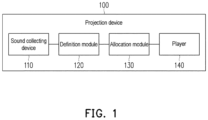
- FIG. 1 is a schematic diagram of a projection device according to an embodiment of the disclosure.
- a projection device 100 includes a sound collecting device 110, a definition module 120, an allocation module 130 and a player 140.
- the definition module 120 is coupled to the sound collecting device 110 and the allocation module 130.
- the allocation module 130 is further coupled to the player 140.
- the sound collecting device 110 may also be an independent device, and may be externally connected to the projection device 100, or may be provided in a terminal device.
- the projection device 100 may further include a processor and a storage device.
- the storage device may store programs or plugins of the definition module 120, the allocation module 130, and the player 140.
- the processor may execute the programs or plugins of the definition module 120, the allocation module 130, and the player 140 to implement their functions.
- the processor may include, for example, a central processing unit (CPU), a graphics processing unit (GPU), or other programmable general-purpose or special-purpose microprocessor, digital signal processor (DSP), programmable controller, application specific integrated circuits (ASIC), programmable logic device (PLD), other similar processing devices or combinations of these devices.
- the storage device may be, for example, any type of a fixed or removable random access memory (RAM), a read-only memory (ROM), a flash memory, a hard disk or other circuits or chips with similar functions or a combination of these devices, circuits and chips.
- the sound collecting device 110 may be a microphone.
- the definition module 120 may be configured to convert a standard instruction or a relay control code into an original control code.
- the allocation module 130 may be configured to determine the activated player 140 and may be configured to transmit the original control code to the specific player 140.
- the player 140 may be a streaming player or a non-streaming player.
- the streaming player may be, for example, Netflix, Disney+, Spotify, Apple music, YouTube, KKBox or Apple TV, but the disclosure is not limited thereto.
- the non-streaming player may be, for example, an MP3 player or a media player, but the disclosure is not limited thereto.
- the projection device 100 may include one or a plurality of players 140 and is not limited to that shown in FIG. 1 .
- the sound collecting device 110 may be, for example, a Bluetooth remote controller with a wireless microphone.
- a conversation mode may be entered to activate the wireless microphone, and the Bluetooth remote control may transmit received voice signals to the projection device 100.
- This embodiment may be applied to the following implementation aspects where the projection device 100 communicates with a natural language model.
- the sound collecting device 110 may be, for example, a matrix sound collecting device.
- the matrix sound collecting device (microphone) is built in the projection device 100.
- the user may speak directly to the projection device 100, and initiate a conversation by entering a conversation party when the projection device 100 receives a keyword (such as "projector"), and if the projection device 100 is playing audio and video at this moment, a volume will be reduced (or turned off).
- a keyword such as "projector”
- This embodiment may be applied to the following implementation aspects where the projection device 100 communicates with the natural language model.
- the sound collecting device 110 may be, for example, a built-in microphone of a mobile phone.
- the mobile phone may activate an application corresponding to the projection device 100 to connect to the projection device 100 through Bluetooth/WiFi.
- the application of the mobile phone is activated (or the application may also be activated through voice)
- the mobile phone may be automatically connected to the projection device 100 and enter the conversation mode.
- a built-in microphone recording function of the mobile phone is turned on to receive the original instruction.
- the embodiment may be applied to the following implementation aspects where a terminal device communicates with the natural language model.
- the sound collecting device 110 may be, for example, a built-in microphone of a mobile phone, and the mobile phone may simply serve as the sound collecting device.
- the mobile phone may be connected to the projection device 100 via Bluetooth/WiFi, but the mobile phone is not used as a medium to communicate with the natural language model, but is only used as a sound collecting device.
- the mobile phone only transmits an original instruction of a voice to the projection device 100, and communicates with a speech-to-text module and/or the natural language model through a cloud communication module of the projection device 100.
- the embodiment may be applied to the following implementation aspects where the projection device 100 communicates with the natural language model.
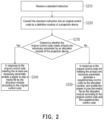
- FIG. 2 is a flowchart of a control method of a projection device according to an embodiment of the disclosure.
- the projection device 100 may perform following steps S210 to S250.
- the sound collecting device 110 may receive the original instruction corresponding to the original control code.
- the original instruction may be a text instruction converted from the voice instruction, or a text instruction input by the user through an input device (such as a keyboard, a touch screen, etc.), which means there is no need to use the sound collecting device 110 in this embodiment, and the text instruction may be transmitted to the natural language model.
- the natural language model may read the original instruction of a text or a speech, convert or summarize the original instruction into a corresponding standard instruction, and provide the standard instruction to the definition module 120.
- the natural language model may be, for example, a chatbot, the chatbot has a machine learning algorithm, and the ChatBot may be, for example, any pre-trained chatbot such as the chat generative pre-trained transformer (ChatGPT), the Microsoft Bing, the Google Bard or the ERNIE Bot, etc., or may be a dedicated chatbot trained with data of a specific field.
- the natural language model may be used to perform natural language processing and understanding, dialogue management, speech-to-text, text-to-speech, etc.
- the natural language model may recognize multiple languages and accents.
- the natural language model may be set up in a cloud server.
- the cloud server may include a processor and a storage device.
- the storage device is, for example, used to store a chatbot with a machine learning algorithm.
- the processor is, for example, configured to execute the above algorithm.
- the definition module 120 may receive the standard instruction.
- the definition module 120 of the projection device 100 may convert the standard instruction into an original control code.
- the original control code is converted from the standard instruction and may be used to control the projection device 100.
- the projection device 100 of different models may use different original control codes when performing the same operation.
- the allocation module 130 of the projection device 100 may determine whether the original control code meets at least one necessary parameter.
- the at least one necessary parameter may, for example, include related parameters such as a player-specific parameter, a file-specific parameter, etc. If yes, in step S240, in response to the original control code meeting the at least one necessary parameter, the allocation module 130 may enable the player 140 to play a media file according to the original control code.
- a number of the media file may be one or plural.
- the media file may include text, pictures, photos, sounds (including music, voice narration, special sound effects), media information of animation or video.
- the allocation module 130 may generate a supplementary control code, and the allocation module 130 may enable the player 140 to play the media file according to the original control code and the supplementary control code. Therefore, according to the control method of the embodiment, the projection device 100 may effectively and automatically execute the player 140 to play the media file according to the instruction input by the user.
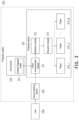
- FIG. 3 is a schematic diagram of a projection system according to an embodiment of the disclosure.
- the projection system 300 includes a projection device 310, a sound collecting device 320 and a cloud server 330.
- the projection device 310 includes a cloud communication module 311, a definition module 312, an allocation module 313 and players 314_1-314_N, where N is a positive integer.
- a storage device of the projection device 310 may store programs or plug-ins of the cloud communication module 311, the definition module 312, the allocation module 313, and the players 314_1-314_N, which may be executed by a processor of the projection device 310.
- the cloud communication module 311 is coupled the sound collecting device 320, the cloud server 330 and the definition module 312.
- the allocation module 313 is coupled to the definition module 312 and the players 314_1-314_N.
- the cloud server 330 includes a natural language model 331.
- the natural language model 331 may also be built in another cloud server, and the cloud server 330 is coupled with the natural language model 331.
- the cloud communication module 311 is configured to communicate with the natural language model 331 of the cloud server 330.
- the sound collecting device 320 may receive a voice instruction in a natural language form from the user 200, and provide the voice instruction as an original instruction to the cloud communication module 311.
- the cloud communication module 311 may send the original instruction together with a rule instruction to the natural language model 331 of the cloud server 330.
- the cloud communication module 311 may also be connected to another cloud server, and the other cloud server has a speech-to-text model to convert the original instruction in a voice data form into the original instruction in a text data form, and transmit the original instruction in the text data form back to the cloud communication module 311.
- the rule instruction may be stored in the cloud communication module 311 or in the cloud server 330.
- the natural language model 331 may identify an intention of the original instruction, and convert the original instruction into the standard instruction according to a restriction of the rule instruction.
- the natural language model 331 returns the standard instruction to the cloud communication module 311 of the projection device 310.
- the definition module 312 of the projection device 310 may convert the standard instruction into the original control code to control the projection device 310 to perform operations.
- the rule instruction is, for example, pre-configured to limit the natural language model 331 to ultimately output only instructions that the projection device 310 may (clearly) identify, so as to solve a problem of the projection device 310 being unable to identify a natural language.
- the rule instruction may also be configured to limit feedback content made by the natural language model 331 to hardware or software of the projection device 310 owned (or used) by the user 200, or to limit an authority of the user 200 to control the projection device 310.
- the rule instruction may limit that when the projection device 310 receives an original instruction of a third HDMI or above or other types of interfaces, the natural language model 331 may reply a prompt instruction, and the projection device 310 may generate prompt information, such as by projecting a prompt image or sending an audio to notify the user 200 that the instruction cannot be executed.
- HDMI high definition multimedia interface
- the rule instruction may limit that when the projection device 310 receives an original instruction of a third HDMI or above or other types of interfaces, the natural language model 331 may reply a prompt instruction, and the projection device 310 may generate prompt information, such as by projecting a prompt image or sending an audio to notify the user 200 that the instruction cannot be executed.
- FIG. 4 is a schematic diagram of a projection system according to an embodiment of the disclosure. Relevant technical features and advantages of a projection system 400 of FIG. 4 are similar to that of the projection system 300 of FIG. 3 , the following embodiments use part of the contents of the foregoing embodiments, and the description of the same technical contents is omitted. For descriptions of omitted parts, reference may be made to the foregoing embodiments and will not be repeated in the following embodiments, and only differences there between are described below. Referring to FIG. 4 , the projection system 400 includes a projection device 410, a terminal device 420 and a cloud server 430.
- the projection device 410 includes a terminal device communication module 411, a definition module 412, an allocation module 413, and players 414_1-414_M, where M is a positive integer.
- a storage device of the projection device 410 may store programs or plug-ins of the terminal device communication module 411, the definition module 412, the allocation module 413, and the players 414_1-414_M, which may be executed by a processor of the projection device 410.
- the terminal device communication module 411 is coupled the terminal device 420 and the definition module 412.
- the allocation module 413 is coupled to the definition module 412 and the players 414_1-414_M.
- the terminal device communication module 411 is configured to communicate with the terminal device 420.
- the terminal device 420 includes a cloud communication module 421.
- a storage device of the terminal device 420 may store programs or plug-ins of the cloud communication module 421, which may be executed by a processor of the terminal device 420.
- the cloud server 430 may include a natural language model 431.
- the cloud communication module 421 is configured to communicate with the natural language model 431 of the cloud server 430.
- the terminal device 420 may be, for example, an electronic device with a sound collecting device such as a smartphone or a computer.
- the terminal device 420 may receive a voice instruction from the user 200 and use the voice instruction as an original instruction.
- the cloud communication module 421 of the terminal device 420 may send the original instruction together with a rule instruction to the natural language model 431 of the cloud server 430.
- the cloud communication module 421 may also be connected to another cloud server, and the other cloud server has a speech-to-text model to convert the original instruction in the voice data form into the original instruction in the text data form, and transmit the original instruction in the text data form back to the cloud communication module 421.
- the rule instruction may be stored in the cloud communication module 421 or in the cloud server 430.
- the terminal device 420 may convert the standard instruction into a relay control code and transmit the relay control code to the terminal device communication module 411 of the projection device 410.
- the terminal device communication module 411 may further provide the relay control code to the definition module 412, and the definition module 412 converts the relay control code into the standard instruction.
- the content of the original instruction includes that the user 200 wants to use a specific player to play a specific media file (such as a video or music).
- the original instruction may be "use Netflix to play movie A", and the natural language model 331 or 431 may output the complete standard instruction according to the original instruction and the rule instruction.
- the standard instruction may be converted into the original control code by the definition module 312 or 412 and transmitted to the allocation module 313 or 413.
- the allocation module 313 or 413 may send the original control code to a specific player (i.e., "Netflix”) based on the content of the original control code, and enable the specific player to play a specific media file (i.e., "movie A").
- a specific player i.e., "Netflix”
- the content of the original instruction is not sufficiently complete, for example, the content of the original instruction only includes the user 200's request to play a specific media file, but does not specify which player to use.
- the original instruction is "I want to watch movie A".
- the natural language model 331 or 431 may still output the standard instruction, and the projection device 310 or 410 may convert the standard instruction into the original control code, but the original control code is incomplete.
- the allocation module 313 or 413 may be configured to determine whether the received original control code meets a necessary parameter. If the necessary parameter is missing, the allocation module 313 or 413 may provide the missing necessary parameter as a supplementary control code according to a status required to supplement the necessary parameter, and execute the original control code and the supplementary control code together. In other words, even when the original instruction provided by the user 200 is incomplete, the projection device 310 or 410 may successfully perform operations.
- the above-mentioned necessary parameter may, for example, include at least a file-specific parameter and a player-specific parameter.
- the file-specific parameter is, for example, a name, a serial number, sorting, a playlist, a date, a type (such as a video, a music, a picture) of the media file, or a combination of the above.
- the player-specific parameter includes, for example, a player name.
- the necessary parameter may also include a source of the media file or other parameters (such as a playback time, a duration or an available display subtitle of the media file), etc.
- the at least one necessary parameter may include a player-specific parameter.
- the player specific parameter is configured to specify a specific player.
- the allocation module 313 or 413 enables a specific player among the plurality of players to play one of the media file(s) (the specific media file) according to the original control code.
- the allocation module 313 or 413 generates a supplementary control code having the missing necessary parameter according to the missing necessary parameter, and the allocation module 313 or 413 generates a supplementary control code according to the original control code according to the missing necessary parameter.
- the allocation module 313 or 413 enables the specific player among the players to play one of the media file(s) (the specific media file) according to at least one of the original control code and the supplementary control code.
- the allocation module 313 or 413 selects the specific player from the players for playback according to the supplementary control code.
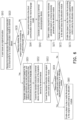
- FIG. 5 is a flowchart of a control method of a projection device according to an embodiment of the disclosure.
- the projection system 300 of FIG. 3 may perform following steps S510 to S573 to achieve a function of voice controlling the projection device 310 to play a specific media file with a specific player.
- the user 200 issues an original instruction.
- the cloud communication module 311 of the projection device 310 receives the original instruction from the sound collecting device 320 and transmits the original instruction to the cloud server 330.
- the natural language model 331 determines whether the original instruction is executable. If the original instruction cannot be executed, in step S541, the natural language model 331 returns prompt information to the cloud communication module 311.
- step S542 the projection device 310 generates a prompt message according to the prompt information, where the prompt message may be presented, for example, through image projection and/or by playing a voice through a speaker.
- the natural language model 331 generates a standard instruction based on the original instruction and the rule instruction.
- the natural language model 331 returns the standard instruction to the cloud communication module 311.
- the cloud communication module 311 provides the standard instruction to the definition module 312.
- the definition module 312 converts the standard instruction into the original control code.
- the allocation module 313 determines whether the original control code meets the necessary parameter. If the original control code meets the necessary parameter, in step S561, the allocation module 313 selects a player of the at least one player 314_1-314_N corresponding to the original control code according to the original control code to play a media file of at least one media file corresponding to the original control code. If the original control code does not meet the necessary parameter, in step S571, the allocation module 313 obtains a status required to meet the necessary parameter based on the missing necessary parameter.
- step S572 the allocation module 313 generates a supplementary control code according to the above status.
- step S573 the allocation module 313 selects the player of the at least one player 314_1-314_N corresponding to the original control code or the supplementary control code to play the media file of the at least one media file corresponding to the original control code or the supplementary control code according to at least one of the original control code and the supplementary control code.
- FIG. 6 is a flowchart of a control method of a projection device according to an embodiment of the disclosure.
- the projection system 400 of FIG. 4 may perform following steps S610 to S673 to achieve the function of voice controlling the projection device 410 to play a specific media file with a specific player.
- the user 200 issues an original instruction.
- the cloud communication module 421 of the terminal device 420 receives the original instruction and transmits the original instruction to the cloud server 430.
- the natural language model 431 determines whether the original instruction is executable. If the original instruction cannot be executed, in step S641, the natural language model 431 returns prompt information to the cloud communication module 421.
- step S642 the terminal device 420 generates a prompt message according to the prompt information, where the prompt message is, for example, presented in the form of image, text or audio.
- the terminal device 420 provides the prompt information to the terminal device communication module 411 of the projection device 410.
- the projection device 410 generates the prompt message according to the prompt information.
- the natural language model 431 generates a standard instruction based on the original instruction and the rule instruction, and transmits the standard instruction back to the terminal device 420.
- the terminal device 420 transmits the standard instruction to the terminal device communication module 411 of the projection device 410.
- the definition module 412 converts the standard instruction into an original control code.
- step S654 the allocation module 413 determines whether the original control code meets the necessary parameter. If the original control code meets the necessary parameter, in step S661, the allocation module 413 selects a player of the at least one player 414_1-414_M corresponding to the original control code to play a media file of the at least one media file corresponding to the original control code according to the original control code. If the original control code does not meet the necessary parameter, in step S671, the allocation module 413 obtains a status required to meet the necessary parameter based on the missing necessary parameter. In step S672, the allocation module 413 generates a supplementary control code according to the above status.
- step S673 the allocation module 413 selects the player of the at least one player 414_1-414_M corresponding to the original control code or the supplementary control code to play the media file of the at least one media file corresponding to the original control code or the supplementary control code according to at least one of the original control code and the supplementary control code.
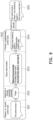
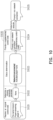
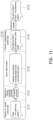
- FIG. 7 to FIG. 12 are operational schematic diagrams of a plurality of exemplary embodiments of the disclosure.
- operation methods of the allocation module 313 in the embodiment of FIG. 3 and the allocation module 413 in the embodiment of FIG. 4 are described in detail below.
- the user 200 may provide an original instruction, such as "I want to watch movie A".
- the natural language model 331 and the definition module 312 may analyze the original instruction and convert the original instruction into an original control code according to the rule instruction.
- the natural language model 331 may analyze the original instruction "I want to watch movie A" and generate a corresponding standard instruction.
- the definition module 312 may convert the corresponding standard instruction into the corresponding original control code, which for example instructs to play a media file with a file name of "movie A”.
- the allocation module 313 may further analyze the original control code.
- the allocation module 313 may generate a supplementary control code for specifying a player so that the allocation module 313 selects the player with the highest priority from the at least one player 314_1-314_N, where the player with the highest priority (the specific player) is, for example, the currently activated player. In this way, the player with the highest priority (the specific player) may play the media file according to the file-specific parameter in the original control code.
- the allocation module 313 may further determine a network connection status of the projection device 310, determine whether there is an activated player, and/or determine whether the projection device 310 has a connected hard disk.
- the hard disk may be, for example, an external hard disk connected through a connection port, or a network hard disk connected through a network, and the media files in the hard disk may be read by a non-streaming player.
- the streaming player may be the player with the highest priority.
- the allocation module 313 determines that there is the activated player and the activated player is a non-streaming player, and the projection device 310 is connected to at least one hard disk, the non-streaming player is the player with the highest priority.
- the allocation module 313 determines that there is the activated player and the activated player is the streaming player, and the projection device 310 is in a non-network connected status, the allocation module 313 switches the activated player to the non-streaming player with the highest priority.
- the player with the highest priority may be a first available player in a preset player ranking.
- the player ranking may be, for example, a streaming player A, a streaming player B and a non-streaming player C in a descending order of priority.
- the non-streaming player with the highest priority is the non-streaming player C.
- the allocation module 313 may receive the original control code (i.e., file-specific parameter) instructing to play the media file with the file name of "movie A".
- the allocation module 313 may determine that the necessary parameter missing in the original control code is a name of the player (i.e., the player-specific parameter is missing).
- the allocation module 313 may perform status determination to determine that the projection device 310 is in the network connected status, the activated player is the streaming player A, and the connected hard disk is a hard disk A.
- the supplementary control code provided by the allocation module 313 is a player-specific supplementary parameter, which is, for example, the supplementary control code used to instruct the player to be the streaming player A.
- the allocation module 313 may select a corresponding one of the players 314_1-314_N (i.e., the "streaming player A") to play the corresponding media file (i.e., the "movie A") according to the original control code instructing to play the media file with the file name of "movie A" and the supplementary control code instructing the player to be the streaming player A.
- the allocation module 313 determines that there is no activated player in the projection device 310, and the projection device 310 is in the network connected status, the player with the highest priority is taken as the selected player, for example, the streaming player B.
- the allocation module 313 may analyze the original control code.
- the allocation module 313 may receive the original control code (i.e., file-specific parameter) instructing to play the media file with the file name of "movie A".
- the necessary parameter that the allocation module 313 lacks in the original control code is the name of the player (i.e., the player-specific parameter is missing).
- the allocation module 313 may perform status determination to determine that the projection device 310 is in the network connected status and the activated player is the streaming player B.
- the supplementary control code provided by the allocation module 313 is the player-specific supplementary parameter, i.e., the supplementary control code instructing the player to be the streaming player B.
- the allocation module 313 may select a corresponding one of the players 314_1-314_N (i.e., the "streaming player B") to play the corresponding media file (i.e., the "movie A") according to the original control code instructing to play the media file with the file name of "movie A" and the supplementary control code instructing the player to be the streaming player B.
- the allocation module 313 determines that the projection device 310 is in the non-network connected status and there is no activated player, the player with the highest priority selected by the allocation module 313 is a non-streaming player.
- the preset player ranking may be, for example, the streaming player A, the streaming player B, the non-streaming player C, and a non-streaming player D in a descending order of priority. Since the network connection status is the non-network connected status, the allocation module 313 selects to use the non-streaming player C with the highest priority.
- the allocation module 313 executes the non-streaming player, and the non-streaming player plays the media file according to the file-specific parameter by reading the hard disk.
- the allocation module 313 executes the non-streaming player, and the non-streaming player plays the media file according to the file-specific parameter by reading the hard disk with the highest priority from the hard disks.
- the hard disk with the highest priority may be a first ranked hard disk in the preset hard disk ranking.
- the hard disk ranking may be, for example, sequentially a first hard disk corresponding to "hard disk A" and a second hard disk corresponding to "hard disk B" in a descending order of priority.
- the allocation module 313 may analyze the original control code.
- the allocation module 313 may receive the original control code (i.e., the file-specific parameter) instructing to play the media file with the file name of "movie A".
- the necessary parameter that the allocation module 313 lacks in the original control code is the name of the player (i.e., the player-specific parameter is missing).
- the allocation module 313 may perform status determination to determine that the projection device 310 is in the non-network connected status, there is no activated player, and the connected hard disks are "hard disk A" and "hard disk B".
- the supplementary control code that may be provided by the allocation module 313 is the player-specific supplementary parameter and a hard disk-specific supplementary parameter, i.e., the supplementary control code indicating that the player uses the non-streaming player C and a file source is the hard disk A.
- the allocation module 313 may select a corresponding one of the players 314_1-314_N (i.e., the "non-streaming player C") to read a corresponding one of the plurality of hard disks (i.e., the "hard disk A”) to play the corresponding media file (i.e. the "movie A") according to the original control code instructing to play the media file with the file name of "movie A", the supplementary control code instructing the player to be the non-streaming player C, and instructing that the file source is the hard disk A.
- the allocation module 313 determines that there is the activated player and the activated player is a streaming player, but the projection device 310 is in the non-network connected status, the allocation module 313 switches the activated player to the non-streaming player with the highest priority.
- the allocation module 313 determines that the original control code includes the file-specific parameter and the player-specific parameter, the allocation module 313 determines that the player-specific parameter is used to specify the use of a streaming player, and when the projection device 310 is in the non-network connected status, the projection device 310 may, for example, generate a prompt message.
- the projection device 310 may, for example, generate the prompt message to inform the user 200 that the original instruction cannot be achieved.
- the allocation module 313 may analyze the original control code.
- the allocation module 313 may receive an original control code instructing to play a media file with the file name of "movie A" and instructing the player to be the "streaming player B", i.e., the original control code includes the file-specific parameter and the player-specific parameter.
- the allocation module 313 may determine that the original control code is not lack of the necessary parameter.
- the allocation module 313 may perform status determination to determine that the projection device 310 is in the non-network connected status and there is no activated player.
- step S 1034 the supplementary control code that may be provided by the allocation module 313 is used to generate a prompt message of non-network connection.
- step S1035 the allocation module 313 may generate the prompt message of non-network connection according to the supplementary control code, so that the projection device 310 may generate the prompt message.
- the allocation module 313 when the allocation module 313 receives an original control code instructing to play a media file with the file name of "movie A" and instructing the player to be the "non-streaming player C", if multiple media files that meet the file-specific parameter are found in the non-streaming player C, i.e., multiple media files with the file name of the "movie A" are found, the allocation module 313 may display a list of videos that meet this condition on a display interface or a projection screen through the projection device 310 for the user to select, or the allocation module 313 may also generate a supplementary control code, and the supplementary control code may be preset to automatically play the aforementioned plurality of media files according to rankings such as a file order, play times, upload dates, etc.
- the allocation module 313 determines that the original control code includes the player-specific parameter but does not include the file-specific parameter, the player-specific parameter is used to instruct the player to be a non-streaming player, the allocation module 313 determines that the projection device 310 is in the non-network connected status and the projection device 310 is connected to at least one hard disk, the allocation module 313 may generate a supplementary control code for specifying to play a media file, and the allocation module 313 selects the media file with the highest priority, where the media file with the highest priority may be a preset media file ranking.
- the media file ranking may be, for example, a media file serial number 1, a media file serial number 2, and a media file serial number 3 in a descending order of priority. Therefore, the allocation module 313 may execute the player according to the player-specific parameter and play the corresponding media file according to the supplementary control code.
- the media file ranking may be set in a setting interface (such as OSD) of the projection device 310, which may be, for example, set according to serial numbers of the file names of the plurality of media files, according to play times of the plurality of media files, or according to rating values of the plurality of media files, etc.
- the allocation module 313 may analyze the original control code.
- the allocation module 313 may receive the original control code (i.e., the player-specific parameter) instructing the player to be the "non-streaming player C".
- the allocation module 313 may determine that the necessary parameter missing in the original control code is the file name (i.e., the file-specific parameter is missing).
- the allocation module 313 may perform status determination to determine that the projection device 310 is in the non-network connected status, there is no activated player, and the connected hard disk is the "hard disk A".
- the allocation module 313 may provide the supplementary control code of the file-specific supplementary parameter, i.e., the supplementary control code used to indicate that the serial number of the played media file is 1.
- the allocation module 313 may select a corresponding one of the players 314_1-314_N (i.e., the "non-streaming player C") to read a corresponding one of the plurality of hard disks (i.e., the "hard disk A”) according to the original control code instructing the player to be the non-streaming player C and reading the hard disk A, and the supplementary control code indicating that the media file serial number is 1, so as to play the media file with the media file serial number of 1.
- the allocation module 313 may generate a supplementary control code, where the supplementary control code includes a play-specific supplementary parameter and a file-specific supplementary parameter.
- the player-specific supplementary parameter may be, for example, used to specify a non-streaming player, and the allocation module 313 may determine whether the projection device 310 is connected to a hard disk.
- the allocation module 313 executes the non-streaming player according to the player-specific supplementary parameter, and the non-streaming player reads the hard disk to play the media file according to the file-specific supplementary parameter.
- the projection device 310 when the projection device 310 is not connected to the hard disk, the projection device 310 generates a prompt message, or the allocation module 313 may change to execute a streaming player according to the player-specific supplementary parameter.
- the player-specific supplementary parameter may also be used to specify a streaming player
- the allocation module 313 may determine a network connection status of the projection device 310.
- the allocation module 313 executes the streaming player according to the player-specific supplementary parameter, and the streaming player plays the media file according to the file-specific supplementary parameter.
- the projection device 310 may generate a prompt message, or the allocation module 313 may change to execute a non-streaming player according to the player-specific supplementary parameter. It is assumed that both of the non-streaming player and the streaming player may all be executed, a priority of the allocation module 313 in selecting to use the non-streaming player may be higher than that of the streaming player.
- the allocation module 313 may analyze the original control code.
- the allocation module 313 may receive the original control code that lacks both of the player-specific parameter and the file-specific parameter.
- the allocation module 313 may determine that the necessary parameters missing from the original control code are the file name and the player name (i.e., the player-specific parameter and the file-specific parameter are missing).
- the allocation module 313 may perform status determination to determine that the projection device 310 is in the network connected status, the activated player is the streaming player B, and the connected hard disk is the "hard disk A".
- the supplementary control code that may be provided by the allocation module 313 includes the player-specific supplementary parameter and the file-specific supplementary parameter, i.e., including the supplementary control code instructing to execute the non-streaming player C and instructing the media file serial number of 1, and the supplementary control code may also include a hard disk-specific supplementary parameter used to indicate that a file source is the hard disk A.
- the allocation module 313 may select a corresponding one of the players 314_1-314_N (i.e., the "non-streaming player C") to read a corresponding one of the plurality of hard disks (i.e., the "hard disk A") according to the supplementary control code instructing the player to be the non-streaming player C, instructing the file source to be the hard disk A and instructing to play the media file serial number of 1, so as to play the media file with the media file serial number of 1.
- the projection device may execute the corresponding player to play the corresponding media file according to the original instruction provided by the user.
- the projection system, projection device and the control method thereof may also automatically generate an appropriate supplementary control code to effectively execute a specific player and play a specific media file.
- the term "the invention”, “the present invention” or the like does not necessarily limit the claim scope to a specific embodiment, and the reference to particularly preferred exemplary embodiments of the invention does not imply a limitation on the invention, and no such limitation is to be inferred.
- the invention is limited only by the scope of the appended claims. Moreover, these claims may refer to use "first”, “second”, etc. following with noun or element. Such terms should be understood as a nomenclature and should not be construed as giving the limitation on the number of the elements modified by such nomenclature unless specific number has been given.
- the abstract of the disclosure is provided to comply with the rules requiring an abstract, which will allow a searcher to quickly ascertain the subject matter of the technical disclosure of any patent issued from this disclosure.
Landscapes
- Engineering & Computer Science (AREA)
- Multimedia (AREA)
- Signal Processing (AREA)
- Databases & Information Systems (AREA)
- Theoretical Computer Science (AREA)
- Audiology, Speech & Language Pathology (AREA)
- Health & Medical Sciences (AREA)
- General Health & Medical Sciences (AREA)
- Human Computer Interaction (AREA)
- Physics & Mathematics (AREA)
- General Engineering & Computer Science (AREA)
- General Physics & Mathematics (AREA)
- Computer Graphics (AREA)
- Projection Apparatus (AREA)
Abstract
Description
- This claims the priority of
US provisional application serial no. 63/536,501, filed on September 5, 2023 China application serial no. 202311523647.8, filed on November 15, 2023 - The disclosure relates to a display technique, and particularly relates to a projection system, a projection device and a control method thereof.
- A current method of playing specific media by a projector is implemented by a user by manually operating the projector or manually operating an electronic device which is a data source of the media, so that the conventional operation of playing media through the projector is quite inconvenient.
- The information disclosed in this Background section is only for enhancement of understanding of the background of the described technology and therefore it may contain information that does not form the prior art that is already known to a person of ordinary skill in the art. Further, the information disclosed in the Background section does not mean that one or more problems to be resolved by one or more embodiments of the disclosure was acknowledged by a person of ordinary skill in the art.
- The disclosure is directed to a projection system, a projection device and a control method thereof, which are adapted to receive instructions of a user to control the projection device to play media files.
- Additional aspects and advantages of the present disclosure will be set forth in the description of the techniques disclosed in the present disclosure.
- The object is solved by the features of the independent claims. Preferred embodiments are given in the dependent claims.
- In order to achieve one or a portion of or all of the objects or other objects, an embodiment of the disclosure provides a control method of a projection device including following steps: receiving a standard instruction; converting the standard instruction into an original control code through a definition module of the projection device; determining whether the original control code meets at least one necessary parameter through an allocation module of the projection device; in response to the original control code meeting the at least one necessary parameter, enabling a player of at least one player to play a media file of at least one media file by the allocation module according to the original control code; and in response to the original control code not meeting the at least one necessary parameter, generating a supplementary control code by the allocation module, and enabling the player of the at least one player to play the media file of the at least one media file by the allocation module according to at least one of the original control code and the supplementary control code.
- In one or more embodiments, the step of receiving the standard instruction may include: receiving an original instruction from a sound collecting device by a cloud communication module; generating the standard instruction based on the original instruction and a rule instruction through a natural language model; and receiving the standard instruction from the natural language model by using the cloud communication module.
- In one or more embodiments, the step of receiving the standard instruction may include: receiving an original instruction by a terminal device; generating the standard instruction according to the original instruction and a rule instruction through a natural language model; receiving the standard instruction from the natural language model by a cloud communication module of the terminal device; and receiving the standard instruction from the terminal device by a terminal device communication module of the projection device.
- In one or more embodiments, the at least one necessary parameter may include a file-specific parameter and a player-specific parameter.
- In one or more embodiments, the step of in response to the original control code not meeting the at least one necessary parameter may include: in response to the original control code including the file-specific parameter but not including the player-specific parameter, generating the supplementary control code for specifying a player by the allocation module, so that the allocation module selects the player with a highest priority from the at least one player; and using the player with the highest priority to play the corresponding media file according to the file-specific parameter.
- In one or more embodiments, the step of selecting the player with the highest priority by the allocation module may include: determining whether there is an activated player in the projection device by the allocation module; in response to the allocation module determining that there is the activated player and the activated player is a streaming player, and the projection device is in a network connected status, the streaming player being the player with the highest priority; in response to the allocation module determining that there is the activated player and the activated player is a non-streaming player, and the projection device is connected to at least one hard disk, the non-streaming player being the player with the highest priority; and in response to the allocation module determining that there is the activated player and the activated player is the streaming player, and the projection device is in a non-network connected status, using the allocation module to switch the activated player to the non-streaming player with the highest priority.
- In one or more embodiments, the step of selecting the player with the highest priority by the allocation module may include: determining a network connection status of the projection device by the allocation module; and in response to the network connection status being the non-network connected status and the projection device being connected to at least one hard disk, selecting the player with the highest priority as a non-streaming player by the allocation module.
- In one or more embodiments, the control method may further include: in response to the projection device being connected to a hard disk of at least one hard disk, enabling the non-streaming player to play the corresponding media file according to the file-specific parameter by the allocation module by reading the hard disk; and in response to the projection device being connected to a plurality hard disks of the at least one hard disk, using the allocation module to enable the non-streaming player to play the corresponding media file according to the file-specific parameter by reading a hard disk with the highest priority from the hard disks.
- In one or more embodiments o, the step of in response to the original control code not meeting the at least one necessary parameter may include: in response to the original control code including the player-specific parameter but not including the file-specific parameter, generating the supplementary control code for specifying to play a media file by the allocation module, so that the allocation module selects the media file with the highest priority from the at least one media file; and executing the corresponding player according to the player-specific parameter by the allocation module, and playing the corresponding media file according to the supplementary control code.
- In one or more embodiments, the step of in response to the original control code not meeting the at least one necessary parameter may include: in response to the original control code not including the player-specific parameter and the file-specific parameter, generating the supplementary control code by the allocation module, where the supplementary control code includes a player-specific supplementary parameter and a file-specific supplementary parameter; in response to the player-specific supplementary parameter being configured to specify a non-streaming player, determining whether the projection device is connected to a hard disk by the allocation module; in response to the projection device being connected to the hard disk, enabling the non-streaming player to play the corresponding media file by reading the hard disk based on the file-specific supplementary parameter by the allocation module according to the player-specific supplementary parameter; and in response to the projection device being not connected to the hard disk, generating a prompt message by the projection device.
- In one or more embodiments, the step of in response to the original control code not meeting the at least one necessary parameter may include: in response to the player-specific supplementary parameter being configured to specify a streaming player, determining a network connection status of the projection device by the allocation module; in response to the network connection status being a network connected status, enabling the streaming player to play the corresponding media file based on the file-specific supplementary parameter by the allocation module according to the player-specific supplementary parameter; and in response to the network connection status being a non-network connected status, generating the prompt message by the projection device.
- In one or more embodiments, the control method may further include: in response to the original control code including the player-specific parameter, the player-specific parameter being used to specify a streaming player, and the projection device being in a non-network connected status, generating a prompt message by the projection device; and in response to the original control code including the player-specific parameter, the player-specific parameter being used to specify a non-streaming player, and the projection device being not connected to a hard disk, generating the prompt message by the projection device.
- In order to achieve one or a portion of or all of the objects or other objects, an embodiment of the disclosure provides a projection system including a cloud server and a projection device. The projection device is configured to receive a standard instruction generated by the cloud server. The projection device includes at least one player, a definition module, and an allocation module. The definition module is configured to convert the standard instruction to an original control code. The allocation module is configured to determine whether the original control code meets at least one necessary parameter. In response to the original control code meeting the at least one necessary parameter, the allocation module is configured to enable a player of the at least one player to play a media file of at least one media file according to the original control code. In response to the original control code not meeting the at least one necessary parameter, the allocation module is configured to generate a supplementary control code, and the allocation module enables the player of the at least one player to play the media file of the at least one media file according to at least one of the original control code and the supplementary control code.
- In one or more embodiments, the projection system may further include a sound collecting device.
- The sound collecting device may be coupled to the projection device.
- The projection device may further include a cloud communication module.
- The cloud communication module may be coupled to the definition module and the cloud server.
- The cloud communication module may be configured to receive an original instruction from the sound collecting device.
- The cloud communication module may generate the standard instruction based on the original instruction and a rule instruction through a natural language model of the cloud server.
- The cloud communication module may receive the standard instruction from the cloud server.
- In one or more embodiments, the projection system may further include a terminal device.
- The terminal device may be coupled to the projection device and is configured to receive an original instruction.
- The terminal device may include a cloud communication module.
- The cloud communication module may be coupled to the cloud server, and the cloud communication module may generate the standard instruction according to the original instruction and a rule instruction through a natural language model of the cloud server.
- The projection device may further include a terminal device communication module. The terminal device communication module may be coupled to the allocation module and the terminal device, and may be configured to receive the standard instruction from the terminal device.
- In one or more embodiments, the at least one necessary parameter may include a file-specific parameter and a player-specific parameter.
- In one or more embodiments , the operation of in response to the original control code not meeting the at least one necessary parameter may include: in response to the original control code including the file-specific parameter but not including the player-specific parameter, the allocation module generates the supplementary control code for specifying a player, so that the allocation module selects the player with a highest priority from the at least one player, and the player with the highest priority plays the corresponding media file according to the file-specific parameter.
- In one or more embodiments, the operation of in response to the allocation module selecting the player with the highest priority may include: the allocation module determines whether there is an activated player in the projection device.
- In response to the allocation module determining that there is the activated player and the activated player is a streaming player, and the projection device is in a network connected status, the streaming player is the player with the highest priority.
- In response to the allocation module determining that there is the activated player and the activated player is a non-streaming player, and the projection device is connected to at least one hard disk, the non-streaming player is the player with the highest priority. In response to the allocation module determining that there is the activated player and the activated player is the streaming player, and the projection device is in a non-network connected status, the allocation module switches the activated player to the non-streaming player with the highest priority.
- In one or more embodiments, the operation of in response to the allocation module selecting the player with the highest priority may include: the allocation module determines a network connection status of the projection device. In response to the network connection status being the non-network connected status and the projection device being connected to at least one hard disk, the allocation module selects the player with the highest priority as a non-streaming player.
- In one or more embodiments, in response to the projection device being connected to a hard disk of the at least one hard disk, the allocation module may enable the non-streaming player to play the corresponding media file according to the file-specific parameter by reading the hard disk.
- In response to the projection device being connected to a plurality hard disks of the at least one hard disk, the allocation module may be configured to enable the non-streaming player to play the corresponding media file according to the file-specific parameter by reading a hard disk with the highest priority from the hard disks.
- In one or more embodiments, the operation of in response to the original control code not meeting the at least one necessary parameter may include: in response to the original control code including the player-specific parameter but not including the file-specific parameter, the allocation module generates the supplementary control code for specifying to play a media file, so that the allocation module selects the media file with the highest priority from the at least one media file.
- The allocation module may execute the corresponding player according to the player-specific parameter, and plays the corresponding media file according to the supplementary control code.
- In one or more embodiments, the operation of in response to the original control code not meeting the at least one necessary parameter may include: in response to the original control code not including the player-specific parameter and the file-specific parameter, the allocation module is configured to generate the supplementary control code, where the supplementary control code includes a player-specific supplementary parameter and a file-specific supplementary parameter; in response to the player-specific supplementary parameter being configured to specify a non-streaming player, the allocation module is configured to determine whether the projection device is connected to a hard disk; in response to the projection device being connected to the hard disk, the allocation module is configured to enable the non-streaming player to play the corresponding media file by reading the hard disk based on the file-specific supplementary parameter according to the player-specific supplementary parameter; and in response to the projection device being not connected to the hard disk, the projection device generates a prompt message.
- In one or more embodiments , the operation of in response to the original control code not meeting the at least one necessary parameter may include: in response to the player-specific supplementary parameter being configured to specify a streaming player, the allocation module determines a network connection status of the projection device. In response to the network connection status being a network connected status, the allocation module enables the streaming player to play the file based on the file-specific supplementary parameter according to the player-specific supplementary parameter. In response to the network connection status being a non-network connected status, the projection device generates the prompt message.
- In order to achieve one or a portion of or all of the objects or other objects, an embodiment of the disclosure provides a projection device including at least one player, a sound collecting device, and an allocation module. The sound collecting device is configured to receive an original instruction corresponding to an original control code. The allocation module is coupled to the player and the sound collecting device, and is configured to determine whether the original control code meets at least one necessary parameter. In response to the original control code meeting the at least one necessary parameter, the allocation module is configured to enable a player in the at least one player to play a media file in at least one media file according to the original control code. In response to the original control code not meeting the at least one necessary parameter, the allocation module generates a supplementary control code, and the allocation module is configured to enable the player in the at least one player to play the media file in the at least one media file according to at least one of the original control code and the supplementary control code.
- Based on the above descriptions, the projection system, projection device and the control method thereof may receive a user instruction to control the projection device to operate the player and play the corresponding media file.
- To make the aforementioned more comprehensible, several embodiments accompanied with drawings are described in detail as follows.
- Other objectives, features and advantages of the present invention will be further understood from the further technological features disclosed by the embodiments of the present invention wherein there are shown and described preferred embodiments of this invention, simply by way of illustration of modes best suited to carry out the invention.
-
-
FIG. 1 is a schematic diagram of a projection device of an embodiment of the disclosure. -
FIG. 2 flowchart of a control method of a projection device of an embodiment of the disclosure. -
FIG. 3 is a schematic diagram of a projection system of an embodiment of the disclosure. -
FIG. 4 is a schematic diagram of a projection system of an embodiment of the disclosure. -
FIG. 5 flowchart of a control method of a projection device of an embodiment of the disclosure. -
FIG. 6 flowchart of a control method of a projection device of an embodiment of the disclosure. -
FIG. 7 to FIG. 12 are operational schematic diagrams of a plurality of exemplary embodiments of the disclosure. - It is to be understood that other embodiment may be utilized and structural changes may be made without departing from the scope of the appended claims. Also, it is to be understood that the phraseology and terminology used herein are for the purpose of description and should not be regarded as limiting. The use of "including," "comprising," or "having" and variations thereof herein is meant to encompass the items listed thereafter and equivalents thereof as well as additional items. Unless limited otherwise, the terms "connected," "coupled," and "mounted," and variations thereof herein are used broadly and encompass direct and indirect connections, couplings, and mountings.
-
FIG. 1 is a schematic diagram of a projection device according to an embodiment of the disclosure. Referring toFIG. 1 , aprojection device 100 includes asound collecting device 110, adefinition module 120, anallocation module 130 and aplayer 140. Thedefinition module 120 is coupled to thesound collecting device 110 and theallocation module 130. Theallocation module 130 is further coupled to theplayer 140. In an embodiment, thesound collecting device 110 may also be an independent device, and may be externally connected to theprojection device 100, or may be provided in a terminal device. In the embodiment, theprojection device 100 may further include a processor and a storage device. The storage device may store programs or plugins of thedefinition module 120, theallocation module 130, and theplayer 140. The processor may execute the programs or plugins of thedefinition module 120, theallocation module 130, and theplayer 140 to implement their functions. - In the embodiment, the processor may include, for example, a central processing unit (CPU), a graphics processing unit (GPU), or other programmable general-purpose or special-purpose microprocessor, digital signal processor (DSP), programmable controller, application specific integrated circuits (ASIC), programmable logic device (PLD), other similar processing devices or combinations of these devices. In the embodiment, the storage device may be, for example, any type of a fixed or removable random access memory (RAM), a read-only memory (ROM), a flash memory, a hard disk or other circuits or chips with similar functions or a combination of these devices, circuits and chips.
- In the embodiment, the
sound collecting device 110 may be a microphone. Thedefinition module 120 may be configured to convert a standard instruction or a relay control code into an original control code. Theallocation module 130 may be configured to determine the activatedplayer 140 and may be configured to transmit the original control code to thespecific player 140. In the embodiment, theplayer 140 may be a streaming player or a non-streaming player. The streaming player may be, for example, Netflix, Disney+, Spotify, Apple music, YouTube, KKBox or Apple TV, but the disclosure is not limited thereto. The non-streaming player may be, for example, an MP3 player or a media player, but the disclosure is not limited thereto. Theprojection device 100 may include one or a plurality ofplayers 140 and is not limited to that shown inFIG. 1 . - In an embodiment, the
sound collecting device 110 may be, for example, a Bluetooth remote controller with a wireless microphone. For example, when a user presses a voice button on the remote controller, a conversation mode may be entered to activate the wireless microphone, and the Bluetooth remote control may transmit received voice signals to theprojection device 100. This embodiment may be applied to the following implementation aspects where theprojection device 100 communicates with a natural language model. - In an embodiment, the
sound collecting device 110 may be, for example, a matrix sound collecting device. The matrix sound collecting device (microphone) is built in theprojection device 100. For example, the user may speak directly to theprojection device 100, and initiate a conversation by entering a conversation party when theprojection device 100 receives a keyword (such as "projector"), and if theprojection device 100 is playing audio and video at this moment, a volume will be reduced (or turned off). This embodiment may be applied to the following implementation aspects where theprojection device 100 communicates with the natural language model. - In an embodiment, the
sound collecting device 110 may be, for example, a built-in microphone of a mobile phone. For example, the mobile phone may activate an application corresponding to theprojection device 100 to connect to theprojection device 100 through Bluetooth/WiFi. When the application of the mobile phone is activated (or the application may also be activated through voice), the mobile phone may be automatically connected to theprojection device 100 and enter the conversation mode. Then, a built-in microphone recording function of the mobile phone is turned on to receive the original instruction. The embodiment may be applied to the following implementation aspects where a terminal device communicates with the natural language model. - In an embodiment, the
sound collecting device 110 may be, for example, a built-in microphone of a mobile phone, and the mobile phone may simply serve as the sound collecting device. For example, the mobile phone may be connected to theprojection device 100 via Bluetooth/WiFi, but the mobile phone is not used as a medium to communicate with the natural language model, but is only used as a sound collecting device. The mobile phone only transmits an original instruction of a voice to theprojection device 100, and communicates with a speech-to-text module and/or the natural language model through a cloud communication module of theprojection device 100. The embodiment may be applied to the following implementation aspects where theprojection device 100 communicates with the natural language model. -
FIG. 2 is a flowchart of a control method of a projection device according to an embodiment of the disclosure. Referring toFIG. 1 andFIG. 2 , theprojection device 100 may perform following steps S210 to S250. In the embodiment, thesound collecting device 110 may receive the original instruction corresponding to the original control code. In an embodiment, the original instruction may be a text instruction converted from the voice instruction, or a text instruction input by the user through an input device (such as a keyboard, a touch screen, etc.), which means there is no need to use thesound collecting device 110 in this embodiment, and the text instruction may be transmitted to the natural language model. The natural language model may read the original instruction of a text or a speech, convert or summarize the original instruction into a corresponding standard instruction, and provide the standard instruction to thedefinition module 120. - In the embodiment, the natural language model may be, for example, a chatbot, the chatbot has a machine learning algorithm, and the ChatBot may be, for example, any pre-trained chatbot such as the chat generative pre-trained transformer (ChatGPT), the Microsoft Bing, the Google Bard or the ERNIE Bot, etc., or may be a dedicated chatbot trained with data of a specific field. The natural language model may be used to perform natural language processing and understanding, dialogue management, speech-to-text, text-to-speech, etc. The natural language model may recognize multiple languages and accents. In the embodiment, the natural language model may be set up in a cloud server. The cloud server may include a processor and a storage device. The storage device is, for example, used to store a chatbot with a machine learning algorithm. The processor is, for example, configured to execute the above algorithm.
- In step S210, the
definition module 120 may receive the standard instruction. In step S220, thedefinition module 120 of theprojection device 100 may convert the standard instruction into an original control code. In the embodiment, the original control code is converted from the standard instruction and may be used to control theprojection device 100. Theprojection device 100 of different models may use different original control codes when performing the same operation. In step S230, theallocation module 130 of theprojection device 100 may determine whether the original control code meets at least one necessary parameter. The at least one necessary parameter may, for example, include related parameters such as a player-specific parameter, a file-specific parameter, etc. If yes, in step S240, in response to the original control code meeting the at least one necessary parameter, theallocation module 130 may enable theplayer 140 to play a media file according to the original control code. A number of the media file may be one or plural. The media file may include text, pictures, photos, sounds (including music, voice narration, special sound effects), media information of animation or video. If not, in step S250, in response to the original control code not meeting the at least one necessary parameter, theallocation module 130 may generate a supplementary control code, and theallocation module 130 may enable theplayer 140 to play the media file according to the original control code and the supplementary control code. Therefore, according to the control method of the embodiment, theprojection device 100 may effectively and automatically execute theplayer 140 to play the media file according to the instruction input by the user. -
FIG. 3 is a schematic diagram of a projection system according to an embodiment of the disclosure. Referring toFIG. 3 , theprojection system 300 includes aprojection device 310, asound collecting device 320 and acloud server 330. Theprojection device 310 includes acloud communication module 311, adefinition module 312, anallocation module 313 and players 314_1-314_N, where N is a positive integer. A storage device of theprojection device 310 may store programs or plug-ins of thecloud communication module 311, thedefinition module 312, theallocation module 313, and the players 314_1-314_N, which may be executed by a processor of theprojection device 310. Thecloud communication module 311 is coupled thesound collecting device 320, thecloud server 330 and thedefinition module 312. Theallocation module 313 is coupled to thedefinition module 312 and the players 314_1-314_N. Thecloud server 330 includes anatural language model 331. In an embodiment, thenatural language model 331 may also be built in another cloud server, and thecloud server 330 is coupled with thenatural language model 331. In the embodiment, thecloud communication module 311 is configured to communicate with thenatural language model 331 of thecloud server 330. - In the embodiment, the
sound collecting device 320 may receive a voice instruction in a natural language form from theuser 200, and provide the voice instruction as an original instruction to thecloud communication module 311. Thecloud communication module 311 may send the original instruction together with a rule instruction to thenatural language model 331 of thecloud server 330. In an embodiment, thecloud communication module 311 may also be connected to another cloud server, and the other cloud server has a speech-to-text model to convert the original instruction in a voice data form into the original instruction in a text data form, and transmit the original instruction in the text data form back to thecloud communication module 311. In the embodiment, the rule instruction may be stored in thecloud communication module 311 or in thecloud server 330. - In the embodiment, after the
natural language model 331 receives the original instruction and the rule instruction from thecloud communication module 311 of theprojection device 310, thenatural language model 331 may identify an intention of the original instruction, and convert the original instruction into the standard instruction according to a restriction of the rule instruction. Thenatural language model 331 returns the standard instruction to thecloud communication module 311 of theprojection device 310. Thedefinition module 312 of theprojection device 310 may convert the standard instruction into the original control code to control theprojection device 310 to perform operations. - The rule instruction is, for example, pre-configured to limit the
natural language model 331 to ultimately output only instructions that theprojection device 310 may (clearly) identify, so as to solve a problem of theprojection device 310 being unable to identify a natural language. The rule instruction may also be configured to limit feedback content made by thenatural language model 331 to hardware or software of theprojection device 310 owned (or used) by theuser 200, or to limit an authority of theuser 200 to control theprojection device 310. For example, in terms of hardware restriction, in the case that theprojection device 310 only has a first high definition multimedia interface (HDMI) and a second HDMI, the rule instruction may limit that when theprojection device 310 receives an original instruction of a third HDMI or above or other types of interfaces, thenatural language model 331 may reply a prompt instruction, and theprojection device 310 may generate prompt information, such as by projecting a prompt image or sending an audio to notify theuser 200 that the instruction cannot be executed. -
FIG. 4 is a schematic diagram of a projection system according to an embodiment of the disclosure. Relevant technical features and advantages of aprojection system 400 ofFIG. 4 are similar to that of theprojection system 300 ofFIG. 3 , the following embodiments use part of the contents of the foregoing embodiments, and the description of the same technical contents is omitted. For descriptions of omitted parts, reference may be made to the foregoing embodiments and will not be repeated in the following embodiments, and only differences there between are described below. Referring toFIG. 4 , theprojection system 400 includes aprojection device 410, a terminal device 420 and a cloud server 430. Theprojection device 410 includes a terminaldevice communication module 411, adefinition module 412, anallocation module 413, and players 414_1-414_M, where M is a positive integer. A storage device of theprojection device 410 may store programs or plug-ins of the terminaldevice communication module 411, thedefinition module 412, theallocation module 413, and the players 414_1-414_M, which may be executed by a processor of theprojection device 410. The terminaldevice communication module 411 is coupled the terminal device 420 and thedefinition module 412. Theallocation module 413 is coupled to thedefinition module 412 and the players 414_1-414_M. The terminaldevice communication module 411 is configured to communicate with the terminal device 420. The terminal device 420 includes acloud communication module 421. A storage device of the terminal device 420 may store programs or plug-ins of thecloud communication module 421, which may be executed by a processor of the terminal device 420. The cloud server 430 may include anatural language model 431. Thecloud communication module 421 is configured to communicate with thenatural language model 431 of the cloud server 430. - In the embodiment, the terminal device 420 may be, for example, an electronic device with a sound collecting device such as a smartphone or a computer. The terminal device 420 may receive a voice instruction from the
user 200 and use the voice instruction as an original instruction. Thecloud communication module 421 of the terminal device 420 may send the original instruction together with a rule instruction to thenatural language model 431 of the cloud server 430. In an embodiment, thecloud communication module 421 may also be connected to another cloud server, and the other cloud server has a speech-to-text model to convert the original instruction in the voice data form into the original instruction in the text data form, and transmit the original instruction in the text data form back to thecloud communication module 421. In the embodiment, the rule instruction may be stored in thecloud communication module 421 or in the cloud server 430. - In another embodiment, the terminal device 420 may convert the standard instruction into a relay control code and transmit the relay control code to the terminal
device communication module 411 of theprojection device 410. The terminaldevice communication module 411 may further provide the relay control code to thedefinition module 412, and thedefinition module 412 converts the relay control code into the standard instruction. - In the embodiments of
FIG. 3 andFIG. 4 , if the content of the original instruction is sufficiently complete, for example, the content of the original instruction includes that theuser 200 wants to use a specific player to play a specific media file (such as a video or music). For example, the original instruction may be "use Netflix to play movie A", and thenatural language model definition module allocation module allocation module - If the content of the original instruction is not sufficiently complete, for example, the content of the original instruction only includes the
user 200's request to play a specific media file, but does not specify which player to use. For example, the original instruction is "I want to watch movie A". In this case, thenatural language model projection device allocation module allocation module user 200 is incomplete, theprojection device - The above-mentioned necessary parameter may, for example, include at least a file-specific parameter and a player-specific parameter. The file-specific parameter is, for example, a name, a serial number, sorting, a playlist, a date, a type (such as a video, a music, a picture) of the media file, or a combination of the above. The player-specific parameter includes, for example, a player name. In an embodiment, the necessary parameter may also include a source of the media file or other parameters (such as a playback time, a duration or an available display subtitle of the media file), etc.
- In an embodiment, the at least one necessary parameter may include a player-specific parameter. The player specific parameter is configured to specify a specific player. In response to the original control code meeting the at least one necessary parameter, the
allocation module allocation module allocation module allocation module allocation module -
FIG. 5 is a flowchart of a control method of a projection device according to an embodiment of the disclosure. Referring toFIG. 3 andFIG. 5 , theprojection system 300 ofFIG. 3 may perform following steps S510 to S573 to achieve a function of voice controlling theprojection device 310 to play a specific media file with a specific player. In step S510, theuser 200 issues an original instruction. In step S520, thecloud communication module 311 of theprojection device 310 receives the original instruction from thesound collecting device 320 and transmits the original instruction to thecloud server 330. In step S530, thenatural language model 331 determines whether the original instruction is executable. If the original instruction cannot be executed, in step S541, thenatural language model 331 returns prompt information to thecloud communication module 311. In step S542, theprojection device 310 generates a prompt message according to the prompt information, where the prompt message may be presented, for example, through image projection and/or by playing a voice through a speaker. If the original instruction may be executed, in step S551, thenatural language model 331 generates a standard instruction based on the original instruction and the rule instruction. - The
natural language model 331 returns the standard instruction to thecloud communication module 311. Thecloud communication module 311 provides the standard instruction to thedefinition module 312. In step S552, thedefinition module 312 converts the standard instruction into the original control code. In step S553, theallocation module 313 determines whether the original control code meets the necessary parameter. If the original control code meets the necessary parameter, in step S561, theallocation module 313 selects a player of the at least one player 314_1-314_N corresponding to the original control code according to the original control code to play a media file of at least one media file corresponding to the original control code. If the original control code does not meet the necessary parameter, in step S571, theallocation module 313 obtains a status required to meet the necessary parameter based on the missing necessary parameter. In step S572, theallocation module 313 generates a supplementary control code according to the above status. In step S573, theallocation module 313 selects the player of the at least one player 314_1-314_N corresponding to the original control code or the supplementary control code to play the media file of the at least one media file corresponding to the original control code or the supplementary control code according to at least one of the original control code and the supplementary control code. -
FIG. 6 is a flowchart of a control method of a projection device according to an embodiment of the disclosure. Referring toFIG. 4 andFIG. 6 , theprojection system 400 ofFIG. 4 may perform following steps S610 to S673 to achieve the function of voice controlling theprojection device 410 to play a specific media file with a specific player. In step S610, theuser 200 issues an original instruction. In step S620, thecloud communication module 421 of the terminal device 420 receives the original instruction and transmits the original instruction to the cloud server 430. In step S630, thenatural language model 431 determines whether the original instruction is executable. If the original instruction cannot be executed, in step S641, thenatural language model 431 returns prompt information to thecloud communication module 421. In step S642, the terminal device 420 generates a prompt message according to the prompt information, where the prompt message is, for example, presented in the form of image, text or audio. In an embodiment, the terminal device 420 provides the prompt information to the terminaldevice communication module 411 of theprojection device 410. Theprojection device 410 generates the prompt message according to the prompt information. If the original instruction may be executed, in step S651, thenatural language model 431 generates a standard instruction based on the original instruction and the rule instruction, and transmits the standard instruction back to the terminal device 420. In step S652, the terminal device 420 transmits the standard instruction to the terminaldevice communication module 411 of theprojection device 410. In step S653, thedefinition module 412 converts the standard instruction into an original control code. - In step S654, the
allocation module 413 determines whether the original control code meets the necessary parameter. If the original control code meets the necessary parameter, in step S661, theallocation module 413 selects a player of the at least one player 414_1-414_M corresponding to the original control code to play a media file of the at least one media file corresponding to the original control code according to the original control code. If the original control code does not meet the necessary parameter, in step S671, theallocation module 413 obtains a status required to meet the necessary parameter based on the missing necessary parameter. In step S672, theallocation module 413 generates a supplementary control code according to the above status. In step S673, theallocation module 413 selects the player of the at least one player 414_1-414_M corresponding to the original control code or the supplementary control code to play the media file of the at least one media file corresponding to the original control code or the supplementary control code according to at least one of the original control code and the supplementary control code. -
FIG. 7 to FIG. 12 are operational schematic diagrams of a plurality of exemplary embodiments of the disclosure. With reference toFIG. 3 ,FIG. 4 andFIG. 7 toFIG. 12 , operation methods of theallocation module 313 in the embodiment ofFIG. 3 and theallocation module 413 in the embodiment ofFIG. 4 are described in detail below. As shown inFIG. 7 , in step S710, theuser 200 may provide an original instruction, such as "I want to watch movie A". In step S720, thenatural language model 331 and thedefinition module 312 may analyze the original instruction and convert the original instruction into an original control code according to the rule instruction. In step S721, thenatural language model 331 may analyze the original instruction "I want to watch movie A" and generate a corresponding standard instruction. In step S722, thedefinition module 312 may convert the corresponding standard instruction into the corresponding original control code, which for example instructs to play a media file with a file name of "movie A". - In step S730, the
allocation module 313 may further analyze the original control code. When the original control code includes the file-specific parameter but does not include the player-specific parameter, theallocation module 313 may generate a supplementary control code for specifying a player so that theallocation module 313 selects the player with the highest priority from the at least one player 314_1-314_N, where the player with the highest priority (the specific player) is, for example, the currently activated player. In this way, the player with the highest priority (the specific player) may play the media file according to the file-specific parameter in the original control code. - The
allocation module 313 may further determine a network connection status of theprojection device 310, determine whether there is an activated player, and/or determine whether theprojection device 310 has a connected hard disk. The hard disk may be, for example, an external hard disk connected through a connection port, or a network hard disk connected through a network, and the media files in the hard disk may be read by a non-streaming player. - When the
allocation module 313 determines that there is the activated player and the activated player is a streaming player, and theprojection device 310 is in a network connected status, the streaming player may be the player with the highest priority. Alternatively, when theallocation module 313 determines that there is the activated player and the activated player is a non-streaming player, and theprojection device 310 is connected to at least one hard disk, the non-streaming player is the player with the highest priority. Alternatively, when theallocation module 313 determines that there is the activated player and the activated player is the streaming player, and theprojection device 310 is in a non-network connected status, theallocation module 313 switches the activated player to the non-streaming player with the highest priority. The player with the highest priority may be a first available player in a preset player ranking. The player ranking may be, for example, a streaming player A, a streaming player B and a non-streaming player C in a descending order of priority. In the embodiment, the non-streaming player with the highest priority is the non-streaming player C. - For example, as shown in
FIG. 7 , in step S731, theallocation module 313 may receive the original control code (i.e., file-specific parameter) instructing to play the media file with the file name of "movie A". In step S732, theallocation module 313 may determine that the necessary parameter missing in the original control code is a name of the player (i.e., the player-specific parameter is missing). In step S733, theallocation module 313 may perform status determination to determine that theprojection device 310 is in the network connected status, the activated player is the streaming player A, and the connected hard disk is a hard disk A. Therefore, in step S734, the supplementary control code provided by theallocation module 313 is a player-specific supplementary parameter, which is, for example, the supplementary control code used to instruct the player to be the streaming player A. Finally, in step S735, theallocation module 313 may select a corresponding one of the players 314_1-314_N (i.e., the "streaming player A") to play the corresponding media file (i.e., the "movie A") according to the original control code instructing to play the media file with the file name of "movie A" and the supplementary control code instructing the player to be the streaming player A. - Referring to
FIG. 8 , in another embodiment, when theallocation module 313 determines that there is no activated player in theprojection device 310, and theprojection device 310 is in the network connected status, the player with the highest priority is taken as the selected player, for example, the streaming player B. - For example, as shown in
FIG. 8 , in step S830, theallocation module 313 may analyze the original control code. In step S831, theallocation module 313 may receive the original control code (i.e., file-specific parameter) instructing to play the media file with the file name of "movie A". In step S832, the necessary parameter that theallocation module 313 lacks in the original control code is the name of the player (i.e., the player-specific parameter is missing). In step S833, theallocation module 313 may perform status determination to determine that theprojection device 310 is in the network connected status and the activated player is the streaming player B. Therefore, in step S834, the supplementary control code provided by theallocation module 313 is the player-specific supplementary parameter, i.e., the supplementary control code instructing the player to be the streaming player B. Finally, in step S835, theallocation module 313 may select a corresponding one of the players 314_1-314_N (i.e., the "streaming player B") to play the corresponding media file (i.e., the "movie A") according to the original control code instructing to play the media file with the file name of "movie A" and the supplementary control code instructing the player to be the streaming player B. - Referring to
FIG. 9 , in another embodiment, when theallocation module 313 determines that theprojection device 310 is in the non-network connected status and there is no activated player, the player with the highest priority selected by theallocation module 313 is a non-streaming player. In this regard, the preset player ranking may be, for example, the streaming player A, the streaming player B, the non-streaming player C, and a non-streaming player D in a descending order of priority. Since the network connection status is the non-network connected status, theallocation module 313 selects to use the non-streaming player C with the highest priority. - When the
projection device 310 is connected to a hard disk, theallocation module 313 executes the non-streaming player, and the non-streaming player plays the media file according to the file-specific parameter by reading the hard disk. Alternatively, when theprojection device 310 is connected to a plurality of hard disks, theallocation module 313 executes the non-streaming player, and the non-streaming player plays the media file according to the file-specific parameter by reading the hard disk with the highest priority from the hard disks. The hard disk with the highest priority may be a first ranked hard disk in the preset hard disk ranking. The hard disk ranking may be, for example, sequentially a first hard disk corresponding to "hard disk A" and a second hard disk corresponding to "hard disk B" in a descending order of priority. - For example, as shown in
FIG. 9 , in step S930, theallocation module 313 may analyze the original control code. In step S931, theallocation module 313 may receive the original control code (i.e., the file-specific parameter) instructing to play the media file with the file name of "movie A". In step S932, the necessary parameter that theallocation module 313 lacks in the original control code is the name of the player (i.e., the player-specific parameter is missing). In step S933, theallocation module 313 may perform status determination to determine that theprojection device 310 is in the non-network connected status, there is no activated player, and the connected hard disks are "hard disk A" and "hard disk B". Therefore, in step S934, the supplementary control code that may be provided by theallocation module 313 is the player-specific supplementary parameter and a hard disk-specific supplementary parameter, i.e., the supplementary control code indicating that the player uses the non-streaming player C and a file source is the hard disk A. Finally, in step S935, theallocation module 313 may select a corresponding one of the players 314_1-314_N (i.e., the "non-streaming player C") to read a corresponding one of the plurality of hard disks (i.e., the "hard disk A") to play the corresponding media file (i.e. the "movie A") according to the original control code instructing to play the media file with the file name of "movie A", the supplementary control code instructing the player to be the non-streaming player C, and instructing that the file source is the hard disk A. - When the
allocation module 313 determines that there is the activated player and the activated player is a streaming player, but theprojection device 310 is in the non-network connected status, theallocation module 313 switches the activated player to the non-streaming player with the highest priority. - Referring to
FIG. 10 , in another embodiment, when theallocation module 313 determines that the original control code includes the file-specific parameter and the player-specific parameter, theallocation module 313 determines that the player-specific parameter is used to specify the use of a streaming player, and when theprojection device 310 is in the non-network connected status, theprojection device 310 may, for example, generate a prompt message. Alternatively, when theallocation module 313 determines that the player-specific parameter is used to specify a non-streaming player and theprojection device 310 is not connected to a hard disk, theprojection device 310 may, for example, generate the prompt message to inform theuser 200 that the original instruction cannot be achieved. - For example, as shown in
FIG. 10 , in step S1030, theallocation module 313 may analyze the original control code. Instep S 1031, theallocation module 313 may receive an original control code instructing to play a media file with the file name of "movie A" and instructing the player to be the "streaming player B", i.e., the original control code includes the file-specific parameter and the player-specific parameter. In step S1032, theallocation module 313 may determine that the original control code is not lack of the necessary parameter. In step S1033, theallocation module 313 may perform status determination to determine that theprojection device 310 is in the non-network connected status and there is no activated player. Therefore, in step S 1034, the supplementary control code that may be provided by theallocation module 313 is used to generate a prompt message of non-network connection. Finally, in step S1035, theallocation module 313 may generate the prompt message of non-network connection according to the supplementary control code, so that theprojection device 310 may generate the prompt message. - For another example, in another situation, when the
allocation module 313 receives an original control code instructing to play a media file with the file name of "movie A" and instructing the player to be the "non-streaming player C", if multiple media files that meet the file-specific parameter are found in the non-streaming player C, i.e., multiple media files with the file name of the "movie A" are found, theallocation module 313 may display a list of videos that meet this condition on a display interface or a projection screen through theprojection device 310 for the user to select, or theallocation module 313 may also generate a supplementary control code, and the supplementary control code may be preset to automatically play the aforementioned plurality of media files according to rankings such as a file order, play times, upload dates, etc. - Referring to
FIG. 11 , in another embodiment, when theallocation module 313 determines that the original control code includes the player-specific parameter but does not include the file-specific parameter, the player-specific parameter is used to instruct the player to be a non-streaming player, theallocation module 313 determines that theprojection device 310 is in the non-network connected status and theprojection device 310 is connected to at least one hard disk, theallocation module 313 may generate a supplementary control code for specifying to play a media file, and theallocation module 313 selects the media file with the highest priority, where the media file with the highest priority may be a preset media file ranking. The media file ranking may be, for example, a media fileserial number 1, a media file serial number 2, and a media file serial number 3 in a descending order of priority. Therefore, theallocation module 313 may execute the player according to the player-specific parameter and play the corresponding media file according to the supplementary control code. The media file ranking may be set in a setting interface (such as OSD) of theprojection device 310, which may be, for example, set according to serial numbers of the file names of the plurality of media files, according to play times of the plurality of media files, or according to rating values of the plurality of media files, etc. - For example, as shown in
FIG. 11 , in step S1130, theallocation module 313 may analyze the original control code. In step S1 131, theallocation module 313 may receive the original control code (i.e., the player-specific parameter) instructing the player to be the "non-streaming player C". In step S1132, theallocation module 313 may determine that the necessary parameter missing in the original control code is the file name (i.e., the file-specific parameter is missing). In step S1 133, theallocation module 313 may perform status determination to determine that theprojection device 310 is in the non-network connected status, there is no activated player, and the connected hard disk is the "hard disk A". Therefore, in step S1134, theallocation module 313 may provide the supplementary control code of the file-specific supplementary parameter, i.e., the supplementary control code used to indicate that the serial number of the played media file is 1. Finally, in step 51135, theallocation module 313 may select a corresponding one of the players 314_1-314_N (i.e., the "non-streaming player C") to read a corresponding one of the plurality of hard disks (i.e., the "hard disk A") according to the original control code instructing the player to be the non-streaming player C and reading the hard disk A, and the supplementary control code indicating that the media file serial number is 1, so as to play the media file with the media file serial number of 1. - Referring to
Figure 12 , in another embodiment, when theallocation module 313 determines that the original control code does not include the player-specific parameter and the file-specific parameter, theallocation module 313 may generate a supplementary control code, where the supplementary control code includes a play-specific supplementary parameter and a file-specific supplementary parameter. The player-specific supplementary parameter may be, for example, used to specify a non-streaming player, and theallocation module 313 may determine whether theprojection device 310 is connected to a hard disk. When theprojection device 310 is connected to the hard disk, theallocation module 313 executes the non-streaming player according to the player-specific supplementary parameter, and the non-streaming player reads the hard disk to play the media file according to the file-specific supplementary parameter. Comparatively, when theprojection device 310 is not connected to the hard disk, theprojection device 310 generates a prompt message, or theallocation module 313 may change to execute a streaming player according to the player-specific supplementary parameter. - Alternatively, the player-specific supplementary parameter may also be used to specify a streaming player, and the
allocation module 313 may determine a network connection status of theprojection device 310. When the network connection status is the network connected status, theallocation module 313 executes the streaming player according to the player-specific supplementary parameter, and the streaming player plays the media file according to the file-specific supplementary parameter. Comparatively, when the network connection status is the non-network connected status, theprojection device 310 may generate a prompt message, or theallocation module 313 may change to execute a non-streaming player according to the player-specific supplementary parameter. It is assumed that both of the non-streaming player and the streaming player may all be executed, a priority of theallocation module 313 in selecting to use the non-streaming player may be higher than that of the streaming player. - For example, as shown in
FIG. 12 , if the original instruction is "play video as you like", in step S1230, theallocation module 313 may analyze the original control code. In step S1231, theallocation module 313 may receive the original control code that lacks both of the player-specific parameter and the file-specific parameter. In step S1232, theallocation module 313 may determine that the necessary parameters missing from the original control code are the file name and the player name (i.e., the player-specific parameter and the file-specific parameter are missing). In step S1233, theallocation module 313 may perform status determination to determine that theprojection device 310 is in the network connected status, the activated player is the streaming player B, and the connected hard disk is the "hard disk A". Therefore, in step S1234, the supplementary control code that may be provided by theallocation module 313 includes the player-specific supplementary parameter and the file-specific supplementary parameter, i.e., including the supplementary control code instructing to execute the non-streaming player C and instructing the media file serial number of 1, and the supplementary control code may also include a hard disk-specific supplementary parameter used to indicate that a file source is the hard disk A. Finally, in step S1235, theallocation module 313 may select a corresponding one of the players 314_1-314_N (i.e., the "non-streaming player C") to read a corresponding one of the plurality of hard disks (i.e., the "hard disk A") according to the supplementary control code instructing the player to be the non-streaming player C, instructing the file source to be the hard disk A and instructing to play the media file serial number of 1, so as to play the media file with the media file serial number of 1. - In summary, according to the projection system, projection device and the control method thereof of the disclosure, the projection device may execute the corresponding player to play the corresponding media file according to the original instruction provided by the user. When the original instruction provided by the user lacks instruction content, the projection system, projection device and the control method thereof may also automatically generate an appropriate supplementary control code to effectively execute a specific player and play a specific media file.
- The foregoing description of the preferred embodiments of the invention has been presented for purposes of illustration and description. It is not intended to be exhaustive or to limit the invention to the precise form or to exemplary embodiments disclosed. Accordingly, the foregoing description should be regarded as illustrative rather than restrictive. Obviously, many modifications and variations will be apparent to practitioners skilled in this art. The embodiments are chosen and described in order to best explain the principles of the invention and its best mode practical application, thereby to enable persons skilled in the art to understand the invention for various embodiments and with various modifications as are suited to the particular use or implementation contemplated. Therefore, the term "the invention", "the present invention" or the like does not necessarily limit the claim scope to a specific embodiment, and the reference to particularly preferred exemplary embodiments of the invention does not imply a limitation on the invention, and no such limitation is to be inferred. The invention is limited only by the scope of the appended claims. Moreover, these claims may refer to use "first", "second", etc. following with noun or element. Such terms should be understood as a nomenclature and should not be construed as giving the limitation on the number of the elements modified by such nomenclature unless specific number has been given. The abstract of the disclosure is provided to comply with the rules requiring an abstract, which will allow a searcher to quickly ascertain the subject matter of the technical disclosure of any patent issued from this disclosure. It is submitted with the understanding that it will not be used to interpret or limit the scope or meaning of the claims. Any advantages and benefits described may not apply to all embodiments of the invention. It should be appreciated that variations may be made in the embodiments described by persons skilled in the art without departing from the scope of the present invention as defined by the following claims. Moreover, no element and component in the present disclosure is intended to be dedicated to the public regardless of whether the element or component is explicitly recited in the following claims.
Claims (15)
- A control method of a projection device (100), comprising:receiving a standard instruction;converting the standard instruction into an original control code by a definition module of the projection device (110);determining whether the original control code meets at least one necessary parameter by an allocation module of the projection device (100);in response to the original control code meeting the at least one necessary parameter, enabling a player of at least one player to play a media file of at least one media file by the allocation module according to the original control code; andin response to the original control code not meeting the at least one necessary parameter, generating a supplementary control code by the allocation module, and enabling the player of the at least one player to play the media file of the at least one media file by the allocation module according to at least one of the original control code and the supplementary control code.
- The control method of the projection device (100) as claimed in claim 1, wherein the step of receiving the standard instruction comprises:receiving an original instruction from a sound collecting device (110) by a cloud communication module (311);generating the standard instruction based on the original instruction and a rule instruction by a natural language model; andreceiving the standard instruction from the natural language model by the cloud communication module (311); orthe step of receiving the standard instruction comprises:receiving an original instruction by a terminal device (420);generating the standard instruction based on the original instruction and a rule instruction by a natural language model;receiving the standard instruction from the natural language model by a cloud communication module of the terminal device (420); andreceiving the standard instruction from the terminal device (420) by a terminal device communication module (411) of the projection device.
- The control method of the projection device as claimed in claim 1 or 2, wherein the at least one necessary parameter comprises a file-specific parameter and a player-specific parameter.
- The control method of the projection device (100) as claimed in claim 3, wherein the step of in response to the original control code not meeting the at least one necessary parameter comprises:in response to the original control code comprising the file-specific parameter but not comprising the player-specific parameter, generating the supplementary control code for specifying a player by the allocation module, so that the allocation module selects the player with a highest priority from the at least one player; andplaying the corresponding media file according to the file-specific parameter by the player with the highest priority.
- The control method of the projection device as claimed in claim 4, wherein the step of selecting the player with the highest priority by the allocation module comprises:determining whether there is an activated player in the projection device (100) by the allocation module (130);in response to the allocation module (130) determining that there is the activated player and the activated player is a streaming player, and the projection device (100) being in a network connected status, the streaming player being the player with the highest priority;in response to the allocation module (130) determining that there is the activated player and the activated player is a non-streaming player, and the projection device (100) being connected to at least one hard disk, the non-streaming player being the player with the highest priority; andin response to the allocation module (130) determining that there is the activated player and the activated player is the streaming player, and the projection device (100) being in a non-network connected status, switching the activated player to the non-streaming player with the highest priority by the allocation module (130).
- The control method of the projection device as claimed in claim 4, wherein the step of selecting the player with the highest priority by the allocation module (130) comprises:determining a network connection status of the projection device (100) by the allocation module (130); andin response to the network connection status being the non-network connected status and the projection device (100) being connected to at least one hard disk, selecting the player with the highest priority as a non-streaming player by the allocation module (130).
- The control method of the projection device as claimed in claim 6, further comprising:in response to the projection device (100) being connected to a hard disk of the at least one hard disk, enabling the non-streaming player to play the corresponding media file by reading the hard disk according to the file-specific parameter by the allocation module (130); andin response to the projection device (100) being connected to a plurality hard disks of the at least one hard disk, enabling the non-streaming player to play the corresponding media file according to the file-specific parameter by reading a hard disk with a highest priority from the hard disks by the allocation module (130).
- The control method of the projection device as claimed in claim 3, wherein the step of in response to the original control code not meeting the at least one necessary parameter comprises:in response to the original control code comprising the player-specific parameter but not comprising the file-specific parameter, generating the supplementary control code for specifying to play a media file by the allocation module (130), so that the allocation module (130) selects the media file with a highest priority from the at least one media file; andexecuting the corresponding player according to the player-specific parameter by the allocation module (130), and playing the corresponding media file according to the supplementary control code.
- The control method of the projection device as claimed in claim 3, wherein the step of in response to the original control code not meeting the at least one necessary parameter comprises:in response to the original control code not comprising the player-specific parameter and the file-specific parameter, generating the supplementary control code by the allocation module, wherein the supplementary control code comprises a player-specific supplementary parameter and a file-specific supplementary parameter;in response to the player-specific supplementary parameter being configured to specify a non-streaming player, determining whether the projection device (100) is connected to a hard disk by the allocation module (130);in response to the projection device being connected to the hard disk, enabling the non-streaming player to play the corresponding media file by reading the hard disk based on the file-specific supplementary parameter by the allocation module (130) according to the player-specific supplementary parameter; andin response to the projection device (100) being not connected to the hard disk, generating a prompt message by the projection device (100).
- The control method of the projection device as claimed in claim 9, wherein the step of in response to the original control code not meeting the at least one necessary parameter comprises:in response to the player-specific supplementary parameter being configured to specify a streaming player, determining a network connection status of the projection device by the allocation module;in response to the network connection status being a network connected status, enabling the streaming player to play the corresponding media file based on the file-specific supplementary parameter by the allocation module according to the player-specific supplementary parameter; andin response to the network connection status being a non-network connected status, generating the prompt message by the projection device.
- The control method of the projection device as claimed in claim 3, further comprising:in response to the original control code comprising the player-specific parameter, the player-specific parameter being used to specify a streaming player, and the projection device being in a non-network connected status, generating a prompt message by the projection device; andin response to the original control code comprising the player-specific parameter, the player-specific parameter being used to specify a non-streaming player, and the projection device being not connected to a hard disk, generating the prompt message by the projection device.
- A projection system (300), comprising:a cloud server (330); anda projection device (310), configured to receive a standard instruction generated by the cloud server (330), wherein the projection device (310) comprises:at least one player;a definition module (312), configured to convert the standard instruction into an original control code; andan allocation module (313), coupled to the definition module (312), and configured to determine whether the original control code meets at least one necessary parameter,wherein in response to the original control code meeting the at least one necessary parameter, the allocation module (313) is configured to enable a player of the at least one player to play a media file of at least one media file according to the original control code,wherein in response to the original control code not meeting the at least one necessary parameter, the allocation module (313) is configured to generate a supplementary control code, and the allocation module (313) enables the player of the at least one player to play the media file of the at least one media file according to at least one of the original control code and the supplementary control code.
- The projection system as claimed in claim 12, further comprising:a sound collecting device (320), coupled to the projection device (310),wherein the projection device (310) further comprises:
a cloud communication module (311), coupled to the definition module (312) and the cloud server (330), and configured to receive an original instruction from the sound collecting device (320),wherein a natural language model of the cloud server (330) generates the standard instruction based on the original instruction and a rule instruction, and the cloud communication module (311) receives the standard instruction from the cloud server (330). - The projection system as claimed in claim 12, further comprising:a terminal device (420), coupled to the projection device (310), and configured to receive an original instruction, wherein the terminal device (420) comprises:
a cloud communication module (411), coupled to the cloud server (330), wherein the cloud communication module (411) obtains the standard instruction based on the original instruction and a rule instruction through a natural language model of the cloud server (330),wherein the projection device (310) further comprises:
a terminal device communication module (411), coupled to the allocation module (313) and the terminal device (420), and configured to receive the standard instruction from the terminal device (420). - A projection device, comprising:at least one player;a sound collecting device (320), configured to receive an original instruction corresponding to an original control code; andan allocation module (313), coupled to the player and the sound collecting device (320), and configured to determine whether the original control code meets at least one necessary parameter,wherein in response to the original control code meeting the at least one necessary parameter, the allocation module (313) is configured to enable a player in the at least one player to play a media file of at least one media file according to the original control code,wherein in response to the original control code not meeting the at least one necessary parameter, the allocation module (313) generates a supplementary control code, and the allocation module (313) is configured to enable the player of the at least one player to play the media file of the at least one media file according to at least one of the original control code and the supplementary control code.
Applications Claiming Priority (2)
| Application Number | Priority Date | Filing Date | Title |
|---|---|---|---|
| US202363536501P | 2023-09-05 | 2023-09-05 | |
| CN202311523647.8A CN119583774A (en) | 2023-09-05 | 2023-11-15 | Projection system, projection device and control method thereof |
Publications (1)
| Publication Number | Publication Date |
|---|---|
| EP4521736A1 true EP4521736A1 (en) | 2025-03-12 |
Family
ID=92633744
Family Applications (1)
| Application Number | Title | Priority Date | Filing Date |
|---|---|---|---|
| EP24197778.4A Pending EP4521736A1 (en) | 2023-09-05 | 2024-08-30 | Projection system, projection device and control method thereof |
Country Status (2)
| Country | Link |
|---|---|
| US (1) | US12513356B2 (en) |
| EP (1) | EP4521736A1 (en) |
Citations (2)
| Publication number | Priority date | Publication date | Assignee | Title |
|---|---|---|---|---|
| WO2019177949A1 (en) * | 2018-03-12 | 2019-09-19 | Amazon Technologies, Inc. | Voice-controlled multimedia device |
| US20220286726A1 (en) * | 2019-09-03 | 2022-09-08 | Lg Electronics Inc. | Display device and control method therefor |
Family Cites Families (17)
| Publication number | Priority date | Publication date | Assignee | Title |
|---|---|---|---|---|
| EP1934828A4 (en) | 2005-08-19 | 2008-10-08 | Gracenote Inc | METHOD AND SYSTEM FOR MANAGING THE OPERATION OF A REPRODUCTION DEVICE |
| US20110126104A1 (en) * | 2009-11-20 | 2011-05-26 | Rovi Technologies Corporation | User interface for managing different formats for media files and media playback devices |
| KR101909498B1 (en) | 2012-09-19 | 2018-10-19 | 주식회사 케이티 | Control Station for Remote Control of Home Appliances by Recognition of Natural Language Based Command and Method thereof |
| CN106537493A (en) | 2015-09-29 | 2017-03-22 | 深圳市全圣时代科技有限公司 | Speech recognition system and method, client device and cloud server |
| WO2017126740A1 (en) | 2016-01-22 | 2017-07-27 | 삼성전자 주식회사 | Terminal device, remote control system and control method |
| CN107205075A (en) | 2016-03-16 | 2017-09-26 | 洛阳睿尚京宏智能科技有限公司 | A kind of smart projector of achievable handset program speech control |
| KR102411124B1 (en) | 2017-10-27 | 2022-06-21 | 삼성전자주식회사 | Electronic device and method for performing task using external electronic device in electronic device |
| CN108319171B (en) | 2018-02-09 | 2020-08-07 | 广景视睿科技(深圳)有限公司 | Dynamic projection method and device based on voice control and dynamic projection system |
| TW202013141A (en) | 2018-09-26 | 2020-04-01 | 華彩創意科技股份有限公司 | Movable projection robot |
| US11100926B2 (en) | 2018-09-27 | 2021-08-24 | Coretronic Corporation | Intelligent voice system and method for controlling projector by using the intelligent voice system |
| CN110059224B (en) | 2019-03-11 | 2020-08-07 | 深圳市橙子数字科技有限公司 | Video retrieval method, device and equipment of projector equipment and storage medium |
| US11038955B2 (en) * | 2019-06-24 | 2021-06-15 | Screenovate Technologies Ltd. | Method and a system for controlling multimedia file on external screen device |
| TWI718632B (en) | 2019-08-21 | 2021-02-11 | 台達電子工業股份有限公司 | Projection apparatus, projection system, and operation method |
| CN110808041B (en) | 2019-09-24 | 2021-01-12 | 深圳市火乐科技发展有限公司 | Voice recognition method, intelligent projector and related product |
| JP7536667B2 (en) | 2021-01-21 | 2024-08-20 | Tvs Regza株式会社 | Voice command processing circuit, receiving device, remote control and system |
| US11206372B1 (en) * | 2021-01-27 | 2021-12-21 | Ampula Inc. | Projection-type video conference system |
| CN116203853B (en) | 2023-03-09 | 2025-09-16 | 青岛海信激光显示股份有限公司 | Projection system and control method thereof |
-
2024
- 2024-08-30 EP EP24197778.4A patent/EP4521736A1/en active Pending
- 2024-09-02 US US18/822,452 patent/US12513356B2/en active Active
Patent Citations (2)
| Publication number | Priority date | Publication date | Assignee | Title |
|---|---|---|---|---|
| WO2019177949A1 (en) * | 2018-03-12 | 2019-09-19 | Amazon Technologies, Inc. | Voice-controlled multimedia device |
| US20220286726A1 (en) * | 2019-09-03 | 2022-09-08 | Lg Electronics Inc. | Display device and control method therefor |
Also Published As
| Publication number | Publication date |
|---|---|
| US12513356B2 (en) | 2025-12-30 |
| US20250080794A1 (en) | 2025-03-06 |
Similar Documents
| Publication | Publication Date | Title |
|---|---|---|
| KR102429436B1 (en) | Server for seleting a target device according to a voice input, and controlling the selected target device, and method for operating the same | |
| JP7083270B2 (en) | Management layer for multiple intelligent personal assistant services | |
| EP3190512B1 (en) | Display device and operating method therefor | |
| CN112799630B (en) | Creating a cinematized storytelling experience using network addressable devices | |
| WO2019086037A1 (en) | Video material processing method, video synthesis method, terminal device and storage medium | |
| CN111177453B (en) | Method, apparatus, device and computer readable storage medium for controlling audio playing | |
| CN104301771A (en) | Method and device for adjusting playing progress of video file | |
| JP2013200423A (en) | Voice interaction support device, method and program | |
| TW201440037A (en) | Voice control method, mobile terminal apparatus and voice control system | |
| US8340797B2 (en) | Method and system for generating and processing digital content based on text-to-speech conversion | |
| JP7331044B2 (en) | Information processing method, device, system, electronic device, storage medium and computer program | |
| WO2022000983A1 (en) | Video processing method and apparatus, and electronic device and storage medium | |
| JP6856115B2 (en) | Information processing method and information processing equipment | |
| JP7230085B2 (en) | Method and device, electronic device, storage medium and computer program for processing sound | |
| JP2021144065A (en) | Information processing device and information processing method | |
| CN113691838A (en) | Audio bullet screen processing method and device, electronic equipment and storage medium | |
| JP6621593B2 (en) | Dialog apparatus, dialog system, and control method of dialog apparatus | |
| TW202418138A (en) | Language data processing system and method and computer program product suitable for processing the oral report content of a user | |
| US10693944B1 (en) | Media-player initialization optimization | |
| WO2020070959A1 (en) | Interpretation system, server device, distribution method, and recording medium | |
| CN107193810B (en) | Method, equipment and system for disambiguating natural language content title | |
| TWI863702B (en) | Projection system, projection device and control method thereof | |
| US12513356B2 (en) | Projection system, projection device and control method thereof | |
| CN114424148B (en) | Electronic device and method for providing manual | |
| CN112433698A (en) | Resource display method and device, electronic equipment and storage medium |
Legal Events
| Date | Code | Title | Description |
|---|---|---|---|
| PUAI | Public reference made under article 153(3) epc to a published international application that has entered the european phase |
Free format text: ORIGINAL CODE: 0009012 |
|
| STAA | Information on the status of an ep patent application or granted ep patent |
Free format text: STATUS: THE APPLICATION HAS BEEN PUBLISHED |
|
| AK | Designated contracting states |
Kind code of ref document: A1 Designated state(s): AL AT BE BG CH CY CZ DE DK EE ES FI FR GB GR HR HU IE IS IT LI LT LU LV MC ME MK MT NL NO PL PT RO RS SE SI SK SM TR |
|
| STAA | Information on the status of an ep patent application or granted ep patent |
Free format text: STATUS: REQUEST FOR EXAMINATION WAS MADE |
|
| 17P | Request for examination filed |
Effective date: 20250909 |
|
| GRAP | Despatch of communication of intention to grant a patent |
Free format text: ORIGINAL CODE: EPIDOSNIGR1 |
|
| STAA | Information on the status of an ep patent application or granted ep patent |
Free format text: STATUS: GRANT OF PATENT IS INTENDED |
|
| INTG | Intention to grant announced |
Effective date: 20260520 |