EP4521315A1 - Method and system for predicting kpi values, plant states and alarms in an industrial process - Google Patents
Method and system for predicting kpi values, plant states and alarms in an industrial process Download PDFInfo
- Publication number
- EP4521315A1 EP4521315A1 EP24194145.9A EP24194145A EP4521315A1 EP 4521315 A1 EP4521315 A1 EP 4521315A1 EP 24194145 A EP24194145 A EP 24194145A EP 4521315 A1 EP4521315 A1 EP 4521315A1
- Authority
- EP
- European Patent Office
- Prior art keywords
- kpis
- kpi
- plant
- tags
- forecast
- Prior art date
- Legal status (The legal status is an assumption and is not a legal conclusion. Google has not performed a legal analysis and makes no representation as to the accuracy of the status listed.)
- Pending
Links
Images




Classifications
-
- G—PHYSICS
- G06—COMPUTING OR CALCULATING; COUNTING
- G06Q—INFORMATION AND COMMUNICATION TECHNOLOGY [ICT] SPECIALLY ADAPTED FOR ADMINISTRATIVE, COMMERCIAL, FINANCIAL, MANAGERIAL OR SUPERVISORY PURPOSES; SYSTEMS OR METHODS SPECIALLY ADAPTED FOR ADMINISTRATIVE, COMMERCIAL, FINANCIAL, MANAGERIAL OR SUPERVISORY PURPOSES, NOT OTHERWISE PROVIDED FOR
- G06Q10/00—Administration; Management
- G06Q10/06—Resources, workflows, human or project management; Enterprise or organisation planning; Enterprise or organisation modelling
- G06Q10/063—Operations research, analysis or management
- G06Q10/0639—Performance analysis of employees; Performance analysis of enterprise or organisation operations
- G06Q10/06393—Score-carding, benchmarking or key performance indicator [KPI] analysis
-
- G—PHYSICS
- G05—CONTROLLING; REGULATING
- G05B—CONTROL OR REGULATING SYSTEMS IN GENERAL; FUNCTIONAL ELEMENTS OF SUCH SYSTEMS; MONITORING OR TESTING ARRANGEMENTS FOR SUCH SYSTEMS OR ELEMENTS
- G05B19/00—Program-control systems
- G05B19/02—Program-control systems electric
- G05B19/418—Total factory control, i.e. centrally controlling a plurality of machines, e.g. direct or distributed numerical control [DNC], flexible manufacturing systems [FMS], integrated manufacturing systems [IMS] or computer integrated manufacturing [CIM]
- G05B19/41885—Total factory control, i.e. centrally controlling a plurality of machines, e.g. direct or distributed numerical control [DNC], flexible manufacturing systems [FMS], integrated manufacturing systems [IMS] or computer integrated manufacturing [CIM] characterised by modeling, simulation of the manufacturing system
-
- G—PHYSICS
- G05—CONTROLLING; REGULATING
- G05B—CONTROL OR REGULATING SYSTEMS IN GENERAL; FUNCTIONAL ELEMENTS OF SUCH SYSTEMS; MONITORING OR TESTING ARRANGEMENTS FOR SUCH SYSTEMS OR ELEMENTS
- G05B23/00—Testing or monitoring of control systems or parts thereof
- G05B23/02—Electric testing or monitoring
- G05B23/0205—Electric testing or monitoring by means of a monitoring system capable of detecting and responding to faults
- G05B23/0218—Electric testing or monitoring by means of a monitoring system capable of detecting and responding to faults characterised by the fault detection method dealing with either existing or incipient faults
- G05B23/0224—Process history based detection method, e.g. whereby history implies the availability of large amounts of data
- G05B23/024—Quantitative history assessment, e.g. mathematical relationships between available data; Functions therefor; Principal component analysis [PCA]; Partial least square [PLS]; Statistical classifiers, e.g. Bayesian networks, linear regression or correlation analysis; Neural networks
-
- G—PHYSICS
- G06—COMPUTING OR CALCULATING; COUNTING
- G06Q—INFORMATION AND COMMUNICATION TECHNOLOGY [ICT] SPECIALLY ADAPTED FOR ADMINISTRATIVE, COMMERCIAL, FINANCIAL, MANAGERIAL OR SUPERVISORY PURPOSES; SYSTEMS OR METHODS SPECIALLY ADAPTED FOR ADMINISTRATIVE, COMMERCIAL, FINANCIAL, MANAGERIAL OR SUPERVISORY PURPOSES, NOT OTHERWISE PROVIDED FOR
- G06Q10/00—Administration; Management
- G06Q10/04—Forecasting or optimisation specially adapted for administrative or management purposes, e.g. linear programming or "cutting stock problem"
-
- G—PHYSICS
- G05—CONTROLLING; REGULATING
- G05B—CONTROL OR REGULATING SYSTEMS IN GENERAL; FUNCTIONAL ELEMENTS OF SUCH SYSTEMS; MONITORING OR TESTING ARRANGEMENTS FOR SUCH SYSTEMS OR ELEMENTS
- G05B2219/00—Program-control systems
- G05B2219/30—Nc systems
- G05B2219/32—Operator till task planning
- G05B2219/32339—Object oriented modeling, design, analysis, implementation, simulation language
Definitions
- the present disclosure relates to industrial processes and more particularly to methods and systems for predicting KPI values, plant states and/or alarms in an industrial process.
- a wide range of industrial processes are known. Many industrial processes are large, complex processes that can be difficult to monitor and control, in part because an industrial process may involve a large number of different equipment, each of which may generate large volumes of operational data.
- an operator may be responsible for monitoring thousands of parameters such as pressures, levels, flows, and temperatures.
- Current automation systems are not able to take all necessary actions when deviations occur, and human interaction is needed.
- Experienced operators with years of service can often manage an industrial process fairly well by taking appropriately timed control actions when deviations occur.
- some operators may be inexperienced, and may not have the experience in dealing with each possible deviation that may occur.
- the present disclosure relates to industrial processes and more particularly to methods and systems for predicting KPI values, plant states and/or alarms in an industrial process.
- An example may be found in a method for predicting predetermined Key Performance Indicators (KPIs) of an industrial process.
- the illustrative method includes receiving a plurality of tags that each identify a corresponding KPI of the industrial process and receiving historical values for those KPIs that are identified by the plurality of tags.
- a KPI forecast model is trained for each of the KPIs that are identified by the plurality of tags, wherein each of the KPI forecast models is trained based at least in part on the received historical values for at least some of the KPIs that are identified by the plurality of tags.
- a forecasted KPI value is generated for each of the KPIs identified by the plurality of tags based at least in part on the corresponding KPI forecast model that corresponds to the respective KPI.
- KPIs Key Performance Indicators
- the system includes an I/O port, a memory, and a controller operatively coupled to the I/O port and the memory.
- the controller is configured to receive via the I/O port a plurality of tags that each identify a corresponding KPI of the industrial process and to receive via the I/O port historical values for those KPIs that are identified by the plurality of tags.
- the controller is configured to train a KPI forecast model for each of the KPIs that are identified by the plurality of tags, wherein each of the KPI forecast models is trained based at least in part on the received historical values for at least some of the KPIs that are identified by the plurality of tags.
- the controller is configured to generate a forecasted KPI value for each of the KPIs identified by the plurality of tags based at least in part on the corresponding KPI forecast model that corresponds to the respective KPI.
- a non-transitory computer readably medium storing instructions that when executed by one or more processors causes the one or more processors to receive a plurality of tags that each identify a corresponding KPI of an industrial process and to receive historical values for those KPIs that are identified by the plurality of tags.
- the one or more processors are caused to train a KPI forecast model for each of the KPIs that are identified by the plurality of tags, wherein each of the KPI forecast models is trained based at least in part on the received historical values for at least some of the KPIs that are identified by the plurality of tags.
- the one or more processors are caused to generate a forecasted KPI value for each of the KPIs identified by the plurality of tags based at least in part on the corresponding KPI forecast model that corresponds to the respective KPI.
- references in the specification to "an embodiment”, “some embodiments”, “other embodiments”, etc., indicate that the embodiment described may include a particular feature, structure, or characteristic, but every embodiment may not necessarily include the particular feature, structure, or characteristic. Moreover, such phrases are not necessarily referring to the same embodiment. Further, when a particular feature, structure, or characteristic is described in connection with an embodiment, it is contemplated that the feature, structure, or characteristic is described in connection with an embodiment, it is contemplated that the feature, structure, or characteristic may be applied to other embodiments whether or not explicitly described unless clearly stated to the contrary.
- FIG. 1 is a schematic block diagram showing an illustrative system 10 for predicting predetermined Key Performance Indicators (KPIs) of an industrial process 12.
- the system 10 includes an I/O port 14, a memory 16 and a controller 18 that is operatively coupled to the I/O port 14 and to the memory 16.
- the industrial process 12 may generically represent any of a variety of different industrial processes.
- the industrial process 12 may represent a chemical manufacturing process or an oil refinery process.
- the industrial process 12 may include a number of plants 20, individually labeled as 20a and 20b. While two plants 20 are shown, this is merely illustrative as the industrial process 12 may include only a single plant 20, or may include three or more plants 20.
- Each of the plants 20 may represent a piece of equipment of the industrial process 12, such as a boiler, a furnace, a distillation tower or the like.
- each of the plants 20 include a number of Key Performance Indicators (KPIs).
- KPIs Key Performance Indicators
- the plant 20a includes a number of KPIs 22, individually labeled as 22a, 22b and 22c
- the plant 20b includes a number of KPIs 24, individually labeled as 24a, 24b and 24c.
- KPIs Key Performance Indicators
- the controller 18 is configured to receive via the I/O port 14 a plurality of tags that each identify a corresponding KPI 22, 24 of the industrial process 12. In some cases, the plurality of tags only tag certain KPIs of the industrial process 12 that are deemed critical to the operation and control of the industrial process 12.
- the controller 18 is configured to receive via the I/O port 14 historical values for the KPIs 22, 24 that are identified by the plurality of tags.
- the controller 18 is configured to train a KPI forecast model for each of the KPIs 22, 24 that are identified by the plurality of tags, wherein each of the KPI forecast models is trained based at least in part on the received historical values for at least some of the KPIs 22, 24 that are identified by the plurality of tags.
- Each of the KPI forecast models may be an Artificial Intelligence (AI) based model.
- one or more of the KPI forecast models may be trained continuously using updated current and historical values for at least some of the KPIs 22, 24, and thus may continuously learn and track the characteristics of the industrial process.
- one or more of the KPI forecast models may be trained during a training phase, and then the trained model is released for use during an operational phase.
- the controller 18 may be configured to generate a forecasted KPI value for each of the KPIs 22, 24 identified by the plurality of tags based at least in part on the corresponding KPI forecast model that corresponds to the respective KPI 22, 24.
- the controller 18 may be configured to automatically adjust one or more parameters of the industrial process 12 based at least in part on one or more of the forecasted KPI values.
- each of the KPI forecast models may be trained based at least in part on the received historical values for at least some of the KPIs 22, 24 of the industrial process 12 that are identified by the plurality of tags and one or more of the forecasted KPI values.
- each plant may include two or more tags of the plurality of tags that each identify a corresponding KPI 22, 24 of the corresponding plant 20, and each plant 20 may have two or more predetermined plant states.
- the controller 18 may be configured to train a plant state forecast model for each of the plurality of plants 20, wherein each of the plant state forecast models is trained to forecast the plant state of the respective plant 20 based at least in part on the received historical values for the KPIs 22, 24 that are associated with the respective plant 20 and/or the forecasted KPI values for the KPIs 22, 24 that are associated with the respective plant 20.
- the controller 18 may be configured to generate a forecasted plant state for at least one of the plurality of plants 20 of the industrial process 12 based at least in part on the plant state forecast model that corresponds to the respective plant 20.
- the controller 18 may be configured to receive one or more alarm limits for at least some of the KPIs 22, 24 of the industrial process 12 and to receive historical alarms and/or events associated with at least some of the KPIs 22, 24 of the industrial process 12.
- the controller 18 may be configured to train an alarm forecast model for one or more of the KPIs 22, 24 of the industrial process 12, wherein the alarm forecast model is trained based on the received historical values for one or more of the KPIs 22, 24 and/or one or more of the forecasted KPI values, the historical alarms and/or events associated with at least some of the KPIs 22, 24, and one or more of the alarm limits for at least some of the KPIs 22, 24.
- FIG. 2 is a flow diagram showing an illustrative method 26 for predicting predetermined Key Performance Indicators (KPIs) of an industrial process (such as the industrial process 12).
- the illustrative method 26 includes receiving a plurality of tags that each identify a corresponding KPI of the industrial process, as indicated at block 28. In some cases, the plurality of tags only tag certain KPIs of the industrial process 12 that are deemed critical to the operation and control of the industrial process 12. Historical values for the KPIs that are identified by the plurality of tags are received, as indicated at block 30.
- KPIs Key Performance Indicators
- a KPI forecast model is trained for each of the KPIs that are identified by the plurality of tags, wherein each of the KPI forecast models is trained based at least in part on the received historical values for at least some of the KPIs that are identified by the plurality of tags, as indicated at block 32.
- Each of the KPI forecast models may be an Artificial Intelligence (AI) based model.
- AI Artificial Intelligence
- one or more of the KPI forecast models may be trained continuously using updated current and historical values for at least some of the KPIs, and thus may continuously learn and track the characteristics of the industrial process.
- one or more of the KPI forecast models may be trained during a training phase, and then the trained model is released for use during an operational phase.
- a forecasted KPI value is generated for each of the KPIs identified by the plurality of tags based at least in part on the corresponding KPI forecast model that corresponds to the respective KPI, as indicated at block 34.
- the method 26 may include automatically adjusting one or more parameters of the industrial process based at least in part on one or more of the forecasted KPI values, as indicated at block 36.
- FIG 3 is a flow diagram showing an illustrative method 38 for predicting predetermined Key Performance Indicators (KPIs) of an industrial process (such as the industrial process 12).
- the illustrative method 38 includes receiving a plurality of tags that each identify a corresponding KPI of the industrial process, as indicated at block 40. In some cases, the plurality of tags only tag certain KPIs of the industrial process that are deemed critical to the operation and control of the industrial process. Historical values for the KPIs that are identified by the plurality of tags are received, as indicated at block 42.
- KPIs Key Performance Indicators
- a KPI forecast model is trained for each of the KPIs that are identified by the plurality of tags, wherein each of the KPI forecast models is trained based at least in part on the received historical values for at least some of the KPIs that are identified by the plurality of tags, as indicated at block 44.
- Each of the KPI forecast models may be an Artificial Intelligence (AI) based model.
- AI Artificial Intelligence
- one or more of the KPI forecast models may be trained continuously using updated current and historical values for at least some of the KPIs, and thus may continuously learn and track the characteristics of the industrial process.
- one or more of the KPI forecast models may be trained during a training phase, and then the trained model is released for use during an operational phase.
- a time to forecast value is received, as indicated at block 46.
- the time to forecast represents a target time into the future to forecast the forecasted KPI values.
- a forecasted KPI value is generated for each of the KPIs identified by the plurality of tags to correspond to a time in the future that corresponds to the time to forecast value, as indicated at block 48.
- each of the KPI forecast models may be trained based at least in part on the received historical values for at least some of the KPIs of the industrial process that are identified by the plurality of tags and one or more of the forecasted KPI values.
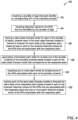
- FIG. 4 is a flow diagram showing an illustrative method 50 for predicting predetermined Key Performance Indicators (KPIs) of an industrial process (such as the industrial process 12).
- the illustrative method 50 includes receiving a plurality of tags that each identify a corresponding KPI of the industrial process, as indicated at block 52. In some cases, the plurality of tags only tag certain KPIs of the industrial process that are deemed critical to the operation and control of the industrial process. Historical values for the KPIs that are identified by the plurality of tags are received, as indicated at block 54.
- a plant state forecast model is trained for each of the plurality of plants, wherein each of the plant state forecast models is trained to forecast the plant state (e.g.
- Each of the plant state forecast models may be an Artificial Intelligence (AI) based model.
- AI Artificial Intelligence
- one or more of the plant state forecast models may be trained continuously using updated current and historical values for at least some of the KPIs associated with the respective plan, and thus may continuously learn and track the characteristics of the respective plant.
- one or more of the plant state forecast models may be trained during a training phase, and then the trained model is released for use during an operational phase.
- a forecasted plant state is generated for at least one of the plurality of plants of the industrial process based at least in part on the plant state forecast model that corresponds to the respective plant, as indicated at block 58.
- each of the plant state forecast models may be used to forecast the plant state of the respective plant based at least in part on the received historical values for the KPIs that are associated with the respective plant and one or more of the forecasted KPI values for one or more of the KPIs that are associated with the respective plant.
- the method 50 may further include receiving one or more alarm limits for at least some of the KPIs associated with each of the plurality of plants, as indicated at block 60.
- each of the plant state forecast models may be trained to forecast the plant state of the respective plant based at least in part on the received historical values for the KPIs that are associated with the respective plant (and/or the forecasted KPI values for the KPIs that are associated with the respective plant) and one or more alarm limits for at least some of the KPIs associated with the respective plant, as indicated at block 62.
- each of the plant state forecast models may be trained to forecast the plant state of the respective plant based at least in part on the received historical values for the KPIs that are associated with the respective plant, one or more alarm limits for at least some of the KPIs associated with the respective plant, and one or more of the forecasted KPI values for one or more of the KPIs that are associated with the respective plant.
- FIGS 5A and 5B are flow diagrams that together show an illustrative method 64 for predicting predetermined Key Performance Indicators (KPIs) of an industrial process (such as the industrial process 12).
- the illustrative method 64 includes receiving a plurality of tags that each identify a corresponding KPI of the industrial process, as indicated at block 66. In some cases, the plurality of tags only tag certain KPIs of the industrial process that are deemed critical to the operation and control of the industrial process. Historical values for the KPIs that are identified by the plurality of tags are received, as indicated at block 68.
- KPIs Key Performance Indicators
- a KPI forecast model is trained for each of the KPIs that are identified by the plurality of tags, wherein each of the KPI forecast models is trained based at least in part on the received historical values for at least some of the KPIs that are identified by the plurality of tags, as indicated at block at block 70.
- Each of the KPI forecast models may be an Artificial Intelligence (AI) based model.
- AI Artificial Intelligence
- one or more of the KPI forecast models may be trained continuously using updated current and historical values for at least some of the KPIs, and thus may continuously learn and track the characteristics of the industrial process.
- one or more of the KPI forecast models may be trained during a training phase, and then the trained model is released for use during an operational phase. In either case, a forecasted KPI value is generated for each of the KPIs identified by the plurality of tags based at least in part on the corresponding KPI forecast model that corresponds to the respective KPI, as indicated at block 72.
- the method 64 may include receiving one or more alarm limits for at least some of the KPIs of the industrial process, as indicated at block 74. Historical alarms and/or events associated with at least some of the KPIs of the industrial process may be received, as indicated at block 76.
- the method 64 continues with training an alarm forecast model for one or more of the KPIs of the industrial process, wherein the alarm forecast model is trained based on the received historical values for one or more of the KPIs (and/or the forecasted KPI values for the KPIs that are associated with the respective plant), the historical alarms and/or events associated with at least some of the KPIs, and one or more of the alarm limits for at least some of the KPIs, as indicated at block 78.
- the alarm forecast model may also trained based on one or more of the forecasted KPI values.
- the method 64 may include generating a forecasted alarm for each of one or more of the KPI's based the forecasted KPI value for the respective PKI, as indicated at block 80.
- the method 64 may include identifying two or more of the historical alarms and/or events that overlap in time, resulting in one or more overlapping episodes, as indicated at block 82.
- the historical alarms and/or events that overlap in time during the one or more overlapping episodes may be excluded, as indicated at block 84.
- the alarm forecast model may be trained based on the received historical values for one or more of the KPIs and/or the forecasted KPI values for the one or more KPIs, the historical alarms and/or events for at least some of the KPIs excluding at least some of the historical alarms and/or events that overlap in time during the one or more overlapping episodes, and one or more of the alarm limits for at least some of the KPIs, as indicated at block 86.
- each of the historical alarms and/or events associated with at least some of the KPIs may identify a source of the historical alarm and/or event, a category of the historical alarm and/or event and a condition of the historical alarm and/or event, and wherein the alarm forecast model may be trained based on the source, the category and/or the condition of one or more of the historical alarm and/or events associated with at least some of the KPIs of the industrial process.
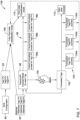
- FIG. 6 is a flow diagram showing an illustrative workflow 88 for predicting KPIs over time.
- the method 88 includes receiving tags and alarm configurations from a Distributed Control System (DCS) configuration 90 and getting historical KPI values from a historian 92.
- DCS Distributed Control System
- the tags are seen at block 94.
- the KPI forecast model is trained for each tagged KPI, resulting in a number of trained KPI forecast models 98, individually labeled as 98a, 98b and 98c. In some instances, there may be any number of trained KPI forecast models 98, and in some cases there may be substantially more than three trained KPI forecast models 98.
- the trained KPI forecast models 98 are provided to MARCK (Multivariate Auto Regressive Combined KPI forecaster) 100, which is a deep learning model that uses machine learning techniques.
- MARCK 100 outputs forecasted KPI values for each of the tagged KPIs, as indicated at block 102, resulting in a number of forecasted KPI values 104, individually labeled as 104a, 104b and 104c.
- the forecasted KPI values 104 along with updated historical KPI values from the historian 92, are used to retrain the trained KPI forecast models 98, sometimes continuously.
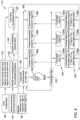
- Figure 7 is a flow diagram showing an illustrative workflow 106 that includes many of the same features of Figure 6 , but further includes a block 108 that receives an identifier of the tagged KPIs 94 from the DCS configuration 90, and the historical data for the tagged KPIs from the historian 92.
- the block 108 trains a plant state classification model and outputs a plant state classification model 110 that receives input from the trained KPI forecast models 98 as shown.
- the forecasted KPI values 104 may be used to forecast the plant state 112 (e.g. normal, tripped, cold shutdown, hot shutdown) using the plant state classification model 110.
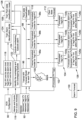
- Figure 8 is a flow diagram showing an illustrative workflow 114 that includes many of the same features of Figure 6 , but also includes a block 116 that provides historical alarms and events from archives.
- a block 118 the tags and alarm limits are associated, and this information is provided to a block 120 where an alarm identification model is trained.
- the alarms and events from block 116 are provided to a block 122, where overlapping and nonoverlapping alarms and events are identified.
- overlapping alarms and events are excluded, and the remaining alarms and events are provided to the block 120.
- Information from the historian 92 is provided to the block 120, which trains and outputs an alarm identification model 120.
- Each of the forecasted KPI values 104, individually labeled 104a, 104b and 104c, is provided to a corresponding alarm forecast block 126, individually labeled 126a, 126b and 126c as shown.
- Each of the alarm forecast blocks 126a, 226b and 126c is configured to forecasts whether a corresponding forecasted KPI value is expected to fall outside of its alarm limit based on the alarm identification model 120 and the corresponding forecasted KPI value 104a, 104b and 104c.
- Figure 9 is a flow diagram showing an illustrative workflow 128 that represents a compilation of the other workflows.
- One addition in Figure 9 is a block 130 that outputs the alarm forecasts.
Landscapes
- Business, Economics & Management (AREA)
- Engineering & Computer Science (AREA)
- Human Resources & Organizations (AREA)
- Strategic Management (AREA)
- Economics (AREA)
- Physics & Mathematics (AREA)
- Entrepreneurship & Innovation (AREA)
- Development Economics (AREA)
- General Physics & Mathematics (AREA)
- Quality & Reliability (AREA)
- Theoretical Computer Science (AREA)
- General Business, Economics & Management (AREA)
- Educational Administration (AREA)
- Game Theory and Decision Science (AREA)
- Marketing (AREA)
- Operations Research (AREA)
- Tourism & Hospitality (AREA)
- Manufacturing & Machinery (AREA)
- Automation & Control Theory (AREA)
- General Engineering & Computer Science (AREA)
- Artificial Intelligence (AREA)
- Evolutionary Computation (AREA)
- Mathematical Physics (AREA)
- Testing And Monitoring For Control Systems (AREA)
Abstract
Predetermined Key Performance Indicators (KPIs) of an industrial process may be predicted. A plurality of tags each identify a corresponding KPI of the industrial process and historical values for the KPIs that are identified by the plurality of tags. A KPI forecast model is trained for each of the KPIs that are identified by the plurality of tags, wherein each of the KPI forecast models is trained based at least in part on the received historical values for at least some of the KPIs that are identified by the plurality of tags. A forecasted KPI value is generated for each of the KPIs identified by the plurality of tags based at least in part on the corresponding KPI forecast model that corresponds to the respective KPI.
Description
- The present disclosure relates to industrial processes and more particularly to methods and systems for predicting KPI values, plant states and/or alarms in an industrial process.
- A wide range of industrial processes are known. Many industrial processes are large, complex processes that can be difficult to monitor and control, in part because an industrial process may involve a large number of different equipment, each of which may generate large volumes of operational data. As an example, in a complex process plant such as a refinery or a petrochemical complex, an operator may be responsible for monitoring thousands of parameters such as pressures, levels, flows, and temperatures. Current automation systems are not able to take all necessary actions when deviations occur, and human interaction is needed. Experienced operators with years of service can often manage an industrial process fairly well by taking appropriately timed control actions when deviations occur. However, some operators may be inexperienced, and may not have the experience in dealing with each possible deviation that may occur. Taking an inappropriate action may cause the deviation to become worse, or may cause deviations in other parameters. What would be desirable are methods and systems for monitoring and controlling industrial processes. What would be desirable are methods and systems for predicting KPI values, plant states and/or alarms in an industrial process to aid an operator in taking appropriately timed actions to properly manage the industrial process.
- The present disclosure relates to industrial processes and more particularly to methods and systems for predicting KPI values, plant states and/or alarms in an industrial process. An example may be found in a method for predicting predetermined Key Performance Indicators (KPIs) of an industrial process. The illustrative method includes receiving a plurality of tags that each identify a corresponding KPI of the industrial process and receiving historical values for those KPIs that are identified by the plurality of tags. A KPI forecast model is trained for each of the KPIs that are identified by the plurality of tags, wherein each of the KPI forecast models is trained based at least in part on the received historical values for at least some of the KPIs that are identified by the plurality of tags. A forecasted KPI value is generated for each of the KPIs identified by the plurality of tags based at least in part on the corresponding KPI forecast model that corresponds to the respective KPI.
- Another example may be found in a system for predicting predetermined Key Performance Indicators (KPIs) of an industrial process. The system includes an I/O port, a memory, and a controller operatively coupled to the I/O port and the memory. The controller is configured to receive via the I/O port a plurality of tags that each identify a corresponding KPI of the industrial process and to receive via the I/O port historical values for those KPIs that are identified by the plurality of tags. The controller is configured to train a KPI forecast model for each of the KPIs that are identified by the plurality of tags, wherein each of the KPI forecast models is trained based at least in part on the received historical values for at least some of the KPIs that are identified by the plurality of tags. The controller is configured to generate a forecasted KPI value for each of the KPIs identified by the plurality of tags based at least in part on the corresponding KPI forecast model that corresponds to the respective KPI.
- Another example may be found in a non-transitory computer readably medium storing instructions that when executed by one or more processors causes the one or more processors to receive a plurality of tags that each identify a corresponding KPI of an industrial process and to receive historical values for those KPIs that are identified by the plurality of tags. The one or more processors are caused to train a KPI forecast model for each of the KPIs that are identified by the plurality of tags, wherein each of the KPI forecast models is trained based at least in part on the received historical values for at least some of the KPIs that are identified by the plurality of tags. The one or more processors are caused to generate a forecasted KPI value for each of the KPIs identified by the plurality of tags based at least in part on the corresponding KPI forecast model that corresponds to the respective KPI.
- The preceding summary is provided to facilitate an understanding of some of the innovative features unique to the present disclosure and is not intended to be a full description. A full appreciation of the disclosure can be gained by taking the entire specification, claims, figures, and abstract as a whole.
- The disclosure may be more completely understood in consideration of the following description of various examples in connection with the accompanying drawings, in which:
-
Figure 1 is a schematic block diagram of an illustrative system for predicting KPIs for an industrial process; -
Figure 2 is a flow diagram showing an illustrative method for predicting KPIs; -
Figure 3 is a flow diagram showing an illustrative method for predicting KPIs; -
Figure 4 is a flow diagram showing an illustrative method for predicting KPIs; -
Figures 5A and5B are flow diagrams that together show an illustrative method for predicting KPIs; -
Figure 6 is a flow diagram showing an illustrative method of forecasting KPIs of an industrial process over a certain extended time window; -
Figure 7 is a flow diagram showing an illustrative method of forecasting plant states of an industrial process; -
Figure 8 is a flow diagram showing an illustrative method of forecasting alarms of an industrial process; and -
Figure 9 is a flow diagram showing an illustrative overall process flow. - While the disclosure is amenable to various modifications and alternative forms, specifics thereof have been shown by way of example in the drawings and will be described in detail. It should be understood, however, that the intention is not to limit the disclosure to the particular examples described. On the contrary, the intention is to cover all modifications, equivalents, and alternatives falling within the spirit and scope of the disclosure.
- The following description should be read with reference to the drawings, in which like elements in different drawings are numbered in like fashion. The drawings, which are not necessarily to scale, depict examples that are not intended to limit the scope of the disclosure. Although examples are illustrated for the various elements, those skilled in the art will recognize that many of the examples provided have suitable alternatives that may be utilized.
- All numbers are herein assumed to be modified by the term "about", unless the content clearly dictates otherwise. The recitation of numerical ranges by endpoints includes all numbers subsumed within that range (e.g., 1 to 5 includes 1, 1.5, 2, 2.75, 3, 3.80, 4, and 5).
- As used in this specification and the appended claims, the singular forms "a", "an", and "the" include the plural referents unless the content clearly dictates otherwise. As used in this specification and the appended claims, the term "or" is generally employed in its sense including "and/or" unless the content clearly dictates otherwise.
- It is noted that references in the specification to "an embodiment", "some embodiments", "other embodiments", etc., indicate that the embodiment described may include a particular feature, structure, or characteristic, but every embodiment may not necessarily include the particular feature, structure, or characteristic. Moreover, such phrases are not necessarily referring to the same embodiment. Further, when a particular feature, structure, or characteristic is described in connection with an embodiment, it is contemplated that the feature, structure, or characteristic is described in connection with an embodiment, it is contemplated that the feature, structure, or characteristic may be applied to other embodiments whether or not explicitly described unless clearly stated to the contrary.
-
Figure 1 is a schematic block diagram showing anillustrative system 10 for predicting predetermined Key Performance Indicators (KPIs) of anindustrial process 12. Thesystem 10 includes an I/O port 14, amemory 16 and acontroller 18 that is operatively coupled to the I/O port 14 and to thememory 16. Theindustrial process 12 may generically represent any of a variety of different industrial processes. As an example, theindustrial process 12 may represent a chemical manufacturing process or an oil refinery process. In some instances, theindustrial process 12 may include a number ofplants 20, individually labeled as 20a and 20b. While twoplants 20 are shown, this is merely illustrative as theindustrial process 12 may include only asingle plant 20, or may include three ormore plants 20. Each of theplants 20 may represent a piece of equipment of theindustrial process 12, such as a boiler, a furnace, a distillation tower or the like. In the example shown, each of theplants 20 include a number of Key Performance Indicators (KPIs). As shown, theplant 20a includes a number ofKPIs 22, individually labeled as 22a, 22b and 22c, and theplant 20b includes a number ofKPIs 24, individually labeled as 24a, 24b and 24c. This is merely illustrative, as theplant 20a may include any number ofKPIs 22, and may include substantially more than three KPIs, and theplant 20b may include any number ofKPIs 24, and may include substantially more than threeKPIs 24. - The
controller 18 is configured to receive via the I/O port 14 a plurality of tags that each identify acorresponding KPI industrial process 12. In some cases, the plurality of tags only tag certain KPIs of theindustrial process 12 that are deemed critical to the operation and control of theindustrial process 12. Thecontroller 18 is configured to receive via the I/O port 14 historical values for theKPIs controller 18 is configured to train a KPI forecast model for each of theKPIs KPIs KPIs controller 18 may be configured to generate a forecasted KPI value for each of theKPIs respective KPI controller 18 may be configured to automatically adjust one or more parameters of theindustrial process 12 based at least in part on one or more of the forecasted KPI values. - In some instances, each of the KPI forecast models may be trained based at least in part on the received historical values for at least some of the
KPIs industrial process 12 that are identified by the plurality of tags and one or more of the forecasted KPI values. In some instances, when theindustrial process 12 includes a plurality ofplants 20, and each plant may include two or more tags of the plurality of tags that each identify acorresponding KPI plant 20, and eachplant 20 may have two or more predetermined plant states. Thecontroller 18 may be configured to train a plant state forecast model for each of the plurality ofplants 20, wherein each of the plant state forecast models is trained to forecast the plant state of therespective plant 20 based at least in part on the received historical values for theKPIs respective plant 20 and/or the forecasted KPI values for theKPIs respective plant 20. Thecontroller 18 may be configured to generate a forecasted plant state for at least one of the plurality ofplants 20 of theindustrial process 12 based at least in part on the plant state forecast model that corresponds to therespective plant 20. - In some instances, the
controller 18 may be configured to receive one or more alarm limits for at least some of theKPIs industrial process 12 and to receive historical alarms and/or events associated with at least some of theKPIs industrial process 12. Thecontroller 18 may be configured to train an alarm forecast model for one or more of theKPIs industrial process 12, wherein the alarm forecast model is trained based on the received historical values for one or more of theKPIs KPIs KPIs -
Figure 2 is a flow diagram showing anillustrative method 26 for predicting predetermined Key Performance Indicators (KPIs) of an industrial process (such as the industrial process 12). Theillustrative method 26 includes receiving a plurality of tags that each identify a corresponding KPI of the industrial process, as indicated atblock 28. In some cases, the plurality of tags only tag certain KPIs of theindustrial process 12 that are deemed critical to the operation and control of theindustrial process 12. Historical values for the KPIs that are identified by the plurality of tags are received, as indicated atblock 30. A KPI forecast model is trained for each of the KPIs that are identified by the plurality of tags, wherein each of the KPI forecast models is trained based at least in part on the received historical values for at least some of the KPIs that are identified by the plurality of tags, as indicated atblock 32. Each of the KPI forecast models may be an Artificial Intelligence (AI) based model. In some cases, one or more of the KPI forecast models may be trained continuously using updated current and historical values for at least some of the KPIs, and thus may continuously learn and track the characteristics of the industrial process. In other cases, one or more of the KPI forecast models may be trained during a training phase, and then the trained model is released for use during an operational phase. In either case, a forecasted KPI value is generated for each of the KPIs identified by the plurality of tags based at least in part on the corresponding KPI forecast model that corresponds to the respective KPI, as indicated atblock 34. In some instances, themethod 26 may include automatically adjusting one or more parameters of the industrial process based at least in part on one or more of the forecasted KPI values, as indicated atblock 36. -
Figure 3 is a flow diagram showing anillustrative method 38 for predicting predetermined Key Performance Indicators (KPIs) of an industrial process (such as the industrial process 12). Theillustrative method 38 includes receiving a plurality of tags that each identify a corresponding KPI of the industrial process, as indicated atblock 40. In some cases, the plurality of tags only tag certain KPIs of the industrial process that are deemed critical to the operation and control of the industrial process. Historical values for the KPIs that are identified by the plurality of tags are received, as indicated atblock 42. A KPI forecast model is trained for each of the KPIs that are identified by the plurality of tags, wherein each of the KPI forecast models is trained based at least in part on the received historical values for at least some of the KPIs that are identified by the plurality of tags, as indicated at block 44. Each of the KPI forecast models may be an Artificial Intelligence (AI) based model. In some cases, one or more of the KPI forecast models may be trained continuously using updated current and historical values for at least some of the KPIs, and thus may continuously learn and track the characteristics of the industrial process. In other cases, one or more of the KPI forecast models may be trained during a training phase, and then the trained model is released for use during an operational phase. In either case, and in the example shown, a time to forecast value is received, as indicated atblock 46. The time to forecast represents a target time into the future to forecast the forecasted KPI values. A forecasted KPI value is generated for each of the KPIs identified by the plurality of tags to correspond to a time in the future that corresponds to the time to forecast value, as indicated atblock 48. In some instances, each of the KPI forecast models may be trained based at least in part on the received historical values for at least some of the KPIs of the industrial process that are identified by the plurality of tags and one or more of the forecasted KPI values. -
Figure 4 is a flow diagram showing anillustrative method 50 for predicting predetermined Key Performance Indicators (KPIs) of an industrial process (such as the industrial process 12). Theillustrative method 50 includes receiving a plurality of tags that each identify a corresponding KPI of the industrial process, as indicated atblock 52. In some cases, the plurality of tags only tag certain KPIs of the industrial process that are deemed critical to the operation and control of the industrial process. Historical values for the KPIs that are identified by the plurality of tags are received, as indicated atblock 54. A plant state forecast model is trained for each of the plurality of plants, wherein each of the plant state forecast models is trained to forecast the plant state (e.g. normal, tripped, cold shutdown, hot shutdown) of the respective plant based at least in part on the received historical values for the KPIs that are associated with the respective plant and/or the forecasted KPI values for the KPIs that are associated with the respective plant, as indicated atblock 56. Each of the plant state forecast models may be an Artificial Intelligence (AI) based model. In some cases, one or more of the plant state forecast models may be trained continuously using updated current and historical values for at least some of the KPIs associated with the respective plan, and thus may continuously learn and track the characteristics of the respective plant. In other cases, one or more of the plant state forecast models may be trained during a training phase, and then the trained model is released for use during an operational phase. In either case, a forecasted plant state is generated for at least one of the plurality of plants of the industrial process based at least in part on the plant state forecast model that corresponds to the respective plant, as indicated atblock 58. In some instances, each of the plant state forecast models may be used to forecast the plant state of the respective plant based at least in part on the received historical values for the KPIs that are associated with the respective plant and one or more of the forecasted KPI values for one or more of the KPIs that are associated with the respective plant. - In some instances, the
method 50 may further include receiving one or more alarm limits for at least some of the KPIs associated with each of the plurality of plants, as indicated atblock 60. In some instances, each of the plant state forecast models may be trained to forecast the plant state of the respective plant based at least in part on the received historical values for the KPIs that are associated with the respective plant (and/or the forecasted KPI values for the KPIs that are associated with the respective plant) and one or more alarm limits for at least some of the KPIs associated with the respective plant, as indicated atblock 62. In some instances, each of the plant state forecast models may be trained to forecast the plant state of the respective plant based at least in part on the received historical values for the KPIs that are associated with the respective plant, one or more alarm limits for at least some of the KPIs associated with the respective plant, and one or more of the forecasted KPI values for one or more of the KPIs that are associated with the respective plant. -
Figures 5A and5B are flow diagrams that together show anillustrative method 64 for predicting predetermined Key Performance Indicators (KPIs) of an industrial process (such as the industrial process 12). Theillustrative method 64 includes receiving a plurality of tags that each identify a corresponding KPI of the industrial process, as indicated atblock 66. In some cases, the plurality of tags only tag certain KPIs of the industrial process that are deemed critical to the operation and control of the industrial process. Historical values for the KPIs that are identified by the plurality of tags are received, as indicated atblock 68. A KPI forecast model is trained for each of the KPIs that are identified by the plurality of tags, wherein each of the KPI forecast models is trained based at least in part on the received historical values for at least some of the KPIs that are identified by the plurality of tags, as indicated at block atblock 70. Each of the KPI forecast models may be an Artificial Intelligence (AI) based model. In some cases, one or more of the KPI forecast models may be trained continuously using updated current and historical values for at least some of the KPIs, and thus may continuously learn and track the characteristics of the industrial process. In other cases, one or more of the KPI forecast models may be trained during a training phase, and then the trained model is released for use during an operational phase. In either case, a forecasted KPI value is generated for each of the KPIs identified by the plurality of tags based at least in part on the corresponding KPI forecast model that corresponds to the respective KPI, as indicated atblock 72. - In some instances, the
method 64 may include receiving one or more alarm limits for at least some of the KPIs of the industrial process, as indicated atblock 74. Historical alarms and/or events associated with at least some of the KPIs of the industrial process may be received, as indicated atblock 76. Turning toFigure 5B , themethod 64 continues with training an alarm forecast model for one or more of the KPIs of the industrial process, wherein the alarm forecast model is trained based on the received historical values for one or more of the KPIs (and/or the forecasted KPI values for the KPIs that are associated with the respective plant), the historical alarms and/or events associated with at least some of the KPIs, and one or more of the alarm limits for at least some of the KPIs, as indicated atblock 78. In some instances, the alarm forecast model may also trained based on one or more of the forecasted KPI values. In some instances, themethod 64 may include generating a forecasted alarm for each of one or more of the KPI's based the forecasted KPI value for the respective PKI, as indicated atblock 80. - In some instances, the
method 64 may include identifying two or more of the historical alarms and/or events that overlap in time, resulting in one or more overlapping episodes, as indicated atblock 82. The historical alarms and/or events that overlap in time during the one or more overlapping episodes may be excluded, as indicated atblock 84. The alarm forecast model may be trained based on the received historical values for one or more of the KPIs and/or the forecasted KPI values for the one or more KPIs, the historical alarms and/or events for at least some of the KPIs excluding at least some of the historical alarms and/or events that overlap in time during the one or more overlapping episodes, and one or more of the alarm limits for at least some of the KPIs, as indicated atblock 86. In some instances, each of the historical alarms and/or events associated with at least some of the KPIs may identify a source of the historical alarm and/or event, a category of the historical alarm and/or event and a condition of the historical alarm and/or event, and wherein the alarm forecast model may be trained based on the source, the category and/or the condition of one or more of the historical alarm and/or events associated with at least some of the KPIs of the industrial process. -
Figure 6 is a flow diagram showing anillustrative workflow 88 for predicting KPIs over time. Themethod 88 includes receiving tags and alarm configurations from a Distributed Control System (DCS)configuration 90 and getting historical KPI values from ahistorian 92. The tags are seen atblock 94. Atblock 96, the KPI forecast model is trained for each tagged KPI, resulting in a number of trainedKPI forecast models 98, individually labeled as 98a, 98b and 98c. In some instances, there may be any number of trainedKPI forecast models 98, and in some cases there may be substantially more than three trainedKPI forecast models 98. The trainedKPI forecast models 98 are provided to MARCK (Multivariate Auto Regressive Combined KPI forecaster) 100, which is a deep learning model that uses machine learning techniques.MARCK 100 outputs forecasted KPI values for each of the tagged KPIs, as indicated atblock 102, resulting in a number of forecasted KPI values 104, individually labeled as 104a, 104b and 104c. In some cases, the forecasted KPI values 104, along with updated historical KPI values from thehistorian 92, are used to retrain the trainedKPI forecast models 98, sometimes continuously. -
Figure 7 is a flow diagram showing anillustrative workflow 106 that includes many of the same features ofFigure 6 , but further includes ablock 108 that receives an identifier of the taggedKPIs 94 from theDCS configuration 90, and the historical data for the tagged KPIs from thehistorian 92. Theblock 108 trains a plant state classification model and outputs a plantstate classification model 110 that receives input from the trainedKPI forecast models 98 as shown. The forecasted KPI values 104 may be used to forecast the plant state 112 (e.g. normal, tripped, cold shutdown, hot shutdown) using the plantstate classification model 110. -
Figure 8 is a flow diagram showing anillustrative workflow 114 that includes many of the same features ofFigure 6 , but also includes ablock 116 that provides historical alarms and events from archives. At ablock 118, the tags and alarm limits are associated, and this information is provided to ablock 120 where an alarm identification model is trained. The alarms and events fromblock 116 are provided to ablock 122, where overlapping and nonoverlapping alarms and events are identified. Atblock 124, overlapping alarms and events are excluded, and the remaining alarms and events are provided to theblock 120. Information from thehistorian 92 is provided to theblock 120, which trains and outputs analarm identification model 120. Each of the forecasted KPI values 104, individually labeled 104a, 104b and 104c, is provided to a correspondingalarm forecast block 126, individually labeled 126a, 126b and 126c as shown. Each of the alarm forecast blocks 126a, 226b and 126c is configured to forecasts whether a corresponding forecasted KPI value is expected to fall outside of its alarm limit based on thealarm identification model 120 and the corresponding forecastedKPI value Figure 9 is a flow diagram showing anillustrative workflow 128 that represents a compilation of the other workflows. One addition inFigure 9 is ablock 130 that outputs the alarm forecasts. - Having thus described several illustrative embodiments of the present disclosure, those of skill in the art will readily appreciate that yet other embodiments may be made and used within the scope of the claims hereto attached. It will be understood, however, that this disclosure is, in many respects, only illustrative. Changes may be made in details, particularly in matters of shape, size, arrangement of parts, and exclusion and order of steps, without exceeding the scope of the disclosure. The disclosure's scope is, of course, defined in the language in which the appended claims are expressed.
Claims (15)
- A method for predicting predetermined Key Performance Indicators (KPIs) of an industrial process, the method comprising:receiving a plurality of tags that each identify a corresponding KPI of the industrial process;receiving historical values for the KPIs that are identified by the plurality of tags;training a KPI forecast model for each of the KPIs that are identified by the plurality of tags, wherein each of the KPI forecast models is trained based at least in part on the received historical values for at least some of the KPIs that are identified by the plurality of tags; andgenerating a forecasted KPI value for each of the KPIs identified by the plurality of tags based at least in part on the corresponding KPI forecast model that corresponds to the respective KPI.
- The method of claim 1, further comprising:
automatically adjusting one or more parameters of the industrial process based at least in part on one or more of the forecasted KPI values. - The method of claim 1, comprising:receiving a time to forecast value; andgenerating the forecasted KPI value for each of the KPIs identified by the plurality of tags includes generating the forecasted KPI value for each of the KPIs identified by at least some of the plurality of tags forecasted at a time in the future that corresponds to the time to forecast value.
- The method of claim 3, wherein each of the KPI forecast models is trained based at least in part on the received historical values for at least some of the KPIs of the industrial process that are identified by the plurality of tags and one or more of the forecasted KPI values.
- The method of claim 1, wherein the industrial process includes a plurality of plants, wherein each plant includes two or more tags of the plurality of tags that each identify a corresponding KPI of the corresponding plant, and each plant has two or more predetermined plant states, the method comprising:training a plant state forecast model for each of the plurality of plants, wherein each of the plant state forecast models is trained to forecast the plant state of the respective plant based at least in part on the received historical values for the KPIs that are associated with the respective plant and/or the forecasted KPI values for the KPIs that are associated with the respective plant; andgenerating a forecasted plant state for at least one of the plurality of plants of the industrial process based at least in part on the plant state forecast model that corresponds to the respective plant.
- The method of claim 5, wherein each of the plant state forecast models is used to forecast the plant state of the respective plant based at least in part on the received historical values for the KPIs that are associated with the respective plant and one or more of the forecasted KPI values for one or more of the KPIs that are associated with the respective plant.
- The method of claim 5, further comprising:receiving one or more alarm limits for at least some of the KPIs associated with each of the plurality of plants; andwherein each of the plant state forecast models is trained to forecast the plant state of the respective plant based at least in part on the received historical values for the KPIs that are associated with the respective plant and one or more alarm limits for at least some of the KPIs associated with the respective plant.
- The method of claim 7, wherein each of the plant state forecast models is trained to forecast the plant state of the respective plant based at least in part on the received historical values for the KPIs that are associated with the respective plant, one or more alarm limits for at least some of the KPIs associated with the respective plant, and one or more of the forecasted KPI values for one or more of the KPIs that are associated with the respective plant.
- The method of claim 1, further comprising:receiving one or more alarm limits for at least some of the KPIs of the industrial process;receiving historical alarms and/or events associated with at least some of the KPIs of the industrial process; andtraining an alarm forecast model for one or more of the KPIs of the industrial process, wherein the alarm forecast model is trained based on the received historical values for one or more of the KPIs, the historical alarms and/or events associated with at least some of the KPIs, and one or more of the alarm limits for at least some of the KPIs.
- The method of claim 9, wherein the alarm forecast model is also trained based on one or more of the forecasted KPI values.
- The method of claim 9, further comprising:
generating a forecasted alarm for each of one or more of the KPI's based the forecasted KPI value for the respective PKI. - The method of claim 9, comprising:identifying two or more of the historical alarms and/or events that overlap in time, resulting in one or more overlapping episodes;excluding the historical alarms and/or events that overlap in time during the one or more overlapping episodes; andwherein the alarm forecast model is trained based on the received historical values for one or more of the KPIs, the historical alarms and/or events for at least some of the KPIs excluding at least some of the historical alarms and/or events that overlap in time during the one or more overlapping episodes, and one or more of the alarm limits for at least some of the KPIs.
- The method of claim 9, wherein each of the historical alarms and/or events associated with at least some of the KPIs identify a source of the historical alarm and/or event, a category of the historical alarm and/or event and a condition of the historical alarm and/or event, and wherein the alarm forecast model is trained based on the source, the category and/or the condition of one or more of the historical alarm and/or events associated with at least some of the KPIs of the industrial process.
- A system for predicting predetermined Key Performance Indicators (KPIs) of an industrial process, the system comprising:an I/O port;a memory;a controller operatively coupled to the I/O port and the memory, the controller configured to:receive via the I/O port a plurality of tags that each identify a corresponding KPI of the industrial process;receive via the I/O port historical values for the KPIs that are identified by the plurality of tags;train a KPI forecast model for each of the KPIs that are identified by the plurality of tags, wherein each of the KPI forecast models is trained based at least in part on the received historical values for at least some of the KPIs that are identified by the plurality of tags; andgenerate a forecasted KPI value for each of the KPIs identified by the plurality of tags based at least in part on the corresponding KPI forecast model that corresponds to the respective KPI.
- The system of claim 14, wherein the industrial process includes a plurality of plants, wherein each plant includes two or more tags of the plurality of tags that each identify a corresponding KPI of the corresponding plant, and each plant has two or more predetermined plant states, the controller is configured to:train a plant state forecast model for each of the plurality of plants, wherein each of the plant state forecast models is trained to forecast the plant state of the respective plant based at least in part on the received historical values for the KPIs that are associated with the respective plant; andgenerate a forecasted plant state for at least one of the plurality of plants of the industrial process based at least in part on the plant state forecast model that corresponds to the respective plant.
Applications Claiming Priority (1)
| Application Number | Priority Date | Filing Date | Title |
|---|---|---|---|
| US18/462,382 US12626209B2 (en) | 2023-09-06 | 2023-09-06 | Method and system for predicting KPI values, plant states and alarms in an industrial process |
Publications (1)
| Publication Number | Publication Date |
|---|---|
| EP4521315A1 true EP4521315A1 (en) | 2025-03-12 |
Family
ID=92302581
Family Applications (1)
| Application Number | Title | Priority Date | Filing Date |
|---|---|---|---|
| EP24194145.9A Pending EP4521315A1 (en) | 2023-09-06 | 2024-08-12 | Method and system for predicting kpi values, plant states and alarms in an industrial process |
Country Status (4)
| Country | Link |
|---|---|
| US (1) | US12626209B2 (en) |
| EP (1) | EP4521315A1 (en) |
| CN (1) | CN119575883A (en) |
| AU (1) | AU2024205493A1 (en) |
Citations (2)
| Publication number | Priority date | Publication date | Assignee | Title |
|---|---|---|---|---|
| US20230034769A1 (en) * | 2020-04-16 | 2023-02-02 | Abb Schweiz Ag | Method for an Intelligent Alarm Management in Industrial Processes |
| US20230045548A1 (en) * | 2020-01-21 | 2023-02-09 | Basf Se | Augmentation of multimodal time series data for training machine-learning models |
Family Cites Families (36)
| Publication number | Priority date | Publication date | Assignee | Title |
|---|---|---|---|---|
| US5581459A (en) * | 1990-09-26 | 1996-12-03 | Hitachi, Ltd. | Plant operation support system |
| US5353207A (en) * | 1992-06-10 | 1994-10-04 | Pavilion Technologies, Inc. | Residual activation neural network |
| JP2001100835A (en) | 1999-09-29 | 2001-04-13 | Toshiba Corp | Plant condition monitoring system |
| US9729639B2 (en) * | 2001-08-10 | 2017-08-08 | Rockwell Automation Technologies, Inc. | System and method for dynamic multi-objective optimization of machine selection, integration and utilization |
| US7035877B2 (en) * | 2001-12-28 | 2006-04-25 | Kimberly-Clark Worldwide, Inc. | Quality management and intelligent manufacturing with labels and smart tags in event-based product manufacturing |
| US7246156B2 (en) * | 2003-06-09 | 2007-07-17 | Industrial Defender, Inc. | Method and computer program product for monitoring an industrial network |
| US7853431B2 (en) | 2006-09-29 | 2010-12-14 | Fisher-Rosemount Systems, Inc. | On-line monitoring and diagnostics of a process using multivariate statistical analysis |
| DE102006060903A1 (en) | 2006-12-20 | 2008-06-26 | Abb Research Ltd. | System for finding solution to technical problems, particularly for backing service technician or maintenance personnel with solution of tasks or with recovery of operational disturbances in technical plant has central processing device |
| US20090299827A1 (en) | 2008-05-30 | 2009-12-03 | Oracle International Corporation | Verifying Operator Competence |
| US7920935B2 (en) | 2008-08-19 | 2011-04-05 | International Business Machines Corporation | Activity based real-time production instruction adaptation |
| DE102009021774A1 (en) | 2009-05-18 | 2010-11-25 | Abb Technology Ag | Method and device for identifying correlations between alarm messages or between alarm messages and operator interventions |
| US7920983B1 (en) * | 2010-03-04 | 2011-04-05 | TaKaDu Ltd. | System and method for monitoring resources in a water utility network |
| BR112014000727B1 (en) * | 2011-07-11 | 2021-01-12 | Valmet Automation Oy | method, system and computer-readable memory for monitoring an industrial process |
| WO2013016246A1 (en) * | 2011-07-22 | 2013-01-31 | Mark Figura | Systems and methods for network monitoring and testing using a generic data mediation platform |
| US9786197B2 (en) | 2013-05-09 | 2017-10-10 | Rockwell Automation Technologies, Inc. | Using cloud-based data to facilitate enhancing performance in connection with an industrial automation system |
| US20140349255A1 (en) | 2013-05-24 | 2014-11-27 | Honeywell International Inc. | Operator competency management |
| WO2015071419A1 (en) | 2013-11-15 | 2015-05-21 | Radiometer Medical Aps | Operator-specific adaptation of a medical analyzer user interface |
| US10409926B2 (en) | 2013-11-27 | 2019-09-10 | Falkonry Inc. | Learning expected operational behavior of machines from generic definitions and past behavior |
| CN204650248U (en) | 2015-04-14 | 2015-09-16 | 北京英贝思科技有限公司 | The total management system of plant personnel and equipment |
| US11222551B2 (en) | 2015-07-23 | 2022-01-11 | Rockwell Automation Technologies, Inc. | Snapshot management architecture for process control operator training system lifecycle |
| US11005863B2 (en) | 2016-06-10 | 2021-05-11 | General Electric Company | Threat detection and localization for monitoring nodes of an industrial asset control system |
| CN106295959A (en) | 2016-07-28 | 2017-01-04 | 核动力运行研究所 | Nuclear power plant's personnel's behavior analysis and management system and method |
| US10643167B2 (en) * | 2016-07-28 | 2020-05-05 | Honeywell International Inc. | MPC with unconstrained dependent variables for KPI performance analysis |
| US10234855B2 (en) | 2017-04-17 | 2019-03-19 | Honeywell International Inc. | Apparatus and method for rationalizing and resolving alarms in industrial process control and automation systems |
| US10984334B2 (en) | 2017-05-04 | 2021-04-20 | Viavi Solutions Inc. | Endpoint detection in manufacturing process by near infrared spectroscopy and machine learning techniques |
| US10809704B2 (en) * | 2017-11-01 | 2020-10-20 | Honeywell International Inc. | Process performance issues and alarm notification using data analytics |
| US20190384255A1 (en) * | 2018-06-19 | 2019-12-19 | Honeywell International Inc. | Autonomous predictive real-time monitoring of faults in process and equipment |
| US12464041B2 (en) * | 2019-02-13 | 2025-11-04 | Telefonaktiebolaget Lm Ericsson (Publ) | Industrial automation with 5G and beyond |
| US10699556B1 (en) * | 2019-03-01 | 2020-06-30 | Honeywell International Inc. | System and method for plant operation gap analysis and guidance solution |
| US11340594B2 (en) | 2019-08-16 | 2022-05-24 | Rockwell Automation Technologies, Inc. | Synchronization of industrial automation process subsystems |
| US20210124326A1 (en) | 2019-10-29 | 2021-04-29 | Honeywell International Inc. | Context specific training for process operators |
| US11720068B2 (en) | 2020-01-06 | 2023-08-08 | Opro.Ai Inc. | Autonomous industrial process control system and method that provides autonomous retraining of forecast model |
| US11687069B2 (en) * | 2020-05-29 | 2023-06-27 | Honeywell International Inc. | Identification of facility state and operating mode in a particular event context |
| EP3995920B1 (en) * | 2020-11-10 | 2025-12-31 | ABB Schweiz AG | EVENT ANALYSIS IN MODULAR INDUSTRIAL PLANTS |
| US12189377B2 (en) * | 2021-02-17 | 2025-01-07 | International Business Machines Corporation | Continous monitoring, advance alerts, and control of key performance indicator variables |
| US20240022492A1 (en) * | 2022-07-12 | 2024-01-18 | Parallel Wireless, Inc. | Top KPI Early Warning System |
-
2023
- 2023-09-06 US US18/462,382 patent/US12626209B2/en active Active
-
2024
- 2024-08-01 CN CN202411049138.0A patent/CN119575883A/en active Pending
- 2024-08-02 AU AU2024205493A patent/AU2024205493A1/en active Pending
- 2024-08-12 EP EP24194145.9A patent/EP4521315A1/en active Pending
Patent Citations (2)
| Publication number | Priority date | Publication date | Assignee | Title |
|---|---|---|---|---|
| US20230045548A1 (en) * | 2020-01-21 | 2023-02-09 | Basf Se | Augmentation of multimodal time series data for training machine-learning models |
| US20230034769A1 (en) * | 2020-04-16 | 2023-02-02 | Abb Schweiz Ag | Method for an Intelligent Alarm Management in Industrial Processes |
Also Published As
| Publication number | Publication date |
|---|---|
| AU2024205493A1 (en) | 2025-03-20 |
| CN119575883A (en) | 2025-03-07 |
| US20250078007A1 (en) | 2025-03-06 |
| US12626209B2 (en) | 2026-05-12 |
Similar Documents
| Publication | Publication Date | Title |
|---|---|---|
| US10809704B2 (en) | Process performance issues and alarm notification using data analytics | |
| EP3321756B1 (en) | Information processing device, information processing method, program, and storage medium | |
| Yeardley et al. | Integrating machine learning techniques into optimal maintenance scheduling | |
| Pashami et al. | Explainable predictive maintenance | |
| Zeb et al. | AI for predictive maintenance: Reducing downtime and enhancing efficiency | |
| US11687069B2 (en) | Identification of facility state and operating mode in a particular event context | |
| Yıldız et al. | Integrating preventive and predictive maintenance policies with system dynamics: A decision table approach | |
| US20190137982A1 (en) | Ibatch interactive batch operations system enabling operational excellence and competency transition | |
| Patwardhan et al. | Applications of advanced analytics at Saudi Aramco: A practitioners’ perspective | |
| Wang et al. | Intelligent predictive maintenance (IPdM) for elevator service-through CPS, IOT&S and data mining | |
| WO2021209432A1 (en) | Method for an intelligent alarm management in industrial processes | |
| CN118569763A (en) | An intelligent logistics management system and logistics management method thereof | |
| US12626209B2 (en) | Method and system for predicting KPI values, plant states and alarms in an industrial process | |
| Mahato | AI based PDM in manufacturing industry 4.0: a bibliographic review | |
| Desai et al. | Understanding the role of machine learning in optimizing manufacturing processes and quality control | |
| US12399468B2 (en) | Determining appropriate sequences of actions to take upon operating states of industrial plants | |
| Lennox et al. | Automated production support for the bioprocess industry | |
| Ito et al. | Production disturbances handling: where are we and where are we heading | |
| US20250231537A1 (en) | Method and system for advanced warning of transient states in an industrial process | |
| Nordal et al. | Intelligent maintenance practices within Norwegian Continental Shelf toward Industry 4.0 vision: an overview | |
| Devarapalli | How llm-based virtual assistants can benefit the digitalization of the process industry plant operations | |
| Nappi et al. | Rolling stocks: a machine learning predictive maintenance architecture | |
| KR102957925B1 (en) | Method and apparatus for adaptively controlling smart farm environment by interlocking ai-based crop diagnosis and economic analysis | |
| KR102957924B1 (en) | Method and apparatus for diagnosing cause of crop abnormality based on multimodal data fusion and an ai-driven inference model | |
| RU2777424C1 (en) | Automated system for managing information flows of enterprise data |
Legal Events
| Date | Code | Title | Description |
|---|---|---|---|
| PUAI | Public reference made under article 153(3) epc to a published international application that has entered the european phase |
Free format text: ORIGINAL CODE: 0009012 |
|
| STAA | Information on the status of an ep patent application or granted ep patent |
Free format text: STATUS: REQUEST FOR EXAMINATION WAS MADE |
|
| 17P | Request for examination filed |
Effective date: 20240812 |
|
| AK | Designated contracting states |
Kind code of ref document: A1 Designated state(s): AL AT BE BG CH CY CZ DE DK EE ES FI FR GB GR HR HU IE IS IT LI LT LU LV MC ME MK MT NL NO PL PT RO RS SE SI SK SM TR |