EP4521272A1 - Resource server and service providing system - Google Patents
Resource server and service providing system Download PDFInfo
- Publication number
- EP4521272A1 EP4521272A1 EP24192812.6A EP24192812A EP4521272A1 EP 4521272 A1 EP4521272 A1 EP 4521272A1 EP 24192812 A EP24192812 A EP 24192812A EP 4521272 A1 EP4521272 A1 EP 4521272A1
- Authority
- EP
- European Patent Office
- Prior art keywords
- passcode
- user terminal
- resource
- user
- client device
- Prior art date
- Legal status (The legal status is an assumption and is not a legal conclusion. Google has not performed a legal analysis and makes no representation as to the accuracy of the status listed.)
- Granted
Links
Images




Classifications
-
- G—PHYSICS
- G06—COMPUTING OR CALCULATING; COUNTING
- G06F—ELECTRIC DIGITAL DATA PROCESSING
- G06F21/00—Security arrangements for protecting computers, components thereof, programs or data against unauthorised activity
- G06F21/30—Authentication, i.e. establishing the identity or authorisation of security principals
- G06F21/31—User authentication
-
- H—ELECTRICITY
- H04—ELECTRIC COMMUNICATION TECHNIQUE
- H04W—WIRELESS COMMUNICATION NETWORKS
- H04W12/00—Security arrangements; Authentication; Protecting privacy or anonymity
- H04W12/08—Access security
-
- G—PHYSICS
- G06—COMPUTING OR CALCULATING; COUNTING
- G06F—ELECTRIC DIGITAL DATA PROCESSING
- G06F21/00—Security arrangements for protecting computers, components thereof, programs or data against unauthorised activity
- G06F21/30—Authentication, i.e. establishing the identity or authorisation of security principals
- G06F21/31—User authentication
- G06F21/42—User authentication using separate channels for security data
-
- G—PHYSICS
- G06—COMPUTING OR CALCULATING; COUNTING
- G06Q—INFORMATION AND COMMUNICATION TECHNOLOGY [ICT] SPECIALLY ADAPTED FOR ADMINISTRATIVE, COMMERCIAL, FINANCIAL, MANAGERIAL OR SUPERVISORY PURPOSES; SYSTEMS OR METHODS SPECIALLY ADAPTED FOR ADMINISTRATIVE, COMMERCIAL, FINANCIAL, MANAGERIAL OR SUPERVISORY PURPOSES, NOT OTHERWISE PROVIDED FOR
- G06Q20/00—Payment architectures, schemes or protocols
- G06Q20/38—Payment protocols; Details thereof
- G06Q20/385—Payment protocols; Details thereof using an alias or single-use codes
-
- H—ELECTRICITY
- H04—ELECTRIC COMMUNICATION TECHNIQUE
- H04L—TRANSMISSION OF DIGITAL INFORMATION, e.g. TELEGRAPHIC COMMUNICATION
- H04L63/00—Network architectures or network communication protocols for network security
- H04L63/08—Network architectures or network communication protocols for network security for authentication of entities
- H04L63/083—Network architectures or network communication protocols for network security for authentication of entities using passwords
-
- H—ELECTRICITY
- H04—ELECTRIC COMMUNICATION TECHNIQUE
- H04L—TRANSMISSION OF DIGITAL INFORMATION, e.g. TELEGRAPHIC COMMUNICATION
- H04L63/00—Network architectures or network communication protocols for network security
- H04L63/08—Network architectures or network communication protocols for network security for authentication of entities
- H04L63/0853—Network architectures or network communication protocols for network security for authentication of entities using an additional device, e.g. smartcard, SIM or a different communication terminal
-
- H—ELECTRICITY
- H04—ELECTRIC COMMUNICATION TECHNIQUE
- H04W—WIRELESS COMMUNICATION NETWORKS
- H04W72/00—Local resource management
- H04W72/50—Allocation or scheduling criteria for wireless resources
- H04W72/51—Allocation or scheduling criteria for wireless resources based on terminal or device properties
-
- H—ELECTRICITY
- H04—ELECTRIC COMMUNICATION TECHNIQUE
- H04W—WIRELESS COMMUNICATION NETWORKS
- H04W4/00—Services specially adapted for wireless communication networks; Facilities therefor
- H04W4/02—Services making use of location information
- H04W4/029—Location-based management or tracking services
Definitions
- the embodiments discussed herein are related to a resource server, a service providing system including the resource server.
- a business model in which a service provider utilizes user resources held or managed by a resource server to provide a service to a user has become widespread.
- the resource server manages location information indicating the location of a user terminal as the user resource.
- the service provider operates as a client, and acquires the location information of the user terminal from the resource server. Then, the service provider provides a corresponding service to the user terminal based on the acquired location information. Alternatively, the service provider provides the user terminal with the user resource acquired from the resource server.
- related techniques are described, for example, in Japanese National Publication of International Patent Application No. 2022-512352 , Japanese National Publication of International Patent Application No. 2022-518638 , US Patent Publication No. 2019/0386981 , and US Patent Publication No. 2015/0095989 .
- a procedure for obtaining authorization of a user for a client to acquire user resources from a resource server incurs a large cost.
- credential information of each client needs to be registered with the resource server in advance.
- labor for registering the credential information is large on the client side.
- the labor of work of confirming the reliability of the credential information of the client is large.
- the cost for securely managing the credential information that is secret information is high.
- a resource server manages a resource relating to a user terminal.
- the resource server includes: a communication unit; and a passcode processor that processes a passcode received by the communication unit.
- the communication unit receives, from a client via the user terminal, a first passcode that is given from the client to the user terminal in response to an access from the user terminal to the client that provides a service to the user terminal.
- The, passcode processor requests the user terminal to input a passcode.
- the communication unit receives a second passcode input at the user terminal.
- the passcode processor determines whether to provide the resource relating to the user terminal to the client based on a result of a comparison between the first passcode and the second passcode.
- FIG. 1 illustrates an example of a service providing system according to an embodiment of the present disclosure.
- a service providing system 100 includes a client device 10 and a resource server 30. Note that the service providing system 100 may include other devices not illustrated in FIG. 1 .
- the client device 10 Upon receiving a service request from a user terminal 50, the client device 10 provides a service designated by the service request to the user terminal 50. At this time, the client device 10 can acquire the user resource held or managed by the resource server 30 as necessary, and provide a service to the user terminal 50 based on the user resource. Note that the client device 10 is achieved by a computer used by a service provider. In addition, the client device 10 is an example of a service providing device that provides a service to the user terminal 50.
- the resource server 30 holds or manages a resource relating to the user terminal 50.
- the resource relating to the user terminal 50 includes the resource of the user of the user terminal 50.
- the user of the user terminal 50 may be referred to as "user K”.
- the resource server 30 provides a resource relating to the user terminal 50 to the client device 10 in response to a request from the client device 10.
- the resource server 30 confirms to the user K whether or not the client device 10 may acquire the resource relating to the user terminal 50.
- the resource server 30 provides a resource relating to the user terminal 50 to the client device 10.
- the user terminal 50 is, for example, a smartphone or a personal computer, and operates according to an instruction of the user K.
- the user terminal 50 has a communication function, and can communicate with the client device 10 and the resource server 30.
- the client device 10 provides a service to the user K based on, for example, the location information indicating the location of the user terminal 50.
- the resource server 30 acquires and manages the location information of the user terminal 50 as a resource of the user terminal 50.
- the client device 10 requests the resource server 30 for the location information of the user terminal 50.
- the resource server 30 acquires the location information of the user terminal 50 and provides the location information to the client device 10.
- the client device 10 provides a service to the user K. For example, when the user terminal 50 is located in a designated area, the client device 10 transmits designated video contents to the user terminal 50.
- the client device 10 may acquire the user resource.
- the service providing system 100 is preferably configured to obtain authorization of the user for the client device 10 to acquire the user resource.
- FIG. 2 illustrates an example of a procedure of providing a user resource to a client based on authorization of a user.
- the service providing system includes an authorization server in addition to the client device and the resource server.
- the resource server and the authorization server may configure a web application programming interface (WebAPI). Then, a service request is transmitted from the user terminal to the client device.
- WebAPI web application programming interface
- the client device When providing a service to the user in response to the service request, the client device acquires a resource of the user. In this example, it is assumed that the client device acquires the location information of the user terminal as the user resource.
- the client device transmits an authorization request to the authorization server.
- the authorization request includes a message requesting the location information of a target user. Then, the authorization request is forwarded to the authorization server via the user terminal by using HTTP redirect.
- the authorization server transmits an authorization screen to the user terminal.
- the authorization screen includes information relating to a service provider that requests the location information of the user terminal. Then, the authorization screen is displayed on the user terminal.
- the user of the user terminal determines whether to provide user's own resource (that is, the location information) to the service provider presented on the authorization screen. Then, in a case where the user's own resource may be provided to the service provider, the user inputs the user's own user ID and password by using the authorization screen. Then, the input user ID and password are transmitted from the user terminal to the authorization server.
- user's own resource that is, the location information
- the authorization server executes user authentication. That is, the authorization server authenticates the user based on the received user ID and password. When the user authentication succeeds, the authorization server determines that the target user has given authorization to provide the user's own location information to the service provider. In this case, the authorization server transmits an access token to the client device. The access token indicates that the target user has given authorization to provide the location information. In addition, the access token is forwarded to the client device via the user terminal by using HTTP redirect.
- the client device accesses the resource server using the access token received from the authorization server.
- the resource server provides the client device with the location information of the target user based on the access token. Then, the client device provides a service to the target user based on the location information acquired from the resource server.
- the procedure according to the example illustrated in FIG. 2 includes a step of confirming authorization of the user before the client device acquires the user resource from the resource server. Note that this procedure is based on OAuth 2.0.
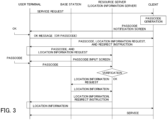
- FIG. 3 illustrates an example of a procedure in which a service providing system according to an embodiment of the present disclosure provides a service to a user.
- the procedure illustrated in FIG. 3 is performed in the service providing system 100 illustrated in FIG. 1 . That is, the service providing system 100 includes the client device 10 and the resource server 30.
- the client device 10 provides a service to the user K based on the location information of the user terminal 50.
- the resource server 30 is a location information server, and provides the location information indicating the location of the user terminal 50 in response to a location information request.
- the user terminal 50 transmits a service request to the client device 10.
- the service request includes information indicating video contents designated by the user K.
- location information is not attached to this service request.
- the client device 10 determines that it is necessary to acquire the location information of the user terminal 50 in order to provide a service to the user K.
- the location information of the user terminal 50 is managed as a user resource by the resource server 30. Therefore, the client device 10 acquires the location information of the user terminal 50 from the resource server 30. However, when the location information of the user terminal 50 is acquired, authorization of the user K is required. Therefore, the client device 10 acquires the authorization of the user K according to the procedure described below.
- the client device 10 generates a passcode.
- the passcode is not particularly limited, but is, for example, a six-digit random number. However, the passcode is not limited to a six-digit number. In addition, instead of the passcode, a password including numbers and alphabet characters may be used. Then, the client device 10 generates a passcode notification screen and transmits the passcode notification screen to the user terminal 50.
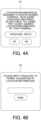
- FIG. 4A illustrates an example of a passcode notification screen.
- a passcode notification screen 61 includes an inquiry sentence for inquiring the user whether or not the client may acquire the location information of the user terminal.
- the passcode notification screen 61 also displays the passcode generated by the client device 10.
- the passcode notification screen 61 includes an OK button indicating that the acquisition of the location information is permitted and an NG button indicating that the acquisition of the location information is not permitted. Then, the passcode notification screen 61 is displayed on the user terminal 50.
- the user K When permitting the client device 10 to acquire the location information of the user terminal 50, the user K memorizes the passcode and selects the OK button using the passcode notification screen 61. On the other hand, when not permitting the client device 10 to acquire the location information of the user terminal 50, the user K selects the NG button using the passcode notification screen 61. Here, it is assumed that the OK button is selected.
- an OK message is transmitted from the user terminal 50 to the client device 10.
- the OK message indicates that permission to use the location information of the user terminal 50 has been obtained.
- the user terminal 50 may return the passcode displayed on the passcode notification screen 61 to the client device 10.
- the embodiment is not limited to this configuration.
- the client device 10 may notify the user terminal 50 of the passcode after transmitting the above inquiry sentence to the user terminal 50 and receiving the OK message from the user terminal 50.
- the client device 10 When receiving the OK message (or passcode), the client device 10 transmits the passcode and the location information request to the resource server 30.
- This passcode is the same as the passcode that has been given to the user K using the passcode notification screen 61.
- the location information request requests the location information indicating the location of the user terminal 50.
- the passcode and the location information request are forwarded to the resource server 30 via the user terminal 50.
- the client device 10 gives an HTTP redirect instruction to the user terminal 50 such that the user terminal 50 accesses the resource server 30.
- the user terminal 50 When receiving the passcode and the location information request from the client device 10, the user terminal 50 accesses the resource server 30 according to the HTTP redirect instruction. At this time, the user terminal 50 forwards the passcode and the location information request received from the client device 10 to the resource server 30.
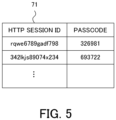
- the resource server 30 registers the passcode received from the user terminal 50 in a passcode management table 71 illustrated in FIG. 5 .
- the passcode management table 71 manages the passcode received from the user terminal in association with an HTTP session ID. Therefore, the passcode received from the user terminal 50 is managed in association with the HTTP session ID for identifying an HTTP session between the user terminal 50 and the resource server 30. Then, the resource server 30 generates a passcode input screen and transmits the passcode input screen to the user terminal 50.
- FIG. 4B illustrates an example of a passcode input screen.
- a passcode input screen 62 includes a description for the user to input the passcode that has been previously given using the passcode notification screen 61.
- the passcode input screen 62 includes an area for the user to input the passcode. Then, the passcode input screen 62 is displayed on the user terminal 50.
- the user K uses the passcode input screen 62 to input the passcode that has been given using the passcode notification screen 61. Then, the user terminal 50 transmits the passcode input by the user K to the resource server 30. Note that it is assumed that the HTTP session configured between the user terminal 50 and the resource server 30 is maintained without being disconnected.
- the resource server 30 performs passcode verification. That is, the resource server 30 compares the passcode (hereinafter, a "first passcode") received together with the location information request with the passcode (hereinafter, a "second passcode") input by the user K using the passcode input screen 62. Note that the passcode received together with the location information request is registered in the passcode management table 71 in association with the HTTP session ID. Here, in this example, it is assumed that the first passcode and the second passcode match each other. In this case, the resource server 30 transmits the location information request to a base station system. That is, the resource server 30 requests the base station system for the location information of the user terminal 50.
- the passcode hereinafter, a "first passcode”
- the base station system includes one or a plurality of base stations.
- each base station includes one or a plurality of radio units (RUs).
- An RU is one of devices constituting a base station, and includes a radio circuit and an antenna.
- the user terminal 50 is accommodated in any one of the RUs included in the base station system.
- the base station system that has received the location information request specifies an RU accommodating the user terminal 50.
- the base station system transmits the location information indicating the location of the specified RU to the resource server 30 as the location information of the user terminal 50.
- the resource server 30 acquires the location information of the user terminal 50.
- the resource server 30 transmits the location information of the user terminal 50 to the client device 10. However, the location information is forwarded to the client device 10 via the user terminal 50. At this time, for example, the resource server 30 gives an HTTP redirect instruction to the user terminal 50 so that the user terminal 50 accesses the client device 10.
- the user terminal 50 accesses the client device 10 according to the HTTP redirect instruction. Then, the user terminal 50 forwards the location information received from the resource server 30 to the client device 10. According to this procedure, the client device 10 acquires the location information of the user terminal 50.
- the client device 10 provides a service to the user K based on the location information of the user terminal 50. Specifically, when the user terminal 50 is located in a specified area, the client device 10 transmits video contents designated by the user K to the user terminal 50.
- FIG. 6 illustrates an example of a functional configuration of the client device 10.
- the client device 10 includes a communication unit 11, a passcode generator 12, a service request processor 13, a service provider 14, and a redirect controller 15. Note that the client device 10 may include other functions, circuits, and/or devices not illustrated in FIG. 6 .
- the communication unit 11 includes an interface for connecting to a network. That is, the communication unit 11 can communicate with each of the resource server 30 and the user terminal 50. However, in this example, the client device 10 may communicate with the resource server 30 via the user terminal 50.
- the passcode generator 12 generates a passcode in response to an instruction from the service request processor 13.
- the passcode is, for example, a six-digit random number.
- the passcode generator 12 includes a random number generator.
- the service request processor 13 processes a service request received from the user terminal 50. Specifically, when a user resource is required to provide a service designated by the service request, the service request processor 13 causes the passcode generator 12 to generate a passcode. Then, the service request processor 13 notifies the user terminal 50 of the passcode generated by the passcode generator 12 using the passcode notification screen 61. In addition, the service request processor 13 requests the resource server 30 for the user resource corresponding to the service request as necessary. Further, the service request processor 13 determines whether or not the acquired user resource satisfies a specified condition. When the acquired user resource satisfies the specified condition, the service request processor 13 causes the service provider 14 to provide a service.
- the service provider 14 provides a service to the user in response to an instruction from the service request processor 13. For example, the service provider 14 transmits video contents to the user terminal 50.
- the redirect controller 15 gives a redirect instruction to the user terminal 50, so that the user terminal 50 accesses the resource server 30.
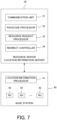
- FIG. 7 illustrates an example of a functional configuration of the resource server 30.
- the resource server 30 includes a communication unit 31, a passcode processor 32, a resource request processor 33, and a redirect controller 34. Note that the resource server 30 may include other functions, circuits, and/or devices not illustrated in FIG. 7 .
- the communication unit 31 includes an interface for connecting to a network. That is, the communication unit 31 can communicate with each of the client device 10 and the user terminal 50. However, in this example, the resource server 30 may communicate with the client device 10 via the user terminal 50.
- the passcode processor 32 receives the first passcode that is the same as the passcode, that has been given from the client device 10 to the user terminal 50, from the client device 10 via the user terminal 50. In addition, the passcode processor 32 transmits the passcode input screen 62 to the user terminal 50 and receives the second passcode input in the user terminal 50. Further, the passcode processor 32 determines whether or not to provide the user resource relating to the user terminal 50 to the client device 10 based on a result of a comparison between the first passcode and the second passcode. Specifically, when the first passcode and the second passcode match each other, the passcode processor 32 determines that the user resource relating to the user terminal 50 may be provided to the client device 10.
- the resource request processor 33 provides the user resource relating to the user terminal 50 to the client device 10 according to the determination by the passcode processor 32. Specifically, when the passcode processor 32 determines that the user resource relating to the user terminal 50 may be provided to the client device 10, the resource request processor 33 provides the user resource relating to the user terminal 50 to the client device 10.
- the resource request processor 33 inquires a base station 40 about the location of the terminal that has transmitted the location information request.
- the location information request includes identification information for identifying the terminal (in this example, the user terminal 50) that has transmitted the location information request.
- the resource request processor 33 notifies the base station 40 of identification information of the terminal.
- the terminal that has transmitted the location information request may be referred to as a "target terminal".
- the base station 40 includes a location information processor 41 and one or more RUs 42.
- the location information processor 41 specifies the RU 42 accommodating the target terminal based on the identification information included in the location information request. Subsequently, the location information processor 41 notifies the resource request processor 33 of the location information indicating the location of the specified RU 42 as the location information of the target terminal. According to this procedure, the resource request processor 33 acquires the location information of the target terminal. Then, the resource request processor 33 provides the acquired location information to the client device 10.
- the redirect controller 34 provides a redirect instruction to the user terminal 50, so that when the resource server 30 transmits the user resource to the user terminal 50, the user terminal 50 accesses the client device 10.
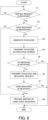
- FIG. 8 is a flowchart illustrating an example of a process of the client device 10. Note that the client device 10 waits for a service request transmitted from the user terminal in S1. When the service request is received, the process of the client device 10 proceeds to S2.
- the client device 10 determines whether or not to use the resource of the user when providing the service designated by the service request to the user.
- the location information of the user terminal is necessary as the user resource.
- the client device 10 inquires the user as to whether the client device 10 may acquire the user resource in S3 to S5. Specifically, in S3, the client device 10 generates a passcode. In S4, the client device 10 creates a passcode notification screen and transmits the passcode notification screen to the user terminal 50. The passcode notification screen includes the passcode generated in S3. In addition, the passcode notification screen includes a description for inquiring the user as to whether or not the client device 10 may acquire the user resource. In S5, the client device 10 waits for a user message indicating whether or not the client device 10 may acquire the user resource.
- the user of the user terminal 50 selects the OK button or NG button on the passcode notification screen 61.
- the OK button is selected, an OK message indicating that the acquisition of the user resource is permitted is transmitted from the user terminal 50 to the client device 10.
- the user terminal 50 may return the passcode that has been given on the passcode notification screen 61 to the client device 10.
- the NG button is selected, an NG message indicating that the acquisition of the user resource is rejected is transmitted from the user terminal 50 to the client device 10.
- S3 to S7 are skipped, and the client device 10 provides the service to the user terminal 50 in S8.
- the client device 10 does not provide the service to the user terminal 50.
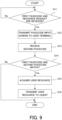
- FIG. 9 is a flowchart illustrating an example of a process of the resource server 30.
- the resource server 30 waits for the first passcode and the resource request.
- the process of the resource server 30 proceeds to S12.
- the first passcode corresponds to the passcode generated by the client device 10 in S3 illustrated in FIG. 8 . Therefore, when the first passcode is transmitted from the client device 10 in S6 illustrated in FIG. 8 , the first passcode is forwarded to the resource server 30 via the user terminal 50 by HTTP redirect. At this time, the resource request is transmitted together with the first passcode.
- the resource server 30 creates a passcode input screen and transmits the passcode input screen to the user terminal 50.
- the passcode input screen includes a description for the user of the user terminal 50 to input the passcode.
- the user of the user terminal 50 inputs a passcode (that is, the second passcode) using the passcode input screen.
- the resource server 30 receives the second passcode in S13.
- the resource server 30 compares the first passcode received in S11 with the second passcode received in S13. That is, the passcode generated by the client device 10 is compared with the passcode input by the user of the user terminal 50. As a result, when the first passcode and the second passcode match each other, the resource server 30 determines that the authorization of the user to provide the user resource to the client device 10 is obtained. In this case, the resource server 30 acquires the user resource in S15. As an example, the location information of the user terminal 50 is acquired.
- the resource server 30 transmits the acquired user resource to the client device 10.
- the user resource is forwarded to the client device 10 via the user terminal 50 by HTTP redirect. Note that when the first passcode and the second passcode do not match each other, S15 to S16 are skipped. In this case, the resource server 30 does not provide the user resource to the client device 10.
- the resource server 30 determines that the authorization of the user for the client device 10 to acquire the user resource is obtained. That is, the resource server 30 can consider the client device 10 as a trusted entity. Therefore, according to this procedure, credential information of a client does not need to be registered with the resource server 30 in advance. This eliminates the labor of the client to register its own credential information as compared with the procedure illustrated in FIG. 2 . In addition, on the resource server side, the work of confirming the reliability of the credential information of the client is eliminated.
- the cost for securely managing the credential information that is secret information is eliminated.
- the pre-registered password but the newly generated passcode upon request of the service is used to confirm authorization of the user, so that flexibility in handling the user resource is high, and a security level is also high.
- the client device 10 generates a passcode and presents the passcode to the user, but the embodiment is not limited to this procedure.
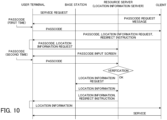
- the client device 10 that has received the service request requests the user terminal 50 for a passcode.
- the input passcode is sent from the user terminal 50 to the client device 10.
- the subsequent procedure is the same in FIGS. 3 and 10 .
- the user inputs the passcode twice. Then, when the passcode of the first time matches the passcode of the second time, the user resource is provided from the resource server 30 to the client device 10.
- the user resource is provided from the resource server 30 to the client device 10, but the embodiment is not limited to this procedure.
- the resource server 30 may issue an access token as in OAuth 2.0.
- the access token represents permission to access the user resource.
- the client device 10 can acquire the corresponding user resource by transmitting the access token to the resource server 30.
- the resource server 30 does not provide the user resource to the client device in the cases described below.
- the resource server 30 preferably notifies the user terminal that the user resource is not to be provided to the client device.
- FIG. 11 illustrates an example of a hardware configuration of the resource server 30.
- the resource server 30 is achieved by a computer 200 including a processor 201, a memory 202, a storage device 203, an input/output device 204, a recording medium reading device 205, and a communication interface 206.
- the processor 201 controls the operation of the resource server 30 by executing a server program stored in the storage device 203.
- the server program includes a program code describing the procedure of the flowchart illustrated in FIG. 9 . Therefore, when the processor 201 executes this program, the functions of the communication unit 31, the passcode processor 32, the resource request processor 33, and the redirect controller 34 illustrated in FIG. 7 are provided.
- the memory 202 is used as a work area of the processor 201.
- the storage device 203 stores the above-described server program and other programs.
- the input/output device 204 includes an input device such as a keyboard, a mouse, a touch panel, or a microphone. In addition, the input/output device 204 includes an output device such as a display device and a speaker.
- the recording medium reading device 205 can acquire data and information recorded in a recording medium 210.
- the recording medium 210 is a removable recording medium detachable from the computer 200. In addition, the recording medium 210 is achieved by, for example, a semiconductor memory, a medium that records a signal by an optical action, or a medium that records a signal by a magnetic action.
- the server program may be given from the recording medium 210 to the computer 200.
- the communication interface 206 provides a function of connecting to a network. Note that when the server program is stored in a program server 220, the computer 200 may acquire the server program from the program server 220.
Landscapes
- Engineering & Computer Science (AREA)
- Computer Security & Cryptography (AREA)
- Theoretical Computer Science (AREA)
- Computer Networks & Wireless Communication (AREA)
- Signal Processing (AREA)
- General Engineering & Computer Science (AREA)
- Computer Hardware Design (AREA)
- Business, Economics & Management (AREA)
- Physics & Mathematics (AREA)
- General Physics & Mathematics (AREA)
- Accounting & Taxation (AREA)
- Software Systems (AREA)
- Computing Systems (AREA)
- General Business, Economics & Management (AREA)
- Strategic Management (AREA)
- Finance (AREA)
- Information Transfer Between Computers (AREA)
- Management, Administration, Business Operations System, And Electronic Commerce (AREA)
Abstract
Description
- The embodiments discussed herein are related to a resource server, a service providing system including the resource server.
- A business model in which a service provider utilizes user resources held or managed by a resource server to provide a service to a user has become widespread. For example, the resource server manages location information indicating the location of a user terminal as the user resource. The service provider operates as a client, and acquires the location information of the user terminal from the resource server. Then, the service provider provides a corresponding service to the user terminal based on the acquired location information. Alternatively, the service provider provides the user terminal with the user resource acquired from the resource server. Note that related techniques are described, for example, in
Japanese National Publication of International Patent Application No. 2022-512352 Japanese National Publication of International Patent Application No. 2022-518638 US Patent Publication No. 2019/0386981 , andUS Patent Publication No. 2015/0095989 . - When a client acquires resources of the user from the resource server, authorization of the user is required in many cases. However, in the conventional art, a procedure for obtaining authorization of a user for a client to acquire user resources from a resource server incurs a large cost. For example, credential information of each client needs to be registered with the resource server in advance. At this time, labor for registering the credential information is large on the client side. In addition, on the resource server side, the labor of work of confirming the reliability of the credential information of the client is large. Further, on the resource server side, the cost for securely managing the credential information that is secret information is high.
- It is an object in one aspect of the present invention to reduce the cost of at least one of a resource server or a client device in a service providing system in which the resource server and the client device cooperate to provide a service to a user.
- According to an aspect of the embodiments, a resource server manages a resource relating to a user terminal. The resource server includes: a communication unit; and a passcode processor that processes a passcode received by the communication unit. The communication unit receives, from a client via the user terminal, a first passcode that is given from the client to the user terminal in response to an access from the user terminal to the client that provides a service to the user terminal. The, passcode processor requests the user terminal to input a passcode. The communication unit receives a second passcode input at the user terminal. The passcode processor determines whether to provide the resource relating to the user terminal to the client based on a result of a comparison between the first passcode and the second passcode.
-
-
FIG. 1 illustrates an example of a service providing system according to an embodiment of the present disclosure; -
FIG. 2 illustrates an example of a procedure of providing a user resource to a client based on authorization of a user; -
FIG. 3 illustrates an example of a procedure in which a service providing system according to an embodiment of the present disclosure provides a service to a user; -
FIGS. 4A and 4B illustrate examples of a passcode notification screen and a passcode input screen; -
FIG. 5 illustrates an example of a passcode management table; -
FIG. 6 illustrates an example of a functional configuration of a client device; -
FIG. 7 illustrates an example of a functional configuration of a resource server; -
FIG. 8 is a flowchart illustrating an example of a process of the client device; -
FIG. 9 is a flowchart illustrating an example of a process of the resource server; -
FIG. 10 illustrates a variation of a procedure for providing a service to a user; and -
FIG. 11 illustrates an example of a hardware configuration of the resource server. -
FIG. 1 illustrates an example of a service providing system according to an embodiment of the present disclosure. In this example, aservice providing system 100 includes aclient device 10 and aresource server 30. Note that theservice providing system 100 may include other devices not illustrated inFIG. 1 . - Upon receiving a service request from a
user terminal 50, theclient device 10 provides a service designated by the service request to theuser terminal 50. At this time, theclient device 10 can acquire the user resource held or managed by theresource server 30 as necessary, and provide a service to theuser terminal 50 based on the user resource. Note that theclient device 10 is achieved by a computer used by a service provider. In addition, theclient device 10 is an example of a service providing device that provides a service to theuser terminal 50. - The
resource server 30 holds or manages a resource relating to theuser terminal 50. The resource relating to theuser terminal 50 includes the resource of the user of theuser terminal 50. Note that, in the following description, the user of theuser terminal 50 may be referred to as "user K". Then, theresource server 30 provides a resource relating to theuser terminal 50 to theclient device 10 in response to a request from theclient device 10. At this time, theresource server 30 confirms to the user K whether or not theclient device 10 may acquire the resource relating to theuser terminal 50. When the authorization of the user K is obtained, theresource server 30 provides a resource relating to theuser terminal 50 to theclient device 10. - The
user terminal 50 is, for example, a smartphone or a personal computer, and operates according to an instruction of the user K. In addition, theuser terminal 50 has a communication function, and can communicate with theclient device 10 and theresource server 30. - In the
service providing system 100 having the above configuration, theclient device 10 provides a service to the user K based on, for example, the location information indicating the location of theuser terminal 50. Theresource server 30 acquires and manages the location information of theuser terminal 50 as a resource of theuser terminal 50. In this case, when receiving the service request from theuser terminal 50, theclient device 10 requests theresource server 30 for the location information of theuser terminal 50. Theresource server 30 acquires the location information of theuser terminal 50 and provides the location information to theclient device 10. Then, in a case where the location information of theuser terminal 50 satisfies a specified condition, theclient device 10 provides a service to the user K. For example, when theuser terminal 50 is located in a designated area, theclient device 10 transmits designated video contents to theuser terminal 50. - As described above, when the
client device 10 provides a service to the user, theclient device 10 may acquire the user resource. However, some users consider that it is undesirable that their own resources (in this example, the location information) are acquired by theclient device 10. Therefore, theservice providing system 100 is preferably configured to obtain authorization of the user for theclient device 10 to acquire the user resource. -
FIG. 2 illustrates an example of a procedure of providing a user resource to a client based on authorization of a user. In this example, the service providing system includes an authorization server in addition to the client device and the resource server. However, the resource server and the authorization server may configure a web application programming interface (WebAPI). Then, a service request is transmitted from the user terminal to the client device. - When providing a service to the user in response to the service request, the client device acquires a resource of the user. In this example, it is assumed that the client device acquires the location information of the user terminal as the user resource.
- In this case, the client device transmits an authorization request to the authorization server. The authorization request includes a message requesting the location information of a target user. Then, the authorization request is forwarded to the authorization server via the user terminal by using HTTP redirect.
- The authorization server transmits an authorization screen to the user terminal. The authorization screen includes information relating to a service provider that requests the location information of the user terminal. Then, the authorization screen is displayed on the user terminal.
- The user of the user terminal determines whether to provide user's own resource (that is, the location information) to the service provider presented on the authorization screen. Then, in a case where the user's own resource may be provided to the service provider, the user inputs the user's own user ID and password by using the authorization screen. Then, the input user ID and password are transmitted from the user terminal to the authorization server.
- The authorization server executes user authentication. That is, the authorization server authenticates the user based on the received user ID and password. When the user authentication succeeds, the authorization server determines that the target user has given authorization to provide the user's own location information to the service provider. In this case, the authorization server transmits an access token to the client device. The access token indicates that the target user has given authorization to provide the location information. In addition, the access token is forwarded to the client device via the user terminal by using HTTP redirect.
- The client device accesses the resource server using the access token received from the authorization server. The resource server provides the client device with the location information of the target user based on the access token. Then, the client device provides a service to the target user based on the location information acquired from the resource server.
- As described above, the procedure according to the example illustrated in
FIG. 2 includes a step of confirming authorization of the user before the client device acquires the user resource from the resource server. Note that this procedure is based on OAuth 2.0. - However, in a case where the authorization of the user is confirmed in the procedure illustrated in
FIG. 2 , a large cost occurs on both the client side and the server side. That is, credential information of each client needs to be registered with the authorization/resource server in advance. At this time, labor for registering the credential information is large on the client side. In addition, on the authorization/resource server side, the labor of work of confirming the reliability of the credential information of the client is large. Further, on the authorization/resource server side, the cost for securely managing the credential information that is secret information is high. -
FIG. 3 illustrates an example of a procedure in which a service providing system according to an embodiment of the present disclosure provides a service to a user. The procedure illustrated inFIG. 3 is performed in theservice providing system 100 illustrated inFIG. 1 . That is, theservice providing system 100 includes theclient device 10 and theresource server 30. Theclient device 10 provides a service to the user K based on the location information of theuser terminal 50. Theresource server 30 is a location information server, and provides the location information indicating the location of theuser terminal 50 in response to a location information request. - The
user terminal 50 transmits a service request to theclient device 10. The service request includes information indicating video contents designated by the user K. In addition, it is assumed that location information is not attached to this service request. In this case, theclient device 10 determines that it is necessary to acquire the location information of theuser terminal 50 in order to provide a service to the user K. - The location information of the
user terminal 50 is managed as a user resource by theresource server 30. Therefore, theclient device 10 acquires the location information of theuser terminal 50 from theresource server 30. However, when the location information of theuser terminal 50 is acquired, authorization of the user K is required. Therefore, theclient device 10 acquires the authorization of the user K according to the procedure described below. - The
client device 10 generates a passcode. The passcode is not particularly limited, but is, for example, a six-digit random number. However, the passcode is not limited to a six-digit number. In addition, instead of the passcode, a password including numbers and alphabet characters may be used. Then, theclient device 10 generates a passcode notification screen and transmits the passcode notification screen to theuser terminal 50. -
FIG. 4A illustrates an example of a passcode notification screen. Apasscode notification screen 61 includes an inquiry sentence for inquiring the user whether or not the client may acquire the location information of the user terminal. In addition, thepasscode notification screen 61 also displays the passcode generated by theclient device 10. Further, thepasscode notification screen 61 includes an OK button indicating that the acquisition of the location information is permitted and an NG button indicating that the acquisition of the location information is not permitted. Then, thepasscode notification screen 61 is displayed on theuser terminal 50. - When permitting the
client device 10 to acquire the location information of theuser terminal 50, the user K memorizes the passcode and selects the OK button using thepasscode notification screen 61. On the other hand, when not permitting theclient device 10 to acquire the location information of theuser terminal 50, the user K selects the NG button using thepasscode notification screen 61. Here, it is assumed that the OK button is selected. - When the OK button is selected, an OK message is transmitted from the
user terminal 50 to theclient device 10. The OK message indicates that permission to use the location information of theuser terminal 50 has been obtained. Alternatively, when the OK button is selected, theuser terminal 50 may return the passcode displayed on thepasscode notification screen 61 to theclient device 10. - Note that although the
passcode notification screen 61 illustrated inFIG. 4A displays an inquiry sentence and a passcode, the embodiment is not limited to this configuration. For example, theclient device 10 may notify theuser terminal 50 of the passcode after transmitting the above inquiry sentence to theuser terminal 50 and receiving the OK message from theuser terminal 50. - When receiving the OK message (or passcode), the
client device 10 transmits the passcode and the location information request to theresource server 30. This passcode is the same as the passcode that has been given to the user K using thepasscode notification screen 61. In addition, the location information request requests the location information indicating the location of theuser terminal 50. However, in this example, the passcode and the location information request are forwarded to theresource server 30 via theuser terminal 50. At this time, for example, theclient device 10 gives an HTTP redirect instruction to theuser terminal 50 such that theuser terminal 50 accesses theresource server 30. - When receiving the passcode and the location information request from the
client device 10, theuser terminal 50 accesses theresource server 30 according to the HTTP redirect instruction. At this time, theuser terminal 50 forwards the passcode and the location information request received from theclient device 10 to theresource server 30. - The
resource server 30 registers the passcode received from theuser terminal 50 in a passcode management table 71 illustrated inFIG. 5 . The passcode management table 71 manages the passcode received from the user terminal in association with an HTTP session ID. Therefore, the passcode received from theuser terminal 50 is managed in association with the HTTP session ID for identifying an HTTP session between theuser terminal 50 and theresource server 30. Then, theresource server 30 generates a passcode input screen and transmits the passcode input screen to theuser terminal 50. -
FIG. 4B illustrates an example of a passcode input screen. Apasscode input screen 62 includes a description for the user to input the passcode that has been previously given using thepasscode notification screen 61. In addition, thepasscode input screen 62 includes an area for the user to input the passcode. Then, thepasscode input screen 62 is displayed on theuser terminal 50. - The user K uses the
passcode input screen 62 to input the passcode that has been given using thepasscode notification screen 61. Then, theuser terminal 50 transmits the passcode input by the user K to theresource server 30. Note that it is assumed that the HTTP session configured between theuser terminal 50 and theresource server 30 is maintained without being disconnected. - The
resource server 30 performs passcode verification. That is, theresource server 30 compares the passcode (hereinafter, a "first passcode") received together with the location information request with the passcode (hereinafter, a "second passcode") input by the user K using thepasscode input screen 62. Note that the passcode received together with the location information request is registered in the passcode management table 71 in association with the HTTP session ID. Here, in this example, it is assumed that the first passcode and the second passcode match each other. In this case, theresource server 30 transmits the location information request to a base station system. That is, theresource server 30 requests the base station system for the location information of theuser terminal 50. - The base station system includes one or a plurality of base stations. In addition, each base station includes one or a plurality of radio units (RUs). An RU is one of devices constituting a base station, and includes a radio circuit and an antenna. The
user terminal 50 is accommodated in any one of the RUs included in the base station system. In this case, the base station system that has received the location information request specifies an RU accommodating theuser terminal 50. Then, the base station system transmits the location information indicating the location of the specified RU to theresource server 30 as the location information of theuser terminal 50. According to this procedure, theresource server 30 acquires the location information of theuser terminal 50. - The
resource server 30 transmits the location information of theuser terminal 50 to theclient device 10. However, the location information is forwarded to theclient device 10 via theuser terminal 50. At this time, for example, theresource server 30 gives an HTTP redirect instruction to theuser terminal 50 so that theuser terminal 50 accesses theclient device 10. - When receiving the location information from the
resource server 30, theuser terminal 50 accesses theclient device 10 according to the HTTP redirect instruction. Then, theuser terminal 50 forwards the location information received from theresource server 30 to theclient device 10. According to this procedure, theclient device 10 acquires the location information of theuser terminal 50. - The
client device 10 provides a service to the user K based on the location information of theuser terminal 50. Specifically, when theuser terminal 50 is located in a specified area, theclient device 10 transmits video contents designated by the user K to theuser terminal 50. -
FIG. 6 illustrates an example of a functional configuration of theclient device 10. Theclient device 10 includes acommunication unit 11, apasscode generator 12, aservice request processor 13, aservice provider 14, and aredirect controller 15. Note that theclient device 10 may include other functions, circuits, and/or devices not illustrated inFIG. 6 . - The
communication unit 11 includes an interface for connecting to a network. That is, thecommunication unit 11 can communicate with each of theresource server 30 and theuser terminal 50. However, in this example, theclient device 10 may communicate with theresource server 30 via theuser terminal 50. - The
passcode generator 12 generates a passcode in response to an instruction from theservice request processor 13. The passcode is, for example, a six-digit random number. In this case, thepasscode generator 12 includes a random number generator. - The
service request processor 13 processes a service request received from theuser terminal 50. Specifically, when a user resource is required to provide a service designated by the service request, theservice request processor 13 causes thepasscode generator 12 to generate a passcode. Then, theservice request processor 13 notifies theuser terminal 50 of the passcode generated by thepasscode generator 12 using thepasscode notification screen 61. In addition, theservice request processor 13 requests theresource server 30 for the user resource corresponding to the service request as necessary. Further, theservice request processor 13 determines whether or not the acquired user resource satisfies a specified condition. When the acquired user resource satisfies the specified condition, theservice request processor 13 causes theservice provider 14 to provide a service. - The
service provider 14 provides a service to the user in response to an instruction from theservice request processor 13. For example, theservice provider 14 transmits video contents to theuser terminal 50. When theclient device 10 transmits the passcode and the resource request to theuser terminal 50, theredirect controller 15 gives a redirect instruction to theuser terminal 50, so that theuser terminal 50 accesses theresource server 30. -
FIG. 7 illustrates an example of a functional configuration of theresource server 30. Theresource server 30 includes acommunication unit 31, apasscode processor 32, aresource request processor 33, and aredirect controller 34. Note that theresource server 30 may include other functions, circuits, and/or devices not illustrated inFIG. 7 . - The
communication unit 31 includes an interface for connecting to a network. That is, thecommunication unit 31 can communicate with each of theclient device 10 and theuser terminal 50. However, in this example, theresource server 30 may communicate with theclient device 10 via theuser terminal 50. - The
passcode processor 32 receives the first passcode that is the same as the passcode, that has been given from theclient device 10 to theuser terminal 50, from theclient device 10 via theuser terminal 50. In addition, thepasscode processor 32 transmits thepasscode input screen 62 to theuser terminal 50 and receives the second passcode input in theuser terminal 50. Further, thepasscode processor 32 determines whether or not to provide the user resource relating to theuser terminal 50 to theclient device 10 based on a result of a comparison between the first passcode and the second passcode. Specifically, when the first passcode and the second passcode match each other, thepasscode processor 32 determines that the user resource relating to theuser terminal 50 may be provided to theclient device 10. - The
resource request processor 33 provides the user resource relating to theuser terminal 50 to theclient device 10 according to the determination by thepasscode processor 32. Specifically, when thepasscode processor 32 determines that the user resource relating to theuser terminal 50 may be provided to theclient device 10, theresource request processor 33 provides the user resource relating to theuser terminal 50 to theclient device 10. - As an example, it is assumed that the user resource relating to the
user terminal 50 is the location information of theuser terminal 50. In this case, theresource request processor 33 inquires abase station 40 about the location of the terminal that has transmitted the location information request. The location information request includes identification information for identifying the terminal (in this example, the user terminal 50) that has transmitted the location information request. When inquiring thebase station 40 about the location of the terminal, theresource request processor 33 notifies thebase station 40 of identification information of the terminal. Note that, in the following description, the terminal that has transmitted the location information request may be referred to as a "target terminal". - As illustrated in
FIG. 7 , thebase station 40 includes alocation information processor 41 and one ormore RUs 42. Thelocation information processor 41 specifies theRU 42 accommodating the target terminal based on the identification information included in the location information request. Subsequently, thelocation information processor 41 notifies theresource request processor 33 of the location information indicating the location of the specifiedRU 42 as the location information of the target terminal. According to this procedure, theresource request processor 33 acquires the location information of the target terminal. Then, theresource request processor 33 provides the acquired location information to theclient device 10. - The
redirect controller 34 provides a redirect instruction to theuser terminal 50, so that when theresource server 30 transmits the user resource to theuser terminal 50, theuser terminal 50 accesses theclient device 10. -
FIG. 8 is a flowchart illustrating an example of a process of theclient device 10. Note that theclient device 10 waits for a service request transmitted from the user terminal in S1. When the service request is received, the process of theclient device 10 proceeds to S2. - In S2, the
client device 10 determines whether or not to use the resource of the user when providing the service designated by the service request to the user. In this example, it is assumed that, for each service, whether or not a corresponding user resource is necessary, and what kind of user resource is necessary when necessary, are determined in advance. For example, in a service for distributing video contents to the user terminal located in a specified area, the location information of the user terminal is necessary as the user resource. - When the user resource is necessary, the
client device 10 inquires the user as to whether theclient device 10 may acquire the user resource in S3 to S5. Specifically, in S3, theclient device 10 generates a passcode. In S4, theclient device 10 creates a passcode notification screen and transmits the passcode notification screen to theuser terminal 50. The passcode notification screen includes the passcode generated in S3. In addition, the passcode notification screen includes a description for inquiring the user as to whether or not theclient device 10 may acquire the user resource. In S5, theclient device 10 waits for a user message indicating whether or not theclient device 10 may acquire the user resource. - In the example illustrated in
FIG. 4A , the user of theuser terminal 50 selects the OK button or NG button on thepasscode notification screen 61. When the OK button is selected, an OK message indicating that the acquisition of the user resource is permitted is transmitted from theuser terminal 50 to theclient device 10. Alternatively, when the OK button is selected, theuser terminal 50 may return the passcode that has been given on thepasscode notification screen 61 to theclient device 10. On the other hand, when the NG button is selected, an NG message indicating that the acquisition of the user resource is rejected is transmitted from theuser terminal 50 to theclient device 10. - When receiving the OK message (or passcode), the
client device 10 transmits the passcode generated in S3 and the resource request for requesting the user resource to theresource server 30 in S6. However, in this example, the passcode and the resource request are forwarded to theresource server 30 via theuser terminal 50 by HTTP redirect. - In S7, the
client device 10 waits for the user resource transmitted from theresource server 30. However, in this example, the user resource transmitted from theresource server 30 is forwarded to theclient device 10 via theuser terminal 50 by HTTP redirect. - Upon receiving the user resource, the
client device 10 provides a service to theuser terminal 50 using the user resource in S8. At this time, theclient device 10 may provide a service when the user resource satisfies a specified condition. For example, when theuser terminal 50 is located in a specified area, video content is distributed to theuser terminal 50. - When the user resource is not necessary in providing the service (S2: No), S3 to S7 are skipped, and the
client device 10 provides the service to theuser terminal 50 in S8. In addition, when the OK message is not received in S5, or when the user resource is not received in S7, theclient device 10 does not provide the service to theuser terminal 50. -
FIG. 9 is a flowchart illustrating an example of a process of theresource server 30. In S11, theresource server 30 waits for the first passcode and the resource request. When the first passcode and the resource request are received, the process of theresource server 30 proceeds to S12. Note that the first passcode corresponds to the passcode generated by theclient device 10 in S3 illustrated inFIG. 8 . Therefore, when the first passcode is transmitted from theclient device 10 in S6 illustrated inFIG. 8 , the first passcode is forwarded to theresource server 30 via theuser terminal 50 by HTTP redirect. At this time, the resource request is transmitted together with the first passcode. - In S12, the
resource server 30 creates a passcode input screen and transmits the passcode input screen to theuser terminal 50. As illustrated inFIG. 4B , the passcode input screen includes a description for the user of theuser terminal 50 to input the passcode. Here, it is assumed that the user of theuser terminal 50 inputs a passcode (that is, the second passcode) using the passcode input screen. Then, theresource server 30 receives the second passcode in S13. - In S14, the
resource server 30 compares the first passcode received in S11 with the second passcode received in S13. That is, the passcode generated by theclient device 10 is compared with the passcode input by the user of theuser terminal 50. As a result, when the first passcode and the second passcode match each other, theresource server 30 determines that the authorization of the user to provide the user resource to theclient device 10 is obtained. In this case, theresource server 30 acquires the user resource in S15. As an example, the location information of theuser terminal 50 is acquired. - In S16, the
resource server 30 transmits the acquired user resource to theclient device 10. However, in this example, the user resource is forwarded to theclient device 10 via theuser terminal 50 by HTTP redirect. Note that when the first passcode and the second passcode do not match each other, S15 to S16 are skipped. In this case, theresource server 30 does not provide the user resource to theclient device 10. - As described above, in the
service providing system 100 according to the embodiment, when the passcode generated by theclient device 10 and presented to the user of theuser terminal 50 matches the passcode input by the user in theuser terminal 50, theresource server 30 determines that the authorization of the user for theclient device 10 to acquire the user resource is obtained. That is, theresource server 30 can consider theclient device 10 as a trusted entity. Therefore, according to this procedure, credential information of a client does not need to be registered with theresource server 30 in advance. This eliminates the labor of the client to register its own credential information as compared with the procedure illustrated inFIG. 2 . In addition, on the resource server side, the work of confirming the reliability of the credential information of the client is eliminated. Further, on the resource server side, the cost for securely managing the credential information that is secret information is eliminated. In addition, not the pre-registered password but the newly generated passcode upon request of the service is used to confirm authorization of the user, so that flexibility in handling the user resource is high, and a security level is also high. - In the example illustrated in
FIG. 3 , theclient device 10 generates a passcode and presents the passcode to the user, but the embodiment is not limited to this procedure. For example, in the example illustrated inFIG. 10 , theclient device 10 that has received the service request requests theuser terminal 50 for a passcode. In response to this, when the user of theuser terminal 50 inputs the passcode, the input passcode is sent from theuser terminal 50 to theclient device 10. The subsequent procedure is the same inFIGS. 3 and10 . As described above, in the variation illustrated inFIG. 10 , the user inputs the passcode twice. Then, when the passcode of the first time matches the passcode of the second time, the user resource is provided from theresource server 30 to theclient device 10. - In the example illustrated in
FIG. 3 or10 , the user resource is provided from theresource server 30 to theclient device 10, but the embodiment is not limited to this procedure. For example, theresource server 30 may issue an access token as in OAuth 2.0. In this case, the access token represents permission to access the user resource. In addition, theclient device 10 can acquire the corresponding user resource by transmitting the access token to theresource server 30. - In order to increase the security of the user resource, it is preferable that the
resource server 30 does not provide the user resource to the client device in the cases described below. - (1) When encrypted communication cannot be configured with a redirect destination (that is, the client device), the
resource server 30 does not provide the user resource. For example, when the redirect destination does not support hypertext transfer protocol secure (HTTPS), theresource server 30 does not provide the user resource. - (2) When there is a risk of open redirect of a uniform resource locator (URL) of the redirect destination, the
resource server 30 does not provide the user resource. For example, when a query is assigned to the URL of the redirect destination, theresource server 30 does not provide the user resource. - Note that, in these cases, the
resource server 30 preferably notifies the user terminal that the user resource is not to be provided to the client device. -
FIG. 11 illustrates an example of a hardware configuration of theresource server 30. Theresource server 30 is achieved by acomputer 200 including aprocessor 201, amemory 202, astorage device 203, an input/output device 204, a recordingmedium reading device 205, and acommunication interface 206. - The
processor 201 controls the operation of theresource server 30 by executing a server program stored in thestorage device 203. The server program includes a program code describing the procedure of the flowchart illustrated inFIG. 9 . Therefore, when theprocessor 201 executes this program, the functions of thecommunication unit 31, thepasscode processor 32, theresource request processor 33, and theredirect controller 34 illustrated inFIG. 7 are provided. Thememory 202 is used as a work area of theprocessor 201. Thestorage device 203 stores the above-described server program and other programs. - The input/
output device 204 includes an input device such as a keyboard, a mouse, a touch panel, or a microphone. In addition, the input/output device 204 includes an output device such as a display device and a speaker. The recordingmedium reading device 205 can acquire data and information recorded in arecording medium 210. Therecording medium 210 is a removable recording medium detachable from thecomputer 200. In addition, therecording medium 210 is achieved by, for example, a semiconductor memory, a medium that records a signal by an optical action, or a medium that records a signal by a magnetic action. The server program may be given from therecording medium 210 to thecomputer 200. Thecommunication interface 206 provides a function of connecting to a network. Note that when the server program is stored in aprogram server 220, thecomputer 200 may acquire the server program from theprogram server 220.
Claims (8)
- A server program for causing a computer to execute a server process comprising:receiving, from a client via a user terminal, a first passcode that is given from the client to the user terminal in response to an access from the user terminal to the client that provides a service to the user terminal;requesting the user terminal to input a passcode;receiving a second passcode input at the user terminal; anddetermining whether to provide a resource relating to the user terminal to the client based on a result of a comparison between the first passcode and the second passcode.
- The server program according to claim 1, wherein
the process of requesting the user terminal to input a passcode includes:a process of creating a passcode input screen for a user of the user terminal to input a passcode; anda process of transmitting the passcode input screen to the user terminal. - The server program according to claim 1, whereinthe resource relating to the user terminal is location information indicating a location of the user terminal,the server program causing the computer to further execute:a process of inquiring a base station for the location information of the user terminal when the first passcode and the second passcode match each other; anda process of acquiring the location information of the user terminal from the base station.
- The server program according to claim 1, causing the computer to further execute:
a process of providing the resource relating to the user terminal to the client when the first passcode and the second passcode match each other. - The server program according to claim 1, causing the computer to further execute:
a process of providing an access token for accessing the resource relating to the user terminal to the client when the first passcode and the second passcode match each other. - The server program according to claim 1, causing the computer to further execute:a process of storing the first passcode in a passcode storage in association with identification information for identifying communication between the user terminal and the computer; anda process of, when the second passcode is received, acquiring, from the passcode storage, the first passcode corresponding to identification information for identifying communication for transmitting the second passcode from the user terminal to the computer.
- A resource server (30) that manages a resource relating to a user terminal (50), the resource server comprising:a communication unit (31); anda passcode processor (32) that processes a passcode received by the communication unit, whereinthe communication unit receives, from a client (10) via the user terminal, a first passcode that is given from the client to the user terminal in response to an access from the user terminal to the client that provides a service to the user terminal,the passcode processor requests the user terminal to input a passcode,the communication unit receives a second passcode input at the user terminal, andthe passcode processor determines whether to provide the resource relating to the user terminal to the client based on a result of a comparison between the first passcode and the second passcode.
- A service providing system that includes a client device (10) and a resource server (30) and provides a service to a user terminal (50), whereinthe client device notifies the user terminal of a first passcode in response to an access from the user terminal, and transmits the first passcode and a resource request to the resource server via the user terminal,the resource serverreceives the first passcode from the client device via the user terminal,requests the user terminal to input a passcode,receives a second passcode input at the user terminal, andprovides a resource designated by the resource request to the client device when the first passcode and the second passcode match each other, andthe client device provides a service to the user terminal using a resource provided from the resource server.
Applications Claiming Priority (1)
| Application Number | Priority Date | Filing Date | Title |
|---|---|---|---|
| JP2023144962A JP2025038380A (en) | 2023-09-07 | 2023-09-07 | Resource server and service providing system |
Publications (2)
| Publication Number | Publication Date |
|---|---|
| EP4521272A1 true EP4521272A1 (en) | 2025-03-12 |
| EP4521272B1 EP4521272B1 (en) | 2026-04-08 |
Family
ID=92214261
Family Applications (1)
| Application Number | Title | Priority Date | Filing Date |
|---|---|---|---|
| EP24192812.6A Active EP4521272B1 (en) | 2023-09-07 | 2024-08-05 | Resource server and service providing system |
Country Status (3)
| Country | Link |
|---|---|
| US (1) | US20250088853A1 (en) |
| EP (1) | EP4521272B1 (en) |
| JP (1) | JP2025038380A (en) |
Citations (6)
| Publication number | Priority date | Publication date | Assignee | Title |
|---|---|---|---|---|
| US20060246920A1 (en) * | 2005-04-30 | 2006-11-02 | Lg Electronics Inc. | Method for providing a location information service in mobile communications system |
| US20150095989A1 (en) | 2013-09-29 | 2015-04-02 | Alibaba Group Holding Limited | Managing sharing of wireless network login passwords |
| US20190386981A1 (en) | 2018-06-15 | 2019-12-19 | Oracle International Corporation | Auto inline enrollment of time-based one-time password (totp) for multi-factor authentication |
| US20210224781A1 (en) * | 2020-01-17 | 2021-07-22 | Gas Valet, Inc. | System and method for service transaction |
| JP2022512352A (en) | 2018-12-14 | 2022-02-03 | ダニエル チエン | Timestamp-based authentication including redirection |
| US20220353253A1 (en) * | 2017-09-12 | 2022-11-03 | Visa International Service Association | Secure and accurate provisioning system and method |
-
2023
- 2023-09-07 JP JP2023144962A patent/JP2025038380A/en active Pending
-
2024
- 2024-08-05 EP EP24192812.6A patent/EP4521272B1/en active Active
- 2024-08-05 US US18/794,122 patent/US20250088853A1/en active Pending
Patent Citations (6)
| Publication number | Priority date | Publication date | Assignee | Title |
|---|---|---|---|---|
| US20060246920A1 (en) * | 2005-04-30 | 2006-11-02 | Lg Electronics Inc. | Method for providing a location information service in mobile communications system |
| US20150095989A1 (en) | 2013-09-29 | 2015-04-02 | Alibaba Group Holding Limited | Managing sharing of wireless network login passwords |
| US20220353253A1 (en) * | 2017-09-12 | 2022-11-03 | Visa International Service Association | Secure and accurate provisioning system and method |
| US20190386981A1 (en) | 2018-06-15 | 2019-12-19 | Oracle International Corporation | Auto inline enrollment of time-based one-time password (totp) for multi-factor authentication |
| JP2022512352A (en) | 2018-12-14 | 2022-02-03 | ダニエル チエン | Timestamp-based authentication including redirection |
| US20210224781A1 (en) * | 2020-01-17 | 2021-07-22 | Gas Valet, Inc. | System and method for service transaction |
Also Published As
| Publication number | Publication date |
|---|---|
| EP4521272B1 (en) | 2026-04-08 |
| US20250088853A1 (en) | 2025-03-13 |
| JP2025038380A (en) | 2025-03-19 |
Similar Documents
| Publication | Publication Date | Title |
|---|---|---|
| US9288213B2 (en) | System and service providing apparatus | |
| US9065828B2 (en) | System for delegation of authority, access management service system, medium, and method for controlling the system for delegation of authority | |
| US12244727B2 (en) | User credential control system and user credential control method | |
| US20080060065A1 (en) | Systems and methods for providing network credentials | |
| US11824854B2 (en) | Communication system and computer readable storage medium | |
| US10834067B2 (en) | Method of access by a telecommunications terminal to a database hosted by a service platform that is accessible via a telecommunications network | |
| US11611551B2 (en) | Authenticate a first device based on a push message to a second device | |
| JP2018517367A (en) | Service provider certificate management | |
| US10116449B2 (en) | Generation device, terminal device, generation method, non-transitory computer readable storage medium, and authentication processing system | |
| KR101824562B1 (en) | Gateway and method for authentication | |
| US20160205091A1 (en) | Information processing system, control method of information processing apparatus, and storage medium | |
| US20220417020A1 (en) | Information processing device, information processing method, and non-transitory computer readable storage medium | |
| JP2019075089A (en) | Client server system | |
| JP2016115260A (en) | Authority transfer system, authorization server used for authority transfer system, resource server, client, mediation device, authority transfer method and program | |
| CN111600900B (en) | Single sign-on method, server and system based on block chain | |
| EP4254232B1 (en) | Information access handover | |
| JP2009211566A (en) | Authentication system, information equipment, authentication method, and program | |
| JP2020024764A (en) | Computer-readable recording medium, system, and method for performing authentication | |
| JP6983347B1 (en) | Information processing equipment and information processing method | |
| KR101803535B1 (en) | Single Sign-On Service Authentication Method Using One-Time-Token | |
| EP4521272B1 (en) | Resource server and service providing system | |
| US11716331B2 (en) | Authentication method, an authentication device and a system comprising the authentication device | |
| JP7232863B2 (en) | Information processing device, information processing method and information processing program | |
| EP3425545A1 (en) | Authentication processing device and authentication processing method | |
| JP2022165248A (en) | Information processor, method for processing information, and information processing program |
Legal Events
| Date | Code | Title | Description |
|---|---|---|---|
| PUAI | Public reference made under article 153(3) epc to a published international application that has entered the european phase |
Free format text: ORIGINAL CODE: 0009012 |
|
| STAA | Information on the status of an ep patent application or granted ep patent |
Free format text: STATUS: THE APPLICATION HAS BEEN PUBLISHED |
|
| AK | Designated contracting states |
Kind code of ref document: A1 Designated state(s): AL AT BE BG CH CY CZ DE DK EE ES FI FR GB GR HR HU IE IS IT LI LT LU LV MC ME MK MT NL NO PL PT RO RS SE SI SK SM TR |
|
| STAA | Information on the status of an ep patent application or granted ep patent |
Free format text: STATUS: REQUEST FOR EXAMINATION WAS MADE |
|
| 17P | Request for examination filed |
Effective date: 20250423 |
|
| REG | Reference to a national code |
Ref country code: DE Ref legal event code: R079 Free format text: PREVIOUS MAIN CLASS: G06F0021310000 Ipc: G06Q0020380000 Ref document number: 602024003802 Country of ref document: DE |
|
| GRAP | Despatch of communication of intention to grant a patent |
Free format text: ORIGINAL CODE: EPIDOSNIGR1 |
|
| STAA | Information on the status of an ep patent application or granted ep patent |
Free format text: STATUS: GRANT OF PATENT IS INTENDED |
|
| RIC1 | Information provided on ipc code assigned before grant |
Ipc: G06Q 20/38 20120101AFI20250930BHEP Ipc: G06F 21/31 20130101ALI20250930BHEP Ipc: H04L 9/40 20220101ALI20250930BHEP Ipc: G06F 21/42 20130101ALI20250930BHEP Ipc: G06Q 20/40 20120101ALI20250930BHEP Ipc: H04W 64/00 20090101ALI20250930BHEP |
|
| INTG | Intention to grant announced |
Effective date: 20251028 |
|
| GRAS | Grant fee paid |
Free format text: ORIGINAL CODE: EPIDOSNIGR3 |
|
| GRAA | (expected) grant |
Free format text: ORIGINAL CODE: 0009210 |
|
| STAA | Information on the status of an ep patent application or granted ep patent |
Free format text: STATUS: THE PATENT HAS BEEN GRANTED |
|
| AK | Designated contracting states |
Kind code of ref document: B1 Designated state(s): AL AT BE BG CH CY CZ DE DK EE ES FI FR GB GR HR HU IE IS IT LI LT LU LV MC ME MK MT NL NO PL PT RO RS SE SI SK SM TR |
|
| REG | Reference to a national code |
Ref country code: CH Ref legal event code: F10 Free format text: ST27 STATUS EVENT CODE: U-0-0-F10-F00 (AS PROVIDED BY THE NATIONAL OFFICE) Effective date: 20260408 Ref country code: GB Ref legal event code: FG4D |
|
| REG | Reference to a national code |
Ref country code: DE Ref legal event code: R096 Ref document number: 602024003802 Country of ref document: DE |