EP4518559A1 - Signal transmission method, apparatus and system - Google Patents
Signal transmission method, apparatus and system Download PDFInfo
- Publication number
- EP4518559A1 EP4518559A1 EP23818964.1A EP23818964A EP4518559A1 EP 4518559 A1 EP4518559 A1 EP 4518559A1 EP 23818964 A EP23818964 A EP 23818964A EP 4518559 A1 EP4518559 A1 EP 4518559A1
- Authority
- EP
- European Patent Office
- Prior art keywords
- transmission
- signal
- occasions
- bundling
- bundling relationship
- Prior art date
- Legal status (The legal status is an assumption and is not a legal conclusion. Google has not performed a legal analysis and makes no representation as to the accuracy of the status listed.)
- Pending
Links
Images



Classifications
-
- H—ELECTRICITY
- H04—ELECTRIC COMMUNICATION TECHNIQUE
- H04L—TRANSMISSION OF DIGITAL INFORMATION, e.g. TELEGRAPHIC COMMUNICATION
- H04L5/00—Arrangements affording multiple use of the transmission path
- H04L5/003—Arrangements for allocating sub-channels of the transmission path
- H04L5/0053—Allocation of signalling, i.e. of overhead other than pilot signals
-
- H—ELECTRICITY
- H04—ELECTRIC COMMUNICATION TECHNIQUE
- H04L—TRANSMISSION OF DIGITAL INFORMATION, e.g. TELEGRAPHIC COMMUNICATION
- H04L1/00—Arrangements for detecting or preventing errors in the information received
- H04L1/08—Arrangements for detecting or preventing errors in the information received by repeating transmission, e.g. Verdan system
-
- H—ELECTRICITY
- H04—ELECTRIC COMMUNICATION TECHNIQUE
- H04L—TRANSMISSION OF DIGITAL INFORMATION, e.g. TELEGRAPHIC COMMUNICATION
- H04L5/00—Arrangements affording multiple use of the transmission path
-
- H—ELECTRICITY
- H04—ELECTRIC COMMUNICATION TECHNIQUE
- H04W—WIRELESS COMMUNICATION NETWORKS
- H04W72/00—Local resource management
- H04W72/04—Wireless resource allocation
-
- H—ELECTRICITY
- H04—ELECTRIC COMMUNICATION TECHNIQUE
- H04W—WIRELESS COMMUNICATION NETWORKS
- H04W72/00—Local resource management
- H04W72/04—Wireless resource allocation
- H04W72/044—Wireless resource allocation based on the type of the allocated resource
- H04W72/046—Wireless resource allocation based on the type of the allocated resource the resource being in the space domain, e.g. beams
-
- H—ELECTRICITY
- H04—ELECTRIC COMMUNICATION TECHNIQUE
- H04W—WIRELESS COMMUNICATION NETWORKS
- H04W74/00—Wireless channel access
- H04W74/002—Transmission of channel access control information
- H04W74/006—Transmission of channel access control information in the downlink, i.e. towards the terminal
-
- H—ELECTRICITY
- H04—ELECTRIC COMMUNICATION TECHNIQUE
- H04W—WIRELESS COMMUNICATION NETWORKS
- H04W74/00—Wireless channel access
- H04W74/08—Non-scheduled access, e.g. ALOHA
- H04W74/0833—Random access procedures, e.g. with 4-step access
-
- H—ELECTRICITY
- H04—ELECTRIC COMMUNICATION TECHNIQUE
- H04W—WIRELESS COMMUNICATION NETWORKS
- H04W72/00—Local resource management
- H04W72/20—Control channels or signalling for resource management
- H04W72/23—Control channels or signalling for resource management in the downlink direction of a wireless link, i.e. towards a terminal
- H04W72/232—Control channels or signalling for resource management in the downlink direction of a wireless link, i.e. towards a terminal the control data signalling from the physical layer, e.g. DCI signalling
Definitions
- This disclosure relates to the field of communication technology, in particular to a signal transmission method, a signal transmission apparatus, a signal transmission system, and a non-volatile computer-readable storage medium.
- a UE User Equipment transmits a preamble on a PRACH (Physical Random Access Channel) transmission occasion indicated by a base station.
- PRACH Physical Random Access Channel
- the UE in a case where the UE determines that its PRACH transmission fails, the UE needs to repeat a new PRACH.
- the configuring the bundling relationship between different transmission occasions comprises: configuring the bundling relationship according to at least one of a time-domain position or a frequency-domain position corresponding to each transmission occasion of the plurality of transmission occasions and a SSB (synchronization signal block) associated with the each transmission occasion.
- a SSB synchronization signal block
- the bundling the transmission occasions associated with the same SSB comprises: bundling all or part of second transmission occasions, wherein the second transmission occasions correspond to a same frequency-domain position and are associated with the same SSB.
- the temporal granularity comprises a time slot, a sub-frame or a system frame.
- the performing the joint detection on the signals received on the different transmission occasions with the bundling relationship comprises: performing a joint Preamble detection on the signals received on the different transmission occasions with the bundling relationship.
- the scrambling the scheduled random access response (RAR) according to the result of the joint detection comprises: calculating a RA-RNTI (random access radio network temporary identifier) based on the result of the joint detection; scrambling DCI 1_0 (downlink control information 1_0) of the scheduled RAR; and adding a RAPID (Random Access Preamble Identifier) corresponding to the RA-RNTI to the scrambled RAR.
- RA-RNTI random access radio network temporary identifier
- DCI 1_0 downlink control information 1_0
- RAPID Random Access Preamble Identifier
- the calculating the random access-radio network temporary identifier (RA-RNTI) based on the result of the joint detection comprises: calculating the RA-RNTI based on a time domain position and a frequency domain position of one transmission occasion of the different transmission occasions with the bundling relationship, in response to detecting that energy of a Preamble sequence is greater than a detection threshold.
- RA-RNTI random access-radio network temporary identifier
- the one transmission occasion comprises a transmission occasion with the smallest index value or a transmission occasion with the largest index value in the different transmission occasions with the bundling relationship.
- a signal transmission method on a user side comprising: receiving a bundling relationship between different transmission occasions configured on a network side, wherein a plurality of transmission occasions with the bundling relationship are used for a repetition of a same signal; and determining a transmission occasion for a signal transmission based on the bundling relationship.
- the determining the transmission occasion for the signal transmission based on the bundling relationship comprises: performing a signal repetition on the different transmission occasions with the bundling relationship and associated with a SSB (synchronization signal blocks) selected by a UE during a cell search.
- SSB synchronization signal blocks
- the determining the transmission occasion for the signal transmission based on the bundling relationship comprises: determining a beam used for the signal transmission on the different transmission occasions based on the bundling relationship.
- the transmission method further comprises: descrambling a scrambled RAR(random access response) sent from the network side; and determining whether the signal transmission is successful based on whether the scrambled RAR is able to be descrambled.
- the descrambling the scrambled RAR sent from the network side comprises: determining whether one RA-RNTI(random access radio network temporary identifier) or a plurality of RA-RNTIs are used to descramble DCI 1_0 (downlink control information 1_0) of a RAR based on whether the signal repetition is performed; and determining that the signal transmission is successful, in response to correctly identifying the RAPID(Random Access Preamble Identifier) in the RAR scheduled by the DCI 1_0.
- the determining whether the one RA-RNTI (random access radio network temporary identifier) or the plurality of RA-RNTIs are used to descramble the DCI 1_0 of the RAR based on whether the signal repetition is performed comprises: using the one RA-RNTI to descramble the DCI 1_0 of the RAR, in response to the signal repetition being not performed, the one RA-RNTI being calculated based on a time-domain position and a frequency-domain position of a transmission occasion on which the signal transmission is performed; using the plurality of RA-RNTIs to descramble the DCI 1_0 of the RAR, in response to the signal repetition being performed, the plurality of RA-RNTIs being calculated based on a time-domain position and a frequency-domain position of transmission occasions on which signal the repetition is performed.
- a signal transmission apparatus on a network side comprising: a configuration unit configured to configure a bundling relationship between different transmission occasions, wherein a plurality of transmission occasions with the bundling relationship are used for a repetition of a same signal; and a sending unit configured to send the bundling relationship to a UE(User Equipment) to enable the UE to determine a transmission occasion for a signal transmission based on the bundling relationship.
- the configuration unit binds transmission occasions associated with a same SSB.
- the configuration unit binds all or part of first transmission occasions, wherein the first transmission occasions correspond to a same time-domain position and are associated with the same SSB.
- the configuration unit binds all or part of second transmission occasions, wherein the second transmission occasions correspond to a same frequency-domain position and are associated with the same SSB.
- the configuration unit configures the bundling relationship between the different transmission occasions at a same temporal granularity.
- the temporal granularity comprises a time slot, a sub-frame or a system frame.
- the transmission apparatus further comprises: a detection unit configured to perform a joint detection on signals received on the different transmission occasions with the bundling relationship; a processing unit configured to scramble a scheduled RAR based on the result of the joint detection; and wherein the sending unit sends a scrambled RAR (random access response) to the UE to enable the UE to determine whether the signal transmission of the UE is successful based on whether the scrambled RAR is able to be descrambled.
- a detection unit configured to perform a joint detection on signals received on the different transmission occasions with the bundling relationship
- a processing unit configured to scramble a scheduled RAR based on the result of the joint detection
- the sending unit sends a scrambled RAR (random access response) to the UE to enable the UE to determine whether the signal transmission of the UE is successful based on whether the scrambled RAR is able to be descrambled.
- the detection unit performs a joint Preamble detection on the signals received on the different transmission occasions with the bundling relationship.
- the processing unit calculates a RA-RNTI (random access radio network temporary identifier) based on the result of the joint detection; scrambles DCI 1_0 (downlink control information 1_0) of the scheduled RAR; and adds a RAPID (Random Access Preamble Identifier) corresponding to the RA-RNTI to the scrambled RAR.
- RA-RNTI random access radio network temporary identifier
- processing unit calculates the RA-RNTI based on a time domain position and a frequency domain position of one transmission occasion of the different transmission occasions with the bundling relationship, in response to detecting that energy of a Preamble sequence is greater than a detection threshold.
- the one transmission occasion comprises a transmission occasion with the smallest index value or a transmission occasion with the largest index value in the different transmission occasions with the bundling relationship.
- the transmission occasion comprises a PRACH (physical random access channel) transmission occasion.
- PRACH physical random access channel
- a signal transmission apparatus comprising: a receiving unit for receiving a bundling relationship between different transmission occasions configured on a network side, wherein a plurality of transmission occasions with the bundling relationship are used for a repetition of a same signal; and a transmitting unit for determining a transmission occasions for a signal transmission based on the bundling relationship.
- the transmitting unit performs a signal repetition on the different transmission occasions with the bundling relationship and associated with a SSB(synchronization signal blocks) selected by a UE during a cell search.
- the transmitting unit determines a beam used for the signal transmission on the different transmission occasions based on the bundling relationship.
- the bundling relationship comprises a first bundling relationship and a second bundling relationship; the transmitting unit performs the signal repetition using a first beam on different transmission occasions with the first bundling relationship, and performing the signal repetition using a second beam on different transmission occasions with the second bundling relationship, the first beam being different from the second beam; or performs the signal repetition using different beams on the different transmission occasions with the first bundling relationship.
- the transmission apparatus further comprises: a processing unit configured to descramble a scrambled RAR(random access response) sent from the network side; and a determination unit configured to determine whether the signal transmission is successful based on whether the scrambled RAR is able to be descrambled.
- the processing unit determines whether one RA-RNTI or a plurality of RA-RNTIs are used to descramble DCI 1_0 of a RAR based on whether the signal repetition is performed; and the determination unit determines that the signal transmission is successful, in response to correctly identifying the RAPID in the RAR scheduled by the DCI 1_0.
- the processing unit uses the one RA-RNTI to descramble the DCI 1_0 of the RAR, in response to the signal repetition being not performed, the one RA-RNTI being calculated based on a time-domain position and a frequency-domain position of a transmission occasion on which the signal transmission is performed; and the processing unit uses the plurality of RA-RNTIs to descramble the DCI 1_0 of the RAR, in response to the signal repetition being performed, the plurality of RA-RNTIs being calculated based on a time-domain position and a frequency-domain position of transmission occasions on which signal the repetition is performed.
- a signal transmission system comprising: a network side device configured to carry out a signal transmission method on the network side according to any one of the above embodiments; and a UE (user equipment) configured to carry out a signal transmission method on a user side according to any one of the above embodiments.
- a signal transmission apparatus comprising: a memory; a processor coupled to the memory, the processor is configured to, based on instructions stored in the memory, carry out a signal transmission method on a network side or a signal transmission method on a user side according to any one of the above embodiments.
- a nonvolatile computer readable storage medium stored thereon a computer program that, when executed by a processor, carries out a signal transmission method on a network side or a signal transmission method on a user side according to any one of the above embodiments.
- a computer program comprising: instructions that, when executed by a processor, cause the processor to carry out a signal transmission method on a network side or a signal transmission method on a user side according to any one of the above embodiments.
- a UE Based on the time-frequency position of a PRACH transmission occasion for sending a preamble, a UE can calculate a corresponding RA-RNTI value; the UE listens to a PDCCH within a RAR time window; if the UE successfully descrambles and detects DCI 1_0 using the RA-RNTI, and can identify a RAPID in RAR information scheduled by the DCI, then the UE considers its PRACH transmission to be successful.
- the inventors of the present disclosure have found the following problems existed in the related art: PRACH repetition is not supported, resulting in additional delay and poor signal coverage.
- this disclosure proposes a signal transmission technical solution that supports signal repetition, thereby reducing delay and improving signal coverage.
- the current protocol versions do not support PRACH repetition. Therefore, in a case where a UE considers that its PRACH transmission fails, the UE needs to transmit a new PRACH again, which results in additional delay.
- PRACH is a potential coverage limited channel, so it is necessary to improve the coverage performance of PRACH.
- this disclosure proposes a resource configuration technical solution for PRACH repetition, which may facilitate an enhanced UE to perform multibeam repetition of PRACH, thereby improving the coverage performance of PRACH.
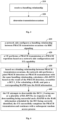
- FIG. 1 shows a flowchart of a signal transmission method on a network side according to some embodiments of the present disclosure.
- a bundling relationship between different transmission occasions is configured, wherein a plurality of transmission occasions with the bundling relationship are used for repetition of the same signal.
- the transmission occasions comprises PRACH transmission occasions.
- the transmission occasions may be ROs (Random Access Channel Occasion).
- a plurality of available ROs can be bound as a RO set, which is used for multi PRACH transmission, which may comprise repetition of the same signal.
- the network side can configure a bundling relationship between PRACH transmission occasions via RRC (Radio Resource Control) signaling.
- RRC Radio Resource Control
- the bundling relationship is configured according to at least one of a time-domain position or a frequency-domain position corresponding to each transmission occasion of the transmission occasions and a SSB associated with the each transmission occasion. For example, transmission occasions associated with the same SSB are bound together.
- first transmission occasions are bound together, wherein the first transmission occasions correspond to the same time-domain position and are associated with the same SSB.
- second transmission occasions are bound together, wherein the second transmission occasions correspond to the same frequency-domain position and are associated with the same SSB.
- the bundling relationship between different PRACH transmission occasions comprises at least one of: no bundling relationship; a bundling relationship between part or all PRACH transmission occasions at the same time-domain symbol position and associated with the same SSB; a bundling relationship between part or all PRACH transmission occasions at the same frequency-domain position and associated with the same SSB; a bundling relationship between PRACH transmission occasions at part or all time-domain symbol positions or part or all frequency-domain positions and associated with the same SSB.
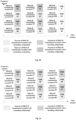
- FIGS. 2a to 2c show schematic diagrams of a bundling relationship between transmission occasions according to some embodiments of the present disclosure.
- a bundling relationship is formed between part or all PRACH transmission occasions at the same time-domain symbol position and associated with the same SSB.
- a bundling relationship is formed between part or all PRACH transmission occasions that are at the same frequency-domain position and are associated with the same SSB.
- PRACH transmission occasions #0 and #4 which are associated with SSB #0 and are at the same frequency-domain position, have a bundling relationship
- PRACH transmission occasions #3 and #7 which are associated with SSB #1 and are at the same frequency-domain position, have a bundling relationship.
- PRACH transmission occasions #0, #4, #8, #2, #6, #10 which are associated with SSB #0, have a bundling relationship
- a bundling relationship is configured between different transmission occasions at the same temporal granularity.
- the temporal granularity comprises a time slot, a sub-frame, or a system frame.
- the bundling relationship is only configured for PRACH transmission occasions at the same temporal granularity. For example, in response to the temporal granularity being a time slot, there is no bundling relationship between PRACH transmission occasions across time slots.
- the temporal granularity at which a bundling relationship can be formed between PRACH transmission occasions is at least one of a time slot, a sub-frame, or a system frame.
- the bundling relationship is sent to a UE to enable the UE to determine transmission occasions for signal transmission based on the bundling relationship.
- a joint detection is performed on signals received on the different transmission occasions with the bundling relationship; a scheduled RAR is scrambled based on the result of the joint detection; the scrambled RAR is sent to the UE to enable the UE to determine whether the signal transmission of the UE is successful based on whether the scrambled RAR can be descrambled.
- the network side performs a joint PRACH detection on PRACH transmissions with the same bundling relationship; calculates a RA-RNTI based on the result of the PRACH detection; scrambles DCI 1_0 of a RAR scheduled; puts a corresponding RAPID into the RAR information.
- a joint Preamble detection is performed on signals received on the different transmission occasions with the bundling relationship.
- a RA-RNTI is calculated according to the result of the joint detection; the DCI 1_0 of a RAR scheduled is scrambled; a RAPID corresponding to the RA-RNTI is added to the scrambled RAR.
- the network side performs a joint process on signals received on PRACH transmission occasions with the same bundling relationship to perform a Preamble detection; calculates a corresponding RA-RNTI value based on the result of the Preamble detection.
- a RA-RNTI is calculated based on a time-domain position and a frequency-domain position of one transmission occasion of different transmission occasions with the bundling relationship, in response to detecting that energy of a Preamble sequence is greater than a detection threshold.
- a RA-RNTI value is calculated based on a time resource position and a frequency resource position of a specified PRACH transmission occasion among the PRACH transmission occasions with the same bundling relationship, in response to detecting that energy of a Preamble sequence is greater than a detection threshold.
- a corresponding RAPID is added to the RAR information.
- the one transmission occasion comprises a transmission occasion with the smallest index value or a transmission occasion with the largest index value among the different transmission occasions with a bundling relationship.
- the transmission occasions comprises PRACH transmission occasions.
- the specified PRACH transmission occasion may comprise a PRACH transmission occasion with the smallest index value, a PRACH transmission occasion with the largest index value, or any PRACH transmission occasion.
- the network side configures a bundling relationship between a plurality of transmission occasions, and the UE performs signal repetition using the plurality of transmission occasions bound. In this way, signal repetition can be supported, and thus reducing delay and improving signal coverage.
- FIG. 3 shows a flowchart of a signal transmission method on a user side according to some embodiments of the present disclosure.
- step 310 a bundling relationship between different transmission occasions configured on a network side is received, wherein a plurality of transmission occasions with the bundling relationship are used for repetition of the same signal.
- a transmission occasion for a signal transmission is determined based on the bundling relationship. For example, a UE performs PRACH transmission or PRACH repetition based on the bundling relationship configured on the network side.
- transmission occasions with a bundling relationship are bound as a set of transmission occasions; signal repetition is performed for the same signal using one or more sets of transmission occasions with a bundling relationship.
- transmission occasions #0 and #2 have a first bundling relationship, and a signal needs to be repeated twice.
- the signal can be repeated twice using transmission occasions #0 and #2.
- transmission occasions #0 and #2 have a first bundling relationship
- transmission occasions #8 and #10 have a second bundling relationship
- a signal needs to be repeated four times.
- the signal can be repeated four times using transmission occasions #0, #2, #8 and #10.
- the repetition of the same signal is performed using part or all of the transmission occasions in a set of transmission occasions with a bundling relationship.
- transmission occasions #0, #2, #8, #10 have a bundling relationship, and a signal needs to be repeated three times.
- the signal can be repeated three times using three transmission occasions among the transmission occasions #0, #2, #8 and #10.
- PRACH transmission is directly performed based on the network side configuration without being affected by the bundling relationship of PRACH transmission occasions.
- the network side configuration comprises one or more of: time-domain positions and frequency-domain positions of PRACH transmission occasions, Preamble indexes available for PRACH transmissions, subcarrier spacing of Preambles, etc.
- PRACH repetition is performed on the PRACH transmission occasions that have the bundling relationship.
- signal repetition is performed on different transmission occasions that have a bundling relationship and are associated with an SSB selected by the UE during cell search.
- the UE performs a transmission on transmission occasions that have a bundling relationship and are associated with an SSB selected by the UE during cell search.
- the SSB index selected by the UE during cell search is #1 and the number of PRACH repetitions is 4, then the UE performs PRACH repetitions on PRACH transmission occasions #1, #3, #9, and #11.
- beams used for signal transmission on the different transmission occasions are determined based on the bundling relationship.
- the bundling relationship comprises a first bundling relationship and a second bundling relationship.
- Signal repetition is performed using a first beam on different transmission occasions with the first bundling relationship
- signal repetition is performed using a second beam on different transmission occasions with the second bundling relationship, the first beam being different from the second beam; or signal repetition is performed using different beams on different transmission occasions with the first bundling relationship.
- the UE performs PRACH transmission using the same beam on PRACH transmission occasions having the same bundling relationship, and performs PRACH transmission using the different beams on PRACH transmission occasions having different bundling relationships.
- the UE performs PRACH transmission using different beams on PRACH transmission occasions with the same bundling relationship.
- a scrambled RAR sent from the network side is descrambled; whether the signal transmission is successful is determined based on whether the scrambled RAR can be descrambled.
- the UE attempts to descramble the DCI 1_0 using one or a plurality of RA-RNTIs; In response to the descrambling process being successful and a RAPID in the RAR information scheduled by the DCI being correctly identified, the UE successfully completes the PRACH transmission and continues with a subsequent random access process; in response to the descrambling process failing, the UE needs to repeat a new PRACH.
- At least one RA-RNTI is used to descramble the DCI 1_0 of the RAR, the RA-RNTI being calculated based on a time-domain position and a frequency-domain position of a transmission occasion for a signal transmission; the signal transmission is successful in response to correctly identifying the RAPID in the RAR scheduled by the DCI 1_0.
- one RA-RNTI is used to descramble the DCI 1_0.
- the RA-RNTI is obtained by calculation based on a time resource position and a frequency resource position of a PRACH transmission occasion on which PRACH transmission is performed by the UE.
- a plurality of RA-RNTIs are used to descramble the DCI 1_0.
- the plurality of RA-RNTIs are obtained by calculation based on time resource positions and frequency resource positions of PRACH transmission occasions on which PRACH repetition is performed by the UE.
- FIG. 4 shows a flowchart of a signal transmission method according to some embodiments of the present disclosure.
- a network side configures a bundling relationship between PRACH transmission occasions via RRC signaling.
- the temporal granularity of a bundling relationship between PRACH transmission occasions is at least one of a time slot, a sub-frame, or a system frame.
- a bundling relationship is only configured for PRACH transmission occasions within a temporal granularity. For example, in response to the temporal granularity being a time slot, there is no bundling relationship between PRACH transmission occasions across time slots.
- the bundling relationship between PRACH transmission occasions comprises at least one of: no bundling relationship; a bundling relationship between part or all PRACH transmission occasions at the same time-domain symbol position and associated with the same SSB; a bundling relationship between part or all PRACH transmission occasions at the same frequency-domain position and associated with the same SSB; a bundling relationship between PRACH transmission occasions at part time-domain symbol positions or part frequency-domain positions and associated with the same SSB.
- a UE performs a PRACH transmission or a PRACH repetition based on a network side configuration.
- a PRACH transmission is directly performed based on the network side configuration without being affected by the bundling relationship of PRACH transmission occasions.
- the network side configuration comprises one or more of: time-domain positions and frequency-domain positions of PRACH transmission occasions, preamble indexes available for PRACH transmissions, subcarrier spacing of preambles, etc.
- the first type of UE comprises a UE not supporting PRACH repetition.
- a second type of UE in response to no bundling relationship between the PRACH transmission occasions, only a PRACH transmission is performed based on a network side configuration, without PRACH repetition.
- a PRACH repetition is performed on the PRACH transmission occasions with the bundling relationship.
- the second type of UE comprises a UE supporting a PRACH repetition.
- the UE performs transmission on PRACH transmission occasions with a bundling relationship and are associated with an SSB selected by the UE during a cell search.
- the SSB index selected by the UE during the cell search is #1 and the number of PRACH repetitions is 4, then the UE performs PRACH repetitions on PRACH transmission occasions #1, #3, #9, and #11.
- the UE performs a PRACH transmission on PRACH transmission occasions with the same bundling relationship using the same beam, and performs a PRACH transmission at PRACH transmission occasions with different bundling relationships using different beams.
- the UE performs a PRACH transmission using different beams on PRACH transmission occasions with the same bundling relationship.
- step 430 based on a bundling relationship between PRACH transmission occasions, the network side performs a joint PRACH detection on PRACH transmissions with the same bundling relationship; calculates a RA-RNTI based on the result of the PRACH detection; scrambles a DCI 1_0 of a RAR scheduled, and puts a corresponding RAPID into the RAR information.
- the network side performs a joint process on signals received on PRACH transmission occasions with the same bundling relationship to perform a Preamble detection; calculates a corresponding RA-RNTI value based on the result of detection.
- a RA-RNTI value is calculated based on a time resource position and a frequency resource position of a specified PRACH transmission occasion among the PRACH transmission occasions with the same bundling relationship, in response to detecting that energy of a Preamble sequence is greater than a detection threshold; a corresponding RAPID is added to the RAR information.
- the specified PRACH transmission occasion comprises: a PRACH transmission occasion with the smallest index value, a PRACH transmission occasion with the largest index value, or any PRACH transmission occasion.
- step 440 the UE attempts to descramble the DCI 1_0 using one or a plurality of RA-RNTIs; in response to the descrambling is successful and a RAPID in the RAR information scheduled by the DCI can be correctly identified, the UE successfully completes the PRACH transmission and continues with a subsequent random access process.
- the one RA-RNTI in response to no PRACH repetition being performed by the UE, is used to descramble the DCI 1_0.
- the RA-RNTI is obtained by calculation based on a time resource position and a frequency resource position of a PRACH transmission occasion on which PRACH transmission is performed by the UE.
- the plurality of RA-RNTIs are used to descramble the DCI 1_0.
- the plurality of RA-RNTIs are obtained by calculation based on time resource positions and frequency resource positions of PRACH transmission occasions on which PRACH repetition is performed by the UE.
- FIG. 5a shows a block diagram of a signal transmission apparatus on a network side according to some embodiments of the present disclosure.
- a signal transmission apparatus 5a comprises: a configuration unit 51a for configuring a bundling relationship between different transmission occasions, wherein a plurality of transmission occasions with a bundling relationship are used for repetition of the same signal; a sending unit 52a for sending the bundling relationship to a UE to enable the UE to determine transmission occasions for signal transmission based on the bundling relationship.
- the configuration unit 51a configures the bundling relationship according to at least one of time-domain positions or frequency-domain positions corresponding to each transmission occasion of the transmission occasions and SSBs associated with the each transmission occasions.
- the configuration unit 51a binds transmission occasions that are associated with the same SSB.
- the configuration unit 51a binds all or part of first transmission occasions, wherein the first transmission occasions correspond to the same time-domain position and are associated with the same SSB.
- the configuration unit 51a binds all or part of second transmission occasions, wherein the second transmission occasions correspond to the same frequency-domain position and are associated with the same SSB.
- the configuration unit 51a configures a bundling relationship between different transmission occasions at the same temporal granularity.
- the temporal granularity comprises a time slot, a sub-frame, or a system frame.
- the transmission apparatus 5a further comprises: a detection unit 53a for performing a joint detection on signals received on the different transmission occasions with the bundling relationship; a processing unit 54a for scrambling a scheduled RAR based on the result of the joint detection; wherein the sending unit sends the scrambled RAR to the UE to enable the UE to determine whether the signal transmission of the UE is successful based on whether the scrambled RAR can be descrambled.
- the detection unit 53a performs a joint Preamble detection on signals received on the different transmission occasions with the bundling relationship.
- the processing unit 54a calculates a RA-RNTI according to the result of the joint detection; scrambles a DCI 1_0 of the scheduled RAR, and adds a RAPID corresponding to the RA-RNTI to the scrambled RAR.
- a RA-RNTI is calculated based on a time-domain position and a frequency-domain position of one transmission occasion of different transmission occasions with the bundling relationship.
- the one transmission occasion comprises a transmission occasion with the smallest index value or a transmission occasion with the largest index value among the different transmission occasions with a bundling relationship.
- the transmission occasion comprises a PRACH transmission occasion.
- FIG. 5b shows a block diagram of a signal transmission apparatus on a user side according to some embodiments of the present disclosure.
- a signal transmission apparatus 5b comprises: a receiving unit 51b for receiving a bundling relationship between different transmission occasions configured on a network side, wherein a plurality of transmission occasions with a bundling relationship are used for repetition of the same signal; a transmitting unit 52b for determining transmission occasions for signal transmission based on the bundling relationship.
- the transmitting unit 52b performs signal repetition on different transmission occasions that have a bundling relationship and are associated with an SSB selected by the UE during cell search.
- the transmitting unit 52b determines beams used for signal transmission on the different transmission occasions based on the bundling relationship.
- the bundling relationship comprises a first bundling relationship and a second bundling relationship.
- the transmitting unit 52b performs signal repetition using a first beam on different transmission occasions with the first bundling relationship, and performs signal repetition using a second beam on different transmission occasions with the second bundling relationship, the first beam being different from the second beam; or performs signal repetition using different beams on different transmission occasions with the first bundling relationship.
- the transmission apparatus 5b further comprises: a processing unit 53b for descrambling a scrambled RAR sent from a network side; a determination unit 54b for determining whether the signal transmission is successful based on whether the scrambled RAR can be descrambled.
- the processing unit 53b determines whether one or a plurality of RA-RNTIs are used to descramble a DCI 1_0 of the RAR based on whether signal repetition is performed; the determination unit 54b determines that the signal transmission is successful in response to correctly identifying the RAPID in the RAR scheduled by the DCI 1_0.
- the processing unit 53b uses one RA-RNTI to descramble the DCI 1_0 of the RAR in response to performing no signal repetition, the one RA-RNTI being calculated based on a time-domain position and a frequency-domain position of a transmission occasion on which signal transmission is performed; the processing unit 53b descrambles the DCI 1_0 of the RAR using a plurality of RA-RNTIs in response to performing the signal repetition, the plurality of RA-RNTIs being calculated based on time-domain positions and frequency-domain positions of transmission occasions on which signal repetition is performed.
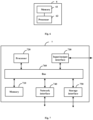
- FIG. 6 shows a block diagram of a signal transmission apparatus according to some embodiments of the present disclosure.
- the signal transmission apparatus of the embodiment comprises: a memory 61 and a processor 62 coupled to the memory 61, the processor 62 configured to, based on instructions stored in the memory 61, carry out the signal transmission method on a network side or the signal transmission method on a user side provided by any one of the embodiments of the present disclosure.
- the memory 61 may comprise, for example, a system memory, a fixed non-volatile storage medium, or the like.
- the system memory stores, for example, an operating system, applications, a boot loader, a database, and other programs.
- FIG. 7 shows a block diagram of a signal transmission apparatus according to other embodiments of the present disclosure.
- the signal transmission apparatus 7 of the embodiment comprises: a memory 710 and a processor 720 coupled to the memory 710, the processor 720 is configured to, based on instructions stored in the memory 710, carry out the signal transmission method on a network side or the signal transmission method on a user side provided by any one of the embodiments of the present disclosure.
- the memory 710 may comprise, for example, a system memory, a fixed non-volatile storage medium, or the like.
- the system memory stores, for example, an operating system, application programs, a boot loader, and other programs.
- the signal transmission apparatus 7 may further comprise an input-output interface 730, a network interface 740, a storage interface 750, and the like. These interfaces 730, 740, 750, and between the memory 710 and the processor 720 may be connected through a bus 760, for example.
- the input-output interface 730 provides a connection interface for input-output devices such as a display, a mouse, a keyboard, a touch screen, a microphone, a loudspeaker, etc.
- the network interface 740 provides a connection interface for various networked devices.
- the storage interface 750 provides a connection interface for external storage devices such as an SD card and a USB flash disk.
- FIG. 8 shows a block diagram of a signal transmission system according to some embodiments of the present disclosure.
- the signal transmission system 8 comprises: a network side device 81 for carrying out the signal transmission method on the network side according to any one of the above embodiments; a user equipment (UE) 82 for carrying out the signal transmission method on a user side according to any one of the above embodiments.
- a network side device 81 for carrying out the signal transmission method on the network side according to any one of the above embodiments
- UE user equipment
- embodiments of the present disclosure may be provided as a method, a system, or a computer program product. Therefore, embodiments of the present disclosure can take the form of an entirely hardware embodiment, an entirely software embodiment or an embodiment containing both hardware and software aspects. Moreover, the present disclosure may take the form of a computer program product embodied on one or more computer-usable non-transitory storage media (including but not limited to disk memory, CD-ROM, optical memory, etc.) having computer-usable program code embodied therein.
- computer-usable non-transitory storage media including but not limited to disk memory, CD-ROM, optical memory, etc.
- the method and system of the present disclosure may be implemented in many ways.
- the method and system of the present disclosure may be implemented by software, hardware, firmware, or any combination of software, hardware, and firmware.
- the above sequence of steps of the method is merely for the purpose of illustration, and the steps of the method of the present disclosure are not limited to the above-described specific order unless otherwise specified.
- the present disclosure may also be implemented as programs recorded in a recording medium, which comprise machine-readable instructions for implementing the method according to the present disclosure.
- the present disclosure also covers a recording medium storing programs for executing the method according to the present disclosure.
Landscapes
- Engineering & Computer Science (AREA)
- Signal Processing (AREA)
- Computer Networks & Wireless Communication (AREA)
- Mobile Radio Communication Systems (AREA)
Abstract
Description
- The present application is based on and claims the benefit of priority to
Chinese Application No. 202210654754.3, filed on June 10, 2022 - This disclosure relates to the field of communication technology, in particular to a signal transmission method, a signal transmission apparatus, a signal transmission system, and a non-volatile computer-readable storage medium.
- According to the 3GPP NR Realease-17 protocols, a UE (User Equipment) transmits a preamble on a PRACH (Physical Random Access Channel) transmission occasion indicated by a base station.
- In related arts, in a case where the UE determines that its PRACH transmission fails, the UE needs to repeat a new PRACH.
- According to some embodiments of the present disclosure, there is provided a signal transmission method on a network side, comprising: configuring a bundling relationship between different transmission occasions, wherein a plurality of transmission occasions with the bundling relationship are used for a repetition of a same signal; and sending the bundling relationship to a UE(User Equipment) to enable the UE to determine a transmission occasion for a signal transmission based on the bundling relationship.
- In some embodiments, the configuring the bundling relationship between different transmission occasions comprises: configuring the bundling relationship according to at least one of a time-domain position or a frequency-domain position corresponding to each transmission occasion of the plurality of transmission occasions and a SSB (synchronization signal block) associated with the each transmission occasion.
- In some embodiments, the configuring the bundling relationship between different transmission occasions comprises: bundling transmission occasions associated with a same SSB.
- In some embodiments, the bundling the transmission occasions associated with the same SSB comprises: bundling all or part of first transmission occasions, wherein the first transmission occasions correspond to a same time-domain position and are associated with the same SSB.
- In some embodiments, the bundling the transmission occasions associated with the same SSB comprises: bundling all or part of second transmission occasions, wherein the second transmission occasions correspond to a same frequency-domain position and are associated with the same SSB.
- In some embodiments, the configuring the bundling relationship between different transmission occasions comprises: configuring the bundling relationship between the different transmission occasions at a same temporal granularity.
- In some embodiments, the temporal granularity comprises a time slot, a sub-frame or a system frame.
- In some embodiments, the transmission method further comprises: performing a joint detection on signals received on the different transmission occasions with the bundling relationship; scrambling a scheduled RAR (random access response) according to a result of the joint detection; and sending a scrambled RAR to the UE to enable the UE to determine whether the signal transmission of the UE is successful based on whether the scrambled RAR is able to be descrambled.
- In some embodiments, the performing the joint detection on the signals received on the different transmission occasions with the bundling relationship comprises: performing a joint Preamble detection on the signals received on the different transmission occasions with the bundling relationship.
- In some embodiments, the scrambling the scheduled random access response (RAR) according to the result of the joint detection comprises: calculating a RA-RNTI (random access radio network temporary identifier) based on the result of the joint detection; scrambling DCI 1_0 (downlink control information 1_0) of the scheduled RAR; and adding a RAPID (Random Access Preamble Identifier) corresponding to the RA-RNTI to the scrambled RAR.
- In some embodiments, the calculating the random access-radio network temporary identifier (RA-RNTI) based on the result of the joint detection comprises: calculating the RA-RNTI based on a time domain position and a frequency domain position of one transmission occasion of the different transmission occasions with the bundling relationship, in response to detecting that energy of a Preamble sequence is greater than a detection threshold.
- In some embodiments, the one transmission occasion comprises a transmission occasion with the smallest index value or a transmission occasion with the largest index value in the different transmission occasions with the bundling relationship.
- In some embodiments, the transmission occasion comprises a PRACH (physical random access channel) transmission occasion.
- According to other embodiments of the present disclosure, there is provided a signal transmission method on a user side, comprising: receiving a bundling relationship between different transmission occasions configured on a network side, wherein a plurality of transmission occasions with the bundling relationship are used for a repetition of a same signal; and determining a transmission occasion for a signal transmission based on the bundling relationship.
- In some embodiments, the determining the transmission occasion for the signal transmission based on the bundling relationship comprises: performing a signal repetition on the different transmission occasions with the bundling relationship and associated with a SSB (synchronization signal blocks) selected by a UE during a cell search.
- In some embodiments, the determining the transmission occasion for the signal transmission based on the bundling relationship comprises: determining a beam used for the signal transmission on the different transmission occasions based on the bundling relationship.
- In some embodiments, the bundling relationship comprises a first bundling relationship and a second bundling relationship, wherein the determining the beam used for the signal transmission on the different transmission occasions based on the bundling relationship comprises: performing the signal repetition using a first beam on different transmission occasions with the first bundling relationship, and performing the signal repetition using a second beam on different transmission occasions with the second bundling relationship, the first beam being different from the second beam; or performing the signal repetition using different beams on the different transmission occasions with the first bundling relationship.
- In some embodiments, the transmission method further comprises: descrambling a scrambled RAR(random access response) sent from the network side; and determining whether the signal transmission is successful based on whether the scrambled RAR is able to be descrambled.
- In some embodiments, the descrambling the scrambled RAR sent from the network side comprises: determining whether one RA-RNTI(random access radio network temporary identifier) or a plurality of RA-RNTIs are used to descramble DCI 1_0 (downlink control information 1_0) of a RAR based on whether the signal repetition is performed; and determining that the signal transmission is successful, in response to correctly identifying the RAPID(Random Access Preamble Identifier) in the RAR scheduled by the DCI 1_0.
- In some embodiments, the determining whether the one RA-RNTI (random access radio network temporary identifier) or the plurality of RA-RNTIs are used to descramble the DCI 1_0 of the RAR based on whether the signal repetition is performed comprises: using the one RA-RNTI to descramble the DCI 1_0 of the RAR, in response to the signal repetition being not performed, the one RA-RNTI being calculated based on a time-domain position and a frequency-domain position of a transmission occasion on which the signal transmission is performed; using the plurality of RA-RNTIs to descramble the DCI 1_0 of the RAR, in response to the signal repetition being performed, the plurality of RA-RNTIs being calculated based on a time-domain position and a frequency-domain position of transmission occasions on which signal the repetition is performed.
- According to still other embodiments of the present disclosure, there is provided a signal transmission apparatus on a network side, comprising: a configuration unit configured to configure a bundling relationship between different transmission occasions, wherein a plurality of transmission occasions with the bundling relationship are used for a repetition of a same signal; and a sending unit configured to send the bundling relationship to a UE(User Equipment) to enable the UE to determine a transmission occasion for a signal transmission based on the bundling relationship.
- In some embodiments, the configuration unit configures the bundling relationship according to at least one of a time-domain position or a frequency-domain position corresponding to each transmission occasion of the plurality of transmission occasions and a SSB (synchronization signal blocks) associated with the each transmission occasion.
- In some embodiments, the configuration unit binds transmission occasions associated with a same SSB.
- In some embodiments, the configuration unit binds all or part of first transmission occasions, wherein the first transmission occasions correspond to a same time-domain position and are associated with the same SSB.
- In some embodiments, the configuration unit binds all or part of second transmission occasions, wherein the second transmission occasions correspond to a same frequency-domain position and are associated with the same SSB.
- In some embodiments, the configuration unit configures the bundling relationship between the different transmission occasions at a same temporal granularity.
- In some embodiments, the temporal granularity comprises a time slot, a sub-frame or a system frame.
- In some embodiments, the transmission apparatus further comprises: a detection unit configured to perform a joint detection on signals received on the different transmission occasions with the bundling relationship; a processing unit configured to scramble a scheduled RAR based on the result of the joint detection; and wherein the sending unit sends a scrambled RAR (random access response) to the UE to enable the UE to determine whether the signal transmission of the UE is successful based on whether the scrambled RAR is able to be descrambled.
- In some embodiments, the detection unit performs a joint Preamble detection on the signals received on the different transmission occasions with the bundling relationship.
- In some embodiments, the processing unit calculates a RA-RNTI (random access radio network temporary identifier) based on the result of the joint detection; scrambles DCI 1_0 (downlink control information 1_0) of the scheduled RAR; and adds a RAPID (Random Access Preamble Identifier) corresponding to the RA-RNTI to the scrambled RAR.
- In some embodiments, processing unit calculates the RA-RNTI based on a time domain position and a frequency domain position of one transmission occasion of the different transmission occasions with the bundling relationship, in response to detecting that energy of a Preamble sequence is greater than a detection threshold.
- In some embodiments, the one transmission occasion comprises a transmission occasion with the smallest index value or a transmission occasion with the largest index value in the different transmission occasions with the bundling relationship.
- In some embodiments, the transmission occasion comprises a PRACH (physical random access channel) transmission occasion.
- According to still other embodiments of the present disclosure, there is provided a signal transmission apparatus, comprising: a receiving unit for receiving a bundling relationship between different transmission occasions configured on a network side, wherein a plurality of transmission occasions with the bundling relationship are used for a repetition of a same signal; and a transmitting unit for determining a transmission occasions for a signal transmission based on the bundling relationship.
- In some embodiments, the transmitting unit performs a signal repetition on the different transmission occasions with the bundling relationship and associated with a SSB(synchronization signal blocks) selected by a UE during a cell search.
- In some embodiments, the transmitting unit determines a beam used for the signal transmission on the different transmission occasions based on the bundling relationship.
- In some embodiments, the bundling relationship comprises a first bundling relationship and a second bundling relationship; the transmitting unit performs the signal repetition using a first beam on different transmission occasions with the first bundling relationship, and performing the signal repetition using a second beam on different transmission occasions with the second bundling relationship, the first beam being different from the second beam; or performs the signal repetition using different beams on the different transmission occasions with the first bundling relationship.
- In some embodiments, the transmission apparatus further comprises: a processing unit configured to descramble a scrambled RAR(random access response) sent from the network side; and a determination unit configured to determine whether the signal transmission is successful based on whether the scrambled RAR is able to be descrambled.
- In some embodiments, the processing unit determines whether one RA-RNTI or a plurality of RA-RNTIs are used to descramble DCI 1_0 of a RAR based on whether the signal repetition is performed; and the determination unit determines that the signal transmission is successful, in response to correctly identifying the RAPID in the RAR scheduled by the DCI 1_0.
- In some embodiments, the processing unit uses the one RA-RNTI to descramble the DCI 1_0 of the RAR, in response to the signal repetition being not performed, the one RA-RNTI being calculated based on a time-domain position and a frequency-domain position of a transmission occasion on which the signal transmission is performed; and the processing unit uses the plurality of RA-RNTIs to descramble the DCI 1_0 of the RAR, in response to the signal repetition being performed, the plurality of RA-RNTIs being calculated based on a time-domain position and a frequency-domain position of transmission occasions on which signal the repetition is performed.
- According to still other embodiments of the present disclosure, there is provided a signal transmission system, comprising: a network side device configured to carry out a signal transmission method on the network side according to any one of the above embodiments; and a UE (user equipment) configured to carry out a signal transmission method on a user side according to any one of the above embodiments.
- According to still other embodiments of the present disclosure, there is provided a signal transmission apparatus, comprising: a memory; a processor coupled to the memory, the processor is configured to, based on instructions stored in the memory, carry out a signal transmission method on a network side or a signal transmission method on a user side according to any one of the above embodiments.
- According to still other embodiments of the present disclosure, there is provided a nonvolatile computer readable storage medium stored thereon a computer program that, when executed by a processor, carries out a signal transmission method on a network side or a signal transmission method on a user side according to any one of the above embodiments.
- According to further embodiments of the present disclosure, there is provided a computer program, comprising: instructions that, when executed by a processor, cause the processor to carry out a signal transmission method on a network side or a signal transmission method on a user side according to any one of the above embodiments.
- The accompanying drawings, which are incorporated in and constitute a portion of this specification, illustrate embodiments of the present disclosure and, together with the description, serve to explain the principles of the present disclosure.
- The present disclosure will be more clearly understood from the following detailed description with reference to the accompanying drawings, in which:
-
FIG. 1 shows a flowchart of a signal transmission method on a network side according to some embodiments of the present disclosure; -
FIGS. 2a to 2c show schematic diagrams of a bundling relationship between transmission occasions according to some embodiments of the present disclosure; -
FIG. 3 shows a flowchart of a signal transmission method on a user side according to some embodiments of the present disclosure; -
FIG. 4 shows a flowchart of a signal transmission method according to some embodiments of the present disclosure; -
FIG. 5a shows a block diagram of a signal transmission apparatus on a network side according to some embodiments of the present disclosure; -
FIG. 5b shows a block diagram of a signal transmission apparatus on a user side according to some embodiments of the present disclosure; -
FIG. 6 shows a block diagram of a signal transmission apparatus according to some embodiments of the present disclosure; -
FIG. 7 shows a block diagram of a signal transmission apparatus according to other embodiments of the present disclosure; -
FIG. 8 shows a block diagram of a signal transmission system according to some embodiments of the present disclosure. - Various exemplary embodiments of the present disclosure will now be described in detail with reference to the accompanying drawings. Notice that, unless otherwise specified, the relative arrangement, numerical expressions and values of the components and steps set forth in these embodiments do not limit the scope of the disclosure.
- At the same time, it should be understood that, for ease of description, the dimensions of the various parts shown in the drawings are not drawn to actual proportions.
- The following description of at least one exemplary embodiment is in fact merely illustrative and is in no way intended as a limitation to the disclosure, its application or use.
- Techniques, methods, and devices known to those of ordinary skill in the relevant art may not be discussed in detail, but where appropriate, these techniques, methods, and devices should be considered as part of the specification.
- Of all the examples shown and discussed herein, any specific value should be construed as merely illustrative and not as a limitation. Thus, other examples of exemplary embodiments may have different values.
- Notice that, similar reference numerals and letters are denoted by the like in the accompanying drawings, and therefore, once an item is defined in a drawing, there is no need for further discussion in the accompanying drawings.
- Based on the time-frequency position of a PRACH transmission occasion for sending a preamble, a UE can calculate a corresponding RA-RNTI value; the UE listens to a PDCCH within a RAR time window; if the UE successfully descrambles and detects DCI 1_0 using the RA-RNTI, and can identify a RAPID in RAR information scheduled by the DCI, then the UE considers its PRACH transmission to be successful.
- The inventors of the present disclosure have found the following problems existed in the related art: PRACH repetition is not supported, resulting in additional delay and poor signal coverage.
- In view of this, this disclosure proposes a signal transmission technical solution that supports signal repetition, thereby reducing delay and improving signal coverage.
- As mentioned above, the current protocol versions do not support PRACH repetition. Therefore, in a case where a UE considers that its PRACH transmission fails, the UE needs to transmit a new PRACH again, which results in additional delay. In addition, for high frequency bands, PRACH is a potential coverage limited channel, so it is necessary to improve the coverage performance of PRACH.
- In view of the above technical problems, this disclosure proposes a resource configuration technical solution for PRACH repetition, which may facilitate an enhanced UE to perform multibeam repetition of PRACH, thereby improving the coverage performance of PRACH.
- For example, the technical solution of the present disclosure can be realized through the following embodiments.
-
FIG. 1 shows a flowchart of a signal transmission method on a network side according to some embodiments of the present disclosure. - As shown in
FIG. 1 , instep 110, a bundling relationship between different transmission occasions is configured, wherein a plurality of transmission occasions with the bundling relationship are used for repetition of the same signal. For example, the transmission occasions comprises PRACH transmission occasions. For example, the transmission occasions may be ROs (Random Access Channel Occasion). A plurality of available ROs can be bound as a RO set, which is used for multi PRACH transmission, which may comprise repetition of the same signal. - For example, the network side can configure a bundling relationship between PRACH transmission occasions via RRC (Radio Resource Control) signaling.
- In some embodiments, the bundling relationship is configured according to at least one of a time-domain position or a frequency-domain position corresponding to each transmission occasion of the transmission occasions and a SSB associated with the each transmission occasion. For example, transmission occasions associated with the same SSB are bound together.
- For example, all or part of first transmission occasions are bound together, wherein the first transmission occasions correspond to the same time-domain position and are associated with the same SSB.
- For example, all or part of second transmission occasions are bound together, wherein the second transmission occasions correspond to the same frequency-domain position and are associated with the same SSB.
- For example, the bundling relationship between different PRACH transmission occasions comprises at least one of: no bundling relationship; a bundling relationship between part or all PRACH transmission occasions at the same time-domain symbol position and associated with the same SSB; a bundling relationship between part or all PRACH transmission occasions at the same frequency-domain position and associated with the same SSB; a bundling relationship between PRACH transmission occasions at part or all time-domain symbol positions or part or all frequency-domain positions and associated with the same SSB.
-
FIGS. 2a to 2c show schematic diagrams of a bundling relationship between transmission occasions according to some embodiments of the present disclosure. - As shown in
FIG. 2a , a bundling relationship is formed between part or all PRACH transmission occasions at the same time-domain symbol position and associated with the same SSB. - For example, PRACH
transmission occasions # 0 and #2, which are associated withSSB # 0 and are at the same time-domain position, have a bundling relationship; PRACHtransmission occasions # 1 and #3, which are associated withSSB # 1 and are at the same time-domain position, have a bundling relationship; PRACHtransmission occasions # 8 and #10, which are associated withSSB # 0 and are at the same time-domain position, have a bundling relationship; PRACHtransmission occasions # 9 and #11, which are associated withSSB # 1 and are at the same time-domain position, have a bundling relationship. - In addition, there is no bundling relationship between PRACH
transmission occasions # 4~# 7. - As shown in
FIG. 2b , a bundling relationship is formed between part or all PRACH transmission occasions that are at the same frequency-domain position and are associated with the same SSB. - For example, PRACH
transmission occasions # 0 and #4, which are associated withSSB # 0 and are at the same frequency-domain position, have a bundling relationship; PRACHtransmission occasions # 1 and #5, which are associated withSSB # 1 and are at the same frequency-domain position, have a bundling relationship; PRACHtransmission occasions # 2 and #6, which are associated withSSB # 0 and are at the same frequency-domain position, have a bundling relationship; PRACHtransmission occasions # 3 and #7, which are associated withSSB # 1 and are at the same frequency-domain position, have a bundling relationship. - In addition, there is no bundling relationship between PRACH
transmission occasions # 8~#11. - As shown in
FIG. 2c , a bundling relationship is formed between PRACH transmission occasions that are at part or all time-domain symbol and part or all frequency-domain positions and are associated with the same SSB. - For example, PRACH
transmission occasions # 0, #4, #8, #2, #6, #10, which are associated withSSB # 0, have a bundling relationship; PRACHtransmission occasions # 1, #5, #9, #3, #7, #11, which are associated withSSB # 1, have a bundling relationship. - In some embodiments, a bundling relationship is configured between different transmission occasions at the same temporal granularity. For example, the temporal granularity comprises a time slot, a sub-frame, or a system frame.
- In some embodiments, the bundling relationship is only configured for PRACH transmission occasions at the same temporal granularity. For example, in response to the temporal granularity being a time slot, there is no bundling relationship between PRACH transmission occasions across time slots.
- For example, the temporal granularity at which a bundling relationship can be formed between PRACH transmission occasions is at least one of a time slot, a sub-frame, or a system frame.
- After the bundling relationship is configured, signal transmission can be performed through the remaining steps in
FIG. 1 . - In
step 120, the bundling relationship is sent to a UE to enable the UE to determine transmission occasions for signal transmission based on the bundling relationship. - In some embodiments, a joint detection is performed on signals received on the different transmission occasions with the bundling relationship; a scheduled RAR is scrambled based on the result of the joint detection; the scrambled RAR is sent to the UE to enable the UE to determine whether the signal transmission of the UE is successful based on whether the scrambled RAR can be descrambled.
- For example, based on a bundling relationship between PRACH transmission occasions, the network side performs a joint PRACH detection on PRACH transmissions with the same bundling relationship; calculates a RA-RNTI based on the result of the PRACH detection; scrambles DCI 1_0 of a RAR scheduled; puts a corresponding RAPID into the RAR information.
- In some embodiments, a joint Preamble detection is performed on signals received on the different transmission occasions with the bundling relationship.
- In some embodiments, a RA-RNTI is calculated according to the result of the joint detection; the DCI 1_0 of a RAR scheduled is scrambled; a RAPID corresponding to the RA-RNTI is added to the scrambled RAR.
- For example, the network side performs a joint process on signals received on PRACH transmission occasions with the same bundling relationship to perform a Preamble detection; calculates a corresponding RA-RNTI value based on the result of the Preamble detection.
- In some embodiments, a RA-RNTI is calculated based on a time-domain position and a frequency-domain position of one transmission occasion of different transmission occasions with the bundling relationship, in response to detecting that energy of a Preamble sequence is greater than a detection threshold.
- For example, a RA-RNTI value is calculated based on a time resource position and a frequency resource position of a specified PRACH transmission occasion among the PRACH transmission occasions with the same bundling relationship, in response to detecting that energy of a Preamble sequence is greater than a detection threshold. A corresponding RAPID is added to the RAR information.
- In some embodiments, the one transmission occasion comprises a transmission occasion with the smallest index value or a transmission occasion with the largest index value among the different transmission occasions with a bundling relationship. For example, the transmission occasions comprises PRACH transmission occasions.
- For example, the specified PRACH transmission occasion may comprise a PRACH transmission occasion with the smallest index value, a PRACH transmission occasion with the largest index value, or any PRACH transmission occasion.
- In the above embodiments, the network side configures a bundling relationship between a plurality of transmission occasions, and the UE performs signal repetition using the plurality of transmission occasions bound. In this way, signal repetition can be supported, and thus reducing delay and improving signal coverage.
-
FIG. 3 shows a flowchart of a signal transmission method on a user side according to some embodiments of the present disclosure. - As shown in
FIG. 3 , instep 310, a bundling relationship between different transmission occasions configured on a network side is received, wherein a plurality of transmission occasions with the bundling relationship are used for repetition of the same signal. - In
step 320, a transmission occasion for a signal transmission is determined based on the bundling relationship. For example, a UE performs PRACH transmission or PRACH repetition based on the bundling relationship configured on the network side. - In some embodiments, transmission occasions with a bundling relationship are bound as a set of transmission occasions; signal repetition is performed for the same signal using one or more sets of transmission occasions with a bundling relationship.
- For example,
transmission occasions # 0 and #2 have a first bundling relationship, and a signal needs to be repeated twice. In this case, the signal can be repeated twice usingtransmission occasions # 0 and #2. - For example,
transmission occasions # 0 and #2 have a first bundling relationship,transmission occasions # 8 and #10 have a second bundling relationship, and a signal needs to be repeated four times. In this case, the signal can be repeated four times usingtransmission occasions # 0, #2, #8 and #10. - In some embodiments, the repetition of the same signal is performed using part or all of the transmission occasions in a set of transmission occasions with a bundling relationship.
- For example,
transmission occasions # 0, #2, #8, #10 have a bundling relationship, and a signal needs to be repeated three times. In this case, the signal can be repeated three times using three transmission occasions among thetransmission occasions # 0, #2, #8 and #10. - In some embodiments, for a UE that does not support PRACH repetition, PRACH transmission is directly performed based on the network side configuration without being affected by the bundling relationship of PRACH transmission occasions. For example, the network side configuration comprises one or more of: time-domain positions and frequency-domain positions of PRACH transmission occasions, Preamble indexes available for PRACH transmissions, subcarrier spacing of Preambles, etc.
- In some embodiments, for a UE supporting PRACH repetition, in response to there being no bundling relationship between the PRACH transmission occasions, only PRACH transmission is performed based on the above network side configuration, without PRACH repetition. In response to the PRACH transmission occasions have a bundling relationship as described above, PRACH repetition is performed on the PRACH transmission occasions that have the bundling relationship.
- In some embodiments, signal repetition is performed on different transmission occasions that have a bundling relationship and are associated with an SSB selected by the UE during cell search.
- For example, the UE performs a transmission on transmission occasions that have a bundling relationship and are associated with an SSB selected by the UE during cell search.
- For example, as shown in
FIG. 2a , the SSB index selected by the UE during cell search is #1 and the number of PRACH repetitions is 4, then the UE performs PRACH repetitions on PRACHtransmission occasions # 1, #3, #9, and #11. - In some embodiments, beams used for signal transmission on the different transmission occasions are determined based on the bundling relationship.
- For example, the bundling relationship comprises a first bundling relationship and a second bundling relationship. Signal repetition is performed using a first beam on different transmission occasions with the first bundling relationship, and signal repetition is performed using a second beam on different transmission occasions with the second bundling relationship, the first beam being different from the second beam; or signal repetition is performed using different beams on different transmission occasions with the first bundling relationship.
- For example, the UE performs PRACH transmission using the same beam on PRACH transmission occasions having the same bundling relationship, and performs PRACH transmission using the different beams on PRACH transmission occasions having different bundling relationships.
- For example, the UE performs PRACH transmission using different beams on PRACH transmission occasions with the same bundling relationship.
- In some embodiments, a scrambled RAR sent from the network side is descrambled; whether the signal transmission is successful is determined based on whether the scrambled RAR can be descrambled.
- For example, the UE attempts to descramble the DCI 1_0 using one or a plurality of RA-RNTIs; In response to the descrambling process being successful and a RAPID in the RAR information scheduled by the DCI being correctly identified, the UE successfully completes the PRACH transmission and continues with a subsequent random access process; in response to the descrambling process failing, the UE needs to repeat a new PRACH.
- In some embodiments, at least one RA-RNTI is used to descramble the DCI 1_0 of the RAR, the RA-RNTI being calculated based on a time-domain position and a frequency-domain position of a transmission occasion for a signal transmission; the signal transmission is successful in response to correctly identifying the RAPID in the RAR scheduled by the DCI 1_0.
- For example, for a UE supporting PRACH repetition, in response to no PRACH repetition being performed by the UE, one RA-RNTI is used to descramble the DCI 1_0. The RA-RNTI is obtained by calculation based on a time resource position and a frequency resource position of a PRACH transmission occasion on which PRACH transmission is performed by the UE.
- For example, for a UE supporting PRACH repetition, in response to PRACH repetition being performed by the UE, a plurality of RA-RNTIs are used to descramble the DCI 1_0. The plurality of RA-RNTIs are obtained by calculation based on time resource positions and frequency resource positions of PRACH transmission occasions on which PRACH repetition is performed by the UE.
-
FIG. 4 shows a flowchart of a signal transmission method according to some embodiments of the present disclosure. - As shown in
FIG. 4 , instep 410, a network side configures a bundling relationship between PRACH transmission occasions via RRC signaling. - In some embodiments, the temporal granularity of a bundling relationship between PRACH transmission occasions is at least one of a time slot, a sub-frame, or a system frame.
- In some embodiments, a bundling relationship is only configured for PRACH transmission occasions within a temporal granularity. For example, in response to the temporal granularity being a time slot, there is no bundling relationship between PRACH transmission occasions across time slots.
- In some embodiments, the bundling relationship between PRACH transmission occasions comprises at least one of: no bundling relationship; a bundling relationship between part or all PRACH transmission occasions at the same time-domain symbol position and associated with the same SSB; a bundling relationship between part or all PRACH transmission occasions at the same frequency-domain position and associated with the same SSB; a bundling relationship between PRACH transmission occasions at part time-domain symbol positions or part frequency-domain positions and associated with the same SSB.
- In
step 420, a UE performs a PRACH transmission or a PRACH repetition based on a network side configuration. - In some embodiments, for a first type of UE, a PRACH transmission is directly performed based on the network side configuration without being affected by the bundling relationship of PRACH transmission occasions. The network side configuration comprises one or more of: time-domain positions and frequency-domain positions of PRACH transmission occasions, preamble indexes available for PRACH transmissions, subcarrier spacing of preambles, etc. For example, the first type of UE comprises a UE not supporting PRACH repetition.
- In some embodiments, for a second type of UE, in response to no bundling relationship between the PRACH transmission occasions, only a PRACH transmission is performed based on a network side configuration, without PRACH repetition. In response to the PRACH transmission occasions have a bundling relationship as described above, a PRACH repetition is performed on the PRACH transmission occasions with the bundling relationship. For example, the second type of UE comprises a UE supporting a PRACH repetition.
- In some embodiments, the UE performs transmission on PRACH transmission occasions with a bundling relationship and are associated with an SSB selected by the UE during a cell search. For example, as shown in
FIG. 2a , the SSB index selected by the UE during the cell search is #1 and the number of PRACH repetitions is 4, then the UE performs PRACH repetitions on PRACHtransmission occasions # 1, #3, #9, and #11. - In some embodiments, the UE performs a PRACH transmission on PRACH transmission occasions with the same bundling relationship using the same beam, and performs a PRACH transmission at PRACH transmission occasions with different bundling relationships using different beams.
- In some embodiments, the UE performs a PRACH transmission using different beams on PRACH transmission occasions with the same bundling relationship.
- In
step 430, based on a bundling relationship between PRACH transmission occasions, the network side performs a joint PRACH detection on PRACH transmissions with the same bundling relationship; calculates a RA-RNTI based on the result of the PRACH detection; scrambles a DCI 1_0 of a RAR scheduled, and puts a corresponding RAPID into the RAR information. - In some embodiments, the network side performs a joint process on signals received on PRACH transmission occasions with the same bundling relationship to perform a Preamble detection; calculates a corresponding RA-RNTI value based on the result of detection.
- In some embodiments, a RA-RNTI value is calculated based on a time resource position and a frequency resource position of a specified PRACH transmission occasion among the PRACH transmission occasions with the same bundling relationship, in response to detecting that energy of a Preamble sequence is greater than a detection threshold; a corresponding RAPID is added to the RAR information.
- In some embodiments, the specified PRACH transmission occasion comprises: a PRACH transmission occasion with the smallest index value, a PRACH transmission occasion with the largest index value, or any PRACH transmission occasion.
- In
step 440, the UE attempts to descramble the DCI 1_0 using one or a plurality of RA-RNTIs; in response to the descrambling is successful and a RAPID in the RAR information scheduled by the DCI can be correctly identified, the UE successfully completes the PRACH transmission and continues with a subsequent random access process. - In some embodiments, for the second type of UE, in response to no PRACH repetition being performed by the UE, the one RA-RNTI is used to descramble the DCI 1_0. The RA-RNTI is obtained by calculation based on a time resource position and a frequency resource position of a PRACH transmission occasion on which PRACH transmission is performed by the UE.
- In some embodiments, for the second type of UE, in response to a PRACH repetition being performed by the UE, the plurality of RA-RNTIs are used to descramble the DCI 1_0. The plurality of RA-RNTIs are obtained by calculation based on time resource positions and frequency resource positions of PRACH transmission occasions on which PRACH repetition is performed by the UE.
-
FIG. 5a shows a block diagram of a signal transmission apparatus on a network side according to some embodiments of the present disclosure. - As shown in
FIG. 5a , asignal transmission apparatus 5a comprises: a configuration unit 51a for configuring a bundling relationship between different transmission occasions, wherein a plurality of transmission occasions with a bundling relationship are used for repetition of the same signal; a sendingunit 52a for sending the bundling relationship to a UE to enable the UE to determine transmission occasions for signal transmission based on the bundling relationship. - In some embodiments, the configuration unit 51a configures the bundling relationship according to at least one of time-domain positions or frequency-domain positions corresponding to each transmission occasion of the transmission occasions and SSBs associated with the each transmission occasions.
- In some embodiments, the configuration unit 51a binds transmission occasions that are associated with the same SSB.
- In some embodiments, the configuration unit 51a binds all or part of first transmission occasions, wherein the first transmission occasions correspond to the same time-domain position and are associated with the same SSB.
- In some embodiments, the configuration unit 51a binds all or part of second transmission occasions, wherein the second transmission occasions correspond to the same frequency-domain position and are associated with the same SSB.
- In some embodiments, the configuration unit 51a configures a bundling relationship between different transmission occasions at the same temporal granularity.
- In some embodiments, the temporal granularity comprises a time slot, a sub-frame, or a system frame.
- In some embodiments, the
transmission apparatus 5a further comprises: adetection unit 53a for performing a joint detection on signals received on the different transmission occasions with the bundling relationship; aprocessing unit 54a for scrambling a scheduled RAR based on the result of the joint detection; wherein the sending unit sends the scrambled RAR to the UE to enable the UE to determine whether the signal transmission of the UE is successful based on whether the scrambled RAR can be descrambled. - In some embodiments, the
detection unit 53a performs a joint Preamble detection on signals received on the different transmission occasions with the bundling relationship. - In some embodiments, the
processing unit 54a calculates a RA-RNTI according to the result of the joint detection; scrambles a DCI 1_0 of the scheduled RAR, and adds a RAPID corresponding to the RA-RNTI to the scrambled RAR. - In some embodiments, if the
processing unit 54a detects that energy of a Preamble sequence is greater than a detection threshold, a RA-RNTI is calculated based on a time-domain position and a frequency-domain position of one transmission occasion of different transmission occasions with the bundling relationship. - In some embodiments, the one transmission occasion comprises a transmission occasion with the smallest index value or a transmission occasion with the largest index value among the different transmission occasions with a bundling relationship.
- In some embodiments, the transmission occasion comprises a PRACH transmission occasion.
-
FIG. 5b shows a block diagram of a signal transmission apparatus on a user side according to some embodiments of the present disclosure. - As shown in
FIG. 5b , asignal transmission apparatus 5b comprises: a receivingunit 51b for receiving a bundling relationship between different transmission occasions configured on a network side, wherein a plurality of transmission occasions with a bundling relationship are used for repetition of the same signal; a transmitting unit 52b for determining transmission occasions for signal transmission based on the bundling relationship. - In some embodiments, the transmitting unit 52b performs signal repetition on different transmission occasions that have a bundling relationship and are associated with an SSB selected by the UE during cell search.
- In some embodiments, the transmitting unit 52b determines beams used for signal transmission on the different transmission occasions based on the bundling relationship.
- In some embodiments, the bundling relationship comprises a first bundling relationship and a second bundling relationship. The transmitting unit 52b performs signal repetition using a first beam on different transmission occasions with the first bundling relationship, and performs signal repetition using a second beam on different transmission occasions with the second bundling relationship, the first beam being different from the second beam; or performs signal repetition using different beams on different transmission occasions with the first bundling relationship.
- In some embodiments, the
transmission apparatus 5b further comprises: aprocessing unit 53b for descrambling a scrambled RAR sent from a network side; a determination unit 54b for determining whether the signal transmission is successful based on whether the scrambled RAR can be descrambled. - In some embodiments, the
processing unit 53b determines whether one or a plurality of RA-RNTIs are used to descramble a DCI 1_0 of the RAR based on whether signal repetition is performed; the determination unit 54b determines that the signal transmission is successful in response to correctly identifying the RAPID in the RAR scheduled by the DCI 1_0. - In some embodiments, the
processing unit 53b uses one RA-RNTI to descramble the DCI 1_0 of the RAR in response to performing no signal repetition, the one RA-RNTI being calculated based on a time-domain position and a frequency-domain position of a transmission occasion on which signal transmission is performed; theprocessing unit 53b descrambles the DCI 1_0 of the RAR using a plurality of RA-RNTIs in response to performing the signal repetition, the plurality of RA-RNTIs being calculated based on time-domain positions and frequency-domain positions of transmission occasions on which signal repetition is performed. -
FIG. 6 shows a block diagram of a signal transmission apparatus according to some embodiments of the present disclosure. - As shown in
FIG. 6 , the signal transmission apparatus of the embodiment comprises: amemory 61 and aprocessor 62 coupled to thememory 61, theprocessor 62 configured to, based on instructions stored in thememory 61, carry out the signal transmission method on a network side or the signal transmission method on a user side provided by any one of the embodiments of the present disclosure. - Wherein, the
memory 61 may comprise, for example, a system memory, a fixed non-volatile storage medium, or the like. The system memory stores, for example, an operating system, applications, a boot loader, a database, and other programs. -
FIG. 7 shows a block diagram of a signal transmission apparatus according to other embodiments of the present disclosure; - As shown in
FIG. 7 , thesignal transmission apparatus 7 of the embodiment comprises: amemory 710 and aprocessor 720 coupled to thememory 710, theprocessor 720 is configured to, based on instructions stored in thememory 710, carry out the signal transmission method on a network side or the signal transmission method on a user side provided by any one of the embodiments of the present disclosure. - The
memory 710 may comprise, for example, a system memory, a fixed non-volatile storage medium, or the like. The system memory stores, for example, an operating system, application programs, a boot loader, and other programs. - The
signal transmission apparatus 7 may further comprise an input-output interface 730, anetwork interface 740, astorage interface 750, and the like. Theseinterfaces memory 710 and theprocessor 720 may be connected through abus 760, for example. Wherein, the input-output interface 730 provides a connection interface for input-output devices such as a display, a mouse, a keyboard, a touch screen, a microphone, a loudspeaker, etc. Thenetwork interface 740 provides a connection interface for various networked devices. Thestorage interface 750 provides a connection interface for external storage devices such as an SD card and a USB flash disk. -
FIG. 8 shows a block diagram of a signal transmission system according to some embodiments of the present disclosure. - As shown in
FIG. 8 , thesignal transmission system 8 comprises: anetwork side device 81 for carrying out the signal transmission method on the network side according to any one of the above embodiments; a user equipment (UE) 82 for carrying out the signal transmission method on a user side according to any one of the above embodiments. - Those skilled in the art should understand that the embodiments of the present disclosure may be provided as a method, a system, or a computer program product. Therefore, embodiments of the present disclosure can take the form of an entirely hardware embodiment, an entirely software embodiment or an embodiment containing both hardware and software aspects. Moreover, the present disclosure may take the form of a computer program product embodied on one or more computer-usable non-transitory storage media (including but not limited to disk memory, CD-ROM, optical memory, etc.) having computer-usable program code embodied therein.
- Heretofore, a signal transmission method, a signal transmission apparatus, a signal transmission system, a non-volatile computer readable storage medium and a computer program according to the present disclosure have been described in detail. In order to avoid obscuring the concepts of the present disclosure, some details known in the art are not described. Based on the above description, those skilled in the art can understand how to implement the technical solutions disclosed herein.
- The method and system of the present disclosure may be implemented in many ways. For example, the method and system of the present disclosure may be implemented by software, hardware, firmware, or any combination of software, hardware, and firmware. The above sequence of steps of the method is merely for the purpose of illustration, and the steps of the method of the present disclosure are not limited to the above-described specific order unless otherwise specified. In addition, in some embodiments, the present disclosure may also be implemented as programs recorded in a recording medium, which comprise machine-readable instructions for implementing the method according to the present disclosure. Thus, the present disclosure also covers a recording medium storing programs for executing the method according to the present disclosure.
- Although some specific embodiments of the present disclosure have been described in detail by way of example, those skilled in the art should understand that the above examples are only for the purpose of illustration and are not intended to limit the scope of the present disclosure. It should be understood by those skilled in the art that the above embodiments may be modified without departing from the scope and spirit of the present disclosure. The scope of the disclosure is defined by the following claims.
Claims (28)
- A signal transmission method, comprising:configuring a bundling relationship between different transmission occasions, wherein a plurality of transmission occasions with the bundling relationship are used for a repetition of a same signal; andsending the bundling relationship to a UE(User Equipment) for the UE to determine a transmission occasion for a signal transmission based on the bundling relationship.
- The transmission method according to claim 1, wherein the configuring the bundling relationship between different transmission occasions comprises:
configuring the bundling relationship according to at least one of a time-domain position or a frequency-domain position corresponding to each transmission occasion of the plurality of transmission occasions and a SSB (synchronization signal block) associated with the each transmission occasion. - The transmission method according to claim 2, wherein the configuring the bundling relationship between different transmission occasions comprises:
bundling transmission occasions associated with a same SSB. - The transmission method according to claim 3, wherein the bundling the transmission occasions associated with the same SSB comprises:
bundling all or part of first transmission occasions, wherein the first transmission occasions correspond to a same time-domain position and are associated with the same SSB. - The transmission method according to claim 3 or 4, wherein the bundling the transmission occasions associated with the same SSB comprises:
bundling all or part of second transmission occasions, wherein the second transmission occasions correspond to a same frequency-domain position and are associated with the same SSB. - The transmission method according to any one of claims 1 to 5, wherein the configuring the bundling relationship between different transmission occasions comprises:
configuring the bundling relationship between the different transmission occasions at a same temporal granularity. - The transmission method according to claim 6, wherein the temporal granularity comprises a time slot, a sub-frame or a system frame.
- The transmission method according to any one of claims 1 to 7, further comprising:performing a joint detection on signals received on the different transmission occasions with the bundling relationship;scrambling a scheduled RAR (random access response) according to a result of the joint detection; andsending a scrambled RAR to the UE for the UE to determine whether the signal transmission of the UE is successful based on whether the scrambled RAR is able to be descrambled.
- The transmission method according to claim 8, wherein the performing the joint detection on the signals received on the different transmission occasions with the bundling relationship comprises:
performing a joint Preamble detection on the signals received on the different transmission occasions with the bundling relationship. - The transmission method according to claim 8 or 9, wherein the scrambling the scheduled random access response (RAR) according to the result of the joint detection comprises:calculating a RA-RNTI (random access radio network temporary identifier) based on the result of the joint detection;scrambling DCI 1_0 (downlink control information 1_0) of the scheduled RAR; andadding a RAPID (Random Access Preamble Identifier) corresponding to the RA-RNTI to the scrambled RAR.
- The transmission method according to claim 10, wherein the calculating the random access-radio network temporary identifier (RA-RNTI) based on the result of the joint detection comprises:
calculating the RA-RNTI based on a time domain position and a frequency domain position of one transmission occasion of the different transmission occasions with the bundling relationship, in response to detecting that energy of a Preamble sequence is greater than a detection threshold. - The transmission method according to claim 11, wherein the one transmission occasion comprises a transmission occasion with the smallest index value or a transmission occasion with the largest index value in the different transmission occasions with the bundling relationship.
- The transmission method according to any one of claims 1 to 12, wherein the transmission occasion comprises a PRACH (physical random access channel) transmission occasion.
- A signal transmission method, comprising:receiving a bundling relationship between different transmission occasions configured by a network side, wherein a plurality of transmission occasions with the bundling relationship are used for a repetition of a same signal; anddetermining transmission occasions for a signal transmission based on the bundling relationship.
- The transmission method according to claim 14, wherein the determining the transmission occasion for the signal transmission based on the bundling relationship comprises:
performing a signal repetition on the different transmission occasions with the bundling relationship and associated with a SSB (synchronization signal blocks) selected by a UE during a cell search. - The transmission method according to claim 14 or 15, wherein the determining the transmission occasion for the signal transmission based on the bundling relationship comprises:
determining a beam used for the signal transmission on the different transmission occasions based on the bundling relationship. - The transmission method according to claim 16, wherein the bundling relationship comprises a first bundling relationship and a second bundling relationship,
wherein the determining the beam used for the signal transmission on the different transmission occasions based on the bundling relationship comprises:performing the signal repetition using a first beam on different transmission occasions with the first bundling relationship, and performing the signal repetition using a second beam on different transmission occasions with the second bundling relationship, the first beam being different from the second beam; orperforming the signal repetition using different beams on the different transmission occasions with the first bundling relationship. - The transmission method according to any one of claims 14 to 17, further comprising:descrambling a scrambled RAR(random access response) sent from the network side; anddetermining whether the signal transmission is successful based on whether the scrambled RAR is able to be descrambled.
- The transmission method according to claim 18, wherein the descrambling the scrambled RAR sent from the network side comprises:determining whether one RA-RNTI (random access radio network temporary identifier) or a plurality of RA-RNTIs are used to descramble DCI 1_0 (downlink control information 1_0) of a RAR based on whether the signal repetition is performed; anddetermining that the signal transmission is successful, in response to correctly identifying the RAPID (Random Access Preamble Identifier) in the RAR scheduled by the DCI 1_0.
- The transmission method according to claim 19, wherein the determining whether the one RA-RNTI (random access radio network temporary identifier) or the plurality of RA-RNTIs are used to descramble the DCI 1_0 of the RAR based on whether the signal repetition is performed comprises:using the one RA-RNTI to descramble the DCI 1_0 of the RAR, in response to the signal repetition being not performed, the one RA-RNTI being calculated based on a time-domain position and a frequency-domain position of a transmission occasion on which the signal transmission is performed; andusing the plurality of RA-RNTIs to descramble the DCI 1_0 of the RAR, in response to the signal repetition being performed, the plurality of RA-RNTIs being calculated based on a time-domain position and a frequency-domain position of transmission occasions on which signal the repetition is performed.
- A signal transmission apparatus, comprising:a configuration unit configured to configure a bundling relationship between different transmission occasions, wherein a plurality of transmission occasions with the bundling relationship are used for a repetition of a same signal; anda sending unit configured to send the bundling relationship to a UE(User Equipment) to enable the UE to determine a transmission occasion for a signal transmission based on the bundling relationship.
- The transmission apparatus according to claim 21, further comprising:a detection unit configured to perform a joint detection on signals received on the different transmission occasions with the bundling relationship;a processing unit configured to scramble a scheduled RAR based on the result of the joint detection; andwherein the sending unit sends a scrambled RAR(random access response) to the UE to enable the UE to determine whether the signal transmission of the UE is successful based on whether the scrambled RAR is able to be descrambled.
- A signal transmission apparatus, comprising:a receiving unit configured to receive a bundling relationship between different transmission occasions configured on a network side, wherein a plurality of transmission occasions with the bundling relationship are used for a repetition of a same signal; anda transmitting unit configured to determine a transmission occasions for a signal transmission based on the bundling relationship.
- The transmission apparatus according to claim 23, further comprising:a processing unit configured to descramble a scrambled RAR(random access response) sent from the network side; anda determination unit configured to determine whether the signal transmission is successful based on whether the scrambled RAR is able to be descrambled.
- A signal transmission system, comprising:a network side device configured to carry out a signal transmission method according to any one of claims 1 to 13; anda UE (user equipment) configured to carry out a signal transmission method according to any one of claims 14 to 20.
- A signal transmission apparatus, comprising:a memory; anda processor coupled to the memory, the processor configured to, based on instructions stored in the memory, carry out a signal transmission method according to any one of claims 1 to 13 or a signal transmission method according to any one of claims 14 to 20.
- A non-volatile computer-readable storage medium stored thereon a computer program that, when executed by a processor, carries out a signal transmission method according to any one of claims 1 to 13 or a signal transmission method according to any one of claims 14 to 20.
- A computer program, comprising:
instructions that, when executed by a processor, cause the processor to carry out a signal transmission method according to any one of claims 1 to 13 or a signal transmission method according to any one of claims 14 to 20.
Applications Claiming Priority (2)
| Application Number | Priority Date | Filing Date | Title |
|---|---|---|---|
| CN202210654754.3A CN117279114A (en) | 2022-06-10 | 2022-06-10 | Signal transmission methods, devices and systems |
| PCT/CN2023/096825 WO2023236799A1 (en) | 2022-06-10 | 2023-05-29 | Signal transmission method, apparatus and system |
Publications (2)
| Publication Number | Publication Date |
|---|---|
| EP4518559A1 true EP4518559A1 (en) | 2025-03-05 |
| EP4518559A4 EP4518559A4 (en) | 2025-07-16 |
Family
ID=89117634
Family Applications (1)
| Application Number | Title | Priority Date | Filing Date |
|---|---|---|---|
| EP23818964.1A Pending EP4518559A4 (en) | 2022-06-10 | 2023-05-29 | SIGNAL TRANSMISSION METHOD, DEVICE AND SYSTEM |
Country Status (4)
| Country | Link |
|---|---|
| EP (1) | EP4518559A4 (en) |
| JP (1) | JP2025520206A (en) |
| CN (1) | CN117279114A (en) |
| WO (1) | WO2023236799A1 (en) |
Family Cites Families (7)
| Publication number | Priority date | Publication date | Assignee | Title |
|---|---|---|---|---|
| WO2015012666A1 (en) * | 2013-07-26 | 2015-01-29 | 엘지전자 주식회사 | Method for transmitting signal for mtc and apparatus for same |
| US11533750B2 (en) * | 2017-10-09 | 2022-12-20 | Qualcomm Incorporated | Random access response techniques based on synchronization signal block transmissions |
| EP3818768B1 (en) * | 2018-08-08 | 2023-10-04 | Samsung Electronics Co., Ltd. | Method and user equipment for performing random access channel procedure for unlicensed operation |
| WO2021026710A1 (en) * | 2019-08-12 | 2021-02-18 | Qualcomm Incorporated | Association of synchronization signal blocks to random access occasions |
| US12108438B2 (en) * | 2020-05-06 | 2024-10-01 | Qualcomm Incorporated | Dynamic slot aggregation indication for random access procedure |
| CN114071775B (en) * | 2020-08-05 | 2025-01-03 | 北京三星通信技术研究有限公司 | Method and device for uplink transmission |
| US11622391B2 (en) * | 2020-10-16 | 2023-04-04 | Qualcomm Incorporated | Beam-based random access occasions |
-
2022
- 2022-06-10 CN CN202210654754.3A patent/CN117279114A/en active Pending
-
2023
- 2023-05-29 WO PCT/CN2023/096825 patent/WO2023236799A1/en not_active Ceased
- 2023-05-29 JP JP2024572416A patent/JP2025520206A/en active Pending
- 2023-05-29 EP EP23818964.1A patent/EP4518559A4/en active Pending
Also Published As
| Publication number | Publication date |
|---|---|
| JP2025520206A (en) | 2025-07-01 |
| CN117279114A (en) | 2023-12-22 |
| EP4518559A4 (en) | 2025-07-16 |
| WO2023236799A1 (en) | 2023-12-14 |
Similar Documents
| Publication | Publication Date | Title |
|---|---|---|
| CN114095941B (en) | Network element, wireless communication device and method | |
| US11696267B2 (en) | Data sending method and apparatus | |
| US8000306B2 (en) | Random access channel message format for an extended range wireless communication system | |
| JP7133627B2 (en) | Data transmission method, descrambling method, demodulation method and equipment | |
| EP3780699A1 (en) | Method for sending signal channel, and base station, storage medium and electronic apparatus | |
| US20190029053A1 (en) | Random access apparatus and method | |
| US10257820B2 (en) | Method and device for transmitting data in unauthorized frequency band | |
| CN114071775B (en) | Method and device for uplink transmission | |
| US10645683B2 (en) | Physical downlink control channel transmission method and apparatus | |
| US10506593B2 (en) | Data transmission method and device in unlicensed frequency band | |
| CN112312479B (en) | Uplink signal transmission method and user equipment | |
| WO2014106498A1 (en) | Preamble sequence transmission method, device and system | |
| JP2022518780A (en) | RA-RNTI processing method and equipment | |
| EP3478000A1 (en) | Synchronization processing method, device and apparatus | |
| EP3499763A1 (en) | Synchronous processing method, apparatus and device | |
| EP3518572A1 (en) | Signal transmission method, network device, and terminal device | |
| WO2025016270A1 (en) | Method and apparatus for processing pdcch repetition transmission, and user equipment and network-side device | |
| CN113169835B (en) | A data transmission method and device | |
| EP3550779A1 (en) | Signal sending and receiving method and apparatus | |
| CN103369701B (en) | A kind of method and device of Stochastic accessing | |
| US20260143474A1 (en) | Signal transmission method, apparatus and system | |
| EP3562250B1 (en) | Methods and apparatuses for random access | |
| CN111294945B (en) | Uplink information transmission method, user terminal and computer readable storage medium | |
| JP2025520206A (en) | Signal transmission method, device, and system | |
| CN105764142A (en) | Information processing method, terminal and base station |
Legal Events
| Date | Code | Title | Description |
|---|---|---|---|
| STAA | Information on the status of an ep patent application or granted ep patent |
Free format text: STATUS: THE INTERNATIONAL PUBLICATION HAS BEEN MADE |
|
| PUAI | Public reference made under article 153(3) epc to a published international application that has entered the european phase |
Free format text: ORIGINAL CODE: 0009012 |
|
| STAA | Information on the status of an ep patent application or granted ep patent |
Free format text: STATUS: REQUEST FOR EXAMINATION WAS MADE |
|
| 17P | Request for examination filed |
Effective date: 20241126 |
|
| AK | Designated contracting states |
Kind code of ref document: A1 Designated state(s): AL AT BE BG CH CY CZ DE DK EE ES FI FR GB GR HR HU IE IS IT LI LT LU LV MC ME MK MT NL NO PL PT RO RS SE SI SK SM TR |
|
| REG | Reference to a national code |
Ref country code: DE Ref legal event code: R079 Free format text: PREVIOUS MAIN CLASS: H04W0074080000 Ipc: H04W0074083300 |
|
| A4 | Supplementary search report drawn up and despatched |
Effective date: 20250618 |
|
| RIC1 | Information provided on ipc code assigned before grant |
Ipc: H04W 74/0833 20240101AFI20250612BHEP Ipc: H04W 72/04 20230101ALI20250612BHEP Ipc: H04L 1/08 20060101ALI20250612BHEP Ipc: H04L 5/00 20060101ALI20250612BHEP Ipc: H04W 72/232 20230101ALN20250612BHEP |
|
| DAV | Request for validation of the european patent (deleted) | ||
| DAX | Request for extension of the european patent (deleted) |