EP4518280A1 - Advertisement of selective evpn routes based on route types - Google Patents
Advertisement of selective evpn routes based on route types Download PDFInfo
- Publication number
- EP4518280A1 EP4518280A1 EP24197730.5A EP24197730A EP4518280A1 EP 4518280 A1 EP4518280 A1 EP 4518280A1 EP 24197730 A EP24197730 A EP 24197730A EP 4518280 A1 EP4518280 A1 EP 4518280A1
- Authority
- EP
- European Patent Office
- Prior art keywords
- route
- types
- bgp
- subset
- route types
- Prior art date
- Legal status (The legal status is an assumption and is not a legal conclusion. Google has not performed a legal analysis and makes no representation as to the accuracy of the status listed.)
- Pending
Links
Images

Classifications
-
- H—ELECTRICITY
- H04—ELECTRIC COMMUNICATION TECHNIQUE
- H04L—TRANSMISSION OF DIGITAL INFORMATION, e.g. TELEGRAPHIC COMMUNICATION
- H04L45/00—Routing or path finding of packets in data switching networks
- H04L45/02—Topology update or discovery
-
- H—ELECTRICITY
- H04—ELECTRIC COMMUNICATION TECHNIQUE
- H04L—TRANSMISSION OF DIGITAL INFORMATION, e.g. TELEGRAPHIC COMMUNICATION
- H04L45/00—Routing or path finding of packets in data switching networks
- H04L45/02—Topology update or discovery
- H04L45/04—Interdomain routing, e.g. hierarchical routing
-
- H—ELECTRICITY
- H04—ELECTRIC COMMUNICATION TECHNIQUE
- H04L—TRANSMISSION OF DIGITAL INFORMATION, e.g. TELEGRAPHIC COMMUNICATION
- H04L12/00—Data switching networks
- H04L12/28—Data switching networks characterised by path configuration, e.g. LAN [Local Area Networks] or WAN [Wide Area Networks]
- H04L12/46—Interconnection of networks
- H04L12/4641—Virtual LANs, VLANs, e.g. virtual private networks [VPN]
Definitions
- the present disclosure relates generally to networking and computing. More particularly, the present disclosure relates to systems and methods for advertisement of selective Ethernet Virtual Private Network (VPN) (EVPN) routes based on Route Types.
- VPN Virtual Private Network
- EVPN relies on learning the Internet Protocol (IP) and Media Access Control (MAC) address binding of the locally connected Customer Edges (CEs) and distributing this information in the BGP EVPN Protocol Data Units (PDUs) to remote Provider Edges (PEs) that are members of the established EVPN instance.
- IP Internet Protocol
- MAC Media Access Control
- BGP utilizes an EVPN Network Layer Reachability Information (NLRI), which includes a Route Type field that details the encoding of the EVPN NLRI.
- NLRI EVPN Network Layer Reachability Information
- the Route Types include 1-Ethernet Auto-Discovery (A-D) route, 2-MAC/IP Advertisement route, 3-Inclusive Multicast Ethernet Tag route, 4-Ethernet Segment route, 5-IP prefix route, 6-selective Multicast Ethernet Tag route, 7-NLRI to sync IGMP joins, and 8-NLRI to sync IGMP leaves.
- A-D 1-Ethernet Auto-Discovery
- 2-MAC/IP Advertisement route 3-Inclusive Multicast Ethernet Tag route
- 4-Ethernet Segment route 4-Ethernet Segment route
- 5-IP prefix route 6-selective Multicast Ethernet Tag route
- 7-NLRI to sync IGMP joins 7-NLRI to sync IGMP joins
- 8-NLRI to sync IGMP leaves 8-NLRI to sync IGMP leaves.
- the present disclosure relates to systems and methods for advertisement of selective Ethernet Virtual Private Network (VPN) (EVPN) routes based on route types (RT).
- EVPN Virtual Private Network
- RIB BGP routing information base
- the present disclosure proposes a new mechanism where a BGP node can request the advertisement of selective EVPN routes based on route types.
- This solution defines a new route refresh message containing the EVPN route type information, with a new route refresh capability where BGP speakers can negotiate to enable each of them to encode and decode this new route refresh message.
- the BGP receiver processes this new route refresh message containing the EVPN route type info and advertises the selective EVPN routes from the BGP RIB based on the EVPN route types requested.
- a router is configured to send an advertisement of selective Ethernet Virtual Private Network (VPN) (EVPN) routes based on Route Types.
- the router includes circuitry configured to determine a requirement for a route refresh from a Border Gateway Protocol (BGP) peer for a subset of Route Types of all of the Route Types, send a route refresh message to the BGP peer with an indication of the subset of Route Types, and receive updated routes from the BGP peer only for the subset of Route Types.
- BGP Border Gateway Protocol
- the circuitry can be further configured to determine a second requirement for a route refresh from the BGP for all of the Route Types, send a second route refresh message to the BGP peer without the indication of the subset of Route Types, and receive second updated routes from the BGP peer for all of the Route Types.
- the indication can be included in one or more of a reserved field and payload of the route refresh message.
- the circuitry can be further configured to negotiate the received updated routes are for the all of Route Types. Bits in the payload can be used to designate one or more Route Types for the subset of Route Types based on the reserved field.
- a value in the payload can be used to designate one or more Route Types for the subset of Route Types.
- the route refresh message can be defined in RFC 2918.
- the subset of Route Types can include one of Route Types 1 to 4 or Route Type 5.
- the circuitry can be further configured to, prior to the route refresh message being sent, negotiate with the BGP peer to support the route refresh message with the indication of the subset of Route Types.
- a method in another embodiment, includes steps and a non-transitory computer-readable medium includes instructions that, when executed, cause circuitry associated with a router to perform the steps.
- the steps include determining a requirement for a route refresh from a Border Gateway Protocol (BGP) peer for a subset of Route Types of all of the Route Types; sending a route refresh message to the BGP peer with an indication of the subset of Route Types; and receive updated routes from the BGP peer only for the subset of Route Types.
- the indication can be included in one or more of a reserved field and payload of the route refresh message.
- the subset of Route Types can include one of Route Types 1 to 4 or Route Type 5.
- the steps can further include, prior to the sending, negotiating with the BGP peer to support the route refresh message with the indication of the subset of Route Types.
- a router is configured to receive selective Ethernet Virtual Private Network (VPN) (EVPN) routes based on Route Types.
- the router includes circuitry configured to receive a route refresh message from a Border Gateway Protocol (BGP) peer, wherein the route refresh message includes an indication of a subset of Route Types of all of the Route Types, obtain updated routes for the subset of Route Types as specified in the indication, and send the updated routes only for the subset of Route Types to the BGP peer.
- the indication can be included in one or more of a reserved field and payload of the route refresh message. Bits in the payload can be used to designate one or more Route Types for the subset of Route Types based on the reserved field.
- a value in the payload can be used to designate one or more Route Types for the subset of Route Types.
- the route refresh message can be defined in RFC 2918.
- the subset of Route Types can include one of Route Types 1 to 4 or Route Type 5.
- the circuitry can be further configured to, prior to the route refresh message being received, negotiate with the BGP peer to support the route refresh message with the indication of the subset of Route Types.
- EVPN Virtual Private Network
- RT route types
- FIG. 1 is a network diagram of a network 10 with two interconnected routers 12, 14.
- the routers 12, 14 are BGP peers to one another and configured to implement L2VPN EVPN.
- the network 10 can include other network elements that are omitted for simplicity.
- Multi-Protocol BGP is used between the routers 12, 14 to share routing information with one another.
- Multi-Protocol BGP (MP-BGP) is an extension of BGP that allows it to carry additional information about multiple protocols including IPv4, IPv6, NHRP, VPNv4, VPNv6 and others.
- AFI and SAFI are extensions in MP-BGP.
- Address Family Indicator (AFI) and Subsequent Address Family Indicator (SAFI) are fields within Multi-Protocol BGP (MP-BGP) extensions. The information in these fields is sent as part of the neighbor capability exchange during the process of becoming BGP peers. The information in these fields is used to tell the remote peer what address family (IPv4, IPv6, VPNv4, VPNv6 etc.) and what specific sub-address family (multicast or unicast) the local BGP router will be transporting routes for.
- L2VPN EVPN utilizes BGP AFI and SAFI to support an end-to-end solution for data center VXLAN networks.
- the main application of EVPN is DCI, to provide the ability to extend Layer 2 connectivity between different data centers.
- DCI DCI
- EVPN AF uses the concept of RTs to establish sessions between the provider edge (PE) and the customer edge (CE).
- PE provider edge
- CE customer edge
- the PE and CE are at associated routers, referred to as PE routers or devices, and CE routers or devices.
- Ethernet auto discovery (AD) route - Type 1 routes are for networkwide messages. Ethernet auto discovery routes are advertised on a per end virtual identifier and per Ethernet segment identifier basis. The Ethernet auto discovery routes are required when a customer edge device is multihomed.
- Route Type 2 route, MAC with IP advertisement route - Type 2 routes are per-VLAN routes, EVPN allows an end host's IP and MAC addresses to be advertised within the EVPN NLRI.
- Route Type 3 route, inclusive multicast Ethernet tag route - Type 3 routes are per-VLAN routes.
- An inclusive multicast Ethernet tag route sets up a path for broadcast, unknown unicast, from a PE device to the remote PE device on a per-VLAN, per-EVI basis.
- Ethernet segment Route - An ESI allows a CE device to be multihomed to two or more PE devices - in single/active or active/active mode. PE devices that are connected to the same Ethernet segment discover each other through the ESI.
- IP prefix Route - An IP prefix route provides encoding for inter-subnet forwarding.
- EVPN RT 5 routes are used to advertise IP prefixes for inter-subnet connectivity across data centers.
- data packets are sent as Layer 2 Ethernet frames encapsulated in the VXLAN header over the IP network across the data centers.
- Route Type 6 route, selective multicast Ethernet tag routes.
- Route Type 7 route, NLRI to sync IGMP joins.
- Route Type 8 route, NLRI to sync IGMP leaves.
- an on demand configuration "soft reset peer ⁇ peer ip> afi ⁇ > safi ⁇ > soft inbound" can be issued for any peer per AF.
- the router 14 needs updated routes from the router 12.
- the router 14 performs a soft reset for on demand configuration for EVPN AF from the router 12. This will generate an RR BGP message for that AF.
- BGP peer i.e., the router 12
- receives the RR BGP message then it will advertise all routes. For example, assume RT 1 to RT 5 are used, then the router 12 will advertise RT 1 to RT 5 routes upon receiving the RR BGP message.
- VPN RT 5 are IP - L3VPN routes while RT 1 to 4 are L2VPN routes.
- different Routing policy rules are applied to these routes. Routing policy have to match route-type field to apply specific rules for specific route types. However, whenever routing policy changes, a route refresh will always get all EVPN routes (of all route types) even though changes are only applicable to a specific route type. Also, activation or deactivation of either IP-L3VPN route type or L2VPN route type, results in all EVPN route types getting advertised between the EVPN routers.
- RFC 2918 "Route Refresh Capability for BGP-4," September 2000, the contents of which are incorporated by reference in their entirety.
- RFC 2918 describes the RR BGP message. There is no ability in RFC 2918 to get routes from remote peer based upon RT. That is, the RR BGP message in RFC 2918 causes the transmission and reception of all RTs.
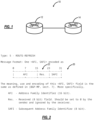
- FIG. 2 is a diagram of a RR message 20 as defined in RFC 2918.
- the present disclosure can include a new sub type in the RR message 20 to get routes of specific RT only.
- a new value in the reserved field 22 is assigned to indicate this RR message 20 is a new type for EVPN AF. Once this new value is set in reserved field 22, the RR message 20 payload will contain the EVPN Route Type information (Bitmask for each route type).
- the router 14 supports sending new type in the reserved field 22 to designate selective route refresh from the router 12.
- the router 12 can ignore the reserved field 22 and refresh all RTs as per RFC 2918.
- the router 12 can provide RTs based on what is specified in the reserved field 22. That is, non-zero values in the reserved field 22 are either ignored by the router 14 when this functionality is not supported or processed to selectively refresh based on RTs.
- the EVPN RTs will be via a bitmask in the payload of the RR message.
- BGP speakers can advertise and negotiate this new route refresh capability for support of this new Route Refresh message.
- BGP speakers can just use the reserved field 22 with this new route refresh capability, and non-supporting routers will not be negotiating this new RR capability.
- the reserved field 22 can include these values:
- This new functionality solves the problem of unnecessary updated message of all RTs when RR is issued with EVPN AF.
- BGP CPU usage can be controlled allowing scale in a network, without having to keep extending the processing capability of the routers 12, 14.
- Selective EVPN route type advertisement requests through the new RR message will result in lesser network and CPU churn on both receiver and transmitter of EVPN routes.
- New RTs are added occasionally, so there is a need to scale the route refresh capability. That is, every RR does not necessarily need all supported RTs. For example, if the router 14 only needs RT 5 refreshed, the conventional approach requires the router 12 to send everything, i.e., RT 1 to RT 5. There can be millions of routes and significant processing to send and receive the information. The foregoing techniques eliminate this and allow the router 12 to only refresh RT 5.
- a first use case there is a change in routing policy at Layer 2 or Layer 3, and there may only be a need for the corresponding RTs that are changed.
- a second use case assume the routers 12, 14 only support a L2VPN running with RT 1 to RT4, and there is a desire to upgrade to include a L3VPN. Now, there is only a need for RT 5, i.e., no need to resend RT 1 to RT 4.
- VPN RT5 is IP - L3VPN routes while RT1-4 are L2VPN routes.
- Routing policy rules are applied to these routes. Routing policy have match route-type field to apply specific rules for specific route types. But whenever routing policy changes, route refresh will always get all EVPN routes (of all route-types) even though changes are only applicable to specific route-type. Thus, conventionally, Activation or Deactivation of either IP-L3VPN route type or L2VPN route type, results in all EVPN route types getting advertised between the EVPN routers. The present disclosure enables selective advertisements.
- FIGS. 3 and 4 are flowcharts of a receiving process 50 ( FIG. 3 ) and a sending process 80 ( FIG. 4 ) for advertisement of selective Ethernet Virtual Private Network (VPN) (EVPN) routes based on route types.
- the processes 50, 80 contemplate implementation as a method having steps, via the routers 12, 14 configured to implement the steps, and as a non-transitory computer-readable medium having instructions that, when executed, cause a processor or other circuitry to execute the steps.
- the receiving process 50 includes determining a requirement for a route refresh from a Border Gateway Protocol (BGP) peer for a subset of Route Types of all of the Route Types (step 51), sending a route refresh message to the BGP peer with an indication of the subset of Route Types (step 52), and receiving updated routes from the BGP peer only for the subset of Route Types (step 53).
- the process 50 can also include determining a second requirement for a route refresh from the BGP peer or another BGP peer for all of the Route Types, sending a second route refresh message to the BGP peer without the indication of the subset of Route Types, and receiving second updated routes from the BGP peer only for all of the Route Types.
- the indication can be included in a reserved field and/or payload of the route refresh message. Responsive to the BGP peer not supporting the indication of the subset of Route Types, the BGP peer negotiates that the received updated routes are for the all of Route Types. In an embodiment, bits in the reserved field can be used to designate one or more Route Types for the subset of Route Types based on the indication in the reserved field. In another embodiment, a value of the reserved field or the payload can be used to designate the for the subset of Route Types.
- the route refresh message can be defined in RFC 2918.
- the subset of Route Types can include one of Route Types 1 to 4 or Route Type 5.
- the process 50 can further include, prior to the route refresh message being sent, negotiating with the BGP peer to support the route refresh message with the indication of the subset of Route Types.
- the process 80 includes receiving a route refresh message from a Border Gateway Protocol (BGP) peer, wherein the route refresh message includes an indication of a subset of Route Types of all of the Route Types (step 81), obtaining updated routes for the subset of Route Types as specified in the indication (step 82), and sending the updated routes only for the subset of Route Types to the BGP peer (step 83).
- BGP Border Gateway Protocol
- the indication can be included in a reserved field and/or payload of the route refresh message.
- a value in the payload can be used to designate the for the subset of Route Types based on the indication in the reserved field.
- the route refresh message can be defined in RFC 2918.
- the subset of Route Types can include one of Route Types 1 to 4 or Route Type 5.
- the process 80 can further include, prior to the route refresh message being received, negotiating with the BGP peer to support the route refresh message with the indication of the subset of Route Types.
- FIG. 5 is a block diagram of an example implementation of a router 100, such as forming any of the routers described herein.
- a router 100 such as forming any of the routers described herein.
- FIG. 5 is a functional diagram in an oversimplified manner, and a practical embodiment may include additional components and suitably configured processing logic to support known or conventional operating features that are not described in detail herein.
- the router 100 includes a plurality of modules 102, 104 interconnected via an interface 106.
- the modules 102, 104 are also known as blades, line cards, line modules, circuit packs, pluggable modules, etc. and generally refer to components mounted on a chassis, shelf, etc. of a data switching device, i.e., the router 100.
- Each of the modules 102, 104 can include numerous electronic devices and/or optical devices mounted on a circuit board along with various interconnects, including interfaces to the chassis, shelf, etc.
- the line modules 102 include ports 108, such as a plurality of Ethernet ports.
- the line module 102 can include a plurality of physical ports disposed on an exterior of the module 102 for receiving ingress/egress connections.
- the line modules 102 can include switching components to form a switching fabric via the interface 106 between all of the ports 108, allowing data traffic to be switched/forwarded between the ports 108 on the various line modules 102.
- the switching fabric is a combination of hardware, software, firmware, etc. that moves data coming into the router 100 out by the correct port 108 to the next router 100.
- Switching fabric includes switching/routing units in a node; integrated circuits contained in the switching units; and programming that allows switching paths to be controlled. Note, the switching fabric can be distributed on the modules 102, 104, in a separate module (not shown), integrated on the line module 102, or a combination thereof.
- the control module 104 can include a microprocessor, memory, software, and a network interface. Specifically, the microprocessor, the memory, and the software can collectively control, configure, provision, monitor, etc. the router 100.
- the network interface may be utilized to communicate with an element manager, a network management system, etc. Additionally, the control module 104 can include a database that tracks and maintains provisioning, configuration, operational data, and the like.
- the router 100 can include other components which are omitted for illustration purposes, and that the systems and methods described herein are contemplated for use with a plurality of different network elements with the router 100 presented as an example type of network element.
- the router 100 may include corresponding functionality in a distributed fashion.
- the chassis and modules may be a single integrated unit, namely a rack-mounted shelf where the functionality of the modules 102, 104 is built-in, i.e., a "pizza-box" configuration. That is, FIG. 5 is meant to provide a functional view, and those of ordinary skill in the art will recognize actual hardware implementations may vary; all of which are contemplated herewith.
- FIG. 6 is a block diagram of an example processing device 200.
- the processing device 200 can be part of the router 100, or a stand-alone device communicatively coupled to the router 100, such as a management system, controller, etc. Also, the processing device 200 can be referred to in implementations as a control module, a shelf controller, a shelf processor, a system controller, etc.
- the processing device 200 can include a processor 202 which is a hardware device for executing software instructions.
- the processor 202 can be any custom made or commercially available processor, a central processing unit (CPU), an auxiliary processor among several processors associated with the processing device 200, a semiconductor-based microprocessor (in the form of a microchip or chipset), or generally any device for executing software instructions.
- the processor 202 When the processing device 200 is in operation, the processor 202 is configured to execute software stored within the memory, to communicate data to and from the memory, and to generally control operations of the processing device 200 pursuant to the software instructions.
- the processing device 200 can also include a network interface 204, a data store 206, memory 208, an I/O interface 210, and the like, all of which are communicatively coupled to one another and to the processor 202.
- the network interface 204 can be used to enable the processing device 200 to communicate on a data communication network, such as to communicate to a management system, or the like.
- the network interface 204 can include, for example, an Ethernet module.
- the network interface 204 can include address, control, and/or data connections to enable appropriate communications on the network.
- the data store 206 can be used to store data, such as control plane information, provisioning data, Operations, Administration, Maintenance, and Provisioning (OAM&P) data, etc.
- the data store 206 can include any of volatile memory elements (e.g., random access memory (RAM, such as DRAM, SRAM, SDRAM, and the like)), nonvolatile memory elements (e.g., ROM, hard drive, flash drive, CDROM, and the like), and combinations thereof.
- RAM random access memory
- nonvolatile memory elements e.g., ROM, hard drive, flash drive, CDROM, and the like
- the data store 206 can incorporate electronic, magnetic, optical, and/or other types of storage media.
- the memory 208 can include any of volatile memory elements (e.g., random access memory (RAM, such as DRAM, SRAM, SDRAM, etc.)), nonvolatile memory elements (e.g., ROM, hard drive, flash drive, CDROM, etc.), and combinations thereof.
- the memory 208 may incorporate electronic, magnetic, optical, and/or other types of storage media. Note that the memory 208 can have a distributed architecture, where various components are situated remotely from one another, but may be accessed by the processor 202.
- the I/O interface 210 includes components for the processing device 200 to communicate with other devices.
- processors such as microprocessors; central processing units (CPUs); digital signal processors (DSPs): customized processors such as network processors (NPs) or network processing units (NPUs), graphics processing units (GPUs), or the like; field programmable gate arrays (FPGAs); and the like along with unique stored program instructions (including both software and firmware) for control thereof to implement, in conjunction with certain non-processor circuits, some, most, or all of the functions of the methods and/or systems described herein.
- processors such as microprocessors; central processing units (CPUs); digital signal processors (DSPs): customized processors such as network processors (NPs) or network processing units (NPUs), graphics processing units (GPUs), or the like; field programmable gate arrays (FPGAs); and the like along with unique stored program instructions (including both software and firmware) for control thereof to implement, in conjunction with certain non-processor circuits, some, most, or all of the functions of the methods and/or systems described herein.
- circuitry configured or adapted to
- logic configured or adapted to
- some embodiments may include a non-transitory computer-readable storage medium having computer-readable code stored thereon for programming a computer, server, appliance, device, processor, circuit, etc. each of which may include a processor to perform functions as described and claimed herein.
- Examples of such computer-readable storage mediums include, but are not limited to, a hard disk, an optical storage device, a magnetic storage device, a read-only memory (ROM), a programmable read-only memory (PROM), an erasable programmable read-only memory (EPROM), an electrically erasable programmable read-only memory (EEPROM), Flash memory, and the like.
- software can include instructions executable by a processor or device (e.g., any type of programmable circuitry or logic) that, in response to such execution, cause a processor or the device to perform a set of operations, steps, methods, processes, algorithms, functions, techniques, etc. as described herein for the various embodiments.
- a processor or device e.g., any type of programmable circuitry or logic
Landscapes
- Engineering & Computer Science (AREA)
- Computer Networks & Wireless Communication (AREA)
- Signal Processing (AREA)
- Data Exchanges In Wide-Area Networks (AREA)
Abstract
Description
- The present disclosure relates generally to networking and computing. More particularly, the present disclosure relates to systems and methods for advertisement of selective Ethernet Virtual Private Network (VPN) (EVPN) routes based on Route Types.
- Ethernet Virtual Private Network (VPN) (EVPN) is an approach to provide virtual multipoint bridged connectivity between different Layer 2 domains. EVPN is considered an improvement over Layer 2 Virtual Private Local Area Network (LAN) service (VPLS) with control plane Media Access Control (MAC) learning, multi-homing, load balancing, and the like. EVPN control plane MAC learning, via Border Gateway Protocol (BGP), is used to address shortcomings in VPLS. EVPN is described, e.g., in RFC 7209, "Requirements for Ethernet VPN (EVPN)," May 2014, RFC 7432, "BGP MPLS-Based Ethernet VPN," February 2015, and RFC 8365, "A Network Virtualization Overlay Solution Using Ethernet VPN (EVPN)," March 2018, the contents of each are incorporated by reference. EVPN uses Border Gateway Protocol (BGP) signaling to establish the EVPN instance (EVI) with BGP Peers to offer a multipoint-to-multipoint L2 Ethernet service for a given client. EVPN relies on learning the Internet Protocol (IP) and Media Access Control (MAC) address binding of the locally connected Customer Edges (CEs) and distributing this information in the BGP EVPN Protocol Data Units (PDUs) to remote Provider Edges (PEs) that are members of the established EVPN instance. BGP utilizes an EVPN Network Layer Reachability Information (NLRI), which includes a Route Type field that details the encoding of the EVPN NLRI. The Route Types include 1-Ethernet Auto-Discovery (A-D) route, 2-MAC/IP Advertisement route, 3-Inclusive Multicast Ethernet Tag route, 4-Ethernet Segment route, 5-IP prefix route, 6-selective Multicast Ethernet Tag route, 7-NLRI to sync IGMP joins, and 8-NLRI to sync IGMP leaves.
- The present disclosure relates to systems and methods for advertisement of selective Ethernet Virtual Private Network (VPN) (EVPN) routes based on route types (RT). Conventionally, when a BGP peer sends a normal BGP route refresh message for a L2VPN EVPN results in the advertisement of a complete BGP routing information base (RIB), while there can be cases where there is only a requirement for selective route types. The present disclosure proposes a new mechanism where a BGP node can request the advertisement of selective EVPN routes based on route types. This solution defines a new route refresh message containing the EVPN route type information, with a new route refresh capability where BGP speakers can negotiate to enable each of them to encode and decode this new route refresh message. With this new mechanism, the BGP receiver processes this new route refresh message containing the EVPN route type info and advertises the selective EVPN routes from the BGP RIB based on the EVPN route types requested.
- In an embodiment, a router is configured to send an advertisement of selective Ethernet Virtual Private Network (VPN) (EVPN) routes based on Route Types. The router includes circuitry configured to determine a requirement for a route refresh from a Border Gateway Protocol (BGP) peer for a subset of Route Types of all of the Route Types, send a route refresh message to the BGP peer with an indication of the subset of Route Types, and receive updated routes from the BGP peer only for the subset of Route Types. The circuitry can be further configured to determine a second requirement for a route refresh from the BGP for all of the Route Types, send a second route refresh message to the BGP peer without the indication of the subset of Route Types, and receive second updated routes from the BGP peer for all of the Route Types. The indication can be included in one or more of a reserved field and payload of the route refresh message. Responsive to the BGP peer not supporting the indication of the subset of Route Types, the circuitry can be further configured to negotiate the received updated routes are for the all of Route Types. Bits in the payload can be used to designate one or more Route Types for the subset of Route Types based on the reserved field. A value in the payload can be used to designate one or more Route Types for the subset of Route Types. The route refresh message can be defined in RFC 2918. The subset of Route Types can include one of Route Types 1 to 4 or
Route Type 5. The circuitry can be further configured to, prior to the route refresh message being sent, negotiate with the BGP peer to support the route refresh message with the indication of the subset of Route Types. - In another embodiment, a method includes steps and a non-transitory computer-readable medium includes instructions that, when executed, cause circuitry associated with a router to perform the steps. The steps include determining a requirement for a route refresh from a Border Gateway Protocol (BGP) peer for a subset of Route Types of all of the Route Types; sending a route refresh message to the BGP peer with an indication of the subset of Route Types; and receive updated routes from the BGP peer only for the subset of Route Types. The indication can be included in one or more of a reserved field and payload of the route refresh message. The subset of Route Types can include one of Route Types 1 to 4 or
Route Type 5. The steps can further include, prior to the sending, negotiating with the BGP peer to support the route refresh message with the indication of the subset of Route Types. - In a further embodiment, a router is configured to receive selective Ethernet Virtual Private Network (VPN) (EVPN) routes based on Route Types. The router includes circuitry configured to receive a route refresh message from a Border Gateway Protocol (BGP) peer, wherein the route refresh message includes an indication of a subset of Route Types of all of the Route Types, obtain updated routes for the subset of Route Types as specified in the indication, and send the updated routes only for the subset of Route Types to the BGP peer. The indication can be included in one or more of a reserved field and payload of the route refresh message. Bits in the payload can be used to designate one or more Route Types for the subset of Route Types based on the reserved field. A value in the payload can be used to designate one or more Route Types for the subset of Route Types. The route refresh message can be defined in RFC 2918. The subset of Route Types can include one of Route Types 1 to 4 or
Route Type 5. The circuitry can be further configured to, prior to the route refresh message being received, negotiate with the BGP peer to support the route refresh message with the indication of the subset of Route Types. - The present disclosure is illustrated and described herein with reference to the various drawings, in which like reference numbers are used to denote like system components/method steps, as appropriate, and in which:
-
FIG. 1 is a network diagram of a network with two interconnected routers. -
FIG. 2 is a diagram of a RR message as defined in RFC 2918. -
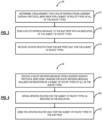
FIGS. 3 and 4 are flowcharts of a receiving process (FIG. 3 ) and a sending process (FIG. 4 ) for advertisement of selective Ethernet Virtual Private Network (VPN) (EVPN) routes based on route types. -
FIG. 5 is a block diagram of an example implementation of a router, such as forming any of the routers described herein. -
FIG. 6 is a block diagram of an example processing device. - Again, the present disclosure relates to systems and methods for advertisement of selective Ethernet Virtual Private Network (VPN) (EVPN) routes based on route types (RT). The following table lists acronyms used herein.
AF Address Family AFI Address Family Identifier BGP Border Gateway Protocol DCI Data Center Interconnect DUT Device Under Testing ESI Ethernet segment identifier EVI EVPN Instance EVPN Ethernet Virtual Private Network IGMP Internet Group Management Protocol IP Internet Protocol LAN Local Area Network L2VPN Layer 2 Virtual Private Network L3VPN Layer 3 Virtual Private Network MAC Media Access Control NLRI Network Layer reachability information PE Provider Edge RR Route Refresh RT Route Type SAFI Subsequent Address Family Identifier VLAN Virtual Local Area Network VXLAN Virtual Extensible LAN - For illustration purposes,
FIG. 1 is a network diagram of anetwork 10 with twointerconnected routers routers network 10 can include other network elements that are omitted for simplicity. - BGP is used between the
routers - L2VPN EVPN utilizes BGP AFI and SAFI to support an end-to-end solution for data center VXLAN networks. The main application of EVPN is DCI, to provide the ability to extend Layer 2 connectivity between different data centers. Advantageously, this allows dynamic allocation of resources within or between data centers without being constrained by Layer 2 boundaries or being forced to create large or geographically stretched Layer 2 domains. EVPN AF uses the concept of RTs to establish sessions between the provider edge (PE) and the customer edge (CE). Of note, the PE and CE are at associated routers, referred to as PE routers or devices, and CE routers or devices.
- Here are descriptions of the possible RTs supported for EVPN AF.
- Route Type 1 route, Ethernet auto discovery (AD) route - Type 1 routes are for networkwide messages. Ethernet auto discovery routes are advertised on a per end virtual identifier and per Ethernet segment identifier basis. The Ethernet auto discovery routes are required when a customer edge device is multihomed.
- Route Type 2 route, MAC with IP advertisement route - Type 2 routes are per-VLAN routes, EVPN allows an end host's IP and MAC addresses to be advertised within the EVPN NLRI.
- Route Type 3 route, inclusive multicast Ethernet tag route - Type 3 routes are per-VLAN routes. An inclusive multicast Ethernet tag route sets up a path for broadcast, unknown unicast, from a PE device to the remote PE device on a per-VLAN, per-EVI basis.
- Route Type 4 route, Ethernet segment Route - An ESI allows a CE device to be multihomed to two or more PE devices - in single/active or active/active mode. PE devices that are connected to the same Ethernet segment discover each other through the ESI.
-
Route Type 5 route, IP prefix Route - An IP prefix route provides encoding for inter-subnet forwarding. In the control plane,EVPN RT 5 routes are used to advertise IP prefixes for inter-subnet connectivity across data centers. To reach a tenant using connectivity provided by theEVPN RT 5 IP prefix route, data packets are sent as Layer 2 Ethernet frames encapsulated in the VXLAN header over the IP network across the data centers. - Route Type 6 route, selective multicast Ethernet tag routes.
-
Route Type 7 route, NLRI to sync IGMP joins. -
Route Type 8 route, NLRI to sync IGMP leaves. - When a BGP peer needs updated routes from a remote BGP peer, then an on demand configuration "soft reset peer <peer ip> afi <> safi <> soft inbound" can be issued for any peer per AF. For example, assume the
router 14 needs updated routes from therouter 12. Therouter 14 performs a soft reset for on demand configuration for EVPN AF from therouter 12. This will generate an RR BGP message for that AF. When BGP peer, i.e., therouter 12, receives the RR BGP message, then it will advertise all routes. For example, assume RT 1 toRT 5 are used, then therouter 12 will advertise RT 1 toRT 5 routes upon receiving the RR BGP message. Also, when a routing policy is applied/modified, an RR BGP message is issued to get the routes again. This presents a scaling issue on both therouters -
VPN RT 5 are IP - L3VPN routes while RT 1 to 4 are L2VPN routes. Generally, different Routing policy rules are applied to these routes. Routing policy have to match route-type field to apply specific rules for specific route types. However, whenever routing policy changes, a route refresh will always get all EVPN routes (of all route types) even though changes are only applicable to a specific route type. Also, activation or deactivation of either IP-L3VPN route type or L2VPN route type, results in all EVPN route types getting advertised between the EVPN routers. - Where EVPN AF multiple RTs are supported, the BGP peer will advertise all type of routes when the RR BGP message is received. This creates unnecessary update messages for all RTs when a BGP peer only needs specific RT routes. Of note, route refresh is described in RFC 2918, "Route Refresh Capability for BGP-4," September 2000, the contents of which are incorporated by reference in their entirety. RFC 2918 describes the RR BGP message. There is no ability in RFC 2918 to get routes from remote peer based upon RT. That is, the RR BGP message in RFC 2918 causes the transmission and reception of all RTs.
- Variously, the present disclosure provides a selective RR BGP message, based on RFC 2918, with extensions to support designating which RTs should be refreshed.
FIG. 2 is a diagram of aRR message 20 as defined in RFC 2918. The present disclosure can include a new sub type in theRR message 20 to get routes of specific RT only. In an embodiment, a new value in thereserved field 22 is assigned to indicate thisRR message 20 is a new type for EVPN AF. Once this new value is set in reservedfield 22, theRR message 20 payload will contain the EVPN Route Type information (Bitmask for each route type). - Assume the
router 14 supports sending new type in thereserved field 22 to designate selective route refresh from therouter 12. As such, when therouter 12 does not support this enhanced functionality, therouter 12 can ignore thereserved field 22 and refresh all RTs as per RFC 2918. When therouter 12 supports this enhanced functionality, therouter 12 can provide RTs based on what is specified in thereserved field 22. That is, non-zero values in thereserved field 22 are either ignored by therouter 14 when this functionality is not supported or processed to selectively refresh based on RTs. - Those skilled in the art will recognize there can be different implementations for conveying which RTs are required, all of which are contemplated herewith. The following describe two non-limiting example implementations for illustration purposes.
- In an embodiment, the EVPN RTs will be via a bitmask in the payload of the RR message. Again, those skilled in the art will recognize various implementations are possible and all are contemplated herewith.
- BGP speakers can advertise and negotiate this new route refresh capability for support of this new Route Refresh message. Alternatively, BGP speakers can just use the
reserved field 22 with this new route refresh capability, and non-supporting routers will not be negotiating this new RR capability. - In an embodiment, the
reserved field 22 can include these values: - 0 is for Normal Route-Refresh
- 1 is for BoRR (Demarcation of the beginning of a route refresh)
- 2 is for EoRR (Demarcation of the ending of a route refresh)
- 3 A new value in Res field will be assigned to this new type for RR for EVPN
- This new functionality solves the problem of unnecessary updated message of all RTs when RR is issued with EVPN AF. BGP CPU usage can be controlled allowing scale in a network, without having to keep extending the processing capability of the
routers - New RTs are added occasionally, so there is a need to scale the route refresh capability. That is, every RR does not necessarily need all supported RTs. For example, if the
router 14 only needsRT 5 refreshed, the conventional approach requires therouter 12 to send everything, i.e., RT 1 toRT 5. There can be millions of routes and significant processing to send and receive the information. The foregoing techniques eliminate this and allow therouter 12 to only refreshRT 5. - There can be various use cases, two of which are described below for illustration purposes. In a first use case, there is a change in routing policy at Layer 2 or Layer 3, and there may only be a need for the corresponding RTs that are changed. In a second use case, assume the
routers RT 5, i.e., no need to resend RT 1 to RT 4. - VPN RT5 is IP - L3VPN routes while RT1-4 are L2VPN routes. Generally different Routing policy rules are applied to these routes. Routing policy have match route-type field to apply specific rules for specific route types. But whenever routing policy changes, route refresh will always get all EVPN routes (of all route-types) even though changes are only applicable to specific route-type. Thus, conventionally, Activation or Deactivation of either IP-L3VPN route type or L2VPN route type, results in all EVPN route types getting advertised between the EVPN routers. The present disclosure enables selective advertisements.
-
FIGS. 3 and 4 are flowcharts of a receiving process 50 (FIG. 3 ) and a sending process 80 (FIG. 4 ) for advertisement of selective Ethernet Virtual Private Network (VPN) (EVPN) routes based on route types. Theprocesses routers - The receiving
process 50 includes determining a requirement for a route refresh from a Border Gateway Protocol (BGP) peer for a subset of Route Types of all of the Route Types (step 51), sending a route refresh message to the BGP peer with an indication of the subset of Route Types (step 52), and receiving updated routes from the BGP peer only for the subset of Route Types (step 53). Theprocess 50 can also include determining a second requirement for a route refresh from the BGP peer or another BGP peer for all of the Route Types, sending a second route refresh message to the BGP peer without the indication of the subset of Route Types, and receiving second updated routes from the BGP peer only for all of the Route Types. - The indication can be included in a reserved field and/or payload of the route refresh message. Responsive to the BGP peer not supporting the indication of the subset of Route Types, the BGP peer negotiates that the received updated routes are for the all of Route Types. In an embodiment, bits in the reserved field can be used to designate one or more Route Types for the subset of Route Types based on the indication in the reserved field. In another embodiment, a value of the reserved field or the payload can be used to designate the for the subset of Route Types. The route refresh message can be defined in RFC 2918. The subset of Route Types can include one of Route Types 1 to 4 or
Route Type 5. Theprocess 50 can further include, prior to the route refresh message being sent, negotiating with the BGP peer to support the route refresh message with the indication of the subset of Route Types. - The
process 80 includes receiving a route refresh message from a Border Gateway Protocol (BGP) peer, wherein the route refresh message includes an indication of a subset of Route Types of all of the Route Types (step 81), obtaining updated routes for the subset of Route Types as specified in the indication (step 82), and sending the updated routes only for the subset of Route Types to the BGP peer (step 83). - The indication can be included in a reserved field and/or payload of the route refresh message. In another embodiment, a value in the payload can be used to designate the for the subset of Route Types based on the indication in the reserved field. The route refresh message can be defined in RFC 2918. The subset of Route Types can include one of Route Types 1 to 4 or
Route Type 5. Theprocess 80 can further include, prior to the route refresh message being received, negotiating with the BGP peer to support the route refresh message with the indication of the subset of Route Types. -
FIG. 5 is a block diagram of an example implementation of arouter 100, such as forming any of the routers described herein. Those of ordinary skill in the art will recognizeFIG. 5 is a functional diagram in an oversimplified manner, and a practical embodiment may include additional components and suitably configured processing logic to support known or conventional operating features that are not described in detail herein. - In an embodiment, the
router 100 includes a plurality ofmodules interface 106. Themodules router 100. Each of themodules - Two example modules are illustrated with
line modules 102 and acontrol module 104. Theline modules 102 includeports 108, such as a plurality of Ethernet ports. For example, theline module 102 can include a plurality of physical ports disposed on an exterior of themodule 102 for receiving ingress/egress connections. Additionally, theline modules 102 can include switching components to form a switching fabric via theinterface 106 between all of theports 108, allowing data traffic to be switched/forwarded between theports 108 on thevarious line modules 102. The switching fabric is a combination of hardware, software, firmware, etc. that moves data coming into therouter 100 out by thecorrect port 108 to thenext router 100. "Switching fabric" includes switching/routing units in a node; integrated circuits contained in the switching units; and programming that allows switching paths to be controlled. Note, the switching fabric can be distributed on themodules line module 102, or a combination thereof. - The
control module 104 can include a microprocessor, memory, software, and a network interface. Specifically, the microprocessor, the memory, and the software can collectively control, configure, provision, monitor, etc. therouter 100. The network interface may be utilized to communicate with an element manager, a network management system, etc. Additionally, thecontrol module 104 can include a database that tracks and maintains provisioning, configuration, operational data, and the like. - Again, those of ordinary skill in the art will recognize the
router 100 can include other components which are omitted for illustration purposes, and that the systems and methods described herein are contemplated for use with a plurality of different network elements with therouter 100 presented as an example type of network element. For example, in another embodiment, therouter 100 may include corresponding functionality in a distributed fashion. In a further embodiment, the chassis and modules may be a single integrated unit, namely a rack-mounted shelf where the functionality of themodules FIG. 5 is meant to provide a functional view, and those of ordinary skill in the art will recognize actual hardware implementations may vary; all of which are contemplated herewith. -
FIG. 6 is a block diagram of anexample processing device 200. Theprocessing device 200 can be part of therouter 100, or a stand-alone device communicatively coupled to therouter 100, such as a management system, controller, etc. Also, theprocessing device 200 can be referred to in implementations as a control module, a shelf controller, a shelf processor, a system controller, etc. Theprocessing device 200 can include aprocessor 202 which is a hardware device for executing software instructions. Theprocessor 202 can be any custom made or commercially available processor, a central processing unit (CPU), an auxiliary processor among several processors associated with theprocessing device 200, a semiconductor-based microprocessor (in the form of a microchip or chipset), or generally any device for executing software instructions. When theprocessing device 200 is in operation, theprocessor 202 is configured to execute software stored within the memory, to communicate data to and from the memory, and to generally control operations of theprocessing device 200 pursuant to the software instructions. Theprocessing device 200 can also include anetwork interface 204, adata store 206,memory 208, an I/O interface 210, and the like, all of which are communicatively coupled to one another and to theprocessor 202. - The
network interface 204 can be used to enable theprocessing device 200 to communicate on a data communication network, such as to communicate to a management system, or the like. Thenetwork interface 204 can include, for example, an Ethernet module. Thenetwork interface 204 can include address, control, and/or data connections to enable appropriate communications on the network. Thedata store 206 can be used to store data, such as control plane information, provisioning data, Operations, Administration, Maintenance, and Provisioning (OAM&P) data, etc. Thedata store 206 can include any of volatile memory elements (e.g., random access memory (RAM, such as DRAM, SRAM, SDRAM, and the like)), nonvolatile memory elements (e.g., ROM, hard drive, flash drive, CDROM, and the like), and combinations thereof. - Moreover, the
data store 206 can incorporate electronic, magnetic, optical, and/or other types of storage media. Thememory 208 can include any of volatile memory elements (e.g., random access memory (RAM, such as DRAM, SRAM, SDRAM, etc.)), nonvolatile memory elements (e.g., ROM, hard drive, flash drive, CDROM, etc.), and combinations thereof. Moreover, thememory 208 may incorporate electronic, magnetic, optical, and/or other types of storage media. Note that thememory 208 can have a distributed architecture, where various components are situated remotely from one another, but may be accessed by theprocessor 202. The I/O interface 210 includes components for theprocessing device 200 to communicate with other devices. - It will be appreciated that some embodiments described herein may include one or more generic or specialized processors ("one or more processors") such as microprocessors; central processing units (CPUs); digital signal processors (DSPs): customized processors such as network processors (NPs) or network processing units (NPUs), graphics processing units (GPUs), or the like; field programmable gate arrays (FPGAs); and the like along with unique stored program instructions (including both software and firmware) for control thereof to implement, in conjunction with certain non-processor circuits, some, most, or all of the functions of the methods and/or systems described herein. Alternatively, some or all functions may be implemented by a state machine that has no stored program instructions, or in one or more application-specific integrated circuits (ASICs), in which each function or some combinations of certain of the functions are implemented as custom logic or circuitry. Of course, a combination of the aforementioned approaches may be used. For some of the embodiments described herein, a corresponding device in hardware and optionally with software, firmware, and a combination thereof can be referred to as "circuitry configured or adapted to," "logic configured or adapted to," etc. perform a set of operations, steps, methods, processes, algorithms, functions, techniques, etc. on digital and/or analog signals as described herein for the various embodiments.
- Moreover, some embodiments may include a non-transitory computer-readable storage medium having computer-readable code stored thereon for programming a computer, server, appliance, device, processor, circuit, etc. each of which may include a processor to perform functions as described and claimed herein. Examples of such computer-readable storage mediums include, but are not limited to, a hard disk, an optical storage device, a magnetic storage device, a read-only memory (ROM), a programmable read-only memory (PROM), an erasable programmable read-only memory (EPROM), an electrically erasable programmable read-only memory (EEPROM), Flash memory, and the like. When stored in the non-transitory computer-readable medium, software can include instructions executable by a processor or device (e.g., any type of programmable circuitry or logic) that, in response to such execution, cause a processor or the device to perform a set of operations, steps, methods, processes, algorithms, functions, techniques, etc. as described herein for the various embodiments.
- Although the present disclosure has been illustrated and described herein with reference to preferred embodiments and specific examples thereof, it will be readily apparent to those of ordinary skill in the art that other embodiments and examples may perform similar functions and/or achieve like results. All such equivalent embodiments and examples are within the scope of the invention as defined by the claims. Further, the various elements, operations, steps, methods, processes, algorithms, functions, techniques, modules, circuits, etc. described herein contemplate use in any and all combinations with one another, including individually as well as combinations of less than all of the various elements, operations, steps, methods, processes, algorithms, functions, techniques, modules, circuits, etc.
Claims (14)
- A method (50) for advertisement of selective Ethernet Virtual Private Network, VPN, EVPN, routes based on route types, the method (50) comprising:determining (51) a requirement for a route refresh from a Border Gateway Protocol, BGP, peer for a subset of Route Types of all of the Route Types;sending (52) a route refresh message (20) to the BGP peer with an indication of the subset of Route Types; andreceiving (53) updated routes from the BGP only for the subset of Route Types.
- The method (50) as claimed in claim 1, wherein the steps includedetermining a second requirement for a route refresh from the BGP peer for all of the Route Types;sending a second route refresh message (20) to the BGP peer without the indication of the subset of Route Types; andreceiving second updated routes from the BGP peer for all of the Route Types.
- The method (50) as claimed in claim 1, wherein the indication is included in a reserved field (22).
- The method (50) as claimed in claim 1, wherein the indication is included in payload of the route refresh message (20).
- The method (50) as claimed in any one of claim 1 to 4, wherein, responsive to the BGP peer not supporting the indication of the subset of Route Types, negotiating receiving updated routes from the BGP peer for the all of Route Types.
- The method (50) as claimed in any one of claims 3 to 5, wherein bits in the payload are used to designate one or more Route Types for the subset of Route Types based on the reserved field (22).
- The method (50) as claimed in any one of claims 3 to 5, wherein a value in the payload is used to designate one or more Route Types for the subset of Route Types.
- The method (50) as claimed in any one of claims 1 to 7, wherein the route refresh message (20) is defined in RFC 2918.
- The method (50) as claimed in any one of claims 1 to 8, wherein the subset of Route Types includes one of Route Types 1 to 4 or Route Type 5.
- The method (50) as claimed in any one of claims 1 to 9, wherein the steps include
prior to the sending (52) the route refresh message (20), negotiating with the BGP peer to support the route refresh message (20) with the indication of the subset of Route Types - A router (12, 14, 100) comprising circuitry configured to implement the method (50) as claimed in any one of claims 1 to 10, wherein the router is communicatively coupled to the BGP peer.
- A network (10) comprising the router (12, 14, 100) as claimed in claim 11.
- Computer-readable code for programming circuitry to implement the method (50) as claimed in any one of claims 1 to 10.
- A computer-readable medium comprising the computer-readable code as claimed in claim 13.
Applications Claiming Priority (2)
| Application Number | Priority Date | Filing Date | Title |
|---|---|---|---|
| IN202311058643 | 2023-09-01 | ||
| US18/488,211 US12452159B2 (en) | 2023-09-01 | 2023-10-17 | Advertisement of selective EVPN routes based on route types |
Publications (1)
| Publication Number | Publication Date |
|---|---|
| EP4518280A1 true EP4518280A1 (en) | 2025-03-05 |
Family
ID=92633104
Family Applications (1)
| Application Number | Title | Priority Date | Filing Date |
|---|---|---|---|
| EP24197730.5A Pending EP4518280A1 (en) | 2023-09-01 | 2024-08-30 | Advertisement of selective evpn routes based on route types |
Country Status (1)
| Country | Link |
|---|---|
| EP (1) | EP4518280A1 (en) |
-
2024
- 2024-08-30 EP EP24197730.5A patent/EP4518280A1/en active Pending
Non-Patent Citations (6)
| Title |
|---|
| "A Network Virtualization Overlay Solution Using Ethernet VPN (EVPN", RFC 8365, March 2018 (2018-03-01) |
| "BGP MPLS-Based Ethernet VPN", RFC 7432, February 2015 (2015-02-01) |
| "Requirements for Ethernet VPN (EVPN", RFC 7209, May 2014 (2014-05-01) |
| "Route Refresh Capability for BGP-4", RFC 2918, September 2000 (2000-09-01) |
| PATEL ARRCUS K ET AL: "Extension to BGP's Route Refresh Message; draft-idr-bgp-route-refresh-options-05.txt", EXTENSION TO BGP'S ROUTE REFRESH MESSAGE; DRAFT-IDR-BGP-ROUTE-REFRESH-OPTIONS-05.TXT; INTERNET-DRAFT: NETWORK WORKING GROUP, INTERNET ENGINEERING TASK FORCE, IETF; STANDARDWORKINGDRAFT, INTERNET SOCIETY (ISOC) 4, RUE DES FALAISES CH- 1205 GENEVA, SWI, no. 5, 29 August 2018 (2018-08-29), pages 1 - 15, XP015128309 * |
| UTGIKAR A: "Selective route refresh for BGP; draft-utgikar-serr-00.txt", SELECTIVE ROUTE REFRESH FOR BGP; DRAFT-UTGIKAR-SERR-00.TXT, INTERNET ENGINEERING TASK FORCE, IETF; STANDARDWORKINGDRAFT, INTERNET SOCIETY (ISOC) 4, RUE DES FALAISES CH- 1205 GENEVA, SWITZERLAND, 11 November 2015 (2015-11-11), pages 1 - 9, XP015109828 * |
Similar Documents
| Publication | Publication Date | Title |
|---|---|---|
| US11115375B2 (en) | Interoperability between data plane learning endpoints and control plane learning endpoints in overlay networks | |
| US11516112B2 (en) | Optimized layer 3 VPN control plane using segment routing | |
| US12452159B2 (en) | Advertisement of selective EVPN routes based on route types | |
| US11870688B2 (en) | Ethernet services with segment routing with dataplane MAC learning | |
| US11184276B1 (en) | EVPN signaling using segment routing | |
| US12170582B2 (en) | Bitmap signaling of services using segment routing | |
| US8098656B2 (en) | Method and apparatus for implementing L2 VPNs on an IP network | |
| US9985867B2 (en) | Optimizing EVPN for data centers with redundant top-of-rack deployments | |
| US8503329B2 (en) | Signaling of attachment circuit status and automatic discovery of inter-chassis communication peers | |
| EP3809641B1 (en) | Improved port mirroring over evpn vxlan | |
| US20160065503A1 (en) | Methods, systems, and computer readable media for virtual fabric routing | |
| EP4221138B1 (en) | Evpn signaling, ng-vpls e-tree signaling, vpws signaling, and l3vpn signaling using segment routing or mpls | |
| CN102037685A (en) | IP forwarding over Ethernet controlled by link state protocol | |
| US12021656B2 (en) | Method and system to transmit broadcast, unknown unicast, or multicast (BUM) traffic for multiple ethernet virtual private network (EVPN) instances (EVIs) | |
| US20190007309A1 (en) | Egress node protection for broadcast, unknown unicast, or multicast traffic in evpn topologies | |
| US11316801B2 (en) | Flexible traffic control for EVPN | |
| US12452168B2 (en) | Simplification of layer 2 VPLS control plane | |
| US20250337681A1 (en) | BGP-based service support over SRv6 networks with different SID types | |
| US20230164068A1 (en) | Dynamic L2VPN pseudowire signaling through segment routing | |
| WO2024161407A1 (en) | Proactive learning and advertisement of host addresses in a multihoming group of an ethernet virtual private network |
Legal Events
| Date | Code | Title | Description |
|---|---|---|---|
| PUAI | Public reference made under article 153(3) epc to a published international application that has entered the european phase |
Free format text: ORIGINAL CODE: 0009012 |
|
| STAA | Information on the status of an ep patent application or granted ep patent |
Free format text: STATUS: THE APPLICATION HAS BEEN PUBLISHED |
|
| AK | Designated contracting states |
Kind code of ref document: A1 Designated state(s): AL AT BE BG CH CY CZ DE DK EE ES FI FR GB GR HR HU IE IS IT LI LT LU LV MC ME MK MT NL NO PL PT RO RS SE SI SK SM TR |
|
| P01 | Opt-out of the competence of the unified patent court (upc) registered |
Free format text: CASE NUMBER: APP_14535/2025 Effective date: 20250325 |
|
| STAA | Information on the status of an ep patent application or granted ep patent |
Free format text: STATUS: REQUEST FOR EXAMINATION WAS MADE |
|
| 17P | Request for examination filed |
Effective date: 20250825 |