EP4518081A1 - Battery management in an industrial system - Google Patents
Battery management in an industrial system Download PDFInfo
- Publication number
- EP4518081A1 EP4518081A1 EP23193652.7A EP23193652A EP4518081A1 EP 4518081 A1 EP4518081 A1 EP 4518081A1 EP 23193652 A EP23193652 A EP 23193652A EP 4518081 A1 EP4518081 A1 EP 4518081A1
- Authority
- EP
- European Patent Office
- Prior art keywords
- battery management
- information
- battery
- swappable
- management apparatus
- Prior art date
- Legal status (The legal status is an assumption and is not a legal conclusion. Google has not performed a legal analysis and makes no representation as to the accuracy of the status listed.)
- Withdrawn
Links
Images

Classifications
-
- H—ELECTRICITY
- H02—GENERATION; CONVERSION OR DISTRIBUTION OF ELECTRIC POWER
- H02J—ELECTRIC POWER NETWORKS; CIRCUIT ARRANGEMENTS OR SYSTEMS FOR SUPPLYING OR DISTRIBUTING ELECTRIC POWER; SYSTEMS FOR STORING ELECTRIC ENERGY
- H02J7/00—Circuit arrangements for charging or discharging batteries or for supplying loads from batteries
- H02J7/50—Circuit arrangements for charging or discharging batteries or for supplying loads from batteries acting upon multiple batteries simultaneously or sequentially
-
- B—PERFORMING OPERATIONS; TRANSPORTING
- B60—VEHICLES IN GENERAL
- B60L—PROPULSION OF ELECTRICALLY-PROPELLED VEHICLES; SUPPLYING ELECTRIC POWER FOR AUXILIARY EQUIPMENT OF ELECTRICALLY-PROPELLED VEHICLES; ELECTRODYNAMIC BRAKE SYSTEMS FOR VEHICLES IN GENERAL; MAGNETIC SUSPENSION OR LEVITATION FOR VEHICLES; MONITORING OPERATING VARIABLES OF ELECTRICALLY-PROPELLED VEHICLES; ELECTRIC SAFETY DEVICES FOR ELECTRICALLY-PROPELLED VEHICLES
- B60L53/00—Methods of charging batteries, specially adapted for electric vehicles; Charging stations or on-board charging equipment therefor; Exchange of energy storage elements in electric vehicles
- B60L53/60—Monitoring or controlling charging stations
- B60L53/65—Monitoring or controlling charging stations involving identification of vehicles or their battery types
-
- B—PERFORMING OPERATIONS; TRANSPORTING
- B60—VEHICLES IN GENERAL
- B60L—PROPULSION OF ELECTRICALLY-PROPELLED VEHICLES; SUPPLYING ELECTRIC POWER FOR AUXILIARY EQUIPMENT OF ELECTRICALLY-PROPELLED VEHICLES; ELECTRODYNAMIC BRAKE SYSTEMS FOR VEHICLES IN GENERAL; MAGNETIC SUSPENSION OR LEVITATION FOR VEHICLES; MONITORING OPERATING VARIABLES OF ELECTRICALLY-PROPELLED VEHICLES; ELECTRIC SAFETY DEVICES FOR ELECTRICALLY-PROPELLED VEHICLES
- B60L53/00—Methods of charging batteries, specially adapted for electric vehicles; Charging stations or on-board charging equipment therefor; Exchange of energy storage elements in electric vehicles
- B60L53/60—Monitoring or controlling charging stations
- B60L53/66—Data transfer between charging stations and vehicles
-
- B—PERFORMING OPERATIONS; TRANSPORTING
- B60—VEHICLES IN GENERAL
- B60L—PROPULSION OF ELECTRICALLY-PROPELLED VEHICLES; SUPPLYING ELECTRIC POWER FOR AUXILIARY EQUIPMENT OF ELECTRICALLY-PROPELLED VEHICLES; ELECTRODYNAMIC BRAKE SYSTEMS FOR VEHICLES IN GENERAL; MAGNETIC SUSPENSION OR LEVITATION FOR VEHICLES; MONITORING OPERATING VARIABLES OF ELECTRICALLY-PROPELLED VEHICLES; ELECTRIC SAFETY DEVICES FOR ELECTRICALLY-PROPELLED VEHICLES
- B60L53/00—Methods of charging batteries, specially adapted for electric vehicles; Charging stations or on-board charging equipment therefor; Exchange of energy storage elements in electric vehicles
- B60L53/60—Monitoring or controlling charging stations
- B60L53/67—Controlling two or more charging stations
-
- B—PERFORMING OPERATIONS; TRANSPORTING
- B60—VEHICLES IN GENERAL
- B60L—PROPULSION OF ELECTRICALLY-PROPELLED VEHICLES; SUPPLYING ELECTRIC POWER FOR AUXILIARY EQUIPMENT OF ELECTRICALLY-PROPELLED VEHICLES; ELECTRODYNAMIC BRAKE SYSTEMS FOR VEHICLES IN GENERAL; MAGNETIC SUSPENSION OR LEVITATION FOR VEHICLES; MONITORING OPERATING VARIABLES OF ELECTRICALLY-PROPELLED VEHICLES; ELECTRIC SAFETY DEVICES FOR ELECTRICALLY-PROPELLED VEHICLES
- B60L53/00—Methods of charging batteries, specially adapted for electric vehicles; Charging stations or on-board charging equipment therefor; Exchange of energy storage elements in electric vehicles
- B60L53/60—Monitoring or controlling charging stations
- B60L53/68—Off-site monitoring or control, e.g. remote control
-
- B—PERFORMING OPERATIONS; TRANSPORTING
- B60—VEHICLES IN GENERAL
- B60L—PROPULSION OF ELECTRICALLY-PROPELLED VEHICLES; SUPPLYING ELECTRIC POWER FOR AUXILIARY EQUIPMENT OF ELECTRICALLY-PROPELLED VEHICLES; ELECTRODYNAMIC BRAKE SYSTEMS FOR VEHICLES IN GENERAL; MAGNETIC SUSPENSION OR LEVITATION FOR VEHICLES; MONITORING OPERATING VARIABLES OF ELECTRICALLY-PROPELLED VEHICLES; ELECTRIC SAFETY DEVICES FOR ELECTRICALLY-PROPELLED VEHICLES
- B60L53/00—Methods of charging batteries, specially adapted for electric vehicles; Charging stations or on-board charging equipment therefor; Exchange of energy storage elements in electric vehicles
- B60L53/80—Exchanging energy storage elements, e.g. removable batteries
-
- B—PERFORMING OPERATIONS; TRANSPORTING
- B60—VEHICLES IN GENERAL
- B60L—PROPULSION OF ELECTRICALLY-PROPELLED VEHICLES; SUPPLYING ELECTRIC POWER FOR AUXILIARY EQUIPMENT OF ELECTRICALLY-PROPELLED VEHICLES; ELECTRODYNAMIC BRAKE SYSTEMS FOR VEHICLES IN GENERAL; MAGNETIC SUSPENSION OR LEVITATION FOR VEHICLES; MONITORING OPERATING VARIABLES OF ELECTRICALLY-PROPELLED VEHICLES; ELECTRIC SAFETY DEVICES FOR ELECTRICALLY-PROPELLED VEHICLES
- B60L58/00—Methods or circuit arrangements for monitoring or controlling batteries or fuel cells, specially adapted for electric vehicles
- B60L58/10—Methods or circuit arrangements for monitoring or controlling batteries or fuel cells, specially adapted for electric vehicles for monitoring or controlling batteries
- B60L58/12—Methods or circuit arrangements for monitoring or controlling batteries or fuel cells, specially adapted for electric vehicles for monitoring or controlling batteries responding to state of charge [SoC]
-
- H—ELECTRICITY
- H02—GENERATION; CONVERSION OR DISTRIBUTION OF ELECTRIC POWER
- H02J—ELECTRIC POWER NETWORKS; CIRCUIT ARRANGEMENTS OR SYSTEMS FOR SUPPLYING OR DISTRIBUTING ELECTRIC POWER; SYSTEMS FOR STORING ELECTRIC ENERGY
- H02J7/00—Circuit arrangements for charging or discharging batteries or for supplying loads from batteries
- H02J7/40—Circuit arrangements for charging or discharging batteries or for supplying loads from batteries characterised by the exchange of charge or discharge related data
Definitions
- the present disclosure relates to the field of industrial systems, and, more particularly, to battery management in an industrial system.
- Battery-powered industrial machines such as mining machines are a new and developing technology. At least some such battery-powered industrial machines may need battery swapping for continuous production once or a few times in the middle of a production shift.
- the battery In many other battery-powered applications, like cars, forklifts and mine headlights, the battery is charged usually at night or at idle time of the machine or equipment. The machine or equipment is unavailable when charging and the battery is not swapped.
- the charger is movable and the owner can decide where to place it, and/or each worker has a set of already charged batteries that are needed for work.
- each machine may need at least two batteries for continuous production.
- a mine for example, has several battery-operated vehicles, there may be a challenge to keep track of where the batteries are located and what are their charge levels, conditions, etc., and where to find an available charger to get the battery charged.
- An example embodiment of a battery management apparatus comprises at least one processor, and at least one memory including computer program code.
- the at least one memory and the computer program code are configured to, with the at least one processor, cause the battery management apparatus at least to collect battery management information related to at least one set of swappable batteries for use in one or more industrial machines in an industrial system.
- the at least one memory and the computer program code are further configured to, with the at least one processor, cause the battery management apparatus at least to transmit at least one battery management instruction based on the collected battery management information.
- the battery management information comprises at least first location information of at least one available charged swappable battery in the at least one set of the swappable batteries, and the at least one battery management instruction comprises at least the first location information.
- An example embodiment of a method comprises: collecting, by a battery management apparatus, battery management information related to at least one set of swappable batteries for use in one or more industrial machines in an industrial system; and transmitting, from the battery management apparatus, at least one battery management instruction based on the collected battery management information.
- the battery management information comprises at least first location information of at least one available charged swappable battery in the at least one set of the swappable batteries, and the at least one battery management instruction comprises at least the first location information.
- An example embodiment of a computer program comprises instructions for causing a battery management apparatus to perform at least the following: collecting battery management information related to at least one set of swappable batteries for use in one or more industrial machines in an industrial system; and transmitting at least one battery management instruction based on the collected battery management information.
- the battery management information comprises at least first location information of at least one available charged swappable battery in the at least one set of the swappable batteries, and the at least one battery management instruction comprises at least the first location information.
- the battery management information further comprises charge level information of at least one swappable battery in the at least one set of the swappable batteries.
- the transmitting of the at least one battery management instruction is performed in response to a received request.
- the at least one memory and the computer program code are further configured to, with the at least one processor, cause the battery management apparatus at least to: analyze at least the collected battery management information; and determine whether at least one battery management operation is needed based on the analysis.
- the transmitting of the at least one battery management instruction is performed in response to determining that the at least one battery management operation is needed.
- the battery management information further comprises charge level information of a swappable battery in use in an industrial machine of the one or more industrial machines; the determining of whether the at least one battery management operation is needed comprises determining that the swappable battery requires swapping due to a charge level below a first charge level threshold; and the at least one battery management instruction further comprises an instruction to proceed to swap the swappable battery with the charge level below the first charge level threshold for the at least one available charged swappable battery at a location indicated by the first location information.
- the at least one memory and the computer program code are further configured to, with the at least one processor, cause the battery management apparatus to collect auxiliary information comprising at least second location information for dropping a swappable battery with a charge level below the first charge level threshold.
- the auxiliary information further comprises at least one of: distance information of the industrial system, traffic situation information of the industrial system, traffic rule information of the industrial system, production situation information of the industrial system, electric supply capacity information of the industrial system, or information related to at least one charging station in the industrial system.
- the information related to the at least one charging station comprises at least one of availability information, alarm information or measurement information.
- the at least one memory and the computer program code are further configured to, with the at least one processor, cause the battery management apparatus to generate battery management optimization related information based at least partly on the auxiliary information; the at least one battery management operation further comprises at least one battery management optimization operation; and the at least one battery management instruction further comprises at least one battery management optimization instruction.
- the at least one memory and the computer program code are further configured to, with the at least one processor, cause the battery management apparatus to initiate a control operation related to the at least one charging station, based at least partly on the auxiliary information.
- the at least one battery management instruction further comprises at least one of: identification information for the at least one available charged swappable battery, or an instruction to activate a visual indicator arranged on the at least one available charged swappable battery.
- An example embodiment of an industrial system comprises one or more industrial machines, at least one set of swappable batteries for use in the one or more industrial machines, at least one charging station, and a control system.
- the control system comprises the battery management apparatus according to any of the above-described example embodiments.
- the industrial system further comprises at least one user interface for interacting with the apparatus.
- the industrial system further comprises a wireless communications network comprising at least one wireless transceiver arranged in connection with a swappable battery of the at least one set of swappable batteries.
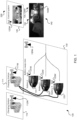
- Fig. 1 illustrates an example industrial system 100, where various embodiments of the present disclosure may be implemented.
- the industrial system 100 comprises one or more industrial machines 140.
- An industrial machine 140 may include a mining machine or a construction machine, e.g., a rock drilling rig, a development drill, a tunneling drilling machine, a surface drilling machine, a bolting or reinforcing vehicle, a rock removal machine, a long hole drill rig, an explosive charging machine, a loader, a transport vehicle, a loading machine or a hauling machine, a setting vehicle of gallery arcs or nets, a concrete spraying machine, a crusher, a measuring vehicle, or a passenger transport vehicle.
- a mining machine or a construction machine e.g., a rock drilling rig, a development drill, a tunneling drilling machine, a surface drilling machine, a bolting or reinforcing vehicle, a rock removal machine, a long hole drill rig, an explosive charging machine, a loader, a transport
- the industrial system 100 further comprises at least one set of swappable batteries 131-134 for use in the one or more industrial machines 140. At least some of the batteries 131-134 may be located in a battery swap area 130.
- the industrial system 100 further comprises at least one charging station 111, 112.
- the battery swap area 130 may be arranged in connection with one or more of the charging stations 111, 112, to allow the batteries 131-133 located in the battery swap area 130 to be charged by the connected charging station 111.
- the industrial system 100 is depicted to include only one battery swap area 130 in Fig. 1 , the industrial system 100 may include more battery swap areas. For example, there may be a battery swap area in connection with the charging station 112.
- the industrial system 100 further comprises a control system 120.
- the control system 120 comprises a battery management apparatus 200 described in more detail below.
- the control system 120 may be connected to a further network(s) and system(s), such a worksite management system, a cloud service, an intermediate communications network, such as the internet, etc.
- the control system 120 may comprise or be connected to further device(s) or control unit(s), such as a handheld user unit, a vehicle unit, a worksite management device/system, a remote control and/or monitoring device/system, data analytics device/system, sensor system/device, etc.
- the control system 120 may be located in a control room, which may be arranged outside the industrial system 100.
- the control system 120 may include servers, computers or corresponding devices.
- the industrial system 100 may further comprise at least one user interface 150 for interacting with the apparatus 200.
- the at least one user interface 150 may include an information screen (e.g., a touch screen) to allow users to get the needed information for battery management.
- the user interface 150 may be used by an industrial system shift management or operator(s) to tell a machine operator where to leave a used battery and where the machine operator can find a charged battery and how to identify the correct charged battery.
- the same information may be shown to the machine operator using, for example, a browser window on a tablet, a mobile phone, or a machine control system screen.
- the at least one user interface 150 may further include a screen (e.g., a touch screen) for an operator to input battery location(s). For example, if a forklift operator moves a battery, he/she may click a known position object on an industrial system layout, or input coordinates.
- a screen e.g., a touch screen
- the industrial system 100 may further comprise a wireless communications network comprising at least one wireless transceiver 131W-134W arranged in connection with a swappable battery of the at least one set of swappable batteries 131-134.
- the wireless communications network may further comprise, e.g., wireless transceivers 111W, 112W, 130W, 120W, and/or 140W arranged in connection with the charging station 111, charging station 112, the battery swap area 130, the control system 120, and the industrial machine 140, respectively.
- the industrial system 100 may comprise an above-ground industrial system, such as a quarry or the like.
- the layout of an above-ground industrial system e.g., an open-pit mine, such as a quarry
- an open-pit mine such as a quarry
- the disclosed battery management may be highly desirable in an above-ground industrial system.
- the industrial machines 140 typically move slowly.
- several charging stations may need to be distributed over the area of the industrial system so that routes to them are not too long (which would lead to unnecessary use of the batteries).
- the disclosed battery management may be highly desirable in order to be aware of which charging station is nearest or at the end of a shortest route at any given moment.
- the disclosed battery management may be highly desirable in order to efficiently and quickly find the nearest charged battery.
- At least some of these example embodiments may allow decentralizing charging stations underground. This may be advantageous due to, e.g., space requirements, fire safety, electric supply and transformer capacity, and/or logistics (optimization of the distance from a production area to the charging stations for the fleet of machines).
- At least some of these example embodiments may allow gathering information from batteries that are in use on machines, from batteries that are connected to charging stations, and/or from batteries that are neither on machines nor connected to charging stations. Furthermore, at least some of these example embodiments may allow collecting information about charging station status and controlling charging station operation remotely.
- Fig. 2 is a block diagram of the battery management apparatus 200, in accordance with an example embodiment.
- the battery management apparatus 200 comprises one or more processors 202, and one or more memories 204 that comprise computer program code.
- the battery management apparatus 200 may further comprise a transceiver 206 configured to enable the battery management apparatus 200 to transmit and/or receive information to/from other devices, in a wireless and/or wired manner.
- the battery management apparatus 200 may also include other elements not shown in Fig. 2 , such as one or more human interface devices, such as a keyboard and/or a display, via which the battery management apparatus 200 may be configured to interact with a user.
- one or more human interface devices such as a keyboard and/or a display, via which the battery management apparatus 200 may be configured to interact with a user.
- the battery management apparatus 200 is depicted to include only one processor 202, the battery management apparatus 200 may include more processors.
- the memory 204 is capable of storing instructions, such as an operating system and/or various applications.
- the memory 204 may include a storage that may be used to store, for example, at least some of the information and data used in the disclosed embodiments.
- the processor 202 is capable of executing the stored instructions.
- the processor 202 may be embodied as a multi-core processor, a single core processor, or a combination of one or more multi-core processors and one or more single core processors.
- the processor 202 may be embodied as one or more of various processing devices, such as a coprocessor, a microprocessor, a controller, a digital signal processor (DSP), a processing circuitry with or without an accompanying DSP, or various other processing devices including integrated circuits such as, for example, an application specific integrated circuit (ASIC), a field programmable gate array (FPGA), a microcontroller unit (MCU), a hardware accelerator, a special-purpose computer chip, a neural network chip, an artificial intelligence (AI) accelerator, or the like.
- the processor 202 may be configured to execute hard-coded functionality.
- the processor 202 is embodied as an executor of software instructions, wherein the instructions may specifically configure the processor 202 to perform the algorithms and/or operations described herein when the instructions are executed.
- the memory 204 may be embodied as one or more volatile memory devices, one or more non-volatile memory devices, and/or a combination of one or more volatile memory devices and non-volatile memory devices.
- the memory 204 may be embodied as semiconductor memories (such as mask ROM, PROM (programmable ROM), EPROM (erasable PROM), flash ROM, RAM (random access memory), etc.).
- the at least one memory 204 and the computer program code are configured to, with the at least one processor 202, cause the battery management apparatus 200 at least to collect battery management information related to at least one set of swappable batteries 131-134 for use in one or more industrial machines 140 in an industrial system 100.
- the at least one memory 204 and the computer program code are further configured to, with the at least one processor 202, cause the battery management apparatus 200 at least to transmit at least one battery management instruction based on the collected battery management information.
- the battery management information comprises at least first location information of at least one available charged swappable battery 131 in the at least one set of the swappable batteries 131-134, and the at least one battery management instruction comprises at least the first location information.
- the first location information may comprise, e.g., coordinates, such as two-dimensional coordinates (x, y) or three-dimensional coordinates (x, y, z). The coordinates may be those of a global coordinate system or a local coordinate system.
- the first location information may comprise one or more pointers to coordinates.
- the first location information may comprise positioning system information, such as global positioning system (GPS) information.
- GPS global positioning system
- the first location information may comprise heading information.
- the battery management information may further comprise charge level information of at least one swappable battery in the at least one set of the swappable batteries 131-134.
- the charge level information may comprise, e.g., state of charge (SoC) or depth of discharge (DoD) information.
- SoC state of charge
- DoD depth of discharge
- the first location information may be stored in the battery management apparatus 200 and/or the respective batteries.
- the transmitting of the at least one battery management instruction may be performed in response to a received request, e.g. from the industrial machine 140 or the interface 150.
- the at least one memory 204 and the computer program code may be further configured to, with the at least one processor 202, cause the battery management apparatus 200 at least to analyze at least the collected battery management information, and determine whether at least one battery management operation is needed based on the analysis.
- the transmitting of the at least one battery management instruction may be performed in response to determining that the at least one battery management operation is needed.
- the battery management information may further comprise charge level information of a swappable battery 134 in use in an industrial machine of the one or more industrial machines 140. Furthermore, the determining of whether the at least one battery management operation is needed may comprise determining that the swappable battery 134 requires swapping due to a charge level below a first charge level threshold. Furthermore, the at least one battery management instruction may further comprise an instruction to proceed to swap the swappable battery 134 with the charge level below the first charge level threshold for the at least one available charged swappable battery 131 at a location indicated by the first location information.
- the analyzing of the collected battery management information may involve comparing the collected charge level information of a battery in use with a first charge level threshold, and if the charge level is below the first charge level threshold, it may then be determined that a battery management operation is needed.
- the at least one memory 204 and the computer program code may be further configured to, with the at least one processor 202, cause the battery management apparatus 200 to collect auxiliary information comprising at least second location information for dropping a swappable battery with a charge level below the first charge level threshold.
- the second location information may comprise, e.g., coordinates, such as two-dimensional coordinates (x, y) or three-dimensional coordinates (x, y, z). The coordinates may be those of a global coordinate system or a local coordinate system.
- the second location information may comprise one or more pointers to coordinates.
- the second location information may comprise positioning system information, such as GPS information.
- the auxiliary information may further comprise: distance information of the industrial system 100, traffic situation information of the industrial system 100, traffic rule information of the industrial system 100, production situation information of the industrial system 100, electric supply capacity information of the industrial system 100, and/or information related to at least one charging station 111, 112 in the industrial system 100.
- the information related to the at least one charging station 111, 112 may comprise availability information, alarm information and/or measurement information.
- the at least one memory 204 and the computer program code may be further configured to, with the at least one processor 202, cause the battery management apparatus 200 to generate battery management optimization related information based at least partly on the auxiliary information.
- the at least one battery management operation may further comprise at least one battery management optimization operation.
- the at least one battery management instruction may further comprise at least one battery management optimization instruction.
- the at least one memory 204 and the computer program code may be further configured to, with the at least one processor 202, cause the battery management apparatus 200 to initiate a control operation related to the at least one charging station 111, 112 based at least partly on the auxiliary information, thereby allowing remote control of the at least one charging station 111, 112.
- the remote control of the at least one charging station 111, 112 may include supervising and/or controlling the at least one charging station 111, 112 and/or its functionalities. This may include reading alarms and/or measurement values like temperatures, currents, and/or voltages. This may further include starting and/or stopping charging station functions like charging and cooling. This may further include controlling the charging capacity or efficiency to be able to prioritize charging of different batteries and charging stations as needed based on, e.g., a production situation the industrial system 100 and/or electric supply capacity in the industrial system 100.
- An example of the prioritizing need includes a situation in which a big energy consumer is started in the industrial system 100, such as a big drainage water pump.
- an operator or the like in the industrial system 100 or a higher-level supervision system or the like may request at least some of the charging stations 111, 112 to limit the charging power. This may happen via the battery management apparatus 200 that may be configured to be aware of the priorities of the charging stations 111, 112 and adjusts them accordingly.
- the battery management apparatus 200 may decide when a battery swap is needed in one of the industrial machines 140. Then, a charging station with a charged battery may be determined. Information about the charging station with the charged battery may be forwarded to, e.g., a task management system configured to find a route to the charging station with the charged battery and guide the industrial machine 140 there. Such determination of the charging station with the charged battery and dispatching may be based on one or more parameters, including, e.g., distance, traffic situation and rules, a battery charge status, charger availability, production priorities, shift and shift change timing, etc.
- the at least one battery management instruction may further comprise identification information for the at least one available charged swappable battery 131, and/or an instruction to activate a visual indicator arranged on the at least one available charged swappable battery 131.
- a system operator may, via the battery management apparatus 200 , remotely set an identification light on a battery to indicate to a manual operator or a remote operator which battery is ready to be taken.
- an identification light on a battery may indicate to a manual operator or a remote operator which battery is ready to be taken.
- Fig. 3 illustrates an example flow chart of a method 300, in accordance with an example embodiment.
- the method 300 comprises a computer-implemented method.
- the battery management apparatus 200 collects battery management information related to the at least one set of swappable batteries 131-134 for use in the one or more industrial machines 140 in the industrial system 100.
- the battery management apparatus 200 may analyze the collected battery management information, as discussed above in more detail.
- the battery management apparatus 200 may determine whether at least one battery management operation is needed based on the analyzed battery management information. When it is determined that the at least one battery management operation is not needed, the method 300 may exit, operation 304. Alternatively, the method 300 may return to operation 301 (not shown in Fig. 3 ). When it is determined that the at least one battery management operation is needed, the method 300 may proceed to operation 305.
- the battery management apparatus 200 transmits at least one battery management instruction based on the collected battery management information.
- the battery management information comprises at least first location information of at least one available charged swappable battery 131 in the at least one set of the swappable batteries 131-134, and the at least one battery management instruction comprises at least the first location information.
- the method 300 may be performed by the battery management apparatus 200 of Fig. 2 .
- the operations 301-305 can, for example, be performed by the at least one processor 202 and the at least one memory 204. Further features of the method 300 directly result from the functionalities and parameters of the battery management apparatus 200, and thus are not repeated here.
- the method 300 can be performed by computer program(s).
- the battery management apparatus 200 may comprise means for performing at least one method described herein.
- the means may comprise the at least one processor 202, and the at least one memory 204 including program code configured to, when executed by the at least one processor 202, cause the battery management apparatus 200 to perform the method.
- the battery management apparatus 200 may comprise a processor or processor circuitry, such as for example a microcontroller, configured by the program code when executed to execute the embodiments of the operations and functionality described.
- the functionality described herein can be performed, at least in part, by one or more hardware logic components.
- illustrative types of hardware logic components include Field-programmable Gate Arrays (FPGAs), Application-Specific Integrated Circuits (ASICs), Application-Specific Standard Products (ASSPs), System-on-a-chip systems (SOCs), Complex Programmable Logic Devices (CPLDs), and Graphics Processing Units (GPUs).
- FPGAs Field-programmable Gate Arrays
- ASICs Application-Specific Integrated Circuits
- ASSPs Application-Specific Standard Products
- SOCs System-on-a-chip systems
- CPLDs Complex Programmable Logic Devices
- GPUs Graphics Processing Units
Landscapes
- Engineering & Computer Science (AREA)
- Power Engineering (AREA)
- Transportation (AREA)
- Mechanical Engineering (AREA)
- Life Sciences & Earth Sciences (AREA)
- Sustainable Development (AREA)
- Sustainable Energy (AREA)
- Charge And Discharge Circuits For Batteries Or The Like (AREA)
Abstract
Apparatuses, methods, computer programs and systems for battery management in an industrial system are disclosed. A battery management apparatus collects battery management information related to at least one set of swappable batteries for use in one or more industrial machines in an industrial system. At least one battery management instruction based on the collected battery management information is transmitted from the battery management apparatus. The battery management information comprises at least first location information of at least one available charged swappable battery in the at least one set of the swappable batteries. The at least one battery management instruction comprises at least the first location information.
Description
- The present disclosure relates to the field of industrial systems, and, more particularly, to battery management in an industrial system.
- Battery-powered industrial machines, such as mining machines are a new and developing technology. At least some such battery-powered industrial machines may need battery swapping for continuous production once or a few times in the middle of a production shift.
- In many other battery-powered applications, like cars, forklifts and mine headlights, the battery is charged usually at night or at idle time of the machine or equipment. The machine or equipment is unavailable when charging and the battery is not swapped.
- On other applications where battery is swapped, such as hand tools, lawnmowers, etc., the charger is movable and the owner can decide where to place it, and/or each worker has a set of already charged batteries that are needed for work.
- On the other hand, in battery-powered industrial machines utilizing battery swapping, when the battery needs charging it is swapped or replaced with a charged battery to be able to continue production. Basically, each machine may need at least two batteries for continuous production. When a mine, for example, has several battery-operated vehicles, there may be a challenge to keep track of where the batteries are located and what are their charge levels, conditions, etc., and where to find an available charger to get the battery charged.
- Accordingly, at least in some situations, there may be a need for battery management in industrial systems.
- An example embodiment of a battery management apparatus comprises at least one processor, and at least one memory including computer program code. The at least one memory and the computer program code are configured to, with the at least one processor, cause the battery management apparatus at least to collect battery management information related to at least one set of swappable batteries for use in one or more industrial machines in an industrial system. The at least one memory and the computer program code are further configured to, with the at least one processor, cause the battery management apparatus at least to transmit at least one battery management instruction based on the collected battery management information. The battery management information comprises at least first location information of at least one available charged swappable battery in the at least one set of the swappable batteries, and the at least one battery management instruction comprises at least the first location information.
- An example embodiment of a method comprises: collecting, by a battery management apparatus, battery management information related to at least one set of swappable batteries for use in one or more industrial machines in an industrial system; and transmitting, from the battery management apparatus, at least one battery management instruction based on the collected battery management information. The battery management information comprises at least first location information of at least one available charged swappable battery in the at least one set of the swappable batteries, and the at least one battery management instruction comprises at least the first location information.
- An example embodiment of a computer program comprises instructions for causing a battery management apparatus to perform at least the following: collecting battery management information related to at least one set of swappable batteries for use in one or more industrial machines in an industrial system; and transmitting at least one battery management instruction based on the collected battery management information. The battery management information comprises at least first location information of at least one available charged swappable battery in the at least one set of the swappable batteries, and the at least one battery management instruction comprises at least the first location information.
- In an example embodiment, alternatively or in addition to the above-described example embodiments, the battery management information further comprises charge level information of at least one swappable battery in the at least one set of the swappable batteries.
- In an example embodiment, alternatively or in addition to the above-described example embodiments, the transmitting of the at least one battery management instruction is performed in response to a received request.
- In an example embodiment, alternatively or in addition to the above-described example embodiments, the at least one memory and the computer program code are further configured to, with the at least one processor, cause the battery management apparatus at least to: analyze at least the collected battery management information; and determine whether at least one battery management operation is needed based on the analysis. The transmitting of the at least one battery management instruction is performed in response to determining that the at least one battery management operation is needed.
- In an example embodiment, alternatively or in addition to the above-described example embodiments, the battery management information further comprises charge level information of a swappable battery in use in an industrial machine of the one or more industrial machines; the determining of whether the at least one battery management operation is needed comprises determining that the swappable battery requires swapping due to a charge level below a first charge level threshold; and the at least one battery management instruction further comprises an instruction to proceed to swap the swappable battery with the charge level below the first charge level threshold for the at least one available charged swappable battery at a location indicated by the first location information.
- In an example embodiment, alternatively or in addition to the above-described example embodiments, the at least one memory and the computer program code are further configured to, with the at least one processor, cause the battery management apparatus to collect auxiliary information comprising at least second location information for dropping a swappable battery with a charge level below the first charge level threshold.
- In an example embodiment, alternatively or in addition to the above-described example embodiments, the auxiliary information further comprises at least one of: distance information of the industrial system, traffic situation information of the industrial system, traffic rule information of the industrial system, production situation information of the industrial system, electric supply capacity information of the industrial system, or information related to at least one charging station in the industrial system.
- In an example embodiment, alternatively or in addition to the above-described example embodiments, the information related to the at least one charging station comprises at least one of availability information, alarm information or measurement information.
- In an example embodiment, alternatively or in addition to the above-described example embodiments, the at least one memory and the computer program code are further configured to, with the at least one processor, cause the battery management apparatus to generate battery management optimization related information based at least partly on the auxiliary information; the at least one battery management operation further comprises at least one battery management optimization operation; and the at least one battery management instruction further comprises at least one battery management optimization instruction.
- In an example embodiment, alternatively or in addition to the above-described example embodiments, the at least one memory and the computer program code are further configured to, with the at least one processor, cause the battery management apparatus to initiate a control operation related to the at least one charging station, based at least partly on the auxiliary information.
- In an example embodiment, alternatively or in addition to the above-described example embodiments, the at least one battery management instruction further comprises at least one of: identification information for the at least one available charged swappable battery, or an instruction to activate a visual indicator arranged on the at least one available charged swappable battery.
- An example embodiment of an industrial system comprises one or more industrial machines, at least one set of swappable batteries for use in the one or more industrial machines, at least one charging station, and a control system. The control system comprises the battery management apparatus according to any of the above-described example embodiments.
- In an example embodiment, alternatively or in addition to the above-described example embodiments, the industrial system further comprises at least one user interface for interacting with the apparatus.
- In an example embodiment, alternatively or in addition to the above-described example embodiments, the industrial system further comprises a wireless communications network comprising at least one wireless transceiver arranged in connection with a swappable battery of the at least one set of swappable batteries.
- Many of the features will be more readily appreciated as they become better understood by reference to the following detailed description considered in connection with the accompanying drawings.
- The accompanying drawings, which are included to provide a further understanding of the embodiments and constitute a part of this specification, illustrate embodiments and together with the description help to explain the principles of the embodiments. In the drawings:
-
FIG. 1 shows an example embodiment of an example system; -
FIG. 2 shows an example embodiment of an example battery management apparatus; and -
FIG. 3 shows an example embodiment of a method. - Like reference numerals are used to designate like parts in the accompanying drawings.
- Reference will now be made in detail to embodiments, examples of which are illustrated in the accompanying drawings. The detailed description provided below in connection with the appended drawings is intended as a description of the present examples and is not intended to represent the only forms in which the present example may be constructed or utilized. The description sets forth the functions of the example and the sequence of steps for constructing and operating the example. However, the same or equivalent functions and sequences may be accomplished by different examples.
-
Fig. 1 illustrates an exampleindustrial system 100, where various embodiments of the present disclosure may be implemented. Theindustrial system 100 comprises one or moreindustrial machines 140. Anindustrial machine 140 may include a mining machine or a construction machine, e.g., a rock drilling rig, a development drill, a tunneling drilling machine, a surface drilling machine, a bolting or reinforcing vehicle, a rock removal machine, a long hole drill rig, an explosive charging machine, a loader, a transport vehicle, a loading machine or a hauling machine, a setting vehicle of gallery arcs or nets, a concrete spraying machine, a crusher, a measuring vehicle, or a passenger transport vehicle. - The
industrial system 100 further comprises at least one set of swappable batteries 131-134 for use in the one or moreindustrial machines 140. At least some of the batteries 131-134 may be located in abattery swap area 130. Theindustrial system 100 further comprises at least onecharging station 111, 112. Thebattery swap area 130 may be arranged in connection with one or more of thecharging stations 111, 112, to allow the batteries 131-133 located in thebattery swap area 130 to be charged by the connectedcharging station 111. Although theindustrial system 100 is depicted to include only onebattery swap area 130 inFig. 1 , theindustrial system 100 may include more battery swap areas. For example, there may be a battery swap area in connection with the charging station 112. - The
industrial system 100 further comprises acontrol system 120. Thecontrol system 120 comprises abattery management apparatus 200 described in more detail below. Thecontrol system 120 may be connected to a further network(s) and system(s), such a worksite management system, a cloud service, an intermediate communications network, such as the internet, etc. Thecontrol system 120 may comprise or be connected to further device(s) or control unit(s), such as a handheld user unit, a vehicle unit, a worksite management device/system, a remote control and/or monitoring device/system, data analytics device/system, sensor system/device, etc. Thecontrol system 120 may be located in a control room, which may be arranged outside theindustrial system 100. Thecontrol system 120 may include servers, computers or corresponding devices. - The
industrial system 100 may further comprise at least oneuser interface 150 for interacting with theapparatus 200. The at least oneuser interface 150 may include an information screen (e.g., a touch screen) to allow users to get the needed information for battery management. For example, theuser interface 150 may be used by an industrial system shift management or operator(s) to tell a machine operator where to leave a used battery and where the machine operator can find a charged battery and how to identify the correct charged battery. Alternatively, or additionally, the same information may be shown to the machine operator using, for example, a browser window on a tablet, a mobile phone, or a machine control system screen. - The at least one
user interface 150 may further include a screen (e.g., a touch screen) for an operator to input battery location(s). For example, if a forklift operator moves a battery, he/she may click a known position object on an industrial system layout, or input coordinates. - The
industrial system 100 may further comprise a wireless communications network comprising at least onewireless transceiver 131W-134W arranged in connection with a swappable battery of the at least one set of swappable batteries 131-134. The wireless communications network may further comprise, e.g.,wireless transceivers station 111, charging station 112, thebattery swap area 130, thecontrol system 120, and theindustrial machine 140, respectively. - For example, the
industrial system 100 may comprise an underground industrial system, such as an underground mine or the like. An underground industrial system may be characterized by poor visibility due to darkness, as well as by confined spaces. Furthermore, the layout of an underground industrial system (such as a mine) may continually change as the mine keeps on being excavated. Accordingly, it is not possible for machine operators to be aware of current and precise locations of charged batteries. Thus, the disclosed battery management may be highly desirable in an underground industrial system. - In another example, the
industrial system 100 may comprise an above-ground industrial system, such as a quarry or the like. The layout of an above-ground industrial system (e.g., an open-pit mine, such as a quarry) may also continually change as the open-pit mine keeps on being excavated. Accordingly, it is not possible for machine operators to be aware of current and precise locations of charged batteries. Thus, the disclosed battery management may be highly desirable in an above-ground industrial system. - Furthermore, in both underground and above-ground industrial systems the
industrial machines 140 typically move slowly. Thus, at least in some situations, several charging stations may need to be distributed over the area of the industrial system so that routes to them are not too long (which would lead to unnecessary use of the batteries). Accordingly, the disclosed battery management may be highly desirable in order to be aware of which charging station is nearest or at the end of a shortest route at any given moment. - Furthermore, in both underground and above-ground industrial systems, even if, e.g., a machine operator were able to see a group of batteries within a distance, he/she could not know whether any of them were charged (they could be earlier dropped depleted batteries waiting to be charged again). Thus, the disclosed battery management may be highly desirable in order to efficiently and quickly find the nearest charged battery.
- In the following, various example embodiments will be discussed. At least some of these example embodiments may allow battery management in the
industrial system 100. Some of the features of the described units are optional features which may provide further advantages. - At least some of these example embodiments may allow decentralizing charging stations underground. This may be advantageous due to, e.g., space requirements, fire safety, electric supply and transformer capacity, and/or logistics (optimization of the distance from a production area to the charging stations for the fleet of machines).
- At least some of these example embodiments may allow gathering information from batteries that are in use on machines, from batteries that are connected to charging stations, and/or from batteries that are neither on machines nor connected to charging stations. Furthermore, at least some of these example embodiments may allow collecting information about charging station status and controlling charging station operation remotely.
-
Fig. 2 is a block diagram of thebattery management apparatus 200, in accordance with an example embodiment. Thebattery management apparatus 200 comprises one ormore processors 202, and one ormore memories 204 that comprise computer program code. Thebattery management apparatus 200 may further comprise atransceiver 206 configured to enable thebattery management apparatus 200 to transmit and/or receive information to/from other devices, in a wireless and/or wired manner. - The
battery management apparatus 200 may also include other elements not shown inFig. 2 , such as one or more human interface devices, such as a keyboard and/or a display, via which thebattery management apparatus 200 may be configured to interact with a user. - Although the
battery management apparatus 200 is depicted to include only oneprocessor 202, thebattery management apparatus 200 may include more processors. In an embodiment, thememory 204 is capable of storing instructions, such as an operating system and/or various applications. Furthermore, thememory 204 may include a storage that may be used to store, for example, at least some of the information and data used in the disclosed embodiments. - Furthermore, the
processor 202 is capable of executing the stored instructions. In an embodiment, theprocessor 202 may be embodied as a multi-core processor, a single core processor, or a combination of one or more multi-core processors and one or more single core processors. For example, theprocessor 202 may be embodied as one or more of various processing devices, such as a coprocessor, a microprocessor, a controller, a digital signal processor (DSP), a processing circuitry with or without an accompanying DSP, or various other processing devices including integrated circuits such as, for example, an application specific integrated circuit (ASIC), a field programmable gate array (FPGA), a microcontroller unit (MCU), a hardware accelerator, a special-purpose computer chip, a neural network chip, an artificial intelligence (AI) accelerator, or the like. In an embodiment, theprocessor 202 may be configured to execute hard-coded functionality. In an embodiment, theprocessor 202 is embodied as an executor of software instructions, wherein the instructions may specifically configure theprocessor 202 to perform the algorithms and/or operations described herein when the instructions are executed. - The
memory 204 may be embodied as one or more volatile memory devices, one or more non-volatile memory devices, and/or a combination of one or more volatile memory devices and non-volatile memory devices. For example, thememory 204 may be embodied as semiconductor memories (such as mask ROM, PROM (programmable ROM), EPROM (erasable PROM), flash ROM, RAM (random access memory), etc.). - The at least one
memory 204 and the computer program code are configured to, with the at least oneprocessor 202, cause thebattery management apparatus 200 at least to collect battery management information related to at least one set of swappable batteries 131-134 for use in one or moreindustrial machines 140 in anindustrial system 100. - The at least one
memory 204 and the computer program code are further configured to, with the at least oneprocessor 202, cause thebattery management apparatus 200 at least to transmit at least one battery management instruction based on the collected battery management information. - The battery management information comprises at least first location information of at least one available charged
swappable battery 131 in the at least one set of the swappable batteries 131-134, and the at least one battery management instruction comprises at least the first location information. The first location information may comprise, e.g., coordinates, such as two-dimensional coordinates (x, y) or three-dimensional coordinates (x, y, z). The coordinates may be those of a global coordinate system or a local coordinate system. Alternatively, the first location information may comprise one or more pointers to coordinates. Alternatively, or additionally, the first location information may comprise positioning system information, such as global positioning system (GPS) information. Alternatively, or additionally, the first location information may comprise heading information. - The battery management information may further comprise charge level information of at least one swappable battery in the at least one set of the swappable batteries 131-134. The charge level information may comprise, e.g., state of charge (SoC) or depth of discharge (DoD) information.
- At least in some embodiments, the first location information may be stored in the
battery management apparatus 200 and/or the respective batteries. - The transmitting of the at least one battery management instruction may be performed in response to a received request, e.g. from the
industrial machine 140 or theinterface 150. - The at least one
memory 204 and the computer program code may be further configured to, with the at least oneprocessor 202, cause thebattery management apparatus 200 at least to analyze at least the collected battery management information, and determine whether at least one battery management operation is needed based on the analysis. The transmitting of the at least one battery management instruction may be performed in response to determining that the at least one battery management operation is needed. - The battery management information may further comprise charge level information of a swappable battery 134 in use in an industrial machine of the one or more
industrial machines 140. Furthermore, the determining of whether the at least one battery management operation is needed may comprise determining that the swappable battery 134 requires swapping due to a charge level below a first charge level threshold. Furthermore, the at least one battery management instruction may further comprise an instruction to proceed to swap the swappable battery 134 with the charge level below the first charge level threshold for the at least one available chargedswappable battery 131 at a location indicated by the first location information. - For example, the analyzing of the collected battery management information may involve comparing the collected charge level information of a battery in use with a first charge level threshold, and if the charge level is below the first charge level threshold, it may then be determined that a battery management operation is needed.
- At least in some embodiments, the at least one
memory 204 and the computer program code may be further configured to, with the at least oneprocessor 202, cause thebattery management apparatus 200 to collect auxiliary information comprising at least second location information for dropping a swappable battery with a charge level below the first charge level threshold. The second location information may comprise, e.g., coordinates, such as two-dimensional coordinates (x, y) or three-dimensional coordinates (x, y, z). The coordinates may be those of a global coordinate system or a local coordinate system. Alternatively, the second location information may comprise one or more pointers to coordinates. Alternatively, or additionally, the second location information may comprise positioning system information, such as GPS information. - The auxiliary information may further comprise: distance information of the
industrial system 100, traffic situation information of theindustrial system 100, traffic rule information of theindustrial system 100, production situation information of theindustrial system 100, electric supply capacity information of theindustrial system 100, and/or information related to at least one chargingstation 111, 112 in theindustrial system 100. - The information related to the at least one charging
station 111, 112 may comprise availability information, alarm information and/or measurement information. - At least in some embodiments, the at least one
memory 204 and the computer program code may be further configured to, with the at least oneprocessor 202, cause thebattery management apparatus 200 to generate battery management optimization related information based at least partly on the auxiliary information. Furthermore, the at least one battery management operation may further comprise at least one battery management optimization operation. Furthermore, the at least one battery management instruction may further comprise at least one battery management optimization instruction. - At least in some embodiments, the at least one
memory 204 and the computer program code may be further configured to, with the at least oneprocessor 202, cause thebattery management apparatus 200 to initiate a control operation related to the at least one chargingstation 111, 112 based at least partly on the auxiliary information, thereby allowing remote control of the at least one chargingstation 111, 112. - For example, the remote control of the at least one charging
station 111, 112 may include supervising and/or controlling the at least one chargingstation 111, 112 and/or its functionalities. This may include reading alarms and/or measurement values like temperatures, currents, and/or voltages. This may further include starting and/or stopping charging station functions like charging and cooling. This may further include controlling the charging capacity or efficiency to be able to prioritize charging of different batteries and charging stations as needed based on, e.g., a production situation theindustrial system 100 and/or electric supply capacity in theindustrial system 100. An example of the prioritizing need includes a situation in which a big energy consumer is started in theindustrial system 100, such as a big drainage water pump. Then, an operator or the like in theindustrial system 100 or a higher-level supervision system or the like may request at least some of the chargingstations 111, 112 to limit the charging power. This may happen via thebattery management apparatus 200 that may be configured to be aware of the priorities of the chargingstations 111, 112 and adjusts them accordingly. - In other words, at least some of the disclosed embodiments may allow fully automatic battery and charging dispatching. The
battery management apparatus 200 may decide when a battery swap is needed in one of theindustrial machines 140. Then, a charging station with a charged battery may be determined. Information about the charging station with the charged battery may be forwarded to, e.g., a task management system configured to find a route to the charging station with the charged battery and guide theindustrial machine 140 there. Such determination of the charging station with the charged battery and dispatching may be based on one or more parameters, including, e.g., distance, traffic situation and rules, a battery charge status, charger availability, production priorities, shift and shift change timing, etc. - The at least one battery management instruction may further comprise identification information for the at least one available charged
swappable battery 131, and/or an instruction to activate a visual indicator arranged on the at least one available chargedswappable battery 131. - For example, a system operator may, via the
battery management apparatus 200 , remotely set an identification light on a battery to indicate to a manual operator or a remote operator which battery is ready to be taken. Alternatively, there may be some other visual markings like painted numbers on the batteries. -
Fig. 3 illustrates an example flow chart of amethod 300, in accordance with an example embodiment. In the example ofFig. 3 , themethod 300 comprises a computer-implemented method. - At
operation 301, thebattery management apparatus 200 collects battery management information related to the at least one set of swappable batteries 131-134 for use in the one or moreindustrial machines 140 in theindustrial system 100. - At
optional operation 302, thebattery management apparatus 200 may analyze the collected battery management information, as discussed above in more detail. - At
optional operation 303, thebattery management apparatus 200 may determine whether at least one battery management operation is needed based on the analyzed battery management information. When it is determined that the at least one battery management operation is not needed, themethod 300 may exit,operation 304. Alternatively, themethod 300 may return to operation 301 (not shown inFig. 3 ). When it is determined that the at least one battery management operation is needed, themethod 300 may proceed tooperation 305. - At
operation 305, thebattery management apparatus 200 transmits at least one battery management instruction based on the collected battery management information. The battery management information comprises at least first location information of at least one available chargedswappable battery 131 in the at least one set of the swappable batteries 131-134, and the at least one battery management instruction comprises at least the first location information. - The
method 300 may be performed by thebattery management apparatus 200 ofFig. 2 . The operations 301-305 can, for example, be performed by the at least oneprocessor 202 and the at least onememory 204. Further features of themethod 300 directly result from the functionalities and parameters of thebattery management apparatus 200, and thus are not repeated here. Themethod 300 can be performed by computer program(s). - The
battery management apparatus 200 may comprise means for performing at least one method described herein. In an example, the means may comprise the at least oneprocessor 202, and the at least onememory 204 including program code configured to, when executed by the at least oneprocessor 202, cause thebattery management apparatus 200 to perform the method. - The functionality described herein can be performed, at least in part, by one or more computer program product components such as software components. According to an embodiment, the
battery management apparatus 200 may comprise a processor or processor circuitry, such as for example a microcontroller, configured by the program code when executed to execute the embodiments of the operations and functionality described. Alternatively, or in addition, the functionality described herein can be performed, at least in part, by one or more hardware logic components. For example, and without limitation, illustrative types of hardware logic components that can be used include Field-programmable Gate Arrays (FPGAs), Application-Specific Integrated Circuits (ASICs), Application-Specific Standard Products (ASSPs), System-on-a-chip systems (SOCs), Complex Programmable Logic Devices (CPLDs), and Graphics Processing Units (GPUs). - Any range or device value given herein may be extended or altered without losing the effect sought. Further, any embodiment may be combined with another embodiment unless explicitly disallowed.
- Although the subject matter has been described in language specific to structural features and/or acts, it is to be understood that the subject matter defined in the appended claims is not necessarily limited to the specific features or acts described above. Rather, the specific features and acts described above are disclosed as examples of implementing the claims and other equivalent features and acts are intended to be within the scope of the claims.
- It will be understood that the benefits and advantages described above may relate to one embodiment or may relate to several embodiments. The embodiments are not limited to those that solve any or all of the stated problems or those that have any or all of the stated benefits and advantages. It will further be understood that reference to 'an' item may refer to one or more of those items.
- The steps of the methods described herein may be carried out in any suitable order, or simultaneously where appropriate. Additionally, individual blocks may be deleted from any of the methods without departing from the scope of the subject matter described herein. Aspects of any of the embodiments described above may be combined with aspects of any of the other embodiments described to form further embodiments without losing the effect sought.
- The term 'comprising' is used herein to mean including the method, blocks or elements identified, but that such blocks or elements do not comprise an exclusive list and a method or apparatus may contain additional blocks or elements.
- It will be understood that the above description is given by way of example only and that various modifications may be made by those skilled in the art. The above specification, examples and data provide a complete description of the structure and use of example embodiments. Although various embodiments have been described above with a certain degree of particularity, or with reference to one or more individual embodiments, those skilled in the art could make numerous alterations to the disclosed embodiments without departing from the scope of this specification.
Claims (16)
- A battery management apparatus (200), comprising:at least one processor (202); andat least one memory (204) including computer program code;the at least one memory (204) and the computer program code configured to, with the at least one processor (202), cause the battery management apparatus (200) at least to:collect battery management information related to at least one set of swappable batteries (131-134) for use in one or more industrial machines (140) in an industrial system (100); andtransmit at least one battery management instruction based on the collected battery management information,wherein the battery management information comprises at least first location information of at least one available charged swappable battery (131) in the at least one set of the swappable batteries (131-134), and the at least one battery management instruction comprises at least said first location information.
- The battery management apparatus (200) according to claim 1, wherein the battery management information further comprises charge level information of at least one swappable battery in the at least one set of the swappable batteries (131-134).
- The battery management apparatus (200) according to claim 1 or 2, wherein the transmitting of the at least one battery management instruction is performed in response to a received request.
- The battery management apparatus (200) according to any one of claims 1 to 3, wherein the at least one memory (204) and the computer program code are further configured to, with the at least one processor (202), cause the battery management apparatus (200) at least to:analyze at least the collected battery management information; anddetermine whether at least one battery management operation is needed based on the analysis,wherein the transmitting of the at least one battery management instruction is performed in response to determining that the at least one battery management operation is needed.
- The battery management apparatus (200) according to claim 4, wherein:the battery management information further comprises charge level information of a swappable battery (134) in use in an industrial machine of the one or more industrial machines (140);the determining of whether the at least one battery management operation is needed comprises determining that said swappable battery (134) requires swapping due to a charge level being below a first charge level threshold; andthe at least one battery management instruction further comprises an instruction to proceed to swap said swappable battery (134) with said charge level below said first charge level threshold for said at least one available charged swappable battery (131) at a location indicated by said first location information.
- The battery management apparatus (200) according to any one of claims 1 to 5, wherein the at least one memory (204) and the computer program code are further configured to, with the at least one processor (202), cause the battery management apparatus (200) to collect auxiliary information comprising at least second location information for dropping a swappable battery with a charge level below a first charge level threshold.
- The battery management apparatus (200) according to claim 6, wherein the auxiliary information further comprises at least one of: distance information of the industrial system (100), traffic situation information of the industrial system (100), traffic rule information of the industrial system (100), production situation information of the industrial system (100), electric supply capacity information of the industrial system (100), or information related to at least one charging station (111, 112) in the industrial system (100) .
- The battery management apparatus (200) according to claim 7, wherein the information related to the at least one charging station (111, 112) comprises at least one of availability information, alarm information or measurement information.
- The battery management apparatus (200) according to any one of claims 6 to 8, wherein:the at least one memory (204) and the computer program code are further configured to, with the at least one processor (202), cause the battery management apparatus (200) to generate battery management optimization related information based at least partly on said auxiliary information;the at least one battery management operation further comprises at least one battery management optimization operation; andthe at least one battery management instruction further comprises at least one battery management optimization instruction.
- The battery management apparatus (200) according to any one of claims 6 to 9, wherein the at least one memory (204) and the computer program code are further configured to, with the at least one processor (202), cause the battery management apparatus (200) to initiate a control operation related to the at least one charging station (111, 112), based at least partly on said auxiliary information.
- The battery management apparatus (200) according to any one of claims 1 to 10, wherein the at least one battery management instruction further comprises at least one of: identification information for said at least one available charged swappable battery (131), or an instruction to activate a visual indicator arranged on said at least one available charged swappable battery (131).
- A method (300), comprising:collecting (301), by a battery management apparatus (200), battery management information related to at least one set of swappable batteries (131-134) for use in one or more industrial machines (140) in an industrial system (100); andtransmitting (305), from the battery management apparatus (200), at least one battery management instruction based on the collected battery management information,wherein the battery management information comprises at least first location information of at least one available charged swappable battery (131) in the at least one set of the swappable batteries (131-134), and the at least one battery management instruction comprises at least said first location information.
- A computer program comprising instructions for causing a battery management apparatus to perform at least the following:collecting battery management information related to at least one set of swappable batteries for use in one or more industrial machines in an industrial system; andtransmitting at least one battery management instruction based on the collected battery management information,wherein the battery management information comprises at least first location information of at least one available charged swappable battery in the at least one set of the swappable batteries, and the at least one battery management instruction comprises at least said first location information.
- An industrial system (100), comprising:one or more industrial machines (140);at least one set of swappable batteries (131-134) for use in the one or more industrial machines (140) ;at least one charging station (111, 112); anda control system (120),wherein the control system (120) comprises the battery management apparatus (200) according to any one of claims 1 to 11.
- The industrial system (100) according to claim 14, further comprising at least one user interface (150) for interacting with the apparatus (200).
- The industrial system (100) according to claim 14 or 15, further comprising a wireless communications network comprising at least one wireless transceiver (131W-134W) arranged in connection with a swappable battery of the at least one set of swappable batteries (131-134).
Priority Applications (1)
| Application Number | Priority Date | Filing Date | Title |
|---|---|---|---|
| EP23193652.7A EP4518081A1 (en) | 2023-08-28 | 2023-08-28 | Battery management in an industrial system |
Applications Claiming Priority (1)
| Application Number | Priority Date | Filing Date | Title |
|---|---|---|---|
| EP23193652.7A EP4518081A1 (en) | 2023-08-28 | 2023-08-28 | Battery management in an industrial system |
Publications (1)
| Publication Number | Publication Date |
|---|---|
| EP4518081A1 true EP4518081A1 (en) | 2025-03-05 |
Family
ID=87847891
Family Applications (1)
| Application Number | Title | Priority Date | Filing Date |
|---|---|---|---|
| EP23193652.7A Withdrawn EP4518081A1 (en) | 2023-08-28 | 2023-08-28 | Battery management in an industrial system |
Country Status (1)
| Country | Link |
|---|---|
| EP (1) | EP4518081A1 (en) |
Citations (6)
| Publication number | Priority date | Publication date | Assignee | Title |
|---|---|---|---|---|
| US20170110890A1 (en) * | 2007-07-31 | 2017-04-20 | Apple Inc. | Battery charging system and mobile and accessory devices |
| CN112383107A (en) * | 2020-11-13 | 2021-02-19 | 苏州索尔智行新能源科技有限公司 | Battery replacement station information display method and device, computer equipment and storage medium |
| US20220360092A1 (en) * | 2018-12-05 | 2022-11-10 | Neutron Holdings, Inc. Dba Lime | Rechargeable battery kiosk that dynamically alters a charging rate of rechargeable batteries based on usage data |
| WO2023287660A1 (en) * | 2021-07-13 | 2023-01-19 | Popion Mobility Inc. | Methods and systems for battery-vehicle interface solutions for supporting use of swappable batteries in electric vehicles |
| WO2023039561A1 (en) * | 2021-09-10 | 2023-03-16 | Land Energy, Inc | Battery-centric virtual grid (vg) system |
| US20230142500A1 (en) * | 2021-11-10 | 2023-05-11 | Enersys Delaware Inc. | Battery modules with anti-arcing, hot swapping, and/or self-disabling features |
-
2023
- 2023-08-28 EP EP23193652.7A patent/EP4518081A1/en not_active Withdrawn
Patent Citations (6)
| Publication number | Priority date | Publication date | Assignee | Title |
|---|---|---|---|---|
| US20170110890A1 (en) * | 2007-07-31 | 2017-04-20 | Apple Inc. | Battery charging system and mobile and accessory devices |
| US20220360092A1 (en) * | 2018-12-05 | 2022-11-10 | Neutron Holdings, Inc. Dba Lime | Rechargeable battery kiosk that dynamically alters a charging rate of rechargeable batteries based on usage data |
| CN112383107A (en) * | 2020-11-13 | 2021-02-19 | 苏州索尔智行新能源科技有限公司 | Battery replacement station information display method and device, computer equipment and storage medium |
| WO2023287660A1 (en) * | 2021-07-13 | 2023-01-19 | Popion Mobility Inc. | Methods and systems for battery-vehicle interface solutions for supporting use of swappable batteries in electric vehicles |
| WO2023039561A1 (en) * | 2021-09-10 | 2023-03-16 | Land Energy, Inc | Battery-centric virtual grid (vg) system |
| US20230142500A1 (en) * | 2021-11-10 | 2023-05-11 | Enersys Delaware Inc. | Battery modules with anti-arcing, hot swapping, and/or self-disabling features |
Similar Documents
| Publication | Publication Date | Title |
|---|---|---|
| EP3358306B1 (en) | Vehicle control apparatus and vehicle control method | |
| CA3172929C (en) | Tire conditioning optimization for a collection of mining vehicles | |
| US12541205B2 (en) | Movement control support device and method | |
| CN111882474B (en) | A FDS function design method for autonomous vehicle swarm scheduling | |
| JP2019016306A (en) | Coverage device, mobile body, controller, and mobile body dispersion control program | |
| AU2019387326B2 (en) | Model generation for route planning or positioning of mobile object in underground worksite | |
| JP2011028597A (en) | Apparatus, method and program for supporting arrangement of work area, and recording medium | |
| US12393194B2 (en) | Managing conflicting interactions between a movable device and potential obstacles | |
| CN117892568A (en) | Hoisting planning method and device, electronic equipment and crane | |
| US20240273440A1 (en) | Information output method, recording medium, and information output system | |
| CN121258074A (en) | Control method, device, equipment, storage medium and product of mining vehicle | |
| Hammad et al. | Towards real-time simulation of construction activities considering spatio-temporal resolution requirements for improving safety and productivity | |
| US12398541B2 (en) | Mine operations analysis and control | |
| EP3791134A1 (en) | A system and method for managing a plurality of vehicles | |
| CN111079967B (en) | Equipment control method, device, server, storage medium and equipment control system | |
| CN117787702A (en) | An intelligent forklift risk prediction method and device | |
| EP3933530A1 (en) | Collision detection and avoidance inside a mine | |
| US20210150900A1 (en) | Information presenting device, information presenting method, and manned driving vehicle | |
| CN112257889A (en) | Route planning method and device for ground moving object in intelligent construction site | |
| CN115701620B (en) | Information processing apparatus and information processing method | |
| AU2020350118C1 (en) | Modelling of underground worksite | |
| CN118114930A (en) | An intelligent monitoring and dispatching system for underground cavern transport vehicles | |
| CN121879283A (en) | Unmanned vehicle cluster cooperative scheduling system, method, equipment and medium | |
| OA20243A (en) | Mine operations analysis and control. |
Legal Events
| Date | Code | Title | Description |
|---|---|---|---|
| PUAI | Public reference made under article 153(3) epc to a published international application that has entered the european phase |
Free format text: ORIGINAL CODE: 0009012 |
|
| STAA | Information on the status of an ep patent application or granted ep patent |
Free format text: STATUS: THE APPLICATION HAS BEEN PUBLISHED |
|
| AK | Designated contracting states |
Kind code of ref document: A1 Designated state(s): AL AT BE BG CH CY CZ DE DK EE ES FI FR GB GR HR HU IE IS IT LI LT LU LV MC ME MK MT NL NO PL PT RO RS SE SI SK SM TR |
|
| STAA | Information on the status of an ep patent application or granted ep patent |
Free format text: STATUS: THE APPLICATION IS DEEMED TO BE WITHDRAWN |
|
| 18D | Application deemed to be withdrawn |
Effective date: 20250906 |