EP4517626A1 - Waste material management system - Google Patents
Waste material management system Download PDFInfo
- Publication number
- EP4517626A1 EP4517626A1 EP23796090.1A EP23796090A EP4517626A1 EP 4517626 A1 EP4517626 A1 EP 4517626A1 EP 23796090 A EP23796090 A EP 23796090A EP 4517626 A1 EP4517626 A1 EP 4517626A1
- Authority
- EP
- European Patent Office
- Prior art keywords
- scrap
- heat exchanger
- brazing
- data
- manufacturing
- Prior art date
- Legal status (The legal status is an assumption and is not a legal conclusion. Google has not performed a legal analysis and makes no representation as to the accuracy of the status listed.)
- Granted
Links
Images

Classifications
-
- G—PHYSICS
- G06—COMPUTING OR CALCULATING; COUNTING
- G06Q—INFORMATION AND COMMUNICATION TECHNOLOGY [ICT] SPECIALLY ADAPTED FOR ADMINISTRATIVE, COMMERCIAL, FINANCIAL, MANAGERIAL OR SUPERVISORY PURPOSES; SYSTEMS OR METHODS SPECIALLY ADAPTED FOR ADMINISTRATIVE, COMMERCIAL, FINANCIAL, MANAGERIAL OR SUPERVISORY PURPOSES, NOT OTHERWISE PROVIDED FOR
- G06Q10/00—Administration; Management
- G06Q10/30—Administration of product recycling or disposal
Definitions
- the present disclosure relates to a scrap material management system.
- Patent Literature 1 A management device capable of monitoring the amount of greenhouse gas emissions involved in the manufacturing of each product has been proposed, for example, in Patent Literature 1.
- Patent Literature 1 JP 2010-191832 A
- an object of the present disclosure is to provide a scrap material management system that can monitor the material composition and carbon footprint of all scrap materials generated in the manufacture of a heat exchanger.
- a scrap material management system includes a management unit that acquires and manages material acceptance data including information on the type of materials required for manufacturing a heat exchanger, the composition of the materials, the weight of the materials, and the amount of greenhouse gas emissions required to prepare the materials, utility data including information on the power consumption and amount of gas consumed when manufacturing the heat exchanger, and weight data on the state of the finished heat exchanger, the state of the heat exchanger parts, and the state of scrap materials generated when manufacturing the heat exchanger.
- the scrap material management system includes a prediction unit that predicts a change in the material composition of post-brazing scrap material generated after the brazing process among the scrap materials, using brazing condition data and material acceptance data used in the brazing process of the heat exchanger.
- the management unit monitors the material composition and carbon footprint of each scrap material in real time based on the amount of scrap material, including part scrap generated in the parts manufacturing process in which heat exchanger parts are manufactured from materials, post-assembly scrap generated in the assembly process in which parts are assembled after the parts manufacturing process, and post-brazing scrap, as well as the material composition predicted by the prediction unit.
- the prediction unit can predict the material composition of the post-brazing scrap material after the material composition has changed in the brazing process. Therefore, in the manufacturing of heat exchangers, the material composition and carbon footprint of all scrap materials, including post-brazing scrap materials after the material composition has changed, can be understood. Furthermore, since the process of determining the material composition of the post-brazing scrap material is no longer necessary, it is possible to reduce not only the energy consumption required for the process but also the amount of CO 2 emission.
- the scrap material management system manages materials, products, scrap materials, and utilities in a heat exchanger manufacturing plant that produces a heat exchanger as a product.
- the scrap material management system includes a management unit 100 and a prediction unit 110.
- the management unit 100 and the prediction unit 110 are constructed as, for example, an electronic computer.
- the management unit 100 and the prediction unit 110 manage scrap materials and carbon footprints generated during the manufacture of a heat exchanger by executing a pre-designed program.
- the management unit 100 and the prediction unit 110 are installed in a heat exchanger manufacturing factory.
- the management unit 100 and the prediction unit 110 are connected to, for example, an ICT (Information and Communication Technology) environment, thereby making it possible for them to access a cloud 120. This makes it possible to monitor the data remotely. In other words, global production and scrap can be monitored from a remote location.
- ICT Information and Communication Technology
- electronic device terminals installed in the heat exchanger manufacturing factory are also able to access the cloud 120. This allows the management unit 100, the prediction unit 110, and each electronic device terminal to transmit and receive data related to the manufacture of the heat exchanger at any time via the cloud 120.
- the management unit 100, the prediction unit 110, and each electronic device terminal access the cloud 120 using a mobile communication system such as 4G or 5G. This makes it possible to link each individual heat exchanger through high-speed communication, even with the massive amount of data generated by high-speed processing.
- the cloud 120 is a cloud computing that stores all data related to, for example, the manufacture of the heat exchanger.
- the data relating to production includes, for example, production data, carbon footprint data, and accounting data.
- Accounting data includes costs such as cost of goods and processing costs during manufacturing.
- the management unit 100 centrally manages the above-mentioned manufacturing data, accounting data, and carbon footprint data. That is, the management unit 100 collects and manages several pieces of information in the cloud 120, thereby maintaining a state in which each piece of information can be efficiently utilized.
- the manufacturing data includes all data such as the cost of producing heat exchangers, the types of accepted materials, the weight of materials generated at each process, and the energy input.
- Manufacturing data includes, for example, data related to manufacturing such as material acceptance data, utility data, weight data, and brazing condition data.
- the material acceptance data includes information on the type of material required to manufacture the heat exchanger, the composition of the material, the weight of the material, and the greenhouse gas emissions required to prepare the material.
- the material acceptance data is acquired, for example, by reading an identification mark or the like with a reading device.
- the utility data includes information on the amount of power consumed and gas consumed during the manufacture of the heat exchanger, and information on the amount of greenhouse gas emissions generated in the heat exchanger manufacturing factory.
- the utility data is acquired at any time using measuring instruments such as a watt-hour meter, a gas flow meter, and a thermometer.
- the weight data includes information on the weight in a state of the finished heat exchanger, a state of the heat exchanger parts, and a state of scrap materials generated during the manufacture of the heat exchanger.
- the weight data is acquired at any time using measuring instruments such as a dimension measuring instrument and a weight scale.
- the brazing condition data includes data related to brazing, such as heat input temperature, wind speed, product size, and furnace atmosphere.
- the brazing condition data is uploaded to the cloud 120 in advance.
- the management unit 100 acquires and manages material acceptance data, utility data, and weight data. These data are updated as needed at each process in the manufacture of the heat exchanger.
- the management unit 100 records and manages all manufacturing data of the heat exchanger.
- the management unit 100 discloses publicly available information in response to an external request. For example, when data transparency is requested from the outside, the management unit 100 provides publicly available data to the outside.
- the management unit 100 manages data using blockchain technology. That is, the management unit 100 directly connects terminals on an information communication network to each other, and processes and records transaction records in a distributed manner using encryption technology. In this way, the management unit 100 prevents data tampering and data related to manufacturing from leaking to the outside. Furthermore, the management unit 100 prevents the external leakage of manufacturing know-how on the cloud 120.
- the prediction unit 110 predicts a change in the material composition of post-brazing scrap material generated after a brazing process in the manufacturing process of a heat exchanger.
- the material composition of the scrap materials recovered in a series of manufacturing processes can be calculated from the material composition of each scrap material and the total weight of scrap materials. For example, if the weight of the first scrap material is 100 kilograms and it contains 10% zinc, and the weight of the second scrap material is 100 kilograms and it contains 0% zinc, the total weight of the scrap materials is 200 kilograms, and it can be calculated that they contain 5% zinc.
- the prediction unit 110 predicts the change in material composition for each target heat exchanger, for example, by using reference material composition data measured in advance.
- the material composition data is managed in the cloud 120 and updated as necessary.
- a heat exchanger 200 is completed through roughly a material acceptance process, a parts manufacturing process, an assembly process, and a brazing process.
- materials for manufacturing various parts such as tubes, fins, plate heads, and tanks are received from suppliers.
- the heat exchanger manufacturing plant accepts materials in a state where each piece of information, such as the type of material, material composition, purchase amount, and amount of CO 2 emissions required to manufacture the material, is linked to each lot of the materials.
- Material information is stored in cloud 120 when the material is received.
- each part of the heat exchanger 200 is manufactured from the material.
- the management unit 100 manages the regular parts used in the products and the amount of scrap material generated, in conjunction with the data from the material acceptance process.
- a tube 201 that constitutes the heat exchanger 200 is designated as part A
- multiple parts A such as parts A1, A2, A3, etc., are manufactured from the material for each heat exchanger 200.
- Scrap A including scrap materials A1, A2, A3, etc., generated during the manufacturing of the tube 201 is collected as a component scrap material 210.
- a fin 202 is designated as part B, multiple parts B, such as parts B1, B2, B3, etc., are manufactured from the material for each heat exchanger 200.
- a plate header 203 is designated as part C
- multiple parts C such as parts C1, C2, etc., are manufactured from the material for each heat exchanger 200.
- a tank 204 is designated as part D
- multiple parts D such as parts D1, D2, etc., are manufactured from the material for each heat exchanger 200.
- the management unit 100 collects scrap material as needed. Additionally, the management unit 100 periodically manages the weight of finished products, including the parts 201 to 204, as well as the weight of the component scrap materials 211 to 213 generated during the parts manufacturing process, in conjunction with the data from the material acceptance process.
- the management unit 100 manages the weight of the properly assembled parts and the weight of the post-assembly scrap material 214.
- the composition of the post-assembly scrap material 214 is determined by the material composition and constituent weight of the parts 201 to 204.
- the post-assembly scrap material 214 includes the parts 201 to 204, as well as parts that make up these parts 201 to 204. Therefore, the material composition of the post-assembly scrap material 214 is determined as follows, for example, with respect to the weight of the post-assembly scrap material 214: Si: X1%, Fe: X2%, Cu: X3%, Mn: X4%, Mg: X5%, Cr: X6%, Zn: X7%, and Ti: X8%. Also, the amount of CO 2 emissions relative to the weight of the post-assembly scrap material 214 is derived.
- the properly assembled product obtained in the assembly process is brazed using the brazing condition data.
- post-brazing scrap material 215 is generated as a scrap product (ASSY1).
- the management unit 100 manages the weight of the properly brazed product and the weight of the post-brazing scrap material 215.
- the weight of the post-brazing scrap material 215 is approximately the same as that of the post-assembly scrap material 214, but the material composition changes due to heating for brazing. Therefore, the material composition of the post-brazing scrap material 215 is not determined by the material composition and component weight of the components 201 to 204. Therefore, the prediction unit 110 predicts the material composition of the post-brazing scrap material 215.
- the prediction unit 110 predicts a change in the material composition of the post-brazing scrap material 215 generated after the brazing process using the brazing condition data and the material acceptance data.
- the prediction unit 110 predicts the amount of change in at least one of Si, Fe, Cu, Mn, Mg, Cr, Zn, and Ti contained in the post-brazing scrap material 215.
- the material composition of the post-brazing scrap material 215 is predicted to be, for example, Y1% Si, Y2% Fe, Y3% Cu, Y4% Mn, Y5% Mg, Y6% Cr, Y7% Zn, and Y8% Ti by weight of the post-brazing scrap material 215.
- the CO 2 emissions per weight of the post-brazing scrap material 215 are also derived. In particular, it is possible to accurately predict the concentrations of Zn and Mg, which are prone to change under brazing conditions.
- the prediction unit 110 can predict changes in material composition, it is not necessary to melt the recovered post-brazing scrap material 215 and measure its material composition in order to monitor it. This also eliminates the labor required for such a process. In addition, because it is possible to accurately predict the mixing ratio of the post-brazing scrap material 215 to achieve the desired material composition, the recyclability of the post-brazing scrap material 215 is improved. Furthermore, by eliminating the need to melt the post-brazing scrap material 215 to monitor its material composition, energy consumption can be reduced, and consequently, CO 2 emissions can be decreased.
- the management unit 100 monitors the material composition and carbon footprint of each scrap material 210 to 215 in real-time, based on the amount of each scrap material 210 to 215 generated in each process and the material composition predicted by the prediction unit 110. As a result, the material composition of the scrap generated during the manufacturing of the heat exchanger 200 is obtained as the sum of the material compositions of all scrap materials, the post-assembly scrap material 214, and the post-brazing scrap material 215. It should be noted that the management unit 100 may also monitor the material composition and carbon footprint of each scrap material 210 to 215 for each process.
- the prediction unit 110 predicts the material composition of the post-brazing scrap material 215 after the material composition has changed during the brazing process. Therefore, it is possible to monitor in real-time the material composition and carbon footprint of all scrap materials 210 to 215, including the post-brazing scrap material 215 after the material composition has changed.
- the process for determining the material composition of the post-brazing scrap material 215 becomes unnecessary. In other words, there is no need to melt and solidify the metal to form an ingot and inspect the composition of the ingot. Therefore, it is possible to reduce the energy consumption required to determine the material composition of the post-brazing scrap material 215, as well as the CO 2 emissions associated with that energy consumption.
- the scrap management system makes it possible to manage the carbon footprint of materials and the carbon footprint of the manufacturing process. Additionally, it is possible to use the system to explore operations that minimize the carbon footprint, and to implement self-process control based on material data and prior process data to predict and reduce the post-brazing scrap material 215. If the amount of scrap materials 210 to 215 increases, the CO 2 emissions associated with manufacturing the product will also increase. However, if the amount of scrap materials 210 to 215 can be reduced, it will lead to a reduction in CO 2 emissions as well.
- the management unit 100 may perform big data analysis or Al analysis on the data in the cloud 120. This enables the management unit 100 to, for example, predict the material composition of each scrap material 210 to 215 based on weather conditions and operate the heat exchanger manufacturing plant in such a way that minimizes the costs of each scrap material 210 to 215. In addition, it can be utilized for brazing control such as input energy/sacrificial layer formation, yield improvement processing conditions, and optimal blending ratios for horizontal recycling of return scraps.
- the management unit 100 and the prediction unit 110 may be located in the cloud 120.
- the user can operate the management unit 100 on the cloud 120 from each electronic device terminal in the heat exchanger manufacturing plant via a browser or similar interface.
- the scrap material management system disclosed in the present specification has the following features.
- a scrap material management system includes a management unit (100) and a prediction unit (110).
- the management unit acquires and manages material acceptance data, utility data, and weight data.
- the material acceptance data includes information on a type of a material required for manufacturing of a heat exchanger (200), a composition of the material, a weight of the material, and a greenhouse gas emission required for preparation of the material.
- the utility data includes information on power consumption and gas consumption during the manufacturing of the heat exchanger.
- the weight data includes information on a weight in a finished state of the heat exchanger, a weight in a state of parts of the heat exchanger, and a weight in a state of scrap materials generated during the manufacturing of the heat exchanger.
- the prediction unit (110) predicts a change in a material composition of a post-brazing scrap material being included in a group of the scrap materials and generated after a brazing process for the heat exchanger, based on brazing condition data and the material acceptance data used in the brazing process.
- the management unit monitors material composition and carbon footprint of each of the scrap materials in real time, based on amount of the scrap materials and the material composition predicted by the prediction unit.
- the scrap materials include: a parts scrap material (210-213) that is generated in a parts manufacturing process for manufacturing parts (201-204) of the heat exchanger from the material; a post-assembly scrap material (214) that is generated in an assembly process for assembling the parts after the parts manufacturing process, and the post-brazing scrap material.
- the prediction unit predicts a changing amount in at least one of Si, Fe, Cu, Mn, Mg, Cr, Zn, and Ti included in the post-brazing scrap material.
- the prediction unit predicts the material composition of the post-brazing scrap material based on a heat input temperature, a wind speed, a product dimension, and furnace atmosphere included in the brazing condition data.
- the management unit records and manages all manufacturing data of the heat exchanger while disclosing publicly available information in response to an external request.
- the management unit prevents data tampering and external leakage of data related to the manufacturing by using blockchain technology.
- the management unit centrally manages the manufacturing data of the heat exchanger, accounting, and the carbon footprint.
Landscapes
- Business, Economics & Management (AREA)
- Engineering & Computer Science (AREA)
- Human Resources & Organizations (AREA)
- Operations Research (AREA)
- Strategic Management (AREA)
- Economics (AREA)
- Entrepreneurship & Innovation (AREA)
- Marketing (AREA)
- Life Sciences & Earth Sciences (AREA)
- Quality & Reliability (AREA)
- Sustainable Development (AREA)
- Tourism & Hospitality (AREA)
- Physics & Mathematics (AREA)
- General Business, Economics & Management (AREA)
- General Physics & Mathematics (AREA)
- Theoretical Computer Science (AREA)
- Management, Administration, Business Operations System, And Electronic Commerce (AREA)
- Processing Of Solid Wastes (AREA)
- General Factory Administration (AREA)
Abstract
Description
- This application is based on
Japanese Patent Application No. 2022-072426 filed on April 26, 2022 - The present disclosure relates to a scrap material management system.
- A management device capable of monitoring the amount of greenhouse gas emissions involved in the manufacturing of each product has been proposed, for example, in Patent Literature 1.
- Patent Literature 1:
JP 2010-191832 A - In management of the manufacturing of a heat exchanger as a product, it is necessary to strictly monitor the material composition of scrap generated from parts manufacturing of incoming materials and defective scrap from the heat exchanger in the heat exchanger manufacturing plant. Additionally, it is necessary to monitor the carbon footprint based on the emissions of greenhouse gases, including carbon dioxide.
- However, in a brazing process in the manufacturing of the heat exchanger, a change in material composition occurs due to the heating condition of the brazing. For this reason, it is difficult to monitor the composition of scrap material generated after the brazing process. Therefore, even if attempts are made to recycle the scrap material generated after the brazing process, it is limited to cascade recycling, in which it is used for lower-grade die-cast materials, rather than horizontal recycling, in which it is recycled again into heat exchanger materials with strict component requirements.
- In view of the above, an object of the present disclosure is to provide a scrap material management system that can monitor the material composition and carbon footprint of all scrap materials generated in the manufacture of a heat exchanger.
- According to an aspect of the present disclosure, a scrap material management system includes a management unit that acquires and manages material acceptance data including information on the type of materials required for manufacturing a heat exchanger, the composition of the materials, the weight of the materials, and the amount of greenhouse gas emissions required to prepare the materials, utility data including information on the power consumption and amount of gas consumed when manufacturing the heat exchanger, and weight data on the state of the finished heat exchanger, the state of the heat exchanger parts, and the state of scrap materials generated when manufacturing the heat exchanger.
- The scrap material management system includes a prediction unit that predicts a change in the material composition of post-brazing scrap material generated after the brazing process among the scrap materials, using brazing condition data and material acceptance data used in the brazing process of the heat exchanger.
- The management unit monitors the material composition and carbon footprint of each scrap material in real time based on the amount of scrap material, including part scrap generated in the parts manufacturing process in which heat exchanger parts are manufactured from materials, post-assembly scrap generated in the assembly process in which parts are assembled after the parts manufacturing process, and post-brazing scrap, as well as the material composition predicted by the prediction unit.
- Accordingly, the prediction unit can predict the material composition of the post-brazing scrap material after the material composition has changed in the brazing process. Therefore, in the manufacturing of heat exchangers, the material composition and carbon footprint of all scrap materials, including post-brazing scrap materials after the material composition has changed, can be understood. Furthermore, since the process of determining the material composition of the post-brazing scrap material is no longer necessary, it is possible to reduce not only the energy consumption required for the process but also the amount of CO2 emission.
- The above and other objects, features and advantages of the present disclosure will be more clearly understood from the following detailed description with reference to the accompanying drawings. In the accompanying drawings:
-
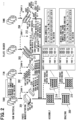
FIG. 1 is a drawing illustrating a scrap material management system according to an embodiment; and -
FIG. 2 is a drawing for explaining scrap materials generated in respective processes of a heat exchanger. - The following describes an embodiment of the present disclosure with reference to the drawings. The scrap material management system according to the present embodiment manages materials, products, scrap materials, and utilities in a heat exchanger manufacturing plant that produces a heat exchanger as a product.
- As shown in
FIG. 1 , the scrap material management system includes amanagement unit 100 and aprediction unit 110. Themanagement unit 100 and theprediction unit 110 are constructed as, for example, an electronic computer. Themanagement unit 100 and theprediction unit 110 manage scrap materials and carbon footprints generated during the manufacture of a heat exchanger by executing a pre-designed program. - The
management unit 100 and theprediction unit 110 are installed in a heat exchanger manufacturing factory. Themanagement unit 100 and theprediction unit 110 are connected to, for example, an ICT (Information and Communication Technology) environment, thereby making it possible for them to access acloud 120. This makes it possible to monitor the data remotely. In other words, global production and scrap can be monitored from a remote location. - In addition, electronic device terminals (not shown) installed in the heat exchanger manufacturing factory are also able to access the
cloud 120. This allows themanagement unit 100, theprediction unit 110, and each electronic device terminal to transmit and receive data related to the manufacture of the heat exchanger at any time via thecloud 120. - The
management unit 100, theprediction unit 110, and each electronic device terminal access thecloud 120 using a mobile communication system such as 4G or 5G. This makes it possible to link each individual heat exchanger through high-speed communication, even with the massive amount of data generated by high-speed processing. - The
cloud 120 is a cloud computing that stores all data related to, for example, the manufacture of the heat exchanger. The data relating to production includes, for example, production data, carbon footprint data, and accounting data. Accounting data includes costs such as cost of goods and processing costs during manufacturing. - The
management unit 100 centrally manages the above-mentioned manufacturing data, accounting data, and carbon footprint data. That is, themanagement unit 100 collects and manages several pieces of information in thecloud 120, thereby maintaining a state in which each piece of information can be efficiently utilized. - The manufacturing data includes all data such as the cost of producing heat exchangers, the types of accepted materials, the weight of materials generated at each process, and the energy input. Manufacturing data includes, for example, data related to manufacturing such as material acceptance data, utility data, weight data, and brazing condition data.
- The material acceptance data includes information on the type of material required to manufacture the heat exchanger, the composition of the material, the weight of the material, and the greenhouse gas emissions required to prepare the material. The material acceptance data is acquired, for example, by reading an identification mark or the like with a reading device.
- The utility data includes information on the amount of power consumed and gas consumed during the manufacture of the heat exchanger, and information on the amount of greenhouse gas emissions generated in the heat exchanger manufacturing factory. The utility data is acquired at any time using measuring instruments such as a watt-hour meter, a gas flow meter, and a thermometer.
- The weight data includes information on the weight in a state of the finished heat exchanger, a state of the heat exchanger parts, and a state of scrap materials generated during the manufacture of the heat exchanger. The weight data is acquired at any time using measuring instruments such as a dimension measuring instrument and a weight scale.
- The brazing condition data includes data related to brazing, such as heat input temperature, wind speed, product size, and furnace atmosphere. The brazing condition data is uploaded to the
cloud 120 in advance. - The
management unit 100 acquires and manages material acceptance data, utility data, and weight data. These data are updated as needed at each process in the manufacture of the heat exchanger. The management unit 100 records and manages all manufacturing data of the heat exchanger. - On the other hand, the
management unit 100 discloses publicly available information in response to an external request. For example, when data transparency is requested from the outside, themanagement unit 100 provides publicly available data to the outside. - The
management unit 100 manages data using blockchain technology. That is, themanagement unit 100 directly connects terminals on an information communication network to each other, and processes and records transaction records in a distributed manner using encryption technology. In this way, themanagement unit 100 prevents data tampering and data related to manufacturing from leaking to the outside. Furthermore, themanagement unit 100 prevents the external leakage of manufacturing know-how on thecloud 120. - The
prediction unit 110 predicts a change in the material composition of post-brazing scrap material generated after a brazing process in the manufacturing process of a heat exchanger. The material composition of the scrap materials recovered in a series of manufacturing processes can be calculated from the material composition of each scrap material and the total weight of scrap materials. For example, if the weight of the first scrap material is 100 kilograms and it contains 10% zinc, and the weight of the second scrap material is 100 kilograms and it contains 0% zinc, the total weight of the scrap materials is 200 kilograms, and it can be calculated that they contain 5% zinc. - However, in the brazing process for manufacturing the heat exchanger, the material composition changes depending on the brazing heating condition. For this reason, it is necessary to predict the material composition of the scrap material recovered after the brazing process. Therefore, the
prediction unit 110 predicts the change in material composition for each target heat exchanger, for example, by using reference material composition data measured in advance. The material composition data is managed in thecloud 120 and updated as necessary. The above is the overall configuration of the scrap material management system. - The following describes scrap materials in the manufacture of the heat exchanger with reference to
FIG. 2 . As shown inFIG. 2 , aheat exchanger 200 is completed through roughly a material acceptance process, a parts manufacturing process, an assembly process, and a brazing process. - In the material acceptance process, materials for manufacturing various parts such as tubes, fins, plate heads, and tanks are received from suppliers. At this time, the heat exchanger manufacturing plant accepts materials in a state where each piece of information, such as the type of material, material composition, purchase amount, and amount of CO2 emissions required to manufacture the material, is linked to each lot of the materials. Material information is stored in
cloud 120 when the material is received. - Next, in the parts manufacturing process, each part of the
heat exchanger 200 is manufactured from the material. Themanagement unit 100 manages the regular parts used in the products and the amount of scrap material generated, in conjunction with the data from the material acceptance process. - For example, if a
tube 201 that constitutes theheat exchanger 200 is designated as part A, multiple parts A, such as parts A1, A2, A3, etc., are manufactured from the material for eachheat exchanger 200. Scrap A including scrap materials A1, A2, A3, etc., generated during the manufacturing of thetube 201 is collected as acomponent scrap material 210. - If a
fin 202 is designated as part B, multiple parts B, such as parts B1, B2, B3, etc., are manufactured from the material for eachheat exchanger 200. Scrap B including scrap materials B1, B2, B3, etc., generated during the manufacturing offins 202, are collected as acomponent scrap material 211. - If a
plate header 203 is designated as part C, multiple parts C, such as parts C1, C2, etc., are manufactured from the material for eachheat exchanger 200. Scrap materials C1-1, C1-2, C1-3, C1-4, C2-1, C2-2, C2-3, C2-4, etc., generated during the manufacturing ofplate headers 203, are collected ascomponent scrap material 212. - If a
tank 204 is designated as part D, multiple parts D, such as parts D1, D2, etc., are manufactured from the material for eachheat exchanger 200. Scrap materials D1-1, D1-2, D2-1, D2-2, etc., generated during the manufacturing oftanks 204, are collected aparts scrap material 213. - Similarly, for other parts, the
management unit 100 collects scrap material as needed. Additionally, themanagement unit 100 periodically manages the weight of finished products, including theparts 201 to 204, as well as the weight of thecomponent scrap materials 211 to 213 generated during the parts manufacturing process, in conjunction with the data from the material acceptance process. - Subsequently, in the assembly process, the
parts 201 to 204 manufactured in the parts manufacturing process are assembled. At this time, due to assembly defects or other issues,post-assembly scrap material 214 is generated as a scrap product (ASSY1) Themanagement unit 100 manages the weight of the properly assembled parts and the weight of thepost-assembly scrap material 214. - At this time, the composition of the
post-assembly scrap material 214 is determined by the material composition and constituent weight of theparts 201 to 204. In other words, thepost-assembly scrap material 214 includes theparts 201 to 204, as well as parts that make up theseparts 201 to 204. Therefore, the material composition of thepost-assembly scrap material 214 is determined as follows, for example, with respect to the weight of the post-assembly scrap material 214: Si: X1%, Fe: X2%, Cu: X3%, Mn: X4%, Mg: X5%, Cr: X6%, Zn: X7%, and Ti: X8%. Also, the amount of CO2 emissions relative to the weight of thepost-assembly scrap material 214 is derived. - Next, in the brazing process, the properly assembled product obtained in the assembly process is brazed using the brazing condition data. After the brazing process, due to a brazing defect or the like,
post-brazing scrap material 215 is generated as a scrap product (ASSY1). Themanagement unit 100 manages the weight of the properly brazed product and the weight of thepost-brazing scrap material 215. - Here, the weight of the
post-brazing scrap material 215 is approximately the same as that of thepost-assembly scrap material 214, but the material composition changes due to heating for brazing. Therefore, the material composition of thepost-brazing scrap material 215 is not determined by the material composition and component weight of thecomponents 201 to 204. Therefore, theprediction unit 110 predicts the material composition of thepost-brazing scrap material 215. - The
prediction unit 110 predicts a change in the material composition of thepost-brazing scrap material 215 generated after the brazing process using the brazing condition data and the material acceptance data. Theprediction unit 110 predicts the amount of change in at least one of Si, Fe, Cu, Mn, Mg, Cr, Zn, and Ti contained in thepost-brazing scrap material 215. - This allows for the management of both the scrap material data linked to the material data and the composition predicted from the brazing conditions, making it possible to predict the composition of the recovered scrap material during melting in advance. The material composition of the
post-brazing scrap material 215 is predicted to be, for example, Y1% Si, Y2% Fe, Y3% Cu, Y4% Mn, Y5% Mg, Y6% Cr, Y7% Zn, and Y8% Ti by weight of thepost-brazing scrap material 215. In addition, the CO2 emissions per weight of thepost-brazing scrap material 215 are also derived. In particular, it is possible to accurately predict the concentrations of Zn and Mg, which are prone to change under brazing conditions. - Since the
prediction unit 110 can predict changes in material composition, it is not necessary to melt the recoveredpost-brazing scrap material 215 and measure its material composition in order to monitor it. This also eliminates the labor required for such a process. In addition, because it is possible to accurately predict the mixing ratio of thepost-brazing scrap material 215 to achieve the desired material composition, the recyclability of thepost-brazing scrap material 215 is improved. Furthermore, by eliminating the need to melt thepost-brazing scrap material 215 to monitor its material composition, energy consumption can be reduced, and consequently, CO2 emissions can be decreased. - The
management unit 100 monitors the material composition and carbon footprint of eachscrap material 210 to 215 in real-time, based on the amount of eachscrap material 210 to 215 generated in each process and the material composition predicted by theprediction unit 110. As a result, the material composition of the scrap generated during the manufacturing of theheat exchanger 200 is obtained as the sum of the material compositions of all scrap materials, thepost-assembly scrap material 214, and thepost-brazing scrap material 215. It should be noted that themanagement unit 100 may also monitor the material composition and carbon footprint of eachscrap material 210 to 215 for each process. - As explained above, by managing everything from purchased materials to products, the amount of scrap, and the prediction of composition changes due to processing and brazing conditions through ICT management, it becomes possible to accurately predict the composition and carbon footprint of the scrap in real-time.
- Specifically, in this embodiment, the
prediction unit 110 predicts the material composition of thepost-brazing scrap material 215 after the material composition has changed during the brazing process. Therefore, it is possible to monitor in real-time the material composition and carbon footprint of allscrap materials 210 to 215, including thepost-brazing scrap material 215 after the material composition has changed. - Additionally, the process for determining the material composition of the
post-brazing scrap material 215 becomes unnecessary. In other words, there is no need to melt and solidify the metal to form an ingot and inspect the composition of the ingot. Therefore, it is possible to reduce the energy consumption required to determine the material composition of thepost-brazing scrap material 215, as well as the CO2 emissions associated with that energy consumption. - Furthermore, the scrap management system makes it possible to manage the carbon footprint of materials and the carbon footprint of the manufacturing process. Additionally, it is possible to use the system to explore operations that minimize the carbon footprint, and to implement self-process control based on material data and prior process data to predict and reduce the
post-brazing scrap material 215. If the amount ofscrap materials 210 to 215 increases, the CO2 emissions associated with manufacturing the product will also increase. However, if the amount ofscrap materials 210 to 215 can be reduced, it will lead to a reduction in CO2 emissions as well. - As a modified example, the
management unit 100 may perform big data analysis or Al analysis on the data in thecloud 120. This enables themanagement unit 100 to, for example, predict the material composition of eachscrap material 210 to 215 based on weather conditions and operate the heat exchanger manufacturing plant in such a way that minimizes the costs of eachscrap material 210 to 215. In addition, it can be utilized for brazing control such as input energy/sacrificial layer formation, yield improvement processing conditions, and optimal blending ratios for horizontal recycling of return scraps. - The present disclosure is not limited to the embodiments described above, and various modifications can be made as follows within a range not departing from the spirit of the present disclosure.
- For example, the
management unit 100 and theprediction unit 110 may be located in thecloud 120. In this case, the user can operate themanagement unit 100 on thecloud 120 from each electronic device terminal in the heat exchanger manufacturing plant via a browser or similar interface. - Although the present disclosure has been made in accordance with the embodiments, it is understood that the present disclosure is not limited to such embodiments and structures. The present disclosure encompasses various modifications and variations within the scope of equivalents. In addition, while the various elements are shown in various combinations and configurations, which are exemplary, other combinations and configurations, including more, less or only a single element, are also within the spirit and scope of the present disclosure.
- The scrap material management system disclosed in the present specification has the following features.
- A scrap material management system includes a management unit (100) and a prediction unit (110). The management unit acquires and manages material acceptance data, utility data, and weight data. The material acceptance data includes information on a type of a material required for manufacturing of a heat exchanger (200), a composition of the material, a weight of the material, and a greenhouse gas emission required for preparation of the material. The utility data includes information on power consumption and gas consumption during the manufacturing of the heat exchanger. The weight data includes information on a weight in a finished state of the heat exchanger, a weight in a state of parts of the heat exchanger, and a weight in a state of scrap materials generated during the manufacturing of the heat exchanger. The prediction unit (110) predicts a change in a material composition of a post-brazing scrap material being included in a group of the scrap materials and generated after a brazing process for the heat exchanger, based on brazing condition data and the material acceptance data used in the brazing process. The management unit monitors material composition and carbon footprint of each of the scrap materials in real time, based on amount of the scrap materials and the material composition predicted by the prediction unit. The scrap materials include: a parts scrap material (210-213) that is generated in a parts manufacturing process for manufacturing parts (201-204) of the heat exchanger from the material; a post-assembly scrap material (214) that is generated in an assembly process for assembling the parts after the parts manufacturing process, and the post-brazing scrap material.
- In the scrap material management system according to the feature 1, the prediction unit predicts a changing amount in at least one of Si, Fe, Cu, Mn, Mg, Cr, Zn, and Ti included in the post-brazing scrap material.
- In the scrap material management system according to the feature 1 or 2, the prediction unit predicts the material composition of the post-brazing scrap material based on a heat input temperature, a wind speed, a product dimension, and furnace atmosphere included in the brazing condition data.
- In the scrap material management system according to any one of the features 1 to 3, the management unit records and manages all manufacturing data of the heat exchanger while disclosing publicly available information in response to an external request.
- In the scrap material management system according to any one of the features 1 to 4, the management unit prevents data tampering and external leakage of data related to the manufacturing by using blockchain technology.
- In the scrap material management system according to any one of the features 1 to 5, the management unit centrally manages the manufacturing data of the heat exchanger, accounting, and the carbon footprint.
Claims (6)
- A scrap material management system comprising:a management unit (100) configured to acquire and manage material acceptance data, utility data, and weight data,the material acceptance data including information ona type of a material required for manufacturing of a heat exchanger (200),a composition of the material,a weight of the material, anda greenhouse gas emission required for preparation of the material,the utility data including information on power consumption and gas consumption during the manufacturing of the heat exchanger,the weight data including information ona weight in a completed state of the heat exchanger,a weight in a state of parts of the heat exchanger, anda weight in a state of scrap materials generated during the manufacturing of the heat exchanger; anda prediction unit (110) configured to predict a change in a material composition of a post-brazing scrap material (215) being included in the scrap materials and generated after a brazing process for the heat exchanger, based on brazing condition data and the material acceptance data used in the brazing process, whereinthe management unit is configured to monitor a material composition and carbon footprint of each of the scrap materials in real time, based on an amount of the scrap materials and the material composition predicted by the prediction unit, andthe scrap materials include:parts scrap materials (210-213) that are generated in a parts manufacturing process for manufacturing parts (201-204) of the heat exchanger from the material;a post-assembly scrap material (214) that is generated in an assembly process for assembling the parts after the parts manufacturing process, andthe post-brazing scrap material.
- The scrap material management system according to Claim 1, wherein
the prediction unit is configured to predict a change in amount of at least one of Si, Fe, Cu, Mn, Mg, Cr, Zn, and Ti included in the post-brazing scrap material. - The scrap material management system according to Claim 1 or 2, wherein
the prediction unit is configured to predict the material composition of the post-brazing scrap material based on the brazing condition data including a heat input temperature, a wind speed, a product dimension, and furnace atmosphere. - The scrap material management system according to any one of Claims 1 to 3, wherein
the management unit is configured to record and manage all manufacturing data of the heat exchanger and disclose publicly available information in response to an external request. - The scrap material management system according to any one of Claims 1 to 4, wherein
the management unit is configured to prevent data tampering and external leakage of data related to the manufacturing by using blockchain technology. - The scrap material management system according to any one of Claims 1 to 5, wherein
the management unit is configured to centrally manage manufacturing data of the heat exchanger, accounting data, and the carbon footprint.
Applications Claiming Priority (2)
| Application Number | Priority Date | Filing Date | Title |
|---|---|---|---|
| JP2022072426A JP7563417B2 (en) | 2022-04-26 | 2022-04-26 | Waste material management system |
| PCT/JP2023/014693 WO2023210346A1 (en) | 2022-04-26 | 2023-04-11 | Waste material management system |
Publications (4)
| Publication Number | Publication Date |
|---|---|
| EP4517626A1 true EP4517626A1 (en) | 2025-03-05 |
| EP4517626A4 EP4517626A4 (en) | 2025-07-16 |
| EP4517626B1 EP4517626B1 (en) | 2025-11-12 |
| EP4517626C0 EP4517626C0 (en) | 2025-11-12 |
Family
ID=88518418
Family Applications (1)
| Application Number | Title | Priority Date | Filing Date |
|---|---|---|---|
| EP23796090.1A Active EP4517626B1 (en) | 2022-04-26 | 2023-04-11 | Waste material management system |
Country Status (4)
| Country | Link |
|---|---|
| EP (1) | EP4517626B1 (en) |
| JP (1) | JP7563417B2 (en) |
| CN (1) | CN119072704A (en) |
| WO (1) | WO2023210346A1 (en) |
Family Cites Families (4)
| Publication number | Priority date | Publication date | Assignee | Title |
|---|---|---|---|---|
| JP5097728B2 (en) * | 2009-02-20 | 2012-12-12 | 株式会社日立製作所 | Carbon traceability management system |
| CN105260836A (en) * | 2015-10-13 | 2016-01-20 | 天津大学 | Automobile manufacture enterprise carbon emission acquisition checking system and method |
| JP2019090699A (en) * | 2017-11-15 | 2019-06-13 | 三菱アルミニウム株式会社 | Method of estimating potential of aluminum alloy material |
| US20210216978A1 (en) * | 2020-01-10 | 2021-07-15 | Roy P Diaz | Sustainability and Carbon Footprint Management Systems, Devices, and Methods |
-
2022
- 2022-04-26 JP JP2022072426A patent/JP7563417B2/en active Active
-
2023
- 2023-04-11 CN CN202380035899.8A patent/CN119072704A/en active Pending
- 2023-04-11 WO PCT/JP2023/014693 patent/WO2023210346A1/en not_active Ceased
- 2023-04-11 EP EP23796090.1A patent/EP4517626B1/en active Active
Also Published As
| Publication number | Publication date |
|---|---|
| WO2023210346A1 (en) | 2023-11-02 |
| EP4517626B1 (en) | 2025-11-12 |
| EP4517626C0 (en) | 2025-11-12 |
| JP7563417B2 (en) | 2024-10-08 |
| CN119072704A (en) | 2024-12-03 |
| JP2023161831A (en) | 2023-11-08 |
| EP4517626A4 (en) | 2025-07-16 |
Similar Documents
| Publication | Publication Date | Title |
|---|---|---|
| JP5186956B2 (en) | Factor estimation support device, control method therefor, and factor estimation support program | |
| JP4642748B2 (en) | Asset optimization report in process plant | |
| US7979380B2 (en) | Dynamically updated predictive model | |
| US6751577B2 (en) | Degradation diagnostic method, degradation diagnostic mediation device and degradation diagnostic device and computer-readable recording medium on which a program is recorded | |
| JP2012074007A (en) | Operation condition optimization system of plant, operation condition optimization method of plant and operation condition optimization program of plant | |
| CN101770612A (en) | Device defect management module of EAM (Enterprise Asset Management) system in power plant | |
| CN110669963A (en) | A kind of aluminum alloy melting and casting batching system | |
| WO2009105704A1 (en) | User interface with visualization of real and virtual data | |
| CN117007747A (en) | System and method for monitoring carbon emission in highway construction period | |
| EP4517626A1 (en) | Waste material management system | |
| CN101763583A (en) | Work sheet management module for EAM system of power plant | |
| CN118788977A (en) | Online monitoring system for integrated laser powder bed fusion additive manufacturing of thermal management components | |
| CN118883883A (en) | A metal welding powder detection method and system based on data fusion | |
| US7630857B2 (en) | Environmental information aggregating apparatus and method | |
| CN101763579A (en) | Equipment management system for power station | |
| Jak et al. | University Research on Molten Slags, Matte, Speiss and Metal Systems for High Temperature Processing–Challenges, Opportunities and Solution | |
| JPH11217619A (en) | System for deciding ratio of scrap amount to be used | |
| CN119510675A (en) | Information processing method, information processing device, information processing system and program | |
| CN117348571A (en) | A whole-process quality tracking and management method and system for a medium plate factory | |
| Masko et al. | nalysis of the state of automation of material flow control in silicon production | |
| de Meyer et al. | Industrial Deployment of Power Reserve Optimization | |
| Bascur et al. | Reducing maintenance costs using process and equipment event management | |
| CN121146785A (en) | A Dynamic Carbon Emission Calculation Method and System Based on Steelmaking Process and Burden Structure | |
| Cheng¹ et al. | Research on inventory system of highway E&M equipment affected by the environment | |
| Jak et al. | Research and Implementation Program on Phase Equilibria and Thermodynamics of Molten Slags, Matte, Speiss, and Metal Systems for Primary and Secondary Pyrometallurgy |
Legal Events
| Date | Code | Title | Description |
|---|---|---|---|
| STAA | Information on the status of an ep patent application or granted ep patent |
Free format text: STATUS: THE INTERNATIONAL PUBLICATION HAS BEEN MADE |
|
| PUAI | Public reference made under article 153(3) epc to a published international application that has entered the european phase |
Free format text: ORIGINAL CODE: 0009012 |
|
| STAA | Information on the status of an ep patent application or granted ep patent |
Free format text: STATUS: REQUEST FOR EXAMINATION WAS MADE |
|
| 17P | Request for examination filed |
Effective date: 20240918 |
|
| AK | Designated contracting states |
Kind code of ref document: A1 Designated state(s): AL AT BE BG CH CY CZ DE DK EE ES FI FR GB GR HR HU IE IS IT LI LT LU LV MC ME MK MT NL NO PL PT RO RS SE SI SK SM TR |
|
| A4 | Supplementary search report drawn up and despatched |
Effective date: 20250613 |
|
| RIC1 | Information provided on ipc code assigned before grant |
Ipc: G06Q 10/30 20230101AFI20250606BHEP |
|
| GRAP | Despatch of communication of intention to grant a patent |
Free format text: ORIGINAL CODE: EPIDOSNIGR1 |
|
| STAA | Information on the status of an ep patent application or granted ep patent |
Free format text: STATUS: GRANT OF PATENT IS INTENDED |
|
| DAV | Request for validation of the european patent (deleted) | ||
| DAX | Request for extension of the european patent (deleted) | ||
| INTG | Intention to grant announced |
Effective date: 20250730 |
|
| GRAS | Grant fee paid |
Free format text: ORIGINAL CODE: EPIDOSNIGR3 |
|
| GRAA | (expected) grant |
Free format text: ORIGINAL CODE: 0009210 |
|
| STAA | Information on the status of an ep patent application or granted ep patent |
Free format text: STATUS: THE PATENT HAS BEEN GRANTED |
|
| AK | Designated contracting states |
Kind code of ref document: B1 Designated state(s): AL AT BE BG CH CY CZ DE DK EE ES FI FR GB GR HR HU IE IS IT LI LT LU LV MC ME MK MT NL NO PL PT RO RS SE SI SK SM TR |
|
| REG | Reference to a national code |
Ref country code: CH Ref legal event code: F10 Free format text: ST27 STATUS EVENT CODE: U-0-0-F10-F00 (AS PROVIDED BY THE NATIONAL OFFICE) Effective date: 20251112 Ref country code: GB Ref legal event code: FG4D |
|
| REG | Reference to a national code |
Ref country code: IE Ref legal event code: FG4D |
|
| REG | Reference to a national code |
Ref country code: DE Ref legal event code: R096 Ref document number: 602023008606 Country of ref document: DE |
|
| U01 | Request for unitary effect filed |
Effective date: 20251113 |
|
| U07 | Unitary effect registered |
Designated state(s): AT BE BG DE DK EE FI FR IT LT LU LV MT NL PT RO SE SI Effective date: 20251120 |
|
| PG25 | Lapsed in a contracting state [announced via postgrant information from national office to epo] |
Ref country code: ES Free format text: LAPSE BECAUSE OF FAILURE TO SUBMIT A TRANSLATION OF THE DESCRIPTION OR TO PAY THE FEE WITHIN THE PRESCRIBED TIME-LIMIT Effective date: 20251112 |
|
| PG25 | Lapsed in a contracting state [announced via postgrant information from national office to epo] |
Ref country code: NO Free format text: LAPSE BECAUSE OF FAILURE TO SUBMIT A TRANSLATION OF THE DESCRIPTION OR TO PAY THE FEE WITHIN THE PRESCRIBED TIME-LIMIT Effective date: 20260212 |
|
| PG25 | Lapsed in a contracting state [announced via postgrant information from national office to epo] |
Ref country code: HR Free format text: LAPSE BECAUSE OF FAILURE TO SUBMIT A TRANSLATION OF THE DESCRIPTION OR TO PAY THE FEE WITHIN THE PRESCRIBED TIME-LIMIT Effective date: 20251112 |
|
| PG25 | Lapsed in a contracting state [announced via postgrant information from national office to epo] |
Ref country code: RS Free format text: LAPSE BECAUSE OF FAILURE TO SUBMIT A TRANSLATION OF THE DESCRIPTION OR TO PAY THE FEE WITHIN THE PRESCRIBED TIME-LIMIT Effective date: 20260212 |
|
| PG25 | Lapsed in a contracting state [announced via postgrant information from national office to epo] |
Ref country code: IS Free format text: LAPSE BECAUSE OF FAILURE TO SUBMIT A TRANSLATION OF THE DESCRIPTION OR TO PAY THE FEE WITHIN THE PRESCRIBED TIME-LIMIT Effective date: 20260312 |
|
| PG25 | Lapsed in a contracting state [announced via postgrant information from national office to epo] |
Ref country code: PL Free format text: LAPSE BECAUSE OF FAILURE TO SUBMIT A TRANSLATION OF THE DESCRIPTION OR TO PAY THE FEE WITHIN THE PRESCRIBED TIME-LIMIT Effective date: 20251112 |