EP4517567A1 - Synthetic sensor validation for deployment in vehicles - Google Patents
Synthetic sensor validation for deployment in vehicles Download PDFInfo
- Publication number
- EP4517567A1 EP4517567A1 EP24197425.2A EP24197425A EP4517567A1 EP 4517567 A1 EP4517567 A1 EP 4517567A1 EP 24197425 A EP24197425 A EP 24197425A EP 4517567 A1 EP4517567 A1 EP 4517567A1
- Authority
- EP
- European Patent Office
- Prior art keywords
- signal
- catalog
- vehicle
- application
- manifest
- Prior art date
- Legal status (The legal status is an assumption and is not a legal conclusion. Google has not performed a legal analysis and makes no representation as to the accuracy of the status listed.)
- Granted
Links
Images





Classifications
-
- G—PHYSICS
- G06—COMPUTING OR CALCULATING; COUNTING
- G06F—ELECTRIC DIGITAL DATA PROCESSING
- G06F21/00—Security arrangements for protecting computers, components thereof, programs or data against unauthorised activity
- G06F21/50—Monitoring users, programs or devices to maintain the integrity of platforms, e.g. of processors, firmware or operating systems
- G06F21/57—Certifying or maintaining trusted computer platforms, e.g. secure boots or power-downs, version controls, system software checks, secure updates or assessing vulnerabilities
-
- G—PHYSICS
- G06—COMPUTING OR CALCULATING; COUNTING
- G06F—ELECTRIC DIGITAL DATA PROCESSING
- G06F21/00—Security arrangements for protecting computers, components thereof, programs or data against unauthorised activity
- G06F21/30—Authentication, i.e. establishing the identity or authorisation of security principals
- G06F21/44—Program or device authentication
-
- G—PHYSICS
- G06—COMPUTING OR CALCULATING; COUNTING
- G06F—ELECTRIC DIGITAL DATA PROCESSING
- G06F40/00—Handling natural language data
- G06F40/10—Text processing
- G06F40/12—Use of codes for handling textual entities
- G06F40/151—Transformation
-
- B—PERFORMING OPERATIONS; TRANSPORTING
- B60—VEHICLES IN GENERAL
- B60R—VEHICLES, VEHICLE FITTINGS, OR VEHICLE PARTS, NOT OTHERWISE PROVIDED FOR
- B60R16/00—Electric or fluid circuits specially adapted for vehicles and not otherwise provided for; Arrangement of elements of electric or fluid circuits specially adapted for vehicles and not otherwise provided for
- B60R16/02—Electric or fluid circuits specially adapted for vehicles and not otherwise provided for; Arrangement of elements of electric or fluid circuits specially adapted for vehicles and not otherwise provided for electric constitutive elements
- B60R16/023—Electric or fluid circuits specially adapted for vehicles and not otherwise provided for; Arrangement of elements of electric or fluid circuits specially adapted for vehicles and not otherwise provided for electric constitutive elements for transmission of signals between vehicle parts or subsystems
- B60R16/0231—Circuits relating to the driving or the functioning of the vehicle
- B60R16/0232—Circuits relating to the driving or the functioning of the vehicle for measuring vehicle parameters and indicating critical, abnormal or dangerous conditions
-
- B—PERFORMING OPERATIONS; TRANSPORTING
- B60—VEHICLES IN GENERAL
- B60R—VEHICLES, VEHICLE FITTINGS, OR VEHICLE PARTS, NOT OTHERWISE PROVIDED FOR
- B60R16/00—Electric or fluid circuits specially adapted for vehicles and not otherwise provided for; Arrangement of elements of electric or fluid circuits specially adapted for vehicles and not otherwise provided for
- B60R16/02—Electric or fluid circuits specially adapted for vehicles and not otherwise provided for; Arrangement of elements of electric or fluid circuits specially adapted for vehicles and not otherwise provided for electric constitutive elements
- B60R16/023—Electric or fluid circuits specially adapted for vehicles and not otherwise provided for; Arrangement of elements of electric or fluid circuits specially adapted for vehicles and not otherwise provided for electric constitutive elements for transmission of signals between vehicle parts or subsystems
- B60R16/0231—Circuits relating to the driving or the functioning of the vehicle
-
- G—PHYSICS
- G06—COMPUTING OR CALCULATING; COUNTING
- G06F—ELECTRIC DIGITAL DATA PROCESSING
- G06F40/00—Handling natural language data
- G06F40/30—Semantic analysis
-
- H—ELECTRICITY
- H04—ELECTRIC COMMUNICATION TECHNIQUE
- H04L—TRANSMISSION OF DIGITAL INFORMATION, e.g. TELEGRAPHIC COMMUNICATION
- H04L67/00—Network arrangements or protocols for supporting network services or applications
- H04L67/01—Protocols
- H04L67/12—Protocols specially adapted for proprietary or special-purpose networking environments, e.g. medical networks, sensor networks, networks in vehicles or remote metering networks
Definitions
- the present disclosure relates to a method of operating applications on a vehicle. More specifically, the present disclosure relates to a method for validating, prior to installation, the signal semantics received by an application during operation.
- Modern vehicles have many sensors, including physical sensors and synthetic sensors.
- Physical sensors are devices that obtain direct measurements from their environment, such as, without limitation, temperature, pressure, speed, and the like.
- Synthetic sensors are applications (software modules) that obtain information from other sensors, whether physical or synthetic, to produce an "insight".
- the term "insight” denotes a useful piece of information derived from one or multiple sources of information (such as vehicle signals from physical vehicle sensors).
- the synthetic sensors may fail if they receive data with unexpected semantics. For example, a synthetic sensor expecting a speed value to be expressed in kilometers per hour (km/h) will not function properly if it receives data expressed in miles per hour (mph).
- a method at a computing device for validating an application comprising: enhancing a manifest of the application, the manifest of the application comprising a node path name corresponding to a required signal by the application, wherein enhancing the manifest comprises searching, in a reference signal catalog for a unique identifier corresponding to the node path name; and adding, into an enhanced manifest, the node path names and the unique identifier; validating the enhanced manifest against a signal catalog, wherein the validating comprises: searching, in the second signal catalog, for a second unique identifier corresponding to the node path name; and reporting whether the second unique identifier is the same as the unique identifier, different as the unique identifier, or missing from the second signal catalog.
- a computing device for validating an application comprising: a communication subsystem; and a processor; wherein the communication subsystem and the processor cooperate to: enhance a manifest of the application, the manifest of the application comprising a node path name corresponding to a required signal by the application, wherein enhancing the manifest comprises: searching, in a reference signal catalog for a unique identifier corresponding to the node path name; and adding, into an enhanced manifest, the node path names and the unique identifier; validate the enhanced manifest against a signal catalog, wherein the validating comprises: searching, in the second signal catalog, for a second unique identifier corresponding to the node path name; and reporting whether the second unique identifier is the same as the unique identifier, different as the unique identifier, or missing from the second signal catalog.
- a computer readable medium having stored thereon executable code for execution by a processor of a computing device, the executable code comprising instructions for: enhancing a manifest of the application, the manifest of the application comprising a node path name corresponding to a required signal by the application, wherein enhancing the manifest comprises: searching, in a reference signal catalog for a unique identifier corresponding to the node path name; and adding, into an enhanced manifest, the node path names and the unique identifier; validating the enhanced manifest against a signal catalog, wherein the validating comprises: searching, in the second signal catalog, for a second unique identifier corresponding to the node path name; and reporting whether the second unique identifier is the same as the unique identifier, different as the unique identifier, or missing from the second signal catalog.
- the present disclosure is directed to a method for validating that a synthetic sensor will receive appropriately normalized data once deployed in a vehicle.
- the validation may be performed prior to deployment, thereby facilitating the development process for synthetic sensors.
- Signal Catalog The set of signals used in a vehicle.
- the signal catalog is expressed as a tree structure, according to the Connected VEhicle Systems Alliance (COVESA) Vehicle Signal Specification (VSS).
- COVESA Connected VEhicle Systems Alliance
- VSS Vehicle Signal Specification
- Node Path Name The name of a node, in the form of the path to the node.
- the node path name comprises the name of each node in the path from the root of the tree to the node in question, separated by periods.
- Vehicle For example, Vehicle.
- Speed is a node path name with Vehicle being the root node and Speed being a data node directly connected to the root node.
- EUUID An extended UUID.
- the VSS assigns Universally Unique IDentifiers (UUIDs) to each node based on their path names. These UUIDs are extended to create EUUIDs, to include semantics information for the node.
- Synchronization Information indicating where the signal catalog originated.
- a catalog may originate from COVESA, from vehicle manufacturers (OEM), or from other providers.
- Signal Catalog Version A number or set of numbers indicating a version of a signal catalog. Along with the signal catalog provenance, a signal catalog version uniquely identifies a signal catalog.
- Synchronization Service A service running within an Electric Control Unit (ECU) of a vehicle, responsible for managing the signals within a vehicle, access to those signals, and the signal catalog.
- ECU Electric Control Unit
- FMS Full Management System
- Fleet Manager A human actor that uses the FMS to manage fleets of vehicles.
- Synthetic Sensor An application that synthesizes an insight from a set of signals available in a vehicle.
- a synthetic sensor may use machine learning models to do the synthesis.
- Application A software module that obtains signals from the signal service.
- a synthetic sensor is a type of application.
- Signal Definition Information on a signal from a signal catalog, including the path of the node that produces the signal and VSS elements describing the signal (such as description, type, datatype, unit, allowed values, etc.).
- Synchronization Semantic The portion of a signal definition that relates to semantics of a signal. For example, the datatype, and unit, needed to properly interpret a signal programmatically.
- EUUIDs are built on top of COVESA's VSS and allow for quickly identifying semantic differences between signals, and efficiently validating applications.
- a catalog 100 defined according to the VSS includes a root node 110, named Vehicle.
- Vehicle For the sake of simplicity, only two nodes are shown to be children of root node 110, namely Vehicle. Cabin 120 and Vehicle.Speed 130.
- Vehicle.Cabin 120 is further shown as having two children, namely Vehicle.Cabin.Door 140 and Vehicle.Cabin.Seat 150. Other nodes are omitted for simplicity.
- Vehicle.Speed 120 is a data node, describing a signal representing a vehicle's speed, while all the other nodes are branch nodes.
- Vehicle. Speed 120 may have a JSON representation as follows:
- the JSON representation of Vehicle. Speed 120 comprises a datatype which is a floating point, a description as "Vehicle speed", a type as "sensor”, and a unit as "km/h”.
- the JSON representation further includes a UUID, an EUUID, and a read permission.
- the permission allows for controlling which application has read access to signals from the node.
- some nodes may provide signals containing personal identity information, for example a Vehicle Identification Number (VIN). Therefore, according to at least some embodiments of the present disclosure, each node may have associated therewith a read permission, indicating which applications have the permission to receive signal values from that node.
- each writable node may have associated therewith a write permission, indication which applications have the permission to write signal values to the node.
- a node inherits the permissions of its parent node, unless the node has an explicit permission set.
- This may be implemented, for example, by the following JSON representation in a Permissions File (320), which is provided as a non-limiting example:
- Vehicle. READ is defined for the Vehicle node, which is the root node. In order to have access to any signal from any node that inherited this permission from the Vehicle node, the client is required to have been granted Vehicle. READ permission.
- the above example further includes the Vehicle.
- PI I. READ permission which is defined for the Vehicle.Vehicleldentification node and the Vehicle. Driver. Identifier node.
- a client in order to have access to these nodes, or any of their children nodes, a client needs to have been granted the VehicIe.PII.READ permission.
- these nodes are children of the Vehicle node, they do not inherit the Vehicle.
- READ permission as they have been assigned their own read permission in the permissions file. Other children nodes who have not been assigned their own read permission inherit their permission from their parent node.
- a similar mechanism as described above may be used to provide write permissions.
- nodes are assigned EUUIDs.
- EUUIDs uniquely identify a node from a specific signal catalog of a given version and of a given provenance. Therefore, each EUUID is unique and uniquely identifies a node with its particular semantic information.
- the EUUID for a given node may be created by a hash function of a VSS signal definition of the node, including the node path name and semantically relevant elements defining the signal.
- the semantically relevant elements may comprise the type (whether the node is a branch, sensor, actuator, or attribute), the data type (unsigned integer, integer, floating point, double, string, etc.), the unit of the values in the signal (for example, km/h, mph, degrees Celsius, etc.), a minimum value, a maximum value, or a set of restricted values the signal may take.
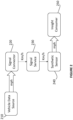
- a vehicle data source 210 reports a signal in mph.
- An application is interested in this signal and also expects the value of the signal to be expressed in mph.
- This signal is received by signal connector 220, which then normalizes the signal to km/h before passing it on to the signal service 230.
- the signal service 230 then passes the signal to a synthetic sensor 240, which then converts the value back to mph for the application 250.
- an original signal catalog 310 is combined with a permissions file 320 in a conversion tool 330 to produce an enhanced signal catalog 340.
- an EUUID is created, and the new node with the EUUID is added to the enhanced signal catalog 340.
- the EUUID is created by a hash of the node path name and semantic information for the node.
- the hash is a 64-bit hash.
- the enhanced signal catalog may further comprise permissions for each node.
- the permission information may be provided in the permissions file 320, as illustrated in Figure 3 .
- the permissions file 320 may include JSON representations of permissions, as discussed above, and this may be used by conversion tool 330 to add the requisite permissions elements to each node.
- JSON snippet represents a node in the original signal catalog 310:
- the corresponding node in the enhanced signal catalog 340 will be as follows:
- the corresponding node in the enhanced catalog 340 is changed with respect to the original node, in that it includes the elements "x-euuid" and "x-read-permission".
- the EUUID element is created based on a hash of the node path name, which in this case would be Vehicle.Speed, and the semantics information, which in this case includes the datatype, the type, and the unit.
- the permission element is based on the contents of the permissions file.
- EUUIDs may be used to uniquely identify signal definitions and semantics across different provenances and versions of the signal catalog, and validate that a received signal matches its expected semantics.
- the semantic information for a node may change over time, based on provenance or version of a signal catalog.
- an Original Equipment Manufacturer (OEM) manufacturing vehicles in the United States could employ a sensor that reports vehicle speed in mph.
- OEM Original Equipment Manufacturer
- the signal catalog is based on VSS, the vehicle speed will need to be converted to km/h to match the VSS semantics.
- EUUIDs provides a convenient mechanism for validating that the expected signals match those that are being received. While the above is illustrated with respect to the Vehicle. Speed node, the same verification could be performed for every data node of the signal catalog.
- the validation of the application may be performed by comparing each element of each signal definition of a reference signal catalog with the corresponding elements in a signal catalog against which the application is being validated.
- this is a costly and time-consuming operation.
- the validation is greatly simplified, as described in detail below.
- FIG. 4 illustrates how a signal connector may use EUUIDs when normalizing signal values in a vehicle 460.
- Input data represents signals reported by various data sources in the vehicles, such as sensors.
- the input data maybe organized in tuples of (SigID, Value), where SigID represents an identifier of the data source specific to the vehicle manufacturer and the Value is the value being reported.
- the functions F may normalize any type of value being received to any other type of value being expected by an application. For example, in some cases, a signal representing a value in mph is converted to the value in km/h. Alternatively, or additionally, a signal expressed as an integer may be converted to a floating point. Other possibilities exist and are contemplated to be within the scope of the present disclosure.
- mapping table 430 comprises a plurality of mappings between SigIDs, EUUIDs, and functions F.
- the mapping table Upon receiving a tuple (SigID, Value) from a data source, the mapping table is used to find the EUUID corresponding to the received SigID, and a function F.
- function F may perform one or a series of transformations to the received Value.
- the signal connector 440 reports the tuple (EUUID, F(Value)) to the signal service, which may then report it to a synthetic sensor, and ultimately, to an insight consumer, as illustrated in Figure 2 , discussed above.
- the SigID may be a node path name, a UUID, or an EUUID.
- the SigID may be converted to an EUUID if needed, by looking up mapping table 430.
- the mapping table is based on information from signal catalog 420. According to at least some embodiments, this information may comprise without limitation, node path names, EUUIDs, and semantics information, as described above.
- signal catalog 420 may be distinct from the signal catalog used by the signal service to which signal connector 440 is connected. This would be the case, for example, when a third-party supplier to a vehicle manufacturer provides a signal connector based on their own signal catalog, which has a different provenance or version than the signal catalog used by the vehicle manufacturer.
- the signal connector may be validated against a signal catalog using the techniques described below.
- the EUUIDs may also be used to enhance a synthetic sensor manifest, as illustrated in Figure 5 .
- a synthetic sensor manifest 510 comprises a list of sensors of interest, expressed as node path names.
- a conversion tool 530 takes as input the sensor manifest 510 and a signal catalog 520.
- Signal catalog 520 may comprise information on all the signals in the catalog in JSON format.
- Conversion tool 530 may then take the node path names from sensor manifest 510, and for each of them, find the corresponding EUUID from Signal catalog 520.
- Conversion tool 530 may then output an enhanced sensor manifest 540, in which each node path name is associated to the relevant EUUID.
- conversion tool 530 simplifies the work of application developers by relieving them from having to manually deal with EUUIDs, leaving them instead to work with node path names, which are designed to be human-readable.
- a manifest for an application may be initialized with the required node path names, and such node path names are then augmented with the EUUID automatically by conversion tool 530, generating an enhanced manifest.
- a developer of a synthetic sensor may obtain the semantic specification for each signal from the signal catalog and code the synthetic sensor accordingly.
- the provenance and the version of the signal catalog do not matter as the EUUIDs uniquely correspond to the correct semantic information. Therefore, the synthetic sensor may be deployed "as-is" on any vehicle that supports these EUUIDs.
- FIG. 6 illustrates the use of EUUIDs to validate a synthetic sensor manifest against a signal catalog.
- validation tool 630 takes in as input an enhanced synthetic sensor manifest 610, comprising a list of node path names for sensors of interest, and their corresponding EUUIDs.
- the enhanced synthetic sensor manifest 610 may have been created based on the process illustrated in Figure 5 , discussed above.
- the validation tool 630 further takes in as input a signal catalog 620.
- Signal catalog 620 may correspond for example and without limitation, to an OEM signal catalog created by a vehicle manufacturer and installed on their vehicles. Notably, this signal catalog is typically distinct from the signal catalog used to create the enhanced synthetic sensor manifest 610.
- Validation tool 630 may then compare each EUUID for a given node path name from enhanced synthetic sensor manifest 610 to the EUUID stored in the signal catalog 620 for the same node path name. If both EUUIDs match, this may be indicated in a validation report 640 output by the validation tool 630. Similarly, if an EUUID is found in the signal catalog 620 for a given path name that does not match the EUUID of the path name from the enhanced synthetic sensor manifest 610, this may also be indicated in the validation report 640. In other cases, if no EUUID is found corresponding to the path name from the enhanced synthetic sensor manifest 610, this may also be indicated in validation report 640.
- the validation tool 630 may invoke a manifest editing tool (not shown), allowing the application developer to specify whether some signals are optional, or whether some signals may be replaced by others.
- a developer of a synthetic sensor can ensure that the semantics of the data received from any sensor will match the semantics expected by the synthetic sensor, without having to be concerned of the provenance or version of the signal catalog against which the synthetic sensor was developed or the provenance or version of the signal catalog installed in the vehicle. While the provenance and versions of both these signal catalogs may differ, if the EUUIDs of the sensors of interest match, the synthetic sensor will function correctly.
- synthetic sensors may be able to convert a signal that uses different semantics to a signal formatted according to the expected semantics, as for example illustrated with respect to Figure 4 , discussed above.
- the conversion of signals may comprise converting a signal received in a first unit to a second unit, for example between mph and km/h.
- the conversion of signals may comprise converting a datatype of the signal to a different data type, for example from floating point to integer or vice versa.
- the synthetic sensor may be modified to deliver useable functionality from a subset of all the signals it would normally require.
- a synthetic sensor has a list of signals that it requires as well as a list of signals it can optionally do without.
- the list of required sensors and optional sensors may be specified in the enhanced synthetic sensor manifest, and the validation tool discussed above with respect to Figure 6 may report on which of these sensors is available on a given vehicle.
- a synthetic sensor may be able to deliver useable functionality when a signal is missing by instead making use of a number or other signals, combining their values into something meaningful, and replacing the value of the originally required signal.
- the synthetic sensor may be modified to ignore a value that is outside a range of expected values, without reporting an error.
- the synthetic sensor may be modified to use a mechanism such as introspection to request information about signals from the signal service.
- a synthetic sensor may be modified to function regardless of whether a vehicle speed is reported in mph or km/h, by obtaining the unit being reported from the signal service, and adapting accordingly.
- EUUIDs allow to completely eliminate such runtime checks or to only use such runtime checks in a few isolated situations where the synthetic sensor's EUUID does not match the signal catalog's EUUID or is missing from the signal catalog.
- the required EUUIDs include EUUID-A, one of EUUID-B, EUUID-C, or EUUID-D, and either EUUID-E, or both of EUUID-F and EUUID-G. Furthermore, if EUUID-H or EUUID-I, or both are available, the Synthetic Sensor can provide enhanced service.
- the first element in the list of EUUIDs is the "allOf" tag, which is used to indicate that all of the listed elements are required.
- the required elements are listed as EUUID-A, anyOf: [EUUID-B, EUUID-C, EUUID-D], and oneOf: [EUUID-E, ⁇ allOf: ["EUUID-F", "EUUID-G”] ⁇ ].
- the "anyOf” tag indicates that any one of the listed elements is required, in this case, any of EUUID-B, EUUID-C, and EUUID-D.
- the "oneOf” tag is used to indicate that only one of the listed elements is required. Based on this syntax, an enhanced synthetic sensor manifest may indicate which combinations of sensors are required and which are optional.
- a signal catalog When deployed in a vehicle, a signal catalog can either match the exact set of signals supported by the data connectors in that vehicle, a superset of these signals, or a subset of them. With an exact match, it is easier for synthetic sensors to determine prior to deployment or dynamically at runtime whether a signal is supported in a vehicle. However, requiring an exact match severely hampers the ability to dynamically modify the set of supported signals in a vehicle.
- vehicle services may be offered on a subscription basis.
- a vehicle may allow its owner to subscribe to a heated-seats service. Upon the owner subscribing to the heated-seats service, the relevant signals become available in the vehicle. This may be implemented in a number of ways.
- a signal may be added indicating whether the subscription has been purchased or not, while the signals representing the heated seats are always present in the signal catalog in the vehicle.
- a separate permission may be assigned to the signals needed by the heated-seats service, and this permission may be granted to the appropriate instances of synthetic sensors.
- a new signal catalog comprising the additional signals needed by the heated-seats service could be delivered to the vehicle.
- the signal service interrogates the signal connectors with respect to what signals are supported by each signal connector.
- the signal service could then generate a signal catalog matching the signals supported by the signal connectors.
- the downside of this approach is that other applications on the vehicle would also need to be validated against this signal catalog in order to be certain that they function properly.
- the pre-deployed signal catalog already supports the signals needed by the heated-seats service, but reports them as unavailable until a data connector makes them available (after the owner buys the subscription).
- Vehicle manufacturers manage fleets of vehicle makes, vehicle models, vehicle trims, as well as versions of these based on year. Managing exact signal catalogs for each set of vehicles or even for individual instances of vehicles may prove unwieldy. For that reason, vehicle manufacturers may wish to maintain a smaller set of signal catalogs, each with a superset of signals corresponding to what any specific vehicle, make, or model may support. Such signal catalogs may be deployed statically in vehicles, along with a mechanism for clients of the signal service to dynamically determine at runtime if a signal is available or not in a vehicle.
- the signal service could dynamically create an exact signal catalog from the set of EUUIDs reported by the set of data connectors, by extracting the related nodes from a superset signal catalog.
- the two sets are an exact match.
- the set of signals supported by the signal catalog is a superset of signals supported by the data connectors.
- the set of signals supported by the signal catalog is a subset of signals supported by the data connectors.
- the set of signals supported by the signal catalog and the set of signals supported by the data connectors are mismatched.
- the first case where the two sets are an exact match, may be achieved either by generating the signal catalog from the EUUIDs supported by the data connectors or by creating a signal catalog that is expected to contain a set of signals and then validating that the set of EUUIDs supported by the set of data connectors is a match.
- the second case may be used in situations where vehicle manufacturers want to minimize the number of signal catalogs they have to manage.
- a single signal catalog with a superset of signals is installed across different vehicles, even if each of these vehicles do not use each signal in the signal catalog.
- the third case may create an error situation when some signals supported by the data connectors are not supported in the signal catalog. However, this situation may be useful if a manufacturer wants to limit the set of signals available to synthetic sensors.
- the fourth case occurs when the signal catalog contains a superset of signals that are expected to be supported in a vehicle and where the data connectors support a different, but overlapping set. When this occurs, it is generally indicative of an error that is to be remedied.
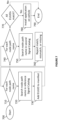
- the method starts at block 700 and proceeds to block 710 where each node path name in a manifest for an application is processed.
- the node path names of the manifest represent the signals that the application needs in order to function properly.
- the method then proceeds to block 720 to search for the node path name in a reference signal catalog.
- the reference signal catalog may be the signal catalog used to develop the application being validated. Upon finding the node path name in the reference signal catalog, a corresponding EUUID is identified.
- the method then proceeds to block 730 where the EUUID is added to the manifest for the application, in association with the node path name.
- the application manifest is an "enhanced application manifest", with an EUUID corresponding to each node path name.
- each node path name in the enhanced manifest is processed.
- a second signal catalog is searched for the node path name.
- This second signal catalog may be the signal catalog used by a vehicle on which the application is to be installed. If the node path name is found in the second signal catalog, the EUUID from the second signal catalog is recorded, and compared to the EUUID from the enhanced manifest.
- the method then proceeds to block 760, where the result of block 750 is reported. Either the two EUUIDs match, the two EUUIDs do not match, or the EUUID was not found in the second signal catalog.
- the method proceeds to block 770 to check if all EUUIDs match. If yes, the method proceeds to block 780 where the application may be installed on the vehicle. Otherwise, modifications to the application are made prior to installation and the validation method described herein may be repeated with the modified application. The method then ends at block 790.
- the reference signal catalog is the signal catalog used for developing the application
- the OEM signal catalog is the signal catalog used by an OEM for its vehicles.
- the application manifest may be replaced by a list of signals of interest for the application. This list may be provided through a Graphical User Interface (GUI) according to at least some embodiments.
- GUI Graphical User Interface
- the method starts at block 800 and proceeds to block 810 where each node path name in a manifest for an application is processed. The method then proceeds to block 820 where a node path name is searched in the reference signal catalog, and then to block 830 where the node path name is searched in the OEM signal catalog.
- the method then proceeds to block 840 where the EUUID for the signal catalog is computed and then to block 850 where the EUUID for the OEM signal catalog is computed.
- the signal catalogs may already comprise EUUIDs for every signal, and in these cases the EUUID is not recomputed but simply retrieved from the signal catalog.
- the two EUUIDs from each signal catalog are compared and the result of the comparison is reported.
- the comparison may result in a match, in a mismatch, or in a missing EUUID.
- an enhanced application manifest including the EUUID for each signal may also be created.
- the method then returns to block 810 if there are more node path names to process, or alternatively, when all node path names have been processed, the method proceeds to block 870, where it is determined if all pairs of EUUIDs match. If all pairs of EUUIDs match, the application may be installed on a vehicle at block 880, after which the method ends at block 890. Otherwise, the method ends at block 890. When the EUUIDs do not match, the application may be modified as discussed above and the validation method may then be repeated.
- FIG. 9 One simplified diagram of a computing device is shown with regard to Figure 9 .
- the computing device of Figure 9 could be any fixed or mobile computing device.
- device 910 includes a processor 920 and a communications subsystem 930, where the processor 920 and communications subsystem 930 cooperate to perform the methods of the embodiments described above.
- Communications subsystem 930 allows device 910 to communicate with other devices or network elements and may vary based on the type of communication being performed. Further, communications subsystem 930 may comprise a plurality of communications technologies, including any wired or wireless communications technology.
- Processor 920 is configured to execute programmable logic, which may be stored, along with data, on device 910, and shown in the example of Figure 9 as memory 932.
- Memory 932 can be any tangible, non-transitory computer readable storage medium which stores instruction code that, when executed by processor 920 cause device 910 to perform the methods of the present disclosure.
- the computer readable storage medium may be a tangible or in transitory/non-transitory medium such as optical (e.g., CD, DVD, etc.), magnetic (e.g., tape), flash drive, hard drive, or other memory known in the art.
- device 910 may access data or programmable logic from an external storage medium, for example through communications subsystem 930.
- one or more sensors 940 may be associated with the computing device. However, this is optional and in some cases computing device 910 will not be associated with sensors.
- Communications between the various elements of device 910 may be through an internal bus 960 in one embodiment. However, other forms of communication are possible.
Landscapes
- Engineering & Computer Science (AREA)
- Theoretical Computer Science (AREA)
- Computer Security & Cryptography (AREA)
- General Engineering & Computer Science (AREA)
- Computer Hardware Design (AREA)
- Software Systems (AREA)
- Physics & Mathematics (AREA)
- General Physics & Mathematics (AREA)
- Automation & Control Theory (AREA)
- Mechanical Engineering (AREA)
- Health & Medical Sciences (AREA)
- Artificial Intelligence (AREA)
- Audiology, Speech & Language Pathology (AREA)
- Computational Linguistics (AREA)
- General Health & Medical Sciences (AREA)
- Traffic Control Systems (AREA)
- Mobile Radio Communication Systems (AREA)
- Small-Scale Networks (AREA)
- Arrangements For Transmission Of Measured Signals (AREA)
Abstract
Description
- The present disclosure relates to a method of operating applications on a vehicle. More specifically, the present disclosure relates to a method for validating, prior to installation, the signal semantics received by an application during operation.
- The background description includes information that may be useful in understanding the present inventive subject matter. It is not an admission that any of the information provided herein is prior art or applicant admitted prior art, or relevant to the presently claimed inventive subject matter, or that any publication specifically or implicitly referenced is prior art or applicant admitted prior art.
- Modern vehicles have many sensors, including physical sensors and synthetic sensors. Physical sensors are devices that obtain direct measurements from their environment, such as, without limitation, temperature, pressure, speed, and the like. Synthetic sensors are applications (software modules) that obtain information from other sensors, whether physical or synthetic, to produce an "insight". In this context, the term "insight" denotes a useful piece of information derived from one or multiple sources of information (such as vehicle signals from physical vehicle sensors).
- When synthetic sensors are used in a vehicle, the synthetic sensors may fail if they receive data with unexpected semantics. For example, a synthetic sensor expecting a speed value to be expressed in kilometers per hour (km/h) will not function properly if it receives data expressed in miles per hour (mph).
- According to at least one embodiment of the present disclosure, there is provided a method at a computing device for validating an application, comprising: enhancing a manifest of the application, the manifest of the application comprising a node path name corresponding to a required signal by the application, wherein enhancing the manifest comprises searching, in a reference signal catalog for a unique identifier corresponding to the node path name; and adding, into an enhanced manifest, the node path names and the unique identifier; validating the enhanced manifest against a signal catalog, wherein the validating comprises: searching, in the second signal catalog, for a second unique identifier corresponding to the node path name; and reporting whether the second unique identifier is the same as the unique identifier, different as the unique identifier, or missing from the second signal catalog.
- According to at least another embodiment of the present disclosure, there is provided a computing device for validating an application, comprising: a communication subsystem; and a processor; wherein the communication subsystem and the processor cooperate to: enhance a manifest of the application, the manifest of the application comprising a node path name corresponding to a required signal by the application, wherein enhancing the manifest comprises: searching, in a reference signal catalog for a unique identifier corresponding to the node path name; and adding, into an enhanced manifest, the node path names and the unique identifier; validate the enhanced manifest against a signal catalog, wherein the validating comprises: searching, in the second signal catalog, for a second unique identifier corresponding to the node path name; and reporting whether the second unique identifier is the same as the unique identifier, different as the unique identifier, or missing from the second signal catalog.
- According to yet another embodiment of the present disclosure, there is provided a computer readable medium having stored thereon executable code for execution by a processor of a computing device, the executable code comprising instructions for: enhancing a manifest of the application, the manifest of the application comprising a node path name corresponding to a required signal by the application, wherein enhancing the manifest comprises: searching, in a reference signal catalog for a unique identifier corresponding to the node path name; and adding, into an enhanced manifest, the node path names and the unique identifier; validating the enhanced manifest against a signal catalog, wherein the validating comprises: searching, in the second signal catalog, for a second unique identifier corresponding to the node path name; and reporting whether the second unique identifier is the same as the unique identifier, different as the unique identifier, or missing from the second signal catalog.
- The present disclosure will be better understood having regard to the drawings in which:
-
Figure 1 is graphical representation of a signal catalog as a tree structure, according to at least one embodiment of the present disclosure. -
Figure 2 is a graphical representation of a signal being converted between different applications according to at least one embodiment of the present disclosure. -
Figure 3 is a graphical representation of a process for creating an enhanced signal catalog from an original signal catalog according to at least one embodiment of the present disclosure. -
Figure 4 is a graphical representation of a process for converting signals at a signal connector according to at least one embodiment of the present disclosure. -
Figure 5 is a graphical representation of a process for enhancing a synthetic sensor manifest according to at least one embodiment of the present disclosure. -
Figure 6 is a graphical representation of a process for validating an enhanced synthetic sensor manifest against a signal catalog according to at least one embodiment of the present disclosure. -
Figure 7 is a block diagram of a method for validating an application according to at least one embodiment of the present disclosure. -
Figure 8 is a block diagram of a method for validating an application according to at least one embodiment of the present disclosure. -
Figure 9 is a block diagram of a simplified computing device capable of being used with the embodiments of the present disclosure. - The present disclosure is directed to a method for validating that a synthetic sensor will receive appropriately normalized data once deployed in a vehicle. The validation may be performed prior to deployment, thereby facilitating the development process for synthetic sensors.
- For the purposes of this disclosure, the following terminology will be used.
- "Signal Catalog": The set of signals used in a vehicle. The signal catalog is expressed as a tree structure, according to the Connected VEhicle Systems Alliance (COVESA) Vehicle Signal Specification (VSS).
- "Node Path Name": The name of a node, in the form of the path to the node. The node path name comprises the name of each node in the path from the root of the tree to the node in question, separated by periods. For example, Vehicle. Speed is a node path name with Vehicle being the root node and Speed being a data node directly connected to the root node.
- "EUUID": An extended UUID. The VSS assigns Universally Unique IDentifiers (UUIDs) to each node based on their path names. These UUIDs are extended to create EUUIDs, to include semantics information for the node.
- "Signal Catalog Provenance": Information indicating where the signal catalog originated. For example, a catalog may originate from COVESA, from vehicle manufacturers (OEM), or from other providers.
- "Signal Catalog Version": A number or set of numbers indicating a version of a signal catalog. Along with the signal catalog provenance, a signal catalog version uniquely identifies a signal catalog.
- "Signal Service": A service running within an Electric Control Unit (ECU) of a vehicle, responsible for managing the signals within a vehicle, access to those signals, and the signal catalog.
- "Fleet Management System" (FMS): An OEM software infrastructure used to manage vehicles, vehicle models, vehicle types, and the like.
- "Fleet Manager": A human actor that uses the FMS to manage fleets of vehicles.
- "Synthetic Sensor": An application that synthesizes an insight from a set of signals available in a vehicle. In some cases, a synthetic sensor may use machine learning models to do the synthesis.
- "Application": A software module that obtains signals from the signal service. A synthetic sensor is a type of application.
- "Insight": A synthetized signal created by a synthetic sensor based on received signals.
- "Signal Definition": Information on a signal from a signal catalog, including the path of the node that produces the signal and VSS elements describing the signal (such as description, type, datatype, unit, allowed values, etc.).
- "Signal Semantic": The portion of a signal definition that relates to semantics of a signal. For example, the datatype, and unit, needed to properly interpret a signal programmatically.
- Development of in-vehicle applications is made more complicated by a lack of standardization of how vehicle data sources and signals are to be consumed. For example, a synthetic sensor that is designed to work with a signal definition from a specific version of a signal catalog of a given origin may not work properly with a different version of a signal catalog, or with a signal catalog of different provenance if the signal definition in the other signal catalog is semantically different. It is inefficient for an application to check the signal catalog provenance and signal catalog version for each signal it processes, and then adapt to that particular signal catalog.
- Moreover, there is a need to ensure that only secure access to signals is provided.
- The present disclosure provides a solution to the above problems by leveraging EUUIDs. EUUIDs are built on top of COVESA's VSS and allow for quickly identifying semantic differences between signals, and efficiently validating applications.
- Reference is now made to
Figure 1 , in which a portion of a signal catalog is illustrated. - As seen in
Figure 1 , acatalog 100 defined according to the VSS includes aroot node 110, named Vehicle. For the sake of simplicity, only two nodes are shown to be children ofroot node 110, namely Vehicle. Cabin 120 and Vehicle.Speed 130.Vehicle.Cabin 120 is further shown as having two children, namelyVehicle.Cabin.Door 140 andVehicle.Cabin.Seat 150. Other nodes are omitted for simplicity. - In this example,
Vehicle.Speed 120 is a data node, describing a signal representing a vehicle's speed, while all the other nodes are branch nodes. Vehicle.Speed 120 may have a JSON representation as follows:
 "Speed": {
     "datatype": "float",
     "description": "Vehicle speed.",
     "type": "sensor",
     "unit": "km/h",
     "uuid": "efe50798638d55fab18ab7d43cc490e9",
     "x-euuid": "86e92e0ee67d30dd",
     "x-read-permission": "Vehicle. Speed. READ"
 }
 "x-read-permission": [
     {
        "permission": "Vehicle. READ",
        "nodes": [
        "Vehicle"
        ]
     },
     {
        "permission": "Vehicle.PII.READ",
        "nodes": [
        "Vehicle. VehicleIdentification",
          "Vehicle.Driver.Identifier"
        ]
     }
 ]
 "Speed": {
     "datatype": "float",
     "description": "Vehicle speed.",
     "type": "sensor",
     "unit": "km/h",
     "uuid": "efe50798638d55fab18ab7d43cc490e9"'
 }
 "Speed": {
     "datatype": "float",
     "description": "Vehicle speed.",
     "type": "sensor",
     "unit": "km/h",
     "uuid": "efe50798638d55fab18ab7d43cc490e9",
     "x-euuid": "86e92e0ee67d30dd",
     "x-read-permission": "Vehicle. Speed. READ"
 }
 {
 "EUUIDs": {
  "allOf": [ "EUUID-A",
        { "anyOf': ["EUUID-B", "EUUID-C", "EUUID-D"] },
        { "oneOf": ["EUUID-E", { allOf: ["EUUID-F", "EUUID-G"]}]}
  ],
  "anyOf": [
   "EUUID-H", "EUUID-I"
  ]
 }
}
Claims (11)
- A method at a computing device for validating an application, comprising:enhancing a manifest of the application, the manifest of the application comprising a node path name corresponding to a required signal by the application, wherein enhancing the manifest comprises:searching, in a reference signal catalog for a unique identifier corresponding to the node path name; andadding, into an enhanced manifest, the node path names and the unique identifier;validating the enhanced manifest against a signal catalog, wherein the validating comprises:searching, in the second signal catalog, for a second unique identifier corresponding to the node path name; andreporting whether the second unique identifier is the same as the unique identifier, different as the unique identifier, or missing from the second signal catalog.
- The method of claim 1, further comprising, upon determining that the second unique identifier is the same as the unique identifier, installing the synthetic sensor on a vehicle.
- The method of claim 2, wherein the vehicle has the second signal catalog installed thereon.
- The method of any one of claims 1 to 3, wherein the unique identifier is unique for a combination of node path name and semantic information.
- The method of any one of claims 1 to 4, further comprising, prior to the enhancing, computing a respective unique identifier for each respective node path name in the reference signal catalog and the second signal catalog.
- The method of claim 5, wherein the respective unique identifier is computed as a hash of the respective node path name and semantic information of the respective node path name.
- The method of claim 6, wherein the hash is a 64-bit hash.
- The method of any one of claims 1 to 7, wherein the application is developed based on the reference signal catalog.
- The method of any one of claims 1 to 8, wherein the manifest further comprises a second node path name corresponding to an optional signal for the application.
- A computing device for validating an application, comprising:a communication subsystem;a processor;wherein the communication subsystem and the processor cooperate to perform the method of any one of claims 1 to 9.
- A computer readable medium having stored thereon executable code for execution by a processor of a computing device, the executable code comprising instructions for performing the method of any one of claims 1 to 9.
Applications Claiming Priority (1)
| Application Number | Priority Date | Filing Date | Title |
|---|---|---|---|
| US202363536209P | 2023-09-01 | 2023-09-01 |
Publications (2)
| Publication Number | Publication Date |
|---|---|
| EP4517567A1 true EP4517567A1 (en) | 2025-03-05 |
| EP4517567B1 EP4517567B1 (en) | 2026-04-29 |
Family
ID=92632775
Family Applications (1)
| Application Number | Title | Priority Date | Filing Date |
|---|---|---|---|
| EP24197425.2A Active EP4517567B1 (en) | 2023-09-01 | 2024-08-29 | Synthetic sensor validation for deployment in vehicles |
Country Status (5)
| Country | Link |
|---|---|
| US (1) | US20250077640A1 (en) |
| EP (1) | EP4517567B1 (en) |
| JP (1) | JP2025036286A (en) |
| CN (1) | CN119558275A (en) |
| CA (1) | CA3244672A1 (en) |
Citations (1)
| Publication number | Priority date | Publication date | Assignee | Title |
|---|---|---|---|---|
| US20180150372A1 (en) * | 2016-11-29 | 2018-05-31 | Intel Corporation | Technologies for providing manifest-based asset representation |
-
2024
- 2024-06-27 CA CA3244672A patent/CA3244672A1/en active Pending
- 2024-07-10 US US18/768,876 patent/US20250077640A1/en active Pending
- 2024-08-19 CN CN202411136165.1A patent/CN119558275A/en active Pending
- 2024-08-28 JP JP2024146230A patent/JP2025036286A/en active Pending
- 2024-08-29 EP EP24197425.2A patent/EP4517567B1/en active Active
Patent Citations (1)
| Publication number | Priority date | Publication date | Assignee | Title |
|---|---|---|---|---|
| US20180150372A1 (en) * | 2016-11-29 | 2018-05-31 | Intel Corporation | Technologies for providing manifest-based asset representation |
Non-Patent Citations (1)
| Title |
|---|
| ERWIN ROTH ET AL: "ANALYSIS AND VALIDATION OF PERCEPTION SENSOR MODELS IN AN INTEGRATED VEHICLE AND ENVIRONMENT SIMULATION", 29 April 2011 (2011-04-29), XP055677990, Retrieved from the Internet <URL:https://mediatum.ub.tum.de/doc/1287190/426874.pdf> [retrieved on 20200319] * |
Also Published As
| Publication number | Publication date |
|---|---|
| CN119558275A (en) | 2025-03-04 |
| CA3244672A1 (en) | 2025-06-09 |
| JP2025036286A (en) | 2025-03-14 |
| EP4517567B1 (en) | 2026-04-29 |
| US20250077640A1 (en) | 2025-03-06 |
Similar Documents
| Publication | Publication Date | Title |
|---|---|---|
| CN111399853B (en) | Templated deployment method for machine learning model and custom operator | |
| CN114125000A (en) | Vehicle ECU upgrading method and device, electronic equipment and storage medium | |
| CN113326283B (en) | Method and device for calculating business index | |
| KR102044046B1 (en) | Telemetry file hash and conflict detection | |
| US12175233B2 (en) | Vehicle control apparatus including RXSWIN information and vehicle control system including the same | |
| EP3779755B1 (en) | A computer-implemented method for cross-chain-interoperability | |
| US11003635B2 (en) | Database scheme for storing generic data | |
| CN112579461B (en) | Assertion processing method, system and storage medium | |
| CN111474923B (en) | Vehicle diagnosis method, device and equipment | |
| US9189219B2 (en) | Deciding whether to install a first application within one of a plurality of candidate environments | |
| CN111078213B (en) | Code generation method and code generation device | |
| EP4517567A1 (en) | Synthetic sensor validation for deployment in vehicles | |
| US20090113401A1 (en) | Using annotations to reuse variable declarations to generate different service functions | |
| CN115186019A (en) | Service data processing method, device, equipment and storage medium | |
| US12524232B1 (en) | Composite software bill of materials management | |
| HK40122473A (en) | Synthetic sensor validation for deployment in vehicles | |
| Jordan et al. | Automated integration of heteregeneous architecture information into a unified model | |
| Bergelt et al. | Towards Cloud-supported Automotive Software Development and Test | |
| US20230325156A1 (en) | Cross-validating files to facilitate code generation | |
| CN116225739A (en) | Computing device and deployment and extension method of security service thereof | |
| CN114757149A (en) | Data dictionary processing method, device, medium and electronic equipment | |
| CN117176629A (en) | Test methods, processors and readable storage media for SecOc encrypted communications | |
| CN114527993A (en) | Application deployment method, device, equipment and medium | |
| Steffelbauer | Diagnostic Systems Accelerate the Development | |
| US11205102B1 (en) | Tamper proof logging for automated processes |
Legal Events
| Date | Code | Title | Description |
|---|---|---|---|
| PUAI | Public reference made under article 153(3) epc to a published international application that has entered the european phase |
Free format text: ORIGINAL CODE: 0009012 |
|
| STAA | Information on the status of an ep patent application or granted ep patent |
Free format text: STATUS: THE APPLICATION HAS BEEN PUBLISHED |
|
| AK | Designated contracting states |
Kind code of ref document: A1 Designated state(s): AL AT BE BG CH CY CZ DE DK EE ES FI FR GB GR HR HU IE IS IT LI LT LU LV MC ME MK MT NL NO PL PT RO RS SE SI SK SM TR |
|
| STAA | Information on the status of an ep patent application or granted ep patent |
Free format text: STATUS: REQUEST FOR EXAMINATION WAS MADE |
|
| 17P | Request for examination filed |
Effective date: 20250821 |
|
| GRAP | Despatch of communication of intention to grant a patent |
Free format text: ORIGINAL CODE: EPIDOSNIGR1 |
|
| STAA | Information on the status of an ep patent application or granted ep patent |
Free format text: STATUS: GRANT OF PATENT IS INTENDED |
|
| INTG | Intention to grant announced |
Effective date: 20251218 |
|
| GRAS | Grant fee paid |
Free format text: ORIGINAL CODE: EPIDOSNIGR3 |
|
| GRAA | (expected) grant |
Free format text: ORIGINAL CODE: 0009210 |
|
| STAA | Information on the status of an ep patent application or granted ep patent |
Free format text: STATUS: THE PATENT HAS BEEN GRANTED |
|
| AK | Designated contracting states |
Kind code of ref document: B1 Designated state(s): AL AT BE BG CH CY CZ DE DK EE ES FI FR GB GR HR HU IE IS IT LI LT LU LV MC ME MK MT NL NO PL PT RO RS SE SI SK SM TR |
|
| REG | Reference to a national code |
Ref country code: CH Ref legal event code: F10 Free format text: ST27 STATUS EVENT CODE: U-0-0-F10-F00 (AS PROVIDED BY THE NATIONAL OFFICE) Effective date: 20260429 |