EP4516956A1 - Method for manufacturing plated steel having excellent processability and corrosion resistance - Google Patents
Method for manufacturing plated steel having excellent processability and corrosion resistance Download PDFInfo
- Publication number
- EP4516956A1 EP4516956A1 EP22940403.3A EP22940403A EP4516956A1 EP 4516956 A1 EP4516956 A1 EP 4516956A1 EP 22940403 A EP22940403 A EP 22940403A EP 4516956 A1 EP4516956 A1 EP 4516956A1
- Authority
- EP
- European Patent Office
- Prior art keywords
- mgzn
- phase
- temperature
- hot
- cooling rate
- Prior art date
- Legal status (The legal status is an assumption and is not a legal conclusion. Google has not performed a legal analysis and makes no representation as to the accuracy of the status listed.)
- Pending
Links
Images



Classifications
-
- C—CHEMISTRY; METALLURGY
- C23—COATING METALLIC MATERIAL; COATING MATERIAL WITH METALLIC MATERIAL; CHEMICAL SURFACE TREATMENT; DIFFUSION TREATMENT OF METALLIC MATERIAL; COATING BY VACUUM EVAPORATION, BY SPUTTERING, BY ION IMPLANTATION OR BY CHEMICAL VAPOUR DEPOSITION, IN GENERAL; INHIBITING CORROSION OF METALLIC MATERIAL OR INCRUSTATION IN GENERAL
- C23C—COATING METALLIC MATERIAL; COATING MATERIAL WITH METALLIC MATERIAL; SURFACE TREATMENT OF METALLIC MATERIAL BY DIFFUSION INTO THE SURFACE, BY CHEMICAL CONVERSION OR SUBSTITUTION; COATING BY VACUUM EVAPORATION, BY SPUTTERING, BY ION IMPLANTATION OR BY CHEMICAL VAPOUR DEPOSITION, IN GENERAL
- C23C2/00—Hot-dipping or immersion processes for applying the coating material in the molten state without affecting the shape; Apparatus therefor
- C23C2/26—After-treatment
-
- C—CHEMISTRY; METALLURGY
- C23—COATING METALLIC MATERIAL; COATING MATERIAL WITH METALLIC MATERIAL; CHEMICAL SURFACE TREATMENT; DIFFUSION TREATMENT OF METALLIC MATERIAL; COATING BY VACUUM EVAPORATION, BY SPUTTERING, BY ION IMPLANTATION OR BY CHEMICAL VAPOUR DEPOSITION, IN GENERAL; INHIBITING CORROSION OF METALLIC MATERIAL OR INCRUSTATION IN GENERAL
- C23C—COATING METALLIC MATERIAL; COATING MATERIAL WITH METALLIC MATERIAL; SURFACE TREATMENT OF METALLIC MATERIAL BY DIFFUSION INTO THE SURFACE, BY CHEMICAL CONVERSION OR SUBSTITUTION; COATING BY VACUUM EVAPORATION, BY SPUTTERING, BY ION IMPLANTATION OR BY CHEMICAL VAPOUR DEPOSITION, IN GENERAL
- C23C2/00—Hot-dipping or immersion processes for applying the coating material in the molten state without affecting the shape; Apparatus therefor
- C23C2/26—After-treatment
- C23C2/28—Thermal after-treatment, e.g. treatment in oil bath
- C23C2/29—Cooling or quenching
-
- C—CHEMISTRY; METALLURGY
- C22—METALLURGY; FERROUS OR NON-FERROUS ALLOYS; TREATMENT OF ALLOYS OR NON-FERROUS METALS
- C22C—ALLOYS
- C22C18/00—Alloys based on zinc
-
- C—CHEMISTRY; METALLURGY
- C22—METALLURGY; FERROUS OR NON-FERROUS ALLOYS; TREATMENT OF ALLOYS OR NON-FERROUS METALS
- C22C—ALLOYS
- C22C18/00—Alloys based on zinc
- C22C18/04—Alloys based on zinc with aluminium as the next major constituent
-
- C—CHEMISTRY; METALLURGY
- C22—METALLURGY; FERROUS OR NON-FERROUS ALLOYS; TREATMENT OF ALLOYS OR NON-FERROUS METALS
- C22C—ALLOYS
- C22C38/00—Ferrous alloys, e.g. steel alloys
- C22C38/002—Ferrous alloys, e.g. steel alloys containing In, Mg, or other elements not provided for in one single group C22C38/001 - C22C38/60
-
- C—CHEMISTRY; METALLURGY
- C22—METALLURGY; FERROUS OR NON-FERROUS ALLOYS; TREATMENT OF ALLOYS OR NON-FERROUS METALS
- C22C—ALLOYS
- C22C38/00—Ferrous alloys, e.g. steel alloys
- C22C38/02—Ferrous alloys, e.g. steel alloys containing silicon
-
- C—CHEMISTRY; METALLURGY
- C22—METALLURGY; FERROUS OR NON-FERROUS ALLOYS; TREATMENT OF ALLOYS OR NON-FERROUS METALS
- C22C—ALLOYS
- C22C38/00—Ferrous alloys, e.g. steel alloys
- C22C38/04—Ferrous alloys, e.g. steel alloys containing manganese
-
- C—CHEMISTRY; METALLURGY
- C23—COATING METALLIC MATERIAL; COATING MATERIAL WITH METALLIC MATERIAL; CHEMICAL SURFACE TREATMENT; DIFFUSION TREATMENT OF METALLIC MATERIAL; COATING BY VACUUM EVAPORATION, BY SPUTTERING, BY ION IMPLANTATION OR BY CHEMICAL VAPOUR DEPOSITION, IN GENERAL; INHIBITING CORROSION OF METALLIC MATERIAL OR INCRUSTATION IN GENERAL
- C23C—COATING METALLIC MATERIAL; COATING MATERIAL WITH METALLIC MATERIAL; SURFACE TREATMENT OF METALLIC MATERIAL BY DIFFUSION INTO THE SURFACE, BY CHEMICAL CONVERSION OR SUBSTITUTION; COATING BY VACUUM EVAPORATION, BY SPUTTERING, BY ION IMPLANTATION OR BY CHEMICAL VAPOUR DEPOSITION, IN GENERAL
- C23C2/00—Hot-dipping or immersion processes for applying the coating material in the molten state without affecting the shape; Apparatus therefor
- C23C2/02—Pretreatment of the material to be coated, e.g. for coating on selected surface areas
- C23C2/022—Pretreatment of the material to be coated, e.g. for coating on selected surface areas by heating
- C23C2/0224—Two or more thermal pretreatments
-
- C—CHEMISTRY; METALLURGY
- C23—COATING METALLIC MATERIAL; COATING MATERIAL WITH METALLIC MATERIAL; CHEMICAL SURFACE TREATMENT; DIFFUSION TREATMENT OF METALLIC MATERIAL; COATING BY VACUUM EVAPORATION, BY SPUTTERING, BY ION IMPLANTATION OR BY CHEMICAL VAPOUR DEPOSITION, IN GENERAL; INHIBITING CORROSION OF METALLIC MATERIAL OR INCRUSTATION IN GENERAL
- C23C—COATING METALLIC MATERIAL; COATING MATERIAL WITH METALLIC MATERIAL; SURFACE TREATMENT OF METALLIC MATERIAL BY DIFFUSION INTO THE SURFACE, BY CHEMICAL CONVERSION OR SUBSTITUTION; COATING BY VACUUM EVAPORATION, BY SPUTTERING, BY ION IMPLANTATION OR BY CHEMICAL VAPOUR DEPOSITION, IN GENERAL
- C23C2/00—Hot-dipping or immersion processes for applying the coating material in the molten state without affecting the shape; Apparatus therefor
- C23C2/04—Hot-dipping or immersion processes for applying the coating material in the molten state without affecting the shape; Apparatus therefor characterised by the coating material
- C23C2/06—Zinc or cadmium or alloys based thereon
-
- C—CHEMISTRY; METALLURGY
- C23—COATING METALLIC MATERIAL; COATING MATERIAL WITH METALLIC MATERIAL; CHEMICAL SURFACE TREATMENT; DIFFUSION TREATMENT OF METALLIC MATERIAL; COATING BY VACUUM EVAPORATION, BY SPUTTERING, BY ION IMPLANTATION OR BY CHEMICAL VAPOUR DEPOSITION, IN GENERAL; INHIBITING CORROSION OF METALLIC MATERIAL OR INCRUSTATION IN GENERAL
- C23C—COATING METALLIC MATERIAL; COATING MATERIAL WITH METALLIC MATERIAL; SURFACE TREATMENT OF METALLIC MATERIAL BY DIFFUSION INTO THE SURFACE, BY CHEMICAL CONVERSION OR SUBSTITUTION; COATING BY VACUUM EVAPORATION, BY SPUTTERING, BY ION IMPLANTATION OR BY CHEMICAL VAPOUR DEPOSITION, IN GENERAL
- C23C2/00—Hot-dipping or immersion processes for applying the coating material in the molten state without affecting the shape; Apparatus therefor
- C23C2/14—Removing excess of molten coatings; Controlling or regulating the coating thickness
- C23C2/16—Removing excess of molten coatings; Controlling or regulating the coating thickness using fluids under pressure, e.g. air knives
- C23C2/18—Removing excess of molten coatings from elongated material
- C23C2/20—Strips; Plates
-
- C—CHEMISTRY; METALLURGY
- C23—COATING METALLIC MATERIAL; COATING MATERIAL WITH METALLIC MATERIAL; CHEMICAL SURFACE TREATMENT; DIFFUSION TREATMENT OF METALLIC MATERIAL; COATING BY VACUUM EVAPORATION, BY SPUTTERING, BY ION IMPLANTATION OR BY CHEMICAL VAPOUR DEPOSITION, IN GENERAL; INHIBITING CORROSION OF METALLIC MATERIAL OR INCRUSTATION IN GENERAL
- C23C—COATING METALLIC MATERIAL; COATING MATERIAL WITH METALLIC MATERIAL; SURFACE TREATMENT OF METALLIC MATERIAL BY DIFFUSION INTO THE SURFACE, BY CHEMICAL CONVERSION OR SUBSTITUTION; COATING BY VACUUM EVAPORATION, BY SPUTTERING, BY ION IMPLANTATION OR BY CHEMICAL VAPOUR DEPOSITION, IN GENERAL
- C23C2/00—Hot-dipping or immersion processes for applying the coating material in the molten state without affecting the shape; Apparatus therefor
- C23C2/26—After-treatment
- C23C2/28—Thermal after-treatment, e.g. treatment in oil bath
-
- C—CHEMISTRY; METALLURGY
- C23—COATING METALLIC MATERIAL; COATING MATERIAL WITH METALLIC MATERIAL; CHEMICAL SURFACE TREATMENT; DIFFUSION TREATMENT OF METALLIC MATERIAL; COATING BY VACUUM EVAPORATION, BY SPUTTERING, BY ION IMPLANTATION OR BY CHEMICAL VAPOUR DEPOSITION, IN GENERAL; INHIBITING CORROSION OF METALLIC MATERIAL OR INCRUSTATION IN GENERAL
- C23C—COATING METALLIC MATERIAL; COATING MATERIAL WITH METALLIC MATERIAL; SURFACE TREATMENT OF METALLIC MATERIAL BY DIFFUSION INTO THE SURFACE, BY CHEMICAL CONVERSION OR SUBSTITUTION; COATING BY VACUUM EVAPORATION, BY SPUTTERING, BY ION IMPLANTATION OR BY CHEMICAL VAPOUR DEPOSITION, IN GENERAL
- C23C2/00—Hot-dipping or immersion processes for applying the coating material in the molten state without affecting the shape; Apparatus therefor
- C23C2/34—Hot-dipping or immersion processes for applying the coating material in the molten state without affecting the shape; Apparatus therefor characterised by the shape of the material to be treated
- C23C2/36—Elongated material
- C23C2/40—Plates; Strips
Definitions
- the present disclosure relates to a steel material, and more specifically, to a method of manufacturing a plated steel material having excellent workability and corrosion resistance.
- Hot-dip zinc-plated steel sheets have excellent sacrificial corrosion resistance, and when exposed to a corrosive environment, zinc with a low potential is preferentially eluted to prevent corrosion of a steel material. Due to such excellent corrosion characteristics, the hot-dip zinc-plated steel sheets have been used as steel sheets for home appliances, construction materials, and automobiles. However, as the expectation and demand for corrosion resistance increase due to technological development and improvement in quality level, the need for development of products having better corrosion resistance than the hot-dip zinc-plated steel sheets of the related art has been increasing.
- a technical problem to be achieved by the present disclosure is to provide a method of manufacturing a plated steel material having excellent workability and corrosion resistance.
- a method of manufacturing a plated steel material having excellent workability and corrosion resistance includes the steps of immersing a base steel in a hot-dip alloy plating bath; and forming a hot-dip alloy-plated layer on the base steel by drawing the immersed base steel from the hot-dip alloy plating bath and performing a cooling process.
- a first average cooling rate in the cooling process varies depending on a difference between a first temperature that is a temperature of the hot-dip alloy plating bath and a second temperature that is a solidification start temperature of a MgZn 2 phase constituting the hot-dip alloy-plated layer.
- the first average cooling rate when the difference between the first temperature and the second temperature is less than 50 °C, the first average cooling rate may be 10 to 20 °C/s, when the difference between the first temperature and the second temperature is 50 °C or greater and less than 100 °C, the first average cooling rate may be 15 to 35 °C/s, and when the difference between the first temperature and the second temperature is 100 °C or greater, the first average cooling rate may be 20 to 50 °C/s.
- a second average cooling rate in the cooling process from a time point at which the MgZn 2 phase starts to solidify to a time point at which the solidification is completed may satisfy a relationship of Formula 1 below.
- an area fraction of a MgZn 2 phase where a ratio of an average minor axis length (a) to an average major axis length (b) is 0.5 or less in the entire MgZn 2 phase on a surface of the hot-dip alloy-plated layer formed on the base steel may be 70% or less.
- a method of manufacturing a plated steel material having excellent workability and corrosion resistance may be provided.
- a Zn-Al-Mg plated steel sheet has excellent corrosion resistance, compared with a zinc-plated steel sheet, but has a disadvantage in that workability is deteriorated.
- the intermetallic compound of Zn-Al-Mg has high hardness and low crack resistance, and cracks cause problems of degrading appearance during processing or exposing the base steel material to lower corrosion resistance during processing.
- MgZn 2 of intermetallic compounds has the highest hardness, and therefore, the technology of controlling a shape, a distribution and a size of the MgZn 2 phase is important.
- the present disclosure aims to provide a method of manufacturing a Zn-Al-Mg-based high corrosion-resistant plated steel material including, by wt.%, 6 to 23% of Al, 3 to 7% of Mg, a balance of Zn and inevitable impurities, and to control the microstructure of the MgZn 2 phase with high hardness for improving workability and processing corrosion resistance.
- a method of manufacturing a plated steel material having excellent workability and corrosion resistance includes the steps of immersing a base steel in a hot-dip alloy plating bath (S10); and forming a hot-dip alloy-plated layer on the base steel by drawing the immersed base steel from the hot-dip alloy plating bath and performing a cooling process (S20).
- the hot-dip alloy plating bath may be, for example, a Zn plating bath including, by wt.%, 6 to 23% of Al, 3 to 7% of Mg, and inevitable impurities. Furthermore, the hot-dip alloy plating bath may further include, by wt.%, 0.05 to 10% of Fe, and greater than 0 and less than 1% of Si.
- Mg and Al in the hot-dip alloy plating bath are ones of elements that improve corrosion resistance of the plated layer, and improve corrosion resistance by forming a corrosion product more densely. If Mg in the plating bath is less than 1.0 wt.%, the contribution to corrosion resistance is insignificant, and in the related art, Mg is used in an amount of less than 2.0 wt.% because of difficulty in production due to Mg oxide dross when the amount is greater than 2.0 wt.%. However, in the present disclosure, Mg in the plating bath is added in an amount of 3.0 wt.% or greater in order to achieve better corrosion resistance. As described above, when Mg is added in an amount greater than 3.0 wt.%, there is difficulty in production due to oxide dross.
- the rod-shaped and acicular MgZn 2 or Al-including MgZn 2 phase in the plated layer grows in excess of 70% of an area fraction of the whole MgZn 2 , and therefore, the workability of the plated layer is deteriorated, and cracks are generated in the plated layer during processing, thereby exposing the steel material or the Fe-Al-Zn interface alloying layer to lower the corrosion resistance.
- a shape and a fraction of the MgZn 2 phase can be closely controlled through cooling.
- a first average cooling rate in the cooling process varies depending on a difference between a first temperature that is a temperature of the hot-dip alloy plating bath and a second temperature that is a solidification start temperature of a MgZn 2 phase constituting the hot-dip alloy-plated layer.
- the first average cooling rate may be an average cooling rate from a time point at which the immersed base steel is drawn from the hot-dip alloy plating bath to a time point at which the MgZn 2 phase starts to solidify.
- the first average cooling rate may be 10 to 20 °C/s.
- the first average cooling rate is less than 10 °C/s, an Al phase, a Zn phase, etc., which are constituent phases other than the MgZn 2 phase, are coarsely crystallized to make it difficult to favorably control a fraction of a MgZn 2 area, and the plated layer in a liquid state may react with oxygen to act as a factor that impairs the appearance of the plated surface.
- the first average cooling rate is greater than 20 °C/s, it may be difficult to form a coarse region of MgZn 2 .
- the first average cooling rate may be 15 to 35 °C/s.
- the first average cooling rate is less than 15 °C/s, an Al phase, a Zn phase, etc., which are constituent phases other than the MgZn 2 phase, are coarsely crystallized to make it difficult to favorably control a fraction of a MgZn 2 area, and the plated layer in a liquid state may react with oxygen to act as a factor that impairs the appearance of the plated surface.
- the first average cooling rate is greater than 35 °C/s, it may be difficult to form a coarse region of MgZn 2 .
- the first average cooling rate may be 20 to 50 °C/s.
- the first average cooling rate is less than 20 °C/s, an Al phase, a Zn phase, etc., which are constituent phases other than the MgZn 2 phase, are coarsely crystallized to make it difficult to favorably control a fraction of a MgZn 2 area, and the plated layer in a liquid state may react with oxygen to act as a factor that impairs the appearance of the plated surface.
- the first average cooling rate is greater than 50 °C/s, it may be difficult to form a coarse region of MgZn 2 .
- a second average cooling rate in the cooling process from a time point at which the MgZn 2 phase starts to solidify to a time point at which the solidification is completed may satisfy a relationship of Formula 1 below.
- An area fraction of a MgZn 2 phase whose ratio of an average minor axis length (a) to an average major axis length (b) is 0.5 or less in a whole MgZn 2 phase on a surface of a hot-dip alloy-plated layer implemented by the method of manufacturing a plated steel material having excellent workability and corrosion resistance may be 70% or less. That is, an area fraction of a rod-shaped or acicular MgZn 2 phase in the whole MgZn 2 phase distributed on the surface of the implemented plated layer may be 70% or less. In this case, an area fraction of a polygon-shaped MgZn 2 phase in the whole MgZn 2 phase distributed on the surface of the implemented plated layer may be 30% or greater.
- a zinc alloy-plated layer of the present disclosure may be configured by a primary crystal Al phase (Al single-phase structure with Zn solid-solution), an Al-Zn eutectoid phase, a Zn solid-solution phase, MgZn 2 (including Al-including MgZn 2 phase, and Mg 2 Zn 11 phase), and an Al/Zn/Mg eutectic structure or a combination thereof.
- the MgZn 2 phase and the Al-including MgZn 2 phase on a surface of the Zn-Al-Mg-based plated layer may have a polygonal shape, and a rod and acicular shape, in terms of microstructure for improving workability and processing corrosion resistance.
- a ratio of an average minor axis length (a) and an average major axis length (b) of the rod and acicular shape is 1:10 ⁇ a:b ⁇ 1:2.
- the rod-shaped and acicular MgZn 2 phase of the whole MgZn 2 phase is distributed on the surface in an area fraction of less than 70%, and more preferably, in an area fraction of less than 50%, and the remainder MgZn 2 is distributed in the polygonal shape.
- An exemplary process of forming a hot-dip alloy-plated layer on the base steel in the present disclosure is as follows.
- the base steel annealed at 680 to 850 °C is immersed in a plating bath of 440 to 530 °C and is passed through an air knife to satisfy 30 to 300 g/m 2 based on one side of the base steel.
- an entry temperature of the base steel after annealing is controlled so that there is no difference of ⁇ 20°C or greater from the plating bath temperature.
- an area fraction of a MgZn 2 phase in a section (for example, longitudinal section) of the hot-dip alloy-plated layer is 20 to 70%, and a ratio of an area fraction of an Al-containing phase to the area fraction of the MgZn 2 phase in the section (for example, longitudinal section) of the hot-dip alloy-plated layer is 1 to 70%.
- the Al-containing phase may be present apart from the MgZn 2 phase or within the MgZn 2 phase in the section in the hot-dip alloy-plated layer.
- the Al-containing phase means i) an Al single phase, and ii) a phase that contains 20% or greater of Al, but includes less than 2% of inevitable impurities and a balance of Zn.
- the hot-dip alloy-plated layer may include, by area fraction, 20 to 70% of the MgZn 2 phase in the section. That is, a ratio of a cross-sectional area (A2) occupied by the MgZn 2 phase in a total cross-sectional area (A1) of the hot-dip alloy-plated layer is 20 to 70%, and a value of (A2/A1) ⁇ 100 may satisfy a range of 20 to 70.
- a sum of a cross-sectional area (B1) of the Al-containing phase present apart from the MgZn 2 phase and a cross-sectional areas (B2) of the Al-containing phase present within the MgZn 2 phase may have a ratio of 1 to 70%, compared to a cross-sectional area (B3) of the whole MgZn 2 phase. That is, a value of [(B1+B2)/B3] ⁇ 100 may satisfy a range of 1 to 70. Based on this structure, crack resistance is excellent, and specifically, in bending evaluation (3T bending evaluation, 1T bending evaluation), an average crack width may be 30 ⁇ m or less.
- the area fraction of the MgZn 2 phase may be 10 to 70%, and if the area fraction is less than 10%, the formation thereof is impossible, and if the area fraction is greater than 70%, crack resistance is reduced.
- the surface of the hot-dip alloy-plated layer may mean an upper surface in contact with an outside.
- an area fraction of a MgZn 2 phase where a ratio of an average minor axis length (a) to an average major axis length (b) is 0.5 or less in the entire MgZn 2 phase on the surface of the hot-dip alloy-plated layer may be 70% or less.
- 70% or less of the MgZn 2 phase of the whole MgZn 2 phase on the surface of the hot-dip alloy-plated layer may have a ratio of the average minor axis length (a) to the average major axis length (b) of 1:2 to 1:10, i.e., a value of 0.5 or less.
- the MgZn 2 phase whose ratio of the average minor axis length (a) to the average major axis length (b) is 0.5 or less may have the ratio of the average minor axis length (a) to the average major axis length (b) of 1/10 or greater and 1/2 or less. If the ratio of the average minor axis length (a) to the average major axis length (b) is less than 0.5, crack resistance is reduced.
- the average minor axis length (a) may be 1 to 20 ⁇ m, and the average major axis length (b) may be 2 to 200 ⁇ m.
- an area fraction of Al-Zn dendrites configured by an Al phase and a Zn phase may be 30% or less.
- Al-Zn dendrites preferably have a low area fraction because they do not favorably affect chemical conversion treatment properties or liquid metal embrittlement (LME) resistance. Therefore, in the plated layer according to the present exemplary embodiment, the area fraction of Al-Zn dendrites is set to 30% or less.
- the MgZn 2 phase and the Al-including MgZn 2 phase on the surface of the Zn-Al-Mg-based plated layer have the polygonal shape, and the rod and acicular shape, and a ratio of an average minor axis length (a) to an average major axis length (b) of the rod- and acicular shape is 1:2 ⁇ a:b ⁇ 1:10.
- the rod-shaped and acicular MgZn 2 phase of the whole MgZn 2 is distributed on the surface in an area fraction of 70% or less, and more preferably, in an area fraction of less than 50%, and the remainder MgZn 2 is distributed in the polygonal shape.
- An area fraction of a MgZn 2 phase whose ratio of the average minor axis length (a) to the average major axis length (b) is greater than 0.5 in the entire MgZn 2 phase on the surface of the hot-dip alloy-plated layer is 30% or greater.
- 30% or greater of the MgZn 2 phase in the whole MgZn 2 phase on the surface of the hot-dip alloy-plated layer has a ratio of the average minor axis length (a) to the average major axis length (b) greater than 0.5, such as 1:1.5 or 1:1.2.
- a diameter (average diameter) of an imaginary circle having the same area as a cross-sectional area of the MgZn 2 phase where the ratio of the average minor axis length (a) to the average major axis length (b) is greater than 0.5 may be 1 to 50 ⁇ m. If the average diameter is less than 1 ⁇ m, the formation thereof is impossible, and if the average diameter is greater than 50 ⁇ m, crack resistance is reduced.
- a 1.2 mm cold-rolled material was prepared as a base steel sheet, and had the components (composition) of 0.15 wt.% of carbon (C), 0.01 wt.% of silicon (Si), 0.6 wt.% of manganese (Mn), 0.05 wt.% of phosphorus (P), 0.05 wt.% of sulfur (S) and the remainder of iron (Fe).
- C carbon
- Si silicon
- Mn manganese
- P 0.05 wt.% of phosphorus
- S sulfur
- Fe iron
- the annealed specimen was cooled to a temperature that was not different greater than 20 °C from the plating bath, and then immersed in the plating bath for 1 to 5 seconds.
- the plating thickness was adjusted by nitrogen wiping, and cooled at the first average cooling rate and the second average cooling rate to obtain a Zn-Al-Mg-based plated steel sheet.
- Table 1 shows the composition of the hot-dip alloy-plated layer in the plated steel material according to Experimental Example of the present disclosure (unit: wt.%), and microstructures and bending workability evaluation results according to the eutectic structures.
- [Table 1] Classification Zn (wt%) Al (wt%) Mg (wt%) Temperature difference (°C) First average cooling rate (°C/s) Second average cooling rate (°C/s) MgZn 2 Area fraction (area %) Bending Workability
- Example 2 Bal. 10 3 100 22 13 44 ⁇
- Example 3 Bal. 10 3.1 90 30 13 40 ⁇
- Example 4 Bal. 10 3.2 70 20 13 42 ⁇
- Example 5 Bal. 10.2 5 40 15 13 55 ⁇
- 'Temperature difference' means a temperature difference between the first temperature, which is a temperature of the hot-dip alloy plating bath, and the second temperature, which is a solidification start temperature of a MgZn 2 phase constituting the hot-dip alloy-plated layer formed on the base steel immersed in the hot-dip alloy plating bath
- 'First average cooling rate' means an average cooling rate in the cooling process from a time point at which the immersed base steel is drawn from the hot-dip alloy plating bath to a time point at which the MgZn 2 phase starts to solidify
- 'Second average cooling rate' means an average cooling rate in the cooling process from a time point at which the MgZn 2 phase starts to solidify to a time point at which the solidification is completed.
- the solidification start temperature of the MgZn 2 phase was derived using a thermodynamic calculation program (FactSage 7.1).
- the temperature difference between the first temperature, which is a temperature of the hot-dip alloy plating bath, and the second temperature, which is a solidification start temperature of a MgZn 2 phase constituting the hot-dip alloy-plated layer formed on the base steel immersed in the hot-dip alloy plating bath varied depending on the plating components, but for the same plating components, was adjusted by adjusting the plating bath temperature, and the first average cooling rate was controlled by adjusting a height of the air knife.
- the MgZn 2 area fraction was measured using an image program after observing the surface of each manufactured plated steel sheet at 500 times with a FE-SEM.
- the area fraction shown in Table 1 is a fraction of the rod-shaped or acicular MgZn 2 phase in the whole MgZn 2 phase distributed on the surface of the plated layer, as an area ratio.
- the composition of the hot-dip alloy plating bath satisfied the range of, by wt.%, 6 to 23% of Al, 3 to 7% of Mg, and a balance of Zn, ii) it was satisfied that when the difference between the first temperature, which is a temperature of the hot-dip alloy plating bath, and the second temperature, which is a solidification start temperature of a MgZn 2 phase constituting the hot-dip alloy-plated layer, is less than 50 °C, the first average cooling rate is 10 to 20 °C/s (Examples 5, 6, and 7), it was satisfied that when the difference between the first temperature, which is a temperature of the hot-dip alloy plating bath, and the second temperature, which is a solidification start temperature of a MgZn 2 phase constituting the hot-dip alloy-plated layer, is 50 °C or higher and less than 100 °C, the first average cooling rate is 15 to 35 °C/s (Examples 1, 3, 4, 9, 10
- the area fraction of the rod-shaped or acicular MgZn 2 phase in the whole MgZn 2 phase distributed on the surface of the implemented plated layer was 70% or less, and the average crack width in the bending evaluation was 30 ⁇ m or less (refer to FIGS. 1 and 3 ). Furthermore, it can be confirmed that the growth of the Fe-Al interface alloy layer could be controlled to be less than 10 ⁇ m in the section of the plated layer (refer to FIG. 5 ).
- Comparative Example 3 indicates that the bending workability is not good when the ranges of the first average cooling rate and the second average cooling rate disclosed in Examples of the present disclosure are not satisfied.
- a plated steel sheet having excellent workability can be implemented by suppressing the growth of the rod-shaped and acicular MgZn 2 phase and controlling the area fraction thereof.
Landscapes
- Chemical & Material Sciences (AREA)
- Engineering & Computer Science (AREA)
- Materials Engineering (AREA)
- Mechanical Engineering (AREA)
- Metallurgy (AREA)
- Organic Chemistry (AREA)
- Chemical Kinetics & Catalysis (AREA)
- Physics & Mathematics (AREA)
- Thermal Sciences (AREA)
- Oil, Petroleum & Natural Gas (AREA)
- Coating With Molten Metal (AREA)
Abstract
Description
- The present disclosure relates to a steel material, and more specifically, to a method of manufacturing a plated steel material having excellent workability and corrosion resistance.
- Hot-dip zinc-plated steel sheets have excellent sacrificial corrosion resistance, and when exposed to a corrosive environment, zinc with a low potential is preferentially eluted to prevent corrosion of a steel material. Due to such excellent corrosion characteristics, the hot-dip zinc-plated steel sheets have been used as steel sheets for home appliances, construction materials, and automobiles. However, as the expectation and demand for corrosion resistance increase due to technological development and improvement in quality level, the need for development of products having better corrosion resistance than the hot-dip zinc-plated steel sheets of the related art has been increasing. In order to solve the above problem, since the early 2000s, highly corrosion-resistant plated steel sheets that improve corrosion resistance by adding aluminum (Al) and magnesium (Mg) to a zinc (Zn) plating bath have been produced in Europe and Japan. In addition to the sacrificial corrosion resistance of Zn, the highly corrosion-resistant plated steel sheet forms dense corrosion products in a corrosive environment as a result of the addition of Mg and Al to shield the steel material from an oxidizing atmosphere, thereby improving corrosion resistance. However, the Zn-Al-Mg plated steel sheet has excellent corrosion resistance, compared with the zinc-plated steel sheet, but has a disadvantage in that workability is deteriorated. The intermetallic compound of Zn-Al-Mg has high hardness and low crack resistance, and cracks cause problems of degrading appearance in a processing process or exposing the base steel material to lower corrosion resistance.
- As the related prior art, there is
Japanese Patent Application Publication No. 2005-105367 - A technical problem to be achieved by the present disclosure is to provide a method of manufacturing a plated steel material having excellent workability and corrosion resistance.
- A method of manufacturing a plated steel material having excellent workability and corrosion resistance according to an aspect of the present disclosure for addressing the above problems includes the steps of immersing a base steel in a hot-dip alloy plating bath; and forming a hot-dip alloy-plated layer on the base steel by drawing the immersed base steel from the hot-dip alloy plating bath and performing a cooling process. A first average cooling rate in the cooling process varies depending on a difference between a first temperature that is a temperature of the hot-dip alloy plating bath and a second temperature that is a solidification start temperature of a MgZn2 phase constituting the hot-dip alloy-plated layer.
- In the method as described herein, when the difference between the first temperature and the second temperature is less than 50 °C, the first average cooling rate may be 10 to 20 °C/s, when the difference between the first temperature and the second temperature is 50 °C or greater and less than 100 °C, the first average cooling rate may be 15 to 35 °C/s, and when the difference between the first temperature and the second temperature is 100 °C or greater, the first average cooling rate may be 20 to 50 °C/s.
- In the method as described herein, the first average cooling rate may be an average cooling rate from a time point at which the immersed base steel is drawn from the hot-dip alloy plating bath to a time point at which the MgZn2 phase starts to solidify.
- In the method as described herein, a second average cooling rate in the cooling process from a time point at which the MgZn2 phase starts to solidify to a time point at which the solidification is completed may satisfy a relationship of Formula 1 below.

- In the method as described herein, the hot-dip alloy plating bath may be a Zn plating bath including, by wt.%, 6 to 23% of Al, 3 to 7% of Mg, and inevitable impurities.
- In the method as described herein, an area fraction of a MgZn2 phase where a ratio of an average minor axis length (a) to an average major axis length (b) is 0.5 or less in the entire MgZn2 phase on a surface of the hot-dip alloy-plated layer formed on the base steel may be 70% or less.
- According to the exemplary embodiment of the present disclosure, a method of manufacturing a plated steel material having excellent workability and corrosion resistance may be provided.
- It should be noted that the scope of the present disclosure is not limited by these effects.
-
-
FIG. 1 is a photograph of a surface of a hot-dip alloy-plated layer according to Example 6 in Experimental Example. -
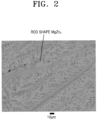
FIG. 2 is a photograph of a surface of a hot-dip alloy-plated layer according to Comparative Example 1 in Experimental Example. -
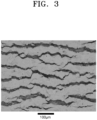
FIG. 3 is a 200-times magnified FE-SEM photograph of a processed part after evaluating 3T bending workability for the hot-dip alloy-plated layer according to Example 6 in Experimental Example. -
FIG. 4 is a 200-times magnified FE-SEM photograph of a processed part after evaluating 3T bending workability for a hot-dip alloy-plated layer according to Comparative Example 4 in Experimental Example. -
FIG. 5 is a 1000-times magnified FE-SEM photograph of a section of a hot-dip alloy-plated layer according to Example 3 in Experimental Example. -
FIG. 6 is a 1000-times magnified FE-SEM photograph of a section of the hot-dip alloy-plated layer according to Comparative Example 4 in Experimental Example. - A method of manufacturing a plated steel material having excellent workability and corrosion resistance according to an exemplary embodiment of the present invention will be described in detail. The terms used herein are terms appropriately selected in consideration of the functions in the present invention. Accordingly, the definitions of the terms should be made based on the contents throughout the present specification. Hereinafter, specific details of an ultra-high-strength, high-corrosion-resistant plated steel sheet having excellent elongation and a manufacturing method thereof will be provided.
- A Zn-Al-Mg plated steel sheet has excellent corrosion resistance, compared with a zinc-plated steel sheet, but has a disadvantage in that workability is deteriorated. The intermetallic compound of Zn-Al-Mg has high hardness and low crack resistance, and cracks cause problems of degrading appearance during processing or exposing the base steel material to lower corrosion resistance during processing. MgZn2 of intermetallic compounds has the highest hardness, and therefore, the technology of controlling a shape, a distribution and a size of the MgZn2 phase is important.
- The present disclosure aims to provide a method of manufacturing a Zn-Al-Mg-based high corrosion-resistant plated steel material including, by wt.%, 6 to 23% of Al, 3 to 7% of Mg, a balance of Zn and inevitable impurities, and to control the microstructure of the MgZn2 phase with high hardness for improving workability and processing corrosion resistance.
- A method of manufacturing a plated steel material having excellent workability and corrosion resistance according to an exemplary embodiment of the present disclosure includes the steps of immersing a base steel in a hot-dip alloy plating bath (S10); and forming a hot-dip alloy-plated layer on the base steel by drawing the immersed base steel from the hot-dip alloy plating bath and performing a cooling process (S20).
- In the step of immersing the base steel (S10), the hot-dip alloy plating bath may be, for example, a Zn plating bath including, by wt.%, 6 to 23% of Al, 3 to 7% of Mg, and inevitable impurities. Furthermore, the hot-dip alloy plating bath may further include, by wt.%, 0.05 to 10% of Fe, and greater than 0 and less than 1% of Si.
- Mg and Al in the hot-dip alloy plating bath are ones of elements that improve corrosion resistance of the plated layer, and improve corrosion resistance by forming a corrosion product more densely. If Mg in the plating bath is less than 1.0 wt.%, the contribution to corrosion resistance is insignificant, and in the related art, Mg is used in an amount of less than 2.0 wt.% because of difficulty in production due to Mg oxide dross when the amount is greater than 2.0 wt.%. However, in the present disclosure, Mg in the plating bath is added in an amount of 3.0 wt.% or greater in order to achieve better corrosion resistance. As described above, when Mg is added in an amount greater than 3.0 wt.%, there is difficulty in production due to oxide dross. However, when Al is added in an amount of 6.0 wt.% or greater, dross caused by Mg oxidation in the hot-dip metal can be reduced. In addition, when Al is added, it can play a role of improving corrosion resistance by forming primary crystal Al and a ternary eutectic phase of Zn-Al-Mg. On the other hand, if Mg in the plating bath is added in an amount greater than 7.0 wt.%, the rod-shaped and acicular MgZn2 or Al-including MgZn2 phase in the plated layer grows in excess of 70% of an area fraction of the whole MgZn2, and therefore, the workability of the plated layer is deteriorated, and cracks are generated in the plated layer during processing, thereby exposing the steel material or the Fe-Al-Zn interface alloying layer to lower the corrosion resistance. On the other hand, if Al in the plating bath is added in an amount greater than 23 wt.%, the discontinuous Fe-Al-Zn interface alloy layer between the steel material and the plated layer grows excessively due to rising melting point of the plating bath, resulting in poor interface adhesiveness during processing.
- A shape and a fraction of the MgZn2 phase can be closely controlled through cooling. In the method of manufacturing a plated steel material having excellent workability and corrosion resistance according to the exemplary embodiment of the present disclosure, in the step of forming a hot-dip alloy-plated layer (S20), a first average cooling rate in the cooling process varies depending on a difference between a first temperature that is a temperature of the hot-dip alloy plating bath and a second temperature that is a solidification start temperature of a MgZn2 phase constituting the hot-dip alloy-plated layer. The first average cooling rate may be an average cooling rate from a time point at which the immersed base steel is drawn from the hot-dip alloy plating bath to a time point at which the MgZn2 phase starts to solidify.
- Specifically, when the difference between the first temperature, which is a temperature of the hot-dip alloy plating bath, and the second temperature, which is a solidification start temperature of a MgZn2 phase constituting the hot-dip alloy-plated layer, is less than 50 °C, the first average cooling rate may be 10 to 20 °C/s. In this case, if the first average cooling rate is less than 10 °C/s, an Al phase, a Zn phase, etc., which are constituent phases other than the MgZn2 phase, are coarsely crystallized to make it difficult to favorably control a fraction of a MgZn2 area, and the plated layer in a liquid state may react with oxygen to act as a factor that impairs the appearance of the plated surface. On the other hand, if the first average cooling rate is greater than 20 °C/s, it may be difficult to form a coarse region of MgZn2.
- Meanwhile, when the difference between the first temperature, which is a temperature of the hot-dip alloy plating bath, and the second temperature, which is a solidification start temperature of a MgZn2 phase constituting the hot-dip alloy-plated layer, is 50 °C or greater and less than 100 °C, the first average cooling rate may be 15 to 35 °C/s. In this case, if the first average cooling rate is less than 15 °C/s, an Al phase, a Zn phase, etc., which are constituent phases other than the MgZn2 phase, are coarsely crystallized to make it difficult to favorably control a fraction of a MgZn2 area, and the plated layer in a liquid state may react with oxygen to act as a factor that impairs the appearance of the plated surface. On the other hand, if the first average cooling rate is greater than 35 °C/s, it may be difficult to form a coarse region of MgZn2.
- In addition, when the difference between the first temperature, which is a temperature of the hot-dip alloy plating bath, and the second temperature, which is a solidification start temperature of a MgZn2 phase constituting the hot-dip alloy-plated layer, is 100 °C or greater, the first average cooling rate may be 20 to 50 °C/s. In this case, if the first average cooling rate is less than 20 °C/s, an Al phase, a Zn phase, etc., which are constituent phases other than the MgZn2 phase, are coarsely crystallized to make it difficult to favorably control a fraction of a MgZn2 area, and the plated layer in a liquid state may react with oxygen to act as a factor that impairs the appearance of the plated surface. On the other hand, if the first average cooling rate is greater than 50 °C/s, it may be difficult to form a coarse region of MgZn2.
- Furthermore, in the method of manufacturing a plated steel material having excellent workability and corrosion resistance according to the exemplary embodiment of the present disclosure, a second average cooling rate in the cooling process from a time point at which the MgZn2 phase starts to solidify to a time point at which the solidification is completed may satisfy a relationship of Formula 1 below.

- If the cooling process is performed under conditions that do not satisfy Formula 1, it is difficult to control growth of a rod-shaped MgZn2 precipitated phase during cooling, resulting in poor workability and reduced productivity due to vibration of the sheet.
- An area fraction of a MgZn2 phase whose ratio of an average minor axis length (a) to an average major axis length (b) is 0.5 or less in a whole MgZn2 phase on a surface of a hot-dip alloy-plated layer implemented by the method of manufacturing a plated steel material having excellent workability and corrosion resistance may be 70% or less. That is, an area fraction of a rod-shaped or acicular MgZn2 phase in the whole MgZn2 phase distributed on the surface of the implemented plated layer may be 70% or less. In this case, an area fraction of a polygon-shaped MgZn2 phase in the whole MgZn2 phase distributed on the surface of the implemented plated layer may be 30% or greater.
- A zinc alloy-plated layer of the present disclosure may be configured by a primary crystal Al phase (Al single-phase structure with Zn solid-solution), an Al-Zn eutectoid phase, a Zn solid-solution phase, MgZn2 (including Al-including MgZn2 phase, and Mg2Zn11 phase), and an Al/Zn/Mg eutectic structure or a combination thereof. The MgZn2 phase and the Al-including MgZn2 phase on a surface of the Zn-Al-Mg-based plated layer may have a polygonal shape, and a rod and acicular shape, in terms of microstructure for improving workability and processing corrosion resistance.
- A ratio of an average minor axis length (a) and an average major axis length (b) of the rod and acicular shape is 1:10≤a:b≤1:2. The rod-shaped and acicular MgZn2 phase of the whole MgZn2 phase is distributed on the surface in an area fraction of less than 70%, and more preferably, in an area fraction of less than 50%, and the remainder MgZn2 is distributed in the polygonal shape.
- An exemplary process of forming a hot-dip alloy-plated layer on the base steel in the present disclosure is as follows.
- For example, the base steel annealed at 680 to 850 °C is immersed in a plating bath of 440 to 530 °C and is passed through an air knife to satisfy 30 to 300 g/m2 based on one side of the base steel. However, an entry temperature of the base steel after annealing is controlled so that there is no difference of ±20°C or greater from the plating bath temperature.
- In a plated steel material according to an exemplary embodiment of the present disclosure, an area fraction of a MgZn2 phase in a section (for example, longitudinal section) of the hot-dip alloy-plated layer is 20 to 70%, and a ratio of an area fraction of an Al-containing phase to the area fraction of the MgZn2 phase in the section (for example, longitudinal section) of the hot-dip alloy-plated layer is 1 to 70%. Here, the Al-containing phase may be present apart from the MgZn2 phase or within the MgZn2 phase in the section in the hot-dip alloy-plated layer. In addition, in the present exemplary embodiment, the Al-containing phase means i) an Al single phase, and ii) a phase that contains 20% or greater of Al, but includes less than 2% of inevitable impurities and a balance of Zn.
- The hot-dip alloy-plated layer may include, by area fraction, 20 to 70% of the MgZn2 phase in the section. That is, a ratio of a cross-sectional area (A2) occupied by the MgZn2 phase in a total cross-sectional area (A1) of the hot-dip alloy-plated layer is 20 to 70%, and a value of (A2/A1)×100 may satisfy a range of 20 to 70. On the other hand, in the section of the hot-dip alloy-plated layer, a sum of a cross-sectional area (B1) of the Al-containing phase present apart from the MgZn2 phase and a cross-sectional areas (B2) of the Al-containing phase present within the MgZn2 phase may have a ratio of 1 to 70%, compared to a cross-sectional area (B3) of the whole MgZn2 phase. That is, a value of [(B1+B2)/B3]×100 may satisfy a range of 1 to 70. Based on this structure, crack resistance is excellent, and specifically, in bending evaluation (3T bending evaluation, 1T bending evaluation), an average crack width may be 30 µm or less.
- On the surface of the hot-dip alloy-plated layer of the plated steel material of the present disclosure, the area fraction of the MgZn2 phase may be 10 to 70%, and if the area fraction is less than 10%, the formation thereof is impossible, and if the area fraction is greater than 70%, crack resistance is reduced. Here, the surface of the hot-dip alloy-plated layer may mean an upper surface in contact with an outside.
- In the plated steel material according to an exemplary embodiment of the present disclosure, an area fraction of a MgZn2 phase where a ratio of an average minor axis length (a) to an average major axis length (b) is 0.5 or less in the entire MgZn2 phase on the surface of the hot-dip alloy-plated layer may be 70% or less. For example, 70% or less of the MgZn2 phase of the whole MgZn2 phase on the surface of the hot-dip alloy-plated layer may have a ratio of the average minor axis length (a) to the average major axis length (b) of 1:2 to 1:10, i.e., a value of 0.5 or less. In this case, the MgZn2 phase whose ratio of the average minor axis length (a) to the average major axis length (b) is 0.5 or less may have the ratio of the average minor axis length (a) to the average major axis length (b) of 1/10 or greater and 1/2 or less. If the ratio of the average minor axis length (a) to the average major axis length (b) is less than 0.5, crack resistance is reduced. The average minor axis length (a) may be 1 to 20 µm, and the average major axis length (b) may be 2 to 200 µm. An average minor axis length (a) of less than 1 µm and an average major axis length (b) of less than 2 µm cannot be formed, and if the average minor axis length (a) is greater than 20 µm or the average major axis length (b) exceeds 200 µm, crack resistance is reduced.
- Meanwhile, on the surface of the hot-dip alloy-plated layer of the plated steel material according to another aspect of the present disclosure, an area fraction of Al-Zn dendrites configured by an Al phase and a Zn phase may be 30% or less. Al-Zn dendrites preferably have a low area fraction because they do not favorably affect chemical conversion treatment properties or liquid metal embrittlement (LME) resistance. Therefore, in the plated layer according to the present exemplary embodiment, the area fraction of Al-Zn dendrites is set to 30% or less.
- As described above, in the plated steel material having excellent workability and corrosion resistance according to an exemplary embodiment of the present disclosure, the MgZn2 phase and the Al-including MgZn2 phase on the surface of the Zn-Al-Mg-based plated layer have the polygonal shape, and the rod and acicular shape, and a ratio of an average minor axis length (a) to an average major axis length (b) of the rod- and acicular shape is 1:2≤a:b≤1:10. The rod-shaped and acicular MgZn2 phase of the whole MgZn2 is distributed on the surface in an area fraction of 70% or less, and more preferably, in an area fraction of less than 50%, and the remainder MgZn2 is distributed in the polygonal shape.
- An area fraction of a MgZn2 phase whose ratio of the average minor axis length (a) to the average major axis length (b) is greater than 0.5 in the entire MgZn2 phase on the surface of the hot-dip alloy-plated layer is 30% or greater. For example, 30% or greater of the MgZn2 phase in the whole MgZn2 phase on the surface of the hot-dip alloy-plated layer has a ratio of the average minor axis length (a) to the average major axis length (b) greater than 0.5, such as 1:1.5 or 1:1.2. A diameter (average diameter) of an imaginary circle having the same area as a cross-sectional area of the MgZn2 phase where the ratio of the average minor axis length (a) to the average major axis length (b) is greater than 0.5 may be 1 to 50 µm. If the average diameter is less than 1 µm, the formation thereof is impossible, and if the average diameter is greater than 50 µm, crack resistance is reduced.
- Hereinafter, preferred Experimental Examples are presented for better understanding of the present disclosure. However, the following Experimental Examples are only for helping understanding of the present disclosure, and the present disclosure is not limited by the following Experimental Examples.
- A 1.2 mm cold-rolled material was prepared as a base steel sheet, and had the components (composition) of 0.15 wt.% of carbon (C), 0.01 wt.% of silicon (Si), 0.6 wt.% of manganese (Mn), 0.05 wt.% of phosphorus (P), 0.05 wt.% of sulfur (S) and the remainder of iron (Fe). After annealing within a range of 680 to 850 °C, specifically, at a temperature of 760 °C in a nitrogen-5 to 10% hydrogen atmosphere gas, the annealed specimen was cooled to a temperature that was not different greater than 20 °C from the plating bath, and then immersed in the plating bath for 1 to 5 seconds. After immersion in the plating bath within a range of 440 to 530 °C, specifically, a temperature of 485 °C, the plating thickness was adjusted by nitrogen wiping, and cooled at the first average cooling rate and the second average cooling rate to obtain a Zn-Al-Mg-based plated steel sheet.
- Table 1 shows the composition of the hot-dip alloy-plated layer in the plated steel material according to Experimental Example of the present disclosure (unit: wt.%), and microstructures and bending workability evaluation results according to the eutectic structures.
[Table 1] Classification Zn (wt%) Al (wt%) Mg (wt%) Temperature difference (°C) First average cooling rate (°C/s) Second average cooling rate (°C/s) MgZn2 Area fraction (area %) Bending Workability Example 1 Bal. 10 3.2 70 20 13 45 ∘ Example 2 Bal. 10 3 100 22 13 44 ∘ Example 3 Bal. 10 3.1 90 30 13 40 ∘ Example 4 Bal. 10 3.2 70 20 13 42 ∘ Example 5 Bal. 10.2 5 40 15 13 55 ∘ Example 6 Bal. 10.1 5.3 30 13 13 52 ∘ Example 7 Bal. 10.3 5.4 10 12 13 51 ∘ Example 8 Bal. 15 5 100 35 15 54 ∘ Example 9 Bal. 10 7 70 30 15 62 ∘ Example 10 Bal. 15 5.3 95 34 13 53 ∘ Example 11 Bal. 15 5.1 100 45 11 55 ∘ Comparative Example 1 Bal. 10.2 7 50 10 13 71 X Comparative Example 2 Bal. 10.3 7 70 7 13 73 X Comparative Example 3 Bal. 15 5.3 120 10 3 71 X Comparative Example 4 Bal. 23.5 7 60 25 13 75 X Comparative Example 5 Bal. 24 7.5 60 26 15 72 X Comparative Example 6 Bal. 24 7.3 40 15 11 80 X - In Table 1, 'Temperature difference' means a temperature difference between the first temperature, which is a temperature of the hot-dip alloy plating bath, and the second temperature, which is a solidification start temperature of a MgZn2 phase constituting the hot-dip alloy-plated layer formed on the base steel immersed in the hot-dip alloy plating bath, 'First average cooling rate' means an average cooling rate in the cooling process from a time point at which the immersed base steel is drawn from the hot-dip alloy plating bath to a time point at which the MgZn2 phase starts to solidify, and 'Second average cooling rate' means an average cooling rate in the cooling process from a time point at which the MgZn2 phase starts to solidify to a time point at which the solidification is completed. In this Experimental Example, the solidification start temperature of the MgZn2 phase was derived using a thermodynamic calculation program (FactSage 7.1). The temperature difference between the first temperature, which is a temperature of the hot-dip alloy plating bath, and the second temperature, which is a solidification start temperature of a MgZn2 phase constituting the hot-dip alloy-plated layer formed on the base steel immersed in the hot-dip alloy plating bath varied depending on the plating components, but for the same plating components, was adjusted by adjusting the plating bath temperature, and the first average cooling rate was controlled by adjusting a height of the air knife. The MgZn2 area fraction was measured using an image program after observing the surface of each manufactured plated steel sheet at 500 times with a FE-SEM. The area fraction shown in Table 1 is a fraction of the rod-shaped or acicular MgZn2 phase in the whole MgZn2 phase distributed on the surface of the plated layer, as an area ratio.
- In the bending workability evaluation, after 1T and 3T bending, the bending processed part was observed at 200 times and 500 times with a Field Emission Scanning Electron Microscope (FE-SEM), and then, the widths of the bending cracks were measured and averaged for evaluation. 'O' means that the average crack width in the bending evaluation was greater than 0 and 30 µm or less, and 'X' means that the average crack width in the bending evaluation was greater than 30 µm.
- Referring to Table 1, in Examples 1 to 11, i) the composition of the hot-dip alloy plating bath satisfied the range of, by wt.%, 6 to 23% of Al, 3 to 7% of Mg, and a balance of Zn, ii) it was satisfied that when the difference between the first temperature, which is a temperature of the hot-dip alloy plating bath, and the second temperature, which is a solidification start temperature of a MgZn2 phase constituting the hot-dip alloy-plated layer, is less than 50 °C, the first average cooling rate is 10 to 20 °C/s (Examples 5, 6, and 7), it was satisfied that when the difference between the first temperature, which is a temperature of the hot-dip alloy plating bath, and the second temperature, which is a solidification start temperature of a MgZn2 phase constituting the hot-dip alloy-plated layer, is 50 °C or higher and less than 100 °C, the first average cooling rate is 15 to 35 °C/s (Examples 1, 3, 4, 9, 10 ), and it was satisfied that when the difference between the first temperature, which is a temperature of the hot-dip alloy plating bath, and the second temperature, which is a solidification start temperature of a MgZn2 phase constituting the hot-dip alloy-plated layer, is 100 °C or greater, the first average cooling rate is 20 to 50 °C/s (Examples 2, 8, and 11), and iii) the second average cooling rate in the cooling process from a time point at which the MgZn2 phase starts to solidify to a time point at which the solidification is completed satisfied the relationship of Formula 1 below.

- In this case, it can be confirmed that, in Examples 1 to 11, the area fraction of the rod-shaped or acicular MgZn2 phase in the whole MgZn2 phase distributed on the surface of the implemented plated layer was 70% or less, and the average crack width in the bending evaluation was 30 µm or less (refer to
FIGS. 1 and3 ). Furthermore, it can be confirmed that the growth of the Fe-Al interface alloy layer could be controlled to be less than 10 µm in the section of the plated layer (refer toFIG. 5 ). - In contrast, it can be confirmed that, in Comparative Examples 1 and 2, it was not satisfied that when the difference between the first temperature, which is a temperature of the hot-dip alloy plating bath, and the second temperature, which is a solidification start temperature of a MgZn2 phase constituting the hot-dip alloy-plated layer, is 50 °C or greater and less than 100 °C, the first average cooling rate is 15 to 35 °C/s, and accordingly, the area fraction of the rod-shaped or acicular MgZn2 phase in the whole MgZn2 phase distributed on the surface of the implemented plated layer was greater than 70%, and the average crack width in the bending evaluation was greater than 30 µm.
- It can be confirmed that, in Comparative Example 3, it was not satisfied that when the difference between the first temperature, which is a temperature of the hot-dip alloy plating bath, and the second temperature, which is a solidification start temperature of a MgZn2 phase constituting the hot-dip alloy-plated layer, is 50 °C or greater and less than 100 °C, the first average cooling rate is 15 to 35 °C/s, the second average cooling rate in the cooling process from a time point at which the MgZn2 phase starts to solidify to a time point at which the solidification is completed did not satisfy the relationship of Formula 1, and accordingly, the area fraction of the rod-shaped or acicular MgZn2 phase in the whole MgZn2 phase distributed on the surface of the implemented plated layer was greater than 70%, and the average crack width in the bending evaluation was greater than 30 µm.
- It can be confirmed that, in Comparative Examples 4 to 6, it was not satisfied that the composition of the hot-dip alloy plating bath includes, by wt.%, 6 to 23% of Al, and in Comparative Examples 5 and 6, it was not satisfied that the composition of the hot-dip alloy plating bath includes, by wt.%, 3 to 7% of Mg, and that the area fraction of the rod-shaped or acicular MgZn2 phase in the whole MgZn2 phase distributed on the surface of the implemented plated layer was greater than 70%, and the average crack width in the bending evaluation was greater than 30 µm (refer to
FIGS. 2 and4 ). - For example, in Examples 1 to 3, the formation of rod-shaped and acicular MgZn2 phase was relatively less developed, and the widths of the cracks were measured less than 15 µm or 30 µm. On the other hand, in Comparative Example 1 and Comparative Example 2, the first average cooling rate range of the present disclosure was not satisfied, and when the area fraction of the rod-shaped and acicular MgZn2 phase was greater than 70%, cracks progressed within MgZn2 phase having high hardness and along the grain boundaries and the widths of the cracks were greater than 30 µm on average.
- Comparative Example 3 indicates that the bending workability is not good when the ranges of the first average cooling rate and the second average cooling rate disclosed in Examples of the present disclosure are not satisfied.
- It can be confirmed that, in Comparative Example 4, the Al content range of the hot-dip alloy-plated layer of the present disclosure was not satisfied, and in Comparative Examples 5 and 6, the Al and Mg contents of the hot-dip alloy-plated layer were not satisfied, and that the Fe-Al alloy layer was excessively generated and the area fraction of MgZn2 was greater than 70%, and therefore, the bending workability was deteriorated. It can be confirmed that, in Comparative Example 4, the Fe-Al interface alloy layer grew thicker such as 10 µm or greater (refer to
FIG. 6 ), and there was no directionality of the cracks and the average crack width and the area were deteriorated due to the excessive formation of the rod-shaped and acicular MgZn2 phase and the growth of the Fe-Al alloy layer (refer toFIG. 4 ). - According to the technical aspects of the present disclosure described above, even when the MgZn2 phase with high hardness, which is unfavorable to workability, is formed, a plated steel sheet having excellent workability can be implemented by suppressing the growth of the rod-shaped and acicular MgZn2 phase and controlling the area fraction thereof.
- While the exemplary embodiments of the present disclosure have been described, various changes or modifications can be made by one skilled in the art. Such changes and modifications fall within the present disclosure as long as they do not depart from the scope of the present disclosure. Therefore, the scope of the present disclosure should be determined by the claims described below.
Claims (6)
- A method of manufacturing a plated steel material having excellent workability and corrosion resistance, the method comprising:immersing a base steel in a hot-dip alloy plating bath; andforming a hot-dip alloy-plated layer on the base steel by drawing the immersed base steel from the hot-dip alloy plating bath and performing a cooling process,wherein a first average cooling rate in the cooling process varies depending on a difference between a first temperature that is a temperature of the hot-dip alloy plating bath and a second temperature that is a solidification start temperature of a MgZn2 phase constituting the hot-dip alloy-plated layer.
- The method according to Claim 1,wherein when the difference between the first temperature and the second temperature is less than 50 °C, the first average cooling rate is 10 to 20 °C/s,wherein when the difference between the first temperature and the second temperature is 50 °C or greater and less than 100 °C, the first average cooling rate is 15 to 35 °C/s, andwherein when the difference between the first temperature and the second temperature is 100 °C or greater, the first average cooling rate is 20 to 50 °C/s.
- The method according to Claim 1, wherein the first average cooling rate is an average cooling rate from a time point at which the immersed base steel is drawn from the hot-dip alloy plating bath to a time point at which the MgZn2 phase starts to solidify.
- The method according to Claim 1, wherein a second average cooling rate in the cooling process from a time point at which the MgZn2 phase starts to solidify to a time point at which the solidification is completed satisfies a relationship of Formula 1 below.

- The method according to Claim 1, wherein the hot-dip alloy plating bath is a Zn plating bath comprising, by wt.%, 6 to 23% of Al, 3 to 7% of Mg, and inevitable impurities.
- The method according to Claim 1, wherein an area fraction of a MgZn2 phase where a ratio of an average minor axis length (a) to an average major axis length (b) is 0.5 or less in the entire MgZn2 phase on a surface of the hot-dip alloy-plated layer formed on the base steel is 70% or less.
Applications Claiming Priority (2)
| Application Number | Priority Date | Filing Date | Title |
|---|---|---|---|
| KR1020220053442A KR102712249B1 (en) | 2022-04-29 | 2022-04-29 | Method of fabricating a galvanizing steel having excellent bendability and corrosion resistance |
| PCT/KR2022/020448 WO2023210909A1 (en) | 2022-04-29 | 2022-12-15 | Method for manufacturing plated steel having excellent processability and corrosion resistance |
Publications (2)
| Publication Number | Publication Date |
|---|---|
| EP4516956A1 true EP4516956A1 (en) | 2025-03-05 |
| EP4516956A4 EP4516956A4 (en) | 2025-08-13 |
Family
ID=88519153
Family Applications (1)
| Application Number | Title | Priority Date | Filing Date |
|---|---|---|---|
| EP22940403.3A Pending EP4516956A4 (en) | 2022-04-29 | 2022-12-15 | Process for producing clad steel with excellent workability and corrosion resistance |
Country Status (6)
| Country | Link |
|---|---|
| US (1) | US20250154636A1 (en) |
| EP (1) | EP4516956A4 (en) |
| JP (1) | JP7727758B2 (en) |
| KR (1) | KR102712249B1 (en) |
| CN (1) | CN117529573A (en) |
| WO (1) | WO2023210909A1 (en) |
Families Citing this family (1)
| Publication number | Priority date | Publication date | Assignee | Title |
|---|---|---|---|---|
| KR20260017840A (en) * | 2024-07-30 | 2026-02-06 | 현대제철 주식회사 | Plated steel and manufacturing method thereof |
Family Cites Families (16)
| Publication number | Priority date | Publication date | Assignee | Title |
|---|---|---|---|---|
| US6465114B1 (en) * | 1999-05-24 | 2002-10-15 | Nippon Steel Corporation | -Zn coated steel material, ZN coated steel sheet and painted steel sheet excellent in corrosion resistance, and method of producing the same |
| JP4486336B2 (en) | 2003-09-30 | 2010-06-23 | 新日本製鐵株式会社 | High yield ratio high strength cold-rolled steel sheet and high yield ratio high strength hot-dip galvanized steel sheet excellent in weldability and ductility, high yield ratio high-strength galvannealed steel sheet, and manufacturing method thereof |
| JP5593810B2 (en) * | 2009-04-30 | 2014-09-24 | Jfeスチール株式会社 | Zn-Mg plated steel sheet and method for producing the same |
| CN103507324B (en) * | 2012-06-20 | 2015-06-03 | 鞍钢股份有限公司 | Alloyed zinc-aluminum-magnesium coated steel plate and production method thereof |
| KR20140074231A (en) * | 2012-12-07 | 2014-06-17 | 동부제철 주식회사 | Hot dip alloy coated steel sheet having excellent corrosion resistance, high formability and good appearance and method for production thereof |
| CN104419867B (en) * | 2013-09-05 | 2016-09-07 | 鞍钢股份有限公司 | 1250 MPa-grade ultrahigh-strength zinc-aluminum-magnesium coated steel plate and production method thereof |
| KR101665912B1 (en) * | 2016-03-22 | 2016-10-13 | 주식회사 포스코 | HOT DIP Zn ALLOY PLATED STEEL SHEET HAVING EXCELLENT ANTI-CORROSION AND METHOD FOR MANUFACTURING THE STEEL SHEET USING THE SAME |
| KR102031466B1 (en) * | 2017-12-26 | 2019-10-11 | 주식회사 포스코 | Zinc alloy coated steel having excellent surface property and corrosion resistance, and method for manufacturing the same |
| KR102031465B1 (en) * | 2017-12-26 | 2019-10-11 | 주식회사 포스코 | Zinc alloy coated steel having excellent corrosion resistance after forming, and method for manufacturing the same |
| KR101934524B1 (en) * | 2018-08-24 | 2019-01-02 | 김상호 | Manufacfuring Apparatus and Method for Galvanized steel sheet having a Mg |
| JP7120166B2 (en) * | 2019-06-21 | 2022-08-17 | Jfeスチール株式会社 | Method for producing hot-dip Al-Zn-based plated steel sheet |
| EP4036270A1 (en) * | 2019-09-24 | 2022-08-03 | Posco | Plated steel sheet having excellent corrosion resistance, galling resistance, workability and surface property and method for manufacturing same |
| KR102384674B1 (en) * | 2019-09-24 | 2022-04-11 | 주식회사 포스코 | Plated steel sheet having excellent corrosion resistance, galling resistance, workability and surface property and method for manufacturing the same |
| KR102297298B1 (en) * | 2019-12-06 | 2021-09-03 | 주식회사 포스코 | Galvanizing steel sheet having excelent bendability and corrosion resistance, and manufacturing method thereof |
| WO2021256906A1 (en) * | 2020-06-19 | 2021-12-23 | 주식회사 포스코 | Plated steel sheet having excellent corrosion resistance, workability and surface quality and method for manufacturing same |
| CN116157543B (en) * | 2020-10-16 | 2025-07-08 | 日本制铁株式会社 | Hot-dip Zn-plated steel sheet |
-
2022
- 2022-04-29 KR KR1020220053442A patent/KR102712249B1/en active Active
- 2022-12-15 EP EP22940403.3A patent/EP4516956A4/en active Pending
- 2022-12-15 JP JP2023572669A patent/JP7727758B2/en active Active
- 2022-12-15 US US18/572,431 patent/US20250154636A1/en active Pending
- 2022-12-15 WO PCT/KR2022/020448 patent/WO2023210909A1/en not_active Ceased
- 2022-12-15 CN CN202280043509.7A patent/CN117529573A/en active Pending
Also Published As
| Publication number | Publication date |
|---|---|
| JP2024519996A (en) | 2024-05-21 |
| WO2023210909A1 (en) | 2023-11-02 |
| CN117529573A (en) | 2024-02-06 |
| KR20230153716A (en) | 2023-11-07 |
| EP4516956A4 (en) | 2025-08-13 |
| JP7727758B2 (en) | 2025-08-21 |
| US20250154636A1 (en) | 2025-05-15 |
| KR102712249B1 (en) | 2024-10-04 |
Similar Documents
| Publication | Publication Date | Title |
|---|---|---|
| JP7244722B2 (en) | Zinc alloy plated steel material with excellent corrosion resistance after working and method for producing the same | |
| EP3378965B1 (en) | High-strength hot-dip galvanized steel sheet excellent in impact peeling resistance and worked portion corrosion resistance | |
| JP5760150B2 (en) | High manganese steel with excellent plating adhesion and method for producing hot dip galvanized steel sheet therefrom | |
| JP5521520B2 (en) | Alloyed hot-dip galvanized steel sheet and method for producing the same | |
| US12435405B2 (en) | Hot-dipped galvanized steel sheet having excellent bending workability and corrosion resistance and manufacturing method therefor | |
| WO2022085287A1 (en) | Plated steel sheet | |
| JP2023507962A (en) | Zn-Al-Mg system hot-dip alloy plated steel material excellent in corrosion resistance of processed parts and its manufacturing method | |
| EP4502223A1 (en) | Plated steel material having excellent processability and corrosion resistance | |
| CN114945698A (en) | plated steel | |
| US12410503B2 (en) | Plated steel sheet having excellent corrosion resistance and bendability and method for manufacturing same | |
| US20250154636A1 (en) | Method for manufacturing plated steel having excellent processability and corrosion resistance | |
| EP4411017A1 (en) | Plated steel sheet having excellent corrosion resistance and whiteness and method for manufacturing same | |
| US20250313930A1 (en) | Highly corrosion-resistant plated steel and manufacturing method therefor | |
| KR102453009B1 (en) | Plated steel sheet having excellent corrosion resistance and surface property and method for manufacturing the same | |
| JP4506672B2 (en) | Hot-dip galvanized steel sheet and manufacturing method thereof | |
| KR102800595B1 (en) | Plated steel having excellent bendability and corrosion resistance and methods of fabricating the same | |
| JP3139353B2 (en) | Manufacturing method of thin galvanized steel sheet | |
| JP3198900B2 (en) | Manufacturing method of thin galvanized steel sheet | |
| JP3198902B2 (en) | Manufacturing method of thin galvanized steel sheet | |
| JP2005023348A (en) | Method for producing hot-dip galvanized steel sheet | |
| JP7841490B2 (en) | Hot-dip Zn-Al plated steel sheet and method for manufacturing the same | |
| EP4640910A1 (en) | Plated steel sheet having excellent corrosion resistance, and manufacturing method therefor | |
| JP3141761B2 (en) | Manufacturing method of thin galvanized steel sheet | |
| JP3159017B2 (en) | Manufacturing method of thin galvanized steel sheet | |
| EP4700151A1 (en) | Hot-dip plated steel material |
Legal Events
| Date | Code | Title | Description |
|---|---|---|---|
| STAA | Information on the status of an ep patent application or granted ep patent |
Free format text: STATUS: THE INTERNATIONAL PUBLICATION HAS BEEN MADE |
|
| PUAI | Public reference made under article 153(3) epc to a published international application that has entered the european phase |
Free format text: ORIGINAL CODE: 0009012 |
|
| STAA | Information on the status of an ep patent application or granted ep patent |
Free format text: STATUS: REQUEST FOR EXAMINATION WAS MADE |
|
| 17P | Request for examination filed |
Effective date: 20231113 |
|
| AK | Designated contracting states |
Kind code of ref document: A1 Designated state(s): AL AT BE BG CH CY CZ DE DK EE ES FI FR GB GR HR HU IE IS IT LI LT LU LV MC ME MK MT NL NO PL PT RO RS SE SI SK SM TR |
|
| DAV | Request for validation of the european patent (deleted) | ||
| DAX | Request for extension of the european patent (deleted) | ||
| A4 | Supplementary search report drawn up and despatched |
Effective date: 20250714 |
|
| RIC1 | Information provided on ipc code assigned before grant |
Ipc: C23C 2/26 20060101AFI20250708BHEP Ipc: C23C 2/40 20060101ALI20250708BHEP Ipc: C23C 2/06 20060101ALI20250708BHEP Ipc: C23C 2/28 20060101ALI20250708BHEP |