EP4516387A1 - Dry powder kneading apparatus and method - Google Patents
Dry powder kneading apparatus and method Download PDFInfo
- Publication number
- EP4516387A1 EP4516387A1 EP24184068.5A EP24184068A EP4516387A1 EP 4516387 A1 EP4516387 A1 EP 4516387A1 EP 24184068 A EP24184068 A EP 24184068A EP 4516387 A1 EP4516387 A1 EP 4516387A1
- Authority
- EP
- European Patent Office
- Prior art keywords
- mixture
- dry powder
- screw
- main body
- kneading apparatus
- Prior art date
- Legal status (The legal status is an assumption and is not a legal conclusion. Google has not performed a legal analysis and makes no representation as to the accuracy of the status listed.)
- Pending
Links
Images


Classifications
-
- B—PERFORMING OPERATIONS; TRANSPORTING
- B01—PHYSICAL OR CHEMICAL PROCESSES OR APPARATUS IN GENERAL
- B01F—MIXING, e.g. DISSOLVING, EMULSIFYING OR DISPERSING
- B01F27/00—Mixers with rotary stirring devices in fixed receptacles; Kneaders
- B01F27/60—Mixers with rotary stirring devices in fixed receptacles; Kneaders with stirrers rotating about a horizontal or inclined axis
- B01F27/72—Mixers with rotary stirring devices in fixed receptacles; Kneaders with stirrers rotating about a horizontal or inclined axis with helices or sections of helices
- B01F27/721—Mixers with rotary stirring devices in fixed receptacles; Kneaders with stirrers rotating about a horizontal or inclined axis with helices or sections of helices with two or more helices in the same receptacle
- B01F27/723—Mixers with rotary stirring devices in fixed receptacles; Kneaders with stirrers rotating about a horizontal or inclined axis with helices or sections of helices with two or more helices in the same receptacle the helices intermeshing to knead the mixture
-
- B—PERFORMING OPERATIONS; TRANSPORTING
- B01—PHYSICAL OR CHEMICAL PROCESSES OR APPARATUS IN GENERAL
- B01F—MIXING, e.g. DISSOLVING, EMULSIFYING OR DISPERSING
- B01F27/00—Mixers with rotary stirring devices in fixed receptacles; Kneaders
- B01F27/60—Mixers with rotary stirring devices in fixed receptacles; Kneaders with stirrers rotating about a horizontal or inclined axis
- B01F27/72—Mixers with rotary stirring devices in fixed receptacles; Kneaders with stirrers rotating about a horizontal or inclined axis with helices or sections of helices
-
- B—PERFORMING OPERATIONS; TRANSPORTING
- B01—PHYSICAL OR CHEMICAL PROCESSES OR APPARATUS IN GENERAL
- B01F—MIXING, e.g. DISSOLVING, EMULSIFYING OR DISPERSING
- B01F23/00—Mixing according to the phases to be mixed, e.g. dispersing or emulsifying
- B01F23/60—Mixing solids with solids
-
- B—PERFORMING OPERATIONS; TRANSPORTING
- B01—PHYSICAL OR CHEMICAL PROCESSES OR APPARATUS IN GENERAL
- B01F—MIXING, e.g. DISSOLVING, EMULSIFYING OR DISPERSING
- B01F27/00—Mixers with rotary stirring devices in fixed receptacles; Kneaders
- B01F27/60—Mixers with rotary stirring devices in fixed receptacles; Kneaders with stirrers rotating about a horizontal or inclined axis
- B01F27/73—Mixers with rotary stirring devices in fixed receptacles; Kneaders with stirrers rotating about a horizontal or inclined axis with rotary discs
- B01F27/731—Mixers with rotary stirring devices in fixed receptacles; Kneaders with stirrers rotating about a horizontal or inclined axis with rotary discs with two or more parallel shafts provided with perpendicularly mounted discs, e.g. lens shaped, one against the other on each shaft and in circumferential contact with the discs on the other shafts, e.g. for cleaning
-
- B—PERFORMING OPERATIONS; TRANSPORTING
- B01—PHYSICAL OR CHEMICAL PROCESSES OR APPARATUS IN GENERAL
- B01F—MIXING, e.g. DISSOLVING, EMULSIFYING OR DISPERSING
- B01F35/00—Accessories for mixers; Auxiliary operations or auxiliary devices; Parts or details of general application
- B01F35/20—Measuring; Control or regulation
- B01F35/21—Measuring
- B01F35/212—Measuring of the driving system data, e.g. torque, speed or power data
-
- B—PERFORMING OPERATIONS; TRANSPORTING
- B01—PHYSICAL OR CHEMICAL PROCESSES OR APPARATUS IN GENERAL
- B01F—MIXING, e.g. DISSOLVING, EMULSIFYING OR DISPERSING
- B01F35/00—Accessories for mixers; Auxiliary operations or auxiliary devices; Parts or details of general application
- B01F35/20—Measuring; Control or regulation
- B01F35/22—Control or regulation
- B01F35/221—Control or regulation of operational parameters, e.g. level of material in the mixer, temperature or pressure
- B01F35/2215—Temperature
-
- B—PERFORMING OPERATIONS; TRANSPORTING
- B01—PHYSICAL OR CHEMICAL PROCESSES OR APPARATUS IN GENERAL
- B01F—MIXING, e.g. DISSOLVING, EMULSIFYING OR DISPERSING
- B01F35/00—Accessories for mixers; Auxiliary operations or auxiliary devices; Parts or details of general application
- B01F35/30—Driving arrangements; Transmissions; Couplings; Brakes
- B01F35/32—Driving arrangements
- B01F35/32005—Type of drive
- B01F35/3204—Motor driven, i.e. by means of an electric or IC motor
-
- B—PERFORMING OPERATIONS; TRANSPORTING
- B01—PHYSICAL OR CHEMICAL PROCESSES OR APPARATUS IN GENERAL
- B01F—MIXING, e.g. DISSOLVING, EMULSIFYING OR DISPERSING
- B01F35/00—Accessories for mixers; Auxiliary operations or auxiliary devices; Parts or details of general application
- B01F35/71—Feed mechanisms
- B01F35/717—Feed mechanisms characterised by the means for feeding the components to the mixer
- B01F35/71805—Feed mechanisms characterised by the means for feeding the components to the mixer using valves, gates, orifices or openings
-
- B—PERFORMING OPERATIONS; TRANSPORTING
- B01—PHYSICAL OR CHEMICAL PROCESSES OR APPARATUS IN GENERAL
- B01F—MIXING, e.g. DISSOLVING, EMULSIFYING OR DISPERSING
- B01F35/00—Accessories for mixers; Auxiliary operations or auxiliary devices; Parts or details of general application
- B01F35/75—Discharge mechanisms
- B01F35/754—Discharge mechanisms characterised by the means for discharging the components from the mixer
- B01F35/7547—Discharge mechanisms characterised by the means for discharging the components from the mixer using valves, gates, orifices or openings
-
- B—PERFORMING OPERATIONS; TRANSPORTING
- B01—PHYSICAL OR CHEMICAL PROCESSES OR APPARATUS IN GENERAL
- B01F—MIXING, e.g. DISSOLVING, EMULSIFYING OR DISPERSING
- B01F35/00—Accessories for mixers; Auxiliary operations or auxiliary devices; Parts or details of general application
- B01F35/90—Heating or cooling systems
- B01F35/92—Heating or cooling systems for heating the outside of the receptacle, e.g. heated jackets or burners
-
- H—ELECTRICITY
- H01—ELECTRIC ELEMENTS
- H01M—PROCESSES OR MEANS, e.g. BATTERIES, FOR THE DIRECT CONVERSION OF CHEMICAL ENERGY INTO ELECTRICAL ENERGY
- H01M10/00—Secondary cells; Manufacture thereof
- H01M10/04—Construction or manufacture in general
- H01M10/0404—Machines for assembling batteries
-
- H—ELECTRICITY
- H01—ELECTRIC ELEMENTS
- H01M—PROCESSES OR MEANS, e.g. BATTERIES, FOR THE DIRECT CONVERSION OF CHEMICAL ENERGY INTO ELECTRICAL ENERGY
- H01M4/00—Electrodes
- H01M4/02—Electrodes composed of, or comprising, active material
- H01M4/04—Processes of manufacture in general
-
- H—ELECTRICITY
- H01—ELECTRIC ELEMENTS
- H01M—PROCESSES OR MEANS, e.g. BATTERIES, FOR THE DIRECT CONVERSION OF CHEMICAL ENERGY INTO ELECTRICAL ENERGY
- H01M4/00—Electrodes
- H01M4/02—Electrodes composed of, or comprising, active material
- H01M4/04—Processes of manufacture in general
- H01M4/0402—Methods of deposition of the material
- H01M4/0404—Methods of deposition of the material by coating on electrode collectors
-
- H—ELECTRICITY
- H01—ELECTRIC ELEMENTS
- H01M—PROCESSES OR MEANS, e.g. BATTERIES, FOR THE DIRECT CONVERSION OF CHEMICAL ENERGY INTO ELECTRICAL ENERGY
- H01M4/00—Electrodes
- H01M4/02—Electrodes composed of, or comprising, active material
- H01M4/04—Processes of manufacture in general
- H01M4/0402—Methods of deposition of the material
- H01M4/0411—Methods of deposition of the material by extrusion
-
- H—ELECTRICITY
- H01—ELECTRIC ELEMENTS
- H01M—PROCESSES OR MEANS, e.g. BATTERIES, FOR THE DIRECT CONVERSION OF CHEMICAL ENERGY INTO ELECTRICAL ENERGY
- H01M4/00—Electrodes
- H01M4/02—Electrodes composed of, or comprising, active material
- H01M4/13—Electrodes for accumulators with non-aqueous electrolyte, e.g. for lithium-accumulators; Processes of manufacture thereof
- H01M4/139—Processes of manufacture
- H01M4/1391—Processes of manufacture of electrodes based on mixed oxides or hydroxides, or on mixtures of oxides or hydroxides, e.g. LiCoOx
-
- H—ELECTRICITY
- H01—ELECTRIC ELEMENTS
- H01M—PROCESSES OR MEANS, e.g. BATTERIES, FOR THE DIRECT CONVERSION OF CHEMICAL ENERGY INTO ELECTRICAL ENERGY
- H01M4/00—Electrodes
- H01M4/02—Electrodes composed of, or comprising, active material
- H01M4/36—Selection of substances as active materials, active masses, active liquids
- H01M4/48—Selection of substances as active materials, active masses, active liquids of inorganic oxides or hydroxides
- H01M4/52—Selection of substances as active materials, active masses, active liquids of inorganic oxides or hydroxides of nickel, cobalt or iron
- H01M4/525—Selection of substances as active materials, active masses, active liquids of inorganic oxides or hydroxides of nickel, cobalt or iron of mixed oxides or hydroxides containing iron, cobalt or nickel for inserting or intercalating light metals, e.g. LiNiO2, LiCoO2 or LiCoOxFy
-
- H—ELECTRICITY
- H01—ELECTRIC ELEMENTS
- H01M—PROCESSES OR MEANS, e.g. BATTERIES, FOR THE DIRECT CONVERSION OF CHEMICAL ENERGY INTO ELECTRICAL ENERGY
- H01M4/00—Electrodes
- H01M4/02—Electrodes composed of, or comprising, active material
- H01M4/62—Selection of inactive substances as ingredients for active masses, e.g. binders, fillers
- H01M4/621—Binders
- H01M4/622—Binders being polymers
- H01M4/623—Binders being polymers fluorinated polymers
-
- H—ELECTRICITY
- H01—ELECTRIC ELEMENTS
- H01M—PROCESSES OR MEANS, e.g. BATTERIES, FOR THE DIRECT CONVERSION OF CHEMICAL ENERGY INTO ELECTRICAL ENERGY
- H01M4/00—Electrodes
- H01M4/02—Electrodes composed of, or comprising, active material
- H01M4/62—Selection of inactive substances as ingredients for active masses, e.g. binders, fillers
- H01M4/624—Electric conductive fillers
- H01M4/625—Carbon or graphite
-
- B—PERFORMING OPERATIONS; TRANSPORTING
- B01—PHYSICAL OR CHEMICAL PROCESSES OR APPARATUS IN GENERAL
- B01F—MIXING, e.g. DISSOLVING, EMULSIFYING OR DISPERSING
- B01F35/00—Accessories for mixers; Auxiliary operations or auxiliary devices; Parts or details of general application
- B01F35/90—Heating or cooling systems
- B01F2035/99—Heating
-
- B—PERFORMING OPERATIONS; TRANSPORTING
- B01—PHYSICAL OR CHEMICAL PROCESSES OR APPARATUS IN GENERAL
- B01F—MIXING, e.g. DISSOLVING, EMULSIFYING OR DISPERSING
- B01F2101/00—Mixing characterised by the nature of the mixed materials or by the application field
- B01F2101/59—Mixing reaction ingredients for fuel cells
-
- B—PERFORMING OPERATIONS; TRANSPORTING
- B01—PHYSICAL OR CHEMICAL PROCESSES OR APPARATUS IN GENERAL
- B01F—MIXING, e.g. DISSOLVING, EMULSIFYING OR DISPERSING
- B01F2215/00—Auxiliary or complementary information in relation with mixing
- B01F2215/04—Technical information in relation with mixing
- B01F2215/0413—Numerical information
- B01F2215/0436—Operational information
- B01F2215/044—Numerical composition values of components or mixtures, e.g. percentage of components
-
- B—PERFORMING OPERATIONS; TRANSPORTING
- B01—PHYSICAL OR CHEMICAL PROCESSES OR APPARATUS IN GENERAL
- B01F—MIXING, e.g. DISSOLVING, EMULSIFYING OR DISPERSING
- B01F2215/00—Auxiliary or complementary information in relation with mixing
- B01F2215/04—Technical information in relation with mixing
- B01F2215/0413—Numerical information
- B01F2215/0436—Operational information
- B01F2215/0463—Numerical power values
-
- B—PERFORMING OPERATIONS; TRANSPORTING
- B01—PHYSICAL OR CHEMICAL PROCESSES OR APPARATUS IN GENERAL
- B01F—MIXING, e.g. DISSOLVING, EMULSIFYING OR DISPERSING
- B01F2215/00—Auxiliary or complementary information in relation with mixing
- B01F2215/04—Technical information in relation with mixing
- B01F2215/0413—Numerical information
- B01F2215/0436—Operational information
- B01F2215/0472—Numerical temperature values
-
- B—PERFORMING OPERATIONS; TRANSPORTING
- B01—PHYSICAL OR CHEMICAL PROCESSES OR APPARATUS IN GENERAL
- B01F—MIXING, e.g. DISSOLVING, EMULSIFYING OR DISPERSING
- B01F2215/00—Auxiliary or complementary information in relation with mixing
- B01F2215/04—Technical information in relation with mixing
- B01F2215/0413—Numerical information
- B01F2215/0436—Operational information
- B01F2215/0481—Numerical speed values
-
- Y—GENERAL TAGGING OF NEW TECHNOLOGICAL DEVELOPMENTS; GENERAL TAGGING OF CROSS-SECTIONAL TECHNOLOGIES SPANNING OVER SEVERAL SECTIONS OF THE IPC; TECHNICAL SUBJECTS COVERED BY FORMER USPC CROSS-REFERENCE ART COLLECTIONS [XRACs] AND DIGESTS
- Y02—TECHNOLOGIES OR APPLICATIONS FOR MITIGATION OR ADAPTATION AGAINST CLIMATE CHANGE
- Y02E—REDUCTION OF GREENHOUSE GAS [GHG] EMISSIONS, RELATED TO ENERGY GENERATION, TRANSMISSION OR DISTRIBUTION
- Y02E60/00—Enabling technologies; Technologies with a potential or indirect contribution to GHG emissions mitigation
- Y02E60/10—Energy storage using batteries
Definitions
- the present disclosure relates to a dry powder kneading apparatus.
- a rechargeable battery is a battery that may be repeatedly charged and discharged. Recently, an apparatus for manufacturing a dry electrode for a rechargeable battery that does not use a solvent is desired.
- a dry powder kneading apparatus including a main body including an inner space into which a mixture containing an active material, a conductive material, and a binder is supplied; and a screw that is disposed in the inner space of the main body, moves the mixture in one direction, and kneads it into fiberized dry powder, wherein a rotation torque of the screw is 1 to 30 times 1.4 kgfm.
- a temperature of the inner space of the main body may be 110 °C or higher.
- a rotation torque of the screw may be 6.1 kgfm to 34 kgf ⁇ m.
- An amount of the active material may be 90 wt% to 99 wt% of the mixture, an amount of the conductive material may be 0.5 wt% to 9.5 wt% of the mixture, and an amount of the binder may be 0.5 wt% to 10 wt% of the mixture.
- the active material may include nickel cobalt aluminum (NCA), the conductive material may include at least one of Ketjen black and carbon nanotubes, and the binder may include polytetrafluoroethylene (PTFE).
- NCA nickel cobalt aluminum
- PTFE polytetrafluoroethylene
- An amount of the active material may be 96 wt% of the mixture, an amount of the conductive material may be 1.8 wt% of the mixture, and an amount of the binder may be 2.2 wt% of the mixture.
- a temperature of the inner space of the main body may be 126 °C to 146 °C.
- a shaft speed of the screw may be 60 RPM to 90 RPM.
- a feeding rate of the mixture may be 25 kg/hr to 40 kg/hr.
- the dry powder kneading apparatus may further include a feeder that supplies the mixture to the main body.
- the dry powder kneading apparatus may further include a motor connected to the screw to rotate the screw.
- the dry powder kneading apparatus may further include a torque meter disposed between the motor and the screw and measuring a rotation torque of the screw.
- the dry powder kneading apparatus may further include a plurality of heaters installed on an outer surface of the main body.
- the screw may include a conveying element moving the mixture in one direction; a kneading element connected to the conveying element to knead the mixture into the fiberized dry powder; and a neutral element connected to the kneading element to block movement of the dry powder in one direction.
- the main body may further include an inlet through which the mixture is input; and an outlet adjacent to the neutral element and discharging the dry powder.
- aspects of embodiments provide a method of forming fiberized dry powder, including forming a mixture containing an active material, a conductive material, and a binder, supplying the mixture to an inner space of a main body of a dry powder kneading apparatus, operating a screw inside the inner space of the main body at a rotation torque of 1.4 kgf-m to 42 kgf ⁇ m, such the screw moves the mixture in one direction through the main body and kneads the mixture into fiberized dry powder.
- An amount of the active material may be 90 wt% to 99 wt% of a total weight of the mixture, an amount of the conductive material may be 0.5 wt% to 9.5 wt% of the total weight of the mixture, and an amount of the binder may be 0.5 wt% to 9.5 wt% of the total weight of the mixture.
- the active material may include nickel cobalt aluminum, the conductive material may include at least one of Ketjen black and carbon nanotubes, and the binder may include polytetrafluoroethylene.
- Operating the screw may include heating the inner space of the main body to a temperature of 126 °C to 146 °C.
- Operating the screw may include rotating a shaft of the screw at 60 RPM to 90 RPM.
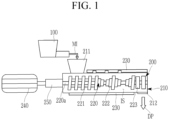
- FIG. 1 illustrates a dry powder kneading apparatus according to an embodiment.
- FIG. 2A illustrates an image of a conveying element of a screw of a dry powder kneading apparatus according to an embodiment
- FIG. 2B illustrates an image of a kneading device of a screw of a dry powder kneading apparatus according to an embodiment
- FIG. 2C illustrates an image of a neutral element of a screw of a dry powder kneading apparatus according to an embodiment.
- a dry powder kneading apparatus may be an apparatus in which a mixture including an active material, a conductive material, and a binder is kneaded into fiberized dry powder to manufacture a dry electrode for a rechargeable battery.
- the dry powder kneading apparatus may be an apparatus that supplies suitable wet electrode materials included in suitable wet electrode manufacturing apparatuses.
- the dry powder fiberized by the dry powder kneading apparatus according to an embodiment may be supplied to suitable calendering apparatuses that manufacture free-standing films.
- the dry powder kneading apparatus may knead a mixture MI including an active material, a conductive material, and a binder into a fiberized dry powder DP using a screw 220, and may supply the fiberized dry powder DP to various suitable dry electrode manufacturing apparatuses.
- the active material having various suitable electrode active materials including, e.g., nickel cobalt aluminum (NCA)
- the conductive material may include various suitable conductive materials including, e.g., at least one of Ketjen black and carbon nanotube
- the binder may include various suitable fibrous binders including, e.g., polytetrafluoroethylene (PTFE).
- PTFE polytetrafluoroethylene
- a dry electrode manufacturing apparatus adjacent to the dry powder kneading apparatus may be an apparatus that includes various suitable calendering rolls for calendering the fiberized dry powder DP to manufacture a free-standing film.
- the dry powder kneading apparatus may include a feeder 100 and a kneader 200.
- the feeder 100 may supply the mixture MI including the active material, the conductive material, and the binder to a main body 210 of the kneader 200.
- the feeder 100 may quantitatively supply the mixture MI to the kneader 200 by using various suitable quantitative controllers.
- the mixture MI supplied from the feeder 100 may be kneaded into the dry powder DP fiberized in the kneader 200 and discharged.
- the feeder 100 may feed the mixture MI to the kneader 200 at a predetermined feeding rate.
- the feeder 100 may feed the mixture MI to the kneader 200 at a feeding rate of 25 kg/hr to 40 kg/hr.
- the active material included in the mixture MI may be 90 wt% to 99 wt% of the total weight of the mixture MI, the conductive material may be 0.5 wt% to 9.5 wt% of the total weight of the mixture MI, and the binder may be 0.5 wt% to 9.5 wt% of the total weight of the mixture MI.
- the active material included in the mixture MI may be 96 wt% of the total weight of the mixture MI, the conductive material may be 1.8 wt% of the total weight of the mixture MI, and the binder may be 2.2 wt% of the total weight of the mixture MI.
- the kneader 200 may knead the mixture MI supplied from the feeder 100 into the fiberized dry powder DP.
- the kneader 200 may include the main body 210, the screw 220, a heater 230, a motor 240, and a torque meter 250.
- the main body 210 may include an inner space IS, an inlet 211, and an outlet 212.
- the inlet 211 and the outlet 212 may be in fluid communication with the inner space IS of the main body 210.
- the temperature of the inner space IS of the main body 210 may be 110 °C or higher, e.g., the temperature of the inner space IS of the main body 210 may be 126 °C to 146 °C.
- the temperature of the inner space IS of the main body 210 may be controlled by the heater 230, e.g., the heater 230 may include at least one sensor and controller to adjust the temperature in the inner space IS.
- the temperature of the inner space IS of the main body 210 may be controlled by various suitable heating members.
- the outlet 212 may be spaced apart from the inlet 211 with the inner space IS interposed therebetween, e.g., the outlet 212 and the inlet 211 may be at opposite ends of the inner space IS and at opposite ends of the screw 220 along the longitudinal direction of the screw 220.
- the outlet 212 is a portion where the dry powder DP fiberized from the mixture MI is discharged by the screw 220 in the inner space IS.
- the outlet 212 may be adjacent to a neutral element 223 (e.g., a blocker) of the screw 220.
- the dry powder DP that is blocked from moving in one direction in the inner space IS by the neutral element 223 of the screw 220 may be discharged to the outside through the outlet 212.
- the screw 220 may include the conveying element 221, the kneading element 222, and the neutral element 223.
- the kneading element 222 may be between the neutral element 223 and the conveying element 221 along a major axis of the screw 220 (e.g., along a longitudinal direction of the screw 220).
- the conveying element 221, the kneading element 222, and the neutral element 223 may be aligned along a same main axis extending along the longitudinal direction of the screw 220.
- the conveying element 221, the kneading element 222, and the neutral element 223 may be attached to and aligned along a shaft 220a (e.g., a same shaft) of the screw 220.
- the conveying element 221 moves the mixture MI in one direction.
- the conveying element 221 moves the mixture MI to the kneading element 222.
- the conveying element 221 may include a thread that extends continuously multiple times around a main body of the screw 220.
- the thread may be defined by a helically shaped ridge that wraps continuously multiple times around the main body of the screw 220, such that the mixture MI may be moved along the thread, e.g., in a space between portions of the helical ridge.
- the conveying element 221 may include any suitable conveying screw shapes capable of moving the mixture MI in one direction.
- the neutral element 223 may be connected to the kneading element 222.
- the neutral element 223 may block the fiberized dry powder DP moved from the kneading element 222 from moving in one direction in the inner space IS.
- the dry powder DP which is blocked from moving in one direction by the neutral element 223, may be discharged to the outside through the outlet 212 of the main body 210. For example, as illustrated in FIG.
- a mixture containing 96 wt% of an active material containing NCA (nickel cobalt aluminum), 1.8 wt% of a conductive material containing Ketjen black, and 2.2 wt% of a binder containing PTFE (polytetrafluoroethylene) was fed into the inner space of the kneader at a feeding rate of 10 kg/hr.
- NCA nickel cobalt aluminum
- a conductive material containing Ketjen black 1.8 wt% of a conductive material containing Ketjen black
- PTFE polytetrafluoroethylene
- a mixture containing 96 wt% of an active material containing NCA (nickel cobalt aluminum), 1.8 wt% of a conductive material containing Ketjen black, and 2.2 wt% of a binder containing PTFE (polytetrafluoroethylene) was fed into the inner space of the kneader at a feeding rate of 25 kg/hr.
- NCA nickel cobalt aluminum
- a conductive material containing Ketjen black 1.8 wt% of a conductive material containing Ketjen black
- PTFE polytetrafluoroethylene
- a mixture containing 96 wt% of an active material containing NCA (nickel cobalt aluminum), 1.8 wt% of a conductive material containing Ketjen black, and 2.2 wt% of a binder containing PTFE (polytetrafluoroethylene) was fed into the inner space of the kneader at a feeding rate of 25 kg/hr.
- NCA nickel cobalt aluminum
- a conductive material containing Ketjen black 1.8 wt% of a conductive material containing Ketjen black
- PTFE polytetrafluoroethylene
- Comparative Example 3 As a result of the experiment in Comparative Example 3 (CO3), due to the excess of the rotation torque allowed in the screw of the kneader, the screw was broken, so that the fiberization kneading from the mixture to the dry powder was not performed (NG). Comparative Example 3 (CO3) was performed by disengaging a guard member such as shaft interlock.
- a dry electrode may be manufactured by kneading a mixture including an active material, a conductive material, and a binder into fiberized dry powder using a kneading apparatus, manufacturing the fiberized dry powder into a free-standing film using a calendering roll, and laminating the free-standing film to a current collector.
- the conventional dry powder kneading apparatus may include a screw for kneading the mixture including the active material, the conductive material, and the binder into the fiberized dry powder.
- the conventional dry powder kneading apparatus performs kneading by increasing the rotational torque of the screw because the dry powder that is fiberized from the mixture by the screw has low flowability and high cohesiveness. However, as the rotational torque increases, the screw may be damaged or may stop.
- exemplary embodiments provide a dry powder kneading apparatus for manufacturing a dry electrode that may suppress damage to a screw kneading a mixture including an active material, a conductive material, and a binder into fiberized dry powder and that may include a free-standing film with improved tensile strength by easily kneading a mixture into fiberized dry powder.
Landscapes
- Chemical & Material Sciences (AREA)
- Chemical Kinetics & Catalysis (AREA)
- Electrochemistry (AREA)
- General Chemical & Material Sciences (AREA)
- Engineering & Computer Science (AREA)
- Manufacturing & Machinery (AREA)
- Inorganic Chemistry (AREA)
- Materials Engineering (AREA)
- Battery Electrode And Active Subsutance (AREA)
- Mixers Of The Rotary Stirring Type (AREA)
- Processing And Handling Of Plastics And Other Materials For Molding In General (AREA)
Abstract
A dry powder kneading apparatus includes a main body including an inner space into which a mixture containing an active material, a conductive material, and a binder is supplied, and a screw inside the inner space of the main body, the screw being configured to move the mixture in one direction and to knead the mixture into fiberized dry powder, and a rotation torque of the screw being 1.4 kgf·m to 42 kgf·m.
Description
- The present disclosure relates to a dry powder kneading apparatus.
- Generally, a rechargeable battery is a battery that may be repeatedly charged and discharged. Recently, an apparatus for manufacturing a dry electrode for a rechargeable battery that does not use a solvent is desired.
- Aspects of embodiments provide a dry powder kneading apparatus including a main body including an inner space into which a mixture containing an active material, a conductive material, and a binder is supplied; and a screw that is disposed in the inner space of the main body, moves the mixture in one direction, and kneads it into fiberized dry powder, wherein a rotation torque of the screw is 1 to 30 times 1.4 kgfm.
- A temperature of the inner space of the main body may be 110 °C or higher.
- A rotation torque of the screw may be 6.1 kgfm to 34 kgf·m.
- An amount of the active material may be 90 wt% to 99 wt% of the mixture, an amount of the conductive material may be 0.5 wt% to 9.5 wt% of the mixture, and an amount of the binder may be 0.5 wt% to 10 wt% of the mixture.
- The active material may include nickel cobalt aluminum (NCA), the conductive material may include at least one of Ketjen black and carbon nanotubes, and the binder may include polytetrafluoroethylene (PTFE).
- An amount of the active material may be 96 wt% of the mixture, an amount of the conductive material may be 1.8 wt% of the mixture, and an amount of the binder may be 2.2 wt% of the mixture.
- A temperature of the inner space of the main body may be 126 °C to 146 °C.
- A shaft speed of the screw may be 60 RPM to 90 RPM.
- A feeding rate of the mixture may be 25 kg/hr to 40 kg/hr.
- The dry powder kneading apparatus may further include a feeder that supplies the mixture to the main body.
- The dry powder kneading apparatus may further include a motor connected to the screw to rotate the screw.
- The dry powder kneading apparatus may further include a torque meter disposed between the motor and the screw and measuring a rotation torque of the screw.
- The dry powder kneading apparatus may further include a plurality of heaters installed on an outer surface of the main body.
- The screw may include a conveying element moving the mixture in one direction; a kneading element connected to the conveying element to knead the mixture into the fiberized dry powder; and a neutral element connected to the kneading element to block movement of the dry powder in one direction.
- The main body may further include an inlet through which the mixture is input; and an outlet adjacent to the neutral element and discharging the dry powder.
- Aspects of embodiments provide a method of forming fiberized dry powder, including forming a mixture containing an active material, a conductive material, and a binder, supplying the mixture to an inner space of a main body of a dry powder kneading apparatus, operating a screw inside the inner space of the main body at a rotation torque of 1.4 kgf-m to 42 kgf·m, such the screw moves the mixture in one direction through the main body and kneads the mixture into fiberized dry powder.
- An amount of the active material may be 90 wt% to 99 wt% of a total weight of the mixture, an amount of the conductive material may be 0.5 wt% to 9.5 wt% of the total weight of the mixture, and an amount of the binder may be 0.5 wt% to 9.5 wt% of the total weight of the mixture.
- The active material may include nickel cobalt aluminum, the conductive material may include at least one of Ketjen black and carbon nanotubes, and the binder may include polytetrafluoroethylene.
- Operating the screw may include heating the inner space of the main body to a temperature of 126 °C to 146 °C.
- Operating the screw may include rotating a shaft of the screw at 60 RPM to 90 RPM.
- At least some of the above and other features of the invention are set out in the claims.
- Features will become apparent to those of skill in the art by describing in detail example embodiments with reference to the attached drawings, in which:
-
FIG. 1 illustrates a dry powder kneading apparatus according to an embodiment. -
FIGS. 2A-2C illustrate images of respective examples of a conveying element, a kneading device, and a neutral element of a screw of a dry powder kneading apparatus according to an embodiment. -
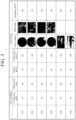
FIG. 3 illustrates a table of experimental results for confirming the effect of a dry powder kneading apparatus according to an embodiment. - Example embodiments will now be described more fully hereinafter with reference to the accompanying drawings; however, they may be embodied in different forms and should not be construed as limited to the embodiments set forth herein. Rather, these embodiments are provided so that this disclosure will be thorough and complete, and will fully convey example implementations to those skilled in the art.
- In the drawing figures, the dimensions of layers and regions may be exaggerated for clarity of illustration. It will also be understood that when a layer or element is referred to as being "on" another layer or substrate, it can be directly on the other layer or substrate, or intervening layers may also be present. In addition, it will also be understood that when a layer is referred to as being "between" two layers, it can be the only layer between the two layers, or one or more intervening layers may also be present. Like reference numerals refer to like elements throughout.
- In addition, unless explicitly described to the contrary, the word "comprise" and variations such as "comprises" or "comprising" will be understood to imply the inclusion of stated elements but not the exclusion of any other elements.
- Hereinafter, a dry powder kneading apparatus according to an embodiment will be described with reference to
FIG. 1 andFIGS. 2A-2C . -
FIG. 1 illustrates a dry powder kneading apparatus according to an embodiment.FIG. 2A illustrates an image of a conveying element of a screw of a dry powder kneading apparatus according to an embodiment,FIG. 2B illustrates an image of a kneading device of a screw of a dry powder kneading apparatus according to an embodiment, andFIG. 2C illustrates an image of a neutral element of a screw of a dry powder kneading apparatus according to an embodiment. - For example, a dry powder kneading apparatus according to an embodiment may be an apparatus in which a mixture including an active material, a conductive material, and a binder is kneaded into fiberized dry powder to manufacture a dry electrode for a rechargeable battery. In another example, the dry powder kneading apparatus according to an embodiment may be an apparatus that supplies suitable wet electrode materials included in suitable wet electrode manufacturing apparatuses. In yet another example, the dry powder fiberized by the dry powder kneading apparatus according to an embodiment may be supplied to suitable calendering apparatuses that manufacture free-standing films.
- Referring to
FIG. 1 , the dry powder kneading apparatus according to the embodiment may knead a mixture MI including an active material, a conductive material, and a binder into a fiberized dry powder DP using ascrew 220, and may supply the fiberized dry powder DP to various suitable dry electrode manufacturing apparatuses. - For example, the active material having various suitable electrode active materials including, e.g., nickel cobalt aluminum (NCA), the conductive material may include various suitable conductive materials including, e.g., at least one of Ketjen black and carbon nanotube, and the binder may include various suitable fibrous binders including, e.g., polytetrafluoroethylene (PTFE).
- For example, a dry electrode manufacturing apparatus adjacent to the dry powder kneading apparatus may be an apparatus that includes various suitable calendering rolls for calendering the fiberized dry powder DP to manufacture a free-standing film.
- The dry powder kneading apparatus according to the embodiment may include a
feeder 100 and akneader 200. Thefeeder 100 may supply the mixture MI including the active material, the conductive material, and the binder to amain body 210 of thekneader 200. Thefeeder 100 may quantitatively supply the mixture MI to thekneader 200 by using various suitable quantitative controllers. The mixture MI supplied from thefeeder 100 may be kneaded into the dry powder DP fiberized in thekneader 200 and discharged. - For example, the
feeder 100 may feed the mixture MI to thekneader 200 at a predetermined feeding rate. For example, thefeeder 100 may feed the mixture MI to thekneader 200 at a feeding rate of 25 kg/hr to 40 kg/hr. - For example, the active material included in the mixture MI may be 90 wt% to 99 wt% of the total weight of the mixture MI, the conductive material may be 0.5 wt% to 9.5 wt% of the total weight of the mixture MI, and the binder may be 0.5 wt% to 9.5 wt% of the total weight of the mixture MI. For example, the active material included in the mixture MI may be 96 wt% of the total weight of the mixture MI, the conductive material may be 1.8 wt% of the total weight of the mixture MI, and the binder may be 2.2 wt% of the total weight of the mixture MI.
- The
kneader 200 may knead the mixture MI supplied from thefeeder 100 into the fiberized dry powder DP. Thekneader 200 may include themain body 210, thescrew 220, aheater 230, amotor 240, and atorque meter 250. - The
main body 210 may include an inner space IS, aninlet 211, and anoutlet 212. Theinlet 211 and theoutlet 212 may be in fluid communication with the inner space IS of themain body 210. - The inner space IS may be formed by extending in one direction (e.g., a single direction) from the inside of the
main body 210, e.g., the inner space IS may be a volumetric space in the interior of themain body 210. The mixture MI including the active material, the conductive material, and the binder may be supplied from thefeeder 100 into the inner space IS of themain body 210 through theinlet 211. - For example, the temperature of the inner space IS of the
main body 210 may be 110 °C or higher, e.g., the temperature of the inner space IS of themain body 210 may be 126 °C to 146 °C. For example, the temperature of the inner space IS of themain body 210 may be controlled by theheater 230, e.g., theheater 230 may include at least one sensor and controller to adjust the temperature in the inner space IS. In another example, the temperature of the inner space IS of themain body 210 may be controlled by various suitable heating members. - The
inlet 211 is a portion into which the mixture MI is input from thefeeder 100. The mixture MI may be supplied from thefeeder 100 into the inner space IS through theinlet 211. Theinlet 211 may be adjacent to a conveying element 221 (e.g., a conveyer) of thescrew 220. The mixture MI supplied to the inner space IS through theinlet 211 may be moved to a kneading element 222 (e.g., a fiberizer) of thescrew 220 by the conveyingelement 221 of thescrew 220. - The
outlet 212 may be spaced apart from theinlet 211 with the inner space IS interposed therebetween, e.g., theoutlet 212 and theinlet 211 may be at opposite ends of the inner space IS and at opposite ends of thescrew 220 along the longitudinal direction of thescrew 220. Theoutlet 212 is a portion where the dry powder DP fiberized from the mixture MI is discharged by thescrew 220 in the inner space IS. Theoutlet 212 may be adjacent to a neutral element 223 (e.g., a blocker) of thescrew 220. The dry powder DP that is blocked from moving in one direction in the inner space IS by theneutral element 223 of thescrew 220 may be discharged to the outside through theoutlet 212. - The
screw 220 may be disposed in the inner space IS of themain body 210. Thescrew 220 may be rotated by themotor 240 to move the mixture MI supplied to the inner space IS in one direction in the inner space IS and to knead the mixture MI into the fiberized dry powder DP. - The
screw 220 may include the conveyingelement 221, the kneadingelement 222, and theneutral element 223. For example, as illustrated inFIG. 1 , the kneadingelement 222 may be between theneutral element 223 and the conveyingelement 221 along a major axis of the screw 220 (e.g., along a longitudinal direction of the screw 220). For example, as illustrated inFIG. 1 , the conveyingelement 221, the kneadingelement 222, and theneutral element 223 may be aligned along a same main axis extending along the longitudinal direction of thescrew 220. For example, as illustrated inFIG. 1 , the conveyingelement 221, the kneadingelement 222, and theneutral element 223 may be attached to and aligned along ashaft 220a (e.g., a same shaft) of thescrew 220. - Referring to
FIG. 1 andFIG. 2A , the conveyingelement 221 moves the mixture MI in one direction. The conveyingelement 221 moves the mixture MI to the kneadingelement 222. For example, as illustrated inFIG. 2A , the conveyingelement 221 may include a thread that extends continuously multiple times around a main body of thescrew 220. For example, referring toFIG. 2A , the thread may be defined by a helically shaped ridge that wraps continuously multiple times around the main body of thescrew 220, such that the mixture MI may be moved along the thread, e.g., in a space between portions of the helical ridge. In another example, the conveyingelement 221 may include any suitable conveying screw shapes capable of moving the mixture MI in one direction. - Referring to
FIG. 1 andFIG. 2B , the kneadingelement 222 may be disposed between the conveyingelement 221 and theneutral element 223. The kneadingelement 222 may be connected to the conveyingelement 221 to knead the mixture MI moved from the conveyingelement 221 to the kneadingelement 222 into the fiberized dry powder DP and to move the dry powder DP to theneutral element 223. For example, as illustrated inFIG. 2B , the kneadingelement 222 may include crashing elements facing each other and moveable toward each other, e.g., two rows of hammers or teeth facing each other and moveable toward each other to contact each other, such that the mixture MI moved from the conveyingelement 221 to the kneadingelement 222 may be moved through the crashing elements, e.g., through the teeth, of the kneadingelement 222 to be fiberized into the fiberized dry powder DP. In another example, the kneadingelement 222 may include any suitable kneading screw shapes capable of kneading the mixture MI into the fiberized dry powder DP. - Referring to
FIG. 1 andFIG. 2C , theneutral element 223 may be connected to the kneadingelement 222. Theneutral element 223 may block the fiberized dry powder DP moved from the kneadingelement 222 from moving in one direction in the inner space IS. The dry powder DP, which is blocked from moving in one direction by theneutral element 223, may be discharged to the outside through theoutlet 212 of themain body 210. For example, as illustrated inFIG. 2C , theneutral element 223 may include a plurality of protrusions arranged to be spaced apart from each other along a longitudinal direction of thescrew 220 and along a circumferential direction of the main body of thescrew 220, e.g., the protrusions may be offset from each other along the longitudinal and circumferential directions of the main body of thescrew 220, such that the protrusions may block movement of material, e.g., the fiberized dry powder DP, along the longitudinal direction of thescrew 220. In another example, theneutral element 223 may include any suitable neutral screw shapes that may block the movement of the dry powder DP moving along thescrew 220 from the kneadingelement 222 past theneutral element 223 in the inner space IS. - For example, the rotational torque of the
screw 220 may be 1 to 30 times 1.4 kgf·m (i.e., 1.4 kgf·m to 42 kgf·m), e.g., 6.1 kgf·m to 34 kgf·m. For example, the shaft speed of thescrew 220 may be 60 RPM to 90 RPM. The shaft speed of thescrew 220 may be controlled using themotor 240 or various suitable set gear members. - The
heater 230 may be installed on the outer surface of themain body 210. Theheater 230 may include heating members. The inner space IS of themain body 210 may be heated by theheater 230, so that the temperature of the inner space IS may have a predetermined set temperature. For example, theheater 230 may continuously surround the entire outer surface of themain body 210. In another example, the heater may include a plurality of heating members spaced apart from each other throughout the entire outer surface of themain body 210. For example, theheater 230 may be installed on at least one of the inner surface and the outer surface of themain body 210. - The
motor 240 may be connected to thescrew 220 to rotate thescrew 220. A rotation axis of themotor 240 may be connected to theshaft 220a of thescrew 220 or through various gear members. For example, themotor 240 may rotate thescrew 220 so that thescrew 220 rotates at a predetermined rotation torque. In another example, the rotation torque of thescrew 220 may be set by any suitable rotation torque control members. - The
torque meter 250 may be disposed between themotor 240 and thescrew 220. Thetorque meter 250 may measure the rotation torque of thescrew 220 and the rotation torque of themotor 240. Thetorque meter 250 may include suitable rotation torque measurement members, e.g., at least one sensor and controller to adjust the gears that set the rotation torque of thescrew 220. - The dry powder kneading apparatus according to the present embodiment may include a configuration in which the rotation torque of the
screw 220 is 1 to 30 times 1.4 kgf·m and the temperature of the inner space IS of themain body 210 is 110 °C or more. As such, it is possible to suppress damage to thescrew 220 for kneading the mixture MI containing the active material, the conductive material, and the binder into the fiberized dry powder DP and to easily knead the mixture MI into the fiberized dry powder DP to manufacture a dry electrode including a free-standing film having improved tensile strength. - The dry powder kneading apparatus according to the embodiment may include a configuration in which the rotation torque of the
screw 220 is 6.1 kgf·m to 34 kgf·m and the temperature of the inner space IS of themain body 210 is 126 °C to 146 °C. As such, it is possible to suppress damage to thescrew 220 for kneading the mixture MI containing the active material, the conductive material, and the binder into the fiberized dry powder DP and to easily knead the mixture MI into the fiberized dry powder DP to manufacture a dry electrode including a free-standing film having improved tensile strength. - The following Experimental Examples and Comparative Examples are provided in order to highlight characteristics of one or more embodiments, but it will be understood that the Experimental Examples and Comparative Examples are not to be construed as limiting the scope of the embodiments, nor are the Comparative Examples to be construed as being outside the scope of the embodiments. Further, it will be understood that the embodiments are not limited to the particular details described in the Experimental Examples and Comparative Examples.
- Results of the Experimental Examples and Comparative Examples will be described with reference to
FIG. 3. FIG. 3 illustrates a table of experimental results for confirming the effect of a dry powder kneading apparatus according to an embodiment. - Referring to
FIG. 3 , Experimental Example 1 (EX1), Experimental Example 2 (EX2), Experimental Example 3 (EX3), Comparative Example 1 (CO1), Comparative Example 2 (CO2), and Comparative Example 3 (CO3) were performed using the dry powder kneading apparatus according to an embodiment. - A mixture containing 96 wt% of an active material containing NCA (nickel cobalt aluminum), 1.8 wt% of a conductive material containing Ketjen black, and 2.2 wt% of a binder containing PTFE (polytetrafluoroethylene) was fed into the inner space of the kneader at a feeding rate of 25 kg/hr. The shaft speed of the screw of the kneader that kneaded the mixture into fiberized dry powder was 60 RPM, the rotation torque of the screw was 7.8 kgfm, and the temperature of the inner space of the kneader was 139 °C. As a result of the experiment in Experimental Example 1 (EX1), as confirmed in the optical image and SEM image, the fiberization kneading from the mixture to the dry powder was easily performed (OK).
- A mixture containing 96 wt% of an active material containing NCA (nickel cobalt aluminum), 1.8 wt% of a conductive material containing Ketjen black, and 2.2 wt% of a binder containing PTFE (polytetrafluoroethylene) was fed into the inner space of the kneader at a feeding rate of 40 kg/hr. The shaft speed of the screw of the kneader that kneaded the mixture into fiberized dry powder was 90 RPM, the rotation torque of the screw was 6.1 kgfm, and the temperature of the inner space of the kneader was 126 °C. As a result of the experiment in Experimental Example 2 (EX2), as confirmed in the optical image and SEM image, the fiberization kneading from the mixture to the dry powder was easily performed (OK).
- A mixture containing 96 wt% of an active material containing NCA (nickel cobalt aluminum), 1.8 wt% of a conductive material containing Ketjen black, and 2.2 wt% of a binder containing PTFE (polytetrafluoroethylene) was fed into the inner space of the kneader at a feeding rate of 25 kg/hr. The shaft speed of the screw of the kneader that kneaded the mixture into fiberized dry powder was 60 RPM, the rotation torque of the screw was 34 kgf·m, and the temperature of the inner space of the kneader was 146 °C. As a result of the experiment in Experimental Example 3 (EX3), as confirmed in the optical image and SEM image, the fiberization kneading from the mixture to the dry powder was easily performed (OK).
- A mixture containing 96 wt% of an active material containing NCA (nickel cobalt aluminum), 1.8 wt% of a conductive material containing Ketjen black, and 2.2 wt% of a binder containing PTFE (polytetrafluoroethylene) was fed into the inner space of the kneader at a feeding rate of 10 kg/hr. The shaft speed of the screw of the kneader that kneaded the mixture into fiberized dry powder was 60 RPM, the rotation torque of the screw was 1.6 kgfm, and the temperature of the inner space of the kneader was 93 °C. As a result of the experiment in Comparative Example 1 (CO1), as confirmed in the optical image and SEM image, the fiberization kneading from the mixture to the dry powder was not performed due to the low temperature of the inner space of the kneader (NG).
- A mixture containing 96 wt% of an active material containing NCA (nickel cobalt aluminum), 1.8 wt% of a conductive material containing Ketjen black, and 2.2 wt% of a binder containing PTFE (polytetrafluoroethylene) was fed into the inner space of the kneader at a feeding rate of 25 kg/hr. The shaft speed of the screw of the kneader that kneaded the mixture into fiberized dry powder was 60 RPM, the rotation torque of the screw was 44 kgf·m, and the temperature of the inner space of the kneader was 148 °C. As a result of the experiment in Comparative Example 2 (CO2), due to the excess of the rotation torque allowed in the screw of the kneader, the screw was stopped by various known guard members such as shaft interlock, and the fiberization kneading from the mixture to the dry powder was not performed (NG).
- A mixture containing 96 wt% of an active material containing NCA (nickel cobalt aluminum), 1.8 wt% of a conductive material containing Ketjen black, and 2.2 wt% of a binder containing PTFE (polytetrafluoroethylene) was fed into the inner space of the kneader at a feeding rate of 25 kg/hr. The shaft speed of the screw of the kneader that kneaded the mixture into fiberized dry powder was 60 RPM, the rotation torque of the screw was 50 kgfm, and the temperature of the inner space of the kneader was 148 °C. As a result of the experiment in Comparative Example 3 (CO3), due to the excess of the rotation torque allowed in the screw of the kneader, the screw was broken, so that the fiberization kneading from the mixture to the dry powder was not performed (NG). Comparative Example 3 (CO3) was performed by disengaging a guard member such as shaft interlock.
- According to the experimental results of Experimental Example 1 (EX1), Experimental Example 2 (EX2), Experimental Example 3 (EX3), Comparative Example 1 (CO1), Comparative Example 2 (CO2), and Comparative Example 3 (CO3) described above, in order to realize the task and effect of manufacturing the dry electrode that suppresses the damage of the screw that kneads the mixture containing the active material, conductive material, and binder into the fiberized dry powder, and at the same time, that includes the free-standing film with improved tensile strength by easily kneading the mixture into the fiberized dry powder, it is confirmed that the numerically limited configuration in which the rotational torque of the screw of the kneader of the dry powder kneading apparatus according to the embodiment is 6.1 kgf·m to 34 kgf·m is important to confirm that the upper and lower limits are thresholds.
- In addition, according to the experimental results of Experimental Example 1 (EX1), Experimental Example 2 (EX2), Experimental Example 3 (EX3), Comparative Example 1 (CO1), Comparative Example 2 (CO2), and Comparative Example 3 (CO3) described above, in order to realize the task and effect of manufacturing the dry electrode that suppresses the damage of the screw that kneads the mixture containing the active material, conductive material, and binder into the fiberized dry powder, and at the same time, that includes the free-standing film with improved tensile strength by easily kneading the mixture into the fiberized dry powder, it is confirmed that the numerically limited configuration in which the rotational torque of the screw of the kneader of the dry powder kneading apparatus according to the embodiment is 6.1 kgf·m to 34 kgf·m and the temperature of the inner space of the main body of the kneader thereof is 126 °C to 146 °C is important to confirm that the upper and lower limits are thresholds.
- In addition, according to the experimental results of Experimental Example 1 (EX1), Experimental Example 2 (EX2), Experimental Example 3 (EX3), Comparative Example 1 (CO1), Comparative Example 2 (CO2), and Comparative Example 3 (CO3) described above, in order to realize the task and effect of manufacturing the dry electrode that suppresses the damage of the screw that kneads the mixture containing the active material, conductive material, and binder into the fiberized dry powder, and at the same time, that includes the free-standing film with improved tensile strength by easily kneading the mixture into the fiberized dry powder, it is confirmed that the numerically limited configuration in which the rotational torque of the screw of the kneader of the dry powder kneading apparatus according to the embodiment, in which the mixture containing 96 wt% of an active material containing NCA (nickel cobalt aluminum), 1.8 wt% of a conductive material containing Ketjen black, and 2.2 wt% of a binder containing PTFE (polytetrafluoroethylene) is kneaded, is 6.1 kgf·m to 34 kgf·m and the temperature of the inner space of the main body of the kneader thereof is 126 °C to 146 °C is important to confirm that the upper and lower limits are thresholds.
- By way of summation and review, a dry electrode may be manufactured by kneading a mixture including an active material, a conductive material, and a binder into fiberized dry powder using a kneading apparatus, manufacturing the fiberized dry powder into a free-standing film using a calendering roll, and laminating the free-standing film to a current collector. The conventional dry powder kneading apparatus may include a screw for kneading the mixture including the active material, the conductive material, and the binder into the fiberized dry powder.
- The conventional dry powder kneading apparatus performs kneading by increasing the rotational torque of the screw because the dry powder that is fiberized from the mixture by the screw has low flowability and high cohesiveness. However, as the rotational torque increases, the screw may be damaged or may stop.
- In contrast, exemplary embodiments provide a dry powder kneading apparatus for manufacturing a dry electrode that may suppress damage to a screw kneading a mixture including an active material, a conductive material, and a binder into fiberized dry powder and that may include a free-standing film with improved tensile strength by easily kneading a mixture into fiberized dry powder.
- Example embodiments have been disclosed herein, and although specific terms are employed, they are used and are to be interpreted in a generic and descriptive sense only and not for purpose of limitation. In some instances, as would be apparent to one of ordinary skill in the art as of the filing of the present application, features, characteristics, and/or elements described in connection with a particular embodiment may be used singly or in combination with features, characteristics, and/or elements described in connection with other embodiments unless otherwise specifically indicated. Accordingly, it will be understood by those of skill in the art that various changes in form and details may be made without departing from the scope of the present invention as set forth in the following claims.
Claims (15)
- A dry powder kneading apparatus, comprising:a main body including an inner space into which a mixture containing an active material, a conductive material, and a binder is suppliable; anda screw inside the inner space of the main body, the screw being configured to move the mixture in one direction and to knead the mixture into fiberized dry powder, and a rotation torque of the screw being 1.4 kgf·m to 42 kgf·m.
- The dry powder kneading apparatus as claimed in claim 1, wherein a temperature of the inner space of the main body is heatable to 110 °C or higher.
- The dry powder kneading apparatus as claimed in claim 1 or 2, wherein the rotation torque of the screw is 6.1 kgfm to 34 kgf·m.
- The dry powder kneading apparatus as claimed in claim 3, wherein:an amount of the active material is 90 wt% to 99 wt% of a total weight of the mixture,an amount of the conductive material is 0.5 wt% to 9.5 wt% of the total weight of the mixture, andan amount of the binder is 0.5 wt% to 9.5 wt% of the total weight of the mixture.
- The dry powder kneading apparatus as claimed in claim 4, wherein:the active material includes nickel cobalt aluminum,the conductive material includes at least one of Ketjen black and carbon nanotubes, andthe binder includes polytetrafluoroethylene.
- The dry powder kneading apparatus as claimed in claim 5, wherein:an amount of the active material is 96 wt% of the total weight of the mixture,an amount of the conductive material is 1.8 wt% of the total weight of the mixture, andan amount of the binder is 2.2 wt% of the total weight of the mixture.
- The dry powder kneading apparatus as claimed in any preceding claim, wherein a temperature of the inner space of the main body is 126 °C to 146 °C.
- The dry powder kneading apparatus as claimed in any preceding claim, wherein a shaft speed of the screw is 60 RPM to 90 RPM.
- The dry powder kneading apparatus as claimed in any preceding claim, further comprising a feeder configured to supply the mixture to the main body, and optionally
wherein the feeder is configured to have a feeding rate of 25 kg/hr to 40 kg/hr. - The dry powder kneading apparatus as claimed in any preceding claim, further comprising a motor connected to the screw, the motor being configured to rotate the screw, and optionally
further comprising a torque meter between the motor and the screw, the torque meter being configured to measure a rotation torque of the screw. - The dry powder kneading apparatus as claimed in any preceding claim, further comprising a plurality of heaters on an outer surface of the main body.
- The dry powder kneading apparatus as claimed in any preceding claim, wherein the screw includes:a conveyer configured to move the mixture in the one direction;a fiberizer connected to the conveyer, the fiberizer being configured to knead the mixture into the fiberized dry powder; anda blocker connected to the fiberizer, the blocker being configured to block movement of the dry powder in the one direction, and optionallywherein the main body further includes an inlet through which the mixture is input, and an outlet adjacent to the blocker and configured to discharge the dry powder.
- A method of forming fiberized dry powder, the method comprising:forming a mixture containing an active material, a conductive material, and a binder;supplying the mixture to an inner space of a main body of a dry powder kneading apparatus; andoperating a screw inside the inner space of the main body at a rotation torque of 1.4 kgf·m to 42 kgf·m, such the screw moves the mixture in one direction through the main body and kneads the mixture into fiberized dry powder.
- The method as claimed in claim 13, wherein:an amount of the active material is 90 wt% to 99 wt% of a total weight of the mixture,an amount of the conductive material is 0.5 wt% to 9.5 wt% of the total weight of the mixture, andan amount of the binder is 0.5 wt% to 9.5 wt% of the total weight of the mixture.
- The method as claimed in claim 14, wherein:the active material includes nickel cobalt aluminum,the conductive material includes at least one of Ketjen black and carbon nanotubes, andthe binder includes polytetrafluoroethylene, and wherein:operating the screw includes heating the inner space of the main body to a temperature of 126 °C to 146 °C, and/oroperating the screw includes rotating a shaft of the screw at 60 RPM to 90 RPM.
Applications Claiming Priority (1)
| Application Number | Priority Date | Filing Date | Title |
|---|---|---|---|
| KR1020230113818A KR20250033433A (en) | 2023-08-29 | 2023-08-29 | Dry powder kneading apparatus |
Publications (1)
| Publication Number | Publication Date |
|---|---|
| EP4516387A1 true EP4516387A1 (en) | 2025-03-05 |
Family
ID=91664716
Family Applications (1)
| Application Number | Title | Priority Date | Filing Date |
|---|---|---|---|
| EP24184068.5A Pending EP4516387A1 (en) | 2023-08-29 | 2024-06-24 | Dry powder kneading apparatus and method |
Country Status (4)
| Country | Link |
|---|---|
| US (1) | US12533646B2 (en) |
| EP (1) | EP4516387A1 (en) |
| KR (1) | KR20250033433A (en) |
| CN (1) | CN119524672A (en) |
Citations (7)
| Publication number | Priority date | Publication date | Assignee | Title |
|---|---|---|---|---|
| JP2015060704A (en) * | 2013-09-18 | 2015-03-30 | トヨタ自動車株式会社 | Production method and production apparatus of electrode paste |
| JP2015109175A (en) * | 2013-12-04 | 2015-06-11 | トヨタ自動車株式会社 | Electrode paste manufacturing method and biaxial kneader |
| US20170062797A1 (en) * | 2015-08-28 | 2017-03-02 | Toyota Jidosha Kabushiki Kaisha | Kneader and manufacturing method of electrode body including electrode active material using the same |
| EP3595052A2 (en) * | 2017-09-25 | 2020-01-15 | LG Chem, Ltd. | Method for manufacturing electrode for secondary battery and electrode manufactured thereby |
| EP3598537A2 (en) * | 2017-09-29 | 2020-01-22 | LG Chem, Ltd. | Electrode mixture manufacturing method and electrode mixture |
| EP4213243A1 (en) * | 2021-09-16 | 2023-07-19 | LG Energy Solution, Ltd. | Electrode for lithium secondary battery, method for manufacturing same, and lithium secondary battery comprising same |
| CN116547826A (en) * | 2021-09-16 | 2023-08-04 | 株式会社Lg新能源 | Electrode for lithium secondary battery, method for preparing the same, and lithium secondary battery comprising the same |
Family Cites Families (5)
| Publication number | Priority date | Publication date | Assignee | Title |
|---|---|---|---|---|
| US5727876A (en) * | 1996-05-31 | 1998-03-17 | E. I. Du Pont De Nemours And Company | Polymer mixing apparatus |
| WO2022164120A1 (en) | 2021-01-27 | 2022-08-04 | 주식회사 엘지에너지솔루션 | Free-standing film for dry electrode, manufacturing apparatus thereof, dry electrode including same, and secondary battery |
| KR102707066B1 (en) | 2021-01-27 | 2024-09-13 | 주식회사 엘지에너지솔루션 | Free standing film for dry electrode, manufacturing apparatus thereof, dry electrode including the same, and secondary battery |
| EP4475233A1 (en) | 2021-08-06 | 2024-12-11 | LG Energy Solution, Ltd. | Electrode for electrochemical device comprising dry electrode film and method for manufacturing the same |
| WO2023014127A1 (en) | 2021-08-06 | 2023-02-09 | 주식회사 엘지에너지솔루션 | Electrode for electrochemical device comprising dry electrode film and method for manufacturing same |
-
2023
- 2023-08-29 KR KR1020230113818A patent/KR20250033433A/en active Pending
-
2024
- 2024-02-22 US US18/584,157 patent/US12533646B2/en active Active
- 2024-06-24 EP EP24184068.5A patent/EP4516387A1/en active Pending
- 2024-08-20 CN CN202411141761.9A patent/CN119524672A/en active Pending
Patent Citations (7)
| Publication number | Priority date | Publication date | Assignee | Title |
|---|---|---|---|---|
| JP2015060704A (en) * | 2013-09-18 | 2015-03-30 | トヨタ自動車株式会社 | Production method and production apparatus of electrode paste |
| JP2015109175A (en) * | 2013-12-04 | 2015-06-11 | トヨタ自動車株式会社 | Electrode paste manufacturing method and biaxial kneader |
| US20170062797A1 (en) * | 2015-08-28 | 2017-03-02 | Toyota Jidosha Kabushiki Kaisha | Kneader and manufacturing method of electrode body including electrode active material using the same |
| EP3595052A2 (en) * | 2017-09-25 | 2020-01-15 | LG Chem, Ltd. | Method for manufacturing electrode for secondary battery and electrode manufactured thereby |
| EP3598537A2 (en) * | 2017-09-29 | 2020-01-22 | LG Chem, Ltd. | Electrode mixture manufacturing method and electrode mixture |
| EP4213243A1 (en) * | 2021-09-16 | 2023-07-19 | LG Energy Solution, Ltd. | Electrode for lithium secondary battery, method for manufacturing same, and lithium secondary battery comprising same |
| CN116547826A (en) * | 2021-09-16 | 2023-08-04 | 株式会社Lg新能源 | Electrode for lithium secondary battery, method for preparing the same, and lithium secondary battery comprising the same |
Also Published As
| Publication number | Publication date |
|---|---|
| US12533646B2 (en) | 2026-01-27 |
| CN119524672A (en) | 2025-02-28 |
| US20250073652A1 (en) | 2025-03-06 |
| KR20250033433A (en) | 2025-03-10 |
Similar Documents
| Publication | Publication Date | Title |
|---|---|---|
| US12368157B2 (en) | Electrochemical slurry compositions and methods for preparing the same | |
| EP4152445B1 (en) | Electrode for electrochemical device comprising dry electrode film and method for manufacturing the same | |
| KR20150110718A (en) | Method for manufacturing carbon electrode material using a twin screw extruder | |
| CN109326766A (en) | Manufacturing method of electrode sheet | |
| KR102661426B1 (en) | ELECTRODE FOR electrochemical devise comprising Dry electrode film and method for MANUFACTURING the same | |
| CN115968509A (en) | Method for producing resin composition for secondary battery electrode, method for producing composite material slurry for secondary battery electrode, method for producing electrode film, and method for producing secondary battery | |
| EP4516387A1 (en) | Dry powder kneading apparatus and method | |
| CN113632257A (en) | Electrode formulations for Li-ion batteries and methods for producing electrodes by extrusion with low residence times | |
| JP2023512026A5 (en) | ||
| KR20130030764A (en) | Coating apparatus | |
| JP7376599B2 (en) | Manufacturing method of molded body for electrode | |
| EP4507020A1 (en) | Mixture powder for dry electrode, and dry electrode for electrochemical device comprising same | |
| JP7501970B2 (en) | Freestanding film for dry electrodes, manufacturing apparatus thereof, dry electrodes including the same, and secondary batteries | |
| US11978882B2 (en) | Method and apparatus for manufacturing active material mixture | |
| KR102637754B1 (en) | ELECTRODE, SECONDARY BATTERY COMPRISING THE SAME, and method for MANUFACTURING the same | |
| JP7581094B2 (en) | Secondary battery electrode group | |
| KR102893458B1 (en) | High shear mixing device | |
| US20260038793A1 (en) | Method for manufacturing electrode layer | |
| EP4310962B1 (en) | Method for manufacturing cathode for lithium secondary battery, and cathode | |
| KR20160120306A (en) | Continuous kneading device | |
| JPH0845501A (en) | Manufacture of electrode plate and chemical cell | |
| CN114467190B (en) | Method for rolling electrode | |
| US20260088291A1 (en) | Coated active material, positive electrode material, positive electrode, and battery | |
| CN119630473A (en) | Twin screw extruder | |
| WO2026070529A1 (en) | Precursor for electrode mixture, electrode mixture, electrode mixture sheet, battery electrode, and rechargeable battery |
Legal Events
| Date | Code | Title | Description |
|---|---|---|---|
| PUAI | Public reference made under article 153(3) epc to a published international application that has entered the european phase |
Free format text: ORIGINAL CODE: 0009012 |
|
| STAA | Information on the status of an ep patent application or granted ep patent |
Free format text: STATUS: REQUEST FOR EXAMINATION WAS MADE |
|
| 17P | Request for examination filed |
Effective date: 20240624 |
|
| AK | Designated contracting states |
Kind code of ref document: A1 Designated state(s): AL AT BE BG CH CY CZ DE DK EE ES FI FR GB GR HR HU IE IS IT LI LT LU LV MC ME MK MT NL NO PL PT RO RS SE SI SK SM TR |