EP4516127A1 - Method for preparing additive liquid of atomizer, additive liquid, and atomizer - Google Patents
Method for preparing additive liquid of atomizer, additive liquid, and atomizer Download PDFInfo
- Publication number
- EP4516127A1 EP4516127A1 EP24192099.0A EP24192099A EP4516127A1 EP 4516127 A1 EP4516127 A1 EP 4516127A1 EP 24192099 A EP24192099 A EP 24192099A EP 4516127 A1 EP4516127 A1 EP 4516127A1
- Authority
- EP
- European Patent Office
- Prior art keywords
- liquid
- atomization
- ion
- atomization liquid
- processing
- Prior art date
- Legal status (The legal status is an assumption and is not a legal conclusion. Google has not performed a legal analysis and makes no representation as to the accuracy of the status listed.)
- Granted
Links
Images

Classifications
-
- A—HUMAN NECESSITIES
- A24—TOBACCO; CIGARS; CIGARETTES; SIMULATED SMOKING DEVICES; SMOKERS' REQUISITES
- A24B—MANUFACTURE OR PREPARATION OF TOBACCO FOR SMOKING OR CHEWING; TOBACCO; SNUFF
- A24B15/00—Chemical features or treatment of tobacco; Tobacco substitutes, e.g. in liquid form
- A24B15/10—Chemical features of tobacco products or tobacco substitutes
- A24B15/16—Chemical features of tobacco products or tobacco substitutes of tobacco substitutes
- A24B15/167—Chemical features of tobacco products or tobacco substitutes of tobacco substitutes in liquid or vaporisable form, e.g. liquid compositions for electronic cigarettes
-
- A—HUMAN NECESSITIES
- A24—TOBACCO; CIGARS; CIGARETTES; SIMULATED SMOKING DEVICES; SMOKERS' REQUISITES
- A24B—MANUFACTURE OR PREPARATION OF TOBACCO FOR SMOKING OR CHEWING; TOBACCO; SNUFF
- A24B15/00—Chemical features or treatment of tobacco; Tobacco substitutes, e.g. in liquid form
- A24B15/18—Treatment of tobacco products or tobacco substitutes
-
- A—HUMAN NECESSITIES
- A24—TOBACCO; CIGARS; CIGARETTES; SIMULATED SMOKING DEVICES; SMOKERS' REQUISITES
- A24B—MANUFACTURE OR PREPARATION OF TOBACCO FOR SMOKING OR CHEWING; TOBACCO; SNUFF
- A24B15/00—Chemical features or treatment of tobacco; Tobacco substitutes, e.g. in liquid form
- A24B15/18—Treatment of tobacco products or tobacco substitutes
- A24B15/22—Treatment of tobacco products or tobacco substitutes by application of electric or wave energy or particle radiation
-
- A—HUMAN NECESSITIES
- A24—TOBACCO; CIGARS; CIGARETTES; SIMULATED SMOKING DEVICES; SMOKERS' REQUISITES
- A24B—MANUFACTURE OR PREPARATION OF TOBACCO FOR SMOKING OR CHEWING; TOBACCO; SNUFF
- A24B15/00—Chemical features or treatment of tobacco; Tobacco substitutes, e.g. in liquid form
- A24B15/18—Treatment of tobacco products or tobacco substitutes
- A24B15/24—Treatment of tobacco products or tobacco substitutes by extraction; Tobacco extracts
-
- A—HUMAN NECESSITIES
- A24—TOBACCO; CIGARS; CIGARETTES; SIMULATED SMOKING DEVICES; SMOKERS' REQUISITES
- A24F—SMOKERS' REQUISITES; MATCH BOXES; SIMULATED SMOKING DEVICES
- A24F40/00—Electrically operated smoking devices; Component parts thereof; Manufacture thereof; Maintenance or testing thereof; Charging means specially adapted therefor
- A24F40/10—Devices using liquid inhalable precursors
-
- A—HUMAN NECESSITIES
- A24—TOBACCO; CIGARS; CIGARETTES; SIMULATED SMOKING DEVICES; SMOKERS' REQUISITES
- A24F—SMOKERS' REQUISITES; MATCH BOXES; SIMULATED SMOKING DEVICES
- A24F40/00—Electrically operated smoking devices; Component parts thereof; Manufacture thereof; Maintenance or testing thereof; Charging means specially adapted therefor
- A24F40/40—Constructional details, e.g. connection of cartridges and battery parts
-
- A—HUMAN NECESSITIES
- A24—TOBACCO; CIGARS; CIGARETTES; SIMULATED SMOKING DEVICES; SMOKERS' REQUISITES
- A24F—SMOKERS' REQUISITES; MATCH BOXES; SIMULATED SMOKING DEVICES
- A24F40/00—Electrically operated smoking devices; Component parts thereof; Manufacture thereof; Maintenance or testing thereof; Charging means specially adapted therefor
- A24F40/40—Constructional details, e.g. connection of cartridges and battery parts
- A24F40/42—Cartridges or containers for inhalable precursors
-
- B—PERFORMING OPERATIONS; TRANSPORTING
- B01—PHYSICAL OR CHEMICAL PROCESSES OR APPARATUS IN GENERAL
- B01D—SEPARATION
- B01D15/00—Separating processes involving the treatment of liquids with solid sorbents; Apparatus therefor
- B01D15/08—Selective adsorption, e.g. chromatography
- B01D15/26—Selective adsorption, e.g. chromatography characterised by the separation mechanism
- B01D15/36—Selective adsorption, e.g. chromatography characterised by the separation mechanism involving ionic interaction, e.g. ion-exchange, ion-pair, ion-suppression or ion-exclusion
- B01D15/361—Ion-exchange
- B01D15/362—Cation-exchange
-
- B—PERFORMING OPERATIONS; TRANSPORTING
- B01—PHYSICAL OR CHEMICAL PROCESSES OR APPARATUS IN GENERAL
- B01D—SEPARATION
- B01D15/00—Separating processes involving the treatment of liquids with solid sorbents; Apparatus therefor
- B01D15/08—Selective adsorption, e.g. chromatography
- B01D15/26—Selective adsorption, e.g. chromatography characterised by the separation mechanism
- B01D15/36—Selective adsorption, e.g. chromatography characterised by the separation mechanism involving ionic interaction, e.g. ion-exchange, ion-pair, ion-suppression or ion-exclusion
- B01D15/361—Ion-exchange
- B01D15/363—Anion-exchange
-
- B—PERFORMING OPERATIONS; TRANSPORTING
- B01—PHYSICAL OR CHEMICAL PROCESSES OR APPARATUS IN GENERAL
- B01D—SEPARATION
- B01D61/00—Processes of separation using semi-permeable membranes, e.g. dialysis, osmosis or ultrafiltration; Apparatus, accessories or auxiliary operations specially adapted therefor
- B01D61/42—Electrodialysis; Electro-osmosis ; Electro-ultrafiltration; Membrane capacitive deionization
- B01D61/422—Electrodialysis
-
- B—PERFORMING OPERATIONS; TRANSPORTING
- B01—PHYSICAL OR CHEMICAL PROCESSES OR APPARATUS IN GENERAL
- B01D—SEPARATION
- B01D2311/00—Details relating to membrane separation process operations and control
- B01D2311/02—Specific process operations before starting the membrane separation process
Definitions
- the present invention relates to the field of electronic atomization technologies, and in particular, to a method for preparing an additive liquid of an atomizer, an additive liquid, and an atomizer.
- a first aspect of the present invention provides a method for preparing an additive liquid of an atomizer.
- the method of the present invention includes a step of removing cations.
- a step of removing cations is introduced, thereby reducing a vapor attenuation rate, and improving inhaling experience.
- a fouling amount is reduced, and problems such as burnt coil and gunk buildup of the atomizer are resolved.
- the method of the present invention further includes a step of removing anions to obtain a liquid with an electrical conductivity less than 1000 ⁇ S/cm, preferably less than 500 ⁇ S/cm.
- the step of removing anions is introduced, so that not only a vapor attenuation rate is further reduced, but also an atomization amount is additionally increased, and a fouling amount is further reduced, thereby further optimizing inhaling experience, and reducing a probability of causing burnt coil and gunk buildup.
- the cations are selected from one or more of manganese ions, iron ions, zinc ions, copper ions, potassium ions, magnesium ions, calcium ions, and sodium ions.
- the step of removing cations is performed by using a cation exchange resin. In some implementations, the step of removing anions is performed by using an anion exchange resin.
- the step of removing cations and the step of removing anions are implemented through electrodialysis.
- an atomization amount is further increased, and a vapor attenuation rate is further reduced, thereby providing excellent atomization performance, and improving inhaling experience.
- a fouling amount is further reduced, and further, a probability of causing burnt coil and gunk buildup is further reduced.
- the inventors do not want to be bound by theory because the electrodialysis method not only removes cations and anions, but also removes organic acids and organic bases from the liquid.
- an operation step of the electrodialysis method is more simplified, and processing efficiency is greatly improved.
- the electrodialysis method can maintain the mouthfeel of the atomization liquid.
- a voltage during the electrodialysis is set to 1 V to 30 V; a current during the electrodialysis is set to 0.05 A to 20 A; and duration of the electrodialysis is 0.1 hour to 24 hours.
- the voltage during the electrodialysis is set to 12 V to 16 V, and the current during the electrodialysis is set to 5 A to 10 A; and duration of the electrodialysis is 1 hour to 4 hours.
- the foregoing parameters are selected, so that use of the electrodialysis method further increases an atomization amount and reduces a vapor attenuation rate, thereby providing better inhaling experience.
- the method before or after the removal step, the method further includes a step of adding an atomization solvent and/or an essence.
- the method before the removal step, further includes a step of diluting a to-be-processed substance with water to obtain a diluted liquid with a viscosity of 1 cp to 100 cp, and after the removal step, the method further includes a step of removing water.
- a dilution multiple is not limited, provided that the removal step can be performed after the dilution.
- the diluting is performed by adding water with a volume greater than or equal to 0 and less than or equal to 20 times a volume of the to-be-processed substance.
- the volume of the to-be-processed substance is greater than 0 and is less than or equal to 10 times of water for dilution.
- this dilution not only a liquid viscosity is moderate, but also cations and/or anions are removed. That a large quantity of water needs to be removed in the step of removing water is avoided, thereby shortening duration of removing water and improving efficiency of removing water.
- a second aspect of the present invention provides an additive liquid of an atomizer prepared by using the method of the present invention.
- a third aspect of the present invention provides an atomizer, including a liquid storage chamber, an atomization component, and the additive liquid of the present invention.
- the liquid storage chamber is configured to accommodate an additive liquid of the atomizer.
- the atomization component is configured to form an aerosol from the additive liquid of the atomizer.
- the atomization component is in fluid communication with the liquid storage chamber.
- the term "include” or any other variant thereof is intended to cover non-exclusive inclusions, so that a method or apparatus that includes a series of elements includes not only explicitly recorded elements, but also other elements that are not explicitly listed, or elements that are inherent to the implementation of the method or apparatus.
- an element defined by a statement "containing ...... " does not exclude that another related element exists in a method or an apparatus including the element.
- an electronic atomization device with a tobacco taste becomes the mainstream, and an atomization liquid added to the atomization apparatus includes a tobacco extract.
- This causes problems of burnt coil and gunk buildup of such a product, causes a decrease in atomization performance (for example, a large vapor quantity and a large quantity of puffs), and then seriously affects inhaling experience.
- the present invention provides a method for preparing an additive liquid of an atomizer.
- the method includes a step of removing cations from a liquid. This method not only preserves fragrance components, but also resolves problems of burnt coil and gunk buildup.
- additive liquid of the atomizer and “additive liquid” refer to a liquid used to be added to the electronic atomizer, so as to be able to provide a user with a sense of experience of blowing a cloud.
- the additive liquid of the atomizer may be in the form of oil or liquid.
- the additive liquid of the atomizer is prepared, for example, from a tobacco extract.
- An exemplary additive liquid may contain nicotine, an essence, an atomization solvent, and the like.
- a to-be-processed substance for which a removal step is performed may be a raw material used as the atomization liquid of the atomizer, that is, the tobacco extract, and the tobacco extract includes a component that provides inhaling experience for the user.
- the tobacco extract may be in the form of liquid, paste, or solid, such as a lyophilized substance.
- the to-be-processed substance may alternatively be a product further added with another component (such as an essence or an atomization solvent) or further processed on the basis of a tobacco extract.
- the to-be-processed substance may alternatively be an instantly available atomization liquid (which can be added to the atomizer for use) prepared from a tobacco extract, such as a commercially available atomization liquid.
- the method of the present invention does not include a step of removing macromolecules (such as polysaccharides, proteins, starch, and/or pectin).
- macromolecules such as polysaccharides, proteins, starch, and/or pectin.
- the step of removing cations is performed by using a cation exchange resin.
- the type of the cation removed by the ion exchange method is not limited, and is determined by a to-be-processed object.
- the cations of the present invention refer to inorganic cations.
- the removed cations may be one or more of manganese ions, iron ions, zinc ions, copper ions, potassium ions, magnesium ions, calcium ions, sodium ions, and the like.
- the present invention imposes no limitation on the type of a cation exchange resin, provided that cations in a liquid phase can be exchanged.
- the cation exchange resin may be a cation exchange resin T-42h.
- the mass ratio of the to-be-processed liquid to the cation exchange resin is not specifically limited in the present invention, and an exemplary mass ratio is less than or equal to 10/1, for example, 10/1, 4/1, and 1/2.
- the method of the present invention further includes a step of removing anions from the liquid.
- the step of removing anions is performed by using an anion exchange resin.
- the anions of the present invention refer to inorganic anions.
- a type of the anion removed by the ion exchange method is not limited, and is determined by a to-be-processed object.
- the removed anions may be one or more of fluorine ions, chloride ions, nitrite ions, bromine ions, nitrate ions, sulfate ions, phosphate ions, and the like.
- the present invention imposes no limitation on the type of an anion exchange resin, provided that anions in a liquid phase can be exchanged.
- the model of the anion exchange resin may be D201.
- the mass ratio of the to-be-processed liquid to the anion exchange resin is not specifically limited in the present invention, and an exemplary mass ratio is less than or equal to 10/1, for example, 10/1, 4/1, and 1/2.
- the step of removing cations may be performed before the step of removing anions.
- the step of removing cations includes: adding a cation exchange resin whose mass is 1/10 to 2/1 of the liquid, stirring, and filtering to obtain supernatant.
- the step of removing anions include: taking the above supernatant; and adding an anionic exchange resin whose mass is 1/10 to 2/1 of the obtained supernatant, stirring, and filtering.
- stirring and filtering may be performed at a rotation speed of 120 rpm for 4h at the normal temperature.
- the step of removing cations may be performed after the step of removing anions.
- Processing duration when an ion exchange resin is used is not particularly limited in the present invention, provided that most corresponding ions can be removed.
- the to-be-processed object is a raw material of an atomization liquid, for example, a tobacco extract
- the products of the removal steps may be compounded with a substance such as an atomization solvent and/or an essence to prepare an additive liquid.
- the method for preparing an additive liquid of an atomizer according to the present invention includes:
- a device used for electrodialysis is not limited.
- the device used for electrodialysis may be a CR-DTM homogeneous membrane electrodialysis apparatus.
- the electrical conductivity of the liquid processed by the method in the present invention may be less than or equal to 800 ⁇ S/cm, less than or equal to 600 ⁇ S/cm, less than or equal to 500 ⁇ S/cm, less than or equal to 400 ⁇ S/cm, less than or equal to 300 ⁇ S/cm, less than or equal to 200 ⁇ S/cm, less than or equal to 100 ⁇ S/cm, less than or equal to 50 ⁇ S/cm, less than or equal to 40 ⁇ S/cm, and less than or equal to 30 ⁇ S/cm.
- a voltage when electrodialysis is used may be, for example, 1 V to 30 V, for example, 2 V, 3 V, 4 V, 5 V, 6 V, 7 V, 8 V, 9 V, 10 V, 11 V, 12 V, 13 V, 14 V, 15 V, 16 V, 17 V, 18 V, 19 V, 20 V, 21 V, 22 V, 23 V, 24 V, 25 V, 26 V, 27 V, 28 V, 29 V, and 30 V.
- a current when electrodialysis is used may be, for example, 0.05 A to 20 A, for example, 0.05 A, 0.1 A, 0.5 A, 1 A, 2 A, 3 A, 4 A, 5 A, 6 A, 7 A, 8 A, 9 A, 10 A, 11 A, 12 A, 13 A, 14 A, 15 A, 16 A, 17 A, 18 A, 19 A, and 20 A.
- duration when electrodialysis is used may be, for example, greater than 0.1 hours, for example, greater than 0.2 hours, greater than 0.5 hours, greater than 1 hour, greater than 2 hours, greater than 3 hours, greater than 4 hours, greater than 6 hours, greater than 8 hours, greater than 10 hours, greater than 12 hours, and greater than 24 hours.
- the method of the present invention further includes a step of compounding the tobacco extract with a substance such as an atomization solvent and/or an essence.
- the step of compounding is performed before electrodialysis.
- the method of the present invention further includes a step of diluting the liquid with water, where the viscosity of the diluted liquid is 1 cp to 100 cp.
- Dilution reduces the viscosity of the liquid, facilitating the addition of a cation exchange resin (optionally, and an anion exchange resin).
- liquid fluidity is increased, so as to facilitate the electrodialysis circulation.
- Dilution with water can give or enhance a medium environment to which ions can migrate.
- the volume of the additive liquid is greater than 0.1 times and less than or equal to 20 times of the water for dilution.
- the volume of the to-be-processed substance is greater than 0 and is less than or equal to 10 times of water for dilution.
- this dilution not only a liquid viscosity is moderate, but also cations and/or anions are removed. That a large quantity of water needs to be removed in the step of removing water is avoided, thereby shortening duration of removing water and improving efficiency of removing water.
- deionized water is used for dilution. Deionized water can be used to dilute without introducing a large amount of ions.
- the method of the present invention further includes a step of removing moisture.
- the step of removing moisture is after the step of removing anions or after electrodialysis. Removing moisture can increase the concentration of the additive liquid, so as to avoid affecting the inhaling experience when the additive liquid is used to prepare the atomization liquid or when the additive liquid is used as the atomization liquid. For example, moisture may be removed by rotary evaporation or freeze drying.
- the present invention further provides an atomization apparatus, including the foregoing atomizer and a battery component.
- the battery component is configured to supply power to the atomizer.
- the present invention further provides an additive liquid of an atomizer for use of improving fouling, burnt coil, and/or gunk buildup of the atomizer.
- an XLY atomization liquid, a ZBY atomization liquid, a DFY atomization liquid, and an NB2 atomization liquid are used, each containing 10wt%-20wt% of tobacco extract, 10wt%-20wt% of essence, and 60wt%-80wt% of atomization solvent.
- a tobacco extract (BL) is also used.
- Preprocessing of the atomization liquid Take a proper amount of ZBY atomization liquid, add water with a volume 10 times the volume thereof to dilute, and provide a medium environment for electric field migration.
- Preprocessing of the atomization liquid Take a proper amount of DFY atomization liquid, add water with a volume 10 times the volume thereof to dilute, and provide a medium environment for electric field migration.
- Preprocessing of the atomization liquid Take a proper amount of NB2 atomization liquid, add water with a volume 10 times the volume thereof to dilute, and provide a medium environment for electric field migration.
- Preprocessing of the atomization liquid Take a proper amount of ZBY atomization liquid, add water with a volume 10 times the volume thereof to dilute, and provide a medium environment for electric field migration.
- Preprocessing of the atomization liquid Take a proper amount of ZBY atomization liquid, add water with a volume 0.5 times the volume thereof to dilute, and provide a medium environment for electric field migration.
- Preparation of the atomization liquid Mix the liquid h with the essence and the atomization solvent at a weight ratio of 1:15:84, heat, blend, and obtain an atomization liquid H.
- Nd indicates that a corresponding ion concentration does not reach the lower limit for instrument detection, which is the same below.
- the pH of the ZBY atomization liquid before processing is 5.23
- the pH of the ZBY atomization liquid after processing according to Embodiment 2 is 5.16. It can be learned from Table 3 to Table 6 that after electrodialysis processing, not only the concentration of inorganic cations and inorganic anions in the atomization liquid decreases significantly, but also the concentration of organic acids and organic bases in the atomization liquid decreases significantly.
- the atomization amounts and the vapor attenuation rates of the atomization liquid including the tobacco extract before processing and the atomization liquid including the tobacco extract after processing according to Embodiment 8 are shown in Table 30.
- Table 25 Atomization amounts and vapor attenuation rates of the XLY atomization liquid before processing and the XLY atomization liquid after processing according to Embodiment 1
- Table 29 Atomization amounts and vapor attenuation rates of the ZBY atomization liquid before processing and the ZBY atomization liquid after processing according to Embodiment 7 ZBY atomization liquid Atomization amount (mg/puff) Vapor attenuation rate (%) Before processing 6.35 22.10% After processing 7.98 10.66%
- Table 30 Atomization amounts and vapor attenuation rates of the atomization liquid added with an unprocessed tobacco extract and the atomization liquid added with a tobacco extract processed according to Embodiment 8 Atomization liquid added with 1wt% tobacco extract (BL) Atomization amount (mg/puff) Vapor attenuation rate (%) Unprocessed 4.91 29.40% Processed 6.66 7.31%
- Table 33 pH, atomization amounts, and vapor attenuation rates of the XLY atomization liquid before processing and the XLY atomization liquid after processing according to Embodiment 11
- Table 34 Atomization amounts and vapor attenuation rates of the ZBY atomization liquid before processing and the ZBY atomization liquid after processing according to Embodiment 12
- the XLY atomization liquid processed by using the cation exchange resin and the anion exchange resin in Embodiment 1 decreases more in fouling in the electronic atomization device.
- the ZBY atomization liquid processed by using the electrodialysis method according to Embodiment 2 decreases more in fouling in the electronic atomization device.
- the sensory inhalation results, by 20 people, of the ZBY atomization liquid, the DFY atomization liquid, and the NB2 atomization liquid before processing, and the ZBY atomization liquid, the DFY atomization liquid, and the NB2 atomization liquid after processing according to Embodiments 2-4 are described as follows: 19 people believe that the ZBY atomization liquid processed according to Embodiment 2 is not different from the ZBY atomization liquid before processing. 18 people believe that the DFY atomization liquid processed according to Embodiment 3 is not different from the DFY atomization liquid before processing. 19 people believe that the NB2 atomization liquid processed according to Embodiment 4 is not different from the NB2 atomization liquid before processing.
- the mouthfeel of the ZBY atomization liquid processed by using the electrodialysis method in Embodiment 2 basically does not change. That is, the electrodialysis method can maintain the mouthfeel of the atomization liquid, which may be related to that the pH of the system does not change significantly.
- the method for preparing an additive liquid of an atomizer in the present invention can help to implement long-term inhalation experience of a large vapor quantity and a large quantity of puffs, and can also avoid the problem of burnt coil or gunk buildup in the electronic atomization device during the service life.
- the recitation of "at least one of A, B and C” should be interpreted as one or more of a group of elements consisting of A, B and C, and should not be interpreted as requiring at least one of each of the listed elements A, B and C, regardless of whether A, B and C are related as categories or otherwise.
- the recitation of "A, B and/or C" or "at least one of A, B or C” should be interpreted as including any singular entity from the listed elements, e.g., A, any subset from the listed elements, e.g., A and B, or the entire list of elements A, B and C.
Landscapes
- Chemical & Material Sciences (AREA)
- Chemical Kinetics & Catalysis (AREA)
- General Chemical & Material Sciences (AREA)
- Health & Medical Sciences (AREA)
- Engineering & Computer Science (AREA)
- Water Supply & Treatment (AREA)
- Analytical Chemistry (AREA)
- General Health & Medical Sciences (AREA)
- Toxicology (AREA)
- Urology & Nephrology (AREA)
- Extraction Or Liquid Replacement (AREA)
- Separation Using Semi-Permeable Membranes (AREA)
Abstract
Description
- The present invention relates to the field of electronic atomization technologies, and in particular, to a method for preparing an additive liquid of an atomizer, an additive liquid, and an atomizer.
- With the landing of the new national standards, tobacco-flavored electronic atomization devices have become the mainstream in China. However, due to the presence of tobacco extracts in an atomization liquid, problems such as burnt coil and gunk buildup of such products frequently emerge. In addition, there is a problem of poor atomization performance of the atomization liquid, making it difficult to implement inhaling experience of a large vapor amount and a large quantity of puffs (for example, greater than 1000 puffs).
- To resolve these problems, current research mainly focuses on removing large molecules (such as polysaccharides, proteins, starch, and pectin) from tobacco or tobacco extracts by using some technologies. This causes removal of fragrance components along with the large molecules, resulting in excessive fragrance loss. In addition, in these methods, the problems such as burnt coil and gunk buildup are not completely resolved, and long-term inhaling experience of a large vapor quantity and a large quantity of puffs cannot be implemented.
- Therefore, there is a strong need to preserve fragrance and resolve the problems such as burnt coil and gunk buildup.
- Accordingly, a first aspect of the present invention provides a method for preparing an additive liquid of an atomizer.
- In some implementations, the method of the present invention includes a step of removing cations.
- In a process of preparing the additive liquid of the atomizer, a step of removing cations is introduced, thereby reducing a vapor attenuation rate, and improving inhaling experience. In addition, a fouling amount is reduced, and problems such as burnt coil and gunk buildup of the atomizer are resolved.
- In some implementations, the method of the present invention further includes a step of removing anions to obtain a liquid with an electrical conductivity less than 1000 µS/cm, preferably less than 500 µS/cm.
- On the basis of removing cations, in a further process of preparing the additive liquid of the atomizer, the step of removing anions is introduced, so that not only a vapor attenuation rate is further reduced, but also an atomization amount is additionally increased, and a fouling amount is further reduced, thereby further optimizing inhaling experience, and reducing a probability of causing burnt coil and gunk buildup.
- In some implementations, the cations are selected from one or more of manganese ions, iron ions, zinc ions, copper ions, potassium ions, magnesium ions, calcium ions, and sodium ions.
- In some implementations, the step of removing cations is performed by using a cation exchange resin. In some implementations, the step of removing anions is performed by using an anion exchange resin.
- In some implementations, the step of removing cations and the step of removing anions are implemented through electrodialysis.
- When electrodialysis processing is introduced in the process of preparing the additive liquid of the atomizer, compared with an ion exchange method, in some implementations of the present invention, an atomization amount is further increased, and a vapor attenuation rate is further reduced, thereby providing excellent atomization performance, and improving inhaling experience. In addition, a fouling amount is further reduced, and further, a probability of causing burnt coil and gunk buildup is further reduced. The inventors do not want to be bound by theory because the electrodialysis method not only removes cations and anions, but also removes organic acids and organic bases from the liquid. In addition, compared with an ion exchange method, an operation step of the electrodialysis method is more simplified, and processing efficiency is greatly improved. The electrodialysis method can maintain the mouthfeel of the atomization liquid.
- In some implementations, a voltage during the electrodialysis is set to 1 V to 30 V; a current during the electrodialysis is set to 0.05 A to 20 A; and duration of the electrodialysis is 0.1 hour to 24 hours.
- In a preferred implementation, the voltage during the electrodialysis is set to 12 V to 16 V, and the current during the electrodialysis is set to 5 A to 10 A; and duration of the electrodialysis is 1 hour to 4 hours.
- The foregoing parameters are selected, so that use of the electrodialysis method further increases an atomization amount and reduces a vapor attenuation rate, thereby providing better inhaling experience.
- In some implementations, before or after the removal step, the method further includes a step of adding an atomization solvent and/or an essence.
- In some implementations, before the removal step, the method further includes a step of diluting a to-be-processed substance with water to obtain a diluted liquid with a viscosity of 1 cp to 100 cp, and after the removal step, the method further includes a step of removing water. In the present invention, a dilution multiple is not limited, provided that the removal step can be performed after the dilution. For example, in some implementations, the diluting is performed by adding water with a volume greater than or equal to 0 and less than or equal to 20 times a volume of the to-be-processed substance. In a preferred implementation, the volume of the to-be-processed substance is greater than 0 and is less than or equal to 10 times of water for dilution. In this dilution, not only a liquid viscosity is moderate, but also cations and/or anions are removed. That a large quantity of water needs to be removed in the step of removing water is avoided, thereby shortening duration of removing water and improving efficiency of removing water.
- A second aspect of the present invention provides an additive liquid of an atomizer prepared by using the method of the present invention.
- A third aspect of the present invention provides an atomizer, including a liquid storage chamber, an atomization component, and the additive liquid of the present invention. The liquid storage chamber is configured to accommodate an additive liquid of the atomizer. The atomization component is configured to form an aerosol from the additive liquid of the atomizer. The atomization component is in fluid communication with the liquid storage chamber.
-
-
FIG. 1 is an XLY atomization liquid before processing and a fouling diagram of the XLY atomization liquid after processing in an electronic atomization device according toEmbodiment 1 andEmbodiment 9; -
FIG. 2 is a ZBY atomization liquid before processing and a fouling diagram of the ZBY atomization liquid after processing in an electronic atomization device according toEmbodiment 2 andEmbodiment 12; -
FIG. 3 is a DFY atomization liquid before processing and a fouling diagram of the DFY atomization liquid after processing in an electronic atomization device according toEmbodiment 3; and -
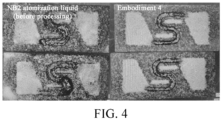
FIG. 4 is an NB2 atomization liquid before processing and a fouling diagram of the NB2 atomization liquid after processing in an electronic atomization device according toEmbodiment 4. - The following clearly and completely describes the technical solutions in the implementations of the present invention with reference to the implementations of the present invention. Clearly, the described implementations are only a part of the implementations of the present invention, not all the implementations. All other implementations obtained by a person of ordinary skill in the art based on the implementations of the present invention without creative efforts shall fall within the protection scope of the present invention.
- In the entire specification, unless otherwise noted, the terms used herein shall be understood to mean what is normally used in the art. Therefore, unless otherwise defined, all technical and scientific terms used herein have the same meaning as those of ordinary skill in the art. The meaning in this specification is preferred if there is any contradiction.
- It should be noted that, in the present invention, the term "include" or any other variant thereof is intended to cover non-exclusive inclusions, so that a method or apparatus that includes a series of elements includes not only explicitly recorded elements, but also other elements that are not explicitly listed, or elements that are inherent to the implementation of the method or apparatus. In the case in which there is no further limitation, an element defined by a statement "containing ...... " does not exclude that another related element exists in a method or an apparatus including the element.
- Currently, an electronic atomization device with a tobacco taste becomes the mainstream, and an atomization liquid added to the atomization apparatus includes a tobacco extract. This causes problems of burnt coil and gunk buildup of such a product, causes a decrease in atomization performance (for example, a large vapor quantity and a large quantity of puffs), and then seriously affects inhaling experience.
- To solve such problems, some researchers use solvent extraction, column chromatography, enzymolysis approach, supercritical extraction, and molecular distillation to reduce the content of macromolecules. However, these methods remove fragrance components (e.g., esters and ketones) while removing macromolecules, resulting in excessive fragrance loss. In addition, in these methods, the problems such as burnt coil and gunk buildup are not well resolved, and long-term inhaling experience of a large vapor quantity and a large quantity of puffs cannot be implemented.
- Both burnt coil and gunk buildup are caused by excessive fouling of an atomized aerosol in the atomizer. The inventors of the present invention unexpectedly find that cations in an additive liquid of the atomizer play a relatively important role in fouling generation.
- To this end, the present invention provides a method for preparing an additive liquid of an atomizer. The method includes a step of removing cations from a liquid. This method not only preserves fragrance components, but also resolves problems of burnt coil and gunk buildup.
- As used herein, "additive liquid of the atomizer" and "additive liquid" refer to a liquid used to be added to the electronic atomizer, so as to be able to provide a user with a sense of experience of blowing a cloud. The additive liquid of the atomizer may be in the form of oil or liquid. The additive liquid of the atomizer is prepared, for example, from a tobacco extract. An exemplary additive liquid may contain nicotine, an essence, an atomization solvent, and the like.
- In the method of the present invention, a to-be-processed substance for which a removal step is performed may be a raw material used as the atomization liquid of the atomizer, that is, the tobacco extract, and the tobacco extract includes a component that provides inhaling experience for the user. For example, the tobacco extract may be in the form of liquid, paste, or solid, such as a lyophilized substance. The to-be-processed substance may alternatively be a product further added with another component (such as an essence or an atomization solvent) or further processed on the basis of a tobacco extract. For example, the to-be-processed substance may alternatively be an instantly available atomization liquid (which can be added to the atomizer for use) prepared from a tobacco extract, such as a commercially available atomization liquid.
- In fact, currently, many studies in the art believe that the foregoing biological macromolecules in the additive liquid of the atomizer are the main cause of fouling of the atomizer, and that the ion exchange method is used to remove ions in the additive liquid of the atomizer to reduce fouling, burnt coil, and/or gunk buildup of the atomizer is not reported.
- In some implementations, the method of the present invention does not include a step of removing macromolecules (such as polysaccharides, proteins, starch, and/or pectin).
- In some implementations, the step of removing cations is performed by using a cation exchange resin. In the present invention, the type of the cation removed by the ion exchange method is not limited, and is determined by a to-be-processed object. In some implementations, the cations of the present invention refer to inorganic cations. For example, when a commercially available atomization liquid is processed, the removed cations may be one or more of manganese ions, iron ions, zinc ions, copper ions, potassium ions, magnesium ions, calcium ions, sodium ions, and the like. The present invention imposes no limitation on the type of a cation exchange resin, provided that cations in a liquid phase can be exchanged. For example, the cation exchange resin may be a cation exchange resin T-42h. The mass ratio of the to-be-processed liquid to the cation exchange resin is not specifically limited in the present invention, and an exemplary mass ratio is less than or equal to 10/1, for example, 10/1, 4/1, and 1/2.
- In some implementations, the method of the present invention further includes a step of removing anions from the liquid. In some implementations, the step of removing anions is performed by using an anion exchange resin. In some implementations, the anions of the present invention refer to inorganic anions. In the present invention, a type of the anion removed by the ion exchange method is not limited, and is determined by a to-be-processed object. For example, when a commercially available atomization liquid is processed, the removed anions may be one or more of fluorine ions, chloride ions, nitrite ions, bromine ions, nitrate ions, sulfate ions, phosphate ions, and the like. The present invention imposes no limitation on the type of an anion exchange resin, provided that anions in a liquid phase can be exchanged. For example, the model of the anion exchange resin may be D201. The mass ratio of the to-be-processed liquid to the anion exchange resin is not specifically limited in the present invention, and an exemplary mass ratio is less than or equal to 10/1, for example, 10/1, 4/1, and 1/2.
- In some implementations, the step of removing cations may be performed before the step of removing anions. For example, the step of removing cations includes: adding a cation exchange resin whose mass is 1/10 to 2/1 of the liquid, stirring, and filtering to obtain supernatant. Next, the step of removing anions include: taking the above supernatant; and adding an anionic exchange resin whose mass is 1/10 to 2/1 of the obtained supernatant, stirring, and filtering. For example, stirring and filtering may be performed at a rotation speed of 120 rpm for 4h at the normal temperature.
- In some other implementations, the step of removing cations may be performed after the step of removing anions.
- Processing duration when an ion exchange resin is used is not particularly limited in the present invention, provided that most corresponding ions can be removed.
- In some implementations, when the to-be-processed object is a raw material of an atomization liquid, for example, a tobacco extract, after cations and/or anions are removed, the products of the removal steps may be compounded with a substance such as an atomization solvent and/or an essence to prepare an additive liquid.
- In some other implementations, the method for preparing an additive liquid of an atomizer according to the present invention includes:
- obtaining a tobacco extract; and
- using electrodialysis processing to obtain a liquid with an electrical conductivity of less than or equal to 1000 µS/cm.
- In the present invention, a device used for electrodialysis is not limited. For example, the device used for electrodialysis may be a CR-DTM homogeneous membrane electrodialysis apparatus.
- For example, the electrical conductivity of the liquid processed by the method in the present invention may be less than or equal to 800 µS/cm, less than or equal to 600 µS/cm, less than or equal to 500 µS/cm, less than or equal to 400 µS/cm, less than or equal to 300 µS/cm, less than or equal to 200 µS/cm, less than or equal to 100 µS/cm, less than or equal to 50 µS/cm, less than or equal to 40 µS/cm, and less than or equal to 30 µS/cm.
- In the method of the present invention, a voltage when electrodialysis is used may be, for example, 1 V to 30 V, for example, 2 V, 3 V, 4 V, 5 V, 6 V, 7 V, 8 V, 9 V, 10 V, 11 V, 12 V, 13 V, 14 V, 15 V, 16 V, 17 V, 18 V, 19 V, 20 V, 21 V, 22 V, 23 V, 24 V, 25 V, 26 V, 27 V, 28 V, 29 V, and 30 V.
- In the method of the present invention, a current when electrodialysis is used may be, for example, 0.05 A to 20 A, for example, 0.05 A, 0.1 A, 0.5 A, 1 A, 2 A, 3 A, 4 A, 5 A, 6 A, 7 A, 8 A, 9 A, 10 A, 11 A, 12 A, 13 A, 14 A, 15 A, 16 A, 17 A, 18 A, 19 A, and 20 A.
- In the method of the present invention, duration when electrodialysis is used may be, for example, greater than 0.1 hours, for example, greater than 0.2 hours, greater than 0.5 hours, greater than 1 hour, greater than 2 hours, greater than 3 hours, greater than 4 hours, greater than 6 hours, greater than 8 hours, greater than 10 hours, greater than 12 hours, and greater than 24 hours.
- In some implementations, the method of the present invention further includes a step of compounding the tobacco extract with a substance such as an atomization solvent and/or an essence. For example, the step of compounding is performed before electrodialysis.
- In some implementations, optionally, before the step of removing cations or before electrodialysis, the method of the present invention further includes a step of diluting the liquid with water, where the viscosity of the diluted liquid is 1 cp to 100 cp. Dilution reduces the viscosity of the liquid, facilitating the addition of a cation exchange resin (optionally, and an anion exchange resin). Alternatively, liquid fluidity is increased, so as to facilitate the electrodialysis circulation. Dilution with water can give or enhance a medium environment to which ions can migrate. For example, in some implementations, the volume of the additive liquid is greater than 0.1 times and less than or equal to 20 times of the water for dilution. In a preferred implementation, the volume of the to-be-processed substance is greater than 0 and is less than or equal to 10 times of water for dilution. In this dilution, not only a liquid viscosity is moderate, but also cations and/or anions are removed. That a large quantity of water needs to be removed in the step of removing water is avoided, thereby shortening duration of removing water and improving efficiency of removing water. In a specific implementation, deionized water is used for dilution. Deionized water can be used to dilute without introducing a large amount of ions.
- In some implementations, after the step of removing cations or after electrodialysis, the method of the present invention further includes a step of removing moisture. In some preferred implementations, the step of removing moisture is after the step of removing anions or after electrodialysis. Removing moisture can increase the concentration of the additive liquid, so as to avoid affecting the inhaling experience when the additive liquid is used to prepare the atomization liquid or when the additive liquid is used as the atomization liquid. For example, moisture may be removed by rotary evaporation or freeze drying.
- The present invention further provides an additive liquid of an atomizer, and the additive liquid is prepared by using the method of the present invention. Such an additive liquid removes at least most inorganic cations, such as 50%, 60%, 70%, 80%, 90%, 95%, 96%, 97%, 99% inorganic cations are removed. Preferably, most inorganic anions are also removed, such as 50%, 60%, 70%, 80%, 90%, 95%, 96%, 97%, 99% inorganic anions are removed. More preferably, most organic acids and organic bases are also removed, for example, 50%, 60%, 70%, 80%, 90%, 95%, 96%, 97%, 99% organic acids and organic bases are removed. Not only fragrance components are preserved, but also problems of burnt coil and gunk buildup are resolved.
- The present invention further provides an atomizer, including a liquid storage chamber, an atomization component, and the additive liquid of the present invention. The liquid storage chamber is configured to accommodate the additive liquid. The atomization component is in fluid communication with the liquid storage chamber and is configured to form an aerosol from the additive liquid.
- The present invention further provides an atomization apparatus, including the foregoing atomizer and a battery component. The battery component is configured to supply power to the atomizer.
- The present invention further provides an additive liquid of an atomizer for use of improving fouling, burnt coil, and/or gunk buildup of the atomizer.
- The following further describes the present invention in detail with reference to specific embodiments. The objective thereof is merely illustrative and is not intended to limit the scope of the present invention. In the following embodiments, an XLY atomization liquid, a ZBY atomization liquid, a DFY atomization liquid, and an NB2 atomization liquid are used, each containing 10wt%-20wt% of tobacco extract, 10wt%-20wt% of essence, and 60wt%-80wt% of atomization solvent. A tobacco extract (BL) is also used.
- Add the XLY atomization liquid to a beaker, add a cation exchange resin T-42h with a mass of 1/4 of the mass of a material liquid, stir at the normal temperature at 120 rpm for 4h, and filter to obtain supernatant.
- Take a proper amount of the supernatant, add an anion exchange resin D201 with a mass of 1/4 of the mass of the material liquid, stir at the normal temperature at 120 rpm for 4h, filter, and obtain an atomization liquid A.
- Preprocessing of the atomization liquid:
Take a proper amount of ZBY atomization liquid, add water with a volume 10 times the volume thereof to dilute, and provide a medium environment for electric field migration. - Place the diluted atomization liquid in an electrodialysis apparatus, start the solution circulation process, set a voltage 14 V and a current value 7.5 A, start the electric field, stop the device after 3 hours of circulation, and take out the processed atomization liquid.
- Remove the moisture by means of rotary evaporation, and obtain an atomization liquid B.
- Preprocessing of the atomization liquid:
Take a proper amount of DFY atomization liquid, add water with a volume 10 times the volume thereof to dilute, and provide a medium environment for electric field migration. - Place the diluted atomization liquid in an electrodialysis apparatus, start the solution circulation process, set a voltage 14 V and a current value 7.5 A, start the electric field, stop the device after 3 hours of circulation, and take out the processed atomization liquid.
- Remove the moisture by means of rotary evaporation, and obtain an atomization liquid C.
- Preprocessing of the atomization liquid:
Take a proper amount of NB2 atomization liquid, add water with a volume 10 times the volume thereof to dilute, and provide a medium environment for electric field migration. - Place the diluted atomization liquid in an electrodialysis apparatus, start the solution circulation process, set a voltage 14 V and a current value 7.5 A, start the electric field, stop the device after 3 hours of circulation, and take out the processed atomization liquid.
- Remove the moisture by means of rotary evaporation, and obtain an atomization liquid D.
- Preprocessing of the atomization liquid:
Take a proper amount of ZBY atomization liquid, add water with a volume 10 times the volume thereof to dilute, and provide a medium environment for electric field migration. - Place the diluted atomization liquid in an electrodialysis apparatus, start the solution circulation process, set a voltage 30 V and a current value 20 A, start the electric field, stop the device after 10 min of circulation, and take out the processed atomization liquid.
- Remove the moisture by means of rotary evaporation, and obtain an atomization liquid E.
- Preprocessing of the atomization liquid:
Take a proper amount of ZBY atomization liquid, add water with a volume 10 times the volume thereof to dilute, and provide a medium environment for electric field migration. - Place the diluted atomization liquid in an electrodialysis apparatus, start the solution circulation process, set a voltage 1 V and a current value 0.05 A, start the electric field, stop the device after 10h of circulation, and take out the processed atomization liquid.
- Remove the moisture by means of rotary evaporation, and obtain an atomization liquid F.
- Preprocessing of the atomization liquid:
Take a proper amount of ZBY atomization liquid, add water with a volume 0.5 times the volume thereof to dilute, and provide a medium environment for electric field migration. - Place the diluted atomization liquid in an electrodialysis apparatus, start the solution circulation process, set a voltage 14 V and a current value 7.5 A, start the electric field, stop the device after 3 hours of circulation, and take out the processed atomization liquid.
- Remove the moisture by means of rotary evaporation, and obtain an atomization liquid G.
- Preprocessing of the tobacco extract:
- Take a proper amount of tobacco extract BL, add water with a volume 10 times the volume thereof to dilute, and provide a medium environment for electric field migration.
- Place the diluted atomization liquid in an electrodialysis apparatus, start the solution circulation process, set a voltage 14 V and a current value 7.5 A, start the electric field, stop the device after 3 hours of circulation, and take out the processed atomization liquid.
- Remove the moisture by means of rotary evaporation, and obtain a liquid h.
- Preparation of the atomization liquid:
Mix the liquid h with the essence and the atomization solvent at a weight ratio of 1:15:84, heat, blend, and obtain an atomization liquid H. - Add the XLY atomization liquid to a beaker, add a cation exchange resin T-42h with a mass of 1/4 of the mass of a material liquid, stir at the normal temperature at 120 rpm for 4h, and filter to obtain an atomization liquid I.
- Add the XLY atomization liquid to a beaker, add a cation exchange resin T-42h with a mass of 2 times of the mass of a material liquid, stir at the normal temperature at 120 rpm for 4h, and filter to obtain supernatant.
- Take a proper amount of the supernatant, add an anion exchange resin D201 with a mass of 2 time of the mass of the material liquid, stir at the normal temperature at 120 rpm for 4h, filter, and obtain an atomization liquid J.
- Add the XLY atomization liquid to a beaker, add a cation exchange resin T-42h with a mass of 1/10 of the mass of a material liquid, stir at the normal temperature at 120 rpm for 4h, and filter to obtain supernatant.
- Take a proper amount of the supernatant, add an anion exchange resin D201 with a mass of 1/10 of the mass of the material liquid, stir at the normal temperature at 120 rpm for 4h, filter, and obtain an atomization liquid K.
- Add the ZBY atomization liquid to a beaker, add a cation exchange resin T-42h with a mass of 1/4 of the mass of a material liquid, stir at the normal temperature at 120 rpm for 4h, and filter to obtain supernatant.
- Take a proper amount of the supernatant, add an anion exchange resin D201 with a mass of 1/4 of the mass of the material liquid, stir at the normal temperature at 120 rpm for 4h, filter, and obtain an atomization liquid L.
- An electrical conductivity tester is used to measure the electrical conductivity of the atomization liquid and the liquid obtained in
Embodiments 1 to 12. Results are shown in Table 1 below.Table 1 Electrical conductivity of the atomization liquid and the liquid obtained in Embodiments 1 to 12Atomization liquid A B C D E F G H I J K L Electrical conductivity (µs/cm) 105 26 32 30 55 460 108 43 161 93 214 96 - The component changes in the atomization liquid or the tobacco extract before and after the processing in
Embodiments 1 to 12 are tested by using inductively coupled plasma emission spectroscopy (ICP), and the results are shown in Tables 2-24.Table 2 Ion concentration in the XLY atomization liquid before processing and in the XLY atomization liquid after processing according to Embodiment 1Concentration of inorganic cations in the XLY atomization liquid (mg/kg) Ion type Manganese ion Iron ion Zinc ion Copper ion Potassium ion Magnesium ion Calcium ion Sodium ion Before processing 1.12 3.24 3.43 ND 13546 346 634 ND After processing 0.06 0.118 0.233 ND 169.3 36.6 132 ND Concentration of inorganic anions in the XLY atomization liquid (mg/kg) Ion type Fluorine ion F- Chloride ion Cl- Nitrite ion NO2- Bromine ion Br- Nitrate ion NO3- Sulfate ion SO4 2- Phosphate ion PO4 3- Before processing 55.6 5757.5 ND ND 7278.2 ND ND After processing 12.7 321.7 ND ND 163.4 ND ND - Nd indicates that a corresponding ion concentration does not reach the lower limit for instrument detection, which is the same below.
- It can be learned from Table 2 that the inorganic ion concentration in the XLY atomization liquid after ion exchange processing decreases substantially.
Table 3 Cation concentration in the atomization liquid before processing and in the atomization liquid after processing according to Embodiments 2 to 4 Concentration of inorganic cations in the atomization liquid (mg/kg) Ion type Manganese/ Mn Iron/ Fe Zinc/Zn Copper/ Cu Potassium/ K Magnesium/ Mg Calcium/ Ca Sodium/ Na ZBY atomization liquid (before processing) 2.31 2.32 4.24 0.123 3971.45 151.11 77.73 45.2 ZBY atomization liquid (after processing) 0.09 0.281 0.653 ND 20.45 ND ND 17.96 DFY atomization liquid (before processing) 4.31 6.93 2.83 0.386 2887.67 184.38 208.99 51.19 DFY atomization liquid (after processing) 0.657 4.592 1.409 ND 85.55 39.6 3.9 12.9 NB2 atomization liquid (before processing) ND ND ND ND 919.75 67.23 11.18 14.75 NB2 atomization liquid (after processing) ND ND ND ND 2.5 ND ND 8.21 Table 4 Anion concentration in the atomization liquid before processing and in the atomization liquid after processing according to Embodiments 2 to 4 Inorganic anion concentration (mg/kg) Ion type Fluorine ion F- Chloride ion Cl- Nitrite ion NO2- Bromine ion Br- Nitrate NO3- Sulfate ion SO4 2- Phosphate ion PO4 3- ZBY atomization liquid (before processing) 52.3 1878.4 ND ND 1219.2 ND 41.3 ZBY atomization liquid (after processing) 27.2 31.7 ND ND ND ND ND DFY atomization liquid (before processing) 16.7 798.4 52.6 ND 663.1 ND 347.1 DFY atomization liquid (after processing) 2.32 11.6 1.38 ND ND ND ND NB2 atomization liquid (before processing) ND 2213.1 ND ND 999.13 231.1 ND NB2 atomization liquid (after processing) ND ND ND ND ND ND ND Table 5 Organic base concentration in the atomization liquid before processing and in the atomization liquid after processing according to Embodiments 2 to 4 Concentration of organic bases (µg/g) Organic base type 2,3-bipyridine Equisetum alkaloid Myosmine Anatabine Nornicotine Cotinine ZBY atomization liquid (before processing) 9.26 33.33 5.06 41.23 67.28 8.3 ZBY atomization liquid (after processing) 1.25 1.99 0.09 6.86 7.97 5.54 DFY atomization liquid (before processing) 10.88 27.03 4.62 36.67 69.97 13.06 DFY atomization liquid (after processing) 3.83 11.09 0.48 17.19 27.31 10.66 NB2 atomization liquid (before processing) 10.54 19.42 2.64 31.35 175.9 12.96 NB2 atomization liquid (after processing) 2.66 3.77 0.10 9.08 17.8 9.96 Table 6 Organic acid concentration in the atomization liquid before processing and in the atomization liquid after processing according to Embodiments 2 to 4 Organic acid concentration Organic acid type Tartaric acid Acetic acid Propionic acid 2-methylbutyric acid ZBY atomization liquid (before processing) 67.7 mg/g 262 µg/g 4.83 µg/g 4.24 µg/g ZBY atomization liquid (after processing) ND 153 µg/g 3.91 µg/g 3.27 µg/g DFY atomization liquid (before processing) 219 mg/g 417 µg/g 12.23 µg/g 3.22 µg/g DFY atomization liquid (after processing) ND 103 µg/g ND ND NB2 atomization liquid (before processing) 51.9 mg/g 210 µg/g ND ND NB2 atomization liquid (after processing) ND 65.6 µg/g ND ND - The pH of the ZBY atomization liquid before processing is 5.23, and the pH of the ZBY atomization liquid after processing according to
Embodiment 2 is 5.16. It can be learned from Table 3 to Table 6 that after electrodialysis processing, not only the concentration of inorganic cations and inorganic anions in the atomization liquid decreases significantly, but also the concentration of organic acids and organic bases in the atomization liquid decreases significantly.Table 7 Concentration of cations and anions in the ZBY atomization liquid before processing and in the ZBY atomization liquid after processing according to Embodiment 5 Concentration of inorganic cations in the ZBY atomization liquid (mg/kg) Ion type Manganese ion Iron ion Zinc ion Copper ion Potassium ion Magnesium ion Calcium ion Sodium ion Before processing 2.31 2.32 4.24 0.123 3971.45 151.11 77.73 45.2 After processing ND ND ND ND 91.34 32.02 11.31 2.36 Concentration of inorganic anions in the ZBY atomization liquid (mg/kg) Ion type Fluorine ion F- Chloride ion Cl- Nitrite ion NO2- Bromine ion Br- Nitrate ion NO3- Sulfate ion SO4 2- Phosphate ion PO4 3- Before processing 52.3 1878.4 ND ND 1219.2 ND 41.3 After processing 19.34 21.33 ND ND 31.64 ND ND Table 8 Concentration of organic bases in the ZBY atomization liquid before processing and in the ZBY atomization liquid after processing according to Embodiment 5 Concentration of organic bases (µg/g) Organic base type 2,3-bipyridine Equisetum alkaloid Myosmine Anatabine Nornicotine Cotinine ZBY atomization liquid (before processing) 9.26 33.33 5.06 41.23 67.28 8.3 ZBY atomization liquid (after processing) 4.31 15.96 3.66 18.34 11.69 2.22 Table 9 Concentration of organic acids in the ZBY atomization liquid before processing and in the ZBY atomization liquid after processing according to Embodiment 5 Organic acid type Tartaric acid Acetic acid Propionic acid 2-methylbutyric acid ZBY atomization liquid (before processing) 67.7 mg/g 262 µg/g 4.83 µg/g 4.24 µg/g ZBY atomization liquid (after processing) ND 113 µg/g ND µg/g 3.98 µg/g Table 10 Concentration of cations and anions in the ZBY atomization liquid before processing and in the ZBY atomization liquid after processing according to Embodiment 6 Concentration of inorganic cations in the ZBY atomization liquid (mg/kg) Ion type Manganese ion Iron ion Zinc ion Copper ion Potassium ion Magnesium ion Calcium ion Sodium ion Before processing 2.31 2.32 4.24 0.123 3971.45 151.11 77.73 45.2 After processing 2.11 1.94 3.36 ND 963.46 99.33 38.94 20.31 Concentration of inorganic anions in the ZBY atomization liquid (mg/kg) Ion type Fluorine ion F- Chloride ion Cl- Nitrite ion NO2- Bromine ion Br- Nitrate ion NO3- Sulfate ion SO4 2- Phosphate ion PO4 3- Before processing 52.3 1878.4 ND ND 1219.2 ND 41.3 After processing 39.64 368.84 ND ND 369.31 ND 39.6 Table 11 Concentration of organic bases in the ZBY atomization liquid before processing and in the ZBY atomization liquid after processing according to Embodiment 6 Concentration of organic bases (µg/g) Organic base type 2,3-bipyridine Equisetum alkaloid Myosmine Anatabine Nornicotine Cotinine ZBY atomization liquid (before processing) 9.26 33.33 5.06 41.23 67.28 8.3 ZBY atomization liquid (after processing) 8.36 29.16 2.33 24.19 36.95 4.44 Table 12 Concentration of organic acids in the ZBY atomization liquid before processing and in the ZBY atomization liquid after processing according to Embodiment 6 Organic acid type Tartaric acid Acetic acid Propionic acid 2-methylbutyric acid ZBY atomization liquid (before processing) 67.7 mg/g 262 µg/g 4.83 µg/g 4.24 µg/g ZBY atomization liquid (after processing) 51 mg/g 136.41 µg/g 3.32 µg/g 2.19 µg/g Table 13 Concentration of cations and anions in the ZBY atomization liquid before processing and in the ZBY atomization liquid after processing according to Embodiment 7 Concentration of inorganic cations in the ZBY atomization liquid (mg/kg) Ion type Manganese ion Iron ion Zinc ion Copper ion Potassium ion Magnesium ion Calcium ion Sodium ion Before processing 2.31 2.32 4.24 0.123 3971.45 151.11 77.73 45.2 After processing ND ND ND ND 52.15 36.94 ND ND Concentration of inorganic anions in the ZBY atomization liquid (mg/kg) Ion type Fluorine ion F- Chloride ion Cl- Nitrite ion NO2- Bromine ion Br- Nitrate ion NO3- Sulfate ion SO4 2- Phosphate ion PO4 3- Before processing 52.3 1878.4 ND ND 1219.2 ND 41.3 After processing ND 44.98 ND ND 11.31 ND ND Table 14 Concentration of organic bases in the ZBY atomization liquid before processing and in the ZBY atomization liquid after processing according to Embodiment 7 Concentration of organic bases (µg/g) Organic base type 2,3-bipyridine Equisetum alkaloid Myosmine Anatabine Nornicotine Cotinine ZBY atomization liquid (before processing) 9.26 33.33 5.06 41.23 67.28 8.3 ZBY atomization liquid (after processing) 2.64 11.36 ND 13.66 8.94 7.36 Table 15 Concentration of organic acids in the ZBY atomization liquid before processing and in the ZBY atomization liquid after processing according to Embodiment 7 Organic acid type Tartaric acid Acetic acid Propionic acid 2-methylbutyric acid ZBY atomization liquid (before processing) 67.7 mg/g 262 µg/g 4.83 µg/g 4.24 µg/g ZBY atomization liquid (after processing) ND 113 µg/g 1.94 µg/g 2.68 µg/g Table 16 Concentration of cations and anions in the tobacco extract before processing and in the tobacco extract after processing according to Embodiment 8 Concentration of inorganic cations in the tobacco extract BL (mg/kg) Ion type Manganese ion Iron ion Zinc ion Copper ion Potassium ion Magnesium ion Calcium ion Sodium ion Before processing 9.64 ND ND ND 9761.31 1643.61 365.13 91.11 After processing ND ND ND ND 23.66 16.31 ND ND Concentration of inorganic anions in the tobacco extract BL (mg/kg) Ion type Fluorine ion F- Chloride ion Cl- Nitrite ion NO2- Bromine ion Br- Nitrate ion NO3- Sulfate ion SO4 2- Phosphate ion PO4 3- Before processing 52.3 1878.4 ND ND 1219.2 ND 41.3 After processing ND 44.98 ND ND 11.31 ND ND Table 17 Concentration of organic bases in the tobacco extract before processing and in the tobacco extract after processing according to Embodiment 8 Concentration of organic bases (µg/g) Organic base type 2,3-bipyridine Equisetum alkaloid Myosmine Anatabine Nornicotine Cotinine Tobacco extract BL (before processing) 69.3 98.9 148.9 329.4 490.2 382.3 Tobacco extract BL (after processing) 29.9 19.24 21.9 8.33 49.2 11.7 Table 18 Concentration of organic acids in the tobacco extract before processing and in the tobacco extract after processing according to Embodiment 8 Organic acid type Tartaric acid Acetic acid Propionic acid 2-methylbutyric acid Tobacco extract BL (before processing) 104.3 mg/g 493.2 µg/g ND 21.23 µg/g Tobacco extract BL (after processing) 11.3 mg/g 149.2 µg/g ND 4.92 µg/g - It can be learned from Table 16 to Table 18 that after processing, the concentration of cations, anions, organic bases, and organic acids in the tobacco extract decreases significantly, that is, the method in the present invention may also be used to process the tobacco extract.
Table 19 Concentration of cations and anions in the XLY atomization liquid before processing and in the XLY atomization liquid after processing according to Embodiment 9 Concentration of inorganic cations in the XLY atomization liquid (mg/kg) Ion type Manganese ion Iron ion Zinc ion Copper ion Potassium ion Magnesium ion Calcium ion Sodium ion Before processing 1.12 3.24 3.43 ND 13546 346 634 ND After processing ND ND 1.34 ND 64.31 21.32 11.64 ND Concentration of inorganic anions in the XLY atomization liquid (mg/kg) Ion type Fluorine ion F- Chloride ion Cl- Nitrite ion NO2- Bromine ion Br- Nitrate ion NO3- Sulfate ion SO4 2- Phosphate ion PO4 3- Before processing 55.6 5757.5 ND ND 7278.2 ND ND After processing 54.16 541.64 ND ND 7000.64 ND ND Table 20 Concentration of cations and anions in the XLY atomization liquid before processing and in the XLY atomization liquid after processing according to Embodiment 10 Concentration of inorganic cations in the XLY atomization liquid (mg/kg) Ion type Manganese ion Iron ion Zinc ion Copper ion Potassium ion Magnesium ion Calcium ion Sodium ion Before processing 1.12 3.24 3.43 ND 13546 346 634 ND After processing ND ND 1.34 ND 13.16 19.84 ND ND Concentration of inorganic anions in the XLY atomization liquid (mg/kg) Ion type Fluorine ion F- Chloride ion Cl- Nitrite ion NO2- Bromine ion Br- Nitrate ion NO3- Sulfate ion SO4 2- Phosphate ion PO4 3- Before processing 55.6 5757.5 ND ND 7278.2 ND ND After processing ND 121.64 ND ND ND ND ND Table 21 Concentration of cations and anions in the XLY atomization liquid before processing and in the XLY atomization liquid after processing according to Embodiment 11 Concentration of inorganic cations in the XLY atomization liquid (mg/kg) Ion type Manganese ion Iron ion Zinc ion Copper ion Potassium ion Magnesium ion Calcium ion Sodium ion Before processing 1.12 3.24 3.43 ND 13546 346 634 ND After processing ND ND 2.46 ND 423.16 114.84 163.47 ND Concentration of inorganic anions in the XLY atomization liquid (mg/kg) Ion type Fluorine ion F- Chloride ion Cl- Nitrite ion NO2- Bromine ion Br- Nitrate ion NO3- Sulfate ion SO4 2- Phosphate ion PO4 3- Before processing 55.6 5757.5 ND ND 7278.2 ND ND After processing 16.97 463.14 ND ND 1302.1 ND ND Table 22 Concentration of cations and anions in the ZBY atomization liquid before processing and in the ZBY atomization liquid after processing according to Embodiment 12 Concentration of inorganic cations in the ZBY atomization liquid (mg/kg) Ion type Manganese ion Iron ion Zinc ion Copper ion Potassium ion Magnesium ion Calcium ion Sodium ion Before processing 2.31 2.32 4.24 0.123 3971.45 151.11 77.73 45.2 After processing ND ND ND ND 31.49 16.97 6.99 ND Concentration of inorganic anions in the ZBY atomization liquid (mg/kg) Ion type Fluorine ion F- Chloride ion Cl- Nitrite ion NO2- Bromine ion Br- Nitrate ion NO3- Sulfate ion SO4 2- Phosphate ion PO4 3- Before processing 52.3 1878.4 ND ND 1219.2 ND 41.3 After processing 16.98 43.06 ND ND 18.94 ND ND Table 23 Concentration of organic bases in the ZBY atomization liquid before processing and in the ZBY atomization liquid after processing according to Embodiment 12 Concentration of organic bases (µg/g) Organic base type 2,3-bipyridine Equisetum alkaloid Myosmine Anatabine Nornicotine Cotinine ZBY atomization liquid (before processing) 9.26 33.33 5.06 41.23 67.28 8.3 ZBY atomization liquid (after processing) ND 2.97 ND 4.16 11.16 3.97 Table 24 Concentration of organic acids in the ZBY atomization liquid before processing and in the ZBY atomization liquid after processing according to Embodiment 12 Organic acid type Tartaric acid Acetic acid Propionic acid 2-methylbutyric acid ZBY atomization liquid (before processing) 67.7 mg/g 262 µg/g 4.83 µg/g 4.24 µg/g ZBY atomization liquid (after processing) 38.09 mg/g 94.94 µg/g 3.91 µg/g 3.27 µg/g - Separately load the above atomization liquid into an atomizer with a battery of 6.5W power, inhale 1200 puffs, and test the atomization amount (mg/puff) and the vapor attenuation rate (%) (atomization amount: average mass of atomized aerosol per puff of an electronic atomization device attenuation rate: attenuation of the average atomization amount of the first 50 puffs of the electronic atomization device compared with the average atomization amount of the last 50 puffs). The atomization amounts and the vapor attenuation rates of the atomization liquid before processing and the atomization liquid after processing according to Embodiments 1-7 and Embodiments 9-12 are shown in Tables 25-29 and Tables 31-34. The atomization amounts and the vapor attenuation rates of the atomization liquid including the tobacco extract before processing and the atomization liquid including the tobacco extract after processing according to Embodiment 8 are shown in Table 30.
Table 25 Atomization amounts and vapor attenuation rates of the XLY atomization liquid before processing and the XLY atomization liquid after processing according to Embodiment 1XLY atomization liquid Atomization amount (mg/puff) Vapor attenuation rate (%) Before processing 6.74 18.91% After processing 7.14 7.84% - As shown in Table 25, the ion exchange method has no significant impact on the atomization amount. The vapor attenuation rate decreases from 18.91% to 7.84% and is reduced by about 60%.
Table 26 Atomization amounts and vapor attenuation rates of the ZBY atomization liquid, the DFY atomization liquid, and the NB2 atomization liquid before processing and the ZBY atomization liquid, the DFY atomization liquid, and the NB2 atomization liquid after processing according to Embodiments 2 to 4Atomization liquid Atomization amount (mg/puff) Vapor attenuation rate (%) ZBY atomization liquid (before processing) 6.35 22.10% ZBY atomization liquid (after processing) 8.64 6.88% DFY atomization liquid (before processing) 6.98 18.90% DFY atomization liquid (after processing) 8.96 5.66% NB2 atomization liquid (before processing) 7.12 16.40% NB2 atomization liquid (after processing) 9.23 4.98% - As shown in Table 26, the electrodialysis method not only increases the atomization amount by about 30%, but also reduces the vapor attenuation rate by about 70%.
Table 27 Atomization amounts and vapor attenuation rates of the ZBY atomization liquid before processing and the ZBY atomization liquid after processing according to Embodiment 5 ZBY atomization liquid Atomization amount (mg/puff) Vapor attenuation rate (%) Before processing 6.35 22.10% After processing 7.36 9.68% Table 28 Atomization amounts and vapor attenuation rates of the ZBY atomization liquid before processing and the ZBY atomization liquid after processing according to Embodiment 6 ZBY atomization liquid Atomization amount (mg/puff) Vapor attenuation rate (%) Before processing 6.35 22.10% After processing 6.66 19.63% - It can be learned from Tables 27 and 28 that adjusting the parameters (voltage, current, and circulation time) at electrodialysis can still improve the atomization amount and the vapor attenuation rate of the ZBY atomization liquid.
Table 29 Atomization amounts and vapor attenuation rates of the ZBY atomization liquid before processing and the ZBY atomization liquid after processing according to Embodiment 7 ZBY atomization liquid Atomization amount (mg/puff) Vapor attenuation rate (%) Before processing 6.35 22.10% After processing 7.98 10.66% Table 30 Atomization amounts and vapor attenuation rates of the atomization liquid added with an unprocessed tobacco extract and the atomization liquid added with a tobacco extract processed according to Embodiment 8 Atomization liquid added with 1wt% tobacco extract (BL) Atomization amount (mg/puff) Vapor attenuation rate (%) Unprocessed 4.91 29.40% Processed 6.66 7.31% - It can be learned from Table 30 that, compared with the atomization liquid added with the 1wt% unprocessed tobacco extract, the atomization amount of the atomization liquid added with 1wt% processed tobacco extract increases by about 35% and the vapor attenuation rate decreases by about 75%.
Table 31 pH, atomization amounts, and vapor attenuation rates of the XLY atomization liquid before processing and the XLY atomization liquid after processing according to Embodiment 9XLY atomization liquid pH Atomization amount (mg/puff) Vapor attenuation rate (%) Before processing 5.23 6.74 18.91% After processing 2.11 6.98 13.41% Table 32 pH, atomization amounts, and vapor attenuation rates of the XLY atomization liquid before processing and the XLY atomization liquid after processing according to Embodiment 10 XLY atomization liquid pH Atomization amount (mg/puff) Vapor attenuation rate (%) Before processing 5.23 6.74 18.91% After processing 3.94 7.68 9.41% - Table 33 pH, atomization amounts, and vapor attenuation rates of the XLY atomization liquid before processing and the XLY atomization liquid after processing according to Embodiment 11
XLY atomization liquid pH Atomization amount (mg/puff) Vapor attenuation rate (%) Before processing 5.23 6.74 18.91% After processing 4.14 6.88 14.32% Table 34 Atomization amounts and vapor attenuation rates of the ZBY atomization liquid before processing and the ZBY atomization liquid after processing according to Embodiment 12ZBY atomization liquid Atomization amount (mg/puff) Vapor attenuation rate (%) Before processing 6.35 22.10% After processing 8.21 8.39% - With reference to Table 26, compared with the ZBY atomization liquid processed by using the ion exchange method in
Embodiment 12, the ZBY atomization liquid processed by using the electrodialysis method inEmbodiment 2 has a larger atomization amount and a higher improvement degree of the vapor attenuation rate. - Separately load the XLY atomization liquid before processing and the XLY atomization liquid after processing according to
Embodiment 1 andEmbodiment 9 into the atomizer with a battery of 6.5W power, inhale 1200 puffs, take out the atomization core, cut off and photograph the atomization core. Results are shown inFIG. 1 . It can be learned fromFIG. 1 that, compared with the XLY atomization liquid before processing, the fouling of the XLY atomization liquid processed by using the cation exchange resin according toEmbodiment 9 decreases in the electronic atomization device. Compared with the XLY atomization liquid processed by only using the cation exchange resin inEmbodiment 9, the XLY atomization liquid processed by using the cation exchange resin and the anion exchange resin inEmbodiment 1 decreases more in fouling in the electronic atomization device. - Separately load the ZBY atomization liquid before processing and the ZBY atomization liquid after processing according to
Embodiment 2 andEmbodiment 12 into the atomizer with a battery of 6.5W power, both inhale 1600 puffs, separately take out the atomization core, cut off and photograph the atomization core. Results are shown inFIG. 2 . It can be learned fromFIG. 2 that, compared with the ZBY atomization liquid before processing, the ZBY atomization liquid processed by using the ion exchange method according toEmbodiment 12 has less fouling in the atomization apparatus. However, compared with the ZBY atomization liquid processed by using the ion exchange method according toEmbodiment 12, the ZBY atomization liquid processed by using the electrodialysis method according toEmbodiment 2 decreases more in fouling in the electronic atomization device. - Separately load the DFY atomization liquid before processing and the DFY atomization liquid after processing according to
Embodiment 3 into the atomizer with a battery of 6.5W power, both inhale 1600 puffs, separately take out the atomization core, cut off and photograph the atomization core. Results are shown inFIG. 3 . Separately load the NB2 atomization liquid before processing and the NB2 atomization liquid after processing according toEmbodiment 4 into the atomizer with a battery of 6.5W power, both inhale 1200 puffs, separately take out the atomization core, cut off and photograph the atomization core. Results are shown inFIG. 4 . It can be learned fromFIG. 2, FIG. 3 , andFIG. 4 that, for all the atomization liquids with different fouling amounts in the electronic atomization device, electrodialysis processing can significantly reduce the fouling. - The sensory inhalation results, by 20 people, of the ZBY atomization liquid, the DFY atomization liquid, and the NB2 atomization liquid before processing, and the ZBY atomization liquid, the DFY atomization liquid, and the NB2 atomization liquid after processing according to Embodiments 2-4 are described as follows: 19 people believe that the ZBY atomization liquid processed according to
Embodiment 2 is not different from the ZBY atomization liquid before processing. 18 people believe that the DFY atomization liquid processed according toEmbodiment 3 is not different from the DFY atomization liquid before processing. 19 people believe that the NB2 atomization liquid processed according toEmbodiment 4 is not different from the NB2 atomization liquid before processing. - The same 20 people inhale the ZBY atomization liquid before processing and the ZBY atomization liquid after processing according to
Embodiment 12, and the results are described as follows: Compared with the ZBY atomization liquid before processing, 11 people believe that the ZBY atomization liquid after processing according toEmbodiment 12 is not different, and 9 people believe that the ZBY atomization liquid after processing according toEmbodiment 12 is softer and sourer. - It can be learned from the foregoing inhalation results that, compared with the ZBY atomization liquid processed by using the ion exchange method in
Embodiment 12, the mouthfeel of the ZBY atomization liquid processed by using the electrodialysis method inEmbodiment 2 basically does not change. That is, the electrodialysis method can maintain the mouthfeel of the atomization liquid, which may be related to that the pH of the system does not change significantly. - In conclusion, the method for preparing an additive liquid of an atomizer in the present invention can help to implement long-term inhalation experience of a large vapor quantity and a large quantity of puffs, and can also avoid the problem of burnt coil or gunk buildup in the electronic atomization device during the service life.
- The foregoing descriptions are merely exemplary embodiments of the present invention, and are not intended to limit the protection scope of the present invention.
- While the invention has been illustrated and described in detail in the drawings and foregoing description, such illustration and description are to be considered illustrative or exemplary and not restrictive. It will be understood that changes and modifications may be made by those of ordinary skill within the scope of the following claims. In particular, the present invention covers further embodiments with any combination of features from different embodiments described above and below. Additionally, statements made herein characterizing the invention refer to an embodiment of the invention and not necessarily all embodiments.
- The terms used in the claims should be construed to have the broadest reasonable interpretation consistent with the foregoing description. For example, the use of the article "a" or "the" in introducing an element should not be interpreted as being exclusive of a plurality of elements. Likewise, the recitation of "or" should be interpreted as being inclusive, such that the recitation of "A or B" is not exclusive of "A and B," unless it is clear from the context or the foregoing description that only one of A and B is intended. Further, the recitation of "at least one of A, B and C" should be interpreted as one or more of a group of elements consisting of A, B and C, and should not be interpreted as requiring at least one of each of the listed elements A, B and C, regardless of whether A, B and C are related as categories or otherwise. Moreover, the recitation of "A, B and/or C" or "at least one of A, B or C" should be interpreted as including any singular entity from the listed elements, e.g., A, any subset from the listed elements, e.g., A and B, or the entire list of elements A, B and C.
Claims (10)
- A method for preparing an additive liquid of an atomizer, comprising:
removing cations. - The method of claim 1, further comprising:
removing anions to obtain a liquid with an electrical conductivity less than 1000 µS/cm, preferably less than 500 µS/cm. - The method of claim 1, wherein the cations are selected from a group comprising: manganese ions, iron ions, zinc ions, copper ions, potassium ions, magnesium ions, calcium ions, and sodium ions.
- The method of claim 1 or 2, wherein the removing cations is performed using a cation exchange resin, and the removing anions is performed using an anionic exchange resin.
- The method of claim 2, wherein the removing cations and the removing anions are simultaneously performed through electrodialysis.
- The method of claim 5, wherein a voltage during the electrodialysis is 1 V to 30 V, preferably 12 V to 16 V;a current during the electrodialysis is 0.05 A to 20 A, preferably 5 A to 10 A; anda duration of the electrodialysis is 0.1 hour to 24 hours, preferably 1 hour to 4 hours.
- The method of any one of claims 1, 2, and 5, further comprising:
adding an atomization solvent and/or an essence. - The method of claim 1 or 5, wherein before the removing cations, the method further comprises diluting a to-be-processed substance with water to obtain a diluted liquid with a viscosity of 1 cp to 100 cp, andafter the removing cations, the method further comprises removing water, andpreferably, the diluting is performed by adding water with a volume greater than 0 and less than or equal to 20 times a volume of the to-be-processed substance.
- An additive liquid of an atomizer, prepared using the method of any one of claims 1 to 8.
- An atomizer, comprising:a liquid storage chamber configured to accommodate an additive liquid of the atomizer;an atomization component configured to cause the additive liquid of the atomizer to form an aerosol, wherein the atomization component is in fluid communication with the liquid storage chamber; andthe additive liquid of the atomizer of claim 9.
Applications Claiming Priority (1)
| Application Number | Priority Date | Filing Date | Title |
|---|---|---|---|
| CN202311107627.2A CN119523148A (en) | 2023-08-30 | 2023-08-30 | Method for preparing additive liquid for atomizer, additive liquid and atomizer |
Publications (2)
| Publication Number | Publication Date |
|---|---|
| EP4516127A1 true EP4516127A1 (en) | 2025-03-05 |
| EP4516127B1 EP4516127B1 (en) | 2025-12-03 |
Family
ID=92172200
Family Applications (1)
| Application Number | Title | Priority Date | Filing Date |
|---|---|---|---|
| EP24192099.0A Active EP4516127B1 (en) | 2023-08-30 | 2024-07-31 | Method for preparing additive liquid of atomizer |
Country Status (3)
| Country | Link |
|---|---|
| US (1) | US20250072471A1 (en) |
| EP (1) | EP4516127B1 (en) |
| CN (1) | CN119523148A (en) |
Citations (6)
| Publication number | Priority date | Publication date | Assignee | Title |
|---|---|---|---|---|
| US3616801A (en) * | 1968-10-28 | 1971-11-02 | Philip Morris Inc | Process for the treatment of tobacco to effect ion removal |
| US4302308A (en) * | 1980-03-05 | 1981-11-24 | Philip Morris, Inc. | Method for electrolytic denitration of tobacco |
| US5810020A (en) * | 1993-09-07 | 1998-09-22 | Osmotek, Inc. | Process for removing nitrogen-containing anions and tobacco-specific nitrosamines from tobacco products |
| EP1813158A1 (en) * | 2004-08-24 | 2007-08-01 | Japan Tobacco, Inc. | Method for treating tobacco extract for removing magnesium ion, method for producing reclaimed tobacco material, and reclaimed tobacco material |
| US20080178894A1 (en) * | 2007-01-26 | 2008-07-31 | Philip Morris Usa Inc. | Methods and apparatus for the selective removal of constituents from aqueous tobacco extracts |
| CN115251454A (en) * | 2022-05-20 | 2022-11-01 | 深圳麦克韦尔科技有限公司 | Method for treating tobacco extract, aerosol-generating substrate and atomizer |
-
2023
- 2023-08-30 CN CN202311107627.2A patent/CN119523148A/en active Pending
-
2024
- 2024-07-15 US US18/772,822 patent/US20250072471A1/en active Pending
- 2024-07-31 EP EP24192099.0A patent/EP4516127B1/en active Active
Patent Citations (6)
| Publication number | Priority date | Publication date | Assignee | Title |
|---|---|---|---|---|
| US3616801A (en) * | 1968-10-28 | 1971-11-02 | Philip Morris Inc | Process for the treatment of tobacco to effect ion removal |
| US4302308A (en) * | 1980-03-05 | 1981-11-24 | Philip Morris, Inc. | Method for electrolytic denitration of tobacco |
| US5810020A (en) * | 1993-09-07 | 1998-09-22 | Osmotek, Inc. | Process for removing nitrogen-containing anions and tobacco-specific nitrosamines from tobacco products |
| EP1813158A1 (en) * | 2004-08-24 | 2007-08-01 | Japan Tobacco, Inc. | Method for treating tobacco extract for removing magnesium ion, method for producing reclaimed tobacco material, and reclaimed tobacco material |
| US20080178894A1 (en) * | 2007-01-26 | 2008-07-31 | Philip Morris Usa Inc. | Methods and apparatus for the selective removal of constituents from aqueous tobacco extracts |
| CN115251454A (en) * | 2022-05-20 | 2022-11-01 | 深圳麦克韦尔科技有限公司 | Method for treating tobacco extract, aerosol-generating substrate and atomizer |
Also Published As
| Publication number | Publication date |
|---|---|
| EP4516127B1 (en) | 2025-12-03 |
| US20250072471A1 (en) | 2025-03-06 |
| CN119523148A (en) | 2025-02-28 |
Similar Documents
| Publication | Publication Date | Title |
|---|---|---|
| AU2019373767B2 (en) | Gel and crystalline powder | |
| EP2957183A1 (en) | Tobacco material, tobacco product to which tobacco material is added, and method for producing tobacco material | |
| JP6109319B2 (en) | Tobacco raw materials, methods for producing the same, and tobacco products | |
| CN108464528B (en) | Tobacco-flavored electronic cigarette tobacco tar and preparation method thereof | |
| CN115039901B (en) | Tobacco spice, preparation method thereof and heating cigarette | |
| EP3662765B1 (en) | Tobacco material | |
| CN111466608B (en) | Liquid sea salt nicotine and preparation method thereof | |
| CN105029677A (en) | Tobacco gel | |
| WO2020155335A1 (en) | Tea shred preparation method and its application in preparation of tea cartridge | |
| CN110367585A (en) | A kind of formula of smoke grenade | |
| CN102399631A (en) | Maillard essence for cigarettes and preparation method thereof | |
| EP4516127B1 (en) | Method for preparing additive liquid of atomizer | |
| JP2023553598A (en) | Improved method for making liquid tobacco extract | |
| CN116507224A (en) | Improved method of producing liquid tobacco extract | |
| CN115251451B (en) | Electronic atomized liquid and preparation method thereof | |
| CN103230093B (en) | Yellow sun-cured tobacco and preparation method and low tar cigarette | |
| CN104432494A (en) | Method for preparing tobacco shreds capable of improving smoking satisfaction and low tar cigarette | |
| CN101342018B (en) | Application of a green tea alcohol extraction extract in cigarettes | |
| CN113508919B (en) | Tobacco extract and preparation method and application thereof | |
| CN105199847A (en) | Preparing method and application of tobacco favor enhancer | |
| CN104987542A (en) | Preparation method and application of ternary blend polysaccharide containing polysaccharide of enteromorpha, fucoidan and carboxymethyl chitosan | |
| CN113180124A (en) | High-stability concentrated tea extract and extraction method | |
| CN106948222A (en) | The fragrant cigarette paper of one kind profit, preparation method and the usage | |
| CN102860578B (en) | Method for reducing loss of fragrant substances of reconstructed tobaccos in concentration process | |
| CN109549243A (en) | A kind of papermaking-method reconstituted tobaccos surface dip-coating tobacco powder technique |
Legal Events
| Date | Code | Title | Description |
|---|---|---|---|
| PUAI | Public reference made under article 153(3) epc to a published international application that has entered the european phase |
Free format text: ORIGINAL CODE: 0009012 |
|
| STAA | Information on the status of an ep patent application or granted ep patent |
Free format text: STATUS: THE APPLICATION HAS BEEN PUBLISHED |
|
| AK | Designated contracting states |
Kind code of ref document: A1 Designated state(s): AL AT BE BG CH CY CZ DE DK EE ES FI FR GB GR HR HU IE IS IT LI LT LU LV MC ME MK MT NL NO PL PT RO RS SE SI SK SM TR |
|
| STAA | Information on the status of an ep patent application or granted ep patent |
Free format text: STATUS: REQUEST FOR EXAMINATION WAS MADE |
|
| STAA | Information on the status of an ep patent application or granted ep patent |
Free format text: STATUS: EXAMINATION IS IN PROGRESS |
|
| 17P | Request for examination filed |
Effective date: 20250514 |
|
| 17Q | First examination report despatched |
Effective date: 20250606 |
|
| GRAP | Despatch of communication of intention to grant a patent |
Free format text: ORIGINAL CODE: EPIDOSNIGR1 |
|
| STAA | Information on the status of an ep patent application or granted ep patent |
Free format text: STATUS: GRANT OF PATENT IS INTENDED |
|
| GRAS | Grant fee paid |
Free format text: ORIGINAL CODE: EPIDOSNIGR3 |
|
| INTG | Intention to grant announced |
Effective date: 20250930 |
|
| GRAA | (expected) grant |
Free format text: ORIGINAL CODE: 0009210 |
|
| STAA | Information on the status of an ep patent application or granted ep patent |
Free format text: STATUS: THE PATENT HAS BEEN GRANTED |
|
| AK | Designated contracting states |
Kind code of ref document: B1 Designated state(s): AL AT BE BG CH CY CZ DE DK EE ES FI FR GB GR HR HU IE IS IT LI LT LU LV MC ME MK MT NL NO PL PT RO RS SE SI SK SM TR |
|
| P01 | Opt-out of the competence of the unified patent court (upc) registered |
Free format text: CASE NUMBER: UPC_APP_0011285_4516127/2025 Effective date: 20251028 |
|
| REG | Reference to a national code |
Ref country code: CH Ref legal event code: F10 Free format text: ST27 STATUS EVENT CODE: U-0-0-F10-F00 (AS PROVIDED BY THE NATIONAL OFFICE) Effective date: 20251203 Ref country code: GB Ref legal event code: FG4D |
|
| REG | Reference to a national code |
Ref country code: DE Ref legal event code: R096 Ref document number: 602024001518 Country of ref document: DE |
|
| REG | Reference to a national code |
Ref country code: IE Ref legal event code: FG4D |
|
| REG | Reference to a national code |
Ref country code: NL Ref legal event code: MP Effective date: 20251203 |
|
| PG25 | Lapsed in a contracting state [announced via postgrant information from national office to epo] |
Ref country code: ES Free format text: LAPSE BECAUSE OF FAILURE TO SUBMIT A TRANSLATION OF THE DESCRIPTION OR TO PAY THE FEE WITHIN THE PRESCRIBED TIME-LIMIT Effective date: 20251203 |
|
| REG | Reference to a national code |
Ref country code: LT Ref legal event code: MG9D |
|
| PG25 | Lapsed in a contracting state [announced via postgrant information from national office to epo] |
Ref country code: NO Free format text: LAPSE BECAUSE OF FAILURE TO SUBMIT A TRANSLATION OF THE DESCRIPTION OR TO PAY THE FEE WITHIN THE PRESCRIBED TIME-LIMIT Effective date: 20260303 |
|
| PG25 | Lapsed in a contracting state [announced via postgrant information from national office to epo] |
Ref country code: FI Free format text: LAPSE BECAUSE OF FAILURE TO SUBMIT A TRANSLATION OF THE DESCRIPTION OR TO PAY THE FEE WITHIN THE PRESCRIBED TIME-LIMIT Effective date: 20251203 Ref country code: HR Free format text: LAPSE BECAUSE OF FAILURE TO SUBMIT A TRANSLATION OF THE DESCRIPTION OR TO PAY THE FEE WITHIN THE PRESCRIBED TIME-LIMIT Effective date: 20251203 |
|
| PG25 | Lapsed in a contracting state [announced via postgrant information from national office to epo] |
Ref country code: RS Free format text: LAPSE BECAUSE OF FAILURE TO SUBMIT A TRANSLATION OF THE DESCRIPTION OR TO PAY THE FEE WITHIN THE PRESCRIBED TIME-LIMIT Effective date: 20260303 |
|
| PG25 | Lapsed in a contracting state [announced via postgrant information from national office to epo] |
Ref country code: PL Free format text: LAPSE BECAUSE OF FAILURE TO SUBMIT A TRANSLATION OF THE DESCRIPTION OR TO PAY THE FEE WITHIN THE PRESCRIBED TIME-LIMIT Effective date: 20251203 |
|
| PG25 | Lapsed in a contracting state [announced via postgrant information from national office to epo] |
Ref country code: LV Free format text: LAPSE BECAUSE OF FAILURE TO SUBMIT A TRANSLATION OF THE DESCRIPTION OR TO PAY THE FEE WITHIN THE PRESCRIBED TIME-LIMIT Effective date: 20251203 |
|
| PG25 | Lapsed in a contracting state [announced via postgrant information from national office to epo] |
Ref country code: BG Free format text: LAPSE BECAUSE OF FAILURE TO SUBMIT A TRANSLATION OF THE DESCRIPTION OR TO PAY THE FEE WITHIN THE PRESCRIBED TIME-LIMIT Effective date: 20251203 |