EP4513935A1 - Communication control related to intermediate station - Google Patents
Communication control related to intermediate station Download PDFInfo
- Publication number
- EP4513935A1 EP4513935A1 EP22938498.7A EP22938498A EP4513935A1 EP 4513935 A1 EP4513935 A1 EP 4513935A1 EP 22938498 A EP22938498 A EP 22938498A EP 4513935 A1 EP4513935 A1 EP 4513935A1
- Authority
- EP
- European Patent Office
- Prior art keywords
- station
- communication
- base
- communication device
- relay
- Prior art date
- Legal status (The legal status is an assumption and is not a legal conclusion. Google has not performed a legal analysis and makes no representation as to the accuracy of the status listed.)
- Pending
Links
Images


Classifications
-
- H—ELECTRICITY
- H04—ELECTRIC COMMUNICATION TECHNIQUE
- H04W—WIRELESS COMMUNICATION NETWORKS
- H04W36/00—Hand-off or reselection arrangements
- H04W36/08—Reselecting an access point
- H04W36/083—Reselecting an access point wherein at least one of the access points is a moving node
-
- H—ELECTRICITY
- H04—ELECTRIC COMMUNICATION TECHNIQUE
- H04B—TRANSMISSION
- H04B7/00—Radio transmission systems, i.e. using radiation field
- H04B7/14—Relay systems
- H04B7/15—Active relay systems
- H04B7/155—Ground-based stations
- H04B7/15528—Control of operation parameters of a relay station to exploit the physical medium
- H04B7/15542—Selecting at relay station its transmit and receive resources
-
- H—ELECTRICITY
- H04—ELECTRIC COMMUNICATION TECHNIQUE
- H04B—TRANSMISSION
- H04B7/00—Radio transmission systems, i.e. using radiation field
- H04B7/14—Relay systems
- H04B7/15—Active relay systems
- H04B7/155—Ground-based stations
- H04B7/15557—Selecting relay station operation mode, e.g. between amplify and forward mode, decode and forward mode or FDD - and TDD mode
-
- H—ELECTRICITY
- H04—ELECTRIC COMMUNICATION TECHNIQUE
- H04B—TRANSMISSION
- H04B7/00—Radio transmission systems, i.e. using radiation field
- H04B7/14—Relay systems
- H04B7/15—Active relay systems
- H04B7/185—Space-based or airborne stations; Stations for satellite systems
- H04B7/18502—Airborne stations
-
- H—ELECTRICITY
- H04—ELECTRIC COMMUNICATION TECHNIQUE
- H04B—TRANSMISSION
- H04B7/00—Radio transmission systems, i.e. using radiation field
- H04B7/14—Relay systems
- H04B7/15—Active relay systems
- H04B7/185—Space-based or airborne stations; Stations for satellite systems
- H04B7/18502—Airborne stations
- H04B7/18504—Aircraft used as relay or high altitude atmospheric platform
-
- H—ELECTRICITY
- H04—ELECTRIC COMMUNICATION TECHNIQUE
- H04B—TRANSMISSION
- H04B7/00—Radio transmission systems, i.e. using radiation field
- H04B7/14—Relay systems
- H04B7/15—Active relay systems
- H04B7/185—Space-based or airborne stations; Stations for satellite systems
- H04B7/18502—Airborne stations
- H04B7/18506—Communications with or from aircraft, i.e. aeronautical mobile service
-
- H—ELECTRICITY
- H04—ELECTRIC COMMUNICATION TECHNIQUE
- H04W—WIRELESS COMMUNICATION NETWORKS
- H04W16/00—Network planning, e.g. coverage or traffic planning tools; Network deployment, e.g. resource partitioning or cells structures
- H04W16/24—Cell structures
- H04W16/26—Cell enhancers or enhancement, e.g. for tunnels, building shadow
-
- H—ELECTRICITY
- H04—ELECTRIC COMMUNICATION TECHNIQUE
- H04W—WIRELESS COMMUNICATION NETWORKS
- H04W84/00—Network topologies
- H04W84/005—Moving wireless networks
-
- H—ELECTRICITY
- H04—ELECTRIC COMMUNICATION TECHNIQUE
- H04W—WIRELESS COMMUNICATION NETWORKS
- H04W84/00—Network topologies
- H04W84/02—Hierarchically pre-organised networks, e.g. paging networks, cellular networks, WLAN [Wireless Local Area Network] or WLL [Wireless Local Loop]
- H04W84/04—Large scale networks; Deep hierarchical networks
- H04W84/06—Airborne or Satellite Networks
-
- H—ELECTRICITY
- H04—ELECTRIC COMMUNICATION TECHNIQUE
- H04W—WIRELESS COMMUNICATION NETWORKS
- H04W88/00—Devices specially adapted for wireless communication networks, e.g. terminals, base stations or access point devices
- H04W88/08—Access point devices
-
- H—ELECTRICITY
- H04—ELECTRIC COMMUNICATION TECHNIQUE
- H04W—WIRELESS COMMUNICATION NETWORKS
- H04W84/00—Network topologies
- H04W84/02—Hierarchically pre-organised networks, e.g. paging networks, cellular networks, WLAN [Wireless Local Area Network] or WLL [Wireless Local Loop]
- H04W84/04—Large scale networks; Deep hierarchical networks
- H04W84/042—Public Land Mobile systems, e.g. cellular systems
- H04W84/047—Public Land Mobile systems, e.g. cellular systems using dedicated repeater stations
Definitions
- the present disclosure relates to communication control for intermediate station.
- Mobile communication networks for portable communication devices such as smartphones and cell phones (hereinafter collectively referred to as communication device(s)) are usually constructed by communication cells (hereinafter referred to as terrestrial communication cell(s) or fixed communication cell(s)) provided by base stations statically installed on the ground (hereinafter referred to as terrestrial base station(s) or fixed base station(s)).
- communication cells hereinafter referred to as terrestrial communication cell(s) or fixed communication cell(s)
- base stations statically installed on the ground hereinafter referred to as terrestrial base station(s) or fixed base station(s)
- mobile communication cannot be performed outside fixed communication cells, and the quality of mobile communications might be low depending on time and/or place even within fixed communication cells.
- relay stations may be used, which can communicate with terrestrial base stations to expand the terrestrial communication cells.
- a communication device in the vicinity of a relay station can communicate indirectly with the terrestrial base station via the relay station, even if it cannot communicate directly with the terrestrial base station.
- relay stations relay communication signals between terrestrial base stations and communication devices.
- Patent Literature 1 JP-A-2006-352894
- relay stations can be used in a variety of ways.
- the functions required of relay stations for terrestrial base station and for non-terrestrial base station such as communication satellite may differ depending on usage and/or situation.
- the present disclosure was made in consideration of this situation, and its purpose is to provide a communication control apparatus and the like that can appropriately control communication of an intermediate station that interconnects a base station and a communication device.
- the apparatus comprises at least one processor that performs, by a connection control unit, causing a base-station-type intermediate station that interconnects a base station and a communication device and functions as a base station to the communication device, to connect with the communication device preferentially to a relay-station-type intermediate station that relays communication signal of the base station.
- the method comprises switching an intermediate station that interconnects a base station and a communication device between a base-station mode in which the intermediate station functions as a base station to the communication device and a relay-station mode in which the intermediate station relays communication signal between the base station and the communication device.
- the method comprises switching between a base-station priority mode in which a communication device is preferentially connected to a base-station-type intermediate station that interconnects a base station and the communication device and functions as a base station to the communication device, over a relay-station-type intermediate station that relays communication signal of the base station, and a relay-station priority mode in which the communication device is preferentially connected to the relay-station-type intermediate station over the base-station-type intermediate station.
- the computer-readable medium stores a communication control program causing a computer to perform switching an intermediate station that interconnects a base station and a communication device between a base-station mode in which the intermediate station functions as a base station to the communication device and a relay-station mode in which the intermediate station relays communication signal between the base station and the communication device.
- the computer-readable medium stores a communication control program causing a computer to perform switching between a base-station priority mode in which a communication device is preferentially connected to a base-station-type intermediate station that interconnects a base station and the communication device and functions as a base station to the communication device, over a relay-station-type intermediate station that relays communication signal of the base station, and a relay-station priority mode in which the communication device is preferentially connected to the relay-station-type intermediate station over the base-station-type intermediate station.
- communication of an intermediate station that interconnects a base station and a communication device can be appropriately controlled.
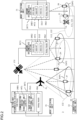
- Figure 1 schematically shows the overview of a wireless communication system to which the communication control apparatus is applied.
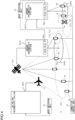
- Figure 2 is a functional block diagram of the communication control apparatus.
- Figure 3 shows a schematic example of the connection state under normal situations.
- Figure 4 shows a schematic example of the connection state under emergent situations.
- FIG. 1 schematically shows an overview of a wireless communication system 1 to which the communication control apparatus according to an embodiment of the present disclosure is applied.
- the wireless communication system 1 includes 5G wireless communication system 11, 4G wireless communication system 12, and satellite communication system 13.
- 5G wireless communication system 11 that complies with the fifth generation mobile communication system (5G) uses NR (New Radio) or 5G NR (Fifth Generation New Radio) as the radio access technology (RAT) and 5GC (Fifth Generation Core) as the core network.
- 4G wireless communication system 12 that complies with the fourth generation mobile communication system (4G) uses LTE (Long Term Evolution) or LTE-Advanced as the radio access technology and EPC (Evolved Packet Core) as the core network.
- Satellite communication system 13 is for satellite communication via communication satellite 131.
- the wireless communication system 1 may include wireless communication networks of a generation prior to 4G, a generation later than 5G (e.g. 6G), or any wireless communication networks that are not associated with generations, such as Wi-Fi (registered trademark).
- the 5G wireless communication system 11 may include a plurality of 5G base stations 111A, 111B, and 111C (hereinafter collectively referred to as 5G base station 111) installed on the ground capable of communicating by 5G NR with communication devices or communication devices 2A, 2B, 2C, and 2D (hereinafter collectively referred to as communication device(s) 2) such as smartphones, which are also referred to as UE (User Equipment).
- 5G base station 111 is also referred to as gNodeB (gNB).
- the coverage or support range of each 5G base station 111A, 111B and 111C is referred to as a cell 112A, 112B and 112C (hereinafter collectively referred to as 5G cell 112).
- the size of the 5G cell 112 of each 5G base station 111 is arbitrary, but typically ranges from a few meters to several tens of kilometers in radius. Although there is no established definition, cells with a radius of a few meters to ten meters are called femtocells, cells with a radius of ten meters to several tens of meters are called picocells, cells with a radius of several tens of meters to several hundred meters are called microcells, and cells with a radius of more than several hundreds of meters are called macrocells.
- high frequency radio waves such as millimeter waves are often used, and their high tendency to propagate in a straight-line causes radio waves to be blocked by obstacles, shortening the communication distance. For this reason, 5G tends to use more small cells than 4G and earlier generations.
- the communication device 2 can conduct 5G communication when it is located within at least one of a plurality of 5G cells 112A, 112B and 112C.
- communication device 2B in 5G cells 112A and 112B can communicate with both 5G base stations 111A and 111B by 5G NR.
- the communication device 2C in the 5G cell 112C can communicate with the 5G base station 111C by 5G NR.
- Communication device 2A and 2D are outside of all 5G cells 112A, 112B and 112C, so they are not able to communicate by 5G NR.
- the 5G NR-based 5G communication between each communication device 2 and each 5G base station 111 is managed by the 5GC, which is the core network.
- the 5GC transfers data to and from each 5G base station 111, transfers data to and from external networks such as the EPC, the satellite communication system 13 and the Internet, and manages the movement of the communication device 2.
- the 4G wireless communication system 12 comprises a plurality of 4G base stations 121 (only one of them is shown in Figure 1 ) installed on the ground that can communicate with the communication device 2 by LTE or LTE-Advanced.
- the base station 121 in 4G is referred to as eNodeB (eNB). Similar to each 5G base station 111, the communication range or support range of each 4G base station 121 is also called a cell and is shown as 122.
- the communication device 2 can conduct 4G communication when it is located within 4G cell 122.
- the communication devices 2A and 2B in the 4G cell 122 can communicate with the 4G base station 121 by LTE or LTE-Advanced.
- Communication device 2C and 2D are outside the 4G cell 122 and are not able to communicate by LTE or LTE-Advanced.
- the 4G communication by LTE and LTE-Advanced between each communication device 2 and each 4G base station 121 is managed by the EPC, which is the core network.
- the EPC manages the transfer of data to and from each 4G base station 121, the transfer of data to and from external networks such as 5GC, the satellite communication system 13 and the Internet, and the movement management of the communication device 2.
- the communication device 2A is in a state that enables 4G communication with 4G base station 121
- communication device 2B is in a state that enables 5G communication with 5G base stations 111A and 111B and 4G communication with 4G base station 121
- communication device 2C is in a state that enables 5G communication with 5G base station 111C.
- one base station is selected as the most suitable for the communication device 2B in terms of communication quality etc., under the control of the 5GC and/or the EPC, which is the core network.
- the communication is conducted using the satellite communication system 13 described below.
- the satellite communication system 13 is the wireless communication system using communication satellites 131 as non-terrestrial base stations.
- the communication satellites 131 are low-earth-orbit satellites flying in low-earth-orbit outer space of 500 to 700 km above the ground. Similar to 5G base station 111 and 4G base station 121, the communication range or support range of each communication satellite 131 is also called a cell and is shown as 132.
- a communication satellite 131 as a non-terrestrial base station provides a satellite communication cell 132 as a non-terrestrial communication cell onto the ground. Communication device 2 on the ground can conduct satellite communication when it is inside the satellite communication cell 132.
- communication satellite 131 as the base station in the satellite communication system 13 is capable of wireless communication directly or indirectly via aircraft etc. with the communication device 2 within the satellite communication cell 132.
- the radio access technology used by the communication satellite 131 for wireless communication with the communication device 2 in the satellite communication cell 132 may be 5G NR, the same as the 5G base station 111, or LTE or LTE-Advanced, the same as the 4G base station 121, or any other radio access technology that the communication device 2 can use. Therefore, there is no need for the communication device 2 to have any special functions or components for satellite communication.
- the satellite communication system 13 is equipped with a gateway 133 as a ground station that is installed on the ground and can communicate with the communication satellite 131.
- the gateway 133 is equipped with a satellite antenna to communicate with the communication satellite 131, and is connected to the 5G base station 111 and the 4G base station 121 as terrestrial base stations that constitute the terrestrial network (TN).
- the gateway 133 connects the non-terrestrial network (NTN), which is comprising communication satellites 131 as a non-terrestrial base station or a satellite base station, and the terrestrial network TN, which is comprising terrestrial base stations 111 and 121, for mutual communication.
- NTN non-terrestrial network
- the 5GC connected via the gateway 133 and the 5G base station 111 in the TN (or the 5G radio access network) is used as the core network.
- the EPC connected via the gateway 133 and the 4G base station 121 in the TN (or the 4G radio access network) is used as the core network. In this way, appropriate coordination is made between different wireless communication systems such as 5G wireless communication system 11, 4G wireless communication system 12, satellite communication system 13 etc. through the gateway 133.
- Satellite communication by communication satellites 131 is mainly used for covering areas with no or few terrestrial base stations such as 5G base stations 111 and 4G base stations 121 etc.
- a communication device 2D that is outside the communication cells of all the terrestrial base stations communicates with the communication satellite 131.
- communication devices 2A, 2B and 2C that are in good communication with either of the terrestrial base stations, are also in the satellite communication cell 132 and can communicate with the communication satellite 131.
- the limited communication resources (including power) of the communication satellite 131 are saved for the communication device 2D etc.
- the communication satellite 131 uses beamforming to direct the communication signal to the communication device 2D in the satellite communication cell 132, thereby the communication quality with the communication device 2D is improved.
- a communication satellite flying in geostationary orbit or other higher orbit in outer space, or an unmanned or manned aircraft flying in stratosphere or other lower (e.g. about 20 km above the ground) atmosphere may be used as a non-terrestrial base station in addition to or instead of the communication satellite 131.
- the wireless communication system 1 is usually constructed by the terrestrial communication cells 112, 122 provided by terrestrial base stations 111, 121 stationarily installed on the ground.
- mobile communication cannot be performed outside terrestrial communication cells 112, 122, and the quality of mobile communications might be low depending on time and/or place even within terrestrial communication cells 112, 122.
- the wireless communication system 1 can also include the satellite communication system 13 that uses the communication satellite 131 as a non-terrestrial base station, it is impractical to supplement the terrestrial network of terrestrial base stations 111, 121 solely by the communication satellites 131.
- an intermediate station such as relay station may be used, which can communicate with the terrestrial base stations 111, 121 and/or the communication satellite 131 to expand the terrestrial communication cells 112, 122 and/or the satellite communication cell 132.
- a communication device 2 in the vicinity of an intermediate station can communicate indirectly with the terrestrial base stations 111, 121 and/or the communication satellite 131 via the intermediate station, even if it cannot communicate directly with the terrestrial base stations 111, 121 and/or the communication satellite 131.
- intermediate stations can be used in a variety of ways.
- the functions required of intermediate stations for the terrestrial base station 111, 121 and for the non-terrestrial base station such as the communication satellite 131 may differ depending on usage and/or situation.
- various types of intermediate stations may be provided, such as intermediate stations that are fixed on the ground, intermediate stations that can move on the ground, and intermediate stations that can fly in the sky.
- the purpose of the present embodiment is to provide a communication control apparatus 3 that can appropriately control communication of various intermediate stations that interconnects various base stations 111, 121, 131 and the communication devices 2.
- Figure 2 shows three types of intermediate stations INT1 to INT3 (hereinafter also collectively referred to as intermediate station INT) and seven types of communication devices 2E to 2K (hereinafter also collectively referred to as communication device 2).
- the intermediate station INT interconnects the terrestrial base stations 111, 121 and/or the non-terrestrial base station 131 and the communication device 2.
- the first intermediate station INT1 in the example in Figure 2 is an in-the-sky intermediate station installed in a flying object such as an aircraft FL flying below the communication satellite 131. This in-the-sky intermediate station INT1 can interconnect the communication satellite 131 and the communication device 2 (the communication devices 2E, 2F in the example of Figure 2 ).
- the second intermediate station INT2 in the example in Figure 2 is a ground intermediate station located on the ground.
- This ground intermediate station INT2 can interconnect the communication satellite 131 and the communication device 2 (the communication devices 2H, 2I in the example of Figure 2 ).
- the third intermediate station INT3 in the example in Figure 2 is a ground intermediate station located on the ground. This ground intermediate station INT3 can interconnect the terrestrial base stations 111, 121 and the communication device 2 (the communication devices 2J, 2K in the example of Figure 2 ).
- Each intermediate station INT is equipped with at least one of a function as a base-station node IAB1 to IAB3 (hereinafter also collectively referred to as base-station node IAB) and a function as a relay-station node RN1 to RN3 (hereinafter also referred to as relay-station node RN).
- base-station node IAB base-station node
- relay-station node RN relay-station node RN
- the mode switching unit 31 described below can switch the intermediate station INT between a base-station mode in which the intermediate station INT functions as a base-station node IAB and a relay-station mode in which the intermediate station INT functions as a relay-station node RN.
- the intermediate station INT and/or the base stations 111, 121, 131 are determined or recommended for the communication device 2 to be connected by the connection control unit 32 described below.
- the communication control apparatus 3 may comprise at least one of the mode switching unit 31 and the connection control unit 32.
- a typically small base station (e.g. providing a femtocell with a radius of a few meters to ten meters) connected to the base station 111, 121, 131 and/or the gateways 133 through wired or wireless backhaul, may be used in addition to or instead of base-station node or IAB node.
- base-station node or IAB node is similarly applicable to such small base station.
- Each base-station node IAB1 to IAB3 in Figure 2 comprises a communication-device functional unit MT1 to MT3 (hereinafter also collectively referred to as communication-device functional unit MT) that functions as a communication device for the parent node including terrestrial base stations 111, 121 and/or the non-terrestrial base station 131 etc. and a base-station functional unit DU1 to DU3 (hereinafter also collectively referred to as base-station functional unit DU) that functions as a base station for the communication device 2 with which each of the base-station nodes IAB1 to IAB3 can communicate.
- MT communication-device functional unit MT3
- base-station functional unit DU1 to DU3 hereinafter also collectively referred to as base-station functional unit DU
- Each relay-station node RN1 to RN3 in Figure 2 function as a relay station such as a repeater that relays communication signal between the terrestrial base station 111, 121 and/or the non-terrestrial base station 131 and the communication device 2 to expand the terrestrial communication cell 112, 122 and/or the non-terrestrial communication cell 132.
- the relay-station node RN is not equipped with a base-station functional unit DU, therefore the benefit of shortening the communication delay with the communication device 2 is not provided.
- the relatively large communication delay between the communication device 2 and base station 111, 121, 131 needs to be considered on the core network side.
- the relatively small communication delay between the communication device 2 and the base-station node IAB may be considered on the core network side.
- the base-station node IAB provides not only a basic function of expanding the communication cell 112, 122, 132 but also an additional function of shortening the communication delay with the communication device 2.
- the relay-station node RN substantially provides only a basic function of expanding the communication cell 112, 122, 132.
- the communication control apparatus 3 in the present embodiment appropriately controls communication between the base station 111, 121, 131 and the communication device 2 by means of the mode switching unit 31 and/or the connection control unit 32.
- the mode switching unit 31 and/or the connection control unit 32 may be configured by artificial intelligence etc. having machine learning capability, or they may be configured by the NWDAF (Network Data Analytics Function) etc. responsible for collecting and analyzing data on the network in the 5GC (the core network of 5G).
- NWDAF Network Data Analytics Function
- the mode switching unit 31 switches the intermediate station INT between a base-station mode in which the intermediate station INT functions as a base station to the communication device 2 and a relay-station mode in which the intermediate station INT relays communication signal between the base station 111, 121, 131 and the communication device 2.
- the intermediate station INT switched to the base-station mode by the mode switching unit 31 functions as a base-station node IAB, and the intermediate station INT switched to the relay-station mode by the mode switching unit 31 functions as a relay-station node RN.
- the mode switching unit 31 may allow one intermediate station INT to operate simultaneously in different modes for a plurality of the communication devices 2.
- the base-station mode may include a plurality of sub-modes corresponding to the communication resources to be operated in the intermediate station INT.
- the base-station node IAB1 can communicate with the communication device 2E.
- the relatively small communication delay between the communication device 2E and the base-station node IAB1 (the base-station functional unit DU1) and/or the aircraft FL is considered for the communication control in the core network (not shown in Figure 2 ) of the satellite communication system 13 including the communication satellite 131.
- the relay-station node RN1 can communicate with the communication device 2E.
- the relatively large communication delay between the communication device 2E and the communication satellite 131 is considered for the communication control in the core network of the satellite communication system 13 including the communication satellite 131.
- the mode switching unit 31 preferably switches the in-the-sky intermediate station INT1 to the base-station mode.
- the mode switching unit 31 since more communication resources are used in the base-station mode than in the relay-station mode at the in-the-sky intermediate station INT1 and/or the communication satellite 131, it is preferable for the mode switching unit 31 to switch the in-the-sky intermediate station INT1 to the relay-station mode, if these communication resources are to be saved and/or if the delay in communication of the communication device 2E is acceptable.
- the mode switching unit 31 may switch the in-the-sky intermediate station INT1 (the base-station node IAB1) in the base-station mode to appropriate sub-mode according to the communication volume, required communication quality etc. Besides, if securing overall communication capability through the communication satellites 131 etc. and/or expanding the communication cell (communication area) by the relay-station node RN1 should be prioritized over the improvement of local communication quality through the base-station node IAB1 in emergent situations etc. such as disasters, the mode switching unit 31 may switch the in-the-sky intermediate station INT1 (the base-station node IAB1) to the sleep mode or the relay-station mode (the relay-station node RN1).
- the communication device 2F in Figure 2 is located inside the overlapping area of the expansion cell EXP1 generated by expanding the satellite communication cell 132 by the in-the-sky intermediate station INT1 and the satellite communication cell 132 before the expansion.
- the communication device 2F inside the satellite communication cell 132 may communicate directly with the communication satellite 131, or indirectly with the communication satellite 131 via the in-the-sky intermediate station INT1.
- the base-station node IAB1 can communicate with the communication device 2F.
- the relatively small communication delay between the communication device 2F and the base-station node IAB1 (the base-station functional unit DU1) and/or the aircraft FL is considered for the communication control in the core network of the satellite communication system 13 including the communication satellite 131.
- the relay-station node RN1 can communicate with the communication device 2F.
- the communication device 2G in Figure 2 is located outside the expansion cells EXP1 to EXP3 generated by expanding the communication cells 112, 122, 132 by the intermediate stations INT1 to INT3 and inside the satellite communication cell 132.
- the communication device 2G inside the satellite communication cell 132 directly communicates with the communication satellite 131.
- the base-station node IAB2 can communicate with the communication device 2H.
- the relatively small communication delay between the communication device 2H and the base-station node IAB2 (the base-station functional unit DU2) is considered for the communication control in the core network of the satellite communication system 13 including the communication satellite 131.
- the relay-station node RN2 can communicate with the communication device 2H.
- the relatively large communication delay between the communication device 2H and the communication satellite 131 is considered for the communication control in the core network of the satellite communication system 13 including the communication satellite 131.
- This communication delay is substantially equal to the case where the communication device 2H communicates directly with the communication satellite 131. Therefore, for the communication device 2H inside the satellite communication cell 132, there is no particular benefit to communicate with the ground intermediate station INT2 (the relay-station node RN2) in the relay-station mode.
- the mode switching unit 31 may switch the ground intermediate station INT2 (the base-station node IAB2) in the base-station mode to appropriate sub-mode according to the communication volume, required communication quality etc. Besides, if securing overall communication capability through the communication satellites 131 etc. and/or expanding the communication cell (communication area) by the relay-station node RN2 should be prioritized over the improvement of local communication quality through the base-station node IAB2 in emergent situations etc. such as disasters, the mode switching unit 31 may switch the ground intermediate station INT2 (the base-station node IAB2) to the sleep mode or the relay-station mode (the relay-station node RN2).
- the communication device 2I in Figure 2 is located inside the expansion cell EXP2 generated by expanding the satellite communication cell 132 by the ground intermediate station INT2, and outside the satellite communication cell 132 before the expansion. Since the communication device 2I outside the satellite communication cell 132 cannot directly communicate with the communication satellite 131, it communicates indirectly with the communication satellite 131 via the ground intermediate station INT2.
- the base-station node IAB2 can communicate with the communication device 2I.
- the relatively small communication delay between the communication device 2I and the base-station node IAB2 (the base-station functional unit DU2) is considered for the communication control in the core network of the satellite communication system 13 including the communication satellite 131.
- the relay-station node RN2 can communicate with the communication device 2I.
- the relatively large communication delay between the communication device 2I and the communication satellite 131 is considered for the communication control in the core network of the satellite communication system 13 including the communication satellite 131.
- the mode switching unit 31 preferably switches the ground intermediate station INT2 to the base-station mode.
- the mode switching unit 31 since more communication resources are used in the base-station mode than in the relay-station mode at the ground intermediate station INT2 and/or the communication satellite 131, it is preferable for the mode switching unit 31 to switch the ground intermediate station INT2 to the relay-station mode, if these communication resources are to be saved and/or if the delay in communication of the communication device 2I is acceptable.
- the mode switching unit 31 may switch the ground intermediate station INT2 (the base-station node IAB2) in the base-station mode to appropriate sub-mode according to the communication volume, required communication quality etc.
- the mode switching unit 31 may switch the ground intermediate station INT2 (the base-station node IAB2) to the sleep mode or the relay-station mode (the relay-station node RN2).
- the communication device 2J in Figure 2 is located inside the overlapping area of the expansion cell EXP3 generated by expanding the terrestrial communication cell 112, 122 by the ground intermediate station INT3 and the terrestrial communication cell 112, 122 before the expansion.
- the communication device 2J inside the terrestrial communication cell 112, 122 may communicate directly with the terrestrial base station 111, 121, or indirectly with the terrestrial base station 111, 121 via the ground intermediate station INT3.
- the terrestrial base station 111, 121 is located near the communication device 2J.
- the benefit of shortening the communication delay by the ground intermediate station INT3 is not expected to be significant, meaning that there is little benefit to cause the communication device 2J located on the ground to connect to the ground intermediate station INT3 instead of the terrestrial base station 111, 121. Therefore, in principle, the communication device 2J inside the terrestrial communication cell 112, 122 communicates directly with the terrestrial base station 111, 121.
- the communication device 2K in Figure 2 is located inside the expansion cell EXP3 generated by expanding the terrestrial communication cell 112, 122 by the ground intermediate station INT3, and outside the terrestrial communication cell 112, 122 before the expansion. Since the communication device 2K outside the terrestrial communication cell 112, 122 cannot directly communicate with the terrestrial base station 111, 121, it communicates indirectly with the terrestrial base station 111, 121 via the ground intermediate station INT3.
- the relatively large communication delay between the communication device 2K and the terrestrial base station 111, 121 is considered for the communication control in the core network of the terrestrial communication system 11, 12 including the terrestrial base station 111, 121.
- the terrestrial base station 111, 121 is located near the communication device 2K. Therefore, the benefit of shortening the communication delay by the ground intermediate station INT3 is not so significant as the in-the-sky intermediate station INT1 and the ground intermediate station INT2.
- the mode switching unit 31 preferably switches the ground intermediate station INT3 to the base-station mode.
- the mode switching unit 31 since more communication resources are used in the base-station mode than in the relay-station mode at the ground intermediate station INT3 and/or the terrestrial base station 111, 121, it is preferable for the mode switching unit 31 to switch the ground intermediate station INT3 to the relay-station mode, if these communication resources are to be saved and/or if the delay in communication of the communication device 2K is acceptable.
- the mode switching unit 31 may switch the ground intermediate station INT3 (the base-station node IAB3) in the base-station mode to appropriate sub-mode according to the communication volume, required communication quality etc.
- the mode switching unit 31 may switch the ground intermediate station INT3 (the base-station node IAB3) to the sleep mode or the relay-station mode (the relay-station node RN3).
- the connection control unit 32 may cause a base-station-type intermediate station INT (the base-station node IAB) that interconnects a base station 111, 121, 131 and a communication device 2 and functions as a base station to the communication device 2, to connect with the communication device 2 preferentially to a relay-station-type intermediate station INT (the relay-station node RN) that relays communication signal of the base station 111, 121, 131.
- a base-station-type intermediate station INT the base-station node IAB
- INT the relay-station node RN
- connection control unit 32 may cause a relay-station-type intermediate station INT (the relay-station node RN) that interconnects a base station 111, 121, 131 and a communication device 2 and relays communication signal of the base station 111, 121, 131, to connect with the communication device 2 preferentially to a base-station-type intermediate station INT (the base-station node IAB) that functions as a base station to the communication device 2.
- INT the relay-station node RN
- connection control unit 32 preferably switches between a base-station priority mode in which the communication device 2 is preferentially connected to the base-station-type intermediate station over the relay-station-type intermediate station, and a relay-station priority mode in which the communication device 2 is preferentially connected to the relay-station-type intermediate station over the base-station-type intermediate station.
- the connection control unit 32 may apply the base-station priority mode or the relay-station priority mode individually to each of the communication devices 2 according to the type, the application, the location, the communication mode etc. of each communication device 2.
- the base-station priority mode may be preferentially applied by the connection control unit 32, to general-purpose communication devices 2 such as smartphones that require "high speed and high capacity” (eMBB: Enhanced Mobile Broadband) and/or "high reliability and low latency” (URLLC: Ultra Reliable Low Latency Communications) in 5G, and/or communication devices 2 performing priority communications requiring high quality such as emergency calls.
- the relay-station priority mode may be preferentially applied by the connection control unit 32, to communication devices 2 whose communication delays are acceptable such as IoT devices used for "many simultaneous connections" (mMTC: Massive Machine Type Communications) in 5G.
- the connection control unit 32 may switch the mode applied to each communication device 2 according to the situation of the wireless communication system 1 and/or the time of day.
- the base-station priority mode is preferentially applied to the communication device 2 (the communication devices 2E, 2F, 2H, 2I, 2K in the example of Figure 2 ) that can enjoy the benefit of shortening the communication delay by the base-station node IAB.
- the communication device 2 the communication devices 2E, 2F, 2H, 2I, 2K in the example of Figure 2
- all or some intermediate stations INT1 to INT3 are switched to the base-station mode (the base-station nodes IAB1 to IAB3) by the mode switching unit 31 (the disabled relay-station nodes RN1 to RN3 are omitted in Figure 3 ).
- the communication devices 2E, 2F inside the expansion cell EXP1 with base-station priority mode applied are connected to the communication satellite 131 via the base-station node IAB1 in the in-the-sky intermediate station INT1.
- the communication devices 2H, 2I inside the expansion cell EXP2 with base-station priority mode applied are connected to the communication satellite 131 via the base-station node IAB2 in the ground intermediate station INT2.
- the communication device 2K inside the expansion cell EXP3 with base-station priority mode applied, is connected to the terrestrial base station 111, 121 via the base-station node IAB3 in the ground intermediate station INT3.
- the relay-station priority mode is preferentially applied to the communication device 2, since securing overall communication capability through the base station 111, 121, 131 and/or expanding the communication cell 112, 122, 132 by the relay-station node RN should be prioritized over the improvement of local communication quality through the base-station node IAB.
- all or some intermediate stations INT1 to INT3 are switched to the relay-station mode (the relay-station nodes RN1 to RN3) by the mode switching unit 31 (the disabled base-station nodes IAB1 to IAB3 are omitted in Figure 3 ).
- in-the-sky intermediate station INT1 in the example shown in Figure 4 is switched to the sleep mode by the mode switching unit 31, where not only the base-station node IAB1 but also the relay-station node RN1 are disabled or stopped. Therefore, the expansion cell EXP1 is also not generated.
- the mode switching unit 31 may switch the in-the-sky intermediate station INT1 to the relay-station mode (the relay-station node RN1).
- the communication device 2F connected to the in-the-sky intermediate station INT1 (the base-station node IAB1) during usual times in Figure 3 now communicates directly with the communication satellite 131, since the expansion cell EXP1 is not generated by the in-the-sky intermediate station INT1.
- the communication device 2I outside the satellite communication cell 132 is connected to the communication satellite 131 via the relay-station node RN2 in the ground intermediate station INT2.
- the communication device 2H inside the satellite communication cell 132 communicates directly with the communication satellite 131, since there is little benefit for the relay-station node RN2 to intervene.
- the communication device 2K inside the expansion cell EXP3 with the relay-station priority mode applied is connected to the terrestrial base station 111, 121 via the relay-station node RN3 in the ground intermediate station INT3.
- connection control unit 32 preferably connects the communication device 2 (the communication devices 2F, 2H, 2J in the example of Figure 2 ) inside the communication cell 112, 122, 132 that can communicate directly with the base station 111, 121, 131, preferentially with such base station 111, 121, 131 without the relay-station node RN.
- communication between the base station 111, 121, 131 and the communication device 2 can be appropriately controlled, by the mode switching unit 31 switching the intermediate station INT between the base-station mode and the relay-station mode, and/or by the connection control unit 32 switching between the base-station priority mode and the relay-station priority mode.
- each apparatus and/or each method described in the embodiments can be realized by hardware resources or software resources, or by the cooperation of hardware resources and software resources.
- hardware resources for example, processors, ROMs, RAMs and various integrated circuits can be used.
- software resources for example, programs such as operating systems and applications can be used.
- the present disclosure may be expressed as the following items.
- the present disclosure relates to communication control for intermediate station.
Landscapes
- Engineering & Computer Science (AREA)
- Computer Networks & Wireless Communication (AREA)
- Signal Processing (AREA)
- Physics & Mathematics (AREA)
- Astronomy & Astrophysics (AREA)
- General Physics & Mathematics (AREA)
- Aviation & Aerospace Engineering (AREA)
- Mobile Radio Communication Systems (AREA)
- Radio Relay Systems (AREA)
Abstract
Description
- The present disclosure relates to communication control for intermediate station.
- The number, types, and applications of wireless communication devices, represented by smartphones and Internet of Things (IoT) devices, continue to increase, and wireless communication standards continue to be expanded and improved. For example, the commercial service of the fifth generation mobile communication system known as "5G" started in 2018, and the standards are still being developed by the 3GPP (Third Generation Partnership Project). Efforts are also underway to develop standards for "6G" or the sixth generation mobile communication system, which would be the next generation of wireless communication standards following 5G.
- Mobile communication networks for portable communication devices such as smartphones and cell phones (hereinafter collectively referred to as communication device(s)) are usually constructed by communication cells (hereinafter referred to as terrestrial communication cell(s) or fixed communication cell(s)) provided by base stations statically installed on the ground (hereinafter referred to as terrestrial base station(s) or fixed base station(s)). However, mobile communication cannot be performed outside fixed communication cells, and the quality of mobile communications might be low depending on time and/or place even within fixed communication cells.
- To solve these problems, relay stations may be used, which can communicate with terrestrial base stations to expand the terrestrial communication cells. A communication device in the vicinity of a relay station can communicate indirectly with the terrestrial base station via the relay station, even if it cannot communicate directly with the terrestrial base station. In other words, relay stations relay communication signals between terrestrial base stations and communication devices.
- Patent Literature 1:
JP-A-2006-352894 - As a result of the independent investigation, the inventor has come to recognize that relay stations can be used in a variety of ways. For example, the functions required of relay stations for terrestrial base station and for non-terrestrial base station such as communication satellite, may differ depending on usage and/or situation.
- The present disclosure was made in consideration of this situation, and its purpose is to provide a communication control apparatus and the like that can appropriately control communication of an intermediate station that interconnects a base station and a communication device.
- In order to solve the above problem, a communication control apparatus in a certain aspect of the present disclosure comprises at least one processor that performs, by a mode switching unit, switching an intermediate station that interconnects a base station and a communication device between a base-station mode in which the intermediate station functions as a base station to the communication device and a relay-station mode in which the intermediate station relays communication signal between the base station and the communication device.
- According to this aspect, communication between a base station and a communication device can be appropriately controlled, by switching an intermediate station between the base-station mode and the relay-station mode.
- Another aspect of the present disclosure is also a communication control apparatus. The apparatus comprises at least one processor that performs, by a connection control unit, causing a base-station-type intermediate station that interconnects a base station and a communication device and functions as a base station to the communication device, to connect with the communication device preferentially to a relay-station-type intermediate station that relays communication signal of the base station.
- Further another aspect of the present disclosure is also a communication control apparatus. The apparatus comprises at least one processor that performs, by a connection control unit, causing a relay-station-type intermediate station that interconnects a base station and a communication device and relays communication signal of the base station, to connect with the communication device preferentially to a base-station-type intermediate station that functions as a base station to the communication device.
- Further another aspect of the present disclosure is a communication control method. The method comprises switching an intermediate station that interconnects a base station and a communication device between a base-station mode in which the intermediate station functions as a base station to the communication device and a relay-station mode in which the intermediate station relays communication signal between the base station and the communication device.
- Further another aspect of the present disclosure is also a communication control method. The method comprises switching between a base-station priority mode in which a communication device is preferentially connected to a base-station-type intermediate station that interconnects a base station and the communication device and functions as a base station to the communication device, over a relay-station-type intermediate station that relays communication signal of the base station, and a relay-station priority mode in which the communication device is preferentially connected to the relay-station-type intermediate station over the base-station-type intermediate station.
- Further another aspect of the present disclosure is a computer-readable medium. The computer-readable medium stores a communication control program causing a computer to perform switching an intermediate station that interconnects a base station and a communication device between a base-station mode in which the intermediate station functions as a base station to the communication device and a relay-station mode in which the intermediate station relays communication signal between the base station and the communication device.
- Further another aspect of the present disclosure is also a computer-readable medium. The computer-readable medium stores a communication control program causing a computer to perform switching between a base-station priority mode in which a communication device is preferentially connected to a base-station-type intermediate station that interconnects a base station and the communication device and functions as a base station to the communication device, over a relay-station-type intermediate station that relays communication signal of the base station, and a relay-station priority mode in which the communication device is preferentially connected to the relay-station-type intermediate station over the base-station-type intermediate station.
- In addition, any combination of the above components, and any conversion of the expression of the present disclosure among methods, devices, systems, recording media, computer programs and the like are also encompassed within this disclosure.
- According to the present disclosure, communication of an intermediate station that interconnects a base station and a communication device can be appropriately controlled.
-
Figure 1 schematically shows the overview of a wireless communication system to which the communication control apparatus is applied.Figure 2 is a functional block diagram of the communication control apparatus.Figure 3 shows a schematic example of the connection state under normal situations.Figure 4 shows a schematic example of the connection state under emergent situations. -
Figure 1 schematically shows an overview of awireless communication system 1 to which the communication control apparatus according to an embodiment of the present disclosure is applied. Thewireless communication system 1 includes 5Gwireless communication system 11, 4Gwireless communication system 12, andsatellite communication system 13. 5Gwireless communication system 11 that complies with the fifth generation mobile communication system (5G) uses NR (New Radio) or 5G NR (Fifth Generation New Radio) as the radio access technology (RAT) and 5GC (Fifth Generation Core) as the core network. 4Gwireless communication system 12 that complies with the fourth generation mobile communication system (4G) uses LTE (Long Term Evolution) or LTE-Advanced as the radio access technology and EPC (Evolved Packet Core) as the core network.Satellite communication system 13 is for satellite communication viacommunication satellite 131. Although not shown in the figure, thewireless communication system 1 may include wireless communication networks of a generation prior to 4G, a generation later than 5G (e.g. 6G), or any wireless communication networks that are not associated with generations, such as Wi-Fi (registered trademark). - The 5G
wireless communication system 11 may include a plurality of5G base stations communication devices 5G base station cell - The size of the 5G cell 112 of each 5G base station 111 is arbitrary, but typically ranges from a few meters to several tens of kilometers in radius. Although there is no established definition, cells with a radius of a few meters to ten meters are called femtocells, cells with a radius of ten meters to several tens of meters are called picocells, cells with a radius of several tens of meters to several hundred meters are called microcells, and cells with a radius of more than several hundreds of meters are called macrocells. In 5G, high frequency radio waves such as millimeter waves are often used, and their high tendency to propagate in a straight-line causes radio waves to be blocked by obstacles, shortening the communication distance. For this reason, 5G tends to use more small cells than 4G and earlier generations.
- The communication device 2 can conduct 5G communication when it is located within at least one of a plurality of
5G cells communication device 2B in5G cells 5G base stations communication device 2C in the5G cell 112C can communicate with the5G base station 111C by 5G NR.Communication device 5G cells satellite communication system 13 and the Internet, and manages the movement of the communication device 2. - The 4G
wireless communication system 12 comprises a plurality of 4G base stations 121 (only one of them is shown inFigure 1 ) installed on the ground that can communicate with the communication device 2 by LTE or LTE-Advanced. Thebase station 121 in 4G is referred to as eNodeB (eNB). Similar to each 5G base station 111, the communication range or support range of each4G base station 121 is also called a cell and is shown as 122. - The communication device 2 can conduct 4G communication when it is located within
4G cell 122. In the example shown in the figure, thecommunication devices 4G cell 122 can communicate with the4G base station 121 by LTE or LTE-Advanced.Communication device 4G cell 122 and are not able to communicate by LTE or LTE-Advanced. The 4G communication by LTE and LTE-Advanced between each communication device 2 and each4G base station 121 is managed by the EPC, which is the core network. For example, the EPC manages the transfer of data to and from each4G base station 121, the transfer of data to and from external networks such as 5GC, thesatellite communication system 13 and the Internet, and the movement management of the communication device 2. - If we take a look at each
communication device communication device 2A is in a state that enables 4G communication with4G base station 121, andcommunication device 2B is in a state that enables 5G communication with5G base stations 4G base station 121, andcommunication device 2C is in a state that enables 5G communication with5G base station 111C. When there are multiple base stations (111A, 111B and 121) as in the case ofcommunication device 2B, one base station is selected as the most suitable for thecommunication device 2B in terms of communication quality etc., under the control of the 5GC and/or the EPC, which is the core network. For thecommunication device 2D that is not in a state that enables 5G communication with any 5G base station 111 or 4G communication with any4G base station 121, the communication is conducted using thesatellite communication system 13 described below. - The
satellite communication system 13 is the wireless communication system usingcommunication satellites 131 as non-terrestrial base stations. Thecommunication satellites 131 are low-earth-orbit satellites flying in low-earth-orbit outer space of 500 to 700 km above the ground. Similar to 5G base station 111 and4G base station 121, the communication range or support range of eachcommunication satellite 131 is also called a cell and is shown as 132. Thus, acommunication satellite 131 as a non-terrestrial base station provides asatellite communication cell 132 as a non-terrestrial communication cell onto the ground. Communication device 2 on the ground can conduct satellite communication when it is inside thesatellite communication cell 132. Similar to 5G base station 111 in the 5Gwireless communication system 11 and4G base station 121 in the 4Gwireless communication system 12,communication satellite 131 as the base station in thesatellite communication system 13 is capable of wireless communication directly or indirectly via aircraft etc. with the communication device 2 within thesatellite communication cell 132. The radio access technology used by thecommunication satellite 131 for wireless communication with the communication device 2 in thesatellite communication cell 132 may be 5G NR, the same as the 5G base station 111, or LTE or LTE-Advanced, the same as the4G base station 121, or any other radio access technology that the communication device 2 can use. Therefore, there is no need for the communication device 2 to have any special functions or components for satellite communication. - The
satellite communication system 13 is equipped with agateway 133 as a ground station that is installed on the ground and can communicate with thecommunication satellite 131. Thegateway 133 is equipped with a satellite antenna to communicate with thecommunication satellite 131, and is connected to the 5G base station 111 and the4G base station 121 as terrestrial base stations that constitute the terrestrial network (TN). In this way, thegateway 133 connects the non-terrestrial network (NTN), which is comprisingcommunication satellites 131 as a non-terrestrial base station or a satellite base station, and the terrestrial network TN, which is comprisingterrestrial base stations 111 and 121, for mutual communication. When thecommunication satellite 131 conducts 5G communication with the communication device 2 in thesatellite communication cell 132 by 5G NR, the 5GC connected via thegateway 133 and the 5G base station 111 in the TN (or the 5G radio access network) is used as the core network. When thecommunication satellite 131 conducts 4G communication with the communication device 2 in thesatellite communication cell 132 by LTE or LTE-Advanced, the EPC connected via thegateway 133 and the4G base station 121 in the TN (or the 4G radio access network) is used as the core network. In this way, appropriate coordination is made between different wireless communication systems such as 5Gwireless communication system 11, 4Gwireless communication system 12,satellite communication system 13 etc. through thegateway 133. - Satellite communication by
communication satellites 131 is mainly used for covering areas with no or few terrestrial base stations such as 5G base stations 111 and4G base stations 121 etc. In the example shown in the figure, acommunication device 2D that is outside the communication cells of all the terrestrial base stations communicates with thecommunication satellite 131. On the other hand,communication devices satellite communication cell 132 and can communicate with thecommunication satellite 131. However, by communicating with the terrestrial base stations instead of thecommunication satellite 131 as the satellite base station in principle, the limited communication resources (including power) of thecommunication satellite 131 are saved for thecommunication device 2D etc. Thecommunication satellite 131 uses beamforming to direct the communication signal to thecommunication device 2D in thesatellite communication cell 132, thereby the communication quality with thecommunication device 2D is improved. - The size of the
satellite communication cell 132 of thecommunication satellite 131 as a satellite base station depends on the number of beams emitted by thecommunication satellite 131. For example, asatellite communication cell 132 with a diameter of about 24 km can be formed by combining up to 2,800 beams. As illustrated, asatellite communication cell 132 is typically larger than a terrestrial communication cell such as a 5G cell 112 or a4G cell 122, and could contain one or more 5G cells 112 and/or4G cells 122 inside it. The above example shows acommunication satellite 131 flying in low-earth-orbit outer space at a height of about 500 km to 700 km above the ground as a flying non-terrestrial base station. However, a communication satellite flying in geostationary orbit or other higher orbit in outer space, or an unmanned or manned aircraft flying in stratosphere or other lower (e.g. about 20 km above the ground) atmosphere may be used as a non-terrestrial base station in addition to or instead of thecommunication satellite 131. - As shown in
Figure 1 , thewireless communication system 1 is usually constructed by theterrestrial communication cells 112, 122 provided byterrestrial base stations 111, 121 stationarily installed on the ground. However, mobile communication cannot be performed outsideterrestrial communication cells 112, 122, and the quality of mobile communications might be low depending on time and/or place even withinterrestrial communication cells 112, 122. Although thewireless communication system 1 can also include thesatellite communication system 13 that uses thecommunication satellite 131 as a non-terrestrial base station, it is impractical to supplement the terrestrial network ofterrestrial base stations 111, 121 solely by thecommunication satellites 131. - To solve these problems, an intermediate station such as relay station may be used, which can communicate with the
terrestrial base stations 111, 121 and/or thecommunication satellite 131 to expand theterrestrial communication cells 112, 122 and/or thesatellite communication cell 132. A communication device 2 in the vicinity of an intermediate station can communicate indirectly with theterrestrial base stations 111, 121 and/or thecommunication satellite 131 via the intermediate station, even if it cannot communicate directly with theterrestrial base stations 111, 121 and/or thecommunication satellite 131. - As a result of the independent investigation, the inventor has come to recognize that intermediate stations can be used in a variety of ways. For example, the functions required of intermediate stations for the
terrestrial base station 111, 121 and for the non-terrestrial base station such as thecommunication satellite 131, may differ depending on usage and/or situation. In addition, various types of intermediate stations may be provided, such as intermediate stations that are fixed on the ground, intermediate stations that can move on the ground, and intermediate stations that can fly in the sky. The purpose of the present embodiment is to provide acommunication control apparatus 3 that can appropriately control communication of various intermediate stations that interconnectsvarious base stations -
Figure 2 is a functional block diagram of thecommunication control apparatus 3 of the present embodiment. Thecommunication control apparatus 3 comprises amode switching unit 31 and/or aconnection control unit 32. These functional blocks are realized by the cooperation of hardware resources, such as the central processing unit, memory, input devices, output devices, and peripheral devices connected to the computer, and software that is executed using them. Regardless of the type of computer or its installation location, each of the above functional blocks may be realized with the hardware resources of a single computer, or by combining hardware resources distributed across multiple computers. Especially in this embodiment, some or all of functional blocks of thecommunication control apparatus 3 may be realized in a distributed or centralized manner by computer and/or processor provided in the intermediate stations INT1 to INT3 described later, the aircraft FL described later, the communication device 2, theterrestrial base stations 111, 121, thecommunication satellite 131, thegateway 133, and the core network CN. -
Figure 2 shows three types of intermediate stations INT1 to INT3 (hereinafter also collectively referred to as intermediate station INT) and seven types ofcommunication devices 2E to 2K (hereinafter also collectively referred to as communication device 2). The intermediate station INT interconnects theterrestrial base stations 111, 121 and/or thenon-terrestrial base station 131 and the communication device 2. The first intermediate station INT1 in the example inFigure 2 is an in-the-sky intermediate station installed in a flying object such as an aircraft FL flying below thecommunication satellite 131. This in-the-sky intermediate station INT1 can interconnect thecommunication satellite 131 and the communication device 2 (thecommunication devices Figure 2 ). The second intermediate station INT2 in the example inFigure 2 is a ground intermediate station located on the ground. This ground intermediate station INT2 can interconnect thecommunication satellite 131 and the communication device 2 (thecommunication devices 2H, 2I in the example ofFigure 2 ). The third intermediate station INT3 in the example inFigure 2 is a ground intermediate station located on the ground. This ground intermediate station INT3 can interconnect theterrestrial base stations 111, 121 and the communication device 2 (thecommunication devices Figure 2 ). - Each intermediate station INT is equipped with at least one of a function as a base-station node IAB1 to IAB3 (hereinafter also collectively referred to as base-station node IAB) and a function as a relay-station node RN1 to RN3 (hereinafter also referred to as relay-station node RN). In case the intermediate station INT is equipped with both functions of a base-station node IAB and a relay-station node RN, the
mode switching unit 31 described below can switch the intermediate station INT between a base-station mode in which the intermediate station INT functions as a base-station node IAB and a relay-station mode in which the intermediate station INT functions as a relay-station node RN. Besides, regardless of the functions provided by the intermediate station INT, the intermediate station INT and/or thebase stations connection control unit 32 described below. Although both themode switching unit 31 and theconnection control unit 32 are shown for convenience inFigure 2 , thecommunication control apparatus 3 according to the present disclosure may comprise at least one of themode switching unit 31 and theconnection control unit 32. - IAB (Integrated Access and Backhaul) is a technology specified in 5G to expand a communication cell of a parent node, utilizing wireless backhaul between a
base station - Here, "expansion of a communication cell" includes not only expanding the area covered by an existing communication cell, but also improving the communication quality of at least part of an existing communication cell. In particular, the in-the-sky intermediate station INT1 and the ground intermediate station INT2, whose parent nodes are non-terrestrial base stations such as the
communication satellites 131 with a large distance from the communication device 2, function as base stations closer to the communication device 2 (thecommunication devices Figure 2 ) than such non-terrestrial base stations. This can significantly shorten the communication delay between these intermediate stations INT1, INT2 and the communication device 2. Furthermore, "expansion of the area covered by a communication cell" includes not only expanding the area in the horizontal plane of an existing communication cell, but also expanding an existing communication cell vertically, e.g. underground or to the upper and/or lower floors of a building. - It should be noted that a typically small base station (e.g. providing a femtocell with a radius of a few meters to ten meters) connected to the
base station gateways 133 through wired or wireless backhaul, may be used in addition to or instead of base-station node or IAB node. In other words, the following description of base-station node or IAB node is similarly applicable to such small base station. - Each base-station node IAB1 to IAB3 in
Figure 2 comprises a communication-device functional unit MT1 to MT3 (hereinafter also collectively referred to as communication-device functional unit MT) that functions as a communication device for the parent node includingterrestrial base stations 111, 121 and/or thenon-terrestrial base station 131 etc. and a base-station functional unit DU1 to DU3 (hereinafter also collectively referred to as base-station functional unit DU) that functions as a base station for the communication device 2 with which each of the base-station nodes IAB1 to IAB3 can communicate. In 5G, the communication-device functional unit MT is specified as a MT (Mobile Termination) or IAB-MT, and the base-station functional unit DU is specified as a DU (Distributed Unit) or IAB-DU. It should be noted that, in other wireless communication systems including generations after 5G, functions similar to IAB, MT, DU, CU (Central Unit on the core network side that is paired with the DU) may be provided under different names, but such similar functions may be used as IAB, MT, DU, CU in the present embodiment. - Each relay-station node RN1 to RN3 in
Figure 2 function as a relay station such as a repeater that relays communication signal between theterrestrial base station 111, 121 and/or thenon-terrestrial base station 131 and the communication device 2 to expand theterrestrial communication cell 112, 122 and/or thenon-terrestrial communication cell 132. Unlike the aforementioned base-station node IAB, the relay-station node RN is not equipped with a base-station functional unit DU, therefore the benefit of shortening the communication delay with the communication device 2 is not provided. In other words, even when the communication device 2 communicates with thebase station base station base station - As described above, the base-station node IAB provides not only a basic function of expanding the
communication cell communication cell communication control apparatus 3 in the present embodiment appropriately controls communication between thebase station mode switching unit 31 and/or theconnection control unit 32. Themode switching unit 31 and/or theconnection control unit 32 may be configured by artificial intelligence etc. having machine learning capability, or they may be configured by the NWDAF (Network Data Analytics Function) etc. responsible for collecting and analyzing data on the network in the 5GC (the core network of 5G). - The
mode switching unit 31 switches the intermediate station INT between a base-station mode in which the intermediate station INT functions as a base station to the communication device 2 and a relay-station mode in which the intermediate station INT relays communication signal between thebase station mode switching unit 31 functions as a base-station node IAB, and the intermediate station INT switched to the relay-station mode by themode switching unit 31 functions as a relay-station node RN. Themode switching unit 31 may allow one intermediate station INT to operate simultaneously in different modes for a plurality of the communication devices 2. The base-station mode may include a plurality of sub-modes corresponding to the communication resources to be operated in the intermediate station INT. The plurality of sub-modes may specify various communication resources such as frequency bands, communication functions, hardware, software, antennas, power etc. that are available for the base-station node IAB. Besides, the plurality of sub-modes may include a sleep mode in which the intermediate station INT (i.e. the base-station node IAB) in the base-station mode sleeps or stops. It should be noted that an intermediate station INT equipped with only one of the functions of the base-station node IAB and the relay-station node RN, is not subject of the switching process between the base-station mode and the relay-station mode by themode switching unit 31. - The
communication device 2E inFigure 2 is located inside the expansion cell EXP1 generated by expanding thesatellite communication cell 132 by the in-the-sky intermediate station INT1, and outside thesatellite communication cell 132 before the expansion. Since thecommunication device 2E outside thesatellite communication cell 132 cannot directly communicate with thecommunication satellite 131, it communicates indirectly with thecommunication satellite 131 via the in-the-sky intermediate station INT1. - In case the in-the-sky intermediate station INT1 is switched to the base-station mode by the
mode switching unit 31, the base-station node IAB1 can communicate with thecommunication device 2E. In this case, the relatively small communication delay between thecommunication device 2E and the base-station node IAB1 (the base-station functional unit DU1) and/or the aircraft FL is considered for the communication control in the core network (not shown inFigure 2 ) of thesatellite communication system 13 including thecommunication satellite 131. On the other hand, in case the in-the-sky intermediate station INT1 is switched to the relay-station mode by themode switching unit 31, the relay-station node RN1 can communicate with thecommunication device 2E. In this case, the relatively large communication delay between thecommunication device 2E and thecommunication satellite 131 is considered for the communication control in the core network of thesatellite communication system 13 including thecommunication satellite 131. - As described above, in order to shorten the delay in communication of the
communication device 2E for efficient communication control, themode switching unit 31 preferably switches the in-the-sky intermediate station INT1 to the base-station mode. However, since more communication resources are used in the base-station mode than in the relay-station mode at the in-the-sky intermediate station INT1 and/or thecommunication satellite 131, it is preferable for themode switching unit 31 to switch the in-the-sky intermediate station INT1 to the relay-station mode, if these communication resources are to be saved and/or if the delay in communication of thecommunication device 2E is acceptable. Furthermore, themode switching unit 31 may switch the in-the-sky intermediate station INT1 (the base-station node IAB1) in the base-station mode to appropriate sub-mode according to the communication volume, required communication quality etc. Besides, if securing overall communication capability through thecommunication satellites 131 etc. and/or expanding the communication cell (communication area) by the relay-station node RN1 should be prioritized over the improvement of local communication quality through the base-station node IAB1 in emergent situations etc. such as disasters, themode switching unit 31 may switch the in-the-sky intermediate station INT1 (the base-station node IAB1) to the sleep mode or the relay-station mode (the relay-station node RN1). - The
communication device 2F inFigure 2 is located inside the overlapping area of the expansion cell EXP1 generated by expanding thesatellite communication cell 132 by the in-the-sky intermediate station INT1 and thesatellite communication cell 132 before the expansion. Thecommunication device 2F inside thesatellite communication cell 132 may communicate directly with thecommunication satellite 131, or indirectly with thecommunication satellite 131 via the in-the-sky intermediate station INT1. - In case the in-the-sky intermediate station INT1 is switched to the base-station mode by the
mode switching unit 31, the base-station node IAB1 can communicate with thecommunication device 2F. In this case, the relatively small communication delay between thecommunication device 2F and the base-station node IAB1 (the base-station functional unit DU1) and/or the aircraft FL is considered for the communication control in the core network of thesatellite communication system 13 including thecommunication satellite 131. On the other hand, in case the in-the-sky intermediate station INT1 is switched to the relay-station mode by themode switching unit 31, the relay-station node RN1 can communicate with thecommunication device 2F. In this case, the relatively large communication delay between thecommunication device 2F and thecommunication satellite 131 is considered for the communication control in the core network of thesatellite communication system 13 including thecommunication satellite 131. This communication delay is substantially equal to the case where thecommunication device 2F communicates directly with thecommunication satellite 131. Therefore, for thecommunication device 2F inside thesatellite communication cell 132, there is no particular benefit to communicate with the in-the-sky intermediate station INT1 (the relay-station node RN1) in the relay-station mode. - As described above, in order to shorten the delay in communication of the
communication device 2F for efficient communication control, themode switching unit 31 preferably switches the in-the-sky intermediate station INT1 to the base-station mode. However, since more communication resources are used in the base-station mode than in the relay-station mode at the in-the-sky intermediate station INT1 and/or thecommunication satellite 131, it is preferable for themode switching unit 31 to switch the in-the-sky intermediate station INT1 to the relay-station mode (or the sleep mode to stop the in-the-sky intermediate station INT1, causing thecommunication device 2F to connect directly with the communication satellite 131), if these communication resources are to be saved and/or if the delay in communication of thecommunication device 2F is acceptable. Furthermore, themode switching unit 31 may switch the in-the-sky intermediate station INT1 (the base-station node IAB1) in the base-station mode to appropriate sub-mode according to the communication volume, required communication quality etc. Besides, if securing overall communication capability through thecommunication satellites 131 etc. and/or expanding the communication cell (communication area) by the relay-station node RN1 should be prioritized over the improvement of local communication quality through the base-station node IAB1 in emergent situations etc. such as disasters, themode switching unit 31 may switch the in-the-sky intermediate station INT1 (the base-station node IAB1) to the sleep mode or the relay-station mode (the relay-station node RN1). - The
communication device 2G inFigure 2 is located outside the expansion cells EXP1 to EXP3 generated by expanding thecommunication cells satellite communication cell 132. Thecommunication device 2G inside thesatellite communication cell 132 directly communicates with thecommunication satellite 131. - The
communication device 2H inFigure 2 is located inside the overlapping area of the expansion cell EXP2 generated by expanding thesatellite communication cell 132 by the ground intermediate station INT2 and thesatellite communication cell 132 before the expansion. Thecommunication device 2H inside thesatellite communication cell 132 may communicate directly with thecommunication satellite 131, or indirectly with thecommunication satellite 131 via the ground intermediate station INT2. - In case the ground intermediate station INT2 is switched to the base-station mode by the
mode switching unit 31, the base-station node IAB2 can communicate with thecommunication device 2H. In this case, the relatively small communication delay between thecommunication device 2H and the base-station node IAB2 (the base-station functional unit DU2) is considered for the communication control in the core network of thesatellite communication system 13 including thecommunication satellite 131. On the other hand, in case the ground intermediate station INT2 is switched to the relay-station mode by themode switching unit 31, the relay-station node RN2 can communicate with thecommunication device 2H. In this case, the relatively large communication delay between thecommunication device 2H and thecommunication satellite 131 is considered for the communication control in the core network of thesatellite communication system 13 including thecommunication satellite 131. This communication delay is substantially equal to the case where thecommunication device 2H communicates directly with thecommunication satellite 131. Therefore, for thecommunication device 2H inside thesatellite communication cell 132, there is no particular benefit to communicate with the ground intermediate station INT2 (the relay-station node RN2) in the relay-station mode. - As described above, in order to shorten the delay in communication of the
communication device 2H for efficient communication control, themode switching unit 31 preferably switches the ground intermediate station INT2 to the base-station mode. However, since more communication resources are used in the base-station mode than in the relay-station mode at the ground intermediate station INT2 and/or thecommunication satellite 131, it is preferable for themode switching unit 31 to switch the ground intermediate station INT2 to the relay-station mode (or the sleep mode to stop the ground intermediate station INT2, causing thecommunication device 2H to connect directly with the communication satellite 131), if these communication resources are to be saved and/or if the delay in communication of thecommunication device 2H is acceptable. Furthermore, themode switching unit 31 may switch the ground intermediate station INT2 (the base-station node IAB2) in the base-station mode to appropriate sub-mode according to the communication volume, required communication quality etc. Besides, if securing overall communication capability through thecommunication satellites 131 etc. and/or expanding the communication cell (communication area) by the relay-station node RN2 should be prioritized over the improvement of local communication quality through the base-station node IAB2 in emergent situations etc. such as disasters, themode switching unit 31 may switch the ground intermediate station INT2 (the base-station node IAB2) to the sleep mode or the relay-station mode (the relay-station node RN2). - The communication device 2I in
Figure 2 is located inside the expansion cell EXP2 generated by expanding thesatellite communication cell 132 by the ground intermediate station INT2, and outside thesatellite communication cell 132 before the expansion. Since the communication device 2I outside thesatellite communication cell 132 cannot directly communicate with thecommunication satellite 131, it communicates indirectly with thecommunication satellite 131 via the ground intermediate station INT2. - In case the ground intermediate station INT2 is switched to the base-station mode by the
mode switching unit 31, the base-station node IAB2 can communicate with the communication device 2I. In this case, the relatively small communication delay between the communication device 2I and the base-station node IAB2 (the base-station functional unit DU2) is considered for the communication control in the core network of thesatellite communication system 13 including thecommunication satellite 131. On the other hand, in case the ground intermediate station INT2 is switched to the relay-station mode by themode switching unit 31, the relay-station node RN2 can communicate with the communication device 2I. In this case, the relatively large communication delay between the communication device 2I and thecommunication satellite 131 is considered for the communication control in the core network of thesatellite communication system 13 including thecommunication satellite 131. - As described above, in order to shorten the delay in communication of the communication device 2I for efficient communication control, the
mode switching unit 31 preferably switches the ground intermediate station INT2 to the base-station mode. However, since more communication resources are used in the base-station mode than in the relay-station mode at the ground intermediate station INT2 and/or thecommunication satellite 131, it is preferable for themode switching unit 31 to switch the ground intermediate station INT2 to the relay-station mode, if these communication resources are to be saved and/or if the delay in communication of the communication device 2I is acceptable. Furthermore, themode switching unit 31 may switch the ground intermediate station INT2 (the base-station node IAB2) in the base-station mode to appropriate sub-mode according to the communication volume, required communication quality etc. Besides, if securing overall communication capability through thecommunication satellites 131 etc. and/or expanding the communication cell (communication area) by the relay-station node RN2 should be prioritized over the improvement of local communication quality through the base-station node IAB2 in emergent situations etc. such as disasters, themode switching unit 31 may switch the ground intermediate station INT2 (the base-station node IAB2) to the sleep mode or the relay-station mode (the relay-station node RN2). - The
communication device 2J inFigure 2 is located inside the overlapping area of the expansion cell EXP3 generated by expanding theterrestrial communication cell 112, 122 by the ground intermediate station INT3 and theterrestrial communication cell 112, 122 before the expansion. Thecommunication device 2J inside theterrestrial communication cell 112, 122 may communicate directly with theterrestrial base station 111, 121, or indirectly with theterrestrial base station 111, 121 via the ground intermediate station INT3. However, unlike the non-terrestrial base station such as thecommunication satellite 131, theterrestrial base station 111, 121 is located near thecommunication device 2J. Therefore, the benefit of shortening the communication delay by the ground intermediate station INT3 is not expected to be significant, meaning that there is little benefit to cause thecommunication device 2J located on the ground to connect to the ground intermediate station INT3 instead of theterrestrial base station 111, 121. Therefore, in principle, thecommunication device 2J inside theterrestrial communication cell 112, 122 communicates directly with theterrestrial base station 111, 121. - The
communication device 2K inFigure 2 is located inside the expansion cell EXP3 generated by expanding theterrestrial communication cell 112, 122 by the ground intermediate station INT3, and outside theterrestrial communication cell 112, 122 before the expansion. Since thecommunication device 2K outside theterrestrial communication cell 112, 122 cannot directly communicate with theterrestrial base station 111, 121, it communicates indirectly with theterrestrial base station 111, 121 via the ground intermediate station INT3. - In case the ground intermediate station INT3 is switched to the base-station mode by the
mode switching unit 31, the base-station node IAB3 can communicate with thecommunication device 2K. In this case, the relatively small communication delay between thecommunication device 2K and the base-station node IAB3 (the base-station functional unit DU3) is considered for the communication control in the core network of theterrestrial communication system terrestrial base station 111, 121. On the other hand, in case the ground intermediate station INT3 is switched to the relay-station mode by themode switching unit 31, the relay-station node RN3 can communicate with thecommunication device 2K. In this case, the relatively large communication delay between thecommunication device 2K and theterrestrial base station 111, 121 is considered for the communication control in the core network of theterrestrial communication system terrestrial base station 111, 121. However, unlike the non-terrestrial base station such as thecommunication satellite 131, theterrestrial base station 111, 121 is located near thecommunication device 2K. Therefore, the benefit of shortening the communication delay by the ground intermediate station INT3 is not so significant as the in-the-sky intermediate station INT1 and the ground intermediate station INT2. - As described above, in order to shorten the delay in communication of the
communication device 2K for efficient communication control, themode switching unit 31 preferably switches the ground intermediate station INT3 to the base-station mode. However, since more communication resources are used in the base-station mode than in the relay-station mode at the ground intermediate station INT3 and/or theterrestrial base station 111, 121, it is preferable for themode switching unit 31 to switch the ground intermediate station INT3 to the relay-station mode, if these communication resources are to be saved and/or if the delay in communication of thecommunication device 2K is acceptable. Furthermore, themode switching unit 31 may switch the ground intermediate station INT3 (the base-station node IAB3) in the base-station mode to appropriate sub-mode according to the communication volume, required communication quality etc. Besides, if securing overall communication capability through theterrestrial base stations 111, 121 etc. and/or expanding the communication cell (communication area) by the relay-station node RN3 should be prioritized over the improvement of local communication quality through the base-station node IAB3 in emergent situations etc. such as disasters, themode switching unit 31 may switch the ground intermediate station INT3 (the base-station node IAB3) to the sleep mode or the relay-station mode (the relay-station node RN3). - Regardless of the functions (the base-station node IAB and/or the relay-station node RN) provided by the intermediate station INT, the
connection control unit 32 determines or recommends the intermediate station INT and/or thebase stations - The
connection control unit 32 may cause a base-station-type intermediate station INT (the base-station node IAB) that interconnects abase station base station connection control unit 32 may cause a relay-station-type intermediate station INT (the relay-station node RN) that interconnects abase station base station - Furthermore, the
connection control unit 32 preferably switches between a base-station priority mode in which the communication device 2 is preferentially connected to the base-station-type intermediate station over the relay-station-type intermediate station, and a relay-station priority mode in which the communication device 2 is preferentially connected to the relay-station-type intermediate station over the base-station-type intermediate station. It should be noted that theconnection control unit 32 in the relay-station priority mode preferably connects the communication device 2 (thecommunication devices Figure 2 ) inside thecommunication cell base station such base station - The
connection control unit 32 may apply the base-station priority mode or the relay-station priority mode individually to each of the communication devices 2 according to the type, the application, the location, the communication mode etc. of each communication device 2. For example, the base-station priority mode may be preferentially applied by theconnection control unit 32, to general-purpose communication devices 2 such as smartphones that require "high speed and high capacity" (eMBB: Enhanced Mobile Broadband) and/or "high reliability and low latency" (URLLC: Ultra Reliable Low Latency Communications) in 5G, and/or communication devices 2 performing priority communications requiring high quality such as emergency calls. Besides, the relay-station priority mode may be preferentially applied by theconnection control unit 32, to communication devices 2 whose communication delays are acceptable such as IoT devices used for "many simultaneous connections" (mMTC: Massive Machine Type Communications) in 5G. - The
connection control unit 32 may switch the mode applied to each communication device 2 according to the situation of thewireless communication system 1 and/or the time of day. - For example, during usual times, the base-station priority mode is preferentially applied to the communication device 2 (the
communication devices Figure 2 ) that can enjoy the benefit of shortening the communication delay by the base-station node IAB. In this case, as shown schematically and exemplarily inFigure 3 , all or some intermediate stations INT1 to INT3 are switched to the base-station mode (the base-station nodes IAB1 to IAB3) by the mode switching unit 31 (the disabled relay-station nodes RN1 to RN3 are omitted inFigure 3 ). Thecommunication devices communication satellite 131 via the base-station node IAB1 in the in-the-sky intermediate station INT1. Thecommunication devices 2H, 2I inside the expansion cell EXP2 with base-station priority mode applied, are connected to thecommunication satellite 131 via the base-station node IAB2 in the ground intermediate station INT2. Thecommunication device 2K inside the expansion cell EXP3 with base-station priority mode applied, is connected to theterrestrial base station 111, 121 via the base-station node IAB3 in the ground intermediate station INT3. - On the other hand, during unusual times such as disasters, the relay-station priority mode is preferentially applied to the communication device 2, since securing overall communication capability through the
base station communication cell Figure 4 , all or some intermediate stations INT1 to INT3 are switched to the relay-station mode (the relay-station nodes RN1 to RN3) by the mode switching unit 31 (the disabled base-station nodes IAB1 to IAB3 are omitted inFigure 3 ). In particular, in-the-sky intermediate station INT1 in the example shown inFigure 4 is switched to the sleep mode by themode switching unit 31, where not only the base-station node IAB1 but also the relay-station node RN1 are disabled or stopped. Therefore, the expansion cell EXP1 is also not generated. - In this case, the
communication device 2E outside thesatellite communication cell 132 is unable to communicate due to an emergency. To avoid this, themode switching unit 31 may switch the in-the-sky intermediate station INT1 to the relay-station mode (the relay-station node RN1). Thecommunication device 2F connected to the in-the-sky intermediate station INT1 (the base-station node IAB1) during usual times inFigure 3 , now communicates directly with thecommunication satellite 131, since the expansion cell EXP1 is not generated by the in-the-sky intermediate station INT1. Among thecommunication devices 2H, 2I inside the expansion cell EXP2 with the relay-station priority mode applied, the communication device 2I outside thesatellite communication cell 132 is connected to thecommunication satellite 131 via the relay-station node RN2 in the ground intermediate station INT2. On the other hand, thecommunication device 2H inside thesatellite communication cell 132 communicates directly with thecommunication satellite 131, since there is little benefit for the relay-station node RN2 to intervene. Thecommunication device 2K inside the expansion cell EXP3 with the relay-station priority mode applied, is connected to theterrestrial base station 111, 121 via the relay-station node RN3 in the ground intermediate station INT3. Even when the relay-station priority mode is generally applied as described above, theconnection control unit 32 preferably connects the communication device 2 (thecommunication devices Figure 2 ) inside thecommunication cell base station such base station - According to the present embodiment, communication between the
base station mode switching unit 31 switching the intermediate station INT between the base-station mode and the relay-station mode, and/or by theconnection control unit 32 switching between the base-station priority mode and the relay-station priority mode. - The present disclosure has been described above based on embodiments. It is obvious to those skilled in the art that various variations are possible in the combination of each component and/or each process in the exemplary embodiments, and that such variations are also encompassed within the scope of the present disclosure.
- It should be noted that the structures, the operations, and the functions of each apparatus and/or each method described in the embodiments can be realized by hardware resources or software resources, or by the cooperation of hardware resources and software resources. As hardware resources, for example, processors, ROMs, RAMs and various integrated circuits can be used. As software resources, for example, programs such as operating systems and applications can be used.
- The present disclosure may be expressed as the following items.
-
- 1. A communication control apparatus comprising at least one processor that performs, by a mode switching unit, switching an intermediate station that interconnects a base station and a communication device between a base-station mode in which the intermediate station functions as a base station to the communication device and a relay-station mode in which the intermediate station relays communication signal between the base station and the communication device.
- 2. The communication control apparatus according to
item 1, wherein the intermediate station in the base-station mode comprises a communication-device functional unit that functions as a communication device to the base station and a base-station functional unit that functions as a base station to the communication device. - 3. The communication control apparatus according to item 2, wherein
- the intermediate station in the base-station mode is an IAB (Integrated Access and Backhaul) node,
- the communication-device functional unit is a MT (Mobile Termination), and
- the base-station functional unit is a DU (Distributed Unit).
- 4. The communication control apparatus according to any of
items 1 to 3, wherein the base-station mode includes a plurality of sub-modes corresponding to the communication resources to be operated in the intermediate station. - 5. The communication control apparatus according to item 4,
wherein the plurality of sub-modes includes a sleep mode in which the intermediate station in the base-station mode sleeps. - 6. The communication control apparatus according to any of
items 1 to 5, wherein the base station is a flying non-terrestrial base station. - 7. The communication control apparatus according to item 6, wherein the non-terrestrial base station is a communication satellite flying in outer space.
- 8. The communication control apparatus according to item 6 or 7, wherein the intermediate station flies below the non-terrestrial base station.
- 9. The communication control apparatus according to any of
items 1 to 7, wherein the intermediate station is located on the ground. - 10. A communication control apparatus comprising at least one processor that performs, by a connection control unit, causing a base-station-type intermediate station that interconnects a base station and a communication device and functions as a base station to the communication device, to connect with the communication device preferentially to a relay-station-type intermediate station that relays communication signal of the base station.
- 11. A communication control apparatus comprising at least one processor that performs, by a connection control unit, causing a relay-station-type intermediate station that interconnects a base station and a communication device and relays communication signal of the base station, to connect with the communication device preferentially to a base-station-type intermediate station that functions as a base station to the communication device.
- 12. The communication control apparatus according to
item 10 or 11, wherein the connection control unit switches between a base-station priority mode in which the communication device is preferentially connected to the base-station-type intermediate station over the relay-station-type intermediate station, and a relay-station priority mode in which the communication device is preferentially connected to the relay-station-type intermediate station over the base-station-type intermediate station. - 13. A communication control method comprising switching an intermediate station that interconnects a base station and a communication device between a base-station mode in which the intermediate station functions as a base station to the communication device and a relay-station mode in which the intermediate station relays communication signal between the base station and the communication device.
- 14. A communication control method comprising switching between a base-station priority mode in which a communication device is preferentially connected to a base-station-type intermediate station that interconnects a base station and the communication device and functions as a base station to the communication device, over a relay-station-type intermediate station that relays communication signal of the base station, and a relay-station priority mode in which the communication device is preferentially connected to the relay-station-type intermediate station over the base-station-type intermediate station.
- 15. A computer-readable medium storing a communication control program causing a computer to perform switching an intermediate station that interconnects a base station and a communication device between a base-station mode in which the intermediate station functions as a base station to the communication device and a relay-station mode in which the intermediate station relays communication signal between the base station and the communication device.
- 16. A computer-readable medium storing a communication control program causing a computer to perform switching between a base-station priority mode in which a communication device is preferentially connected to a base-station-type intermediate station that interconnects a base station and the communication device and functions as a base station to the communication device, over a relay-station-type intermediate station that relays communication signal of the base station, and a relay-station priority mode in which the communication device is preferentially connected to the relay-station-type intermediate station over the base-station-type intermediate station.
- The present disclosure relates to communication control for intermediate station.
- 1 wireless communication system, 2 communication device, 3 communication control apparatus, 11 5G wireless communication system, 12 4G wireless communication system, 13 satellite communication system, 31 mode switching unit, 32 connection control unit, 111 5G base station, 112 5G cell, 121 4G base station, 122 4G cell, 131 communication satellite, 132 satellite communication cell, 133 gateway, DU base-station functional unit, EXP expansion cell, IAB base-station node, INT intermediate station, MT communication-device functional unit, RN relay-station node.
Claims (16)
- A communication control apparatus comprising at least one processor that performs, by a mode switching unit, switching an intermediate station that interconnects a base station and a communication device between a base-station mode in which the intermediate station functions as a base station to the communication device and a relay-station mode in which the intermediate station relays communication signal between the base station and the communication device.
- The communication control apparatus according to claim 1, wherein the intermediate station in the base-station mode comprises a communication-device functional unit that functions as a communication device to the base station and a base-station functional unit that functions as a base station to the communication device.
- The communication control apparatus according to claim 2, whereinthe intermediate station in the base-station mode is an IAB (Integrated Access and Backhaul) node,the communication-device functional unit is a MT (Mobile Termination), andthe base-station functional unit is a DU (Distributed Unit).
- The communication control apparatus according to claim 1, wherein the base-station mode includes a plurality of sub-modes corresponding to the communication resources to be operated in the intermediate station.
- The communication control apparatus according to claim 4, wherein the plurality of sub-modes includes a sleep mode in which the intermediate station in the base-station mode sleeps.
- The communication control apparatus according to claim 1, wherein the base station is a flying non-terrestrial base station.
- The communication control apparatus according to claim 6, wherein the non-terrestrial base station is a communication satellite flying in outer space.
- The communication control apparatus according to claim 6, wherein the intermediate station flies below the non-terrestrial base station.
- The communication control apparatus according to claim 1, wherein the intermediate station is located on the ground.
- A communication control apparatus comprising at least one processor that performs, by a connection control unit, causing a base-station-type intermediate station that interconnects a base station and a communication device and functions as a base station to the communication device, to connect with the communication device preferentially to a relay-station-type intermediate station that relays communication signal of the base station.
- A communication control apparatus comprising at least one processor that performs, by a connection control unit, causing a relay-station-type intermediate station that interconnects a base station and a communication device and relays communication signal of the base station, to connect with the communication device preferentially to a base-station-type intermediate station that functions as a base station to the communication device.
- The communication control apparatus according to claim 10, wherein the connection control unit switches between a base-station priority mode in which the communication device is preferentially connected to the base-station-type intermediate station over the relay-station-type intermediate station, and a relay-station priority mode in which the communication device is preferentially connected to the relay-station-type intermediate station over the base-station-type intermediate station.
- A communication control method comprising switching an intermediate station that interconnects a base station and a communication device between a base-station mode in which the intermediate station functions as a base station to the communication device and a relay-station mode in which the intermediate station relays communication signal between the base station and the communication device.
- A communication control method comprising switching between a base-station priority mode in which a communication device is preferentially connected to a base-station-type intermediate station that interconnects a base station and the communication device and functions as a base station to the communication device, over a relay-station-type intermediate station that relays communication signal of the base station, and a relay-station priority mode in which the communication device is preferentially connected to the relay-station-type intermediate station over the base-station-type intermediate station.
- A computer-readable medium storing a communication control program causing a computer to perform switching an intermediate station that interconnects a base station and a communication device between a base-station mode in which the intermediate station functions as a base station to the communication device and a relay-station mode in which the intermediate station relays communication signal between the base station and the communication device.
- A computer-readable medium storing a communication control program causing a computer to perform switching between a base-station priority mode in which a communication device is preferentially connected to a base-station-type intermediate station that interconnects a base station and the communication device and functions as a base station to the communication device, over a relay-station-type intermediate station that relays communication signal of the base station, and a relay-station priority mode in which the communication device is preferentially connected to the relay-station-type intermediate station over the base-station-type intermediate station.
Applications Claiming Priority (1)
| Application Number | Priority Date | Filing Date | Title |
|---|---|---|---|
| PCT/JP2022/018329 WO2023203698A1 (en) | 2022-04-20 | 2022-04-20 | Communication control related to intermediate station |
Publications (2)
| Publication Number | Publication Date |
|---|---|
| EP4513935A1 true EP4513935A1 (en) | 2025-02-26 |
| EP4513935A4 EP4513935A4 (en) | 2025-06-04 |
Family
ID=88419558
Family Applications (1)
| Application Number | Title | Priority Date | Filing Date |
|---|---|---|---|
| EP22938498.7A Pending EP4513935A4 (en) | 2022-04-20 | 2022-04-20 | COMMUNICATION COMMAND RELATING TO AN INTERMEDIATE STATION |
Country Status (6)
| Country | Link |
|---|---|
| US (1) | US20240357453A1 (en) |
| EP (1) | EP4513935A4 (en) |
| JP (1) | JPWO2023203698A1 (en) |
| KR (1) | KR20240115304A (en) |
| CN (1) | CN118975297A (en) |
| WO (1) | WO2023203698A1 (en) |
Family Cites Families (6)
| Publication number | Priority date | Publication date | Assignee | Title |
|---|---|---|---|---|
| KR100810201B1 (en) | 2005-06-18 | 2008-03-06 | 삼성전자주식회사 | Routing Apparatus and Method in Multi-hop Relay Cellular Networks |
| JPWO2011055780A1 (en) * | 2009-11-05 | 2013-03-28 | シャープ株式会社 | Wireless communication system, relay station apparatus, and wireless communication method |
| JP5756005B2 (en) * | 2011-12-22 | 2015-07-29 | 京セラ株式会社 | Communication system and communication method |
| JP6832896B6 (en) * | 2018-08-27 | 2021-03-24 | Hapsモバイル株式会社 | A system for feeder link communication in an aerial stay type communication relay device |
| WO2020182274A1 (en) * | 2019-03-08 | 2020-09-17 | Telefonaktiebolaget Lm Ericsson (Publ) | Improved relaying in a wireless communication network |
| US11671168B2 (en) * | 2019-09-05 | 2023-06-06 | Qualcomm Incorporated | Relay with a configurable mode of operation |
-
2022
- 2022-04-20 WO PCT/JP2022/018329 patent/WO2023203698A1/en not_active Ceased
- 2022-04-20 EP EP22938498.7A patent/EP4513935A4/en active Pending
- 2022-04-20 KR KR1020247022113A patent/KR20240115304A/en active Pending
- 2022-04-20 US US18/287,582 patent/US20240357453A1/en active Pending
- 2022-04-20 CN CN202280094684.9A patent/CN118975297A/en active Pending
- 2022-04-20 JP JP2024515984A patent/JPWO2023203698A1/ja active Pending
Also Published As
| Publication number | Publication date |
|---|---|
| KR20240115304A (en) | 2024-07-25 |
| EP4513935A4 (en) | 2025-06-04 |
| JPWO2023203698A1 (en) | 2023-10-26 |
| US20240357453A1 (en) | 2024-10-24 |
| WO2023203698A1 (en) | 2023-10-26 |
| CN118975297A (en) | 2024-11-15 |
Similar Documents
| Publication | Publication Date | Title |
|---|---|---|
| CN117223373A (en) | Communication methods and devices, equipment, systems, storage media | |
| EP4475582A1 (en) | Emergency information distribution by mobile station | |
| EP4383937B1 (en) | Communication control device, communication control method, and communication control program | |
| EP4432717B1 (en) | Communication control device, communication control method, and communication control program | |
| EP4513935A1 (en) | Communication control related to intermediate station | |
| US12309693B2 (en) | Control of operating state of terrestrial base station via non-terrestrial base station | |
| US20250150159A1 (en) | Determining communication ratio based on non-terrestrial communication quality information | |
| EP4561177A1 (en) | Transition to connection status of communication device according to base station operation schedule | |
| EP4518434A1 (en) | Connection restriction for mobile station | |
| KR20240142004A (en) | Method and apparatus for signaling load balancing in non-terrestrial network | |
| US20250097823A1 (en) | Easing restriction on roaming connection during normal time | |
| EP4615029A1 (en) | Relay radio wave configuration for controlling relay station via network | |
| EP4598099A1 (en) | Setting of communication control procedure relating to communication control model | |
| US20250240755A1 (en) | Providing position information concerning communication device connected to communication station | |
| AU2022480950B2 (en) | Interference control relating to dynamic communication cell | |
| EP4518563A1 (en) | Connection restriction related to mobile station | |
| WO2025189933A1 (en) | Communication method and apparatus | |
| CN121605587A (en) | Communication method, terminal, network device, communication system, and storage medium | |
| CN120659116A (en) | Communication method and device | |
| CN119586305A (en) | Optimize initial access delay |
Legal Events
| Date | Code | Title | Description |
|---|---|---|---|
| STAA | Information on the status of an ep patent application or granted ep patent |
Free format text: STATUS: THE INTERNATIONAL PUBLICATION HAS BEEN MADE |
|
| PUAI | Public reference made under article 153(3) epc to a published international application that has entered the european phase |
Free format text: ORIGINAL CODE: 0009012 |
|
| STAA | Information on the status of an ep patent application or granted ep patent |
Free format text: STATUS: REQUEST FOR EXAMINATION WAS MADE |
|
| 17P | Request for examination filed |
Effective date: 20241120 |
|
| AK | Designated contracting states |
Kind code of ref document: A1 Designated state(s): AL AT BE BG CH CY CZ DE DK EE ES FI FR GB GR HR HU IE IS IT LI LT LU LV MC MK MT NL NO PL PT RO RS SE SI SK SM TR |
|
| A4 | Supplementary search report drawn up and despatched |
Effective date: 20250507 |
|
| RIC1 | Information provided on ipc code assigned before grant |
Ipc: H04B 7/185 20060101ALI20250429BHEP Ipc: H04B 7/155 20060101ALI20250429BHEP Ipc: H04W 16/26 20090101AFI20250429BHEP |
|
| DAV | Request for validation of the european patent (deleted) | ||
| DAX | Request for extension of the european patent (deleted) |