EP4513911A1 - Peripheral device directed collision avoidance - Google Patents
Peripheral device directed collision avoidance Download PDFInfo
- Publication number
- EP4513911A1 EP4513911A1 EP24194276.2A EP24194276A EP4513911A1 EP 4513911 A1 EP4513911 A1 EP 4513911A1 EP 24194276 A EP24194276 A EP 24194276A EP 4513911 A1 EP4513911 A1 EP 4513911A1
- Authority
- EP
- European Patent Office
- Prior art keywords
- link
- audio
- audio packets
- central device
- iso
- Prior art date
- Legal status (The legal status is an assumption and is not a legal conclusion. Google has not performed a legal analysis and makes no representation as to the accuracy of the status listed.)
- Withdrawn
Links
Images




Classifications
-
- H—ELECTRICITY
- H04—ELECTRIC COMMUNICATION TECHNIQUE
- H04W—WIRELESS COMMUNICATION NETWORKS
- H04W4/00—Services specially adapted for wireless communication networks; Facilities therefor
- H04W4/80—Services using short range communication, e.g. near-field communication [NFC], radio-frequency identification [RFID] or low energy communication
-
- H—ELECTRICITY
- H04—ELECTRIC COMMUNICATION TECHNIQUE
- H04W—WIRELESS COMMUNICATION NETWORKS
- H04W74/00—Wireless channel access
- H04W74/04—Scheduled access
-
- H—ELECTRICITY
- H04—ELECTRIC COMMUNICATION TECHNIQUE
- H04W—WIRELESS COMMUNICATION NETWORKS
- H04W74/00—Wireless channel access
- H04W74/08—Non-scheduled access, e.g. ALOHA
- H04W74/0833—Random access procedures, e.g. with 4-step access
- H04W74/0841—Random access procedures, e.g. with 4-step access with collision treatment
- H04W74/085—Random access procedures, e.g. with 4-step access with collision treatment collision avoidance
-
- H—ELECTRICITY
- H04—ELECTRIC COMMUNICATION TECHNIQUE
- H04W—WIRELESS COMMUNICATION NETWORKS
- H04W12/00—Security arrangements; Authentication; Protecting privacy or anonymity
- H04W12/60—Context-dependent security
- H04W12/61—Time-dependent
-
- H—ELECTRICITY
- H04—ELECTRIC COMMUNICATION TECHNIQUE
- H04W—WIRELESS COMMUNICATION NETWORKS
- H04W72/00—Local resource management
- H04W72/04—Wireless resource allocation
- H04W72/044—Wireless resource allocation based on the type of the allocated resource
- H04W72/0446—Resources in time domain, e.g. slots or frames
-
- H—ELECTRICITY
- H04—ELECTRIC COMMUNICATION TECHNIQUE
- H04L—TRANSMISSION OF DIGITAL INFORMATION, e.g. TELEGRAPHIC COMMUNICATION
- H04L1/00—Arrangements for detecting or preventing errors in the information received
- H04L1/12—Arrangements for detecting or preventing errors in the information received by using return channel
- H04L1/16—Arrangements for detecting or preventing errors in the information received by using return channel in which the return channel carries supervisory signals, e.g. repetition request signals
- H04L1/18—Automatic repetition systems, e.g. Van Duuren systems
- H04L1/1867—Arrangements specially adapted for the transmitter end
- H04L1/1887—Scheduling and prioritising arrangements
-
- H—ELECTRICITY
- H04—ELECTRIC COMMUNICATION TECHNIQUE
- H04W—WIRELESS COMMUNICATION NETWORKS
- H04W72/00—Local resource management
- H04W72/50—Allocation or scheduling criteria for wireless resources
- H04W72/56—Allocation or scheduling criteria for wireless resources based on priority criteria
- H04W72/566—Allocation or scheduling criteria for wireless resources based on priority criteria of the information or information source or recipient
- H04W72/569—Allocation or scheduling criteria for wireless resources based on priority criteria of the information or information source or recipient of the traffic information
-
- H—ELECTRICITY
- H04—ELECTRIC COMMUNICATION TECHNIQUE
- H04W—WIRELESS COMMUNICATION NETWORKS
- H04W84/00—Network topologies
- H04W84/18—Self-organising networks, e.g. ad-hoc networks or sensor networks
Definitions
- the present specification relates to systems, methods, apparatuses, devices, articles of manufacture and instructions for peripheral device directed collision avoidance.
- a peripheral device comprising: a radio receiver configured to, receive a first set of audio packets transmitted over a first wireless link from a first central device, and receive a second set of audio packets transmitted over a second wireless link by the second central device; and a processor configured to predict a collision between the first set of audio packets and the second set of audio packets based on a set of transmission scheduling parameters.
- the first and second sets of audio packets are Bluetooth LE audio packets.
- the first central device is configured to initially schedule when the first set of audio packets are transmitted over the first wireless link; and the second central device is configured to initially schedule when the second set of audio packets are transmitted over the second wireless link.
- the set of transmission scheduling parameters includes a first set of transmission scheduling parameters received from the first central device and a second set of transmission scheduling parameters received from the second central device.
- the processor is configured to request at least one of the first central device and the second central device to update one or both of the two sets of transmission scheduling parameters.
- At least one of the first central device and the second central device is configured to update one or both of the sets of transmission scheduling parameters based on the request from the peripheral device.
- At least one of the two sets of transmission scheduling parameters are a set of ISO parameters.
- the ISO parameters include an ISO interval defining a time interval between audio packet transmissions.
- the ISO parameters include a number of subevents scheduled within the ISO interval.
- the ISO parameters include a flush timeout defining a maximum number of consecutive ISO intervals for transmitting a particular audio packet before the particular audio packet is discarded.
- the processor is a priority encoder or a link controller.
- the first wireless link is a gaming link and the second wireless link is a phone link.
- the processor is configured to predict the collision based on the first and second sets of transmission scheduling parameters before the first set of audio packets are first transmitted by the first central device.
- the processor is further configured to predict the collision before the second set of audio packets are first transmitted by the second central device.
- the peripheral device is a headset.
- the first central device is a dongle.
- the second central device is a smartphone.
- the peripheral device is at least one of a wireless earbud and/or a wireless speaker.
- Figure 1 represents an example 100 of a peripheral device 102 (e.g. headset) wirelessly coupled to a first central device 104 (e.g. dongle) and a second central device 110 (e.g. smartphone).
- a peripheral device 102 e.g. headset
- first central device 104 e.g. dongle
- second central device 110 e.g. smartphone
- the peripheral device 102 (a.k.a. acceptor) in some example embodiments is a gaming headset.
- the peripheral device 102 includes a variety of circuitry (not shown) including an antenna, a radio transceiver, a processor, a memory, and power source.
- the first central device 104 (a.k.a. first initiator) in some example embodiments is a dongle 106 coupled to a personal computer 108.
- the first central device 104 includes a variety of circuitry (not shown) including an antenna, a radio transceiver, a processor, a memory, and power source.
- the second central device 110 (a.k.a. second initiator) in some example embodiments is a smartphone.
- the second central device 110 includes a variety of circuitry (not shown) including an antenna, a radio transceiver, a processor, a memory, and power source.
- the Bluetooth LE Audio standard may enable many new use cases which are not possible with Bluetooth Classic. While there may be no LE Audio profiles yet for gaming use cases, the flexibility of the LE Audio framework (link layer + host stack) allows new use cases beyond the standardized profiles.
- One such hypothetical use case is a gaming headset 102 use case with a parallel audio connection towards the phone using a single radio device in the headset 102.
- a first set of audio packets (e.g. first audio stream gaming link) are exchanged between the peripheral device 102 and the first central device 104 over a first wireless link 112.
- These packets may include a forward channel gaming stereo audio packets and backward channel gaming mono-voice audio packets.
- a second set of audio packets (e.g. second audio stream phone link) are exchanged between the peripheral device 102 and the second central device 110 over a second wireless link 114.
- These packets may include a forward phone stereo audio packet stream and an optional backwards voice stream.
- the dongle 106 as the first central device 104 acts as a first initiator and the headset 102 as acceptor.
- the scheduling of the first set of audio packets (e.g. first audio stream "gaming link") over a first wireless link 112 (e.g. LE Audio packets) is determined by the dongle 106.
- An exact timing of these gaming link audio packets (a.k.a. subevents) depends on a crystal clock connected to the transceiver (e.g. LE Audio radio) in the dongle 106.
- the smartphone as the second central device 110 acts as a second initiator, while the headset 102 is still the acceptor.
- the scheduling of the second set of audio packets e.g. second audio stream "phone link" over a second wireless link 114 (e.g. LE Audio packets) is determined by the phone 110.
- An exact timing of these phone link audio packets depends on a separate crystal clock connected to the transceiver in the phone 110.
- the headset 102 there is simultaneous audio reception from both phone 110 and the dongle 106 at the headset 102.
- the two audio streams 112, 114 are mixed and played through the speakers, enabling a user to listen to music perhaps and hear game audio at a same time.
- the headset 102 user can be listening to music, receiving a phone call, or privately chatting with another gamer while simultaneously listening to the gaming link conversation.
- the audio streams 112, 114 are all LE Audio streams, and not Bluetooth classic streams.
- both the first central device 104 e.g. dongle initiator
- the second central device 110 e.g. smartphone initiator
- These schedules allocate a number of timeslots for transmission of audio packets, including options for retransmissions.
- the two audio streams 112, 114 are transmitted isochronously (ISO).
- these schedules are repeated during each LE Audio defined ISO interval (or multiple ISO intervals for burst number larger than 1).
- Typical values of ISO interval for a phone 110 connection are 7.5ms and 10ms or multiples of these values.
- the gaming link uses a smaller value such as 5ms in order to keep audio latency as low as possible.
- Audio latency is a key metric for a gaming link. Audio latency should be as low as 20ms or even below to have an acceptable gaming audio experience.
- transport delay i.e. a wireless transmission delay between transmitter and transceiver, excluding audio processing or audio filter group delays.
- the transport delay depends on a number of audio stream transmission scheduling parameters (e.g. ISO parameters as defined within the LE Audio standard, also see Figure 6 ) such as: an ISO interval, which defines a time interval at which the schedule repeats itself); a number of subevents (NSE), which defines a number of subevents which will be scheduled in each ISO Interval; and a flush timeout, which defines how many consecutive ISO Intervals can be used to transmit a packet before it is discarded.
- ISO parameters e.g. ISO parameters as defined within the LE Audio standard, also see Figure 6
- NSE subevents
- flush timeout which defines how many consecutive ISO Intervals can be used to transmit a packet before it is discarded.
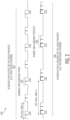
- Figure 2 represents a first example schedule 200 of a first set of audio packets 202 (e.g. first audio stream for a gaming link) over a first wireless link in parallel with a second set of audio packets 206 (e.g. second audio stream for a phone link) over a second wireless link between the peripheral device 102 (e.g. headset) and the first and second central devices 104, 110.
- a first set of audio packets 202 e.g. first audio stream for a gaming link
- a second set of audio packets 206 e.g. second audio stream for a phone link
- the peripheral device 102 e.g. headset
- the first example schedule 200 shows the timing of gaming link subevent pairs 204 and phone link subevent triplets 208 (including acknowledgements) within both the first audio stream 202 and the second audio stream 206 that result in sporadic collisions. For example, a repeated collision between gaming link subevents 210 and phone link subevents 212 is shown.
- the peripheral device 102 e.g. headset
- the peripheral device 102 includes a priority encoder in a link controller for making this selection.
- the central devices 104, 110 do not know there is a conflict. Only the peripheral device 102 (e.g. headset) knows there is a conflict. The other unchosen central device will not see an acknowledge from the peripheral device 102 (e.g. headset) and will then attempt to retransmit its audio packet.
- low latency is key.
- the LE audio radio's transmission scheduling ISO parameters e.g. flush timeout and number of sub-events
- the LE audio radio's transmission scheduling ISO parameters are set to minimal values in order to optimize low latency, thereby sacrificing margin on link robustness resulting in more audio packet collisions.
- adding the second central device 110 e.g. smartphone
- adding the second central device 110 is designed not to increase a number of dropped gaming link audio packets. Therefore, the priority encoder in the headset 102 is configured so that the gaming link shall have a higher priority than the phone link during a scheduling conflict.
- such sporadic collisions are generally acceptable, even if the gaming link always has a higher priority, as long as the phone link has sufficient options for retransmissions.
- Figure 3 represents a second example schedule 300 of a first set of audio packets 302 (e.g. first audio stream for a gaming link) over a first wireless link in parallel with a second set of audio packets 306 (e.g. second audio stream for a phone link) over a second wireless link between the peripheral device 102 (e.g. headset) and the first and second central devices 104, 110.
- a first set of audio packets 302 e.g. first audio stream for a gaming link
- a second set of audio packets 306 e.g. second audio stream for a phone link
- the second example schedule 300 shows the timing of gaming link subevent pairs 304 and phone link subevent triplets 308 within both the first audio stream 302 and the second audio stream 306 that result in continuous collisions.
- all of the gaming subevent pairs 304 subevents are colliding with all of the phone link subevent triplets 308 subevents 310, 312, 314, 316. This is not acceptable since the phone link does not have any retransmissions opportunities for an extended period of time.
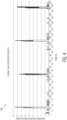
- Figure 4 represents an example 400 recurrent pattern of phone link dropped packets due to continuous packet (i.e. subevent) collisions between the gaming link and the phone link. This problem will manifest itself at use case level by having a phone link which has good quality (meaning no audio drops) but every so many minutes the link quality drops significantly for a while.
- the example 400 shows an expected amount of dropped packets per second (at the headset 102) in the phone link under following example conditions: a 1E-3 packet error rate of the gaming link; a 1E-3 packet error rate of the phone line; and a crystal mismatch of 10 PPM.
- peripheral devices configured to improve communications robustness with a set of central devices.
- the peripheral device initiates dynamic switching of audio stream transmission scheduling parameters when more than one audio stream is received by the peripheral device.
- An intelligent transmission scheduler in the peripheral device 102 e.g. headset acceptor
- Figure 5 represents an example of a protocol 500 for the peripheral device 102 to adjust a transmission scheduling parameters for both a first set of audio packets 112 (e.g. first audio stream) received over a first wireless link from a first central device 104, and a second set of audio packets 114 (e.g. second audio stream) received over a second wireless link from a second central device 110.
- a first set of audio packets 112 e.g. first audio stream
- second set of audio packets 114 e.g. second audio stream
- the peripheral device 102 (e.g. headset) is configured to predict possible audio packet collisions due to overlap between the subevents of the first set of audio packets and the second set of audio packets, and then direct at least one of the first central device and/or the second central device to adjust a transmission schedule of the first set of audio packets and/or the second set of audio packets.
- the peripheral device 102 i.e. headset
- the transmission scheduling parameters e.g. ISO parameters
- the headset 102 looks at the transmission scheduling parameters of both links 112, 114 and asks one or more of the central devices 104, 110 to update the transmission scheduling parameters at least once to avoid audio packet collisions.
- the peripheral device 102 does this proactively, before any audio packet collisions occur so as to prevent collisions before they occur by looking at these two overlapping TDMA schedules.
- the transmission scheduling parameters for only one of the audio streams is adjusted, with minimal impact on audio latency.
- Dynamic switching can be thought of as consisting of three basic steps: Step 1: detection by only the peripheral device 102 (e.g. headset acceptor); Step 2: the peripheral device 102 request for the central devices 104, 110 to update the transmission scheduling parameters; and Step 3: the transmission scheduling parameters (e.g. PHY and other connection parameters) actually being updated by one or more of the central devices 104, 110.
- Step 1 detection by only the peripheral device 102 (e.g. headset acceptor)
- Step 2 the peripheral device 102 request for the central devices 104, 110 to update the transmission scheduling parameters
- Step 3 the transmission scheduling parameters (e.g. PHY and other connection parameters) actually being updated by one or more of the central devices 104, 110.
- the model predicts reduced robustness of the phone link depending on gaming link and phone link radio parameters (ISO interval, Number Of Subevents and Flush Timeout).
- the model assumes a higher priority for the gaming link than for the phone link in case of collisions in order not to weaken the gaming link when the phone link is enabled.
- the gaming link radio schedule can completely overlaps with the phone link schedule for a long period as was shown in Figure 3 (i.e. every subevent in the phone link overlaps with at least on subevent in the gaming link).
- the phone link ISO interval is a multiple of the ISO interval of the gaming link there will be significant impact on the phone link, otherwise not.
- a solution is to reconfigure the ISO interval of the gaming link when the phone sets up an audio link with the headset 102.
- the headset 102 knows if problems are to be expected or not. It can decide to dynamically switch between 5ms and 7.5ms ISO interval for the gaming link.
- the ISO interval of the phone link can be reconfigured in addition to or instead of the gaming link reconfiguration.
- some example designs can choose to keep latency the same all the time such that the dynamic switch can be implemented unnoticeable for the user or to go for lowest latency when possible and to hide to increase/decrease in latency when phone link is started/stopped and to mask the event (e.g. with a voice prompt).
- the dynamic switching happens only once since the dynamic switching might cause a short audio interrupt.
- the central devices 104, 110 could also remember their transmission scheduling parameter setting from a last time they connected to a particular peripheral device 102.
- the switch if the switch is done at the application layer, it will likely cause an audio interrupt. Addition to the LE standard of procedures for dynamic switching of ISO parameters can make such switches more seamless.
- any audio interrupt during dynamic switching can be masked by playing a voice prompt (e.g. such as is done when ANC is enabled or disabled in a headset 102).
- Figure 6 represents example 600 sets of transmission schedule parameters (e.g. ISO parameters) 602, 604, 606 for the gaming link and/or the phone link.
- transmission schedule parameters e.g. ISO parameters
- switching between 5ms and 7.5ms ISO interval for the gaming link works for phone link intervals of 10ms, 20ms and 22.5ms but it doesn't for 15ms phone link ISO interval: 15ms is a multiple of 5ms and 7.5ms.
- 15ms is a multiple of 5ms and 7.5ms.
- the gaming link becomes more robust at the expense of 5ms latency increase.
- a benefit of the second option over the first option is a slightly lower transport latency 608.
- This increased robustness can be used to make the priority equal between gaming link and phone link when collisions occur: this reduces the link robustness of the gaming link, offsetting the effect of increased flush timeout but increases the link robustness of the phone link.
- the above described example embodiments may be applied to wireless gaming headsets, wireless gaming earbuds, communications headset, wireless speakers, and similar audio enable devices using wireless communications.
- a peripheral device including: a radio receiver configured to, receive a first set of audio packets transmitted over a first wireless link from a first central device, and receive a second set of audio packets transmitted over a second wireless link by the second central device; and a processor configured to predict a collision between the first set of audio packets and the second set of audio packets based on a set of transmission scheduling parameters.
- these instructions/steps are implemented as functional and software instructions.
- the instructions can be implemented either using logic gates, application specific chips, firmware, as well as other hardware forms.
- the instructions are embodied as a set of executable instructions in a non-transitory computer-readable or computer-usable media which are effected on a computer or machine programmed with and controlled by said executable instructions.
- Said instructions are loaded for execution on a processor (such as one or more CPUs).
- Said processor includes microprocessors, microcontrollers, processor modules or subsystems (including one or more microprocessors or microcontrollers), or other control or computing devices.
- a processor can refer to a single component or to plural components.
- Said computer-readable or computer-usable storage medium or media is (are) considered to be part of an article (or article of manufacture).
- An article or article of manufacture can refer to any manufactured single component or multiple components.
- the non-transitory machine or computer-usable media or mediums as defined herein excludes signals, but such media or mediums may be capable of receiving and processing information from signals and/or other transitory mediums.
Landscapes
- Engineering & Computer Science (AREA)
- Computer Networks & Wireless Communication (AREA)
- Signal Processing (AREA)
- Computer Security & Cryptography (AREA)
- Mobile Radio Communication Systems (AREA)
Abstract
One example discloses a peripheral device, including: a radio receiver configured to, receive a first set of audio packets transmitted over a first wireless link from a first central device, and receive a second set of audio packets transmitted over a second wireless link by the second central device; and a processor configured to predict a collision between the first set of audio packets and the second set of audio packets based on a set of transmission scheduling parameters.
Description
- The present specification relates to systems, methods, apparatuses, devices, articles of manufacture and instructions for peripheral device directed collision avoidance.
- According to an example embodiment, a peripheral device, comprising: a radio receiver configured to, receive a first set of audio packets transmitted over a first wireless link from a first central device, and receive a second set of audio packets transmitted over a second wireless link by the second central device; and a processor configured to predict a collision between the first set of audio packets and the second set of audio packets based on a set of transmission scheduling parameters.
- In another example embodiment, the first and second sets of audio packets are Bluetooth LE audio packets.
- In another example embodiment, the first central device is configured to initially schedule when the first set of audio packets are transmitted over the first wireless link; and the second central device is configured to initially schedule when the second set of audio packets are transmitted over the second wireless link.
- In another example embodiment, the set of transmission scheduling parameters includes a first set of transmission scheduling parameters received from the first central device and a second set of transmission scheduling parameters received from the second central device.
- In another example embodiment, the processor is configured to request at least one of the first central device and the second central device to update one or both of the two sets of transmission scheduling parameters.
- In another example embodiment, at least one of the first central device and the second central device is configured to update one or both of the sets of transmission scheduling parameters based on the request from the peripheral device.
- In another example embodiment, at least one of the two sets of transmission scheduling parameters are a set of ISO parameters.
- In another example embodiment, the ISO parameters include an ISO interval defining a time interval between audio packet transmissions.
- In another example embodiment, the ISO parameters include a number of subevents scheduled within the ISO interval.
- In another example embodiment, the ISO parameters include a flush timeout defining a maximum number of consecutive ISO intervals for transmitting a particular audio packet before the particular audio packet is discarded.
- In another example embodiment, the processor is a priority encoder or a link controller.
- In another example embodiment, the first wireless link is a gaming link and the second wireless link is a phone link.
- In another example embodiment, the processor is configured to predict the collision based on the first and second sets of transmission scheduling parameters before the first set of audio packets are first transmitted by the first central device.
- In another example embodiment, the processor is further configured to predict the collision before the second set of audio packets are first transmitted by the second central device.
- In another example embodiment, the peripheral device is a headset.
- In another example embodiment, the first central device is a dongle.
- In another example embodiment, the second central device is a smartphone.
- In another example embodiment, the peripheral device is at least one of a wireless earbud and/or a wireless speaker.
- The above discussion is not intended to represent every example embodiment or every implementation within the scope of the current or future Claim sets. The Figures and Detailed Description that follow also exemplify various example embodiments.
- Various example embodiments may be more completely understood in consideration of the following Detailed Description in connection with the accompanying Drawings.
-
-
Figure 1 represents an example of a peripheral device (e.g. headset) wirelessly coupled to a first central device (e.g. dongle) and a second central device (e.g. smartphone). -
Figure 2 represents a first example schedule of a first set of audio packets (e.g. first audio stream for a gaming link) over a first wireless link in parallel with a second set of audio packets (e.g. second audio stream for a phone link) over a second wireless link between the peripheral device and the first and second central devices. -
Figure 3 represents a second example schedule of a first set of audio packets (e.g. first audio stream for a gaming link) over a first wireless link in parallel with a second set of audio packets (e.g. second audio stream for a phone link) over a second wireless link between the peripheral device and the first and second central devices. -
Figure 4 represents an example recurrent pattern of phone link dropped packets due to continuous packet (i.e. subevent) collisions between the gaming link and the phone link. -
Figure 5 represents an example of a protocol for the peripheral device to adjust a transmission scheduling parameters for both a first set of audio packets (e.g. first audio stream) received over a first wireless link from a first central device, and a second set of audio packets (e.g. second audio stream) received over a second wireless link from a second central device. -
Figure 6 represents example sets of transmission schedule parameters (e.g. ISO parameters) for the gaming link and/or the phone link. - While the disclosure is amenable to various modifications and alternative forms, specifics thereof have been shown by way of example in the drawings and will be described in detail. It should be understood, however, that other embodiments, beyond the particular embodiments described, are possible as well. All modifications, equivalents, and alternative embodiments falling within the spirit and scope of the appended claims are covered as well.
-
Figure 1 represents an example 100 of a peripheral device 102 (e.g. headset) wirelessly coupled to a first central device 104 (e.g. dongle) and a second central device 110 (e.g. smartphone). - The peripheral device 102 (a.k.a. acceptor) in some example embodiments is a gaming headset. The
peripheral device 102 includes a variety of circuitry (not shown) including an antenna, a radio transceiver, a processor, a memory, and power source. - The first central device 104 (a.k.a. first initiator) in some example embodiments is a
dongle 106 coupled to apersonal computer 108. The firstcentral device 104 includes a variety of circuitry (not shown) including an antenna, a radio transceiver, a processor, a memory, and power source. - The second central device 110 (a.k.a. second initiator) in some example embodiments is a smartphone. The second
central device 110 includes a variety of circuitry (not shown) including an antenna, a radio transceiver, a processor, a memory, and power source. - The Bluetooth LE Audio standard may enable many new use cases which are not possible with Bluetooth Classic. While there may be no LE Audio profiles yet for gaming use cases, the flexibility of the LE Audio framework (link layer + host stack) allows new use cases beyond the standardized profiles. One such hypothetical use case is a
gaming headset 102 use case with a parallel audio connection towards the phone using a single radio device in theheadset 102. - A first set of audio packets (e.g. first audio stream gaming link) are exchanged between the
peripheral device 102 and the firstcentral device 104 over a firstwireless link 112. These packets may include a forward channel gaming stereo audio packets and backward channel gaming mono-voice audio packets. - A second set of audio packets (e.g. second audio stream phone link) are exchanged between the
peripheral device 102 and the secondcentral device 110 over a secondwireless link 114. These packets may include a forward phone stereo audio packet stream and an optional backwards voice stream. - The
dongle 106 as the firstcentral device 104 acts as a first initiator and theheadset 102 as acceptor. The scheduling of the first set of audio packets (e.g. first audio stream "gaming link") over a first wireless link 112 (e.g. LE Audio packets) is determined by thedongle 106. An exact timing of these gaming link audio packets (a.k.a. subevents) depends on a crystal clock connected to the transceiver (e.g. LE Audio radio) in thedongle 106. - The smartphone as the second
central device 110 acts as a second initiator, while theheadset 102 is still the acceptor. The scheduling of the second set of audio packets (e.g. second audio stream "phone link") over a second wireless link 114 (e.g. LE Audio packets) is determined by thephone 110. An exact timing of these phone link audio packets (a.k.a. subevents) depends on a separate crystal clock connected to the transceiver in thephone 110. - Thus in some example embodiments there is simultaneous audio reception from both
phone 110 and thedongle 106 at theheadset 102. The twoaudio streams headset 102 user can be listening to music, receiving a phone call, or privately chatting with another gamer while simultaneously listening to the gaming link conversation. In other example embodiments there could also be audio transmission (e.g. mic) from the headset to dongle and/or phone. Possibly even in parallel. - In many example embodiments, the
audio streams - Separate scheduling algorithms in both the first central device 104 (e.g. dongle initiator) and the second central device 110 (e.g. smartphone initiator) create two different schedules for transmitting and receiving audio packets to the peripheral device 102 (e.g. headset acceptor). These schedules allocate a number of timeslots for transmission of audio packets, including options for retransmissions. In LE Audio, the two
audio streams - In some example embodiments, these schedules are repeated during each LE Audio defined ISO interval (or multiple ISO intervals for burst number larger than 1). Typical values of ISO interval for a
phone 110 connection are 7.5ms and 10ms or multiples of these values. The gaming link uses a smaller value such as 5ms in order to keep audio latency as low as possible. - Typically an end-to-end audio latency is a key metric for a gaming link. Audio latency should be as low as 20ms or even below to have an acceptable gaming audio experience.
- An important contributor to the audio latency is transport delay (i.e. a wireless transmission delay between transmitter and transceiver, excluding audio processing or audio filter group delays). The transport delay depends on a number of audio stream transmission scheduling parameters (e.g. ISO parameters as defined within the LE Audio standard, also see
Figure 6 ) such as: an ISO interval, which defines a time interval at which the schedule repeats itself); a number of subevents (NSE), which defines a number of subevents which will be scheduled in each ISO Interval; and a flush timeout, which defines how many consecutive ISO Intervals can be used to transmit a packet before it is discarded. -
Figure 2 represents afirst example schedule 200 of a first set of audio packets 202 (e.g. first audio stream for a gaming link) over a first wireless link in parallel with a second set of audio packets 206 (e.g. second audio stream for a phone link) over a second wireless link between the peripheral device 102 (e.g. headset) and the first and secondcentral devices - The
first example schedule 200 shows the timing of gaming link subevent pairs 204 and phone link subevent triplets 208 (including acknowledgements) within both thefirst audio stream 202 and thesecond audio stream 206 that result in sporadic collisions. For example, a repeated collision betweengaming link subevents 210 andphone link subevents 212 is shown. - Often such collisions are by accident, since the timing purely depends on each of the
central device 104, 110 (e.g. of thephone 110 and the dongle 106) clocks which are each independently derived from their own crystals. This also means that both schedules are expected to drift apart at a rate of the mismatch between the two crystals. - Having overlap between subevents means that the peripheral device 102 (e.g. headset) needs to choose which device (i.e. the
phone 110 or the dongle 106) to communicate with during those colliding/overlapping subevents. The peripheral device 102 (e.g. headset) includes a priority encoder in a link controller for making this selection. - The
central devices 104, 110 (e.g. of thephone 110 and the dongle 106) do not know there is a conflict. Only the peripheral device 102 (e.g. headset) knows there is a conflict. The other unchosen central device will not see an acknowledge from the peripheral device 102 (e.g. headset) and will then attempt to retransmit its audio packet. - In many gaming example embodiments, low latency is key. In such LE audio based gaming applications the LE audio radio's transmission scheduling ISO parameters (e.g. flush timeout and number of sub-events) are set to minimal values in order to optimize low latency, thereby sacrificing margin on link robustness resulting in more audio packet collisions.
- In such gaming applications adding the second central device 110 (e.g. smartphone) connection is designed not to increase a number of dropped gaming link audio packets. Therefore, the priority encoder in the
headset 102 is configured so that the gaming link shall have a higher priority than the phone link during a scheduling conflict. - In some example embodiments, such sporadic collisions are generally acceptable, even if the gaming link always has a higher priority, as long as the phone link has sufficient options for retransmissions.
-
Figure 3 represents asecond example schedule 300 of a first set of audio packets 302 (e.g. first audio stream for a gaming link) over a first wireless link in parallel with a second set of audio packets 306 (e.g. second audio stream for a phone link) over a second wireless link between the peripheral device 102 (e.g. headset) and the first and secondcentral devices - The
second example schedule 300 shows the timing of gaming link subevent pairs 304 and phonelink subevent triplets 308 within both thefirst audio stream 302 and thesecond audio stream 306 that result in continuous collisions. Here for example, all of the gaming subevent pairs 304 subevents are colliding with all of the phonelink subevent triplets 308subevents - These continuous collisions arise due to drift between the independent crystal clocks of the first central device and the second central device. Under perfect but unrealistic link conditions such continuous subevent overlaps are still not an issue, if the gaming link does not use all of its subevents to transmit the audio since the gaming link is "perfect" and no retransmissions are required. In such a "perfect" case, only the first two subevents of the phone link are colliding and the third subevent is still available for the
phone 110 to retransmit its audio packets. - However, in reality there is a non-zero packet error rate for the gaming link, and in such cases, packet errors on the gaming link will lead to many dropped audio packets on the phone link.
- These collisions/overlaps will disappear for a time and phone link retransmissions will be possible as soon as the two central device schedules have drifted apart and are not completely colliding anymore, however these collisions/overlaps will reappear and result in a noticeable disruption to the phone link. Also while a limited amount of dropped audio packets can still be concealed by audio processing techniques (e.g. the LE Audio standard includes a Packet Loss Concealment algorithm) this also has its limits and can lead to significant audio artifacts and if too many subsequent packets are missing, to audio mutes/blanking periods.
-
Figure 4 represents an example 400 recurrent pattern of phone link dropped packets due to continuous packet (i.e. subevent) collisions between the gaming link and the phone link. This problem will manifest itself at use case level by having a phone link which has good quality (meaning no audio drops) but every so many minutes the link quality drops significantly for a while. - The example 400 shows an expected amount of dropped packets per second (at the headset 102) in the phone link under following example conditions: a 1E-3 packet error rate of the gaming link; a 1E-3 packet error rate of the phone line; and a crystal mismatch of 10 PPM.
- Now discussed are example embodiments of peripheral devices configured to improve communications robustness with a set of central devices. The peripheral device initiates dynamic switching of audio stream transmission scheduling parameters when more than one audio stream is received by the peripheral device. An intelligent transmission scheduler in the peripheral device 102 (e.g. headset acceptor) can detect/predict subevent collisions and overlap, and request that the
central devices -
Figure 5 represents an example of aprotocol 500 for theperipheral device 102 to adjust a transmission scheduling parameters for both a first set of audio packets 112 (e.g. first audio stream) received over a first wireless link from a firstcentral device 104, and a second set of audio packets 114 (e.g. second audio stream) received over a second wireless link from a secondcentral device 110. - The peripheral device 102 (e.g. headset) is configured to predict possible audio packet collisions due to overlap between the subevents of the first set of audio packets and the second set of audio packets, and then direct at least one of the first central device and/or the second central device to adjust a transmission schedule of the first set of audio packets and/or the second set of audio packets.
- Since the peripheral device 102 (i.e. headset) has more of the transmission scheduling parameters (e.g. ISO parameters) information than either of the
central devices headset 102 looks at the transmission scheduling parameters of bothlinks central devices - The
peripheral device 102 does this proactively, before any audio packet collisions occur so as to prevent collisions before they occur by looking at these two overlapping TDMA schedules. - This can be thought of as "dynamic switching" of audio connection parameters of either or both the first link 112 (e.g. gaming link) and the first link 114 (e.g. phone link) by instructing the
central devices - Dynamic switching can be thought of as consisting of three basic steps: Step 1: detection by only the peripheral device 102 (e.g. headset acceptor); Step 2: the
peripheral device 102 request for thecentral devices central devices - In a model made to simulate the impact of collisions between gaming link and phone link schedules, the model predicts reduced robustness of the phone link depending on gaming link and phone link radio parameters (ISO interval, Number Of Subevents and Flush Timeout). The model assumes a higher priority for the gaming link than for the phone link in case of collisions in order not to weaken the gaming link when the phone link is enabled.
- During operation because of clock drifts, the gaming link radio schedule can completely overlaps with the phone link schedule for a long period as was shown in
Figure 3 (i.e. every subevent in the phone link overlaps with at least on subevent in the gaming link). - If the ISO interval of the phone link increases also the payload length of the radio packets increases, making the packets longer. Once the phone link packets are long enough it will no longer be possible to have colliding schedules between gaming link and phone link for every packet in the phone link.
- If the phone link ISO interval is a multiple of the ISO interval of the gaming link there will be significant impact on the phone link, otherwise not. Hence, a solution is to reconfigure the ISO interval of the gaming link when the phone sets up an audio link with the
headset 102. At that time, theheadset 102 knows if problems are to be expected or not. It can decide to dynamically switch between 5ms and 7.5ms ISO interval for the gaming link. In other example embodiments, the ISO interval of the phone link can be reconfigured in addition to or instead of the gaming link reconfiguration. - While this may have an impact on the transport delay of the gaming link of around 3 ms, some example designs can choose to keep latency the same all the time such that the dynamic switch can be implemented unnoticeable for the user or to go for lowest latency when possible and to hide to increase/decrease in latency when phone link is started/stopped and to mask the event (e.g. with a voice prompt).
- While over time the clock drifts between the gaming link and phone link will eventually cause the schedules to collide from time to time, the phone link will no longer be blocked continuously.
- In various example embodiments, the dynamic switching happens only once since the dynamic switching might cause a short audio interrupt. Alternatively, the
central devices peripheral device 102. In other example embodiments, if the switch is done at the application layer, it will likely cause an audio interrupt. Addition to the LE standard of procedures for dynamic switching of ISO parameters can make such switches more seamless. - In some example embodiments, any audio interrupt during dynamic switching can be masked by playing a voice prompt (e.g. such as is done when ANC is enabled or disabled in a headset 102).
-
Figure 6 represents example 600 sets of transmission schedule parameters (e.g. ISO parameters) 602, 604, 606 for the gaming link and/or the phone link. - For example, switching between 5ms and 7.5ms ISO interval for the gaming link works for phone link intervals of 10ms, 20ms and 22.5ms but it doesn't for 15ms phone link ISO interval: 15ms is a multiple of 5ms and 7.5ms. In such a case, there are two options 610: first, use 10ms gaming ISO interval; or second use 5ms gaming interval and increase the flush timeout by 1 in the gaming link. The gaming link becomes more robust at the expense of 5ms latency increase. A benefit of the second option over the first option is a slightly
lower transport latency 608. - This increased robustness can be used to make the priority equal between gaming link and phone link when collisions occur: this reduces the link robustness of the gaming link, offsetting the effect of increased flush timeout but increases the link robustness of the phone link.
- For phone link ISO interval of 30ms there is likely to be no reduced link robustness issues anymore with reasonable setting for Number Of Subevents (≥3): the subevents in the phone link are not all the time colliding with the subevents of the gaming link and the phone link.
- The above described example embodiments may be applied to wireless gaming headsets, wireless gaming earbuds, communications headset, wireless speakers, and similar audio enable devices using wireless communications.
- One example discloses a peripheral device, including: a radio receiver configured to, receive a first set of audio packets transmitted over a first wireless link from a first central device, and receive a second set of audio packets transmitted over a second wireless link by the second central device; and a processor configured to predict a collision between the first set of audio packets and the second set of audio packets based on a set of transmission scheduling parameters.
- Various instructions and/or operational steps discussed in the above Figures can be executed in any order, unless a specific order is explicitly stated. Also, those skilled in the art will recognize that while some example sets of instructions/steps have been discussed, the material in this specification can be combined in a variety of ways to yield other examples as well, and are to be understood within a context provided by this detailed description.
- In some example embodiments these instructions/steps are implemented as functional and software instructions. In other embodiments, the instructions can be implemented either using logic gates, application specific chips, firmware, as well as other hardware forms.
- When the instructions are embodied as a set of executable instructions in a non-transitory computer-readable or computer-usable media which are effected on a computer or machine programmed with and controlled by said executable instructions. Said instructions are loaded for execution on a processor (such as one or more CPUs). Said processor includes microprocessors, microcontrollers, processor modules or subsystems (including one or more microprocessors or microcontrollers), or other control or computing devices. A processor can refer to a single component or to plural components. Said computer-readable or computer-usable storage medium or media is (are) considered to be part of an article (or article of manufacture). An article or article of manufacture can refer to any manufactured single component or multiple components. The non-transitory machine or computer-usable media or mediums as defined herein excludes signals, but such media or mediums may be capable of receiving and processing information from signals and/or other transitory mediums.
- It will be readily understood that the components of the embodiments as generally described herein and illustrated in the appended figures could be arranged and designed in a wide variety of different configurations. Thus, the detailed description of various embodiments, as represented in the figures, is not intended to limit the scope of the present disclosure, but is merely representative of various embodiments. While the various aspects of the embodiments are presented in drawings, the drawings are not necessarily drawn to scale unless specifically indicated.
- The present invention may be embodied in other specific forms without departing from its spirit or essential characteristics. The described embodiments are to be considered in all respects only as illustrative and not restrictive. The scope of the invention is, therefore, indicated by the appended claims rather than by this detailed description. All changes which come within the meaning and range of equivalency of the claims are to be embraced within their scope.
- Reference throughout this specification to features, advantages, or similar language does not imply that all of the features and advantages that may be realized with the present invention should be or are in any single embodiment of the invention. Rather, language referring to the features and advantages is understood to mean that a specific feature, advantage, or characteristic described in connection with an embodiment is included in at least one embodiment of the present invention. Thus, discussions of the features and advantages, and similar language, throughout this specification may, but do not necessarily, refer to the same embodiment.
- Furthermore, the described features, advantages, and characteristics of the invention may be combined in any suitable manner in one or more embodiments. One skilled in the relevant art will recognize, in light of the description herein, that the invention can be practiced without one or more of the specific features or advantages of a particular embodiment. In other instances, additional features and advantages may be recognized in certain embodiments that may not be present in all embodiments of the invention.
- Reference throughout this specification to "one embodiment," "an embodiment," or similar language means that a particular feature, structure, or characteristic described in connection with the indicated embodiment is included in at least one embodiment of the present invention. Thus, the phrases "in one embodiment," "in an embodiment," and similar language throughout this specification may, but do not necessarily, all refer to the same embodiment.
Claims (15)
- A peripheral device, comprising:a radio receiver configured to,receive a first set of audio packets transmitted over a first wireless link from a first central device, andreceive a second set of audio packets transmitted over a second wireless link by the second central device; anda processor configured to predict a collision between the first set of audio packets and the second set of audio packets based on a set of transmission scheduling parameters.
- The device of claim 1:
wherein the first and second sets of audio packets are Bluetooth LE audio packets. - The device of any preceding claim:wherein the first central device is configured to initially schedule when the first set of audio packets are transmitted over the first wireless link; andwherein the second central device is configured to initially schedule when the second set of audio packets are transmitted over the second wireless link.
- The device of any preceding claim:
wherein the set of transmission scheduling parameters includes a first set of transmission scheduling parameters received from the first central device and a second set of transmission scheduling parameters received from the second central device. - The device of claim 4:
wherein the processor is configured to request at least one of the first central device and the second central device to update one or both of the two sets of transmission scheduling parameters. - The device of claim 5:
wherein at least one of the first central device and the second central device is configured to update one or both of the sets of transmission scheduling parameters based on the request from the peripheral device. - The device of any of claims 4 to 6:
wherein at least one of the two sets of transmission scheduling parameters are a set of ISO parameters. - The device of claim 7:
wherein the ISO parameters include an ISO interval defining a time interval between audio packet transmissions. - The device of claim 8:
wherein the ISO parameters include a number of subevents scheduled within the ISO interval. - The device of claim 8 or 9:
wherein the ISO parameters include a flush timeout defining a maximum number of consecutive ISO intervals for transmitting a particular audio packet before the particular audio packet is discarded. - The device of any preceding claim:
wherein the processor is a priority encoder or a link controller. - The device of any preceding claim:
wherein the first wireless link is a gaming link and the second wireless link is a phone link. - The device of any of claims 4 to 10:
wherein the processor is configured to predict the collision based on the first and second sets of transmission scheduling parameters before the first set of audio packets are first transmitted by the first central device. - The device of claim 13:
wherein the processor is further configured to predict the collision before the second set of audio packets are first transmitted by the second central device. - The device of any preceding claim:
wherein the peripheral device is a headset.
Applications Claiming Priority (1)
| Application Number | Priority Date | Filing Date | Title |
|---|---|---|---|
| US18/455,867 US20250071807A1 (en) | 2023-08-25 | 2023-08-25 | Peripheral device directed collision avoidance |
Publications (1)
| Publication Number | Publication Date |
|---|---|
| EP4513911A1 true EP4513911A1 (en) | 2025-02-26 |
Family
ID=92409243
Family Applications (1)
| Application Number | Title | Priority Date | Filing Date |
|---|---|---|---|
| EP24194276.2A Withdrawn EP4513911A1 (en) | 2023-08-25 | 2024-08-13 | Peripheral device directed collision avoidance |
Country Status (3)
| Country | Link |
|---|---|
| US (1) | US20250071807A1 (en) |
| EP (1) | EP4513911A1 (en) |
| CN (1) | CN119521441A (en) |
Citations (2)
| Publication number | Priority date | Publication date | Assignee | Title |
|---|---|---|---|---|
| US20220272512A1 (en) * | 2021-02-09 | 2022-08-25 | Realtek Semiconductor Corp. | Bluetooth communication system capable of avoiding voice interruption, and related bluetooth device set |
| WO2022252917A1 (en) * | 2021-06-03 | 2022-12-08 | Oppo广东移动通信有限公司 | Method and apparatus for establishing bluetooth link, and bluetooth chip and device |
Family Cites Families (21)
| Publication number | Priority date | Publication date | Assignee | Title |
|---|---|---|---|---|
| US10123268B2 (en) * | 2010-06-04 | 2018-11-06 | Board Of Regents, The University Of Texas System | Wireless communication methods, systems, and computer program products |
| US9780822B2 (en) * | 2014-08-13 | 2017-10-03 | Qualcomm Incorporated | Managing transmitter collisions |
| US10397197B2 (en) * | 2016-09-22 | 2019-08-27 | Apple Inc. | Coexistence interference mitigation during wireless local area network authentication |
| US20180176820A1 (en) * | 2016-12-16 | 2018-06-21 | Qualcomm Incorporated | Systems and methods for immediate transmission after clear channel assessment |
| EP3614779B1 (en) * | 2017-05-05 | 2025-03-05 | Huawei Technologies Co., Ltd. | Method, terminal and network device for requesting uplink transmission resources |
| US10616743B2 (en) * | 2018-06-18 | 2020-04-07 | Qualcomm Incorporated | Low-latency audio streaming with communication coexistence |
| US11240672B2 (en) * | 2018-09-18 | 2022-02-01 | Cisco Technology, Inc. | Method and device for performing energy detection on a subset of a wireless channel |
| US11405980B2 (en) * | 2018-09-28 | 2022-08-02 | Apple Inc. | Listen again after talk for broadcast/multi-cast communications |
| US11172508B2 (en) * | 2018-11-01 | 2021-11-09 | Qualcomm Incorporated | Methods to avoid transmission collisions for NR V2X and LTE V2X within the same device |
| WO2022119312A1 (en) * | 2020-12-01 | 2022-06-09 | 엘지전자 주식회사 | Method and device for transmitting audio data in short-range wireless communication system |
| WO2022124870A1 (en) * | 2020-12-11 | 2022-06-16 | 엘지전자 주식회사 | Method for transmitting and receiving data and device for same in short-range wireless communication system |
| US11800499B1 (en) * | 2021-03-18 | 2023-10-24 | Amazon Technologies, Inc. | Smart personal area network management |
| US20240396849A1 (en) * | 2021-05-10 | 2024-11-28 | Lg Electronics Inc. | Method for transmitting and receiving data in short-range wireless communication system and device therefor |
| CN117296348A (en) * | 2021-06-23 | 2023-12-26 | 三星电子株式会社 | Method and electronic device for Bluetooth audio multi-streaming |
| US12464320B2 (en) * | 2021-10-04 | 2025-11-04 | Dopple Ip B.V. | Wireless stereo headset group communications |
| JP7412465B2 (en) * | 2022-02-09 | 2024-01-12 | 三菱電機株式会社 | Traffic control device, traffic control system and traffic control method |
| EP4501062A1 (en) * | 2022-03-28 | 2025-02-05 | QUALCOMM Incorporated | Bluetooth low energy coexistence link configuration |
| US20230401115A1 (en) * | 2022-06-09 | 2023-12-14 | Lg Electronics Inc. | Apparatus and method for reducing delay of buffering in short range wireless communication system |
| US12395864B2 (en) * | 2022-10-04 | 2025-08-19 | Qualcomm Incorporated | Configuration switch triggers for audio device communications |
| KR20240062628A (en) * | 2022-11-02 | 2024-05-09 | 현대자동차주식회사 | Vehicle for performing minimal risk maneuver and method of operating the vehicle |
| US20240273829A1 (en) * | 2023-02-14 | 2024-08-15 | Qualcomm Incorporated | Systems and methods for pass-through extended reality (xr) content |
-
2023
- 2023-08-25 US US18/455,867 patent/US20250071807A1/en active Pending
-
2024
- 2024-08-13 EP EP24194276.2A patent/EP4513911A1/en not_active Withdrawn
- 2024-08-26 CN CN202411177331.2A patent/CN119521441A/en active Pending
Patent Citations (2)
| Publication number | Priority date | Publication date | Assignee | Title |
|---|---|---|---|---|
| US20220272512A1 (en) * | 2021-02-09 | 2022-08-25 | Realtek Semiconductor Corp. | Bluetooth communication system capable of avoiding voice interruption, and related bluetooth device set |
| WO2022252917A1 (en) * | 2021-06-03 | 2022-12-08 | Oppo广东移动通信有限公司 | Method and apparatus for establishing bluetooth link, and bluetooth chip and device |
Also Published As
| Publication number | Publication date |
|---|---|
| US20250071807A1 (en) | 2025-02-27 |
| CN119521441A (en) | 2025-02-25 |
Similar Documents
| Publication | Publication Date | Title |
|---|---|---|
| US20250056174A1 (en) | Dual advanced audio distribution profile (a2dp) sink | |
| EP2456234B1 (en) | Wireless binaural hearing system | |
| US11323889B2 (en) | Communication device using two wireless protocols | |
| US8213343B2 (en) | Communicating conversational data between signals between terminals | |
| US20060030266A1 (en) | Method and system for achieving enhanced quality and higher throughput for collocated IEEE 802.11B/G and bluetooth devices in coexistent operation | |
| EP3903545B1 (en) | Network coordination | |
| US20240143272A1 (en) | Systems and methods for wirelessly providing an audio stream | |
| US20180307555A1 (en) | Transfer of data with check bits | |
| CN114747165B (en) | Data transmission method and device applied to bluetooth communication | |
| US7395061B2 (en) | System and method for avoiding interference among multiple wireless systems | |
| JP2010093591A (en) | Communications device, control method thereof, program, and information storage medium | |
| EP3900285B1 (en) | Operating more than one wireless communication protocol with a coexistence window | |
| US20250071807A1 (en) | Peripheral device directed collision avoidance | |
| CN112437370A (en) | Link switching method, system, TWS earphone pair, chip and medium | |
| CN112291683B (en) | TWS earphone control method and device | |
| EP3903460B1 (en) | Operating more than one wireless communication protocol with a hearing device | |
| TWI710240B (en) | Method for performing bluetooth transmission management, bluetooth circuit, and electronic device | |
| CN113795016A (en) | High-reliability Bluetooth multicast audio communication method and system and TWS earphone | |
| US20250168917A1 (en) | Le connected isochronous channels latency improvements | |
| US20250357963A1 (en) | Joint Radio Architecture to Support Receiving Streams from Multiple Sources Concurrently | |
| CN121038014A (en) | A method, apparatus and system for multi-audio stream wireless audio transmission | |
| WO2024211702A1 (en) | Managing bluetooth low energy (ble) bandwidth usage across different devices | |
| CN117156346A (en) | Hearing device with multi-source connection control | |
| CN118265011A (en) | Bluetooth-based audio mixing playing method, device, equipment and storage medium | |
| WO2024102599A1 (en) | Link margin improvements using a variable physical layer symbol rate |
Legal Events
| Date | Code | Title | Description |
|---|---|---|---|
| PUAI | Public reference made under article 153(3) epc to a published international application that has entered the european phase |
Free format text: ORIGINAL CODE: 0009012 |
|
| STAA | Information on the status of an ep patent application or granted ep patent |
Free format text: STATUS: THE APPLICATION HAS BEEN PUBLISHED |
|
| AK | Designated contracting states |
Kind code of ref document: A1 Designated state(s): AL AT BE BG CH CY CZ DE DK EE ES FI FR GB GR HR HU IE IS IT LI LT LU LV MC ME MK MT NL NO PL PT RO RS SE SI SK SM TR |
|
| STAA | Information on the status of an ep patent application or granted ep patent |
Free format text: STATUS: THE APPLICATION IS DEEMED TO BE WITHDRAWN |
|
| 18D | Application deemed to be withdrawn |
Effective date: 20250827 |