EP4513833A1 - Generative ai platform integration with video conferencing - Google Patents
Generative ai platform integration with video conferencing Download PDFInfo
- Publication number
- EP4513833A1 EP4513833A1 EP24195943.6A EP24195943A EP4513833A1 EP 4513833 A1 EP4513833 A1 EP 4513833A1 EP 24195943 A EP24195943 A EP 24195943A EP 4513833 A1 EP4513833 A1 EP 4513833A1
- Authority
- EP
- European Patent Office
- Prior art keywords
- participant
- bot
- videoconference
- videoconferencing
- information
- Prior art date
- Legal status (The legal status is an assumption and is not a legal conclusion. Google has not performed a legal analysis and makes no representation as to the accuracy of the status listed.)
- Pending
Links
Images
Classifications
-
- H—ELECTRICITY
- H04—ELECTRIC COMMUNICATION TECHNIQUE
- H04L—TRANSMISSION OF DIGITAL INFORMATION, e.g. TELEGRAPHIC COMMUNICATION
- H04L12/00—Data switching networks
- H04L12/02—Details
- H04L12/16—Arrangements for providing special services to substations
- H04L12/18—Arrangements for providing special services to substations for broadcast or conference, e.g. multicast
- H04L12/1813—Arrangements for providing special services to substations for broadcast or conference, e.g. multicast for computer conferences, e.g. chat rooms
- H04L12/1827—Network arrangements for conference optimisation or adaptation
-
- H—ELECTRICITY
- H04—ELECTRIC COMMUNICATION TECHNIQUE
- H04L—TRANSMISSION OF DIGITAL INFORMATION, e.g. TELEGRAPHIC COMMUNICATION
- H04L65/00—Network arrangements, protocols or services for supporting real-time applications in data packet communication
- H04L65/40—Support for services or applications
- H04L65/403—Arrangements for multi-party communication, e.g. for conferences
-
- H—ELECTRICITY
- H04—ELECTRIC COMMUNICATION TECHNIQUE
- H04L—TRANSMISSION OF DIGITAL INFORMATION, e.g. TELEGRAPHIC COMMUNICATION
- H04L12/00—Data switching networks
- H04L12/02—Details
- H04L12/16—Arrangements for providing special services to substations
- H04L12/18—Arrangements for providing special services to substations for broadcast or conference, e.g. multicast
- H04L12/1813—Arrangements for providing special services to substations for broadcast or conference, e.g. multicast for computer conferences, e.g. chat rooms
- H04L12/1818—Conference organisation arrangements, e.g. handling schedules, setting up parameters needed by nodes to attend a conference, booking network resources, notifying involved parties
-
- H—ELECTRICITY
- H04—ELECTRIC COMMUNICATION TECHNIQUE
- H04L—TRANSMISSION OF DIGITAL INFORMATION, e.g. TELEGRAPHIC COMMUNICATION
- H04L12/00—Data switching networks
- H04L12/02—Details
- H04L12/16—Arrangements for providing special services to substations
- H04L12/18—Arrangements for providing special services to substations for broadcast or conference, e.g. multicast
- H04L12/1813—Arrangements for providing special services to substations for broadcast or conference, e.g. multicast for computer conferences, e.g. chat rooms
- H04L12/1822—Conducting the conference, e.g. admission, detection, selection or grouping of participants, correlating users to one or more conference sessions, prioritising transmission
-
- H—ELECTRICITY
- H04—ELECTRIC COMMUNICATION TECHNIQUE
- H04L—TRANSMISSION OF DIGITAL INFORMATION, e.g. TELEGRAPHIC COMMUNICATION
- H04L51/00—User-to-user messaging in packet-switching networks, transmitted according to store-and-forward or real-time protocols, e.g. e-mail
- H04L51/02—User-to-user messaging in packet-switching networks, transmitted according to store-and-forward or real-time protocols, e.g. e-mail using automatic reactions or user delegation, e.g. automatic replies or chatbot-generated messages
-
- H—ELECTRICITY
- H04—ELECTRIC COMMUNICATION TECHNIQUE
- H04N—PICTORIAL COMMUNICATION, e.g. TELEVISION
- H04N7/00—Television systems
- H04N7/14—Systems for two-way working
- H04N7/141—Systems for two-way working between two video terminals, e.g. videophone
- H04N7/147—Communication arrangements, e.g. identifying the communication as a video-communication, intermediate storage of the signals
-
- H—ELECTRICITY
- H04—ELECTRIC COMMUNICATION TECHNIQUE
- H04N—PICTORIAL COMMUNICATION, e.g. TELEVISION
- H04N7/00—Television systems
- H04N7/14—Systems for two-way working
- H04N7/15—Conference systems
-
- H—ELECTRICITY
- H04—ELECTRIC COMMUNICATION TECHNIQUE
- H04N—PICTORIAL COMMUNICATION, e.g. TELEVISION
- H04N7/00—Television systems
- H04N7/14—Systems for two-way working
- H04N7/15—Conference systems
- H04N7/157—Conference systems defining a virtual conference space and using avatars or agents
Definitions
- Video conferencing is a popular method for communicating within a business setting. Many companies rely on videoconferences for staff members to interact with one another. Many regularly-scheduled meetings occur between employees, although videoconferences can still be scheduled on an ad hoc basis.
- Videoconferences are an effective tool to bring employees together to virtually meet and discuss business-related items. They are also effective in helping people work together when they are not located in the same area, or unable to meet at the same location.
- AI generative artificial intelligence
- ChatGPT OpenAI's ChatGPT
- Google's Bard which are incorporating natural language processing (NLP) and adaptive learning to interact with humans in a natural setting.
- NLP natural language processing
- a first aspect of this disclosure provides a videoconferencing system that generates at least one participant bot unique to a videoconference participant or a videoconference topic
- the videoconferencing system comprises: a videoconferencing server; a participant bot-generation engine in communication with the videoconferencing server, wherein the participant bot-generation engine generates and stores the at least one participant bot unique to the videoconference participant, or the videoconference topic and wherein the participant bot-generation engine is further configured to direct a videoconference invitation from the videoconferencing server to the at least one participant bot; a database in communication with the participant bot-generation engine, wherein the database stores organizational information of the videoconference participant or the videoconference topic and makes the organizational information available to the participant bot; and a display in communication with the videoconferencing server, the display configured to display a videoconference and display the participant bot present in the videoconference; wherein the videoconferencing server is configured to send the videoconference invitation via the participant bot-generation engine to the at least one participant bot and the at least one participant bot is configured to accept the videoconference invitation and participate in the videoconference.
- the participant bot-generation engine may generate and stores a plurality of participant bots and each of the plurality of participant bots is unique to one of a plurality of videoconference participants or to one of a videoconference topic.
- the database may store organizational information related to each of the plurality of videoconference participants or to each of the videoconference topics and may make the information for a unique videoconference participant or a unique videoconference topic available to the participant bot associated with the unique videoconference participant.
- the organizational information may include information from videoconferences in which the at least one participant bot or the videoconference participant participates.
- the organizational information may include video information, text information, and audio information.
- the at least one participant bot may be in communication with the videoconferencing server and may be configured to cause, when directed, the videoconferencing server to play audio information or video information that is part of the organizational information provided to the participant bot.
- the videoconference participant may have a participant device that is configured to command the participant bot to attend a videoconference or command the participant bot not to attend the videoconference.
- Any videoconference participant in the videoconference can query the at least one participant bot by an audio question or a text question.
- a second aspect of this disclosure provides a videoconferencing method that utilizes at least one participant bot, wherein the videoconferencing method comprises the steps of: using a participant bot-generation engine, generating and storing at least one participant bot unique to a videoconference participant or a videoconference topic, and directing videoconference invitations from a videoconferencing server to the at least one participant bot; utilizing a database in communication with the participant bot-generation engine, providing organizational information of the videoconference participant or the videoconference topic to the at least one participant bot; using the videoconferencing server, sending a videoconference invitation via the participant bot-generation engine to the at least one participant bot; the at least one participant bot accepting the videoconference invitation and participating in the videoconference; and using a display in communication with the videoconferencing server, displaying the videoconference and the participant bot present in the videoconference.
- the at least one participant bot may be configured to communicate during the videoconference by one or more of audio, text, and video.
- the videoconference participant can utilize a participant device or voice command to override the participant bot's response to a query.
- the database may provide to the at least one participant bot a security level for the organizational information and a security level for each videoconference participant in the videoconference.
- the participant bot may identify each videoconference participant and determine the security level for each videoconference participant, and the participant bot may be configured not to disclose information above the security level of the lowest security level of any of the videoconference participants.
- the at least one participant bot may be provided the information for an organizational function.
- the organizational function may be one of sales, marketing, information technology (IT), finance, warehousing, and manufacturing.
- a third aspect of this disclosure provides a videoconferencing system that generates at least one participant bot
- the videoconferencing system comprises: a videoconferencing server; a participant bot-generation engine in communication with the videoconferencing server, wherein the participant bot-generation engine generates and stores at least one participant bot unique to a videoconference participant or a videoconference topic, and wherein the participant bot generation engine is further configured to direct a videoconference invitation from the videoconferencing server to the at least one participant bot; a database in communication with the participant bot-generation engine, wherein the database stores (a) organizational information of the videoconference participant or the videoconference topic, (b) a security level for the organizational information, and (c) a security level for each organization member, and makes the organizational information, security level for the organizational information, and the security level for each organization member available to the at least one participant bot; and a display in communication with the videoconferencing server, the display configured to display a videoconference and display the participant bot present in the videoconference; wherein the videoconferencing server is configured to send a videoconference invitation via the participant bot-generation engine
- the database may also be in communication with a central organizational database and may be configured to access information, such as emails, chats, phone logs, and documents, and the information is provided to the at least one participant bot.
- the security level may be based in part on each videoconference participant's job title.
- the organizational information may be provided to the at least one participant bot is dependent upon the lowest security level of each organization member that will participate in the videoconference.
- the videoconferencing system may further include a large language model (LLM) in an artificial intelligence (AI) module to predict new content, wherein the AI module may be in communication with the database, the database saves the new content, and the new content is provided to the at least one participant bot.
- LLM large language model
- AI artificial intelligence
- the at least one participant bot may be further programmed to provide solutions to problems posed during the videoconference by utilizing the new content.
- This disclosure proposes forming an entity, which is an artificial intelligence (AI) bot (or simply bot) that can be invited to a videoconference and help fill in informational gaps when there is knowledge missing from the human participants, or when a human participant is unavailable and the bot takes his/her place.
- AI artificial intelligence
- Systems and methods of this disclosure propose creating bots, which can be (1) specialized to have knowledge about different organizational functions, such as sales, marketing, customer service, technical support, information technology (IT), finance, human resources (HR), general information, or other, or (2) specialized to different persons within the organization.
- Such a bot can be programmed to be an expert on the knowledge of an organizational function or person and can contribute to or lead conferences.
- Systems and methods proposed herein use a generative AI bot that uses machine learning to "learn" about certain aspects of a business by being provided the information.
- a company can create many different bots, and in theory an unlimited number.
- One or more bots can then be invited to a videoconference by human hosts or participants, and the bot(s) can listen to the videoconference conversation and can be queried to provide information by the host, participants or even another bot.
- Such bots could be relied upon, for example, to provide information as an expert on a topic of the videoconference.
- the terms application, module, analyzer, engine, and the like can refer to computer program instructions, encoded on computer storage medium for execution by, or to control the operation of, data processing apparatus.
- the program instructions can be encoded on an artificially-generated propagated signal, e.g., a machine-generated electrical, optical, or electromagnetic signal, which is generated to encode information for transmission to suitable receiver apparatus for execution by a data processing apparatus.
- engine refers to a data-processing apparatus, such as a processor, configured to execute computer program instructions, encoded on computer storage medium, wherein the instructions control the operation of the engine.
- program instructions can be encoded on an artificially-generated propagated signal, e.g., a machine-generated electrical, optical, or electromagnetic signal, which is generated to encode information for transmission to suitable receiver apparatus for execution by a data processing apparatus.
- a computer storage medium can be, or be included in, a computer-readable storage device, a computer-readable storage substrate, a random or serial access memory array or device, or a combination of one or more of the substrates and devices.
- a computer storage medium is not a propagated signal, a computer storage medium can be a source or destination of computer program instructions encoded in an artificially-generated propagated signal.
- the computer storage medium can also be, or be included in, one or more separate physical components or media (e.g., solid-state memory that forms part of a device, disks, or other storage devices).
- a non-transient computer readable medium containing program can perform functions of one or more methods, modules, engines and/or other system components as described herein.
- This invention proposes creating a virtual bot entity (or "bot” or “AI bot”) which can learn different specialized areas of a specific company. This would be using the advances of today's generative AI platforms, such as ChatGPT. When thinking of the current state of these entities, they may be seen as an "all knowing entity” that has obtained information from many different organizational sources, such as organizational computers and servers, the general internet, or news feeds, or other.
- This bot and general use bots is that this specific type of bot can create conversational type responses and can compartmentalize different components of a conversation and can recall or build upon this information later in the conversation.
- a bot can be created for a sales team that is provided specific sales data important to the sales team but can also be used by other teams. This may include things such as sales numbers or top selling products, competitor information, profits, and other information. This information can all be provided to the bot and the bot's learning capabilities can present the information in an appropriate manner.
- One thing that must be considered is the security level of the information, as some employees may not be privy to some information obtained by the bot.
- the bot can be invited to different videoconferences and be used to listen to and provide commentary from the participants when called upon.
- the bot can be given a name so that when called upon the bot knows it is being spoken to just like any other participant.
- “Sales-y” is a sales bot which has been fed information from the sales team with all of their pertinent sales related information. "Sales-y” is invited to the sales team meeting. If one of the attendees requests the "last months' sales numbers", he/she can ask “Sales-y” to provide these numbers. Using the previously obtained data, “Sales-y” can provide the correct response to the conference attendees.
- the bot is also listening to the videoconference and can learn additional information from listening and can be later called upon to recollect facts and/or details that were previously mentioned.
- the bot will become a subject-matter-expert on the topics that it has learned and will have access to all of the information from the participants.
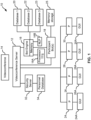
- FIG. 1 shows a system 10 according to this disclosure.
- a videoconference server 12 is any computer, server, processor or device suitable to perform the functions described herein.
- Videoconference server 12 is configured to run a videoconference 14 from a file provided directly or indirectly to videoconference server 12, or the file may be loaded into videoconference server 12.
- a bot engine (also called a bot generation engine)16 is in communication with videoconference server 12 and is configured to generate a participant bot (or bot) 18 as described herein, wherein the bot is placed in the videoconference 14 by videoconference server 12.
- Bot engine 16 is in communication with a first database 20 and a second database 22.
- First database 20 comprises organizational information organized by organization function, such as information technology (IT), finance, human resources (HR), building maintenance, sales, and marketing.
- Second database 22 comprises organizational information organized by persons within the organization and preferably has access to each person's emails, calendars, past conference participations, possibly cached phone conversations, internet browsing, and all electronic files pertaining to each person, or at least a plurality of persons, at the organization.
- a single database, or more than two databases may be utilized to provide the organizational information.
- the databases may be in indirect communication with bot engine 16, such as through videoconference server 12.
- participant bot(s) 18 are in communication with the bot engine 16 and indirectly with databases 20, 22 via bot engine 16 and videoconference server 12 while bot 18 is in a videoconference 14 so each bot 18 in videoconference 14 has access to new or updated organizational information.
- in communication means in direct or indirect communication.
- a third database 23 includes one or more video attributes and voice attributes that can be selected for a participant bot 18.
- the video attributes and voice attributes may be selected by a videoconference 14 participant, which includes the videoconference 14 host, or may be selected by bot engine 16 based on the nature of the videoconference.
- the video attributes are how the bot 18 will appear in videoconference 14.
- the bot 18 could, for example, appear as a robot, an avatar (thus, database 23 may include or have access to an avatar library) or as a man or woman of any age with any skin color, hair color, eye color, and other physical attributes.
- the bot 18 may appear as an animal or as any organization person, including a participant who could not attend videoconference 14. Bot 18 may also have any suitable voice and may speak in any language.
- participant bot 18 may be assigned a name by a human participant or by bot engine 16.
- a participant can command a participant bot 18 to participate in the videoconference 14 in place of the participant or in addition to the participant and direct bot engine 16 to create an appropriate bot depending on the participant's needs.
- Bot engine 16 commands bot 18 to function in videoconference 14.
- a text-to-speech (TTS) processor 16A and a natural language processor (NLP) 16B are in communication with bot engine 16.
- TTS engine 16A can generate speech from text and NLP 16B generates text from speech.
- TTS engine 16A and NLP 16B may be part of bot engine 16 or separate devices in communication with bot engine 16.
- NLP 16B words spoken by participants can be translated into text for understanding by bot engine 16.
- Bot engine 16, utilizing TTS 16A can cause bot 18 to speak answers.
- a memory/storage 19 is configured to store each participant bot 18 if desired. Then a participant bot 18 can be retrieved by bot engine 16 when requested and be updated with new organizational information from databases 20, 22 if needed for a future videoconference.
- Videoconference server 12 is in communication with a plurality of participant devices 24, 26, 28, and 30 although there could be any number of participant devices. Each participant device has a graphical user interface (GUI) 24A, 26A, 28A, and 30A that each participant (also called a user and wherein one or more of the participants is the videoconference host(s)) can utilize to communicate with videoconference server 12.
- GUI graphical user interface
- a security server 32 as shown is in direct communication with videoconference server 12 and in indirect communication with bot engine 16.
- Security server 32 is also in communication with personnel database 34, which includes a confidentiality or security clearance rating for each person in the organization.
- a participant When using system 10, a participant first schedules a videoconference by using his/her GUI 24A, 26A, 28A, 30A to contact videoconference server 12 and send a videoconference invitation.
- the videoconference invitation may include the other videoconference participants, the videoconference title, agenda, and date and time.
- the participant who schedules the videoconference may be the videoconference host, or another person may be the host, or a bot 18 may be the host.
- the participant may also invite one or more participant bots 18 with knowledge of an organizational function, or a plurality of organizational functions, or with the knowledge of a person in the organization, or of a plurality of persons in the organization.
- the videoconference server 12 sends an invitation to bot engine 16, which accepts the invitation and either creates an appropriate participation bot(s) 18 or retrieves a participation bot(s) 18 from memory/storage 19 and updates the retrieved bot(s) 18 with any new information from databases 20, 22, 23.
- a participant bot 18 could be created when the videoconference 14 is scheduled, and then stored in memory/storage 19, and then be retrieved and updated with additional information when or just before the videoconference 14 starts.
- bot 18 can be created by bot engine 16 when or just before videoconference 14 starts.
- a participant bot 18 can have a visual image and voice selected by a host, a human participant, or by the bot engine 16 from third database 23 based on any criteria, such as the nature of the videoconference or the videoconference 14 participants.
- the participant bot 18 is configured to answer queries provided to it by text through a participant GUI 24A, 26A, 28A, 30A or by voice by one of the participants.
- the participant bot 18 remains in communication with bot engine 16, which has, or is in communication with, NLP 16B and TTS engine 16A, as discussed previously.
- Security server 32 detects confidential information from (1) the videoconference invitation information, and (2) the information sought to be downloaded for a participation bot 18 from database 20 or 22.
- Security server 32 is configured to determine the identity of all videoconference participants and query personnel database 34 to determine if any of the participants should not receive any information that may be stored for a participant bot 18. If so, security server 32 takes one of two actions: (1) it instructs bot engine 16 not to download the confidential information into the memory 16C of bot engine 16, because such confidential information is available to participant bot 18, or (2) it instructs bot engine 16 to download the confidential information but not to permit participant bot 18 to provide the confidential information during videoconference 14.
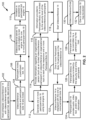
- FIG. 2 illustrates a method 100 according to this disclosure.
- a videoconference host or other participant sends a videoconference invitation with one or more videoconference topics, a participant list, agenda, and the date and time of the videoconference 14. Any suitable information can be included in the videoconference invitation.
- the videoconference participants and one or more participant bot(s) 18 are invited to the videoconference. Because the participants may be able to invite one or more bots 18, step 104 may be broken into two steps, wherein participants (and possibly one or more bots 18) are first invited at step 104 and at step 106 a participant invites one or more participant bots 18 utilizing a GUI 24A, 26A, 28A, or 30A to communicate with videoconference server 12 to send an invitation to bot engine 16.
- Bot engine 16 accepts the invitation at step 110.
- bot engine 16 generates one or more participant bots 18 and based on the bot(s) requested, each bot 18 is provided access at step 114 to information regarding an organizational person(s), an organizational function(s), or a videoconference topic(s).
- one bot 18 could be programmed via bot engine 16 to have information about a plurality of organizational persons and/or a plurality of videoconference topics, and/or a plurality of organizational functions.
- the information provided to a bot 18 may be limited by the security level of the information sought versus the security level of the videoconference participants.
- the videoconference 14 starts at step 118 and the one or more participant bots 18 participate in videoconference 14 at step 120, in which the videoconference 14 is displayed at step 122.
- Each bot 18 may provide information in the form of audio, video, text, and images.
- the information is provided by bot engine 16 communicating with videoconference server 12, which makes the information available to videoconference participants, including other bots 18.
- Step 126 is used as an alternative to step 116 or in conjunction with step 116. If a bot 18 has access to confidential or secure information that was not blocked or filtered at step 116, at step 126 bot 18 will not provide such information if some participants do not have a sufficient security rating.
- bot 18 can be silenced or otherwise overridden by a human participant or another bot 18 with the appropriate authority credentials.
- the videoconference ends.
- any of the one or more bot(s) 18 may be stored in storage/memory 19.
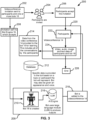
- FIG. 3 shows an alternate system 200 according to this disclosure.
- a videoconference invitation is sent to participants including to one or more bots 18.
- the human participants receive the invitation at step 204 and accept it at step 206.
- the invitation to one or more bots 18 is sent to bot engine 16 at step 208, which accepts the invitation.
- bot engine 16 configures a bot 18 for the videoconference 14.
- the bot 18 is created at step 210 and provided with specific data at step 212 from one or more databases, such as databases 20, 22, 23.
- the databases are updated and at step 214 data from each videoconference in which bot 18 participates is added to the data made available to bot 18.
- a large language module (LLM) is provided at step 216 to permit bot 18 to produce outputs.
- LLM large language module
- bot 18 is added to the videoconference 14, which commences at step 220.
- the bot 18 joins the other videoconference participants at step 222, and the participants and bot 18 can provide video, audio, image, and text data in the videoconference 14 at step 224.
- the videoconference 14 ends at step 226.
Landscapes
- Engineering & Computer Science (AREA)
- Signal Processing (AREA)
- Multimedia (AREA)
- Computer Networks & Wireless Communication (AREA)
- General Engineering & Computer Science (AREA)
- Business, Economics & Management (AREA)
- Entrepreneurship & Innovation (AREA)
- Information Transfer Between Computers (AREA)
- Strategic Management (AREA)
- Human Resources & Organizations (AREA)
- Two-Way Televisions, Distribution Of Moving Picture Or The Like (AREA)
- Data Mining & Analysis (AREA)
- Management, Administration, Business Operations System, And Electronic Commerce (AREA)
- Economics (AREA)
- Marketing (AREA)
- Operations Research (AREA)
- Quality & Reliability (AREA)
- Tourism & Hospitality (AREA)
- Physics & Mathematics (AREA)
- General Business, Economics & Management (AREA)
- General Physics & Mathematics (AREA)
- Theoretical Computer Science (AREA)
Abstract
Description
- Video conferencing is a popular method for communicating within a business setting. Many companies rely on videoconferences for staff members to interact with one another. Many regularly-scheduled meetings occur between employees, although videoconferences can still be scheduled on an ad hoc basis.
- Videoconferences are an effective tool to bring employees together to virtually meet and discuss business-related items. They are also effective in helping people work together when they are not located in the same area, or unable to meet at the same location.
- There have also been advances in generative artificial intelligence (AI) platforms, such as OpenAI's ChatGPT and Google's Bard, which are incorporating natural language processing (NLP) and adaptive learning to interact with humans in a natural setting.
- There are also services available today that can summarize a meeting and send out meeting notes, action items, etc.
- A first aspect of this disclosure provides a videoconferencing system that generates at least one participant bot unique to a videoconference participant or a videoconference topic, wherein the videoconferencing system comprises: a videoconferencing server; a participant bot-generation engine in communication with the videoconferencing server, wherein the participant bot-generation engine generates and stores the at least one participant bot unique to the videoconference participant, or the videoconference topic and wherein the participant bot-generation engine is further configured to direct a videoconference invitation from the videoconferencing server to the at least one participant bot; a database in communication with the participant bot-generation engine, wherein the database stores organizational information of the videoconference participant or the videoconference topic and makes the organizational information available to the participant bot; and a display in communication with the videoconferencing server, the display configured to display a videoconference and display the participant bot present in the videoconference; wherein the videoconferencing server is configured to send the videoconference invitation via the participant bot-generation engine to the at least one participant bot and the at least one participant bot is configured to accept the videoconference invitation and participate in the videoconference.
- The participant bot-generation engine may generate and stores a plurality of participant bots and each of the plurality of participant bots is unique to one of a plurality of videoconference participants or to one of a videoconference topic.
- The database may store organizational information related to each of the plurality of videoconference participants or to each of the videoconference topics and may make the information for a unique videoconference participant or a unique videoconference topic available to the participant bot associated with the unique videoconference participant.
- The organizational information may include information from videoconferences in which the at least one participant bot or the videoconference participant participates.
- The organizational information may include video information, text information, and audio information.
- The at least one participant bot may be in communication with the videoconferencing server and may be configured to cause, when directed, the videoconferencing server to play audio information or video information that is part of the organizational information provided to the participant bot.
- The videoconference participant may have a participant device that is configured to command the participant bot to attend a videoconference or command the participant bot not to attend the videoconference.
- Any videoconference participant in the videoconference can query the at least one participant bot by an audio question or a text question.
- A second aspect of this disclosure provides a videoconferencing method that utilizes at least one participant bot, wherein the videoconferencing method comprises the steps of: using a participant bot-generation engine, generating and storing at least one participant bot unique to a videoconference participant or a videoconference topic, and directing videoconference invitations from a videoconferencing server to the at least one participant bot; utilizing a database in communication with the participant bot-generation engine, providing organizational information of the videoconference participant or the videoconference topic to the at least one participant bot; using the videoconferencing server, sending a videoconference invitation via the participant bot-generation engine to the at least one participant bot; the at least one participant bot accepting the videoconference invitation and participating in the videoconference; and using a display in communication with the videoconferencing server, displaying the videoconference and the participant bot present in the videoconference.
- The at least one participant bot may be configured to communicate during the videoconference by one or more of audio, text, and video.
- The videoconference participant can utilize a participant device or voice command to override the participant bot's response to a query.
- The database may provide to the at least one participant bot a security level for the organizational information and a security level for each videoconference participant in the videoconference.
- The participant bot may identify each videoconference participant and determine the security level for each videoconference participant, and the participant bot may be configured not to disclose information above the security level of the lowest security level of any of the videoconference participants.
- The at least one participant bot may be provided the information for an organizational function.
- The organizational function may be one of sales, marketing, information technology (IT), finance, warehousing, and manufacturing.
- A third aspect of this disclosure provides a videoconferencing system that generates at least one participant bot, wherein the videoconferencing system comprises: a videoconferencing server; a participant bot-generation engine in communication with the videoconferencing server, wherein the participant bot-generation engine generates and stores at least one participant bot unique to a videoconference participant or a videoconference topic, and wherein the participant bot generation engine is further configured to direct a videoconference invitation from the videoconferencing server to the at least one participant bot; a database in communication with the participant bot-generation engine, wherein the database stores (a) organizational information of the videoconference participant or the videoconference topic, (b) a security level for the organizational information, and (c) a security level for each organization member, and makes the organizational information, security level for the organizational information, and the security level for each organization member available to the at least one participant bot; and a display in communication with the videoconferencing server, the display configured to display a videoconference and display the participant bot present in the videoconference; wherein the videoconferencing server is configured to send a videoconference invitation via the participant bot-generation engine to the at least one participant bot and the at least one participant bot is configured to accept the videoconference invitation and participate in the videoconference.
- The database may also be in communication with a central organizational database and may be configured to access information, such as emails, chats, phone logs, and documents, and the information is provided to the at least one participant bot.
- The security level may be based in part on each videoconference participant's job title.
- The organizational information may be provided to the at least one participant bot is dependent upon the lowest security level of each organization member that will participate in the videoconference.
- The videoconferencing system may further include a large language model (LLM) in an artificial intelligence (AI) module to predict new content, wherein the AI module may be in communication with the database, the database saves the new content, and the new content is provided to the at least one participant bot.
- The at least one participant bot may be further programmed to provide solutions to problems posed during the videoconference by utilizing the new content.
- The subject matter of the present disclosure is particularly pointed out and distinctly claimed in the concluding portion of this specification. A more complete understanding of the present disclosure, however, may best be obtained by referring to the detailed description and claims when considered in connection with the drawing figures, wherein:
-
FIG. 1 is an exemplary system according to aspects of this disclosure. -
FIG. 2 is an exemplary computer-implemented method according to aspects of this disclosure. -
FIG. 3 is an alternate computer-implemented method according to aspects of this disclosure. - It will be appreciated that elements in the figures are illustrated for simplicity and clarity and have not necessarily been drawn to scale. For example, the dimensions of some of the elements in the figures may be exaggerated relative to other elements to help to improve understanding of illustrated embodiments of the present invention.
- This disclosure proposes forming an entity, which is an artificial intelligence (AI) bot (or simply bot) that can be invited to a videoconference and help fill in informational gaps when there is knowledge missing from the human participants, or when a human participant is unavailable and the bot takes his/her place.
- Systems and methods of this disclosure propose creating bots, which can be (1) specialized to have knowledge about different organizational functions, such as sales, marketing, customer service, technical support, information technology (IT), finance, human resources (HR), general information, or other, or (2) specialized to different persons within the organization. Such a bot can be programmed to be an expert on the knowledge of an organizational function or person and can contribute to or lead conferences.
- Systems and methods proposed herein use a generative AI bot that uses machine learning to "learn" about certain aspects of a business by being provided the information. A company can create many different bots, and in theory an unlimited number. One or more bots can then be invited to a videoconference by human hosts or participants, and the bot(s) can listen to the videoconference conversation and can be queried to provide information by the host, participants or even another bot. Such bots could be relied upon, for example, to provide information as an expert on a topic of the videoconference.
- As used herein, the terms application, module, analyzer, engine, and the like can refer to computer program instructions, encoded on computer storage medium for execution by, or to control the operation of, data processing apparatus. Alternatively or additionally, the program instructions can be encoded on an artificially-generated propagated signal, e.g., a machine-generated electrical, optical, or electromagnetic signal, which is generated to encode information for transmission to suitable receiver apparatus for execution by a data processing apparatus.
- As used herein, "engine" refers to a data-processing apparatus, such as a processor, configured to execute computer program instructions, encoded on computer storage medium, wherein the instructions control the operation of the engine. Alternatively or additionally, the program instructions can be encoded on an artificially-generated propagated signal, e.g., a machine-generated electrical, optical, or electromagnetic signal, which is generated to encode information for transmission to suitable receiver apparatus for execution by a data processing apparatus.
- A computer storage medium can be, or be included in, a computer-readable storage device, a computer-readable storage substrate, a random or serial access memory array or device, or a combination of one or more of the substrates and devices. Moreover, while a computer storage medium is not a propagated signal, a computer storage medium can be a source or destination of computer program instructions encoded in an artificially-generated propagated signal. The computer storage medium can also be, or be included in, one or more separate physical components or media (e.g., solid-state memory that forms part of a device, disks, or other storage devices). In accordance with examples of the disclosure, a non-transient computer readable medium containing program can perform functions of one or more methods, modules, engines and/or other system components as described herein.
- This invention proposes creating a virtual bot entity (or "bot" or "AI bot") which can learn different specialized areas of a specific company. This would be using the advances of today's generative AI platforms, such as ChatGPT. When thinking of the current state of these entities, they may be seen as an "all knowing entity" that has obtained information from many different organizational sources, such as organizational computers and servers, the general internet, or news feeds, or other. The difference between this bot and general use bots is that this specific type of bot can create conversational type responses and can compartmentalize different components of a conversation and can recall or build upon this information later in the conversation.
- Companies can use this technology to create their own specialized bot entities that can learn different important areas of the business. For instance, a bot can be created for a sales team that is provided specific sales data important to the sales team but can also be used by other teams. This may include things such as sales numbers or top selling products, competitor information, profits, and other information. This information can all be provided to the bot and the bot's learning capabilities can present the information in an appropriate manner. One thing that must be considered is the security level of the information, as some employees may not be privy to some information obtained by the bot.
- The bot can be invited to different videoconferences and be used to listen to and provide commentary from the participants when called upon. The bot can be given a name so that when called upon the bot knows it is being spoken to just like any other participant.
- For example, "Sales-y" is a sales bot which has been fed information from the sales team with all of their pertinent sales related information. "Sales-y" is invited to the sales team meeting. If one of the attendees requests the "last months' sales numbers", he/she can ask "Sales-y" to provide these numbers. Using the previously obtained data, "Sales-y" can provide the correct response to the conference attendees.
- Another consideration is that the bot is also listening to the videoconference and can learn additional information from listening and can be later called upon to recollect facts and/or details that were previously mentioned. The bot will become a subject-matter-expert on the topics that it has learned and will have access to all of the information from the participants.
- Turning now to the figures, wherein the purpose is to describe embodiments of this disclosure and not to limit the claims,
FIG. 1 shows asystem 10 according to this disclosure. Avideoconference server 12 is any computer, server, processor or device suitable to perform the functions described herein.Videoconference server 12 is configured to run avideoconference 14 from a file provided directly or indirectly tovideoconference server 12, or the file may be loaded intovideoconference server 12. A bot engine (also called a bot generation engine)16 is in communication withvideoconference server 12 and is configured to generate a participant bot (or bot) 18 as described herein, wherein the bot is placed in thevideoconference 14 byvideoconference server 12. -
Bot engine 16 is in communication with afirst database 20 and asecond database 22.First database 20 comprises organizational information organized by organization function, such as information technology (IT), finance, human resources (HR), building maintenance, sales, and marketing.Second database 22 comprises organizational information organized by persons within the organization and preferably has access to each person's emails, calendars, past conference participations, possibly cached phone conversations, internet browsing, and all electronic files pertaining to each person, or at least a plurality of persons, at the organization. Although shown as twoseparate databases bot engine 16, such as throughvideoconference server 12. Preferably the participant bot(s) 18 are in communication with thebot engine 16 and indirectly withdatabases bot engine 16 andvideoconference server 12 whilebot 18 is in avideoconference 14 so eachbot 18 invideoconference 14 has access to new or updated organizational information. As used herein with respect to allsystem 10 devices, "in communication" means in direct or indirect communication. - A
third database 23 includes one or more video attributes and voice attributes that can be selected for aparticipant bot 18. The video attributes and voice attributes may be selected by avideoconference 14 participant, which includes thevideoconference 14 host, or may be selected bybot engine 16 based on the nature of the videoconference. The video attributes are how thebot 18 will appear invideoconference 14. Thebot 18 could, for example, appear as a robot, an avatar (thus,database 23 may include or have access to an avatar library) or as a man or woman of any age with any skin color, hair color, eye color, and other physical attributes. Thebot 18 may appear as an animal or as any organization person, including a participant who could not attendvideoconference 14.Bot 18 may also have any suitable voice and may speak in any language. And theparticipant bot 18 may be assigned a name by a human participant or bybot engine 16. A participant can command aparticipant bot 18 to participate in thevideoconference 14 in place of the participant or in addition to the participant anddirect bot engine 16 to create an appropriate bot depending on the participant's needs. -
Bot engine 16commands bot 18 to function invideoconference 14. A text-to-speech (TTS)processor 16A and a natural language processor (NLP) 16B are in communication withbot engine 16.TTS engine 16A can generate speech from text andNLP 16B generates text from speech.TTS engine 16A andNLP 16B may be part ofbot engine 16 or separate devices in communication withbot engine 16. UsingNLP 16B words spoken by participants can be translated into text for understanding bybot engine 16.Bot engine 16, utilizingTTS 16A, can causebot 18 to speak answers. A memory/storage 19 is configured to store eachparticipant bot 18 if desired. Then aparticipant bot 18 can be retrieved bybot engine 16 when requested and be updated with new organizational information fromdatabases -
Videoconference server 12 is in communication with a plurality ofparticipant devices videoconference server 12. Asecurity server 32 as shown is in direct communication withvideoconference server 12 and in indirect communication withbot engine 16.Security server 32 is also in communication withpersonnel database 34, which includes a confidentiality or security clearance rating for each person in the organization. - When using
system 10, a participant first schedules a videoconference by using his/herGUI videoconference server 12 and send a videoconference invitation. The videoconference invitation may include the other videoconference participants, the videoconference title, agenda, and date and time. The participant who schedules the videoconference may be the videoconference host, or another person may be the host, or abot 18 may be the host. - When sending the videoconference invitation via
videoconference server 12, the participant may also invite one ormore participant bots 18 with knowledge of an organizational function, or a plurality of organizational functions, or with the knowledge of a person in the organization, or of a plurality of persons in the organization. Thevideoconference server 12 sends an invitation tobot engine 16, which accepts the invitation and either creates an appropriate participation bot(s) 18 or retrieves a participation bot(s) 18 from memory/storage 19 and updates the retrieved bot(s) 18 with any new information fromdatabases participant bot 18 could be created when thevideoconference 14 is scheduled, and then stored in memory/storage 19, and then be retrieved and updated with additional information when or just before thevideoconference 14 starts. Alternatively,bot 18 can be created bybot engine 16 when or just before videoconference 14 starts. - A
participant bot 18 can have a visual image and voice selected by a host, a human participant, or by thebot engine 16 fromthird database 23 based on any criteria, such as the nature of the videoconference or thevideoconference 14 participants. Theparticipant bot 18 is configured to answer queries provided to it by text through aparticipant GUI participant bot 18 remains in communication withbot engine 16, which has, or is in communication with,NLP 16B andTTS engine 16A, as discussed previously. -
Security server 32 detects confidential information from (1) the videoconference invitation information, and (2) the information sought to be downloaded for aparticipation bot 18 fromdatabase Security server 32 is configured to determine the identity of all videoconference participants andquery personnel database 34 to determine if any of the participants should not receive any information that may be stored for aparticipant bot 18. If so,security server 32 takes one of two actions: (1) it instructsbot engine 16 not to download the confidential information into the memory 16C ofbot engine 16, because such confidential information is available toparticipant bot 18, or (2) it instructsbot engine 16 to download the confidential information but not to permitparticipant bot 18 to provide the confidential information duringvideoconference 14. -
FIG. 2 illustrates amethod 100 according to this disclosure. At step 102 a videoconference host (or other participant) sends a videoconference invitation with one or more videoconference topics, a participant list, agenda, and the date and time of thevideoconference 14. Any suitable information can be included in the videoconference invitation. Atstep 104 the videoconference participants and one or more participant bot(s) 18 are invited to the videoconference. Because the participants may be able to invite one ormore bots 18,step 104 may be broken into two steps, wherein participants (and possibly one or more bots 18) are first invited atstep 104 and at step 106 a participant invites one ormore participant bots 18 utilizing aGUI videoconference server 12 to send an invitation tobot engine 16.Bot engine 16 accepts the invitation atstep 110. - At
step 112,bot engine 16 generates one ormore participant bots 18 and based on the bot(s) requested, eachbot 18 is provided access atstep 114 to information regarding an organizational person(s), an organizational function(s), or a videoconference topic(s). Thus, onebot 18 could be programmed viabot engine 16 to have information about a plurality of organizational persons and/or a plurality of videoconference topics, and/or a plurality of organizational functions. Atstep 116, the information provided to abot 18 may be limited by the security level of the information sought versus the security level of the videoconference participants. - The
videoconference 14 starts atstep 118 and the one ormore participant bots 18 participate invideoconference 14 atstep 120, in which thevideoconference 14 is displayed atstep 122. Eachbot 18 may provide information in the form of audio, video, text, and images. The information is provided bybot engine 16 communicating withvideoconference server 12, which makes the information available to videoconference participants, includingother bots 18. Step 126 is used as an alternative to step 116 or in conjunction withstep 116. If abot 18 has access to confidential or secure information that was not blocked or filtered atstep 116, atstep 126bot 18 will not provide such information if some participants do not have a sufficient security rating. - At
step 128, which can occur at any suitable time(s) during thevideoconference 14,bot 18 can be silenced or otherwise overridden by a human participant or anotherbot 18 with the appropriate authority credentials. Atstep 130, the videoconference ends. Atstep 132, any of the one or more bot(s) 18 may be stored in storage/memory 19. -
FIG. 3 shows analternate system 200 according to this disclosure. Atstep 202, a videoconference invitation is sent to participants including to one ormore bots 18. The human participants receive the invitation atstep 204 and accept it atstep 206. The invitation to one ormore bots 18 is sent tobot engine 16 atstep 208, which accepts the invitation. Atstep 209,bot engine 16 configures abot 18 for thevideoconference 14. Thebot 18 is created atstep 210 and provided with specific data atstep 212 from one or more databases, such asdatabases step 214 data from each videoconference in whichbot 18 participates is added to the data made available tobot 18. A large language module (LLM) is provided atstep 216 to permitbot 18 to produce outputs. - At
step 218,bot 18 is added to thevideoconference 14, which commences atstep 220. Thebot 18 joins the other videoconference participants atstep 222, and the participants andbot 18 can provide video, audio, image, and text data in thevideoconference 14 atstep 224. Thevideoconference 14 ends atstep 226. - The description of embodiments provided herein is merely exemplary and is intended for purposes of illustration only; the following description is not intended to limit the scope of the claims. Moreover, recitation of multiple embodiments having stated features is not intended to exclude other embodiments having additional or fewer features or other embodiments incorporating different combinations of the stated features. The methods and systems according to this disclosure and claims can operate in a premise, cloud-based, or hybrid environment.
- The features of the various embodiments may be stand alone or combined in any combination. Further, unless otherwise noted, various illustrated steps of a method can be performed sequentially or at the same time, and not necessarily be performed in the order illustrated. It will be recognized that changes and modifications may be made to the exemplary embodiments without departing from the scope of the present invention. These and other changes or modifications are intended to be included within the scope of the present invention, as expressed in the following claims.
Claims (15)
- A videoconferencing system configured to generate at least one participant bot unique to a videoconference participant or a videoconference topic, wherein the videoconferencing system comprises:a videoconferencing server;a participant bot-generation engine in communication with the videoconferencing server, wherein the participant bot-generation engine is configured to generate and store the at least one participant bot unique to the videoconference participant, or the videoconference topic and wherein the participant bot-generation engine is further configured to direct a videoconference invitation from the videoconferencing server to the at least one participant bot;a database in communication with the participant bot-generation engine, wherein the database is configured to:store organizational information of the videoconference participant or the videoconference topic; andmake the organizational information available to the participant bot; anda display in communication with the videoconferencing server, the display configured to display a videoconference and display the participant bot present in the videoconference;wherein the videoconferencing server is configured to send the videoconference invitation via the participant bot-generation engine to the at least one participant bot and the at least one participant bot is configured to accept the videoconference invitation and participate in the videoconference.
- The videoconferencing system of claim 1, wherein the participant bot-generation engine is configured to generate and store a plurality of participant bots and each of the plurality of participant bots is unique to one of a plurality of videoconference participants or to one of a videoconference topic,
and wherein the database is configured to:store organizational information related to each of the plurality of videoconference participants or to each of the videoconference topics; andmake the information for a unique videoconference participant or a unique videoconference topic available to the participant bot associated with the unique videoconference participant. - The videoconferencing system of claim 1 or claim 2, wherein the organizational information includes information from videoconferences in which the at least one participant bot or the videoconference participant participates and/or wherein the organizational information includes video information, text information, and audio information.
- The videoconferencing system of any preceding claim, wherein the at least one participant bot is in communication with the videoconferencing server and is configured to cause, when directed, the videoconferencing server to play audio information or video information that is part of the organizational information provided to the participant bot.
- The videoconferencing system of any preceding claim, wherein the videoconference participant has a participant device that is configured to command the participant bot to attend a videoconference or command the participant bot not to attend the videoconference.
- The videoconferencing system of any preceding claim, wherein the database is configured to:store a security level for the organizational information, and a security level for each organization member; andmake the security level for the organizational information, and the security level for each organization member available to the at least one participant bot.
- The videoconferencing system of claim 6, wherein the security level is based in part on each videoconference participant's job title.
- The videoconferencing system of claim 6 or claim 7, wherein the organizational information provided to the at least one participant bot is dependent upon the lowest security level of each organization member that will participate in the videoconference.
- The videoconferencing system of any of claims 6 to 8, that further includes a large language model in an artificial intelligence module configured to predict new content, wherein the artificial intelligence module is in communication with the database, and the database is configured to:save the new content; andprovide the new content to the at least one participant bot,and optionally wherein the at least one participant bot is further programmed to provide solutions to problems posed during the videoconference by utilizing the new content.
- A videoconferencing method that utilizes at least one participant bot, wherein the videoconferencing method comprises the steps of:using a participant bot-generation engine, generating and storing at least one participant bot unique to a videoconference participant or a videoconference topic, and directing videoconference invitations from a videoconferencing server to the at least one participant bot;utilizing a database in communication with the participant bot-generation engine, providing organizational information of the videoconference participant or the videoconference topic to the at least one participant bot;using the videoconferencing server, sending a videoconference invitation via the participant bot-generation engine to the at least one participant bot;the at least one participant bot accepting the videoconference invitation and participating in the videoconference; andusing a display in communication with the videoconferencing server, displaying the videoconference and the participant bot present in the videoconference.
- The videoconferencing method of claim 10, wherein the at least one participant bot is configured to communicate during the videoconference by one or more of audio, text, and video.
- The videoconferencing method of claim 10 or claim 11, wherein the videoconference participant can utilize a participant device or voice command to override the participant bot's response to a query.
- The videoconferencing method of any of claims 10 to 12, wherein the database provides to the at least one participant bot a security level for the organizational information and a security level for each videoconference participant in the videoconference.
- The videoconferencing method of claim 13, wherein the participant bot identifies each videoconference participant and determines the security level for each videoconference participant, and the participant bot is configured not to disclose information above the security level of the lowest security level of any of the videoconference participants.
- The videoconferencing method of any of claims 10 to 14, wherein the at least one participant bot is provided the information for an organizational function.
Applications Claiming Priority (1)
| Application Number | Priority Date | Filing Date | Title |
|---|---|---|---|
| US18/237,293 US20250071072A1 (en) | 2023-08-23 | 2023-08-23 | Generative ai platform integration with video conferencing |
Publications (1)
| Publication Number | Publication Date |
|---|---|
| EP4513833A1 true EP4513833A1 (en) | 2025-02-26 |
Family
ID=92538886
Family Applications (1)
| Application Number | Title | Priority Date | Filing Date |
|---|---|---|---|
| EP24195943.6A Pending EP4513833A1 (en) | 2023-08-23 | 2024-08-22 | Generative ai platform integration with video conferencing |
Country Status (3)
| Country | Link |
|---|---|
| US (1) | US20250071072A1 (en) |
| EP (1) | EP4513833A1 (en) |
| CA (1) | CA3248180A1 (en) |
Citations (2)
| Publication number | Priority date | Publication date | Assignee | Title |
|---|---|---|---|---|
| US20210359874A1 (en) * | 2019-03-10 | 2021-11-18 | Ringcentral,Inc. | Systems and methods for structuring information in a collaboration environment |
| US20210390144A1 (en) * | 2020-06-15 | 2021-12-16 | Avaya Management L.P. | Ai-bot based in-meeting instant query assistant for conference meetings |
-
2023
- 2023-08-23 US US18/237,293 patent/US20250071072A1/en active Pending
-
2024
- 2024-08-09 CA CA3248180A patent/CA3248180A1/en active Pending
- 2024-08-22 EP EP24195943.6A patent/EP4513833A1/en active Pending
Patent Citations (2)
| Publication number | Priority date | Publication date | Assignee | Title |
|---|---|---|---|---|
| US20210359874A1 (en) * | 2019-03-10 | 2021-11-18 | Ringcentral,Inc. | Systems and methods for structuring information in a collaboration environment |
| US20210390144A1 (en) * | 2020-06-15 | 2021-12-16 | Avaya Management L.P. | Ai-bot based in-meeting instant query assistant for conference meetings |
Also Published As
| Publication number | Publication date |
|---|---|
| US20250071072A1 (en) | 2025-02-27 |
| CA3248180A1 (en) | 2025-06-05 |
Similar Documents
| Publication | Publication Date | Title |
|---|---|---|
| US11128484B2 (en) | Advising meeting participants of their contributions based on a graphical representation | |
| Shaik et al. | Drivers of employee engagement in global virtual teams | |
| Place | Listening as the driver of public relations practice and communications strategy within a global public relations agency | |
| US20070005698A1 (en) | Method and apparatuses for locating an expert during a collaboration session | |
| US20030149681A1 (en) | Distributed system for interactive collaboration | |
| US11849245B2 (en) | Participation management system for videoconferencing | |
| US20190319813A1 (en) | Systems and methods for fostering on-line working relationships and virtual team building | |
| US20230353651A1 (en) | Identifying suggested contacts for connection | |
| US20160105566A1 (en) | Conference call question manager | |
| WO2008046063A2 (en) | Methods and apparatuses for searching and categorizing messages within a network system | |
| Van der Kleij et al. | Effects of time pressure and communication environment on team processes and outcomes in dyadic planning | |
| US12244431B2 (en) | Systems and methods for providing live online focus group data | |
| CN114079651A (en) | Conference processing method and device | |
| JP2026066786A (en) | Schedule adjustment support device | |
| EP4181043A1 (en) | Scheduled conference recording | |
| US20250071072A1 (en) | Generative ai platform integration with video conferencing | |
| Lauron | Fostering collaboration to enhance online instruction. | |
| Wong | Virtual sensemaking and self-presentation on Slack: Exploring the effects of Enterprise Social Network (ESN) on workplace culture and socialisation | |
| Dase et al. | A proposed research framework for distributed group support systems | |
| Daníelsson | Adapting for Remote UX Design Practices with Video Conferencing Tools and Online Digital Whiteboards: For User Interviews and Stakeholder Engagement Workshops | |
| Thompson et al. | Supporting collaborative virtual meetings using multi-agent systems | |
| Opdenakker et al. | Virtual Project Teams and Their Effectiveness | |
| KR20260068341A (en) | System for meeting scheduling by using artificial intelligence and method thereof | |
| Han et al. | ChaMEleon: Identity-Adjustable Remote Collaboration System in Virtual | |
| Hacker | Who Do You Trust? |
Legal Events
| Date | Code | Title | Description |
|---|---|---|---|
| PUAI | Public reference made under article 153(3) epc to a published international application that has entered the european phase |
Free format text: ORIGINAL CODE: 0009012 |
|
| STAA | Information on the status of an ep patent application or granted ep patent |
Free format text: STATUS: THE APPLICATION HAS BEEN PUBLISHED |
|
| AK | Designated contracting states |
Kind code of ref document: A1 Designated state(s): AL AT BE BG CH CY CZ DE DK EE ES FI FR GB GR HR HU IE IS IT LI LT LU LV MC ME MK MT NL NO PL PT RO RS SE SI SK SM TR |
|
| STAA | Information on the status of an ep patent application or granted ep patent |
Free format text: STATUS: REQUEST FOR EXAMINATION WAS MADE |
|
| 17P | Request for examination filed |
Effective date: 20250822 |
|
| STAA | Information on the status of an ep patent application or granted ep patent |
Free format text: STATUS: EXAMINATION IS IN PROGRESS |
|
| 17Q | First examination report despatched |
Effective date: 20251223 |