EP4513500A1 - Method and system for predicting glass transition temperature of polymer - Google Patents
Method and system for predicting glass transition temperature of polymer Download PDFInfo
- Publication number
- EP4513500A1 EP4513500A1 EP23915010.5A EP23915010A EP4513500A1 EP 4513500 A1 EP4513500 A1 EP 4513500A1 EP 23915010 A EP23915010 A EP 23915010A EP 4513500 A1 EP4513500 A1 EP 4513500A1
- Authority
- EP
- European Patent Office
- Prior art keywords
- polymer
- glass transition
- transition temperature
- data
- graph
- Prior art date
- Legal status (The legal status is an assumption and is not a legal conclusion. Google has not performed a legal analysis and makes no representation as to the accuracy of the status listed.)
- Pending
Links
Images


Classifications
-
- G—PHYSICS
- G16—INFORMATION AND COMMUNICATION TECHNOLOGY [ICT] SPECIALLY ADAPTED FOR SPECIFIC APPLICATION FIELDS
- G16C—COMPUTATIONAL CHEMISTRY; CHEMOINFORMATICS; COMPUTATIONAL MATERIALS SCIENCE
- G16C60/00—Computational materials science, i.e. ICT specially adapted for investigating the physical or chemical properties of materials or phenomena associated with their design, synthesis, processing, characterisation or utilisation
-
- G—PHYSICS
- G06—COMPUTING OR CALCULATING; COUNTING
- G06N—COMPUTING ARRANGEMENTS BASED ON SPECIFIC COMPUTATIONAL MODELS
- G06N3/00—Computing arrangements based on biological models
- G06N3/02—Neural networks
- G06N3/04—Architecture, e.g. interconnection topology
-
- G—PHYSICS
- G06—COMPUTING OR CALCULATING; COUNTING
- G06N—COMPUTING ARRANGEMENTS BASED ON SPECIFIC COMPUTATIONAL MODELS
- G06N3/00—Computing arrangements based on biological models
- G06N3/02—Neural networks
- G06N3/04—Architecture, e.g. interconnection topology
- G06N3/042—Knowledge-based neural networks; Logical representations of neural networks
-
- G—PHYSICS
- G06—COMPUTING OR CALCULATING; COUNTING
- G06N—COMPUTING ARRANGEMENTS BASED ON SPECIFIC COMPUTATIONAL MODELS
- G06N3/00—Computing arrangements based on biological models
- G06N3/02—Neural networks
- G06N3/04—Architecture, e.g. interconnection topology
- G06N3/044—Recurrent networks, e.g. Hopfield networks
-
- G—PHYSICS
- G06—COMPUTING OR CALCULATING; COUNTING
- G06N—COMPUTING ARRANGEMENTS BASED ON SPECIFIC COMPUTATIONAL MODELS
- G06N3/00—Computing arrangements based on biological models
- G06N3/02—Neural networks
- G06N3/04—Architecture, e.g. interconnection topology
- G06N3/045—Combinations of networks
-
- G—PHYSICS
- G06—COMPUTING OR CALCULATING; COUNTING
- G06N—COMPUTING ARRANGEMENTS BASED ON SPECIFIC COMPUTATIONAL MODELS
- G06N3/00—Computing arrangements based on biological models
- G06N3/02—Neural networks
- G06N3/08—Learning methods
-
- G—PHYSICS
- G06—COMPUTING OR CALCULATING; COUNTING
- G06N—COMPUTING ARRANGEMENTS BASED ON SPECIFIC COMPUTATIONAL MODELS
- G06N3/00—Computing arrangements based on biological models
- G06N3/02—Neural networks
- G06N3/08—Learning methods
- G06N3/084—Backpropagation, e.g. using gradient descent
-
- G—PHYSICS
- G16—INFORMATION AND COMMUNICATION TECHNOLOGY [ICT] SPECIALLY ADAPTED FOR SPECIFIC APPLICATION FIELDS
- G16C—COMPUTATIONAL CHEMISTRY; CHEMOINFORMATICS; COMPUTATIONAL MATERIALS SCIENCE
- G16C20/00—Chemoinformatics, i.e. ICT specially adapted for the handling of physicochemical or structural data of chemical particles, elements, compounds or mixtures
- G16C20/40—Searching chemical structures or physicochemical data
-
- G—PHYSICS
- G16—INFORMATION AND COMMUNICATION TECHNOLOGY [ICT] SPECIALLY ADAPTED FOR SPECIFIC APPLICATION FIELDS
- G16C—COMPUTATIONAL CHEMISTRY; CHEMOINFORMATICS; COMPUTATIONAL MATERIALS SCIENCE
- G16C20/00—Chemoinformatics, i.e. ICT specially adapted for the handling of physicochemical or structural data of chemical particles, elements, compounds or mixtures
- G16C20/80—Data visualisation
-
- G—PHYSICS
- G16—INFORMATION AND COMMUNICATION TECHNOLOGY [ICT] SPECIALLY ADAPTED FOR SPECIFIC APPLICATION FIELDS
- G16C—COMPUTATIONAL CHEMISTRY; CHEMOINFORMATICS; COMPUTATIONAL MATERIALS SCIENCE
- G16C20/00—Chemoinformatics, i.e. ICT specially adapted for the handling of physicochemical or structural data of chemical particles, elements, compounds or mixtures
- G16C20/30—Prediction of properties of chemical compounds, compositions or mixtures
-
- G—PHYSICS
- G16—INFORMATION AND COMMUNICATION TECHNOLOGY [ICT] SPECIALLY ADAPTED FOR SPECIFIC APPLICATION FIELDS
- G16C—COMPUTATIONAL CHEMISTRY; CHEMOINFORMATICS; COMPUTATIONAL MATERIALS SCIENCE
- G16C20/00—Chemoinformatics, i.e. ICT specially adapted for the handling of physicochemical or structural data of chemical particles, elements, compounds or mixtures
- G16C20/70—Machine learning, data mining or chemometrics
Definitions
- the present invention relates to a method and a system for estimating a glass transition temperature of a polymer using an artificial intelligence neural network.
- the glass transition temperature (Tg) is affected not only by the structure of the polymer but also by the molecular weight of the polymerized polymer, there is a problem in that it is not possible to estimate the accurate glass transition temperature from the technologies in the prior art.
- the present invention is intended to provide a method for providing a data structure representing a polymer material as graphic data, and furthermore, estimating a glass transition temperature of a polymer using the data structure representing the graphic data of the polymer, in which a molecular weight element of the polymer is reflected.
- a computer-implemented method for graphically describing a chemical structure of a selected polymer and calculating an estimated value of a glass transition temperature of the polymer including a polymer glass transition temperature property information estimation artificial neural network acquisition step of generating a machine-trained graph artificial neural network to estimate glass transition temperature property information about the selected polymer based at least in part on chemical structure data related to the selected polymer, a polymer graph data acquisition step of acquiring polymer graph data describing a chemical structure of the selected polymer as graphic data; a polymer graph input step of providing the acquired polymer graph data as input to the graph neural network, a polymer glass transition temperature property information acquisition step of receiving the polymer glass transition temperature property information of the selected polymer from output of the graph neural network, and a polymer glass transition temperature calculation step of calculating a glass transition temperature of the selected polymer by substituting molecular weight information about the selected polymer into the polymer glass transition temperature property information.
- the polymer graph data describing the chemical structure of the selected polymer as graph data may include at least one of polymer graph node attachment data that is data representing an inter-attachment relationship between nodes corresponding to respective atoms constituting a repeat unit for composing the polymer and attaching nodes that are attached to an attach point that is a point where the repeat units are repeatedly attached among the nodes, polymer node attribution information that is information representing attribute information about the nodes corresponding to the respective atoms constituting the repeat unit for composing the polymer and attributes of attaching nodes that are attached to the attach point that is a point where the repeat units are repeatedly attached among the nodes, and polymer edge attribute information that is information representing attributes of an edge for attaching the nodes corresponding to the respective atoms constituting the repeat unit for composing the polymer to each other and an attach edge for attaching at least one of the nodes to the attaching node.
- polymer graph node attachment data that is data representing an inter-attachment relationship between nodes corresponding to respective atoms constituting
- a glass transition temperature calculation system for polymers including a data input unit that receives polymer graph data describing a chemical structure of a selected polymer as graphic data and molecular weight data of the polymer, an artificial neural network model unit that estimates and calculates glass transition temperature property information about the polymer from the polymer graph data, and a glass transition temperature calculation unit that calculates a glass transition temperature of the polymer from the glass transition temperature property information about the polymer and the molecular weight data of the polymer, and in this case, the glass transition temperature property information about the polymer is T g, inf value and K in the equation below, the molecular weight data of the polymer is Mn in the equation below, and the glass transition temperature calculation unit calculates a glass transition temperature Tg from the equation below.
- T g T g , inf ⁇ K M n
- Tg is a glass transition temperature of a polymer with a molecular weight Mn
- T g,inf is a glass transition temperature when the molecular weight is infinite
- K is a variable related to a free volume of the polymer
- Mn is a number average molecular weight of the polymer
- the present invention by providing a data structure that can represent a polymer in computer-usable graphical data, it is possible to implement a method and a system for estimating property information about a polymer material by machine-learning a relationship between a molecular structure and property information about the polymer material through a graph neural network (GNN) and a message passing neural network (MPNN). Furthermore, by reflecting molecular weight factors in estimating a glass transition temperature of a polymer, it is possible to provide a method and a system for estimating a glass transition temperature of a polymer with improved accuracy as compared with the prior art.
- GNN graph neural network
- MPNN message passing neural network
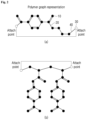
- FIG. 1 are diagrams illustrating structures of different polymers and the monomers composing each polymer.
- an artificial neural network especially in representing a molecular structure as a graph for application to a GNN or the like, there is no method of effectively representing a chemical structure of a polymer as a graph.
- Monomers that compose polymers illustrated in (a) and (b) in FIG. 1 are different from each other, but since they are the same except for some of the monomer terminals, graphs of the monomers are represented very similarly, and thus it is inaccurate to represent graphs of the polymers simply as graphs of the monomers and to represent the graphs of the polymers as repetitions of the graphs of the monomers.
- the present invention suggests a new method of representing a polymer graph as illustrated in FIG. 2 .
- a polymer graph data method according to the present invention will be described with reference to FIG. 2 .
- FIG. 1 illustrates an example of polymer representation in the prior art and a representation of the monomers for composing the polymer
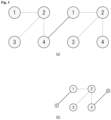
- FIG. 2 is a diagram illustrating the repeat units for composing the polymer of FIG. 1 .
- each atom is expressed as a node 10
- coupling between the atoms is expressed as an edge 20.
- a point where the repeat units are repeatedly attached is expressed as an attach point 30, and a node to which the attach point is attached is expressed an "attaching node.”
- the attach point 30 is a virtual representation of the attaching nodes of neighboring repeat units attached by repetition, and the attachment for attaching the attach point to the attaching node is expressed as an attach edge 40.
- an artificial neural network model when an artificial neural network model is trained based on chemical structures of polymers, in particular, when learning is performed by applying an artificial neural network model such as a message passing neural network (MPNN) and a graph neural network (GNN) based on message passing, even by adding a minimal amount of information in addition to monomer structure information, learning to be performed by transferring information about an opposite node where a monomer is attached is possible and learning to be performed by reflecting the unit repetition characteristics of the polymer is possible.
- MPNN message passing neural network
- GNN graph neural network
- the present invention converts the chemical structure of a polymer into a data structure capable of being used in computer processing, that is, "graph data" according to the graph representation method that graphically represents the above-mentioned molecular or chemical structure of the polymer. In the present invention, this is referred to as "polymer graph data”.
- polymer graph data that describes a chemical structure of a given or selected polymer in graphic data may include at least one of node data that is data of nodes 10 representing two or more nodes representing respective atoms constituting a repeat unit of a monomer for composing the polymer and data related to the nodes 10, edge data that is data related to one or more edges 20 representing coupling between respective nodes, attaching node data that is data related to at least one attaching node that is a point where repeat units for composing the polymer are repeatedly attached among the nodes, and attach edge data that is data related to the attach edge 40 attaching the attach point 30 to the attaching node.
- a difference between the monomer graph data and the polymer graph data of the present invention is that the polymer graph data of the present invention represents the node 10 attached to the attach point 30 and its edge information as the attaching node and the attach edge in the graph data representation of the repeat unit including the monomer graph data.
- edge data and node data may be represented as an adjacency matrix and a feature matrix, respectively.
- the edge data is data related to coupling between atoms
- the node data is data related to each atom.
- the polymer graph is able to be converted into computer-recognizable data by additionally adding data for the nodes and the attach edge 40 attached to the attach point 30.
- an adjacency matrix A of a repeat unit of a monomer consisting of nodes 1, 2, 3, and 4 may be represented as follows.
- an adjacency matrix A of a repeat unit of a monomer consisting of nodes 1, 2, 3, and 4 may be represented as follows.
- Monomer adjacency matrix A 0 1 0 0 1 0 1 1 0 1 0 0 0 0 1 0 0 0 0 0 0 0
- a polymer adjacency matrix PA which is an adjacency matrix representation of the polymer graph according to the example of FIG. 3 , may be expressed as follows.
- Polymer adjacency matrix PA 0 1 0 1 1 0 1 1 0 1 0 1 0 0 0 1 1 0 0 0
- the graph data that represents the chemical structure of the polymer as a graph and describes it as graphic data according to the present invention includes, in addition to the graph data of the repeat unit of the monomer, attaching node data representing an attaching node that is a node to which the monomers are repeatedly attached and data of the attach edge 40 that is attached to the attaching node.
- the expression method of the polymer adjacency matrix PA indicates that the nodes 1 and 4 of the repeat unit of the monomer consisting of nodes 1, 2, 3, and 4 are attached to the nodes 4 and 1 of the neighboring repeat unit, respectively, and this attachment is repeated. However, at this time, the nodes 1 and 4 in FIG. 3 are not attached to each other within the monomer, but are attached to the nodes of the adjacent repeat unit, so that these nodes may be distinguished by designating the nodes as "attaching nodes" and giving the attaching node attribute to the node feature matrix or giving the adjacent repeat unit attachment attribute to the edge feature matrix.
- This may be used as an embedding procedure to convert the chemical structure of a polymer into data capable of being processed by a computer, which is achieved by a polymer edge variable setting step of setting an inter-attachment relationship between nodes representing respective atoms constituting the monomer repeat unit of the selected polymer and the attaching nodes that are points where the monomers are repeatedly attached as a polymer attachment edge variable, and a polymer graph edge data assignment step of assigning an attribute value of the inter-attachment relationship between the nodes and the attaching nodes to the set polymer edge variable.
- the attribute value of the inter-attachment relationship between the nodes and the attaching nodes may be determined as "1" and "0", indicating attachment/non-attachment, the matrix expression of which is the polymer adjacency matrix.
- the polymer adjacency matrix of the present invention has the same component values as a typical adjacency matrix, but as described above, it differs from the typical adjacency matrix by adding attaching nodes to a typical single molecule graph node.
- the graph representation of a compound may have a feature matrix representing predetermined attribute information about each node and predetermined attribute information about each edge as graph data.
- a monomer node feature matrix containing attribute value information (e.g., three pieces of attribute information) about each atom can be expressed as follows.
- Monomer node feature matrix PA ′ 0 1 0 1 0 1 0 1 0 1 0 0 1 0
- a node feature matrix NF may have as many rows as the number of nodes and as many columns as the number of types of feature values to be expressed for each node, and thus may express a certain attribute to be expressed for each atom.
- Each component has a j-th feature value of an i-th node.
- the monomer feature matrix NF is described as an example in which each node has three arbitrary attribute values.
- Information of the monomer graph may be represented as an edge feature matrix EF, where each row may represent each edge of a monomer and column data of each row may be represented to express a predetermined attribute value of each edge.
- Edge attribute values may include the type of chemical bond (single bond, double bond, or the like), a ring status, a conjugation status, or the like.
- the edge feature matrix has three rows, and edge attribute values intended to contain information are assigned to respective columns.
- Polymer graph data according to the present invention may have separate attribute values added to the attribute values of the monomer node feature matrix described above.
- a polymer node feature matrix PNF which is a feature matrix of the exemplary polymer graph in FIG. 3
- the polymer node feature matrix PNF below may have attaching node attribute information in a fourth column, as illustrated below, in addition to the monomer node feature matrix NF containing three pieces of attribute information about the previous four nodes.
- the node attribute values assigned to nodes may include atomic numbers, hybridizations (SP3, SP2, or the like), the number of hydrogens, the number of electrons, ring status, or the like, and in particular, as one embodiment of the present invention, may have an attaching node attribute value, which is an attribute value of whether a node is attached to an adjacent repeat unit.
- attaching node data may be represented by an edge feature matrix. For example, like the polymer node feature matrix described above, instead of expressing with a node attribute value whether a node is an attaching node, or together with the node attribute value, an attribute value expressing whether a node is an attaching node is expressed in the edge feature matrix. In the example below representing (b) in FIG.
- the method of representing the structure of a polymer as a graph and converting it into computer-usable data may be selected from one or more of the methods below.
- the chemical structure of the polymer material has to be converted into data so that the polymer may be processed by a computer, and the conversion into data may be performed as follows according to a method of the present invention.
- the information on the repeat unit for composing the polymer is acquired.
- the repeat unit may be a single monomer as shown in (a) in FIG. 2 or may be a case where monomers are attached to each other as shown in (b) in FIG. 2 .
- a method for processing polymer graph data includes a step of setting, as a variable, an inter-attachment relationship between nodes representing respective atoms constituting a repeat unit of a polymer selected as an analysis target and attaching nodes attached to an attach point that is a point where the repeat units are repeatedly attached among the nodes.
- An attribute value of the inter-attachment relationship between the nodes and attaching nodes is assigned to the polymer node attachment variable set in this way.
- the polymer adjacency matrix mentioned above may be utilized.
- the method for processing polymer graph data of the present invention may also include a polymer node attribute variable setting step of setting, as polymer node attribute variables, attribute information about nodes corresponding to respective atoms constituting the repeat unit for composing the selected polymer and attribute information about the attaching nodes attached to the attach point that is a point where the repeat units are repeatedly attached among the nodes.
- the method additionally includes a polymer graph node attribute information allocation step of assigning attribute values of the nodes and attaching nodes to the polymer node attribute variables set in this way.
- the node attribute information has an attribute value indicating whether the node is an attaching node or not, and as node attribute information for the attaching node, unlike nodes that are not the attaching node, an attaching attribute value indicating that the node is attached to the attaching node of neighboring repeat unit within the polymer is given.
- the method for processing polymer graph data of the present invention may also include a polymer edge attribute variable setting step of setting, as polymer edge attribute variables, information about edges inter-attaching nodes corresponding to respective atoms constituting the repeat unit for composing the selected polymer and an attach edge attaching at least one among the nodes to the attaching node.
- the attach edge is an edge attaching the attaching node to another node.
- the present invention also includes a polymer graph edge attribute information assignment step of assigning attribute values of the edges and the attach edges to the set polymer edge attribute variables, and the attach edge is assigned an attach edge attribute value, which means that the edge attaches the attaching node to another node, as its edge attribute variable.
- the present invention provides a method for constructing an artificial neural network model that estimates a glass transition temperature of a polymer by applying the above-described polymer graph representation method and estimating the glass transition temperature of the polymer through machine learning.
- the polymer glass transition temperature estimation model of the present invention is configured to estimate the glass transition temperature by applying the relationship between the glass transition temperature and molecular weight of a polymer defined by the Flory-Fox Equation of [Equation 1].
- the glass transition temperature Tg of a polymer is a physical property value that is affected by both the molecular structure and the molecular weight, but the technology in the prior art fails to reflect the effects of both the molecular structure and the molecular weight in estimating the glass transition temperature.
- the present invention has implemented an estimation model with improved accuracy by reflecting both the molecular structure and the molecular weight in estimating the glass transition temperature using the equation below.
- Tg T g , inf ⁇ K M n
- T g,inf is a glass transition temperature when the molecular weight is theoretically infinite
- K is an experimental parameter related to a free volume in the polymer
- Mn is a number average molecular weight of the polymer.
- the estimation model of the present invention includes an artificial neural network that estimates T g,inf and K in Equation 1 from the molecular structure of a selected polymer, and is configured to calculate the glass transition temperature Tg of the selected polymer by applying the T g,inf and K values output by the artificial neural network and the molecular weight of the selected polymer to Equation 1.
- the following procedure is performed to generate the artificial neural network model that estimates T g,inf and K values, which are glass transition temperature property information about the polymer.
- training data for training the artificial neural network is prepared.
- the training data of the present invention contains a data set of ⁇ polymer graph data containing structure information about a sample polymer, a measured Tg value of the sample polymer, and a molecular weight Mn of the sample polymer ⁇ .
- the training data of the present invention includes a predetermined number of data sets of ⁇ polymer graph data containing structure information about the sample polymer, the measured Tg value of the sample polymer, and the molecular weight Mn of the sample polymer ⁇ or more as a data set of a polymer with a similar structure but different molecular weight and a data set of a polymer with a different structure but the same molecular weight.
- the artificial neural network of the present invention which will be described below, may be trained so that the estimated Tg value (Tg estimated value) reflects both the structural features and molecular weight features of the polymer.
- the artificial neural network in the present invention uses known artificial neural networks, and in particular, artificial neural networks such as a message passing neural network (MPNN) and a graph neural network (GNN) based on message passing may be applied.
- MPNN message passing neural network
- NNN graph neural network
- the GNN when the GNN is applied as the artificial neural network, describing a case of supervised learning, polymer training data containing data sets of ⁇ polymer graph data containing structure information about the sample polymer, the measured Tg value of the sample polymer, and the molecular weight Mn of the sample polymer ⁇ built above is input into the GNN.
- polymer graph data is input as an input value of the artificial neural network, and the known measured Tg value and molecular weight Mn of the corresponding polymer are input as true values (labeled data) of the output value of the neural network.
- the input polymer graph data may include at least one of the polymer graph node attachment information, the polymer graph node attribute information, and the polymer graph edge attribute information, which have been described above, and may be input by being embedded in the polymer adjacency matrix and polymer node/edge feature matrix.
- the learning process of the artificial neural network follows the known artificial neural network learning process, and as one example, the Tg estimated value is calculated by receiving polymer graph data of the training data and reflecting measured molecular weight information in the training data sets to an estimated value of the glass transition temperature property information about the polymer that is calculated from the artificial neural network according to the [Equation 1], and the neural network parameters of the artificial neural network are updated so that an error function defined as a difference between the Tg estimated value and the measured Tg value of the corresponding polymer in the training data is minimized.
- the artificial neural network that calculates glass transition temperature property information from the structure of the polymer is completed.
- the term "neural network parameter" of the artificial neural network contains weights and biases that are adjusted while the artificial neural network model is trained from training data, and such a parameter is adjusted so that the neural network model estimates a more accurate output from input data, and is used in the general sense of the term in the field to indicate that it is optimized to estimate optimal output during a machine learning process.
- a procedure will be described for estimating a glass transition temperature of a selected polymer by inputting graph data of the selected polymer into the artificial neural network generated according to the polymer glass transition temperature model generation method of the present invention and reflecting the number average molecular weight Mn of the selected polymer.
- the polymer graph data includes data on attaching nodes and the attach edges 40 between repeating monomers, in addition to node and edge data of the monomer for composing the polymer. That is, the polymer graph data is preprocessed to include at least one of the above-described polymer graph node attachment information, polymer graph node attribute information, and polymer graph edge attribute information.
- the input polymer graph data may include at least one of the polymer graph node attachment information, polymer graph node attribute information, and polymer graph edge attribute information, and may be input by being embedded in the polymer adjacency matrix and polymer node/edge feature matrix described above.
- the molecular weight of the polymer is acquired and reflected by a known method.
- a data input unit 100 is configured to receive polymer graph data that describes a chemical structure of a selected polymer as graphic data and molecular weight data of the polymer, and further includes a data preprocessing unit (not illustrated) for converting the chemical structure of the polymer into the polymer graph data and inputting the converted data into the data input unit.
- Molecular weight data may be acquired by known methods.
- the data preprocessing unit may generate and input a polymer adjacency matrix expressing the inter-attachment relationship between two or more nodes representing respective atoms constituting the single molecule and attachment relationship information between the attaching node and the nodes and a polymer edge attribute matrix including attribute information about one or more edges representing coupling between the respective nodes and an attach edge representing attachment between the nodes and the attaching node.
- the polymer graph data may include at least one of polymer graph node attachment data that is data representing an inter-attachment relationship between nodes corresponding to respective atoms constituting a repeat unit for composing the polymer and attaching nodes that are attached to an attach point that is a point where the repeat units are repeatedly attached among the nodes, polymer node attribution information that is data representing attribute information about the nodes corresponding to the respective atoms constituting the repeat unit for composing the polymer and attributes of attaching nodes that are attached to the attach point that is a point where the repeat units are repeatedly attached among the nodes, and polymer edge attribute information that is information representing attributes of an edge for attaching the nodes corresponding to the respective atoms constituting the repeat unit for composing the polymer to each other and an attach edge for attaching at least one of the nodes to the attaching node.
- polymer graph node attachment data that is data representing an inter-attachment relationship between nodes corresponding to respective atoms constituting a repeat unit for composing the polymer and attaching no
- the glass transition temperature property information about the polymer corresponds to T g,inf and K in Equation 1 described above.
- Such an artificial neural network model unit is configured to receive polymer graph data and output an estimated value of the glass transition temperature property information about the corresponding polymer, and includes a polymer glass transition temperature property information estimation artificial neural network that is machine-trained by calculating an estimated value of glass transition temperature property information about a predetermined learning polymer from polymer graph data of the learning polymer, calculating an estimated Tg value from the calculated estimated value of the glass transition temperature property information about the learning polymer and the measured molecular weight information about the learning polymer, and updating its neural network parameters so that an error function defined as a difference between the estimated Tg value and the measured Tg value of the polymer in the training data is minimized.
- a glass transition temperature calculation unit is configured to calculate the glass transition temperature of the polymer according to [Equation 1] described above from the polymer glass transition temperature property information calculated by the artificial neural network model unit and the molecular weight data of the polymer input from the data input unit.
- the graph data representation method for graphically representing the structure of a polymer according to the present invention, and the method and the system for finally calculating the accurate glass transition temperature of the polymer by estimating the glass transition temperature property information about the polymer from graph data of the polymer and reflecting the molecular weight information of the polymer in the estimated glass transition temperature property information about the polymer have been described above.
- the estimated values should be derived as P_Tg_A (50,000) ⁇ P_Tg_B (50,000) ⁇ P_Tg_C (50,000), but since the model according to the prior art is trained based only on the molecular structures for the polymers A, B, and C with the same molecular weight, a problem occurs where it is estimated that P_Tg_A (50,000) ⁇ P_Tg_B (50,000) ⁇ P_Tg_C (50,000).
- the neural network model is trained to estimate the glass transition temperature by reflecting not only the molecular structure of the polymer but also the molecular weight information about the polymer, the effect of each of molecular structure information and molecular weight information may be learned, and thus the glass transition temperature may be more accurately estimated than the prior art.
Landscapes
- Engineering & Computer Science (AREA)
- Theoretical Computer Science (AREA)
- Physics & Mathematics (AREA)
- Computing Systems (AREA)
- Life Sciences & Earth Sciences (AREA)
- Data Mining & Analysis (AREA)
- Health & Medical Sciences (AREA)
- Artificial Intelligence (AREA)
- Software Systems (AREA)
- Evolutionary Computation (AREA)
- General Health & Medical Sciences (AREA)
- Biophysics (AREA)
- Molecular Biology (AREA)
- General Engineering & Computer Science (AREA)
- General Physics & Mathematics (AREA)
- Mathematical Physics (AREA)
- Computational Linguistics (AREA)
- Biomedical Technology (AREA)
- Crystallography & Structural Chemistry (AREA)
- Chemical & Material Sciences (AREA)
- Bioinformatics & Computational Biology (AREA)
- Bioinformatics & Cheminformatics (AREA)
- Computer Vision & Pattern Recognition (AREA)
- Databases & Information Systems (AREA)
- Medical Informatics (AREA)
- Management, Administration, Business Operations System, And Electronic Commerce (AREA)
Abstract
Description
- The present invention relates to a method and a system for estimating a glass transition temperature of a polymer using an artificial intelligence neural network.
- In order to input a structure of a compound into a computer device and perform predetermined processing, various methods for representing the structure of the compound as a computer device recognizable one have been suggested. Representative methods include a method using a simplified molecular-input line-entry system (SMILES) for representing the structure of a compound as a string or a method for representing the string converted with the SMILES as a descriptor.
- However, it is difficult to represent polymers, which are not single molecules, in the SMILES method, and thus BigSMILES or Hierarchical Descriptor are suggested.
- However, in such technologies in the prior art, there are problems in that the larger a molecule is, the more complex the method for representing the molecule, a high molecule is represented only in fragments and thus there is no technology to process the high molecule based on the representation, properties of a polymer in which repeat units are infinitely repeated may not be properly represented, and so on.
- Meanwhile, in estimating certain properties of a polymer, in the prior art, as presented in the non-patent documents below, by reflecting structural properties of the polymer, the certain properties of the polymer have been estimated from the reflected properties.
- However, among the properties of a polymer, since the glass transition temperature (Tg) is affected not only by the structure of the polymer but also by the molecular weight of the polymerized polymer, there is a problem in that it is not possible to estimate the accurate glass transition temperature from the technologies in the prior art.
- The technologies in the prior art are as follows.
-
Korean Patent Laid-Open Publication No. 2021-0042777 A -
Korean Patent Laid-Open Publication No. 2021-0110539 A - Machine-learning predictions of polymer properties with Polymer Genome, Journal of Applied Physics 128, 171104, 2020
- Machine learning discovery of high-temperature polymers, Matter,
- Accordingly, in order to solve the above-described problems, the present invention is intended to provide a method for providing a data structure representing a polymer material as graphic data, and furthermore, estimating a glass transition temperature of a polymer using the data structure representing the graphic data of the polymer, in which a molecular weight element of the polymer is reflected.
- In order to solve the above problems, according to the present invention, there is provided a computer-implemented method for graphically describing a chemical structure of a selected polymer and calculating an estimated value of a glass transition temperature of the polymer, the computer-implemented method including a polymer glass transition temperature property information estimation artificial neural network acquisition step of generating a machine-trained graph artificial neural network to estimate glass transition temperature property information about the selected polymer based at least in part on chemical structure data related to the selected polymer, a polymer graph data acquisition step of acquiring polymer graph data describing a chemical structure of the selected polymer as graphic data; a polymer graph input step of providing the acquired polymer graph data as input to the graph neural network, a polymer glass transition temperature property information acquisition step of receiving the polymer glass transition temperature property information of the selected polymer from output of the graph neural network, and a polymer glass transition temperature calculation step of calculating a glass transition temperature of the selected polymer by substituting molecular weight information about the selected polymer into the polymer glass transition temperature property information.
- In this case, the polymer graph data describing the chemical structure of the selected polymer as graph data may include at least one of polymer graph node attachment data that is data representing an inter-attachment relationship between nodes corresponding to respective atoms constituting a repeat unit for composing the polymer and attaching nodes that are attached to an attach point that is a point where the repeat units are repeatedly attached among the nodes, polymer node attribution information that is information representing attribute information about the nodes corresponding to the respective atoms constituting the repeat unit for composing the polymer and attributes of attaching nodes that are attached to the attach point that is a point where the repeat units are repeatedly attached among the nodes, and polymer edge attribute information that is information representing attributes of an edge for attaching the nodes corresponding to the respective atoms constituting the repeat unit for composing the polymer to each other and an attach edge for attaching at least one of the nodes to the attaching node.
- According to the present invention, there is also provided a glass transition temperature calculation system for polymers, including a data input unit that receives polymer graph data describing a chemical structure of a selected polymer as graphic data and molecular weight data of the polymer, an artificial neural network model unit that estimates and calculates glass transition temperature property information about the polymer from the polymer graph data, and a glass transition temperature calculation unit that calculates a glass transition temperature of the polymer from the glass transition temperature property information about the polymer and the molecular weight data of the polymer, and in this case, the glass transition temperature property information about the polymer is Tg, inf value and K in the equation below, the molecular weight data of the polymer is Mn in the equation below, and the glass transition temperature calculation unit calculates a glass transition temperature Tg from the equation below.

- (Tg is a glass transition temperature of a polymer with a molecular weight Mn, Tg,inf is a glass transition temperature when the molecular weight is infinite, K is a variable related to a free volume of the polymer, and Mn is a number average molecular weight of the polymer).
- According to the present invention, by providing a data structure that can represent a polymer in computer-usable graphical data, it is possible to implement a method and a system for estimating property information about a polymer material by machine-learning a relationship between a molecular structure and property information about the polymer material through a graph neural network (GNN) and a message passing neural network (MPNN). Furthermore, by reflecting molecular weight factors in estimating a glass transition temperature of a polymer, it is possible to provide a method and a system for estimating a glass transition temperature of a polymer with improved accuracy as compared with the prior art.
- The following drawings attached to the specification illustrate preferred embodiments of the present invention by example, and serve to enable technical aspects of the present invention to be further understood together with detailed description of the invention given above, and therefore the present invention should not be interpreted only with matters in such drawings.
-
FIG. 1 is a diagram illustrating graphical representations of monomers and polymers according to the prior art. -
FIG. 2 is a diagram illustrating graphical representations of a polymer according to the present invention. -
FIG. 3 is an exemplary diagram for describing the graphical representation of the polymer according to the present invention. -
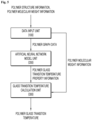
FIG. 4 is a diagram illustrating a procedure for implementing an artificial neural network for calculating a glass transition temperature of a polymer using a graphical representation of a polymer according to the present invention. -
FIG. 5 is a block diagram of a system for estimating a glass transition temperature of a polymer according to the present invention. - First, a method of graphically representing polymers according to the present invention will be described with reference to
FIGS. 1 and2 . - (a) and (b) in
FIG. 1 are diagrams illustrating structures of different polymers and the monomers composing each polymer. However, in trying to process molecular structure data using an artificial neural network, especially in representing a molecular structure as a graph for application to a GNN or the like, there is no method of effectively representing a chemical structure of a polymer as a graph. - Monomers that compose polymers illustrated in (a) and (b) in
FIG. 1 are different from each other, but since they are the same except for some of the monomer terminals, graphs of the monomers are represented very similarly, and thus it is inaccurate to represent graphs of the polymers simply as graphs of the monomers and to represent the graphs of the polymers as repetitions of the graphs of the monomers. - Therefore, the present invention suggests a new method of representing a polymer graph as illustrated in
FIG. 2 . Hereinafter, a polymer graph data method according to the present invention will be described with reference toFIG. 2 . - First, in a polymer graph representation method of the present invention, monomers for composing a polymer and a repeat unit that is repeated to compose the polymer are derived.
FIG. 1 illustrates an example of polymer representation in the prior art and a representation of the monomers for composing the polymer, andFIG. 2 is a diagram illustrating the repeat units for composing the polymer ofFIG. 1 . In the repeat unit ofFIG. 2 , for the polymer representation method of the present invention, each atom is expressed as anode 10, and coupling between the atoms is expressed as anedge 20. Next, when the repeat unit is repeated to compose the polymer, which is one of the features of the present invention, a point where the repeat units are repeatedly attached is expressed as anattach point 30, and a node to which the attach point is attached is expressed an "attaching node." In addition, theattach point 30 is a virtual representation of the attaching nodes of neighboring repeat units attached by repetition, and the attachment for attaching the attach point to the attaching node is expressed as anattach edge 40. - According to the polymer graph representation method of the present invention as described above, when an artificial neural network model is trained based on chemical structures of polymers, in particular, when learning is performed by applying an artificial neural network model such as a message passing neural network (MPNN) and a graph neural network (GNN) based on message passing, even by adding a minimal amount of information in addition to monomer structure information, learning to be performed by transferring information about an opposite node where a monomer is attached is possible and learning to be performed by reflecting the unit repetition characteristics of the polymer is possible.
- The present invention converts the chemical structure of a polymer into a data structure capable of being used in computer processing, that is, "graph data" according to the graph representation method that graphically represents the above-mentioned molecular or chemical structure of the polymer. In the present invention, this is referred to as "polymer graph data".
- According to the present invention, polymer graph data that describes a chemical structure of a given or selected polymer in graphic data may include at least one of node data that is data of
nodes 10 representing two or more nodes representing respective atoms constituting a repeat unit of a monomer for composing the polymer and data related to thenodes 10, edge data that is data related to one ormore edges 20 representing coupling between respective nodes, attaching node data that is data related to at least one attaching node that is a point where repeat units for composing the polymer are repeatedly attached among the nodes, and attach edge data that is data related to theattach edge 40 attaching theattach point 30 to the attaching node. - A difference between the monomer graph data and the polymer graph data of the present invention is that the polymer graph data of the present invention represents the
node 10 attached to theattach point 30 and its edge information as the attaching node and the attach edge in the graph data representation of the repeat unit including the monomer graph data. - When converting the graph structure of the monomer into data capable of being used on a computer, there may be various data representation methods, but typically, edge data and node data may be represented as an adjacency matrix and a feature matrix, respectively. The edge data is data related to coupling between atoms, and the node data is data related to each atom.
- According to a polymer representation method according to the present invention, in addition to a monomer graph representation method in the prior art, the polymer graph is able to be converted into computer-recognizable data by additionally adding data for the nodes and the
attach edge 40 attached to theattach point 30. - For the sake of simplicity of description, when a simple structure, as illustrated in (a) of
FIG. 3 , is described by way of example, an adjacency matrix A of a repeat unit of a monomer consisting ofnodes - For the sake of simplicity of description, when a simple structure, as illustrated in
FIG. 3 , is described by way of example, an adjacency matrix A of a repeat unit of a monomer consisting ofnodes 
- The adjacency matrix A has as many rows and columns as the number of nodes, and each element Ai,j is data indicating whether an i (i=1, ..., 4)-th node and a j (j=1, ..., 4)-th node are attached to each other. A value of each matrix element represents data on attachment to other nodes. For example, since a
node 1 is only attached to anode 2 and not tonodes - According to the polymer graph data representation method of the present invention, a polymer adjacency matrix PA, which is an adjacency matrix representation of the polymer graph according to the example of
FIG. 3 , may be expressed as follows.
- As illustrated in (b) of
FIG. 3 , the polymer adjacency matrix PA has two attach points (5, 6) added, and these points refer tonodes nodes nodes nodes node 1 and thenode 4 are A1,4= 0, A4, 1=0, but in the polymer representation method of the present invention, since thenodes nodes nodes nodes - However, in this case, since the
nodes 
- In other words, the graph data that represents the chemical structure of the polymer as a graph and describes it as graphic data according to the present invention includes, in addition to the graph data of the repeat unit of the monomer, attaching node data representing an attaching node that is a node to which the monomers are repeatedly attached and data of the attach
edge 40 that is attached to the attaching node. - The expression method of the polymer adjacency matrix PA indicates that the
nodes nodes nodes nodes FIG. 3 are not attached to each other within the monomer, but are attached to the nodes of the adjacent repeat unit, so that these nodes may be distinguished by designating the nodes as "attaching nodes" and giving the attaching node attribute to the node feature matrix or giving the adjacent repeat unit attachment attribute to the edge feature matrix. - This may be used as an embedding procedure to convert the chemical structure of a polymer into data capable of being processed by a computer, which is achieved by a polymer edge variable setting step of setting an inter-attachment relationship between nodes representing respective atoms constituting the monomer repeat unit of the selected polymer and the attaching nodes that are points where the monomers are repeatedly attached as a polymer attachment edge variable, and a polymer graph edge data assignment step of assigning an attribute value of the inter-attachment relationship between the nodes and the attaching nodes to the set polymer edge variable. As seen in the polymer adjacency matrix PA above, the attribute value of the inter-attachment relationship between the nodes and the attaching nodes may be determined as "1" and "0", indicating attachment/non-attachment, the matrix expression of which is the polymer adjacency matrix. The polymer adjacency matrix of the present invention has the same component values as a typical adjacency matrix, but as described above, it differs from the typical adjacency matrix by adding attaching nodes to a typical single molecule graph node.
- In addition to the adjacency matrix showing the attachment relationship between nodes, the graph representation of a compound may have a feature matrix representing predetermined attribute information about each node and predetermined attribute information about each edge as graph data. In an exemplary monomer graph of
FIG. 3 , a monomer node feature matrix containing attribute value information (e.g., three pieces of attribute information) about each atom can be expressed as follows.
- A node feature matrix NF may have as many rows as the number of nodes and as many columns as the number of types of feature values to be expressed for each node, and thus may express a certain attribute to be expressed for each atom. Each component has a j-th feature value of an i-th node. For the purpose of description, the monomer feature matrix NF is described as an example in which each node has three arbitrary attribute values.
- Information of the monomer graph may be represented as an edge feature matrix EF, where each row may represent each edge of a monomer and column data of each row may be represented to express a predetermined attribute value of each edge. Edge attribute values may include the type of chemical bond (single bond, double bond, or the like), a ring status, a conjugation status, or the like. For example, in the case of the monomer in
FIG. 3 , since there are three attach edges, the edge feature matrix has three rows, and edge attribute values intended to contain information are assigned to respective columns. An example of the edge feature matrix with three random edge attribute values is as follows.
- Polymer graph data according to the present invention may have separate attribute values added to the attribute values of the monomer node feature matrix described above. For example, a polymer node feature matrix PNF, which is a feature matrix of the exemplary polymer graph in
FIG. 3 , may also have three columns plus attribute data, as in the example illustrated below, and express the added column as attribute values indicating whether respective nodes are an attaching node. For example, the polymer node feature matrix PNF below may have attaching node attribute information in a fourth column, as illustrated below, in addition to the monomer node feature matrix NF containing three pieces of attribute information about the previous four nodes. In the example ofFIG. 3 , since thenodes nodes 
- This may be achieved by a polymer node variable setting step of setting each of atoms of a monomer for composing a selected polymer and an attaching node that is a point to which the monomers are repeatedly attached as polymer node variables and a polymer graph node data assignment step of assigning an attaching node to be attached to the set polymer node variable and assigning a node attribute value to each of the nodes. The node attribute values assigned to nodes may include atomic numbers, hybridizations (SP3, SP2, or the like), the number of hydrogens, the number of electrons, ring status, or the like, and in particular, as one embodiment of the present invention, may have an attaching node attribute value, which is an attribute value of whether a node is attached to an adjacent repeat unit.
As another embodiment of the present invention, attaching node data may be represented by an edge feature matrix. For example, like the polymer node feature matrix described above, instead of expressing with a node attribute value whether a node is an attaching node, or together with the node attribute value, an attribute value expressing whether a node is an attaching node is expressed in the edge feature matrix. In the example below representing (b) inFIG. 3 , it can be seen that data in fourth and fifth rows are added to contain information on the edges attached to the attachingnodes FIG. 3 and an attribute information column expressing whether a node is an attaching node is added in the fourth column.
- That is, according to the present invention, the method of representing the structure of a polymer as a graph and converting it into computer-usable data may be selected from one or more of the methods below.
- ① In the adjacency matrix expressing the attachment relationship between respective nodes of a repeat unit formed by at least one monomer, a component of an "attaching node" attached to an adjacent repeat unit is assigned as an "attachment" attribute.
- ② An "attachment status" attribute field is given to a node attribute matrix expressing attributes of respective nodes of the repeat unit, and "attachment" is assigned to the "attachment status" attribute field of the "attaching node".
- ③ Edges attached to the attaching node are added as attach edges to the edge attribute matrix of the repeat unit, "attachment status" attribute fields are given to the edge attributes, and "attachment" is assigned to the corresponding fields of the attach edges.
- In the present invention, in training the artificial neural network model to be described below and estimating a property of a polymer material using the trained artificial neural network, the chemical structure of the polymer material has to be converted into data so that the polymer may be processed by a computer, and the conversion into data may be performed as follows according to a method of the present invention.
- This is a step of acquiring information on the repeat unit, which is a unit for a polymer composed by repeating a monomer. In order to convert attaching node data in the repeat unit into data, which is one of the features of the present invention, the information on the repeat unit for composing the polymer is acquired. This is a step to confirm whether the repeat unit repeated to compose the polymer is repeated as a single monomer or as a combination of single monomers, and to describe the repeat unit in a graphical representation. The repeat unit may be a single monomer as shown in (a) in
FIG. 2 or may be a case where monomers are attached to each other as shown in (b) inFIG. 2 . - In the present invention, a method for processing polymer graph data includes a step of setting, as a variable, an inter-attachment relationship between nodes representing respective atoms constituting a repeat unit of a polymer selected as an analysis target and attaching nodes attached to an attach point that is a point where the repeat units are repeatedly attached among the nodes.
- An attribute value of the inter-attachment relationship between the nodes and attaching nodes is assigned to the polymer node attachment variable set in this way. To assign the attribute value of each attachment relationship to the polymer node attachment variable, the polymer adjacency matrix mentioned above may be utilized.
- The method for processing polymer graph data of the present invention may also include a polymer node attribute variable setting step of setting, as polymer node attribute variables, attribute information about nodes corresponding to respective atoms constituting the repeat unit for composing the selected polymer and attribute information about the attaching nodes attached to the attach point that is a point where the repeat units are repeatedly attached among the nodes.
- The method additionally includes a polymer graph node attribute information allocation step of assigning attribute values of the nodes and attaching nodes to the polymer node attribute variables set in this way. The node attribute information has an attribute value indicating whether the node is an attaching node or not, and as node attribute information for the attaching node, unlike nodes that are not the attaching node, an attaching attribute value indicating that the node is attached to the attaching node of neighboring repeat unit within the polymer is given.
- The method for processing polymer graph data of the present invention may also include a polymer edge attribute variable setting step of setting, as polymer edge attribute variables, information about edges inter-attaching nodes corresponding to respective atoms constituting the repeat unit for composing the selected polymer and an attach edge attaching at least one among the nodes to the attaching node. The attach edge is an edge attaching the attaching node to another node.
- The present invention also includes a polymer graph edge attribute information assignment step of assigning attribute values of the edges and the attach edges to the set polymer edge attribute variables, and the attach edge is assigned an attach edge attribute value, which means that the edge attaches the attaching node to another node, as its edge attribute variable.
- Hereinafter, a method for processing polymer data in an artificial intelligence neural network according to the polymer graph representation method of the present invention described above will be described.
- The present invention provides a method for constructing an artificial neural network model that estimates a glass transition temperature of a polymer by applying the above-described polymer graph representation method and estimating the glass transition temperature of the polymer through machine learning.
-
- (a) in
FIG. 4 illustrates a polymer glass transition temperature estimation model generation method according to the present invention. Based on this, a method for generating a computer-implemented polymer glass transition temperature estimation model for estimating a glass transition temperature of a selected polymer from a chemical structure of the corresponding polymer according to the graph data representation method of the present invention will be described. - The polymer glass transition temperature estimation model of the present invention is configured to estimate the glass transition temperature by applying the relationship between the glass transition temperature and molecular weight of a polymer defined by the Flory-Fox Equation of [Equation 1]. The glass transition temperature Tg of a polymer is a physical property value that is affected by both the molecular structure and the molecular weight, but the technology in the prior art fails to reflect the effects of both the molecular structure and the molecular weight in estimating the glass transition temperature. The present invention has implemented an estimation model with improved accuracy by reflecting both the molecular structure and the molecular weight in estimating the glass transition temperature using the equation below. In addition, it has become possible to estimate Tg according to changes in molecular weight for polymers of the same molecular structure.

- Tg,inf is a glass transition temperature when the molecular weight is theoretically infinite, K is an experimental parameter related to a free volume in the polymer, and Mn is a number average molecular weight of the polymer.
- Accordingly, the estimation model of the present invention includes an artificial neural network that estimates Tg,inf and K in
Equation 1 from the molecular structure of a selected polymer, and is configured to calculate the glass transition temperature Tg of the selected polymer by applying the Tg,inf and K values output by the artificial neural network and the molecular weight of the selected polymer toEquation 1. In this estimation model, the following procedure is performed to generate the artificial neural network model that estimates Tg,inf and K values, which are glass transition temperature property information about the polymer. - In order to generate the polymer glass transition temperature estimation model described above, training data for training the artificial neural network is prepared. The training data of the present invention contains a data set of {polymer graph data containing structure information about a sample polymer, a measured Tg value of the sample polymer, and a molecular weight Mn of the sample polymer}.
- In addition, the training data of the present invention includes a predetermined number of data sets of {polymer graph data containing structure information about the sample polymer, the measured Tg value of the sample polymer, and the molecular weight Mn of the sample polymer} or more as a data set of a polymer with a similar structure but different molecular weight and a data set of a polymer with a different structure but the same molecular weight. By building the training data set in this way, the artificial neural network of the present invention, which will be described below, may be trained so that the estimated Tg value (Tg estimated value) reflects both the structural features and molecular weight features of the polymer.
- Next, the artificial neural network model to be trained using the training data is constructed. The artificial neural network in the present invention uses known artificial neural networks, and in particular, artificial neural networks such as a message passing neural network (MPNN) and a graph neural network (GNN) based on message passing may be applied.
- For example, when the GNN is applied as the artificial neural network, describing a case of supervised learning, polymer training data containing data sets of {polymer graph data containing structure information about the sample polymer, the measured Tg value of the sample polymer, and the molecular weight Mn of the sample polymer} built above is input into the GNN.
- In this case, polymer graph data is input as an input value of the artificial neural network, and the known measured Tg value and molecular weight Mn of the corresponding polymer are input as true values (labeled data) of the output value of the neural network. In this case, the input polymer graph data may include at least one of the polymer graph node attachment information, the polymer graph node attribute information, and the polymer graph edge attribute information, which have been described above, and may be input by being embedded in the polymer adjacency matrix and polymer node/edge feature matrix.
- This is a process of training the artificial neural network by updating neural network parameters of the artificial neural network based on the input polymer graph data, the molecular weight information, and glass transition temperature property information about the polymer. The learning process of the artificial neural network follows the known artificial neural network learning process, and as one example, the Tg estimated value is calculated by receiving polymer graph data of the training data and reflecting measured molecular weight information in the training data sets to an estimated value of the glass transition temperature property information about the polymer that is calculated from the artificial neural network according to the [Equation 1], and the neural network parameters of the artificial neural network are updated so that an error function defined as a difference between the Tg estimated value and the measured Tg value of the corresponding polymer in the training data is minimized. Through updating of the neural network parameters, the artificial neural network that calculates glass transition temperature property information from the structure of the polymer is completed.
- As such, in the present invention, accurate Tg estimation in the polymer is possible because the artificial neural network is trained to minimize the error between the measured value and the Tg estimated value reflecting molecular weight information.
- Meanwhile, in the present invention, the term "neural network parameter" of the artificial neural network contains weights and biases that are adjusted while the artificial neural network model is trained from training data, and such a parameter is adjusted so that the neural network model estimates a more accurate output from input data, and is used in the general sense of the term in the field to indicate that it is optimized to estimate optimal output during a machine learning process.
- A procedure will be described for estimating a glass transition temperature of a selected polymer by inputting graph data of the selected polymer into the artificial neural network generated according to the polymer glass transition temperature model generation method of the present invention and reflecting the number average molecular weight Mn of the selected polymer.
- As illustrated in (b)
FIG. 4 , a preprocessing process for acquiring polymer graph data from the chemical structure of the selected polymer whose glass transition temperature is to be estimated is performed. As described above, the polymer graph data includes data on attaching nodes and the attachedges 40 between repeating monomers, in addition to node and edge data of the monomer for composing the polymer. That is, the polymer graph data is preprocessed to include at least one of the above-described polymer graph node attachment information, polymer graph node attribute information, and polymer graph edge attribute information. - This is the step of inputting the polymer graph data based on the chemical structure of the selected polymer into the trained learned neural network model. In this case, the input polymer graph data may include at least one of the polymer graph node attachment information, polymer graph node attribute information, and polymer graph edge attribute information, and may be input by being embedded in the polymer adjacency matrix and polymer node/edge feature matrix described above.
- This is a step in which the trained artificial neural network model calculates and outputs the glass transition temperature property information Tg, inf and K values of the selected polymer from the input polymer graph data of the selected polymer.
- This is a step of calculating the glass transition temperature Tg using the above [Equation 1] from the glass transition temperature property information Tg, inf and K values calculated by the artificial neural network model. The molecular weight of the polymer is acquired and reflected by a known method.
- A
data input unit 100 is configured to receive polymer graph data that describes a chemical structure of a selected polymer as graphic data and molecular weight data of the polymer, and further includes a data preprocessing unit (not illustrated) for converting the chemical structure of the polymer into the polymer graph data and inputting the converted data into the data input unit. Molecular weight data (molecular weight information) may be acquired by known methods. - In inputting the polymer graph data into an artificial neural network model unit, the data preprocessing unit may generate and input a polymer adjacency matrix expressing the inter-attachment relationship between two or more nodes representing respective atoms constituting the single molecule and attachment relationship information between the attaching node and the nodes and a polymer edge attribute matrix including attribute information about one or more edges representing coupling between the respective nodes and an attach edge representing attachment between the nodes and the attaching node.
- In this case, as described above, the polymer graph data may include at least one of polymer graph node attachment data that is data representing an inter-attachment relationship between nodes corresponding to respective atoms constituting a repeat unit for composing the polymer and attaching nodes that are attached to an attach point that is a point where the repeat units are repeatedly attached among the nodes, polymer node attribution information that is data representing attribute information about the nodes corresponding to the respective atoms constituting the repeat unit for composing the polymer and attributes of attaching nodes that are attached to the attach point that is a point where the repeat units are repeatedly attached among the nodes, and polymer edge attribute information that is information representing attributes of an edge for attaching the nodes corresponding to the respective atoms constituting the repeat unit for composing the polymer to each other and an attach edge for attaching at least one of the nodes to the attaching node.
- This is a configuration for estimating and calculating glass transition temperature property information about the polymer from the polymer graph data. The glass transition temperature property information about the polymer corresponds to Tg,inf and K in
Equation 1 described above. - Such an artificial neural network model unit is configured to receive polymer graph data and output an estimated value of the glass transition temperature property information about the corresponding polymer, and includes a polymer glass transition temperature property information estimation artificial neural network that is machine-trained by calculating an estimated value of glass transition temperature property information about a predetermined learning polymer from polymer graph data of the learning polymer, calculating an estimated Tg value from the calculated estimated value of the glass transition temperature property information about the learning polymer and the measured molecular weight information about the learning polymer, and updating its neural network parameters so that an error function defined as a difference between the estimated Tg value and the measured Tg value of the polymer in the training data is minimized.
- A glass transition temperature calculation unit is configured to calculate the glass transition temperature of the polymer according to [Equation 1] described above from the polymer glass transition temperature property information calculated by the artificial neural network model unit and the molecular weight data of the polymer input from the data input unit.
- The graph data representation method for graphically representing the structure of a polymer according to the present invention, and the method and the system for finally calculating the accurate glass transition temperature of the polymer by estimating the glass transition temperature property information about the polymer from graph data of the polymer and reflecting the molecular weight information of the polymer in the estimated glass transition temperature property information about the polymer have been described above.
- With the method and the system for calculating the glass transition temperature of the polymer, which reflects the molecular weight information, according to the present invention, by separately considering the effect of molecular weight, estimation adjustment according to the molecular weight may be possible, which has the effect of making it possible to build a model capable of accurate estimation.
- For example, when actual Tg of each of samples of three types of polymers A, B, and C with similar structures and molecular weights of 2,000, 50,000, and 80,000, respectively, is similar, according to a model in the prior art, since only the structures of molecules are reflected without considering the molecular weights, learning and estimation are performed on samples with similar structures so that the estimated Tg values are similar regardless of molecular weights.
- That is, when the actual Tg (glass transition temperature) of polymer A with molecular weight K is R_Tg_A(K) and the estimated Tg thereof is P_Tg_A(K), for R_Tg_A (2,000) ≈ R_Tg_B (50,000) ≈ R_Tg_C (80,000), the prior art trains a neural network and performs estimation to be P_Tg_A (2,000) ≈ P_Tg_B (50,000) ≈ P_Tg_C (80,000). In the case of the prior art, since the molecular weights are not reflected, even when the samples A, B, and C have the same molecular weight of 50,000, the prior art will estimate as P_Tg_A (50,000) ≈ P_Tg_B (50,000) ≈ P_Tg_C (50,000). However, when comparison is made with the same molecular weights for A, B, and C, in which R_Tg_A (2,000) ≈ R_Tg_B (50,000) ≈ R_Tg_C (80,000), according to
Equation 1, in fact, R_Tg_A (50,000) > R_Tg_B (50,000) > R_Tg_C (50,000), and thus it is not possible to estimate the accurate glass transition temperature using the technology in the prior art. - In contrast, in the present invention, in the case of R_Tg_A (2,000) ≈ R_Tg_B (50,000) ≈ R_Tg_C (80,000), even when the neural network has be trained to be P_Tg_A (2,000) ≈ P_Tg_B (50,000) ≈ P_Tg_C (80,000), since the training of the neural network is performed by reflecting the molecular weights, neural network parameters for adjusting the effect of molecular structure are learned differently, and thus for the same molecular weight, the estimation is made as P_Tg_A (50,000) > P_Tg_B (50,000) > P_Tg_C (50,000).
- In another case, when the molecular weights of polymers A, B, and C of similar structures are different and the actual Tgs are different, that is, when R_Tg_A (2,000) < R_Tg_B (50,000) < R_Tg_C (80,000), according to the prior art, since training is performed according to the molecular structures and the actual Tgs, which are label values, are given differently, it is learned and estimated that P_Tg_A (2,000) < P_Tg_B (50,000) < P_Tg_C (80,000) even when the polymers have similar structures. However, at this time, when the molecular weights of the polymers A, B, and C are the same, the actual Tg may be similar according to [Equation 1]. In this case, the estimated values should be derived as P_Tg_A (50,000) ≈ P_Tg_B (50,000) ≈ P_Tg_C (50,000), but since the model according to the prior art is trained based only on the molecular structures for the polymers A, B, and C with the same molecular weight, a problem occurs where it is estimated that P_Tg_A (50,000) < P_Tg_B (50,000) < P_Tg_C (50,000).
- In contrast, according to the present invention, when R_Tg_A (2,000) < R_Tg_B (50,000) < R_Tg_C (80,000), since the training is performed by reflecting molecular weights, even when training is performed so that P_Tg_A (2,000) < P_Tg_B (50,000) < P_Tg_C (80,000), for the same molecular weight, it is not estimated that P_Tg_A (50,000) < P_Tg_B (50,000) < P_Tg_C (50,000), but is estimated that P_Tg_A (50,000) ≈ P_Tg_B (50,000) ≈ P_Tg_C (50,000).
- As described above, according to the present invention, since the neural network model is trained to estimate the glass transition temperature by reflecting not only the molecular structure of the polymer but also the molecular weight information about the polymer, the effect of each of molecular structure information and molecular weight information may be learned, and thus the glass transition temperature may be more accurately estimated than the prior art.
- Names of respective drawing symbols used in the present invention are as follows.
- 10
- Node
- 20
- Edge
- 30
- Attach point
- 40
- Attach edge
- 100
- Data input unit
- 200
- Artificial neural network model unit
- 300
- Glass transition temperature calculation unit
Claims (16)
- A method for generating a computer-implemented model that estimates a glass transition temperature of a selected polymer, the method comprising:a training data acquisition step of building a training data set with structure information about a plurality of learning polymers, known measured values of glass transition temperatures of corresponding polymers, and measured molecular weights of the corresponding polymers;a polymer glass transition temperature property information estimation artificial neural network construction step of constructing a polymer glass transition temperature property information estimation artificial neural network to receive structure information about a polymer and output an estimated value of the glass transition temperature property information about the polymer;a training data input step of inputting polymer structure information about the learning polymer and a measured value of a glass transition temperature of the learning polymer into the polymer glass transition temperature property information estimation artificial neural network; anda training step of the polymer glass transition temperature property information estimation artificial neural network, in which the neural network parameters of the polymer glass transition temperature property information estimation artificial neural network are updated based on a comparison result of an estimated value of the glass transition temperature of the learning polymer calculated by reflecting the measured molecular weights of the learning polymer in the training data set in the estimated value of the glass transition temperature property information about the learning polymer output by the polymer glass transition temperature property information estimation artificial neural network and a measured value of the glass transition temperature of the learning polymer.
- The method of claim 1, wherein the glass transition temperature property information is a Tg,inf value and a K value in Equation 1 below;

- The method of claim 2, wherein the polymer structure information is converted into polymer graph data and input into the polymer glass transition temperature property information estimation artificial neural network, and
the polymer graph data comprises at least one of:polymer graph node attachment data that is data representing an inter-attachment relationship between nodes corresponding to respective atoms constituting a repeat unit for composing the polymer and attaching nodes that are attached to an attach point that is a point where the repeat units are repeatedly attached among the nodes;polymer node attribution information that is data representing attribute information about the nodes corresponding to the respective atoms constituting the repeat unit for composing the polymer and attributes of attaching nodes that are attached to the attach point that is a point where the repeat units are repeatedly attached among the nodes; andpolymer edge attribute information that is information representing attributes of an edge for attaching the nodes corresponding to the respective atoms constituting the repeat unit for composing the polymer to each other and an attach edge for attaching at least one of the nodes to the attaching node. - A computer-implemented method for calculating an estimated value of a glass transition temperature of a selected polymer, the computer-implemented method comprising:a polymer glass transition temperature property information estimation artificial neural network acquisition step of generating a machine-trained graph artificial neural network to estimate glass transition temperature property information about the selected polymer based at least in part on a chemical structure related to the selected polymer;a polymer graph data acquisition step of acquiring polymer graph data describing a chemical structure of the selected polymer as graph data;a polymer graph input step of providing the acquired polymer graph data as input to the graph artificial neural network;a polymer glass transition temperature property information acquisition step of receiving the polymer glass transition temperature property information of the selected polymer from output of the graph artificial neural network; anda polymer glass transition temperature calculation step of calculating a glass transition temperature of the selected polymer by substituting molecular weight information about the selected polymer into the polymer glass transition temperature property information.
- The computer-implemented method of claim 4, wherein the polymer graph data describing the chemical structure of the selected polymer as graph data comprises at least one of:polymer graph node attachment data that is data representing an inter-attachment relationship between nodes corresponding to respective atoms constituting a repeat unit for composing the polymer and attaching nodes that are attached to an attach point that is a point where the repeat units are repeatedly attached among the nodes;polymer node attribution information that is data representing attribute information about the nodes corresponding to the respective atoms constituting the repeat unit for composing the polymer and attributes of attaching nodes that are attached to the attach point that is a point where the repeat units are repeatedly attached among the nodes; andpolymer edge attribute information that is information representing attributes of an edge for attaching the nodes corresponding to the respective atoms constituting the repeat unit for composing the polymer to each other and an attach edge for attaching at least one of the nodes to the attaching node.
- The computer-implemented method of claim 5, wherein the polymer graph input step of providing the acquired polymer graph data as input to the machine-trained graph artificial neural network comprises:a polymer adjacency matrix construction step of constructing an adjacency matrix representing an inter-attachment relationship between two or more nodes representing respective atoms constituting the single molecule; anda polymer adjacency matrix input step of inputting the constructed graph matrix into the graph artificial neural network, andthe polymer adj acency matrix further comprises attachment relationship information between the attaching node and the nodes.
- The computer-implemented method of claim 4, wherein the graph artificial neural network is trained by:calculating an estimated value of glass transition temperature property information about a learning polymer from structure information about a plurality of polymers; andupdating neural network parameters to minimize an error between an estimated value of a glass transition temperature calculated by reflecting a measured molecular weight of the learning polymer in the calculated estimated value of the glass transition temperature property information and a measured value of the glass transition temperature of the learning polymer.
- The computer-implemented method of claim 4, wherein the polymer glass transition temperature property information estimation artificial neural network acquisition step comprises:a step of acquiring, by one or more computing devices, training data including chemical structures of a plurality of exemplary polymers and measured values of glass transition temperatures and measured values of molecular weights of the exemplary polymers having the chemical structures of the exemplary polymers; anda training step of acquiring graph data graphically describing the chemical structures of the exemplary polymers and inputting the graph data into the graph neural network, and training the graph neural network so that the estimated values of glass transition temperature property information about the exemplary polymers output by the graph neural network are output.
- The computer-implemented method of claim 8, wherein the graph data graphically describing the chemical structures of the exemplary polymers comprises:two or more pieces of node data representing respective atoms constituting a single molecule for composing the exemplary polymer;one or more pieces of edge data representing coupling between the respective atoms;attaching node data representing a point where the single molecules are repeatedly attached; andattach edge data representing attachment between the atom and the attaching node.
- The computer-implemented method of any one of claims 4 to 9, wherein the glass transition temperature property information is a Tg,inf value and K in Equation 2 below;

- The computer-implemented method of any one of claims 4 to 9, whereinthe polymer glass transition temperature calculation step comprises calculating the glass transition temperature of the polymer by substituting number average molecular weight information of the polymer into Equation 3 below;
 wherein Tg is a glass transition temperature of a polymer with a molecular weight Mn, Tg,inf is a glass transition temperature when the molecular weight is infinite, K is a variable related to a free volume of the polymer, and Mn is a number average molecular weight of the polymer.
 - A glass transition temperature calculation system for polymers, comprising:a data input unit that receives structure information about a selected polymer and molecular weight data of the polymer;an artificial neural network model unit that calculates an estimated value of glass transition temperature property information about the polymer from the structure information about the polymer; anda glass transition temperature calculation unit that calculates an estimated value of a glass transition temperature of the polymer from the estimated value of the glass transition temperature property information about the polymer and the molecular weight data of the polymer.
- The glass transition temperature calculation system for polymers of claim 12, wherein the glass transition temperature property information about the polymer is a Tg,inf value and a K in Equation 4 below,the molecular weight data of the polymer is Mn in Equation 4 below, andthe glass transition temperature calculation unitcalculates a glass transition temperature Tg from Equation 4 below,

- The glass transition temperature calculation system for polymers of claim 13, further comprising a data preprocessing unit that converts the structure information about the polymer into polymer graph data,wherein the artificial neural network model unit is machine-trained to calculate the estimated value of the glass transition temperature property information about the polymer from the polymer graph data, andthe polymer graph data comprises at least one of:polymer graph node attachment data that is data representing an inter-attachment relationship between nodes corresponding to respective atoms constituting a repeat unit for composing the polymer and attaching nodes that are attached to an attach point that is a point where the repeat units are repeatedly attached among the nodes;polymer node attribution information that is data representing attribute information about the nodes corresponding to the respective atoms constituting the repeat unit for composing the polymer and attributes of attaching nodes that are attached to the attach point that is a point where the repeat units are repeatedly attached among the nodes; andpolymer edge attribute information that is information representing attributes of an edge for attaching the nodes corresponding to the respective atoms constituting the repeat unit for composing the polymer to each other and an attach edge for attaching at least one of the nodes to the attaching node.
- The glass transition temperature calculation system for polymers of claim 12, wherein the artificial neural network model unit includes a polymer glass transition temperature property information estimation artificial neural network configured to receive structure information about a polymer and output an estimated value of the glass transition temperature property information about the polymer,
the polymer glass transition temperature property information estimation artificial neural network is machine-trained by, using structure information about a predetermined learning polymer and a measured value of a glass transition temperature and a measured value of a molecular weight of the learning polymer as training data, calculating an estimated value of the glass transition temperature property information about the learning polymer from the structure information about the learning polymer, calculating the estimated value of the glass transition temperature of the learning polymer using the estimated value of the glass transition temperature property information and the measured value of the molecular weight and updating neural network parameters of the polymer glass transition temperature property information estimation artificial neural network by comparing the estimated value with the measured value of the glass transition temperature of the learning polymer. - The glass transition temperature calculation system for polymers of claim 15, wherein the training data contains data sets including polymer graph data containing structure information about a sample polymer, a measured Tg value of the sample polymer, and a molecular weight (Mn) of the sample polymer, and
at least a predetermined number of the data sets are data sets of polymers with similar structures and different molecular weights and data sets of polymers with different structures and the same molecular weight.
Applications Claiming Priority (2)
| Application Number | Priority Date | Filing Date | Title |
|---|---|---|---|
| KR1020230001253A KR20240109450A (en) | 2023-01-04 | 2023-01-04 | Polymer glass transition temperature estimation method and system thereof |
| PCT/KR2023/021741 WO2024147550A1 (en) | 2023-01-04 | 2023-12-27 | Method and system for predicting glass transition temperature of polymer |
Publications (2)
| Publication Number | Publication Date |
|---|---|
| EP4513500A1 true EP4513500A1 (en) | 2025-02-26 |
| EP4513500A4 EP4513500A4 (en) | 2025-11-26 |
Family
ID=91804023
Family Applications (1)
| Application Number | Title | Priority Date | Filing Date |
|---|---|---|---|
| EP23915010.5A Pending EP4513500A4 (en) | 2023-01-04 | 2023-12-27 | METHOD AND SYSTEM FOR PREDICTING THE GLASS TRANSITION TEMPERATURE OF A POLYMER |
Country Status (5)
| Country | Link |
|---|---|
| EP (1) | EP4513500A4 (en) |
| JP (1) | JP2025519054A (en) |
| KR (1) | KR20240109450A (en) |
| CN (1) | CN119317967A (en) |
| WO (1) | WO2024147550A1 (en) |
Family Cites Families (6)
| Publication number | Priority date | Publication date | Assignee | Title |
|---|---|---|---|---|
| JP5985203B2 (en) * | 2012-02-23 | 2016-09-06 | 東洋ゴム工業株式会社 | Apparatus for calculating glass transition temperature of amorphous polymer, method and program thereof |
| KR102214634B1 (en) * | 2018-10-22 | 2021-02-10 | 한국화학연구원 | Properties prediction system based on artificial intelligence |
| US20220383993A1 (en) | 2019-10-21 | 2022-12-01 | Standigm Inc. | Method and device for designing compound |
| JP7610095B2 (en) * | 2020-07-03 | 2025-01-08 | 横浜ゴム株式会社 | Polymer raw material data analysis device and polymer raw material data analysis method |
| JP2022034121A (en) * | 2020-08-18 | 2022-03-03 | 株式会社ダイセル | Method of estimating physical property of cellulose derivative |
| JP7765175B2 (en) * | 2020-12-02 | 2025-11-06 | 住友ゴム工業株式会社 | Physical property prediction system, physical property prediction device, and physical property prediction method |
-
2023
- 2023-01-04 KR KR1020230001253A patent/KR20240109450A/en active Pending
- 2023-12-27 WO PCT/KR2023/021741 patent/WO2024147550A1/en not_active Ceased
- 2023-12-27 JP JP2024568122A patent/JP2025519054A/en active Pending
- 2023-12-27 EP EP23915010.5A patent/EP4513500A4/en active Pending
- 2023-12-27 CN CN202380040895.9A patent/CN119317967A/en active Pending
Also Published As
| Publication number | Publication date |
|---|---|
| KR20240109450A (en) | 2024-07-11 |
| EP4513500A4 (en) | 2025-11-26 |
| JP2025519054A (en) | 2025-06-24 |
| WO2024147550A1 (en) | 2024-07-11 |
| CN119317967A (en) | 2025-01-14 |
Similar Documents
| Publication | Publication Date | Title |
|---|---|---|
| US20210049990A1 (en) | A method of generating music data | |
| Nguyen et al. | Machine learning approach to polymer reaction engineering: Determining monomers reactivity ratios | |
| Cheng et al. | Latin hypercube sampling in Bayesian networks. | |
| Ballard et al. | Polymer chemistry informed neural networks (PCINNs) for data-driven modelling of polymerization processes | |
| Zhang et al. | VeloSim: Simulating single cell gene-expression and RNA velocity | |
| Abdullah et al. | An efficient two-point iterative method with memory for solving non-linear equations and its dynamics | |
| CN112163106A (en) | Second-order similarity perception image Hash code extraction model establishing method and application thereof | |
| Nadler et al. | Growing the first galaxies’ merger trees | |
| Chatterjee et al. | Dependent judgment analysis: A markov chain based approach for aggregating crowdsourced opinions | |
| Papaefthymiou et al. | Fundamental dynamics of popularity-similarity trajectories in real networks | |
| Belov et al. | A supervised learning approach to estimating IRT models in small samples | |
| Dey et al. | Towards instance-wise calibration: local amortized diagnostics and reshaping of conditional densities (LADaR) | |
| Dantas et al. | Seamless Short‐to Mid‐Term Probabilistic Wind Power Forecasting | |
| Gancio et al. | Community detection by resistance distance: automation and benchmark testing | |
| EP4428865A1 (en) | Polymer graph neural network and implementation method therefor | |
| KR20240109450A (en) | Polymer glass transition temperature estimation method and system thereof | |
| Zhang et al. | Inferring the physics of structural evolution of multicomponent polymers via machine-learning-accelerated method | |
| Strong et al. | A Bayesian analysis of migration pathways using chain event graphs of agent based models | |
| KR20240054892A (en) | Polymer Graph Neural Network And The Implementing Method Thereof | |
| Zagagy et al. | Ackem: automatic classification, using knn based ensemble modeling | |
| Turetsky et al. | Binary test design problem | |
| Kimmig et al. | Structure‐Aware Machine Learning for Polymers: A Hierarchical Graph Network for Predicting Properties From Statistical Ensembles | |
| Rothblum | Indistinguishable Predictions and Multi-group Fair Learning | |
| Ormerod | Reconstructing Item Characteristic Curves using Fine-Tuned Large Language Models | |
| Hu | Research on the interaction of genetic algorithm in assisted composition |
Legal Events
| Date | Code | Title | Description |
|---|---|---|---|
| STAA | Information on the status of an ep patent application or granted ep patent |
Free format text: STATUS: THE INTERNATIONAL PUBLICATION HAS BEEN MADE |
|
| PUAI | Public reference made under article 153(3) epc to a published international application that has entered the european phase |
Free format text: ORIGINAL CODE: 0009012 |
|
| STAA | Information on the status of an ep patent application or granted ep patent |
Free format text: STATUS: REQUEST FOR EXAMINATION WAS MADE |
|
| 17P | Request for examination filed |
Effective date: 20241122 |
|
| AK | Designated contracting states |
Kind code of ref document: A1 Designated state(s): AL AT BE BG CH CY CZ DE DK EE ES FI FR GB GR HR HU IE IS IT LI LT LU LV MC ME MK MT NL NO PL PT RO RS SE SI SK SM TR |
|
| REG | Reference to a national code |
Ref country code: DE Ref legal event code: R079 Free format text: PREVIOUS MAIN CLASS: G16C0020700000 Ipc: G16C0060000000 |
|
| A4 | Supplementary search report drawn up and despatched |
Effective date: 20251023 |
|
| RIC1 | Information provided on ipc code assigned before grant |
Ipc: G16C 60/00 20190101AFI20251017BHEP Ipc: G06N 3/04 20230101ALI20251017BHEP Ipc: G06N 3/08 20230101ALI20251017BHEP Ipc: G16C 20/30 20190101ALN20251017BHEP Ipc: G16C 20/70 20190101ALN20251017BHEP |
|
| DAV | Request for validation of the european patent (deleted) | ||
| DAX | Request for extension of the european patent (deleted) |