EP4513359A1 - Natural language search over security videos - Google Patents
Natural language search over security videos Download PDFInfo
- Publication number
- EP4513359A1 EP4513359A1 EP24196317.2A EP24196317A EP4513359A1 EP 4513359 A1 EP4513359 A1 EP 4513359A1 EP 24196317 A EP24196317 A EP 24196317A EP 4513359 A1 EP4513359 A1 EP 4513359A1
- Authority
- EP
- European Patent Office
- Prior art keywords
- representation
- machine learning
- learning model
- natural language
- language input
- Prior art date
- Legal status (The legal status is an assumption and is not a legal conclusion. Google has not performed a legal analysis and makes no representation as to the accuracy of the status listed.)
- Pending
Links
Images




Classifications
-
- G—PHYSICS
- G06—COMPUTING OR CALCULATING; COUNTING
- G06F—ELECTRIC DIGITAL DATA PROCESSING
- G06F16/00—Information retrieval; Database structures therefor; File system structures therefor
- G06F16/70—Information retrieval; Database structures therefor; File system structures therefor of video data
- G06F16/78—Retrieval characterised by using metadata, e.g. metadata not derived from the content or metadata generated manually
- G06F16/783—Retrieval characterised by using metadata, e.g. metadata not derived from the content or metadata generated manually using metadata automatically derived from the content
- G06F16/7837—Retrieval characterised by using metadata, e.g. metadata not derived from the content or metadata generated manually using metadata automatically derived from the content using objects detected or recognised in the video content
-
- G—PHYSICS
- G06—COMPUTING OR CALCULATING; COUNTING
- G06F—ELECTRIC DIGITAL DATA PROCESSING
- G06F16/00—Information retrieval; Database structures therefor; File system structures therefor
- G06F16/70—Information retrieval; Database structures therefor; File system structures therefor of video data
- G06F16/73—Querying
-
- G—PHYSICS
- G06—COMPUTING OR CALCULATING; COUNTING
- G06V—IMAGE OR VIDEO RECOGNITION OR UNDERSTANDING
- G06V10/00—Arrangements for image or video recognition or understanding
- G06V10/70—Arrangements for image or video recognition or understanding using pattern recognition or machine learning
- G06V10/82—Arrangements for image or video recognition or understanding using pattern recognition or machine learning using neural networks
-
- G—PHYSICS
- G06—COMPUTING OR CALCULATING; COUNTING
- G06V—IMAGE OR VIDEO RECOGNITION OR UNDERSTANDING
- G06V20/00—Scenes; Scene-specific elements
- G06V20/40—Scenes; Scene-specific elements in video content
- G06V20/44—Event detection
-
- G—PHYSICS
- G06—COMPUTING OR CALCULATING; COUNTING
- G06V—IMAGE OR VIDEO RECOGNITION OR UNDERSTANDING
- G06V30/00—Character recognition; Recognising digital ink; Document-oriented image-based pattern recognition
- G06V30/10—Character recognition
- G06V30/19—Recognition using electronic means
- G06V30/19007—Matching; Proximity measures
- G06V30/19093—Proximity measures, i.e. similarity or distance measures
Definitions
- operators may employ a monitoring system to detect different types of events occurring within and/or around the monitored area (e.g., unauthorized access to a room, a medical emergency, a building fire, a building flood, crime (e.g., theft, violence, etc.) within the monitored area).
- events e.g., unauthorized access to a room, a medical emergency, a building fire, a building flood, crime (e.g., theft, violence, etc.) within the monitored area).
- an operator may install video cameras throughout a monitored area for monitoring the movement of people within the monitored area.
- it may be difficult, inefficient, and/or cumbersome to search for and/or identify events that have occurred within the video information captured by the video cameras due to the large amounts of video information collected and/or input limitations when describing video information of interest.
- the present disclosure includes a system having devices, components, and modules corresponding to the steps of the described methods, and a computer-readable medium (e.g., a non-transitory computer-readable medium) having instructions executable by a processor to perform the described methods.
- a computer-readable medium e.g., a non-transitory computer-readable medium
- the one or more aspects comprise the features hereinafter fully described and particularly pointed out in the claims.
- the following description and the annexed drawings set forth in detail certain illustrative features of the one or more aspects. These features are indicative, however, of but a few of the various ways in which the principles of various aspects may be employed, and this description is intended to include all such aspects and their equivalents.
- Implementations of the present disclosure provide natural language search over security videos.
- one problem solved by the present solution is event identification in video recordings, which can be difficult to solve with other approaches.
- the present disclosure describes systems and methods that establish a connection between natural language input and recorded video by mapping natural language prompts to video recording frames in a common multidimensional plane where both natural language inputs and images are assigned specific coordinates/vectors by separate machine learning models.
- the present solution leverages the multidimensional space to provide a user-friendly means for describing video information of interest and improved search/detection accuracy and machine learning (ML) model training efficiency over conventional techniques.
- ML machine learning
- an event monitoring system 100 is configured to monitor activity within and/or around a monitored area 102, and identify video capture device incidents.
- event monitoring system 100 is configured to capture video feed data, and analyze the video feed data as displayed on a display device to detect video capture device incidents.
- the event monitoring system 100 may include a video monitoring device (VMD) 104, one or more video capture devices 108(1)-(n) (e.g., a video camera), one or more management devices 110(1)-(n), and/or one or more communication networks 112(1)-(n). Further, the one or more video capture device 108(1)-(n) may be positioned in different areas of the monitored area 102.
- a communication network 112 may include a plain old telephone system (POTS), a radio network, a cellular network, an electrical power line communication system, one or more of a wired and/or wireless private network, personal area network, local area network, wide area network, and/or the Internet.
- POTS plain old telephone system
- the video monitoring device 104, the one or more video capture devices 108(1)-(n), and the one or more management devices 110(1)-(n) may be configured to communicate via the communication networks 112(1)-(n).
- the video capture devices 108(1)-(n) may capture one or more video frames 116(1)-(n) of activity within the monitored area 102, and transmit the one or more video frames 116(1)-(n) to the video monitoring device 104 via the communications network 112(1)-(n).
- the management devices 110(1)-(n) include smartphones, computing devices, Internet of Things (IoT) devices, video game systems, robots, process automation equipment, control devices, vehicles, transportation equipment, and virtual and augmented reality (VR and AR) devices.
- IoT Internet of Things
- VR and AR virtual and augmented reality
- the video monitoring device 104 may be configured to receive the one or more video frames 116(1)-(n) from the video capture devices 108(1)-(n), and present a monitoring interface (e.g., a graphical user interface) for viewing of the one or more video frames 116(1)-(n) on the video monitoring device 104 and/or the one or more management devices 110(1)-(n).
- a monitoring interface e.g., a graphical user interface
- the video monitoring device 104 may include a video monitoring application 118 for presenting a monitoring interface for viewing the one or more video frames 116(1)-(n).
- the video monitoring application 118 may present a live stream including the one or more frames 116 or present playback of previously-captured video frames 116(1)-(n).
- security and/or other personnel may monitor activity within the monitored area 102 by viewing the one or more frames 116 as presented by the video monitoring application 118.
- the monitoring interface may provide playback controls for managing the viewing experience.
- playback controls include zoom in / zoom out the one or more frames 116, speed up/down playback of the one or more frames 116, increase/decrease volume, fast-forward or rewind playback of the one or more frames 116, or play/pause/end playback of the one or more frames 116.
- the sampling component 130 periodically samples the one or more video frames 116(1)-(n) as sampled video capture information (SVCI) 138(1)-(n).
- the sampling component 130 performs one or more formatting and/or normalization processes on the SVCI 138(1)-(n) to generate formatted sampled video capture information 140(1)-(n).
- the sampling component 130 performs a formatting/normalization process on a first plurality of video frames 116 to generate a first formatted sampled video capture information 140(1), a formatting/normalization process on a nth plurality of video frames 116 to generate a nth formatted sampled video capture information 140(1), and so forth.
- formatting and/or normalization processes include applying a resolution formatting method, applying a light correction method, applying a shadow effect filter, or applying a histogram equalization.
- the sampling component 130 may perform object detection and object tracking processes over the plurality of video frames 116(1)-(n) to generate tracking information and determine when to sample the plurality of video frames 116(1)-(n) to generate the sampled video capture information 138(1)-(n) based at least in part on the tracking information. For instance, in some aspects, the sampling component 130 may perform multi-object tracking of objects within the plurality of video frames 116(1)-(n) via an object detector and object tracker to determine whether to sample one or more contents of a video frame 116 as the sampled video capture information 138(1)-(n).
- the sampling component 130 may determine the frequency of sample generation based upon the tracking information indicating at least one of detection of a new object, disappearance of an object, movement of an object, reappearance of an object, potential occlusion of an object, and/or inactivity of an object. For example, the sampling component 130 may reduce the frequency of sample generation based on inactivity by one or more objects detected within the plurality of video frames 116 and/or disappearance of an object. As another example, the sampling component 130 may increase the frequency of sample generation based on detection of one or more new objects within the plurality of video frames 116 and/or reappearance of an object.
- the sample translation component 132 generates representations 142(1)-(n) of the sampled video capture information 138(1)-(n) via the one or more ML models 134(1)-(n). For example, the sample translation component 132 generates a first representation 142(1) of the first sampled video capture information 138(1), a nth representation 142(n) of the nth sampled video capture information 138(n), and so forth. In some other aspects, the sample translation component 132 generates the representation of the formatted sampled video capture information 140(1)-(n) via the one or more ML models134(1)-(n).
- the sample translation component 132 generates a first representation 142(1) of the first formatted sampled video capture information 140(1), a nth representation 142(n) of the nth formatted sampled video capture information 140(n), and so forth.
- the representations 142(1)-(n) belong to a multi-dimensional space 144 and includes a plurality of coordinates used to map the sampled video information 138(1)-(n) and formatted sampled video information 140(1)-(n) to the multi-dimensional space 144.
- the coordinates of the multi-dimensional space 144 correspond to the features of the one or more ML models 128(1)-(n) and/or the one or more ML models 134(1)-(n).
- a first set of coordinates can correspond to a first feature of the one or more ML models 128(1)-(n) and a second set of coordinates can correspond to a second feature of the one or more ML models 128(1)-(n), and so on.
- Exemplary ML model features can include, but are not limited to: vectors of any size produced by the corresponding models.
- the search component 120 receives queries 146(1)-(n) as natural language (NL) input via a user interface (e.g., a graphical user interface (GUI)) and searches the one or more video frames 116(1)-(n) received from the one or more video capture devices 108(1)-(n) for a plurality of video frames 116 corresponding to the queries 146(1)-(n).
- a user interface e.g., a graphical user interface (GUI)
- the search component 120 performs one or more formatting and/or normalization processes on the queries 146(1)-(n) to generate formatted queries (FQ) 148(1)-(n).
- Some examples of formatting and/or normalization processes include typographical error correction, modifications to the case of the letters of query 146, and replacement of particular terms within the query 146 with preferred terms (e.g., using one or more thesauruses).
- the NL translation component 126 generates representations 150(1)-(n) of the queries 146(1)-(n) via the one or more ML models 128(1)-(n). For example, the NL translation component 126 generates a first representation 150(1) of the first query 146(1), a nth representation 150(n) of the nth query 146(n), and so forth. In some other aspects, the NL translation component 126 generates representations 150(1)-(n) of the formatted queries 148(1)-(n) via the one or more ML models 128(1)-(n).
- the NL translation component 126 generates a first representation 150(1) of the first formatted query 148(1), a nth representation 150(n) of the nth formatted query 148(n), and so forth.
- the representations 150(1)-(n) belong to the multi-dimensional space (MDS) 144 and each includes a plurality of coordinates used to map a particular query 146 to the multi-dimensional space 144.
- different sets of coordinates correspond to different sample queries.
- the similarity component 136 receives the representations 150(1)-(n) of the queries 146(1)-(n) and/or the formatted queries 148(1)-(n), and compares the representations 150(1)-(n) to representations 142(1)-(n) of the sampled video capture information 138(1)-(n) and the formatted sampled video capture information 140(1)-(n). For example, the similarity component 136 identifies one or more sampled video capture information 138(1)-(n) and/or formatted sampled video capture information 140(1)-(n) corresponding to a representation 142 having a predefined similarity to the representation 150(1).
- the similarity component 136 identifies the one or more the sampled video capture information 138(1)-(n) and/or the formatted sampled video capture information 140(1)-(n) having a predefined similarity to the representation 150(1) based on the distance between the representation 150(1) and the representations 142(1)-(n) corresponding to the one or more sampled video capture information 138(1)-(n) and/or formatted sampled video capture information 140(1)-(n) being less than a predefined value or having a predefined ranking in comparison to other representations 142.
- the similarity component 136 may employ the k-nearest neighbors' algorithm, which uses proximity to make classifications or predictions about the grouping of an individual data point.
- each search result 152 identifies video capture information corresponding to a sampled video capture information 138 or formatted sampled video capture information 140 corresponding to a representation 142 identified as having a predefined similarity.
- a search result 152 for a sampled video capture information 128 may identify one or more video frames 116 preceding the sampled video capture information having the predefined similarity, one or more video frames 116 of the sampled video capture information 138 having the predefined similarity, and one or more video frames 116 succeeding the sampled video capture information 138 having the predefined similarity. Further, the search result 152 may be used to reproduce the corresponding video frames 116 via the video monitoring application 118.
- the notification component 122 receives alert requests (AR) 154(1)-(n) as NL input via a user interface (e.g., a GUI) and monitors the one or more video frames 116(1)-(n) received from the one or more video capture devices 108(1)-(n) for plurality of video frames corresponding to the alert requests 154(1)-(n).
- the notification component 122 performs one or more formatting and/or normalization processes on the alert requests 154(1)-(n) to generate a formatted alert requests (FAR) 156(1)-(n).
- Some examples of formatting and/or normalization processes include typographical error correction, modifications to the case of the letters of NL prompt, and replacement of particular terms within the NL prompt with preferred terms (e.g., using one or more thesauruses).
- the NL translation component 126 generates representations 150(1)-(n) of the alert requests 154(1)-(n) via the one or more ML models 128(1)-(n). For example, the NL translation component 126 generates a first representation 150(1) of the first alert request 154(1), a nth representation 150(n) of the nth alert request 154(n), and so forth. In some other aspects, the NL translation component 126 generates representations 150(1)-(n) of the formatted alert requests 156(1)-(n) via the one or more ML models 128(1)-(n).
- the NL translation component 126 generates a first representation 150(1) of the first formatted alert request 156(1), a nth representation 150(n) of the nth formatted alert request 156(n), and so forth.
- the representations 150(1)-(n) belong to the multi-dimensional space 144 and each includes a plurality of coordinates used to map a particular alert request 154 to the multi-dimensional space 144.
- the similarity component 136 receives the representations 150(1)-(n) of the alert requests 154(1)-(n) and/or the formatted alert requests 156(1)-(n), and compares the representations 150(1)-(n) to representations 142(1)-(n) of the sampled video capture information 138(1)-(n) and the formatted sampled video capture information 140(1)-(n). For example, the similarity component 136 identifies one or more sampled video capture information 138(1)-(n) and/or formatted sampled video capture information 140(1)-(n) corresponding to a representation 142 having a predefined similarity to the representation 150(1).
- the similarity component 136 identifies the one or more the sampled video capture information 138(1)-(n) and/or the formatted sampled video capture information 140(1)-(n) having a predefined similarity to the representation 150(1) based on the distance between the representation 150(1) and the representations 142(1)-(n) corresponding to the one or more sampled video capture information 138(1)-(n) and/or formatted sampled video capture information 140(1)-(n) being less than a predefined value or having a predefined ranking in comparison to other representations 142.
- the similarity component 136 may employ the k-nearest neighbor algorithm, which uses proximity to make classifications or predictions about the grouping of an individual data point.
- each notification result 158 identifies video capture information corresponding to a sampled video capture information 138 or formatted sampled video capture information 140 corresponding to representations 142 identified as having a predefined similarity.
- a notification result 158 for a sampled video capture information 128 may identify one or more video frames 116 preceding the sampled video capture information having the predefined similarity, one or more video frames 116 of the sampled video capture information 138 having the predefined similarity, and one or more video frames 116 succeeding the sampled video capture information 138 having the predefined similarity. Further, the notification result 158 may be used to reproduce the corresponding video frames 116 via the video monitoring application 118.
- the search component 120 receives a query 146 from a management device 110, and transmits the corresponding search result 152 to the management device 110 for viewing by monitoring personnel via a remote video monitoring application.
- the notification component 122 receives an alert request 154 from a management device 110, and transmits the notification result 158 to the management device 110 for viewing by monitoring personnel via a remote video monitoring application.
- the training component 124 trains the one or more ML models 128(1)-(n) of the NL translation component 126 and the one or more ML models 134(1)-(n) of the sample translation component 132.
- the one or more ML models 128(1)-(n) of the NL translation component 126 and the one or more ML models 134(1)-(n) of the sample translation component 132 may be transformer models, autoencoders, or recurrent neural networks (RNN).
- the one or more ML models 134(1)-(n) of the sample translation component 132 may be deep learning models (e.g., neural network, convolutional neural networks, RNNs, etc.).
- the training component 124 jointly trains the one or more ML models 128(1)-(n) and the one or more ML models 134(1)-(n) using a common process to generate corresponding representations for pairings of image to NL text within the multi-dimensional space 144.
- the training component 124 receives image-text pairs (e.g., an image and corresponding caption), transforms the images to representations using the model 134 and the captions to representations of the same length using the model 128.
- the training component 124 may perform normalization, pull the corresponding representations closer (e.g., adjust the models to reduce the distance between corresponding representations within the multidimensional space), and push apart the non-corresponding vectors (e.g., adjust the models to increase the distance between non-corresponding representations within the multidimensional space).
- the training component 124 employs contrastive pre-training to generate the one or more ML models 128(1)-(n) and the one or more ML models 134(1)-(n).
- the training technique of the training component 124 provides zero-shot learning capabilities, which trains the one or more ML models 128(1)-(n) and the one or more ML models 134(1)-(n) to make predictions for images that were not observed during training.
- FIG. 2 is an example of a multidimensional space including a plurality of representations, according to some implementations.
- a representation 202 of NL input e.g., a query or alert request
- a similarity component e.g., the similarity component 1366
- the similarity component identifies the representations 206(1)-(n) based upon the distance of the representations 208(1)-(n) from the representation 202 being within or less than a similarity threshold 210 (e.g., a predefined distance and/or grouping).
- a similarity threshold 210 e.g., a predefined distance and/or grouping
- the video monitoring device 104 or computing device 400 may perform an example method 300 for providing natural language search over security videos.
- the method 300 may be performed by one or more components of the video monitoring device 104, the computing device 400, or any device/component described herein according to the techniques described with reference to FIGS. 1-2 and 4 .
- the method 300 includes generating a first representation of sampled video information in a multidimensional format via a first machine learning model.
- the sample translation component 132 generates a first representation 142(1) of the first sampled video capture information 138(1) or the formatted sampled video capture information 140(1).
- the video monitoring device 104, the computing device 400, and/or the processor 402 executing the sample translation component 132 may provide means for receiving a request including natural language input.
- the method 300 includes receiving a request including natural language input.
- the search component 120 receives a query 146(1) or an alert request 154(1) as NL input via a GUI.
- the video monitoring device 104, the computing device 400, and/or the processor 402 executing the search component 120 or the notification component 122 may provide means for receiving a request including natural language input.
- the method 300 includes generating a second representation of natural language input in the multidimensional format via a second machine learning model that is a different from the first machine learning model.
- the NL translation component 126 generates a representation 150(1) of the query 146(1) or the alert request 154(1) via the model 128(1).
- the video monitoring device 104, the computing device 400, and/or the processor 402 executing the NL translation component 126 may provide means for generating a second representation of natural language input in the multidimensional format via a second machine learning model that is a different from the first machine learning model.
- Exemplary ways in which the machine learning models differ include, but are not limited to, Clip, which includes two models (vision and text) trained jointly . Another example is using two different models (one for vision and one for text), where their features are adapted using an adapter component.
- the method 300 includes determining that the first representation has a predefined relationship with the second representation.
- the similarity component 136 identifies a representation 142(1) having a predefined similarity to the representation 150(1) based on the distance between the representation 150(1) and the representation 142(1) being less than a predefined value.
- the representation 142(1) may correspond to the sampled video capture information 138(1) or the formatted sampled video capture information 140(1). Accordingly, the video monitoring device 104, the computing device 400, and/or the processor 402 executing the similarity component 136 may provide means for determining that the first representation has a predefined relationship with the second representation.
- the method 300 includes presenting the second representation as a response to the request based on the first representation having the predefined relationship with the second representation. For example, transmitting a search result 152(1) or a notification result 158(1) including an identifier of the sampled video capture information 138(1) or the formatted sampled video capture information 140(1).
- the search result 152(1) or the notification result 158(1) may include timestamps corresponding to one or more video frames 116 preceding the sampled video capture information 138(1), the one or more video frames 116 of the sampled video capture information 138(1), and one or more video frames 116 succeeding the sampled video capture information 138(1).
- the search result 152(1) or the notification result 158(1) may include one or more video frames 116 preceding the sampled video capture information 138(1), one or more video frames 116 of the sampled video capture information 138(1), and one or more video frames 116 succeeding the sampled video capture information 138(1).
- the video monitoring device 104, the computing device 400, and/or the processor 402 executing the search component 120 or the notification component 122 may provide means for presenting the second representation as a response to the request based on the first representation having the predefined relationship with the second representation.
- FIG. 4 further sub-blocks of block 304 of method 300 of FIG. 3 are shown.
- the method 300 includes receiving a search query for a plurality of video frames corresponding an event defined by the natural language input.
- the method 300 includes receiving the request for an alert identifying an occurrence of an event corresponding to the natural language input.
- FIG. 5 further sub blocks of block 308 of method 300 of FIG. 3 are shown.
- the method 300 includes determining that the first representation has a predefined similarity to the second representation.
- the method 300 includes determining that the first representation is within a predefined distance of the second representation within the multidimensional format.
- the method 300 includes receiving video capture information from a video capture device.
- the method 300 includes sampling the video capture information to generate the sampled video information.
- the method 300 includes jointly training the first machine learning model and the second machine learning model using a common process.
- a computing device 700 may implement all or a portion of the functionality described herein.
- the computing device 700 may be or may include or may be configured to implement the functionality of at least a portion of the event monitoring system 100, or any component therein.
- the computing device 700 may be or may include or may be configured to implement the search component 120, the notification component 122, the training component 124, the NL translation component 126, the one or more ML models 128(1)-(n), the sampling component 130, the sample translation component 132, the one or more ML models 134(1)-(n), and the similarity component 136.
- the computing device 700 includes a processor 702 which may be configured to execute or implement software, hardware, and/or firmware modules that perform any functionality described herein.
- the processor 702 may be configured to execute or implement software, hardware, and/or firmware modules that perform any functionality described herein with reference to the search component 120, the notification component 122, the training component 124, the NL translation component 126, the one or more ML models 128(1)-(n), the sampling component 130, the sample translation component 132, the one or more ML models 134(1)-(n), and the similarity component 136, or any other component/system/device described herein.
- the processor 702 may be a micro-controller, an application-specific integrated circuit (ASIC), a digital signal processor (DSP), or a field-programmable gate array (FPGA), and/or may include a single or multiple set of processors or multi-core processors. Moreover, the processor 702 may be implemented as an integrated processing system and/or a distributed processing system.
- the computing device 700 may further include a memory 704, such as for storing local versions of applications being executed by the processor 702, related instructions, parameters, etc.
- the memory 704 may include a type of memory usable by a computer, such as random access memory (RAM), read only memory (ROM), tapes, magnetic discs, optical discs, volatile memory, non-volatile memory, and any combination thereof. Additionally, the processor 702 and the memory 704 may include and execute an operating system executing on the processor 702, one or more applications, display drivers, etc., and/or other components of the computing device 700.
- the computing device 700 may include a communications component 706 that provides for establishing and maintaining communications with one or more other devices, parties, entities, etc. utilizing hardware, software, and services.
- the communications component 706 may carry communications between components on the computing device 700, as well as between the computing device 700 and external devices, such as devices located across a communications network and/or devices serially or locally connected to the computing device 700.
- the communications component 706 may include one or more buses, and may further include transmit chain components and receive chain components associated with a wireless or wired transmitter and receiver, respectively, operable for interfacing with external devices.
- the computing device 700 may include a data store 708, which can be any suitable combination of hardware and/or software, that provides for mass storage of information, databases, and programs.
- the data store 708 may be or may include a data repository for applications and/or related parameters not currently being executed by processor 702.
- the data store 708 may be a data repository for an operating system, application, display driver, etc., executing on the processor 702, and/or one or more other components of the computing device 700.
- the computing device 700 may also include a user interface component 710 operable to receive inputs from a user of the computing device 700 and further operable to generate outputs for presentation to the user (e.g., via a display interface to a display device).
- the user interface component 710 may include one or more input devices, including but not limited to a keyboard, a number pad, a mouse, a touch-sensitive display, a navigation key, a function key, a microphone, a voice recognition component, or any other mechanism capable of receiving an input from a user, or any combination thereof.
- the user interface component 710 may include one or more output devices, including but not limited to a display interface, a speaker, a haptic feedback mechanism, a printer, any other mechanism capable of presenting an output to a user, or any combination thereof.
- Combinations such as "at least one of A, B, or C,” “one or more of A, B, or C,” “at least one of A, B, and C,” “one or more of A, B, and C,” and "A, B, C, or any combination thereof' include any combination of A, B, and/or C, and may include multiples of A, multiples of B, or multiples of C.
- combinations such as “at least one of A, B, or C,” “one or more of A, B, or C,” “at least one of A, B, and C,” “one or more of A, B, and C,” and “A, B, C, or any combination thereof' may be A only, B only, C only, A and B, A and C, B and C, or A and B and C, where any such combinations may contain one or more member or members of A, B, or C.
- Clause 2 The method of clause 1, wherein receiving the request includes receiving a search query for a plurality of video frames corresponding an event defined by the natural language input.
- Clause 3 The method of clause 1, wherein receiving the request includes receiving the request for an alert identifying an occurrence of an event corresponding to the natural language input.
- Clause 7 The method of clause 1, wherein at least one of the first machine learning model and the second machine learning model is a transformer model.
- Clause 8 The method of clause 1, wherein the first machine learning model is a convolutional neural network.
- Clause 9 The method of clause 1, further comprising jointly training the first machine learning model and the second machine learning model using a common process.
- a system comprising:
- Clause 11 The system of Clause 10, wherein the at least one processor is further configured by the instructions to receive a search query for a plurality of video frames corresponding an event defined by the natural language input.
- Clause 12 The system of clause 10, wherein the at least one processor is further configured by the instructions to receive the request for an alert identifying an occurrence of an event corresponding to the natural language input.
- Clause 13 The system of clause 10, wherein the at least one processor is further configured by the instructions to receive video capture information from a video capture device, and sample the video capture information to generate the sampled video information.
- Clause 14 The system of clause 10, wherein the at least one processor is further configured by the instructions to determine that the first representation has a predefined similarity to the second representation.
- Clause 15 The system of clause 10, wherein the at least one processor is further configured by the instructions to determine that the first representation is within a predefined distance of the second representation within the multidimensional format.
- Clause 16 The system of clause 10, wherein at least one of the first machine learning model and the second machine learning model is a transformer model.
- Clause 17 The system of clause 10, wherein the first machine learning model is a convolutional neural network.
- Clause 19 The non-transitory computer-readable device of clause 18, wherein receiving the request includes receiving a search query for a plurality of video frames corresponding an event defined by the natural language input.
- Clause 20 The non-transitory computer-readable device of clause 18, wherein receiving the request includes receiving the request for an alert identifying an occurrence of an event corresponding to the natural language input.
Landscapes
- Engineering & Computer Science (AREA)
- Theoretical Computer Science (AREA)
- Multimedia (AREA)
- Physics & Mathematics (AREA)
- General Physics & Mathematics (AREA)
- Databases & Information Systems (AREA)
- General Engineering & Computer Science (AREA)
- Data Mining & Analysis (AREA)
- Computer Vision & Pattern Recognition (AREA)
- Evolutionary Computation (AREA)
- Library & Information Science (AREA)
- Computational Linguistics (AREA)
- Artificial Intelligence (AREA)
- Computing Systems (AREA)
- General Health & Medical Sciences (AREA)
- Medical Informatics (AREA)
- Software Systems (AREA)
- Health & Medical Sciences (AREA)
- Information Retrieval, Db Structures And Fs Structures Therefor (AREA)
Abstract
A system may be configured to provide natural language search over security videos. In some aspects, the system may generate a first representation of sampled video information in a multidimensional format via a first machine learning model, and receive a request including a natural language input. Further, the system may generate a second representation of the natural language input in the multidimensional format via a second machine learning model that is a different from the first machine learning model, and determine that the first representation has a predefined relationship with the second representation. In addition, the system may present the second representation as a response to the request based on the first representation having the predefined relationship with the second representation.
Description
- In some monitored areas (e.g., buildings), operators may employ a monitoring system to detect different types of events occurring within and/or around the monitored area (e.g., unauthorized access to a room, a medical emergency, a building fire, a building flood, crime (e.g., theft, violence, etc.) within the monitored area). For example, an operator may install video cameras throughout a monitored area for monitoring the movement of people within the monitored area. However, it may be difficult, inefficient, and/or cumbersome to search for and/or identify events that have occurred within the video information captured by the video cameras due to the large amounts of video information collected and/or input limitations when describing video information of interest.
- The following presents a simplified summary of one or more aspects in order to provide a basic understanding of such aspects. This summary is not an extensive overview of all contemplated aspects, and is intended to neither identify key or critical elements of all aspects nor delineate the scope of any or all aspects. Its sole purpose is to present some concepts of one or more aspects in a simplified form as a prelude to the more detailed description that is presented later.
- In some aspects, the techniques described herein relate to a method including: generating a first representation of sampled video information in a multidimensional format via a first machine learning model; receiving a request including a natural language input; generating a second representation of the natural language input in the multidimensional format via a second machine learning model that is a different from the first machine learning model; determining that the first representation has a predefined relationship with the second representation; and presenting the second representation as a response to the request based on the first representation having the predefined relationship with the second representation.
- The present disclosure includes a system having devices, components, and modules corresponding to the steps of the described methods, and a computer-readable medium (e.g., a non-transitory computer-readable medium) having instructions executable by a processor to perform the described methods.
- To the accomplishment of the foregoing and related ends, the one or more aspects comprise the features hereinafter fully described and particularly pointed out in the claims. The following description and the annexed drawings set forth in detail certain illustrative features of the one or more aspects. These features are indicative, however, of but a few of the various ways in which the principles of various aspects may be employed, and this description is intended to include all such aspects and their equivalents.
- The disclosed aspects will hereinafter be described in conjunction with the appended drawings, provided to illustrate and not to limit the disclosed aspects, wherein like designations denote like elements, and in which:
-
FIG. 1 is a block diagram a system for providing natural language search over security videos, according to some implementations. -
FIG. 2 is an example of a multi-dimensional space for providing natural language search over security videos, according to some implementations. -
FIGS. 3-6 are flow diagrams of an example of a method of natural language search over security videos, according to some implementations. -
FIG. 7 is block diagram of an example of a computer device configured to implement a system for providing natural language search over security videos, according to some implementations. - The detailed description set forth below in connection with the appended drawings is intended as a description of various configurations and is not intended to represent the only configurations in which the concepts described herein may be practiced. The detailed description includes specific details for the purpose of providing a thorough understanding of various concepts. However, it will be apparent to those skilled in the art that these concepts may be practiced without these specific details. In some instances, well known components may be shown in block diagram form in order to avoid obscuring such concepts.
- Implementations of the present disclosure provide natural language search over security videos. In some implementations, one problem solved by the present solution is event identification in video recordings, which can be difficult to solve with other approaches. For example, the present disclosure describes systems and methods that establish a connection between natural language input and recorded video by mapping natural language prompts to video recording frames in a common multidimensional plane where both natural language inputs and images are assigned specific coordinates/vectors by separate machine learning models. Further, the present solution leverages the multidimensional space to provide a user-friendly means for describing video information of interest and improved search/detection accuracy and machine learning (ML) model training efficiency over conventional techniques.
- Referring to
FIG. 1 , in one non-limiting aspect, anevent monitoring system 100 is configured to monitor activity within and/or around a monitoredarea 102, and identify video capture device incidents. For example,event monitoring system 100 is configured to capture video feed data, and analyze the video feed data as displayed on a display device to detect video capture device incidents. - As illustrated in
FIG. 1 , theevent monitoring system 100 may include a video monitoring device (VMD) 104, one or more video capture devices 108(1)-(n) (e.g., a video camera), one or more management devices 110(1)-(n), and/or one or more communication networks 112(1)-(n). Further, the one or more video capture device 108(1)-(n) may be positioned in different areas of the monitoredarea 102. In some implementations, acommunication network 112 may include a plain old telephone system (POTS), a radio network, a cellular network, an electrical power line communication system, one or more of a wired and/or wireless private network, personal area network, local area network, wide area network, and/or the Internet. Further, in some aspects, thevideo monitoring device 104, the one or more video capture devices 108(1)-(n), and the one or more management devices 110(1)-(n) may be configured to communicate via the communication networks 112(1)-(n). - In some aspects, the video capture devices 108(1)-(n) may capture one or more video frames 116(1)-(n) of activity within the monitored
area 102, and transmit the one or more video frames 116(1)-(n) to thevideo monitoring device 104 via the communications network 112(1)-(n). Some examples of the management devices 110(1)-(n) include smartphones, computing devices, Internet of Things (IoT) devices, video game systems, robots, process automation equipment, control devices, vehicles, transportation equipment, and virtual and augmented reality (VR and AR) devices. - The
video monitoring device 104 may be configured to receive the one or more video frames 116(1)-(n) from the video capture devices 108(1)-(n), and present a monitoring interface (e.g., a graphical user interface) for viewing of the one or more video frames 116(1)-(n) on thevideo monitoring device 104 and/or the one or more management devices 110(1)-(n). As illustrated inFIG. 1 , thevideo monitoring device 104 may include avideo monitoring application 118 for presenting a monitoring interface for viewing the one or more video frames 116(1)-(n). In some aspects, thevideo monitoring application 118 may present a live stream including the one ormore frames 116 or present playback of previously-captured video frames 116(1)-(n). For example, security and/or other personnel may monitor activity within the monitoredarea 102 by viewing the one ormore frames 116 as presented by thevideo monitoring application 118. In some examples, the monitoring interface may provide playback controls for managing the viewing experience. Some examples of playback controls include zoom in / zoom out the one ormore frames 116, speed up/down playback of the one ormore frames 116, increase/decrease volume, fast-forward or rewind playback of the one ormore frames 116, or play/pause/end playback of the one ormore frames 116. - The
video monitoring device 104 further includes asearch component 120, anotification component 122, atraining component 124, a natural language (NL) translation component (NLTC) 126 including one or more ML models 128(1)-(n), asampling component 130, a sample translation component (STC) 132 including one or more ML models 134(1)-(n), and asimilarity component 136. - As the
video monitoring device 104 receives the one or more video frames 116(1)-(n) from the one or more video capture devices 108(1)-(n), thesampling component 130 periodically samples the one or more video frames 116(1)-(n) as sampled video capture information (SVCI) 138(1)-(n). In some aspects, thesampling component 130 performs one or more formatting and/or normalization processes on the SVCI 138(1)-(n) to generate formatted sampled video capture information 140(1)-(n). For example, thesampling component 130 performs a formatting/normalization process on a first plurality ofvideo frames 116 to generate a first formatted sampled video capture information 140(1), a formatting/normalization process on a nth plurality ofvideo frames 116 to generate a nth formatted sampled video capture information 140(1), and so forth. Some examples of formatting and/or normalization processes include applying a resolution formatting method, applying a light correction method, applying a shadow effect filter, or applying a histogram equalization. - In some examples, the
sampling component 130 may perform object detection and object tracking processes over the plurality of video frames 116(1)-(n) to generate tracking information and determine when to sample the plurality of video frames 116(1)-(n) to generate the sampled video capture information 138(1)-(n) based at least in part on the tracking information. For instance, in some aspects, thesampling component 130 may perform multi-object tracking of objects within the plurality of video frames 116(1)-(n) via an object detector and object tracker to determine whether to sample one or more contents of avideo frame 116 as the sampled video capture information 138(1)-(n). In some aspects, thesampling component 130 may determine the frequency of sample generation based upon the tracking information indicating at least one of detection of a new object, disappearance of an object, movement of an object, reappearance of an object, potential occlusion of an object, and/or inactivity of an object. For example, thesampling component 130 may reduce the frequency of sample generation based on inactivity by one or more objects detected within the plurality ofvideo frames 116 and/or disappearance of an object. As another example, thesampling component 130 may increase the frequency of sample generation based on detection of one or more new objects within the plurality ofvideo frames 116 and/or reappearance of an object. - In some aspects, the
sample translation component 132 generates representations 142(1)-(n) of the sampled video capture information 138(1)-(n) via the one or more ML models 134(1)-(n). For example, thesample translation component 132 generates a first representation 142(1) of the first sampled video capture information 138(1), a nth representation 142(n) of the nth sampled video capture information 138(n), and so forth. In some other aspects, thesample translation component 132 generates the representation of the formatted sampled video capture information 140(1)-(n) via the one or more ML models134(1)-(n). For example, thesample translation component 132 generates a first representation 142(1) of the first formatted sampled video capture information 140(1), a nth representation 142(n) of the nth formatted sampled video capture information 140(n), and so forth. The representations 142(1)-(n) belong to amulti-dimensional space 144 and includes a plurality of coordinates used to map the sampled video information 138(1)-(n) and formatted sampled video information 140(1)-(n) to themulti-dimensional space 144. In some aspects, the coordinates of themulti-dimensional space 144 correspond to the features of the one or more ML models 128(1)-(n) and/or the one or more ML models 134(1)-(n). For example, a first set of coordinates can correspond to a first feature of the one or more ML models 128(1)-(n) and a second set of coordinates can correspond to a second feature of the one or more ML models 128(1)-(n), and so on. Exemplary ML model features can include, but are not limited to: vectors of any size produced by the corresponding models. - The
search component 120 receives queries 146(1)-(n) as natural language (NL) input via a user interface (e.g., a graphical user interface (GUI)) and searches the one or more video frames 116(1)-(n) received from the one or more video capture devices 108(1)-(n) for a plurality ofvideo frames 116 corresponding to the queries 146(1)-(n). In some aspects, thesearch component 120 performs one or more formatting and/or normalization processes on the queries 146(1)-(n) to generate formatted queries (FQ) 148(1)-(n). Some examples of formatting and/or normalization processes include typographical error correction, modifications to the case of the letters ofquery 146, and replacement of particular terms within thequery 146 with preferred terms (e.g., using one or more thesauruses). - Further, in some aspects, the NL
translation component 126 generates representations 150(1)-(n) of the queries 146(1)-(n) via the one or more ML models 128(1)-(n). For example, the NLtranslation component 126 generates a first representation 150(1) of the first query 146(1), a nth representation 150(n) of the nth query 146(n), and so forth. In some other aspects, theNL translation component 126 generates representations 150(1)-(n) of the formatted queries 148(1)-(n) via the one or more ML models 128(1)-(n). For example, theNL translation component 126 generates a first representation 150(1) of the first formatted query 148(1), a nth representation 150(n) of the nth formatted query 148(n), and so forth. The representations 150(1)-(n) belong to the multi-dimensional space (MDS) 144 and each includes a plurality of coordinates used to map aparticular query 146 to themulti-dimensional space 144. In an aspect, different sets of coordinates correspond to different sample queries. - The
similarity component 136 receives the representations 150(1)-(n) of the queries 146(1)-(n) and/or the formatted queries 148(1)-(n), and compares the representations 150(1)-(n) to representations 142(1)-(n) of the sampled video capture information 138(1)-(n) and the formatted sampled video capture information 140(1)-(n). For example, thesimilarity component 136 identifies one or more sampled video capture information 138(1)-(n) and/or formatted sampled video capture information 140(1)-(n) corresponding to arepresentation 142 having a predefined similarity to the representation 150(1). In some aspects, thesimilarity component 136 identifies the one or more the sampled video capture information 138(1)-(n) and/or the formatted sampled video capture information 140(1)-(n) having a predefined similarity to the representation 150(1) based on the distance between the representation 150(1) and the representations 142(1)-(n) corresponding to the one or more sampled video capture information 138(1)-(n) and/or formatted sampled video capture information 140(1)-(n) being less than a predefined value or having a predefined ranking in comparison toother representations 142. For example, thesimilarity component 136 may employ the k-nearest neighbors' algorithm, which uses proximity to make classifications or predictions about the grouping of an individual data point. Once thesimilarity component 136 identifies the one or more sampled video capture information 138(1)-(n) and/or the formatted sampled video capture information 140(1)-(n), thesearch component 120 provides search results 152(1)-(n) identifying the one or more sampled video capture information 138(1)-(n) and/or the formatted sampled video capture information 140(1)-(n) corresponding torepresentations 142 identified as having a predefined similarity. In some aspects, eachsearch result 152 identifies video capture information corresponding to a sampledvideo capture information 138 or formatted sampledvideo capture information 140 corresponding to arepresentation 142 identified as having a predefined similarity. For example, asearch result 152 for a sampledvideo capture information 128 may identify one or more video frames 116 preceding the sampled video capture information having the predefined similarity, one or more video frames 116 of the sampledvideo capture information 138 having the predefined similarity, and one or more video frames 116 succeeding the sampledvideo capture information 138 having the predefined similarity. Further, thesearch result 152 may be used to reproduce the corresponding video frames 116 via thevideo monitoring application 118. - The
notification component 122 receives alert requests (AR) 154(1)-(n) as NL input via a user interface (e.g., a GUI) and monitors the one or more video frames 116(1)-(n) received from the one or more video capture devices 108(1)-(n) for plurality of video frames corresponding to the alert requests 154(1)-(n). In some aspects, thenotification component 122 performs one or more formatting and/or normalization processes on the alert requests 154(1)-(n) to generate a formatted alert requests (FAR) 156(1)-(n). Some examples of formatting and/or normalization processes include typographical error correction, modifications to the case of the letters of NL prompt, and replacement of particular terms within the NL prompt with preferred terms (e.g., using one or more thesauruses). - Further, in some aspects, the
NL translation component 126 generates representations 150(1)-(n) of the alert requests 154(1)-(n) via the one or more ML models 128(1)-(n). For example, theNL translation component 126 generates a first representation 150(1) of the first alert request 154(1), a nth representation 150(n) of the nth alert request 154(n), and so forth. In some other aspects, theNL translation component 126 generates representations 150(1)-(n) of the formatted alert requests 156(1)-(n) via the one or more ML models 128(1)-(n). For example, theNL translation component 126 generates a first representation 150(1) of the first formatted alert request 156(1), a nth representation 150(n) of the nth formatted alert request 156(n), and so forth. The representations 150(1)-(n) belong to themulti-dimensional space 144 and each includes a plurality of coordinates used to map a particularalert request 154 to themulti-dimensional space 144. - The
similarity component 136 receives the representations 150(1)-(n) of the alert requests 154(1)-(n) and/or the formatted alert requests 156(1)-(n), and compares the representations 150(1)-(n) to representations 142(1)-(n) of the sampled video capture information 138(1)-(n) and the formatted sampled video capture information 140(1)-(n). For example, thesimilarity component 136 identifies one or more sampled video capture information 138(1)-(n) and/or formatted sampled video capture information 140(1)-(n) corresponding to arepresentation 142 having a predefined similarity to the representation 150(1). In some aspects, thesimilarity component 136 identifies the one or more the sampled video capture information 138(1)-(n) and/or the formatted sampled video capture information 140(1)-(n) having a predefined similarity to the representation 150(1) based on the distance between the representation 150(1) and the representations 142(1)-(n) corresponding to the one or more sampled video capture information 138(1)-(n) and/or formatted sampled video capture information 140(1)-(n) being less than a predefined value or having a predefined ranking in comparison toother representations 142. For example, thesimilarity component 136 may employ the k-nearest neighbor algorithm, which uses proximity to make classifications or predictions about the grouping of an individual data point. Once thesimilarity component 136 identifies the one or more sampled video capture information 138(1)-(n) and/or the formatted sampled video capture information 140(1)-(n) having a predefined similarity, thenotification component 122 provides notification results (NR) 158(1)-(n) corresponding to the sampled video capture information 138(1)-(n) and/or the formatted sampled video capture information 140(1)-(n) having a predefined similarity. In some aspects, eachnotification result 158 identifies video capture information corresponding to a sampledvideo capture information 138 or formatted sampledvideo capture information 140 corresponding torepresentations 142 identified as having a predefined similarity. For example, anotification result 158 for a sampledvideo capture information 128 may identify one or more video frames 116 preceding the sampled video capture information having the predefined similarity, one or more video frames 116 of the sampledvideo capture information 138 having the predefined similarity, and one or more video frames 116 succeeding the sampledvideo capture information 138 having the predefined similarity. Further, thenotification result 158 may be used to reproduce the corresponding video frames 116 via thevideo monitoring application 118. - In some examples, the
search component 120 receives aquery 146 from amanagement device 110, and transmits thecorresponding search result 152 to themanagement device 110 for viewing by monitoring personnel via a remote video monitoring application. Additionally, or alternatively, in some examples, thenotification component 122 receives analert request 154 from amanagement device 110, and transmits thenotification result 158 to themanagement device 110 for viewing by monitoring personnel via a remote video monitoring application. - Additionally, the
training component 124 trains the one or more ML models 128(1)-(n) of theNL translation component 126 and the one or more ML models 134(1)-(n) of thesample translation component 132. In some examples, the one or more ML models 128(1)-(n) of theNL translation component 126 and the one or more ML models 134(1)-(n) of thesample translation component 132 may be transformer models, autoencoders, or recurrent neural networks (RNN). In some examples, the one or more ML models 134(1)-(n) of thesample translation component 132 may be deep learning models (e.g., neural network, convolutional neural networks, RNNs, etc.). In some aspects, thetraining component 124 jointly trains the one or more ML models 128(1)-(n) and the one or more ML models 134(1)-(n) using a common process to generate corresponding representations for pairings of image to NL text within themulti-dimensional space 144. For example, in some aspects, thetraining component 124 receives image-text pairs (e.g., an image and corresponding caption), transforms the images to representations using themodel 134 and the captions to representations of the same length using themodel 128. Further, thetraining component 124 may perform normalization, pull the corresponding representations closer (e.g., adjust the models to reduce the distance between corresponding representations within the multidimensional space), and push apart the non-corresponding vectors (e.g., adjust the models to increase the distance between non-corresponding representations within the multidimensional space). In some aspects, thetraining component 124 employs contrastive pre-training to generate the one or more ML models 128(1)-(n) and the one or more ML models 134(1)-(n). Further, in some aspects, the training technique of thetraining component 124 provides zero-shot learning capabilities, which trains the one or more ML models 128(1)-(n) and the one or more ML models 134(1)-(n) to make predictions for images that were not observed during training. -
FIG. 2 is an example of a multidimensional space including a plurality of representations, according to some implementations. As illustrated inFIG. 2 , arepresentation 202 of NL input (e.g., a query or alert request) may be generated within amultidimensional space 204. Further, a similarity component (e.g., the similarity component 136) may identify one or representations 206(1)-(n) of sampled video capture information (e.g., sampled video capture information 138) having a predefined similarity to therepresentation 202 and one or more other representations 208(1)-(n) of sampled video capture information (e.g., sampled video capture information 138) that do not have the predefined similarity to therepresentation 202. In some aspects, the similarity component identifies the representations 206(1)-(n) based upon the distance of the representations 208(1)-(n) from therepresentation 202 being within or less than a similarity threshold 210 (e.g., a predefined distance and/or grouping). - Referring to
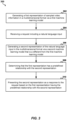
FIG. 3 , in operation, thevideo monitoring device 104 or computing device 400 may perform anexample method 300 for providing natural language search over security videos. Themethod 300 may be performed by one or more components of thevideo monitoring device 104, the computing device 400, or any device/component described herein according to the techniques described with reference toFIGS. 1-2 and4 . - At
block 302, themethod 300 includes generating a first representation of sampled video information in a multidimensional format via a first machine learning model. For example, thesample translation component 132 generates a first representation 142(1) of the first sampled video capture information 138(1) or the formatted sampled video capture information 140(1). Accordingly, thevideo monitoring device 104, the computing device 400, and/or the processor 402 executing thesample translation component 132 may provide means for receiving a request including natural language input. - At
block 304, themethod 300 includes receiving a request including natural language input. For example, thesearch component 120 receives a query 146(1) or an alert request 154(1) as NL input via a GUI. Accordingly, thevideo monitoring device 104, the computing device 400, and/or the processor 402 executing thesearch component 120 or thenotification component 122 may provide means for receiving a request including natural language input. - At
block 306, themethod 300 includes generating a second representation of natural language input in the multidimensional format via a second machine learning model that is a different from the first machine learning model. For example, theNL translation component 126 generates a representation 150(1) of the query 146(1) or the alert request 154(1) via the model 128(1). Accordingly, thevideo monitoring device 104, the computing device 400, and/or the processor 402 executing theNL translation component 126 may provide means for generating a second representation of natural language input in the multidimensional format via a second machine learning model that is a different from the first machine learning model. Exemplary ways in which the machine learning models differ include, but are not limited to, Clip, which includes two models (vision and text) trained jointly . Another example is using two different models (one for vision and one for text), where their features are adapted using an adapter component. - At
block 308, themethod 300 includes determining that the first representation has a predefined relationship with the second representation. For example, thesimilarity component 136 identifies a representation 142(1) having a predefined similarity to the representation 150(1) based on the distance between the representation 150(1) and the representation 142(1) being less than a predefined value. Further, the representation 142(1) may correspond to the sampled video capture information 138(1) or the formatted sampled video capture information 140(1). Accordingly, thevideo monitoring device 104, the computing device 400, and/or the processor 402 executing thesimilarity component 136 may provide means for determining that the first representation has a predefined relationship with the second representation. - At
block 310, themethod 300 includes presenting the second representation as a response to the request based on the first representation having the predefined relationship with the second representation. For example, transmitting a search result 152(1) or a notification result 158(1) including an identifier of the sampled video capture information 138(1) or the formatted sampled video capture information 140(1). In some aspects, the search result 152(1) or the notification result 158(1) may include timestamps corresponding to one or more video frames 116 preceding the sampled video capture information 138(1), the one or more video frames 116 of the sampled video capture information 138(1), and one or more video frames 116 succeeding the sampled video capture information 138(1). Additionally, or alternatively, in some aspects, the search result 152(1) or the notification result 158(1) may include one or more video frames 116 preceding the sampled video capture information 138(1), one or more video frames 116 of the sampled video capture information 138(1), and one or more video frames 116 succeeding the sampled video capture information 138(1). Accordingly, thevideo monitoring device 104, the computing device 400, and/or the processor 402 executing thesearch component 120 or thenotification component 122 may provide means for presenting the second representation as a response to the request based on the first representation having the predefined relationship with the second representation. - Referring to
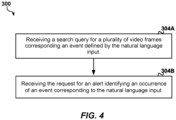
FIG. 4 , further sub-blocks ofblock 304 ofmethod 300 ofFIG. 3 are shown. - At
block 304A, themethod 300 includes receiving a search query for a plurality of video frames corresponding an event defined by the natural language input. - At
block 304B, themethod 300 includes receiving the request for an alert identifying an occurrence of an event corresponding to the natural language input. - Referring to
FIG. 5 , further sub blocks ofblock 308 ofmethod 300 ofFIG. 3 are shown. - At block 308A, the
method 300 includes determining that the first representation has a predefined similarity to the second representation. - At block 308B, the
method 300 includes determining that the first representation is within a predefined distance of the second representation within the multidimensional format. - Referring to
FIG. 6 , further blocks ofmethod 300 ofFIG. 3 are shown. - At
block 312, themethod 300 includes receiving video capture information from a video capture device. - At
block 314, themethod 300 includes sampling the video capture information to generate the sampled video information. - At
block 316, themethod 300 includes jointly training the first machine learning model and the second machine learning model using a common process. - Referring to
FIG. 7 , acomputing device 700 may implement all or a portion of the functionality described herein. Thecomputing device 700 may be or may include or may be configured to implement the functionality of at least a portion of theevent monitoring system 100, or any component therein. For example, thecomputing device 700 may be or may include or may be configured to implement thesearch component 120, thenotification component 122, thetraining component 124, theNL translation component 126, the one or more ML models 128(1)-(n), thesampling component 130, thesample translation component 132, the one or more ML models 134(1)-(n), and thesimilarity component 136. Thecomputing device 700 includes aprocessor 702 which may be configured to execute or implement software, hardware, and/or firmware modules that perform any functionality described herein. For example, theprocessor 702 may be configured to execute or implement software, hardware, and/or firmware modules that perform any functionality described herein with reference to thesearch component 120, thenotification component 122, thetraining component 124, theNL translation component 126, the one or more ML models 128(1)-(n), thesampling component 130, thesample translation component 132, the one or more ML models 134(1)-(n), and thesimilarity component 136, or any other component/system/device described herein. - The
processor 702 may be a micro-controller, an application-specific integrated circuit (ASIC), a digital signal processor (DSP), or a field-programmable gate array (FPGA), and/or may include a single or multiple set of processors or multi-core processors. Moreover, theprocessor 702 may be implemented as an integrated processing system and/or a distributed processing system. Thecomputing device 700 may further include amemory 704, such as for storing local versions of applications being executed by theprocessor 702, related instructions, parameters, etc. Thememory 704 may include a type of memory usable by a computer, such as random access memory (RAM), read only memory (ROM), tapes, magnetic discs, optical discs, volatile memory, non-volatile memory, and any combination thereof. Additionally, theprocessor 702 and thememory 704 may include and execute an operating system executing on theprocessor 702, one or more applications, display drivers, etc., and/or other components of thecomputing device 700. - Further, the
computing device 700 may include acommunications component 706 that provides for establishing and maintaining communications with one or more other devices, parties, entities, etc. utilizing hardware, software, and services. Thecommunications component 706 may carry communications between components on thecomputing device 700, as well as between thecomputing device 700 and external devices, such as devices located across a communications network and/or devices serially or locally connected to thecomputing device 700. In an aspect, for example, thecommunications component 706 may include one or more buses, and may further include transmit chain components and receive chain components associated with a wireless or wired transmitter and receiver, respectively, operable for interfacing with external devices. - Additionally, the
computing device 700 may include adata store 708, which can be any suitable combination of hardware and/or software, that provides for mass storage of information, databases, and programs. For example, thedata store 708 may be or may include a data repository for applications and/or related parameters not currently being executed byprocessor 702. In addition, thedata store 708 may be a data repository for an operating system, application, display driver, etc., executing on theprocessor 702, and/or one or more other components of thecomputing device 700. - The
computing device 700 may also include a user interface component 710 operable to receive inputs from a user of thecomputing device 700 and further operable to generate outputs for presentation to the user (e.g., via a display interface to a display device). The user interface component 710 may include one or more input devices, including but not limited to a keyboard, a number pad, a mouse, a touch-sensitive display, a navigation key, a function key, a microphone, a voice recognition component, or any other mechanism capable of receiving an input from a user, or any combination thereof. Further, the user interface component 710 may include one or more output devices, including but not limited to a display interface, a speaker, a haptic feedback mechanism, a printer, any other mechanism capable of presenting an output to a user, or any combination thereof. - It is understood that the specific order or hierarchy of blocks in the processes / flowcharts disclosed is an illustration of example approaches. Based upon design preferences, it is understood that the specific order or hierarchy of blocks in the processes / flowcharts may be rearranged. Further, some blocks may be combined or omitted. The accompanying method claims present elements of the various blocks in a sample order, and are not meant to be limited to the specific order or hierarchy presented.
- The previous description is provided to enable any person skilled in the art to practice the various aspects described herein. Various modifications to these aspects will be readily apparent to those skilled in the art, and the generic principles defined herein may be applied to other aspects. Thus, the claims are not intended to be limited to the aspects shown herein, but is to be accorded the full scope consistent with the language claims, wherein reference to an element in the singular is not intended to mean "one and only one" unless specifically so stated, but rather "one or more." The word "exemplary" is used herein to mean "serving as an example, instance, or illustration." Any aspect described herein as "exemplary" is not necessarily to be construed as preferred or advantageous over other aspects. Unless specifically stated otherwise, the term "some" refers to one or more. Combinations such as "at least one of A, B, or C," "one or more of A, B, or C," "at least one of A, B, and C," "one or more of A, B, and C," and "A, B, C, or any combination thereof' include any combination of A, B, and/or C, and may include multiples of A, multiples of B, or multiples of C. Specifically, combinations such as "at least one of A, B, or C," "one or more of A, B, or C," "at least one of A, B, and C," "one or more of A, B, and C," and "A, B, C, or any combination thereof' may be A only, B only, C only, A and B, A and C, B and C, or A and B and C, where any such combinations may contain one or more member or members of A, B, or C. All structural and functional equivalents to the elements of the various aspects described throughout this disclosure that are known or later come to be known to those of ordinary skill in the art are expressly incorporated herein by reference and are intended to be encompassed by the claims. Moreover, nothing disclosed herein is intended to be dedicated to the public regardless of whether such disclosure is explicitly recited in the claims. The words "module," "mechanism," "element," "device," and the like may not be a substitute for the word "means." As such, no claim element is to be construed as a means plus function unless the element is expressly recited using the phrase "means for."
-
Clause 1. A method, comprising: - generating a first representation of sampled video information in a multidimensional format via a first machine learning model;
- receiving a request including a natural language input;
- generating a second representation of the natural language input in the multidimensional format via a second machine learning model that is a different from the first machine learning model;
- determining that the first representation has a predefined relationship with the second representation; and
- presenting the second representation as a response to the request based on the first representation having the predefined relationship with the second representation.
-
Clause 2. The method ofclause 1, wherein receiving the request includes receiving a search query for a plurality of video frames corresponding an event defined by the natural language input. -
Clause 3. The method ofclause 1, wherein receiving the request includes receiving the request for an alert identifying an occurrence of an event corresponding to the natural language input. -
Clause 4. The method ofclause 1, further comprising: - receiving video capture information from a video capture device; and
- sampling the video capture information to generate the sampled video information.
- Clause 5. The method of
clause 1, wherein determining that the first representation has a predefined relationship with the second representation comprises determining that the first representation has a predefined similarity to the second representation. - Clause 6. The method of
clause 1, wherein determining that the first representation has a predefined relationship with the second representation comprises determining that the first representation is within a predefined distance of the second representation within the multidimensional format. - Clause 7. The method of
clause 1, wherein at least one of the first machine learning model and the second machine learning model is a transformer model. - Clause 8. The method of
clause 1, wherein the first machine learning model is a convolutional neural network. - Clause 9. The method of
clause 1, further comprising jointly training the first machine learning model and the second machine learning model using a common process. - Clause 10. A system comprising:
- at least one memory storing instructions thereon; and
- at least one processor coupled to the at least one memory and configured by the instructions to:
- generate a first representation of sampled video information in a multidimensional format via a first machine learning model;
- receive a request including a natural language input;
- generate a second representation of the natural language input in the multidimensional format via a second machine learning model that is a different from the first machine learning model;
- determine that the first representation has a predefined relationship with the second representation; and
- present the second representation as a response to the request based on the first representation having the predefined relationship with the second representation.
- Clause 11. The system of Clause 10, wherein the at least one processor is further configured by the instructions to receive a search query for a plurality of video frames corresponding an event defined by the natural language input.
- Clause 12. The system of clause 10, wherein the at least one processor is further configured by the instructions to receive the request for an alert identifying an occurrence of an event corresponding to the natural language input.
- Clause 13. The system of clause 10, wherein the at least one processor is further configured by the instructions to receive video capture information from a video capture device, and sample the video capture information to generate the sampled video information.
- Clause 14. The system of clause 10, wherein the at least one processor is further configured by the instructions to determine that the first representation has a predefined similarity to the second representation.
- Clause 15. The system of clause 10, wherein the at least one processor is further configured by the instructions to determine that the first representation is within a predefined distance of the second representation within the multidimensional format.
- Clause 16. The system of clause 10, wherein at least one of the first machine learning model and the second machine learning model is a transformer model.
- Clause 17. The system of clause 10, wherein the first machine learning model is a convolutional neural network.
- Clause 18. A non-transitory computer-readable device having instructions thereon that, when executed by at least one computing device, causes the at least one computing device to perform operations comprising:
- generating a first representation of sampled video information in a multidimensional format via a first machine learning model;
- receiving a request including a natural language input;
- generating a second representation of the natural language input in the multidimensional format via a second machine learning model that is a different from the first machine learning model;
- determining that the first representation has a predefined relationship with the second representation; and
- presenting the second representation as a response to the request based on the first representation having the predefined relationship with the second representation.
- Clause 19. The non-transitory computer-readable device of clause 18, wherein receiving the request includes receiving a search query for a plurality of video frames corresponding an event defined by the natural language input.
- Clause 20. The non-transitory computer-readable device of clause 18, wherein receiving the request includes receiving the request for an alert identifying an occurrence of an event corresponding to the natural language input.
Claims (15)
- A method, comprising:generating a first representation of sampled video information in a multidimensional format via a first machine learning model;receiving a request including a natural language input;generating a second representation of the natural language input in the multidimensional format via a second machine learning model that is a different from the first machine learning model;determining that the first representation has a predefined relationship with the second representation; andpresenting the second representation as a response to the request based on the first representation having the predefined relationship with the second representation.
- The method of claim 1, wherein receiving the request includes receiving a search query for a plurality of video frames corresponding an event defined by the natural language input.
- The method of claim 1 or 2, wherein receiving the request includes receiving the request for an alert identifying an occurrence of an event corresponding to the natural language input.
- The method of any preceding claim, further comprising:receiving video capture information from a video capture device; andsampling the video capture information to generate the sampled video information.
- The method of any preceding claim, wherein determining that the first representation has a predefined relationship with the second representation comprises determining that the first representation has a predefined similarity to the second representation.
- The method of any preceding claim, wherein determining that the first representation has a predefined relationship with the second representation comprises determining that the first representation is within a predefined distance of the second representation within the multidimensional format, and/or wherein at least one of the first machine learning model and the second machine learning model is a transformer model.
- The method of any preceding claim, wherein the first machine learning model is a convolutional neural network, and/or further comprising jointly training the first machine learning model and the second machine learning model using a common process.
- A system comprising:at least one memory storing instructions thereon; andat least one processor coupled to the at least one memory and configured by the instructions to:generate a first representation of sampled video information in a multidimensional format via a first machine learning model;receive a request including a natural language input;generate a second representation of the natural language input in the multidimensional format via a second machine learning model that is a different from the first machine learning model;determine that the first representation has a predefined relationship with the second representation; andpresent the second representation as a response to the request based on the first representation having the predefined relationship with the second representation.
- The system of claim 8, wherein the at least one processor is further configured by the instructions to receive a search query for a plurality of video frames corresponding an event defined by the natural language input.
- The system of claim 8 or 9, wherein the at least one processor is further configured by the instructions to receive the request for an alert identifying an occurrence of an event corresponding to the natural language input.
- The system of any one of claims 8 to 10, wherein the at least one processor is further configured by the instructions to receive video capture information from a video capture device, and sample the video capture information to generate the sampled video information, and/or wherein the at least one processor is further configured by the instructions to determine that the first representation has a predefined similarity to the second representation.
- The system of claim any one of claims 8 to 11, wherein the at least one processor is further configured by the instructions to determine that the first representation is within a predefined distance of the second representation within the multidimensional format, and/or wherein at least one of the first machine learning model and the second machine learning model is a transformer model and/or, wherein the first machine learning model is a convolutional neural network.
- A non-transitory computer-readable device having instructions thereon that, when executed by at least one computing device, causes the at least one computing device to perform operations comprising:generating a first representation of sampled video information in a multidimensional format via a first machine learning model;receiving a request including a natural language input;generating a second representation of the natural language input in the multidimensional format via a second machine learning model that is a different from the first machine learning model;determining that the first representation has a predefined relationship with the second representation; andpresenting the second representation as a response to the request based on the first representation having the predefined relationship with the second representation.
- The non-transitory computer-readable device of claim 13, wherein receiving the request includes receiving a search query for a plurality of video frames corresponding an event defined by the natural language input.
- The non-transitory computer-readable device of claim 13 or 14, wherein receiving the request includes receiving the request for an alert identifying an occurrence of an event corresponding to the natural language input.
Applications Claiming Priority (1)
| Application Number | Priority Date | Filing Date | Title |
|---|---|---|---|
| US202363578869P | 2023-08-25 | 2023-08-25 |
Publications (1)
| Publication Number | Publication Date |
|---|---|
| EP4513359A1 true EP4513359A1 (en) | 2025-02-26 |
Family
ID=92712426
Family Applications (1)
| Application Number | Title | Priority Date | Filing Date |
|---|---|---|---|
| EP24196317.2A Pending EP4513359A1 (en) | 2023-08-25 | 2024-08-23 | Natural language search over security videos |
Country Status (2)
| Country | Link |
|---|---|
| US (2) | US12596747B2 (en) |
| EP (1) | EP4513359A1 (en) |
Citations (2)
| Publication number | Priority date | Publication date | Assignee | Title |
|---|---|---|---|---|
| US20190147284A1 (en) * | 2017-11-14 | 2019-05-16 | Qualcomm Technologies, Inc. | Spatio-temporal action and actor localization |
| US20230086735A1 (en) * | 2020-05-30 | 2023-03-23 | Huawei Technologies Co., Ltd. | Systems and methods for retrieving videos using natural language description |
Family Cites Families (3)
| Publication number | Priority date | Publication date | Assignee | Title |
|---|---|---|---|---|
| US9602738B2 (en) * | 2011-11-23 | 2017-03-21 | Avigilon Fortress Corporation | Automatic event detection, text generation, and use thereof |
| CN109903314B (en) * | 2019-03-13 | 2025-03-28 | 腾讯科技(深圳)有限公司 | A method for locating image regions, a method for model training and related devices |
| US12620206B2 (en) * | 2021-09-14 | 2026-05-05 | Schlumberger Technology Corporation | Training data synthesis for machine learning |
-
2024
- 2024-08-23 EP EP24196317.2A patent/EP4513359A1/en active Pending
- 2024-08-23 US US18/814,322 patent/US12596747B2/en active Active
-
2026
- 2026-03-16 US US19/568,488 patent/US20260211941A1/en active Pending
Patent Citations (2)
| Publication number | Priority date | Publication date | Assignee | Title |
|---|---|---|---|---|
| US20190147284A1 (en) * | 2017-11-14 | 2019-05-16 | Qualcomm Technologies, Inc. | Spatio-temporal action and actor localization |
| US20230086735A1 (en) * | 2020-05-30 | 2023-03-23 | Huawei Technologies Co., Ltd. | Systems and methods for retrieving videos using natural language description |
Also Published As
| Publication number | Publication date |
|---|---|
| US20260211941A1 (en) | 2026-07-23 |
| US20250068674A1 (en) | 2025-02-27 |
| US12596747B2 (en) | 2026-04-07 |
Similar Documents
| Publication | Publication Date | Title |
|---|---|---|
| US10776665B2 (en) | Systems and methods for object detection | |
| US9589190B2 (en) | System and method for detection of high-interest events in video data | |
| US8384791B2 (en) | Video camera for face detection | |
| US9560323B2 (en) | Method and system for metadata extraction from master-slave cameras tracking system | |
| EP2009604B1 (en) | A security device and system | |
| EP2966852B1 (en) | Video monitoring method, device and system | |
| US20150116487A1 (en) | Method for Video-Data Indexing Using a Map | |
| US20060198554A1 (en) | Face detection | |
| KR20160093253A (en) | Video based abnormal flow detection method and system | |
| US9135273B2 (en) | Similar image search system | |
| EP4171023A1 (en) | Computer-implemented method and computer program for generating a thumbnail from a video stream or file, and video surveillance system | |
| KR101212082B1 (en) | Image Recognition Apparatus and Vison Monitoring Method thereof | |
| US12596747B2 (en) | Natural language search over security videos | |
| CN121567841A (en) | Cloud-edge cooperation multi-camera analysis and dynamic task scheduling system based on large model driving | |
| Rybski et al. | Cameo: Camera assisted meeting event observer | |
| KR101060414B1 (en) | Surveillance system and its monitoring method | |
| KR101459103B1 (en) | Method for video monitoring using video surveillance system | |
| Ambawane et al. | Smart e-stick for visually impaired using video intelligence api | |
| KR20240074636A (en) | System and method for processing digital forensics image based on artificial intelligence | |
| Chamasemani et al. | A framework for automatic video surveillance indexing and retrieval | |
| KR102778524B1 (en) | Apparatus and method for forensic image search and multi-channel high-speed search using metadata extraction based on artificial intelligence | |
| KR102778523B1 (en) | System for processing digital forensics image based on artificial intelligence and method for searching object thereof | |
| KR20210095405A (en) | Server, method and computer program for detecting object | |
| EP4700715A1 (en) | A method and system for operating a video surveillance system including predicting and displaying possible future activity of a person of interest | |
| Dilber et al. | A new video synopsis based approach using stereo camera |
Legal Events
| Date | Code | Title | Description |
|---|---|---|---|
| PUAI | Public reference made under article 153(3) epc to a published international application that has entered the european phase |
Free format text: ORIGINAL CODE: 0009012 |
|
| STAA | Information on the status of an ep patent application or granted ep patent |
Free format text: STATUS: THE APPLICATION HAS BEEN PUBLISHED |
|
| AK | Designated contracting states |
Kind code of ref document: A1 Designated state(s): AL AT BE BG CH CY CZ DE DK EE ES FI FR GB GR HR HU IE IS IT LI LT LU LV MC ME MK MT NL NO PL PT RO RS SE SI SK SM TR |
|
| STAA | Information on the status of an ep patent application or granted ep patent |
Free format text: STATUS: REQUEST FOR EXAMINATION WAS MADE |
|
| 17P | Request for examination filed |
Effective date: 20250822 |