EP4510411A2 - Energy management state machine for microgrids - Google Patents
Energy management state machine for microgrids Download PDFInfo
- Publication number
- EP4510411A2 EP4510411A2 EP24192100.6A EP24192100A EP4510411A2 EP 4510411 A2 EP4510411 A2 EP 4510411A2 EP 24192100 A EP24192100 A EP 24192100A EP 4510411 A2 EP4510411 A2 EP 4510411A2
- Authority
- EP
- European Patent Office
- Prior art keywords
- microgrid
- inputs
- priority function
- output
- state machine
- Prior art date
- Legal status (The legal status is an assumption and is not a legal conclusion. Google has not performed a legal analysis and makes no representation as to the accuracy of the status listed.)
- Pending
Links
Images

Classifications
-
- H—ELECTRICITY
- H02—GENERATION; CONVERSION OR DISTRIBUTION OF ELECTRIC POWER
- H02J—ELECTRIC POWER NETWORKS; CIRCUIT ARRANGEMENTS OR SYSTEMS FOR SUPPLYING OR DISTRIBUTING ELECTRIC POWER; SYSTEMS FOR STORING ELECTRIC ENERGY
- H02J3/00—Circuit arrangements for AC mains or AC distribution networks
- H02J3/38—Arrangements for feeding a single network from two or more generators or sources in parallel; Arrangements for feeding already energised networks from additional generators or sources in parallel
- H02J3/381—Dispersed generators
-
- H—ELECTRICITY
- H02—GENERATION; CONVERSION OR DISTRIBUTION OF ELECTRIC POWER
- H02J—ELECTRIC POWER NETWORKS; CIRCUIT ARRANGEMENTS OR SYSTEMS FOR SUPPLYING OR DISTRIBUTING ELECTRIC POWER; SYSTEMS FOR STORING ELECTRIC ENERGY
- H02J13/00—Circuit arrangements for providing remote monitoring or remote control of equipment in a power distribution network
- H02J13/12—Monitoring network conditions, e.g. electrical magnitudes or operational status
-
- G—PHYSICS
- G06—COMPUTING OR CALCULATING; COUNTING
- G06N—COMPUTING ARRANGEMENTS BASED ON SPECIFIC COMPUTATIONAL MODELS
- G06N20/00—Machine learning
-
- H—ELECTRICITY
- H02—GENERATION; CONVERSION OR DISTRIBUTION OF ELECTRIC POWER
- H02J—ELECTRIC POWER NETWORKS; CIRCUIT ARRANGEMENTS OR SYSTEMS FOR SUPPLYING OR DISTRIBUTING ELECTRIC POWER; SYSTEMS FOR STORING ELECTRIC ENERGY
- H02J3/00—Circuit arrangements for AC mains or AC distribution networks
- H02J3/12—Arrangements for adjusting voltage in AC networks by changing a characteristic of the network load
- H02J3/14—Arrangements for adjusting voltage in AC networks by changing a characteristic of the network load by switching loads on to, or off from, the networks, e.g. progressively balanced loading
-
- H—ELECTRICITY
- H02—GENERATION; CONVERSION OR DISTRIBUTION OF ELECTRIC POWER
- H02J—ELECTRIC POWER NETWORKS; CIRCUIT ARRANGEMENTS OR SYSTEMS FOR SUPPLYING OR DISTRIBUTING ELECTRIC POWER; SYSTEMS FOR STORING ELECTRIC ENERGY
- H02J3/00—Circuit arrangements for AC mains or AC distribution networks
- H02J3/28—Arrangements for balancing of the load in networks by storage of energy
- H02J3/32—Arrangements for balancing of the load in networks by storage of energy using batteries or super capacitors with converting means
-
- H—ELECTRICITY
- H02—GENERATION; CONVERSION OR DISTRIBUTION OF ELECTRIC POWER
- H02J—ELECTRIC POWER NETWORKS; CIRCUIT ARRANGEMENTS OR SYSTEMS FOR SUPPLYING OR DISTRIBUTING ELECTRIC POWER; SYSTEMS FOR STORING ELECTRIC ENERGY
- H02J3/00—Circuit arrangements for AC mains or AC distribution networks
- H02J3/38—Arrangements for feeding a single network from two or more generators or sources in parallel; Arrangements for feeding already energised networks from additional generators or sources in parallel
- H02J3/388—Arrangements for the handling of islanding, e.g. for disconnection or for avoiding the disconnection of power
-
- H—ELECTRICITY
- H02—GENERATION; CONVERSION OR DISTRIBUTION OF ELECTRIC POWER
- H02J—ELECTRIC POWER NETWORKS; CIRCUIT ARRANGEMENTS OR SYSTEMS FOR SUPPLYING OR DISTRIBUTING ELECTRIC POWER; SYSTEMS FOR STORING ELECTRIC ENERGY
- H02J2101/00—Supply or distribution of decentralised, dispersed or local electric power generation
- H02J2101/10—Dispersed power generation using fossil fuels, e.g. diesel generators
-
- H—ELECTRICITY
- H02—GENERATION; CONVERSION OR DISTRIBUTION OF ELECTRIC POWER
- H02J—ELECTRIC POWER NETWORKS; CIRCUIT ARRANGEMENTS OR SYSTEMS FOR SUPPLYING OR DISTRIBUTING ELECTRIC POWER; SYSTEMS FOR STORING ELECTRIC ENERGY
- H02J2101/00—Supply or distribution of decentralised, dispersed or local electric power generation
- H02J2101/20—Dispersed power generation using renewable energy sources
-
- H—ELECTRICITY
- H02—GENERATION; CONVERSION OR DISTRIBUTION OF ELECTRIC POWER
- H02J—ELECTRIC POWER NETWORKS; CIRCUIT ARRANGEMENTS OR SYSTEMS FOR SUPPLYING OR DISTRIBUTING ELECTRIC POWER; SYSTEMS FOR STORING ELECTRIC ENERGY
- H02J2103/00—Details of circuit arrangements for mains or AC distribution networks
- H02J2103/30—Simulating, planning, modelling, reliability check or computer assisted design [CAD] of electric power networks
-
- H—ELECTRICITY
- H02—GENERATION; CONVERSION OR DISTRIBUTION OF ELECTRIC POWER
- H02J—ELECTRIC POWER NETWORKS; CIRCUIT ARRANGEMENTS OR SYSTEMS FOR SUPPLYING OR DISTRIBUTING ELECTRIC POWER; SYSTEMS FOR STORING ELECTRIC ENERGY
- H02J2105/00—Networks for supplying or distributing electric power characterised by their spatial reach or by the load
- H02J2105/10—Local stationary networks having a local or delimited stationary reach
Definitions
- the present disclosure relates to methods for supervising microgrids and supervisory algorithms for microgrids.
- State machines are used as behavioral models that, based on a current state and given inputs, produces an output. Due to their usefulness in organizing process flows and defining outputs based on multiple states of a system, state machines are widely utilized as the basis for various control and supervising algorithms. Conventional state machines, however, are based on a very generic outlook that has been envisioned in terms of functioning as a controller rather than an operating condition selector for systems. Furthermore, the boundaries of conventional state machines are frequently not clearly defined.
- microgrid monitoring and analysis may be carried out by a processor-based control system configured to deliver electrical power based on schedules or based on regional control modules.
- processor-based control system configured to deliver electrical power based on schedules or based on regional control modules.
- individual devices making up a microgrid have varying compliance standards and requirements, which may lead to reduced compliance of the microgrid overall or of some devices within the microgrid.
- a method of monitoring a microgrid comprising receiving a plurality of inputs, using a state machine to determine an output based on the plurality of inputs, and outputting a control signal based on the output.
- the plurality of inputs include a microgrid-side voltage measurement and a microgrid-side frequency measurement.
- the control signal is configured to control operation of the microgrid at a point of common coupling between the microgrid and a utility grid.
- a method of monitoring a microgrid comprising: receiving a plurality of inputs; using a state machine to determine an output based on the plurality of inputs; and outputting a control signal based on the output, wherein the plurality of inputs include a microgrid-side voltage measurement and a microgrid-side frequency measurement; and wherein the control signal is configured to control operation of the microgrid at a point of common coupling between the microgrid and a utility grid.
- using the state machine to determine the output based on the plurality of inputs further comprises determining the output based on at least a first priority function and a second priority function, wherein the first priority function receives one or more of the plurality of inputs to determine a first priority function output, and wherein the second priority function receives one or more of the plurality of inputs and the first priority function output to determine a second priority function output.
- the one or more inputs received by the first priority function include the microgrid-side voltage measurement and the microgrid-side frequency measurement.
- the first priority function output and the second priority function output are each one of a voltage or frequency ride-through selection, an unplanned islanding signal, action dependent on a distribution system operator command, and an action dependent on a user preference.
- the one or more inputs received by the second priority function include one or more of a maintenance status, an anticipated outage, a utility grid health indicator, and a distribution system operator setpoint.
- using the state machine to determine the output based on the plurality of inputs further comprises determining the output based on a third priority function, wherein the third priority function receives one or more of the plurality of inputs and the second priority function output to determine a third priority function output.
- the one or more inputs received by the third priority function include one or more of a user preference and an error handling signal.
- the third priority function output is one of a voltage or frequency ride-through selection, an unplanned islanding signal, a regulation curve selection, an active and reactive power setpoint disabling signal, and a load or source management signal for managing devices of the microgrid.
- the method further comprises: measuring microgrid-side operational parameters; updating the plurality of inputs based on the measured microgrid-side operational parameters; and iteratively repeating the steps of the method such that the state machine receives iteratively updated inputs based on the measured microgrid-side operational parameters, wherein the operational parameters include a voltage and frequency of the microgrid.
- the operational parameters further include one or more of an active power measured at the point of common coupling, a reactive power measured at the point of common coupling, a battery state of charge, and microgrid loading information.
- control signal is configured to operate the microgrid in compliance with standards set forth in Institute of Electrical and Electronics Engineers (IEEE) 1547 or Comitato Elettrotecnico Italiano (CEI) 0-16.
- IEEE Institute of Electrical and Electronics Engineers
- CEI Comitato Elettrotecnico Italiano
- control signal is configured to operate the microgrid with a ride-through voltage or ride-through frequency in compliance with IEEE 1547 or CEI 0-16.
- control signal is configured to island the microgrid if the plurality of inputs include abnormal voltage and frequency signals from the microgrid.
- a non-transitory computer-readable medium having processor-executable instructions stored thereon, wherein the processor-executable instructions, when executed by one or more processors, facilitate performance of a method as described above and below, for monitoring a microgrid comprising: receiving a plurality of inputs; using a state machine to determine an output based on the plurality of inputs; and outputting a control signal based on the output, wherein the plurality of inputs include a microgrid-side voltage measurement and a microgrid-side frequency measurement; and wherein the control signal is configured to control operation of the microgrid at a point of common coupling between the microgrid and a utility grid.
- a system comprising one or more processors which, alone or in combination, are configured to provide for execution of a method as described above and below, comprising: receiving a plurality of inputs; using a state machine to determine an output based on the plurality of inputs; and outputting a control signal based on the output, wherein the plurality of inputs include a microgrid-side voltage measurement and a microgrid-side frequency measurement; and wherein the control signal is configured to control operation of the microgrid at a point of common coupling between the microgrid and a utility grid.
- aspects of the present disclosure provide an energy management state machine that includes a selector function.
- the selector function performs mode selection on the microgrid level to drive the microgrid in a specific operating condition.
- the selection process in the state machine has three levels of priority that may be determined.
- the three-level priority determination is based on a determination function that sequentially identifies the operating condition of the microgrid and utilizes logic to decide which of a plurality of functions should be selected for carrying out microgrid operation.
- the energy management state machine determines the microgrid's operating condition through a combination of measurements and algorithm-based logic.
- Embodiments of the present disclosure provide a method for customizing priority function preferences depending on selection of a grid code compliance standard. Embodiments of the present disclosure also provide a method for clustering critical microgrid measurements for grid-connected use cases by classifying them into various priority levels.
- a state machine enabling implementation of the methods is also provided.
- the state machine is simple and customizable based on user preferences and various inputs from a microgrid and a larger grid to which the microgrid is connected or is to be connected.
- the state machine is also scalable to accommodate varying sizes of microgrids with varying numbers of connected devices.
- the described state machine is also more flexible than conventional solutions, allowing a single state machine to be used across varying microgrids and ensuring all microgrid devices are compliant to user-selected or predetermined compliance standards.
- a method for tracking and analyzing a microgrid's present operating condition through various measurements both internal and external to the microgrid from a point of common coupling (PCC) perspective.
- PCC point of common coupling
- a selector algorithm for making well-informed decisions through a 3-level priority determination to perform microgrid operating mode selection.
- a framework for implementing an algorithm for clustering critical microgrid measurements for grid-connected use-cases by classifying them into various priority levels.
- a framework for allowing a customized priority function preference to be selected based on the selection of a grid code compliance standard.
- the energy management state machine acts as a selector that deals with grid supported functions that are compliant with an industry standard, such as Institute of Electrical and Electronics Engineers (IEEE) 1547 or Comitato Elettrotecnico Italiano (CEI) 0-16.
- the energy management state machine can perform various grid connected energy management functions like rule-based active power (P) and reactive power (Q) setpoint distribution, IEEE 1547-compliant regulation curves, and ride-through functionalities.
- P active power
- Q reactive power
- the energy management state machine considers user preferences, distribution system operator (DSO) setpoints, utility maintenance and outage information, and measurement and communication error scenarios, thereby accounting for microgrid operating conditions. Based on the operating conditions deduced from various inputs, the state machine may make determinations regarding how a microgrid will operate at both a current time and a future time.
- DSO distribution system operator
- Embodiments of the present invention enable compliance of all devices within a microgrid to one or more compliance standards. Specifically, because all devices within a microgrid are slave devices under the supervisory scheme carried out by embodiments of the disclosed state machine, all microgrid devices are brought into compliance by standards enforced by the state machine. Embodiments of the present invention also provide for an aggregated supervisory algorithm that reduced or eliminates the need for separate individual compliance-based control of devices in a microgrid. For example, conventional solutions require each battery of a microgrid to be individually controlled to ensure compliance, which may result in longer control processes than embodiments of the present disclosure that instead aggregate data for faster compliance of all batteries within the microgrid. Embodiments of the present disclosure also improve the reliability of power grids through this aggregated compliance approach.
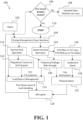
- FIG. 1 illustrates an energy management state machine flowchart 100 showing how a state machine according to embodiments of the present invention can be updated and utilized for microgrid supervision.
- Inputs 102 are used to provide inputs for the energy management state machine 104 and to carry out query 106 to determine whether or not a point of common coupling (PCC) circuit breaker is closed. If it is determined that the PCC circuit breaker is not closed, an islanded state machine 108 may be implemented in which a supervised microgrid is disconnected from a primary utility line but remains energized to continue supplying the microgrid's local loads. Otherwise, if the PCC circuit breaker is not closed, a supervisory algorithm is started 110.
- PCC point of common coupling
- the inputs 102 include various types of inputs from both the microgrid and a larger grid to which the microgrid is connected.
- the microgrid inputs may include microgrid measurements like voltage, frequency, PCC active power, PCC reactive power, microgrid load information, and other like inputs.
- the inputs 102 also include one or more other measurements and/or types of information, such as battery or device operational status, a battery state of charge (SOC), user preferences, anticipated load and supply schedules, anticipated outage information or schedules, measured or manually input grid abnormalities, microgrid health indicators, and error handling data.
- SOC battery state of charge
- the inputs 102 from the larger grid to which the microgrid is connected may include one or more of grid health indicators that come from a static transfer switch (STS), maintenance signals, anticipated outage signals from a utility facility or device, and/or DSO setpoint commands from a grid operator.
- STS static transfer switch
- the energy management state machine 104 can determine, based on the inputs 102 it receives, whether the microgrid is in normal grid operation 112 or abnormal grid operation 124.
- the state machine 104 determines that the microgrid is in normal grid operation 112, the state machine will establish PCC P and Q setpoints for load/source management 116.
- the PQ setpoints go to an inverter and change the output of batteries of the microgrid.
- load/source management in which loads of the microgrid are balanced, is accomplished using regulation curves for grid support 114, which may be stored as part of the state machine or otherwise accessed via the state machine.
- the state machine may also determine frequency and/or voltage ride-through thresholds 120 for load/source management 116.
- the frequency and/or voltage ride-through thresholds 120 may be based on standards set forth in IEEE 1547, CEI 0-16, or other regulatory and/or privately established standards.
- the frequency/voltage ride-through thresholds 120 may also be used to switch a trip mechanism, thereby establishing a physical island 122 to separate the microgrid from the primary utility lines. Whether load/source management and/or establishment of a physical island 122 is carried out, the resulting effects on the microgrid 118 are measured and then directed back to the energy management state machine 104.
- the measurements from the microgrid 118 are sent to inputs 102 so that parameters or values of the inputs 102 can be updated and then sent to the energy management state machine 104.
- measurements from the grid are sent as updates continually and directly to the energy management state machine 104.
- abnormal performance category analysis 126 can be carried out, in which compliance with various categories of threshold voltage and/or frequency values may be evaluated.
- the category analysis 126 may be tailored for a Category II design under IEEE 1547.
- the category analysis 126 may be tailored for a Category I or III design under IEEE 1547, or of another category or set of threshold values under CEI 0-16 or under another standard. If the category analysis 126 indicates that a trip mechanism should be actuated, an unplanned island sequence 128 may be initiated, causing physical island 122 to be established upon tripping a trip mechanism. The changes implemented in the microgrid 118 are then measured and forwarded to the energy management state machine 104.
- the regulation curves for grid support 114 are compliant with IEEE 1547 or CEI 0-16 in terms of voltage, power, power-factor, frequency, and reactive power dependent curves.
- frequency/voltage ride-through thresholds 120 are configured to provide for IEEE 1547 or CEI 0-16 compliance during fault and grid dynamic events by performing voltage/frequency ride-through operations.
- load/source management 116 is configured to enable power dispatch amongst microgrid devices based on a reference PCC active and reactive power that is tracked.
- FIG. 1 may be implemented in an iterative manner to provide real-time or near-real time measurements to the energy management state machine 104, thereby enabling immediate intervention when inputs 102 or measurements from the microgrid 118 necessitate such intervention.
- Such interventions may include, for example, establishing a physical island 122 via tripping a trip mechanism, thereby preventing damage to the microgrid, components thereof, and/or to the primary utility lines.
- the foregoing methods may be implemented iteratively with a preset delay or with a delay that is dynamically adjusted by the energy management state machine 104 according to inputs 102 and based on whether circumstances observed via inputs 102 would necessitate more frequent or time-sensitive monitoring and/or intervention. This would allow the energy management state machine to operate more efficiently and cost-effectively for applications in which real-time monitoring is not necessary, or when safety requirements allow for a delay in intervention.
- FIG. 2A illustrates a first part of an energy management state machine operational flowchart 200 for 3-level priority function determination.
- the operational flow includes inputs 202 that are used by the energy management state machine 204 to determine a microgrid function assignment.
- the microgrid function assignment results in one or more signals 206, 208, 210, 212 being output by the energy management state machine 204 for controlling operation of the microgrid and/or devices within the microgrid.
- the inputs 202 may be updated based on grid-side and microgrid-side measurement updates via an update signal 214.
- the update signal 214 may include a MODBUS signal.
- the update signal 214 may take a form based on a different serial data communication protocol.
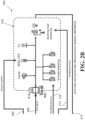
- FIG. 2B illustrates a second part of the energy management state machine operational flowchart 200.
- a setpoint update signal 206 may be output by the energy management state machine to establish operational setpoints for various devices within microgrid 250.
- the setpoint update signal 206 may establish operational setpoints for a battery energy storage system, an uninterruptible power supply (UPS), a diesel generator, or a photovoltaic cell.
- UPS uninterruptible power supply
- a trip signal 208 may be output by the energy management state machine to determine whether a breaker should be tripped at a PCC, thereby islanding the microgrid.
- the trip signal 208 may be configured to trip a breaker that only disconnects a portion of a microgrid or just a number of all available devices of the microgrid.
- a first shedding decision signal 210 may be output to provide for load shedding among devices within the microgrid 250.
- the first shedding decision signal 210 may be used to provide for load shedding among a plurality of electric vehicle charging stations.
- a second shedding decision signal 212 may also be provided for load shedding among a second category or subset of devices in the microgrid 250.
- the second shedding decision signal 212 may be used to provide for load shedding of one or more buildings or facilities within the microgrid.
- the inputs 202 include grid-side inputs and microgrid inputs.
- the grid-side inputs can include, for example, maintenance data, anticipated outage data, grid health indicators, and DSO setpoints.
- the microgrid inputs can include, for example, user preferences, microgrid-side measurements, and error handling data, such as data that identifies an error-affected device and disabling setpoints.
- the microgrid-side measurements can include, for example, PCC voltage, frequency, distributed electrical resource (DER) output, battery SOC, and loading information.
- Different inputs 202 serve as the basis for determining different levels of priority within the energy management state machine 204. For example, microgrid-side measurements may be used to make a first or so-called "Level A" priority function determination.
- Level B priority function determination may be used to make a second or so-called "Level B" priority function determination.
- User preferences and/or error handling data may be used to make a third or so-called “Level C" priority function determination.
- Examples of user preferences include: a selection of a particular regulation curve; a specific active power (Pset) or reactive power (Qset), or a combination of both, that is to be tracked by the microgrid; and provision of dynamic voltage support as part of a voltage ride-through implementation while the microgrid voltage is in a normal operating region.
- the regulation curves can include, for example, V-Q, P-F, V-P, and other similar curves representing the relationship between microgrid attributes.
- Provision of dynamic voltage support may include supplying reactive power from the microgrid.
- the microgrid's operating mode depends on the outcomes of the priority determination described in the present disclosure. For example, because a DSO commands higher priority than user preferences during a normal mode of operation of the microgrid, DSO commands will be used to operate a microgrid during a normal mode instead of user preferences. Accordingly, regardless of whether a user continues to provide user preferences, the microgrid will only operate based on user-selected user preferences when a priority determination reaches the decision to let the microgrid run on a user preferred operating mode.
- a user may select a user preference that the microgrid sends out a specific active power (Pset) and reactive power (Qset) to the larger grid as a part of a load/source management operation for set-point tracking.
- Pset active power
- Qset reactive power
- the energy management state machine's priority determination will arrive at the decision to operate based on user preference. Further detail regarding determining an operating condition and the role of user preferences is included in the present disclosure with reference to FIGS. 2A-2B and Tables 1-3.
- Level A priority is used to determine whether a microgrid is in normal or abnormal operation and whether a trip operation should be carried out.
- the energy management state machine may have three states for the Level A priority function: state (0) indicating an abnormal microgrid operation, state (1) indicating a normal microgrid operation, and state (2) indicating a trip operation.
- the Level A priority function determines the highest priority level signals of the energy management state machine.
- the output of the Level A priority function and the resulting operating state of the microgrid is determined according to Table 1, where voltage and frequency are received as inputs to the state machine and the output value of the Level A priority function has a value of (0), (1), or (2), wherein an output value of (0) indicates ride-through, (1) indicates unplanned islanding, and (2) indicates an action should be carried out based on DSO command or one or more user preferences.
- condition N Value of Function Comments Voltage/Frequency 0, 0 0 Select Ride-through Voltage/Frequency 1, 0 0 Select Ride-through Voltage/Frequency 0, 1 0 Select Ride-through Voltage/Frequency 2, 2 1 Unplanned Islanding Voltage/Frequency 1, 2 1 Unplanned Islanding Voltage/Frequency 2, 1 1 Unplanned Islanding Voltage/Frequency 1, 1 2 Action depends on DSO or user preference(s)
- the possible outcomes for the Level A priority function are: ride-through while either of microgrid voltage or frequency is in an abnormal state of operation; unplanned islanding if voltage or frequency enters a trip zone under a relevant compliance standard; and performing an action that is dependent on a DSO command or one or more user preferences.
- Level B priority is used to gather information based on signals from the primary utility (e.g., the larger grid to which the microgrid is connected or intended to be connected) and DSO signals after the operating condition of the microgrid is determined based on the Level A priority function.
- the information gathered in Level B may include, for example, information regarding maintenance, anticipated outages of the utility, grid health status received from a microgrid's STS, if applicable, and/or DSO commands for the microgrid like setpoint tracking or specific mode of operation (e.g., by following a regulation curve for voltage-reactive power, voltage-active power, or other like regulation curves).
- the output of the Level A priority function are used by the Level B priority function.
- the Level B priority function thus receives values (0), (1), (3) from the Level A priority function.
- the Level B priority function also receives issue condition values and DSO condition values.
- the issue condition values (identified in Table 2 as "(NoMaintenance & NoOutage & Microgrid healthy)") include (0), indicating grid-side issues, and (1), indicating no issues.
- the DSO condition values include (1) indication PQ setpoints, and (2), indicating no PQ setpoints.
- the output of the Level B priority function is determined according to Table 2.
- the output of the Level B priority function has a value of (0), (1), (2), or (3), wherein an output value of (0) indicates ride-through, (1) indicates unplanned islanding, (2) indicates DSO commands, and (3) indicates actions that depend on one or more user preferences.
- Level A priority function examples include, for example: ride-through while either of microgrid voltage or frequency is in an abnormal state of operation; unplanned islanding if voltage or frequency enters a trip zone under a relevant compliance standard; higher priority to DSO commands for tracking PQ setpoints in a normal state of operation; and following regulation curves.
- Level C priority is the final priority level function determination that depends on one or more user preferences about a microgrid's mode of operating and the status of all measurable devices in the microgrid.
- the Level C priority function thereby helps the energy management state machine select the appropriate mode in the microgrid's normal operating condition by also considering special scenarios on devices that are local to the microgrid, such as, for example, device failure, overload, tracking issues, and more.
- Scenario detection is carried out by another module referred to herein as an error detecting and handling module. The analysis made available by the error detection and handling module is used to make device-specific operating mode selections regarding PCC power dispatch and publish a status indication as output to notify an end user of the microgrid about the selection.
- the Level C priority function receives the output of the Level B priority function.
- the Level C priority function also receives a user preference wherein a value of (1) indicates regulation curves, a value of (2) indicates load/source management, and a value of (3) indicates ride-through dynamic voltage (DynV) support.
- the Level C priority function also receives an error detection value (identified in Table 3 as "(NoPVerr & NoBESSerr & NoDGerr & NoLoaderr)”), wherein a value of (0) indicates a sensor error and a value of (1) indicates no sensor error.
- the output of the Level C priority function is determined according to Table 3.
- condition N Value of Function Comments FromLevelB & User preference & (NoPVerr & NoBESSerr & NoDGerr & NoLoaderr) 0, x, x 0 Select ride-through FromLevelB & User preference & (NoPVerr & NoBESSerr & NoDGerr & NoLoaderr) 1, x, x 1 Unplanned Islanding FromLevelB & User preference & (NoPVerr & NoBESSerr & NoDGerr & NoLoaderr) 2, x, x 2 Track PQ setpoints using load/source management and disable PQset to abnormal sensor FromLevelB & User preference & (NoPVerr & NoBESSerr & NoDGerr & NoLoaderr) 3, 1, 0 3 Select user preferred regulation curve and disable PQset to abnormal sensor FromLevelB & User preference & (NoPVerr & NoBESSerr & NoDGerr & NoLoaderr)
- the Level C priority function determination is the final stage of the energy management state machine.
- the resulting function out of Level C is selected as the microgrid's operating state. Based on the operating state selection, the microgrid follows the appropriate section of the algorithm according to FIG. 1 .
- the possible outcomes of the Level C priority function include: ride-through while any of microgrid voltage or frequency is in an abnormal state of operation; initiating an unplanned island if voltage or frequency enters a trip zone according to a compliance standard; granting higher priority to DSO commands for tracking PQ setpoints in a normal state of operation; following regulation curves; selecting a user preference for operating the microgrid in ride-through mode; tracking regulation curves; and/or tracking a PQ set-point using load/source management to determine energy management state machine selection for a microgrid's state of operation.
- the state machine described herein may be executed by a controller configured to control operation of the microgrid.
- the state machine may be executed in a controller that directly controls the microgrid and that is implemented at the PCC.
- the controller may control operation of the microgrid from a remote location.
- microgrid measurement updates may be sent to a cloud-based control system configured to send control signals to the microgrid, thereby enabling computing and control hardware (e.g., one or more processors and controllers) to be located off-site.
Landscapes
- Engineering & Computer Science (AREA)
- Power Engineering (AREA)
- Software Systems (AREA)
- Theoretical Computer Science (AREA)
- Physics & Mathematics (AREA)
- Evolutionary Computation (AREA)
- Medical Informatics (AREA)
- Data Mining & Analysis (AREA)
- Computer Vision & Pattern Recognition (AREA)
- Computing Systems (AREA)
- General Engineering & Computer Science (AREA)
- General Physics & Mathematics (AREA)
- Mathematical Physics (AREA)
- Artificial Intelligence (AREA)
- Remote Monitoring And Control Of Power-Distribution Networks (AREA)
- Preliminary Treatment Of Fibers (AREA)
- Charge And Discharge Circuits For Batteries Or The Like (AREA)
Abstract
Description
- The present disclosure relates to methods for supervising microgrids and supervisory algorithms for microgrids.
- State machines are used as behavioral models that, based on a current state and given inputs, produces an output. Due to their usefulness in organizing process flows and defining outputs based on multiple states of a system, state machines are widely utilized as the basis for various control and supervising algorithms. Conventional state machines, however, are based on a very generic outlook that has been envisioned in terms of functioning as a controller rather than an operating condition selector for systems. Furthermore, the boundaries of conventional state machines are frequently not clearly defined.
- In electrical grids, and particularly in microgrids and/or low voltage microgrids, control systems must be implemented to control production and/or distribution of electrical power from multiple sources of different types. Microgrid monitoring and analysis may be carried out by a processor-based control system configured to deliver electrical power based on schedules or based on regional control modules. However, individual devices making up a microgrid have varying compliance standards and requirements, which may lead to reduced compliance of the microgrid overall or of some devices within the microgrid.
- Accordingly, there is a need for improved methods for supervising microgrids to improve compliance of microgrids and microgrid devices and to ensure compliance standards are met.
- A method of monitoring a microgrid, comprising receiving a plurality of inputs, using a state machine to determine an output based on the plurality of inputs, and outputting a control signal based on the output. The plurality of inputs include a microgrid-side voltage measurement and a microgrid-side frequency measurement. The control signal is configured to control operation of the microgrid at a point of common coupling between the microgrid and a utility grid.
- According to an embodiment, a method of monitoring a microgrid is provided, comprising: receiving a plurality of inputs; using a state machine to determine an output based on the plurality of inputs; and outputting a control signal based on the output, wherein the plurality of inputs include a microgrid-side voltage measurement and a microgrid-side frequency measurement; and wherein the control signal is configured to control operation of the microgrid at a point of common coupling between the microgrid and a utility grid.
- According to an embodiment, using the state machine to determine the output based on the plurality of inputs further comprises determining the output based on at least a first priority function and a second priority function, wherein the first priority function receives one or more of the plurality of inputs to determine a first priority function output, and wherein the second priority function receives one or more of the plurality of inputs and the first priority function output to determine a second priority function output.
- According to an embodiment, the one or more inputs received by the first priority function include the microgrid-side voltage measurement and the microgrid-side frequency measurement.
- According to an embodiment, the first priority function output and the second priority function output are each one of a voltage or frequency ride-through selection, an unplanned islanding signal, action dependent on a distribution system operator command, and an action dependent on a user preference.
- According to an embodiment, the one or more inputs received by the second priority function include one or more of a maintenance status, an anticipated outage, a utility grid health indicator, and a distribution system operator setpoint.
- According to an embodiment, using the state machine to determine the output based on the plurality of inputs further comprises determining the output based on a third priority function, wherein the third priority function receives one or more of the plurality of inputs and the second priority function output to determine a third priority function output.
- According to an embodiment, the one or more inputs received by the third priority function include one or more of a user preference and an error handling signal.
- According to an embodiment, the third priority function output is one of a voltage or frequency ride-through selection, an unplanned islanding signal, a regulation curve selection, an active and reactive power setpoint disabling signal, and a load or source management signal for managing devices of the microgrid.
- According to an embodiment, the method further comprises: measuring microgrid-side operational parameters; updating the plurality of inputs based on the measured microgrid-side operational parameters; and iteratively repeating the steps of the method such that the state machine receives iteratively updated inputs based on the measured microgrid-side operational parameters, wherein the operational parameters include a voltage and frequency of the microgrid.
- According to an embodiment, the operational parameters further include one or more of an active power measured at the point of common coupling, a reactive power measured at the point of common coupling, a battery state of charge, and microgrid loading information.
- According to an embodiment, the control signal is configured to operate the microgrid in compliance with standards set forth in Institute of Electrical and Electronics Engineers (IEEE) 1547 or Comitato Elettrotecnico Italiano (CEI) 0-16.
- According to an embodiment, the control signal is configured to operate the microgrid with a ride-through voltage or ride-through frequency in compliance with IEEE 1547 or CEI 0-16.
- According to an embodiment, the control signal is configured to island the microgrid if the plurality of inputs include abnormal voltage and frequency signals from the microgrid.
- According to an embodiment, a non-transitory computer-readable medium is provided, having processor-executable instructions stored thereon, wherein the processor-executable instructions, when executed by one or more processors, facilitate performance of a method as described above and below, for monitoring a microgrid comprising: receiving a plurality of inputs; using a state machine to determine an output based on the plurality of inputs; and outputting a control signal based on the output, wherein the plurality of inputs include a microgrid-side voltage measurement and a microgrid-side frequency measurement; and wherein the control signal is configured to control operation of the microgrid at a point of common coupling between the microgrid and a utility grid.
- According to an embodiment, a system is provided, comprising one or more processors which, alone or in combination, are configured to provide for execution of a method as described above and below, comprising: receiving a plurality of inputs; using a state machine to determine an output based on the plurality of inputs; and outputting a control signal based on the output, wherein the plurality of inputs include a microgrid-side voltage measurement and a microgrid-side frequency measurement; and wherein the control signal is configured to control operation of the microgrid at a point of common coupling between the microgrid and a utility grid.
- Subject matter of the present disclosure will be described in even greater detail below based on the exemplary figures. All features described and/or illustrated herein can be used alone or combined in different combinations. The features and advantages of various implementations will become apparent by reading the following detailed description with reference to the attached drawings, which illustrate the following:
-
FIG. 1 illustrates an energy managementstate machine flowchart 100 for microgrid supervision according to an embodiment; and -
FIGS. 2A and2B illustrate an energy management state machine operational flowchart for a 3-level priority function determination according to an embodiment. - Aspects of the present disclosure provide an energy management state machine that includes a selector function. The selector function performs mode selection on the microgrid level to drive the microgrid in a specific operating condition. The selection process in the state machine has three levels of priority that may be determined. The three-level priority determination is based on a determination function that sequentially identifies the operating condition of the microgrid and utilizes logic to decide which of a plurality of functions should be selected for carrying out microgrid operation. The energy management state machine determines the microgrid's operating condition through a combination of measurements and algorithm-based logic.
- Embodiments of the present disclosure provide a method for customizing priority function preferences depending on selection of a grid code compliance standard. Embodiments of the present disclosure also provide a method for clustering critical microgrid measurements for grid-connected use cases by classifying them into various priority levels. A state machine enabling implementation of the methods is also provided. Advantageously, the state machine is simple and customizable based on user preferences and various inputs from a microgrid and a larger grid to which the microgrid is connected or is to be connected. The state machine is also scalable to accommodate varying sizes of microgrids with varying numbers of connected devices. The described state machine is also more flexible than conventional solutions, allowing a single state machine to be used across varying microgrids and ensuring all microgrid devices are compliant to user-selected or predetermined compliance standards.
- In an embodiment, a method is provided for tracking and analyzing a microgrid's present operating condition through various measurements both internal and external to the microgrid from a point of common coupling (PCC) perspective.
- In an embodiment, a selector algorithm is provided for making well-informed decisions through a 3-level priority determination to perform microgrid operating mode selection.
- In an embodiment, a framework is provided for implementing an algorithm for clustering critical microgrid measurements for grid-connected use-cases by classifying them into various priority levels.
- In an embodiment, a framework is provided for allowing a customized priority function preference to be selected based on the selection of a grid code compliance standard.
- In an embodiment, the energy management state machine acts as a selector that deals with grid supported functions that are compliant with an industry standard, such as Institute of Electrical and Electronics Engineers (IEEE) 1547 or Comitato Elettrotecnico Italiano (CEI) 0-16. The energy management state machine can perform various grid connected energy management functions like rule-based active power (P) and reactive power (Q) setpoint distribution, IEEE 1547-compliant regulation curves, and ride-through functionalities. The energy management state machine considers user preferences, distribution system operator (DSO) setpoints, utility maintenance and outage information, and measurement and communication error scenarios, thereby accounting for microgrid operating conditions. Based on the operating conditions deduced from various inputs, the state machine may make determinations regarding how a microgrid will operate at both a current time and a future time.
- Embodiments of the present invention enable compliance of all devices within a microgrid to one or more compliance standards. Specifically, because all devices within a microgrid are slave devices under the supervisory scheme carried out by embodiments of the disclosed state machine, all microgrid devices are brought into compliance by standards enforced by the state machine. Embodiments of the present invention also provide for an aggregated supervisory algorithm that reduced or eliminates the need for separate individual compliance-based control of devices in a microgrid. For example, conventional solutions require each battery of a microgrid to be individually controlled to ensure compliance, which may result in longer control processes than embodiments of the present disclosure that instead aggregate data for faster compliance of all batteries within the microgrid. Embodiments of the present disclosure also improve the reliability of power grids through this aggregated compliance approach.
-
FIG. 1 illustrates an energy managementstate machine flowchart 100 showing how a state machine according to embodiments of the present invention can be updated and utilized for microgrid supervision.Inputs 102 are used to provide inputs for the energymanagement state machine 104 and to carry outquery 106 to determine whether or not a point of common coupling (PCC) circuit breaker is closed. If it is determined that the PCC circuit breaker is not closed, anislanded state machine 108 may be implemented in which a supervised microgrid is disconnected from a primary utility line but remains energized to continue supplying the microgrid's local loads. Otherwise, if the PCC circuit breaker is not closed, a supervisory algorithm is started 110. - The
inputs 102 include various types of inputs from both the microgrid and a larger grid to which the microgrid is connected. The microgrid inputs may include microgrid measurements like voltage, frequency, PCC active power, PCC reactive power, microgrid load information, and other like inputs. In some embodiments, theinputs 102 also include one or more other measurements and/or types of information, such as battery or device operational status, a battery state of charge (SOC), user preferences, anticipated load and supply schedules, anticipated outage information or schedules, measured or manually input grid abnormalities, microgrid health indicators, and error handling data. Theinputs 102 from the larger grid to which the microgrid is connected may include one or more of grid health indicators that come from a static transfer switch (STS), maintenance signals, anticipated outage signals from a utility facility or device, and/or DSO setpoint commands from a grid operator. The energymanagement state machine 104 can determine, based on theinputs 102 it receives, whether the microgrid is innormal grid operation 112 orabnormal grid operation 124. - If, based on the
inputs 102 and other signals it receives, the energymanagement state machine 104 determines that the microgrid is innormal grid operation 112, the state machine will establish PCC P and Q setpoints for load/source management 116. The PQ setpoints go to an inverter and change the output of batteries of the microgrid. In some embodiments, load/source management, in which loads of the microgrid are balanced, is accomplished using regulation curves forgrid support 114, which may be stored as part of the state machine or otherwise accessed via the state machine. Duringnormal grid operation 112, the state machine may also determine frequency and/or voltage ride-throughthresholds 120 for load/source management 116. The frequency and/or voltage ride-throughthresholds 120 may be based on standards set forth in IEEE 1547, CEI 0-16, or other regulatory and/or privately established standards. The frequency/voltage ride-throughthresholds 120 may also be used to switch a trip mechanism, thereby establishing aphysical island 122 to separate the microgrid from the primary utility lines. Whether load/source management and/or establishment of aphysical island 122 is carried out, the resulting effects on themicrogrid 118 are measured and then directed back to the energymanagement state machine 104. In some embodiments, the measurements from themicrogrid 118 are sent toinputs 102 so that parameters or values of theinputs 102 can be updated and then sent to the energymanagement state machine 104. In some embodiments, measurements from the grid are sent as updates continually and directly to the energymanagement state machine 104. - If, based on the
inputs 102 and other signals received, the energymanagement state machine 104 determines that the microgrid is inabnormal grid operation 124, then abnormalperformance category analysis 126 can be carried out, in which compliance with various categories of threshold voltage and/or frequency values may be evaluated. In an embodiment, thecategory analysis 126 may be tailored for a Category II design under IEEE 1547. In some embodiments, thecategory analysis 126 may be tailored for a Category I or III design under IEEE 1547, or of another category or set of threshold values under CEI 0-16 or under another standard. If thecategory analysis 126 indicates that a trip mechanism should be actuated, anunplanned island sequence 128 may be initiated, causingphysical island 122 to be established upon tripping a trip mechanism. The changes implemented in themicrogrid 118 are then measured and forwarded to the energymanagement state machine 104. - In an embodiment, the regulation curves for
grid support 114 are compliant with IEEE 1547 or CEI 0-16 in terms of voltage, power, power-factor, frequency, and reactive power dependent curves. In an embodiment, frequency/voltage ride-throughthresholds 120 are configured to provide for IEEE 1547 or CEI 0-16 compliance during fault and grid dynamic events by performing voltage/frequency ride-through operations. In an embodiment, load/source management 116 is configured to enable power dispatch amongst microgrid devices based on a reference PCC active and reactive power that is tracked. - It will be readily understood that the embodiments illustrated in
FIG. 1 and described above may be implemented in an iterative manner to provide real-time or near-real time measurements to the energymanagement state machine 104, thereby enabling immediate intervention wheninputs 102 or measurements from themicrogrid 118 necessitate such intervention. Such interventions may include, for example, establishing aphysical island 122 via tripping a trip mechanism, thereby preventing damage to the microgrid, components thereof, and/or to the primary utility lines. In some embodiments, the foregoing methods may be implemented iteratively with a preset delay or with a delay that is dynamically adjusted by the energymanagement state machine 104 according toinputs 102 and based on whether circumstances observed viainputs 102 would necessitate more frequent or time-sensitive monitoring and/or intervention. This would allow the energy management state machine to operate more efficiently and cost-effectively for applications in which real-time monitoring is not necessary, or when safety requirements allow for a delay in intervention. -
FIG. 2A illustrates a first part of an energy management state machineoperational flowchart 200 for 3-level priority function determination. The operational flow includesinputs 202 that are used by the energymanagement state machine 204 to determine a microgrid function assignment. The microgrid function assignment results in one ormore signals management state machine 204 for controlling operation of the microgrid and/or devices within the microgrid. Theinputs 202 may be updated based on grid-side and microgrid-side measurement updates via anupdate signal 214. In some embodiments, theupdate signal 214 may include a MODBUS signal. In other embodiments, theupdate signal 214 may take a form based on a different serial data communication protocol. -
FIG. 2B illustrates a second part of the energy management state machineoperational flowchart 200. Asetpoint update signal 206 may be output by the energy management state machine to establish operational setpoints for various devices withinmicrogrid 250. In the illustrated embodiment, for example, thesetpoint update signal 206 may establish operational setpoints for a battery energy storage system, an uninterruptible power supply (UPS), a diesel generator, or a photovoltaic cell. It will be readily understood that varying types and quantities of devices may be included withinmicrogrid 250 and controlled via thesetpoint update signal 206 within the context of the present disclosure. Atrip signal 208 may be output by the energy management state machine to determine whether a breaker should be tripped at a PCC, thereby islanding the microgrid. In some embodiments, thetrip signal 208 may be configured to trip a breaker that only disconnects a portion of a microgrid or just a number of all available devices of the microgrid. A firstshedding decision signal 210 may be output to provide for load shedding among devices within themicrogrid 250. For example, the firstshedding decision signal 210 may be used to provide for load shedding among a plurality of electric vehicle charging stations. A secondshedding decision signal 212 may also be provided for load shedding among a second category or subset of devices in themicrogrid 250. For example, the secondshedding decision signal 212 may be used to provide for load shedding of one or more buildings or facilities within the microgrid. - The
inputs 202 include grid-side inputs and microgrid inputs. The grid-side inputs can include, for example, maintenance data, anticipated outage data, grid health indicators, and DSO setpoints. The microgrid inputs can include, for example, user preferences, microgrid-side measurements, and error handling data, such as data that identifies an error-affected device and disabling setpoints. The microgrid-side measurements can include, for example, PCC voltage, frequency, distributed electrical resource (DER) output, battery SOC, and loading information.Different inputs 202 serve as the basis for determining different levels of priority within the energymanagement state machine 204. For example, microgrid-side measurements may be used to make a first or so-called "Level A" priority function determination. Maintenance data, anticipated outage information, grid health indicators, and/or DSO setpoints may be used to make a second or so-called "Level B" priority function determination. User preferences and/or error handling data may be used to make a third or so-called "Level C" priority function determination. - Examples of user preferences include: a selection of a particular regulation curve; a specific active power (Pset) or reactive power (Qset), or a combination of both, that is to be tracked by the microgrid; and provision of dynamic voltage support as part of a voltage ride-through implementation while the microgrid voltage is in a normal operating region. The regulation curves can include, for example, V-Q, P-F, V-P, and other similar curves representing the relationship between microgrid attributes. Provision of dynamic voltage support may include supplying reactive power from the microgrid.
- Even though a user may set certain preferences as described above, the microgrid's operating mode depends on the outcomes of the priority determination described in the present disclosure. For example, because a DSO commands higher priority than user preferences during a normal mode of operation of the microgrid, DSO commands will be used to operate a microgrid during a normal mode instead of user preferences. Accordingly, regardless of whether a user continues to provide user preferences, the microgrid will only operate based on user-selected user preferences when a priority determination reaches the decision to let the microgrid run on a user preferred operating mode. In an additional example, a user may select a user preference that the microgrid sends out a specific active power (Pset) and reactive power (Qset) to the larger grid as a part of a load/source management operation for set-point tracking. In this case, if the grid is in a normal operating condition and there is no command from the DSO to operate in a specific mode, then the energy management state machine's priority determination will arrive at the decision to operate based on user preference. Further detail regarding determining an operating condition and the role of user preferences is included in the present disclosure with reference to
FIGS. 2A-2B and Tables 1-3. - In the illustrated embodiment, Level A priority is used to determine whether a microgrid is in normal or abnormal operation and whether a trip operation should be carried out. Accordingly, the energy management state machine may have three states for the Level A priority function: state (0) indicating an abnormal microgrid operation, state (1) indicating a normal microgrid operation, and state (2) indicating a trip operation. The Level A priority function determines the highest priority level signals of the energy management state machine. The output of the Level A priority function and the resulting operating state of the microgrid is determined according to Table 1, where voltage and frequency are received as inputs to the state machine and the output value of the Level A priority function has a value of (0), (1), or (2), wherein an output value of (0) indicates ride-through, (1) indicates unplanned islanding, and (2) indicates an action should be carried out based on DSO command or one or more user preferences.
Table 1 Parameters State: f(condition1, ... conditionN) Value of Function Comments Voltage/Frequency 0, 0 0 Select Ride-through Voltage/Frequency 1, 0 0 Select Ride-through Voltage/Frequency 0, 1 0 Select Ride-through Voltage/Frequency 2, 2 1 Unplanned Islanding Voltage/Frequency 1, 2 1 Unplanned Islanding Voltage/Frequency 2, 1 1 Unplanned Islanding Voltage/Frequency 1, 1 2 Action depends on DSO or user preference(s) - Accordingly, the possible outcomes for the Level A priority function are: ride-through while either of microgrid voltage or frequency is in an abnormal state of operation; unplanned islanding if voltage or frequency enters a trip zone under a relevant compliance standard; and performing an action that is dependent on a DSO command or one or more user preferences.
- Level B priority is used to gather information based on signals from the primary utility (e.g., the larger grid to which the microgrid is connected or intended to be connected) and DSO signals after the operating condition of the microgrid is determined based on the Level A priority function. The information gathered in Level B may include, for example, information regarding maintenance, anticipated outages of the utility, grid health status received from a microgrid's STS, if applicable, and/or DSO commands for the microgrid like setpoint tracking or specific mode of operation (e.g., by following a regulation curve for voltage-reactive power, voltage-active power, or other like regulation curves). The output of the Level A priority function are used by the Level B priority function. The Level B priority function thus receives values (0), (1), (3) from the Level A priority function. The Level B priority function also receives issue condition values and DSO condition values. The issue condition values (identified in Table 2 as "(NoMaintenance & NoOutage & Microgrid healthy)") include (0), indicating grid-side issues, and (1), indicating no issues. The DSO condition values include (1) indication PQ setpoints, and (2), indicating no PQ setpoints. The output of the Level B priority function is determined according to Table 2. The output of the Level B priority function has a value of (0), (1), (2), or (3), wherein an output value of (0) indicates ride-through, (1) indicates unplanned islanding, (2) indicates DSO commands, and (3) indicates actions that depend on one or more user preferences.
Table 2 Parameters State: f(LevelA, condition1, ... conditionN) Value of Function Comments FromLevelA & (NoMaintenance & NoOutage & Microgrid healthy) & DSO 0, x, x 0 Select Ride-through FromLevelA & (NoMaintenance & NoOutage & Microgrid healthy) & DSO 2, 0, x 0 Select Ride-through FromLevelA & (NoMaintenance & NoOutage & Microgrid healthy) & DSO 1, x, x 1 Unplanned Islanding FromLevelA & (NoMaintenance & NoOutage & Microgrid healthy) & DSO 2, 1, 1 2 DSO commands FromLevelA & (NoMaintenance & NoOutage & Microgrid healthy) & DSO 2, 1, 2 3 Action depends on user preference(s) - Accordingly, the possible outcomes for the Level A priority function include, for example: ride-through while either of microgrid voltage or frequency is in an abnormal state of operation; unplanned islanding if voltage or frequency enters a trip zone under a relevant compliance standard; higher priority to DSO commands for tracking PQ setpoints in a normal state of operation; and following regulation curves.
- Level C priority is the final priority level function determination that depends on one or more user preferences about a microgrid's mode of operating and the status of all measurable devices in the microgrid. The Level C priority function thereby helps the energy management state machine select the appropriate mode in the microgrid's normal operating condition by also considering special scenarios on devices that are local to the microgrid, such as, for example, device failure, overload, tracking issues, and more. Scenario detection is carried out by another module referred to herein as an error detecting and handling module. The analysis made available by the error detection and handling module is used to make device-specific operating mode selections regarding PCC power dispatch and publish a status indication as output to notify an end user of the microgrid about the selection.
- The Level C priority function receives the output of the Level B priority function. The Level C priority function also receives a user preference wherein a value of (1) indicates regulation curves, a value of (2) indicates load/source management, and a value of (3) indicates ride-through dynamic voltage (DynV) support. The Level C priority function also receives an error detection value (identified in Table 3 as "(NoPVerr & NoBESSerr & NoDGerr & NoLoaderr)"), wherein a value of (0) indicates a sensor error and a value of (1) indicates no sensor error. The output of the Level C priority function is determined according to Table 3.
Table 3 Parameters State: f(LevelA, condition1, ... conditionN) Value of Function Comments FromLevelB & User preference & (NoPVerr & NoBESSerr & NoDGerr & NoLoaderr) 0, x, x 0 Select ride-through FromLevelB & User preference & (NoPVerr & NoBESSerr & NoDGerr & NoLoaderr) 1, x, x 1 Unplanned Islanding FromLevelB & User preference & (NoPVerr & NoBESSerr & NoDGerr & NoLoaderr) 2, x, x 2 Track PQ setpoints using load/source management and disable PQset to abnormal sensor FromLevelB & User preference & (NoPVerr & NoBESSerr & NoDGerr & NoLoaderr) 3, 1, 0 3 Select user preferred regulation curve and disable PQset to abnormal sensor FromLevelB & User preference & (NoPVerr & NoBESSerr & NoDGerr & NoLoaderr) 3, 2, 0 4 Select user preferred load/source management and disable PQset to abnormal sensor FromLevelB & User preference & (NoPVerr & NoBESSerr & NoDGerr & NoLoaderr) 3, 3, 0 5 Select user preferred ride-through with DynV support and disable PQset to abnormal sensor FromLevelB & User preference & (NoPVerr & NoBESSerr & NoDGerr & NoLoaderr) 3, 1, 1 6 Select user preferred regulation curve FromLevelB & User preference & (NoPVerr & NoBESSerr & NoDGerr & NoLoaderr) 3, 2, 1 7 Select user preferred load/source management FromLevelB & User preference & (NoPVerr & NoBESSerr & NoDGerr & NoLoaderr) 3, 3, 1 8 Select user preferred ride-through with DynV support - The Level C priority function determination is the final stage of the energy management state machine. The resulting function out of Level C is selected as the microgrid's operating state. Based on the operating state selection, the microgrid follows the appropriate section of the algorithm according to
FIG. 1 . - The possible outcomes of the Level C priority function include: ride-through while any of microgrid voltage or frequency is in an abnormal state of operation; initiating an unplanned island if voltage or frequency enters a trip zone according to a compliance standard; granting higher priority to DSO commands for tracking PQ setpoints in a normal state of operation; following regulation curves; selecting a user preference for operating the microgrid in ride-through mode; tracking regulation curves; and/or tracking a PQ set-point using load/source management to determine energy management state machine selection for a microgrid's state of operation.
- It will be readily understood that although specific values for inputs and outputs of the energy management state machine and its various priority functions have been described above, that the specific values may be substituted with different numerical values without departing from the spirit of the present disclosure.
- The state machine described herein may be executed by a controller configured to control operation of the microgrid. For example, in an embodiment, the state machine may be executed in a controller that directly controls the microgrid and that is implemented at the PCC. In some embodiments, the controller may control operation of the microgrid from a remote location. For example, microgrid measurement updates may be sent to a cloud-based control system configured to send control signals to the microgrid, thereby enabling computing and control hardware (e.g., one or more processors and controllers) to be located off-site.
- The use of the terms "a" and "an" and "the" and "at least one" and similar referents in the context of describing the invention (especially in the context of the following claims) are to be construed to cover both the singular and the plural, unless otherwise indicated herein or clearly contradicted by context. The use of the term "at least one" followed by a list of one or more items (for example, "at least one of A and B") is to be construed to mean one item selected from the listed items (A or B) or any combination of two or more of the listed items (A and B), unless otherwise indicated herein or clearly contradicted by context. The terms "comprising," "having," "including," and "containing" are to be construed as open-ended terms (i.e., meaning "including, but not limited to,") unless otherwise noted. Recitation of ranges of values herein are merely intended to serve as a shorthand method of referring individually to each separate value falling within the range, unless otherwise indicated herein, and each separate value is incorporated into the specification as if it were individually recited herein. All methods described herein can be performed in any suitable order unless otherwise indicated herein or otherwise clearly contradicted by context. The use of any and all examples, or exemplary language (e.g., "such as") provided herein, is intended merely to better illuminate the invention and does not pose a limitation on the scope of the invention unless otherwise claimed. No language in the specification should be construed as indicating any non-claimed element as essential to the practice of the invention.
- Preferred embodiments of this invention are described herein, including the best mode known to the inventors for carrying out the invention. Variations of those preferred embodiments may become apparent to those of ordinary skill in the art upon reading the foregoing description. The inventors expect skilled artisans to employ such variations as appropriate, and the inventors intend for the invention to be practiced otherwise than as specifically described herein. Accordingly, this invention includes all modifications and equivalents of the subject matter recited in the claims appended hereto as permitted by applicable law. Moreover, any combination of the above-described elements in all possible variations thereof is encompassed by the invention unless otherwise indicated herein or otherwise clearly contradicted by context.
Claims (15)
- A method of monitoring a microgrid, comprising:receiving a plurality of inputs;using a state machine to determine an output based on the plurality of inputs; andoutputting a control signal based on the output,wherein the plurality of inputs include a microgrid-side voltage measurement and a microgrid-side frequency measurement; andwherein the control signal is configured to control operation of the microgrid at a point of common coupling between the microgrid and a utility grid.
- The method of claim 1, wherein using the state machine to determine the output based on the plurality of inputs further comprises determining the output based on at least a first priority function and a second priority function,wherein the first priority function receives one or more of the plurality of inputs to determine a first priority function output, andwherein the second priority function receives one or more of the plurality of inputs and the first priority function output to determine a second priority function output.
- The method of claim 2, wherein the one or more inputs received by the first priority function include the microgrid-side voltage measurement and the microgrid-side frequency measurement.
- The method of claim 3, wherein the first priority function output and the second priority function output are each one of a voltage or frequency ride-through selection, an unplanned islanding signal, action dependent on a distribution system operator command, and an action dependent on a user preference.
- The method of one of claims 2 to 4, wherein the one or more inputs received by the second priority function include one or more of a maintenance status, an anticipated outage, a utility grid health indicator, and a distribution system operator setpoint.
- The method of one of claims 2 to 5, wherein using the state machine to determine the output based on the plurality of inputs further comprises determining the output based on a third priority function,
wherein the third priority function receives one or more of the plurality of inputs and the second priority function output to determine a third priority function output. - The method of claim 6, wherein the one or more inputs received by the third priority function include one or more of a user preference and an error handling signal.
- The method of claim 6 or 7, wherein the third priority function output is one of a voltage or frequency ride-through selection, an unplanned islanding signal, a regulation curve selection, an active and reactive power setpoint disabling signal, and a load or source management signal for managing devices of the microgrid.
- The method of one of the preceding claims, further comprising:measuring microgrid-side operational parameters;updating the plurality of inputs based on the measured microgrid-side operational parameters; anditeratively repeating the steps of the method such that the state machine receives iteratively updated inputs based on the measured microgrid-side operational parameters,wherein the operational parameters include a voltage and frequency of the microgrid.
- The method of claim 9, wherein the operational parameters further include one or more of an active power measured at the point of common coupling, a reactive power measured at the point of common coupling, a battery state of charge, and microgrid loading information.
- The method of one of the preceding claims, wherein the control signal is configured to operate the microgrid in compliance with standards set forth in Institute of Electrical and Electronics Engineers (IEEE) 1547 or Comitato Elettrotecnico Italiano (CEI) 0-16.
- The method of claim 11, wherein the control signal is configured to operate the microgrid with a ride-through voltage or ride-through frequency in compliance with IEEE 1547 or CEI 0-16.
- The method of claim 11 or 12, wherein the control signal is configured to island the microgrid if the plurality of inputs include abnormal voltage and frequency signals from the microgrid.
- A non-transitory computer-readable medium having processor-executable instructions stored thereon, wherein the processor-executable instructions, when executed by one or more processors, facilitate performance of a method for monitoring a microgrid comprising:receiving a plurality of inputs;using a state machine to determine an output based on the plurality of inputs; andoutputting a control signal based on the output,wherein the plurality of inputs include a microgrid-side voltage measurement and a microgrid-side frequency measurement; andwherein the control signal is configured to control operation of the microgrid at a point of common coupling between the microgrid and a utility grid.
- A system comprising one or more processors which, alone or in combination, are configured to provide for execution of a method comprising:receiving a plurality of inputs;using a state machine to determine an output based on the plurality of inputs; andoutputting a control signal based on the output,wherein the plurality of inputs include a microgrid-side voltage measurement and a microgrid-side frequency measurement; andwherein the control signal is configured to control operation of the microgrid at a point of common coupling between the microgrid and a utility grid.
Applications Claiming Priority (1)
| Application Number | Priority Date | Filing Date | Title |
|---|---|---|---|
| US18/363,375 US20250047133A1 (en) | 2023-08-01 | 2023-08-01 | Energy Management State Machine for Microgrids |
Publications (2)
| Publication Number | Publication Date |
|---|---|
| EP4510411A2 true EP4510411A2 (en) | 2025-02-19 |
| EP4510411A3 EP4510411A3 (en) | 2025-08-27 |
Family
ID=92171953
Family Applications (1)
| Application Number | Title | Priority Date | Filing Date |
|---|---|---|---|
| EP24192100.6A Pending EP4510411A3 (en) | 2023-08-01 | 2024-07-31 | Energy management state machine for microgrids |
Country Status (3)
| Country | Link |
|---|---|
| US (1) | US20250047133A1 (en) |
| EP (1) | EP4510411A3 (en) |
| CN (1) | CN119448390A (en) |
Family Cites Families (6)
| Publication number | Priority date | Publication date | Assignee | Title |
|---|---|---|---|---|
| US8731729B2 (en) * | 2012-04-23 | 2014-05-20 | Honeywell International, Inc | Method for microgrid controls development |
| US9720395B2 (en) * | 2014-03-04 | 2017-08-01 | Nec Corporation | Synchronization control for reconnecting microgrid to main grid after islanding |
| US9960637B2 (en) * | 2015-07-04 | 2018-05-01 | Sunverge Energy, Inc. | Renewable energy integrated storage and generation systems, apparatus, and methods with cloud distributed energy management services |
| EP3334000B1 (en) * | 2016-12-06 | 2020-04-15 | ABB S.p.A. | A method for controlling an electric power distribution micro-grid |
| IT201600131878A1 (en) * | 2016-12-28 | 2018-06-28 | Electro Power Systems Mfg S R L | MICRORETAL CONTROL SYSTEM FOR THE PRODUCTION AND DISTRIBUTION OF ELECTRIC ENERGY FROM DIFFERENT SOURCES OF PRODUCTION, AND ITS CONTROL METHOD |
| EP3669319A4 (en) * | 2017-08-14 | 2021-01-13 | LO3 Energy Inc. | EXERGY TOKEN |
-
2023
- 2023-08-01 US US18/363,375 patent/US20250047133A1/en active Pending
-
2024
- 2024-07-30 CN CN202411033117.XA patent/CN119448390A/en active Pending
- 2024-07-31 EP EP24192100.6A patent/EP4510411A3/en active Pending
Also Published As
| Publication number | Publication date |
|---|---|
| CN119448390A (en) | 2025-02-14 |
| US20250047133A1 (en) | 2025-02-06 |
| EP4510411A3 (en) | 2025-08-27 |
Similar Documents
| Publication | Publication Date | Title |
|---|---|---|
| JP5584753B2 (en) | System and method for monitoring and optimizing power quality in a network | |
| US10181724B2 (en) | Seamless transitions between control modes | |
| JP6067619B2 (en) | Energy storage system for uninterruptible power supply with battery and operation method thereof | |
| JP6541672B2 (en) | System and method for error monitoring and handling in a control system | |
| AU2013101461A4 (en) | Grid stability control system and method | |
| US12126204B2 (en) | Battery management unit to determine updated SOC and energy reading, energy storage system comprising, the same, and method of using the same | |
| WO2015130440A1 (en) | Topology determination using graph theory | |
| WO2015130439A1 (en) | Contingency-based load shedding | |
| WO2015130438A1 (en) | Power system management | |
| JP2012249500A (en) | Power system management system, and management method for power system | |
| CN105556782A (en) | battery system | |
| CN117353366B (en) | Photovoltaic storage microgrid system and control method, device, equipment and program product thereof | |
| CN118017577B (en) | Energy storage system control method and system based on grid-structured converter | |
| US20240030717A1 (en) | Energy Management System | |
| CN108649575A (en) | Alternating current-direct current mixing micro-capacitance sensor and its protection control centre and protection control method | |
| EP4510411A2 (en) | Energy management state machine for microgrids | |
| KR20190130859A (en) | ESS equipped with PCS with integrated PMS and Operation method | |
| CN116345640B (en) | Parallel type direct current power supply management system and method | |
| CN118465581A (en) | Energy storage power station SOC calibration method, system, electronic equipment and readable medium | |
| JP6063337B2 (en) | Power control apparatus, power control method, and power control system | |
| US20260045792A1 (en) | Microgrid health detection | |
| US20260064442A1 (en) | Scalable modular configuration for human-machine interface | |
| TWI550999B (en) | Controller of frequency distributed detection and all-black prevention for microgrid | |
| US20240128751A1 (en) | Extended duration ac battery | |
| US20260095063A1 (en) | Plant controls for self-supply applications of energy storage systems |
Legal Events
| Date | Code | Title | Description |
|---|---|---|---|
| PUAI | Public reference made under article 153(3) epc to a published international application that has entered the european phase |
Free format text: ORIGINAL CODE: 0009012 |
|
| STAA | Information on the status of an ep patent application or granted ep patent |
Free format text: STATUS: THE APPLICATION HAS BEEN PUBLISHED |
|
| AK | Designated contracting states |
Kind code of ref document: A2 Designated state(s): AL AT BE BG CH CY CZ DE DK EE ES FI FR GB GR HR HU IE IS IT LI LT LU LV MC ME MK MT NL NO PL PT RO RS SE SI SK SM TR |
|
| PUAL | Search report despatched |
Free format text: ORIGINAL CODE: 0009013 |
|
| AK | Designated contracting states |
Kind code of ref document: A3 Designated state(s): AL AT BE BG CH CY CZ DE DK EE ES FI FR GB GR HR HU IE IS IT LI LT LU LV MC ME MK MT NL NO PL PT RO RS SE SI SK SM TR |
|
| RIC1 | Information provided on ipc code assigned before grant |
Ipc: H02J 3/38 20060101AFI20250723BHEP Ipc: H02J 13/00 20060101ALI20250723BHEP Ipc: H02J 3/14 20060101ALI20250723BHEP |
|
| STAA | Information on the status of an ep patent application or granted ep patent |
Free format text: STATUS: REQUEST FOR EXAMINATION WAS MADE |
|
| 17P | Request for examination filed |
Effective date: 20260219 |