EP4510298A1 - Secondary battery activation system - Google Patents
Secondary battery activation system Download PDFInfo
- Publication number
- EP4510298A1 EP4510298A1 EP23856924.8A EP23856924A EP4510298A1 EP 4510298 A1 EP4510298 A1 EP 4510298A1 EP 23856924 A EP23856924 A EP 23856924A EP 4510298 A1 EP4510298 A1 EP 4510298A1
- Authority
- EP
- European Patent Office
- Prior art keywords
- power
- activation
- activation device
- unit
- control
- Prior art date
- Legal status (The legal status is an assumption and is not a legal conclusion. Google has not performed a legal analysis and makes no representation as to the accuracy of the status listed.)
- Pending
Links
Images





Classifications
-
- H—ELECTRICITY
- H02—GENERATION; CONVERSION OR DISTRIBUTION OF ELECTRIC POWER
- H02J—ELECTRIC POWER NETWORKS; CIRCUIT ARRANGEMENTS OR SYSTEMS FOR SUPPLYING OR DISTRIBUTING ELECTRIC POWER; SYSTEMS FOR STORING ELECTRIC ENERGY
- H02J7/00—Circuit arrangements for charging or discharging batteries or for supplying loads from batteries
- H02J7/875—Charging or discharging for charge maintenance, battery initiation or rejuvenation
-
- H—ELECTRICITY
- H01—ELECTRIC ELEMENTS
- H01M—PROCESSES OR MEANS, e.g. BATTERIES, FOR THE DIRECT CONVERSION OF CHEMICAL ENERGY INTO ELECTRICAL ENERGY
- H01M10/00—Secondary cells; Manufacture thereof
- H01M10/42—Methods or arrangements for servicing or maintenance of secondary cells or secondary half-cells
- H01M10/44—Methods for charging or discharging
-
- H—ELECTRICITY
- H02—GENERATION; CONVERSION OR DISTRIBUTION OF ELECTRIC POWER
- H02J—ELECTRIC POWER NETWORKS; CIRCUIT ARRANGEMENTS OR SYSTEMS FOR SUPPLYING OR DISTRIBUTING ELECTRIC POWER; SYSTEMS FOR STORING ELECTRIC ENERGY
- H02J7/00—Circuit arrangements for charging or discharging batteries or for supplying loads from batteries
- H02J7/02—Circuit arrangements for charging or discharging batteries or for supplying loads from batteries for charging batteries from AC mains by converters
-
- H—ELECTRICITY
- H02—GENERATION; CONVERSION OR DISTRIBUTION OF ELECTRIC POWER
- H02J—ELECTRIC POWER NETWORKS; CIRCUIT ARRANGEMENTS OR SYSTEMS FOR SUPPLYING OR DISTRIBUTING ELECTRIC POWER; SYSTEMS FOR STORING ELECTRIC ENERGY
- H02J7/00—Circuit arrangements for charging or discharging batteries or for supplying loads from batteries
- H02J7/02—Circuit arrangements for charging or discharging batteries or for supplying loads from batteries for charging batteries from AC mains by converters
- H02J7/04—Regulation of charging current or voltage
-
- H—ELECTRICITY
- H02—GENERATION; CONVERSION OR DISTRIBUTION OF ELECTRIC POWER
- H02J—ELECTRIC POWER NETWORKS; CIRCUIT ARRANGEMENTS OR SYSTEMS FOR SUPPLYING OR DISTRIBUTING ELECTRIC POWER; SYSTEMS FOR STORING ELECTRIC ENERGY
- H02J7/00—Circuit arrangements for charging or discharging batteries or for supplying loads from batteries
- H02J7/34—Parallel operation in networks using both storage and other DC sources, e.g. providing buffering
- H02J7/342—The other DC source being a battery actively interacting with the first one, i.e. battery to battery charging
-
- H—ELECTRICITY
- H02—GENERATION; CONVERSION OR DISTRIBUTION OF ELECTRIC POWER
- H02J—ELECTRIC POWER NETWORKS; CIRCUIT ARRANGEMENTS OR SYSTEMS FOR SUPPLYING OR DISTRIBUTING ELECTRIC POWER; SYSTEMS FOR STORING ELECTRIC ENERGY
- H02J7/00—Circuit arrangements for charging or discharging batteries or for supplying loads from batteries
- H02J7/50—Circuit arrangements for charging or discharging batteries or for supplying loads from batteries acting upon multiple batteries simultaneously or sequentially
-
- H—ELECTRICITY
- H02—GENERATION; CONVERSION OR DISTRIBUTION OF ELECTRIC POWER
- H02J—ELECTRIC POWER NETWORKS; CIRCUIT ARRANGEMENTS OR SYSTEMS FOR SUPPLYING OR DISTRIBUTING ELECTRIC POWER; SYSTEMS FOR STORING ELECTRIC ENERGY
- H02J7/00—Circuit arrangements for charging or discharging batteries or for supplying loads from batteries
- H02J7/80—Circuit arrangements for charging or discharging batteries or for supplying loads from batteries including monitoring or indicating arrangements
- H02J7/82—Control of state of charge [SOC]
-
- H—ELECTRICITY
- H02—GENERATION; CONVERSION OR DISTRIBUTION OF ELECTRIC POWER
- H02J—ELECTRIC POWER NETWORKS; CIRCUIT ARRANGEMENTS OR SYSTEMS FOR SUPPLYING OR DISTRIBUTING ELECTRIC POWER; SYSTEMS FOR STORING ELECTRIC ENERGY
- H02J7/00—Circuit arrangements for charging or discharging batteries or for supplying loads from batteries
- H02J7/90—Regulation of charging or discharging current or voltage
- H02J7/96—Regulation of charging or discharging current or voltage in response to battery voltage
-
- H—ELECTRICITY
- H01—ELECTRIC ELEMENTS
- H01M—PROCESSES OR MEANS, e.g. BATTERIES, FOR THE DIRECT CONVERSION OF CHEMICAL ENERGY INTO ELECTRICAL ENERGY
- H01M10/00—Secondary cells; Manufacture thereof
- H01M10/42—Methods or arrangements for servicing or maintenance of secondary cells or secondary half-cells
- H01M10/44—Methods for charging or discharging
- H01M10/446—Initial charging measures
-
- H—ELECTRICITY
- H02—GENERATION; CONVERSION OR DISTRIBUTION OF ELECTRIC POWER
- H02J—ELECTRIC POWER NETWORKS; CIRCUIT ARRANGEMENTS OR SYSTEMS FOR SUPPLYING OR DISTRIBUTING ELECTRIC POWER; SYSTEMS FOR STORING ELECTRIC ENERGY
- H02J2207/00—Details of circuit arrangements for charging or discharging batteries or supplying loads from batteries
- H02J2207/20—Charging or discharging characterised by the power electronics converter
-
- Y—GENERAL TAGGING OF NEW TECHNOLOGICAL DEVELOPMENTS; GENERAL TAGGING OF CROSS-SECTIONAL TECHNOLOGIES SPANNING OVER SEVERAL SECTIONS OF THE IPC; TECHNICAL SUBJECTS COVERED BY FORMER USPC CROSS-REFERENCE ART COLLECTIONS [XRACs] AND DIGESTS
- Y02—TECHNOLOGIES OR APPLICATIONS FOR MITIGATION OR ADAPTATION AGAINST CLIMATE CHANGE
- Y02E—REDUCTION OF GREENHOUSE GAS [GHG] EMISSIONS, RELATED TO ENERGY GENERATION, TRANSMISSION OR DISTRIBUTION
- Y02E60/00—Enabling technologies; Technologies with a potential or indirect contribution to GHG emissions mitigation
- Y02E60/10—Energy storage using batteries
Definitions
- the present invention relates to a secondary battery activation system that executes secondary battery activation processing.
- This activation apparatus executes activation processing of assembled secondary batteries when manufacturing the secondary batteries, which includes three first to third loading shelves, three first to third charge/discharge devices, a control device, and the like. Each of the first to third charge/discharge devices has a power supply.
- a pre-process In this activation apparatus, a pre-process, a mid-term process, and a post-process are executed as the activation processing.
- charging processing is executed by a first charge/discharge device on secondary batteries stored on a first loading shelf
- charge/discharge processing to repeat charging and discharging is executed by a second charge/discharge device on secondary batteries stored on a second loading shelf.
- charge/discharge processing to repeat charging and discharging at a power level higher than that in the mid-term process is executed by a third charge/discharge device on secondary batteries stored on a third loading shelf.
- Patent Literature 1 Japanese Patent Application Laid-Open No. 2021-182525
- a method of converting power into thermal energy using a discharge circuit is generally known as a method of executing a secondary battery discharge process.
- power stored in secondary batteries cannot be reused.
- power consumption increases due to the fact that power is required for air conditioning to process exhaust heat and the like because of converting the discharge power into thermal energy and processing the thermal energy.
- the present invention has been made to solve the above problems, and it is an object thereof to provide a secondary battery activation system capable of reusing, in a charging process, discharge power in a discharging process when activating secondary batteries, and capable of saving energy.
- an invention according to Claim 1 is a secondary battery activation system for executing activation processes including a charging process to execute charging to a secondary battery and a discharging process to execute discharging from the secondary battery in order to activate the secondary battery, including: a power storage unit capable of charging/discharging power; N (N is plural) activation device units, each of which is connected to a plurality of secondary batteries, respectively, and configured to be able to execute the charging process and the discharging process; an activation controller that controls the execution of the charging process and the discharging process in the N activation device units; a control circuit unit connected to the power storage unit and the N activation device units and configured to be able to execute power delivery/reception operation between the power storage unit and the activation device units; and a circuit controller that controls the power delivery/reception operation by the control circuit unit, wherein in a case where a first activation device unit as at least one of the N activation device units is controlled by the activation controller to execute the discharging
- the first control is executed by the circuit controller to control the control circuit unit to charge power released from the first activation device unit to the power storage unit. Therefore, when the power storage unit is ready for charging/discharging, the power released from the first activation device unit that is in the discharging process is charged to the power storage unit.
- the second activation device unit as at least one of the N activation device units is controlled by the activation controller to execute the charging process
- the second control is executed by the circuit controller to control the control circuit unit to supply power of the power storage unit to the second activation device unit. Therefore, when the power storage unit is ready for charging/discharging, the power of the power storage unit is charged to the second activation device unit that is in the charging process.
- An invention according to Claim 2 is the secondary battery activation system according to Claim 1, further including a discharge circuit for converting power of the plurality of secondary batteries in each of the N activation device units into thermal energy and discharging the thermal energy, wherein when the remaining capacity parameter of the power storage unit exceeds the predetermined upper limit value, the circuit controller stops the first control, and when the circuit controller is stopping the first control while the activation controller is controlling the first activation device unit to execute the discharging process, the activation controller controls the discharge circuit to discharge, by the discharge circuit, the power of the plurality of secondary batteries in the first activation device unit.
- the first control is stopped by the circuit controller. Then, when the circuit controller is stopping the first control while the first activation device unit is executing the discharging process, the discharge circuit is controlled by the activation controller to discharge, by the discharge circuit, the power of the plurality of secondary batteries in the first activation device unit. Therefore, when the power storage unit is not ready for charging, charging to the power storage unit is so stopped that the power storage unit can avoid over-charging and hence the power storage unit can be protected.
- An invention according to Claim 3 is the secondary battery activation system according to Claim 1 or 2, a power supply is connected to the control circuit unit, and when the remaining capacity parameter of the power storage unit is less than the predetermined lower limit value while the second activation device unit is executing the charging process, the control circuit unit stops the second control and supplies power of the power supply to the second activation device unit.
- this secondary battery activation system when the remaining capacity parameter of the power storage unit is less than the predetermined lower limit value while the second activation device unit is executing the charging process, the second control is stopped by the control circuit unit and the power of the power supply is supplied to the second activation device unit. Therefore, even when the power supply from the power storage unit to the second activation device unit is stopped due to the fact that the power storage unit is not ready for discharging, the charging process in the second activation device unit can be executed properly by supplying power from the power supply. In addition to this, since discharge power from the secondary batteries during the discharging process can be reused effectively for charging to the secondary batteries in the charging process, the power supplied from the power supply can be suppressed. As a result, leveling of power load can be performed as a whole system.
- An invention according to Claim 4 is the secondary battery activation system according to Claim 3, the power supply is a commercial AC power supply, and the control circuit unit has an AC/DC power supply circuit including an AC/DC converter to convert AC power from the commercial AC power supply into DC power.
- the AC power from the commercial AC power supply can be converted to DC power by the AC/DC converter of the AC/DC power supply circuit to execute the charging process of the activation device units using the DC power. Therefore, power used in the charging process can be easily secured.
- An invention according to Claim 5 is the secondary battery activation system according to Claim 1 or 2, a commercial AC power supply is connected to the control circuit unit, and the control circuit unit has a bidirectional DC/DC circuit connected to the power storage unit and each of the N activation device units and including a bidirectional DC/DC converter, and an AC/DC power supply circuit connected to the commercial AC power supply and including an AC/DC converter, wherein the circuit controller controls the control circuit unit to supply, by the bidirectional DC/DC circuit, power released from the first activation device unit to the power storage unit during the execution of the first control, and in the case where the second activation device unit is controlled by the activation controller to execute the charging process, when the remaining capacity parameter of the power storage unit is less than the predetermined lower limit value, the circuit controller stops the second control and controls the control circuit unit to covert, by the AC/DC power supply circuit, AC power of the commercial AC power supply into DC power and to supply the DC power to the second activation device unit.
- the control circuit unit capable of obtaining the above effects can be realized by using the bidirectional DC/DC circuit including the bidirectional DC/DC converter and the AC/DC power supply circuit including the AC/DC converter.
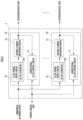
- An activation system 1 of the present embodiment illustrated in FIG. 1 executes activation processing of secondary batteries 30 assembled when manufacturing the secondary batteries 30, which includes a power conversion and control unit 2, a power storage unit 3, a control management device 4, a personal computer 5, N (N is plural) activation device units 10 (only two of them are illustrated), and the like.
- the power storage unit 3, the commercial AC power supply 6, and the N activation device units 10 are electrically connected to the power conversion and control unit 2. Further, the personal computer 5 and the N activation device units 10 are electrically connected to the control management device 4.
- the power storage unit 3 is composed of a combination of a high-capacity battery and an electrical circuit (both of which are not illustrated), and configured to execute power delivery/reception to and from at least one activation device unit 10 under the control of the power conversion and control unit 2 in a manner to be described later.
- the power conversion and control unit 2 is configured to execute control of power delivery/reception between the power storage unit 3 and the activation device unit 10, and control of power supply from the commercial AC power supply 6 to the activation device unit 10.
- the power conversion and control unit 2 in the present embodiment corresponds to a control circuit unit.
- the control management device 4 is configured by a microcomputer including, for example, a CPU, a memory, a storage, input/output interfaces, and the like, to execute transmission/reception of various signals between the activation device unit 10 and the personal computer 5. Specifically, the control management device 4 transmits various detection data and the like from the activation device unit 10 to the personal computer 5, and transmits a command signal to be described later from the personal computer 5 to the activation device unit 10.
- the personal computer 5 controls activation processing of the activation device unit 10. As will be described later, the personal computer 5 determines a process of the activation processing of each activation device unit 10 based on various detection data and the like received from the control management device 4, and transmits a command signal representing the process to each activation device unit 10 through the control management device 4. Thus, the execution state of the activation processing in each activation device unit 10 is controlled. Note that the personal computer 5 in the present embodiment corresponds to an activation controller.
- the power conversion and control unit 2 includes N-set power control circuit units 20, each of which is composed of one bidirectional DC/DC control circuit 21, one AC/DC power supply circuit 22, and one reverse current prevention circuit 23 as one set.
- the one-set power control circuit unit 20 is configured to control power delivery/reception between the power storage unit 3 and one activation device unit 10 in a manner to be described later.
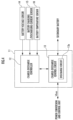
- the bidirectional DC/DC control circuit 21 includes a circuit controller 21a and a bidirectional DC/DC circuit 21b, which is provided between the power storage unit 3 and the activation device unit 10 to be electrically connected to both units.
- voltage in a current path between the bidirectional DC/DC control circuit 21 and a charge-discharge power supply unit 11 of the activation device unit 10 to be described later is called "bus voltage Vbus.”
- the circuit controller 21a is configured by a microcomputer including, for example, a CPU, a memory, a storage, input/output interfaces, and the like.
- a power storage unit voltage sensor 21d and a bus voltage sensor 21e are connected to this circuit controller 21a.
- This power storage unit voltage sensor 21d detects voltage of the power storage unit 3 (hereinafter called “battery voltage Vbat”), and outputs a detection signal representing the voltage to the circuit controller 21a. Note that the battery voltage Vbat in the present embodiment corresponds to a remaining capacity parameter.
- the bus voltage sensor 21e detects bus voltage Vbus and outputs a detection signal representing the bus voltage Vbus to the circuit controller 21a.
- the bus voltage sensor 21e may also be configured to be connected to a charge-discharge controller 12 to be described later so that a signal indicative of the bus voltage Vbus is input from the charge-discharge controller 12 to the circuit controller 21a.
- the bidirectional DC/DC circuit 21b includes a bidirectional DC/DC converter 21c and various electrical circuits (not illustrated).
- the bidirectional DC/DC converter 21c is controlled by the circuit controller 21a to execute discharging operation to transform DC power from the power storage unit 3 and supply the transformed DC power to the activation device unit 10, and charging operation to transform the DC power from the activation device unit 10 and supply the transformed DC power to the power storage unit 3.
- the circuit controller 21a controls the bidirectional DC/DC converter 21c based on the battery voltage Vbat and the operating state of the activation device unit 10 to control charging and discharging between the power storage unit 3 and the activation device unit 10.
- the AC/DC power supply circuit 22 is provided between the commercial AC power supply 6 and the reverse current prevention circuit 23 to be connected to both.
- the AC/DC power supply circuit 22 is configured to include an AC/DC converter 22a and various electrical circuits (not illustrated) to convert AC voltage input from the commercial AC power supply 6 into DC voltage by the AC/DC converter 22a and to always output the converted DC voltage to the side of the reverse current prevention circuit 23.
- voltage on the output side of the AC/DC power supply circuit 22 is called "power supply voltage V1.”
- the reverse current prevention circuit 23 is composed of a combination of a diode and an FET, and an output end thereof is electrically connected to a current path between the bidirectional DC/DC control circuit 21 and the charge-discharge power supply unit 11 of the activation device unit 10.
- This reverse current prevention circuit 23 is configured to always prevent DC from the current path from flowing to the side of the AC/DC power supply circuit 22 when the power supply voltage V1 is less than the bus voltage Vbus, or to always flow the D from the AC/DC power supply circuit 22 to the side of the current path when the power supply voltage V1 is the bus voltage Vbus or more.
- the activation device unit 10 includes M (M is plural) charge-discharge power supply units 11 (only two of them are illustrated). These charge-discharge power supply units 11 execute activation processing of the secondary batteries 30, and each secondary battery 30 to be activated is connected to each charge-discharge power supply unit 11 during the activation processing. In other words, the activation device unit 10 is so configured that activation processing of M secondary batteries 30 can be executed simultaneously.
- a charging process, a pausing process, a discharging process, and a pausing process are executed in sequence as the activation processing.
- activation processing for more than one cycle is executed on each of the secondary batteries 30.
- the charging process is a process in which charging to the secondary battery 30 is executed
- the discharging process is a process in which discharging from the secondary battery 30 is executed.
- a first discharging process or a second discharging process is executed as the discharging process based on whether or not the power storage unit 3 is ready for charging.
- This first discharging process is a process of charging power released from the secondary battery 30 to the power storage unit 3 when the power storage unit 3 is ready for charging.
- the second discharging process is a process of converting power, released from the secondary battery 30 when the power storage unit 3 is not ready for charging, into thermal energy in a discharge circuit 13a to be described later, and discharging the thermal energy.
- the pausing process is a process in which charging to the secondary battery 30 and discharging from the secondary battery 30 are stopped. Note that one cycle of activation processing may be configured to execute the discharging process, the pausing process, the charging process, and the pausing process in this order.
- the charge-discharge power supply unit 11 includes a charge-discharge controller 12 and a charge-discharge control circuit 13.
- the charge-discharge control circuit 13 includes a discharge circuit 13a and various electrical circuits (not illustrated), which is connected to the charge-discharge controller 12 and the secondary battery 30.
- the charge-discharge control circuit 13 is controlled by the charge-discharge controller 12 to execute charging/discharging operation of the secondary battery 30 connected to the charge-discharge control circuit 13.
- the discharge circuit 13a converts power of the secondary battery 30 connected to the charge-discharge control circuit 13 into thermal energy and discharges the thermal energy while the second discharging process described above is being executed.
- the charge-discharge controller 12 is configured by a microcomputer including a CPU, a memory, a storage, input/output interfaces, and the like.
- a battery voltage sensor 14, a battery charging/discharging current sensor 15, and a battery temperature sensor 16 are electrically connected to this charge-discharge controller 12.
- the battery temperature sensor 16 may also be configured to be electrically connected to the control management device 4 instead of the charge-discharge controller 12.
- the battery voltage sensor 14 detects voltage Vsb of the secondary battery 30 connected to the charge-discharge power supply unit 11 (hereinafter called “battery voltage Vsb”), and outputs a detection signal representing the battery voltage Vsb to the charge-discharge controller 12. Further, the battery charging/discharging current sensor 15 detects charging current or discharging current of the secondary battery 30 connected to the charge-discharge power supply unit 11 (hereinafter called “charging/discharging current Isb”), and outputs a detection signal representing the charging/discharging current Isb to the charge-discharge controller 12.
- the battery temperature sensor 16 detects the temperature Tsb of the secondary battery 30 connected to the charge-discharge power supply unit 11 (hereinafter called “battery temperature Tsb"), and outputs a detection signal representing the battery temperature Tsb to the charge-discharge controller 12.
- the charge-discharge controller 12 acquires the battery voltage Vsb, the charging/discharging current Isb, and the battery temperature Tsb, and transmits various detection data including these pieces of data to the personal computer 5 through the control management device 4.
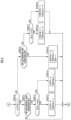
- This process determination processing is to determine a process of activation processing of the activation device unit 10 on the personal computer 5 based on preset conditions and the various detection data described above. More specifically, this process determination processing is executed at a predetermined control cycle for each activation device unit 10. Note that it is assumed that various flag values to be described later are stored in a storage device inside the personal computer 5.
- this process determination processing it is first determined whether or not the current control timing is at the start of control ( FIG. 5 /STEP1). When this determination is positive ( FIG. 5 /STEP1...YES) and the current control timing is at the start of control, a charging process flag F_CHARGE, a pausing process flag F_STOP, a first discharging process flag F_DISCHA_1, and a second discharging process flag F_DISCHA_2 are all set to "0,” and a discharging process end flag F_END is set to "1" ( FIG. 5 /STEP2).
- the charging start conditions are charging process start conditions in the activation device unit 10, and when conditions (c1) and (c2) below are both met, it is determined that the charging start conditions are met, and in the other cases, it is determined that the charging start conditions are not met.
- the battery voltage Vsb of a secondary battery 30 for which the activation processing is to be performed is within a predetermined voltage range.
- the battery temperature Tsb of the secondary battery 30 for which the activation processing is to be performed is within a predetermined temperature range.
- the command signal is output to the control management device 4 ( FIG. 5 /STEP6), and this processing is ended after that.
- charging end conditions are charging process end conditions in the activation device unit 10, and when conditions (c3) and (c4) below are met, it is determined that the charging end conditions are met, and in the other cases, it is determined that charging end conditions are not met.
- the command signal is output to the control management device 4 ( FIG. 5 /STEP6), and this processing is ended after that.
- the discharging start conditions are discharging process start conditions in the activation device unit 10, and when conditions (c5) and (c6) below are met, it is determined that the discharging start conditions are met, and in the other cases, it is determined that the discharging start conditions are not met.
- the battery temperature Tsb is a predetermined determination value or less.
- the battery voltage Vsb is within a predetermined voltage range.
- the pausing process flag F_STOP is set to "0" and the first discharging process flag F_DISCHA_1 is set to "1" ( FIG.6 /STEP13) to represent that the first discharging process should be started by ending the pausing process.
- the first discharging process flag F_DISCHA_1 1
- the first discharging process is executed in the activation device unit 10 in a manner to be described later.
- the command signal is output to the control management device 4 ( FIG. 5 /STEP6), and this processing is ended after that.
- the command signal is output to the control management device 4 ( FIG. 5 /STEP6), and this processing is ended after that.
- the discharging end conditions are end conditions for the first discharging process or the second discharging process in the activation device unit 10, and when conditions (c7) and (c8) below are met, it is determined that the discharging end conditions are met, and in the other cases, it is determined that the discharging end conditions are not met.
- the battery voltage Vsb is a predetermined end value or less. This predetermined end value is set smaller than the predetermined full-charge value described above.
- the first discharging process flag F_DISCHA_1 and the second discharging process flag F_DISCHA_2 are set to "0" and the discharging process end flag F_END is set to "1" ( FIG. 6 /STEP16) to represent that the pausing process should be executed by ending the first discharging process or the second discharging process.
- the command signal is output to the control management device 4 ( FIG. 5 /STEP6), and this processing is ended after that.
- the command signal is output to the control management device 4 ( FIG. 5 /STEP6), and this processing is ended after that.
- the command signal is output to the control management device 4 ( FIG. 5 /STEP6), and this processing is ended after that.
- each process of the activation processing is executed based on the five flag values contained in the command signal from the personal computer 5 simultaneously in respective M charge-discharge controllers 12 of the activation device unit 10 in a manner to be described below.
- the five flag values contained in the command signal are first read ( FIG. 7 /STEP31).
- charging process control is executed ( FIG. 7 /STEP33).
- the charge-discharge control circuit 13 of the activation device unit 10 is so controlled that power from the power conversion and control unit 2 is supplied to the secondary battery 30.
- the charging process in the activation device unit 10 is executed. After the charging process control is executed as described above, this processing is ended.
- first discharging process control is executed ( FIG. 7 /STEP35).
- the charge-discharge control circuit 13 of the activation device unit 10 is so controlled that power of the secondary battery 30 connected to the activation device unit 10 is released to the side of the power conversion and control unit 2.
- the discharging process (the first discharging process) in the activation device unit 10 is executed. After the first discharging process control is executed as above, this processing is ended.
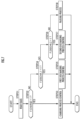
- charge/discharge control processing in the power conversion and control unit 2 will be described.
- This charge/discharge control processing controls charging and discharging between each power control circuit unit 20 and the activation device unit 10 connected to the power control circuit unit 20, and the charge/discharge control processing is executed by each circuit controller 21a.
- this charge/discharge control processing it is first determined whether or not the activation device unit 10 connected to the power control circuit unit 20 is in the discharging process ( FIG. 8 /STEP51). This determination is executed based on a change in bus voltage Vbus.
- This predetermined upper limit value V_H is a threshold value indicating that the power storage unit is ready for charging.
- first control is executed ( FIG. 8 /STEP53).
- power from the activation device unit 10 is voltage-converted by the bidirectional DC/DC converter 21c and charged to the power storage unit 3. After the first control is executed as above, this processing is ended.
- the activation device unit 10 is in the charging process, it is determined whether or not the battery voltage Vbat is a predetermined lower limit value V_L or more ( FIG. 8 /STEP56).
- This predetermined lower limit value V_L is a threshold value indicating that the power storage unit is ready for discharging.
- the bus voltage Vbus is so reduced that the power supply voltage V1 becomes the bus voltage Vbus or more to supply DC power from the AC/DC power supply circuit 22 to the activation device unit 10.
- W in FIG. 9 represents the amount of power change in any activation device unit 10. More specifically, the fact that the amount of change W is a positive value represents that power is being released from the secondary battery 30, the fact that the amount of change W is a negative value represents that power is being charged to the secondary battery 30, and the fact that the amount of change W is 0 value represents that charging/discharging of the secondary battery 30 is being stopped.
- the charging process flag F_CHARGE is set to "1" at the timing (time t1) when the charging start conditions for the charging process is met, and the charging process is executed after that.
- the pausing process flag F_STOP is set to "1" at the timing (time t2) when the charging end conditions are met, and the pausing process is executed after that.
- FIG. 9 illustrates an example in which Vbus ⁇ Vref is satisfied continuously between time t3 and time t4.
- the discharging process end flag F_END is set to "1" at the timing (time t4) when the discharging end conditions are met, and the pausing process is executed after that. Thus, the activation processing for one cycle is ended.
- the charging process flag F_CHARGE is set to "1" at the timing (time t5) when the charging start conditions for the charging process are met, and the charging process is executed after that.
- the pausing process flag F_STOP is set to "1" at the timing (time t6) when the charging end conditions are met, and the pausing process is executed after that.
- FIG. 9 illustrates an example in which Vbus > Vref is satisfied continues between time t7 and time t8.
- the discharging process end flag F_END is set to "1" at the timing (time t8) when the discharging end conditions are met, and the pausing process is executed after that. Thus, the activation processing for one cycle is ended.
- FIG. 9 illustrates an example in which activation processing for two cycles is executed on the secondary battery 30, but the number of cycles of the activation processing is not limited to this example as described above, and the activation system has just to be configured to execute activation processing of the secondary battery 30 for one or more cycles.
- FIG. 10 illustrates an example of operation results of the activation system 1 when activation processing is executed in respective activation device units 10 as described above. Note that FIG. 10 illustrates an operation example when the activation processing is executed in the first, second, and N-th activation device units 10 in order.
- W_1, W_2, and W_N in FIG. 10 represent the amounts of power changes in the entire first, second, and N-th activation device units 10, respectively. More specifically, the fact that the amount of change W_1 is a positive value represents that power is being released from the first activation device unit 10, and the fact that the amount of change W_1 is a negative value represents that power is being charged to the first activation device unit 10. Further, the fact that the amount of change W_1 is 0 value represents that charge/discharge in the first activation device unit 10 is being stopped.
- the charging process is executed in the first, second, and the N-th activation device units 10 in order, and the remaining amount of charge in the power storage unit 3 is reduced to reduce the battery voltage Vbat as the second control described above is automatically executed by the N bidirectional DC/DC control circuits 21.
- the power storage unit 3 will result in executing discharging operation until the timing (time t11) when all of the three activation device units 10 become in the pausing process as indicated by a dashed line in FIG. 10 .
- the power storage unit 3 can avoid over-discharging by stopping the second control mentioned above to make the power storage unit 3 become the standby state.
- the power storage unit 3 will result in executing charging operation until the timing (time t14) when all of the three activation device units 10 become in the pausing process as indicated by a dashed line in FIG. 10 .
- the power storage unit 3 can avoid over-charging by stopping the first control mentioned above to make the power storage unit 3 become the standby state.
- the activation system 1 of the present embodiment in a case where at least one of the N activation device units 10 is executing the first discharging process, when the battery voltage Vbat is the predetermined upper limit value V_H or less, the first control is executed in the charge/discharge control processing of FIG. 8 . Therefore, power released from the activation device unit 10 that is executing the first discharging process is charged to the power storage unit 3. In other words, when the power storage unit 3 is ready for charging, the power released from the first activation device unit 10 that is in the first discharging process is charged to the power storage unit 3.
- the second control is executed in the charge/discharge control processing of FIG. 8 . Therefore, power of the power storage unit 3 is supplied to the activation device unit 10 that is executing the charging process. In other words, when the power storage unit 3 is ready for discharging, the power of the power storage unit 3 is supplied to the activation device unit 10 that is in the charging process.
- the power released from the activation device unit 10 that is in the first discharging process can be charged to the power storage unit 3, while when the power storage unit 3 is ready for discharging, the power of the power storage unit 3 can be supplied to the activation device unit 10 that is in the charging process.
- the power discharged from the activation device unit 10 in the first discharging process can be reused effectively for charging to the activation device unit 10 that is in the charging process.
- the first control is stopped in the charge/discharge control processing of FIG. 8 .
- the second discharging process is executed due to the fact that bus voltage Vbus exceeds the predetermined value Vref.
- the discharge circuits 13a are so controlled that power of the plural secondary batteries 30 in the activation device unit 10 is discharged.
- the second control is stopped in the charge/discharge control processing of FIG. 8 , and AC power of the commercial AC power supply 6 is supplied to the second activation device unit 10 through the AC/DC power supply circuit 22 and the reverse current prevention circuit 23.
- the charging process in the activation device unit 10 can be executed properly by power supply from the commercial AC power supply 6.
- the power supply from the commercial AC power supply 6 can be suppressed. As a result, leveling of power load can be performed as a whole system.
- the embodiment gives the example using the personal computer 5 as the activation controller, but the activation controller of the present invention is not limited to this example, and all the activation controller has to do is to control the execution of the charging process and the discharging process in the activation device unit 10.
- a microcomputer including a CPU, a memory, a storage, input/output interfaces, and the like may also be used as the activation controller.
- the embodiment gives the example in which the activation system 1 is configured to include one personal computer 5, N charge-discharge controllers 12, and N circuit controllers 21a, but one upper-level controller may be configured to serve as the personal computer 5, the N charge-discharge controllers 12, and the N circuit controllers 21a.
- the one upper-level controller may be configured to control the operation of the N activation device units 10 and control the operation of the N bidirectional DC/DC circuits 21b at the same time.
- the one upper-level controller may be configured to serve as the personal computer 5 and the N charge-discharge controllers 12. In this case, the one upper-level controller may be configured to directly control the operation of the N activation device units 10. Further, one circuit controller may be configured to serve as the N circuit controllers 21a. In this case, the one circuit controller may be configured to control the operation of the N bidirectional DC/DC control circuits 21.
- the embodiment gives the example in which the one personal computer 5 is used to control the N activation device units 10, but the configuration may also be such that the personal computer 5 and the control management device 4 are provided for each activation device unit 10 to control one activation device unit 10 by one personal computer 5 through one control management device 4.
- the embodiment gives the example in which the commercial AC power supply is used as the power supply, but a DC generator, an AC generator, a high-capacity battery, or the like may also be used instead of the commercial AC power supply.
- the configuration may be such that a charging rate SOC (State of Charge) as the remaining capacity parameter is calculated by the circuit controller 21a, and this charging rate SOC is compared with a predetermined lower limit value SOC_L and a predetermined upper limit value SOC_H to execute/stop the charge/discharge control between the activation device unit 10 and the power storage unit 3.
- SOC State of Charge
- the embodiment gives the example of the configuration in which one-set power control circuit includes the reverse current prevention circuit 23, but the configuration may also be such that an electrical circuit such as a relay is used instead of this reverse current prevention circuit 23 and the operation of this electrical circuit is controlled by the charge-discharge controller 12 to control supply/stop of power output from the AC/DC power supply circuit 22 to the side of the activation device unit 10.
- the embodiment gives the example in which the discharge circuit 13a is provided in the activation device unit 10, but instead of this example, the configuration may also be such that the discharge circuit 13a is provided outside of the activation device unit 10.
Landscapes
- Engineering & Computer Science (AREA)
- Power Engineering (AREA)
- Manufacturing & Machinery (AREA)
- Chemical & Material Sciences (AREA)
- Chemical Kinetics & Catalysis (AREA)
- Electrochemistry (AREA)
- General Chemical & Material Sciences (AREA)
- Charge And Discharge Circuits For Batteries Or The Like (AREA)
- Secondary Cells (AREA)
Abstract
Description
- The present invention relates to a secondary battery activation system that executes secondary battery activation processing.
- As the secondary battery activation system, there is known an activation apparatus disclosed in
Japanese Patent Application Laid-Open No. 2021-182525 - In this activation apparatus, a pre-process, a mid-term process, and a post-process are executed as the activation processing. In this pre-process, charging processing is executed by a first charge/discharge device on secondary batteries stored on a first loading shelf, and in the mid-term process, charge/discharge processing to repeat charging and discharging is executed by a second charge/discharge device on secondary batteries stored on a second loading shelf.
- Further, in the post-process, charge/discharge processing to repeat charging and discharging at a power level higher than that in the mid-term process is executed by a third charge/discharge device on secondary batteries stored on a third loading shelf.
- Patent Literature 1:
Japanese Patent Application Laid-Open No. 2021-182525 - In a secondary battery activation system, a method of converting power into thermal energy using a discharge circuit is generally known as a method of executing a secondary battery discharge process. In the case of this method, power stored in secondary batteries cannot be reused. In addition to this, power consumption increases due to the fact that power is required for air conditioning to process exhaust heat and the like because of converting the discharge power into thermal energy and processing the thermal energy.
- Further, as another method of executing the secondary battery discharge process, there is also known a method of using a combination of a commercial AC power supply and a bidirectional AC/DC converter as a power supply to cause the AC/DC converter to convert discharge power of the secondary batteries into AC power and regenerate the AC power. In the case of this method, when the voltage of the secondary batteries is low, the regenerative power cannot be obtained effectively because the power conversion efficiency when the discharge power of the secondary batteries is converted to AC power by the bidirectional AC/DC converter is low.
- The present invention has been made to solve the above problems, and it is an object thereof to provide a secondary battery activation system capable of reusing, in a charging process, discharge power in a discharging process when activating secondary batteries, and capable of saving energy.
- In order to achieve the above object, an invention according to
Claim 1 is a secondary battery activation system for executing activation processes including a charging process to execute charging to a secondary battery and a discharging process to execute discharging from the secondary battery in order to activate the secondary battery, including: a power storage unit capable of charging/discharging power; N (N is plural) activation device units, each of which is connected to a plurality of secondary batteries, respectively, and configured to be able to execute the charging process and the discharging process; an activation controller that controls the execution of the charging process and the discharging process in the N activation device units; a control circuit unit connected to the power storage unit and the N activation device units and configured to be able to execute power delivery/reception operation between the power storage unit and the activation device units; and a circuit controller that controls the power delivery/reception operation by the control circuit unit, wherein in a case where a first activation device unit as at least one of the N activation device units is controlled by the activation controller to execute the discharging process, when a remaining capacity parameter as either one of a voltage and a charging rate of the power storage unit is within a range of a predetermined upper limit value or less to indicate that the power storage unit is ready for charging, the circuit controller executes first control to control the control circuit unit to charge power released from the first activation device unit to the power storage unit, and in a case where a second activation device unit as at least one of the N activation device units is controlled by the activation controller to execute the charging process, when the remaining capacity parameter is within a range of a predetermined lower limit value or more to indicate that the power storage unit is ready for discharging, the circuit controller executes second control to control the control circuit unit to supply power of the power storage unit to the second activation device unit. - According to this secondary battery activation system, in the case where the first activation device unit as at least one of the N activation device units is controlled by the activation controller to execute the discharging process, when the remaining capacity parameter as either one of the voltage and the charging rate of the power storage unit is within the range of the predetermined upper limit value or less to indicate that the power storage unit is ready for charging, the first control is executed by the circuit controller to control the control circuit unit to charge power released from the first activation device unit to the power storage unit. Therefore, when the power storage unit is ready for charging/discharging, the power released from the first activation device unit that is in the discharging process is charged to the power storage unit.
- Further, in the case where the second activation device unit as at least one of the N activation device units is controlled by the activation controller to execute the charging process, when the remaining capacity parameter of the power storage unit is within the range of the predetermined lower limit value or more to indicate that the power storage unit is ready for discharging, the second control is executed by the circuit controller to control the control circuit unit to supply power of the power storage unit to the second activation device unit. Therefore, when the power storage unit is ready for charging/discharging, the power of the power storage unit is charged to the second activation device unit that is in the charging process.
- As described above, when the power storage unit is ready for charging/discharging, power released from the plurality of secondary batteries of the activation device units that are in the discharging process can be charged to the power storage unit, and the power of the power storage unit can be supplied to the plurality of batteries of the activation device units that are in the charging process. Therefore, discharge power from the plurality of secondary batteries of the activation device units that are in the discharging process can be reused effectively for charging the plurality of batteries of the activation device units that are in the charging process.
- An invention according to
Claim 2 is the secondary battery activation system according toClaim 1, further including a discharge circuit for converting power of the plurality of secondary batteries in each of the N activation device units into thermal energy and discharging the thermal energy, wherein when the remaining capacity parameter of the power storage unit exceeds the predetermined upper limit value, the circuit controller stops the first control, and when the circuit controller is stopping the first control while the activation controller is controlling the first activation device unit to execute the discharging process, the activation controller controls the discharge circuit to discharge, by the discharge circuit, the power of the plurality of secondary batteries in the first activation device unit. - According to this secondary battery activation system, when the remaining capacity parameter of the power storage unit exceeds the predetermined upper limit value, that is, when the power storage unit is not ready for charging, the first control is stopped by the circuit controller. Then, when the circuit controller is stopping the first control while the first activation device unit is executing the discharging process, the discharge circuit is controlled by the activation controller to discharge, by the discharge circuit, the power of the plurality of secondary batteries in the first activation device unit. Therefore, when the power storage unit is not ready for charging, charging to the power storage unit is so stopped that the power storage unit can avoid over-charging and hence the power storage unit can be protected.
- An invention according to Claim 3 is the secondary battery activation system according to
Claim - According to this secondary battery activation system, when the remaining capacity parameter of the power storage unit is less than the predetermined lower limit value while the second activation device unit is executing the charging process, the second control is stopped by the control circuit unit and the power of the power supply is supplied to the second activation device unit. Therefore, even when the power supply from the power storage unit to the second activation device unit is stopped due to the fact that the power storage unit is not ready for discharging, the charging process in the second activation device unit can be executed properly by supplying power from the power supply. In addition to this, since discharge power from the secondary batteries during the discharging process can be reused effectively for charging to the secondary batteries in the charging process, the power supplied from the power supply can be suppressed. As a result, leveling of power load can be performed as a whole system.
- An invention according to Claim 4 is the secondary battery activation system according to Claim 3, the power supply is a commercial AC power supply, and the control circuit unit has an AC/DC power supply circuit including an AC/DC converter to convert AC power from the commercial AC power supply into DC power.
- According to this secondary battery activation system, the AC power from the commercial AC power supply can be converted to DC power by the AC/DC converter of the AC/DC power supply circuit to execute the charging process of the activation device units using the DC power. Therefore, power used in the charging process can be easily secured.
- An invention according to
Claim 5 is the secondary battery activation system according toClaim - According to this secondary battery activation system, when the power storage unit is ready for charging during the execution of the first control, power released from the first activation device unit that is in the discharging process can be charged to the power storage unit. On the other hand, when the power storage unit is not ready for discharging while the second activation device unit is executing the charging process, the charging process of the second activation device unit can be executed by the power supplied from the commercial AC power supply. Further, the control circuit unit capable of obtaining the above effects can be realized by using the bidirectional DC/DC circuit including the bidirectional DC/DC converter and the AC/DC power supply circuit including the AC/DC converter. In addition to this, since the discharge power from the secondary batteries during the discharging process can be reused effectively for charging to the secondary batteries in the charging process, power supplied from the commercial AC power supply can be suppressed, and hence leveling of power load can be performed as a whole system.
-
-
FIG. 1 is a block diagram illustrating the configuration of a secondary battery activation system according to one embodiment of the present invention. -
FIG. 2 is a block diagram illustrating the configuration of a power conversion and control unit. -
FIG. 3 is a block diagram illustrating the configuration of a bidirectional DC/DC control circuit. -
FIG. 4 is a block diagram illustrating the configuration of a charge-discharge power supply unit. -
FIG. 5 is a flowchart illustrating process determination processing. -
FIG. 6 is a flowchart illustrating a continuation ofFIG. 5 . -
FIG. 7 is a flowchart illustrating activation processing. -
FIG. 8 is a flowchart illustrating charge/discharge control processing. -
FIG. 9 is a timing chart illustrating an execution state of activation processing in an activation device unit. -
FIG. 10 is a timing chart illustrating an execution state of activation processing in the activation system. - A secondary battery activation system according to one embodiment of the present invention will be described below with reference to the accompanying drawings. An
activation system 1 of the present embodiment illustrated inFIG. 1 executes activation processing ofsecondary batteries 30 assembled when manufacturing thesecondary batteries 30, which includes a power conversion andcontrol unit 2, a power storage unit 3, a control management device 4, apersonal computer 5, N (N is plural) activation device units 10 (only two of them are illustrated), and the like. - In the case of this
activation system 1, the power storage unit 3, the commercialAC power supply 6, and the Nactivation device units 10 are electrically connected to the power conversion andcontrol unit 2. Further, thepersonal computer 5 and the Nactivation device units 10 are electrically connected to the control management device 4. - The power storage unit 3 is composed of a combination of a high-capacity battery and an electrical circuit (both of which are not illustrated), and configured to execute power delivery/reception to and from at least one
activation device unit 10 under the control of the power conversion andcontrol unit 2 in a manner to be described later. - As will be described later, the power conversion and
control unit 2 is configured to execute control of power delivery/reception between the power storage unit 3 and theactivation device unit 10, and control of power supply from the commercialAC power supply 6 to theactivation device unit 10. Note that the power conversion andcontrol unit 2 in the present embodiment corresponds to a control circuit unit. - The control management device 4 is configured by a microcomputer including, for example, a CPU, a memory, a storage, input/output interfaces, and the like, to execute transmission/reception of various signals between the
activation device unit 10 and thepersonal computer 5. Specifically, the control management device 4 transmits various detection data and the like from theactivation device unit 10 to thepersonal computer 5, and transmits a command signal to be described later from thepersonal computer 5 to theactivation device unit 10. - The
personal computer 5 controls activation processing of theactivation device unit 10. As will be described later, thepersonal computer 5 determines a process of the activation processing of eachactivation device unit 10 based on various detection data and the like received from the control management device 4, and transmits a command signal representing the process to eachactivation device unit 10 through the control management device 4. Thus, the execution state of the activation processing in eachactivation device unit 10 is controlled. Note that thepersonal computer 5 in the present embodiment corresponds to an activation controller. - As illustrated in
FIG. 2 , the power conversion andcontrol unit 2 includes N-set powercontrol circuit units 20, each of which is composed of one bidirectional DC/DC control circuit 21, one AC/DCpower supply circuit 22, and one reversecurrent prevention circuit 23 as one set. The one-set powercontrol circuit unit 20 is configured to control power delivery/reception between the power storage unit 3 and oneactivation device unit 10 in a manner to be described later. - As illustrated in
FIG. 3 , the bidirectional DC/DC control circuit 21 includes acircuit controller 21a and a bidirectional DC/DC circuit 21b, which is provided between the power storage unit 3 and theactivation device unit 10 to be electrically connected to both units. In the following description, voltage in a current path between the bidirectional DC/DC control circuit 21 and a charge-dischargepower supply unit 11 of theactivation device unit 10 to be described later is called "bus voltage Vbus." - The
circuit controller 21a is configured by a microcomputer including, for example, a CPU, a memory, a storage, input/output interfaces, and the like. A power storageunit voltage sensor 21d and abus voltage sensor 21e are connected to thiscircuit controller 21a. - This power storage
unit voltage sensor 21d detects voltage of the power storage unit 3 (hereinafter called "battery voltage Vbat"), and outputs a detection signal representing the voltage to thecircuit controller 21a. Note that the battery voltage Vbat in the present embodiment corresponds to a remaining capacity parameter. - Further, the
bus voltage sensor 21e detects bus voltage Vbus and outputs a detection signal representing the bus voltage Vbus to thecircuit controller 21a. Note that thebus voltage sensor 21e may also be configured to be connected to a charge-discharge controller 12 to be described later so that a signal indicative of the bus voltage Vbus is input from the charge-discharge controller 12 to thecircuit controller 21a. - The bidirectional DC/DC circuit 21b includes a bidirectional DC/
DC converter 21c and various electrical circuits (not illustrated). The bidirectional DC/DC converter 21c is controlled by thecircuit controller 21a to execute discharging operation to transform DC power from the power storage unit 3 and supply the transformed DC power to theactivation device unit 10, and charging operation to transform the DC power from theactivation device unit 10 and supply the transformed DC power to the power storage unit 3. - As will be described later, the
circuit controller 21a controls the bidirectional DC/DC converter 21c based on the battery voltage Vbat and the operating state of theactivation device unit 10 to control charging and discharging between the power storage unit 3 and theactivation device unit 10. - Further, the AC/DC
power supply circuit 22 is provided between the commercialAC power supply 6 and the reversecurrent prevention circuit 23 to be connected to both. The AC/DCpower supply circuit 22 is configured to include an AC/DC converter 22a and various electrical circuits (not illustrated) to convert AC voltage input from the commercialAC power supply 6 into DC voltage by the AC/DC converter 22a and to always output the converted DC voltage to the side of the reversecurrent prevention circuit 23. In the following description, voltage on the output side of the AC/DCpower supply circuit 22 is called "power supply voltage V1." - Further, the reverse
current prevention circuit 23 is composed of a combination of a diode and an FET, and an output end thereof is electrically connected to a current path between the bidirectional DC/DC control circuit 21 and the charge-dischargepower supply unit 11 of theactivation device unit 10. - This reverse
current prevention circuit 23 is configured to always prevent DC from the current path from flowing to the side of the AC/DCpower supply circuit 22 when the power supply voltage V1 is less than the bus voltage Vbus, or to always flow the D from the AC/DCpower supply circuit 22 to the side of the current path when the power supply voltage V1 is the bus voltage Vbus or more. - Next, the
activation device unit 10 will be described. As illustrated inFIG. 1 , theactivation device unit 10 includes M (M is plural) charge-discharge power supply units 11 (only two of them are illustrated). These charge-dischargepower supply units 11 execute activation processing of thesecondary batteries 30, and eachsecondary battery 30 to be activated is connected to each charge-dischargepower supply unit 11 during the activation processing. In other words, theactivation device unit 10 is so configured that activation processing of Msecondary batteries 30 can be executed simultaneously. - Further, in one cycle of activation processing, a charging process, a pausing process, a discharging process, and a pausing process are executed in sequence as the activation processing. In this case, activation processing for more than one cycle is executed on each of the
secondary batteries 30. The charging process is a process in which charging to thesecondary battery 30 is executed, and the discharging process is a process in which discharging from thesecondary battery 30 is executed. - In the case of the present embodiment, as will be described later, a first discharging process or a second discharging process is executed as the discharging process based on whether or not the power storage unit 3 is ready for charging. This first discharging process is a process of charging power released from the
secondary battery 30 to the power storage unit 3 when the power storage unit 3 is ready for charging. Further, the second discharging process is a process of converting power, released from thesecondary battery 30 when the power storage unit 3 is not ready for charging, into thermal energy in adischarge circuit 13a to be described later, and discharging the thermal energy. - Further, the pausing process is a process in which charging to the
secondary battery 30 and discharging from thesecondary battery 30 are stopped. Note that one cycle of activation processing may be configured to execute the discharging process, the pausing process, the charging process, and the pausing process in this order. - As illustrated in
FIG. 4 , the charge-dischargepower supply unit 11 includes a charge-discharge controller 12 and a charge-discharge control circuit 13. The charge-discharge control circuit 13 includes adischarge circuit 13a and various electrical circuits (not illustrated), which is connected to the charge-discharge controller 12 and thesecondary battery 30. The charge-discharge control circuit 13 is controlled by the charge-discharge controller 12 to execute charging/discharging operation of thesecondary battery 30 connected to the charge-discharge control circuit 13. - Further, the
discharge circuit 13a converts power of thesecondary battery 30 connected to the charge-discharge control circuit 13 into thermal energy and discharges the thermal energy while the second discharging process described above is being executed. - On the other hand, the charge-
discharge controller 12 is configured by a microcomputer including a CPU, a memory, a storage, input/output interfaces, and the like. Abattery voltage sensor 14, a battery charging/dischargingcurrent sensor 15, and abattery temperature sensor 16 are electrically connected to this charge-discharge controller 12. Note that thebattery temperature sensor 16 may also be configured to be electrically connected to the control management device 4 instead of the charge-discharge controller 12. - The
battery voltage sensor 14 detects voltage Vsb of thesecondary battery 30 connected to the charge-discharge power supply unit 11 (hereinafter called "battery voltage Vsb"), and outputs a detection signal representing the battery voltage Vsb to the charge-discharge controller 12. Further, the battery charging/dischargingcurrent sensor 15 detects charging current or discharging current of thesecondary battery 30 connected to the charge-discharge power supply unit 11 (hereinafter called "charging/discharging current Isb"), and outputs a detection signal representing the charging/discharging current Isb to the charge-discharge controller 12. - Further, the
battery temperature sensor 16 detects the temperature Tsb of thesecondary battery 30 connected to the charge-discharge power supply unit 11 (hereinafter called "battery temperature Tsb"), and outputs a detection signal representing the battery temperature Tsb to the charge-discharge controller 12. - Based on the detection signals of the above three
sensors 14 to 16, the charge-discharge controller 12 acquires the battery voltage Vsb, the charging/discharging current Isb, and the battery temperature Tsb, and transmits various detection data including these pieces of data to thepersonal computer 5 through the control management device 4. - Referring next to
FIG. 5 andFIG. 6 , process determination processing will be described. This process determination processing is to determine a process of activation processing of theactivation device unit 10 on thepersonal computer 5 based on preset conditions and the various detection data described above. More specifically, this process determination processing is executed at a predetermined control cycle for eachactivation device unit 10. Note that it is assumed that various flag values to be described later are stored in a storage device inside thepersonal computer 5. - In this process determination processing, it is first determined whether or not the current control timing is at the start of control (
FIG. 5 /STEP1). When this determination is positive (FIG. 5 /STEP1...YES) and the current control timing is at the start of control, a charging process flag F_CHARGE, a pausing process flag F_STOP, a first discharging process flag F_DISCHA_1, and a second discharging process flag F_DISCHA_2 are all set to "0," and a discharging process end flag F_END is set to "1" (FIG. 5 /STEP2). - On the other hand, when the above determination is negative (
FIG. 5 /STEP1...NO) and the current control timing is not at the start of control, or after five flag setting processing is executed as mentioned above, it is determined whether or not the discharging process end flag F_END is "1" (FIG. 5 /STEP3). This discharging process end flag F_END is set to "1" at the start of control as mentioned above, or set to "1" when theactivation device unit 10 as a control target is in the pausing process after the discharging process is ended. - When this determination is positive (
FIG. 5 /STEP3...YES), that is, at the start of control, or when theactivation device unit 10 as the control target is in the pausing process after the discharging process is ended, it is determined whether or not charging start conditions are met (FIG. 5 /STEP4). - The charging start conditions are charging process start conditions in the
activation device unit 10, and when conditions (c1) and (c2) below are both met, it is determined that the charging start conditions are met, and in the other cases, it is determined that the charging start conditions are not met. - (c1) The battery voltage Vsb of a
secondary battery 30 for which the activation processing is to be performed is within a predetermined voltage range. - (c2) The battery temperature Tsb of the
secondary battery 30 for which the activation processing is to be performed is within a predetermined temperature range. - When the above determination is negative (
FIG. 5 /STEP4...NO) and the charging start conditions are not met, a command signal is output to the control management device 4 (FIG. 5 /STEP6). This command signal contains the above five flag values. After that, this processing is ended. - On the other hand, when this determination is positive (
FIG. 5 /STEP4... YES) and the charging start conditions are met, the charging process flag F_CHARGE is set to "1" and the discharging process end flag F_END is set to "0" (FIG. 5 /STEP5) to represent that effect. In this case, when the charging process flag F_CHARGE = 1, the charging process is executed in theactivation device unit 10 in a manner to be described later. - Next, as described above, the command signal is output to the control management device 4 (
FIG. 5 /STEP6), and this processing is ended after that. - On the other hand, when the determination described above is negative (
FIG. 5 /STEP3...NO) and the discharging process end flag F_END = 0, it is determined whether or not the charging process flag F_CHARGE is "1" (FIG. 5 /STEP7). - When this determination is positive (
FIG. 5 /STEP7... YES) and the charging process is being executed in theactivation device unit 10, it is determined whether or not charging end conditions are met (FIG. 5 /STEP8). The charging end conditions are charging process end conditions in theactivation device unit 10, and when conditions (c3) and (c4) below are met, it is determined that the charging end conditions are met, and in the other cases, it is determined that charging end conditions are not met. - (c3) The battery voltage Vsb reaches a predetermined full-charge value.
- (c4) A predetermined set time has passed since the start of the charging process.
- When this determination is negative (
FIG. 5 /STEP8...NO) and the charging end conditions are not met, the command signal is output to the control management device 4 (FIG. 5 /STEP6) as described above, and this processing is ended after that. - On the other hand, when this determination is positive (
FIG. 5 /STEP8... YES) and the charging end conditions are met, the charging process flag F_CHARGE is set to "0" and the pausing process flag F_STOP is set to "1" (FIG. 5 /STEP9) to represent that the pausing process should be executed by ending the charging process. - Next, as described above, the command signal is output to the control management device 4 (
FIG. 5 /STEP6), and this processing is ended after that. - On the other hand, when the determination described above is negative (
FIG. 5 /STEP7...NO) and the charging process is not executed in theactivation device unit 10, it is determined whether or not the pausing process flag F_STOP is "1" (FIG. 6 /STEP10). - When this determination is positive (
FIG. 6 /STEP10... YES) and the pausing process after the charging process is being executed, it is determined whether or not discharging start conditions are met (FIG. 6 /STEP11). - The discharging start conditions are discharging process start conditions in the
activation device unit 10, and when conditions (c5) and (c6) below are met, it is determined that the discharging start conditions are met, and in the other cases, it is determined that the discharging start conditions are not met. - (c5) The battery temperature Tsb is a predetermined determination value or less.
- (c6) The battery voltage Vsb is within a predetermined voltage range.
- When this determination is negative (
FIG. 6 /STEP11...NO) and the discharging start conditions are not met, the command signal is output to the control management device 4 as described above (FIG. 5 /STEP6), and this processing is ended after that. - On the other hand, when this determination is positive (
FIG. 6 /STEP11... YES) and the discharging start conditions are met, it is determined whether or not the bus voltage Vbus is larger than a predetermined value Vref (FIG. 6 /STEP12). - When this determination is negative (STEP12...NO), the pausing process flag F_STOP is set to "0" and the first discharging process flag F_DISCHA_1 is set to "1" (
FIG.6 /STEP13) to represent that the first discharging process should be started by ending the pausing process. In this case, when the first discharging process flag F_DISCHA_1 = 1, the first discharging process is executed in theactivation device unit 10 in a manner to be described later. - Next, as described above, the command signal is output to the control management device 4 (
FIG. 5 /STEP6), and this processing is ended after that. - On the other hand, when this determination is positive (
FIG. 6 /STEP12... YES) and Vbus > Vref is satisfied, the pausing process flag F_STOP is set to "0" and the second discharging process flag F_DISCHA_2 is set to "1" to represent that the second discharging process should be executed by stopping the pausing process (FIG. 6 /STEP14). In this case, when the second discharging process flag F _DISCHA_2 = 1, the second discharging process is executed in theactivation device unit 10 in a manner to be described later. - Next, as described above, the command signal is output to the control management device 4 (
FIG. 5 /STEP6), and this processing is ended after that. - On the other hand, when the determination described above is negative (
FIG. 6 /STEP10...NO) and the first discharging process or the second discharging process is being executed, it is determined whether or not discharging end conditions are met (FIG. 6 /STEP15). - The discharging end conditions are end conditions for the first discharging process or the second discharging process in the
activation device unit 10, and when conditions (c7) and (c8) below are met, it is determined that the discharging end conditions are met, and in the other cases, it is determined that the discharging end conditions are not met. - (c7) The battery voltage Vsb is a predetermined end value or less. This predetermined end value is set smaller than the predetermined full-charge value described above.
- (c8) A predetermined set time has passed since the start of the discharging process.
- When this determination is positive (
FIG. 6 /STEP15... YES) and the discharging end conditions are met, the first discharging process flag F_DISCHA_1 and the second discharging process flag F_DISCHA_2 are set to "0" and the discharging process end flag F_END is set to "1" (FIG. 6 /STEP16) to represent that the pausing process should be executed by ending the first discharging process or the second discharging process. - Next, as described above, the command signal is output to the control management device 4 (
FIG. 5 /STEP6), and this processing is ended after that. - On the other hand, when this determination is negative (
FIG. 6 /STEP15... NO) and the discharging end conditions are not met, it is determined whether or not the bus voltage Vbus is larger than the predetermined value Vref (FIG. 6 /STEP17). - When this determination is negative (
FIG. 6 /STEP17...NO) and Vbus ≤ Vref is satisfied, the first discharging process flag F_DISCHA_1 is set to "1" and the second discharging process flag F_DISCHA_2 is set to "0" (FIG. 6 /STEP18) to represent that the first discharging process should be executed. - Next, as described above, the command signal is output to the control management device 4 (
FIG. 5 /STEP6), and this processing is ended after that. - On the other hand, when this determination is positive (
FIG. 6 /STEP17... YES) and Vbus > Vref is satisfied, the second discharging process flag F _DISCHA_2 is set to "1" and the first discharging process flag F_DISCHA_1 is set to "0" to represent that the second discharging process should be executed (FIG. 6 /STEP19). - Next, as described above, the command signal is output to the control management device 4 (
FIG. 5 /STEP6), and this processing is ended after that. - Referring next to
FIG. 7 , activation processing in theactivation device unit 10 will be described. In this activation processing, each process of the activation processing is executed based on the five flag values contained in the command signal from thepersonal computer 5 simultaneously in respective M charge-discharge controllers 12 of theactivation device unit 10 in a manner to be described below. - As illustrated in
FIG. 7 , the five flag values contained in the command signal are first read (FIG. 7 /STEP31). - Next, it is determined whether or not the charging process flag F_CHARGE described above is "1" (
FIG. 7 /STEP32). - When this determination is positive (
FIG. 7 /STEP32... YES) and the charging process flag F_CHARGE = 1, charging process control is executed (FIG. 7 /STEP33). In this charging process control, the charge-discharge control circuit 13 of theactivation device unit 10 is so controlled that power from the power conversion andcontrol unit 2 is supplied to thesecondary battery 30. In other words, the charging process in theactivation device unit 10 is executed. After the charging process control is executed as described above, this processing is ended. - On the other hand, when the determination described above is negative (
FIG. 7 /STEP32...NO) and the charging process flag F_CHARGE = 0, it is determined whether or not the first discharging process flag F_DISCHA_1 is "1" (FIG. 7 /STEP34). - When this determination is positive (
FIG. 7 /STEP34.. YES) and the first discharging process flag F_DISCHA_1 = 1, first discharging process control is executed (FIG. 7 /STEP35). In this first discharging process control, the charge-discharge control circuit 13 of theactivation device unit 10 is so controlled that power of thesecondary battery 30 connected to theactivation device unit 10 is released to the side of the power conversion andcontrol unit 2. In other words, the discharging process (the first discharging process) in theactivation device unit 10 is executed. After the first discharging process control is executed as above, this processing is ended. - On the other hand, when the determination described above is negative (
FIG. 7 /STEP34... NO) and the first discharging process flag F_DISCHA_1 = 0, it is determined whether or not the second discharging process flag F_DISCHA_2 is "1" (FIG. 7 /STEP36). - When this determination is positive (
FIG. 7 /STEP36... YES) and the second discharging process flag F_DISCHA_2 = 1, second discharging process control is executed (FIG. 7 /STEP37). In this second discharging process control, thedischarge circuit 13a in the charge-discharge control circuit 13 of theactivation device unit 10 is so controlled that power of thesecondary battery 30 connected to theactivation device unit 10 is converted to thermal energy by thedischarge circuit 13a and released to the outside. In other words, the discharging process (the second discharging process) in theactivation device unit 10 is executed. After the second discharging process control is executed as above, this processing is ended. - On the other hand, when the determination described above is negative (
FIG. 7 /STEP36... NO) and the second discharging process flag F_DISCHA_2 = 0, that is, when the pausing process flag F_STOP = 1 or the discharging process end flag F_END = 1, the pausing process is executed (FIG. 7 /STEP38). In this pausing process, the operation of the charge-discharge control circuit 13 of theactivation device unit 10 is stopped. This results in a state where power does not flow between theactivation device unit 10 and the power conversion andcontrol unit 2. After the pausing process is executed as above, this processing is ended. - Referring next to
FIG. 8 , charge/discharge control processing in the power conversion andcontrol unit 2 will be described. This charge/discharge control processing controls charging and discharging between each powercontrol circuit unit 20 and theactivation device unit 10 connected to the powercontrol circuit unit 20, and the charge/discharge control processing is executed by eachcircuit controller 21a. - As illustrated in
FIG. 8 , in this charge/discharge control processing, it is first determined whether or not theactivation device unit 10 connected to the powercontrol circuit unit 20 is in the discharging process (FIG. 8 /STEP51). This determination is executed based on a change in bus voltage Vbus. - When this determination is positive (STEP51... YES) and the
activation device unit 10 is in the discharging process, it is determined whether or not the battery voltage Vbat is a predetermined upper limit value V_H or less (FIG. 8 /STEP52). This predetermined upper limit value V_H is a threshold value indicating that the power storage unit is ready for charging. - When this determination is positive (
FIG. 8 /STEP52... YES) and Vbat ≤ V_H is satisfied, first control is executed (FIG. 8 /STEP53). In this first control, power from theactivation device unit 10 is voltage-converted by the bidirectional DC/DC converter 21c and charged to the power storage unit 3. After the first control is executed as above, this processing is ended. - On the other hand, when the determination described above is negative (
FIG. 8 /STEP52...NO) and Vbat > V_H is satisfied, charging operation to the power storage unit 3 is stopped (FIG. 8 /STEP54). This results in a state where charging current does not flow through the bidirectional DC/DC converter 21c. After that, this processing is ended. - Note that, in a case where the
activation device unit 10 is in the discharging process as above, when the charging operation to the power storage unit 3 in the power conversion andcontrol unit 2 is stopped, such a state that the bus voltage Vbus exceeds the predetermined value Vref occurs as described above, and the second discharging process is executed in theactivation device unit 10. - On the other hand, when the determination described above is negative (STEP51...NO) and the
activation device unit 10 is not in the discharging process, it is determined whether or not theactivation device unit 10 is in the charging process (FIG. 8 /STEP55). This determination is executed based on the change in bus voltage Vbus described above. - When this determination is negative (
FIG. 8 /STEP55...NO) and theactivation device unit 10 does not execute both the charging process and the discharging process, that is, when theactivation device unit 10 is in the pausing process, the charging/discharging operation is stopped as described above (FIG. 8 /STEP54). After that, this processing is ended. - On the other hand, when this determination is positive (
FIG. 8 /STEP55... YES) and theactivation device unit 10 is in the charging process, it is determined whether or not the battery voltage Vbat is a predetermined lower limit value V_L or more (FIG. 8 /STEP56). This predetermined lower limit value V_L is a threshold value indicating that the power storage unit is ready for discharging. - When this determination is positive (
FIG. 8 /STEP56... YES) and Vbat ≥ V_L is satisfied, second control is executed (FIG. 8 /STEP57). In this second control, power of the power storage unit 3 is voltage-converted by the bidirectional DC/DC converter 21c and supplied to theactivation device unit 10. After the second control is executed as above, this processing is ended. - On the other hand, when this determination is negative (
FIG. 8 /STEP56... NO) and Vbat < V_L is satisfied, the charging/discharging operation is stopped as described above (FIG. 8 /STEP54). After that, this processing is ended. - Note that, in a case where the
activation device unit 10 is in the charging process as above, when the charging/discharging operation in the power conversion andcontrol unit 2 is stopped, the bus voltage Vbus is so reduced that the power supply voltage V1 becomes the bus voltage Vbus or more to supply DC power from the AC/DCpower supply circuit 22 to theactivation device unit 10. - Referring next to
FIG. 9 , an example of control results when the above various control processing ofFIG. 5 to FIG. 8 is executed will be described. W inFIG. 9 represents the amount of power change in anyactivation device unit 10. More specifically, the fact that the amount of change W is a positive value represents that power is being released from thesecondary battery 30, the fact that the amount of change W is a negative value represents that power is being charged to thesecondary battery 30, and the fact that the amount of change W is 0 value represents that charging/discharging of thesecondary battery 30 is being stopped. - As illustrated in
FIG. 9 , when theactivation device unit 10 is in the pausing process, the charging process flag F_CHARGE is set to "1" at the timing (time t1) when the charging start conditions for the charging process is met, and the charging process is executed after that. - Then, as the progress of the charging process, charging to the
secondary battery 30 progresses, the pausing process flag F_STOP is set to "1" at the timing (time t2) when the charging end conditions are met, and the pausing process is executed after that. - Then, in a case where the charge-discharge
power supply unit 11 is in the pausing process after the end of the charging process, when Vbus ≤ Vref is satisfied at the timing (time t3) at which the discharging start conditions are met, the first discharging process flag F_DISCHA_1 is set to "1," and the first discharging process is executed after that. On the other hand, if Vbus > Vref is satisfied at the timing (time t3) when the discharging start conditions are met, the second discharging process flag F_DISCHA_2 will be set to "1," and the second discharging process will be executed after that. Note thatFIG. 9 illustrates an example in which Vbus ≤ Vref is satisfied continuously between time t3 and time t4. - Then, as the first discharging process continuously progresses due to the fact that the state where Vbus ≤ Vref continues, the discharging process end flag F_END is set to "1" at the timing (time t4) when the discharging end conditions are met, and the pausing process is executed after that. Thus, the activation processing for one cycle is ended.
- After that, during the pausing process, the charging process flag F_CHARGE is set to "1" at the timing (time t5) when the charging start conditions for the charging process are met, and the charging process is executed after that.
- Then, as the progress of the charging process, charging to the
secondary battery 30 progresses, and the pausing process flag F_STOP is set to "1" at the timing (time t6) when the charging end conditions are met, and the pausing process is executed after that. - After that, in a case where the charge-discharge
power supply unit 11 is in the pausing process, if Vbus ≤ Vref is satisfied at the timing (time t7) when the discharging start conditions are met, the first discharging process flag F_DISCHA_1 will be set to "1," and the first discharging process will be executed after that. On the other hand, when Vbus > Vref is satisfied at the timing (time t7) at which the discharging start conditions are met, the second discharging process flag F_DISCHA_2 is set to "1," and the second discharging process is executed after that. Note thatFIG. 9 illustrates an example in which Vbus > Vref is satisfied continues between time t7 and time t8. - Then, as the second discharging process continuously progresses due to the fact that the state where Vbus > Vref continues, the discharging process end flag F_END is set to "1" at the timing (time t8) when the discharging end conditions are met, and the pausing process is executed after that. Thus, the activation processing for one cycle is ended.
- Note that
FIG. 9 illustrates an example in which activation processing for two cycles is executed on thesecondary battery 30, but the number of cycles of the activation processing is not limited to this example as described above, and the activation system has just to be configured to execute activation processing of thesecondary battery 30 for one or more cycles. - Referring next to
FIG. 10 , an example of operation results of theactivation system 1 when activation processing is executed in respectiveactivation device units 10 as described above will be described. Note thatFIG. 10 illustrates an operation example when the activation processing is executed in the first, second, and N-thactivation device units 10 in order. - Further, W_1, W_2, and W_N in
FIG. 10 represent the amounts of power changes in the entire first, second, and N-thactivation device units 10, respectively. More specifically, the fact that the amount of change W_1 is a positive value represents that power is being released from the firstactivation device unit 10, and the fact that the amount of change W_1 is a negative value represents that power is being charged to the firstactivation device unit 10. Further, the fact that the amount of change W_1 is 0 value represents that charge/discharge in the firstactivation device unit 10 is being stopped. - As illustrated in
FIG. 10 , the charging process is executed in the first, second, and the N-thactivation device units 10 in order, and the remaining amount of charge in the power storage unit 3 is reduced to reduce the battery voltage Vbat as the second control described above is automatically executed by the N bidirectional DC/DC control circuits 21. - Then, at the timing (time t10) when Vbat < V_L is satisfied, the second control in the charge/discharge control processing of
FIG. 8 described above is stopped to make the power storage unit 3 become a standby state. Along with that, the bus voltage Vbus is reduced and V1 ≥ Vbus is satisfied to make DC from the AC/DCpower supply circuit 22 flow to the side of theactivation device unit 10. - Note that, if the second control described above is not stopped at the timing (time t10) when Vbat < V_L is satisfied, the power storage unit 3 will result in executing discharging operation until the timing (time t11) when all of the three
activation device units 10 become in the pausing process as indicated by a dashed line inFIG. 10 . - In contrast, in the
activation system 1 of the present embodiment, it is found that the power storage unit 3 can avoid over-discharging by stopping the second control mentioned above to make the power storage unit 3 become the standby state. - Then, after the timing (time t12) of starting the first discharging process in the first
activation device unit 10, the remaining amount of charge in the power storage unit 3 increases as the first control is executed in the charge/discharge control processing ofFIG. 8 described above. - Then, at the timing (time t13) when Vbat > V_H is satisfied as the first discharging process progresses, the first control described above is stopped to make the power storage unit 3 become the standby state.
- Along with that, since the bus voltage Vbus increases and Vbus > Vref is satisfied, the second discharging process described above results in being executed in the three
activation device units 10 after that. - Note that, if the first control described above is not stopped by the three bidirectional DC/
DC control circuits 21 at the timing (time t13) when Vbat > V_H is satisfied, the power storage unit 3 will result in executing charging operation until the timing (time t14) when all of the threeactivation device units 10 become in the pausing process as indicated by a dashed line inFIG. 10 . - In contrast, in the
activation system 1 of the present embodiment, it is found that the power storage unit 3 can avoid over-charging by stopping the first control mentioned above to make the power storage unit 3 become the standby state. - Then, in a period (between time t15 to time t21) after the end of the pausing process and the start of the charging process in the first
activation device unit 10, the same operation as above is executed. - As described above, according to the
activation system 1 of the present embodiment, in a case where at least one of the Nactivation device units 10 is executing the first discharging process, when the battery voltage Vbat is the predetermined upper limit value V_H or less, the first control is executed in the charge/discharge control processing ofFIG. 8 . Therefore, power released from theactivation device unit 10 that is executing the first discharging process is charged to the power storage unit 3. In other words, when the power storage unit 3 is ready for charging, the power released from the firstactivation device unit 10 that is in the first discharging process is charged to the power storage unit 3. - Further, in a case where at least one of the N
activation device units 10 is executing the charging process, when the battery voltage Vbat is the predetermined lower limit value V_L or more, the second control is executed in the charge/discharge control processing ofFIG. 8 . Therefore, power of the power storage unit 3 is supplied to theactivation device unit 10 that is executing the charging process. In other words, when the power storage unit 3 is ready for discharging, the power of the power storage unit 3 is supplied to theactivation device unit 10 that is in the charging process. - Thus, when the power storage unit 3 is ready for charging, the power released from the
activation device unit 10 that is in the first discharging process can be charged to the power storage unit 3, while when the power storage unit 3 is ready for discharging, the power of the power storage unit 3 can be supplied to theactivation device unit 10 that is in the charging process. As a result, the power discharged from theactivation device unit 10 in the first discharging process can be reused effectively for charging to theactivation device unit 10 that is in the charging process. - Further, when the power storage unit 3 is not ready for charging due to the fact that the battery voltage Vbat exceeds the predetermined upper limit value V_H, the first control is stopped in the charge/discharge control processing of
FIG. 8 . At that time, when the discharging start conditions are met in theactivation device unit 10, the second discharging process is executed due to the fact that bus voltage Vbus exceeds the predetermined value Vref. In other words, thedischarge circuits 13a are so controlled that power of the pluralsecondary batteries 30 in theactivation device unit 10 is discharged. As described above, when the power storage unit 3 is not ready for charging, charging to the power storage unit 3 is stopped. Therefore, the power storage unit 3 can avoid over-charging, and the power storage unit 3 can be protected. - Further, according to the
activation system 1 of the present embodiment, in the case where at least oneactivation device unit 10 is executing the charging process, when the battery voltage Vbat is less than the predetermined lower limit value V_L, the second control is stopped in the charge/discharge control processing ofFIG. 8 , and AC power of the commercialAC power supply 6 is supplied to the secondactivation device unit 10 through the AC/DCpower supply circuit 22 and the reversecurrent prevention circuit 23. - Therefore, even when power supply from the power storage unit 3 to the
activation device unit 10 that is executing the charging process is stopped due to the fact that the power storage unit 3 is not ready for discharging, the charging process in theactivation device unit 10 can be executed properly by power supply from the commercialAC power supply 6. In addition to this, as described above, since discharge power from thesecondary battery 30 during the discharging process can be reused effectively for charging to thesecondary battery 30 in the charging process, the power supply from the commercialAC power supply 6 can be suppressed. As a result, leveling of power load can be performed as a whole system. - Note that the embodiment gives the example using the
personal computer 5 as the activation controller, but the activation controller of the present invention is not limited to this example, and all the activation controller has to do is to control the execution of the charging process and the discharging process in theactivation device unit 10. For example, a microcomputer including a CPU, a memory, a storage, input/output interfaces, and the like may also be used as the activation controller. - Further, the embodiment gives the example in which the
activation system 1 is configured to include onepersonal computer 5, N charge-discharge controllers 12, andN circuit controllers 21a, but one upper-level controller may be configured to serve as thepersonal computer 5, the N charge-discharge controllers 12, and theN circuit controllers 21a. In this case, the one upper-level controller may be configured to control the operation of the Nactivation device units 10 and control the operation of the N bidirectional DC/DC circuits 21b at the same time. - Further, the one upper-level controller may be configured to serve as the
personal computer 5 and the N charge-discharge controllers 12. In this case, the one upper-level controller may be configured to directly control the operation of the Nactivation device units 10. Further, one circuit controller may be configured to serve as theN circuit controllers 21a. In this case, the one circuit controller may be configured to control the operation of the N bidirectional DC/DC control circuits 21. - Further, the embodiment gives the example in which the one
personal computer 5 is used to control the Nactivation device units 10, but the configuration may also be such that thepersonal computer 5 and the control management device 4 are provided for eachactivation device unit 10 to control oneactivation device unit 10 by onepersonal computer 5 through one control management device 4. - On the other hand, the embodiment gives the example in which the commercial AC power supply is used as the power supply, but a DC generator, an AC generator, a high-capacity battery, or the like may also be used instead of the commercial AC power supply.
- Further, the configuration may be such that a charging rate SOC (State of Charge) as the remaining capacity parameter is calculated by the
circuit controller 21a, and this charging rate SOC is compared with a predetermined lower limit value SOC_L and a predetermined upper limit value SOC_H to execute/stop the charge/discharge control between theactivation device unit 10 and the power storage unit 3. - Further, the embodiment gives the example of the configuration in which one-set power control circuit includes the reverse
current prevention circuit 23, but the configuration may also be such that an electrical circuit such as a relay is used instead of this reversecurrent prevention circuit 23 and the operation of this electrical circuit is controlled by the charge-discharge controller 12 to control supply/stop of power output from the AC/DCpower supply circuit 22 to the side of theactivation device unit 10. - On the other hand, the embodiment gives the example in which the
discharge circuit 13a is provided in theactivation device unit 10, but instead of this example, the configuration may also be such that thedischarge circuit 13a is provided outside of theactivation device unit 10. -
- 1
- activation system
- 2
- power conversion and control unit (control circuit unit)
- 3
- power storage unit
- 5
- personal computer (activation controller)
- 6
- commercial AC power supply
- 10
- activation device unit
- 13a
- discharge circuit
- 21a
- circuit controller
- 21b
- bidirectional DC/DC circuit
- 21c
- bidirectional DC/DC converter
- 22
- AC/DC power supply circuit
- 22a
- AC/DC converter
- 30
- secondary battery
- Vbat
- voltage of power storage unit (remaining capacity parameter)
- V_H
- predetermined upper limit value
- V_L
- predetermined lower limit value
Claims (5)
- A secondary battery activation system for executing activation processes including a charging process to execute charging to a secondary battery and a discharging process to execute discharging from the secondary battery in order to activate the secondary battery, comprising:a power storage unit capable of charging/discharging power;N (N is plural) activation device units, each of which is connected to a plurality of the secondary batteries, respectively, and configured to be able to execute the charging process and the discharging process;an activation controller that controls the execution of the charging process and the discharging process in the N activation device units;a control circuit unit connected to the power storage unit and the N activation device units and configured to be able to execute power delivery/reception operation between the power storage unit and the activation device units; anda circuit controller that controls the power delivery/reception operation by the control circuit unit, whereinin a case where a first activation device unit as at least one of the N activation device units is controlled by the activation controller to execute the discharging process, when a remaining capacity parameter as either one of a voltage and a charging rate of the power storage unit is within a range of a predetermined upper limit value or less to indicate that the power storage unit is in a state for charging, the circuit controller executes first control to control the control circuit unit to charge power released from the first activation device unit to the power storage unit, andin a case where a second activation device unit as at least one of the N activation device units is controlled by the activation controller to execute the charging process, when the remaining capacity parameter is within a range of a predetermined lower limit value or more to indicate that the power storage unit is in a state for discharging, the circuit controller executes second control to control the control circuit unit to supply power of the power storage unit to the second activation device unit.
- The secondary battery activation system according to Claim 1, further comprisinga discharge circuit for converting power of the plurality of secondary batteries in each of the N activation device units into thermal energy and discharging the thermal energy, whereinwhen the remaining capacity parameter of the power storage unit exceeds the predetermined upper limit value, the circuit controller stops the first control, andwhen the circuit controller is stopping the first control while the activation controller is controlling the first activation device unit to execute the discharging process, the activation controller controls the discharge circuit to discharge, by the discharge circuit, the power of the plurality of secondary batteries in the first activation device unit.
- The secondary battery activation system according to Claim 1 or 2,a power supply is connected to the control circuit unit, andin the case where the second activation device unit is controlled by the activation controller to execute the charging process, when the remaining capacity parameter of the power storage unit is less than the predetermined lower limit value, the circuit controller stops the second control and controls the control circuit unit to supply power of the power supply to the second activation device unit.
- The secondary battery activation system according to Claim 3,the power supply is a commercial AC power supply, andthe control circuit unit has an AC/DC power supply circuit including an AC/DC converter to convert AC power from the commercial AC power supply into DC power.
- The secondary battery activation system according to Claim 1 or 2,a commercial AC power supply is connected to the control circuit unit, andthe control circuit unit hasa bidirectional DC/DC circuit connected to the power storage unit and each of the N activation device units and including a bidirectional DC/DC converter, andan AC/DC power supply circuit connected to the commercial AC power supply and including an AC/DC converter, whereinthe circuit controller controls the control circuit unit to supply, by the bidirectional DC/DC circuit, power released from the first activation device unit to the power storage unit during the execution of the first control, andin the case where the second activation device unit is controlled by the activation controller to execute the charging process, when the remaining capacity parameter of the power storage unit is less than the predetermined lower limit value, the circuit controller stops the second control, and controls the control circuit unit to covert, by the AC/DC power supply circuit, AC power of the commercial AC power supply into DC power and to supply the DC power to the second activation device unit.
Applications Claiming Priority (2)
| Application Number | Priority Date | Filing Date | Title |
|---|---|---|---|
| JP2022132352A JP7406271B1 (en) | 2022-08-23 | 2022-08-23 | Secondary battery activation system |
| PCT/JP2023/020346 WO2024042806A1 (en) | 2022-08-23 | 2023-05-31 | Secondary battery activation system |
Publications (2)
| Publication Number | Publication Date |
|---|---|
| EP4510298A1 true EP4510298A1 (en) | 2025-02-19 |
| EP4510298A4 EP4510298A4 (en) | 2025-07-30 |
Family
ID=89307893
Family Applications (1)
| Application Number | Title | Priority Date | Filing Date |
|---|---|---|---|
| EP23856924.8A Pending EP4510298A4 (en) | 2022-08-23 | 2023-05-31 | Secondary battery activation system |
Country Status (8)
| Country | Link |
|---|---|
| US (1) | US20260005533A1 (en) |
| EP (1) | EP4510298A4 (en) |
| JP (1) | JP7406271B1 (en) |
| KR (1) | KR20250006184A (en) |
| CN (1) | CN119563251A (en) |
| CA (1) | CA3255887A1 (en) |
| TW (1) | TWI857649B (en) |
| WO (1) | WO2024042806A1 (en) |
Families Citing this family (1)
| Publication number | Priority date | Publication date | Assignee | Title |
|---|---|---|---|---|
| CN121666678A (en) * | 2024-03-29 | 2026-03-13 | 株式会社Lg新能源 | System control apparatus and system control method for battery charging/discharging system |
Family Cites Families (5)
| Publication number | Priority date | Publication date | Assignee | Title |
|---|---|---|---|---|
| JP2002078229A (en) | 2000-08-22 | 2002-03-15 | Sony Corp | Secondary battery charge / discharge device |
| JP2011182555A (en) | 2010-03-01 | 2011-09-15 | Panasonic Electric Works Co Ltd | Power supply system |
| ES2975858T3 (en) * | 2014-10-13 | 2024-07-16 | 24M Tech Inc | Systems and methods of charging and forming batteries in series |
| CN114586220B (en) * | 2019-10-23 | 2024-05-03 | 加拿大电池能源公司 | Method and system for battery formation |
| JP7388291B2 (en) | 2020-05-20 | 2023-11-29 | 株式会社豊田自動織機 | Secondary battery activation device and activation method |
-
2022
- 2022-08-23 JP JP2022132352A patent/JP7406271B1/en active Active
-
2023
- 2023-05-31 WO PCT/JP2023/020346 patent/WO2024042806A1/en not_active Ceased
- 2023-05-31 KR KR1020247038616A patent/KR20250006184A/en active Pending
- 2023-05-31 CN CN202380052719.7A patent/CN119563251A/en active Pending
- 2023-05-31 EP EP23856924.8A patent/EP4510298A4/en active Pending
- 2023-05-31 CA CA3255887A patent/CA3255887A1/en active Pending
- 2023-05-31 US US18/880,971 patent/US20260005533A1/en active Pending
- 2023-06-12 TW TW112121795A patent/TWI857649B/en active
Also Published As
| Publication number | Publication date |
|---|---|
| CA3255887A1 (en) | 2025-03-18 |
| JP2024029896A (en) | 2024-03-07 |
| US20260005533A1 (en) | 2026-01-01 |
| TW202410525A (en) | 2024-03-01 |
| TWI857649B (en) | 2024-10-01 |
| JP7406271B1 (en) | 2023-12-27 |
| EP4510298A4 (en) | 2025-07-30 |
| CN119563251A (en) | 2025-03-04 |
| KR20250006184A (en) | 2025-01-10 |
| WO2024042806A1 (en) | 2024-02-29 |
Similar Documents
| Publication | Publication Date | Title |
|---|---|---|
| EP2685598B1 (en) | Charge control device for vehicle | |
| US9145062B2 (en) | Charge control device for vehicle | |
| US20180361859A1 (en) | Charging facility and energy management method for charging facility | |
| US10063070B2 (en) | Battery active balancing system | |
| US20210021134A1 (en) | Storage system | |
| EP3664205A1 (en) | Power supply system and control method therefor | |
| CN102959790A (en) | A method for monitoring the charging process of a battery | |
| EP3761493A1 (en) | Dc-dc converter control apparatus and dc-dc converter control method | |
| EP4510298A1 (en) | Secondary battery activation system | |
| WO2024250675A1 (en) | Charging device and power distribution method | |
| JP7185750B2 (en) | Charging/discharging device, charging/discharging system, and charging/discharging control method | |
| JP2021191044A (en) | Power control system | |
| CN119170899A (en) | A lithium battery intelligent management method, terminal device and computer readable storage medium | |
| KR20180049545A (en) | Battery pack with multi-charging function and energy storage system considered extensibility of battery pack | |
| KR20180049543A (en) | Energy storage system considered extensibility of battery pack and method for controlling therefor | |
| JP2025181921A (en) | Charging device and charging method | |
| JP2020205671A (en) | Charging system | |
| EP4016794A1 (en) | Photovoltaic system with energy storage and method of controlling the system | |
| CN117895556A (en) | Energy storage system and control method thereof | |
| KR20210084001A (en) | Apparatus and method for managing charging of vehicle supplementary battery | |
| US20240128788A1 (en) | Power storage system | |
| US20240166086A1 (en) | Method and system for controlling battery of vehicle, and vehicle thereof | |
| JP2025150601A (en) | Solar Charging System | |
| JP4601507B2 (en) | Air conditioning system | |
| CN118353112A (en) | A multi-battery charging and discharging logic control method, system and device |
Legal Events
| Date | Code | Title | Description |
|---|---|---|---|
| STAA | Information on the status of an ep patent application or granted ep patent |
Free format text: STATUS: THE INTERNATIONAL PUBLICATION HAS BEEN MADE |
|
| PUAI | Public reference made under article 153(3) epc to a published international application that has entered the european phase |
Free format text: ORIGINAL CODE: 0009012 |
|
| STAA | Information on the status of an ep patent application or granted ep patent |
Free format text: STATUS: REQUEST FOR EXAMINATION WAS MADE |
|
| 17P | Request for examination filed |
Effective date: 20241113 |
|
| AK | Designated contracting states |
Kind code of ref document: A1 Designated state(s): AL AT BE BG CH CY CZ DE DK EE ES FI FR GB GR HR HU IE IS IT LI LT LU LV MC ME MK MT NL NO PL PT RO RS SE SI SK SM TR |
|
| STAA | Information on the status of an ep patent application or granted ep patent |
Free format text: STATUS: EXAMINATION IS IN PROGRESS |
|
| A4 | Supplementary search report drawn up and despatched |
Effective date: 20250630 |
|
| RIC1 | Information provided on ipc code assigned before grant |
Ipc: H01M 10/44 20060101AFI20250624BHEP Ipc: H02J 7/02 20160101ALI20250624BHEP Ipc: H02J 7/00 20060101ALI20250624BHEP Ipc: H02J 7/34 20060101ALI20250624BHEP |
|
| 17Q | First examination report despatched |
Effective date: 20250711 |
|
| DAV | Request for validation of the european patent (deleted) | ||
| DAX | Request for extension of the european patent (deleted) | ||
| GRAP | Despatch of communication of intention to grant a patent |
Free format text: ORIGINAL CODE: EPIDOSNIGR1 |
|
| STAA | Information on the status of an ep patent application or granted ep patent |
Free format text: STATUS: GRANT OF PATENT IS INTENDED |
|
| INTG | Intention to grant announced |
Effective date: 20260324 |