EP4510221A1 - Cathode material and preparation method thereof and sodium ion battery - Google Patents
Cathode material and preparation method thereof and sodium ion battery Download PDFInfo
- Publication number
- EP4510221A1 EP4510221A1 EP24155956.6A EP24155956A EP4510221A1 EP 4510221 A1 EP4510221 A1 EP 4510221A1 EP 24155956 A EP24155956 A EP 24155956A EP 4510221 A1 EP4510221 A1 EP 4510221A1
- Authority
- EP
- European Patent Office
- Prior art keywords
- cathode material
- preparation
- coating layer
- tannic acid
- prussian blue
- Prior art date
- Legal status (The legal status is an assumption and is not a legal conclusion. Google has not performed a legal analysis and makes no representation as to the accuracy of the status listed.)
- Pending
Links
- 239000010406 cathode material Substances 0.000 title claims abstract description 78
- 238000002360 preparation method Methods 0.000 title claims abstract description 38
- 229910001415 sodium ion Inorganic materials 0.000 title claims abstract description 34
- FKNQFGJONOIPTF-UHFFFAOYSA-N Sodium cation Chemical compound [Na+] FKNQFGJONOIPTF-UHFFFAOYSA-N 0.000 title claims abstract description 31
- DCYOBGZUOMKFPA-UHFFFAOYSA-N iron(2+);iron(3+);octadecacyanide Chemical compound [Fe+2].[Fe+2].[Fe+2].[Fe+3].[Fe+3].[Fe+3].[Fe+3].N#[C-].N#[C-].N#[C-].N#[C-].N#[C-].N#[C-].N#[C-].N#[C-].N#[C-].N#[C-].N#[C-].N#[C-].N#[C-].N#[C-].N#[C-].N#[C-].N#[C-].N#[C-] DCYOBGZUOMKFPA-UHFFFAOYSA-N 0.000 claims abstract description 119
- 229960003351 prussian blue Drugs 0.000 claims abstract description 117
- 239000013225 prussian blue Substances 0.000 claims abstract description 117
- TUSDEZXZIZRFGC-UHFFFAOYSA-N 1-O-galloyl-3,6-(R)-HHDP-beta-D-glucose Natural products OC1C(O2)COC(=O)C3=CC(O)=C(O)C(O)=C3C3=C(O)C(O)=C(O)C=C3C(=O)OC1C(O)C2OC(=O)C1=CC(O)=C(O)C(O)=C1 TUSDEZXZIZRFGC-UHFFFAOYSA-N 0.000 claims abstract description 45
- 239000001263 FEMA 3042 Substances 0.000 claims abstract description 45
- LRBQNJMCXXYXIU-PPKXGCFTSA-N Penta-digallate-beta-D-glucose Natural products OC1=C(O)C(O)=CC(C(=O)OC=2C(=C(O)C=C(C=2)C(=O)OC[C@@H]2[C@H]([C@H](OC(=O)C=3C=C(OC(=O)C=4C=C(O)C(O)=C(O)C=4)C(O)=C(O)C=3)[C@@H](OC(=O)C=3C=C(OC(=O)C=4C=C(O)C(O)=C(O)C=4)C(O)=C(O)C=3)[C@H](OC(=O)C=3C=C(OC(=O)C=4C=C(O)C(O)=C(O)C=4)C(O)=C(O)C=3)O2)OC(=O)C=2C=C(OC(=O)C=3C=C(O)C(O)=C(O)C=3)C(O)=C(O)C=2)O)=C1 LRBQNJMCXXYXIU-PPKXGCFTSA-N 0.000 claims abstract description 45
- LRBQNJMCXXYXIU-NRMVVENXSA-N tannic acid Chemical compound OC1=C(O)C(O)=CC(C(=O)OC=2C(=C(O)C=C(C=2)C(=O)OC[C@@H]2[C@H]([C@H](OC(=O)C=3C=C(OC(=O)C=4C=C(O)C(O)=C(O)C=4)C(O)=C(O)C=3)[C@@H](OC(=O)C=3C=C(OC(=O)C=4C=C(O)C(O)=C(O)C=4)C(O)=C(O)C=3)[C@@H](OC(=O)C=3C=C(OC(=O)C=4C=C(O)C(O)=C(O)C=4)C(O)=C(O)C=3)O2)OC(=O)C=2C=C(OC(=O)C=3C=C(O)C(O)=C(O)C=3)C(O)=C(O)C=2)O)=C1 LRBQNJMCXXYXIU-NRMVVENXSA-N 0.000 claims abstract description 45
- 229940033123 tannic acid Drugs 0.000 claims abstract description 45
- 235000015523 tannic acid Nutrition 0.000 claims abstract description 45
- 229920002258 tannic acid Polymers 0.000 claims abstract description 45
- 239000011247 coating layer Substances 0.000 claims abstract description 42
- 239000000758 substrate Substances 0.000 claims abstract description 35
- 239000000463 material Substances 0.000 claims abstract description 22
- REYJJPSVUYRZGE-UHFFFAOYSA-N Octadecylamine Chemical compound CCCCCCCCCCCCCCCCCCN REYJJPSVUYRZGE-UHFFFAOYSA-N 0.000 claims abstract description 14
- 239000011248 coating agent Substances 0.000 claims abstract description 12
- 238000000576 coating method Methods 0.000 claims abstract description 12
- 229920000642 polymer Polymers 0.000 claims abstract description 12
- DIOHEXPTUTVCNX-UHFFFAOYSA-N 1,1,1-trifluoro-n-phenyl-n-(trifluoromethylsulfonyl)methanesulfonamide Chemical compound FC(F)(F)S(=O)(=O)N(S(=O)(=O)C(F)(F)F)C1=CC=CC=C1 DIOHEXPTUTVCNX-UHFFFAOYSA-N 0.000 claims abstract description 5
- URJIJZCEKHSLHA-UHFFFAOYSA-N 3,3,4,4,5,5,6,6,7,7,8,8,9,9,10,10,10-heptadecafluorodecane-1-thiol Chemical compound FC(F)(F)C(F)(F)C(F)(F)C(F)(F)C(F)(F)C(F)(F)C(F)(F)C(F)(F)CCS URJIJZCEKHSLHA-UHFFFAOYSA-N 0.000 claims abstract description 5
- UHGIMQLJWRAPLT-UHFFFAOYSA-N octadecyl dihydrogen phosphate Chemical compound CCCCCCCCCCCCCCCCCCOP(O)(O)=O UHGIMQLJWRAPLT-UHFFFAOYSA-N 0.000 claims abstract description 5
- FJLUATLTXUNBOT-UHFFFAOYSA-N 1-Hexadecylamine Chemical compound CCCCCCCCCCCCCCCCN FJLUATLTXUNBOT-UHFFFAOYSA-N 0.000 claims abstract description 4
- MLXDKRSDUJLNAB-UHFFFAOYSA-N triethoxy(3,3,4,4,5,5,6,6,7,7,8,8,9,9,10,10,10-heptadecafluorodecyl)silane Chemical compound CCO[Si](OCC)(OCC)CCC(F)(F)C(F)(F)C(F)(F)C(F)(F)C(F)(F)C(F)(F)C(F)(F)C(F)(F)F MLXDKRSDUJLNAB-UHFFFAOYSA-N 0.000 claims abstract description 4
- 238000006243 chemical reaction Methods 0.000 claims description 24
- 239000011734 sodium Substances 0.000 claims description 24
- XLYOFNOQVPJJNP-UHFFFAOYSA-N water Substances O XLYOFNOQVPJJNP-UHFFFAOYSA-N 0.000 claims description 21
- LFQSCWFLJHTTHZ-UHFFFAOYSA-N Ethanol Chemical compound CCO LFQSCWFLJHTTHZ-UHFFFAOYSA-N 0.000 claims description 20
- WSFSSNUMVMOOMR-UHFFFAOYSA-N Formaldehyde Chemical compound O=C WSFSSNUMVMOOMR-UHFFFAOYSA-N 0.000 claims description 17
- 239000002243 precursor Substances 0.000 claims description 17
- 239000002904 solvent Substances 0.000 claims description 15
- VHUUQVKOLVNVRT-UHFFFAOYSA-N Ammonium hydroxide Chemical compound [NH4+].[OH-] VHUUQVKOLVNVRT-UHFFFAOYSA-N 0.000 claims description 14
- 235000011114 ammonium hydroxide Nutrition 0.000 claims description 14
- -1 formaldehyde, ammonium ions Chemical class 0.000 claims description 8
- CSCPPACGZOOCGX-UHFFFAOYSA-N Acetone Chemical compound CC(C)=O CSCPPACGZOOCGX-UHFFFAOYSA-N 0.000 claims description 6
- LYCAIKOWRPUZTN-UHFFFAOYSA-N Ethylene glycol Chemical compound OCCO LYCAIKOWRPUZTN-UHFFFAOYSA-N 0.000 claims description 6
- OKKJLVBELUTLKV-UHFFFAOYSA-N Methanol Chemical compound OC OKKJLVBELUTLKV-UHFFFAOYSA-N 0.000 claims description 6
- 239000000126 substance Substances 0.000 claims description 6
- WYURNTSHIVDZCO-UHFFFAOYSA-N Tetrahydrofuran Chemical compound C1CCOC1 WYURNTSHIVDZCO-UHFFFAOYSA-N 0.000 claims description 4
- 238000002156 mixing Methods 0.000 claims description 4
- 229910052759 nickel Inorganic materials 0.000 claims description 3
- 239000002245 particle Substances 0.000 claims description 3
- 229910052802 copper Inorganic materials 0.000 claims description 2
- 229910052742 iron Inorganic materials 0.000 claims description 2
- 229910052748 manganese Inorganic materials 0.000 claims description 2
- YLQBMQCUIZJEEH-UHFFFAOYSA-N tetrahydrofuran Natural products C=1C=COC=1 YLQBMQCUIZJEEH-UHFFFAOYSA-N 0.000 claims description 2
- 229910052725 zinc Inorganic materials 0.000 claims description 2
- 238000003860 storage Methods 0.000 abstract description 11
- 238000005516 engineering process Methods 0.000 abstract description 2
- 239000000243 solution Substances 0.000 description 28
- 150000003839 salts Chemical class 0.000 description 16
- 239000000203 mixture Substances 0.000 description 8
- 230000000052 comparative effect Effects 0.000 description 7
- 238000012360 testing method Methods 0.000 description 7
- DGAQECJNVWCQMB-PUAWFVPOSA-M Ilexoside XXIX Chemical compound C[C@@H]1CC[C@@]2(CC[C@@]3(C(=CC[C@H]4[C@]3(CC[C@@H]5[C@@]4(CC[C@@H](C5(C)C)OS(=O)(=O)[O-])C)C)[C@@H]2[C@]1(C)O)C)C(=O)O[C@H]6[C@@H]([C@H]([C@@H]([C@H](O6)CO)O)O)O.[Na+] DGAQECJNVWCQMB-PUAWFVPOSA-M 0.000 description 6
- 239000008367 deionised water Substances 0.000 description 6
- 229910021641 deionized water Inorganic materials 0.000 description 6
- 239000010410 layer Substances 0.000 description 6
- PXHVJJICTQNCMI-UHFFFAOYSA-N nickel Substances [Ni] PXHVJJICTQNCMI-UHFFFAOYSA-N 0.000 description 6
- 229910052708 sodium Inorganic materials 0.000 description 6
- 239000008098 formaldehyde solution Substances 0.000 description 5
- 238000009736 wetting Methods 0.000 description 5
- 238000001035 drying Methods 0.000 description 4
- 229910052751 metal Inorganic materials 0.000 description 4
- 239000002184 metal Substances 0.000 description 4
- 238000000034 method Methods 0.000 description 4
- 238000000498 ball milling Methods 0.000 description 3
- 230000001351 cycling effect Effects 0.000 description 3
- 239000003792 electrolyte Substances 0.000 description 3
- 230000002209 hydrophobic effect Effects 0.000 description 3
- 238000012986 modification Methods 0.000 description 3
- 230000004048 modification Effects 0.000 description 3
- SBLRHMKNNHXPHG-UHFFFAOYSA-N 4-fluoro-1,3-dioxolan-2-one Chemical compound FC1COC(=O)O1 SBLRHMKNNHXPHG-UHFFFAOYSA-N 0.000 description 2
- XKRFYHLGVUSROY-UHFFFAOYSA-N Argon Chemical compound [Ar] XKRFYHLGVUSROY-UHFFFAOYSA-N 0.000 description 2
- OIFBSDVPJOWBCH-UHFFFAOYSA-N Diethyl carbonate Chemical compound CCOC(=O)OCC OIFBSDVPJOWBCH-UHFFFAOYSA-N 0.000 description 2
- KMTRUDSVKNLOMY-UHFFFAOYSA-N Ethylene carbonate Chemical compound O=C1OCCO1 KMTRUDSVKNLOMY-UHFFFAOYSA-N 0.000 description 2
- 238000006683 Mannich reaction Methods 0.000 description 2
- SECXISVLQFMRJM-UHFFFAOYSA-N N-Methylpyrrolidone Chemical compound CN1CCCC1=O SECXISVLQFMRJM-UHFFFAOYSA-N 0.000 description 2
- 239000002033 PVDF binder Substances 0.000 description 2
- 239000007864 aqueous solution Substances 0.000 description 2
- 239000003153 chemical reaction reagent Substances 0.000 description 2
- 230000007613 environmental effect Effects 0.000 description 2
- 238000010030 laminating Methods 0.000 description 2
- 239000007788 liquid Substances 0.000 description 2
- 230000014759 maintenance of location Effects 0.000 description 2
- 230000003287 optical effect Effects 0.000 description 2
- 229920002981 polyvinylidene fluoride Polymers 0.000 description 2
- 230000008569 process Effects 0.000 description 2
- 239000000047 product Substances 0.000 description 2
- 238000005096 rolling process Methods 0.000 description 2
- 239000002002 slurry Substances 0.000 description 2
- NLJMYIDDQXHKNR-UHFFFAOYSA-K sodium citrate Chemical compound O.O.[Na+].[Na+].[Na+].[O-]C(=O)CC(O)(CC([O-])=O)C([O-])=O NLJMYIDDQXHKNR-UHFFFAOYSA-K 0.000 description 2
- 239000001509 sodium citrate Substances 0.000 description 2
- 238000005406 washing Methods 0.000 description 2
- 230000004580 weight loss Effects 0.000 description 2
- 238000004804 winding Methods 0.000 description 2
- QGZKDVFQNNGYKY-UHFFFAOYSA-N Ammonia Chemical compound N QGZKDVFQNNGYKY-UHFFFAOYSA-N 0.000 description 1
- 229910021380 Manganese Chloride Inorganic materials 0.000 description 1
- GLFNIEUTAYBVOC-UHFFFAOYSA-L Manganese chloride Chemical compound Cl[Mn]Cl GLFNIEUTAYBVOC-UHFFFAOYSA-L 0.000 description 1
- 238000006845 Michael addition reaction Methods 0.000 description 1
- 239000002262 Schiff base Substances 0.000 description 1
- 150000004753 Schiff bases Chemical class 0.000 description 1
- VYPSYNLAJGMNEJ-UHFFFAOYSA-N Silicium dioxide Chemical compound O=[Si]=O VYPSYNLAJGMNEJ-UHFFFAOYSA-N 0.000 description 1
- 239000013543 active substance Substances 0.000 description 1
- 229910052782 aluminium Inorganic materials 0.000 description 1
- XAGFODPZIPBFFR-UHFFFAOYSA-N aluminium Chemical compound [Al] XAGFODPZIPBFFR-UHFFFAOYSA-N 0.000 description 1
- QGZKDVFQNNGYKY-UHFFFAOYSA-O ammonium group Chemical group [NH4+] QGZKDVFQNNGYKY-UHFFFAOYSA-O 0.000 description 1
- 229910052786 argon Inorganic materials 0.000 description 1
- 239000012298 atmosphere Substances 0.000 description 1
- QVGXLLKOCUKJST-UHFFFAOYSA-N atomic oxygen Chemical compound [O] QVGXLLKOCUKJST-UHFFFAOYSA-N 0.000 description 1
- 230000009286 beneficial effect Effects 0.000 description 1
- 230000015572 biosynthetic process Effects 0.000 description 1
- 239000006229 carbon black Substances 0.000 description 1
- 125000002915 carbonyl group Chemical group [*:2]C([*:1])=O 0.000 description 1
- 238000009388 chemical precipitation Methods 0.000 description 1
- 239000006258 conductive agent Substances 0.000 description 1
- 125000004122 cyclic group Chemical group 0.000 description 1
- 230000007423 decrease Effects 0.000 description 1
- 230000007547 defect Effects 0.000 description 1
- 230000002950 deficient Effects 0.000 description 1
- 239000007772 electrode material Substances 0.000 description 1
- 238000005265 energy consumption Methods 0.000 description 1
- 230000001747 exhibiting effect Effects 0.000 description 1
- 239000012065 filter cake Substances 0.000 description 1
- 239000011888 foil Substances 0.000 description 1
- 238000005755 formation reaction Methods 0.000 description 1
- 239000007789 gas Substances 0.000 description 1
- 239000003365 glass fiber Substances 0.000 description 1
- 238000010438 heat treatment Methods 0.000 description 1
- 125000002887 hydroxy group Chemical group [H]O* 0.000 description 1
- 238000009776 industrial production Methods 0.000 description 1
- 230000005764 inhibitory process Effects 0.000 description 1
- 238000002347 injection Methods 0.000 description 1
- 239000007924 injection Substances 0.000 description 1
- 230000003993 interaction Effects 0.000 description 1
- 239000003273 ketjen black Substances 0.000 description 1
- 125000005647 linker group Chemical group 0.000 description 1
- 239000007791 liquid phase Substances 0.000 description 1
- 238000011068 loading method Methods 0.000 description 1
- 239000011565 manganese chloride Substances 0.000 description 1
- 238000004519 manufacturing process Methods 0.000 description 1
- 229910052603 melanterite Inorganic materials 0.000 description 1
- 230000005012 migration Effects 0.000 description 1
- 238000013508 migration Methods 0.000 description 1
- 231100000252 nontoxic Toxicity 0.000 description 1
- 230000003000 nontoxic effect Effects 0.000 description 1
- 239000001301 oxygen Substances 0.000 description 1
- 229910052760 oxygen Inorganic materials 0.000 description 1
- 238000004806 packaging method and process Methods 0.000 description 1
- 238000011056 performance test Methods 0.000 description 1
- 238000004537 pulping Methods 0.000 description 1
- 238000011160 research Methods 0.000 description 1
- 238000004626 scanning electron microscopy Methods 0.000 description 1
- 238000000926 separation method Methods 0.000 description 1
- 238000007086 side reaction Methods 0.000 description 1
- BAZAXWOYCMUHIX-UHFFFAOYSA-M sodium perchlorate Chemical compound [Na+].[O-]Cl(=O)(=O)=O BAZAXWOYCMUHIX-UHFFFAOYSA-M 0.000 description 1
- 229910001488 sodium perchlorate Inorganic materials 0.000 description 1
- 238000010532 solid phase synthesis reaction Methods 0.000 description 1
- 238000006467 substitution reaction Methods 0.000 description 1
- 229910052723 transition metal Inorganic materials 0.000 description 1
- 150000003624 transition metals Chemical class 0.000 description 1
Images



Classifications
-
- H—ELECTRICITY
- H01—ELECTRIC ELEMENTS
- H01M—PROCESSES OR MEANS, e.g. BATTERIES, FOR THE DIRECT CONVERSION OF CHEMICAL ENERGY INTO ELECTRICAL ENERGY
- H01M4/00—Electrodes
- H01M4/02—Electrodes composed of, or comprising, active material
- H01M4/36—Selection of substances as active materials, active masses, active liquids
- H01M4/58—Selection of substances as active materials, active masses, active liquids of inorganic compounds other than oxides or hydroxides, e.g. sulfides, selenides, tellurides, halogenides or LiCoFy; of polyanionic structures, e.g. phosphates, silicates or borates
- H01M4/583—Carbonaceous material, e.g. graphite-intercalation compounds or CFx
- H01M4/587—Carbonaceous material, e.g. graphite-intercalation compounds or CFx for inserting or intercalating light metals
-
- H—ELECTRICITY
- H01—ELECTRIC ELEMENTS
- H01M—PROCESSES OR MEANS, e.g. BATTERIES, FOR THE DIRECT CONVERSION OF CHEMICAL ENERGY INTO ELECTRICAL ENERGY
- H01M4/00—Electrodes
- H01M4/02—Electrodes composed of, or comprising, active material
- H01M4/36—Selection of substances as active materials, active masses, active liquids
- H01M4/362—Composites
- H01M4/366—Composites as layered products
-
- H—ELECTRICITY
- H01—ELECTRIC ELEMENTS
- H01M—PROCESSES OR MEANS, e.g. BATTERIES, FOR THE DIRECT CONVERSION OF CHEMICAL ENERGY INTO ELECTRICAL ENERGY
- H01M10/00—Secondary cells; Manufacture thereof
- H01M10/05—Accumulators with non-aqueous electrolyte
- H01M10/054—Accumulators with insertion or intercalation of metals other than lithium, e.g. with magnesium or aluminium
-
- H—ELECTRICITY
- H01—ELECTRIC ELEMENTS
- H01M—PROCESSES OR MEANS, e.g. BATTERIES, FOR THE DIRECT CONVERSION OF CHEMICAL ENERGY INTO ELECTRICAL ENERGY
- H01M10/00—Secondary cells; Manufacture thereof
- H01M10/36—Accumulators not provided for in groups H01M10/05-H01M10/34
- H01M10/38—Construction or manufacture
-
- H—ELECTRICITY
- H01—ELECTRIC ELEMENTS
- H01M—PROCESSES OR MEANS, e.g. BATTERIES, FOR THE DIRECT CONVERSION OF CHEMICAL ENERGY INTO ELECTRICAL ENERGY
- H01M4/00—Electrodes
- H01M4/02—Electrodes composed of, or comprising, active material
- H01M4/13—Electrodes for accumulators with non-aqueous electrolyte, e.g. for lithium-accumulators; Processes of manufacture thereof
- H01M4/136—Electrodes based on inorganic compounds other than oxides or hydroxides, e.g. sulfides, selenides, tellurides, halogenides or LiCoFy
-
- H—ELECTRICITY
- H01—ELECTRIC ELEMENTS
- H01M—PROCESSES OR MEANS, e.g. BATTERIES, FOR THE DIRECT CONVERSION OF CHEMICAL ENERGY INTO ELECTRICAL ENERGY
- H01M4/00—Electrodes
- H01M4/02—Electrodes composed of, or comprising, active material
- H01M4/13—Electrodes for accumulators with non-aqueous electrolyte, e.g. for lithium-accumulators; Processes of manufacture thereof
- H01M4/139—Processes of manufacture
- H01M4/1393—Processes of manufacture of electrodes based on carbonaceous material, e.g. graphite-intercalation compounds or CFx
-
- H—ELECTRICITY
- H01—ELECTRIC ELEMENTS
- H01M—PROCESSES OR MEANS, e.g. BATTERIES, FOR THE DIRECT CONVERSION OF CHEMICAL ENERGY INTO ELECTRICAL ENERGY
- H01M4/00—Electrodes
- H01M4/02—Electrodes composed of, or comprising, active material
- H01M4/13—Electrodes for accumulators with non-aqueous electrolyte, e.g. for lithium-accumulators; Processes of manufacture thereof
- H01M4/139—Processes of manufacture
- H01M4/1397—Processes of manufacture of electrodes based on inorganic compounds other than oxides or hydroxides, e.g. sulfides, selenides, tellurides, halogenides or LiCoFy
-
- H—ELECTRICITY
- H01—ELECTRIC ELEMENTS
- H01M—PROCESSES OR MEANS, e.g. BATTERIES, FOR THE DIRECT CONVERSION OF CHEMICAL ENERGY INTO ELECTRICAL ENERGY
- H01M4/00—Electrodes
- H01M4/02—Electrodes composed of, or comprising, active material
- H01M4/36—Selection of substances as active materials, active masses, active liquids
- H01M4/58—Selection of substances as active materials, active masses, active liquids of inorganic compounds other than oxides or hydroxides, e.g. sulfides, selenides, tellurides, halogenides or LiCoFy; of polyanionic structures, e.g. phosphates, silicates or borates
-
- H—ELECTRICITY
- H01—ELECTRIC ELEMENTS
- H01M—PROCESSES OR MEANS, e.g. BATTERIES, FOR THE DIRECT CONVERSION OF CHEMICAL ENERGY INTO ELECTRICAL ENERGY
- H01M4/00—Electrodes
- H01M4/02—Electrodes composed of, or comprising, active material
- H01M4/62—Selection of inactive substances as ingredients for active masses, e.g. binders, fillers
- H01M4/628—Inhibitors, e.g. gassing inhibitors, corrosion inhibitors
-
- C—CHEMISTRY; METALLURGY
- C01—INORGANIC CHEMISTRY
- C01P—INDEXING SCHEME RELATING TO STRUCTURAL AND PHYSICAL ASPECTS OF SOLID INORGANIC COMPOUNDS
- C01P2004/00—Particle morphology
- C01P2004/60—Particles characterised by their size
- C01P2004/62—Submicrometer sized, i.e. from 0.1-1 micrometer
-
- H—ELECTRICITY
- H01—ELECTRIC ELEMENTS
- H01M—PROCESSES OR MEANS, e.g. BATTERIES, FOR THE DIRECT CONVERSION OF CHEMICAL ENERGY INTO ELECTRICAL ENERGY
- H01M4/00—Electrodes
- H01M4/02—Electrodes composed of, or comprising, active material
- H01M2004/021—Physical characteristics, e.g. porosity, surface area
-
- H—ELECTRICITY
- H01—ELECTRIC ELEMENTS
- H01M—PROCESSES OR MEANS, e.g. BATTERIES, FOR THE DIRECT CONVERSION OF CHEMICAL ENERGY INTO ELECTRICAL ENERGY
- H01M4/00—Electrodes
- H01M4/02—Electrodes composed of, or comprising, active material
- H01M2004/026—Electrodes composed of, or comprising, active material characterised by the polarity
- H01M2004/028—Positive electrodes
-
- Y—GENERAL TAGGING OF NEW TECHNOLOGICAL DEVELOPMENTS; GENERAL TAGGING OF CROSS-SECTIONAL TECHNOLOGIES SPANNING OVER SEVERAL SECTIONS OF THE IPC; TECHNICAL SUBJECTS COVERED BY FORMER USPC CROSS-REFERENCE ART COLLECTIONS [XRACs] AND DIGESTS
- Y02—TECHNOLOGIES OR APPLICATIONS FOR MITIGATION OR ADAPTATION AGAINST CLIMATE CHANGE
- Y02E—REDUCTION OF GREENHOUSE GAS [GHG] EMISSIONS, RELATED TO ENERGY GENERATION, TRANSMISSION OR DISTRIBUTION
- Y02E60/00—Enabling technologies; Technologies with a potential or indirect contribution to GHG emissions mitigation
- Y02E60/10—Energy storage using batteries
Definitions
- the present invention relates to the field of sodium ion battery technology, in particularly, to a cathode material, a preparation method thereof, and a sodium ion battery.
- Prussian Blue (PB) is an important cathode material for sodium ion batteries and commonly available as NaxMaM'b(CN)6 ⁇ zH 2 O, where 0 ⁇ x ⁇ 2, 0 ⁇ a ⁇ 1, 0 ⁇ b ⁇ 1, z>0, M and M' represent transition metals.
- the Prussian Blue cathode material has advantages such as high theoretical capacity, large gap position, adjustable chemical composition, and good structural stability, and exhibits excellent electrochemical performance. Further, the Prussian Blue cathode material has advantages of low cost, non-toxic and harmless, and low energy consumption and is easy to prepare, and thus is a promising cathode material for commercial application in the sodium ion battery.
- Prussian Blue is still defective in functioning as a cathode material for sodium-ion batteries, because Prussian Blue is typically prepared by a simple chemical precipitation method, leading to the presence of vacancy defects and crystalline water in the material structure.
- the crystalline water in the material structure consists of adsorbed water, interstitial water, and coordinated water, and may severely and negatively impact the electrode material and the electrolyte, thereby causing problems such as affecting sodium-ion migration, undergoing side reactions with the electrolyte, and gas generation affecting battery safety.
- most of the adsorbed and interstitial water can be removed through high-temperature heat treatment, dehydrated Prussian Blue will rapidly reabsorb water due to its strong hygroscopic nature when being exposed to air.
- Prussian Blue undergoes processes such as pulping, coating, rolling, slicing, winding/laminating, liquid injection, formation, and packaging. Most of these processes, including coating, rolling, slicing and winding/laminating, are exposed to air. The hygroscopic nature of Prussian Blue leads to poor processability of electrode sheets of the sodium-ion batteries, and the absorbed moisture significantly impacts sodium storage performance and battery safety.
- An object of the present invention is to provide a cathode material capable of effectively improving the storage stability and electrochemical performance of the cathode material in air by suppressing the hygroscopicity of the cathode material without affecting the electrochemical performance of Prussian Blue.
- Another object of the present invention is to provide a preparation method of the above-mentioned cathode material, which is simple but is suitable for large-scale industrial production.
- Still another object of the present invention is to provide a sodium ion battery including the above-described cathode material, which has excellent electrochemical properties.
- the present invention provides a cathode material including a Prussian Blue substrate, and a first coating layer and a second coating layer successively coating a surface of the Prussian Blue substrate, where a material forming the first coating layer includes a polymer of tannic acid; and a material forming the second coating layer includes at least one of hexadecylamine, octadecylamine, octadecyl phosphate, N-phenyl-bis(trifluoromethanesulfonimide), 1H,1H,2H,2H-perfluorodecyl triethoxysilane, and 1H,1H,2H,2H-perfluorodecanethiol.
- the present invention also provides a preparation method of the cathode material as described above, which includes the steps of
- the present invention also provides a sodium ion battery including a cathode material as described above.
- some examples of the present invention provide a cathode material including a Prussian Blue substrate, and a first coating layer and a second coating layer sequentially coated on the surface of the Prussian Blue substrate; a material forming the first coating layer includes a polymer of tannic acid; and a material forming the second coating layer includes at least one of hexadecylamine, octadecylamine, octadecyl phosphate, N-phenyl-bis(trifluoromethanesulfonimide), 1H,1H,2H,2H-perfluorodecyl triethoxysilane, and 1H,1H,2H,2H-perfluorodecanethiol.
- the cathode material of the present invention where a tannic acid polymer, is uniformly and completely coated on the surface of a Prussian Blue substrate to form a first coating layer, i.e., a tannic acid polymer layer; the second coating layer is coated on the surface of the first coating layer and is connected to the first coating layer via a chemical bond.
- the cathode material of the present invention changes the surface of the Prussian Blue substrate from hydrophilic to hydrophobic by coating the surface of the Prussian Blue substrate with two layers.
- the cathode material provided by the present invention has less weight loss at 150-250°C after being left for 7 days at normal temperature, normal pressure, and high humidity. Therefore, the cathode material provided by the present invention has good hygroscopicity inhibition at normal temperature, normal pressure, and high humidity.
- the present invention effectively solves the problem of Prussian Blue cathode material being easily hygroscopic without affecting its electrochemical performance, resulting in good storage performance in air and excellent electrochemical performance of the cathode material.
- the Prussian Blue substrate serves as an active substance
- the first coating layer provides a bonding group for the second coating layer
- the second coating layer forms a hydrophobic coating layer; through the interaction of the three, the Prussian Blue cathode material has excellent electrochemical performance and good environmental storage.
- the Prussian Blue substrate has a chemical formula of Na x M a M' b (CN) 6 ⁇ zH 2 O, where M and M' are each independently selected from Ni, Cu, Fe, Mn, Co, and Zn, 0 ⁇ x ⁇ 2, 0 ⁇ a ⁇ 1, 0 ⁇ b ⁇ 1, and z>0. M and M' may be the same or different.
- the Prussian Blue substrate includes at least one of Na x Fe a [Fe b (CN) 6 ] ⁇ zH 2 O, Na x Mn a [Fe b (CN) 6 ] ⁇ zH 2 O, Na x Ni a [Fe b (CN) 6 ] ⁇ zH 2 O and Na x Co a [Fe b (CN) 6 ] ⁇ zH 2 O.
- a particle size of the cathode material is 200-300 nm; typically, but not by way of limitation, for example, the particle size of the cathode material is 200 nm, 220 nm, 240 nm, 260 nm, 280 nm, 300 nm, or a value ranging between any of the two thereof.
- the first coating layer has a thickness of 3 to 4 nm; typically, but not by way of limitation, the thickness of the first coating layer can be, for example, 3 nm, 3.5 nm, 4 nm, or a value ranging between any of the two thereof.
- the second coating layer has a thickness of 1-2 nm; typically, but not by way of limitation, the thickness of the second coating layer can be, for example, 1 nm, 1.5 nm, 2 nm, or a value ranging between any of the two thereof.
- the second coating layer does not have good hydrophobicity.
- some examples of the present invention also provide a preparation method of the above cathode material, which includes the steps of:
- a precursor solution of tannic acid is subjected to a first reaction with a Prussian Blue substrate.
- Tannic acid, formaldehyde and ammonium ions undergo a Mannich reaction and are condensed to form a tannic acid polymer, and a uniform layer of tannic acid polymer is formed on the surface of the Prussian Blue substrate to obtain a Prussian Blue substrate coated with tannic acid polymer (PB@TA); then, coating is performed with a material having hydrophobicity, for example, octadecylamine undergoes Michael addition reaction or Schiff base reaction with the hydroxyl or carbonyl group in the tannic acid polymer to form a second coating layer on the surface of PB@TA, thereby obtaining a cathode material (PB@TA@ODA) having a double-layer coating structure.
- PB@TA@ODA cathode material
- the first reaction and the second reaction are each independently performed at a temperature in a range from 25 to 80°C; the first reaction and the second reaction are each independently performed for 1 to 72 hours; typically, but not by way of limitation, for example, the temperatures for the first reaction and the second reaction can each independently be 25°C, 30°C, 40°C, 50°C, 60°C, 70°C, 80°C, or a value ranging between any of the two thereof; and the first reaction and the second reaction are each independently performed for 1 h, 10 h, 20 h, 30 h, 40 h, 50 h, 60 h, 70 h, or a value ranging between any of the two thereof.
- the preparation method of the cathode material further includes: after the first reaction, performing a first washing and a first drying; and after the second reaction, performing a second washing and a second drying; and preferably, the drying is performed at a temperature in a range from 50 to 200°C.
- the molar ratio of tannic acid to formaldehyde is (0.022-0.024): 1; preferably 0.023:1.
- the substance providing the ammonium ions includes ammonia water.
- the concentration of ammonia water is 20-30 wt%
- the usage ratio of ammonia water to tannic acid is 1 mL: 0.1-1 mmol; typically, but not by way of limitation, for example, ammonia water and tannic acid are used in a ratio of 1mL: 0.1 mmol, 1mL: 0.3 mmol, 1mL: 0.5 mmol, 1mL: 0.7 mmol, 1mL: 1 mmol, or a value ranging between any of the two thereof.
- a preparation method of a tannic acid-containing precursor solution includes: mixing an aqueous tannic acid solution, an aqueous formaldehyde solution, ammonia water, a first solvent and water to obtain a tannic acid-containing precursor solution; preferably, the concentration of the aqueous tannic acid solution is from 0.01 to 0.02 mol/L, the concentration of the aqueous formaldehyde solution is from 2 to 5 wt%, and the concentration of the ammonia water is from 20 to 30 wt%; and more preferably, the volume ratio of ammonia water to aqueous tannic acid solution is 1:(15-25), and preferably 1:20.
- the pH of the first reaction system is between 6 and 7.
- the tannic acid, formaldehyde and ammonium groups undergo a Mannich reaction to form a tannic acid polymer, and the above-mentioned amount of ammonia water can provide sufficient NH 4 + , which accelerates the reaction rate.
- a mass ratio of the Prussian Blue substrate to tannic acid is 1:(0.05-2); typically, but not by way of limitation, for example, the mass ratio of the Prussian Blue substrate to the tannic acid is 1:0.05, 1:0.08, 1:0.1, 1:0.2, 1:0.4, 1:0.6, 1:0.8, 1:1, 1:1.2, 1:1.4, 1:1.6, 1:1.8, 1:2, or a value ranging between any of the two thereof; preferably, the mass ratio of the Prussian Blue substrate to the tannic acid is 1:(0.15-0.2).
- a mass ratio of PB@TA to the material forming the second coating layer is 1:(0.1-5); typically, but not by way of limitation, for example, the mass ratio of the PB@TA to the material forming the second coating layer may be 1:0.1, 1:0.5, 1:1, 1:1.5, 1:2, 1:2.5, 1:3, 1:3.5, 1:4, 1:4.5, 1:5, or a value ranging between any of the two thereof; and preferably, the mass ratio of the PB@TA to the material forming the second coating layer is 1:(0.8-1.2).
- the first solvent includes ethanol.
- the tannic acid and the first solvent are present in a mass ratio of 1:(45-50).
- the volume ratio of the first solvent to water is (0.01-1):1.
- the second solvent includes at least one of methanol, ethanol, ethylene glycol, acetone, and tetrahydrofuran.
- the mass ratio of the material of the second coating layer to the second solvent is 1:(50-55).
- the Prussian Blue substrate is prepared by a liquid phase method or a solid phase method.
- the preparation method of the Prussian Blue substrate includes the steps of
- the preparation method of the Prussian Blue substrate includes the steps of Ball-milling Na 4 Fe(CN) 6 and a metal salt to obtain a Prussian Blue substrate, where the metal salt includes at least one of a Ni salt, a Cu salt, a Fe salt, a Mn salt, a Co salt and a Zn salt.
- examples of the present invention also provide a sodium ion battery including the cathode material described above.
- the use of the cathode material of the present invention in a sodium ion battery improves the storage performance at normal temperature, normal pressure, and high humidity on the basis of ensuring that the sodium ion battery has excellent cycle performance and rate performance.
- This example provides a preparation method of a cathode material, which includes the steps of:
- This example provides a preparation method of a cathode material, which includes the steps of:
- the preparation method of the cathode material provided in this example is the same with Example 1, except that in step S2, the mass of Na 1.54 Fe[Fe(CN) 6 ] ⁇ 0.96H 2 O was 1 g.
- the preparation method of the cathode material provided in this example is the same with Example 1, except that in step S2, the mass of Na 1.54 Fe[Fe(CN) 6 ] ⁇ 0.96H 2 O was 0.025 g.
- the preparation method of the cathode material provided in this example is the same with Example 1, except that in step S3, the mass of PB@TA was 3 g.
- the preparation method of the cathode material provided in this example is the same with Example 1, except that in step S3, the mass of PB@TA was 0.06 g.
- the preparation method of the cathode material provided in this example is the same with Example 1, except that the mass of Na 1.54 Fe[Fe(CN) 6 ] ⁇ 0.96H 2 O in step S2 was 0.1 g, and the mass of PB@TA in step S3 was 0.1 g.
- the preparation method of the cathode material provided in this example is the same with Example 1, except that in step S3, octadecylamine was replaced with octadecyl phosphate.
- the preparation method of the cathode material provided in this example is the same with Example 1, except that in step S3, octadecylamine was replaced with 1H,1H,2H,2H-perfluorodecanethiol.
- the preparation method of the cathode material provided in this example is the same with Example 1, except that in step S3, octadecylamine was replaced with N-phenyl-bis(trifluoromethanesulfonimide).
- the preparation method of the cathode material provided in this Comparative Example is the same with Example 1, except that in step S2, the aqueous formaldehyde solution and ammonia water were not added.
- the preparation method of the cathode material provided in this Comparative Example is the same with Example 1, except that step S1 and step S2 were cancelled, and Prussian Blue substrate (PB) Na 1.54 Fe[Fe(CN) 6 ] ⁇ 0.96H 2 O in Example 1 was directly subjected to step S3 to obtain sample PB@ODA.
- PB Prussian Blue substrate
- PB@TA@ODA still maintains a cubic morphology.
- PB-7D means that PB is left at normal temperature, normal pressure and 80 % humidity for seven days
- PB@TA@ODA-7D means that PB is left at normal temperature, normal pressure and 80 % humidity for seven days.
- a preparation method of a cathode electrode sheet includes the steps of a cathode material, a conductive agent (Ketjen Black and Superconducting carbon black (Super P) with a mass ratio of 1:1) and polyvinylidene fluoride (PVDF) were weighed in a mass ratio of 7:2:1, and added to a certain amount of N-methyl pyrrolidone (NMP) as a solvent, and the mixture was ground into a uniform slurry. The slurry was uniformly coated on aluminum foil and then baked at 70°C for 24 h. Finally, a small circular piece with a diameter of 8 mm is cut to obtain the cathode electrode sheet with a loading of 1.6-2.4 mg/cm 2 .
- NMP N-methyl pyrrolidone
- a preparation method of a sodium ion battery includes the steps of: the above-mentioned cathode electrode sheet was placed into a 2032-type battery case; a sodium sheet was used as a negative electrode; glass fiber was used as a separator; foamed nickel was used as a support sheet; NaClO 4 dissolved, at a concentration of 1mol/L, in ethylene carbonate (EC) and diethyl carbonate (DEC) in a volume ratio of 1:1 was used as an electrolyte; and 5% fluoroethylene carbonate (FEC) was added, and assembly was performed in an argon-filled glove box, with the water content and the oxygen content in the glove box strictly controlled to be less than 0.01 ppm and less than 0.05 ppm, to obtain the sodium ion battery.
- EC ethylene carbonate
- DEC diethyl carbonate
- FEC fluoroethylene carbonate
- Cathode electrode sheets were prepared according to the above-mentioned preparation method of the cathode electrode sheet using the PB and PB@TA@ODA in Example 1 as cathode materials, respectively, and the wetting angles of the cathode electrode sheets were tested, and the results are shown in Figs. 5 and 6 .
- FIG. 5 shows that the wetting angle of the cathode electrode sheet prepared using PB is 108°;
- FIG. 6 shows that the wetting angle of the cathode electrode sheet prepared with PB@TA@ODA is 127°, which is much larger than that of the cathode electrode sheet prepared with PB, and it can be seen therefrom that PB@TA@ODA has better hydrophobicity.
- Sodium batteries were prepared using the PB, PB-7D, PB@TA@ODA and PB@TA@ODA-7D of Example 1 as cathode materials, respectively according to the above-mentioned preparation method for sodium ion batteries. Charge-discharge and cycling tests were performed on the sodium ion batteries, and the results are shown in Figs. 7, 8 , 9 and 10 .
- PB-7D means that PB is left at normal temperature, normal pressure and 80% humidity for seven days
- PB@TA@ODA-7D means that PB is left at normal temperature, normal pressure and 80% humidity for seven days.
- PB@TA@ODA-7D which is the cathode of the sodium ion battery, has very high cycle stability, exhibits high first-cycle efficiency and higher specific capacity, and exhibits excellent hydrophobic properties.
- Sodium batteries were prepared according to the above-mentioned preparation method of sodium ion batteries using the prepared cathode materials of Examples 1-10 and Comparative Examples 1-2 and the cathode materials after being left for 7 days, respectively, and charge-discharge and cycling tests were performed on the sodium ion batteries, and the results thereof are shown in Table 1.
- Example 1 First discharge capacity of the cathode material (mAh g -1 ) First discharge capacity of the cathode material after being left for 7 days (mAh g -1 ) Capacity retention rate of the cathode material after one hundred cycles (%) Capacity retention rate of the cathode material after being left for 7 days and one hundred cycles (%)
- Example 1 150 145 75.3 75.8
- Example 2 143 137 61.4 59.8
- Example 3 152 147 73.8 66.1
- Example 4 132 126 78.3 72.1
- Example 5 149 143 72.4 61.9
- Example 6 138 135 69.4 71.3
- Example 8 147 143 74.2 75.8
- Example 9 148 146 71.0 71.5
Landscapes
- Chemical & Material Sciences (AREA)
- Chemical Kinetics & Catalysis (AREA)
- Electrochemistry (AREA)
- General Chemical & Material Sciences (AREA)
- Engineering & Computer Science (AREA)
- Composite Materials (AREA)
- Manufacturing & Machinery (AREA)
- Inorganic Chemistry (AREA)
- Materials Engineering (AREA)
- Battery Electrode And Active Subsutance (AREA)
- Secondary Cells (AREA)
Abstract
The present invention relates to the field of sodium ion battery technology, in particular, to a cathode material, a preparation method thereof, and a sodium ion battery. The present invention relates to a cathode material including a Prussian Blue substrate, and a first coating layer and a second coating layer successively coated on the surface of the Prussian Blue substrate; a material forming the first coating includes a polymer of tannic acid; a material forming the second coating layer includes at least one of hexadecylamine, octadecylamine, octadecyl phosphate, N-phenyl-bis(trifluoromethanesulfonimide), 1H,1H,2H,2H-perfluorodecyl triethoxysilane, and 1H,1H,2H,2H-perfluorodecanethiol. The cathode material of the present invention effectively solves the problem of hygroscopicity of Prussian Blue cathode material and effectively improves the storage property and electrochemical performance of the cathode material in air.
Description
- This application claims priority to
Chinese patent application No. 202311041962.7 filed on August 17, 2023 - The present invention relates to the field of sodium ion battery technology, in particularly, to a cathode material, a preparation method thereof, and a sodium ion battery.
- Prussian Blue (PB) is an important cathode material for sodium ion batteries and commonly available as NaxMaM'b(CN)6·zH2O, where 0<x<2, 0<a<1, 0<b<1, z>0, M and M' represent transition metals. The Prussian Blue cathode material has advantages such as high theoretical capacity, large gap position, adjustable chemical composition, and good structural stability, and exhibits excellent electrochemical performance. Further, the Prussian Blue cathode material has advantages of low cost, non-toxic and harmless, and low energy consumption and is easy to prepare, and thus is a promising cathode material for commercial application in the sodium ion battery.
- However, Prussian Blue is still defective in functioning as a cathode material for sodium-ion batteries, because Prussian Blue is typically prepared by a simple chemical precipitation method, leading to the presence of vacancy defects and crystalline water in the material structure. The crystalline water in the material structure consists of adsorbed water, interstitial water, and coordinated water, and may severely and negatively impact the electrode material and the electrolyte, thereby causing problems such as affecting sodium-ion migration, undergoing side reactions with the electrolyte, and gas generation affecting battery safety. Although most of the adsorbed and interstitial water can be removed through high-temperature heat treatment, dehydrated Prussian Blue will rapidly reabsorb water due to its strong hygroscopic nature when being exposed to air. During the manufacturing process of the sodium-ion batteries, Prussian Blue undergoes processes such as pulping, coating, rolling, slicing, winding/laminating, liquid injection, formation, and packaging. Most of these processes, including coating, rolling, slicing and winding/laminating, are exposed to air. The hygroscopic nature of Prussian Blue leads to poor processability of electrode sheets of the sodium-ion batteries, and the absorbed moisture significantly impacts sodium storage performance and battery safety.
- In view of the above, the present invention is proposed.
- An object of the present invention is to provide a cathode material capable of effectively improving the storage stability and electrochemical performance of the cathode material in air by suppressing the hygroscopicity of the cathode material without affecting the electrochemical performance of Prussian Blue.
- Another object of the present invention is to provide a preparation method of the above-mentioned cathode material, which is simple but is suitable for large-scale industrial production.
- Still another object of the present invention is to provide a sodium ion battery including the above-described cathode material, which has excellent electrochemical properties.
- In order to achieve the above-mentioned object of the present invention, the following technical schemes are adopted.
- The present invention provides a cathode material including a Prussian Blue substrate, and a first coating layer and a second coating layer successively coating a surface of the Prussian Blue substrate,
where a material forming the first coating layer includes a polymer of tannic acid; and a material forming the second coating layer includes at least one of hexadecylamine, octadecylamine, octadecyl phosphate, N-phenyl-bis(trifluoromethanesulfonimide), 1H,1H,2H,2H-perfluorodecyl triethoxysilane, and 1H,1H,2H,2H-perfluorodecanethiol. - The present invention also provides a preparation method of the cathode material as described above, which includes the steps of
- mixing tannic acid, formaldehyde, ammonium ions, a first solvent, and water to obtain a tannic acid-containing precursor solution;
- subjecting the Prussian Blue substrate and the tannic acid-containing precursor solution to a first reaction to obtain PB@TA; and
- subjecting the PB@TA, a material for forming the second coating layer and a second solvent to a second reaction to obtain the cathode material.
- The present invention also provides a sodium ion battery including a cathode material as described above.
- Compared to the prior art, the beneficial effects of the present invention are as below:
- 1. The cathode material provided in the present invention effectively solves the problem of hygroscopicity of Prussian Blue cathode material, and effectively improves the storage property and electrochemical performance of the cathode material in air, by coating the Prussian Blue substrate with two layers without affecting the electrochemical performance.
- 2. The preparation method of the cathode material according to the present invention, which includes simple steps, is capable of uniformly coating two layers on the surface of the Prussian Blue substrate to effectively suppress the hygroscopicity of the cathode material.
- 3. The cathode material of the present invention is used in sodium ion batteries, thereby improving storage performance of the sodium ion batteries in high humidity environments while ensuring excellent cycling and rate performance of the sodium ion battery.
- In order to provide a clearer explanation of the specific embodiments of the present invention or the technical solutions in the prior art, a brief introduction will be given below to the drawings used in the detailed description or the prior art. It is obvious that the drawings in the description below are some of the embodiments of the present invention, and other drawings can be obtained by a person skilled in the art without involving any inventive effort.
-
FIG. 1 shows theX-Ray Diffraction (XRD) pattern of the PB and PB@TA@ODA of Example 1 according to the present invention. -
FIG. 2 shows the scanning electron microscope (SEM) image of the PB@TA@ODA of Example 1 according to the present invention. -
FIG. 3 shows the thermogravimetric (TG) curves of PB and PB-7D of Example 1 according to the present invention. -
FIG. 4 shows the TG curves of PB@TA@ODA and PB@TA@ODA-7D of Example 1 according to the present invention. -
FIG. 5 shows the optical photograph of the wetting angle of the cathode electrode sheet prepared using the PB of Example 1 according to the present invention. -
FIG. 6 shows the optical photograph of the wetting angle of the cathode electrode sheet prepared using the PB@TA@ODA of Example 1 according to the present invention. -
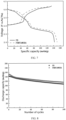
FIG. 7 shows the charge-discharge curves for sodium ion batteries prepared with the PB and PB@TA@ODA of Example 1, respectively, according to the present invention. -
FIG. 8 shows the cycle profiles of the sodium ion batteries prepared with the PB and PB@TA@ODA of Example 1, respectively, according to the present invention. -
FIG. 9 shows the charge-discharge curves for sodium ion cells prepared with the PB-7D and PB@TA@ODA-7D of Example 1, respectively, according to the present invention. -
FIG. 10 shows the cycle profiles of sodium ion batteries prepared with the PB-7D and PB@TA@ODA-7D of Example 1, respectively, according to the present invention. - The examples of the present invention will now be described more fully hereinafter with reference to the accompanying drawings and detailed description, but it will be understood by a person skilled in the art that the examples described below are part, but not all, of the examples of the present invention and are presented by way of illustration only and should not be taken as limiting the scope of the present invention. Based on the examples of the present invention, all other examples obtained by a person skilled in the art without involving any inventive effort fall within the scope of protection of the present invention. Where specific conditions are not specified in the examples, they are carried out according to conventional conditions or conditions suggested by a manufacturer. The reagents or instruments used are not specified by the manufacturer and are conventional products commercially available.
- In a first aspect, some examples of the present invention provide a cathode material including a Prussian Blue substrate, and a first coating layer and a second coating layer sequentially coated on the surface of the Prussian Blue substrate;
a material forming the first coating layer includes a polymer of tannic acid; and a material forming the second coating layer includes at least one of hexadecylamine, octadecylamine, octadecyl phosphate, N-phenyl-bis(trifluoromethanesulfonimide), 1H,1H,2H,2H-perfluorodecyl triethoxysilane, and 1H,1H,2H,2H-perfluorodecanethiol. - The cathode material of the present invention, where a tannic acid polymer, is uniformly and completely coated on the surface of a Prussian Blue substrate to form a first coating layer, i.e., a tannic acid polymer layer; the second coating layer is coated on the surface of the first coating layer and is connected to the first coating layer via a chemical bond.
- The cathode material of the present invention changes the surface of the Prussian Blue substrate from hydrophilic to hydrophobic by coating the surface of the Prussian Blue substrate with two layers. Research shows that the cathode material provided by the present invention has less weight loss at 150-250°C after being left for 7 days at normal temperature, normal pressure, and high humidity. Therefore, the cathode material provided by the present invention has good hygroscopicity inhibition at normal temperature, normal pressure, and high humidity. The present invention effectively solves the problem of Prussian Blue cathode material being easily hygroscopic without affecting its electrochemical performance, resulting in good storage performance in air and excellent electrochemical performance of the cathode material.
- For the cathode material of the present invention, the Prussian Blue substrate serves as an active substance, the first coating layer provides a bonding group for the second coating layer, and the second coating layer forms a hydrophobic coating layer; through the interaction of the three, the Prussian Blue cathode material has excellent electrochemical performance and good environmental storage.
- In a preferred embodiment, the Prussian Blue substrate has a chemical formula of NaxMaM'b(CN)6·zH2O, where M and M' are each independently selected from Ni, Cu, Fe, Mn, Co, and Zn, 0 <x<2, 0<a<1, 0<b<1, and z>0. M and M' may be the same or different.
- In a preferred embodiment, the Prussian Blue substrate includes at least one of NaxFea[Feb(CN)6]·zH2O, NaxMna[Feb(CN)6]·zH2O, NaxNia[Feb(CN)6]·zH2O and NaxCoa[Feb(CN)6]·zH2O.
- In a preferred embodiment, a particle size of the cathode material is 200-300 nm; typically, but not by way of limitation, for example, the particle size of the cathode material is 200 nm, 220 nm, 240 nm, 260 nm, 280 nm, 300 nm, or a value ranging between any of the two thereof.
- In a preferred embodiment, the first coating layer has a thickness of 3 to 4 nm; typically, but not by way of limitation, the thickness of the first coating layer can be, for example, 3 nm, 3.5 nm, 4 nm, or a value ranging between any of the two thereof.
- In a preferred embodiment, the second coating layer has a thickness of 1-2 nm; typically, but not by way of limitation, the thickness of the second coating layer can be, for example, 1 nm, 1.5 nm, 2 nm, or a value ranging between any of the two thereof.
- In the cathode material of the present invention, if the thickness of the first coating layer is too high, the interfacial transport of sodium ions is affected, and if it is too low, a complete coating layer cannot be formed; if the thickness of the second coating layer is too high, the interfacial transport of sodium ions is affected, and if it is too low, the second coating layer does not have good hydrophobicity.
- In a second aspect, some examples of the present invention also provide a preparation method of the above cathode material, which includes the steps of:
- mixing tannic acid, formaldehyde, ammonium ions, a first solvent, and water to obtain a tannic acid-containing precursor solution;
- subjecting the Prussian Blue substrate (PB) and the tannic acid-containing precursor solution to a first reaction to obtain PB@TA; and
- subjecting PB@TA, a material for forming the second coating layer and the second solvent to a second reaction to obtain a cathode material.
- In the present invention, a precursor solution of tannic acid is subjected to a first reaction with a Prussian Blue substrate. Tannic acid, formaldehyde and ammonium ions undergo a Mannich reaction and are condensed to form a tannic acid polymer, and a uniform layer of tannic acid polymer is formed on the surface of the Prussian Blue substrate to obtain a Prussian Blue substrate coated with tannic acid polymer (PB@TA); then, coating is performed with a material having hydrophobicity, for example, octadecylamine undergoes Michael addition reaction or Schiff base reaction with the hydroxyl or carbonyl group in the tannic acid polymer to form a second coating layer on the surface of PB@TA, thereby obtaining a cathode material (PB@TA@ODA) having a double-layer coating structure.
- In a preferred embodiment, the first reaction and the second reaction are each independently performed at a temperature in a range from 25 to 80°C; the first reaction and the second reaction are each independently performed for 1 to 72 hours; typically, but not by way of limitation, for example, the temperatures for the first reaction and the second reaction can each independently be 25°C, 30°C, 40°C, 50°C, 60°C, 70°C, 80°C, or a value ranging between any of the two thereof; and the first reaction and the second reaction are each independently performed for 1 h, 10 h, 20 h, 30 h, 40 h, 50 h, 60 h, 70 h, or a value ranging between any of the two thereof.
- In a preferred embodiment, the preparation method of the cathode material further includes: after the first reaction, performing a first washing and a first drying; and after the second reaction, performing a second washing and a second drying; and preferably, the drying is performed at a temperature in a range from 50 to 200°C.
- In a preferred embodiment, the molar ratio of tannic acid to formaldehyde is (0.022-0.024): 1; preferably 0.023:1.
- In a preferred embodiment, the substance providing the ammonium ions includes ammonia water.
- In a preferred embodiment, the concentration of ammonia water is 20-30 wt%, and the usage ratio of ammonia water to tannic acid is 1 mL: 0.1-1 mmol; typically, but not by way of limitation, for example, ammonia water and tannic acid are used in a ratio of 1mL: 0.1 mmol, 1mL: 0.3 mmol, 1mL: 0.5 mmol, 1mL: 0.7 mmol, 1mL: 1 mmol, or a value ranging between any of the two thereof.
- In a preferred embodiment, a preparation method of a tannic acid-containing precursor solution includes: mixing an aqueous tannic acid solution, an aqueous formaldehyde solution, ammonia water, a first solvent and water to obtain a tannic acid-containing precursor solution; preferably, the concentration of the aqueous tannic acid solution is from 0.01 to 0.02 mol/L, the concentration of the aqueous formaldehyde solution is from 2 to 5 wt%, and the concentration of the ammonia water is from 20 to 30 wt%; and more preferably, the volume ratio of ammonia water to aqueous tannic acid solution is 1:(15-25), and preferably 1:20.
- In a preferred embodiment, the pH of the first reaction system is between 6 and 7.
- The tannic acid, formaldehyde and ammonium groups undergo a Mannich reaction to form a tannic acid polymer, and the above-mentioned amount of ammonia water can provide sufficient NH4 +, which accelerates the reaction rate.
- In a preferred embodiment, a mass ratio of the Prussian Blue substrate to tannic acid is 1:(0.05-2); typically, but not by way of limitation, for example, the mass ratio of the Prussian Blue substrate to the tannic acid is 1:0.05, 1:0.08, 1:0.1, 1:0.2, 1:0.4, 1:0.6, 1:0.8, 1:1, 1:1.2, 1:1.4, 1:1.6, 1:1.8, 1:2, or a value ranging between any of the two thereof; preferably, the mass ratio of the Prussian Blue substrate to the tannic acid is 1:(0.15-0.2).
- In a preferred embodiment, a mass ratio of PB@TA to the material forming the second coating layer is 1:(0.1-5); typically, but not by way of limitation, for example, the mass ratio of the PB@TA to the material forming the second coating layer may be 1:0.1, 1:0.5, 1:1, 1:1.5, 1:2, 1:2.5, 1:3, 1:3.5, 1:4, 1:4.5, 1:5, or a value ranging between any of the two thereof; and preferably, the mass ratio of the PB@TA to the material forming the second coating layer is 1:(0.8-1.2).
- In a preferred embodiment, the first solvent includes ethanol.
- In a preferred embodiment, the tannic acid and the first solvent are present in a mass ratio of 1:(45-50).
- In a preferred embodiment, the volume ratio of the first solvent to water is (0.01-1):1.
- In a preferred embodiment, the second solvent includes at least one of methanol, ethanol, ethylene glycol, acetone, and tetrahydrofuran.
- In a preferred embodiment, the mass ratio of the material of the second coating layer to the second solvent is 1:(50-55).
- In a preferred embodiment, the Prussian Blue substrate is prepared by a liquid phase method or a solid phase method.
- In a preferred embodiment, the preparation method of the Prussian Blue substrate includes the steps of
- reacting an aqueous solution of Na4Fe(CN)6 with an aqueous solution of a soluble metal salt to obtain a Prussian Blue substrate;
- where the soluble metal salt includes sodium citrate and at least one of a Ni salt, a Cu salt, a Fe salt, a Mn salt, a Co salt, and a Zn salt.
- In a preferred embodiment, the preparation method of the Prussian Blue substrate includes the steps of
Ball-milling Na4Fe(CN)6 and a metal salt to obtain a Prussian Blue substrate, where the metal salt includes at least one of a Ni salt, a Cu salt, a Fe salt, a Mn salt, a Co salt and a Zn salt. - In a third aspect, examples of the present invention also provide a sodium ion battery including the cathode material described above.
- The use of the cathode material of the present invention in a sodium ion battery improves the storage performance at normal temperature, normal pressure, and high humidity on the basis of ensuring that the sodium ion battery has excellent cycle performance and rate performance.
- Hereinafter, examples of the present invention will be described in detail with reference to examples, but a person skilled in the art will understand that the following examples are only for illustrating the present invention and should not be construed as limiting the scope of the present invention. Where specific conditions are not specified in the examples, they are carried out according to conventional conditions or conditions suggested by a manufacturer. The reagents or instruments used are conventional products that can be obtained commercially without indicating the manufacturer.
- This example provides a preparation method of a cathode material, which includes the steps of:
- S 1: 4 mmol of Na4Fe(CN)6·10H2O was dissolved in 200 mL of deionized water to form a solution A; 6 mmol of FeSO4·7H2O and 15 g of sodium citrate were dissolved in 200 mL of deionized water to form a solution B;
- the solution A was added to the solution B, and then after being left at normal temperature (25°C) for 6 h, solid-liquid separation was performed to obtain a filter cake which was centrifugally washed three times with deionized water and absolute ethanol, and dried in a blast drying oven at 80°C for 12 h to obtain Prussian Blue substrate Na1.54Fe[Fe(CN)6]·0.96H2O.
- S2: 2 mL of an aqueous tannic acid solution with a concentration of 0.015 M, 1 mL of an aqueous formaldehyde solution (3.7wt%), 0.1 mL of ammonia water (with a concentration of 25wt%) and 3 mL of ethanol were added into 13 mL of deionized water, and thoroughly mixed to obtain a tannic acid precursor solution;
- 0.3 g of Na1.54Fe[Fe(CN)6]·0.96H2O was added to the tannic acid precursor solution, the mixture was stirred at room temperature (25°C) for 24 h, then filtered and dried under vacuum at 80°C to obtain PB@TA.
- S3: 0.3 g of octadecylamine was added into 20mL of ethanol and fully dissolved to obtain an octadecylamine precursor solution;
- 0.3 g of PB@TA was added to the octadecylamine precursor solution, the mixture was stirred at room temperature (25°C) for 24 h, then filtered, and vacuum dried at 80°C to obtain the cathode material (PB@TA@ODA).
- This example provides a preparation method of a cathode material, which includes the steps of:
- S1: under an inert atmosphere, 5 mmol of MnCl2·4H2O and 5 mmol of Na4Fe(CN)6·10H2O were added into an agate ball-milling tank with a ball-to-material ratio of 1:20, and ball-milling was performed at a rate of 300 r/min for 12 h to obtain a mixture; the mixture was first washed and centrifuged three times with absolute ethanol, then washed and centrifuged three times with deionized water, and then dried in a vacuum oven at 80°C for 12 h to obtain Prussian Blue substrate Na1.63Mn[Fe(CN)6]·1.41H2O.
- S2: 2 mL of an aqueous tannic acid solution with a concentration of 0.015 M, 1 mL of an aqueous formaldehyde solution (3.7wt%), 0.1 mL of ammonia water (with a concentration of 25wt%) and 3 mL of ethanol were added into 13 mL of deionized water, and thoroughly mixed to obtain a tannic acid precursor solution;
- 0.15 g of Na1.63Mn[Fe(CN)6]·1.41H2O was added to the tannic acid precursor solution, the mixture was stirred at 40°C for 24 h, then filtered and dried at 80°C under vacuum to obtain PB@TA.
- S3: 0.3 g of octadecylamine was added into 20mL of ethanol and fully dissolved to obtain an octadecylamine precursor solution;
- 0.15 g of PB@TA was added to the octadecylamine precursor solution, the mixture was stirred at 60°C for 24h, then filtered, and vacuum dried at 80°C to obtain the cathode material (PB@TA@ODA).
- The preparation method of the cathode material provided in this example is the same with Example 1, except that in step S2, the mass of Na1.54Fe[Fe(CN)6]·0.96H2O was 1 g.
- The preparation method of the cathode material provided in this example is the same with Example 1, except that in step S2, the mass of Na1.54Fe[Fe(CN)6]·0.96H2O was 0.025 g.
- The preparation method of the cathode material provided in this example is the same with Example 1, except that in step S3, the mass of PB@TA was 3 g.
- The preparation method of the cathode material provided in this example is the same with Example 1, except that in step S3, the mass of PB@TA was 0.06 g.
- The preparation method of the cathode material provided in this example is the same with Example 1, except that the mass of Na1.54Fe[Fe(CN)6]·0.96H2O in step S2 was 0.1 g, and the mass of PB@TA in step S3 was 0.1 g.
- The preparation method of the cathode material provided in this example is the same with Example 1, except that in step S3, octadecylamine was replaced with octadecyl phosphate.
- The preparation method of the cathode material provided in this example is the same with Example 1, except that in step S3, octadecylamine was replaced with 1H,1H,2H,2H-perfluorodecanethiol.
- The preparation method of the cathode material provided in this example is the same with Example 1, except that in step S3, octadecylamine was replaced with N-phenyl-bis(trifluoromethanesulfonimide).
- The preparation method of the cathode material provided in this Comparative Example is the same with Example 1, except that in step S2, the aqueous formaldehyde solution and ammonia water were not added.
- The preparation method of the cathode material provided in this Comparative Example is the same with Example 1, except that step S1 and step S2 were cancelled, and Prussian Blue substrate (PB) Na1.54Fe[Fe(CN)6]·0.96H2O in Example 1 was directly subjected to step S3 to obtain sample PB@ODA.
- XRD tests were performed on the PB and PB@TA@ODA in Example 1, and the results are shown in
FIG. 1 . - As can be seen from
FIG. 1 , the structure of PB@TA@ODA is not significantly changed compared to that of PB and remains a pure cubic Prussian Blue structure. - Scanning electron microscopy test was performed on the PB@TA@ODA of Example 1 and the results are shown in
FIG. 2 . - As can be seen from
FIG. 2 , PB@TA@ODA still maintains a cubic morphology. - Thermogravimetric tests were performed on the PB, PB-7D, PB@TA@ODA and PB@TA@ODA-7D of Example 1, the results of which are shown in
Figs. 3 and 4 . PB-7D means that PB is left at normal temperature, normal pressure and 80 % humidity for seven days, and PB@TA@ODA-7D means that PB is left at normal temperature, normal pressure and 80 % humidity for seven days. - As can be seen from
Figs. 3 and 4 , the weight loss of sample PB-7D at 150°C and 250°C was significant, and the adsorbed water and interstitial water in the material increased significantly. However, the TG curve of PB@TA@ODA-7D is almost unchanged compared with PB@TA@ODA, exhibiting excellent ability to inhibit hygroscopicity. - A preparation method of a cathode electrode sheet includes the steps of a cathode material, a conductive agent (Ketjen Black and Superconducting carbon black (Super P) with a mass ratio of 1:1) and polyvinylidene fluoride (PVDF) were weighed in a mass ratio of 7:2:1, and added to a certain amount of N-methyl pyrrolidone (NMP) as a solvent, and the mixture was ground into a uniform slurry. The slurry was uniformly coated on aluminum foil and then baked at 70°C for 24 h. Finally, a small circular piece with a diameter of 8 mm is cut to obtain the cathode electrode sheet with a loading of 1.6-2.4 mg/cm2.
- A preparation method of a sodium ion battery includes the steps of: the above-mentioned cathode electrode sheet was placed into a 2032-type battery case; a sodium sheet was used as a negative electrode; glass fiber was used as a separator; foamed nickel was used as a support sheet; NaClO4 dissolved, at a concentration of 1mol/L, in ethylene carbonate (EC) and diethyl carbonate (DEC) in a volume ratio of 1:1 was used as an electrolyte; and 5% fluoroethylene carbonate (FEC) was added, and assembly was performed in an argon-filled glove box, with the water content and the oxygen content in the glove box strictly controlled to be less than 0.01 ppm and less than 0.05 ppm, to obtain the sodium ion battery.
- The packaged sodium battery was placed at room temperature for 8 h, and the charge-discharge test was performed using a CT2001 charge-discharge tester from Wuhan Land Electronics Co., Ltd., and the charge-discharge voltage is set to be 2.0 V-4.2 V. In the cyclic performance test, the test was performed at a rate of 1 C(1 C=170mA g-1).
- Cathode electrode sheets were prepared according to the above-mentioned preparation method of the cathode electrode sheet using the PB and PB@TA@ODA in Example 1 as cathode materials, respectively, and the wetting angles of the cathode electrode sheets were tested, and the results are shown in
Figs. 5 and 6 . - As can be seen from
FIG. 5 and FIG. 6, FIG. 5 shows that the wetting angle of the cathode electrode sheet prepared using PB is 108°;FIG. 6 shows that the wetting angle of the cathode electrode sheet prepared with PB@TA@ODA is 127°, which is much larger than that of the cathode electrode sheet prepared with PB, and it can be seen therefrom that PB@TA@ODA has better hydrophobicity. - Sodium batteries were prepared using the PB, PB-7D, PB@TA@ODA and PB@TA@ODA-7D of Example 1 as cathode materials, respectively according to the above-mentioned preparation method for sodium ion batteries. Charge-discharge and cycling tests were performed on the sodium ion batteries, and the results are shown in
Figs. 7, 8 ,9 and 10 . PB-7D means that PB is left at normal temperature, normal pressure and 80% humidity for seven days, and PB@TA@ODA-7D means that PB is left at normal temperature, normal pressure and 80% humidity for seven days. - It can be seen from
FIG. 7 and FIG. 8 that the first cycle discharge capacities of sodium ion batteries prepared with PB and PB@TA@ODA are 142 mAh g-1 and 150 mAh g-1, respectively, with no significant difference, and the cycle performances are similar. - It can be seen from
FIG. 9 that after PB is placed for seven days, the discharge capacity of in first cycle decays to 116 mAh g-1, and the sodium storage performance thereof decreases significantly; however, the first discharge capacity of PB@TA@ODA-7D is still more than 145 mAh g-1, compared with PB@TA@ODA, there is almost no capacity decay, showing better storage performance in normal temperature, normal pressure and high humidity environment. - As can be seen from
FIG. 10 , PB@TA@ODA-7D, which is the cathode of the sodium ion battery, has very high cycle stability, exhibits high first-cycle efficiency and higher specific capacity, and exhibits excellent hydrophobic properties. - Sodium batteries were prepared according to the above-mentioned preparation method of sodium ion batteries using the prepared cathode materials of Examples 1-10 and Comparative Examples 1-2 and the cathode materials after being left for 7 days, respectively, and charge-discharge and cycling tests were performed on the sodium ion batteries, and the results thereof are shown in Table 1.
Table 1 First discharge capacity of the cathode material (mAh g-1) First discharge capacity of the cathode material after being left for 7 days (mAh g-1) Capacity retention rate of the cathode material after one hundred cycles (%) Capacity retention rate of the cathode material after being left for 7 days and one hundred cycles (%) Example 1 150 145 75.3 75.8 Example 2 143 137 61.4 59.8 Example 3 152 147 73.8 66.1 Example 4 132 126 78.3 72.1 Example 5 149 143 72.4 61.9 Example 6 138 135 69.4 71.3 Example 7 129 125 72.2 74.3 Example 8 147 143 74.2 75.8 Example 9 148 146 71.0 71.5 Example 10 146 143 73.6 72.9 Comparative Example 1 151 132 74.9 68.2 Comparative Example 2 149 129 75.4 62.2 - It can be seen from Table 1 that Prussian Blue can exhibit both excellent electrochemical performance and good environmental storage property under the double coating of the tannic acid polymer and the second coating material in a suitable amount.
- While particular examples of the present invention have been illustrated and described, it is to be understood that the foregoing examples are merely illustrative and not restrictive of the present invention. A person skilled in the art will appreciate that modifications may be made to the technical solutions described in the foregoing examples, or equivalents may be substituted for some or all of the technical features thereof, without departing from the spirit and scope of the present invention. However, these modifications or substitutions do not bring the essence of the corresponding technical solutions out of the scope of the technical solutions of the various examples of the present invention; it is therefore intended to cover in the appended claims all such alternatives and modifications that are within the scope of this invention.
Claims (15)
- A cathode material, characterized in that the cathode material comprises a Prussian Blue substrate, and a first coating layer and a second coating layer successively coating a surface of the Prussian Blue substrate;wherein a material forming the first coating layer comprises a polymer of tannic acid; anda material forming the second coating layer comprises at least one of hexadecylamine, octadecylamine, octadecyl phosphate, N-phenyl-bis(trifluoromethanesulfonimide), 1H, 1H,2H,2H-perfluorodecyl triethoxysilane, and 1H,1H,2H,2H-perfluorodecanethiol.
- The cathode material of claim 1, characterized in that the Prussian Blue substrate has a chemical formula of NaxMaM'b(CN)6·zH2O, wherein M and M' are each independently selected from Ni, Cu, Fe, Mn, Co, and Zn, 0 <x<2, 0<a<1, 0<b<1, and z>0.
- The cathode material of claim 1, characterized in that a particle size of the cathode material is 200-300 nm.
- The cathode material of claim 1, characterized in that the first coating layer has a thickness of 3-4 nm.
- The cathode material of claim 1, characterized in that the second coating layer has a thickness of 1-2 nm.
- A preparation method of the cathode material of any one of claims 1 to 5, characterized in that the preparation method comprises steps ofmixing tannic acid, formaldehyde, ammonium ions, a first solvent, and water to obtain a tannic acid-containing precursor solution;subjecting a Prussian Blue substrate and the tannic acid-containing precursor solution to a first reaction to obtain PB@TA; andsubjecting the PB@TA, a material for forming the second coating layer and a second solvent to a second reaction to obtain the cathode material.
- The preparation method of claim 6, characterized in that the first reaction and the second reaction are each independently performed at a temperature in a range from 25 to 80°C.
- The preparation method of claim 6, characterized in that the first reaction and the second reaction are each independently performed for 1 to 72 hours.
- The preparation method of claim 6, characterized in that a molar ratio of the tannic acid and the formaldehyde is (0.022-0.024): 1.
- The preparation method of claim 6, characterized in that a substance providing the ammonium ions comprises ammonia water.
- The preparation method of claim 10, characterized in that a concentration of the ammonia water is 20-30 wt%, and the ammonia water and the tannic acid are used in a ratio of 1 mL:0.1-1 mmol.
- The preparation method of claim 6, characterized in that a mass ratio of the Prussian Blue substrate to the tannic acid is 1:(0.05-2).
- The preparation method of claim 6, characterized in that a mass ratio of the PB@TA to the material forming the second coating layer is 1 :(0.1-5).
- The preparation method of claim 6, characterized in that the first solvent comprises ethanol; and/or
the second solvent comprises at least one of methanol, ethanol, ethylene glycol, acetone, and tetrahydrofuran. - A sodium ion battery, comprising the cathode material of any one of claims 1 to 5.
Applications Claiming Priority (1)
| Application Number | Priority Date | Filing Date | Title |
|---|---|---|---|
| CN202311041962.7A CN116864656B (en) | 2023-08-17 | 2023-08-17 | Positive electrode material, preparation method thereof and sodium ion battery |
Publications (1)
| Publication Number | Publication Date |
|---|---|
| EP4510221A1 true EP4510221A1 (en) | 2025-02-19 |
Family
ID=88236248
Family Applications (1)
| Application Number | Title | Priority Date | Filing Date |
|---|---|---|---|
| EP24155956.6A Pending EP4510221A1 (en) | 2023-08-17 | 2024-02-06 | Cathode material and preparation method thereof and sodium ion battery |
Country Status (5)
| Country | Link |
|---|---|
| US (1) | US20250062350A1 (en) |
| EP (1) | EP4510221A1 (en) |
| JP (1) | JP7707485B2 (en) |
| KR (1) | KR20250026724A (en) |
| CN (1) | CN116864656B (en) |
Families Citing this family (2)
| Publication number | Priority date | Publication date | Assignee | Title |
|---|---|---|---|---|
| CN117457902B (en) * | 2023-12-25 | 2025-03-28 | 宁波容百新能源科技股份有限公司 | A Prussian blue positive electrode material and preparation method thereof, and battery |
| CN118515297A (en) * | 2024-04-28 | 2024-08-20 | 合肥国轩高科动力能源有限公司 | A sodium ion battery negative electrode composite material and preparation method thereof |
Citations (3)
| Publication number | Priority date | Publication date | Assignee | Title |
|---|---|---|---|---|
| CN107394140A (en) * | 2017-07-05 | 2017-11-24 | 河南师范大学 | The preparation method of the sodium iron-based prussian blue electrode material of poly-dopamine cladding |
| CN110224130A (en) * | 2019-06-27 | 2019-09-10 | 浙江大学 | A kind of prussian blue sodium-ion battery positive material and preparation method thereof of conducting polymer cladding |
| CN116207232A (en) * | 2023-03-09 | 2023-06-02 | 广东凯金新能源科技股份有限公司 | Cathode material for sodium ion battery and preparation method thereof |
Family Cites Families (7)
| Publication number | Priority date | Publication date | Assignee | Title |
|---|---|---|---|---|
| JP3860937B2 (en) | 1999-08-04 | 2006-12-20 | トヨタ自動車株式会社 | Hexacyanoiron complex and lithium secondary battery using it as positive electrode active material |
| CN112216814B (en) | 2020-12-09 | 2021-04-27 | 江苏时代新能源科技有限公司 | Electrode plate, secondary battery, preparation method of secondary battery and device containing secondary battery |
| CN113659143A (en) | 2021-08-06 | 2021-11-16 | 东莞市创明电池技术有限公司 | Preparation method of negative electrode material of sodium ion battery, negative electrode material and sodium ion battery |
| CN113921798B (en) * | 2021-10-12 | 2025-09-02 | 山东零壹肆先进材料有限公司 | A positive electrode material and preparation method thereof, a positive electrode sheet and a sodium ion battery |
| CN114497472B (en) * | 2021-12-08 | 2023-08-18 | 电子科技大学长三角研究院(湖州) | Prussian blue positive electrode material with multilayer structure, and preparation method and application thereof |
| CN115974102B (en) * | 2022-12-26 | 2024-10-25 | 深圳华钠新材有限责任公司 | Preparation method and application of silver-carbon coated Prussian blue material |
| CN116409801B (en) * | 2022-12-30 | 2025-03-14 | 赣州立探新能源科技有限公司 | Preparation method of polypyrrole-coated Prussian blue positive electrode composite material |
-
2023
- 2023-08-17 CN CN202311041962.7A patent/CN116864656B/en active Active
-
2024
- 2024-01-30 KR KR1020240014165A patent/KR20250026724A/en active Pending
- 2024-01-31 JP JP2024012942A patent/JP7707485B2/en active Active
- 2024-02-06 EP EP24155956.6A patent/EP4510221A1/en active Pending
- 2024-03-13 US US18/603,484 patent/US20250062350A1/en active Pending
Patent Citations (3)
| Publication number | Priority date | Publication date | Assignee | Title |
|---|---|---|---|---|
| CN107394140A (en) * | 2017-07-05 | 2017-11-24 | 河南师范大学 | The preparation method of the sodium iron-based prussian blue electrode material of poly-dopamine cladding |
| CN110224130A (en) * | 2019-06-27 | 2019-09-10 | 浙江大学 | A kind of prussian blue sodium-ion battery positive material and preparation method thereof of conducting polymer cladding |
| CN116207232A (en) * | 2023-03-09 | 2023-06-02 | 广东凯金新能源科技股份有限公司 | Cathode material for sodium ion battery and preparation method thereof |
Also Published As
| Publication number | Publication date |
|---|---|
| CN116864656B (en) | 2024-12-03 |
| KR20250026724A (en) | 2025-02-25 |
| US20250062350A1 (en) | 2025-02-20 |
| JP7707485B2 (en) | 2025-07-15 |
| JP2025027943A (en) | 2025-02-28 |
| CN116864656A (en) | 2023-10-10 |
Similar Documents
| Publication | Publication Date | Title |
|---|---|---|
| KR102682051B1 (en) | Lithium manganese iron phosphate precursor, lithium manganese iron phosphate anode material and manufacturing method thereof, electrode material, electrode and lithium ion battery | |
| EP4510221A1 (en) | Cathode material and preparation method thereof and sodium ion battery | |
| KR101601992B1 (en) | Porous electrodes and associated methods | |
| CN109428077B (en) | Method for preparing high-nickel positive electrode material and high-nickel positive electrode material obtainable by the method | |
| US7713660B2 (en) | Method for manufacturing manganese oxide nanotube or nanorod by anodic aluminum oxide template | |
| CN113247966A (en) | Lithium-rich manganese-based precursor, positive electrode material and preparation method thereof | |
| WO2015007169A1 (en) | Preparation method for positive electrode material of lithium-ion battery | |
| CN118104011A (en) | A lithium-ion battery composite positive electrode material and its preparation method and application | |
| CN117142490B (en) | A Prussian blue cathode material and its preparation method and application | |
| CN116462244B (en) | Modified ternary lithium battery positive electrode material, precursor, preparation method and lithium ion battery | |
| CN118472239A (en) | A doped sodium iron sulfate phosphate positive electrode material and preparation method thereof and sodium ion battery | |
| CN117080387A (en) | Cathode material and preparation method thereof, cathode sheet and secondary battery | |
| CN111211362A (en) | Lithium-replenishing washing solution and application thereof, high-nickel multi-element cathode material and preparation method thereof | |
| CN111403659A (en) | An ultra-high specific surface area carbon aerogel-coated separator intermediate layer for lithium-sulfur batteries and a preparation method thereof, and a lithium-sulfur battery | |
| CN110323393A (en) | Lithium battery diaphragm coating paste with manganese ion adsorption capacity | |
| CN119008918B (en) | Double-doped coated lithium iron phosphate positive electrode material, preparation method thereof and lithium battery | |
| CN118610442A (en) | Preparation method and application of coated lithium-rich manganese-based positive electrode material | |
| CN111883746A (en) | Modified lithium-rich manganese-based oxide positive electrode material and preparation method and application thereof | |
| CN112216821A (en) | Battery material and preparation method and application thereof | |
| CN117976839A (en) | Low-residual-alkali sodium ion positive electrode material and modification method thereof | |
| CN113346087B (en) | Hybrid phosphate open framework material composite high-nickel positive electrode material and preparation method thereof | |
| KR100501268B1 (en) | The method for producing V2O5 xerogel compounds doped a metal and the method for producing lithium secondary battery by using the xerogel compound | |
| CN121717364A (en) | Preparation method of composite material for modified lithium-sulfur battery diaphragm | |
| KR20250135760A (en) | Composite comprising lithium-vanadium oxide and carbon nanotubes, manufacturing method thereof and energy storage devicecomprising same | |
| CN120613542A (en) | Preparation method and application of MXene@tetrafluorotriazine covalent organic framework composite material |
Legal Events
| Date | Code | Title | Description |
|---|---|---|---|
| PUAI | Public reference made under article 153(3) epc to a published international application that has entered the european phase |
Free format text: ORIGINAL CODE: 0009012 |
|
| STAA | Information on the status of an ep patent application or granted ep patent |
Free format text: STATUS: REQUEST FOR EXAMINATION WAS MADE |
|
| 17P | Request for examination filed |
Effective date: 20240305 |
|
| AK | Designated contracting states |
Kind code of ref document: A1 Designated state(s): AL AT BE BG CH CY CZ DE DK EE ES FI FR GB GR HR HU IE IS IT LI LT LU LV MC ME MK MT NL NO PL PT RO RS SE SI SK SM TR |