EP4509200A1 - Resin composition for antibacterial filter, method for preparing same, and antibacterial filter using same - Google Patents
Resin composition for antibacterial filter, method for preparing same, and antibacterial filter using same Download PDFInfo
- Publication number
- EP4509200A1 EP4509200A1 EP23788643.7A EP23788643A EP4509200A1 EP 4509200 A1 EP4509200 A1 EP 4509200A1 EP 23788643 A EP23788643 A EP 23788643A EP 4509200 A1 EP4509200 A1 EP 4509200A1
- Authority
- EP
- European Patent Office
- Prior art keywords
- antibacterial
- filter
- resin composition
- antibacterial glass
- content
- Prior art date
- Legal status (The legal status is an assumption and is not a legal conclusion. Google has not performed a legal analysis and makes no representation as to the accuracy of the status listed.)
- Pending
Links
Images

Classifications
-
- B—PERFORMING OPERATIONS; TRANSPORTING
- B01—PHYSICAL OR CHEMICAL PROCESSES OR APPARATUS IN GENERAL
- B01D—SEPARATION
- B01D39/00—Filtering material for liquid or gaseous fluids
- B01D39/14—Other self-supporting filtering material ; Other filtering material
-
- B—PERFORMING OPERATIONS; TRANSPORTING
- B01—PHYSICAL OR CHEMICAL PROCESSES OR APPARATUS IN GENERAL
- B01D—SEPARATION
- B01D39/00—Filtering material for liquid or gaseous fluids
- B01D39/14—Other self-supporting filtering material ; Other filtering material
- B01D39/20—Other self-supporting filtering material ; Other filtering material of inorganic material, e.g. asbestos paper, metallic filtering material of non-woven wires
- B01D39/2003—Glass or glassy material
- B01D39/2006—Glass or glassy material the material being particulate
-
- B—PERFORMING OPERATIONS; TRANSPORTING
- B01—PHYSICAL OR CHEMICAL PROCESSES OR APPARATUS IN GENERAL
- B01D—SEPARATION
- B01D39/00—Filtering material for liquid or gaseous fluids
- B01D39/08—Filter cloth, i.e. woven, knitted or interlaced material
- B01D39/083—Filter cloth, i.e. woven, knitted or interlaced material of organic material
-
- B—PERFORMING OPERATIONS; TRANSPORTING
- B01—PHYSICAL OR CHEMICAL PROCESSES OR APPARATUS IN GENERAL
- B01D—SEPARATION
- B01D39/00—Filtering material for liquid or gaseous fluids
- B01D39/08—Filter cloth, i.e. woven, knitted or interlaced material
- B01D39/086—Filter cloth, i.e. woven, knitted or interlaced material of inorganic material
-
- B—PERFORMING OPERATIONS; TRANSPORTING
- B01—PHYSICAL OR CHEMICAL PROCESSES OR APPARATUS IN GENERAL
- B01D—SEPARATION
- B01D39/00—Filtering material for liquid or gaseous fluids
- B01D39/14—Other self-supporting filtering material ; Other filtering material
- B01D39/16—Other self-supporting filtering material ; Other filtering material of organic material, e.g. synthetic fibres
-
- B—PERFORMING OPERATIONS; TRANSPORTING
- B01—PHYSICAL OR CHEMICAL PROCESSES OR APPARATUS IN GENERAL
- B01D—SEPARATION
- B01D39/00—Filtering material for liquid or gaseous fluids
- B01D39/14—Other self-supporting filtering material ; Other filtering material
- B01D39/20—Other self-supporting filtering material ; Other filtering material of inorganic material, e.g. asbestos paper, metallic filtering material of non-woven wires
- B01D39/2027—Metallic material
-
- B—PERFORMING OPERATIONS; TRANSPORTING
- B01—PHYSICAL OR CHEMICAL PROCESSES OR APPARATUS IN GENERAL
- B01D—SEPARATION
- B01D39/00—Filtering material for liquid or gaseous fluids
- B01D39/14—Other self-supporting filtering material ; Other filtering material
- B01D39/20—Other self-supporting filtering material ; Other filtering material of inorganic material, e.g. asbestos paper, metallic filtering material of non-woven wires
- B01D39/2068—Other inorganic materials, e.g. ceramics
-
- C—CHEMISTRY; METALLURGY
- C03—GLASS; MINERAL OR SLAG WOOL
- C03C—CHEMICAL COMPOSITION OF GLASSES, GLAZES OR VITREOUS ENAMELS; SURFACE TREATMENT OF GLASS; SURFACE TREATMENT OF FIBRES OR FILAMENTS MADE FROM GLASS, MINERALS OR SLAGS; JOINING GLASS TO GLASS OR OTHER MATERIALS
- C03C3/00—Glass compositions
- C03C3/04—Glass compositions containing silica
- C03C3/062—Glass compositions containing silica with less than 40% silica by weight
-
- C—CHEMISTRY; METALLURGY
- C03—GLASS; MINERAL OR SLAG WOOL
- C03C—CHEMICAL COMPOSITION OF GLASSES, GLAZES OR VITREOUS ENAMELS; SURFACE TREATMENT OF GLASS; SURFACE TREATMENT OF FIBRES OR FILAMENTS MADE FROM GLASS, MINERALS OR SLAGS; JOINING GLASS TO GLASS OR OTHER MATERIALS
- C03C3/00—Glass compositions
- C03C3/04—Glass compositions containing silica
- C03C3/076—Glass compositions containing silica with 40% to 90% silica, by weight
-
- B—PERFORMING OPERATIONS; TRANSPORTING
- B01—PHYSICAL OR CHEMICAL PROCESSES OR APPARATUS IN GENERAL
- B01D—SEPARATION
- B01D2239/00—Aspects relating to filtering material for liquid or gaseous fluids
- B01D2239/04—Additives and treatments of the filtering material
- B01D2239/0407—Additives and treatments of the filtering material comprising particulate additives, e.g. adsorbents
-
- B—PERFORMING OPERATIONS; TRANSPORTING
- B01—PHYSICAL OR CHEMICAL PROCESSES OR APPARATUS IN GENERAL
- B01D—SEPARATION
- B01D2239/00—Aspects relating to filtering material for liquid or gaseous fluids
- B01D2239/04—Additives and treatments of the filtering material
- B01D2239/0442—Antimicrobial, antibacterial, antifungal additives
-
- B—PERFORMING OPERATIONS; TRANSPORTING
- B01—PHYSICAL OR CHEMICAL PROCESSES OR APPARATUS IN GENERAL
- B01D—SEPARATION
- B01D2239/00—Aspects relating to filtering material for liquid or gaseous fluids
- B01D2239/06—Filter cloth, e.g. knitted, woven non-woven; self-supported material
- B01D2239/0604—Arrangement of the fibres in the filtering material
- B01D2239/0613—Woven
-
- B—PERFORMING OPERATIONS; TRANSPORTING
- B01—PHYSICAL OR CHEMICAL PROCESSES OR APPARATUS IN GENERAL
- B01D—SEPARATION
- B01D2239/00—Aspects relating to filtering material for liquid or gaseous fluids
- B01D2239/06—Filter cloth, e.g. knitted, woven non-woven; self-supported material
- B01D2239/0645—Arrangement of the particles in the filtering material
-
- B—PERFORMING OPERATIONS; TRANSPORTING
- B01—PHYSICAL OR CHEMICAL PROCESSES OR APPARATUS IN GENERAL
- B01D—SEPARATION
- B01D2239/00—Aspects relating to filtering material for liquid or gaseous fluids
- B01D2239/10—Filtering material manufacturing
-
- B—PERFORMING OPERATIONS; TRANSPORTING
- B01—PHYSICAL OR CHEMICAL PROCESSES OR APPARATUS IN GENERAL
- B01D—SEPARATION
- B01D2239/00—Aspects relating to filtering material for liquid or gaseous fluids
- B01D2239/12—Special parameters characterising the filtering material
- B01D2239/1233—Fibre diameter
-
- B—PERFORMING OPERATIONS; TRANSPORTING
- B01—PHYSICAL OR CHEMICAL PROCESSES OR APPARATUS IN GENERAL
- B01D—SEPARATION
- B01D2239/00—Aspects relating to filtering material for liquid or gaseous fluids
- B01D2239/12—Special parameters characterising the filtering material
- B01D2239/1241—Particle diameter
-
- C—CHEMISTRY; METALLURGY
- C03—GLASS; MINERAL OR SLAG WOOL
- C03C—CHEMICAL COMPOSITION OF GLASSES, GLAZES OR VITREOUS ENAMELS; SURFACE TREATMENT OF GLASS; SURFACE TREATMENT OF FIBRES OR FILAMENTS MADE FROM GLASS, MINERALS OR SLAGS; JOINING GLASS TO GLASS OR OTHER MATERIALS
- C03C2204/00—Glasses, glazes or enamels with special properties
- C03C2204/02—Antibacterial glass, glaze or enamel
-
- C—CHEMISTRY; METALLURGY
- C08—ORGANIC MACROMOLECULAR COMPOUNDS; THEIR PREPARATION OR CHEMICAL WORKING-UP; COMPOSITIONS BASED THEREON
- C08K—Use of inorganic or non-macromolecular organic substances as compounding ingredients
- C08K3/00—Use of inorganic substances as compounding ingredients
- C08K3/01—Use of inorganic substances as compounding ingredients characterized by their specific function
- C08K3/015—Biocides
-
- C—CHEMISTRY; METALLURGY
- C08—ORGANIC MACROMOLECULAR COMPOUNDS; THEIR PREPARATION OR CHEMICAL WORKING-UP; COMPOSITIONS BASED THEREON
- C08K—Use of inorganic or non-macromolecular organic substances as compounding ingredients
- C08K3/00—Use of inorganic substances as compounding ingredients
- C08K3/40—Glass
Definitions
- the present disclosure relates to a resin composition for an antibacterial filter, a method for preparing the same, and an antibacterial filter using the resin composition.
- Microorganisms such as germs, fungi, and bacteria are ubiquitous in our living spaces such as washbasins, refrigerator shelves, washing machines, air conditioners, humidifiers, and air purifiers. When microorganisms enter a human body, they may cause life-threatening infections.
- home appliances such as air conditioners, humidifiers, and air purifiers may spread microorganisms harmful to the human body in closed spaces.
- the filter is manufactured using a yarn made of a resin component.
- a process of manufacturing the filter yarn involves melting the resin, spinning the melt resin , and then performing a drawing process thereon. Accordingly, a long and thin yarn is manufactured. In this regard, a good elongation of the yarn should be secured so that there are no problems in the drawing process.
- the antibacterial agent causes a chemical reaction with the resin, thereby damaging a polymer chain. Accordingly, the antibacterial agent causes a problem of reducing the elongation of the resin. When the elongation of the yarn is reduced, the yarn breaks frequently during the process of manufacturing the yarn. Accordingly, a yield of the yarn production is reduced. Therefore, in order to provide the filter using the antibacterial agent, it is necessary to improve the process or change ingredients or a content of the antibacterial agent.
- silver (Ag) is widely used as a material of the antibacterial agent. According to the release safety criteria of the standard specification and inspection agency designation notice, a release amount of silver is defined to be 10ppb (0.01mg/L) or smaller.
- the conventional technology has a problem that a large amount of silver is released, which may cause harm to the human body and the ecosystem.
- a purpose of the present disclosure is to provide a resin composition for an antibacterial filter that suppresses growth of bacteria in a filter applied to home appliances such as air conditioners, humidifiers, or air purifiers, thereby improving the hygiene of air.
- a purpose of the present disclosure is to provide a method for preparing a resin composition for an antibacterial filter that is harmless to the human body and exhibits antibacterial performance by simply adding an antibacterial glass composition without changing an existing filter manufacturing process.
- a purpose of the present disclosure is to provide a novel antibacterial filter applied to home appliances such as air conditioners, humidifiers, or air purifiers so as to suppress the growth of bacteria therein, thereby improving the hygiene of air.
- the resin composition for an antibacterial filter according to the present disclosure includes an antibacterial glass composition and a resin for a filter.
- components of the antibacterial glass composition and contents thereof may be controlled such that not only the antibacterial activity is enhanced, but also the properties of the resin are improved.
- the resin composition for the antibacterial filter according to the present disclosure includes an antibacterial glass composition; and a resin for a filter including a polymer material, wherein the antibacterial glass composition includes: antibacterial glass powders; and a silane coupling agent having a cationic functional group, wherein the antibacterial glass powders contain: 26 to 50 wt% of SiO 2 ; 0.5 to 4 wt% of at least one of B 2 O 3 and P 2 O 5 ; 15 to 27 wt% of both of Na 2 O and K 2 O; 3 to 20 wt% of at least one of CaO, MgO, and WO 3 ; and 22 to 44 wt% of at least one of ZnO and SnO, based on 100 wt% of the antibacterial glass powders.
- the antibacterial activity is not exhibited as the antibacterial agent decomposes. Rather, the antibacterial glass composition has a mechanism in which metal ions having the antibacterial activity allow surface charges of the glass to be positively charged which attract bacteria having negative charges, thereby preventing the bacteria from growing, so that the semi-permanent antibacterial activity may be secured.
- the antibacterial glass composition of the present disclosure when utilized as an additive for plastic injection molding, the antibacterial glass composition may not only have excellent antibacterial activity against Escherichia coli and Staphylococcus aureus, but also effectively remove Pseudomonas aeruginosa as a major pathogen in a humid environment where water exists.
- the resin composition for the antibacterial filter of the present disclosure prevents a decrease in the elongation of the yarn using the resin and suppresses a decrease in the production yield by controlling the components of the antibacterial agent and contents thereof in the antibacterial glass composition.
- the preparing method of the present disclosure includes a process of preparing the antibacterial glass composition and mixing the antibacterial glass composition with the resin for the filter.
- the preparing method of the present disclosure may prepare the resin composition for the antibacterial filter with excellent physical properties and antibacterial activity using a simple process as described above.
- the antibacterial filter of the present disclosure includes a yarn using a resin composition for an antibacterial filter, and the yarns are woven into a mesh form.
- the resin composition for the antibacterial filter according to the present disclosure may improve the hygiene of air by suppressing the growth of bacteria in the filter applied to home appliances such as an air conditioner, a humidifier, or an air purifier.
- the resin composition for the antibacterial filter of the present disclosure may prevent a decrease in the elongation of a yarn using a resin and suppress a decrease in the production yield by controlling the components of the antibacterial agent and the contents thereof.
- the antibacterial glass composition applied to the present disclosure includes SiO 2 as a glass former as a main component.
- the metal ion having the antibacterial property added to the glass causes the surface charge (zeta potential) of the glass to be positive.
- the positive charge may attract the bacteria that normally have a negative charge to create a charge atmosphere in which bacteria cannot grow, thereby killing the bacteria.
- the antibacterial filter of the present disclosure may not only have excellent antibacterial activity against E. coli and Staphylococcus aureus, but also effectively remove Pseudomonas aeruginosa as a major pathogen in a humid environment where water exists.
- the antibacterial filter according to the present disclosure has high thermal stability and long-lasting properties, while complementing the slow antibacterial instantaneous effect as a disadvantage of the inorganic antibacterial agent.
- An antibacterial glass composition applied to the resin composition for an antibacterial filter of the present disclosure has secured semi-permanent sustainability of the antibacterial activity by controlling components of the antibacterial glass composition and contents thereof so as to have non-dissolution property.
- the antibacterial glass composition may be composed of components harmless to the human body and has high heat resistance and high water resistance, and thus may maintain the antibacterial function semi-permanently.
- the antibacterial activity is not exhibited as the antibacterial agent decomposes. Rather, the antibacterial glass composition has a mechanism in which metal ions having the antibacterial activity allow surface charges of the glass to be positively charged which attract bacteria having negative charges, thereby preventing the bacteria from growing, so that the semi-permanent antibacterial activity may be secured.
- the antibacterial glass composition when utilized as an additive for an antibacterial filter, the antibacterial glass composition may not only have excellent antibacterial activity against Escherichia coli and Staphylococcus aureus, but also effectively remove Pseudomonas aeruginosa as a major pathogen in a humid environment where water exists.
- the antibacterial glass composition has a form in which the above-described inorganic antibacterial glass and antibacterial organic substances bind to each other, the antibacterial glass composition has high thermal stability and long-lasting properties, while complementing the slow antibacterial instantaneous effect as a disadvantage of the inorganic antibacterial agent.
- the resin composition for the antibacterial filter of the present disclosure prevents a decrease in the elongation of the yarn using the resin and suppresses a decrease in the production yield by controlling the components of the antibacterial agent and contents thereof in the antibacterial glass composition.
- the resin composition for the antibacterial filter includes an antibacterial glass composition; and a resin for a filter including a polymer material, wherein the antibacterial glass composition includes: antibacterial glass powders; and a silane coupling agent having a cationic functional group, wherein the antibacterial glass powders contain: 26 to 50 wt% of SiO 2 ; 0.5 to 4 wt% of at least one of B 2 O 3 and P 2 O 5 ; 15 to 27 wt% of both of Na 2 O and K 2 O; 3 to 20 wt% of at least one of CaO, MgO, and WO 3 ; and 22 to 44 wt% of at least one of ZnO and SnO, based on 100 wt% of the antibacterial glass powders.
- the antibacterial glass composition included in the resin composition for the antibacterial filter of the present disclosure is described.
- a glass former is essentially included therein. Furthermore, in order for the glass to be easily formed under a condition for melting the glass (approximately 900 to 1600°C), a modified oxide is included therein to melt the glass former in a homogeneous and amorphous form.
- the most commonly commercially used glass formers are SiO 2 , B 2 O 3 , and P 2 O 5 .
- the glass composed of a large amount of B 2 O 3 and P 2 O 5 has strong hygroscopicity, and a large amount of OH groups derived from moisture in the air are adsorbed on a surface thereof, resulting in a negative surface charge. This acts as a factor that inhibits the antibacterial activity of the glass.
- the present disclosure provides a novel silicate-based antibacterial glass composition that intentionally contains a smaller amount of of B 2 O 3 and P 2 O 5 and has SiO 2 as a glass former as a main component of the composition.
- the antibacterial glass powders included in the antibacterial glass composition of the present disclosure contains 26 to 50 wt% of SiO 2 , and 0.5 to 4 wt% of at least one of B 2 O 3 and P 2 O 5 .
- SiO 2 is a glass-former that enables vitrification and is a key component that plays a role in the structural framework of glass. Furthermore, SiO 2 does not act as a direct component that exerts the antibacterial power, but is advantageous in forming a smaller amount of OH groups on the glass surface, compared to P 2 O 5 as a representative glass-former, thereby causing the glass surface to be positively charged due to metal ions in the glass.
- the SiO 2 may be added at a content of 26 to 50 wt% based on 100 wt% of the antibacterial glass powders according to the present disclosure.
- SiO 2 When SiO 2 is added in a large amount exceeding 50 wt%, the viscosity increases when the glass is melted, such that there is a problem that workability and yield are reduced during a cooling process.
- SiO 2 when SiO 2 is added in an amount smaller than 26 wt%, the structure of the glass is weakened, which causes a problem in that the water resistance is reduced.
- the glass composed of a large amount of B 2 O 3 and P 2 O 5 has strong hygroscopicity, such that a lot of OH groups derived from moisture in the air are adsorbed on the surface of the glass, so that the surface charge becomes negative. This acts as a factor that inhibits the antibacterial activity of the glass. Therefore, according to the present disclosure, a novel antibacterial glass composition that has B 2 O 3 and P 2 O 5 at a minimum content and has SiO 2 as the glass former as the main component of the glass composition.
- SiO 2 plays a role in strengthening the structure of the glass.
- SiO 2 when SiO 2 is used as a single component as a glass former, the viscosity becomes too high when being melted, so that a very high melting temperature is required to produce homogeneous glass. Therefore, a small amount of B 2 O 3 and P2O 5 are added within a range in which the addition does not weaken the water resistance of the glass, such that the viscosity of the melt may be reduced, and the workability and yield of the glass production may be improved.
- the antibacterial glass powders of the present disclosure contain 0.5 to 4 wt% of at least one of B 2 O 3 and P 2 O 5 .
- B 2 O 3 and P 2 O 5 When at least one of B 2 O 3 and P 2 O 5 is added in a large amount exceeding 4 wt%, the water resistance of the glass may be reduced and B 2 O 3 and P 2 O 5 may easily be dissolved and released in water. Conversely, when at least one of B 2 O 3 and P 2 O 5 is added in an amount smaller than 0.5 wt%, the workability and yield of the glass production may be reduced.
- Alkali oxides such as Na 2 O and K 2 O are oxides that act as a network modifier that forms a non-crosslinking bond in the glass composition.
- Each of these components alone cannot achieve vitrification.
- a glass former such as SiO 2 and B 2 O 3 at a predetermined content
- the vitrification becomes possible.
- the durability of the glass may be weakened within the vitrification possible range.
- the two components are included in the glass composition together, the durability of the glass is improved again depending on the contents thereof. This is called the mixed alkali effect.
- Na 2 O and K 2 O are added in a content of 15 to 27 wt% based on 100 wt% of the antibacterial glass powders according to the present disclosure.
- both of Na 2 O and K 2 O are added in a large amount exceeding 27 wt%, the thermal properties of the glass composition may be deteriorated.
- both of Na 2 O and K 2 O are added in a content smaller than 15 wt%, it is difficult to control the hydration of components such as ZnO, which may deteriorate the antibacterial properties.
- the content of Na 2 O and the content of K 2 O may satisfy the following relationship: 0.5 ⁇ content of Na 2 O / content of K 2 O ⁇ 1.5
- the melting point lowering effect through the eutectic point may be reduced, thereby making it difficult to vitrify the antibacterial glass composition.
- the antibacterial glass powders of the present disclosure contain 3 to 20 wt% of at least one of CaO, MgO, and WO 3 , based on 100 wt% of the antibacterial glass powders.
- At least one of CaO, MgO, and WO 3 are oxides that act as a network modifier that forms a non-crosslinking bond in the glass composition in a similar manner to alkali oxides.
- the thermal properties of the glass composition may deteriorate.
- one or more of CaO, MgO, and WO 3 is added in an amount smaller than 3 wt%, the glass structure may be weakened, resulting in reduced durability and reduced antibacterial performance.
- the antibacterial glass powders of the present disclosure contain at least one of ZnO and SnO as a component that exhibits antibacterial performance.
- At least one of ZnO and SnO is included in an amount of 22 to 44 wt% based on 100 wt% of the antibacterial glass powders according to the present disclosure.
- the ZnO may be added in an amount of 30 wt% or larger, based on 100 wt% of the antibacterial glass powders according to the present disclosure.
- the antibacterial glass powers include at least one of ZnO and SnO in an amount of 22 to 44 wt% compared to other components, thereby preventing a decrease in the elongation of the yarn and a decrease in the production yield of the yarn.
- At least one of the ZnO and SnO exhibits antibacterial performance, but chemically reacts with the resin for the filter to reduce the elongation of the yarn.
- the antibacterial agent included in the resin composition for the antibacterial filter needs to control the type and the content of the antibacterial component.
- the contents of the other components and at least one of the ZnO and SnO may be controlled such that the reduction in the elongation of the yarn may be prevented.
- a conventional antibacterial composition includes various antibacterial components such as Ag and Ag oxide to exhibit antibacterial activity (coverage against various bacteria).
- the injection molded product to which the Ag component has been applied exhibits color change when being exposed to light for a long period of time.
- the composition according to the present disclosure exhibits the antibacterial activity using Zn and Sn without including Ag and Ag oxide, thereby suppressing the above-mentioned side effect.
- the antimicrobial glass composition of the present disclosure does not contain Ag, Ag oxide.
- the antimicrobial glass composition of the present disclosure may contain Ag 3 PO 4 or AgNO 3 at 0.1 wt% or smaller based on 100 wt% of the antimicrobial glass powder, when necessary.
- the antimicrobial glass composition includes the silane coupling agent having the cationic functional group in addition to the antimicrobial glass powders as described above.
- the cationic functional group may include at least one selected from a quaternary ammonium salt, an imidazolium group, a piperidinium group, a morpholinium group, a pyridinium group, and a pyrrolidinium group.
- the silane coupling agent may include at least one of ⁇ -aminopropyl trimethoxysilane, ⁇ -aminopropyl triethoxy silane, ⁇ -glycidoxy propyl trimethoxy silane, ⁇ -glycidoxy propyl trimethoxysilane, ⁇ -mercapto propyl trimethoxy silane, ⁇ -mercapto propyl triethoxy silane, and a silane coupling agent represented by a following Chemical Formula: [Chemical Formula] RO(CH 2 CHO) n CH 2 CH 2 CH 2 CSi(OR') 3 where R is a methyl group, an ethyl group, or hydrogen, R' is a methyl group or an ethyl group, and n is an integer from 1 to 10.
- the resin composition for the antibacterial filter according to the present disclosure includes the antimicrobial glass powders as the inorganic antimicrobial agent, and further includes the silane coupling agent having the cationic functional group to maximize the performance of the antimicrobial glass powders. More specifically, the silane coupling agent having the cationic functional group binds to the surface of the antimicrobial glass powder. The cationic functional group interacts with the cell membrane of the negatively charged bacteria to exhibit antimicrobial properties. In addition, when the antimicrobial glass composition of the present disclosure is applied to a polymer, this may advantageously improve the mechanical properties and dispersibility of the polymer.
- the silane coupling agent is used as an intermediate connecting the antibacterial inorganic material (the glass powders) and the organic material (the cationic functional group) to each other.
- the silane coupling agent having the cationic functional group may preferably be contained in an amount of 0.1 to 20 parts by weight, most preferably in an amount of 0.1 to 5 parts by weight, based on 100 parts by weight of the antibacterial glass powders.
- the resin composition for the antibacterial filter of the present disclosure may include 1 to 20 parts by weight of the above-described antibacterial glass composition based on 100% by weight of the total weight of the resin composition for the antibacterial filter.
- the content of the antibacterial glass composition is smaller than 1% by weight based on 100% by weight of the total weight of the resin composition for the antibacterial filter, the required antibacterial property may not be realized.
- the content of the antibacterial glass composition exceeds 20% by weight, the durability or elongation of the filter may be reduced,
- the resin for the filter is not particularly limited as long as it is a polymer material that may be used as a material for an antibacterial filter.
- the resin for the filter may include at least one of polypropylene, polycarbonate, HIPS (high-impact polystyrene), ABS (acrylonitrile-butadiene-styrene) copolymer, and EPDM (ethylene-propylene-diene monomer) copolymer.
- the method for preparing the resin composition for an antibacterial filter first includes a process for preparing an antibacterial glass composition.
- the process for preparing the antibacterial glass composition includes a mixing step, a melting step, a cooling step, and a pulverizing step.
- the antibacterial glass powders is prepared, wherein the antibacterial glass powders contain: 26 to 50 wt% of SiO 2 ; 0.5 to 4 wt% of at least one of B 2 O 3 and P 2 O 5 ; 15 to 27 wt% of both of Na 2 O and K 2 O; 3 to 20 wt% of at least one of CaO, MgO, and WO 3 ; and 22 to 44 wt% of at least one of ZnO and SnO, based on 100 wt% of the antibacterial glass powders.
- the preferred composition ratio of the antibacterial glass powders is as described above.
- the antibacterial glass powders are melted.
- the melting is performed at 1,100 to 1,400°C for 1 to 60 minutes.
- the melting temperature is smaller than 1,200°C or the melting time is smaller than 1 minute, the antibacterial glass powders are not completely dissolved, which causes the glass melt to become immiscible.
- the melting temperature exceeds 1,300°C or the melting time exceeds 60 minutes, it is not economical because excessive energy and time are required.
- the molten antibacterial glass powders are cooled down to room temperature.
- the cooling is performed in a furnace.
- air cooling or water cooling is applied, the internal stress of the antibacterial glass is excessive generated, which may cause cracks in some cases. For this reason, the cooling in the furnace is preferable.
- the cooled antibacterial glass is pulverized.
- a dry pulverizing means for the pulverizing process.
- a ball mill process or a jet mill process may be used using the dry pulverizing means.
- the silane coupling agent having the cationic functional group is added to the antibacterial glass powders.
- the antibacterial glass is finely pulverized to particles, such that the antibacterial glass composition including the antibacterial glass powders and the silane coupling agent having the cationic functional group is prepared. It is preferable that the antibacterial glass composition has an average diameter of 30 ⁇ m or smaller. A more preferable range of the average diameter thereof is in a range of 15 to 25 ⁇ m.
- the antibacterial glass composition according to an embodiment of the present disclosure may be prepared in the above process.
- the antibacterial glass composition and the resin for the filter may be mixed with each other such that the resin composition for the antibacterial filter of the present disclosure may be prepared.
- a preferred content of the antibacterial glass composition and a preferred examples of the resin for the filter are as described above.
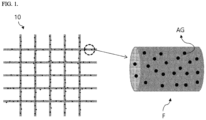
- an antibacterial filter 10 of the present disclosure includes yarns F made of the resin composition for the antibacterial filter obtained by the above-described preparation method, in which the yarns F are woven into a mesh form to manufacture the antibacterial filter.
- the yarn F included in the antibacterial filter 10 of the present disclosure may have a diameter of 100 to 150 ⁇ m.
- the antibacterial glass particles AG having an average particle diameter of 3 to 5 ⁇ m may be dispersed in the yarn F.
- the average particle diameter means an average value of the particle diameters of at least 10 or more antibacterial glass particles AG.
- the antibacterial glass composition having the composition described in Table 1 was melted in an electric furnace at a temperature of 1,250°C, and then a quenching twin roll was used to cool the melted antibacterial glass composition to obtain a cullet having a thickness of 1 mm or smaller.
- the raw materials of Na 2 O, K 2 O, and CaO were Na 2 CO 3 , K 2 CO 3 , and CaCO 3 , respectively, and the remaining components were the same as those described in Table 1. Vitrification was classified into a case where the glassy state is homogeneous and a case where opalescence/unmelted substance occurs.
- the prepared glass was ground with a dry pulverizing means (ball mill or jet mill) to prepare powders with an average particle size of 3 to 6 ⁇ m.
- silane coupling agent with the cationic functional group was prepared.
- silane coupling agent 3-chloropropyltrimethoxysilane was used as the silane coupling agent.
- the synthesis was performed at a molar ratio of 1:1.2 at 130°C for 24 hours in a toluene atmosphere, and a following substance was prepared.
- the antibacterial glass powders prepared as above and the silane coupling agent having the cationic functional group were synthesized with each other.
- the antibacterial glass powders and the silane coupling agent having the cationic functional group were pulverized and mixed with each other for a long time, and then the mixture was heat-treated at 120°C for 24 hours to physically and chemically bond the antibacterial glass powders and the silane coupling agent having the cationic functional group to each other.
- the resin for the filter including polypropylene was prepared as a main resin, and then, 10 wt% of the antibacterial glass composition and 90 wt% of the resin for the filter were mixed with each other to prepare the resin composition for the filter.
- Table 2 shows whether vitrification is achieved, and the content of the silane coupling agent in Present Example and Comparative Example.
- Present Examples 1 and 2 employed the silane coupling agent using imidazolium
- Present Examples 3 and 4 and Comparative Example 2 employed the silane coupling agent using quaternary ammonium salt.
- Components Present Example 1 Comparative Example 1 SiO 2 35.1 53 P2O 5 0 4 B 2 O 3 2 0 Na 2 O 9.6 15 K 2 O 9.6 0 WO 3 0 0 CaO 4.3 18 MgO 0 0 SnO 0 0 ZnO 39.4 10 Total 100 100
- Comparative Example 2 a composition according to Comparative Example 2 was prepared by mixing a commercially available ZnO-based antibacterial agent with the resin for the filter. Comparative Example 2 contained 1.5 wt% of the antibacterial agent.
- the resin composition for the antibacterial filter prepared as above was converted into pellets using extrusion and injection molding, and the pellets were put into a spinning machine for a filter to spin and draw the pellets to produce yarns.
- the manufactured yarns were woven into a 30 to 40 mesh form by crossing the yarns each other in a perpendicular manner with each other using a weaving machine. Thereafter, the mesh woven into a fabric form was subjected to insert injection molding and then, was combined with a frame to manufacture a filter.
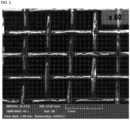
- FIG. 2 and FIG. 3 SEM images of the filter prepared from Present Example 1 of the present disclosure are shown. It may be identified that the antibacterial glass particles are densely disposed in the yarn of the filter according to Present Example of the present disclosure.
- a tensile test was conducted on the filter according to Present Example 1. When a force of 3.5 kgf was applied thereto using a push-pull gauge, the filter according to Present Example 1 did not have mesh tearing.
- the filter prepared according to Present Example has superior antibacterial activity compared to the specimen according to Comparative Example.
- the antibacterial filter was exposed to washing liquid containing a neutral detergent for 17 hours (@40°C). Then, the antibacterial activity was evaluated.
- the ZnO-based antibacterial agent caused resin hardening due to a chemical reaction with the resin for the filter, and thus the existing quantity of yarns could not be spun. This problem not only reduces the production yield but also reduces the production amount.
Landscapes
- Chemical & Material Sciences (AREA)
- Chemical Kinetics & Catalysis (AREA)
- Engineering & Computer Science (AREA)
- Life Sciences & Earth Sciences (AREA)
- Geology (AREA)
- Textile Engineering (AREA)
- Inorganic Chemistry (AREA)
- Materials Engineering (AREA)
- Geochemistry & Mineralogy (AREA)
- Organic Chemistry (AREA)
- General Chemical & Material Sciences (AREA)
- Ceramic Engineering (AREA)
- Glass Compositions (AREA)
- Filtering Materials (AREA)
- Compositions Of Macromolecular Compounds (AREA)
- Apparatus For Disinfection Or Sterilisation (AREA)
Abstract
Description
- The present disclosure relates to a resin composition for an antibacterial filter, a method for preparing the same, and an antibacterial filter using the resin composition.
- Microorganisms such as germs, fungi, and bacteria are ubiquitous in our living spaces such as washbasins, refrigerator shelves, washing machines, air conditioners, humidifiers, and air purifiers. When microorganisms enter a human body, they may cause life-threatening infections.
- In particular, home appliances such as air conditioners, humidifiers, and air purifiers may spread microorganisms harmful to the human body in closed spaces.
- Recently, a technology for applying an antibacterial agent to a filter used in the air conditioner or the humidifier has been attempted.
- The filter is manufactured using a yarn made of a resin component. A process of manufacturing the filter yarn involves melting the resin, spinning the melt resin , and then performing a drawing process thereon. Accordingly, a long and thin yarn is manufactured. In this regard, a good elongation of the yarn should be secured so that there are no problems in the drawing process. However, the antibacterial agent causes a chemical reaction with the resin, thereby damaging a polymer chain. Accordingly, the antibacterial agent causes a problem of reducing the elongation of the resin. When the elongation of the yarn is reduced, the yarn breaks frequently during the process of manufacturing the yarn. Accordingly, a yield of the yarn production is reduced. Therefore, in order to provide the filter using the antibacterial agent, it is necessary to improve the process or change ingredients or a content of the antibacterial agent.
- In addition, silver (Ag) is widely used as a material of the antibacterial agent. According to the release safety criteria of the standard specification and inspection agency designation notice, a release amount of silver is defined to be 10ppb (0.01mg/L) or smaller. However, the conventional technology has a problem that a large amount of silver is released, which may cause harm to the human body and the ecosystem.
- A purpose of the present disclosure is to provide a resin composition for an antibacterial filter that suppresses growth of bacteria in a filter applied to home appliances such as air conditioners, humidifiers, or air purifiers, thereby improving the hygiene of air.
- In addition, a purpose of the present disclosure is to provide a method for preparing a resin composition for an antibacterial filter that is harmless to the human body and exhibits antibacterial performance by simply adding an antibacterial glass composition without changing an existing filter manufacturing process.
- Furthermore, a purpose of the present disclosure is to provide a novel antibacterial filter applied to home appliances such as air conditioners, humidifiers, or air purifiers so as to suppress the growth of bacteria therein, thereby improving the hygiene of air.
- Purposes according to the present disclosure are not limited to the above-mentioned purpose. Other purposes and advantages according to the present disclosure that are not mentioned may be understood based on following descriptions, and may be more clearly understood based on embodiments according to the present disclosure. Further, it will be easily understood that the purposes and advantages according to the present disclosure may be realized using means shown in the claims and combinations thereof.
- The resin composition for an antibacterial filter according to the present disclosure includes an antibacterial glass composition and a resin for a filter. In particular, components of the antibacterial glass composition and contents thereof may be controlled such that not only the antibacterial activity is enhanced, but also the properties of the resin are improved.
- More specifically, the resin composition for the antibacterial filter according to the present disclosure includes an antibacterial glass composition; and a resin for a filter including a polymer material, wherein the antibacterial glass composition includes: antibacterial glass powders; and a silane coupling agent having a cationic functional group, wherein the antibacterial glass powders contain: 26 to 50 wt% of SiO2; 0.5 to 4 wt% of at least one of B2O3 and P2O5; 15 to 27 wt% of both of Na2O and K2O; 3 to 20 wt% of at least one of CaO, MgO, and WO3; and 22 to 44 wt% of at least one of ZnO and SnO, based on 100 wt% of the antibacterial glass powders.
- In the antibacterial glass composition according to the present disclosure, the antibacterial activity is not exhibited as the antibacterial agent decomposes. Rather, the antibacterial glass composition has a mechanism in which metal ions having the antibacterial activity allow surface charges of the glass to be positively charged which attract bacteria having negative charges, thereby preventing the bacteria from growing, so that the semi-permanent antibacterial activity may be secured.
- As a result, when the antibacterial glass composition of the present disclosure is utilized as an additive for plastic injection molding, the antibacterial glass composition may not only have excellent antibacterial activity against Escherichia coli and Staphylococcus aureus, but also effectively remove Pseudomonas aeruginosa as a major pathogen in a humid environment where water exists.
- In addition, the resin composition for the antibacterial filter of the present disclosure prevents a decrease in the elongation of the yarn using the resin and suppresses a decrease in the production yield by controlling the components of the antibacterial agent and contents thereof in the antibacterial glass composition.
- Furthermore, the preparing method of the present disclosure includes a process of preparing the antibacterial glass composition and mixing the antibacterial glass composition with the resin for the filter. The preparing method of the present disclosure may prepare the resin composition for the antibacterial filter with excellent physical properties and antibacterial activity using a simple process as described above.
- Furthermore, the antibacterial filter of the present disclosure includes a yarn using a resin composition for an antibacterial filter, and the yarns are woven into a mesh form.
- The resin composition for the antibacterial filter according to the present disclosure may improve the hygiene of air by suppressing the growth of bacteria in the filter applied to home appliances such as an air conditioner, a humidifier, or an air purifier.
- In particular, the resin composition for the antibacterial filter of the present disclosure may prevent a decrease in the elongation of a yarn using a resin and suppress a decrease in the production yield by controlling the components of the antibacterial agent and the contents thereof.
- In addition, the antibacterial glass composition applied to the present disclosure includes SiO2 as a glass former as a main component. Thus, the metal ion having the antibacterial property added to the glass causes the surface charge (zeta potential) of the glass to be positive. Thus, the positive charge may attract the bacteria that normally have a negative charge to create a charge atmosphere in which bacteria cannot grow, thereby killing the bacteria.
- As a result, the antibacterial filter of the present disclosure may not only have excellent antibacterial activity against E. coli and Staphylococcus aureus, but also effectively remove Pseudomonas aeruginosa as a major pathogen in a humid environment where water exists.
- In addition, the antibacterial filter according to the present disclosure has high thermal stability and long-lasting properties, while complementing the slow antibacterial instantaneous effect as a disadvantage of the inorganic antibacterial agent.
- In addition to the effects as described above, specific effects of the present disclosure are described together with the specific details for carrying out the disclosure below.
-
-
FIG. 1 is a schematic drawing of a portion of an antibacterial filter according to an embodiment of the present disclosure. -
FIG. 2 andFIG. 3 are SEM photographs showing an antibacterial filter according to an embodiment of the present disclosure. - The above-mentioned purposes, features, and advantages will be described in detail later with reference to the attached drawings, so that those skilled in the art in the technical field to which the present disclosure belongs may easily practice the technical ideas of the present disclosure. In describing the present disclosure, when it is determined that a detailed description of the publicly known technology related to the present disclosure may unnecessarily obscure the gist of the present disclosure, the detailed description thereof will be omitted. Hereinafter, a preferred embodiment according to the present disclosure will be described in detail with reference to the attached drawings. In the drawings, identical reference numerals are used to indicate identical or similar components.
- As used herein, singular expressions include plural expressions, unless the context clearly dictates otherwise. In the present application, terms such as "composed of" or "include" should not be construed as necessarily including all of various components or steps described herein, and should be interpreted as being able to not including some of the components or the steps and further including additional components or steps.
- Hereinafter, a resin composition for an antibacterial filter according to some embodiments of the present disclosure, a method for preparing the same, and an antibacterial filter using the resin composition will be described.
- An antibacterial glass composition applied to the resin composition for an antibacterial filter of the present disclosure has secured semi-permanent sustainability of the antibacterial activity by controlling components of the antibacterial glass composition and contents thereof so as to have non-dissolution property.
- Furthermore, the antibacterial glass composition may be composed of components harmless to the human body and has high heat resistance and high water resistance, and thus may maintain the antibacterial function semi-permanently.
- In addition, in the antibacterial glass composition, the antibacterial activity is not exhibited as the antibacterial agent decomposes. Rather, the antibacterial glass composition has a mechanism in which metal ions having the antibacterial activity allow surface charges of the glass to be positively charged which attract bacteria having negative charges, thereby preventing the bacteria from growing, so that the semi-permanent antibacterial activity may be secured.
- As a result, when the antibacterial glass composition is utilized as an additive for an antibacterial filter, the antibacterial glass composition may not only have excellent antibacterial activity against Escherichia coli and Staphylococcus aureus, but also effectively remove Pseudomonas aeruginosa as a major pathogen in a humid environment where water exists.
- In addition, since the antibacterial glass composition has a form in which the above-described inorganic antibacterial glass and antibacterial organic substances bind to each other, the antibacterial glass composition has high thermal stability and long-lasting properties, while complementing the slow antibacterial instantaneous effect as a disadvantage of the inorganic antibacterial agent.
- In addition, the resin composition for the antibacterial filter of the present disclosure prevents a decrease in the elongation of the yarn using the resin and suppresses a decrease in the production yield by controlling the components of the antibacterial agent and contents thereof in the antibacterial glass composition.
- To this end, the resin composition for the antibacterial filter according to embodiments of the present disclosure includes an antibacterial glass composition; and a resin for a filter including a polymer material, wherein the antibacterial glass composition includes: antibacterial glass powders; and a silane coupling agent having a cationic functional group, wherein the antibacterial glass powders contain: 26 to 50 wt% of SiO2; 0.5 to 4 wt% of at least one of B2O3 and P2O5; 15 to 27 wt% of both of Na2O and K2O; 3 to 20 wt% of at least one of CaO, MgO, and WO3; and 22 to 44 wt% of at least one of ZnO and SnO, based on 100 wt% of the antibacterial glass powders.
- First, the antibacterial glass composition included in the resin composition for the antibacterial filter of the present disclosure is described.
- In this regard, in order for the antibacterial glass composition to become glass, a glass former is essentially included therein. Furthermore, in order for the glass to be easily formed under a condition for melting the glass (approximately 900 to 1600°C), a modified oxide is included therein to melt the glass former in a homogeneous and amorphous form.
- The most commonly commercially used glass formers are SiO2, B2O3, and P2O5. The glass composed of a large amount of B2O3 and P2O5 has strong hygroscopicity, and a large amount of OH groups derived from moisture in the air are adsorbed on a surface thereof, resulting in a negative surface charge. This acts as a factor that inhibits the antibacterial activity of the glass.
- Therefore, the present disclosure provides a novel silicate-based antibacterial glass composition that intentionally contains a smaller amount of of B2O3 and P2O5 and has SiO2 as a glass former as a main component of the composition.
- The antibacterial glass powders included in the antibacterial glass composition of the present disclosure contains 26 to 50 wt% of SiO2, and 0.5 to 4 wt% of at least one of B2O3 and P2O5.
- SiO2 is a glass-former that enables vitrification and is a key component that plays a role in the structural framework of glass. Furthermore, SiO2 does not act as a direct component that exerts the antibacterial power, but is advantageous in forming a smaller amount of OH groups on the glass surface, compared to P2O5 as a representative glass-former, thereby causing the glass surface to be positively charged due to metal ions in the glass.
- The SiO2 may be added at a content of 26 to 50 wt% based on 100 wt% of the antibacterial glass powders according to the present disclosure. When SiO2 is added in a large amount exceeding 50 wt%, the viscosity increases when the glass is melted, such that there is a problem that workability and yield are reduced during a cooling process. On the contrary, when SiO2 is added in an amount smaller than 26 wt%, the structure of the glass is weakened, which causes a problem in that the water resistance is reduced.
- On the other hand, the glass composed of a large amount of B2O3 and P2O5 has strong hygroscopicity, such that a lot of OH groups derived from moisture in the air are adsorbed on the surface of the glass, so that the surface charge becomes negative. This acts as a factor that inhibits the antibacterial activity of the glass. Therefore, according to the present disclosure, a novel antibacterial glass composition that has B2O3 and P2O5 at a minimum content and has SiO2 as the glass former as the main component of the glass composition.
- In other words, SiO2 plays a role in strengthening the structure of the glass. However, when SiO2 is used as a single component as a glass former, the viscosity becomes too high when being melted, so that a very high melting temperature is required to produce homogeneous glass. Therefore, a small amount of B2O3 and P2O5 are added within a range in which the addition does not weaken the water resistance of the glass, such that the viscosity of the melt may be reduced, and the workability and yield of the glass production may be improved.
- Accordingly, the antibacterial glass powders of the present disclosure contain 0.5 to 4 wt% of at least one of B2O3 and P2O5.
- When at least one of B2O3 and P2O5 is added in a large amount exceeding 4 wt%, the water resistance of the glass may be reduced and B2O3 and P2O5 may easily be dissolved and released in water. Conversely, when at least one of B2O3 and P2O5 is added in an amount smaller than 0.5 wt%, the workability and yield of the glass production may be reduced.
- Alkali oxides such as Na2O and K2O are oxides that act as a network modifier that forms a non-crosslinking bond in the glass composition. Each of these components alone cannot achieve vitrification. However, when each of these components is mixed with a glass former such as SiO2 and B2O3 at a predetermined content, the vitrification becomes possible. When only one of the above components is included in the glass composition, the durability of the glass may be weakened within the vitrification possible range. However, when the two components are included in the glass composition together, the durability of the glass is improved again depending on the contents thereof. This is called the mixed alkali effect.
- Therefore, Na2O and K2O are added in a content of 15 to 27 wt% based on 100 wt% of the antibacterial glass powders according to the present disclosure. When both of Na2O and K2O are added in a large amount exceeding 27 wt%, the thermal properties of the glass composition may be deteriorated. Conversely, when both of Na2O and K2O are added in a content smaller than 15 wt%, it is difficult to control the hydration of components such as ZnO, which may deteriorate the antibacterial properties.
- Further, preferably, the content of Na2O and the content of K2O may satisfy the following relationship:

- When the content of Na2O and the content of K2O do not satisfy the above relationship, the melting point lowering effect through the eutectic point may be reduced, thereby making it difficult to vitrify the antibacterial glass composition.
- Next, the antibacterial glass powders of the present disclosure contain 3 to 20 wt% of at least one of CaO, MgO, and WO3, based on 100 wt% of the antibacterial glass powders.
- At least one of CaO, MgO, and WO3 are oxides that act as a network modifier that forms a non-crosslinking bond in the glass composition in a similar manner to alkali oxides. When one or more of CaO, MgO, and WO3 is added in an amount exceeding 20 wt%, the thermal properties of the glass composition may deteriorate. On the contrary, when one or more of CaO, MgO, and WO3 is added in an amount smaller than 3 wt%, the glass structure may be weakened, resulting in reduced durability and reduced antibacterial performance.
- Next, the antibacterial glass powders of the present disclosure contain at least one of ZnO and SnO as a component that exhibits antibacterial performance.
- At least one of ZnO and SnO is included in an amount of 22 to 44 wt% based on 100 wt% of the antibacterial glass powders according to the present disclosure. When at least one of ZnO and SnO is added in an amount smaller than 22 wt%, it is difficult to exhibit antibacterial properties of the glass composition. On the contrary, when at least one of ZnO and SnO is added in an amount exceeding 44 wt%, the durability or thermal properties of the glass composition may deteriorate. Preferably, the ZnO may be added in an amount of 30 wt% or larger, based on 100 wt% of the antibacterial glass powders according to the present disclosure.
- In particular, according to the present disclosure, the antibacterial glass powers include at least one of ZnO and SnO in an amount of 22 to 44 wt% compared to other components, thereby preventing a decrease in the elongation of the yarn and a decrease in the production yield of the yarn. At least one of the ZnO and SnO exhibits antibacterial performance, but chemically reacts with the resin for the filter to reduce the elongation of the yarn. Accordingly, the antibacterial agent included in the resin composition for the antibacterial filter needs to control the type and the content of the antibacterial component. According to the present disclosure, the contents of the other components and at least one of the ZnO and SnO may be controlled such that the reduction in the elongation of the yarn may be prevented.
- Furthermore, a conventional antibacterial composition includes various antibacterial components such as Ag and Ag oxide to exhibit antibacterial activity (coverage against various bacteria). However, the injection molded product to which the Ag component has been applied exhibits color change when being exposed to light for a long period of time. Thus, the composition according to the present disclosure exhibits the antibacterial activity using Zn and Sn without including Ag and Ag oxide, thereby suppressing the above-mentioned side effect. Preferably, the antimicrobial glass composition of the present disclosure does not contain Ag, Ag oxide. However, the antimicrobial glass composition of the present disclosure may contain Ag3PO4 or AgNO3 at 0.1 wt% or smaller based on 100 wt% of the antimicrobial glass powder, when necessary.
- Next, the antimicrobial glass composition includes the silane coupling agent having the cationic functional group in addition to the antimicrobial glass powders as described above.
- In this regard, the cationic functional group may include at least one selected from a quaternary ammonium salt, an imidazolium group, a piperidinium group, a morpholinium group, a pyridinium group, and a pyrrolidinium group.
- In addition, the silane coupling agent may include at least one of γ-aminopropyl trimethoxysilane, γ-aminopropyl triethoxy silane, γ-glycidoxy propyl trimethoxy silane, γ-glycidoxy propyl trimethoxysilane, γ-mercapto propyl trimethoxy silane, γ-mercapto propyl triethoxy silane, and a silane coupling agent represented by a following Chemical Formula:
[Chemical Formula] RO(CH2CHO)nCH2CH2CH2CSi(OR')3
where R is a methyl group, an ethyl group, or hydrogen, R' is a methyl group or an ethyl group, and n is an integer from 1 to 10. - In this way, the resin composition for the antibacterial filter according to the present disclosure includes the antimicrobial glass powders as the inorganic antimicrobial agent, and further includes the silane coupling agent having the cationic functional group to maximize the performance of the antimicrobial glass powders. More specifically, the silane coupling agent having the cationic functional group binds to the surface of the antimicrobial glass powder. The cationic functional group interacts with the cell membrane of the negatively charged bacteria to exhibit antimicrobial properties. In addition, when the antimicrobial glass composition of the present disclosure is applied to a polymer, this may advantageously improve the mechanical properties and dispersibility of the polymer. The silane coupling agent is used as an intermediate connecting the antibacterial inorganic material (the glass powders) and the organic material (the cationic functional group) to each other.
- The silane coupling agent having the cationic functional group may preferably be contained in an amount of 0.1 to 20 parts by weight, most preferably in an amount of 0.1 to 5 parts by weight, based on 100 parts by weight of the antibacterial glass powders.
- In this regard, the resin composition for the antibacterial filter of the present disclosure may include 1 to 20 parts by weight of the above-described antibacterial glass composition based on 100% by weight of the total weight of the resin composition for the antibacterial filter. When the content of the antibacterial glass composition is smaller than 1% by weight based on 100% by weight of the total weight of the resin composition for the antibacterial filter, the required antibacterial property may not be realized. On the contrary, when the content of the antibacterial glass composition exceeds 20% by weight, the durability or elongation of the filter may be reduced,
- Next, the resin for the filter included in the resin composition for the antibacterial filter of the present disclosure will be described.
- The resin for the filter is not particularly limited as long as it is a polymer material that may be used as a material for an antibacterial filter. Preferably, the resin for the filter may include at least one of polypropylene, polycarbonate, HIPS (high-impact polystyrene), ABS (acrylonitrile-butadiene-styrene) copolymer, and EPDM (ethylene-propylene-diene monomer) copolymer.
- Next, a method for preparing a resin composition for an antibacterial filter according to an embodiment of the present disclosure will be described.
- The method for preparing the resin composition for an antibacterial filter according to an embodiment of the present disclosure first includes a process for preparing an antibacterial glass composition. The process for preparing the antibacterial glass composition includes a mixing step, a melting step, a cooling step, and a pulverizing step.
- In the mixing step, first, the antibacterial glass powders is prepared, wherein the antibacterial glass powders contain: 26 to 50 wt% of SiO2; 0.5 to 4 wt% of at least one of B2O3 and P2O5; 15 to 27 wt% of both of Na2O and K2O; 3 to 20 wt% of at least one of CaO, MgO, and WO3; and 22 to 44 wt% of at least one of ZnO and SnO, based on 100 wt% of the antibacterial glass powders.
- The preferred composition ratio of the antibacterial glass powders is as described above.
- In the melting step, the antibacterial glass powders are melted.
- In this step, it is preferable that the melting is performed at 1,100 to 1,400°C for 1 to 60 minutes. When the melting temperature is smaller than 1,200°C or the melting time is smaller than 1 minute, the antibacterial glass powders are not completely dissolved, which causes the glass melt to become immiscible. On the contrary, when the melting temperature exceeds 1,300°C or the melting time exceeds 60 minutes, it is not economical because excessive energy and time are required.
- In the cooling step, the molten antibacterial glass powders are cooled down to room temperature.
- In this step, it is preferable that the cooling is performed in a furnace. When air cooling or water cooling is applied, the internal stress of the antibacterial glass is excessive generated, which may cause cracks in some cases. For this reason, the cooling in the furnace is preferable.
- In the pulverizing step, the cooled antibacterial glass is pulverized. At this time, it is preferable to use a dry pulverizing means for the pulverizing process. For example, a ball mill process or a jet mill process may be used using the dry pulverizing means. In this pulverizing process, the silane coupling agent having the cationic functional group is added to the antibacterial glass powders.
- Via the above-described pulverizing, the antibacterial glass is finely pulverized to particles, such that the antibacterial glass composition including the antibacterial glass powders and the silane coupling agent having the cationic functional group is prepared. It is preferable that the antibacterial glass composition has an average diameter of 30 µm or smaller. A more preferable range of the average diameter thereof is in a range of 15 to 25 µm.
- The antibacterial glass composition according to an embodiment of the present disclosure may be prepared in the above process.
- Next, the antibacterial glass composition and the resin for the filter may be mixed with each other such that the resin composition for the antibacterial filter of the present disclosure may be prepared.
- A preferred content of the antibacterial glass composition and a preferred examples of the resin for the filter are as described above.
- Next, the antibacterial filter of the present disclosure is described.
- Referring to
FIG. 1 , anantibacterial filter 10 of the present disclosure includes yarns F made of the resin composition for the antibacterial filter obtained by the above-described preparation method, in which the yarns F are woven into a mesh form to manufacture the antibacterial filter. - The yarn F included in the
antibacterial filter 10 of the present disclosure may have a diameter of 100 to 150 µm. The antibacterial glass particles AG having an average particle diameter of 3 to 5 µm may be dispersed in the yarn F. In this regard, the average particle diameter means an average value of the particle diameters of at least 10 or more antibacterial glass particles AG. - Hereinafter, the configuration and the effect of the present disclosure will be described in more detail based on a preferred example of the present disclosure. However, this is presented as a preferred implementation of the present disclosure and cannot be interpreted as limiting the present disclosure in any way.
- Since the contents not described here may be sufficiently technically inferred by a person skilled in the art, the description thereof will be omitted.
- The antibacterial glass composition having the composition described in Table 1 was melted in an electric furnace at a temperature of 1,250°C, and then a quenching twin roll was used to cool the melted antibacterial glass composition to obtain a cullet having a thickness of 1 mm or smaller.
- In this regard, the raw materials of Na2O, K2O, and CaO were Na2CO3, K2CO3, and CaCO3, respectively, and the remaining components were the same as those described in Table 1. Vitrification was classified into a case where the glassy state is homogeneous and a case where opalescence/unmelted substance occurs.
- The prepared glass was ground with a dry pulverizing means (ball mill or jet mill) to prepare powders with an average particle size of 3 to 6 µm.
- Next, the silane coupling agent with the cationic functional group was prepared.
- For synthesis with the cationic functional group, 3-chloropropyltrimethoxysilane was used as the silane coupling agent. In order to synthesize imidazolium with the silane coupling agent, the synthesis was performed at a molar ratio of 1:1.2 at 130°C for 24 hours in a toluene atmosphere, and a following substance was prepared.

- Next, for the synthesis of quaternary ammonium salt and silane coupling agent, 3-chloropropyltrimethoxysilane and dimethyl butyl amine were synthesized with each other at a molar ratio of 1:0.909 in an atmosphere of 90°C for 24 hours to prepare a following substance:

- Thereafter, the antibacterial glass powders prepared as above and the silane coupling agent having the cationic functional group were synthesized with each other.
- The antibacterial glass powders and the silane coupling agent having the cationic functional group were pulverized and mixed with each other for a long time, and then the mixture was heat-treated at 120°C for 24 hours to physically and chemically bond the antibacterial glass powders and the silane coupling agent having the cationic functional group to each other.
- The resin for the filter including polypropylene was prepared as a main resin, and then, 10 wt% of the antibacterial glass composition and 90 wt% of the resin for the filter were mixed with each other to prepare the resin composition for the filter.
- Table 2 as set forth below shows whether vitrification is achieved, and the content of the silane coupling agent in Present Example and Comparative Example. Present Examples 1 and 2 employed the silane coupling agent using imidazolium, and Present Examples 3 and 4 and Comparative Example 2 employed the silane coupling agent using quaternary ammonium salt.
[Table 1] Components Present Example 1 Comparative Example 1 SiO2 35.1 53 P2O5 0 4 B2O3 2 0 Na2O 9.6 15 K2O 9.6 0 WO3 0 0 CaO 4.3 18 MgO 0 0 SnO 0 0 ZnO 39.4 10 Total 100 100 -
[Table 2] Examples Present Example 1 Comparative Example 1 Whether vitrification is achieved? O O Silane coupling agent with cationic functional group (relative to a weight of antibacterial glass powders) 0.1 0.1 Content of antibacterial glass in resin composition (wt%) 1.5 1.5 - Furthermore, a composition according to Comparative Example 2 was prepared by mixing a commercially available ZnO-based antibacterial agent with the resin for the filter. Comparative Example 2 contained 1.5 wt% of the antibacterial agent.
- The resin composition for the antibacterial filter prepared as above was converted into pellets using extrusion and injection molding, and the pellets were put into a spinning machine for a filter to spin and draw the pellets to produce yarns.
- The manufactured yarns were woven into a 30 to 40 mesh form by crossing the yarns each other in a perpendicular manner with each other using a weaving machine. Thereafter, the mesh woven into a fabric form was subjected to insert injection molding and then, was combined with a frame to manufacture a filter.
- Referring to
FIG. 2 andFIG. 3 , SEM images of the filter prepared from Present Example 1 of the present disclosure are shown. It may be identified that the antibacterial glass particles are densely disposed in the yarn of the filter according to Present Example of the present disclosure. - A tensile test was conducted on the filter according to Present Example 1. When a force of 3.5 kgf was applied thereto using a push-pull gauge, the filter according to Present Example 1 did not have mesh tearing.
- Next, the antibacterial activity value of each filter against each of Staphylococcus aureus and Escherichia coli was identified according to the antibacterial standard test (ISO 20743, fiber antibacterial test method).
-
[Table 3] Examples Present Example 1 Comparative Example 1 Comparative Example 2 ISO 20743 (FITI Testing & Research Institute) Staphylococcus aureus 99.999 90.00 90.00 Escherichia coli 99.999 90.00 90.00 - As described in Table 3, it may be identified that the filter prepared according to Present Example has superior antibacterial activity compared to the specimen according to Comparative Example.
- The antibacterial filter was exposed to washing liquid containing a neutral detergent for 17 hours (@40°C). Then, the antibacterial activity was evaluated.
- Based on a comparing result of the antibacterial activity of the filter according to Present Example 1 and the antibacterial activity of the filter according to Comparative Example 2, the initial antibacterial performances of the two filters were similar to each other. However, the filter according to Present Example 1 after water immersion exhibited superior antibacterial activity. This may indicate that the durability of the antibacterial filter having the antibacterial glass of the present disclosure applied thereto is excellent in the aging environment of the filter.
[Table 4] Examples Antibacterial activity value (log) (Staphylococcus aureus) Remark 0hr 17hr Comparative Example 2 5.8 2.4 ISO 20743 (FITI Testing & Research Institute) Present Example 1 5.8 3.5 - The spinning production test of a prefilter yarn of each of Present Example 1 and Comparative Example 2 was conducted. The number of holes in the spinneret nozzle is 120. In Present Example 1, no problems such as nozzle clogging occurred.
- However, the ZnO-based antibacterial agent caused resin hardening due to a chemical reaction with the resin for the filter, and thus the existing quantity of yarns could not be spun. This problem not only reduces the production yield but also reduces the production amount.
- Although the present disclosure has been described with reference to the accompanying drawings, the present disclosure is not limited by the embodiments disclosed herein and the drawings, and it is obvious that various modifications may be made by those skilled in the art within the scope of the technical idea of the present disclosure. In addition, although the effects based on the configuration of the present disclosure are not explicitly described and illustrated in the description of the embodiment of the present disclosure above, it is natural that predictable effects from the configuration should also be recognized.
Claims (18)
- A resin composition for an antibacterial filter, the resin composition comprising:an antibacterial glass composition; anda resin for a filter including a polymer material,wherein the antibacterial glass composition includes:antibacterial glass powders; anda silane coupling agent having a cationic functional group,wherein the antibacterial glass powders contain:26 to 50 wt% of SiO2;0.5 to 4 wt% of at least one of B2O3 and P2O5;15 to 27 wt% of both of Na2O and K2O;3 to 20 wt% of at least one of CaO, MgO, and WO3; and22 to 44 wt% of at least one of ZnO and SnO,based on 100 wt% of the antibacterial glass powders.
- The resin composition for the antibacterial filter of claim 1, wherein a content of the Na2O and a content of the K2O satisfy a following relationship:

- The resin composition for the antibacterial filter of claim 1, wherein the antibacterial glass powders further contain Ag or an oxide including Ag at a content of 0.1 wt% or smaller, based on 100 wt% of the antibacterial glass powders.
- The resin composition for the antibacterial filter of claim 1, wherein the antibacterial glass powders contain the ZnO at a content of 30 wt% or larger, based on 100 wt% of the antibacterial glass powders.
- The resin composition for the antibacterial filter of claim 1, wherein the cationic functional group includes at least one selected from a quaternary ammonium salt, an imidazolium group, a piperidinium group, a morpholinium group, a pyridinium group, and a pyrrolidinium group,
wherein the silane coupling agent includes at least one selected from γ-aminopropyl trimethoxysilane, γ-aminopropyl triethoxy silane, γ-glycidoxy propyl trimethoxy silane, γ-glycidoxy propyl trimethoxysilane, γ-mercapto propyl trimethoxy silane, γ-mercapto propyl triethoxy silane, and a silane coupling agent represented by a following Chemical Formula:
[Chemical Formula] RO(CH2CHO)nCH2CH2CH2CSi(OR')3
where R is a methyl group, an ethyl group, or hydrogen, R' is a methyl group or an ethyl group, and n is an integer from 1 to 10. - The resin composition for the antibacterial filter of claim 1, wherein the antibacterial glass composition contains the silane coupling agent having the cationic functional group at a content of 0.1 to 20 parts by weight, based on 100 parts by weight of the antibacterial glass powders.
- The resin composition for the antibacterial filter of claim 1, wherein the resin for the filter includes at least one of polypropylene, polycarbonate, HIPS (high-impact polystyrene), ABS (acrylonitrile-butadiene-styrene) copolymer, and EPDM (ethylene-propylene-diene monomer) copolymer.
- The resin composition for the antibacterial filter of claim 1, wherein the resin composition for the antibacterial filter contains the antibacterial glass composition at a content of 1 to 20 wt% based on 100 wt% of a total weight of the resin composition for the antibacterial filter.
- A method for preparing a resin composition for an antibacterial filter, the method comprising:preparing antibacterial glass powders such that the antibacterial glass powders contain:26 to 50 wt% of SiO2;0.5 to 4 wt% of at least one of B2O3 and P2O5;15 to 27 wt% of both of Na2O and K2O;3 to 20 wt% of at least one of CaO, MgO, and WO3; and22 to 44 wt% of at least one of ZnO and SnO,based on 100 wt% of the antibacterial glass powders;melting the antibacterial glass powders;cooling the melted antibacterial glass powders;adding a silane coupling agent having a cationic functional group to the cooled antibacterial glass powders, and pulverizing the cooled antibacterial glass powders to prepare an antibacterial glass composition; andmixing the prepared antibacterial glass composition with a resin for a filter.
- The method for preparing the resin composition for the antibacterial filter of claim 9, wherein a content of the NazO and a content of the K2O satisfy a following relationship:

- The method for preparing the resin composition for the antibacterial filter of claim 9, wherein the antibacterial glass powders further contain Ag or an oxide including Ag at a content of 0.1 wt% or smaller, based on 100 wt% of the antibacterial glass powders.
- The method for preparing the resin composition for the antibacterial filter of claim 9, wherein the antibacterial glass powders contain the ZnO at a content of 30 wt% or larger, based on 100 wt% of the antibacterial glass powders.
- The method for preparing the resin composition for the antibacterial filter of claim 9, wherein the cationic functional group includes at least one selected from a quaternary ammonium salt, an imidazolium group, a piperidinium group, a morpholinium group, a pyridinium group, and a pyrrolidinium group,
wherein the silane coupling agent includes at least one selected from γ-aminopropyl trimethoxysilane, γ-aminopropyl triethoxy silane, γ-glycidoxy propyl trimethoxy silane, γ-glycidoxy propyl trimethoxysilane, γ-mercapto propyl trimethoxy silane, γ-mercapto propyl triethoxy silane, and a silane coupling agent represented by a following Chemical Formula:
[Chemical Formula] RO(CH2CHO)nCH2CH2CH2CSi(OR')3
where R is a methyl group, an ethyl group, or hydrogen, R' is a methyl group or an ethyl group, and n is an integer from 1 to 10. - The method for preparing the resin composition for the antibacterial filter of claim 9, wherein the antibacterial glass composition contains the silane coupling agent having the cationic functional group at a content of 0.1 to 20 parts by weight, based on 100 parts by weight of the antibacterial glass powders.
- The method for preparing the resin composition for the antibacterial filter of claim 9, wherein the resin for the filter includes at least one of polypropylene, polycarbonate, HIPS (high-impact polystyrene), ABS (acrylonitrile-butadiene-styrene) copolymer, and EPDM (ethylene-propylene-diene monomer) copolymer.
- The method for preparing the resin composition for the antibacterial filter of claim 9, wherein the resin composition for the antibacterial filter contains the antibacterial glass composition at a content of 1 to 20 wt% based on 100 wt% of a total weight of the resin composition for the antibacterial filter.
- An antibacterial filter comprising yarns made of the resin composition for the antibacterial filter prepared by the method of claim 9,
wherein the yarns are woven into a mesh shape to form the antibacterial filter. - The antibacterial filter of claim 17, wherein a diameter of the yarn is in a range of 100 to 150 µm,
wherein antibacterial glass particles having an average particle diameter of 3 to 5 µm are dispersed in the yarn.
Applications Claiming Priority (2)
| Application Number | Priority Date | Filing Date | Title |
|---|---|---|---|
| KR1020220046563A KR20230147478A (en) | 2022-04-14 | 2022-04-14 | Resin composition for antibacterial filter, manufacturing method thereof, and antibacterial filter using same |
| PCT/KR2023/005086 WO2023200294A1 (en) | 2022-04-14 | 2023-04-14 | Resin composition for antibacterial filter, method for preparing same, and antibacterial filter using same |
Publications (2)
| Publication Number | Publication Date |
|---|---|
| EP4509200A1 true EP4509200A1 (en) | 2025-02-19 |
| EP4509200A4 EP4509200A4 (en) | 2025-07-30 |
Family
ID=88330044
Family Applications (1)
| Application Number | Title | Priority Date | Filing Date |
|---|---|---|---|
| EP23788643.7A Pending EP4509200A4 (en) | 2022-04-14 | 2023-04-14 | Resin composition for antibacterial filter, method for preparing same, and antibacterial filter using same |
Country Status (6)
| Country | Link |
|---|---|
| US (1) | US20260001017A1 (en) |
| EP (1) | EP4509200A4 (en) |
| JP (1) | JP7835888B2 (en) |
| KR (1) | KR20230147478A (en) |
| CN (1) | CN119013090A (en) |
| WO (1) | WO2023200294A1 (en) |
Family Cites Families (13)
| Publication number | Priority date | Publication date | Assignee | Title |
|---|---|---|---|---|
| JP3159863B2 (en) * | 1994-03-18 | 2001-04-23 | 石塚硝子株式会社 | Dissolvable glass composition having antibacterial properties |
| JP3804200B2 (en) * | 1997-07-31 | 2006-08-02 | 株式会社カネカ | Vinyl chloride fiber and method for producing the same |
| JP2002067254A (en) * | 2000-08-25 | 2002-03-05 | Hagihara Industries Inc | Laminated sheet |
| DE10141117A1 (en) * | 2001-08-22 | 2003-03-13 | Schott Glas | Antimicrobial silicate glass and its use |
| JP4388282B2 (en) * | 2003-01-24 | 2009-12-24 | 東亞合成株式会社 | Silver-based glassy antibacterial agent with excellent antibacterial effect |
| DE112004000094A5 (en) * | 2003-02-25 | 2008-04-03 | Schott Ag | Antimicrobial borosilicate glass |
| JP2006520311A (en) * | 2003-02-25 | 2006-09-07 | ショット アクチエンゲゼルシャフト | Antimicrobial action borosilicate glass |
| US9622483B2 (en) * | 2014-02-19 | 2017-04-18 | Corning Incorporated | Antimicrobial glass compositions, glasses and polymeric articles incorporating the same |
| JP2017025120A (en) * | 2014-04-28 | 2017-02-02 | 旭硝子株式会社 | Liquid composition, and antibacterial article |
| WO2016121539A1 (en) * | 2015-01-26 | 2016-08-04 | 国立大学法人高知大学 | Composition with resistance to water and organic solvent |
| JP6606831B2 (en) * | 2015-02-23 | 2019-11-20 | 東洋紡株式会社 | Agricultural material manufacturing method |
| KR102243795B1 (en) * | 2018-09-28 | 2021-04-23 | 코아 가라스 가부시키가이샤 | Antimicrobial fiber and method for producing antimicrobial fiber |
| KR102536746B1 (en) * | 2020-01-17 | 2023-05-24 | 엘지전자 주식회사 | Antibacterial glass composite, manufacturing method thereof |
-
2022
- 2022-04-14 KR KR1020220046563A patent/KR20230147478A/en not_active Ceased
-
2023
- 2023-04-14 WO PCT/KR2023/005086 patent/WO2023200294A1/en not_active Ceased
- 2023-04-14 EP EP23788643.7A patent/EP4509200A4/en active Pending
- 2023-04-14 US US18/857,063 patent/US20260001017A1/en active Pending
- 2023-04-14 JP JP2024560701A patent/JP7835888B2/en active Active
- 2023-04-14 CN CN202380034021.2A patent/CN119013090A/en active Pending
Also Published As
| Publication number | Publication date |
|---|---|
| CN119013090A (en) | 2024-11-22 |
| US20260001017A1 (en) | 2026-01-01 |
| WO2023200294A1 (en) | 2023-10-19 |
| EP4509200A4 (en) | 2025-07-30 |
| JP7835888B2 (en) | 2026-03-25 |
| KR20230147478A (en) | 2023-10-23 |
| JP2025514048A (en) | 2025-05-02 |
Similar Documents
| Publication | Publication Date | Title |
|---|---|---|
| US20060172877A1 (en) | Antimicrobial phosphate glass | |
| EP1452496A1 (en) | Antibacterial glass composition and antibacterial polymer composition using the same | |
| KR102549169B1 (en) | Antibacterial glass powder and method of manufacturing thereof and domestic appliance including the same | |
| KR102478831B1 (en) | Antibacterial glass composition and method of manufactruing antibacterial glass powder using the same | |
| EP4509200A1 (en) | Resin composition for antibacterial filter, method for preparing same, and antibacterial filter using same | |
| DE112020006174T5 (en) | Antibacterial glass composition and method of making same | |
| EP4509474A1 (en) | Highly heat-resistant antibacterial glass composition, preparation method therefor, and injection molded product using same | |
| TWI826278B (en) | Glass fiber and compositions for glass fiber | |
| KR102613568B1 (en) | Highly durable antibacterial glass composition, method of manufacturing the same and molded product using the same | |
| KR102867434B1 (en) | Non-elution antibacterial glass composition and method of manufactruing antibacterial glass powder using the same | |
| US20240172760A1 (en) | Non-elutable antimicrobial glass composition, and method for preparing antimicrobial glass powder using same | |
| KR102549401B1 (en) | Antibacterial glass composition and method of manufactruing antibacterial glass powder using the same and domestic appliance including the same | |
| KR102549391B1 (en) | Antibacterial glass composition and method of manufactruing antibacterial glass powder using the same and domestic appliance including the same | |
| KR102765029B1 (en) | Antibacterial glass composition and method of manufactruing antibacterial glass powder using the same and domestic appliance including the same | |
| KR102549222B1 (en) | Antibacterial glass composition and method of manufactruing antibacterial glass powder using the same and domestic appliance including the same | |
| JP3265109B2 (en) | Fiber with antibacterial function | |
| KR102653469B1 (en) | Antibacterial glass composition and method of manufactruing antibacterial glass powder using the same and domestic appliance including the same | |
| KR20250120963A (en) | Antibacterial glass composition and method for producing antibacterial glass powder thereof, and home appliances comprising the same |
Legal Events
| Date | Code | Title | Description |
|---|---|---|---|
| STAA | Information on the status of an ep patent application or granted ep patent |
Free format text: STATUS: THE INTERNATIONAL PUBLICATION HAS BEEN MADE |
|
| PUAI | Public reference made under article 153(3) epc to a published international application that has entered the european phase |
Free format text: ORIGINAL CODE: 0009012 |
|
| STAA | Information on the status of an ep patent application or granted ep patent |
Free format text: STATUS: REQUEST FOR EXAMINATION WAS MADE |
|
| 17P | Request for examination filed |
Effective date: 20241113 |
|
| AK | Designated contracting states |
Kind code of ref document: A1 Designated state(s): AL AT BE BG CH CY CZ DE DK EE ES FI FR GB GR HR HU IE IS IT LI LT LU LV MC ME MK MT NL NO PL PT RO RS SE SI SK SM TR |
|
| DAV | Request for validation of the european patent (deleted) | ||
| DAX | Request for extension of the european patent (deleted) | ||
| A4 | Supplementary search report drawn up and despatched |
Effective date: 20250630 |
|
| RIC1 | Information provided on ipc code assigned before grant |
Ipc: B01D 39/14 20060101AFI20250624BHEP Ipc: B01D 39/20 20060101ALI20250624BHEP Ipc: B01D 39/16 20060101ALI20250624BHEP Ipc: B01D 39/08 20060101ALI20250624BHEP Ipc: C03C 3/062 20060101ALI20250624BHEP Ipc: C03C 3/076 20060101ALI20250624BHEP Ipc: C08K 3/40 20060101ALI20250624BHEP |