EP4509192A2 - Ultra-wideband radar devices for cloud-based gaming control - Google Patents
Ultra-wideband radar devices for cloud-based gaming control Download PDFInfo
- Publication number
- EP4509192A2 EP4509192A2 EP25150078.1A EP25150078A EP4509192A2 EP 4509192 A2 EP4509192 A2 EP 4509192A2 EP 25150078 A EP25150078 A EP 25150078A EP 4509192 A2 EP4509192 A2 EP 4509192A2
- Authority
- EP
- European Patent Office
- Prior art keywords
- user
- virtual reality
- ecosystem
- game
- radar
- Prior art date
- Legal status (The legal status is an assumption and is not a legal conclusion. Google has not performed a legal analysis and makes no representation as to the accuracy of the status listed.)
- Pending
Links
Images



Classifications
-
- A—HUMAN NECESSITIES
- A63—SPORTS; GAMES; AMUSEMENTS
- A63F—CARD, BOARD, OR ROULETTE GAMES; INDOOR GAMES USING SMALL MOVING PLAYING BODIES; VIDEO GAMES; GAMES NOT OTHERWISE PROVIDED FOR
- A63F13/00—Video games, i.e. games using an electronically generated display having two or more dimensions
- A63F13/20—Input arrangements for video game devices
- A63F13/21—Input arrangements for video game devices characterised by their sensors, purposes or types
-
- A—HUMAN NECESSITIES
- A63—SPORTS; GAMES; AMUSEMENTS
- A63F—CARD, BOARD, OR ROULETTE GAMES; INDOOR GAMES USING SMALL MOVING PLAYING BODIES; VIDEO GAMES; GAMES NOT OTHERWISE PROVIDED FOR
- A63F13/00—Video games, i.e. games using an electronically generated display having two or more dimensions
- A63F13/20—Input arrangements for video game devices
- A63F13/21—Input arrangements for video game devices characterised by their sensors, purposes or types
- A63F13/212—Input arrangements for video game devices characterised by their sensors, purposes or types using sensors worn by the player, e.g. for measuring heart beat or leg activity
-
- A—HUMAN NECESSITIES
- A63—SPORTS; GAMES; AMUSEMENTS
- A63F—CARD, BOARD, OR ROULETTE GAMES; INDOOR GAMES USING SMALL MOVING PLAYING BODIES; VIDEO GAMES; GAMES NOT OTHERWISE PROVIDED FOR
- A63F13/00—Video games, i.e. games using an electronically generated display having two or more dimensions
- A63F13/20—Input arrangements for video game devices
- A63F13/21—Input arrangements for video game devices characterised by their sensors, purposes or types
- A63F13/216—Input arrangements for video game devices characterised by their sensors, purposes or types using geographical information, e.g. location of the game device or player using GPS
-
- A—HUMAN NECESSITIES
- A63—SPORTS; GAMES; AMUSEMENTS
- A63F—CARD, BOARD, OR ROULETTE GAMES; INDOOR GAMES USING SMALL MOVING PLAYING BODIES; VIDEO GAMES; GAMES NOT OTHERWISE PROVIDED FOR
- A63F13/00—Video games, i.e. games using an electronically generated display having two or more dimensions
- A63F13/20—Input arrangements for video game devices
- A63F13/23—Input arrangements for video game devices for interfacing with the game device, e.g. specific interfaces between game controller and console
-
- A—HUMAN NECESSITIES
- A63—SPORTS; GAMES; AMUSEMENTS
- A63F—CARD, BOARD, OR ROULETTE GAMES; INDOOR GAMES USING SMALL MOVING PLAYING BODIES; VIDEO GAMES; GAMES NOT OTHERWISE PROVIDED FOR
- A63F13/00—Video games, i.e. games using an electronically generated display having two or more dimensions
- A63F13/30—Interconnection arrangements between game servers and game devices; Interconnection arrangements between game devices; Interconnection arrangements between game servers
- A63F13/33—Interconnection arrangements between game servers and game devices; Interconnection arrangements between game devices; Interconnection arrangements between game servers using wide area network [WAN] connections
- A63F13/335—Interconnection arrangements between game servers and game devices; Interconnection arrangements between game devices; Interconnection arrangements between game servers using wide area network [WAN] connections using Internet
-
- A—HUMAN NECESSITIES
- A63—SPORTS; GAMES; AMUSEMENTS
- A63F—CARD, BOARD, OR ROULETTE GAMES; INDOOR GAMES USING SMALL MOVING PLAYING BODIES; VIDEO GAMES; GAMES NOT OTHERWISE PROVIDED FOR
- A63F13/00—Video games, i.e. games using an electronically generated display having two or more dimensions
- A63F13/30—Interconnection arrangements between game servers and game devices; Interconnection arrangements between game devices; Interconnection arrangements between game servers
- A63F13/35—Details of game servers
- A63F13/355—Performing operations on behalf of clients with restricted processing capabilities, e.g. servers transform changing game scene into an encoded video stream for transmitting to a mobile phone or a thin client
-
- A—HUMAN NECESSITIES
- A63—SPORTS; GAMES; AMUSEMENTS
- A63F—CARD, BOARD, OR ROULETTE GAMES; INDOOR GAMES USING SMALL MOVING PLAYING BODIES; VIDEO GAMES; GAMES NOT OTHERWISE PROVIDED FOR
- A63F13/00—Video games, i.e. games using an electronically generated display having two or more dimensions
- A63F13/40—Processing input control signals of video game devices, e.g. signals generated by the player or derived from the environment
- A63F13/42—Processing input control signals of video game devices, e.g. signals generated by the player or derived from the environment by mapping the input signals into game commands, e.g. mapping the displacement of a stylus on a touch screen to the steering angle of a virtual vehicle
- A63F13/428—Processing input control signals of video game devices, e.g. signals generated by the player or derived from the environment by mapping the input signals into game commands, e.g. mapping the displacement of a stylus on a touch screen to the steering angle of a virtual vehicle involving motion or position input signals, e.g. signals representing the rotation of an input controller or a player's arm motions sensed by accelerometers or gyroscopes
-
- A—HUMAN NECESSITIES
- A63—SPORTS; GAMES; AMUSEMENTS
- A63F—CARD, BOARD, OR ROULETTE GAMES; INDOOR GAMES USING SMALL MOVING PLAYING BODIES; VIDEO GAMES; GAMES NOT OTHERWISE PROVIDED FOR
- A63F13/00—Video games, i.e. games using an electronically generated display having two or more dimensions
- A63F13/50—Controlling the output signals based on the game progress
- A63F13/52—Controlling the output signals based on the game progress involving aspects of the displayed game scene
- A63F13/525—Changing parameters of virtual cameras
- A63F13/5255—Changing parameters of virtual cameras according to dedicated instructions from a player, e.g. using a secondary joystick to rotate the camera around a player's character
-
- G—PHYSICS
- G01—MEASURING; TESTING
- G01S—RADIO DIRECTION-FINDING; RADIO NAVIGATION; DETERMINING DISTANCE OR VELOCITY BY USE OF RADIO WAVES; LOCATING OR PRESENCE-DETECTING BY USE OF THE REFLECTION OR RERADIATION OF RADIO WAVES; ANALOGOUS ARRANGEMENTS USING OTHER WAVES
- G01S13/00—Systems using the reflection or reradiation of radio waves, e.g. radar systems; Analogous systems using reflection or reradiation of waves whose nature or wavelength is irrelevant or unspecified
- G01S13/02—Systems using reflection of radio waves, e.g. primary radar systems; Analogous systems
- G01S13/0209—Systems with very large relative bandwidth, i.e. larger than 10 %, e.g. baseband, pulse, carrier-free, ultrawideband
-
- G—PHYSICS
- G01—MEASURING; TESTING
- G01S—RADIO DIRECTION-FINDING; RADIO NAVIGATION; DETERMINING DISTANCE OR VELOCITY BY USE OF RADIO WAVES; LOCATING OR PRESENCE-DETECTING BY USE OF THE REFLECTION OR RERADIATION OF RADIO WAVES; ANALOGOUS ARRANGEMENTS USING OTHER WAVES
- G01S13/00—Systems using the reflection or reradiation of radio waves, e.g. radar systems; Analogous systems using reflection or reradiation of waves whose nature or wavelength is irrelevant or unspecified
- G01S13/02—Systems using reflection of radio waves, e.g. primary radar systems; Analogous systems
- G01S13/50—Systems of measurement based on relative movement of target
-
- G—PHYSICS
- G01—MEASURING; TESTING
- G01S—RADIO DIRECTION-FINDING; RADIO NAVIGATION; DETERMINING DISTANCE OR VELOCITY BY USE OF RADIO WAVES; LOCATING OR PRESENCE-DETECTING BY USE OF THE REFLECTION OR RERADIATION OF RADIO WAVES; ANALOGOUS ARRANGEMENTS USING OTHER WAVES
- G01S13/00—Systems using the reflection or reradiation of radio waves, e.g. radar systems; Analogous systems using reflection or reradiation of waves whose nature or wavelength is irrelevant or unspecified
- G01S13/88—Radar or analogous systems specially adapted for specific applications
-
- A—HUMAN NECESSITIES
- A63—SPORTS; GAMES; AMUSEMENTS
- A63F—CARD, BOARD, OR ROULETTE GAMES; INDOOR GAMES USING SMALL MOVING PLAYING BODIES; VIDEO GAMES; GAMES NOT OTHERWISE PROVIDED FOR
- A63F2300/00—Features of games using an electronically generated display having two or more dimensions, e.g. on a television screen, showing representations related to the game
- A63F2300/80—Features of games using an electronically generated display having two or more dimensions, e.g. on a television screen, showing representations related to the game specially adapted for executing a specific type of game
- A63F2300/8082—Virtual reality
Definitions
- virtual reality video gaming applications run on local hardware to produce virtual environments that are provided to a virtual reality headset worn by the user.
- many virtual reality systems include one or more virtual reality base stations that must be placed around the user. These virtual reality base stations use laser-based optical sensors to determine the position and movement of the virtual reality headset and user. The reality video gaming application then changes the virtual environment based on the positions and movement so that the virtual environment changes as the user and virtual reality headset move.
- placing these virtual reality base stations around the user reduces the area in which the user can move, negatively impacting user experience.
- some virtual reality systems include one or more cameras integrated into the virtual reality headset that are used to determine the position and movement of the virtual reality headset and user.
- such cameras require high power to function, increasing the power consumption of the system.
- a method for cloud-based gaming can include, in response to a wearable display receiving a game stream, transmitting a radar signal. Further, the method can include determining, from an echo of the radar signal, motion data of a user of the wearable display and generating one or more game inputs based on the motion data of the user of the wearable display.
- the example method can further include modifying the game stream based on the one or more game inputs and sending the modified game stream to the wearable display. Additionally, the method can include generating, at the wearable display sensor data associated with the user, wherein the one or more game inputs are further determined based on the sensor data associated with the user. Further, the method may include receiving, at an input device, one or more interactions, wherein the one or more game inputs are further determined based on input data representing the one or more interactions. The method can also include sending the one or more game inputs to a cloud-based server associated with the game stream.
- the motion data can indicate a position of the user, a position of the wearable display, or both.
- the wearable display may be connected to a smart ecosystem including an ecosystem device configured to transmit the radar signal. Also, the ecosystem device can include at least one of a smart hub, display, or sensor. Additionally, the radar signal may include an ultra-wideband radar signal.
- a method for cloud-based gaming may include, in response to initiating a client gaming session, receiving, from a wearable display, sensor data associated with a user of the wearable display, and, from an ecosystem device, radar data associated with the user of the wearable display. Additionally, the method can include determining one or more game inputs based on the sensor data and radar data associated with the user of the wearable display. The method can also include, in response to sending the one or more game inputs to a cloud-based server associated with the client gaming session, receiving a modified game stream based on the one or more game inputs.
- the method can further include generating, at the cloud-based server associated with the client gaming session, a game stream and modifying the game stream based on the one or more game inputs.
- the wearable display and ecosystem device can be within a smart ecosystem.
- the ecosystem device may include radar circuitry configured to transmit an ultra-wideband radar signal.
- the method may additionally include receiving, from an input device, input data representing one or more interactions with the input device, wherein the one or more game inputs are determined further based on the input data. Further, the method can include transmitting a radar signal and, in response to receiving an echo of the radar signal, determining the radar data associated with the user of the wearable display based on the echo of the radar signal.
- the ecosystem devices can include at least one of a smart hub, display, or sensor.
- the method can further include determining motion data associated with the user of the wearable display based on the radar data, wherein the one or more game inputs are determined further based on the motion data. In the method, the motion data may indicate a position of the user of the wearable display, a position of the wearable display, or both.
- a cloud-based gaming system includes one or more cloud-based gaming servers communicatively coupled to one or more client systems.
- the client systems may each include a wearable display including one or more processors and one or more ecosystem devices.
- At least one ecosystem device can include one or more processors and a memory coupled to the one or more processors and storing executable instructions configured to manipulate the one or more processors to perform any method disclosed herein.
- a cloud-based gaming system includes one or more cloud-based gaming servers communicatively coupled to one or more smart ecosystems.
- the smart ecosystems may each include a wearable display including one or more processors and one or more ecosystem devices.
- At least one ecosystem device can include one or more processors and a memory coupled to the one or more processors and storing executable instructions configured to manipulate the one or more processors to perform any method disclosed herein.
- client systems are configured to receive a stream of video game frames representing the visual content of a video game instance being executed at that server or a related server and display the stream of video frames on one or more devices.
- client systems include a virtual reality headset (e.g., wearable display) configured to display the stream of video game frames.
- a virtual reality headset e.g., wearable display
- the client system further includes input devices configured to receive interactions from a user, for example, gamepads, joysticks, buttons, keyboards, computer mice, touchscreens, or any combination thereof.
- the client system In response to receiving interactions at the input devices, the client system is configured to send data representing the interactions to the server executing the video game instance associated with the stream of video game frames displayed by the virtual reality headset.
- the client system determines a game input (e.g., a signal interpretable as one or more commands by the video game instance) based on the interactions at the input devices and sends the game input to the associated server.
- the server After receiving the data representing the inputs (e.g., game inputs), the server provides such data to the video game instance as an input, modifying the video game instance and the stream of video game frames provided to the virtual reality headset. In this way, the client system controls the game represented by the stream of video game frames displayed by the virtual reality headset.
- the virtual reality headset includes one or more sensors configured to generate data indicating one or more movements of the user.
- the virtual reality headset includes sensors configured to track the movement of a user's head, the movement of the virtual reality, or both.
- the client system determines game inputs based on the indicated movements of the user and sends the game inputs to the associated server (e.g., the server running the video game instance).
- client systems further include virtual reality base stations to help determine the movements of a user (e.g., the movement of a user's head, the movement of user's body, the movement of the virtual reality headset, the movement of input devices).
- virtual reality base stations include one or more laser-based tracking systems and are configured to be positioned proximately to a user such that the movements of the user are able to be determined.
- positioning such virtual reality base stations proximate to the user limits the area in which the user can move, negatively impacting user experience.
- using dedicated virtual reality base stations increases the number of elements required for a virtual reality system, causing the set-up of the virtual reality system to be more cumbersome, negatively impacting user experience, and increasing cost.
- a virtual reality headset includes one or more cameras implemented within the virtual reality headset that track the movement of a user's head, the movement of the virtual reality, or both.
- cameras implemented in the virtual reality headset increase the power consumption of the virtual reality headset, increasing the cost of operating the virtual reality headset.
- the client system includes ecosystem devices each implementing radar circuitry (e.g., UWB radar circuitry) configured to transmit one or more radar signals (e.g., UWB radar signals) and receive one or more echoes of the transmitted radar signal.
- radar circuitry e.g., UWB radar circuitry
- UWB radar signals e.g., UWB radar signals
- These ecosystem devices include, for example, smart hubs, virtual assistant devices, compute-enabled televisions (i.e., smart TVs), sensors (e.g., smoke detectors, air sensors, thermostats), compute-enable lighting (smart lighting), drones, routers, modems, internet of things (IoT) devices, or any combination thereof.
- such ecosystem devices are included in a smart ecosystem (e.g., a group of devices in communication with one another using one or more communication protocols) that also includes or is otherwise connected (e.g., via a local area network (LAN)) to a virtual reality headset, input devices, or both.
- LAN local area network
- the radar circuitry of one or more ecosystem devices is configured to transmit one or more radar signals (e.g., UWB radar signals) towards the user of the virtual reality headset.
- radar signals e.g., UWB radar signals
- These radar signals have predetermined frequencies (e.g., frequencies between 3.1 GHz and 10.6 GHz) and are configured to bounce off one or more objects (e.g., the user of a virtual reality headset, the virtual reality headset, input devices) to produce one or more echoes (e.g., the bounced radar signals) which are received by the radar circuitry.
- the client system determines motion data for the user that represents the position of the user, movement of the body (e.g., torso, legs, arms, fingers) of the user, movement of the head of the user, movement of the virtual reality headset, movement of input devices, or any combination thereof. For example, based on receiving radar data representing received echoes, the client system determines the times of flight for the echoes and based on the times of flight, determines the position and movement of the head of the user. The client system then determines one or more game inputs based on the motion data and provides the game inputs to an associated server.
- motion data for the user that represents the position of the user, movement of the body (e.g., torso, legs, arms, fingers) of the user, movement of the head of the user, movement of the virtual reality headset, movement of input devices, or any combination thereof. For example, based on receiving radar data representing received echoes, the client system determines the times of flight for the echoes and based on the times of flight, determines the position and
- the client system uses ultra-wideband (UWB) radar to determine the movements of the user without the need for virtual reality base stations, increasing the area in which the user can move, and improving user experience.
- UWB ultra-wideband
- using ecosystem devices that also have radar circuitry to determine the movements of the user rather than dedicated virtual reality base stations reduces the number of elements required for a virtual reality system, simplifying the set-up of the virtual reality system and improving user experience.
- a cloud-based server or other remote server renders a stream of video frames representing the visual content of a video game instance being executed at that server or a related server and then encodes each frame to generate a bitstream representing a stream of encoded rendered game frames for transmission to one or more client systems via one or more networks.
- a cloud-based server or other remote server renders a stream of video frames representing the visual content of a video game instance being executed at that server or a related server and then encodes each frame to generate a bitstream representing a stream of encoded rendered game frames for transmission to one or more client systems via one or more networks.
- the systems and techniques described herein are not limited to this example context, but instead may be implemented in any of a variety of video stream encoding/decoding systems using the guidelines provided herein.
- FIG. 1 illustrates a cloud-based gaming system 100 for single-player or multiplayer (including massively multiplayer) gaming, according to some embodiments.
- Cloud-based gaming system 100 includes one or more cloud-based gaming servers 102, with each server 102 communicatively coupled to one or more client systems 112 by at least one network 110.
- Network 110 is configured to allow for the transmission and reception of data between any of servers 102 and client systems 112 and includes, for example, wired and wireless networks, such as Ethernet, the Internet, Wi-Fi, or any combination thereof.
- each server 102 is communicatively interconnected via a high-bandwidth, low-latency inter-server messaging bus. Servers 102 are typically distributed in one or more data centers over a geographical area so as to reduce transmission latency through physical proximity.
- servers 102-1, 102-2, and 102-3 are presented supporting four client systems 112-1, 112-2, 112-3, and 112-4, in other embodiments, any number of servers may be implemented supporting any number of client devices. It will be appreciated that in a typical real-world implementation, the quantity of servers 102 and the quantity of client systems 112 typically will be considerably higher than presented in the example of FIG. 1 .
- each server 102 includes a computing device, for example, a cloud server, virtual server, or any combination thereof configured to support one or more client gaming sessions executed on one or more client systems 112.
- a "client gaming session”, as used herein, includes a gaming application being played, partially simulated, or fully simulated on client system 112.
- Each server 102 is configured to support this client gaming session by executing a corresponding game platform instance 104 that facilitates the execution of at least a portion of the gaming application being played, partially simulated, or fully simulated on the client system 112.
- Such facilitation can include performing one or more operations related to the gaming application, for example, rendering one or more frames related to the gaming application, performing calculations related to the gaming application (e.g., lighting calculations, artificial intelligence calculation, physics calculations, shading calculations, input calculations, and the like), providing access to files, or any combination thereof, to name a few.
- the game platform instance 104 provides various software and hardware resources to achieve such facilitation, such as communication/network management, resource management, media rendering encoding, and the like. In this way, game platform instance 104 simulates the execution of one or more operations of the gaming application for a corresponding player as though that gaming application was being played on a local gaming device, such as a personal computer (“PC"), game console, smartphone, tablet computer, automotive entertainment system, and the like.
- PC personal computer
- Each client system 112 represents the hardware and software resources utilized to receive player input through manipulation of one or more input/output devices for at least one player, as well as to present the video and audio content representing the visual and auditory content, respectively, of the gameplay for the at least one player.
- Examples of a client system 112 include one or more desktop computers, notebook computers, tablet computers, virtual-reality systems, augmented reality systems, a compute-enabled cellular phone (i.e., a "smartphone”), a compute-enabled television (i.e., a "smart TV”), or any combination thereof, to name a few.
- each client system 112 includes one or more client devices 116.
- client system 112-1 comprises a first client device 116-1, which is communicatively coupled to, or otherwise associated with, display 118, at least one input device 120 (e.g., a gamepad, joystick, keyboard, mouse, touchscreen), one or more network interfaces configured to couple to the network connecting the client system 112 to a corresponding server 102, one or more processors, memory, storage, speakers, and other computing resources to render, process, and display scenes of a virtual environment.
- input device 120 e.g., a gamepad, joystick, keyboard, mouse, touchscreen
- processors e.g., memory, storage, speakers, and other computing resources to render, process, and display scenes of a virtual environment.
- one or more client devices 116 include an ecosystem device in a smart ecosystem.
- a smart ecosystem for example, represents a group of ecosystem devices that each have respective capabilities and run respective applications associated with those capabilities.
- the ecosystem devices are networked together using one or more communication protocols (e.g., ZigBee, Bluetooth, Bluetooth low energy (LE), Wi-Fi) to provide their respective capabilities to one or more users.
- These ecosystem devices include, for example, smart hubs, virtual assistant devices, smart TVs, sensors (e.g., smoke detectors, air sensors, thermostats), smart lighting, drones, routers, modems, user devices (e.g., laptop computers, tablet computers, compute-enabled wearable devices), loT devices, or any combination thereof.
- a smart ecosystem further includes or is otherwise communicatively coupled (e.g., by one or more communication protocols) to one or more client devices 116 (e.g., virtual reality headset (e.g., wearable display) 116-3), input devices 120, or both.
- client devices 116 e.g., virtual reality headset (e.g., wearable display) 116-3
- one or more ecosystem devices include radar circuitry that includes one or more transceivers, transmitters, receivers, antennae, or any combination thereof and is configured to generate and transmit one or more radar signals (e.g., UWB radar signals) having one or more predetermined frequencies.
- an ecosystem device is configured to transmit and generate one or more radar signals having frequencies between 3.1 GHz and 10.6 GHz.
- the transmitted radar signals are configured to bounce off one or more objects (e.g., a user, a virtual reality headset 116-3, an input device 120) to produce one or more echoes.
- the radar circuitry of an ecosystem device is configured to determine radar data indicating the time of flight of a signal (e.g., the time between the transmission of a radar signal and the reception of an echo), an angle of a received echo, and angle of a transmitted radar signal, or any combination thereof.
- each client system 112 can include a decoder 114 configured to decode one or more frames related to a virtual environment.
- Decoder 114 can include hardware and software configured to decode one or more encoding streams (e.g., game streams 108) received from servers 102 so as to produce a decoded set of frames or decoded stream.
- Each decoder 114 is configured to decode any encoded frame encoded by any method or process disclosed herein.
- client system 112-1 further comprises a smartphone client device 116-2, and a wearable virtual reality client device 116-3, each of which may operate as an integrated mobile computing device having input facilities, output facilities, display facilities, and communication facilities analogous to those noted above with respect to client system 112-1.
- each server 102 executes a gaming platform instance 104 for one or more client gaming sessions.
- Executing game platform instance 104 includes rendering a set of gaming frames that includes one or more gaming frames associated with the gaming application being executed on one or more respective client systems 112.
- Each rendered gaming frame depicts at least a portion of a virtual environment used in the gaming application executed on the client system 112.
- each rendered gaming frame can depict at least a portion of a virtual environment displayed on a display 118 of a client system 112 during the client gaming session.
- Each server 102 is configured to encode each rendered gaming frame via a respective encoder 106 so as to generate a respective encoded set of frames (also referred to herein as "game stream" 108). Each server 102 is configured to encode a game stream 108 through, for example, compression, reorganization, and manipulation of each frame rendered by gaming platform instance 104.
- an encoder 106 of a server 102 implements one or more codecs so as to encode one or more rendered frames according to the one or more codecs.
- codecs can include H.264, H.265, VP9, AV1, or any combination thereof, to name a few.
- Each resulting game stream 108 corresponds to a gaming application being executed on one or more client systems 112 and is provided to these corresponding client systems 112 via network 110.
- the corresponding client systems 112 are each configured to decode a received game stream 108 via a decoder 114 and display the resulting decoded set of frames 122 on, for example, a display 118 (e.g., a display 118 included in virtual reality headset 116-3).
- Each client system 112 is configured to decode a respective game stream 108 by compression, reorganization, and manipulation of the frames within the encoded stream according to one or more various video codecs including lossless and lossy codecs.
- each client system 112 includes a decoder that implements one or more codecs so as to decode a received game stream 108 according to the one or more codecs.
- codecs can include H.264, H.265, VP9, AV1, or any combination thereof, to name a few.
- servers 102 can generate any number of game streams 108 each corresponding to one or more client gaming sessions.
- a client system 112 includes a virtual reality headset (e.g., wearable display) 116-3 configured to be worn by a user and display a decoded set of frames 122 (e.g., an encoded game stream) to a user.
- virtual reality headset 116-3 includes display 118, for example.
- the client system includes one or more input devices 120 (e.g., keyboards, gamepads, joysticks, virtual reality controllers, computer mice, touchscreens, smartphones, microphones) each configured to receive one or more interactions from a user.
- an input device 120 is configured to send data indicating the interactions to a processing device in the client system 112.
- a processing device includes one or more processors each included in or otherwise connected to a respective client device (e.g., computer, smartphone, ecosystem device, virtual reality headset) of the client system 112.
- client device e.g., computer, smartphone, ecosystem device, virtual reality headset
- the processing device is configured to generate one or more game inputs based on the interactions.
- game inputs each include, for example, a signal interpretable as one or more commands by the gaming application associated with the game stream 108 displayed on the virtual reality headset 116-3.
- the processing device compares one or more interactions indicated in the received data to data in one or more tables, arrays, vectors, libraries, or any combination thereof to determine one or more game inputs. After determining one or more game inputs, the processing device sends the game inputs to the server 102 executing the gaming application associated with the decoded set of frames 122 (e.g., decoded game stream) displayed on the virtual reality headset 116-3.
- the server 102 In response to receiving data representing one or more interactions, one or more game inputs, or both, the server 102 is configured to modify the gaming application by generating one or more game inputs, providing one or more game inputs to the gaming application, or both.
- the server 102 provides one or more received game inputs to the gaming application which modify the gaming application (e.g., the game inputs are used as inputs to the gaming application).
- modify the gaming application e.g., the game inputs are used as inputs to the gaming application.
- the server 102 generates a game stream 108 based on the modified gaming application (e.g., a modified game stream) and transmits the game stream 108 to the client system 112.
- the virtual reality headset 116-3 includes one or more sensors configured to generate sensor data indicating the position of a user (e.g., the user wearing the virtual reality headset 116-3), the position of the virtual reality headset 116-3, the position of one or more input devices 120 (e.g., input devices held by the user), the movement (e.g., direction, speed, acceleration) of the user, the movement of the virtual reality headset, the movement of one or more input devices, or any combination thereof.
- These sensors include one or more optical sensors (e.g., photoelectric sensor, laser-based sensors, infrared sensors), ultrasound sensors, hall effect sensors, UWB radar systems, or any combination thereof.
- the sensors of the virtual reality headset 116-3 are configured to send the sensor data to a processing device (e.g., computer, smartphone, virtual reality headset, ecosystem device) of the client system 112.
- a processing device e.g., computer, smartphone, virtual reality headset, ecosystem device
- the processing device is configured to determine motion data based on the received sensor data.
- motion data indicates the position of a user, the position of the virtual reality headset 116-3, the position of one or more input devices, the movement (e.g., direction, speed, acceleration) of the user, the movement of the virtual reality headset, the movement of one or more input devices, or any combination thereof.
- the processing device determines one or more game inputs by, for example, comparing the motion data to data in one or more tables, arrays, vectors, libraries, or any combination thereof.
- the processing device sends motion data, one or more game inputs, or both to the server 102 associated with the decoded set of frames 122 displayed on the virtual reality headset 116-3 (e.g., the server executing the gaming application related to decoded set of frames 122).
- the server 102 modifies the gaming application by generating one or more game inputs, providing one or more game inputs to the gaming application or both. After modifying the gaming application, the server 102 sends the modified game stream 108 to the client system 112.
- the client system 112 includes one or more ecosystem devices each including radar circuitry (e.g., UWB circuitry) configured to generate and transmit one or more radar signals.
- the client system 112 includes an ecosystem device configured to generate and transmit one or more radar signals in the direction of the virtual reality headset 116-3.
- the radar circuitry of an ecosystem device is configured to receive one or more echoes based on the transmitted radar signals.
- the ecosystem device then sends radar data indicating the transmitted radar signals, received echoes, or both to a processing device (e.g., computer, smartphone, virtual reality headset, ecosystem device) in the client system 112.
- a processing device e.g., computer, smartphone, virtual reality headset, ecosystem device
- the processing device is configured to determine motion data of the virtual reality headset 116-3, the user, input devices 120 (e.g., input devices 120 held by the user), or any combination. For example, the processing device is configured to determine one or more times of flight, transmit angles, receive angles, or any combination thereof based on the received radar data. The processing device then determines motion data (e.g., the position and movement of the user) based on the determined times of flight, transmit angles, and receive angles.
- motion data e.g., the position and movement of the user
- the processing device determines one or more game inputs based on the motion data by, for example, comparing the motion data to data in one or more tables, arrays, vectors, libraries, or any combination thereof and sends the game inputs to the server 102 associated with the game stream 108 which modifies the associated gaming application.
- the client system 112 uses radar (e.g., UWB radar) to determine the movements of the user without the need for virtual reality base stations which increases the amount of open area around the user.
- using ecosystem devices in the client system 112 to determine movements of the virtual reality headset 116-3 and user rather than dedicated virtual reality base stations reduces the number of elements required for a virtual reality system, improving user experience.
- client system 200 configured for implementing radar for cloud-based gaming inputs.
- client system 200 similar to or the same as client system 112, includes smart ecosystem 232 representing a group of devices (ecosystem devices 228) that each has respective capabilities and are networked together using one or more communication protocols (e.g., ZigBee, Bluetooth, Bluetooth LE, Wi-Fi) to provide their respective capabilities to one or more users.
- smart ecosystem 232 includes one or more ecosystem devices 228 each communicatively coupled to one or more other ecosystem devices 228 by local area network (LAN) 222 (e.g., wireless network, Wi-Fi network).
- LAN local area network
- smart ecosystem 232 having three ecosystem devices (228-1, 228-2, 228-N) representing an N number of ecosystem devices 228, in other embodiments, smart ecosystem 232 can have any number of ecosystem devices 228.
- Such ecosystem devices 232 include, for example, smoke detectors, air sensors, thermostats), smart lighting, drones, routers, modems, loT devices, or any combination thereof.
- smart ecosystem 232 further includes or is otherwise communicatively coupled to (e.g., via LAN network 222) virtual reality headset 116-3 (e.g., wearable display), one or more input devices 120 (e.g., virtual reality controllers), or both.
- one or more devices within smart ecosystem 232 are communicatively coupled to network 110 via LAN network 222 so to receive a game stream 108 representing game frames from a gaming application executed on a server 102.
- the client system 200 includes a decoder (e.g., decoder 114) configured to decode a received game stream 108 and provide the decoded game stream 108 to virtual reality headset (e.g., wearable display) 116-3 for display.
- the client system 200 includes one or more client devices 116 (e.g., computers, gaming consoles, smartphones, virtual reality headsets, ecosystem devices) including a decoder configured to decode a received game stream 108 and provide the decoded set of frames 122 to virtual reality headset 116-3.
- client system 200 includes one or more input devices 120.
- client system 200 includes one or more virtual reality controllers each including accelerometers, motion sensors, buttons, joysticks, touchpads, microphones, or any combination thereof.
- one or more input devices 120 are configured to receive one or more interactions (e.g., gestures, button clicks, keystrokes, drags, rotations, movements, voice commands, noise) from a user (e.g., the user of the virtual reality headset 116-3).
- the input devices 120 send data representing the interactions to a processing device within client system 200.
- a processing device includes one or more processors each included in or otherwise connected to a respective client device 116 (e.g., computer, smartphone, ecosystem device, virtual reality headset) of the client system 200.
- the processing devices includes one or more processors included in virtual reality headset 116-3.
- the processing device determines one or more game inputs by, for example, comparing the interactions to data in one or more tables, arrays, vectors, libraries, or any combination thereof.
- the processing device then sends the data representing the interactions, one or more game inputs, or both to the server 102 running the gaming application represented by the decoded game stream displayed on virtual reality headset 116-3.
- the server 102 modifies the gaming application based on the received data representing the interactions, one or more game inputs, or both by, for example, providing one or more game inputs to the gaming application.
- client system 200 uses input devices 120 to control (e.g., modify) the gaming application running on the server 102.
- virtual reality headset 116-3 includes one or more sensors configured to generate sensor data indicating the position, movement (e.g., direction, speed, acceleration), or both of the user, the virtual reality headset 116-3, one or more input devices 120 (e.g., input devices 120 held by the user), or any combination thereof.
- virtual reality headset 116-3 includes an accelerometer configured to generate sensor data indicating the direction of the user.
- a processing device of client system 200 is then configured to determine motion data of the user, virtual reality headset 116-3, input devices 120, or any combination thereof (e.g., the position, movement, or both of the user, the virtual reality headset 116-3, one or more input devices 120).
- a computer of client system 200 includes one or more processors configured to determine the position and movement of the virtual reality headset 116-3. Using such motion data, the processing device then determines one or more game inputs by, for example, comparing the motion data to data in one or more tables, arrays, vectors, libraries, or any combination thereof. In embodiments, the processing device then sends the motion data, game inputs, or both to the server 102 running the game application associated with the displayed game stream 108 to modify the game application.
- one or more ecosystem devices 228 include radar circuitry 230 that includes hardware-based circuitry, software-based circuitry, or both configured to transmit one or more radar signals (e.g., UWB radar signals) and received one or more echoes.
- radar circuitry 230 is configured to help generate radar data (e.g., times of flight, transmit angles, receive angles) for determining motion data of the user, virtual reality device 116-3, input devices 120, or any combination thereof.
- radar circuitry 230 is first configured to generate one or more radar signals having one or more predetermined frequencies (e.g., between 3.1 GHz and 10.6 GHz).
- radar circuitry 230 is configured to generate a series of pulses at one or more predetermined frequencies (e.g., between 3.1 GHz and 10.6 GHz). In embodiments, radar circuitry 230 is configured to transmit one or more radar signals towards virtual reality headset 116-3, the user, input devices 120, or any combination thereof.
- predetermined frequencies e.g., between 3.1 GHz and 10.6 GHz.
- radar circuitry 230 is configured to transmit one or more radar signals towards virtual reality headset 116-3, the user, input devices 120, or any combination thereof.
- radar circuitry 230 first determines whether virtual reality headset 116-3, the user, input devices 120, or any combination thereof is within range of radar circuitry 230 based on, for example, one or more communication protocols (e.g., by the virtual reality headset 116-3 reporting its position), one or more received echoes (e.g., indicating the position of the virtual reality headset 116-3 is in range), one or more motion sensors (e.g., optical sensors, ultrasound sensors, laser-based sensors), one or more user inputs, or any combination thereof.
- one or more communication protocols e.g., by the virtual reality headset 116-3 reporting its position
- one or more received echoes e.g., indicating the position of the virtual reality headset 116-3 is in range
- one or more motion sensors e.g., optical sensors, ultrasound sensors, laser-based sensors
- Radar circuitry 230 then transmits one or more radar signals (e.g., towards virtual reality system 116-3) and receives one or more echoes (e.g., radar signals that have bounced off virtual reality system 116-3, the user, one or more input devices 120, or any combination thereof). Based on the echoes, the radar circuitry 230 determines radar data indicating the times of flight for one or more radar and echo signals, transmit angles for one or more radar signals, receive angles for one or more echoes, or any combination thereof. Though the example embodiment presented in FIG. 2 presents three ecosystem devices (228-1, 228-2, 228-N) each having respective radar circuitry (230-1, 230-2, 230-N), in other embodiments, any number of ecosystem devices 228 within smart ecosystem 232 may have respective radar circuitry 230.
- any number of ecosystem devices 228 within smart ecosystem 232 may have respective radar circuitry 230.
- radar circuitry 230 is configured to send radar data indicating the radar signals and echoes, the radar data, or both, to a processing device in client system 200.
- radar circuitry 230 sends radar data to an ecosystem device 228 within smart ecosystem 232 that includes one or more processors.
- the processing device is configured to determine motion data (the position, movement, or both of the user, the virtual reality headset 116-3, one or more input devices 120).
- the processing device compares received radar data to data in one or more tables, arrays, vectors, libraries, or any combination thereof to determine the position and movement of the user and one or more input devices 120 (e.g., input devices held by the user). Further, using such motion data, the processing device then determines one or more game inputs by, for example, comparing the motion data to data in one or more tables, arrays, vectors, libraries, or any combination thereof. In embodiments, the processing device then sends the motion data, game inputs, or both to the server 102 running the game application associated with the displayed game stream 108 to modify the game application.
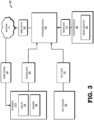
- the example process 300 first includes virtual reality headset 116-3 (e.g., wearable display) receiving, via network 110, a game stream 108 representative of a gaming application executed by a server 102.
- virtual reality display 116-3 includes or is otherwise connected to display 334 comprising one or more displays (e.g., liquid crystal display (LCD) screens, light-emitting diode (LED) screens, organic light-emitting diode (OLED) screens, active-matrix organic light-emitting diode (AMOLED) screen, or any combination thereof) configured to display game stream 108.
- displays e.g., liquid crystal display (LCD) screens, light-emitting diode (LED) screens, organic light-emitting diode (OLED) screens, active-matrix organic light-emitting diode (AMOLED) screen, or any combination thereof
- a client system e.g., client systems 112, 200
- virtual reality headset 116-3 include one or more decoders (e.g., decoder 114) configured to decode a game stream 108 received from network 110 to produce a decoded game stream displayed by display 334.
- decoder 114 configured to decode a game stream 108 received from network 110 to produce a decoded game stream displayed by display 334.
- virtual reality headset 116-3 includes one or more sensors 336 configured to generate sensor data 305 indicating the position of a user (e.g., the user wearing the virtual reality headset 116-3), the position of the virtual reality headset 116-3, the position of one or more input devices 120 (e.g., input devices held by the user), the movement (e.g., direction, speed, acceleration) of the user, the movement of the virtual reality headset, the movement of one or more input devices, or any combination thereof.
- sensors 336 include, for example, one or more optical sensors (e.g., photoelectric sensor, laser-based sensors, infrared sensors), ultrasound sensors, hall effect sensors, or any combination thereof.
- virtual reality headset 116-3 sends sensor data 305 to one or more processing devices 340 included in one or more client systems (e.g., client systems 112, 200).
- a processing device 340 includes one or more processors each included in or otherwise connected to a respective client device 116 (e.g., computer, smartphone, ecosystem device, virtual reality headset) of a client system (e.g., client systems 112, 200).
- the example process 300 includes one or more input devices 120 (e.g., input devices 120 held by the user, virtual reality controllers) receiving one or more interactions (e.g., gestures, button clicks, keystrokes, drags, rotations, movements, voice commands, noise) from a user (e.g., the user of the virtual reality headset 116-3).
- input devices 120 send input data 310 representing the interactions to one or more processing devices 340.
- the example process 300 includes an ecosystem device 228 having radar circuitry 230 and configured to generate and send radar data 315 to processing device 340.
- radar circuitry 230 of ecosystem device 228 is configured to generate and transmit one or more radar signals in the direction of virtual reality headset 116-3. Such radar signals then bounce off virtual reality headset 116-3, the user, input devices 120 (e.g., input devices 120 held by the user), or any combination thereof to produce one or more echoes.
- radar circuitry 230 determines radar data 315 based on the received echoes. Radar data 315, for example, includes data indicating times of flight, transmit angles, receive angles, or any combination thereof for one or transmitted radar signals, received echoes, or both.
- radar circuitry 230 performs one or more operations based on the echo (e.g., operations based on the power of the echo, the angle of the echo, the time the echo was received) to determine radar data 315.
- operations based on the echo e.g., operations based on the power of the echo, the angle of the echo, the time the echo was received
- ecosystem device 228 sends radar data 315 to processing device 340.
- processing device 340 In response to receiving sensor data 305, input data 310, radar data 315, or any combination thereof, processing device 340 is configured to determine one or more game inputs 320. Such game inputs, for example, include signals interpretable by the gaming application to perform one or more commands. According to embodiments, to generate game inputs 320, a processing device 340 is configured to compare sensor data 305, input data 310, radar data 315, or any combination thereof to data stored in one or more tables, arrays, vectors, libraries, or any combination thereof. As an example, a processing device 340 is configured to compare one or more interactions indicated in input data 310 to data stored in one or more tables, arrays, vectors, libraries, or any combination thereof to determine one or more commands for a gaming application. The processing device 340 then generates one or more game inputs 320 based on the determined commands.
- a processing device is configured to determine motion data for virtual reality headset 116-3, the user, one or more input devices 120, or any combination thereof based on sensor data 305, input data 310, radar data 315, or any combination thereof.
- Such motion data includes data indicating the position, movement (e.g., direction, speed, acceleration), or both of the user, the virtual reality headset 116-3, one or more input devices 120, or any combination thereof.
- processing device 340 is configured to determine the position and movement of the user based on a comparison of the times of flight, transmit angles, and receive angles indicated in radar data 315 to one or more previously determined positions of the user, previously determined movement of the user, previously received times of flight, previously received transmit angles, previously received receive angles, or any combination thereof (e.g., as indicated in radar data previously received from ecosystem device 228, indicated in previously received sensor data 305, previously determined by processing device 340, or any combination thereof).
- a processing device 340 After determining motion data for virtual reality headset 116-3, the user, one or more input devices 120, or any combination thereof, a processing device 340 then generates one or more game inputs 320 based on the motion data. For example, the processing device 340 compares the movement of the user indicated in the motion data to data in one or more tables, arrays, vectors, libraries, or any combination thereof to determine one or more commands for the gaming application. The processing device 340 then generates one or more game inputs 320 based on the determined commands. In this way, radar data 315 generated by ecosystem device 228 is configured to generate game inputs 320 for a gaming application. In this way, radar data 315 is used to control the gaming application represented by the game stream 108 displayed on virtual reality headset 116-3.
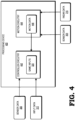
- example processing device 400 for implementing radar for cloud-based gaming inputs is presented.
- example processing device 400 similar to or the same as processing device 340, includes one or more processors each included in or otherwise connected to a respective client device 116 (e.g., computer, smartphone, ecosystem device, virtual reality headset) of a client system (e.g., client systems 112, 200).
- client device 116 e.g., computer, smartphone, ecosystem device, virtual reality headset
- client system e.g., client systems 112, 200.
- example processing device 400 includes controller circuitry 442 that includes hardware-based circuitry, software-based circuitry, or both configured to generate motion data 446 based on sensor data 305 (e.g., data indicating the position of a user, the position of the virtual reality headset (e.g., wearable display) 116-3, the position of one or more input devices, the movement of the user, the movement of the virtual reality headset, the movement of one or more input devices), radar data 315 (e.g., data indicating times of flight, transmit angles, receive angles, or any combination thereof for one or transmitted radar signals, received echoes, or both), or both.
- sensor data 305 e.g., data indicating the position of a user, the position of the virtual reality headset (e.g., wearable display) 116-3, the position of one or more input devices, the movement of the user, the movement of the virtual reality headset, the movement of one or more input devices
- radar data 315 e.g., data indicating times of flight, transmit angles, receive angles, or any combination
- Such motion data 446 includes, for example, data indicating the position, movement (e.g., direction, speed, acceleration), or both of the user, the virtual reality headset 116-3, one or more input devices 120, or any combination thereof.
- motion circuitry 444 is configured to determine a position of virtual reality headset 116-3, a user, one or more input devices, or any combination thereof relative to one or more ecosystem devices 228 based on radar data 315.
- motion circuitry 444 in response to receiving radar data 315 from one or more respective ecosystem devices 228, motion circuitry 444 is configured to determine a position of virtual reality headset 116-3, a user, one or more input devices, or any combination thereof based on the times of flight, transmit angles, receive angles, or any combination thereof indicated in the received radar data 315 and based on the positions of one or more respective ecosystem devices 228 (e.g., the ecosystem devices 228 that generated the radar data 315). That is to say based on the position of an ecosystem device 228 and radar data 315 (time of flight, transmit angle, receive angle) generated by the ecosystem device 228, motion circuitry 444 is configured to determine a position of virtual reality headset 116-3, the user, one or more input devices, or any combination thereof relative to the position of the ecosystem device.
- motion circuitry 444 is configured to compare sensor data 305, radar data 315, or both, to previously received sensor data (e.g., data indicating previous positions and movement of the user, virtual reality headset 116-3, and input devices 120), previously received radar data (e.g., data indicating previous times of flight, receive angles, and transmit angles), previously determined motion data, or any combination thereof.
- sensor data e.g., data indicating previous positions and movement of the user, virtual reality headset 116-3, and input devices 120
- previously received radar data e.g., data indicating previous times of flight, receive angles, and transmit angles
- previously determined motion data e.g., data indicating previous times of flight, receive angles, and transmit angles
- motion circuitry 444 is configured to compare one or more movements of virtual reality headset 116-3 indicated by sensor data 305 to previously determined motion data to determine a change in position and movement of virtual reality headset 116-3, a current position and movement of virtual reality headset 116-3, or both.
- motion circuitry 444 is configured to compare one or more times of flight indicated in radar data 315 to previously determined motion data to determine a change in the position of the user, a current position of the user, or both. After determining motion data 446, motion circuitry 444 sends the motion data 446 to controller circuitry 442.
- Controller circuitry 442 includes hardware-based circuitry, software-based circuitry, or both configured to determine one or more game inputs 320 (e.g., signals interpretable as one or more commands by a gaming application) based on sensor data 305, input data 310 (e.g., data representing interactions with input devices 120), motion data 446, or any combination thereof.
- controller circuitry 442 is configured to determine game inputs 320 based on input data 310 by comparing one or more interactions indicated in input data 310 to data in one or more tables, arrays, vectors, libraries, or any combination thereof to determine one or more commands and generate one or more game inputs 320 based on the commands.
- controller circuitry 442 is configured to compare one or more angles, movements, or both indicated in sensor data 305 to one or more tables, arrays, vectors, libraries, or any combination thereof to determine one or more commands and generate one or more game inputs 320 based on the commands.
- controller circuitry 442 is configured to compare one or more positions, movement, or both of virtual reality headset 116-3, the user, one or more input devices 120, or any combination thereof indicated in motion data 446 to one or more tables, arrays, vectors, libraries, or any combination thereof to determine one or more commands and generate one or more game inputs 320 based on the commands.
- a client system e.g., client system 112, 200
- a virtual reality headset e.g., virtual reality headset 116-3
- one or more input devices e.g., input devices 120
- receives a game stream e.g., game stream 108
- the game stream represents a gaming application being executed on a server (e.g., server 102) connected to the client system by network 110.
- the client system decodes the game stream to produce a decoded game stream that is provided to the virtual reality headset (e.g., wearable display).
- the virtual reality headset then displays the decoded game stream on a display (e.g., display 334).
- client devices e.g., client devices 116) within the client system generate sensor data (e.g., sensor data 305), input data (e.g., input data 310), and radar data (e.g., radar data 315) to control the gaming application represented by the decoded game stream displayed on the virtual reality headset.
- the virtual reality headset of the client system includes one or more sensors (e.g., sensors 336) configured to generate sensor data indicating the position of a user, the position of the virtual reality headset 116-3, the position of one or more input devices, the movement of the user, the movement of the virtual reality headset, the movement of one or more input devices.
- the sensors of the virtual reality headset are configured to generate sensor data indicating the movement and angle of the virtual reality headset.
- the input devices of the client system are configured to receive one or more interactions (e.g., gestures, button clicks, keystrokes, drags, rotations, movements, voice commands, noise) and generate input data representing the received interactions.
- the client system also includes a smart ecosystem (e.g., smart ecosystem 232) representing a group of devices (e.g., ecosystem devices 228) that each has respective capabilities and are networked together using one or more communication protocols (e.g., ZigBee, Bluetooth, Bluetooth LE, Wi-Fi) to provide their respective capabilities to one or more users.
- a smart ecosystem e.g., smart ecosystem 232
- the virtual reality headset and input devices of the client system are included in or otherwise communicatively coupled to the smart ecosystem.
- the smart ecosystem of the client system includes one or more ecosystem devices configured to generate one or more radar signals.
- Such radar signals for example, include one or more pulses having one or more predetermined frequencies (e.g., between 3.1 GHz and 10.6 GHz).
- the radar signals are configured to bounce off of the virtual reality headset, the user, one or more input devices, or any combination thereof to produce one or more echoes (e.g., signals representing the bounced radar signals).
- an ecosystem device is configured to generate radar data indicating the times of flight, transmit angles, receive angles, or any combination thereof for one or more radar signals, echoes, or both.
- the virtual reality headset, input devices, and ecosystem devices are configured to send the generated sensor data, input data, and radar data to a processing device (e.g., processing device 340, 400) of the client system.
- a processing device includes one or more processors each included in or otherwise connected to a respective client device 116 (e.g., computer, smartphone, ecosystem device, virtual reality headset) of a client system (e.g., client systems 112, 200).
- the processing device in response to receiving radar data from one or more ecosystem devices, is configured to determine motion data (e.g., motion data 446) for the virtual reality headset, the user, one or more input devices, or any combination thereof.
- motion data includes, for example, data indicating the position, movement (e.g., direction, speed, acceleration), or both of the user, the virtual reality headset, one or more input devices, or any combination thereof.
- the processing device compares the received radar data to previously received radar data (e.g., data indicating previous times of flight, receive angles, and transmit angles), previously determined motion data, or both.
- the processing device compares one or more times of flight indicated in the received radar data to previously determined motion data to determine a change in the position of the user, a current position of the user, or both.
- the processing device determines one or more game inputs (e.g., signals interpretable as one or more commands by a gaming application) based on the received sensor data, received input data, determined motion data, or any combination thereof.
- the processing device compares the received sensor data, received input data, determined motion data, or any combination thereof to data in one or more tables, arrays, vectors, libraries, or any combination thereof to determine one or more commands.
- the processing device compares one or more positions and movements of the virtual reality headset indicated in determined motion data to data in one or more tables, arrays, vectors, libraries, or any combination thereof to determine one or more commands. Based on the determined commands, the processing device determines the game inputs.
- the processing device sends the determined game inputs to the server executing the gaming application associated with the game stream displayed on the virtual reality headset.
- the server provides the game inputs to the gaming application, modifying the gaming application based on the commands indicated in the game inputs.
- the server Based on the modified gaming application, the server generates a modified game stream and sends the game stream to the client device.
- the client system receives the modified game stream, decodes the modified game stream, and provides the decoded modified game stream to the virtual reality headset for display.
- certain aspects of the techniques described above may be implemented by one or more processors of a processing system executing software.
- the software comprises one or more sets of executable instructions stored or otherwise tangibly embodied on a non-transitory computer-readable storage medium.
- the software can include the instructions and certain data that, when executed by the one or more processors, manipulate the one or more processors to perform one or more aspects of the techniques described above.
- the non-transitory computer-readable storage medium can include, for example, a magnetic or optical disk storage device, solid-state storage devices such as Flash memory, a cache, random access memory (RAM), or other non-volatile memory device or devices, and the like.
- the executable instructions stored on the non-transitory computer-readable storage medium may be in source code, assembly language code, object code, or another instruction format that is interpreted or otherwise executable by one or more processors.
- a computer-readable storage medium may include any storage medium, or combination of storage media, accessible by a computer system during use to provide instructions and/or data to the computer system.
- Such storage media can include, but is not limited to, optical media (e.g., compact disc (CD), digital versatile disc (DVD), Blu-Ray disc), magnetic media (e.g., floppy disc, magnetic tape, or magnetic hard drive), volatile memory (e.g., random access memory (RAM) or cache), non-volatile memory (e.g., read-only memory (ROM) or Flash memory), or microelectromechanical systems (MEMS)-based storage media.
- optical media e.g., compact disc (CD), digital versatile disc (DVD), Blu-Ray disc
- magnetic media e.g., floppy disc, magnetic tape, or magnetic hard drive
- volatile memory e.g., random access memory (RAM) or cache
- non-volatile memory e.g., read-only memory (ROM) or Flash memory
- MEMS microelectro
- the computer-readable storage medium may be embedded in the computing system (e.g., system RAM or ROM), fixedly attached to the computing system (e.g., a magnetic hard drive), removably attached to the computing system (e.g., an optical disc or Universal Serial Bus (USB)-based Flash memory), or coupled to the computer system via a wired or wireless network (e.g., network accessible storage (NAS)).
- system RAM or ROM system RAM or ROM
- USB Universal Serial Bus
- NAS network accessible storage
Landscapes
- Engineering & Computer Science (AREA)
- Multimedia (AREA)
- Radar, Positioning & Navigation (AREA)
- Remote Sensing (AREA)
- Human Computer Interaction (AREA)
- Physics & Mathematics (AREA)
- General Physics & Mathematics (AREA)
- Computer Networks & Wireless Communication (AREA)
- Environmental & Geological Engineering (AREA)
- Electromagnetism (AREA)
- Health & Medical Sciences (AREA)
- Life Sciences & Earth Sciences (AREA)
- Biophysics (AREA)
- Cardiology (AREA)
- General Health & Medical Sciences (AREA)
- Heart & Thoracic Surgery (AREA)
- User Interface Of Digital Computer (AREA)
- Pinball Game Machines (AREA)
Abstract
Description
- Conventionally, virtual reality video gaming applications run on local hardware to produce virtual environments that are provided to a virtual reality headset worn by the user. To help ensure that the virtual environment of the virtual reality gaming application moves as a user moves, many virtual reality systems include one or more virtual reality base stations that must be placed around the user. These virtual reality base stations use laser-based optical sensors to determine the position and movement of the virtual reality headset and user. The reality video gaming application then changes the virtual environment based on the positions and movement so that the virtual environment changes as the user and virtual reality headset move. However, placing these virtual reality base stations around the user reduces the area in which the user can move, negatively impacting user experience. Further, using dedicated virtual reality base stations increases the number of elements required for a virtual reality system, causing the set-up of the virtual reality system to be more cumbersome. Additionally, to help ensure that the virtual environment of the virtual reality gaming application moves as a user moves, some virtual reality systems include one or more cameras integrated into the virtual reality headset that are used to determine the position and movement of the virtual reality headset and user. However, such cameras require high power to function, increasing the power consumption of the system.
- The present disclosure may be better understood, and its numerous features and advantages are made apparent to those skilled in the art by referencing the accompanying drawings. The use of the same reference symbols in different drawings indicates similar or identical items.
-
FIG. 1 is a block diagram of a cloud-based gaming system for single-player or multiplayer (including massively multiplayer) gaming, in accordance with some embodiments. -
FIG. 2 is a block diagram of a client system configured for implementing radar for cloud-based gaming inputs, in accordance with some embodiments. -
FIG. 3 is a signal flow diagram for an example process for implementing radar for cloud-based gaming, in accordance with some embodiments. -
FIG. 4 is a block diagram of anexample processing device 400 for implementing radar for cloud-based gaming inputs is presented, in accordance with some embodiments. -
FIG. 5 is a flow diagram of an example method for implementing radar for cloud-based gaming inputs, in accordance with some embodiments. - According to an example embodiment, a method for cloud-based gaming can include, in response to a wearable display receiving a game stream, transmitting a radar signal. Further, the method can include determining, from an echo of the radar signal, motion data of a user of the wearable display and generating one or more game inputs based on the motion data of the user of the wearable display.
- The example method can further include modifying the game stream based on the one or more game inputs and sending the modified game stream to the wearable display. Additionally, the method can include generating, at the wearable display sensor data associated with the user, wherein the one or more game inputs are further determined based on the sensor data associated with the user. Further, the method may include receiving, at an input device, one or more interactions, wherein the one or more game inputs are further determined based on input data representing the one or more interactions. The method can also include sending the one or more game inputs to a cloud-based server associated with the game stream. The motion data can indicate a position of the user, a position of the wearable display, or both. Further, the wearable display may be connected to a smart ecosystem including an ecosystem device configured to transmit the radar signal. Also, the ecosystem device can include at least one of a smart hub, display, or sensor. Additionally, the radar signal may include an ultra-wideband radar signal.
- In another example embodiment, a method for cloud-based gaming may include, in response to initiating a client gaming session, receiving, from a wearable display, sensor data associated with a user of the wearable display, and, from an ecosystem device, radar data associated with the user of the wearable display. Additionally, the method can include determining one or more game inputs based on the sensor data and radar data associated with the user of the wearable display. The method can also include, in response to sending the one or more game inputs to a cloud-based server associated with the client gaming session, receiving a modified game stream based on the one or more game inputs.
- The method can further include generating, at the cloud-based server associated with the client gaming session, a game stream and modifying the game stream based on the one or more game inputs. Also, the wearable display and ecosystem device can be within a smart ecosystem. The ecosystem device may include radar circuitry configured to transmit an ultra-wideband radar signal.
- The method may additionally include receiving, from an input device, input data representing one or more interactions with the input device, wherein the one or more game inputs are determined further based on the input data. Further, the method can include transmitting a radar signal and, in response to receiving an echo of the radar signal, determining the radar data associated with the user of the wearable display based on the echo of the radar signal. Within the method, the ecosystem devices can include at least one of a smart hub, display, or sensor. The method can further include determining motion data associated with the user of the wearable display based on the radar data, wherein the one or more game inputs are determined further based on the motion data. In the method, the motion data may indicate a position of the user of the wearable display, a position of the wearable display, or both.
- In example embodiments, a cloud-based gaming system includes one or more cloud-based gaming servers communicatively coupled to one or more client systems. The client systems may each include a wearable display including one or more processors and one or more ecosystem devices. At least one ecosystem device can include one or more processors and a memory coupled to the one or more processors and storing executable instructions configured to manipulate the one or more processors to perform any method disclosed herein.
- In another example embodiment, a cloud-based gaming system includes one or more cloud-based gaming servers communicatively coupled to one or more smart ecosystems. The smart ecosystems may each include a wearable display including one or more processors and one or more ecosystem devices. At least one ecosystem device can include one or more processors and a memory coupled to the one or more processors and storing executable instructions configured to manipulate the one or more processors to perform any method disclosed herein.
- Within cloud-based gaming systems, client systems are configured to receive a stream of video game frames representing the visual content of a video game instance being executed at that server or a related server and display the stream of video frames on one or more devices. For example, some client systems include a virtual reality headset (e.g., wearable display) configured to display the stream of video game frames. To control the game represented by the stream of video game frames displayed by such a virtual reality headset, the client system further includes input devices configured to receive interactions from a user, for example, gamepads, joysticks, buttons, keyboards, computer mice, touchscreens, or any combination thereof. In response to receiving interactions at the input devices, the client system is configured to send data representing the interactions to the server executing the video game instance associated with the stream of video game frames displayed by the virtual reality headset. As an example, the client system determines a game input (e.g., a signal interpretable as one or more commands by the video game instance) based on the interactions at the input devices and sends the game input to the associated server. After receiving the data representing the inputs (e.g., game inputs), the server provides such data to the video game instance as an input, modifying the video game instance and the stream of video game frames provided to the virtual reality headset. In this way, the client system controls the game represented by the stream of video game frames displayed by the virtual reality headset.
- Additionally, to help control the game represented by the stream of video game frames displayed by the virtual reality headset (e.g., wearable display), the virtual reality headset includes one or more sensors configured to generate data indicating one or more movements of the user. For example, the virtual reality headset includes sensors configured to track the movement of a user's head, the movement of the virtual reality, or both. After such data is generated, the client system determines game inputs based on the indicated movements of the user and sends the game inputs to the associated server (e.g., the server running the video game instance). In some embodiments, client systems further include virtual reality base stations to help determine the movements of a user (e.g., the movement of a user's head, the movement of user's body, the movement of the virtual reality headset, the movement of input devices). Such virtual reality base stations, for example, include one or more laser-based tracking systems and are configured to be positioned proximately to a user such that the movements of the user are able to be determined. However, positioning such virtual reality base stations proximate to the user limits the area in which the user can move, negatively impacting user experience. Additionally, using dedicated virtual reality base stations increases the number of elements required for a virtual reality system, causing the set-up of the virtual reality system to be more cumbersome, negatively impacting user experience, and increasing cost. Further, in some embodiments, a virtual reality headset includes one or more cameras implemented within the virtual reality headset that track the movement of a user's head, the movement of the virtual reality, or both. However, such cameras implemented in the virtual reality headset increase the power consumption of the virtual reality headset, increasing the cost of operating the virtual reality headset.
- To this end, techniques and system described herein are directed towards implementing ultra-wideband (UWB) radar for cloud-based gaming inputs. For example, to help determine the movements of a user in a client system including a virtual reality headset (e.g., wearable display), the client system includes ecosystem devices each implementing radar circuitry (e.g., UWB radar circuitry) configured to transmit one or more radar signals (e.g., UWB radar signals) and receive one or more echoes of the transmitted radar signal. These ecosystem devices include, for example, smart hubs, virtual assistant devices, compute-enabled televisions (i.e., smart TVs), sensors (e.g., smoke detectors, air sensors, thermostats), compute-enable lighting (smart lighting), drones, routers, modems, internet of things (IoT) devices, or any combination thereof. In some embodiments, such ecosystem devices are included in a smart ecosystem (e.g., a group of devices in communication with one another using one or more communication protocols) that also includes or is otherwise connected (e.g., via a local area network (LAN)) to a virtual reality headset, input devices, or both. In response to a virtual reality headset receiving a stream of video game frames (e.g., from a cloud-based gaming server), the radar circuitry of one or more ecosystem devices is configured to transmit one or more radar signals (e.g., UWB radar signals) towards the user of the virtual reality headset. These radar signals, for example, have predetermined frequencies (e.g., frequencies between 3.1 GHz and 10.6 GHz) and are configured to bounce off one or more objects (e.g., the user of a virtual reality headset, the virtual reality headset, input devices) to produce one or more echoes (e.g., the bounced radar signals) which are received by the radar circuitry.
- Based on the echoes, the client system determines motion data for the user that represents the position of the user, movement of the body (e.g., torso, legs, arms, fingers) of the user, movement of the head of the user, movement of the virtual reality headset, movement of input devices, or any combination thereof. For example, based on receiving radar data representing received echoes, the client system determines the times of flight for the echoes and based on the times of flight, determines the position and movement of the head of the user. The client system then determines one or more game inputs based on the motion data and provides the game inputs to an associated server. In this way, the client system uses ultra-wideband (UWB) radar to determine the movements of the user without the need for virtual reality base stations, increasing the area in which the user can move, and improving user experience. Further, using ecosystem devices that also have radar circuitry to determine the movements of the user rather than dedicated virtual reality base stations reduces the number of elements required for a virtual reality system, simplifying the set-up of the virtual reality system and improving user experience.
- The techniques of the present disclosure are described in the example context of a cloud gaming system. A cloud-based server or other remote server renders a stream of video frames representing the visual content of a video game instance being executed at that server or a related server and then encodes each frame to generate a bitstream representing a stream of encoded rendered game frames for transmission to one or more client systems via one or more networks. However, it will be appreciated that the systems and techniques described herein are not limited to this example context, but instead may be implemented in any of a variety of video stream encoding/decoding systems using the guidelines provided herein.
-
FIG. 1 illustrates a cloud-basedgaming system 100 for single-player or multiplayer (including massively multiplayer) gaming, according to some embodiments. Cloud-basedgaming system 100 includes one or more cloud-based gaming servers 102, with each server 102 communicatively coupled to one or more client systems 112 by at least onenetwork 110.Network 110 is configured to allow for the transmission and reception of data between any of servers 102 and client systems 112 and includes, for example, wired and wireless networks, such as Ethernet, the Internet, Wi-Fi, or any combination thereof. In embodiments, each server 102 is communicatively interconnected via a high-bandwidth, low-latency inter-server messaging bus. Servers 102 are typically distributed in one or more data centers over a geographical area so as to reduce transmission latency through physical proximity. Though in the illustrated embodiment, three servers 102-1, 102-2, and 102-3 are presented supporting four client systems 112-1, 112-2, 112-3, and 112-4, in other embodiments, any number of servers may be implemented supporting any number of client devices. It will be appreciated that in a typical real-world implementation, the quantity of servers 102 and the quantity of client systems 112 typically will be considerably higher than presented in the example ofFIG. 1 . - In the depicted embodiment, each server 102 includes a computing device, for example, a cloud server, virtual server, or any combination thereof configured to support one or more client gaming sessions executed on one or more client systems 112. A "client gaming session", as used herein, includes a gaming application being played, partially simulated, or fully simulated on client system 112. Each server 102 is configured to support this client gaming session by executing a corresponding
game platform instance 104 that facilitates the execution of at least a portion of the gaming application being played, partially simulated, or fully simulated on the client system 112. Such facilitation can include performing one or more operations related to the gaming application, for example, rendering one or more frames related to the gaming application, performing calculations related to the gaming application (e.g., lighting calculations, artificial intelligence calculation, physics calculations, shading calculations, input calculations, and the like), providing access to files, or any combination thereof, to name a few. Thegame platform instance 104 provides various software and hardware resources to achieve such facilitation, such as communication/network management, resource management, media rendering encoding, and the like. In this way,game platform instance 104 simulates the execution of one or more operations of the gaming application for a corresponding player as though that gaming application was being played on a local gaming device, such as a personal computer ("PC"), game console, smartphone, tablet computer, automotive entertainment system, and the like. - Each client system 112 represents the hardware and software resources utilized to receive player input through manipulation of one or more input/output devices for at least one player, as well as to present the video and audio content representing the visual and auditory content, respectively, of the gameplay for the at least one player. Examples of a client system 112 include one or more desktop computers, notebook computers, tablet computers, virtual-reality systems, augmented reality systems, a compute-enabled cellular phone (i.e., a "smartphone"), a compute-enabled television (i.e., a "smart TV"), or any combination thereof, to name a few. As illustrated with reference to client system 112-1, each client system 112 includes one or more client devices 116. In the illustrated embodiment, client system 112-1 comprises a first client device 116-1, which is communicatively coupled to, or otherwise associated with,
display 118, at least one input device 120 (e.g., a gamepad, joystick, keyboard, mouse, touchscreen), one or more network interfaces configured to couple to the network connecting the client system 112 to a corresponding server 102, one or more processors, memory, storage, speakers, and other computing resources to render, process, and display scenes of a virtual environment. - According to embodiments, one or more client devices 116 include an ecosystem device in a smart ecosystem. Such a smart ecosystem, for example, represents a group of ecosystem devices that each have respective capabilities and run respective applications associated with those capabilities. Within the smart ecosystem, the ecosystem devices are networked together using one or more communication protocols (e.g., ZigBee, Bluetooth, Bluetooth low energy (LE), Wi-Fi) to provide their respective capabilities to one or more users. These ecosystem devices include, for example, smart hubs, virtual assistant devices, smart TVs, sensors (e.g., smoke detectors, air sensors, thermostats), smart lighting, drones, routers, modems, user devices (e.g., laptop computers, tablet computers, compute-enabled wearable devices), loT devices, or any combination thereof. In some embodiments, a smart ecosystem further includes or is otherwise communicatively coupled (e.g., by one or more communication protocols) to one or more client devices 116 (e.g., virtual reality headset (e.g., wearable display) 116-3),
input devices 120, or both. According to embodiments, one or more ecosystem devices include radar circuitry that includes one or more transceivers, transmitters, receivers, antennae, or any combination thereof and is configured to generate and transmit one or more radar signals (e.g., UWB radar signals) having one or more predetermined frequencies. For example, an ecosystem device is configured to transmit and generate one or more radar signals having frequencies between 3.1 GHz and 10.6 GHz. The transmitted radar signals are configured to bounce off one or more objects (e.g., a user, a virtual reality headset 116-3, an input device 120) to produce one or more echoes. In response to receiving the echoes, the radar circuitry of an ecosystem device is configured to determine radar data indicating the time of flight of a signal (e.g., the time between the transmission of a radar signal and the reception of an echo), an angle of a received echo, and angle of a transmitted radar signal, or any combination thereof. - As illustrated with reference to client system 112-1, each client system 112 can include a
decoder 114 configured to decode one or more frames related to a virtual environment.Decoder 114 can include hardware and software configured to decode one or more encoding streams (e.g., game streams 108) received from servers 102 so as to produce a decoded set of frames or decoded stream. Eachdecoder 114 is configured to decode any encoded frame encoded by any method or process disclosed herein. In embodiments, client system 112-1 further comprises a smartphone client device 116-2, and a wearable virtual reality client device 116-3, each of which may operate as an integrated mobile computing device having input facilities, output facilities, display facilities, and communication facilities analogous to those noted above with respect to client system 112-1. - While certain aspects described herein will be discussed with specific reference to cloud gaming scenarios, it will be appreciated that in certain embodiments the described techniques may be utilized in various non-gaming scenarios, such as if one or more of servers 102 and client systems 112 operate to render, process, and display other types of informational content, educational content, recreational content, professional content, artistic content, or any combination thereof. It will therefore be further appreciated that while techniques are discussed herein with respect to the rendering of content that may utilize particular examples relevant to cloud gaming and gaming content, such discussions and techniques may be applied to such non-gaming scenarios. Examples provided herein may refer to scenarios involving the rendering, processing, and display of gaming content due to particular bandwidth and network latency issues relevant to such content and should not be construed to indicate that the techniques described are limited to those scenarios.
- During operation, each server 102 executes a
gaming platform instance 104 for one or more client gaming sessions. Executinggame platform instance 104 includes rendering a set of gaming frames that includes one or more gaming frames associated with the gaming application being executed on one or more respective client systems 112. Each rendered gaming frame depicts at least a portion of a virtual environment used in the gaming application executed on the client system 112. For example, each rendered gaming frame can depict at least a portion of a virtual environment displayed on adisplay 118 of a client system 112 during the client gaming session. - Each server 102 is configured to encode each rendered gaming frame via a
respective encoder 106 so as to generate a respective encoded set of frames (also referred to herein as "game stream" 108). Each server 102 is configured to encode agame stream 108 through, for example, compression, reorganization, and manipulation of each frame rendered bygaming platform instance 104. In embodiments, anencoder 106 of a server 102 implements one or more codecs so as to encode one or more rendered frames according to the one or more codecs. Such codecs can include H.264, H.265, VP9, AV1, or any combination thereof, to name a few. Each resultinggame stream 108 corresponds to a gaming application being executed on one or more client systems 112 and is provided to these corresponding client systems 112 vianetwork 110. The corresponding client systems 112 are each configured to decode a receivedgame stream 108 via adecoder 114 and display the resulting decoded set offrames 122 on, for example, a display 118 (e.g., adisplay 118 included in virtual reality headset 116-3). Each client system 112 is configured to decode arespective game stream 108 by compression, reorganization, and manipulation of the frames within the encoded stream according to one or more various video codecs including lossless and lossy codecs. According to embodiments, each client system 112 includes a decoder that implements one or more codecs so as to decode a receivedgame stream 108 according to the one or more codecs. Such codecs can include H.264, H.265, VP9, AV1, or any combination thereof, to name a few. Though three game streams 108-1, 108-2, 108-3 are depicted in the illustrated embodiment, in other embodiments, servers 102 can generate any number of game streams 108 each corresponding to one or more client gaming sessions. - In embodiments, a client system 112 includes a virtual reality headset (e.g., wearable display) 116-3 configured to be worn by a user and display a decoded set of frames 122 (e.g., an encoded game stream) to a user. To this end, in embodiments, virtual reality headset 116-3 includes
display 118, for example. To control the gaming application associated with the decoded set offrames 122 displayed on the virtual reality headset 116-3 (e.g., the gaming application executed to generate the decoded set of frames 122), the client system includes one or more input devices 120 (e.g., keyboards, gamepads, joysticks, virtual reality controllers, computer mice, touchscreens, smartphones, microphones) each configured to receive one or more interactions from a user. Such interactions, for example, include gestures, button clicks, keystrokes, drags, rotations, movements, voice commands, noise, or any combination thereof. In response to receiving one or more interactions, aninput device 120 is configured to send data indicating the interactions to a processing device in the client system 112. Such a processing device, for example, includes one or more processors each included in or otherwise connected to a respective client device (e.g., computer, smartphone, ecosystem device, virtual reality headset) of the client system 112. According to embodiments, after receiving data indicating the interactions, the processing device is configured to generate one or more game inputs based on the interactions. These game inputs each include, for example, a signal interpretable as one or more commands by the gaming application associated with thegame stream 108 displayed on the virtual reality headset 116-3. To generate the game inputs, for example, the processing device compares one or more interactions indicated in the received data to data in one or more tables, arrays, vectors, libraries, or any combination thereof to determine one or more game inputs. After determining one or more game inputs, the processing device sends the game inputs to the server 102 executing the gaming application associated with the decoded set of frames 122 (e.g., decoded game stream) displayed on the virtual reality headset 116-3. In response to receiving data representing one or more interactions, one or more game inputs, or both, the server 102 is configured to modify the gaming application by generating one or more game inputs, providing one or more game inputs to the gaming application, or both. For example, the server 102 provides one or more received game inputs to the gaming application which modify the gaming application (e.g., the game inputs are used as inputs to the gaming application). Once the gaming application is modified, the server 102 generates agame stream 108 based on the modified gaming application (e.g., a modified game stream) and transmits thegame stream 108 to the client system 112. - To further help control the gaming application associated with the decoded set of
frames 122 displayed on the virtual reality headset 116-3, the virtual reality headset 116-3 includes one or more sensors configured to generate sensor data indicating the position of a user (e.g., the user wearing the virtual reality headset 116-3), the position of the virtual reality headset 116-3, the position of one or more input devices 120 (e.g., input devices held by the user), the movement (e.g., direction, speed, acceleration) of the user, the movement of the virtual reality headset, the movement of one or more input devices, or any combination thereof. These sensors, for example, include one or more optical sensors (e.g., photoelectric sensor, laser-based sensors, infrared sensors), ultrasound sensors, hall effect sensors, UWB radar systems, or any combination thereof. In embodiments, the sensors of the virtual reality headset 116-3 are configured to send the sensor data to a processing device (e.g., computer, smartphone, virtual reality headset, ecosystem device) of the client system 112. In response to receiving such sensor data, the processing device is configured to determine motion data based on the received sensor data. Such motion data, for example, indicates the position of a user, the position of the virtual reality headset 116-3, the position of one or more input devices, the movement (e.g., direction, speed, acceleration) of the user, the movement of the virtual reality headset, the movement of one or more input devices, or any combination thereof. Based on the determined motion data, the processing device then determines one or more game inputs by, for example, comparing the motion data to data in one or more tables, arrays, vectors, libraries, or any combination thereof. In embodiments, the processing device sends motion data, one or more game inputs, or both to the server 102 associated with the decoded set offrames 122 displayed on the virtual reality headset 116-3 (e.g., the server executing the gaming application related to decoded set of frames 122). The server 102 then modifies the gaming application by generating one or more game inputs, providing one or more game inputs to the gaming application or both. After modifying the gaming application, the server 102 sends the modifiedgame stream 108 to the client system 112. - Additionally, to help control the gaming application associated with the decoded set of
frames 122 displayed on the virtual reality headset 116-3, the client system 112 includes one or more ecosystem devices each including radar circuitry (e.g., UWB circuitry) configured to generate and transmit one or more radar signals. For example, the client system 112 includes an ecosystem device configured to generate and transmit one or more radar signals in the direction of the virtual reality headset 116-3. After transmitting one or more radar signals, the radar circuitry of an ecosystem device is configured to receive one or more echoes based on the transmitted radar signals. The ecosystem device then sends radar data indicating the transmitted radar signals, received echoes, or both to a processing device (e.g., computer, smartphone, virtual reality headset, ecosystem device) in the client system 112. Based on the radar data, the processing device is configured to determine motion data of the virtual reality headset 116-3, the user, input devices 120 (e.g.,input devices 120 held by the user), or any combination. For example, the processing device is configured to determine one or more times of flight, transmit angles, receive angles, or any combination thereof based on the received radar data. The processing device then determines motion data (e.g., the position and movement of the user) based on the determined times of flight, transmit angles, and receive angles. In embodiments, the processing device then determines one or more game inputs based on the motion data by, for example, comparing the motion data to data in one or more tables, arrays, vectors, libraries, or any combination thereof and sends the game inputs to the server 102 associated with thegame stream 108 which modifies the associated gaming application. In this way, the client system 112 uses radar (e.g., UWB radar) to determine the movements of the user without the need for virtual reality base stations which increases the amount of open area around the user. Additionally, using ecosystem devices in the client system 112 to determine movements of the virtual reality headset 116-3 and user rather than dedicated virtual reality base stations reduces the number of elements required for a virtual reality system, improving user experience. - Referring now to
FIG. 2 , aclient system 200 configured for implementing radar for cloud-based gaming inputs is presented. In embodiments,client system 200, similar to or the same as client system 112, includessmart ecosystem 232 representing a group of devices (ecosystem devices 228) that each has respective capabilities and are networked together using one or more communication protocols (e.g., ZigBee, Bluetooth, Bluetooth LE, Wi-Fi) to provide their respective capabilities to one or more users. For example,smart ecosystem 232 includes one ormore ecosystem devices 228 each communicatively coupled to one or moreother ecosystem devices 228 by local area network (LAN) 222 (e.g., wireless network, Wi-Fi network). Though the example embodiment illustrated inFIG. 2 presentssmart ecosystem 232 having three ecosystem devices (228-1, 228-2, 228-N) representing an N number ofecosystem devices 228, in other embodiments,smart ecosystem 232 can have any number ofecosystem devices 228.Such ecosystem devices 232 include, for example, smoke detectors, air sensors, thermostats), smart lighting, drones, routers, modems, loT devices, or any combination thereof. In some embodiments,smart ecosystem 232 further includes or is otherwise communicatively coupled to (e.g., via LAN network 222) virtual reality headset 116-3 (e.g., wearable display), one or more input devices 120 (e.g., virtual reality controllers), or both. - According to embodiments, one or more devices within smart ecosystem 232 (e.g., virtual reality headset 116-3,
input devices 120, ecosystem devices 228) are communicatively coupled tonetwork 110 viaLAN network 222 so to receive agame stream 108 representing game frames from a gaming application executed on a server 102. According to embodiments, theclient system 200 includes a decoder (e.g., decoder 114) configured to decode a receivedgame stream 108 and provide the decodedgame stream 108 to virtual reality headset (e.g., wearable display) 116-3 for display. For example, theclient system 200 includes one or more client devices 116 (e.g., computers, gaming consoles, smartphones, virtual reality headsets, ecosystem devices) including a decoder configured to decode a receivedgame stream 108 and provide the decoded set offrames 122 to virtual reality headset 116-3. To control the gaming application represented by the decoded game stream being displayed by virtual reality headset 116-3,client system 200 includes one ormore input devices 120. For example,client system 200 includes one or more virtual reality controllers each including accelerometers, motion sensors, buttons, joysticks, touchpads, microphones, or any combination thereof. While the decoded game stream is displayed by virtual reality headset 116-3, one ormore input devices 120 are configured to receive one or more interactions (e.g., gestures, button clicks, keystrokes, drags, rotations, movements, voice commands, noise) from a user (e.g., the user of the virtual reality headset 116-3). In response to receiving one or more interactions, theinput devices 120 send data representing the interactions to a processing device withinclient system 200. Such a processing device (not shown for clarity), for example, includes one or more processors each included in or otherwise connected to a respective client device 116 (e.g., computer, smartphone, ecosystem device, virtual reality headset) of theclient system 200. For example, the processing devices includes one or more processors included in virtual reality headset 116-3. Based on the interactions (e.g., based on the input data indicating the interactions), the processing device determines one or more game inputs by, for example, comparing the interactions to data in one or more tables, arrays, vectors, libraries, or any combination thereof. The processing device then sends the data representing the interactions, one or more game inputs, or both to the server 102 running the gaming application represented by the decoded game stream displayed on virtual reality headset 116-3. The server 102 then modifies the gaming application based on the received data representing the interactions, one or more game inputs, or both by, for example, providing one or more game inputs to the gaming application. In this way,client system 200 usesinput devices 120 to control (e.g., modify) the gaming application running on the server 102. - To further help control the gaming application represented by the decoded game stream being displayed by virtual reality headset 116-3, virtual reality headset 116-3 includes one or more sensors configured to generate sensor data indicating the position, movement (e.g., direction, speed, acceleration), or both of the user, the virtual reality headset 116-3, one or more input devices 120 (e.g.,
input devices 120 held by the user), or any combination thereof. For example, virtual reality headset 116-3 includes an accelerometer configured to generate sensor data indicating the direction of the user. Based on the sensor data, a processing device ofclient system 200 is then configured to determine motion data of the user, virtual reality headset 116-3,input devices 120, or any combination thereof (e.g., the position, movement, or both of the user, the virtual reality headset 116-3, one or more input devices 120). For example, a computer ofclient system 200 includes one or more processors configured to determine the position and movement of the virtual reality headset 116-3. Using such motion data, the processing device then determines one or more game inputs by, for example, comparing the motion data to data in one or more tables, arrays, vectors, libraries, or any combination thereof. In embodiments, the processing device then sends the motion data, game inputs, or both to the server 102 running the game application associated with the displayedgame stream 108 to modify the game application. - Additionally, according to embodiments, one or
more ecosystem devices 228 includeradar circuitry 230 that includes hardware-based circuitry, software-based circuitry, or both configured to transmit one or more radar signals (e.g., UWB radar signals) and received one or more echoes.Such radar circuitry 230, for example, is configured to help generate radar data (e.g., times of flight, transmit angles, receive angles) for determining motion data of the user, virtual reality device 116-3,input devices 120, or any combination thereof. To this end,radar circuitry 230 is first configured to generate one or more radar signals having one or more predetermined frequencies (e.g., between 3.1 GHz and 10.6 GHz). For example,radar circuitry 230 is configured to generate a series of pulses at one or more predetermined frequencies (e.g., between 3.1 GHz and 10.6 GHz). In embodiments,radar circuitry 230 is configured to transmit one or more radar signals towards virtual reality headset 116-3, the user,input devices 120, or any combination thereof. As an example,radar circuitry 230 first determines whether virtual reality headset 116-3, the user,input devices 120, or any combination thereof is within range ofradar circuitry 230 based on, for example, one or more communication protocols (e.g., by the virtual reality headset 116-3 reporting its position), one or more received echoes (e.g., indicating the position of the virtual reality headset 116-3 is in range), one or more motion sensors (e.g., optical sensors, ultrasound sensors, laser-based sensors), one or more user inputs, or any combination thereof.Radar circuitry 230 then transmits one or more radar signals (e.g., towards virtual reality system 116-3) and receives one or more echoes (e.g., radar signals that have bounced off virtual reality system 116-3, the user, one ormore input devices 120, or any combination thereof). Based on the echoes, theradar circuitry 230 determines radar data indicating the times of flight for one or more radar and echo signals, transmit angles for one or more radar signals, receive angles for one or more echoes, or any combination thereof. Though the example embodiment presented inFIG. 2 presents three ecosystem devices (228-1, 228-2, 228-N) each having respective radar circuitry (230-1, 230-2, 230-N), in other embodiments, any number ofecosystem devices 228 withinsmart ecosystem 232 may haverespective radar circuitry 230. - According to embodiments,
radar circuitry 230 is configured to send radar data indicating the radar signals and echoes, the radar data, or both, to a processing device inclient system 200. For example,radar circuitry 230 sends radar data to anecosystem device 228 withinsmart ecosystem 232 that includes one or more processors. In response to receiving the radar data indicating the radar signals and echoes, the radar data, or both, the processing device is configured to determine motion data (the position, movement, or both of the user, the virtual reality headset 116-3, one or more input devices 120). For example, the processing device compares received radar data to data in one or more tables, arrays, vectors, libraries, or any combination thereof to determine the position and movement of the user and one or more input devices 120 (e.g., input devices held by the user). Further, using such motion data, the processing device then determines one or more game inputs by, for example, comparing the motion data to data in one or more tables, arrays, vectors, libraries, or any combination thereof. In embodiments, the processing device then sends the motion data, game inputs, or both to the server 102 running the game application associated with the displayedgame stream 108 to modify the game application. - Referring now to
FIG. 3 , anexample process 300 for implementing radar for cloud-based gaming inputs is presented. Theexample process 300 first includes virtual reality headset 116-3 (e.g., wearable display) receiving, vianetwork 110, agame stream 108 representative of a gaming application executed by a server 102. In embodiments, virtual reality display 116-3 includes or is otherwise connected to display 334 comprising one or more displays (e.g., liquid crystal display (LCD) screens, light-emitting diode (LED) screens, organic light-emitting diode (OLED) screens, active-matrix organic light-emitting diode (AMOLED) screen, or any combination thereof) configured to displaygame stream 108. As an example, in some embodiments, a client system (e.g., client systems 112, 200) including virtual reality headset 116-3 include one or more decoders (e.g., decoder 114) configured to decode agame stream 108 received fromnetwork 110 to produce a decoded game stream displayed bydisplay 334. To control the gaming application represented by thegame stream 108 displayed ondisplay 334, virtual reality headset 116-3 includes one ormore sensors 336 configured to generatesensor data 305 indicating the position of a user (e.g., the user wearing the virtual reality headset 116-3), the position of the virtual reality headset 116-3, the position of one or more input devices 120 (e.g., input devices held by the user), the movement (e.g., direction, speed, acceleration) of the user, the movement of the virtual reality headset, the movement of one or more input devices, or any combination thereof.Such sensors 336 include, for example, one or more optical sensors (e.g., photoelectric sensor, laser-based sensors, infrared sensors), ultrasound sensors, hall effect sensors, or any combination thereof. After generatingsensor data 305, virtual reality headset 116-3 sendssensor data 305 to one ormore processing devices 340 included in one or more client systems (e.g., client systems 112, 200). Aprocessing device 340, for example, includes one or more processors each included in or otherwise connected to a respective client device 116 (e.g., computer, smartphone, ecosystem device, virtual reality headset) of a client system (e.g., client systems 112, 200). - Additionally, to help control the gaming application represented by the
game stream 108 displayed ondisplay 334, theexample process 300 includes one or more input devices 120 (e.g.,input devices 120 held by the user, virtual reality controllers) receiving one or more interactions (e.g., gestures, button clicks, keystrokes, drags, rotations, movements, voice commands, noise) from a user (e.g., the user of the virtual reality headset 116-3). In response to receiving one or more interactions,input devices 120 sendinput data 310 representing the interactions to one ormore processing devices 340. Further, to help control the gaming application represented by thegame stream 108, theexample process 300 includes anecosystem device 228 havingradar circuitry 230 and configured to generate and sendradar data 315 toprocessing device 340. To this end, in response to virtual reality headset 116-3receiving game stream 108,radar circuitry 230 ofecosystem device 228 is configured to generate and transmit one or more radar signals in the direction of virtual reality headset 116-3. Such radar signals then bounce off virtual reality headset 116-3, the user, input devices 120 (e.g.,input devices 120 held by the user), or any combination thereof to produce one or more echoes. In response to receiving one or more echoes,radar circuitry 230 determinesradar data 315 based on the received echoes.Radar data 315, for example, includes data indicating times of flight, transmit angles, receive angles, or any combination thereof for one or transmitted radar signals, received echoes, or both. For example, in response to receiving an echo,radar circuitry 230 performs one or more operations based on the echo (e.g., operations based on the power of the echo, the angle of the echo, the time the echo was received) to determineradar data 315. After determiningradar data 315,ecosystem device 228 sendsradar data 315 toprocessing device 340. - In response to receiving
sensor data 305,input data 310,radar data 315, or any combination thereof,processing device 340 is configured to determine one ormore game inputs 320. Such game inputs, for example, include signals interpretable by the gaming application to perform one or more commands. According to embodiments, to generategame inputs 320, aprocessing device 340 is configured to comparesensor data 305,input data 310,radar data 315, or any combination thereof to data stored in one or more tables, arrays, vectors, libraries, or any combination thereof. As an example, aprocessing device 340 is configured to compare one or more interactions indicated ininput data 310 to data stored in one or more tables, arrays, vectors, libraries, or any combination thereof to determine one or more commands for a gaming application. Theprocessing device 340 then generates one ormore game inputs 320 based on the determined commands. - Additionally, to generate
game inputs 320, a processing device is configured to determine motion data for virtual reality headset 116-3, the user, one ormore input devices 120, or any combination thereof based onsensor data 305,input data 310,radar data 315, or any combination thereof. Such motion data, for example, includes data indicating the position, movement (e.g., direction, speed, acceleration), or both of the user, the virtual reality headset 116-3, one ormore input devices 120, or any combination thereof. For example, based on one or more times of flight, transmit angles, receive angles, or any combination thereof indicated inradar data 315,processing device 340 is configured to determine the position and movement of the user based on a comparison of the times of flight, transmit angles, and receive angles indicated inradar data 315 to one or more previously determined positions of the user, previously determined movement of the user, previously received times of flight, previously received transmit angles, previously received receive angles, or any combination thereof (e.g., as indicated in radar data previously received fromecosystem device 228, indicated in previously receivedsensor data 305, previously determined by processingdevice 340, or any combination thereof). After determining motion data for virtual reality headset 116-3, the user, one ormore input devices 120, or any combination thereof, aprocessing device 340 then generates one ormore game inputs 320 based on the motion data. For example, theprocessing device 340 compares the movement of the user indicated in the motion data to data in one or more tables, arrays, vectors, libraries, or any combination thereof to determine one or more commands for the gaming application. Theprocessing device 340 then generates one ormore game inputs 320 based on the determined commands. In this way,radar data 315 generated byecosystem device 228 is configured to generategame inputs 320 for a gaming application. In this way,radar data 315 is used to control the gaming application represented by thegame stream 108 displayed on virtual reality headset 116-3. - Referring now to
FIG. 4 , anexample processing device 400 for implementing radar for cloud-based gaming inputs is presented. In embodiments,example processing device 400, similar to or the same asprocessing device 340, includes one or more processors each included in or otherwise connected to a respective client device 116 (e.g., computer, smartphone, ecosystem device, virtual reality headset) of a client system (e.g., client systems 112, 200). According to embodiments,example processing device 400 includescontroller circuitry 442 that includes hardware-based circuitry, software-based circuitry, or both configured to generatemotion data 446 based on sensor data 305 (e.g., data indicating the position of a user, the position of the virtual reality headset (e.g., wearable display) 116-3, the position of one or more input devices, the movement of the user, the movement of the virtual reality headset, the movement of one or more input devices), radar data 315 (e.g., data indicating times of flight, transmit angles, receive angles, or any combination thereof for one or transmitted radar signals, received echoes, or both), or both.Such motion data 446 includes, for example, data indicating the position, movement (e.g., direction, speed, acceleration), or both of the user, the virtual reality headset 116-3, one ormore input devices 120, or any combination thereof. In some embodiments, to generatemotion data 446,motion circuitry 444 is configured to determine a position of virtual reality headset 116-3, a user, one or more input devices, or any combination thereof relative to one ormore ecosystem devices 228 based onradar data 315. For example, in response to receivingradar data 315 from one or morerespective ecosystem devices 228,motion circuitry 444 is configured to determine a position of virtual reality headset 116-3, a user, one or more input devices, or any combination thereof based on the times of flight, transmit angles, receive angles, or any combination thereof indicated in the receivedradar data 315 and based on the positions of one or more respective ecosystem devices 228 (e.g., theecosystem devices 228 that generated the radar data 315). That is to say based on the position of anecosystem device 228 and radar data 315 (time of flight, transmit angle, receive angle) generated by theecosystem device 228,motion circuitry 444 is configured to determine a position of virtual reality headset 116-3, the user, one or more input devices, or any combination thereof relative to the position of the ecosystem device. - In embodiments, to generate
motion data 446, in embodiments,motion circuitry 444 is configured to comparesensor data 305,radar data 315, or both, to previously received sensor data (e.g., data indicating previous positions and movement of the user, virtual reality headset 116-3, and input devices 120), previously received radar data (e.g., data indicating previous times of flight, receive angles, and transmit angles), previously determined motion data, or any combination thereof. For example,motion circuitry 444 is configured to compare one or more movements of virtual reality headset 116-3 indicated bysensor data 305 to previously determined motion data to determine a change in position and movement of virtual reality headset 116-3, a current position and movement of virtual reality headset 116-3, or both. As another example,motion circuitry 444 is configured to compare one or more times of flight indicated inradar data 315 to previously determined motion data to determine a change in the position of the user, a current position of the user, or both. After determiningmotion data 446,motion circuitry 444 sends themotion data 446 tocontroller circuitry 442. -
Controller circuitry 442 includes hardware-based circuitry, software-based circuitry, or both configured to determine one or more game inputs 320 (e.g., signals interpretable as one or more commands by a gaming application) based onsensor data 305, input data 310 (e.g., data representing interactions with input devices 120),motion data 446, or any combination thereof. For example,controller circuitry 442 is configured to determinegame inputs 320 based oninput data 310 by comparing one or more interactions indicated ininput data 310 to data in one or more tables, arrays, vectors, libraries, or any combination thereof to determine one or more commands and generate one ormore game inputs 320 based on the commands. As another example,controller circuitry 442 is configured to compare one or more angles, movements, or both indicated insensor data 305 to one or more tables, arrays, vectors, libraries, or any combination thereof to determine one or more commands and generate one ormore game inputs 320 based on the commands. As yet another example,controller circuitry 442 is configured to compare one or more positions, movement, or both of virtual reality headset 116-3, the user, one ormore input devices 120, or any combination thereof indicated inmotion data 446 to one or more tables, arrays, vectors, libraries, or any combination thereof to determine one or more commands and generate one ormore game inputs 320 based on the commands. - Referring now to
FIG. 5 , anexample method 500 for implementing radar for cloud-based gaming inputs is presented. Atstep 505 ofexample method 500, a client system (e.g., client system 112, 200) including a virtual reality headset (e.g., virtual reality headset 116-3) and one or more input devices (e.g., input devices 120) receives a game stream (e.g., game stream 108). The game stream represents a gaming application being executed on a server (e.g., server 102) connected to the client system bynetwork 110. In response to receiving the game stream, the client system decodes the game stream to produce a decoded game stream that is provided to the virtual reality headset (e.g., wearable display). The virtual reality headset then displays the decoded game stream on a display (e.g., display 334). Atstep 510, client devices (e.g., client devices 116) within the client system generate sensor data (e.g., sensor data 305), input data (e.g., input data 310), and radar data (e.g., radar data 315) to control the gaming application represented by the decoded game stream displayed on the virtual reality headset. To this end, the virtual reality headset of the client system includes one or more sensors (e.g., sensors 336) configured to generate sensor data indicating the position of a user, the position of the virtual reality headset 116-3, the position of one or more input devices, the movement of the user, the movement of the virtual reality headset, the movement of one or more input devices. For example, the sensors of the virtual reality headset are configured to generate sensor data indicating the movement and angle of the virtual reality headset. Additionally, the input devices of the client system are configured to receive one or more interactions (e.g., gestures, button clicks, keystrokes, drags, rotations, movements, voice commands, noise) and generate input data representing the received interactions. - Still referring to step 510, the client system also includes a smart ecosystem (e.g., smart ecosystem 232) representing a group of devices (e.g., ecosystem devices 228) that each has respective capabilities and are networked together using one or more communication protocols (e.g., ZigBee, Bluetooth, Bluetooth LE, Wi-Fi) to provide their respective capabilities to one or more users. In embodiments, the virtual reality headset and input devices of the client system are included in or otherwise communicatively coupled to the smart ecosystem. According to embodiments, the smart ecosystem of the client system includes one or more ecosystem devices configured to generate one or more radar signals. Such radar signals, for example, include one or more pulses having one or more predetermined frequencies (e.g., between 3.1 GHz and 10.6 GHz). The radar signals are configured to bounce off of the virtual reality headset, the user, one or more input devices, or any combination thereof to produce one or more echoes (e.g., signals representing the bounced radar signals). In response to receiving one or more echoes, an ecosystem device is configured to generate radar data indicating the times of flight, transmit angles, receive angles, or any combination thereof for one or more radar signals, echoes, or both. In embodiments, after generating the sensor data, input data, or radar data, respectively, the virtual reality headset, input devices, and ecosystem devices are configured to send the generated sensor data, input data, and radar data to a processing device (e.g.,
processing device 340, 400) of the client system. Such a processing device, for example, includes one or more processors each included in or otherwise connected to a respective client device 116 (e.g., computer, smartphone, ecosystem device, virtual reality headset) of a client system (e.g., client systems 112, 200). - At
step 515, in response to receiving radar data from one or more ecosystem devices, the processing device is configured to determine motion data (e.g., motion data 446) for the virtual reality headset, the user, one or more input devices, or any combination thereof. Such motion data includes, for example, data indicating the position, movement (e.g., direction, speed, acceleration), or both of the user, the virtual reality headset, one or more input devices, or any combination thereof. To generate the motion data, in embodiments, the processing device compares the received radar data to previously received radar data (e.g., data indicating previous times of flight, receive angles, and transmit angles), previously determined motion data, or both. For example, the processing device compares one or more times of flight indicated in the received radar data to previously determined motion data to determine a change in the position of the user, a current position of the user, or both. Atstep 520, the processing device determines one or more game inputs (e.g., signals interpretable as one or more commands by a gaming application) based on the received sensor data, received input data, determined motion data, or any combination thereof. For example, the processing device compares the received sensor data, received input data, determined motion data, or any combination thereof to data in one or more tables, arrays, vectors, libraries, or any combination thereof to determine one or more commands. As an example, the processing device compares one or more positions and movements of the virtual reality headset indicated in determined motion data to data in one or more tables, arrays, vectors, libraries, or any combination thereof to determine one or more commands. Based on the determined commands, the processing device determines the game inputs. - At
step 525, the processing device sends the determined game inputs to the server executing the gaming application associated with the game stream displayed on the virtual reality headset. In response to receiving the game inputs, the server provides the game inputs to the gaming application, modifying the gaming application based on the commands indicated in the game inputs. Based on the modified gaming application, the server generates a modified game stream and sends the game stream to the client device. Atstep 530, the client system receives the modified game stream, decodes the modified game stream, and provides the decoded modified game stream to the virtual reality headset for display. - In some embodiments, certain aspects of the techniques described above may be implemented by one or more processors of a processing system executing software. The software comprises one or more sets of executable instructions stored or otherwise tangibly embodied on a non-transitory computer-readable storage medium. The software can include the instructions and certain data that, when executed by the one or more processors, manipulate the one or more processors to perform one or more aspects of the techniques described above. The non-transitory computer-readable storage medium can include, for example, a magnetic or optical disk storage device, solid-state storage devices such as Flash memory, a cache, random access memory (RAM), or other non-volatile memory device or devices, and the like. The executable instructions stored on the non-transitory computer-readable storage medium may be in source code, assembly language code, object code, or another instruction format that is interpreted or otherwise executable by one or more processors.
- A computer-readable storage medium may include any storage medium, or combination of storage media, accessible by a computer system during use to provide instructions and/or data to the computer system. Such storage media can include, but is not limited to, optical media (e.g., compact disc (CD), digital versatile disc (DVD), Blu-Ray disc), magnetic media (e.g., floppy disc, magnetic tape, or magnetic hard drive), volatile memory (e.g., random access memory (RAM) or cache), non-volatile memory (e.g., read-only memory (ROM) or Flash memory), or microelectromechanical systems (MEMS)-based storage media. The computer-readable storage medium may be embedded in the computing system (e.g., system RAM or ROM), fixedly attached to the computing system (e.g., a magnetic hard drive), removably attached to the computing system (e.g., an optical disc or Universal Serial Bus (USB)-based Flash memory), or coupled to the computer system via a wired or wireless network (e.g., network accessible storage (NAS)).
- The proposed solution further relates to the following embodiments:
- Embodiment 1: A method for cloud-based gaming comprising:
- in response to a wearable display receiving a game stream, transmitting a radar signal;
- determining, from the radar signal, motion data of a user of the wearable display; and
- generating one or more game inputs based on the motion data of the user of the wearable display.
- Embodiment 2: The method of Embodiment 1, further comprising:
- modifying the game stream based on the one or more game inputs; and
- sending the modified game stream to the wearable display.
- Embodiment 3: The method of Embodiment 1 or 2, further comprising:
generating, at the wearable display, sensor data associated with the user, wherein the one or more game inputs are further determined based on the sensor data associated with the user. - Embodiment 4: The method of any of Embodiments 1 to 3, further comprising:
receiving, at an input device, one or more interactions, wherein the one or more game inputs are further determined based on input data representing the one or more interactions. - Embodiment 5: The method of any of Embodiments 1 to 4, further comprising:
sending the one or more game inputs to a cloud-based server associated with the game stream. - Embodiment 6: The method of any of Embodiments 1 to 5, wherein the motion data indicates a position of the user of the wearable display.
- Embodiment 7: The method of any of Embodiments 1 to 6, wherein the motion data indicates a position of the wearable display.
- Embodiment 8: The method of any of Embodiments 1 to 7, wherein the wearable display is connected to a smart ecosystem including an ecosystem device configured to transmit the radar signal.
- Embodiment 9: The method of Embodiment 8, wherein the ecosystem device comprises at least one of a smart hub, display, or sensor.
- Embodiment 10: The method of any of Embodiments 1 to 9, wherein the radar signal comprises an ultra-wideband radar signal.
- Embodiment 11: A method for cloud-based gaming comprising:
- in response to initiating a client gaming session, receiving, from a wearable display, sensor data associated with a user of the wearable display, and, from an ecosystem device, radar data associated with the user of the wearable display;
- determining one or more game inputs based on the sensor data and radar data associated with the user of the wearable display; and
- in response to sending the one or more game inputs to a cloud-based server associated with the client gaming session, receiving a modified game stream based on the one or more game inputs.
- Embodiment 12: The method of Embodiment 11, further comprising:
- generating, at the cloud-based server associated with the client gaming session, a game stream; and
- modifying the game stream based on the one or more game inputs.
- Embodiment 13: The method of Embodiment 11 or 12, wherein the wearable display and ecosystem device are within a smart ecosystem.
- Embodiment 14: The method of any of Embodiments 11 to 13, wherein the ecosystem device includes radar circuitry configured to transmit an ultra-wideband radar signal.
- Embodiment 15: The method of any of Embodiments 11 to 14, further comprising:
receiving, from an input device, input data representing one or more interactions with the input device, wherein the one or more game inputs are determined further based on the input data. - Embodiment 16: The method of any of Embodiments 11 to 15, further comprising:
- transmitting a radar signal; and
- in response to receiving an echo of the radar signal, determining the radar data associated with the user of the wearable display based on the echo of the radar signal.
- Embodiment 17: The method of any of Embodiments 11 to 16, wherein the ecosystem devices comprises at least one of a smart hub, display, or sensor.
- Embodiment 18: The method of any of Embodiments 11 to 17, further comprising:
determining motion data associated with the user of the wearable display based on the radar data, wherein the one or more game inputs are determined further based on the motion data. - Embodiment 19: The method of Embodiment 18, wherein the motion data indicates a position of the user of the wearable display.
- Embodiment 20: The method of Embodiment 18 or 19, wherein the motion data indicates a position of the wearable display.
- Embodiment 21: A cloud-based gaming system comprising:
one or more cloud-based gaming servers communicatively coupled to one or more client systems, each client system including:- a wearable display including one or more processors;
- and one or more ecosystem devices, wherein at least one ecosystem device includes one or more processor and a memory coupled to the one or more processors and storing executable instructions configured to manipulate the one or more processors to perform the method of any of Embodiments 1-20.
- Embodiment 22: A cloud-based gaming system comprising:
one or more cloud-based gaming servers communicatively coupled to one or more smart ecosystems, each smart ecosystem including:
a wearable display including one or more processors; and one or more ecosystem devices, wherein at least one ecosystem device includes one or more processor and a memory coupled to the one or more processors and storing executable instructions configured to manipulate the one or more processors to perform the method of any of Embodiments 1-20. - Note that not all of the activities or elements described above in the general description are required, that a portion of a specific activity or device may not be required, and that one or more further activities may be performed, or elements included, in addition to those described. Still, further, the order in which activities are listed is not necessarily the order in which they are performed. Also, the concepts have been described with reference to specific embodiments. However, one of ordinary skill in the art appreciates that various modifications and changes can be made without departing from the scope of the present disclosure as set forth in the claims below. Accordingly, the specification and figures are to be regarded in an illustrative rather than a restrictive sense, and all such modifications are intended to be included within the scope of the present disclosure.
- Benefits, other advantages, and solutions to problems have been described above with regard to specific embodiments. However, the benefits, advantages, solutions to problems and any feature(s) that may cause any benefit, advantage, or solution to occur or become more pronounced are not to be construed as a critical, required, or essential feature of any or all the claims. Moreover, the particular embodiments disclosed above are illustrative only, as the disclosed subject matter may be modified and practiced in different but equivalent manners apparent to those skilled in the art having the benefit of the teachings herein. No limitations are intended to the details of construction or design herein shown, other than as described in the claims below. It is therefore evident that the particular embodiments disclosed above may be altered or modified and all such variations are considered within the scope of the disclosed subject matter. Accordingly, the protection sought herein is as set forth in the claims below.
Claims (11)
- A method for cloud-based gaming comprising:in response to a display 8116) displaying at least a portion of a video stream (108) of an application, transmitting a radar signal;determining, from the radar signal, motion data of a user of the display; andgenerating one or more inputs (320) for the application based on the motion data of the user of the display.
- The method of claim 1, further comprising:modifying the video stream based on the one or more inputs; andsending the modified video stream to the display.
- The method of either of claims 1 or 2, further comprising:
generating, at the display, sensor data (305) associated with the user, wherein the one or more game inputs are further determined based on the sensor data associated with the user. - The method of any of claims 1 to 3, further comprising:
receiving, at an input device (120), one or more interactions, wherein the one or more game inputs are further determined based on input data representing the one or more interactions. - The method of any of claims 1 to 4, further comprising:
sending the one or more inputs to a cloud-based server (102) associated with the video stream. - The method of any of claims 1 to 5, wherein the motion data indicates a position of the user of the display.
- The method of any of claims 1 to 6, wherein the motion data indicates a position of the display.
- The method of any of claims 1 to 7, wherein the display is connected to a smart ecosystem (232) including an ecosystem device (228) configured to transmit the radar signal.
- The method of claim 8, wherein the ecosystem device comprises at least one of a smart hub, display, or sensor.
- The method of any of claims 1 to 9, wherein the radar signal comprises an ultra-wideband radar signal.
- A cloud-based gaming system (100) comprising:
one or more cloud-based servers (102) communicatively coupled to one or more client systems (112) or smart ecosystems (112), each client system or smart ecosystem including:a display (116) including one or more processors;and one or more ecosystem devices (228), wherein at least one ecosystem device includes one or more processor and a memory coupled to the one or more processors and storing executable instructions configured to manipulate the one or more processors to perform the method of any of claims 1-10.
Priority Applications (1)
| Application Number | Priority Date | Filing Date | Title |
|---|---|---|---|
| EP25150078.1A EP4509192A3 (en) | 2023-01-17 | 2023-01-17 | Ultra-wideband radar devices for cloud-based gaming control |
Applications Claiming Priority (3)
| Application Number | Priority Date | Filing Date | Title |
|---|---|---|---|
| PCT/US2023/010969 WO2024155275A1 (en) | 2023-01-17 | 2023-01-17 | Ultra-wideband radar devices for cloud-based gaming control |
| EP25150078.1A EP4509192A3 (en) | 2023-01-17 | 2023-01-17 | Ultra-wideband radar devices for cloud-based gaming control |
| EP23705752.6A EP4422767B1 (en) | 2023-01-17 | 2023-01-17 | Ultra-wideband radar devices for cloud-based gaming control |
Related Parent Applications (2)
| Application Number | Title | Priority Date | Filing Date |
|---|---|---|---|
| EP23705752.6A Division EP4422767B1 (en) | 2023-01-17 | 2023-01-17 | Ultra-wideband radar devices for cloud-based gaming control |
| EP23705752.6A Division-Into EP4422767B1 (en) | 2023-01-17 | 2023-01-17 | Ultra-wideband radar devices for cloud-based gaming control |
Publications (2)
| Publication Number | Publication Date |
|---|---|
| EP4509192A2 true EP4509192A2 (en) | 2025-02-19 |
| EP4509192A3 EP4509192A3 (en) | 2025-05-21 |
Family
ID=85278003
Family Applications (2)
| Application Number | Title | Priority Date | Filing Date |
|---|---|---|---|
| EP23705752.6A Active EP4422767B1 (en) | 2023-01-17 | 2023-01-17 | Ultra-wideband radar devices for cloud-based gaming control |
| EP25150078.1A Pending EP4509192A3 (en) | 2023-01-17 | 2023-01-17 | Ultra-wideband radar devices for cloud-based gaming control |
Family Applications Before (1)
| Application Number | Title | Priority Date | Filing Date |
|---|---|---|---|
| EP23705752.6A Active EP4422767B1 (en) | 2023-01-17 | 2023-01-17 | Ultra-wideband radar devices for cloud-based gaming control |
Country Status (5)
| Country | Link |
|---|---|
| US (1) | US20240238672A1 (en) |
| EP (2) | EP4422767B1 (en) |
| JP (1) | JP2025508289A (en) |
| CN (1) | CN118678990A (en) |
| WO (1) | WO2024155275A1 (en) |
Families Citing this family (1)
| Publication number | Priority date | Publication date | Assignee | Title |
|---|---|---|---|---|
| US20250085544A1 (en) * | 2023-09-12 | 2025-03-13 | Microsoft Technology Licensing, Llc | Head-mounted display device with selective color see-through visor |
Family Cites Families (24)
| Publication number | Priority date | Publication date | Assignee | Title |
|---|---|---|---|---|
| US8933967B2 (en) * | 2005-07-14 | 2015-01-13 | Charles D. Huston | System and method for creating and sharing an event using a social network |
| RU2017115669A (en) * | 2011-10-28 | 2019-01-28 | Мэджик Лип, Инк. | SYSTEM AND METHOD FOR ADDITIONAL AND VIRTUAL REALITY |
| US10905943B2 (en) * | 2013-06-07 | 2021-02-02 | Sony Interactive Entertainment LLC | Systems and methods for reducing hops associated with a head mounted system |
| US9630105B2 (en) * | 2013-09-30 | 2017-04-25 | Sony Interactive Entertainment Inc. | Camera based safety mechanisms for users of head mounted displays |
| US9575560B2 (en) * | 2014-06-03 | 2017-02-21 | Google Inc. | Radar-based gesture-recognition through a wearable device |
| US9921660B2 (en) * | 2014-08-07 | 2018-03-20 | Google Llc | Radar-based gesture recognition |
| US10817065B1 (en) * | 2015-10-06 | 2020-10-27 | Google Llc | Gesture recognition using multiple antenna |
| US11044405B1 (en) * | 2016-09-16 | 2021-06-22 | Apple Inc. | Location systems for electronic device interactions with environment |
| US10204455B2 (en) * | 2016-12-31 | 2019-02-12 | Intel Corporation | Collision prevention for virtual reality systems |
| US11347054B2 (en) * | 2017-02-16 | 2022-05-31 | Magic Leap, Inc. | Systems and methods for augmented reality |
| US10568573B2 (en) * | 2017-03-07 | 2020-02-25 | Sony Interactive Entertainment LLC | Mitigation of head-mounted-display impact via biometric sensors and language processing |
| US20180365900A1 (en) * | 2017-06-20 | 2018-12-20 | Immerex Inc. | Mixed Reality Head Mounted Display Device |
| US11161236B2 (en) * | 2017-09-14 | 2021-11-02 | Sony Interactive Entertainment Inc. | Robot as personal trainer |
| US20190377538A1 (en) * | 2018-06-08 | 2019-12-12 | Curious Company, LLC | Information Presentation Through Ambient Sounds |
| US10698603B2 (en) * | 2018-08-24 | 2020-06-30 | Google Llc | Smartphone-based radar system facilitating ease and accuracy of user interactions with displayed objects in an augmented-reality interface |
| US10767997B1 (en) * | 2019-02-25 | 2020-09-08 | Qualcomm Incorporated | Systems and methods for providing immersive extended reality experiences on moving platforms |
| US10933317B2 (en) * | 2019-03-15 | 2021-03-02 | Sony Interactive Entertainment LLC. | Near real-time augmented reality video gaming system |
| US11194386B1 (en) * | 2019-05-22 | 2021-12-07 | Facebook Technologies, Llc | Artificial reality wearable magnetic sensor system for body pose tracking |
| WO2021040749A1 (en) * | 2019-08-30 | 2021-03-04 | Google Llc | Detecting and processing unsuccessfully recognized or unsuccessfully utilized non-contact gestures for a computing system |
| US20210103348A1 (en) * | 2019-10-03 | 2021-04-08 | Google Llc | Facilitating User-Proficiency in Using Radar Gestures to Interact with an Electronic Device |
| CN113138660B (en) * | 2020-01-17 | 2024-09-27 | 北京小米移动软件有限公司 | Information acquisition method and device, mobile terminal and storage medium |
| CN113918004B (en) * | 2020-07-10 | 2024-10-11 | 华为技术有限公司 | Gesture recognition method and device, medium and system thereof |
| US12159352B2 (en) * | 2021-08-30 | 2024-12-03 | Bsset Llc | Extended reality movement platform |
| US12411229B2 (en) * | 2021-11-03 | 2025-09-09 | Microsoft Technology Licensing, Llc | Synthetic aperture radar for head mounted displays |
-
2023
- 2023-01-17 JP JP2024512122A patent/JP2025508289A/en active Pending
- 2023-01-17 WO PCT/US2023/010969 patent/WO2024155275A1/en not_active Ceased
- 2023-01-17 EP EP23705752.6A patent/EP4422767B1/en active Active
- 2023-01-17 EP EP25150078.1A patent/EP4509192A3/en active Pending
- 2023-01-17 CN CN202380012578.6A patent/CN118678990A/en active Pending
- 2023-10-06 US US18/482,483 patent/US20240238672A1/en active Pending
Also Published As
| Publication number | Publication date |
|---|---|
| WO2024155275A1 (en) | 2024-07-25 |
| US20240238672A1 (en) | 2024-07-18 |
| EP4509192A3 (en) | 2025-05-21 |
| CN118678990A (en) | 2024-09-20 |
| EP4422767A1 (en) | 2024-09-04 |
| KR20240116653A (en) | 2024-07-30 |
| EP4422767B1 (en) | 2025-03-05 |
| JP2025508289A (en) | 2025-03-26 |
Similar Documents
| Publication | Publication Date | Title |
|---|---|---|
| CN112470483B (en) | Multi-server cloud Virtual Reality (VR) streaming | |
| US11623143B2 (en) | System, method, and graphical user interface for controlling an application executing on a server | |
| US10092827B2 (en) | Active trigger poses | |
| JP2020126685A (en) | Feedback reduction for user input element associated with haptic output device | |
| US10317988B2 (en) | Combination gesture game mechanics using multiple devices | |
| US20140201256A1 (en) | Appliance control system and method | |
| JP7506171B2 (en) | Method for controlling a cursor control unit, and an apparatus, electronic device, and computer program thereof | |
| JP7672271B2 (en) | Determining Latency for Human Interface Devices | |
| CN106249905A (en) | A kind of VR innervation experiencing platform based on mobile client | |
| WO2023098017A1 (en) | Method and apparatus for controlling cloud game, storage medium, and electronic device | |
| US20240238672A1 (en) | Ultra-wideband radar devices for cloud-based gaming control | |
| US20240207729A1 (en) | Game controller mobile bridge | |
| US10255083B2 (en) | Method and system for unified input in cross-platform streaming applications in cloud computing environments | |
| CN115970271A (en) | Game action execution method, game action execution device, storage medium and equipment | |
| CN115686523A (en) | AOT compiler for legacy games | |
| US20260021397A1 (en) | Systems and methods for identifying a location of a sound source | |
| KR102389686B1 (en) | Apparatus and method for switching mixed reality contents | |
| US20240367060A1 (en) | Systems and methods for enabling communication between users | |
| US20260039740A1 (en) | Using mobile device to create immersive vehicle sessions | |
| WO2024228824A1 (en) | Systems and methods for enabling communication between users | |
| CN117122911A (en) | Method and system for processing gender speech compensation |
Legal Events
| Date | Code | Title | Description |
|---|---|---|---|
| PUAI | Public reference made under article 153(3) epc to a published international application that has entered the european phase |
Free format text: ORIGINAL CODE: 0009012 |
|
| STAA | Information on the status of an ep patent application or granted ep patent |
Free format text: STATUS: THE APPLICATION HAS BEEN PUBLISHED |
|
| AC | Divisional application: reference to earlier application |
Ref document number: 4422767 Country of ref document: EP Kind code of ref document: P |
|
| AK | Designated contracting states |
Kind code of ref document: A2 Designated state(s): AL AT BE BG CH CY CZ DE DK EE ES FI FR GB GR HR HU IE IS IT LI LT LU LV MC ME MK MT NL NO PL PT RO RS SE SI SK SM TR |
|
| PUAL | Search report despatched |
Free format text: ORIGINAL CODE: 0009013 |
|
| AK | Designated contracting states |
Kind code of ref document: A3 Designated state(s): AL AT BE BG CH CY CZ DE DK EE ES FI FR GB GR HR HU IE IS IT LI LT LU LV MC ME MK MT NL NO PL PT RO RS SE SI SK SM TR |
|
| RIC1 | Information provided on ipc code assigned before grant |
Ipc: A63F 13/5255 20140101ALI20250417BHEP Ipc: A63F 13/428 20140101ALI20250417BHEP Ipc: A63F 13/355 20140101ALI20250417BHEP Ipc: A63F 13/21 20140101AFI20250417BHEP |
|
| STAA | Information on the status of an ep patent application or granted ep patent |
Free format text: STATUS: REQUEST FOR EXAMINATION WAS MADE |
|
| 17P | Request for examination filed |
Effective date: 20251017 |
|
| GRAP | Despatch of communication of intention to grant a patent |
Free format text: ORIGINAL CODE: EPIDOSNIGR1 |
|
| STAA | Information on the status of an ep patent application or granted ep patent |
Free format text: STATUS: GRANT OF PATENT IS INTENDED |
|
| RIC1 | Information provided on ipc code assigned before grant |
Ipc: A63F 13/21 20140101AFI20251203BHEP Ipc: A63F 13/355 20140101ALI20251203BHEP Ipc: A63F 13/428 20140101ALI20251203BHEP Ipc: A63F 13/5255 20140101ALI20251203BHEP |
|
| INTG | Intention to grant announced |
Effective date: 20251218 |
|
| GRAS | Grant fee paid |
Free format text: ORIGINAL CODE: EPIDOSNIGR3 |
|
| GRAA | (expected) grant |
Free format text: ORIGINAL CODE: 0009210 |
|
| STAA | Information on the status of an ep patent application or granted ep patent |
Free format text: STATUS: THE PATENT HAS BEEN GRANTED |