EP4506960A1 - Method for dealing with loss of coolant accident in nuclear power plant, and system therefor - Google Patents
Method for dealing with loss of coolant accident in nuclear power plant, and system therefor Download PDFInfo
- Publication number
- EP4506960A1 EP4506960A1 EP23784892.4A EP23784892A EP4506960A1 EP 4506960 A1 EP4506960 A1 EP 4506960A1 EP 23784892 A EP23784892 A EP 23784892A EP 4506960 A1 EP4506960 A1 EP 4506960A1
- Authority
- EP
- European Patent Office
- Prior art keywords
- accident
- water level
- level
- break
- reactor head
- Prior art date
- Legal status (The legal status is an assumption and is not a legal conclusion. Google has not performed a legal analysis and makes no representation as to the accuracy of the status listed.)
- Pending
Links
Images


Classifications
-
- G—PHYSICS
- G21—NUCLEAR PHYSICS; NUCLEAR ENGINEERING
- G21D—NUCLEAR POWER PLANT
- G21D3/00—Control of nuclear power plant
- G21D3/04—Safety arrangements
- G21D3/06—Safety arrangements responsive to faults within the plant
-
- G—PHYSICS
- G21—NUCLEAR PHYSICS; NUCLEAR ENGINEERING
- G21C—NUCLEAR REACTORS
- G21C15/00—Cooling arrangements within the pressure vessel containing the core; Selection of specific coolants
- G21C15/18—Emergency cooling arrangements; Removing shut-down heat
-
- G—PHYSICS
- G21—NUCLEAR PHYSICS; NUCLEAR ENGINEERING
- G21D—NUCLEAR POWER PLANT
- G21D3/00—Control of nuclear power plant
- G21D3/04—Safety arrangements
-
- Y—GENERAL TAGGING OF NEW TECHNOLOGICAL DEVELOPMENTS; GENERAL TAGGING OF CROSS-SECTIONAL TECHNOLOGIES SPANNING OVER SEVERAL SECTIONS OF THE IPC; TECHNICAL SUBJECTS COVERED BY FORMER USPC CROSS-REFERENCE ART COLLECTIONS [XRACs] AND DIGESTS
- Y02—TECHNOLOGIES OR APPLICATIONS FOR MITIGATION OR ADAPTATION AGAINST CLIMATE CHANGE
- Y02E—REDUCTION OF GREENHOUSE GAS [GHG] EMISSIONS, RELATED TO ENERGY GENERATION, TRANSMISSION OR DISTRIBUTION
- Y02E30/00—Energy generation of nuclear origin
- Y02E30/30—Nuclear fission reactors
Definitions
- the disclosure relates to a method of dealing with a loss-of-coolant accident in a nuclear power plant, and a system therefor.
- a safety injection tank (SIT) medium pressure
- a safety injection pump (SIP) high pressure
- SIT safety injection tank
- SIP safety injection pump
- an aspect of the disclosure is to provide a method of dealing with a loss-of-coolant accident in a nuclear power plant, and a system therefor.
- An aspect of the disclosure is achieved by a method of dealing with a loss-of-coolant accident in a nuclear power plant, the method including: identifying a break size and a break location; identifying an accident level based on the break size and break location; and operating safety feature based on the accident level.
- the safety feature may include a pilot operated safety relief valve (POSRV), an emergency rapid depressurization valve (ERDV), a safety injection (SI), and a containment spray (CS).
- PSRV pilot operated safety relief valve
- ERDV emergency rapid depressurization valve
- SI safety injection
- CS containment spray
- the break size may be identified based on a decreasing rate of a water level of a pressurizer, and the break location may be identified based on a water level of a reactor head water level indicator.
- the identification of the break location may include: identifying that a hot leg is broken upon the water level of the reactor head water level indicator being above a certain level, and identifying that a cold leg is broken upon the water level of the reactor head water level indicator being below a certain level.
- the identification of the accident level may be based on a look-up table preset according to combinations of the break sizes and the break locations.
- the number of operating POSRVs, whether to operate the ERDV, the number of operating Sis, and the number of operating CSs may be varied depending on the accident level.
- the accident level may be verified based on a verification parameter including at least one of a core exit temperature, a radiation dose inside a containment building, a temperature inside the containment building, a pressure inside the containment building, a water level inside an intermediate storage tank, a safe injection flow rate, and a spray flow rate.
- a verification parameter including at least one of a core exit temperature, a radiation dose inside a containment building, a temperature inside the containment building, a pressure inside the containment building, a water level inside an intermediate storage tank, a safe injection flow rate, and a spray flow rate.
- a system for dealing with a loss-of-coolant accident in a nuclear power plant including: an input unit that receives a water level of a pressurizer and a water level of a reactor head water level indicator; an accident identification unit that identifies a break size based on a decreasing rate of the water level of the pressurizer, and identifies a break location based on the water level of the reactor head water level indicator; an accident level identification unit that identifies an accident level based on the break size and break location identified by the accident identification unit; and a safety feature operation unit that instructs safety feature to operate based on the accident level identified by the accident level identification unit.
- the safety feature may include a pilot operated safety relief valve (POSRV), an emergency rapid depressurization valve (ERDV), a safety injection (SI), and a containment spray (CS).
- PSRV pilot operated safety relief valve
- ERDV emergency rapid depressurization valve
- SI safety injection
- CS containment spray
- the accident identification unit may identify that a hot leg is broken upon the water level of the reactor head water level indicator being above a certain level, and identify that a cold leg is broken upon the water level of the reactor head water level indicator being below a certain level.
- the accident level identification unit may identify the accident level based on a look-up table preset according to combinations of the break sizes and the break locations.
- the system may further include a verification unit that verifies the accident level based on a verification parameter comprising at least one of a core exit temperature, a radiation dose inside a containment building, a temperature inside the containment building, a pressure inside the containment building, a water level inside an intermediate storage tank, a safe injection flow rate, and a spray flow rate.
- a verification parameter comprising at least one of a core exit temperature, a radiation dose inside a containment building, a temperature inside the containment building, a pressure inside the containment building, a water level inside an intermediate storage tank, a safe injection flow rate, and a spray flow rate.
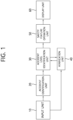
- FIGS. 1 and 2 A coping system for a loss-of-coolant accident according to an embodiment of the disclosure will be described with reference to FIGS. 1 and 2 .
- FIG. 1 illustrates a coping system for a loss-of-coolant accident according to an embodiment of the disclosure
- FIG. 2 illustrates a nuclear power plant to which the disclosure is applied.
- the coping system 1 includes an input unit 10, an accident identification unit 20, an accident level identification unit 30, a verification unit 40, a safety feature operation unit 50, and a display unit 60.
- the input unit 10 receives a water level of a pressurizer and a water level of a reactor head water level indicator.
- the accident identification unit 20 identifies a break size based on a decreasing rate of the received water level of the pressurizer and a break location based on the received water level of the reactor head water level indicator.
- the accident level identification unit 30 identifies an accident level based on the break size and break location identified by the accident identification unit 20. To identify the accident level, a look-up table may be used.
- the identified accident level is verified in the verification unit 40, and the verification unit 40 verifies the accident level based on a verification parameter including at least one of a core exit temperature, a radiation dose inside a containment building, a temperature inside the containment building, a pressure inside the containment building, a water level inside an intermediate storage tank, a safe injection flow rate, and a spray flow rate.
- the verification parameter may be input through the input unit 10.
- the safety feature operation unit 50 instructs the safety feature to operate according to the accident level identified by the accident level identification unit.
- the safety feature includes a pilot operated safety relief valve (POSRV), an emergency rapid depressurization valve (ERDV), a safety injection (SI) and a containment spray (CS).
- PSRV pilot operated safety relief valve
- ERDV emergency rapid depressurization valve
- SI safety injection
- CS containment spray
- the display unit 60 displays input information, the break size, the break location, the accident level, the safety feature operation, etc. through a display device for an operator.
- FIG. 3 is a flowchart showing a method of dealing with a loss-of-coolant accident according to an embodiment of the disclosure.
- the break size may be identified based on a decreasing rate of the water level of the pressurizer, and the break location may be identified based on the water level of the reactor head water level indicator.
- the break size may be classified into, for example, small, medium, and large.
- the decreasing rate of the water level of the pressurizer when the decreasing rate of the water level of the pressurizer is less than 5% per second, it may be identified that the break size is small. When the decreasing rate is 5% to 20% per second, it may be identified that the break size is medium. When the decreasing rate is more than 20% per second, it may be identified that the break size is large.
- the hot leg is broken when the reactor head water level indicator remains above 60%
- the cold leg is broken when the reactor head water level indicator remains below 60%
- the accident level is identified based on the identified break size and break location (S200).
- the identification of the accident level may be performed using a look-up table in which combinations of the break sizes and the break locations are tabulated.
- Table 1 An example of the look-up table is shown in the following Table 1.
- Table 1 Small break Medium break Large break cold leg break low and small low and medium low and large hot leg break high and small high and medium high and large
- the identified accident level undergoes a verification procedure (S300).
- the verification parameter includes a verification parameter related to a reactor coolant system, a verification parameter related to identification of situations inside the containment building, and a verification parameter related to identification of operating states of engineered safety feature.
- the verification parameter may include at least one of a core exit temperature, a radiation dose inside a containment building, a temperature inside the containment building, a pressure inside the containment building, a water level inside an intermediate storage tank, a safe injection flow rate, and a spray flow rate.
- the safe injection flow rate needs to be in a low range, and the spray flow rate needs not to be present at the beginning. Therefore, when the safe injection flow rate is in a low range, and the spray flow rate is not present at the beginning in the event of the small loss-of-coolant accident in the cold leg, it is verified that the identification of the accident level is appropriate.
- the safety feature is operated based on the identified accident level (S400).
- the safety feature may include a pilot operated safety relief valve (POSRV), an emergency rapid depressurization valve (ERDV), a safety injection (SI) and a containment spray (CS).
- PSRV pilot operated safety relief valve
- ERDV emergency rapid depressurization valve
- SI safety injection
- CS containment spray
- the number of operating POSRVs, whether to operate the ERDV, the number of operating Sis, and the number of operating CSs are varied.
- the ERDV refers to a system that is connected to the pressurizer and depressurizes the reactor so as to be used even when the POSRV is not operating in a serious accident (high radiation environment).
- the related information may include the water level of the pressurizer, the water level of the reactor head water level indicator, the break size, the break location, the verification parameter, the accident level, the safety feature, etc.
- the steam pressure in the upper portion of the core is effectively discharged, the accident is accurately identified during the loss-of-coolant accident (LOCA), and an automatic system operates to quickly take measures based on situation identification rather than manual measures of an operator, thereby reducing the probability of core damage.
- LOCA loss-of-coolant accident
- the water level in the core can be remains high to protect the core and lower an expected peak cladding temperature (PCT).
- PCT expected peak cladding temperature
- an operating margin, a core design margin, and a design margin of engineered safety feature are increased, and the frequency of core damage related to the loss-of-coolant accidents and the probability of radioactive material leakage due to serious accidents can be minimized.
Landscapes
- Physics & Mathematics (AREA)
- Engineering & Computer Science (AREA)
- Plasma & Fusion (AREA)
- General Engineering & Computer Science (AREA)
- High Energy & Nuclear Physics (AREA)
- Business, Economics & Management (AREA)
- Emergency Management (AREA)
- Monitoring And Testing Of Nuclear Reactors (AREA)
Abstract
Description
- The disclosure relates to a method of dealing with a loss-of-coolant accident in a nuclear power plant, and a system therefor.
- One of the accidents difficult to deal with among accidents in the nuclear power plant is a loss-of-coolant accident, in particular, a large-scale loss-of-coolant accident in a broken cold leg.
- When the loss-of-coolant accident occurs in the cold leg, a safety injection tank (SIT) (medium pressure) and a safety injection pump (SIP) (high pressure) are used to inject a coolant, but a significant amount of safety injection coolant flows directly out of a broken portion without passing through a core, thereby making no contribution to cooling.
- Even the coolant injected into not the broken portion but the core cannot pass through the core due to steam pressure above the core, and thus a problem arises in that a water level in the core is not sufficiently maintained.
- Therefore, it is important to quickly and accurately identify the loss-of-coolant accident and rapidly take an appropriate measure.
- Accordingly, an aspect of the disclosure is to provide a method of dealing with a loss-of-coolant accident in a nuclear power plant, and a system therefor.
- An aspect of the disclosure is achieved by a method of dealing with a loss-of-coolant accident in a nuclear power plant, the method including: identifying a break size and a break location; identifying an accident level based on the break size and break location; and operating safety feature based on the accident level.
- The safety feature may include a pilot operated safety relief valve (POSRV), an emergency rapid depressurization valve (ERDV), a safety injection (SI), and a containment spray (CS).
- The break size may be identified based on a decreasing rate of a water level of a pressurizer, and the break location may be identified based on a water level of a reactor head water level indicator.
- The identification of the break location may include: identifying that a hot leg is broken upon the water level of the reactor head water level indicator being above a certain level, and identifying that a cold leg is broken upon the water level of the reactor head water level indicator being below a certain level.
- The identification of the accident level may be based on a look-up table preset according to combinations of the break sizes and the break locations.
- In the operation of the safety feature, the number of operating POSRVs, whether to operate the ERDV, the number of operating Sis, and the number of operating CSs may be varied depending on the accident level.
- After identifying the accident level, the accident level may be verified based on a verification parameter including at least one of a core exit temperature, a radiation dose inside a containment building, a temperature inside the containment building, a pressure inside the containment building, a water level inside an intermediate storage tank, a safe injection flow rate, and a spray flow rate.
- Another aspect of the disclosure is achieved by a system for dealing with a loss-of-coolant accident in a nuclear power plant, the system including: an input unit that receives a water level of a pressurizer and a water level of a reactor head water level indicator; an accident identification unit that identifies a break size based on a decreasing rate of the water level of the pressurizer, and identifies a break location based on the water level of the reactor head water level indicator; an accident level identification unit that identifies an accident level based on the break size and break location identified by the accident identification unit; and a safety feature operation unit that instructs safety feature to operate based on the accident level identified by the accident level identification unit.
- The safety feature may include a pilot operated safety relief valve (POSRV), an emergency rapid depressurization valve (ERDV), a safety injection (SI), and a containment spray (CS).
- The accident identification unit may identify that a hot leg is broken upon the water level of the reactor head water level indicator being above a certain level, and identify that a cold leg is broken upon the water level of the reactor head water level indicator being below a certain level.
- The accident level identification unit may identify the accident level based on a look-up table preset according to combinations of the break sizes and the break locations.
- The system may further include a verification unit that verifies the accident level based on a verification parameter comprising at least one of a core exit temperature, a radiation dose inside a containment building, a temperature inside the containment building, a pressure inside the containment building, a water level inside an intermediate storage tank, a safe injection flow rate, and a spray flow rate.
- According to the disclosure, there are provided a method of dealing with a loss-of-coolant accident in a nuclear power plant, and a system therefor.
-
-
FIG. 1 illustrates a coping system for a loss-of-coolant accident according to an embodiment of the disclosure, -
FIG. 2 illustrates a nuclear power plant to which the disclosure is applied, and -
FIG. 3 is a flowchart showing a method of dealing with a loss-of-coolant accident according to an embodiment of the disclosure. - A coping system for a loss-of-coolant accident according to an embodiment of the disclosure will be described with reference to
FIGS. 1 and2 . -
FIG. 1 illustrates a coping system for a loss-of-coolant accident according to an embodiment of the disclosure, andFIG. 2 illustrates a nuclear power plant to which the disclosure is applied. - The coping system 1 includes an
input unit 10, anaccident identification unit 20, an accidentlevel identification unit 30, averification unit 40, a safetyfeature operation unit 50, and adisplay unit 60. - The
input unit 10 receives a water level of a pressurizer and a water level of a reactor head water level indicator. - The
accident identification unit 20 identifies a break size based on a decreasing rate of the received water level of the pressurizer and a break location based on the received water level of the reactor head water level indicator. - The accident
level identification unit 30 identifies an accident level based on the break size and break location identified by theaccident identification unit 20. To identify the accident level, a look-up table may be used. - The identified accident level is verified in the
verification unit 40, and theverification unit 40 verifies the accident level based on a verification parameter including at least one of a core exit temperature, a radiation dose inside a containment building, a temperature inside the containment building, a pressure inside the containment building, a water level inside an intermediate storage tank, a safe injection flow rate, and a spray flow rate. The verification parameter may be input through theinput unit 10. - The safety
feature operation unit 50 instructs the safety feature to operate according to the accident level identified by the accident level identification unit. The safety feature includes a pilot operated safety relief valve (POSRV), an emergency rapid depressurization valve (ERDV), a safety injection (SI) and a containment spray (CS). - The
display unit 60 displays input information, the break size, the break location, the accident level, the safety feature operation, etc. through a display device for an operator. - Below, a method of dealing with a loss-of-coolant accident according to the disclosure will be described in more detail.
-
FIG. 3 is a flowchart showing a method of dealing with a loss-of-coolant accident according to an embodiment of the disclosure. - First, a break size and a break location are identified (S100).
- The break size may be identified based on a decreasing rate of the water level of the pressurizer, and the break location may be identified based on the water level of the reactor head water level indicator.
- The break size may be classified into, for example, small, medium, and large.
- For example, when the decreasing rate of the water level of the pressurizer is less than 5% per second, it may be identified that the break size is small. When the decreasing rate is 5% to 20% per second, it may be identified that the break size is medium. When the decreasing rate is more than 20% per second, it may be identified that the break size is large.
- In terms of identifying the break location, when the water level of the reactor head water level indicator is above a certain level, it is identified that a hot leg is broken. When the water level of the reactor head water level indicator is below the certain level, it is identified that a cold leg is broken.
- For example, it is identified that the hot leg is broken when the reactor head water level indicator remains above 60%, and it is identified that the cold leg is broken when the reactor head water level indicator remains below 60%.
- Next, the accident level is identified based on the identified break size and break location (S200).
- The identification of the accident level may be performed using a look-up table in which combinations of the break sizes and the break locations are tabulated.
- An example of the look-up table is shown in the following Table 1.
[Table 1] Small break Medium break Large break cold leg break low and small low and medium low and large hot leg break high and small high and medium high and large - The identified accident level undergoes a verification procedure (S300). To verify the accident level, the verification parameter is used. The verification parameter includes a verification parameter related to a reactor coolant system, a verification parameter related to identification of situations inside the containment building, and a verification parameter related to identification of operating states of engineered safety feature. Specifically, the verification parameter may include at least one of a core exit temperature, a radiation dose inside a containment building, a temperature inside the containment building, a pressure inside the containment building, a water level inside an intermediate storage tank, a safe injection flow rate, and a spray flow rate.
- An example of the verification is as follows.
- For example, when a small loss-of-coolant accident occurs in the cold leg (low and small), the safe injection flow rate needs to be in a low range, and the spray flow rate needs not to be present at the beginning. Therefore, when the safe injection flow rate is in a low range, and the spray flow rate is not present at the beginning in the event of the small loss-of-coolant accident in the cold leg, it is verified that the identification of the accident level is appropriate.
- In this way, a separate verification parameter is used to verify whether the identified accident level is reasonable.
- The safety feature is operated based on the identified accident level (S400).
- The safety feature may include a pilot operated safety relief valve (POSRV), an emergency rapid depressurization valve (ERDV), a safety injection (SI) and a containment spray (CS).
- Depending on the accident level, the number of operating POSRVs, whether to operate the ERDV, the number of operating Sis, and the number of operating CSs are varied.
- Among them, the ERDV refers to a system that is connected to the pressurizer and depressurizes the reactor so as to be used even when the POSRV is not operating in a serious accident (high radiation environment).
- Examples of operating the safety feature according to the accident level are shown in the following Table 2, in which the numerals in the parentheses are the numbers of safety feature installed in the nuclear power plant.
[Table 2] Combinations POSRV open (4) ERDV open (1) SI operating (4) CS operating (2) low and large 4 1 4 2 low and medium 4 1 3 1 high and large 2 0 4 2 high and medium 2 0 3 1 low and small 0 0 2 0 high and small 0 0 2 0 - For example, a large loss-of-coolant accident that occurs in the cold leg is the most serious loss-of-coolant accident. When it is identified that this accident occurs, all four POSRVs and one ERDV are immediately and automatically opened without delay to take measures for significantly reducing the steam pressure in an upper portion of the core. By taking these measures to discharge steam, the water level in the core is effectively restored and the risk of core damage is minimized. Lastly, related information is displayed (S500). The related information may include the water level of the pressurizer, the water level of the reactor head water level indicator, the break size, the break location, the verification parameter, the accident level, the safety feature, etc.
- According to the disclosure, the steam pressure in the upper portion of the core is effectively discharged, the accident is accurately identified during the loss-of-coolant accident (LOCA), and an automatic system operates to quickly take measures based on situation identification rather than manual measures of an operator, thereby reducing the probability of core damage.
- According to the disclosure, when a large loss-of-coolant accident occurs in the cold leg of the pressurized nuclear power plant, a steam discharge path is effectively and quickly formed. Accordingly, the water level in the core can be remains high to protect the core and lower an expected peak cladding temperature (PCT).
- Further, an operating margin, a core design margin, and a design margin of engineered safety feature are increased, and the frequency of core damage related to the loss-of-coolant accidents and the probability of radioactive material leakage due to serious accidents can be minimized.
- The aforementioned embodiments are merely examples for describing the disclosure, and the disclosure is not limited thereto. Various modifications from these embodiments can be made by a person, who has ordinary knowledge in the art to which the disclosure pertains, to implement the disclosure, and thus the technical scope of the disclosure should be defined by the appended claims.
Claims (12)
- A method of dealing with a loss-of-coolant accident in a nuclear power plant, the method comprising:identifying a break size and a break location;identifying an accident level based on the break size and break location; andoperating safety feature based on the accident level.
- The method of claim 1, wherein the safety feature comprises a pilot operated safety relief valve (POSRV), an emergency rapid depressurization valve (ERDV), a safety injection (SI), and a containment spray (CS).
- The method of claim 2, whereinthe break size is identified based on a decreasing rate of a water level of a pressurizer, andthe break location is identified based on a water level of a reactor head water level indicator.
- The method of claim 3, wherein the identification of the break location comprises:identifying that a hot leg is broken upon the water level of the reactor head water level indicator being above a certain level, andidentifying that a cold leg is broken upon the water level of the reactor head water level indicator being below a certain level.
- The method of claim 1, wherein the identification of the accident level is based on a look-up table preset according to combinations of the break sizes and the break locations.
- The method of claim 2, wherein, in the operation of the safety feature, the number of operating POSRVs, whether to operate the ERDV, the number of operating Sis, and the number of operating CSs are varied depending on the accident level.
- The method of claim 1, wherein, after identifying the accident level, the accident level is verified based on a verification parameter comprising at least one of a core exit temperature, a radiation dose inside a containment building, a temperature inside the containment building, a pressure inside the containment building, a water level inside an intermediate storage tank, a safe injection flow rate, and a spray flow rate.
- A system for dealing with a loss-of-coolant accident in a nuclear power plant, the system comprising:an input unit that receives a water level of a pressurizer and a water level of a reactor head water level indicator;an accident identification unit that identifies a break size based on a decreasing rate of the water level of the pressurizer, and identifies a break location based on the water level of the reactor head water level indicator;an accident level identification unit that identifies an accident level based on the break size and break location identified by the accident identification unit; anda safety feature operation unit that instructs safety feature to operate based on the accident level identified by the accident level identification unit.
- The system of claim 8, wherein the safety feature comprise a pilot operated safety relief valve (POSRV), an emergency rapid depressurization valve (ERDV), a safety injection (SI), and a containment spray (CS).
- The system of claim 9, wherein the accident identification unit identifies that a hot leg is broken upon the water level of the reactor head water level indicator being above a certain level, and identifies that a cold leg is broken upon the water level of the reactor head water level indicator being below a certain level.
- The system of claim 10, wherein the accident level identification unit identifies the accident level based on a look-up table preset according to combinations of the break sizes and the break locations.
- The system of claim 11, further comprising a verification unit that verifies the accident level based on a verification parameter comprising at least one of a core exit temperature, a radiation dose inside a containment building, a temperature inside the containment building, a pressure inside the containment building, a water level inside an intermediate storage tank, a safe injection flow rate, and a spray flow rate.
Applications Claiming Priority (2)
| Application Number | Priority Date | Filing Date | Title |
|---|---|---|---|
| KR1020220043390A KR102649451B1 (en) | 2022-04-07 | 2022-04-07 | Method for responding loss of coolant accident in nuclear power plant and system therefor |
| PCT/KR2023/003790 WO2023195664A1 (en) | 2022-04-07 | 2023-03-22 | Method for dealing with loss of coolant accident in nuclear power plant, and system therefor |
Publications (2)
| Publication Number | Publication Date |
|---|---|
| EP4506960A1 true EP4506960A1 (en) | 2025-02-12 |
| EP4506960A4 EP4506960A4 (en) | 2026-03-25 |
Family
ID=88243111
Family Applications (1)
| Application Number | Title | Priority Date | Filing Date |
|---|---|---|---|
| EP23784892.4A Pending EP4506960A4 (en) | 2022-04-07 | 2023-03-22 | METHOD FOR TREATING COOLANT LOSS IN A NUCLEAR POWER PLANT AND SYSTEM FOR THIS |
Country Status (4)
| Country | Link |
|---|---|
| US (1) | US20250037890A1 (en) |
| EP (1) | EP4506960A4 (en) |
| KR (1) | KR102649451B1 (en) |
| WO (1) | WO2023195664A1 (en) |
Family Cites Families (7)
| Publication number | Priority date | Publication date | Assignee | Title |
|---|---|---|---|---|
| JPS59126289A (en) * | 1983-01-10 | 1984-07-20 | 株式会社日立製作所 | Nuclear reactor rupture detection device |
| JP2007010375A (en) * | 2005-06-28 | 2007-01-18 | Mitsubishi Heavy Ind Ltd | Nuclear emergency computational system and program |
| KR20090032374A (en) * | 2007-09-27 | 2009-04-01 | 한국전력공사 | Analysis method to determine operator action time limit in case of loss of coolant |
| KR101146949B1 (en) * | 2009-10-30 | 2012-05-22 | 한국수력원자력 주식회사 | Optimumized method of flooding analysis during main feedwater line break sub-compartment outside reactor building for nuclear power plant |
| KR101404647B1 (en) * | 2012-05-21 | 2014-06-09 | 한국과학기술원 | Passive reactor and containment cooling system for pressurized water reactors |
| KR101416912B1 (en) * | 2013-06-17 | 2014-07-08 | 한국원자력연구원 | Multi function multi stage safety injection facility and passive safety injection system having the same |
| CN113972016B (en) * | 2021-10-26 | 2024-01-26 | 中国核动力研究设计院 | Method, device, equipment and medium for coping with water loss accident outside containment of nuclear power plant |
-
2022
- 2022-04-07 KR KR1020220043390A patent/KR102649451B1/en active Active
-
2023
- 2023-03-22 US US18/716,310 patent/US20250037890A1/en active Pending
- 2023-03-22 WO PCT/KR2023/003790 patent/WO2023195664A1/en not_active Ceased
- 2023-03-22 EP EP23784892.4A patent/EP4506960A4/en active Pending
Also Published As
| Publication number | Publication date |
|---|---|
| US20250037890A1 (en) | 2025-01-30 |
| EP4506960A4 (en) | 2026-03-25 |
| WO2023195664A1 (en) | 2023-10-12 |
| KR20230144295A (en) | 2023-10-16 |
| KR102649451B1 (en) | 2024-03-19 |
Similar Documents
| Publication | Publication Date | Title |
|---|---|---|
| US8976920B2 (en) | Nuclear power plant using nanoparticles in emergency systems and related method | |
| CN111681794B (en) | Full-range SGTR accident handling method and system for pressurized water reactor nuclear power plant | |
| CN104282349B (en) | Nuclear power plant is guided under a kind of fire condition to the method for safe condition | |
| CN111540483B (en) | Method for coping with small-sized crevasse loss of coolant accident in pressurized water reactor nuclear power plant | |
| CN104332206B (en) | Overpressure protection method for reactor startup/shutdown condition of PWR (pressurized water reactor) nuclear power plant | |
| CN104538068A (en) | Method for preventing steam generator from spilling over under heat-transfer tube rupture accident condition | |
| Bang et al. | Analysis of steam generator tube rupture accidents for the development of mitigation strategies | |
| US20250037890A1 (en) | Method for dealing with loss of coolant accident in nuclear power plant, and system therefor | |
| KR102351448B1 (en) | Analysis Methodologies of Severe Accident Sensitivity Assesment for Steam Generator Tube Rupture in CANDU | |
| CN115331858B (en) | SGTR accident handling method and control system for pressurized water reactor nuclear power plant | |
| Yoon et al. | Analysis of multiple steam generator tube rupture with emergency operating guidelines for APR1400 | |
| EP4481762A1 (en) | Automatic low-pressure full-speed cooling method and system for nuclear power plant unit | |
| EP4506959A1 (en) | Method for dealing with anticipated transient without scram in nuclear power plant, and system therefor | |
| JPH08211184A (en) | Reactor containment facility and method for controlling flammable gas concentration thereof | |
| JP2772053B2 (en) | Vent apparatus for reactor containment vessel and method for reducing internal pressure | |
| Xu et al. | Consideration of Human Factors in SGTR Mitigation Strategy | |
| Pingting et al. | Research on Severe Accident Management Guidelines for HPR1000 NPP | |
| Israel | EPR: steam generator tube rupture analysis in Finland and in France | |
| Park et al. | Procedure Development of IVR-ERVC Analysis and Its Results in SMART100 | |
| JPS6388496A (en) | Emergency leakage preventive device | |
| Wells et al. | CFR 50.91. | |
| Choi et al. | Sensitivity Analysis of RCS Depressurization Strategy Under a Postulated SGTR Accident in OPR1000 | |
| WO2026026781A1 (en) | Emergency core cooling system for nuclear power plant and cooling method | |
| JPH0740073B2 (en) | Automatic decompression system | |
| JPH0227295A (en) | Reactor emergency core cooling system |
Legal Events
| Date | Code | Title | Description |
|---|---|---|---|
| STAA | Information on the status of an ep patent application or granted ep patent |
Free format text: STATUS: THE INTERNATIONAL PUBLICATION HAS BEEN MADE |
|
| PUAI | Public reference made under article 153(3) epc to a published international application that has entered the european phase |
Free format text: ORIGINAL CODE: 0009012 |
|
| STAA | Information on the status of an ep patent application or granted ep patent |
Free format text: STATUS: REQUEST FOR EXAMINATION WAS MADE |
|
| 17P | Request for examination filed |
Effective date: 20240607 |
|
| AK | Designated contracting states |
Kind code of ref document: A1 Designated state(s): AL AT BE BG CH CY CZ DE DK EE ES FI FR GB GR HR HU IE IS IT LI LT LU LV MC ME MK MT NL NO PL PT RO RS SE SI SK SM TR |
|
| DAV | Request for validation of the european patent (deleted) | ||
| DAX | Request for extension of the european patent (deleted) | ||
| A4 | Supplementary search report drawn up and despatched |
Effective date: 20260220 |
|
| RIC1 | Information provided on ipc code assigned before grant |
Ipc: G21C 15/18 20060101AFI20260216BHEP Ipc: G21D 3/06 20060101ALI20260216BHEP Ipc: G21D 3/04 20060101ALI20260216BHEP |