EP4506240A1 - Marine propulsion system - Google Patents
Marine propulsion system Download PDFInfo
- Publication number
- EP4506240A1 EP4506240A1 EP24181148.8A EP24181148A EP4506240A1 EP 4506240 A1 EP4506240 A1 EP 4506240A1 EP 24181148 A EP24181148 A EP 24181148A EP 4506240 A1 EP4506240 A1 EP 4506240A1
- Authority
- EP
- European Patent Office
- Prior art keywords
- vessel speed
- control mode
- speed control
- wave
- cancel
- Prior art date
- Legal status (The legal status is an assumption and is not a legal conclusion. Google has not performed a legal analysis and makes no representation as to the accuracy of the status listed.)
- Granted
Links
Images




Classifications
-
- B—PERFORMING OPERATIONS; TRANSPORTING
- B63—SHIPS OR OTHER WATERBORNE VESSELS; RELATED EQUIPMENT
- B63H—MARINE PROPULSION OR STEERING
- B63H21/00—Use of propulsion power plant or units on vessels
- B63H21/21—Control means for engine or transmission, specially adapted for use on marine vessels
-
- B—PERFORMING OPERATIONS; TRANSPORTING
- B63—SHIPS OR OTHER WATERBORNE VESSELS; RELATED EQUIPMENT
- B63B—SHIPS OR OTHER WATERBORNE VESSELS; EQUIPMENT FOR SHIPPING
- B63B79/00—Monitoring properties or operating parameters of vessels in operation
- B63B79/40—Monitoring properties or operating parameters of vessels in operation for controlling the operation of vessels, e.g. monitoring their speed, routing or maintenance schedules
-
- B—PERFORMING OPERATIONS; TRANSPORTING
- B63—SHIPS OR OTHER WATERBORNE VESSELS; RELATED EQUIPMENT
- B63H—MARINE PROPULSION OR STEERING
- B63H21/00—Use of propulsion power plant or units on vessels
- B63H21/21—Control means for engine or transmission, specially adapted for use on marine vessels
- B63H21/213—Levers or the like for controlling the engine or the transmission, e.g. single hand control levers
-
- B—PERFORMING OPERATIONS; TRANSPORTING
- B63—SHIPS OR OTHER WATERBORNE VESSELS; RELATED EQUIPMENT
- B63H—MARINE PROPULSION OR STEERING
- B63H21/00—Use of propulsion power plant or units on vessels
- B63H21/21—Control means for engine or transmission, specially adapted for use on marine vessels
- B63H2021/216—Control means for engine or transmission, specially adapted for use on marine vessels using electric control means
Definitions
- the present invention relates to a marine propulsion system.
- a marine propulsion system that performs a control to adjust a vessel speed based on information regarding upward-downward movement of a hull when waves are occurring is known in general.
- Such a marine propulsion system is disclosed in JP 6-211190 A , for example.
- JP 6-211190 A discloses a marine operation control device (marine propulsion system) that performs a control to adjust a vessel speed based on information regarding upward-downward movement of a hull when waves are occurring.
- the marine operation control device described in JP 6-211190 A detects the degree of impact received by the hull during voyage using an acceleration detector that detects the acceleration of the hull in an upward-downward direction, for example, and decelerates the hull when the acceleration of the hull in the upward-downward direction, for example, detected by the acceleration detector exceeds a preset setting limit.
- a vessel user may temporarily want to operate the hull as intended regardless of the upward-downward movement of the hull. For example, there may be a sudden need to avoid obstacles, change the route, etc., or there may be a sudden change in the direction of waves. Therefore, a structure is desired to temporarily operate the hull as intended by the vessel user regardless of the upward-downward movement of the hull while a control is performed to adjust the vessel speed based on the information regarding upward-downward movement of the hull when waves are occurring.
- said object is solved by a marine propulsion system having the features of independent claim 1. Preferred embodiments are laid down in the dependent claims.
- a marine propulsion system includes a propulsion device configured to be provided on a hull, a controller configured or programmed to control driving of the propulsion device to adjust a vessel speed and perform an in-wave vessel speed control to adjust the vessel speed based on information regarding upward-downward movement of the hull when waves are occurring, and an operator configured to receive an operation from a vessel user.
- the controller is configured or programmed to temporarily cancel an in-wave vessel speed control mode, in which the in-wave vessel speed control is performed, for a predetermined period of time when the operator is operated to cancel the in-wave vessel speed control mode in the in-wave vessel speed control mode.
- the controller is configured or programmed to temporarily cancel the in-wave vessel speed control mode, in which the in-wave vessel speed control is performed, for the predetermined period of time when the operator is operated to cancel the in-wave vessel speed control mode in the in-wave vessel speed control mode. Accordingly, when the vessel user operates the operator to cancel the in-wave vessel speed control mode in the in-wave vessel speed control mode, the in-wave vessel speed control mode is temporarily canceled for the predetermined period of time. Consequently, while a control is performed to adjust the vessel speed based on the information regarding upward-downward movement of the hull when waves are occurring, the hull is temporarily operated as intended by the vessel user regardless of the upward-downward movement of the hull.
- the controller is preferably configured or programmed to return to the in-wave vessel speed control mode when the predetermined period of time has elapsed since the in-wave vessel speed control mode was temporarily canceled. Accordingly, when the predetermined period of time has elapsed since the in-wave vessel speed control mode was canceled, the controller automatically returns to the in-wave vessel speed control mode, and thus a structure in which the in-wave vessel speed control mode is temporarily canceled for the predetermined period of time is reliably achieved. Furthermore, it is not necessary to perform an operation to return to the in-wave vessel speed control mode, and thus the operational burden on the vessel user is reduced.
- the controller is preferably configured or programmed to return to the in-wave vessel speed control mode when the predetermined period of time has elapsed without any operation being performed on the operator since the in-wave vessel speed control mode was temporarily canceled. Accordingly, when the operator is operated before the predetermined period of time has elapsed since the in-wave vessel speed control mode was temporarily canceled, the controller prioritizes an operation intended by the vessel user without returning to the in-wave vessel speed control mode.
- the operator preferably includes a vessel speed adjustment operator, the vessel speed adjustment operator being configured to receive an operation to adjust the vessel speed and an operation to cancel the in-wave vessel speed control mode in the in-wave vessel speed control mode, and the controller is preferably configured or programmed to temporarily cancel the in-wave vessel speed control mode for the predetermined period of time when the vessel speed adjustment operator is operated to cancel the in-wave vessel speed control mode in the in-wave vessel speed control mode.
- the vessel speed adjustment operator that receives the operation to adjust the vessel speed is located relatively close to the vessel user who is operating a marine vessel, and at a position at which the vessel user who is operating the marine vessel is able to operate the vessel speed adjustment operator almost without looking away from a direction in which the marine vessel is traveling. Therefore, with the structure described above, the operation to cancel the in-wave vessel speed control mode is performed on the vessel speed adjustment operator that receives the operation to adjust the vessel speed, and thus the in-wave vessel speed control mode is canceled without the vessel user almost taking his/her hand off the vessel speed adjustment operator located relatively close to the vessel user or almost looking away from the traveling direction while operating the marine vessel. Consequently, the in-wave vessel speed control mode is temporarily canceled for the predetermined period of time easily and smoothly.
- the vessel speed adjustment operator preferably includes a remote control lever including a lever, the lever being configured to receive a change in a rotational position of the lever as the operation to adjust the vessel speed, and the operation to cancel the in-wave vessel speed control mode in the in-wave vessel speed control mode, and the controller is preferably configured or programmed to temporarily cancel the in-wave vessel speed control mode for the predetermined period of time when the remote control lever is operated to cancel the in-wave vessel speed control mode in the in-wave vessel speed control mode.
- the operation to cancel the in-wave vessel speed control mode is performed on a common remote control lever as the vessel speed adjustment operator that receives the operation to adjust the vessel speed, and thus a structure in which the in-wave vessel speed control mode is canceled without the vessel user almost taking his/her hand off the remote control lever located relatively close to the vessel user or almost looking away from the traveling direction while the vessel user is operating the marine vessel is easily achieved. Consequently, a structure in which the in-wave vessel speed control mode is temporarily canceled for the predetermined period of time easily and smoothly is easily achieved.
- the controller configured or programmed to temporarily cancel the in-wave vessel speed control mode for the predetermined period of time when the remote control lever is operated to cancel the in-wave vessel speed control mode in the in-wave vessel speed control mode
- the controller is preferably configured or programmed to temporarily cancel the in-wave vessel speed control mode for the predetermined period of time when the rotational position of the lever of the remote control lever is changed as the operation to cancel the in-wave vessel speed control mode in the in-wave vessel speed control mode. Accordingly, the operation to cancel the in-wave vessel speed control mode is also performed using the lever operated to adjust the vessel speed, and thus it is not necessary to provide, on the remote control lever, a dedicated button or the like to cancel the in-wave vessel speed control mode. Consequently, the structure of the remote control lever is simplified as compared with a case in which the operation to cancel the in-wave vessel speed control mode is other than changing the rotational position of the lever of the remote control lever.
- the controller is preferably configured or programmed to, after temporarily canceling the in-wave vessel speed control mode, return to the in-wave vessel speed control mode with the vessel speed corresponding to the rotational position of the lever at a time at which the controller returns to the in-wave vessel speed control mode. Accordingly, as compared with a case in which the vessel speed conditions for returning to the in-wave vessel speed control mode do not include the rotational position of the lever, the vessel speed at the time at which the controller returns to the in-wave vessel speed control mode becomes clearer, and thus the complexity of the process of the controller to return to the in-wave vessel speed control mode is reduced or prevented.
- the remote control lever preferably includes a cancel button, the cancel button being configured to receive the operation to cancel the in-wave vessel speed control mode in the in-wave vessel speed control mode, and the controller is preferably configured or programmed to temporarily cancel the in-wave vessel speed control mode for the predetermined period of time when the cancel button of the remote control lever is operated to cancel the in-wave vessel speed control mode in the in-wave vessel speed control mode.
- the operation to cancel the in-wave vessel speed control mode is performed using the cancel button, which is provided exclusively to cancel the in-wave vessel speed control mode, separately from the lever operated to adjust the vessel speed, and thus the possibility that the vessel user accidentally performs an operation other than the operation to cancel the in-wave vessel speed control mode when performing the operation to cancel the in-wave vessel speed control mode is reduced or prevented.
- the operator preferably includes a steering wheel including a wheel, the wheel being configured to receive a change in a rotational position of the wheel as an operation to adjust a steering angle of the propulsion device, and an operation to cancel the in-wave vessel speed control mode in the in-wave vessel speed control mode
- the controller is preferably configured or programmed to temporarily cancel the in-wave vessel speed control mode for the predetermined period of time when the steering wheel is operated to cancel the in-wave vessel speed control mode in the in-wave vessel speed control mode.
- the steering wheel that receives a change in the rotational position of the wheel as the operation to adjust the steering angle of the propulsion device is located relatively close to the vessel user who is operating the marine vessel, and at a position at which the vessel user who is operating the marine vessel is able to operate the steering wheel almost without looking away from the direction in which the marine vessel is traveling. Therefore, with the structure described above, the operation to cancel the in-wave vessel speed control mode is performed on the steering wheel that receives the operation to adjust the steering angle of the propulsion device, and thus the in-wave vessel speed control mode is canceled without the vessel user almost taking his/her hand off the steering wheel located relatively close to the vessel user or almost looking away from the traveling direction while operating the marine vessel. Consequently, the in-wave vessel speed control mode is temporarily canceled for the predetermined period of time easily and smoothly.
- the controller configured or programmed to return to the in-wave vessel speed control mode when the predetermined period of time has elapsed without any operation being performed on the operator since the in-wave vessel speed control mode was temporarily canceled
- the controller is preferably configured or programmed to return to the in-wave vessel speed control mode when the predetermined period of time preset according to the vessel speed at a time at which the in-wave vessel speed control mode is temporarily canceled or information correlated to the vessel speed at the time at which the in-wave vessel speed control mode is temporarily canceled has elapsed without any operation being performed on the operator since the in-wave vessel speed control mode was temporarily canceled.
- the predetermined period of time used to determine whether or not the controller returns to the in-wave vessel speed control mode is appropriately set according to the vessel speed at the time at which the in-wave vessel speed control mode is temporarily canceled or the information (the rotation speed of an engine) correlated to the vessel speed at the time at which the in-wave vessel speed control mode is temporarily canceled, and the controller performs a process to return to the in-wave vessel speed control mode.
- the operator preferably includes a vessel speed adjustment operator, the vessel speed adjustment operator being configured to receive an operation to adjust the vessel speed and an operation to cancel the in-wave vessel speed control mode in the in-wave vessel speed control mode, and the controller is preferably configured or programmed to return to the in-wave vessel speed control mode when the predetermined period of time preset according to a state of the vessel speed adjustment operator at a time at which the in-wave vessel speed control mode is temporarily canceled or a change in the state of the vessel speed adjustment operator at the time at which the in-wave vessel speed control mode is temporarily canceled has elapsed without any operation being performed on the vessel speed adjustment operator since the in-wave vessel speed control mode was temporarily canceled.
- the predetermined period of time used to determine whether or not the controller returns to the in-wave vessel speed control mode is appropriately set according to the state of the vessel speed adjustment operator at the time at which the in-wave vessel speed control mode is temporarily canceled or a change in the state of the vessel speed adjustment operator at the time at which the in-wave vessel speed control mode is temporarily canceled, and the controller performs a process to return to the in-wave vessel speed control mode.
- the operator preferably includes a touch panel on which a cancel button is displayed to receive an operation to cancel the in-wave vessel speed control mode
- the controller is preferably configured or programmed to temporarily cancel the in-wave vessel speed control mode for the predetermined period of time when the cancel button displayed on the touch panel is operated to cancel the in-wave vessel speed control mode in the in-wave vessel speed control mode. Accordingly, the operation to cancel the in-wave vessel speed control mode is performed on the cancel button displayed on the touch panel, and thus the vessel user performs the operation to cancel the in-wave vessel speed control mode while looking at the cancel button. Consequently, the in-wave vessel speed control mode is temporarily canceled for the predetermined period of time visually and easily.
- the operator preferably includes a switch panel including a plurality of physical switches that include a cancel button, the cancel button being configured to receive an operation to cancel the in-wave vessel speed control mode, and the controller is preferably configured or programmed to temporarily cancel the in-wave vessel speed control mode for the predetermined period of time when the cancel button of the switch panel is operated to cancel the in-wave vessel speed control mode in the in-wave vessel speed control mode.
- the cancel button as a physical switch on the switch panel is operated to cancel the in-wave vessel speed control mode, and thus once the vessel user remembers the position of the cancel button, he/she performs the operation to cancel the in-wave vessel speed control mode without looking at the cancel button. Consequently, the in-wave vessel speed control mode is temporarily canceled for the predetermined period of time easily.
- the operator preferably includes a mode start button, the mode start button being configured to receive an operation to start the in-wave vessel speed control mode, and the controller is preferably configured or programmed to start the in-wave vessel speed control mode when the mode start button is operated to start the in-wave vessel speed control mode, and temporarily cancel the in-wave vessel speed control mode for the predetermined period of time when the operator different from the mode start button is operated to cancel the in-wave vessel speed control mode in the in-wave vessel speed control mode.
- the operation to temporarily cancel the in-wave vessel speed control mode is performed using an operator different from the mode start button that receives the operation to start the in-wave vessel speed control mode, and thus the possibility that the vessel user accidentally performs the operation to start the in-wave vessel speed control mode when performing the operation to temporarily cancel the in-wave vessel speed control mode is reduced or prevented.
- the occurrence of a situation in which the vessel user has intended to temporarily cancel the in-wave vessel speed control mode but an operation has not been actually performed to temporarily cancel the in-wave vessel speed control mode is reduced or prevented.
- the controller is preferably configured or programmed to perform a notification control to notify the vessel user that the in-wave vessel speed control mode has been temporarily canceled when the in-wave vessel speed control mode has been temporarily canceled. Accordingly, when the in-wave vessel speed control mode has been temporarily canceled, the vessel user recognizes that the in-wave vessel speed control mode has been temporarily canceled.
- a marine propulsion system 100 and a marine vessel 110 according to example embodiments are now described with reference to FIGS. 1 to 10 .
- the marine propulsion system 100 is provided on or in the marine vessel 110.
- the marine propulsion system 100 propels the marine vessel 110.
- the marine vessel 110 may be a relatively small marine vessel used for sightseeing or fishing, for example.
- the marine propulsion system 100 (marine vessel 110) includes a hull 10 and a propulsion device 20. As shown in FIG. 2 , the propulsion device 20 is provided on the hull 10. Only one propulsion device 20 is attached to a stern 11 of the hull 10. That is, the propulsion device 20 is an outboard motor.
- the hull 10 includes an operator 30, a controller 14, an inertial measurement unit (IMU) 16, and a global navigation satellite system (GNSS) communicator 17.
- IMU inertial measurement unit
- GNSS global navigation satellite system
- the operator 30 receives operations from a vessel user to operate (maneuver) the marine vessel 110.
- the operator 30 includes a remote control lever 31, a steering wheel 32, and a touch panel 33.
- the remote control lever 31 is an example of a "vessel speed adjustment operator".
- the remote control lever 31 receives an operation to adjust a vessel speed V (see FIG. 7 ).
- the remote control lever 31 includes a lever 31a, and receives a change in the rotational position of the lever 31a as an operation to adjust the vessel speed V.
- the steering wheel 32 includes a wheel 32a, and receives a change in the rotational position of the wheel 32a as an operation to adjust the steering angle of the propulsion device 20 (see FIG. 1 ).
- the touch panel 33 displays buttons to receive operations of the vessel user and information about the marine vessel 110 (see FIG. 1 ).
- the information about the marine vessel 110 includes the vessel speed V (actual vessel speed) (see FIG. 7 ), the rotation speed of an engine 22 (see FIG. 1 ) of the propulsion device 20 (see FIG. 1 ), the shift state of the propulsion device 20, a navigation mode of the marine vessel 110, etc., for example.
- the navigation mode of the marine vessel 110 includes an in-wave vessel speed control mode described below.
- the controller 14 controls an engine control unit (ECU) 28 and a steering control unit (SCU) 29 of the propulsion device 20 based on operations performed on the operator 30. That is, the controller 14 controls driving of the propulsion device 20 to adjust the vessel speed V (see FIG. 7 ).
- the controller 14 is a computer that includes an arithmetic unit such as a central processing unit (CPU), storages such as a read-only memory (ROM) and a random access memory (RAM), etc.
- the IMU 16 includes a gyroscope, an accelerometer, etc.
- the IMU 16 detects the acceleration of the hull 10 in an upward-downward direction, for example. That is, the IMU 16 detects information Ia regarding upward-downward movement of the hull 10.
- the controller 14 acquires the information Ia regarding upward-downward movement of the hull 10 detected by the IMU 16.
- a global navigation satellite system 120 includes the GNSS communicator 17 and a GNSS satellite 121.
- the GNSS communicator 17 communicates with the GNSS satellite 121.
- the controller 14 acquires position information about the hull 10, the vessel speed V (actual vessel speed) (see FIG. 7 ), etc. based on information communicated with the GNSS satellite 121 via the GNSS communicator 17.
- the propulsion device 20 includes a propulsion device main body 20a and a bracket 20b.
- the propulsion device main body 20a is attached to a transom 12 at the stern 11 (see FIG. 1 ) of the hull 10 via the bracket 20b.
- the propulsion device 20 includes the engine 22 to drive a propeller 21 to generate a thrust. That is, the propulsion device 20 is an engine outboard motor including the engine 22 to drive the propeller 21.
- the propulsion device main body 20a includes the engine 22, a drive shaft 23, a gearing 24, a propeller shaft 25, and the propeller 21.
- the engine 22 is an internal combustion engine that generates a driving force. The driving force of the engine 22 is transmitted to the propeller 21 via the drive shaft 23, the gearing 24, and the propeller shaft 25.
- the propeller 21 generates a propulsive force to propel the hull 10 by rotating in the water by the driving force transmitted from the engine 22.
- the propulsion device main body 20a includes a shift actuator 26 to switch the shift state of the propulsion device 20.
- the shift actuator 26 switches the shift state of the propulsion device 20 between a forward movement state, a reverse movement state, and a neutral state by switching the meshing of the gearing 24.
- a driving force is transmitted from the engine 22 to the propeller 21 to generate a forward thrust from the propeller 21.
- a driving force is transmitted from the engine 22 to the propeller 21 to generate a reverse thrust from the propeller 21.
- In the neutral state a driving force is not transmitted from the engine 22 to the propeller 21 to not generate a thrust by the propeller 21.
- the propulsion device 20 includes a steering 27 to change the direction of the propulsive force of the propeller 21 so as to change the traveling direction of the hull 10.
- the steering 27 is provided on the bracket 20b.
- the steering 27 includes a steering shaft 27a that extends in the upward-downward direction.
- the propulsion device main body 20a is rotated in a right-left direction by the steering 27 about the steering shaft 27a with respect to the bracket 20b.
- the propulsion device main body 20a rotates in the right-left direction about the steering shaft 27a
- the orientation of the propeller 21 also rotates in the right-left direction.
- the direction of the propulsive force of the propeller 21 is changed. That is, the propulsion device 20 is steered.
- the propulsion device 20 includes the ECU 28 and the SCU 29.
- the ECU 28 controls driving of the engine 22 and driving of the shift actuator 26 based on control by the controller 14. That is, the controller 14 controls the vessel speed V (see FIG. 7 ) by controlling driving of the engine 22 via the ECU 28 to change the propulsive force of the propeller 21.
- the SCU 29 controls driving of the steering 27 based on control by the controller 14.
- Each of the ECU 28 and the SCU 29 is a computer that includes an arithmetic unit such as a CPU, storages such as a ROM and a RAM, etc.
- the marine propulsion system 100 (see FIG. 1 ) (marine vessel 110 (see FIG. 1 )) adjusts the vessel speed V such that an impact on the hull 10 caused by the hull 10 (see FIG. 1 ) riding over a wave is within a preset range when waves are occurring.
- the controller 14 (see FIG. 1 ) performs an in-wave vessel speed control to adjust the vessel speed V based on the information Ia (see FIG. 1 ) regarding upward-downward movement of the hull 10 when waves are occurring.
- the information Ia regarding upward-downward movement of the hull 10 refers to the acceleration of the hull 10 in the upward-downward direction, for example.
- the controller 14 (see FIG. 1 ) first acquires the information Ia regarding upward-downward movement of the hull 10 from the IMU 16 (see FIG. 1 ). The controller 14 then calculates a target vessel speed VT, which is the target value of the vessel speed V, based on the acquired information Ia regarding upward-downward movement of the hull 10, the vessel speed V (actual vessel speed) acquired by the global navigation satellite system 120 (see FIG. 1 ), and information Ib to maintain the impact on the hull 10 within the preset range. Then, the controller 14 performs a feedback control to adjust the vessel speed V based on a difference between the calculated target vessel speed VT and the acquired vessel speed V (actual vessel speed).
- the controller 14 calculates the target vessel speed VT based on a value obtained by averaging the information Ia regarding upward-downward movement of the hull 10 over a predetermined period of time P. Specifically, the controller 14 calculates the target vessel speed VT such that the impact on the hull 10 caused by the hull 10 riding over a wave is within the preset range when waves are occurring, based on the value obtained by averaging the acquired information Ia regarding upward-downward movement of the hull 10 over the predetermined period of time P, a value obtained by averaging the vessel speed V (actual vessel speed) over the predetermined period of time P, and the information Ib to maintain the impact on the hull 10 within the preset range.
- the controller 14 controls the in-wave vessel speed control.
- a state in which the navigation mode of the marine vessel 110 is the in-wave vessel speed control mode and a state in which the navigation mode is not the in-wave vessel speed control mode are defined as an ON in-wave vessel speed control mode and an OFF in-wave vessel speed control mode, respectively.
- the operator 30 includes a mode start button 33a to receive an operation to start the in-wave vessel speed control mode.
- the touch panel 33 displays the mode start button 33a that receives an operation to start the in-wave vessel speed control mode.
- the controller 14 starts the in-wave vessel speed control mode when the mode start button 33a (see FIG. 5 ) is operated to start the in-wave vessel speed control mode.
- the controller 14 starts the in-wave vessel speed control mode when the mode start button 33a displayed on the touch panel 33 (see FIG. 5 ) is pressed.
- the controller 14 terminates the in-wave vessel speed control mode when the mode start button 33a is operated in the in-wave vessel speed control mode.
- the controller 14 temporarily cancels the in-wave vessel speed control mode, in which the in-wave vessel speed control is performed, for a predetermined period of time t when the operator 30 is operated to cancel the in-wave vessel speed control mode in the in-wave vessel speed control mode.
- the remote control lever 31 receives an operation to cancel the in-wave vessel speed control mode in the in-wave vessel speed control mode.
- the operation to cancel the in-wave vessel speed control mode is to change the rotational position of the lever 31a of the remote control lever 31.
- the controller 14 temporarily cancels the in-wave vessel speed control mode for the predetermined period of time t when the remote control lever 31 (i.e., an operator different from the mode start button 33a (see FIG. 5 )) is operated to cancel the in-wave vessel speed control mode in the in-wave vessel speed control mode.
- the remote control lever 31 i.e., an operator different from the mode start button 33a (see FIG. 5 )
- the controller 14 returns to the in-wave vessel speed control mode when the predetermined period of time t preset according to the vessel speed V (see FIG. 7 ) at the time at which the in-wave vessel speed control mode is temporarily canceled or the rotation speed (information correlated to the vessel speed V) of the engine 22 (see FIG. 1 ) at the time at which the in-wave vessel speed control mode is temporarily canceled has elapsed without any operation being performed on the operator 30 since the in-wave vessel speed control mode was temporarily canceled.
- the predetermined period of time t is set to be relatively short when the vessel speed V (the rotation speed of the engine 22) at the time at which the in-wave vessel speed control mode is temporarily canceled is relatively high, and is set to be relatively long when the vessel speed V (the rotation speed of the engine 22) at the time at which the in-wave vessel speed control mode is temporarily canceled is relatively low.
- the controller 14 returns to the in-wave vessel speed control mode when the predetermined period of time t preset according to the state of the remote control lever 31 at the time at which the in-wave vessel speed control mode is temporarily canceled or a change in the state of the remote control lever 31 at the time at which the in-wave vessel speed control mode is temporarily canceled has elapsed without any operation being performed on the operator 30 since the in-wave vessel speed control mode was temporarily canceled.
- the controller 14 returns to the in-wave vessel speed control mode when the predetermined period of time t preset according to the rotational position of the lever 31a of the remote control lever 31 at the time at which the in-wave vessel speed control mode is temporarily canceled or the amount of change in the rotational position of the lever 31a of the remote control lever 31 at the time at which the in-wave vessel speed control mode is temporarily canceled has elapsed without any operation being performed on the operator 30 since the in-wave vessel speed control mode was temporarily canceled.
- the vessel speed V see FIG.
- the predetermined period of time t is set to be relatively short when the rotational position of the lever 31a of the remote control lever 31 at the time at which the in-wave vessel speed control mode is temporarily canceled is relatively away from a neutral position (when the target vessel speed VT (see FIG.
- the controller 14 after temporarily canceling the in-wave vessel speed control mode, the controller 14 returns to the in-wave vessel speed control mode with the vessel speed V corresponding to the rotational position of the lever 31a at the time at which the controller 14 returns to the in-wave vessel speed control mode, and thus it is necessary to increase a period of time to change (increase/decrease) the vessel speed V as the amount of change in the rotational position of the lever 31a of the remote control lever 31 increases.
- the predetermined period of time t is set to be relatively long when the amount of change in the rotational position of the lever 31a of the remote control lever 31 at the time at which the in-wave vessel speed control mode is temporarily canceled is relatively large, and is set to be relatively short when the amount of change in the rotational position of the lever 31a of the remote control lever 31 at the time at which the in-wave vessel speed control mode is temporarily canceled is relatively small.
- the controller 14 After temporarily canceling the in-wave vessel speed control mode, the controller 14 (see FIG. 1 ) returns to the in-wave vessel speed control mode with the vessel speed V (see FIG. 7 ) corresponding to the rotational position of the lever 31a at the time at which the controller 14 returns to the in-wave vessel speed control mode. That is, when the controller 14 returns to the in-wave vessel speed control mode, the normal state is immediately established in which the vessel speed V is adjusted according to the rotational position of the lever 31a.
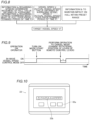
- the controller 14 When temporarily canceling the in-wave vessel speed control mode, the controller 14 (see FIG. 1 ) performs a notification control to notify the vessel user that the in-wave vessel speed control mode has been temporarily canceled. For example, as shown in FIG. 10 , when temporarily canceling the in-wave vessel speed control mode, the controller 14 (see FIG. 1 ) performs, as the notification control, a control to display a message 33b on the touch panel 33 indicating that the in-wave vessel speed control mode has been temporarily canceled.
- the controller 14 may perform, as the notification control, a control to display a mark on the touch panel 33 indicating that the in-wave vessel speed control mode has been temporarily canceled, a control to output a sound indicating that the in-wave vessel speed control mode has been temporarily canceled, a control to light or blink a lamp indicating that the in-wave vessel speed control mode has been temporarily canceled, etc.
- the controller 14 is configured or programmed to temporarily cancel the in-wave vessel speed control mode, in which the in-wave vessel speed control is performed, for the predetermined period of time t when the operator 30 is operated to cancel the in-wave vessel speed control mode in the in-wave vessel speed control mode. Accordingly, when the vessel user operates the operator 30 to cancel the in-wave vessel speed control mode in the in-wave vessel speed control mode, the in-wave vessel speed control mode is temporarily canceled for the predetermined period of time t. Consequently, while a control is performed to adjust the vessel speed V based on the information Ia regarding upward-downward movement of the hull 10 when waves are occurring, the hull 10 is temporarily operated as intended by the vessel user regardless of the upward-downward movement of the hull 10.
- the controller 14 is configured or programmed to return to the in-wave vessel speed control mode when the predetermined period of time t has elapsed since the in-wave vessel speed control mode was temporarily canceled. Accordingly, when the predetermined period of time t has elapsed since the in-wave vessel speed control mode was canceled, the controller 14 automatically returns to the in-wave vessel speed control mode, and thus a structure in which the in-wave vessel speed control mode is temporarily canceled for the predetermined period of time t is reliably achieved. Furthermore, it is not necessary to perform an operation to return to the in-wave vessel speed control mode, and thus the operational burden on the vessel user is reduced.
- the controller 14 is configured or programmed to return to the in-wave vessel speed control mode when the predetermined period of time t has elapsed without any operation being performed on the operator 30 since the in-wave vessel speed control mode was temporarily canceled. Accordingly, when the operator 30 is operated before the predetermined period of time t has elapsed since the in-wave vessel speed control mode was temporarily canceled, the controller 14 prioritizes an operation intended by the vessel user without returning to the in-wave vessel speed control mode.
- the operator 30 includes the vessel speed adjustment operator to receive an operation to adjust the vessel speed V and an operation to cancel the in-wave vessel speed control mode in the in-wave vessel speed control mode
- the controller 14 is configured or programmed to temporarily cancel the in-wave vessel speed control mode for the predetermined period of time t when the remote control lever 31 (vessel speed adjustment operator) is operated to cancel the in-wave vessel speed control mode in the in-wave vessel speed control mode.
- the remote control lever 31 that receives the operation to adjust the vessel speed V is located relatively close to the vessel user who is operating the marine vessel, and at a position at which the vessel user who is operating the marine vessel is able to operate the remote control lever 31 almost without looking away from a direction in which the marine vessel 110 is traveling.
- the operation to cancel the in-wave vessel speed control mode is performed on the remote control lever 31 that receives the operation to adjust the vessel speed V, and thus the in-wave vessel speed control mode is canceled without the vessel user almost taking his/her hand off the remote control lever 31 located relatively close to the vessel user or almost looking away from the traveling direction while operating the marine vessel 110. Consequently, the in-wave vessel speed control mode is temporarily canceled for the predetermined period of time t easily and smoothly.
- the vessel speed adjustment operator includes the remote control lever 31 including the lever 31a to receive a change in the rotational position of the lever 31a as an operation to adjust the vessel speed V, and an operation to cancel the in-wave vessel speed control mode in the in-wave vessel speed control mode.
- the controller 14 is configured or programmed to temporarily cancel the in-wave vessel speed control mode for the predetermined period of time t when the remote control lever 31 is operated to cancel the in-wave vessel speed control mode in the in-wave vessel speed control mode.
- the operation to cancel the in-wave vessel speed control mode is performed on a common remote control lever 31 as the vessel speed adjustment operator that receives the operation to adjust the vessel speed V, and thus a structure in which the in-wave vessel speed control mode is canceled without the vessel user almost taking his/her hand off the remote control lever 31 located relatively close to the vessel user or almost looking away from the traveling direction while the vessel user is operating the marine vessel 110 is easily achieved. Consequently, a structure in which the in-wave vessel speed control mode is temporarily canceled for the predetermined period of time t easily and smoothly is easily achieved.
- the controller 14 is configured or programmed to temporarily cancel the in-wave vessel speed control mode for the predetermined period of time t when the rotational position of the lever 31a of the remote control lever 31 is changed as an operation to cancel the in-wave vessel speed control mode in the in-wave vessel speed control mode. Accordingly, the operation to cancel the in-wave vessel speed control mode is also performed using the lever 31a operated to adjust the vessel speed V, and thus it is not necessary to provide, on the remote control lever 31, a dedicated button or the like to cancel the in-wave vessel speed control mode. Consequently, the structure of the remote control lever 31 is simplified as compared with a case in which the operation to cancel the in-wave vessel speed control mode is other than changing the rotational position of the lever 31a of the remote control lever 31.
- the controller 14 is configured or programmed to, after temporarily canceling the in-wave vessel speed control mode, return to the in-wave vessel speed control mode with the vessel speed V corresponding to the rotational position of the lever 31a at the time at which the controller 14 returns to the in-wave vessel speed control mode. Accordingly, as compared with a case in which the vessel speed V conditions for returning to the in-wave vessel speed control mode do not include the rotational position of the lever 31a, the vessel speed V at the time at which the controller 14 returns to the in-wave vessel speed control mode becomes clearer, and thus the complexity of the process of the controller 14 to return to the in-wave vessel speed control mode is reduced or prevented.
- the controller 14 is configured or programmed to return to the in-wave vessel speed control mode when the predetermined period of time t preset according to the vessel speed V at the time at which the in-wave vessel speed control mode is temporarily canceled or the information correlated to the vessel speed V at the time at which the in-wave vessel speed control mode is temporarily canceled has elapsed without any operation being performed on the operator 30 since the in-wave vessel speed control mode was temporarily canceled.
- the predetermined period of time t used to determine whether or not the controller 14 returns to the in-wave vessel speed control mode is appropriately set according to the vessel speed V at the time at which the in-wave vessel speed control mode is temporarily canceled or the information (the rotation speed of the engine 22) correlated to the vessel speed V at the time at which the in-wave vessel speed control mode is temporarily canceled, and the controller 14 performs a process to return to the in-wave vessel speed control mode.
- the operator 30 includes the remote control lever 31 (vessel speed adjustment operator) to receive an operation to adjust the vessel speed V and an operation to cancel the in-wave vessel speed control mode in the in-wave vessel speed control mode.
- the controller 14 is configured or programmed to return to the in-wave vessel speed control mode when the predetermined period of time t preset according to the state of the remote control lever 31 at the time at which the in-wave vessel speed control mode is temporarily canceled or a change in the state of the remote control lever 31 at the time at which the in-wave vessel speed control mode is temporarily canceled has elapsed without any operation being performed on the operator 30 since the in-wave vessel speed control mode was temporarily canceled.
- the predetermined period of time t used to determine whether or not the controller 14 returns to the in-wave vessel speed control mode is appropriately set according to the state of the remote control lever 31 at the time at which the in-wave vessel speed control mode is temporarily canceled or a change in the state of the remote control lever 31 at the time at which the in-wave vessel speed control mode is temporarily canceled, and the controller 14 performs a process to return to the in-wave vessel speed control mode.
- the operator 30 includes the mode start button 33a to receive an operation to start the in-wave vessel speed control mode.
- the controller 14 is configured or programmed to start the in-wave vessel speed control mode when the mode start button 33a is operated to start the in-wave vessel speed control mode, and to temporarily cancel the in-wave vessel speed control mode for the predetermined period of time t when an operator different from the mode start button 33a is operated to cancel the in-wave vessel speed control mode in the in-wave vessel speed control mode.
- the operation to temporarily cancel the in-wave vessel speed control mode is performed using an operator different from the mode start button 33a that receives the operation to start the in-wave vessel speed control mode, and thus the possibility that the vessel user accidentally performs the operation to start the in-wave vessel speed control mode when performing the operation to temporarily cancel the in-wave vessel speed control mode is reduced or prevented.
- the occurrence of a situation in which the vessel user has intended to temporarily cancel the in-wave vessel speed control mode but an operation has not been actually performed to temporarily cancel the in-wave vessel speed control mode is reduced or prevented.
- the controller 14 is configured or programmed to perform a notification control to notify the vessel user that the in-wave vessel speed control mode has been temporarily canceled when the in-wave vessel speed control mode has been temporarily canceled. Accordingly, when the in-wave vessel speed control mode has been temporarily canceled, the vessel user recognizes that the in-wave vessel speed control mode has been temporarily canceled.
- the controller 14 preferably performs a notification control to notify the vessel user that the in-wave vessel speed control mode has been temporarily canceled when the in-wave vessel speed control mode has been temporarily canceled in example embodiments described above
- the present teaching is not restricted to this.
- the controller may not perform a notification control to notify the vessel user that the in-wave vessel speed control mode has been temporarily canceled when the in-wave vessel speed control mode has been temporarily canceled.
- controller 14 preferably temporarily cancels the in-wave vessel speed control mode for the predetermined period of time t when an operator different from the mode start button 33a is operated to cancel the in-wave vessel speed control mode in the in-wave vessel speed control mode in example embodiments described above, the present teaching is not restricted to this.
- the controller may alternatively temporarily cancel the in-wave vessel speed control mode for the predetermined period of time when the mode start button is operated to cancel the in-wave vessel speed control mode in the in-wave vessel speed control mode.
- While the controller 14 preferably returns to the in-wave vessel speed control mode when the predetermined period of time t preset according to the state of the remote control lever 31 (vessel speed adjustment operator) at the time at which the in-wave vessel speed control mode is temporarily canceled or a change in the state of the remote control lever 31 at the time at which the in-wave vessel speed control mode is temporarily canceled has elapsed without any operation being performed on the operator 30 since the in-wave vessel speed control mode was temporarily canceled in example embodiments described above, the present teaching is not restricted to this.
- the controller may alternatively return to the in-wave vessel speed control mode when a predetermined period of time preset regardless of the state of the vessel speed adjustment operator at the time at which the in-wave vessel speed control mode is temporarily canceled and a change in the state of the vessel speed adjustment operator at the time at which the in-wave vessel speed control mode is temporarily canceled has elapsed without any operation being performed on the operator since the in-wave vessel speed control mode was temporarily canceled.
- While the controller 14 preferably returns to the in-wave vessel speed control mode when the predetermined period of time t preset according to the vessel speed V at the time at which the in-wave vessel speed control mode is temporarily canceled or the information correlated to the vessel speed V at the time at which the in-wave vessel speed control mode is temporarily canceled has elapsed without any operation being performed on the operator 30 since the in-wave vessel speed control mode was temporarily canceled in example embodiments described above, the present teaching is not restricted to this.
- the controller may alternatively return to the in-wave vessel speed control mode when a predetermined period of time preset regardless of the vessel speed at the time at which the in-wave vessel speed control mode is temporarily canceled and the information correlated to the vessel speed at the time at which the in-wave vessel speed control mode is temporarily canceled has elapsed without any operation being performed on the operator since the in-wave vessel speed control mode was temporarily canceled.
- the controller 14 preferably, after temporarily canceling the in-wave vessel speed control mode, returns to the in-wave vessel speed control mode with the vessel speed V corresponding to the rotational position of the lever 31a at the time at which the controller 14 returns to the in-wave vessel speed control mode in example embodiments described above, the present teaching is not restricted to this.
- the controller may alternatively, after temporarily canceling the in-wave vessel speed control mode, return to the in-wave vessel speed control mode at a vessel speed corresponding to a condition other than the rotational position of the lever at the time at which the controller returns to the in-wave vessel speed control mode.
- the controller 14 preferably temporarily cancels the in-wave vessel speed control mode for the predetermined period of time t when the rotational position of the lever 31a of the remote control lever 31 is changed as an operation to cancel the in-wave vessel speed control mode in the in-wave vessel speed control mode in example embodiments described above, the present teaching is not restricted to this.
- the present teaching as in a first modified example shown in FIG.
- a remote control lever 231 may alternatively include a cancel button 231b to receive an operation to cancel an in-wave vessel speed control mode in the in-wave vessel speed control mode, and a controller may alternatively temporarily cancel the in-wave vessel speed control mode for a predetermined period of time t when the cancel button 231b of the remote control lever 231 is operated to cancel the in-wave vessel speed control mode in the in-wave vessel speed control mode.
- the operation to cancel the in-wave vessel speed control mode is performed using the cancel button 231b, which is provided exclusively to cancel the in-wave vessel speed control mode, separately from a lever 31a operated to adjust a vessel speed, and thus the possibility that a vessel user accidentally performs an operation other than the operation to cancel the in-wave vessel speed control mode when performing the operation to cancel the in-wave vessel speed control mode is reduced or prevented.
- the vessel speed adjustment operator preferably includes the remote control lever 31 including the lever 31a to receive a change in the rotational position of the lever 31a as an operation to adjust the vessel speed V, and an operation to cancel the in-wave vessel speed control mode in the in-wave vessel speed control mode
- the controller 14 preferably temporarily cancels the in-wave vessel speed control mode for the predetermined period of time t when the remote control lever 31 is operated to cancel the in-wave vessel speed control mode in the in-wave vessel speed control mode in example embodiments described above, the present teaching is not restricted to this.
- the vessel speed adjustment operator may alternatively include an operator (such as a joystick or a paddle operator (an operator on a steering wheel operatable by a vessel user without taking his/her hands off the steering wheel)) other than a remote control lever, and the controller may alternatively temporarily cancel the in-wave vessel speed control mode for the predetermined period of time when the operator other than a remote control lever is operated to cancel the in-wave vessel speed control mode in the in-wave vessel speed control mode.
- an operator such as a joystick or a paddle operator (an operator on a steering wheel operatable by a vessel user without taking his/her hands off the steering wheel)
- the controller may alternatively temporarily cancel the in-wave vessel speed control mode for the predetermined period of time when the operator other than a remote control lever is operated to cancel the in-wave vessel speed control mode in the in-wave vessel speed control mode.
- the operator 30 preferably includes the remote control lever 31 (vessel speed adjustment operator) to receive an operation to adjust the vessel speed V and an operation to cancel the in-wave vessel speed control mode in the in-wave vessel speed control mode
- the controller 14 preferably temporarily cancels the in-wave vessel speed control mode for the predetermined period of time t when the remote control lever 31 is operated to cancel the in-wave vessel speed control mode in the in-wave vessel speed control mode in example embodiments described above
- the present teaching is not restricted to this.
- the present teaching as in a second modified example shown in FIG.
- the operator may alternatively include a steering wheel 332 including a cancel button 332b and a wheel to receive a change in the rotational position of the wheel as an operation to adjust the steering angle of a propulsion device, and an operation to cancel the in-wave vessel speed control mode in the in-wave vessel speed control mode, and a controller may alternatively temporarily cancel the in-wave vessel speed control mode for the predetermined period of time t when the cancel button 332b of the steering wheel 332 is operated to cancel the in-wave vessel speed control mode in the in-wave vessel speed control mode.
- the steering wheel that receives a change in the rotational position of the wheel as the operation to adjust the steering angle of the propulsion device is located relatively close to a vessel user who is operating a marine vessel, and at a position at which the vessel user who is operating the marine vessel is able to operate the steering wheel 332 almost without looking away from a direction in which the marine vessel is traveling. Therefore, the operation to cancel the in-wave vessel speed control mode is performed on the steering wheel 332 that receives the operation to adjust the steering angle of the propulsion device, and thus the in-wave vessel speed control mode is canceled without the vessel user almost taking his/her hand off the steering wheel 332 located relatively close to the vessel user or almost looking away from the traveling direction while operating the marine vessel, similarly to example embodiments described above.
- the in-wave vessel speed control mode is temporarily canceled for the predetermined period of time easily and smoothly, similarly to example embodiments described above.
- the operator may alternatively include a touch panel 433 on which a cancel button 433c is displayed to receive an operation to cancel an in-wave vessel speed control mode, and a controller may alternatively temporarily cancel the in-wave vessel speed control mode for a predetermined period of time when the cancel button 433c displayed on the touch panel 433 is operated to cancel the in-wave vessel speed control mode in the in-wave vessel speed control mode.
- the operation to cancel the in-wave vessel speed control mode is performed on the cancel button displayed on the touch panel 433, and thus a vessel user performs the operation to cancel the in-wave vessel speed control mode while looking at the cancel button 433c. Consequently, the in-wave vessel speed control mode is temporarily canceled for the predetermined period of time visually and easily.
- the present teaching as in a fourth modified example shown in FIG.
- the operator may alternatively include a switch panel 534 including a plurality of physical switches that include a cancel button 534a to receive an operation to cancel an in-wave vessel speed control mode, and a controller may alternatively temporarily cancel the in-wave vessel speed control mode for a predetermined period of time when the cancel button 534a of the switch panel 534 is operated to cancel the in-wave vessel speed control mode in the in-wave vessel speed control mode.
- the cancel button 534a as a physical switch on the switch panel 534 is operated to cancel the in-wave vessel speed control mode, and thus once a vessel user remembers the position of the cancel button, he/she performs the operation to cancel the in-wave vessel speed control mode without looking at the cancel button. Consequently, the in-wave vessel speed control mode is temporarily canceled for the predetermined period of time easily.
- the controller 14 preferably returns to the in-wave vessel speed control mode when the predetermined period of time t has elapsed without any operation being performed on the operator 30 since the in-wave vessel speed control mode was temporarily canceled in example embodiments described above, the present teaching is not restricted to this. In the present teaching, the controller may alternatively return to the in-wave vessel speed control mode when the predetermined period of time has elapsed regardless of whether or not an operation is performed on the operator since the in-wave vessel speed control mode was temporarily canceled.
- the controller 14 preferably returns to the in-wave vessel speed control mode when the predetermined period of time t has elapsed since the in-wave vessel speed control mode was temporarily canceled in example embodiments described above, the present teaching is not restricted to this. In the present teaching, the controller may alternatively return to the in-wave vessel speed control mode when a condition other than the elapsed time from temporary cancellation of the in-wave vessel speed control mode is met after the in-wave vessel speed control mode is temporarily canceled.
- propulsion device 20 is preferably attached to the stern 11 of the hull 10 in example embodiments described above, the present teaching is not restricted to this. In the present teaching, more than one propulsion device may alternatively be attached to the stern of the hull.
- the propulsion device 20 preferably includes an outboard motor attached to the stern 11 of the hull 10 in example embodiments described above, the present teaching is not restricted to this.
- the propulsion device may alternatively include an inboard motor inside the hull or an inboard-outboard motor attached to the hull such that a portion of the inboard-outboard motor is inside the hull.
Landscapes
- Chemical & Material Sciences (AREA)
- Engineering & Computer Science (AREA)
- Combustion & Propulsion (AREA)
- Mechanical Engineering (AREA)
- Ocean & Marine Engineering (AREA)
- Control Of Vehicle Engines Or Engines For Specific Uses (AREA)
Abstract
Description
- The present invention relates to a marine propulsion system.
- A marine propulsion system that performs a control to adjust a vessel speed based on information regarding upward-downward movement of a hull when waves are occurring is known in general. Such a marine propulsion system is disclosed in
JP 6-211190 A -
JP 6-211190 A JP 6-211190 A - While a control is performed to adjust a vessel speed based on information regarding upward-downward movement of a hull when waves are occurring as in the marine operation control device (marine propulsion system) described in
JP 6-211190 A - It is an object of the present invention to provide a marine propulsion system that allows a vessel user to temporarily operate a hull as intended regardless of information regarding upward-downward movement of the hull while a control is performed to adjust a vessel speed based on the information regarding upward-downward movement of the hull when waves are occurring. According to the present invention, said object is solved by a marine propulsion system having the features of independent claim 1. Preferred embodiments are laid down in the dependent claims.
- A marine propulsion system according to an example embodiment includes a propulsion device configured to be provided on a hull, a controller configured or programmed to control driving of the propulsion device to adjust a vessel speed and perform an in-wave vessel speed control to adjust the vessel speed based on information regarding upward-downward movement of the hull when waves are occurring, and an operator configured to receive an operation from a vessel user. The controller is configured or programmed to temporarily cancel an in-wave vessel speed control mode, in which the in-wave vessel speed control is performed, for a predetermined period of time when the operator is operated to cancel the in-wave vessel speed control mode in the in-wave vessel speed control mode.
- In a marine propulsion system according to an example embodiment, the controller is configured or programmed to temporarily cancel the in-wave vessel speed control mode, in which the in-wave vessel speed control is performed, for the predetermined period of time when the operator is operated to cancel the in-wave vessel speed control mode in the in-wave vessel speed control mode. Accordingly, when the vessel user operates the operator to cancel the in-wave vessel speed control mode in the in-wave vessel speed control mode, the in-wave vessel speed control mode is temporarily canceled for the predetermined period of time. Consequently, while a control is performed to adjust the vessel speed based on the information regarding upward-downward movement of the hull when waves are occurring, the hull is temporarily operated as intended by the vessel user regardless of the upward-downward movement of the hull.
- In a marine propulsion system according to an example embodiment, the controller is preferably configured or programmed to return to the in-wave vessel speed control mode when the predetermined period of time has elapsed since the in-wave vessel speed control mode was temporarily canceled. Accordingly, when the predetermined period of time has elapsed since the in-wave vessel speed control mode was canceled, the controller automatically returns to the in-wave vessel speed control mode, and thus a structure in which the in-wave vessel speed control mode is temporarily canceled for the predetermined period of time is reliably achieved. Furthermore, it is not necessary to perform an operation to return to the in-wave vessel speed control mode, and thus the operational burden on the vessel user is reduced.
- In such a case, the controller is preferably configured or programmed to return to the in-wave vessel speed control mode when the predetermined period of time has elapsed without any operation being performed on the operator since the in-wave vessel speed control mode was temporarily canceled. Accordingly, when the operator is operated before the predetermined period of time has elapsed since the in-wave vessel speed control mode was temporarily canceled, the controller prioritizes an operation intended by the vessel user without returning to the in-wave vessel speed control mode.
- In a marine propulsion system according to an example embodiment, the operator preferably includes a vessel speed adjustment operator, the vessel speed adjustment operator being configured to receive an operation to adjust the vessel speed and an operation to cancel the in-wave vessel speed control mode in the in-wave vessel speed control mode, and the controller is preferably configured or programmed to temporarily cancel the in-wave vessel speed control mode for the predetermined period of time when the vessel speed adjustment operator is operated to cancel the in-wave vessel speed control mode in the in-wave vessel speed control mode. Generally, the vessel speed adjustment operator that receives the operation to adjust the vessel speed is located relatively close to the vessel user who is operating a marine vessel, and at a position at which the vessel user who is operating the marine vessel is able to operate the vessel speed adjustment operator almost without looking away from a direction in which the marine vessel is traveling. Therefore, with the structure described above, the operation to cancel the in-wave vessel speed control mode is performed on the vessel speed adjustment operator that receives the operation to adjust the vessel speed, and thus the in-wave vessel speed control mode is canceled without the vessel user almost taking his/her hand off the vessel speed adjustment operator located relatively close to the vessel user or almost looking away from the traveling direction while operating the marine vessel. Consequently, the in-wave vessel speed control mode is temporarily canceled for the predetermined period of time easily and smoothly.
- In such a case, the vessel speed adjustment operator preferably includes a remote control lever including a lever, the lever being configured to receive a change in a rotational position of the lever as the operation to adjust the vessel speed, and the operation to cancel the in-wave vessel speed control mode in the in-wave vessel speed control mode, and the controller is preferably configured or programmed to temporarily cancel the in-wave vessel speed control mode for the predetermined period of time when the remote control lever is operated to cancel the in-wave vessel speed control mode in the in-wave vessel speed control mode. Accordingly, the operation to cancel the in-wave vessel speed control mode is performed on a common remote control lever as the vessel speed adjustment operator that receives the operation to adjust the vessel speed, and thus a structure in which the in-wave vessel speed control mode is canceled without the vessel user almost taking his/her hand off the remote control lever located relatively close to the vessel user or almost looking away from the traveling direction while the vessel user is operating the marine vessel is easily achieved. Consequently, a structure in which the in-wave vessel speed control mode is temporarily canceled for the predetermined period of time easily and smoothly is easily achieved.
- In a marine propulsion system including the controller configured or programmed to temporarily cancel the in-wave vessel speed control mode for the predetermined period of time when the remote control lever is operated to cancel the in-wave vessel speed control mode in the in-wave vessel speed control mode, the controller is preferably configured or programmed to temporarily cancel the in-wave vessel speed control mode for the predetermined period of time when the rotational position of the lever of the remote control lever is changed as the operation to cancel the in-wave vessel speed control mode in the in-wave vessel speed control mode. Accordingly, the operation to cancel the in-wave vessel speed control mode is also performed using the lever operated to adjust the vessel speed, and thus it is not necessary to provide, on the remote control lever, a dedicated button or the like to cancel the in-wave vessel speed control mode. Consequently, the structure of the remote control lever is simplified as compared with a case in which the operation to cancel the in-wave vessel speed control mode is other than changing the rotational position of the lever of the remote control lever.
- In such a case, the controller is preferably configured or programmed to, after temporarily canceling the in-wave vessel speed control mode, return to the in-wave vessel speed control mode with the vessel speed corresponding to the rotational position of the lever at a time at which the controller returns to the in-wave vessel speed control mode. Accordingly, as compared with a case in which the vessel speed conditions for returning to the in-wave vessel speed control mode do not include the rotational position of the lever, the vessel speed at the time at which the controller returns to the in-wave vessel speed control mode becomes clearer, and thus the complexity of the process of the controller to return to the in-wave vessel speed control mode is reduced or prevented.
- In a marine propulsion system including the controller configured or programmed to temporarily cancel the in-wave vessel speed control mode for the predetermined period of time when the remote control lever is operated to cancel the in-wave vessel speed control mode in the in-wave vessel speed control mode, the remote control lever preferably includes a cancel button, the cancel button being configured to receive the operation to cancel the in-wave vessel speed control mode in the in-wave vessel speed control mode, and the controller is preferably configured or programmed to temporarily cancel the in-wave vessel speed control mode for the predetermined period of time when the cancel button of the remote control lever is operated to cancel the in-wave vessel speed control mode in the in-wave vessel speed control mode. Accordingly, the operation to cancel the in-wave vessel speed control mode is performed using the cancel button, which is provided exclusively to cancel the in-wave vessel speed control mode, separately from the lever operated to adjust the vessel speed, and thus the possibility that the vessel user accidentally performs an operation other than the operation to cancel the in-wave vessel speed control mode when performing the operation to cancel the in-wave vessel speed control mode is reduced or prevented.
- In a marine propulsion system according to an example embodiment, the operator preferably includes a steering wheel including a wheel, the wheel being configured to receive a change in a rotational position of the wheel as an operation to adjust a steering angle of the propulsion device, and an operation to cancel the in-wave vessel speed control mode in the in-wave vessel speed control mode, and the controller is preferably configured or programmed to temporarily cancel the in-wave vessel speed control mode for the predetermined period of time when the steering wheel is operated to cancel the in-wave vessel speed control mode in the in-wave vessel speed control mode. Generally, the steering wheel that receives a change in the rotational position of the wheel as the operation to adjust the steering angle of the propulsion device is located relatively close to the vessel user who is operating the marine vessel, and at a position at which the vessel user who is operating the marine vessel is able to operate the steering wheel almost without looking away from the direction in which the marine vessel is traveling. Therefore, with the structure described above, the operation to cancel the in-wave vessel speed control mode is performed on the steering wheel that receives the operation to adjust the steering angle of the propulsion device, and thus the in-wave vessel speed control mode is canceled without the vessel user almost taking his/her hand off the steering wheel located relatively close to the vessel user or almost looking away from the traveling direction while operating the marine vessel. Consequently, the in-wave vessel speed control mode is temporarily canceled for the predetermined period of time easily and smoothly.
- In a marine propulsion system including the controller configured or programmed to return to the in-wave vessel speed control mode when the predetermined period of time has elapsed without any operation being performed on the operator since the in-wave vessel speed control mode was temporarily canceled, the controller is preferably configured or programmed to return to the in-wave vessel speed control mode when the predetermined period of time preset according to the vessel speed at a time at which the in-wave vessel speed control mode is temporarily canceled or information correlated to the vessel speed at the time at which the in-wave vessel speed control mode is temporarily canceled has elapsed without any operation being performed on the operator since the in-wave vessel speed control mode was temporarily canceled. Accordingly, the predetermined period of time used to determine whether or not the controller returns to the in-wave vessel speed control mode is appropriately set according to the vessel speed at the time at which the in-wave vessel speed control mode is temporarily canceled or the information (the rotation speed of an engine) correlated to the vessel speed at the time at which the in-wave vessel speed control mode is temporarily canceled, and the controller performs a process to return to the in-wave vessel speed control mode.
- In a marine propulsion system including the controller configured or programmed to return to the in-wave vessel speed control mode when the predetermined period of time has elapsed without any operation being performed on the operator since the in-wave vessel speed control mode was temporarily canceled, the operator preferably includes a vessel speed adjustment operator, the vessel speed adjustment operator being configured to receive an operation to adjust the vessel speed and an operation to cancel the in-wave vessel speed control mode in the in-wave vessel speed control mode, and the controller is preferably configured or programmed to return to the in-wave vessel speed control mode when the predetermined period of time preset according to a state of the vessel speed adjustment operator at a time at which the in-wave vessel speed control mode is temporarily canceled or a change in the state of the vessel speed adjustment operator at the time at which the in-wave vessel speed control mode is temporarily canceled has elapsed without any operation being performed on the vessel speed adjustment operator since the in-wave vessel speed control mode was temporarily canceled. Accordingly, the predetermined period of time used to determine whether or not the controller returns to the in-wave vessel speed control mode is appropriately set according to the state of the vessel speed adjustment operator at the time at which the in-wave vessel speed control mode is temporarily canceled or a change in the state of the vessel speed adjustment operator at the time at which the in-wave vessel speed control mode is temporarily canceled, and the controller performs a process to return to the in-wave vessel speed control mode.
- In a marine propulsion system according to an example embodiment, the operator preferably includes a touch panel on which a cancel button is displayed to receive an operation to cancel the in-wave vessel speed control mode, and the controller is preferably configured or programmed to temporarily cancel the in-wave vessel speed control mode for the predetermined period of time when the cancel button displayed on the touch panel is operated to cancel the in-wave vessel speed control mode in the in-wave vessel speed control mode. Accordingly, the operation to cancel the in-wave vessel speed control mode is performed on the cancel button displayed on the touch panel, and thus the vessel user performs the operation to cancel the in-wave vessel speed control mode while looking at the cancel button. Consequently, the in-wave vessel speed control mode is temporarily canceled for the predetermined period of time visually and easily.
- In a marine propulsion system according to an example embodiment, the operator preferably includes a switch panel including a plurality of physical switches that include a cancel button, the cancel button being configured to receive an operation to cancel the in-wave vessel speed control mode, and the controller is preferably configured or programmed to temporarily cancel the in-wave vessel speed control mode for the predetermined period of time when the cancel button of the switch panel is operated to cancel the in-wave vessel speed control mode in the in-wave vessel speed control mode. Accordingly, the cancel button as a physical switch on the switch panel is operated to cancel the in-wave vessel speed control mode, and thus once the vessel user remembers the position of the cancel button, he/she performs the operation to cancel the in-wave vessel speed control mode without looking at the cancel button. Consequently, the in-wave vessel speed control mode is temporarily canceled for the predetermined period of time easily.
- In a marine propulsion system according to an example embodiment, the operator preferably includes a mode start button, the mode start button being configured to receive an operation to start the in-wave vessel speed control mode, and the controller is preferably configured or programmed to start the in-wave vessel speed control mode when the mode start button is operated to start the in-wave vessel speed control mode, and temporarily cancel the in-wave vessel speed control mode for the predetermined period of time when the operator different from the mode start button is operated to cancel the in-wave vessel speed control mode in the in-wave vessel speed control mode. Accordingly, the operation to temporarily cancel the in-wave vessel speed control mode is performed using an operator different from the mode start button that receives the operation to start the in-wave vessel speed control mode, and thus the possibility that the vessel user accidentally performs the operation to start the in-wave vessel speed control mode when performing the operation to temporarily cancel the in-wave vessel speed control mode is reduced or prevented. In other words, the occurrence of a situation in which the vessel user has intended to temporarily cancel the in-wave vessel speed control mode but an operation has not been actually performed to temporarily cancel the in-wave vessel speed control mode is reduced or prevented.
- In a marine propulsion system according to an example embodiment, the controller is preferably configured or programmed to perform a notification control to notify the vessel user that the in-wave vessel speed control mode has been temporarily canceled when the in-wave vessel speed control mode has been temporarily canceled. Accordingly, when the in-wave vessel speed control mode has been temporarily canceled, the vessel user recognizes that the in-wave vessel speed control mode has been temporarily canceled.
- The above and other elements, features, steps, characteristics and advantages of preferred embodiments will become more apparent from the following detailed description of the preferred embodiments with reference to the attached drawings.
-
-
FIG. 1 is a block diagram of a marine propulsion system according to an example embodiment. -
FIG. 2 is a schematic view of a marine vessel according to an example embodiment. -
FIG. 3 is a schematic view showing a remote control lever of a marine propulsion system according to an example embodiment. -
FIG. 4 is a schematic view showing a steering wheel of a marine propulsion system according to an example embodiment. -
FIG. 5 is a schematic view showing a touch panel of a marine propulsion system according to an example embodiment. -
FIG. 6 is a side view showing a propulsion device of a marine propulsion system according to an example embodiment. -
FIG. 7 is a diagram showing changes in a vessel speed by an in-wave vessel speed control in a marine propulsion system according to an example embodiment. -
FIG. 8 is a diagram illustrating vessel speed adjustment by an in-wave vessel speed control in a marine propulsion system according to an example embodiment. -
FIG. 9 is a diagram illustrating temporary cancellation of an in-wave vessel speed control in a marine propulsion system according to an example embodiment. -
FIG. 10 is a diagram showing a state in which a vessel user is notified of temporary cancellation of an in-wave vessel speed control in a marine propulsion system according to an example embodiment. -
FIG. 11 is a schematic view showing a remote control lever of a marine propulsion system according to a first modified example. -
FIG. 12 is a schematic view showing a steering wheel of a marine propulsion system according to a second modified example. -
FIG. 13 is a schematic view showing a touch panel of a marine propulsion system according to a third modified example. -
FIG. 14 is a schematic view showing a touch panel of a marine propulsion system according to a fourth modified example. - Example embodiments are hereinafter described with reference to the drawings.
- A
marine propulsion system 100 and amarine vessel 110 according to example embodiments are now described with reference toFIGS. 1 to 10 . - As shown in
FIG. 1 , themarine propulsion system 100 is provided on or in themarine vessel 110. Themarine propulsion system 100 propels themarine vessel 110. Themarine vessel 110 may be a relatively small marine vessel used for sightseeing or fishing, for example. - The marine propulsion system 100 (marine vessel 110) includes a
hull 10 and apropulsion device 20. As shown inFIG. 2 , thepropulsion device 20 is provided on thehull 10. Only onepropulsion device 20 is attached to a stern 11 of thehull 10. That is, thepropulsion device 20 is an outboard motor. - As shown in
FIG. 1 , thehull 10 includes anoperator 30, acontroller 14, an inertial measurement unit (IMU) 16, and a global navigation satellite system (GNSS)communicator 17. - The
operator 30 receives operations from a vessel user to operate (maneuver) themarine vessel 110. Theoperator 30 includes aremote control lever 31, asteering wheel 32, and atouch panel 33. Theremote control lever 31 is an example of a "vessel speed adjustment operator". - As shown in
FIG. 3 , theremote control lever 31 receives an operation to adjust a vessel speed V (seeFIG. 7 ). Specifically, theremote control lever 31 includes alever 31a, and receives a change in the rotational position of thelever 31a as an operation to adjust the vessel speed V. As shown inFIG. 4 , thesteering wheel 32 includes awheel 32a, and receives a change in the rotational position of thewheel 32a as an operation to adjust the steering angle of the propulsion device 20 (seeFIG. 1 ). - As shown in
FIG. 5 , thetouch panel 33 displays buttons to receive operations of the vessel user and information about the marine vessel 110 (seeFIG. 1 ). The information about themarine vessel 110 includes the vessel speed V (actual vessel speed) (seeFIG. 7 ), the rotation speed of an engine 22 (seeFIG. 1 ) of the propulsion device 20 (seeFIG. 1 ), the shift state of thepropulsion device 20, a navigation mode of themarine vessel 110, etc., for example. The navigation mode of themarine vessel 110 includes an in-wave vessel speed control mode described below. - As shown in
FIG. 1 , thecontroller 14 controls an engine control unit (ECU) 28 and a steering control unit (SCU) 29 of thepropulsion device 20 based on operations performed on theoperator 30. That is, thecontroller 14 controls driving of thepropulsion device 20 to adjust the vessel speed V (seeFIG. 7 ). Thecontroller 14 is a computer that includes an arithmetic unit such as a central processing unit (CPU), storages such as a read-only memory (ROM) and a random access memory (RAM), etc. - The
IMU 16 includes a gyroscope, an accelerometer, etc. TheIMU 16 detects the acceleration of thehull 10 in an upward-downward direction, for example. That is, theIMU 16 detects information Ia regarding upward-downward movement of thehull 10. Thecontroller 14 acquires the information Ia regarding upward-downward movement of thehull 10 detected by theIMU 16. - A global
navigation satellite system 120 includes theGNSS communicator 17 and aGNSS satellite 121. TheGNSS communicator 17 communicates with theGNSS satellite 121. Thecontroller 14 acquires position information about thehull 10, the vessel speed V (actual vessel speed) (seeFIG. 7 ), etc. based on information communicated with theGNSS satellite 121 via theGNSS communicator 17. - As shown in
FIG. 6 , thepropulsion device 20 includes a propulsion devicemain body 20a and abracket 20b. The propulsion devicemain body 20a is attached to atransom 12 at the stern 11 (seeFIG. 1 ) of thehull 10 via thebracket 20b. - The
propulsion device 20 includes theengine 22 to drive apropeller 21 to generate a thrust. That is, thepropulsion device 20 is an engine outboard motor including theengine 22 to drive thepropeller 21. Specifically, the propulsion devicemain body 20a includes theengine 22, adrive shaft 23, agearing 24, apropeller shaft 25, and thepropeller 21. Theengine 22 is an internal combustion engine that generates a driving force. The driving force of theengine 22 is transmitted to thepropeller 21 via thedrive shaft 23, thegearing 24, and thepropeller shaft 25. Thepropeller 21 generates a propulsive force to propel thehull 10 by rotating in the water by the driving force transmitted from theengine 22. - The propulsion device
main body 20a includes ashift actuator 26 to switch the shift state of thepropulsion device 20. Theshift actuator 26 switches the shift state of thepropulsion device 20 between a forward movement state, a reverse movement state, and a neutral state by switching the meshing of thegearing 24. In the forward movement state, a driving force is transmitted from theengine 22 to thepropeller 21 to generate a forward thrust from thepropeller 21. In the reverse movement state, a driving force is transmitted from theengine 22 to thepropeller 21 to generate a reverse thrust from thepropeller 21. In the neutral state, a driving force is not transmitted from theengine 22 to thepropeller 21 to not generate a thrust by thepropeller 21. - The
propulsion device 20 includes a steering 27 to change the direction of the propulsive force of thepropeller 21 so as to change the traveling direction of thehull 10. Specifically, the steering 27 is provided on thebracket 20b. The steering 27 includes asteering shaft 27a that extends in the upward-downward direction. The propulsion devicemain body 20a is rotated in a right-left direction by the steering 27 about thesteering shaft 27a with respect to thebracket 20b. When the propulsion devicemain body 20a rotates in the right-left direction about thesteering shaft 27a, the orientation of thepropeller 21 also rotates in the right-left direction. Thus, the direction of the propulsive force of thepropeller 21 is changed. That is, thepropulsion device 20 is steered. - As shown in
FIG. 1 , thepropulsion device 20 includes theECU 28 and theSCU 29. TheECU 28 controls driving of theengine 22 and driving of theshift actuator 26 based on control by thecontroller 14. That is, thecontroller 14 controls the vessel speed V (seeFIG. 7 ) by controlling driving of theengine 22 via theECU 28 to change the propulsive force of thepropeller 21. TheSCU 29 controls driving of the steering 27 based on control by thecontroller 14. Each of theECU 28 and theSCU 29 is a computer that includes an arithmetic unit such as a CPU, storages such as a ROM and a RAM, etc. - As shown in
FIG. 7 , the marine propulsion system 100 (seeFIG. 1 ) (marine vessel 110 (seeFIG. 1 )) adjusts the vessel speed V such that an impact on thehull 10 caused by the hull 10 (seeFIG. 1 ) riding over a wave is within a preset range when waves are occurring. Specifically, the controller 14 (seeFIG. 1 ) performs an in-wave vessel speed control to adjust the vessel speed V based on the information Ia (seeFIG. 1 ) regarding upward-downward movement of thehull 10 when waves are occurring. The information Ia regarding upward-downward movement of thehull 10 refers to the acceleration of thehull 10 in the upward-downward direction, for example. - Specifically, as shown in
FIG. 8 , the controller 14 (seeFIG. 1 ) first acquires the information Ia regarding upward-downward movement of thehull 10 from the IMU 16 (seeFIG. 1 ). Thecontroller 14 then calculates a target vessel speed VT, which is the target value of the vessel speed V, based on the acquired information Ia regarding upward-downward movement of thehull 10, the vessel speed V (actual vessel speed) acquired by the global navigation satellite system 120 (seeFIG. 1 ), and information Ib to maintain the impact on thehull 10 within the preset range. Then, thecontroller 14 performs a feedback control to adjust the vessel speed V based on a difference between the calculated target vessel speed VT and the acquired vessel speed V (actual vessel speed). - The controller 14 (see
FIG. 1 ) calculates the target vessel speed VT based on a value obtained by averaging the information Ia regarding upward-downward movement of thehull 10 over a predetermined period of time P. Specifically, thecontroller 14 calculates the target vessel speed VT such that the impact on thehull 10 caused by thehull 10 riding over a wave is within the preset range when waves are occurring, based on the value obtained by averaging the acquired information Ia regarding upward-downward movement of thehull 10 over the predetermined period of time P, a value obtained by averaging the vessel speed V (actual vessel speed) over the predetermined period of time P, and the information Ib to maintain the impact on thehull 10 within the preset range. - As shown in
FIG. 7 , when the navigation mode of the marine vessel 110 (seeFIG. 1 ) is an in-wave vessel speed control mode in which an in-wave vessel speed control is performed, the controller 14 (seeFIG. 1 ) controls the in-wave vessel speed control. InFIG. 7 , a state in which the navigation mode of themarine vessel 110 is the in-wave vessel speed control mode and a state in which the navigation mode is not the in-wave vessel speed control mode are defined as an ON in-wave vessel speed control mode and an OFF in-wave vessel speed control mode, respectively. - As shown in
FIG. 5 , the operator 30 (seeFIG. 1 ) includes amode start button 33a to receive an operation to start the in-wave vessel speed control mode. Specifically, thetouch panel 33 displays themode start button 33a that receives an operation to start the in-wave vessel speed control mode. As shown inFIG. 9 , the controller 14 (seeFIG. 1 ) starts the in-wave vessel speed control mode when themode start button 33a (seeFIG. 5 ) is operated to start the in-wave vessel speed control mode. Specifically, thecontroller 14 starts the in-wave vessel speed control mode when themode start button 33a displayed on the touch panel 33 (seeFIG. 5 ) is pressed. Thecontroller 14 terminates the in-wave vessel speed control mode when themode start button 33a is operated in the in-wave vessel speed control mode. - As shown in
FIG. 9 , the controller 14 (seeFIG. 1 ) temporarily cancels the in-wave vessel speed control mode, in which the in-wave vessel speed control is performed, for a predetermined period of time t when theoperator 30 is operated to cancel the in-wave vessel speed control mode in the in-wave vessel speed control mode. Specifically, theremote control lever 31 receives an operation to cancel the in-wave vessel speed control mode in the in-wave vessel speed control mode. The operation to cancel the in-wave vessel speed control mode is to change the rotational position of thelever 31a of theremote control lever 31. Then, thecontroller 14 temporarily cancels the in-wave vessel speed control mode for the predetermined period of time t when the remote control lever 31 (i.e., an operator different from themode start button 33a (seeFIG. 5 )) is operated to cancel the in-wave vessel speed control mode in the in-wave vessel speed control mode. - The controller 14 (see
FIG. 1 ) returns to the in-wave vessel speed control mode when the predetermined period of time t preset according to the vessel speed V (seeFIG. 7 ) at the time at which the in-wave vessel speed control mode is temporarily canceled or the rotation speed (information correlated to the vessel speed V) of the engine 22 (seeFIG. 1 ) at the time at which the in-wave vessel speed control mode is temporarily canceled has elapsed without any operation being performed on theoperator 30 since the in-wave vessel speed control mode was temporarily canceled. As the vessel speed V increases, the impact on the hull 10 (seeFigure 1 ) increases, and thus when the vessel speed V is relatively high, it is desired to return to the in-wave vessel speed control mode relatively quickly after the in-wave vessel speed control mode is temporarily canceled. Therefore, for example, the predetermined period of time t is set to be relatively short when the vessel speed V (the rotation speed of the engine 22) at the time at which the in-wave vessel speed control mode is temporarily canceled is relatively high, and is set to be relatively long when the vessel speed V (the rotation speed of the engine 22) at the time at which the in-wave vessel speed control mode is temporarily canceled is relatively low. - The controller 14 (see
FIG. 1 ) returns to the in-wave vessel speed control mode when the predetermined period of time t preset according to the state of theremote control lever 31 at the time at which the in-wave vessel speed control mode is temporarily canceled or a change in the state of theremote control lever 31 at the time at which the in-wave vessel speed control mode is temporarily canceled has elapsed without any operation being performed on theoperator 30 since the in-wave vessel speed control mode was temporarily canceled. Specifically, thecontroller 14 returns to the in-wave vessel speed control mode when the predetermined period of time t preset according to the rotational position of thelever 31a of theremote control lever 31 at the time at which the in-wave vessel speed control mode is temporarily canceled or the amount of change in the rotational position of thelever 31a of theremote control lever 31 at the time at which the in-wave vessel speed control mode is temporarily canceled has elapsed without any operation being performed on theoperator 30 since the in-wave vessel speed control mode was temporarily canceled. As described above, as the vessel speed V (seeFIG. 7 ) increases, the impact on thehull 10 increases, and thus when the vessel speed V is relatively high, it is desired to return to the in-wave vessel speed control mode relatively quickly after the in-wave vessel speed control mode is temporarily canceled. Therefore, for example, the predetermined period of time t is set to be relatively short when the rotational position of thelever 31a of theremote control lever 31 at the time at which the in-wave vessel speed control mode is temporarily canceled is relatively away from a neutral position (when the target vessel speed VT (seeFIG. 8 ) (and the vessel speed V) is high), and is set to be relatively long when the rotational position of thelever 31a of theremote control lever 31 at the time at which the in-wave vessel speed control mode is temporarily canceled is relatively close to the neutral position (when the target vessel speed VT (and the vessel speed V) is low). Furthermore, as described below, after temporarily canceling the in-wave vessel speed control mode, thecontroller 14 returns to the in-wave vessel speed control mode with the vessel speed V corresponding to the rotational position of thelever 31a at the time at which thecontroller 14 returns to the in-wave vessel speed control mode, and thus it is necessary to increase a period of time to change (increase/decrease) the vessel speed V as the amount of change in the rotational position of thelever 31a of theremote control lever 31 increases. Therefore, for example, the predetermined period of time t is set to be relatively long when the amount of change in the rotational position of thelever 31a of theremote control lever 31 at the time at which the in-wave vessel speed control mode is temporarily canceled is relatively large, and is set to be relatively short when the amount of change in the rotational position of thelever 31a of theremote control lever 31 at the time at which the in-wave vessel speed control mode is temporarily canceled is relatively small. - After temporarily canceling the in-wave vessel speed control mode, the controller 14 (see
FIG. 1 ) returns to the in-wave vessel speed control mode with the vessel speed V (seeFIG. 7 ) corresponding to the rotational position of thelever 31a at the time at which thecontroller 14 returns to the in-wave vessel speed control mode. That is, when thecontroller 14 returns to the in-wave vessel speed control mode, the normal state is immediately established in which the vessel speed V is adjusted according to the rotational position of thelever 31a. - When temporarily canceling the in-wave vessel speed control mode, the controller 14 (see
FIG. 1 ) performs a notification control to notify the vessel user that the in-wave vessel speed control mode has been temporarily canceled. For example, as shown inFIG. 10 , when temporarily canceling the in-wave vessel speed control mode, the controller 14 (seeFIG. 1 ) performs, as the notification control, a control to display amessage 33b on thetouch panel 33 indicating that the in-wave vessel speed control mode has been temporarily canceled. Thecontroller 14 may perform, as the notification control, a control to display a mark on thetouch panel 33 indicating that the in-wave vessel speed control mode has been temporarily canceled, a control to output a sound indicating that the in-wave vessel speed control mode has been temporarily canceled, a control to light or blink a lamp indicating that the in-wave vessel speed control mode has been temporarily canceled, etc. - According to the various example embodiments described above, the following advantageous effects are achieved.
- According to an example embodiment, the
controller 14 is configured or programmed to temporarily cancel the in-wave vessel speed control mode, in which the in-wave vessel speed control is performed, for the predetermined period of time t when theoperator 30 is operated to cancel the in-wave vessel speed control mode in the in-wave vessel speed control mode. Accordingly, when the vessel user operates theoperator 30 to cancel the in-wave vessel speed control mode in the in-wave vessel speed control mode, the in-wave vessel speed control mode is temporarily canceled for the predetermined period of time t. Consequently, while a control is performed to adjust the vessel speed V based on the information Ia regarding upward-downward movement of thehull 10 when waves are occurring, thehull 10 is temporarily operated as intended by the vessel user regardless of the upward-downward movement of thehull 10. - According to an example embodiment, the
controller 14 is configured or programmed to return to the in-wave vessel speed control mode when the predetermined period of time t has elapsed since the in-wave vessel speed control mode was temporarily canceled. Accordingly, when the predetermined period of time t has elapsed since the in-wave vessel speed control mode was canceled, thecontroller 14 automatically returns to the in-wave vessel speed control mode, and thus a structure in which the in-wave vessel speed control mode is temporarily canceled for the predetermined period of time t is reliably achieved. Furthermore, it is not necessary to perform an operation to return to the in-wave vessel speed control mode, and thus the operational burden on the vessel user is reduced. - According to an example embodiment, the
controller 14 is configured or programmed to return to the in-wave vessel speed control mode when the predetermined period of time t has elapsed without any operation being performed on theoperator 30 since the in-wave vessel speed control mode was temporarily canceled. Accordingly, when theoperator 30 is operated before the predetermined period of time t has elapsed since the in-wave vessel speed control mode was temporarily canceled, thecontroller 14 prioritizes an operation intended by the vessel user without returning to the in-wave vessel speed control mode. - According to an example embodiment, the
operator 30 includes the vessel speed adjustment operator to receive an operation to adjust the vessel speed V and an operation to cancel the in-wave vessel speed control mode in the in-wave vessel speed control mode, and thecontroller 14 is configured or programmed to temporarily cancel the in-wave vessel speed control mode for the predetermined period of time t when the remote control lever 31 (vessel speed adjustment operator) is operated to cancel the in-wave vessel speed control mode in the in-wave vessel speed control mode. Generally, theremote control lever 31 that receives the operation to adjust the vessel speed V is located relatively close to the vessel user who is operating the marine vessel, and at a position at which the vessel user who is operating the marine vessel is able to operate theremote control lever 31 almost without looking away from a direction in which themarine vessel 110 is traveling. Therefore, the operation to cancel the in-wave vessel speed control mode is performed on theremote control lever 31 that receives the operation to adjust the vessel speed V, and thus the in-wave vessel speed control mode is canceled without the vessel user almost taking his/her hand off theremote control lever 31 located relatively close to the vessel user or almost looking away from the traveling direction while operating themarine vessel 110. Consequently, the in-wave vessel speed control mode is temporarily canceled for the predetermined period of time t easily and smoothly. - According to an example embodiment, the vessel speed adjustment operator includes the
remote control lever 31 including thelever 31a to receive a change in the rotational position of thelever 31a as an operation to adjust the vessel speed V, and an operation to cancel the in-wave vessel speed control mode in the in-wave vessel speed control mode. Furthermore, thecontroller 14 is configured or programmed to temporarily cancel the in-wave vessel speed control mode for the predetermined period of time t when theremote control lever 31 is operated to cancel the in-wave vessel speed control mode in the in-wave vessel speed control mode. Accordingly, the operation to cancel the in-wave vessel speed control mode is performed on a commonremote control lever 31 as the vessel speed adjustment operator that receives the operation to adjust the vessel speed V, and thus a structure in which the in-wave vessel speed control mode is canceled without the vessel user almost taking his/her hand off theremote control lever 31 located relatively close to the vessel user or almost looking away from the traveling direction while the vessel user is operating themarine vessel 110 is easily achieved. Consequently, a structure in which the in-wave vessel speed control mode is temporarily canceled for the predetermined period of time t easily and smoothly is easily achieved. - According to an example embodiment, the
controller 14 is configured or programmed to temporarily cancel the in-wave vessel speed control mode for the predetermined period of time t when the rotational position of thelever 31a of theremote control lever 31 is changed as an operation to cancel the in-wave vessel speed control mode in the in-wave vessel speed control mode. Accordingly, the operation to cancel the in-wave vessel speed control mode is also performed using thelever 31a operated to adjust the vessel speed V, and thus it is not necessary to provide, on theremote control lever 31, a dedicated button or the like to cancel the in-wave vessel speed control mode. Consequently, the structure of theremote control lever 31 is simplified as compared with a case in which the operation to cancel the in-wave vessel speed control mode is other than changing the rotational position of thelever 31a of theremote control lever 31. - According to an example embodiment, the
controller 14 is configured or programmed to, after temporarily canceling the in-wave vessel speed control mode, return to the in-wave vessel speed control mode with the vessel speed V corresponding to the rotational position of thelever 31a at the time at which thecontroller 14 returns to the in-wave vessel speed control mode. Accordingly, as compared with a case in which the vessel speed V conditions for returning to the in-wave vessel speed control mode do not include the rotational position of thelever 31a, the vessel speed V at the time at which thecontroller 14 returns to the in-wave vessel speed control mode becomes clearer, and thus the complexity of the process of thecontroller 14 to return to the in-wave vessel speed control mode is reduced or prevented. - According to an example embodiment, the
controller 14 is configured or programmed to return to the in-wave vessel speed control mode when the predetermined period of time t preset according to the vessel speed V at the time at which the in-wave vessel speed control mode is temporarily canceled or the information correlated to the vessel speed V at the time at which the in-wave vessel speed control mode is temporarily canceled has elapsed without any operation being performed on theoperator 30 since the in-wave vessel speed control mode was temporarily canceled. Accordingly, the predetermined period of time t used to determine whether or not thecontroller 14 returns to the in-wave vessel speed control mode is appropriately set according to the vessel speed V at the time at which the in-wave vessel speed control mode is temporarily canceled or the information (the rotation speed of the engine 22) correlated to the vessel speed V at the time at which the in-wave vessel speed control mode is temporarily canceled, and thecontroller 14 performs a process to return to the in-wave vessel speed control mode. - According to an example embodiment, the
operator 30 includes the remote control lever 31 (vessel speed adjustment operator) to receive an operation to adjust the vessel speed V and an operation to cancel the in-wave vessel speed control mode in the in-wave vessel speed control mode. Furthermore, thecontroller 14 is configured or programmed to return to the in-wave vessel speed control mode when the predetermined period of time t preset according to the state of theremote control lever 31 at the time at which the in-wave vessel speed control mode is temporarily canceled or a change in the state of theremote control lever 31 at the time at which the in-wave vessel speed control mode is temporarily canceled has elapsed without any operation being performed on theoperator 30 since the in-wave vessel speed control mode was temporarily canceled. Accordingly, the predetermined period of time t used to determine whether or not thecontroller 14 returns to the in-wave vessel speed control mode is appropriately set according to the state of theremote control lever 31 at the time at which the in-wave vessel speed control mode is temporarily canceled or a change in the state of theremote control lever 31 at the time at which the in-wave vessel speed control mode is temporarily canceled, and thecontroller 14 performs a process to return to the in-wave vessel speed control mode. - According to an example embodiment, the
operator 30 includes themode start button 33a to receive an operation to start the in-wave vessel speed control mode. Furthermore, thecontroller 14 is configured or programmed to start the in-wave vessel speed control mode when themode start button 33a is operated to start the in-wave vessel speed control mode, and to temporarily cancel the in-wave vessel speed control mode for the predetermined period of time t when an operator different from themode start button 33a is operated to cancel the in-wave vessel speed control mode in the in-wave vessel speed control mode. Accordingly, the operation to temporarily cancel the in-wave vessel speed control mode is performed using an operator different from themode start button 33a that receives the operation to start the in-wave vessel speed control mode, and thus the possibility that the vessel user accidentally performs the operation to start the in-wave vessel speed control mode when performing the operation to temporarily cancel the in-wave vessel speed control mode is reduced or prevented. In other words, the occurrence of a situation in which the vessel user has intended to temporarily cancel the in-wave vessel speed control mode but an operation has not been actually performed to temporarily cancel the in-wave vessel speed control mode is reduced or prevented. - According to an example embodiment, the
controller 14 is configured or programmed to perform a notification control to notify the vessel user that the in-wave vessel speed control mode has been temporarily canceled when the in-wave vessel speed control mode has been temporarily canceled. Accordingly, when the in-wave vessel speed control mode has been temporarily canceled, the vessel user recognizes that the in-wave vessel speed control mode has been temporarily canceled. - The example embodiments described above are illustrative for present teaching but the present teaching also relates to modifications of the example embodiments.
- For example, while the
controller 14 preferably performs a notification control to notify the vessel user that the in-wave vessel speed control mode has been temporarily canceled when the in-wave vessel speed control mode has been temporarily canceled in example embodiments described above, the present teaching is not restricted to this. In the present teaching, the controller may not perform a notification control to notify the vessel user that the in-wave vessel speed control mode has been temporarily canceled when the in-wave vessel speed control mode has been temporarily canceled. - While the
controller 14 preferably temporarily cancels the in-wave vessel speed control mode for the predetermined period of time t when an operator different from themode start button 33a is operated to cancel the in-wave vessel speed control mode in the in-wave vessel speed control mode in example embodiments described above, the present teaching is not restricted to this. In the present teaching, the controller may alternatively temporarily cancel the in-wave vessel speed control mode for the predetermined period of time when the mode start button is operated to cancel the in-wave vessel speed control mode in the in-wave vessel speed control mode. - While the
controller 14 preferably returns to the in-wave vessel speed control mode when the predetermined period of time t preset according to the state of the remote control lever 31 (vessel speed adjustment operator) at the time at which the in-wave vessel speed control mode is temporarily canceled or a change in the state of theremote control lever 31 at the time at which the in-wave vessel speed control mode is temporarily canceled has elapsed without any operation being performed on theoperator 30 since the in-wave vessel speed control mode was temporarily canceled in example embodiments described above, the present teaching is not restricted to this. In the present teaching, the controller may alternatively return to the in-wave vessel speed control mode when a predetermined period of time preset regardless of the state of the vessel speed adjustment operator at the time at which the in-wave vessel speed control mode is temporarily canceled and a change in the state of the vessel speed adjustment operator at the time at which the in-wave vessel speed control mode is temporarily canceled has elapsed without any operation being performed on the operator since the in-wave vessel speed control mode was temporarily canceled. - While the
controller 14 preferably returns to the in-wave vessel speed control mode when the predetermined period of time t preset according to the vessel speed V at the time at which the in-wave vessel speed control mode is temporarily canceled or the information correlated to the vessel speed V at the time at which the in-wave vessel speed control mode is temporarily canceled has elapsed without any operation being performed on theoperator 30 since the in-wave vessel speed control mode was temporarily canceled in example embodiments described above, the present teaching is not restricted to this. In the present teaching, the controller may alternatively return to the in-wave vessel speed control mode when a predetermined period of time preset regardless of the vessel speed at the time at which the in-wave vessel speed control mode is temporarily canceled and the information correlated to the vessel speed at the time at which the in-wave vessel speed control mode is temporarily canceled has elapsed without any operation being performed on the operator since the in-wave vessel speed control mode was temporarily canceled. - While the
controller 14 preferably, after temporarily canceling the in-wave vessel speed control mode, returns to the in-wave vessel speed control mode with the vessel speed V corresponding to the rotational position of thelever 31a at the time at which thecontroller 14 returns to the in-wave vessel speed control mode in example embodiments described above, the present teaching is not restricted to this. In the present teaching, the controller may alternatively, after temporarily canceling the in-wave vessel speed control mode, return to the in-wave vessel speed control mode at a vessel speed corresponding to a condition other than the rotational position of the lever at the time at which the controller returns to the in-wave vessel speed control mode. - While the
controller 14 preferably temporarily cancels the in-wave vessel speed control mode for the predetermined period of time t when the rotational position of thelever 31a of theremote control lever 31 is changed as an operation to cancel the in-wave vessel speed control mode in the in-wave vessel speed control mode in example embodiments described above, the present teaching is not restricted to this. In the present teaching, as in a first modified example shown inFIG. 11 , aremote control lever 231 may alternatively include a cancelbutton 231b to receive an operation to cancel an in-wave vessel speed control mode in the in-wave vessel speed control mode, and a controller may alternatively temporarily cancel the in-wave vessel speed control mode for a predetermined period of time t when the cancelbutton 231b of theremote control lever 231 is operated to cancel the in-wave vessel speed control mode in the in-wave vessel speed control mode. Accordingly, the operation to cancel the in-wave vessel speed control mode is performed using the cancelbutton 231b, which is provided exclusively to cancel the in-wave vessel speed control mode, separately from alever 31a operated to adjust a vessel speed, and thus the possibility that a vessel user accidentally performs an operation other than the operation to cancel the in-wave vessel speed control mode when performing the operation to cancel the in-wave vessel speed control mode is reduced or prevented. - While the vessel speed adjustment operator preferably includes the
remote control lever 31 including thelever 31a to receive a change in the rotational position of thelever 31a as an operation to adjust the vessel speed V, and an operation to cancel the in-wave vessel speed control mode in the in-wave vessel speed control mode, and thecontroller 14 preferably temporarily cancels the in-wave vessel speed control mode for the predetermined period of time t when theremote control lever 31 is operated to cancel the in-wave vessel speed control mode in the in-wave vessel speed control mode in example embodiments described above, the present teaching is not restricted to this. In the present teaching, the vessel speed adjustment operator may alternatively include an operator (such as a joystick or a paddle operator (an operator on a steering wheel operatable by a vessel user without taking his/her hands off the steering wheel)) other than a remote control lever, and the controller may alternatively temporarily cancel the in-wave vessel speed control mode for the predetermined period of time when the operator other than a remote control lever is operated to cancel the in-wave vessel speed control mode in the in-wave vessel speed control mode. - While the
operator 30 preferably includes the remote control lever 31 (vessel speed adjustment operator) to receive an operation to adjust the vessel speed V and an operation to cancel the in-wave vessel speed control mode in the in-wave vessel speed control mode, and thecontroller 14 preferably temporarily cancels the in-wave vessel speed control mode for the predetermined period of time t when theremote control lever 31 is operated to cancel the in-wave vessel speed control mode in the in-wave vessel speed control mode in example embodiments described above, the present teaching is not restricted to this. In the present teaching, as in a second modified example shown inFIG. 12 , the operator may alternatively include asteering wheel 332 including a cancelbutton 332b and a wheel to receive a change in the rotational position of the wheel as an operation to adjust the steering angle of a propulsion device, and an operation to cancel the in-wave vessel speed control mode in the in-wave vessel speed control mode, and a controller may alternatively temporarily cancel the in-wave vessel speed control mode for the predetermined period of time t when the cancelbutton 332b of thesteering wheel 332 is operated to cancel the in-wave vessel speed control mode in the in-wave vessel speed control mode. Generally, the steering wheel that receives a change in the rotational position of the wheel as the operation to adjust the steering angle of the propulsion device is located relatively close to a vessel user who is operating a marine vessel, and at a position at which the vessel user who is operating the marine vessel is able to operate thesteering wheel 332 almost without looking away from a direction in which the marine vessel is traveling. Therefore, the operation to cancel the in-wave vessel speed control mode is performed on thesteering wheel 332 that receives the operation to adjust the steering angle of the propulsion device, and thus the in-wave vessel speed control mode is canceled without the vessel user almost taking his/her hand off thesteering wheel 332 located relatively close to the vessel user or almost looking away from the traveling direction while operating the marine vessel, similarly to example embodiments described above. Consequently, the in-wave vessel speed control mode is temporarily canceled for the predetermined period of time easily and smoothly, similarly to example embodiments described above. Furthermore, in the present teaching, as in a third modified example shown inFIG. 13 , the operator may alternatively include atouch panel 433 on which a cancelbutton 433c is displayed to receive an operation to cancel an in-wave vessel speed control mode, and a controller may alternatively temporarily cancel the in-wave vessel speed control mode for a predetermined period of time when the cancelbutton 433c displayed on thetouch panel 433 is operated to cancel the in-wave vessel speed control mode in the in-wave vessel speed control mode. Accordingly, the operation to cancel the in-wave vessel speed control mode is performed on the cancel button displayed on thetouch panel 433, and thus a vessel user performs the operation to cancel the in-wave vessel speed control mode while looking at the cancelbutton 433c. Consequently, the in-wave vessel speed control mode is temporarily canceled for the predetermined period of time visually and easily. Moreover, in the present teaching, as in a fourth modified example shown inFIG. 14 , the operator may alternatively include aswitch panel 534 including a plurality of physical switches that include a cancelbutton 534a to receive an operation to cancel an in-wave vessel speed control mode, and a controller may alternatively temporarily cancel the in-wave vessel speed control mode for a predetermined period of time when the cancelbutton 534a of theswitch panel 534 is operated to cancel the in-wave vessel speed control mode in the in-wave vessel speed control mode. Accordingly, the cancelbutton 534a as a physical switch on theswitch panel 534 is operated to cancel the in-wave vessel speed control mode, and thus once a vessel user remembers the position of the cancel button, he/she performs the operation to cancel the in-wave vessel speed control mode without looking at the cancel button. Consequently, the in-wave vessel speed control mode is temporarily canceled for the predetermined period of time easily. - While the
controller 14 preferably returns to the in-wave vessel speed control mode when the predetermined period of time t has elapsed without any operation being performed on theoperator 30 since the in-wave vessel speed control mode was temporarily canceled in example embodiments described above, the present teaching is not restricted to this. In the present teaching, the controller may alternatively return to the in-wave vessel speed control mode when the predetermined period of time has elapsed regardless of whether or not an operation is performed on the operator since the in-wave vessel speed control mode was temporarily canceled. - While the
controller 14 preferably returns to the in-wave vessel speed control mode when the predetermined period of time t has elapsed since the in-wave vessel speed control mode was temporarily canceled in example embodiments described above, the present teaching is not restricted to this. In the present teaching, the controller may alternatively return to the in-wave vessel speed control mode when a condition other than the elapsed time from temporary cancellation of the in-wave vessel speed control mode is met after the in-wave vessel speed control mode is temporarily canceled. - While one
propulsion device 20 is preferably attached to the stern 11 of thehull 10 in example embodiments described above, the present teaching is not restricted to this. In the present teaching, more than one propulsion device may alternatively be attached to the stern of the hull. - While the
propulsion device 20 preferably includes an outboard motor attached to the stern 11 of thehull 10 in example embodiments described above, the present teaching is not restricted to this. In the present teaching, the propulsion device may alternatively include an inboard motor inside the hull or an inboard-outboard motor attached to the hull such that a portion of the inboard-outboard motor is inside the hull.
Claims (15)
- A marine propulsion system (100) for a marine vessel (110) having a hull (10), the system comprising:a propulsion device (20) configured to be provided on the hull (10);a controller (14) configured or programmed to control driving of the propulsion device (20) to adjust a vessel speed (V) of the marine vessel (110) and perform an in-wave vessel speed control to adjust the vessel speed (V) based on information (Ia) regarding upward-downward movement of the hull (10) when waves are occurring; andan operator (30) configured to receive an operation from a vessel user of the marine vessel (110); whereinthe controller (14) is configured or programmed to temporarily cancel an in-wave vessel speed control mode, in which the in-wave vessel speed control is performed, for a predetermined period of time (t) when the operator (30) is operated to cancel the in-wave vessel speed control mode in the in-wave vessel speed control mode.
- The marine propulsion system (100) according to claim 1, wherein the controller (14) is configured or programmed to return to the in-wave vessel speed control mode when the predetermined period of time (t) has elapsed since the in-wave vessel speed control mode was temporarily canceled.
- The marine propulsion system (100) according to claim 2, wherein the controller (14) is configured or programmed to return to the in-wave vessel speed control mode when the predetermined period of time (t) has elapsed without any operation being performed on the operator (30) since the in-wave vessel speed control mode was temporarily canceled.
- The marine propulsion system (100) according to any one of claims 1 to 3, wherein the operator (30) includes a vessel speed adjustment operator (31, 231), the vessel speed adjustment operator (31, 231) being configured to receive an operation to adjust the vessel speed (V) and an operation to cancel the in-wave vessel speed control mode in the in-wave vessel speed control mode; and
the controller (14) is configured or programmed to temporarily cancel the in-wave vessel speed control mode for the predetermined period of time (t) when the vessel speed adjustment operator (31, 231) is operated to cancel the in-wave vessel speed control mode in the in-wave vessel speed control mode. - The marine propulsion system (100) according to claim 4, wherein the vessel speed adjustment operator (31, 231) includes a remote control lever (31, 231) including a lever (31a), the lever (31a) being configured to receive a change in a rotational position of the lever (31a) as the operation to adjust the vessel speed (V), and the operation to cancel the in-wave vessel speed control mode in the in-wave vessel speed control mode; and
the controller (14) is configured or programmed to temporarily cancel the in-wave vessel speed control mode for the predetermined period of time (t) when the remote control lever (31, 231) is operated to cancel the in-wave vessel speed control mode in the in-wave vessel speed control mode. - The marine propulsion system (100) according to claim 5, wherein the controller (14) is configured or programmed to temporarily cancel the in-wave vessel speed control mode for the predetermined period of time (t) when the rotational position of the lever (31a) of the remote control lever (31, 231) is changed as the operation to cancel the in-wave vessel speed control mode in the in-wave vessel speed control mode.
- The marine propulsion system (100) according to claim 6, wherein the controller (14) is configured or programmed to, after temporarily canceling the in-wave vessel speed control mode, return to the in-wave vessel speed control mode with the vessel speed (V) corresponding to the rotational position of the lever (31a) at a time at which the controller (14) returns to the in-wave vessel speed control mode.
- The marine propulsion system (100) according to any one of claims 5 to 7, wherein the remote control lever (231) includes a cancel button (231b), the cancel button being configured to receive the operation to cancel the in-wave vessel speed control mode in the in-wave vessel speed control mode; and
the controller (14) is configured or programmed to temporarily cancel the in-wave vessel speed control mode for the predetermined period of time (t) when the cancel button (231b) of the remote control lever (231) is operated to cancel the in-wave vessel speed control mode in the in-wave vessel speed control mode. - The marine propulsion system (100) according to any one of claims 1 to 8, wherein the operator (30) includes a steering wheel (32, 332) including a wheel (32a), the wheel being configured to receive a change in a rotational position of the wheel (32a) as an operation to adjust a steering angle of the propulsion device (20), and an operation to cancel the in-wave vessel speed control mode in the in-wave vessel speed control mode; and
the controller (14) is configured or programmed to temporarily cancel the in-wave vessel speed control mode for the predetermined period of time (t) when the steering wheel (32, 332) is operated to cancel the in-wave vessel speed control mode in the in-wave vessel speed control mode. - The marine propulsion system (100) according to any one of claims 3 to 9, wherein the controller (14) is configured or programmed to return to the in-wave vessel speed control mode when the predetermined period of time (t) preset according to the vessel speed (V) at a time at which the in-wave vessel speed control mode is temporarily canceled or information correlated to the vessel speed (V) at the time at which the in-wave vessel speed control mode is temporarily canceled has elapsed without any operation being performed on the operator (30) since the in-wave vessel speed control mode was temporarily canceled.
- The marine propulsion system (100) according to any one of claims 3 to 10, wherein the operator (30) includes a vessel speed adjustment operator (31, 231), the vessel speed adjustment operator (31, 231) being configured to receive an operation to adjust the vessel speed (V) and an operation to cancel the in-wave vessel speed control mode in the in-wave vessel speed control mode; and
the controller (14) is configured or programmed to return to the in-wave vessel speed control mode when the predetermined period of time (t) preset according to a state of the vessel speed adjustment operator (31, 231) at a time at which the in-wave vessel speed control mode is temporarily canceled or a change in the state of the vessel speed adjustment operator (31, 231) at the time at which the in-wave vessel speed control mode is temporarily canceled has elapsed without any operation being performed on the vessel speed adjustment operator (31, 231) since the in-wave vessel speed control mode was temporarily canceled. - The marine propulsion system (100) according to any one of claims 1 to 11, wherein the operator (30) includes a touch panel (433) on which a cancel button (433c) is displayed to receive an operation to cancel the in-wave vessel speed control mode; and
the controller (14) is configured or programmed to temporarily cancel the in-wave vessel speed control mode for the predetermined period of time (t) when the cancel button (433c) displayed on the touch panel (433) is operated to cancel the in-wave vessel speed control mode in the in-wave vessel speed control mode. - The marine propulsion system (100) according to any one of claims 1 to 12, wherein the operator (30) includes a switch panel (534) including a plurality of physical switches that include a cancel button (534a), the cancel button being configured to receive an operation to cancel the in-wave vessel speed control mode; and
the controller (14) is configured or programmed to temporarily cancel the in-wave vessel speed control mode for the predetermined period of time (t) when the cancel button (534a) of the switch panel (534) is operated to cancel the in-wave vessel speed control mode in the in-wave vessel speed control mode. - The marine propulsion system (100) according to any one of claims 1 to 13, wherein the operator (30) includes a mode start button (33a), the mode start button being configured to receive an operation to start the in-wave vessel speed control mode; and
the controller (14) is configured or programmed to:start the in-wave vessel speed control mode when the mode start button (33a) is operated to start the in-wave vessel speed control mode; andtemporarily cancel the in-wave vessel speed control mode for the predetermined period of time (t) when the operator (30) different from the mode start button (33a) is operated to cancel the in-wave vessel speed control mode in the in-wave vessel speed control mode. - The marine propulsion system (100) according to any one of claims 1 to 14, wherein the controller (14) is configured or programmed to perform a notification control to notify the vessel user that the in-wave vessel speed control mode has been temporarily canceled when the in-wave vessel speed control mode has been temporarily canceled.
Applications Claiming Priority (1)
| Application Number | Priority Date | Filing Date | Title |
|---|---|---|---|
| JP2023113340A JP2025010987A (en) | 2023-07-10 | 2023-07-10 | Marine propulsion system and vessel |
Publications (2)
| Publication Number | Publication Date |
|---|---|
| EP4506240A1 true EP4506240A1 (en) | 2025-02-12 |
| EP4506240B1 EP4506240B1 (en) | 2025-11-05 |
Family
ID=91469910
Family Applications (1)
| Application Number | Title | Priority Date | Filing Date |
|---|---|---|---|
| EP24181148.8A Active EP4506240B1 (en) | 2023-07-10 | 2024-06-10 | Marine propulsion system |
Country Status (3)
| Country | Link |
|---|---|
| US (1) | US12473068B2 (en) |
| EP (1) | EP4506240B1 (en) |
| JP (1) | JP2025010987A (en) |
Citations (4)
| Publication number | Priority date | Publication date | Assignee | Title |
|---|---|---|---|---|
| JPH06211190A (en) | 1993-01-20 | 1994-08-02 | Uzushio Denki Kk | Ship navigation control device |
| JP2021195076A (en) * | 2020-06-17 | 2021-12-27 | ヤマハ発動機株式会社 | Hull behavior control system and vessel |
| JP2021195077A (en) * | 2020-06-17 | 2021-12-27 | ヤマハ発動機株式会社 | Hull behavior control system and vessel |
| EP3639105B1 (en) * | 2017-06-16 | 2023-05-03 | Flir Belgium BVBA | Autonomous and assisted docking systems and methods |
Family Cites Families (16)
| Publication number | Priority date | Publication date | Assignee | Title |
|---|---|---|---|---|
| JPS63193999U (en) | 1987-05-30 | 1988-12-14 | ||
| JP2003154993A (en) | 2001-11-16 | 2003-05-27 | Mitsubishi Heavy Ind Ltd | Floating body control device, floating body control system, wave characteristic estimation method, and floating body control method |
| JP4190855B2 (en) | 2002-10-23 | 2008-12-03 | ヤマハマリン株式会社 | Ship propulsion control device |
| CN110435812A (en) * | 2012-05-30 | 2019-11-12 | 赛创尼克株式会社 | Control method for monitoring by real-time measurement of marine structures |
| US10518856B2 (en) * | 2015-06-23 | 2019-12-31 | Brunswick Corporation | Systems and methods for automatically controlling attitude of a marine vessel with trim devices |
| EP3423910B1 (en) * | 2016-03-02 | 2019-12-11 | ZF Friedrichshafen AG | Maritime drift control system |
| US10723431B1 (en) * | 2017-09-25 | 2020-07-28 | Brunswick Corporation | Systems and methods for controlling vessel speed when transitioning from launch to cruise |
| JP2021049853A (en) * | 2019-09-25 | 2021-04-01 | ヤマハ発動機株式会社 | Control system of ship, ship, and control method of ship |
| JP2021075071A (en) * | 2019-11-05 | 2021-05-20 | ヤマハ発動機株式会社 | System for controlling attitude control plate, ship and method for controlling attitude control plate for ship |
| US11046407B2 (en) * | 2019-11-26 | 2021-06-29 | Brunswick Corporation | System and method for positioning a jack plate coupled to a transom of a marine vessel |
| US11254402B1 (en) * | 2020-11-02 | 2022-02-22 | Brunswick Corporation | Method and system for automated launch control of a marine vessel |
| JP2022088170A (en) * | 2020-12-02 | 2022-06-14 | ヤマハ発動機株式会社 | Vessel speed control system and vessel |
| JP7439162B2 (en) | 2022-04-21 | 2024-02-27 | ヤマハ発動機株式会社 | Ship speed control method and ship |
| JP7518125B2 (en) | 2022-04-21 | 2024-07-17 | ヤマハ発動機株式会社 | Ship speed control method and ship |
| JP2023170005A (en) * | 2022-05-18 | 2023-12-01 | ヤマハ発動機株式会社 | Ships and ship control methods |
| JP2023177502A (en) * | 2022-06-02 | 2023-12-14 | ヤマハ発動機株式会社 | Ship abnormality determination device and method, ship |
-
2023
- 2023-07-10 JP JP2023113340A patent/JP2025010987A/en active Pending
-
2024
- 2024-06-10 EP EP24181148.8A patent/EP4506240B1/en active Active
- 2024-06-14 US US18/743,166 patent/US12473068B2/en active Active
Patent Citations (4)
| Publication number | Priority date | Publication date | Assignee | Title |
|---|---|---|---|---|
| JPH06211190A (en) | 1993-01-20 | 1994-08-02 | Uzushio Denki Kk | Ship navigation control device |
| EP3639105B1 (en) * | 2017-06-16 | 2023-05-03 | Flir Belgium BVBA | Autonomous and assisted docking systems and methods |
| JP2021195076A (en) * | 2020-06-17 | 2021-12-27 | ヤマハ発動機株式会社 | Hull behavior control system and vessel |
| JP2021195077A (en) * | 2020-06-17 | 2021-12-27 | ヤマハ発動機株式会社 | Hull behavior control system and vessel |
Also Published As
| Publication number | Publication date |
|---|---|
| EP4506240B1 (en) | 2025-11-05 |
| US20250019060A1 (en) | 2025-01-16 |
| JP2025010987A (en) | 2025-01-23 |
| US12473068B2 (en) | 2025-11-18 |
Similar Documents
| Publication | Publication Date | Title |
|---|---|---|
| US20250010968A1 (en) | Control system for posture control tabs of marine vessel, marine vessel, and method for controlling posture control tabs of marine vessel that are capable of assisting operations of steering control | |
| JP6430988B2 (en) | Maneuvering equipment | |
| EP3406516B1 (en) | Ship maneuvering device and ship provided therewith | |
| JP7664060B2 (en) | Navigation equipment and vessel | |
| JP2010126085A (en) | Ship maneuvering supporting device, and ship equipped therewith | |
| JP2006001432A (en) | Steering device for small sized vessel | |
| EP3098159B1 (en) | Boat maneuvering system | |
| JP5191199B2 (en) | Ship propulsion device control device, cruise support system using the same, and vessel | |
| EP4516658A1 (en) | Marine propulsion system, control method therefor, and marine vessel | |
| US12552506B2 (en) | Marine vessel and control apparatus for marine vessel | |
| JP2022129788A (en) | System and method for controlling vessel | |
| JP7716158B1 (en) | Ship control device, ship control method, and program | |
| EP4506240B1 (en) | Marine propulsion system | |
| US11987339B1 (en) | Steering control system of marine vessel, marine vessel and steering control method of marine vessel | |
| US20220169355A1 (en) | Vessel speed control system and marine vessel | |
| US20240132195A1 (en) | Marine propulsion system and marine vessel | |
| JP2022085660A (en) | System and method for controlling vessel | |
| JP2022099788A (en) | System and method for controlling vessel | |
| US12017747B2 (en) | Marine vessel maneuvering system and marine vessel | |
| EP4177154A1 (en) | Marine propulsion system | |
| JP7684833B2 (en) | Ship Navigation Systems | |
| EP4491502A1 (en) | Marine propulsion system | |
| US12509196B2 (en) | Marine vessel maneuvering system and marine vessel | |
| US12515779B2 (en) | Marine vessel maneuvering system, and marine vessel | |
| JP2025025664A (en) | Marine propulsion system and vessel |
Legal Events
| Date | Code | Title | Description |
|---|---|---|---|
| PUAI | Public reference made under article 153(3) epc to a published international application that has entered the european phase |
Free format text: ORIGINAL CODE: 0009012 |
|
| STAA | Information on the status of an ep patent application or granted ep patent |
Free format text: STATUS: THE APPLICATION HAS BEEN PUBLISHED |
|
| AK | Designated contracting states |
Kind code of ref document: A1 Designated state(s): AL AT BE BG CH CY CZ DE DK EE ES FI FR GB GR HR HU IE IS IT LI LT LU LV MC ME MK MT NL NO PL PT RO RS SE SI SK SM TR |
|
| STAA | Information on the status of an ep patent application or granted ep patent |
Free format text: STATUS: REQUEST FOR EXAMINATION WAS MADE |
|
| 17P | Request for examination filed |
Effective date: 20250218 |
|
| GRAP | Despatch of communication of intention to grant a patent |
Free format text: ORIGINAL CODE: EPIDOSNIGR1 |
|
| STAA | Information on the status of an ep patent application or granted ep patent |
Free format text: STATUS: GRANT OF PATENT IS INTENDED |
|
| RIC1 | Information provided on ipc code assigned before grant |
Ipc: B63B 79/40 20200101ALI20250530BHEP Ipc: B63H 21/21 20060101AFI20250530BHEP |
|
| INTG | Intention to grant announced |
Effective date: 20250703 |
|
| P01 | Opt-out of the competence of the unified patent court (upc) registered |
Free format text: CASE NUMBER: UPC_APP_1592_4506240/2025 Effective date: 20250731 |
|
| GRAS | Grant fee paid |
Free format text: ORIGINAL CODE: EPIDOSNIGR3 |
|
| GRAA | (expected) grant |
Free format text: ORIGINAL CODE: 0009210 |
|
| STAA | Information on the status of an ep patent application or granted ep patent |
Free format text: STATUS: THE PATENT HAS BEEN GRANTED |
|
| AK | Designated contracting states |
Kind code of ref document: B1 Designated state(s): AL AT BE BG CH CY CZ DE DK EE ES FI FR GB GR HR HU IE IS IT LI LT LU LV MC ME MK MT NL NO PL PT RO RS SE SI SK SM TR |
|
| REG | Reference to a national code |
Ref country code: CH Ref legal event code: F10 Free format text: ST27 STATUS EVENT CODE: U-0-0-F10-F00 (AS PROVIDED BY THE NATIONAL OFFICE) Effective date: 20251105 Ref country code: GB Ref legal event code: FG4D |
|
| REG | Reference to a national code |
Ref country code: DE Ref legal event code: R096 Ref document number: 602024001167 Country of ref document: DE |
|
| REG | Reference to a national code |
Ref country code: IE Ref legal event code: FG4D |
|
| REG | Reference to a national code |
Ref country code: NL Ref legal event code: MP Effective date: 20251105 |
|
| PG25 | Lapsed in a contracting state [announced via postgrant information from national office to epo] |
Ref country code: ES Free format text: LAPSE BECAUSE OF FAILURE TO SUBMIT A TRANSLATION OF THE DESCRIPTION OR TO PAY THE FEE WITHIN THE PRESCRIBED TIME-LIMIT Effective date: 20251105 |
|
| REG | Reference to a national code |
Ref country code: LT Ref legal event code: MG9D |
|
| PG25 | Lapsed in a contracting state [announced via postgrant information from national office to epo] |
Ref country code: NO Free format text: LAPSE BECAUSE OF FAILURE TO SUBMIT A TRANSLATION OF THE DESCRIPTION OR TO PAY THE FEE WITHIN THE PRESCRIBED TIME-LIMIT Effective date: 20260205 |
|
| PG25 | Lapsed in a contracting state [announced via postgrant information from national office to epo] |
Ref country code: HR Free format text: LAPSE BECAUSE OF FAILURE TO SUBMIT A TRANSLATION OF THE DESCRIPTION OR TO PAY THE FEE WITHIN THE PRESCRIBED TIME-LIMIT Effective date: 20251105 Ref country code: AT Free format text: LAPSE BECAUSE OF FAILURE TO SUBMIT A TRANSLATION OF THE DESCRIPTION OR TO PAY THE FEE WITHIN THE PRESCRIBED TIME-LIMIT Effective date: 20251105 Ref country code: FI Free format text: LAPSE BECAUSE OF FAILURE TO SUBMIT A TRANSLATION OF THE DESCRIPTION OR TO PAY THE FEE WITHIN THE PRESCRIBED TIME-LIMIT Effective date: 20251105 |
|
| REG | Reference to a national code |
Ref country code: AT Ref legal event code: MK05 Ref document number: 1854097 Country of ref document: AT Kind code of ref document: T Effective date: 20251105 |
|
| PG25 | Lapsed in a contracting state [announced via postgrant information from national office to epo] |
Ref country code: NL Free format text: LAPSE BECAUSE OF FAILURE TO SUBMIT A TRANSLATION OF THE DESCRIPTION OR TO PAY THE FEE WITHIN THE PRESCRIBED TIME-LIMIT Effective date: 20251105 |
|
| PG25 | Lapsed in a contracting state [announced via postgrant information from national office to epo] |
Ref country code: RS Free format text: LAPSE BECAUSE OF FAILURE TO SUBMIT A TRANSLATION OF THE DESCRIPTION OR TO PAY THE FEE WITHIN THE PRESCRIBED TIME-LIMIT Effective date: 20260205 |
|
| PG25 | Lapsed in a contracting state [announced via postgrant information from national office to epo] |
Ref country code: IS Free format text: LAPSE BECAUSE OF FAILURE TO SUBMIT A TRANSLATION OF THE DESCRIPTION OR TO PAY THE FEE WITHIN THE PRESCRIBED TIME-LIMIT Effective date: 20260305 |
|
| PG25 | Lapsed in a contracting state [announced via postgrant information from national office to epo] |
Ref country code: PT Free format text: LAPSE BECAUSE OF FAILURE TO SUBMIT A TRANSLATION OF THE DESCRIPTION OR TO PAY THE FEE WITHIN THE PRESCRIBED TIME-LIMIT Effective date: 20260305 |
|
| PG25 | Lapsed in a contracting state [announced via postgrant information from national office to epo] |
Ref country code: PL Free format text: LAPSE BECAUSE OF FAILURE TO SUBMIT A TRANSLATION OF THE DESCRIPTION OR TO PAY THE FEE WITHIN THE PRESCRIBED TIME-LIMIT Effective date: 20251105 |
|
| PG25 | Lapsed in a contracting state [announced via postgrant information from national office to epo] |
Ref country code: LV Free format text: LAPSE BECAUSE OF FAILURE TO SUBMIT A TRANSLATION OF THE DESCRIPTION OR TO PAY THE FEE WITHIN THE PRESCRIBED TIME-LIMIT Effective date: 20251105 |
|
| PG25 | Lapsed in a contracting state [announced via postgrant information from national office to epo] |
Ref country code: BG Free format text: LAPSE BECAUSE OF FAILURE TO SUBMIT A TRANSLATION OF THE DESCRIPTION OR TO PAY THE FEE WITHIN THE PRESCRIBED TIME-LIMIT Effective date: 20251105 |
|
| PG25 | Lapsed in a contracting state [announced via postgrant information from national office to epo] |
Ref country code: LT Free format text: LAPSE BECAUSE OF FAILURE TO SUBMIT A TRANSLATION OF THE DESCRIPTION OR TO PAY THE FEE WITHIN THE PRESCRIBED TIME-LIMIT Effective date: 20251105 |
|
| PG25 | Lapsed in a contracting state [announced via postgrant information from national office to epo] |
Ref country code: SM Free format text: LAPSE BECAUSE OF FAILURE TO SUBMIT A TRANSLATION OF THE DESCRIPTION OR TO PAY THE FEE WITHIN THE PRESCRIBED TIME-LIMIT Effective date: 20251105 |
|
| PG25 | Lapsed in a contracting state [announced via postgrant information from national office to epo] |
Ref country code: DK Free format text: LAPSE BECAUSE OF FAILURE TO SUBMIT A TRANSLATION OF THE DESCRIPTION OR TO PAY THE FEE WITHIN THE PRESCRIBED TIME-LIMIT Effective date: 20251105 |
|
| PGFP | Annual fee paid to national office [announced via postgrant information from national office to epo] |
Ref country code: DE Payment date: 20260622 Year of fee payment: 3 |
|
| PG25 | Lapsed in a contracting state [announced via postgrant information from national office to epo] |
Ref country code: EE Free format text: LAPSE BECAUSE OF FAILURE TO SUBMIT A TRANSLATION OF THE DESCRIPTION OR TO PAY THE FEE WITHIN THE PRESCRIBED TIME-LIMIT Effective date: 20251105 |
|
| PG25 | Lapsed in a contracting state [announced via postgrant information from national office to epo] |
Ref country code: CZ Free format text: LAPSE BECAUSE OF FAILURE TO SUBMIT A TRANSLATION OF THE DESCRIPTION OR TO PAY THE FEE WITHIN THE PRESCRIBED TIME-LIMIT Effective date: 20251105 |
|
| PGFP | Annual fee paid to national office [announced via postgrant information from national office to epo] |
Ref country code: FR Payment date: 20260626 Year of fee payment: 3 |
|
| PG25 | Lapsed in a contracting state [announced via postgrant information from national office to epo] |
Ref country code: SK Free format text: LAPSE BECAUSE OF FAILURE TO SUBMIT A TRANSLATION OF THE DESCRIPTION OR TO PAY THE FEE WITHIN THE PRESCRIBED TIME-LIMIT Effective date: 20251105 |
|
| PG25 | Lapsed in a contracting state [announced via postgrant information from national office to epo] |
Ref country code: SE Free format text: LAPSE BECAUSE OF FAILURE TO SUBMIT A TRANSLATION OF THE DESCRIPTION OR TO PAY THE FEE WITHIN THE PRESCRIBED TIME-LIMIT Effective date: 20251105 |