EP4505921A1 - Intelligent blending and user interface - Google Patents
Intelligent blending and user interface Download PDFInfo
- Publication number
- EP4505921A1 EP4505921A1 EP23198092.1A EP23198092A EP4505921A1 EP 4505921 A1 EP4505921 A1 EP 4505921A1 EP 23198092 A EP23198092 A EP 23198092A EP 4505921 A1 EP4505921 A1 EP 4505921A1
- Authority
- EP
- European Patent Office
- Prior art keywords
- food
- indicators
- food item
- controller
- processing
- Prior art date
- Legal status (The legal status is an assumption and is not a legal conclusion. Google has not performed a legal analysis and makes no representation as to the accuracy of the status listed.)
- Pending
Links
Images








Classifications
-
- A—HUMAN NECESSITIES
- A47—FURNITURE; DOMESTIC ARTICLES OR APPLIANCES; COFFEE MILLS; SPICE MILLS; SUCTION CLEANERS IN GENERAL
- A47J—KITCHEN EQUIPMENT; COFFEE MILLS; SPICE MILLS; APPARATUS FOR MAKING BEVERAGES
- A47J43/00—Implements for preparing or holding food, not provided for in other groups of this subclass
- A47J43/04—Machines for domestic use not covered elsewhere, e.g. for grinding, mixing, stirring, kneading, emulsifying, whipping or beating foodstuffs, e.g. power-driven
- A47J43/07—Parts or details, e.g. mixing tools, whipping tools
- A47J43/0716—Parts or details, e.g. mixing tools, whipping tools for machines with tools driven from the lower side
-
- A—HUMAN NECESSITIES
- A47—FURNITURE; DOMESTIC ARTICLES OR APPLIANCES; COFFEE MILLS; SPICE MILLS; SUCTION CLEANERS IN GENERAL
- A47J—KITCHEN EQUIPMENT; COFFEE MILLS; SPICE MILLS; APPARATUS FOR MAKING BEVERAGES
- A47J36/00—Parts, details or accessories of cooking-vessels
- A47J36/32—Time-controlled igniting mechanisms or alarm devices
-
- A—HUMAN NECESSITIES
- A47—FURNITURE; DOMESTIC ARTICLES OR APPLIANCES; COFFEE MILLS; SPICE MILLS; SUCTION CLEANERS IN GENERAL
- A47J—KITCHEN EQUIPMENT; COFFEE MILLS; SPICE MILLS; APPARATUS FOR MAKING BEVERAGES
- A47J43/00—Implements for preparing or holding food, not provided for in other groups of this subclass
- A47J43/04—Machines for domestic use not covered elsewhere, e.g. for grinding, mixing, stirring, kneading, emulsifying, whipping or beating foodstuffs, e.g. power-driven
- A47J43/046—Machines for domestic use not covered elsewhere, e.g. for grinding, mixing, stirring, kneading, emulsifying, whipping or beating foodstuffs, e.g. power-driven with tools driven from the bottom side
-
- A—HUMAN NECESSITIES
- A47—FURNITURE; DOMESTIC ARTICLES OR APPLIANCES; COFFEE MILLS; SPICE MILLS; SUCTION CLEANERS IN GENERAL
- A47J—KITCHEN EQUIPMENT; COFFEE MILLS; SPICE MILLS; APPARATUS FOR MAKING BEVERAGES
- A47J43/00—Implements for preparing or holding food, not provided for in other groups of this subclass
- A47J43/04—Machines for domestic use not covered elsewhere, e.g. for grinding, mixing, stirring, kneading, emulsifying, whipping or beating foodstuffs, e.g. power-driven
- A47J43/07—Parts or details, e.g. mixing tools, whipping tools
- A47J2043/0733—Weighing means
Definitions
- This specification describes example implementations related to blenders and, more particularly, and implementations including providing dynamic indicators regarding the controlling of food item textures being processed by blenders.
- a "food processor” is not limited to being a specific type of small appliance commonly referred to as a food processor, but rather, is a kitchen and/or laboratory appliance used to blend, mix, crush, purée, chop, grind, cut, comminute and/or emulsify food, beverages and other substances, for example, during one or more cycles, and may include, but is not limited to, a blender, a mixer, a juicer, a grinder, a frother, a micro puree machine, other types of devices for processing food, and any suitable combination of the foregoing.
- a food processor may include a container with a rotating blade powered by a motor.
- Current blenders may include a microprocessor configured to control operations of the blender related to processing food items to create blended food items such as smoothies, ice creams, or whipped cream.
- Existing blenders may include computer-controlled programs or recipes that implement particular operational sequences of the motor and mixing blades that are specific to particular food items.
- operational sequences are typically fixed and do not account for different conditions or consistencies of food item ingredients being processed, leading to variable and inconsistent outcomes in the characteristics of processed food items.
- the processing of these food ingredients is a fragile procedure, and often, suffers from a consistent means of processing. Accordingly, there is a need for more adaptable processing of food items to ensure more consistent and accurate food item outcome conditions, such as an expected texture of the food item being processed, and a need to more readily provide users with dynamic indicators for optimizing processing based on detected textures.
- the application in various implementations, addresses deficiencies associated with more accurately and consistently blending food items.
- This application describes illustrative systems, methods, and devices that enable a blender to detect the values of physical properties (e.g., sense conditions) associated with processing a food item, analyze the values, activate a first indicator, and determine how to further process the food item based on the analyzed values and/or a user input via a user interface. For example, various blending ingredients to create a smoothie (e.g., the blended ingredients constituting a food item) may be added to a blender container.
- One or more indicators on the user interface may be activated to articulate the underlying detecting and/or identifying of the food item(s) by a controller, MC, processor, and/or MP.
- the blender may receive an input from a user via a user interface to process the ingredients, which may include executing a predefined processing sequence for a smoothie.
- the controller may then control execution of the processing, including executing computer program instructions, to automatically process the ingredients, for example, according to the predefined processing sequence.
- the controller may receive at least one detection signals based on power consumption of the motor sensed by one or more sensors, analyze the detection signals and, based on this analysis, adjust processing of the blending ingredients, e.g., to realize a desired and/or expected condition for the blended ingredients, e.g., a desired and/or expected texture for a smoothie.
- the controller may utilize machine learning (ML) and/or artificial intelligence (AI) techniques to more adaptively and accurately analyze the detected values and control production of a desired and/or expected condition for the blended ingredients.
- the processor may analyze other electronic signals such as, without limitation, temperature of a mixing vessel or current signals associated with a heating element and based on one or more of those signals and/or the motor signals, adjust processing of the blending ingredients.
- a food processor system may include a user interface including a plurality of indicators and configured to receive a user input.
- the food processor system may include other processing components including one or more heating elements.
- One or more processing components of the food processor system may be controllable by a controller of the food processor, for example, a motor or heating element, and may be referred to herein as controllable components. While several implementations are described herein using the example of a motor as the controllable component, it should be appreciated that the invention is not so limited, and other controllable components may be used in certain implementations, in addition to or as an alternative to a motor.
- the food processor system may further include a monitoring device configured to detect at least one property associated with processing one or more food items and generating at least one detection signal.
- the food processor system may further include a controller configured to control operations of the controllable component.
- a controller of the food processor system may receive the at least one detection signal and identify one or more types of food items based on the received at least one detection signal.
- the controller may further activate a first indicator of the plurality of indicators on the user interface, the first indicator indicative of at least one of the detecting and the identifying being in progress.
- the controller may then determine one or more food processing actions based at least in part on the identified one or more types of food items.
- the controller then may control operation of the controllable component based at least in part on the one or more determined food processing actions.
- the food processor system may further include a memory configured to: i) store a plurality of food item vectors, each of the plurality of food item vectors being associated with a type of food item, and ii) store a plurality of indicator configuration instructions associated with the plurality of indicators, a first indicator configuration instruction associated with detecting the at least one property and a second indicator configuration instruction associated with activating a controllable component.
- the first indicator configuration instruction includes activating the first indicator of the plurality of indicators on the user interface.
- the second indicator configuration instruction includes activating a second indicator of the plurality of indicators on the user interface.
- Controlling operation of the controllable component may be based at least in part on the one or more determined food processing actions includes first receiving the user input via the user interface based on an activation of the one or more of the plurality of indicators.
- the user interface may include one or more static prompts.
- the user interface may include a rotatable dial.
- the rotatable dial may be configured to display the first and second indicators of the plurality of indicators.
- the controller may receive the user input via the user interface based on an activation of the one or more of the plurality of indicators when the user rotates the rotatable dial.
- the monitoring device may activate a sensing indicator while the monitoring device detects the at least one property.
- a blending indicator of the plurality of indicators may be activated when the controllable component is activated. Displaying the first and second indicators of the plurality of indicators may include illuminating one or more LEDs. A blending indicator of the plurality of indicators may be deactivated when the controllable component is deactivated.
- the plurality of indicators may include functionality and ring indicators. The plurality of indicators may communicate controllable component processing modes, functions, intensities, lengths, and/or speeds.
- Detecting at least one property associated with the processing of the one or more food items may include determining a type and/or size of the one or more components, wherein activating the plurality of indicators may be based on the determined type and/or size of the one or more components.
- the controller may be further configured to identify the one or more types of food items associated with a detection vector by determining which of the plurality of food item vectors is closest to the detection vector in the multi-dimensional feature space, wherein the controller may be further configured to identify the one or more types of food items associated with the detection vector by determining the position of the detection vector in the multi-dimensional feature space with respect to positions of two or more of the plurality of food item vectors in the multi-dimensional feature space.
- the controller may be configured to control the operation based on applying a weight factor to each of the two or more of the first plurality of food item vectors, the weight factor being based on at least one of a distance of a food item vector from the detection vector, a frequency of determining a type of food item, and a type of container used during food processing, wherein the controller may activate the plurality of indicators based at least in part on the applied weight factor.
- Another aspect includes a method for processing food items via a controllable component configured to process one or more food items including: operating the controllable component via one or more user interfaces configured to receive a user input and operably coupled to a base, wherein the one or more user interfaces include a plurality of indicators; detecting, via a monitoring device, at least one property associated with processing one or more food items and generating at least one detection signal; receiving the at least one detection signal; identifying one or more types of food items based on the received at least one detection signal; activating a first indicator of the plurality of indicators on the user interface, the first indicator indicative of at least one of the detecting and the identifying being in progress; determining one or more food processing actions based at least in part on the identified one or more types of food items; and controlling operation of the controllable component based at least in part on the one or more determined food processing actions.
- a non-transitory computer-readable storage medium storing instructions including a plurality of food processing instructions associated with a food processing sequence which when executed by a computer cause the computer to perform a method for processing food items using a food processor via a controllable component configured to process one or more food items, where the method includes: operating the controllable component via one or more user interfaces configured to receive a user input and operably coupled to a base, wherein the one or more user interfaces include a plurality of indicators; detecting, via a monitoring device, at least one property associated with processing one or more food items and generating at least one detection signal; receiving the at least one detection signal; identifying one or more types of food items based on the received at least one detection signal; activating a first indicator of the plurality of indicators on the user interface, the first indicator indicative of at least one of the detecting and the identifying being in progress; determining one or more food processing actions based at least in part on the identified one or more types of food items; and controlling operation of the controll
- At least part of the systems and processes described in this specification may be configured or controlled by executing, on one or more processing devices, instructions that are stored on one or more non-transitory machine-readable storage media.
- Examples of non-transitory machine-readable storage media include read-only memory, an optical disk drive, memory disk drive, and random access memory.
- At least part of the test systems and processes described in this specification may be configured or controlled using a computing system comprised of one or more processing devices and memory storing instructions that are executable by the one or more processing devices to perform various control operations.
- the application in various implementations, addresses deficiencies associated with blending one or more food items.
- the application includes illustrative devices, systems, and methods that enable efficient and reliable sensory features regarding the state of a food processor, such as a blender.
- This application describes illustrative systems, methods, and devices that enable a blender to sense conditions associated with processing a food item and determine when the food item satisfies expected characteristics of a processed outcome of the food item.
- These example methods, devices, and systems may have advantages in dynamically sensing cavitation and solidification of blending ingredients in areas of the blending jar remote from the blade configuration at the bottom of the blending jar.
- some implementations can work by sensing features from a blender within the first 15 seconds, and then identifying which data points are closest in distance. Based on which points are closest, example processes can then calculate a weighted average of the times that can be used for the program time based on what is being blended.
- Fig. 1 is an example of a blender, a type of food processor, 100. While implementations are described herein using the example of a blender, it should be appreciated that the invention is not so limited, and applies to other types of food processors.
- the blender 100 includes a motorized base 104 and a blending container and/or jar 108.
- the blending jar or container 108 can fit into a recess (not shown) formed in the base 104.
- the blending jar 108 includes a removable lid 110 that fits into an open top 112 of the blending jar 108.
- the blending jar 108 can thereby be filled with one or more food items, such as fruit ingredients 106.
- One or more food items, as described herein, can include and/or refer to any organic substance containing nutrients, such as carbohydrates, proteins, and fats, that can be ingested by a living organism and metabolized into energy and body tissue.
- the base 104 includes an electrical motor, e.g., motor 214 of Fig. 2 , for providing rotary power to a blade assembly 102 disposed within the blending jar 108.
- the motor is coupled to a drive shaft 116 and configured to rotate the drive shaft 116.
- the blade assembly 102 may also be coupled to the drive shaft 116, and can be configured to process food ingredients, such as fruit ingredients 106, while being rotated by the drive shaft 116.
- the blade assembly 102 is a type of blade assembly that may be referred to as a stacked blade.
- Other types of blade assemblies for example, a more traditional bottom blade assembly, which may rotate at higher speeds than a stacked blade assembly (e.g., a high-speed bottom blade (HSBB) blade assembly), may be used.
- HSBB high-speed bottom blade
- the blender 100 may be considered a traditional type of blender, which has a removable lid 110 at the top end of the blender jar 108 into which ingredients may be added to the blender jar 108, where the blender jar 108 is coupled at its bottom end to the motorized base 104.
- other types of blenders may be used, for example, a single-serve blender, which has a smaller capacity than a traditional blender, and may have a lid or cap including a blade assembly at an end of the blender jar (i.e., container or cup) through which ingredients are introduced into the blender jar before coupling the cap to it, where the blending assembly including the blender jar coupled with the cap including the blade assembly then may be flipped to couple the cap to the blending base.
- Electronic controls can control electrical power to the motor 214 which in an implementation may include one or more switches for controlling the motor 214 at various speeds including “off", “low”, “medium” and “high”.
- the electronic controls of food processor 100 may include a controller and/or microprocessor, such as controller 202 of Fig. 2 , with memory storing pre-programmed and/or dynamic routines for controlling the motor 214.
- This controller 202 may be configured to receive the first series of motor signals, determine a power consumption time-series pattern of the motor 214 over the first time period, identify a plurality of time-series pattern features associated with the time-series pattern, calculate a detection vector based on the plurality of time-series pattern features, compare a position of the detection vector with the positions of the plurality of known food item vectors in the multi-dimensional feature space, and/or identify a food item (e.g., nut butter or a smoothie drink) associated with the detection vector by determining which one of the plurality of known food item vectors is closest to the detection vector in the multi-dimensional feature space.
- a food item e.g., nut butter or a smoothie drink
- Fig. 1 may also include a monitoring device, such as sensor(s) 206 of Fig. 2 , as part of food processor 100, which can be configured to detect one or more physical properties associated with processing food items, for example, detect at least one of a current and voltage associated with operation of the motor, i.e., controllable component, over a first time period and output a first series of motor signals, i.e., detection signals, over the first time period.
- the first series of motor signals may correspond to at least one property of the food item being processed.
- food processor 100 may include a memory, such as memory (RAM) 204 of Fig.
- RAM memory
- the blade assembly 102 can be inserted into an opening on the bottom end 114 of the blending jar 108 and secured therein.
- blade assembly 102 can be secured by internal threads that engage complementary threads around the bottom end 114 of the blending jar 108.
- the controller 202 based on the identified food item derived from mixing ingredients 106, continues to rotate, i.e., operate, the motor for a second period of time.
- the second period of time is between 0 seconds and 30 seconds. More specifically, the second period of time in which the controller 202, based on the identified food item, continues to rotate the motor for a second period of time, can be 15 seconds.
- the first period of time in which the controller 202 determines a power consumption time-series pattern of the motor 204 can also be 15 seconds.
- the comparison and identifying of the food item can be based on a K-NN classification. The first and/or second periods of time may be of other durations.
- the monitoring device 206 includes at least one of a current sensor and voltage sensor.
- the type of food item derived from ingredients 106 includes one of a smoothie, extract, sauce, ice cream, pudding, nut butter, whip cream, a frozen drink, another type of food item, or any suitable combination of the foregoing.
- the values of one or more physical properties associated with the processing of a food item may be detected over time, and represented as time series data and/or a time series pattern based on the physical property values.
- the value of a static physical property associated with the processing of a food item for example, the capacity of the blending jar 108, is also detected, and such value can be used as part of further processing as described elsewhere herein.
- values for a plurality of features can be generated based on the time series data, and these feature values can be represented as a detection vector.
- such features may include: a standard deviation of the time series data (which as described herein represents a detected property value over a period of time) or a subset of the time series data (i.e., for values detected during a subset of the time period); an average value of the time series data or subset thereof; a value at a particular point in time during the period of time represented by the time series; a difference between a value at a first point in time and a value at a second point in time during the period of time represented by the time series data; a momentum of the data represented by the time series data data or a subset thereof; a gradient of a curve representing the time series data or a subset thereof; other features; or any suitable combination of the foregoing.
- a detected food item is initially classified as a class of food item based on the time series data, for example, based on one or more feature values determined therefrom; and the subsequent processing of the time series data and/or feature values is based on this initial classification, as described in more detail elsewhere herein.
- the controller 202 can initially classify a food item as being a type of nut butter, or a type of dough, in which case subsequent processing is handled in certain way; whereas if the food item is initially classified as a food item that is not a type of nut butter or type of dough, subsequent processing is handled in a different way.
- controller 202 classifies a first subset of food item vectors as a first category of food items and controls the controllable component, e.g., motor, based at least in part on determining that the position of the detection vector in the multi-dimensional feature space is within a first area of the multi-dimensional feature space associated with the first category of food items.
- various types of nut butter may be members of the first subset of food item vectors and, therefore, have their food item vectors in the first area of the multi-dimensional feature space
- non-nut butter food items and/or frozen drink food items may be members of a second subset of food item vectors and, therefore, have their food item vectors in a second area of the multi-dimensional feature space.
- the classification of a detected food item and the subsequent processing may employ any of a variety of known or later developed techniques, and may employ one or more known or later developed technologies to implement such techniques, for example, using any of a variety of ML and /or neural networks.
- the controller 202 can be further configured to determine one or more closest food types to the detected food item based on determined feature values. For example, this determination can include the selection of a subset of multi-dimensional feature vectors based on a determined capacity of the blending jar 108 (e.g., a data sets for 28-ounce or 64-ounce capacity) and comparing the detection vector against the subset of multi-dimensional feature vectors.
- this determination can include the selection of a subset of multi-dimensional feature vectors based on a determined capacity of the blending jar 108 (e.g., a data sets for 28-ounce or 64-ounce capacity) and comparing the detection vector against the subset of multi-dimensional feature vectors.
- each such feature vector represents and/or is otherwise associated with a food type, such as a margarita, type of smoothie and/or another type of food item, and such vectors may be referred to herein as "food item vectors.”
- Such comparison may include determining which one or more food item vectors are closest in the multi-dimensional feature space to the detection vector, e.g., who are the nearest neighbors. This determination may use any of a variety of known or later developed techniques, for example, a K-Nearest Neighbors Algorithm (KNN), and may employ one or more known or later developed technologies to implement such techniques, for example, any of a variety of neural networks.
- KNN K-Nearest Neighbors Algorithm
- controller 202 can identify the food type associated with the detection vector as being a a particular type of beverage, juice, frozen beverage, smoothie, butter, shake, cream, sauce, soup, frosting, whipped topping, other type of food, or any suitable combination of the foregoing.
- Controller 202 can then determine additional controller 202 actions based on determine one or more closest food types, for example, add additional blending time for the detected food time.
- additional blending time may be associated with each food food item vector, and the additional time for the detected food item may be determined by calculating a combined (e.g., weighted average) of the additional blending times associated with the determined one or more closest food items.
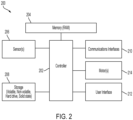
- Fig. 2 is a block diagram of an electronic control system 200 of a food processor according to various implementations of the present disclosure.
- Control system 200 could represent an electronic control and/or processing system within a device such as, for example, a micro puree machine, a blender, an ice cream maker, an immersion blender, a stand mixer, or an attachment to any of such devices.
- Control system 200 may include a microcontroller, a processor, a system-on-a-chip (SoC), a client device, and/or a physical computing device and may include hardware and/or virtual processor(s).
- SoC system-on-a-chip
- control system 200 and its elements as shown in FIG. 2 each relate to physical hardware and in some implementations one, more, or all of the elements could be implemented using emulators or virtual machines.
- electronic control system 200 may be implemented on physical hardware, such as food processor 100.
- control system 200 may include a user interface 212, having, for example, a keyboard, keypad, touchpad, or sensor readout (e.g., biometric scanner) and one or more output devices, such as displays, speakers for audio, LED indicators, and/or light indicators.
- Control system 200 may also include communications interfaces 210, such as a network communication unit that could include a wired communication component and/or a wireless communications component, which may be communicatively coupled to controller and/or processor 202.
- the network communication unit may utilize any of a variety of proprietary or standardized network protocols, such as Ethernet, TCP/IP, to name a few of many protocols, to effect communications between processor 202 and another device, network, or system.
- Network communication units may also comprise one or more transceivers that utilize the Ethernet, power line communication (PLC), Wi-Fi, cellular, and/or other communication methods.
- Control system 200 may include a processing element, such as controller and/or processor 202, that contains one or more hardware processors, where each hardware processor may have a single or multiple processor cores.
- the processor 202 includes at least one shared cache that stores data (e.g., computing instructions) that are utilized by one or more other components of processor 202.
- the shared cache may be a locally cached data stored in a memory for faster access by components of the processing elements that make up processor 202.
- Examples of processors include but are not limited to a central processing unit (CPU) and/or microprocessor.
- Controller and/or processor 202 may utilize a computer architecture base on, without limitation, the Intel ® 8051 architecture, Motorola ® 68HCX, Intel ® 80X86, and the like.
- the processor 202 may include, without limitation, an 8-bit, 12-bit, 16-bit, 32-bit, or 64-bit architecture. Although not illustrated in FIG. 2 , the processing elements that make up processor 202 may also include one or more other types of hardware processing components, such as graphics processing units (GPUs), application specific integrated circuits (ASICs), field-programmable gate arrays (FPGAs), and/or digital signal processors (DSPs).
- GPUs graphics processing units
- ASICs application specific integrated circuits
- FPGAs field-programmable gate arrays
- DSPs digital signal processors
- FIG. 2 also illustrates that memory 204 may be operatively and communicatively coupled to controller 202.
- Memory 204 may be a non-transitory medium configured to store various types of data.
- memory 204 may include one or more storage devices 208 that include a non-volatile storage device and/or volatile memory.
- Volatile memory such as random-access memory (RAM)
- RAM random-access memory
- the non-volatile storage devices 208 may include one or more disk drives, optical drives, solid-state drives (SSDs), tape drives, flash memory, read-only memory (ROM), and/or any other type memory designed to maintain data for a duration time after a power loss or shut down operation.
- the non-volatile storage devices 208 may be used to store overflow data if allocated RAM is not large enough to hold all working data.
- the non-volatile storage devices 208 may also be used to store programs that are loaded into the RAM when such programs are selected for execution.
- Data store and/or storage devices 208 may be arranged to store a plurality of food processing instruction programs associated with a plurality of food processing sequences, i.e., recipes.
- Such food processing instruction programs may include instruction for controller and/or processor 202 to: start or stop one or motors 214 (e.g., such as the electrical motor 214 in base 104 of food processor 100, as shown in Fig. 1 ), operate the one or more motors 214 at certain periods during a particular food processing sequence, issue one or more cue instructions to user interface 212 that are output to a user to illicit a response, action, and/or input from the user.
- motors 214 e.g., such as the electrical motor 214 in base 104 of food processor 100,
- the compiling process of the software program may transform program code written in a programming language to another computer language such that the processor 202 is able to execute the programming code.
- the compiling process of the software program may generate an executable program that provides encoded instructions (e.g., machine code instructions) for processor 202 to accomplish specific, non-generic, particular computing functions.
- the encoded instructions may be loaded as computer executable instructions or process steps to processor 202 from storage 208, from memory 204, and/or embedded within processor 202 (e.g., via a cache or on-board ROM).
- Processor 202 may be configured to execute the stored instructions or process steps in order to perform instructions or process steps to transform the electronic control system 200 into a non-generic, particular, specially programmed machine or apparatus.
- Stored data e.g., data stored by a data store and/or storage device 208, may be accessed by processor 202 during the execution of computer executable instructions or process steps to instruct one or more components within control system 200 and/or other components or devices external to system 200.
- User interface 212 can include a display, positional input device (such as a mouse, touchpad, touchscreen, or the like), keyboard, keypad, one or more buttons, or other forms of user input and output devices.
- the user interface components may be communicatively coupled to processor 202.
- the display can be implemented in various ways, including by a liquid crystal display (LCD) or a cathode-ray tube (CRT) or light emitting diode (LED) display, such as an OLED display.
- LCD liquid crystal display
- CRT cathode-ray tube
- LED light emitting diode
- Sensor(s) 206 may include one or more sensors that detect and/or monitor at least one property associated with the processing of one or more food items by system 100 and/or physical properties (i.e., environmental conditions) within or surrounding system 100 and/or 200, such as within or surrounding, for example, blending container or jar 108 of Fig. 1 .
- a property associated with the processing of one or more food items and/or environmental conditions may include, without limitation, rotation, speed of rotation, and/or movement of a device or component (e.g., a motor), rate of such movement, frequency of such movement, direction of such movements, temperature, pressure, motor current, position of a device or component (e.g., whether a trap door or lid is open or closed), and/or the presence of a device or component (e.g., whether a lid is connected to, for example, blending jar 108 of Fig. 1 ).
- a device or component e.g., a motor
- rate of such movement e.g., frequency of such movement, direction of such movements
- temperature e.g., pressure
- motor current e.g., whether a trap door or lid is open or closed
- position of a device or component e.g., whether a trap door or lid is open or closed
- the presence of a device or component e.g., whether a lid is connected to
- Types of sensors may include, for example, electrical metering chips, electrical current and/or voltage sensors, Hall sensors, inertial measurement units (IMUs), accelerometers, gyroscopes, pressure sensors, temperature sensors, cameras, other types of sensors, or any suitable combination of the foregoing.
- IMUs inertial measurement units
- accelerometers accelerometers
- gyroscopes pressure sensors
- temperature sensors temperature sensors
- cameras other types of sensors, or any suitable combination of the foregoing.
- Sensors 206 may also include one or more safety and/or interlock switches that prevent or enable operation of certain components, e.g., a motor, when certain conditions are met (e.g., enabling activation of motor 214 when lid 110 is attached to container 108).
- electronic control system 200 may include other components well known in the art, such as power sources and/or analog-to-digital converters, not explicitly shown in Fig. 2 .
- control system 200 and/or processor 202 includes an SoC having multiple hardware components, including but not limited to:
- a SoC includes both the hardware, described above, and software controlling the microcontroller, microprocessor and/or DSP cores, peripherals and interfaces. Most SoCs are developed from pre-qualified hardware blocks for the hardware elements (e.g., referred to as modules or components which represent an IP core or IP block), together with software drivers that control their operation. The above listing of hardware elements is not exhaustive.
- a SoC may include protocol stacks that drive industry-standard interfaces like a universal serial bus (USB).
- USB universal serial bus
- RTL register-transfer level
- RTL is used to define the circuit behavior.
- Hardware elements are connected together in the same RTL language to create the full SoC design.
- RTL is a design abstraction which models a synchronous digital circuit in terms of the flow of digital signals (data) between hardware registers, and the logical operations performed on those signals.
- RTL abstraction is used in hardware description languages (HDLs) like Verilog and VHDL to create high-level representations of a circuit, from which lower-level representations and ultimately actual wiring can be derived.
- HDLs hardware description languages
- Verilog is standardized as Institute of Electrical and Electronic Engineers (IEEE) 1364 and is an HDL used to model electronic systems. Verilog is most commonly used in the design and verification of digital circuits at the RTL level of abstraction. Verilog may also be used in the verification of analog circuits and mixed-signal circuits, as well as in the design of genetic circuits. In some implementations, various components of control system 200 are implemented on a printed circuit board (PCB).
- PCB printed circuit board
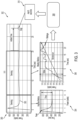
- Fig. 3 is a diagram showing an example of a workflow 300 of processes implemented by controller and/or processor 202 within the food processor 100 of Fig. 1 .
- Workflow 300 involves processing detected values of physical property values associated with processing of a food item such as, for example, current and voltage of motor 214, i.e., detection signals, over a period of time during processing of a food item, and taking one or more actions as a result of such processing.
- one or more actions include adding processing time and/or adjusting the power supplied to the controllable component, e.g., motor.
- the controller 202 can monitor the power consumption of motor 214; e.g., detect current and/or voltage, during a blend cycle over an initial period (e.g., an initial 15-second period) via sensor(s) 206, and generate time series data (e.g. power values), , from these detected values, which can be visually represented as illustrated by graph 302.
- time series data e.g. power values
- the time series power values form a curve 303.
- the power initially spikes from 0 watts to over 600 watts.
- This initial spike is a manifestation of a phenomena called "inrush current", also referred to as "locked rotor current.”
- Inrush current is the excessive current flow experienced within a motor and its conductors during the first few moments following the energizing (switching on) of the motor.
- the peak value of this spike, the time it takes to reach the peak value, and the rate at which the power consumption reaches and recedes from this peak value all may be impacted by the load the food item imposes on the motor.
- the peak value of this spike which is also the peak value of the entire curve 303, the time it takes to reach the peak value, and the rate at which the power consumption reaches and recedes from this peak value, may be indicative of the type of food being processed.
- Graph 304 illustrates a subset of the curve 303 of time series property values, from 0-5 seconds.
- Graph 302 illustrates a subset of the curve 303 of time series property values, from around 5 seconds through about 15 seconds, in which only a subset of the vertical axis is shown, representing a sub-range of the power consumption values shown in graph 302 and 304.
- controller 202 can generate feature values from the time series power values illustrated by curve 303, including, but not limited to: a peak power consumption value ("Peak”) in the time series power values of graph 302; a difference ("Drop") between the Peak and the power consumption at a particular point in time (e.g., at which the power consumption appears to have recovered from the initial inrush current-induced spike); a standard deviation ("Stdev") of the power consumption for a sub-period of the time period (e.g., 5 seconds - 15 seconds) covered by the time series power values; power consumption (“Wattage) at a particular time within the time period (e.g., 15 seconds) represented by the time series power values; momentum of the power consumption (e.g., slope of the curve 303) over a sub-period of the time period represented by the time series power values, a gradient of the curve of the time series power values over a sub-period of the the time period; and/
- the time period of detection, features for which values are determined, and the particular times and sub-periods for which these feature values are determined, may vary, and are not limited to those illustrated and described herein. In some implementations, these parameters and theire values are selected based on testing and empirical data from which the parameters that are optimal for generating feature values to distinguish between food items can be determined.
- controller 202 and/or food analyzer 308 can classify the processed food item based on one or more of the feature values determined from the time series data, e.g.,the time series property values, for example if one or more food items derived from ingredients 106 includes a nut-butter.
- Food analyzer 308 may be implemented as a software program or function, hardware function, firmware functions, or a combination thereof.
- controller 202 implements food analyzer 308 as computer-implemented program, function, and/or routine. This classification can occur via one or more neural networks, such as a multi-layer perception (MLP) classifier.
- MLP multi-layer perception
- this classification can include classifying the one or more food items derived from ingredients 106 as nut-butter or another thicker food type. Determining certain properties/features of one or more food items being processed, as illustrated in graphs 302, 304, and 306, can further include controller and/or processor 202 first sensing, for example, the food processor container type, size, or other related attributes. This data can provide classification and/or categorization information, which can aid controller 202 and/or processor in assigning one or more actions to accommodate the relevant component. For example, controller 202 may instruct motor 214 to perform differently depending upon the size of the blending container 108.
- these actions and/or performances may include controller 202 directing more or less current and/or power to motor 214, directing more or less current and/or power to a heating element, directing different drive shaft rotation speeds, and/or adjusting an amount of time or periods when the motor is rotating.
- a calculation of various (e.g., 1, 2, 3, 4, 5, or more) features can be performed based on the detected time-series patterns illustrated in graphs 302, 304, and/or 306 to provide signals comprising a set of feature values.
- This can allow for the subsequent performance of a nearest neighbor analysis via, for example, a KNN analysis.
- Each of these time-series pattern conditions/properties/features may include a peak in a plot of the pattern, a drop in a plot of the pattern, a standard deviation of a plot of the pattern, and/or a steady state power consumption in a plot of the pattern, as detailed above.
- these conditions, properties, and/or features which can allow for the example processes can include one or more: mean(s) and/or averages, including the mean wattage to be taken over a specific time period; standard(s), including the standard deviation of the wattage to be taken over a specific time period (shown in graph 306); momentum(s), including the slope of the wattage to be taken over a specific time period (shown in graph 306); max(es), including the maximum wattage of the data recorded (shown in graph 306); and drop(s), including percent drop from the max to steady wattage (shown in graph 304).
- mean(s) and/or averages including the mean wattage to be taken over a specific time period
- standard(s) including the standard deviation of the wattage to be taken over a specific time period (shown in graph 306)
- momentum(s) including the slope of the wattage to be taken over a specific time period
- max(es) including the maximum wattage of the data recorded (shown
- This set of feature values which can be determined via the detected time series data and/or patterns shown in graphs 302, 304, and 306 of Fig. 3 can subsequently serve as inputs to food type analyzer 308 as one or more detection vectors.
- certain properties/features of one or more food items being processed in a multi-dimensional feature space, as detailed in graphs 302, 304, and 306, can further include controller and/or processor 202 first determining, for example, one or more food item details, such as associated features, vectors, and/or other related attributes.
- a multi-dimensional feature space can include two-dimensional, as shown in Fig. 4 , three-dimensional, and/or four-dimensional parameters, or higher dimensional parameters.
- the feature values/detection vector can provide food type information based on a determination of the closest food type in the multi-dimensional feature space.
- controller 202 and/or food type analyzer 308 can select one or more data sets of multi-dimensional feature vectors stored in memory 204 based on the determined capacity of the blending jar 108.
- the selected one or more data sets of multi-dimensional feature vectors stored in memory 204 may be based on other factors and/or properties relating to food processor 100 and/or blending jar 108.
- This data can provide classification and/or categorization information, which can aid controller and/or processor 202 in assigning one or more data sets and/or subsequent actions to accommodate the associated one or more food items in, for example, blending container 108.
- controller 202 and/or food type analyzer 308 can compare the detection vector generated from the time series data against the selected data set of food item vectors in the multi-dimensional feature space.
- each food item vector represents and/or is associated with a food type.
- controller 202 may instruct motor 214 to perform differently depending upon information from the predetermined food item vector, including data set, relating to blending performance within blending container 108. This may include, for example, optimizing blending time and/or speed to best blend one or more different food items according to instructions provided by the predetermined food item vector.
- Food type analyzer 308 may include software, hardware, or a combination therefore that may implement one or more routines and/or algorithms to analyze the time series data shown in graphs 302, 304, and 305, and detect and/or identify a food item. Food type analyzer 308 may be implemented as part of control system 200 and/or processor 202.
- the previously provided detection vector/feature values from the time series data can be represented as variables a, b, c, d, e, e.g., as coordinates for each data point, with each row representing a data point.
- the number of columns can be equal to the number of detection vector/feature values from the time series pattern being measured, and the number of rows can be equal to the number of data points: a 1 ⁇ e 1 ⁇ ⁇ ⁇ a n ⁇ e n
- the following array holds the program time (t i ) associated with each data point (e.g., time to be added), with the same number of rows as the above data array: t 1 ⁇ t n
- the food type analyzer 308 of example workflow 300 analyzes the detection vector/feature values from the time series pattern and determines what the input(s) to the food type analyzer 308 are going to be, it may need to scale the data for both accuracy of the food type analyzer 308 and efficiency of its functions and/or code.
- the input can be represented as int8_t data types to save memory.
- the data may need to be scaled between -128 and 127.
- x scaled x ⁇ ⁇ s
- x is the raw detection vector data
- ⁇ is the mean value of the detection vector data, e.g., mean value of current or wattage
- S is the standard deviation of the detection vector data
- X scaled is the scaled detection vector data.
- scaling to use int8_t may not have a dramatic effect on the results of the food type analyzer 308; therefore, it may be important to ensure a new data point remains within the target range.
- a determination of the distance from the detection vector and each food item vector may need to be calculated.
- a KNN analysis may be initiated to provide a determination of one or more positions of one or more nearest neighbors in the multi-dimensional feature space in comparison with that of the position of the detection vector. This can involve multiple distance metrics; for example, based on the initial analysis, and may use either Mikowski distance or Bray-Curtis distance, as presented below:
- a program and/or routine of food type analyzer 308 determines its output as an action. For each determined one or more closest food types, as previously introduced, a determination of extra time for blending may be dictated. This extra time can be specified in the feature vector for the food type based on the stored multi-dimensional feature vector data. As mentioned, each datapoint may have a time associated with it, necessitating a determination of what time it will output based on, for example, a weighted average combining each of the extra times to produce the total time to be added to the blending process. For example, in Fig.
- this includes a weighted average determination 310 of 8 additional seconds of time to be added to the blending process.
- a special sensor chip can sample, detect, and/or monitor power by sampling the voltage on a terminal/lead of the motor.
- a controller such as controller and/or processor 202 of Fig. 2 , and/or food type analyzer 308 can thereby acquire this sampled voltage value from sensor (2) 206, e.g., a sensor chip, analyze the data, and based on this analysis, act by sending a control signal to and/or signaling a TRIAC switch that controls power input to blender motor 214.
- the output signaling of the TRAIC switch (or another type of switch or control mechanism) can stop, start, increase or decrease the motor speed based on the control signal and/or signaling from processor 202 and/or food type analyzer 308.
- the analysis described herein can also include identifying one or more recipes associated with individual or aggregated food items within the blending container 108, and when the nearest one or more recipes are identified, adding blend time per the determined one or more nearest recipes, as shown in control step 310 of Fig. 3 .
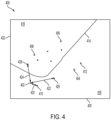
- FIG. 4 shows an illustrative multi-dimensional feature space 400, containing vector points representing food item vectors such as vector points 410, 412, 426, and 428, for example, determined by food type analyzer 308 of FIG. 3 .
- the feature space 400 is a two-dimensional feature space, where the horizontal axis 430 represents a value of a first feature and the vertical axis 432 represents a value of a second feature.
- some of the vector points in feature space 400 represent detection vectors determined by workflow 300 of Fig. 3 via controller 202 and/or food type analyzer 308.
- feature space 400 can include detection vectors 402, 404, 406 and 408, represented as points in the feature space 400.
- a nearest neighbor analysis which may be similar or different to the KNN analysis discussed in Fig. 3 , can be performed based on the closest one or more food items (e.g., two types of smoothie) to the currently detected food item.
- controller 202 classifies a first subset of food item vectors as a first category of food items, e.g., nut butters, and controls the controllable component, e.g., motor 214, based at least in part on determining that the position of the detection vector, e.g. detection vector point 408, is within a first area 416 of the multi-dimensional feature space 400 associated with the first category of food items, e.g., nut butters.
- various types of nut butter may be members of the first subset of food item vectors and, therefore, have their food item vectors, such as vector point 428, in the first area 416 of the multi-dimensional feature space 400
- non-nut butter food items may be members of a second subset of food items and, therefore, have their food item vectors (e.g., vector points 410, 426, and 412) in a second area 418 of the multi-dimensional feature space 400.
- the first area 416 and second area 418 may be separated by a boundary 414.
- the multi-dimensional feature space 400 may include three or more areas associated with three or more categories of food items.
- FIG. 4 illustrates the two-dimensional spatial relationship among food item vectors and detection vectors.
- detection vector 402 is spaced away from food item vector 410 by distance 420, spaced away from food item vector 426 by distance 422, and spaced away from food item vector 428 by distance 424. If, for example, food item vector 410 is associated with a margarita drink, then detection vector 402 may be identified as a vector associated with a margarita drink based on distance 420 being the shortest distance, i.e., based on food item vector 410 being the closest food item vector to detection vector 402.
- controller 202 and/or analyzer 308 may use distances from detection vector 402 to multiple food item vectors to identify a food item associated with detection vector 402. Controller 202 may identify the food item associated with detection vector 402 based on the two closest food item vectors, based on the three closest food item vectors, or more food item vectors. Where two distances are similar, e.g., distances 422 and 424, controller 202 may consider a third distance 420 additionally or alternatively to identify the food item associated with the detection vector such as detection vector 402.
- controller 202 identifies one or more types of food items associated with a detection vector by determining a position of the detection vector, e.g., detection vector 402, in the multi-dimensional feature space 400 relative to positions of some or all of food item vectors (e.g., food item vectors 410, 412, 426, and 428), respectively, in the multi-dimensional feature space 400.
- Controller 202 may determine one or more actions based at least in part on the identified one or more types of food items.
- Controller 202 may control an operation of a controllable component, e.g., motor 214, based at least in part on the determined one or more actions.
- controller 202 determines one or more actions based at least in part on the area, e.g., area 416 or area 418, where a detection vector is located in the feature space 400.
- a detection vector is located in the feature space 400.
- detection vector 406 is located in area 416 which may be associated with a nut butter group or subset of food items
- detection vector 402 is located in area 418 which may be associated with a non-nut butter and/or drink group or subset of food items.
- Controller 202 may control an operation of a controllable component, e.g., motor 214, based at least in part on the determined one or more actions associated with a group or subset of food items.
- a microcontroller and/or microprocessor receives a series of signals from motor 214 from one or more sensors, such as sensor 206.
- Processor 202 via food type analyzer 308, determines a power consumption timeseries pattern of the motor 214 over the first time period.
- Processor 202 identifies a plurality of timeseries pattern features associated with the timeseries pattern and then calculates a detection vector, e.g., detection vector 402, based on the plurality of time-series pattern features.
- an initial classification of food type such as nut butter in area 416 or drink in area 418
- an MLP classification resulting in a KNN or non-KNN analysis can aggregate over time to more effectively and efficiently inform additional classifications.
- Controller 202 and/or food type analyzer 308 compares a position of the detection vector 402 with the positions of some or all of the plurality of food item vectors in the multi-dimensional feature space 400.
- Controller 202 and/or food type analyzer 308 identifies the food item associated with detection vector 402 by determining which one of the plurality of food item vectors is closest to detection vector 402 in the multi-dimensional feature space 400, such as food item vector 410 at distance 420 from detection vector 402. If food item vector 410 is associated with a smoothie, controller 202 and/or food type analyzer 308 determines that food item being processed is a smoothie. Controller 202 may then determine how much longer motor 214 and mixing blades should rotate, e.g., a second period of time. In one implementations, controller 202 determines the second time period based on one or more of the closest food item vectors such as, for example, food item vectors 410, 412, 424, and/or 426.
- controller 202 determines the second time period based on a combined weighted average of extra time depending upon one or more determinations associated with each of the food item vectors being used to identify the detection vector (e.g., food item vectors 410, 412, 426, and 428), until motor 214 is stopped to realize a more accurate and/or consistent smoothie.
- the detection vector e.g., food item vectors 410, 412, 426, and 428
- controller 202 and/or food type analyzer 308 receives a series of motor 214 signals from one or more sensors, such as sensor 206. Controller 202, via food type analyzer 308, determines a power consumption time-series pattern and/or data set of the motor 214 over the first time period. Controller 202 identifies a plurality of time-series pattern features associated with the time-series pattern and then calculates a detection vector, e.g., detection vector 404, based on the plurality of time-series pattern features. In some implementations, calculating a detection vector includes determining a time series pattern from the detected signals, with the time series pattern including a gradient of power curve, e.g., curve 303.
- Controller 202 and/or food type analyzer 308 compares a position of the detection vector 404 with the positions of the plurality of known food item vectors in the multi-dimensional feature space 400. Controller 202 and/or food type analyzer 308 identifies the type of food item associated with detection vector 404 by determining which one of the first plurality of food item vectors is closest to detection vector 404 in the multi-dimensional feature space 400. In this instance, the closest know food item vector is vector 412. If known food item vector 412 is associated with whip cream, controller 202 and/or food type analyzer 308 determines that food item being processed is whip cream. The processor 202 may then determine how much longer motor 214 and mixing blades should rotate, e.g., a second period of time, until motor 214 is stopped to realize a more accurate and/or consistent whip cream.
- an additional series of motor signals corresponding to processing a food item can be detected to more accurately identify and/or confirm the type of food item being processed.
- one or more sensors such as sensor 206, may continue sensing for an additional period of time, e.g., 15 seconds, and provide an additional series of motor 214 signals to controller 202 and/or food type analyzer 308. Based on analyzing this additional series of motor signals, controller 202 may operate motor 214 to rotate the mixing blades of blade assembly 102 for an additional period of time.
- These additional series of motor 214 signals may include a power consumption and/or motor current trend over multiple increments or periods of time, such as over multiple 100 ms time segments, that are output from sensor 206 and analyzed by controller 202 and/or food type analyzer 308. Based on its analysis, controller 202 and/or food type analyzer 308 may determine and/or confirm the identity and/or classification of a food item and, thereby, determine that additional processing of the food item is necessary. This determination may be based on, for example, if the power consumption trend of motor 214 as detected every 100 ms trends in an increasing or decreasing direction or is greater than or equal to a threshold rate of increase or decrease, or is greater than or equal to a threshold increase from a minimum recorded value.
- FIG. 7 show a graph 700 that illustrates detected increasing trends of power load detected with respect to motor 214 via, for example, sensor 206, that controller 202 can analyze to confirm that a food item being processed is or is not a particular classification of food item, e.g., a type of nut butter.
- a type of nut butter e.g., a type of nut butter.
- controller 202 and/or food type analyzer 308 may determine processing of the food item is no longer required.
- controller 202 when controller 202 detects at least one property associated with the processing of the one or more food items, such as a food item derived from ingredients 106, controller 202 also determines a type and/or size of the one or more components, such as blending jar 108. In this way, controller 202 may more efficiently or readily identify a food item based on understanding that certain types of food items are most often or only processed using certain types of components and/or containers.
- controller 202 is configured to classify the one or more food items, such as a food item in nut butter area 416, based on the detection vector, such as detection vector 406 or 408 and by detecting the type of jar 108 being used to create the food item associated with detection vector 406 or 408.
- controller 202 can be configured to control motor 214 based solely on the type and/or size of one of the components, such as blending jar 108, based on a recognition that certain types of food items use certain types of components and/or containers when being processed.
- controller 202 is configured to identify one or more types of food items, such as a type of nut butter associated with detection vector 408 and a type of frozen drink associated with detection vector 402, based on applying a weight factor to some or all of the food item vectors in feature space 400, such as food item vectors 410 and 412.
- the weight factor is based on at least one of: a distance of a food item vector from the detection vector, a type of food item associated with a food item vector, a frequency of determining a type of food item, and a type of container used during food processing, within multi-dimensional feature space 400.
- a weight factor can be measured and/or assigned on a scale of 0.0-1.0, or any other reasonable weighted scaled metric, that may be used to adjust a value of one or more features of a food item vector and/or shift the position of a food item vector in the multi-dimensional feature space 400, to effect identification of the type of food item by controller 202.
- each of the food item vectors can be associated with a known type of food item such as food item vector 410 which may be associated with a margarita drink. Further, some or all of the food item vectors may be used by controller 202 to identify a food item associated with a detection vector.
- a first plurality of food items vectors can be based on retrieving data related to the one or more food items (e.g., food item vectors 410, 426, and 428), that, based on the one or more components, can be used to identify a food item associated with a particular detection vector (e.g., detection vector 402) as being associated with a margarita drink) in order to determine blending conditions, such as time period of blending by operating motor 214, speed of motor 214 at certain time periods, temperature of a food item at certain times and/or periods, pressure in a blending and/or mixing chamber such as jar 108, and so on.
- Each food item vector can define values for multiple features.
- Fig. 5 is flowchart showing an example process 500 for monitoring, analyzing, and performing one or more actions within the food processor of FIG. 1 .
- Process 500 can include processing one or more food items, involving rotating, via a motor, one or more components (Step 502). For example, this can include rotating, via a motor, a draft shaft coupled to a blade assembly.
- the motor, drive shaft, and blade assembly can be similar to those introduced in Fig. 1 , such as motor 214, drive shaft 116, and blade assembly 102, respectively.
- Process 500 can also include processing one or more food items, such as a food item derived from ingredients 106, in blending container and/or jar 108 while the blade assembly 102 is being rotated by the drive shaft 116 (Step 504).
- Process 500 can further include detecting at least one property associated with the processing of the one or more food items during a first period of time (Step 506).
- a first series of detection signals can be generated from the at least one property detected over the first period of time.
- a first series of detection signals can include at least one of a current and voltage, via sensor(s) 208, associated with operation of motor 214 over a first time period.
- Process 500 can also include storing, in a memory, a first plurality of food item vectors, such as food item vectors 410, 412, 426, and 428 of Fig. 4 (Step 508).
- Each food item vector can define values for a plurality of features in a multi-dimensional feature space such as feature space 400.
- each of a first plurality of food item vectors can be associated with a type of food item.
- food item vector 410 may be associated with a margarita drink
- food item vector 412 may be associated with whipped cream.
- a first series of motor signals corresponding to at least one property of a food item can be processed to generate a detection vector such as detection vector 402.
- a plurality of known food item vectors (e.g., 410, 412, 426, and 428) can then be stored in a memory 204 and storage 208 of system 200 (Step 508).
- Controller 202 may classify a first subset of the food item vectors as a first category of food items (e.g., nut butter or drink) and control the controllable component, e.g., motor 214, based on determining that the position of the detection vector, e.g., detection vector 402, is within area 418 of the multi-dimensional feature space 400 which is associated with particular subset, group, and /or category of food items, e.g., food drink items. Any of steps 502-510 may be performed by a microcontroller and/or microprocessor, such as controller 202 of Fig. 2 .
- a microcontroller and/or microprocessor such as controller 202 of Fig. 2 .
- FIG. 6 shows a process 600 for identifying a type of food item and controlling operations of a controllable component based on the identification of the particular food item during processing of the food item.
- Process 600 includes operating a controllable component, by a controller 202, for a first period of time (Step 602).
- the controllable component may include a motor such as motor 214 that is arranged to rotate a drive shaft 102 and blade assembly 116 to mix ingredients 106.
- the controllable component may include a heater or heating element within or adjacent to jar 108 that is arranged to heat a food item being processed.
- the controllable component may include a pump and/or valve arranged to adjust a pressure within jar 108 when a food item is being processed.
- the controllable component may include any device or component configured to affect a physical property of a food item during processing.
- Process 600 also includes detecting, via a monitoring device such as sensor(s) 206, at least one property associated with the processing of one or more food items during a first period of time, where a first series of detection signals are generated from the at least one property detected over the first period of time (Step 604).
- Process 600 includes storing, in a memory such as memory 204 and/or data storage 208, a plurality of food item vectors (e.g., food item vectors 410, 412, 426, and 428), where each food item vector defines values for a plurality of features in a multi-dimensional feature space 400, such that each of the plurality of food item vectors is associated with a type of food item (Step 606).
- a monitoring device such as sensor(s) 206
- Controller 202 and/or food item analyzer 308 identifies one or more types of food items associated with the detection vector, e.g., detection vector 402, by determining a position of the detection vector in the multi-dimensional feature space relative to positions of one or more of a plurality of food item vectors (e.g., food item vectors 410, 426, and 428), respectively, in the multi-dimensional feature space (400) (Step 610).
- food item vector 410 may be associated with a margarita drink.
- Food item vectors 426 may be associated with another type of frozen drink
- food item vector 428 may be associated with a peanut butter.
- controller 202 may determine that detection vector 402 is associated with a margarita drink based on food item vector 410 being closest to detection vector 402. Controller 202 may identify the type of food item associated with detection vector 402 based on the position of detection vector 402 in relation to one or more of the known food item vectors in feature space 400. Controller 202 and/or food item analyzer 308 may then determine one or more actions based at least in part on the identified one or more types of food items (Step 612). Controller 202 may control operations of the controllable component, e.g., motor 214, based at least in part on the determined one or more actions.
- the controllable component e.g., motor 214
- the one or more actions may include controller 202 continuing to operate the controllable component for a second period of time based on the identified one or more types of food items.
- Controller 202 and/or analyzer 308 may identify a food item based at least in part on performing a K-NN analysis.
- Controller 202 may determine a how much longer motor 214 and one or more components, such as mixing blades, should rotate, e.g., a second period of time, until motor 214 is stopped to realize a more accurate and/or consistent smoothie.
- the second period of time is between 0 seconds and 30 seconds. In some implementations, the second period of time is 15 seconds. In some implementations, the first period of time is 15 seconds. Further, identifying the food item can be based, at least in part, on a K-NN classification. Further, calculating a detection vector can include determining a time series pattern from the detection signals, where the time series pattern includes a gradient of power curve.
- the type of food item identified via processes 500 and 600 includes one of a apple-peanut-butter smoothie, beat-ginger-smoothie, chocolate-peanut-butter-oat, maple-almond-butter, cinnamon-coffee-smoothie, citrus smoothie, essentially green smoothie, triple-green smoothie, tropical smoothie, smoothie of any type, extract, sauce, ice cream, pudding, nut butter, whip cream, margarita, pomegranate-cashew berry, strawberry-banana, strawberry-limeade, and a frozen drink.
- Fig. 8 includes an example 800 of a food processor base, 804, which can be included in a blender, such as blender 100. While implementations are described previously and now herein using the example of a blender, it should be appreciated that the invention is not so limited, and applies to other types of food processors.
- the base 804 is motorized, and includes base housing 806.
- Base 804 can also include dial 808 and one or more static interfaces 814, also previously referred to as user interfaces 212, which can both influence the behavior and functionality of blender 100.
- static interfaces 814 can be embedded in UI cap 816, which itself can be molded around base 804 above base housing 806.
- Dial 808 can include UI screen 810 and can be referred to collectively as an interface and/or user interface (UI).
- III screen 810 can include one or more/plurality of indicators 820, which can be represented across screen rim 812 or dial face 818 in different configurations.
- One or more indicators 820 which includes LEDs in the present example, can also include LCDs, OLEDs, and/or other like methods of illuminating indicators.
- Food item data including that previously discussed, can be stored in memory 204, and can include a database and/or a lookup table.
- this database and/or lookup table can include a list of indicator configuration instructions and associated sensed property or actions via which UI screen 810 can utilize different configurations of one or more indicators 820 to inform user inputs during usage of food processor 100.
- UI screen 810 can utilize the different configurations of one or more indicators 820 to provide accessibility, information, and/or feedback to a user of food processor base 804 based on food item data processed by controller 202 and/or food analyzer 308 during operation of blender 100.
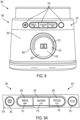
- Figs. 9A and 9B include examples 900 and 950, respectively, of one or more static interfaces 814 and UI screen 810 of dial 808.
- Fig. 9A shows one or more static interfaces 814, which include prompts for a user of a blender, such as blender 100.
- These prompts which can be initiated by a user via one or more static interfaces 814, can include power prompt 902, manual prompt 904, Smart Blend prompt 906, mode prompt 908, and pulse prompt 910.
- these prompts may include buttons and/or other like elements.
- these static interfaces may include LED indicators on the prompts, such as static LED indicators 912, 914, and 916, to illustrate an on/off state of engagement for the prompts and/or other indicators (such as ring indicators 1102 and functionality indicators 1104) relating to food processor 100.
- LED indicators on the prompts such as static LED indicators 912, 914, and 916, to illustrate an on/off state of engagement for the prompts and/or other indicators (such as ring indicators 1102 and functionality indicators 1104) relating to food processor 100.
- Manual prompt 904, Smart Blend prompt 906, mode prompt 908, and pulse prompt 910 may thereby be engaged by a user to initiate Smart Blend Ready State 1018, Manual Ready State 1020, Mode Ready State 1022, and Pulse Run State 1028.
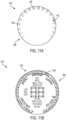
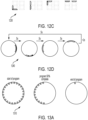
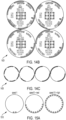
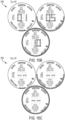
- Fig. 9B shows one or more indicators 820 within UI screen 810, including ring indicators 1102 and functionality indicators 1104.
- these indicators 820 can be configured as a ring around the edge of UI screen 810 and can include one or more LEDs.
- These indicators when illuminated and/or otherwise activated in different configurations on UI screen 810, can provide accessibility, information, and/or feedback to a user of food processor base 804 based on food item data processed by controller 202 and/or food analyzer 308 during operation of blender 100.
- These different configurations of one or more indicators 820 can be further influenced by illuminated dial, Smart Blend, and iQ functions and/or be used to further represent timer/speed data on UI screen 810.
- functionality indicators 1104 dial functions can include start/stop function 952, blending function 954, add liquid function 956, undetectable and/or install function 958, and sensing function 960.
- Smart Blend functions can include disc, mince, small chop, and large chop functions 962 based on food item data processed by controller 202 and/or food analyzer 308 during operation of blender 100.
- iQ functions can include crush, max-crush, thick mode, and dough function 964, which also can be based on food item data processed by controller 202 and/or food analyzer 308 during operation of blender 100.
- timer/speed data can include low, medium, and high speeds 966 and/or timer data 968.
- functions and/or data on III screen 810 which can also be referred to as prompts, may include buttons and/or other like elements.
- these ring indicators 1102 and functionality indicators 1104 may be illuminated at various intensities, patterns, and/or color to indicate food processor 100 analysis, processes, and/or to provide functionality selection during usage.
- Fig. 10 illustrates via process 1000 how the functions, prompts, and/or data observed and/or interacted with by a user via III screen 810 can also be influenced by the one more static interface 814 prompts.
- a user can turn on a food processor, such as food processor 100, by pressing power at step 1010, which can be initiated via power prompt 902 of one or more static interfaces 814.
- food processor 100 may be in a plugged-in off state, as shown at step 1012, and illuminate one or more indicators 820.
- the vessel 108 also referred to as blending container and/or jar 108, may not be engaged with the recess (not shown) formed in the base 104.
- the power LED/power prompt 902 of one or more static interfaces 814 may blink 0.5 seconds on, and 0.5 seconds off, with all other LEDs and/or prompts offline. However, when vessel 108 is engaged with the recess (not shown) formed in the base 104, the power LED/power prompt 902 of one or more static interfaces 814 may be illuminated/on, with all other LEDs and/or prompts offline.
- process 1000 considers if one or more interlocks is engaged at step 1014.
- the interlock may be positioned in the removable lid 110 that fits into an open top 112 of the blending jar 108.
- the interlock can be a safety interlock, which may prevent the motor 214 of the blender 100 from being operated unless the vessel 108 is properly engaged with the interlock on lid 110.
- step 1016 provides that the timer data 968 LEDs will blink 0.5 seconds on, and 0.5 seconds off, with all other LEDs and/or prompts offline, except for the subsequent blinking of the install function 958, which may blink 0.5 seconds on, and 0.5 seconds off.
- the process 1000 may restart, and require a user to initiate power at step 1010 once again.
- steps 1012 and/or 1016 may initiate.
- food processor 100 may proceed with enabling a user to initiate a variety of functionalities according to a number of “ready” and “run” states, including those influenced by food item data processed by controller 202 and/or food analyzer 308, which can also be referred to as "Smart Blend” data.
- This enables Smart Blend Ready State 1018, which, so long the interlock remains engaged and the vessel is not removed, permits blender 100 to perform several run states.
- the ready states can include Smart Blend Ready State 1018, Manual Ready State 1020, and Mode Ready State 1022.
- the run states can include Smart Blend Run State 1024, Manual Run State 1026, Pulse Run State 1028, and Mode Run State 1030.
- Mode Ready State 1022 and Smart Blend Ready State 1018 may proceed to initiate Smart Blend Run State 1024, Manual Run State 1026, Pulse Run State 1028, and Mode Run State 1030.
- the user via one or more static interfaces 814 and dial 808, can then utilize the different configurations of one or more indicators 820 to provide accessibility, information, and/or feedback to a user of food processor base 804 based on food item data processed by controller 202 and/or food analyzer 308 during operation of food processor 100.
- one or more indicators 820 within UI screen 810 of dial 808 may be illuminated and/or ready for user engagement.
- These one or more indicators 820 may articulate one or more states of food processor 100 functionality, depending on, for example, previous activity of food processor 100 and/or food item data processed by controller 202 and/or food analyzer 308 during operation of food processor 100.
- Fig. 10 details the various relationships between the ready and run states, and how various user inputs (engaging the start/stop functionality indicators 952/1104, press/release pulse prompt 910) can allow for a user to cycle between various ready and run states before a program is completed.
- Manual Ready State 1020 may only commence Manual Run State 1026. Operation of food processor 100 may timeout if unit inactivity exceeds 180 seconds, and food processor 100 may turn off.
- Figs. 11A and 11B show example ready state animations 1100 and 1125, as depicted on dial 808 of food processor 100.
- both 1100 and 1125 articulate III flow animations via UI screen 810 by way of one or more indicators 820.
- animation 1100 depicts the illumination of one or more LEDs comprising one or more indicators 820, which as discussed, manifest as perceived by a user/viewer of dial 808/food processor 100 as an illuminated ring around the edge of UI screen 810, as shown in animation 1125.
- one or more indicators 820 when referring to those comprising the illuminated ring, can be referred to as one or more ring indicators 1102.
- one or more indicators 820 when referring to those represented within one or more ring indicators 1102 as different configurations of one or more indicators 820, can be referred to as one or more functionality indicators 1104.
- blue ring indicators 1102 and start/stop functionality indicators 1104 are illuminated at 100%, whereas the other functionality indicators, in purple, are not illuminated, as the LEDs are off.
- these one or more functionality indicators 1104 can be influenced by illuminated dial, Smart Blend, and iQ functions and/or be used to further represent timer/speed data on UI screen 810.
- Fig. 11C shows an example sensing process 1150 as controller 202 and/or food analyzer 308 process food item data.
- a user can select the Smart Blend prompt 906 on one or more static interfaces 814 to prompt the detection and collection of food item data by controller 202 and/or food analyzer 308 during step 1110 and according to the present disclosure. The user can then select the pulse prompt 910 and initiate food data processing at pulsing step 1112.
- one or more indicators 820 may become illuminated at step 1114 as Smart Blend Ready State 1018 or Manual Ready State 1020 are activated, depending on prior food data processed and/or user inputs, and as shown in Fig. 10 .
- the data processing via controller 202 and/or food analyzer 308 at pulsing step 1112 can then illuminate one or more one or more functionality indicators 1104, recommending a user to initiate blending 1116, crushing 1118 or max crush 1120, and/or thick mode 1122 sequences.
- This dynamic can optimize motor 214 output, and thereby, initial and/or continued processing of food ingredients in vessel 108 by rotation of the mixing blades of blade assembly 102 for the established period of time and/or intensity.
- Fig. 11D shows an example ready state animation 1175 illuminating one or more one or more ring indicators 1102, which can also occur at step 1114 as introduced in Fig. 11C .
- animation 1175 the illuminated portions of the one or more ring indicators 1102 can change based upon automatic cycling and/or the user's selection of the processing modes via one or more functionality indicators 1104. For example, when a user chooses between Smart Blend functions such as disc, mince, small chop, and large chop functions 962 based on food item data processed by controller 202 and/or food analyzer 308 during operation of blender 100, the sections of the ring indicators 1102 correspond to these larger or smaller outputs.
- different colors, patterns, and/or intensity of the LEDs of the ring indicators 1102 can indicate the mode of the food processor 100.
- animation 1175 may cycle through various colors at 0.75 second intervals, comprising 4.5 seconds/loop.
- 11E shows that these colors may articulate processing modes introduced in example 950, including green for Blend 1152, teal for Crush 1154, blue for Max-crush 1156, purple for thick-mode 1158, orange for dough 1160, yellow for disc 1162, and pink for mince, small chop, and large chop functions 1164, according to some implementations.
- ring indicators 1102 may be displayed, such as white for variable speed/PULSE 1166, and red for error/ADD LIQUID 1168, along with other errors indicating a failure of some kind and similarly resulting in red ring indicators 1102.
- controller 202 and/or food analyzer 308 determine that more liquid is needed to be added to the contents of vessel 108, motor 214 will cease functioning, and ADD LIQUID" indicator 1168 will become 100% illuminated as a functionality indicator 1104 on UI screen 810, in addition to the LED ring indicators similarly 100% illuminated in red. All other LEDs may be off and/or display segments reading "AL", referring to adding liquid.
- Smart Blend Ready State 1018 will be returned to as the default when interlock is re-engaged following the adding of more liquid to vessel 108. As mentioned previously, the user must disengage interlock and re-engage within 180 seconds, or food processor 100 may return to off state plugged in 1012. Additional errors and/or notification indicators via 1168 can include "ERROR 1: Runtime Protection Mode", which may occur when food processing runtime via blade assembly 102 exceeds 180 seconds. In some implementations, if controller 202 and/or food analyzer 308 determine that the runtime exceeds this length, motor 214 will cease functioning, and static interface 814 and dial 808 become disabled.
- all static interface 814 LEDs may blink alongside timer data 968 blinking "E1" at 0.25 seconds on, 0.25 seconds off, in unison, until food processor 100 is unplugged.
- food processor 100 must be unplugged to reset and cancel Runtime Protection Mode, as disengaging the interlocks and idle timeout may not reset the food processor 100. However, this error may only apply to single serve interlocks.
- Figs. 12A-12D show animation views 1210, 1220, 1230, and 1240 of the Smart Blend sensing animation of step 1110.
- Animation 1210 of Fig. 12A illustrates that in some implementations, during Smart Blend sensing of vessel 108's contents, animations on III screen 810 include ring indicators 1102 as four illuminated LEDs for rotating clockwise, which can be seen in animations 1220 and 1240.
- ring indicators 1102 as four illuminated LEDs for rotating clockwise, which can be seen in animations 1220 and 1240.
- blue ring indicators 1102 and start/stop functionality indicators 1104 are illuminated at 100%, yellow timer data 968 at 10%, functionality indicator 1104 sensing per 1110 pulsing in orange at 0.5 seconds on, 0.5 seconds off, and purple functionality indicators 1104 not illuminated.
- FIG. 12C illustrates via animation 1230 the clockwise rotation of timer data 968 during sensing.
- Fig. 12D illustrates via animation 1240 that, in some implementations, during sensing, colors may fade to transition at 0.5 second intervals to next color, from dark blue, magenta, to orange, and teal, comprising 2 seconds per sequence.
- Smart Blend Ready State 1018 has commenced, as Smart Blend prompt 906 is illuminated and ring indicators 1102 appear as those introduced in Figs. 11A-11C .
- only the start/stop functionality indicator 1104 will be available to a user to commence steps 1024 and 1112. Turning dial 808 may be unavailable, with all other LEDs alongside the timer data 968 off.
- Figs. 13A-13C show animation views 1310, 1320, and 1330 of the Smart Blend running animation of steps 1024 and 1112.
- Animation 1310 of Fig. 13A illustrates that in some implementations, following sensing in step 1110, food item data is processed via Smart Blend by controller 202 and/or food analyzer 308 during operation of food processor 100 and as discussed in steps 1024 and 1112.
- Animations on UI screen 810 can include ring indicators 1102 as illuminated LEDs which turn off in a clockwise rotation, which can be seen in animations 1310's three views s featuring from left to right the start of the Smart Blend program, the Smart Blend program at 50% completion, and the end of the Smart Blend program, respectively.
- Animations 1320 and 1330 further showcase this example implementation of the Smart Blend program.
- blue ring indicators 1102 and start/stop functionality indicators 1104 are illuminated at 100%, functionality indicator 1104 sensing per 1110 pulsing in orange at 0.5 seconds on, 0.5 seconds off, and purple functionality indicators 1104 not illuminated.
- an example process according to Figs. 13A-13C begins with motor 214 operational and start/stop functionality indicators 1104 illuminated.
- sensing animation begins as functionality indicators 1104 for sensing function 960 pulse in orange at 0.5 seconds on, 0.5 seconds off.
- This processing includes illuminating functionality indicators 1104 for iQ functions including crush, max-crush, thick mode, and dough functions 964 may be illuminated at 100%, unless no program is detected, and standard blending is thereby initiated. In this situation, and as seen in Fig. 13B , blending function 954 may be illuminated at 100%.
- Animation 1330 in Fig. 13C provides that, in some implementations, the LEDs for ring indicators 1102 may be green to showcase the Blend 1116 and/or 1152 mode, as introduced in Figs. 11C and 11E .
- Figs. 14A-14C show animation views 1410, 1420, and 1430 of when a user, during operation of dial 808 of food processor 100, selects and engage Mode Ready State 1022 and Mode Run State 1030.
- Mode prompt 908 to initiate Mode Ready State 1022
- manual and Smart Blend prompts 906 and 910 may be off.
- Start/stop functionality indicators 1104 may be illuminated at 100%, whereas LEDs for timer data 968 may be off.
- processing animation begins with blending function 954 illuminated at 100%, as shown in Fig. 13B .
- these functionality indicators 1104 for blending function 954 may then pulse 0.5 seconds on, 0.5 seconds off.
- Animations on UI screen 810 can include ring indicators 1102 as illuminated LEDs in various clusters of static LEDs to articulate and correspond with respective functionality indicators 1104 and program initiation following sensing at step 1110 and Smart Blend processing step 1112.
- animations 1410 includes four views of functionality indicators 1104 s featuring, from left to right, Smart Blend programs for mince, small chop, large chop, and disc functions 962, respectively.
- Fig. 14B shows via animation 1420 that food processor 100 and/or the user may cycle between functionality indicators 1104 as relating to a particular function, such as mince, small chop, large chop, and disc functions 962.
- the illuminated LED clusters via indicators 1102 and 1104 can change based upon the user's selection of the processing modes as a user may turn dial 808 counterclockwise to cycle from large chop to small chop to mince to disc functions, and clockwise from disc to mince to small chop to large chop, respectively.
- no continuous scrolling is available.
- the ring indicators 1102 correspond to these larger or smaller outputs.
- 11E can be changed via turning of dial 808 to the corresponding iQ function color.
- food processor may return to a ready state, such as Smart Blend Ready State 1018, Manual Ready State 1020, and Mode Ready State 1022.
- a ready state such as Smart Blend Ready State 1018, Manual Ready State 1020, and Mode Ready State 1022.
- variable speed 1166 is engaged while the Smart Blend program is running, the food processor may return to variable speed ready state.
- Figs. 15A-15C show via animations 1510, 1520, and 1530 the Manual Ready State 1020 and subsequent animations.
- animations 1520-1530 in Figs. 15B-15C blue ring indicators 1102, start/stop functionality indicators 1104, and currently selected Smart Blend program are illuminated at 100%, whereas functionality indicator 1104 for available but not-currently selected Smart Blend program are shown in green and illuminated at 20%.
- Fig. 15A illustrates via animations 1510 on UI screen 810 that ring indicators 1102 may be illuminated in a "bottom-up" pattern increasing upward via both sides to articulate and correspond with user and/or food processor 100 selected speed for blade assembly 102 operation based on communication between motor 214 and controller 202 and/or food analyzer 308.
- animations 1510 show 1.5 LEDs illuminated to articulate a speed of 1 (low), 11.5 LEDs illuminated for a speed of 5 (medium), and 24 LEDs illuminated for a speed of 10 (high), respectively.
- Exact example speed implementations can be seen via table 1600 in Fig. 16A .
- Fig. 15B illustrates via animations 1520 that functionality indicators 1104 for timer data 968 may reflect and/or be configured by a user via dial 808 to reflect these various speed modes, with example speeds of 1, 5, and 10, respectively. In some implementations, this may apply to when vessel 108 is a 72-ounce jar.
- Fig. 15C shows via animations 1530 that a user may more conveniently alternate between these modes via functionality indicators 1104 for low, medium, and high speed 966 modes. In some implementations, this may apply to when vessel 108 is a 24-ounce jar.
- timer data 968 may read, "01", and the user may turn dial 808 clockwise and/or counterclockwise to increase and/or decrease speed up to and down from "10".
- ring indicators 1102 correspondingly grow in illumination clusters from the bottom center from 1 to grow incrementally as 10 is approached, whereas full ring indicator 1102 illumination occurs. If the installed vessel/jar 108 is 24-ounces, timer data 968 may reads "--" and default to "low” mode 966.
- these LEDs may be 100% illuminated, and all other (medium and high) modes 20% illuminated.
- the user may turn dial 808 clockwise to cycle from low to high, and counterclockwise to cycle from high to low. In some implementations, no continuous scrolling is available, and if a user engages manual prompt 904 again, nothing occurs, and all other LEDs turn off.
- table 1600 of Fig. 16A shows exact example speed implementations of food processor 100.
- Fig. 16B shows via animations 1650 example illumination clusters and/or intensities of ring indicators 1102, illustrating half and full illumination trends to satisfy the metrics articulated in table 1600.
- Figs. 17A-17C show via animations 1710, 1720, and 1730 the Manual Run State 1026 and subsequent animations.
- Animation 1710 of Fig. 17A illustrates that in some implementations, during Manual Run State 1026, animations on UI screen 810 include ring indicators 1102 as four illuminated LEDs for rotating clockwise, which can be seen in animations 1720 and 1730.
- animation 1720 in Fig. 17B blue ring indicators 1102, timer data 968, and start/stop functionality indicators 1104 are illuminated at 100% and purple functionality indicators 1104 not illuminated.
- Fig. 17C illustrates via animation 1730 the clockwise rotation of ring indicators 1102 during Manual Run State 1026.
- a user may select their preferred speed animation per timer data 968, which proceeds manually as described in Figs. 15A-16B .
- timer data 968 may read, "01”, and the user may turn dial 808 clockwise and/or counterclockwise to increase and/or decrease speed up to and down from "10".
- ring indicators 1102 correspondingly grow in illumination clusters from the bottom center from 1 to grow incrementally as 10 is approached, whereas full ring indicator 1102 illumination occurs.
- timer data 968 may reads "--" and default to "low” mode 966. In this example, these LEDs may be 100% illuminated, and all other (medium and high) modes 20% illuminated.
- the user may turn dial 808 clockwise to cycle from low to high, and counterclockwise to cycle from high to low. They may then select the start/stop functionality indicator to begin food processing, as shown in animation 1720 of Fig. 17B .
- the countdown of timer data 968 may be articulated in clockwise rotating ring indicators 1104, rotating every 0.5 seconds for a 2 second full cycle around the face of UI screen 810.
- a computer includes one or more processors for executing instructions and one or more storage area devices for storing instructions and data.
- a computer will also include, or be operatively coupled to receive data from, or transfer data to, or both, one or more machine-readable storage media, such as mass storage devices for storing data, such as magnetic, magneto-optical disks, or optical disks.
- Non-transitory machine-readable storage media suitable for embodying computer program instructions and data include all forms of non-volatile storage area, including by way of example, semiconductor storage area devices, such as EPROM (erasable programmable read-only memory), EEPROM (electrically erasable programmable read-only memory), and flash storage area devices; magnetic disks, such as internal hard disks or removable disks; magneto-optical disks; and CD-ROM (compact disc read-only memory) and DVD-ROM (digital versatile disc read-only memory).
- semiconductor storage area devices such as EPROM (erasable programmable read-only memory), EEPROM (electrically erasable programmable read-only memory), and flash storage area devices
- magnetic disks such as internal hard disks or removable disks
- magneto-optical disks magneto-optical disks
- CD-ROM compact disc read-only memory
- DVD-ROM digital versatile disc read-only memory
- FIG. 18 is flowchart showing an example process 1800 for monitoring, identifying, determining, and performing one or more actions within the food processor of FIG. 10 .
- Process 1800 can include operating the controllable component via one or more user interfaces configured to receive a user input and operably coupled to a base (Step 1802).
- the one or more user interfaces can include a plurality of indicators, such as static indicators 814 and/or plurality of indicators 820.
- the base, controllable component, and user interfaces can be similar to those introduced in Fig. 1 and/or 8, such as base 804, motor 214, drive shaft 116, blade assembly 102, user interfaces 212, dial 808, and one or more static interfaces 814, respectively.
- Process 1800 can also include detecting, via a monitoring device, at least one property associated with processing one or more food items and generating at least one detection signal (Step 1804).
- the monitoring device can include sensor(s) 206 of Fig. 2 .
- Detecting at least one property associated with the processing of the one or more food items may include controller 202 and/or food analyzer 308 monitoring, sensing, and processing food item data derived from ingredients 106, with controller 202 and/or food analyzer 308 also determining a type and/or size of the one or more components, such as blending jar 108.
- At least one property associated with processing one or more food items may involve controller 202 and/or food analyzer 308 communicating with memory 204, which may store a plurality of food item vectors, such as food item vectors 410, 412, 426, and 428 of Fig. 4 .
- Each food item vector can define values for a plurality of features in a multi-dimensional feature space, such as feature space 400.
- each of plurality of food item vectors e.g., food item vectors 410 and 420, can be associated with a type of food item.
- food item vector 410 may be associated with a margarita drink
- food item vector 412 may be associated with whipped cream.
- a series of motor signals corresponding to at least one property of a food item can be processed to generate a detection vector such as detection vector 402.
- a plurality of known food item vectors e.g., 410, 412, 426, and 428, can then be stored in a memory 204 and storage 208 of system 200.
- Controller 202 and/or food analyzer 308 may classify a first subset of the food item vectors as a first category of food items (e.g., nut butter or drink) and control the controllable component, e.g., motor 214, based on determining that the position of the detection vector, e.g., detection vector 402, is within area 418 of the multi-dimensional feature space 400 which is associated with particular subset, group, and /or category of food items, e.g., food drink items.
- At least one detection signal can include at least one of a current and voltage, via sensor(s) 208, associated with operation of motor 214, and can be based on the at least one property associated with processing one or more food items. Controller 202 and/or food analyzer 308 can then receive the at least one detection signal (Step 1806).
- Controller 202 and/or food analyzer 308 can then identify a type of food item and controlling operations of a controllable component based on received at least on detection signal (Step 1808).
- the controllable component may include a motor such as motor 214 that is arranged to rotate a drive shaft 102 and blade assembly 116 to mix ingredients 106.
- the controllable component may include a heater or heating element within or adjacent to jar 108 that is arranged to heat a food item being processed.
- the controllable component may include a pump and/or valve arranged to adjust a pressure within jar 108 when a food item is being processed.
- the controllable component may include any device or component configured to affect a physical property of a food item during processing.
- Process 1800 also includes activating a first indicator of the plurality of indicators on the user interface, the first indicator indicative of at least one of the detecting and the identifying being in progress (Step 1810).
- the first indicator includes the illumination of static LED indicators 912, 914, 916, ring indicators 1102, and/or functionality indicators 1104.
- Controller 202 and/or food item analyzer 308 may then one or more food processing actions based at least in part on the identified one or more types of food items (Step 1812). Controller 202 and/or food analyzer 308 may control operations of the controllable component, e.g., motor 214, based at least in part on the determined one or more actions (Step 1814).
- the one or more actions may include controller 202 operating the controllable component by way of a particular processing mode, such as Blend 1152, for a period of time, and/or speed based on the identified one or more types of food items. In some implementations, this may involve the activation of a second indicator of the plurality of indicators on the user interface.
- controller 202 and/or food analyzer 308 may continue monitoring and detecting at least one property associated with processing the one or more food items, generating subsequent detection signals, and determining subsequent food processing actions, such as mixing blades, should rotate, e.g., a second period of time, until motor 214 is stopped to realize a more accurate and/or consistent smoothie. Any of steps 1802-1814 may be performed by a microcontroller and/or microprocessor, such as controller 202 and/or food analyzer 308 of Figs. 2 and 3 , respectively.
Landscapes
- Engineering & Computer Science (AREA)
- Food Science & Technology (AREA)
- Mechanical Engineering (AREA)
- Food-Manufacturing Devices (AREA)
- General Preparation And Processing Of Foods (AREA)
Abstract
A food processor system includes a user interface including a plurality of indicators, the user interface configured to receive a user input. A monitoring device is configured to detect at least one property associated with processing one or more food items and generating at least one detection signal. A controller is configured to control operations of a controllable component based on receiving the at least one detection signal, identifying one or more types of food items based on the received at least one detection signal, activating of a first indicator of the plurality of indicators on the user interface, and determining of one or more food processing actions based at least in part on the identified one or more types of food items.
Description
- This specification describes example implementations related to blenders and, more particularly, and implementations including providing dynamic indicators regarding the controlling of food item textures being processed by blenders.
- As used herein, a "food processor" is not limited to being a specific type of small appliance commonly referred to as a food processor, but rather, is a kitchen and/or laboratory appliance used to blend, mix, crush, purée, chop, grind, cut, comminute and/or emulsify food, beverages and other substances, for example, during one or more cycles, and may include, but is not limited to, a blender, a mixer, a juicer, a grinder, a frother, a micro puree machine, other types of devices for processing food, and any suitable combination of the foregoing. A food processor may include a container with a rotating blade powered by a motor. Current blenders may include a microprocessor configured to control operations of the blender related to processing food items to create blended food items such as smoothies, ice creams, or whipped cream. Existing blenders may include computer-controlled programs or recipes that implement particular operational sequences of the motor and mixing blades that are specific to particular food items. Unfortunately, such operational sequences are typically fixed and do not account for different conditions or consistencies of food item ingredients being processed, leading to variable and inconsistent outcomes in the characteristics of processed food items. Further, the processing of these food ingredients is a fragile procedure, and often, suffers from a consistent means of processing. Accordingly, there is a need for more adaptable processing of food items to ensure more consistent and accurate food item outcome conditions, such as an expected texture of the food item being processed, and a need to more readily provide users with dynamic indicators for optimizing processing based on detected textures.
- The application, in various implementations, addresses deficiencies associated with more accurately and consistently blending food items.
- This application describes illustrative systems, methods, and devices that enable a blender to detect the values of physical properties (e.g., sense conditions) associated with processing a food item, analyze the values, activate a first indicator, and determine how to further process the food item based on the analyzed values and/or a user input via a user interface. For example, various blending ingredients to create a smoothie (e.g., the blended ingredients constituting a food item) may be added to a blender container. One or more indicators on the user interface may be activated to articulate the underlying detecting and/or identifying of the food item(s) by a controller, MC, processor, and/or MP. The blender may receive an input from a user via a user interface to process the ingredients, which may include executing a predefined processing sequence for a smoothie. The controller may then control execution of the processing, including executing computer program instructions, to automatically process the ingredients, for example, according to the predefined processing sequence. When processing the blending ingredients, i.e., mixing the ingredients, the controller may receive at least one detection signals based on power consumption of the motor sensed by one or more sensors, analyze the detection signals and, based on this analysis, adjust processing of the blending ingredients, e.g., to realize a desired and/or expected condition for the blended ingredients, e.g., a desired and/or expected texture for a smoothie. The controller may utilize machine learning (ML) and/or artificial intelligence (AI) techniques to more adaptively and accurately analyze the detected values and control production of a desired and/or expected condition for the blended ingredients. The processor may analyze other electronic signals such as, without limitation, temperature of a mixing vessel or current signals associated with a heating element and based on one or more of those signals and/or the motor signals, adjust processing of the blending ingredients.
- In one aspect, a food processor system is disclosed. The food processor system may include a user interface including a plurality of indicators and configured to receive a user input. The food processor system may include other processing components including one or more heating elements. One or more processing components of the food processor system may be controllable by a controller of the food processor, for example, a motor or heating element, and may be referred to herein as controllable components. While several implementations are described herein using the example of a motor as the controllable component, it should be appreciated that the invention is not so limited, and other controllable components may be used in certain implementations, in addition to or as an alternative to a motor.
- The food processor system may further include a monitoring device configured to detect at least one property associated with processing one or more food items and generating at least one detection signal. The food processor system may further include a controller configured to control operations of the controllable component. Several implementations are described herein using the example of a microprocessor and/or food analyzer as the controller, but the disclosure is not so limited. Other types of controllers can be used.
- In some implementations, a controller of the food processor system may receive the at least one detection signal and identify one or more types of food items based on the received at least one detection signal. The controller may further activate a first indicator of the plurality of indicators on the user interface, the first indicator indicative of at least one of the detecting and the identifying being in progress. The controller may then determine one or more food processing actions based at least in part on the identified one or more types of food items. The controller then may control operation of the controllable component based at least in part on the one or more determined food processing actions.
- The food processor system may further include a memory configured to: i) store a plurality of food item vectors, each of the plurality of food item vectors being associated with a type of food item, and ii) store a plurality of indicator configuration instructions associated with the plurality of indicators, a first indicator configuration instruction associated with detecting the at least one property and a second indicator configuration instruction associated with activating a controllable component. In some implementations, the first indicator configuration instruction includes activating the first indicator of the plurality of indicators on the user interface. In some implementations, the second indicator configuration instruction includes activating a second indicator of the plurality of indicators on the user interface.
- Controlling operation of the controllable component may be based at least in part on the one or more determined food processing actions includes first receiving the user input via the user interface based on an activation of the one or more of the plurality of indicators. The user interface may include one or more static prompts. The user interface may include a rotatable dial. The rotatable dial may be configured to display the first and second indicators of the plurality of indicators. The controller may receive the user input via the user interface based on an activation of the one or more of the plurality of indicators when the user rotates the rotatable dial.
- The monitoring device may activate a sensing indicator while the monitoring device detects the at least one property. A blending indicator of the plurality of indicators may be activated when the controllable component is activated. Displaying the first and second indicators of the plurality of indicators may include illuminating one or more LEDs. A blending indicator of the plurality of indicators may be deactivated when the controllable component is deactivated. The plurality of indicators may include functionality and ring indicators. The plurality of indicators may communicate controllable component processing modes, functions, intensities, lengths, and/or speeds.
- Detecting at least one property associated with the processing of the one or more food items may include determining a type and/or size of the one or more components, wherein activating the plurality of indicators may be based on the determined type and/or size of the one or more components.
- The controller may be further configured to identify the one or more types of food items associated with a detection vector by determining which of the plurality of food item vectors is closest to the detection vector in the multi-dimensional feature space, wherein the controller may be further configured to identify the one or more types of food items associated with the detection vector by determining the position of the detection vector in the multi-dimensional feature space with respect to positions of two or more of the plurality of food item vectors in the multi-dimensional feature space. The controller may be configured to control the operation based on applying a weight factor to each of the two or more of the first plurality of food item vectors, the weight factor being based on at least one of a distance of a food item vector from the detection vector, a frequency of determining a type of food item, and a type of container used during food processing, wherein the controller may activate the plurality of indicators based at least in part on the applied weight factor.
- Another aspect includes a method for processing food items via a controllable component configured to process one or more food items including: operating the controllable component via one or more user interfaces configured to receive a user input and operably coupled to a base, wherein the one or more user interfaces include a plurality of indicators; detecting, via a monitoring device, at least one property associated with processing one or more food items and generating at least one detection signal; receiving the at least one detection signal; identifying one or more types of food items based on the received at least one detection signal; activating a first indicator of the plurality of indicators on the user interface, the first indicator indicative of at least one of the detecting and the identifying being in progress; determining one or more food processing actions based at least in part on the identified one or more types of food items; and controlling operation of the controllable component based at least in part on the one or more determined food processing actions.
- In a further aspect, a non-transitory computer-readable storage medium storing instructions including a plurality of food processing instructions associated with a food processing sequence which when executed by a computer cause the computer to perform a method for processing food items using a food processor via a controllable component configured to process one or more food items, where the method includes: operating the controllable component via one or more user interfaces configured to receive a user input and operably coupled to a base, wherein the one or more user interfaces include a plurality of indicators; detecting, via a monitoring device, at least one property associated with processing one or more food items and generating at least one detection signal; receiving the at least one detection signal; identifying one or more types of food items based on the received at least one detection signal; activating a first indicator of the plurality of indicators on the user interface, the first indicator indicative of at least one of the detecting and the identifying being in progress; determining one or more food processing actions based at least in part on the identified one or more types of food items; and controlling operation of the controllable component based at least in part on the one or more determined food processing actions.
- Any two or more of the features described in this specification, including in this summary section, may be combined to form implementations not specifically described in this specification.
- At least part of the systems and processes described in this specification may be configured or controlled by executing, on one or more processing devices, instructions that are stored on one or more non-transitory machine-readable storage media. Examples of non-transitory machine-readable storage media include read-only memory, an optical disk drive, memory disk drive, and random access memory. At least part of the test systems and processes described in this specification may be configured or controlled using a computing system comprised of one or more processing devices and memory storing instructions that are executable by the one or more processing devices to perform various control operations.
- The details of one or more implementations are set forth in the accompanying drawings and the following description. Other features and advantages will be apparent from the description and drawings, and from the claims.
-
-
FIG. 1 is a perspective view of an example food processor, according to some implementations; -
FIG. 2 is a block diagram of an example of a system architecture within the food processor ofFIG. 1 , according to some implementations; -
FIG. 3 is a diagram showing an example of a workflow of processes within the food processor ofFIG. 1 , according to some implementations; -
FIG. 4 is a graph showing an example of a multi-dimensional feature space for food items, according to some implementations; -
FIG. 5 is a flowchart showing an example of a process for monitoring, analyzing, and performing one or more actions within the food processor ofFIG. 1 , according to some implementations; -
FIG. 6 is a flowchart showing food processing via a controllable component configured to process one or more food items, according to some implementations; and -
FIG. 7 is a graph showing example detected increasing trends of power load to confirm that a food item being processed is or is not a particular classification of food item, according to some implementations; -
FIG. 8 is a perspective view of an example food processor base, according to some implementations; -
FIGs. 9A and9B are perspective views of example user interfaces (UI) within the food processor ofFIG. 8 , according to some implementations; -
FIG. 10 is a flowchart showing an example of a process for a user to initiate one or more actions via the example user interfaces within the food processor ofFIGs. 9A and9B , according to some implementations; -
FIGs. 11A and 11B are perspective animation views of the example dial UI articulating the Smart Blend Ready State within the food processor ofFIG. 10 , according to some implementations; -
FIG. 11C is flowchart showing an example of a process for the food processor ofFIG. 10 to sense, analyze, and output one or more food processing recommendations, according to some implementations; -
FIG. 11D includes perspective animation views articulating respective food processing modes via example dial UI of the food processor ofFIG. 10 , according to some implementations; -
FIG. 11E includes respective color/pattern indicators relating to the food processing modes ofFIG. 11D , according to some implementations; -
FIGs. 12A-12D are perspective animation views of the example dial UI articulating sensing food data within the food processor ofFIG. 10 , according to some implementations; -
FIGs. 13A-13C are perspective animation views of the example dial UI articulating the Smart Blend Running State within the food processor ofFIG. 10 , according to some implementations; -
FIGs. 14A-14C are perspective animation views of the example dial UI articulating Mode Ready and Running States within the food processor ofFIG. 10 , according to some implementations; -
FIGs. 15A-15C are perspective animation views of the example dial UI articulating the Manual Ready State within the food processor ofFIG. 10 , according to some implementations; -
FIG. 16A is an example table relating ring indicator number and intensity to timer speed data within the food processor ofFIG. 10 , according to some implementations; -
FIG. 16B includes perspective animation views articulating the respective food processing speeds ofFIG. 16A within the example dial UI of food processor ofFIG. 10 , according to some implementations; -
FIGs. 17A-17C are perspective animation views of the example dial UI articulating the Manual Run State within the food processor ofFIG. 10 , according to some implementations; and -
FIG. 18 is a flowchart showing food processing via a controllable component configured to process one or more food items within the food processor ofFIG. 10 , according to some implementations - Like reference numerals in different Figures indicate like elements.
- The application, in various implementations, addresses deficiencies associated with blending one or more food items. The application includes illustrative devices, systems, and methods that enable efficient and reliable sensory features regarding the state of a food processor, such as a blender.
- This application describes illustrative systems, methods, and devices that enable a blender to sense conditions associated with processing a food item and determine when the food item satisfies expected characteristics of a processed outcome of the food item. These example methods, devices, and systems may have advantages in dynamically sensing cavitation and solidification of blending ingredients in areas of the blending jar remote from the blade configuration at the bottom of the blending jar. For example, some implementations can work by sensing features from a blender within the first 15 seconds, and then identifying which data points are closest in distance. Based on which points are closest, example processes can then calculate a weighted average of the times that can be used for the program time based on what is being blended.
-
Fig. 1 is an example of a blender, a type of food processor, 100. While implementations are described herein using the example of a blender, it should be appreciated that the invention is not so limited, and applies to other types of food processors. In some implementations, theblender 100 includes amotorized base 104 and a blending container and/orjar 108. In use, the blending jar orcontainer 108 can fit into a recess (not shown) formed in thebase 104. The blendingjar 108 includes aremovable lid 110 that fits into anopen top 112 of the blendingjar 108. The blendingjar 108 can thereby be filled with one or more food items, such asfruit ingredients 106. One or more food items, as described herein, can include and/or refer to any organic substance containing nutrients, such as carbohydrates, proteins, and fats, that can be ingested by a living organism and metabolized into energy and body tissue. Thebase 104 includes an electrical motor, e.g.,motor 214 ofFig. 2 , for providing rotary power to ablade assembly 102 disposed within the blendingjar 108. In some implementations, the motor is coupled to adrive shaft 116 and configured to rotate thedrive shaft 116. Theblade assembly 102 may also be coupled to thedrive shaft 116, and can be configured to process food ingredients, such asfruit ingredients 106, while being rotated by thedrive shaft 116. Theblade assembly 102 is a type of blade assembly that may be referred to as a stacked blade. Other types of blade assemblies, for example, a more traditional bottom blade assembly, which may rotate at higher speeds than a stacked blade assembly (e.g., a high-speed bottom blade (HSBB) blade assembly), may be used. - The
blender 100 may be considered a traditional type of blender, which has aremovable lid 110 at the top end of theblender jar 108 into which ingredients may be added to theblender jar 108, where theblender jar 108 is coupled at its bottom end to themotorized base 104. However, other types of blenders may be used, for example, a single-serve blender, which has a smaller capacity than a traditional blender, and may have a lid or cap including a blade assembly at an end of the blender jar (i.e., container or cup) through which ingredients are introduced into the blender jar before coupling the cap to it, where the blending assembly including the blender jar coupled with the cap including the blade assembly then may be flipped to couple the cap to the blending base. - Electronic controls, such as
user interface 212 ofFig. 2 , can control electrical power to themotor 214 which in an implementation may include one or more switches for controlling themotor 214 at various speeds including "off", "low", "medium" and "high". In some implementations ofFig. 1 , the electronic controls offood processor 100 may include a controller and/or microprocessor, such ascontroller 202 ofFig. 2 , with memory storing pre-programmed and/or dynamic routines for controlling themotor 214. Thiscontroller 202 may be configured to receive the first series of motor signals, determine a power consumption time-series pattern of themotor 214 over the first time period, identify a plurality of time-series pattern features associated with the time-series pattern, calculate a detection vector based on the plurality of time-series pattern features, compare a position of the detection vector with the positions of the plurality of known food item vectors in the multi-dimensional feature space, and/or identify a food item (e.g., nut butter or a smoothie drink) associated with the detection vector by determining which one of the plurality of known food item vectors is closest to the detection vector in the multi-dimensional feature space. -
Fig. 1 may also include a monitoring device, such as sensor(s) 206 ofFig. 2 , as part offood processor 100, which can be configured to detect one or more physical properties associated with processing food items, for example, detect at least one of a current and voltage associated with operation of the motor, i.e., controllable component, over a first time period and output a first series of motor signals, i.e., detection signals, over the first time period. For example, the first series of motor signals may correspond to at least one property of the food item being processed. Additionally,food processor 100 may include a memory, such as memory (RAM) 204 ofFig. 2 , configured to store a plurality of known food item vectors in a multi-dimensional feature space, each of the plurality of known food item vectors being associated with a type of food item. Theblade assembly 102 can be inserted into an opening on thebottom end 114 of the blendingjar 108 and secured therein. For example,blade assembly 102 can be secured by internal threads that engage complementary threads around thebottom end 114 of the blendingjar 108. - In some implementations of
Fig. 1 , thecontroller 202, based on the identified food item derived from mixingingredients 106, continues to rotate, i.e., operate, the motor for a second period of time. In some implementations, the second period of time is between 0 seconds and 30 seconds. More specifically, the second period of time in which thecontroller 202, based on the identified food item, continues to rotate the motor for a second period of time, can be 15 seconds. The first period of time in which thecontroller 202 determines a power consumption time-series pattern of themotor 204 can also be 15 seconds. In some implementations ofFig. 1 , the comparison and identifying of the food item can be based on a K-NN classification. The first and/or second periods of time may be of other durations. - In some implementations of
Fig. 1 , themonitoring device 206 includes at least one of a current sensor and voltage sensor. In some implementations, the type of food item derived fromingredients 106 includes one of a smoothie, extract, sauce, ice cream, pudding, nut butter, whip cream, a frozen drink, another type of food item, or any suitable combination of the foregoing. It should be noted that the values of one or more physical properties associated with the processing of a food item, for example, physical properties of food item derived fromingredients 106 and/or blendingjar 108 withinblender 100 may be detected over time, and represented as time series data and/or a time series pattern based on the physical property values. In some instances, the value of a static physical property associated with the processing of a food item, for example, the capacity of the blendingjar 108, is also detected, and such value can be used as part of further processing as described elsewhere herein. - In some implementations, values for a plurality of features can be generated based on the time series data, and these feature values can be represented as a detection vector. As described in more detail elsewhere herein, such features may include: a standard deviation of the time series data (which as described herein represents a detected property value over a period of time) or a subset of the time series data (i.e., for values detected during a subset of the time period); an average value of the time series data or subset thereof; a value at a particular point in time during the period of time represented by the time series; a difference between a value at a first point in time and a value at a second point in time during the period of time represented by the time series data; a momentum of the data represented by the time series data data or a subset thereof; a gradient of a curve representing the time series data data or a subset thereof; other features; or any suitable combination of the foregoing.
- In some implementations, a detected food item is initially classified as a class of food item based on the time series data, for example, based on one or more feature values determined therefrom; and the subsequent processing of the time series data and/or feature values is based on this initial classification, as described in more detail elsewhere herein. For example, the
controller 202 can initially classify a food item as being a type of nut butter, or a type of dough, in which case subsequent processing is handled in certain way; whereas if the food item is initially classified as a food item that is not a type of nut butter or type of dough, subsequent processing is handled in a different way. In some implementations,controller 202 classifies a first subset of food item vectors as a first category of food items and controls the controllable component, e.g., motor, based at least in part on determining that the position of the detection vector in the multi-dimensional feature space is within a first area of the multi-dimensional feature space associated with the first category of food items. For example, various types of nut butter may be members of the first subset of food item vectors and, therefore, have their food item vectors in the first area of the multi-dimensional feature space, while non-nut butter food items and/or frozen drink food items may be members of a second subset of food item vectors and, therefore, have their food item vectors in a second area of the multi-dimensional feature space. The classification of a detected food item and the subsequent processing may employ any of a variety of known or later developed techniques, and may employ one or more known or later developed technologies to implement such techniques, for example, using any of a variety of ML and /or neural networks. - The
controller 202 can be further configured to determine one or more closest food types to the detected food item based on determined feature values. For example, this determination can include the selection of a subset of multi-dimensional feature vectors based on a determined capacity of the blending jar 108 (e.g., a data sets for 28-ounce or 64-ounce capacity) and comparing the detection vector against the subset of multi-dimensional feature vectors. In some instances, each such feature vector represents and/or is otherwise associated with a food type, such as a margarita, type of smoothie and/or another type of food item, and such vectors may be referred to herein as "food item vectors." Such comparison may include determining which one or more food item vectors are closest in the multi-dimensional feature space to the detection vector, e.g., who are the nearest neighbors. This determination may use any of a variety of known or later developed techniques, for example, a K-Nearest Neighbors Algorithm (KNN), and may employ one or more known or later developed technologies to implement such techniques, for example, any of a variety of neural networks. For example,controller 202 can identify the food type associated with the detection vector as being a a particular type of beverage, juice, frozen beverage, smoothie, butter, shake, cream, sauce, soup, frosting, whipped topping, other type of food, or any suitable combination of the foregoing. -
Controller 202 can then determineadditional controller 202 actions based on determine one or more closest food types, for example, add additional blending time for the detected food time. For example, an additional blending time may be associated with each food food item vector, and the additional time for the detected food item may be determined by calculating a combined (e.g., weighted average) of the additional blending times associated with the determined one or more closest food items. For example, for each of the one or more closest food items, the weight of its additional time may be proportion to the determined proximity of its food item vector to the detected vector in themulti-dimensional feature Controller 202 then can control an action being taken, for example, by sending one or more signals to the motor 214 (e.g., via a switch connected to motor 214) to control the continuing of blending for the additional blending time, or stopping the motor, for example, if the additional blending time = 0 seconds.. -
Fig. 2 is a block diagram of anelectronic control system 200 of a food processor according to various implementations of the present disclosure.Control system 200 could represent an electronic control and/or processing system within a device such as, for example, a micro puree machine, a blender, an ice cream maker, an immersion blender, a stand mixer, or an attachment to any of such devices.Control system 200 may include a microcontroller, a processor, a system-on-a-chip (SoC), a client device, and/or a physical computing device and may include hardware and/or virtual processor(s). In some implementations,control system 200 and its elements as shown inFIG. 2 each relate to physical hardware and in some implementations one, more, or all of the elements could be implemented using emulators or virtual machines. Regardless,electronic control system 200 may be implemented on physical hardware, such asfood processor 100. - As also shown in
FIG. 2 ,control system 200 may include auser interface 212, having, for example, a keyboard, keypad, touchpad, or sensor readout (e.g., biometric scanner) and one or more output devices, such as displays, speakers for audio, LED indicators, and/or light indicators.Control system 200 may also includecommunications interfaces 210, such as a network communication unit that could include a wired communication component and/or a wireless communications component, which may be communicatively coupled to controller and/orprocessor 202. The network communication unit may utilize any of a variety of proprietary or standardized network protocols, such as Ethernet, TCP/IP, to name a few of many protocols, to effect communications betweenprocessor 202 and another device, network, or system. Network communication units may also comprise one or more transceivers that utilize the Ethernet, power line communication (PLC), Wi-Fi, cellular, and/or other communication methods. -
Control system 200 may include a processing element, such as controller and/orprocessor 202, that contains one or more hardware processors, where each hardware processor may have a single or multiple processor cores. In one implementation, theprocessor 202 includes at least one shared cache that stores data (e.g., computing instructions) that are utilized by one or more other components ofprocessor 202. For example, the shared cache may be a locally cached data stored in a memory for faster access by components of the processing elements that make upprocessor 202. Examples of processors include but are not limited to a central processing unit (CPU) and/or microprocessor. Controller and/orprocessor 202 may utilize a computer architecture base on, without limitation, the Intel® 8051 architecture, Motorola® 68HCX, Intel® 80X86, and the like. Theprocessor 202 may include, without limitation, an 8-bit, 12-bit, 16-bit, 32-bit, or 64-bit architecture. Although not illustrated inFIG. 2 , the processing elements that make upprocessor 202 may also include one or more other types of hardware processing components, such as graphics processing units (GPUs), application specific integrated circuits (ASICs), field-programmable gate arrays (FPGAs), and/or digital signal processors (DSPs). -
FIG. 2 also illustrates thatmemory 204 may be operatively and communicatively coupled tocontroller 202.Memory 204 may be a non-transitory medium configured to store various types of data. For example,memory 204 may include one ormore storage devices 208 that include a non-volatile storage device and/or volatile memory. Volatile memory, such as random-access memory (RAM), can be any suitable non-permanent storage device. Thenon-volatile storage devices 208 may include one or more disk drives, optical drives, solid-state drives (SSDs), tape drives, flash memory, read-only memory (ROM), and/or any other type memory designed to maintain data for a duration time after a power loss or shut down operation. In certain configurations, thenon-volatile storage devices 208 may be used to store overflow data if allocated RAM is not large enough to hold all working data. Thenon-volatile storage devices 208 may also be used to store programs that are loaded into the RAM when such programs are selected for execution. Data store and/orstorage devices 208 may be arranged to store a plurality of food processing instruction programs associated with a plurality of food processing sequences, i.e., recipes. Such food processing instruction programs may include instruction for controller and/orprocessor 202 to: start or stop one or motors 214 (e.g., such as theelectrical motor 214 inbase 104 offood processor 100, as shown inFig. 1 ), operate the one ormore motors 214 at certain periods during a particular food processing sequence, issue one or more cue instructions touser interface 212 that are output to a user to illicit a response, action, and/or input from the user. - Persons of ordinary skill in the art are aware that software programs may be developed, encoded, and compiled in a variety of computing languages for a variety of software platforms and/or operating systems and subsequently loaded and executed by
processor 202. In one implementation, the compiling process of the software program may transform program code written in a programming language to another computer language such that theprocessor 202 is able to execute the programming code. For example, the compiling process of the software program may generate an executable program that provides encoded instructions (e.g., machine code instructions) forprocessor 202 to accomplish specific, non-generic, particular computing functions. - After the compiling process, the encoded instructions may be loaded as computer executable instructions or process steps to
processor 202 fromstorage 208, frommemory 204, and/or embedded within processor 202 (e.g., via a cache or on-board ROM).Processor 202 may be configured to execute the stored instructions or process steps in order to perform instructions or process steps to transform theelectronic control system 200 into a non-generic, particular, specially programmed machine or apparatus. Stored data, e.g., data stored by a data store and/orstorage device 208, may be accessed byprocessor 202 during the execution of computer executable instructions or process steps to instruct one or more components withincontrol system 200 and/or other components or devices external tosystem 200. -
User interface 212 can include a display, positional input device (such as a mouse, touchpad, touchscreen, or the like), keyboard, keypad, one or more buttons, or other forms of user input and output devices. The user interface components may be communicatively coupled toprocessor 202. When the user interface output device is or includes a display, the display can be implemented in various ways, including by a liquid crystal display (LCD) or a cathode-ray tube (CRT) or light emitting diode (LED) display, such as an OLED display. - Sensor(s) 206 may include one or more sensors that detect and/or monitor at least one property associated with the processing of one or more food items by
system 100 and/or physical properties (i.e., environmental conditions) within or surroundingsystem 100 and/or 200, such as within or surrounding, for example, blending container orjar 108 ofFig. 1 . A property associated with the processing of one or more food items and/or environmental conditions may include, without limitation, rotation, speed of rotation, and/or movement of a device or component (e.g., a motor), rate of such movement, frequency of such movement, direction of such movements, temperature, pressure, motor current, position of a device or component (e.g., whether a trap door or lid is open or closed), and/or the presence of a device or component (e.g., whether a lid is connected to, for example, blendingjar 108 ofFig. 1 ). Types of sensors may include, for example, electrical metering chips, electrical current and/or voltage sensors, Hall sensors, inertial measurement units (IMUs), accelerometers, gyroscopes, pressure sensors, temperature sensors, cameras, other types of sensors, or any suitable combination of the foregoing. -
Sensors 206 may also include one or more safety and/or interlock switches that prevent or enable operation of certain components, e.g., a motor, when certain conditions are met (e.g., enabling activation ofmotor 214 whenlid 110 is attached to container 108). Persons of ordinary skill in the art are aware thatelectronic control system 200 may include other components well known in the art, such as power sources and/or analog-to-digital converters, not explicitly shown inFig. 2 . - In some implementations,
control system 200 and/orprocessor 202 includes an SoC having multiple hardware components, including but not limited to: - a microcontroller, microprocessor or digital signal processor (DSP) core and/or multiprocessor SoCs (MPSoC) having more than one processor cores;
- memory blocks including a selection of read-only memory (ROM), random access memory (RAM), electronically erasable programmable read-only memory (EEPROM) and flash memory;
- timing sources including oscillators and phase-docked loops;
- peripherals including counter-timers, real-time timers and power-on reset generators;
- external interfaces, including industry standards such as universal serial bus (USB), FireWire, Ethernet, universal synchronous/asynchronous receiver/transmitter (USART), serial peripheral interface (SPI);
- analog interfaces including analog-to-digital converters (ADCs) and digital-to-analog converters (DACs); and
- voltage regulators and power management circuits.
- A SoC includes both the hardware, described above, and software controlling the microcontroller, microprocessor and/or DSP cores, peripherals and interfaces. Most SoCs are developed from pre-qualified hardware blocks for the hardware elements (e.g., referred to as modules or components which represent an IP core or IP block), together with software drivers that control their operation. The above listing of hardware elements is not exhaustive. A SoC may include protocol stacks that drive industry-standard interfaces like a universal serial bus (USB).
- Once the overall architecture of the SoC has been defined, individual hardware elements may be described in an abstract language called RTL which stands for register-transfer level. RTL is used to define the circuit behavior. Hardware elements are connected together in the same RTL language to create the full SoC design. In digital circuit design, RTL is a design abstraction which models a synchronous digital circuit in terms of the flow of digital signals (data) between hardware registers, and the logical operations performed on those signals. RTL abstraction is used in hardware description languages (HDLs) like Verilog and VHDL to create high-level representations of a circuit, from which lower-level representations and ultimately actual wiring can be derived. Design at the RTL level is typical practice in modern digital design. Verilog is standardized as Institute of Electrical and Electronic Engineers (IEEE) 1364 and is an HDL used to model electronic systems. Verilog is most commonly used in the design and verification of digital circuits at the RTL level of abstraction. Verilog may also be used in the verification of analog circuits and mixed-signal circuits, as well as in the design of genetic circuits. In some implementations, various components of
control system 200 are implemented on a printed circuit board (PCB). -
Fig. 3 is a diagram showing an example of aworkflow 300 of processes implemented by controller and/orprocessor 202 within thefood processor 100 ofFig. 1 .Workflow 300 involves processing detected values of physical property values associated with processing of a food item such as, for example, current and voltage ofmotor 214, i.e., detection signals, over a period of time during processing of a food item, and taking one or more actions as a result of such processing. In some implementations, one or more actions include adding processing time and/or adjusting the power supplied to the controllable component, e.g., motor. Thecontroller 202 can monitor the power consumption ofmotor 214; e.g., detect current and/or voltage, during a blend cycle over an initial period (e.g., an initial 15-second period) via sensor(s) 206, and generate time series data (e.g. power values), , from these detected values, which can be visually represented as illustrated bygraph 302. Ingraphs - The time series power values form a
curve 303. A time = 0 is the motor is initially energized -i.e., electrical current is provided to the motor. As illustrated, the power initially spikes from 0 watts to over 600 watts. This initial spike is a manifestation of a phenomena called "inrush current", also referred to as "locked rotor current." Inrush current is the excessive current flow experienced within a motor and its conductors during the first few moments following the energizing (switching on) of the motor. The peak value of this spike, the time it takes to reach the peak value, and the rate at which the power consumption reaches and recedes from this peak value all may be impacted by the load the food item imposes on the motor. As such, the peak value of this spike, which is also the peak value of theentire curve 303, the time it takes to reach the peak value, and the rate at which the power consumption reaches and recedes from this peak value, may be indicative of the type of food being processed.Graph 304 illustrates a subset of thecurve 303 of time series property values, from 0-5 seconds.Graph 302 illustrates a subset of thecurve 303 of time series property values, from around 5 seconds through about 15 seconds, in which only a subset of the vertical axis is shown, representing a sub-range of the power consumption values shown ingraph - As illustrated in
graphs Fig. 3 ,controller 202 can generate feature values from the time series power values illustrated bycurve 303, including, but not limited to: a peak power consumption value ("Peak") in the time series power values ofgraph 302; a difference ("Drop") between the Peak and the power consumption at a particular point in time (e.g., at which the power consumption appears to have recovered from the initial inrush current-induced spike); a standard deviation ("Stdev") of the power consumption for a sub-period of the time period (e.g., 5 seconds - 15 seconds) covered by the time series power values; power consumption ("Wattage) at a particular time within the time period (e.g., 15 seconds) represented by the time series power values; momentum of the power consumption (e.g., slope of the curve 303) over a sub-period of the time period represented by the time series power values, a gradient of the curve of the time series power values over a sub-period of the the time period; and/or other feature values.. - The time period of detection, features for which values are determined, and the particular times and sub-periods for which these feature values are determined, may vary, and are not limited to those illustrated and described herein. In some implementations, these parameters and theire values are selected based on testing and empirical data from which the parameters that are optimal for generating feature values to distinguish between food items can be determined.
- In some implementations,
controller 202 and/orfood analyzer 308 can classify the processed food item based on one or more of the feature values determined from the time series data, e.g.,the time series property values, for example if one or more food items derived fromingredients 106 includes a nut-butter.Food analyzer 308 may be implemented as a software program or function, hardware function, firmware functions, or a combination thereof. In some implementations,controller 202 implementsfood analyzer 308 as computer-implemented program, function, and/or routine. This classification can occur via one or more neural networks, such as a multi-layer perception (MLP) classifier. In some implementations, this classification can include classifying the one or more food items derived fromingredients 106 as nut-butter or another thicker food type. Determining certain properties/features of one or more food items being processed, as illustrated ingraphs processor 202 first sensing, for example, the food processor container type, size, or other related attributes. This data can provide classification and/or categorization information, which can aidcontroller 202 and/or processor in assigning one or more actions to accommodate the relevant component. For example,controller 202 may instructmotor 214 to perform differently depending upon the size of the blendingcontainer 108. For example, these actions and/or performances may includecontroller 202 directing more or less current and/or power tomotor 214, directing more or less current and/or power to a heating element, directing different drive shaft rotation speeds, and/or adjusting an amount of time or periods when the motor is rotating. - As shown in
Fig. 3 , a calculation of various (e.g., 1, 2, 3, 4, 5, or more) features can be performed based on the detected time-series patterns illustrated ingraphs - This set of feature values, which can be determined via the detected time series data and/or patterns shown in
graphs Fig. 3 can subsequently serve as inputs tofood type analyzer 308 as one or more detection vectors. Additionally, certain properties/features of one or more food items being processed in a multi-dimensional feature space, as detailed ingraphs processor 202 first determining, for example, one or more food item details, such as associated features, vectors, and/or other related attributes. For example, a multi-dimensional feature space can include two-dimensional, as shown inFig. 4 , three-dimensional, and/or four-dimensional parameters, or higher dimensional parameters. The feature values/detection vector can provide food type information based on a determination of the closest food type in the multi-dimensional feature space. For example,controller 202 and/orfood type analyzer 308 can select one or more data sets of multi-dimensional feature vectors stored inmemory 204 based on the determined capacity of the blendingjar 108. In other instances, the selected one or more data sets of multi-dimensional feature vectors stored inmemory 204 may be based on other factors and/or properties relating tofood processor 100 and/or blendingjar 108. This data can provide classification and/or categorization information, which can aid controller and/orprocessor 202 in assigning one or more data sets and/or subsequent actions to accommodate the associated one or more food items in, for example, blendingcontainer 108. - As shown in
Fig. 3 ,controller 202 and/orfood type analyzer 308 can compare the detection vector generated from the time series data against the selected data set of food item vectors in the multi-dimensional feature space. In some instances, each food item vector represents and/or is associated with a food type. For example,controller 202 may instructmotor 214 to perform differently depending upon information from the predetermined food item vector, including data set, relating to blending performance within blendingcontainer 108. This may include, for example, optimizing blending time and/or speed to best blend one or more different food items according to instructions provided by the predetermined food item vector. For example, a determination of a margarita vector may result in an addition of X amount of extra blending time, whereas a determination of a tropical smoothie vector may result in an addition of Y amount of extra blending time.Food type analyzer 308 may include software, hardware, or a combination therefore that may implement one or more routines and/or algorithms to analyze the time series data shown ingraphs Food type analyzer 308 may be implemented as part ofcontrol system 200 and/orprocessor 202. For example, the previously provided detection vector/feature values from the time series data can be represented as variables a, b, c, d, e, e.g., as coordinates for each data point, with each row representing a data point. The number of columns can be equal to the number of detection vector/feature values from the time series pattern being measured, and the number of rows can be equal to the number of data points:

- According to
Fig. 3 , oncefood type analyzer 308 ofexample workflow 300 analyzes the detection vector/feature values from the time series pattern and determines what the input(s) to thefood type analyzer 308 are going to be, it may need to scale the data for both accuracy of thefood type analyzer 308 and efficiency of its functions and/or code. For example, with a goal to store data points, the input can be represented as int8_t data types to save memory. In some implementations, in order for a standard scaler to best perform machine learning, the data may need to be scaled between -128 and 127. This scaling can be done with the following equation according to United State engineering standards:
In some implementations, scaling to use int8_t may not have a dramatic effect on the results of thefood type analyzer 308; therefore, it may be important to ensure a new data point remains within the target range. - Additionally, in
Fig. 3 , once the example food processor has determined the input points following sensing the data of the detection vector/feature values from the time series data and/or pattern, a determination of the distance from the detection vector and each food item vector may need to be calculated. For example, a KNN analysis may be initiated to provide a determination of one or more positions of one or more nearest neighbors in the multi-dimensional feature space in comparison with that of the position of the detection vector. This can involve multiple distance metrics; for example, based on the initial analysis, and may use either Mikowski distance or Bray-Curtis distance, as presented below: - Bray-Curtis:

- Mikowski:
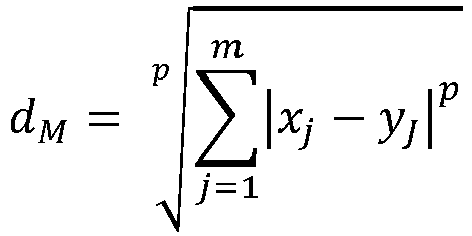
distance 1 from both of these points. Since this violates the triangle inequality, for p <1, it is not a metric. However, a metric can be obtained for these values by simply removing the exponent of 1/p. The resulting metric is also an F-norm. - According to the example implementation of
Fig. 3 , once the k closest neighbors have been determined, a program and/or routine offood type analyzer 308 determines its output as an action. For each determined one or more closest food types, as previously introduced, a determination of extra time for blending may be dictated. This extra time can be specified in the feature vector for the food type based on the stored multi-dimensional feature vector data. As mentioned, each datapoint may have a time associated with it, necessitating a determination of what time it will output based on, for example, a weighted average combining each of the extra times to produce the total time to be added to the blending process. For example, inFig. 3 , this includes a weightedaverage determination 310 of 8 additional seconds of time to be added to the blending process. Like the distance measurement, there are several different weight functions that can be used, such as:
- At this time, the output from
food type analyzer 308 is returned and represented in the easternmost region ofgraph 302 ofworkflow 300, illustrated as "Added Time.". - In some implementations, a special sensor chip can sample, detect, and/or monitor power by sampling the voltage on a terminal/lead of the motor. A controller, such as controller and/or
processor 202 ofFig. 2 , and/orfood type analyzer 308 can thereby acquire this sampled voltage value from sensor (2) 206, e.g., a sensor chip, analyze the data, and based on this analysis, act by sending a control signal to and/or signaling a TRIAC switch that controls power input toblender motor 214. The output signaling of the TRAIC switch (or another type of switch or control mechanism) can stop, start, increase or decrease the motor speed based on the control signal and/or signaling fromprocessor 202 and/orfood type analyzer 308. That is, the analysis described herein can also include identifying one or more recipes associated with individual or aggregated food items within the blendingcontainer 108, and when the nearest one or more recipes are identified, adding blend time per the determined one or more nearest recipes, as shown incontrol step 310 ofFig. 3 . -
FIG. 4 shows an illustrativemulti-dimensional feature space 400, containing vector points representing food item vectors such as vector points 410, 412, 426, and 428, for example, determined byfood type analyzer 308 ofFIG. 3 . Specifically, for illustrative purposes, thefeature space 400 is a two-dimensional feature space, where thehorizontal axis 430 represents a value of a first feature and thevertical axis 432 represents a value of a second feature. In some implementations, some of the vector points infeature space 400 represent detection vectors determined byworkflow 300 ofFig. 3 viacontroller 202 and/orfood type analyzer 308. For example, featurespace 400 can includedetection vectors feature space 400. - A nearest neighbor analysis, which may be similar or different to the KNN analysis discussed in
Fig. 3 , can be performed based on the closest one or more food items (e.g., two types of smoothie) to the currently detected food item. In some implementations,controller 202 classifies a first subset of food item vectors as a first category of food items, e.g., nut butters, and controls the controllable component, e.g.,motor 214, based at least in part on determining that the position of the detection vector, e.g.detection vector point 408, is within afirst area 416 of themulti-dimensional feature space 400 associated with the first category of food items, e.g., nut butters. For example, various types of nut butter may be members of the first subset of food item vectors and, therefore, have their food item vectors, such asvector point 428, in thefirst area 416 of themulti-dimensional feature space 400, while non-nut butter food items may be members of a second subset of food items and, therefore, have their food item vectors (e.g., vector points 410, 426, and 412) in asecond area 418 of themulti-dimensional feature space 400. Thefirst area 416 andsecond area 418 may be separated by aboundary 414. In some implementations, themulti-dimensional feature space 400 may include three or more areas associated with three or more categories of food items. -
FIG. 4 illustrates the two-dimensional spatial relationship among food item vectors and detection vectors. For example,detection vector 402 is spaced away fromfood item vector 410 bydistance 420, spaced away fromfood item vector 426 bydistance 422, and spaced away fromfood item vector 428 bydistance 424. If, for example,food item vector 410 is associated with a margarita drink, thendetection vector 402 may be identified as a vector associated with a margarita drink based ondistance 420 being the shortest distance, i.e., based onfood item vector 410 being the closest food item vector todetection vector 402. But in some implementations,controller 202 and/oranalyzer 308 may use distances fromdetection vector 402 to multiple food item vectors to identify a food item associated withdetection vector 402.Controller 202 may identify the food item associated withdetection vector 402 based on the two closest food item vectors, based on the three closest food item vectors, or more food item vectors. Where two distances are similar, e.g., distances 422 and 424,controller 202 may consider athird distance 420 additionally or alternatively to identify the food item associated with the detection vector such asdetection vector 402. - In some implementations,
controller 202 identifies one or more types of food items associated with a detection vector by determining a position of the detection vector, e.g.,detection vector 402, in themulti-dimensional feature space 400 relative to positions of some or all of food item vectors (e.g.,food item vectors multi-dimensional feature space 400.Controller 202 may determine one or more actions based at least in part on the identified one or more types of food items.Controller 202 may control an operation of a controllable component, e.g.,motor 214, based at least in part on the determined one or more actions. In some implementations,controller 202 determines one or more actions based at least in part on the area, e.g.,area 416 orarea 418, where a detection vector is located in thefeature space 400. For example,detection vector 406 is located inarea 416 which may be associated with a nut butter group or subset of food items, whiledetection vector 402 is located inarea 418 which may be associated with a non-nut butter and/or drink group or subset of food items.Controller 202 may control an operation of a controllable component, e.g.,motor 214, based at least in part on the determined one or more actions associated with a group or subset of food items. - In one implementation, a microcontroller and/or microprocessor, such as controller and/or
processor 202, receives a series of signals frommotor 214 from one or more sensors, such assensor 206.Processor 202, viafood type analyzer 308, determines a power consumption timeseries pattern of themotor 214 over the first time period.Processor 202 identifies a plurality of timeseries pattern features associated with the timeseries pattern and then calculates a detection vector, e.g.,detection vector 402, based on the plurality of time-series pattern features. Depending upon the underlying feature values from the time series which result indetection vector 402, an initial classification of food type, such as nut butter inarea 416 or drink inarea 418, can include an MLP classification resulting in a KNN or non-KNN analysis. These classification events can aggregate over time to more effectively and efficiently inform additional classifications.Controller 202 and/orfood type analyzer 308 compares a position of thedetection vector 402 with the positions of some or all of the plurality of food item vectors in themulti-dimensional feature space 400.Controller 202 and/orfood type analyzer 308 identifies the food item associated withdetection vector 402 by determining which one of the plurality of food item vectors is closest todetection vector 402 in themulti-dimensional feature space 400, such asfood item vector 410 atdistance 420 fromdetection vector 402. Iffood item vector 410 is associated with a smoothie,controller 202 and/orfood type analyzer 308 determines that food item being processed is a smoothie.Controller 202 may then determine how much longer motor 214 and mixing blades should rotate, e.g., a second period of time. In one implementations,controller 202 determines the second time period based on one or more of the closest food item vectors such as, for example,food item vectors controller 202 determines the second time period based on a combined weighted average of extra time depending upon one or more determinations associated with each of the food item vectors being used to identify the detection vector (e.g.,food item vectors motor 214 is stopped to realize a more accurate and/or consistent smoothie. - In another instance,
controller 202 and/orfood type analyzer 308 receives a series ofmotor 214 signals from one or more sensors, such assensor 206.Controller 202, viafood type analyzer 308, determines a power consumption time-series pattern and/or data set of themotor 214 over the first time period.Controller 202 identifies a plurality of time-series pattern features associated with the time-series pattern and then calculates a detection vector, e.g.,detection vector 404, based on the plurality of time-series pattern features. In some implementations, calculating a detection vector includes determining a time series pattern from the detected signals, with the time series pattern including a gradient of power curve, e.g.,curve 303.Controller 202 and/orfood type analyzer 308 compares a position of thedetection vector 404 with the positions of the plurality of known food item vectors in themulti-dimensional feature space 400.Controller 202 and/orfood type analyzer 308 identifies the type of food item associated withdetection vector 404 by determining which one of the first plurality of food item vectors is closest todetection vector 404 in themulti-dimensional feature space 400. In this instance, the closest know food item vector isvector 412. If knownfood item vector 412 is associated with whip cream,controller 202 and/orfood type analyzer 308 determines that food item being processed is whip cream. Theprocessor 202 may then determine how much longer motor 214 and mixing blades should rotate, e.g., a second period of time, untilmotor 214 is stopped to realize a more accurate and/or consistent whip cream. - In some implementations, an additional series of motor signals corresponding to processing a food item can be detected to more accurately identify and/or confirm the type of food item being processed. For example, after
controller 202 classifies a type and/or first subset of food item vectors, as a nut butter, one or more sensors, such assensor 206, may continue sensing for an additional period of time, e.g., 15 seconds, and provide an additional series ofmotor 214 signals tocontroller 202 and/orfood type analyzer 308. Based on analyzing this additional series of motor signals,controller 202 may operatemotor 214 to rotate the mixing blades ofblade assembly 102 for an additional period of time. These additional series ofmotor 214 signals may include a power consumption and/or motor current trend over multiple increments or periods of time, such as over multiple 100 ms time segments, that are output fromsensor 206 and analyzed bycontroller 202 and/orfood type analyzer 308. Based on its analysis,controller 202 and/orfood type analyzer 308 may determine and/or confirm the identity and/or classification of a food item and, thereby, determine that additional processing of the food item is necessary. This determination may be based on, for example, if the power consumption trend ofmotor 214 as detected every 100 ms trends in an increasing or decreasing direction or is greater than or equal to a threshold rate of increase or decrease, or is greater than or equal to a threshold increase from a minimum recorded value. -
FIG. 7 show agraph 700 that illustrates detected increasing trends of power load detected with respect tomotor 214 via, for example,sensor 206, thatcontroller 202 can analyze to confirm that a food item being processed is or is not a particular classification of food item, e.g., a type of nut butter. Such additional sensing of motor power and/or current reduces the possibility of a misclassification of a type of food item, such as for example, a nut butter. When the power consumption and/or current trend ofmotor 214 over a period of time is no longer greater than or equal to a set threshold,controller 202 and/orfood type analyzer 308 may determine processing of the food item is no longer required. - In some instances, in
FIG. 4 , whencontroller 202 detects at least one property associated with the processing of the one or more food items, such as a food item derived fromingredients 106,controller 202 also determines a type and/or size of the one or more components, such as blendingjar 108. In this way,controller 202 may more efficiently or readily identify a food item based on understanding that certain types of food items are most often or only processed using certain types of components and/or containers. In some implementations,controller 202 is configured to classify the one or more food items, such as a food item innut butter area 416, based on the detection vector, such asdetection vector jar 108 being used to create the food item associated withdetection vector controller 202 can be configured to controlmotor 214 based solely on the type and/or size of one of the components, such as blendingjar 108, based on a recognition that certain types of food items use certain types of components and/or containers when being processed. - In some implementations,
controller 202 is configured to identify one or more types of food items, such as a type of nut butter associated withdetection vector 408 and a type of frozen drink associated withdetection vector 402, based on applying a weight factor to some or all of the food item vectors infeature space 400, such asfood item vectors multi-dimensional feature space 400. For example, a weight factor can be measured and/or assigned on a scale of 0.0-1.0, or any other reasonable weighted scaled metric, that may be used to adjust a value of one or more features of a food item vector and/or shift the position of a food item vector in themulti-dimensional feature space 400, to effect identification of the type of food item bycontroller 202. In some implementations, each of the food item vectors can be associated with a known type of food item such asfood item vector 410 which may be associated with a margarita drink. Further, some or all of the food item vectors may be used bycontroller 202 to identify a food item associated with a detection vector. As previously discussed, a first plurality of food items vectors can be based on retrieving data related to the one or more food items (e.g.,food item vectors motor 214, speed ofmotor 214 at certain time periods, temperature of a food item at certain times and/or periods, pressure in a blending and/or mixing chamber such asjar 108, and so on. Each food item vector can define values for multiple features. -
Fig. 5 is flowchart showing anexample process 500 for monitoring, analyzing, and performing one or more actions within the food processor ofFIG. 1 .Process 500 can include processing one or more food items, involving rotating, via a motor, one or more components (Step 502). For example, this can include rotating, via a motor, a draft shaft coupled to a blade assembly. The motor, drive shaft, and blade assembly can be similar to those introduced inFig. 1 , such asmotor 214,drive shaft 116, andblade assembly 102, respectively.Process 500 can also include processing one or more food items, such as a food item derived fromingredients 106, in blending container and/orjar 108 while theblade assembly 102 is being rotated by the drive shaft 116 (Step 504).Process 500 can further include detecting at least one property associated with the processing of the one or more food items during a first period of time (Step 506). A first series of detection signals can be generated from the at least one property detected over the first period of time. For example, a first series of detection signals can include at least one of a current and voltage, via sensor(s) 208, associated with operation ofmotor 214 over a first time period.Process 500 can also include storing, in a memory, a first plurality of food item vectors, such asfood item vectors Fig. 4 (Step 508). Each food item vector can define values for a plurality of features in a multi-dimensional feature space such asfeature space 400. Accordingly, each of a first plurality of food item vectors, e.g.,food item vectors food item vector 410 may be associated with a margarita drink, whilefood item vector 412 may be associated with whipped cream. A first series of motor signals corresponding to at least one property of a food item can be processed to generate a detection vector such asdetection vector 402. A plurality of known food item vectors (e.g., 410, 412, 426, and 428) can then be stored in amemory 204 andstorage 208 of system 200 (Step 508).Controller 202 may classify a first subset of the food item vectors as a first category of food items (e.g., nut butter or drink) and control the controllable component, e.g.,motor 214, based on determining that the position of the detection vector, e.g.,detection vector 402, is withinarea 418 of themulti-dimensional feature space 400 which is associated with particular subset, group, and /or category of food items, e.g., food drink items. Any of steps 502-510 may be performed by a microcontroller and/or microprocessor, such ascontroller 202 ofFig. 2 . -
FIG. 6 shows aprocess 600 for identifying a type of food item and controlling operations of a controllable component based on the identification of the particular food item during processing of the food item.Process 600 includes operating a controllable component, by acontroller 202, for a first period of time (Step 602). The controllable component may include a motor such asmotor 214 that is arranged to rotate adrive shaft 102 andblade assembly 116 to mixingredients 106. The controllable component may include a heater or heating element within or adjacent tojar 108 that is arranged to heat a food item being processed. The controllable component may include a pump and/or valve arranged to adjust a pressure withinjar 108 when a food item is being processed. The controllable component may include any device or component configured to affect a physical property of a food item during processing. -
Process 600 also includes detecting, via a monitoring device such as sensor(s) 206, at least one property associated with the processing of one or more food items during a first period of time, where a first series of detection signals are generated from the at least one property detected over the first period of time (Step 604).Process 600 includes storing, in a memory such asmemory 204 and/ordata storage 208, a plurality of food item vectors (e.g.,food item vectors multi-dimensional feature space 400, such that each of the plurality of food item vectors is associated with a type of food item (Step 606). Then, calculating, bycontroller 202 and/orfood item analyzer 308, a detection vector, e.g.,detection vector 402, based on the series of detection signals, where the detection vector defines feature values for a plurality of features in the multi-dimensional feature space 400 (Step 608).Controller 202 and/orfood item analyzer 308 identifies one or more types of food items associated with the detection vector, e.g.,detection vector 402, by determining a position of the detection vector in the multi-dimensional feature space relative to positions of one or more of a plurality of food item vectors (e.g.,food item vectors food item vector 410 may be associated with a margarita drink.Food item vectors 426 may be associated with another type of frozen drink, whilefood item vector 428 may be associated with a peanut butter. - In one implementation,
controller 202 may determine thatdetection vector 402 is associated with a margarita drink based onfood item vector 410 being closest todetection vector 402.Controller 202 may identify the type of food item associated withdetection vector 402 based on the position ofdetection vector 402 in relation to one or more of the known food item vectors infeature space 400.Controller 202 and/orfood item analyzer 308 may then determine one or more actions based at least in part on the identified one or more types of food items (Step 612).Controller 202 may control operations of the controllable component, e.g.,motor 214, based at least in part on the determined one or more actions. For example, the one or more actions may includecontroller 202 continuing to operate the controllable component for a second period of time based on the identified one or more types of food items.Controller 202 and/oranalyzer 308 may identify a food item based at least in part on performing a K-NN analysis.Controller 202 may determine a how much longer motor 214 and one or more components, such as mixing blades, should rotate, e.g., a second period of time, untilmotor 214 is stopped to realize a more accurate and/or consistent smoothie. - In some implementations, the second period of time is between 0 seconds and 30 seconds. In some implementations, the second period of time is 15 seconds. In some implementations, the first period of time is 15 seconds. Further, identifying the food item can be based, at least in part, on a K-NN classification. Further, calculating a detection vector can include determining a time series pattern from the detection signals, where the time series pattern includes a gradient of power curve. In some implementations, the type of food item identified via
processes -
Fig. 8 includes an example 800 of a food processor base, 804, which can be included in a blender, such asblender 100. While implementations are described previously and now herein using the example of a blender, it should be appreciated that the invention is not so limited, and applies to other types of food processors. In some implementations, thebase 804 is motorized, and includesbase housing 806.Base 804 can also includedial 808 and one or morestatic interfaces 814, also previously referred to asuser interfaces 212, which can both influence the behavior and functionality ofblender 100. As shown inFig. 8 ,static interfaces 814 can be embedded inUI cap 816, which itself can be molded aroundbase 804 abovebase housing 806. Dial 808 can includeUI screen 810 and can be referred to collectively as an interface and/or user interface (UI). In some implementations,III screen 810 can include one or more/plurality ofindicators 820, which can be represented acrossscreen rim 812 ordial face 818 in different configurations. One ormore indicators 820, which includes LEDs in the present example, can also include LCDs, OLEDs, and/or other like methods of illuminating indicators. Food item data, including that previously discussed, can be stored inmemory 204, and can include a database and/or a lookup table. In some implementations, this database and/or lookup table can include a list of indicator configuration instructions and associated sensed property or actions via whichUI screen 810 can utilize different configurations of one ormore indicators 820 to inform user inputs during usage offood processor 100. In this way,UI screen 810 can utilize the different configurations of one ormore indicators 820 to provide accessibility, information, and/or feedback to a user offood processor base 804 based on food item data processed bycontroller 202 and/orfood analyzer 308 during operation ofblender 100. -
Figs. 9A and9B include examples 900 and 950, respectively, of one or morestatic interfaces 814 andUI screen 810 ofdial 808. In example 900,Fig. 9A shows one or morestatic interfaces 814, which include prompts for a user of a blender, such asblender 100. These prompts, which can be initiated by a user via one or morestatic interfaces 814, can includepower prompt 902,manual prompt 904,Smart Blend prompt 906,mode prompt 908, andpulse prompt 910. In some implementations, these prompts may include buttons and/or other like elements. In some implementations, these static interfaces may include LED indicators on the prompts, such asstatic LED indicators ring indicators 1102 and functionality indicators 1104) relating tofood processor 100. During use offood processor 100,Manual prompt 904,Smart Blend prompt 906,mode prompt 908, and pulse prompt 910 may thereby be engaged by a user to initiate SmartBlend Ready State 1018,Manual Ready State 1020,Mode Ready State 1022, andPulse Run State 1028. - In example 950,
Fig. 9B shows one ormore indicators 820 withinUI screen 810, includingring indicators 1102 andfunctionality indicators 1104. As previously discussed, theseindicators 820 can be configured as a ring around the edge ofUI screen 810 and can include one or more LEDs. These indicators, when illuminated and/or otherwise activated in different configurations onUI screen 810, can provide accessibility, information, and/or feedback to a user offood processor base 804 based on food item data processed bycontroller 202 and/orfood analyzer 308 during operation ofblender 100. These different configurations of one ormore indicators 820 can be further influenced by illuminated dial, Smart Blend, and iQ functions and/or be used to further represent timer/speed data onUI screen 810. For reference, the term, "function" may be used interchangeably with "mode" throughout this disclosure. In some implementations,functionality indicators 1104 dial functions can include start/stop function 952, blendingfunction 954, addliquid function 956, undetectable and/or installfunction 958, andsensing function 960. In some implementations, Smart Blend functions can include disc, mince, small chop, and large chop functions 962 based on food item data processed bycontroller 202 and/orfood analyzer 308 during operation ofblender 100. In some implementations, iQ functions can include crush, max-crush, thick mode, anddough function 964, which also can be based on food item data processed bycontroller 202 and/orfood analyzer 308 during operation ofblender 100. In some implementations, timer/speed data can include low, medium, andhigh speeds 966 and/ortimer data 968. These functions and/or data onIII screen 810, which can also be referred to as prompts, may include buttons and/or other like elements. As will be discussed, thesering indicators 1102 andfunctionality indicators 1104 may be illuminated at various intensities, patterns, and/or color to indicatefood processor 100 analysis, processes, and/or to provide functionality selection during usage. -
Fig. 10 illustrates via process 1000 how the functions, prompts, and/or data observed and/or interacted with by a user viaIII screen 810 can also be influenced by the one morestatic interface 814 prompts. For example, a user can turn on a food processor, such asfood processor 100, by pressing power atstep 1010, which can be initiated viapower prompt 902 of one or morestatic interfaces 814. At this time, for example,food processor 100 may be in a plugged-in off state, as shown atstep 1012, and illuminate one ormore indicators 820. In some implementations, thevessel 108, also referred to as blending container and/orjar 108, may not be engaged with the recess (not shown) formed in thebase 104. In that event, the power LED/power prompt 902 of one or morestatic interfaces 814 may blink 0.5 seconds on, and 0.5 seconds off, with all other LEDs and/or prompts offline. However, whenvessel 108 is engaged with the recess (not shown) formed in thebase 104, the power LED/power prompt 902 of one or morestatic interfaces 814 may be illuminated/on, with all other LEDs and/or prompts offline. - At this time, process 1000 considers if one or more interlocks is engaged at
step 1014. In some implementations, the interlock may be positioned in theremovable lid 110 that fits into anopen top 112 of the blendingjar 108. In some implementations, the interlock can be a safety interlock, which may prevent themotor 214 of theblender 100 from being operated unless thevessel 108 is properly engaged with the interlock onlid 110. If the interlock is not properly engaged, and thefood processor 100 is in an uninstalled state, in some implementations,step 1016 provides that thetimer data 968 LEDs will blink 0.5 seconds on, and 0.5 seconds off, with all other LEDs and/or prompts offline, except for the subsequent blinking of the installfunction 958, which may blink 0.5 seconds on, and 0.5 seconds off. At this time, the process 1000 may restart, and require a user to initiate power atstep 1010 once again. Similarly, if a user presses power atstep 1010 and/or removesvessel 108 during usage offood processor 100,steps 1012 and/or 1016 may initiate. - If interlock is and/or remains engaged at
step 1014 during process 1000, thenfood processor 100 may proceed with enabling a user to initiate a variety of functionalities according to a number of "ready" and "run" states, including those influenced by food item data processed bycontroller 202 and/orfood analyzer 308, which can also be referred to as "Smart Blend" data. This enables SmartBlend Ready State 1018, which, so long the interlock remains engaged and the vessel is not removed, permitsblender 100 to perform several run states. In some implementations, the ready states can include SmartBlend Ready State 1018,Manual Ready State 1020, andMode Ready State 1022. The run states can include SmartBlend Run State 1024,Manual Run State 1026,Pulse Run State 1028, andMode Run State 1030.Mode Ready State 1022 and SmartBlend Ready State 1018 may proceed to initiate SmartBlend Run State 1024,Manual Run State 1026,Pulse Run State 1028, andMode Run State 1030. The user, via one or morestatic interfaces 814 and dial 808, can then utilize the different configurations of one ormore indicators 820 to provide accessibility, information, and/or feedback to a user offood processor base 804 based on food item data processed bycontroller 202 and/orfood analyzer 308 during operation offood processor 100. At this time, one ormore indicators 820 withinUI screen 810 ofdial 808 may be illuminated and/or ready for user engagement. These one ormore indicators 820 may articulate one or more states offood processor 100 functionality, depending on, for example, previous activity offood processor 100 and/or food item data processed bycontroller 202 and/orfood analyzer 308 during operation offood processor 100.Fig. 10 details the various relationships between the ready and run states, and how various user inputs (engaging the start/stop functionality indicators 952/1104, press/release pulse prompt 910) can allow for a user to cycle between various ready and run states before a program is completed. However, in some implementations,Manual Ready State 1020 may only commenceManual Run State 1026. Operation offood processor 100 may timeout if unit inactivity exceeds 180 seconds, andfood processor 100 may turn off. -
Figs. 11A and 11B show exampleready state animations dial 808 offood processor 100. In the illustrative implementations, showing SmartBlend Ready State 1018, both 1100 and 1125 articulate III flow animations viaUI screen 810 by way of one ormore indicators 820. For example,animation 1100 depicts the illumination of one or more LEDs comprising one ormore indicators 820, which as discussed, manifest as perceived by a user/viewer ofdial 808/food processor 100 as an illuminated ring around the edge ofUI screen 810, as shown inanimation 1125. For clarity, one ormore indicators 820, when referring to those comprising the illuminated ring, can be referred to as one ormore ring indicators 1102. In this way, one ormore indicators 820, when referring to those represented within one ormore ring indicators 1102 as different configurations of one ormore indicators 820, can be referred to as one ormore functionality indicators 1104. Inexample animation 1125,blue ring indicators 1102 and start/stop functionality indicators 1104 are illuminated at 100%, whereas the other functionality indicators, in purple, are not illuminated, as the LEDs are off. As previously introduced, and shown inanimation 1125 ofFig. 11B , these one ormore functionality indicators 1104 can be influenced by illuminated dial, Smart Blend, and iQ functions and/or be used to further represent timer/speed data onUI screen 810. -
Fig. 11C shows anexample sensing process 1150 ascontroller 202 and/orfood analyzer 308 process food item data. Whenfruit ingredients 106, or any organic material a user wishes to process viafood processor 100 are present invessel 108, a user can select theSmart Blend prompt 906 on one or morestatic interfaces 814 to prompt the detection and collection of food item data bycontroller 202 and/orfood analyzer 308 duringstep 1110 and according to the present disclosure. The user can then select thepulse prompt 910 and initiate food data processing atpulsing step 1112. In some implementations, this prompts the recognition bycontroller 202 and/orfood analyzer 308 to relate weighted average data in one or more detection vectors withinvessel 108 collected duringstep 1110 to an appropriate time series for food processing during operation offood processor 100. This can also be illustrated in PulseRun State step 1028 in some implementations, as start/stop functionality indicators 1104 are off,timer data 968 counts up, and the Pulse animation begins, with all other LEDs off. When pulsingstep 1112 concludes, one ormore indicators 820 may become illuminated atstep 1114 as SmartBlend Ready State 1018 orManual Ready State 1020 are activated, depending on prior food data processed and/or user inputs, and as shown inFig. 10 . More specifically, the data processing viacontroller 202 and/orfood analyzer 308 at pulsingstep 1112 can then illuminate one or more one ormore functionality indicators 1104, recommending a user to initiate blending 1116, crushing 1118 ormax crush 1120, and/orthick mode 1122 sequences. This dynamic can optimizemotor 214 output, and thereby, initial and/or continued processing of food ingredients invessel 108 by rotation of the mixing blades ofblade assembly 102 for the established period of time and/or intensity. -
Fig. 11D shows an exampleready state animation 1175 illuminating one or more one ormore ring indicators 1102, which can also occur atstep 1114 as introduced inFig. 11C . Inanimation 1175, the illuminated portions of the one ormore ring indicators 1102 can change based upon automatic cycling and/or the user's selection of the processing modes via one ormore functionality indicators 1104. For example, when a user chooses between Smart Blend functions such as disc, mince, small chop, and large chop functions 962 based on food item data processed bycontroller 202 and/orfood analyzer 308 during operation ofblender 100, the sections of thering indicators 1102 correspond to these larger or smaller outputs. In some implementations, different colors, patterns, and/or intensity of the LEDs of thering indicators 1102 can indicate the mode of thefood processor 100. For example, duringstep 1114,animation 1175 may cycle through various colors at 0.75 second intervals, comprising 4.5 seconds/loop. These colors and/or patterns ofring indicators 1102 correspond with the respective title and/or color offunctionality indicators 1104 onIII screen 810, along with those discussed throughout this disclosure with like names.Fig. 11E shows that these colors may articulate processing modes introduced in example 950, including green forBlend 1152, teal forCrush 1154, blue for Max-crush 1156, purple for thick-mode 1158, orange fordough 1160, yellow fordisc 1162, and pink for mince, small chop, andlarge chop functions 1164, according to some implementations. -
Other ring indicators 1102 may be displayed, such as white for variable speed/PULSE 1166, and red for error/ADD LIQUID 1168, along with other errors indicating a failure of some kind and similarly resulting inred ring indicators 1102. For example, ifcontroller 202 and/orfood analyzer 308 determine that more liquid is needed to be added to the contents ofvessel 108,motor 214 will cease functioning, and ADD LIQUID"indicator 1168 will become 100% illuminated as afunctionality indicator 1104 onUI screen 810, in addition to the LED ring indicators similarly 100% illuminated in red. All other LEDs may be off and/or display segments reading "AL", referring to adding liquid. In some implementations, SmartBlend Ready State 1018 will be returned to as the default when interlock is re-engaged following the adding of more liquid tovessel 108. As mentioned previously, the user must disengage interlock and re-engage within 180 seconds, orfood processor 100 may return to off state plugged in 1012. Additional errors and/or notification indicators via 1168 can include "ERROR 1: Runtime Protection Mode", which may occur when food processing runtime viablade assembly 102 exceeds 180 seconds. In some implementations, ifcontroller 202 and/orfood analyzer 308 determine that the runtime exceeds this length,motor 214 will cease functioning, andstatic interface 814 and dial 808 become disabled. More specifically, allstatic interface 814 LEDs may blink alongsidetimer data 968 blinking "E1" at 0.25 seconds on, 0.25 seconds off, in unison, untilfood processor 100 is unplugged. In some implementations,food processor 100 must be unplugged to reset and cancel Runtime Protection Mode, as disengaging the interlocks and idle timeout may not reset thefood processor 100. However, this error may only apply to single serve interlocks. -
Figs. 12A-12D show animation views 1210, 1220, 1230, and 1240 of the Smart Blend sensing animation ofstep 1110.Animation 1210 ofFig. 12A illustrates that in some implementations, during Smart Blend sensing ofvessel 108's contents, animations onIII screen 810 includering indicators 1102 as four illuminated LEDs for rotating clockwise, which can be seen inanimations blue ring indicators 1102 and start/stop functionality indicators 1104 are illuminated at 100%,yellow timer data 968 at 10%,functionality indicator 1104 sensing per 1110 pulsing in orange at 0.5 seconds on, 0.5 seconds off, andpurple functionality indicators 1104 not illuminated.Fig. 12C illustrates viaanimation 1230 the clockwise rotation oftimer data 968 during sensing.Fig. 12D illustrates viaanimation 1240 that, in some implementations, during sensing, colors may fade to transition at 0.5 second intervals to next color, from dark blue, magenta, to orange, and teal, comprising 2 seconds per sequence. In some implementations, SmartBlend Ready State 1018 has commenced, asSmart Blend prompt 906 is illuminated andring indicators 1102 appear as those introduced inFigs. 11A-11C . In some implementatiosn, only the start/stop functionality indicator 1104 will be available to a user to commencesteps dial 808 may be unavailable, with all other LEDs alongside thetimer data 968 off. -
Figs. 13A-13C show animation views 1310, 1320, and 1330 of the Smart Blend running animation ofsteps Animation 1310 ofFig. 13A illustrates that in some implementations, following sensing instep 1110, food item data is processed via Smart Blend bycontroller 202 and/orfood analyzer 308 during operation offood processor 100 and as discussed insteps UI screen 810 can includering indicators 1102 as illuminated LEDs which turn off in a clockwise rotation, which can be seen inanimations 1310's three views showcasing from left to right the start of the Smart Blend program, the Smart Blend program at 50% completion, and the end of the Smart Blend program, respectively.Animations example animations blue ring indicators 1102 and start/stop functionality indicators 1104 are illuminated at 100%,functionality indicator 1104 sensing per 1110 pulsing in orange at 0.5 seconds on, 0.5 seconds off, andpurple functionality indicators 1104 not illuminated. As introduced instep 1024 ofFig. 10 , an example process according toFigs. 13A-13C begins withmotor 214 operational and start/stop functionality indicators 1104 illuminated. In some implementations, sensing animation begins asfunctionality indicators 1104 for sensingfunction 960 pulse in orange at 0.5 seconds on, 0.5 seconds off. Oncecontroller 202 and/orfood analyzer 308complete sensing 1110, Smart Blend processing atstep 1112 initiates. This processing includes illuminatingfunctionality indicators 1104 for iQ functions including crush, max-crush, thick mode, anddough functions 964 may be illuminated at 100%, unless no program is detected, and standard blending is thereby initiated. In this situation, and as seen inFig. 13B , blendingfunction 954 may be illuminated at 100%.Animation 1330 inFig. 13C provides that, in some implementations, the LEDs forring indicators 1102 may be green to showcase theBlend 1116 and/or 1152 mode, as introduced inFigs. 11C and11E . -
Figs. 14A-14C show animation views 1410, 1420, and 1430 of when a user, during operation ofdial 808 offood processor 100, selects and engageMode Ready State 1022 andMode Run State 1030. In some implementations, if a user engages Mode prompt 908 to initiateMode Ready State 1022, manual and Smart Blend prompts 906 and 910, respectively, may be off. Start/stop functionality indicators 1104 may be illuminated at 100%, whereas LEDs fortimer data 968 may be off. In some situations, if Smart Blend processing determines a particular program is appropriate, such as disc, mince, small chop, and large chop functions 962 based on food item data processed bycontroller 202 and/orfood analyzer 308 during operation ofblender 100, processing animation begins with blendingfunction 954 illuminated at 100%, as shown inFig. 13B . In some implementations, thesefunctionality indicators 1104 for blendingfunction 954 may then pulse 0.5 seconds on, 0.5 seconds off. Animations onUI screen 810 can includering indicators 1102 as illuminated LEDs in various clusters of static LEDs to articulate and correspond withrespective functionality indicators 1104 and program initiation following sensing atstep 1110 and SmartBlend processing step 1112. For example,animations 1410 includes four views offunctionality indicators 1104 showcasing, from left to right, Smart Blend programs for mince, small chop, large chop, and disc functions 962, respectively. -
Fig. 14B shows via animation 1420 thatfood processor 100 and/or the user may cycle betweenfunctionality indicators 1104 as relating to a particular function, such as mince, small chop, large chop, and disc functions 962. In this way, the illuminated LED clusters viaindicators ring indicators 1102 correspond to these larger or smaller outputs. In example animations 1420 inFig. 14B ,blue ring indicators 1102, start/stopfunctionality indicators 1104, and currently selected Smart Blend program are illuminated at 100%, whereasfunctionality indicator 1104 for available but not-currently selected Smart Blend program are shown in green and illuminated at 20%. Again,animation 1430 inFig. 14C provides that, in some implementations,LED ring indicators 1102 can match the animation for corresponding default function, such as pink to showcase the LG chop/SM chop/mince mode 1164, as introduced inFig. 11E . During this time, in some implementations,timer data 968 may be illuminated and decrease to "count down" viaUI screen 810 to articulate the default function/mode time for each program. Alternatively, the color ofring indicators 1102 as shown inFig. 11E can be changed via turning ofdial 808 to the corresponding iQ function color. In some implementations, if pulse prompt 910 ofstatic indicators 814 is pressed during operation, food processor may return to a ready state, such as SmartBlend Ready State 1018,Manual Ready State 1020, andMode Ready State 1022. However, in some implementations, ifvariable speed 1166 is engaged while the Smart Blend program is running, the food processor may return to variable speed ready state. -
Figs. 15A-15C show viaanimations Manual Ready State 1020 and subsequent animations. In example animations 1520-1530 inFigs. 15B-15C ,blue ring indicators 1102, start/stopfunctionality indicators 1104, and currently selected Smart Blend program are illuminated at 100%, whereasfunctionality indicator 1104 for available but not-currently selected Smart Blend program are shown in green and illuminated at 20%.Fig. 15A illustrates viaanimations 1510 onUI screen 810 that ringindicators 1102 may be illuminated in a "bottom-up" pattern increasing upward via both sides to articulate and correspond with user and/orfood processor 100 selected speed forblade assembly 102 operation based on communication betweenmotor 214 andcontroller 202 and/orfood analyzer 308. For example,animations 1510 show 1.5 LEDs illuminated to articulate a speed of 1 (low), 11.5 LEDs illuminated for a speed of 5 (medium), and 24 LEDs illuminated for a speed of 10 (high), respectively. Exact example speed implementations can be seen via table 1600 inFig. 16A .Fig. 15B illustrates viaanimations 1520 thatfunctionality indicators 1104 fortimer data 968 may reflect and/or be configured by a user viadial 808 to reflect these various speed modes, with example speeds of 1, 5, and 10, respectively. In some implementations, this may apply to whenvessel 108 is a 72-ounce jar.Fig. 15C shows viaanimations 1530 that a user may more conveniently alternate between these modes viafunctionality indicators 1104 for low, medium, andhigh speed 966 modes. In some implementations, this may apply to whenvessel 108 is a 24-ounce jar. - For example, if
manual prompt 904 ofstatic interface 814 is engaged by a user,blue ring indicators 1102, start/stopfunctionality indicators 1104, andmanual prompt 904 are illuminated at 100%. As shown inanimations 1520 ofFig. 15B , when vessel/jar 108 is installed,timer data 968 may read, "01", and the user may turn dial 808 clockwise and/or counterclockwise to increase and/or decrease speed up to and down from "10". In some implementations,ring indicators 1102 correspondingly grow in illumination clusters from the bottom center from 1 to grow incrementally as 10 is approached, whereasfull ring indicator 1102 illumination occurs. If the installed vessel/jar 108 is 24-ounces,timer data 968 may reads "--" and default to "low"mode 966. In this example, these LEDs may be 100% illuminated, and all other (medium and high)modes 20% illuminated. As mentioned, and shown inanimations 1530 ofFig. 15C , the user may turn dial 808 clockwise to cycle from low to high, and counterclockwise to cycle from high to low. In some implementations, no continuous scrolling is available, and if a user engagesmanual prompt 904 again, nothing occurs, and all other LEDs turn off. - As discussed, table 1600 of
Fig. 16A shows exact example speed implementations offood processor 100. Correspondingly,Fig. 16B shows viaanimations 1650 example illumination clusters and/or intensities ofring indicators 1102, illustrating half and full illumination trends to satisfy the metrics articulated in table 1600. -
Figs. 17A-17C show viaanimations Manual Run State 1026 and subsequent animations.Animation 1710 ofFig. 17A illustrates that in some implementations, duringManual Run State 1026, animations onUI screen 810 includering indicators 1102 as four illuminated LEDs for rotating clockwise, which can be seen inanimations animation 1720 inFig. 17B ,blue ring indicators 1102,timer data 968, and start/stop functionality indicators 1104 are illuminated at 100% andpurple functionality indicators 1104 not illuminated.Fig. 17C illustrates viaanimation 1730 the clockwise rotation ofring indicators 1102 duringManual Run State 1026. Once a user has initiated the example sequences ofManual Ready State 1024, and has decided for themselves simply to non-specifically process/blend the contents ofvessel 108, they may select their preferred speed animation pertimer data 968, which proceeds manually as described inFigs. 15A-16B . Again, when vessel/jar 108 is installed,timer data 968 may read, "01", and the user may turn dial 808 clockwise and/or counterclockwise to increase and/or decrease speed up to and down from "10". In some implementations,ring indicators 1102 correspondingly grow in illumination clusters from the bottom center from 1 to grow incrementally as 10 is approached, whereasfull ring indicator 1102 illumination occurs. If the installed vessel/jar 108 is 24-ounces,timer data 968 may reads "--" and default to "low"mode 966. In this example, these LEDs may be 100% illuminated, and all other (medium and high)modes 20% illuminated. The user may turn dial 808 clockwise to cycle from low to high, and counterclockwise to cycle from high to low. They may then select the start/stop functionality indicator to begin food processing, as shown inanimation 1720 ofFig. 17B . As shown inanimations 1730 ofFig. 17C , the countdown oftimer data 968 may be articulated in clockwiserotating ring indicators 1104, rotating every 0.5 seconds for a 2 second full cycle around the face ofUI screen 810. In some implementations, no continuous scrolling is available, and if a user engagesSmart Blend prompt 906 and/or pulse prompt 910 while running,food processor 100 viaIII screen 810 returns once more to at least one of the aforementioned Ready States, such as SmartBlend Ready State 1018,Manual Ready State 1020, andMode Ready State 1022. Elements of a computer include one or more processors for executing instructions and one or more storage area devices for storing instructions and data. Generally, a computer will also include, or be operatively coupled to receive data from, or transfer data to, or both, one or more machine-readable storage media, such as mass storage devices for storing data, such as magnetic, magneto-optical disks, or optical disks. Non-transitory machine-readable storage media suitable for embodying computer program instructions and data include all forms of non-volatile storage area, including by way of example, semiconductor storage area devices, such as EPROM (erasable programmable read-only memory), EEPROM (electrically erasable programmable read-only memory), and flash storage area devices; magnetic disks, such as internal hard disks or removable disks; magneto-optical disks; and CD-ROM (compact disc read-only memory) and DVD-ROM (digital versatile disc read-only memory). -
FIG. 18 is flowchart showing anexample process 1800 for monitoring, identifying, determining, and performing one or more actions within the food processor ofFIG. 10 .Process 1800 can include operating the controllable component via one or more user interfaces configured to receive a user input and operably coupled to a base (Step 1802). For example, the one or more user interfaces can include a plurality of indicators, such asstatic indicators 814 and/or plurality ofindicators 820. The base, controllable component, and user interfaces can be similar to those introduced inFig. 1 and/or 8, such asbase 804,motor 214,drive shaft 116,blade assembly 102,user interfaces 212, dial 808, and one or morestatic interfaces 814, respectively. -
Process 1800 can also include detecting, via a monitoring device, at least one property associated with processing one or more food items and generating at least one detection signal (Step 1804). For example, the monitoring device can include sensor(s) 206 ofFig. 2 . Detecting at least one property associated with the processing of the one or more food items may includecontroller 202 and/orfood analyzer 308 monitoring, sensing, and processing food item data derived fromingredients 106, withcontroller 202 and/orfood analyzer 308 also determining a type and/or size of the one or more components, such as blendingjar 108. - As introduced previously, at least one property associated with processing one or more food items may involve
controller 202 and/orfood analyzer 308 communicating withmemory 204, which may store a plurality of food item vectors, such asfood item vectors Fig. 4 . Each food item vector can define values for a plurality of features in a multi-dimensional feature space, such asfeature space 400. Accordingly, each of plurality of food item vectors, e.g.,food item vectors food item vector 410 may be associated with a margarita drink, whilefood item vector 412 may be associated with whipped cream. A series of motor signals corresponding to at least one property of a food item can be processed to generate a detection vector such asdetection vector 402. A plurality of known food item vectors (e.g., 410, 412, 426, and 428) can then be stored in amemory 204 andstorage 208 ofsystem 200.Controller 202 and/orfood analyzer 308 may classify a first subset of the food item vectors as a first category of food items (e.g., nut butter or drink) and control the controllable component, e.g.,motor 214, based on determining that the position of the detection vector, e.g.,detection vector 402, is withinarea 418 of themulti-dimensional feature space 400 which is associated with particular subset, group, and /or category of food items, e.g., food drink items. At least one detection signal can include at least one of a current and voltage, via sensor(s) 208, associated with operation ofmotor 214, and can be based on the at least one property associated with processing one or more food items.Controller 202 and/orfood analyzer 308 can then receive the at least one detection signal (Step 1806). -
Controller 202 and/orfood analyzer 308 can then identify a type of food item and controlling operations of a controllable component based on received at least on detection signal (Step 1808). The controllable component may include a motor such asmotor 214 that is arranged to rotate adrive shaft 102 andblade assembly 116 to mixingredients 106. The controllable component may include a heater or heating element within or adjacent tojar 108 that is arranged to heat a food item being processed. The controllable component may include a pump and/or valve arranged to adjust a pressure withinjar 108 when a food item is being processed. The controllable component may include any device or component configured to affect a physical property of a food item during processing. -
Process 1800 also includes activating a first indicator of the plurality of indicators on the user interface, the first indicator indicative of at least one of the detecting and the identifying being in progress (Step 1810). In some implementations, the first indicator includes the illumination ofstatic LED indicators ring indicators 1102, and/orfunctionality indicators 1104.Controller 202 and/orfood item analyzer 308 may then one or more food processing actions based at least in part on the identified one or more types of food items (Step 1812).Controller 202 and/orfood analyzer 308 may control operations of the controllable component, e.g.,motor 214, based at least in part on the determined one or more actions (Step 1814). For example, the one or more actions may includecontroller 202 operating the controllable component by way of a particular processing mode, such asBlend 1152, for a period of time, and/or speed based on the identified one or more types of food items. In some implementations, this may involve the activation of a second indicator of the plurality of indicators on the user interface. In some implementations,controller 202 and/orfood analyzer 308 may continue monitoring and detecting at least one property associated with processing the one or more food items, generating subsequent detection signals, and determining subsequent food processing actions, such as mixing blades, should rotate, e.g., a second period of time, untilmotor 214 is stopped to realize a more accurate and/or consistent smoothie. Any of steps 1802-1814 may be performed by a microcontroller and/or microprocessor, such ascontroller 202 and/orfood analyzer 308 ofFigs. 2 and3 , respectively. - Elements of different implementations described may be combined to form other implementations not specifically set forth previously. Elements may be left out of the systems described previously without adversely affecting their operation or the operation of the system in general. Furthermore, various separate elements may be combined into one or more individual elements to perform the functions described in this specification.
- Other implementations not specifically described in this specification are also within the scope of the following claims.
Claims (15)
- A food processor system comprising:a user interface including a plurality of indicators, the user interface configured to receive a user input;a monitoring device configured to detect at least one property associated with processing one or more food items and generating at least one detection signal; and a controller configured to:receive the at least one detection signal;identify one or more types of food items based on the received at least one detection signal;activate a first indicator of the plurality of indicators on the user interface, the first indicator indicative of at least one of the detecting and the identifying being in progress;determine one or more food processing actions based at least in part on the identified one or more types of food items; andcontrol operation of the controllable component based at least in part on the one or more determined food processing actions.
- The food processor of claim 1, further comprising a memory configured to:i) store a plurality of food item vectors, each of the plurality of food item vectors being associated with a type of food item, andii) store a plurality of indicator configuration instructions associated with the plurality of indicators, a first indicator configuration instruction associated with detecting the at least one property and a second indicator configuration instruction associated with activating a controllable component.
- The food processor of claim 2, wherein the first indicator configuration instruction includes activating the first indicator of the plurality of indicators on the user interface.
- The food processor of claim 2, wherein the second indicator configuration instruction includes activating a second indicator of the plurality of indicators on the user interface.
- The food processor of claim 1, wherein controlling operation of the controllable component based at least in part on the one or more determined food processing actions includes first receiving the user input via the user interface based on an activation of the one or more of the plurality of indicators.
- The food processor of claim 1, wherein the monitoring device activates a sensing indicator while the monitoring device detects the at least one property.
- The food processor of claim 1, wherein a blending indicator of the plurality of indicators is activated when the controllable component is activated and the blending indicator of the plurality of indicators is deactivated when the controllable component is deactivated.
- The food processor of claim 2 comprising a rotatable dial, wherein the rotatable dial is configured to display the first and second indicators of the plurality of indicators.
- The food processor of claim 9, wherein displaying the first and second indicators of the plurality of indicators includes illuminating one or more LEDs.
- The food processor of claim 8, wherein the controller receives the user input via the user interface based on an activation of the one or more of the plurality of indicators when the user rotates the rotatable dial.
- The food processor of claim 1, wherein detecting at least one property associated with the processing of the one or more food items includes determining a type and/or size of the one or more components,
wherein activating the plurality of indicators is based on the determined type and/or size of the one or more components. - The food processor of claim 1, wherein the controller is further configured to identify the one or more types of food items associated with a detection vector by determining which of the plurality of food item vectors is closest to the detection vector in the multi-dimensional feature space,
wherein the controller is further configured to identify the one or more types of food items associated with the detection vector by determining the position of the detection vector in the multi-dimensional feature space with respect to positions of two or more of the plurality of food item vectors in the multi-dimensional feature space. - The food processor of claim 12, wherein the controller is configured to control the operation based on applying a weight factor to each of the two or more of the first plurality of food item vectors, the weight factor being based on at least one of a distance of a food item vector from the detection vector, a frequency of determining a type of food item, and a type of container used during food processing,
wherein the controller activates the plurality of indicators based at least in part on the applied weight factor. - A method for processing food items via a controllable component configured to process one or more food items comprising:operating the controllable component via one or more user interfaces configured to receive a user input and operably coupled to a base, wherein the one or more user interfaces include a plurality of indicators;detecting, via a monitoring device, at least one property associated with processing one or more food items and generating at least one detection signal;receiving the at least one detection signal;identifying one or more types of food items based on the received at least one detection signal;activating a first indicator of the plurality of indicators on the user interface, the first indicator indicative of at least one of the detecting and the identifying being in progress;determining one or more food processing actions based at least in part on the identified one or more types of food items; andcontrolling operation of the controllable component based at least in part on the one or more determined food processing actions.
- A non-transitory computer-readable storage medium storing instructions including a plurality of food processing instructions associated with a food processing sequence which when executed by a computer cause the computer to perform a method for processing food items using a food processor via a controllable component configured to process one or more food items, the method comprising:operating the controllable component via one or more user interfaces configured to receive a user input and operably coupled to a base, wherein the one or more user interfaces include a plurality of indicators;detecting, via a monitoring device, at least one property associated with processing one or more food items and generating at least one detection signal;receiving the at least one detection signal;identifying one or more types of food items based on the received at least one detection signal;activating a first indicator of the plurality of indicators on the user interface, the first indicator indicative of at least one of the detecting and the identifying being in progress;determining one or more food processing actions based at least in part on the identified one or more types of food items; andcontrolling operation of the controllable component based at least in part on the one or more determined food processing actions.
Applications Claiming Priority (1)
| Application Number | Priority Date | Filing Date | Title |
|---|---|---|---|
| US18/231,600 US12178360B1 (en) | 2023-08-08 | 2023-08-08 | Intelligent blending and user interface |
Publications (1)
| Publication Number | Publication Date |
|---|---|
| EP4505921A1 true EP4505921A1 (en) | 2025-02-12 |
Family
ID=88098078
Family Applications (1)
| Application Number | Title | Priority Date | Filing Date |
|---|---|---|---|
| EP23198092.1A Pending EP4505921A1 (en) | 2023-08-08 | 2023-09-18 | Intelligent blending and user interface |
Country Status (5)
| Country | Link |
|---|---|
| US (2) | US12178360B1 (en) |
| EP (1) | EP4505921A1 (en) |
| CN (1) | CN119453813A (en) |
| DE (1) | DE202023106428U1 (en) |
| WO (1) | WO2025034225A1 (en) |
Citations (4)
| Publication number | Priority date | Publication date | Assignee | Title |
|---|---|---|---|---|
| US20090259688A1 (en) * | 2008-04-15 | 2009-10-15 | International Business Machines Corporation | Interactive recipe preparation using instructive device with integrated actuators to provide tactile feedback |
| US20160241653A1 (en) * | 2015-02-16 | 2016-08-18 | Vita-Mix Management Corporation | Intelligent blending system |
| EP3526649B1 (en) * | 2016-10-13 | 2022-06-29 | BSH Hausgeräte GmbH | Method and control unit for monitoring a manufacturing process for a food mass |
| US20220273137A1 (en) * | 2018-07-02 | 2022-09-01 | Vorwerk & Co. Interholding Gmbh | Computing Device Programmed to Automatically Detect and Generate Digitized Information Relating to a Process Involving a User-Operated Device |
Family Cites Families (80)
| Publication number | Priority date | Publication date | Assignee | Title |
|---|---|---|---|---|
| DE10222376A1 (en) | 2002-05-21 | 2003-12-04 | Vorwerk Co Interholding | Kitchen appliance operated by electric motor |
| FR2864762B1 (en) | 2004-01-06 | 2007-06-01 | Seb Sa | FOOD PREPARING ELECTRICAL APPLIANCE APPARATUS PROVIDED FOR SLEEPING AND REACTIVE |
| US8292490B2 (en) | 2005-03-08 | 2012-10-23 | Hamilton Beach Brands, Inc. | Blender control apparatus and method |
| TWM342130U (en) | 2007-11-30 | 2008-10-11 | Tsann Kuen Entpr Co Ltd | Compound food-processor |
| CN101491417B (en) | 2008-01-22 | 2013-02-13 | 厦门灿坤实业股份有限公司 | Food conditioning device capable of manually controlling motor rotary speed and control method thereof |
| EP3048720B1 (en) | 2010-11-02 | 2021-11-24 | Whirlpool Corporation | Mixer with direct drive dc motor |
| US9579615B2 (en) | 2012-06-26 | 2017-02-28 | F'real Foods Llc | Blender with elevator assembly and removable spindle |
| US9420917B2 (en) | 2012-06-26 | 2016-08-23 | F'real Foods, Llc | Method for blending food or beverages |
| US9386882B2 (en) | 2012-06-26 | 2016-07-12 | F'real Foods, Llc | Compact blender for frozen beverages |
| CN111657761A (en) | 2013-03-15 | 2020-09-15 | 维他拌管理有限公司 | Electric stirring vessel |
| CN105101851B (en) | 2013-04-08 | 2018-11-30 | 布瑞威利私人有限公司 | Improved coffee grinder |
| CN105007785B (en) | 2013-05-16 | 2019-08-06 | 皇家飞利浦有限公司 | The method for operating grinder |
| PL3068273T3 (en) | 2013-11-12 | 2020-07-27 | Koninklijke Philips N.V. | Coffee grinder and coffee grinding method |
| CN105960185B (en) | 2013-12-04 | 2019-08-20 | 布瑞威利私人有限公司 | Blender for food and beverage |
| BR112016022364B1 (en) | 2014-03-31 | 2021-11-03 | Koninklijke Philips N.V. | ELECTRIC FOOD PROCESSOR |
| CA3199520A1 (en) | 2014-06-05 | 2015-12-10 | Ingo Stork Genannt Wersborg | Heat treatment monitoring system |
| WO2015197274A1 (en) | 2014-06-27 | 2015-12-30 | Koninklijke Philips N.V. | Domestic appliances with power control |
| US9943190B2 (en) | 2014-08-08 | 2018-04-17 | Sharkninja Operating Llc | Food processing apparatus and method |
| EP3064109B1 (en) | 2015-03-05 | 2017-06-21 | Foshan City Shunde Jutian Electric Appliance Co., Ltd. | A method for controlling a mixer, a controller and a mixer |
| US10111558B2 (en) | 2015-03-06 | 2018-10-30 | Blendtec, Inc. | Mixer apparatus and method |
| US9675211B2 (en) | 2015-03-06 | 2017-06-13 | Helen Of Troy Limited | No-bean detection for coffee bean grinder |
| US9999320B2 (en) | 2015-03-06 | 2018-06-19 | Blendtec, Inc. | Control system for mixers |
| US11311144B2 (en) * | 2015-06-03 | 2022-04-26 | Calico Cottage, Inc. | Roasting and glazing apparatus |
| US10749342B2 (en) | 2015-06-10 | 2020-08-18 | Breville Pty Limited | Power sharing in an appliance |
| RU2701617C2 (en) | 2015-07-20 | 2019-09-30 | Конинклейке Филипс Н.В. | Device for preparation of food ingredients |
| CN106419644B (en) | 2015-08-04 | 2020-10-16 | 德昌电机(深圳)有限公司 | Control method and control system of rotary stirring mechanism |
| US20170221322A1 (en) * | 2016-02-01 | 2017-08-03 | Brian M. Ignomirello | System and method of multimodal status indication |
| GB2548355A (en) | 2016-03-14 | 2017-09-20 | Aeox Ltd | Blending blade and apparatus |
| US20180284758A1 (en) | 2016-05-09 | 2018-10-04 | StrongForce IoT Portfolio 2016, LLC | Methods and systems for industrial internet of things data collection for equipment analysis in an upstream oil and gas environment |
| GB2550585B (en) | 2016-05-23 | 2021-11-03 | Kenwood Ltd | Improvements relating to food blenders |
| DE102016110713A1 (en) | 2016-06-10 | 2017-12-14 | Vorwerk & Co. Interholding Gmbh | Food processor with at least one processing device and a monitoring device |
| US20180054142A1 (en) | 2016-08-19 | 2018-02-22 | Hamilton Beach Brands, Inc. | Low Load Speed Control for Blender |
| EP3554325B1 (en) | 2016-12-15 | 2023-04-05 | Koninklijke Philips N.V. | A monitoring apparatus and a food processing device using the same |
| CN206761570U (en) | 2017-01-17 | 2017-12-19 | 佛山市顺德区美的电热电器制造有限公司 | Food cooking machine |
| US11510528B2 (en) * | 2017-02-04 | 2022-11-29 | Joseph Ganahl | Container with heating/cooling assembly and removable power source modules |
| CN106774518B (en) | 2017-02-22 | 2018-11-27 | 广东洛贝电子科技有限公司 | Food processor and food alcoholization treatment method |
| CN108497952A (en) | 2017-02-23 | 2018-09-07 | 广东美的生活电器制造有限公司 | Food cooking machine and its anti-blocking rotary device, method |
| US11052360B2 (en) | 2017-02-28 | 2021-07-06 | Illinois Tool Works Inc. | Mixing machine system |
| CN107198470B (en) | 2017-05-25 | 2020-01-31 | 九阳股份有限公司 | pulping control method |
| IT201700058749A1 (en) | 2017-05-30 | 2018-11-30 | De Longhi Appliances Srl | Coffee machine equipped with a grinder and a procedure for controlling the grinder of the coffee machine |
| FR3068133B1 (en) | 2017-06-27 | 2019-07-19 | Seb S.A. | PROCESS FOR CONTROLLING THE TEXTURE OF A CULINARY PREPARATION |
| US11478766B2 (en) | 2017-06-30 | 2022-10-25 | Vita-Mix Management Corporation | Intelligent blending system |
| US11039715B2 (en) | 2017-07-05 | 2021-06-22 | Illinois Tool Works Inc. | Food processing machine adaptive to food load |
| CA3010942A1 (en) | 2017-07-18 | 2019-01-18 | Gruppo Cimbali S.P.A. | Device for resetting the position of the grinding wheels in a grinder |
| CN111278337B (en) | 2017-10-02 | 2023-06-30 | 光达家电用品公司 | Intelligent stirrer |
| KR102322562B1 (en) | 2017-11-14 | 2021-11-05 | 광동 메이디 컨슈머 일렉트릭스 매뉴팩쳐링 컴퍼니 리미티드 | cooker |
| PT3498138T (en) | 2017-12-12 | 2020-09-10 | Vorwerk Co Interholding | Food preparation apparatus with detection of overpressure |
| EP3499204A1 (en) | 2017-12-14 | 2019-06-19 | Koninklijke Philips N.V. | An apparatus for determining a force applied thereto |
| CN208447356U (en) | 2017-12-28 | 2019-02-01 | 佛山市思为斯电子有限公司 | Motor variable-frequency speed-regulating driving device and domestic stirrer |
| CN110051240B (en) | 2018-01-19 | 2022-07-15 | 广东美的生活电器制造有限公司 | Food processor and whipping control device and method thereof |
| US20190238082A1 (en) | 2018-01-31 | 2019-08-01 | Hamilton Beach Brands, Inc. | Appliance With Load Sensing Electrical Circuit |
| PT3530161T (en) | 2018-02-21 | 2020-09-15 | Vorwerk Co Interholding | Food preparation device with tool for grinding |
| CN110236418A (en) | 2018-03-07 | 2019-09-17 | 广东美的生活电器制造有限公司 | Food processor and its constant-power control method and control device |
| US11061419B1 (en) | 2018-04-12 | 2021-07-13 | Perfect Company | Systems and methods for modifying blend sequences when preparing foodstuffs |
| CN209091032U (en) | 2018-05-21 | 2019-07-12 | 九阳股份有限公司 | A kind of accurate food processor of weighing |
| CN112312809A (en) | 2018-06-29 | 2021-02-02 | 布瑞威利私人有限公司 | Temperature monitoring and control systems for kitchen installations |
| CN209285247U (en) | 2018-08-31 | 2019-08-23 | 九阳股份有限公司 | A kind of stable food processor of starting |
| CN109222691B (en) | 2018-09-29 | 2021-08-03 | 九阳股份有限公司 | Crushing degree detection method of food processing machine |
| ES2752975A1 (en) | 2018-10-05 | 2020-04-06 | Bsh Electrodomesticos Espana Sa | Home Appliance System (Machine-translation by Google Translate, not legally binding) |
| DE102019001461A1 (en) | 2019-03-04 | 2020-09-10 | Nidec Drivexpert Gmbh | Method for the vibration and noise-reduced operation of an electromotive device and electromotive device |
| WO2020183217A1 (en) | 2019-03-08 | 2020-09-17 | Esmach S.P.A. | Mixer and method for mixing food products |
| AU2020245708B2 (en) | 2019-03-25 | 2026-04-09 | Breville Pty Limited | Kitchen device |
| JP2020165847A (en) | 2019-03-29 | 2020-10-08 | 株式会社島津製作所 | Food quality judgment method and food quality judgment device |
| CN111759192B (en) | 2019-04-02 | 2022-06-28 | 浙江绍兴苏泊尔生活电器有限公司 | Control method of food processor |
| US20210022555A1 (en) * | 2019-07-25 | 2021-01-28 | Columbia Insurance Company | Variable Temperature Blender |
| KR102787803B1 (en) | 2019-08-13 | 2025-03-31 | 엘지전자 주식회사 | A blender |
| KR102805225B1 (en) * | 2019-08-13 | 2025-05-12 | 엘지전자 주식회사 | A blender |
| CN110508203A (en) | 2019-08-29 | 2019-11-29 | 德丰电创科技股份有限公司 | Speed-adjustable driving mechanism, control method and stirrer |
| CN113141032B (en) | 2020-01-18 | 2023-10-20 | 九阳股份有限公司 | A portable food processor |
| CN211985144U (en) | 2020-02-20 | 2020-11-24 | 九阳股份有限公司 | Food processing machine |
| EP3884819A1 (en) | 2020-03-26 | 2021-09-29 | Vorwerk & Co. Interholding GmbH | Method for operating a kitchen system, kitchen system for preparing a food product and computer program product |
| EP3892170A1 (en) | 2020-04-07 | 2021-10-13 | Koninklijke Philips N.V. | Control of a portable food processing apparatus |
| EP3936016A1 (en) | 2020-07-09 | 2022-01-12 | Vorwerk & Co. Interholding GmbH | Food preparation device for cutting foodstuff |
| CN114129073B (en) | 2020-09-03 | 2023-06-06 | 九阳股份有限公司 | Water shortage detection method for food processing machine and food processing machine |
| CN114631745B (en) | 2020-12-16 | 2024-05-14 | 九阳股份有限公司 | Food processor |
| CN214631789U (en) | 2020-12-16 | 2021-11-09 | 九阳股份有限公司 | Food processing machine |
| CN215298037U (en) | 2021-02-02 | 2021-12-24 | 浙江绍兴苏泊尔生活电器有限公司 | Food processer circuit and food processer |
| KR20220169219A (en) * | 2021-06-18 | 2022-12-27 | 엘지전자 주식회사 | Blender |
| CN114557614B (en) | 2022-03-02 | 2024-07-05 | 爱沃泰科技(深圳)有限公司 | Intelligent wall breaking machine input power adjusting method and system |
| CN114854522A (en) | 2022-05-25 | 2022-08-05 | 广东美的厨房电器制造有限公司 | Beverage brewing equipment, control method and device thereof and readable storage medium |
-
2023
- 2023-08-08 US US18/231,600 patent/US12178360B1/en active Active
- 2023-09-06 WO PCT/US2023/032087 patent/WO2025034225A1/en active Pending
- 2023-09-18 EP EP23198092.1A patent/EP4505921A1/en active Pending
- 2023-11-03 DE DE202023106428.0U patent/DE202023106428U1/en active Active
- 2023-11-30 CN CN202311631209.3A patent/CN119453813A/en active Pending
-
2024
- 2024-12-19 US US18/987,448 patent/US20250120548A1/en active Pending
Patent Citations (4)
| Publication number | Priority date | Publication date | Assignee | Title |
|---|---|---|---|---|
| US20090259688A1 (en) * | 2008-04-15 | 2009-10-15 | International Business Machines Corporation | Interactive recipe preparation using instructive device with integrated actuators to provide tactile feedback |
| US20160241653A1 (en) * | 2015-02-16 | 2016-08-18 | Vita-Mix Management Corporation | Intelligent blending system |
| EP3526649B1 (en) * | 2016-10-13 | 2022-06-29 | BSH Hausgeräte GmbH | Method and control unit for monitoring a manufacturing process for a food mass |
| US20220273137A1 (en) * | 2018-07-02 | 2022-09-01 | Vorwerk & Co. Interholding Gmbh | Computing Device Programmed to Automatically Detect and Generate Digitized Information Relating to a Process Involving a User-Operated Device |
Also Published As
| Publication number | Publication date |
|---|---|
| US12178360B1 (en) | 2024-12-31 |
| US20250120548A1 (en) | 2025-04-17 |
| CN119453813A (en) | 2025-02-18 |
| DE202023106428U1 (en) | 2024-01-24 |
| WO2025034225A1 (en) | 2025-02-13 |
Similar Documents
| Publication | Publication Date | Title |
|---|---|---|
| US20250311888A1 (en) | Intelligent blender | |
| US12064737B2 (en) | Intelligent blending system | |
| CN209235891U (en) | Blender | |
| EP3251566A2 (en) | Auxiliary cooling fan for a blending system | |
| US20180059790A1 (en) | Display system for blending systems | |
| CN109195491A (en) | Method for running electric multipurpose machine for kitchen | |
| CN109310243A (en) | Electric kitchen multi-purpose machine with at least one processing device and monitoring device | |
| CN106618273A (en) | Automatic food processing stop method and intelligent food processing device | |
| US12178360B1 (en) | Intelligent blending and user interface | |
| CN109310244A (en) | Automatic control function for whipping cream | |
| US12611066B2 (en) | Blender food item texture control | |
| US20240407604A1 (en) | Blender food item texture control | |
| CN221060473U (en) | Food processor | |
| WO2025103149A1 (en) | Kitchen device control method | |
| CN117158801A (en) | Micro puree machine with selectable food processing routines and automated motor control | |
| CN209003705U (en) | food processing device | |
| US20250375747A1 (en) | Stand mixer appliance automatic warm-up cycle | |
| US11832637B2 (en) | Smart system and method for providing information about green vegetable juice | |
| US20250134317A1 (en) | Data evaluation in a stand mixer appliance | |
| US20250072452A1 (en) | Integrated drip tray for a micro-puree machine | |
| CN215650698U (en) | Stirring machine | |
| Lestari et al. | Design and Construction of an Automatic Coffee Drink Mixing Machine Based on Arduino | |
| CN121817702A (en) | Kitchen appliance operation support | |
| US20250185851A1 (en) | Variable speed mixing in a stand mixer appliance | |
| US20250221575A1 (en) | Tap control in a stand mixer appliance |
Legal Events
| Date | Code | Title | Description |
|---|---|---|---|
| PUAI | Public reference made under article 153(3) epc to a published international application that has entered the european phase |
Free format text: ORIGINAL CODE: 0009012 |
|
| STAA | Information on the status of an ep patent application or granted ep patent |
Free format text: STATUS: REQUEST FOR EXAMINATION WAS MADE |
|
| 17P | Request for examination filed |
Effective date: 20230918 |
|
| AK | Designated contracting states |
Kind code of ref document: A1 Designated state(s): AL AT BE BG CH CY CZ DE DK EE ES FI FR GB GR HR HU IE IS IT LI LT LU LV MC ME MK MT NL NO PL PT RO RS SE SI SK SM TR |
|
| P01 | Opt-out of the competence of the unified patent court (upc) registered |
Free format text: CASE NUMBER: APP_11215/2025 Effective date: 20250306 |