EP4504967B1 - Method for detecting target nucleic acid molecules - Google Patents
Method for detecting target nucleic acid molecules Download PDFInfo
- Publication number
- EP4504967B1 EP4504967B1 EP24723984.1A EP24723984A EP4504967B1 EP 4504967 B1 EP4504967 B1 EP 4504967B1 EP 24723984 A EP24723984 A EP 24723984A EP 4504967 B1 EP4504967 B1 EP 4504967B1
- Authority
- EP
- European Patent Office
- Prior art keywords
- labelled
- padlock probes
- nucleic acid
- binding
- target
- Prior art date
- Legal status (The legal status is an assumption and is not a legal conclusion. Google has not performed a legal analysis and makes no representation as to the accuracy of the status listed.)
- Active
Links
Images




Classifications
-
- C—CHEMISTRY; METALLURGY
- C12—BIOCHEMISTRY; BEER; SPIRITS; WINE; VINEGAR; MICROBIOLOGY; ENZYMOLOGY; MUTATION OR GENETIC ENGINEERING
- C12Q—MEASURING OR TESTING PROCESSES INVOLVING ENZYMES, NUCLEIC ACIDS OR MICROORGANISMS; COMPOSITIONS OR TEST PAPERS THEREFOR; PROCESSES OF PREPARING SUCH COMPOSITIONS; CONDITION-RESPONSIVE CONTROL IN MICROBIOLOGICAL OR ENZYMOLOGICAL PROCESSES
- C12Q1/00—Measuring or testing processes involving enzymes, nucleic acids or microorganisms; Compositions therefor; Processes of preparing such compositions
- C12Q1/68—Measuring or testing processes involving enzymes, nucleic acids or microorganisms; Compositions therefor; Processes of preparing such compositions involving nucleic acids
- C12Q1/6844—Nucleic acid amplification reactions
- C12Q1/6853—Nucleic acid amplification reactions using modified primers or templates
-
- C—CHEMISTRY; METALLURGY
- C12—BIOCHEMISTRY; BEER; SPIRITS; WINE; VINEGAR; MICROBIOLOGY; ENZYMOLOGY; MUTATION OR GENETIC ENGINEERING
- C12Q—MEASURING OR TESTING PROCESSES INVOLVING ENZYMES, NUCLEIC ACIDS OR MICROORGANISMS; COMPOSITIONS OR TEST PAPERS THEREFOR; PROCESSES OF PREPARING SUCH COMPOSITIONS; CONDITION-RESPONSIVE CONTROL IN MICROBIOLOGICAL OR ENZYMOLOGICAL PROCESSES
- C12Q1/00—Measuring or testing processes involving enzymes, nucleic acids or microorganisms; Compositions therefor; Processes of preparing such compositions
- C12Q1/68—Measuring or testing processes involving enzymes, nucleic acids or microorganisms; Compositions therefor; Processes of preparing such compositions involving nucleic acids
- C12Q1/6844—Nucleic acid amplification reactions
-
- C—CHEMISTRY; METALLURGY
- C12—BIOCHEMISTRY; BEER; SPIRITS; WINE; VINEGAR; MICROBIOLOGY; ENZYMOLOGY; MUTATION OR GENETIC ENGINEERING
- C12Q—MEASURING OR TESTING PROCESSES INVOLVING ENZYMES, NUCLEIC ACIDS OR MICROORGANISMS; COMPOSITIONS OR TEST PAPERS THEREFOR; PROCESSES OF PREPARING SUCH COMPOSITIONS; CONDITION-RESPONSIVE CONTROL IN MICROBIOLOGICAL OR ENZYMOLOGICAL PROCESSES
- C12Q1/00—Measuring or testing processes involving enzymes, nucleic acids or microorganisms; Compositions therefor; Processes of preparing such compositions
- C12Q1/68—Measuring or testing processes involving enzymes, nucleic acids or microorganisms; Compositions therefor; Processes of preparing such compositions involving nucleic acids
- C12Q1/6813—Hybridisation assays
- C12Q1/6816—Hybridisation assays characterised by the detection means
-
- C—CHEMISTRY; METALLURGY
- C12—BIOCHEMISTRY; BEER; SPIRITS; WINE; VINEGAR; MICROBIOLOGY; ENZYMOLOGY; MUTATION OR GENETIC ENGINEERING
- C12Q—MEASURING OR TESTING PROCESSES INVOLVING ENZYMES, NUCLEIC ACIDS OR MICROORGANISMS; COMPOSITIONS OR TEST PAPERS THEREFOR; PROCESSES OF PREPARING SUCH COMPOSITIONS; CONDITION-RESPONSIVE CONTROL IN MICROBIOLOGICAL OR ENZYMOLOGICAL PROCESSES
- C12Q1/00—Measuring or testing processes involving enzymes, nucleic acids or microorganisms; Compositions therefor; Processes of preparing such compositions
- C12Q1/68—Measuring or testing processes involving enzymes, nucleic acids or microorganisms; Compositions therefor; Processes of preparing such compositions involving nucleic acids
- C12Q1/6813—Hybridisation assays
- C12Q1/6816—Hybridisation assays characterised by the detection means
- C12Q1/682—Signal amplification
-
- C—CHEMISTRY; METALLURGY
- C12—BIOCHEMISTRY; BEER; SPIRITS; WINE; VINEGAR; MICROBIOLOGY; ENZYMOLOGY; MUTATION OR GENETIC ENGINEERING
- C12Q—MEASURING OR TESTING PROCESSES INVOLVING ENZYMES, NUCLEIC ACIDS OR MICROORGANISMS; COMPOSITIONS OR TEST PAPERS THEREFOR; PROCESSES OF PREPARING SUCH COMPOSITIONS; CONDITION-RESPONSIVE CONTROL IN MICROBIOLOGICAL OR ENZYMOLOGICAL PROCESSES
- C12Q1/00—Measuring or testing processes involving enzymes, nucleic acids or microorganisms; Compositions therefor; Processes of preparing such compositions
- C12Q1/68—Measuring or testing processes involving enzymes, nucleic acids or microorganisms; Compositions therefor; Processes of preparing such compositions involving nucleic acids
- C12Q1/6813—Hybridisation assays
- C12Q1/6841—In situ hybridisation
-
- C—CHEMISTRY; METALLURGY
- C12—BIOCHEMISTRY; BEER; SPIRITS; WINE; VINEGAR; MICROBIOLOGY; ENZYMOLOGY; MUTATION OR GENETIC ENGINEERING
- C12Q—MEASURING OR TESTING PROCESSES INVOLVING ENZYMES, NUCLEIC ACIDS OR MICROORGANISMS; COMPOSITIONS OR TEST PAPERS THEREFOR; PROCESSES OF PREPARING SUCH COMPOSITIONS; CONDITION-RESPONSIVE CONTROL IN MICROBIOLOGICAL OR ENZYMOLOGICAL PROCESSES
- C12Q2525/00—Reactions involving modified oligonucleotides, nucleic acids, or nucleotides
- C12Q2525/30—Oligonucleotides characterised by their secondary structure
- C12Q2525/307—Circular oligonucleotides
-
- C—CHEMISTRY; METALLURGY
- C12—BIOCHEMISTRY; BEER; SPIRITS; WINE; VINEGAR; MICROBIOLOGY; ENZYMOLOGY; MUTATION OR GENETIC ENGINEERING
- C12Q—MEASURING OR TESTING PROCESSES INVOLVING ENZYMES, NUCLEIC ACIDS OR MICROORGANISMS; COMPOSITIONS OR TEST PAPERS THEREFOR; PROCESSES OF PREPARING SUCH COMPOSITIONS; CONDITION-RESPONSIVE CONTROL IN MICROBIOLOGICAL OR ENZYMOLOGICAL PROCESSES
- C12Q2531/00—Reactions of nucleic acids characterised by
- C12Q2531/10—Reactions of nucleic acids characterised by the purpose being amplify/increase the copy number of target nucleic acid
- C12Q2531/125—Rolling circle
Definitions
- the present invention generally relates to detection of target nucleic acid molecules, and in particular to detection of such target nucleic acid molecules using padlock probes and rolling circle amplification.
- target nucleic acid molecules has applications in many different fields, including notably clinically, for personalized medicine and in the diagnosis, prognosis and/or treatment of diseases, such as cancer, infectious diseases and inherited or genetic disorders, as well as in research and biosecurity.
- Target nucleic acid molecules may be detected using labelled hybridization probes, but hybridization probes have relatively high detection limit, and cannot readily be used to discriminate between similar nucleic acid sequences.
- target nucleic acid molecules are typically amplified, to increase the amount of target nucleic acid sequence available for detection. Any of a variety of techniques known in the art may be used for the amplification, including rolling circle amplification (RCA).
- RCA rolling circle amplification
- RCA utilizes a strand displacement polymerase enzyme, and requires a circular amplification template. Amplification of the circular template provides a concatenated RCA product (RCP) comprising multiple copies of a sequence complementary to that of the amplification template.
- RCP concatenated RCA product
- Such a concatemer typically forms a ball or "blob", which may be visualized and detected, and thus RCA-based assays have been adopted for the detection of nucleic acid molecules.
- the specificity of nucleic acid molecule detection may be improved by the use of probes requiring dual recognition, or two binding sites for a target nucleic acid molecule, such as padlock probes.
- Padlock probes are linear oligonucleotides with two separate target-complementary binding regions, connected by an intervening "backbone" region. When the padlock probe has bound (hybridized) to its target nucleic acid sequence, the ends of the padlock probe may be ligated together to circularize the padlock probe. The circularized padlock probe may then be used as the template for a RCA reaction, and the RCP may be detected.
- the usage of padlock probes in detection of target nucleic acid molecules was initially described in WO 97/09069 .
- WO 2018/109206 relates to multiplexed methods of detecting an analyte in a sample using two or more padlock probes each specific to a different target sequence.
- the target sequence is either part of an analyte or indicative of the presence of an analyte in the sample.
- Each padlock probe comprises an analyte-specific reporter sequence, and either a restriction cleavage site located 3' of the analyte-specific reporter sequence or a first amplification primer binding site for an amplification reaction.
- Padlock probes and RCA have been suggested as detection of nucleic acid molecules of pathogens, such as viruses or bacteria, such as in WO 2021/202786 and WO 2022/026891 .
- RCA needs to be run for a relative long period of time in order to produce RCPs of sufficient length in order to form a ball or "blob", which may be visualized and detected.
- An aspect of the invention relates to a method for detecting at least one target nucleic acid molecule in a sample.
- the method comprises contacting the sample with padlock probes comprising at their 5' and 3' ends target-binding regions complementary to probe-binding regions in the at least one target nucleic acid molecule.
- the method also comprises joining the 5' and 3' ends of the padlock probes while the target-binding regions are hybridized to the probe-binding regions to form circular padlock probes.
- the method further comprises rolling circle amplifying the circular padlock probes with labelled amplification primers comprising a detectable label and a probe-binding region complementary to a primer-binding region of the padlock probes to generate labelled rolling circle products.
- agglutinate 50 of labelled complexes 40 between the oligonucleotides 30, 30A and the labelled rolling circle products 20', see Fig. 8 .
- the agglutinate 50 of the labelled complexes 40 are then detected in step S5 to detect the at least one target nucleic acid molecule 1.
- Padlock probe 10 refers to any probe capable being circularized following hybridization to a target nucleic acid molecule 1.
- Complementary is characterized by the capacity for precise pairing of purine and pyrimidine bases of one sequence (strand, oligonucleotide) of a nucleic acid molecule to another sequence of a nucleic acid molecule, such that the order of purine and pyrimidine bases matches and binds to (hybridizes with) the other, complementary sequence.
- the complementarity between the target-binding regions 12, 13 and the probe-binding regions 2, 3 allows the target-binding regions 12, 13 of the padlock probes 10 to hybridize to the probe-binding regions 2, 3 of the at least one target nucleic acid molecule 1.
- the at least one target nucleic acid molecule 1 is contacted with the padlock probes 10 under hybridization conditions, during which the first target-binding region 12 complementary to a first probe-binding region 2 of the at least one target nucleic acid molecule 1 hybridizes to this first probe-binding region 2 and the second target-binding region 13 complementary to a second probe-binding region 3 of the at least one target nucleic acid molecule 1 hybridizes to this second probe-binding region 3 as shown in Fig. 1 .
- First and second as used herein for the first and second probe-binding region 2, 3 and the first and second target-binding region 12, 13 do not denote any sequence of order, at which these regions 2, 12; 3, 13 hybridize to each other.
- Hybridization or hybridization condition denotes the process in which single-stranded nucleotide sequences anneal to complementary nucleotide sequences. Such annealing between complementary nucleotide sequences is dependent on several parameters including, for instance, ionic strength, temperature, length of the target-binding regions 12, 13, and G-C-nucleotides content of the target-binding regions 12, 13.
- Step S1 in Fig. 18 could be performed according to various embodiments.
- the padlock probes 10 could be added to the sample, which is then present in a suitable vessel, such as a well of a multi-well plate, a reaction tube, for instance an Eppendorf ® tube, etc.
- the padlock probes 10 could be pre-loaded in such a well or reaction tube and then the sample is added thereto.
- a microfluidic chip 100 see Figs. 21A-22B pre-loaded with, among others, the padlock probes 10 and comprising a sample input or inlet 110, to which the sample is added.
- a further embodiment is to mix the sample with the padlock probes 10 and then adding the mixture to the well, reaction tube or microfluidic chip 100.
- step S2 in Fig. 18 comprises ligating the 5' and 3' ends 14, 15 of the padlock probes 10 while the target-binding regions 12, 13 are hybridized to the probe-binding regions 2, 3 to form the circular padlock probes 10'.
- a ligating agent is used to ligate the 5' and 3' ends 14, 15 of the padlock probes 10.
- the ligating agent is a ligase, and in particular a DNA ligase.
- a ligase is an enzyme that facilitates the joining of nucleotide strands together by catalyzing the formation of a phosphodiester bond. Any ligase capable of ligating together the 5' and 3' ends 14, 15 of the padlock probes 10 while the target-binding regions 12, 13 are hybridized to the probe-binding regions 2, 3 can be used according to the embodiments.
- the ligating agent is a thermostable ligating agent, preferably a thermostable ligase, and in particular a thermostable DNA ligase.
- the thermostable ligase could be selected from the illustrative group comprising Ampligase ® DNA ligase, Taq DNA ligase, Pfu DNA ligase and 9°N TM DNA ligase.
- DNA ligases include Chlorella virus DNA ligase, also referred to as Paramecium bursaria Chlorella virus 1 (PBCV-1) DNA ligase or SplintR ligase, Escherichia coli DNA ligase encoded by the lig gene; T4 or T7 DNA ligase from bacteriophage T4 or T7; DNA ligase I, II, III or IV.
- PBCV-1 Paramecium bursaria Chlorella virus 1
- PBCV-1 Paramecium bursaria Chlorella virus 1
- SplintR ligase Escherichia coli DNA ligase encoded by the lig gene
- T4 or T7 DNA ligase from bacteriophage T4 or T7
- DNA ligase I, II, III or IV DNA ligase I, II, III or IV.
- An illustrative, but non-limiting, example of RNA ligases is T4 RNA ligase 2, also
- step S2 of Fig. 18 comprises adding a ligating agent, preferably a ligase, more preferably a DNA ligase, to the sample or a mixture of the sample and the padlock probes 10 to ligate together the 5' and 3' ends 14, 15 of the padlock probes 10.
- a ligating agent preferably a ligase, more preferably a DNA ligase
- the ligating agent could be pre-mixed with the padlock probes 10.
- the 5' end 14 of the padlock probes 10 comprises a 5' phosphate group to facilitate ligation of the 5' and 3' ends 12, 14 using the ligating agent.
- the padlock probes 10 hybridize to the at least one target nucleic acid molecule 1 with the 5' and 3' ends 14, 15 directly adjacent to each other to facilitate direct ligation of the 5' and 3' end 14, 15.
- the target-binding regions 12, 13 of the padlock probes 10 hybridize to the probe-binding regions 2, 3 of the at least one target nucleic acid molecule 1 with a gap between the 5' and 3' ends 14, 15.
- the joining of the 5' and 3' ends 14, 15 in step S2 is then an indirect joining of these ends 14, 15.
- the gap between the 5' and 3' ends 14, 15 is filled with at least one gap-filling oligonucleotide or molecular inversion probe that is capable of binding to the target nucleic acid molecule 1 at one or more regions in between the probe-binding regions 2, 3.
- the gap can be filled by extension of the 3' end 15 of the padlock probes 10 while hybridized to the at least one target nucleic acid molecule 1.
- the target nucleic acid molecule 1 acts as a template for the extension with the padlock probe 10 acting as primer.
- Such an extension is performed by a polymerase and nucleotides (dNTPs) added to the sample or a mixture of the sample and padlock probes 10, or pre-mixed with the padlock probes 10.
- a ligating agent such as the above-described ligases, could join the 5' and 3' ends 14, 15 and the gap-filling oligonucleotide(s) or the 5' end and the extended 3' end 15.
- polymerases examples include polymerases used in step S3 and further discussed below.
- the polymerase used for 3' end extension could be inactivated prior to rolling circle amplification in step S3.
- Such a polymerase inactivation can be performed according to well-known techniques including, but not limited to, heat inactivation.
- the formed circular single stranded padlock probes 10' are then amplified in step S3 by so-called RCA using labelled amplification primers 20 to generate the labelled RCPs 20'.
- RCA uses a strand-displacing polymerase to extend the labelled amplification primers 20 hybridized to the primer-binding region 11 of the circular padlock probes 10', see Figs. 3 and 4 .
- the strand displacing activity of the polymerase displaces the extended labelled amplification primers 20 effectively causing the circular padlock probes 10' to "roll" during RCA.
- strand-displacing polymerases that could be used in step S3 include Phi29 DNA polymerase, Bst polymerase, Klenow fragment, and derivatives thereof.
- strand-displacing polymerase and nucleotides (dNTPs) needed for RCA could be added to sample or the mixture of the sample and the padlock probes 10, or are pre-mixed with the padlock probes 10.
- the labelled amplification primers 20 used in the RCA of step S3 in Fig. 18 comprise a probe-binding region 21 complementary to the primer-binding region 11 of the padlock probes 10. Accordingly, the labelled amplification primers 20 are capable of hybridizing to this primer-binding region 11 of the circular padlock probes 10'.
- the labelled amplification primers 20 could be added together with strand-displacing polymerase to the sample or the mixture of the sample and the padlock probes 10, or could be pre-mixed with the padlock probes 10.
- the labelled amplification primers 20 do not significantly interfere with the joining of the 5' and 3' ends 14, 15 of the padlock probes 10 and could thereby be present in the reaction mixture during such a joining in step S2.
- the labelled amplification primers 20 comprise a detectable label 22, preferably at or in connection with their 5' ends.
- the detectable label 22 enables detection of the labelled complexes 40 produced in step S4 if the sample contained the at least one target nucleic acid molecule 1.
- the label 22 could be any detectable label 22.
- Illustrative, but non-limiting, examples of such detectable labels 22 include beads, microparticles, nanoparticles, fluorophores, radiolabels, metal-containing labels, colorimetric labels, etc.
- the detectable labels 22 are detectable beads 22.
- step S3 comprises RCA the circular padlock probes 10 with the labelled amplification primers 20 comprising a detectable bead 22 and the probe-binding region 21 to generate bead-labelled RCPs 20'.
- the detection of the agglutinate 50 of the complexes 40 incorporating the detectable label 22 in step S5 can then be performed according to various embodiments depending on the particular detectable label 22.
- agglutinates 50 of complexes 40 incorporating beads, microparticles, nanoparticles, metal-containing labels or colorimetric labels could be detected by visible inspection or light microscopy, whereas fluorescence microscopy could be used to detect agglutinates 50 of complexes 40 comprising fluorophores 22 and autoradiography could be used for detection of agglutinates 50 of radiolabeled complexes 40.
- colorimetric readout by image analysis of images captured by a camera could be used to detect colorimetric labels.
- Step S4 of Fig. 18 comprises contacting the labelled RCPs 20' with oligonucleotides 30, 30A comprising a plurality of binding regions 31 having a nucleic acid sequence corresponding to at least a portion of the padlock probes 10 outside of the primer-binding region 11 to form an agglutinate 50 of labelled complexes 40 between the oligonucleotides 30, 30A and the labelled RCPs 20', see Figs. 6-8 .
- the oligonucleotides 30, 30A comprises a plurality of binding regions 31 each capable of binding to a respective labelled RCP 20'. Accordingly, the oligonucleotides 30, 30A capture the labelled RCPs 20' produced in the RCA in step S3.
- the binding regions 31 of the oligonucleotides 30, 30A correspond to at least a portion of the padlock probes 10 outside of the primer-binding region 11.
- This at least a portion of the padlock probes 10 is preferably a portion of the connecting bridge 16 outside of the primer-binding region 11.
- the at least a portion of the padlock probes 10 corresponds to the binding regions 31 and thereby enables the binding regions 31 to hybridize to the labelled RCPs 20' at a respective portion of the repeats that is complementary to the at least a portion of the padlock probes 10. This means that this at least a portion of the padlock probes 10 is different than and preferably non-overlapping with the primer-binding region 11.
- the at least a portion of the padlock probes 10 may, though, at least partly overlap into the primer-binding region 11 with a short number of nucleotides as long as the binding regions 31 preferentially bind to the labelled RCPs 20' over the labelled amplification primers 20.
- the oligonucleotides 30 are linear single-stranded oligonucleotides 30 comprising the plurality of binding regions 31 as shown in Fig. 6 .
- the oligonucleotides 30A are circular single-stranded oligonucleotides 30A comprising the plurality of binding regions 31 as shown in Fig. 7 . It is also possible to use a combination of linear oligonucleotides 30 and circular oligonucleotides 30A in step S4.
- the oligonucleotides 30A are circular oligonucleotides 30A.
- step S4 comprises contacting the labeled RCPs 20' with circular oligonucleotides 30A comprising the plurality of binding regions 31 to form the agglutinate 50 of the labelled complexes 40 between the circular oligonucleotides 30A and the labelled RCPs 20'.
- the oligonucleotides 30, 30A with captured labelled RCPs 20' become entangled forming a ball or "blob", i.e., an agglutinate 50 as indicated in Fig. 8 .
- a ball or blob is detectable due to the presence of a plurality of labels 22 carried by the labelled RCPs 20' hybridized to the oligonucleotides 30, 30A'. Accordingly, the formed ball or "blob" can be detected as mentioned in the foregoing.
- step S4 in Fig. 18 comprises contacting the labelled RCPs 20' with the oligonucleotides 30, 30A to form an agglutinate 50 of multiple, i.e., at least two, labelled complexes 40, see Fig. 8 .
- step S5 comprises detecting the agglutinate 50 of the multiple labelled complexed 40 to detect the at least one target nucleic acid molecule 1.
- multiple labelled complexes 40 are entangled to form an agglutinate 50 comprising multiple such labelled complexes 40.
- Fig. 24 illustrates such agglutinates 50 comprising colored beads as labels 22.
- Fig. 19 is a flow chart illustrating an additional, optional step of the method shown in Fig. 18 .
- the method continues from step S2 in Fig. 18 and continues to step S10.
- This step S10 comprises removing any non-joined padlock probes 10 following joining the 5' and 3' ends 14, 15 of the padlock probes 10 in step S2 but prior to RCA the circular padlock probes 10 in step S3.
- the method then continues to step S3 in Fig. 18 .
- the oligonucleotides 30, 30A of the invention could be regarded as being agglutinate-promoting oligonucleotides 30, 30A as they promote formation of detectable labelled complexes 40 and agglutinates 50 comprising the labelled RCPs 20'.
- the oligonucleotides 30, 30A compensate for the reduced length of the labelled RCPs 20' by binding to multiple labelled RCPs 20' that together cause formation of detectable complexes 40 and agglutinates 50 even though the labelled RCPs 20' as such are too small or short to form any detectable agglutinates 50 without the oligonucleotides 30, 30A.
- step S3 of Fig. 18 preferably comprises RCA the circular padlock probes 10' with multiple sets of labelled amplification primers 20, 20A to generate the labelled RCPs 20'.
- the labelled amplification primers 20, 20A in each set of the multiple sets comprise the same probe-binding region 21, 21A.
- a high number of labelled RCPs 20' can be produced even though the RCA of step S3 is run for a short period of time.
- a high number of labelled RCPs 20' are available to bind to the oligonucleotides 30, 30A in step S4, which in turn facilitates formation of detectable labelled complexes 40.
- the labelled amplification primers 20, 20A in the multiple sets comprise the same type of detectable label 22, thereby producing the same detectable signal.
- Step S3 comprises, in this embodiment, RCA the circular padlock probes 10', 10A' with multiple sets of labelled amplification primers 20, 20A to generate multiple sets of labelled rolling circle products 20'.
- the labelled amplification primers 20, 20A in each set of the multiple sets comprise the same probe-binding region 21, 21A.
- the probe-binding region 21 of the labelled amplification primers 20 in one set of the multiple sets is complementary to another primer-binding region 11 of the padlock probes 10, 10A than the primer-binding region 21A of the labelled amplification primers 20A in another set of the multiple sets.
- the labelled amplification primers 20, 20A in the multiple sets have or comprise the same detectable label 22.
- the padlock probes 10 in a first set comprises a first set of target-binding regions 12, 13 that are complementary to a first set of probe-binding regions 2, 3 in the at least one target nucleic acid molecule 1.
- the padlock probes 10A in a second set comprises a second set of target binding regions 12A, 13A that are complementary to a second set of probe-binding regions 2A, 3A in the at least one target nucleic acid molecule 1.
- padlock probes 10, 10A in the different sets hybridize to different regions 2, 3; 2A, 3A in the at least one target nucleic acid molecule 1, see Fig. 10 .
- the padlock probes 10, 10A in the multiple sets comprise a respective portion having the same nucleic acid sequence as the nucleic acid sequence of the binding regions 31 of the oligonucleotides 30, 30A. This same portion corresponds to at least a portion of the connecting bridge 16, 16A outside of the primer-binding region 11, 11A.
- the oligonucleotides 30, 30A can capture the different species or sets of labelled RCPs 20' since at least a portion of the nucleic acid sequence of labelled RCPs 20' is the same for the different sets of padlock probes 10, 10A and therefore for the labelled RCPs 20'.
- a single species of oligonucleotides 30, 30A could thereby be used to capture the multiple sets of labelled RCPs 20'.
- different species of oligonucleotides 30, 30A are used to capture the different species of labelled RCPs 20'.
- the labelled amplification primers 21, 21A of the two sets have different detectable labels 22.
- a target nucleic acid molecule 1 comprising the first and second sets of probe-binding regions 2, 3; 2A, 3A will produce two detectable signals in the form of differently labelled agglutinates 50 or an agglutinate 50 comprising labelled complexes 40 with different labels 22.
- step S1 in Fig. 18 comprises contacting the sample with multiple sets of padlock probes 10, 10A.
- the padlock probes 10, 10A in each set of the multiple sets comprise the same target-binding regions 12, 13; 12A, 13A.
- the target-binding regions 12, 13 of the padlock probes 10 in one set of the multiple sets are complementary to other probe-binding regions 2, 3 in the at least one target nucleic acid molecule 1 than the target-binding regions 12A, 13A of the padlock probes 10A in another set of the multiple sets.
- Step S3 comprises, in this embodiment, RCA the circular padlock probes 10', 10A' with multiple sets of labelled amplification primers 20, 20A to generate multiple sets of labelled rolling circle products 20'.
- the labelled amplification primers 20, 20A in each set of the multiple sets comprise the same probe-binding region 21, 21A and the same detectable label 22.
- the probe-binding region 21 of the labelled amplification primers 20 in one set of the multiple sets is complementary to another primer-binding region 11 of the padlock probes 10, 10A than the primer-binding region 21A of the labelled amplification primers 20A in another set of the multiple sets.
- the detectable label 22 of the labelled amplification primers 20 in one set of the multiple sets is different than the detectable label of the labelled amplification primers 20A in another set of the multiple sets.
- the 18 comprises contacting the multiple sets of labelled RCPs 20' with multiple sets of oligonucleotides 30, 30A to form at least one agglutinate 50 of multiple sets of labelled complexes 40 between the oligonucleotides 30, 30A and the labelled RCPs 20'.
- the oligonucleotides 30, 30A in each set of the multiple sets comprise the same binding regions 31.
- the binding region 31 of the oligonucleotides 30, 30A in one set of the multiple sets has a nucleic acid sequence different than the nucleic acid sequence of the binding region 31 of the oligonucleotides in another set of the multiple sets.
- different species of oligonucleotides 30, 30A are used to capture the different species of labelled RCPs 20'. This means that an agglutinate 50 of multiple sets of labelled complexes 40 or multiple agglutinates 50, each of a respective set of labelled complexes 40, are formed and produce the different detectable signals.
- This embodiment could increase the specificity of the method by requiring multiple different detectable signals to confirm presence of the at least one target nucleic acid molecule 1 in the sample.
- step S1 of Fig. 18 comprises contacting the sample with multiple sets of padlock probes 10, 10A.
- the padlock probes 10, 10A in each set of the multiple sets comprise the same target-binding regions 12, 13; 12A, 13A.
- the target-binding regions 12, 13 of the padlock probes 10 in one set of the multiple sets are complementary to other probe-binding regions 2, 3 in the at least one target nucleic acid molecule 1 than the target-binding regions 12A, 13A of the padlock probes 10A in another set of the multiple sets, see Fig. 10 .
- the padlock probes 10, 10A in the multiple sets comprise the same primer binding region 11.
- step S1 of Fig. 18 comprises contacting a sample comprising multiple different target nucleic acid molecules 1, 1B with multiple sets of padlock probes 10, 10B, see Fig. 13 .
- the padlock probes 10, 10B in each set of the multiple sets comprise the same target-binding regions 12, 13; 12B, 13B.
- the target-binding regions 12, 13 of the padlock probes 10 in one set of the multiple sets are complementary to other probe-binding regions 2, 3 in the multiple different target nucleic acid molecules 1, 1B than the target-binding regions 12B, 13B of the padlock probes 10B in another set of the multiple sets.
- Step S2 comprises, in this embodiment, joining the 5' and 3' ends 14, 15 of the padlock probes 10, 10B while the target-binding regions 12, 13; 12B, 13B are hybridized to the probe-binding regions 2, 3; 2B, 3B to form circular padlock probes 10', 10B'
- Step S3 comprises, in this embodiment, RCA the circular padlock probes 10', 10B' with multiple sets of labelled amplification primers 20, 20B to generate the labelled RCPs 20', 20B', see Figs. 14 and 15 .
- the labelled amplification primers 20, 20B in each set of the multiple sets comprise the same probe-binding region 21, 21B and the same detectable label 22, 22B.
- the probe-binding region 21 of the labelled amplification primers 20 in one set of the multiple sets is complementary to another primer-binding region 11 of the padlock probes 10, 10B than the primer-binding region 21B of the labelled amplification primers 20B in another set of the multiple sets.
- the detectable label 22 of the labelled amplification primers 20 in one set of the multiple sets is different than the detectable label 22B of the labelled amplification primers 20B in another set of the multiple sets.
- the method also comprises, in this embodiment, contacting the labelled RCPs 20', 20B' with multiple sets of oligonucleotides 30, 30B in step S4 to form at least one agglutinate 50 of the labelled complexes 40, 40B between the oligonucleotides 30, 30B and the labelled RCPs 20', 20B', see Fig. 16 .
- the oligonucleotides 30, 30B in each set of the multiple sets comprise the same binding regions 31, 31B.
- the binding regions 31 of the oligonucleotides 30 in one set of the multiple sets have different nucleic acid sequences than the binding regions 31B of the oligonucleotides 30B in another set of the multiple sets.
- This step S5 could, thus, involve detecting one agglutinate 50that is a mixture of the multiple labelled complexes 40, 40B with different labels 22, 22B or detecting multiple agglutinates 50, each being an agglutinate 50 of multiple complexed 40, 40B with a respective label 22, 22B.
- FIG. 13-16 The above-described and in Figs. 13-16 shown embodiment thereby enables detection of the presence of multiple different target nucleic acid molecules 1, 1B in the same sample.
- such an embodiment could be used to detect the presence of multiple pathogens, such as bacteria and/or viruses, in a sample if the padlock probes 10, 10B of the different sets are designed to bind to target nucleic acid molecules 1, 1B from different bacteria and/or viruses.
- Figs. 10-16 are not limited to using two sets of padlock probes 10, 10A, 10B implying that more than two sets could be used.
- the at least one target nucleic acid molecule is not originally present in the sample to be tested. Rather the sample comprises at least one target molecule 70, see Fig. 17 .
- a target molecule 70 could then be a molecule other than a nucleic acid molecule or be a complex of one or more nucleic acid molecules and one or more other molecules.
- the target molecule 70 could be a protein, a polypeptide or at least comprise at least one protein or polypeptide domain.
- target-binding molecules 72, 74 having affinity for, and preferably binding specifically to, the target molecule 70 and comprising a respective target nucleic acid molecule 1', 1" could be used. This means that the target nucleic acid molecules 1', 1" are thereby introduced by the target-binding molecules 72, 74.
- the target-binding molecules 72, 74 bind to different regions, such as epitopes, of the target molecule 70 to bring the target nucleic acid molecules 1', 1" attached to, or forming part of, the target-binding molecules 72, 74 in close proximity of each other allowing a padlock probe 10 to bind to respective probe-binding regions 2, 3 in the respective target nucleic acid molecules 1', 1" as shown in Fig. 17 .
- the detection of the target nucleic acid molecules 1', 1" in the sample is then indicative of the presence of the target molecule 70 in the sample.
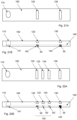
- the oligonucleotides 30, 30B are preferably provided in the portion of the microfluidic channel 140 aligned with the detection window 120, 122, 124.
- the oligonucleotides 30, 30B could be immobilized, such as attached, directly or indirectly, to the wall(s) of the microfluidic channel 140 or to the matrix or membrane if present in the microfluid channel 140.
- any labelled RCPs 20' transported along the microfluidic channel 140 will be captured by the, preferably immobilized, oligonucleotides 30, 30B to form labelled complexes 40 at the detection section 142.
Landscapes
- Chemical & Material Sciences (AREA)
- Organic Chemistry (AREA)
- Life Sciences & Earth Sciences (AREA)
- Zoology (AREA)
- Wood Science & Technology (AREA)
- Proteomics, Peptides & Aminoacids (AREA)
- Health & Medical Sciences (AREA)
- Engineering & Computer Science (AREA)
- Microbiology (AREA)
- Biochemistry (AREA)
- Physics & Mathematics (AREA)
- Molecular Biology (AREA)
- Biotechnology (AREA)
- Biophysics (AREA)
- Analytical Chemistry (AREA)
- Immunology (AREA)
- Bioinformatics & Cheminformatics (AREA)
- General Engineering & Computer Science (AREA)
- General Health & Medical Sciences (AREA)
- Genetics & Genomics (AREA)
- Chemical Kinetics & Catalysis (AREA)
- Measuring Or Testing Involving Enzymes Or Micro-Organisms (AREA)
Description
- The present invention generally relates to detection of target nucleic acid molecules, and in particular to detection of such target nucleic acid molecules using padlock probes and rolling circle amplification.
- The detection of target nucleic acid molecules has applications in many different fields, including notably clinically, for personalized medicine and in the diagnosis, prognosis and/or treatment of diseases, such as cancer, infectious diseases and inherited or genetic disorders, as well as in research and biosecurity.
- Target nucleic acid molecules may be detected using labelled hybridization probes, but hybridization probes have relatively high detection limit, and cannot readily be used to discriminate between similar nucleic acid sequences. To increase sensitivity, target nucleic acid molecules are typically amplified, to increase the amount of target nucleic acid sequence available for detection. Any of a variety of techniques known in the art may be used for the amplification, including rolling circle amplification (RCA).
- RCA utilizes a strand displacement polymerase enzyme, and requires a circular amplification template. Amplification of the circular template provides a concatenated RCA product (RCP) comprising multiple copies of a sequence complementary to that of the amplification template. Such a concatemer typically forms a ball or "blob", which may be visualized and detected, and thus RCA-based assays have been adopted for the detection of nucleic acid molecules.
- The specificity of nucleic acid molecule detection may be improved by the use of probes requiring dual recognition, or two binding sites for a target nucleic acid molecule, such as padlock probes. Padlock probes are linear oligonucleotides with two separate target-complementary binding regions, connected by an intervening "backbone" region. When the padlock probe has bound (hybridized) to its target nucleic acid sequence, the ends of the padlock probe may be ligated together to circularize the padlock probe. The circularized padlock probe may then be used as the template for a RCA reaction, and the RCP may be detected. The usage of padlock probes in detection of target nucleic acid molecules was initially described in
WO 97/09069 -
WO 2018/109206 relates to multiplexed methods of detecting an analyte in a sample using two or more padlock probes each specific to a different target sequence. The target sequence is either part of an analyte or indicative of the presence of an analyte in the sample. Each padlock probe comprises an analyte-specific reporter sequence, and either a restriction cleavage site located 3' of the analyte-specific reporter sequence or a first amplification primer binding site for an amplification reaction. - Padlock probes and RCA have been suggested as detection of nucleic acid molecules of pathogens, such as viruses or bacteria, such as in
WO 2021/202786 andWO 2022/026891 . - Clausson et al., Compaction of rolling circle amplification products increases signal integrity and signal-to-noise ratio, Scientific reports, 5: 12317 (2015) discloses the introduction of a cross-hybridizing DNA oligonucleotide during rolling circle amplification to obtain smaller fluorophore-labeled RCPs. The reduced size of the RCPS increases the local concentration of fluorophores and thereby the signal intensity increases together with the signal-to-noise ratio.
- Tang, Naked-eye detection of food-borne pathogens using multiplex hyperbranched rolling circle amplification and magnetic particles, Biosensors, 12(5): 1-11 (2022) discloses an assay for detection of pathogens. The assay uses a pair of universal primers for identifying target genes per reach tube. Ring padlock probes and corresponding universal primers start hyperbranched rolling circle amplification (HRCS) under the action of the polymerase to obtain branched chain amplification products, which are entangled with magnetic particles to form aggregated magnetic particle clusters.
- A limitation of the prior art technology is that RCA needs to be run for a relative long period of time in order to produce RCPs of sufficient length in order to form a ball or "blob", which may be visualized and detected.
- There is, thus, a need for a technology that speeds up the detection of target nucleic acid molecules.
- It is a general objective to enable detection of target nucleic acid molecules in a shorter period of time as compared to prior art protocols based on padlock probes and rolling circle amplification.
- This and other objectives are met by embodiments as disclosed herein.
- The present invention is defined in the independent claims. Further embodiments of the invention are defined in the dependent claims.
- An aspect of the invention relates to a method for detecting at least one target nucleic acid molecule in a sample. The method comprises contacting the sample with padlock probes comprising at their 5' and 3' ends target-binding regions complementary to probe-binding regions in the at least one target nucleic acid molecule. The method also comprises joining the 5' and 3' ends of the padlock probes while the target-binding regions are hybridized to the probe-binding regions to form circular padlock probes. The method further comprises rolling circle amplifying the circular padlock probes with labelled amplification primers comprising a detectable label and a probe-binding region complementary to a primer-binding region of the padlock probes to generate labelled rolling circle products. The method further comprises contacting the labelled rolling circle products with oligonucleotides comprising a plurality of binding regions having a nucleic acid sequence corresponding to at least a portion of the padlock probes outside of the primer-binding region to form an agglutinate of labelled complexes between the oligonucleotides and the labelled rolling circle products. The method additionally comprises detecting the agglutinate of the labelled complexes to detect the at least one target nucleic acid molecule.
- Another aspect of the invention relates to kit for detecting at least one target nucleic acid molecule in a sample. The kit comprises padlock probes comprising at their 5' and 3' ends target-binding regions complementary to probe-binding regions in at least one target nucleic acid molecule. The kit also comprises labelled amplification primers comprising a detectable label and a probe-binding region complementary to a primer-binding region of the padlock probes. The kit further comprises oligonucleotides comprising a plurality of binding regions having a nucleic acid sequence corresponding to at least a portion of the padlock probes outside of the primer-binding region.
- A further aspect of the invention relates to a microfluidic chip comprising a sample input configured to receive a sample comprising at least one target nucleic acid molecule and a microfluidic channel in fluid connection with the sample input. The microfluidic channel comprises a reagent section comprising i) padlock probes comprising at their 5' and 3' ends target-binding regions complementary to probe-binding regions in the at least one target nucleic acid molecule, ii) a ligase adapted to ligate the 5' and 3' ends of the padlock probes while the target-binding regions are hybridized to the probe-binding regions to form circular padlock probes, iii) labelled amplification primers comprising a detectable label and a probe-binding region complementary to a primer-binding region of the padlock probes, and iv) a polymerase adapted to rolling circle amplify the circular padlock probes with the labelled amplification primers to generate labelled rolling circle products. The microfluidic channel also comprises a detection section comprising oligonucleotides comprising a plurality of binding regions having a nucleic acid sequence corresponding to at least a portion of the padlock probes outside of the primer-binding region. The microfluidic chip also comprises a detection window aligned with at least a portion of the detection section and arranged to enable visual access to the at least a portion of the detection section.
- The agglutinate-promoting oligonucleotides contacted with the labelled rolling circle products (RCPs) promote formation of a detectable ball or agglutinate even for comparatively short RCPs, thereby only requiring a short duration of rolling circle amplification to get a detectable signal. Experimental data as presented herein indicate that the RCA can be reduced by at least a factor of four and still producing a more easily detectable signal as compared to prior art protocols lacking the usage of agglutinate-promoting oligonucleotides.
- The embodiments, together with further objects and advantages thereof, may best be understood by making reference to the following description taken together with the accompanying drawings, in which:
-
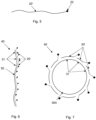
Fig. 1 schematically illustrates a padlock probe hybridized to a target nucleic acid molecule according to an embodiment; -
Fig. 2 schematically illustrates a circular padlock probe hybridized to a target nucleic acid molecule according to an embodiment; -
Fig. 3 schematically illustrates a labelled amplification primer hybridized to a circular padlock probe according to an embodiment; -
Fig. 4 schematically illustrates rolling circle amplification of a circular padlock probe according to an embodiment; -
Fig. 5 schematically illustrates a labelled rolling circle product according to an embodiment; -
Fig. 6 schematically illustrates a labelled complex according to an embodiment; -
Fig. 7 schematically illustrates a labelled complex according to another embodiment; -
Fig. 8 schematically illustrates an agglutinate of labelled complexes according to an embodiment; -
Fig. 9 schematically illustrates labelled amplification primers hybridized to a circular padlock probe according to an embodiment; -
Fig. 10 schematically illustrates padlock probes hybridized to a target nucleic acid molecule according to an embodiment; -
Fig. 11 schematically illustrates labelled amplification primers hybridized to circular padlock probes according to an embodiment; -
Fig. 12 schematically illustrates labelled amplification primers hybridized to circular padlock probes according to another embodiment; -
Fig. 13 schematically illustrates padlock probes hybridized to target nucleic acid molecules according to an embodiment; -
Fig. 14 schematically illustrates labelled amplification primers hybridized to circular padlock probes according to an embodiment; -
Fig. 15 schematically illustrates rolling circle amplifying of circular padlock probes according to an embodiment; -
Fig. 16 schematically illustrates labelled complexes according to an embodiment; -
Fig. 17 schematically illustrates a padlock probe hybridized to target nucleic acid molecules according to an embodiment; -
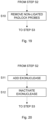
Fig. 18 is a flow chart illustrating an embodiment of a method of detecting a target nucleic acid molecule according to an embodiment; -
Fig. 19 is a flow chart illustrating an additional, optional step of the method shown inFig. 18 according to an embodiment; -
Fig. 20 is a flow chart illustrating an embodiment of the removing step inFig. 19 ; -
Figs. 21A and 21B illustrate a microfluidic chip in an upper view and a cross-sectional view according to an embodiment; -
Figs. 22A and 22B illustrate a microfluidic chip in an upper view and a cross-sectional view according to another embodiment; -
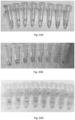
Figs. 23A to 23C illustrate reaction tubes after 10 minutes (23A), 25 minutes (23B) or 40 minutes (23C) of rolling circle amplification without any pre-made oligonucleotides; -
Fig. 24 illustrate reaction tubes after 10 minutes of rolling circle amplification with pre-made oligonucleotides; and -
Fig. 25 illustrate reaction tubes with pre-made oligonucleotides with correct or incorrect sequence. - The present invention generally relates to detection of target nucleic acid molecules, and in particular to detection of such target nucleic acid molecules using padlock probes and rolling circle amplification.
- Padlock probes and rolling circle amplification (RCA) can be used to detect the presence of target nucleic acid molecules in a sample at a high specificity since the padlock probes require dual recognition and ligation to form a circular padlock probe that can be amplified by RCA into an RCA product (RCP), which is a concatemeric product comprising multiple repeats of a complementary copy of the circularized padlock probe. In the art, such an RCP can be detected using labelled amplification primers during RCA so that the resulting RCPs will incorporate the label. If the RCPs have sufficient length, i.e., contain a sufficient high number of complementary copies of the circular padlock probe, the RCPs will become entangled with each other forming a labelled ball that could, due to the presence of the labels, be detected. In the art, the RCA must therefore be run for a comparatively long period of time in order to produce RCPs of sufficient length in order to form the ball or "blob", which may be visualized and detected. As a consequence, the RCA reaction time constitutes the major portion of the total time for detecting target nucleic acid molecules in a sample in the prior art.
- The present invention significantly speeds up such detection by merely requiring comparatively shorter RCPs, and thereby shorter RCA reaction times, and still being able to detect the labelled RCPs. This is possible according to the invention by using oligonucleotides comprising a plurality of binding regions, to which the labelled RCPs can bind. The oligonucleotides thereby promote entanglement of also shorter labelled RCPs to form a detectable ball or "blob", i.e., an agglutinate or aggregate, at a significant shorter period of time as compared to prior art techniques. This can be seen by comparing
Fig. 24 showing detectable agglutinates or aggregates of labelled RCPs bound to oligonucleotides according to the invention following 10 min of RCA andFigs. 23A-23C showing prior art, i.e., no oligonucleotides, after 10 min (Fig. 23A ), 25 min (Fig. 23B ) and 40 min (Fig. 23C ) of RCA. Hence, the present invention provides more easily detectable labelled complexes already after merely 10 min of RCA as compared to the prior art with 40 min of RCA. - An aspect of the invention thereby relates to a method for detecting at least one target
nucleic acid molecule 1 in a sample, seeFigs. 1-8 and18 . The method comprises contacting the sample in step S1 withpadlock probes 10 comprising at their 5' and 3' ends 14, 15 target-bindingregions regions nucleic acid molecule 1, seeFig. 1 . A next step S2 comprises joining the 5' and 3' ends 14, 15 of the padlock probes 10 while the target-bindingregions regions Fig. 2 . The method also comprises rolling circle amplifying the circular padlock probes 10' in step S3 with labelledamplification primers 20 comprising adetectable label 22 and a probe-bindingregion 21 complementary to a primer-bindingregion 11 of the padlock probes 10 to generate labelled rolling circle products 20', seeFigs. 3 to 5 . The labelled rolling circle products 20' are contacted in step S4 witholigonucleotides Figs. 6 and 7 , comprising a plurality ofbinding regions 31 having a nucleic acid sequence corresponding to at least a portion of the padlock probes 10 outside of the primer-bindingregion 11 to form anagglutinate 50 of labelledcomplexes 40 between theoligonucleotides Fig. 8 . Theagglutinate 50 of the labelledcomplexes 40 are then detected in step S5 to detect the at least one targetnucleic acid molecule 1. - The method as shown in
Fig. 18 thereby produces anagglutinate 50 of labelledcomplexes 40 if the sample contained the at least one targetnucleic acid molecule 1. This means that presence of theagglutinate 50 of the labelledcomplexes 40 in step S5 ofFig. 18 is an indication of presence of the at least one targetnucleic acid molecule 1 in thesample 1. - The at least one target
nucleic acid molecule 1 detected by the method as shown inFig. 18 could be any nucleic acid molecule, such as a deoxyribonucleic acid (DNA) molecule, a ribonucleic acid (RNA) molecule, or a nucleic acid molecule comprising synthetic nucleotides or nucleotide analogues, such as locked nucleic acid (LNA), peptide nucleic acid (PNA), etc. The at least one targetnucleic acid molecule 1 could be single-stranded or double-stranded. - Illustrative, but non-limiting, examples of target DNA molecules include genomic DNA molecules, cell-free DNA (cfDNA) molecules, circulating tumor DNA (ctDNA) molecules, complementary DNA (cDNA) molecules, or indeed any other DNA molecule from any source, such as viral, bacterial or fungal DNA molecules.
- Illustrative, but non-limiting, examples of target RNA molecules include viral, bacterial or fungal RNA molecules, or indeed RNA molecules from any source, such as RNA genomic molecules, complementary RNA (cRNA) molecules, RNA molecules from virions (vRNA), micro RNA (miRNA) molecules, small interfering RNA (siRNA) molecules, messenger RNA (mRNA) molecules, transfer RNA (tRNA) molecules, ribosomal RNA (rRNA) molecules, such as 16S rRNA molecules, small nuclear RNA (snRNA) molecules, small nucleolar RNA (snoRNA) molecules, extracellular RNA (exRNA) molecules, piwi-interacting RNA (piRNA) molecules and long non-coding RNA molecules.
- The target nucleic acid molecule is preferably present in a sample, such as a biological sample, for instance, from a subject, such as an animal subject, preferably a mammal subject, and more preferably a human subject. In such a case, the biological sample could be a body fluid sample, such as a blood sample, a blood plasma sample, a blood serum sample, a saliva sample, a sputum sample, a mucosal sample, such as a nasal mucosal lining fluid sample, an oropharyngeal sample, a nasopharyngeal sample, a nasal sample, a bronchoalveolar lavage fluid (BALF) sample, a breast milk sample, a cerebrospinal fluid sample, a urine sample, a feces sample, a tear fluid sample or an endometrial fluid sample, or a body tissue sample, such as a biopsy sample, or a cell sample.
- The sample may contain any pathogen or cellular material, including prokaryotic cells, eukaryotic cells, viruses, bacteria, fungi, bacteriophages, mycoplasmas, protoplasts and organelles. For instance, the sample may contain pathogens, such as bacteria, fungi and/or viruses, isolated from a clinical sample taken from a subject. In such a sample, the at least one target nucleic acid molecule may be at least one fungal nucleic acid molecule, at least one bacterial nucleic acid molecule and/or at least one viral nucleic acid molecule.
- Other examples include environmental samples including, but not limited to, soil samples, water samples, food samples, etc.
- In an embodiment, the at least one target nucleic acid molecule is indicative of the presence of an analyte. For instance, the at least one target nucleic acid molecule could be a reporter for the analyte. Such a reporter can then be used or generated during an assay for an analyte, such as a target molecule, which is further described herein in connection
Fig. 17 . The target nucleic acid molecule may then act as a reporter and be in the form of a tag or label attached to or forming part of one or more target-binding molecules. A target nucleic acid molecule as a reporter is optionally generated during an assay or in connection with detection of such a target molecule, for example by a ligation reaction in a proximity ligation assay, an extension reaction in a proximity extension assay, or by a cleavage reaction. In such a case, the at last one target nucleic acid molecule could be at least one synthetic or artificial nucleic acid molecule. - The sample may optionally be treated or processed prior to contacting the sample with the padlock probes 10 in step S1 of
Fig. 18 . For instance, any targetnucleic acid molecules 1 could be isolated, separated or removed from an original sample to get an enriched sample that is used in step S1. Other examples of sample processing include fragmenting larger nucleic acid molecules present in the sample into shorter nucleic acid fragments, at least a portion of which are used as targetnucleic acid molecules 1. - The method of the invention uses padlock probes 10 that are contacted in step S1 with the sample. The padlock probes 10 of the invention comprise, from their 5'
end 14 towards their 3'end 15, a first target-bindingregion 12, a connectingbridge 16, and a second target-bindingregion 13. The connectingbridge 16, also referred to as backbone region, connects the two target-bindingregions Fig. 1 . This connectingbridge 16 comprises the primer-bindingregion 11, to which the labelledamplification primers 20 can bind in step S3. -
Padlock probe 10 as used herein refers to any probe capable being circularized following hybridization to a targetnucleic acid molecule 1. - The target-binding
regions regions nucleic acid molecule 1. - Complementary as used herein refers both to complete complementarity of nucleotide sequences, in some cases referred to as an identical sequence, as well as complementarity sufficient to achieve the desired binding of nucleotide sequences. Complementary refers to the standard base pairing rules between G-C, A-T and A-U. Certain nucleotides not commonly found in natural nucleotide sequences or chemically synthesized as mentioned in the foregoing may be included in the nucleotide sequences described herein. Complementarity need not be perfect. In clear contrast, stable duplexes may contain mismatched base pairs, degenerative, or unmatched nucleotides. Complementary is characterized by the capacity for precise pairing of purine and pyrimidine bases of one sequence (strand, oligonucleotide) of a nucleic acid molecule to another sequence of a nucleic acid molecule, such that the order of purine and pyrimidine bases matches and binds to (hybridizes with) the other, complementary sequence.
- The complementarity between the target-binding
regions regions regions regions nucleic acid molecule 1. Thus, the at least one targetnucleic acid molecule 1 is contacted with the padlock probes 10 under hybridization conditions, during which the first target-bindingregion 12 complementary to a first probe-bindingregion 2 of the at least one targetnucleic acid molecule 1 hybridizes to this first probe-bindingregion 2 and the second target-bindingregion 13 complementary to a second probe-bindingregion 3 of the at least one targetnucleic acid molecule 1 hybridizes to this second probe-bindingregion 3 as shown inFig. 1 . First and second as used herein for the first and second probe-bindingregion region regions - Hybridization or hybridization condition denotes the process in which single-stranded nucleotide sequences anneal to complementary nucleotide sequences. Such annealing between complementary nucleotide sequences is dependent on several parameters including, for instance, ionic strength, temperature, length of the target-binding
regions regions - Step S1 in
Fig. 18 could be performed according to various embodiments. For instance, the padlock probes 10 could be added to the sample, which is then present in a suitable vessel, such as a well of a multi-well plate, a reaction tube, for instance an Eppendorf® tube, etc. Alternatively, the padlock probes 10 could be pre-loaded in such a well or reaction tube and then the sample is added thereto. It is also possible to use amicrofluidic chip 100, seeFigs. 21A-22B pre-loaded with, among others, the padlock probes 10 and comprising a sample input orinlet 110, to which the sample is added. A further embodiment is to mix the sample with the padlock probes 10 and then adding the mixture to the well, reaction tube ormicrofluidic chip 100. - The next step S2 in
Fig. 18 comprises joining the 5' and 3' ends 14, 15 of the padlock probes 10 while the target-bindingregions regions Fig. 2 . The joining of the 5' and 3' ends 14, 15 of the padlock probes 10 could be a direct join of the 5' and 3' ends 14, 15 or an indirect join of the 5' and 3' ends 14, 15. - In an embodiment, step S2 in
Fig. 18 comprises ligating the 5' and 3' ends 14, 15 of the padlock probes 10 while the target-bindingregions regions regions regions - In a particular embodiment, the ligating agent is a thermostable ligating agent, preferably a thermostable ligase, and in particular a thermostable DNA ligase. For instance, the thermostable ligase could be selected from the illustrative group comprising Ampligase® DNA ligase, Taq DNA ligase, Pfu DNA ligase and 9°N™ DNA ligase. Other non-limiting, but illustrative, examples of DNA ligases include Chlorella virus DNA ligase, also referred to as Paramecium bursaria Chlorella virus 1 (PBCV-1) DNA ligase or SplintR ligase, Escherichia coli DNA ligase encoded by the lig gene; T4 or T7 DNA ligase from bacteriophage T4 or T7; DNA ligase I, II, III or IV. An illustrative, but non-limiting, example of RNA ligases is
T4 RNA ligase 2, also referred to as T4 Rnl2 or gp24.1. - Optionally, step S2 of
Fig. 18 comprises adding a ligating agent, preferably a ligase, more preferably a DNA ligase, to the sample or a mixture of the sample and the padlock probes 10 to ligate together the 5' and 3' ends 14, 15 of the padlock probes 10. Alternatively, the ligating agent could be pre-mixed with the padlock probes 10. - In an embodiment, the 5'
end 14 of the padlock probes 10 comprises a 5' phosphate group to facilitate ligation of the 5' and 3' ends 12, 14 using the ligating agent. - In the above-described embodiments, the padlock probes 10 hybridize to the at least one target
nucleic acid molecule 1 with the 5' and 3' ends 14, 15 directly adjacent to each other to facilitate direct ligation of the 5' and 3'end - In other embodiments, the target-binding
regions regions nucleic acid molecule 1 with a gap between the 5' and 3' ends 14, 15. The joining of the 5' and 3' ends 14, 15 in step S2 is then an indirect joining of these ends 14, 15. In such a case, the gap between the 5' and 3' ends 14, 15 is filled with at least one gap-filling oligonucleotide or molecular inversion probe that is capable of binding to the targetnucleic acid molecule 1 at one or more regions in between the probe-bindingregions end 15 of the padlock probes 10 while hybridized to the at least one targetnucleic acid molecule 1. In such a case, the targetnucleic acid molecule 1 acts as a template for the extension with thepadlock probe 10 acting as primer. Such an extension is performed by a polymerase and nucleotides (dNTPs) added to the sample or a mixture of the sample and padlock probes 10, or pre-mixed with the padlock probes 10. In the above-described embodiments, a ligating agent, such as the above-described ligases, could join the 5' and 3' ends 14, 15 and the gap-filling oligonucleotide(s) or the 5' end and the extended 3'end 15. - Examples of polymerases that can be used for such an extension include polymerases used in step S3 and further discussed below.
- Optionally, the polymerase used for 3' end extension could be inactivated prior to rolling circle amplification in step S3. Such a polymerase inactivation can be performed according to well-known techniques including, but not limited to, heat inactivation.
- The formed circular single stranded padlock probes 10' are then amplified in step S3 by so-called RCA using labelled
amplification primers 20 to generate the labelled RCPs 20'. RCA uses a strand-displacing polymerase to extend the labelledamplification primers 20 hybridized to the primer-bindingregion 11 of the circular padlock probes 10', seeFigs. 3 and 4 . The strand displacing activity of the polymerase displaces the extended labelledamplification primers 20 effectively causing the circular padlock probes 10' to "roll" during RCA. - Illustrative, but non-limiting, examples of strand-displacing polymerases that could be used in step S3 include Phi29 DNA polymerase, Bst polymerase, Klenow fragment, and derivatives thereof.
- The strand-displacing polymerase and nucleotides (dNTPs) needed for RCA could be added to sample or the mixture of the sample and the padlock probes 10, or are pre-mixed with the padlock probes 10.
- The labelled
amplification primers 20 used in the RCA of step S3 inFig. 18 comprise a probe-bindingregion 21 complementary to the primer-bindingregion 11 of the padlock probes 10. Accordingly, the labelledamplification primers 20 are capable of hybridizing to this primer-bindingregion 11 of the circular padlock probes 10'. The labelledamplification primers 20 could be added together with strand-displacing polymerase to the sample or the mixture of the sample and the padlock probes 10, or could be pre-mixed with the padlock probes 10. Thus, the labelledamplification primers 20 do not significantly interfere with the joining of the 5' and 3' ends 14, 15 of the padlock probes 10 and could thereby be present in the reaction mixture during such a joining in step S2. - The labelled
amplification primers 20 comprise adetectable label 22, preferably at or in connection with their 5' ends. Thedetectable label 22 enables detection of the labelledcomplexes 40 produced in step S4 if the sample contained the at least one targetnucleic acid molecule 1. Thelabel 22 could be anydetectable label 22. Illustrative, but non-limiting, examples of suchdetectable labels 22 include beads, microparticles, nanoparticles, fluorophores, radiolabels, metal-containing labels, colorimetric labels, etc. - In an embodiment, the
detectable labels 22 aredetectable beads 22. In this embodiment, step S3 comprises RCA the circular padlock probes 10 with the labelledamplification primers 20 comprising adetectable bead 22 and the probe-bindingregion 21 to generate bead-labelled RCPs 20'. - The detection of the
agglutinate 50 of thecomplexes 40 incorporating thedetectable label 22 in step S5 can then be performed according to various embodiments depending on the particulardetectable label 22. For instance, agglutinates 50 ofcomplexes 40 incorporating beads, microparticles, nanoparticles, metal-containing labels or colorimetric labels could be detected by visible inspection or light microscopy, whereas fluorescence microscopy could be used to detectagglutinates 50 ofcomplexes 40 comprisingfluorophores 22 and autoradiography could be used for detection ofagglutinates 50 ofradiolabeled complexes 40. Further, colorimetric readout by image analysis of images captured by a camera could be used to detect colorimetric labels. - Step S4 of
Fig. 18 comprises contacting the labelled RCPs 20' witholigonucleotides binding regions 31 having a nucleic acid sequence corresponding to at least a portion of the padlock probes 10 outside of the primer-bindingregion 11 to form anagglutinate 50 of labelledcomplexes 40 between theoligonucleotides Figs. 6-8 . This means that theoligonucleotides binding regions 31 each capable of binding to a respective labelled RCP 20'. Accordingly, theoligonucleotides - The binding
regions 31 of theoligonucleotides region 11. This at least a portion of the padlock probes 10 is preferably a portion of the connectingbridge 16 outside of the primer-bindingregion 11. The at least a portion of the padlock probes 10 corresponds to the bindingregions 31 and thereby enables the bindingregions 31 to hybridize to the labelled RCPs 20' at a respective portion of the repeats that is complementary to the at least a portion of the padlock probes 10. This means that this at least a portion of the padlock probes 10 is different than and preferably non-overlapping with the primer-bindingregion 11. The at least a portion of the padlock probes 10 may, though, at least partly overlap into the primer-bindingregion 11 with a short number of nucleotides as long as the bindingregions 31 preferentially bind to the labelled RCPs 20' over the labelledamplification primers 20. This means that theoligonucleotides amplification primers 20 or at least has preferential binding of the labelled RCPs 20' over the labelledamplification primers 20. - In an embodiment, the
oligonucleotides 30 are linear single-strandedoligonucleotides 30 comprising the plurality ofbinding regions 31 as shown inFig. 6 . In another embodiment, theoligonucleotides 30A are circular single-strandedoligonucleotides 30A comprising the plurality ofbinding regions 31 as shown inFig. 7 . It is also possible to use a combination oflinear oligonucleotides 30 andcircular oligonucleotides 30A in step S4. - In an embodiment, the
oligonucleotides 30A arecircular oligonucleotides 30A. In such an embodiment, step S4 comprises contacting the labeled RCPs 20' withcircular oligonucleotides 30A comprising the plurality ofbinding regions 31 to form theagglutinate 50 of the labelledcomplexes 40 between thecircular oligonucleotides 30A and the labelled RCPs 20'. - The
oligonucleotides Fig. 8 . Such a ball or blob is detectable due to the presence of a plurality oflabels 22 carried by the labelled RCPs 20' hybridized to theoligonucleotides - In an embodiment, step S4 in
Fig. 18 comprises contacting the labelled RCPs 20' with theoligonucleotides agglutinate 50 of multiple, i.e., at least two, labelledcomplexes 40, seeFig. 8 . In such an embodiment, step S5 comprises detecting theagglutinate 50 of the multiple labelled complexed 40 to detect the at least one targetnucleic acid molecule 1. Hence, in this embodiment, multiple labelledcomplexes 40 are entangled to form an agglutinate 50 comprising multiple such labelledcomplexes 40.Fig. 24 illustratessuch agglutinates 50 comprising colored beads as labels 22. -
Fig. 19 is a flow chart illustrating an additional, optional step of the method shown inFig. 18 . The method continues from step S2 inFig. 18 and continues to step S10. This step S10 comprises removing any non-joined padlock probes 10 following joining the 5' and 3' ends 14, 15 of the padlock probes 10 in step S2 but prior to RCA the circular padlock probes 10 in step S3. The method then continues to step S3 inFig. 18 . -
Fig. 20 is a flow chart illustrating an embodiment of the removing step S10 inFig. 19 . In this embodiment, the method comprises adding an exonuclease to the sample in step S11 to enzymatically degrade the non-joined padlock probes 10. The method also comprises inactivating the exonuclease in step S11. - The exonuclease added to the sample in step S11 enzymatically cleaves nucleotides one at a time from the 5'
end 14 or the 3'end 15 of the non-circularized padlock probes 10. The exonuclease thereby catalyzes a hydrolyzing reaction that breaks phosphodiester bonds at either the 5'end 14 or the 3'end 15. The exonuclease will not degrade the circular padlock probes 10' following joining of the 5' and 3' ends 14, 15 of the padlock probes 10. - Illustrative, but non-limiting, examples of exonucleases that could be used in the embodiment shown in
Fig. 20 include exonuclease I, II, III, IV, V, VI, VII, and VIII. - The inactivation of the exonuclease in step S12 can be performed according to well-known techniques, including heat inactivation.
- In this embodiment, the labelled
amplification primers 20 are preferably added to the sample following inactivation of the exonuclease to prevent the exonuclease from degrading the labelledamplification primers 20. Alternatively, if the labelledamplification primers 20 comprises thedetectable label 22 at their 5' ends, then the labelledamplification primers 20 could be present when the exonuclease is added if the exonuclease is a 5' → 3' exonuclease. - In another embodiment, the
non-joined padlock 10 could be removed in step S10 by washing. In such an embodiment, a solid phase is used to capture the circular padlock probes 10'. For instance, capturing oligonucleotides that will bind only circular padlock probes 10' could be immobilized on the solid phase, such as by streptavidin-biotin binding. In such a case, the capturingoligonucleotides - In an embodiment, the padlock probes 10 could be so-called self-destruction padlock probes 10. In such an embodiment, the 3' arm of the padlock probes 10 is designed to enable hybridization to the
padlock probe 10 with only a few nucleotides. This means that if thepadlock probe 10 is not ligated, thepadlock probe 10 will form a hairpin structure once the polymerase is added. - Removal of non-joined padlock probes 10 in step S10 could be beneficial to reduce the risk of non-joined padlock probes 10 binding to the RCPs 20' forming a double-stranded product. Such a binding of non-joined padlock probes 10 to the RCPs 20' could compete with binding of the RCPs 20' to the
oligonucleotides - In an embodiment, RCA in step S3 comprises RCA the circular padlock probes 10' with the labelled
amplification primers 20 to generate the labelled RCPs 20' comprising up to 10 repeats of a nucleic acid sequence complementary to a nucleic acid sequence of the padlock probes 10. Hence, in this embodiment, the labelled RCPs 20' are concatemers comprising up to 10 copies of a nucleic acid sequence complementary to the circular padlock probes 10'. In a preferred embodiment, the labelled RCPs 20' comprise up to 7 repeats, and preferably up to 5 repeats of the nucleic acid sequence complementary to the nucleic acid sequence of the padlock probes 10. In a currently preferred embodiment, the labelled RCPs 20' comprise from 1 up to 10 repeats, preferably from 1 up to 7 repeats, and more preferably from 1 up to 5 repeats of the nucleic acid sequence complementary to the nucleic acid sequence of the padlock probes 10. - Hence, the labelled RCPs 20' generated according to these embodiments require comparatively short RCA times to thereby produce labelled RCPs 20' with merely one or a few repeats. The present invention still enables detection of the labelled RCPs 20' even though they merely contain such few repeats by using the
oligonucleotides Fig. 24 ), whereas visual detection of the labelled RCPs 20' without usage of theoligonucleotides - In an embodiment, step S4 of
Fig. 18 comprises contacting the labelled RCPs 20' with theoligonucleotides binding region 31. In a preferred embodiment, theoligonucleotides binding region 31, preferably from 500 up to 1500 repeats of thebinding region 31. - Hence, the
oligonucleotides binding regions 31 to thereby enable binding of a high number of labelled RCPs 20' per such anoligonucleotide oligonucleotide detectable labels 22, which facilitates detection of the labelledcomplexes 40 between theoligonucleotides - The
oligonucleotides oligonucleotides complexes 40 and agglutinates 50 comprising the labelled RCPs 20'. Hence, theoligonucleotides detectable complexes 40 and agglutinates 50 even though the labelled RCPs 20' as such are too small or short to form anydetectable agglutinates 50 without theoligonucleotides - In an embodiment, multiple sets of labelled
amplification primers primer binding regions Fig. 9 . In such an embodiment, step S3 ofFig. 18 preferably comprises RCA the circular padlock probes 10' with multiple sets of labelledamplification primers amplification primers region region 21 of the labelledamplification primers 20 in one set of the multiple sets is complementary to another primer-bindingregion 11 of the padlock probes 10 than the primer-bindingregion 21A of the labelledamplification primers 20A in another set of the multiple sets. The labelledamplification primers detectable label 22. - In
Fig. 9 , two sets ofdifferent amplification primers amplification primers 20 in the first set comprise a first probe-bindingregion 21 complementary to a first primer-bindingregion 11 of the padlock probes 10 and adetectable label 22. Correspondingly, theamplification primers 20A in the second set comprise a second probe-bindingregion 21A complementary to a second primer-bindingregion 11A of the padlock probes 10 and thedetectable label 22. This means that the connectingbridge 16 comprises, in this embodiment, two primer-bindingregions - The embodiments are not limited to using merely two sets of labelled
amplification primers - In some embodiments, it could be beneficial to use multiple sets of labelled
amplification primers oligonucleotides complexes 40. This is possible since the labelledamplification primers detectable label 22, thereby producing the same detectable signal. - Another embodiment of increasing the detectable signal is to use multiple sets of padlock probes 10, 10A as shown in
Figs. 10 and 11 . In such an embodiment, step S1 inFig. 18 comprises contacting the sample with multiple sets of padlock probes 10, 10A. The padlock probes 10, 10A in each set of the multiple sets comprise the same target-bindingregions regions regions nucleic acid molecule 1 than the target-bindingregions amplification primers amplification primers region region 21 of the labelledamplification primers 20 in one set of the multiple sets is complementary to another primer-bindingregion 11 of the padlock probes 10, 10A than the primer-bindingregion 21A of the labelledamplification primers 20A in another set of the multiple sets. The labelledamplification primers detectable label 22. - In
Fig. 10 , two sets of different padlock probes 10, 10A are used. In such a case, the padlock probes 10 in a first set comprises a first set of target-bindingregions regions nucleic acid molecule 1. Correspondingly, the padlock probes 10A in a second set comprises a second set oftarget binding regions regions nucleic acid molecule 1. This means that padlock probes 10, 10A in the different sets hybridize todifferent regions nucleic acid molecule 1, seeFig. 10 . Furthermore, the labelledamplification primers 20 in a first set comprise a first probe-bindingregion 21 complementary to a first primer-bindingregion 11 of the padlock probes 10 in the first set and thedetectable label 22. Correspondingly, the labelledamplification primers 20A in a second set comprise a second probe-bindingregion 21A complementary to a second primer-bindingregion 11A of the padlock probes 10A in the second set and thedetectable label 22. - In this embodiment, two species or sets of labelled RCPs 20' will be produced in the RCA of step S3. The two species of labelled RCPs 20' comprise different nucleic acid sequences since they are produced by RCA of different padlock probes 10, 10A having at least partly different
nucleic acid sequences - In an embodiment, the padlock probes 10, 10A in the multiple sets comprise a respective portion having the same nucleic acid sequence as the nucleic acid sequence of the binding
regions 31 of theoligonucleotides bridge region oligonucleotides oligonucleotides - In another embodiment, step S4 of
Fig. 18 comprises contacting the multiple sets of labelled RCPs 20' with multiple sets ofoligonucleotides agglutinate 50 of multiple sets of labelledcomplexes 40 between theoligonucleotides oligonucleotides binding regions 31. Thebinding region 31 of theoligonucleotides binding region 31 of the oligonucleotides in another set of the multiple sets. In this embodiment, different species ofoligonucleotides complexes 40 are formed but all these labelledcomplexes 40 comprise the same type ofdetectable label 22 and thereby produce the same detectable signal in the form of adetectable agglutinate 50. - In a further embodiment, the labelled
amplification primers detectable labels 22. In such a case, a targetnucleic acid molecule 1 comprising the first and second sets of probe-bindingregions complexes 40 withdifferent labels 22. Hence, in such a case a correct detection of the targetnucleic acid molecule 1 in the sample would imply detection of two different labelledcomplexes 40. In such an embodiment, step S1 inFig. 18 comprises contacting the sample with multiple sets of padlock probes 10, 10A. The padlock probes 10, 10A in each set of the multiple sets comprise the same target-bindingregions regions regions nucleic acid molecule 1 than the target-bindingregions amplification primers amplification primers region detectable label 22. The probe-bindingregion 21 of the labelledamplification primers 20 in one set of the multiple sets is complementary to another primer-bindingregion 11 of the padlock probes 10, 10A than the primer-bindingregion 21A of the labelledamplification primers 20A in another set of the multiple sets. Furthermore, thedetectable label 22 of the labelledamplification primers 20 in one set of the multiple sets is different than the detectable label of the labelledamplification primers 20A in another set of the multiple sets. Step S4 ofFig. 18 comprises contacting the multiple sets of labelled RCPs 20' with multiple sets ofoligonucleotides agglutinate 50 of multiple sets of labelledcomplexes 40 between theoligonucleotides oligonucleotides binding regions 31. Thebinding region 31 of theoligonucleotides binding region 31 of the oligonucleotides in another set of the multiple sets. In this embodiment, different species ofoligonucleotides agglutinate 50 of multiple sets of labelledcomplexes 40 ormultiple agglutinates 50, each of a respective set of labelledcomplexes 40, are formed and produce the different detectable signals. - This embodiment could increase the specificity of the method by requiring multiple different detectable signals to confirm presence of the at least one target
nucleic acid molecule 1 in the sample. - A further embodiment is shown by
Figs. 10 and 12 . In this embodiment, step S1 ofFig. 18 comprises contacting the sample with multiple sets of padlock probes 10, 10A. The padlock probes 10, 10A in each set of the multiple sets comprise the same target-bindingregions regions regions nucleic acid molecule 1 than the target-bindingregions Fig. 10 . However, in this embodiment, the padlock probes 10, 10A in the multiple sets comprise the sameprimer binding region 11. - This means that only a single set of labelled
amplification primers 11 are needed in the RCA of step S3 since the labelledamplification primers 11 can bind to the circular padlock probes 10', 10A' even though these circular padlock probes 10', 10A' partly comprise differentnucleic acid sequences region 11 is the same in the multiple sets of padlock probes 10, 10A, seeFig. 12 . - The present invention can be used to detect the presence of multiple different target
nucleic acid molecules Figs. 13 to 16 . In such an embodiment, step S1 ofFig. 18 comprises contacting a sample comprising multiple different targetnucleic acid molecules Fig. 13 . The padlock probes 10, 10B in each set of the multiple sets comprise the same target-bindingregions regions regions nucleic acid molecules regions - Step S2 comprises, in this embodiment, joining the 5' and 3' ends 14, 15 of the padlock probes 10, 10B while the target-binding
regions regions - Step S3 comprises, in this embodiment, RCA the circular padlock probes 10', 10B' with multiple sets of labelled
amplification primers RCPs 20', 20B', seeFigs. 14 and15 . The labelledamplification primers region detectable label region 21 of the labelledamplification primers 20 in one set of the multiple sets is complementary to another primer-bindingregion 11 of the padlock probes 10, 10B than the primer-bindingregion 21B of the labelledamplification primers 20B in another set of the multiple sets. Thedetectable label 22 of the labelledamplification primers 20 in one set of the multiple sets is different than thedetectable label 22B of the labelledamplification primers 20B in another set of the multiple sets. - The method also comprises, in this embodiment, contacting the labelled
RCPs 20', 20B' with multiple sets ofoligonucleotides agglutinate 50 of the labelledcomplexes oligonucleotides RCPs 20', 20B', seeFig. 16 . In this embodiment, theoligonucleotides binding regions regions 31 of theoligonucleotides 30 in one set of the multiple sets have different nucleic acid sequences than the bindingregions 31B of theoligonucleotides 30B in another set of the multiple sets. - Step S5 comprises detecting at least one agglutinates 50 of multiple labelled
complexes different labels nucleic acid molecules - This step S5 could, thus, involve detecting one agglutinate 50that is a mixture of the multiple labelled
complexes different labels multiple agglutinates 50, each being anagglutinate 50 of multiple complexed 40, 40B with arespective label - The above-described and in
Figs. 13-16 shown embodiment thereby enables detection of the presence of multiple different targetnucleic acid molecules nucleic acid molecules - This embodiment thereby provides a multiplex detection allowing identification of one or more different species of target nucleic acid molecules in a single sample, which thereby could indicate the presence of one or more pathogens.
- The embodiments described in the foregoing in connection with
Figs. 10-12 can be applied to the embodiment discussed above and in connection withFigs. 13-16 . In such a case, multiple sets of padlock probes could be targeting onenucleic acid molecule 1 and one or multiple sets of padlock probes could be targeting anothernucleic acid molecule 1B in the same sample. - As mentioned in the foregoing, the embodiments described in connection with
Figs. 10-16 are not limited to using two sets of padlock probes 10, 10A, 10B implying that more than two sets could be used. - In an embodiment, the at least one target nucleic acid molecule is not originally present in the sample to be tested. Rather the sample comprises at least one
target molecule 70, seeFig. 17 . Such atarget molecule 70 could then be a molecule other than a nucleic acid molecule or be a complex of one or more nucleic acid molecules and one or more other molecules. As an illustrative example, thetarget molecule 70 could be a protein, a polypeptide or at least comprise at least one protein or polypeptide domain. - In such a case, target-binding
molecules target molecule 70 and comprising a respective targetnucleic acid molecule 1', 1" could be used. This means that the targetnucleic acid molecules 1', 1" are thereby introduced by the target-bindingmolecules molecules target molecule 70 to bring the targetnucleic acid molecules 1', 1" attached to, or forming part of, the target-bindingmolecules padlock probe 10 to bind to respective probe-bindingregions nucleic acid molecules 1', 1" as shown inFig. 17 . - The detection of the target
nucleic acid molecules 1', 1" in the sample is then indicative of the presence of thetarget molecule 70 in the sample. - In an embodiment, the target-binding
molecules - The
antibodies target molecule 70, and preferably to different epitopes on thetarget molecule 70. - The specificity of an antibody, or an antigen-binding fragment thereof, can be determined based on affinity and/or avidity. The affinity, represented by the equilibrium constant for the dissociation (Kd) of an antigen with the antibody, or the antigen-binding fragment thereof, is a measure for the binding strength between an antigenic determinant, i.e., epitope, and an antigen-binding site on the antibody, or the antigen-binding fragment thereof. The lesser the value of Kd, the stronger the binding strength between the antigenic determinant and the antibody, or the antigen-binding fragment thereof. Alternatively, the affinity can also be expressed as the affinity constant (Ka), which is 1/Kd. As will be clear to the skilled person, affinity can be determined in a manner known per se, depending on the specific antigen of interest.
- Avidity is the measure of the strength of binding between an antibody, or an antigen-binding fragment thereof, and the pertinent antigen. Avidity is related to both the affinity between an antigenic determinant and its antigen binding site on the antibody, or the antigen-binding fragment thereof, and the number of pertinent binding sites present on the antibody, or the antigen-binding fragment thereof.
- Typically, antibodies, or antigen-binding fragments thereof, will bind to their antigen with a dissociation constant (Kd) of 10-5 to 10-12 moles/liter (M) or less, and preferably 10-7 to 10-12 M or less and more preferably 10-8 to 10-12 M, i.e., with an association constant (Ka) of 105 to 1012 M-1 or more, and preferably 107 to 1012 M-1 or more and more preferably 108 to 1012 M-1.
- Typically, any Kd value greater than 10-4 M (or any Ka value lower than 104 M-1) is generally considered to indicate non-specific binding.
- Specific binding of an antibody, or an antigen-binding fragment thereof, to an antigen or antigenic determinant can be determined in any suitable manner known per se, including, for example, Scatchard analysis and/or competitive binding assays, such as radioimmunoassays (RIA), enzyme immunoassays (EIA) and sandwich competition assays, and the different variants thereof known per se in the art.
- In an embodiment, the
antibodies antibodies - An antigen-binding fragment of an antibody as used herein can be selected from a group consisting of a single chain antibody, a Fv fragment, a scFv fragment, a Fab fragment, a F(ab')2 fragment, a Fab' fragment, a Fd fragment, a single-domain antibody (sdAb), a scFv-Fc fragment, and a di-scFv fragment.
- In such embodiment, step S1 of
Fig. 18 comprises contacting the sample with multiple target-bindingmolecules target molecule 70, and padlock probes 10. Each target-bindingmolecule molecules nucleic acid molecule 1', 1". The padlock probes 10 comprise at their 5' and 3' ends target-bindingregions regions nucleic acid molecules 1', 1". Step S2 comprises, in this embodiment, joining the 5' and 3' ends 14, 15 of the padlock probes 10 while the target-bindingregions regions molecules target molecule 70 to form circular padlock probes 10'. In this embodiment, step S5 comprises detecting theagglutinate 50 of the labelledcomplexes 40 to detect the respective targetnucleic acid molecules 1', 1" and thereby thetarget molecule 70. - In an embodiment, steps S1-S4 of
Fig. 18 are performed in areaction tube 60, such as an Eppendorf® tube, seeFig. 24 , or in a well of a multi-well plate. The detection step S5 can also be performed with the labelledcomplexes 40 present in thereaction tube 60 or well. - In an embodiment, the above-described steps S1-S4 and optionally also S5 are performed in solution, i.e., without the need for any solid phase.
- In another embodiment, the method of the invention is performed using a
microfluidic chip 100, which will be further described below in connection withFigs. 21A-22B . - Another aspect of the invention relates to a kit for detecting at least one target
nucleic acid molecule 1 in a sample. The kit comprises padlock probes 10 comprising at their 5' and 3' ends 14, 15 target-bindingregions regions nucleic acid molecule 1. The kit also comprises labelledamplification primers 20 comprising adetectable label 22 and a probe-bindingregion 21 complementary to a primer-bindingregion 11 of the padlock probes 10. The kit further comprisesoligonucleotides binding regions 31 having a nucleic acid sequence corresponding to at least a portion of the padlock probes 10 outside of the primer-bindingregion 11. - In an embodiment, the kit further comprises a ligase adapted to ligate the 5' and 3' ends 14, 15 of the padlock probes 10 while the target-binding
regions regions - In an embodiment, the kit also comprises a polymerase adapted to rolling circle amplify the circular padlock probes 10' with the labelled
amplification primers 20 to generate labelled RCPs 20'. - Examples of ligases and polymerases that could be included in the kit are presented in the foregoing.
- The kit may optionally also comprise other components required by the ligase and/or the polymerase, such as nucleotides (dNTPs), buffer, etc.
- The kit may also comprise a reaction vessel, such as a
reaction tube 60, well, or amicrofluidic chip 100, in which to perform the detection of at least one targetnucleic acid molecule 1. - The kit of the invention is adapted to perform the method for detecting at least one target
nucleic acid molecule 1 as discussed above in connection withFigs. 1-20 . - The various embodiments of the padlock probes 10, labelled
amplification primers 20, andoligonucleotides Figs. 1-20 also apply to the kit of the invention. - The invention also relates to a microfluidic chip or
device 100, seeFigs. 21A-22B . Themicrofluidic chip 100 comprises a sample input orinlet 110 configured to receive a sample comprising at least one targetnucleic acid molecule 1. - The
microfluidic chip 100 also comprises amicrofluidic channel 140 in fluid connection with thesample input 110. Themicrofluidic channel 140 comprises areagent section 141 comprising padlock probes 10 comprising at their 5' and 3' ends 14, 15 target-bindingregions regions nucleic acid molecule 1. Thereagent section 141 also comprises a ligase adapted to ligate the 5' and 3' ends 14, 15 of the padlock probes 10 while the target-bindingregions regions reagent section 141 further comprises labelledamplification primers 20 comprising adetectable label 22 and a probe-bindingregion 21 complementary to a primer-bindingregion 11 of the padlock probes 10. Thereagent section 141 additionally comprises a polymerase adapted to rolling circle amplify the circular padlock probes 10' with the labelledamplification primers 20 to generate labelled RCPs 20'. - The
microfluidic channel 140 also comprises adetection section 142 comprisingoligonucleotides binding regions 31 having a nucleic acid sequence corresponding to at least a portion of the padlock probes 10 outside of the primer-bindingregion 11. - The
microfluidic chip 100 also comprises adetection window detection section 142 and arranged to enable visual access to the at least a portion of thedetection section 142. - The
microfluidic chip 100 is thereby a device pre-loaded with all or at least a majority of the reagents and components needed to enable detection of a targetnucleic acid molecule 1 in a sample input into thesample input 110. In other words, the reagents and components are preferably pre-loaded to be present in thereagent section 141 but with theoligonucleotides detection section 142. In such case, the reagents and components could all be provided as a mixture in the same part of themicrofluidic channel 140. Alternatively, the reagents and components could be distributed at different portions of themicrofluidic channel 140. In such a case, thereagent section 141 typically extends along a comparatively longer part of themicrofluidic channel 140 as compared to providing all the reagents and components at the same part of themicrofluidic channel 140. For instance, the reagents and components could be distributed in the following order, from an upstream position in connection with thesample input 110 in a downstream direction towards thedetection section 142, the padlock probes 10, the ligase, the labelledamplification primers 20 and the polymerase, or the padlock probes 10, the labelledamplification primers 20, the ligase and the polymerase as illustrative, but non-limiting, examples. - For instance, the
reagent section 141 could comprise an upstream or ligase reagent section comprising the padlock probes 10 and the ligase and a downstream or RCA reagent section comprising the labelledamplification primers 20 and the polymerase. - The sample added to the
sample input 110 is a liquid sample potentially comprising the at least one targetnucleic acid molecule 1. The liquid part of the sample will then carry the targetnucleic acid molecule 1 up to the reagents and components in thereagent section 141 and further carry the resulting circular padlock probes 10', and the labelled RCPs 20' towards the end of themicrofluidic channel 140 and thereby past thedetection section 142. The joining reaction catalyzed by the ligase and the RCA catalyzed by the polymerase will preferably thereby take place as the liquid is transported along themicrofluidic channel 140. Themicrofluidic channel 140 is then preferably designed to allow sufficient time for the joining and RCA reactions to take place so that a sufficient number of labelled RCPs 20' are produced when reaching thedetection section 142. As an example, themicrofluidic channel 140 could comprise a matrix or a membrane, such as a nitrocellulose membrane, through which the liquid is migrating. Optionally, wick could be arranged in connection with the end of themicrofluidic channel 140 to draw the liquid from thesample input 110 towards the end of themicrofluidic channel 140. - The
oligonucleotides microfluidic channel 140 aligned with thedetection window oligonucleotides microfluidic channel 140 or to the matrix or membrane if present in themicrofluid channel 140. As a consequence, any labelled RCPs 20' transported along themicrofluidic channel 140 will be captured by the, preferably immobilized,oligonucleotides complexes 40 at thedetection section 142. - Such labelled
complexes 40 or agglutinates 50 of multiple labelledcomplexes 40 could then be detected through thedetection window detectable label 22 of the labelledamplification primers 20 is preferably visibly detectable, such as in the form of colored beads or microparticles, or a colorimetric label. The presence of the labelledcomplexes 40 or agglutinates 50 in thedetection section 142 could then be verified through thedetection window complexes 40 or agglutinates 50 become visible through thedetection window nucleic acid molecule 1. -
Figs. 21A and 21B illustrate amicrofluidic chip 100 with asingle detection window 120. Such amicrofluidic chip 10 could then be used to detect the presence of a single targetnucleic acid molecule 1 in the sample.Figs. 22A and 22B illustrate amicrofluidic chip 100 withmultiple detection windows detection section 142 comprises multiple portions witholigonucleotides RCPs 20', 20B' as discussed above in connection withFigs. 13-16 , to thereby produce different labelled complexes or agglutinates 50, 50', 50". In such a case, eachdetection window detection section 142 witholigonucleotides microfluidic chip 100 could then be used to detect presence of multiple different targetnucleic acid molecules - In an embodiment, the
microfluidic channel 140 of themicrofluidic chip 100 also comprises acontrol section 143 comprising oligonucleotides comprising a plurality of binding regions having a nucleic acid sequence complementary to the probe-bindingregion 21 of the labelledamplification primers 20. Themicrofluidic chip 100 comprises, in this embodiment, acontrol window 130 aligned with thecontrol section 143 and arranged to enable visual access to thecontrol section 143. In such a case, the oligonucleotides present, preferably immobilized, at thecontrol section 143 can capture any labelledamplification primers 20 to form a labelled complex or agglutinate 55 between the oligonucleotides and the labelledamplification primers 20. Such a labelled complex or agglutinate 55 visible through thecontrol window 130 verifies sufficient transport of the liquid with reagents and components from thesample input 110 and thereagent section 141 and up to thecontrol section 143. Thiscontrol section 143 is preferably arranged downstream of thedetection section 142, i.e., with thedetection section 142 present between thereagent section 141 and thecontrol section 143. - A labelled complex or agglutinate 55 visible through the
control window 130 but no labelled complex or agglutinate 50 visible through any of the detection window(s) 120, 122, 124 indicate a negative result, i.e., the sample does not contain the at least one targetnucleic acid molecule 1. However, labelled complexes or agglutinates 50, 50', 50", 55 visible both through thecontrol 130 and through at least onedetection window nucleic acid molecule 1. - The various embodiments of the padlock probes 10, labelled
amplification primers 20, andoligonucleotides Figs. 1-20 also apply to themicrofluidic chip 100 of the invention. - This example investigated the feasibility of the present invention showing the production of a visible signal indicating presence of a target nucleic acid molecule in a sample already following 10 minutes of rolling circle amplification, whereas traditional padlock probe and RCA based detection required 40 minutes of rolling circle amplification to produce a visible signal.
- 10 nM padlock probes with 5' phosphate group (SEQ ID NO: 1-3, Table 1) were mixed with 1U/µl SplintR ligase (New England Biolabs) and 1X SplintR ligation buffer (New England Biolabs) and mixed with 5 nM synthetic target nucleic acid molecules (SEQ ID NO: 4-6, Table 1). The hybridization and ligation were allowed to proceed for 5 min at room temperature (20-25°C). Any unbound padlock probes were removed by exonuclease treatment by adding 1U/µl Exol and Exolll to the ligation mixture and incubating at 37°C for 30 min followed by heat inactivation of the exonuclease enzymes at 65°C for 10 min. The ligation mixture was mixed with 100 nM color-coded microparticle-coupled amplification primers (amplification primers had 5' biotin, SEQ ID NO: 7, Table 1) mixed with 0.25 mg/ml bovine serum albumin (BSA), 0.5 mM dNTP, 1X phi29 polymerase buffer and 0.25 U/µl phi29 polymerase and the rolling circle amplification was performed at 37°C for 10 min. The RCA mixture was mixed with pre-made oligonucleotides (500 repeats of the sequences in SEQ ID NO: 8-10, Table 1) resulting in instant agglutination.
- The results are shown in
Fig. 24 showing that the oligonucleotides promoted the labelled RCPs to agglutinate and collapse into a visual, dyed aggregate that could be seen with the naked eye. - The reaction process presented above was repeated using 10, 25 or 40 minutes of RCA but without the last step of mixing the RCA mixture with the pre-made oligonucleotides. In this case, the color-coded microparticles were coupled to detection oligonucleotides having 5' biotin (SEQ ID NO: 11, Table 1). The results are presented in
Figs. 23A (10 min RCA), 23B (25 min RCA) and 23C (40 min). As is shown in these figures, even after 40 min of RCA, hardly any visual, dyed aggregates are visible. - The reaction process presented above was repeated. Half of the samples were contacted with oligonucleotides comprising binding regions having a nucleic acid sequence corresponding to at least a portion of the padlock probes and half of the samples were contacted with oligonucleotides comprising binding regions having nucleic sequences not corresponding to at least a portion of the padlock probes. As is shown in
Fig. 25 , visual, dyed aggregates were only formed in the samples with correct sequence in the pre-made oligonucleotides. This indicates that the present invention has high specificity in producing labelled complexes.Table 1 - oligonucleotides Name Sequence SEQ ID NO: Padlock 1
1 Padlock 2
2 Padlock 3
3 Target 1GAACCGGTGAGTACACCGGAATTGCCAGGACGA 4 Target 2GGTCTGCGGAACCGGTGAGTACACCGGAATTAC 5 Target 3GCGGAACCGGTGCGTGCTGATTATAGCCGCTGAGTACACC 6 Primer CGAGTATACACC 7 Oligo 1 repeat
8 Oligo 2 repeat
9 Oligo 3repeat 
10 Detection oligo GGTGTATATCTCG 11 - The embodiments described above are to be understood as a few illustrative examples of the present invention. In particular, different part solutions in the different embodiments can be combined in other configurations, where technically possible. The scope of the present invention is, however, defined by the appended claims.
Claims (15)
- A method for detecting at least one target nucleic acid molecule (1, 1', 1") in a sample, the method comprising:contacting (S1) the sample with padlock probes (10) comprising at their 5' and 3' ends (14, 15) target-binding regions (12, 13) complementary to probe-binding regions (2, 3) in the at least one target nucleic acid molecule (1, 1', 1");joining (S2) the 5' and 3' ends (14, 15) of the padlock probes (10) while the target-binding regions (12, 13) are hybridized to the probe-binding regions (2, 3) to form circular padlock probes (10');rolling circle amplifying (S3) the circular padlock probes (10') with labelled amplification primers (20) comprising a detectable label (22) and a probe-binding region (21) complementary to a primer-binding region (11) of the padlock probes (10) to generate labelled rolling circle products (20');contacting (S4) the labelled rolling circle products (20') with oligonucleotides (30, 30A) comprising a plurality of binding regions (31) having a nucleic acid sequence corresponding to at least a portion of the padlock probes (10) outside of the primer-binding region (11) to form an agglutinate (50) of labelled complexes (40) between the oligonucleotides (30, 30A) and the labelled rolling circle products (20'); anddetecting (S5) the agglutinate (50) of the labelled complexes (40) to detect the at least one target nucleic acid molecule (1, 1', 1").
- The method according to claim 1, further comprising removing (S10) any non-joined padlock probes (10) following joining (S2) the 5' and 3' ends (14, 15) of the padlock probes (10) but prior to rolling circle amplifying (S3) the circular padlock probes (10).
- The method according to claim 1 or 2, wherein joining (S2) the 5' and 3' ends (14, 15) of the padlock probes (10) comprises ligating (S2) the 5' and 3' ends (14, 15) of the padlock probes (10) while the target-binding regions (12, 13) are hybridized to the probe-binding regions (2, 3) to form the circular padlock probes (10').
- The method according to any one of claims 1 to 3, wherein rolling circle amplifying (S3) comprises rolling circle amplifying (S3) the circular padlock probes (10') with the labelled amplification primers (20) to generate the labelled rolling circle products (20') comprising up to 10 repeats, preferably up to 7 repeats, more preferably up to 5 repeats, and most preferably from 1 up to 5 repeats, of a nucleic acid sequence complementary to a nucleic acid sequence of the padlock probes (10).
- The method according to any one of claims 1 to 4, wherein contacting (S4) the labelled rolling circle products (20') comprises contacting (S4) the labelled rolling circle products (20') with the oligonucleotides (30, 30A) comprising at least 100 repeats, preferably at least 250 repeats, more preferably at least 500 repeats, and most preferably from 500 up to 1500 repeats, of the binding region (31).
- The method according to any one of claims 1 to 5, wherein rolling circle amplifying (S3) comprises rolling circle amplifying (S3) the circular padlock probes (10) with the labelled amplification primers (20) comprising a detectable bead (22) and the probe-binding region (21) to generate bead-labelled rolling circle products (20').
- The method according to any one of claims 1 to 6, wherein contacting (S4) the labelled rolling circle products (20') comprises contacting (S4) the labelled rolling circle products (20') with circular oligonucleotides (30A) comprising the plurality of binding regions (31) to form the agglutinate (50) of the labelled complexes (40) between the circular oligonucleotides (30A) and the labelled rolling circle products (20').
- The method according to any one of claims 1 to 7, whereinrolling circle amplifying (S3) comprises rolling circle amplifying (S3) the circular padlock probes (10') with multiple sets of labelled amplification primers (20, 20A) to generate the labelled rolling circle products (20');the labelled amplification primers (20, 20A) in each set of the multiple sets comprise the same probe-binding region (21, 21A);the probe-binding region (21) of the labelled amplification primers (20) in one set of the multiple sets is complementary to another primer-binding region (11) of the padlock probes (10) than the primer-binding region (21A) of the labelled amplification primers (20A) in another set of the multiple sets; andthe labelled amplification primers (20, 20A) in the multiple sets have the same detectable label (22).
- The method according to any one of claims 1 to 8, whereincontacting (S1) the sample with the padlock probes (10) comprises contacting (S1) the sample with multiple sets of padlock probes (10, 10A), whereinthe padlock probes (10, 10A) in each set of the multiple sets comprise same target-binding regions (12, 13, 12A, 13A); andthe target-binding regions (12, 13) of the padlock probes (10) in one set of the multiple sets are complementary to other probe-binding regions (2, 3) in the at least one target nucleic acid molecule (1, 1', 1") than the target-binding regions (12A, 13A) of the padlock probes (10A) in another set of the multiple sets;rolling circle amplification (S3) comprises rolling circle amplifying (S3) the circular padlock probes (10', 10A') with multiple sets of labelled amplification primers (20, 20A) to generate multiple sets of labelled rolling circle products (20'), whereinthe labelled amplification primers (20, 20A) in each set of the multiple sets comprise the same probe-binding region (21, 21A);the probe-binding region (21) of the labelled amplification primers (20) in one set of the multiple sets are complementary to another primer-binding region (11) of the padlock probes (10, 10A) than the primer-binding region (21A) of the labelled amplification primers (20A) in another set of the multiple sets; andthe labelled amplification primers (20, 20A) in the multiple sets have the same detectable label (22).
- The method according to any one of claims 1 to 8, wherein
contacting (S1) the sample with the padlock probes (10) comprises contacting (S1) the sample with multiple sets of padlock probes (10, 10A), whereinthe padlock probes (10, 10A) in each set of the multiple sets comprise same target-binding regions (12, 13, 12A, 13A); andthe target-binding regions (12, 13) of the padlock probes (10) in one set of the multiple sets are complementary to other probe-binding regions (2, 3) in the at least one target nucleic acid molecule (1, 1', 1") than the target-binding regions (12A, 13A) of the padlock probes (10A) in another set of the multiple sets; andthe padlock probes (10, 10A) in the multiple sets comprise the same primer-binding region (11). - The method according to any one of claims 1 to 10, whereincontacting (S1) the sample comprises contacting (S1) a sample comprising multiple different target nucleic acid molecules (1, 1B) with multiple sets of padlock probes (10, 10B), whereinthe padlock probes (10, 10B) in each set of the multiple sets comprise the same target-binding regions (12, 13, 12B, 13B); andthe target-binding regions (12, 13) of the padlock probes (10) in one set of the multiple sets are complementary to other probe-binding regions (2, 3) in the multiple different target nucleic acid molecules (1, 1B) than the target-binding regions (12B, 13B) of the padlock probes (10B) in another set of the multiple sets;rolling circle amplifying (S3) comprises rolling circle amplifying (S3) the circular padlock probes (10', 10B') with multiple sets of labelled amplification primers (20, 20B) to generate the labelled rolling circle products (20', 20B'), whereinthe labelled amplification primers (20, 20B) in each set of the multiple sets comprise the same probe-binding region (21, 21B) and the same detectable label (22, 22B);the probe-binding region (21) of the labelled amplification primers (20) in one set of the multiple sets is complementary to another primer-binding region (11) of the padlock probes (10, 10B) than the primer-binding region (21B) of the labelled amplification primers (20B) in another set of the multiple sets; andthe detectable label (22) of the labelled amplification primers (20) in one set of the multiple sets is different than the detectable label (22B) of the labelled amplification primers (20B) in another set of the multiple sets;contacting (S4) the labelled rolling circle products (20') comprises contacting (S4) the labelled rolling circle products (20', 20B') with multiple sets of oligonucleotides (30, 30B) to form at least one gglutinate (50) of the labelled complexes (40, 40B) between the oligonucleotides (30, 30B) and the labelled rolling circle products (20', 20B'), whereinthe oligonucleotides (30, 30B) in each set of the multiple sets comprise the same binding regions (31, 31B); andthe binding regions (31) of the oligonucleotides (30) in one set of the multiple sets have a different nucleic acid sequence than the binding regions (31B) of the oligonucleotides (30B) in another set of the multiple sets; anddetecting (S5) the agglutinate of the labelled complexes (40) comprises detecting (S5) the at least one agglutinate (50) of the multiple labelled complexes (40, 40B) with different labels (22, 22B) to detect the multiple target nucleic acid molecules (1, 1B).
- The method according to any one of claims 1 to 11, whereincontacting (S1) the sample comprises contacting (S1) the sample with multiple target-binding molecules (72, 74) binding specifically to a target molecule (70), and padlock probes (10), whereineach target-binding molecule (72, 74) of the multiple target-binding molecules (72, 74) comprise a respective target nucleic acid molecule (1', 1");the padlock probes (10) comprise at their 5' and 3' ends (14, 15) target-binding regions (12, 13) complementary to probe-binding regions (2, 3) in the respective target nucleic acid molecules (1', 1");joining (S2) the 5' and 3' ends (14, 15) of the padlock probes (10) comprises joining (S2) the 5' and 3' ends (14, 15) of the padlock probes (10) while the target-binding regions (12, 13) are hybridized to the probe-binding regions (2, 3) and the multiple target-binding molecules (72, 74) are binding to the target molecule (70) to form circular padlock probes (10'); anddetecting the agglutinate (50) of the labelled complexes (40) comprises detecting (S5) the agglutinate (50) of the labelled complexes (40) to detect the respective target nucleic acid molecules (1', 1") and thereby the target molecule (70).
- A kit for detecting at least one target nucleic acid molecule (1, 1', 1") in a sample, the kit comprising:padlock probes (10) comprising at their 5' and 3' ends (14, 15) target-binding regions (12, 13) complementary to probe-binding regions (2, 3) in at least one target nucleic acid molecule (1, 1', 1");labelled amplification primers (20) comprising a detectable label (22) and a probe-binding region (21) complementary to a primer-binding region (11) of the padlock probes (10);oligonucleotides (30, 30A) comprising a plurality of binding regions (31) having a nucleic acid sequence corresponding to at least a portion of the padlock probes (10) outside of the primer-binding region (11);optionally a ligase adapted to ligate the 5' and 3' ends (14, 15) of the padlock probes (10) while the target-binding regions (12, 13) are hybridized to the probe-binding regions (2, 3) to form circular padlock probes (10'); andoptionally a polymerase adapted to rolling circle amplify the circular padlock probes (10') with the labelled amplification primers (20) to generate labelled rolling circle products (20').
- A microfluidic chip (100) comprising:a sample input (110) configured to receive a sample comprising at least one target nucleic acid molecule (1, 1', 1")a microfluidic channel (140) in fluid connection with the sample input (110) and comprising:a reagent section (141) comprising i) padlock probes (10) comprising at their 5' and 3' ends (14, 15) target-binding regions (12, 13) complementary to probe-binding regions (2, 3) in the at least one target nucleic acid molecule (1, 1', 1"), ii) a ligase adapted to ligate the 5' and 3' ends (14, 15) of the padlock probes (10) while the target-binding regions (12, 13) are hybridized to the probe-binding regions (2, 3) to form circular padlock probes (10'), iii) labelled amplification primers (20) comprising a detectable label (22) and a probe-binding region (21) complementary to a primer-binding region (11) of the padlock probes (10), and iv) a polymerase adapted to rolling circle amplify the circular padlock probes (10') with the labelled amplification primers (20) to generate labelled rolling circle products (20'); anda detection section (142) comprising oligonucleotides (30, 30A) comprising a plurality of binding regions (31) having a nucleic acid sequence corresponding to at least a portion of the padlock probes (10) outside of the primer-binding region (11); anda detection window (120, 122, 124) aligned with at least a portion of the detection section (142) and arranged to enable visual access to the at least a portion of the detection section (142).
- The microfluidic chip according to claim 14, whereinthe microfluidic channel (140) also comprises a control section (143) comprising oligonucleotides comprising a plurality of binding regions having a nucleic acid sequence complementary to the probe-binding region (21) of the labelled amplification primers (20); andthe microfluidic chip (100) further comprises a control window (130) aligned with the control section (143) and arranged to enable visual access to the control section (143).
Applications Claiming Priority (2)
| Application Number | Priority Date | Filing Date | Title |
|---|---|---|---|
| SE2350529A SE546631C2 (en) | 2023-05-03 | 2023-05-03 | Method for detecting target nucleic acid molecules |
| PCT/SE2024/050412 WO2024228656A1 (en) | 2023-05-03 | 2024-04-29 | Method for detecting target nucleic acid molecules |
Publications (3)
| Publication Number | Publication Date |
|---|---|
| EP4504967A1 EP4504967A1 (en) | 2025-02-12 |
| EP4504967C0 EP4504967C0 (en) | 2025-07-02 |
| EP4504967B1 true EP4504967B1 (en) | 2025-07-02 |
Family
ID=91022881
Family Applications (1)
| Application Number | Title | Priority Date | Filing Date |
|---|---|---|---|
| EP24723984.1A Active EP4504967B1 (en) | 2023-05-03 | 2024-04-29 | Method for detecting target nucleic acid molecules |
Country Status (4)
| Country | Link |
|---|---|
| EP (1) | EP4504967B1 (en) |
| ES (1) | ES3037232T3 (en) |
| SE (1) | SE546631C2 (en) |
| WO (1) | WO2024228656A1 (en) |
Family Cites Families (12)
| Publication number | Priority date | Publication date | Assignee | Title |
|---|---|---|---|---|
| SE506908C2 (en) | 1995-09-08 | 1998-03-02 | Ulf Landegren Inst F Medicinsk | Medical use of padlock probes |
| US8709727B2 (en) * | 2007-09-17 | 2014-04-29 | Mattias Strömberg | Magnetic detection of small entities |
| WO2012009464A2 (en) * | 2010-07-15 | 2012-01-19 | Hitachi Chemical Co., Ltd | Detection of nucleic acids by agglutination |
| CN103014169B (en) * | 2012-12-28 | 2015-07-29 | 北京大学 | Based on the nucleic acid qualitative detection method of nano particle and rolling circle amplification |
| CN104830985A (en) * | 2015-05-06 | 2015-08-12 | 东南大学 | Multiplex nucleic acid visualization detection method and kit based on solid phase rolling circle amplification and particle aggregation |
| GB201621514D0 (en) | 2016-12-16 | 2017-02-01 | Q-Linea Ab | Padlock probe detection method |
| CN110577984A (en) * | 2019-08-21 | 2019-12-17 | 南京艾瑞谱生物技术有限公司 | Multiple visual nucleic acid detection method |
| CA3173798A1 (en) * | 2020-03-03 | 2021-09-10 | Pacific Biosciences Of California, Inc. | Methods and compositions for sequencing double stranded nucleic acids |
| US11066697B1 (en) | 2020-03-31 | 2021-07-20 | Northeastern University | Colorimetric and multiplexed isothermal RNA-based assay for SARS-CoV-2 and other viral diagnostics and cell analysis |
| CN116323974A (en) | 2020-07-31 | 2023-06-23 | 元素生物科学公司 | Multiplexed COVID-19 Lock-in Assay |
| WO2022194612A1 (en) * | 2021-03-16 | 2022-09-22 | Miltenyi Biotec B.V. & Co. KG | Method to use dna nanoballs generated by rca using oligonucleotide based dna origami to create high density flowcell for sequencing |
| US12460251B2 (en) * | 2021-08-03 | 2025-11-04 | 10X Genomics, Inc. | Stabilization and/or compaction of nucleic acid molecules |
-
2023
- 2023-05-03 SE SE2350529A patent/SE546631C2/en unknown
-
2024
- 2024-04-29 WO PCT/SE2024/050412 patent/WO2024228656A1/en not_active Ceased
- 2024-04-29 EP EP24723984.1A patent/EP4504967B1/en active Active
- 2024-04-29 ES ES24723984T patent/ES3037232T3/en active Active
Also Published As
| Publication number | Publication date |
|---|---|
| WO2024228656A1 (en) | 2024-11-07 |
| EP4504967C0 (en) | 2025-07-02 |
| ES3037232T3 (en) | 2025-09-30 |
| SE546631C2 (en) | 2025-01-07 |
| SE2350529A1 (en) | 2024-11-04 |
| EP4504967A1 (en) | 2025-02-12 |
Similar Documents
| Publication | Publication Date | Title |
|---|---|---|
| EP1255861B1 (en) | Methods and kits for proximity probing | |
| JP7747700B2 (en) | Controls for proximity detection assays | |
| CN103946397A (en) | Bifunctional oligonucleotide probe for universal real time multianalyte detection | |
| WO2011062933A2 (en) | Array-based proximity ligation association assays | |
| CN107873059B (en) | Kit for nucleic acid detection using nanoparticles and method for nucleic acid detection | |
| KR20110061572A (en) | How to quantify or detect DNA | |
| US20240002917A1 (en) | Method of detection of a target nucleic acid sequence | |
| CN108374038B (en) | Method for detecting in vitro a mutated gene, messenger RNA or microRNA in a sample | |
| JP2016515827A (en) | RNA microchip detection using nanoparticle-assisted signal amplification | |
| US11293055B2 (en) | Nucleic acid detection kit and nucleic acid detection method using nanoparticles | |
| JP4847961B2 (en) | Method for forming self-assembly on fine particles and method for detecting target analyte | |
| US20250207179A1 (en) | Method of detection of a target nucleic acid sequence | |
| WO2024228656A1 (en) | Method for detecting target nucleic acid molecules | |
| JP2023523477A (en) | Single-stranded nucleic acid for real-time detection of genetic mutation of a single target gene and detection method using the same | |
| US20130115616A1 (en) | Detection of nucleic acids by agglutination | |
| CN120051574A (en) | Molecular interaction detection and profiling | |
| JP2905192B2 (en) | Gene expression quantification method | |
| WO2008004706A1 (en) | Method of detecting target substance using nucleic acid amplification method available under thermostatic conditions | |
| Kocabey et al. | Detection of Cancer‐Associated Mutations Using Primer Exchange Reaction‐Based Signal Amplification and Lateral Flow Assays | |
| WO2024117954A1 (en) | In vitro detection method and device | |
| WO2025216681A1 (en) | Microfluidic device with internal heating | |
| EP4605553A1 (en) | Clonal amplification | |
| EP4655590A1 (en) | Modified immuno-molecular assay for faster biomarker detection | |
| CN121605310A (en) | High-flux protein detection method based on ortho DNA coding | |
| WO2006051991A1 (en) | Method of amplifying and detecting nucleic acid |
Legal Events
| Date | Code | Title | Description |
|---|---|---|---|
| STAA | Information on the status of an ep patent application or granted ep patent |
Free format text: STATUS: UNKNOWN |
|
| STAA | Information on the status of an ep patent application or granted ep patent |
Free format text: STATUS: THE INTERNATIONAL PUBLICATION HAS BEEN MADE |
|
| STAA | Information on the status of an ep patent application or granted ep patent |
Free format text: STATUS: EXAMINATION IS IN PROGRESS |
|
| PUAI | Public reference made under article 153(3) epc to a published international application that has entered the european phase |
Free format text: ORIGINAL CODE: 0009012 |
|
| GRAP | Despatch of communication of intention to grant a patent |
Free format text: ORIGINAL CODE: EPIDOSNIGR1 |
|
| STAA | Information on the status of an ep patent application or granted ep patent |
Free format text: STATUS: GRANT OF PATENT IS INTENDED |
|
| 17P | Request for examination filed |
Effective date: 20241109 |
|
| AK | Designated contracting states |
Kind code of ref document: A1 Designated state(s): AL AT BE BG CH CY CZ DE DK EE ES FI FR GB GR HR HU IE IS IT LI LT LU LV MC ME MK MT NL NO PL PT RO RS SE SI SK SM TR |
|
| INTG | Intention to grant announced |
Effective date: 20250120 |
|
| GRAS | Grant fee paid |
Free format text: ORIGINAL CODE: EPIDOSNIGR3 |
|
| GRAA | (expected) grant |
Free format text: ORIGINAL CODE: 0009210 |
|
| STAA | Information on the status of an ep patent application or granted ep patent |
Free format text: STATUS: THE PATENT HAS BEEN GRANTED |
|
| AK | Designated contracting states |
Kind code of ref document: B1 Designated state(s): AL AT BE BG CH CY CZ DE DK EE ES FI FR GB GR HR HU IE IS IT LI LT LU LV MC ME MK MT NL NO PL PT RO RS SE SI SK SM TR |
|
| DAV | Request for validation of the european patent (deleted) | ||
| DAX | Request for extension of the european patent (deleted) | ||
| REG | Reference to a national code |
Ref country code: GB Ref legal event code: FG4D |
|
| REG | Reference to a national code |
Ref country code: CH Ref legal event code: EP |
|
| REG | Reference to a national code |
Ref country code: DE Ref legal event code: R096 Ref document number: 602024000274 Country of ref document: DE |
|
| REG | Reference to a national code |
Ref country code: IE Ref legal event code: FG4D |
|
| U01 | Request for unitary effect filed |
Effective date: 20250729 |
|
| U07 | Unitary effect registered |
Designated state(s): AT BE BG DE DK EE FI FR IT LT LU LV MT NL PT RO SE SI Effective date: 20250804 |
|
| REG | Reference to a national code |
Ref country code: ES Ref legal event code: FG2A Ref document number: 3037232 Country of ref document: ES Kind code of ref document: T3 Effective date: 20250930 |
|
| PG25 | Lapsed in a contracting state [announced via postgrant information from national office to epo] |
Ref country code: IS Free format text: LAPSE BECAUSE OF FAILURE TO SUBMIT A TRANSLATION OF THE DESCRIPTION OR TO PAY THE FEE WITHIN THE PRESCRIBED TIME-LIMIT Effective date: 20251102 |
|
| PG25 | Lapsed in a contracting state [announced via postgrant information from national office to epo] |
Ref country code: NO Free format text: LAPSE BECAUSE OF FAILURE TO SUBMIT A TRANSLATION OF THE DESCRIPTION OR TO PAY THE FEE WITHIN THE PRESCRIBED TIME-LIMIT Effective date: 20251002 |
|
| PG25 | Lapsed in a contracting state [announced via postgrant information from national office to epo] |
Ref country code: HR Free format text: LAPSE BECAUSE OF FAILURE TO SUBMIT A TRANSLATION OF THE DESCRIPTION OR TO PAY THE FEE WITHIN THE PRESCRIBED TIME-LIMIT Effective date: 20250702 |
|
| PG25 | Lapsed in a contracting state [announced via postgrant information from national office to epo] |
Ref country code: GR Free format text: LAPSE BECAUSE OF FAILURE TO SUBMIT A TRANSLATION OF THE DESCRIPTION OR TO PAY THE FEE WITHIN THE PRESCRIBED TIME-LIMIT Effective date: 20251003 |
|
| PG25 | Lapsed in a contracting state [announced via postgrant information from national office to epo] |
Ref country code: CZ Free format text: LAPSE BECAUSE OF FAILURE TO SUBMIT A TRANSLATION OF THE DESCRIPTION OR TO PAY THE FEE WITHIN THE PRESCRIBED TIME-LIMIT Effective date: 20250702 |
|
| PG25 | Lapsed in a contracting state [announced via postgrant information from national office to epo] |
Ref country code: PL Free format text: LAPSE BECAUSE OF FAILURE TO SUBMIT A TRANSLATION OF THE DESCRIPTION OR TO PAY THE FEE WITHIN THE PRESCRIBED TIME-LIMIT Effective date: 20250702 |
|
| PG25 | Lapsed in a contracting state [announced via postgrant information from national office to epo] |
Ref country code: RS Free format text: LAPSE BECAUSE OF FAILURE TO SUBMIT A TRANSLATION OF THE DESCRIPTION OR TO PAY THE FEE WITHIN THE PRESCRIBED TIME-LIMIT Effective date: 20251002 |
|
| U20 | Renewal fee for the european patent with unitary effect paid |
Year of fee payment: 3 Effective date: 20260204 |
|
| PG25 | Lapsed in a contracting state [announced via postgrant information from national office to epo] |
Ref country code: SM Free format text: LAPSE BECAUSE OF FAILURE TO SUBMIT A TRANSLATION OF THE DESCRIPTION OR TO PAY THE FEE WITHIN THE PRESCRIBED TIME-LIMIT Effective date: 20250702 |
|
| PG25 | Lapsed in a contracting state [announced via postgrant information from national office to epo] |
Ref country code: SK Free format text: LAPSE BECAUSE OF FAILURE TO SUBMIT A TRANSLATION OF THE DESCRIPTION OR TO PAY THE FEE WITHIN THE PRESCRIBED TIME-LIMIT Effective date: 20250702 |
|
| PLBE | No opposition filed within time limit |
Free format text: ORIGINAL CODE: 0009261 |
|
| STAA | Information on the status of an ep patent application or granted ep patent |
Free format text: STATUS: NO OPPOSITION FILED WITHIN TIME LIMIT |