EP4503226A1 - Electrolyte for lithium secondary battery and lithium secondary battery including the same - Google Patents
Electrolyte for lithium secondary battery and lithium secondary battery including the same Download PDFInfo
- Publication number
- EP4503226A1 EP4503226A1 EP24191920.8A EP24191920A EP4503226A1 EP 4503226 A1 EP4503226 A1 EP 4503226A1 EP 24191920 A EP24191920 A EP 24191920A EP 4503226 A1 EP4503226 A1 EP 4503226A1
- Authority
- EP
- European Patent Office
- Prior art keywords
- secondary battery
- lithium secondary
- electrolyte
- additive
- formula
- Prior art date
- Legal status (The legal status is an assumption and is not a legal conclusion. Google has not performed a legal analysis and makes no representation as to the accuracy of the status listed.)
- Granted
Links
Images


Classifications
-
- H—ELECTRICITY
- H01—ELECTRIC ELEMENTS
- H01M—PROCESSES OR MEANS, e.g. BATTERIES, FOR THE DIRECT CONVERSION OF CHEMICAL ENERGY INTO ELECTRICAL ENERGY
- H01M10/00—Secondary cells; Manufacture thereof
- H01M10/05—Accumulators with non-aqueous electrolyte
- H01M10/056—Accumulators with non-aqueous electrolyte characterised by the materials used as electrolytes, e.g. mixed inorganic/organic electrolytes
- H01M10/0564—Accumulators with non-aqueous electrolyte characterised by the materials used as electrolytes, e.g. mixed inorganic/organic electrolytes the electrolyte being constituted of organic materials only
- H01M10/0566—Liquid materials
-
- C—CHEMISTRY; METALLURGY
- C07—ORGANIC CHEMISTRY
- C07C—ACYCLIC OR CARBOCYCLIC COMPOUNDS
- C07C229/00—Compounds containing amino and carboxyl groups bound to the same carbon skeleton
- C07C229/02—Compounds containing amino and carboxyl groups bound to the same carbon skeleton having amino and carboxyl groups bound to acyclic carbon atoms of the same carbon skeleton
- C07C229/04—Compounds containing amino and carboxyl groups bound to the same carbon skeleton having amino and carboxyl groups bound to acyclic carbon atoms of the same carbon skeleton the carbon skeleton being acyclic and saturated
- C07C229/06—Compounds containing amino and carboxyl groups bound to the same carbon skeleton having amino and carboxyl groups bound to acyclic carbon atoms of the same carbon skeleton the carbon skeleton being acyclic and saturated having only one amino and one carboxyl group bound to the carbon skeleton
- C07C229/10—Compounds containing amino and carboxyl groups bound to the same carbon skeleton having amino and carboxyl groups bound to acyclic carbon atoms of the same carbon skeleton the carbon skeleton being acyclic and saturated having only one amino and one carboxyl group bound to the carbon skeleton the nitrogen atom of the amino group being further bound to acyclic carbon atoms or to carbon atoms of rings other than six-membered aromatic rings
- C07C229/16—Compounds containing amino and carboxyl groups bound to the same carbon skeleton having amino and carboxyl groups bound to acyclic carbon atoms of the same carbon skeleton the carbon skeleton being acyclic and saturated having only one amino and one carboxyl group bound to the carbon skeleton the nitrogen atom of the amino group being further bound to acyclic carbon atoms or to carbon atoms of rings other than six-membered aromatic rings to carbon atoms of hydrocarbon radicals substituted by amino or carboxyl groups, e.g. ethylenediamine-tetra-acetic acid, iminodiacetic acids
-
- H—ELECTRICITY
- H01—ELECTRIC ELEMENTS
- H01M—PROCESSES OR MEANS, e.g. BATTERIES, FOR THE DIRECT CONVERSION OF CHEMICAL ENERGY INTO ELECTRICAL ENERGY
- H01M10/00—Secondary cells; Manufacture thereof
- H01M10/05—Accumulators with non-aqueous electrolyte
- H01M10/052—Li-accumulators
-
- H—ELECTRICITY
- H01—ELECTRIC ELEMENTS
- H01M—PROCESSES OR MEANS, e.g. BATTERIES, FOR THE DIRECT CONVERSION OF CHEMICAL ENERGY INTO ELECTRICAL ENERGY
- H01M10/00—Secondary cells; Manufacture thereof
- H01M10/05—Accumulators with non-aqueous electrolyte
- H01M10/052—Li-accumulators
- H01M10/0525—Rocking-chair batteries, i.e. batteries with lithium insertion or intercalation in both electrodes; Lithium-ion batteries
-
- H—ELECTRICITY
- H01—ELECTRIC ELEMENTS
- H01M—PROCESSES OR MEANS, e.g. BATTERIES, FOR THE DIRECT CONVERSION OF CHEMICAL ENERGY INTO ELECTRICAL ENERGY
- H01M10/00—Secondary cells; Manufacture thereof
- H01M10/05—Accumulators with non-aqueous electrolyte
- H01M10/056—Accumulators with non-aqueous electrolyte characterised by the materials used as electrolytes, e.g. mixed inorganic/organic electrolytes
- H01M10/0564—Accumulators with non-aqueous electrolyte characterised by the materials used as electrolytes, e.g. mixed inorganic/organic electrolytes the electrolyte being constituted of organic materials only
- H01M10/0566—Liquid materials
- H01M10/0567—Liquid materials characterised by the additives
-
- H—ELECTRICITY
- H01—ELECTRIC ELEMENTS
- H01M—PROCESSES OR MEANS, e.g. BATTERIES, FOR THE DIRECT CONVERSION OF CHEMICAL ENERGY INTO ELECTRICAL ENERGY
- H01M10/00—Secondary cells; Manufacture thereof
- H01M10/05—Accumulators with non-aqueous electrolyte
- H01M10/056—Accumulators with non-aqueous electrolyte characterised by the materials used as electrolytes, e.g. mixed inorganic/organic electrolytes
- H01M10/0564—Accumulators with non-aqueous electrolyte characterised by the materials used as electrolytes, e.g. mixed inorganic/organic electrolytes the electrolyte being constituted of organic materials only
- H01M10/0566—Liquid materials
- H01M10/0569—Liquid materials characterised by the solvents
-
- H—ELECTRICITY
- H01—ELECTRIC ELEMENTS
- H01M—PROCESSES OR MEANS, e.g. BATTERIES, FOR THE DIRECT CONVERSION OF CHEMICAL ENERGY INTO ELECTRICAL ENERGY
- H01M10/00—Secondary cells; Manufacture thereof
- H01M10/42—Methods or arrangements for servicing or maintenance of secondary cells or secondary half-cells
- H01M10/4235—Safety or regulating additives or arrangements in electrodes, separators or electrolyte
-
- H—ELECTRICITY
- H01—ELECTRIC ELEMENTS
- H01M—PROCESSES OR MEANS, e.g. BATTERIES, FOR THE DIRECT CONVERSION OF CHEMICAL ENERGY INTO ELECTRICAL ENERGY
- H01M2300/00—Electrolytes
- H01M2300/0017—Non-aqueous electrolytes
- H01M2300/0025—Organic electrolyte
- H01M2300/0028—Organic electrolyte characterised by the solvent
- H01M2300/0037—Mixture of solvents
-
- Y—GENERAL TAGGING OF NEW TECHNOLOGICAL DEVELOPMENTS; GENERAL TAGGING OF CROSS-SECTIONAL TECHNOLOGIES SPANNING OVER SEVERAL SECTIONS OF THE IPC; TECHNICAL SUBJECTS COVERED BY FORMER USPC CROSS-REFERENCE ART COLLECTIONS [XRACs] AND DIGESTS
- Y02—TECHNOLOGIES OR APPLICATIONS FOR MITIGATION OR ADAPTATION AGAINST CLIMATE CHANGE
- Y02E—REDUCTION OF GREENHOUSE GAS [GHG] EMISSIONS, RELATED TO ENERGY GENERATION, TRANSMISSION OR DISTRIBUTION
- Y02E60/00—Enabling technologies; Technologies with a potential or indirect contribution to GHG emissions mitigation
- Y02E60/10—Energy storage using batteries
Definitions
- the present disclosure relates to an electrolyte for a lithium secondary battery and a lithium secondary battery including the same, and more specifically, to an electrolyte for a lithium secondary battery which includes a solvent and electrolyte salts, and a lithium secondary battery including the electrolyte.
- a secondary battery is a battery which can be repeatedly charged and discharged, and has been widely applied to portable electronic devices such as a mobile phone, a laptop computer, etc. as a power source thereof.
- a lithium secondary battery has a high operating voltage and a high energy density per unit weight, and is advantageous in terms of a charging speed and light weight. In this regard, the lithium secondary battery has been actively developed and applied to various industrial fields.
- the lithium secondary battery may include: an electrode assembly including a cathode, an anode, and a separation membrane interposed between the cathode and the anode; and an electrolyte in which the electrode assembly is impregnated in a case.
- an electrode assembly including a cathode, an anode, and a separation membrane interposed between the cathode and the anode; and an electrolyte in which the electrode assembly is impregnated in a case.
- a lithium secondary battery having longer lifespan, high capacity, and operational stability is required as the application range thereof is expanded.
- a lithium metal oxide As an active material for the cathode of the lithium secondary battery, a lithium metal oxide may be used. Examples of the lithium metal oxide may include a nickel-based lithium metal oxide. However, output and capacity of the secondary battery may be decreased due to surface damage of the cathode active material caused by repeated charging and discharging in a high temperature environment, and a side reaction between the cathode active material and the electrolyte may occur.
- An object of the present disclosure is to provide an electrolyte for a lithium secondary battery having improved high-temperature properties.
- Another object of the present disclosure is to provide a lithium secondary battery including the electrolyte, which has improved high-temperature properties.
- an electrolyte for a lithium secondary battery including: an additive; an organic solvent; and a lithium salt, wherein the additive includes a compound represented by Formula 1 below or a compound represented by Formula 2 below.
- R 1 to R 7 may be each independently a substituted or unsubstituted alkyl group having 1 to 10 carbon atoms, and L may be a substituted or unsubstituted alkylene group having 1 to 6 carbon atoms.
- the additive may include a compound represented by Formula 1-1 below.
- R 1 to R 4 may be each independently a substituted or unsubstituted alkyl group having 1 to 10 carbon atoms.
- R 1 to R 7 in Formulas 1 and 2 above may be each independently an unsubstituted alkyl group having 1 to 3 carbon atoms.
- R 1 to R 7 in Formulas 1 and 2 above may be a methyl group.
- a content of the additive may be 0.1 to 5% by weight based on a total weight of the electrolyte for a lithium secondary battery.
- the additive may include the compound represented by Formula 1 above and the compound represented by Formula 2 above together.
- a ratio of the content of the compound represented by Formula 2 above to the content of the compound represented by Formula 1 above may be 0.25 to 4 based on the weight.
- the organic solvent may include a linear carbonate solvent and a cyclic carbonate solvent.
- the electrolyte for a lithium secondary battery may further include at least one auxiliary additive selected from the group consisting of an unsaturated cyclic carbonate compound, a fluorine-substituted carbonate compound, a sultone compound, a cyclic sulfate compound and a phosphate compound.
- at least one auxiliary additive selected from the group consisting of an unsaturated cyclic carbonate compound, a fluorine-substituted carbonate compound, a sultone compound, a cyclic sulfate compound and a phosphate compound.
- a content of the auxiliary additive may be 0.05 to 10% by weight based on the total weight of the electrolyte for a lithium secondary battery.
- a ratio of the content of the auxiliary additive to the content of the additive may be 0.1 to 10 based on the weight.
- a lithium secondary battery including: a cathode; an anode disposed to face the cathode; and the electrolyte for a lithium secondary battery according to the above embodiments, in which the cathode and the anode are impregnated.
- the electrolyte for a lithium secondary battery may include an additive represented by a specific formula to form a stable solid electrolyte interphase (SEI) on the surface of an electrode. Therefore, a decrease in the capacity and an increase in the resistance at a high temperature may be suppressed, and high-temperature lifespan properties of the lithium secondary battery may be improved.
- SEI solid electrolyte interphase
- an electrolyte for a lithium secondary battery and a lithium secondary battery including the electrolyte for a lithium secondary battery.
- the lithium secondary battery according to embodiments of the present disclosure may be widely applied to green technology fields such as an electric vehicle, and a battery charging station, as well as other solar power generation and wind power generation using the batteries.
- the lithium secondary battery according to embodiments of the present disclosure may be used in an eco-friendly electric vehicle, and a hybrid vehicle, etc., which are intended to prevent climate change by suppressing air pollution and greenhouse gas emissions.
- the compound represented by the corresponding formula refers to the representative formula including the isomer.
- X compound used in the present disclosure may refer to a compound including an X unit attached to a matrix, etc. of the “X compound” and a derivative thereof.
- An electrolyte for a lithium secondary battery may include a lithium salt, an organic solvent and an additive.
- the additive may include a compound represented by Formula 1 below or a compound represented by Formula 2 below.
- R 1 to R 7 may be each independently a substituted or unsubstituted alkyl group having 1 to 10 carbon atoms.
- the alkyl group may mean a form in which one hydrogen atom is separated from alkane (C n H 2n+2 ).
- the portion where the hydrogen atom is separated may become a bonding site with an atom adjacent thereto.
- substituted may mean that at least one of hydrogen atoms of the alkyl group or alkylene group is substituted with a substituent, such that the substituent is further bonded to a carbon atom of the alkyl group or alkylene group.
- the substituent may be a halogen atom, an amino group, a nitro group, a cyano group, a sulfinyl group, a sulfonyl group, a carbonyl group, an alkyl group having 1 to 6 carbon atoms, an alkenyl group having 2 to 6 carbon atoms, an alkoxy group having 1 to 6 carbon atoms, a cycloalkyl group or heterocycloalkyl group having 3 to 7 carbon atoms.
- L may be a substituted or unsubstituted alkylene group having 1 to 6 carbon atoms.
- the alkylene group may mean a form in which two hydrogen atoms are separated from alkane (C n H 2n+2 ).
- the portion where the hydrogen atom is separated may become a bonding site with an atom adjacent thereto.
- the additive includes a compound having a tertiary amine structure, and as ester groups are bonded around a nitrogen atom, a chelate for lithium ions may be formed more easily. Therefore, a lithium ion conductivity of the electrolyte may be improved, and output properties and rapid charging properties of the lithium secondary battery may be enhanced.
- a film having a low resistance may be formed on the surface of an electrode or active material from the amine compound. Accordingly, an increase in the initial resistance of the secondary battery may be suppressed, and rapid charging performance and lifespan properties may be significantly improved.
- the electrolyte includes the compound represented by Formula 1 or Formula 2 as an additive, decomposition of the electrolyte may be prevented, and gas generation and an increase in the battery thickness may be significantly reduced.
- the high-temperature performance of the lithium secondary battery may be improved.
- a thermally stable solid electrolyte interphase (SEI) may be formed on the surface of the electrode or active material from the amine compound. Therefore, even in the repeated charging and discharging, overvoltage, and high temperature environments, decomposition of the SEI film may be suppressed, and irreversible loss of the electrolyte may be prevented, thereby maintaining capacity and ionic conductivity of the lithium secondary battery high.
- L in Formula 1 above may be an unsubstituted alkylene group having 1 to 3 carbon atoms.
- L may be a methylene group, an ethylene group or propylene group.
- L in Formula 1 is an ethylene group.
- the additive may include a compound represented by Formula 1-1 below.
- the number of carbon atoms between nitrogen atoms is appropriately adjusted, such that lithium ion conductivity and output properties may be further enhanced, while electrochemical stability, heat resistance, and flame retardancy of the electrolyte or a film formed from the electrolyte may be improved.
- R 1 to R 7 may be each independently an unsubstituted alkyl group having 1 to 10 carbon atoms.
- an unsubstituted hydrocarbon group is located at an end of the amine compound, high-temperature stability may be further improved.
- the number of carbon atoms in the alkyl group is adjusted in an appropriate range, such that the electrolyte and the film formed from the electrolyte may have a low electrical resistance and a high ionic conductivity.
- R 1 to R 7 in Formulas 1 and 2 above may be each independently an unsubstituted alkyl group having 1 to 3 carbon atoms, or a methyl group.
- the additive may include a compound represented by Formula 1-2 below or Formula 2-1 below.
- the flame retardancy and heat resistance of the electrolyte may be further improved by the additive, and the electrolyte may have a high lithium ion conductivity.
- gas generation may be reduced by suppressing decomposition of the electrolyte due to a reaction between the electrolyte and the electrode.
- a content of the additive may be 0.1% by weight ('wt%') or more, 0.2 wt% or more, 0.3 wt% or more, 0.4 wt% or more, 0.5 wt% or more, or 1 wt% or more based on a total weight of the electrolyte.
- a stable film may be uniformly formed on the electrode.
- the content of the additive may be 10 wt% or less, 9 wt% or less, 7 wt% or less, 6 wt% or less, 5 wt% or less, 4.5 wt% or less, 4 wt% or less, 3.5 wt% or less, 3 wt% or less, or 2 wt% or less based on the total weight of the electrolyte.
- the lithium ion conductivity in the electrolyte and activity of an electrode active material may be improved.
- the content of the additive may be 0.1 to 5 wt%, or 0.2 to 2 wt% based on the total weight of the electrolyte.
- movement of lithium ions and activity of a cathode active material are not excessively inhibited, and capacity retention may be improved even in the high temperature environment, as well as electrode thickness and resistance may be maintained low.
- the additive may include the compound represented by Formula 1 above and the compound represented by Formula 2 above together.
- the affinity for lithium ions may be increased to improve the ionic conductivity, and electrochemical and thermal stabilities of the film may be further improved.
- a ratio of the content of the compound represented by Formula 2 above to the content of the compound represented by Formula 1 above may be 0.25 to 4, 0.3 to 4, 0.5 to 2, or 0.5 to 1.5 based on the weight.
- the heat resistance and flame retardancy of the lithium secondary battery may be improved while the output properties thereof may be further improved.
- the electrolyte for a lithium secondary battery according to exemplary embodiments may further include an auxiliary additive.
- the auxiliary additive may be included in an appropriate amount within a range that does not inhibit the movement of lithium ions in the electrolyte.
- the auxiliary additive may include, for example, an unsaturated cyclic carbonate compound, a fluorine-substituted carbonate compound, a sultone compound, a cyclic sulfate compound and a phosphate compound.
- a content of the auxiliary additive may be, for example, 10 wt% or less, 9 wt% or less, 8 wt% or less, 7 wt% or less, 6 wt% or less, 5 wt% or less, 4 wt% or less, 3 wt% or less, 2 wt% or less, or 1 wt% or less based on the total weight of the electrolyte for a lithium secondary battery in consideration of action with the compound represented by Formula 1 or Formula 2 above.
- the content of the auxiliary additive may be 0.01 wt% or more, 0.02 wt% or more, 0.03 wt% or more, 0.05 wt% or more, 0.1 wt% or more, 0.2 wt% or more, 0.3 wt% or more, 0.4 wt% or more, or 0.5 wt% or more based on the total weight of the electrolyte for a lithium secondary battery.
- a more stable film may be formed on the surface of the electrode.
- the content of the auxiliary additive is about 0.05 to 10 wt%, and more preferably 0.1 to 5 wt% based on the total weight of the electrolyte.
- the durability of an electrode protective film may be improved without inhibiting the action of the main additive, and the high-temperature storage and lifespan properties may be further improved.
- a ratio of the weight of the auxiliary additive to the weight of the additive in the electrolyte may be 0.1 to 10, greater than 1 and 10 or less, or 5 to 10 or less.
- the content of the auxiliary additive to the main additive is adjusted in an appropriate range, such that cycle properties and high-temperature storage properties of the lithium secondary battery may be improved due to an interaction between the additives.
- the unsaturated cyclic carbonate compound may include vinylene carbonate (VC), vinyl ethylene carbonate (VEC) and the like.
- the fluorine-substituted carbonate compound may include fluoroethylene carbonate (FEC).
- FEC fluoroethylene carbonate
- the sultone compound may include 1,3-propane sultone, 1,3-propene sultone, 1,4-butane sultone and the like.
- the cyclic sulfate compound may include 1,2-ethylene sulfate, 1,2-propylene sulfate and the like.
- the phosphate compound may include lithium bis(oxalato)phosphate as an oxalatophosphate compound.
- the fluorine-substituted carbonate compound, the sultone compound, the cyclic sulfate compound and the oxalate compound may be used together.
- the organic solvent may include, for example, an organic compound which has sufficient solubility to the lithium salt, the additive, and/or the auxiliary additive, and does not have reactivity in the battery.
- the organic solvent may include at least one of a carbonate solvent, an ester solvent, an ether solvent, a ketone solvent, an alcohol solvent and an aprotic solvent.
- the organic solvent may include a carbonate solvent.
- the carbonate solvent may include a linear carbonate solvent and a cyclic carbonate solvent.
- the linear carbonate solvent may include at least one of dimethyl carbonate (DMC), ethyl methyl carbonate (EMC), diethyl carbonate (DEC), methyl propyl carbonate, ethyl propyl carbonate and dipropyl carbonate.
- DMC dimethyl carbonate
- EMC ethyl methyl carbonate
- DEC diethyl carbonate
- methyl propyl carbonate ethyl propyl carbonate
- dipropyl carbonate dipropyl carbonate
- the cyclic carbonate solvent may include at least one of ethylene carbonate (EC), propylene carbonate (PC) and butylene carbonate.
- EC ethylene carbonate
- PC propylene carbonate
- butylene carbonate butylene carbonate
- the content of the linear carbonate solvent may be greater than the content of the cyclic carbonate solvent based on the volume of the organic solvent.
- a mixing volume ratio of the linear carbonate solvent and the cyclic carbonate solvent may be 1:1 to 9:1, and preferably 1.5:1 to 4:1.
- the ester solvent may include at least one of methyl acetate (MA), ethyl acetate (EA), n-propyl acetate (n-PA), 1,1-dimethylethyl acetate (DMEA), methyl propionate (MP) and ethyl propionate (EP).
- MA methyl acetate
- EA ethyl acetate
- n-PA n-propyl acetate
- DMEA 1,1-dimethylethyl acetate
- MP methyl propionate
- EP ethyl propionate
- the ether solvent may include at least one of dibutyl ether, tetraethylene glycol dimethyl ether (TEGDME), diethylene glycol dimethyl ether (DEGDME), dimethoxyethane, tetrahydrofuran (THF) and 2-methyltetrahydrofuran.
- TEGDME tetraethylene glycol dimethyl ether
- DEGDME diethylene glycol dimethyl ether
- dimethoxyethane dimethoxyethane
- THF tetrahydrofuran
- 2-methyltetrahydrofuran 2-methyltetrahydrofuran
- the ketone solvent may include cyclohexanone.
- the alcohol solvent may include at least one of ethyl alcohol and isopropyl alcohol.
- the aprotic solvent may include at least one of a nitrile solvent, an amide solvent (e.g., dimethylformamide), a dioxolane solvent (e.g., 1,3-dioxolane), and a sulfolane solvent
- the electrolyte includes a lithium salt, and the lithium salt may be expressed as Li + X - .
- the anion (X-) of the lithium salt may be at least one of F - , Cl - , Br - , I - , NO 3 - , N(CN) 2 - , BF 4 - , ClO 4 - , PF 6 - , (CF 3 ) 2 PF 4 - , (CF 3 ) 3 PF 3 - , (CF 3 ) 4 PF 2 - , (CF 3 ) 5 PF - , (CF 3 ) 6 P - , CF 3 SO 3 - , CF 3 CF 2 SO 3 - , (CF 3 SO 2 ) 2 N - , (FSO 2 ) 2 N - , CF 3 CF 2 (CF 3 ) 2 CO - , (CF 3 SO 2 ) 2 CH - , (SF 5 ) 3 C - , (CF 3 SO 2 ) 3 C - , CF 3 (CF 2 ) 7 SO 3 - , CF
- the lithium salt may include at least one of LiBF 4 and LiPF 6 .
- a concentration of the lithium salt may be 0.01 to 5 M, preferably 0.01 to 2 M relative to the organic solvent. Within the above concentration range, lithium ions and electrons may move smoothly within the electrolyte, and the rapid charging properties and output properties of the lithium secondary battery may be further improved.
- the lithium secondary battery according to exemplary embodiments may include a cathode, an anode, a separation membrane interposed between the cathode and the anode, and the above-described electrolyte for a lithium secondary battery.
- FIGS. 1 and 2 are a schematic plan view and a cross-sectional view, respectively, illustrating a lithium secondary battery according to exemplary embodiments.
- FIG. 2 is a cross-sectional view taken on line I-I' in FIG. 1 .
- the lithium secondary battery may include a cathode 100 and an anode 130 disposed to face the cathode 100.
- the cathode 100 may include a cathode current collector 105 and a cathode active material layer 110 on the cathode current collector 105.
- the cathode active material layer 110 may include a cathode active material, a cathode binder and a conductive material, as necessary.
- the cathode 100 may be prepared by mixing and stirring the cathode active material, the cathode binder, and the conductive material, etc. in a dispersion medium to prepare a cathode slurry, and then applying the cathode slurry to the cathode current collector 105, followed by drying and rolling the same.
- the cathode current collector 105 may include stainless steel, nickel, aluminum, titanium, copper, or an alloy thereof, and preferably, includes aluminum or an aluminum alloy.
- the cathode active material may include lithium metal oxide particles capable of reversibly intercalating and deintercalating lithium ions.
- the cathode active material may include lithium metal oxide particles containing nickel.
- the cathode active material may include one or more compounds selected from lithium cobalt oxide, lithium manganese oxide, lithium nickel oxide or lithium composite oxide.
- the cathode active material may include a layered compound such as lithium cobalt oxide (LiCoO 2 ) or lithium nickel oxide (LiNiO 2 ), or lithium manganese oxide such as LiMnO 3 , LiMn 2 O 3 and LiMnO 2 ; lithium copper oxide (Li 2 CuO 2 ); lithium iron phosphate oxide and the like.
- the lithium metal oxide particles may be represented by Formula 3 below.
- Formula 3 Li a Ni b M 1-b O 2
- a and b may be in a range of 0.95 ⁇ a ⁇ 1.08, and b ⁇ 0.5, respectively, and M may be at least one element selected from Na, Mg, Ca, Y, ti, Zr, Hf, V, Nb, ta, Cr, Mo, W, Mn, Co, Fe, Cu, Ag, Zn, B, Al, Ga, C, Si, Sn, Ba and Zr.
- the cathode active material includes nickel (Ni), and may further include at least one of cobalt (Co) and manganese (Mn).
- Ni nickel
- Mn manganese
- NCM nickel-cobalt-manganese
- nickel may be provided as a metal associated with the capacity of the lithium secondary battery.
- the conductivity or resistance of the lithium secondary battery may be improved by cobalt (Co), as well as the mechanical and electrical stabilities of the lithium secondary battery may be improved by manganese (Mn).
- Co cobalt
- Mn manganese
- the chemical structure represented by Formula 3 shows a bonding relationship between elements included in the lattice structure or crystal structure of the cathode active material, and does not exclude other additional elements.
- M may be provided as a main active element of the cathode active material.
- Formula 3 is provided to express the bonding relationship between the main active elements, and is a formula encompassing introduction and substitution of the additional elements.
- the inventive material may further include auxiliary elements which are added to the main active elements, thus to enhance chemical stability of the cathode active material or the crystal structure.
- the auxiliary element may be incorporated into the crystal structure together to form a bond, and it should be understood that this case is also included within the chemical structure represented by Formula 3.
- the cathode binder may include an organic binder such as polyvinylidene fluoride (PVDF), vinylidene fluoride-hexafluoropropylene copolymer (PVDF-co-HFP), polyacrylonitrile, polymethyl methacrylate, etc.; or an aqueous binder such as styrene-butadiene rubber (SBR).
- the cathode binder may be used together with a thickener such as carboxymethyl cellulose (CMC).
- the conductive material may include a carbon-based conductive material such as graphite, carbon black, graphene, and carbon nanotubes; or a metal-based conductive material including tin, tin oxide, titanium oxide, or a perovskite material such as LaSrCoO 3 , and LaSrMnO 3 .
- the anode 130 may include an anode current collector 125 and an anode active material layer 120 on the anode current collector 125.
- the anode active material layer 120 may include an anode active material, an anode binder, and a conductive material, as necessary.
- the anode 130 may be prepared by mixing and stirring the anode active material, the anode binder, the conductive material, etc. in a solvent to prepare an anode slurry, and then applying the anode slurry to the anode current collector 125, followed by drying and rolling the same.
- the anode current collector 125 may include gold, stainless steel, nickel, aluminum, titanium, copper or an alloy thereof, and preferably, includes copper or a copper alloy.
- the anode active material may be a material capable of intercalating and deintercalating lithium ions.
- the anode active material may include a lithium alloy, a carbon-based material, a silicon-based material and the like.
- the lithium alloy may include aluminum, zinc, bismuth, cadmium, antimony, silicon, lead, tin, gallium, indium and the like.
- the carbon-based active material may include crystalline carbon, amorphous carbon, carbon composite, carbon fiber and the like.
- the amorphous carbon may include hard carbon, cokes, mesocarbon microbead (MCMB) calcined at 1500°C or lower, mesophase pitch-based carbon fiber (MPCF) or the like.
- the crystalline carbon may include natural graphite, graphite cokes, graphite MCMB, graphite MPCF and the like.
- the silicon-based active material may include Si, SiO x (0 ⁇ x ⁇ 2), Si/C, SiO/C, Si-metal and the like. In this case, it is possible to implement a lithium secondary battery having a high capacity.
- the silicon-based material may have a large change in the volume during reacting with lithium. Therefore, when the anode active material includes the silicon-based material, the thickness of the battery may be increased due to the repeated charging and discharging, and short circuit and ignition may occur.
- the lithium secondary battery according to exemplary embodiments may include the above-described electrolyte to relieve a thickness increase rate of the battery.
- the anode binder and the conductive material may be substantially the same as or similar to the above-described cathode binder and the conductive material.
- the anode binder may be an aqueous binder such as styrene-butadiene rubber (SBR).
- SBR styrene-butadiene rubber
- the anode binder may be used together with a thickener such as carboxymethyl cellulose (CMC).
- a separation membrane 140 may be interposed between the cathode 100 and the anode 130.
- the anode 130 may have an area greater than that of the cathode 100. In this case, lithium ions generated from the cathode 100 may smoothly move to the anode 130 without precipitation in the middle.
- the separation membrane 140 may include a porous polymer film made of a polyolefin polymer such as ethylene homopolymer, propylene homopolymer, ethylene/butene copolymer, ethylene/hexene copolymer, ethylene/methacrylate copolymer or the like.
- the separation membrane 140 may include a nonwoven fabric made of glass fiber having a high melting point, polyethylene terephthalate fiber or the like.
- an electrode cell may be formed including the cathode 100, the anode 130 and the separation membrane 140.
- a plurality of electrode cells may be stacked to form an electrode assembly 150.
- the electrode assembly 150 may be formed by winding, laminating, folding, etc. the separation membrane 140.
- the lithium secondary battery according to exemplary embodiments may include: a cathode lead 107 connected to the cathode 100 and protruding to an outside of a case 160; and an anode lead 127 connected to the anode 130 and protruding to the outside of the case 160.
- the cathode lead 107 may be electrically connected to the cathode current collector 105.
- the anode lead 127 may be electrically connected to the anode current collector 125.
- the cathode current collector 105 may include a protrusion part (cathode tab, not illustrated) on one side.
- the cathode active material layer 110 may not be formed on the cathode tab.
- the cathode tab may be formed integrally with the cathode current collector 105 or may be connected thereto by welding or the like.
- the cathode current collector 105 and the cathode lead 107 may be electrically connected with each other through the cathode tab.
- the anode current collector 125 may include a protrusion part (anode tab, not illustrated) on one side.
- the anode active material layer 120 may not be formed on the anode tab.
- the anode tab may be formed integrally with the anode current collector 125 or may be connected thereto by welding or the like.
- the anode current collector 125 and the anode lead 127 may be electrically connected with each other through the anode tab.
- the electrode assembly 150 and the above-described electrolyte may be housed together in the case 160 to define a lithium secondary battery.
- the lithium secondary battery may be manufactured, for example, in a cylindrical shape using a can, a square shape, a pouch shape or a coin shape, etc.
- Ethylenediaminetetraacetic acid (2.9 g, 10 mmol) and methanol (100 mL) were sequentially input into a round-bottom flask, followed by cooling the same to 0°C.
- Thionyl chloride (5.8 mL, 80 mmol) was slowly added dropwise to the mixture while maintaining 0°C, and then stirred at room temperature for 16 hours.
- the pressure of the mixture was reduced to remove the remaining thionyl chloride and methanol.
- the remaining mixture after reducing the pressure was dissolved again in ether (50 mL) as a solvent, and sodium bicarbonate saturated solution (50 mL) was slowly added dropwise and stirred for 1 hour to neutralize the mixture.
- FIG. 3 is a graph illustrating the H-NMR results of the compound represented by Formula 1-2.
- Nitrilotriacetic acid (1.9 g, 10 mmol) and methanol (100 mL) were sequentially input into a round-bottom flask, followed by cooling the same to 0°C.
- Thionyl chloride (4.4 mL, 60 mmol) was slowly added dropwise to the mixture while maintaining 0°C, and then stirred at room temperature for 16 hours. After completion of the reaction, the pressure of the mixture was reduced to remove the remaining thionyl chloride and methanol. The remaining mixture after reducing the pressure was dissolved again in ether (50 mL) as a solvent, and sodium bicarbonate saturated solution (50 mL) was slowly added dropwise and stirred for 1 hour to neutralize the mixture.
- FIG. 4 is a graph illustrating the H-NMR results of the compound represented by Formula 2-1.
- LiPF 6 solution (a mixed solvent of EC/EMC in a volume ratio of 25:75) was prepared.
- Electrolytes of the examples and comparative examples were prepared by adding additives and auxiliary additives in the contents (wt%) described in Table 1 below to the LiPF 6 solution based on a total weight of the electrolyte, and mixing with each other.
- the additive A and the additive B were mixed together.
- a cathode slurry was prepared by mixing and dispersing a cathode active material of Li [Ni 0.8 Co 0.1 Mn 0.1 ]O 2 , carbon black, and polyvinylidene fluoride (PVDF) in N-methyl pyrrolidone(NMP) in a weight ratio of 98:1:1.
- a cathode active material Li [Ni 0.8 Co 0.1 Mn 0.1 ]O 2 , carbon black, and polyvinylidene fluoride (PVDF) in N-methyl pyrrolidone(NMP) in a weight ratio of 98:1:1.
- the cathode slurry was uniformly applied to an aluminum foil having a thickness of 12 pm, followed by drying and rolling the same to prepare a cathode.
- An anode slurry was prepared by mixing and dispersing an anode active material in which artificial graphite and natural graphite are mixed in a weight ratio of 7:3, a conductive material, styrene-butadiene rubber (SBR) and carboxymethyl cellulose (CMC) in water in a weight ratio of 96:3:1:1.
- SBR styrene-butadiene rubber
- CMC carboxymethyl cellulose
- An electrode assembly was manufactured by repeatedly stacking the manufactured cathodes and anodes alternately, with a separator (thickness 13 um, polyethylene film) interposed between the cathode and anode.
- the lithium secondary batteries of the examples and comparative examples were subjected to 0.5C CC/CV charge (4.2 V 0.05C CUT-OFF) to state of charge (SOC) 60% at room temperature (25°C), and then 0.5C CC discharge. Thereafter, the lithium secondary batteries were discharged and supplementary charged for 10 seconds, while changing C-rate to 0.2C 0.5C, 1C, 1.5C, 2C and 2.5C at the SOC 60% point, respectively, and the initial resistance was measured.
- the lithium secondary batteries of the examples and comparative examples were charged to SOC 60% every time when they reached 100 cycles from the first cycle at 45°C, and then discharged and supplementary charged for 10 seconds, while changing C-rate to 0.2C 0.5C, 1C, 1.5C, 2C and 2.5C at the SOC 60% point, respectively, followed by measuring the internal resistance. Thereafter, the resistance increase rate of the high-temperature lifespan was determined by dividing the resistance value at 900 cycles by the resistance value at the first cycle.
- Comparative Example 1 including only auxiliary additives, the high-temperature capacity and high temperature life performance (at 45°C) were reduced.
- FIG. 5 is a graph illustrating the high-temperature capacity retention according to the cycle. Referring to FIG. 5 , the capacity in the lithium secondary battery of Comparative Example 1 was decreased rapidly as the number of cycles was increased compared to the lithium secondary batteries of Examples 1 and 3.
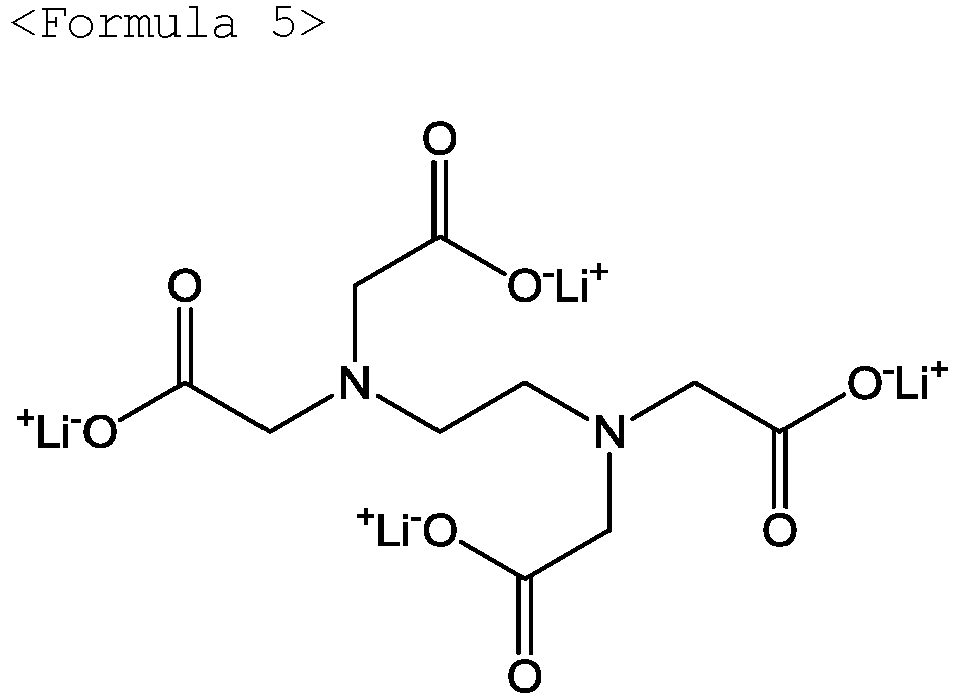
- the electrolytes of Comparative Examples 2 and 3 include an amine compound (additive C) having a carboxyl group at an end thereof and an amine compound (additive D) containing a lithium salt as additives, respectively.
- the solubility of the additive C and the additive D in the electrolyte was very low, such that the composition after mixing was non-uniform, and performance evaluation for the lithium secondary battery was impossible.
Landscapes
- Chemical & Material Sciences (AREA)
- Engineering & Computer Science (AREA)
- Manufacturing & Machinery (AREA)
- Chemical Kinetics & Catalysis (AREA)
- Electrochemistry (AREA)
- General Chemical & Material Sciences (AREA)
- General Physics & Mathematics (AREA)
- Inorganic Chemistry (AREA)
- Condensed Matter Physics & Semiconductors (AREA)
- Physics & Mathematics (AREA)
- Organic Chemistry (AREA)
- Materials Engineering (AREA)
- Secondary Cells (AREA)
Abstract
Description
- The present disclosure relates to an electrolyte for a lithium secondary battery and a lithium secondary battery including the same, and more specifically, to an electrolyte for a lithium secondary battery which includes a solvent and electrolyte salts, and a lithium secondary battery including the electrolyte.
- A secondary battery is a battery which can be repeatedly charged and discharged, and has been widely applied to portable electronic devices such as a mobile phone, a laptop computer, etc. as a power source thereof. A lithium secondary battery has a high operating voltage and a high energy density per unit weight, and is advantageous in terms of a charging speed and light weight. In this regard, the lithium secondary battery has been actively developed and applied to various industrial fields.
- For example, the lithium secondary battery may include: an electrode assembly including a cathode, an anode, and a separation membrane interposed between the cathode and the anode; and an electrolyte in which the electrode assembly is impregnated in a case. A lithium secondary battery having longer lifespan, high capacity, and operational stability is required as the application range thereof is expanded.
- As an active material for the cathode of the lithium secondary battery, a lithium metal oxide may be used. Examples of the lithium metal oxide may include a nickel-based lithium metal oxide. However, output and capacity of the secondary battery may be decreased due to surface damage of the cathode active material caused by repeated charging and discharging in a high temperature environment, and a side reaction between the cathode active material and the electrolyte may occur.
- Accordingly, a development of a lithium secondary battery which provides uniform output and capacity even during repeated charging and discharging is required.
- An object of the present disclosure is to provide an electrolyte for a lithium secondary battery having improved high-temperature properties.
- Another object of the present disclosure is to provide a lithium secondary battery including the electrolyte, which has improved high-temperature properties.
- To achieve the above object, according to an aspect of the present invention, there is provided an electrolyte for a lithium secondary battery including: an additive; an organic solvent; and a lithium salt, wherein the additive includes a compound represented by Formula 1 below or a compound represented by Formula 2 below.


- In Formula 1 and Formula 2 above, R1 to R7 may be each independently a substituted or unsubstituted alkyl group having 1 to 10 carbon atoms, and L may be a substituted or unsubstituted alkylene group having 1 to 6 carbon atoms.
- In some embodiments, the additive may include a compound represented by Formula 1-1 below.

- In Formula 1-1 above, R1 to R4 may be each independently a substituted or unsubstituted alkyl group having 1 to 10 carbon atoms.
- In some embodiments, R1 to R7 in
Formulas 1 and 2 above may be each independently an unsubstituted alkyl group having 1 to 3 carbon atoms. - In some embodiments, R1 to R7 in
Formulas 1 and 2 above may be a methyl group. - In some embodiments, a content of the additive may be 0.1 to 5% by weight based on a total weight of the electrolyte for a lithium secondary battery.
- In some embodiments, the additive may include the compound represented by Formula 1 above and the compound represented by Formula 2 above together.
- In some embodiments, a ratio of the content of the compound represented by Formula 2 above to the content of the compound represented by Formula 1 above may be 0.25 to 4 based on the weight.
- In some embodiments, the organic solvent may include a linear carbonate solvent and a cyclic carbonate solvent.
- In some embodiments, the electrolyte for a lithium secondary battery may further include at least one auxiliary additive selected from the group consisting of an unsaturated cyclic carbonate compound, a fluorine-substituted carbonate compound, a sultone compound, a cyclic sulfate compound and a phosphate compound.
- In some embodiments, a content of the auxiliary additive may be 0.05 to 10% by weight based on the total weight of the electrolyte for a lithium secondary battery.
- In some embodiments, a ratio of the content of the auxiliary additive to the content of the additive may be 0.1 to 10 based on the weight.
- According to another aspect of the present invention, there is provided a lithium secondary battery including: a cathode; an anode disposed to face the cathode; and the electrolyte for a lithium secondary battery according to the above embodiments, in which the cathode and the anode are impregnated.
- The electrolyte for a lithium secondary battery according to exemplary embodiments may include an additive represented by a specific formula to form a stable solid electrolyte interphase (SEI) on the surface of an electrode. Therefore, a decrease in the capacity and an increase in the resistance at a high temperature may be suppressed, and high-temperature lifespan properties of the lithium secondary battery may be improved.
- The above and other objects, features and other advantages of the present invention will be more clearly understood from the following detailed description taken in conjunction with the accompanying drawings, in which:
-
FIG. 1 is a plan view schematically illustrating a lithium secondary battery according to exemplary embodiments; -
FIG. 2 is a cross-sectional view schematically illustrating a lithium secondary battery according to exemplary embodiments; -
FIG. 3 is a graph illustrating H-NMR results of a compound represented by Formula 1-2; -
FIG. 4 is a graph illustrating H-NMR results of a compound represented by Formula 2-1; and -
FIG. 5 is a graph illustrating capacity retention in lithium secondary batteries of Example 1, Example 3 and Comparative Example 1. - According to embodiments of the present disclosure, there are provided an electrolyte for a lithium secondary battery and a lithium secondary battery including the electrolyte for a lithium secondary battery.
- The lithium secondary battery according to embodiments of the present disclosure may be widely applied to green technology fields such as an electric vehicle, and a battery charging station, as well as other solar power generation and wind power generation using the batteries. In addition, the lithium secondary battery according to embodiments of the present disclosure may be used in an eco-friendly electric vehicle, and a hybrid vehicle, etc., which are intended to prevent climate change by suppressing air pollution and greenhouse gas emissions.
- If there is an isomer of a compound represented by a formula used in the present disclosure, the compound represented by the corresponding formula refers to the representative formula including the isomer.
- The term "X compound" used in the present disclosure may refer to a compound including an X unit attached to a matrix, etc. of the "X compound" and a derivative thereof.
- An electrolyte for a lithium secondary battery according to exemplary embodiments may include a lithium salt, an organic solvent and an additive.
- Hereinafter, the electrolyte for a lithium secondary battery will be described in more detail.
- The additive may include a compound represented by Formula 1 below or a compound represented by Formula 2 below.


- In
Formulas 1 and 2 above, R1 to R7 may be each independently a substituted or unsubstituted alkyl group having 1 to 10 carbon atoms. - For example, the alkyl group may mean a form in which one hydrogen atom is separated from alkane (CnH2n+2). The portion where the hydrogen atom is separated may become a bonding site with an atom adjacent thereto.
- As used herein, the term "substituted" may mean that at least one of hydrogen atoms of the alkyl group or alkylene group is substituted with a substituent, such that the substituent is further bonded to a carbon atom of the alkyl group or alkylene group.
- For example, the substituent may be a halogen atom, an amino group, a nitro group, a cyano group, a sulfinyl group, a sulfonyl group, a carbonyl group, an alkyl group having 1 to 6 carbon atoms, an alkenyl group having 2 to 6 carbon atoms, an alkoxy group having 1 to 6 carbon atoms, a cycloalkyl group or heterocycloalkyl group having 3 to 7 carbon atoms.
- In
Formula 1 above, L may be a substituted or unsubstituted alkylene group having 1 to 6 carbon atoms. - For example, the alkylene group may mean a form in which two hydrogen atoms are separated from alkane (CnH2n+2). The portion where the hydrogen atom is separated may become a bonding site with an atom adjacent thereto.
- The additive includes a compound having a tertiary amine structure, and as ester groups are bonded around a nitrogen atom, a chelate for lithium ions may be formed more easily. Therefore, a lithium ion conductivity of the electrolyte may be improved, and output properties and rapid charging properties of the lithium secondary battery may be enhanced.
- For example, a film having a low resistance may be formed on the surface of an electrode or active material from the amine compound. Accordingly, an increase in the initial resistance of the secondary battery may be suppressed, and rapid charging performance and lifespan properties may be significantly improved.
- Therefore, when the electrolyte includes the compound represented by Formula 1 or Formula 2 as an additive, decomposition of the electrolyte may be prevented, and gas generation and an increase in the battery thickness may be significantly reduced.
- In addition, as an alkyl group (R1 to R7) is bonded to an end of the carboxylate bonded to the nitrogen atom, the high-temperature performance of the lithium secondary battery may be improved. For example, a thermally stable solid electrolyte interphase (SEI) may be formed on the surface of the electrode or active material from the amine compound. Therefore, even in the repeated charging and discharging, overvoltage, and high temperature environments, decomposition of the SEI film may be suppressed, and irreversible loss of the electrolyte may be prevented, thereby maintaining capacity and ionic conductivity of the lithium secondary battery high.
- In some embodiments, L in
Formula 1 above may be an unsubstituted alkylene group having 1 to 3 carbon atoms. For example, L may be a methylene group, an ethylene group or propylene group. - Preferably, L in
Formula 1 is an ethylene group. For example, the additive may include a compound represented by Formula 1-1 below.
- The number of carbon atoms between nitrogen atoms is appropriately adjusted, such that lithium ion conductivity and output properties may be further enhanced, while electrochemical stability, heat resistance, and flame retardancy of the electrolyte or a film formed from the electrolyte may be improved.
- In one embodiment, in
Formulas 1 and 2 above, R1 to R7 may be each independently an unsubstituted alkyl group having 1 to 10 carbon atoms. As an unsubstituted hydrocarbon group is located at an end of the amine compound, high-temperature stability may be further improved. In addition, the number of carbon atoms in the alkyl group is adjusted in an appropriate range, such that the electrolyte and the film formed from the electrolyte may have a low electrical resistance and a high ionic conductivity. - In some embodiments, R1 to R7 in
Formulas 1 and 2 above may be each independently an unsubstituted alkyl group having 1 to 3 carbon atoms, or a methyl group. - For example, the additive may include a compound represented by Formula 1-2 below or Formula 2-1 below.


- For example, as an alkyl group having a small number of carbon atoms is located at an end of the additive, steric hindrance and a decrease in the ionic conductivity may be prevented. Therefore, the flame retardancy and heat resistance of the electrolyte may be further improved by the additive, and the electrolyte may have a high lithium ion conductivity.
- Therefore, it is possible to improve room temperature properties, rapid charging properties, and initial resistance properties along with high-temperature storage properties. In addition, gas generation may be reduced by suppressing decomposition of the electrolyte due to a reaction between the electrolyte and the electrode.
- In one embodiment, a content of the additive may be 0.1% by weight ('wt%') or more, 0.2 wt% or more, 0.3 wt% or more, 0.4 wt% or more, 0.5 wt% or more, or 1 wt% or more based on a total weight of the electrolyte. Within the above range, a stable film may be uniformly formed on the electrode.
- In one embodiment, the content of the additive may be 10 wt% or less, 9 wt% or less, 7 wt% or less, 6 wt% or less, 5 wt% or less, 4.5 wt% or less, 4 wt% or less, 3.5 wt% or less, 3 wt% or less, or 2 wt% or less based on the total weight of the electrolyte. Within the above range, the lithium ion conductivity in the electrolyte and activity of an electrode active material may be improved.
- For example, the content of the additive may be 0.1 to 5 wt%, or 0.2 to 2 wt% based on the total weight of the electrolyte. Within the above range, movement of lithium ions and activity of a cathode active material are not excessively inhibited, and capacity retention may be improved even in the high temperature environment, as well as electrode thickness and resistance may be maintained low.
- In some embodiments, the additive may include the compound represented by
Formula 1 above and the compound represented by Formula 2 above together. As the affinity for lithium ions may be increased to improve the ionic conductivity, and electrochemical and thermal stabilities of the film may be further improved. - In one embodiment, a ratio of the content of the compound represented by Formula 2 above to the content of the compound represented by
Formula 1 above may be 0.25 to 4, 0.3 to 4, 0.5 to 2, or 0.5 to 1.5 based on the weight. Within the above range, the heat resistance and flame retardancy of the lithium secondary battery may be improved while the output properties thereof may be further improved. - The electrolyte for a lithium secondary battery according to exemplary embodiments may further include an auxiliary additive.
- When adding the auxiliary additive, durability and stability of the electrode may be further improved. The auxiliary additive may be included in an appropriate amount within a range that does not inhibit the movement of lithium ions in the electrolyte.
- In one embodiment, the auxiliary additive may include, for example, an unsaturated cyclic carbonate compound, a fluorine-substituted carbonate compound, a sultone compound, a cyclic sulfate compound and a phosphate compound.
- In one embodiment, a content of the auxiliary additive may be, for example, 10 wt% or less, 9 wt% or less, 8 wt% or less, 7 wt% or less, 6 wt% or less, 5 wt% or less, 4 wt% or less, 3 wt% or less, 2 wt% or less, or 1 wt% or less based on the total weight of the electrolyte for a lithium secondary battery in consideration of action with the compound represented by
Formula 1 or Formula 2 above. - In one embodiment, the content of the auxiliary additive may be 0.01 wt% or more, 0.02 wt% or more, 0.03 wt% or more, 0.05 wt% or more, 0.1 wt% or more, 0.2 wt% or more, 0.3 wt% or more, 0.4 wt% or more, or 0.5 wt% or more based on the total weight of the electrolyte for a lithium secondary battery. Within the above range, a more stable film may be formed on the surface of the electrode.
- Preferably, the content of the auxiliary additive is about 0.05 to 10 wt%, and more preferably 0.1 to 5 wt% based on the total weight of the electrolyte. Within the above range, the durability of an electrode protective film may be improved without inhibiting the action of the main additive, and the high-temperature storage and lifespan properties may be further improved.
- In one embodiment, a ratio of the weight of the auxiliary additive to the weight of the additive in the electrolyte may be 0.1 to 10, greater than 1 and 10 or less, or 5 to 10 or less. The content of the auxiliary additive to the main additive is adjusted in an appropriate range, such that cycle properties and high-temperature storage properties of the lithium secondary battery may be improved due to an interaction between the additives.
- The unsaturated cyclic carbonate compound may include vinylene carbonate (VC), vinyl ethylene carbonate (VEC) and the like.
- The fluorine-substituted carbonate compound may include fluoroethylene carbonate (FEC).
- The sultone compound may include 1,3-propane sultone, 1,3-propene sultone, 1,4-butane sultone and the like.
- The cyclic sulfate compound may include 1,2-ethylene sulfate, 1,2-propylene sulfate and the like.
- The phosphate compound may include lithium bis(oxalato)phosphate as an oxalatophosphate compound.
- In some embodiments, as the auxiliary additive, the fluorine-substituted carbonate compound, the sultone compound, the cyclic sulfate compound and the oxalate compound may be used together.
- The organic solvent may include, for example, an organic compound which has sufficient solubility to the lithium salt, the additive, and/or the auxiliary additive, and does not have reactivity in the battery.
- For example, the organic solvent may include at least one of a carbonate solvent, an ester solvent, an ether solvent, a ketone solvent, an alcohol solvent and an aprotic solvent.
- In one embodiment, the organic solvent may include a carbonate solvent.
- In some embodiments, the carbonate solvent may include a linear carbonate solvent and a cyclic carbonate solvent.
- For example, the linear carbonate solvent may include at least one of dimethyl carbonate (DMC), ethyl methyl carbonate (EMC), diethyl carbonate (DEC), methyl propyl carbonate, ethyl propyl carbonate and dipropyl carbonate.
- For example, the cyclic carbonate solvent may include at least one of ethylene carbonate (EC), propylene carbonate (PC) and butylene carbonate.
- In some embodiments, the content of the linear carbonate solvent may be greater than the content of the cyclic carbonate solvent based on the volume of the organic solvent.
- For example, a mixing volume ratio of the linear carbonate solvent and the cyclic carbonate solvent may be 1:1 to 9:1, and preferably 1.5:1 to 4:1.
- For example, the ester solvent may include at least one of methyl acetate (MA), ethyl acetate (EA), n-propyl acetate (n-PA), 1,1-dimethylethyl acetate (DMEA), methyl propionate (MP) and ethyl propionate (EP).
- For example, the ether solvent may include at least one of dibutyl ether, tetraethylene glycol dimethyl ether (TEGDME), diethylene glycol dimethyl ether (DEGDME), dimethoxyethane, tetrahydrofuran (THF) and 2-methyltetrahydrofuran.
- For example, the ketone solvent may include cyclohexanone.
- For example, the alcohol solvent may include at least one of ethyl alcohol and isopropyl alcohol.
- For example, the aprotic solvent may include at least one of a nitrile solvent, an amide solvent (e.g., dimethylformamide), a dioxolane solvent (e.g., 1,3-dioxolane), and a sulfolane solvent
- The electrolyte includes a lithium salt, and the lithium salt may be expressed as Li+X-.
- For example, the anion (X-) of the lithium salt may be at least one of F-, Cl-, Br-, I-, NO3 -, N(CN)2 -, BF4 -, ClO4 -, PF6 -, (CF3)2PF4 -, (CF3)3PF3 -, (CF3)4PF2 -, (CF3)5PF-, (CF3)6P-, CF3SO3 -, CF3CF2SO3 -, (CF3SO2)2N-, (FSO2)2N-, CF3CF2(CF3)2CO-, (CF3SO2)2CH-, (SF5)3C- , (CF3SO2)3C-, CF3(CF2)7SO3 -, CF3CO2 -, CH3CO2 -, SCN- and (CF3CF2SO2)2N-.
- In some embodiments, the lithium salt may include at least one of LiBF4 and LiPF6.
- In one embodiment, a concentration of the lithium salt may be 0.01 to 5 M, preferably 0.01 to 2 M relative to the organic solvent. Within the above concentration range, lithium ions and electrons may move smoothly within the electrolyte, and the rapid charging properties and output properties of the lithium secondary battery may be further improved.
- The lithium secondary battery according to exemplary embodiments may include a cathode, an anode, a separation membrane interposed between the cathode and the anode, and the above-described electrolyte for a lithium secondary battery.
-
FIGS. 1 and 2 are a schematic plan view and a cross-sectional view, respectively, illustrating a lithium secondary battery according to exemplary embodiments.FIG. 2 is a cross-sectional view taken on line I-I' inFIG. 1 . - Referring to
FIGS. 1 and 2 , the lithium secondary battery may include acathode 100 and ananode 130 disposed to face thecathode 100. - For example, the
cathode 100 may include a cathodecurrent collector 105 and a cathodeactive material layer 110 on the cathodecurrent collector 105. - For example, the cathode
active material layer 110 may include a cathode active material, a cathode binder and a conductive material, as necessary. - For example, the
cathode 100 may be prepared by mixing and stirring the cathode active material, the cathode binder, and the conductive material, etc. in a dispersion medium to prepare a cathode slurry, and then applying the cathode slurry to the cathodecurrent collector 105, followed by drying and rolling the same. - For example, the cathode
current collector 105 may include stainless steel, nickel, aluminum, titanium, copper, or an alloy thereof, and preferably, includes aluminum or an aluminum alloy. - For example, the cathode active material may include lithium metal oxide particles capable of reversibly intercalating and deintercalating lithium ions.
- In one embodiment, the cathode active material may include lithium metal oxide particles containing nickel.
- Examples of the cathode active material may include one or more compounds selected from lithium cobalt oxide, lithium manganese oxide, lithium nickel oxide or lithium composite oxide. For example, the cathode active material may include a layered compound such as lithium cobalt oxide (LiCoO2) or lithium nickel oxide (LiNiO2), or lithium manganese oxide such as LiMnO3, LiMn2O3 and LiMnO2; lithium copper oxide (Li2CuO2); lithium iron phosphate oxide and the like.
- In one embodiment, the lithium metal oxide particles may be represented by
Formula 3 below.
[Formula 3] LiaNibM1-bO2
- In
Formula 3, a and b may be in a range of 0.95≤a≤1.08, and b≥0.5, respectively, and M may be at least one element selected from Na, Mg, Ca, Y, ti, Zr, Hf, V, Nb, ta, Cr, Mo, W, Mn, Co, Fe, Cu, Ag, Zn, B, Al, Ga, C, Si, Sn, Ba and Zr. - In one embodiment, the cathode active material includes nickel (Ni), and may further include at least one of cobalt (Co) and manganese (Mn). For example, nickel-cobalt-manganese (NCM)-based lithium oxide may be used.
- For example, nickel (Ni) may be provided as a metal associated with the capacity of the lithium secondary battery. The higher the content of nickel, the better the capacity and output of the lithium secondary battery, but if the content of nickel is excessively increased, the lifespan of the battery may be decreased, and it may be disadvantageous in terms of mechanical and electrical stabilities.
- In one embodiment, the conductivity or resistance of the lithium secondary battery may be improved by cobalt (Co), as well as the mechanical and electrical stabilities of the lithium secondary battery may be improved by manganese (Mn).
- The chemical structure represented by
Formula 3 shows a bonding relationship between elements included in the lattice structure or crystal structure of the cathode active material, and does not exclude other additional elements. For example, M may be provided as a main active element of the cathode active material. Here, it should be understood thatFormula 3 is provided to express the bonding relationship between the main active elements, and is a formula encompassing introduction and substitution of the additional elements. - In one embodiment, the inventive material may further include auxiliary elements which are added to the main active elements, thus to enhance chemical stability of the cathode active material or the crystal structure. The auxiliary element may be incorporated into the crystal structure together to form a bond, and it should be understood that this case is also included within the chemical structure represented by
Formula 3. - For example, the cathode binder may include an organic binder such as polyvinylidene fluoride (PVDF), vinylidene fluoride-hexafluoropropylene copolymer (PVDF-co-HFP), polyacrylonitrile, polymethyl methacrylate, etc.; or an aqueous binder such as styrene-butadiene rubber (SBR). In addition, for example, the cathode binder may be used together with a thickener such as carboxymethyl cellulose (CMC).
- For example, the conductive material may include a carbon-based conductive material such as graphite, carbon black, graphene, and carbon nanotubes; or a metal-based conductive material including tin, tin oxide, titanium oxide, or a perovskite material such as LaSrCoO3, and LaSrMnO3.
- For example, the
anode 130 may include an anodecurrent collector 125 and an anodeactive material layer 120 on the anodecurrent collector 125. - For example, the anode
active material layer 120 may include an anode active material, an anode binder, and a conductive material, as necessary. - For example, the
anode 130 may be prepared by mixing and stirring the anode active material, the anode binder, the conductive material, etc. in a solvent to prepare an anode slurry, and then applying the anode slurry to the anodecurrent collector 125, followed by drying and rolling the same. - For example, the anode
current collector 125 may include gold, stainless steel, nickel, aluminum, titanium, copper or an alloy thereof, and preferably, includes copper or a copper alloy. - For example, the anode active material may be a material capable of intercalating and deintercalating lithium ions. For example, the anode active material may include a lithium alloy, a carbon-based material, a silicon-based material and the like.
- For example, the lithium alloy may include aluminum, zinc, bismuth, cadmium, antimony, silicon, lead, tin, gallium, indium and the like.
- For example, the carbon-based active material may include crystalline carbon, amorphous carbon, carbon composite, carbon fiber and the like.
- For example, the amorphous carbon may include hard carbon, cokes, mesocarbon microbead (MCMB) calcined at 1500°C or lower, mesophase pitch-based carbon fiber (MPCF) or the like. For example, the crystalline carbon may include natural graphite, graphite cokes, graphite MCMB, graphite MPCF and the like.
- For example, the silicon-based active material may include Si, SiOx (0<x<2), Si/C, SiO/C, Si-metal and the like. In this case, it is possible to implement a lithium secondary battery having a high capacity.
- The silicon-based material may have a large change in the volume during reacting with lithium. Therefore, when the anode active material includes the silicon-based material, the thickness of the battery may be increased due to the repeated charging and discharging, and short circuit and ignition may occur. The lithium secondary battery according to exemplary embodiments may include the above-described electrolyte to relieve a thickness increase rate of the battery.
- The anode binder and the conductive material may be substantially the same as or similar to the above-described cathode binder and the conductive material. For example, the anode binder may be an aqueous binder such as styrene-butadiene rubber (SBR). In addition, for example, the anode binder may be used together with a thickener such as carboxymethyl cellulose (CMC).
- For example, a
separation membrane 140 may be interposed between thecathode 100 and theanode 130. - In some embodiments, the
anode 130 may have an area greater than that of thecathode 100. In this case, lithium ions generated from thecathode 100 may smoothly move to theanode 130 without precipitation in the middle. - For example, the
separation membrane 140 may include a porous polymer film made of a polyolefin polymer such as ethylene homopolymer, propylene homopolymer, ethylene/butene copolymer, ethylene/hexene copolymer, ethylene/methacrylate copolymer or the like. Alternatively, for example, theseparation membrane 140 may include a nonwoven fabric made of glass fiber having a high melting point, polyethylene terephthalate fiber or the like. - For example, an electrode cell may be formed including the
cathode 100, theanode 130 and theseparation membrane 140. - For example, a plurality of electrode cells may be stacked to form an
electrode assembly 150. For example, theelectrode assembly 150 may be formed by winding, laminating, folding, etc. theseparation membrane 140. - The lithium secondary battery according to exemplary embodiments may include: a
cathode lead 107 connected to thecathode 100 and protruding to an outside of acase 160; and ananode lead 127 connected to theanode 130 and protruding to the outside of thecase 160. - For example, the
cathode lead 107 may be electrically connected to the cathodecurrent collector 105. Theanode lead 127 may be electrically connected to the anodecurrent collector 125. - For example, the cathode
current collector 105 may include a protrusion part (cathode tab, not illustrated) on one side. The cathodeactive material layer 110 may not be formed on the cathode tab. The cathode tab may be formed integrally with the cathodecurrent collector 105 or may be connected thereto by welding or the like. The cathodecurrent collector 105 and thecathode lead 107 may be electrically connected with each other through the cathode tab. - Similarly, the anode
current collector 125 may include a protrusion part (anode tab, not illustrated) on one side. The anodeactive material layer 120 may not be formed on the anode tab. The anode tab may be formed integrally with the anodecurrent collector 125 or may be connected thereto by welding or the like. The anodecurrent collector 125 and theanode lead 127 may be electrically connected with each other through the anode tab. - According to exemplary embodiments, the
electrode assembly 150 and the above-described electrolyte may be housed together in thecase 160 to define a lithium secondary battery. The lithium secondary battery may be manufactured, for example, in a cylindrical shape using a can, a square shape, a pouch shape or a coin shape, etc. - Hereinafter, specific experimental examples are proposed to facilitate understanding of the present invention. However, the following examples are only given for illustrating the present invention and those skilled in the art will obviously understand that various alterations and modifications are possible within the scope and spirit of the present invention. Such alterations and modifications are duly included in the appended claims.
- Ethylenediaminetetraacetic acid (2.9 g, 10 mmol) and methanol (100 mL) were sequentially input into a round-bottom flask, followed by cooling the same to 0°C. Thionyl chloride (5.8 mL, 80 mmol) was slowly added dropwise to the mixture while maintaining 0°C, and then stirred at room temperature for 16 hours. After the reaction was completed, the pressure of the mixture was reduced to remove the remaining thionyl chloride and methanol. The remaining mixture after reducing the pressure was dissolved again in ether (50 mL) as a solvent, and sodium bicarbonate saturated solution (50 mL) was slowly added dropwise and stirred for 1 hour to neutralize the mixture. After completion of the reaction, the organic layer was separated to remove moisture through calcium carbonate treatment. Thereafter, the solvent in the organic layer was removed by reducing the pressure and dried to obtain 1.46 g of a compound as a colorless liquid sample. 1H-NMR results of the obtained compound are as follows.
- 1H-NMR(CDCl3, 500 mHz) : 3.69(s, 12H), 3.61(s, 8H), 2.89(s, 4H)
-
FIG. 3 is a graph illustrating the H-NMR results of the compound represented by Formula 1-2. - Nitrilotriacetic acid (1.9 g, 10 mmol) and methanol (100 mL) were sequentially input into a round-bottom flask, followed by cooling the same to 0°C. Thionyl chloride (4.4 mL, 60 mmol) was slowly added dropwise to the mixture while maintaining 0°C, and then stirred at room temperature for 16 hours. After completion of the reaction, the pressure of the mixture was reduced to remove the remaining thionyl chloride and methanol. The remaining mixture after reducing the pressure was dissolved again in ether (50 mL) as a solvent, and sodium bicarbonate saturated solution (50 mL) was slowly added dropwise and stirred for 1 hour to neutralize the mixture. After completion of the reaction, the organic layer was separated to remove moisture through calcium carbonate treatment. Thereafter, the solvent in the organic layer was removed by reducing the pressure and dried to obtain 1.65 g of a compound as a transparent yellowish liquid sample. 1H-NMR results of the obtained compound are as follows.
- 1H-NMR (CDCl3, 500 mHz) : 3.70 (s, 9H), 3. 67 (s, 6H)
-
FIG. 4 is a graph illustrating the H-NMR results of the compound represented by Formula 2-1. - 1 M LiPF6 solution (a mixed solvent of EC/EMC in a volume ratio of 25:75) was prepared.
- Electrolytes of the examples and comparative examples were prepared by adding additives and auxiliary additives in the contents (wt%) described in Table 1 below to the LiPF6 solution based on a total weight of the electrolyte, and mixing with each other. In the case of Examples 5 to 10, the additive A and the additive B were mixed together.
- A cathode slurry was prepared by mixing and dispersing a cathode active material of Li [Ni0.8Co0.1Mn0.1]O2, carbon black, and polyvinylidene fluoride (PVDF) in N-methyl pyrrolidone(NMP) in a weight ratio of 98:1:1.
- The cathode slurry was uniformly applied to an aluminum foil having a thickness of 12 pm, followed by drying and rolling the same to prepare a cathode.
- An anode slurry was prepared by mixing and dispersing an anode active material in which artificial graphite and natural graphite are mixed in a weight ratio of 7:3, a conductive material, styrene-butadiene rubber (SBR) and carboxymethyl cellulose (CMC) in water in a weight ratio of 96:3:1:1. The anode slurry was uniformly applied to a copper foil having a thickness of 8 pm, followed by drying and rolling the same to prepare an anode.
- An electrode assembly was manufactured by repeatedly stacking the manufactured cathodes and anodes alternately, with a separator (thickness 13 um, polyethylene film) interposed between the cathode and anode.
- The electrode assembly was placed in a pouch, the electrolyte prepared in (3) above was injected, sealed, and impregnated for 12 hours to manufacture a lithium secondary battery.
[TABLE 1] Additive (content) Auxiliary additive (wt%) FEC PS PRS Example 1 Additive A (1.0 wt%) 1 0.5 0.5 Example 2 Additive A (0.5 wt%) 1 0.5 0.5 Example 3 Additive B (1.0 wt%) 1 0.5 0.5 Example 4 Additive B (0.5 wt%) 1 0.5 0.5 Example 5 Additive A (0.1 wt%) Additive B (0.9 wt%) 1 0.5 0.5 Example 6 Additive A (0.2 wt%) Additive B (0.8 wt%) 1 0.5 0.5 Example 7 Additive A (0.4 wt%) Additive B (0.6 wt%) 1 0.5 0.5 Example 8 Additive A (0.6 wt%) Additive B (0.4 wt%) 1 0.5 0.5 Example 9 Additive A (0.8 wt%) Additive B (0.2 wt%) 1 0.5 0.5 Example 10 Additive A (0.9 wt%) Additive B (0.1 wt%) 1 0.5 0.5 Comparative Example 1 - 1 0.5 0.5 Comparative Example 2 Additive C, 1.0 wt% 1 0.5 0.5 Comparative Example 3 Additive D, 1.0 wt% 1 0.5 0.5 - The components described in Table 1 are as follows.
- Additive A: The compound represented by formula 1-2 above
- Additive B: The compound represented by Formula 2-1 above
- Additive C: A compound represented by Formula 4 below:

- Additive D: A compound represented by Formula 5 below:
- FEC: Fluoroethylene carbonate
- PS: 1,3-Propane sultone
- PRS: Prop-1-ene-1,3-sultone
- After the electrolytes according to the examples and comparative examples were left at room temperature for 3 hours, it was observed visually whether precipitation or layer separation occurs. If the precipitation or layer separation did not occur, evaluation results were marked as "O," whereas if it did occur, the evaluation results were marked as "X" in a Table 2.
- The lithium secondary batteries of the examples and comparative examples were subjected to 0.5C CC/CV charge (4.2 V 0.05C CUT-OFF) to state of charge (SOC) 60% at room temperature (25°C), and then 0.5C CC discharge. Thereafter, the lithium secondary batteries were discharged and supplementary charged for 10 seconds, while changing C-rate to 0.2C 0.5C, 1C, 1.5C, 2C and 2.5C at the SOC 60% point, respectively, and the initial resistance was measured.
- 900 cycles of charging/discharging were repeatedly performed on the lithium secondary batteries of the examples and comparative examples in a way that executing charging at 45°C to SOC 96% at a C-rate of 1.0C and discharging to SOC 2% at a C-rate of 1.0C were set to be one cycle. In this case, the initial discharge capacity at the first cycle was measured, and the capacity retention of the high-temperature lifespan was determined by dividing the discharge capacity at 900 cycles by the discharge capacity at the first cycle.
- The lithium secondary batteries of the examples and comparative examples were charged to SOC 60% every time when they reached 100 cycles from the first cycle at 45°C, and then discharged and supplementary charged for 10 seconds, while changing C-rate to 0.2C 0.5C, 1C, 1.5C, 2C and 2.5C at the SOC 60% point, respectively, followed by measuring the internal resistance. Thereafter, the resistance increase rate of the high-temperature lifespan was determined by dividing the resistance value at 900 cycles by the resistance value at the first cycle.
- Evaluation results are shown in Table 2 below.
[TABLE 2] Evaluation of solubility Initial performance at room temperature Lifespan properties at 45°C and 900 cycles Initial DCIR (mΩ) Resistance increase rate(%) Capacity (mAh) Capacity retention (%) Example 1 ○ 37.1 104 1239 76.0 Example 2 ○ 39.2 101 1211 72.5 Example 3 ○ 41.0 107 1323 81.8 Example 4 ○ 39.8 106 1289 79.6 Example 5 ○ 41.1 110 1311 80.1 Example 6 ○ 40.2 109 1299 79.8 Example 7 ○ 36.5 102 1320 81.5 Example 8 ○ 35.8 107 1271 78.9 Example 9 ○ 38.9 103 1256 77.7 Example 10 ○ 36.1 103 1301 79.9 Comparative Example 1 ○ 39.5 111 1170 70.1 Comparative Example 2 X Evaluation impossible Comparative Example 3 X Evaluation impossible - Referring to Table 2, in the case of examples including the additive A or additive B, the initial resistance at room temperature and the resistance increase rate at high temperature were low, or the high-temperature capacity retention was improved. In the case of examples including the additive A and additive B together, the initial resistance and high-temperature resistance increase rate, or high-temperature capacity and high-temperature capacity retention were improved together.
- In the case of Comparative Example 1 including only auxiliary additives, the high-temperature capacity and high temperature life performance (at 45°C) were reduced.
-
FIG. 5 is a graph illustrating the high-temperature capacity retention according to the cycle. Referring toFIG. 5 , the capacity in the lithium secondary battery of Comparative Example 1 was decreased rapidly as the number of cycles was increased compared to the lithium secondary batteries of Examples 1 and 3. - The electrolytes of Comparative Examples 2 and 3 include an amine compound (additive C) having a carboxyl group at an end thereof and an amine compound (additive D) containing a lithium salt as additives, respectively. The solubility of the additive C and the additive D in the electrolyte was very low, such that the composition after mixing was non-uniform, and performance evaluation for the lithium secondary battery was impossible.
Claims (13)
- An electrolyte for a lithium secondary battery comprising:an additive which comprises a compound represented by Formula 1 below or a compound represented by Formula 2 below;an organic solvent; anda lithium salt:

 (in Formula 1 and Formula 2 above,R1 to R7 are each independently a substituted or unsubstituted alkyl group having 1 to 10 carbon atoms, and L is a substituted or unsubstituted alkylene group having 1 to 6 carbon atoms).
 - The electrolyte for a lithium secondary battery according to claim 1, wherein the additive comprises a compound represented by Formula 1-1 below:
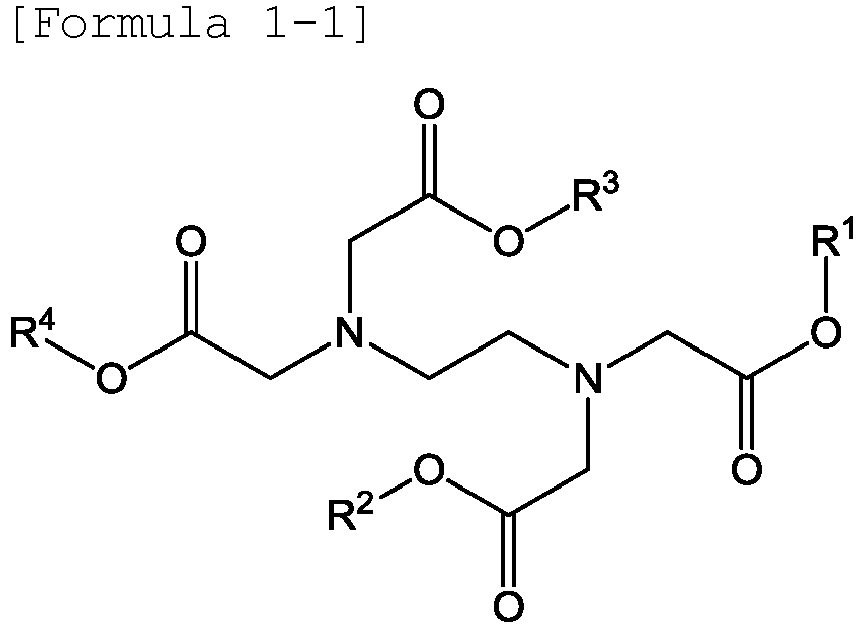
- The electrolyte for a lithium secondary battery according to claims 1 or 2, wherein R1 to R7 in Formulas 1 and 2 above are each independently an unsubstituted alkyl group having 1 to 3 carbon atoms.
- The electrolyte for a lithium secondary battery according to one of claims 1 to 3, wherein R1 to R7 in Formulas 1 and 2 above are a methyl group.
- The electrolyte for a lithium secondary battery according to one of claims 1 to 4, wherein the additive comprises a compound represented by Formula 1-2 below or a compound represented Formula 2-1 below:


- The electrolyte for a lithium secondary battery according to one of claims 1 to 5, wherein a content of the additive is 0.1 to 5% by weight based on a total weight of the electrolyte for a lithium secondary battery.
- The electrolyte for a lithium secondary battery according to one of claims 1 to 6, wherein the additive comprises the compound represented by Formula 1 above and the compound represented by Formula 2 above together.
- The electrolyte for a lithium secondary battery according to claim 7, wherein a ratio of the content of the compound represented by Formula 2 above to the content of the compound represented by Formula 1 above is 0.25 to 4 based on the weight.
- The electrolyte for a lithium secondary battery according to one of claims 1 to 8, wherein the organic solvent comprises a linear carbonate solvent and a cyclic carbonate solvent.
- The electrolyte for a lithium secondary battery according to one of claims 1 to 9, further comprising at least one auxiliary additive selected from the group consisting of an unsaturated cyclic carbonate compound, a fluorine-substituted carbonate compound, a sultone compound, a cyclic sulfate compound and a phosphate compound.
- The electrolyte for a lithium secondary battery according to claim 10, wherein a content of the auxiliary additive is 0.05 to 10% by weight based on the total weight of the electrolyte for a lithium secondary battery.
- The electrolyte for a lithium secondary battery according to claims 10 or 11, wherein a ratio of the content of the auxiliary additive to the content of the additive is 0.1 to 10 based on the weight.
- A lithium secondary battery comprising:a cathode;an anode disposed to face the cathode; andthe electrolyte for a lithium secondary battery according to one of claims 1 to 12, in which the cathode and the anode are impregnated.
Applications Claiming Priority (1)
| Application Number | Priority Date | Filing Date | Title |
|---|---|---|---|
| KR1020230100067A KR20250018879A (en) | 2023-07-31 | 2023-07-31 | Electrolyte solution for lithium secondary battery and lithium secondary battery including the same |
Publications (2)
| Publication Number | Publication Date |
|---|---|
| EP4503226A1 true EP4503226A1 (en) | 2025-02-05 |
| EP4503226B1 EP4503226B1 (en) | 2025-05-14 |
Family
ID=92172022
Family Applications (1)
| Application Number | Title | Priority Date | Filing Date |
|---|---|---|---|
| EP24191920.8A Active EP4503226B1 (en) | 2023-07-31 | 2024-07-30 | Electrolyte for lithium secondary battery and lithium secondary battery including the same |
Country Status (4)
| Country | Link |
|---|---|
| US (1) | US20250046871A1 (en) |
| EP (1) | EP4503226B1 (en) |
| KR (1) | KR20250018879A (en) |
| CN (1) | CN119447445A (en) |
Citations (2)
| Publication number | Priority date | Publication date | Assignee | Title |
|---|---|---|---|---|
| CN106159323A (en) * | 2015-04-14 | 2016-11-23 | 宁波维科电池股份有限公司 | A kind of lithium battery electrolytes preparation technology |
| US20230101481A1 (en) * | 2021-09-30 | 2023-03-30 | Lg Energy Solution, Ltd. | Non-Aqueous Electrolyte Including Additive for Non-Aqueous Electrolyte, and Lithium Secondary Battery Including the Non-Aqueous Electrolyte |
-
2023
- 2023-07-31 KR KR1020230100067A patent/KR20250018879A/en active Pending
-
2024
- 2024-07-23 US US18/780,478 patent/US20250046871A1/en active Pending
- 2024-07-29 CN CN202411018146.9A patent/CN119447445A/en active Pending
- 2024-07-30 EP EP24191920.8A patent/EP4503226B1/en active Active
Patent Citations (2)
| Publication number | Priority date | Publication date | Assignee | Title |
|---|---|---|---|---|
| CN106159323A (en) * | 2015-04-14 | 2016-11-23 | 宁波维科电池股份有限公司 | A kind of lithium battery electrolytes preparation technology |
| US20230101481A1 (en) * | 2021-09-30 | 2023-03-30 | Lg Energy Solution, Ltd. | Non-Aqueous Electrolyte Including Additive for Non-Aqueous Electrolyte, and Lithium Secondary Battery Including the Non-Aqueous Electrolyte |
Also Published As
| Publication number | Publication date |
|---|---|
| US20250046871A1 (en) | 2025-02-06 |
| EP4503226B1 (en) | 2025-05-14 |
| CN119447445A (en) | 2025-02-14 |
| KR20250018879A (en) | 2025-02-07 |
Similar Documents
| Publication | Publication Date | Title |
|---|---|---|
| KR102713133B1 (en) | Electrolyte for Secondary Battery and Lithium Secondary Battery Containing the Same | |
| KR20200104772A (en) | Compound, electrolyte for lithium secondary battery and lithium secondary battery including the same | |
| KR20250032450A (en) | Electrolyte for lithium secondary battery and lithium secondary battery including the same | |
| CN114447434B (en) | Electrolyte for lithium secondary battery and lithium secondary battery including the same | |
| US20230231194A1 (en) | Electrolyte solution for lithium secondary battery and lithium secondary battery including the same | |
| KR20240038580A (en) | Electrolyte solution for lithium secondary battery and lithium secondary battery including the same | |
| EP4503226B1 (en) | Electrolyte for lithium secondary battery and lithium secondary battery including the same | |
| KR20240092897A (en) | Lithium secondary battery | |
| EP4398346B1 (en) | Electrolyte for lithium secondary battery and lithium secondary battery including the same | |
| EP4528876A1 (en) | Electrolyte for lithium secondary battery and lithium secondary battery comprising same | |
| EP4539192A1 (en) | Electrolyte for rechargeable lithium battery and rechargeable lithium battery including same | |
| EP4651253A1 (en) | Electrolyte for lithium secondary battery and lithium secondary battery including the same | |
| EP4303978B1 (en) | Electrolyte solution for lithium secondary battery and lithium secondary battery including the same | |
| EP4712169A1 (en) | Electrolyte for lithium secondary battery and lithium secondary battery including the same | |
| US11923508B2 (en) | Electrolyte solution for lithium secondary battery and lithium secondary battery including the same | |
| EP4340096A1 (en) | Electrolyte solution for lithium secondary battery and lithium secondary battery including the same | |
| EP4287336A1 (en) | Electrolyte solution for lithium secondary battery and lithium secondary battery including the same | |
| US20260112699A1 (en) | Electrolyte for lithium secondary battery and lithium secondary battery including the same | |
| EP4651256A1 (en) | Electrolyte for lithium secondary battery and lithium secondary battery including the same | |
| EP4564513A1 (en) | Electrolyte for rechargeable lithium battery and rechargeable lithium battery including same | |
| EP4715938A1 (en) | Non-aqueous electrolyte solution and lithium secondary battery comprising same | |
| KR20250016995A (en) | Lithium secondary battery | |
| CN120184373A (en) | Electrolyte for lithium secondary battery and lithium secondary battery including the electrolyte | |
| KR20250145154A (en) | Electrolyte solution for lithium secondary battery and lithium secondary battery including the same | |
| KR20230011584A (en) | Electrolyte for lithium secondary battery with improved high-temperature stability and lithium secondary battery including the same |
Legal Events
| Date | Code | Title | Description |
|---|---|---|---|
| PUAI | Public reference made under article 153(3) epc to a published international application that has entered the european phase |
Free format text: ORIGINAL CODE: 0009012 |
|
| STAA | Information on the status of an ep patent application or granted ep patent |
Free format text: STATUS: REQUEST FOR EXAMINATION WAS MADE |
|
| 17P | Request for examination filed |
Effective date: 20240730 |
|
| AK | Designated contracting states |
Kind code of ref document: A1 Designated state(s): AL AT BE BG CH CY CZ DE DK EE ES FI FR GB GR HR HU IE IS IT LI LT LU LV MC ME MK MT NL NO PL PT RO RS SE SI SK SM TR |
|
| REG | Reference to a national code |
Ref country code: DE Ref legal event code: R079 Free format text: PREVIOUS MAIN CLASS: H01M0010052500 Ipc: H01M0010052000 Ref country code: DE Ref legal event code: R079 Ref document number: 602024000130 Country of ref document: DE Free format text: PREVIOUS MAIN CLASS: H01M0010052500 Ipc: H01M0010052000 |
|
| GRAP | Despatch of communication of intention to grant a patent |
Free format text: ORIGINAL CODE: EPIDOSNIGR1 |
|
| STAA | Information on the status of an ep patent application or granted ep patent |
Free format text: STATUS: GRANT OF PATENT IS INTENDED |
|
| RIC1 | Information provided on ipc code assigned before grant |
Ipc: H01M 10/0569 20100101ALI20250221BHEP Ipc: H01M 10/0567 20100101ALI20250221BHEP Ipc: H01M 10/052 20100101AFI20250221BHEP |
|
| GRAS | Grant fee paid |
Free format text: ORIGINAL CODE: EPIDOSNIGR3 |
|
| INTG | Intention to grant announced |
Effective date: 20250307 |
|
| GRAA | (expected) grant |
Free format text: ORIGINAL CODE: 0009210 |
|
| STAA | Information on the status of an ep patent application or granted ep patent |
Free format text: STATUS: THE PATENT HAS BEEN GRANTED |
|
| AK | Designated contracting states |
Kind code of ref document: B1 Designated state(s): AL AT BE BG CH CY CZ DE DK EE ES FI FR GB GR HR HU IE IS IT LI LT LU LV MC ME MK MT NL NO PL PT RO RS SE SI SK SM TR |
|
| REG | Reference to a national code |
Ref country code: GB Ref legal event code: FG4D |
|
| REG | Reference to a national code |
Ref country code: CH Ref legal event code: EP |
|
| REG | Reference to a national code |
Ref country code: IE Ref legal event code: FG4D |
|
| REG | Reference to a national code |
Ref country code: DE Ref legal event code: R096 Ref document number: 602024000130 Country of ref document: DE |
|
| REG | Reference to a national code |
Ref country code: NL Ref legal event code: MP Effective date: 20250514 |
|
| PG25 | Lapsed in a contracting state [announced via postgrant information from national office to epo] |
Ref country code: PT Free format text: LAPSE BECAUSE OF FAILURE TO SUBMIT A TRANSLATION OF THE DESCRIPTION OR TO PAY THE FEE WITHIN THE PRESCRIBED TIME-LIMIT Effective date: 20250915 Ref country code: FI Free format text: LAPSE BECAUSE OF FAILURE TO SUBMIT A TRANSLATION OF THE DESCRIPTION OR TO PAY THE FEE WITHIN THE PRESCRIBED TIME-LIMIT Effective date: 20250514 Ref country code: ES Free format text: LAPSE BECAUSE OF FAILURE TO SUBMIT A TRANSLATION OF THE DESCRIPTION OR TO PAY THE FEE WITHIN THE PRESCRIBED TIME-LIMIT Effective date: 20250514 |
|
| REG | Reference to a national code |
Ref country code: LT Ref legal event code: MG9D |
|
| PG25 | Lapsed in a contracting state [announced via postgrant information from national office to epo] |
Ref country code: NO Free format text: LAPSE BECAUSE OF FAILURE TO SUBMIT A TRANSLATION OF THE DESCRIPTION OR TO PAY THE FEE WITHIN THE PRESCRIBED TIME-LIMIT Effective date: 20250814 Ref country code: GR Free format text: LAPSE BECAUSE OF FAILURE TO SUBMIT A TRANSLATION OF THE DESCRIPTION OR TO PAY THE FEE WITHIN THE PRESCRIBED TIME-LIMIT Effective date: 20250815 |
|
| PG25 | Lapsed in a contracting state [announced via postgrant information from national office to epo] |
Ref country code: NL Free format text: LAPSE BECAUSE OF FAILURE TO SUBMIT A TRANSLATION OF THE DESCRIPTION OR TO PAY THE FEE WITHIN THE PRESCRIBED TIME-LIMIT Effective date: 20250514 Ref country code: PL Free format text: LAPSE BECAUSE OF FAILURE TO SUBMIT A TRANSLATION OF THE DESCRIPTION OR TO PAY THE FEE WITHIN THE PRESCRIBED TIME-LIMIT Effective date: 20250514 |
|
| REG | Reference to a national code |
Ref country code: AT Ref legal event code: MK05 Ref document number: 1795601 Country of ref document: AT Kind code of ref document: T Effective date: 20250514 |
|
| PG25 | Lapsed in a contracting state [announced via postgrant information from national office to epo] |
Ref country code: BG Free format text: LAPSE BECAUSE OF FAILURE TO SUBMIT A TRANSLATION OF THE DESCRIPTION OR TO PAY THE FEE WITHIN THE PRESCRIBED TIME-LIMIT Effective date: 20250514 |
|
| PG25 | Lapsed in a contracting state [announced via postgrant information from national office to epo] |
Ref country code: HR Free format text: LAPSE BECAUSE OF FAILURE TO SUBMIT A TRANSLATION OF THE DESCRIPTION OR TO PAY THE FEE WITHIN THE PRESCRIBED TIME-LIMIT Effective date: 20250514 |
|
| PG25 | Lapsed in a contracting state [announced via postgrant information from national office to epo] |
Ref country code: AT Free format text: LAPSE BECAUSE OF FAILURE TO SUBMIT A TRANSLATION OF THE DESCRIPTION OR TO PAY THE FEE WITHIN THE PRESCRIBED TIME-LIMIT Effective date: 20250514 |
|
| PG25 | Lapsed in a contracting state [announced via postgrant information from national office to epo] |
Ref country code: RS Free format text: LAPSE BECAUSE OF FAILURE TO SUBMIT A TRANSLATION OF THE DESCRIPTION OR TO PAY THE FEE WITHIN THE PRESCRIBED TIME-LIMIT Effective date: 20250814 |
|
| PG25 | Lapsed in a contracting state [announced via postgrant information from national office to epo] |
Ref country code: IS Free format text: LAPSE BECAUSE OF FAILURE TO SUBMIT A TRANSLATION OF THE DESCRIPTION OR TO PAY THE FEE WITHIN THE PRESCRIBED TIME-LIMIT Effective date: 20250914 |
|
| PG25 | Lapsed in a contracting state [announced via postgrant information from national office to epo] |
Ref country code: LV Free format text: LAPSE BECAUSE OF FAILURE TO SUBMIT A TRANSLATION OF THE DESCRIPTION OR TO PAY THE FEE WITHIN THE PRESCRIBED TIME-LIMIT Effective date: 20250514 |
|
| PG25 | Lapsed in a contracting state [announced via postgrant information from national office to epo] |
Ref country code: SM Free format text: LAPSE BECAUSE OF FAILURE TO SUBMIT A TRANSLATION OF THE DESCRIPTION OR TO PAY THE FEE WITHIN THE PRESCRIBED TIME-LIMIT Effective date: 20250514 Ref country code: DK Free format text: LAPSE BECAUSE OF FAILURE TO SUBMIT A TRANSLATION OF THE DESCRIPTION OR TO PAY THE FEE WITHIN THE PRESCRIBED TIME-LIMIT Effective date: 20250514 |
|
| PG25 | Lapsed in a contracting state [announced via postgrant information from national office to epo] |
Ref country code: CZ Free format text: LAPSE BECAUSE OF FAILURE TO SUBMIT A TRANSLATION OF THE DESCRIPTION OR TO PAY THE FEE WITHIN THE PRESCRIBED TIME-LIMIT Effective date: 20250514 |
|
| PG25 | Lapsed in a contracting state [announced via postgrant information from national office to epo] |
Ref country code: EE Free format text: LAPSE BECAUSE OF FAILURE TO SUBMIT A TRANSLATION OF THE DESCRIPTION OR TO PAY THE FEE WITHIN THE PRESCRIBED TIME-LIMIT Effective date: 20250514 |
|
| PG25 | Lapsed in a contracting state [announced via postgrant information from national office to epo] |
Ref country code: SK Free format text: LAPSE BECAUSE OF FAILURE TO SUBMIT A TRANSLATION OF THE DESCRIPTION OR TO PAY THE FEE WITHIN THE PRESCRIBED TIME-LIMIT Effective date: 20250514 |
|
| PG25 | Lapsed in a contracting state [announced via postgrant information from national office to epo] |
Ref country code: IT Free format text: LAPSE BECAUSE OF FAILURE TO SUBMIT A TRANSLATION OF THE DESCRIPTION OR TO PAY THE FEE WITHIN THE PRESCRIBED TIME-LIMIT Effective date: 20250514 |
|
| REG | Reference to a national code |
Ref country code: DE Ref legal event code: R097 Ref document number: 602024000130 Country of ref document: DE |
|
| PLBE | No opposition filed within time limit |
Free format text: ORIGINAL CODE: 0009261 |
|
| STAA | Information on the status of an ep patent application or granted ep patent |
Free format text: STATUS: NO OPPOSITION FILED WITHIN TIME LIMIT |
|
| REG | Reference to a national code |
Ref country code: CH Ref legal event code: L10 Free format text: ST27 STATUS EVENT CODE: U-0-0-L10-L00 (AS PROVIDED BY THE NATIONAL OFFICE) Effective date: 20260325 |
|
| PG25 | Lapsed in a contracting state [announced via postgrant information from national office to epo] |
Ref country code: FR Free format text: LAPSE BECAUSE OF NON-PAYMENT OF DUE FEES Effective date: 20250731 |
|
| 26N | No opposition filed |
Effective date: 20260217 |
|
| PG25 | Lapsed in a contracting state [announced via postgrant information from national office to epo] |
Ref country code: LT Free format text: LAPSE BECAUSE OF FAILURE TO SUBMIT A TRANSLATION OF THE DESCRIPTION OR TO PAY THE FEE WITHIN THE PRESCRIBED TIME-LIMIT Effective date: 20250514 |
|
| PG25 | Lapsed in a contracting state [announced via postgrant information from national office to epo] |
Ref country code: MC Free format text: LAPSE BECAUSE OF FAILURE TO SUBMIT A TRANSLATION OF THE DESCRIPTION OR TO PAY THE FEE WITHIN THE PRESCRIBED TIME-LIMIT Effective date: 20250514 |
|
| PG25 | Lapsed in a contracting state [announced via postgrant information from national office to epo] |
Ref country code: SE Free format text: LAPSE BECAUSE OF FAILURE TO SUBMIT A TRANSLATION OF THE DESCRIPTION OR TO PAY THE FEE WITHIN THE PRESCRIBED TIME-LIMIT Effective date: 20250514 |