EP4502831A2 - OPTIMIZED PRIVATE BIOMETRIC MATCHING - Google Patents
OPTIMIZED PRIVATE BIOMETRIC MATCHING Download PDFInfo
- Publication number
- EP4502831A2 EP4502831A2 EP24221022.7A EP24221022A EP4502831A2 EP 4502831 A2 EP4502831 A2 EP 4502831A2 EP 24221022 A EP24221022 A EP 24221022A EP 4502831 A2 EP4502831 A2 EP 4502831A2
- Authority
- EP
- European Patent Office
- Prior art keywords
- user
- biometric
- masked
- similarity
- encrypted
- Prior art date
- Legal status (The legal status is an assumption and is not a legal conclusion. Google has not performed a legal analysis and makes no representation as to the accuracy of the status listed.)
- Pending
Links
Images



Classifications
-
- G—PHYSICS
- G06—COMPUTING OR CALCULATING; COUNTING
- G06F—ELECTRIC DIGITAL DATA PROCESSING
- G06F21/00—Security arrangements for protecting computers, components thereof, programs or data against unauthorised activity
- G06F21/30—Authentication, i.e. establishing the identity or authorisation of security principals
- G06F21/31—User authentication
- G06F21/32—User authentication using biometric data, e.g. fingerprints, iris scans or voiceprints
-
- H—ELECTRICITY
- H04—ELECTRIC COMMUNICATION TECHNIQUE
- H04L—TRANSMISSION OF DIGITAL INFORMATION, e.g. TELEGRAPHIC COMMUNICATION
- H04L9/00—Cryptographic mechanisms or cryptographic arrangements for secret or secure communications; Network security protocols
- H04L9/008—Cryptographic mechanisms or cryptographic arrangements for secret or secure communications; Network security protocols involving homomorphic encryption
-
- H—ELECTRICITY
- H04—ELECTRIC COMMUNICATION TECHNIQUE
- H04L—TRANSMISSION OF DIGITAL INFORMATION, e.g. TELEGRAPHIC COMMUNICATION
- H04L9/00—Cryptographic mechanisms or cryptographic arrangements for secret or secure communications; Network security protocols
- H04L9/08—Key distribution or management, e.g. generation, sharing or updating, of cryptographic keys or passwords
- H04L9/0816—Key establishment, i.e. cryptographic processes or cryptographic protocols whereby a shared secret becomes available to two or more parties, for subsequent use
- H04L9/0819—Key transport or distribution, i.e. key establishment techniques where one party creates or otherwise obtains a secret value, and securely transfers it to the other(s)
- H04L9/0825—Key transport or distribution, i.e. key establishment techniques where one party creates or otherwise obtains a secret value, and securely transfers it to the other(s) using asymmetric-key encryption or public key infrastructure [PKI], e.g. key signature or public key certificates
-
- H—ELECTRICITY
- H04—ELECTRIC COMMUNICATION TECHNIQUE
- H04L—TRANSMISSION OF DIGITAL INFORMATION, e.g. TELEGRAPHIC COMMUNICATION
- H04L9/00—Cryptographic mechanisms or cryptographic arrangements for secret or secure communications; Network security protocols
- H04L9/32—Cryptographic mechanisms or cryptographic arrangements for secret or secure communications; Network security protocols including means for verifying the identity or authority of a user of the system or for message authentication, e.g. authorization, entity authentication, data integrity or data verification, non-repudiation, key authentication or verification of credentials
- H04L9/3226—Cryptographic mechanisms or cryptographic arrangements for secret or secure communications; Network security protocols including means for verifying the identity or authority of a user of the system or for message authentication, e.g. authorization, entity authentication, data integrity or data verification, non-repudiation, key authentication or verification of credentials using a predetermined code, e.g. password, passphrase or PIN
- H04L9/3231—Biological data, e.g. fingerprint, voice or retina
-
- H—ELECTRICITY
- H04—ELECTRIC COMMUNICATION TECHNIQUE
- H04L—TRANSMISSION OF DIGITAL INFORMATION, e.g. TELEGRAPHIC COMMUNICATION
- H04L2209/00—Additional information or applications relating to cryptographic mechanisms or cryptographic arrangements for secret or secure communication H04L9/00
- H04L2209/56—Financial cryptography, e.g. electronic payment or e-cash
Definitions
- biometrics as a mechanism of authentication between devices or between a device and a person has been in use for some time.
- templates of a person's biometric data may be shared and subsequently stored by devices outside a person's control. Should one or more of those biometric templates be compromised by that third party device, that person may have no recovery path, since the person cannot generate new fingerprints, face scans, iris images, etc.
- a biometric confirmation device may use a homomorphic encryption technique to compare a biometric template with a biometric scan to determine whether a match exists without actually disclosing the biometric template to the third party device. Further, the homomorphic process allows the terminal to send current biometric scan data to the terminal without leaking scan information. In order to optimize the encryption process, a term packing process allows a dramatic reduction in computing overhead during the verification stage.
- a terminal may wish to confirm that a person is associated with a particular device, such as a smartphone.
- a point of sale device such as at a retailer
- POS point of sale device
- the POS may be capable of processing a transaction using a sight-unseen smartphone. That is, the POS may be able to complete a transaction using Wi-Fi or Bluetooth with a smartphone using the same protocol as would have been used if the smartphone was presented to the POS via Near Field Communication (NFC) by tapping the smartphone to the POS.
- NFC Near Field Communication
- the POS would first need to determine which smartphone in the vicinity is the one with the proper credential corresponding to the current purchase and purchaser.
- the POS may send a request to nearby smartphones requesting biometric templates of images for their respective users.
- the POS may also capture an image of the user engaged in the current transaction.
- the transaction processing can proceed using a normal payment flow. That is, in an exemplary embodiment, the smartphone can establish a secure channel with the POS, the transaction data can be transferred and signed by the smartphone's payment application along with the personal account number (PAN) or token data related to the user's payment card. This information may be passed by the POS to the retailer's acquiring bank for approval and processing.
- PAN personal account number
- the POS should not simply be able to request biometric templates from every nearby smartphone simply so that matching the image to the correct user can be performed. This would expose the biometric data of every nearby smartphone user, including those devices/users who are not involved in the transaction in any way. Conversely, the image of the user or its biometric template, should not be shared with each nearby smartphone so that the user's information remains protected from unwanted distribution. The techniques for accomplishing this are discussed below. In this example, there is little or no threat of the smartphone attempting to spoof the POS into thinking it is someone else, because the payment is made via a separate purchase transaction using a different credential. This type of identification may be thought of as passive.
- the benefit of a deliberate attempt to deceive the identification process at the ATM could result in fraudulent receipt of funds.
- an active identification may be used to further identify the user.
- the user instead of just matching the biometric template, the user may provide a copy of the template signed by an authority that also includes user identity information.
- the approval process results in not only establishing a relationship between a user and a smartphone, but the user and the user's identity as previously established with the authority.
- a homomorphic cryptography algorithm such as a Paillier encryption among others, may be used.
- the basic premise is that an operation performed on encrypted data has the same result as that operation being performed on unencrypted data. As will be discussed in greater detail below, this allows verification operations to be performed on encrypted data so that while the matching process may occur on the terminal, the biometric template never leaves the smartphone.
- homomorphic cryptographic algorithms such as Paillier
- key generation and data encryption can be very time consuming, so long that including these steps in a normal cryptographic transaction, such as a purchase transaction may be prohibitive.
- the following description discloses an approach to address these shortcomings.
- the homomorphic algorithms as applied to biometrics can yield datasets that are large enough to adversely affect transmission time between the user device and the terminal (for example, the POS or ATM).
- An embodiment described below for packing data reduces the data required for transmission by a factor of 8, although other reduction factors are possible. Bit masking of non-essential terms also helps to reduce the potential for data leakage during the data reduction process.
- the matching process takes about 300 milliseconds with an initial communication payload of 55 Mbytes of data and about 1 Mbyte for each communication after that.
- FIG. 1 illustrates an exemplary system 100 that supports the homomorphic matching process.
- a terminal 102 may be a POS device, such as a register at a retailer, an ATM, or any other device for which a biometric authentication may be useful including access control, record keeping, or other personal transactions.
- the terminal 102 may include a processor 104 coupled by a data bus 105 to a memory 106, a biometric capture device 112, a cryptographic module 114 and a wireless interface 116.
- the memory 106 may include an operating system and utilities 108 used in the startup and basic operation of the terminal 102 including communication and user interface, as is known.
- a transaction processing module 110 may handle interactions between purchasers and/or payment instruments, bar code scanners or card acceptance devices, host systems, and acquirers.
- the homomorphic module 114 may include cryptographic routines for encryption and decryption, as well as routines for generating templates from biometric data received from the biometric capture device 112. These data may include facial images, fingerprint scans, iris scans, retinal scans, palm outline data, voice prints, etc. More specific functions associated with the homomorphic module 114 are discussed below.
- the wireless interface 116 may include a Wi-Fi module, a Bluetooth module, or any wireless connection hardware and associated protocol that allows relatively high speed data communication between the terminal 102 and external entities.
- the system 100 may also include or be coupled with a plurality of mobile devices such as smartphones 118a, 118b, 118c, and 118d.
- the mobile devices may also include laptops, tablets, wearable devices or other electronic gear capable of storing data and two-way communication.
- a user 120 may approach the terminal 102 to complete a transaction.
- the terminal 102 may wish to determine which, if any, of the smartphones 118 in the vicinity are associated with the user.
- Several different scenarios for this process are discussed with the help of Figs. 2-5 .
- the user device 118a may generate an asymmetric key pair pk, sk (public key and secret key). This may be done one time only at any time prior to the transaction.
- a biometric x may be collected and stored as a series of data x 1 -x n , also referred to as a biometric template, or more simply, a template.
- the template may be encrypted into a set of values represented by [[ x n ]].
- the collection, generation, and encryption of the biometric data may also be done only one time prior to its use.
- the key generation, template generation, and encryption are the most compute-intensive steps associated with the use of Paillier (homomorphic) encryption, the one-time pre-computing of these data may be performed when the device is inactive, saving time during a transaction.
- the terminal 102 may collect a biometric measurement, such as an image, of the user 120 and use the raw data to generate a template y. Because the terminal 102 may have fewer limitations than the mobile device including access to power and a larger processor, the generation of the template via a neural network may be performed virtually in real time. In other embodiments, the terminal 102 and a mobile device may begin this initial step before the transaction is even initiated, such as when the user enters a store. Step 202 may continue by requesting a template match from surrounding mobile devices 118a, 118b, 118c, 118d. While the following process may be repeated for each mobile device, only a single response is followed for the sake of clarity and simplicity.
- the smartphone's public key and the encrypted template may be sent to the terminal 102 at step 204.
- the terminal 102 may multiply each term of the encrypted template with the corresponding term of the local template.
- Paillier encryption or other additive homomorphic encryption schemes is that operations performed on encrypted data yield the same result as the same operation on unencrypted data.
- the terminal has no information about the user's biometric template, other than that it exists. If the terminal 102 returns the result matrix z, that is, the inner product of x and y, to the device 118a, the device 118a may be able to determine the template taken at the terminal. To avoid leaking this information to the device 118a, the terminal 102 may add a random number, B, to the result of the operation. With the addition of the random value, the device 118a cannot discover any information about the template from the terminal 102.
- the encrypted value z which includes the added value B, is sent at step 208 from the terminal 102 to the device 118a.
- the device 118a may decrypt the z to reveal the plaintext value z.
- the decryption process is much more efficient than the encryption process, so the device 118a can perform the decryption in a timely manner compared to expected transaction processing time.
- the data transferred at step 208 (and at step 212 below) is significantly smaller than the original transfer at block 204. This helps to speed the process.
- This value may be returned at step 212 to the terminal 102.
- the inner product of x and y can be developed. If this inner product is less than a threshold value, or in the case of cosine similarity match, close enough to a value of 1, the match is confirmed.
- this passive technique is usable. The match merely confirms that the payment credentials on the device 118a can be used to make the payment. If the device 118a were to take steps to spoof or deceive the terminal 102 into thinking it is someone else, the result would simply be that the device 118a completes the payment transaction, perhaps for goods or services that in the end are taken by another user. In other words, there is no incentive to deceive in this scenario.
- Fig. 3 illustrates a packing technique for reducing the data size of at least the initial data transfer by a factor of up to eight. While larger and smaller size reductions are possible, for current system configurations the factor of eight may provide an optimized balance between processing time and data transmission time.
- the device 118a may collect biometric data and generate the key pair. In this case, only every eighth value of the template may be encrypted. In various embodiments, the value of the number of skips may be a function of the level of encryption (key size). This is discussed more below.
- the new encrypted vector, [[x' j ]], may therefore be, in this example, eight times smaller than the similar encrypted value of the example of Fig. 2 .
- the value may be sent to the terminal at step 224 responsive to a request following generation of the template at step 222.
- the terminal 102 will perform a similar grouping of the terms (y i ,...,y i+7 ) to yield y' j .
- the respective groupings are multiplied together and the resultant value sent back to the device 118a at step 228.
- the value p is the difference between z' and B, while the inner product is the sum of the terms less r'.
- Fig. 4 illustrates a process 240 that illustrates the case where the user/device 118a may be highly incentivized to deceive the terminal 102, such as when making a withdrawal at an ATM.
- the device 118a may register the encrypted template with an authority, such as a financial institution, to bind the encrypted template, an authority key, and an identity of the user 120 in a signed object ⁇ .
- step 242 step 243 and step 244 follow as above.
- Step 246 not only performs the operation on the local template and the received encrypted template and adds the value B but also multiplies the result of the operation by a second random value A.
- the value z is sent to the device 118a at step 248.
- the private key, sk is used to decrypt the value z, which is returned to the terminal 102 at step 252.
- the value B is subtracted from z and the result divided by A to determine the inner product value.
- Fig. 5 illustrates the process 240 of Fig. 3 showing the effect of the value A when the device 118a attempts to deceive the terminal 102 into thinking there is a match.
- the device 118a may attempt to add (or subtract) a value e to the resulting decryption value so that the terminal 102 will reach an incorrect conclusion about the value.
- the value of A may be selected so that any attempt to alter the value z will result in the returned z+e term, when multiplied by A -1 will be well above the threshold value t due to the plaintext space of the being large.
- modulus math ensures that even though the terminal 102 does not know the value of e, any attempt to alter the returned value will be detectable.
- the user identifier from the encrypted token may be extracted using the authority public key. This essentially creates a two-factor authentication, the first being the match of the biometric and the second being the possession of the token/object ⁇ .
- the communication channel will be Bluetooth or Wi-Fi.
- the current protocol implementation achieves this in roughly 0.3 seconds with 55MB of communication for one comparison and 1MB of communication for each comparison after that.
- NeuralNet the trained neural network which outputs embeddings.
- the two measurements m 1 , m 2 are said to be a match if t ⁇ CosineSim(NeuralNet( m 1 ), NeuralNet( m 2 ))
- our goal is to allow a user to authenticate to terminal (e.g. Visa card terminal, ATM) using their biometric data.
- terminal e.g. Visa card terminal, ATM
- biometric data e.g. metric data m* of the user/customer
- the terminal should learn if there exists a pre-registered measurement muser of a user that matches, i.e. learn user such that
- a naive solution to this problem is to maintain a large database containing the measurement m user for each user.
- the terminal takes a measurement m* of the customer, the terminal sends m* to a central server which computes if a matching m user exists.
- One issue is that comparing all m user against m* could be expensive due to having many users.
- the threshold t would have to be very strict to ensure that m user is unique. This could lead to a bad user experience due to the increased probability of rejecting valid customer measurements (photos).
- Visa does not wish to maintain a database of user biometric data due to privacy concerns and the risk of leaking this data during a security breach. For example, a rouge terminal could simply start asking the central server if a random/probable template v is contained in the database and the matching user ID if it exists.
- the ability to add two ciphertexts means that the encryption scheme is additively homomorphic.
- the computation of m 1 + m 2 is performed modulo some integer p.
- An example of such a scheme is known as Paillier encryption.
- EIGamal encryption is multiplicatively homomorphic. If a scheme is both additive and multiplicatively homomorphic then it is called a fully homomorphic encryption scheme.
- a user with their mobile device and pre-registered biometric measurement m user This user is running a banking app that will perform the following protocol(s).
- a central server will help in the authentication but will never store plain biometric data.
- a terminal which the user will interact with This terminal can be in communication with both parties and trusts the server to be honest. Once set up, the terminal should not need to talk to the server to authenticate a user.
- the terminal is equipped with a biometric reader (e.g. fingerprint read or camera).
- the overall flow of the protocol is given in Figure 1 .
- the user encrypts their biometric data and sends it to the server.
- the biometric data is then tied to the user's identity using cryptographic methods (e.g. a signature) to generate a payment/identity token.
- This token is returned to the user and is only valid for this user and in the context of a biometric payment with this exact encrypted template.
- the terminal will set up channels with nearby devices/users (e.g. over Bluetooth or Wi-Fi) and run the comparison protocol with each of them.
- the terminal has one (or more) measurement and wishes to identify which of the users have registered a matching biometric.
- Each user will begin by sending their token ⁇ user and encrypted template u ′ to the terminal.
- This protocol has several notable improvements over a "standard" approach to solving this program.
- this protocol is optimized for the case where the user's template is fixed and will be compared with server measurements m 1 ⁇ , ... , m l ⁇ .
- the user only sends the large vector u ′ once which is used to compute the l small results x 1 , ... , x l . This greatly improves the efficiency of the protocol for the intended use case.
- the second advantage of this approach is that the user only generates the encryption u ′ once during the registration phase. This is of particular concern due to Paillier encryption being somewhat inefficient while computation and decryption is more efficient.
- encrypting u' [Registration] A protocol between the user and server.
- the user captures their raw biometric data m user , e.g. a photo of their face.
- An advantage of this approach over comparing the measure m i ⁇ with a central database containing all registered measurements m user is that the terminal can significantly narrow down the search to only the measurements of nearby users. For example, there could be 20 nearby users while the total number of users could be a hundred million or more. This could allow us to set the threshold t to be much more relaxed and decrease the probability of rejecting a pair of matching measurements.
- Paillier is additively homomorphic with a plaintext space Z pq where p, q are large primes. Typical sizes of p, q is 1024 bits each which means that a single Paillier ciphertext can contain 2048 bits of plaintext data. The security level would then be similar to RSA with a 2048 bit key.
- a vector u ( u 1 ,..., u n ). The standard method for doing this to encrypt each u i on its own to give you ciphertexts u 1 , ... , u n . However, this is very wasteful since each element u i ′ can typically be represented using at most 32 bits while a ciphertext is large enough to hold 2048 bits.
- the size of a Paillier ciphertext cannot be made smaller due to security constraints.
- a method known as packing has long been known to allow you to encode several values into a ciphertext. The idea is that you place multiple elements into a single ciphertext with zero padding between them.
- the "level 2" positions here are 0, 2, 6, i.e. the first bit of each v i u i starts at bit index 0, 2 m ', 6 m '.
- general ideal can be extended for an arbitrary value of n.
- an encoding for n elements can be performed by adding 2 nim' u n to the existing encoding where n' is the smallest integer such that no previous element is encoded at position n' and the new cross terms introduced do not collide with previous output positions.
- n' 3 instead of 2 (the next available input position) because the output position for v 2 u 2 would have been obscured with the cross terms ( v 1 u 3 + v 3 + u 1 ).
- Signed values can also be supported. This is achieved by using a twos complement encoding of the values. Given an m bit signed value, encode it as a twos complement 2 m bit number 1 . This requirement for this expansion is to ensure that after multiplying two of these values, the first 2 m bits of the product.
- One security ramification of this approach is that we must extend the masking approach described above to hide the top 2 m bits of the 4m bit product. If these bits were not masked then when the product is reveal the decrypted could distinguish multiply two positive values and two negative values which both result in the same logical value, i.e. the product of negative numbers would have at least one 1 in the top 2m bits while the other would not.
- FHE Fully Homomorphic Encryption
- a technical effect of the current concept is that a user's biometric template never leaves the user's possession even though the matching process occurs at the terminal device at which the user is requesting authentication.
- This is a technical solution to a technology problem, that of preserving the integrity of a person's biometric data from compromise during the act of using that biometric with a foreign and unknown device.
- the process ensures that a terminal device capturing a person's biometric data will not leak that data to other devices while attempting to discover the correct device with which to interact.
- bit packing process disclosed overcomes previous carry bit problems to allow significant data reductions in the size of data transferred between devices, resulting in significant speed improvements.
- a system and method in accordance with the current disclosure benefits both users and merchants.
- the biometric matching may occur with little or no interaction from the user 120, and the transaction accomplished so that the user does not even need to remove his or her device 118a from a purse or pocket. This streamlines the interaction while reducing the inconvenience and threat posed by removing the device 118a from a purse or pocket. More importantly, the biometric matching occurs without the terminal 102 or any other server from even temporarily handling the user's biometric template. That information is stored solely on the user's device 118a.
- the terminal 102 may gather biometric data directly from the user for the period of the transaction but without the means to register that information, that template has little to no value. As a rule, a merchant does not want to be responsible for that kind of user data in the event of a breach and will systematically discard such information after a transaction.
Landscapes
- Engineering & Computer Science (AREA)
- Computer Security & Cryptography (AREA)
- Computer Networks & Wireless Communication (AREA)
- Signal Processing (AREA)
- Theoretical Computer Science (AREA)
- General Health & Medical Sciences (AREA)
- General Engineering & Computer Science (AREA)
- Biomedical Technology (AREA)
- Life Sciences & Earth Sciences (AREA)
- Computer Hardware Design (AREA)
- Software Systems (AREA)
- Physics & Mathematics (AREA)
- Biodiversity & Conservation Biology (AREA)
- General Physics & Mathematics (AREA)
- Health & Medical Sciences (AREA)
- Collating Specific Patterns (AREA)
- Financial Or Insurance-Related Operations Such As Payment And Settlement (AREA)
- Storage Device Security (AREA)
- Measurement Of The Respiration, Hearing Ability, Form, And Blood Characteristics Of Living Organisms (AREA)
Abstract
Description
- This application claims priority to
U.S. Patent Application No. 16/664,530, filed October 25, 2019 - The background description provided herein is for the purpose of generally presenting the context of the disclosure. Work of the presently named inventors, to the extent it is described in this background section, as well as aspects of the description that may not otherwise qualify as prior art at the time of filing, are neither expressly nor impliedly admitted as prior art against the present disclosure.
- The use of biometrics as a mechanism of authentication between devices or between a device and a person has been in use for some time. However, templates of a person's biometric data may be shared and subsequently stored by devices outside a person's control. Should one or more of those biometric templates be compromised by that third party device, that person may have no recovery path, since the person cannot generate new fingerprints, face scans, iris images, etc.
- In an embodiment, a biometric confirmation device may use a homomorphic encryption technique to compare a biometric template with a biometric scan to determine whether a match exists without actually disclosing the biometric template to the third party device. Further, the homomorphic process allows the terminal to send current biometric scan data to the terminal without leaking scan information. In order to optimize the encryption process, a term packing process allows a dramatic reduction in computing overhead during the verification stage.
- The figures depict a preferred embodiment for purposes of illustration only. One skilled in the art may readily recognize from the following discussion that alternative embodiments of the structures and methods illustrated herein may be employed without departing from the principles described herein.
-
Fig. 1 is a system diagram illustrating elements for use in private biometric matching in accordance with the current disclosure; -
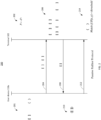
Fig. 2 is a bounce diagram illustrating a first technique for private biometric matching; -
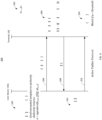
Fig. 3 is a bounce diagram illustrating a modification of the technique illustrated inFig. 2 ; -
Fig. 4 is a bounce diagram illustrating another technique for private biometric matching; and -
Fig. 5 is a bounce diagram illustrating another aspect of the technique ofFig. 4 . - A terminal may wish to confirm that a person is associated with a particular device, such as a smartphone. For example, a point of sale device (POS), such as at a retailer, may be capable of processing a transaction using a sight-unseen smartphone. That is, the POS may be able to complete a transaction using Wi-Fi or Bluetooth with a smartphone using the same protocol as would have been used if the smartphone was presented to the POS via Near Field Communication (NFC) by tapping the smartphone to the POS. However, the POS would first need to determine which smartphone in the vicinity is the one with the proper credential corresponding to the current purchase and purchaser.
- The POS may send a request to nearby smartphones requesting biometric templates of images for their respective users. The POS may also capture an image of the user engaged in the current transaction. Once the POS finds a smartphone with the image biometric template of the user matching the image just captured, the transaction processing can proceed using a normal payment flow. That is, in an exemplary embodiment, the smartphone can establish a secure channel with the POS, the transaction data can be transferred and signed by the smartphone's payment application along with the personal account number (PAN) or token data related to the user's payment card. This information may be passed by the POS to the retailer's acquiring bank for approval and processing.
- However, in this process, the POS should not simply be able to request biometric templates from every nearby smartphone simply so that matching the image to the correct user can be performed. This would expose the biometric data of every nearby smartphone user, including those devices/users who are not involved in the transaction in any way. Conversely, the image of the user or its biometric template, should not be shared with each nearby smartphone so that the user's information remains protected from unwanted distribution. The techniques for accomplishing this are discussed below. In this example, there is little or no threat of the smartphone attempting to spoof the POS into thinking it is someone else, because the payment is made via a separate purchase transaction using a different credential. This type of identification may be thought of as passive.
- In a similar process for a different transaction type, for example, one involving receiving cash at an automated teller machine (ATM), the benefit of a deliberate attempt to deceive the identification process at the ATM could result in fraudulent receipt of funds. In this case, an active identification may be used to further identify the user. In this case, instead of just matching the biometric template, the user may provide a copy of the template signed by an authority that also includes user identity information. In this case, the approval process results in not only establishing a relationship between a user and a smartphone, but the user and the user's identity as previously established with the authority.
- A homomorphic cryptography algorithm, such as a Paillier encryption among others, may be used. The basic premise is that an operation performed on encrypted data has the same result as that operation being performed on unencrypted data. As will be discussed in greater detail below, this allows verification operations to be performed on encrypted data so that while the matching process may occur on the terminal, the biometric template never leaves the smartphone.
- While the advantages of such a process are apparent, homomorphic cryptographic algorithms, such as Paillier, can be very compute-intensive at certain phases of the process. For example, key generation and data encryption can be very time consuming, so long that including these steps in a normal cryptographic transaction, such as a purchase transaction may be prohibitive. The following description discloses an approach to address these shortcomings. Further, the homomorphic algorithms as applied to biometrics can yield datasets that are large enough to adversely affect transmission time between the user device and the terminal (for example, the POS or ATM). An embodiment described below for packing data reduces the data required for transmission by a factor of 8, although other reduction factors are possible. Bit masking of non-essential terms also helps to reduce the potential for data leakage during the data reduction process.
- In an embodiment using current technology, the matching process takes about 300 milliseconds with an initial communication payload of 55 Mbytes of data and about 1 Mbyte for each communication after that.
-
Fig. 1 illustrates anexemplary system 100 that supports the homomorphic matching process. Aterminal 102 may be a POS device, such as a register at a retailer, an ATM, or any other device for which a biometric authentication may be useful including access control, record keeping, or other personal transactions. Theterminal 102 may include aprocessor 104 coupled by adata bus 105 to amemory 106, abiometric capture device 112, acryptographic module 114 and awireless interface 116. Thememory 106 may include an operating system andutilities 108 used in the startup and basic operation of theterminal 102 including communication and user interface, as is known. Atransaction processing module 110 may handle interactions between purchasers and/or payment instruments, bar code scanners or card acceptance devices, host systems, and acquirers. - The
homomorphic module 114 may include cryptographic routines for encryption and decryption, as well as routines for generating templates from biometric data received from thebiometric capture device 112. These data may include facial images, fingerprint scans, iris scans, retinal scans, palm outline data, voice prints, etc. More specific functions associated with thehomomorphic module 114 are discussed below. Thewireless interface 116 may include a Wi-Fi module, a Bluetooth module, or any wireless connection hardware and associated protocol that allows relatively high speed data communication between theterminal 102 and external entities. - The
system 100 may also include or be coupled with a plurality of mobile devices such assmartphones - In operation, a
user 120 may approach theterminal 102 to complete a transaction. Theterminal 102 may wish to determine which, if any, of the smartphones 118 in the vicinity are associated with the user. Several different scenarios for this process are discussed with the help ofFigs. 2-5 . - Turning to
Fig. 2 , aninteraction 200 that only identifies the device, that is, a passive transaction, is shown. Atstep 201, theuser device 118a may generate an asymmetric key pair pk, sk (public key and secret key). This may be done one time only at any time prior to the transaction. A biometric x may be collected and stored as a series of data x1-xn, also referred to as a biometric template, or more simply, a template. The template may be encrypted into a set of values represented by [[xn ]]. The collection, generation, and encryption of the biometric data may also be done only one time prior to its use. As the key generation, template generation, and encryption are the most compute-intensive steps associated with the use of Paillier (homomorphic) encryption, the one-time pre-computing of these data may be performed when the device is inactive, saving time during a transaction. - At
step 202, at the beginning of a potential transaction, the terminal 102 may collect a biometric measurement, such as an image, of theuser 120 and use the raw data to generate a template y. Because the terminal 102 may have fewer limitations than the mobile device including access to power and a larger processor, the generation of the template via a neural network may be performed virtually in real time. In other embodiments, the terminal 102 and a mobile device may begin this initial step before the transaction is even initiated, such as when the user enters a store. Step 202 may continue by requesting a template match from surroundingmobile devices - In response to the request, the smartphone's public key and the encrypted template may be sent to the terminal 102 at
step 204. Atblock 206, the terminal 102 may multiply each term of the encrypted template with the corresponding term of the local template. As discussed more below, a characteristic of Paillier encryption or other additive homomorphic encryption schemes is that operations performed on encrypted data yield the same result as the same operation on unencrypted data. - At this point, the terminal has no information about the user's biometric template, other than that it exists. If the terminal 102 returns the result matrix z, that is, the inner product of x and y, to the
device 118a, thedevice 118a may be able to determine the template taken at the terminal. To avoid leaking this information to thedevice 118a, the terminal 102 may add a random number, B, to the result of the operation. With the addition of the random value, thedevice 118a cannot discover any information about the template from the terminal 102. - The encrypted value z which includes the added value B, is sent at
step 208 from the terminal 102 to thedevice 118a. There, atstep 210, thedevice 118a may decrypt the z to reveal the plaintext value z. The decryption process is much more efficient than the encryption process, so thedevice 118a can perform the decryption in a timely manner compared to expected transaction processing time. Further, the data transferred at step 208 (and atstep 212 below) is significantly smaller than the original transfer atblock 204. This helps to speed the process. - This value may be returned at
step 212 to the terminal 102. By subtracting the value B from z, the inner product of x and y can be developed. If this inner product is less than a threshold value, or in the case of cosine similarity match, close enough to a value of 1, the match is confirmed. As discussed above, since the biometric match is not actually used to complete the transaction, this passive technique is usable. The match merely confirms that the payment credentials on thedevice 118a can be used to make the payment. If thedevice 118a were to take steps to spoof or deceive the terminal 102 into thinking it is someone else, the result would simply be that thedevice 118a completes the payment transaction, perhaps for goods or services that in the end are taken by another user. In other words, there is no incentive to deceive in this scenario. - While the size of the data sent in the example of
Fig. 2 may be manageable,Fig. 3 illustrates a packing technique for reducing the data size of at least the initial data transfer by a factor of up to eight. While larger and smaller size reductions are possible, for current system configurations the factor of eight may provide an optimized balance between processing time and data transmission time. Atstep 221, similar to the previous example, thedevice 118a may collect biometric data and generate the key pair. In this case, only every eighth value of the template may be encrypted. In various embodiments, the value of the number of skips may be a function of the level of encryption (key size). This is discussed more below. - The new encrypted vector, [[x'j]], may therefore be, in this example, eight times smaller than the similar encrypted value of the example of
Fig. 2 . The value may be sent to the terminal atstep 224 responsive to a request following generation of the template atstep 222. Atstep 226, the terminal 102 will perform a similar grouping of the terms (yi,...,yi+7) to yield y'j. The respective groupings are multiplied together and the resultant value sent back to thedevice 118a atstep 228. - At
step 230, a random value grouping r=(r0,...r7) may be generated and added to the decrypted values to prevent overflows, as discussed in more detail below. The decrypted grouping z' and value r'= r0+...+r7 may be returned to the terminal atstep 232. Atstep 234, the value p is the difference between z' and B, while the inner product is the sum of the terms less r'. -
Fig. 4 illustrates aprocess 240 that illustrates the case where the user/device 118a may be highly incentivized to deceive the terminal 102, such as when making a withdrawal at an ATM. In this case, thedevice 118a may register the encrypted template with an authority, such as a financial institution, to bind the encrypted template, an authority key, and an identity of theuser 120 in a signed object σ. Afterstep 242,step 243 and step 244 follow as above. Step 246 not only performs the operation on the local template and the received encrypted template and adds the value B but also multiplies the result of the operation by a second random value A. - As above, the value z is sent to the
device 118a atstep 248. Atstep 250, the private key, sk, is used to decrypt the value z, which is returned to the terminal 102 atstep 252. Atstep 254, the value B is subtracted from z and the result divided by A to determine the inner product value. -
Fig. 5 illustrates theprocess 240 ofFig. 3 showing the effect of the value A when thedevice 118a attempts to deceive the terminal 102 into thinking there is a match. Atstep 250, thedevice 118a may attempt to add (or subtract) a value e to the resulting decryption value so that the terminal 102 will reach an incorrect conclusion about the value. However, the value of A may be selected so that any attempt to alter the value z will result in the returned z+e term, when multiplied by A-1 will be well above the threshold value t due to the plaintext space of the being large. The use of modulus math ensures that even though the terminal 102 does not know the value of e, any attempt to alter the returned value will be detectable. - Once the match is made, for example, at
Fig. 4 , the user identifier from the encrypted token may be extracted using the authority public key. This essentially creates a two-factor authentication, the first being the match of the biometric and the second being the possession of the token/object σ. - The following describes details of the encryption and padding processes.
- Our goal is to enable a card holder's phone to store their biometric data/template r and to securely enable an untrusted payment terminal to determine if a biometric measurement taken by it matches the template v. For various reasons this must happen without revealing v to the terminal or the measurement to the phone. The communication channel will be Bluetooth or Wi-Fi. The current protocol implementation achieves this in roughly 0.3 seconds with 55MB of communication for one comparison and 1MB of communication for each comparison after that.
- The field of biometric authentication is quite well explored under some use case. For facial and fingerprint biometrics, many of the most of effective methods follow a similar framework which build on machine learning and neural networks. Beforehand, given many raw biometric measurements (e.g. photos of people's faces or fingerprint scans) a neural network can be trained to "embed" a new biometric measurement into the vector space


- Putting it together, let NeuralNet be the trained neural network which outputs embeddings. The two measurements m 1, m 2 are said to be a match if
t < CosineSim(NeuralNet(m 1), NeuralNet(m 2)) - For the remainder of the paper we will refer to these embeddings in

- Broadly speaking, our goal is to allow a user to authenticate to terminal (e.g. Visa card terminal, ATM) using their biometric data. From a pure functionality point of view we wish the terminal to take a measurement (e.g. photo) m* of the user/customer, and then should learn if there exists a pre-registered measurement muser of a user that matches, i.e. learn user such that
- A naive solution to this problem is to maintain a large database containing the measurement muser for each user. When a terminal takes a measurement m* of the customer, the terminal sends m* to a central server which computes if a matching muser exists. One issue is that comparing all muser against m* could be expensive due to having many users. Secondly, the threshold t would have to be very strict to ensure that muser is unique. This could lead to a bad user experience due to the increased probability of rejecting valid customer measurements (photos). Finally, Visa does not wish to maintain a database of user biometric data due to privacy concerns and the risk of leaking this data during a security breach. For example, a rouge terminal could simply start asking the central server if a random/probable template v is contained in the database and the matching user ID if it exists.
- The solution we build relies on techniques known as (additively) homomorphic encryption. Classical encryption allows an entity to sample a random key k and then encrypt data as c = Enc k (m). We will also use the notation that


- The ability to add two ciphertexts means that the encryption scheme is additively homomorphic. The computation of m 1 + m 2 is performed modulo some integer p. An example of such a scheme is known as Paillier encryption. Additively homomorphic encryption also has the property that you can multiply a ciphertext


- Some encryption are multiplicatively homomorphic which means ciphertexts can be multiplied together. That is

- For example, EIGamal encryption is multiplicatively homomorphic. If a scheme is both additive and multiplicatively homomorphic then it is called a fully homomorphic encryption scheme.
- Unless otherwise stated, the protocols here are only required to be additively homomorphic. Therefore fully homomorphic encryptions schemes would also be compatible with our protocols.
- This solution takes a different approach by having the user store their biometric data muser on their own phone. This approach has the advantage that the overall collection of data has no single point of failure. Moreover, storing biometric data only on the phone follows the existing FIDO standard. A breach of the central server or even a phone does not reveal the biometric data of all users.
- We consider several entities for this application. A user with their mobile device and pre-registered biometric measurement muser. This user is running a banking app that will perform the following protocol(s). A central server will help in the authentication but will never store plain biometric data. Finally, a terminal which the user will interact with. This terminal can be in communication with both parties and trusts the server to be honest. Once set up, the terminal should not need to talk to the server to authenticate a user. The terminal is equipped with a biometric reader (e.g. fingerprint read or camera).
- The overall flow of the protocol is given in
Figure 1 . In a registration phase the user encrypts their biometric data and sends it to the server. The biometric data is then tied to the user's identity using cryptographic methods (e.g. a signature) to generate a payment/identity token. This token is returned to the user and is only valid for this user and in the context of a biometric payment with this exact encrypted template. - In the comparison phase the terminal will set up channels with nearby devices/users (e.g. over Bluetooth or Wi-Fi) and run the comparison protocol with each of them. The terminal has one (or more) measurement and wishes to identify which of the users have registered a matching biometric. Each user will begin by sending their token σuser and encrypted template

- When the terminal takes a measurement


- This protocol has several notable improvements over a "standard" approach to solving this program. First is that this protocol is optimized for the case where the user's template is fixed and will be compared with server measurements


- For example, when a user walks into a store, their device can send


- The second advantage of this approach is that the user only generates the encryption

[Registration] A protocol between the user and server. (a) The user captures their raw biometric data muser, e.g. a photo of their face. (b) The user computes their biometric template u = NeuralNet(muser ). (c) The user generates an encryption key pair (sk, pk) and computes the encryption 
(d) The user sends 

[Compare] A protocol between the user and terminal. The terminal has ℓ measurements 

(a) The user sends the terminal 
(b) For each i ∈ [ℓ], the terminal computes 

(c) For each i ∈ [ℓ], the terminal computes 
(d) The terminal sends 
(e) For each i ∈ [ℓ], the terminal compute CosineSim(u, vi ) = xi - ri . If CosineSim(u, vi ) ≥ t then let τi = σuser and ⊥ otherwise. (f) The terminal outputs (τ 1,..., τ ℓ). - can require many seconds while the rest of the protocol requires much less than a single second. As such, if the user had to freshly encrypt u' for each measurement, then the use of Paillier encryption could be prohibitively inefficient/power intensive for the practicality of this application.
- An advantage of this approach over comparing the measure

- We now introduce a new optimization for Paillier encryption which reduces the communication overhead of the bask protocol by roughly 4 to 8 times. Paillier is additively homomorphic with a plaintext space
 ciphertexts


- A method known as packing has long been known to allow you to encode several values into a ciphertext. The idea is that you place multiple elements into a single ciphertext with zero padding between them. For example, the packing of


i.e. the addition of each element in the encoded format. Thepadding bits are used here to ensure that if ui + vi generates a carry bit, i.e. ui + vi ≥ 2m, then this carry will be stored in the padding bits. In this case = 1 would be sufficient. More generally, this approach works so long as no position ever requires more than m' = m + d bits to be represented.
- This encoding also works when multiplying a single value


- Again we requireto be large enough to make sure xvi can be represented with m' = m + d bits. In this case d = m would be sufficient. However, multiplying two vectors component-wise (Hadamard Product) does not work in this format. For example, if we have n = 2 then


- Although we do not get 20 m' v 1 u 1 + 2 m'v 2 u 2 as desired, observe that the values of interest (v 1 u 1, v 2 u 2) are stored in the result just with v 2 u 2 at a different positions than in the input. We call this it's "level 2" position. It is easy to verify that for any,


v 1 u 1 and unun can be recovered but the other (...) terms will consist of various cross terms between ui and vj. We now show a new encoding strategy which allows us to recover all of the product terms viui from various positions v*u*. Let n = 3 and let us now encode u 1, ..., un as

- Note that the position for 22m' is set to zero. If we then multiply v*u* using these encodings we obtain

- The "level 2" positions here are 0, 2, 6, i.e. the first bit of each viui starts at bit index 0, 2m', 6m'. Then general ideal can be extended for an arbitrary value of n. In particular, given a suitable encoding for vectors of n - 1 elements, an encoding for n elements can be performed by adding 2 nim'un to the existing encoding where n' is the smallest integer such that no previous element is encoded at position n' and the new cross terms introduced do not collide with previous output positions. For example with n = 3 then n' = 3 instead of 2 (the next available input position) because the output position for v 2 u 2 would have been obscured with the cross terms (v 1 u 3 + v3 + u 1). Define I index these values such that

is the encoding. - For this encoding strategy, we must additionally ensure the d is sufficiently large such that any overflow from any of the cross terms does not exceed m' = m + d bits.
- One issue with the encoding strategy is that if we reveal v*u* to a party, then they will learn {v 1 u 1| i ∈ [n]} and the value of all of the other positions. For example, with n = 2 learning v*u* also reveals v 1 u 2 + v 2 u 1 which is undesirable. This issue is overcome by adding an additional random value to each of these position. When encoding a vector, we now make every slot of size m'+bits, i.e.


and when we decrypt / reveal v*u* we now reveal

instead where ri is uniform value in
I indexes the positions with the cross terms we wish to hide. To ensure that adding the ri terms do not corrupt the other positions, we require that the addition between the cross terms and ri does not overflow the m' +bits of the position. Recall that we guarantee that m' is large enough to hold the cross terms. Therefore the probability of an overflow is that probability that the top bits of ri is all ones. This happens with probability
 which can be made arbitrarily small so that the overall error probability is acceptable.
- Signed values can also be supported. This is achieved by using a twos complement encoding of the values. Given an m bit signed value, encode it as a twos complement 2m bit number1. This requirement for this expansion is to ensure that after multiplying two of these values, the first 2m bits of the product. One security ramification of this approach is that we must extend the masking approach described above to hide the top 2m bits of the 4m bit product. If these bits were not masked then when the product is reveal the decrypted could distinguish multiply two positive values and two negative values which both result in the same logical value, i.e. the product of negative numbers would have at least one 1 in the top 2m bits while the other would not.
- Regardless, these top 2m bits can be masked in a straightforward extension of the masking technique described above.
- Up to this point we have only discussed computing component wise multiplication. However, we desire computing inner product. The high level ideal is as follows where we are encoding 8 values per ciphertext.
- 1. Each party computes several encodings
1 Actually, this must be sign extended to the size of the final result in bits (when not twos complement encoded). For inner products this could be as large as 2m + log 2 n bits. See below.- (a)

- (b)

- (a)
- 2. The user encrypts

- 3. The terminal computes

- 4. The user decrypts and compute s* =
 + r* where r* is an encoding at "level 2" of the random values

- 5. The terminal computes x* = s* - B and decodes it to x1, ..., x 8 and computes

- Additional care here must be taken to ensure that enough padding bits are placed between each value to guarantee that no overflows will happens. This can be done simply by computing the maximum value any position can take.
- As an optimization, if a priori it is known that any that the inner product will not exceed some given value then fewer padding bits may be needed. This is the case of cosine similarity where the inner product can la* at most 1 (times some scaling factor) while each product uiv i can also be at most 1. This observation can be used to prove that log2 n fewer padding bits are needed. This is contrasted with the case where the only constraint is that uivi can be at most 1 which would imply that the inner product could be as large as n.
- Fully Homomorphic Encryption (FHE) can be used in a similar way as Paillier encryption. It is actually more computationally efficient but requires an increase in communication overhead. With careful optimization this added overhead may be minimized. An advantage of FHE is that it could be used to give stronger guarantees that the user's encrypted templateis of correct form. Further investigations are required.

- A technical effect of the current concept is that a user's biometric template never leaves the user's possession even though the matching process occurs at the terminal device at which the user is requesting authentication. This is a technical solution to a technology problem, that of preserving the integrity of a person's biometric data from compromise during the act of using that biometric with a foreign and unknown device. Similarly, the process ensures that a terminal device capturing a person's biometric data will not leak that data to other devices while attempting to discover the correct device with which to interact.
- Further, the bit packing process disclosed overcomes previous carry bit problems to allow significant data reductions in the size of data transferred between devices, resulting in significant speed improvements.
- A system and method in accordance with the current disclosure benefits both users and merchants. The biometric matching may occur with little or no interaction from the
user 120, and the transaction accomplished so that the user does not even need to remove his or herdevice 118a from a purse or pocket. This streamlines the interaction while reducing the inconvenience and threat posed by removing thedevice 118a from a purse or pocket. More importantly, the biometric matching occurs without the terminal 102 or any other server from even temporarily handling the user's biometric template. That information is stored solely on the user'sdevice 118a. The terminal 102 may gather biometric data directly from the user for the period of the transaction but without the means to register that information, that template has little to no value. As a rule, a merchant does not want to be responsible for that kind of user data in the event of a breach and will systematically discard such information after a transaction. - The figures depict preferred embodiments for purposes of illustration only. One skilled in the art will readily recognize from the following discussion that alternative embodiments of the structures and methods illustrated herein may be employed without departing from the principles described herein.
- Upon reading this disclosure, those of skill in the art will appreciate still additional alternative structural and functional designs for the systems and methods described herein through the disclosed principles herein. Thus, while particular embodiments and applications have been illustrated and described, it is to be understood that the disclosed embodiments are not limited to the precise construction and components disclosed herein. Various modifications, changes and variations, which will be apparent to those skilled in the art, may be made in the arrangement, operation and details of the systems and methods disclosed herein without departing from the scope defined in any appended claims.
- The content of this description also contains the following numbered clauses:
- 1. A computer implemented method for authenticating a first device of a user to a second device, the method comprising:
- receiving a ciphertext and a public key from a first device, wherein the ciphertext is created by:
- preparing a first biometric template for the user using the first device;
- packing the first biometric template with a plurality of packing values to create a packed biometric template; and
- encrypting the packed biometric template using homomorphic encryption to create a ciphertext;
- obtaining, using one or more sensors of the second device, a second biometric measurement of the user;
- computing an encrypted similarity metric using the ciphertext and the second biometric template;
- computing an encrypted code using the encrypted similarity metric, a masking value, and homomorphic encryption via the public key, wherein the masking value is added to the similarity metric to create a masked similarity metric;
- sending the encrypted code to the first device, wherein the first device decrypts the encrypted code using the public key;
- receiving from the first device the masked similarity metric;
- computing a comparison metric using the masked similarity metric and the masking value;
- comparing the comparison metric to a threshold value; and,
- providing access to a resource when the comparison metric is less than the threshold value.
- receiving a ciphertext and a public key from a first device, wherein the ciphertext is created by:
- 2. The method of clause 1, wherein the first biometric template includes a first vector of biometric values.
- 3. The method of clause 2, wherein preparing a biometric template comprises:
- using one or more sensors of the first device to obtain a first biometric measurement of the user; and
- sending the first biometric measurement of the user to a neural network to compute the first vector of biometric values.
- 4. The method of clause 3, wherein the first biometric measurement is a picture of the user's face.
- 5. The method of clause 1, wherein the ciphertext is saved in a memory of the first device.
- 6. The method of clause 1, wherein the second biometric measurement is a picture of the user's face.
- 7. The method of clause 1, wherein the second biometric template includes a second vector of biometric values.
- 8. The method of clause 1, wherein the plurality of packing values comprises eight values.
- 9. The method of clause 1, wherein the ciphertext is sent to the second device over a communications network.
- 10. The method of clause 9, wherein the communications network is a Wi-Fi network or a Bluetooth enabled network.
- 11. A computer implemented method for authenticating a first device of a user to a second device, the method comprising:
- receiving a ciphertext and a public key from a first device, wherein the ciphertext is created by encrypting a first biometric template using homomorphic encryption;
- obtaining, using one or more sensors of the second device, a second biometric measurement of the user;
- computing an encrypted similarity metric using the ciphertext and the second biometric template;
- computing an encrypted code using the encrypted similarity metric, a first masking value, a second masking value, and homomorphic encryption via the public key, wherein the similarity metric is multiplied by the first masking value to create a first masked similarity metric and the second masking value is added to the first masked similarity metric to create a second masked similarity metric;
- sending the encrypted code to the first device, wherein the first device decrypts the encrypted code using the public key;
- receiving from the first device the second masked similarity metric;
- computing a comparison metric using the second masked similarity metric, the first masking value, and the second masking value;
- comparing the comparison metric to a threshold value; and
- providing access to a resource when the comparison metric is less than the threshold value.
- 12. The method of clause 11, wherein the first biometric template includes a first vector of biometric values.
- 13. The method of clause 12, wherein the first vector of biometric values is obtained using one or more sensors of the first device to obtain a first biometric measurement of the user, wherein the first biometric measurement of the user is sent to a neural network to compute the first vector of biometric values.
- 14. The method of clause 13, wherein the first biometric measurement is a picture of the user's face.
- 15. The method of clause 11, wherein the ciphertext is saved in a memory of the first device.
- 16. The method of clause 11, wherein the second biometric measurement is a picture of the user's face.
- 17. The method of clause 11, wherein the second biometric template includes a second vector of biometric values.
- 18. The method of clause 11, wherein the ciphertext is sent to the second device over a communications network.
- 19. The method of clause 18, wherein the communications network is a Wi-Fi network or a Bluetooth enabled network.
- 20. The method of clause 19, wherein the first masking value is a 2000 bit number.
Claims (11)
- A computer implemented method of user authentication, the method comprising:obtaining, using one or more sensors of a terminal device, a sample biometric measurement of a user;generating a sample biometric template using the sample biometric measurement of the user;receiving, from each of a plurality of devices associated with a plurality of users, an encrypted biometric template and a public key of a public/private key pair associated with each of the plurality of users;using a cosine similarity function, computing a similarity metric for each of the plurality of users in order to compare each of the respective encrypted biometric templates of each of the plurality of users to the sample biometric template;computing a plurality of masked similarity metrics by adding a masking value to each of the plurality of similarity metrics;encrypting each of the plurality of masked similarity metrics using homomorphic encryption and the public keys received from each respective device of the plurality of devices;sending each of the plurality of encrypted masked similarity metrics to each respective device of the plurality of devices, wherein each device of the plurality of devices decrypts the respective encrypted masked similarity metrics using a private key of each respective public/private key pair resulting in a plurality of decrypted masked similarity metrics;receiving a decrypted masked similarity metric of the plurality of decrypted masked similarity metrics from each of the plurality of devices;computing a comparison metric for each decrypted masked similarity metric of the plurality of decrypted masked similarity metrics by subtracting the masking value from each decrypted masked similarity metric;comparing each comparison metric to a threshold value; andproviding access to a resource when the comparison metric computed for the decrypted masked similarity metric provided by a device of the plurality of devices is less than the threshold value.
- The method of claim 1, wherein the sample biometric measurement is a picture of the user's face.
- The method of claim 1 or 2, wherein the sample biometric template includes a sample vector of biometric values.
- The method of any of claims 1 to 3, wherein generating the sample biometric template includes sending the sample biometric measurement of the user to a neural network to compute a sample vector of biometric values.
- The method of any of claims 1 to 4, wherein the encrypted biometric template associated with each of the plurality of users is stored on each respective device of the plurality of devices.
- The method of any of claims 1 to 5, wherein the homomorphic encryption is additively homomorphic encryption.
- The method of any of claims 1 to 6, wherein the homomorphic encryption is multiplicatively homomorphic encryption.
- The method of any of claims 1 to 7, wherein the homomorphic encryption is fully homomorphic encryption.
- The method of any of claims 1 to 8, wherein the encrypted biometric template associated with each of the plurality of users is sent to the terminal device over a communications network.
- The method of claim 9, wherein the communications network is a Wi-Fi network or a Bluetooth enabled network.
- A terminal device comprising at least one processor and a memory configured to store instructions, which, when executed by the processor, cause the terminal device to perform a method according to any one of claims 1 to 10.
Applications Claiming Priority (3)
| Application Number | Priority Date | Filing Date | Title |
|---|---|---|---|
| US16/664,530 US11250116B2 (en) | 2019-10-25 | 2019-10-25 | Optimized private biometric matching |
| EP20878595.6A EP4049403B1 (en) | 2019-10-25 | 2020-11-24 | Optimized private biometric matching |
| PCT/US2020/062074 WO2021081542A2 (en) | 2019-10-25 | 2020-11-24 | Optimized private biometric matching |
Related Parent Applications (1)
| Application Number | Title | Priority Date | Filing Date |
|---|---|---|---|
| EP20878595.6A Division EP4049403B1 (en) | 2019-10-25 | 2020-11-24 | Optimized private biometric matching |
Publications (2)
| Publication Number | Publication Date |
|---|---|
| EP4502831A2 true EP4502831A2 (en) | 2025-02-05 |
| EP4502831A3 EP4502831A3 (en) | 2025-04-16 |
Family
ID=75585891
Family Applications (2)
| Application Number | Title | Priority Date | Filing Date |
|---|---|---|---|
| EP20878595.6A Active EP4049403B1 (en) | 2019-10-25 | 2020-11-24 | Optimized private biometric matching |
| EP24221022.7A Pending EP4502831A3 (en) | 2019-10-25 | 2020-11-24 | Optimized private biometric matching |
Family Applications Before (1)
| Application Number | Title | Priority Date | Filing Date |
|---|---|---|---|
| EP20878595.6A Active EP4049403B1 (en) | 2019-10-25 | 2020-11-24 | Optimized private biometric matching |
Country Status (4)
| Country | Link |
|---|---|
| US (3) | US11250116B2 (en) |
| EP (2) | EP4049403B1 (en) |
| CN (1) | CN115336223B (en) |
| WO (1) | WO2021081542A2 (en) |
Families Citing this family (15)
| Publication number | Priority date | Publication date | Assignee | Title |
|---|---|---|---|---|
| GB2577477B8 (en) * | 2018-08-31 | 2022-02-16 | Idex Biometrics Asa | Biometric Interface |
| US12063293B2 (en) * | 2018-12-12 | 2024-08-13 | Nec Corporation | Collation system, client and server |
| US11250116B2 (en) * | 2019-10-25 | 2022-02-15 | Visa International Service Association | Optimized private biometric matching |
| CN112866280B (en) * | 2020-07-03 | 2023-01-10 | 支付宝(杭州)信息技术有限公司 | An information verification method, device and equipment |
| US11563623B2 (en) * | 2020-10-13 | 2023-01-24 | Arris Enterprises Llc | Home network health metrics reporting |
| US11546164B2 (en) | 2020-10-23 | 2023-01-03 | Visa International Service Association | Verification of biometric templates for privacy preserving authentication |
| FR3125898B1 (en) * | 2021-07-28 | 2024-02-16 | Idemia Identity & Security France | METHOD AND SYSTEM FOR PROCESSING PERSONAL DATA |
| WO2023058176A1 (en) * | 2021-10-06 | 2023-04-13 | 日本電気株式会社 | Authentication system, user device, mobile device, key information transmission method, authentication method, and computer-readable medium |
| EP4209945A1 (en) * | 2022-01-06 | 2023-07-12 | Tata Consultancy Services Limited | Method and system for generating protected biometric templates |
| CN114065169B (en) * | 2022-01-13 | 2022-06-24 | 浙江大学 | Privacy protection biometric authentication method and device and electronic equipment |
| US11924349B2 (en) | 2022-06-09 | 2024-03-05 | The Government of the United States of America, as represented by the Secretary of Homeland Security | Third party biometric homomorphic encryption matching for privacy protection |
| US11843699B1 (en) | 2022-06-09 | 2023-12-12 | The Government of the United States of America, as represented by the Secretary of Homeland Security | Biometric identification using homomorphic primary matching with failover non-encrypted exception handling |
| CN115278673B (en) * | 2022-08-08 | 2024-07-23 | 西安电子科技大学 | Lightweight biometric authentication method and system based on joint biometrics |
| US12067750B2 (en) | 2022-10-27 | 2024-08-20 | The Government of the United States of America, as represented by the Secretary of Homeland Security | Methods and systems for establishing accurate phenotype metrics |
| CN116127489B (en) * | 2023-02-03 | 2023-06-27 | 蓝象智联(杭州)科技有限公司 | Data point multiplication operation method for secure multiparty calculation and electronic equipment |
Family Cites Families (18)
| Publication number | Priority date | Publication date | Assignee | Title |
|---|---|---|---|---|
| WO2006054208A1 (en) * | 2004-11-16 | 2006-05-26 | Koninklijke Philips Electronics N.V. | Securely computing a similarity measure |
| US9077509B2 (en) * | 2005-12-13 | 2015-07-07 | Koninklijke Philips N.V. | Secure threshold decryption protocol computation |
| US20100329448A1 (en) * | 2009-06-30 | 2010-12-30 | Rane Shantanu D | Method for Secure Evaluation of a Function Applied to Encrypted Signals |
| WO2012114452A1 (en) | 2011-02-22 | 2012-08-30 | 三菱電機株式会社 | Similarity calculation system, similarity calculation device, computer program, and similarity calculation method |
| RU2522024C2 (en) * | 2012-10-15 | 2014-07-10 | Общество С Ограниченной Ответственностью "Лаборатория Эландис" | Method of signing electronic documents with analogue-digital signature with additional verification |
| JP2016512611A (en) * | 2013-03-04 | 2016-04-28 | トムソン ライセンシングThomson Licensing | Privacy Protection Ridge Return |
| US8966277B2 (en) * | 2013-03-15 | 2015-02-24 | Mitsubishi Electric Research Laboratories, Inc. | Method for authenticating an encryption of biometric data |
| JP2016012111A (en) * | 2014-06-30 | 2016-01-21 | 富士通株式会社 | Encryption processing method, encryption processing device, and encryption processing program |
| JP6413598B2 (en) * | 2014-10-10 | 2018-10-31 | 富士通株式会社 | Cryptographic processing method, cryptographic processing apparatus, and cryptographic processing program |
| US9641318B2 (en) * | 2015-01-06 | 2017-05-02 | Google Inc. | Systems and methods for a multiple value packing scheme for homomorphic encryption |
| US9584489B2 (en) * | 2015-01-29 | 2017-02-28 | Google Inc. | Controlling access to resource functions at a control point of the resource via a user device |
| US9942032B1 (en) * | 2015-09-30 | 2018-04-10 | Symantec Corporation | Systems and methods for securely detecting data similarities |
| US11354390B2 (en) * | 2017-06-04 | 2022-06-07 | Apple Inc. | Biometric authentication with user input |
| CN108090108A (en) * | 2017-06-29 | 2018-05-29 | 北京市商汤科技开发有限公司 | Information processing method, device, electronic equipment and storage medium |
| WO2019112650A1 (en) * | 2017-12-08 | 2019-06-13 | Visa International Service Association | Server-assisted privacy protecting biometric comparison |
| US11368308B2 (en) * | 2019-01-11 | 2022-06-21 | Visa International Service Association | Privacy preserving biometric authentication |
| WO2020227320A1 (en) * | 2019-05-06 | 2020-11-12 | Inferati Inc. | Accurate, real-time and secure privacy-preserving verification of biometrics or other sensitive information |
| US11250116B2 (en) * | 2019-10-25 | 2022-02-15 | Visa International Service Association | Optimized private biometric matching |
-
2019
- 2019-10-25 US US16/664,530 patent/US11250116B2/en active Active
-
2020
- 2020-11-24 WO PCT/US2020/062074 patent/WO2021081542A2/en not_active Ceased
- 2020-11-24 EP EP20878595.6A patent/EP4049403B1/en active Active
- 2020-11-24 CN CN202080090415.6A patent/CN115336223B/en active Active
- 2020-11-24 EP EP24221022.7A patent/EP4502831A3/en active Pending
-
2022
- 2022-01-05 US US17/569,281 patent/US12124546B2/en active Active
-
2024
- 2024-10-04 US US18/906,586 patent/US20250028805A1/en active Pending
Also Published As
| Publication number | Publication date |
|---|---|
| WO2021081542A2 (en) | 2021-04-29 |
| EP4049403B1 (en) | 2025-01-01 |
| US20220129531A1 (en) | 2022-04-28 |
| US12124546B2 (en) | 2024-10-22 |
| EP4049403A2 (en) | 2022-08-31 |
| EP4049403A4 (en) | 2023-06-28 |
| US20210124815A1 (en) | 2021-04-29 |
| EP4502831A3 (en) | 2025-04-16 |
| CN115336223A (en) | 2022-11-11 |
| US20250028805A1 (en) | 2025-01-23 |
| WO2021081542A3 (en) | 2021-06-03 |
| US11250116B2 (en) | 2022-02-15 |
| CN115336223B (en) | 2026-01-13 |
Similar Documents
| Publication | Publication Date | Title |
|---|---|---|
| EP4049403B1 (en) | Optimized private biometric matching | |
| EP3665862B1 (en) | Use of biometrics and privacy preserving methods to authenticate account holders online | |
| CN111466097B (en) | Server-Assisted Privacy-Preserving Biometric Comparison | |
| US10873447B2 (en) | Efficient concurrent scalar product calculation | |
| US7788500B2 (en) | Biometric authentication device and terminal | |
| US11792012B2 (en) | Distributed biometric comparison framework | |
| US11991282B2 (en) | Distributed private key recovery | |
| CN110401542A (en) | Electronic identity voucher generation method, terminal and server | |
| Agrawal et al. | Game-set-MATCH: Using mobile devices for seamless external-facing biometric matching | |
| Yuvarani et al. | Payment Security Expert: Analyzing Smart Cards and Contactless Payments with Cryptographic Techniques | |
| US12143482B2 (en) | Information matching system and information matching method | |
| CN112166577B (en) | Efficient concurrent scalar product calculation method and system | |
| Nashwan et al. | Mutual chain authentication protocol for SPAN transactions in Saudi Arabian banking | |
| David et al. | Prognostic Analysis of User Authentication Mechanisms in Mobile Wallets | |
| RU2776258C2 (en) | Biometric comparison for privacy protection using server | |
| Manoj et al. | Palm Print Recognition Using DES Algorithm with Machine Learning | |
| WO2023181163A1 (en) | Collation system, collation device, collation method, and program | |
| Afolabi et al. | Development of Crypto-Biometric E-Banking System |
Legal Events
| Date | Code | Title | Description |
|---|---|---|---|
| PUAI | Public reference made under article 153(3) epc to a published international application that has entered the european phase |
Free format text: ORIGINAL CODE: 0009012 |
|
| STAA | Information on the status of an ep patent application or granted ep patent |
Free format text: STATUS: THE APPLICATION HAS BEEN PUBLISHED |
|
| AC | Divisional application: reference to earlier application |
Ref document number: 4049403 Country of ref document: EP Kind code of ref document: P |
|
| AK | Designated contracting states |
Kind code of ref document: A2 Designated state(s): AL AT BE BG CH CY CZ DE DK EE ES FI FR GB GR HR HU IE IS IT LI LT LU LV MC MK MT NL NO PL PT RO RS SE SI SK SM TR |
|
| REG | Reference to a national code |
Ref country code: DE Ref legal event code: R079 Free format text: PREVIOUS MAIN CLASS: G06F0021000000 Ipc: H04L0009000000 |
|
| PUAL | Search report despatched |
Free format text: ORIGINAL CODE: 0009013 |
|
| AK | Designated contracting states |
Kind code of ref document: A3 Designated state(s): AL AT BE BG CH CY CZ DE DK EE ES FI FR GB GR HR HU IE IS IT LI LT LU LV MC MK MT NL NO PL PT RO RS SE SI SK SM TR |
|
| RIC1 | Information provided on ipc code assigned before grant |
Ipc: G06F 21/00 20130101ALI20250311BHEP Ipc: H04L 9/32 20060101ALI20250311BHEP Ipc: H04L 9/00 20220101AFI20250311BHEP |
|
| STAA | Information on the status of an ep patent application or granted ep patent |
Free format text: STATUS: REQUEST FOR EXAMINATION WAS MADE |
|
| 17P | Request for examination filed |
Effective date: 20251016 |
|
| GRAP | Despatch of communication of intention to grant a patent |
Free format text: ORIGINAL CODE: EPIDOSNIGR1 |
|
| STAA | Information on the status of an ep patent application or granted ep patent |
Free format text: STATUS: GRANT OF PATENT IS INTENDED |
|
| RIC1 | Information provided on ipc code assigned before grant |
Ipc: H04L 9/00 20220101AFI20260302BHEP Ipc: H04L 9/32 20060101ALI20260302BHEP Ipc: G06F 21/00 20130101ALI20260302BHEP |
|
| INTG | Intention to grant announced |
Effective date: 20260311 |