EP4501884A1 - Oxide sintered body - Google Patents
Oxide sintered body Download PDFInfo
- Publication number
- EP4501884A1 EP4501884A1 EP23779555.4A EP23779555A EP4501884A1 EP 4501884 A1 EP4501884 A1 EP 4501884A1 EP 23779555 A EP23779555 A EP 23779555A EP 4501884 A1 EP4501884 A1 EP 4501884A1
- Authority
- EP
- European Patent Office
- Prior art keywords
- sintered body
- oxide sintered
- atomic ratio
- film
- less
- Prior art date
- Legal status (The legal status is an assumption and is not a legal conclusion. Google has not performed a legal analysis and makes no representation as to the accuracy of the status listed.)
- Pending
Links
Images
Classifications
-
- C—CHEMISTRY; METALLURGY
- C04—CEMENTS; CONCRETE; ARTIFICIAL STONE; CERAMICS; REFRACTORIES
- C04B—LIME, MAGNESIA; SLAG; CEMENTS; COMPOSITIONS THEREOF, e.g. MORTARS, CONCRETE OR LIKE BUILDING MATERIALS; ARTIFICIAL STONE; CERAMICS; REFRACTORIES; TREATMENT OF NATURAL STONE
- C04B35/00—Shaped ceramic products characterised by their composition; Ceramics compositions; Processing powders of inorganic compounds preparatory to the manufacturing of ceramic products
- C04B35/01—Shaped ceramic products characterised by their composition; Ceramics compositions; Processing powders of inorganic compounds preparatory to the manufacturing of ceramic products based on oxide ceramics
- C04B35/03—Shaped ceramic products characterised by their composition; Ceramics compositions; Processing powders of inorganic compounds preparatory to the manufacturing of ceramic products based on oxide ceramics based on magnesium oxide, calcium oxide or oxide mixtures derived from dolomite
- C04B35/04—Shaped ceramic products characterised by their composition; Ceramics compositions; Processing powders of inorganic compounds preparatory to the manufacturing of ceramic products based on oxide ceramics based on magnesium oxide, calcium oxide or oxide mixtures derived from dolomite based on magnesium oxide
- C04B35/053—Fine ceramics
-
- C—CHEMISTRY; METALLURGY
- C23—COATING METALLIC MATERIAL; COATING MATERIAL WITH METALLIC MATERIAL; CHEMICAL SURFACE TREATMENT; DIFFUSION TREATMENT OF METALLIC MATERIAL; COATING BY VACUUM EVAPORATION, BY SPUTTERING, BY ION IMPLANTATION OR BY CHEMICAL VAPOUR DEPOSITION, IN GENERAL; INHIBITING CORROSION OF METALLIC MATERIAL OR INCRUSTATION IN GENERAL
- C23C—COATING METALLIC MATERIAL; COATING MATERIAL WITH METALLIC MATERIAL; SURFACE TREATMENT OF METALLIC MATERIAL BY DIFFUSION INTO THE SURFACE, BY CHEMICAL CONVERSION OR SUBSTITUTION; COATING BY VACUUM EVAPORATION, BY SPUTTERING, BY ION IMPLANTATION OR BY CHEMICAL VAPOUR DEPOSITION, IN GENERAL
- C23C14/00—Coating by vacuum evaporation, by sputtering or by ion implantation of the coating forming material
- C23C14/06—Coating by vacuum evaporation, by sputtering or by ion implantation of the coating forming material characterised by the coating material
- C23C14/08—Oxides
-
- C—CHEMISTRY; METALLURGY
- C04—CEMENTS; CONCRETE; ARTIFICIAL STONE; CERAMICS; REFRACTORIES
- C04B—LIME, MAGNESIA; SLAG; CEMENTS; COMPOSITIONS THEREOF, e.g. MORTARS, CONCRETE OR LIKE BUILDING MATERIALS; ARTIFICIAL STONE; CERAMICS; REFRACTORIES; TREATMENT OF NATURAL STONE
- C04B35/00—Shaped ceramic products characterised by their composition; Ceramics compositions; Processing powders of inorganic compounds preparatory to the manufacturing of ceramic products
- C04B35/01—Shaped ceramic products characterised by their composition; Ceramics compositions; Processing powders of inorganic compounds preparatory to the manufacturing of ceramic products based on oxide ceramics
- C04B35/453—Shaped ceramic products characterised by their composition; Ceramics compositions; Processing powders of inorganic compounds preparatory to the manufacturing of ceramic products based on oxide ceramics based on zinc, tin, or bismuth oxides or solid solutions thereof with other oxides, e.g. zincates, stannates or bismuthates
-
- C—CHEMISTRY; METALLURGY
- C23—COATING METALLIC MATERIAL; COATING MATERIAL WITH METALLIC MATERIAL; CHEMICAL SURFACE TREATMENT; DIFFUSION TREATMENT OF METALLIC MATERIAL; COATING BY VACUUM EVAPORATION, BY SPUTTERING, BY ION IMPLANTATION OR BY CHEMICAL VAPOUR DEPOSITION, IN GENERAL; INHIBITING CORROSION OF METALLIC MATERIAL OR INCRUSTATION IN GENERAL
- C23C—COATING METALLIC MATERIAL; COATING MATERIAL WITH METALLIC MATERIAL; SURFACE TREATMENT OF METALLIC MATERIAL BY DIFFUSION INTO THE SURFACE, BY CHEMICAL CONVERSION OR SUBSTITUTION; COATING BY VACUUM EVAPORATION, BY SPUTTERING, BY ION IMPLANTATION OR BY CHEMICAL VAPOUR DEPOSITION, IN GENERAL
- C23C14/00—Coating by vacuum evaporation, by sputtering or by ion implantation of the coating forming material
- C23C14/06—Coating by vacuum evaporation, by sputtering or by ion implantation of the coating forming material characterised by the coating material
- C23C14/08—Oxides
- C23C14/081—Oxides of aluminium, magnesium or beryllium
-
- C—CHEMISTRY; METALLURGY
- C23—COATING METALLIC MATERIAL; COATING MATERIAL WITH METALLIC MATERIAL; CHEMICAL SURFACE TREATMENT; DIFFUSION TREATMENT OF METALLIC MATERIAL; COATING BY VACUUM EVAPORATION, BY SPUTTERING, BY ION IMPLANTATION OR BY CHEMICAL VAPOUR DEPOSITION, IN GENERAL; INHIBITING CORROSION OF METALLIC MATERIAL OR INCRUSTATION IN GENERAL
- C23C—COATING METALLIC MATERIAL; COATING MATERIAL WITH METALLIC MATERIAL; SURFACE TREATMENT OF METALLIC MATERIAL BY DIFFUSION INTO THE SURFACE, BY CHEMICAL CONVERSION OR SUBSTITUTION; COATING BY VACUUM EVAPORATION, BY SPUTTERING, BY ION IMPLANTATION OR BY CHEMICAL VAPOUR DEPOSITION, IN GENERAL
- C23C14/00—Coating by vacuum evaporation, by sputtering or by ion implantation of the coating forming material
- C23C14/06—Coating by vacuum evaporation, by sputtering or by ion implantation of the coating forming material characterised by the coating material
- C23C14/08—Oxides
- C23C14/086—Oxides of zinc, germanium, cadmium, indium, tin, thallium or bismuth
-
- C—CHEMISTRY; METALLURGY
- C23—COATING METALLIC MATERIAL; COATING MATERIAL WITH METALLIC MATERIAL; CHEMICAL SURFACE TREATMENT; DIFFUSION TREATMENT OF METALLIC MATERIAL; COATING BY VACUUM EVAPORATION, BY SPUTTERING, BY ION IMPLANTATION OR BY CHEMICAL VAPOUR DEPOSITION, IN GENERAL; INHIBITING CORROSION OF METALLIC MATERIAL OR INCRUSTATION IN GENERAL
- C23C—COATING METALLIC MATERIAL; COATING MATERIAL WITH METALLIC MATERIAL; SURFACE TREATMENT OF METALLIC MATERIAL BY DIFFUSION INTO THE SURFACE, BY CHEMICAL CONVERSION OR SUBSTITUTION; COATING BY VACUUM EVAPORATION, BY SPUTTERING, BY ION IMPLANTATION OR BY CHEMICAL VAPOUR DEPOSITION, IN GENERAL
- C23C14/00—Coating by vacuum evaporation, by sputtering or by ion implantation of the coating forming material
- C23C14/22—Coating by vacuum evaporation, by sputtering or by ion implantation of the coating forming material characterised by the process of coating
- C23C14/24—Vacuum evaporation
-
- C—CHEMISTRY; METALLURGY
- C23—COATING METALLIC MATERIAL; COATING MATERIAL WITH METALLIC MATERIAL; CHEMICAL SURFACE TREATMENT; DIFFUSION TREATMENT OF METALLIC MATERIAL; COATING BY VACUUM EVAPORATION, BY SPUTTERING, BY ION IMPLANTATION OR BY CHEMICAL VAPOUR DEPOSITION, IN GENERAL; INHIBITING CORROSION OF METALLIC MATERIAL OR INCRUSTATION IN GENERAL
- C23C—COATING METALLIC MATERIAL; COATING MATERIAL WITH METALLIC MATERIAL; SURFACE TREATMENT OF METALLIC MATERIAL BY DIFFUSION INTO THE SURFACE, BY CHEMICAL CONVERSION OR SUBSTITUTION; COATING BY VACUUM EVAPORATION, BY SPUTTERING, BY ION IMPLANTATION OR BY CHEMICAL VAPOUR DEPOSITION, IN GENERAL
- C23C14/00—Coating by vacuum evaporation, by sputtering or by ion implantation of the coating forming material
- C23C14/22—Coating by vacuum evaporation, by sputtering or by ion implantation of the coating forming material characterised by the process of coating
- C23C14/34—Sputtering
- C23C14/3407—Cathode assembly for sputtering apparatus, e.g. Target
- C23C14/3414—Metallurgical or chemical aspects of target preparation, e.g. casting, powder metallurgy
-
- C—CHEMISTRY; METALLURGY
- C04—CEMENTS; CONCRETE; ARTIFICIAL STONE; CERAMICS; REFRACTORIES
- C04B—LIME, MAGNESIA; SLAG; CEMENTS; COMPOSITIONS THEREOF, e.g. MORTARS, CONCRETE OR LIKE BUILDING MATERIALS; ARTIFICIAL STONE; CERAMICS; REFRACTORIES; TREATMENT OF NATURAL STONE
- C04B2235/00—Aspects relating to ceramic starting mixtures or sintered ceramic products
- C04B2235/02—Composition of constituents of the starting material or of secondary phases of the final product
- C04B2235/30—Constituents and secondary phases not being of a fibrous nature
- C04B2235/32—Metal oxides, mixed metal oxides, or oxide-forming salts thereof, e.g. carbonates, nitrates, (oxy)hydroxides, chlorides
- C04B2235/3205—Alkaline earth oxides or oxide forming salts thereof, e.g. beryllium oxide
- C04B2235/3206—Magnesium oxides or oxide-forming salts thereof
-
- C—CHEMISTRY; METALLURGY
- C04—CEMENTS; CONCRETE; ARTIFICIAL STONE; CERAMICS; REFRACTORIES
- C04B—LIME, MAGNESIA; SLAG; CEMENTS; COMPOSITIONS THEREOF, e.g. MORTARS, CONCRETE OR LIKE BUILDING MATERIALS; ARTIFICIAL STONE; CERAMICS; REFRACTORIES; TREATMENT OF NATURAL STONE
- C04B2235/00—Aspects relating to ceramic starting mixtures or sintered ceramic products
- C04B2235/02—Composition of constituents of the starting material or of secondary phases of the final product
- C04B2235/30—Constituents and secondary phases not being of a fibrous nature
- C04B2235/32—Metal oxides, mixed metal oxides, or oxide-forming salts thereof, e.g. carbonates, nitrates, (oxy)hydroxides, chlorides
- C04B2235/3284—Zinc oxides, zincates, cadmium oxides, cadmiates, mercury oxides, mercurates or oxide forming salts thereof
-
- C—CHEMISTRY; METALLURGY
- C04—CEMENTS; CONCRETE; ARTIFICIAL STONE; CERAMICS; REFRACTORIES
- C04B—LIME, MAGNESIA; SLAG; CEMENTS; COMPOSITIONS THEREOF, e.g. MORTARS, CONCRETE OR LIKE BUILDING MATERIALS; ARTIFICIAL STONE; CERAMICS; REFRACTORIES; TREATMENT OF NATURAL STONE
- C04B2235/00—Aspects relating to ceramic starting mixtures or sintered ceramic products
- C04B2235/02—Composition of constituents of the starting material or of secondary phases of the final product
- C04B2235/30—Constituents and secondary phases not being of a fibrous nature
- C04B2235/32—Metal oxides, mixed metal oxides, or oxide-forming salts thereof, e.g. carbonates, nitrates, (oxy)hydroxides, chlorides
- C04B2235/3286—Gallium oxides, gallates, indium oxides, indates, thallium oxides, thallates or oxide forming salts thereof, e.g. zinc gallate
-
- C—CHEMISTRY; METALLURGY
- C04—CEMENTS; CONCRETE; ARTIFICIAL STONE; CERAMICS; REFRACTORIES
- C04B—LIME, MAGNESIA; SLAG; CEMENTS; COMPOSITIONS THEREOF, e.g. MORTARS, CONCRETE OR LIKE BUILDING MATERIALS; ARTIFICIAL STONE; CERAMICS; REFRACTORIES; TREATMENT OF NATURAL STONE
- C04B2235/00—Aspects relating to ceramic starting mixtures or sintered ceramic products
- C04B2235/02—Composition of constituents of the starting material or of secondary phases of the final product
- C04B2235/50—Constituents or additives of the starting mixture chosen for their shape or used because of their shape or their physical appearance
- C04B2235/54—Particle size related information
- C04B2235/5418—Particle size related information expressed by the size of the particles or aggregates thereof
- C04B2235/5445—Particle size related information expressed by the size of the particles or aggregates thereof submicron sized, i.e. from 0,1 to 1 micron
-
- C—CHEMISTRY; METALLURGY
- C04—CEMENTS; CONCRETE; ARTIFICIAL STONE; CERAMICS; REFRACTORIES
- C04B—LIME, MAGNESIA; SLAG; CEMENTS; COMPOSITIONS THEREOF, e.g. MORTARS, CONCRETE OR LIKE BUILDING MATERIALS; ARTIFICIAL STONE; CERAMICS; REFRACTORIES; TREATMENT OF NATURAL STONE
- C04B2235/00—Aspects relating to ceramic starting mixtures or sintered ceramic products
- C04B2235/60—Aspects relating to the preparation, properties or mechanical treatment of green bodies or pre-forms
- C04B2235/604—Pressing at temperatures other than sintering temperatures
-
- C—CHEMISTRY; METALLURGY
- C04—CEMENTS; CONCRETE; ARTIFICIAL STONE; CERAMICS; REFRACTORIES
- C04B—LIME, MAGNESIA; SLAG; CEMENTS; COMPOSITIONS THEREOF, e.g. MORTARS, CONCRETE OR LIKE BUILDING MATERIALS; ARTIFICIAL STONE; CERAMICS; REFRACTORIES; TREATMENT OF NATURAL STONE
- C04B2235/00—Aspects relating to ceramic starting mixtures or sintered ceramic products
- C04B2235/65—Aspects relating to heat treatments of ceramic bodies such as green ceramics or pre-sintered ceramics, e.g. burning, sintering or melting processes
- C04B2235/656—Aspects relating to heat treatments of ceramic bodies such as green ceramics or pre-sintered ceramics, e.g. burning, sintering or melting processes characterised by specific heating conditions during heat treatment
- C04B2235/6562—Heating rate
-
- C—CHEMISTRY; METALLURGY
- C04—CEMENTS; CONCRETE; ARTIFICIAL STONE; CERAMICS; REFRACTORIES
- C04B—LIME, MAGNESIA; SLAG; CEMENTS; COMPOSITIONS THEREOF, e.g. MORTARS, CONCRETE OR LIKE BUILDING MATERIALS; ARTIFICIAL STONE; CERAMICS; REFRACTORIES; TREATMENT OF NATURAL STONE
- C04B2235/00—Aspects relating to ceramic starting mixtures or sintered ceramic products
- C04B2235/65—Aspects relating to heat treatments of ceramic bodies such as green ceramics or pre-sintered ceramics, e.g. burning, sintering or melting processes
- C04B2235/656—Aspects relating to heat treatments of ceramic bodies such as green ceramics or pre-sintered ceramics, e.g. burning, sintering or melting processes characterised by specific heating conditions during heat treatment
- C04B2235/6565—Cooling rate
-
- C—CHEMISTRY; METALLURGY
- C04—CEMENTS; CONCRETE; ARTIFICIAL STONE; CERAMICS; REFRACTORIES
- C04B—LIME, MAGNESIA; SLAG; CEMENTS; COMPOSITIONS THEREOF, e.g. MORTARS, CONCRETE OR LIKE BUILDING MATERIALS; ARTIFICIAL STONE; CERAMICS; REFRACTORIES; TREATMENT OF NATURAL STONE
- C04B2235/00—Aspects relating to ceramic starting mixtures or sintered ceramic products
- C04B2235/65—Aspects relating to heat treatments of ceramic bodies such as green ceramics or pre-sintered ceramics, e.g. burning, sintering or melting processes
- C04B2235/658—Atmosphere during thermal treatment
- C04B2235/6583—Oxygen containing atmosphere, e.g. with changing oxygen pressures
- C04B2235/6585—Oxygen containing atmosphere, e.g. with changing oxygen pressures at an oxygen percentage above that of air
-
- C—CHEMISTRY; METALLURGY
- C04—CEMENTS; CONCRETE; ARTIFICIAL STONE; CERAMICS; REFRACTORIES
- C04B—LIME, MAGNESIA; SLAG; CEMENTS; COMPOSITIONS THEREOF, e.g. MORTARS, CONCRETE OR LIKE BUILDING MATERIALS; ARTIFICIAL STONE; CERAMICS; REFRACTORIES; TREATMENT OF NATURAL STONE
- C04B2235/00—Aspects relating to ceramic starting mixtures or sintered ceramic products
- C04B2235/65—Aspects relating to heat treatments of ceramic bodies such as green ceramics or pre-sintered ceramics, e.g. burning, sintering or melting processes
- C04B2235/658—Atmosphere during thermal treatment
- C04B2235/6586—Processes characterised by the flow of gas
-
- C—CHEMISTRY; METALLURGY
- C04—CEMENTS; CONCRETE; ARTIFICIAL STONE; CERAMICS; REFRACTORIES
- C04B—LIME, MAGNESIA; SLAG; CEMENTS; COMPOSITIONS THEREOF, e.g. MORTARS, CONCRETE OR LIKE BUILDING MATERIALS; ARTIFICIAL STONE; CERAMICS; REFRACTORIES; TREATMENT OF NATURAL STONE
- C04B2235/00—Aspects relating to ceramic starting mixtures or sintered ceramic products
- C04B2235/65—Aspects relating to heat treatments of ceramic bodies such as green ceramics or pre-sintered ceramics, e.g. burning, sintering or melting processes
- C04B2235/66—Specific sintering techniques, e.g. centrifugal sintering
- C04B2235/661—Multi-step sintering
- C04B2235/662—Annealing after sintering
- C04B2235/664—Reductive annealing
-
- C—CHEMISTRY; METALLURGY
- C04—CEMENTS; CONCRETE; ARTIFICIAL STONE; CERAMICS; REFRACTORIES
- C04B—LIME, MAGNESIA; SLAG; CEMENTS; COMPOSITIONS THEREOF, e.g. MORTARS, CONCRETE OR LIKE BUILDING MATERIALS; ARTIFICIAL STONE; CERAMICS; REFRACTORIES; TREATMENT OF NATURAL STONE
- C04B2235/00—Aspects relating to ceramic starting mixtures or sintered ceramic products
- C04B2235/70—Aspects relating to sintered or melt-casted ceramic products
- C04B2235/74—Physical characteristics
- C04B2235/77—Density
-
- C—CHEMISTRY; METALLURGY
- C04—CEMENTS; CONCRETE; ARTIFICIAL STONE; CERAMICS; REFRACTORIES
- C04B—LIME, MAGNESIA; SLAG; CEMENTS; COMPOSITIONS THEREOF, e.g. MORTARS, CONCRETE OR LIKE BUILDING MATERIALS; ARTIFICIAL STONE; CERAMICS; REFRACTORIES; TREATMENT OF NATURAL STONE
- C04B2235/00—Aspects relating to ceramic starting mixtures or sintered ceramic products
- C04B2235/70—Aspects relating to sintered or melt-casted ceramic products
- C04B2235/80—Phases present in the sintered or melt-cast ceramic products other than the main phase
-
- C—CHEMISTRY; METALLURGY
- C04—CEMENTS; CONCRETE; ARTIFICIAL STONE; CERAMICS; REFRACTORIES
- C04B—LIME, MAGNESIA; SLAG; CEMENTS; COMPOSITIONS THEREOF, e.g. MORTARS, CONCRETE OR LIKE BUILDING MATERIALS; ARTIFICIAL STONE; CERAMICS; REFRACTORIES; TREATMENT OF NATURAL STONE
- C04B2235/00—Aspects relating to ceramic starting mixtures or sintered ceramic products
- C04B2235/70—Aspects relating to sintered or melt-casted ceramic products
- C04B2235/96—Properties of ceramic products, e.g. mechanical properties such as strength, toughness, wear resistance
- C04B2235/9646—Optical properties
- C04B2235/9653—Translucent or transparent ceramics other than alumina
-
- C—CHEMISTRY; METALLURGY
- C23—COATING METALLIC MATERIAL; COATING MATERIAL WITH METALLIC MATERIAL; CHEMICAL SURFACE TREATMENT; DIFFUSION TREATMENT OF METALLIC MATERIAL; COATING BY VACUUM EVAPORATION, BY SPUTTERING, BY ION IMPLANTATION OR BY CHEMICAL VAPOUR DEPOSITION, IN GENERAL; INHIBITING CORROSION OF METALLIC MATERIAL OR INCRUSTATION IN GENERAL
- C23C—COATING METALLIC MATERIAL; COATING MATERIAL WITH METALLIC MATERIAL; SURFACE TREATMENT OF METALLIC MATERIAL BY DIFFUSION INTO THE SURFACE, BY CHEMICAL CONVERSION OR SUBSTITUTION; COATING BY VACUUM EVAPORATION, BY SPUTTERING, BY ION IMPLANTATION OR BY CHEMICAL VAPOUR DEPOSITION, IN GENERAL
- C23C14/00—Coating by vacuum evaporation, by sputtering or by ion implantation of the coating forming material
- C23C14/22—Coating by vacuum evaporation, by sputtering or by ion implantation of the coating forming material characterised by the process of coating
- C23C14/34—Sputtering
Definitions
- the present invention relates to an oxide sintered body and a material for film formation used for forming a thin film.
- MgO-ZnO-based oxide is applied to a translucent ceramic for a color liquid crystal projector (Patent Document 1), an oxide semiconductor (Patent Document 2), a transparent electrode (Patent Document 3), and the like.
- the sintered body is a material that emphasizes conductivity, it is mainly composed of ZnO, and therefore there is a problem in the translucency in the ultraviolet region.
- the present inventors have disclosed an oxide sintered body which contains zinc, magnesium, a metallic element X having a positive trivalent or a positive tetravalent, and oxygen as constituent elements, and which is capable of obtaining a film having high translucency in an ultraviolet region and high conductivity by adjusting the ratio of these elements (Patent Document 4).
- the present inventors have found that, when the film was formed using an oxide sintered body containing a cubic MgO into which Zn is solid-solved, a hexagonal ZnO into which Mg is solid-solved, and a ZnGa 2 O 4 into which Mg is solid-solved, a film having high translucency in the ultraviolet region and high conductivity can be obtained.
- One of objects of the invention is to provide an oxide sintered body capable of obtaining a film having high translucency in the ultraviolet region and high conductivity.
- the following oxide sintered body and the like are provided.
- an oxide sintered body capable of obtaining a film having high translucency in the ultraviolet region and high conductivity.
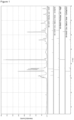
- Figure 1 shows an analysis result of an XRD chart of an oxide sintered body of Example 1.
- An oxide sintered body according to one embodiment of the present invention includes a cubic MgO into which Zn is solid-solved, a hexagonal ZnO into which Mg is solid-solved, and a ZnGa 2 O 4 into which Mg is solid-solved.
- the oxide sintered body capable of forming a film that achieves both the translucency in the ultraviolet region and the conductivity is obtained.
- the atomic ratio of the gallium to the sum of the zinc, the magnesium, and the gallium is preferably 0.0001 or more and 0.090 or less.
- the atomic ratio [Ga/(Zn+Mg+Ga)] is more preferably 0.007 or more and 0.070 or less, still more preferably 0.008 or more and 0.060 or less, and particularly preferably 0.010 or more and 0.050 or less.
- the atomic ratio of the magnesium to the sum of the zinc and the magnesium [Mg/(Zn+Mg)] is preferably 0.25 or more and 0.80 or less.
- the atomic ratio [Mg/(Zn+Mg)] is more preferably 0.30 or more and 0.70 or less. Note that, when the atomic ratio is more than 0.80, a highly conductive film cannot be obtained even if the film obtained from the oxide sintered body is annealed. On the other hand, when the atomic ratio is less than 0.25, the ultraviolet transmittance of the film becomes low.
- metallic element X having a positive trivalent or positive tetravalent may be added.
- metallic element X include Al, In, Sc and Y.
- the metallic element is preferably Al.
- the atomic ratio of the zinc, the magnesium and the gallium can be controlled by preparing the atomic ratio of the starting material.
- the ratio of the zinc tends to be higher than the atomic ratio of the starting material, and the atomic ratio of the gallium tends to be approximately the same.
- the atomic ratio of each element contained in the oxide sintered body can be determined by analyzing the contained elements by an inductively coupled plasma-atomic emission spectrometer (ICP-AES). Specifically, when a sample of solutions is atomized with a nebulizer and introduced into an argon plasma (about 5000 to 8000°C), the elements in the sample absorb thermal energy and are excited, and the orbital electrons move from the ground state to the orbit with a higher energy level and then to the orbit with a lower energy level. At this time, the difference in energy is emitted as light and emitted. Since this light shows an element-specific wavelength (spectral line), the presence of an element can be confirmed by the presence or absence of a spectral line (qualitative analysis).
- ICP-AES inductively coupled plasma-atomic emission spectrometer
- the sample concentration can be determined by comparing with a standard solution having a known concentration (quantitative analysis). After identifying the elements contained in the sample by the qualitative analysis, and then the content is determined by quantitative analysis, and the atomic ratio of each element is determined from the result.
- the constituent elements of the oxide sintered body of the present embodiment may include essentially of Mg, Zn, Ga and O (consisting essentially of). For example, 70 mol% or more, 80 mol% or more, or 90 mol% or more of the constituent elements of the oxide sintered body of the present embodiment may be Mg, Zn, Ga and O. Further, the constituent elements of the oxide sintered body of the present embodiment may consist of Mg, Zn, Ga and O. In this case, the oxide sintered body may contain inevitable impurities.
- the fact that the other metallic elements are solid-solved into each crystal can be determined by comparing the lattice constant (measured value) obtained by XRD with the lattice constant (PDF value) described in PDF. For example, in the case of the crystal which Zn is solid-solved into, the measured value is larger than PDF value.
- the solid solution status cannot be determined by XRD, it can be determined by mapping position for each element using respective characteristic X-rays, for example, by an Energy-Dispersive X-ray Spectrometer (EDS) attached to a Scanning Electrons Microscope (SEM).
- EDS Energy-Dispersive X-ray Spectrometer
- SEM Scanning Electrons Microscope
- the oxide sintered body of the present embodiment can be produced by, for example, a step of mixing a raw material powder to prepare a mixture powder, a step of molding the mixed powder to form a molded body, and a step of sintering the molded body.
- the compound powder containing the Mg the compound powder containing the Zn, and the compound powder containing the Ga can be used.
- the compound is preferably an oxide. Examples include MgO, ZnO and Ga 2 O 3 .
- the mixing proportion of the raw material powder can be prepared, for example, by considering the atomic ratio of the oxide sintered body to be obtained.
- the average particle size of the raw material powder is preferably 0.1 to 1.2 ⁇ m, more preferably 0.5 to 1.0 ⁇ m.
- the average particle size of the raw material powder can be measured by a laser diffraction particle size analyzer or the like.
- the mixing and molding method of the raw materials is not particularly limited, and a known method can be employed.
- a binder may be added at the time of mixing.
- the mixing of the raw materials can be performed using a known device such as a ball mill, a bead mill, a jet mill, or an ultrasonic device.
- the mixing time may be appropriately adjusted, but is preferably about 6 to 100 hours.
- the mixed powder can be pressure-molded to form a molded body.
- This process allows to be molded into a shape of the product (for example, a shape suitable as a sputtering target).
- the molded article can be obtained by filling the mixed powder into a mold and pressurizing the molded article, for example, at a 1000 kg/cm 2 or higher, usually by a mold press or a cold isostatic pressing (ClP).
- a molding aid such as polyvinyl alcohol, polyethylene glycol, methyl cellulose, polywax, oleic acid, or stearic acid may be used.
- the obtained molded body can be heated, for example, at a temperature of 1200 to 1650°C for 2 hours or more to obtain an oxide sintered body.
- the heating temperature is preferably 1350 to 1600°C, more preferably 1400 to 1600°C, and even more preferably 1450 to 1500°C.
- the heating time is preferably 2 to 72 hours, more preferably 3 to 48 hours, even more preferably 4 to 24 hours.
- the sintering is usually performed by heating the molded body in an air atmosphere or an oxygen gas atmosphere.
- the oxygen gas atmosphere is preferably an atmosphere having an oxygen concentration of, for example, 10 to 50% by volume.
- the oxide sintered body of the present embodiment can be suitably used as a material for film formation used for forming a thin film having a composition same as the oxide sintered body, for example, tablets used for film formation by vacuum deposition method or ion plating method, and sputtering targets.
- the thin film obtained from the material for film formation of the present embodiment can be used as a transparent conductive film used for an electrode substrate such as an ultraviolet emitting diode or an ultraviolet emitting laser diode.
- the ultraviolet transmittance and conductivity of the film are improved.
- the oxide of zinc, the oxide of magnesium, and the like are uniformly mixed. It is presumed that heat treatment of the film in this state causes aggregation, separating, and the like of the oxide, and consequently, the oxide of zinc forms a network, thereby exhibiting conductivity, while the oxide of magnesium aggregates in the gap among the networks of the oxide of zinc, whereby ultraviolet ray is transmitted.
- the heat treatment temperature of the electrode layer is preferably 750°C or more, more preferably 900°C or more.
- the tablet can be produced, for example, by cutting or polishing an oxide sintered body obtained by molding a raw material into a desired shape and sintering.
- the sputtering target can be produced, for example, by cutting or polishing an oxide sintered body and bonding it to a backing plate.
- the uneven surface can be removed by cutting.
- the size of the oxide sintered body can be specified.
- the surface may be polished at #200, or #400, or even #800. As a result, it is possible to suppress abnormal discharge and generation of particles during sputtering.
- a bonding material such as indium-metal solder is applied to the bonding surface, and is bonded to the backing plate, whereby a sputtering target can be obtained.
- Zinc oxide (ZnO) powder having an average particle size of 1 ⁇ m or less, magnesium oxide (MgO) powder having an average particle size of 1 ⁇ m or less, and gallium oxide (Ga 2 O 3 ) powder having an average particle size of 1 ⁇ m or less were weighed and mixed so that atomic ratios of the respective metals were as shown in Table 1.
- ZnO was 60.9% by mass
- MgO was 31.6% by mass
- Ga 2 O 3 was 7.5% by mass.
- the mixed powder was placed in a resin-made pot, then water was added thereto, and the mixed powder was mixed in a wet ball mill for 20 hours using a hard ZrO 2 ball as a grinding media.
- the resulting mixed slurry was removed, filtered, dried and granulated.
- the obtained granulated product was placed in a mold, and molded by pressing to 3 ton/cm 2 by cold isostatic pressing.
- the obtained molded body was placed in a sintering furnace, and the molded body was sintered while oxygen was flowed in at a rate of 5 L/min per 0.1 m 3 of the internal volume of the furnace.
- the temperature in the sintering furnace was raised at 1°C/min from room temperature to 1000°C, and at 3°C/min from 1000°C to 1470°C, and the sintering was performed for 5 hours at 1470°C. Thereafter, the inflow of oxygen was stopped, and the temperature in the furnace was lowered from 1470°C to 1300°C at 10°C/min. Then, while flowing Ar at a proportion of 10 L/min per 0.1 m 3 of the internal volume of the furnace, the furnace temperature was maintained at 1300°C for 3 hours. Thereafter, the oxide sintered body was obtained by cooling.
- a part of the obtained oxide sintered body was cut out, dissolved in an acid, and analyzed by an inductively coupled plasma atomic emission spectrometer.
- the relative density was calculated by measuring the actual density of the oxide sintered body by Archimedes method using water and dividing by the theoretical density calculated based on the composition.
- the theoretical density was determined by averaging the density of MgO without oxygen defect as 3.59 g/cm 3 , ZnO as 5.61 g/cm 3 , and Ga 2 O 3 as 5.88 g/cm 3 , for the composition proportion (mass fraction) of the sintered body.
- the XRD measurement was analyzed by an integrated powder X-ray analysis software (PDXL2, manufactured by Rigaku) to obtain the crystalline structure and the lattice constant of the sintered oxide body.
- the crystalline structure was confirmed by ICDD card (PDF) below.
- Figure 1 shows the result of analysis of XRD charts. From Figure 1 , it was confirmed that ZnO, MgO and ZnGa 2 O 4 were included in the oxide sintered body. The results are shown in Table 3. In the table, the case where each crystal structure is contained is denoted by " ⁇ ", and the case where each crystal structure is not contained is denoted by " ⁇ ". Table 3 MgO into which Zn was solid-solved (cubic) ZnO into which Mg was solid-solved (hexagonal) ZnGa 2 O 4 into which Mg was solid-solved Example 1 ⁇ ⁇ ⁇ Example 2 ⁇ ⁇ ⁇ Example 3 ⁇ ⁇ ⁇ Comparative Example 1 ⁇ ⁇ ⁇ Comparative Example 2 ⁇ ⁇ ⁇ ⁇
- the obtained oxide sintered body was polished with a cup grinding wheel on a surface that would be the sputtered surface and processed to 100 mm in diameter and 5 mm in thickness.
- a backing plate was bonded to the polished oxide sintered body to prepare a sputtering target.
- a thin film was actually formed using a sputtering target prepared from an oxide sintered body and evaluated. Film formation conditions were as follows.
- a sapphire substrate (Thickness 0.5 mm) was placed in an ultrasonic cleaner and washed with trichloroethylene for 5 minutes, with acetone for 5 minutes, with methanol for 5 minutes, and finally with distilled water for 5 minutes.
- the substrate was set in a sputtering device (ULVAC: ACS-4000), and a film was formed on substrate at 25°C using Ar as a sputtering gas to form a film having a thickness 100 nm.
- the substrate having the film formed in the above (1) was subjected to heat treatment (activation annealing) at 950°C for 5 minutes in a nitrogen atmosphere.
- heat treatment activation annealing
- the surface-resistance was measured using a LORESTA FP manufactured by Mitsubishi Chemical.
- a spectrophotometer manufactured by Shimadzu Corporation: UV-2600 was used to evaluate ultraviolet transmittance.
- the oxide sintered body and the sputtering target were produced and evaluated in the same manner as in Example 1, except that the raw material was weighed to the atomic ratio of the respective metallic elements shown in Table 1, and was mixed. The results are shown in Tables 2 to 4.
- the ultraviolet transmittance and the resistance value were also preferably obtained.
- the resistance value was larger and the ultraviolet transmittance was lower than in Examples 1 to 3.
- the resistance value was smaller than that in Examples 1 to 3, but the ultraviolet transmittance was lower.
Landscapes
- Chemical & Material Sciences (AREA)
- Engineering & Computer Science (AREA)
- Organic Chemistry (AREA)
- Materials Engineering (AREA)
- Ceramic Engineering (AREA)
- Mechanical Engineering (AREA)
- Metallurgy (AREA)
- Chemical Kinetics & Catalysis (AREA)
- Manufacturing & Machinery (AREA)
- Structural Engineering (AREA)
- Compositions Of Oxide Ceramics (AREA)
- Physical Vapour Deposition (AREA)
- Inorganic Insulating Materials (AREA)
- Crystals, And After-Treatments Of Crystals (AREA)
Abstract
Description
- The present invention relates to an oxide sintered body and a material for film formation used for forming a thin film.
- MgO-ZnO-based oxide is applied to a translucent ceramic for a color liquid crystal projector (Patent Document 1), an oxide semiconductor (Patent Document 2), a transparent electrode (Patent Document 3), and the like.
- Although the sintered body is a material that emphasizes conductivity, it is mainly composed of ZnO, and therefore there is a problem in the translucency in the ultraviolet region.
- In order to solve the above problems, the present inventors have disclosed an oxide sintered body which contains zinc, magnesium, a metallic element X having a positive trivalent or a positive tetravalent, and oxygen as constituent elements, and which is capable of obtaining a film having high translucency in an ultraviolet region and high conductivity by adjusting the ratio of these elements (Patent Document 4).
-
- [Patent Document 1]
JP 2009-184898 - [Patent Document 2]
JP 2012-066968 - [Patent Document 3]
JP 2011-063866 - [Patent Document 4]
WO 2020/262433 - After further studies, the present inventors have found that, when the film was formed using an oxide sintered body containing a cubic MgO into which Zn is solid-solved, a hexagonal ZnO into which Mg is solid-solved, and a ZnGa2O4 into which Mg is solid-solved, a film having high translucency in the ultraviolet region and high conductivity can be obtained.
- One of objects of the invention is to provide an oxide sintered body capable of obtaining a film having high translucency in the ultraviolet region and high conductivity.
- According to the present invention, the following oxide sintered body and the like are provided.
- 1. An oxide sintered body comprising a cubic MgO into which Zn is solid-solved, a hexagonal ZnO into which Mg is solid-solved, and a ZnGa2O4 into which Mg is solid-solved.
- 2. The oxide sintered body according to 1, wherein an atomic ratio of the gallium to the sum of the zinc, the magnesium, and the gallium [Ga/(Zn+Mg+Ga)] is 0.0001 or more and 0.090 or less.
- 3. The oxide sintered body according to 2, wherein the atomic ratio [Ga/(Zn+Mg+Ga)] is 0.007 or more and 0.070 or less.
- 4. The oxide sintered body according to 2, wherein the atomic ratio [Ga/(Zn+Mg+Ga)] is 0.008 or more and 0.060 or less.
- 5. The oxide sintered body according to 2, wherein the atomic ratio [Ga/(Zn+Mg+Ga)] is 0.010 or more and 0.050 or less.
- 6. The oxide sintered body according to any one of 2 to 5, wherein an atomic ratio of the magnesium to the sum of the zinc and the magnesium [Mg/(Zn+Mg)] is 0.25 or more and 0.80 or less.
- 7. The oxide sintered body according to 6, wherein the atomic ratio [Mg/(Zn+Mg)] is 0.30 or more and 0.70 or less.
- 8. A material for film formation, comprising the oxide sintered body according to any one of 1 to 7.
- 9. The material for film formation according to 8, which is a film-forming tablet.
- 10. The material for film formation according to 8, which is a sputtering target.
- 11. A thin film obtained by using the material for film formation according to any one of 8 to 10.
- According to the present invention, it is possible to provide an oxide sintered body capable of obtaining a film having high translucency in the ultraviolet region and high conductivity.
-
Figure 1 shows an analysis result of an XRD chart of an oxide sintered body of Example 1. - An oxide sintered body according to one embodiment of the present invention includes a cubic MgO into which Zn is solid-solved, a hexagonal ZnO into which Mg is solid-solved, and a ZnGa2O4 into which Mg is solid-solved. As a result, the oxide sintered body capable of forming a film that achieves both the translucency in the ultraviolet region and the conductivity is obtained.
- In the oxide sintered body of the present embodiment, the atomic ratio of the gallium to the sum of the zinc, the magnesium, and the gallium [Ga/(Zn+Mg+Ga)] is preferably 0.0001 or more and 0.090 or less. As a result, the oxide sintered body capable of forming a film that both further improved translucency in the ultraviolet region and high conductivity is obtained. The atomic ratio [Ga/(Zn+Mg+Ga)] is more preferably 0.007 or more and 0.070 or less, still more preferably 0.008 or more and 0.060 or less, and particularly preferably 0.010 or more and 0.050 or less.
- In the oxide sintered body of the present embodiment, the atomic ratio of the magnesium to the sum of the zinc and the magnesium [Mg/(Zn+Mg)] is preferably 0.25 or more and 0.80 or less. As a result, the oxide sintered body capable of forming a film that both further improved translucency in the ultraviolet region and high conductivity is obtained. The atomic ratio [Mg/(Zn+Mg)] is more preferably 0.30 or more and 0.70 or less. Note that, when the atomic ratio is more than 0.80, a highly conductive film cannot be obtained even if the film obtained from the oxide sintered body is annealed. On the other hand, when the atomic ratio is less than 0.25, the ultraviolet transmittance of the film becomes low.
- In the present embodiment, in addition to gallium, other metallic element X having a positive trivalent or positive tetravalent may be added. Examples of the metallic element X include Al, In, Sc and Y. The metallic element is preferably Al.
- The atomic ratio of the zinc, the magnesium and the gallium can be controlled by preparing the atomic ratio of the starting material. In the atomic ratio of the oxide sintered body, the ratio of the zinc tends to be higher than the atomic ratio of the starting material, and the atomic ratio of the gallium tends to be approximately the same.
- The atomic ratio of each element contained in the oxide sintered body can be determined by analyzing the contained elements by an inductively coupled plasma-atomic emission spectrometer (ICP-AES). Specifically, when a sample of solutions is atomized with a nebulizer and introduced into an argon plasma (about 5000 to 8000°C), the elements in the sample absorb thermal energy and are excited, and the orbital electrons move from the ground state to the orbit with a higher energy level and then to the orbit with a lower energy level. At this time, the difference in energy is emitted as light and emitted. Since this light shows an element-specific wavelength (spectral line), the presence of an element can be confirmed by the presence or absence of a spectral line (qualitative analysis). Further, since the magnitude of the spectral line (emission intensity) is proportional to the number of elements in the sample, the sample concentration can be determined by comparing with a standard solution having a known concentration (quantitative analysis). After identifying the elements contained in the sample by the qualitative analysis, and then the content is determined by quantitative analysis, and the atomic ratio of each element is determined from the result.
- The constituent elements of the oxide sintered body of the present embodiment may include essentially of Mg, Zn, Ga and O (consisting essentially of). For example, 70 mol% or more, 80 mol% or more, or 90 mol% or more of the constituent elements of the oxide sintered body of the present embodiment may be Mg, Zn, Ga and O. Further, the constituent elements of the oxide sintered body of the present embodiment may consist of Mg, Zn, Ga and O. In this case, the oxide sintered body may contain inevitable impurities.
- The inclusion of the above-described oxides in the oxide sintered body can be confirmed by checking XRD charts obtained by the X-ray diffraction (XRD) method and the database (PDF: Powder Diffraction File) of ICDD (International Centre for Diffraction Data).
- The fact that the other metallic elements are solid-solved into each crystal can be determined by comparing the lattice constant (measured value) obtained by XRD with the lattice constant (PDF value) described in PDF. For example, in the case of the crystal which Zn is solid-solved into, the measured value is larger than PDF value.
- If the solid solution status cannot be determined by XRD, it can be determined by mapping position for each element using respective characteristic X-rays, for example, by an Energy-Dispersive X-ray Spectrometer (EDS) attached to a Scanning Electrons Microscope (SEM).
- The oxide sintered body of the present embodiment can be produced by, for example, a step of mixing a raw material powder to prepare a mixture powder, a step of molding the mixed powder to form a molded body, and a step of sintering the molded body.
- As the starting materials, the compound powder containing the Mg, the compound powder containing the Zn, and the compound powder containing the Ga can be used. The compound is preferably an oxide. Examples include MgO, ZnO and Ga2O3.
- The mixing proportion of the raw material powder can be prepared, for example, by considering the atomic ratio of the oxide sintered body to be obtained.
- The average particle size of the raw material powder is preferably 0.1 to 1.2 µm, more preferably 0.5 to 1.0 µm. The average particle size of the raw material powder can be measured by a laser diffraction particle size analyzer or the like.
- The mixing and molding method of the raw materials is not particularly limited, and a known method can be employed. In addition, a binder may be added at the time of mixing.
- The mixing of the raw materials can be performed using a known device such as a ball mill, a bead mill, a jet mill, or an ultrasonic device. The mixing time may be appropriately adjusted, but is preferably about 6 to 100 hours.
- As the molding method, for example, the mixed powder can be pressure-molded to form a molded body. This process allows to be molded into a shape of the product (for example, a shape suitable as a sputtering target).
- The molded article can be obtained by filling the mixed powder into a mold and pressurizing the molded article, for example, at a 1000 kg/cm2 or higher, usually by a mold press or a cold isostatic pressing (ClP).
- At the time of molding, a molding aid such as polyvinyl alcohol, polyethylene glycol, methyl cellulose, polywax, oleic acid, or stearic acid may be used.
- The obtained molded body can be heated, for example, at a temperature of 1200 to 1650°C for 2 hours or more to obtain an oxide sintered body.
- The heating temperature is preferably 1350 to 1600°C, more preferably 1400 to 1600°C, and even more preferably 1450 to 1500°C. The heating time is preferably 2 to 72 hours, more preferably 3 to 48 hours, even more preferably 4 to 24 hours.
- The sintering is usually performed by heating the molded body in an air atmosphere or an oxygen gas atmosphere. The oxygen gas atmosphere is preferably an atmosphere having an oxygen concentration of, for example, 10 to 50% by volume.
- The oxide sintered body of the present embodiment can be suitably used as a material for film formation used for forming a thin film having a composition same as the oxide sintered body, for example, tablets used for film formation by vacuum deposition method or ion plating method, and sputtering targets. The thin film obtained from the material for film formation of the present embodiment can be used as a transparent conductive film used for an electrode substrate such as an ultraviolet emitting diode or an ultraviolet emitting laser diode.
- Note that, by heat-treating the film at a high temperature after the film formation, the ultraviolet transmittance and conductivity of the film are improved. In the film immediately after the film formation, the oxide of zinc, the oxide of magnesium, and the like are uniformly mixed. It is presumed that heat treatment of the film in this state causes aggregation, separating, and the like of the oxide, and consequently, the oxide of zinc forms a network, thereby exhibiting conductivity, while the oxide of magnesium aggregates in the gap among the networks of the oxide of zinc, whereby ultraviolet ray is transmitted.
- The heat treatment temperature of the electrode layer is preferably 750°C or more, more preferably 900°C or more.
- The tablet can be produced, for example, by cutting or polishing an oxide sintered body obtained by molding a raw material into a desired shape and sintering. The sputtering target can be produced, for example, by cutting or polishing an oxide sintered body and bonding it to a backing plate.
- The uneven surface can be removed by cutting. In addition, the size of the oxide sintered body can be specified. The surface may be polished at #200, or #400, or even #800. As a result, it is possible to suppress abnormal discharge and generation of particles during sputtering.
- After the polished oxide sintered body is cleaned as needed, a bonding material such as indium-metal solder is applied to the bonding surface, and is bonded to the backing plate, whereby a sputtering target can be obtained.
- Zinc oxide (ZnO) powder having an average particle size of 1 µm or less, magnesium oxide (MgO) powder having an average particle size of 1 µm or less, and gallium oxide (Ga2O3) powder having an average particle size of 1 µm or less were weighed and mixed so that atomic ratios of the respective metals were as shown in Table 1. Regarding the mass fraction of the mixed powder, ZnO was 60.9% by mass, MgO was 31.6% by mass, Ga2O3 was 7.5% by mass.
- The mixed powder was placed in a resin-made pot, then water was added thereto, and the mixed powder was mixed in a wet ball mill for 20 hours using a hard ZrO2 ball as a grinding media. The resulting mixed slurry was removed, filtered, dried and granulated. The obtained granulated product was placed in a mold, and molded by pressing to 3 ton/cm2 by cold isostatic pressing.
- The obtained molded body was placed in a sintering furnace, and the molded body was sintered while oxygen was flowed in at a rate of 5 L/min per 0.1 m3 of the internal volume of the furnace.
- The temperature in the sintering furnace was raised at 1°C/min from room temperature to 1000°C, and at 3°C/min from 1000°C to 1470°C, and the sintering was performed for 5 hours at 1470°C. Thereafter, the inflow of oxygen was stopped, and the temperature in the furnace was lowered from 1470°C to 1300°C at 10°C/min. Then, while flowing Ar at a proportion of 10 L/min per 0.1 m3 of the internal volume of the furnace, the furnace temperature was maintained at 1300°C for 3 hours. Thereafter, the oxide sintered body was obtained by cooling.
- The composition and relative density of the obtained oxide sintered body were evaluated. The results are shown in Table 2.
Table 1 Atomic ratios of starting raw materials Mg Zn Ga Mg/(Zn+Mg) Ga/(Zn+Mg+Ga) Example 1 0.48 0.47 0.05 0.505 0.05 Example 2 0.50 0.49 0.01 0.505 0.01 Example 3 0.63 0.32 0.05 0.663 0.05 Comparative Example 1 0.505 0.495 0 0.505 0 Comparative Example 2 0.537 0.368 0.095 0.593 0.095 Table 2 Atomic ratios of oxide sintered body Relative density (%) Mg Zn Ga Mg/(Zn+Mg) Ga/(Zn+Mg+Ga) Example 1 0.475 0.475 0.050 0.500 0.050 81.59 Example 2 0.495 0.495 0.010 0.500 0.010 90.00 Example 3 0.620 0.330 0.050 0.653 0.050 89.04 Comparative Example 1 0.500 0.500 0 0.500 0 91.71 Comparative Example 2 0.534 0.371 0.095 0.590 0.095 80.00 - Evaluation procedure is as follows.
- A part of the obtained oxide sintered body was cut out, dissolved in an acid, and analyzed by an inductively coupled plasma atomic emission spectrometer.
- The relative density was calculated by measuring the actual density of the oxide sintered body by Archimedes method using water and dividing by the theoretical density calculated based on the composition. The theoretical density was determined by averaging the density of MgO without oxygen defect as 3.59 g/cm3, ZnO as 5.61 g/cm3, and Ga2O3 as 5.88 g/cm3, for the composition proportion (mass fraction) of the sintered body.
- The measurements were made with the following apparatus and conditions.
- · Apparatus: Ultima-III, manufactured by Rigaku
- · X-ray: Cu-Kα ray (wavelength: 1.5406 Å, monochromatized by graphite monochromator)
- · 2θ-θ reflection method, continuous scan (1.0°/min)
- · Sampling interval: 0.02°
- · Slitting DS, SS:2/3°, RS:0.6 mm
- The XRD measurement was analyzed by an integrated powder X-ray analysis software (PDXL2, manufactured by Rigaku) to obtain the crystalline structure and the lattice constant of the sintered oxide body. The crystalline structure was confirmed by ICDD card (PDF) below.
- ZnO:36-1451 (hexagonal)
- MgO:45-0946 (cubic)
- ZnGa2O4:38-1240
-
Figure 1 shows the result of analysis of XRD charts. FromFigure 1 , it was confirmed that ZnO, MgO and ZnGa2O4 were included in the oxide sintered body. The results are shown in Table 3. In the table, the case where each crystal structure is contained is denoted by "∘", and the case where each crystal structure is not contained is denoted by "×".Table 3 MgO into which Zn was solid-solved (cubic) ZnO into which Mg was solid-solved (hexagonal) ZnGa2O4 into which Mg was solid-solved Example 1 ○ ○ ○ Example 2 ○ ○ ○ Example 3 ○ ○ ○ Comparative Example 1 ○ ○ × Comparative Example 2 ○ ○ × - The obtained oxide sintered body was polished with a cup grinding wheel on a surface that would be the sputtered surface and processed to 100 mm in diameter and 5 mm in thickness. Using an In-based alloy, a backing plate was bonded to the polished oxide sintered body to prepare a sputtering target.
- A thin film was actually formed using a sputtering target prepared from an oxide sintered body and evaluated. Film formation conditions were as follows.
- A sapphire substrate (Thickness 0.5 mm) was placed in an ultrasonic cleaner and washed with trichloroethylene for 5 minutes, with acetone for 5 minutes, with methanol for 5 minutes, and finally with distilled water for 5 minutes.
- The substrate was set in a sputtering device (ULVAC: ACS-4000), and a film was formed on substrate at 25°C using Ar as a sputtering gas to form a film having a thickness 100 nm.
- The substrate having the film formed in the above (1) was subjected to heat treatment (activation annealing) at 950°C for 5 minutes in a nitrogen atmosphere. For the film after the heat treatment, the surface-resistance was measured using a LORESTA FP manufactured by Mitsubishi Chemical. A spectrophotometer (manufactured by Shimadzu Corporation: UV-2600) was used to evaluate ultraviolet transmittance.
- Evaluation results are shown in Table 4.
Table 4 Ultraviolet Transmittance (%) Resistance (Ωcm) Example 1 18 0.02 Example 2 18 0.05 Example 3 18 0.05 Comparative Example 1 15 1000 Comparative Example 2 12 0.001 - The oxide sintered body and the sputtering target were produced and evaluated in the same manner as in Example 1, except that the raw material was weighed to the atomic ratio of the respective metallic elements shown in Table 1, and was mixed. The results are shown in Tables 2 to 4.
- In Examples 1 to 3, the ultraviolet transmittance and the resistance value were also preferably obtained. On the other hand, in Comparative Example 1, the resistance value was larger and the ultraviolet transmittance was lower than in Examples 1 to 3. In Comparative Example 2, the resistance value was smaller than that in Examples 1 to 3, but the ultraviolet transmittance was lower.
- Although only some exemplary embodiments and/or examples of this invention have been described in detail above, those skilled in the art will readily appreciate that many modifications are possible in the exemplary embodiments and/or examples without materially departing from the novel teachings and advantages of this invention. Accordingly, all such modifications are intended to be included within the scope of this invention.
- The documents described in the specification and the specification of Japanese application(s) on the basis of which the present application claims Paris convention priority are incorporated herein by reference in its entirety.
Claims (11)
- An oxide sintered body comprising a cubic MgO into which Zn is solid-solved, a hexagonal ZnO into which Mg is solid-solved, and a ZnGa2O4 into which Mg is solid-solved.
- The oxide sintered body according to claim 1, wherein an atomic ratio of the gallium to the sum of the zinc, the magnesium, and the gallium [Ga/(Zn+Mg+Ga)] is 0.0001 or more and 0.090 or less.
- The oxide sintered body according to claim 2, wherein the atomic ratio [Ga/(Zn+Mg+Ga)] is 0.007 or more and 0.070 or less.
- The oxide sintered body according to claim 2, wherein the atomic ratio [Ga/(Zn+Mg+Ga)] is 0.008 or more and 0.060 or less.
- The oxide sintered body according to claim 2, wherein the atomic ratio [Ga/ (Zn+Mg+Ga)] is 0.010 or more and 0.050 or less.
- The oxide sintered body according to any one of claims 2 to 5, wherein an atomic ratio of the magnesium to the sum of the zinc and the magnesium [Mg/(Zn+Mg)] is 0.25 or more and 0.80 or less.
- The oxide sintered body according to claim 6, wherein the atomic ratio [Mg/ (Zn+Mg)] is 0.30 or more and 0.70 or less.
- A material for film formation, comprising the oxide sintered body according to any one of claims 1 to 7.
- The material for film formation according to claim 8, which is a film-forming tablet.
- The material for film formation according to claim 8, which is a sputtering target.
- A thin film obtained by using the material for film formation according to any one of claims 8 to 10.
Applications Claiming Priority (2)
| Application Number | Priority Date | Filing Date | Title |
|---|---|---|---|
| JP2022055149 | 2022-03-30 | ||
| PCT/JP2023/009842 WO2023189535A1 (en) | 2022-03-30 | 2023-03-14 | Oxide sintered body |
Publications (2)
| Publication Number | Publication Date |
|---|---|
| EP4501884A1 true EP4501884A1 (en) | 2025-02-05 |
| EP4501884A4 EP4501884A4 (en) | 2026-03-25 |
Family
ID=88201531
Family Applications (1)
| Application Number | Title | Priority Date | Filing Date |
|---|---|---|---|
| EP23779555.4A Pending EP4501884A4 (en) | 2022-03-30 | 2023-03-14 | OXIDE INTERBODY |
Country Status (7)
| Country | Link |
|---|---|
| US (1) | US20250326692A1 (en) |
| EP (1) | EP4501884A4 (en) |
| JP (1) | JPWO2023189535A1 (en) |
| KR (1) | KR20240168302A (en) |
| CN (1) | CN118973982A (en) |
| TW (1) | TW202402710A (en) |
| WO (1) | WO2023189535A1 (en) |
Family Cites Families (10)
| Publication number | Priority date | Publication date | Assignee | Title |
|---|---|---|---|---|
| JPH10306367A (en) * | 1997-05-06 | 1998-11-17 | Sumitomo Metal Mining Co Ltd | ZnO-Ga2O3-based sintered body for sputtering target and method for producing the same |
| JP2004158619A (en) * | 2002-11-06 | 2004-06-03 | Matsushita Electric Ind Co Ltd | Electronic device and manufacturing method thereof |
| EP2025654B1 (en) * | 2006-06-08 | 2018-09-19 | Sumitomo Metal Mining Co., Ltd. | Target obtained from an oxide sintered body |
| JP2009184898A (en) | 2008-02-08 | 2009-08-20 | Sumitomo Electric Ind Ltd | Translucent ceramics |
| JP5418105B2 (en) | 2009-09-18 | 2014-02-19 | 東ソー株式会社 | Composite oxide sintered body, oxide transparent conductive film, and manufacturing method thereof |
| JP2012066968A (en) | 2010-09-24 | 2012-04-05 | Kobelco Kaken:Kk | Oxide sintered compact and sputtering target |
| JP6522631B2 (en) * | 2014-09-04 | 2019-05-29 | 日本碍子株式会社 | Mg-containing zinc oxide sintered body and method for producing the same |
| WO2020067235A1 (en) * | 2018-09-26 | 2020-04-02 | 出光興産株式会社 | Oxide multilayer body and method for producing same |
| US11434172B2 (en) * | 2018-10-31 | 2022-09-06 | Idemitsu Kosan Co., Ltd. | Sintered body |
| KR102931422B1 (en) | 2019-06-27 | 2026-02-25 | 이데미쓰 고산 가부시키가이샤 | Oxide sintered body |
-
2023
- 2023-03-14 JP JP2024511723A patent/JPWO2023189535A1/ja active Pending
- 2023-03-14 WO PCT/JP2023/009842 patent/WO2023189535A1/en not_active Ceased
- 2023-03-14 CN CN202380027315.2A patent/CN118973982A/en active Pending
- 2023-03-14 KR KR1020247027657A patent/KR20240168302A/en active Pending
- 2023-03-14 EP EP23779555.4A patent/EP4501884A4/en active Pending
- 2023-03-14 US US18/851,848 patent/US20250326692A1/en active Pending
- 2023-03-30 TW TW112112204A patent/TW202402710A/en unknown
Also Published As
| Publication number | Publication date |
|---|---|
| US20250326692A1 (en) | 2025-10-23 |
| EP4501884A4 (en) | 2026-03-25 |
| CN118973982A (en) | 2024-11-15 |
| TW202402710A (en) | 2024-01-16 |
| JPWO2023189535A1 (en) | 2023-10-05 |
| WO2023189535A1 (en) | 2023-10-05 |
| KR20240168302A (en) | 2024-11-29 |
Similar Documents
| Publication | Publication Date | Title |
|---|---|---|
| EP2301904B1 (en) | Sintered complex oxide, method for producing sintered complex oxide, sputtering target and method for producing thin film | |
| US12198911B2 (en) | Nonmagnetic material-dispersed Fe-Pt based sputtering target | |
| JP6307344B2 (en) | Oxide sintered body and sputtering target | |
| JP6278229B2 (en) | Sputtering target for forming transparent oxide film and method for producing the same | |
| JP7532363B2 (en) | Sintered oxide | |
| EP2767610B1 (en) | ZnO-Al2O3-MgO sputtering target and method for the production thereof | |
| WO2017057551A1 (en) | Alumina sintered body and base substrate for optical element | |
| JP6646658B2 (en) | Alumina sintered body and base substrate for optical element | |
| US20140145124A1 (en) | In-ga-zn oxide sputtering target and method for producing same | |
| KR20210129040A (en) | Oxide sintered compact, sputtering target, and manufacturing method of sputtering target | |
| JP2011063866A (en) | Compound oxide sintered compact, oxide transparent conductive film, and method for producing the same | |
| EP3875443A1 (en) | Sintered body | |
| US20250326692A1 (en) | Oxide sintered body | |
| EP2789595B1 (en) | Complex oxide sintered body, sputtering target, transparent conductive oxide film, and method for producing same |
Legal Events
| Date | Code | Title | Description |
|---|---|---|---|
| STAA | Information on the status of an ep patent application or granted ep patent |
Free format text: STATUS: THE INTERNATIONAL PUBLICATION HAS BEEN MADE |
|
| PUAI | Public reference made under article 153(3) epc to a published international application that has entered the european phase |
Free format text: ORIGINAL CODE: 0009012 |
|
| STAA | Information on the status of an ep patent application or granted ep patent |
Free format text: STATUS: REQUEST FOR EXAMINATION WAS MADE |
|
| 17P | Request for examination filed |
Effective date: 20240916 |
|
| AK | Designated contracting states |
Kind code of ref document: A1 Designated state(s): AL AT BE BG CH CY CZ DE DK EE ES FI FR GB GR HR HU IE IS IT LI LT LU LV MC ME MK MT NL NO PL PT RO RS SE SI SK SM TR |
|
| DAV | Request for validation of the european patent (deleted) | ||
| DAX | Request for extension of the european patent (deleted) | ||
| A4 | Supplementary search report drawn up and despatched |
Effective date: 20260220 |
|
| RIC1 | Information provided on ipc code assigned before grant |
Ipc: C04B 35/453 20060101AFI20260216BHEP Ipc: C04B 35/053 20060101ALI20260216BHEP Ipc: C23C 14/08 20060101ALI20260216BHEP Ipc: C23C 14/24 20060101ALI20260216BHEP Ipc: C23C 14/34 20060101ALI20260216BHEP |