EP4501776A1 - Remote ship steering system, ship control device, input device, remote ship steering method, and program - Google Patents
Remote ship steering system, ship control device, input device, remote ship steering method, and program Download PDFInfo
- Publication number
- EP4501776A1 EP4501776A1 EP23780043.8A EP23780043A EP4501776A1 EP 4501776 A1 EP4501776 A1 EP 4501776A1 EP 23780043 A EP23780043 A EP 23780043A EP 4501776 A1 EP4501776 A1 EP 4501776A1
- Authority
- EP
- European Patent Office
- Prior art keywords
- watercraft
- input device
- manipulation
- unit
- input
- Prior art date
- Legal status (The legal status is an assumption and is not a legal conclusion. Google has not performed a legal analysis and makes no representation as to the accuracy of the status listed.)
- Pending
Links
Images




Classifications
-
- G—PHYSICS
- G05—CONTROLLING; REGULATING
- G05D—SYSTEMS FOR CONTROLLING OR REGULATING NON-ELECTRIC VARIABLES
- G05D1/00—Control of position, course, altitude or attitude of land, water, air or space vehicles, e.g. using automatic pilots
- G05D1/20—Control system inputs
- G05D1/22—Command input arrangements
- G05D1/221—Remote-control arrangements
- G05D1/227—Handing over between remote control and on-board control; Handing over between remote control arrangements
- G05D1/2278—Handing over between remote control and on-board control; Handing over between remote control arrangements for returning to designated location
-
- B—PERFORMING OPERATIONS; TRANSPORTING
- B63—SHIPS OR OTHER WATERBORNE VESSELS; RELATED EQUIPMENT
- B63H—MARINE PROPULSION OR STEERING
- B63H21/00—Use of propulsion power plant or units on vessels
- B63H21/22—Use of propulsion power plant or units on vessels the propulsion power units being controlled from exterior of engine room, e.g. from navigation bridge; Arrangements of order telegraphs
-
- G—PHYSICS
- G05—CONTROLLING; REGULATING
- G05D—SYSTEMS FOR CONTROLLING OR REGULATING NON-ELECTRIC VARIABLES
- G05D1/00—Control of position, course, altitude or attitude of land, water, air or space vehicles, e.g. using automatic pilots
- G05D1/20—Control system inputs
- G05D1/22—Command input arrangements
- G05D1/221—Remote-control arrangements
- G05D1/222—Remote-control arrangements operated by humans
-
- G—PHYSICS
- G05—CONTROLLING; REGULATING
- G05D—SYSTEMS FOR CONTROLLING OR REGULATING NON-ELECTRIC VARIABLES
- G05D1/00—Control of position, course, altitude or attitude of land, water, air or space vehicles, e.g. using automatic pilots
- G05D1/20—Control system inputs
- G05D1/22—Command input arrangements
- G05D1/228—Command input arrangements located on-board unmanned vehicles
-
- G—PHYSICS
- G05—CONTROLLING; REGULATING
- G05D—SYSTEMS FOR CONTROLLING OR REGULATING NON-ELECTRIC VARIABLES
- G05D1/00—Control of position, course, altitude or attitude of land, water, air or space vehicles, e.g. using automatic pilots
- G05D1/20—Control system inputs
- G05D1/24—Arrangements for determining position or orientation
- G05D1/247—Arrangements for determining position or orientation using signals provided by artificial sources external to the vehicle, e.g. navigation beacons
- G05D1/248—Arrangements for determining position or orientation using signals provided by artificial sources external to the vehicle, e.g. navigation beacons generated by satellites, e.g. GPS
-
- H—ELECTRICITY
- H04—ELECTRIC COMMUNICATION TECHNIQUE
- H04B—TRANSMISSION
- H04B17/00—Monitoring; Testing
- H04B17/30—Monitoring; Testing of propagation channels
- H04B17/309—Measuring or estimating channel quality parameters
- H04B17/318—Received signal strength
-
- H—ELECTRICITY
- H04—ELECTRIC COMMUNICATION TECHNIQUE
- H04W—WIRELESS COMMUNICATION NETWORKS
- H04W4/00—Services specially adapted for wireless communication networks; Facilities therefor
- H04W4/30—Services specially adapted for particular environments, situations or purposes
- H04W4/40—Services specially adapted for particular environments, situations or purposes for vehicles, e.g. vehicle-to-pedestrians [V2P]
-
- B—PERFORMING OPERATIONS; TRANSPORTING
- B63—SHIPS OR OTHER WATERBORNE VESSELS; RELATED EQUIPMENT
- B63B—SHIPS OR OTHER WATERBORNE VESSELS; EQUIPMENT FOR SHIPPING
- B63B35/00—Vessels or similar floating structures specially adapted for specific purposes and not otherwise provided for
- B63B2035/006—Unmanned surface vessels, e.g. remotely controlled
- B63B2035/008—Unmanned surface vessels, e.g. remotely controlled remotely controlled
-
- G—PHYSICS
- G05—CONTROLLING; REGULATING
- G05D—SYSTEMS FOR CONTROLLING OR REGULATING NON-ELECTRIC VARIABLES
- G05D2107/00—Specific environments of the controlled vehicles
- G05D2107/80—Transportation hubs
- G05D2107/84—Harbours
-
- G—PHYSICS
- G05—CONTROLLING; REGULATING
- G05D—SYSTEMS FOR CONTROLLING OR REGULATING NON-ELECTRIC VARIABLES
- G05D2109/00—Types of controlled vehicles
- G05D2109/30—Water vehicles
- G05D2109/34—Water vehicles operating on the water surface
-
- G—PHYSICS
- G05—CONTROLLING; REGULATING
- G05D—SYSTEMS FOR CONTROLLING OR REGULATING NON-ELECTRIC VARIABLES
- G05D2111/00—Details of signals used for control of position, course, altitude or attitude of land, water, air or space vehicles
- G05D2111/30—Radio signals
Definitions
- the present invention relates to a remote watercraft maneuvering system, a watercraft control device, an input device, a remote watercraft maneuvering method, and a program.
- drones have a "return to home (RTH)" function of automatically returning to a home point recorded in advance by a Global Positioning System (GPS) device when communication between a drone body and a transmitter is interrupted or the like.
- RTH return to home
- GPS Global Positioning System
- the RTH function is automatically activated.
- the RTH function which is automatically activated when communication between the drone body and the transmitter is interrupted, is referred to as failsafe RTH.
- Non-Patent Document 1 Asahi Technology Co., Ltd., "What is Return to Home? Basic knowledge for safe return in challenging or emergency situations," [online], May 29, 2019 [retrieved on March 11, 2022], Internet ⁇ URL: https://atcl-dsj.com/useful/4873/ >
- a failsafe function is required as in the case where a drone is remotely manipulated. If a failsafe function similar to the failsafe function of a drone is applied to the remote manipulation for the watercraft, when communication between the watercraft and an input device (a transmitter) is interrupted, the watercraft will automatically return to a home point recorded by a GPS device in advance.
- the remote manipulation for the watercraft may be performed when there are obstacles or the like around the watercraft. In this case, it can be said that it is preferable to continue remote watercraft maneuvering than to allow the watercraft to sail automatically.
- an objective of the present invention is to provide a remote watercraft maneuvering system, a watercraft control device, an input device, a remote watercraft maneuvering method, and a program that can allow a remote watercraft maneuverer to ascertain in advance that there is a potential risk of disabled remote watercraft maneuvering.
- a remote watercraft maneuvering system including a watercraft and an input device configured to receive an input manipulation for remotely manipulating the watercraft, wherein the watercraft includes an actuator having a function of generating a propulsion force of the watercraft and a function of causing the watercraft to generate a moment; a manipulation unit of the watercraft configured to receive an input manipulation for operating the actuator; a watercraft control device having a function of operating the actuator in accordance with an input manipulation received by the manipulation unit of the watercraft; a watercraft position detection unit configured to detect a position of the watercraft; and a communication unit of the watercraft configured to communicate with the input device, wherein the input device includes a communication unit of the input device configured to communicate with the watercraft; an input device position detection unit configured to detect a position of the input device; a manipulation unit of the input device configured to receive an input manipulation for operating the actuator; and a notification unit configured to provide a notification for a remote watercraft maneuverer using the input device, wherein the watercraft
- a watercraft control device provided in a watercraft to be remotely manipulated according to an input manipulation received by an input device, wherein the watercraft includes an actuator having a function of generating a propulsion force of the watercraft and a function of causing the watercraft to generate a moment; a manipulation unit of the watercraft configured to receive an input manipulation for operating the actuator; a watercraft position detection unit configured to detect a position of the watercraft; and a communication unit of the watercraft configured to communicate with the input device, wherein the watercraft control device has a function of operating the actuator in accordance with an input manipulation received by the manipulation unit of the watercraft, wherein the input device includes a communication unit of the input device configured to communicate with the watercraft; an input device position detection unit configured to detect a position of the input device; a manipulation unit of the input device configured to receive an input manipulation for operating the actuator; and a notification unit configured to provide a notification for a remote watercraft maneuverer using the input device, wherein the watercraft control device
- a remote watercraft maneuvering method of remotely manipulating a watercraft according to an input manipulation received by an input device wherein the watercraft includes an actuator having a function of generating a propulsion force of the watercraft and a function of causing the watercraft to generate a moment; a manipulation unit of the watercraft configured to receive an input manipulation for operating the actuator; a watercraft control device having a function of operating the actuator in accordance with an input manipulation received by the manipulation unit of the watercraft; a watercraft position detection unit configured to detect a position of the watercraft; and a communication unit of the watercraft configured to communicate with the input device, wherein the input device includes a communication unit of the input device configured to communicate with the watercraft; an input device position detection unit configured to detect a position of the input device; a manipulation unit of the input device configured to receive an input manipulation for operating the actuator; and a notification unit configured to provide a notification for a remote watercraft maneuverer using the input device, wherein the watercraft control device has
- a program for causing a computer constituting a watercraft control device provided in a watercraft to be remotely manipulated according to an input manipulation received by an input device to execute a normal watercraft maneuvering step and a remote watercraft maneuvering step wherein the watercraft includes an actuator having a function of generating a propulsion force of the watercraft and a function of causing the watercraft to generate a moment; a manipulation unit of the watercraft configured to receive an input manipulation for operating the actuator; a watercraft position detection unit configured to detect a position of the watercraft; and a communication unit of the watercraft configured to communicate with the input device, wherein the input device includes a communication unit of the input device configured to communicate with the watercraft; an input device position detection unit configured to detect a position of the input device; a manipulation unit of the input device configured to receive an input manipulation for operating the actuator; and a notification unit configured to provide a notification for a remote watercraft maneuverer using the input device, wherein the actuator is operated in accordance
- a remote watercraft maneuvering system including a watercraft and an input device configured to receive an input manipulation for remotely manipulating the watercraft, wherein the watercraft includes an actuator having a function of generating a propulsion force of the watercraft and a function of causing the watercraft to generate a moment; a manipulation unit of the watercraft configured to receive an input manipulation for operating the actuator; a watercraft control device having a function of operating the actuator in accordance with an input manipulation received by the manipulation unit of the watercraft; a watercraft position detection unit configured to detect a position of the watercraft; and a communication unit of the watercraft configured to communicate with the input device, wherein the input device includes a communication unit of the input device configured to communicate with the watercraft; an input device position detection unit configured to detect a position of the input device; a manipulation unit of the input device configured to receive an input manipulation for operating the actuator; a notification unit configured to provide a notification for a remote watercraft maneuverer using the input device; and a processing unit,
- an input device for receiving an input manipulation for remotely manipulating a watercraft, wherein the watercraft includes an actuator having a function of generating a propulsion force of the watercraft and a function of causing the watercraft to generate a moment; a manipulation unit of the watercraft configured to receive an input manipulation for operating the actuator; a watercraft control device having a function of operating the actuator in accordance with an input manipulation received by the manipulation unit of the watercraft; a watercraft position detection unit configured to detect a position of the watercraft; and a communication unit of the watercraft configured to communicate with the input device, wherein the input device includes a communication unit of the input device configured to communicate with the watercraft; an input device position detection unit configured to detect a position of the input device; a manipulation unit of the input device configured to receive an input manipulation for operating the actuator; a notification unit configured to provide a notification for a remote watercraft maneuverer using the input device; and a processing unit, wherein the watercraft control device has a normal watercraft maneuver
- a remote watercraft maneuvering method of remotely manipulating a watercraft according to an input manipulation received by an input device wherein the watercraft includes an actuator having a function of generating a propulsion force of the watercraft and a function of causing the watercraft to generate a moment; a manipulation unit of the watercraft configured to receive an input manipulation for operating the actuator; a watercraft control device having a function of operating the actuator in accordance with an input manipulation received by the manipulation unit of the watercraft; a watercraft position detection unit configured to detect a position of the watercraft; and a communication unit of the watercraft configured to communicate with the input device, wherein the input device includes a communication unit of the input device configured to communicate with the watercraft; an input device position detection unit configured to detect a position of the input device; a manipulation unit of the input device configured to receive an input manipulation for operating the actuator; a notification unit configured to provide a notification for a remote watercraft maneuverer using the input device; and a processing unit, wherein the water
- a program for causing a computer constituting an input device for receiving an input manipulation for remotely manipulating a watercraft to execute a remote watercraft maneuvering step wherein the watercraft includes an actuator having a function of generating a propulsion force of the watercraft and a function of causing the watercraft to generate a moment; a manipulation unit of the watercraft configured to receive an input manipulation for operating the actuator; a watercraft control device having a function of operating the actuator in accordance with an input manipulation received by the manipulation unit of the watercraft; a watercraft position detection unit configured to detect a position of the watercraft; and a communication unit of the watercraft configured to communicate with the input device, wherein the input device includes a communication unit of the input device configured to communicate with the watercraft; an input device position detection unit configured to detect a position of the input device; a manipulation unit of the input device configured to receive an input manipulation for operating the actuator; a notification unit configured to provide a notification for a remote watercraft maneuverer using the input device
- a remote watercraft maneuvering system a watercraft control device, an input device, a remote watercraft maneuvering method, and a program that can allow a remote watercraft maneuverer to ascertain in advance that there is a potential risk of disabled remote watercraft maneuvering.
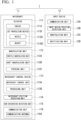
- FIG. 1 is a diagram showing an example of a remote watercraft maneuvering system 1 of the first embodiment.
- the remote watercraft maneuvering system 1 of the first embodiment includes a watercraft 11 and an input device 12.
- the watercraft 11 is a personal watercraft (PWC) having a function similar to a basic function of a personal watercraft (PWC or a water motorcycle) described in FIG. 1 of Japanese Unexamined Patent Application, First Publication No. 2003-237693 , FIG. 1 of Japanese Unexamined Patent Application, First Publication No. 2014-073790 , and the like.
- the watercraft 11 includes, for example, an actuator 111, a manipulation unit 112, a watercraft control device 113, a watercraft position detection unit 114, a bow orientation detection unit 115, and a communication unit 116.
- the actuator 111 has a function of generating a propulsion force of the watercraft 11 and a function of causing the watercraft 11 to generate a moment.
- the actuator 111 includes an engine 111A and a jet propulsion device 111B.
- the engine 111A outputs a driving force.
- the engine 111A is configured, for example, like an engine described in FIG. 1 of Japanese Unexamined Patent Application, First Publication No. 2014-073790 and the like.
- the jet propulsion device 111B generates the propulsion force of the watercraft 11 according to the driving force output from the engine 111A.
- the jet propulsion device 111B is configured, for example, like a jet propulsion device described in FIG. 1 of Japanese Unexamined Patent Application, First Publication No.
- the jet propulsion device 111B includes a nozzle 111B1 and a bucket 111B2.
- the nozzle 111B1 ejects a jet stream generated by the driving force output from the engine 111A.
- the nozzle 111B1 is configured, for example, like a nozzle described in FIG. 1 of Japanese Unexamined Patent Application, First Publication No. 2003-237693 and the like.
- the bucket 111B2 changes a direction of the jet stream ejected from the nozzle 111B1.
- the bucket 111B2 is configured, for example, like a bucket described in FIG. 1 of Japanese Unexamined Patent Application, First Publication No. 2003-237693 and the like.
- the manipulation unit 112 receives an input manipulation of a watercraft maneuverer who operates the actuator 111.
- the manipulation unit 112 includes a throttle manipulation unit 112A, a shift manipulation unit 112B, and a steering unit 112C.
- the throttle manipulation unit 112A is configured, for example, like a throttle manipulation unit described in Japanese Unexamined Patent Application, First Publication No. 2014-073790 , and receives an input manipulation of the watercraft maneuverer for adjusting a rotational speed of the engine 111A.
- the shift manipulation unit 112B is configured, for example, like a shift manipulation unit described in Japanese Unexamined Patent Application, First Publication No. 2014-073790 , and receives an input manipulation of the watercraft maneuverer for switching the position of the bucket 111B2 among a forward movement position, a neutral position, and a rearward movement position.
- the actuator 111 causes the watercraft 11 to generate a moment.
- the steering unit 112C and the throttle manipulation unit 112A are configured, for example, like a steering handle device described in FIG. 1 of Japanese Patent No. 5196649 , a steering unit described in FIG. 1 of Japanese Unexamined Patent Application, First Publication No. 2019-171925 , and the like.
- the watercraft control device 113 includes a watercraft control unit 113A and a processing unit 113B.
- the watercraft control unit 113A has a function of operating the actuator 111 in accordance with an input manipulation of the watercraft maneuverer received by the manipulation unit 112.
- the processing unit 113B for example, performs the calculation of a distance between the input device 12 and the watercraft 11 and the like.
- the watercraft control device 113 has a normal watercraft control mode in which the actuator 111 is operated in accordance with an input manipulation received by the manipulation unit 112 and a remote watercraft maneuvering mode in which the manipulation unit 112 does not need to receive the input manipulation and the actuator 111 is operated in accordance with an input manipulation received by the manipulation unit 12C of the input device 12 to be described below.
- the watercraft position detection unit 114 detects a position of the watercraft 11.
- the watercraft position detection unit 114 includes, for example, a GPS device.
- the GPS device receives signals from a plurality of GPS satellites and calculates position coordinates of the watercraft 11.
- the bow orientation detection unit 115 detects a bow orientation of the watercraft 11.
- the bow orientation detection unit 115 includes, for example, an orientation sensor.
- the orientation sensor calculates an actual bow orientation of the watercraft 11 by using, for example, geomagnetism.
- the orientation sensor may be a device (a gyrocompass) in which a north pointing device and a vibration control device are added to a high-speed rotating gyroscope to always indicate north.
- a gyrocompass a device in which a north pointing device and a vibration control device are added to a high-speed rotating gyroscope to always indicate north.
- the orientation sensor may be a GPS compass that includes a plurality of GPS antennas and calculates the bow orientation from a relative positional relationship of the plurality of GPS antennas.
- the communication unit 116 performs communication (specifically, wireless communication) with the input device 12.
- the communication unit 116 includes a communication antenna 116A.
- the communication antenna 116A for example, performs the reception of radio waves transmitted from the input device 12, the transmission of radio waves to the input device 12, and the like.
- the input device 12 receives an input manipulation of a remote watercraft maneuverer for remotely controlling the watercraft 11.
- the input device 12 includes a communication unit 12A, an input device position detection unit 12B, a manipulation unit 12C, and a notification unit 12D.
- the communication unit 12A performs communication (specifically, wireless communication) with the watercraft 11.
- the input device position detection unit 12B detects a position of the input device 12.
- the input device position detection unit 12B includes, for example, a GPS device.
- the GPS device calculates position coordinates of the input device 12 by receiving signals from a plurality of GPS satellites.
- the manipulation unit 12C receives an input manipulation of the remote watercraft maneuverer for operating the actuator 111 of the watercraft 11. That is, the manipulation unit 12C receives an input manipulation of the remote watercraft maneuverer for remotely controlling the watercraft 11.
- the notification unit 12D provides a notification for the remote watercraft maneuverer using the input device 12.
- the notification unit 12D provides a notification for the remote watercraft maneuverer by, for example, outputting a sound.
- the notification unit 12D may provide a notification for the remote watercraft maneuverer or the like, for example, by displaying the notification on a display (not shown) of the input device 12 or vibrating the input device 12.
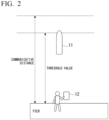
- FIG. 2 is an explanatory diagram showing an example of a process executed in the remote watercraft maneuvering mode of the watercraft control device 113 of the first embodiment.
- the actuator 111 of the watercraft 11 is operated in accordance with the input manipulation of the remote watercraft maneuverer received by the manipulation unit 12C of the input device 12 and the watercraft 11 moves forward in a direction (an upward direction of FIG. 2 ) away from the input device 12 of a pier.
- the input device position detection unit 12B of the input device 12 detects the position of the input device 12 and the communication unit 12A of the input device 12 transmits information indicating the position of the input device 12 to the watercraft 11.
- the communication unit 116 of the watercraft 11 receives information indicating the position of the input device 12 from the input device 12. Further, the watercraft position detection unit 114 of the watercraft 11 detects the position of the watercraft 11. The processing unit 113B of the watercraft control device 113 of the watercraft 11 calculates a distance between the input device 12 and the watercraft 11 on the basis of the position of the input device 12 detected by the input device position detection unit 12B of the input device 12 and the position of the watercraft 11 detected by the watercraft position detection unit 114 of the watercraft 11.
- the processing unit 113B compares the distance between the input device 12 and the watercraft 11 with a preset "threshold value" (see FIG. 2 ).
- the "threshold value” is less than a "communicative distance” (see FIG. 2 ), which is a maximum value of the distance between the input device 12 and the watercraft 11 when communication between the communication unit 12A of the input device 12 and the communication unit 116 of the watercraft 11 is possible.
- the "communicative distance" and the "threshold value" may be set by performing a simulation in advance.
- the communication unit 116 of the watercraft 11 transmits information indicating that the distance between the input device 12 and the watercraft 11 is greater than or equal to the "threshold value" to the input device 12.
- the notification unit 12D of the input device 12 provides a notification for the remote watercraft maneuverer using the input device 12. Therefore, the remote watercraft maneuverer can ascertain that there is a potential risk of disabled remote watercraft maneuvering if the watercraft 11 continuously moves forward.
- the remote watercraft maneuverer who has received the notification from the notification unit 12D, for example, performs an input manipulation for the manipulation unit 12C of the input device 12 to stop the forward movement of the watercraft 11, such that the forward movement of the watercraft 11 stops.
- the distance between the input device 12 and the watercraft 11 is not greater than the "communicative distance" and the remote watercraft maneuverer can continue remote watercraft maneuvering for the watercraft 11.
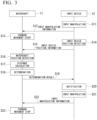
- FIG. 3 is a sequence diagram for describing an example of a process executed in the remote watercraft maneuvering system 1 of the first embodiment in the remote watercraft maneuvering mode of the watercraft control device 113.
- step S11 the manipulation unit 12C of the input device 12 receives, for example, an input manipulation of the remote watercraft maneuverer who moves the watercraft 11 forward.
- step S12 the communication unit 12A of the input device 12 transmits information indicating an input manipulation for performing the forward movement of the watercraft 11 received by the manipulation unit 12C in step S11, and the communication unit 116 of the watercraft 11 receives the information.
- step S13 the watercraft control device 113 of the watercraft 11 operates the actuator 111 in accordance with the input manipulation for performing the forward movement of the watercraft 11 received by the manipulation unit 12C of the input device 12 and the forward movement of the watercraft 11 starts.
- step S14 the input device position detection unit 12B of the input device 12 detects a position of the input device 12. Specifically, the detection of the position of the input device 12 by the input device position detection unit 12B is repeatedly executed in the remote watercraft maneuvering mode of the watercraft control device 113.
- step S15 the communication unit 12A of the input device 12 transmits information indicating the position of the input device 12 detected in step S14 and the communication unit 116 of the watercraft 11 receives the information.
- step S16 the watercraft position detection unit 114 of the watercraft 11 detects the position of the watercraft 11. Specifically, the detection of the position of the watercraft 11 by the watercraft position detection unit 114 is repeatedly executed in the remote watercraft maneuvering mode of the watercraft control device 113.
- step S17 the processing unit 113B of the watercraft control device 113 of the watercraft 11 calculates the distance between the input device 12 and the watercraft 11 on the basis of the position of the input device 12 detected in step S14 and the position of the watercraft 11 detected in step S16.
- step S18 the processing unit 113B of the watercraft control device 113 of the watercraft 11 determines whether or not the distance between the input device 12 and the watercraft 11 calculated in step S17 is greater than or equal to the "threshold value.” In the example shown in FIG. 3 , in step S18, the processing unit 113B determines that the distance between the input device 12 and the watercraft 11 is greater than or equal to the "threshold value.”
- step S19 the communication unit 116 of the watercraft 11 transmits information indicating that the distance between the input device 12 and the watercraft 11 is greater than or equal to the "threshold value" and the communication unit 12A of the input device 12 receives the information.
- step S20 the notification unit 12D of the input device 12 provides the notification for the remote watercraft maneuverer using the input device 12. Therefore, the remote watercraft maneuverer can ascertain that there is a potential risk of disabled remote watercraft maneuvering if the watercraft 11 continuously moves forward.
- step S21 the manipulation unit 12C of the input device 12 receives an input manipulation of the remote watercraft maneuverer for stopping the forward movement of the watercraft 11.
- step S22 the communication unit 12A of the input device 12 transmits information indicating the input manipulation for stopping the forward movement of the watercraft 11 received by the manipulation unit 12C in step S21 and the communication unit 116 of the watercraft 11 receives the information.
- step S23 the watercraft control device 113 of the watercraft 11 operates the actuator 111 in accordance with the input manipulation for stopping the forward movement of the watercraft 11 received by the manipulation unit 12C of the input device 12, and the forward movement of the watercraft 11 stops.
- the distance between the input device 12 and the watercraft 11 is not greater than the "communicative distance" and the remote watercraft maneuverer can continue remote watercraft maneuvering for the watercraft 11.
- the manipulation of the remote watercraft maneuverer receiving the notification may already be ineffective.
- the notification for the remote watercraft maneuverer is provided in the step before the distance between the input device 12 and the watercraft 11 is less than the "communicative distance" (see FIG. 2 ) and is greater than or equal to the "threshold value" (see FIG. 2 ) (specifically, in the step before communication is interrupted and the step before the intensity of radio waves is weakened). Therefore, in the remote watercraft maneuvering system 1 of the first embodiment, the remote watercraft maneuverer can ascertain a possibility of a disabled remote manipulation for the watercraft 11 through the notification, the watercraft 11 can be appropriately remotely manipulated after the reception of the notification, and a situation of a disabled remote manipulation for the watercraft 11 can be reliably avoided.
- a configuration of a remote watercraft maneuvering system 1 of the second embodiment is similar to that of the remote watercraft maneuvering system 1 of the first embodiment described above, except for points to be described below. Therefore, it is possible to achieve an effect of the remote watercraft maneuvering system 1 of the second embodiment similar to that of the remote watercraft maneuvering system 1 of the first embodiment described above, except for points to be described below.
- FIG. 4 is a diagram showing an example of the remote watercraft maneuvering system 1 of the second embodiment.
- the watercraft control device 113 includes a watercraft control unit 113A and a processing unit 113B.
- a watercraft control device 113 includes the watercraft control unit 113A and does not include a processing unit.
- the input device 12 includes the communication unit 12A, the input device position detection unit 12B, the manipulation unit 12C, and the notification unit 12D.
- the input device 12 includes a communication unit 12A, an input device position detection unit 12B, a manipulation unit 12C, a notification unit 12D, and a processing unit 12E.
- the processing unit 12E calculates, for example, a distance between the input device 12 and the watercraft 11.
- the distance between the input device 12 and the watercraft 11 is calculated by the watercraft 11 in the example shown in FIG. 1
- the distance between the input device 12 and the watercraft 11 is calculated by the input device 12 in the example shown in FIG. 4 .
- FIG. 5 is a sequence diagram for describing an example of a process executed in the remote watercraft maneuvering system 1 of the second embodiment in a remote watercraft maneuvering mode of the watercraft control device 113.
- step S31 the manipulation unit 12C of the input device 12 receives, for example, an input manipulation of a remote watercraft maneuverer for performing the forward movement of the watercraft 11.
- step S32 the communication unit 12A of the input device 12 transmits information indicating the input manipulation for performing the forward movement of the watercraft 11 received by the manipulation unit 12C in step S31 and the communication unit 116 of the watercraft 11 receives the information.
- step S33 the watercraft control device 113 of the watercraft 11 operates the actuator 111 in accordance with the input manipulation for performing the forward movement of the watercraft 11 received by the manipulation unit 12C of the input device 12 and the forward movement of the watercraft 11 starts.
- step S34 the watercraft position detection unit 114 of the watercraft 11 detects the position of the watercraft 11. Specifically, the detection of the position of the watercraft 11 by the watercraft position detection unit 114 is repeatedly executed in the remote watercraft maneuvering mode of the watercraft control device 113.
- step S35 the communication unit 116 of the watercraft 11 transmits information indicating the position of the watercraft 11 detected in step S34, and the communication unit 12A of the input device 12 receives the information.
- step S36 the input device position detection unit 12B of the input device 12 detects the position of the input device 12. Specifically, the detection of the position of the input device 12 by the input device position detection unit 12B is repeatedly executed in the remote watercraft maneuvering mode of the watercraft control device 113.
- step S37 the processing unit 12E of the input device 12 calculates the distance between the input device 12 and the watercraft 11 on the basis of the position of the input device 12 detected in step S36 and the position of the watercraft 11 detected in step S34.
- step S38 the processing unit 12E of the input device 12 determines whether or not the distance between the input device 12 and the watercraft 11 calculated in step S37 is greater than or equal to the "threshold value.”
- the "threshold value" is less than the "communicative distance” (see FIG. 2 ) that is a maximum value of the distance between the input device 12 and the watercraft 11 when communication between the communication unit 12A of the input device 12 and the communication unit 116 of the watercraft 11 is possible.
- the processing unit 12E determines that the distance between the input device 12 and the watercraft 11 is greater than or equal to the "threshold value.”
- step S40 the notification unit 12D of the input device 12 provides a notification for the remote watercraft maneuverer using the input device 12. Therefore, the remote watercraft maneuverer can ascertain that there is a potential risk of disabled remote watercraft maneuvering if the watercraft 11 continuously moves forward.
- step S41 the manipulation unit 12C of the input device 12 receives an input manipulation of the remote watercraft maneuverer for stopping the forward movement of the watercraft 11.
- step S42 the communication unit 12A of the input device 12 transmits information indicating the input manipulation for stopping the forward movement of the watercraft 11 received by the manipulation unit 12C in step S41 and the communication unit 116 of the watercraft 11 receives the information.
- step S43 the watercraft control device 113 of the watercraft 11 operates the actuator 111 in accordance with the input manipulation for stopping the forward movement of the watercraft 11 received by the manipulation unit 12C of the input device 12 and the forward movement of the watercraft 11 stops.
- the distance between the input device 12 and the watercraft 11 is not greater than the "communicative distance" and the remote watercraft maneuverer can continue remote watercraft maneuvering for the watercraft 11.
- a configuration of a remote watercraft maneuvering system 1 of the third embodiment is similar to that of the remote watercraft maneuvering system 1 of the first embodiment described above, except for points to be described below. Therefore, it is possible to achieve an effect of the remote watercraft maneuvering system 1 of the third embodiment similar to that of the remote watercraft maneuvering system 1 of the first embodiment described above, except for points to be described below.
- a configuration of the remote watercraft maneuvering system 1 of the third embodiment is similar to that of the remote watercraft maneuvering system 1 of the first embodiment shown in FIG. 1 .
- a watercraft control device 113 of a watercraft 11 has an auto return mode.
- the watercraft control device 113 operates an actuator 111 so that the watercraft 11 approaches an input device 12 in a state in which a manipulation unit 112 of the watercraft 11 does not need to receive any input manipulation and a manipulation unit 12C of the input device 12 does not need to receive any input manipulation.
- FIG. 6 is an explanatory diagram showing an example of a process executed in a remote watercraft maneuvering mode of the watercraft control device 113 of the third embodiment.
- the actuator 111 of the watercraft 11 is operated in accordance with the input manipulation of the remote watercraft maneuverer received by the manipulation unit 12C of the input device 12 and the watercraft 11 moves forward in a direction away from the input device 12 of the pier (an upward direction of FIG. 6 ).
- the input device position detection unit 12B of the input device 12 detects the position of the input device 12 and the communication unit 12A of the input device 12 transmits information indicating the position of the input device 12 to the watercraft 11.
- the communication unit 116 of the watercraft 11 receives information indicating the position of the input device 12 from the input device 12. Further, the watercraft position detection unit 114 of the watercraft 11 detects the position of the watercraft 11.
- the processing unit 113B of the watercraft control device 113 of the watercraft 11 calculates the distance between the input device 12 and the watercraft 11 on the basis of the position of the input device 12 detected by the input device position detection unit 12B of the input device 12 and the position of the watercraft 11 detected by the watercraft position detection unit 114 of the watercraft 11. Moreover, the processing unit 113B compares the distance between the input device 12 and the watercraft 11 with a preset "threshold value" (see FIG.
- the "threshold value” is less than a "communicative distance” (see FIG. 6 ), which is a maximum value of the distance between the input device 12 and the watercraft 11 when communication between the communication unit 12A of the input device 12 and the communication unit 116 of the watercraft 11 is possible.
- the communication unit 116 of the watercraft 11 transmits information indicating that the distance between the input device 12 and the watercraft 11 is greater than or equal to the "threshold value" to the input device 12.
- the notification unit 12D of the input device 12 provides a notification for the remote watercraft maneuverer using the input device 12. Therefore, the remote watercraft maneuverer can ascertain that there is a potential risk of disabled remote watercraft maneuvering if the watercraft 11 continuously moves forward.
- the watercraft control device 113 switches the mode from the remote watercraft maneuvering mode to the auto return mode in a state in which the manipulation unit 112 of the watercraft 11 does not need to receive any input manipulation and the manipulation unit 12C of the input device 12 does not need to receive any input manipulation.
- the watercraft control device 113 operates the actuator 111 so that the watercraft 11 approaches the input device 12 in a state in which the manipulation unit 112 of the watercraft 11 does not need to receive any input manipulation and the manipulation unit 12C of the input device 12 does not need to receive any input manipulation. Therefore, the distance between the input device 12 and the watercraft 11 is not greater than the "communicative distance.”
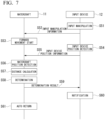
- FIG. 7 is a sequence diagram for describing an example of a process executed in the remote watercraft maneuvering system 1 of the third embodiment in the remote watercraft maneuvering mode of the watercraft control device 113 or the like.
- step S51 the manipulation unit 12C of the input device 12, for example, receives an input manipulation of a remote watercraft maneuverer for perform the forward movement of the watercraft 11.
- step S52 the communication unit 12A of the input device 12 transmits information indicating the input manipulation for performing the forward movement of the watercraft 11 received by the manipulation unit 12C in step S51 and the communication unit 116 of the watercraft 11 receives the information.
- step S53 the watercraft control device 113 of the watercraft 11 operates the actuator 111 in accordance with the input manipulation for performing the forward movement of the watercraft 11 received by the manipulation unit 12C of the input device 12 and the forward movement of the watercraft 11 starts.
- step S54 the input device position detection unit 12B of the input device 12 detects the position of the input device 12. Specifically, the detection of the position of the input device 12 by the input device position detection unit 12B is repeatedly executed in the remote watercraft maneuvering mode and the auto return mode of the watercraft control device 113.
- step S55 the communication unit 12A of the input device 12 transmits information indicating the position of the input device 12 detected in step S54 and the communication unit 116 of the watercraft 11 receives the information.
- step S56 the watercraft position detection unit 114 of the watercraft 11 detects the position of the watercraft 11. Specifically, the detection of the position of the watercraft 11 by the watercraft position detection unit 114 is repeatedly executed in the remote watercraft maneuvering mode and the auto return mode of the watercraft control device 113.
- step S57 the processing unit 113B of the watercraft control device 113 of the watercraft 11 calculates the distance between the input device 12 and the watercraft 11 on the basis of the position of the input device 12 detected in step S54 and the position of the watercraft 11 detected in step S56.
- step S58 the processing unit 113B of the watercraft control device 113 of the watercraft 11 determines whether or not the distance between the input device 12 and the watercraft 11 calculated in step S57 is greater than or equal to a "threshold value.” In the example shown in FIG. 7 , in step S58, the processing unit 113B determines that the distance between the input device 12 and the watercraft 11 is greater than or equal to the "threshold value.”
- step S59 the communication unit 116 of the watercraft 11 transmits information indicating that the distance between the input device 12 and the watercraft 11 is greater than or equal to the "threshold value" and the communication unit 12A of the input device 12 receives the information.
- step S60 the notification unit 12D of the input device 12 provides a notification for the remote watercraft maneuverer using the input device 12. Therefore, the remote watercraft maneuverer can ascertain that there is a potential risk of disabled remote watercraft maneuvering if the watercraft 11 continuously moves forward.
- step S61 the watercraft control device 113 switches the mode from the remote watercraft maneuvering mode to the auto return mode in a state in which the manipulation unit 112 of the watercraft 11 does not need to receive any input manipulation and the manipulation unit 12C of the input device 12 does not need to receive any input manipulation.
- step S61 the watercraft control device 113 operates the actuator 111 so that the watercraft 11 approaches the input device 12 in a state in which the manipulation unit 112 of the watercraft 11 does not need to receive any input manipulation and the manipulation unit 12C of the input device 12 does not need to receive any input manipulation.
- the remote watercraft maneuverer can easily ascertain that the mode has been automatically switched from the remote watercraft maneuvering mode to the auto return mode.
- a configuration of a remote watercraft maneuvering system 1 of the fourth embodiment is similar to that of the remote watercraft maneuvering system 1 of the second embodiment described above, except for points to be described below. Therefore, it is possible to achieve an effect of the remote watercraft maneuvering system 1 of the fourth embodiment similar to that of the remote watercraft maneuvering system 1 of the second embodiment described above, except for points to be described below.
- a configuration of the remote watercraft maneuvering system 1 of the fourth embodiment is similar to that of the remote watercraft maneuvering system 1 of the second embodiment shown in FIG. 4 .
- a watercraft control device 113 of a watercraft 11 has an auto return mode.
- the watercraft control device 113 operates the actuator 111 so that the watercraft 11 approaches an input device 12 in a state in which a manipulation unit 112 of the watercraft 11 does not need to receive any input manipulation and a manipulation unit 12C of the input device 12 does not need to receive any input manipulation.
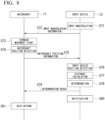
- FIG. 8 is a sequence diagram for describing an example of a process executed in the remote watercraft maneuvering system 1 of the fourth embodiment in a remote watercraft maneuvering mode of the watercraft control device 113 or the like.
- step S71 the manipulation unit 12C of the input device 12 receives, for example, an input manipulation of a remote watercraft maneuverer for the forward movement of the watercraft 11.
- a communication unit 12A of the input device 12 transmits information indicating the input manipulation for performing the forward movement of the watercraft 11 received by the manipulation unit 12C in step S71 and a communication unit 116 of the watercraft 11 receives the information.
- step S73 the watercraft control device 113 of the watercraft 11 operates the actuator 111 in accordance with the input manipulation for performing the forward movement of the watercraft 11 received by the manipulation unit 12C of the input device 12 and the forward movement of the watercraft 11 starts.
- a watercraft position detection unit 114 of the watercraft 11 detects the position of the watercraft 11. Specifically, the detection of the position of the watercraft 11 by the watercraft position detection unit 114 is repeatedly executed in the remote watercraft maneuvering mode and the auto return mode of the watercraft control device 113.
- step S75 the communication unit 116 of the watercraft 11 transmits information indicating the position of the watercraft 11 detected in step S74 and the communication unit 12A of the input device 12 receives the information.
- an input device position detection unit 12B of the input device 12 detects the position of the input device 12. Specifically, the detection of the position of the input device 12 by the input device position detection unit 12B is repeatedly executed in the remote watercraft maneuvering mode and the auto return mode of the watercraft control device 113.
- step S77 the processing unit 12E of the input device 12 calculates the distance between the input device 12 and the watercraft 11 on the basis of the position of the input device 12 detected in step S76 and the position of the watercraft 11 detected in step S74.
- step S78 the processing unit 12E of the input device 12 determines whether or not the distance between the input device 12 and the watercraft 11 calculated in step S77 is greater than or equal to the "threshold value.” In the example shown in FIG. 8 , in step S78, the processing unit 12E determines that the distance between the input device 12 and the watercraft 11 is greater than or equal to the "threshold value.”
- step S79 the communication unit 12A of the input device 12 transmits a result of the determination made in step S78 and the communication unit 116 of the watercraft 11 receives the determination result.
- step S80 the notification unit 12D of the input device 12 provides a notification for the remote watercraft maneuverer using the input device 12. Therefore, the remote watercraft maneuverer can ascertain that there is a potential risk of disabled remote watercraft maneuvering if the watercraft 11 continuously moves forward.
- step S81 the watercraft control device 113 switches the mode from the remote watercraft maneuvering mode to the auto return mode in a state in which the manipulation unit 112 of the watercraft 11 does not need to receive any input manipulation and the manipulation unit 12C of the input device 12 does not need to receive any input manipulation on the basis of the determination result transmitted from the input device 12 in step S79.
- step S81 the watercraft control device 113 operates the actuator 111 so that the watercraft 11 approaches the input device 12 in a state in which the manipulation unit 112 of the watercraft 11 does not need to receive any input manipulation and the manipulation unit 12C of the input device 12 does not need to receive any input manipulation.
- the remote watercraft maneuverer can easily ascertain that the mode has been automatically switched from the remote watercraft maneuvering mode to the auto return mode.
- a configuration of a remote watercraft maneuvering system 1 of the fifth embodiment is similar to that of the remote watercraft maneuvering system 1 of the first embodiment described above, except for points to be described below. Therefore, it is possible to achieve an effect of the remote watercraft maneuvering system 1 of the fifth embodiment similar to that of the remote watercraft maneuvering system 1 of the first embodiment described above, except for points to be described below.
- a "threshold value" set in an experiment performed in advance or the like is used for the comparison (determination) of a distance between an input device 12 and a watercraft 11 in a processing unit 113B of a watercraft control device 113 in a remote watercraft maneuvering mode of the watercraft control device 113. That is, in the remote watercraft maneuvering system 1 of the first embodiment, the "threshold value" is a certain value (a fixed value).
- the "threshold value” is a variable value. Specifically, the processing unit 113B of the watercraft control device 113 of the watercraft 11 changes a magnitude of the "threshold value" (see FIG. 2 ) in accordance with an intensity of radio waves received from the input device 12 by a communication unit 116 of the watercraft 11. Specifically, the processing unit 113B of the watercraft control device 113 increases the "threshold value" as the intensity of the radio waves received from the input device 12 by the communication unit 116 of the watercraft 11 increases.
- the communication unit 116 of the watercraft 11 detects the intensity of the radio waves received from the input device 12 in the remote watercraft maneuvering mode of the watercraft control device 113 and the processing unit 113B of the watercraft control device 113 records the intensity of the radio waves detected by the communication unit 116 in association with the distance between the input device 12 and the watercraft 11.
- the processing unit 113B acquires a corresponding relationship between the intensity of the radio waves received from the input device 12 by the communication unit 116 of the watercraft 11 and the distance between the input device 12 and the watercraft 11 obtained in a preliminary experiment or the like.
- the processing unit 113B compares the corresponding relationship obtained in the preliminary experiment or the like with the corresponding relationship between the intensity of the radio waves received from the input device 12 by a communication unit 116 of the watercraft 11 and the distance between the input device 12 and the watercraft 11 recorded in the remote watercraft maneuvering mode of the watercraft control device 113. Specifically, the processing unit 113B determines whether or not the intensity of the radio waves received from the input device 12 by the communication unit 116 of the watercraft 11 in the remote watercraft maneuvering mode of the watercraft control device 113 is higher than, for example, the intensity of the radio waves received from the input device 12 by the communication unit 116 of the watercraft 11 in the preliminary experiment or the like.
- the processing unit 113B makes the "threshold value" used in the remote watercraft maneuvering mode of the watercraft control device 113 larger than, for example, a "threshold value” set in advance on the basis of the preliminary experiment or the like.
- the processing unit 113B makes the "threshold value" used in the remote watercraft maneuvering mode of the watercraft control device 113 smaller than, for example, the "threshold value” set in advance on the basis of the preliminary experiment or the like.
- a configuration of a remote watercraft maneuvering system 1 of the sixth embodiment is similar to that of the remote watercraft maneuvering system 1 of the second embodiment described above, except for points to be described below. Therefore, it is possible to achieve an effect of the remote watercraft maneuvering system 1 of the sixth embodiment similar to that of the remote watercraft maneuvering system 1 of the second embodiment described above, except for points to be described below.
- a "threshold value" set in an experiment performed in advance or the like is used for the comparison (determination) of a distance between an input device 12 and a watercraft 11 in a processing unit 12E of the input device 12 in a remote watercraft maneuvering mode of a watercraft control device 113. That is, in the remote watercraft maneuvering system 1 of the second embodiment, the "threshold value" is a certain value (a fixed value).
- the "threshold value” is a variable value. Specifically, the processing unit 12E of the input device 12 changes the magnitude of the "threshold value" (see FIG. 2 ) in accordance with an intensity of radio waves received from the watercraft 11 by a communication unit 12A of the input device 12. Specifically, the processing unit 12E of the input device 12 increases the "threshold value" as the intensity of the radio waves received from the watercraft 11 by the communication unit 12A of the input device 12 increases.
- the communication unit 12A of the input device 12 detects the intensity of the radio waves received from the watercraft 11 in the remote watercraft maneuvering mode of the watercraft control device 113 and the processing unit 12E of the input device 12 records the intensity of the radio waves detected by the communication unit 12A in association with a distance between the input device 12 and the watercraft 11.
- the processing unit 12E acquires a corresponding relationship between the intensity of the radio waves received from the watercraft 11 by the communication unit 12A of the input device 12 and the distance between the input device 12 and the watercraft 11 obtained in a preliminary experiment or the like.
- the processing unit 12E compares the corresponding relationship obtained in the preliminary experiment or the like with a corresponding relationship between the intensity of the radio waves received by the communication unit 12A of the input device 12 from the watercraft 11 and the distance between the input device 12 and the watercraft 11 recorded in the remote watercraft maneuvering mode of the watercraft control device 113. Specifically, the processing unit 12E determines whether or not the intensity of the radio waves received from the watercraft 11 by the communication unit 12A of the input device 12 in the remote watercraft maneuvering mode of the watercraft control device 113 is higher than, for example, the intensity of the radio waves received from the watercraft 11 by the communication unit 12A of the input device 12 in the preliminary experiment or the like.
- the processing unit 12E makes the "threshold value" used in the remote watercraft maneuvering mode of the watercraft control device 113 larger than, for example, a "threshold value” set in advance on the basis of the preliminary experiment or the like.
- the processing unit 12E makes the "threshold value" used in the remote watercraft maneuvering mode of the watercraft control device 113 smaller than, for example, the "threshold value” set in advance on the basis of the preliminary experiment or the like.
- a configuration of a remote watercraft maneuvering system 1 of the seventh embodiment is similar to that of the remote watercraft maneuvering system 1 of the first embodiment described above, except for points to be described below. Therefore, it is possible to achieve an effect of the remote watercraft maneuvering system 1 of the seventh embodiment similar to that of the remote watercraft maneuvering system 1 of the first embodiment described above, except for points to be described below.
- a configuration of the remote watercraft maneuvering system 1 of the seventh embodiment is similar to that of the remote watercraft maneuvering system 1 of the first embodiment shown in FIG. 1 .
- a watercraft control device 113 of a watercraft 11 has a fixed-point holding mode.
- the watercraft control device 113 operates an actuator 111 on the basis of a deviation between an actual watercraft position that is a position of the watercraft 11 detected by a watercraft position detection unit 114 and a target watercraft position that is a target position of the watercraft 11 in a state in which a manipulation unit 112 of the watercraft 11 does not need to receive any input manipulation and a manipulation unit 12C of an input device 12 does not need to receive any input manipulation.
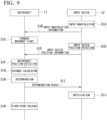
- FIG. 9 is a sequence diagram for describing an example of a process executed in the remote watercraft maneuvering system 1 of the seventh embodiment in a remote watercraft maneuvering mode of the watercraft control device 113 or the like.
- step S1A the manipulation unit 12C of the input device 12 receives, for example, an input manipulation of a remote watercraft maneuverer for performing the forward movement of the watercraft 11.
- step S1B the communication unit 12A of the input device 12 transmits information indicating the input manipulation for performing the forward movement of the watercraft 11 received by the manipulation unit 12C in step S1A and a communication unit 116 of the watercraft 11 receives the information.
- step S1C the watercraft control device 113 of the watercraft 11 operates the actuator 111 in accordance with the input manipulation for performing the forward movement of the watercraft 11 received by the manipulation unit 12C of the input device 12 and the forward movement of the watercraft 11 starts.
- step S1D the input device position detection unit 12B of the input device 12 detects a position of the input device 12. Specifically, the detection of the position of the input device 12 by the input device position detection unit 12B is repeatedly executed in the remote watercraft maneuvering mode and the fixed-point holding mode of the watercraft control device 113.
- step S1E the communication unit 12A of the input device 12 transmits information indicating the position of the input device 12 detected in step S1D and the communication unit 116 of the watercraft 11 receives the information.
- step S1F the watercraft position detection unit 114 of the watercraft 11 detects a position (an actual watercraft position) of the watercraft 11. Specifically, the detection of the position of the watercraft 11 by the watercraft position detection unit 114 is repeatedly executed in the remote watercraft maneuvering mode and the fixed-point holding mode of the watercraft control device 113.
- step S1G the processing unit 113B of the watercraft control device 113 of the watercraft 11 calculates a distance between the input device 12 and the watercraft 11 on the basis of the position of the input device 12 detected in step S1D and the position of the watercraft 11 detected in step S1F.
- step S1H the processing unit 113B of the watercraft control device 113 of the watercraft 11 determines whether or not the distance between the input device 12 and the watercraft 11 calculated in step S1G is greater than or equal to a "threshold value.” In the example shown in FIG. 9 , in step S1H, the processing unit 113B determines that the distance between the input device 12 and the watercraft 11 is greater than or equal to the "threshold value.”
- step S11 the communication unit 116 of the watercraft 11 transmits information indicating that the distance between the input device 12 and the watercraft 11 is greater than or equal to the "threshold value" and the communication unit 12A of the input device 12 receives the information.
- step S1J the notification unit 12D of the input device 12 provides a notification for the remote watercraft maneuverer using the input device 12. Therefore, the remote watercraft maneuverer can ascertain that there is a potential risk of disabled remote watercraft maneuvering if the watercraft 11 continuously moves forward.
- step S1K the watercraft control device 113 switches the mode from the remote watercraft maneuvering mode to the fixed-point holding mode in a state in which the manipulation unit 112 of the watercraft 11 does not need to receive any input manipulation and the manipulation unit 12C of the input device 12 does not need to receive any input manipulation.
- the watercraft control device 113 operates the actuator 111 on the basis of a deviation between a position (an actual watercraft position) of the watercraft 11 detected by the watercraft position detection unit 114 and a target position (a target watercraft position) of the watercraft 11 in a state in which the manipulation unit 112 of the watercraft 11 does not need to receive any input manipulation and the manipulation unit 12C of the input device 12 does not need to receive any input manipulation. That is, the watercraft control device 113 executes fixed-point holding control for holding the position (the actual watercraft position) of the watercraft 11 detected by the watercraft position detection unit 114 at the target watercraft position.
- the processing unit 113B of the watercraft control device 113 of the watercraft 11 determines that the distance between the input device 12 and the watercraft 11 is greater than or equal to the "threshold value," the position of the watercraft 11 detected by the watercraft position detection unit 114 or the like is used as the target watercraft position in the fixed-point holding mode.
- the remote watercraft maneuverer can easily ascertain that the mode has been automatically switched from the remote watercraft maneuvering mode to the fixed-point holding mode.
- a configuration of a remote watercraft maneuvering system 1 of the eighth embodiment is similar to that of the remote watercraft maneuvering system 1 of the second embodiment described above, except for points to be described below. Therefore, it is possible to achieve an effect of the remote watercraft maneuvering system 1 of the eighth embodiment similar to that of the remote watercraft maneuvering system 1 of the second embodiment described above, except for points to be described below.
- a configuration of the remote watercraft maneuvering system 1 of the eighth embodiment is similar to that of the remote watercraft maneuvering system 1 of the second embodiment shown in FIG. 4 .
- a watercraft control device 113 of a watercraft 11 has a fixed-point holding mode.
- the watercraft control device 113 operates an actuator 111 on the basis of a deviation between a position (an actual watercraft position) of the watercraft 11 detected by a watercraft position detection unit 114 and a target position (a target watercraft position) of the watercraft 11 in a state in which a manipulation unit 112 of the watercraft 11 does not need to receive any input manipulation and a manipulation unit 12C of an input device 12 does not need to receive any input manipulation.
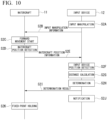
- FIG. 10 is a sequence diagram for describing an example of a process executed in the remote watercraft maneuvering system 1 of the eighth embodiment in a remote watercraft maneuvering mode of the watercraft control device 113 or the like.
- step S2A the manipulation unit 12C of the input device 12 receives, for example, an input manipulation of a remote watercraft maneuverer for performing the forward movement of the watercraft 11.
- step S2B a communication unit 12A of the input device 12 transmits information indicating the input manipulation for performing the forward movement of the watercraft 11 received by the manipulation unit 12C in step S2A and a communication unit 116 of the watercraft 11 receives the information.
- step S2C the watercraft control device 113 of the watercraft 11 operates the actuator 111 in accordance with the input manipulation for performing the forward movement of the watercraft 11 received by the manipulation unit 12C of the input device 12 and the forward movement of the watercraft 11 starts.
- step S2D the watercraft position detection unit 114 of the watercraft 11 detects a position of the watercraft 11. Specifically, the detection of the position of the watercraft 11 by the watercraft position detection unit 114 is repeatedly executed in the remote watercraft maneuvering mode and the fixed-point holding mode of the watercraft control device 113.
- step S2E the communication unit 116 of the watercraft 11 transmits information indicating the position of the watercraft 11 detected in step S2D, and the communication unit 12A of the input device 12 receives the information.
- step S2F the input device position detection unit 12B of the input device 12 detects a position of the input device 12. Specifically, the detection of the position of the input device 12 by the input device position detection unit 12B is repeatedly executed in the remote watercraft maneuvering mode and the fixed-point holding mode of the watercraft control device 113.
- a processing unit 12E of the input device 12 calculates a distance between the input device 12 and the watercraft 11 on the basis of the position of the input device 12 detected in step S2F and the position of the watercraft 11 detected in step S2D.
- step S2H the processing unit 12E of the input device 12 determines whether or not the distance between the input device 12 and the watercraft 11 calculated in step S2G is greater than or equal to a "threshold value.” In the example shown in FIG. 10 , in step S2H, the processing unit 12E determines that the distance between the input device 12 and the watercraft 11 is greater than or equal to the "threshold value.”
- step S2I the communication unit 12A of the input device 12 transmits a result of the determination made in step S2H and the communication unit 116 of the watercraft 11 receives the determination result.
- step S2J the notification unit 12D of the input device 12 provides a notification for the remote watercraft maneuverer using the input device 12. Therefore, the remote watercraft maneuverer can ascertain that there is a potential risk of disabled remote watercraft maneuvering if the watercraft 11 continuously moves forward.
- step S2K the watercraft control device 113 switches the mode from the remote watercraft maneuvering mode to the fixed-point holding mode in a state in which the manipulation unit 112 of the watercraft 11 does not need to receive any input manipulation and the manipulation unit 12C of the input device 12 does not need to receive any input manipulation on the basis of the determination result transmitted from the input device 12 in step S2I.
- the watercraft control device 113 operates the actuator 111 on the basis of a deviation between a position (an actual watercraft position) of the watercraft 11 detected by the watercraft position detection unit 114 and a target position (a target watercraft position) of the watercraft 11 in a state in which the manipulation unit 112 of the watercraft 11 does not need to receive any input manipulation and the manipulation unit 12C of the input device 12 does not need to receive any input manipulation. That is, the watercraft control device 113 executes fixed-point holding control for holding the position (the actual watercraft position) of the watercraft 11 detected by the watercraft position detection unit 114 at the target watercraft position.
- the processing unit 12E of the input device 12 determines that the distance between the input device 12 and the watercraft 11 is greater than or equal to the "threshold value," the position of the watercraft 11 detected by the watercraft position detection unit 114 or the like is used as the target watercraft position in the fixed-point holding mode.
- the remote watercraft maneuverer can easily ascertain that the mode has been automatically switched from the remote watercraft maneuvering mode to the fixed-point holding mode.
- a configuration of a remote watercraft maneuvering system 1 of the ninth embodiment is similar to that of the remote watercraft maneuvering system 1 of the first embodiment described above, except for points to be described below. Therefore, it is possible to achieve an effect of the remote watercraft maneuvering system 1 of the ninth embodiment similar to that of the remote watercraft maneuvering system 1 of the first embodiment described above, except for points to be described below.
- a configuration of the remote watercraft maneuvering system 1 of the ninth embodiment is similar to that of the remote watercraft maneuvering system 1 of the first embodiment shown in FIG. 1 .
- a watercraft control device 113 of a watercraft 11 has an orientation holding mode.
- the watercraft control device 113 in the orientation holding mode of the watercraft control device 113, holds a bow orientation of the watercraft 11 in a direction in which an intensity of radio waves received by a communication unit 116 of the watercraft 11 from an input device 12 has a maximum value in a state in which a manipulation unit 112 of the watercraft 11 does not need to receive any input manipulation and a manipulation unit 12C of the input device 12 does not need to receive any input manipulation.
- FIG. 11 is a sequence diagram for describing a first example of a process executed in the remote watercraft maneuvering system 1 of the ninth embodiment in a remote watercraft maneuvering mode of the watercraft control device 113 or the like.
- step S3A the manipulation unit 12C of the input device 12 receives, for example, an input manipulation of the remote watercraft maneuverer for performing the forward movement of the watercraft 11.
- step S3B a communication unit 12A of the input device 12 transmits information indicating the input manipulation for performing the forward movement of the watercraft 11 received by the manipulation unit 12C in step S3A and the communication unit 116 of the watercraft 11 receives the information.
- step S3C the watercraft control device 113 of the watercraft 11 operates an actuator 111 in accordance with the input manipulation for performing the forward movement of the watercraft 11 received by the manipulation unit 12C of the input device 12 and the forward movement of the watercraft 11 starts.
- an input device position detection unit 12B of the input device 12 detects a position of the input device 12. Specifically, the detection of the position of the input device 12 by the input device position detection unit 12B is repeatedly executed in the remote watercraft maneuvering mode and the orientation holding mode of the watercraft control device 113.
- step S3E the communication unit 12A of the input device 12 transmits information indicating the position of the input device 12 detected in step S3D, and the communication unit 116 of the watercraft 11 receives the information.
- a watercraft position detection unit 114 of the watercraft 11 detects a position (an actual watercraft position) of the watercraft 11. Specifically, the detection of the position of the watercraft 11 by the watercraft position detection unit 114 is repeatedly executed in the remote watercraft maneuvering mode and the orientation holding mode of the watercraft control device 113.
- a processing unit 113B of the watercraft control device 113 of the watercraft 11 calculates a distance between the input device 12 and the watercraft 11 on the basis of the position of the input device 12 detected in step S3D and the position of the watercraft 11 detected in step S1F.
- step S3H the processing unit 113B of the watercraft control device 113 of the watercraft 11 determines whether or not the distance between the input device 12 and the watercraft 11 calculated in step S3G is greater than or equal to a "threshold value.” In the example shown in FIG. 11 , in step S3H, the processing unit 113B determines that the distance between the input device 12 and the watercraft 11 is greater than or equal to the "threshold value.”
- step S3I the communication unit 116 of the watercraft 11 transmits information indicating that the distance between the input device 12 and the watercraft 11 is greater than or equal to the "threshold value" and the communication unit 12A of the input device 12 receives the information.
- a notification unit 12D of the input device 12 provides a notification for the remote watercraft maneuverer using the input device 12. Therefore, the remote watercraft maneuverer can ascertain that there is a potential risk of disabled remote watercraft maneuvering if the watercraft 11 continuously moves forward.
- step S3K the watercraft control device 113 switches the mode from the remote watercraft maneuvering mode to the orientation holding mode in a state in which the manipulation unit 112 of the watercraft 11 does not need to receive any input manipulation and the manipulation unit 12C of the input device 12 does not need to receive any input manipulation.
- step S3K the watercraft control device 113 executes orientation holding control for holding a bow orientation of the watercraft 11 in a direction in which an intensity of radio waves received by the communication unit 116 of the watercraft 11 from the input device 12 has a maximum value in a state in which a manipulation unit 112 of the watercraft 11 does not need to receive any input manipulation and a manipulation unit 12C of an input device 12 does not need to receive any input manipulation.
- the remote watercraft maneuverer can easily ascertain that the mode has been automatically switched from the remote watercraft maneuvering mode to the orientation holding mode.
- FIG. 12 is an explanatory diagram showing a second example of a process executed in the remote watercraft maneuvering system 1 of the ninth embodiment in the orientation holding mode of the watercraft control device 113.
- FIG. 12(A) shows a state in which the distance between the input device 12 and the watercraft 11 is greater than or equal to the "threshold value" in the remote watercraft maneuvering mode of the watercraft control device 113
- FIG. 12(B) shows a state of the watercraft 11 and the like in the orientation holding mode of the watercraft control device 113.
- a communication antenna 116A of the communication unit 116 of the watercraft 11 is arranged on the bow of the watercraft 11.
- the watercraft control device 113 switches the mode from the remote watercraft maneuvering mode to the orientation holding mode in a state in which the manipulation unit 112 of the watercraft 11 does not need to receive any input manipulation and the manipulation unit 12C of the input device 12 does not need to receive any input manipulation.
- the watercraft control device 113 in the orientation holding mode of the watercraft control device 113, holds the bow orientation of the watercraft 11 so that the bow of the watercraft 11 is directed to the input device 12 in a state in which the manipulation unit 112 of the watercraft 11 does not need to receive any input manipulation and the manipulation unit 12C of the input device 12 does not need to receive any input manipulation.
- the bow of the watercraft 11 on which the communication antenna 116Ais arranged is directed to the input device 12.
- the distance between the communication antenna 116A of the communication unit 116 of the watercraft 11 and the input device 12 is short and a shield (for example, the hull of the watercraft 11, the passenger, or the like) is absent between the communication antenna 116A and the input device 12, and the intensity of radio waves received by the communication unit 116 of the watercraft 11 from the input device 12 can be improved.
- a configuration of a remote watercraft maneuvering system 1 of the tenth embodiment is similar to that of the remote watercraft maneuvering system 1 of the second embodiment described above, except for points to be described below. Therefore, it is possible to achieve an effect of the remote watercraft maneuvering system 1 of the tenth embodiment similar to that of the remote watercraft maneuvering system 1 of the second embodiment described above, except for points to be described below.
- a configuration of the remote watercraft maneuvering system 1 of the tenth embodiment is similar to that of the remote watercraft maneuvering system 1 of the second embodiment shown in FIG. 4 ,
- a watercraft control device 113 of a watercraft 11 has an orientation holding mode.
- the watercraft control device 113 in the orientation holding mode of the watercraft control device 113, holds a bow orientation of the watercraft 11 in a direction in which an intensity of radio waves received by a communication unit 116 of the watercraft 11 from an input device 12 has a maximum value in a state in which a manipulation unit 112 of the watercraft 11 does not need to receive any input manipulation and a manipulation unit 12C of the input device 12 does not need to receive any input manipulation.
- FIG. 13 is a sequence diagram for describing a first example of a process executed in the remote watercraft maneuvering system 1 of the tenth embodiment in a remote watercraft maneuvering mode of the watercraft control device 113 or the like.
- step S4A the manipulation unit 12C of the input device 12 receives, for example, an input manipulation of a remote watercraft maneuverer for performing the forward movement of the watercraft 11.
- step S4B a communication unit 12A of the input device 12 transmits information indicating the input manipulation for performing the forward movement of the watercraft 11 received by the manipulation unit 12C in step S4A and the communication unit 116 of the watercraft 11 receives the information.
- step S4C the watercraft control device 113 of the watercraft 11 operates an actuator 111 in accordance with the input manipulation for performing the forward movement of the watercraft 11 received by the manipulation unit 12C of the input device 12 and the forward movement of the watercraft 11 starts.
- step S4D the watercraft position detection unit 114 of the watercraft 11 detects a position of the watercraft 11. Specifically, the detection of the position of the watercraft 11 by the watercraft position detection unit 114 is repeatedly executed in the remote watercraft maneuvering mode and the orientation holding mode of the watercraft control device 113.
- step S4E the communication unit 116 of the watercraft 11 transmits information indicating the position of the watercraft 11 detected in step S4D, and the communication unit 12A of the input device 12 receives the information.
- an input device position detection unit 12B of the input device 12 detects a position of the input device 12. Specifically, the detection of the position of the input device 12 by the input device position detection unit 12B is repeatedly executed in the remote watercraft maneuvering mode and the orientation holding mode of the watercraft control device 113.
- a processing unit 12E of the input device 12 calculates the distance between the input device 12 and the watercraft 11 on the basis of the position of the input device 12 detected in step S4F and the position of the watercraft 11 detected in step S4D.
- step S4H the processing unit 12E of the input device 12 determines whether or not a distance between the input device 12 and the watercraft 11 calculated in step S4G is greater than or equal to a "threshold value.” In the example shown in FIG. 13 , in step S4H, the processing unit 12E determines that the distance between the input device 12 and the watercraft 11 is greater than or equal to the "threshold value.”
- step S4I the communication unit 12A of the input device 12 transmits a result of the determination made in step S4H and the communication unit 116 of the watercraft 11 receives the determination result.
- a notification unit 12D of the input device 12 provides a notification for the remote watercraft maneuverer using the input device 12. Therefore, the remote watercraft maneuverer can ascertain that there is a potential risk of disabled remote watercraft maneuvering if the watercraft 11 continuously moves forward.
- step S4K the watercraft control device 113 switches the mode from the remote watercraft maneuvering mode to the orientation holding mode in a state in which the manipulation unit 112 of the watercraft 11 does not need to receive any input manipulation and the manipulation unit 12C of the input device 12 does not need to receive any input manipulation.
- step S4K the watercraft control device 113 executes orientation holding control for holding a bow orientation of the watercraft 11 in a direction in which an intensity of radio waves received by the communication unit 116 of the watercraft 11 from the input device 12 has a maximum value in a state in which the manipulation unit 112 of the watercraft 11 does not need to receive any input manipulation and the manipulation unit 12C of the input device 12 does not need to receive any input manipulation.
- the remote watercraft maneuverer can easily ascertain that the mode has been automatically switched from the remote watercraft maneuvering mode to the orientation holding mode.
- the communication antenna 116A of the communication unit 116 of the watercraft 11 is arranged on the bow of the watercraft 11.
- the watercraft control device 113 switches the mode from the remote watercraft maneuvering mode to the orientation holding mode in a state in which the manipulation unit 112 of the watercraft 11 does not need to receive any input manipulation and the manipulation unit 12C of an input device 12 does not need to receive any input manipulation.
- the watercraft control device 113 holds a bow orientation of the watercraft 11 so that the bow of the watercraft 11 is directed to the input device 12 in a state in which the manipulation unit 112 of the watercraft 11 does not need to receive any input manipulation and the manipulation unit 12C of the input device 12 does not need to receive any input manipulation.
- a configuration of a watercraft 11 of the eleventh embodiment is similar to that of the watercraft 11 of the tenth embodiment described above, except for points to be described below. Therefore, it is possible to achieve an effect of the remote watercraft maneuvering system 1 of the eleventh embodiment similar to that of any one of the remote watercraft maneuvering systems 1 of the first to tenth embodiments described above, except for points to be described below.
- the watercraft 11 of the eleventh embodiment is, for example, a watercraft other than a PWC like any of a watercraft having a function similar to a basic function of a sports boat described in FIG. 1 of Japanese Unexamined Patent Application, First Publication No. 2020-019321 , a watercraft not equipped with a jet propulsion machine, (e.g., a watercraft equipped with an outboard motor, a watercraft equipped with an inboard/outboard motor or an inboard engine, a large watercraft equipped with a side thruster, or the like described in Japanese Patent No. 6198192 , Japanese Unexamined Patent Application, First Publication No. 2007-22284 , or the like), and the like.
- a jet propulsion machine e.g., a watercraft equipped with an outboard motor, a watercraft equipped with an inboard/outboard motor or an inboard engine, a large watercraft equipped with a side thruster, or the like described in Japanese Patent No. 6198192 , Japanese Unexamined Patent Application,
- all or some of the functions of the parts provided in the remote watercraft maneuvering system 1 according to the above-described embodiment may be implemented by recording a program for implementing the functions on a computer-readable recording medium and causing a computer system to read and execute the program recorded on the recording medium.
- the "computer system” described here is assumed to include an operating system (OS) and hardware such as peripheral devices.
- the "computer-readable recording medium” refers to a flexible disk, a magneto-optical disc, a read-only memory (ROM), a portable medium such as a compact disc (CD)-ROM, or a storage unit such as a hard disk embedded in the computer system.
- the "computer-readable recording medium” may include a computer-readable recording medium for dynamically retaining the program for a short time period as in a communication line when the program is transmitted via a network such as the Internet or a communication circuit such as a telephone circuit and a computer-readable recording medium for retaining the program for a given time period as in a volatile memory inside the computer system serving as a server or a client when the program is transmitted.
- the above-described program may be a program for implementing some of the above-described functions.
- the above-described program may be a program capable of implementing the above-described function in combination with a program already recorded on the computer system.
Landscapes
- Engineering & Computer Science (AREA)
- Radar, Positioning & Navigation (AREA)
- Remote Sensing (AREA)
- Physics & Mathematics (AREA)
- Aviation & Aerospace Engineering (AREA)
- Automation & Control Theory (AREA)
- General Physics & Mathematics (AREA)
- Signal Processing (AREA)
- Computer Networks & Wireless Communication (AREA)
- Ocean & Marine Engineering (AREA)
- Mechanical Engineering (AREA)
- Combustion & Propulsion (AREA)
- Chemical & Material Sciences (AREA)
- Quality & Reliability (AREA)
- Electromagnetism (AREA)
- Control Of Position, Course, Altitude, Or Attitude Of Moving Bodies (AREA)
- Selective Calling Equipment (AREA)
- Control Of Vehicle Engines Or Engines For Specific Uses (AREA)
Abstract
Description
- The present invention relates to a remote watercraft maneuvering system, a watercraft control device, an input device, a remote watercraft maneuvering method, and a program.
- As described in Non-Patent Document 1, drones have a "return to home (RTH)" function of automatically returning to a home point recorded in advance by a Global Positioning System (GPS) device when communication between a drone body and a transmitter is interrupted or the like. In the technology described in Non-Patent Document 1, when communication between the drone body and the transmitter is interrupted, when a battery level is low, and when a watercraft maneuverer manually presses an RTH button, the RTH function is automatically activated. The RTH function, which is automatically activated when communication between the drone body and the transmitter is interrupted, is referred to as failsafe RTH.
- Non-Patent Document 1
Asahi Technology Co., Ltd., "What is Return to Home? Basic knowledge for safe return in challenging or emergency situations," [online], May 29, 2019 [retrieved on March 11, 2022], Internet <URL: https://atcl-dsj.com/useful/4873/> - When a watercraft is remotely manipulated, a failsafe function is required as in the case where a drone is remotely manipulated. If a failsafe function similar to the failsafe function of a drone is applied to the remote manipulation for the watercraft, when communication between the watercraft and an input device (a transmitter) is interrupted, the watercraft will automatically return to a home point recorded by a GPS device in advance.
- On the other hand, the remote manipulation for the watercraft may be performed when there are obstacles or the like around the watercraft. In this case, it can be said that it is preferable to continue remote watercraft maneuvering than to allow the watercraft to sail automatically.
- In view of the above, an objective of the present invention is to provide a remote watercraft maneuvering system, a watercraft control device, an input device, a remote watercraft maneuvering method, and a program that can allow a remote watercraft maneuverer to ascertain in advance that there is a potential risk of disabled remote watercraft maneuvering.
- According to an aspect of the present invention, there is provided a remote watercraft maneuvering system including a watercraft and an input device configured to receive an input manipulation for remotely manipulating the watercraft, wherein the watercraft includes an actuator having a function of generating a propulsion force of the watercraft and a function of causing the watercraft to generate a moment; a manipulation unit of the watercraft configured to receive an input manipulation for operating the actuator; a watercraft control device having a function of operating the actuator in accordance with an input manipulation received by the manipulation unit of the watercraft; a watercraft position detection unit configured to detect a position of the watercraft; and a communication unit of the watercraft configured to communicate with the input device, wherein the input device includes a communication unit of the input device configured to communicate with the watercraft; an input device position detection unit configured to detect a position of the input device; a manipulation unit of the input device configured to receive an input manipulation for operating the actuator; and a notification unit configured to provide a notification for a remote watercraft maneuverer using the input device, wherein the watercraft control device has a normal watercraft maneuvering mode in which the actuator is operated in accordance with the input manipulation received by the manipulation unit of the watercraft; and a remote watercraft maneuvering mode in which the manipulation unit of the watercraft does not need to receive the input manipulation and the actuator is operated in accordance with the input manipulation received by the manipulation unit of the input device, wherein, in the remote watercraft maneuvering mode, the communication unit of the watercraft receives information indicating the position of the input device detected by the input device position detection unit from the input device, the watercraft control device calculates a distance between the input device and the watercraft on the basis of the position of the input device detected by the input device position detection unit and the position of the watercraft detected by the watercraft position detection unit, and the communication unit of the watercraft transmits information indicating that the distance between the input device and the watercraft is greater than or equal to a threshold value to the input device and the notification unit provides a notification for a remote watercraft maneuverer using the input device when the distance between the input device and the watercraft is greater than or equal to the threshold value, and wherein the threshold value is smaller than a maximum value of the distance between the input device and the watercraft when communication between the communication unit of the input device and the communication unit of the watercraft is possible.
- According to an aspect of the present invention, there is provided a watercraft control device provided in a watercraft to be remotely manipulated according to an input manipulation received by an input device, wherein the watercraft includes an actuator having a function of generating a propulsion force of the watercraft and a function of causing the watercraft to generate a moment; a manipulation unit of the watercraft configured to receive an input manipulation for operating the actuator; a watercraft position detection unit configured to detect a position of the watercraft; and a communication unit of the watercraft configured to communicate with the input device, wherein the watercraft control device has a function of operating the actuator in accordance with an input manipulation received by the manipulation unit of the watercraft, wherein the input device includes a communication unit of the input device configured to communicate with the watercraft; an input device position detection unit configured to detect a position of the input device; a manipulation unit of the input device configured to receive an input manipulation for operating the actuator; and a notification unit configured to provide a notification for a remote watercraft maneuverer using the input device, wherein the watercraft control device has a normal watercraft maneuvering mode in which the actuator is operated in accordance with the input manipulation received by the manipulation unit of the watercraft; and a remote watercraft maneuvering mode in which the manipulation unit of the watercraft does not need to receive the input manipulation and the actuator is operated in accordance with the input manipulation received by the manipulation unit of the input device, wherein, in the remote watercraft maneuvering mode, the communication unit of the watercraft receives information indicating the position of the input device detected by the input device position detection unit from the input device, the watercraft control device calculates a distance between the input device and the watercraft on the basis of the position of the input device detected by the input device position detection unit and the position of the watercraft detected by the watercraft position detection unit, and the communication unit of the watercraft transmits information indicating that the distance between the input device and the watercraft is greater than or equal to a threshold value to the input device and the notification unit provides a notification for a remote watercraft maneuverer using the input device when the distance between the input device and the watercraft is greater than or equal to the threshold value, and wherein the threshold value is smaller than a maximum value of the distance between the input device and the watercraft when communication between the communication unit of the input device and the communication unit of the watercraft is possible.
- According to an aspect of the present invention, there is provided a remote watercraft maneuvering method of remotely manipulating a watercraft according to an input manipulation received by an input device, wherein the watercraft includes an actuator having a function of generating a propulsion force of the watercraft and a function of causing the watercraft to generate a moment; a manipulation unit of the watercraft configured to receive an input manipulation for operating the actuator; a watercraft control device having a function of operating the actuator in accordance with an input manipulation received by the manipulation unit of the watercraft; a watercraft position detection unit configured to detect a position of the watercraft; and a communication unit of the watercraft configured to communicate with the input device, wherein the input device includes a communication unit of the input device configured to communicate with the watercraft; an input device position detection unit configured to detect a position of the input device; a manipulation unit of the input device configured to receive an input manipulation for operating the actuator; and a notification unit configured to provide a notification for a remote watercraft maneuverer using the input device, wherein the watercraft control device has a normal watercraft maneuvering mode in which the actuator is operated in accordance with the input manipulation received by the manipulation unit of the watercraft; and a remote watercraft maneuvering mode in which the manipulation unit of the watercraft does not need to receive the input manipulation and the actuator is operated in accordance with the input manipulation received by the manipulation unit of the input device, wherein the remote watercraft maneuvering method includes a first step in which the communication unit of the watercraft receives information indicating the position of the input device detected by the input device position detection unit from the input device in the remote watercraft maneuvering mode; a second step in which the watercraft control device calculates a distance between the input device and the watercraft on the basis of the position of the input device detected by the input device position detection unit and the position of the watercraft detected by the watercraft position detection unit in the remote watercraft maneuvering mode; and a third step in which the communication unit of the watercraft transmits information indicating that the distance between the input device and the watercraft is greater than or equal to a threshold value to the input device and the notification unit provides a notification for a remote watercraft maneuverer using the input device when the distance between the input device and the watercraft is greater than or equal to the threshold value in the remote watercraft maneuvering mode, and wherein the threshold value is smaller than a maximum value of the distance between the input device and the watercraft when communication between the communication unit of the input device and the communication unit of the watercraft is possible.
- According to an aspect of the present invention, there is provided a program for causing a computer constituting a watercraft control device provided in a watercraft to be remotely manipulated according to an input manipulation received by an input device to execute a normal watercraft maneuvering step and a remote watercraft maneuvering step, wherein the watercraft includes an actuator having a function of generating a propulsion force of the watercraft and a function of causing the watercraft to generate a moment; a manipulation unit of the watercraft configured to receive an input manipulation for operating the actuator; a watercraft position detection unit configured to detect a position of the watercraft; and a communication unit of the watercraft configured to communicate with the input device, wherein the input device includes a communication unit of the input device configured to communicate with the watercraft; an input device position detection unit configured to detect a position of the input device; a manipulation unit of the input device configured to receive an input manipulation for operating the actuator; and a notification unit configured to provide a notification for a remote watercraft maneuverer using the input device, wherein the actuator is operated in accordance with the input manipulation received by the manipulation unit of the watercraft in the normal watercraft maneuvering step, wherein the manipulation unit of the watercraft does not need to receive the input manipulation and the actuator is operated in accordance with the input manipulation received by the manipulation unit of the input device in the remote watercraft maneuvering step, wherein the remote watercraft maneuvering step includes a distance calculation step in which a distance between the input device and the watercraft is calculated on the basis of the position of the input device detected by the input device position detection unit and the position of the watercraft detected by the watercraft position detection unit, wherein, while the remote watercraft maneuvering step is being executed, the communication unit of the watercraft receives information indicating the position of the input device detected by the input device position detection unit from the input device, and the communication unit of the watercraft transmits information indicating that the distance between the input device and the watercraft is greater than or equal to a threshold value to the input device and the notification unit provides a notification for a remote watercraft maneuverer using the input device when the distance between the input device and the watercraft is greater than or equal to the threshold value, and wherein the threshold value is smaller than a maximum value of the distance between the input device and the watercraft when communication between the communication unit of the input device and the communication unit of the watercraft is possible.
- According to an aspect of the present invention, there is provided a remote watercraft maneuvering system including a watercraft and an input device configured to receive an input manipulation for remotely manipulating the watercraft, wherein the watercraft includes an actuator having a function of generating a propulsion force of the watercraft and a function of causing the watercraft to generate a moment; a manipulation unit of the watercraft configured to receive an input manipulation for operating the actuator; a watercraft control device having a function of operating the actuator in accordance with an input manipulation received by the manipulation unit of the watercraft; a watercraft position detection unit configured to detect a position of the watercraft; and a communication unit of the watercraft configured to communicate with the input device, wherein the input device includes a communication unit of the input device configured to communicate with the watercraft; an input device position detection unit configured to detect a position of the input device; a manipulation unit of the input device configured to receive an input manipulation for operating the actuator; a notification unit configured to provide a notification for a remote watercraft maneuverer using the input device; and a processing unit, wherein the watercraft control device has a normal watercraft maneuvering mode in which the actuator is operated in accordance with the input manipulation received by the manipulation unit of the watercraft; and a remote watercraft maneuvering mode in which the manipulation unit of the watercraft does not need to receive the input manipulation and the actuator is operated in accordance with the input manipulation received by the manipulation unit of the input device, wherein, in the remote watercraft maneuvering mode, the communication unit of the input device receives information indicating the position of the watercraft detected by the watercraft position detection unit from the watercraft, the processing unit calculates a distance between the input device and the watercraft on the basis of the position of the input device detected by the input device position detection unit and the position of the watercraft detected by the watercraft position detection unit, and the notification unit provides a notification for a remote watercraft maneuverer using the input device when the distance between the input device and the watercraft is greater than or equal to a threshold value, and wherein the threshold value is smaller than a maximum value of the distance between the input device and the watercraft when communication between the communication unit of the input device and the communication unit of the watercraft is possible.
- According to an aspect of the present invention, there is provided an input device for receiving an input manipulation for remotely manipulating a watercraft, wherein the watercraft includes an actuator having a function of generating a propulsion force of the watercraft and a function of causing the watercraft to generate a moment; a manipulation unit of the watercraft configured to receive an input manipulation for operating the actuator; a watercraft control device having a function of operating the actuator in accordance with an input manipulation received by the manipulation unit of the watercraft; a watercraft position detection unit configured to detect a position of the watercraft; and a communication unit of the watercraft configured to communicate with the input device, wherein the input device includes a communication unit of the input device configured to communicate with the watercraft; an input device position detection unit configured to detect a position of the input device; a manipulation unit of the input device configured to receive an input manipulation for operating the actuator; a notification unit configured to provide a notification for a remote watercraft maneuverer using the input device; and a processing unit, wherein the watercraft control device has a normal watercraft maneuvering mode in which the actuator is operated in accordance with the input manipulation received by the manipulation unit of the watercraft; and a remote watercraft maneuvering mode in which the manipulation unit of the watercraft does not need to receive the input manipulation and the actuator is operated in accordance with the input manipulation received by the manipulation unit of the input device, wherein, in the remote watercraft maneuvering mode, the communication unit of the input device receives information indicating the position of the watercraft detected by the watercraft position detection unit from the watercraft, the processing unit calculates a distance between the input device and the watercraft on the basis of the position of the input device detected by the input device position detection unit and the position of the watercraft detected by the watercraft position detection unit, and the notification unit provides a notification for a remote watercraft maneuverer using the input device when the distance between the input device and the watercraft is greater than or equal to a threshold value, and wherein the threshold value is smaller than a maximum value of the distance between the input device and the watercraft when communication between the communication unit of the input device and the communication unit of the watercraft is possible.
- According to an aspect of the present invention, there is provided a remote watercraft maneuvering method of remotely manipulating a watercraft according to an input manipulation received by an input device, wherein the watercraft includes an actuator having a function of generating a propulsion force of the watercraft and a function of causing the watercraft to generate a moment; a manipulation unit of the watercraft configured to receive an input manipulation for operating the actuator; a watercraft control device having a function of operating the actuator in accordance with an input manipulation received by the manipulation unit of the watercraft; a watercraft position detection unit configured to detect a position of the watercraft; and a communication unit of the watercraft configured to communicate with the input device, wherein the input device includes a communication unit of the input device configured to communicate with the watercraft; an input device position detection unit configured to detect a position of the input device; a manipulation unit of the input device configured to receive an input manipulation for operating the actuator; a notification unit configured to provide a notification for a remote watercraft maneuverer using the input device; and a processing unit, wherein the watercraft control device has a normal watercraft maneuvering mode in which the actuator is operated in accordance with the input manipulation received by the manipulation unit of the watercraft; and a remote watercraft maneuvering mode in which the manipulation unit of the watercraft does not need to receive the input manipulation and the actuator is operated in accordance with the input manipulation received by the manipulation unit of the input device, wherein the remote watercraft maneuvering method includes a first step in which the communication unit of the input device receives information indicating the position of the watercraft detected by the watercraft position detection unit from the watercraft in the remote watercraft maneuvering mode; a second step in which the processing unit calculates a distance between the input device and the watercraft on the basis of the position of the input device detected by the input device position detection unit and the position of the watercraft detected by the watercraft position detection unit in the remote watercraft maneuvering mode, and a third step in which the notification unit provides a notification for a remote watercraft maneuverer using the input device when the distance between the input device and the watercraft is greater than or equal to a threshold value in the remote watercraft maneuvering mode, and wherein the threshold value is smaller than a maximum value of the distance between the input device and the watercraft when communication between the communication unit of the input device and the communication unit of the watercraft is possible.
- According to an aspect of the present invention, there is provided a program for causing a computer constituting an input device for receiving an input manipulation for remotely manipulating a watercraft to execute a remote watercraft maneuvering step, wherein the watercraft includes an actuator having a function of generating a propulsion force of the watercraft and a function of causing the watercraft to generate a moment; a manipulation unit of the watercraft configured to receive an input manipulation for operating the actuator; a watercraft control device having a function of operating the actuator in accordance with an input manipulation received by the manipulation unit of the watercraft; a watercraft position detection unit configured to detect a position of the watercraft; and a communication unit of the watercraft configured to communicate with the input device, wherein the input device includes a communication unit of the input device configured to communicate with the watercraft; an input device position detection unit configured to detect a position of the input device; a manipulation unit of the input device configured to receive an input manipulation for operating the actuator; a notification unit configured to provide a notification for a remote watercraft maneuverer using the input device; and a processing unit, wherein the watercraft control device has a normal watercraft maneuvering mode in which the actuator is operated in accordance with the input manipulation received by the manipulation unit of the watercraft; and a remote watercraft maneuvering mode in which the manipulation unit of the watercraft does not need to receive the input manipulation and the actuator is operated in accordance with the input manipulation received by the manipulation unit of the input device, wherein the remote watercraft maneuvering step is executed in the remote watercraft maneuvering mode, wherein the remote watercraft maneuvering step includes a first step in which the communication unit of the input device receives information indicating the position of the watercraft detected by the watercraft position detection unit from the watercraft; a second step in which the processing unit calculates a distance between the input device and the watercraft on the basis of the position of the input device detected by the input device position detection unit and the position of the watercraft detected by the watercraft position detection unit, and a third step in which the notification unit provides a notification for a remote watercraft maneuverer using the input device when the distance between the input device and the watercraft is greater than or equal to a threshold value, and wherein the threshold value is smaller than a maximum value of the distance between the input device and the watercraft when communication between the communication unit of the input device and the communication unit of the watercraft is possible.
- According to the present invention, it is possible to provide a remote watercraft maneuvering system, a watercraft control device, an input device, a remote watercraft maneuvering method, and a program that can allow a remote watercraft maneuverer to ascertain in advance that there is a potential risk of disabled remote watercraft maneuvering.
-
-
FIG. 1 is a diagram showing an example of a remote watercraft maneuvering system 1 of a first embodiment. -
FIG. 2 is an explanatory diagram showing an example of a process executed in a remote watercraft maneuvering mode of awatercraft control device 113 of the first embodiment. -
FIG. 3 is a sequence diagram for describing an example of a process executed in a remote watercraft maneuvering system 1 of the first embodiment in the remote watercraft maneuvering mode of thewatercraft control device 113. -
FIG. 4 is a diagram showing an example of a remote watercraft maneuvering system 1 of a second embodiment. -
FIG. 5 is a sequence diagram for describing an example of a process executed in the remote watercraft maneuvering system 1 of the second embodiment in a remote watercraft maneuvering mode of awatercraft control device 113. -
FIG. 6 is an explanatory diagram showing an example of a process executed in a remote watercraft maneuvering mode of awatercraft control device 113 of a third embodiment. -
FIG. 7 is a sequence diagram for describing an example of a process executed in a remote watercraft maneuvering system 1 of the third embodiment in the remote watercraft maneuvering mode of thewatercraft control device 113 or the like. -
FIG. 8 is a sequence diagram for describing an example of a process executed in a remote watercraft maneuvering system 1 of a fourth embodiment in a remote watercraft maneuvering mode of awatercraft control device 113 or the like. -
FIG. 9 is a sequence diagram for describing an example of a process executed in a remote watercraft maneuvering system 1 of a seventh embodiment in a remote watercraft maneuvering mode of awatercraft control device 113 or the like. -
FIG. 10 is a sequence diagram for describing an example of a process executed in a remote watercraft maneuvering system 1 of an eighth embodiment in a remote watercraft maneuvering mode of awatercraft control device 113 or the like. -
FIG. 11 is a sequence diagram for describing a first example of a process executed in a remote watercraft maneuvering system 1 of a ninth embodiment in a remote watercraft maneuvering mode of awatercraft control device 113 or the like. -
FIG. 12 is an explanatory diagram showing a second example of a process executed in the remote watercraft maneuvering system 1 of the ninth embodiment in an orientation holding mode of thewatercraft control device 113. -
FIG. 13 is a sequence diagram for describing a first example of a process executed in a remote watercraft maneuvering system 1 of a tenth embodiment in a remote watercraft maneuvering mode of awatercraft control device 113 or the like. - Hereinafter, a first embodiment of a remote watercraft maneuvering system, a watercraft control device, an input device, a remote watercraft maneuvering method, and a program of the present invention will be described.
-
FIG. 1 is a diagram showing an example of a remote watercraft maneuvering system 1 of the first embodiment. - In the example shown in
FIG. 1 , the remote watercraft maneuvering system 1 of the first embodiment includes awatercraft 11 and aninput device 12. For example, thewatercraft 11 is a personal watercraft (PWC) having a function similar to a basic function of a personal watercraft (PWC or a water motorcycle) described inFIG. 1 ofJapanese Unexamined Patent Application, First Publication No. 2003-237693 FIG. 1 ofJapanese Unexamined Patent Application, First Publication No. 2014-073790 watercraft 11 includes, for example, anactuator 111, amanipulation unit 112, awatercraft control device 113, a watercraftposition detection unit 114, a boworientation detection unit 115, and acommunication unit 116. - The
actuator 111 has a function of generating a propulsion force of thewatercraft 11 and a function of causing thewatercraft 11 to generate a moment. Specifically, theactuator 111 includes anengine 111A and ajet propulsion device 111B. Theengine 111A outputs a driving force. Theengine 111A is configured, for example, like an engine described inFIG. 1 ofJapanese Unexamined Patent Application, First Publication No. 2014-073790 jet propulsion device 111B generates the propulsion force of thewatercraft 11 according to the driving force output from theengine 111A. Thejet propulsion device 111B is configured, for example, like a jet propulsion device described inFIG. 1 ofJapanese Unexamined Patent Application, First Publication No. 2003-237693 jet propulsion device 111B includes a nozzle 111B1 and a bucket 111B2. The nozzle 111B1 ejects a jet stream generated by the driving force output from theengine 111A. The nozzle 111B1 is configured, for example, like a nozzle described inFIG. 1 ofJapanese Unexamined Patent Application, First Publication No. 2003-237693 FIG. 1 ofJapanese Unexamined Patent Application, First Publication No. 2003-237693 - The
manipulation unit 112 receives an input manipulation of a watercraft maneuverer who operates theactuator 111. - The
manipulation unit 112 includes athrottle manipulation unit 112A, ashift manipulation unit 112B, and asteering unit 112C. - The
throttle manipulation unit 112A is configured, for example, like a throttle manipulation unit described inJapanese Unexamined Patent Application, First Publication No. 2014-073790 engine 111A. Theshift manipulation unit 112B is configured, for example, like a shift manipulation unit described inJapanese Unexamined Patent Application, First Publication No. 2014-073790 steering unit 112C receives the input manipulation of the watercraft maneuverer, theactuator 111 causes thewatercraft 11 to generate a moment. Thesteering unit 112C and thethrottle manipulation unit 112A are configured, for example, like a steering handle device described inFIG. 1 ofJapanese Patent No. 5196649 FIG. 1 ofJapanese Unexamined Patent Application, First Publication No. 2019-171925 - The
watercraft control device 113 includes awatercraft control unit 113A and aprocessing unit 113B. Thewatercraft control unit 113A has a function of operating theactuator 111 in accordance with an input manipulation of the watercraft maneuverer received by themanipulation unit 112. Theprocessing unit 113B, for example, performs the calculation of a distance between theinput device 12 and thewatercraft 11 and the like. Moreover, thewatercraft control device 113 has a normal watercraft control mode in which theactuator 111 is operated in accordance with an input manipulation received by themanipulation unit 112 and a remote watercraft maneuvering mode in which themanipulation unit 112 does not need to receive the input manipulation and theactuator 111 is operated in accordance with an input manipulation received by themanipulation unit 12C of theinput device 12 to be described below. - The watercraft
position detection unit 114 detects a position of thewatercraft 11. The watercraftposition detection unit 114 includes, for example, a GPS device. The GPS device receives signals from a plurality of GPS satellites and calculates position coordinates of thewatercraft 11. - The bow
orientation detection unit 115 detects a bow orientation of thewatercraft 11. The boworientation detection unit 115 includes, for example, an orientation sensor. The orientation sensor calculates an actual bow orientation of thewatercraft 11 by using, for example, geomagnetism. - In another example, the orientation sensor may be a device (a gyrocompass) in which a north pointing device and a vibration control device are added to a high-speed rotating gyroscope to always indicate north.
- In yet another example, the orientation sensor may be a GPS compass that includes a plurality of GPS antennas and calculates the bow orientation from a relative positional relationship of the plurality of GPS antennas.
- In the example shown in
FIG. 1 , thecommunication unit 116 performs communication (specifically, wireless communication) with theinput device 12. Thecommunication unit 116 includes acommunication antenna 116A. Thecommunication antenna 116A, for example, performs the reception of radio waves transmitted from theinput device 12, the transmission of radio waves to theinput device 12, and the like. - The
input device 12 receives an input manipulation of a remote watercraft maneuverer for remotely controlling thewatercraft 11. Theinput device 12 includes acommunication unit 12A, an input deviceposition detection unit 12B, amanipulation unit 12C, and anotification unit 12D. - The
communication unit 12A performs communication (specifically, wireless communication) with thewatercraft 11. The input deviceposition detection unit 12B detects a position of theinput device 12. The input deviceposition detection unit 12B includes, for example, a GPS device. The GPS device calculates position coordinates of theinput device 12 by receiving signals from a plurality of GPS satellites. Themanipulation unit 12C receives an input manipulation of the remote watercraft maneuverer for operating theactuator 111 of thewatercraft 11. That is, themanipulation unit 12C receives an input manipulation of the remote watercraft maneuverer for remotely controlling thewatercraft 11. - The
notification unit 12D provides a notification for the remote watercraft maneuverer using theinput device 12. Thenotification unit 12D provides a notification for the remote watercraft maneuverer by, for example, outputting a sound. - In another example, the
notification unit 12D may provide a notification for the remote watercraft maneuverer or the like, for example, by displaying the notification on a display (not shown) of theinput device 12 or vibrating theinput device 12. -
FIG. 2 is an explanatory diagram showing an example of a process executed in the remote watercraft maneuvering mode of thewatercraft control device 113 of the first embodiment. - In the example shown in
FIG. 2 , in the remote watercraft maneuvering mode of thewatercraft control device 113 of thewatercraft 11, theactuator 111 of thewatercraft 11 is operated in accordance with the input manipulation of the remote watercraft maneuverer received by themanipulation unit 12C of theinput device 12 and thewatercraft 11 moves forward in a direction (an upward direction ofFIG. 2 ) away from theinput device 12 of a pier. - Specifically, in the remote watercraft maneuvering mode of the
watercraft control device 113, the input deviceposition detection unit 12B of theinput device 12 detects the position of theinput device 12 and thecommunication unit 12A of theinput device 12 transmits information indicating the position of theinput device 12 to thewatercraft 11. - Moreover, in the remote watercraft maneuvering mode of the
watercraft control device 113, thecommunication unit 116 of thewatercraft 11 receives information indicating the position of theinput device 12 from theinput device 12. Further, the watercraftposition detection unit 114 of thewatercraft 11 detects the position of thewatercraft 11. Theprocessing unit 113B of thewatercraft control device 113 of thewatercraft 11 calculates a distance between theinput device 12 and thewatercraft 11 on the basis of the position of theinput device 12 detected by the input deviceposition detection unit 12B of theinput device 12 and the position of thewatercraft 11 detected by the watercraftposition detection unit 114 of thewatercraft 11. Moreover, theprocessing unit 113B compares the distance between theinput device 12 and thewatercraft 11 with a preset "threshold value" (seeFIG. 2 ). The "threshold value" is less than a "communicative distance" (seeFIG. 2 ), which is a maximum value of the distance between theinput device 12 and thewatercraft 11 when communication between thecommunication unit 12A of theinput device 12 and thecommunication unit 116 of thewatercraft 11 is possible. - In the example shown in
FIG. 2 , for example, in an experiment performed in advance and the like, communication between thecommunication unit 12A of theinput device 12 and thecommunication unit 116 of thewatercraft 11 is performed and the "communicative distance" is set. Further, for example, in the experiment and the like, a relationship between the distance between theinput device 12 and thewatercraft 11 and an intensity of radio waves received by thecommunication unit 116 of thewatercraft 11 from theinput device 12 is acquired and the "threshold value" is set. - In another example, for example, the "communicative distance" and the "threshold value" may be set by performing a simulation in advance.
- In the remote watercraft maneuvering mode of the
watercraft control device 113, when thewatercraft 11 moves forward and moves away from theinput device 12 and the distance between theinput device 12 and thewatercraft 11 is greater than or equal to the "threshold value," thecommunication unit 116 of thewatercraft 11 transmits information indicating that the distance between theinput device 12 and thewatercraft 11 is greater than or equal to the "threshold value" to theinput device 12. Further, thenotification unit 12D of theinput device 12 provides a notification for the remote watercraft maneuverer using theinput device 12. Therefore, the remote watercraft maneuverer can ascertain that there is a potential risk of disabled remote watercraft maneuvering if thewatercraft 11 continuously moves forward. - In the example shown in
FIG. 2 , the remote watercraft maneuverer who has received the notification from thenotification unit 12D, for example, performs an input manipulation for themanipulation unit 12C of theinput device 12 to stop the forward movement of thewatercraft 11, such that the forward movement of thewatercraft 11 stops. As a result, the distance between theinput device 12 and thewatercraft 11 is not greater than the "communicative distance" and the remote watercraft maneuverer can continue remote watercraft maneuvering for thewatercraft 11. -
FIG. 3 is a sequence diagram for describing an example of a process executed in the remote watercraft maneuvering system 1 of the first embodiment in the remote watercraft maneuvering mode of thewatercraft control device 113. - In the example shown in
FIG. 3 , in step S11, themanipulation unit 12C of theinput device 12 receives, for example, an input manipulation of the remote watercraft maneuverer who moves thewatercraft 11 forward. - Subsequently, in step S12, the
communication unit 12A of theinput device 12 transmits information indicating an input manipulation for performing the forward movement of thewatercraft 11 received by themanipulation unit 12C in step S11, and thecommunication unit 116 of thewatercraft 11 receives the information. - Subsequently, in step S13, the
watercraft control device 113 of thewatercraft 11 operates theactuator 111 in accordance with the input manipulation for performing the forward movement of thewatercraft 11 received by themanipulation unit 12C of theinput device 12 and the forward movement of thewatercraft 11 starts. - In step S14, the input device
position detection unit 12B of theinput device 12 detects a position of theinput device 12. Specifically, the detection of the position of theinput device 12 by the input deviceposition detection unit 12B is repeatedly executed in the remote watercraft maneuvering mode of thewatercraft control device 113. - Subsequently, in step S15, the
communication unit 12A of theinput device 12 transmits information indicating the position of theinput device 12 detected in step S14 and thecommunication unit 116 of thewatercraft 11 receives the information. - In step S16, the watercraft
position detection unit 114 of thewatercraft 11 detects the position of thewatercraft 11. Specifically, the detection of the position of thewatercraft 11 by the watercraftposition detection unit 114 is repeatedly executed in the remote watercraft maneuvering mode of thewatercraft control device 113. - Subsequently, in step S17, the
processing unit 113B of thewatercraft control device 113 of thewatercraft 11 calculates the distance between theinput device 12 and thewatercraft 11 on the basis of the position of theinput device 12 detected in step S14 and the position of thewatercraft 11 detected in step S16. - Subsequently, in step S18, the
processing unit 113B of thewatercraft control device 113 of thewatercraft 11 determines whether or not the distance between theinput device 12 and thewatercraft 11 calculated in step S17 is greater than or equal to the "threshold value." In the example shown inFIG. 3 , in step S18, theprocessing unit 113B determines that the distance between theinput device 12 and thewatercraft 11 is greater than or equal to the "threshold value." - Subsequently, in step S19, the
communication unit 116 of thewatercraft 11 transmits information indicating that the distance between theinput device 12 and thewatercraft 11 is greater than or equal to the "threshold value" and thecommunication unit 12A of theinput device 12 receives the information. - Subsequently, in step S20, the
notification unit 12D of theinput device 12 provides the notification for the remote watercraft maneuverer using theinput device 12. Therefore, the remote watercraft maneuverer can ascertain that there is a potential risk of disabled remote watercraft maneuvering if thewatercraft 11 continuously moves forward. - Subsequently, in step S21, the
manipulation unit 12C of theinput device 12 receives an input manipulation of the remote watercraft maneuverer for stopping the forward movement of thewatercraft 11. - Subsequently, in step S22, the
communication unit 12A of theinput device 12 transmits information indicating the input manipulation for stopping the forward movement of thewatercraft 11 received by themanipulation unit 12C in step S21 and thecommunication unit 116 of thewatercraft 11 receives the information. - Subsequently, in step S23, the
watercraft control device 113 of thewatercraft 11 operates theactuator 111 in accordance with the input manipulation for stopping the forward movement of thewatercraft 11 received by themanipulation unit 12C of theinput device 12, and the forward movement of thewatercraft 11 stops. As a result, the distance between theinput device 12 and thewatercraft 11 is not greater than the "communicative distance" and the remote watercraft maneuverer can continue remote watercraft maneuvering for thewatercraft 11. - Thus, even in the remote manipulation scene of the
watercraft 11, a failsafe function is required for communication interruption between theinput device 12 and thewatercraft 11. This is because, if theinput device 12 and thewatercraft 11 are too far apart during remote watercraft maneuvering, there is a danger when the communication between theinput device 12 and thewatercraft 11 is interrupted and the remote manipulation for thewatercraft 11 becomes ineffective. - In the notification for the remote watercraft maneuverer after the communication between the
input device 12 and thewatercraft 11 is interrupted or the notification for the remote watercraft maneuverer after the intensity of radio waves received by theinput device 12 and thewatercraft 11 from the other party is weakened, the manipulation of the remote watercraft maneuverer receiving the notification may already be ineffective. - Therefore, in the remote watercraft maneuvering system 1 of the first embodiment, as described above, the notification for the remote watercraft maneuverer is provided in the step before the distance between the
input device 12 and thewatercraft 11 is less than the "communicative distance" (seeFIG. 2 ) and is greater than or equal to the "threshold value" (seeFIG. 2 ) (specifically, in the step before communication is interrupted and the step before the intensity of radio waves is weakened). Therefore, in the remote watercraft maneuvering system 1 of the first embodiment, the remote watercraft maneuverer can ascertain a possibility of a disabled remote manipulation for thewatercraft 11 through the notification, thewatercraft 11 can be appropriately remotely manipulated after the reception of the notification, and a situation of a disabled remote manipulation for thewatercraft 11 can be reliably avoided. - Hereinafter, a second embodiment of a remote watercraft maneuvering system, a watercraft control device, an input device, a remote watercraft maneuvering method, and a program of the present invention will be described.
- A configuration of a remote watercraft maneuvering system 1 of the second embodiment is similar to that of the remote watercraft maneuvering system 1 of the first embodiment described above, except for points to be described below. Therefore, it is possible to achieve an effect of the remote watercraft maneuvering system 1 of the second embodiment similar to that of the remote watercraft maneuvering system 1 of the first embodiment described above, except for points to be described below.
-
FIG. 4 is a diagram showing an example of the remote watercraft maneuvering system 1 of the second embodiment. - As described above, in the example shown in
FIG. 1 , thewatercraft control device 113 includes awatercraft control unit 113A and aprocessing unit 113B. - On the other hand, in the example shown in
FIG. 4 , awatercraft control device 113 includes thewatercraft control unit 113A and does not include a processing unit. - Moreover, as described above, in the example shown in
FIG. 1 , theinput device 12 includes thecommunication unit 12A, the input deviceposition detection unit 12B, themanipulation unit 12C, and thenotification unit 12D. - On the other hand, in the example shown in
FIG. 4 , theinput device 12 includes acommunication unit 12A, an input deviceposition detection unit 12B, amanipulation unit 12C, anotification unit 12D, and aprocessing unit 12E. Theprocessing unit 12E calculates, for example, a distance between theinput device 12 and thewatercraft 11. - That is, the distance between the
input device 12 and thewatercraft 11 is calculated by thewatercraft 11 in the example shown inFIG. 1 , whereas the distance between theinput device 12 and thewatercraft 11 is calculated by theinput device 12 in the example shown inFIG. 4 . -
FIG. 5 is a sequence diagram for describing an example of a process executed in the remote watercraft maneuvering system 1 of the second embodiment in a remote watercraft maneuvering mode of thewatercraft control device 113. - In the example shown in
FIG. 5 , in step S31, themanipulation unit 12C of theinput device 12 receives, for example, an input manipulation of a remote watercraft maneuverer for performing the forward movement of thewatercraft 11. - Subsequently, in step S32, the
communication unit 12A of theinput device 12 transmits information indicating the input manipulation for performing the forward movement of thewatercraft 11 received by themanipulation unit 12C in step S31 and thecommunication unit 116 of thewatercraft 11 receives the information. - Subsequently, in step S33, the
watercraft control device 113 of thewatercraft 11 operates theactuator 111 in accordance with the input manipulation for performing the forward movement of thewatercraft 11 received by themanipulation unit 12C of theinput device 12 and the forward movement of thewatercraft 11 starts. - In step S34, the watercraft
position detection unit 114 of thewatercraft 11 detects the position of thewatercraft 11. Specifically, the detection of the position of thewatercraft 11 by the watercraftposition detection unit 114 is repeatedly executed in the remote watercraft maneuvering mode of thewatercraft control device 113. - Subsequently, in step S35, the
communication unit 116 of thewatercraft 11 transmits information indicating the position of thewatercraft 11 detected in step S34, and thecommunication unit 12A of theinput device 12 receives the information. - In step S36, the input device
position detection unit 12B of theinput device 12 detects the position of theinput device 12. Specifically, the detection of the position of theinput device 12 by the input deviceposition detection unit 12B is repeatedly executed in the remote watercraft maneuvering mode of thewatercraft control device 113. - Subsequently, in step S37, the
processing unit 12E of theinput device 12 calculates the distance between theinput device 12 and thewatercraft 11 on the basis of the position of theinput device 12 detected in step S36 and the position of thewatercraft 11 detected in step S34. - Subsequently, in step S38, the
processing unit 12E of theinput device 12 determines whether or not the distance between theinput device 12 and thewatercraft 11 calculated in step S37 is greater than or equal to the "threshold value." In the example shown inFIG. 5 , as in the example shown inFIG. 2 , the "threshold value" (seeFIG. 2 ) is less than the "communicative distance" (seeFIG. 2 ) that is a maximum value of the distance between theinput device 12 and thewatercraft 11 when communication between thecommunication unit 12A of theinput device 12 and thecommunication unit 116 of thewatercraft 11 is possible. In the example shown inFIG. 5 , in step S38, theprocessing unit 12E determines that the distance between theinput device 12 and thewatercraft 11 is greater than or equal to the "threshold value." - Subsequently, in step S40, the
notification unit 12D of theinput device 12 provides a notification for the remote watercraft maneuverer using theinput device 12. Therefore, the remote watercraft maneuverer can ascertain that there is a potential risk of disabled remote watercraft maneuvering if thewatercraft 11 continuously moves forward. - Subsequently, in step S41, the
manipulation unit 12C of theinput device 12 receives an input manipulation of the remote watercraft maneuverer for stopping the forward movement of thewatercraft 11. - Subsequently, in step S42, the
communication unit 12A of theinput device 12 transmits information indicating the input manipulation for stopping the forward movement of thewatercraft 11 received by themanipulation unit 12C in step S41 and thecommunication unit 116 of thewatercraft 11 receives the information. - Subsequently, in step S43, the
watercraft control device 113 of thewatercraft 11 operates theactuator 111 in accordance with the input manipulation for stopping the forward movement of thewatercraft 11 received by themanipulation unit 12C of theinput device 12 and the forward movement of thewatercraft 11 stops. As a result, the distance between theinput device 12 and thewatercraft 11 is not greater than the "communicative distance" and the remote watercraft maneuverer can continue remote watercraft maneuvering for thewatercraft 11. - Hereinafter, a third embodiment of a remote watercraft maneuvering system, a watercraft control device, an input device, a remote watercraft maneuvering method, and a program of the present invention will be described.
- A configuration of a remote watercraft maneuvering system 1 of the third embodiment is similar to that of the remote watercraft maneuvering system 1 of the first embodiment described above, except for points to be described below. Therefore, it is possible to achieve an effect of the remote watercraft maneuvering system 1 of the third embodiment similar to that of the remote watercraft maneuvering system 1 of the first embodiment described above, except for points to be described below.
- A configuration of the remote watercraft maneuvering system 1 of the third embodiment is similar to that of the remote watercraft maneuvering system 1 of the first embodiment shown in
FIG. 1 . - In the remote watercraft maneuvering system 1 of the third embodiment, a
watercraft control device 113 of awatercraft 11 has an auto return mode. In the auto return mode of thewatercraft control device 113, thewatercraft control device 113 operates anactuator 111 so that thewatercraft 11 approaches aninput device 12 in a state in which amanipulation unit 112 of thewatercraft 11 does not need to receive any input manipulation and amanipulation unit 12C of theinput device 12 does not need to receive any input manipulation. -
FIG. 6 is an explanatory diagram showing an example of a process executed in a remote watercraft maneuvering mode of thewatercraft control device 113 of the third embodiment. - In the example shown in
FIG. 6 , in the remote watercraft maneuvering mode of thewatercraft control device 113 of thewatercraft 11, initially, theactuator 111 of thewatercraft 11 is operated in accordance with the input manipulation of the remote watercraft maneuverer received by themanipulation unit 12C of theinput device 12 and thewatercraft 11 moves forward in a direction away from theinput device 12 of the pier (an upward direction ofFIG. 6 ). - Specifically, in the remote watercraft maneuvering mode of the
watercraft control device 113, the input deviceposition detection unit 12B of theinput device 12 detects the position of theinput device 12 and thecommunication unit 12A of theinput device 12 transmits information indicating the position of theinput device 12 to thewatercraft 11. - Moreover, in the remote watercraft maneuvering mode of the
watercraft control device 113, thecommunication unit 116 of thewatercraft 11 receives information indicating the position of theinput device 12 from theinput device 12. Further, the watercraftposition detection unit 114 of thewatercraft 11 detects the position of thewatercraft 11. Theprocessing unit 113B of thewatercraft control device 113 of thewatercraft 11 calculates the distance between theinput device 12 and thewatercraft 11 on the basis of the position of theinput device 12 detected by the input deviceposition detection unit 12B of theinput device 12 and the position of thewatercraft 11 detected by the watercraftposition detection unit 114 of thewatercraft 11. Moreover, theprocessing unit 113B compares the distance between theinput device 12 and thewatercraft 11 with a preset "threshold value" (seeFIG. 6 ). The "threshold value" is less than a "communicative distance" (seeFIG. 6 ), which is a maximum value of the distance between theinput device 12 and thewatercraft 11 when communication between thecommunication unit 12A of theinput device 12 and thecommunication unit 116 of thewatercraft 11 is possible. - In the remote watercraft maneuvering mode of the
watercraft control device 113, when thewatercraft 11 moves forward and moves away from theinput device 12 and the distance between theinput device 12 and thewatercraft 11 is greater than or equal to the "threshold value," thecommunication unit 116 of thewatercraft 11 transmits information indicating that the distance between theinput device 12 and thewatercraft 11 is greater than or equal to the "threshold value" to theinput device 12. Further, thenotification unit 12D of theinput device 12 provides a notification for the remote watercraft maneuverer using theinput device 12. Therefore, the remote watercraft maneuverer can ascertain that there is a potential risk of disabled remote watercraft maneuvering if thewatercraft 11 continuously moves forward. - Specifically, in the example shown in
FIG. 6 , when the distance between theinput device 12 and thewatercraft 11 is greater than or equal to the "threshold value," thewatercraft control device 113 switches the mode from the remote watercraft maneuvering mode to the auto return mode in a state in which themanipulation unit 112 of thewatercraft 11 does not need to receive any input manipulation and themanipulation unit 12C of theinput device 12 does not need to receive any input manipulation. As a result, thewatercraft control device 113 operates theactuator 111 so that thewatercraft 11 approaches theinput device 12 in a state in which themanipulation unit 112 of thewatercraft 11 does not need to receive any input manipulation and themanipulation unit 12C of theinput device 12 does not need to receive any input manipulation. Therefore, the distance between theinput device 12 and thewatercraft 11 is not greater than the "communicative distance." - That is, in the example shown in
FIG. 6 , it is possible to reliably avoid a situation of disabled remote watercraft maneuvering. Moreover, in the example shown inFIG. 6 , because theactuator 111 is operated so that thewatercraft 11 approaches theinput device 12, it is possible to suppress a possibility that thewatercraft 11 will be swept to the right or left side of theinput device 12 inFIG. 6 due to wind, tide, or the like. -
FIG. 7 is a sequence diagram for describing an example of a process executed in the remote watercraft maneuvering system 1 of the third embodiment in the remote watercraft maneuvering mode of thewatercraft control device 113 or the like. - In the example shown in
FIG. 7 , in step S51, themanipulation unit 12C of theinput device 12, for example, receives an input manipulation of a remote watercraft maneuverer for perform the forward movement of thewatercraft 11. - Subsequently, in step S52, the
communication unit 12A of theinput device 12 transmits information indicating the input manipulation for performing the forward movement of thewatercraft 11 received by themanipulation unit 12C in step S51 and thecommunication unit 116 of thewatercraft 11 receives the information. - Subsequently, in step S53, the
watercraft control device 113 of thewatercraft 11 operates theactuator 111 in accordance with the input manipulation for performing the forward movement of thewatercraft 11 received by themanipulation unit 12C of theinput device 12 and the forward movement of thewatercraft 11 starts. - In step S54, the input device
position detection unit 12B of theinput device 12 detects the position of theinput device 12. Specifically, the detection of the position of theinput device 12 by the input deviceposition detection unit 12B is repeatedly executed in the remote watercraft maneuvering mode and the auto return mode of thewatercraft control device 113. - Subsequently, in step S55, the
communication unit 12A of theinput device 12 transmits information indicating the position of theinput device 12 detected in step S54 and thecommunication unit 116 of thewatercraft 11 receives the information. - In step S56, the watercraft
position detection unit 114 of thewatercraft 11 detects the position of thewatercraft 11. Specifically, the detection of the position of thewatercraft 11 by the watercraftposition detection unit 114 is repeatedly executed in the remote watercraft maneuvering mode and the auto return mode of thewatercraft control device 113. - Subsequently, in step S57, the
processing unit 113B of thewatercraft control device 113 of thewatercraft 11 calculates the distance between theinput device 12 and thewatercraft 11 on the basis of the position of theinput device 12 detected in step S54 and the position of thewatercraft 11 detected in step S56. - Subsequently, in step S58, the
processing unit 113B of thewatercraft control device 113 of thewatercraft 11 determines whether or not the distance between theinput device 12 and thewatercraft 11 calculated in step S57 is greater than or equal to a "threshold value." In the example shown inFIG. 7 , in step S58, theprocessing unit 113B determines that the distance between theinput device 12 and thewatercraft 11 is greater than or equal to the "threshold value." - Subsequently, in step S59, the
communication unit 116 of thewatercraft 11 transmits information indicating that the distance between theinput device 12 and thewatercraft 11 is greater than or equal to the "threshold value" and thecommunication unit 12A of theinput device 12 receives the information. - Subsequently, in step S60, the
notification unit 12D of theinput device 12 provides a notification for the remote watercraft maneuverer using theinput device 12. Therefore, the remote watercraft maneuverer can ascertain that there is a potential risk of disabled remote watercraft maneuvering if thewatercraft 11 continuously moves forward. - Moreover, in step S61, the
watercraft control device 113 switches the mode from the remote watercraft maneuvering mode to the auto return mode in a state in which themanipulation unit 112 of thewatercraft 11 does not need to receive any input manipulation and themanipulation unit 12C of theinput device 12 does not need to receive any input manipulation. - Specifically, in step S61, the
watercraft control device 113 operates theactuator 111 so that thewatercraft 11 approaches theinput device 12 in a state in which themanipulation unit 112 of thewatercraft 11 does not need to receive any input manipulation and themanipulation unit 12C of theinput device 12 does not need to receive any input manipulation. - Because the notification is provided for the remote watercraft maneuverer in step S60, the remote watercraft maneuverer can easily ascertain that the mode has been automatically switched from the remote watercraft maneuvering mode to the auto return mode.
- Hereinafter, a fourth embodiment of a remote watercraft maneuvering system, a watercraft control device, an input device, a remote watercraft maneuvering method, and a program of the present invention will be described.
- A configuration of a remote watercraft maneuvering system 1 of the fourth embodiment is similar to that of the remote watercraft maneuvering system 1 of the second embodiment described above, except for points to be described below. Therefore, it is possible to achieve an effect of the remote watercraft maneuvering system 1 of the fourth embodiment similar to that of the remote watercraft maneuvering system 1 of the second embodiment described above, except for points to be described below.
- A configuration of the remote watercraft maneuvering system 1 of the fourth embodiment is similar to that of the remote watercraft maneuvering system 1 of the second embodiment shown in
FIG. 4 . - In the remote watercraft maneuvering system 1 of the fourth embodiment, a
watercraft control device 113 of awatercraft 11 has an auto return mode. In the auto return mode of thewatercraft control device 113, thewatercraft control device 113 operates theactuator 111 so that thewatercraft 11 approaches aninput device 12 in a state in which amanipulation unit 112 of thewatercraft 11 does not need to receive any input manipulation and amanipulation unit 12C of theinput device 12 does not need to receive any input manipulation. -
FIG. 8 is a sequence diagram for describing an example of a process executed in the remote watercraft maneuvering system 1 of the fourth embodiment in a remote watercraft maneuvering mode of thewatercraft control device 113 or the like. - In the example shown in
FIG. 8 , in step S71, themanipulation unit 12C of theinput device 12 receives, for example, an input manipulation of a remote watercraft maneuverer for the forward movement of thewatercraft 11. - Subsequently, in step S72, a
communication unit 12A of theinput device 12 transmits information indicating the input manipulation for performing the forward movement of thewatercraft 11 received by themanipulation unit 12C in step S71 and acommunication unit 116 of thewatercraft 11 receives the information. - Subsequently, in step S73, the
watercraft control device 113 of thewatercraft 11 operates theactuator 111 in accordance with the input manipulation for performing the forward movement of thewatercraft 11 received by themanipulation unit 12C of theinput device 12 and the forward movement of thewatercraft 11 starts. - In step S74, a watercraft
position detection unit 114 of thewatercraft 11 detects the position of thewatercraft 11. Specifically, the detection of the position of thewatercraft 11 by the watercraftposition detection unit 114 is repeatedly executed in the remote watercraft maneuvering mode and the auto return mode of thewatercraft control device 113. - Subsequently, in step S75, the
communication unit 116 of thewatercraft 11 transmits information indicating the position of thewatercraft 11 detected in step S74 and thecommunication unit 12A of theinput device 12 receives the information. - In step S76, an input device
position detection unit 12B of theinput device 12 detects the position of theinput device 12. Specifically, the detection of the position of theinput device 12 by the input deviceposition detection unit 12B is repeatedly executed in the remote watercraft maneuvering mode and the auto return mode of thewatercraft control device 113. - Subsequently, in step S77, the
processing unit 12E of theinput device 12 calculates the distance between theinput device 12 and thewatercraft 11 on the basis of the position of theinput device 12 detected in step S76 and the position of thewatercraft 11 detected in step S74. - Subsequently, in step S78, the
processing unit 12E of theinput device 12 determines whether or not the distance between theinput device 12 and thewatercraft 11 calculated in step S77 is greater than or equal to the "threshold value." In the example shown inFIG. 8 , in step S78, theprocessing unit 12E determines that the distance between theinput device 12 and thewatercraft 11 is greater than or equal to the "threshold value." - Subsequently, in step S79, the
communication unit 12A of theinput device 12 transmits a result of the determination made in step S78 and thecommunication unit 116 of thewatercraft 11 receives the determination result. - Moreover, in step S80, the
notification unit 12D of theinput device 12 provides a notification for the remote watercraft maneuverer using theinput device 12. Therefore, the remote watercraft maneuverer can ascertain that there is a potential risk of disabled remote watercraft maneuvering if thewatercraft 11 continuously moves forward. - In step S81, the
watercraft control device 113 switches the mode from the remote watercraft maneuvering mode to the auto return mode in a state in which themanipulation unit 112 of thewatercraft 11 does not need to receive any input manipulation and themanipulation unit 12C of theinput device 12 does not need to receive any input manipulation on the basis of the determination result transmitted from theinput device 12 in step S79. - Specifically, in step S81, the
watercraft control device 113 operates theactuator 111 so that thewatercraft 11 approaches theinput device 12 in a state in which themanipulation unit 112 of thewatercraft 11 does not need to receive any input manipulation and themanipulation unit 12C of theinput device 12 does not need to receive any input manipulation. - Because the notification is provided for the remote watercraft maneuverer in step S80, the remote watercraft maneuverer can easily ascertain that the mode has been automatically switched from the remote watercraft maneuvering mode to the auto return mode.
- Hereinafter, a fifth embodiment of a remote watercraft maneuvering system, a watercraft control device, an input device, a remote watercraft maneuvering method, and a program of the present invention will be described.
- A configuration of a remote watercraft maneuvering system 1 of the fifth embodiment is similar to that of the remote watercraft maneuvering system 1 of the first embodiment described above, except for points to be described below. Therefore, it is possible to achieve an effect of the remote watercraft maneuvering system 1 of the fifth embodiment similar to that of the remote watercraft maneuvering system 1 of the first embodiment described above, except for points to be described below.
- As described above, in the remote watercraft maneuvering system 1 of the first embodiment, for example, a "threshold value" set in an experiment performed in advance or the like is used for the comparison (determination) of a distance between an
input device 12 and awatercraft 11 in aprocessing unit 113B of awatercraft control device 113 in a remote watercraft maneuvering mode of thewatercraft control device 113. That is, in the remote watercraft maneuvering system 1 of the first embodiment, the "threshold value" is a certain value (a fixed value). - On the other hand, in the remote watercraft maneuvering system 1 of the fifth embodiment, the "threshold value" is a variable value. Specifically, the
processing unit 113B of thewatercraft control device 113 of thewatercraft 11 changes a magnitude of the "threshold value" (seeFIG. 2 ) in accordance with an intensity of radio waves received from theinput device 12 by acommunication unit 116 of thewatercraft 11. Specifically, theprocessing unit 113B of thewatercraft control device 113 increases the "threshold value" as the intensity of the radio waves received from theinput device 12 by thecommunication unit 116 of thewatercraft 11 increases. - In an example of the remote watercraft maneuvering system 1 of the fifth embodiment, the
communication unit 116 of thewatercraft 11 detects the intensity of the radio waves received from theinput device 12 in the remote watercraft maneuvering mode of thewatercraft control device 113 and theprocessing unit 113B of thewatercraft control device 113 records the intensity of the radio waves detected by thecommunication unit 116 in association with the distance between theinput device 12 and thewatercraft 11. - Moreover, the
processing unit 113B, for example, acquires a corresponding relationship between the intensity of the radio waves received from theinput device 12 by thecommunication unit 116 of thewatercraft 11 and the distance between theinput device 12 and thewatercraft 11 obtained in a preliminary experiment or the like. - Furthermore, the
processing unit 113B, for example, compares the corresponding relationship obtained in the preliminary experiment or the like with the corresponding relationship between the intensity of the radio waves received from theinput device 12 by acommunication unit 116 of thewatercraft 11 and the distance between theinput device 12 and thewatercraft 11 recorded in the remote watercraft maneuvering mode of thewatercraft control device 113. Specifically, theprocessing unit 113B determines whether or not the intensity of the radio waves received from theinput device 12 by thecommunication unit 116 of thewatercraft 11 in the remote watercraft maneuvering mode of thewatercraft control device 113 is higher than, for example, the intensity of the radio waves received from theinput device 12 by thecommunication unit 116 of thewatercraft 11 in the preliminary experiment or the like. - When the intensity of the radio waves received from the
input device 12 by thecommunication unit 116 of thewatercraft 11 in the remote watercraft maneuvering mode of thewatercraft control device 113 is higher than, for example, the intensity of the radio waves received from theinput device 12 by thecommunication unit 116 of thewatercraft 11 in the preliminary experiment or the like, theprocessing unit 113B makes the "threshold value" used in the remote watercraft maneuvering mode of thewatercraft control device 113 larger than, for example, a "threshold value" set in advance on the basis of the preliminary experiment or the like. - On the other hand, when the intensity of the radio waves received from the
input device 12 by thecommunication unit 116 of thewatercraft 11 in the remote watercraft maneuvering mode of thewatercraft control device 113 is lower than, for example, the intensity of the radio waves received from theinput device 12 by thecommunication unit 116 of thewatercraft 11 in the preliminary experiment or the like, theprocessing unit 113B makes the "threshold value" used in the remote watercraft maneuvering mode of thewatercraft control device 113 smaller than, for example, the "threshold value" set in advance on the basis of the preliminary experiment or the like. - Hereinafter, a sixth embodiment of a remote watercraft maneuvering system, a watercraft control device, an input device, a remote watercraft maneuvering method, and a program of the present invention will be described.
- A configuration of a remote watercraft maneuvering system 1 of the sixth embodiment is similar to that of the remote watercraft maneuvering system 1 of the second embodiment described above, except for points to be described below. Therefore, it is possible to achieve an effect of the remote watercraft maneuvering system 1 of the sixth embodiment similar to that of the remote watercraft maneuvering system 1 of the second embodiment described above, except for points to be described below.
- As described above, in the remote watercraft maneuvering system 1 of the second embodiment, for example, a "threshold value" set in an experiment performed in advance or the like is used for the comparison (determination) of a distance between an
input device 12 and awatercraft 11 in aprocessing unit 12E of theinput device 12 in a remote watercraft maneuvering mode of awatercraft control device 113. That is, in the remote watercraft maneuvering system 1 of the second embodiment, the "threshold value" is a certain value (a fixed value). - On the other hand, in the remote watercraft maneuvering system 1 of the sixth embodiment, the "threshold value" is a variable value. Specifically, the
processing unit 12E of theinput device 12 changes the magnitude of the "threshold value" (seeFIG. 2 ) in accordance with an intensity of radio waves received from thewatercraft 11 by acommunication unit 12A of theinput device 12. Specifically, theprocessing unit 12E of theinput device 12 increases the "threshold value" as the intensity of the radio waves received from thewatercraft 11 by thecommunication unit 12A of theinput device 12 increases. - In an example of the remote watercraft maneuvering system 1 of the sixth embodiment, the
communication unit 12A of theinput device 12 detects the intensity of the radio waves received from thewatercraft 11 in the remote watercraft maneuvering mode of thewatercraft control device 113 and theprocessing unit 12E of theinput device 12 records the intensity of the radio waves detected by thecommunication unit 12A in association with a distance between theinput device 12 and thewatercraft 11. - Moreover, the
processing unit 12E, for example, acquires a corresponding relationship between the intensity of the radio waves received from thewatercraft 11 by thecommunication unit 12A of theinput device 12 and the distance between theinput device 12 and thewatercraft 11 obtained in a preliminary experiment or the like. - Further, the
processing unit 12E, for example, compares the corresponding relationship obtained in the preliminary experiment or the like with a corresponding relationship between the intensity of the radio waves received by thecommunication unit 12A of theinput device 12 from thewatercraft 11 and the distance between theinput device 12 and thewatercraft 11 recorded in the remote watercraft maneuvering mode of thewatercraft control device 113. Specifically, theprocessing unit 12E determines whether or not the intensity of the radio waves received from thewatercraft 11 by thecommunication unit 12A of theinput device 12 in the remote watercraft maneuvering mode of thewatercraft control device 113 is higher than, for example, the intensity of the radio waves received from thewatercraft 11 by thecommunication unit 12A of theinput device 12 in the preliminary experiment or the like. - When the intensity of the radio waves received from the
watercraft 11 by thecommunication unit 12A of theinput device 12 in the remote watercraft maneuvering mode of thewatercraft control device 113 is higher than, for example, the intensity of the radio waves received from thewatercraft 11 by thecommunication unit 12A of theinput device 12 in the preliminary experiment or the like, theprocessing unit 12E makes the "threshold value" used in the remote watercraft maneuvering mode of thewatercraft control device 113 larger than, for example, a "threshold value" set in advance on the basis of the preliminary experiment or the like. - On the other hand, when the intensity of the radio waves received from the
watercraft 11 by thecommunication unit 12A of theinput device 12 in the remote watercraft maneuvering mode of thewatercraft control device 113 is lower than, for example, the intensity of the radio waves received from thewatercraft 11 by thecommunication unit 12A of theinput device 12 in the preliminary experiment or the like, theprocessing unit 12E makes the "threshold value" used in the remote watercraft maneuvering mode of thewatercraft control device 113 smaller than, for example, the "threshold value" set in advance on the basis of the preliminary experiment or the like. - Hereinafter, a seventh embodiment of a remote watercraft maneuvering system, a watercraft control device, an input device, a remote watercraft maneuvering method, and a program of the present invention will be described.
- A configuration of a remote watercraft maneuvering system 1 of the seventh embodiment is similar to that of the remote watercraft maneuvering system 1 of the first embodiment described above, except for points to be described below. Therefore, it is possible to achieve an effect of the remote watercraft maneuvering system 1 of the seventh embodiment similar to that of the remote watercraft maneuvering system 1 of the first embodiment described above, except for points to be described below.
- A configuration of the remote watercraft maneuvering system 1 of the seventh embodiment is similar to that of the remote watercraft maneuvering system 1 of the first embodiment shown in
FIG. 1 . - In the remote watercraft maneuvering system 1 of the seventh embodiment, a
watercraft control device 113 of awatercraft 11 has a fixed-point holding mode. In the fixed-point holding mode of thewatercraft control device 113, thewatercraft control device 113 operates anactuator 111 on the basis of a deviation between an actual watercraft position that is a position of thewatercraft 11 detected by a watercraftposition detection unit 114 and a target watercraft position that is a target position of thewatercraft 11 in a state in which amanipulation unit 112 of thewatercraft 11 does not need to receive any input manipulation and amanipulation unit 12C of aninput device 12 does not need to receive any input manipulation. -
FIG. 9 is a sequence diagram for describing an example of a process executed in the remote watercraft maneuvering system 1 of the seventh embodiment in a remote watercraft maneuvering mode of thewatercraft control device 113 or the like. - In the example shown in
FIG. 9 , in step S1A, themanipulation unit 12C of theinput device 12 receives, for example, an input manipulation of a remote watercraft maneuverer for performing the forward movement of thewatercraft 11. - Subsequently, in step S1B, the
communication unit 12A of theinput device 12 transmits information indicating the input manipulation for performing the forward movement of thewatercraft 11 received by themanipulation unit 12C in step S1A and acommunication unit 116 of thewatercraft 11 receives the information. - Subsequently, in step S1C, the
watercraft control device 113 of thewatercraft 11 operates theactuator 111 in accordance with the input manipulation for performing the forward movement of thewatercraft 11 received by themanipulation unit 12C of theinput device 12 and the forward movement of thewatercraft 11 starts. - In step S1D, the input device
position detection unit 12B of theinput device 12 detects a position of theinput device 12. Specifically, the detection of the position of theinput device 12 by the input deviceposition detection unit 12B is repeatedly executed in the remote watercraft maneuvering mode and the fixed-point holding mode of thewatercraft control device 113. - Subsequently, in step S1E, the
communication unit 12A of theinput device 12 transmits information indicating the position of theinput device 12 detected in step S1D and thecommunication unit 116 of thewatercraft 11 receives the information. - In step S1F, the watercraft
position detection unit 114 of thewatercraft 11 detects a position (an actual watercraft position) of thewatercraft 11. Specifically, the detection of the position of thewatercraft 11 by the watercraftposition detection unit 114 is repeatedly executed in the remote watercraft maneuvering mode and the fixed-point holding mode of thewatercraft control device 113. - Subsequently, in step S1G, the
processing unit 113B of thewatercraft control device 113 of thewatercraft 11 calculates a distance between theinput device 12 and thewatercraft 11 on the basis of the position of theinput device 12 detected in step S1D and the position of thewatercraft 11 detected in step S1F. - Subsequently, in step S1H, the
processing unit 113B of thewatercraft control device 113 of thewatercraft 11 determines whether or not the distance between theinput device 12 and thewatercraft 11 calculated in step S1G is greater than or equal to a "threshold value." In the example shown inFIG. 9 , in step S1H, theprocessing unit 113B determines that the distance between theinput device 12 and thewatercraft 11 is greater than or equal to the "threshold value." - Subsequently, in step S11, the
communication unit 116 of thewatercraft 11 transmits information indicating that the distance between theinput device 12 and thewatercraft 11 is greater than or equal to the "threshold value" and thecommunication unit 12A of theinput device 12 receives the information. - Subsequently, in step S1J, the
notification unit 12D of theinput device 12 provides a notification for the remote watercraft maneuverer using theinput device 12. Therefore, the remote watercraft maneuverer can ascertain that there is a potential risk of disabled remote watercraft maneuvering if thewatercraft 11 continuously moves forward. - Moreover, in step S1K, the
watercraft control device 113 switches the mode from the remote watercraft maneuvering mode to the fixed-point holding mode in a state in which themanipulation unit 112 of thewatercraft 11 does not need to receive any input manipulation and themanipulation unit 12C of theinput device 12 does not need to receive any input manipulation. - Specifically, in step S1K, the
watercraft control device 113 operates theactuator 111 on the basis of a deviation between a position (an actual watercraft position) of thewatercraft 11 detected by the watercraftposition detection unit 114 and a target position (a target watercraft position) of thewatercraft 11 in a state in which themanipulation unit 112 of thewatercraft 11 does not need to receive any input manipulation and themanipulation unit 12C of theinput device 12 does not need to receive any input manipulation. That is, thewatercraft control device 113 executes fixed-point holding control for holding the position (the actual watercraft position) of thewatercraft 11 detected by the watercraftposition detection unit 114 at the target watercraft position. - For example, at the time when the
processing unit 113B of thewatercraft control device 113 of thewatercraft 11 determines that the distance between theinput device 12 and thewatercraft 11 is greater than or equal to the "threshold value," the position of thewatercraft 11 detected by the watercraftposition detection unit 114 or the like is used as the target watercraft position in the fixed-point holding mode. - Because a notification for the remote watercraft maneuverer is provided in step S1J, the remote watercraft maneuverer can easily ascertain that the mode has been automatically switched from the remote watercraft maneuvering mode to the fixed-point holding mode.
- Hereinafter, an eighth embodiment of a remote watercraft maneuvering system, a watercraft control device, an input device, a remote watercraft maneuvering method, and a program of the present invention will be described.
- A configuration of a remote watercraft maneuvering system 1 of the eighth embodiment is similar to that of the remote watercraft maneuvering system 1 of the second embodiment described above, except for points to be described below. Therefore, it is possible to achieve an effect of the remote watercraft maneuvering system 1 of the eighth embodiment similar to that of the remote watercraft maneuvering system 1 of the second embodiment described above, except for points to be described below.
- A configuration of the remote watercraft maneuvering system 1 of the eighth embodiment is similar to that of the remote watercraft maneuvering system 1 of the second embodiment shown in
FIG. 4 . - In the remote watercraft maneuvering system 1 of the eighth embodiment, a
watercraft control device 113 of awatercraft 11 has a fixed-point holding mode. In the fixed-point holding mode of thewatercraft control device 113, thewatercraft control device 113 operates anactuator 111 on the basis of a deviation between a position (an actual watercraft position) of thewatercraft 11 detected by a watercraftposition detection unit 114 and a target position (a target watercraft position) of thewatercraft 11 in a state in which amanipulation unit 112 of thewatercraft 11 does not need to receive any input manipulation and amanipulation unit 12C of aninput device 12 does not need to receive any input manipulation. -
FIG. 10 is a sequence diagram for describing an example of a process executed in the remote watercraft maneuvering system 1 of the eighth embodiment in a remote watercraft maneuvering mode of thewatercraft control device 113 or the like. - In the example shown in
FIG. 10 , in step S2A, themanipulation unit 12C of theinput device 12 receives, for example, an input manipulation of a remote watercraft maneuverer for performing the forward movement of thewatercraft 11. - Subsequently, in step S2B, a
communication unit 12A of theinput device 12 transmits information indicating the input manipulation for performing the forward movement of thewatercraft 11 received by themanipulation unit 12C in step S2A and acommunication unit 116 of thewatercraft 11 receives the information. - Subsequently, in step S2C, the
watercraft control device 113 of thewatercraft 11 operates theactuator 111 in accordance with the input manipulation for performing the forward movement of thewatercraft 11 received by themanipulation unit 12C of theinput device 12 and the forward movement of thewatercraft 11 starts. - In step S2D, the watercraft
position detection unit 114 of thewatercraft 11 detects a position of thewatercraft 11. Specifically, the detection of the position of thewatercraft 11 by the watercraftposition detection unit 114 is repeatedly executed in the remote watercraft maneuvering mode and the fixed-point holding mode of thewatercraft control device 113. - Subsequently, in step S2E, the
communication unit 116 of thewatercraft 11 transmits information indicating the position of thewatercraft 11 detected in step S2D, and thecommunication unit 12A of theinput device 12 receives the information. - In step S2F, the input device
position detection unit 12B of theinput device 12 detects a position of theinput device 12. Specifically, the detection of the position of theinput device 12 by the input deviceposition detection unit 12B is repeatedly executed in the remote watercraft maneuvering mode and the fixed-point holding mode of thewatercraft control device 113. - Subsequently, in step S2G, a
processing unit 12E of theinput device 12 calculates a distance between theinput device 12 and thewatercraft 11 on the basis of the position of theinput device 12 detected in step S2F and the position of thewatercraft 11 detected in step S2D. - Subsequently, in step S2H, the
processing unit 12E of theinput device 12 determines whether or not the distance between theinput device 12 and thewatercraft 11 calculated in step S2G is greater than or equal to a "threshold value." In the example shown inFIG. 10 , in step S2H, theprocessing unit 12E determines that the distance between theinput device 12 and thewatercraft 11 is greater than or equal to the "threshold value." - Subsequently, in step S2I, the
communication unit 12A of theinput device 12 transmits a result of the determination made in step S2H and thecommunication unit 116 of thewatercraft 11 receives the determination result. - Moreover, in step S2J, the
notification unit 12D of theinput device 12 provides a notification for the remote watercraft maneuverer using theinput device 12. Therefore, the remote watercraft maneuverer can ascertain that there is a potential risk of disabled remote watercraft maneuvering if thewatercraft 11 continuously moves forward. - In step S2K, the
watercraft control device 113 switches the mode from the remote watercraft maneuvering mode to the fixed-point holding mode in a state in which themanipulation unit 112 of thewatercraft 11 does not need to receive any input manipulation and themanipulation unit 12C of theinput device 12 does not need to receive any input manipulation on the basis of the determination result transmitted from theinput device 12 in step S2I. - Specifically, in step S2K, the
watercraft control device 113 operates theactuator 111 on the basis of a deviation between a position (an actual watercraft position) of thewatercraft 11 detected by the watercraftposition detection unit 114 and a target position (a target watercraft position) of thewatercraft 11 in a state in which themanipulation unit 112 of thewatercraft 11 does not need to receive any input manipulation and themanipulation unit 12C of theinput device 12 does not need to receive any input manipulation. That is, thewatercraft control device 113 executes fixed-point holding control for holding the position (the actual watercraft position) of thewatercraft 11 detected by the watercraftposition detection unit 114 at the target watercraft position. - For example, at the time when the
processing unit 12E of theinput device 12 determines that the distance between theinput device 12 and thewatercraft 11 is greater than or equal to the "threshold value," the position of thewatercraft 11 detected by the watercraftposition detection unit 114 or the like is used as the target watercraft position in the fixed-point holding mode. - Because the notification for the remote watercraft maneuverer is provided in step S2J, the remote watercraft maneuverer can easily ascertain that the mode has been automatically switched from the remote watercraft maneuvering mode to the fixed-point holding mode.
- Hereinafter, a ninth embodiment of a remote watercraft maneuvering system, a watercraft control device, an input device, a remote watercraft maneuvering method, and a program of the present invention will be described.
- A configuration of a remote watercraft maneuvering system 1 of the ninth embodiment is similar to that of the remote watercraft maneuvering system 1 of the first embodiment described above, except for points to be described below. Therefore, it is possible to achieve an effect of the remote watercraft maneuvering system 1 of the ninth embodiment similar to that of the remote watercraft maneuvering system 1 of the first embodiment described above, except for points to be described below.
- A configuration of the remote watercraft maneuvering system 1 of the ninth embodiment is similar to that of the remote watercraft maneuvering system 1 of the first embodiment shown in
FIG. 1 . - In the remote watercraft maneuvering system 1 of the ninth embodiment, a
watercraft control device 113 of awatercraft 11 has an orientation holding mode. - In a first example of the remote watercraft maneuvering system 1 of the ninth embodiment, in the orientation holding mode of the
watercraft control device 113, thewatercraft control device 113 holds a bow orientation of thewatercraft 11 in a direction in which an intensity of radio waves received by acommunication unit 116 of thewatercraft 11 from aninput device 12 has a maximum value in a state in which amanipulation unit 112 of thewatercraft 11 does not need to receive any input manipulation and amanipulation unit 12C of theinput device 12 does not need to receive any input manipulation. -
FIG. 11 is a sequence diagram for describing a first example of a process executed in the remote watercraft maneuvering system 1 of the ninth embodiment in a remote watercraft maneuvering mode of thewatercraft control device 113 or the like. - In the example shown in
FIG. 11 , in step S3A, themanipulation unit 12C of theinput device 12 receives, for example, an input manipulation of the remote watercraft maneuverer for performing the forward movement of thewatercraft 11. - Subsequently, in step S3B, a
communication unit 12A of theinput device 12 transmits information indicating the input manipulation for performing the forward movement of thewatercraft 11 received by themanipulation unit 12C in step S3A and thecommunication unit 116 of thewatercraft 11 receives the information. - Subsequently, in step S3C, the
watercraft control device 113 of thewatercraft 11 operates anactuator 111 in accordance with the input manipulation for performing the forward movement of thewatercraft 11 received by themanipulation unit 12C of theinput device 12 and the forward movement of thewatercraft 11 starts. - In step S3D, an input device
position detection unit 12B of theinput device 12 detects a position of theinput device 12. Specifically, the detection of the position of theinput device 12 by the input deviceposition detection unit 12B is repeatedly executed in the remote watercraft maneuvering mode and the orientation holding mode of thewatercraft control device 113. - Subsequently, in step S3E, the
communication unit 12A of theinput device 12 transmits information indicating the position of theinput device 12 detected in step S3D, and thecommunication unit 116 of thewatercraft 11 receives the information. - In step S3F, a watercraft
position detection unit 114 of thewatercraft 11 detects a position (an actual watercraft position) of thewatercraft 11. Specifically, the detection of the position of thewatercraft 11 by the watercraftposition detection unit 114 is repeatedly executed in the remote watercraft maneuvering mode and the orientation holding mode of thewatercraft control device 113. - Subsequently, in step S3G, a
processing unit 113B of thewatercraft control device 113 of thewatercraft 11 calculates a distance between theinput device 12 and thewatercraft 11 on the basis of the position of theinput device 12 detected in step S3D and the position of thewatercraft 11 detected in step S1F. - Subsequently, in step S3H, the
processing unit 113B of thewatercraft control device 113 of thewatercraft 11 determines whether or not the distance between theinput device 12 and thewatercraft 11 calculated in step S3G is greater than or equal to a "threshold value." In the example shown inFIG. 11 , in step S3H, theprocessing unit 113B determines that the distance between theinput device 12 and thewatercraft 11 is greater than or equal to the "threshold value." - Subsequently, in step S3I, the
communication unit 116 of thewatercraft 11 transmits information indicating that the distance between theinput device 12 and thewatercraft 11 is greater than or equal to the "threshold value" and thecommunication unit 12A of theinput device 12 receives the information. - Subsequently, in step S3J, a
notification unit 12D of theinput device 12 provides a notification for the remote watercraft maneuverer using theinput device 12. Therefore, the remote watercraft maneuverer can ascertain that there is a potential risk of disabled remote watercraft maneuvering if thewatercraft 11 continuously moves forward. - Moreover, in step S3K, the
watercraft control device 113 switches the mode from the remote watercraft maneuvering mode to the orientation holding mode in a state in which themanipulation unit 112 of thewatercraft 11 does not need to receive any input manipulation and themanipulation unit 12C of theinput device 12 does not need to receive any input manipulation. - Specifically, in step S3K, the
watercraft control device 113 executes orientation holding control for holding a bow orientation of thewatercraft 11 in a direction in which an intensity of radio waves received by thecommunication unit 116 of thewatercraft 11 from theinput device 12 has a maximum value in a state in which amanipulation unit 112 of thewatercraft 11 does not need to receive any input manipulation and amanipulation unit 12C of aninput device 12 does not need to receive any input manipulation. - Because the notification for the remote watercraft maneuverer has been provided in step S3J, the remote watercraft maneuverer can easily ascertain that the mode has been automatically switched from the remote watercraft maneuvering mode to the orientation holding mode.
-
FIG. 12 is an explanatory diagram showing a second example of a process executed in the remote watercraft maneuvering system 1 of the ninth embodiment in the orientation holding mode of thewatercraft control device 113. Specifically,FIG. 12(A) shows a state in which the distance between theinput device 12 and thewatercraft 11 is greater than or equal to the "threshold value" in the remote watercraft maneuvering mode of thewatercraft control device 113 andFIG. 12(B) shows a state of thewatercraft 11 and the like in the orientation holding mode of thewatercraft control device 113. - In the example shown in
FIG. 12 , acommunication antenna 116A of thecommunication unit 116 of thewatercraft 11 is arranged on the bow of thewatercraft 11. - In the example shown in
FIG. 12 , as shown inFIG. 12(A) , when the distance between theinput device 12 and thewatercraft 11 is greater than or equal to the "threshold value" in the remote watercraft maneuvering mode of thewatercraft control device 113, thewatercraft control device 113 switches the mode from the remote watercraft maneuvering mode to the orientation holding mode in a state in which themanipulation unit 112 of thewatercraft 11 does not need to receive any input manipulation and themanipulation unit 12C of theinput device 12 does not need to receive any input manipulation. - Specifically, as shown in
FIG. 12(A) , when the mode is switched from the remote watercraft maneuvering mode to the orientation holding mode, the stern of thewatercraft 11 moving forward in a direction away from the input device 12 (or in the left direction ofFIG. 12 ) is directed to the input device 12 (in the right direction ofFIG. 12 ). - In a second example of the remote watercraft maneuvering system 1 of the ninth embodiment shown in
FIG. 12 , in the orientation holding mode of thewatercraft control device 113, thewatercraft control device 113 holds the bow orientation of thewatercraft 11 so that the bow of thewatercraft 11 is directed to theinput device 12 in a state in which themanipulation unit 112 of thewatercraft 11 does not need to receive any input manipulation and themanipulation unit 12C of theinput device 12 does not need to receive any input manipulation. - Therefore, as shown in
FIG. 12(B) , the bow of thewatercraft 11 on which the communication antenna 116Ais arranged is directed to theinput device 12. As a result, as compared with the case shown inFIG. 12(A) , the distance between thecommunication antenna 116A of thecommunication unit 116 of thewatercraft 11 and theinput device 12 is short and a shield (for example, the hull of thewatercraft 11, the passenger, or the like) is absent between thecommunication antenna 116A and theinput device 12, and the intensity of radio waves received by thecommunication unit 116 of thewatercraft 11 from theinput device 12 can be improved. - <Tenth Embodiment>
- Hereinafter, a tenth embodiment of a remote watercraft maneuvering system, a watercraft control device, an input device, a remote watercraft maneuvering method, and a program of the present invention will be described.
- A configuration of a remote watercraft maneuvering system 1 of the tenth embodiment is similar to that of the remote watercraft maneuvering system 1 of the second embodiment described above, except for points to be described below. Therefore, it is possible to achieve an effect of the remote watercraft maneuvering system 1 of the tenth embodiment similar to that of the remote watercraft maneuvering system 1 of the second embodiment described above, except for points to be described below.
- A configuration of the remote watercraft maneuvering system 1 of the tenth embodiment is similar to that of the remote watercraft maneuvering system 1 of the second embodiment shown in
FIG. 4 , - In the remote watercraft maneuvering system 1 of the tenth embodiment, a
watercraft control device 113 of awatercraft 11 has an orientation holding mode. - In a first example of the remote watercraft maneuvering system 1 of the tenth embodiment, in the orientation holding mode of the
watercraft control device 113, thewatercraft control device 113 holds a bow orientation of thewatercraft 11 in a direction in which an intensity of radio waves received by acommunication unit 116 of thewatercraft 11 from aninput device 12 has a maximum value in a state in which amanipulation unit 112 of thewatercraft 11 does not need to receive any input manipulation and amanipulation unit 12C of theinput device 12 does not need to receive any input manipulation. -
FIG. 13 is a sequence diagram for describing a first example of a process executed in the remote watercraft maneuvering system 1 of the tenth embodiment in a remote watercraft maneuvering mode of thewatercraft control device 113 or the like. - In the example shown in
FIG. 13 , in step S4A, themanipulation unit 12C of theinput device 12 receives, for example, an input manipulation of a remote watercraft maneuverer for performing the forward movement of thewatercraft 11. - Subsequently, in step S4B, a
communication unit 12A of theinput device 12 transmits information indicating the input manipulation for performing the forward movement of thewatercraft 11 received by themanipulation unit 12C in step S4A and thecommunication unit 116 of thewatercraft 11 receives the information. - Subsequently, in step S4C, the
watercraft control device 113 of thewatercraft 11 operates anactuator 111 in accordance with the input manipulation for performing the forward movement of thewatercraft 11 received by themanipulation unit 12C of theinput device 12 and the forward movement of thewatercraft 11 starts. - In step S4D, the watercraft
position detection unit 114 of thewatercraft 11 detects a position of thewatercraft 11. Specifically, the detection of the position of thewatercraft 11 by the watercraftposition detection unit 114 is repeatedly executed in the remote watercraft maneuvering mode and the orientation holding mode of thewatercraft control device 113. - Subsequently, in step S4E, the
communication unit 116 of thewatercraft 11 transmits information indicating the position of thewatercraft 11 detected in step S4D, and thecommunication unit 12A of theinput device 12 receives the information. - In step S4F, an input device
position detection unit 12B of theinput device 12 detects a position of theinput device 12. Specifically, the detection of the position of theinput device 12 by the input deviceposition detection unit 12B is repeatedly executed in the remote watercraft maneuvering mode and the orientation holding mode of thewatercraft control device 113. - Subsequently, in step S4G, a
processing unit 12E of theinput device 12 calculates the distance between theinput device 12 and thewatercraft 11 on the basis of the position of theinput device 12 detected in step S4F and the position of thewatercraft 11 detected in step S4D. - Subsequently, in step S4H, the
processing unit 12E of theinput device 12 determines whether or not a distance between theinput device 12 and thewatercraft 11 calculated in step S4G is greater than or equal to a "threshold value." In the example shown inFIG. 13 , in step S4H, theprocessing unit 12E determines that the distance between theinput device 12 and thewatercraft 11 is greater than or equal to the "threshold value." - Subsequently, in step S4I, the
communication unit 12A of theinput device 12 transmits a result of the determination made in step S4H and thecommunication unit 116 of thewatercraft 11 receives the determination result. - Moreover, in step S4J, a
notification unit 12D of theinput device 12 provides a notification for the remote watercraft maneuverer using theinput device 12. Therefore, the remote watercraft maneuverer can ascertain that there is a potential risk of disabled remote watercraft maneuvering if thewatercraft 11 continuously moves forward. - Moreover, in step S4K, the
watercraft control device 113 switches the mode from the remote watercraft maneuvering mode to the orientation holding mode in a state in which themanipulation unit 112 of thewatercraft 11 does not need to receive any input manipulation and themanipulation unit 12C of theinput device 12 does not need to receive any input manipulation. - Specifically, in step S4K, the
watercraft control device 113 executes orientation holding control for holding a bow orientation of thewatercraft 11 in a direction in which an intensity of radio waves received by thecommunication unit 116 of thewatercraft 11 from theinput device 12 has a maximum value in a state in which themanipulation unit 112 of thewatercraft 11 does not need to receive any input manipulation and themanipulation unit 12C of theinput device 12 does not need to receive any input manipulation. - Because the notification for the remote watercraft maneuverer has been provided in step S4J, the remote watercraft maneuverer can easily ascertain that the mode has been automatically switched from the remote watercraft maneuvering mode to the orientation holding mode.
- In the second example of the process executed by the remote watercraft maneuvering system 1 of the tenth embodiment in the orientation holding mode of the
watercraft control device 113, a process similar to that shown inFIG. 12 is executed. - Specifically, in the second example of the remote watercraft maneuvering system 1 of the tenth embodiment, the
communication antenna 116A of thecommunication unit 116 of thewatercraft 11 is arranged on the bow of thewatercraft 11. When a distance between theinput device 12 and thewatercraft 11 is greater than or equal to a "threshold value" in the remote watercraft maneuvering mode of thewatercraft control device 113, thewatercraft control device 113 switches the mode from the remote watercraft maneuvering mode to the orientation holding mode in a state in which themanipulation unit 112 of thewatercraft 11 does not need to receive any input manipulation and themanipulation unit 12C of aninput device 12 does not need to receive any input manipulation. In the orientation holding mode of thewatercraft control device 113, thewatercraft control device 113 holds a bow orientation of thewatercraft 11 so that the bow of thewatercraft 11 is directed to theinput device 12 in a state in which themanipulation unit 112 of thewatercraft 11 does not need to receive any input manipulation and themanipulation unit 12C of theinput device 12 does not need to receive any input manipulation. - Hereinafter, an eleventh embodiment of a remote watercraft maneuvering system, a watercraft control device, an input device, a remote watercraft maneuvering method, and a program of the present invention will be described.
- A configuration of a
watercraft 11 of the eleventh embodiment is similar to that of thewatercraft 11 of the tenth embodiment described above, except for points to be described below. Therefore, it is possible to achieve an effect of the remote watercraft maneuvering system 1 of the eleventh embodiment similar to that of any one of the remote watercraft maneuvering systems 1 of the first to tenth embodiments described above, except for points to be described below. - Although the
watercrafts 11 of the first to tenth embodiments are PWCs as described above, thewatercraft 11 of the eleventh embodiment is, for example, a watercraft other than a PWC like any of a watercraft having a function similar to a basic function of a sports boat described inFIG. 1 ofJapanese Unexamined Patent Application, First Publication No. 2020-019321 Japanese Patent No. 6198192 Japanese Unexamined Patent Application, First Publication No. 2007-22284 - Although modes for carrying out the present invention have been described using embodiments, the present invention is not limited to the embodiments and various modifications and substitutions can also be made without departing from the scope and spirit of the present invention. The configurations described in the above-described embodiments and examples may be combined.
- Also, all or some of the functions of the parts provided in the remote watercraft maneuvering system 1 according to the above-described embodiment may be implemented by recording a program for implementing the functions on a computer-readable recording medium and causing a computer system to read and execute the program recorded on the recording medium. Also, the "computer system" described here is assumed to include an operating system (OS) and hardware such as peripheral devices.
- Moreover, the "computer-readable recording medium" refers to a flexible disk, a magneto-optical disc, a read-only memory (ROM), a portable medium such as a compact disc (CD)-ROM, or a storage unit such as a hard disk embedded in the computer system. Further, the "computer-readable recording medium" may include a computer-readable recording medium for dynamically retaining the program for a short time period as in a communication line when the program is transmitted via a network such as the Internet or a communication circuit such as a telephone circuit and a computer-readable recording medium for retaining the program for a given time period as in a volatile memory inside the computer system serving as a server or a client when the program is transmitted. Moreover, the above-described program may be a program for implementing some of the above-described functions. Furthermore, the above-described program may be a program capable of implementing the above-described function in combination with a program already recorded on the computer system.
-
- 1 Remote watercraft maneuvering system
- 11 Watercraft
- 111 Actuator
- 111A Engine
- 111B Jet propulsion device
- 111B1 Nozzle
- 111B2 Bucket
- 112 Manipulation unit
- 112A Throttle manipulation unit
- 112B Shift manipulation unit
- 112C Steering unit
- 113 Watercraft control device
- 113A Watercraft control unit
- 113B Processing unit
- 114 Watercraft position detection unit
- 115 Bow orientation detection unit
- 116 Communication unit
- 116A Communication antenna
- 12 Input device
- 12A Communication unit
- 12B Input device position detection unit
- 12C Manipulation unit
- 12D Notification unit
- 12E Processing unit
Claims (16)
- A remote watercraft maneuvering system including a watercraft and an input device configured to receive an input manipulation for remotely manipulating the watercraft,wherein the watercraft comprisesan actuator having a function of generating a propulsion force of the watercraft and a function of causing the watercraft to generate a moment;a manipulation unit of the watercraft configured to receive an input manipulation for operating the actuator;a watercraft control device having a function of operating the actuator in accordance with an input manipulation received by the manipulation unit of the watercraft;a watercraft position detection unit configured to detect a position of the watercraft; anda communication unit of the watercraft configured to communicate with the input device,wherein the input device comprisesa communication unit of the input device configured to communicate with the watercraft;an input device position detection unit configured to detect a position of the input device;a manipulation unit of the input device configured to receive an input manipulation for operating the actuator; anda notification unit configured to provide a notification for a remote watercraft maneuverer using the input device,wherein the watercraft control device hasa normal watercraft maneuvering mode in which the actuator is operated in accordance with the input manipulation received by the manipulation unit of the watercraft; anda remote watercraft maneuvering mode in which the manipulation unit of the watercraft does not need to receive the input manipulation and the actuator is operated in accordance with the input manipulation received by the manipulation unit of the input device,wherein, in the remote watercraft maneuvering mode,the communication unit of the watercraft receives information indicating the position of the input device detected by the input device position detection unit from the input device,the watercraft control device calculates a distance between the input device and the watercraft on the basis of the position of the input device detected by the input device position detection unit and the position of the watercraft detected by the watercraft position detection unit, andthe communication unit of the watercraft transmits information indicating that the distance between the input device and the watercraft is greater than or equal to a threshold value to the input device and the notification unit provides a notification for a remote watercraft maneuverer using the input device when the distance between the input device and the watercraft is greater than or equal to the threshold value, andwherein the threshold value is smaller than a maximum value of the distance between the input device and the watercraft when communication between the communication unit of the input device and the communication unit of the watercraft is possible.
- The remote watercraft maneuvering system according to claim 1, wherein the watercraft control device changes a magnitude of the threshold value in accordance with an intensity of radio waves received by the communication unit of the watercraft from the input device.
- The remote watercraft maneuvering system according to claim 2, wherein the watercraft control device increases the threshold value as the intensity of the radio waves received by the communication unit of the watercraft from the input device increases.
- A watercraft control device provided in a watercraft to be remotely manipulated according to an input manipulation received by an input device,wherein the watercraft comprisesan actuator having a function of generating a propulsion force of the watercraft and a function of causing the watercraft to generate a moment;a manipulation unit of the watercraft configured to receive an input manipulation for operating the actuator;a watercraft position detection unit configured to detect a position of the watercraft; anda communication unit of the watercraft configured to communicate with the input device,wherein the watercraft control device has a function of operating the actuator in accordance with an input manipulation received by the manipulation unit of the watercraft,wherein the input device comprisesa communication unit of the input device configured to communicate with the watercraft;an input device position detection unit configured to detect a position of the input device;a manipulation unit of the input device configured to receive an input manipulation for operating the actuator; anda notification unit configured to provide a notification for a remote watercraft maneuverer using the input device,wherein the watercraft control device hasa normal watercraft maneuvering mode in which the actuator is operated in accordance with the input manipulation received by the manipulation unit of the watercraft; anda remote watercraft maneuvering mode in which the manipulation unit of the watercraft does not need to receive the input manipulation and the actuator is operated in accordance with the input manipulation received by the manipulation unit of the input device,wherein, in the remote watercraft maneuvering mode,the communication unit of the watercraft receives information indicating the position of the input device detected by the input device position detection unit from the input device,the watercraft control device calculates a distance between the input device and the watercraft on the basis of the position of the input device detected by the input device position detection unit and the position of the watercraft detected by the watercraft position detection unit, andthe communication unit of the watercraft transmits information indicating that the distance between the input device and the watercraft is greater than or equal to a threshold value to the input device and the notification unit provides a notification for a remote watercraft maneuverer using the input device when the distance between the input device and the watercraft is greater than or equal to the threshold value, andwherein the threshold value is smaller than a maximum value of the distance between the input device and the watercraft when communication between the communication unit of the input device and the communication unit of the watercraft is possible.
- A remote watercraft maneuvering method of remotely manipulating a watercraft according to an input manipulation received by an input device,wherein the watercraft comprisesan actuator having a function of generating a propulsion force of the watercraft and a function of causing the watercraft to generate a moment;a manipulation unit of the watercraft configured to receive an input manipulation for operating the actuator;a watercraft control device having a function of operating the actuator in accordance with an input manipulation received by the manipulation unit of the watercraft;a watercraft position detection unit configured to detect a position of the watercraft; anda communication unit of the watercraft configured to communicate with the input device,wherein the input device comprisesa communication unit of the input device configured to communicate with the watercraft;an input device position detection unit configured to detect a position of the input device;a manipulation unit of the input device configured to receive an input manipulation for operating the actuator; anda notification unit configured to provide a notification for a remote watercraft maneuverer using the input device,wherein the watercraft control device hasa normal watercraft maneuvering mode in which the actuator is operated in accordance with the input manipulation received by the manipulation unit of the watercraft; anda remote watercraft maneuvering mode in which the manipulation unit of the watercraft does not need to receive the input manipulation and the actuator is operated in accordance with the input manipulation received by the manipulation unit of the input device,wherein the remote watercraft maneuvering method comprisesa first step in which the communication unit of the watercraft receives information indicating the position of the input device detected by the input device position detection unit from the input device in the remote watercraft maneuvering mode;a second step in which the watercraft control device calculates a distance between the input device and the watercraft on the basis of the position of the input device detected by the input device position detection unit and the position of the watercraft detected by the watercraft position detection unit in the remote watercraft maneuvering mode; anda third step in which the communication unit of the watercraft transmits information indicating that the distance between the input device and the watercraft is greater than or equal to a threshold value to the input device and the notification unit provides a notification for a remote watercraft maneuverer using the input device when the distance between the input device and the watercraft is greater than or equal to the threshold value in the remote watercraft maneuvering mode, andwherein the threshold value is smaller than a maximum value of the distance between the input device and the watercraft when communication between the communication unit of the input device and the communication unit of the watercraft is possible.
- A program for causing a computer constituting a watercraft control device provided in a watercraft to be remotely manipulated according to an input manipulation received by an input device to execute a normal watercraft maneuvering step and a remote watercraft maneuvering step,wherein the watercraft comprisesan actuator having a function of generating a propulsion force of the watercraft and a function of causing the watercraft to generate a moment;a manipulation unit of the watercraft configured to receive an input manipulation for operating the actuator;a watercraft position detection unit configured to detect a position of the watercraft; anda communication unit of the watercraft configured to communicate with the input device,wherein the input device comprisesa communication unit of the input device configured to communicate with the watercraft;an input device position detection unit configured to detect a position of the input device;a manipulation unit of the input device configured to receive an input manipulation for operating the actuator; anda notification unit configured to provide a notification for a remote watercraft maneuverer using the input device,wherein the actuator is operated in accordance with the input manipulation received by the manipulation unit of the watercraft in the normal watercraft maneuvering step,wherein the manipulation unit of the watercraft does not need to receive the input manipulation and the actuator is operated in accordance with the input manipulation received by the manipulation unit of the input device in the remote watercraft maneuvering step,wherein the remote watercraft maneuvering step comprises a distance calculation step in which a distance between the input device and the watercraft is calculated on the basis of the position of the input device detected by the input device position detection unit and the position of the watercraft detected by the watercraft position detection unit,wherein, while the remote watercraft maneuvering step is being executed,the communication unit of the watercraft receives information indicating the position of the input device detected by the input device position detection unit from the input device, andthe communication unit of the watercraft transmits information indicating that the distance between the input device and the watercraft is greater than or equal to a threshold value to the input device and the notification unit provides a notification for a remote watercraft maneuverer using the input device when the distance between the input device and the watercraft is greater than or equal to the threshold value, andwherein the threshold value is smaller than a maximum value of the distance between the input device and the watercraft when communication between the communication unit of the input device and the communication unit of the watercraft is possible.
- A remote watercraft maneuvering system including a watercraft and an input device configured to receive an input manipulation for remotely manipulating the watercraft,wherein the watercraft comprisesan actuator having a function of generating a propulsion force of the watercraft and a function of causing the watercraft to generate a moment;a manipulation unit of the watercraft configured to receive an input manipulation for operating the actuator;a watercraft control device having a function of operating the actuator in accordance with an input manipulation received by the manipulation unit of the watercraft;a watercraft position detection unit configured to detect a position of the watercraft; anda communication unit of the watercraft configured to communicate with the input device,wherein the input device comprisesa communication unit of the input device configured to communicate with the watercraft;an input device position detection unit configured to detect a position of the input device;a manipulation unit of the input device configured to receive an input manipulation for operating the actuator;a notification unit configured to provide a notification for a remote watercraft maneuverer using the input device; anda processing unit,wherein the watercraft control device hasa normal watercraft maneuvering mode in which the actuator is operated in accordance with the input manipulation received by the manipulation unit of the watercraft; anda remote watercraft maneuvering mode in which the manipulation unit of the watercraft does not need to receive the input manipulation and the actuator is operated in accordance with the input manipulation received by the manipulation unit of the input device,wherein, in the remote watercraft maneuvering mode,the communication unit of the input device receives information indicating the position of the watercraft detected by the watercraft position detection unit from the watercraft,the processing unit calculates a distance between the input device and the watercraft on the basis of the position of the input device detected by the input device position detection unit and the position of the watercraft detected by the watercraft position detection unit, andthe notification unit provides a notification for a remote watercraft maneuverer using the input device when the distance between the input device and the watercraft is greater than or equal to a threshold value, andwherein the threshold value is smaller than a maximum value of the distance between the input device and the watercraft when communication between the communication unit of the input device and the communication unit of the watercraft is possible.
- The remote watercraft maneuvering system according to claim 1 or 7,wherein the watercraft control device has an auto return mode in which the manipulation unit of the watercraft does not need to receive the input manipulation, the manipulation unit of the input device does not need to receive the input manipulation, and the actuator is operated so that the watercraft approaches the input device, andwherein the watercraft control device switches the mode from the remote watercraft maneuvering mode to the auto return mode in a state in which the manipulation unit of the watercraft does not need to receive the input manipulation and the manipulation unit of the input device does not need to receive the input manipulation when the distance between the input device and the watercraft is greater than or equal to the threshold value.
- The remote watercraft maneuvering system according to claim 7, wherein the processing unit changes a magnitude of the threshold value in accordance with an intensity of radio waves received by the communication unit of the input device from the watercraft.
- The remote watercraft maneuvering system according to claim 9, wherein the processing unit increases the threshold value as the intensity of the radio waves received by the communication unit of the input device from the watercraft increases.
- The remote watercraft maneuvering system according to claim 1 or 7,wherein the watercraft control device has a fixed-point holding mode in which the manipulation unit of the watercraft does not need to receive the input manipulation, the manipulation unit of the input device does not need to receive the input manipulation, and the actuator is operated on the basis of a deviation between an actual watercraft position that is a position of the watercraft detected by the watercraft position detection unit and a target watercraft position that is a target position of the watercraft, andwherein the watercraft control device switches the mode from the remote watercraft maneuvering mode to the fixed-point holding mode in a state in which the manipulation unit of the watercraft does not need to receive the input manipulation and the manipulation unit of the input device does not need to receive the input manipulation when the distance between the input device and the watercraft is greater than or equal to the threshold value.
- The remote watercraft maneuvering system according to claim 1 or 7,wherein the watercraft control device has an orientation holding mode in which the manipulation unit of the watercraft does not need to receive the input manipulation, the manipulation unit of the input device does not need to receive the input manipulation, and a bow orientation of the watercraft is held in a direction in which an intensity of radio waves received by the communication unit of the watercraft from the input device has a maximum value, andwherein the watercraft control device switches the mode from the remote watercraft maneuvering mode to the orientation holding mode in a state in which the manipulation unit of the watercraft does not need to receive the input manipulation and the manipulation unit of the input device does not need to receive the input manipulation when the distance between the input device and the watercraft is greater than or equal to the threshold value.
- The remote watercraft maneuvering system according to claim 1 or 7,wherein the watercraft comprises a bow orientation detection unit configured to detect a bow orientation of the watercraft,wherein the communication unit of the watercraft comprises a communication antenna configured to receive radio waves transmitted from the input device,wherein the communication antenna is arranged on a bow of the watercraft,wherein the watercraft control device has an orientation holding mode in which the manipulation unit of the watercraft does not need to receive the input manipulation, the manipulation unit of the input device does not need to receive the input manipulation, and the bow orientation of the watercraft is held so that the bow of the watercraft is directed to the input device, andwherein the watercraft control device switches the mode from the remote watercraft maneuvering mode to the orientation holding mode in a state in which the manipulation unit of the watercraft does not need to receive the input manipulation and the manipulation unit of the input device does not need to receive the input manipulation when the distance between the input device and the watercraft is greater than or equal to the threshold value.
- An input device for receiving an input manipulation for remotely manipulating a watercraft,wherein the watercraft comprisesan actuator having a function of generating a propulsion force of the watercraft and a function of causing the watercraft to generate a moment;a manipulation unit of the watercraft configured to receive an input manipulation for operating the actuator;a watercraft control device having a function of operating the actuator in accordance with an input manipulation received by the manipulation unit of the watercraft;a watercraft position detection unit configured to detect a position of the watercraft; anda communication unit of the watercraft configured to communicate with the input device,wherein the input device comprisesa communication unit of the input device configured to communicate with the watercraft;an input device position detection unit configured to detect a position of the input device;a manipulation unit of the input device configured to receive an input manipulation for operating the actuator;a notification unit configured to provide a notification for a remote watercraft maneuverer using the input device; anda processing unit,wherein the watercraft control device hasa normal watercraft maneuvering mode in which the actuator is operated in accordance with the input manipulation received by the manipulation unit of the watercraft; anda remote watercraft maneuvering mode in which the manipulation unit of the watercraft does not need to receive the input manipulation and the actuator is operated in accordance with the input manipulation received by the manipulation unit of the input device,wherein, in the remote watercraft maneuvering mode,the communication unit of the input device receives information indicating the position of the watercraft detected by the watercraft position detection unit from the watercraft,the processing unit calculates a distance between the input device and the watercraft on the basis of the position of the input device detected by the input device position detection unit and the position of the watercraft detected by the watercraft position detection unit, andthe notification unit provides a notification for a remote watercraft maneuverer using the input device when the distance between the input device and the watercraft is greater than or equal to a threshold value, andwherein the threshold value is smaller than a maximum value of the distance between the input device and the watercraft when communication between the communication unit of the input device and the communication unit of the watercraft is possible.
- A remote watercraft maneuvering method of remotely manipulating a watercraft according to an input manipulation received by an input device,wherein the watercraft comprisesan actuator having a function of generating a propulsion force of the watercraft and a function of causing the watercraft to generate a moment;a manipulation unit of the watercraft configured to receive an input manipulation for operating the actuator;a watercraft control device having a function of operating the actuator in accordance with an input manipulation received by the manipulation unit of the watercraft;a watercraft position detection unit configured to detect a position of the watercraft; anda communication unit of the watercraft configured to communicate with the input device,wherein the input device comprisesa communication unit of the input device configured to communicate with the watercraft;an input device position detection unit configured to detect a position of the input device;a manipulation unit of the input device configured to receive an input manipulation for operating the actuator;a notification unit configured to provide a notification for a remote watercraft maneuverer using the input device; anda processing unit,wherein the watercraft control device hasa normal watercraft maneuvering mode in which the actuator is operated in accordance with the input manipulation received by the manipulation unit of the watercraft; anda remote watercraft maneuvering mode in which the manipulation unit of the watercraft does not need to receive the input manipulation and the actuator is operated in accordance with the input manipulation received by the manipulation unit of the input device,wherein the remote watercraft maneuvering method comprisesa first step in which the communication unit of the input device receives information indicating the position of the watercraft detected by the watercraft position detection unit from the watercraft in the remote watercraft maneuvering mode;a second step in which the processing unit calculates a distance between the input device and the watercraft on the basis of the position of the input device detected by the input device position detection unit and the position of the watercraft detected by the watercraft position detection unit in the remote watercraft maneuvering mode, anda third step in which the notification unit provides a notification for a remote watercraft maneuverer using the input device when the distance between the input device and the watercraft is greater than or equal to a threshold value in the remote watercraft maneuvering mode, andwherein the threshold value is smaller than a maximum value of the distance between the input device and the watercraft when communication between the communication unit of the input device and the communication unit of the watercraft is possible.
- A program for causing a computer constituting an input device for receiving an input manipulation for remotely manipulating a watercraft to execute a remote watercraft maneuvering step,wherein the watercraft comprisesan actuator having a function of generating a propulsion force of the watercraft and a function of causing the watercraft to generate a moment;a manipulation unit of the watercraft configured to receive an input manipulation for operating the actuator;a watercraft control device having a function of operating the actuator in accordance with an input manipulation received by the manipulation unit of the watercraft;a watercraft position detection unit configured to detect a position of the watercraft; anda communication unit of the watercraft configured to communicate with the input device,wherein the input device comprisesa communication unit of the input device configured to communicate with the watercraft;an input device position detection unit configured to detect a position of the input device;a manipulation unit of the input device configured to receive an input manipulation for operating the actuator;a notification unit configured to provide a notification for a remote watercraft maneuverer using the input device; anda processing unit,wherein the watercraft control device hasa normal watercraft maneuvering mode in which the actuator is operated in accordance with the input manipulation received by the manipulation unit of the watercraft; anda remote watercraft maneuvering mode in which the manipulation unit of the watercraft does not need to receive the input manipulation and the actuator is operated in accordance with the input manipulation received by the manipulation unit of the input device,wherein the remote watercraft maneuvering step is executed in the remote watercraft maneuvering mode,wherein the remote watercraft maneuvering step comprisesa first step in which the communication unit of the input device receives information indicating the position of the watercraft detected by the watercraft position detection unit from the watercraft;a second step in which the processing unit calculates a distance between the input device and the watercraft on the basis of the position of the input device detected by the input device position detection unit and the position of the watercraft detected by the watercraft position detection unit, anda third step in which the notification unit provides a notification for a remote watercraft maneuverer using the input device when the distance between the input device and the watercraft is greater than or equal to a threshold value, andwherein the threshold value is smaller than a maximum value of the distance between the input device and the watercraft when communication between the communication unit of the input device and the communication unit of the watercraft is possible.
Applications Claiming Priority (2)
| Application Number | Priority Date | Filing Date | Title |
|---|---|---|---|
| JP2022055371A JP2023147703A (en) | 2022-03-30 | 2022-03-30 | Remote ship control system, ship control device, input device, remote ship control method and program |
| PCT/JP2023/011502 WO2023190032A1 (en) | 2022-03-30 | 2023-03-23 | Remote ship steering system, ship control device, input device, remote ship steering method, and program |
Publications (2)
| Publication Number | Publication Date |
|---|---|
| EP4501776A1 true EP4501776A1 (en) | 2025-02-05 |
| EP4501776A4 EP4501776A4 (en) | 2025-06-04 |
Family
ID=88202055
Family Applications (1)
| Application Number | Title | Priority Date | Filing Date |
|---|---|---|---|
| EP23780043.8A Pending EP4501776A4 (en) | 2022-03-30 | 2023-03-23 | Remote ship steering system, ship control device, input device, remote ship steering method and program |
Country Status (4)
| Country | Link |
|---|---|
| US (1) | US20250181070A1 (en) |
| EP (1) | EP4501776A4 (en) |
| JP (1) | JP2023147703A (en) |
| WO (1) | WO2023190032A1 (en) |
Family Cites Families (18)
| Publication number | Priority date | Publication date | Assignee | Title |
|---|---|---|---|---|
| JP3976582B2 (en) | 2002-02-14 | 2007-09-19 | 日発テレフレックスモース株式会社 | Driving device for maneuvering small ships |
| JP4781026B2 (en) | 2005-07-15 | 2011-09-28 | ユニカス工業株式会社 | Steering mechanism for 2 or 3 outboard motors |
| JP5196649B2 (en) | 2008-07-02 | 2013-05-15 | 日本発條株式会社 | Water motorcycle steering handle device |
| JP2014073790A (en) | 2012-10-05 | 2014-04-24 | Yamaha Motor Co Ltd | Jet propulsion boat |
| JP6198192B2 (en) | 2014-03-04 | 2017-09-20 | 日本発條株式会社 | Operation lever and remote control device |
| BR102015012834A2 (en) * | 2015-06-02 | 2017-07-11 | Nogueira Novaes Decio | REMOTE CONTROL AND VESSEL MONITORING SYSTEM VIA CELL PHONE AND CONGENIE |
| DK201670186A1 (en) * | 2016-03-31 | 2017-10-16 | A P Møller - Mærsk As | A method and system for operating one or more tugboats |
| WO2018110040A1 (en) * | 2016-12-13 | 2018-06-21 | ヤマハ発動機株式会社 | Mobile body system |
| JP6805061B2 (en) * | 2017-04-17 | 2020-12-23 | グローブライド株式会社 | Winding device |
| JP6789905B2 (en) * | 2017-09-20 | 2020-11-25 | 株式会社東芝 | Information processing equipment, information processing methods, programs and communication systems |
| KR102082471B1 (en) * | 2018-02-26 | 2020-02-27 | 손태승 | The radio network apparatus of the ship using voice |
| JP2019171925A (en) | 2018-03-27 | 2019-10-10 | ヤマハ発動機株式会社 | Small ship and personal watercraft |
| JP2020019321A (en) | 2018-07-31 | 2020-02-06 | ヤマハ発動機株式会社 | Jet propulsion boat |
| US11650344B2 (en) * | 2018-10-05 | 2023-05-16 | Magseis Ff Llc | Systems and methods for thruster-powered tether management system |
| JP7091225B2 (en) * | 2018-11-02 | 2022-06-27 | アルパイン株式会社 | Unmanned aerial vehicle control system |
| US11250653B2 (en) * | 2019-02-13 | 2022-02-15 | Brunswick Corporation | Configurable remote control system and method for a marine vessel |
| US10809725B2 (en) * | 2019-02-22 | 2020-10-20 | Navico Holding As | Trolling motor with local and remote control modes |
| JP2022035433A (en) * | 2020-08-21 | 2022-03-04 | 株式会社フジタ | Remote control system of ship |
-
2022
- 2022-03-30 JP JP2022055371A patent/JP2023147703A/en active Pending
-
2023
- 2023-03-23 EP EP23780043.8A patent/EP4501776A4/en active Pending
- 2023-03-23 US US18/851,333 patent/US20250181070A1/en active Pending
- 2023-03-23 WO PCT/JP2023/011502 patent/WO2023190032A1/en not_active Ceased
Also Published As
| Publication number | Publication date |
|---|---|
| WO2023190032A1 (en) | 2023-10-05 |
| JP2023147703A (en) | 2023-10-13 |
| EP4501776A4 (en) | 2025-06-04 |
| US20250181070A1 (en) | 2025-06-05 |
Similar Documents
| Publication | Publication Date | Title |
|---|---|---|
| JP6466600B1 (en) | Propeller control device | |
| EP3170735B1 (en) | Boat maneuvering control method for boat and boat maneuvering control system for boat | |
| DK201800700A1 (en) | A method and system for operating one or more tugboats | |
| US9110467B2 (en) | Automatic control of a marine vessel during sport fishing mode | |
| JP6523149B2 (en) | Navigation control system, surface navigation body, underwater navigation body, navigation control method, tracking suspension processing method, navigation destination determination method and program | |
| CN114167854A (en) | Condition avoidance system for marine vessels | |
| WO2023203959A1 (en) | Ship, ship control device, ship control method, and program | |
| US12428115B2 (en) | Automatic maneuvering system, watercraft control device, watercraft control method, and program | |
| EP4166442A1 (en) | Ship control system, ship control method, program and vehicle control system | |
| US20250181070A1 (en) | Remote ship maneuvering system, ship control device, input device, remote ship maneuvering method, and program | |
| EP3423910B1 (en) | Maritime drift control system | |
| US20240227993A1 (en) | Vessel, vessel control device, vessel control method, and nonvolatile storage medium storing program | |
| US11104410B2 (en) | Propeller-powered watercraft system and method of remote-controlled waterway navigation | |
| JP2025114204A (en) | Automatic docking equipment and automatic docking system | |
| US20230211859A1 (en) | Automatic ship handling system, ship control device, ship control method, and program | |
| US20240166324A1 (en) | Ship control system, ship control device, ship control method, and a non-transitory computer readable medium | |
| JP7668453B2 (en) | Ship, ship control device, ship control method and program | |
| WO2023171658A1 (en) | Ship, ship control device, ship control method, and program | |
| WO2023225576A9 (en) | Control system for controlling a plurality of marine vessels |
Legal Events
| Date | Code | Title | Description |
|---|---|---|---|
| STAA | Information on the status of an ep patent application or granted ep patent |
Free format text: STATUS: THE INTERNATIONAL PUBLICATION HAS BEEN MADE |
|
| PUAI | Public reference made under article 153(3) epc to a published international application that has entered the european phase |
Free format text: ORIGINAL CODE: 0009012 |
|
| STAA | Information on the status of an ep patent application or granted ep patent |
Free format text: STATUS: REQUEST FOR EXAMINATION WAS MADE |
|
| 17P | Request for examination filed |
Effective date: 20241002 |
|
| AK | Designated contracting states |
Kind code of ref document: A1 Designated state(s): AL AT BE BG CH CY CZ DE DK EE ES FI FR GB GR HR HU IE IS IT LI LT LU LV MC ME MK MT NL NO PL PT RO RS SE SI SK SM TR |
|
| REG | Reference to a national code |
Ref country code: DE Ref legal event code: R079 Free format text: PREVIOUS MAIN CLASS: B63H0021220000 Ipc: G05D0001222000 |
|
| A4 | Supplementary search report drawn up and despatched |
Effective date: 20250508 |
|
| RIC1 | Information provided on ipc code assigned before grant |
Ipc: G05D 107/80 20240101ALI20250430BHEP Ipc: G05D 1/248 20240101ALI20250430BHEP Ipc: B63H 25/02 20060101ALI20250430BHEP Ipc: B63H 21/22 20060101ALI20250430BHEP Ipc: G05D 1/222 20240101AFI20250430BHEP |
|
| DAV | Request for validation of the european patent (deleted) | ||
| DAX | Request for extension of the european patent (deleted) | ||
| STAA | Information on the status of an ep patent application or granted ep patent |
Free format text: STATUS: EXAMINATION IS IN PROGRESS |
|
| 17Q | First examination report despatched |
Effective date: 20260220 |