EP4501483A1 - Rectangular can manufacturing method and rectangular can manufacturing device - Google Patents
Rectangular can manufacturing method and rectangular can manufacturing device Download PDFInfo
- Publication number
- EP4501483A1 EP4501483A1 EP23779185.0A EP23779185A EP4501483A1 EP 4501483 A1 EP4501483 A1 EP 4501483A1 EP 23779185 A EP23779185 A EP 23779185A EP 4501483 A1 EP4501483 A1 EP 4501483A1
- Authority
- EP
- European Patent Office
- Prior art keywords
- long side
- machining
- punch
- side wall
- die
- Prior art date
- Legal status (The legal status is an assumption and is not a legal conclusion. Google has not performed a legal analysis and makes no representation as to the accuracy of the status listed.)
- Pending
Links
Images




Classifications
-
- B—PERFORMING OPERATIONS; TRANSPORTING
- B21—MECHANICAL METAL-WORKING WITHOUT ESSENTIALLY REMOVING MATERIAL; PUNCHING METAL
- B21D—WORKING OR PROCESSING OF SHEET METAL OR METAL TUBES, RODS OR PROFILES WITHOUT ESSENTIALLY REMOVING MATERIAL; PUNCHING METAL
- B21D22/00—Shaping without cutting, by stamping, spinning, or deep-drawing
- B21D22/20—Deep-drawing
- B21D22/26—Deep-drawing for making peculiarly, e.g. irregularly, shaped articles
-
- B—PERFORMING OPERATIONS; TRANSPORTING
- B21—MECHANICAL METAL-WORKING WITHOUT ESSENTIALLY REMOVING MATERIAL; PUNCHING METAL
- B21D—WORKING OR PROCESSING OF SHEET METAL OR METAL TUBES, RODS OR PROFILES WITHOUT ESSENTIALLY REMOVING MATERIAL; PUNCHING METAL
- B21D51/00—Making hollow objects
- B21D51/16—Making hollow objects characterised by the use of the objects
- B21D51/26—Making hollow objects characterised by the use of the objects cans or tins; Closing same in a permanent manner
- B21D51/2646—Of particular non cylindrical shape, e.g. conical, rectangular, polygonal, bulged
-
- B—PERFORMING OPERATIONS; TRANSPORTING
- B21—MECHANICAL METAL-WORKING WITHOUT ESSENTIALLY REMOVING MATERIAL; PUNCHING METAL
- B21D—WORKING OR PROCESSING OF SHEET METAL OR METAL TUBES, RODS OR PROFILES WITHOUT ESSENTIALLY REMOVING MATERIAL; PUNCHING METAL
- B21D22/00—Shaping without cutting, by stamping, spinning, or deep-drawing
- B21D22/20—Deep-drawing
- B21D22/28—Deep-drawing of cylindrical articles using consecutive dies
-
- B—PERFORMING OPERATIONS; TRANSPORTING
- B21—MECHANICAL METAL-WORKING WITHOUT ESSENTIALLY REMOVING MATERIAL; PUNCHING METAL
- B21D—WORKING OR PROCESSING OF SHEET METAL OR METAL TUBES, RODS OR PROFILES WITHOUT ESSENTIALLY REMOVING MATERIAL; PUNCHING METAL
- B21D24/00—Special deep-drawing arrangements in, or in connection with, presses
- B21D24/005—Multi-stage presses
-
- B—PERFORMING OPERATIONS; TRANSPORTING
- B21—MECHANICAL METAL-WORKING WITHOUT ESSENTIALLY REMOVING MATERIAL; PUNCHING METAL
- B21D—WORKING OR PROCESSING OF SHEET METAL OR METAL TUBES, RODS OR PROFILES WITHOUT ESSENTIALLY REMOVING MATERIAL; PUNCHING METAL
- B21D51/00—Making hollow objects
- B21D51/16—Making hollow objects characterised by the use of the objects
- B21D51/26—Making hollow objects characterised by the use of the objects cans or tins; Closing same in a permanent manner
-
- H—ELECTRICITY
- H01—ELECTRIC ELEMENTS
- H01M—PROCESSES OR MEANS, e.g. BATTERIES, FOR THE DIRECT CONVERSION OF CHEMICAL ENERGY INTO ELECTRICAL ENERGY
- H01M50/00—Constructional details or processes of manufacture of the non-active parts of electrochemical cells other than fuel cells, e.g. hybrid cells
- H01M50/10—Primary casings; Jackets or wrappings
- H01M50/102—Primary casings; Jackets or wrappings characterised by their shape or physical structure
- H01M50/103—Primary casings; Jackets or wrappings characterised by their shape or physical structure prismatic or rectangular
-
- Y—GENERAL TAGGING OF NEW TECHNOLOGICAL DEVELOPMENTS; GENERAL TAGGING OF CROSS-SECTIONAL TECHNOLOGIES SPANNING OVER SEVERAL SECTIONS OF THE IPC; TECHNICAL SUBJECTS COVERED BY FORMER USPC CROSS-REFERENCE ART COLLECTIONS [XRACs] AND DIGESTS
- Y02—TECHNOLOGIES OR APPLICATIONS FOR MITIGATION OR ADAPTATION AGAINST CLIMATE CHANGE
- Y02E—REDUCTION OF GREENHOUSE GAS [GHG] EMISSIONS, RELATED TO ENERGY GENERATION, TRANSMISSION OR DISTRIBUTION
- Y02E60/00—Enabling technologies; Technologies with a potential or indirect contribution to GHG emissions mitigation
- Y02E60/10—Energy storage using batteries
Definitions
- the present invention relates to a square can manufacturing method and a square can manufacturing apparatus for forming a square can, and particularly to a square can manufacturing method and a square can manufacturing apparatus for a square can that is used as a case of a lithium-ion battery.
- a manufacturing method for a metal square can including a bottom wall and a square cylindrical part manufacturing a square can by performing drawing or drawing and ironing multiple times on a blank is known (see, for example, Patent Document 1).
- drawing and ironing that are performed as a final step of the above-mentioned drawing or drawing and ironing, it is also known to use a punch including a punch machining outer peripheral surface formed in a substantially rectangular cross-sectional shape and a die including a die machining through hole formed in the same substantially rectangular cross-sectional shape in consideration of the shape such as the external dimension and internal dimension of a square cylindrical part of the final molded product.
- Patent Document 1 Japanese Patent Application Laid-Open No. 2018-51575
- the above-mentioned nonuniformity in thickness of a square cylindrical part may be unacceptable in some cases.
- an object of the present invention is to provide a square can manufacturing method and a square can manufacturing apparatus for suppressing the occurrence of the nonuniformity in thickness of the long side wall of a square can with a simple configuration without increasing the manufacturing cost.
- a square can manufacturing method of the present invention is a method of manufacturing a square can including a bottom wall and a square cylindrical part with a pair of long side walls and a pair of short side walls, the square can manufacturing method including performing drawing and ironing at a planned cylindrical part of an intermediate molded product in a gap between a die machining inner peripheral surface of a die machining through hole formed in a die and a punch machining outer peripheral surface formed in a punch inserted into the die machining through hole, in which the die machining inner peripheral surface includes a die long side wall machining part configured to perform machining at a planned long side wall part of the intermediate molded product, the punch machining outer peripheral surface includes a punch long side wall machining part configured to perform machining at the planned long side wall part, and the die and the punch are formed such that in a state where the punch is inserted into the die machining through hole in an unloaded state, a distance in a short side direction between a center portion of the punch long side wall
- a square can manufacturing apparatus of the present invention is configured to manufacture a square can including a bottom wall and a square cylindrical part with a pair of long side walls and a pair of short side walls, the square can manufacturing apparatus including a drawing/ironing unit configured to perform drawing and ironing at a planned cylindrical part of an intermediate molded product in a gap between a die machining inner peripheral surface of a die machining through hole formed in a die and a punch machining outer peripheral surface formed in a punch inserted into the die machining through hole, in which the die machining inner peripheral surface includes a die long side wall machining part configured to perform machining at a planned long side wall part of the intermediate molded product, the punch machining outer peripheral surface includes a punch long side wall machining part configured to perform machining at the planned long side wall part, and the die and the punch are formed such that in a state where the punch is inserted into the die machining through hole in an unloaded state, a distance in a short side direction between a center portion
- the die and the punch by forming the die and the punch such that the distance in the short side direction between the center portion of the punch long side wall machining part in the long side direction and the die long side wall machining part is smaller than the distance in the short side direction between the both end portions of the punch long side wall machining part in the long side direction and the die long side wall machining part in the state where the punch is inserted into the die machining through hole in an unloaded state, nonuniformity (unevenness) in thickness of the long side wall of the formed square can be suppressed with a simple configuration without increasing the manufacturing cost.
- a square can manufacturing method and a square can manufacturing apparatus 10 according to an embodiment of the present invention are described below with reference to the drawings.
- a square can 60 that is a final molded product manufactured with the square can manufacturing method and the square can manufacturing apparatus 10 is composed of metal such as aluminum.
- the square can 60 is used as a case of a lithium-ion battery, and includes a bottom wall 61 with a plate shape (or a substantially plate shape) and a square cylindrical part 65 as illustrated in FIG. 1 .
- the bottom wall 61 is formed in a substantially quadrangular shape (or quadrangular shape) with a pair of bottom long side portions 62 and a pair of bottom short side portions 63 at its outer edge.
- the bottom long side portion 62 is a portion linearly (or substantially linearly) extending along the long side direction.
- the bottom short side portion 63 is a portion linearly (or substantially linearly) extending along the short side direction and forming an angle of 90 degrees between it and the bottom long side portion 62.
- a bottom curved corner portion 64 that is convexly curved to the outer circumference side to smoothly connect the bottom long side portion 62 and the bottom short side portion 63 is formed between the bottom long side portion 62 and the bottom short side portion 63.
- each bottom curved corner portion 64 is formed with a curve of the same single R (single curvature radius).
- the square cylindrical part 65 includes a pair of long side walls 66 disposed to face each other in the short side direction, and a pair of short side walls 67 disposed to face each other in the long side direction.
- each long side wall 66 is a plate-shaped (or substantially plate-shaped) portion formed upright from the bottom long side portion 62, and the pair of the long side walls 66 is formed in parallel to each other.
- each short side wall 67 is a plate-shaped (or substantially plate-shaped) portion formed upright from the bottom short side portion 63 so as to form an angle of 90 degrees between it and the long side wall 66, and the pair of short side walls 67 is formed in parallel to each other.
- each corner part wall 68 is formed with a curve of the same single R (single curvature radius).
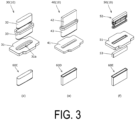
- the square can manufacturing method is for manufacturing the square can 60, and, as illustrated in FIGS. 2 and 3 , includes a blank preparation step of preparing a blank 60A, a coining step of performing coining at a predetermined place in the blank 60A, a first drawing step of performing a first drawing on the blank 60A having been subjected to the coining step, a second drawing step of performing a second drawing on a cup-shaped first intermediate molded product 60B having been subjected to the first drawing step, a drawing/ironing step of performing drawing and ironing on a second intermediate molded product 60C obtained through the second drawing step, and a shape correction step of correcting the shape of a third intermediate molded product 60D obtained through the drawing/ironing step.
- the blank preparation step is to form the blank 60A as a metal plate by performing punching on a strip plate made of metal such as aluminum.
- the coining step is to perform coining to reduce the sheet thickness by performing pressing in the sheet thickness direction at a predetermined place in the blank 60A.
- the coining to reduce the sheet thickness is performed by performing pressing in the sheet thickness direction at a planned bottom wall part (the portion that is the bottom wall 61 in a state of a final molded product of the square can 60) of the blank 60A.
- the first drawing step is to form the first intermediate molded product 60B with a cup shape by performing drawing on the blank 60A having been subjected to the coining step.
- the blank 60A in the state where the blank 60A is pushed from the upper side with a blank holder 23 that functions as a wrinkle suppression member to inhibit the formation of wrinkles in the blank 60A, the blank 60A is pushed (pulled) into a die machining through hole 21a formed in a die 21 from above with a punch 22 so as to cause plastic deformation of the blank 60A, and thus the first intermediate molded product 60B with a cup-shape is formed.
- the second drawing step is to form the second intermediate molded product 60C by performing the second drawing on the first intermediate molded product 60B obtained through first drawing step.
- the first intermediate molded product 60B in the state where the first intermediate molded product 60B is pushed from the upper side (inside) with a blank holder 33 that functions as a wrinkle suppression member to inhibit the formation of wrinkles in the second intermediate molded product 60C, the first intermediate molded product 60B is pushed (pulled) into a die machining through hole 31a formed in a die 31 with a punch 32 so as to cause plastic deformation of the first intermediate molded product 60B, and thus the second intermediate molded product 60C is formed.
- the drawing/ironing step is to form the third intermediate molded product 60D by performing drawing and ironing mainly on a planned cylindrical part 65C (a portion that is the square cylindrical part 65 in a state of a final molded product) of the second intermediate molded product 60C at a gap between a die machining through hole 41a formed in a die 41 and a punch 42 inserted into the die machining through hole 41a.
- a planned cylindrical part 65C a portion that is the square cylindrical part 65 in a state of a final molded product
- the drawing and ironing are also performed on a part of a planned bottom wall part 61C (a portion that is the bottom wall 61 in a state of a final molded product) of the second intermediate molded product 60C.
- the punch 42 is relatively moved with respect to the die 41 (in the present embodiment, the punch 42 and the blank holder 43 are moved with respect to the die 41 provided in the fixed state) in the state where the second intermediate molded product 60C is pushed from the upper side (inside) with a blank holder 43 that functions as a wrinkle suppression member to inhibit the formation of wrinkles in the third intermediate molded product 60D, such that the second intermediate molded product 60C is pushed (pulled) into the die machining through hole 41a with the punch 42 so as to cause plastic deformation of the second intermediate molded product 60C at the gap between a die machining inner peripheral surface 41b of the die machining through hole 41a and a punch machining outer peripheral surface 42a of the punch 42, and thus, the third intermediate molded product 60D is formed.
- the die 41 used in the drawing/ironing step includes the die machining through hole 41a extending through the die 41 in the punch movement direction in the drawing and ironing (in the present embodiment, the up-down direction).
- the die machining through hole 41a includes the die machining inner peripheral surface 41b formed as a surface parallel to the punch movement direction (up-down direction), and a tapered machining surface 41f formed on the near side (upward side) of the die machining inner peripheral surface 41b in the punch movement direction (up-down direction).
- the die machining inner peripheral surface 41b includes a pair of die long side wall machining parts 41c that performs machining on a planned long side wall part 66C (a portion that is the long side wall 66 in a state of a final molded product) of the second intermediate molded product 60C, and a pair of die short side wall machining parts 41d that performs machining on a planned short side wall part 67C (a portion that is the short side wall 67 in a state of a final molded product) of the second intermediate molded product 60C.
- each die long side wall machining part 41c is formed to linearly extend along the long side direction as viewed in the punch movement direction (up-down direction) (as viewed in a cross section of the die 41 taken along a plane perpendicular to the punch movement direction).
- each die short side wall machining part 41d is formed to linearly extend along the short side direction as viewed in the punch movement direction (up-down direction) (as viewed in a cross section of the die 41 taken along a plane perpendicular to the punch movement direction).
- a curved corner portion 41e convexly curved to the outer circumference side that smoothly connects the die long side wall machining part 41c and the die short side wall machining part 41d is formed between the die long side wall machining part 41c and the die short side wall machining part 41d.
- the curved corner portion 41e functions as a machining portion that performs machining near a planned corner wall part 68C (a portion that is the corner wall 68 of the square cylindrical part 65 in a state of a final molded product) of the second intermediate molded product 60C.
- each curved corner portion 41e is formed with a curve of the same single R (single curvature radius).
- the tapered machining surface 41f is formed in an inclined manner such that the diameter decreases (the width in the long side direction and short side direction decreases) toward the depth side (downward side) in the punch movement direction (up-down direction).
- the punch 42 used in the drawing/ironing step includes the punch machining outer peripheral surface 42a formed as a surface parallel to the punch movement direction (up-down direction) as the outer peripheral surface that faces the inner surface of the die machining through hole 41a during the drawing and ironing.
- the punch machining outer peripheral surface 42a includes a pair of punch long side wall machining parts 42b that performs machining on the planned long side wall part 66C of the second intermediate molded product 60C in conjunction with the die long side wall machining part 41c, and a pair of punch short side wall machining parts 42c that performs machining on the planned short side wall part 67C of the second intermediate molded product 60C in conjunction with the die short side wall machining part 41d.
- each punch long side wall machining part 42b includes a machining apex 42b-1 located on the outermost side in the short side direction in the punch long side wall machining part 42b, and an inclined part 42b-2 formed on both sides of the machining apex 42b-1 in the long side direction and inclined inward in the short side direction as it goes toward the outside in the long side direction, and has an overall shape in which the center portion in the long side direction is swollen outward in the short side direction than the both end side in the long side direction.
- the machining apex 42b-1 is formed at a center in the long side direction (or near a center in the long side direction) of the punch long side wall machining part 42b, and is formed as a portion linearly extending along the long side direction as viewed in the punch movement direction (up-down direction) (as viewed in a cross section of the punch 42 taken along a plane perpendicular to the punch movement direction) in the present embodiment.
- the machining apex 42b-1 is formed as a portion linearly extending in a cross-sectional view, the amount of deflection that occurs at the die long side wall machining part 41c due to the shaping reactive force in the drawing and ironing can be reduced in comparison with a case where the machining apex 42b-1 is formed in a point shape in a cross-sectional view as in the modification illustrated in FIG. 6(b) .
- the inclined part 42b-2 is formed as a linearly extending portion as viewed in the punch movement direction (up-down direction) (as viewed in a cross section of the punch 42 taken along a plane perpendicular to the punch movement direction).
- each punch short side wall machining part 42c is formed to linearly extend along the short side direction as viewed in the punch movement direction (up-down direction) (as viewed in a cross section of the punch 42 taken along a plane perpendicular to the punch movement direction).
- a curved corner portion 42d convexly curved to the outer circumference side that smoothly connects the punch long side wall machining part 42b and the punch short side wall machining part 42c is formed.
- the curved corner portion 42d functions as a machining portion that performs machining on a region near the planned corner wall part 68C of the second intermediate molded product 60C in conjunction with the curved corner portion 41e of the die 41.
- each curved corner portion 42d is formed with a curve of the same single R (single curvature radius).
- ironing for reducing the sheet thickness is performed mainly on the planned long side wall part 66C of the second intermediate molded product 60C by pushing (pulling) the second intermediate molded product 60C to the gap between the die long side wall machining part 41c and the punch long side wall machining part 42b, and drawing is performed mainly on the planned corner wall part 68C (and the planned short side wall part 67C) of the second intermediate molded product 60C by pushing (pulling) the second intermediate molded product 60C to the gap between the die short side wall machining part 41d and the punch short side wall machining part 42c.
- the thickness of the planned long side wall part 66C having been subjected to drawing and ironing is large at the center portion in the long side direction and decreases toward the both end portions in the long side direction, and as such the uniform thickness distribution in the planned long side wall part 66C cannot be achieved.
- the die long side wall machining part 41c and the punch long side wall machining part 42b are set such that in the state where the punch 42 is inserted into the die machining through hole 41a in an unloaded state (in other words, the state where the second intermediate molded product 60C is not interposed between the die long side wall machining part 41c and the punch long side wall machining part 42b, and no shaping reactive force is applied to the die 41 and the punch 42), the short side direction distance W1 between the center portion of the punch long side wall machining part 42b in the long side direction and the die long side wall machining part 41c is smaller than the short side direction distance W2 between the both end portions of the punch long side wall machining part 42b in the long side direction and the die long side wall machining part 41c.
- the die 41 and the punch 42 are formed such that in the state where the punch 42 is inserted into the die machining through hole 41a in an unloaded state, the short side direction distance W1 between the center portion of the punch long side wall machining part 42b in the long side direction and the die long side wall machining part 41c is smaller than a long side direction distance W3 between the punch short side wall machining part 42c and the die short side wall machining part 41d.
- the die machining inner peripheral surface 41b and the punch machining outer peripheral surface 42a are each line-symmetric in the long side direction and line-symmetric in the short side direction as viewed in the punch movement direction (up-down direction).
- the punch 42 is inserted into the die machining through hole 41a such that the long side direction distances W1 and W2 of the die long side wall machining part 41c and the punch long side wall machining part 42b on both sides with the punch 42 therebetween in the long side direction are the same, and the distance W3 between the die short side wall machining part 41d and the punch short side wall machining part 42c on both sides with the punch 42 therebetween in the short side direction is the same.
- the shape correction step is to form a fourth intermediate molded product 60E by increasing (widening) the distance in the short side direction between a pair of planned long side wall parts 66D (the portion that is the long side wall 66 in a state of a final molded product) of the third intermediate molded product 60D obtained by the drawing/ironing step, and planarizing (to a planar state, or performing a planarizing process on) a planned bottom wall part 61D (a portion that is the bottom wall 61 in a state of a final molded product) of the third intermediate molded product 60D.
- the above-described widening process and planarizing process are performed in one step in which in the state where a shape correction punch 52 is inserted in the third intermediate molded product 60D, the third intermediate molded product 60D is pushed (pulled) into a die machining through hole 51a with the shape correction punch 52 by moving the shape correction punch 52 relative to a die 51 (in the present embodiment, by moving the shape correction punch 52 with respect to the die 51 provided in the fixed state), and the planned bottom wall part 61D of the third intermediate molded product 60D is sandwiched with the shape correction punch 52 and bottom wall pressing member 53.
- the widening process is to push and expand into a wedge shape the distance in the short side direction between the pair of planned long side wall parts 66D (particularly between the center portions of the planned long side wall part 66D in the long side direction) by pushing each planned long side wall part 66D (particularly a region near the center portion in the longitudinal direction) toward the outside in the short side direction with a long side wall pressing part 52c of the shape correction punch 52 inserted in the third intermediate molded product 60D while preventing a pair of planned short side wall parts 67D from approaching each other with a short side wall side pushing part 52b of the shape correction punch 52 inserted in the third intermediate molded product 60D by inserting the shape correction punch 52 into the third intermediate molded product 60D supported by an outside support member 54.
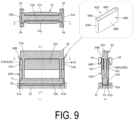
- the short side wall side pushing part 52b is disposed to press from the inside the portions on both sides of each planned long side wall part 66D in the long side direction and each planned short side wall part 67D (a portion that is the short side wall 67 in a state of a final molded product) on the opening side of the third intermediate molded product 60D in the state where the shape correction punch 52 is inserted in the third intermediate molded product 60D as illustrated in FIG. 9 .
- the short side wall side pushing part 52b has a function of preventing (restricting) the portions on both sides of the pair of planned long side wall parts 66D in the long side direction from approaching each other, and preventing (restricting) the pair of planned short side wall parts 67D from approaching each other in the state where the shape correction punch 52 is inserted in the third intermediate molded product 60D.
- the short side wall side pushing part 52b includes, on the depth side (lower side) in the punch movement direction (up-down direction), a tapered portion that is inclined inward in the long side direction as it goes toward the depth side, and this makes it easier to insert the shape correction punch 52 into the third intermediate molded product 60D.
- the short side wall side pushing part 52b is composed of a separate member formed separately from a punch body 52a and attached and fixed to the punch body 52a, and thus the degree of the pressing of the planned long side wall part 66D and the planned short side wall part 67D with the short side wall side pushing part 52b can be easily adjusted.
- the short side wall side pushing part 52b may be formed integrally with the punch body 52a.
- the long side wall pressing part 52c is disposed to push from the inside the center portion of each planned long side wall part 66D in the long side direction on the opening side of the third intermediate molded product 60D in the state where the shape correction punch 52 is inserted in the third intermediate molded product 60D as illustrated in FIG. 9 .
- the long side wall pressing part 52c has a function of pushing and expanding the distance in the short side direction between the pair of planned long side wall parts 66D.
- the long side wall pressing part 52c includes a pressing surface with its center portion in the long side direction swollen outward more in the short side direction than its both end portions in the long side direction.
- the long side wall pressing part 52c includes, on the depth side (lower side) in the punch movement direction (up-down direction), a tapered portion that is inclined inward in the short side direction as it goes toward the depth side, and this makes it easier to insert the shape correction punch 52 into the third intermediate molded product 60D.
- the long side wall pressing part 52c is composed of a separate member formed separately from the punch body 52a and attached and fixed to the punch body 52a, and thus the degree of the pressing of the planned long side wall part 66D with the long side wall pressing part 52c can be easily adjusted.
- the long side wall pressing part 52c may be formed integrally with the punch body 52a.
- the short side wall side pushing part 52b and the long side wall pressing part 52c are disposed at positions corresponding to the opening side (near the opening) of the third intermediate molded product 60D in the state where the shape correction punch 52 is inserted in the third intermediate molded product 60D as illustrated in FIG. 9 , but the arrangement of the long side wall pressing part 52c and the short side wall side pushing part 52b with respect to the third intermediate molded product 60D in the state where the shape correction punch 52 is inserted in the third intermediate molded product 60D is not limited to the above-described arrangement.
- the short side wall side pushing part 52b and the long side wall pressing part 52c may be disposed at positions corresponding to the vicinity of the center of the third intermediate molded product 60D in the punch movement direction (up-down direction) in the state where the shape correction punch 52 is inserted.
- the numbers of the short side wall side pushing part 52b and the long side wall pressing part 52c are also not limited to the illustration in FIGS. 8 and 9 .
- the short side wall side pushing part 52b and the long side wall pressing part 52c disposed at positions corresponding to the vicinity of the center of the third intermediate molded product 60D in the punch movement direction (up-down direction) in the state where the shape correction punch 52 is inserted may be additionally provided.
- the outside support member 54 is disposed to support from the lower side a flange part 69D of the third intermediate molded product 60D, and press from the external side the portions on both sides of each planned long side wall part 66D in the long side direction on the opening side (near the opening) of the third intermediate molded product 60D during the widening process.
- the outside support member 54 has a function of preventing (restricting) the portions on both sides of each planned long side wall part 66D in the long side direction from expanding outward in the short side direction while supporting the third intermediate molded product 60D when inserting the shape correction punch 52 into the third intermediate molded product 60D.
- another support member that supports the third intermediate molded product 60D from the external side at a given position may be provided instead of the outside support member 54, or in addition to the outside support member 54.
- the planarizing process is to planarize the planned bottom wall part 61D by performing the drawing and ironing over the entire region in the circumferential direction in the vicinity (region R illustrated in FIG. 9 ) of the connecting part (curved corner portion) between a planned cylindrical part 65D and the planned bottom wall part 61D of the third intermediate molded product 60D in the gap between the die machining inner peripheral surface of the die machining through hole 51a formed in the die 51 and the punch machining outer peripheral surface of the shape correction punch 52 inserted into the die machining through hole 51a by moving the shape correction punch 52 so as to sandwich the planned bottom wall part 61D with a bottom wall pressing part 52d of the shape correction punch 52 inserted in the third intermediate molded product 60D and a bottom wall pressing member 53 disposed on the outer surface side of the planned bottom wall part 61D, and by pushing (pulling) the third intermediate molded product 60D (the planned bottom wall part 61D and a part of the planned cylindrical part 65D in the vicinity of the planned bottom wall part 61D) into the die
- the pressing surface of the bottom wall pressing part 52d of the shape correction punch 52 and the pressing surface of the bottom wall pressing member 53 that sandwich the planned bottom wall part 61D are each formed in a flat shape.
- the bottom wall pressing part 52d of the shape correction punch 52 is formed integrally with the punch body 52a
- the bottom wall pressing part 52d may be composed of a separate member formed separately from the punch body 52a.
- the bottom wall pressing member 53 is supported by an air cylinder (not illustrated), and applies an appropriate pressure to the planned bottom wall part 61D by sandwiching the planned bottom wall part 61D between it and the shape correction punch 52 while moving downward together with the punch (the third intermediate molded product 60D) when it is pushed downward by a punch (the third intermediate molded product 60D) during the planarizing process.
- an air cylinder (not illustrated) softens the impact of collision of the punch (the third intermediate molded product 60D) against the bottom wall pressing member 53.
- the equipment corresponding to the bottom wall pressing member 53 (and the air cylinder) for supporting the outside (lower side) of the planned bottom wall part is not used, that is, the equipment for sandwiching the planned bottom wall part 61D with the punch moving downward is not used.
- the shape correction (widening process) of the planned cylindrical part 65D and the shape correction (planarizing process) of the planned bottom wall part 61D can be collectively performed by one step (one operation) of moving the shape correction punch 52 toward the side of the die 51 and the bottom wall pressing member 53 after inserting the shape correction punch 52 into the third intermediate molded product 60D, and thus the shape accuracy of the square can 60 can be improved while suppressing the increase in manufacture burden.
- the square can manufacturing method includes various steps other than the above-described steps, such as a washing step and a trimming step of cutting off unnecessary parts in the vicinity of the opening such as a flange part of the fourth intermediate molded product 60E obtained by the shape correction step.
- the square can manufacturing apparatus 10 includes a first drawing unit 20 for performing a first drawing step, the first drawing unit 20 for performing a second drawing step, a drawing/ironing unit 40 for performing a drawing/ironing step, and a shape correction unit 50 for performing a shape correction step.
- the first and second drawing units 20 and 30 and the drawing/ironing unit 40 include the dies 21, 31 and 41, the punches 22, 23 and 24, the blank holders 23, 33 and 43, and various peripheral equipment such as a supporting member and a driving means composed of an actuator or a motor for driving each part such as the punch.
- the shape correction unit 50 includes the die 51, the shape correction punch 52, the bottom wall pressing member 53, the outside support member 54, and various peripheral equipment such as a supporting member and a driving means composed of an actuator or a motor for driving each part such as the punch.
- the number of times of the drawing (or the drawing and ironing) prior to the drawing and ironing may be one time or three or more times.
- the die long side wall machining part 41c is formed to linearly extend along the long side direction and the punch long side wall machining part 42b is formed in an overall shape in which its center in the long side direction is swollen outward in the short side direction than its both end side in the long side direction, such that in the state where the punch 42 is inserted into the die machining through hole 41a in an unloaded state, the short side direction distance W1 between the center portion of the punch long side wall machining part 42b in the long side direction and the die long side wall machining part 41c is smaller than the short side direction distance W2 between the die long side wall machining part 41c and the both end portions of the punch long side wall machining part 42b in the long side direction.
- the specific configurations of the long side wall machining parts 41c and 42b are not limited to the above-described configurations as long as the distance W1 is smaller than the distance W2 in the above-described state.
- the die long side wall machining part 41c may be formed in a shape other than the shape linearly extending along the long side direction (for example, an overall shape in which its center in the long side direction is swollen outward in the short side direction than its both end side in the long side direction, or an overall shape in which its center in the long side direction is swollen inward in the short side direction than its both end side in the long side direction).
- the distance W1 may be set smaller than the distance W2 in the above-described state by forming the die long side wall machining part 41c in an overall shape in which its center in the long side direction is swollen inward in the short side direction than its both end side in the long side direction, and in this case the punch long side wall machining part 42b may have various shapes such as a shape linearly extending along the long side direction, an overall shape in which its center in the long side direction is swollen outward in the short side direction than its both end side in the long side direction, and an overall shape in which its center in the long side direction is swollen inward in the short side direction than its both end side in the long side direction.
- the punch long side wall machining part 42b is formed in an overall shape in which its center in the long side direction is swollen outward in the short side direction than its both end side in the long side direction
- the specific configuration of the punch long side wall machining part 42b is not limited to that of the above-described embodiment.
- the machining apex 42b-1 is formed as a portion linearly extending along the long side direction in a cross-sectional view in the example illustrated in FIG. 6(a)
- the machining apex 42b-1 may be a point-shaped portion in a cross-sectional view as in the modification illustrated in FIG. 6(b) .
- the inclined part 42b-2 is formed as a portion linearly extending in a cross-sectional view in the example illustrated in FIG. 6(a)
- the inclined part 42b-2 may be a curved portion in a cross-sectional view as in the modification illustrated in FIG. 6(b)
- the inclined part 42b-2 may be formed as a portion composed of a combination of one or more straight lines and one or more curves in a cross-sectional view.
- the punch long side wall machining part 42b is formed in a so-called drum shape that is convexly curved outward in the short side direction in its entirety with its center in the long side direction swollen outward in the short side direction than its both end portions in the long side direction.
- the die long side wall machining part 41c is formed in an overall shape in which its center in the long side direction is swollen inward in the short side direction than its both end side in the long side direction with a machining apex (located innermost in the short side direction in the die long side wall machining part 41c) and an inclined part (formed on both sides of the machining apex in the long side direction and inclined to the outside in the short side direction as it goes toward the outside in the long side direction), the machining apex of the die long side wall machining part 41c may be formed as a portion linearly extending along the long side direction in a cross-sectional view, or may be formed as a point-shaped portion in a cross-sectional view.
- the inclined part of the die long side wall machining part 41c may be formed as a linearly extending portion in a cross-sectional view, or may be formed as a curved portion in a cross-sectional view, or, may be formed as a portion composed of a combination of one or more straight lines and one or more curves in a cross-sectional view.
- the die short side wall machining part 41d and the punch short side wall machining part 42c are formed to linearly extend along the long side direction in the above-described embodiment, the machining parts may be formed in other shapes (for example, a curved shape as viewed in the punch movement direction).
- the die machining inner peripheral surface 41b and the punch machining outer peripheral surface 42a are formed as surfaces parallel to the punch movement direction (up-down direction) in the above-described embodiment, the specific configurations of the die machining inner peripheral surface 41b and the punch machining outer peripheral surface 42a are not limited to this.
Landscapes
- Engineering & Computer Science (AREA)
- Mechanical Engineering (AREA)
- Chemical & Material Sciences (AREA)
- Chemical Kinetics & Catalysis (AREA)
- Electrochemistry (AREA)
- General Chemical & Material Sciences (AREA)
- Shaping Metal By Deep-Drawing, Or The Like (AREA)
Abstract
Description
- The present invention relates to a square can manufacturing method and a square can manufacturing apparatus for forming a square can, and particularly to a square can manufacturing method and a square can manufacturing apparatus for a square can that is used as a case of a lithium-ion battery.
- In the related art, as a manufacturing method for a metal square can including a bottom wall and a square cylindrical part, manufacturing a square can by performing drawing or drawing and ironing multiple times on a blank is known (see, for example, Patent Document 1). In addition, in drawing and ironing that are performed as a final step of the above-mentioned drawing or drawing and ironing, it is also known to use a punch including a punch machining outer peripheral surface formed in a substantially rectangular cross-sectional shape and a die including a die machining through hole formed in the same substantially rectangular cross-sectional shape in consideration of the shape such as the external dimension and internal dimension of a square cylindrical part of the final molded product.
- Patent Document 1:
Japanese Patent Application Laid-Open No. 2018-51575 - Regarding square cans that are formed in the above-described manner; however, the applicant confirmed that nonuniformity is caused in the thickness of the long side wall of the square cylindrical part when the flatness ratio (the ratio of the long side direction dimension with respect to the short side direction dimension) of the square cylindrical part of the square can being manufactured is high.
- Depending on the application of the square can such as when the square can is used for a lithium-ion battery case and the like that require a high degree of shape accuracy, the above-mentioned nonuniformity in thickness of a square cylindrical part may be unacceptable in some cases.
- To solve such problems, an object of the present invention is to provide a square can manufacturing method and a square can manufacturing apparatus for suppressing the occurrence of the nonuniformity in thickness of the long side wall of a square can with a simple configuration without increasing the manufacturing cost.
- To solve the above-mentioned problems, a square can manufacturing method of the present invention is a method of manufacturing a square can including a bottom wall and a square cylindrical part with a pair of long side walls and a pair of short side walls, the square can manufacturing method including performing drawing and ironing at a planned cylindrical part of an intermediate molded product in a gap between a die machining inner peripheral surface of a die machining through hole formed in a die and a punch machining outer peripheral surface formed in a punch inserted into the die machining through hole, in which the die machining inner peripheral surface includes a die long side wall machining part configured to perform machining at a planned long side wall part of the intermediate molded product, the punch machining outer peripheral surface includes a punch long side wall machining part configured to perform machining at the planned long side wall part, and the die and the punch are formed such that in a state where the punch is inserted into the die machining through hole in an unloaded state, a distance in a short side direction between a center portion of the punch long side wall machining part in a long side direction and the die long side wall machining part is smaller than a distance in the short side direction between both end portions of the punch long side wall machining part in the long side direction and the die long side wall machining part.
- To solve the above-mentioned problems, a square can manufacturing apparatus of the present invention is configured to manufacture a square can including a bottom wall and a square cylindrical part with a pair of long side walls and a pair of short side walls, the square can manufacturing apparatus including a drawing/ironing unit configured to perform drawing and ironing at a planned cylindrical part of an intermediate molded product in a gap between a die machining inner peripheral surface of a die machining through hole formed in a die and a punch machining outer peripheral surface formed in a punch inserted into the die machining through hole, in which the die machining inner peripheral surface includes a die long side wall machining part configured to perform machining at a planned long side wall part of the intermediate molded product, the punch machining outer peripheral surface includes a punch long side wall machining part configured to perform machining at the planned long side wall part, and the die and the punch are formed such that in a state where the punch is inserted into the die machining through hole in an unloaded state, a distance in a short side direction between a center portion of the punch long side wall machining part in a long side direction and the die long side wall machining part is smaller than a distance in the short side direction between both end portions of the punch long side wall machining part in the long side direction and the die long side wall machining part.
- According to the present invention, by forming the die and the punch such that the distance in the short side direction between the center portion of the punch long side wall machining part in the long side direction and the die long side wall machining part is smaller than the distance in the short side direction between the both end portions of the punch long side wall machining part in the long side direction and the die long side wall machining part in the state where the punch is inserted into the die machining through hole in an unloaded state, nonuniformity (unevenness) in thickness of the long side wall of the formed square can be suppressed with a simple configuration without increasing the manufacturing cost.
- Specifically, in the case where the flatness ratio (the ratio of the long side direction dimension with respect to the short side direction dimension) of the die machining through hole is high, deflection may occur in the die long side wall machining part in the drawing and ironing such that the center portion of the die long side wall machining part in the long side direction goes toward the outside in the short side direction due to the shaping reactive force, but in the present invention, by setting the distance in the short side direction between the die long side wall machining part and the punch long side wall machining part in consideration of that deflection of the die long side wall machining part, the dimensional difference between the distance in the short side direction between the punch long side wall machining part and the die long side wall machining part at both end portions in the long side direction, and the distance in the short side direction between the punch long side wall machining part and the die long side wall machining part at the center portion in the long side direction can be reduced in the drawing and ironing that cause the deflection at the die long side wall machining part due to the shaping reactive force, and thus the thickness distribution in the long side wall of the shaped square can can be more uniformed.
- In addition, the present invention can suppress the increase in manufacturing cost because it is unnecessary to take measures to suppress the deflection itself of the die long side wall machining part by, for example, changing the metal mold material of the die to a material with a high Young's modulus such as cemented carbide that leads to increase in manufacturing cost.
-
-
FIG. 1 is an explanatory diagram illustrating a square can that is a final molded product of a square can manufacturing method according to an embodiment of the present invention. -
FIG. 2 is an explanatory diagram illustrating each step of the square can manufacturing method. -
FIG. 3 is an explanatory diagram illustrating each step of the square can manufacturing method. -
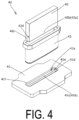
FIG. 4 is an explanatory diagram illustrating a drawing/ironing unit. -
FIG. 5 is an explanatory diagram illustrating a state in drawing and ironing. -
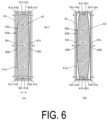
FIG. 6 is an explanatory diagram illustrating a state where a punch is inserted in an unloaded state into a die machining through hole of the drawing/ironing unit, and a modification. -
FIG. 7 is an explanatory diagram illustrating a state of a die and a punch in drawing and ironing. -
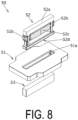
FIG. 8 is an explanatory diagram illustrating a shape correction unit. -
FIG. 9 is an explanatory diagram illustrating the shape correction unit. -
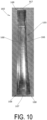
FIG. 10 is an explanatory diagram for describing a canning phenomenon. - A square can manufacturing method and a square can manufacturing
apparatus 10 according to an embodiment of the present invention are described below with reference to the drawings. - First, a square can 60 that is a final molded product manufactured with the square can manufacturing method and the square can manufacturing
apparatus 10 is composed of metal such as aluminum. In the present embodiment, the square can 60 is used as a case of a lithium-ion battery, and includes abottom wall 61 with a plate shape (or a substantially plate shape) and a squarecylindrical part 65 as illustrated inFIG. 1 . - As illustrated in
FIG. 1 , thebottom wall 61 is formed in a substantially quadrangular shape (or quadrangular shape) with a pair of bottomlong side portions 62 and a pair of bottomshort side portions 63 at its outer edge. - The bottom
long side portion 62 is a portion linearly (or substantially linearly) extending along the long side direction. - The bottom
short side portion 63 is a portion linearly (or substantially linearly) extending along the short side direction and forming an angle of 90 degrees between it and the bottomlong side portion 62. - A bottom
curved corner portion 64 that is convexly curved to the outer circumference side to smoothly connect the bottomlong side portion 62 and the bottomshort side portion 63 is formed between the bottomlong side portion 62 and the bottomshort side portion 63. In the present embodiment, each bottomcurved corner portion 64 is formed with a curve of the same single R (single curvature radius). - As illustrated in
FIG. 1 , the squarecylindrical part 65 includes a pair oflong side walls 66 disposed to face each other in the short side direction, and a pair ofshort side walls 67 disposed to face each other in the long side direction. - As illustrated in
FIG. 1 , eachlong side wall 66 is a plate-shaped (or substantially plate-shaped) portion formed upright from the bottomlong side portion 62, and the pair of thelong side walls 66 is formed in parallel to each other. - As illustrated in
FIG. 1 , eachshort side wall 67 is a plate-shaped (or substantially plate-shaped) portion formed upright from the bottomshort side portion 63 so as to form an angle of 90 degrees between it and thelong side wall 66, and the pair ofshort side walls 67 is formed in parallel to each other. - Between the
long side wall 66 and theshort side wall 67, an R-shaped corner wall 68 convexly curved to the outer circumference side is formed upright from the bottomcurved corner portion 64 to smoothly connect thelong side wall 66 and theshort side wall 67. In the present embodiment, eachcorner part wall 68 is formed with a curve of the same single R (single curvature radius). - The square can manufacturing method is for manufacturing the square can 60, and, as illustrated in
FIGS. 2 and3 , includes a blank preparation step of preparing a blank 60A, a coining step of performing coining at a predetermined place in the blank 60A, a first drawing step of performing a first drawing on the blank 60A having been subjected to the coining step, a second drawing step of performing a second drawing on a cup-shaped first intermediate moldedproduct 60B having been subjected to the first drawing step, a drawing/ironing step of performing drawing and ironing on a second intermediate moldedproduct 60C obtained through the second drawing step, and a shape correction step of correcting the shape of a third intermediate moldedproduct 60D obtained through the drawing/ironing step. - Each step of the square can manufacturing method is described in detail below.
- First, as illustrated in
FIG. 2(a) , the blank preparation step is to form the blank 60A as a metal plate by performing punching on a strip plate made of metal such as aluminum. - As illustrated in
FIG. 2(b) , the coining step is to perform coining to reduce the sheet thickness by performing pressing in the sheet thickness direction at a predetermined place in the blank 60A. - In the present embodiment, the coining to reduce the sheet thickness is performed by performing pressing in the sheet thickness direction at a planned bottom wall part (the portion that is the
bottom wall 61 in a state of a final molded product of the square can 60) of the blank 60A. - As illustrated in
FIG. 2(c) , the first drawing step is to form the first intermediate moldedproduct 60B with a cup shape by performing drawing on the blank 60A having been subjected to the coining step. - More specifically, in the first drawing step, in the state where the blank 60A is pushed from the upper side with a
blank holder 23 that functions as a wrinkle suppression member to inhibit the formation of wrinkles in the blank 60A, the blank 60A is pushed (pulled) into a die machining throughhole 21a formed in adie 21 from above with apunch 22 so as to cause plastic deformation of the blank 60A, and thus the first intermediate moldedproduct 60B with a cup-shape is formed. - As illustrated in
FIG. 3(d) , the second drawing step is to form the second intermediate moldedproduct 60C by performing the second drawing on the first intermediate moldedproduct 60B obtained through first drawing step. - More specifically, in the second drawing step, in the state where the first intermediate molded
product 60B is pushed from the upper side (inside) with ablank holder 33 that functions as a wrinkle suppression member to inhibit the formation of wrinkles in the second intermediate moldedproduct 60C, the first intermediate moldedproduct 60B is pushed (pulled) into a die machining throughhole 31a formed in adie 31 with apunch 32 so as to cause plastic deformation of the first intermediate moldedproduct 60B, and thus the second intermediate moldedproduct 60C is formed. - Note that during this drawing, only (a part of) the first intermediate molded
product 60B and thepunch 32 are inserted into the die machining throughhole 31a, but theblank holder 33 is not inserted. - As illustrated in
FIG. 3(e) , the drawing/ironing step is to form the third intermediate moldedproduct 60D by performing drawing and ironing mainly on a plannedcylindrical part 65C (a portion that is the squarecylindrical part 65 in a state of a final molded product) of the second intermediate moldedproduct 60C at a gap between a die machining throughhole 41a formed in adie 41 and apunch 42 inserted into the die machining throughhole 41a. - Note that in the drawing/ironing step, the drawing and ironing are also performed on a part of a planned
bottom wall part 61C (a portion that is thebottom wall 61 in a state of a final molded product) of the second intermediate moldedproduct 60C. - More specifically, as illustrated in
FIG. 5 , in the drawing/ironing step, thepunch 42 is relatively moved with respect to the die 41 (in the present embodiment, thepunch 42 and theblank holder 43 are moved with respect to thedie 41 provided in the fixed state) in the state where the second intermediatemolded product 60C is pushed from the upper side (inside) with ablank holder 43 that functions as a wrinkle suppression member to inhibit the formation of wrinkles in the third intermediate moldedproduct 60D, such that the second intermediate moldedproduct 60C is pushed (pulled) into the die machining throughhole 41a with thepunch 42 so as to cause plastic deformation of the second intermediate moldedproduct 60C at the gap between a die machining innerperipheral surface 41b of the die machining throughhole 41a and a punch machining outerperipheral surface 42a of thepunch 42, and thus, the third intermediate moldedproduct 60D is formed. - Note that during the above-described drawing and ironing, only (a part of) the second intermediate molded
product 60C and thepunch 42 are inserted into the die machining throughhole 41a, but theblank holder 43 is not inserted. - As illustrated in
FIGS. 4 and5 , the die 41 used in the drawing/ironing step includes the die machining throughhole 41a extending through thedie 41 in the punch movement direction in the drawing and ironing (in the present embodiment, the up-down direction). - As illustrated in
FIGS. 4 and5 , the die machining throughhole 41a includes the die machining innerperipheral surface 41b formed as a surface parallel to the punch movement direction (up-down direction), and atapered machining surface 41f formed on the near side (upward side) of the die machining innerperipheral surface 41b in the punch movement direction (up-down direction). - As illustrated in
FIGS. 4 to 6 , the die machining innerperipheral surface 41b includes a pair of die long sidewall machining parts 41c that performs machining on a planned longside wall part 66C (a portion that is thelong side wall 66 in a state of a final molded product) of the second intermediate moldedproduct 60C, and a pair of die short sidewall machining parts 41d that performs machining on a planned shortside wall part 67C (a portion that is theshort side wall 67 in a state of a final molded product) of the second intermediate moldedproduct 60C. - As illustrated in
FIGS. 4 and6(a) , each die long sidewall machining part 41c is formed to linearly extend along the long side direction as viewed in the punch movement direction (up-down direction) (as viewed in a cross section of thedie 41 taken along a plane perpendicular to the punch movement direction). - As illustrated in
FIGS. 4 and6(a) , each die short sidewall machining part 41d is formed to linearly extend along the short side direction as viewed in the punch movement direction (up-down direction) (as viewed in a cross section of thedie 41 taken along a plane perpendicular to the punch movement direction). - In addition, as illustrated in
FIGS. 4 and6(a) , acurved corner portion 41e convexly curved to the outer circumference side that smoothly connects the die long sidewall machining part 41c and the die short sidewall machining part 41d is formed between the die long sidewall machining part 41c and the die short sidewall machining part 41d. Thecurved corner portion 41e functions as a machining portion that performs machining near a plannedcorner wall part 68C (a portion that is thecorner wall 68 of the squarecylindrical part 65 in a state of a final molded product) of the second intermediate moldedproduct 60C. In the present embodiment, eachcurved corner portion 41e is formed with a curve of the same single R (single curvature radius). - As illustrated in
FIGS. 4 and5 , the taperedmachining surface 41f is formed in an inclined manner such that the diameter decreases (the width in the long side direction and short side direction decreases) toward the depth side (downward side) in the punch movement direction (up-down direction). - As illustrated in
FIGS. 4 to 6 , thepunch 42 used in the drawing/ironing step includes the punch machining outerperipheral surface 42a formed as a surface parallel to the punch movement direction (up-down direction) as the outer peripheral surface that faces the inner surface of the die machining throughhole 41a during the drawing and ironing. - As illustrated in
FIGS. 4 and6(a) , the punch machining outerperipheral surface 42a includes a pair of punch long sidewall machining parts 42b that performs machining on the planned longside wall part 66C of the second intermediate moldedproduct 60C in conjunction with the die long sidewall machining part 41c, and a pair of punch short sidewall machining parts 42c that performs machining on the planned shortside wall part 67C of the second intermediate moldedproduct 60C in conjunction with the die short sidewall machining part 41d. - As illustrated in
FIG. 6(a) , each punch long sidewall machining part 42b includes amachining apex 42b-1 located on the outermost side in the short side direction in the punch long sidewall machining part 42b, and aninclined part 42b-2 formed on both sides of themachining apex 42b-1 in the long side direction and inclined inward in the short side direction as it goes toward the outside in the long side direction, and has an overall shape in which the center portion in the long side direction is swollen outward in the short side direction than the both end side in the long side direction. - As illustrated in
FIG. 6(a) , themachining apex 42b-1 is formed at a center in the long side direction (or near a center in the long side direction) of the punch long sidewall machining part 42b, and is formed as a portion linearly extending along the long side direction as viewed in the punch movement direction (up-down direction) (as viewed in a cross section of thepunch 42 taken along a plane perpendicular to the punch movement direction) in the present embodiment. - Note that in the case where the
machining apex 42b-1 is formed as a portion linearly extending in a cross-sectional view, the amount of deflection that occurs at the die long sidewall machining part 41c due to the shaping reactive force in the drawing and ironing can be reduced in comparison with a case where themachining apex 42b-1 is formed in a point shape in a cross-sectional view as in the modification illustrated inFIG. 6(b) . - As illustrated in
FIG. 1 , theinclined part 42b-2 is formed as a linearly extending portion as viewed in the punch movement direction (up-down direction) (as viewed in a cross section of thepunch 42 taken along a plane perpendicular to the punch movement direction). - As illustrated in
FIG. 6(a) , each punch short sidewall machining part 42c is formed to linearly extend along the short side direction as viewed in the punch movement direction (up-down direction) (as viewed in a cross section of thepunch 42 taken along a plane perpendicular to the punch movement direction). - In addition, between the punch long side
wall machining part 42b and the punch short sidewall machining part 42c, acurved corner portion 42d convexly curved to the outer circumference side that smoothly connects the punch long sidewall machining part 42b and the punch short sidewall machining part 42c is formed. Thecurved corner portion 42d functions as a machining portion that performs machining on a region near the plannedcorner wall part 68C of the second intermediate moldedproduct 60C in conjunction with thecurved corner portion 41e of thedie 41. In the present embodiment, eachcurved corner portion 42d is formed with a curve of the same single R (single curvature radius). - Note that in the drawing and ironing, ironing for reducing the sheet thickness is performed mainly on the planned long
side wall part 66C of the second intermediate moldedproduct 60C by pushing (pulling) the second intermediate moldedproduct 60C to the gap between the die long sidewall machining part 41c and the punch long sidewall machining part 42b, and drawing is performed mainly on the plannedcorner wall part 68C (and the planned shortside wall part 67C) of the second intermediate moldedproduct 60C by pushing (pulling) the second intermediate moldedproduct 60C to the gap between the die short sidewall machining part 41d and the punch short sidewall machining part 42c. - Here, in the case where the flatness ratio (the ratio of the long side direction dimension with respect to the short side direction dimension) of the die machining through
hole 41a is large as in the present embodiment, deflection occurs in the die long sidewall machining part 41c during the drawing and ironing as illustrated inFIG. 7(a) due to the shaping reactive force such that the center portion in the long side direction of the die long sidewall machining part 41c goes toward the outside in the short side direction, and as a result, a short side direction distance W1 between the die long sidewall machining part 41c and the punch long sidewall machining part 42b at the center portion in the long side direction of the die long sidewall machining part 41c increases in comparison with a state where thepunch 42 is inserted into the die machining throughhole 41a in an unloaded state as illustrated inFIG. 6(a) . - Therefore, as illustrated in
FIG. 7(b) , when the short side direction distances W1 and W2 between the die long sidewall machining part 41c and the punch long sidewall machining part 42b are set constant such as when the die long sidewall machining part 41c and the punch long sidewall machining part 42b are formed to linearly extend along the long side direction, the thickness of the planned longside wall part 66C having been subjected to drawing and ironing is large at the center portion in the long side direction and decreases toward the both end portions in the long side direction, and as such the uniform thickness distribution in the planned longside wall part 66C cannot be achieved. - Conversely, in the present embodiment, as illustrated in
FIG. 6(a) , the die long sidewall machining part 41c and the punch long sidewall machining part 42b are set such that in the state where thepunch 42 is inserted into the die machining throughhole 41a in an unloaded state (in other words, the state where the second intermediate moldedproduct 60C is not interposed between the die long sidewall machining part 41c and the punch long sidewall machining part 42b, and no shaping reactive force is applied to the die 41 and the punch 42), the short side direction distance W1 between the center portion of the punch long sidewall machining part 42b in the long side direction and the die long sidewall machining part 41c is smaller than the short side direction distance W2 between the both end portions of the punch long sidewall machining part 42b in the long side direction and the die long sidewall machining part 41c. - In this manner, in the drawing and ironing where deflection occurs in the die long side
wall machining part 41c due to the shaping reactive force, it is possible to reduce the dimensional difference between the short side direction distance W2 between the die long sidewall machining part 41c and the punch long sidewall machining part 42b at both end portions in the long side direction, and the short side direction distance W1 between the die long sidewall machining part 41c and the punch long sidewall machining part 42b at the center portion in the long side direction, and thus the thickness distribution of the planned longside wall part 66C can be made more uniform. - In addition, as illustrated in
FIG. 6(a) , thedie 41 and thepunch 42 are formed such that in the state where thepunch 42 is inserted into the die machining throughhole 41a in an unloaded state, the short side direction distance W1 between the center portion of the punch long sidewall machining part 42b in the long side direction and the die long sidewall machining part 41c is smaller than a long side direction distance W3 between the punch short sidewall machining part 42c and the die short sidewall machining part 41d. - Note that as illustrated in
FIG. 6(a) and the like, the die machining innerperipheral surface 41b and the punch machining outerperipheral surface 42a are each line-symmetric in the long side direction and line-symmetric in the short side direction as viewed in the punch movement direction (up-down direction). - In addition, in the drawing and ironing, the
punch 42 is inserted into the die machining throughhole 41a such that the long side direction distances W1 and W2 of the die long sidewall machining part 41c and the punch long sidewall machining part 42b on both sides with thepunch 42 therebetween in the long side direction are the same, and the distance W3 between the die short sidewall machining part 41d and the punch short sidewall machining part 42c on both sides with thepunch 42 therebetween in the short side direction is the same. - As illustrated in
FIG. 3(f) , the shape correction step is to form a fourth intermediate moldedproduct 60E by increasing (widening) the distance in the short side direction between a pair of planned longside wall parts 66D (the portion that is thelong side wall 66 in a state of a final molded product) of the third intermediate moldedproduct 60D obtained by the drawing/ironing step, and planarizing (to a planar state, or performing a planarizing process on) a plannedbottom wall part 61D (a portion that is thebottom wall 61 in a state of a final molded product) of the third intermediate moldedproduct 60D. - As illustrated in
FIG. 9 , in the shape correction step, the above-described widening process and planarizing process are performed in one step in which in the state where ashape correction punch 52 is inserted in the third intermediate moldedproduct 60D, the third intermediate moldedproduct 60D is pushed (pulled) into a die machining throughhole 51a with theshape correction punch 52 by moving theshape correction punch 52 relative to a die 51 (in the present embodiment, by moving theshape correction punch 52 with respect to the die 51 provided in the fixed state), and the plannedbottom wall part 61D of the third intermediate moldedproduct 60D is sandwiched with theshape correction punch 52 and bottomwall pressing member 53. - Each step of the shape correction step is described in detail below.
- First, as illustrated in
FIGS. 8 and9 , the widening process is to push and expand into a wedge shape the distance in the short side direction between the pair of planned longside wall parts 66D (particularly between the center portions of the planned longside wall part 66D in the long side direction) by pushing each planned longside wall part 66D (particularly a region near the center portion in the longitudinal direction) toward the outside in the short side direction with a long sidewall pressing part 52c of theshape correction punch 52 inserted in the third intermediate moldedproduct 60D while preventing a pair of planned shortside wall parts 67D from approaching each other with a short side wallside pushing part 52b of theshape correction punch 52 inserted in the third intermediate moldedproduct 60D by inserting theshape correction punch 52 into the third intermediate moldedproduct 60D supported by anoutside support member 54. - Through this widening process, the shape can be corrected even in the case of occurrence of a so-called canning phenomenon in which the center portion of each
long side wall 166 in the long side direction is recessed inward in the short side direction as illustrated inFIG. 10 . - The short side wall
side pushing part 52b is disposed to press from the inside the portions on both sides of each planned longside wall part 66D in the long side direction and each planned shortside wall part 67D (a portion that is theshort side wall 67 in a state of a final molded product) on the opening side of the third intermediate moldedproduct 60D in the state where theshape correction punch 52 is inserted in the third intermediate moldedproduct 60D as illustrated inFIG. 9 . - In this manner, the short side wall
side pushing part 52b has a function of preventing (restricting) the portions on both sides of the pair of planned longside wall parts 66D in the long side direction from approaching each other, and preventing (restricting) the pair of planned shortside wall parts 67D from approaching each other in the state where theshape correction punch 52 is inserted in the third intermediate moldedproduct 60D. - Note that the short side wall
side pushing part 52b may be designed such that in the state where theshape correction punch 52 is inserted in the third intermediate moldedproduct 60D, the distance between the portions on both sides of the pair of planned longside wall parts 66D in the long side direction is pushed and expanded in a wedge shape in the short side direction, and the short side wallside pushing part 52b may be designed such that the distance between the pair of planned shortside wall parts 67D is pushed and expanded in a wedge shape in the long side direction. - As illustrated in
FIG. 9 , the short side wallside pushing part 52b includes, on the depth side (lower side) in the punch movement direction (up-down direction), a tapered portion that is inclined inward in the long side direction as it goes toward the depth side, and this makes it easier to insert theshape correction punch 52 into the third intermediate moldedproduct 60D. - In addition, in the present embodiment, the short side wall
side pushing part 52b is composed of a separate member formed separately from apunch body 52a and attached and fixed to thepunch body 52a, and thus the degree of the pressing of the planned longside wall part 66D and the planned shortside wall part 67D with the short side wallside pushing part 52b can be easily adjusted. However, the short side wallside pushing part 52b may be formed integrally with thepunch body 52a. - The long side
wall pressing part 52c is disposed to push from the inside the center portion of each planned longside wall part 66D in the long side direction on the opening side of the third intermediate moldedproduct 60D in the state where theshape correction punch 52 is inserted in the third intermediate moldedproduct 60D as illustrated inFIG. 9 . - In this manner, the long side
wall pressing part 52c has a function of pushing and expanding the distance in the short side direction between the pair of planned longside wall parts 66D. - As illustrated in
FIG. 9 , the long sidewall pressing part 52c includes a pressing surface with its center portion in the long side direction swollen outward more in the short side direction than its both end portions in the long side direction. - In addition, as illustrated in
FIG. 9 , the long sidewall pressing part 52c includes, on the depth side (lower side) in the punch movement direction (up-down direction), a tapered portion that is inclined inward in the short side direction as it goes toward the depth side, and this makes it easier to insert theshape correction punch 52 into the third intermediate moldedproduct 60D. - In addition, in the present embodiment, the long side
wall pressing part 52c is composed of a separate member formed separately from thepunch body 52a and attached and fixed to thepunch body 52a, and thus the degree of the pressing of the planned longside wall part 66D with the long sidewall pressing part 52c can be easily adjusted. However, the long sidewall pressing part 52c may be formed integrally with thepunch body 52a. - Note that in the above-described present embodiment, the short side wall
side pushing part 52b and the long sidewall pressing part 52c are disposed at positions corresponding to the opening side (near the opening) of the third intermediate moldedproduct 60D in the state where theshape correction punch 52 is inserted in the third intermediate moldedproduct 60D as illustrated inFIG. 9 , but the arrangement of the long sidewall pressing part 52c and the short side wallside pushing part 52b with respect to the third intermediate moldedproduct 60D in the state where theshape correction punch 52 is inserted in the third intermediate moldedproduct 60D is not limited to the above-described arrangement. For example, the short side wallside pushing part 52b and the long sidewall pressing part 52c may be disposed at positions corresponding to the vicinity of the center of the third intermediate moldedproduct 60D in the punch movement direction (up-down direction) in the state where theshape correction punch 52 is inserted. - In addition, the numbers of the short side wall
side pushing part 52b and the long sidewall pressing part 52c are also not limited to the illustration inFIGS. 8 and9 . For example, in addition to those illustrated inFIGS. 8 and9 , the short side wallside pushing part 52b and the long sidewall pressing part 52c disposed at positions corresponding to the vicinity of the center of the third intermediate moldedproduct 60D in the punch movement direction (up-down direction) in the state where theshape correction punch 52 is inserted may be additionally provided. - As illustrated in
FIG. 9 , theoutside support member 54 is disposed to support from the lower side aflange part 69D of the third intermediate moldedproduct 60D, and press from the external side the portions on both sides of each planned longside wall part 66D in the long side direction on the opening side (near the opening) of the third intermediate moldedproduct 60D during the widening process. - In this manner, the
outside support member 54 has a function of preventing (restricting) the portions on both sides of each planned longside wall part 66D in the long side direction from expanding outward in the short side direction while supporting the third intermediate moldedproduct 60D when inserting theshape correction punch 52 into the third intermediate moldedproduct 60D. - Note that depending on the embodiment, another support member that supports the third intermediate molded
product 60D from the external side at a given position may be provided instead of theoutside support member 54, or in addition to theoutside support member 54. - The planarizing process is to planarize the planned
bottom wall part 61D by performing the drawing and ironing over the entire region in the circumferential direction in the vicinity (region R illustrated inFIG. 9 ) of the connecting part (curved corner portion) between a plannedcylindrical part 65D and the plannedbottom wall part 61D of the third intermediate moldedproduct 60D in the gap between the die machining inner peripheral surface of the die machining throughhole 51a formed in thedie 51 and the punch machining outer peripheral surface of theshape correction punch 52 inserted into the die machining throughhole 51a by moving theshape correction punch 52 so as to sandwich the plannedbottom wall part 61D with a bottomwall pressing part 52d of theshape correction punch 52 inserted in the third intermediate moldedproduct 60D and a bottomwall pressing member 53 disposed on the outer surface side of the plannedbottom wall part 61D, and by pushing (pulling) the third intermediate moldedproduct 60D (the plannedbottom wall part 61D and a part of the plannedcylindrical part 65D in the vicinity of the plannedbottom wall part 61D) into the die machining throughhole 51a with theshape correction punch 52. - The pressing surface of the bottom
wall pressing part 52d of theshape correction punch 52 and the pressing surface of the bottomwall pressing member 53 that sandwich the plannedbottom wall part 61D are each formed in a flat shape. - Note that while the bottom
wall pressing part 52d of theshape correction punch 52 is formed integrally with thepunch body 52a, the bottomwall pressing part 52d may be composed of a separate member formed separately from thepunch body 52a. - In addition, the bottom
wall pressing member 53 is supported by an air cylinder (not illustrated), and applies an appropriate pressure to the plannedbottom wall part 61D by sandwiching the plannedbottom wall part 61D between it and theshape correction punch 52 while moving downward together with the punch (the third intermediate moldedproduct 60D) when it is pushed downward by a punch (the third intermediate moldedproduct 60D) during the planarizing process. Note that during the above-described planarizing process, an air cylinder (not illustrated) softens the impact of collision of the punch (the third intermediate moldedproduct 60D) against the bottomwall pressing member 53. - Note that in the above-described first and second drawing steps and drawing/ironing step, the equipment corresponding to the bottom wall pressing member 53 (and the air cylinder) for supporting the outside (lower side) of the planned bottom wall part is not used, that is, the equipment for sandwiching the planned
bottom wall part 61D with the punch moving downward is not used. - In the shape correction step in the above-described present embodiment, the shape correction (widening process) of the planned
cylindrical part 65D and the shape correction (planarizing process) of the plannedbottom wall part 61D can be collectively performed by one step (one operation) of moving theshape correction punch 52 toward the side of thedie 51 and the bottomwall pressing member 53 after inserting theshape correction punch 52 into the third intermediate moldedproduct 60D, and thus the shape accuracy of the square can 60 can be improved while suppressing the increase in manufacture burden. - In addition, during the drawing or the drawing and ironing, it is conceivable to suppress the outward swell of the bottom wall with a configuration in which the member disposed on the outside of the planned bottom wall part and the punch sandwich the planned bottom wall part of the intermediate molded product, but such a configuration needs to set a large amount of stroke of the punch for the drawing or the drawing and ironing, and the member disposed on the outside (lower side) of the planned bottom wall part also needs a structure of moving to follow the movement of the punch, thus leading to increase in apparatus cost and reduction in manufacture speed. Since the present invention, on the other hand, does not need such a structure, the amount of stroke of the bottom
wall pressing member 53 can be short, and the increase in apparatus cost and reduction in manufacture speed can be avoided. - In addition, the square can manufacturing method includes various steps other than the above-described steps, such as a washing step and a trimming step of cutting off unnecessary parts in the vicinity of the opening such as a flange part of the fourth intermediate molded
product 60E obtained by the shape correction step. - Next, the square can manufacturing
apparatus 10 is described below. - As illustrated in
FIGS. 2 and3 , the square can manufacturingapparatus 10 includes afirst drawing unit 20 for performing a first drawing step, thefirst drawing unit 20 for performing a second drawing step, a drawing/ironing unit 40 for performing a drawing/ironing step, and ashape correction unit 50 for performing a shape correction step. - As illustrated in
FIGS. 2 and3 , the first andsecond drawing units ironing unit 40 include the dies 21, 31 and 41, thepunches blank holders - In addition, as illustrated in
FIG. 4 , theshape correction unit 50 includes the die 51, theshape correction punch 52, the bottomwall pressing member 53, theoutside support member 54, and various peripheral equipment such as a supporting member and a driving means composed of an actuator or a motor for driving each part such as the punch. - Specific configurations and functions of these parts are as described above.
- While embodiments of the present invention are described in detail above, the present invention is not limited to the above-described embodiments, and various design changes can be made without departing from the invention described in the claims, such as making up the square can manufacturing method and the square can manufacturing
apparatus 10 by arbitrarily combining the configurations in embodiments and modifications described above or described below. - For example, while the drawing (or the drawing and ironing) is performed two times prior to the drawing and ironing in the above-described embodiment, the number of times of the drawing (or the drawing and ironing) prior to the drawing and ironing may be one time or three or more times.
- In addition, in the above-described embodiment, the die long side
wall machining part 41c is formed to linearly extend along the long side direction and the punch long sidewall machining part 42b is formed in an overall shape in which its center in the long side direction is swollen outward in the short side direction than its both end side in the long side direction, such that in the state where thepunch 42 is inserted into the die machining throughhole 41a in an unloaded state, the short side direction distance W1 between the center portion of the punch long sidewall machining part 42b in the long side direction and the die long sidewall machining part 41c is smaller than the short side direction distance W2 between the die long sidewall machining part 41c and the both end portions of the punch long sidewall machining part 42b in the long side direction. - However, the specific configurations of the long side
wall machining parts wall machining part 42b is formed in an overall shape in which its center in the long side direction is swollen outward in the short side direction than its both end side in the long side direction, the die long sidewall machining part 41c may be formed in a shape other than the shape linearly extending along the long side direction (for example, an overall shape in which its center in the long side direction is swollen outward in the short side direction than its both end side in the long side direction, or an overall shape in which its center in the long side direction is swollen inward in the short side direction than its both end side in the long side direction). - In addition, the distance W1 may be set smaller than the distance W2 in the above-described state by forming the die long side
wall machining part 41c in an overall shape in which its center in the long side direction is swollen inward in the short side direction than its both end side in the long side direction, and in this case the punch long sidewall machining part 42b may have various shapes such as a shape linearly extending along the long side direction, an overall shape in which its center in the long side direction is swollen outward in the short side direction than its both end side in the long side direction, and an overall shape in which its center in the long side direction is swollen inward in the short side direction than its both end side in the long side direction. - In addition, in the case where the punch long side
wall machining part 42b is formed in an overall shape in which its center in the long side direction is swollen outward in the short side direction than its both end side in the long side direction, the specific configuration of the punch long sidewall machining part 42b is not limited to that of the above-described embodiment. - For example, while the
machining apex 42b-1 is formed as a portion linearly extending along the long side direction in a cross-sectional view in the example illustrated inFIG. 6(a) , themachining apex 42b-1 may be a point-shaped portion in a cross-sectional view as in the modification illustrated inFIG. 6(b) . - In addition, while the
inclined part 42b-2 is formed as a portion linearly extending in a cross-sectional view in the example illustrated inFIG. 6(a) , theinclined part 42b-2 may be a curved portion in a cross-sectional view as in the modification illustrated inFIG. 6(b) , or theinclined part 42b-2 may be formed as a portion composed of a combination of one or more straight lines and one or more curves in a cross-sectional view. - Note that in the modification illustrated in
FIG. 6(b) , the punch long sidewall machining part 42b is formed in a so-called drum shape that is convexly curved outward in the short side direction in its entirety with its center in the long side direction swollen outward in the short side direction than its both end portions in the long side direction. - Likewise, in the case where the die long side
wall machining part 41c is formed in an overall shape in which its center in the long side direction is swollen inward in the short side direction than its both end side in the long side direction with a machining apex (located innermost in the short side direction in the die long sidewall machining part 41c) and an inclined part (formed on both sides of the machining apex in the long side direction and inclined to the outside in the short side direction as it goes toward the outside in the long side direction), the machining apex of the die long sidewall machining part 41c may be formed as a portion linearly extending along the long side direction in a cross-sectional view, or may be formed as a point-shaped portion in a cross-sectional view. - In addition, the inclined part of the die long side
wall machining part 41c may be formed as a linearly extending portion in a cross-sectional view, or may be formed as a curved portion in a cross-sectional view, or, may be formed as a portion composed of a combination of one or more straight lines and one or more curves in a cross-sectional view. - In addition, while the die short side
wall machining part 41d and the punch short sidewall machining part 42c are formed to linearly extend along the long side direction in the above-described embodiment, the machining parts may be formed in other shapes (for example, a curved shape as viewed in the punch movement direction). - In addition, while the die machining inner
peripheral surface 41b and the punch machining outerperipheral surface 42a are formed as surfaces parallel to the punch movement direction (up-down direction) in the above-described embodiment, the specific configurations of the die machining innerperipheral surface 41b and the punch machining outerperipheral surface 42a are not limited to this. -
- 10
- Square can manufacturing apparatus
- 20
- First drawing unit
- 21
- Die
- 21a
- Die machining through hole
- 22
- Punch
- 23
- Blank holder
- 30
- Second drawing unit
- 31
- Die
- 31a
- Die machining through hole
- 32
- Punch
- 33
- Blank holder
- 40
- Drawing/ironing unit
- 41
- Die
- 41a
- Die machining through hole
- 41b
- Die machining inner peripheral surface
- 41c
- Die long side wall machining part
- 41d
- Die short side wall machining part
- 41e
- Curved corner portion
- 41f
- Tapered machining surface
- 42
- Punching
- 42a
- Punch machining outer peripheral surface
- 42b
- Punch long side wall machining part
- 42b-1
- Machining apex
- 42b-2
- Inclined part
- 42c
- Punch short side wall machining part
- 42d
- Curved corner portion
- 43
- Blank holder
- 50
- Shape correction unit
- 51
- Die
- 51a
- Die machining through hole
- 52
- Shape correction punch
- 52a
- Punch body
- 52b
- Short side wall side pushing part
- 52c
- Long side wall pressing part
- 52d
- Bottom wall pressing part
- 53
- Bottom wall pressing member
- 54
- Outside support member
- 60
- Square can (Final molded product)
- 61
- Bottom wall
- 62
- Bottom long side portion
- 63
- Bottom short side portion
- 64
- Bottom curved corner portion
- 65
- Square cylindrical part
- 66
- Long side wall
- 67
- Short side wall
- 68
- Corner wall
- 60A
- Blank
- 60B
- First intermediate molded product
- 60C
- Second intermediate molded product
- 61C
- Planned bottom wall part
- 65C
- Planned cylindrical part
- 66C
- Planned long side wall part
- 67C
- Planned short side wall part
- 68C
- Planned corner wall part
- 60D
- Third intermediate molded product
- 61D
- Planned bottom wall part
- 65D
- Planned cylindrical part
- 66D
- Planned long side wall part
- 67D
- Planned short side wall part
- 69D
- Flange part
- 60E
- Fourth intermediate molded product
Claims (5)
- A square can manufacturing method of manufacturing a square can including a bottom wall and a square cylindrical part with a pair of long side walls and a pair of short side walls, the square can manufacturing method comprisingperforming drawing and ironing at a planned cylindrical part of an intermediate molded product in a gap between a die machining inner peripheral surface of a die machining through hole formed at a die and a punch machining outer peripheral surface formed at a punch to be inserted into the die machining through hole, whereinthe die machining inner peripheral surface includes a die long side wall machining part for performing machining at a planned long side wall part of the intermediate molded product,the punch machining outer peripheral surface includes a punch long side wall machining part for performing machining at the planned long side wall part, andthe die and the punch are formed such that in a state where the punch is inserted into the die machining through hole in an unloaded state, a distance in a short side direction between a center portion of the punch long side wall machining part in a long side direction and the die long side wall machining part is smaller than a distance in the short side direction between both end portions of the punch long side wall machining part in the long side direction and the die long side wall machining part.
- The square can manufacturing method according to claim 1, whereinthe punch long side wall machining part includes a machining apex located on an outermost side in the short side direction in the punch long side wall machining part, and an inclined part formed on both sides of the machining apex in the long side direction and inclined inward in the short side direction as the inclined part goes toward outside in the long side direction, andthe punch long side wall machining part has an overall shape in which a center portion in the long side direction is swollen outward in the short side direction.
- The square can manufacturing method according to claim 2, wherein the machining apex is a portion linearly extending along the long side direction in a cross-sectional view.
- The square can manufacturing method according to any one of claims 1 to 3, whereinthe die machining inner peripheral surface includes a die short side wall machining part for performing machining at a planned short side wall part of the intermediate molded product,the punch machining outer peripheral surface includes a punch short side wall machining part for performing machining at the planned short side wall part, andthe die and the punch are formed such that in a state where the punch is inserted into the die machining through hole in an unloaded state, a distance in a short side direction between a center portion of the punch long side wall machining part in a long side direction and the die long side wall machining part is smaller than a distance in the long side direction between the punch short side wall machining part and the die short side wall machining part.
- A square can manufacturing apparatus configured to manufacture a square can including a bottom wall and a square cylindrical part with a pair of long side walls and a pair of short side walls, the square can manufacturing apparatus comprisinga drawing/ironing unit configured to perform drawing and ironing at a planned cylindrical part of an intermediate molded product in a gap between a die machining inner peripheral surface of a die machining through hole formed at a die and a punch machining outer peripheral surface formed at a punch inserted into the die machining through hole, whereinthe die machining inner peripheral surface includes a die long side wall machining part for performing machining at a planned long side wall part of the intermediate molded product,the punch machining outer peripheral surface includes a punch long side wall machining part for performing machining at the planned long side wall part, andthe die and the punch are formed such that in a state where the punch is inserted into the die machining through hole in an unloaded state, a distance in a short side direction between a center portion of the punch long side wall machining part in a long side direction and the die long side wall machining part is smaller than a distance in the short side direction between both end portions of the punch long side wall machining part in the long side direction and the die long side wall machining part.
Applications Claiming Priority (2)
| Application Number | Priority Date | Filing Date | Title |
|---|---|---|---|
| JP2022058021A JP7823473B2 (en) | 2022-03-31 | 2022-03-31 | Square can manufacturing method and square can manufacturing device |
| PCT/JP2023/007710 WO2023189155A1 (en) | 2022-03-31 | 2023-03-02 | Rectangular can manufacturing method and rectangular can manufacturing device |
Publications (2)
| Publication Number | Publication Date |
|---|---|
| EP4501483A1 true EP4501483A1 (en) | 2025-02-05 |
| EP4501483A4 EP4501483A4 (en) | 2026-03-18 |
Family
ID=88201144
Family Applications (1)
| Application Number | Title | Priority Date | Filing Date |
|---|---|---|---|
| EP23779185.0A Pending EP4501483A4 (en) | 2022-03-31 | 2023-03-02 | MANUFACTURING METHOD AND MANUFACTURING DEVICE FOR RECTANGULAR CANS |
Country Status (7)
| Country | Link |
|---|---|
| US (1) | US20250010353A1 (en) |
| EP (1) | EP4501483A4 (en) |
| JP (1) | JP7823473B2 (en) |
| KR (1) | KR20240150479A (en) |
| CN (1) | CN119343190A (en) |
| CA (1) | CA3245909A1 (en) |
| WO (1) | WO2023189155A1 (en) |
Families Citing this family (1)
| Publication number | Priority date | Publication date | Assignee | Title |
|---|---|---|---|---|
| DE102024113758A1 (en) | 2024-03-25 | 2025-09-25 | EUBACO GmbH | Extrusion forming process |
Family Cites Families (4)
| Publication number | Priority date | Publication date | Assignee | Title |
|---|---|---|---|---|
| JP2006192443A (en) * | 2005-01-11 | 2006-07-27 | Nisshin Steel Co Ltd | Method for drawing square tube |
| JP2012210641A (en) * | 2011-03-31 | 2012-11-01 | Nisshin Steel Co Ltd | Method of manufacturing rectangular deep drawing product |
| JP6776768B2 (en) * | 2016-09-27 | 2020-10-28 | 東洋製罐株式会社 | How to make a square can |
| DE102016121089A1 (en) * | 2016-11-04 | 2018-05-09 | Schuler Pressen Gmbh | Method and device for producing a prismatic battery cell container |
-
2022
- 2022-03-31 JP JP2022058021A patent/JP7823473B2/en active Active
-
2023
- 2023-03-02 WO PCT/JP2023/007710 patent/WO2023189155A1/en not_active Ceased
- 2023-03-02 CN CN202380024109.6A patent/CN119343190A/en active Pending
- 2023-03-02 KR KR1020247030680A patent/KR20240150479A/en active Pending
- 2023-03-02 EP EP23779185.0A patent/EP4501483A4/en active Pending
- 2023-03-02 CA CA3245909A patent/CA3245909A1/en active Pending
-
2024
- 2024-09-20 US US18/891,130 patent/US20250010353A1/en active Pending
Also Published As
| Publication number | Publication date |
|---|---|
| US20250010353A1 (en) | 2025-01-09 |
| JP7823473B2 (en) | 2026-03-04 |
| KR20240150479A (en) | 2024-10-15 |
| CA3245909A1 (en) | 2025-06-13 |
| WO2023189155A1 (en) | 2023-10-05 |
| CN119343190A (en) | 2025-01-21 |
| EP4501483A4 (en) | 2026-03-18 |
| JP2023149445A (en) | 2023-10-13 |
Similar Documents
| Publication | Publication Date | Title |
|---|---|---|
| KR102339921B1 (en) | Metal plate for press forming, press forming apparatus, and manufacturing method of press parts | |
| EP3524367B1 (en) | Method and device for manufacturing press formed article | |
| JP4761786B2 (en) | Method of manufacturing tapered can having annular thick part on side wall | |
| EP3162456B1 (en) | Cold pressed article manufacturing method and cold press mold | |
| KR101863482B1 (en) | Press-molded article, automotive structural member provided with same, and manufacturing method and manufacturing device for said press-molded article | |
| JP6780104B2 (en) | Methods and equipment for producing prismatic battery cell containers | |
| US8893360B2 (en) | Method for manufacturing motor vehicle door hinge | |
| EP4501483A1 (en) | Rectangular can manufacturing method and rectangular can manufacturing device | |
| CN110709181A (en) | Manufacturing method of press-molded product and press production line | |
| KR20170117495A (en) | Press-forming method and press-forming tool | |
| KR102268395B1 (en) | Molded material production method and molded material | |
| WO2017038579A1 (en) | Method for manufacturing stretch-flange-formed component | |
| JP6975580B2 (en) | Press molding method | |
| EP4501482A1 (en) | Rectangular can manufacturing method, and rectangular can manufacturing device | |
| JP7448464B2 (en) | Manufacturing method of steel parts | |
| WO2023127695A1 (en) | Press-forming apparatus and method for producing press-formed article | |
| JP3848927B2 (en) | End surface forming method for annular workpieces | |
| WO2022163326A1 (en) | Manufacturing method for square battery can | |
| JP2003311339A (en) | Press molded article, method and apparatus for producing press molded article | |
| JP2026047805A (en) | Method for manufacturing press-formed products, and press apparatus |
Legal Events
| Date | Code | Title | Description |
|---|---|---|---|
| STAA | Information on the status of an ep patent application or granted ep patent |
Free format text: STATUS: THE INTERNATIONAL PUBLICATION HAS BEEN MADE |
|
| PUAI | Public reference made under article 153(3) epc to a published international application that has entered the european phase |
Free format text: ORIGINAL CODE: 0009012 |
|
| STAA | Information on the status of an ep patent application or granted ep patent |
Free format text: STATUS: REQUEST FOR EXAMINATION WAS MADE |
|
| 17P | Request for examination filed |
Effective date: 20241031 |
|
| AK | Designated contracting states |
Kind code of ref document: A1 Designated state(s): AL AT BE BG CH CY CZ DE DK EE ES FI FR GB GR HR HU IE IS IT LI LT LU LV MC ME MK MT NL NO PL PT RO RS SE SI SK SM TR |
|
| DAV | Request for validation of the european patent (deleted) | ||
| DAX | Request for extension of the european patent (deleted) | ||
| A4 | Supplementary search report drawn up and despatched |
Effective date: 20260217 |
|
| RIC1 | Information provided on ipc code assigned before grant |
Ipc: B21D 51/26 20060101AFI20260211BHEP Ipc: B21D 24/00 20060101ALI20260211BHEP |