EP4498455A2 - Positive electrode material for lithium-ion batteries - Google Patents
Positive electrode material for lithium-ion batteries Download PDFInfo
- Publication number
- EP4498455A2 EP4498455A2 EP24182956.3A EP24182956A EP4498455A2 EP 4498455 A2 EP4498455 A2 EP 4498455A2 EP 24182956 A EP24182956 A EP 24182956A EP 4498455 A2 EP4498455 A2 EP 4498455A2
- Authority
- EP
- European Patent Office
- Prior art keywords
- positive electrode
- lithium
- ion batteries
- electrode material
- lithium carbonate
- Prior art date
- Legal status (The legal status is an assumption and is not a legal conclusion. Google has not performed a legal analysis and makes no representation as to the accuracy of the status listed.)
- Pending
Links
Images





Classifications
-
- H—ELECTRICITY
- H01—ELECTRIC ELEMENTS
- H01M—PROCESSES OR MEANS, e.g. BATTERIES, FOR THE DIRECT CONVERSION OF CHEMICAL ENERGY INTO ELECTRICAL ENERGY
- H01M10/00—Secondary cells; Manufacture thereof
- H01M10/42—Methods or arrangements for servicing or maintenance of secondary cells or secondary half-cells
- H01M10/4235—Safety or regulating additives or arrangements in electrodes, separators or electrolyte
-
- H—ELECTRICITY
- H01—ELECTRIC ELEMENTS
- H01M—PROCESSES OR MEANS, e.g. BATTERIES, FOR THE DIRECT CONVERSION OF CHEMICAL ENERGY INTO ELECTRICAL ENERGY
- H01M4/00—Electrodes
- H01M4/02—Electrodes composed of, or comprising, active material
- H01M4/62—Selection of inactive substances as ingredients for active masses, e.g. binders, fillers
- H01M4/621—Binders
- H01M4/622—Binders being polymers
-
- H—ELECTRICITY
- H01—ELECTRIC ELEMENTS
- H01M—PROCESSES OR MEANS, e.g. BATTERIES, FOR THE DIRECT CONVERSION OF CHEMICAL ENERGY INTO ELECTRICAL ENERGY
- H01M10/00—Secondary cells; Manufacture thereof
- H01M10/05—Accumulators with non-aqueous electrolyte
- H01M10/052—Li-accumulators
- H01M10/0525—Rocking-chair batteries, i.e. batteries with lithium insertion or intercalation in both electrodes; Lithium-ion batteries
-
- H—ELECTRICITY
- H01—ELECTRIC ELEMENTS
- H01M—PROCESSES OR MEANS, e.g. BATTERIES, FOR THE DIRECT CONVERSION OF CHEMICAL ENERGY INTO ELECTRICAL ENERGY
- H01M4/00—Electrodes
- H01M4/02—Electrodes composed of, or comprising, active material
- H01M4/13—Electrodes for accumulators with non-aqueous electrolyte, e.g. for lithium-accumulators; Processes of manufacture thereof
- H01M4/131—Electrodes based on mixed oxides or hydroxides, or on mixtures of oxides or hydroxides, e.g. LiCoOx
-
- H—ELECTRICITY
- H01—ELECTRIC ELEMENTS
- H01M—PROCESSES OR MEANS, e.g. BATTERIES, FOR THE DIRECT CONVERSION OF CHEMICAL ENERGY INTO ELECTRICAL ENERGY
- H01M4/00—Electrodes
- H01M4/02—Electrodes composed of, or comprising, active material
- H01M4/13—Electrodes for accumulators with non-aqueous electrolyte, e.g. for lithium-accumulators; Processes of manufacture thereof
- H01M4/136—Electrodes based on inorganic compounds other than oxides or hydroxides, e.g. sulfides, selenides, tellurides, halogenides or LiCoFy
-
- H—ELECTRICITY
- H01—ELECTRIC ELEMENTS
- H01M—PROCESSES OR MEANS, e.g. BATTERIES, FOR THE DIRECT CONVERSION OF CHEMICAL ENERGY INTO ELECTRICAL ENERGY
- H01M4/00—Electrodes
- H01M4/02—Electrodes composed of, or comprising, active material
- H01M4/36—Selection of substances as active materials, active masses, active liquids
- H01M4/48—Selection of substances as active materials, active masses, active liquids of inorganic oxides or hydroxides
- H01M4/50—Selection of substances as active materials, active masses, active liquids of inorganic oxides or hydroxides of manganese
- H01M4/505—Selection of substances as active materials, active masses, active liquids of inorganic oxides or hydroxides of manganese of mixed oxides or hydroxides containing manganese for inserting or intercalating light metals, e.g. LiMn2O4 or LiMn2OxFy
-
- H—ELECTRICITY
- H01—ELECTRIC ELEMENTS
- H01M—PROCESSES OR MEANS, e.g. BATTERIES, FOR THE DIRECT CONVERSION OF CHEMICAL ENERGY INTO ELECTRICAL ENERGY
- H01M4/00—Electrodes
- H01M4/02—Electrodes composed of, or comprising, active material
- H01M4/36—Selection of substances as active materials, active masses, active liquids
- H01M4/48—Selection of substances as active materials, active masses, active liquids of inorganic oxides or hydroxides
- H01M4/52—Selection of substances as active materials, active masses, active liquids of inorganic oxides or hydroxides of nickel, cobalt or iron
- H01M4/525—Selection of substances as active materials, active masses, active liquids of inorganic oxides or hydroxides of nickel, cobalt or iron of mixed oxides or hydroxides containing iron, cobalt or nickel for inserting or intercalating light metals, e.g. LiNiO2, LiCoO2 or LiCoOxFy
-
- H—ELECTRICITY
- H01—ELECTRIC ELEMENTS
- H01M—PROCESSES OR MEANS, e.g. BATTERIES, FOR THE DIRECT CONVERSION OF CHEMICAL ENERGY INTO ELECTRICAL ENERGY
- H01M4/00—Electrodes
- H01M4/02—Electrodes composed of, or comprising, active material
- H01M4/36—Selection of substances as active materials, active masses, active liquids
- H01M4/58—Selection of substances as active materials, active masses, active liquids of inorganic compounds other than oxides or hydroxides, e.g. sulfides, selenides, tellurides, halogenides or LiCoFy; of polyanionic structures, e.g. phosphates, silicates or borates
- H01M4/5825—Oxygenated metallic salts or polyanionic structures, e.g. borates, phosphates, silicates, olivines
-
- H—ELECTRICITY
- H01—ELECTRIC ELEMENTS
- H01M—PROCESSES OR MEANS, e.g. BATTERIES, FOR THE DIRECT CONVERSION OF CHEMICAL ENERGY INTO ELECTRICAL ENERGY
- H01M4/00—Electrodes
- H01M4/02—Electrodes composed of, or comprising, active material
- H01M4/62—Selection of inactive substances as ingredients for active masses, e.g. binders, fillers
-
- H—ELECTRICITY
- H01—ELECTRIC ELEMENTS
- H01M—PROCESSES OR MEANS, e.g. BATTERIES, FOR THE DIRECT CONVERSION OF CHEMICAL ENERGY INTO ELECTRICAL ENERGY
- H01M4/00—Electrodes
- H01M4/02—Electrodes composed of, or comprising, active material
- H01M4/62—Selection of inactive substances as ingredients for active masses, e.g. binders, fillers
- H01M4/621—Binders
- H01M4/622—Binders being polymers
- H01M4/623—Binders being polymers fluorinated polymers
-
- H—ELECTRICITY
- H01—ELECTRIC ELEMENTS
- H01M—PROCESSES OR MEANS, e.g. BATTERIES, FOR THE DIRECT CONVERSION OF CHEMICAL ENERGY INTO ELECTRICAL ENERGY
- H01M4/00—Electrodes
- H01M4/02—Electrodes composed of, or comprising, active material
- H01M4/62—Selection of inactive substances as ingredients for active masses, e.g. binders, fillers
- H01M4/624—Electric conductive fillers
- H01M4/625—Carbon or graphite
-
- H—ELECTRICITY
- H01—ELECTRIC ELEMENTS
- H01M—PROCESSES OR MEANS, e.g. BATTERIES, FOR THE DIRECT CONVERSION OF CHEMICAL ENERGY INTO ELECTRICAL ENERGY
- H01M4/00—Electrodes
- H01M4/02—Electrodes composed of, or comprising, active material
- H01M2004/021—Physical characteristics, e.g. porosity, surface area
-
- H—ELECTRICITY
- H01—ELECTRIC ELEMENTS
- H01M—PROCESSES OR MEANS, e.g. BATTERIES, FOR THE DIRECT CONVERSION OF CHEMICAL ENERGY INTO ELECTRICAL ENERGY
- H01M4/00—Electrodes
- H01M4/02—Electrodes composed of, or comprising, active material
- H01M2004/026—Electrodes composed of, or comprising, active material characterised by the polarity
- H01M2004/028—Positive electrodes
-
- Y—GENERAL TAGGING OF NEW TECHNOLOGICAL DEVELOPMENTS; GENERAL TAGGING OF CROSS-SECTIONAL TECHNOLOGIES SPANNING OVER SEVERAL SECTIONS OF THE IPC; TECHNICAL SUBJECTS COVERED BY FORMER USPC CROSS-REFERENCE ART COLLECTIONS [XRACs] AND DIGESTS
- Y02—TECHNOLOGIES OR APPLICATIONS FOR MITIGATION OR ADAPTATION AGAINST CLIMATE CHANGE
- Y02E—REDUCTION OF GREENHOUSE GAS [GHG] EMISSIONS, RELATED TO ENERGY GENERATION, TRANSMISSION OR DISTRIBUTION
- Y02E60/00—Enabling technologies; Technologies with a potential or indirect contribution to GHG emissions mitigation
- Y02E60/10—Energy storage using batteries
Definitions
- a lithium-ion battery includes an electrode assembly, a housing for accommodating the electrode assembly, and an electrolyte injected into the housing to allow lithium-ions to migrate.
- the electrode assembly includes a positive electrode coated with a positive electrode material, a negative electrode coated with a negative electrode material, and a separator disposed between the positive electrode and the negative electrode to prevent short circuit and allow lithium-ions to migrate.
- the positive electrode material of the lithium-ion battery is a key factor in determining the electrochemical performance, safety performance, energy density, and price cost of the battery.
- positive electrode materials for lithium-ion batteries such as cobalt-based positive electrode materials, nickel-based positive electrode materials, manganese-based positive electrode materials, lithium iron phosphate positive electrode materials, etc.
- a current interrupt device (CID) is usually equipped in the battery.
- CID current interrupt device
- the pressure inside the battery will increase.
- the CID will be turned on to interrupt the current, preventing the battery from being further overcharged, and thereby avoiding more serious safety problems.
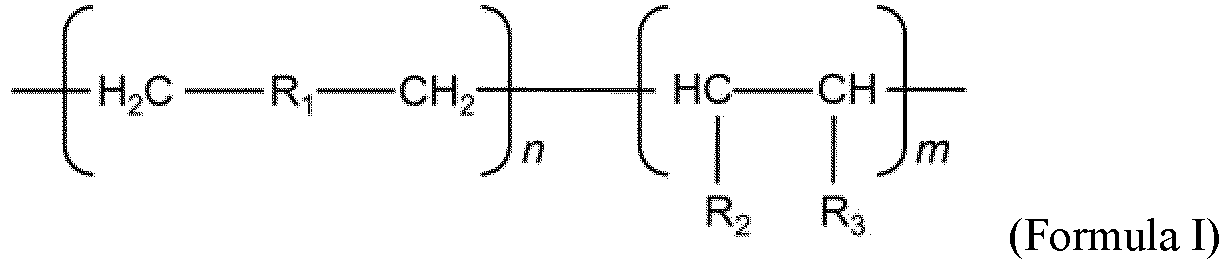
- a positive electrode material for lithium-ion batteries comprises lithium carbonate and a polymer additive as shown in Formula I or II: where R 1 , R 2 , R 3 , R 4 , and R 5 are independently selected from one or more of a hydrogen atom, a halogen atom, a carboxyl group, a hydroxyl group, a cyano group, an isothiocyanato group, an ester group, an amide group, an amino group, a substituted or unsubstituted alkyl group, a substituted or unsubstituted alkenyl group, and a substituted or unsubstituted aryl group; n is an integer from 1 to 4210, and m is an integer from 1 to 35710.
- the polymer additive is selected from one or more of NBR, HNBR, SBR, PVP and PAA, preferably one or more of NBR, HNBR and PVP, and more preferably NBR.
- an addition amount of the polymer additive in the positive electrode material for lithium-ion batteries is 0.001 wt% to 0.1 wt%, preferably 0.01 wt%.
- the positive electrode material comprises 0.3 wt% to 1.0 wt% of lithium carbonate.
- the positive electrode material comprises 90 wt% to 99 wt% of a positive electrode active material.
- the positive electrode active material is selected from one or more of lithium nickel cobalt manganese oxide, lithium manganese oxide, lithium cobalt oxide, lithium nickel oxide, lithium nickel cobalt aluminum oxide and lithium iron phosphate.
- the positive electrode material further comprises 0.1 wt% to 10 wt% of a binder.
- the binder is selected from one or more of polyvinylidene fluoride, carboxymethyl cellulose and styrene-butadiene rubber.
- a positive electrode plate for lithium-ion batteries comprises the positive electrode material for lithium-ion batteries as described above.
- lithium carbonate particles have a BET surface area of 20.2 m 2 /g to 23.8 m 2 /g, preferably 23.2 m 2 /g.
- a size of an agglomeration of the lithium carbonate particles is less than 100 ⁇ m.
- the number of agglomerations of the lithium carbonate particles is not more than 2.
- the agglomeration of the lithium carbonate has a density of no more than 0.08 particles/square centimeter.
- An exemplary lithium-ion battery includes a housing and a positive electrode, a negative electrode, a separator and an electrolyte accommodated in the housing.
- the binder is selected from one or more of polyvinylidene fluoride, carboxymethyl cellulose and styrene-butadiene rubber.
- the binder is polyvinylidene fluoride.
- the exemplary positive electrode material may include not less than 0.1 wt% of the binder, not less than 0.5 wt% of the binder, not less than 1 wt% of the binder, not less than 2 wt% of the binder, not less than 3 wt% of the binder, not less than 4 wt% of the binder, not less than 5 wt% of the binder, not less than 6 wt% of the binder, not less than 7 wt% of the binder, not less than 8 wt% of the binder, not less than 9 wt% of the binder, or not less than 10 wt% of the binder.
- An exemplary positive electrode material may include 0.1wt% to 10wt% of the conductive agent. In various cases, an exemplary positive electrode material may include 0.1 wt% to 10 wt% of the conductive agent, 0.5 wt% to 9.5 wt% of the conductive agent, 1 wt% to 9 wt% of the conductive agent, 3 wt% to 7 wt% of the conductive agent, or 4 wt% to 6 wt% of the conductive agent.
- an exemplary positive electrode material may include not less than 0.3 wt% lithium carbonate, not less than 0.4 wt% lithium carbonate, not less than 0.5 wt% lithium carbonate, not less than 0.6 wt% lithium carbonate, not less than 0.7 wt% lithium carbonate, not less than 0.8 wt% lithium carbonate, not less than 0.9 wt% lithium carbonate, or not less than 1.0 wt% lithium carbonate.
- the additive of Formula II may be selected from the following polymers: polyvinyl pyrrolidone (PVP) polyacrylic acid (PAA) where m is an integer from 1 to 35710.
- PVP polyvinyl pyrrolidone
- PAA polyacrylic acid
- An exemplary lithium carbonate suspension may include 0.1 wt% to 10 wt%, preferably 1 wt%, of the polymer additive shown in Formula I or II.
- an exemplary positive electrode material may include 0.1 wt% to 10 wt% of the polymer additive shown in Formula I or II, 0.3 wt% to 8 wt% of the polymer additive shown in Formula I or II, 0.5 wt% to 6 wt% of the polymer additive shown in Formula I or II, 0.7 wt% to 4 wt% of the polymer additive shown in Formula I or II, 0.9 wt% to 2 wt% of the polymer additive shown in Formula I or II, or 1 wt% of the polymer additive shown in Formula I or II.
- an exemplary positive electrode material may include no more than 10 wt% of the polymer additive shown in Formula I or II, no more than 8 wt% of the polymer additive shown in Formula I or II, no more than 6 wt% of the polymer additive shown in Formula I or II, no more than 4 wt% of the polymer additive shown in Formula I or II, no more than 2 wt% of the polymer additive shown in Formula I or II, no more than 1 wt% of the polymer additive shown in Formula I or II, no more than 0.5 wt% of the polymer additive shown in Formula I or II, or no more than 0.1 wt% of the polymer additive shown in Formula I or II.
- an exemplary positive electrode material may include not less than 0.1 wt% of the polymer additive shown in Formula I or II, not less than 0.5 wt% of the polymer additive shown in Formula I or II, not less than 1 wt% of the polymer additive shown in Formula I or II, not less than 2 wt% of the polymer additive shown in Formula I or II, not less than 4 wt% of the polymer additive shown in Formula I or II, not less than 6 wt% of the polymer additive shown in Formula I or II, not less than 8 wt% of the polymer additive shown in Formula I or II, or not less than 10 wt% of the polymer additive shown in Formula I or II.
- the average molecular weight of the polymer additive is 10,000 to 1,000,000, preferably 100,000 to 500,000, and more preferably 300,000.
- the stable lithium carbonate suspension is dried to obtain lithium carbonate particles, and the BET surface area of the lithium carbonate particles is 20.2 m 2 /g to 23.8 m 2 /g, preferably 23.2 m 2 /g.
- An exemplary first dispersion medium and an exemplary second dispersion medium may each be selected from one or more of methanol, ethanol, propanol or N-methyl-2-pyrrolidone.
- An exemplary grinding medium may be selected from one or more of aluminum oxide particles, zirconium oxide particles or zirconium silicate particles.
- the present invention further provides a method for preparing a positive electrode material for lithium-ion batteries, including the following steps: adding the stable lithium carbonate suspension described in the present invention to a positive electrode slurry containing a positive electrode active material, a binder, and a conductive agent.
- the present invention further provides a positive electrode material for lithium-ion batteries.
- the positive electrode material contains the polymer additive as shown in Formula I or II.
- the positive electrode material may be prepared by the preparation method as described above.
- An exemplary positive electrode material may include 0.001 wt% to 0.1 wt%, preferably 0.01 wt%, of the polymer additive shown in Formula I or II.
- an exemplary positive electrode material may include 0.001 wt% to 0.1 wt% of the polymer additive shown in Formula I or II, 0.003 wt% to 0.08 wt% of the polymer additive shown in Formula I or II, 0.005 wt% to 0.06 wt% of the polymer additive shown in Formula I or II, 0.007 wt% to 0.04 wt% of the polymer additive shown in Formula I or II, 0.009 wt% to 0.02 wt% of the polymer additive shown in Formula I or II, or 0.01 wt% of the polymer additive shown in Formula I or II.
- an exemplary positive electrode material may include no more than 0.1 wt% of the polymer additive shown in Formula I or II, no more than 0.08 wt% of the polymer additive shown in Formula I or II, no more than 0.06 wt% of the polymer additive shown in Formula I or II, no more than 0.04 wt% of the polymer additive shown in Formula I or II, no more than 0.02 wt% of the polymer additive shown in Formula I or II, no more than 0.01 wt% of the polymer additive shown in Formula I or II, no more than 0.009 wt% of the polymer additive shown in Formula I or II, no more than 0.007 wt% of the polymer additive shown in Formula I or II, no more than 0.005 wt% of the polymer additive shown in Formula I or II, no more than 0.003 wt% of the polymer additive shown in Formula I or II, or no more than 0.001 wt% of the polymer additive shown in Formula I or II.
- the exemplary positive electrode material may include not less than 0.001 wt% of the polymer additive shown in Formula I or II, not less than 0.003 wt% of the polymer additive shown in Formula I or II, not less than 0.005 wt% of the polymer additive shown in Formula I or II, not less than 0.007 wt% of the polymer additive shown in Formula I or II, not less than 0.009 wt% of the polymer additive shown in Formula I or II, not less than 0.01 wt% of the polymer additive shown in Formula I or II, not less than 0.02 wt% of the polymer additive shown in Formula I or II, not less than 0.04 wt% of the polymer additive shown in Formula I or II, not less than 0.06 wt% of the polymer additive shown in Formula I or II, not less than 0.08 wt% of the polymer additive shown in Formula I or II, or not less than 0.1 wt% of the polymer additive shown in Formula I or II.
- An exemplary positive electrode may be prepared by coating a positive electrode slurry including a positive electrode material (which may include a positive electrode active material, a binder, a conductive agent, and lithium carbonate) onto a positive electrode current collector and drying the slurry.
- the positive electrode material may be further compacted onto the current collector by using a pressing method known to a person of ordinary skill in the art.
- An exemplary positive electrode slurry may be prepared by combining positive electrode material components (a positive electrode active material, a binder and a conductive agent), mixing uniformly by adding a suitable solvent (e.g., N-methylpyrrolidone), and further adding the stable lithium carbonate suspension of the present invention.
- a suitable solvent e.g., N-methylpyrrolidone
- An exemplary negative electrode may generally include a negative electrode material and a negative electrode current collector.
- An exemplary negative electrode material may include a negative electrode active material, a binder, and a conductive agent.
- the negative electrode material is formed on the surface of the negative electrode current collector.
- the negative electrode material may be formed only on one side of the negative electrode current collector, or may be formed on front and back sides of the negative electrode current collector.
- the negative electrode material may have a thickness of 10 ⁇ m to 200 ⁇ m, for example.
- the negative electrode active material may include carbon, such as natural or artificial graphite.
- an exemplary negative electrode active material may be a carbon composite material, such as a silicon-carbon composite material (Si/C).
- An exemplary negative electrode current collector is copper foil.
- An exemplary negative electrode material may include 90 wt% to 99 wt% of the negative electrode active material.
- an exemplary negative electrode material may include 90 wt% to 99 wt% of the negative electrode active material, 91 wt% to 98 wt% of the negative electrode active material, 92 wt% to 97 wt% of the negative electrode active material, 93 wt% to 96 wt% of the negative electrode active material, or 94 wt% to 95 wt% of the negative electrode active material.
- an exemplary negative electrode material may include no more than 99 wt% of the negative electrode active material, no more than 98 wt% of the negative electrode active material, no more than 97 wt% of the negative electrode active material, no more than 96 wt% of the negative electrode active material, no more than 95 wt% of the negative electrode active material, no more than 94 wt% of the negative electrode active material, no more than 93 wt% of the negative electrode active material, no more than 92 wt% of the negative electrode active material, no more than 91 wt% of the negative electrode active material, or no more than 90 wt% of the negative electrode active material.
- an exemplary negative electrode material may include not less than 90 wt% of the negative electrode active material, not less than 91 wt% of the negative electrode active material, not less than 92 wt% of the negative electrode active material, not less than 93 wt% of the negative electrode active material, not less than 94 wt% of the negative electrode active material, not less than 95 wt% of the negative electrode active material, not less than 96 wt% of the negative electrode active material, not less than 97 wt% of the negative electrode active material, not less than 98 wt% of the negative electrode active material, or not less than 99 wt% of the negative electrode active material.
- An exemplary negative electrode material may also be substantially composed of only the negative electrode active material.
- An exemplary negative electrode may be prepared by coating a negative electrode slurry including negative electrode material components (which may include a negative electrode active material, a binder, and a conductive agent) onto a negative electrode current collector and drying the slurry.
- the negative electrode material may be further compacted onto the current collector by using a pressing method known to a person of ordinary skill in the art.
- An exemplary negative electrode slurry may be prepared by combining negative electrode material components (a negative electrode active material, a binder, and a conductive agent) and adding a suitable solvent (e.g., deionized water).
- a binder and/or a conductive agent may be optionally included in the negative electrode material and may be the same (or substantially the same) as those described for the positive electrode material, and will be not described again in the present invention.
- the lithium-ion battery described in the present invention has no particular limitation on the separator.
- An exemplary separator is a separator made of a polymer such as polypropylene (PP) or polyethylene (PE).
- the lithium-ion battery described in the present invention has no particular limitation on the electrolyte.
- it is a non-aqueous electrolyte
- an exemplary non-aqueous electrolyte includes one or more lithium (Li) salts and a non-aqueous solvent.
- it is an organic electrolyte, and the organic electrolyte is prepared by dissolving a lithium salt in an organic solvent.
- the lithium salt may be any lithium salt commonly used in the art.
- An exemplary lithium salt is LiPF 6 , LiBF 4 , LiSbF 6 , LiAsF 6 , LiClO 4 , LiCF 3 SO 3 , Li(CF 3 SO 2 ) 2 N, LiC 4 F 9 SO 3 , LiAlO 2 , LiAlCl 4 , LiCl, LiI, LiN(C x F 2x +1SO 2 )(C y F 2y +1SO 2 ) (where x and y are natural numbers) or any mixture thereof.
- the organic solvent may be any suitable material that can be used as an organic solvent.
- An exemplary organic solvent is ethylene carbonate, ethyl vinyl carbonate, propylene carbonate, ethylene carbonate, fluoroethylene carbonate, butylene carbonate, dimethyl carbonate, diethyl carbonate, ethyl methyl carbonate, methyl propyl carbonate, ethyl propyl carbonate, methyl isopropyl carbonate, dipropyl carbonate, dibutyl carbonate, benzonitrile, acetonitrile, tetrahydrofuran, 2-methyltetrahydrofuran, ⁇ -butyrolactone, dioxolane, 4-methyldioxolane, N,N-dimethylformamide, dimethylacetamide, dimethyl sulfoxide, dioxane, 1,2-dimethoxyethane, sulfolane, dichloroethane, chlorobenzene, nitrobenzene, diethylene glycol, dimethyl ether, or a combination thereof.
- organic electrolytes further include organic solid electrolytes, inorganic solid electrolytes, etc.
- organic solid electrolytes include polyethylene derivatives, polyethylene oxide derivatives, polypropylene oxide derivatives, phosphate polymers, polyester sulfides, polyvinyl alcohol, PVDF, and polymers including ion dissociation groups.
- inorganic solid electrolytes are nitride solid electrolytes, oxynitride solid electrolytes, and sulfide solid electrolytes.
- Examples of the inorganic solid electrolytes are Li 3 N, LiI, Li 5 NI 2 , Li 3 N-LiI-LiOH, Li 2 SiS 3 , Li 4 SiO 4 , Li 4 SiO 4 -LiI-LiOH, and Li 3 PO 4 -Li 2 S-SiS 2 .
- Exemplary lithium-ion batteries may be prepared by using methods known to a person of ordinary skill in the art.
- Step 1 Prepare a lithium carbonate suspension by two-stage sand milling: a first stage (first process) includes mixing lithium carbonate powder, a grinding medium, and a first dispersion medium in a first sand mill, and then grinding to obtain a first suspension; and a second stage (second process) includes mixing the first suspension, a grinding medium, and a second dispersion medium in a second sand mill, and then grinding to obtain a lithium carbonate suspension.
- first stage first process
- first dispersion medium in a first sand mill, and then grinding to obtain a first suspension
- second stage includes mixing the first suspension, a grinding medium, and a second dispersion medium in a second sand mill, and then grinding to obtain a lithium carbonate suspension.
- Step 2 Add the polymer additive as shown in Formula I or II to the lithium carbonate suspension, and stir and disperse to obtain a stable lithium carbonate suspension.
- the stable lithium carbonate suspension prepared by Example 1 is dried to obtain lithium carbonate particles, and the BET surface area of lithium carbonate particles is further determined by using a nitrogen low-temperature adsorption method: heating and vacuuming a sample for degassing to remove impurity gases adsorbed on the surface; weighing, placing in liquid nitrogen, and measuring nitrogen adsorption amounts of the sample at different preset pressure points at liquid nitrogen temperature to obtain an adsorption isotherm; and processing data by computer, and calculating the BET surface area according to the adsorption isotherm.
- a nitrogen low-temperature adsorption method heating and vacuuming a sample for degassing to remove impurity gases adsorbed on the surface; weighing, placing in liquid nitrogen, and measuring nitrogen adsorption amounts of the sample at different preset pressure points at liquid nitrogen temperature to obtain an adsorption isotherm; and processing data by computer, and calculating the BET surface area according to the adsorption isotherm.
- the BET surface area of lithium carbonate particles was tested, and the results are shown in Table 2.
- Table 2 Effect of the average molecular weight of the additive on the BET surface area of lithium carbonate particles Average molecular weight BET surface area (m 2 /g) 10,000 20.8 100,000 23.8 300,000 23.2 500,000 21.2 700,000 18.9 1,000,000 14.2
- Lithium-ion battery used for overcharge test the positive electrode active material is LiNi 0.8 Co 0.1 Mn 0.1 O 2 , the negative electrode active material is a silicon-carbon composite material, and the electrolyte is an organic electrolyte.
- the stable lithium carbonate suspension prepared by Example 1 was added to the slurry of the positive electrode material, and the effects of the addition amount of an additive, the type of an additive, and the average molecular weight of an additive on battery overcharge were separately investigated.
- the dispersion effect of lithium carbonate in a positive electrode plate was tested by using a charge coupled device (CCD). As shown in FIG. 2 , it can be seen that the dispersion effect of lithium carbonate is better in the electrode plate with the addition amounts of 0.1 wt%, 1 wt% and 10 wt%.
- the CCD was used to test the dispersion effect of lithium carbonate in the positive electrode plate. As shown in FIG. 4 , it can be seen that the dispersion effect of lithium carbonate in the electrode plate having the average molecular weights of 100000, 300000 and 500000 is better.
- FIGS. 5 to 7 correspond to enlarged views of local areas of electrode plates of Examples Nos. 5, 6, and 8 in sequence, wherein the number of white spots in a 25 cm 2 electrode plate area is >2 pcs (2 pieces), 1 to 2 pcs, and 0 pcs, in sequence, and the sizes of the white spots are ⁇ 100 ⁇ m, 0 to 100 ⁇ m, and 0 ⁇ m (diameter) in sequence.
- the white spots are agglomerations of lithium carbonate.
- FIG. 5 it can be clearly seen that there is an agglomeration of lithium carbonate in the middle part of the right figure, and the agglomeration may even cover the positive electrode material.
- FIG. 5 it can be clearly seen that there is an agglomeration of lithium carbonate in the middle part of the right figure, and the agglomeration may even cover the positive electrode material.
- FIG. 5 it can be clearly seen that there is an agglomeration of lithium carbonate in the middle part of the right figure,
- the electrode plates of Nos. 5, 6, and 8 are a bad electrode plate, an acceptable electrode plate, and a preferable electrode plate in sequence.
- the CCD was used to test the dispersion effect of lithium carbonate in the positive electrode plate. As shown in FIG. 9 , it can be seen that the dispersion effect of lithium carbonate in the electrode plates with five additives is good.
Landscapes
- Chemical & Material Sciences (AREA)
- Chemical Kinetics & Catalysis (AREA)
- Electrochemistry (AREA)
- General Chemical & Material Sciences (AREA)
- Engineering & Computer Science (AREA)
- Materials Engineering (AREA)
- Inorganic Chemistry (AREA)
- Manufacturing & Machinery (AREA)
- Crystallography & Structural Chemistry (AREA)
- Battery Electrode And Active Subsutance (AREA)
- Secondary Cells (AREA)
- Compositions Of Macromolecular Compounds (AREA)
Abstract
Description
- The present invention relates to the technical field of lithium-ion batteries, and in particular to a positive electrode material for lithium-ion batteries.
- Generally, a lithium-ion battery includes an electrode assembly, a housing for accommodating the electrode assembly, and an electrolyte injected into the housing to allow lithium-ions to migrate. The electrode assembly includes a positive electrode coated with a positive electrode material, a negative electrode coated with a negative electrode material, and a separator disposed between the positive electrode and the negative electrode to prevent short circuit and allow lithium-ions to migrate. Among them, the positive electrode material of the lithium-ion battery is a key factor in determining the electrochemical performance, safety performance, energy density, and price cost of the battery. At present, there are many kinds of positive electrode materials for lithium-ion batteries, such as cobalt-based positive electrode materials, nickel-based positive electrode materials, manganese-based positive electrode materials, lithium iron phosphate positive electrode materials, etc.
- Overcharge of a lithium-ion battery will not only cause irreversible damage to the battery, but also may cause serious safety problems such as combustion and explosion. In this regard, a current interrupt device (CID) is usually equipped in the battery. When the battery is overcharged, the pressure inside the battery will increase. When the pressure increases to a certain extent, the CID will be turned on to interrupt the current, preventing the battery from being further overcharged, and thereby avoiding more serious safety problems.
- In order to make the CID more sensitive to monitor the charging state of the lithium-ion battery and improve the overcharge resistance of the lithium-ion battery, lithium carbonate is usually added to the positive electrode material in the prior art. When the battery is overcharged, lithium carbonate will decompose and produce carbon dioxide gas to increase the pressure inside the battery to achieve the effect of turning on the CID. The dispersion of lithium carbonate in the positive electrode material has a certain influence on the turning-on of CID. The better the dispersion of lithium carbonate, the faster the CID will be turned on, which can more effectively avoid the safety problems caused by overcharge of the lithium-ion battery.
- An object of the present invention is to provide a positive electrode material for lithium-ion batteries. The positive electrode material for lithium-ion batteries comprises a polymer additive as shown in Formula I or II. By adding the polymer additive as shown in Formula I or II, lithium carbonate in the positive electrode material is better dispersed, the CID is turned on faster, and the lithium-ion batteries thus have better protection against overcharge.
- According to an aspect of the present invention, a positive electrode material for lithium-ion batteries is provided. The positive electrode material comprises lithium carbonate and a polymer additive as shown in Formula I or II:


- In an embodiment, the polymer additive has an average molecular weight of 10,000 to 1,000,000, preferably 100,000 to 500,000, and more preferably 300,000.
- In an embodiment, the polymer additive is selected from one or more of NBR, HNBR, SBR, PVP and PAA, preferably one or more of NBR, HNBR and PVP, and more preferably NBR.
- In an embodiment, an addition amount of the polymer additive in the positive electrode material for lithium-ion batteries is 0.001 wt% to 0.1 wt%, preferably 0.01 wt%.
- In an embodiment, the positive electrode material comprises 0.3 wt% to 1.0 wt% of lithium carbonate.
- In an embodiment, the positive electrode material comprises 90 wt% to 99 wt% of a positive electrode active material.
- In an embodiment, the positive electrode active material is selected from one or more of lithium nickel cobalt manganese oxide, lithium manganese oxide, lithium cobalt oxide, lithium nickel oxide, lithium nickel cobalt aluminum oxide and lithium iron phosphate.
- In an embodiment, the positive electrode material further comprises 0.1 wt% to 10 wt% of a binder.
- In an embodiment, the binder is selected from one or more of polyvinylidene fluoride, carboxymethyl cellulose and styrene-butadiene rubber.
- In an embodiment, the positive electrode material further comprises 0.1 wt% to 10 wt% of a conductive agent.
- In an embodiment, the conductive agent is selected from one or more of conductive carbon black, superconducting carbon black, carbon nanotubes, carbon fibers and graphite conductive agents.
- According to another aspect of the present invention, a positive electrode plate for lithium-ion batteries is provided. The positive electrode plate comprises the positive electrode material for lithium-ion batteries as described above.
- In an embodiment, lithium carbonate particles have a BET surface area of 20.2 m2/g to 23.8 m2/g, preferably 23.2 m2/g.
- In an embodiment, a size of an agglomeration of the lithium carbonate particles is less than 100 µm.
- In an embodiment, the number of agglomerations of the lithium carbonate particles is not more than 2.
- In an embodiment, the agglomeration of the lithium carbonate has a density of no more than 0.08 particles/square centimeter.
- In an embodiment, there is no agglomeration of lithium carbonate particles in the positive electrode plate for lithium-ion batteries.
- According to still another aspect of the present invention, a lithium-ion battery is provided. The lithium-ion battery comprises the positive electrode plate for lithium-ion batteries as described above.
-
-
FIG. 1 shows overcharge test results of No. 1, No.3 and No.5 batteries; -
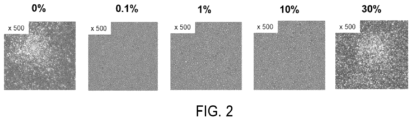
FIG. 2 shows CCD test results of No. 1 to No.5 positive electrode plates; -
FIG. 3 shows overcharge test results of No. 6, No.8 and No. 10 batteries; -
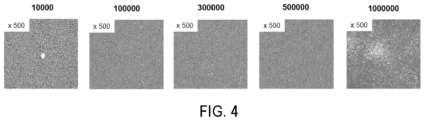
FIG. 4 shows CCD test results of No. 6 to No. 10 positive electrode plates; -
FIG. 5 shows an enlarged view of a local area of the No.5 positive electrode plate; -
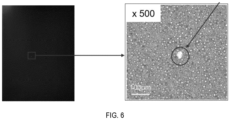
FIG. 6 shows an enlarged view of a local area of the No.6 positive electrode plate; -
FIG. 7 shows an enlarged view of a local area of the No.8 positive electrode plate; -
FIG. 8 shows overcharge test results of No. 1, No. 11 and No. 14 batteries; and -
FIG. 9 shows CCD test results of No. 1 1 to No. 15 positive electrode plates; - Specific embodiments of the present invention are now described in detail with reference to the drawings. The embodiments described here are merely preferred embodiments according to the present invention. A person skilled in the art could conceive of other ways of implementing the present invention on the basis of the preferred embodiments, and such other ways shall likewise fall within the scope of the present invention. In some embodiments, in order to avoid confusion with the present invention, some technical features that are well known in the art are not described.
- Unless otherwise defined, all technical and scientific terms used in the present invention have the same meanings as commonly understood by a person of ordinary skill in the art. In case of conflict, the present invention (including definitions) shall prevail. Only exemplary methods and materials will be described below. Methods and materials similar or equivalent to those described in the present invention can all be used in the experiments or tests of the present invention. The materials, methods, and examples disclosed in the present invention are illustrative only and not intended to be limiting.
- Regarding the description of numerical ranges in the present invention, it is expressly anticipated that these ranges include every intermediate number with the same degree of precision. For example, for the range of 6 to 9, the
numbers - An exemplary lithium-ion battery includes a housing and a positive electrode, a negative electrode, a separator and an electrolyte accommodated in the housing.
- An exemplary positive electrode may include a positive electrode material and a positive electrode current collector. An exemplary positive electrode material may include a positive electrode active material, a binder, a conductive agent and lithium carbonate. The positive electrode material is formed on the surface of the positive electrode current collector. The positive electrode material may be formed only on one side of the positive electrode current collector or on front and back sides of the positive electrode current collector. The positive electrode material may have a thickness of 10 µm to 200 µm, for example. An exemplary positive electrode current collector is aluminum foil.
- There is no particular limitation on the positive electrode active material. An exemplary positive electrode active material is selected from one or more of lithium nickel cobalt manganese oxide, lithium manganese oxide, lithium cobalt oxide, lithium nickel oxide, lithium nickel cobalt aluminum oxide and lithium iron phosphate. Preferably, the positive electrode active material is LiNi0.8Co0.1Mn0.1O2.
- An exemplary positive electrode material may include 90 wt% to 99 wt% of the positive electrode active material. In various cases, an exemplary positive electrode material may include 90 wt% to 99 wt% of the positive electrode active materials, 91 wt% to 98 wt% of the positive electrode active material, 92 wt% to 97 wt% of the positive electrode active material, 93 wt% to 96 wt% of the positive electrode active material, or 94 wt% to 95 wt% of the positive electrode active material. In various cases, an exemplary positive electrode material may include no more than 99 wt% of the positive electrode active material, no more than 98 wt% of the positive electrode active material, no more than 97 wt% of the positive electrode active material, no more than 96 wt% of the positive electrode active material, no more than 95 wt% of the positive electrode active material, no more than 94 wt% of the positive electrode active material, no more than 93 wt% of the positive electrode active material, no more than 92 wt% of the positive electrode active material, no more than 91 wt% of the positive electrode active material, or no more than 90 wt% of the positive electrode active material. In various cases, an exemplary positive electrode material may include not less than 90 wt% of the positive electrode active material, not less than 91 wt% of the positive electrode active material, not less than 92 wt% of the positive electrode active material, not less than 93 wt% of the positive electrode active material, not less than 94 wt% of the positive electrode active material, not less than 95 wt% of the positive electrode active material, not less than 96 wt% of the positive electrode active material, not less than 97 wt% of the positive electrode active material, not less than 98 wt% of the positive electrode active material, or not less than 99 wt% of the positive electrode active material. The exemplary positive electrode material may also be substantially composed only of the positive electrode active material.
- An exemplary binder is selected from one or more of polyvinylidene fluoride, carboxymethyl cellulose, styrene-butadiene rubber, polybenzimidazole, polyimide, polyvinyl acetate, polyacrylonitrile, polyvinyl alcohol, starch, hydroxypropyl methylcellulose, regenerated cellulose, polyvinyl pyrrolidone, polyethylene, polypropylene, polystyrene, polymethyl methacrylate, polyaniline, acrylonitrile-butadiene-styrene copolymer, phenolic resin, epoxy resin, polyethylene terephthalate, polytetrafluoroethylene, polyphenylene sulfide, polyamide-imide, polyetherimide, polyethylene sulfone, polyacetal, polyphenylene ether, polybutylene terephthalate, ethylene-propylene-diene terpolymer, sulfonated ethylene-propylene-diene terpolymer, fluorocarbon rubber and various copolymers. Preferably, the binder is selected from one or more of polyvinylidene fluoride, carboxymethyl cellulose and styrene-butadiene rubber. As a preferred, non-limiting example, the binder is polyvinylidene fluoride.
- An exemplary positive electrode material may include 0.1wt% to 10wt% of the binder. In various cases, an exemplary positive electrode material may include 0.1 wt% to 10 wt% of the binder, 0.5 wt% to 9.5 wt% of the binder, 1 wt% to 9 wt% of the binder, 3 wt% to 7 wt% of the binder, or 4 wt% to 6 wt% of the binder. In various cases, an exemplary positive electrode material may include no more than 10 wt% of the binder, no more than 9 wt% of the binder, no more than 8 wt% of the binder, no more than 7 wt% of the binder, no more than 6 wt% of the binder, no more than 5 wt% of the binder, no more than 4 wt% of the binder, no more than 3 wt% of the binder, no more than 2 wt% of the binder, no more than 1 wt% of the binder, no more than 0.5 wt% of the binder, or no more than 0.1 wt% of the binder. In various cases, the exemplary positive electrode material may include not less than 0.1 wt% of the binder, not less than 0.5 wt% of the binder, not less than 1 wt% of the binder, not less than 2 wt% of the binder, not less than 3 wt% of the binder, not less than 4 wt% of the binder, not less than 5 wt% of the binder, not less than 6 wt% of the binder, not less than 7 wt% of the binder, not less than 8 wt% of the binder, not less than 9 wt% of the binder, or not less than 10 wt% of the binder.
- The exemplary conductive agent is selected from one or more of conductive carbon black, superconducting carbon black, carbon nanotube, carbon fibers, and graphite-based conductive agents. Preferably, the conductive agent is selected from conductive carbon black or superconducting carbon black. More preferably, the conductive agent is superconducting carbon black.
- An exemplary positive electrode material may include 0.1wt% to 10wt% of the conductive agent. In various cases, an exemplary positive electrode material may include 0.1 wt% to 10 wt% of the conductive agent, 0.5 wt% to 9.5 wt% of the conductive agent, 1 wt% to 9 wt% of the conductive agent, 3 wt% to 7 wt% of the conductive agent, or 4 wt% to 6 wt% of the conductive agent. In various cases, an exemplary positive electrode material may include no more than 10 wt% of the conductive agent, no more than 9 wt% of the conductive agent, no more than 8 wt% of the conductive agent, no more than 7 wt% of the conductive agent, no more than 6 wt% of the conductive agent, no more than 5 wt% of the conductive agent, no more than 4 wt% of the conductive agent, no more than 3 wt% of the conductive agent, no more than 2 wt% of the conductive agent, no more than 1 wt% of the conductive agent, no more than 0.5 wt% of the conductive agent, or no more than 0.1 wt% of the conductive agent. In various cases, an exemplary positive electrode material may include not less than 0.1 wt% of the conductive agent, not less than 0.5 wt% of the conductive agent, not less than 1 wt% of the conductive agent, not less than 2 wt% of the conductive agent, not less than 3 wt% of the conductive agent, not less than 4 wt% of the conductive agent, not less than 5 wt% of the conductive agent, not less than 6 wt% of the conductive agent, not less than 7 wt% of the conductive agent, not less than 8 wt% of the conductive agent, not less than 9 wt% of the conductive agent, or not less than 10 wt% of the conductive agent.
- In order to prevent the battery from being overcharged, an appropriate amount of lithium carbonate is added to the positive electrode material. In order to achieve a better dispersion effect, lithium carbonate is added in the form of a lithium carbonate suspension, and the addition amount of lithium carbonate suspension is based on the ability to turn on the CID when the battery is overcharged.
- An exemplary positive electrode material may include 0.3 wt% to 1.0 wt% of lithium carbonate. In various cases, an exemplary cathode material may include 0.3 wt% to 1.0 wt% lithium carbonate, 0.4 wt% to 0.9 wt% lithium carbonate, 0.5 wt% to 0.8 wt% lithium carbonate, or 0.6 wt% to 0.7 wt% lithium carbonate. In various cases, an exemplary cathode material may include no more than 1.0 wt% lithium carbonate, no more than 0.9 wt% lithium carbonate, no more than 0.8 wt% lithium carbonate, no more than 0.7 wt% lithium carbonate, no more than 0.6 wt% lithium carbonate, no more than 0.5 wt% lithium carbonate, no more than 0.4 wt% lithium carbonate, or no more than 0.3 wt% lithium carbonate. In various cases, an exemplary positive electrode material may include not less than 0.3 wt% lithium carbonate, not less than 0.4 wt% lithium carbonate, not less than 0.5 wt% lithium carbonate, not less than 0.6 wt% lithium carbonate, not less than 0.7 wt% lithium carbonate, not less than 0.8 wt% lithium carbonate, not less than 0.9 wt% lithium carbonate, or not less than 1.0 wt% lithium carbonate.
- As a preferred embodiment, a method for preparing the lithium carbonate suspension includes the following steps:
-
step 1, mixing lithium carbonate powder, a grinding medium, and a dispersion medium, and then grinding and filtering to obtain a lithium carbonate suspension; and -
step 2, adding a polymer additive to the lithium carbonate suspension, stirring and dispersing to obtain a stable lithium carbonate suspension. - The lithium carbonate suspension obtained by the present invention shows better stability after the polymer additive is added. That is, lithium carbonate is better dispersed in the suspension and maintained for a longer time.
- As a preferred embodiment, the polymer additive is as shown in Formula I or II:


- As a preferred embodiment, the additive of Formula I may be selected from the following polymers: nitrile rubber (NBR)


- As a preferred embodiment, the additive of Formula II may be selected from the following polymers: polyvinyl pyrrolidone (PVP)


- An exemplary lithium carbonate suspension may include 0.1 wt% to 10 wt%, preferably 1 wt%, of the polymer additive shown in Formula I or II. In various cases, an exemplary positive electrode material may include 0.1 wt% to 10 wt% of the polymer additive shown in Formula I or II, 0.3 wt% to 8 wt% of the polymer additive shown in Formula I or II, 0.5 wt% to 6 wt% of the polymer additive shown in Formula I or II, 0.7 wt% to 4 wt% of the polymer additive shown in Formula I or II, 0.9 wt% to 2 wt% of the polymer additive shown in Formula I or II, or 1 wt% of the polymer additive shown in Formula I or II. In various cases, an exemplary positive electrode material may include no more than 10 wt% of the polymer additive shown in Formula I or II, no more than 8 wt% of the polymer additive shown in Formula I or II, no more than 6 wt% of the polymer additive shown in Formula I or II, no more than 4 wt% of the polymer additive shown in Formula I or II, no more than 2 wt% of the polymer additive shown in Formula I or II, no more than 1 wt% of the polymer additive shown in Formula I or II, no more than 0.5 wt% of the polymer additive shown in Formula I or II, or no more than 0.1 wt% of the polymer additive shown in Formula I or II. In various cases, an exemplary positive electrode material may include not less than 0.1 wt% of the polymer additive shown in Formula I or II, not less than 0.5 wt% of the polymer additive shown in Formula I or II, not less than 1 wt% of the polymer additive shown in Formula I or II, not less than 2 wt% of the polymer additive shown in Formula I or II, not less than 4 wt% of the polymer additive shown in Formula I or II, not less than 6 wt% of the polymer additive shown in Formula I or II, not less than 8 wt% of the polymer additive shown in Formula I or II, or not less than 10 wt% of the polymer additive shown in Formula I or II.
- In order to achieve a better dispersion effect of lithium carbonate in the suspension, as a further preferred embodiment, the average molecular weight of the polymer additive is 10,000 to 1,000,000, preferably 100,000 to 500,000, and more preferably 300,000.
- As a further preferred embodiment, the stable lithium carbonate suspension is dried to obtain lithium carbonate particles, and the BET surface area of the lithium carbonate particles is 20.2 m2/g to 23.8 m2/g, preferably 23.2 m2/g.
- As a further preferred embodiment,
step 1 includes a first process and a second process, wherein the first process includes mixing lithium carbonate powder, a grinding medium, and a first dispersion medium, and then grinding to obtain a first suspension; and the second process includes mixing the first suspension, a grinding medium, and a second dispersion medium, and then grinding to obtain a lithium carbonate suspension. - An exemplary first dispersion medium and an exemplary second dispersion medium may each be selected from one or more of methanol, ethanol, propanol or N-methyl-2-pyrrolidone. An exemplary grinding medium may be selected from one or more of aluminum oxide particles, zirconium oxide particles or zirconium silicate particles.
- The present invention further provides a stable lithium carbonate suspension. The stable lithium carbonate suspension contains the polymer additive as shown in Formula I or II. The stable lithium carbonate suspension may be prepared by the preparation method as described above.
- The present invention further provides a method for preparing a positive electrode material for lithium-ion batteries, including the following steps: adding the stable lithium carbonate suspension described in the present invention to a positive electrode slurry containing a positive electrode active material, a binder, and a conductive agent.
- The present invention further provides a positive electrode material for lithium-ion batteries. The positive electrode material contains the polymer additive as shown in Formula I or II. The positive electrode material may be prepared by the preparation method as described above.
- An exemplary positive electrode material may include 0.001 wt% to 0.1 wt%, preferably 0.01 wt%, of the polymer additive shown in Formula I or II. In various cases, an exemplary positive electrode material may include 0.001 wt% to 0.1 wt% of the polymer additive shown in Formula I or II, 0.003 wt% to 0.08 wt% of the polymer additive shown in Formula I or II, 0.005 wt% to 0.06 wt% of the polymer additive shown in Formula I or II, 0.007 wt% to 0.04 wt% of the polymer additive shown in Formula I or II, 0.009 wt% to 0.02 wt% of the polymer additive shown in Formula I or II, or 0.01 wt% of the polymer additive shown in Formula I or II. In various cases, an exemplary positive electrode material may include no more than 0.1 wt% of the polymer additive shown in Formula I or II, no more than 0.08 wt% of the polymer additive shown in Formula I or II, no more than 0.06 wt% of the polymer additive shown in Formula I or II, no more than 0.04 wt% of the polymer additive shown in Formula I or II, no more than 0.02 wt% of the polymer additive shown in Formula I or II, no more than 0.01 wt% of the polymer additive shown in Formula I or II, no more than 0.009 wt% of the polymer additive shown in Formula I or II, no more than 0.007 wt% of the polymer additive shown in Formula I or II, no more than 0.005 wt% of the polymer additive shown in Formula I or II, no more than 0.003 wt% of the polymer additive shown in Formula I or II, or no more than 0.001 wt% of the polymer additive shown in Formula I or II. In various cases, the exemplary positive electrode material may include not less than 0.001 wt% of the polymer additive shown in Formula I or II, not less than 0.003 wt% of the polymer additive shown in Formula I or II, not less than 0.005 wt% of the polymer additive shown in Formula I or II, not less than 0.007 wt% of the polymer additive shown in Formula I or II, not less than 0.009 wt% of the polymer additive shown in Formula I or II, not less than 0.01 wt% of the polymer additive shown in Formula I or II, not less than 0.02 wt% of the polymer additive shown in Formula I or II, not less than 0.04 wt% of the polymer additive shown in Formula I or II, not less than 0.06 wt% of the polymer additive shown in Formula I or II, not less than 0.08 wt% of the polymer additive shown in Formula I or II, or not less than 0.1 wt% of the polymer additive shown in Formula I or II.
- An exemplary positive electrode may be prepared by coating a positive electrode slurry including a positive electrode material (which may include a positive electrode active material, a binder, a conductive agent, and lithium carbonate) onto a positive electrode current collector and drying the slurry. The positive electrode material may be further compacted onto the current collector by using a pressing method known to a person of ordinary skill in the art. An exemplary positive electrode slurry may be prepared by combining positive electrode material components (a positive electrode active material, a binder and a conductive agent), mixing uniformly by adding a suitable solvent (e.g., N-methylpyrrolidone), and further adding the stable lithium carbonate suspension of the present invention.
- An exemplary negative electrode may generally include a negative electrode material and a negative electrode current collector. An exemplary negative electrode material may include a negative electrode active material, a binder, and a conductive agent. The negative electrode material is formed on the surface of the negative electrode current collector. The negative electrode material may be formed only on one side of the negative electrode current collector, or may be formed on front and back sides of the negative electrode current collector. The negative electrode material may have a thickness of 10 µm to 200 µm, for example. There is no particular limitation on the negative electrode active material, and it may include carbon, such as natural or artificial graphite. In various cases, an exemplary negative electrode active material may be a carbon composite material, such as a silicon-carbon composite material (Si/C). An exemplary negative electrode current collector is copper foil.
- An exemplary negative electrode material may include 90 wt% to 99 wt% of the negative electrode active material. In various cases, an exemplary negative electrode material may include 90 wt% to 99 wt% of the negative electrode active material, 91 wt% to 98 wt% of the negative electrode active material, 92 wt% to 97 wt% of the negative electrode active material, 93 wt% to 96 wt% of the negative electrode active material, or 94 wt% to 95 wt% of the negative electrode active material. In various cases, an exemplary negative electrode material may include no more than 99 wt% of the negative electrode active material, no more than 98 wt% of the negative electrode active material, no more than 97 wt% of the negative electrode active material, no more than 96 wt% of the negative electrode active material, no more than 95 wt% of the negative electrode active material, no more than 94 wt% of the negative electrode active material, no more than 93 wt% of the negative electrode active material, no more than 92 wt% of the negative electrode active material, no more than 91 wt% of the negative electrode active material, or no more than 90 wt% of the negative electrode active material. In various cases, an exemplary negative electrode material may include not less than 90 wt% of the negative electrode active material, not less than 91 wt% of the negative electrode active material, not less than 92 wt% of the negative electrode active material, not less than 93 wt% of the negative electrode active material, not less than 94 wt% of the negative electrode active material, not less than 95 wt% of the negative electrode active material, not less than 96 wt% of the negative electrode active material, not less than 97 wt% of the negative electrode active material, not less than 98 wt% of the negative electrode active material, or not less than 99 wt% of the negative electrode active material. An exemplary negative electrode material may also be substantially composed of only the negative electrode active material.
- An exemplary negative electrode may be prepared by coating a negative electrode slurry including negative electrode material components (which may include a negative electrode active material, a binder, and a conductive agent) onto a negative electrode current collector and drying the slurry. The negative electrode material may be further compacted onto the current collector by using a pressing method known to a person of ordinary skill in the art. An exemplary negative electrode slurry may be prepared by combining negative electrode material components (a negative electrode active material, a binder, and a conductive agent) and adding a suitable solvent (e.g., deionized water).
- In addition, a binder and/or a conductive agent may be optionally included in the negative electrode material and may be the same (or substantially the same) as those described for the positive electrode material, and will be not described again in the present invention.
- The lithium-ion battery described in the present invention has no particular limitation on the separator. An exemplary separator is a separator made of a polymer such as polypropylene (PP) or polyethylene (PE).
- The lithium-ion battery described in the present invention has no particular limitation on the electrolyte. For example, it is a non-aqueous electrolyte, and an exemplary non-aqueous electrolyte includes one or more lithium (Li) salts and a non-aqueous solvent. For example, it is an organic electrolyte, and the organic electrolyte is prepared by dissolving a lithium salt in an organic solvent. The lithium salt may be any lithium salt commonly used in the art. An exemplary lithium salt is LiPF6, LiBF4, LiSbF6, LiAsF6, LiClO4, LiCF3SO3, Li(CF3SO2)2N, LiC4F9SO3, LiAlO2, LiAlCl4, LiCl, LiI, LiN(CxF2x+1SO2)(CyF2y+1SO2) (where x and y are natural numbers) or any mixture thereof. The organic solvent may be any suitable material that can be used as an organic solvent. An exemplary organic solvent is ethylene carbonate, ethyl vinyl carbonate, propylene carbonate, ethylene carbonate, fluoroethylene carbonate, butylene carbonate, dimethyl carbonate, diethyl carbonate, ethyl methyl carbonate, methyl propyl carbonate, ethyl propyl carbonate, methyl isopropyl carbonate, dipropyl carbonate, dibutyl carbonate, benzonitrile, acetonitrile, tetrahydrofuran, 2-methyltetrahydrofuran, γ-butyrolactone, dioxolane, 4-methyldioxolane, N,N-dimethylformamide, dimethylacetamide, dimethyl sulfoxide, dioxane, 1,2-dimethoxyethane, sulfolane, dichloroethane, chlorobenzene, nitrobenzene, diethylene glycol, dimethyl ether, or a combination thereof.
- In addition to the above-mentioned organic electrolytes, other exemplary electrolytes further include organic solid electrolytes, inorganic solid electrolytes, etc. Examples of the organic solid electrolytes include polyethylene derivatives, polyethylene oxide derivatives, polypropylene oxide derivatives, phosphate polymers, polyester sulfides, polyvinyl alcohol, PVDF, and polymers including ion dissociation groups. Examples of the inorganic solid electrolytes are nitride solid electrolytes, oxynitride solid electrolytes, and sulfide solid electrolytes. Examples of the inorganic solid electrolytes are Li3N, LiI, Li5NI2, Li3N-LiI-LiOH, Li2SiS3, Li4SiO4, Li4SiO4-LiI-LiOH, and Li3PO4-Li2S-SiS2.
- Exemplary lithium-ion batteries may be prepared by using methods known to a person of ordinary skill in the art.
- The following examples describe several implementations of the present invention, which provide a description of the present invention and are not intended to limit the present invention thereto.
- Step 1: Prepare a lithium carbonate suspension by two-stage sand milling: a first stage (first process) includes mixing lithium carbonate powder, a grinding medium, and a first dispersion medium in a first sand mill, and then grinding to obtain a first suspension; and a second stage (second process) includes mixing the first suspension, a grinding medium, and a second dispersion medium in a second sand mill, and then grinding to obtain a lithium carbonate suspension.
- Step 2: Add the polymer additive as shown in Formula I or II to the lithium carbonate suspension, and stir and disperse to obtain a stable lithium carbonate suspension.
- The stable lithium carbonate suspension prepared by Example 1 is dried to obtain lithium carbonate particles, and the BET surface area of lithium carbonate particles is further determined by using a nitrogen low-temperature adsorption method: heating and vacuuming a sample for degassing to remove impurity gases adsorbed on the surface; weighing, placing in liquid nitrogen, and measuring nitrogen adsorption amounts of the sample at different preset pressure points at liquid nitrogen temperature to obtain an adsorption isotherm; and processing data by computer, and calculating the BET surface area according to the adsorption isotherm.
- The effects of the addition amount of additives, the type of additives, and the average molecular weight of additives on the BET surface area of lithium carbonate particles will be separately investigated below.
- By adjusting the addition amount of an additive (the additive is NBR, with an average molecular weight of 300,000), the BET surface area of lithium carbonate particles was tested, and the results are shown in Table 1.
Table 1 Effect of the addition amount of the additive on the BET surface area of lithium carbonate particles Addition amount (wt%) BET surface area (m2/g) 0 24.1 0.001 24.3 0.01 23.6 0.1 23.8 1 23.2 10 21.4 20 20.8 30 13.9 - By adjusting the average molecular weight of an additive (the additives are NBR, with an addition amount of 1 wt%), the BET surface area of lithium carbonate particles was tested, and the results are shown in Table 2.
Table 2 Effect of the average molecular weight of the additive on the BET surface area of lithium carbonate particles Average molecular weight BET surface area (m2/g) 10,000 20.8 100,000 23.8 300,000 23.2 500,000 21.2 700,000 18.9 1,000,000 14.2 - By adjusting the type of additives (with an addition amount of 1%), the BET surface area of lithium carbonate particles was tested, and the results are shown in Table 3.
Table 3 Effect of the type of the additives on the BET surface area of lithium carbonate particles Additive Average molecular weight BET surface area (m2/g) NBR 300,000 23.2 HNBR 180,000 23.8 SBR 500,000 21.7 PVP 360,000 20.2 PAA 450,000 20.7 - Lithium-ion battery used for overcharge test: the positive electrode active material is LiNi0.8Co0.1Mn0.1O2, the negative electrode active material is a silicon-carbon composite material, and the electrolyte is an organic electrolyte.
- The stable lithium carbonate suspension prepared by Example 1 was added to the slurry of the positive electrode material, and the effects of the addition amount of an additive, the type of an additive, and the average molecular weight of an additive on battery overcharge were separately investigated. Battery overcharge test conditions: 8A-6V (100% SOC).
- By adjusting the addition amount of an additive (the additive is NBR, with an average molecular weight of 300,000), an overcharge test was carried out on batteries and the results are shown in Table 4 and
FIG. 1 (No. 1 is without additives, as a comparative example). Batteries with the addition amounts of 0.1 wt%, 1 wt% and 10 wt% have shorter CID turning-on time and much lower maximum battery temperature than those without additives and with the additive amount of 30 wt%. The battery with the addition amount of 1 wt% has the shortest CID turning-on time and the lowest maximum battery temperature.Table 4 Effect of the addition amount of the additive on battery overcharge No. Addition amount (wt%) BET surface area (m2/g) CID turning-on time (s) Maximum temperature (°C) 1 0 24.1 2,202 131 2 0.1 23.8 2,182 104 3 1 23.2 2,174 87 4 10 21.4 2,179 98 5 30 13.9 2,214 155 - Furthermore, the dispersion effect of lithium carbonate in a positive electrode plate was tested by using a charge coupled device (CCD). As shown in
FIG. 2 , it can be seen that the dispersion effect of lithium carbonate is better in the electrode plate with the addition amounts of 0.1 wt%, 1 wt% and 10 wt%. - By adjusting the average molecular weight of an additive (the additives are NBR, with an addition amount of 1 wt%), an overcharge test was carried out on batteries, and the results are shown in Table 5 and
FIG. 3 . The batteries with the additive having the average molecular weights of 100,000, 300,000 and 500,000 have shorter CID turning-on time and much lower maximum battery temperature than those having the average molecular weights of 10,000 and 1,000,000. The battery having the average molecular weight of 300,000 has the shortest CID turning-on time and the lowest maximum temperature. The batteries having the average molecular weights of 100,000 and 300,000 are relatively close in terms of the above-mentioned performance.Table 5 Effect of the average molecular weight of the additive on battery overcharge No. Average molecular weight BET surface area (m2/g) CID turning-on time (s) Maximum temperature (°C) 6 10,000 20.8 2,204 136 7 100,000 23.8 2,177 92 8 300,000 23.2 2,174 87 9 500,000 21.2 2,186 113 10 1,000,000 14.2 2,256 156 - Furthermore, the CCD was used to test the dispersion effect of lithium carbonate in the positive electrode plate. As shown in
FIG. 4 , it can be seen that the dispersion effect of lithium carbonate in the electrode plate having the average molecular weights of 100000, 300000 and 500000 is better. -
FIGS. 5 to 7 correspond to enlarged views of local areas of electrode plates of Examples Nos. 5, 6, and 8 in sequence, wherein the number of white spots in a 25 cm2 electrode plate area is >2 pcs (2 pieces), 1 to 2 pcs, and 0 pcs, in sequence, and the sizes of the white spots are ≥100 µm, 0 to 100 µm, and 0 µm (diameter) in sequence. The white spots are agglomerations of lithium carbonate. InFIG. 5 , it can be clearly seen that there is an agglomeration of lithium carbonate in the middle part of the right figure, and the agglomeration may even cover the positive electrode material. InFIG. 6 , it can be seen that there is an agglomeration in the right figure. InFIG. 7 , it can be seen that there is no agglomeration in the right figure, and the small white dots are positive electrode materials, and their diameter is generally less than 20 um. Therefore, the electrode plates of Nos. 5, 6, and 8 are a bad electrode plate, an acceptable electrode plate, and a preferable electrode plate in sequence. In other words, the density of the agglomeration of lithium carbonate in the acceptable electrode plate is not more than 2 pcs/25 cm2=0.08 pieces/square centimeter, and the size of each agglomeration of lithium carbonate particles is less than 100 µm. - By adjusting the type of additives (with an addition amount of 1 wt%), an overcharge test was carried out on batteries, and the results are shown in Table 6 and
FIG. 8 . The batteries added with additives have shorter CID turning-on time and much lower maximum battery temperature than the battery without additives. The batteries added with NBR, HNBR and PVP have better performance than the batteries added with SBR and PAA, and the battery with NBR has the best performance.Table 6 Effect of the type of additives on battery overcharge No. Additive Average molecular weight BET surface area (m2/g) CID turning-on time (s) Maximum temperature (°C) 1 Without addition / 24.1 2,202 131 11 NBR 300,000 23.2 2,174 87 12 HNBR 180,000 23.8 2,182 95 13 SBR 500,000 21.7 2,193 102.9 14 PVP 360,000 20.2 2,185 98 15 PAA 450,000 20.7 2,199 111.5 - Furthermore, the CCD was used to test the dispersion effect of lithium carbonate in the positive electrode plate. As shown in
FIG. 9 , it can be seen that the dispersion effect of lithium carbonate in the electrode plates with five additives is good. - It can be seen from the above examples that when the BET surface area is 20.2 m2/g to 23.8 m2/g, the CID turning-on time is shorter, and the maximum temperature of the battery is lower. When the additive is NBR with the average molecular weight of 30,0000 and an addition amount of 1 wt%, the maximum overcharge temperature can be effectively reduced from 131°C to 87°C.
- The above description of various embodiments of the present invention is provided to a person of ordinary skill in the relevant art for descriptive purposes. The present invention is not intended to be exclusive or limited to a single disclosed embodiment. Based on the above, a person of ordinary skill in the art as taught above will understand various substitutes for and variants of the present invention. Therefore, although some alternative embodiments have been specifically described, a person of ordinary skill in the art will understand, or develop with relative ease, other embodiments. The present invention is intended to include all substitutes for, alterations to, and variants of the present invention described herein, as well as other embodiments falling within the spirit and scope of the present invention described above.
Claims (15)
- A positive electrode material for lithium-ion batteries, characterized by comprising lithium carbonate and a polymer additive as shown in Formula I or II:

- The positive electrode material for lithium-ion batteries according to claim 1, characterized in that the polymer additive has an average molecular weight of 10,000 to 1,000,000, preferably 100,000 to 500,000, and more preferably 300,000.
- The positive electrode material for lithium-ion batteries according to claim 1, characterized in that the polymer additive is selected from one or more of NBR, HNBR, SBR, PVP and PAA, preferably one or more of NBR, HNBR and PVP, and more preferably NBR.
- The positive electrode material for lithium-ion batteries according to claim 1, characterized in that an addition amount of the polymer additive in the positive electrode material for lithium-ion batteries is 0.001 wt% to 0.1 wt%, preferably 0.01 wt%.
- The positive electrode material for lithium-ion batteries according to claim 1, characterized in that the positive electrode material comprises 0.3 wt% to 1.0 wt% of lithium carbonate.
- The positive electrode material for lithium-ion batteries according to claim 1, characterized in that the positive electrode material comprises 90 wt% to 99 wt% of a positive electrode active material; preferably, the positive electrode active material is selected from one or more of lithium nickel cobalt manganese oxide, lithium manganese oxide, lithium cobalt oxide, lithium nickel oxide, lithium nickel cobalt aluminum oxide and lithium iron phosphate.
- The positive electrode material for lithium-ion batteries according to claim 1, characterized in that the positive electrode material further comprises 0.1 wt% to 10 wt% of a binder; preferably, the binder is selected from one or more of polyvinylidene fluoride, carboxymethyl cellulose and styrene-butadiene rubber.
- The positive electrode material for lithium-ion batteries according to claim 1, characterized in that the positive electrode material further comprises 0.1 wt% to 10 wt% of a conductive agent; preferably, the conductive agent is selected from one or more of conductive carbon black, superconducting carbon black, carbon nanotubes, carbon fibers and graphite conductive agents.
- A positive electrode plate for lithium-ion batteries, characterized by comprising the positive electrode material for lithium-ion batteries according to any one of claims 1 to 8.
- The positive electrode plate for lithium-ion batteries according to claim 9, characterized in that lithium carbonate particles have a BET surface area of 20.2 m2/g to 23.8 m2/g, preferably 23.2 m2/g.
- The positive electrode plate for lithium-ion batteries according to claim 9, characterized in that a size of an agglomeration of the lithium carbonate particles is less than 100 µm.
- The positive electrode plate for lithium-ion batteries according to claim 11, characterized in that the number of agglomerations of the lithium carbonate particles is not more than 2.
- The positive electrode plate for lithium-ion batteries according to claim 11, characterized in that the agglomeration of the lithium carbonate has a density of no more than 0.08 particles/square centimeter.
- The positive electrode plate for lithium-ion batteries according to claim 9, characterized in that there is no agglomeration of lithium carbonate particles in the positive electrode plate for lithium-ion batteries.
- A lithium-ion battery, comprising the positive electrode plate for lithium-ion batteries according to claim 9.
Applications Claiming Priority (1)
| Application Number | Priority Date | Filing Date | Title |
|---|---|---|---|
| CN202310781058.3A CN119230979A (en) | 2023-06-28 | 2023-06-28 | A positive electrode material for lithium-ion battery |
Publications (2)
| Publication Number | Publication Date |
|---|---|
| EP4498455A2 true EP4498455A2 (en) | 2025-01-29 |
| EP4498455A3 EP4498455A3 (en) | 2025-04-16 |
Family
ID=91616816
Family Applications (1)
| Application Number | Title | Priority Date | Filing Date |
|---|---|---|---|
| EP24182956.3A Pending EP4498455A3 (en) | 2023-06-28 | 2024-06-18 | Positive electrode material for lithium-ion batteries |
Country Status (4)
| Country | Link |
|---|---|
| US (1) | US20250015282A1 (en) |
| EP (1) | EP4498455A3 (en) |
| CN (1) | CN119230979A (en) |
| AU (1) | AU2024204148A1 (en) |
Family Cites Families (3)
| Publication number | Priority date | Publication date | Assignee | Title |
|---|---|---|---|---|
| WO2017206181A1 (en) * | 2016-06-03 | 2017-12-07 | 罗伯特·博世有限公司 | Method of preparing negative electrode material of battery, lithium-ion battery, and solid-state battery |
| CN107785578B (en) * | 2016-08-25 | 2019-06-11 | 宁德时代新能源科技股份有限公司 | Positive electrode additive, preparation method thereof, positive plate and lithium ion secondary battery |
| KR102160572B1 (en) * | 2017-07-26 | 2020-09-28 | 주식회사 엘지화학 | Cathode for lithium secondary battery and lithium secondary battery comprising the same |
-
2023
- 2023-06-28 CN CN202310781058.3A patent/CN119230979A/en active Pending
-
2024
- 2024-06-18 EP EP24182956.3A patent/EP4498455A3/en active Pending
- 2024-06-18 AU AU2024204148A patent/AU2024204148A1/en active Pending
- 2024-06-21 US US18/750,396 patent/US20250015282A1/en active Pending
Also Published As
| Publication number | Publication date |
|---|---|
| EP4498455A3 (en) | 2025-04-16 |
| AU2024204148A1 (en) | 2025-01-16 |
| US20250015282A1 (en) | 2025-01-09 |
| CN119230979A (en) | 2024-12-31 |
Similar Documents
| Publication | Publication Date | Title |
|---|---|---|
| US7160648B2 (en) | Polymer electrolyte composition for improving overcharge safety and lithium battery using the same | |
| US6620553B2 (en) | Lithium secondary battery | |
| CN101199079A (en) | lithium secondary battery | |
| EP2913879B1 (en) | Nonaqueous electrolyte secondary battery and method for manufacturing same | |
| EP2230711A1 (en) | Nonaqueous electrolyte solution and nonaqueous electrolyte secondary power supply comprising the same | |
| US20040101756A1 (en) | Negative electrode for non-aqueous secondary cell, non-aqueous secondary cell comprising the same, method for producing the same and electronic device comprising non-aqueous secondary cell | |
| US12237512B2 (en) | Binder composition for negative electrode, negative electrode, and secondary battery | |
| CN114094175A (en) | Secondary battery | |
| CN116636060A (en) | Novel additive for non-aqueous electrolyte and lithium secondary battery containing same | |
| EP3748759A1 (en) | Electrolyte for lithium secondary battery | |
| US20210193399A1 (en) | Positive electrode for power storage device and power storage device | |
| CN116830318A (en) | Negative electrode binder composition, negative electrode and secondary battery | |
| US20250259991A1 (en) | Positive electrode for secondary battery, and secondary battery | |
| CN117203817A (en) | New additive for non-aqueous electrolyte and lithium secondary battery including same | |
| EP4498455A2 (en) | Positive electrode material for lithium-ion batteries | |
| EP4485560A1 (en) | Method for preparing lithium carbonate suspension | |
| Park et al. | High temperature stable lithium-ion polymer battery | |
| US20260084965A1 (en) | Carbon nanotube dispersion and method for preparing the same | |
| EP3869586A1 (en) | Negative electrode for lithium ion secondary battery, and lithium ion secondary battery | |
| KR20200073531A (en) | Electrolyte for lithium secondary battery and lithium secondary battery containing same | |
| CN116711116A (en) | Novel additive for non-aqueous electrolyte and lithium secondary battery containing same | |
| EP4521511A1 (en) | Lithium-ion battery cathode material | |
| EP4625518A1 (en) | Electrode plate for rechargeable lithium battery, and rechargeable lithium battery including the same | |
| JP2015149190A (en) | Nonaqueous electrolyte secondary battery | |
| TWI858378B (en) | Gel polymer electrolyte and use thereof |
Legal Events
| Date | Code | Title | Description |
|---|---|---|---|
| PUAI | Public reference made under article 153(3) epc to a published international application that has entered the european phase |
Free format text: ORIGINAL CODE: 0009012 |
|
| STAA | Information on the status of an ep patent application or granted ep patent |
Free format text: STATUS: THE APPLICATION HAS BEEN PUBLISHED |
|
| AK | Designated contracting states |
Kind code of ref document: A2 Designated state(s): AL AT BE BG CH CY CZ DE DK EE ES FI FR GB GR HR HU IE IS IT LI LT LU LV MC ME MK MT NL NO PL PT RO RS SE SI SK SM TR |
|
| PUAL | Search report despatched |
Free format text: ORIGINAL CODE: 0009013 |
|
| AK | Designated contracting states |
Kind code of ref document: A3 Designated state(s): AL AT BE BG CH CY CZ DE DK EE ES FI FR GB GR HR HU IE IS IT LI LT LU LV MC ME MK MT NL NO PL PT RO RS SE SI SK SM TR |
|
| RIC1 | Information provided on ipc code assigned before grant |
Ipc: H01M 4/02 20060101ALN20250307BHEP Ipc: H01M 4/58 20100101ALI20250307BHEP Ipc: H01M 4/525 20100101ALI20250307BHEP Ipc: H01M 4/505 20100101ALI20250307BHEP Ipc: H01M 4/136 20100101ALI20250307BHEP Ipc: H01M 4/131 20100101ALI20250307BHEP Ipc: H01M 10/0525 20100101ALI20250307BHEP Ipc: H01M 4/62 20060101AFI20250307BHEP |
|
| STAA | Information on the status of an ep patent application or granted ep patent |
Free format text: STATUS: REQUEST FOR EXAMINATION WAS MADE |
|
| 17P | Request for examination filed |
Effective date: 20251015 |