EP4498300A1 - Predicting and enhancing shelf life of produce in storage - Google Patents
Predicting and enhancing shelf life of produce in storage Download PDFInfo
- Publication number
- EP4498300A1 EP4498300A1 EP24183876.2A EP24183876A EP4498300A1 EP 4498300 A1 EP4498300 A1 EP 4498300A1 EP 24183876 A EP24183876 A EP 24183876A EP 4498300 A1 EP4498300 A1 EP 4498300A1
- Authority
- EP
- European Patent Office
- Prior art keywords
- produce
- shelf
- life
- parameters
- technique
- Prior art date
- Legal status (The legal status is an assumption and is not a legal conclusion. Google has not performed a legal analysis and makes no representation as to the accuracy of the status listed.)
- Pending
Links
Images



Classifications
-
- G—PHYSICS
- G06—COMPUTING OR CALCULATING; COUNTING
- G06Q—INFORMATION AND COMMUNICATION TECHNOLOGY [ICT] SPECIALLY ADAPTED FOR ADMINISTRATIVE, COMMERCIAL, FINANCIAL, MANAGERIAL OR SUPERVISORY PURPOSES; SYSTEMS OR METHODS SPECIALLY ADAPTED FOR ADMINISTRATIVE, COMMERCIAL, FINANCIAL, MANAGERIAL OR SUPERVISORY PURPOSES, NOT OTHERWISE PROVIDED FOR
- G06Q10/00—Administration; Management
- G06Q10/08—Logistics, e.g. warehousing, loading or distribution; Inventory or stock management
- G06Q10/087—Inventory or stock management, e.g. order filling, procurement or balancing against orders
-
- F—MECHANICAL ENGINEERING; LIGHTING; HEATING; WEAPONS; BLASTING
- F25—REFRIGERATION OR COOLING; COMBINED HEATING AND REFRIGERATION SYSTEMS; HEAT PUMP SYSTEMS; MANUFACTURE OR STORAGE OF ICE; LIQUEFACTION SOLIDIFICATION OF GASES
- F25D—REFRIGERATORS; COLD ROOMS; ICE-BOXES; COOLING OR FREEZING APPARATUS NOT OTHERWISE PROVIDED FOR
- F25D29/00—Arrangement or mounting of control or safety devices
-
- G—PHYSICS
- G06—COMPUTING OR CALCULATING; COUNTING
- G06N—COMPUTING ARRANGEMENTS BASED ON SPECIFIC COMPUTATIONAL MODELS
- G06N7/00—Computing arrangements based on specific mathematical models
- G06N7/01—Probabilistic graphical models, e.g. probabilistic networks
-
- G—PHYSICS
- G06—COMPUTING OR CALCULATING; COUNTING
- G06Q—INFORMATION AND COMMUNICATION TECHNOLOGY [ICT] SPECIALLY ADAPTED FOR ADMINISTRATIVE, COMMERCIAL, FINANCIAL, MANAGERIAL OR SUPERVISORY PURPOSES; SYSTEMS OR METHODS SPECIALLY ADAPTED FOR ADMINISTRATIVE, COMMERCIAL, FINANCIAL, MANAGERIAL OR SUPERVISORY PURPOSES, NOT OTHERWISE PROVIDED FOR
- G06Q10/00—Administration; Management
- G06Q10/04—Forecasting or optimisation specially adapted for administrative or management purposes, e.g. linear programming or "cutting stock problem"
-
- G—PHYSICS
- G06—COMPUTING OR CALCULATING; COUNTING
- G06Q—INFORMATION AND COMMUNICATION TECHNOLOGY [ICT] SPECIALLY ADAPTED FOR ADMINISTRATIVE, COMMERCIAL, FINANCIAL, MANAGERIAL OR SUPERVISORY PURPOSES; SYSTEMS OR METHODS SPECIALLY ADAPTED FOR ADMINISTRATIVE, COMMERCIAL, FINANCIAL, MANAGERIAL OR SUPERVISORY PURPOSES, NOT OTHERWISE PROVIDED FOR
- G06Q10/00—Administration; Management
- G06Q10/08—Logistics, e.g. warehousing, loading or distribution; Inventory or stock management
- G06Q10/083—Shipping
- G06Q10/0832—Special goods or special handling procedures, e.g. handling of hazardous or fragile goods
-
- G—PHYSICS
- G06—COMPUTING OR CALCULATING; COUNTING
- G06Q—INFORMATION AND COMMUNICATION TECHNOLOGY [ICT] SPECIALLY ADAPTED FOR ADMINISTRATIVE, COMMERCIAL, FINANCIAL, MANAGERIAL OR SUPERVISORY PURPOSES; SYSTEMS OR METHODS SPECIALLY ADAPTED FOR ADMINISTRATIVE, COMMERCIAL, FINANCIAL, MANAGERIAL OR SUPERVISORY PURPOSES, NOT OTHERWISE PROVIDED FOR
- G06Q50/00—Information and communication technology [ICT] specially adapted for implementation of business processes of specific business sectors, e.g. utilities or tourism
- G06Q50/02—Agriculture; Fishing; Forestry; Mining
Definitions
- the disclosure herein generally relates to shelf life of produce in storage and, more particularly, for predicting and enhancing shelf life of produce in storage.
- Shelf life is defined as a recommended maximum time for which products or produce can be stored to retain the freshness, nutrition and quality of the produce. Hence the shelf-life assessment strategies must be carefully designed to predict as well as enhance the shelf life of the produce.
- One of the earliest means of enhancing the shelf life of produce has been refrigeration storage. However, most fresh produce when stored under reduced temperatures for prolonged periods shows adverse effects on the taste, odor, or quality of the product.
- Embodiments of the present disclosure present technological improvements as solutions to one or more of the above-mentioned technical problems recognized by the inventors in conventional systems. For example, in one embodiment, a method for predicting and enhancing shelf life of produce in storage facility is provided.
- the system includes a memory storing instructions, one or more communication interfaces, and one or more hardware processors coupled to the memory via the one or more communication interfaces, wherein the one or more hardware processors are configured by the instructions to receive a plurality of inputs, via one or more hardware processors, wherein the plurality of inputs are associated with a plurality of produce and a storage facility, and the plurality of inputs comprises a produce information and a storage facility information, wherein: the produce information comprises a produce, a plurality of properties of the produce including a volume, a shape, a size, a weight, an initial surface temperature, harvesting details, and the storage facility information comprises information associated with the storage facility and includes: a plurality of containers and a type of each container from the plurality of containers, and a plurality of storage parameters comprising an inlet air temperature, an air flow rate, a set of environmental conditions and a produce harvesting details.
- the system is further configured to determine a set of modelling parameters for a produce from the plurality of produce, via the one or more hardware processors, based on a process modelling technique using the plurality of inputs, wherein the set of modelling parameters comprises a respiration of gases condition, a mass loss condition, a cumulative gas index and a heat source.
- the system is further configured to determine a plurality of shelf-life parameters for the produce and the storage facility using the set of modelling parameters, via the one or more hardware processors, based on a modelling technique wherein the plurality of shelf-life parameters comprises a respiration gases concentration, a temperature, a humidity, a mass loss, and a cumulative gas index for a predefined time interval.
- a method for predicting and enhancing shelf life of produce in storage facility includes receiving a plurality of inputs wherein the plurality of inputs are associated with a plurality of produce and a storage facility , and the plurality of inputs comprises a produce information and a storage facility information, wherein: the produce information comprises a produce, a plurality of properties of the produce including a volume, a shape, a size, a weight, an initial surface temperature, harvesting details, and the storage facility information comprises information associated with the storage and includes: a plurality of containers and a type of each container from the plurality of containers, and a plurality of storage parameters comprising an inlet air temperature, an air flow rate, a set of environmental conditions and a produce harvesting details.
- the method includes determining a set of modelling parameters for a produce from the plurality of produce, based on a process modelling technique using the plurality of inputs, wherein the set of modelling parameters comprises a respiration of gases condition, a mass loss condition, a cumulative gas index and a heat source.
- the method includes determining a plurality of shelflife parameters for the produce and the storage facility using the set of modelling parameters based on a modelling technique wherein the plurality of shelf-life parameters comprises a respiration gases concentration, a temperature, a humidity, a mass loss, and a cumulative gas index for a predefined time interval.
- the method includes predicting a shelf life of the produce using the plurality of shelf-life parameters based on a data analysis technique wherein the data analysis technique comprises generating a shelf-life prediction model based on a shelf-life prediction model technique, predicting a quality index using the shelf-life prediction model, and predicting the shelf life of the produce based on the quality index for the produce.
- the method includes enhancing the shelf-life of the produce based on an optimization technique wherein the shelf-life of the produce is enhanced by optimizing the plurality of storage parameters for the plurality of container based on the shelf-life.
- a non-transitory computer readable medium for predicting and enhancing shelf life of produce in storage facility.
- the method includes receiving a plurality of inputs wherein the plurality of inputs are associated with a plurality of produce and a storage facility , and the plurality of inputs comprises a produce information and a storage facility information, wherein: the produce information comprises a produce, a plurality of properties of the produce including a volume, a shape, a size, a weight, an initial surface temperature, harvesting details, and the storage facility information comprises information associated with the storage facility and includes: a plurality of containers and a type of each container from the plurality of containers, and a plurality of storage parameters comprising an inlet air temperature, an air flow rate, a set of environmental conditions and a produce harvesting details.
- the method includes determining a set of modelling parameters for a produce from the plurality of produce, based on a process modelling technique using the plurality of inputs, wherein the set of modelling parameters comprises a respiration of gases condition, a mass loss condition, a cumulative gas index and a heat source.
- the method includes determining a plurality of shelf-life parameters for the produce and the storage using the set of modelling parameters based on a modelling technique wherein the plurality of shelf-life parameters comprises a respiration gases concentration, a temperature, a humidity, a mass loss, and a cumulative gas index for a predefined time interval.
- the method includes predicting a shelf life of the produce using the plurality of shelf-life parameters based on a data analysis technique wherein the data analysis technique comprises generating a shelf-life prediction model based on a shelf-life prediction model technique, predicting a quality index using the shelf-life prediction model, and predicting the shelf life of the produce based on the quality index for the produce.
- the method includes enhancing the shelf-life of the produce based on an optimization technique wherein the shelf-life of the produce is enhanced by optimizing the plurality of storage parameters for the plurality of container based on the shelf-life.
- FIG. 1 through FIG.7 where similar reference characters denote corresponding features consistently throughout the figures, there are shown preferred embodiments and these embodiments are described in the context of the following exemplary system and/or method.
- FIG. 1 is an exemplary block diagram of a system 100 for predicting and enhancing shelf life of produce in storage facility in accordance with some embodiments of the present disclosure.
- the system 100 includes a processor(s) 104, communication interface device(s), alternatively referred as input/output (I/O) interface(s) 106, and one or more data storage devices or a memory 102 operatively coupled to the processor(s) 104.
- the system 100 with one or more hardware processors is configured to execute functions of one or more functional blocks of the system 100.
- the processor(s) 104 can be one or more hardware processors 104.
- the one or more hardware processors 104 can be implemented as one or more microprocessors, microcomputers, microcontrollers, digital signal processors, central processing units, state machines, logic circuitries, and/or any devices that manipulate signals based on operational instructions.
- the one or more hardware processors 104 is configured to fetch and execute computer-readable instructions stored in the memory 102.
- the system 100 can be implemented in a variety of computing systems including laptop computers, notebooks, hand-held devices such as mobile phones, workstations, mainframe computers, servers, a network cloud and the like.
- the I/O interface(s) 106 can include a variety of software and hardware interfaces, for example, a web interface, a graphical user interface, a touch user interface (TUI) and the like and can facilitate multiple communications within a wide variety of networks N/W and protocol types, including wired networks, for example, LAN, cable, etc., and wireless networks, such as WLAN, cellular, or satellite.
- the I/O interface (s) 106 can include one or more ports for connecting a number of devices (nodes) of the system 100 to one another or to another server.
- the memory 102 may include any computer-readable medium known in the art including, for example, volatile memory, such as static random-access memory (SRAM) and dynamic random-access memory (DRAM), and/or non-volatile memory, such as read only memory (ROM), erasable programmable ROM, flash memories, hard disks, optical disks, and magnetic tapes.
- volatile memory such as static random-access memory (SRAM) and dynamic random-access memory (DRAM)
- DRAM dynamic random-access memory
- non-volatile memory such as read only memory (ROM), erasable programmable ROM, flash memories, hard disks, optical disks, and magnetic tapes.
- the memory 102 may include a database 108 configured to include information regarding shelf life of produce in storage facility.
- the memory 102 may comprise information pertaining to input(s)/output(s) of each step performed by the processor(s) 104 of the system 100 and methods of the present disclosure.
- the database 108 may be external (not shown) to the system 100 and coupled to the system via the I/O interface 106.
- the system 100 supports various connectivity options such as BLUETOOTH ® , USB, ZigBee and other cellular services.
- the network environment enables connection of various components of the system 100 using any communication link including Internet, WAN, MAN, and so on.
- the system 100 is implemented to operate as a stand-alone device.
- the system 100 may be implemented to work as a loosely coupled device to a smart computing environment. The components and functionalities of the system 100 are described further in detail.
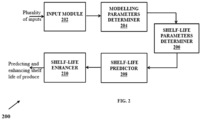
- FIG.2 is an example functional block diagram of the various modules of the system of FIG. 1 , in accordance with some embodiments of the present disclosure. As depicted in the architecture, the FIG.2 illustrates the functions of the modules of the system 100 that includes for predicting and enhancing shelf life of produce in storage facility.
- the functional system 200 of the system 100 is configured for predicting and enhancing shelf life of produce in storage facility.
- the system 200 comprises input module 202 configured for receiving a plurality of inputs, wherein the plurality of inputs is associated with a plurality of produce and a storage facility, and the plurality of inputs comprises a produce information and a storage facility information.
- the system further comprises a modelling parameters determiner 204 configured for determining a set of modelling parameters for a produce from the plurality of produce, based on a process modelling technique using the plurality of inputs.
- the system 200 further comprises a shelf-life parameters determiner 206 configured for determining a plurality of shelf-life parameters for the produce and the storage facility using the set of modelling parameters, based on a modelling technique.
- the system 200 further comprises a shelf-life predictor 208 configured for predicting a shelf life of the produce using the plurality of shelf-life parameters based on a data analysis technique, wherein the data analysis technique comprises: generating a shelf-life prediction model based on a shelf-life prediction model technique, predicting a quality index using the shelf-life prediction model, and predicting the shelf life of the produce based on the quality index for the produce.
- the system 200 further comprises a shelf-life enhancer 210 configured for enhancing the shelf-life of the produce based on an optimization technique, wherein the shelf-life of the produce is enhanced by optimizing the plurality of storage parameters for the plurality of containers based on the shelf-life.
- the various modules of the system 100 and the functional blocks in FIG.2 are configured for predicting and enhancing shelf life of produce in storage facility are implemented as at least one of a logically self-contained part of a software program, a self-contained hardware component, and/or, a self-contained hardware component with a logically self-contained part of a software program embedded into each of the hardware component that when executed perform the above method described herein.
- a plurality of inputs are received at the input module 202.
- the plurality of inputs are associated with a plurality of produce and a storage facility, and the plurality of inputs comprises a produce information and a storage facility information.
- the produce information comprises a produce, a plurality of properties of the produce including but not limited to a volume, a shape, a size, a weight, an initial surface temperature, a harvesting detail etc.
- the storage facility information comprises information associated with:
- the storage facility information is one of a warehouse, or a moving air-conditioned vehicle.
- the plurality of produce comprises of one of a plurality of vegetables, a plurality of fruits, a variety of meat and a combination thereof.
- a set of modelling parameters is determined in by the modelling parameters determiner 204.
- the set of modelling parameters is determined for a produce from the plurality of produce based on a process modelling technique using the plurality of inputs.
- the set of modelling parameters comprises a respiration of gases condition, a mass loss condition, a cumulative gas index and a heat source.
- the process modelling technique comprises use of an enzyme kinetic model and a mass loss model and the cumulative gas index comprises a carbon dioxide ( CO 2 ) gas index, an ethylene ( C 2 H 4 ) gas index, and a methane ( CH 4 ) gas index.
- CO 2 carbon dioxide
- C 2 H 4 ethylene
- CH 4 methane
- the set of modelling parameters comprises:
- a plurality of shelf-life parameters are determined for the produce and the storage facility using the set of modelling parameters in the shelf-life parameters determiner 206.
- the plurality of shelf-life parameters are determined based on a modelling technique.
- the plurality of shelf-life parameters may comprise respiration gases concentration, a temperature, a humidity, a mass loss, and a cumulative gas index for a predefined time interval.
- the modelling technique comprises one of a Computational fluid dynamic (CFD), a Physics-informed neural networks (PINNs), and a Smoothed-particle hydrodynamics (SPH).
- CFD Computational fluid dynamic
- PINNs Physics-informed neural networks
- SPH Smoothed-particle hydrodynamics
- the plurality of shelf-life parameters are determined using the set of modelling parameters based on CFD technique in several steps including:
- a shelf life of the produce is predicted in the shelf-life predictor 208.
- the shelf life of the produce is predicted using the plurality of shelf-life parameters based on a data analysis technique.
- the shelf-life of the product is represented by a quality index indicating a number of days that the produce is fresh and safe for use.
- the data analysis comprises one of a machine learning model, a data-based model, and an empirical model.
- the data analysis technique comprises of several steps including:
- the shelf-life of the produce is enhanced in the shelf-life enhancer 210.
- the shelf-life of the produce is enhanced based on an optimization technique.
- the shelf-life of the produce is enhanced by optimizing the plurality of storage parameters for the plurality of container based on the shelf-life.
- the shelf-life of the produce is enhanced in several steps including:
- the optimization technique comprises a bayesian optimization, a gradient base optimization, a genetic algorithm, and an exact method.
- the optimization techniques are designed to optimize the environmental conditions for every container.
- the environmental conditions such as a temperature, a humidity, and an airflow are kept within a pre-defined limit by optimizing stacking of container.
- This disclosure relates generally to shelf life of produce and, more particularly, for predicting and enhancing shelf life of produce in storage facility.
- Many techniques have been employed to preserve-enhance the shelf life. However, the existing techniques do not explicitly consider factors such as air circulation, stacking of container, and respiration of the produce during shelf-life prediction.
- the disclosed techniques predict and enhance the shelf life of produce in storage facility in several steps including determining a set of modelling parameters, determining a plurality of shelf-life parameters, predicting a shelf life of the produce based on generating a shelf-life prediction model, predicting a quality index and finally, enhancing the shelf-life of the produce based on an optimization technique.
- Such computer-readable storage means contain program-code means for implementation of one or more steps of the method, when the program runs on a server or mobile device or any suitable programmable device.
- the hardware device can be any kind of device which can be programmed including e.g., any kind of computer like a server or a personal computer, or the like, or any combination thereof.
- the device may also include means which could be e.g., hardware means like e.g., an application-specific integrated circuit (ASIC), a field-programmable gate array (FPGA), or a combination of hardware and software means, e.g., an ASIC and an FPGA, or at least one microprocessor and at least one memory with software processing components located therein.
- the means can include both hardware means and software means.
- the method embodiments described herein could be implemented in hardware and software.
- the device may also include software means. Alternatively, the embodiments may be implemented on different hardware devices, e.g., using a plurality of CPUs.
- the embodiments herein can comprise hardware and software elements.
- the embodiments that are implemented in software include but are not limited to, firmware, resident software, microcode, etc.
- the functions performed by various components described herein may be implemented in other components or combinations of other components.
- a computer-usable or computer readable medium can be any apparatus that can comprise, store, communicate, propagate, or transport the program for use by or in connection with the instruction execution system, apparatus, or device.
- a computer-readable storage medium refers to any type of physical memory on which information or data readable by a processor may be stored.
- a computer-readable storage medium may store instructions for execution by one or more processors, including instructions for causing the processor(s) to perform steps or stages consistent with the embodiments described herein.
- the term "computer-readable medium” should be understood to include tangible items and exclude carrier waves and transient signals, i.e., be non-transitory. Examples include random access memory (RAM), read-only memory (ROM), volatile memory, nonvolatile memory, hard drives, CD ROMs, DVDs, flash drives, disks, and any other known physical storage media.
Landscapes
- Engineering & Computer Science (AREA)
- Business, Economics & Management (AREA)
- Physics & Mathematics (AREA)
- Economics (AREA)
- General Physics & Mathematics (AREA)
- Theoretical Computer Science (AREA)
- Strategic Management (AREA)
- Human Resources & Organizations (AREA)
- Marketing (AREA)
- Tourism & Hospitality (AREA)
- General Business, Economics & Management (AREA)
- Quality & Reliability (AREA)
- Operations Research (AREA)
- Entrepreneurship & Innovation (AREA)
- General Engineering & Computer Science (AREA)
- Development Economics (AREA)
- Pure & Applied Mathematics (AREA)
- Artificial Intelligence (AREA)
- Combustion & Propulsion (AREA)
- Mechanical Engineering (AREA)
- Thermal Sciences (AREA)
- Software Systems (AREA)
- Mathematical Physics (AREA)
- Computing Systems (AREA)
- Mathematical Optimization (AREA)
- Mathematical Analysis (AREA)
- Evolutionary Computation (AREA)
- Data Mining & Analysis (AREA)
- Computational Mathematics (AREA)
- Chemical & Material Sciences (AREA)
- Algebra (AREA)
- Probability & Statistics with Applications (AREA)
- Life Sciences & Earth Sciences (AREA)
- Agronomy & Crop Science (AREA)
- Animal Husbandry (AREA)
- Marine Sciences & Fisheries (AREA)
- Mining & Mineral Resources (AREA)
- Health & Medical Sciences (AREA)
- General Health & Medical Sciences (AREA)
- Primary Health Care (AREA)
Abstract
This disclosure relates generally to shelf life of produce and, more particularly, for predicting and enhancing shelf life of produce in storage facility. A significant quantity of produce such as fresh fruits and vegetable are lost before reaching the consumer, during its long-term storage in a warehouse or a storage facility. Many techniques have been employed to preserve-enhance the shelf life. However, the existing techniques do not explicitly consider factors such as air circulation, stacking of container, and respiration of the produce during shelf-life prediction. The disclosed techniques predict and enhance the shelf life of produce in storage facilities in several steps including determining a set of modelling parameters, determining a plurality of shelf-life parameters, predicting a shelf life of the produce based on generating a shelf-life prediction model, predicting a quality index and finally, enhancing the shelf-life of the produce based on an optimization technique.
Description
- The present application claims priority to
Indian application no. 202321050027, filed on July 25,2023 - The disclosure herein generally relates to shelf life of produce in storage and, more particularly, for predicting and enhancing shelf life of produce in storage.
- Freshly harvested products or produce such as fresh fruits and vegetables are perishable commodities. A significant quantity of produce that is freshly harvested is lost before it reaches the consumer during the supply chain. The major loss of produce occurs during its long-term storage in a warehouse. In supply chain management, during storage of produce in a storage facility the major challenges for managing the shelf life of the produce includes non-uniform ripening and quality of food, food wastage/spoilage or hot spot, moisture pockets and gas pockets (C 2 H 4, CO 2) and issues with inventory management.
- Considering the rate at which the products or produce perish, it is vital to understand the variation in the food quality at different facilities with time to minimize the wastage of food through real-time monitoring of food quality and dynamic control of food environment. Many techniques have been employed to enhance the shelf life and protect such products by preserving the freshness, texture and color of the fresh produce to make it fit for consumption.
- Shelf life is defined as a recommended maximum time for which products or produce can be stored to retain the freshness, nutrition and quality of the produce. Hence the shelf-life assessment strategies must be carefully designed to predict as well as enhance the shelf life of the produce. One of the earliest means of enhancing the shelf life of produce has been refrigeration storage. However, most fresh produce when stored under reduced temperatures for prolonged periods shows adverse effects on the taste, odor, or quality of the product.
- Conventional storage facilities are designed based on temperature and humidity requirement of the produce to be stored. Most of the storage chambers or warehouses are designed without optimizing the fluid flow across the chamber, therefore there is non-uniform distribution of cold air and temperature in the chamber that creates hot spots inside the warehouse thus damaging the produce stored in the area. Further, the formation of high humidity zones, pockets of CO2 and ethylene during storage of produce due to respiration affect the quality and ripening of the produce. Also, random stacking of containers causes improper ventilation and non-uniform cooling degrades the quality of produce rapidly, creating wastage. Gas pockets generation in various areas is also a huge challenge in warehouses or inventory management. These factors such as air circulation, stacking of containers, and respiration of the produce are not usually considered during shelf-life prediction, thus making the current techniques not very efficient or effective for shelf-life prediction.
- Embodiments of the present disclosure present technological improvements as solutions to one or more of the above-mentioned technical problems recognized by the inventors in conventional systems. For example, in one embodiment, a method for predicting and enhancing shelf life of produce in storage facility is provided.
- The system includes a memory storing instructions, one or more communication interfaces, and one or more hardware processors coupled to the memory via the one or more communication interfaces, wherein the one or more hardware processors are configured by the instructions to receive a plurality of inputs, via one or more hardware processors, wherein the plurality of inputs are associated with a plurality of produce and a storage facility, and the plurality of inputs comprises a produce information and a storage facility information, wherein: the produce information comprises a produce, a plurality of properties of the produce including a volume, a shape, a size, a weight, an initial surface temperature, harvesting details, and the storage facility information comprises information associated with the storage facility and includes: a plurality of containers and a type of each container from the plurality of containers, and a plurality of storage parameters comprising an inlet air temperature, an air flow rate, a set of environmental conditions and a produce harvesting details. The system is further configured to determine a set of modelling parameters for a produce from the plurality of produce, via the one or more hardware processors, based on a process modelling technique using the plurality of inputs, wherein the set of modelling parameters comprises a respiration of gases condition, a mass loss condition, a cumulative gas index and a heat source. The system is further configured to determine a plurality of shelf-life parameters for the produce and the storage facility using the set of modelling parameters, via the one or more hardware processors, based on a modelling technique wherein the plurality of shelf-life parameters comprises a respiration gases concentration, a temperature, a humidity, a mass loss, and a cumulative gas index for a predefined time interval. The system is further configured to predict a shelf life of the produce using the plurality of shelf-life parameters based on a data analysis technique, via the one or more hardware processors, wherein the data analysis technique comprises: generating a shelf-life prediction model based on a shelf-life prediction model technique, predicting a quality index using the shelf-life prediction model, and predicting the shelf life of the produce based on the quality index for the produce. The system is further configured to enhance the shelf-life of the produce based on an optimization technique, via the one or more hardware processors, wherein the shelf-life of the produce is enhanced by optimizing the plurality of storage parameters for the plurality of container based on the shelf-life.
- In another aspect, a method for predicting and enhancing shelf life of produce in storage facility is provided. The method includes receiving a plurality of inputs wherein the plurality of inputs are associated with a plurality of produce and a storage facility , and the plurality of inputs comprises a produce information and a storage facility information, wherein: the produce information comprises a produce, a plurality of properties of the produce including a volume, a shape, a size, a weight, an initial surface temperature, harvesting details, and the storage facility information comprises information associated with the storage and includes: a plurality of containers and a type of each container from the plurality of containers, and a plurality of storage parameters comprising an inlet air temperature, an air flow rate, a set of environmental conditions and a produce harvesting details. The method includes determining a set of modelling parameters for a produce from the plurality of produce, based on a process modelling technique using the plurality of inputs, wherein the set of modelling parameters comprises a respiration of gases condition, a mass loss condition, a cumulative gas index and a heat source. The method includes determining a plurality of shelflife parameters for the produce and the storage facility using the set of modelling parameters based on a modelling technique wherein the plurality of shelf-life parameters comprises a respiration gases concentration, a temperature, a humidity, a mass loss, and a cumulative gas index for a predefined time interval. The method includes predicting a shelf life of the produce using the plurality of shelf-life parameters based on a data analysis technique wherein the data analysis technique comprises generating a shelf-life prediction model based on a shelf-life prediction model technique, predicting a quality index using the shelf-life prediction model, and predicting the shelf life of the produce based on the quality index for the produce. The method includes enhancing the shelf-life of the produce based on an optimization technique wherein the shelf-life of the produce is enhanced by optimizing the plurality of storage parameters for the plurality of container based on the shelf-life.
- In yet another aspect, a non-transitory computer readable medium for predicting and enhancing shelf life of produce in storage facility is provided. The method includes receiving a plurality of inputs wherein the plurality of inputs are associated with a plurality of produce and a storage facility , and the plurality of inputs comprises a produce information and a storage facility information, wherein: the produce information comprises a produce, a plurality of properties of the produce including a volume, a shape, a size, a weight, an initial surface temperature, harvesting details, and the storage facility information comprises information associated with the storage facility and includes: a plurality of containers and a type of each container from the plurality of containers, and a plurality of storage parameters comprising an inlet air temperature, an air flow rate, a set of environmental conditions and a produce harvesting details. The method includes determining a set of modelling parameters for a produce from the plurality of produce, based on a process modelling technique using the plurality of inputs, wherein the set of modelling parameters comprises a respiration of gases condition, a mass loss condition, a cumulative gas index and a heat source. The method includes determining a plurality of shelf-life parameters for the produce and the storage using the set of modelling parameters based on a modelling technique wherein the plurality of shelf-life parameters comprises a respiration gases concentration, a temperature, a humidity, a mass loss, and a cumulative gas index for a predefined time interval. The method includes predicting a shelf life of the produce using the plurality of shelf-life parameters based on a data analysis technique wherein the data analysis technique comprises generating a shelf-life prediction model based on a shelf-life prediction model technique, predicting a quality index using the shelf-life prediction model, and predicting the shelf life of the produce based on the quality index for the produce. The method includes enhancing the shelf-life of the produce based on an optimization technique wherein the shelf-life of the produce is enhanced by optimizing the plurality of storage parameters for the plurality of container based on the shelf-life.
- It is to be understood that both the foregoing general description and the following detailed description are exemplary and explanatory only and are not restrictive of the invention, as claimed.
- The accompanying drawings, which are incorporated in and constitute a part of this disclosure, illustrate exemplary embodiments and, together with the description, serve to explain the disclosed principles:
-
FIG.1 illustrates an exemplary system for predicting and enhancing shelf life of produce in storage facility according to some embodiments of the present disclosure. -
FIG.2 is a functional block diagram for predicting and enhancing shelf life of produce in storage facility according to some embodiments of the present disclosure. -
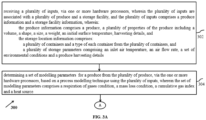
FIGS.3A andFIG.3B is a flow diagram illustrating a method (300) for predicting and enhancing shelf life of produce in storage facility in accordance with some embodiments of the present disclosure. -
FIG.4A-FIG.4C illustrates creation of geometry in accordance with some embodiments of the present disclosure. -
FIG.5 illustrates generation of a numerical grid for the geometry in accordance with some embodiments of the present disclosure. -
FIG.6 illustrates prediction of modelling parameters for storage duration in accordance with some embodiments of the present disclosure. -
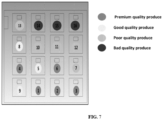
FIG. 7 illustrates assignment of quality index in accordance with some embodiments of the present disclosure. - Exemplary embodiments are described with reference to the accompanying drawings. In the figures, the left-most digit(s) of a reference number identifies the figure in which the reference number first appears. Wherever convenient, the same reference numbers are used throughout the drawings to refer to the same or like parts. While examples and features of disclosed principles are described herein, modifications, adaptations, and other implementations are possible without departing from the scope of the disclosed embodiments.
- Referring now to the drawings, and more particularly to
FIG. 1 through FIG.7 , where similar reference characters denote corresponding features consistently throughout the figures, there are shown preferred embodiments and these embodiments are described in the context of the following exemplary system and/or method. -
FIG. 1 is an exemplary block diagram of asystem 100 for predicting and enhancing shelf life of produce in storage facility in accordance with some embodiments of the present disclosure. - In an embodiment, the
system 100 includes a processor(s) 104, communication interface device(s), alternatively referred as input/output (I/O) interface(s) 106, and one or more data storage devices or amemory 102 operatively coupled to the processor(s) 104. Thesystem 100 with one or more hardware processors is configured to execute functions of one or more functional blocks of thesystem 100. - Referring to the components of the
system 100, in an embodiment, the processor(s) 104, can be one ormore hardware processors 104. In an embodiment, the one ormore hardware processors 104 can be implemented as one or more microprocessors, microcomputers, microcontrollers, digital signal processors, central processing units, state machines, logic circuitries, and/or any devices that manipulate signals based on operational instructions. Among other capabilities, the one ormore hardware processors 104 is configured to fetch and execute computer-readable instructions stored in thememory 102. In an embodiment, thesystem 100 can be implemented in a variety of computing systems including laptop computers, notebooks, hand-held devices such as mobile phones, workstations, mainframe computers, servers, a network cloud and the like. - The I/O interface(s) 106 can include a variety of software and hardware interfaces, for example, a web interface, a graphical user interface, a touch user interface (TUI) and the like and can facilitate multiple communications within a wide variety of networks N/W and protocol types, including wired networks, for example, LAN, cable, etc., and wireless networks, such as WLAN, cellular, or satellite. In an embodiment, the I/O interface (s) 106 can include one or more ports for connecting a number of devices (nodes) of the
system 100 to one another or to another server. - The
memory 102 may include any computer-readable medium known in the art including, for example, volatile memory, such as static random-access memory (SRAM) and dynamic random-access memory (DRAM), and/or non-volatile memory, such as read only memory (ROM), erasable programmable ROM, flash memories, hard disks, optical disks, and magnetic tapes. - Further, the
memory 102 may include adatabase 108 configured to include information regarding shelf life of produce in storage facility. Thememory 102 may comprise information pertaining to input(s)/output(s) of each step performed by the processor(s) 104 of thesystem 100 and methods of the present disclosure. In an embodiment, thedatabase 108 may be external (not shown) to thesystem 100 and coupled to the system via the I/O interface 106. - Functions of the components of
system 100 are explained in conjunction with functional overview of thesystem 100 inFIG.2 and flow diagram ofFIGS.3A andFIG.3B for predicting and enhancing shelf life of produce in storage facility - The
system 100 supports various connectivity options such as BLUETOOTH®, USB, ZigBee and other cellular services. The network environment enables connection of various components of thesystem 100 using any communication link including Internet, WAN, MAN, and so on. In an exemplary embodiment, thesystem 100 is implemented to operate as a stand-alone device. In another embodiment, thesystem 100 may be implemented to work as a loosely coupled device to a smart computing environment. The components and functionalities of thesystem 100 are described further in detail. -
FIG.2 is an example functional block diagram of the various modules of the system ofFIG. 1 , in accordance with some embodiments of the present disclosure. As depicted in the architecture, theFIG.2 illustrates the functions of the modules of thesystem 100 that includes for predicting and enhancing shelf life of produce in storage facility. - As depicted in
FIG.2 , thefunctional system 200 of thesystem 100 is configured for predicting and enhancing shelf life of produce in storage facility. - The
system 200 comprisesinput module 202 configured for receiving a plurality of inputs, wherein the plurality of inputs is associated with a plurality of produce and a storage facility, and the plurality of inputs comprises a produce information and a storage facility information. The system further comprises a modelling parameters determiner 204 configured for determining a set of modelling parameters for a produce from the plurality of produce, based on a process modelling technique using the plurality of inputs. Thesystem 200 further comprises a shelf-life parameters determiner 206 configured for determining a plurality of shelf-life parameters for the produce and the storage facility using the set of modelling parameters, based on a modelling technique. Thesystem 200 further comprises a shelf-life predictor 208 configured for predicting a shelf life of the produce using the plurality of shelf-life parameters based on a data analysis technique, wherein the data analysis technique comprises: generating a shelf-life prediction model based on a shelf-life prediction model technique, predicting a quality index using the shelf-life prediction model, and predicting the shelf life of the produce based on the quality index for the produce. Thesystem 200 further comprises a shelf-life enhancer 210 configured for enhancing the shelf-life of the produce based on an optimization technique, wherein the shelf-life of the produce is enhanced by optimizing the plurality of storage parameters for the plurality of containers based on the shelf-life. - The various modules of the
system 100 and the functional blocks inFIG.2 are configured for predicting and enhancing shelf life of produce in storage facility are implemented as at least one of a logically self-contained part of a software program, a self-contained hardware component, and/or, a self-contained hardware component with a logically self-contained part of a software program embedded into each of the hardware component that when executed perform the above method described herein. - Functions of the components of the
system 200 are explained in conjunction with functional modules of thesystem 100 stored in thememory 102 and further explained in conjunction with flow diagram ofFIGS.3A-3B . TheFIGS.3A-3B with reference toFIG.1 , is an exemplary flow diagram illustrating amethod 300 for recommending an emission reduction potential using thesystem 100 ofFIG.1 according to an embodiment of the present disclosure. - The steps of the method of the present disclosure will now be explained with reference to the components of the
system 100 ofFIG.1 for predicting and enhancing shelf life of produce in storage facility and the modules 202-210 as depicted inFIG.2 and the flow diagrams as depicted inFIGS.3A-3B . Although process steps, method steps, techniques or the like may be described in a sequential order, such processes, methods and techniques may be configured to work in alternate orders. In other words, any sequence or order of steps that may be described does not necessarily indicate a requirement that the steps to be performed in that order. The steps of processes described herein may be performed in any order practical. Further, some steps may be performed simultaneously. - At
step 302 of themethod 300, a plurality of inputs are received at theinput module 202. The plurality of inputs are associated with a plurality of produce and a storage facility, and the plurality of inputs comprises a produce information and a storage facility information. - The produce information comprises a produce, a plurality of properties of the produce including but not limited to a volume, a shape, a size, a weight, an initial surface temperature, a harvesting detail etc.
- The storage facility information comprises information associated with:
- (a) a plurality of containers and a type of each container from the plurality of containers, and
- (b) a plurality of storage parameters comprising an inlet air temperature, an air flow rate, a set of environmental conditions and a produce harvesting details.
- In an embodiment, the storage facility information is one of a warehouse, or a moving air-conditioned vehicle. The plurality of produce comprises of one of a plurality of vegetables, a plurality of fruits, a variety of meat and a combination thereof.
- At
step 304 of themethod 300, a set of modelling parameters is determined in by themodelling parameters determiner 204. The set of modelling parameters is determined for a produce from the plurality of produce based on a process modelling technique using the plurality of inputs. The set of modelling parameters comprises a respiration of gases condition, a mass loss condition, a cumulative gas index and a heat source. - In an embodiment, the process modelling technique comprises use of an enzyme kinetic model and a mass loss model and the cumulative gas index comprises a carbon dioxide (CO 2) gas index, an ethylene (C 2 H 4) gas index, and a methane (CH 4) gas index.,
- The set of modelling parameters comprises:
- The respiration of gases condition: the respiration of gases condition is determined based on an enzyme kinetic model. The respiration of gases condition is determined using the cumulative gas index. In an example scenario the cumulative gases used include - O 2 is oxygen gas. CO 2 is carbon dioxide gas. C2H4 is ethylene gas. rO 2 max, rCO 2 max, rC 2 H 4max are maximum rates of O 2 consumption or CO 2 production and C2H4 production, rO 2 and rCO 2 are rates of O2 consumption or CO 2 production, K mO2, K mCO2, K mC2H4 are the dissociation constants of the enzyme-substrate complex, and KmuCO2 and K mu'CO2 are the inhibition constants due to CO 2, A is Arrhenius pre-exponential factor, Ea is the activation energy rO 2max () is the pre-exponential factor, R is the universal gas constant and T is the temperature. h is hill coefficient representing degree of cooperativity. y O2,y CO2, is mole fraction. ρ is density of produce. Vfruit is volume of produce. Asurface is surface area of produce. MWi is Molecular weight of gas component. P is pressure. T is temperature. m"i is mass flux of gas (kg/m2s). i is gas (Oxygen, carbon dioxide, ethylene gas, methane gas and more)


- The cumulative gas indexes
- The cumulative carbon-di-oxide (CO 2) index is determined based on a total carbon-di-oxide (CO 2) generated by the produce based on the enzyme kinetic model and is expressed as shown below:

- Alternatively, the cumulative gas index is also expressed as a total mass of gas accumulated for given time and give surface area of the produce, expressed as shown below:

- Where m"i is mass flux of ethylene gas produced from small surface area (dA) for small time duration (dt)

- Where m"i is mass flux of methane gas produced from small surface area (dA) for small time duration (dt)
- The cumulative carbon-di-oxide (CO 2) index is determined based on a total carbon-di-oxide (CO 2) generated by the produce based on the enzyme kinetic model and is expressed as shown below:
- The mass loss condition: the mass loss condition is determined based on a sum of mass loss due to transpiration (moisture loss Mt) and respiration (respiration mass loss Mr ) (Rate of glucose oxidation). Transpiration is vapor pressure deficit (VPD), which is the difference between vapor pressure of fruit surface (Ps) and headspace air (Pin). The mass loss condition is expressed as shown below:

- Mt is Moisture loss of produce,
- Ks is mass transfer coefficient of fruit skin,
- Ka is mass transfer coefficient of thin air layer,
- As is surface area of produce,
- Ps is a function of saturation vapour pressure (

-

- aw is water activity of fresh produce, and

- RHin is relative humidity.
- Mr is respiration mass loss of produce,
- Wp is Mass of produce (kg), and
- RCO 2 is rate of respiration of CO 2
- The heat source: The heat source is generated from respiration of produce, wherein the heat is generated due to decomposition of glucose in the produce as shown below:
C 6 H 12 O 6 + 6 O 2 → 6 CO 2 + 6 H 2 O + 2667kJ (7)
During the respiration process, 1 mole of glucose need 6 moles of oxygen to oxidise, and release 2667 kJ amount of heat. - At step 306 of the
method 300, a plurality of shelf-life parameters are determined for the produce and the storage facility using the set of modelling parameters in the shelf-life parameters determiner 206. The plurality of shelf-life parameters are determined based on a modelling technique. The plurality of shelf-life parameters may comprise respiration gases concentration, a temperature, a humidity, a mass loss, and a cumulative gas index for a predefined time interval. - In an embodiment, the modelling technique comprises one of a Computational fluid dynamic (CFD), a Physics-informed neural networks (PINNs), and a Smoothed-particle hydrodynamics (SPH).
- In an example scenario, the plurality of shelf-life parameters are determined using the set of modelling parameters based on CFD technique in several steps including:
- (a) Creation of a geometry of each of the produce and the storage parameter: The geometry is created depending on a produce information and a storage facility information. Geometry can be created in any 3D software/tool which is compatible with any computational fluid dynamic (CFD) tool. An example scenario of creation of geometry is shown in
FIG.4A to FIG.4C , whereinFIG.4A is a produce,FIG.4B is the container in which the produce is arranged andFIG.4C . - (b) Generation of a numerical grid for the geometry of each of the produce and the storage parameter: The numerical grid is generated for the geometry with a meshing tool such as a OpenFOAM. The meshing tool provides good quality of numerical grid and large-scale mesh problems can be solved with good accuracy. An example scenario of the numerical grid is illustrated in
FIG.5 . - (c) Applying the set of modelling parameters to the numerical grid based on the plurality of inputs: The set of modelling parameters are applied to the numerical grid. The set of modelling parameters includes inlet airflow rate, temperature, humidity, respiration model, heat source and mass loss model in the modelling technique (CFD, Ansys fluent).
- (d) Simulating solves partial differential equations which includes physical laws of fluid dynamic. Simulations are performed over a duration for which the produce is stored in the storage facility.
- (e) Post-processing: Post processing involves prediction of modelling parameters for storage duration. These modelling parameters are visualized and analyzed in terms of tables, graphs, picture and video as illustrated in
FIG 6 . Mole fraction of CO2 is increases from 0 to 0.12 for storage of 1.5 days as CO2 is produced during respiration process as well as More fraction of CO2 is increasing with quantity. These plots are generated through simulation and validated. - At
step 308 of themethod 300, a shelf life of the produce is predicted in the shelf-life predictor 208. The shelf life of the produce is predicted using the plurality of shelf-life parameters based on a data analysis technique. - In an embodiment, the shelf-life of the product is represented by a quality index indicating a number of days that the produce is fresh and safe for use. The data analysis comprises one of a machine learning model, a data-based model, and an empirical model.
- The data analysis technique comprises of several steps including:
- (a) generating a shelf-life prediction model based on a shelf-life prediction model technique. The shelf-life prediction technique involves machine learning algorithm such as Multilinear regression (MLR) method, expressed as shown below:

- k 1, k 2, k 3 and k 4 are un-known coefficients determined with MLR method,
- environmental conditions include surrounding temperature, humidity, air flow rate,
- cumulative gas index includes CO2, C2H4, CH4 gases produced during respiration,
- mass loss include change in mass for given duration of storage, and heat source include amount of heat generated during the respiration from the produce.
- (b) predicting a quality index using the shelf-life prediction model. The quality index is assigned to produce and/or container based on the shelf-life prediction model value. The quality index is Bad quality produce, poor quality of produce, good quality of produce and premium quality of produce.
- (c) Predicting the shelf life of the produce based on the quality index for the produce. The shelf-life is determined based on produce and quality index. In an example scenario: Considering an example for shelf-life of strawberry (around 7 days stored at 5°C), the quality index, shelf life is determined as follows:
- bad quality produce (1-2 days)
- poor quality produce (2-4 days)
- Good quality produce (4-6 days)
- Premium quality produce (6-8 days)
- At
step 310 of themethod 300, the shelf-life of the produce is enhanced in the shelf-life enhancer 210. The shelf-life of the produce is enhanced based on an optimization technique. The shelf-life of the produce is enhanced by optimizing the plurality of storage parameters for the plurality of container based on the shelf-life. - In an embodiment, the shelf-life of the produce is enhanced in several steps including:
- (a) Assigning a quality index for each of the plurality of container:
The quality index is assigned to produce and/or container based on the shelf-life prediction model value. Quality index may be assigned as a bad quality produce, a poor quality of produce, a good quality of produce and a premium quality of produce. An example is illustrated inFIG. 7 - (b) optimizing the plurality of storage parameters to enhance the shelf-life of the produce based on the assigned quality index using the optimization technique.
- In an embodiment, the optimization technique comprises a bayesian optimization, a gradient base optimization, a genetic algorithm, and an exact method. The optimization techniques are designed to optimize the environmental conditions for every container. The environmental conditions such as a temperature, a humidity, and an airflow are kept within a pre-defined limit by optimizing stacking of container.
- The written description describes the subject matter herein to enable any person skilled in the art to make and use the embodiments. The scope of the subject matter embodiments is defined by the claims and may include other modifications that occur to those skilled in the art. Such other modifications are intended to be within the scope of the claims if they have similar elements that do not differ from the literal language of the claims or if they include equivalent elements with insubstantial differences from the literal language of the claims.
- This disclosure relates generally to shelf life of produce and, more particularly, for predicting and enhancing shelf life of produce in storage facility. A significant quantity of produce such as fresh fruits and vegetable is lost before it reaches the consumer, due during its long-term storage in a warehouse or a storage =facility. Many techniques have been employed to preserve-enhance the shelf life. However, the existing techniques do not explicitly consider factors such as air circulation, stacking of container, and respiration of the produce during shelf-life prediction. The disclosed techniques predict and enhance the shelf life of produce in storage facility in several steps including determining a set of modelling parameters, determining a plurality of shelf-life parameters, predicting a shelf life of the produce based on generating a shelf-life prediction model, predicting a quality index and finally, enhancing the shelf-life of the produce based on an optimization technique.
- It is to be understood that the scope of the protection is extended to such a program and in addition to a computer-readable means having a message therein; such computer-readable storage means contain program-code means for implementation of one or more steps of the method, when the program runs on a server or mobile device or any suitable programmable device. The hardware device can be any kind of device which can be programmed including e.g., any kind of computer like a server or a personal computer, or the like, or any combination thereof. The device may also include means which could be e.g., hardware means like e.g., an application-specific integrated circuit (ASIC), a field-programmable gate array (FPGA), or a combination of hardware and software means, e.g., an ASIC and an FPGA, or at least one microprocessor and at least one memory with software processing components located therein. Thus, the means can include both hardware means and software means. The method embodiments described herein could be implemented in hardware and software. The device may also include software means. Alternatively, the embodiments may be implemented on different hardware devices, e.g., using a plurality of CPUs.
- The embodiments herein can comprise hardware and software elements. The embodiments that are implemented in software include but are not limited to, firmware, resident software, microcode, etc. The functions performed by various components described herein may be implemented in other components or combinations of other components. For the purposes of this description, a computer-usable or computer readable medium can be any apparatus that can comprise, store, communicate, propagate, or transport the program for use by or in connection with the instruction execution system, apparatus, or device.
- The illustrated steps are set out to explain the exemplary embodiments shown, and it should be anticipated that ongoing technological development will change the manner in which particular functions are performed. These examples are presented herein for purposes of illustration, and not limitation. Further, the boundaries of the functional building blocks have been arbitrarily defined herein for the convenience of the description. Alternative boundaries can be defined so long as the specified functions and relationships thereof are appropriately performed. Alternatives (including equivalents, extensions, variations, deviations, etc., of those described herein) will be apparent to persons skilled in the relevant art(s) based on the teachings contained herein. Such alternatives fall within the scope of the disclosed embodiments. Also, the words "comprising," "having," "containing," and "including," and other similar forms are intended to be equivalent in meaning and be open ended in that an item or items following any one of these words is not meant to be an exhaustive listing of such item or items, or meant to be limited to only the listed item or items. It must also be noted that as used herein and in the appended claims, the singular forms "a," "an," and "the" include plural references unless the context clearly dictates otherwise.
- Furthermore, one or more computer-readable storage media may be utilized in implementing embodiments consistent with the present disclosure. A computer-readable storage medium refers to any type of physical memory on which information or data readable by a processor may be stored. Thus, a computer-readable storage medium may store instructions for execution by one or more processors, including instructions for causing the processor(s) to perform steps or stages consistent with the embodiments described herein. The term "computer-readable medium" should be understood to include tangible items and exclude carrier waves and transient signals, i.e., be non-transitory. Examples include random access memory (RAM), read-only memory (ROM), volatile memory, nonvolatile memory, hard drives, CD ROMs, DVDs, flash drives, disks, and any other known physical storage media.
- It is intended that the disclosure and examples be considered as exemplary only, with a true scope of disclosed embodiments being indicated by the following claims.
Claims (15)
- A processor implemented method, comprising:receiving a plurality of inputs (302), via one or more hardware processors, wherein the plurality of inputs are associated with a plurality of produce and a storage facility, and the plurality of inputs comprises a produce information and a storage facility information, wherein:the produce information comprises a produce, a plurality of properties of the produce including a volume, a shape, a size, a weight, an initial surface temperature, harvesting details, andthe storage facility information comprises:a plurality of containers and a type of each container from the plurality of containers, anda plurality of storage parameters comprising an inlet air temperature, an air flow rate, a set of environmental conditions and a produce harvesting details;determining a set of modelling parameters for a produce from the plurality of produce, via the one or more hardware processors, based on a process modelling technique using the plurality of inputs, wherein the set of modelling parameters comprises a respiration of gases condition, a mass loss condition, a cumulative gas index and a heat source (304);determining a plurality of shelf-life parameters for the produce and the storage facility using the set of modelling parameters, via the one or more hardware processors, based on a modelling technique wherein the plurality of shelf-life parameters comprises a respiration gases concentration, a temperature, a humidity, a mass loss, and a cumulative gas index for a predefined time interval (306);predicting a shelf life of the produce using the plurality of shelf-life parameters based on a data analysis technique (308), via the one or more hardware processors, wherein the data analysis technique comprises:generating a shelf-life prediction model based on a shelf-life prediction model technique,predicting a quality index using the shelf-life prediction model, andpredicting the shelf life of the produce based on the quality index for the produce, andenhancing the shelf-life of the produce based on an optimization technique, via the one or more hardware processors, wherein the shelf-life of the produce is enhanced by optimizing the plurality of storage parameters for the plurality of container based on the shelf-life (310).
- The method as claimed in claim 1, wherein the storage facility is one of a warehouse, or a moving air-conditioned vehicle and the plurality of produce comprises of one of a plurality of vegetables, a plurality of fruits, a variety of meat and a combination thereof.
- The method as claimed in claim 1, wherein the process modelling technique comprises an enzyme kinetic model and a mass loss model and the cumulative gas index comprises a carbon dioxide gas index, an ethylene gas index, and a methane gas index.
- The method as claimed in claim 1, wherein the modelling technique comprises one of a Computational fluid dynamic (CFD), a Physics-informed neural networks (PINNs), and a Smoothed-particle hydrodynamics (SPH).
- The method as claimed in claim 1, wherein the plurality of shelf-life parameters are determined using the set of modelling parameters based on Computational fluid dynamic (CFD) technique in several steps including creation of a geometry of each of the produce and the storage parameter, generating a mesh for the geometry of each of the produce and the storage parameter, applying the set of modelling parameters to the mesh based on the plurality of inputs, and simulation and post-processing.
- The method as claimed in claim 1, wherein the shelf-life of the product is represented by a quality index indicating a number of days that the produce is fresh and safe for use and the shelf-life prediction model technique comprises one of a machine learning model, a data-based model, and an empirical model.
- The method as claimed in claim 1, wherein the shelf-life of the produce is enhanced in a plurality of steps including (a) assigning a quality index for each of the plurality of crates and (b) optimizing the plurality of storage parameters to enhance the shelf-life of the produce based on the assigned quality index using the optimization technique, wherein the optimization technique comprises a bayesian optimization, a gradient base optimization, a genetic algorithm, and an exact method.
- A system (100), comprising:a memory (102) storing instructions;one or more communication interfaces (106); andone or more hardware processors (104) coupled to the memory (102) via the one or more communication interfaces (106), wherein the one or more hardware processors (104) are configured by the instructions to:receive a plurality of inputs, via one or more hardware processors, wherein the plurality of inputs are associated with a plurality of produce and a storage facility, and the plurality of inputs comprises a produce information and a storage facility information, wherein:the produce information comprises a produce, a plurality of properties of the produce including a volume, a shape, a size, a weight, an initial surface temperature, harvesting details, andthe storage facility information comprises:a plurality of containers and a type of each container from the plurality of containers, anda plurality of storage parameters comprising an inlet air temperature, an air flow rate, a set of environmental conditions and a produce harvesting details;determine a set of modelling parameters for a produce from the plurality of produce, via the one or more hardware processors, based on a process modelling technique using the plurality of inputs, wherein the set of modelling parameters comprises a respiration of gases condition, a mass loss condition, a cumulative gas index and a heat source;determine a plurality of shelf-life parameters for the produce and the storage facility using the set of modelling parameters, via the one or more hardware processors, based on a modelling technique wherein the plurality of shelf-life parameters comprises a respiration gases concentration, a temperature, a humidity, a mass loss, and a cumulative gas index for a predefined time interval;predict a shelf life of the produce using the plurality of shelf-life parameters based on a data analysis technique, via the one or more hardware processors, wherein the data analysis technique comprises:generating a shelf-life prediction model based on a shelf-life prediction model technique,predicting a quality index using the shelf-life prediction model, andpredicting the shelf life of the produce based on the quality index for the produce, andenhance the shelf-life of the produce based on an optimization technique, via the one or more hardware processors, wherein the shelf-life of the produce is enhanced by optimizing the plurality of storage parameters for the plurality of container based on the shelf-life.
- The system as claimed in claim 8, wherein the storage facility is one of a warehouse, or a moving air-conditioned vehicle and the plurality of produce comprises of one of a plurality of vegetables, a plurality of fruits, a variety of meat and a combination thereof.
- The system as claimed in claim 8, wherein the process modelling technique comprises an enzyme kinetic model and a mass loss model and the cumulative gas index comprises a carbon dioxide gas index, an ethylene gas index, and a methane gas index.
- The system as claimed in claim 8, wherein the modelling technique comprises one of a Computational fluid dynamic (CFD), a Physics-informed neural networks (PINNs), and a Smoothed-particle hydrodynamics (SPH).
- The system as claimed in claim 8, wherein the plurality of shelf-life parameters are determined using the set of modelling parameters based on Computational fluid dynamic (CFD) technique in several steps including creation of a geometry of each of the produce and the storage parameter, generating a mesh for the geometry of each of the produce and the storage parameter, applying the set of modelling parameters to the mesh based on the plurality of inputs, and simulation and post-processing.
- The system as claimed in claim 8, wherein the shelf-life of the product is represented by a quality index indicating a number of days that the produce is fresh and safe for use and the shelf-life prediction model technique comprises one of a machine learning model, a data-based model, and an empirical model.
- The system as claimed in claim 8, wherein the shelf-life of the produce is enhanced in a plurality of steps including (a) assigning a quality index for each of the plurality of crates and (b) optimizing the plurality of storage parameters to enhance the shelf-life of the produce based on the assigned quality index using the optimization technique, wherein the optimization technique comprises a bayesian optimization, a gradient base optimization, a genetic algorithm, and an exact method.
- One or more non-transitory machine-readable information storage mediums comprising one or more instructions which when executed by one or more hardware processors cause:receiving a plurality of inputs, wherein the plurality of inputs are associated with a plurality of produce and a storage facility, and the plurality of inputs comprises a produce information and a storage facility information, wherein:the produce information comprises a produce, a plurality of properties of the produce including a volume, a shape, a size, a weight, an initial surface temperature, harvesting details, andthe storage facility information comprises:a plurality of containers and a type of each container from the plurality of containers, anda plurality of storage parameters comprising an inlet air temperature, an air flow rate, a set of environmental conditions and a produce harvesting details;determining a set of modelling parameters for a produce from the plurality of produce, based on a process modelling technique using the plurality of inputs, wherein the set of modelling parameters comprises a respiration of gases condition, a mass loss condition, a cumulative gas index and a heat source;determining a plurality of shelf-life parameters for the produce and the storage facility using the set of modelling parameters, based on a modelling technique wherein the plurality of shelf-life parameters comprises a respiration gases concentration, a temperature, a humidity, a mass loss, and a cumulative gas index for a predefined time interval;predicting a shelf life of the produce using the plurality of shelf-life parameters based on a data analysis technique, wherein the data analysis technique comprises:generating a shelf-life prediction model based on a shelf-life prediction model technique,predicting a quality index using the shelf-life prediction model, andpredicting the shelf life of the produce based on the quality index for the produce, andenhancing the shelf-life of the produce based on an optimization technique, wherein the shelf-life of the produce is enhanced by optimizing the plurality of storage parameters for the plurality of container based on the shelf-life.
Applications Claiming Priority (1)
| Application Number | Priority Date | Filing Date | Title |
|---|---|---|---|
| IN202321050027 | 2023-07-25 |
Publications (1)
| Publication Number | Publication Date |
|---|---|
| EP4498300A1 true EP4498300A1 (en) | 2025-01-29 |
Family
ID=91664926
Family Applications (1)
| Application Number | Title | Priority Date | Filing Date |
|---|---|---|---|
| EP24183876.2A Pending EP4498300A1 (en) | 2023-07-25 | 2024-06-24 | Predicting and enhancing shelf life of produce in storage |
Country Status (2)
| Country | Link |
|---|---|
| US (1) | US20250035373A1 (en) |
| EP (1) | EP4498300A1 (en) |
Cited By (1)
| Publication number | Priority date | Publication date | Assignee | Title |
|---|---|---|---|---|
| CN120508024A (en) * | 2025-05-09 | 2025-08-19 | 广东穗方源实业有限公司 | Intelligent control method and system for rice finishing equipment |
Families Citing this family (1)
| Publication number | Priority date | Publication date | Assignee | Title |
|---|---|---|---|---|
| CN120181290B (en) * | 2025-02-27 | 2025-10-24 | 常州星腾瑞动力科技有限公司 | Food quality dynamic monitoring system and method based on multi-sensor fusion |
Citations (3)
| Publication number | Priority date | Publication date | Assignee | Title |
|---|---|---|---|---|
| US20190147396A1 (en) * | 2017-11-10 | 2019-05-16 | Walmart Apollo, Llc | Predicting shelf life based on item specific metrics |
| US20200302377A1 (en) * | 2019-03-18 | 2020-09-24 | International Business Machines Corporation | Reducing food waste by using a machine learning model |
| US20210365879A1 (en) * | 2018-11-01 | 2021-11-25 | Centaur Analytics, Inc. | Predictive post-harvest stored commodity management methods |
-
2024
- 2024-06-24 EP EP24183876.2A patent/EP4498300A1/en active Pending
- 2024-06-25 US US18/752,849 patent/US20250035373A1/en active Pending
Patent Citations (3)
| Publication number | Priority date | Publication date | Assignee | Title |
|---|---|---|---|---|
| US20190147396A1 (en) * | 2017-11-10 | 2019-05-16 | Walmart Apollo, Llc | Predicting shelf life based on item specific metrics |
| US20210365879A1 (en) * | 2018-11-01 | 2021-11-25 | Centaur Analytics, Inc. | Predictive post-harvest stored commodity management methods |
| US20200302377A1 (en) * | 2019-03-18 | 2020-09-24 | International Business Machines Corporation | Reducing food waste by using a machine learning model |
Non-Patent Citations (3)
| Title |
|---|
| ROVIRA DOLORES ET AL: "Respiration rate and shelf-life study of(chipilín)", JOURNAL OF FOOD MEASUREMENT AND CHARACTERIZATION, SPRINGER US, BOSTON, vol. 13, no. 4, 31 July 2019 (2019-07-31), pages 3025 - 3032, XP036921865, ISSN: 2193-4126, [retrieved on 20190731], DOI: 10.1007/S11694-019-00224-2 * |
| SHOJI KANAHA ET AL: "Mapping the postharvest life of imported fruits from packhouse to retail stores using physics-based digital twins", RESOURCES, CONSERVATION AND RECYCLING, ELSEVIER, AMSTERDAM, NL, vol. 176, 21 September 2021 (2021-09-21), XP086831235, ISSN: 0921-3449, [retrieved on 20210921], DOI: 10.1016/J.RESCONREC.2021.105914 * |
| UCHINO T ET AL: "Development of a mathematical model for dependence of respiration rate of fresh produce on temperature and time", POSTHARVEST BIOLOGY AND TECHNOLOGY, ELSEVIER, AMSTERDAM, NL, vol. 34, no. 3, 1 December 2004 (2004-12-01), pages 285 - 293, XP004615673, ISSN: 0925-5214, DOI: 10.1016/J.POSTHARVBIO.2004.03.016 * |
Cited By (1)
| Publication number | Priority date | Publication date | Assignee | Title |
|---|---|---|---|---|
| CN120508024A (en) * | 2025-05-09 | 2025-08-19 | 广东穗方源实业有限公司 | Intelligent control method and system for rice finishing equipment |
Also Published As
| Publication number | Publication date |
|---|---|
| US20250035373A1 (en) | 2025-01-30 |
Similar Documents
| Publication | Publication Date | Title |
|---|---|---|
| US20250035373A1 (en) | Predicting and enhancing shelf life of produce in storage | |
| Hertog et al. | Shelf life modelling for first-expired-first-out warehouse management | |
| Ben-Daya et al. | The role of internet of things in food supply chain quality management: A review | |
| Maheshwari et al. | Internet of things for perishable inventory management systems: an application and managerial insights for micro, small and medium enterprises | |
| Lamberty et al. | Ambient parameter monitoring in fresh fruit and vegetable supply chains using internet of things-enabled sensor and communication technology | |
| Matar et al. | Consumer behaviour in the prediction of postharvest losses reduction for fresh strawberries packed in modified atmosphere packaging | |
| Corradini | Shelf life of food products: from open labeling to real-time measurements | |
| Shehzad | Predictive AI models for food spoilage and shelf-life estimation | |
| US11488017B2 (en) | System and method for monitoring and quality evaluation of perishable food items | |
| Ketzenberg et al. | Managing perishables with time and temperature history | |
| Coronado Mondragon et al. | Managing the food supply chain in the age of digitalisation: a conceptual approach in the fisheries sector | |
| Curto et al. | Traceability in food supply chains: Review and SME focused analysis-Part 1 | |
| Zou et al. | Digital twin integration for dynamic quality loss control in fruit supply chains | |
| US20240095606A1 (en) | Method and system for predicting shelf life of perishable food items | |
| Petropoulos et al. | Wielding Occam’s razor: Fast and frugal retail forecasting | |
| Lin et al. | Survey on operational perishables quality control and logistics | |
| Qiao et al. | AI‐based R&D for frozen and thawed meat: Research progress and future prospects | |
| Kim et al. | The price relationship between organic and non-organic vegetables in the US: evidence from Nielsen scanner data | |
| Hongbing et al. | RETRACTED: Analysis and Research on the Marketing Strategy of Agricultural Products Based on Artificial Intelligence | |
| Kanjilal et al. | Large-scale data-driven uniformity analysis and sensory prediction of commercial banana ripening process | |
| Moussavi et al. | A discrete event simulation model assessing the impact of using new packaging in an agri-food supply chain | |
| Chermala et al. | Cold chain logistics performance: a framework | |
| Pattanaik et al. | Identifying the cooling heterogeneity and quality decay of Indian mangoes during cold chain export by multiphysics modeling | |
| Revetria | A system dynamic model to support cold chain management in food supply chain | |
| Navina et al. | Shelf-life prediction through AI and ML to artificial intelligence in food science |
Legal Events
| Date | Code | Title | Description |
|---|---|---|---|
| PUAI | Public reference made under article 153(3) epc to a published international application that has entered the european phase |
Free format text: ORIGINAL CODE: 0009012 |
|
| STAA | Information on the status of an ep patent application or granted ep patent |
Free format text: STATUS: THE APPLICATION HAS BEEN PUBLISHED |
|
| AK | Designated contracting states |
Kind code of ref document: A1 Designated state(s): AL AT BE BG CH CY CZ DE DK EE ES FI FR GB GR HR HU IE IS IT LI LT LU LV MC ME MK MT NL NO PL PT RO RS SE SI SK SM TR |
|
| STAA | Information on the status of an ep patent application or granted ep patent |
Free format text: STATUS: REQUEST FOR EXAMINATION WAS MADE |
|
| 17P | Request for examination filed |
Effective date: 20250630 |