EP4498250A1 - Simulator abnormality determination system, method, program, and distributed co-simulation system - Google Patents
Simulator abnormality determination system, method, program, and distributed co-simulation system Download PDFInfo
- Publication number
- EP4498250A1 EP4498250A1 EP22764993.6A EP22764993A EP4498250A1 EP 4498250 A1 EP4498250 A1 EP 4498250A1 EP 22764993 A EP22764993 A EP 22764993A EP 4498250 A1 EP4498250 A1 EP 4498250A1
- Authority
- EP
- European Patent Office
- Prior art keywords
- simulator
- controller
- simulation
- notification
- existence
- Prior art date
- Legal status (The legal status is an assumption and is not a legal conclusion. Google has not performed a legal analysis and makes no representation as to the accuracy of the status listed.)
- Pending
Links
Images





Classifications
-
- G—PHYSICS
- G06—COMPUTING OR CALCULATING; COUNTING
- G06F—ELECTRIC DIGITAL DATA PROCESSING
- G06F30/00—Computer-aided design [CAD]
- G06F30/20—Design optimisation, verification or simulation
-
- G—PHYSICS
- G06—COMPUTING OR CALCULATING; COUNTING
- G06F—ELECTRIC DIGITAL DATA PROCESSING
- G06F11/00—Error detection; Error correction; Monitoring
- G06F11/07—Responding to the occurrence of a fault, e.g. fault tolerance
- G06F11/0703—Error or fault processing not based on redundancy, i.e. by taking additional measures to deal with the error or fault not making use of redundancy in operation, in hardware, or in data representation
- G06F11/0706—Error or fault processing not based on redundancy, i.e. by taking additional measures to deal with the error or fault not making use of redundancy in operation, in hardware, or in data representation the processing taking place on a specific hardware platform or in a specific software environment
-
- G—PHYSICS
- G06—COMPUTING OR CALCULATING; COUNTING
- G06F—ELECTRIC DIGITAL DATA PROCESSING
- G06F11/00—Error detection; Error correction; Monitoring
- G06F11/07—Responding to the occurrence of a fault, e.g. fault tolerance
- G06F11/0703—Error or fault processing not based on redundancy, i.e. by taking additional measures to deal with the error or fault not making use of redundancy in operation, in hardware, or in data representation
- G06F11/0751—Error or fault detection not based on redundancy
- G06F11/0754—Error or fault detection not based on redundancy by exceeding limits
-
- G—PHYSICS
- G06—COMPUTING OR CALCULATING; COUNTING
- G06F—ELECTRIC DIGITAL DATA PROCESSING
- G06F11/00—Error detection; Error correction; Monitoring
- G06F11/30—Monitoring
- G06F11/3003—Monitoring arrangements specially adapted to the computing system or computing system component being monitored
- G06F11/302—Monitoring arrangements specially adapted to the computing system or computing system component being monitored where the computing system component is a software system
-
- G—PHYSICS
- G06—COMPUTING OR CALCULATING; COUNTING
- G06F—ELECTRIC DIGITAL DATA PROCESSING
- G06F11/00—Error detection; Error correction; Monitoring
- G06F11/30—Monitoring
- G06F11/34—Recording or statistical evaluation of computer activity, e.g. of down time, of input/output operation ; Recording or statistical evaluation of user activity, e.g. usability assessment
- G06F11/3409—Recording or statistical evaluation of computer activity, e.g. of down time, of input/output operation ; Recording or statistical evaluation of user activity, e.g. usability assessment for performance assessment
- G06F11/3419—Recording or statistical evaluation of computer activity, e.g. of down time, of input/output operation ; Recording or statistical evaluation of user activity, e.g. usability assessment for performance assessment by assessing time
- G06F11/3423—Recording or statistical evaluation of computer activity, e.g. of down time, of input/output operation ; Recording or statistical evaluation of user activity, e.g. usability assessment for performance assessment by assessing time where the assessed time is active or idle time
-
- G—PHYSICS
- G06—COMPUTING OR CALCULATING; COUNTING
- G06F—ELECTRIC DIGITAL DATA PROCESSING
- G06F2111/00—Details relating to CAD techniques
- G06F2111/02—CAD in a network environment, e.g. collaborative CAD or distributed simulation
-
- G—PHYSICS
- G06—COMPUTING OR CALCULATING; COUNTING
- G06F—ELECTRIC DIGITAL DATA PROCESSING
- G06F2201/00—Indexing scheme relating to error detection, to error correction, and to monitoring
- G06F2201/865—Monitoring of software
Definitions
- Embodiments described herein relate generally to an anomaly detection system, method and program, and a distributed co-simulation system, which can execute anomaly detection of a simulator.
- NPL 1 Dai Araki, Yuuji Mitomo, and Hirotaka Kitahara, "Examination of Step Response Delay Compensation Method in Distributed Co-Simulation", the Society of Automotive Engineers of Japan, Inc., 2021 JSAE Annual Congress (Spring) (May 26 to 28, 2021), Publication date (Disclosure date) May 21, 2021
- a retransmission technology or an interpolation technology is assembled as a countermeasure to packet loss at a time of anomaly. Even when these technologies are applied, there is concern that due to an increase in communication load, the simulation speed lowers and furthermore the precision of the simulation result lowers.
- the problem to be solved by the present invention is to provide an anomaly detection system, method and program, and a distributed co-simulation system, which can suppress an increase in communication load.
- An anomaly determination system is an anomaly detection system that executes anomaly detection of each of one or a plurality of simulators by using a controller that executes a synchronization process of the one or plurality of simulators.
- the controller causes each simulator to start a process of simulation that is to be executed in a predetermined period, to transmit to the controller an existence notification indicative of existence of the simulator, at a predetermined cycle until an end of the process of simulation, and to transmit to the controller an end notification indicative of an end of the process if the process ends; determines that the simulator that is a transmission source of the existence notification is normal, upon receiving the existence notification at the predetermined cycle; determines that the process of the simulator that is a transmission source of the end notification ends, upon receiving the end notification; and detects, if the existence notification is not transmitted at the predetermined cycle from a simulator that is not determined to finish the process, that an anomaly occurs in the simulator.
- An anomaly detection system to which simulator anomaly detection of an embodiment of the present invention is applied, is described.
- FIG. 2 is a view for describing, as an example, a cooperation between simulation processes by three simulators 1 (1A, 1B, 1C), and a synchronization process by the distributed co-simulation controller 10.
- each simulator 1 (1A, 1B, 1C) includes a simulation model of an identical period T(#1) (e.g. several milliseconds).
- T(#1) e.g. several milliseconds.
- the time of a process SA(#1) by the simulator 1A is shortest
- the time of a process SC(#1) by the simulator 1C is longest
- the time of a process SB(#1) by the simulator 1B is intermediate therebetween.
- the distributed co-simulation controller 10 causes the simulator 1A to stand by, even after the process SA(#1) by the simulator 1A ends, thereby preventing advancement to a process SA(#2) of simulation of the next period T(#2); causes the simulator 1B to stand by, even after the process by the simulator 1B(#1) ends, thereby preventing advancement to a process SB(#2) of simulation of the next period T(#2); executes a synchronization process of results of the processes SA(#1), SB(#1) and SC(#1) of simulation by the simulators 1A, 1B and 1C if the process SC(#1) by the simulator 1C ends; and causes, after the end of the synchronization process, the simulators 1A, 1B and 1C to start processes SA(#2), SB(#2) and SC(#2) of the next period T(#2).
- the distributed co-simulation controller 10 causes the auxiliary functions 20A and 20B of the simulators 1A and 1B to start processes SA and SB that are to be executed in an identical period T.
- the distributed co-simulation controller 10 causes the auxiliary function 20 of each simulator 1 to transmit an existence notification NREQ (No REQest) to the distributed co-simulation controller 10 as a heartbeat at a predetermined cycle t less than the period T until the end of the process S of simulation, and to transmit, after the end of the process S, an end notification REQ (REQuest) to the distributed co-simulation controller 10.
- This predetermined cycle t can be set to be variable or invariable (fixed).
- the distributed co-simulation controller 10 transmits NACK1 as a heartbeat to the simulator 1A, thereby causing the simulator 1A to stand by so as not to execute a process SA' of simulation of the next period T.
- the distributed co-simulation controller 10 determines that the simulator 1B is normally executing the process SB, by receiving the existence notifications NREQ1, NREQ2 and NREQ3 at the cycle t.
- each simulator 1 Upon receiving the heartbeat HB, each simulator 1 returns a heartbeat HB to the controller 100. Accordingly, in the case as illustrated in FIG. 4 , upon receiving the heartbeat HBa1 from the controller 100, the simulator 1A returns a heartbeat HBa2 to the controller 100, and, upon receiving the heartbeat HBb1 from the controller 100, the simulator 1B returns a heartbeat HBb2 to the controller 100.
- the controller 100 confirms the existence of the simulator 1 that is the transmission source of the heartbeat HB, by receiving the heartbeat HB that is returned from each simulator 1.
- the controller 100 confirms the existence of the simulator 1A by receiving the heartbeat HBa2 from the simulator 1A, and confirms the existence of the simulator 1B by receiving the heartbeat HBb2 from the simulator 1B.
- the distributed co-simulation controller 10 does not transmit a heartbeat to each simulator 1, and the simulator 1 transmits a heartbeat to the distributed co-simulation controller 10.
- the distributed co-simulation controller 10 confirms the existence of the simulator 1 that is the transmission source.
- the transmission of the heartbeat is not reciprocal but is only one-way, and therefore the existence confirmation of the simulator can be executed while an increase in communication load due to the transmission of heartbeats is more suppressed than in the conventional art.
- the distributed co-simulation controller 10 detects that an anomaly (for example, crash, or communication anomaly) occurred in the simulator 1 of this auxiliary function 20.
- FIG. 5 is a view for describing an anomaly detection method of a simulator by the distributed co-simulation controller that is applied to the anomaly detection system of the present embodiment.
- the distributed co-simulation controller 10 since the distributed co-simulation controller 10 receives neither the end notification REQb nor the existence notification NREQ from the simulator 1B, the distributed co-simulation controller 10 detects that an anomaly occurred in the simulator 1B. Then, the distributed co-simulation controller 10 separates the simulator 1B in which the occurrence of anomaly was detected, and subsequently transmits ACKa to only the simulator 1A in order to continue the process by the simulator 1A alone. ACKa is received by the auxiliary function 20A of the simulator 1A, and, responding to this, the simulator 1A starts the process SA' of the next period T. Since ACKb is not transmitted to the simulator 1B, the simulator 1B is separated from the synchronization process without starting the process SB' of the next period T.
- the synchronization process is disabled if an anomaly occurs in any one of simulators 1.
- the simulator 1, in which an anomaly occurred is detected and is separated from the synchronization process, and the synchronization process can be continued by operating only the simulator 1 in which no anomaly occurs.
- a simulator that is slow in processing, or a simulator 1B that temporarily halts processing is erroneously detected to be abnormal, and is separated from the synchronization process, resulting in the failure to continue the synchronization process.
- a simulator that is slow in processing, or a simulator 1B that simply temporarily halts the process SB as illustrated in FIG. 7 , if no anomaly occurs therein, is not separated from the synchronization process, and the synchronization process can be continued, and the robustness of the synchronization process can be enhanced.
Landscapes
- Engineering & Computer Science (AREA)
- Theoretical Computer Science (AREA)
- Physics & Mathematics (AREA)
- General Engineering & Computer Science (AREA)
- General Physics & Mathematics (AREA)
- Quality & Reliability (AREA)
- Computer Hardware Design (AREA)
- Evolutionary Computation (AREA)
- Geometry (AREA)
- Computing Systems (AREA)
- Mathematical Physics (AREA)
- Testing And Monitoring For Control Systems (AREA)
- Management, Administration, Business Operations System, And Electronic Commerce (AREA)
- Debugging And Monitoring (AREA)
Abstract
Description
- Embodiments described herein relate generally to an anomaly detection system, method and program, and a distributed co-simulation system, which can execute anomaly detection of a simulator.
- Conventionally, in distributed simulation that is performed by a plurality of simulators, when a synchronization process is disabled by a communication anomaly or a simulator anomaly, it is necessary to periodically and continuously examine, from the outside, whether a target is operating, by an existence monitoring confirmation signal that is a signal different from synchronization communication of simulation, or to monitor a heartbeat signal notifying at regular intervals to the outside that a target itself is normally operating, thereby detecting a simulator in which an anomaly occurs, and separating the detected simulator or ending the simulation.
- NPL 1: Dai Araki, Yuuji Mitomo, and Hirotaka Kitahara, "Examination of Step Response Delay Compensation Method in Distributed Co-Simulation", the Society of Automotive Engineers of Japan, Inc., 2021 JSAE Annual Congress (Spring) (May 26 to 28, 2021), Publication date (Disclosure date) May 21, 2021
- In the above-described distributed simulation, however, a certain length of time is required until detecting the simulator in which an anomaly occurs, and the transmission of the existence monitoring confirmation or the heartbeat incurs an increase in communication load, leading to a decrease in simulation speed.
- In addition, in particular, in a multicast method such as UDP (User Datagram Protocol) communication, in some cases, a retransmission technology or an interpolation technology is assembled as a countermeasure to packet loss at a time of anomaly. Even when these technologies are applied, there is concern that due to an increase in communication load, the simulation speed lowers and furthermore the precision of the simulation result lowers.
- The problem to be solved by the present invention is to provide an anomaly detection system, method and program, and a distributed co-simulation system, which can suppress an increase in communication load.
- An anomaly determination system according to an embodiment is an anomaly detection system that executes anomaly detection of each of one or a plurality of simulators by using a controller that executes a synchronization process of the one or plurality of simulators. Here, the controller causes each simulator to start a process of simulation that is to be executed in a predetermined period, to transmit to the controller an existence notification indicative of existence of the simulator, at a predetermined cycle until an end of the process of simulation, and to transmit to the controller an end notification indicative of an end of the process if the process ends; determines that the simulator that is a transmission source of the existence notification is normal, upon receiving the existence notification at the predetermined cycle; determines that the process of the simulator that is a transmission source of the end notification ends, upon receiving the end notification; and detects, if the existence notification is not transmitted at the predetermined cycle from a simulator that is not determined to finish the process, that an anomaly occurs in the simulator.
-
-
FIG. 1 is a view illustrating a network environment in which a simulator anomaly detection system of the present embodiment is assembled. -
FIG. 2 is a view for describing a cooperation between simulation processes by three simulators 1 (1A, 1B, 1C), and a synchronization process by a distributedco-simulation controller 10. -
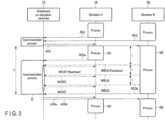
FIG. 3 is a view for describing an existence conformation method of a simulator by the distributed co-simulation controller that is applied to the simulator anomaly detection system of the present embodiment. -
FIG. 4 is a view for describing an existence conformation method of a simulator by a controller of conventional art. -
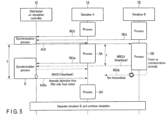
FIG. 5 is a view for describing an anomaly detection method of a simulator by the distributed co-simulation controller that is applied to the simulator anomaly detection system of the present embodiment. -
FIG. 6 is a view for describing an example of erroneous anomaly detection of a simulator by a controller of conventional art. -
FIG. 7 is a view for describing a robustness improvement of a synchronization process by the distributed co-simulation controller of the present embodiment. - Hereinafter, embodiments of the present invention will be described with reference to the accompanying drawings. The drawings are schematic or conceptual ones, and the relationship between the thickness and width of each part, and the ratio in size between parts, etc. do not necessarily agree with the actual ones. Even when identical parts are depicted, the parts may be depicted with different dimensions and ratios between the drawings. In the present specification and drawings, the elements similar to those described in connection with preceding drawings are denoted by like reference signs, and a detailed description thereof is omitted unless where necessary.
- An anomaly detection system, to which simulator anomaly detection of an embodiment of the present invention is applied, is described.
-
FIG. 1 is a view illustrating a network environment in which an anomaly detection system of the embodiment of the present invention is assembled. - As exemplarily illustrated in
FIG. 1 , in an environment in which one or a plurality of simulators 1 (1A, 1B, 1C,...) and acontroller 10 are connected via acommunication network 2, for example, a public network such as the internet, or a dedicated network, the anomaly detection system executes existence confirmation and anomaly detection of each simulator 1 (1A, 1B, 1C,...) by using thecontroller 10. - In each simulator (1A, 1B, 1C,...), an auxiliary function 20 (20A, 20B, 20C,...) is assembled for transmitting and receiving necessary information for existence confirmation and anomaly detection of each simulator 1 (1A, 1B, 1C,...), which are executed between each
simulator 1 and thecontroller 10 via thecommunication network 2. The auxiliary function 20 is implemented, for example, by software written in a memory of thesimulator 1, although the auxiliary function 20 is not limited to this. - By cooperating with the auxiliary function 20 (20A, 20B, 20C,...) of each simulator 1 (1A, 1B, 1C,...), the
controller 10 executes existence confirmation and anomaly detection of each simulator 1 (1A, 1B, 1C,...). - Note that since the
controller 10 also controls a synchronization process of each simulator 1 (1A, 1B, 1C,...), thecontroller 10 is hereinafter referred to also as "distributed co-simulation controller 10" in the present specification, where necessary. In addition, the anomaly detection system can also be referred to as "distributed co-simulation". -
FIG. 2 is a view for describing, as an example, a cooperation between simulation processes by three simulators 1 (1A, 1B, 1C), and a synchronization process by thedistributed co-simulation controller 10. - In the example illustrated in
FIG. 2 , each simulator 1 (1A, 1B, 1C) includes a simulation model of an identical period T(#1) (e.g. several milliseconds). As regards the processing time of simulation executed within the period T(#1), it is assumed that among the threesimulators simulator 1A is shortest, the time of a process SC(#1) by thesimulator 1C is longest, and the time of a process SB(#1) by thesimulator 1B is intermediate therebetween. - In this case, if the three
simulators simulator 1A ends first, the process SB(#1) by thesimulator 1B ends next, and the process SC(#1) by thesimulator 1C ends last. - The
distributed co-simulation controller 10 causes thesimulator 1A to stand by, even after the process SA(#1) by thesimulator 1A ends, thereby preventing advancement to a process SA(#2) of simulation of the next period T(#2); causes thesimulator 1B to stand by, even after the process by thesimulator 1B(#1) ends, thereby preventing advancement to a process SB(#2) of simulation of the next period T(#2); executes a synchronization process of results of the processes SA(#1), SB(#1) and SC(#1) of simulation by thesimulators simulator 1C ends; and causes, after the end of the synchronization process, thesimulators - In addition to this synchronization process, the
distributed co-simulation controller 10 operates as described below, thereby executing existence confirmation of the simulator 1 (1A, 1B, 1C). - This is described with reference to
FIG. 3 . -
FIG. 3 is a view for describing an existence conformation method of a simulator by the distributed co-simulation controller that is applied to the anomaly detection system of the present embodiment. - In
FIG. 3 , in order to avoid complexity, only twosimulators distributed co-simulation controller 10 can execute existence confirmation with respect to three or more simulators 1 (1A, 1B, 1C,...). - Specifically, the
distributed co-simulation controller 10 causes theauxiliary functions simulators - Thereafter, the
distributed co-simulation controller 10 causes the auxiliary function 20 of eachsimulator 1 to transmit an existence notification NREQ (No REQest) to thedistributed co-simulation controller 10 as a heartbeat at a predetermined cycle t less than the period T until the end of the process S of simulation, and to transmit, after the end of the process S, an end notification REQ (REQuest) to thedistributed co-simulation controller 10. This predetermined cycle t can be set to be variable or invariable (fixed). - Accordingly, in the example illustrated in
FIG. 3 , in the case of thesimulator 1B, after the start of the period T, since the process SB does not end even if the predetermined cycle t is reached, theauxiliary function 20B transmits an existence notification NREQ1 as a heartbeat, theauxiliary function 20B then transmits an existence notification NREQ2 as a heartbeat since the process SB does not end even if the next predetermined cycle t is reached, and theauxiliary function 20B transmits an existence notification NREQ3 as a heartbeat since the process SB does not end even if the further next predetermined cycle t is reached. At last, the process SB ends before the next predetermined cycle t is reached, and theauxiliary function 20B transmits an end notification REQb to thedistributed co-simulation controller 10. - On the other hand, in the case of the
simulator 1A, after the start of the period T, the process SA ends before the predetermined cycle t is reached, and theauxiliary function 20A transmits an end notification REQa to thedistributed co-simulation controller 10. - Upon receiving the end notification REQ, the
distributed co-simulation controller 10 determines that thesimulator 1 of the auxiliary function 20 that is the transmission source has finished the process S of simulation. - Accordingly, in the example illustrated in
FIG. 3 , upon receiving the end notification REQa, thedistributed co-simulation controller 10 determines that thesimulator 1A has finished the process SA. - At this time point, in a case where the end notifications REQ from all
simulators 1 are not received, if the NREQ is transmitted from the auxiliary function 20 of thesimulator 1 that has not yet transmitted the end notification REQ, thedistributed co-simulation controller 10 transmits a NACK (Negative ACKnowledgment) as a heartbeat to the auxiliary function 20 of thesimulator 1 that is the transmission source of the end notification REQ, thereby causing thesimulator 1 to stand by so as not to execute the process S of simulation of the next period T. - Accordingly, in the example illustrated in
FIG. 3 , if the NREQ1 is transmitted from thesimulator 1B that has not yet transmitted the end notification REQ after thedistributed co-simulation controller 10 received the end notification REQa from thesimulator 1A, thedistributed co-simulation controller 10 transmits NACK1 as a heartbeat to thesimulator 1A, thereby causing thesimulator 1A to stand by so as not to execute a process SA' of simulation of the next period T. - In addition, if the
distributed co-simulation controller 10 receives the existence notification NREQ at the predetermined cycle t from the auxiliary function 20 of anidentical simulator 1, thedistributed co-simulation controller 10 determines that thesimulator 1 of the auxiliary function 20 that is the transmission source is normally executing the process S of simulation. - Accordingly, in the example illustrated in
FIG. 3 , thedistributed co-simulation controller 10 determines that thesimulator 1B is normally executing the process SB, by receiving the existence notifications NREQ1, NREQ2 and NREQ3 at the cycle t. - Then, upon receiving the end notifications REQ from all
simulators 1, thedistributed co-simulation controller 10 executes a synchronization process D, and, after the execution of the synchronization process D, transmits ACK (ACKnowledgment) to eachsimulator 1 and causes eachsimulator 1 to start a process of simulation that is to be executed in the next period T. - Accordingly, in the example illustrated in
FIG. 3 , thedistributed co-simulation controller 10 completes the reception of the end notifications REQa and REQb from allsimulators simulator 1B. Thereby, thedistributed co-simulation controller 10 executes the synchronization process D, and, after the execution of the synchronization process D, transmits ACKa and ACKb to theauxiliary functions simulators simulator - According to the above-described existence confirmation method, compared to conventional art, the communication load can be reduced with respect to two viewpoints. As regards the first viewpoint, as illustrated in
FIG. 3 , in the present method, existence confirmation is not constantly executed between thedistributed co-simulation controller 10 and thesimulator - The second viewpoint is described with reference to
FIG. 4 . -
FIG. 4 is a view for describing an existence conformation method of a simulator by a controller of conventional art. - In
FIG. 4 , unlikeFIG. 3 , not the distributedco-simulation controller 10 but acontroller 100 of conventional art executes existence confirmation of thesimulator - In particular, as indicated by W in
FIG. 4 , if the synchronization process of a preceding period T ends, thecontroller 100 transmits a heartbeat HB to eachsimulator 1 in a predetermined cycle t less than the period T. The predetermined cycle t may be different, or may be identical, between thesimulators 1.FIG. 4 illustrates an example in which thecontroller 100 transmits a heartbeat HBa1 to thesimulator 1A at a predetermined cycle t1, and a heartbeat HBb1 to thesimulator 1B at a predetermined cycle t2 that is longer than the predetermined cycle t1. - Upon receiving the heartbeat HB, each
simulator 1 returns a heartbeat HB to thecontroller 100. Accordingly, in the case as illustrated inFIG. 4 , upon receiving the heartbeat HBa1 from thecontroller 100, thesimulator 1A returns a heartbeat HBa2 to thecontroller 100, and, upon receiving the heartbeat HBb1 from thecontroller 100, thesimulator 1B returns a heartbeat HBb2 to thecontroller 100. - The
controller 100 confirms the existence of thesimulator 1 that is the transmission source of the heartbeat HB, by receiving the heartbeat HB that is returned from eachsimulator 1. In the case as illustrated inFIG. 4 , thecontroller 100 confirms the existence of thesimulator 1A by receiving the heartbeat HBa2 from thesimulator 1A, and confirms the existence of thesimulator 1B by receiving the heartbeat HBb2 from thesimulator 1B. - In this manner, according to the conventional art, the existence confirmation of one
simulator 1 requires a reciprocation of heartbeats HB, i.e. the transmission of two heartbeats HB, in such a manner that thecontroller 100 first transmits the heartbeat HB to eachsimulator 1, and eachsimulator 1 returns, as a response thereto, the heartbeat HB to thecontroller 100. Accordingly, as illustrated inFIG. 4 , when the existence confirmation of twosimulators - Since such transmission of heartbeats HB is executed in overlap with an ordinary communication process, the number of reciprocal transmissions of heartbeats HB increases as the number of
simulators 1 handled by thecontroller 100 increases, leading to an increase in communication load. - By contrast, in the present embodiment, the distributed
co-simulation controller 10 does not transmit a heartbeat to eachsimulator 1, and thesimulator 1 transmits a heartbeat to the distributedco-simulation controller 10. In addition, by receiving the transmitted heartbeat, the distributedco-simulation controller 10 confirms the existence of thesimulator 1 that is the transmission source. Specifically, the transmission of the heartbeat is not reciprocal but is only one-way, and therefore the existence confirmation of the simulator can be executed while an increase in communication load due to the transmission of heartbeats is more suppressed than in the conventional art. - In addition, in the present embodiment, if the end notification REQ is not transmitted, or the existence notification- NREQ is not transmitted at the predetermined cycle t, from a certain auxiliary function 20, the distributed
co-simulation controller 10 detects that an anomaly (for example, crash, or communication anomaly) occurred in thesimulator 1 of this auxiliary function 20. - This is described with reference to
FIG. 5 . -
FIG. 5 is a view for describing an anomaly detection method of a simulator by the distributed co-simulation controller that is applied to the anomaly detection system of the present embodiment. - In the case exemplarily illustrated in
FIG. 5 , after the start of the period T, when the predetermined cycle t was reached, thesimulator 1B had not finished the process SB. Thus, theauxiliary function 20B transmitted the existence notification NREQ1. Then, although the process SB was finished before the next cycle t was reached, communication with the distributedco-simulation controller 10 was disabled due to a crash or communication anomaly, and the end notification REQb could not be transmitted from theauxiliary function 20B. - As a result, since the distributed
co-simulation controller 10 receives neither the end notification REQb nor the existence notification NREQ from thesimulator 1B, the distributedco-simulation controller 10 detects that an anomaly occurred in thesimulator 1B. Then, the distributedco-simulation controller 10 separates thesimulator 1B in which the occurrence of anomaly was detected, and subsequently transmits ACKa to only thesimulator 1A in order to continue the process by thesimulator 1A alone. ACKa is received by theauxiliary function 20A of thesimulator 1A, and, responding to this, thesimulator 1A starts the process SA' of the next period T. Since ACKb is not transmitted to thesimulator 1B, thesimulator 1B is separated from the synchronization process without starting the process SB' of the next period T. - In the conventional art, the synchronization process is disabled if an anomaly occurs in any one of
simulators 1. However, according to the above-described anomaly detection method, thesimulator 1, in which an anomaly occurred, is detected and is separated from the synchronization process, and the synchronization process can be continued by operating only thesimulator 1 in which no anomaly occurs. - Besides, in the conventional art, in some cases, even with respect to simulators that normally operate, a simulator that is slow in processing, or a
simulator 1B that temporarily halts processing, as illustrated inFIG. 6 , is erroneously detected to be abnormal, and is separated from the synchronization process, resulting in the failure to continue the synchronization process. However, according to the above-described present anomaly detection method, a simulator that is slow in processing, or asimulator 1B that simply temporarily halts the process SB, as illustrated inFIG. 7 , if no anomaly occurs therein, is not separated from the synchronization process, and the synchronization process can be continued, and the robustness of the synchronization process can be enhanced. - While certain embodiments of the present invention have been described, these embodiments have been presented by way of example only, and are not intended to limit the scope of the invention. These novel embodiments may be implemented in a variety of other forms, and various omissions, substitutions and changes may be made without departing from the spirit of the inventions. These embodiments and their modifications fall within the scope and spirit of the invention and within the inventions of the accompanying claims and their equivalents.
Claims (14)
- An anomaly detection system that executes anomaly detection of each of one or a plurality of simulators by using a controller that executes a synchronization process of the one or plurality of simulators,
the controller being configured to:cause each simulator to start a process of simulation that is to be executed in a predetermined period, to transmit to the controller an existence notification indicative of existence of the simulator, at a predetermined cycle until an end of the process of simulation, and to transmit to the controller an end notification indicative of an end of the process if the process ends;determine that the simulator that is a transmission source of the existence notification is normal, upon receiving the existence notification at the predetermined cycle, and determine that the process of the simulator that is a transmission source of the end notification ends, upon receiving the end notification; anddetect, if the existence notification is not transmitted at the predetermined cycle from a simulator that is not determined to finish the process, that an anomaly occurs in the simulator. - The anomaly detection system of Claim 1, wherein the controller is configured to:
when a simulator that is determined to finish the process is present, if the existence notification is received from another simulator among the one or plurality of simulators, output to the simulator determined to finish the process a standby instruction not to start simulation that is to be executed in a predetermined period next to the predetermined period. - The anomaly detection system of Claim 1 or 2, wherein the controller is configured to:
execute the synchronization process upon receiving the end notifications from all of the one or plurality of simulators, and cause all of the simulators to start, after an end of the synchronization process, simulation that is to be executed in a predetermined period next to the predetermined period. - The anomaly detection system of any one of Claims 1 to 3, wherein the controller is configured to:
separate a simulator, in which the anomaly is determined to occur, from the synchronization process. - The anomaly detection system of any one of Claims 1 to 4, wherein the predetermined cycle is invariable.
- The anomaly detection system of any one of Claims 1 to 4, wherein the predetermined cycle is variable.
- A anomaly detection method of executing anomaly detection of each of one or a plurality of simulators by using a controller that executes a synchronization process of the one or plurality of simulators,
each of the simulators being configured to:start, in accordance with an instruction from the controller, simulation that is to be executed in a predetermined period, transmit to the controller an existence notification indicative of existence of the simulator, at a predetermined cycle until an end of a process of the simulation, and transmit to the controller an end notification indicative of an end of the process if the process ends, andthe controller being configured to:determine that the simulator that is a transmission source of the existence notification is normal, upon receiving the existence notification at the predetermined cycle, and determine that the process of the simulator that is a transmission source of the end notification ends, upon receiving the end notification; anddetect, if the existence notification is not transmitted at the predetermined cycle from a simulator that is not determined to finish the process, that an anomaly occurs in the simulator. - The anomaly detection method of Claim 7, wherein the controller is configured to:
when a simulator that is determined to finish the process is present, if the existence notification is received from another simulator among the one or plurality of simulators, output to the simulator determined to finish the process a standby instruction not to start simulation that is to be executed in a predetermined period next to the predetermined period. - The anomaly detection method of Claim 7 or 8, wherein the controller is configured to:
execute the synchronization process upon receiving the end notifications from all of the one or plurality of simulators, and cause all of the simulators to start, after an end of the synchronization process, simulation that is to be executed in a predetermined period next to the predetermined period. - The anomaly detection method of any one of Claims 7 to 9, wherein the controller is configured to:
separate a simulator, in which the anomaly is detected to occur, from the synchronization process. - The anomaly detection method of any one of Claims 7 to 10, wherein the predetermined cycle is invariable.
- The anomaly detection method of any one of Claims 7 to 10, wherein the predetermined cycle is variable.
- A program for causing a processor to implement:a function of causing each of one or a plurality of simulators, simulation results of which are subjected to a synchronization process, to start a process of simulation that is to be executed in a predetermined period, to transmit an existence notification indicative of existence of the simulator at a predetermined cycle until an end of the process of simulation, and to transmit an end notification indicative of an end of the process if the process ends;a function of determining that the simulator that is a transmission source of the existence notification is normal if the existence notification is transmitted at the predetermined cycle, and determining that the process of the simulator that is a transmission source of the end notification ends if the end notification is transmitted; anda function of deteting, if the existence notification is not transmitted at the predetermined cycle from a simulator that is not determined to finish the process, that an anomaly occurs in the simulator.
- A distributed co-simulation system comprising:one or a plurality of simulators each including an auxiliary function; anda controller connected to each of the simulators via a communication network,the controller being configured to:cause the auxiliary function of each simulator to start a process of simulation that is to be executed in a predetermined period, to transmit to the controller an existence notification indicative of existence of the simulator, at a predetermined cycle until an end of the process of simulation, and to transmit to the controller an end notification indicative of an end of the process if the process ends;determine that the simulator that is a transmission source of the existence notification is normal, upon receiving the existence notification at the predetermined cycle, and determine that the process of the simulator that is a transmission source of the end notification ends, upon receiving the end notification; anddetect, if the existence notification is not transmitted at the predetermined cycle from the auxiliary function of a simulator that is not determined to finish the process, that an anomaly occurs in the simulator.
Applications Claiming Priority (1)
| Application Number | Priority Date | Filing Date | Title |
|---|---|---|---|
| PCT/JP2022/013597 WO2023181198A1 (en) | 2022-03-23 | 2022-03-23 | Simulator abnormality determination system, method, program, and distributed co-simulation system |
Publications (2)
| Publication Number | Publication Date |
|---|---|
| EP4498250A1 true EP4498250A1 (en) | 2025-01-29 |
| EP4498250A4 EP4498250A4 (en) | 2025-12-24 |
Family
ID=82748806
Family Applications (1)
| Application Number | Title | Priority Date | Filing Date |
|---|---|---|---|
| EP22764993.6A Pending EP4498250A4 (en) | 2022-03-23 | 2022-03-23 | SYSTEM, METHOD, PROGRAM AND DISTRIBUTED COSIMULATION SYSTEM FOR DETERMINING SIMULATOR ANOMALIES |
Country Status (5)
| Country | Link |
|---|---|
| US (1) | US12093613B2 (en) |
| EP (1) | EP4498250A4 (en) |
| JP (1) | JP7114825B1 (en) |
| CN (1) | CN117120982A (en) |
| WO (1) | WO2023181198A1 (en) |
Family Cites Families (16)
| Publication number | Priority date | Publication date | Assignee | Title |
|---|---|---|---|---|
| US6772107B1 (en) * | 1999-11-08 | 2004-08-03 | J.D. Edwards World Source Company | System and method for simulating activity on a computer network |
| US6820221B2 (en) * | 2001-04-13 | 2004-11-16 | Hewlett-Packard Development Company, L.P. | System and method for detecting process and network failures in a distributed system |
| US6782496B2 (en) * | 2001-04-13 | 2004-08-24 | Hewlett-Packard Development Company, L.P. | Adaptive heartbeats |
| US20060129880A1 (en) * | 2004-11-26 | 2006-06-15 | Mauro Arcese | Method and system for injecting faults into a software application |
| JP2006172128A (en) * | 2004-12-15 | 2006-06-29 | Canon Inc | Processing method and information processing apparatus for program linkage system |
| EP1943589A2 (en) * | 2005-11-04 | 2008-07-16 | Inchron GmbH | Method for generating a simulation program which can be executed on a host computer |
| JP4975544B2 (en) * | 2007-07-20 | 2012-07-11 | 富士通セミコンダクター株式会社 | Simulation apparatus and program |
| JP5195818B2 (en) * | 2010-06-01 | 2013-05-15 | セイコーエプソン株式会社 | Display control device |
| JP5780115B2 (en) * | 2011-10-28 | 2015-09-16 | 株式会社リコー | Error detection method, information processing circuit, and error detection program |
| US9372766B2 (en) * | 2014-02-11 | 2016-06-21 | Saudi Arabian Oil Company | Circumventing load imbalance in parallel simulations caused by faulty hardware nodes |
| US10482226B1 (en) * | 2016-01-22 | 2019-11-19 | State Farm Mutual Automobile Insurance Company | System and method for autonomous vehicle sharing using facial recognition |
| US10908983B2 (en) * | 2017-03-31 | 2021-02-02 | Cae Inc. | Method and system for preventing an anomaly in a simulator |
| US10908981B2 (en) * | 2017-03-31 | 2021-02-02 | Cae Inc. | Method and system for diagnosis of a simulator |
| EP3422218A1 (en) * | 2017-06-29 | 2019-01-02 | Siemens Aktiengesellschaft | Synchronization of a plurality of simulations |
| US10776196B2 (en) | 2018-08-29 | 2020-09-15 | International Business Machines Corporation | Systems and methods for anomaly detection in a distributed computing system |
| US20220374260A1 (en) * | 2021-05-21 | 2022-11-24 | Samsung Electronics Co., Ltd. | Systems, methods, and apparatus for coordinating computation systems |
-
2022
- 2022-03-23 CN CN202280003096.XA patent/CN117120982A/en active Pending
- 2022-03-23 EP EP22764993.6A patent/EP4498250A4/en active Pending
- 2022-03-23 JP JP2022534460A patent/JP7114825B1/en active Active
- 2022-03-23 WO PCT/JP2022/013597 patent/WO2023181198A1/en not_active Ceased
- 2022-09-15 US US17/932,638 patent/US12093613B2/en active Active
Also Published As
| Publication number | Publication date |
|---|---|
| EP4498250A4 (en) | 2025-12-24 |
| WO2023181198A1 (en) | 2023-09-28 |
| CN117120982A (en) | 2023-11-24 |
| JP7114825B1 (en) | 2022-08-08 |
| US20230306151A1 (en) | 2023-09-28 |
| US12093613B2 (en) | 2024-09-17 |
| JPWO2023181198A1 (en) | 2023-09-28 |
Similar Documents
| Publication | Publication Date | Title |
|---|---|---|
| JP5494255B2 (en) | Safety control system | |
| US8284669B2 (en) | Data acknowledgement apparatus and method | |
| CN104782082B (en) | For the new method of Controller Area Network BUS processing | |
| CN107832250B (en) | Master-slave communication time sequence method based on SPI | |
| US20090040934A1 (en) | Distributed System | |
| US9641383B2 (en) | Method for error diagnosis of can communication | |
| CN110753284A (en) | Wireless earphone communication method and system and wireless earphone | |
| CN101369868A (en) | Transmission system | |
| US12093613B2 (en) | Anomaly detection system, method and program, and distributed co-simulation system | |
| CN115664599B (en) | A data transmission method, device, electronic equipment and storage medium | |
| JP3965699B2 (en) | Information processing apparatus and information processing method | |
| CN107608711A (en) | Upgrade method, device, system and electronic equipment | |
| US10719416B2 (en) | Method and device for recognizing hardware errors in microprocessors | |
| US8688241B2 (en) | Distributed control system for monitoring a significant control | |
| JP7166482B1 (en) | SIMULATOR ERROR DETERMINATION SYSTEM, METHOD AND PROGRAM | |
| JP7183470B1 (en) | Distributed coupled simulation system | |
| JP7512529B2 (en) | Data Processing Network for Data Processing | |
| US12567994B2 (en) | CAN-FD redundancy for high availability industrial I/O subsystems | |
| JP2011188322A (en) | Method of controlling communication, communication control program, and master communication device | |
| US20160218984A1 (en) | Communication device and control method of communication device | |
| JP2011253285A (en) | Diagnosis system, diagnosis apparatus, and diagnosis program | |
| JP2008205899A (en) | Transmission failure avoiding method in transmission/reception system | |
| US9154269B2 (en) | Method for operating a remote procedure call handler in a client and a server and computer system comprising the same | |
| JP6734031B2 (en) | Transmission device, transmission/reception system, transmission method and program | |
| JP2002044185A (en) | Communication terminal and communication abnormality detection method |
Legal Events
| Date | Code | Title | Description |
|---|---|---|---|
| STAA | Information on the status of an ep patent application or granted ep patent |
Free format text: STATUS: UNKNOWN |
|
| STAA | Information on the status of an ep patent application or granted ep patent |
Free format text: STATUS: THE INTERNATIONAL PUBLICATION HAS BEEN MADE |
|
| PUAI | Public reference made under article 153(3) epc to a published international application that has entered the european phase |
Free format text: ORIGINAL CODE: 0009012 |
|
| STAA | Information on the status of an ep patent application or granted ep patent |
Free format text: STATUS: REQUEST FOR EXAMINATION WAS MADE |
|
| 17P | Request for examination filed |
Effective date: 20220914 |
|
| AK | Designated contracting states |
Kind code of ref document: A1 Designated state(s): AL AT BE BG CH CY CZ DE DK EE ES FI FR GB GR HR HU IE IS IT LI LT LU LV MC MK MT NL NO PL PT RO RS SE SI SK SM TR |
|
| DAV | Request for validation of the european patent (deleted) | ||
| DAX | Request for extension of the european patent (deleted) | ||
| A4 | Supplementary search report drawn up and despatched |
Effective date: 20251126 |
|
| RIC1 | Information provided on ipc code assigned before grant |
Ipc: G06F 11/07 20060101AFI20251120BHEP Ipc: G06F 9/52 20060101ALI20251120BHEP Ipc: G06F 11/30 20060101ALI20251120BHEP Ipc: G06F 11/34 20060101ALI20251120BHEP Ipc: G06F 30/20 20200101ALI20251120BHEP Ipc: G06F 111/02 20200101ALN20251120BHEP |