EP4498216A1 - Element control method and apparatus for information input page, device, and medium - Google Patents
Element control method and apparatus for information input page, device, and medium Download PDFInfo
- Publication number
- EP4498216A1 EP4498216A1 EP23802851.8A EP23802851A EP4498216A1 EP 4498216 A1 EP4498216 A1 EP 4498216A1 EP 23802851 A EP23802851 A EP 23802851A EP 4498216 A1 EP4498216 A1 EP 4498216A1
- Authority
- EP
- European Patent Office
- Prior art keywords
- list
- theme
- response
- lists
- present disclosure
- Prior art date
- Legal status (The legal status is an assumption and is not a legal conclusion. Google has not performed a legal analysis and makes no representation as to the accuracy of the status listed.)
- Pending
Links
Images


Classifications
-
- G—PHYSICS
- G06—COMPUTING OR CALCULATING; COUNTING
- G06F—ELECTRIC DIGITAL DATA PROCESSING
- G06F3/00—Input arrangements for transferring data to be processed into a form capable of being handled by the computer; Output arrangements for transferring data from processing unit to output unit, e.g. interface arrangements
- G06F3/01—Input arrangements or combined input and output arrangements for interaction between user and computer
- G06F3/048—Interaction techniques based on graphical user interfaces [GUI]
- G06F3/0487—Interaction techniques based on graphical user interfaces [GUI] using specific features provided by the input device, e.g. functions controlled by the rotation of a mouse with dual sensing arrangements, or of the nature of the input device, e.g. tap gestures based on pressure sensed by a digitiser
- G06F3/0488—Interaction techniques based on graphical user interfaces [GUI] using specific features provided by the input device, e.g. functions controlled by the rotation of a mouse with dual sensing arrangements, or of the nature of the input device, e.g. tap gestures based on pressure sensed by a digitiser using a touch-screen or digitiser, e.g. input of commands through traced gestures
-
- G—PHYSICS
- G06—COMPUTING OR CALCULATING; COUNTING
- G06F—ELECTRIC DIGITAL DATA PROCESSING
- G06F3/00—Input arrangements for transferring data to be processed into a form capable of being handled by the computer; Output arrangements for transferring data from processing unit to output unit, e.g. interface arrangements
- G06F3/01—Input arrangements or combined input and output arrangements for interaction between user and computer
- G06F3/048—Interaction techniques based on graphical user interfaces [GUI]
- G06F3/0484—Interaction techniques based on graphical user interfaces [GUI] for the control of specific functions or operations, e.g. selecting or manipulating an object, an image or a displayed text element, setting a parameter value or selecting a range
- G06F3/04845—Interaction techniques based on graphical user interfaces [GUI] for the control of specific functions or operations, e.g. selecting or manipulating an object, an image or a displayed text element, setting a parameter value or selecting a range for image manipulation, e.g. dragging, rotation, expansion or change of colour
-
- G—PHYSICS
- G06—COMPUTING OR CALCULATING; COUNTING
- G06F—ELECTRIC DIGITAL DATA PROCESSING
- G06F3/00—Input arrangements for transferring data to be processed into a form capable of being handled by the computer; Output arrangements for transferring data from processing unit to output unit, e.g. interface arrangements
- G06F3/01—Input arrangements or combined input and output arrangements for interaction between user and computer
- G06F3/048—Interaction techniques based on graphical user interfaces [GUI]
- G06F3/0481—Interaction techniques based on graphical user interfaces [GUI] based on specific properties of the displayed interaction object or a metaphor-based environment, e.g. interaction with desktop elements like windows or icons, or assisted by a cursor's changing behaviour or appearance
-
- G—PHYSICS
- G06—COMPUTING OR CALCULATING; COUNTING
- G06F—ELECTRIC DIGITAL DATA PROCESSING
- G06F3/00—Input arrangements for transferring data to be processed into a form capable of being handled by the computer; Output arrangements for transferring data from processing unit to output unit, e.g. interface arrangements
- G06F3/01—Input arrangements or combined input and output arrangements for interaction between user and computer
- G06F3/048—Interaction techniques based on graphical user interfaces [GUI]
- G06F3/0481—Interaction techniques based on graphical user interfaces [GUI] based on specific properties of the displayed interaction object or a metaphor-based environment, e.g. interaction with desktop elements like windows or icons, or assisted by a cursor's changing behaviour or appearance
- G06F3/04817—Interaction techniques based on graphical user interfaces [GUI] based on specific properties of the displayed interaction object or a metaphor-based environment, e.g. interaction with desktop elements like windows or icons, or assisted by a cursor's changing behaviour or appearance using icons
-
- G—PHYSICS
- G06—COMPUTING OR CALCULATING; COUNTING
- G06F—ELECTRIC DIGITAL DATA PROCESSING
- G06F3/00—Input arrangements for transferring data to be processed into a form capable of being handled by the computer; Output arrangements for transferring data from processing unit to output unit, e.g. interface arrangements
- G06F3/01—Input arrangements or combined input and output arrangements for interaction between user and computer
- G06F3/048—Interaction techniques based on graphical user interfaces [GUI]
- G06F3/0481—Interaction techniques based on graphical user interfaces [GUI] based on specific properties of the displayed interaction object or a metaphor-based environment, e.g. interaction with desktop elements like windows or icons, or assisted by a cursor's changing behaviour or appearance
- G06F3/0482—Interaction with lists of selectable items, e.g. menus
-
- G—PHYSICS
- G06—COMPUTING OR CALCULATING; COUNTING
- G06F—ELECTRIC DIGITAL DATA PROCESSING
- G06F3/00—Input arrangements for transferring data to be processed into a form capable of being handled by the computer; Output arrangements for transferring data from processing unit to output unit, e.g. interface arrangements
- G06F3/01—Input arrangements or combined input and output arrangements for interaction between user and computer
- G06F3/048—Interaction techniques based on graphical user interfaces [GUI]
- G06F3/0484—Interaction techniques based on graphical user interfaces [GUI] for the control of specific functions or operations, e.g. selecting or manipulating an object, an image or a displayed text element, setting a parameter value or selecting a range
-
- G—PHYSICS
- G06—COMPUTING OR CALCULATING; COUNTING
- G06F—ELECTRIC DIGITAL DATA PROCESSING
- G06F3/00—Input arrangements for transferring data to be processed into a form capable of being handled by the computer; Output arrangements for transferring data from processing unit to output unit, e.g. interface arrangements
- G06F3/01—Input arrangements or combined input and output arrangements for interaction between user and computer
- G06F3/048—Interaction techniques based on graphical user interfaces [GUI]
- G06F3/0484—Interaction techniques based on graphical user interfaces [GUI] for the control of specific functions or operations, e.g. selecting or manipulating an object, an image or a displayed text element, setting a parameter value or selecting a range
- G06F3/04842—Selection of displayed objects or displayed text elements
-
- G—PHYSICS
- G06—COMPUTING OR CALCULATING; COUNTING
- G06F—ELECTRIC DIGITAL DATA PROCESSING
- G06F3/00—Input arrangements for transferring data to be processed into a form capable of being handled by the computer; Output arrangements for transferring data from processing unit to output unit, e.g. interface arrangements
- G06F3/01—Input arrangements or combined input and output arrangements for interaction between user and computer
- G06F3/048—Interaction techniques based on graphical user interfaces [GUI]
- G06F3/0484—Interaction techniques based on graphical user interfaces [GUI] for the control of specific functions or operations, e.g. selecting or manipulating an object, an image or a displayed text element, setting a parameter value or selecting a range
- G06F3/04847—Interaction techniques to control parameter settings, e.g. interaction with sliders or dials
-
- G—PHYSICS
- G06—COMPUTING OR CALCULATING; COUNTING
- G06F—ELECTRIC DIGITAL DATA PROCESSING
- G06F3/00—Input arrangements for transferring data to be processed into a form capable of being handled by the computer; Output arrangements for transferring data from processing unit to output unit, e.g. interface arrangements
- G06F3/01—Input arrangements or combined input and output arrangements for interaction between user and computer
- G06F3/048—Interaction techniques based on graphical user interfaces [GUI]
- G06F3/0484—Interaction techniques based on graphical user interfaces [GUI] for the control of specific functions or operations, e.g. selecting or manipulating an object, an image or a displayed text element, setting a parameter value or selecting a range
- G06F3/0486—Drag-and-drop
-
- G—PHYSICS
- G06—COMPUTING OR CALCULATING; COUNTING
- G06F—ELECTRIC DIGITAL DATA PROCESSING
- G06F2203/00—Indexing scheme relating to G06F3/00 - G06F3/048
- G06F2203/048—Indexing scheme relating to G06F3/048
- G06F2203/04806—Zoom, i.e. interaction techniques or interactors for controlling the zooming operation
-
- G—PHYSICS
- G06—COMPUTING OR CALCULATING; COUNTING
- G06F—ELECTRIC DIGITAL DATA PROCESSING
- G06F3/00—Input arrangements for transferring data to be processed into a form capable of being handled by the computer; Output arrangements for transferring data from processing unit to output unit, e.g. interface arrangements
- G06F3/01—Input arrangements or combined input and output arrangements for interaction between user and computer
- G06F3/048—Interaction techniques based on graphical user interfaces [GUI]
- G06F3/0484—Interaction techniques based on graphical user interfaces [GUI] for the control of specific functions or operations, e.g. selecting or manipulating an object, an image or a displayed text element, setting a parameter value or selecting a range
- G06F3/0485—Scrolling or panning
-
- G—PHYSICS
- G06—COMPUTING OR CALCULATING; COUNTING
- G06F—ELECTRIC DIGITAL DATA PROCESSING
- G06F3/00—Input arrangements for transferring data to be processed into a form capable of being handled by the computer; Output arrangements for transferring data from processing unit to output unit, e.g. interface arrangements
- G06F3/01—Input arrangements or combined input and output arrangements for interaction between user and computer
- G06F3/048—Interaction techniques based on graphical user interfaces [GUI]
- G06F3/0487—Interaction techniques based on graphical user interfaces [GUI] using specific features provided by the input device, e.g. functions controlled by the rotation of a mouse with dual sensing arrangements, or of the nature of the input device, e.g. tap gestures based on pressure sensed by a digitiser
- G06F3/0488—Interaction techniques based on graphical user interfaces [GUI] using specific features provided by the input device, e.g. functions controlled by the rotation of a mouse with dual sensing arrangements, or of the nature of the input device, e.g. tap gestures based on pressure sensed by a digitiser using a touch-screen or digitiser, e.g. input of commands through traced gestures
- G06F3/04886—Interaction techniques based on graphical user interfaces [GUI] using specific features provided by the input device, e.g. functions controlled by the rotation of a mouse with dual sensing arrangements, or of the nature of the input device, e.g. tap gestures based on pressure sensed by a digitiser using a touch-screen or digitiser, e.g. input of commands through traced gestures by partitioning the display area of the touch-screen or the surface of the digitising tablet into independently controllable areas, e.g. virtual keyboards or menus
Definitions
- the present disclosure relates to the field of computer processing technologies, and in particular to an element control method and apparatus for an information input interface, a device, a storage medium, and a computer product.
- intelligent terminals are more and more widely used in people's work and life. People can perform human-computer interaction or information interaction with others by inputting information into intelligent terminals.
- the information input into the intelligent terminals can be various elements, such as one or more of text messages, voice messages, video messages, address links, emojis, etc.
- elements such as one or more of text messages, voice messages, video messages, address links, emojis, etc.
- element inputting process a plurality of element themes and elements are presented in a designated area, and users can gain a basic understanding of the content of elements through the element themes and can send elements to the client of information interaction through operations on the elements.
- Embodiments of the present disclosure provide an element control method and apparatus for an information input interface, a device, a storage medium, and a program product.
- An element identification area is enlarged and then displayed for the convenience for users to view.
- an embodiment of the present disclosure provides an element control method for an information input interface, comprising:
- an element control apparatus for an information input interface comprising:
- an electronic device which comprises:
- an embodiment of the present disclosure provides a computer readable storage medium storing thereon a computer program which, when executed by a processor, implements the element control method for the information input interface according to the above first aspect.
- an embodiment of the present disclosure provides a computer program product comprising computer programs or instructions which, when executed by a processor, implement the element control method for the information input interface according to the above first aspect.
- an embodiment of the present disclosure provides a computer program comprising instructions which, when executed by a processor, implements the element control method for the information input interface according to the above first aspect.
- the term “including” and its variants are non-exclusive including, that is, “including but not limited to”.
- the term “based on” is “at least partially based on”; the term “an embodiment” means “at least one embodiment”; the term “another embodiment” means “at least one other embodiment”; the term “some embodiments” means “at least some embodiments”.
- Related definitions of other terms will be given in the following description.
- Names of messages or information exchanged among a plurality of means in the implementations of the present disclosure are only used for illustrative purposes, and are not used to limit the scope of these messages or information.
- the element control method and apparatus for an information input interface, the device, the storage medium, and the program product provided by the embodiments of the present disclosure can be applied to any message input scenario.
- the above message input scenario can include scenarios where messages are input in instant messaging applications, live applications, information search applications, games applications, shopping applications, document editing applications, audio-video applications, and the like, for example, a scenario where instant messaging applications perform message interaction with other clients, for another example, a scenario where messages are input to interact with the streamer in live applications, for another example, a scenario where comments are made on the played audio-video clips in audio-video applications, for another example, a scenario where effects are selected when composing in audio-video applications.
- the above element is a kind of input information, for example, the element can be an emoji, or the element can be a prop identifier.
- the element identifiers Due to the limitation of form factors of intelligent terminals, in order to display more element identifiers in a designated area, the element identifiers are designed to be small, and are not convenient for users to view.
- the element control method and apparatus for the information input interface, the device, the storage medium, and the program product provided by the embodiments of the present disclosure enlarge the element identification area and then display it for the convenience for users to view.
- the element control method for the information input interface proposed by the embodiments of the present application will be introduced in detail with the accompanying drawings.
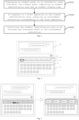
- Fig. 1 is a flow diagram of an element control method for an information input interface in an embodiment of the present disclosure.
- the present embodiment is applicable to a case of controlling elements in an information input interface.
- the method can be executed by an element control apparatus for the information input interface, which can be implemented in software and/or hardware and can be configured in an electronic device.
- the electronic device can be a mobile terminal, a fixed terminal, or a portable terminal, such as mobile phone, site, unit, device, multimedia computer, multimedia tablet, Internet node, communicator, desktop computer, laptop computer, notebook computer, netbook computer, tablet computer, personal communication system (PCS) device, personal navigation device, personal digital assistant (PDA), audio/video player, digital camera/camcorder, positioning device, television receiver, radio broadcast receiver, E-book device, game device, or any combination thereof, including accessories and peripheral devices of these devices or a combination thereof.
- PCS personal communication system
- PDA personal digital assistant
- audio/video player digital camera/camcorder
- positioning device television receiver, radio broadcast receiver
- E-book device E-book device
- game device or any combination thereof, including accessories and peripheral devices of these devices or a combination thereof.
- the electronic device can be a server, wherein the server can be an entity server or a cloud server, and the server can be a server or a server cluster.
- the element control method for the information input interface mainly includes steps S101-S103.
- the application When users use an application in an electronic device, the application will present its application interface to the users through the electronic device, and the application interface presented by the application to the users will include a plurality of functional windows related to the application in a current business scenario, such as a text input window and an element presentation window, and each functional window can correspond to an wake-up control.
- the current business scenario can include any scenario where information needs to be input, such as a cloud document business scenario, an instant messaging business scenario, a live scenario, and a game scenario. Users can perform a wake-up operation on a certain functional window through the wake-up control corresponding to the functional window.
- an element panel is displayed on an information input interface in response to an wake-up operation on the element panel.
- the users' wake-up operation on the element panel can include various implementations. For example, users can realize the wake-up operation on the element panel by triggering the wake-up control corresponding to the element panel in the current business scenario.
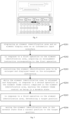
- the information input interface of the electronic device mainly includes two parts: an element panel 10 and a message display area 20.
- the element panel 10 includes an element identification area 11 and an element display area 12.
- the element identification area 11 includes a plurality of element theme controls 13.
- the element display area 12 is used for displaying a plurality of elements 14, and illustratively, each element theme includes at least one element 14.
- the elements displayed in the element display area 12 are elements corresponding to a selected element theme, wherein the selected element theme is displayed in a special way. As shown in Fig. 2 , the elements displayed in the element display area 12 are elements included in element theme A, where the element theme A is displayed in a bold border.
- the first operation includes a click operation for a preset duration and/or a slide operation along a first preset angle range.
- the preset duration can be set according to the actual situation, optionally, the preset duration is any one of 1 second, 2 seconds, or 3 seconds.
- the click operation for a preset duration can be understood as a long press operation, for example, after a long press on the element identification area 11 for a preset duration, the long press operation on the element identification area is responded.
- the click operation on the element identification area 11 for a preset duration can be a click operation on any blank area in the element identification area 11 for a preset duration or a click operation on any element theme control in the element identification area 11 for a preset duration.
- the slide operation along a first preset angle range can be understood as that an angle between a slide direction corresponding to the slide operation of users in the element identification area and the horizontal direction is within a first preset angle range.
- the first preset angle range can be set according to the actual situation, and optionally, the first preset angle range is 45 degrees.
- the horizontal direction refers to a direction parallel to the top border of the terminal.
- the slide operation in the element identification area can be that the slide start point is within the element identification area, the slide end point can be within the element identification area or not within the element identification area, which is not limited in the embodiments of the present disclosure.
- the slide operation along the first preset angle range can be a leftward slide operation along the first preset angle range or a rightward slide operation along the first preset angle range.
- the enlargement instruction on the element identification area is acquired by a long press operation or a slide operation on the element identification area, which makes the operation method simple and convenient.
- the enlargement instruction can be understood as an instruction to control the element identification area to be subject to an enlargement operation.
- an enlargement instruction is acquired in response to a click operation on the element identification area for a preset duration.
- an enlargement instruction is acquired in response to a slide operation on the element identification area along a first preset angle range.
- the size of the element identification area can be enlarged and displayed, and the element theme controls in the element identification area can also be enlarged and displayed.
- enlarging and displaying the element identification area based on the enlargement instruction includes: enlarging and displaying both a size of the element identification area and element theme controls comprised in the element identification area based on the enlargement instruction, wherein the element theme controls comprise element theme icons and/or element theme names.
- the element theme can be understood as the main content of a certain type of elements.
- the element theme can be expressed in the form of a picture, a text name, or both.
- the element theme icon can be an emoji associated with the theme
- the element theme name can be the main content of all emojis under the theme, such as graffiti symbols, cursive characters and so on.
- the above emoji can be a static emoji or a dynamic emoji, which is not limited in the present disclosure.
- the enlargement instruction controls the size of the element identification area and the theme controls in the element identification area to be enlarged concurrently.
- the enlargement instruction can carry a preset enlargement factor, and control the size of the element identification area and the sizes of the theme controls in the element identification area to be concurrently enlarged by the preset enlargement factor based on the current display size.
- the enlargement instruction can carry two different enlargement factors, wherein the size of the control element identification area is controlled to be enlarged by a first enlargement factor based on the current display size, and the sizes of the theme controls in the control element identification area are controlled to be enlarged by a second enlargement factor based on the current display size, wherein the first enlargement factor and the second enlargement factor are not specifically limited in the present disclosure.
- a preset position of the element identification area before enlargement can be taken as a fixed point to display the element identification area after enlargement.
- the fixed point can be the center point of the element identification area before enlargement, the operation point corresponding to the click operation, or the slide start point corresponding to the slide operation.
- both the size of the element identification area and the element theme controls included in the element identification area are enlarged and displayed.
- both the size of the element identification area and the element theme controls included in the element identification area are enlarged and displayed for the convenience for users to view.
- An embodiment of the present disclosure provides an element control method for an information input interface, including: displaying an element identification area and an element display area on an information input interface; in response to a first operation on the element identification area, acquiring an enlargement instruction corresponding to the first operation; controlling the element identification area to be enlarged and displayed based on the enlargement instruction.
- the element identification area is enlarged and then displayed in response to an operation on the element identification area, for the convenience for users to view.
- the above element control method for the information input interface further includes: in response to a slide operation along a first preset angle range in the element identification area, moving and presenting the element display area at a second preset angle; and/or, in response to a slide operation along a second preset angle range in the element display area, moving and presenting the element identification area at a first preset angle; wherein, the first preset angle range includes the first preset angle and the second preset angle range includes the second preset angle.
- the slide operation along the first preset angle range can be a leftward slide operation along the first preset angle range or a rightward slide operation along the first preset angle range. Whether it is a leftward slide operation or a rightward slide operation, the slide direction corresponding to the slide operation is within the first preset angle range.
- the leftward slide operation can be a slide operation in the top left direction or a slide operation in the bottom left direction
- the rightward slide operation can be a slide operation in the top right direction or a slide operation in the bottom right direction.
- the second preset angle can be an angle vertical to the top border of the terminal.
- the moving direction of the element display area at the second preset angle is associated with the direction corresponding to the slide operation on the element identification area.
- the element display area in response to a leftward slide operation along a first preset angle range in the element identification area, the element display area is moved upwards at an angle vertical to the top border of the terminal and presented. In response to a rightward slide operation along a first preset angle range in the element identification area, the element display area is moved downwards at an angle vertical to the top border of the terminal and presented.
- the slide operation along the second preset angle range can be an upward slide operation along the second preset angle range or a downward slide operation along the second preset angle range. Whether it is a leftward slide operation or a rightward slide operation, the slide direction corresponding to the slide operation is within the first preset angle range.
- the downward slide operation can be a slide operation in the bottom left direction or a slide operation in the bottom right direction
- the upward slide operation can be a slide operation in the top left direction or a slide operation in the top right direction.
- the first preset angle can be an angle parallel to the top border of the terminal.
- the moving direction of the element identification area at the second preset angle is associated with the direction corresponding to the slide operation of the element display area.
- the element identification area in response to a downward slide operation along a second preset angle range in the element display area, the element identification area is moved leftwards at an angle parallel to the top border of the terminal and presented.
- the element identification area in response to an upward slide operation along a second preset angle range in the element display area, the element identification area is moved rightwards at an angle vertical to the top border of the terminal and presented.
- the operations on the element display area and the element identification area are associated with the movement and presentation, so as to ensure that the elements displayed in the element display area are the elements corresponding to the element theme in the element identification area, for the convenience for users to operate.
- the method further includes: while the element identification area is enlarged and displayed, in response to a fourth operation on a target element theme control comprised in the element identification area, moving and presenting the element display area at the second preset angle and positioning it to an element list corresponding to the target element theme control.
- the fourth operation can be a click operation, and the target element theme control is an element theme control corresponding to the position clicked by the fourth operation.
- Moving and presenting the element display area at the second preset angle can be understood as vertically moving and presenting the element display area up and down.
- the element display area When the target element theme control is on the right side of the current element theme control, in response to the fourth operation on the target element theme control, the element display area is vertically moved upwards and presented and positioned to present an element list corresponding to the target element theme control.
- the target element theme control is on the left side of the current element theme control, in response to the fourth operation on the target element theme control, the element display area is vertically moved downwards and presented and positioned to present an element list corresponding to the target element theme control.
- the current element theme control is an element theme control corresponding to the element lists displayed in the current element display area.
- the element display area is quickly moved and positioned to present the element list corresponding to the target element theme control, so as to ensure a one-to-one correspondence relationship between the element theme controls and the element lists in the element display area.
- the embodiment of the present disclosure further optimizes the element control method for the information input interface.
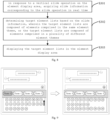
- the optimized element control method for the information input interface mainly includes the steps of S201-S206.
- steps S201-S203 provided in the present embodiment is the same as that of steps S101-S103 provided in the above embodiment, and the specific operation flow and mode can refer to the description in the above embodiment, which is not specifically limited in the present embodiment.
- the element theme control can be any element theme control in the element identification area, and the second operation on the element theme control can include a click operation on the element theme control.
- the element theme control selected by the click operation is marked as being in a movable state, and the element theme control in the movable state can be moved within the element identification area according to subsequent operations. Marking as being in a movable state can be performed only in the background without being specially displayed on the information input interface. Marking as being in a movable state can also be performed in the background while being specially displayed on the information input interface. Being specially displayed can be being enlarged and displayed, or being displayed with a shadow added to the background, or a dynamic display of the element theme control.
- the special display is used for prompting users that the element theme control is in a movable state and can be moved.
- the third operation is used for determining a target position for the element theme control in the movable state in the element identification area.
- the third operation can be a click operation or a drag operation, which is not specifically limited in the present disclosure.
- determining a target position in response to a third operation on the element identification area includes: in response to a drag operation on the element theme control in the movable state, acquiring a drag trajectory corresponding to the drag operation, wherein the drag operation is successive to the second operation; in response to a drag release operation on the element theme control in the movable state, determining a horizontal movement parameter corresponding to the drag trajectory; determining the target position based on the horizontal movement parameter.
- the drag operation is received via a touch screen of the terminal, a peripheral control device of the terminal, and a camera of the terminal.
- the device can follow the drag operation to move the element theme control to any position in the element identification area.
- the drag operation following the second operation can be understood as directly executing the drag operation after the second operation, specifically, directly executing the drag operation without leaving the trigger means after the click operation.
- a drag trajectory corresponding to the drag operation is acquired in real time.
- the drag trajectory can be understood as a position through which the drag operation passes.
- the drag trajectory can be composed of a series of coordinate points.
- the drag release operation can be understood as a cancellation of the drag operation.
- the drag release operation can be that it is detected that users no longer touch an input means for acquiring the drag operation. For example, a user's finger leaves the touch screen and it is detected that the user no longer touches the input means for acquiring the drag operation.
- a corresponding drag start point and drag end point in the drag trajectory are acquired, and a horizontal distance between the drag start point and drag end point is determined and taken as a horizontal movement parameter corresponding to the drag trajectory.
- a straight line segment corresponding to the drag trajectory is acquired, and the length of the right-angle side of the straight line segment is calculated based on the straight line segment, the drag start point, and the drag end point.
- the length of the right-angle side parallel to the top border of the terminal is determined as the horizontal movement parameter.
- the drag start point and the drag end point can be expressed in the form of coordinates. Based on the two coordinate points, the difference between the two horizontal coordinates is calculated as the horizontal distance between the drag start point and the drag end point.
- the horizontal coordinate of the drag start point is added with the horizontal movement parameter to obtain a numerical value as the horizontal coordinate of the target position, and the vertical ordinate of the drag start point is taken as the vertical ordinate of the target position.
- another way to determine the target position is provided, in which the horizontal coordinate of the drag end point is taken as the horizontal coordinate of the target position, and the vertical ordinate of the drag start point is taken as the vertical ordinate of the target position.
- the target position of the element theme control is determined by the drag operation, which is simple and convenient in operation.
- the method while acquiring, in response to a drag operation on an element theme control in a movable state, a drag trajectory corresponding to the drag operation, the method further includes: in response to the drag operation on the element theme control in the movable state, controlling the element theme control in the movable state to be moved following the drag operation.
- an element theme D control is taken as the element theme control in the movable state, and the element theme D control is moved following the drag operation upon the user's drag operation on the element theme D control.
- the element theme control in the movable state presents an animation effect of moving, which is convenient for users to know the position of the element theme control in real time.
- the method further includes: controlling a first element theme control to be moved in a preset direction, wherein, the first element theme control is an element theme control corresponding to a position through which the drag trajectory passes, and the preset direction is a direction opposite to the drag trajectory.
- the element theme controls corresponding to the positions through which the drag trajectory passes can be understood as the element theme controls consistent with the horizontal coordinates corresponding to the drag trajectory.
- the preset direction is rightward, and when the drag trajectory moves rightwards, the preset direction is leftward.
- an element theme B control and an element theme C control are taken as the first element theme controls.
- the element theme D control is moved leftwards and the element theme B control and the element theme C control are moved rightwards.
- the element theme controls associated with the drag trajectory are also moved correspondingly, so as to quickly realize the position change of the element theme controls.
- determining a target position in response to a third operation on the element identification area includes: in response to a click operation on an element theme control in a non-movable state, acquiring a position where the element theme control in the non-movable state is located; determining the position where the element theme control in the non-movable state is located as the target position.
- the element theme control in the non-movable state refers to all the element theme controls, except the element theme controls in the movable state, in the element identification area.
- the element theme D control is an element theme control in a movable state
- the element theme B control is an element theme control in a non-movable state.
- the position of the element theme B control is acquired, and the position of the element theme B control is determined as the target position.
- the element theme D control is moved to the position of the element theme B control, and the element theme B control and the element theme C control are moved rightwards one position.
- the target position is determined by means of clicking the element theme controls in the non-movable state, which is simple and convenient in operation.
- the position adjustment of the element theme controls is realized through the operation on the element theme controls included in the element identification area, so that users can adjust the frequently used or interested element theme control to a prominent position for the convenience for users to use.
- the embodiments of the present disclosure further optimize the element control method for the information input interface.
- the optimized element control method for the information input interface mainly includes steps of:
- the vertical slide operation can be understood as a slide operation vertical to the top border of the terminal.
- the slide information includes a slide direction and a slide distance.
- the slide information corresponding to the slide operation is acquired in real time, so that with the vertical slide operation, the element lists in the element display area constantly moves and changes.
- the target element lists are composed of elements comprised in the same element theme, or the target element lists are composed of elements comprised in a plurality of different element themes.
- the element display area includes at least one row of element lists, and each element list includes at least one element.
- the target element lists can be understood as an element list to be displayed in the element display area.
- the target element lists are composed of elements included in the same element theme, which can be understood as that the element lists displayed in the element display area belong to the same element theme.
- the element lists displayed in the element display area all belong to element theme A.
- the target element lists are composed of elements included in the same element theme, which can be understood as that the element lists displayed in the element display area belong to different element themes.
- the element lists displayed in an upper portion of the element display area all belong to element theme A
- the element lists displayed in a lower portion of the element display area all belong to element theme B.
- Different element themes can be two or more element themes.
- determining target element lists based on the slide information includes: acquiring current element lists in the element display area; when a slide distance included in the slide information is greater than a preset length, deleting a first element list in the current element lists, wherein the first element list is a list of at least one row of elements in the current element lists; adding a second element list to the current element lists to obtain the target element lists.
- the current element lists refer to element lists currently being displayed in the element display area.
- the preset length can be set according to the actual situation.
- the preset length can be a width of one row of element list in the element display area.
- the first element list in a case where the vertical slide operation is an upward slide, is a first row of the current element lists, and the second element list is an element list following the last row of the current element lists; in a case where the slide operation is a downward slide, the first element list is the last row of the current element lists, and the second element list is an element list preceding the first row of the current element lists.
- the last row of element list and the element list following the last row of element list can belong to the same element theme or different element themes.
- the first row of element list and the element list preceding the first row of element list can belong to the same element theme or different element themes.
- the vertical slide operation when the vertical slide operation is an upward slide, the first row of the current element lists is deleted, and the element list following the last row of the current element lists is added to the current element lists, so as to form target element lists.
- the vertical slide operation is a downward slide
- the last row of the current element lists is deleted, and the element list preceding the first row of the current element lists is added to the current element list, so as to form target element lists.
- the embodiments of the present disclosure provide a display mode of adding only one row of element list. After the target element lists are displayed in the element display area, the target element lists are taken as new current element lists, and slide information corresponding to the slide operation is re-acquired, so as to move and display the element lists according to the slide information.
- displaying the target element lists in the element display area includes: in a case where the target element lists are composed of elements comprised in a plurality of different element themes, displaying corresponding element theme names in a preset area in the element display area.
- Fig. 10 when the target element lists are composed of elements comprised in a plurality of different element themes, an element theme name is displayed preceding one row of element list comprised in an element theme. In this way, it is convenient for users to quickly understand the name of the element list.
- the switching between the element lists corresponding to different element themes is realized, which enriches the element switching mode and is convenient for users to operate.
- the element display area includes a list of first type elements and a list of second type elements, wherein elements in the list of first type elements and the list of second type elements are sent in different ways
- the method further includes: in response to a first presentation switching operation between the list of first type elements and the list of second type elements in the element display area, presenting the switching between the list of first type elements and the list of second type elements with a damping effect; and/or in response to a second presentation switching operation on element lists within the list of first type elements or within the list of second type elements, presenting the switching of the elements with an undamping effect.
- the undamping effect means that users can perform a smooth slide operation without blocking feeling
- the damping effect means that users have a slide resistance during the slide operation, that is, there is a blocking feeling or stuck feeling in slide.
- the switching between the list of first type elements and the list of second type elements is performed, it is impossible for users to smoothly slide from the list of first type elements to the list of second type elements directly. Instead, when the list of second type elements reach the preset position, a pause occurs, and the list of second type elements continue to slide from the preset position only after a preset duration or when the user continues to slide for a preset duration. Further, the slide speed of the list of second type elements after continuing to slide from the preset position can be different from that when the list of second type elements do not reach the preset position yet.
- the list of first type elements can be sent in such a way as to click the element in the element display area, display the element in the message input box, and send it together with the text message input in the message input box. That is, the first type of elements can be sent with text to the other side as a message.
- the list of second type elements can be sent in such a way as to click the element in the element display area, directly send the element to the other side, and display it in the message interaction area rather than in the message input box.
- the list of first type elements and the list of second type elements can respectively include elements corresponding to one or more element themes.
- the switching between the list of first type elements and the list of second type elements is presented with a damping effect.
- the damping effect is generated by the switching between different types of element lists, which can enhance users' perception of distinguishing different types of elements and improve users' usage experience.
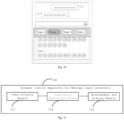
- Fig. 11 is a schematic structural diagram of an element control apparatus for an information input interface in an embodiment of the present disclosure.
- the present embodiment is applicable to controlling elements in an information input interface.
- the element control apparatus for the information input interface can be implemented by software and/or hardware, and can be configured in an electronic device.
- the element control apparatus for the information input interface mainly includes: a panel display module 111, an instruction acquisition module 112, and an enlargement and display module 113.
- the enlargement and display module 113 is specifically configured to enlarge and display both a size of the element identification area and element theme controls comprised in the element identification area based on the enlargement instruction, wherein the element theme controls comprise element theme icons and/or element theme names.
- the apparatus further includes: a state marking module configured to, while enlarging and displaying the element identification area, in response to a second operation on the element theme control comprised in the element identification area, marking the element theme control as being in a movable state; a position determination module configured to determine a target position in response to a third operation on the element identification area; a position moving module configured to move the element theme control in the movable state from a current position to the target position.
- a state marking module configured to, while enlarging and displaying the element identification area, in response to a second operation on the element theme control comprised in the element identification area, marking the element theme control as being in a movable state
- a position determination module configured to determine a target position in response to a third operation on the element identification area
- a position moving module configured to move the element theme control in the movable state from a current position to the target position.
- the position determination module when configured to determine a target position in response to a third operation on the element identification area, comprises: a trajectory acquisition unit configured to acquire, in response to a drag operation on the element theme control in the movable state, a drag trajectory corresponding to the drag operation, wherein the drag operation is successive to the second operation; a movement parameter determination unit configured to determine, in response to a drag release operation on the element theme control in the movable state, a horizontal movement parameter corresponding to the drag trajectory; a position determination unit configured to determine the target position based on the horizontal movement parameter.
- the position determination module further includes: a control moving unit configured to, while acquiring a drag trajectory corresponding to a drag operation in response to the drag operation on the element theme control in the movable state, control the element theme control in the movable state to be moved following the drag operation.
- control moving unit while controlling the element theme control in the movable state to be moved following the drag operation, is further configured to control a first element theme control to be moved in a preset direction, wherein, the first element theme control is an element theme control corresponding to a position through which the drag trajectory passes, and the preset direction is a direction opposite to the drag trajectory.
- the position determination module when determining a target position in response to a third operation on the element identification area, includes: a position acquisition unit configured to acquire, in response to a click operation on an element theme control in a non-movable state, a position where the element theme control in the non-movable state is located; a position determination unit configured to determine the position where the element theme control in the non-movable state is located as the target position.
- the element display area includes at least one row of element lists, and each element list includes at least one element.
- the apparatus further comprises: a slide information acquisition module configured to acquire, in response to a vertical slide operation on the element display area, slide information corresponding to the slide operation in real time; a target element list determination module configured to determine target element lists based on the slide information, wherein, the target element lists are composed of elements comprised in the same element theme, or the target element lists are composed of elements comprised in a plurality of different element themes; a target element list display module configured to display the target element lists in the element display area.
- the target element list determination module comprises: a current element list acquisition unit configured to acquire current element lists in the element display area; an element list deletion unit configured to delete, when a slide distance comprised in the slide information is greater than a preset length, a first element list in the current element list, wherein the first element list is a list of at least one row of elements in the current element lists; an element list addition unit configured to add a second element list to the current element lists to obtain the target element lists.
- the first element list in a case where the vertical slide operation is an upward slide, the first element list is a first row of the current element list, and the second element list is an element list following the last row of the current element list; in a case where the vertical slide operation is a downward slide, the first element list is the last row of the current element list, and the second element list is an element list preceding the first row of the current element list.
- the target element list display module when displaying the target element lists in the element display area, is further configured to display, in a case where the target element lists are composed of elements comprised in a plurality of different element themes, corresponding element theme names in a preset area in the element display area.
- the element display area includes a list of first type elements and a list of second type elements, wherein elements in the list of first type elements and the list of second type elements are sent in different ways
- the apparatus further includes: a damping presentation module configured to present, in response to a first presentation switching operation between the list of first type elements and the list of second type elements in the element display area, the switching between the list of first type elements and the list of second type elements with a damping effect; and/or an undamping presentation module configured to present, in response to a second presentation switching operation on element lists within the list of first type elements or within the list of second type elements, the switching of the elements with an undamping effect.
- the first operation includes a click operation for a preset duration and/or a slide operation along a first preset angle range.
- the apparatus further includes: an element display area moving and presenting module configured to move and present, in response to a slide operation along a first preset angle range in the element identification area, the element display area at a second preset angle; and/or, in response to a slide operation along a second preset angle range in the element display area, move and present the element identification area at a first preset angle; wherein, the first preset angle range includes the first preset angle and the second preset angle range includes the second preset angle.
- the element display area moving and presenting module is further configured to, while enlarging and displaying the element identification area, in response to a fourth operation on the target element theme controls comprised in the element identification area, move and present the element display area at the second preset angle and position the element display area to present an element list corresponding to the target element theme control.
- the adjustment apparatus for element control of an information input interface provided by the embodiment of the present disclosure can execute the steps executed in the element control method for the information input interface provided by the method embodiment of the present disclosure, and has the execution steps and beneficial effects, which are not repeated here.
- Fig. 12 is a schematic structural diagram of an electronic device in an embodiment of the present disclosure.
- the electronic means 1200 in the embodiment of the present disclosure can include, but is not limited to, mobile terminals such as mobile phone, notebook computer, digital broadcast receiver, Personal Digital Assistant (PDA), Tablet Computer (PAD), Portable Multimedia Player (PMP), vehicle-mounted terminal (such as vehicle-mounted navigation terminal), and wearable terminal device, as well as fixed terminals such as digital TV, desktop computer, and smart home device.
- PDA Personal Digital Assistant
- PAD Tablet Computer
- PMP Portable Multimedia Player
- vehicle-mounted terminal such as vehicle-mounted navigation terminal
- wearable terminal device wearable terminal device
- fixed terminals such as digital TV, desktop computer, and smart home device.
- the electronic device shown in Fig. 12 is just an example, and should not bring any limitation to the functions and usage scope of the embodiment of the present disclosure.
- the electronic means 1200 can include a processing means (e.g., a central processor, a graphics processor, etc.) 1201, which can execute various appropriate actions and processes according to a program stored in a read-only memory (ROM)1202 or a program loaded from a storage means 1208 into a random access memory (RAM)1203 to implement a picture rendering method according to the embodiment of the present disclosure.
- a processing means e.g., a central processor, a graphics processor, etc.
- RAM 1203 various programs and data required for the operation of the terminal device 1200 are also stored.
- the processing means 1201, the ROM 1202 and the RAM 1203 are connected to each other through a bus 1204.
- An input/output (I/O) interface 1205 is also connected to the bus 1204.
- the following means can be connected to the I/O interface 1205: an input means 1206 including, for example, a touch screen, a touch pad, a keyboard, a mouse, a camera, a microphone, an accelerometer, a gyroscope, etc.; an output means 1207 including, for example, a liquid crystal display (LCD), a speaker, a vibrator, etc.; a storage means 1208 including, for example, a magnetic tape, a hard disk, etc.; and a communication means 1209.
- the communication means 1209 can allow the terminal device 1200 to perform wireless or wired communication with other devices so as to exchange data.
- Fig. 12 shows a terminal device 1200 with various means, it should be understood that it is not required to implement or provide all the means shown. More or fewer means can alternatively be implemented or provided.
- an embodiment of the present disclosure includes a computer program product including a computer program carried on a non-transitory computer readable medium, and the computer program contains program codes for executing the method shown in the flow diagram, thereby implementing the element control method for the information input interface as described above.
- the computer program can be downloaded and installed from the network through the communication means 1209, or installed from the storage means 1208, or installed from the ROM 1202.
- the processing means 1201 executes the above functions defined in the method of the embodiment of the present disclosure.
- the computer readable medium mentioned above in the present disclosure can be a computer readable signal medium or a computer readable storage medium or any combination of the two.
- the computer readable storage medium can be, for example, but not limited to, an electrical, magnetic, optical, electromagnetic, infrared, or semiconductor system, apparatus or device, or any combination of the above.
- the computer readable storage medium can include, but are not limited to, an electrical connection with one or more wires, a portable computer disk, a hard disk, a random access memory (RAM), a read-only memory (ROM), an erasable programmable read-only memory (EPROM or flash memory), an optical fiber, a portable compact disk read-only memory (CD-ROM), an optical storage device, a magnetic storage device, or any suitable combination of the above.
- the computer readable storage medium can be any tangible medium containing or storing a program, which can be used by or in combination with an instruction execution system, apparatus or device.
- the computer readable signal medium can include a data signal propagated in baseband or as part of a carrier wave, in which computer readable program codes are carried.
- This propagated data signal can take many forms, including but not limited to an electromagnetic signal, an optical signal or any suitable combination of the above.
- the computer readable signal medium can also be any computer readable medium other than the computer readable storage medium, which can send, propagate or transmit a program for use by or in connection with an instruction execution system, apparatus or device.
- the program codes contained in the computer readable medium can be transmitted by any suitable medium, including but not limited to: wires, optical cables, RF (radio frequency) and the like, or any suitable combination of the above.
- clients and servers can communicate by using any currently known or future developed network protocol such as HyperText Transfer Protocol (HTTP), and can be interconnected with digital data communication in any form or medium (for example, a communication network).
- HTTP HyperText Transfer Protocol
- Examples of a communication network include a local area network ("LAN”), a wide area network (“WAN”), the Internet (for example, the Internet) and end-to-end networks (for example, ad hoc end-to-end networks), as well as any currently known or future developed networks.
- LAN local area network
- WAN wide area network
- the Internet for example, the Internet
- end-to-end networks for example, ad hoc end-to-end networks
- the above computer readable medium can be contained in the above electronic device, or it can exist alone without being assembled into the electronic device.
- the above computer readable medium carries one or more programs which, when executed by the terminal device, cause the terminal device to: display an element identification area and an element display area on an information input interface; in response to a first operation on the element identification area, acquire an enlargement instruction corresponding to the first operation; control the element identification area to be enlarged and displayed based on the enlargement instruction.
- the terminal device can also execute other steps described in the above embodiment.
- Computer program codes for executing the operations of the present disclosure can be written in one or more programming languages or their combinations, including but not limited to object-oriented programming languages, such as Java, Smalltalk, and C++, as well as conventional procedural programming languages, such as "C" language or similar programming languages.
- the program codes can be completely executed on the user computer, partially executed on the user computer, executed as an independent software package, partially executed on the user computer and partially executed on a remote computer, or completely executed on the remote computer or a server.
- the remote computer can be connected to a user computer through any kind of network, including a local area network (LAN) or a wide area network (WAN), or can be connected to an external computer (for example, through the Internet using an Internet service provider).
- each block in the flow diagrams or block diagrams can represent a module, a program segment, or part of codes that contains one or more executable instructions for implementing specified logical functions.
- the functions noted in the blocks can occur in a different order than those noted in the drawings. For example, two blocks shown in succession can actually be executed substantially in parallel, and they can sometimes be executed in the reverse order, depending on the functions involved.
- each or a combination of blocks in the block diagrams and/or flow diagrams can be implemented by a dedicated hardware-based system that executes specified functions or operations, or by a combination of dedicated hardware and computer instructions.
- the units involved in the embodiments described in the present disclosure can be implemented in software or hardware.
- the name of the unit does not constitute the limitation of the unit itself in some cases.
- exemplary types of hardware logic components include: Field Programmable Gate Array (FPGA), Application Specific Integrated Circuit (ASIC), Application Specific Standard Product (ASSP), System on Chip (SOC), Complex Programmable Logic Device (CPLD) and so on.
- FPGA Field Programmable Gate Array
- ASIC Application Specific Integrated Circuit
- ASSP Application Specific Standard Product
- SOC System on Chip
- CPLD Complex Programmable Logic Device
- a machine readable medium can be a tangible medium that can contain or store a program for use by or in connection with an instruction execution system, apparatus or device.
- the machine readable medium can be a machine readable signal medium or a machine readable storage medium.
- the machine readable medium can include, but is not limited to, an electronic, magnetic, optical, electromagnetic, infrared, or semiconductor system, apparatus or device, or any suitable combination of the above.
- machine readable storage medium can include an electrical connection based on one or more lines, a portable computer disk, a hard disk, a random access memory (RAM), a read-only memory (ROM), an erasable programmable read-only memory (EPROM or flash memory), an optical fiber, a convenient compact disk read-only memory (CD-ROM), an optical storage device, a magnetic storage device, or any suitable combination of the above.
- RAM random access memory
- ROM read-only memory
- EPROM or flash memory erasable programmable read-only memory
- CD-ROM compact disk read-only memory
- magnetic storage device a magnetic storage device
- the present disclosure provides an element control method for an information input interface, including: displaying an element identification area and an element display area on an information input interface; in response to a first operation on the element identification area, acquiring an enlargement instruction corresponding to the first operation; controlling the element identification area to be enlarged and displayed based on the enlargement instruction.
- the present disclosure provides an element control method for an information input interface, wherein, enlarging and displaying the element identification area based on the enlargement instruction comprises: enlarging and displaying both a size of the element identification area and element theme controls comprised in the element identification area based on the enlargement instruction, wherein the element theme controls comprise element theme icons and/or element theme names.
- the present disclosure provides an element control method for an information input interface, wherein the method further comprises: while enlarging and displaying the element identification area, in response to a second operation on the element theme control comprised in the element identification area, marking the element theme control as being in a movable state; in response to a third operation on the element identification area, determining a target position; moving the element theme control in the movable state from a current position to the target position.
- the present disclosure provides an element control method for an information input interface, wherein, determining a target position in response to a third operation on the element identification area comprises: in response to a drag operation on the element theme control in the movable state, acquiring a drag trajectory corresponding to the drag operation, wherein the drag operation is successive to the second operation; in response to a drag release operation on the element theme control in the movable state, determining a horizontal movement parameter corresponding to the drag trajectory; determining the target position based on the horizontal movement parameter.
- the present disclosure provides an element control method for an information input interface, wherein, while acquiring a drag trajectory corresponding to a drag operation in response to the drag operation on the element theme control in the movable state, the method further comprises: in response to the drag operation on the element theme control in the movable state, controlling the element theme control in the movable state to be moved following the drag operation.
- the present disclosure provides an element control method for an information input interface, wherein, while controlling the element theme control in the movable state to be moved following the drag operation, the method further comprises: controlling a first element theme control to be moved in a preset direction, wherein, the first element theme control is an element theme control corresponding to a position through which the drag trajectory passes, and the preset direction is a direction opposite to the drag trajectory.
- the present disclosure provides an element control method for an information input interface, wherein determining a target position in response to a third operation on the element identification area comprises: in response to a click operation on an element theme control in a non-movable state, acquiring a position where the element theme control in the non-movable state is located; determining the position where the element theme control in the non-movable state is located as the target position.
- the present disclosure provides an element control method for an information input interface, wherein, the element display area includes at least one row of element lists, and each element list includes at least one element; the method further comprises: in response to a vertical slide operation on the element display area, acquiring slide information corresponding to the slide operation in real time; determining target element lists based on the slide information, wherein, the target element lists are composed of elements comprised in the same element theme, or the target element lists are composed of elements comprised in a plurality of different element themes; displaying the target element lists in the element display area.
- the present disclosure provides an element control method for an information input interface, wherein, determining target element lists based on the slide information comprises: acquiring current element lists in the element display area; when a slide distance comprised in the slide information is greater than a preset length, deleting a first element list in the current element lists, wherein the first element list is a list of at least one row of elements in the current element lists; adding a second element list to the current element lists to obtain the target element lists.
- the present disclosure provides an element control method for an information input interface, wherein, in a case where the vertical slide operation is an upward slide, the first element list is a first row of the current element list, and the second element list is an element list following the last row of the current element list; in a case where the vertical slide operation is a downward slide, the first element list is the last row of the current element list, and the second element list is an element list preceding the first row of the current element list.
- the present disclosure provides an element control method for an information input interface, wherein, displaying the target element lists in the element display area comprises: in a case where the target element lists are composed of elements comprised in a plurality of different element themes, displaying corresponding element theme names in a preset area in the element display area.
- the present disclosure provides an element control method for an information input interface, wherein, the element display area includes a list of first type elements and a list of second type elements, wherein elements in the list of first type elements and the list of second type elements are sent in different ways, and the method further comprises: in response to a first presentation switching operation between the list of first type elements and the list of second type elements in the element display area, presenting the switching between the list of first type elements and the list of second type elements with a damping effect; and/or in response to a second presentation switching operation on element lists within the list of first type elements or within the list of second type elements, presenting the switching of the elements with an undamping effect.
- the present disclosure provides an element control method for an information input interface, wherein, the first operation comprises a click operation for a preset duration and/or a slide operation along a first preset angle range.
- the present disclosure provides an element control method for an information input interface, wherein the method further comprises: in response to a slide operation along a first preset angle range in the element identification area, moving and presenting the element display area at a second preset angle; and/or, in response to a slide operation along a second preset angle range in the element display area, moving and presenting the element identification area at a first preset angle; wherein, the first preset angle range includes the first preset angle and the second preset angle range includes the second preset angle.
- the present disclosure provides an element control method for an information input interface, wherein the method further comprises: while enlarging and displaying the element identification area, in response to a fourth operation on a target element theme control comprised in the element identification area, moving and presenting the element display area at the second preset angle and positioning it to present an element list corresponding to the target element theme control.
- the present disclosure provides an element control apparatus for an information input interface, which comprises: a panel display module configured to display an element identification area and an element display area on an information input interface; an instruction acquisition module configured to acquire, in response to a first operation on the element identification area, an enlargement instruction corresponding to the first operation; an enlargement and display module configured to control the element identification area to be enlarged and displayed based on the enlargement instruction.
- the present disclosure provides an element control apparatus for an information input interface, wherein the enlargement and display module is specifically configured to enlarge and display both a size of the element identification area and element theme controls comprised in the element identification area based on the enlargement instruction, wherein the element theme controls comprise element theme icons and/or element theme names.
- the present disclosure provides an element control apparatus for an information input interface, wherein the apparatus further comprises: a state marking module configured to, while the element identification area is enlarged and displayed, in response to a second operation on the element theme control comprised in the element identification area, mark the element theme control as a movable state; a position determination module configured to determine a target position in response to a third operation on the element identification area; a position moving module configured to move the element theme control in the movable state from a current position to the target position.
- a state marking module configured to, while the element identification area is enlarged and displayed, in response to a second operation on the element theme control comprised in the element identification area, mark the element theme control as a movable state
- a position determination module configured to determine a target position in response to a third operation on the element identification area
- a position moving module configured to move the element theme control in the movable state from a current position to the target position.
- the present disclosure provides an element control apparatus for an information input interface, wherein, when determining a target position in response to a third operation on the element identification area, the position determination module comprises: a trajectory acquisition unit configured to acquire, in response to a drag operation on the element theme control in the movable state, a drag trajectory corresponding to the drag operation, wherein the drag operation is successive to the second operation; a movement parameter determination unit configured to determine, in response to a drag release operation on the element theme control in the movable state, a horizontal movement parameter corresponding to the drag trajectory; a position determination unit configured to determine the target position based on the horizontal movement parameter.
- the present disclosure provides an element control apparatus for an information input interface, wherein the position determination module further comprises: a control moving unit configured to, while acquiring a drag trajectory corresponding to a drag operation in response to the drag operation on the element theme control in the movable state, control the element theme control in the movable state to be moved following the drag operation.
- a control moving unit configured to, while acquiring a drag trajectory corresponding to a drag operation in response to the drag operation on the element theme control in the movable state, control the element theme control in the movable state to be moved following the drag operation.
- the present disclosure provides an element control apparatus for an information input interface, wherein, while controlling the element theme control in the movable state to be moved following the drag operation, the control moving unit is further configured to control a first element theme control to be moved in a preset direction, wherein, the first element theme control is an element theme control corresponding to a position through which the drag trajectory passes, and the preset direction is a direction opposite to the drag trajectory.
- the present disclosure provides an element control apparatus for an information input interface, wherein, when determining a target position in response to a third operation on the element identification area, the position determination module comprises: a position acquisition unit configured to acquire, in response to a click operation on an element theme control in a non-movable state, a position where the element theme control in the non-movable state is located; a position determination unit configured to determine the position where the element theme control in the non-movable state is located as the target position.
- the present disclosure provides an element control apparatus for an information input interface, wherein, the element display area includes at least one row of element lists, and each element list includes at least one element.
- the apparatus further comprises: a slide information acquisition module configured to acquire, in response to a vertical slide operation on the element display area, slide information corresponding to the slide operation in real time; a target element list determination module configured to determine target element lists based on the slide information, wherein, the target element lists are composed of elements comprised in the same element theme, or the target element lists are composed of elements comprised in a plurality of different element themes; a target element list display module configured to display the target element lists in the element display area.
- the present disclosure provides an element control apparatus for an information input interface, wherein, the target element list determination module comprises: a current element list acquisition unit configured to acquire current element lists in the element display area; an element list deletion unit configured to delete, in response to a slide distance comprised in the slide information being greater than a preset length, a first element list in the current element lists, wherein the first element list is a list of at least one row of elements in the current element list; an element list addition unit configured to add a second element list to the current element lists to obtain the target element lists.
- the target element list determination module comprises: a current element list acquisition unit configured to acquire current element lists in the element display area; an element list deletion unit configured to delete, in response to a slide distance comprised in the slide information being greater than a preset length, a first element list in the current element lists, wherein the first element list is a list of at least one row of elements in the current element list; an element list addition unit configured to add a second element list to the current element lists to obtain the target element lists.
- the present disclosure provides an element control apparatus for an information input interface, wherein, in a case where the vertical slide operation is an upward slide, the first element list is a first row of the current element lists, and the second element list is an element list following the last row of the current element lists; in a case where the vertical slide operation is a downward slide, the first element list is the last row of the current element lists, and the second element list is an element list preceding the first row of the current element lists.
- the present disclosure provides an element control apparatus for an information input interface, wherein, while displaying the target element lists in the element display area, the target element list display module is further configured to display, in a case where the target element lists are composed of elements comprised in a plurality of different element themes, corresponding element theme names in a preset area in the element display area.
- the present disclosure provides an element control apparatus for an information input interface, wherein, the element display area includes a list of first type elements and a list of second type elements, wherein elements in the list of first type elements and the list of second type elements are sent in different ways, and the apparatus further comprises: a damping presentation module configured to present, in response to a first presentation switching operation between the list of first type elements and the list of second type elements in the element display area, the switching between the list of first type elements and the list of second type elements with a damping effect; and/or an undamping presentation module configured to present, in response to a second presentation switching operation on element lists within the list of first type elements or within the list of second type elements, the switching of the elements with an undamping effect.
- a damping presentation module configured to present, in response to a first presentation switching operation between the list of first type elements and the list of second type elements in the element display area, the switching between the list of first type elements and the list of second type elements with a damping effect
- an undamping presentation module configured
- the present disclosure provides an element control apparatus for an information input interface, wherein, the first operation includes a click operation for a preset duration and/or a slide operation along a first preset angle range.
- the present disclosure provides an element control apparatus for an information input interface, wherein, the apparatus further comprises: an element display area moving and presenting module configured to move and present, in response to a slide operation along a first preset angle range in the element identification area, the element display area at a second preset angle; and/or, in response to a slide operation along a second preset angle range in the element display area, move and present the element identification area at a first preset angle; wherein, the first preset angle range includes the first preset angle and the second preset angle range includes the second preset angle.
- the present disclosure provides an element control apparatus for an information input interface, wherein, the element display area moving and presenting module is further configured to, while the element identification area is enlarged and displayed, in response to a fourth operation on a target element theme control comprised in the element identification area, move and present the element display area at the second preset angle and position the element display area to present an element list corresponding to the target element theme control.
- the present disclosure provides an electronic device, comprising:
- the present disclosure provides a computer readable storage medium having stored thereon a computer program which, when executed by a processor, implements the element control method for the information input interface according to any one provided in the present disclosure.
- the embodiment of the present disclosure also provides a computer program product comprising computer programs or instructions which, when executed by a processor, implement the element control method for the information input interface according to the above.
Landscapes
- Engineering & Computer Science (AREA)
- General Engineering & Computer Science (AREA)
- Theoretical Computer Science (AREA)
- Human Computer Interaction (AREA)
- Physics & Mathematics (AREA)
- General Physics & Mathematics (AREA)
- User Interface Of Digital Computer (AREA)
Abstract
Description
- The present application is based on and claims the benefit of priority to the
Chinese patent application No. 202210504637.9 filed on May 10, 2022 - The present disclosure relates to the field of computer processing technologies, and in particular to an element control method and apparatus for an information input interface, a device, a storage medium, and a computer product.
- With the continuous development of Internet and terminal technologies, intelligent terminals are more and more widely used in people's work and life. People can perform human-computer interaction or information interaction with others by inputting information into intelligent terminals.
- The information input into the intelligent terminals can be various elements, such as one or more of text messages, voice messages, video messages, address links, emojis, etc. In the element inputting process, a plurality of element themes and elements are presented in a designated area, and users can gain a basic understanding of the content of elements through the element themes and can send elements to the client of information interaction through operations on the elements.
- Embodiments of the present disclosure provide an element control method and apparatus for an information input interface, a device, a storage medium, and a program product. An element identification area is enlarged and then displayed for the convenience for users to view.
- In a first aspect, an embodiment of the present disclosure provides an element control method for an information input interface, comprising:
- displaying an element identification area and an element display area on an information input interface;
- in response to a first operation on the element identification area, acquiring an enlargement instruction corresponding to the first operation;
- controlling the element identification area to be enlarged and displayed based on the enlargement instruction.
- In a second aspect, an embodiment of the present disclosure provides an element control apparatus for an information input interface, comprising:
- a panel display module configured to display an element identification area and an element display area on an information input interface;
- an instruction acquisition module configured to acquire, in response to a first operation on the element identification area, an enlargement instruction corresponding to the first operation;
- an enlargement and display module configured to control the element identification area to be enlarged and displayed based on the enlargement instruction.
- In a third aspect, an embodiment of the present disclosure provides an electronic device, which comprises:
- one or more processors;
- a storage means for storing one or more programs;
- wherein the one or more programs, when executed by the one or more processors, cause the one or more processors to implement the element control method for the information input interface according to the above first aspect.
- In a fourth aspect, an embodiment of the present disclosure provides a computer readable storage medium storing thereon a computer program which, when executed by a processor, implements the element control method for the information input interface according to the above first aspect.
- In a fifth aspect, an embodiment of the present disclosure provides a computer program product comprising computer programs or instructions which, when executed by a processor, implement the element control method for the information input interface according to the above first aspect.
- In a sixth aspect, an embodiment of the present disclosure provides a computer program comprising instructions which, when executed by a processor, implements the element control method for the information input interface according to the above first aspect.
- The above and other features, advantages and aspects of embodiments of the present disclosure will become more apparent by referring to the following detailed implementations when taken in conjunction with the accompanying drawings. Throughout the drawings, the same or similar reference numerals indicate the same or similar elements. It should be understood that the drawings are schematic, and the originals and elements are not necessarily drawn to scale.
-
Fig. 1 is a schematic flow diagram of an element control method for an information input interface in an embodiment of the present disclosure; -
Fig. 2 is a schematic diagram of an information input interface in an embodiment of the present disclosure; -
Fig. 3 is a schematic diagram of enlarging and displaying an element identification area after a slide operation in an embodiment of the present disclosure; -
Fig. 4 is a schematic diagram of moving an element identification area and an element display area in association in an embodiment of the present disclosure; -
Fig. 5 is a schematic flow diagram of an element control method for an information input interface in an embodiment of the present disclosure; -
Fig. 6 is a schematic diagram of dragging an element theme control in an embodiment of the present disclosure; -
Fig. 7 is a schematic diagram of moving positions of element theme controls by a click operation in an embodiment of the present disclosure; -
Fig. 8 is a schematic flow diagram of an element control method for an information input interface in an embodiment of the present disclosure; -
Fig. 9 is a schematic diagram of display of an element display area in case of a vertical slide in an embodiment of the present disclosure; -
Fig. 10 is a schematic diagram of displaying element theme names in an element display area in an embodiment of the present disclosure; -
Fig. 11 is a schematic structural diagram of a data order adjusting apparatus in an embodiment of the present disclosure; -
Fig. 12 is a schematic structural diagram of an electronic device in an embodiment of the present disclosure. - Embodiments of the present disclosure will be described in more detail below with reference to the accompanying drawings. Although some embodiments of the present disclosure are shown in the drawings, it should be understood that the present disclosure can be implemented in various forms and should not be construed as limited to the embodiments set forth here, but rather, these embodiments are provided for a more thorough and complete understanding of the present disclosure. It should be understood that the drawings and embodiments of the present disclosure are only used for illustrative purposes, and are not used to limit the protection scope of the present disclosure.
- It should be understood that the steps described in the method implementations of the present disclosure can be performed in a different order and/or in parallel. Furthermore, method implementations can include additional steps and/or omit performing the illustrated steps. The scope of the present disclosure is not limited in this respect.
- As used herein, the term "including" and its variants are non-exclusive including, that is, "including but not limited to". The term "based on" is "at least partially based on"; the term "an embodiment" means "at least one embodiment"; the term "another embodiment" means "at least one other embodiment"; the term "some embodiments" means "at least some embodiments". Related definitions of other terms will be given in the following description.
- It should be noted that the concepts such as "first" and "second" mentioned in the present disclosure are only used to distinguish different means, modules or units, and are not used to limit the order or interdependence of the functions performed by these means, modules or units.
- It should be noted that the modifications of "a/an" and "a plurality of' mentioned in the present disclosure are schematic rather than limiting, and those skilled in the art should understand that unless the context clearly indicates otherwise, they should be understood as "one or more".
- Names of messages or information exchanged among a plurality of means in the implementations of the present disclosure are only used for illustrative purposes, and are not used to limit the scope of these messages or information.
- The element control method and apparatus for an information input interface, the device, the storage medium, and the program product provided by the embodiments of the present disclosure can be applied to any message input scenario.
- The above message input scenario can include scenarios where messages are input in instant messaging applications, live applications, information search applications, games applications, shopping applications, document editing applications, audio-video applications, and the like, for example, a scenario where instant messaging applications perform message interaction with other clients, for another example, a scenario where messages are input to interact with the streamer in live applications, for another example, a scenario where comments are made on the played audio-video clips in audio-video applications, for another example, a scenario where effects are selected when composing in audio-video applications. The above element is a kind of input information, for example, the element can be an emoji, or the element can be a prop identifier.
- It should be noted that in the embodiments of the present disclosure, a message interaction scenario in instant messaging applications is taken as an example.
- Due to the limitation of form factors of intelligent terminals, in order to display more element identifiers in a designated area, the element identifiers are designed to be small, and are not convenient for users to view. The element control method and apparatus for the information input interface, the device, the storage medium, and the program product provided by the embodiments of the present disclosure enlarge the element identification area and then display it for the convenience for users to view. Next, the element control method for the information input interface proposed by the embodiments of the present application will be introduced in detail with the accompanying drawings.
-
Fig. 1 is a flow diagram of an element control method for an information input interface in an embodiment of the present disclosure. The present embodiment is applicable to a case of controlling elements in an information input interface. The method can be executed by an element control apparatus for the information input interface, which can be implemented in software and/or hardware and can be configured in an electronic device. - For example, the electronic device can be a mobile terminal, a fixed terminal, or a portable terminal, such as mobile phone, site, unit, device, multimedia computer, multimedia tablet, Internet node, communicator, desktop computer, laptop computer, notebook computer, netbook computer, tablet computer, personal communication system (PCS) device, personal navigation device, personal digital assistant (PDA), audio/video player, digital camera/camcorder, positioning device, television receiver, radio broadcast receiver, E-book device, game device, or any combination thereof, including accessories and peripheral devices of these devices or a combination thereof.
- Another example is that the electronic device can be a server, wherein the server can be an entity server or a cloud server, and the server can be a server or a server cluster.
- As shown in
Fig. 1 , the element control method for the information input interface provided by the embodiments of the present disclosure mainly includes steps S101-S103. - S101, displaying an element identification area and an element display area on an information input interface.
- When users use an application in an electronic device, the application will present its application interface to the users through the electronic device, and the application interface presented by the application to the users will include a plurality of functional windows related to the application in a current business scenario, such as a text input window and an element presentation window, and each functional window can correspond to an wake-up control. The current business scenario can include any scenario where information needs to be input, such as a cloud document business scenario, an instant messaging business scenario, a live scenario, and a game scenario. Users can perform a wake-up operation on a certain functional window through the wake-up control corresponding to the functional window.
- In one implementation of the present disclosure, an element panel is displayed on an information input interface in response to an wake-up operation on the element panel. The users' wake-up operation on the element panel can include various implementations. For example, users can realize the wake-up operation on the element panel by triggering the wake-up control corresponding to the element panel in the current business scenario.
- Further, as shown in
Fig. 2 , the information input interface of the electronic device mainly includes two parts: anelement panel 10 and amessage display area 20. Theelement panel 10 includes anelement identification area 11 and anelement display area 12. Theelement identification area 11 includes a plurality of element theme controls 13. Theelement display area 12 is used for displaying a plurality ofelements 14, and illustratively, each element theme includes at least oneelement 14. - In the present disclosure, the elements displayed in the
element display area 12 are elements corresponding to a selected element theme, wherein the selected element theme is displayed in a special way. As shown inFig. 2 , the elements displayed in theelement display area 12 are elements included in element theme A, where the element theme A is displayed in a bold border. - S102, in response to a first operation on the element identification area, acquiring an enlargement instruction corresponding to the first operation.
- In one implementation of the present disclosure, the first operation includes a click operation for a preset duration and/or a slide operation along a first preset angle range.
- The preset duration can be set according to the actual situation, optionally, the preset duration is any one of 1 second, 2 seconds, or 3 seconds. The click operation for a preset duration can be understood as a long press operation, for example, after a long press on the
element identification area 11 for a preset duration, the long press operation on the element identification area is responded. The click operation on theelement identification area 11 for a preset duration can be a click operation on any blank area in theelement identification area 11 for a preset duration or a click operation on any element theme control in theelement identification area 11 for a preset duration. - The slide operation along a first preset angle range can be understood as that an angle between a slide direction corresponding to the slide operation of users in the element identification area and the horizontal direction is within a first preset angle range. The first preset angle range can be set according to the actual situation, and optionally, the first preset angle range is 45 degrees. The horizontal direction refers to a direction parallel to the top border of the terminal.
- It should be noted that the slide operation in the element identification area can be that the slide start point is within the element identification area, the slide end point can be within the element identification area or not within the element identification area, which is not limited in the embodiments of the present disclosure.
- In the embodiments of the present disclosure, the slide operation along the first preset angle range can be a leftward slide operation along the first preset angle range or a rightward slide operation along the first preset angle range.
- In the embodiments of the present disclosure, the enlargement instruction on the element identification area is acquired by a long press operation or a slide operation on the element identification area, which makes the operation method simple and convenient.
- The enlargement instruction can be understood as an instruction to control the element identification area to be subject to an enlargement operation.
- In one implementation of the present disclosure, an enlargement instruction is acquired in response to a click operation on the element identification area for a preset duration.
- In one implementation of the present disclosure, an enlargement instruction is acquired in response to a slide operation on the element identification area along a first preset angle range.
- S103, controlling the element identification area to be enlarged and displayed based on the enlargement instruction.
- In the embodiment of the present disclosure, the size of the element identification area can be enlarged and displayed, and the element theme controls in the element identification area can also be enlarged and displayed.
- In one implementation of the present disclosure, enlarging and displaying the element identification area based on the enlargement instruction includes: enlarging and displaying both a size of the element identification area and element theme controls comprised in the element identification area based on the enlargement instruction, wherein the element theme controls comprise element theme icons and/or element theme names.
- The element theme can be understood as the main content of a certain type of elements. The element theme can be expressed in the form of a picture, a text name, or both. For example, when the element is an emoji, the element theme icon can be an emoji associated with the theme, and the element theme name can be the main content of all emojis under the theme, such as graffiti symbols, cursive characters and so on. The above emoji can be a static emoji or a dynamic emoji, which is not limited in the present disclosure.
- In one implementation of the present disclosure, the enlargement instruction controls the size of the element identification area and the theme controls in the element identification area to be enlarged concurrently.
- The enlargement instruction can carry a preset enlargement factor, and control the size of the element identification area and the sizes of the theme controls in the element identification area to be concurrently enlarged by the preset enlargement factor based on the current display size.
- The enlargement instruction can carry two different enlargement factors, wherein the size of the control element identification area is controlled to be enlarged by a first enlargement factor based on the current display size, and the sizes of the theme controls in the control element identification area are controlled to be enlarged by a second enlargement factor based on the current display size, wherein the first enlargement factor and the second enlargement factor are not specifically limited in the present disclosure.
- In one embodiment of the present disclosure, when the element identification area after enlargement is displayed, a preset position of the element identification area before enlargement can be taken as a fixed point to display the element identification area after enlargement. The fixed point can be the center point of the element identification area before enlargement, the operation point corresponding to the click operation, or the slide start point corresponding to the slide operation.
- In one implementation of the present disclosure, as shown in
Fig. 3 , in response to a leftward slide operation on the element identification area, both the size of the element identification area and the element theme controls included in the element identification area are enlarged and displayed. - In the embodiments of the present disclosure, both the size of the element identification area and the element theme controls included in the element identification area are enlarged and displayed for the convenience for users to view.
- An embodiment of the present disclosure provides an element control method for an information input interface, including: displaying an element identification area and an element display area on an information input interface; in response to a first operation on the element identification area, acquiring an enlargement instruction corresponding to the first operation; controlling the element identification area to be enlarged and displayed based on the enlargement instruction. According to the embodiment of the present disclosure, after the element identification area is displayed on the information input interface, the element identification area is enlarged and then displayed in response to an operation on the element identification area, for the convenience for users to view.
- On the basis of the above embodiment, the above element control method for the information input interface further includes: in response to a slide operation along a first preset angle range in the element identification area, moving and presenting the element display area at a second preset angle; and/or, in response to a slide operation along a second preset angle range in the element display area, moving and presenting the element identification area at a first preset angle; wherein, the first preset angle range includes the first preset angle and the second preset angle range includes the second preset angle.
- In the embodiment of the present disclosure, the slide operation along the first preset angle range can be a leftward slide operation along the first preset angle range or a rightward slide operation along the first preset angle range. Whether it is a leftward slide operation or a rightward slide operation, the slide direction corresponding to the slide operation is within the first preset angle range. For example, the leftward slide operation can be a slide operation in the top left direction or a slide operation in the bottom left direction, and the rightward slide operation can be a slide operation in the top right direction or a slide operation in the bottom right direction.
- The second preset angle can be an angle vertical to the top border of the terminal. The moving direction of the element display area at the second preset angle is associated with the direction corresponding to the slide operation on the element identification area.
- In one implementation of the present disclosure, as shown in
Fig. 4 , in response to a leftward slide operation along a first preset angle range in the element identification area, the element display area is moved upwards at an angle vertical to the top border of the terminal and presented. In response to a rightward slide operation along a first preset angle range in the element identification area, the element display area is moved downwards at an angle vertical to the top border of the terminal and presented. - In the embodiments of the present disclosure, the slide operation along the second preset angle range can be an upward slide operation along the second preset angle range or a downward slide operation along the second preset angle range. Whether it is a leftward slide operation or a rightward slide operation, the slide direction corresponding to the slide operation is within the first preset angle range. For example, the downward slide operation can be a slide operation in the bottom left direction or a slide operation in the bottom right direction, and the upward slide operation can be a slide operation in the top left direction or a slide operation in the top right direction.
- The first preset angle can be an angle parallel to the top border of the terminal. The moving direction of the element identification area at the second preset angle is associated with the direction corresponding to the slide operation of the element display area.
- In one implementation of the present disclosure, in response to a downward slide operation along a second preset angle range in the element display area, the element identification area is moved leftwards at an angle parallel to the top border of the terminal and presented.
- In one implementation of the present disclosure, in response to an upward slide operation along a second preset angle range in the element display area, the element identification area is moved rightwards at an angle vertical to the top border of the terminal and presented.
- In the embodiment of the present disclosure, the operations on the element display area and the element identification area are associated with the movement and presentation, so as to ensure that the elements displayed in the element display area are the elements corresponding to the element theme in the element identification area, for the convenience for users to operate.
- On the basis of the above embodiment, the method further includes: while the element identification area is enlarged and displayed, in response to a fourth operation on a target element theme control comprised in the element identification area, moving and presenting the element display area at the second preset angle and positioning it to an element list corresponding to the target element theme control.
- The fourth operation can be a click operation, and the target element theme control is an element theme control corresponding to the position clicked by the fourth operation. Moving and presenting the element display area at the second preset angle can be understood as vertically moving and presenting the element display area up and down.
- When the target element theme control is on the right side of the current element theme control, in response to the fourth operation on the target element theme control, the element display area is vertically moved upwards and presented and positioned to present an element list corresponding to the target element theme control. When the target element theme control is on the left side of the current element theme control, in response to the fourth operation on the target element theme control, the element display area is vertically moved downwards and presented and positioned to present an element list corresponding to the target element theme control. The current element theme control is an element theme control corresponding to the element lists displayed in the current element display area.
- In the embodiment of the present disclosure, after the target element theme control is selected, the element display area is quickly moved and positioned to present the element list corresponding to the target element theme control, so as to ensure a one-to-one correspondence relationship between the element theme controls and the element lists in the element display area.
- On the basis of the above embodiments, the embodiment of the present disclosure further optimizes the element control method for the information input interface. As shown in
Fig. 5 , the optimized element control method for the information input interface mainly includes the steps of S201-S206. - S201, displaying an element identification area and an element display area on an information input interface.
- S202, in response to a first operation on the element identification area, acquiring an enlargement instruction corresponding to the first operation.
- S203, controlling the element identification area to be enlarged and displayed based on the enlargement instruction.
- The flow of steps S201-S203 provided in the present embodiment is the same as that of steps S101-S103 provided in the above embodiment, and the specific operation flow and mode can refer to the description in the above embodiment, which is not specifically limited in the present embodiment.
- S204, while enlarging and displaying the element identification area, in response to a second operation on the element theme control comprised in the element identification area, marking the element theme control as being a movable state.
- The element theme control can be any element theme control in the element identification area, and the second operation on the element theme control can include a click operation on the element theme control.
- The element theme control selected by the click operation is marked as being in a movable state, and the element theme control in the movable state can be moved within the element identification area according to subsequent operations. Marking as being in a movable state can be performed only in the background without being specially displayed on the information input interface. Marking as being in a movable state can also be performed in the background while being specially displayed on the information input interface. Being specially displayed can be being enlarged and displayed, or being displayed with a shadow added to the background, or a dynamic display of the element theme control. The special display is used for prompting users that the element theme control is in a movable state and can be moved.
- S205, in response to a third operation on the element identification area, determining a target position.
- In the present embodiment, the third operation is used for determining a target position for the element theme control in the movable state in the element identification area. The third operation can be a click operation or a drag operation, which is not specifically limited in the present disclosure.
- In one implementation of the present disclosure, determining a target position in response to a third operation on the element identification area includes: in response to a drag operation on the element theme control in the movable state, acquiring a drag trajectory corresponding to the drag operation, wherein the drag operation is successive to the second operation; in response to a drag release operation on the element theme control in the movable state, determining a horizontal movement parameter corresponding to the drag trajectory; determining the target position based on the horizontal movement parameter.
- The drag operation is received via a touch screen of the terminal, a peripheral control device of the terminal, and a camera of the terminal. The device can follow the drag operation to move the element theme control to any position in the element identification area. The drag operation following the second operation can be understood as directly executing the drag operation after the second operation, specifically, directly executing the drag operation without leaving the trigger means after the click operation.
- In one implementation of the present disclosure, in response to a drag operation on the element theme control in the movable state, a drag trajectory corresponding to the drag operation is acquired in real time. The drag trajectory can be understood as a position through which the drag operation passes. The drag trajectory can be composed of a series of coordinate points.
- The drag release operation can be understood as a cancellation of the drag operation. Optionally, the drag release operation can be that it is detected that users no longer touch an input means for acquiring the drag operation. For example, a user's finger leaves the touch screen and it is detected that the user no longer touches the input means for acquiring the drag operation.
- In the embodiment of the present disclosure, in response to the above drag release operation, a corresponding drag start point and drag end point in the drag trajectory are acquired, and a horizontal distance between the drag start point and drag end point is determined and taken as a horizontal movement parameter corresponding to the drag trajectory.
- In one implementation of the present disclosure, in response to the above drag release operation, a straight line segment corresponding to the drag trajectory is acquired, and the length of the right-angle side of the straight line segment is calculated based on the straight line segment, the drag start point, and the drag end point. The length of the right-angle side parallel to the top border of the terminal is determined as the horizontal movement parameter.
- Specifically, the drag start point and the drag end point can be expressed in the form of coordinates. Based on the two coordinate points, the difference between the two horizontal coordinates is calculated as the horizontal distance between the drag start point and the drag end point.
- In one implementation of the present disclosure, the horizontal coordinate of the drag start point is added with the horizontal movement parameter to obtain a numerical value as the horizontal coordinate of the target position, and the vertical ordinate of the drag start point is taken as the vertical ordinate of the target position.
- In one implementation of the present disclosure, another way to determine the target position is provided, in which the horizontal coordinate of the drag end point is taken as the horizontal coordinate of the target position, and the vertical ordinate of the drag start point is taken as the vertical ordinate of the target position.
- In the embodiment of the present disclosure, the target position of the element theme control is determined by the drag operation, which is simple and convenient in operation.
- In one implementation of the present disclosure, while acquiring, in response to a drag operation on an element theme control in a movable state, a drag trajectory corresponding to the drag operation, the method further includes: in response to the drag operation on the element theme control in the movable state, controlling the element theme control in the movable state to be moved following the drag operation.
- As shown in
Fig. 6 , an element theme D control is taken as the element theme control in the movable state, and the element theme D control is moved following the drag operation upon the user's drag operation on the element theme D control. - In the embodiment of the present disclosure, following the drag operation, the element theme control in the movable state presents an animation effect of moving, which is convenient for users to know the position of the element theme control in real time.
- In one implementation of the present disclosure, while controlling the element theme control in the movable state to be moved following the drag operation, the method further includes: controlling a first element theme control to be moved in a preset direction, wherein, the first element theme control is an element theme control corresponding to a position through which the drag trajectory passes, and the preset direction is a direction opposite to the drag trajectory.
- The element theme controls corresponding to the positions through which the drag trajectory passes can be understood as the element theme controls consistent with the horizontal coordinates corresponding to the drag trajectory.
- Further, when the drag trajectory moves leftwards, the preset direction is rightward, and when the drag trajectory moves rightwards, the preset direction is leftward.
- As shown in
Fig. 6 , an element theme B control and an element theme C control are taken as the first element theme controls. With the user's drag operation on the element theme D control, the element theme D control is moved leftwards and the element theme B control and the element theme C control are moved rightwards. - In the embodiment of the present disclosure, the element theme controls associated with the drag trajectory are also moved correspondingly, so as to quickly realize the position change of the element theme controls.
- In one implementation of the present disclosure, determining a target position in response to a third operation on the element identification area includes: in response to a click operation on an element theme control in a non-movable state, acquiring a position where the element theme control in the non-movable state is located; determining the position where the element theme control in the non-movable state is located as the target position.
- In the embodiments of the present disclosure, the element theme control in the non-movable state refers to all the element theme controls, except the element theme controls in the movable state, in the element identification area.
- As shown in
Fig. 7 , the element theme D control is an element theme control in a movable state, and the element theme B control is an element theme control in a non-movable state. In response to the click operation on the element theme B control, the position of the element theme B control is acquired, and the position of the element theme B control is determined as the target position. The element theme D control is moved to the position of the element theme B control, and the element theme B control and the element theme C control are moved rightwards one position. - In the embodiments of the present disclosure, the target position is determined by means of clicking the element theme controls in the non-movable state, which is simple and convenient in operation.
- S206, moving the element them controls in the movable state from a current position to the target position.
- In the embodiments of the present disclosure, the position adjustment of the element theme controls is realized through the operation on the element theme controls included in the element identification area, so that users can adjust the frequently used or interested element theme control to a prominent position for the convenience for users to use.
- On the basis of the above embodiments, the embodiments of the present disclosure further optimize the element control method for the information input interface. As shown in
Fig. 8 , the optimized element control method for the information input interface mainly includes steps of: - S301, in response to a vertical slide operation on the element display area, acquiring slide information corresponding to the slide operation in real time.
- The vertical slide operation can be understood as a slide operation vertical to the top border of the terminal. The slide information includes a slide direction and a slide distance.
- In the present disclosure, the slide information corresponding to the slide operation is acquired in real time, so that with the vertical slide operation, the element lists in the element display area constantly moves and changes.
- S302, determining target element lists based on the slide information, wherein, the target element lists are composed of elements comprised in the same element theme, or the target element lists are composed of elements comprised in a plurality of different element themes.
- In the implementation of the present disclosure, the element display area includes at least one row of element lists, and each element list includes at least one element. The target element lists can be understood as an element list to be displayed in the element display area.
- The target element lists are composed of elements included in the same element theme, which can be understood as that the element lists displayed in the element display area belong to the same element theme. For example, the element lists displayed in the element display area all belong to element theme A.
- The target element lists are composed of elements included in the same element theme, which can be understood as that the element lists displayed in the element display area belong to different element themes. For example, the element lists displayed in an upper portion of the element display area all belong to element theme A, and the element lists displayed in a lower portion of the element display area all belong to element theme B. Different element themes can be two or more element themes.
- In one implementation of the present disclosure, determining target element lists based on the slide information includes: acquiring current element lists in the element display area; when a slide distance included in the slide information is greater than a preset length, deleting a first element list in the current element lists, wherein the first element list is a list of at least one row of elements in the current element lists; adding a second element list to the current element lists to obtain the target element lists.
- The current element lists refer to element lists currently being displayed in the element display area. The preset length can be set according to the actual situation. The preset length can be a width of one row of element list in the element display area.
- In one implementation of the present disclosure, in a case where the vertical slide operation is an upward slide, the first element list is a first row of the current element lists, and the second element list is an element list following the last row of the current element lists; in a case where the slide operation is a downward slide, the first element list is the last row of the current element lists, and the second element list is an element list preceding the first row of the current element lists.
- The last row of element list and the element list following the last row of element list can belong to the same element theme or different element themes. The first row of element list and the element list preceding the first row of element list can belong to the same element theme or different element themes.
- In the embodiments of the present disclosure, when the vertical slide operation is an upward slide, the first row of the current element lists is deleted, and the element list following the last row of the current element lists is added to the current element lists, so as to form target element lists.
- In the embodiments of the present disclosure, when the vertical slide operation is a downward slide, the last row of the current element lists is deleted, and the element list preceding the first row of the current element lists is added to the current element list, so as to form target element lists.
- It should be noted that the embodiments of the present disclosure provide a display mode of adding only one row of element list. After the target element lists are displayed in the element display area, the target element lists are taken as new current element lists, and slide information corresponding to the slide operation is re-acquired, so as to move and display the element lists according to the slide information.
- As shown in
Fig. 9 , when the vertical slide operation is an upward slide, the first row of the current element lists 01, 02, 03, 04, 05, 06, 07, 08, 09 and 10 are deleted, and theelement list - S303, displaying the target element lists in the element display area.
- In one implementation of the present disclosure, displaying the target element lists in the element display area includes: in a case where the target element lists are composed of elements comprised in a plurality of different element themes, displaying corresponding element theme names in a preset area in the element display area.
- As shown in
Fig. 10 , when the target element lists are composed of elements comprised in a plurality of different element themes, an element theme name is displayed preceding one row of element list comprised in an element theme. In this way, it is convenient for users to quickly understand the name of the element list. - In the embodiments of the present disclosure, through the vertical slide operation on the element display area, the switching between the element lists corresponding to different element themes is realized, which enriches the element switching mode and is convenient for users to operate.
- In one implementation of the present disclosure, the element display area includes a list of first type elements and a list of second type elements, wherein elements in the list of first type elements and the list of second type elements are sent in different ways, and the method further includes: in response to a first presentation switching operation between the list of first type elements and the list of second type elements in the element display area, presenting the switching between the list of first type elements and the list of second type elements with a damping effect; and/or in response to a second presentation switching operation on element lists within the list of first type elements or within the list of second type elements, presenting the switching of the elements with an undamping effect. The undamping effect means that users can perform a smooth slide operation without blocking feeling, while the damping effect means that users have a slide resistance during the slide operation, that is, there is a blocking feeling or stuck feeling in slide. Illustratively, when the switching between the list of first type elements and the list of second type elements is performed, it is impossible for users to smoothly slide from the list of first type elements to the list of second type elements directly. Instead, when the list of second type elements reach the preset position, a pause occurs, and the list of second type elements continue to slide from the preset position only after a preset duration or when the user continues to slide for a preset duration. Further, the slide speed of the list of second type elements after continuing to slide from the preset position can be different from that when the list of second type elements do not reach the preset position yet.
- Illustratively, the list of first type elements can be sent in such a way as to click the element in the element display area, display the element in the message input box, and send it together with the text message input in the message input box. That is, the first type of elements can be sent with text to the other side as a message. The list of second type elements can be sent in such a way as to click the element in the element display area, directly send the element to the other side, and display it in the message interaction area rather than in the message input box. The list of first type elements and the list of second type elements can respectively include elements corresponding to one or more element themes.
- In the present embodiment, when a vertical slide operation is performed in the element display area to perform the switching between the list of first type elements and the list of second type elements, the switching between the list of first type elements and the list of second type elements is presented with a damping effect.
- In the present embodiment, when a vertical slide operation is performed in the element display area to perform the switching of element lists within the list of first type elements and of element lists within the list of second type elements, the switching of the list of first type elements and the list of second type elements is presented with an undamping effect.
- In the embodiment of the present disclosure, the damping effect is generated by the switching between different types of element lists, which can enhance users' perception of distinguishing different types of elements and improve users' usage experience.
-
Fig. 11 is a schematic structural diagram of an element control apparatus for an information input interface in an embodiment of the present disclosure. The present embodiment is applicable to controlling elements in an information input interface. The element control apparatus for the information input interface can be implemented by software and/or hardware, and can be configured in an electronic device. - As shown in
Fig. 11 , the element control apparatus for the information input interface provided by the embodiment of the present disclosure mainly includes: apanel display module 111, aninstruction acquisition module 112, and an enlargement anddisplay module 113. - The
panel display module 111 is configured to display an element identification area and an element display area on an information input interface; - the
instruction acquisition module 112 is configured to acquire, in response to a first operation on the element identification area, an enlargement instruction corresponding to the first operation; - the enlargement and
display module 113 is configured to control the element identification area to be enlarged and displayed based on the enlargement instruction. - In one implementation of the present disclosure, the enlargement and
display module 113 is specifically configured to enlarge and display both a size of the element identification area and element theme controls comprised in the element identification area based on the enlargement instruction, wherein the element theme controls comprise element theme icons and/or element theme names. - In one implementation of the present disclosure, the apparatus further includes: a state marking module configured to, while enlarging and displaying the element identification area, in response to a second operation on the element theme control comprised in the element identification area, marking the element theme control as being in a movable state; a position determination module configured to determine a target position in response to a third operation on the element identification area; a position moving module configured to move the element theme control in the movable state from a current position to the target position.
- In one implementation of the present disclosure, when configured to determine a target position in response to a third operation on the element identification area, the position determination module comprises: a trajectory acquisition unit configured to acquire, in response to a drag operation on the element theme control in the movable state, a drag trajectory corresponding to the drag operation, wherein the drag operation is successive to the second operation; a movement parameter determination unit configured to determine, in response to a drag release operation on the element theme control in the movable state, a horizontal movement parameter corresponding to the drag trajectory; a position determination unit configured to determine the target position based on the horizontal movement parameter.
- In one implementation of the present disclosure, the position determination module further includes: a control moving unit configured to, while acquiring a drag trajectory corresponding to a drag operation in response to the drag operation on the element theme control in the movable state, control the element theme control in the movable state to be moved following the drag operation.
- In one implementation of the present disclosure, while controlling the element theme control in the movable state to be moved following the drag operation, the control moving unit is further configured to control a first element theme control to be moved in a preset direction, wherein, the first element theme control is an element theme control corresponding to a position through which the drag trajectory passes, and the preset direction is a direction opposite to the drag trajectory.
- In one implementation of the present disclosure, when determining a target position in response to a third operation on the element identification area, the position determination module includes: a position acquisition unit configured to acquire, in response to a click operation on an element theme control in a non-movable state, a position where the element theme control in the non-movable state is located; a position determination unit configured to determine the position where the element theme control in the non-movable state is located as the target position.
- In one implementation of the present disclosure, the element display area includes at least one row of element lists, and each element list includes at least one element. The apparatus further comprises: a slide information acquisition module configured to acquire, in response to a vertical slide operation on the element display area, slide information corresponding to the slide operation in real time; a target element list determination module configured to determine target element lists based on the slide information, wherein, the target element lists are composed of elements comprised in the same element theme, or the target element lists are composed of elements comprised in a plurality of different element themes; a target element list display module configured to display the target element lists in the element display area.
- In one implementation of the present disclosure, the target element list determination module comprises: a current element list acquisition unit configured to acquire current element lists in the element display area; an element list deletion unit configured to delete, when a slide distance comprised in the slide information is greater than a preset length, a first element list in the current element list, wherein the first element list is a list of at least one row of elements in the current element lists; an element list addition unit configured to add a second element list to the current element lists to obtain the target element lists.
- In one implementation of the present disclosure, in a case where the vertical slide operation is an upward slide, the first element list is a first row of the current element list, and the second element list is an element list following the last row of the current element list; in a case where the vertical slide operation is a downward slide, the first element list is the last row of the current element list, and the second element list is an element list preceding the first row of the current element list.
- In one implementation of the present disclosure, when displaying the target element lists in the element display area, the target element list display module is further configured to display, in a case where the target element lists are composed of elements comprised in a plurality of different element themes, corresponding element theme names in a preset area in the element display area.
- In one implementation of the present disclosure, the element display area includes a list of first type elements and a list of second type elements, wherein elements in the list of first type elements and the list of second type elements are sent in different ways, and the apparatus further includes: a damping presentation module configured to present, in response to a first presentation switching operation between the list of first type elements and the list of second type elements in the element display area, the switching between the list of first type elements and the list of second type elements with a damping effect; and/or an undamping presentation module configured to present, in response to a second presentation switching operation on element lists within the list of first type elements or within the list of second type elements, the switching of the elements with an undamping effect.
- In one implementation of the present disclosure, the first operation includes a click operation for a preset duration and/or a slide operation along a first preset angle range.
- In one implementation of the present disclosure, the apparatus further includes: an element display area moving and presenting module configured to move and present, in response to a slide operation along a first preset angle range in the element identification area, the element display area at a second preset angle; and/or, in response to a slide operation along a second preset angle range in the element display area, move and present the element identification area at a first preset angle; wherein, the first preset angle range includes the first preset angle and the second preset angle range includes the second preset angle.
- In one implementation of the present disclosure, the element display area moving and presenting module is further configured to, while enlarging and displaying the element identification area, in response to a fourth operation on the target element theme controls comprised in the element identification area, move and present the element display area at the second preset angle and position the element display area to present an element list corresponding to the target element theme control.
- The adjustment apparatus for element control of an information input interface provided by the embodiment of the present disclosure can execute the steps executed in the element control method for the information input interface provided by the method embodiment of the present disclosure, and has the execution steps and beneficial effects, which are not repeated here.
-
Fig. 12 is a schematic structural diagram of an electronic device in an embodiment of the present disclosure. Referring specifically toFig. 12 , there is shown a schematic structural diagram of anelectronic means 1200 adapted for implementing an embodiment of the present disclosure. The electronic means 1200 in the embodiment of the present disclosure can include, but is not limited to, mobile terminals such as mobile phone, notebook computer, digital broadcast receiver, Personal Digital Assistant (PDA), Tablet Computer (PAD), Portable Multimedia Player (PMP), vehicle-mounted terminal (such as vehicle-mounted navigation terminal), and wearable terminal device, as well as fixed terminals such as digital TV, desktop computer, and smart home device. The electronic device shown inFig. 12 is just an example, and should not bring any limitation to the functions and usage scope of the embodiment of the present disclosure. - As shown in
Fig. 12 , theelectronic means 1200 can include a processing means (e.g., a central processor, a graphics processor, etc.) 1201, which can execute various appropriate actions and processes according to a program stored in a read-only memory (ROM)1202 or a program loaded from a storage means 1208 into a random access memory (RAM)1203 to implement a picture rendering method according to the embodiment of the present disclosure. In theRAM 1203, various programs and data required for the operation of theterminal device 1200 are also stored. The processing means 1201, theROM 1202 and theRAM 1203 are connected to each other through abus 1204. An input/output (I/O)interface 1205 is also connected to thebus 1204. - Generally, the following means can be connected to the I/O interface 1205: an input means 1206 including, for example, a touch screen, a touch pad, a keyboard, a mouse, a camera, a microphone, an accelerometer, a gyroscope, etc.; an output means 1207 including, for example, a liquid crystal display (LCD), a speaker, a vibrator, etc.; a storage means 1208 including, for example, a magnetic tape, a hard disk, etc.; and a communication means 1209. The communication means 1209 can allow the
terminal device 1200 to perform wireless or wired communication with other devices so as to exchange data. AlthoughFig. 12 shows aterminal device 1200 with various means, it should be understood that it is not required to implement or provide all the means shown. More or fewer means can alternatively be implemented or provided. - In particular, according to an embodiment of the present disclosure, the process described above with reference to the flow diagram can be implemented as a computer software program. For example, an embodiment of the present disclosure includes a computer program product including a computer program carried on a non-transitory computer readable medium, and the computer program contains program codes for executing the method shown in the flow diagram, thereby implementing the element control method for the information input interface as described above. In such an embodiment, the computer program can be downloaded and installed from the network through the communication means 1209, or installed from the storage means 1208, or installed from the
ROM 1202. When executed by the processing means 1201, the computer program executes the above functions defined in the method of the embodiment of the present disclosure. - It should be noted that the computer readable medium mentioned above in the present disclosure can be a computer readable signal medium or a computer readable storage medium or any combination of the two. The computer readable storage medium can be, for example, but not limited to, an electrical, magnetic, optical, electromagnetic, infrared, or semiconductor system, apparatus or device, or any combination of the above. More specific examples of the computer readable storage medium can include, but are not limited to, an electrical connection with one or more wires, a portable computer disk, a hard disk, a random access memory (RAM), a read-only memory (ROM), an erasable programmable read-only memory (EPROM or flash memory), an optical fiber, a portable compact disk read-only memory (CD-ROM), an optical storage device, a magnetic storage device, or any suitable combination of the above. In the present disclosure, the computer readable storage medium can be any tangible medium containing or storing a program, which can be used by or in combination with an instruction execution system, apparatus or device. In the present disclosure, the computer readable signal medium can include a data signal propagated in baseband or as part of a carrier wave, in which computer readable program codes are carried. This propagated data signal can take many forms, including but not limited to an electromagnetic signal, an optical signal or any suitable combination of the above. The computer readable signal medium can also be any computer readable medium other than the computer readable storage medium, which can send, propagate or transmit a program for use by or in connection with an instruction execution system, apparatus or device. The program codes contained in the computer readable medium can be transmitted by any suitable medium, including but not limited to: wires, optical cables, RF (radio frequency) and the like, or any suitable combination of the above.
- In some implementations, clients and servers can communicate by using any currently known or future developed network protocol such as HyperText Transfer Protocol (HTTP), and can be interconnected with digital data communication in any form or medium (for example, a communication network). Examples of a communication network include a local area network ("LAN"), a wide area network ("WAN"), the Internet (for example, the Internet) and end-to-end networks (for example, ad hoc end-to-end networks), as well as any currently known or future developed networks.
- The above computer readable medium can be contained in the above electronic device, or it can exist alone without being assembled into the electronic device.
- The above computer readable medium carries one or more programs which, when executed by the terminal device, cause the terminal device to: display an element identification area and an element display area on an information input interface; in response to a first operation on the element identification area, acquire an enlargement instruction corresponding to the first operation; control the element identification area to be enlarged and displayed based on the enlargement instruction.
- Optionally, when the above one or more programs are executed by the terminal device, the terminal device can also execute other steps described in the above embodiment.
- Computer program codes for executing the operations of the present disclosure can be written in one or more programming languages or their combinations, including but not limited to object-oriented programming languages, such as Java, Smalltalk, and C++, as well as conventional procedural programming languages, such as "C" language or similar programming languages. The program codes can be completely executed on the user computer, partially executed on the user computer, executed as an independent software package, partially executed on the user computer and partially executed on a remote computer, or completely executed on the remote computer or a server. In the case involving a remote computer, the remote computer can be connected to a user computer through any kind of network, including a local area network (LAN) or a wide area network (WAN), or can be connected to an external computer (for example, through the Internet using an Internet service provider).
- The flow diagrams and block diagrams in the drawings illustrate the architecture, functions and operations of possible implementations of the system, method and computer program product according to various embodiments of the present disclosure. In this regard, each block in the flow diagrams or block diagrams can represent a module, a program segment, or part of codes that contains one or more executable instructions for implementing specified logical functions. It should also be noted that in some alternative implementations, the functions noted in the blocks can occur in a different order than those noted in the drawings. For example, two blocks shown in succession can actually be executed substantially in parallel, and they can sometimes be executed in the reverse order, depending on the functions involved. It should also be noted that each or a combination of blocks in the block diagrams and/or flow diagrams can be implemented by a dedicated hardware-based system that executes specified functions or operations, or by a combination of dedicated hardware and computer instructions.
- The units involved in the embodiments described in the present disclosure can be implemented in software or hardware. The name of the unit does not constitute the limitation of the unit itself in some cases.
- The functions described above herein can be at least partially executed by one or more hardware logic components. For example, without limitation, exemplary types of hardware logic components that can be used include: Field Programmable Gate Array (FPGA), Application Specific Integrated Circuit (ASIC), Application Specific Standard Product (ASSP), System on Chip (SOC), Complex Programmable Logic Device (CPLD) and so on.
- In the context of the present disclosure, a machine readable medium can be a tangible medium that can contain or store a program for use by or in connection with an instruction execution system, apparatus or device. The machine readable medium can be a machine readable signal medium or a machine readable storage medium. The machine readable medium can include, but is not limited to, an electronic, magnetic, optical, electromagnetic, infrared, or semiconductor system, apparatus or device, or any suitable combination of the above. More specific examples of the machine readable storage medium can include an electrical connection based on one or more lines, a portable computer disk, a hard disk, a random access memory (RAM), a read-only memory (ROM), an erasable programmable read-only memory (EPROM or flash memory), an optical fiber, a convenient compact disk read-only memory (CD-ROM), an optical storage device, a magnetic storage device, or any suitable combination of the above.
- According to one or more embodiments of the present disclosure, the present disclosure provides an element control method for an information input interface, including: displaying an element identification area and an element display area on an information input interface; in response to a first operation on the element identification area, acquiring an enlargement instruction corresponding to the first operation; controlling the element identification area to be enlarged and displayed based on the enlargement instruction.
- According to one or more embodiments of the present disclosure, the present disclosure provides an element control method for an information input interface, wherein, enlarging and displaying the element identification area based on the enlargement instruction comprises: enlarging and displaying both a size of the element identification area and element theme controls comprised in the element identification area based on the enlargement instruction, wherein the element theme controls comprise element theme icons and/or element theme names.
- According to one or more embodiments of the present disclosure, the present disclosure provides an element control method for an information input interface, wherein the method further comprises: while enlarging and displaying the element identification area, in response to a second operation on the element theme control comprised in the element identification area, marking the element theme control as being in a movable state; in response to a third operation on the element identification area, determining a target position; moving the element theme control in the movable state from a current position to the target position.
- According to one or more embodiments of the present disclosure, the present disclosure provides an element control method for an information input interface, wherein, determining a target position in response to a third operation on the element identification area comprises: in response to a drag operation on the element theme control in the movable state, acquiring a drag trajectory corresponding to the drag operation, wherein the drag operation is successive to the second operation; in response to a drag release operation on the element theme control in the movable state, determining a horizontal movement parameter corresponding to the drag trajectory; determining the target position based on the horizontal movement parameter.
- According to one or more embodiments of the present disclosure, the present disclosure provides an element control method for an information input interface, wherein, while acquiring a drag trajectory corresponding to a drag operation in response to the drag operation on the element theme control in the movable state, the method further comprises: in response to the drag operation on the element theme control in the movable state, controlling the element theme control in the movable state to be moved following the drag operation.
- According to one or more embodiments of the present disclosure, the present disclosure provides an element control method for an information input interface, wherein, while controlling the element theme control in the movable state to be moved following the drag operation, the method further comprises: controlling a first element theme control to be moved in a preset direction, wherein, the first element theme control is an element theme control corresponding to a position through which the drag trajectory passes, and the preset direction is a direction opposite to the drag trajectory.
- According to one or more embodiments of the present disclosure, the present disclosure provides an element control method for an information input interface, wherein determining a target position in response to a third operation on the element identification area comprises: in response to a click operation on an element theme control in a non-movable state, acquiring a position where the element theme control in the non-movable state is located; determining the position where the element theme control in the non-movable state is located as the target position.
- According to one or more embodiments of the present disclosure, the present disclosure provides an element control method for an information input interface, wherein, the element display area includes at least one row of element lists, and each element list includes at least one element; the method further comprises: in response to a vertical slide operation on the element display area, acquiring slide information corresponding to the slide operation in real time; determining target element lists based on the slide information, wherein, the target element lists are composed of elements comprised in the same element theme, or the target element lists are composed of elements comprised in a plurality of different element themes; displaying the target element lists in the element display area.
- According to one or more embodiments of the present disclosure, the present disclosure provides an element control method for an information input interface, wherein, determining target element lists based on the slide information comprises: acquiring current element lists in the element display area; when a slide distance comprised in the slide information is greater than a preset length, deleting a first element list in the current element lists, wherein the first element list is a list of at least one row of elements in the current element lists; adding a second element list to the current element lists to obtain the target element lists.
- According to one or more embodiments of the present disclosure, the present disclosure provides an element control method for an information input interface, wherein, in a case where the vertical slide operation is an upward slide, the first element list is a first row of the current element list, and the second element list is an element list following the last row of the current element list; in a case where the vertical slide operation is a downward slide, the first element list is the last row of the current element list, and the second element list is an element list preceding the first row of the current element list.
- According to one or more embodiments of the present disclosure, the present disclosure provides an element control method for an information input interface, wherein, displaying the target element lists in the element display area comprises: in a case where the target element lists are composed of elements comprised in a plurality of different element themes, displaying corresponding element theme names in a preset area in the element display area.
- According to one or more embodiments of the present disclosure, the present disclosure provides an element control method for an information input interface, wherein, the element display area includes a list of first type elements and a list of second type elements, wherein elements in the list of first type elements and the list of second type elements are sent in different ways, and the method further comprises: in response to a first presentation switching operation between the list of first type elements and the list of second type elements in the element display area, presenting the switching between the list of first type elements and the list of second type elements with a damping effect; and/or in response to a second presentation switching operation on element lists within the list of first type elements or within the list of second type elements, presenting the switching of the elements with an undamping effect.
- According to one or more embodiments of the present disclosure, the present disclosure provides an element control method for an information input interface, wherein, the first operation comprises a click operation for a preset duration and/or a slide operation along a first preset angle range.
- According to one or more embodiments of the present disclosure, the present disclosure provides an element control method for an information input interface, wherein the method further comprises: in response to a slide operation along a first preset angle range in the element identification area, moving and presenting the element display area at a second preset angle; and/or, in response to a slide operation along a second preset angle range in the element display area, moving and presenting the element identification area at a first preset angle; wherein, the first preset angle range includes the first preset angle and the second preset angle range includes the second preset angle.
- According to one or more embodiments of the present disclosure, the present disclosure provides an element control method for an information input interface, wherein the method further comprises: while enlarging and displaying the element identification area, in response to a fourth operation on a target element theme control comprised in the element identification area, moving and presenting the element display area at the second preset angle and positioning it to present an element list corresponding to the target element theme control.
- According to one or more embodiments of the present disclosure, the present disclosure provides an element control apparatus for an information input interface, which comprises: a panel display module configured to display an element identification area and an element display area on an information input interface; an instruction acquisition module configured to acquire, in response to a first operation on the element identification area, an enlargement instruction corresponding to the first operation; an enlargement and display module configured to control the element identification area to be enlarged and displayed based on the enlargement instruction.
- According to one or more embodiments of the present disclosure, the present disclosure provides an element control apparatus for an information input interface, wherein the enlargement and display module is specifically configured to enlarge and display both a size of the element identification area and element theme controls comprised in the element identification area based on the enlargement instruction, wherein the element theme controls comprise element theme icons and/or element theme names.
- According to one or more embodiments of the present disclosure, the present disclosure provides an element control apparatus for an information input interface, wherein the apparatus further comprises: a state marking module configured to, while the element identification area is enlarged and displayed, in response to a second operation on the element theme control comprised in the element identification area, mark the element theme control as a movable state; a position determination module configured to determine a target position in response to a third operation on the element identification area; a position moving module configured to move the element theme control in the movable state from a current position to the target position.
- According to one or more embodiments of the present disclosure, the present disclosure provides an element control apparatus for an information input interface, wherein, when determining a target position in response to a third operation on the element identification area, the position determination module comprises: a trajectory acquisition unit configured to acquire, in response to a drag operation on the element theme control in the movable state, a drag trajectory corresponding to the drag operation, wherein the drag operation is successive to the second operation; a movement parameter determination unit configured to determine, in response to a drag release operation on the element theme control in the movable state, a horizontal movement parameter corresponding to the drag trajectory; a position determination unit configured to determine the target position based on the horizontal movement parameter.
- According to one or more embodiments of the present disclosure, the present disclosure provides an element control apparatus for an information input interface, wherein the position determination module further comprises: a control moving unit configured to, while acquiring a drag trajectory corresponding to a drag operation in response to the drag operation on the element theme control in the movable state, control the element theme control in the movable state to be moved following the drag operation.
- According to one or more embodiments of the present disclosure, the present disclosure provides an element control apparatus for an information input interface, wherein, while controlling the element theme control in the movable state to be moved following the drag operation, the control moving unit is further configured to control a first element theme control to be moved in a preset direction, wherein, the first element theme control is an element theme control corresponding to a position through which the drag trajectory passes, and the preset direction is a direction opposite to the drag trajectory.
- According to one or more embodiments of the present disclosure, the present disclosure provides an element control apparatus for an information input interface, wherein, when determining a target position in response to a third operation on the element identification area, the position determination module comprises: a position acquisition unit configured to acquire, in response to a click operation on an element theme control in a non-movable state, a position where the element theme control in the non-movable state is located; a position determination unit configured to determine the position where the element theme control in the non-movable state is located as the target position.
- According to one or more embodiments of the present disclosure, the present disclosure provides an element control apparatus for an information input interface, wherein, the element display area includes at least one row of element lists, and each element list includes at least one element. The apparatus further comprises: a slide information acquisition module configured to acquire, in response to a vertical slide operation on the element display area, slide information corresponding to the slide operation in real time; a target element list determination module configured to determine target element lists based on the slide information, wherein, the target element lists are composed of elements comprised in the same element theme, or the target element lists are composed of elements comprised in a plurality of different element themes; a target element list display module configured to display the target element lists in the element display area.
- According to one or more embodiments of the present disclosure, the present disclosure provides an element control apparatus for an information input interface, wherein, the target element list determination module comprises: a current element list acquisition unit configured to acquire current element lists in the element display area; an element list deletion unit configured to delete, in response to a slide distance comprised in the slide information being greater than a preset length, a first element list in the current element lists, wherein the first element list is a list of at least one row of elements in the current element list; an element list addition unit configured to add a second element list to the current element lists to obtain the target element lists.
- According to one or more embodiments of the present disclosure, the present disclosure provides an element control apparatus for an information input interface, wherein, in a case where the vertical slide operation is an upward slide, the first element list is a first row of the current element lists, and the second element list is an element list following the last row of the current element lists; in a case where the vertical slide operation is a downward slide, the first element list is the last row of the current element lists, and the second element list is an element list preceding the first row of the current element lists.
- According to one or more embodiments of the present disclosure, the present disclosure provides an element control apparatus for an information input interface, wherein, while displaying the target element lists in the element display area, the target element list display module is further configured to display, in a case where the target element lists are composed of elements comprised in a plurality of different element themes, corresponding element theme names in a preset area in the element display area.
- According to one or more embodiments of the present disclosure, the present disclosure provides an element control apparatus for an information input interface, wherein, the element display area includes a list of first type elements and a list of second type elements, wherein elements in the list of first type elements and the list of second type elements are sent in different ways, and the apparatus further comprises: a damping presentation module configured to present, in response to a first presentation switching operation between the list of first type elements and the list of second type elements in the element display area, the switching between the list of first type elements and the list of second type elements with a damping effect; and/or an undamping presentation module configured to present, in response to a second presentation switching operation on element lists within the list of first type elements or within the list of second type elements, the switching of the elements with an undamping effect.
- According to one or more embodiments of the present disclosure, the present disclosure provides an element control apparatus for an information input interface, wherein, the first operation includes a click operation for a preset duration and/or a slide operation along a first preset angle range.
- According to one or more embodiments of the present disclosure, the present disclosure provides an element control apparatus for an information input interface, wherein, the apparatus further comprises: an element display area moving and presenting module configured to move and present, in response to a slide operation along a first preset angle range in the element identification area, the element display area at a second preset angle; and/or, in response to a slide operation along a second preset angle range in the element display area, move and present the element identification area at a first preset angle; wherein, the first preset angle range includes the first preset angle and the second preset angle range includes the second preset angle.
- According to one or more embodiments of the present disclosure, the present disclosure provides an element control apparatus for an information input interface, wherein, the element display area moving and presenting module is further configured to, while the element identification area is enlarged and displayed, in response to a fourth operation on a target element theme control comprised in the element identification area, move and present the element display area at the second preset angle and position the element display area to present an element list corresponding to the target element theme control.
- According to one or more embodiments of the present disclosure, the present disclosure provides an electronic device, comprising:
- one or more processors;
- a memory for storing one or more programs;
- wherein the one or more programs, when executed by the one or more processors, cause the one or more processors to implement the element control method for the information input interface according to any one provided in the present disclosure.
- According to one or more embodiments of the present disclosure, the present disclosure provides a computer readable storage medium having stored thereon a computer program which, when executed by a processor, implements the element control method for the information input interface according to any one provided in the present disclosure.
- The embodiment of the present disclosure also provides a computer program product comprising computer programs or instructions which, when executed by a processor, implement the element control method for the information input interface according to the above.
- The above description is only an explanation for the preferred embodiments of the present disclosure and the applied technical principles. It should be understood by those skilled in the art that the disclosure scope involved in the present disclosure is not limited to the technical solution formed by the specific combination of the above technical features, but also covers other technical solution formed by any combination of the above technical features or their equivalent features without departing from the above disclosure concept, for example, a technical solution formed by mutual replacement of the above features with technical features with similar functions disclosed in the present disclosure (but not limited to).
- Furthermore, although the operations are depicted in a particular order, this should not be understood as requiring that these operations be executed in the particular order shown or in a sequential order. Under certain circumstances, multitasking and parallel processing may be beneficial. Likewise, although several specific implementation details are contained in the above discussion, these should not be construed as limiting the scope of the present disclosure. Some features described in the context of separate embodiments can also be implemented in combination in a single embodiment. On the contrary, various features described in the context of a single embodiment can also be implemented in multiple embodiments individually or in any suitable sub-combination.
- Although the present subject matter has been described in language specific to structural features and/or methodological logical acts, it should be understood that the subject matter defined in the appended Claims is not necessarily limited to the specific features or acts described above. On the contrary, the specific features and acts described above are only exemplary forms of implementing the Claims.
Claims (20)
- An element control method for an information input interface, comprising:displaying an element identification area and an element display area on an information input interface;in response to a first operation on the element identification area, acquiring an enlargement instruction corresponding to the first operation;controlling the element identification area to be enlarged and displayed based on the enlargement instruction.
- The method according to Claim 1, wherein, the enlarging and displaying the element identification area based on the enlargement instruction comprises:
enlarging and displaying both element theme controls comprised in the element identification area and a size of the element identification area based on the enlargement instruction, wherein the element theme controls comprise element theme icons and/or element theme names. - The method according to Claim 1, further comprising:while the element identification area is enlarged and displayed, in response to a second operation on an element theme control comprised in the element identification area, marking the element theme control as being in a movable state;determining a target position in response to a third operation on the element identification area;moving the element theme control in the movable state from a current position to the target position.
- The method according to Claim 3, wherein, determining the target position in response to the third operation on the element identification area comprises:in response to a drag operation on the element theme control in the movable state, acquiring a drag trajectory corresponding to the drag operation, wherein the drag operation is successive to the second operation;in response to a drag release operation on the element theme control in the movable state, determining a horizontal movement parameter corresponding to the drag trajectory;determining the target position based on the horizontal movement parameter.
- The method according to Claim 4, wherein, while acquiring the drag trajectory corresponding to the drag operation in response to the drag operation on the element theme control in the movable state, the method further comprises:
in response to the drag operation on the element theme control in the movable state, controlling the element theme control in the movable state to be moved following the drag operation. - The method according to Claim 5, wherein, while controlling the element theme control in the movable state to be moved following the drag operation, the method further comprises:
controlling a first element theme control to be moved in a preset direction, wherein the first element theme control is an element theme control corresponding to a position through which the drag trajectory passes, and the preset direction is a direction opposite to the drag trajectory. - The method according to Claim 3, wherein determining the target position in response to the third operation on the element identification area comprises:in response to a click operation on an element theme control in a non-movable state, acquiring a position where the element theme control in the non-movable state is located;determining the position where the element theme control in the non-movable state is located as the target position.
- The method according to Claim 1, wherein, the element display area includes at least one row of element lists, and each element list includes at least one element; the method further comprises:in response to a vertical slide operation on the element display area, acquiring slide information corresponding to the slide operation in real time;determining target element lists based on the slide information, wherein, the target element lists are composed of elements comprised in the same element theme, or the target element lists are composed of elements comprised in a plurality of different element themes;displaying the target element lists in the element display area.
- The method according to Claim 8, wherein, determining the target element lists based on the slide information comprises:acquiring current element lists in the element display area;in response to a slide distance comprised in the slide information being greater than a preset length, deleting a first element list in the current element lists, wherein the first element list is a list of at least one row of elements in the current element lists;adding a second element list to the current element lists to obtain the target element lists.
- The method according to Claim 9, wherein,in a case where the vertical slide operation is an upward slide, the first element list is the first row of the current element lists, and the second element list is an element list following the last row of the current element lists;in a case where the vertical slide operation is a downward slide, the first element list is the last row of the current element lists, and the second element list is an element list preceding the first row of the current element lists.
- The method according to Claim 8, wherein, displaying the target element lists in the element display area comprises:
in a case where the target element lists are composed of elements comprised in a plurality of different element themes, displaying corresponding element theme names in a preset area in the element display area. - The method according to Claim 9, wherein, the element display area includes a list of first type elements and a list of second type elements, wherein elements in the list of first type elements and the list of second type elements are sent in different ways, and the method further comprises:in response to a first presentation switching operation between the list of first type elements and the list of second type elements in the element display area, presenting the switching between the list of first type elements and the list of second type elements with a damping effect; and/orin response to a second presentation switching operation on element lists within the list of first type elements or within the list of second type elements, presenting the switching of the elements with an undamping effect.
- The method according to Claim 1, wherein, the first operation comprises a click operation for a preset duration and/or a slide operation along a first preset angle range.
- The method of Claim 13, further comprising:in response to a slide operation along a first preset angle range in the element identification area, moving and presenting the element display area at a second preset angle; and/or,in response to a slide operation along a second preset angle range in the element display area, moving and presenting the element identification area at a first preset angle;wherein, the first preset angle range includes the first preset angle and the second preset angle range includes the second preset angle.
- The method of Claim 13, further comprising:
while the element identification area is enlarged and displayed, in response to a fourth operation on a target element theme control comprised in the element identification area, moving and presenting the element display area at the second preset angle and positioning the element display area to present an element list corresponding to the target element theme control. - An element control apparatus for an information input interface, comprising:a panel display module configured to display an element identification area and an element display area on an information input interface;an instruction acquisition module configured to acquire, in response to a first operation on the element identification area, an enlargement instruction corresponding to the first operation;an enlargement and display module configured to control the element identification area to be enlarged and displayed based on the enlargement instruction.
- An electronic device, comprising:one or more processors;a storage means for storing one or more programs;wherein the one or more programs, when executed by the one or more processors, cause the one or more processors to implement the method according to any one of Claims 1 to 15.
- A computer readable storage medium having stored thereon a computer program which, when executed by a processor, implements the method according to any one of Claims 1 to 15.
- A computer program product comprising computer programs or instructions which, when executed by a processor, implement the method according to any one of Claims 1 to 15.
- A computer program comprising instructions which, when executed by a processor, implement the method according to any one of Claims 1 to 15.
Applications Claiming Priority (2)
| Application Number | Priority Date | Filing Date | Title |
|---|---|---|---|
| CN202210504637.9A CN114840117A (en) | 2022-05-10 | 2022-05-10 | Element control method, device, device and medium for information input page |
| PCT/CN2023/092750 WO2023217081A1 (en) | 2022-05-10 | 2023-05-08 | Element control method and apparatus for information input page, device, and medium |
Publications (2)
| Publication Number | Publication Date |
|---|---|
| EP4498216A1 true EP4498216A1 (en) | 2025-01-29 |
| EP4498216A4 EP4498216A4 (en) | 2025-07-23 |
Family
ID=82570633
Family Applications (1)
| Application Number | Title | Priority Date | Filing Date |
|---|---|---|---|
| EP23802851.8A Pending EP4498216A4 (en) | 2022-05-10 | 2023-05-08 | ELEMENT CONTROL METHOD AND DEVICE FOR AN INFORMATION INPUT PAGE, DEVICE AND MEDIUM |
Country Status (5)
| Country | Link |
|---|---|
| US (1) | US20250044922A1 (en) |
| EP (1) | EP4498216A4 (en) |
| JP (1) | JP7853448B2 (en) |
| CN (1) | CN114840117A (en) |
| WO (1) | WO2023217081A1 (en) |
Families Citing this family (4)
| Publication number | Priority date | Publication date | Assignee | Title |
|---|---|---|---|---|
| CN114840117A (en) * | 2022-05-10 | 2022-08-02 | 北京字跳网络技术有限公司 | Element control method, device, device and medium for information input page |
| CN116302289B (en) * | 2023-04-04 | 2026-02-24 | 北京火山引擎科技有限公司 | Display interaction method, device and equipment |
| CN118860234A (en) * | 2023-04-26 | 2024-10-29 | 北京有竹居网络技术有限公司 | A data display method, device, equipment and storage medium |
| CN116594547A (en) * | 2023-05-24 | 2023-08-15 | 北京字跳网络技术有限公司 | Method, device, device and storage medium for page interaction |
Family Cites Families (30)
| Publication number | Priority date | Publication date | Assignee | Title |
|---|---|---|---|---|
| US8255834B2 (en) * | 2005-04-25 | 2012-08-28 | Apple Inc. | Displaying a set of data elements |
| JP2012054841A (en) * | 2010-09-02 | 2012-03-15 | Canon Inc | Image display device and method for controlling the same |
| US9058098B2 (en) * | 2011-02-14 | 2015-06-16 | Sony Corporation | Display control device |
| US8832588B1 (en) * | 2011-06-30 | 2014-09-09 | Microstrategy Incorporated | Context-inclusive magnifying area |
| CN103309618A (en) * | 2013-07-02 | 2013-09-18 | 姜洪明 | Mobile operating system |
| CN104049844A (en) | 2014-06-12 | 2014-09-17 | 广州金山网络科技有限公司 | Method for displaying thumbnail in navigation bar and thumbnail displaying device |
| EP3162080A1 (en) * | 2014-06-25 | 2017-05-03 | Thomson Licensing | Annotation method and corresponding device, computer program product and storage medium |
| CN104820544A (en) * | 2015-04-15 | 2015-08-05 | 深信服网络科技(深圳)有限公司 | Method and device for amplifying menu display |
| CN104869429A (en) * | 2015-05-19 | 2015-08-26 | 乐视致新电子科技(天津)有限公司 | Video previewing method and apparatus |
| CN105353963A (en) * | 2015-09-30 | 2016-02-24 | 苏州乐聚一堂电子科技有限公司 | Instant communication sensing inputting method and device |
| CN105930828B (en) * | 2016-04-15 | 2021-05-14 | 腾讯科技(深圳)有限公司 | Control method and device for facial expression classification identification |
| CN107450811A (en) * | 2016-05-31 | 2017-12-08 | 宇龙计算机通信科技(深圳)有限公司 | Touch area amplification display method and system |
| US20180330801A1 (en) * | 2017-05-10 | 2018-11-15 | Radicalogic Technologies Inc. Dba Rl Solutions | Health care system with interface for children |
| JP6991754B2 (en) * | 2017-07-03 | 2022-01-13 | 株式会社ミツトヨ | Terminal devices and programs |
| CN107479784B (en) * | 2017-07-31 | 2022-01-25 | 腾讯科技(深圳)有限公司 | Expression display method and device and computer readable storage medium |
| CN109542295B (en) * | 2018-11-29 | 2021-01-12 | 掌阅科技股份有限公司 | Linkage display method of page display area, electronic equipment and storage medium |
| CN110471588B (en) * | 2019-07-19 | 2021-08-27 | 维沃移动通信有限公司 | Application icon sorting method and device and mobile terminal |
| CN112748972B (en) * | 2019-10-31 | 2023-08-22 | 华为技术有限公司 | Multi-task interface management method and electronic equipment |
| CN111651216B (en) * | 2020-05-07 | 2024-05-28 | 天星数科科技有限公司 | NFC card processing method, device and storage medium |
| CN111666029B (en) * | 2020-05-28 | 2024-09-20 | 阿波罗智联(北京)科技有限公司 | Method, device, equipment and readable storage medium for operating vehicle map |
| CN111949181B (en) * | 2020-08-28 | 2021-09-28 | 腾讯科技(深圳)有限公司 | Display adjustment method and device, storage medium and electronic equipment |
| CN114115619B (en) * | 2020-08-31 | 2024-07-05 | 华为技术有限公司 | Method and electronic device for displaying application program interface |
| CN112099690B (en) * | 2020-09-15 | 2024-07-02 | 深圳市欢太科技有限公司 | Page scaling method, device, terminal and storage medium |
| CN114255056B (en) * | 2020-09-19 | 2025-03-25 | 华为技术有限公司 | Advertisement display method and electronic device |
| CN112269520B (en) * | 2020-10-27 | 2022-04-12 | 广州视源电子科技股份有限公司 | Element display control method and device, interactive panel and storage medium |
| CN112631474B (en) * | 2020-12-28 | 2022-08-05 | 广州博冠信息科技有限公司 | Method and device for moving elements in page, medium and equipment |
| CN113332718B (en) * | 2021-06-10 | 2024-02-20 | 网易(杭州)网络有限公司 | Interactive element query method and device, electronic equipment and storage medium |
| CN113901337B (en) * | 2021-11-22 | 2025-07-25 | Oppo广东移动通信有限公司 | Application recommendation method, device, equipment and computer readable storage medium |
| CN114422482B (en) * | 2022-01-19 | 2024-05-10 | 北京字跳网络技术有限公司 | Message sending method and device, electronic equipment and storage medium |
| CN114840117A (en) * | 2022-05-10 | 2022-08-02 | 北京字跳网络技术有限公司 | Element control method, device, device and medium for information input page |
-
2022
- 2022-05-10 CN CN202210504637.9A patent/CN114840117A/en active Pending
-
2023
- 2023-05-08 EP EP23802851.8A patent/EP4498216A4/en active Pending
- 2023-05-08 WO PCT/CN2023/092750 patent/WO2023217081A1/en not_active Ceased
- 2023-05-08 JP JP2024566298A patent/JP7853448B2/en active Active
-
2024
- 2024-10-25 US US18/927,722 patent/US20250044922A1/en active Pending
Also Published As
| Publication number | Publication date |
|---|---|
| JP2025516371A (en) | 2025-05-27 |
| EP4498216A4 (en) | 2025-07-23 |
| US20250044922A1 (en) | 2025-02-06 |
| CN114840117A (en) | 2022-08-02 |
| WO2023217081A1 (en) | 2023-11-16 |
| JP7853448B2 (en) | 2026-04-28 |
Similar Documents
| Publication | Publication Date | Title |
|---|---|---|
| US20250044922A1 (en) | Element display method and apparatus for information input interface, device, and medium | |
| EP4310653A1 (en) | Control display method and apparatus, and electronic device and storage medium | |
| CN110046021B (en) | Page display method, device, system, equipment and storage medium | |
| WO2022156368A1 (en) | Recommended information display method and apparatus | |
| EP4395331A1 (en) | Information display method and apparatus, electronic device, and storage medium | |
| WO2022252528A1 (en) | Information presentation method and apparatus | |
| JP7824016B2 (en) | Page display method, device, electronic device, storage medium, and program | |
| CN113434065B (en) | Information processing method and terminal | |
| CN102710739A (en) | Mobile terminal and object change support method for the mobile terminal | |
| CN112269508B (en) | Display method and device and electronic equipment | |
| US20240353985A1 (en) | Live room control method, apparatus, electronic device, medium, and program product | |
| JP7778967B2 (en) | Page display method, device, equipment, computer-readable storage medium and product | |
| JP2023549764A (en) | Table view display method, device and electronic equipment | |
| JP7688236B2 (en) | Display control method, device, electronic device, storage medium, and program product | |
| WO2023246859A1 (en) | Interaction method and apparatus, electronic device, and storage medium | |
| US20230199262A1 (en) | Information display method and device, and terminal and storage medium | |
| JP2026502966A (en) | Targeted content and interface display method, device, equipment, and storage medium | |
| JP7769153B2 (en) | Information display method, device, electronic device, storage medium, and program | |
| JP7734860B2 (en) | Media content display method, device, electronic device, storage medium, and program | |
| CN105049900B (en) | A kind of Intelligent television terminal control method, Intelligent television terminal and system | |
| CN114997104A (en) | Display method, device, electronic device and storage medium for document | |
| CN114116087B (en) | Interface operation method, device, electronic equipment and medium between dual systems | |
| CN115391398A (en) | Information searching method and device, electronic equipment and readable storage medium | |
| CN114116098A (en) | Application icon management method and device, electronic equipment and storage medium | |
| CN114397989A (en) | Parameter value setting method and device, electronic equipment and storage medium |
Legal Events
| Date | Code | Title | Description |
|---|---|---|---|
| STAA | Information on the status of an ep patent application or granted ep patent |
Free format text: STATUS: THE INTERNATIONAL PUBLICATION HAS BEEN MADE |
|
| PUAI | Public reference made under article 153(3) epc to a published international application that has entered the european phase |
Free format text: ORIGINAL CODE: 0009012 |
|
| STAA | Information on the status of an ep patent application or granted ep patent |
Free format text: STATUS: REQUEST FOR EXAMINATION WAS MADE |
|
| 17P | Request for examination filed |
Effective date: 20241021 |
|
| AK | Designated contracting states |
Kind code of ref document: A1 Designated state(s): AL AT BE BG CH CY CZ DE DK EE ES FI FR GB GR HR HU IE IS IT LI LT LU LV MC ME MK MT NL NO PL PT RO RS SE SI SK SM TR |
|
| A4 | Supplementary search report drawn up and despatched |
Effective date: 20250620 |
|
| RIC1 | Information provided on ipc code assigned before grant |
Ipc: G06F 3/0482 20130101AFI20250613BHEP Ipc: G06F 3/04845 20220101ALI20250613BHEP Ipc: G06F 3/04847 20220101ALI20250613BHEP Ipc: G06F 3/0488 20220101ALI20250613BHEP Ipc: G06F 3/04817 20220101ALI20250613BHEP Ipc: G06F 3/0484 20220101ALI20250613BHEP Ipc: G06F 3/0486 20130101ALI20250613BHEP Ipc: G06F 3/01 20060101ALI20250613BHEP Ipc: G06F 3/0485 20220101ALN20250613BHEP |
|
| DAV | Request for validation of the european patent (deleted) | ||
| DAX | Request for extension of the european patent (deleted) | ||
| RIC1 | Information provided on ipc code assigned before grant |
Ipc: G06F 3/0482 20130101AFI20260311BHEP Ipc: G06F 3/04845 20220101ALI20260311BHEP Ipc: G06F 3/04847 20220101ALI20260311BHEP Ipc: G06F 3/0488 20220101ALI20260311BHEP Ipc: G06F 3/04817 20220101ALI20260311BHEP Ipc: G06F 3/0484 20220101ALI20260311BHEP Ipc: G06F 3/0486 20130101ALI20260311BHEP Ipc: G06F 3/01 20060101ALI20260311BHEP Ipc: G06F 3/0485 20220101ALN20260311BHEP |
|
| GRAP | Despatch of communication of intention to grant a patent |
Free format text: ORIGINAL CODE: EPIDOSNIGR1 |
|
| STAA | Information on the status of an ep patent application or granted ep patent |
Free format text: STATUS: GRANT OF PATENT IS INTENDED |